DIPLOMA REQUIREMENTS
GRADE 10 GRADE 11 GRADE 12
English 3 (H)
English 2: Self & Global Societies
Integrated Math 1
Integrated Math 2
Integ. Math 2 (H)
English 4 (H)
Previous examples include All’s Fair in Love & War, Post-Colonial Literature, LGBTQIA+ Literature, Social Speculative Fiction, and more.
History Seminars (H): required for juniors
Previous examples include Economic Thought in the Modern Age, Global Sixties, Human Rights and Genocide, Incarceration Nation, Modern African, and more.
Integ. Math 3
Integ. Math 3 (H)
Integrated Math 2
Integ. Math 2 (H)
Integrated Math 3
Integ. Math 3 (H)
Precalculus
Precalculus (H) AP Calculus AB AP Calculus BC
Introductory Calculus, Multivariable Calculus (H), Differential Equations (H), Data Science & Statistical Analysis, AP Statistics
AP Computer Science A*
Data Structures & Algorithms (H)*
Game Design Studio*, AP Computer Science Principles*
Biology, Biology (H) AP Biology
Physics Physics (H)
Introduction to Theatre or Visual Arts, Chamber Music or Jazz Ensemble, Concert Choir, Instrument Lab, Sound Design
Chemistry Chemistry (H)
Intermediate yearlong & trimester courses: Ceramics, Chamber Music
Ensemble, Concert Choir, Drawing, Jazz Ensemble, Photography, Theatre
French 1, 2, and 3
Latin 1, 2, and 3
Mandarin 1, 2, and 3
Spanish 1, 2, and 3
Astronomy*, Life Science Seminars (H)*, AP Physics*, AP Chemistry*, AP Environmental Science*
Advanced (H) yearlong courses: Acting, Ceramics, Chamber Music Ensemble, Concert Choir, Drawing & Painting, Jazz Ensemble, Photography, Sound Design
AP Art History
AP Music Theory AP Drawing AP 2D or 3D Design
French 4 (H), AP Language, Advanced Seminar (H)
Latin 4 (H), AP Language, Advanced Seminar (H)
Mandarin 4 (H), AP Language, Advanced Seminar (H)
Spanish 4, 4 (H), AP Language, AP Literature or Advanced Seminar (H)
2 years required (6 trimesters)
Speech and Debate *, Engineering (H) *, Health Science Seminars *
Mini-term (4 years required)
9th Grade Seminar/Health (1 year required)
60 hours required
*These courses do not fulfill graduation requirements and are taken as electives.
UPPER SCHOOL ACADEMIC POLICIES AND INFORMATION
For more information regarding specific policies and procedures, please see the Student-Family Handbook.
ADDING, DROPPING, AND WITHDRAWING FROM COURSES
Student course descriptions are published during the winter of the preceding academic year, providing students and their families with ample time for discussion and deliberation over course selection. The placement process ensures that students are well-positioned in coursework of appropriate rigor. All of our classes provide students with an excellent learning experience; therefore, we will consider requests for changes to a student schedule only under extraordinary and compelling circumstances.
Add/drop request forms are available from the registrar. Each form requires an explanation for the request and signatures from the teacher(s), the student’s advisor, and a parent/guardian. Seniors must also obtain a signature from the College Counseling Office. Students are required to attend classes that are listed on their most recent schedule until their schedule is updated. Add/drop request forms must be submitted by the add/drop deadlines for each trimester.
Course Load: All students are required to take a minimum of six courses each trimester throughout their careers at Bentley. Exceptions may be granted to allow students to take five courses, and student requests for exceptions should be made in consultation with the student’s parents/guardians
and advisor, and then submitted for approval by the Upper School director. Course Load Waiver forms are available in consultation with an administrator. Course Load Waiver forms submitted after the deadline will result in a “Withdraw While Passing” (WP) or “Withdraw” (W) on the student’s transcript.
Transcript Notation: Adding or dropping a class after the deadline is not permitted, except in instances where the teacher, department chair, and the Upper School director determine the student is not in the appropriate level or course. Course changes after the add/drop date will result in a “Withdraw While Passing” (WP) or “Withdraw” (W) on the student’s transcript.
For more detailed information about academic policies and procedures, please review the Student-Family Handbook.
TEACHER AND COURSE REQUESTS
The School sets high standards for its teachers and supplements a rigorous hiring process with a thorough evaluation program and frequent professional development opportunities. In short, we take pride in our faculty, and each teacher has the ability to provide an excellent educational experience for each student. Exposure to a variety of teaching styles effectively prepares our students to work with a variety of college professors and future employers. We do not honor requests for specific teachers.
Please note that course requests do not guarantee a specific schedule. Because of Bentley’s broad curriculum and wide variety of course offerings, we frequently have classes with only one or two sections, particularly in the junior and senior years. Student requests are sometimes subject to irreconcilable conflicts (e.g., a singlesection math class meeting during the same period as a single-section language course). Additionally, we place great value on maintaining small class sizes and sometimes must deny student requests in favor of maintaining the best possible learning environment for the student body as a whole. As a result, we sometimes cannot accommodate requests for classes. Every effort will be made to give each student the best possible schedule based on their course requests.
COURSE LEVELS
Bentley offers different course levels in some disciplines, including Honors (H) and Advanced Placement (AP). Students are approved for higherlevel courses by reviewing past performance, teacher recommendations, placement exams, and other criteria. Honors and AP courses are weighted in a student’s grade point average. For inquiries about course placement, contact the relevant department chair.
Students in AP and Honors courses are expected to engage in more independent habits of learning and synthesis of concepts. In addition to the regular subject curricula, AP and Honors courses require students to demonstrate a deeper analysis of the material. Students in these courses are expected to spend significantly more time on independent work than they would be in non-AP/Honors classes. Students and families should carefully consider workload and co-curricular commitments when requesting multiple AP/Honors classes. Advisors also provide critical guidance in this process, reviewing and making recommendations as needed for student schedules.
ADVANCED PLACEMENT EXAMS
Bentley administers Advanced Placement Exams in a variety of subjects, which may include art history, biology, calculus, computer science, chemistry, English, environmental science, French, Latin, Mandarin Chinese, music theory, physics, Spanish, statistics, and studio art.
The registrar sends out AP Exam registration details in September. For AP Exam dates, check the College Board website: www.collegeboard.org.
All students enrolled in AP courses are required to sit for the exam.
We exclusively offer the following AP Exams for Bentley Students:
» 2-D Art and Design
» 3-D Art and Design
» Art History
» Biology
» Calculus AB
» Calculus BC
» Chemistry
» Chinese Language and Culture
» Computer Science A
» Computer Science Principles
» Drawing
» English Language and Composition (exam only)
» Environmental Science
» French Language and Culture
» Latin
» Music Theory
» Physics C: Mechanics
» Spanish Language and Culture
» Spanish Literature and Culture
» Statistics
Note: With the exception of the AP English Language and Composition Exam—typically offered as an option to juniors and seniors—Bentley does not administer AP Exams for courses it does not offer.
GRADES
Grades reflect the student’s achievement and are based on assessments, classroom discussion, homework, and any other performance standards set by the teacher.
GRADING SCALE
Students in grades 9–12 are assigned course grades based on the following system:
Grade Percentage A (93–100%) A- (90–92%)
B+ (87–89%)
B (83–86%)
B- (80–82%) C+ (77–79%) C (73–76%)
C- (70–72%) D+ (67–69%)
D (63–66%)
D- (60–62%)
F No Credit (<60%)
Note: Mini-term and 9th Grade Seminar are Credit/No Credit. “Credit” stands for any grade 60% (D-) or above.
GRADE POINT AVERAGE (GPA)
At each marking period, Bentley provides its students with both a term and a cumulative GPA. Bentley uses the following 4.0 scale to determine GPAs:
A = 4.0
A- = 3.67
B+ = 3.33
B = 3.0
B- = 2.67
C+ = 2.33
C = 2.0
C- = 1.67
D+ = 1.33
D = 1.0
D- = 0.67
F = 0
In addition to the letter grades, course levels are considered when factoring GPAs. Advanced-level courses, both Honors and AP, are weighted by one point when calculating the GPA. Only courses taken at Bentley are computed in a student’s GPA. Bentley does not rank students according to their GPA.
It is also important to note that colleges frequently recalculate GPAs according to their own scale during the college admissions process.
PASSING GRADES
Passing grades at Bentley are A through D- (60% or above). Courses in which a student earns a Dgrade or higher will count toward meeting Bentley graduation requirements. However, students should be aware that only grades of C- or higher meet the University of California A–G subject requirements for admission. If a student earns a D+ or lower at the end of the year for a yearlong course or the end of the term for a trimester-length course, we strongly recommend that the student remediate the grade(s) in one of the following ways:
» The student may retake the course at Bentley. In this case, both grades will be reported on the Bentley transcript and calculated in the GPA.
» The student may petition to take the same course at an accredited program outside of Bentley. This new grade will not be included on the Bentley transcript. Note: students are responsible for having non-Bentley transcripts sent to colleges.
PLEASE NOTE:
» Retaking a class will not necessarily improve the student’s grade.
» In most math or world language classes, the successful completion of the next level of the course with a C or higher will qualify the student to be eligible for UC application.
» If a student earns a D+ or lower in the third trimester of a course, the student must receive permission from the department chair and the Upper School director to advance to the next course in that academic area.
» To be eligible to apply to the University of California, students must earn a GPA of 3.0 or better in their “A–G” coursework with no grade lower than a C- (unless otherwise noted above). Students must work closely with the College Counseling Office to monitor their UC eligibility.
INCOMPLETE GRADES
On rare occasions, a grade of Incomplete (I) may be issued to extend a student’s opportunity to complete assigned work. Incompletes are rarely issued and must be pre-approved by the Upper School director.
ACADEMIC
WATCH AND ACADEMIC PROBATION
A student receiving two D+ grades (or below) or one F on a progress report will be placed on Academic Watch for the remainder of the trimester. Academic Watch begins a heightened level of student support led by the class dean and advisor, including but not limited to mandatory attendance at the Supervised Study Center.
A student receiving two D+ grades (or below) or one F on an end-of-trimester report card will be placed on Academic Probation for the subsequent trimester. Any student on Academic Probation must meet with their class dean and an administrator to discuss more rigorous means of support. All students on Academic Probation will also be required to spend time in the Supervised Study Center. Other supports will be considered on a case-by-case basis and may include temporary suspension of participation in sports and extracurricular activities.
Academic Probation for more than one trimester will warrant an assessment of whether Bentley is the most appropriate learning environment for the student. If a student fails to meet the terms of the probation at the end of the school year, the School may elect not to renew the re-enrollment agreement.
HOMEWORK
Homework is a critical element of Bentley’s educational experience, offering the opportunity for students to deepen their understanding of course material. Homework provides students with the chance to reinforce skills and knowledge, prepare for upcoming classes, complete independent work, and develop effective time-management skills.
The amount of homework assigned to a student on any given night is influenced by the student’s grade (9–12), course difficulty, and timing within a unit or trimester. In addition, different students will spend varying amounts of time completing assignments. Students should also expect longerranging projects, research papers, science labs, and presentations that require advance planning. All classes meet three times a week. Typically, in the 9th and 10th grade courses, students can expect an average of 30–40 minutes of homework for each subject per class meeting. In the 11th and 12th grade courses, students should expect an average of 50–60 minutes of homework for each subject per class meeting.
All students in Honors and AP courses can expect at least 60 minutes of homework per class meeting.
Weekends count as one night’s homework, though students may spend extra time on weekends working on longer-term assignments. During Winter Break and Mid-Winter Break, homework is restricted to one night per class, and teachers may choose not to assign any work at all. Thanksgiving Break and Spring Break are “No Homework” breaks, although AP classes may assign one night’s homework.
All faculty post homework assignments on our learning management system, Canvas. Tests and major assessments are posted with at least one week advance notice. Teachers are expected to return student work within two weeks.
LEARNING SUPPORT
Bentley teachers help students understand how they learn best, how to effectively communicate their learning needs, and how to self-advocate, instilling confidence in students regarding their academic success.
Students struggling academically should first meet with the teacher of the respective course. At times, additional support is needed. In most instances, the class dean coordinates this support in consultation with the Upper School learning support specialist and the Upper School director, as well as with the student’s teachers and advisor.
TUTORING
Bentley maintains a learning support system to help meet each student’s learning needs. However, should a student seek to work with a private tutor on campus, the following steps must be completed in advance:
» Tutors on campus must submit LiveScan and TB screening to the Bentley Business Office, provide a signed release from parents and/or legal guardians to allow Bentley faculty to share information with the tutor, and strictly follow established visitor protocols for being on campus.
» Tutors are permitted on campus only in designated areas and only during specific hours.
In addition, it should be understood that the business relationship is between the parents or guardians and the tutor—not with Bentley, that Bentley makes no guarantees of the tutor’s content knowledge or skill as a tutor, and that Upper School faculty members may not be employed as private tutors for Upper School students.
NEURODIVERSE LEARNERS
While all students learn differently from one another, Bentley understands that students with documented learning differences will likely need additional support in particular areas. Bentley’s learning support specialist and faculty members help students who have diagnosed learning differences to discuss instructional strategies, possible accommodations, and ways of implementing learning support models meant to foster academic success. For more information about our policy, please contact the Upper School learning support specialist.
SUMMER READING
During the summer break, students may be assigned a book or a selection of books for all-school reading. Those students enrolled in AP courses may be required to read additional materials assigned by their teachers.
ATHLETICS & PHYSICAL EDUCATION
Athletics at Bentley encompass more than competition; they are an extension of the classroom and provide an additional venue for educating our students. Our athletic philosophy builds on the pillars of our School: purpose, character, and community. Our athletic program aims to develop students of strong character and leadership who are equipped to compete and excel in their lives outside of the athletic arena. We emphasize qualities of commitment, teamwork, accountability, resilience, and pride. Our athletic teams require a high level of commitment from both student-athletes and their parents/guardians.
Above all else, we prioritize creating an athletic community where every student-athlete feels known, valued, and supported.
ATHLETICS GRADUATION REQUIREMENTS
Six physical education credits are required for graduation from Bentley. Credits are earned by participating on an interscholastic athletic team, taking a Bentley-offered Life Fitness course, or participating in a pre-approved alternate activity. Students who enter Bentley after the 9th grade year
will have their transcripts reviewed by the registrar and athletic director and will be assigned athletic credits accordingly.
Although alternate activities may be used to fulfill a portion of required physical education credits, only four of the six required credits for graduation can be earned through an alternate activity. One physical education credit requires 80 hours of participation and competition.
The alternate activity application is available on the Upper School Resource page on myBENTLEY. Students requesting credit for an alternate activity must apply to the athletic director for approval BEFORE beginning the activity. Hours logged before the alternate activity application has been approved will not be accepted.
In accordance with Bentley’s mission of academic excellence, we expect athletes to remain focused on their studies during the seasons in which they participate in interscholastic sports. To remain eligible to participate in sports, students must maintain a minimum grade point average (unweighted GPA) of 2.0 and earn a minimum of 2.0 GPA on their most recent report card (progress report or end-of-trimester grade report).
INTERSCHOLASTIC SPORTS & CLASSES OFFERED
Men’s Cross Country
Women's Cross Country
Men’s Soccer
Fall
Women’s Tennis
Women’s Volleyball
Life Fitness Classes
Men’s Basketball
Women’s Basketball
Winter
Spring
Women’s Soccer
Life Fitness Classes
Baseball
Co-ed Golf
Women’s Lacrosse
Men’s Swimming
Women’s Swimming
Men’s Tennis
Men’s Track and Field
Women’s Track and Field
Men’s Volleyball
Life Fitness Classes
MINI-TERM
Mini-term is a unique and exciting component of the Bentley experience and is a highly valued time in our school year when students have the chance to take deep dives into specific areas of academic or extracurricular interest. Our intellectually rigorous Mini-term courses require students to take risks and challenge themselves through experiential and creative opportunities. 10th–12th grade Miniterm courses are taught over a one-week, all-day period in the third trimester and aim to enrich students beyond the core curriculum. 9th grade students participate in a common curriculum for Mini-term focused on community engagement, outreach, and class bonding. Courses earn onequarter of one credit and are graded Credit/No Credit. Participation in Mini-term every year is a graduation requirement, and independent studies are unavailable during Mini-term.
SERVICE LEARNING
Service learning opportunities allow students to educate themselves beyond the limits of the classroom, gain awareness of the broader world, and cultivate a lifelong commitment to public and community service. Bentley encourages students to develop an ongoing commitment to an organization that benefits the broader community in hopes this commitment will continue throughout their time at Bentley, into college, and beyond. Sixty hours of community service are required for graduation (only 15 of those may be completed on campus). It is recommended that students complete at least 15 hours of community service per year.
Bentley School offers a rich selection of courses designed and taught by skilled teachers passionate about their subjects. Courses engage students with a variety of teaching styles, designed to stimulate and captivate a range of learners. Department members collaborate to keep courses up-to-date and vibrant.
The Upper School curriculum is reviewed annually. As a result, the scope and sequence of course offerings, as well as the content of courses, may change from year to year. Changes to the curriculum are carefully considered through a process involving department chairs, administration, and faculty. Courses and schedules are subject to change, depending on student interest and the needs of the School.
ENGLISH
The English Department provides a four-year curriculum that encourages and challenges students to become critical thinkers and to connect what they learn in the classroom to the world around them. Students are required to complete four years of English with a passing grade and to be enrolled in an English course each term during their tenure at Bentley. All classes expose students to multiple literary genres that represent and address both the breadth and depth of literature. Courses emphasize the writing process, which teaches students the value of rethinking and revising their writing through multiple drafts; these frequent writing assignments develop both analytical skills and personal voice. Classes are discussion-oriented and encourage the active participation of every student in a supportive, seminar-style environment. The four-year English curriculum provides students with the skills and knowledge necessary to be prepared for the AP English Language and Composition Exam in English, should they decide to sit for it.
English 1: Foundations Of Literature
Foundations of Literature examines the experience of self-discovery. This discussion-based course draws readings from various time periods and genres; students sample a variety of literary works to respond more powerfully and sensitively to texts and the world around them. Assignments include analytical, argumentative, creative, and personal writing, as well as collaborative and individual projects. Throughout the year, students work toward the goal of producing well-organized writing that presents a clear central idea, supporting evidence, and in-depth analysis of the author’s diction and literary devices. In the fall, students read a selection of short stories and poetry. During the winter, the emphasis is on drama. The spring curriculum continues with longer works in the graphic narrative and science fiction genres. Texts may include Zora Neale Hurston’s Their Eyes Were Watching God, William Shakespeare’s Midsummer Night’s Dream, and Marjane Satrapi’s Persepolis.
Course Length: Yearlong
Prerequisite: None
English 2: Self And Global Societies
Self and Global Societies explores the formation of personal identity and its confrontations with the “other” or the unfamiliar. Reading both translated works and works originally written in English, students study prose and poetry on a journey leading from the self to many other cultures and perspectives. Starting with personal identity and slowly moving outward to think about American and global cultures, students study how the individual can become alienated or estranged from dominant ideologies, how colonialism and imperialism impose identities on individuals, and how the individual struggles to find self-definition against mainstream culture. In addition to exploring a rich selection of literature in this course, students participate in a writing-intensive curriculum that hones their critical thinking and analytical writing skills. Texts may include Sandra Cisneros’s The House on Mango Street, Jhumpa Lahiri’s Interpreter of Maladies, Art Spiegelman’s Maus, William Shakespeare’s Hamlet, F. Scott Fitzgerald’s The Great Gatsby, and a course reader containing various essays, short stories, and poems.
Course Length: Yearlong
Prerequisite: Successful completion of English 1
ENGLISH SEMINARS (HONORS)
These honors-level seminars provide students with rich, substantive groundwork in classical, canonical, contemporary, and multicultural literature. The goal of these seminars is to introduce students to a more specialized study of literature indicative of collegelevel courses. Seminars emphasize the practice and mastery of analytical and creative writing, and of critical thinking skills that build on the foundations of English 1 and 2. The two-trimester seminars (fall–winter) provide students with an extensive study of the literature of a specific genre, culture, literary movement, or theme in courses that reflect the expertise of the faculty. The Spring seminars center on in-depth analysis of masterpieces of world literature, focusing on a specific genre or a canonical text in the first five weeks of the term, followed by analysis of supplemental reading in the second half of the trimester.
American Novels
The task of writing a great American novel is “the task of painting the American soul within the framework of a novel,” according to American writer John William DeForest. This course examines the search for self and the construction of American identity through literature, and ultimately will explore the different ways different authors paint the American soul in their works. Students will trace how literary styles and narrative voices have evolved over time while interrogating what “American” means for those voices. Readings may include (but are certainly not limited to) Kate Chopin’s The Awakening, J.D. Salinger’s The Catcher in the Rye, Ralph Ellison’s Invisible Man, Philip Roth’s American Pastoral, and Tommy Orange’s There, There. From turn-of-the-century Louisiana to contemporary Oakland, these authors are vast and varied. What connects them, however, is that they are American, and each wrote a great novel.
Course Length: Fall-Winter
Prerequisite: Successful completion of English 2
Asian-American Literature
What is the Asian-American experience? Who gets to answer that question, and who cares to hear the response? This course invites students to boldly and critically engage with multidimensional narratives from Asian-American authors, with the aim of developing greater appreciation for diverse voices in American literature and society. Central concepts include cultural assimilation, media representation, intergenerational trauma, and intersectional experience. Potential texts include Charles Yu’s Interior Chinatown, Ocean Vuong’s On Earth We’re Briefly Gorgeous, and other novels, short stories, film, music, and web content.
Course Length: Fall-Winter
Prerequisite: Successful completion of English 2
The Horror Story
This course will read the horror story as a demonic response to the utilitarian rationality of the Enlightenment: the emergence of the horror story signifies a revenge of nature and repressed desire, and the nefarious vampires, phantoms, and blood-sucking zombies of early 19th-century culture are manifestations of a collective internal anxiety. We shall investigate the theme of horror in Gothic literature and children’s stories from early Romanticism, in the 19th-century novel, in psychoanalytic case histories, and in the margins of contemporary subcultures. Texts may include: Shelley’s Frankenstein, tales of E. T. A. Hoffmann, Stevenson’s Jekyll and Hyde, James’ Turn of the Screw, the nightmares of Lovecraft, and LaValle’s The Ballad of Black Tom.
Course Length: Fall-Winter
Prerequisite: Successful completion of English 2
Literary Automatons
What makes us human? In a world where AI is becoming more and more prevalent, the boundaries between alive, dead, and mechanical are increasingly blurred. When we look at devices that operate themselves, we can think critically about what makes for humanity and what is involved in the human experience. We’ll look at works from across genres, examining the relationship between the human and the machine. We may even take a trip to see the machines that kicked off this line of questioning, such as the printing press. Texts may include Isaac Asimov’s Do Androids Dream of Electric Sheep, Margery Williams’ The Velveteen
Course Length: Fall-Winter
Prerequisite: Successful completion of English 2
Theories Of Authorship In Fiction And Gameplay
This course examines the representation and Authorship implies mastery: ownership and authority over one’s own ideas as well as over the original, even characteristic, style in which those ideas are expressed. But in theory and in practice, the author’s mastery is challenged all the time: by over-active narrators, rebellious characters, and creative readers who take the author’s work into their own hands. In this course, we will examine literary worlds that showcase these power struggles (such as the novel Wuthering Heights and the Sherlock Holmes extended universe). But we will also examine later media that embraces rather than struggles with collaborative authorship: literary adaptation, fan fiction, and games. In particular, we will play games and watch gaming content that translate more traditional narrative forms into interactive, immersive experiences. What artistic techniques make a world feel real? What reading, writing, and gaming choices can shift our sense of reality? Let’s find out who makes the rules—and who breaks them.
Course Length: Fall-Winter
Prerequisite: Successful completion of English 2
Rabbit, Mary Shelley’s Frankenstein, the movie Bladerunner (1982), and William Shakespeare’s Winter’s Tale.
White Lies: Race, Performance, And The Double Life
This seminar explores the high-stakes drama of racial and sexual passing in the Harlem Renaissance and beyond, asking a central question: What is the cost of freedom when it requires erasing yourself? Through canonical works such as Nella Larsen’s Passing and James Weldon Johnson’s The Autobiography of an Ex-Colored Man, students will examine the psychological tension of living a “double life”—inhabiting “white” and/or “straight” identities to access power and privilege in a segregated, homophobic America. Together, we’ll analyze how these carefully constructed performances offer opportunity but exact an enormous personal and moral price, especially when the façade begins to crack. Expect a rigorous, nuanced investigation of power, privilege, identity, and the enduring conflict between authenticity and assimilation in the American experience.
Course Length: Fall-Winter
Prerequisite: Successful completion of English 2
Jazz Lit
Jazz engendered a modern cultural renaissance that emerged from the African-American community and radiated outward to create new forms of aesthetic expression. Jazz energies permeated 20th century literature, and jazz profoundly inflected American culture and politics. Music and literature have always been in conversation, and we are going to study text that bops and grooves, and songs with layers of intertextual narrative. Artists may include Toni Morrison, Amiri Baraka, Langston Hughes, Richard Wright, Ralph Ellison, Jack Kerouac, August Wilson, Ella Fitzgerald, Billie Holiday, and Miles Davis.
Course Length: Spring
Prerequisite: Successful completion of English 2
Pride And Prejudice Four Ways
The world never seems to be done with Jane Austen’s Pride and Prejudice, an 1813 novel that has had around 20 film and TV adaptations, from the first in 1938 to the most recent in 2026. But does this popularity come from its relevant social critiques or the world’s insatiable appetite for Bridgerton-style fantasy? A novel that revolves around clout chasers, family drama, the merits of black cat versus golden retriever boyfriends, and an enemies-to-lovers plot-line, Pride and Prejudice also begins with a premise that is deeply classist and patriarchal: “It is a truth universally acknowledged that a single man in possession of a good fortune must be in want of a wife.” This class will test Jane Austen’s universality by first reading her original novel and then analyzing at least three film adaptations that translate her story into very different times and places. How do the adapters change elements in the narrative, mood, and characterization to better suit their cultures? Or — how do they change their own culture to be more like a romanticized version of Jane Austen’s England? And why?
Course Length: Spring
Prerequisite: Successful completion of English 2
Satire
Can humor speak truth to power? This course explores the provocative world of satire and examines its promise, responsibility, and danger as social commentary. From Jonathan Swift’s infamous “A Modest Proposal” to Chuck Palahniuk’s subversive Fight Club, students will immerse themselves in the biting, the hilarious, and even the paradoxical. Writing assignments will be both analytical and creative. Additional media will include film, television, music, podcasts, and web content.
Course Length: Spring
Prerequisite: Successful completion of English 2
Shakespeare’s Sonnets On Stage And Page: Love, Time, And The Self
Step into the language laboratory of William Shakespeare. This course transforms the classroom into a dynamic space where students not only dissect the mechanics of poetry, but also bring 14 lines of verse roaring to life. We’ll begin by mastering the formal language of the sonnets— decoding poetic form, rhyme scheme, meter, and Shakespearean syntax—to reveal Shakespeare’s arguments about love, time, and the making of the self. In the second half of the course, we shift from page to performance. Students will move beyond traditional literary analysis by staging sonnets through innovative, project-based work, including short films, original sound design, and theatrical monologues. This seminar is built for students who want to use their close-reading skills, creativity, and imagination to make Shakespeare’s poetry their own.
Course Length: Spring
Prerequisite: Successful completion of English 2
Songs Of The Sea: The Odyssey
Tell me about a complicated man. Join Odysseus on his journey home, yearning to return after 10 years of war and 10 years of wandering. We will read and discuss The Odyssey, focusing on a recent translation of a nearly 3,000 year old story—which originally was an oral performance and likely
highly improvisational. Directly confronting current issues about masculinity, culturally-sanctioned violence, and sexuality, the storytelling also makes us question where this text stands on these topics. Texts may include Emily Wilson’s translation of The Odyssey, Oh Brother Where Art Thou, and Romare Bearden’s Black Odyssey art.
Course Length: Spring
Prerequisite: Successful completion of English 2
Toni Morrison
This course will focus on the works of one of the great American novelists: Toni Morrison. A recipient of the Pulitzer Prize and the first Black woman to win a Nobel Prize, Morrison centered AfricanAmerican women in her writing and illuminated stories of identity, resilience, racial discrimination, gender, community and isolation, and love. For Morrison, language was central to her work, and her novels encourage careful reading and reflection. As she said in her Nobel Prize acceptance speech, “We die. That may be the meaning of life. But we do language. That may be the measure of our lives.” This course will focus on the relationship between Morrison’s poetic, vivid writing style and the points that she makes in her writing. Texts may include The Bluest Eye, Beloved, or any of Morrison’s other novels, alongside selections of her essays and critical responses to her work.
Course Length: Spring
Prerequisite: Successful completion of English 2
HISTORY
The History Department’s curriculum is designed to expose students to the global past and prepare them for the world they will inherit. As an interdisciplinary humanities and social sciences department, we seek to facilitate student discovery of the United States and the world so that students can think critically, read thoughtfully, and write eloquently through analysis of political, social, economic, and cultural material. Courses assist students in building awareness of the ways in which historical events and the development of ideas have had a lasting impact on contemporary society. During their 9th grade year, students focus on the foundations of global culture, commerce, and politics while studying modern world history. In their sophomore year, students examine United States history, spanning from pre-contact indigenous societies of North America and the colonial origins of the American nation-state through to the beginning of the 21st century. As juniors, students take three trimester-long seminars drawn from a variety of fields in history and related disciplines, allowing students to focus on areas, periods, and special topics tailored to meet their interests. Seniors may continue their study of history by taking further seminars in the department as electives.
Modern World History
This course highlights not only political events, but also cultural, religious, and economic developments that demonstrate how change and continuity over time have shaped modern societies worldwide. Students learn the art of making connections between the past and present, as well as between different world regions. By understanding the origin, development, and decline of influential civilizations, and by investigating interactions between societies, students are well-prepared to understand current events. Skills emphasized in this course include the fundamentals of world geography, participation in Socratic-style discussion, analysis of primary and secondary sources, writing strategies, research, and critical thinking.
Course Length: Yearlong
Prerequisite: None
United States History
What does it mean to be American? How have ideas about American freedom and liberty changed over time? What hierarchies and social structures have organized these ideals? This yearlong study of United States history and its settler-colonial origins centers around these questions of identity, representation, and power. This class explores American history chronologically, beginning with pre-contact Native American societies and ending with 21stcentury developments. Students will pay particular attention to the interplay between race, class, and gender on the one hand, and politics, economics, and culture on the other. While focusing on the United States, the course places American national history within broader world-historical processes.
Course Length: Yearlong
Prerequisite: Modern World History
HISTORY AND SOCIAL SCIENCE SEMINARS (HONORS)
History seminars are college-level honors courses focused on specific historical topics. In these seminars, juniors and seniors are afforded an opportunity to work with faculty who have extensive research experience. In their junior year, students at Bentley are required to take three trimester-long seminars in the History Department, with a minimum of one course each trimester. As seniors, Bentley students may take these courses as electives, choosing to develop additional areas of expertise before leaving for college or university. The goal is to provide students with an in-depth look at American and global history and politics through specific historical case studies. The interdisciplinary variety of courses, which reflect current scholarship and themes frequently found in university curricula, allows students to conduct more specialized learning in a field of their choosing while working closely with their teachers. A common goal of these courses is to train students in humanities and social science inquiry techniques while simulating the environment of a college-level seminar. Activities include analyzing primary and secondary sources, with the aim of understanding the arguments and perspectives built into scholarly discourse. For juniors, spring seminars culminate in an original research project over several weeks. Students are invited to take additional seminars as electives beyond their graduation requirements. Seminar courses are restricted to juniors and seniors who have completed both Modern World History and United States History.
Emerging Economies
This course is an in-depth exploration of the various conceptual frameworks and ideas that have shaped global approaches on how to achieve prosperity. It offers students a comprehensive understanding of the evolution of development theories and their implications for addressing global disparities and improving the quality of life in different parts of the world. Throughout this course, students will trace the historical context of development theories, starting with early theories of modernization and progressing through dependency theory, structuralism, neoliberalism, and more recent perspectives on sustainable development. Each of these theories will be examined in detail, along with the key scholars and debates associated with them. Students will explore how these theories have influenced policies, institutions, and practices in the realm of international development. Additionally, the course will consider the impact of globalization, technology, and environmental challenges on contemporary development paradigms.
Course Length: Fall
Prerequisite: Completion of Modern World History and United States History
Gender And War
War is discursively gendered. As Susan Sontag writes, “men make war,” yet throughout history people have challenged fixed gender roles in wartime. This course asks: How have women’s and men’s participation in war been represented? In what contexts have women acted as perpetrators? How do gendered bodies figure into the history of war’s violence? Drawing on anthropology and gender studies, this seminar critically examines cross-cultural scholarship on gender, war, and militarism in the 20th and 21st centuries, with some attention to premodern contexts and gender-based violence. In conjunction with studying conflict, we will also explore how women and men have worked toward peacebuilding in the aftermath of war.
Course Length: Fall
Prerequisite: Completion of Modern World History and United States History
LGBTQ+ Studies
What happens when we center LGBTQ+ experiences, communities, and movements in our study of politics, economy, culture, law, and society? Treating all expressions of sexuality and gender as historical artifacts and constructs, this course studies the institutionalized power relations and regulatory norms that govern gender and sexuality. This course looks at gender and sexuality as the result of a complex interplay between these systems of regulation and assertions of identity, power, and resistance from individuals, organizations, and movements within the United States and globally. We will look at key issues and questions impacting LGBTQ+ communities. When and where have social and political movements challenged heteronormativity, heterosexism, and transphobia? The course opens with consideration of the social processes that gave rise to modern sexual and gender identity formations. Throughout the course, we will consider sexuality—identities rather than behaviors—and gender as intersecting with and constructed through other forms of identity, difference, power, and hierarchy, such as those organized around race, class, nationality, ability, or region.
Course Length: Fall
Prerequisite: Completion of Modern World History and United States History
Indigenous Histories
Our course will begin exploring the complex pre-colonization Indigenous cultures, societies, and nations that ranged across North and South America. We will then examine pivotal events of global Indigenous resistance, working both thematically and chronologically, building towards contemporary movements centered on sovereignty, land, and cultural revitalization. This course aims to balance a broad regional approach and simultaneous specific focus on individual tribes, allowing students to recognize the diversity of Indigenous experiences. A central focus will also be on the methodological approaches, including Indigenous ways of knowledge creation and prevention of research extraction.
Course Length: Fall
Prerequisite: Completion of Modern World History and United States History
“Off With Their Heads”: Early Modern Heretics And Traitors
This course examines the dramatic transformation of England from a medieval kingdom to an early modern society during the turbulent reign of Henry VIII (1509–1547). We will explore how Henry's quest for a divorce unleashed a religious and political firestorm, challenging the traditional order and leading to the creation of new categories of dissent: heretics and traitors. A key focus will be the revolutionary power of print culture in disseminating new religious ideas and challenging the status quo, thereby creating enemies of the church and the state. Students will analyze this pivotal era through both primary and secondary sources, including court records, theological tracts, and parliamentary acts. The course culminates in the immersive role-playing game, “Henry VIII and the Reformation Parliament,” set between 1529 and 1536, where students assume the roles of lords and commoners to wrestle with the clash between traditional Roman Catholicism Protestant reform, Renaissance humanism, and statecraft—a conflict that determined whether the modern nation-state would be born.
Course Length: Fall
Prerequisite: Completion of Modern World History and United States History
Human Migration
An estimated 280 million people live outside their countries of origin, but what can history reveal about these journeys? This course will begin with some of the earliest topics of the human experience, exploring ways in which movement was a pivotal event in distinguishing Homo sapiens from other extinct hominids. Through subsequent examination of key historical patterns of human movement, particularly through a lens of geography, students will be able to understand the challenges that people face navigating different social, political, and economic environments. Students will also critically examine ways in which contemporary legal statuses constrain and transform migrant identity.
Course Length: Winter
Prerequisite: Completion of Modern World History and United States History
Indian Independence
This course offers a deep dive into the complex history of Indian Independence, tracing its evolution from British rule in the 19th century through to the turbulent period of decolonization following World War II. We will examine the crucial role of religion in heightening communal tensions, ultimately leading to the painful partition of the subcontinent. Students will engage critically with both primary and secondary sources, including the foundational writings of figures like Gandhi, Nehru, Jinnah, and Ambedkar, alongside literature on Hindu and Islamic nationalism. A highlight of the course is the intensive role-playing game, "Defining a Nation: India on the Eve of Independence, 1945," where students, acting as political and religious leaders at the Simla conference, will grapple firsthand with reconciling religious identity, minority rights, and the formidable challenges of nation-building. The class directly confronts the enduring issues of nationalism and identity that shaped modern South Asia.
Course Length: Winter
Prerequisite: Completion of Modern World History and United States History
Modern East Asian History
This course traces the intertwined modern histories of Japan, China, and Korea—from their 19th-century encounters with Western imperialism to their transformations through war, empire, and globalization. It examines how each nation grappled with modernization, sovereignty, and the challenges of empire-building, as well as the tensions and exchanges that shaped regional politics and identity. Key questions include: How did Japan’s imperial project reshape East Asia? How did China and Korea experience, contest, and remember Japan’s imperial expansion in the early 20th century? How do historical memories of war and occupation continue to influence the region’s politics today? The course concludes with the postwar reconstruction of East Asia, including Japan’s economic boom, China’s revolution, and Korea’s division and development, asking how these intertwined histories continue to define the region’s political and cultural landscape.
Course Length: Winter
Prerequisite: Completion of Modern World History and United States History
Ottoman Empire
The Ottoman Empire's dissolution after World War I reshaped the political landscape of the Middle East, leading to the creation of several modern nationstates. The Ottoman Empire spanned over six centuries and played a pivotal role in shaping the geopolitics, culture, and society of both the Eastern and Western worlds. This class will also explore the complex interplay of cultures, religions, and ethnicities within the Ottoman realm, fostering a deeper appreciation for the diversity and pluralism that characterized this empire. By understanding its rise from a small Anatolian state to a vast global power, students will gain insights into the dynamics of empire-building, diplomacy, and military strategy.
Course Length: Winter
Prerequisite: Completion of Modern World History and United States History
Race And Racism
What are race and racism? How did they come into existence? In what ways have race or racism changed over time? This course treats race as a social construct that has shaped and continues to shape the modern world. From its early modern foundations in slavery, colonialism, and empire to its contemporary manifestations in culture, economy, politics, and law, race has organized as well as reflected hierarchy and identity formation. By examining major analytic frameworks that have been central to humanities and social sciences understandings of race and racism, students in this course will gain an understanding of the invention of race. We will explore the complexities of racial identification, the material basis of racist ideology, the historical roots of racial categorization and domination, and transnational structures of race. The course begins with and will consistently engage in sociological discussions of race and racism, offering students an interdisciplinary approach to major themes in the course.
Course Length: Winter
Prerequisite: Completion of Modern World History and United States History
Gender And The Modern Middle East
This course explores gender and politics in the modern Middle East, examining how women, men, and nonbinary individuals navigate identity, agency, and power within the region. It challenges the prevailing notion that women are solely and passively oppressed or in need of external intervention while highlighting gendered forms of resistance and participation. Key topics include the relationship between gender and the state, the evolution of gender justice movements, participation in political parties, and the opportunities and challenges that followed the Arab Spring. The course also engages emerging areas of research such as gender quotas and political representation, the impact of public policy on gender dynamics, LGBTQ+ politics, constructions of masculinity, and the growing backlash against feminism across the Middle East.
Course Length: Spring
Prerequisite: Completion of Modern World History and United States History
History Of Science
Focusing on the development of the sciences we today recognize as physics, chemistry, medicine, and astronomy, as well as ones we label occult, such as alchemy, astrology, or magic, we will interrogate the following questions: How have people across the world in different times arrived at knowledge? In what ways did concurrent social, political, religious, economic, and especially philosophical beliefs promote or discourage new interpretations of knowledge? By examining the various ways people have both understood and manipulated nature, this class will consider the relationship science shares with social values and institutions, asking how we can be sure that we are interpreting knowledge correctly.
Course Length: Spring
Prerequisite: Completion of Modern World History and United States History
Memory And Trauma
Memory and history are elusively tied to one another. In this seminar, we will explore how memory carries history and how it can serve as an analytical tool for studying the past. Are history and memory in constant opposition, or is history merely a record of memory? What distinguishes collective, national, and individual memory? What is “multidirectional memory”—the relationship
between memory and identity? We will examine historical and anti-historical discourses on memory and the major historiographical debates surrounding their relationship in the second half of the twentieth century. Topics include the memory boom, the sociological concept of collective memory, lieux de mémoire (sites of memory), and the destruction of memory as a result of cultural genocide.
Course Length: Spring
Prerequisite: Completion of Modern World History and United States History
Resistance To Racism
This course explores historical resistance to racism and attendant ideologies such as white supremacy. We will analyze how resistance to slavery, Jim Crow segregation, and mass incarceration connected to resistance to European colonialism and imperialism. The course will trace the evolution of movements for abolition, desegregation, and human rights. Key readings and discussions will interrogate how these movements intersected with and shaped understandings of gender, class, and religion. The course will explore resistance ideologies and frameworks like Black nationalism, "Third World" solidarity, Black feminism, and decolonization, and how they relate to social movements.
Course Length: Spring
Prerequisite: Completion of Modern World History and United States History
Workers Of The World
“The working class did not rise like the sun at an appointed time,” the labor historian E.P. Thompson has written. “It was present at its own making.” This course will examine how “the working class”—a diffuse, politically charged, and contested term, refracted with questions of race, ability, and gender—was made and remade. We will explore the social, cultural, and political histories of workers around the world. The complaints about working conditions, the publication of labor pamphlets and journals, the mass mobilization of striking laborers, and the formation of labor unions challenge our traditional understanding of presidents and politicians as the makers of history. Students will also devote a significant portion of the course to researching a self-selected topic of labor history.
Course Length: Spring
Prerequisite: Completion of Modern World History and United States History
INTERDISCIPLINARY STUDIES
Bentley values an interdisciplinary approach to learning. As students find threads between disciplines, their learning becomes more complex and nuanced, and the flexibility needed to undergo such an education can better prepare students for entry into an interconnected global society. Interdisciplinary studies foster curiosity, engagement, problem-solving, innovative thinking, creativity, teamwork, and collaboration. Further, interdisciplinary education encourages students to pose more questions than to find answers, assume responsibility, and construct personal and relevant meaning.
9th Grade Seminar
This yearlong course equips students with the skills, confidence, and perspective they need to thrive in the Upper School and beyond. Through engaging activities and collaborative projects, students actively develop study and time management strategies; build foundational research skills; and examine responsible digital citizenship, including their digital footprint. The course empowers students to seek support; take ownership of their learning; and reflect on their identity, sense of belonging, and role within a diverse community. Students also explore key topics from traditional health and wellness courses, gaining tools to balance academic, social, and personal responsibilities. With no regular homework and a Credit/No Credit grading expectation, the seminar provides meaningful, low-pressure opportunities to grow and succeed.
Course Length: Yearlong
Prerequisite: None
Engineering (Honors): The Call To Design
This course immerses students in the art and craft of woodworking, teaching fundamental skills to shape, join, and finish wood, while also fostering creativity and collaboration. Through individual and group projects inspired by community needs,
students develop empathy by understanding the people around them and applying this insight to design and create meaningful, functional objects. By exploring the physical forces at play and experimenting with various designs and techniques, students learn to build sturdy, well-crafted projects. With a strong emphasis on craftsmanship, the course encourages students to approach their work with care, precision, and pride in creating something of lasting value.
Course Length: Fall
Prerequisite: Sophomore, junior, or senior standing
Engineering (Honors): The Art Of Invention
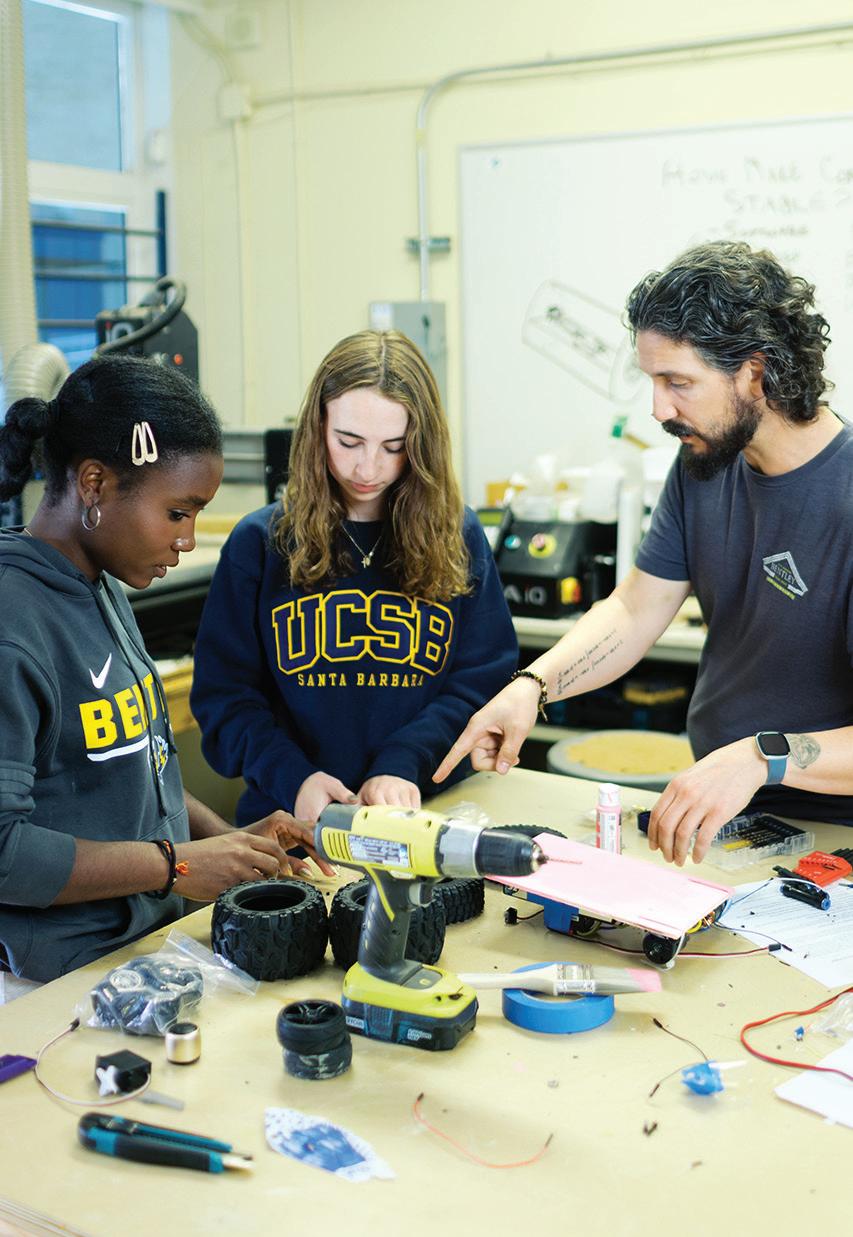
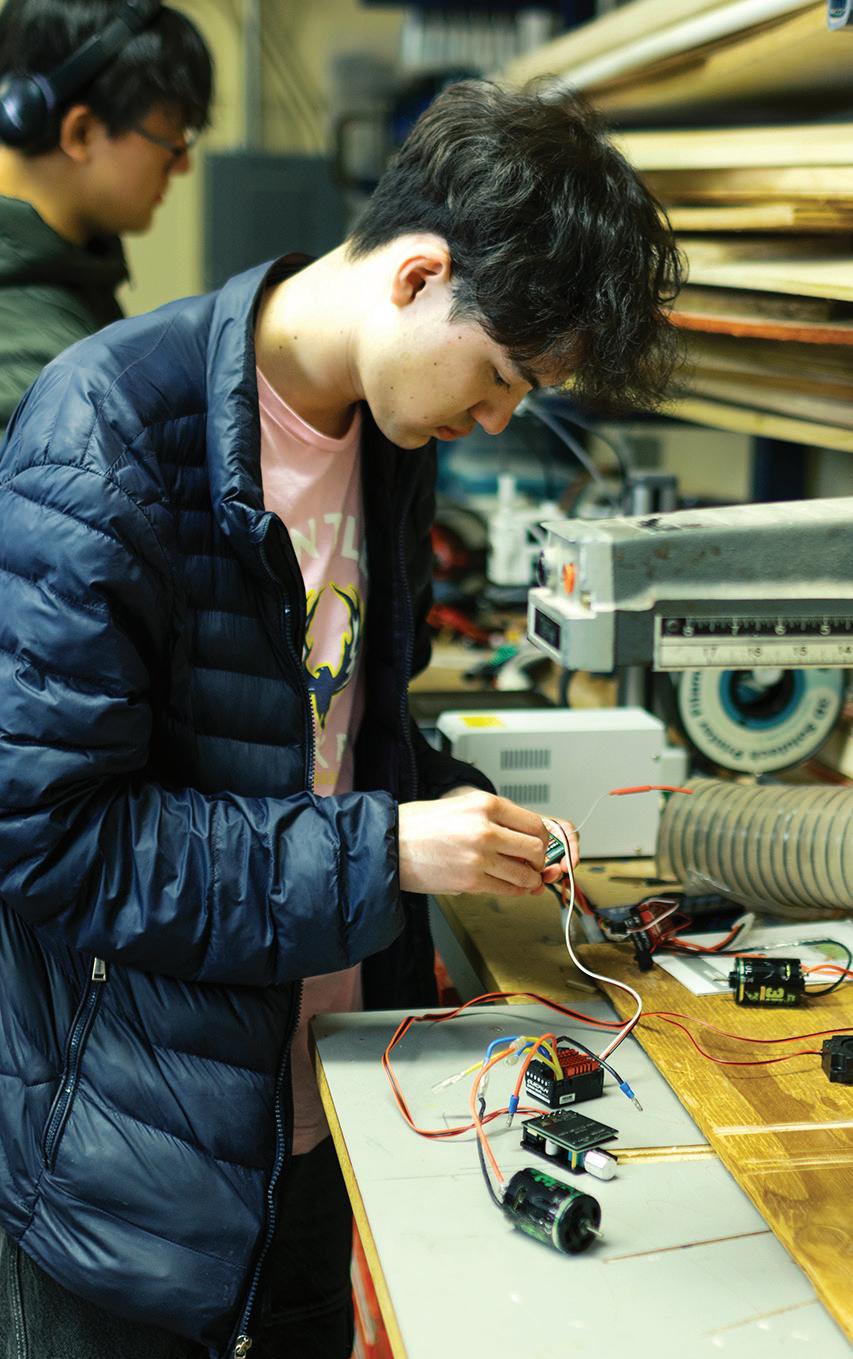
In this course, students will explore the fundamentals of robotics systems through hands-on projects, using materials like wood and cardboard to create innovative designs. The centerpiece of the course is a robotic vehicle, which introduces students to key concepts such as circuits, relays, LEDs, sensors, and various types of electric motors. To bring their projects to life, students will delve into microcontrollers, graphical programming, and techniques for programmed, remote, and automated navigation. As automated systems increasingly shape the modern world, students will gain the skills to assemble and program their own
functional robotics projects. With an emphasis on collaboration, the course fosters teamwork and problem-solving as students learn to build, innovate, and create together.
Course Length: Winter
Prerequisite: Sophomore, junior, or senior standing
Engineering (Honors): Bringing The Idea To Life
In this course, students will design and construct robots or remote-controlled vehicles, fabricating and assembling all parts themselves. They will research project requirements, including materials, constraints, and functional demands, to guide their designs. Students will work with a variety of materials such as plastic, foam, metal, wood, and cardboard, using advanced tools like a CNC wood router, laser cutter, and 3D printer to create precision components. The course emphasizes iterative development, where students test, refine, and optimize their programs and mechanisms to meet specific, well-defined goals. By focusing on attention to detail and the importance of thorough craftsmanship, students will learn how to complete and polish their projects, ensuring they are fully functional and ready for real-world application.
Course Length: Spring
Prerequisite: Sophomore, junior, or senior standing
Speech And Debate
Students will increase their knowledge and understanding of complex current issues in the United States and the world while becoming skilled at public speaking and debate. Within a trimester, students focus on the arguments and messages they want to convey to the world around them. They will be assigned or choose to write and perform persuasive speeches such as original oratory or original advocacy, limited preparation speeches that rely on knowledge of current events such as extemporaneous and impromptu, or interpretive speeches. Students will study argument development, hone their research skills, and analytically and critically examine current events of national and world importance through reading, writing, and speaking while also learning the importance of adapting to different audiences and gaining confidence in public speaking. They will demonstrate their understanding and mastery through assessments, writing and performing speeches, and participation in formats such as parliamentary, world school, and Congressional debate. This course may be repeated for credit.
Course Length: Fall, Winter, Spring
Prerequisite: None
Health Science Seminars: Kinesiology: Anatomy In Motion
Kinesiology is the study of the mechanics and dynamics of the human body in motion. This course serves as the foundation for understanding various aspects of exercise, sports, and physical health. Through theoretical knowledge and practical applications, students explore the fundamental principles of kinesiology and gain insights into how the human body functions during physical activity. In addition, students participate in hands-on labs with a focus on the origin, insertion, and action of major muscle groups. Students also gain the knowledge to identify the agonist and antagonist muscles of specific movement patterns. Successful participation in this class can foster further interest in biomechanics and healthcare fields, such as orthopedics and sports medicine.
Course Length: Fall
Prerequisite: Completion of or concurrent enrollment in Biology, or teacher recommendation
Health Science Seminars: Sports Medicine
Sports medicine is a specialty in the medical field that focuses on injury evaluation, treatment, and prevention for physically active individuals. Through analytical methods and pragmatic application of knowledge, students clinically evaluate common injuries to build a therapeutic rehabilitation plan. In addition, students learn practical ways to prevent injuries by participating in hands-on labs, which focus on correcting movement patterns associated with injury. By studying current research on traumatic brain injuries, students build a foundation to understand their complexities and learn to evaluate them by using standard evaluative tools. Successful completion of this course will support further exploration of healthcare and allied healthcare professions, such as athletic training and physical therapy.
Course Length: Winter
Prerequisite: Completion of or concurrent enrollment in Biology, or teacher recommendation
Health Science Seminars: Discoveries And Concepts In Nutrition
This course introduces students to the fundamental components of nutrition, varieties of dietary lifestyles, and eating to beat disease. Students use real-world scenarios to apply their knowledge and address specific nutritional challenges to create individualized dietary plans. Through critical analysis, students explore ways to improve overall health by understanding the relationship between nutrition and holistic well-being. Understanding this relationship highlights the connection between the microbiome influences on metabolism, immune function, and mental health. Successful completion of this course will support interest in nutrition, pathological science, and healthy living.
Course Length: Spring
Prerequisite: Completion of or concurrent enrollment in Chemistry, or teacher recommendation
MATHEMATICS
The power and beauty of mathematics make it a vital and essential component of secondary education. The department approaches mathematics as a way of thinking and strives to ensure that all Bentley students are prepared to understand and use mathematics effectively in everyday life. Bentley’s program ranges from Integrated Math 1 to Differential Equations. It is motivated by the philosophy that mathematics plays a central role in modern culture, including aesthetic and recreational activities, as well as in the scientific and technical community.
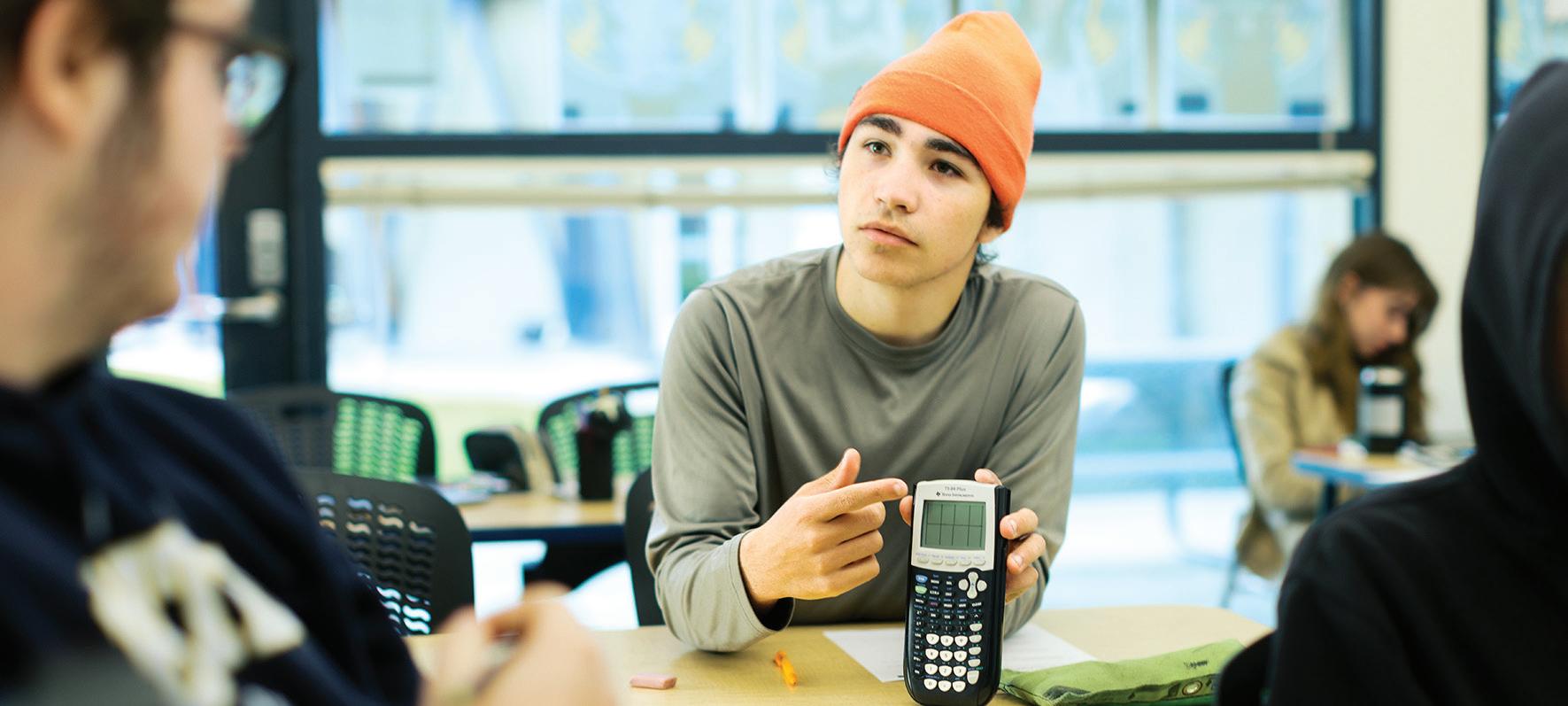
All Upper School students are required to complete three years of mathematics, although most students undertake four years of study. All incoming students are required to have a TI-84 Series graphing calculator. A test is required of all incoming students to help determine appropriate placement.
*Note: In addition to the prerequisites listed below, all courses above the first level require approval from the department chair.
Integrated Math 1
Integrated Math 1 introduces students to math concepts beyond computation and prepares students for further study of mathematics in high school and university. The course integrates topics from elementary algebra, two-dimensional geometry, statistics, and technology to ensure that students have a strong foundation in all of these areas and can use their skills to solve a variety of math problems that span these subdisciplines.
Course Length: Yearlong
Prerequisite: None
Integrated Math 2
This foundational course expands into quadratic, absolute value, and other functions. Students will also explore polynomial equations, factoring, probability, and their applications. The coverage of geometry topics will include polygon relationships, quadrilaterals, 3D solids, logic, proof, and congruence. The statistical units will introduce students to
basic statistical analysis, covering distributions and univariate and bivariate relationships.
Course Length: Yearlong
Prerequisite: Qualifying score on the placement test, or successful completion of Integrated Math 1
Integrated Math 2 (Honors)
This foundational course expands into quadratic, absolute value, and other functions. Students will also explore polynomial equations, factoring, probability, and their applications. The coverage of geometry topics will include polygon relationships, quadrilaterals, 3D solids, logic, proof, and congruence. The statistical units will introduce students to basic statistical analysis, covering distributions and univariate and bivariate relationships. This course moves at a faster pace and is more rigorous than the non-honors level. Additional topics are covered at the teacher’s discretion.
Course Length: Yearlong
Prerequisite: Qualifying score on the placement test, or recommendation of current Bentley teacher
Integrated Math 3
This class completes the series of integrated math classes that seek to reinforce essential mathematical skills through continuous application and reinforcement of algebra, geometry, statistics, and technology skills. Students will study polynomial, radical, logarithmic, rational, and trigonometric functions. Coverage of geometry topics extends to similarity, circles, and conic sections. Students will expand upon their statistical knowledge base by learning to use percentiles, standardization, z-scores, and probabilities in their analysis.
Course Length: Yearlong
Prerequisite: Qualifying score on the placement test, or successful completion of Integrated Math 2, or recommendation of current Bentley teacher
Integrated Math 3 (Honors)
This class completes the series of integrated math classes that seek to reinforce essential mathematical skills through continuous application and reinforcement of algebra, geometry, statistics, and technology skills. Students will study polynomial, radical, logarithmic, rational, and trigonometric functions. Coverage of geometry topics extends to similarity, circles, and conic sections. Students will expand upon their statistical knowledge base by learning to use percentiles, standardization, z-scores, and probabilities in their analysis. This course moves at a faster pace and is more rigorous than the non-honors level. Additional topics are covered at the teacher’s discretion.
Course Length: Yearlong
Prerequisite: Qualifying score on the placement test, or a minimum yearlong grade average of A- in Integrated Math 2 or B+ in Integrated Math 2 (H) and recommendation of current Bentley teacher
Precalculus
This college preparatory course gives students the knowledge needed for the study of calculus and other college mathematics courses. It extends the concepts learned in the Integrated Math series, emphasizing functions, graphs, and trigonometry. Students will gain experience in presenting several different solutions to problems in advanced algebra, trigonometry, mathematical analysis, analytic geometry, and elementary calculus.
Course Length: Yearlong
Prerequisite: Completion of Integrated Math 3 and recommendation of current Bentley teacher
Precalculus (Honors)
This course covers Precalculus's topics but emphasizes derivation and mathematical rigor. It investigates concepts vital to calculus, such as continuity and rates of change. Students taking this course will be required to solve challenging problems, and success depends on motivation, hard work, and perseverance. The content of the course prepares students for AP Calculus AB or BC.
Course Length: Yearlong
Prerequisite: A minimum grade average of A- in Integrated Math 3 or B+ in Integrated Math 3 (H) and recommendation of current Bentley teacher
Data Science And Statistical Analysis
This is a project-based curriculum for students that teaches the full data science process using tools like Google Sheets, Python, and Tableau. The course emphasizes understanding data through active, exploratory lessons, with a focus on asking questions, gathering and analyzing data, modeling, and communicating findings. Students will engage in discussion-based projects, developing skills to interpret data in a "data-filled world" and becoming citizens who can think more critically.
Course Length: Yearlong
Prerequisite: Senior standing and successful completion of Integrated Math 3
AP Statistics
AP Statistics introduces students to the major concepts and tools for collecting, analyzing, and drawing conclusions from data. Students are exposed to four broad conceptual themes: exploring data, sampling and experimentation, anticipating patterns/probability, and statistical inference. Mathematical, graphical, and written justifications for solutions are emphasized throughout the course. The course is equivalent to a one-semester introductory college statistics course. Students are required to take the AP Statistics Exam in May.
Course Length: Yearlong
Prerequisite: Junior or senior standing, a minimum grade average of A- in Integrated Math 3 or B+ in Integrated Math 3 (H), and recommendation of current Bentley teacher
Introductory Calculus
This course will expose students to limits, continuity, differentiation, and the basics of integration from a conceptual standpoint while focusing on some of the basics of computation. It will emphasize technological methods (i.e., graphing calculators and graphing software) throughout the problem-solving process. Additionally, students will investigate a greater number of “real-world” applications, such as economics, biology, and finance.
Course Length: Yearlong
Prerequisite: Minimum grade average of B or greater in Precalculus
AP Calculus AB
This course is an introduction to a college-level calculus course. The major areas covered are functions, graphs, limits (analysis of graphs, limits, asymptotic and unbounded behavior, and continuity), derivatives (concept of a derivative, derivative at a point, derivative as a function, second derivatives, applications, and computation of derivatives), and integrals (interpretations and properties of definite integrals, applications of integrals, Fundamental Theorem of Calculus, techniques of anti-differentiation, applications of anti-differentiation, numerical approximations to definite integrals, and differential equations). Graphical, numerical, algebraic, and verbal methods are stressed throughout the course. Students are required to take the AP Calculus AB Exam in May.
Course Length: Yearlong
Prerequisite: Minimum grade average of A in Precalculus or B in Precalculus (H) and recommendation of teacher, or qualifying score on the placement test and teacher recommendation
AP Calculus BC
This course is equivalent to a two-semester university calculus course and may be taken after AP Calculus AB or Precalculus (H). This course moves at a rapid pace; success in the course requires motivation, hard work, and perseverance. AP Calculus BC covers all the topics of AP Calculus AB, as well as the area between two curves, volumes of solids, surface areas of revolution, arc length, work, moments, centers of mass, centroids, fluid pressure and forces, integration by parts, partial fractions, L’Hopital’s Rule, improper integrals, sequences, and series (including power series, Taylor and Maclaurin series, and error analysis in series convergence). It will also include the calculus of conic sections, parametric equations, polar coordinates, and area and arc length in polar coordinates. Students are required to take the AP Calculus BC or AB Exam in May. .
Course Length: Yearlong
Prerequisite: Minimum grade average of A- in Precalculus (H) or B+ in AP Calculus AB and recommendation of teacher, or qualifying score on the placement test and teacher recommendation
Differential Equations (Honors)
This advanced course mirrors the rigor of a second-year university mathematics class, introducing students to operations on functions in n-dimensional space. Core topics include linear algebra, matrix operations, vector spaces, inner product spaces, eigenvalues and eigenvectors, and linear transformations, as well as the applications of symmetric matrices. The course also covers linear second-order ordinary differential equations, systems of linear ordinary differential equations, and explores real-world applications through Fourier series. Emphasizing both theoretical understanding and practical problem-solving, this class prepares students for advanced study in mathematics, engineering, and the sciences at the collegiate level. This course is offered in alternating years and will not be offered in the 2026–2027 school year.
Course Length: Yearlong
Prerequisite: Minimum grade average of B in AP Calculus BC and teacher recommendation
Multivariable Calculus (Honors)
This course mirrors the rigor of an advanced second-year university calculus class, focusing on the calculus of three-dimensional space and its applications. Students will explore two- and three-dimensional vectors, including dot and cross products, as well as surfaces, cylindrical and spherical coordinates, and the calculus of vector-valued functions. Core topics include tangent planes, partial derivatives, gradients, directional derivatives, and optimization using Lagrange multipliers. The course delves into double and triple integrals with applications
such as center of mass and moments of inertia, along with techniques like change of variables. Students will study vector fields; line and surface integrals; and the foundational theorems of Green, Stokes, and Gauss. An introduction to first- and second-order differential equations rounds out the curriculum, providing students with a comprehensive understanding of multivariable calculus and its significance in mathematics, physics, and engineering. This course is offered in alternating years and will be offered in the 2026–2027 school year.
Course Length: Yearlong
Prerequisite: Minimum grade average of B in AP Calculus BC and teacher recommendation
COMPUTER SCIENCE
Game Design Studio
This course seeks to engage students in the world of game design with the Unity game engine. Students will learn the basics of coding and computer science through the dynamic and interactive lens of game design. The course will tackle both core coding concepts and the game design process in equal measure with focus on hands-on material. As the year continues, students will gain more and more creative freedom regarding the game they choose to make. Students will leave the course with comprehensive experience in the Unity game engine, the C# coding language, as well as key design, playtest, and feedback skills. This course can serve as preparation for AP Computer Science A.
Course Length: Yearlong
Prerequisite: None
AP Computer Science Principles
This course introduces students to the central ideas of computer science, instilling the ideas and practices of computational thinking and inviting students to understand how computing changes the world. The course promotes deep learning of computational content, develops computational thinking skills, and engages students in the creative aspects of the field. Students will develop a range of skills vital to success in subsequent college courses, such as using computational tools to analyze and study data and working with large datasets to analyze, visualize, and draw conclusions from trends. They will also develop effective communication and collaboration skills, working individually and collaboratively to solve problems and discussing and writing about the importance of these problems and their impacts on their community, society, and the world. Students are required to take the AP Computer Science Principles Exam in May.
Course Length: Yearlong
Prerequisite: None
AP Computer Science A
This course is the equivalent of a first-semester university course in computer science. Students continue their study of programming by learning about the object-oriented programming paradigm. They are also exposed to a core set of abstract data types, data structures, and algorithms important in software engineering. Programming projects are
developed using Java, one of the most widely used programming languages. Students are required to take the AP Computer Science A exam in May.
Course Length: Yearlong
Prerequisite: Completion of Game Design
Studio or AP Computer Science Principles and teacher recommendation
Data Structures And Algorithms (Honors)
The most valuable commodity of the future will be data, and data structures provide a way of more efficiently storing this information for specific needs. In this course, students will focus on gaining familiarity and confidence with the essential topics and tools of this subfield: linked lists, stacks, queues, hash tables, trees, heaps, and graphs. In a world awash in such data, how can we efficiently manage and interpret such a rich resource?
Algorithms focus on the fastest way to solve these issues and build on the given data structures. Common topics will be searching, sorting, traversal, shortest path, and compression. Algorithms will be analyzed in both time and space complexity and will be implemented with a focus on recursion and dynamic programming. The combination of these two complementary topics forms a course that covers material typical of a third-semester university course, introducing students to advanced aspects of designing efficient programs. The course is offered in both Python and Java.
Course Length: Yearlong
Prerequisite: A minimum grade average of B in AP Computer Science A and teacher recommendation
VISUAL & PERFORMING ARTS
Students must take a minimum of two years of the arts, and 9th graders are required to take one yearlong visual or performing arts course.
VISUAL ARTS
Bentley’s Visual Arts program is a comprehensive experience that focuses on developing students’ technical skills and creative problem-solving. First-year visual arts students take a full year of introductory courses that provide them with a foundation in sculpture, drawing, and design. During the sophomore, junior, and senior years, students branch out to pursue discipline-specific topics in visual art. The visual arts curriculum is designed to help students continuously build a strong portfolio suitable for college entrance requirements.
Year One: First-year visual arts students take introductory-level courses in drawing, sculpture, and design. These foundational courses provide students with the core technical skills for each area of study and are prerequisites for the intermediate electives. These courses emphasize understanding and applying the artistic process while learning how to conceptualize and evaluate works of art. Students learn how artists work, gaining skills in critical analysis and application of materials. In the 9th grade year, students take all three introductory courses and can take intermediate electives in ceramics, drawing, or photography as sophomores.
Introduction To Visual Arts: Drawing
This course focuses on the development of drawing skills using graphite, charcoal, pastel, and pen and ink, allowing students to achieve greater accuracy and perception in their vision, as well as increased confidence and breadth in their ability to create works of significance. All aspects of drawing are explored through studio projects, with attention to the history and nature of process, medium, and content. The historical context of art is provided through presentations and discussions, particularly on contemporary artists.
Course Length: Fall, Winter, Spring
Prerequisite: None
Introduction To Visual Arts: Ceramics And Sculpture
This course examines the principles and elements of design in three-dimensional forms. Students will gain an understanding of additive and subtractive sculptural processes. Various materials and techniques will be introduced, including handbuilding in clay, constructing form with wire, and exploring assemblage. The historical context of art is provided through presentations and discussions, particularly on contemporary artists.
Course Length: Fall, Winter, Spring
Prerequisite: None
Introduction To Visual Arts: Design
This course takes an in-depth look at various graphic art forms, with an emphasis on devising compelling compositional arrangements. Graphic art forms introduced in this class include photography, printmaking, screen printing, and typography, all in conjunction with various graphic design projects. Digital media will be utilized alongside traditional art forms, such as collage and drawing. In addition to studying relevant art historical references, a review of the elements of art and principles of design will serve as the foundational framework for this course.
Course Length: Fall, Winter, Spring
Prerequisite: None
Year Two: Second-year visual arts students can take a variety of intermediate electives in ceramics, drawing, and photography. These trimester-long courses are intended to develop the ability of the student to express themselves and communicate through visual means. Courses build on the instruction of fundamental concepts and technical use of materials. Each course has a special focus that touches on historical and contemporary uses of the medium, providing students with a breadth of skills and knowledge. Students must have taken the introductory course before enrolling in one of the intermediate electives.
Intermediate Ceramics: Pottery Wheel
This course introduces students to the pottery wheel, wheel-throwing tools, and best practices for working in the pottery studio. Students will learn and practice centering, opening, and trimming clay. They will develop the ability to make cups, bowls, and more. Skills for trimming and glazing will also be taught. This course is ideal for students who want to try the pottery wheel and might want to continue on the wheel in future trimesters.
Course Length: Fall
Prerequisite: Completion of Introduction to Visual Arts: Ceramics
Intermediate Ceramics: Merging Techniques
This course explores functional objects, sculptures, and ceramic pieces that straddle the line between craft and art. Students learn a variety of techniques for both the pottery wheel and sculpting, bringing them together in their own unique projects. In addition to working with clay—the primary focus of this course—students will engage in ideation, discussions, and critique.
Course Length: Winter
Prerequisite: Completion of Introduction to Visual Arts: Ceramics
Intermediate Ceramics: Mixed Medium 3D Sculpture
Students deepen their practice of fundamental sculpture by examining space, shape, form, texture, and color while experimenting with multiple mediums outside of clay and utilizing various techniques, such as additive and assemblage. Materials may include 3D printing, fiber arts, paper, found objects, cardboard, wire, nature, stone, mixed-medium, etc.
Course Length: Spring
Prerequisite: Completion of Introduction to Visual Arts: Ceramics
Intermediate Drawing: Painting
This course focuses on fostering an in-depth understanding of color and painting techniques, as well as developing student skills with painting media, including acrylic, watercolor, and gouache. The theory and practice of painting are explored through studio projects, with attention to the history and nature of process, media, and subject matter. The studio experience may include field trips, critiques, and visiting artists. Weekly work in sketchbooks provides compositional and conceptual practice.
Course Length: Fall
Prerequisite: Completion of Introduction to Visual Arts: Drawing
Intermediate Drawing: Life Studies
Students in the Life Studies class apply various methods of observation and discernment to investigate subjects and gain a better understanding of the world around us. This course focuses on developing observational skills and drawing techniques by using a wide range of media, including charcoal, graphite, and ink. Drawing projects will focus on examining life through both brief and sustained studies. Weekly work in sketchbooks provides compositional and conceptual practice.
Course Length: Winter
Prerequisite: Completion of Introduction to Visual Arts: Drawing
Intermediate Drawing: Mixed Media
This course emphasizes the imaginative use of traditional and nontraditional materials and processes to foster student skills with art-making
techniques and conceptual ideas. Innovations in contemporary art are explored to help students find inspiration for their own works. Media and techniques may include drawing, painting, printmaking, collage, and sculpture. The studio experience may include field trips, critiques, and visiting artists. Weekly work in sketchbooks provides compositional and conceptual practice. This course is offered in alternating years and will not be offered in the 2026–2027 school year.
Course Length: Spring
Prerequisite: Completion of Introduction to Visual Arts: Drawing
Intermediate Drawing: Digital Drawing
In this immersive course, students will extend their understanding of fundamental drawing tools Procreate, Adobe Illustrator, and Photoshop to create unique expressions of drawing and mixed media work. By using these tools, students will be able to understand usage for envisioning practices and new formats for digital design projects, along with additional digital drawn animation processes. By the end of the course, students will be able to add core innovative components to their own portfolio and showcase technical expertise in the digital arts. During the trimester, students will have access to iPad tablets and drawing pens. Weekly work in sketchbooks provides compositional and conceptual practice. This course is offered in alternating years and will be offered in the 2026–2027 school year.
Course Length: Spring
Prerequisite: Completion of Introduction to Visual Arts: Drawing
Intermediate Photography: Technical Foundations
The course will closely examine the analog and digital methods involved in capturing and editing photographic images. Students will begin a new technical assignment every two weeks, investigating topics including long exposures, finetuning focus in macro photography, using mixed lighting for portraits, and perspective adjustments in architectural photography. Students will have more artistic freedom with assigned projects and explore personal concepts by producing additional compositions.
Course Length: Fall
Prerequisite: None
Intermediate Photography: Graphic Design And Photographic History
This course explores how photography has evolved as a powerful tool for communication, documentation, and storytelling. Students will study major movements and photographers who helped shape the way we see and understand the world through images. Weekly photo assignments will focus on creating strong visual stories, using editing and design techniques to connect ideas through images. The class also introduces principles of graphic design, showing how text, layout, and
image placement work together to enhance meaning and impact. Through hands-on projects and creative research, students will strengthen their technical skills, expand their understanding of photographic history, and develop their own unique creative voice.
Course Length: Winter
Prerequisite: Completion of Intermediate Photography: Technical Foundations
Intermediate Photography:
Digital Darkroom And Hybrid Workflow
This course familiarizes students with editing software to maximize the potential of digital image files. Students will explore best practices in digital workflow, file storage, and mining information stored in RAW files. Much of the class will be devoted to creating work that blends digital and traditional art media. This hybrid workflow allows students many options: scanning analog film for digital manipulation, printing on transparencies, contact printing, and drawing or painting over digital prints. Students will produce a range of work further to develop the breadth of their growing photographic portfolios.
Course Length: Spring
Prerequisite: Completion of Intermediate Photography: Technical Foundations.
Year Three: Advanced Visual Art Courses
In the third year of study, visual arts students take a yearlong advanced-level course in their chosen media. These courses require intensive study emphasizing technical proficiency, creativity, and self-expression. Students experiment with skills and materials to develop a personal visual language. The advanced-level student will learn strategies for brainstorming, conceptual development, and articulating intent. Advanced-level courses are prerequisites for the AP Studio Art courses.
Advanced Ceramics (Honors)
This course is designed for serious ceramic students who have developed solid basic skills in beginning and intermediate classes. Advanced students continue to work with fundamental techniques for shaping clay and creating surface design as they explore increasingly complex possibilities. Emphasis is on supporting and encouraging the individual student’s creativity in a wide range of projects designed to promote expression and imagination. Students are expected to work independently, researching information— whether a technique, style of construction, history, contemporary practices, or topics to infuse in the artwork—and making significant progress outside of check-in points. Students begin building a portfolio of high-quality work that can be part of an AP 3D Studio Art portfolio in their senior year.
Course Length: Yearlong
Prerequisite: Completion of three trimesters of intermediate ceramics electives, or approval by the department through portfolio review
Advanced Drawing And Painting (Honors)
This course is designed for students who are serious about visual art and have already demonstrated skill with foundational techniques. In this course students will further their practice in developing higher levels in skills and techniques of painting, drawing, printmaking and mixed media methods. Emphasis will be on developing the student’s artistic process and voice through a wide range of projects that allow for individual expression of ideas, many of which focus on conceptual
content. Students will increase their ideation process through visual journals completed outside of class. Students will gain more independence in their art-making and begin building a portfolio of quality work that can be part of an AP 2D Studio Art portfolio in their senior year.
Course Length: Yearlong
Prerequisite: Completion of three trimesters of intermediate drawing electives, or approval by the department through portfolio review
Advanced Photography (Honors)
This course is designed to encourage an individual student to create a body of work that expresses their own visual style and language. Students study the history of photography, consider the aesthetic and social concerns inherent in the medium, and continue to develop their skills with the technical challenges of photography. Formal critiques, in which students learn to critically discuss artwork presented, are a valuable part of the class. Throughout the year, students read about and discuss contemporary artists and art criticism. With each new project, students are required to write artist statements and discuss their process and work.
Course Length: Yearlong
Prerequisite: Completion of three trimesters of intermediate photography electives, or approval by the department through portfolio review
AP Art History
This course explores the nature of art, its uses, its meanings, art-making, and responses to art through the study of 250 works of art, comparable to two semesters of college-level coursework. Through investigation of diverse artistic traditions of cultures from prehistory to the present, the course fosters an in-depth and holistic understanding of the history of art from a global perspective. Students learn and apply skills of visual, contextual, and comparative analysis to engage with a variety of art forms, constructing an understanding of individual works and interconnections of art-making processes and products throughout history. Students are required to take the AP Art History Exam in May.
Course Length: Yearlong
Prerequisite: Juniors or senior standing with approval of both an art and a history teacher
Year Four: Fourth-year visual arts students spend the year building a collegelevel portfolio of artwork. Drawing and photography students come together in AP 2D Art and Design or AP Drawing, and ceramics students move into AP 3D Art and Design. Students act as practicing artists, building their own assignments, working in series, and defending their works.
AP 2D Art And Design / AP Drawing
This studio art class is comparable to an introductory college course and necessitates an intense commitment of time and effort to produce original artworks of exceptional quality. Emphasis is on the creation of a body of art at a level that is not only technically skillful, but also exhibits significant intellectual and emotional engagement that expresses a student’s own vision and style. Students will develop a sustained investigation of 15 works of art reflecting one unified concept, as artists do. Each work will show processes of experimentation, revision, and practice. Work can be produced in a variety of media including drawing, painting, mixed media, digital art, and photography. Alongside the sustained investigation, students will work on five technically excellent works to submit into their portfolio. Students are required to complete the expectations of a finished AP Drawing or AP 2D Design portfolio for submission to the College Board by the first week in May.
Course Length: Yearlong
Prerequisite: Completion of Advanced Drawing and Painting or Advanced Photography and teacher approval through portfolio review
AP 3D Art And Design
This studio art class is comparable to an introductory college course and necessitates an intense commitment of time and effort to produce original artworks of exceptional quality. Emphasis is on the creation of a body of art at a level that is not only technically skillful, but also exhibits significant intellectual and emotional engagement that expresses a student’s own vision and style. Students will develop a sustained investigation of 10 works of art reflecting one unified concept, as artists do. Each work will show processes of experimentation, revision, and practice. Work can be produced in a variety of media including ceramics, wood, metal, plaster, and other mixed media sculptural formats. Alongside the sustained investigation, students will work on five technically excellent works to submit into their portfolio. Students are required to complete the expectations of a finished 3D Design portfolio for submission to the College Board by the first week in May.
Course Length: Yearlong
Prerequisite: Completion of Advanced Ceramics and teacher approval through portfolio review
PERFORMING ARTS
Performing arts courses are designed to inspire students to become passionate risk-takers and pursue individual and collective expression as a lens of universal connection and critical engagement to place oneself in the world. Students may take classes in all areas of the performing arts or specialize as they choose. Students must take a minimum of two years of the arts, and 9th-graders are required to take one yearlong arts course. 9th-graders will receive performing arts credit for the following yearlong courses: Chamber Music Ensemble, Chorus, Digital Music, Instrument Lab, Introduction to Theatre, and Jazz Ensemble.
MUSIC
Instrument Lab
Students will learn the fundamentals of an instrument and become technically proficient. They will gain confidence in expressing their inner musical voice and acquire the skills needed to join either the Chamber Music Ensemble or the Jazz Ensemble. These students perform a minimum of twice a year at the winter and spring concerts, along with the Jazz Ensemble. This course may be repeated for credit.
Course Length: Yearlong
Prerequisite: None
Chorus
Students will learn the fundamentals of singing and develop their voices into healthy musical instruments. The chorus performs a minimum of twice a year at the winter and spring concerts, along with the Concert Choir and Chamber Ensemble. Students will learn to identify repertoire from a variety of musical genres. Students will be introduced to music theory, learning how to read and write music notation and developing an ability to understand and analyze music.
Course Length: Yearlong
Prerequisite: None
Concert Choir (Honors)
All students are welcome to audition for this performance-based ensemble. Through studying collegiate choral literature, students will have
opportunities to further advance their vocal and musical skills, knowledge, and expression. This group performs a minimum of twice a year at the winter and spring concerts, along with the Chorus and Chamber Ensemble, and at other events, including admissions events, development events, open houses, etc. This course may be repeated for credit.
Course Length: Yearlong
Prerequisite: Chorus; an audition is required for placement
Chamber Music Ensemble (Honors)
This is a yearlong course for instrumentalists wishing to gain ensemble experience and to have a good time making music with their classmates. Students must provide their own instrument and practice outside of class as necessary. This is not a class for beginners, but for those who already have basic music skills. The course will include music from a variety of periods including early music, Baroque, classical, 20th century, and popular music. In addition to standard rehearsals, students may receive coaching from Bay Area musicians. There will be a formal concert in the fall and in the spring, as well as other community-related performances. This course may be repeated for credit.
Course Length: Yearlong
Prerequisite: An audition is required for placement; students should be able to play major and minor scales and have the ability to read music. This course may be repeated for credit with approval by the teacher
Sound Design
This course is a practical, project-based course where students explore the exciting fusion of digital audio production and live event engineering. Using industry-standard software like Ableton Live and the tactile Push device, students will gain handson expertise in recording, mixing, and creating original music, mastering the techniques required to produce compelling beats and tracks. Beyond the studio, the class provides vital experience in live sound engineering, including learning to set up, troubleshoot, and manage professional sound equipment for real school events. By simultaneously studying the physics of sound and applying these principles to their work, students will build a robust portfolio of digital audio projects, establishing a strong foundation for future work in music production and audio engineering.
Course Length: Yearlong
Prerequisite: None
Advanced Sound Design (Honors)
This course elevates the skills developed in the introductory course by demanding creative mastery and professional-level application across the audio spectrum. Students will move beyond fundamental recording and mixing to explore advanced synthesis techniques (FM, granular, wavetable) within Ableton Live, focusing on producing complex, genre-specific tracks. Project work allows for significant student choice, and may include composing an original EDM track entirely on the Push controller, serving as the lead sound engineer for a major school event (managing planning, setup, and mixing), or undertaking a Foley sound design project to create and edit every sound effect for a short film or animation. This capstone experience is designed to refine technical proficiency, develop critical listening, and build a high-caliber portfolio ready for collegiate or industry review. This course may be repeated for credit.
Course Length:: Yearlong
Prerequisite: Completion of Digital Music or Sound Design
Jazz Ensemble (Honors)
This course will focus on performance, musicianship, theory, ear training, transcriptions, and arranging/ composition. This class follows Instrument Lab and will be for students who have demonstrated mastery of fundamental aspects of musicianship, including scales, knowledge of theory, and technique proficiency on their individual
instruments. Students will play as a full ensemble and occasionally perform in smaller groups. This ensemble will perform at school concerts, festivals, and other events, including admission events, development events, open houses, etc. This course may be repeated for credit.
Course Length: Yearlong
Prerequisite: Audition is required for placement; students should be able to play major and minor scales and read music
AP Music Theory
This advanced-level course is designed to help students develop the “hearing eye” and “seeing ear” by building on their musicianship skills in sight-singing, rhythm reading, ear training, and keyboard harmony. The course begins with a review of the basics of music theory and moves quickly to analysis, counterpoint, and composition. By the end of the course, students should be able to analyze written music from many genres both visually and aurally, sight-sing tonal melodies, play harmonic reductions at the keyboard, and transcribe music from listening with reasonable accuracy. AP Music Theory is conducted as a seminar for musicians, requiring class participation and independent thinking. Students are required to take the AP Music Theory Exam in May. After the AP Exam, students are required to compose a short composition. There may also be significant summer assignments before the school year and/or additional required class meetings. This course is offered in alternating years and will be offered in the 2026–2027 school year.
Course Length: Yearlong
Prerequisite: Qualifying score on a placement test
Introduction To Theatre
The course immerses students in the full spectrum of the theatre arts. Students will explore key approaches to theatre and performance while gaining an appreciation for the history and vitality of this collaborative art form via lessons on terminology, warm-ups and games, improvisation, play structure and analysis, solo writing and performance, movement and voice techniques, and theatrical design. Essential takeaways include the building blocks of performance, what makes compelling theatrical material, how to develop a critical eye, and the vital skills of collaboration. Major projects include scene work, creative presentations, and conceiving an original design concept. This course is ideal for students who want to try something new or explore the world of theatre in a supportive, engaging environment.
Course Length: Yearlong Prerequisite: None
Intermediate Theatre
The course is designed for students with prior experience who wish to deepen their understanding of acting, writing, and staging. Building on foundational skills, students explore text analysis and characterization through Stanislavski-based techniques while also examining the roles of the playwright, dramaturg, and director. The course begins with monologue and audition work and gradually expands into collaborative exercises in solo and group writing, scene study, comedy, and ensemble performance. Throughout the year, students strengthen their acting technique, creative
writing, and teamwork skills. The class culminates in the showing of an original, student-written and directed project.
Course Length: Yearlong
Prerequisite: Introduction to Theatre or placement by audition
Advanced Acting (Honors): Ensemble Theatre
The course is designed for experienced students who wish to expand their craft in a collaborative, college-level setting. Students explore ensemble theatre practices such as viewpoints, physical theatre building blocks, movement storytelling, Laban technique, choreography, and Moment Work. Training in these approaches develops the actor’s physical capacity, vocal expressiveness, kinetic awareness, imaginative range, and emotional authenticity. Throughout the year, students take on leadership roles—directing, devising, and pitching ideas for new projects— with selected concepts developed collectively into original ensemble pieces. The course culminates in a fully produced, student-written and created performance in the Little Theatre. This course is offered in alternating years and will be offered in the 2026–2027 school year.
Course Length: Yearlong
Prerequisite: Intermediate Theatre or placement by audition
Advanced Acting (Honors): Styles
The course is designed for students with prior theatre experience who wish to augment their craft in a college-level, conservatory-style environment. In Part One, students engage in an in-depth exploration of performance styles— including on-camera technique, Shakespeare, commedia dell’arte, musical theatre, Dada, absurdism, postmodernism, and other 20th-century movements. This work expands each actor’s vocal, emotional, and physical range, and hones their capacity for script analysis, stage awareness, and solo performance. In Part Two, students investigate the actor–director dynamic, collaborating with peers through advanced scene study and directing projects. The course culminates in a fully produced play presented in the Little Theater. This course is offered in alternating years and will not be offered in the 2026–2027 school year.
Course Length: Yearlong
Prerequisite: Intermediate Theatre or placement by audition
SCIENCE
The goals of the Science Department are to develop in all Upper School students the analytical skills and knowledge base that will allow them to become scientifically literate members of our global society, to inspire respect and love for scientific habits of mind, and to provide opportunities for students to pursue a depth of study in a variety of fields on their path toward becoming future scientists. The Upper School science curriculum is designed to develop students’ scientific reasoning, critical thinking, and laboratory skills, and to challenge students to think both analytically and creatively. Beginning their Upper School science career with Physics provides the foundation for later sciences and introduces students to the pursuit of science through investigations and inquiry activities that have real-world relevance. As students advance through their required sequence of courses, they develop more sophisticated experimental skills, and enhance their ability to critically evaluate different ways of studying natural phenomena.
*Note: In addition to the prerequisites listed below, all courses above the first level require approval from the department chair.
Physics
This course is designed to impress upon students the concept that science represents both a process and method for acquiring knowledge, as well as a body of knowledge. Students develop a wide array of analytical skills and experimental design principles that will serve as a foundation for their subsequent science courses at Bentley and beyond. The course introduces the principles and physical applications of Newtonian mechanics, conservation laws, electrostatics and circuits, and basic thermodynamics. While physics entails conceptual understanding, this course also focuses on using basic algebraic equations to develop problemsolving skills. Time will be spent developing the essential skill of dimensional analysis, which will be used in subsequent science courses. Lab work entails inquiry-based learning, building projects, and experimental design to allow students to develop a deep, intuitive understanding of the subject as a whole and to be exposed to key principles of physics at work in phenomena they encounter in their everyday lives.
Course Length: Yearlong
Prerequisite: None
Physics (Honors)
This course parallels the Physics course content at a level that assumes a strong mathematics background. However, this honors-level course will cover the fundamentals of classical mechanics in greater depth and with greater mathematical sophistication and rigor, with a particular emphasis on quantitative problem-solving and algebraic reasoning. Lab work features experimental design, inquiry-inspired learning, building projects, and extensive data analysis. Time permitting, additional topics may be covered, including modern physics, gravitation, cosmology, and introductory quantum mechanics.
Course Length: Yearlong
Prerequisite: Qualifying score on the placement test
Chemistry
Chemistry is a science central to the others. It has rich ties to both the physical and life sciences and provides a bridge between these two seemingly disparate disciplines. It is the study of the composition, structure, properties, and reactions of matter, in addition to energy and energy changes associated with these properties and processes. Students will explore these principles through the lens of four thematic units: alchemy, smells, toxins, and fire. Through these themes, students will explore topics such as atomic structure, nuclear chemistry, the periodic table, chemical bonding, organic chemistry, phases of matter and their properties, chemical reactions, stoichiometry, solutions and solubility, acids and bases, and thermodynamics. The laboratory component will challenge students to be careful and objective observers, to analyze data and assess the accuracy and reliability of their results, to communicate their results effectively and with support from evidence, and, time permitting, to design their own experiments. Students interested in pursuing further study in AP Chemistry would be best served by taking Chemistry (Honors).
Course Length: Yearlong
Prerequisite: Completion of Physics or Physics (H)
Chemistry (Honors)
This course provides a strong foundation in chemical principles, emphasizing the quantitative nature of each topic. It is therefore recommended for students with a strong mathematics background. Topics of study include atomic structure, quantum mechanics, the periodic table, chemical bonding and molecular structure, chemical reactions, stoichiometry, gas laws, thermodynamics, states of matter, solutions and solubility, equilibrium, and acids and bases. Additional topics may include electrochemistry, organic chemistry, and a more indepth look at bonding theories, including molecular orbital and valence bond theories. The laboratory component of this class will have a larger emphasis on challenging students to develop their scientific writing through deep analysis of their findings. It will also stress the importance of reflection on the design of each experiment to assess the accuracy of students’ measurements through careful error analysis. Students considering taking AP Chemistry in future years will be best prepared by taking this course.
Course Length: Yearlong
Prerequisite: Completion of Physics (H) with a yearlong minimum B+ average or Physics with a yearlong A average; concurrent enrollment in Integrated Math 3 or Integrated Math 3 (H) or higher
Biology
As an introduction to the field of biology, this class provides an in-depth study of the science of biological systems. The course is structured around some of the most fundamental topics of biology, including the molecular study of life (biochemistry and enzyme function), the workings of cells (cell structure, function, reproduction, and energetics), the inheritance of traits (genetics and evolution), organismal biology (structure, function, and physiology of organisms), and the diversity of life. Evolution, the relationship between structure and function, and interactions between living systems are the unifying themes of the course. Through homework, projects, labs, and class discussion, students are encouraged to understand and be able to apply the scientific method as it is used in biology, develop critical-thinking skills, and be able to think about, discuss, and form opinions about contemporary biology-related issues.
Course Length: Yearlong
Prerequisite: Successful completion of Chemistry or Chemistry (H)
Biology (Honors)
This course is geared toward students who have demonstrated interest and aptitude in their previous science classes. In addition to the traditional biology curriculum, students will spend substantially more time building skills in scientific literacy, analytical writing, experimental design, and data analysis. Students will also go into more depth in some of the traditional biological topics, including evolution, the chemical building blocks of life, genetics, biotechnology, and animal physiology. Students should anticipate a fastpaced course that emphasizes learning both inside and outside of the classroom.
Course Length: Yearlong
Prerequisite: Completion of Chemistry (H) with a yearlong minimum B+ average or Chemistry with a yearlong A average
SCIENCE ELECTIVES
These second-exposure advanced science courses allow juniors and seniors to explore science topics in greater depth than the required three years of laboratory-based science for graduation.
AP Biology
This course is a second-exposure, advanced-level course that focuses on four major themes within the field of biology: evolution, communication, interaction, and energy flow, and is intended to strengthen students’ analytical thinking and scientific practices within the context of biology. An emphasis will be placed on analyzing scientific data to understand relationships between structure and function, how an organism’s biochemical pathways and systems work together, and the interdependence of living organisms. Topics will be considered from the perspective of molecules, organisms, and ecosystems. Students will also be expected to design and carry out experiments by using lines of evidence to develop and refine testable hypotheses and predictions of natural phenomena. To be successful in this course, students must be self-motivated in terms of managing time, staying up-to-date with assignments, and seeking help when needed. Students will be expected to do a considerable amount of independent reading and note-taking and to complete intensive laboratory exercises. There will be a summer assignment associated with this course. Students are required to take the AP Biology Exam in May.
Course Length: Yearlong
Prerequisite: Senior standing, completion of Chemistry (H) with a yearlong minimum B+ average or Chemistry with a yearlong A average, completion of Biology (H) with a yearlong minimum B+ average or Biology with a yearlong minimum A average, and minimum yearlong B+ average in Integrated Math 3 (H) or a minimum yearlong Aaverage in Integrated Math 3
AP Chemistry
This course is equivalent to an introductory university chemistry course and is designed as a second exposure to chemistry. Very little time will be spent reviewing the concepts covered in Chemistry or Chemistry (H), but students will delve further into those topics, exploring them from a more quantitative perspective. Topics include atomic structure, stoichiometry, chemical reactions, the periodic table, bonding, molecular structure and shape, gases, kinetics, equilibrium, acid-base chemistry, solutions and solubility, thermodynamics, and electrochemistry. Application of chemical principles and data analysis is emphasized. Laboratory work will mirror the types of experiments students should expect to see at the college level, focusing on experimental design and a rigorous analysis of results. The class will move briskly, and student success depends on an individual’s motivation, hard work, and perseverance. Students will have a considerable amount of nightly homework. There will be a summer assignment associated with this course. Students are required to take the AP Chemistry Exam in May.
Course Length: Yearlong
Prerequisite: Junior or senior standing, completion of Chemistry (H) with a yearlong minimum B+ average or Chemistry with a yearlong A average, concurrent enrollment in Precalculus or higher, and a minimum yearlong B+ average in Integrated Math 3 (H) or a minimum yearlong A- average in Integrated Math 3
AP Environmental Science
Environmental studies is a field rich in interdisciplinary ideas. It draws from multiple scientific fields, including biology and chemistry, and quickly collides with societal needs and questions. This course will focus on the environment and how humans interact with and modify their environment, with a heavy emphasis on ecological interactions. Themes will include energy transformation, cycling of matter, human food production on land and in water, water quality and supply, atmospheric modification, energy supply and usage, and landuse practices in the context of ecological principles. Special emphasis will be placed on understanding climate change. The course will utilize extensive laboratory and field work, class discussions, field trips, case studies, and interactive media. Additionally, students will be exposed to current environmental science topics through analyzing news items. Students are required to take the AP Environmental Science Exam in May.
Course Length: Yearlong
Prerequisite: Junior or Senior standing, completion of Biology (H) with a B+ or Biology with an A, concurrent enrollment in Biology (H) with teacher approval, completion of Chemistry (H) wiht a yearlong B+ average or Chemistry with a yearlong A average, and completion of Integrated Math 3 (H) with a yearlong B+ average or Integrated Math 3 with a yearlong A- average
AP Physics C: Mechanics
This course is comparable to an introductory university course in physics and is designed to build on the conceptual understanding attained in a first-exposure course in physics. In addition, this class supports the college sequence that serves as the foundation in physics for students majoring in the physical sciences or engineering. Topics of study in this course include kinematics, vector analysis, projectile motion, forces, rotational statics and dynamics, universal gravitation, momentum, energy, power, and simple harmonic motion. Strong emphasis will be placed on solving a variety of challenging problems, as well as developing a deeper understanding of physics concepts. Calculus will be used to formulate physical principles and to apply them to physical problems. There will be a significant laboratory component in order to facilitate students’ understanding of the topics, as well as to provide students with exposure to the process of scientific inquiry. Students are required to take the AP Physics C: Mechanics Exam in May.
Course Length: Yearlong
Prerequisite: Junior or senior standing, completion of Physics (H) with a yearlong minimum B+ average or Physics with a yearlong A average, and concurrent enrollment in AP Calculus AB or BC or higher
Astronomy
This course will provide an overview of fundamental concepts in Astronomy, from its historical development to our most recent understanding of the solar system, stars, galaxies, black holes, and the origin of the universe. Topics to be studied will include light, astronomical instruments, important astronomers throughout history, the formation and evolution of planets and moons, stellar life cycles, structure and evolution of the universe, and gravitation. Special topics will include space exploration and relativity.
Course Length: Yearlong
Prerequisite: Completion of Physics, Chemistry, and Integrated Math 3
Life Science Seminars: Human Anatomy And Physiology (Honors)
This course will introduce students to the structure and function of the human body by exploring many of the systems that comprise it. The course will focus on the study of the cells, tissues, and organs making up these systems. Systems of study may include the skeletal, muscular, endocrine, cardiovascular, lymphatic, immune, digestive, urinary, nervous, and reproductive systems. An emphasis will be placed on the interrelatedness of such systems, as well as the relationships between structure and function. The pace of this class will be quick; students can expect to cover one or two systems per week. Students will be evaluated based on the completion of homework assignments, practical assessments of understanding (such as recognizing structures), quizzes, tests, class presentations, and independent research. This course will also have a significant laboratory component, which will include mandatory dissections.
Course Length: Fall
Prerequisite: Junior or senior standing, completion of Chemistry, completion of Biology (H) with a B or Biology with an A-, or concurrent Biology (H) enrollment
Life Science Seminars: Biotechnology (Honors)
This course is an exploration into the fascinating world of modern biotechnology. In this course, students will learn how to use living organisms (and their parts) to analyze crime scenes, develop vaccines, and monitor the biodiversity of our
environment. In the first section, students will get hands-on experience with the techniques used to analyze and modify DNA, including DNA extraction, PCR, gel electrophoresis, restriction analysis, bacterial transformation, and CRISPR-Cas9. The second part of the course will be inquiry-based, culminating with a final project based on student interest, such as stream monitoring using DNA barcoding. This course will emphasize a conceptual understanding of techniques, their real-world applications, and their ethical concerns.
Course Length: Winter
Prerequisite: Junior or senior standing, completion of Chemistry, completion of Biology (H) with a B or Biology with an A-, or concurrent Biology (H) enrollment
Life Science Seminars: Microbiology & Infectious Disease (Honors)
This seminar will examine the diversity of bacterial and viral infections and the pathogen interactions that contribute to disease. Students will explore the pathways the immune system uses to evade disease and learn about the evolutionary mechanisms in pathogens that lead to drug resistance. The course will also examine societal responses to historical disease epidemics, including the rationale behind vaccine development. Students will be evaluated based on the completion of homework assignments, quizzes, tests, lab work, class presentations, and independent research.
Course Length: Spring
Prerequisite: Junior or senior standing, completion of Chemistry, completion of Biology (H) with a B or Biology with an A-, or concurrent Biology (H) enrollment
WORLD LANGUAGES
The World Languages Department offers a wide variety of classes to meet the curricular needs of our students. Most students will fulfill their graduation requirements by taking two consecutive years of language courses at Bentley and reach the third level of that language. Alternatively, a student may fulfill the requirement by taking two consecutive years of courses in two different languages. The language faculty is a dynamic group of educators who model and encourage the importance of being a multilingual individual in today’s global society.
In each of Bentley’s modern language classes, the rich history and culture of native speakers furnish an essential backdrop and context for learning to communicate effectively in the target language. Thus, French, Mandarin Chinese, and Spanish immersion classes develop students’ oral and aural fluency, as well as their reading and writing skills. Additionally, students in Mandarin Chinese learn to write and read Chinese characters. Latin study focuses more on authentic readings and textual analysis to explore effective communication and comprehension.
*Note: In addition to the prerequisites listed below, all courses above Level 1 require approval from the department chair.
French 1
Students attain a beginning level of proficiency necessary for basic communication in everyday life, primarily through speaking and listening, but also by reading and writing short dialogues, paragraphs, and simple literary selections. Students also become acquainted with various cultural aspects of French-speaking countries worldwide. There is an emphasis on achieving communication in the classroom as students are introduced to immersive language instruction throughout the year. Grammatical content includes using verbs, articles, adjectives, adverbs, and prepositions, conjugating common irregular verbs and regular -er, -ir, and -re verbs in the present tense, and basic interrogatives and negation. Students learn to form and use the past tense in French at the end of the third trimester. The students demonstrate their understanding and application of classroom and homework material on regular quizzes and tests.
Course Length: Yearlong Prerequisite: None
French 2
Students further develop proficiency in the four key skills (listening, speaking, reading, and writing) and increase their knowledge and appreciation of diverse Francophone cultures. Students are exposed to a broader variety of reading materials, such as excerpts from longer literary pieces, dialogues, and historical perspectives. Grammatical content includes a review of French 1 concepts, irregular verbs, agreement of past participles, object pronouns, comparative adjectives and adverbs, verbs that express reciprocal action, and the passé composé, imperfect, and future simple tenses. Students hone their composition and communication skills by writing short essays, stories, and by researching and presenting on French cultural topics. Regular tests and quizzes challenge them to apply their understanding of increasingly complex vocabulary and grammar structures.
Course Length: Yearlong
Prerequisite: Qualifying score on the placement test or completion of French 1
French 3
Students continue expanding their listening, speaking, reading, and writing abilities. More sophisticated conversation skills are developed by continued practice and the introduction of more advanced grammar and vocabulary. Course content includes a review of the present, past, and future tenses. We will then cover the conditional and subjunctive moods and expressions of emotion, doubt, and uncertainty. As in previous courses, students continue to work on pronunciation and advance their ability to write well-developed compositions. They study one literary work of moderate length and explore various journalistic, historical, and literary passages in French. Throughout the year, students research and present on historical or cultural topics related to French culture and French-speaking regions. This course provides the foundation for more advanced courses.
Course Length: Yearlong
Prerequisite: Qualifying score on the placement test or completion of French 2
French 4 (Honors)
After completing the grammatical foundational sequence, fourth-year French introduces students to communication through film, TV, musicals, comics, and deeper analytical readings of authentic texts in more of a seminar-style atmosphere. Students in this course will continue working on and building upon cultural, communicative, and grammatical topics they have been covering over the past three courses while addressing three of the themes covered in the AP French Language curriculum, some of the writing and speaking formats, and prompts from the AP curriculum. Culturally, this course helps students delve deeper into the rich history and culture of the Francophone world. French 4 emphasizes pronunciation, listening, speaking, reading, and writing abilities. The course will address grammatical topics (such as past tenses of the subjunctive and conditional moods, the pluperfect, and the present participle/gerund) through close readings, context-driven exercises, and a few translation exercises. Students will also discuss cultural, political, historical, and literary topics throughout the course.
Course Length: Yearlong
Prerequisite: Qualifying score on the placement test, or successful completion of French 3 and recommendation of current Bentley teacher
AP French Language And Culture
This course is designed to reflect the College Board’s AP curriculum. It draws its content from AP-relevant materials and previously designed and approved AP syllabi adapted from the College Board. The curriculum of this course encompasses six of the themes included on the AP French Language and Culture Exam, as decided by the College Board. This course’s interactive nature fosters the advancement of students’ selfexpression in French via the study of Francophone literature and culture, as well as individual reflection and interpersonal communication skills. Students’ creative talents and critical-thinking skills will be nurtured throughout this yearlong course as they are encouraged to explore personal, social, cultural, political, and literary topics in multifaceted and personally relevant ways. Among other activities, students will lead and participate in small and large group discussions, create multimedia projects, prepare oral presentations, write essays, and compose stories and poetry. Students will tackle grammar through context-driven exercises and translation exercises alongside the consultation of various resources on French mechanics. Students are required to take the AP French Language and Culture Exam in May.
Course Length: Yearlong
Prerequisite: Qualifying score on the placement test or completion of French 4 (H) and recommendation of current Bentley teacher
French Advanced Seminar (Honors)
This seminar class focuses heavily on oral and written expression, using a variety of French- and Francophone-relevant media, texts, and themes as the grounds for class discussion and personal reflection. We will focus on topics that engage students in a cognitively challenging way, requiring them to participate in dialogues of social, political, and cultural importance. Students will compile and revise all written and verbal work over the year. This class is designed to help students achieve a heightened awareness of their patterned errors in French, build a solid sense of French grammar, nurture students’ verbal confidence, and eradicate recurring errors through constant self-correction in various contexts. The course content and topics can vary from year to year. As this is the final course offering in Bentley’s lineup of French classes, students may take the Advanced Seminar for credit for multiple years. Potential topics covered may include but are not limited to: reading authentic literature in French, comparing the Francophone world with the U.S., film studies, etc.
Course Length: Yearlong
Prerequisite: Completion of AP French Language and Culture and recommendation of the current Bentley teacher
Latin 1
This class provides a foundation of the skills that will prepare students to translate authentic Latin texts later in their careers. Students in first-year Latin at Bentley make a connection with the classical world and hear what the Romans have to say in their own words. Latin 1 begins with reading adapted texts that introduce students to grammatical topics such as the use of cases, present and past verb
tenses, adjective and noun agreement, pronouns, and prepositions. Students demonstrate their comprehension of readings in Latin through translating Latin texts, analyzing sentences, and responding to questions about their content. The course also delves into important facets of Roman culture, including topics such as daily life, slavery, and mythology. Student understanding of classroom and homework material will be assessed regularly through quizzes and tests. Students also will have opportunities to create individual projects and presentations on cultural topics. Students are invited to take the National Latin Exam in March.
Course Length: Yearlong
Prerequisite: None
Latin 2
This class strengthens the foundation of skills that students cultivate in Latin 1. Students in secondyear Latin at Bentley begin to encounter excerpts from authentic texts by classical Roman authors. Latin 2 provides a deeper exposure to grammatical topics such as noun declensions, relative pronouns, the passive voice, and participles. In this course, students learn about important facets of Roman culture through selected readings of authentic texts, including graffiti written by everyday Romans in antiquity. Student understanding of classroom and homework material will be assessed regularly through quizzes and tests. Students also will have opportunities to create individual projects and presentations on cultural topics. Students are invited to take the National Latin Exam in March.
Course Length: Yearlong
Prerequisite: Qualifying score on the placement test or successful completion of Latin 1
Latin 3
This class continues to expand upon skills that students cultivate in Latin 2. Students in third-year Latin at Bentley begin to read larger excerpts from more complex authentic texts by classical Roman authors, both prose and poetry. Latin 3 provides a deeper exposure to grammatical topics such as subordinate clauses, uses of the subjunctive mood, gerunds and gerundives, and deponent verbs. In this course, students learn about important facets of Roman culture, particularly as they provide a context for their authentic readings and translations of those readings. Student understanding of classroom and homework material will be assessed regularly through quizzes and tests. Students also will have opportunities to create individual projects and presentations on cultural topics. Students are invited to take the National Latin Exam in March.
Course Length: Yearlong
Prerequisite: Qualifying score on the placement test or successful completion of Latin 2
Latin 4 (Honors)
After a completion of the grammatical foundational sequence, Latin 4 (H) continues the study of Roman literature and includes the poetry and prose of classical Latin authors the students have not read already in their classes at Bentley in more of a seminar-style atmosphere. Students investigate the historical circumstances in which a text was created and determine how they influence and color the reading of a text. Students also look closely at translation and the stylistic issues it raises. Finally, some attention is given to works of art inspired by Latin verse and other aspects of its legacy. Students fine-tune their grammatical understanding of complex texts and review grammar topics as they arise in connection with a particular text. Student understanding of classroom and homework material will be assessed regularly through quizzes and tests. Students also will have opportunities to create individual projects and presentations on cultural topics. Students are invited to take the National Latin Exam in March.
Course Length: Yearlong
Prerequisite: Qualifying score on the placement test, or successful completion of Latin 3 and recommendation of current Bentley teacher
AP Latin
This course focuses on reading, translating, understanding, analyzing, and interpreting Latin in the original language. Our class covers the works of two authors, Caesar and Vergil—one known for his spare, lucid prose and the other for his rich tapestry of words and ideas. To fully delve into the genius of both authors, as well as plumb the depths of their works, students will memorize new, specialized vocabulary, augment their understanding of Latin grammar and syntax with an eye to the style of each author, and learn the literary terms classics scholars use and how to apply such terms. In addition, students will learn the generic conventions of history and epic poetry, the historical backdrop to the works, and read and discuss related texts in translation. All students are required to take the AP Latin Exam in May.
Course Length: Yearlong
Prerequisite: Qualifying score on the placement test, or successful completion of Latin 4 (H) and recommendation of current Bentley teacher
Latin Advanced Seminar (Honors)
The Advanced Latin Seminar is open to students who have completed Latin 4 (H) or AP Latin, offering an opportunity to explore a rotating selection of Latin authors not covered in earlier courses. As the culminating class in Bentley School’s Latin curriculum, students may enroll in the seminar multiple times for credit. The course focuses on both prose and poetry, refining students’ translation and analytical skills while deepening their understanding of the texts’ cultural context and their impact on later thinkers and artists. Whether taken before or after AP Latin, the seminar provides rigorous practice with the complex texts featured on the AP Latin Exam. Assessments include regular quizzes, tests, and creative individual projects or presentations on cultural topics, encouraging students to engage deeply with the material and develop their scholarly interests.
Course Length: Yearlong
Prerequisite: Completion of AP Latin and recommendation of the current Bentley teacher
Mandarin Chinese 1
Mandarin Chinese 1 is designed for students interested in learning Chinese language and culture to develop the ability to begin communicating with native speakers in Chinese. The course is organized around the theme of daily life in China and the U.S., and students will develop a better understanding of China and the Chinese people. At the beginning of the course, students will learn to recognize and produce the sounds of Mandarin using the standard phonetic Romanization system of modern standard Mandarin, known as Pinyin. Once students master Pinyin, they will study simplified Chinese characters. By the end of the year, students will be able to recognize and produce approximately 200 characters. They will also be able to fluently communicate about limited topics such as selfintroductions, simple statements and questions, and basic opinions and preferences. They will be able to understand short sentences and passages.
Course Length: Yearlong
Prerequisite: None
Mandarin Chinese 2
Mandarin Chinese 2 is designed for students who have already studied Mandarin for one year or have comparable skills in the language. This course is designed to further develop students’ communication skills through dialogue, questions and answers, interviews, surveys, and oral presentations. Mandarin literacy and Chinese character theory are an integral part of this course. Students have more opportunities to use their Mandarin in real-world contexts. They develop reading comprehension skills by learning how to
deduce the meaning of new phrases and translate short sentences, in addition to reading postcards, notices, and short paragraphs. By the end of the year, students should be able to recognize and write approximately 400 characters.
Course Length: Yearlong
Prerequisite: Qualifying score on the placement test or completion of Mandarin Chinese 1
Mandarin Chinese 3
Mandarin Chinese 3 is designed for students who have already studied Mandarin for at least two years or who already command the language skills needed for everyday living in China. Students are expected to spend one hour every day outside of class time preparing for class, reviewing for dictation, and doing homework. Mandarin is spoken exclusively in class. In-class activities include group discussion, storytelling, role play, oral presentation, and skits. This class develops students’ listening, speaking, reading, and writing skills through the study of a variety of texts covering different aspects of daily life. Reading and writing will be especially emphasized. Students are expected to learn at least 20 new words from each class session. By the end of the year, students should be able to recognize and write 600 characters. Mandarin Chinese 3 introduces not only vocabulary and grammar, but also elements of Mandarin style. By the end of the course, students will be able to hear nuance and tone in Mandarin.
Course Length: Yearlong
Prerequisite: Qualifying score on the placement test or completion of Mandarin Chinese 3 and recommendation of current Bentley teacher
Mandarin Chinese 4 (Honors)
After completing the grammatical foundational sequence, fourth-year Mandarin Chinese introduces students to communication through a deeper analytical reading of authentic texts in more of a seminar-style atmosphere. The course is designed for students who have already studied Mandarin for at least three years or can already express themselves in Chinese. Mandarin is spoken exclusively in class. In-class activities include oral presentations, language projects, translations of articles and excerpts from books, debates, skits, and lessons about traditional and modern Chinese culture. This class develops students’ listening, speaking, reading, and writing skills by studying a variety of texts covering many aspects of daily life, as well as texts that focus on more abstract topics, such as the comparison of American and Chinese culture. Students will be encouraged to type characters in Chinese on computers to practice outside of class. Reading, writing, and cultural knowledge will be especially emphasized. Students are expected to learn at least 30 new words from each class session. By the end of the year, students should be able to recognize and write 1,100 characters. Students who have completed Mandarin Chinese 4 (H) will possess a substantive facility with Mandarin and will be able to discuss a wide range of topics in considerable depth.
Course Length: Yearlong
Prerequisite: Qualifying score on the placement test or completion of Mandarin Chinese 3 and recommendation of current Bentley teacher
AP Chinese Language And Culture
This course is designed to deepen students’ immersion into the language and culture of the Chinese-speaking world and to prepare them for the rigorous AP Chinese Language and Culture Exam, which is an essential part of the AP experience, enabling students to demonstrate their mastery of college-level course work. Its aim is to provide students with ongoing and varied opportunities to further develop their proficiency across the full range of language skills within a cultural frame of reference reflective of the richness of Chinese language and culture. It engages students in an exploration of both contemporary and historical Chinese culture that helps develop students’ awareness and appreciation of the culture of Chinese-speaking people in a pervasive theme throughout the course. The course content is adapted from the College Board’s AP curriculum
and approved by the College Board. All students are required to take the AP Chinese Language and Culture Exam in May.
Course Length: Yearlong
Prerequisite: Qualifying score on the placement test or completion of Mandarin Chinese 4 (H) and recommendation of current Bentley teacher
Mandarin Chinese Advanced Seminar (Honors)
The Advanced Seminar in Mandarin fosters the advancement of students’ self-expression in Mandarin by studying Chinese literature, art, and culture, as well as individual reflection and interpersonal communication skills. Throughout this yearlong course, students’ creative talents and critical thinking skills will be nurtured as they are encouraged to explore personal, social, cultural, artistic, political, and literary topics in multifaceted and personally relevant ways. Among other activities, students will lead and participate in smalland large-group discussions, create multimedia projects, prepare oral presentations, write essays, compose stories, and craft poetry. Students will tackle grammar through context-driven exercises alongside team-teaching, where students teach and learn from each other. The course content can vary from year to year. As this is the final course offered in Bentley’s lineup of Mandarin classes, students may repeat Advanced Seminar for credit.
Course Length: Yearlong
Prerequisite: Completion of AP Chinese Language and Culture and recommendation of the current Bentley teacher
Spanish 1
Students attain a beginning level of proficiency necessary for carrying out basic communication about themselves, their families, their friends, their school, and extracurricular activities, primarily through speaking and listening, but also by writing and reading short dialogues and paragraphs. Through varied classroom activities, students learn the basic elements of grammar and vocabulary and begin to be introduced to cultural aspects of the Spanish-speaking world. Students simultaneously develop language skills in oral presentations, dialogues, readings, and informal conversations. Course content includes regular and irregular verbs in the present tense, direct object pronouns, ser and estar, the progressive tense, an introduction to the preterit, demonstrative adjectives, and other basic grammar elements needed to construct simple sentences. The course emphasizes comfortable social communication and encourages students to express their own ideas in Spanish. A variety of assessment methods will be employed to assess proficiency and students are expected to practice language skills on a daily basis. Students will be invited to take part in the National Spanish Exam.
Course Length: Yearlong
Prerequisite: None
Spanish 2
Students review grammar and vocabulary from Spanish 1 and continue their study of essential grammatical structures. Students add depth and breadth of vocabulary by learning words to describe daily routines, food, holidays, celebrations, and technology. Students learn more complicated grammatical structures such as the imperfect and preterit tenses, reflexive verbs and pronouns, and indirect object pronouns, among other topics. Greater emphasis is placed on communication in Spanish as students speak regularly in pairs, small groups, and in front of the class. They will use their increasing knowledge of grammatical structures to write more detailed compositions to further master written expression. A variety of assessment methods will be employed to assess proficiency and students are expected to practice language skills on a daily basis. Students will also be invited to take part in the National Spanish Exam.
Course Length: Yearlong
Prerequisite: Qualifying score on the placement test or completion of Spanish 1
Spanish 3
In this course, students will review and complete the study of basic grammar while continuing to develop interpretive, interpersonal, and presentational modes of communication. They will improve their ability to narrate in the past, present, and future and increase their vocabulary enormously through reading short stories, poems, fables, listening to songs in Spanish, and watching short videos, among other activities. Students will be introduced to the present subjunctive to express their opinions about various themes such as city life versus country life, health and wellness, environmental issues, careers, and the cultural and political significance of the work of Hispanic artists. Students will speak Spanish in class and regularly work in pairs and small groups to promote a meaningful communicative experience and help students develop as critical thinkers. A variety of assessments will be used to evaluate each student’s proficiency. Students will also be invited to take part in the National Spanish Exam.
Course Length: Yearlong
Prerequisite: Qualifying score on the placement test or completion of Spanish 2
Spanish 4
Spanish 4 will be the culminating experience for students seeking to improve their communicative abilities. The focus will be on culture and communication to provide a capstone experience for the introductory track. This class will review the grammatical base, the omnipresent vocabulary essential for communication, and an investigation of cultural themes present in the myriad countries of the Spanish-speaking world. Students will be exposed to music, film, and other cultural representations according to the interests of the teacher. A student leaving this class will have had ample opportunity to practice the forms and vocabulary that will most serve them in the interactions with native speakers both here and abroad. Students who take this class are not eligible to advance further in the Spanish program.
Course Length: Yearlong
Prerequisite: Completion of Spanish 3 and recommendation of current Bentley teacher
Spanish 4 (Honors)
After a completion of the grammatical foundational sequence, fourth-year honors-level Spanish introduces students to communication through films, documentaries, magazines, news articles, and deeper analytical readings of authentic texts in more of a seminar-style atmosphere. This course will provide students with opportunities to develop language proficiency across the three modes of communication: interpretive (comprehension of spoken or written communication), interpersonal (email communications and conversation), and presentational (spoken or written communication for an audience). Students will continue to increase their vocabulary exponentially and develop proficiency in the language through reading, writing, in-class debates, in-class discussions, and oral presentations around various themes. In each unit, students will review grammatical structures from their previous classes while adding depth and breadth to their knowledge. This class is conducted exclusively in Spanish. Students will also be invited to take part in the National Spanish Exam.
Course Length: Yearlong
Prerequisite: Qualifying score on the placement test or completion of Spanish 3 and recommendation of current Bentley teacher
AP Spanish Language And Culture
This course will provide students with opportunities to develop language proficiency further across the three modes of communication: interpretive (comprehension of spoken or written communication), interpersonal (email communications and conversation), and presentational (spoken or written communication for an audience). Students will work frequently with authentic cultural resources (films, documentaries, magazines, news articles in Spanish, short literary pieces, TED talks in Spanish, and songs, among others). They will continue to increase their vocabulary exponentially and develop proficiency in the language through reading, writing, listening to songs, skit preparation, in-class debates, inclass discussions, research projects, and oral presentations around three AP Spanish Language and Culture themes. Students will practice with the different parts of the AP Exam and become familiar with the rubrics and format. This class is conducted entirely in Spanish, and students are encouraged to use the target language in their interactions with other Spanish-speaking community members. Students will also be invited to take part in the National Spanish Exam. Students are required to take the AP Spanish Language and Culture Exam in May.
Course Length: Yearlong
Prerequisite: Qualifying score on the placement test or completion of Spanish 4 (H) and recommendation of current Bentley teacher
Spanish Advanced Seminar (Honors): Contemporary Topics In Latin America
What is Latin America—a place, an idea, or a shared history? This seminar invites students to explore the diverse cultural, political, and linguistic landscapes that make up Latin America. Through literature, film, music, and academic texts, students will investigate how identity, empire, and everyday life intersect across the region. Over the course of the year, we’ll trace major themes that shape Latin American experience and expression: the legacy of colonial languages and empires, the role of staple crops in shaping economies and identities, the impact of dictatorship and U.S. intervention, the global reach of la cumbia, and the migration from campo to ciudad. Conducted as a discussion-based seminar, this class emphasizes active participation, critical debate, and analytical writing. By the end of the course, students will gain a deeper understanding of a region that remains, in the words of Porfirio Díaz, “so far from God and so close to the United States.”
Course Length: Yearlong
Prerequisite: Completion of AP Spanish Language and Culture and recommendation of current Bentley teacher
AP Spanish Literature And Culture
The AP Spanish Literature and Culture course uses a thematic approach to introduce students to representative texts (short stories, novels, poetry, and essays) from Peninsular Spanish, Latin American, and United States Hispanic literature. Students develop proficiencies across the full range of communication modes (interpersonal, presentational, and interpretive), thereby honing their critical reading and analytical writing skills. Literature is examined within the context of its time and place, as students reflect on the many voices and cultures present in the required readings. The course also strongly focuses on cultural connections and comparisons, including exploration of various media (e.g., art, film, articles, literary criticism). Students are required to take the AP Spanish Literature and Culture Exam in May. This course will not be offered in the 2026–2027 school year.
Course Length: Yearlong
Prerequisite: Qualifying score on the placement test or completion of AP Spanish Language and Culture and recommendation of current Bentley teacher