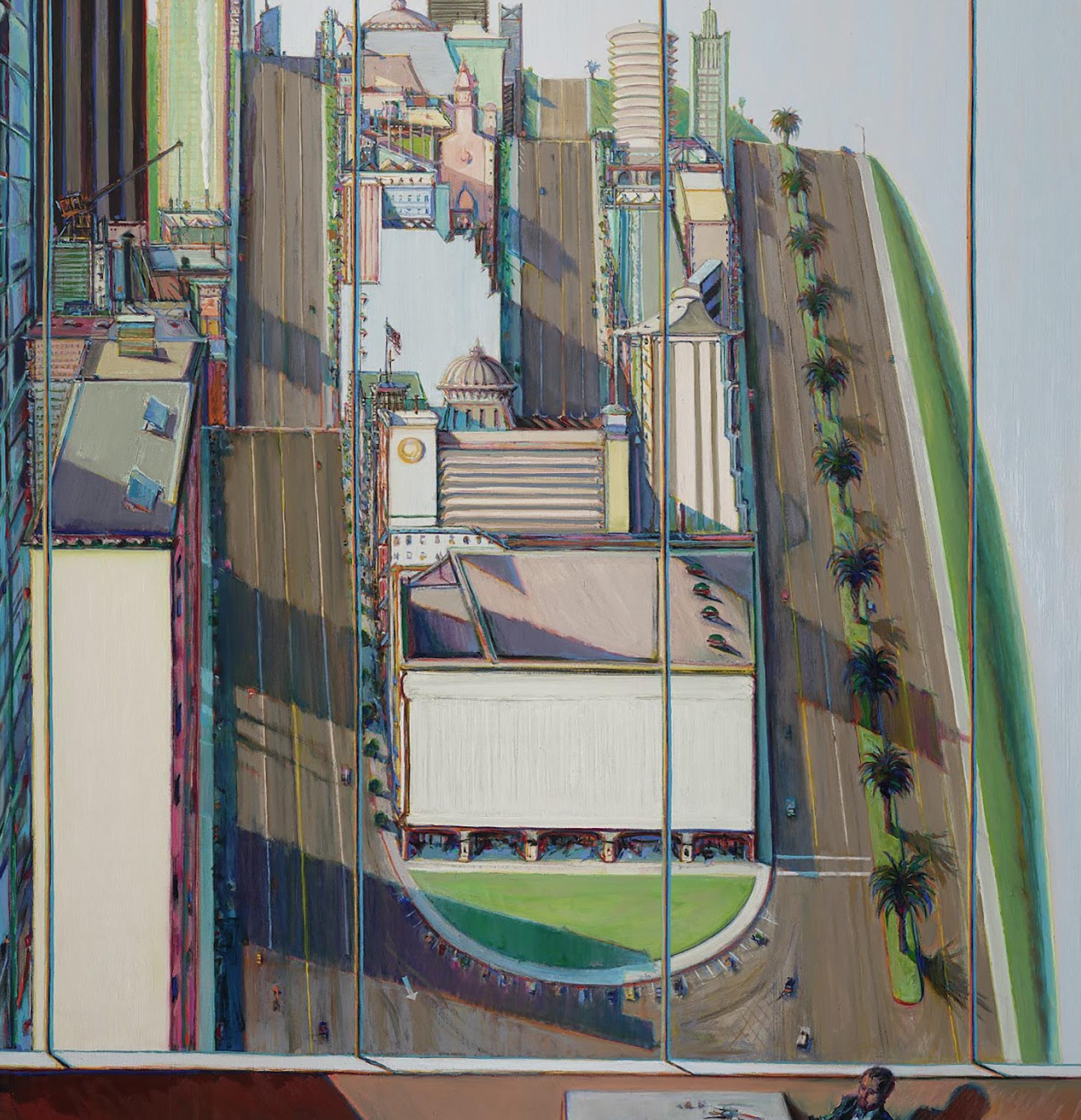
Wayne Thiebaud
THOUGH NOT NEARLY AS OLD AS AN ANTIQUE, NEW YORK’S MAISON GERARD HAS REMAINED AMONG THE CITY’S MOST PRIZED SOURCES FOR ANTIQUES (AND NEW DESIGNS) FOR 50 YEARS. BENOIST F. DRUT, OWNER AND PRINCIPAL, RELATES THE GOOD NEWS TO ART & ANTIQUES — ANTIQUES REMAIN RELEVANT AND DESIRED. INTERVIEW BY
DAVID MASELLO
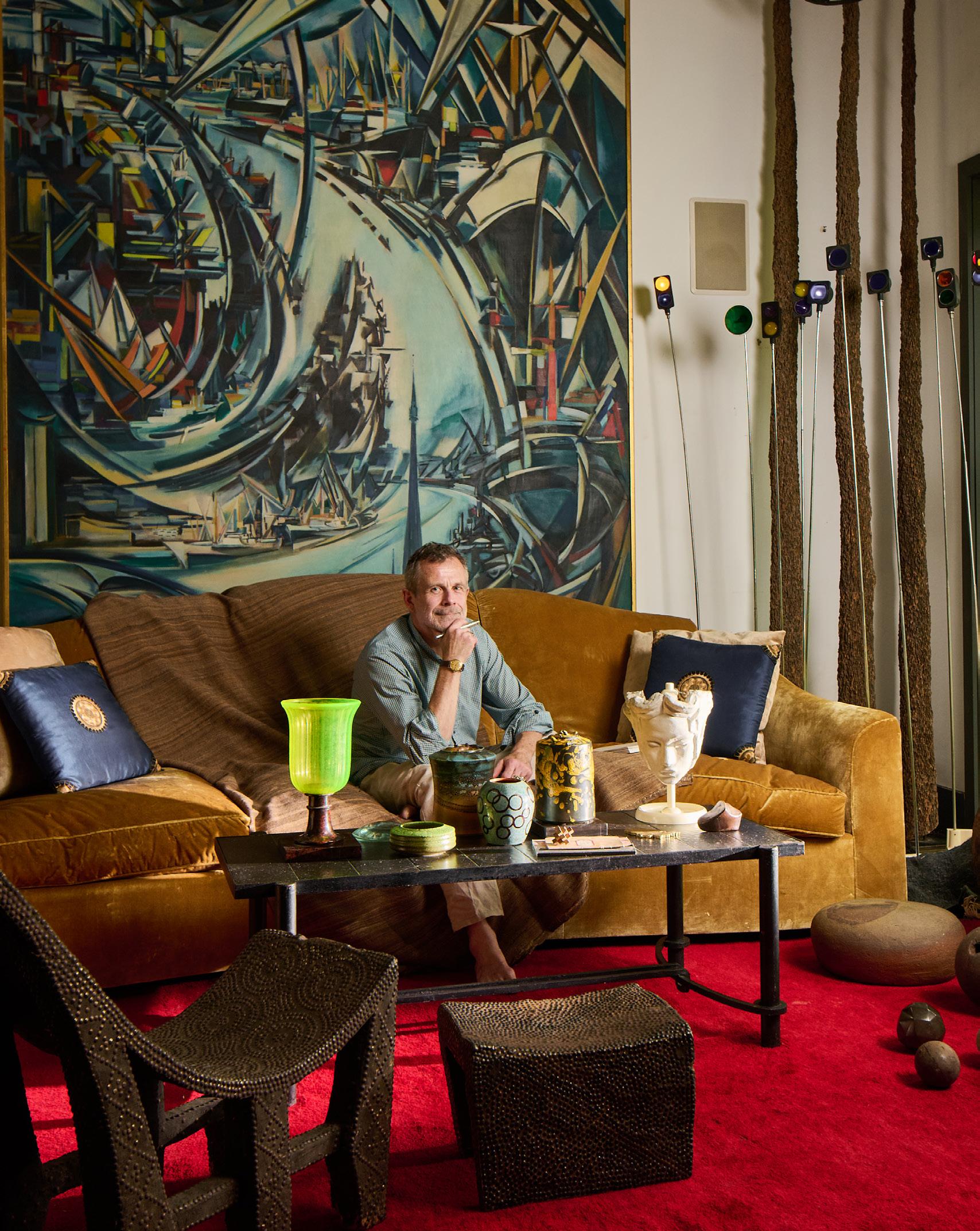
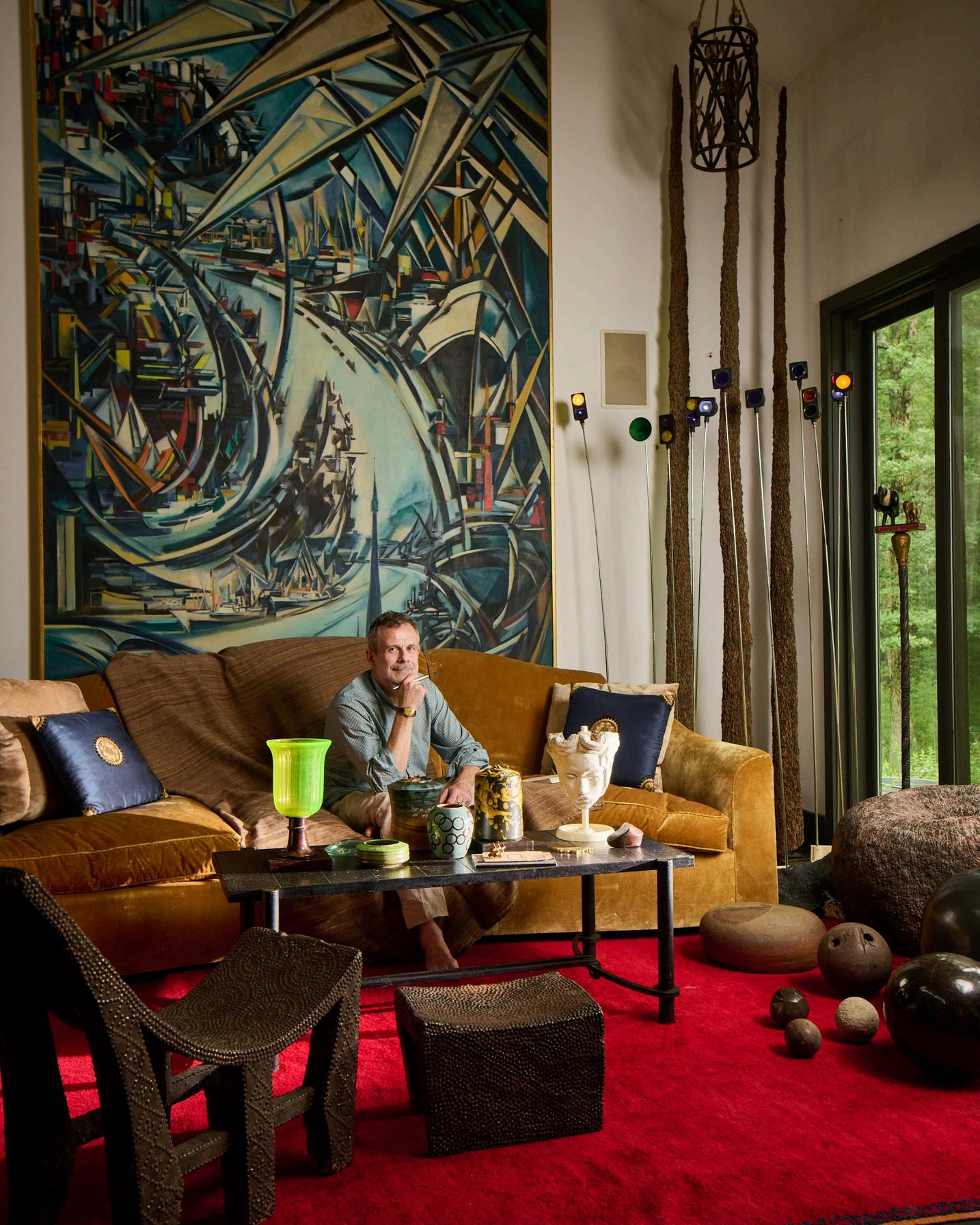
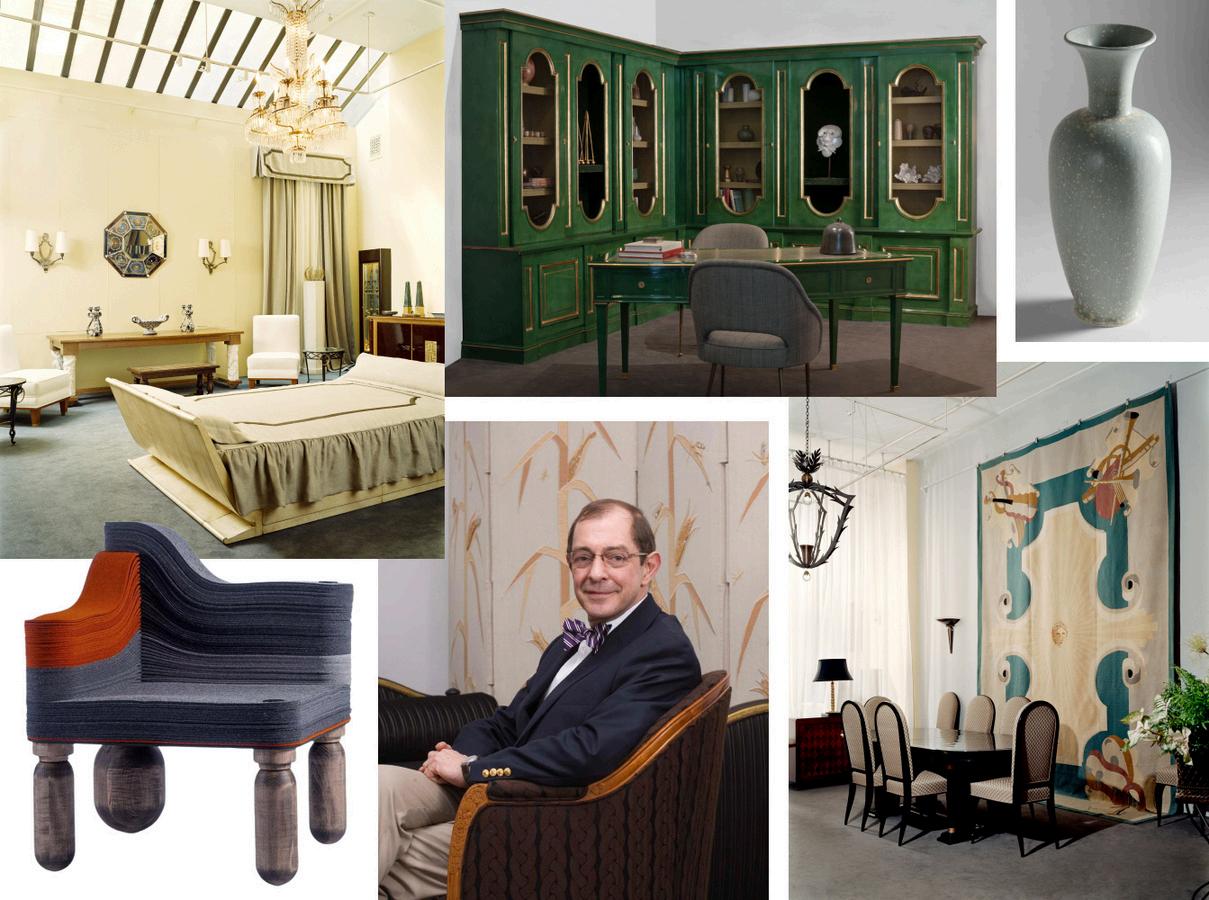
MANHATTAN IS made up of many mini geographies. East 10 th Street, between University Place and Broadway, for instance, is one such stretch of cityscape. Within that short distance, venerable antiques stores, featuring fine European objects and furnishings, line both sides of the street—with Maison Gerard among the most sought after. Yet, unlike the other nearby emporia, Maison Gerard features not only fine antiques, mostly French Art Deco pieces, but also designs by contemporary, working furniture makers and decorative arts artisans. The old and the new really do comingle there. And when Benoist F. Drut is on the premises, the experience of touring the shop is akin to being led by a passionate museum curator.
Why is this such a special moment for Maison Gerard, and what makes shopping at the store different than elsewhere?
It’s our 50 th anniversary, though I began my af liation with Maison Gerard in 1998. When asked what I do, I like to say, since I’m French, that I’m an antiquaire. Maison Gerard has always specialized in ne French Art Deco since the gallery was founded by my late business partner, Gerard (Gerardus A. Widdershoven), who died in 2020. Shopping can feel different here than at most galleries as no one on our team works on commission. I personally loathe it when I can tell a salesperson is pressuring me to make a purchase. We recognize that a sale is not the result of one individual person, but the combined effort of an entire team—this includes everyone from the art handler to the shipper, to the researcher. As a result,
it is a much more pleasant experience for the clients.
Since I joined the gallery in 1998, we have evolved our offerings to incorporate fine contemporary design from artists all over the world— from Paris to Avignon, Milan to Tel Aviv, Dublin to Brittany, from Morocco to Argentina. A happy melting pot. What’s really important to me is that we do not have anything in the gallery that I do not feel passionate about.
Tell us about the early origins of Maison Gerard.
Originally, we—and when I say that I mean Gerard also— were concentrating on French Art Deco, with the occasional Art Nouveau piece. In 2001, we introduced into our mix
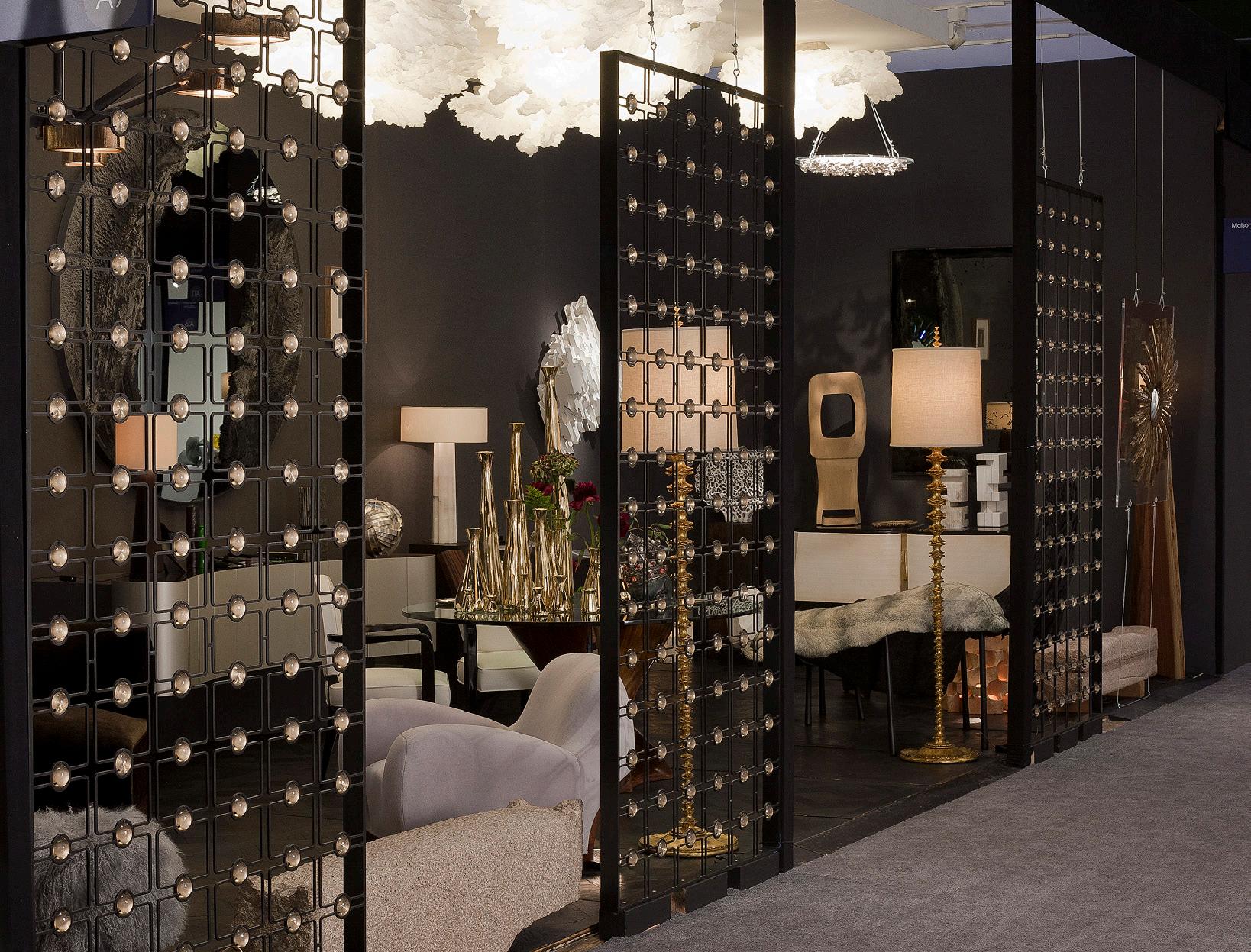
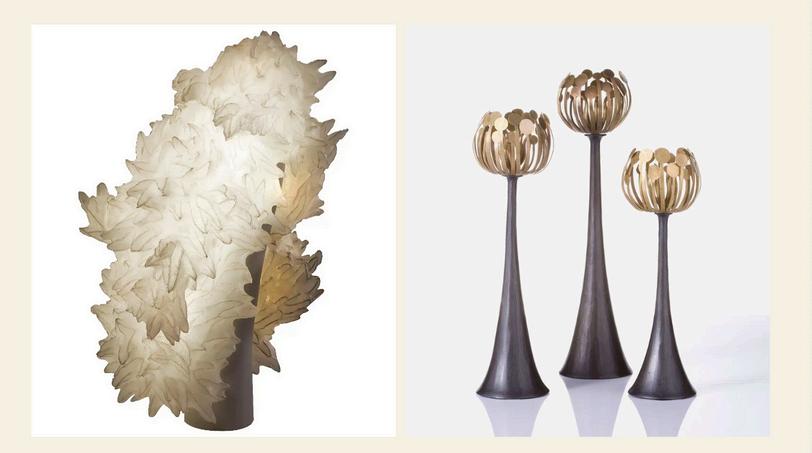
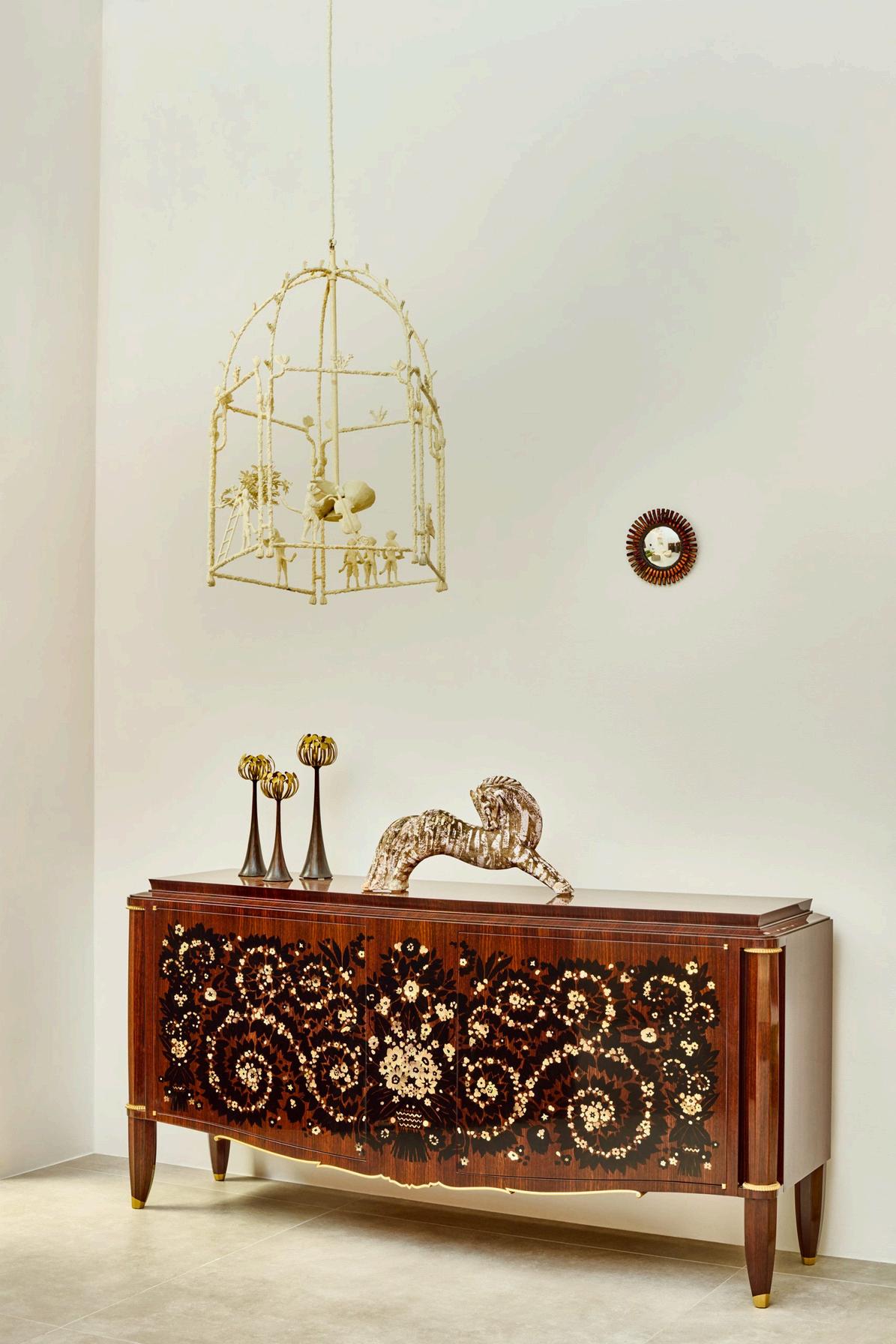
three pieces by today’s Hervé Van Der Straeten—a lantern, a mirror, and a pair of sconces. I felt that the ensemble created a dialogue with the other 20th- century pieces that Gerard and I had accumulated. Despite being from another time period and style, these pieces worked well together. Gerard was also always concerned that people couldn’t make the differentiation between reproductions and true antiques. Every object has to be a certain caliber, to stand the test of time, and should be a one-of-a-kind creation. At the time when we introduced contemporary, this was a very novel approach, completely unorthodox, but these pieces were very well received and led to the mix of styles, periods,

and mediums you experience at Maison Gerard today. What is your approach to collecting antiques?
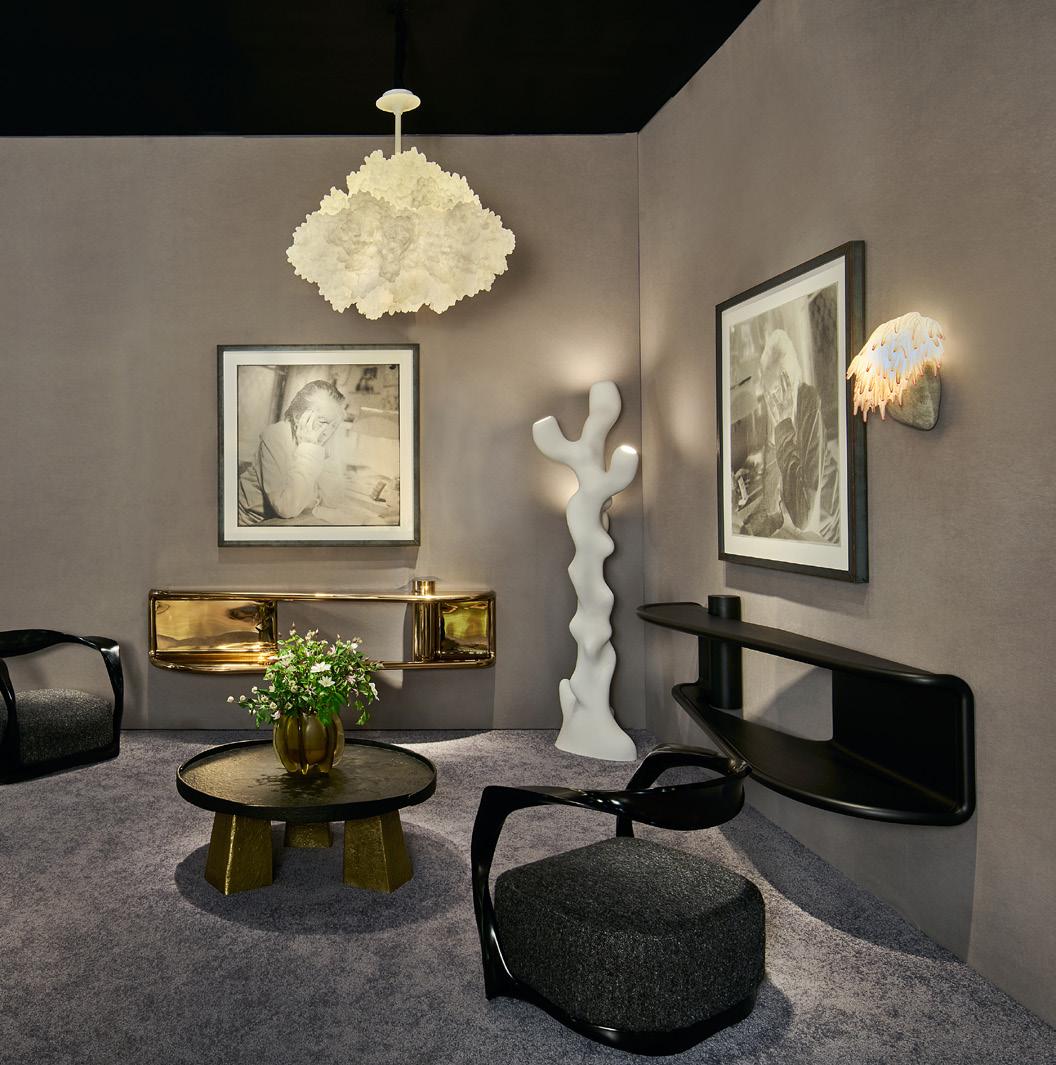
I am very curious by nature, which explains my eclectic taste and collecting. At home, I live with both contemporary pieces and antiques, some far older than Art Deco—my rst love—as well as enduring love for 18th-century French furniture. Collecting, it often starts with a coup de foudre (“love at rst sight”), followed by an obsession that pulls at you. When I am collecting for the gallery, there is a thread that connects the works—I look for materiality, rarity, and original design. I lean towards artists and works off the beaten path. I get excited when I go after pieces that are not necessarily the taste of the moment, but I know they are special. I am
kind of excited by the underdog, the not-so-known artists, the unsung heroes of the design world. I am more interested in exploring and collecting works made with exotic materials, ones that push the limits of a material, than I am in buying the safe and expected. I follow my instincts. I get so much pleasure out of showing something unusual. It’s not the value of the piece; it’s the beauty of the object that drives me. How old does an object need to be to qualify as an antique?
Technically, 100 years old. Not until recently, I guess, could we officially consider French Art Deco, our specialty, antiques! But Deco celebrates its 100 th anniversary this year. In 1925 The Exposition Internationale des Arts Décoratifs et Industriels Modernes was

held in Paris. The creativity and change that occurred in the 1920s in France was a reaction to the previous decade— especially after the rst World War with its revelations that men could be, and act, so terrible to each other. It was a celebration of living and a prosperous period; changes in society were happening—women were driving, they could vote, and even sport boyish hairstyles. It was a very glamorous time, a happy time and a joyful time for Paris in 1925. The works shown at that fair revealed we could build a better world. In 1925 there were explosions of music, art, jewelry, design, and architecture. There was a sense of freedom, fun, and a more adventurous society.
Two iconic examples that stick in my mind from this period.
In 1927 Josephine Baker, the star of Paris, walked on the Champs-Elysées with a leopard on a leash. Then, in 1932, the SS Normandie was launched; there has never been another ocean liner as sophisticated and beautiful.
What is the difference between Art Deco and its predecessor Art Nouveau?
Art Deco was a reaction to the excesses of Art Nouveau. Art Nouveau was about the imitation of nature. At the time, there would be entire environments
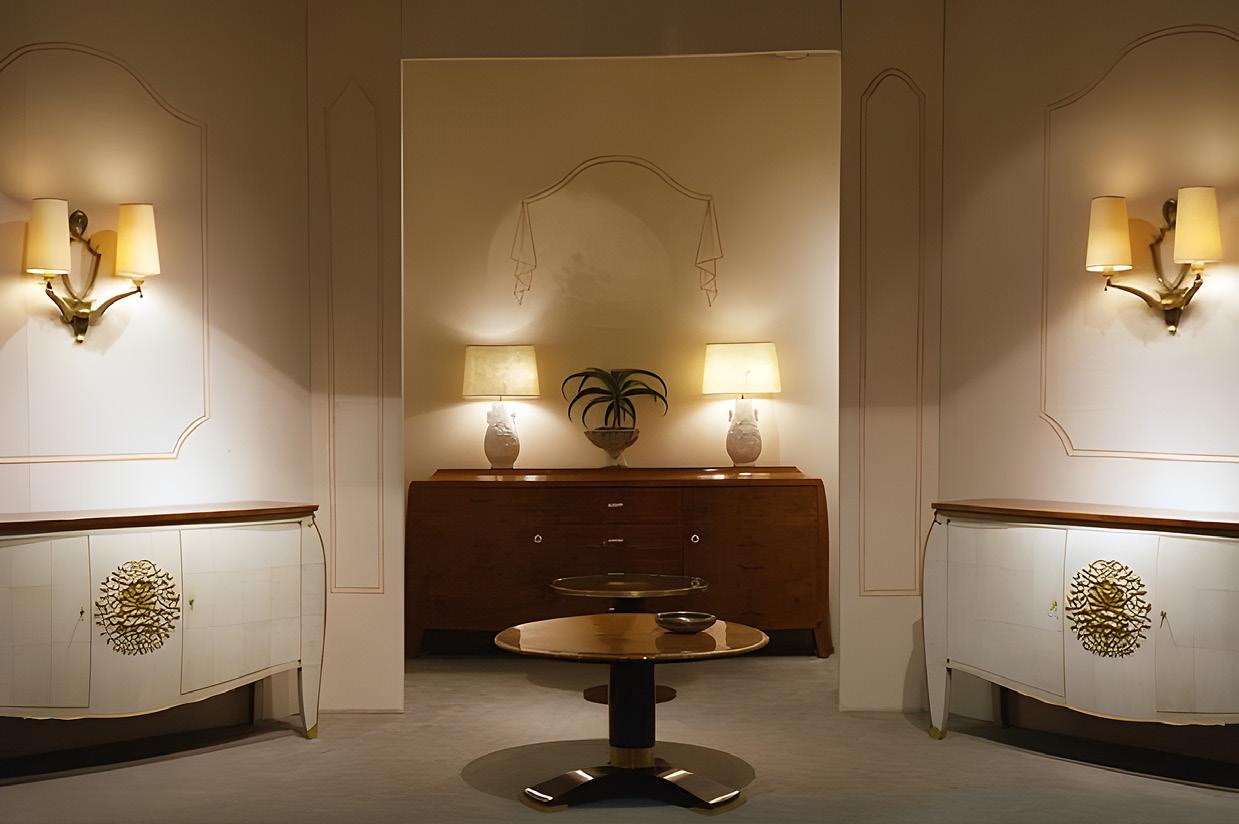
that were completely designed in Art Nouveau style. The individual works were intricate designs and very time-consuming to make. It wasn’t easy to replicate carvings of nature in wood or bronze and therefore very costly. In France, the Art Nouveau lost its appeal very quickly and was dismissed, referred to as the “Noodle Style.” Art Déco represented a simpli cation of that design vocabulary. Once the Art Déco style emerged, nature wasn’t sourced as much. The geometric patterns and clean lines that defined Art Déco were much stronger and had broader appeal.
What’s an honest assessment of the state of antiques?
For the longest time, 18thcentury French antiques dominated the world of antiques. If you were successful, you would furnish your home in 18th-century French antiques. Overnight this market totally collapsed, approximately 30 years ago. Art Déco never suffered this fate. The style lends itself to
the timeless and classic. It does not look out of place in a modern environment: it quite nicely works perfectly with contemporary art and design. My rst job in New York was working with Roger Prigent of Malmaison, the famous antiques dealer. One of his mottos was: “Either follow the trend or you create it.”
So, the advice to buyers who may be insecure about which antiques to choose?
Buy what you love. Not everything has to be a masterpiece. Follow your instincts, and follow what you like. Stop asking 15 people for advice about whether to buy something or not. It’s your home. You make the choice. The way you think about how you dress your home should be given the same con dence and treated the same way you make decisions about what to wear. If you like how you look, and if you like how your room looks, you’re in the right. And don’t be afraid to ask questions of a dealer. Be curious, seek answers.
To what extent can an item be xed or restored so that it remains an antique?
Pretty much everything can be restored. We take everything on a case-by-case basis. The more valuable the piece, the less invasive the restoration should be. As Gerard would say, “If you need to do so much restoration and transformation to a piece, why bother?” It will not remain the same piece it started as. Don’t buy a piece that needs to be enhanced; an item of furniture needs to have good bones to start with. My advice: Don’t buy a piece that needs to be enhanced.
Art Deco furniture that has a veneer will usually require what we call a French polish. That polish will likely have to
be reapplied, but that does not at all take away from value or that it’s a true antique. To the contrary it will add to the price tag, as the polish will revive the beautiful veneer.
What does the inclusion of antiques accomplish for the interiors of a home?
Just like a brooch added to your jacket or hat, antiques give your room personality and character. Adding an antique creates a room with its own DNA. It elevates a room instantly. Antiques create an immediate dialogue with any other elements in a room. People notice what you have. You notice what you have. Antiques carry a history that cannot be ignored, and it’s fun to relate those stories when you know them.
When and how did you come to love antiques?
It began with my mother, who could never conceive of buying a new piece of furniture. She had many antiques dealer friends in Paris and other cities in France. By the time I went to boarding school, when I was ten, I came home on weekends and begged to go see her dealer friends. Already, by then I had multiple little collections of small objects.
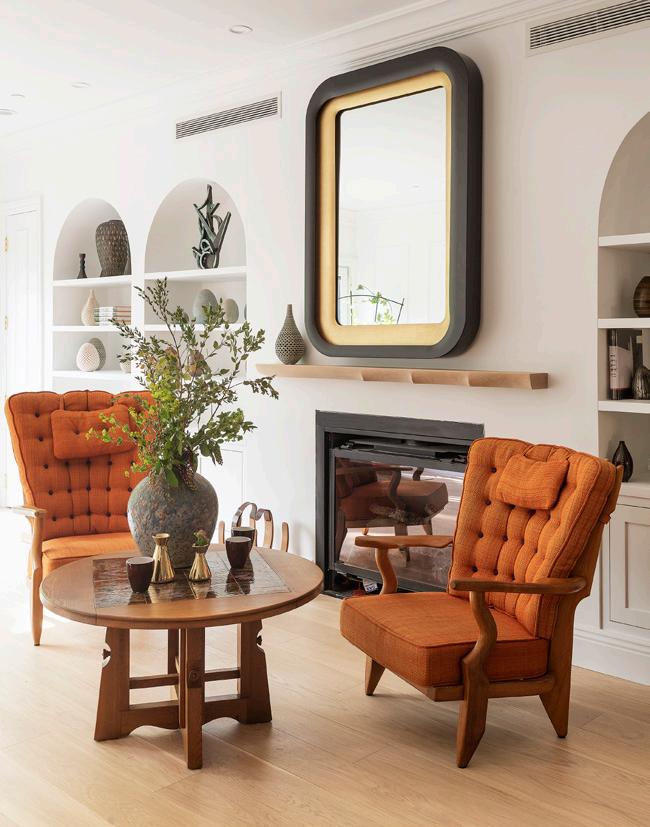


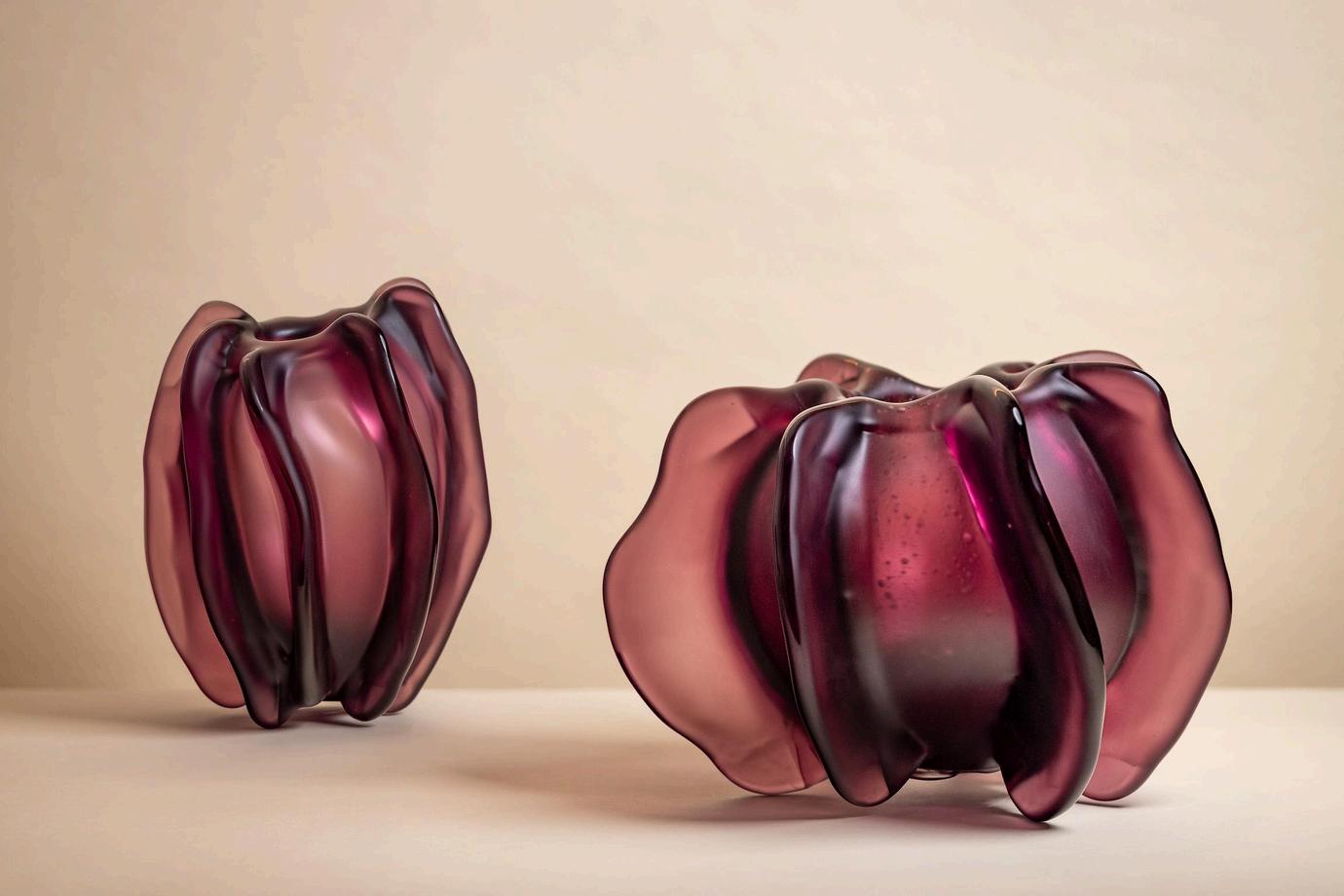





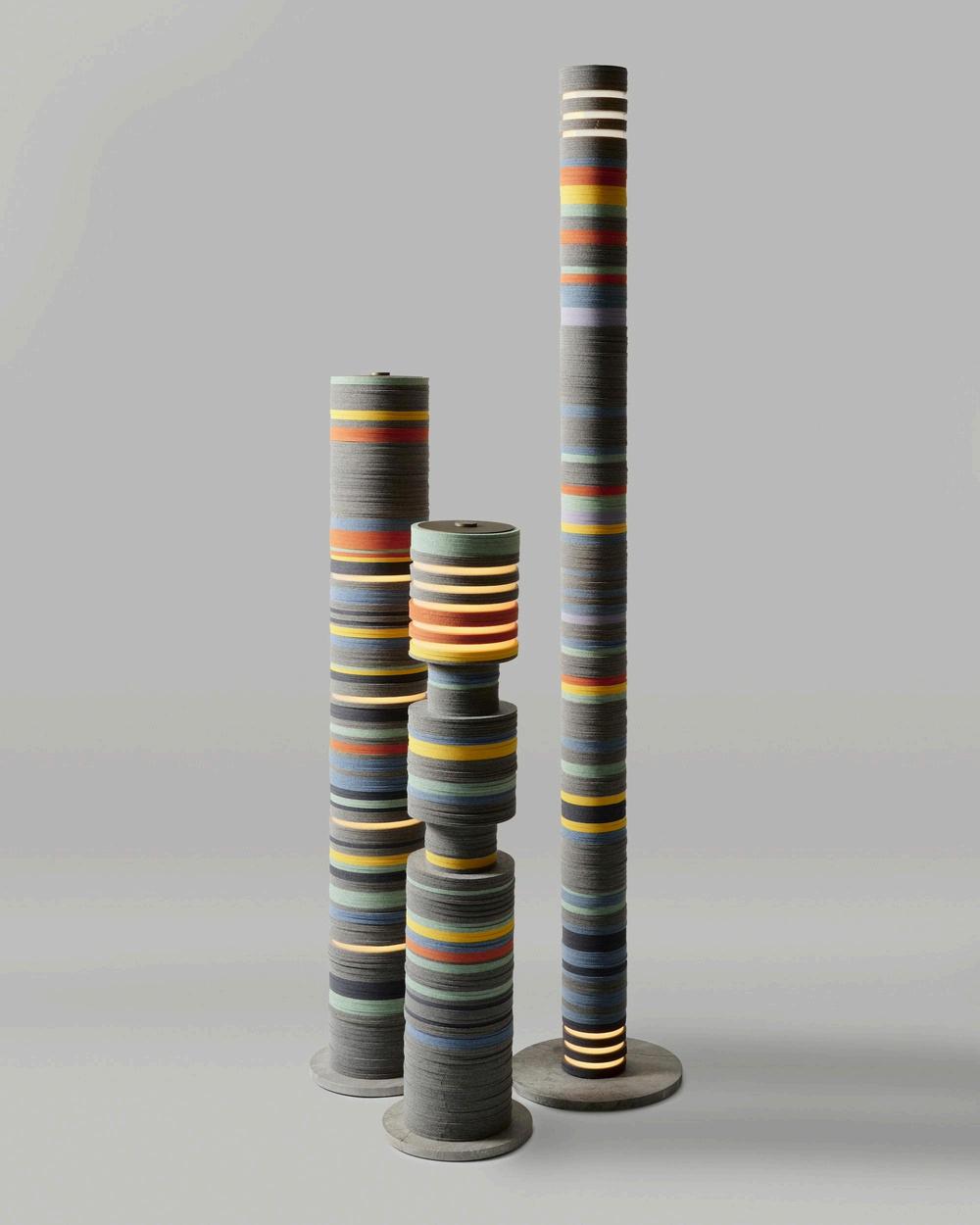
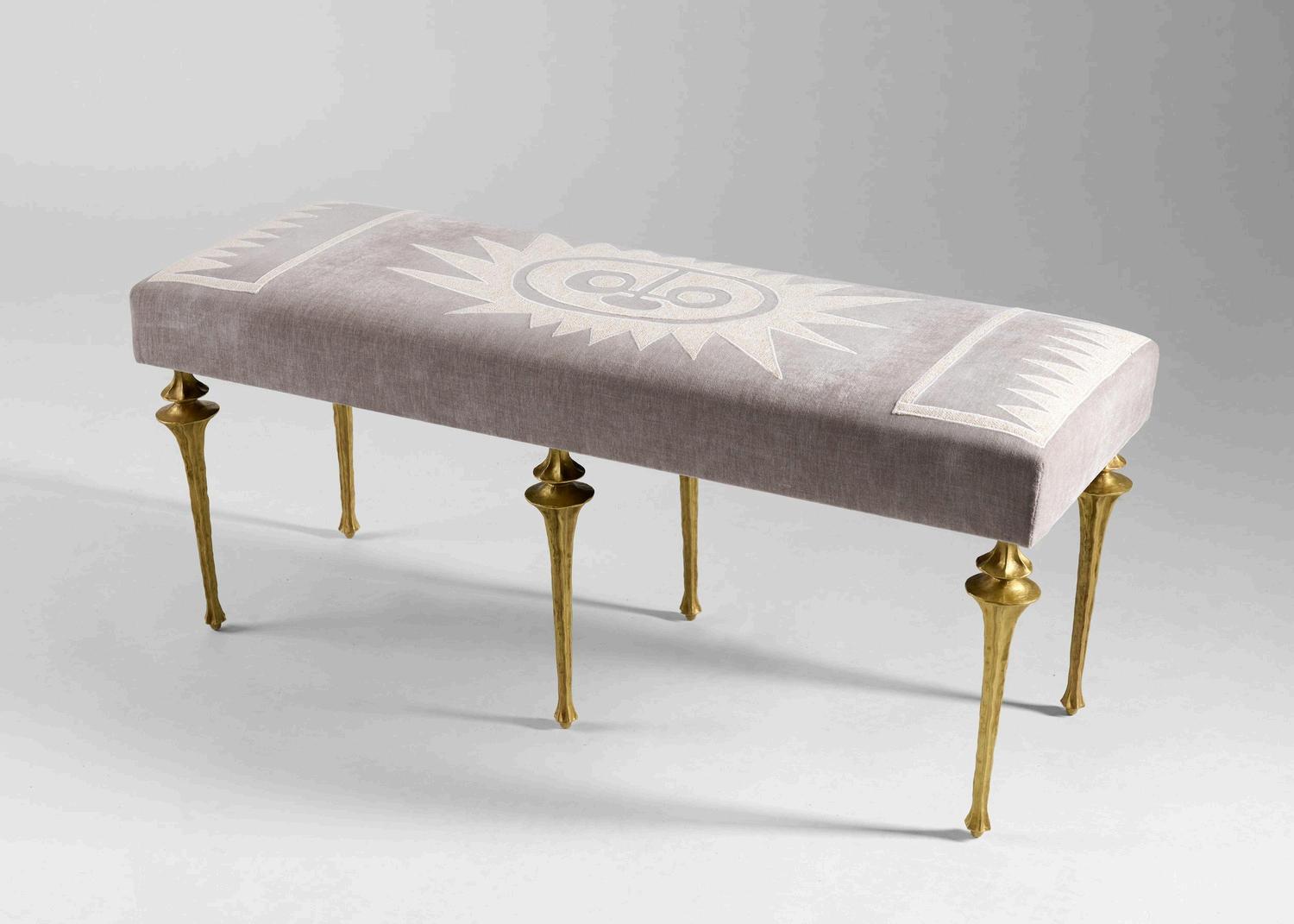



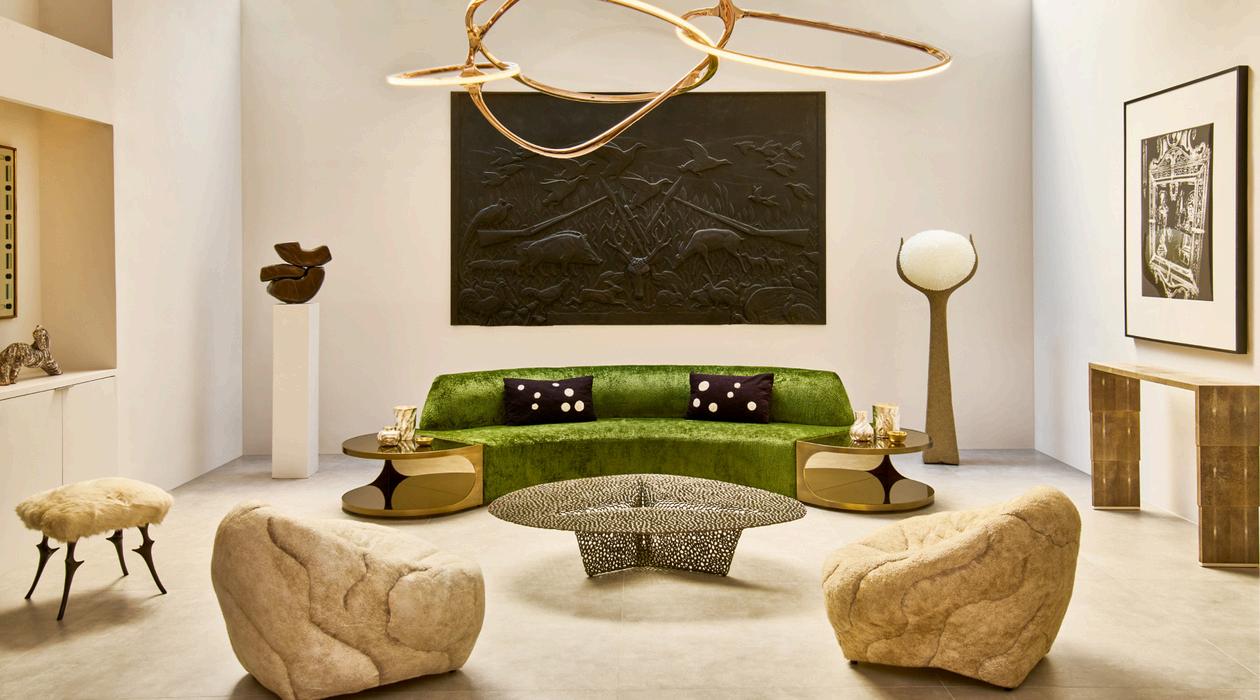


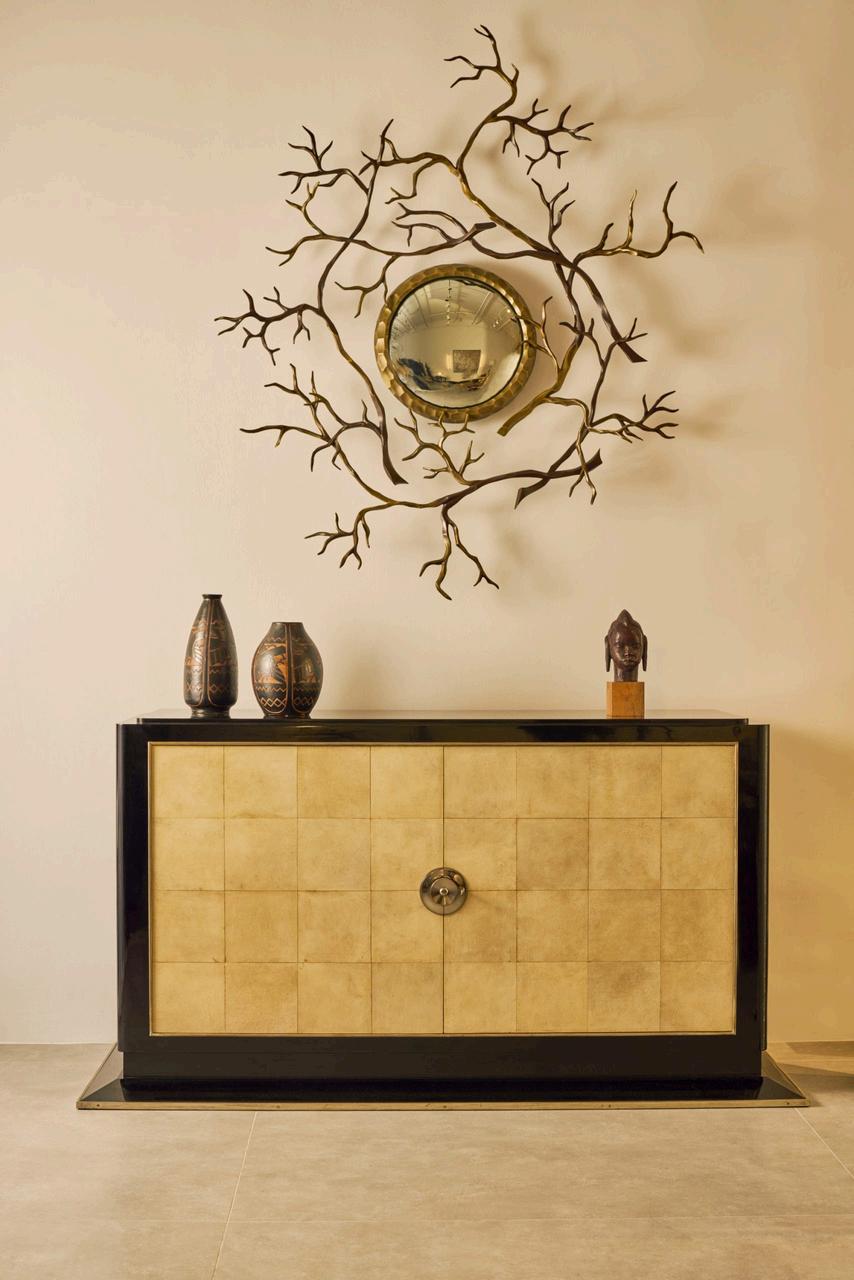
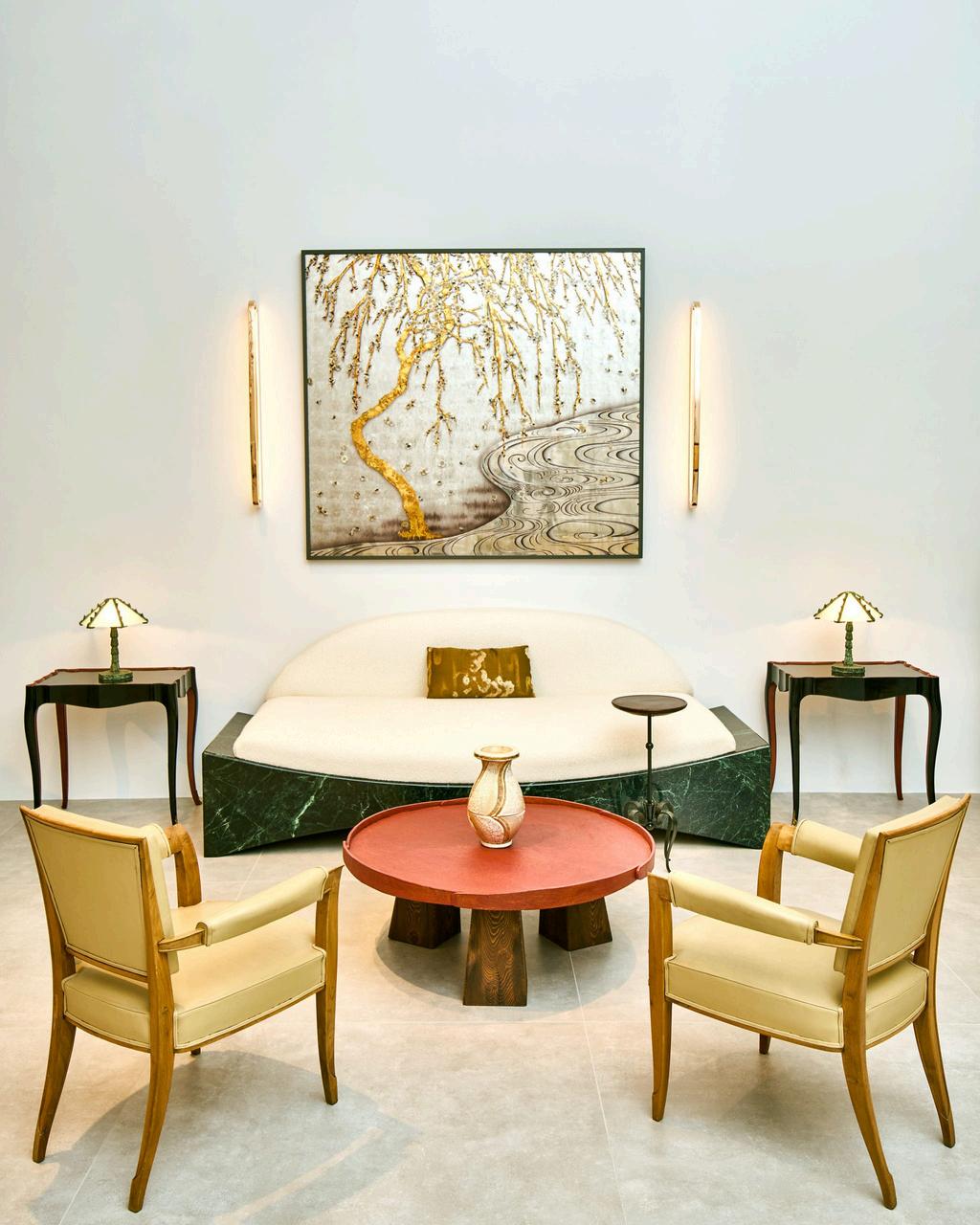
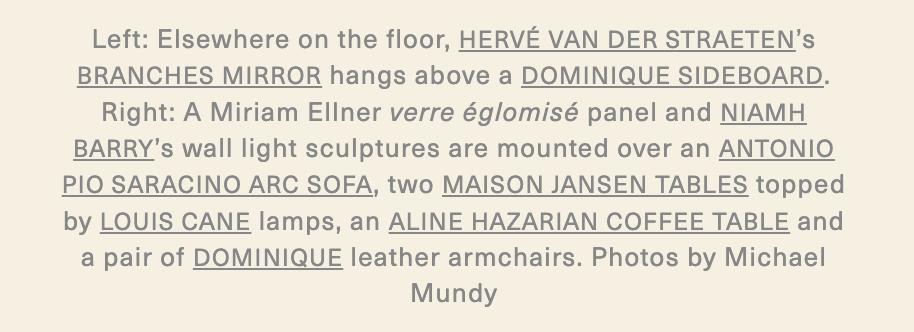
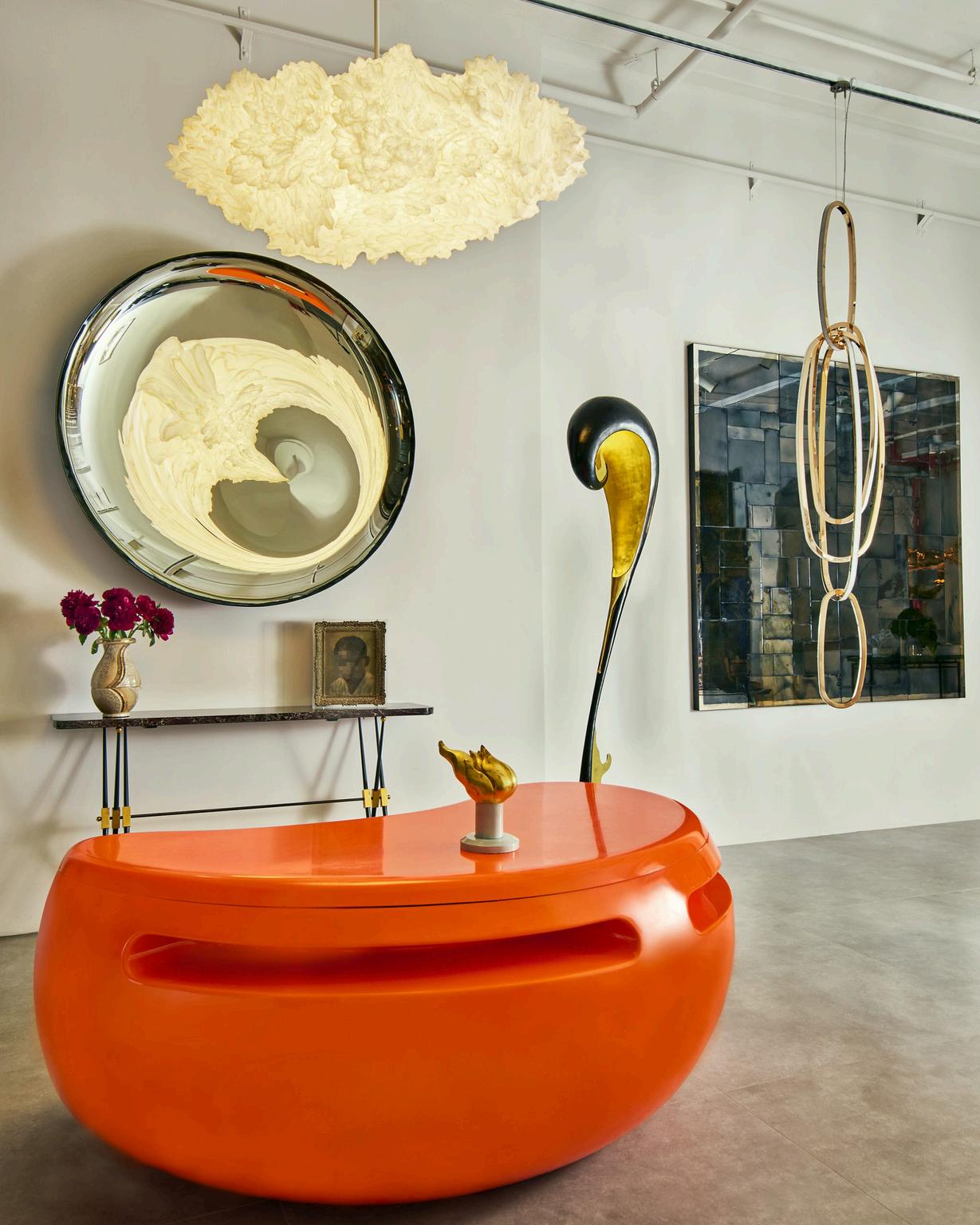







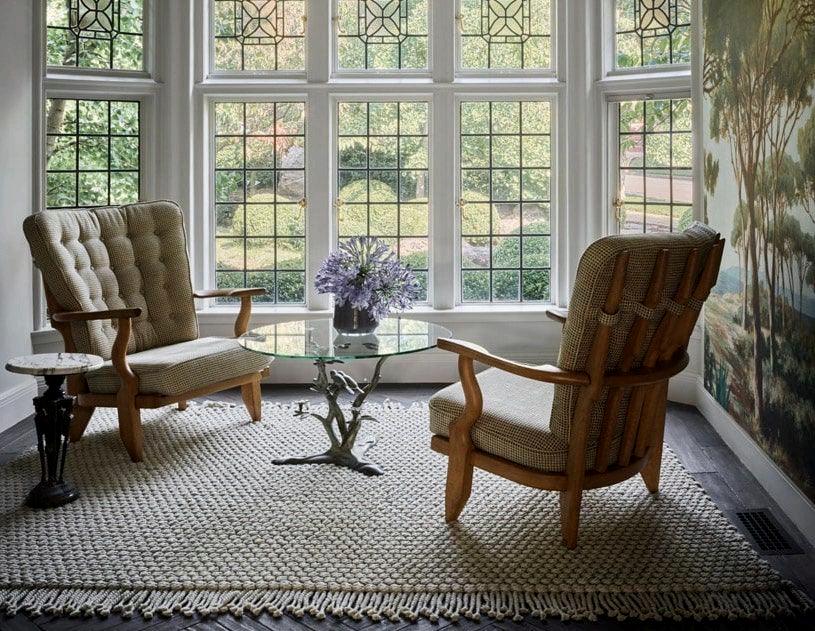



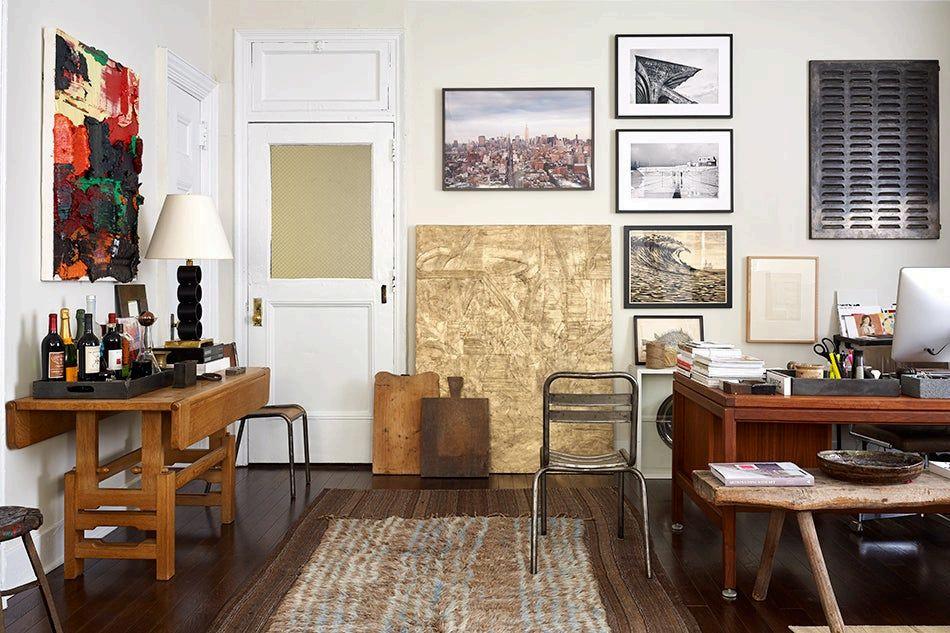
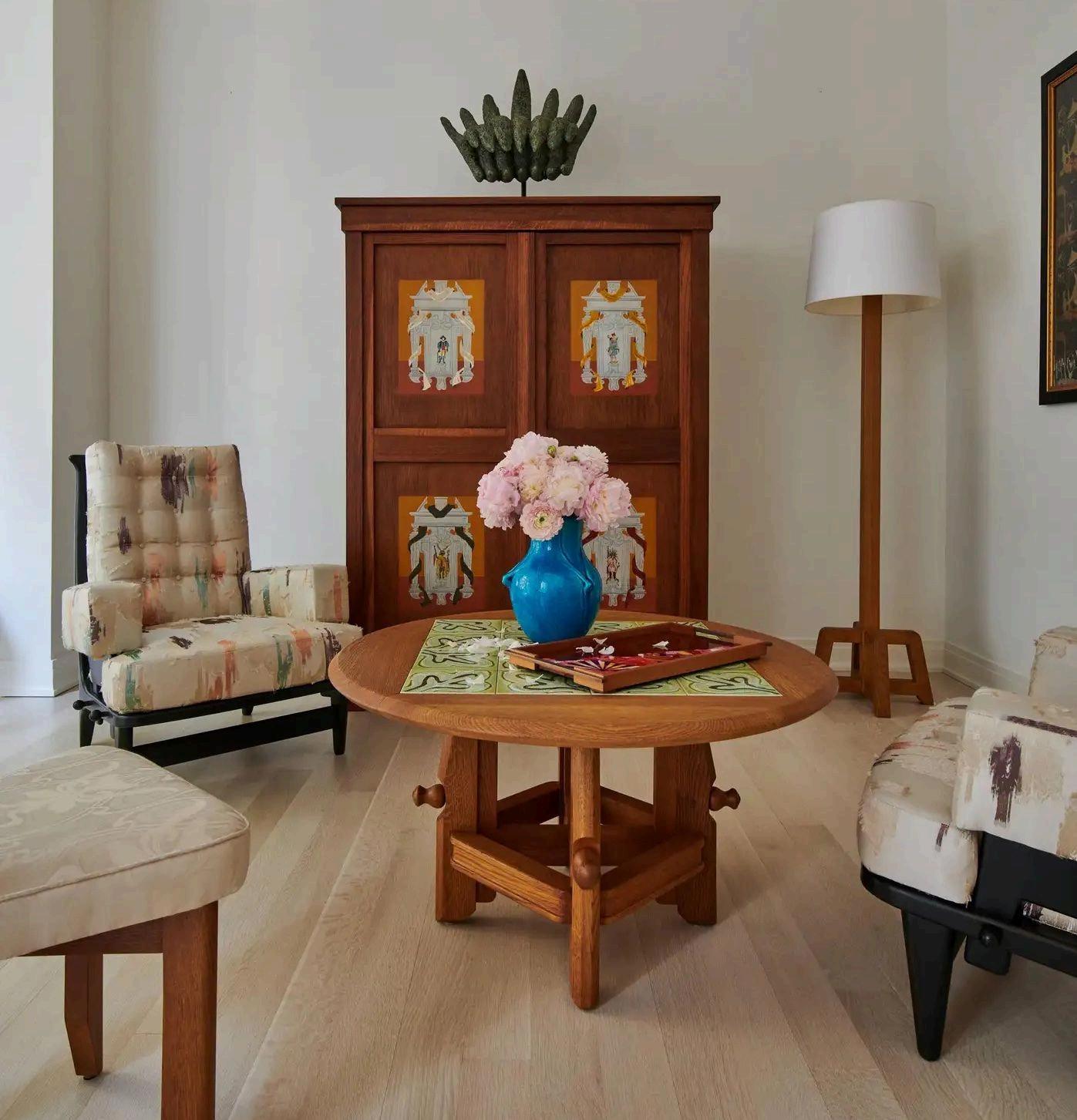



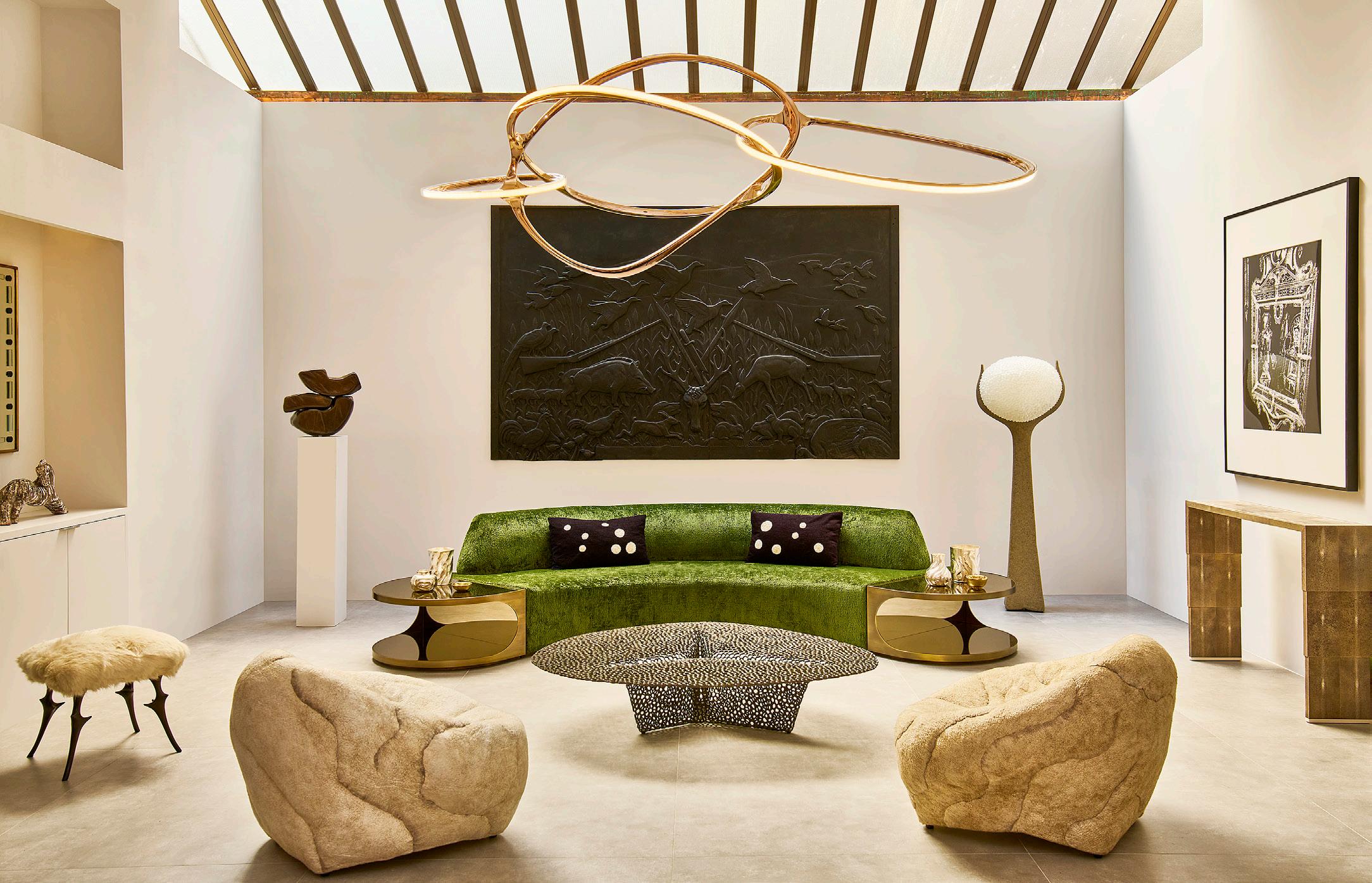
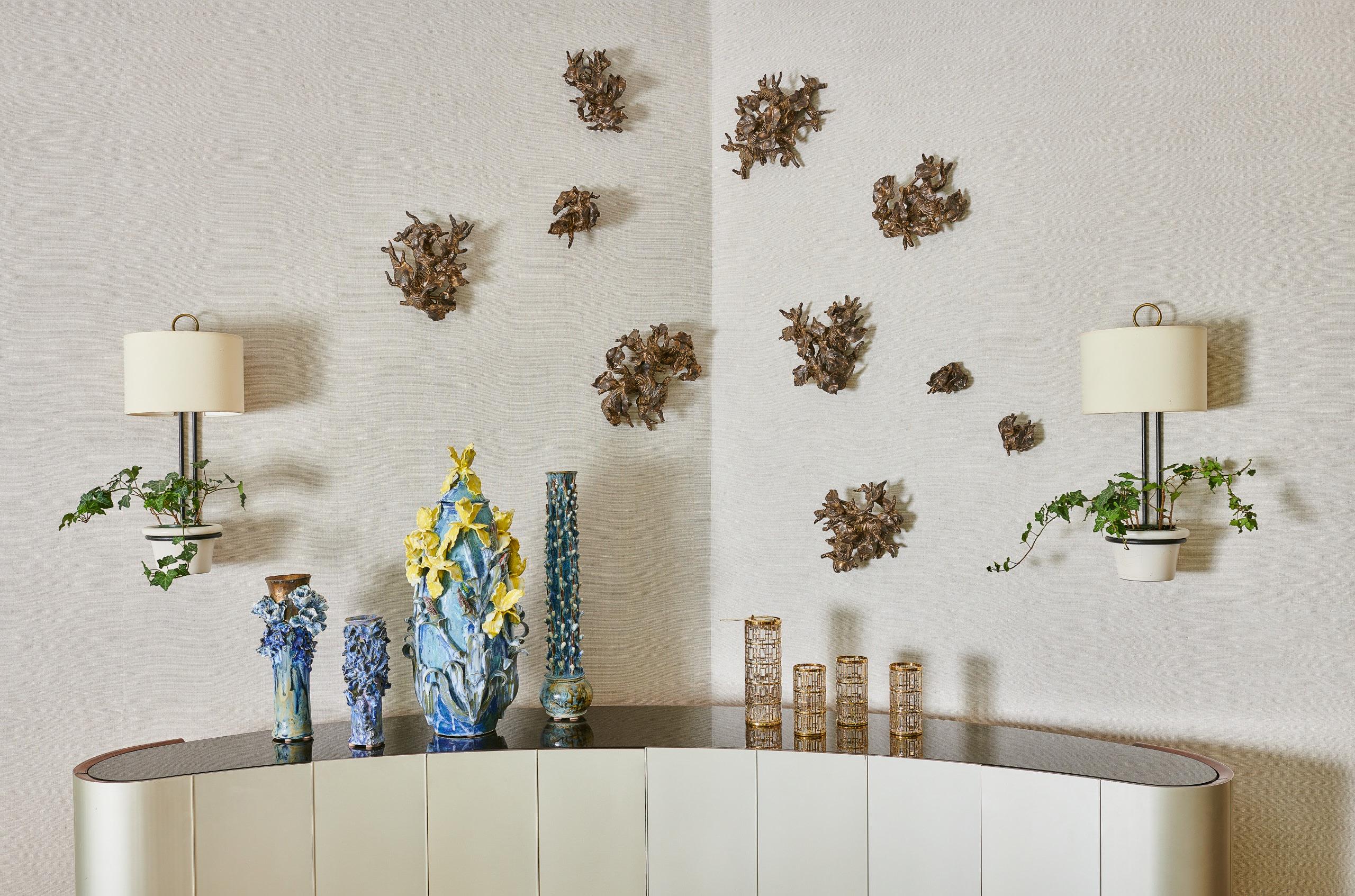
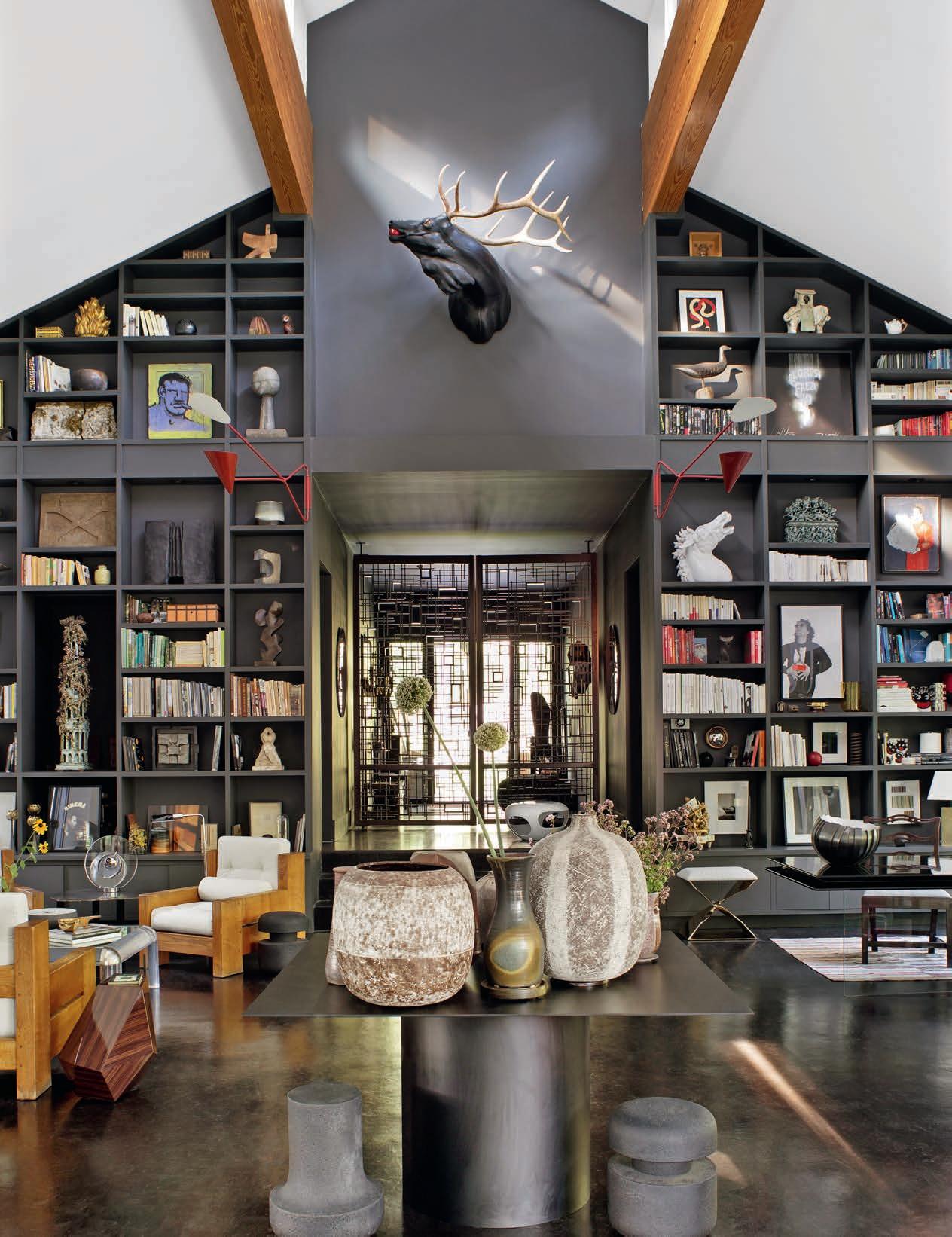
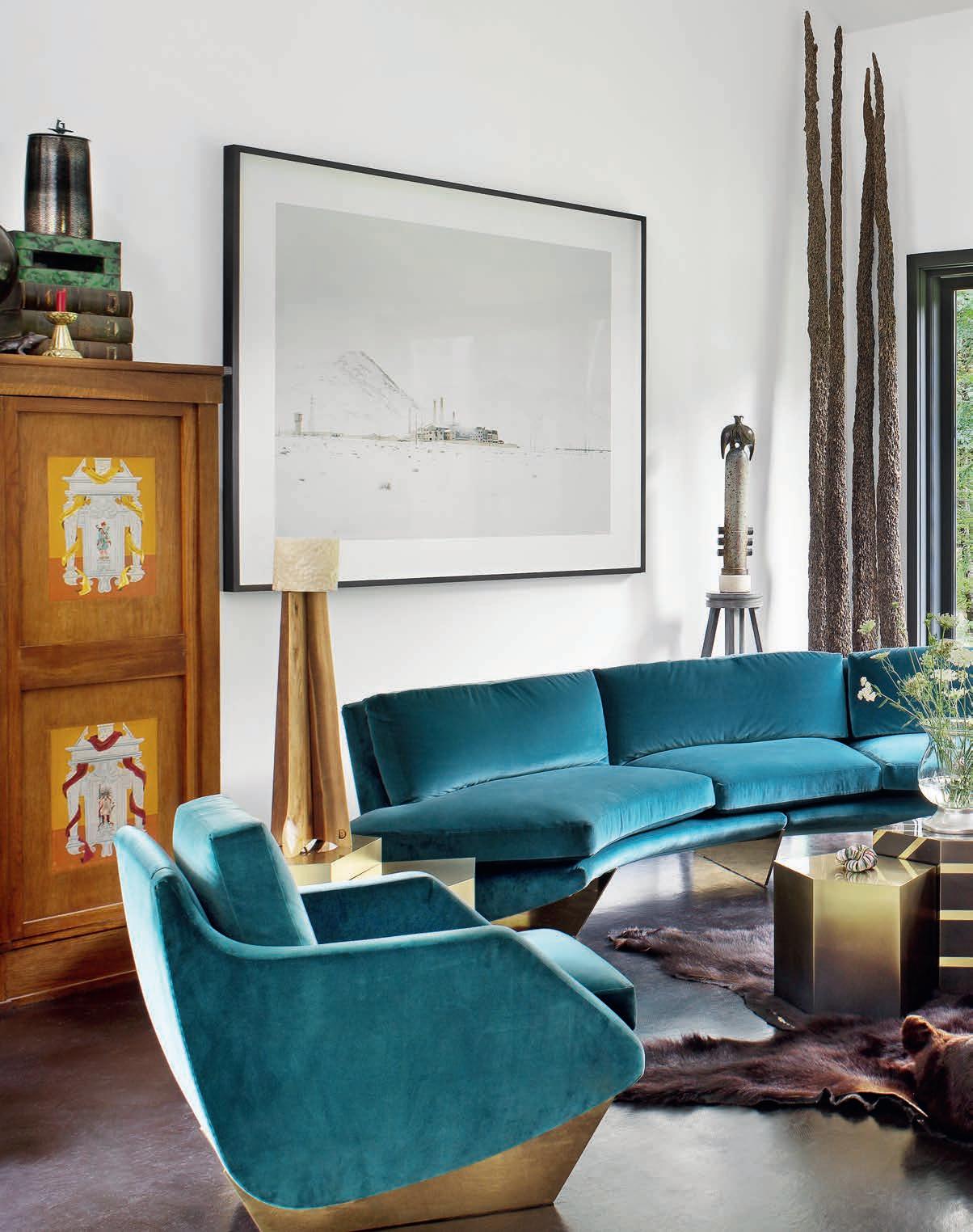
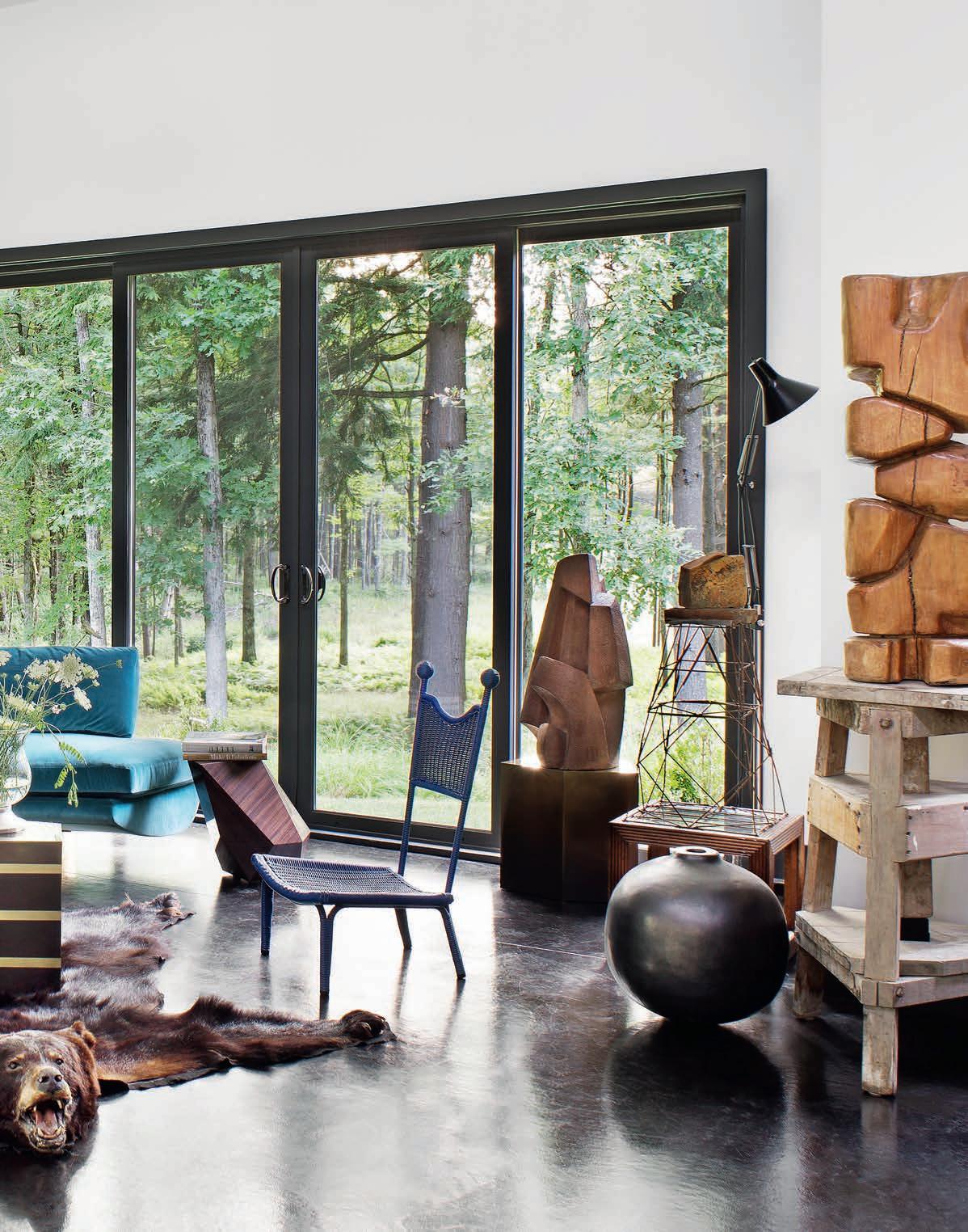
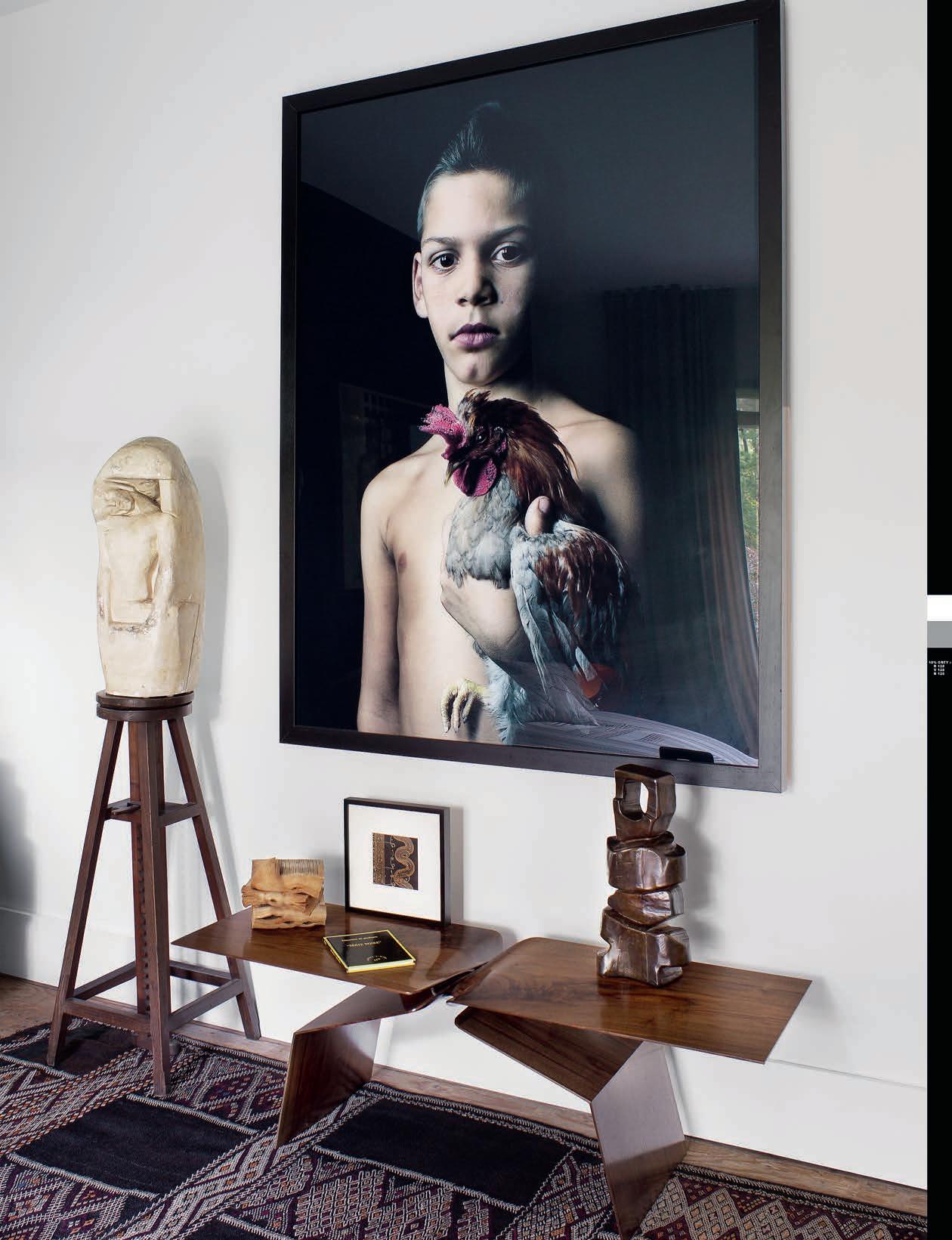
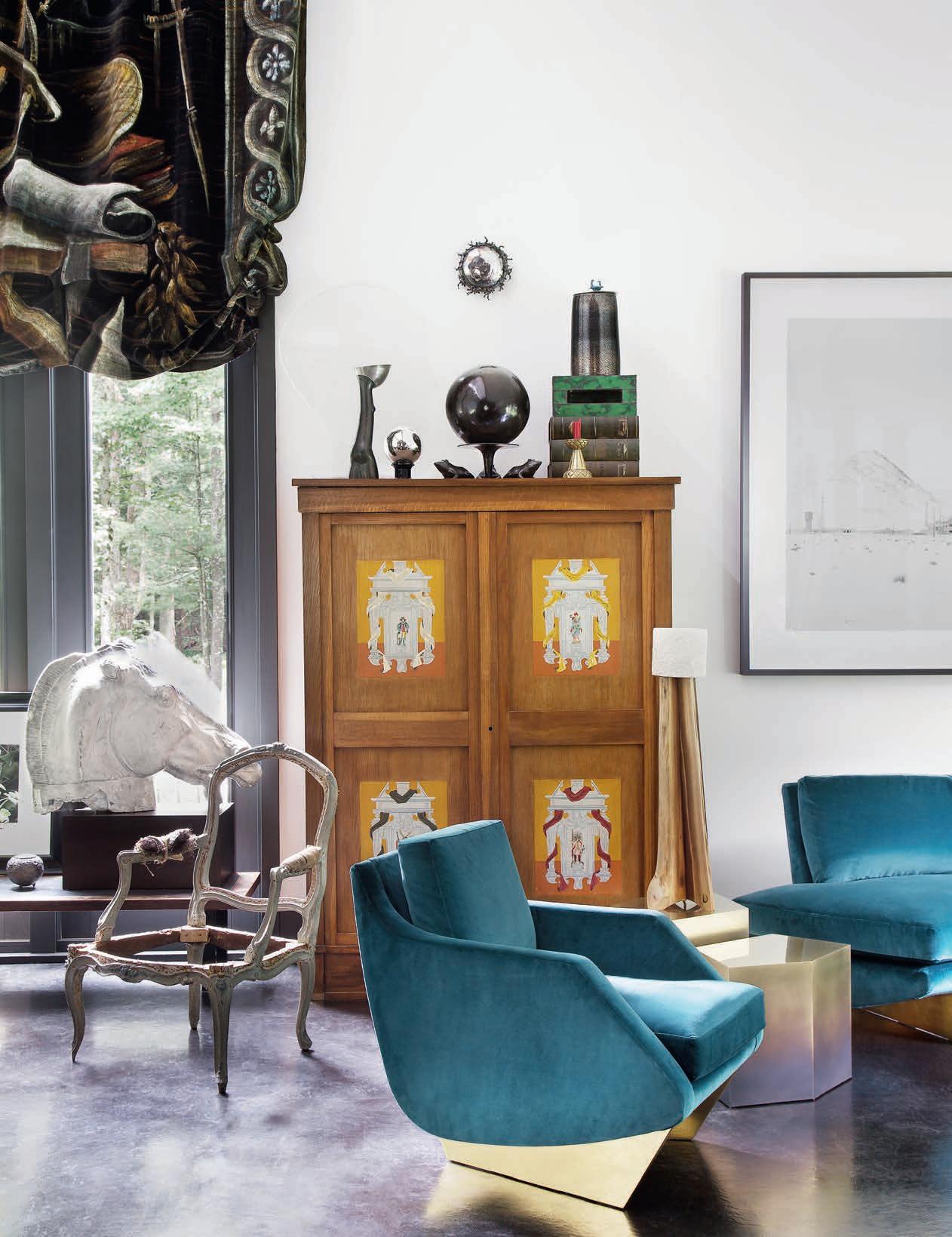
The lofty unit features furnishings and artworks from gallery Maison Gerard.
By HELENA MADDEN
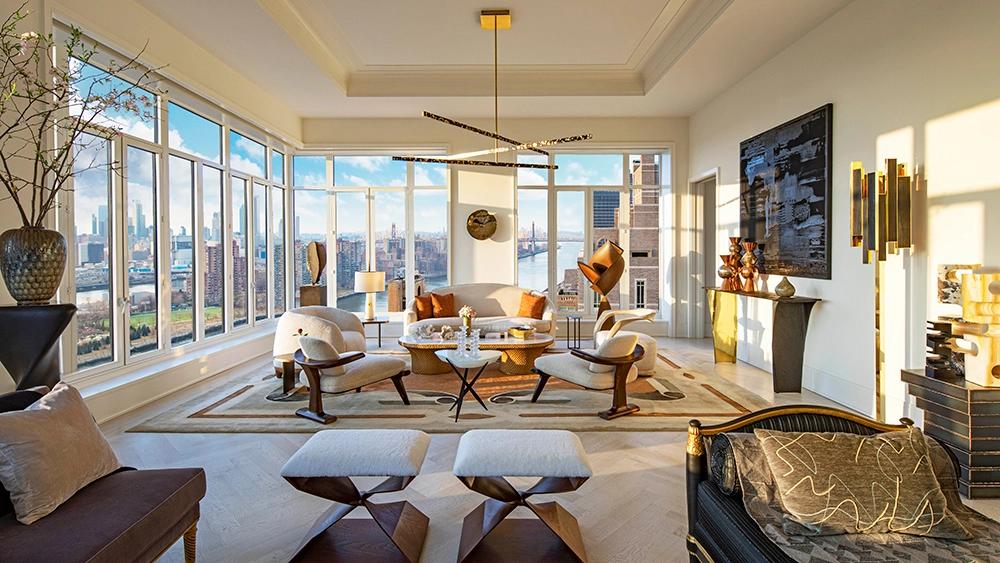
Living in New York City is great, but the constant hustle and bustle isn’t for everyone. Those looking for a more suburban escape from Manhattan proper typically decamp to Brooklyn or Queens—a new condo building on the Upper East Side looks to remedy that. 40 East End is located at the farthest corner of the UES, where all the streets turn into the esplanade. Since there’s little traffic, it feels like a quiet suburb that’s still within easy commuting distance of Midtown and beyond. Those looking to upgrade to somewhere a bit more low-key can move in to the best unit in the building: A $25.5 million penthouse on the 18th floor.
The 6,000-square-foot residence is furnished by Maison Gerard, a partnership that gives the art-and-design-gallery a showroom footprint further uptown, in addition to
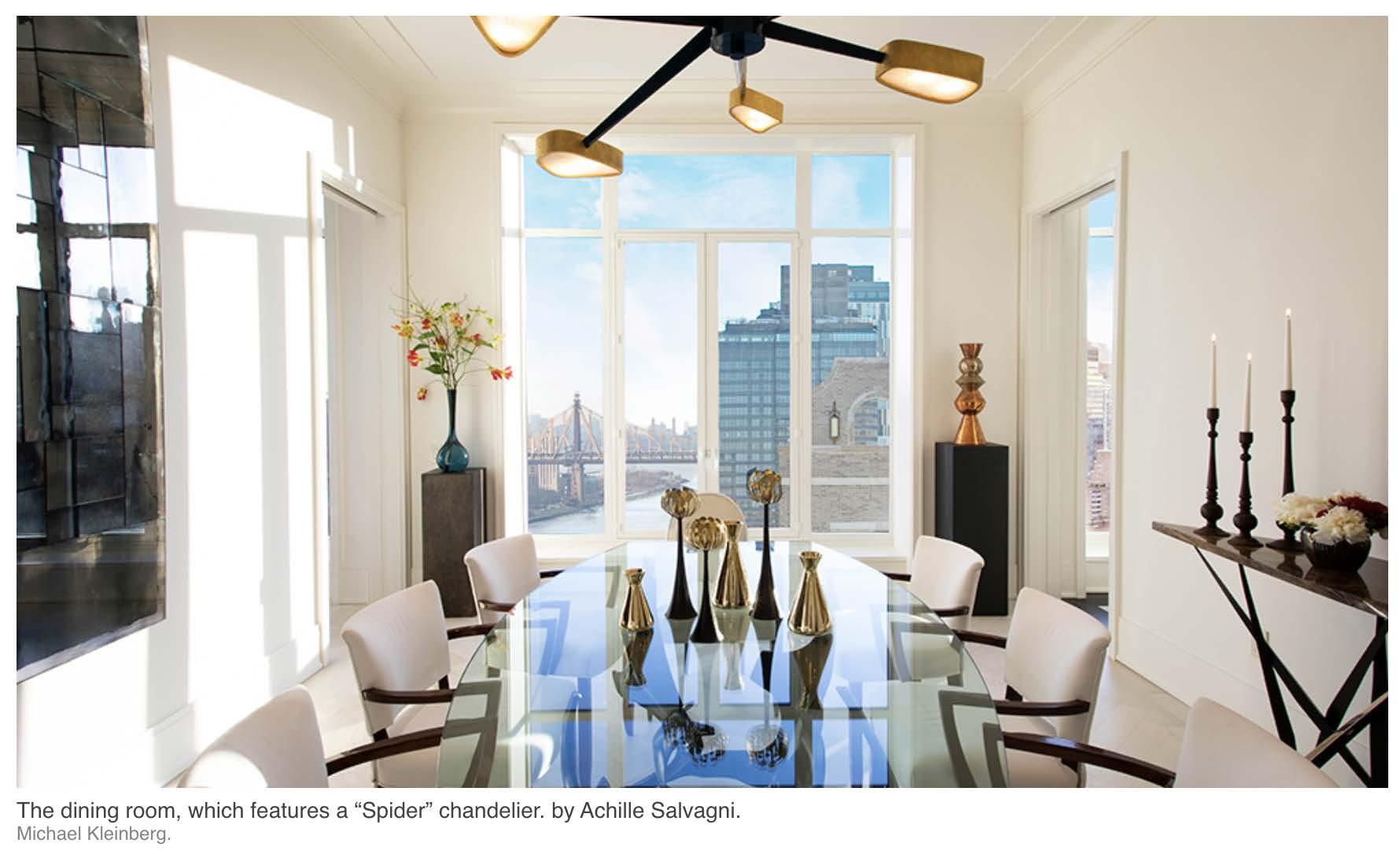
its pre-existing location near Washington Square Park. Highlights include sightspecific light sculptures by Douglas Fanning, chairs and chandeliers by Achille Salvagni and wooden dining chairs by Maison Leleu, to name a few. Interested buyers can purchase these pieces separately and keep theme exactly where they are now.
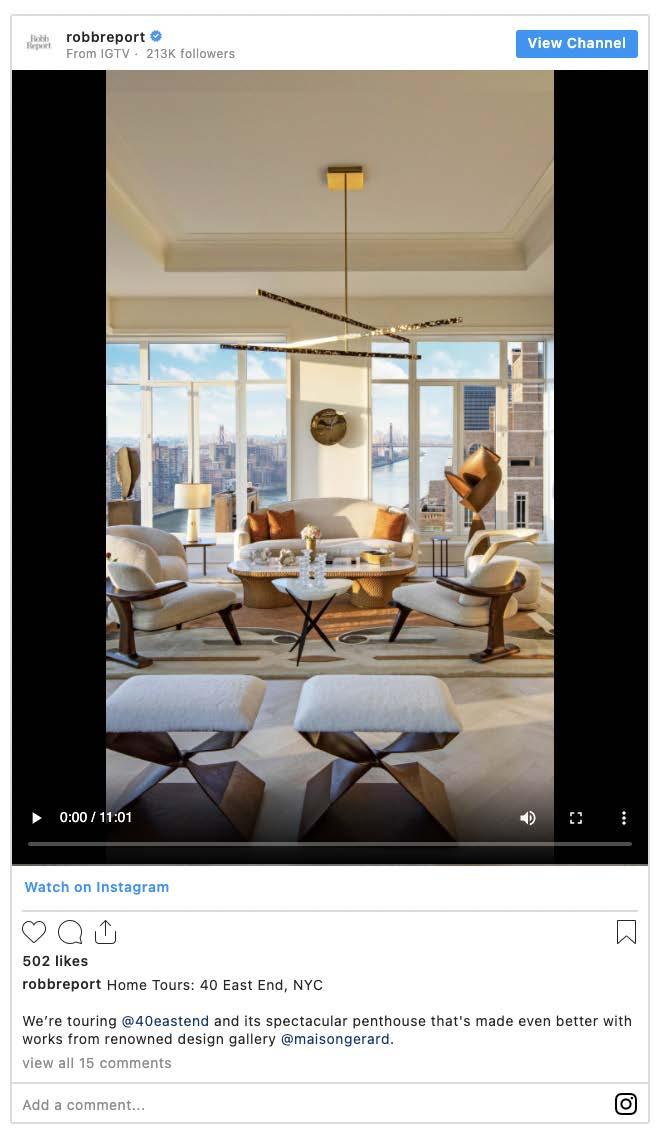
Want a closer look at the penthouse? Robb Report got a tour from Scott Avram, senior vice president of Lightstone, the developer:
Tall glass windows showcase spectacular views of Manhattan and the East River from almost every room. Those who want a closer look can take the stairs to the rooftop, which is equipped with an outdoor kitchen and has plenty of room for entertaining and dining alfresco. Altogether, the unit has 2,000 square feet of exterior space.
It’s a four-bedroom, four-and-a-half bathroom home, with a library that can be converted to another guest room. All of the marble was imported from Italy, including the gorgeous Arabescato Cervaiole and Nero Marquina stone foyer floor. Since the home is a duplex, all of the bedrooms are located on the lower floor, including the sprawling primary suite, which includes a bathroom with a private balcony and a soaking tub from Waterworks. Other amenities include a full suite of Gaggenau appliances in the kitchen and a custom marble fireplace in the great room.
The building itself was designed by Deborah Berke Partners and Gerner Kronick + Valcarcel Architects. Berke lives nearby, so it was a particularly personal project for her. “We were trying to design a building that fit into the context of the neighborhood but that also had more of a modern twist to it,” says Avram. “That’s really Deborah Berke’s expertise.”
Residents can take advantage of the building’s amenities, which include a library, a game room and a fitness center. Since there are only 28 units at 40 East End, they’ll never be too crowded.
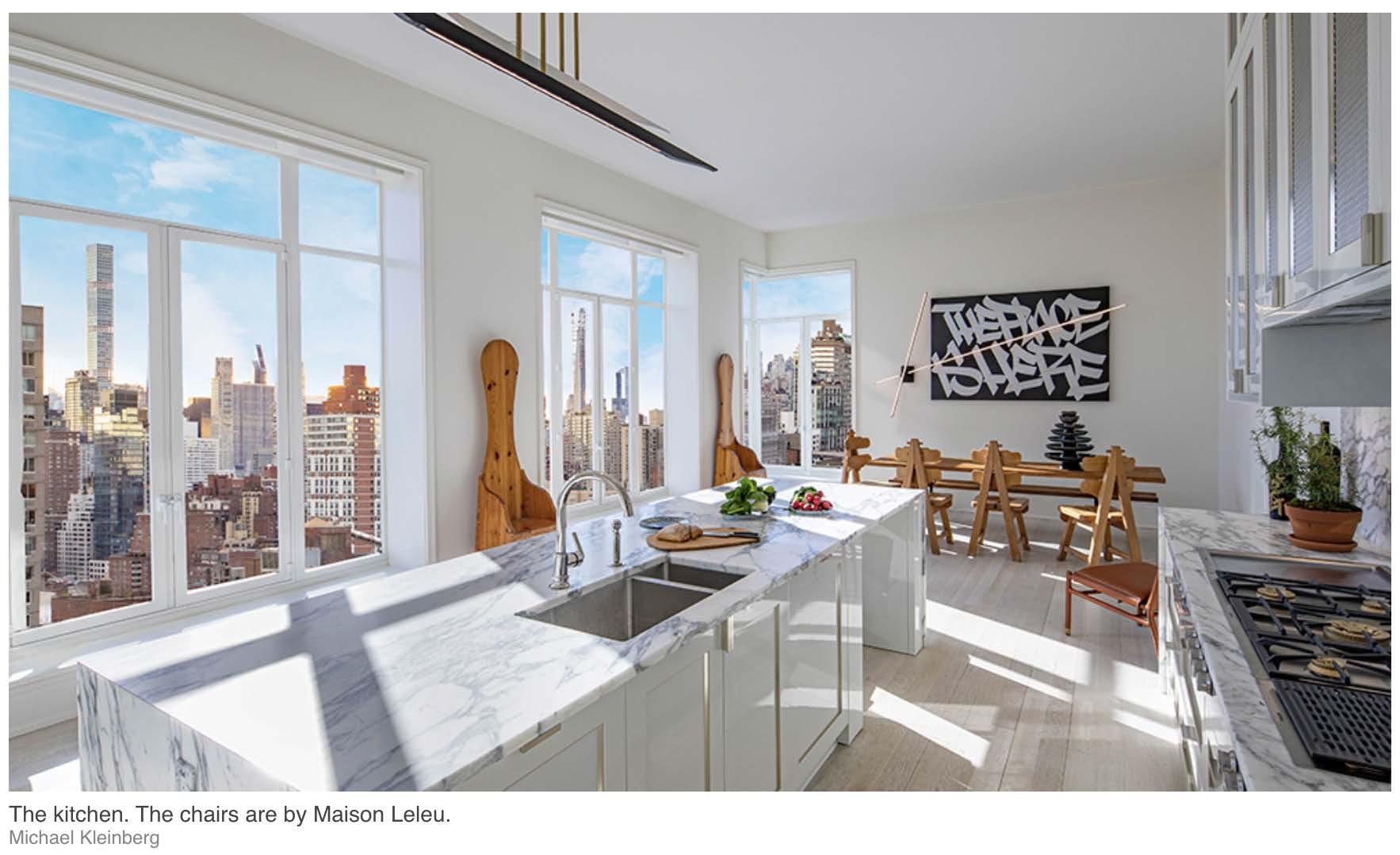
For those who’d prefer cozier digs, residences at the boutique condominium start at $4.5 million. Their layouts are varied, so they feel less like cramped and more like a home. “It really feels like a tight-knit community,” says Avram. “I think that’s what makes it so special. It’s almost like a suburb of Manhattan.”
Check out more photos of the penthouse at 40 East End below:
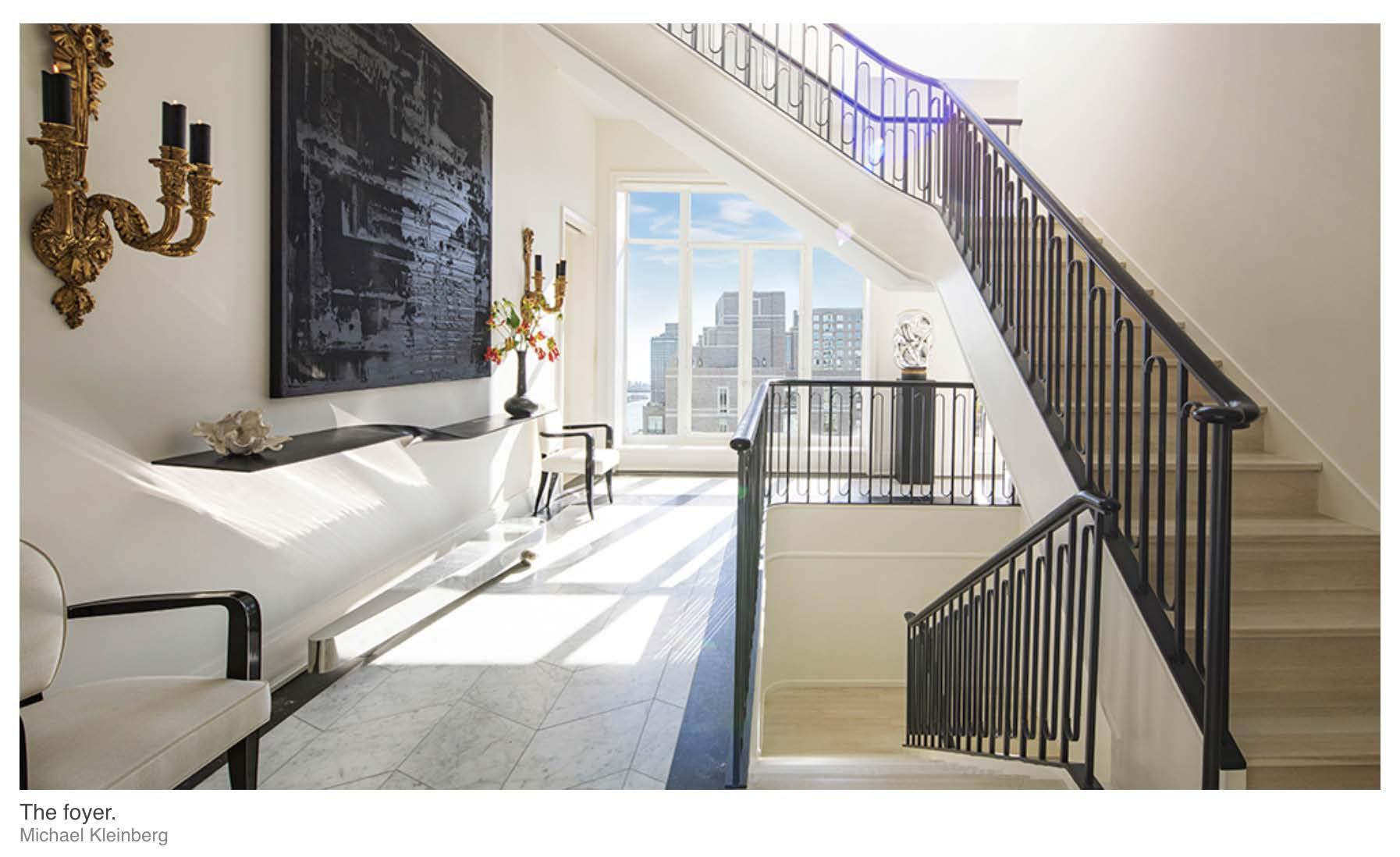
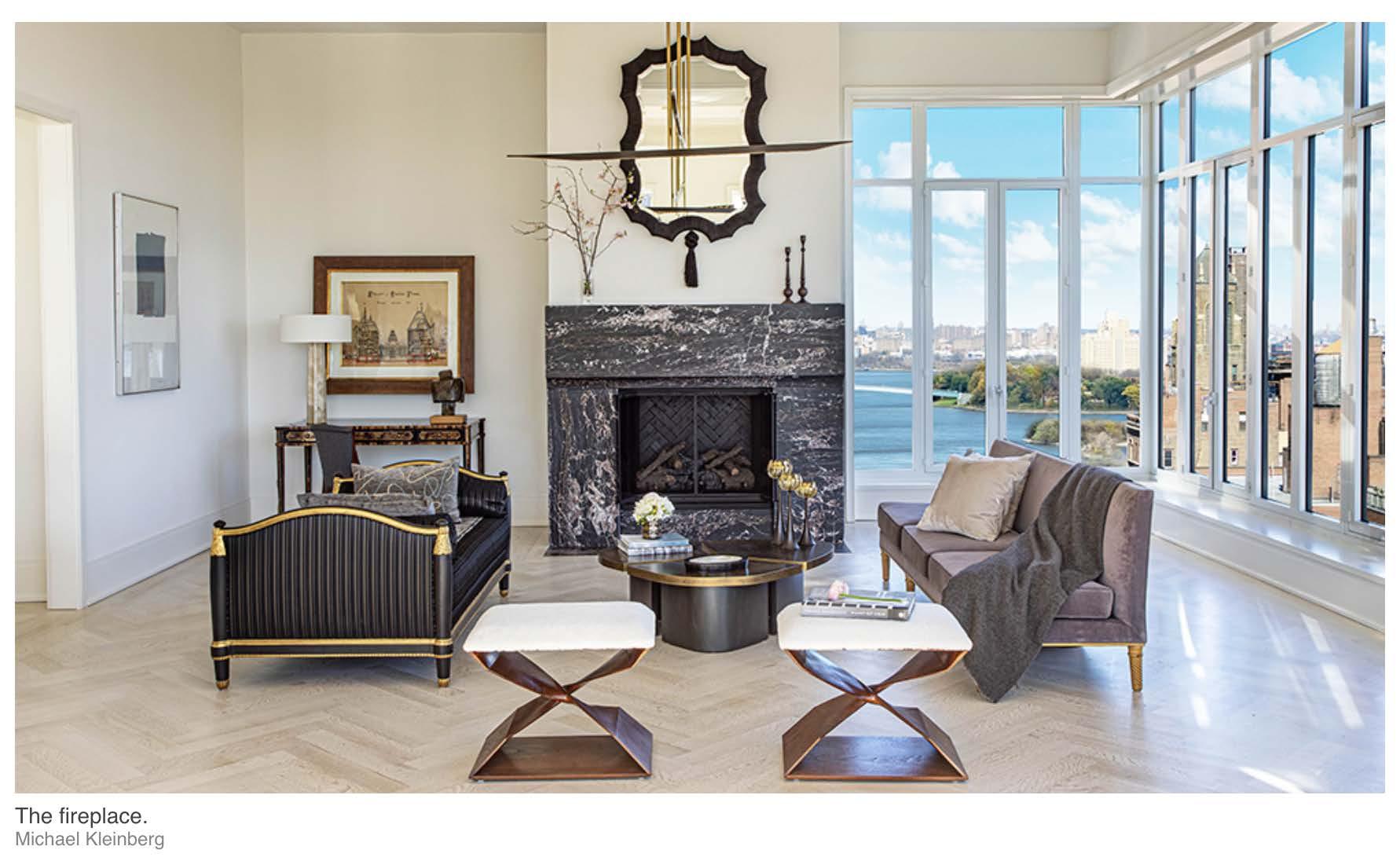
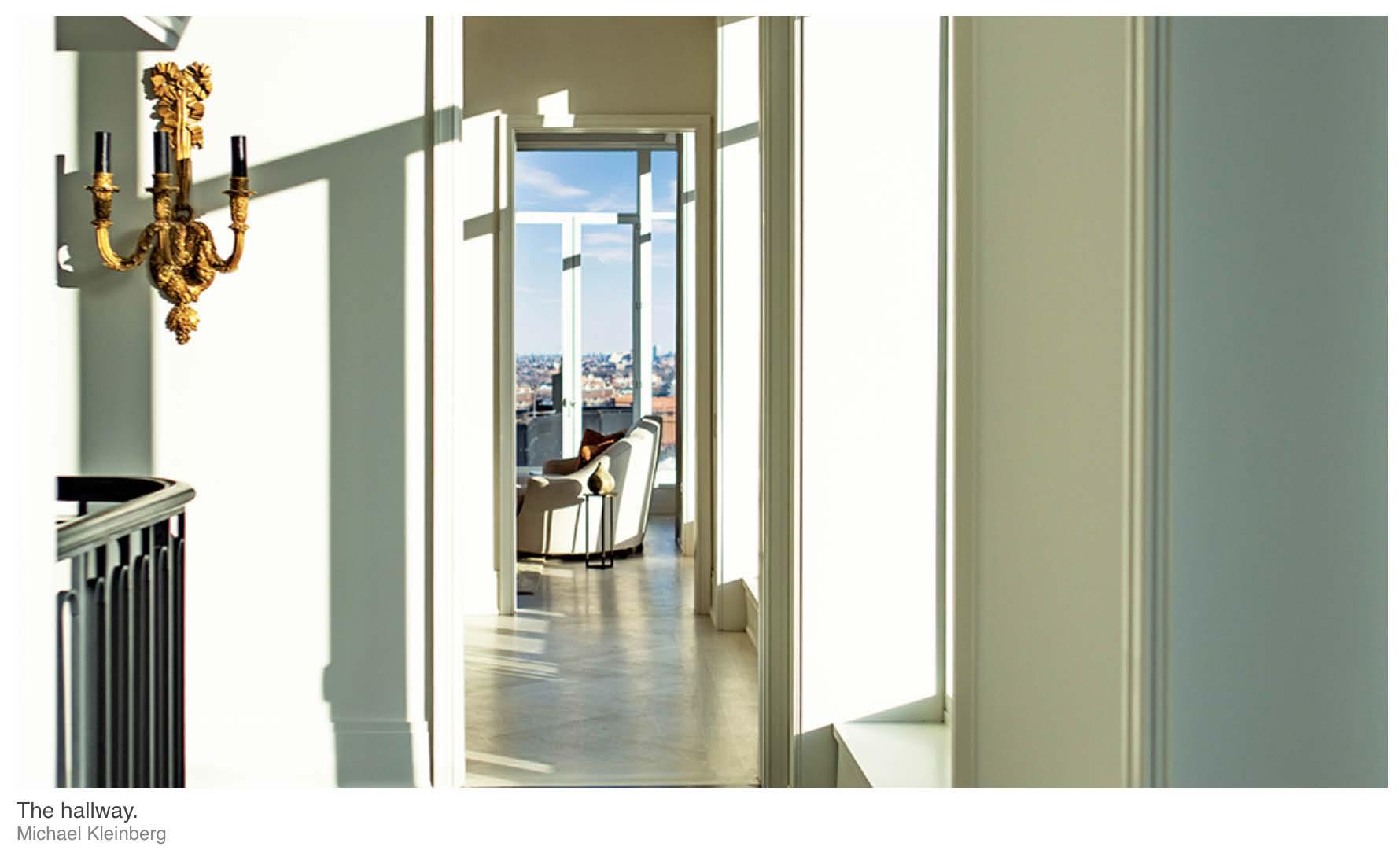
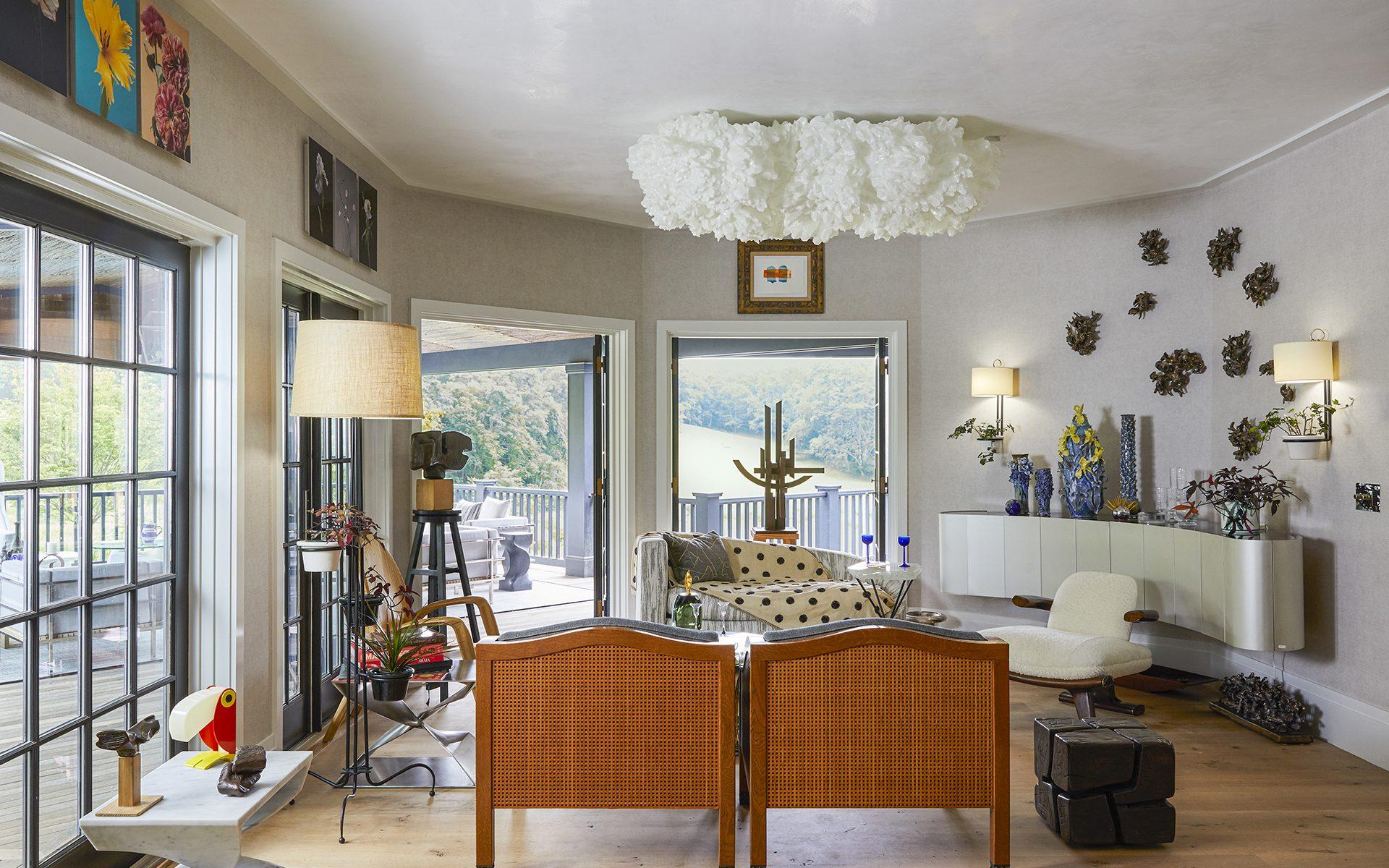
The Maison Gerard owner deployed pieces by Maxime Old, Achille Salvagni, Matthew Solomon, and Ayala Serfaty to enliven the space
BY GALERIE EDITORS
SEPTEMBER 2, 2021
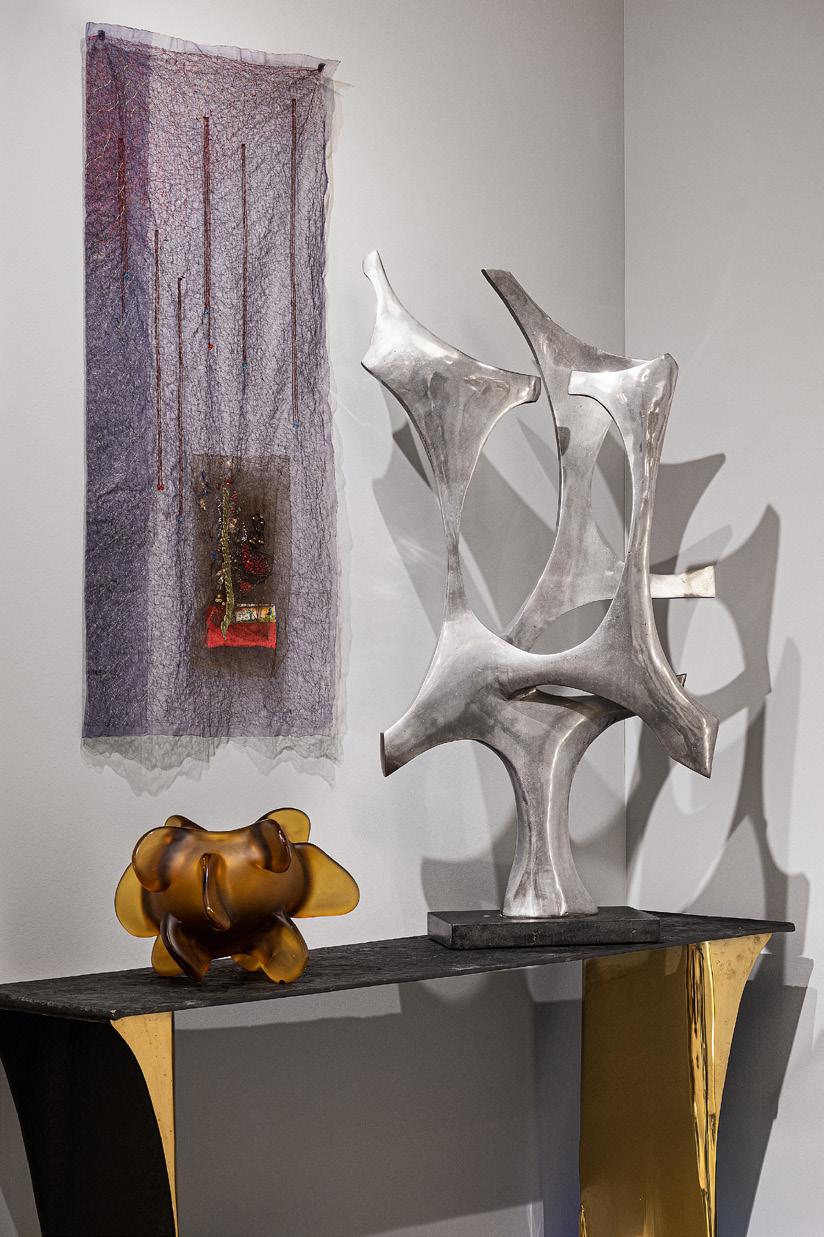
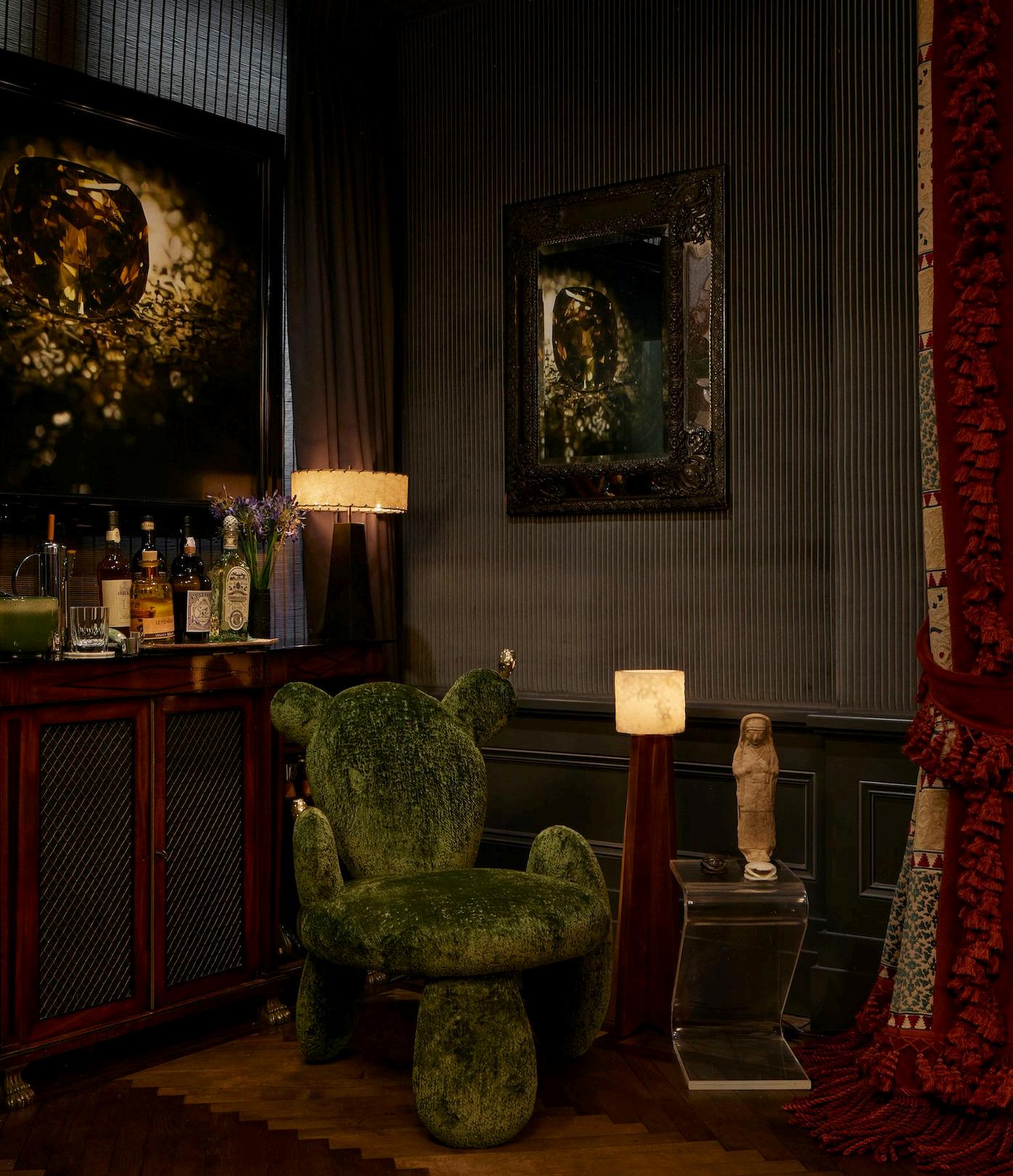
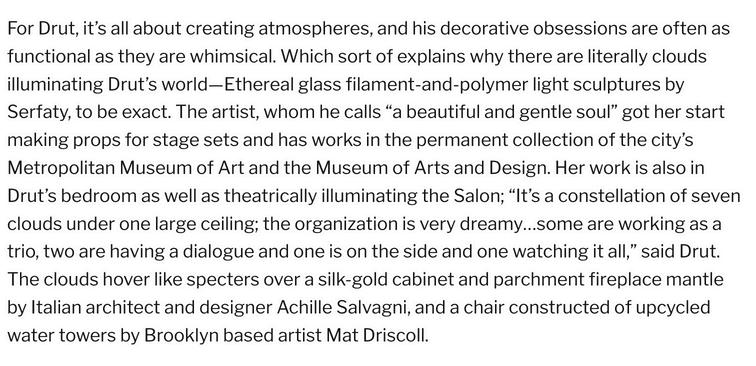
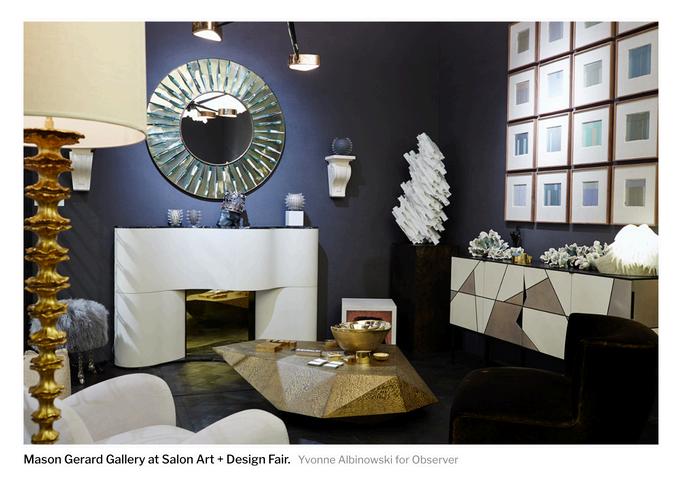
This “petit salon” cultivated by Benoist F. Drut, owner of Maison Gerard, offers the ultimate gathering space with seating by Achille Salvagni, Ammar Kalo, and Louis Cane paired with a Maxime Old bar. Artwork and design pieces by Douglas Fanning, Matthew Solomon, Marino di Teana, Ayala Serfaty, and Zigor offers an inspiring moment at every turn. Watch here as Drut shares his vision for the treasure-filled space.
AD decorative arts editor Mitchell Owens finds apartment inspiration in the antiques fair’s best-curated stall
B MI LL
Posted September 17, 2016
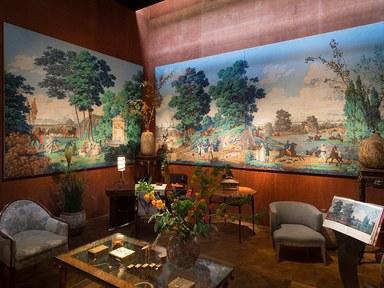
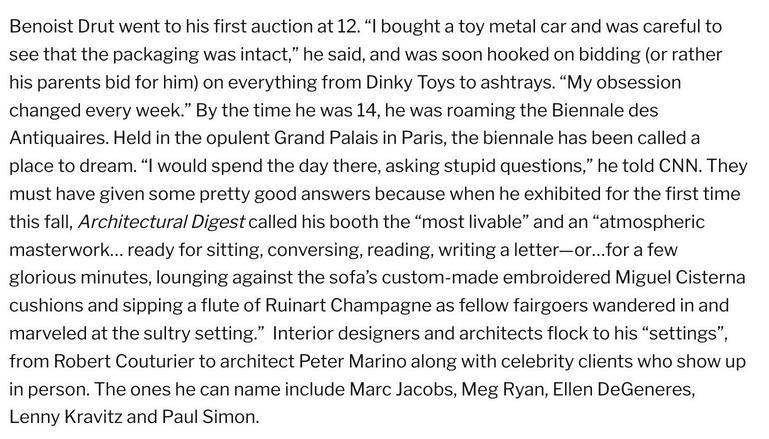
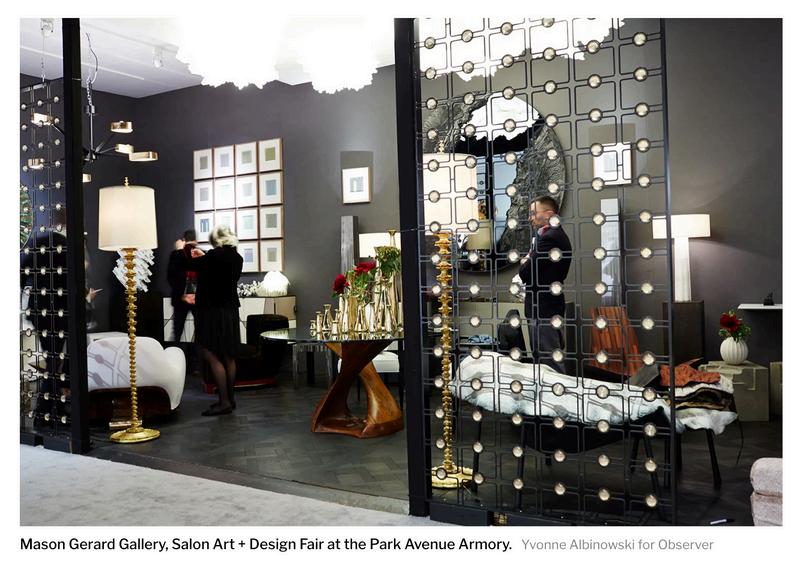
Most art and design fairs simply present the goods as individual desirables. Every so often, though, a canny dealer—in this case, two dealers—creates a booth so meticulously planned, and with the offerings so thoroughly integrated, that one could imagine moving right in.
For a shared display at the 28th Biennale des Antiquaires in Paris—which closes on September 18 at the Grand Palais—longtime friends Carolle Thibaut-Pomerantz, the Paris- and Manhattan-based historicwallpaperhigh priestess, and Benoist Drut and Gerard Widdershoven of New York’s Art Deco emporium Maison Gerard conjured up something their fellow dealers did not: a sensationally seductive space tailor-made for living, a petit salon that one wanted to purchase outright and truck home, not leaving a single accessory behind.
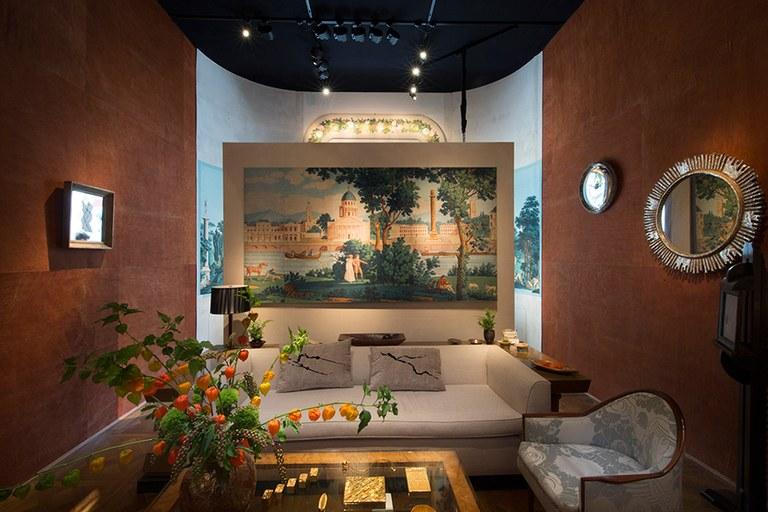
Four large panels of Les Chasses de Compiègne, a rare early-19th-century scenic panoramic discovered by Thibaut-Pomerantz, are displayed on the booth’s tobacco-brown suede walls, resembling picture windows overlooking a wooded landscape where an aristocratic hunt is in progress. The honey-gold parquet de Versailles floor hosts some of Maison Gerard’s choicest offerings, including a sensuous 1920s Émile-Jacques Ruhlmann fauteuil and a low-slung circa-1960 James Mont sofa upholstered in
creamy white. Discrete groups of vintage Line Vautrin mirrors (some from the collection of Bard Graduate Center founder Susan Weber spangle the walls like tarnished stars; a collection of Vautrin gold boxes shimmers on the circa-1938 T. H. Robsjohn-Gibbings acacia-wood cocktail table; and rugged circa-1950 Claude Conover stoneware vessels are set atop lightly gilded, vaguely Asian pedestals.
Each object is eminently desirable, but the combined effect is an atmospheric masterwork—and a lesson in how two dealers can blend their utterly different wares in a way that maximizes not only the objects’ beauty but also their user-friendliness. Thibaut-Pomerantz and Maison Gerard’s treasures are as comfortably arranged as they would be in any expertly decorated salon. Theirs is a four-star environment ready for sitting, conversing, reading, writing a letter—or, as in my case, for a few glorious minutes, lounging against the sofa’s custom-made embroidered Miguel Cisterna cushions and sipping a flute of Ruinart Champagne as my fellow fairgoers wandered in and marveled at the sultry setting.
Floral flourishes add to the intimate, at-home feeling, from the papery orange blooms known as Chinese lanterns (Physalis alkekengi, which spray out from a low glass vase on the cocktail table, to the feathery
ornamental grasses that sprout from an Asian ceramic pot set on the parquet floor. Even though I bought not a thing—most fairs are too rich for my blood—I couldn’t wait to fly home and rely on Thibaut-Pomerantz, Drut, and Widdershoven’s collective vision to make my own living room a bit more welcoming. I’ve got a large Chinese porcelain pot; now all I have to do is track down the perfect fountain grass.


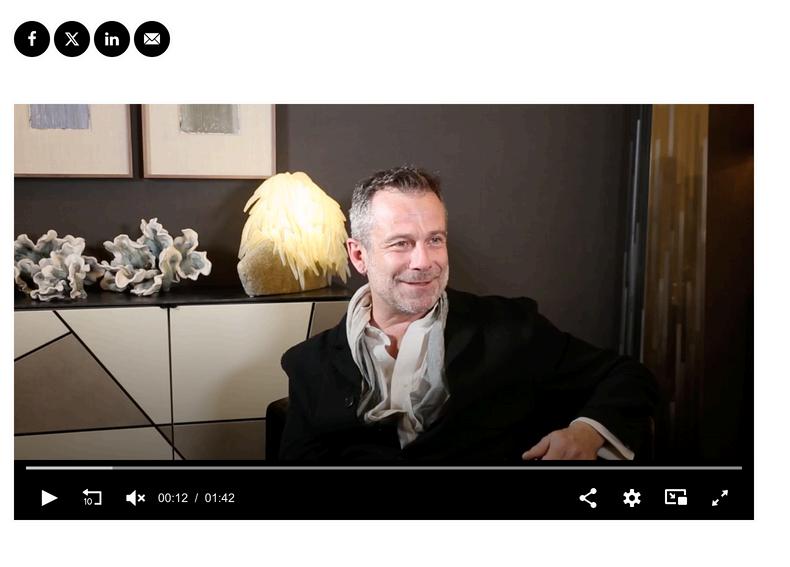

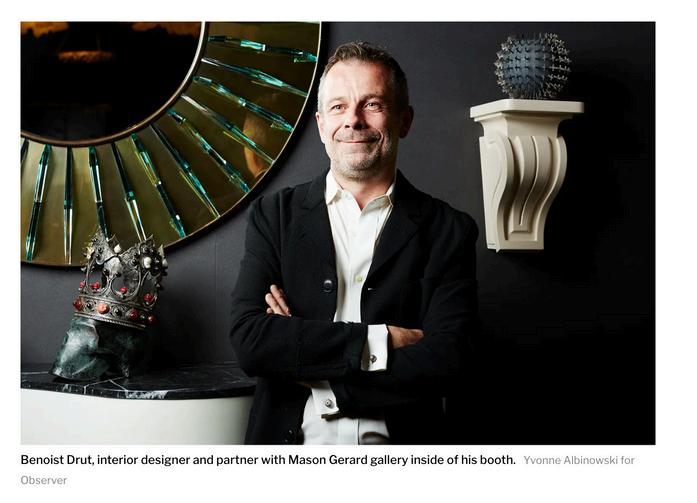
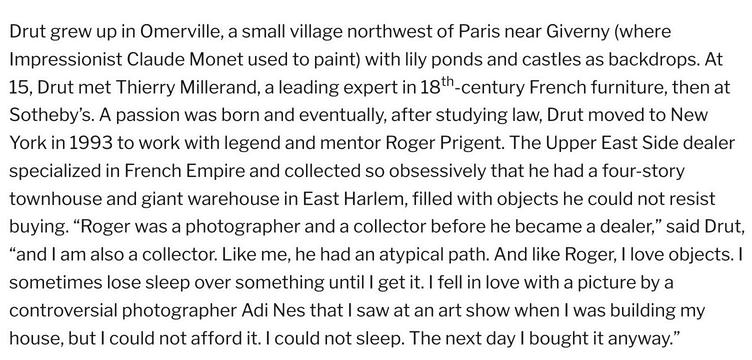
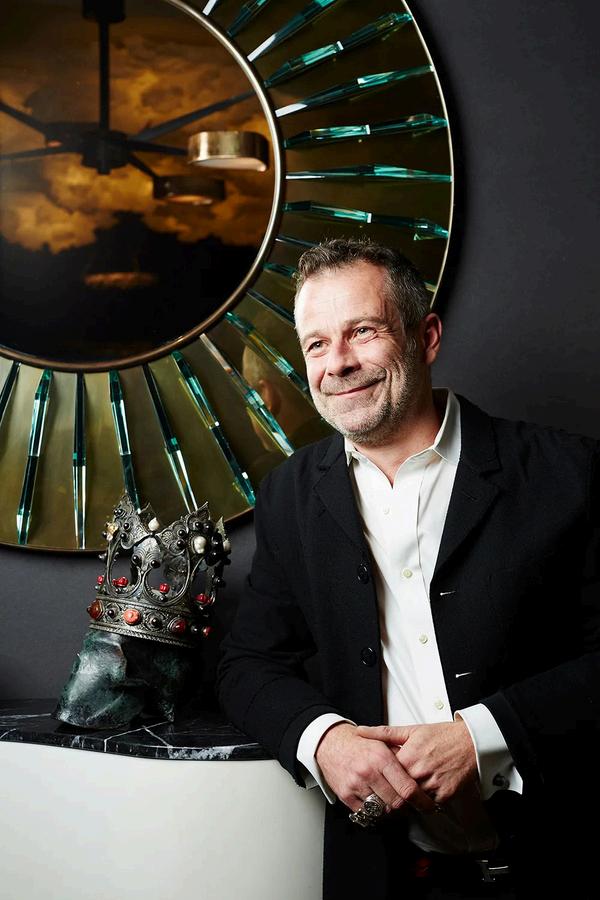

Benoist Drut is managing partner of Maison Gerard, a leading source for French Art Deco furniture, lighting and objects, and — more recently — postwar and contemporary design. Founded in 1974 by GerardusWiddershoven, Maison Gerard maintains premises on East 10th Street in Manhattan and is an elegant presence at both the Winter Antiques Show and the International Fine Art and Antiques Show. In celebration of its 40th anniversary, Maison Gerard unveiled a cache of 1950s and 1960s designs by JulesLeleu and his children for Villa Médy Roc, the Cap d’Antibes residence of the South American financier Robert Greif, and the Paris apartment of Pierre Frilet. With “Leleu 1960s,” Maison Gerard pushes forward into the rich design legacy of a century it long ago claimed as its own.
Is “Leleu 1960s” your most important exhibition to date?
We have presented work by Jules Bouy, Jean-Michel Frank and E.J. Ruhlmann but, in terms of monetary investment and the amount of pieces presented,this is the most significant show we’ve had. The Frilet and Médy Roc commissions are two of the most important of their time. We’ll never be able to gather this much material again — 60 pieces of 1950s and 1960s-era furniture, lighting and carpets, plus original watercolors documenting the Médy Roc project.
What prompted the show?
About ten years ago, we purchased the contents of the Frilet apartment, which hadn’t been touched for 15 years. Pierre Frilet had authorized Jules Leleu’s son André to acquire earlier Maison Leleu pieces, so the commission represented an interesting continuum of work. It had never been the right moment to exhibit the material before now.
Who is the Françoise to whom you dedicate the catalog accompanying your exhibition?
Françoise Siriex, a Leleu associate who wrote the definitive book, The House of Leleu: Classic French Style for a Modern World, 1920–1973. We have done three Leleu exhibitions and contributed the forward to Françoise’s book. In the past we have focused more on Jules Leleu (1883–1961), an acknowledged master of French Art Deco style.
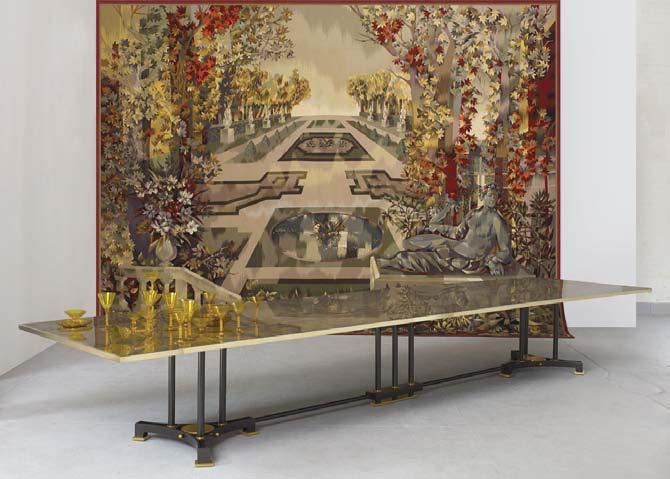
“Jardin À La Française,” unique monumental Aubusson tapestry designed by Camille Hilaire (1916–2004), woven by Pinton Frères.Villa Médy Roc,Leleu 278,1957. Marked with the Pinton Frères monogram and EDITION LELEU.Handwoven wool;height 159 by width 206 inches.Dining table,LELEU 272,1957,Villa Médy Roc. Gunmetal patinated metal by Granec,verre églomisé top, gilt-metal feet by Monin; height 29 by width 197½ by depth 49½ inches.
How does this build on past shows at Maison Gerard?
We knew Leleu of the 1920s and 1930s and associated characteristic features with his work. But this is the 1960s. Jules Leleu died in 1961, so his sons Jean and André and daughter Paule had really taken over the business by then.
What characterizes this later Leleu work?
Patinated and gilt metals and beautiful lacquer, which Leleu used to perfection, in every single color you can think of. I really believe that new technologies led to greater artistic freedom.
How did the Médy Roc project come about?
Leleu knew nothing of Mr Greif, who happened to see a smaller version of the monumental Aubusson tapestry “Jardin a la Française” in the Leleu shop window and was prompted to go in. Médy Roc has train station proportions. Paule Leleu’s genius was to design monumental pieces and carpetsfor a great hall, grand salon and a living room that opened onto a loggia.
How is the show going?
We’ve sold quite a few pieces already. About half of them are unique and priced accordingly. They range in price from about $18,000 to $300,000.
How did you acquire Médy Roc’s contents?
The villa sold to a Russian billionaire in 2007. Someone was wise enough to pile the villa’s contents into containers, where it sat for years until it was offered at auction in Paris. Meanwhile, we had been offered the original watercolors documenting the project. They may end up with the person who buys the furnishings or perhaps with a museum.
Tell me about the Frilet commission.
Pierre Frilet asked André Leleu to bring together objects of the highest quality. Maison Leleu had the full freedom to design whatever they wanted and they were able to buy back and incorporate other Leleu pieces.
What are the best pieces?
That’s hard. You have to see them to form an opinion. I suppose what impresses me most is the dining table. It is so huge — 16 feet long! Yet it is very light and practical, but still of the richest materials. It has an églomisé top with gold and silver leaf. The pair of red lacquer cabinets, also for Médy Roc, are very nice, too. Both date to 1957.
I understand that the Médy Roc interior is immortalized in film.
Yes, it was pictured in Les seins de glace starring Alain Delon and Mireille Darc.
Nestled downtown on East Tenth Street is Benoist Drut, a French gallerist whose passion for unconventional design predominates over the tides of
tastes and and trends He joined Maison Gerard in 1998, a gallery devoted to French Art Deco, following years of training with other dealers and combing local markets for things that caught his eye In fact, Maison Gerard was just the next step in what was already a way of life
Drut was raised in Omerville, a beautiful, quaint village of 350 people that is a world away from Paris even though it is just an hour away His mother, he recalled, “never purchased the furniture in their home from a store,” but rather spent weekend mornings with her son scouting “little yards”and “village fairs” in nearby communities By the time he was eight, he was already collecting Pepsi Cola bottles, complemented by a Johnny Walker figurine early manifestations of his catholic

Benoist F Drut Maison Gerard
interests After attending boarding school, Drut wanted to be an auctioneer and entered law school (a requirement for that profession in France at the time) and at the same time interned for a Paris auctioneer He soon realized, however, that the day-to-day responsibilities of the French auction business would not allow him to be as hands-on with objects as he would have liked
And so, in 1992, Drut moved to New York determined to make it in a city he had never even visited “I had nothing but two suitcases; I left everything behind so that I
could start out fresh on my own ” He found a job working at Malmaison for Roger Prigent, a photographer turned collector turned antique dealer, and was paid two hundred dollars a week (in today’s terms $445) It wasn’t much, but at least it was a start
Six years later Drut joined Gerardus A. Widdershoven (1951–2020) at Maison Gerard; Gerard had long before given Drut the affectionate moniker mon petit héritier (my little heir). The two formed a meaningful collaboration, “It was not just me; it was not just him. It was the two of us . . . on a very exciting journey,” Drut explained. Together they grew the gallery fourfold within Drut’s first year. Three years later, Drut introduced contemporary design to the gallery, a very unusual step for the time. He sees his profession as a dynamic, living process: “It’s not static knowledge,” he mused about the ever-evolving nature of his work Curiosity is his driving force, which helps to explain why Drut has never been attached to a particular style both professionally and personally When he develops an interest, however, he goes deep For example, after studying photographs of interiors of Madeleine Castaing (1894 - 1992), a Paris-based antiques dealer and interior designer, Drut became
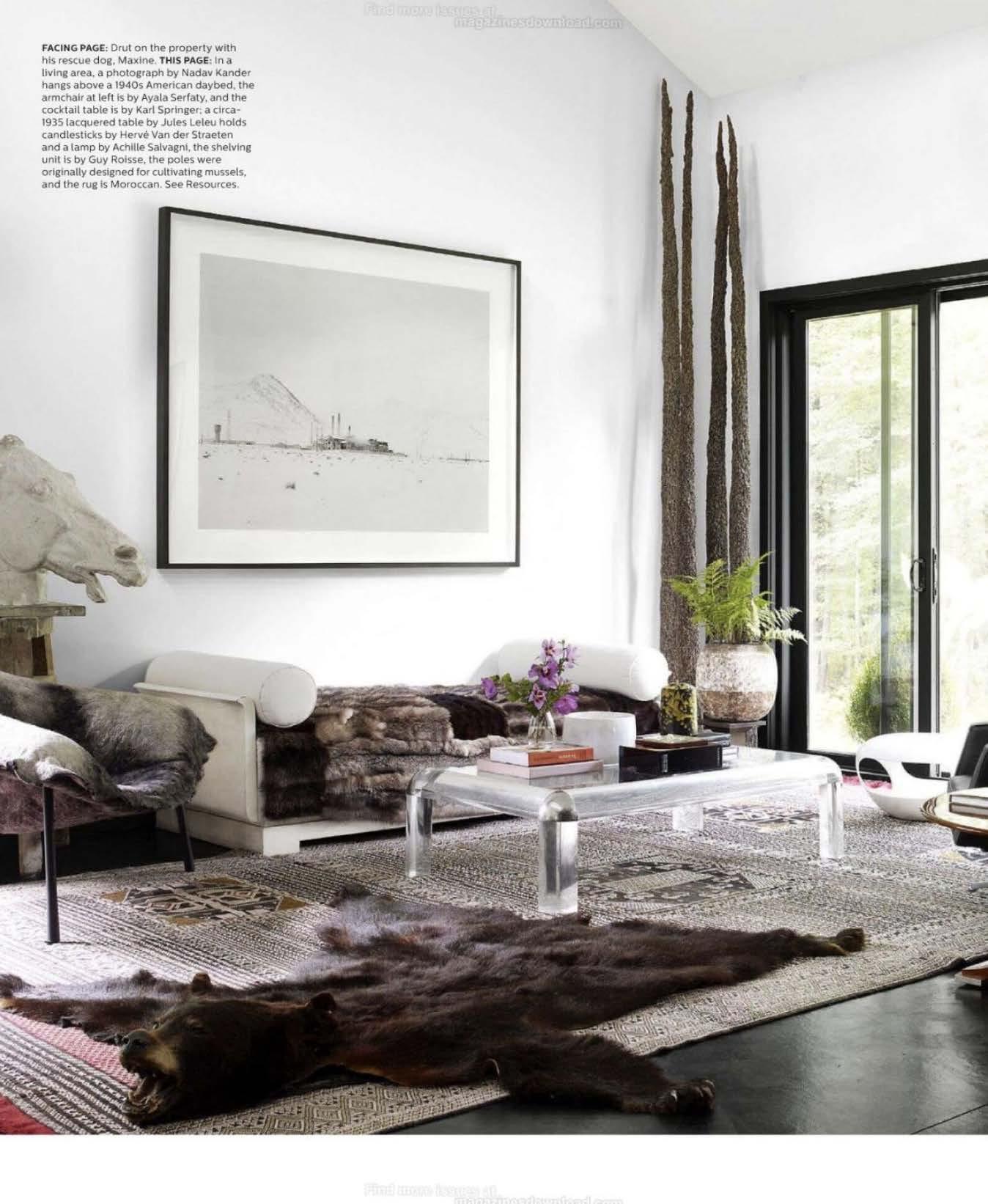
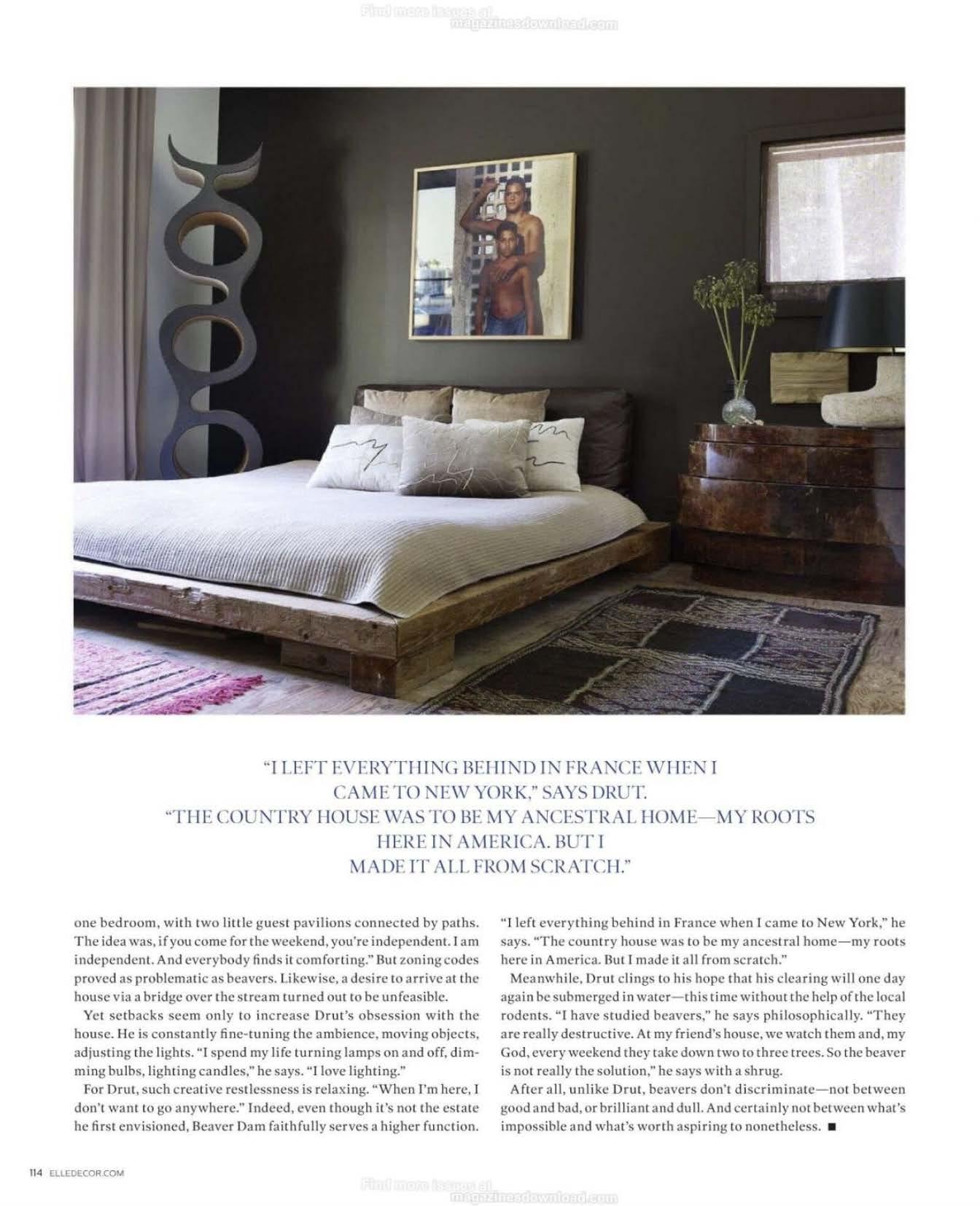
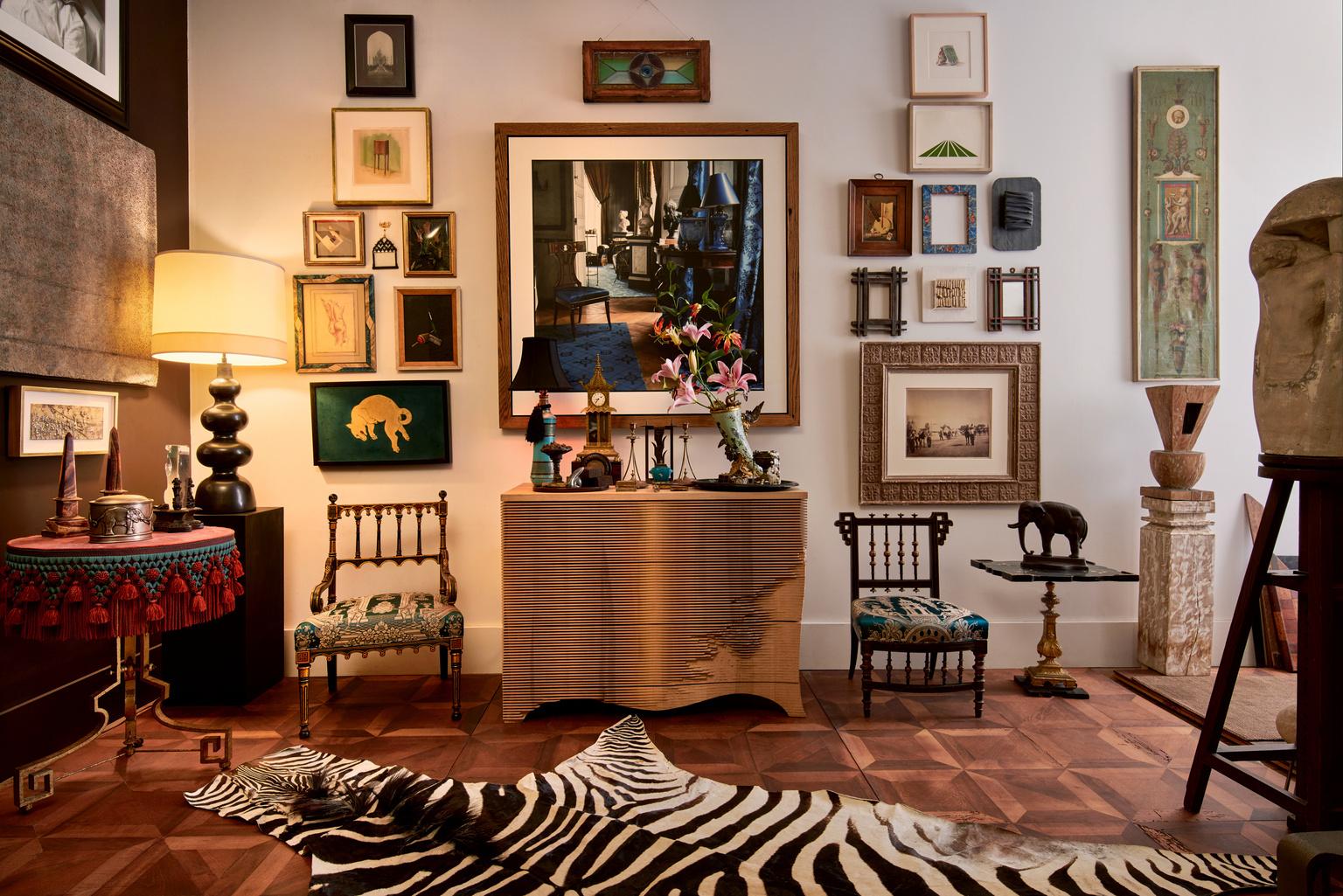
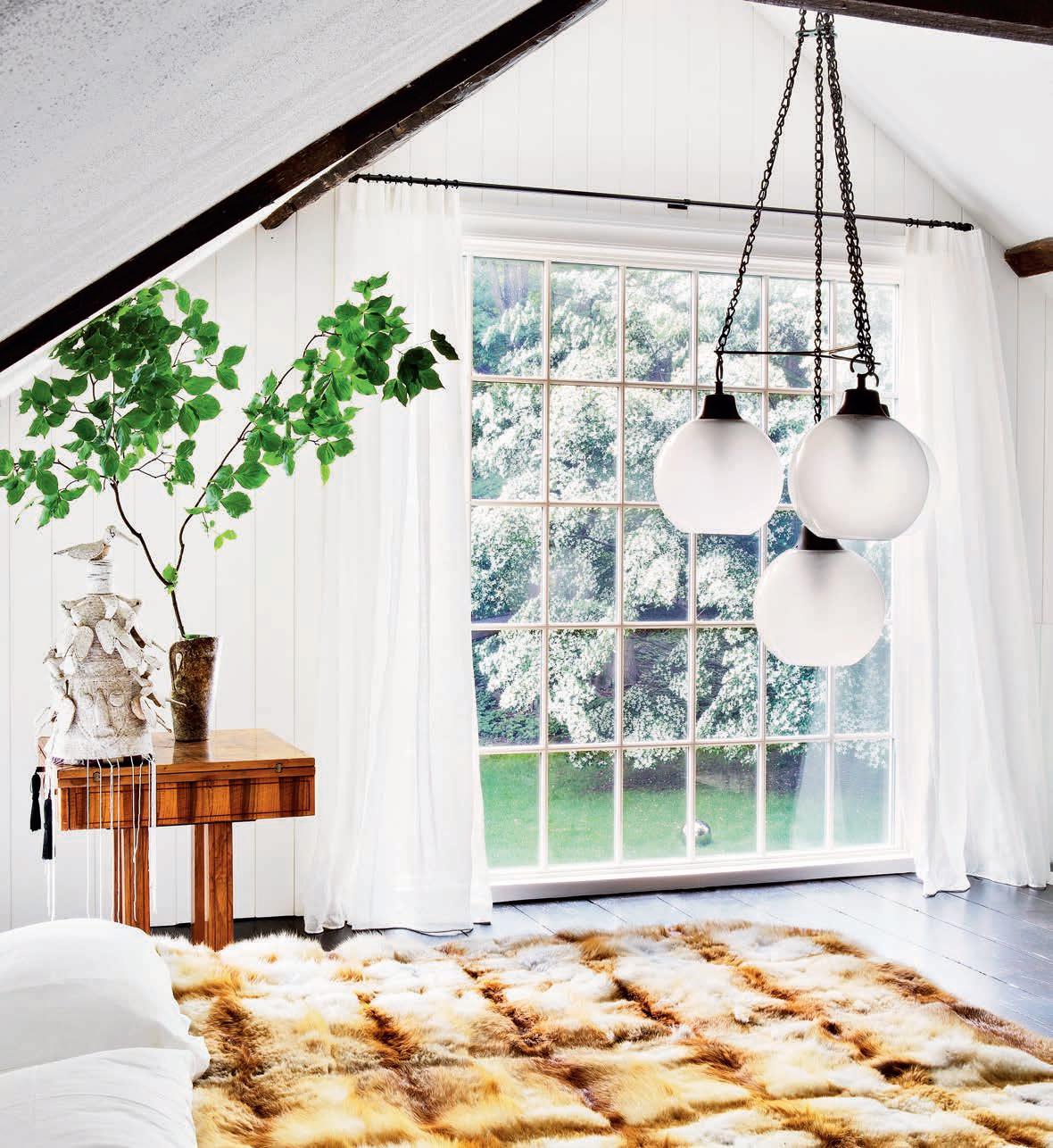
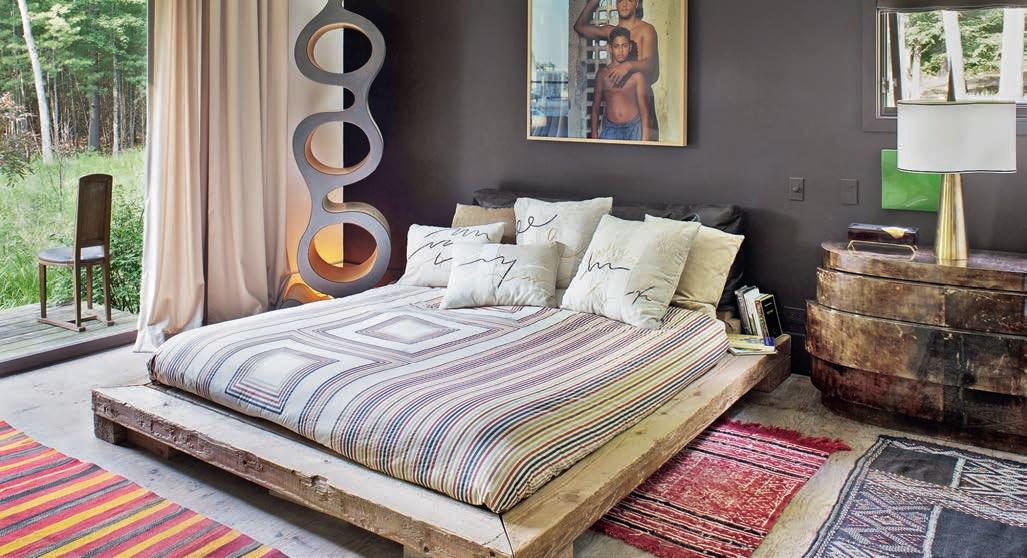
living room shot by Jean-Francois Jaussaud is the centerpiece of his bedroom in Sullivan County, New York, where it hangs over a modern dresser by the British designer Gareth Neal, which is flanked on each side by Napoleon III chairs The composition is enhanced by the room’s patterned wood flooring, gifted to him by another dealer and reminiscent of French seventeenth and eighteenth-century examples
Previous Page: A Napoleon III chair and armchair flank a contemporary chest of drawers by Gareth Neal On the chest stand a Neo-Gothic gilt bronze clock and ceramic vase with silvered and gilt bronze ornaments The table is by Huret (ca 1865), with trimming by Maison Verrier A large Jean-Francois Jaussaud photo of Madeleine Castaing’s apartment in Paris hangs on the wall Other artworks include a representation of a dog by Tsuguharu Foujita (18861968), the Gustave Le Gray photo depicts the French Imperial Guard of Napoleon III at Châlons-sur-Marne in 1857
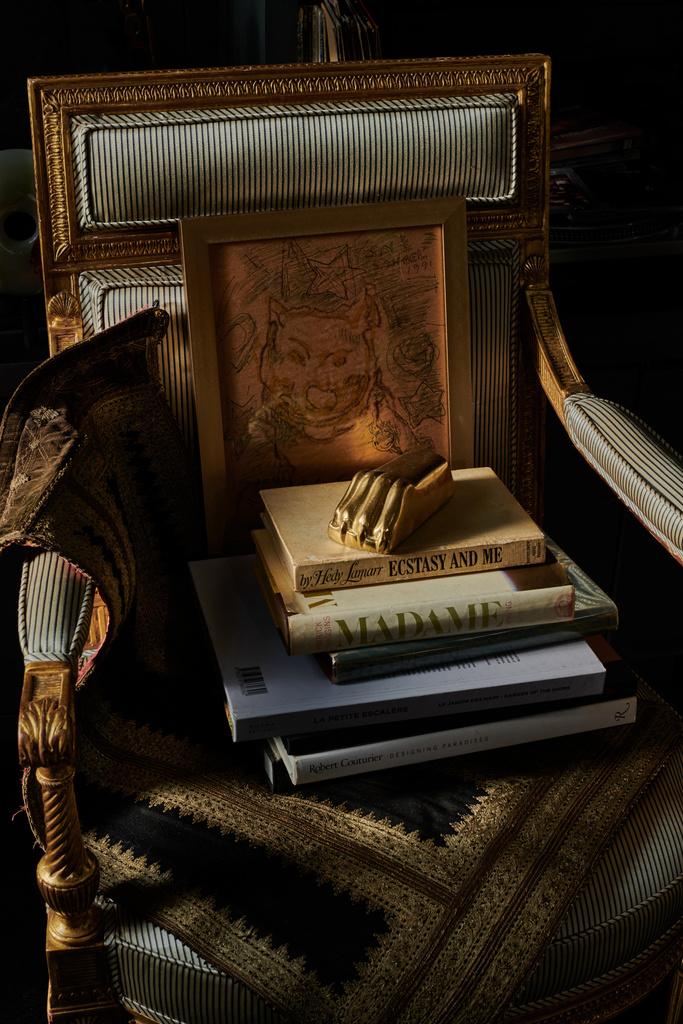
Above: An unusual late Louis XVI gilt-carved wood armchair Drawing by Salvatore Scarpitta, “Angel” (1991)
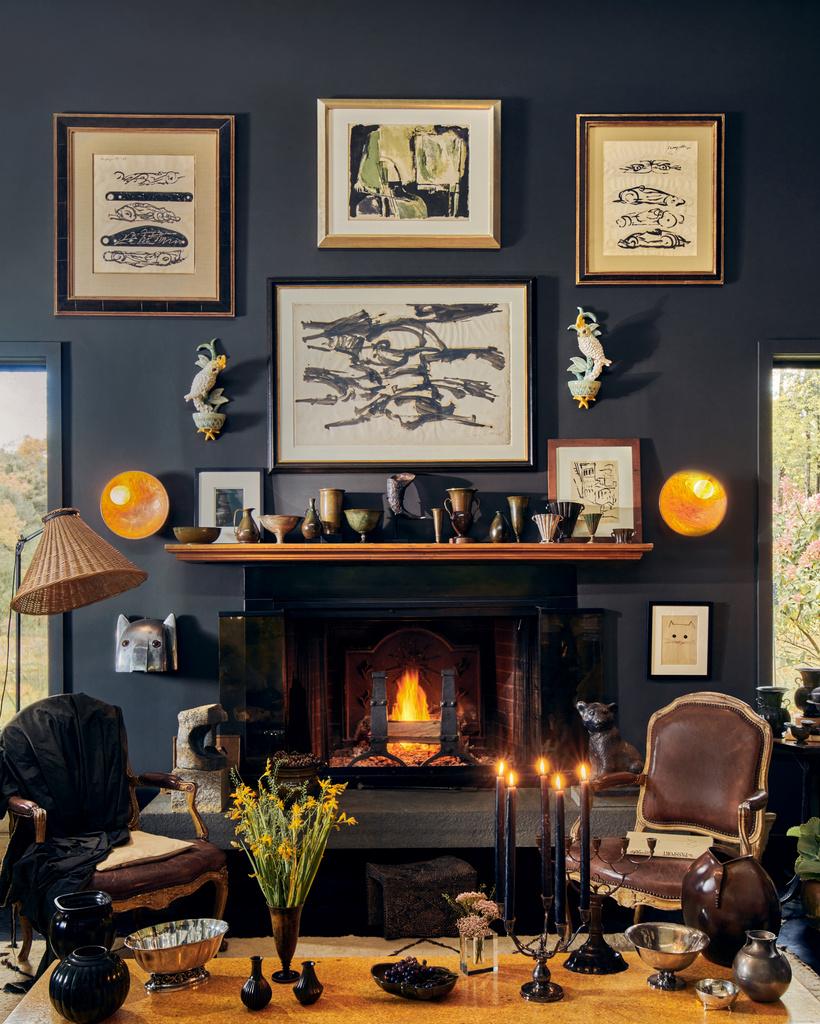
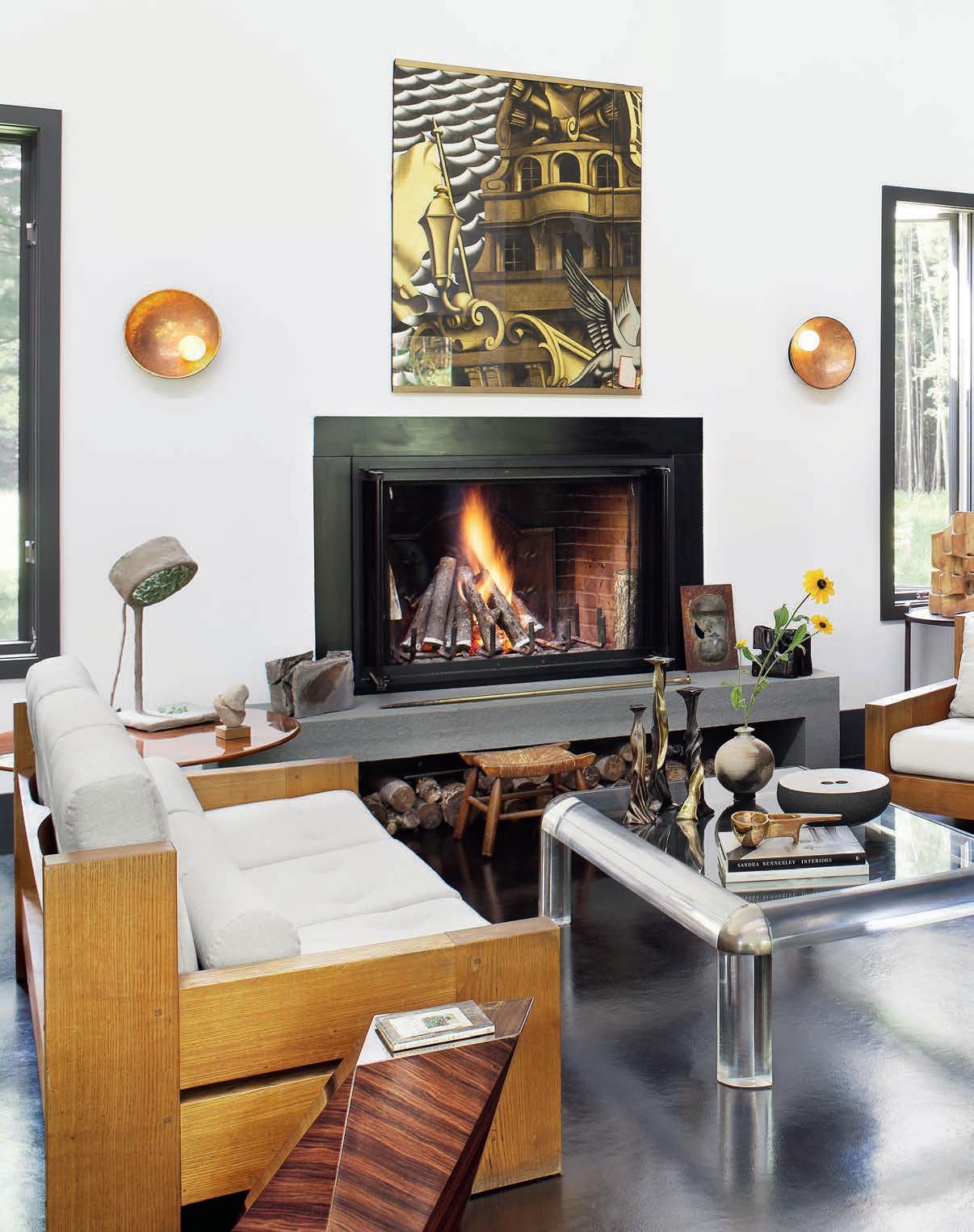
Left: On the mantel and coffee table, vessels in pewter, disko metal, bronze, and silver by Danish artist Just Andersen (1884-1943) This collection was started by Gerardus A Widdershoven decades ago Above are three ink on paper drawings by Salvatore Scarpitta (1919-2007) The contemporary bronze and onyx sconces are by Achille Salvagni, the glazed ceramic parrots by Luc and Marjolaine Lanel (ca 1950, France). The ink drawing of a cat is by Ettore Sottsass (1917-2007)
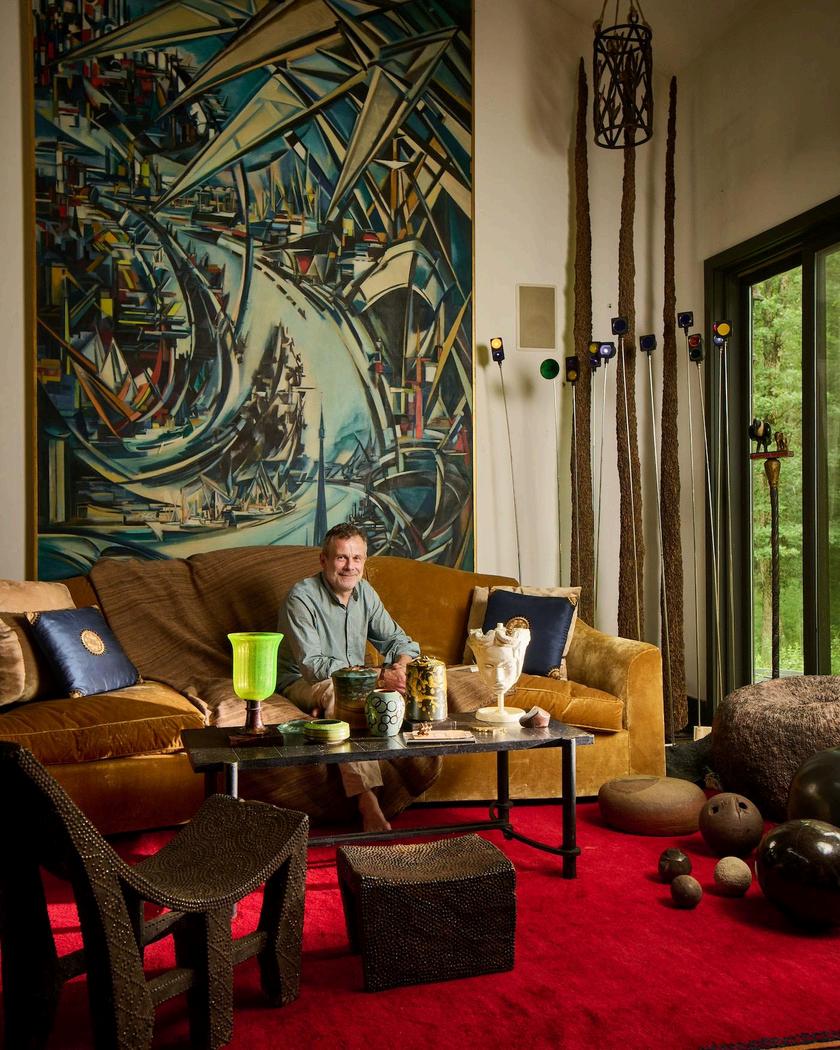
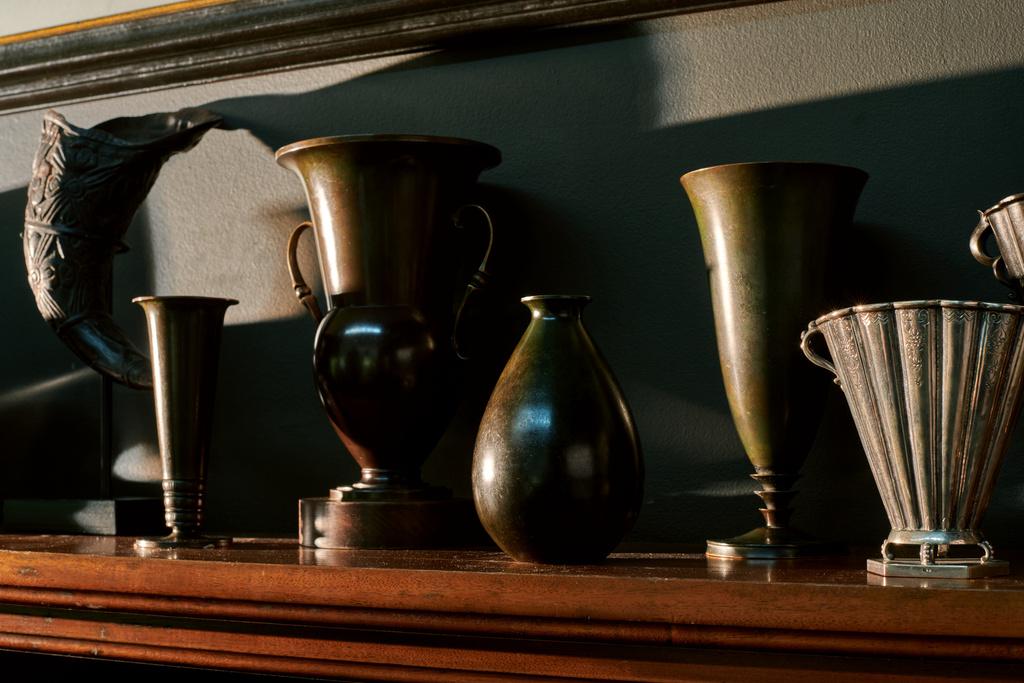
His living room is even more elaborate, beginning with the 1930s Just Andersen metal vessels from Denmark throughout the room Widdershoven was an early collector of these items, and Drut continues to enlarge the gallery’s holdings Above them are a series of drawings by the Italian American Salvatore Scarpitta (1919–2007) an American artist recognized for his sculptural renderings of objects in motion and championed by the legendary art dealer Leo Castelli Also in the room are portrait busts of African subjects made by European artists in the 1920s and 1930s as well as African-inspired masks made by French ceramists in the 1950s. Admittedly, Drut tends to surround himself with multiples of the things he loves, including everyday objects. When a friend observed his collection of kitchen cutting boards, he was compelled to ask jokingly, “Is there anything you don’t collect?”
At The Winter Show, where Maison Gerard has been a participating dealer for fifteen years, his booth design is guided by his wide-ranging
interests and the juxtaposition of old and new from around the globe. The show, he believes, has evolved over the years so that there is much more diversity than in the past, and he always finds something new or unexpected there. It’s “a living museum” a place where you can look and touch the items while also learn from dealers who are happy to share their knowledge
“It was not just him; it was not just me. It was the two of us . . . on a very exciting journey”
Previous Page: On the fireplace mantel and coffee table, vessels in pewter, disko metal, bronze, and silver by Danish artist Just Andersen (1884-1943) This collection was started by Gerardus A Widdershoven decades ago
Above are three ink on paper drawings by Salvatore Scarpitta (1919-2007)
The contemporary bronze and onyx sconces are by Achille Salvagni, the glazed ceramic parrots by Luc and Marjolaine Lanel (ca 1950, France) The ink drawing of a cat is by Ettore Sottsass (1917-2007).
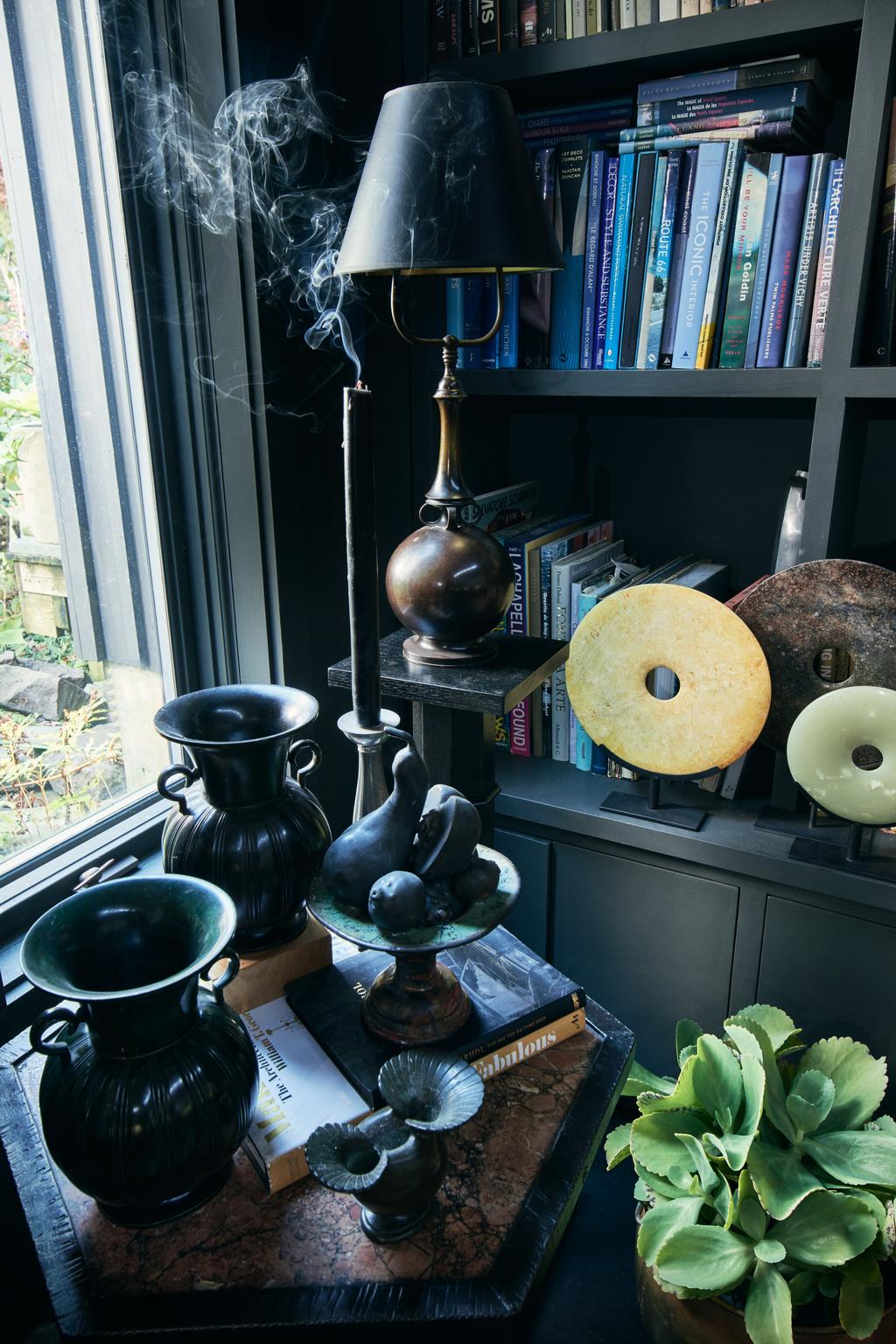
Above: Just Anderson bronze vessels
Left: Detail of Living Room arrangement
Interview by Margaux Augier
Edited by Mary Anne Hunting
Photography by Michael Mundy
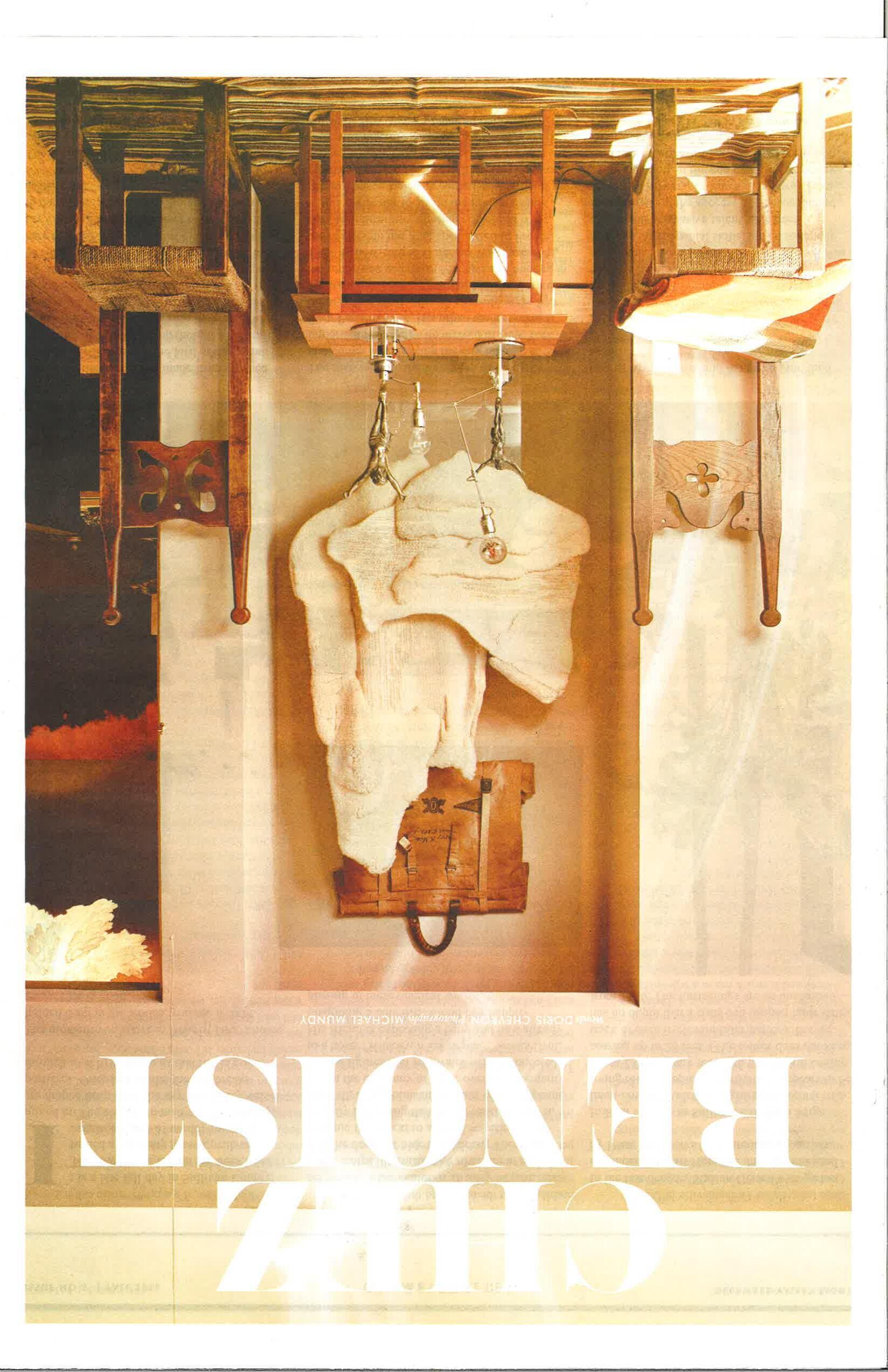
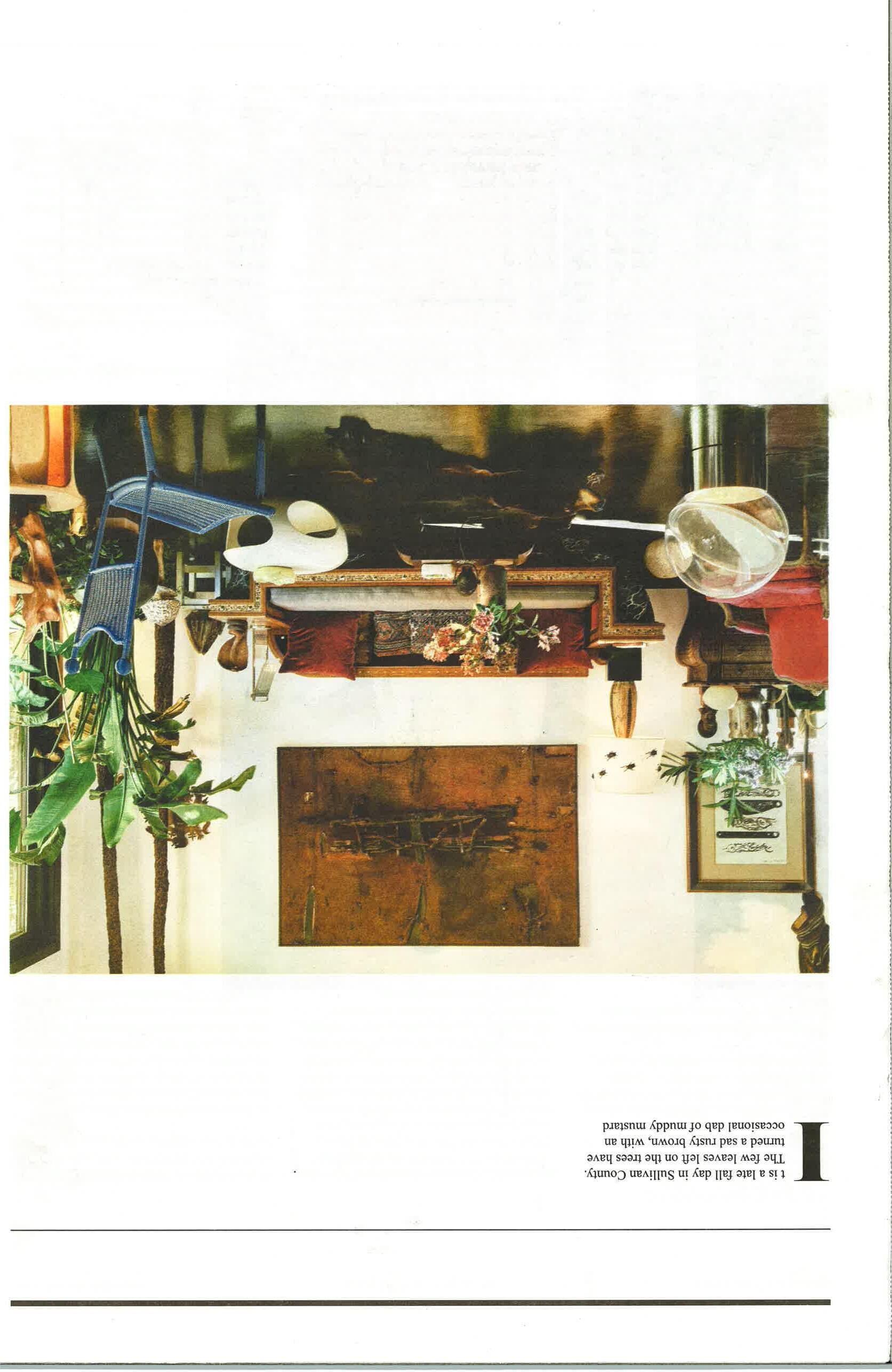
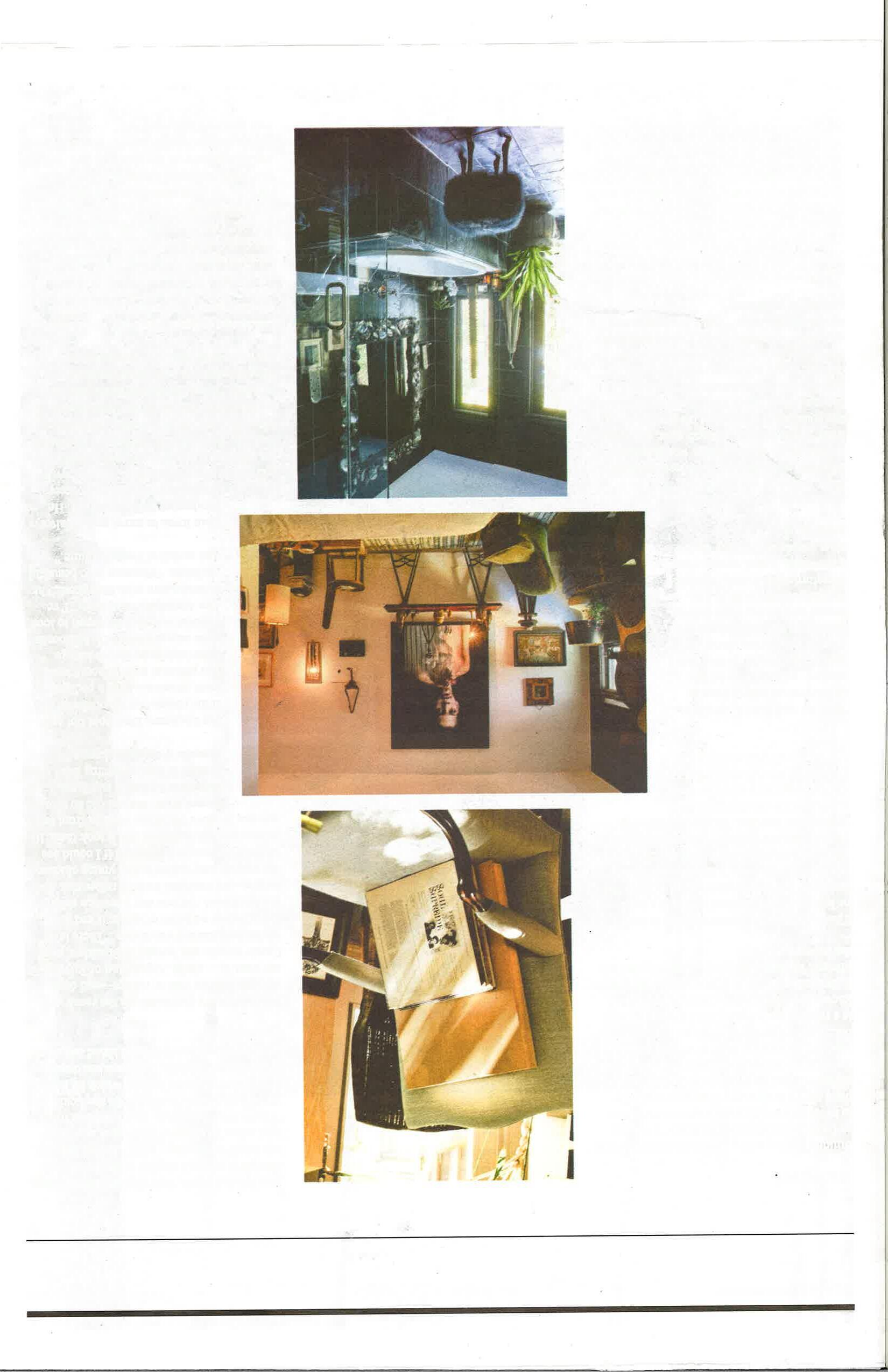

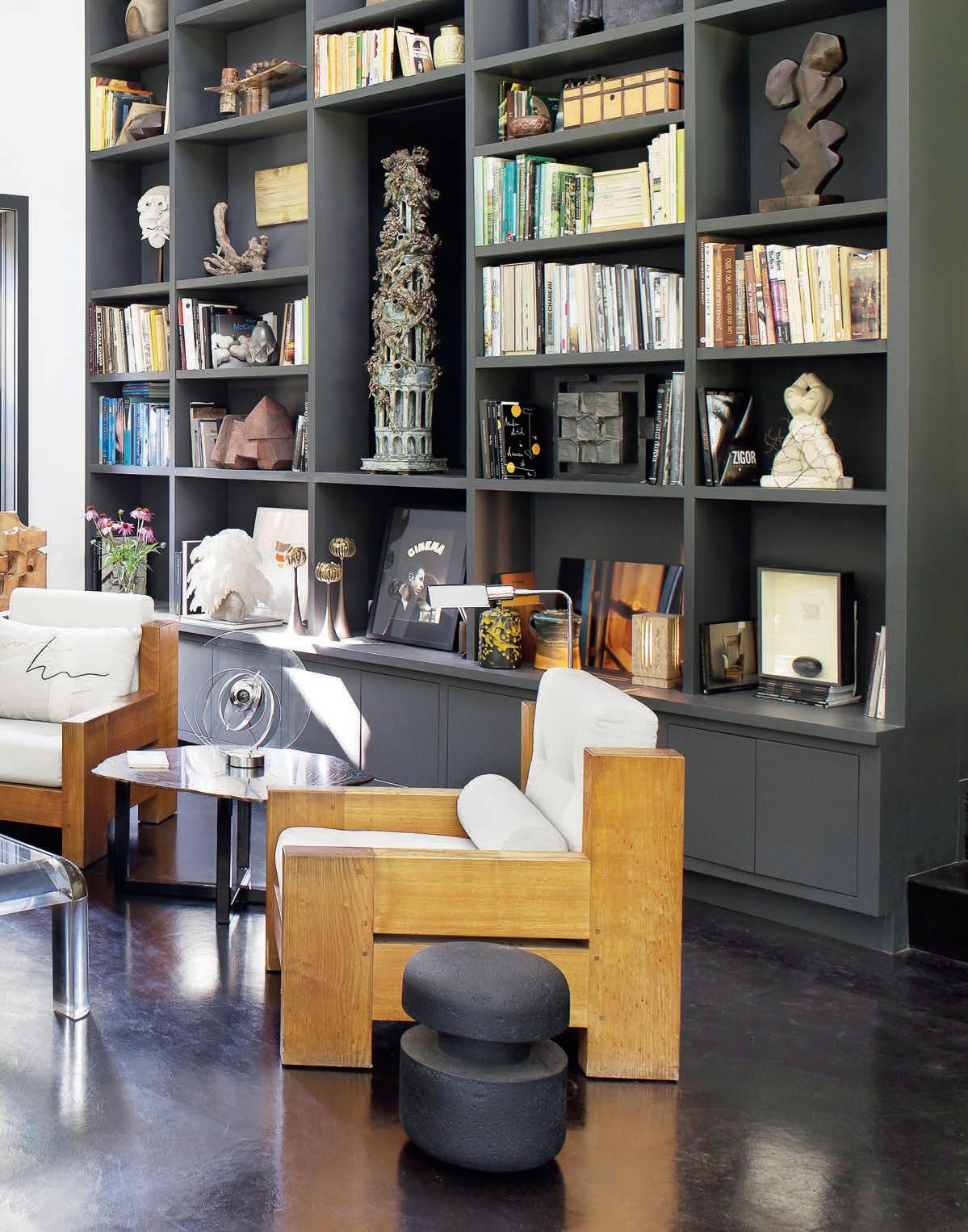
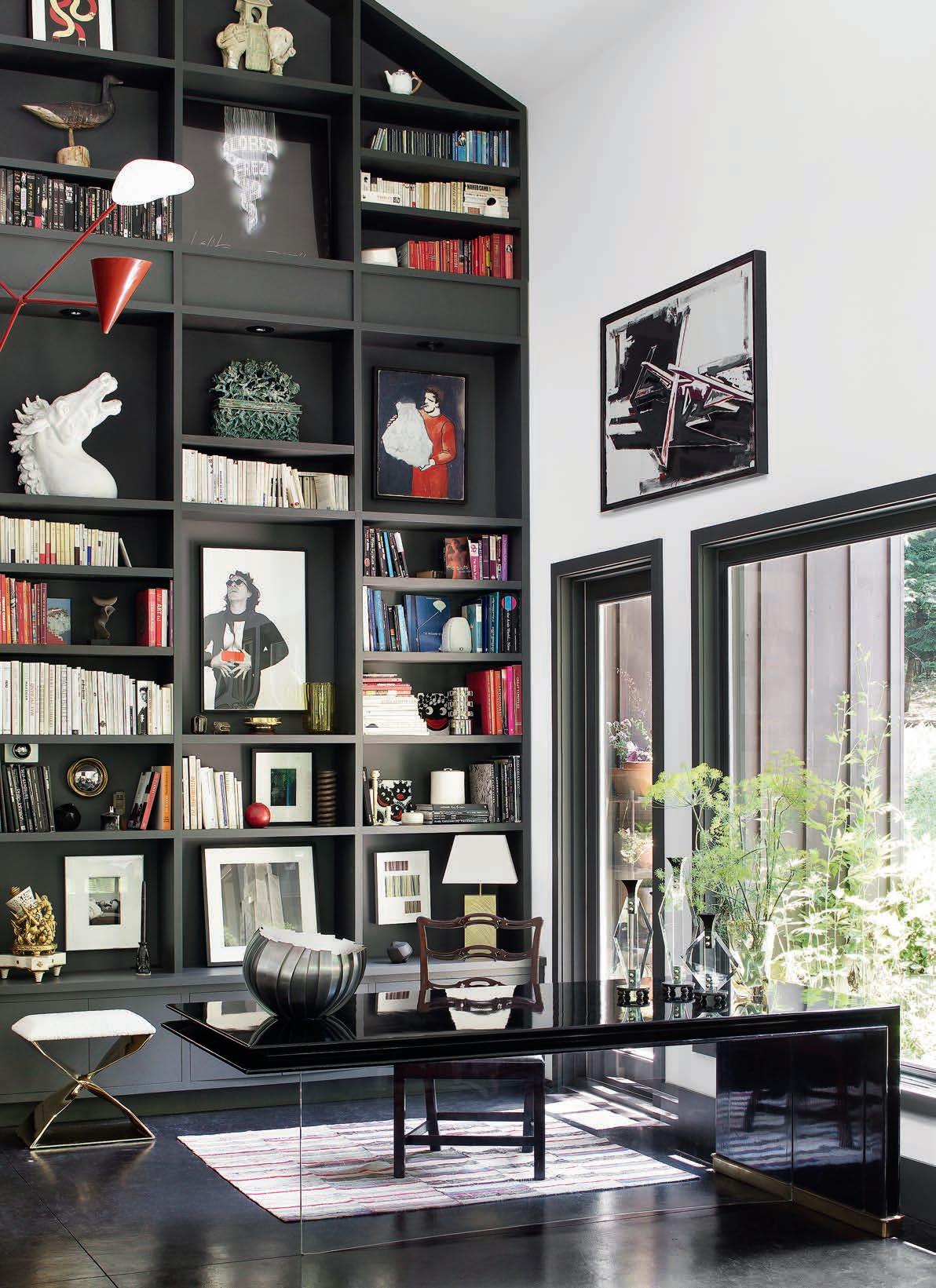




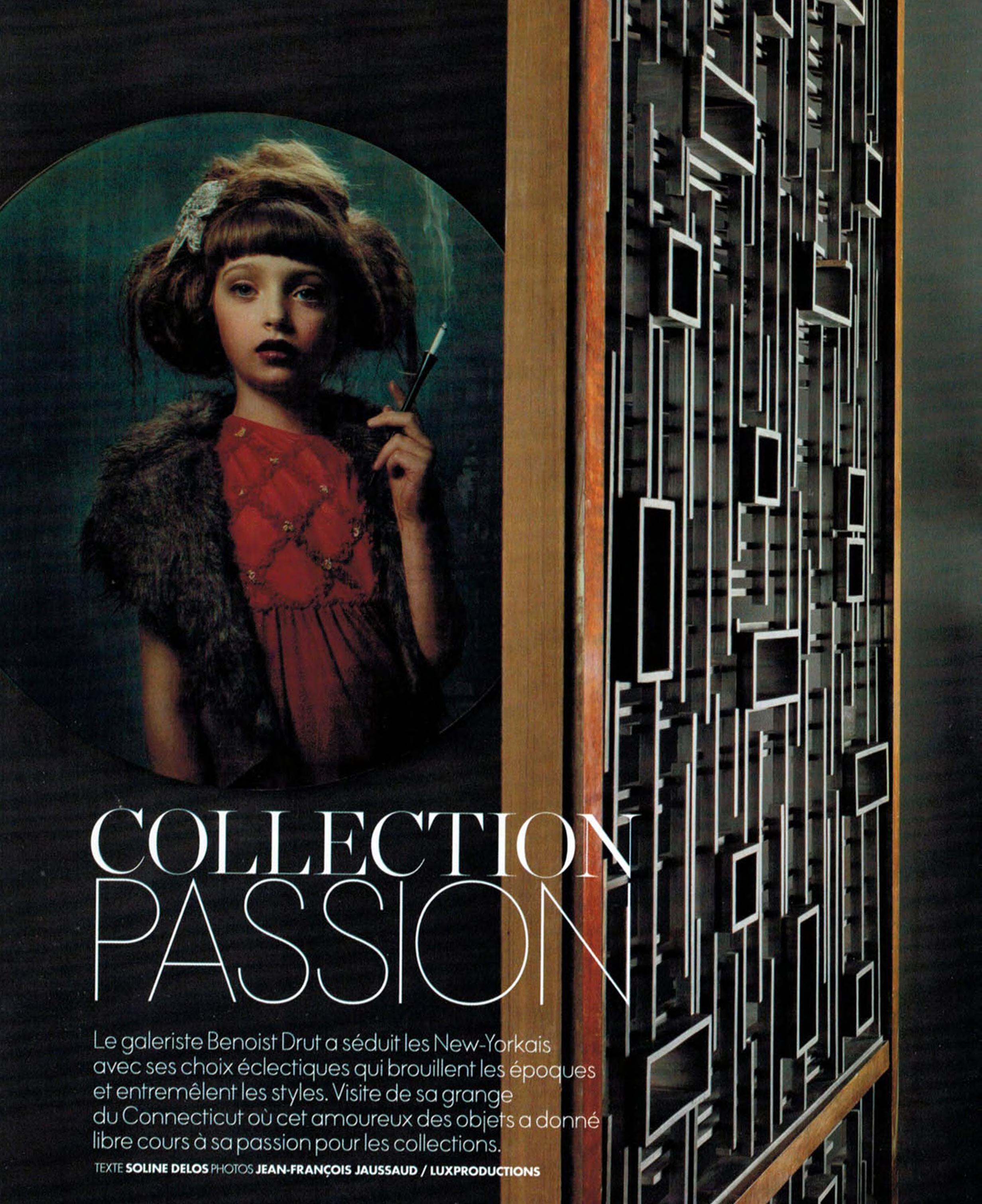

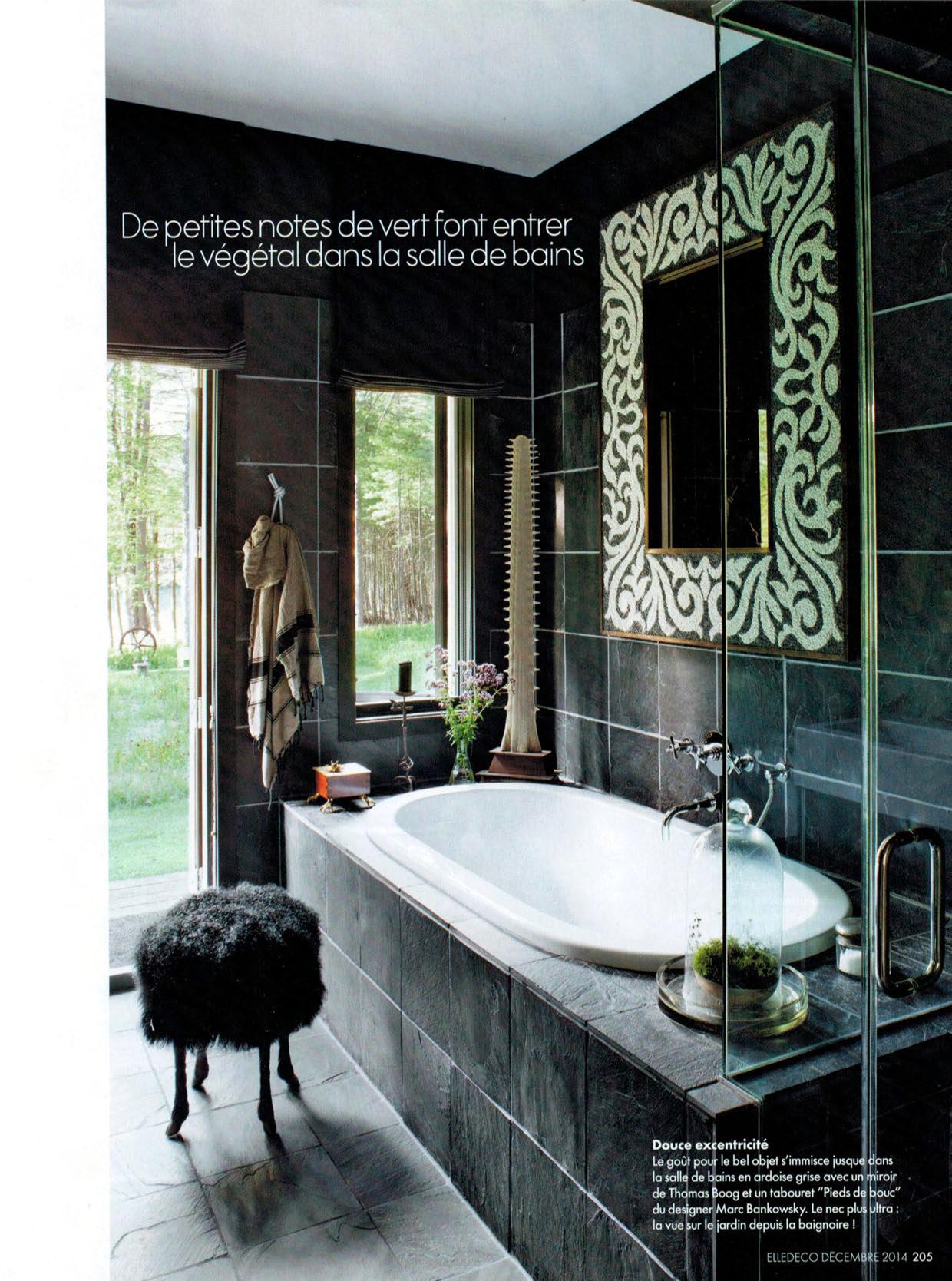
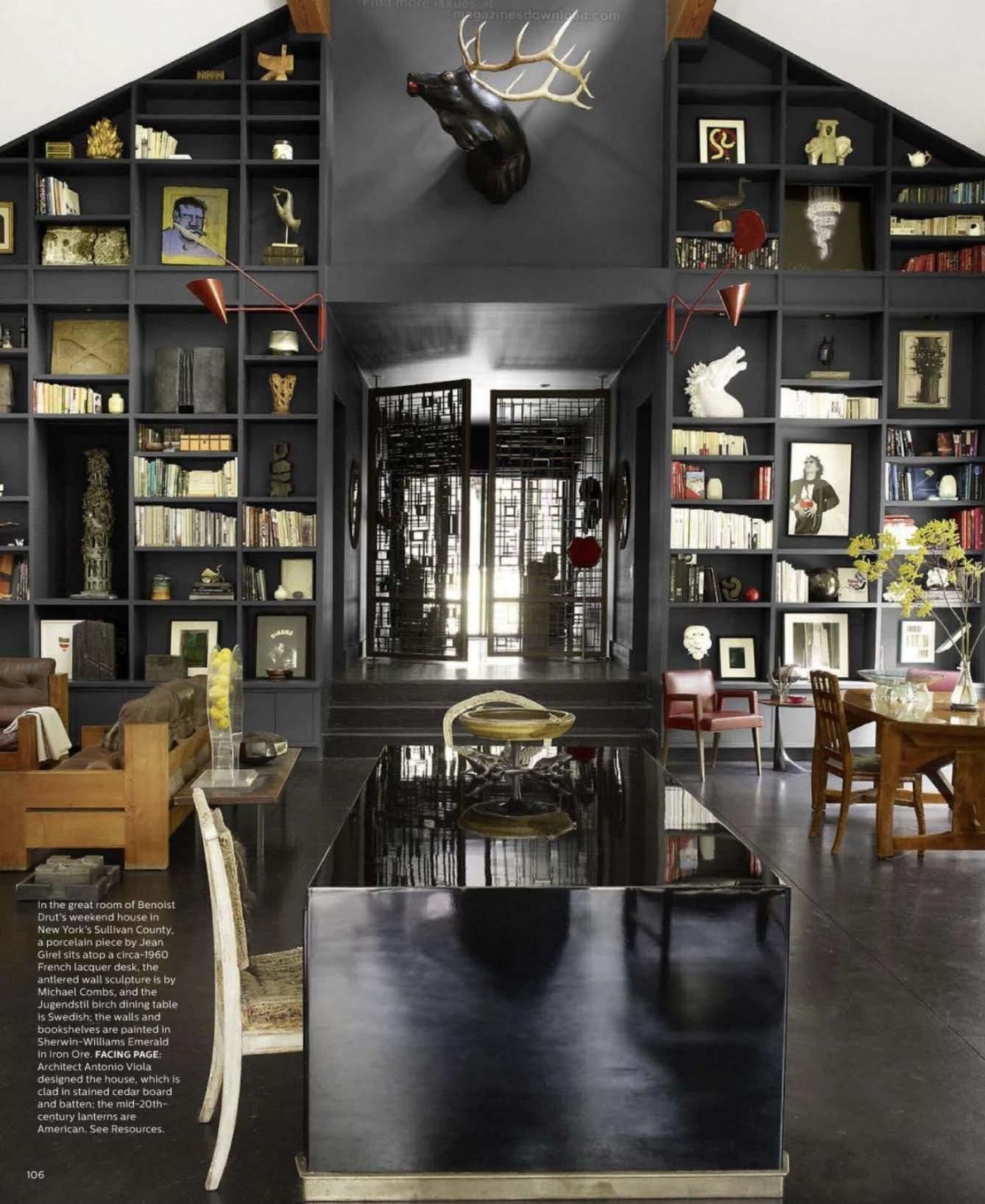
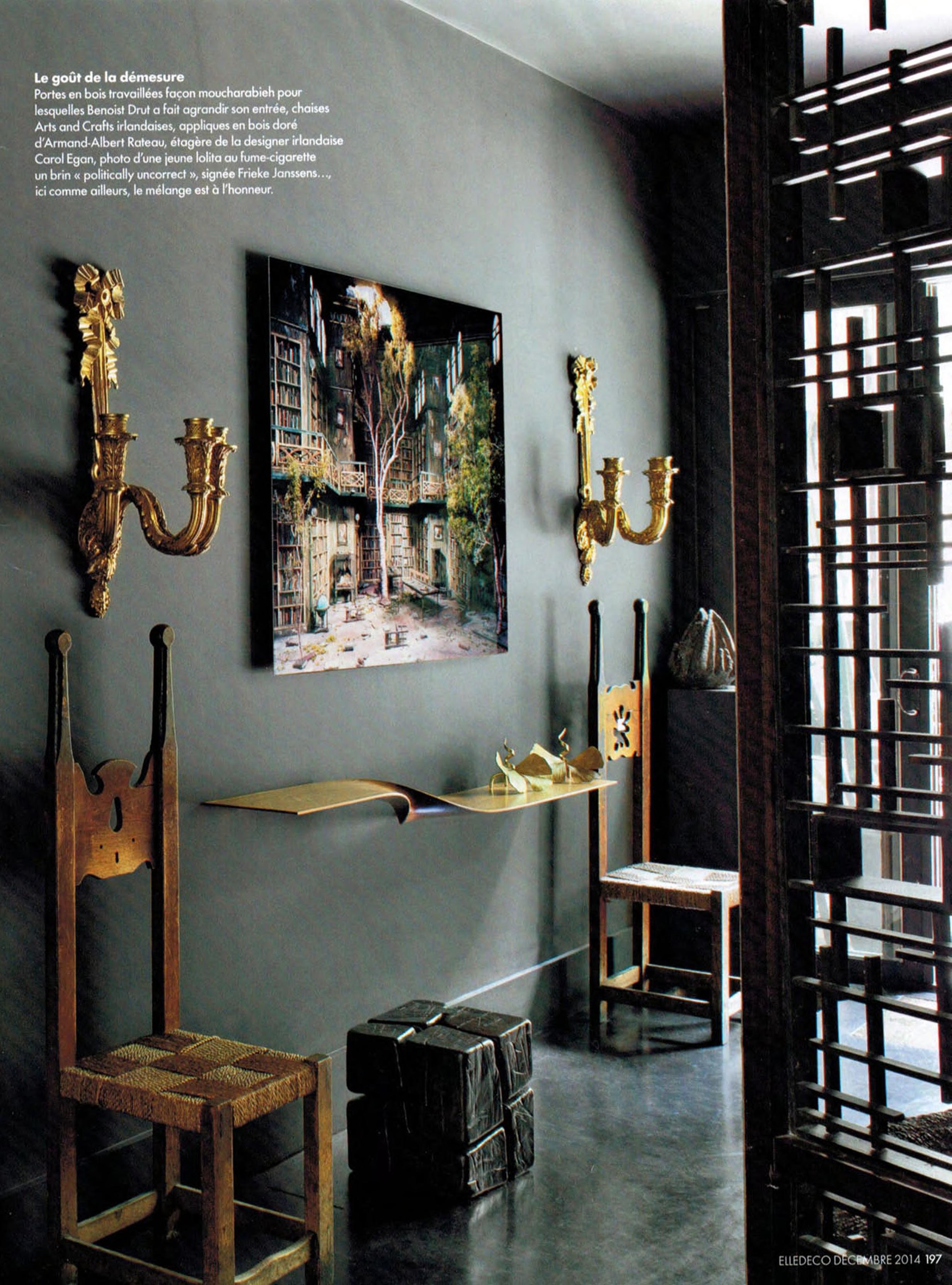
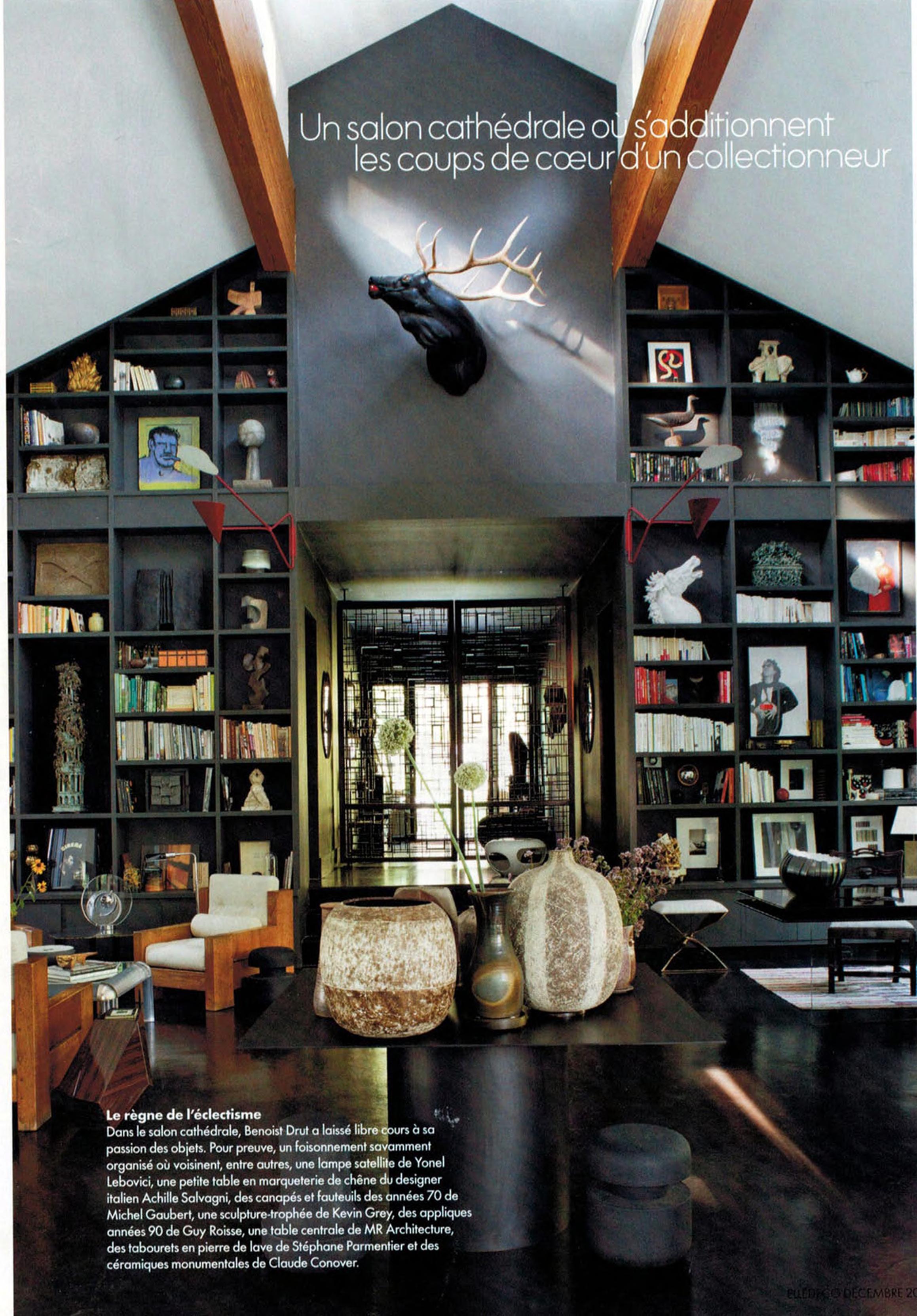
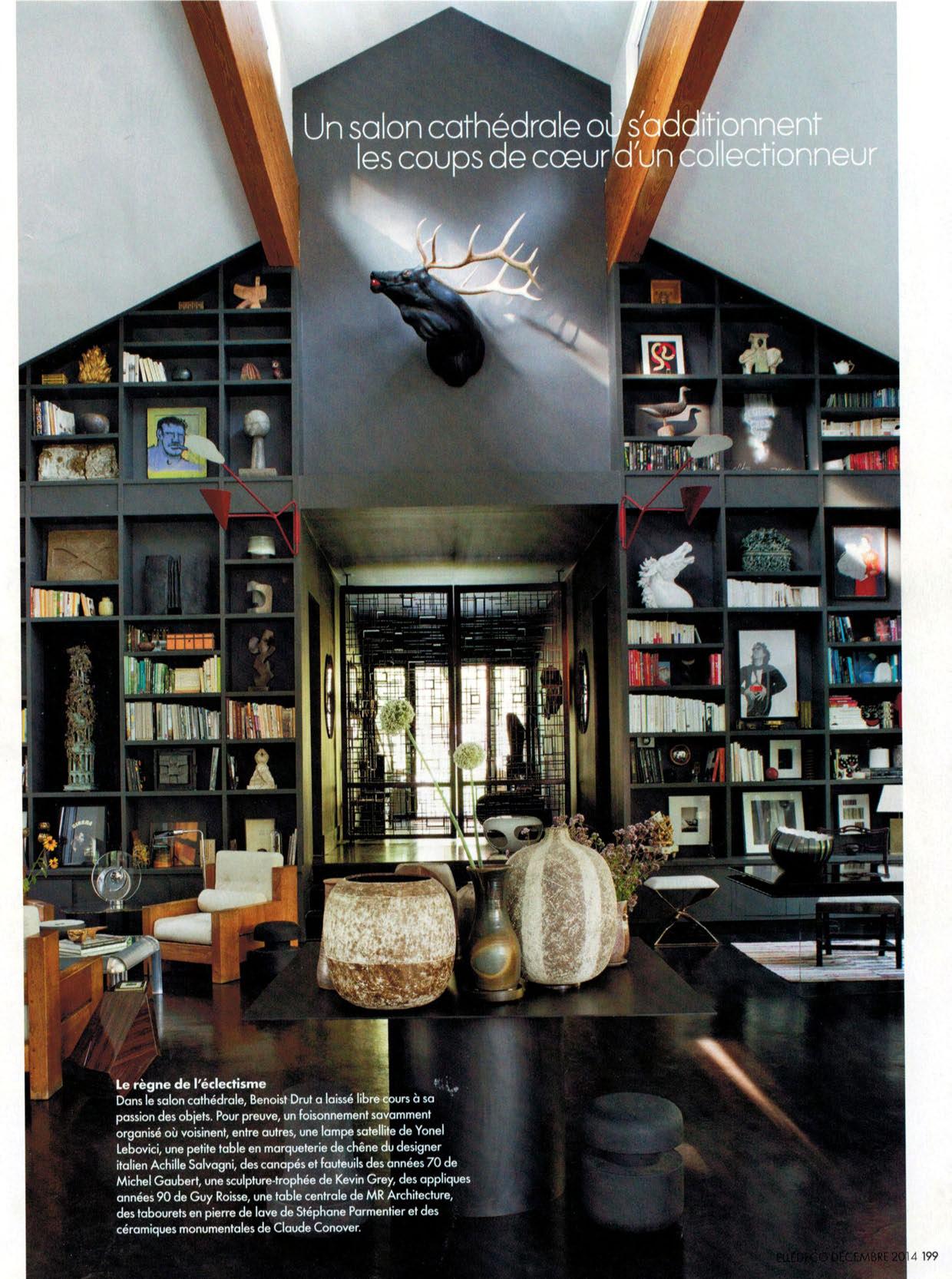
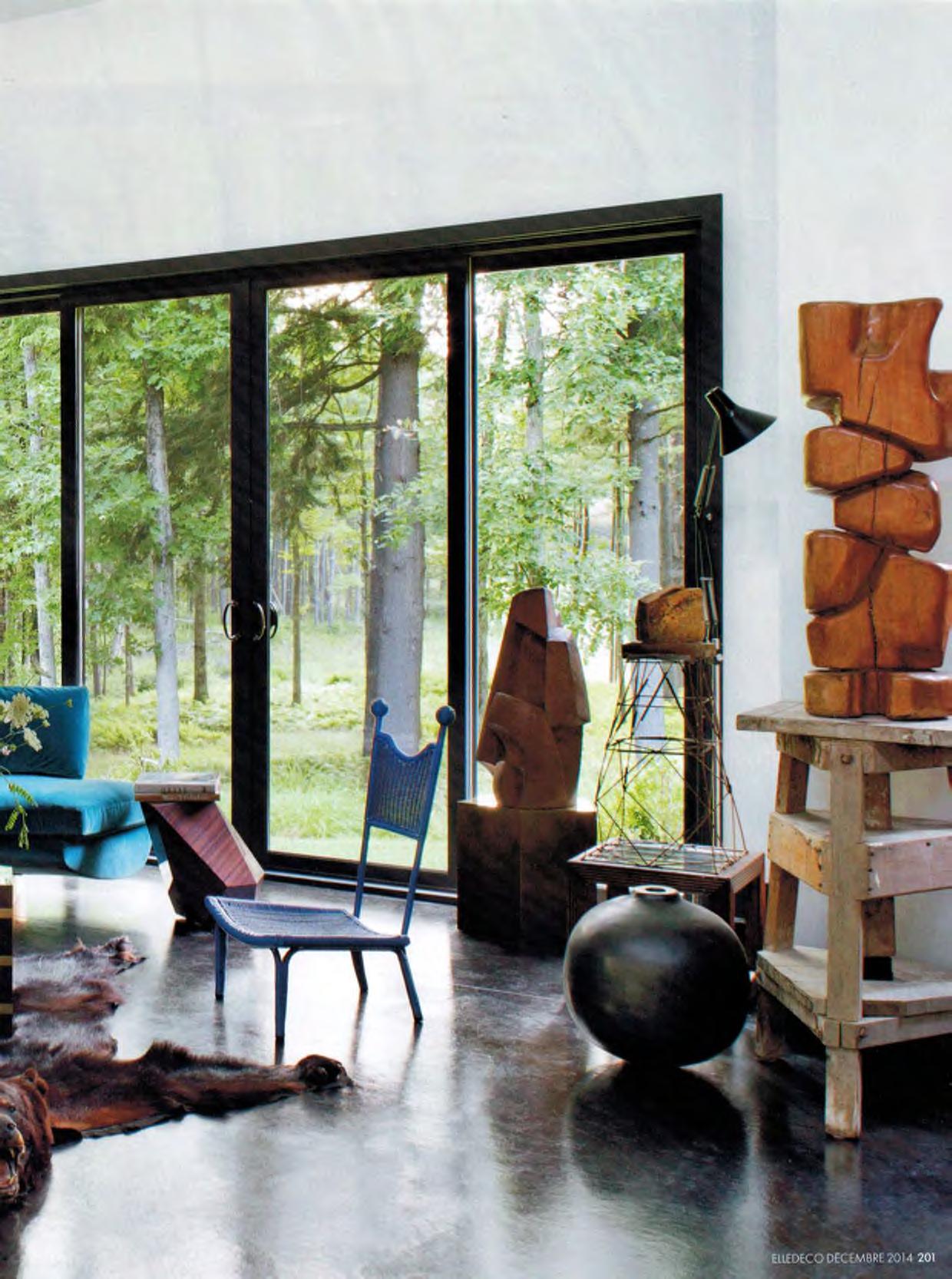
Le goût de la démesure
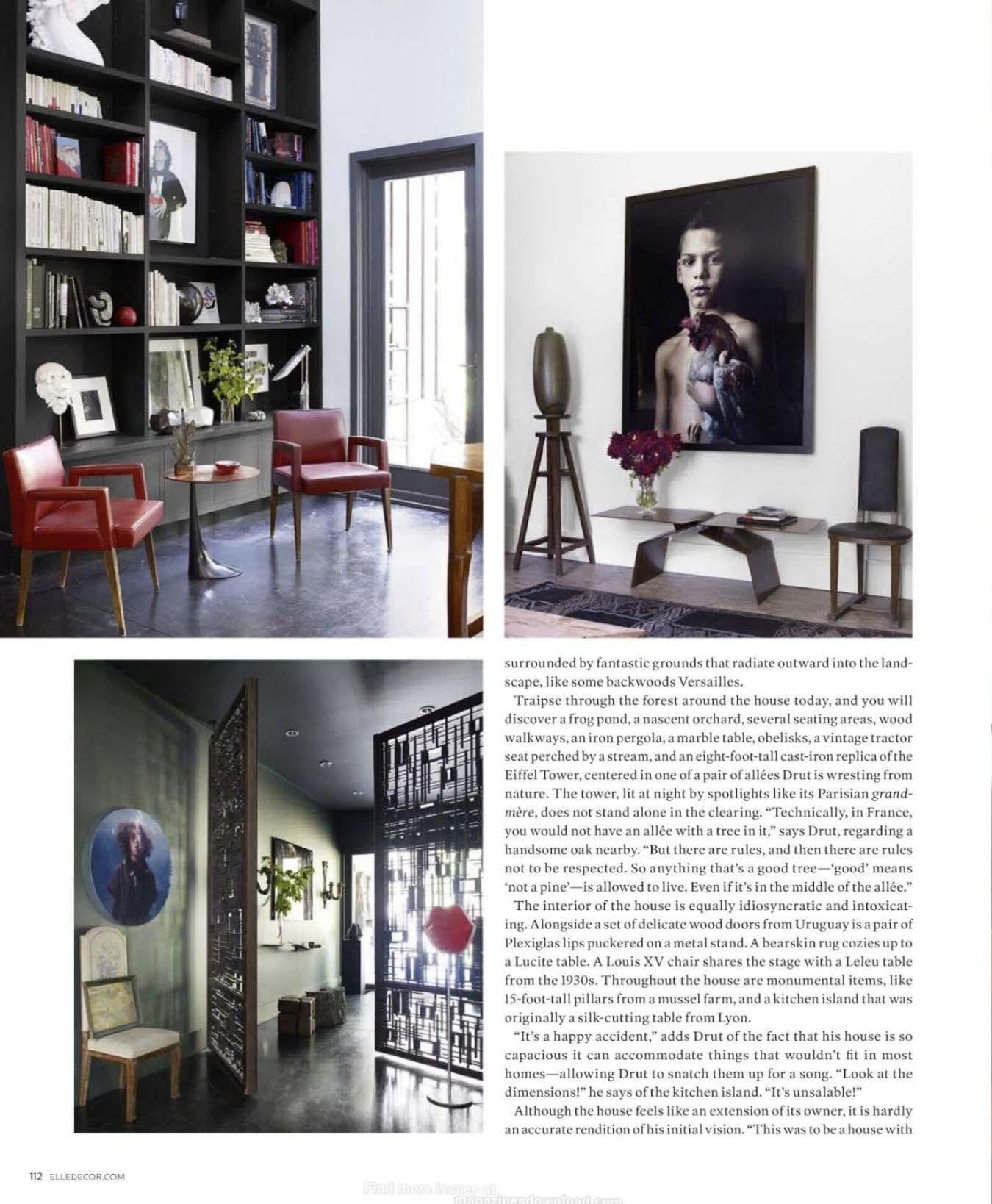
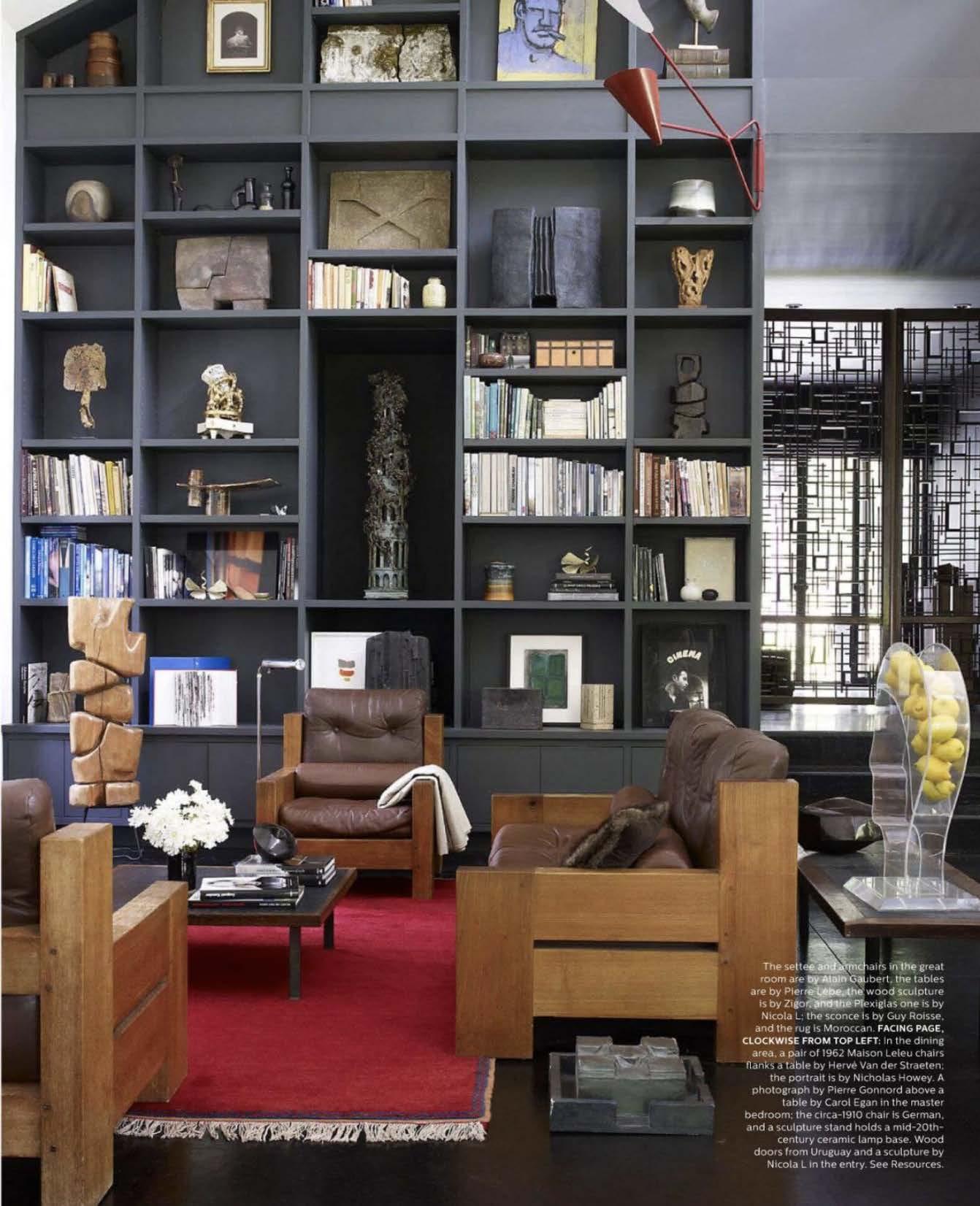
Portes en bois travaillées facon moucharabieh pour lesquelles Benoist Drut a fait agrandir son entrée, chaises Arts and Crafts irlandaises, appliques en bois doré d'Armand-Albert Rateau, étagére de la designer irlandaise
Carol Egan, photo d'une ¡eune lolita au fume-cigarette un brin « politically uncorrect », signée Frieke Janssens..., ici comme ailleurs, le mélange est á l'honneur.


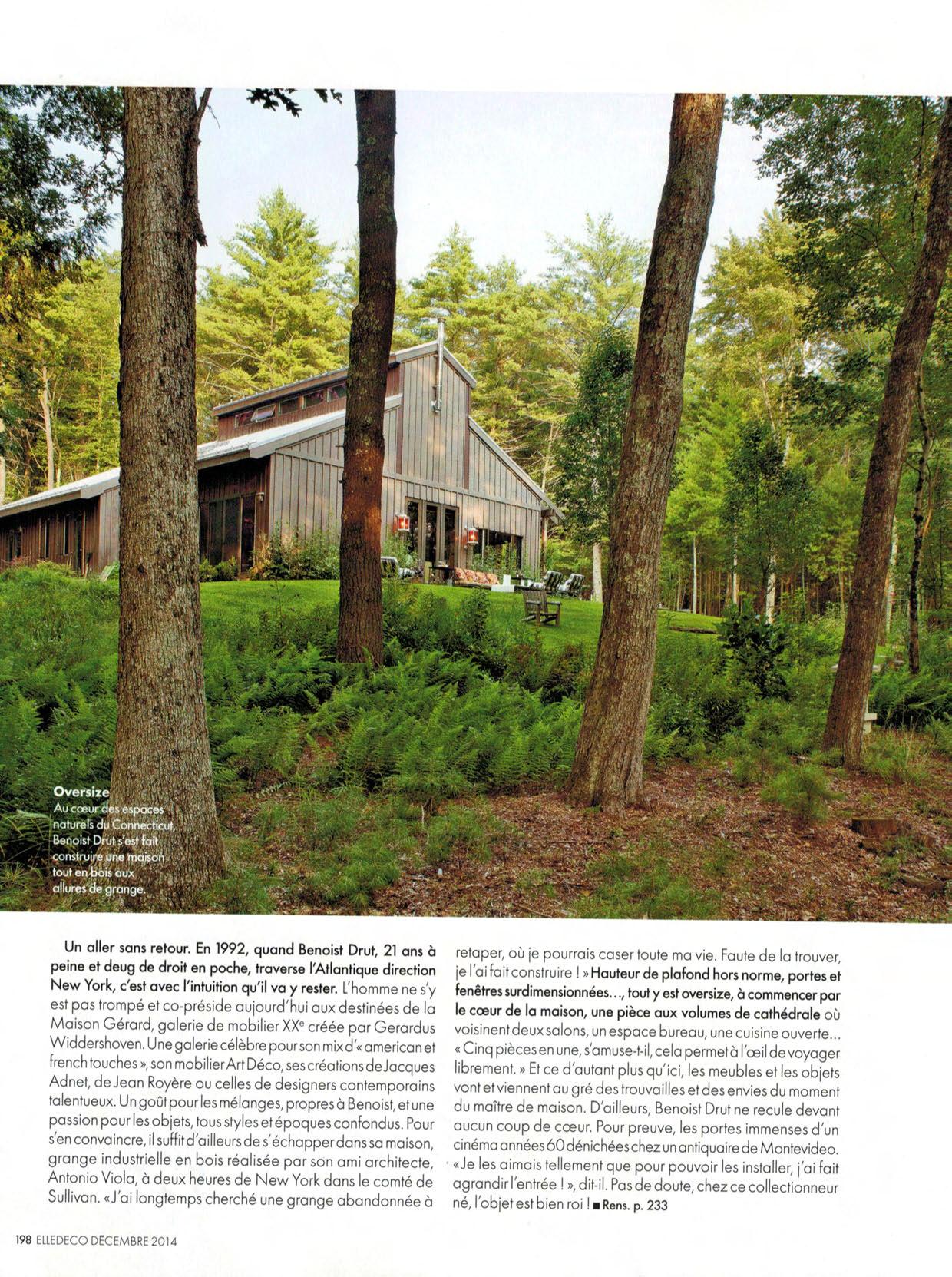



A l'américaine
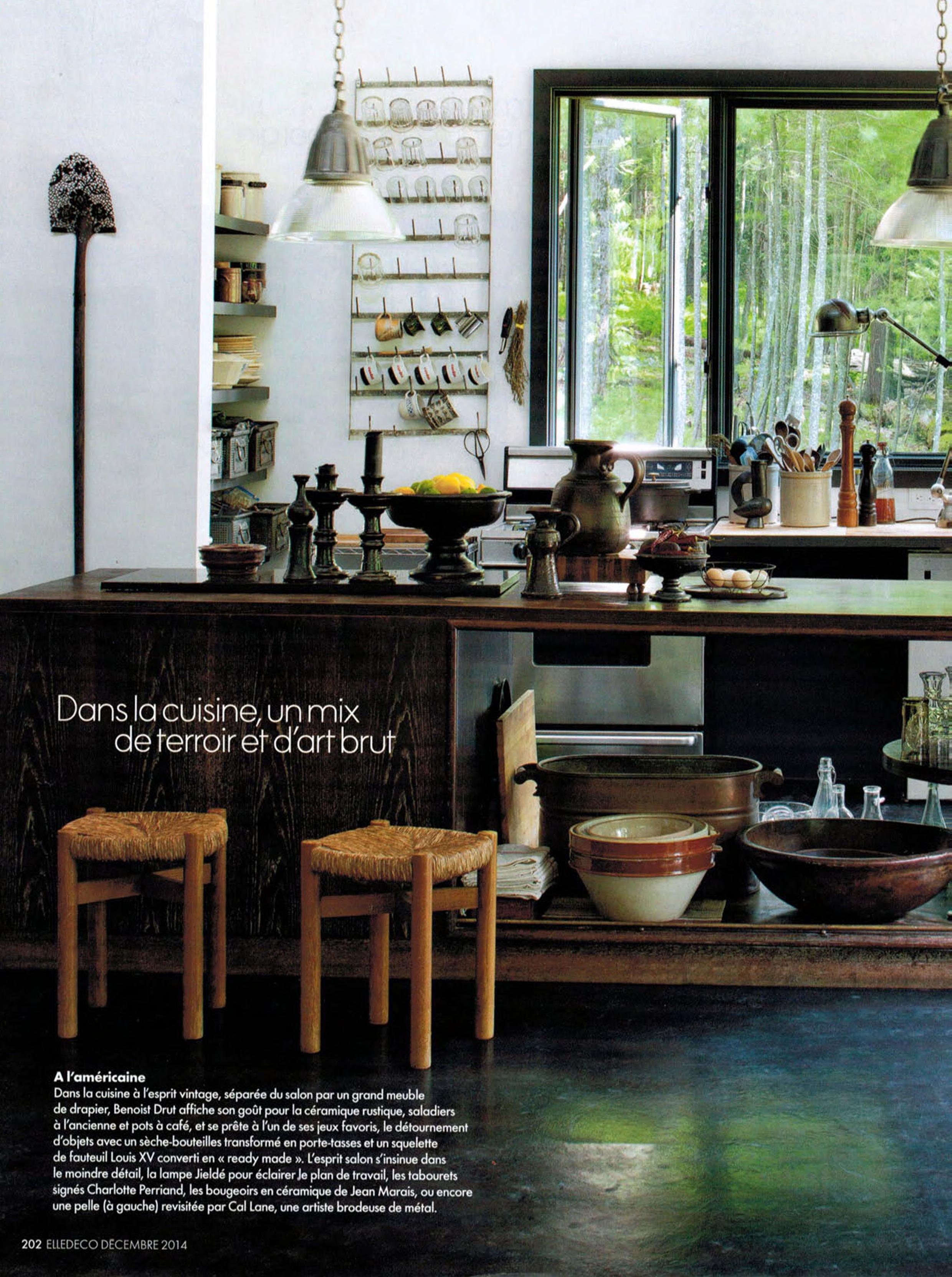
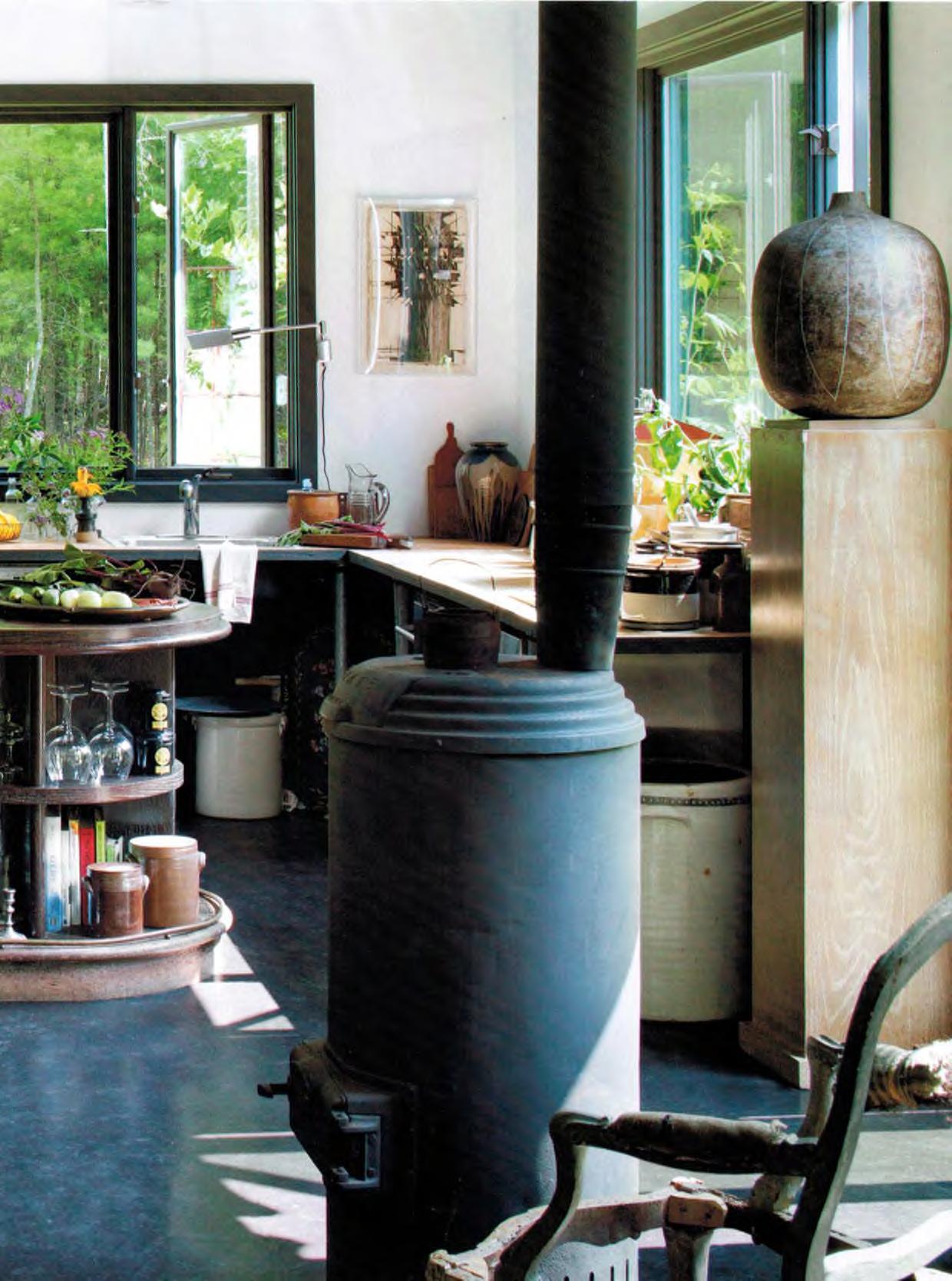
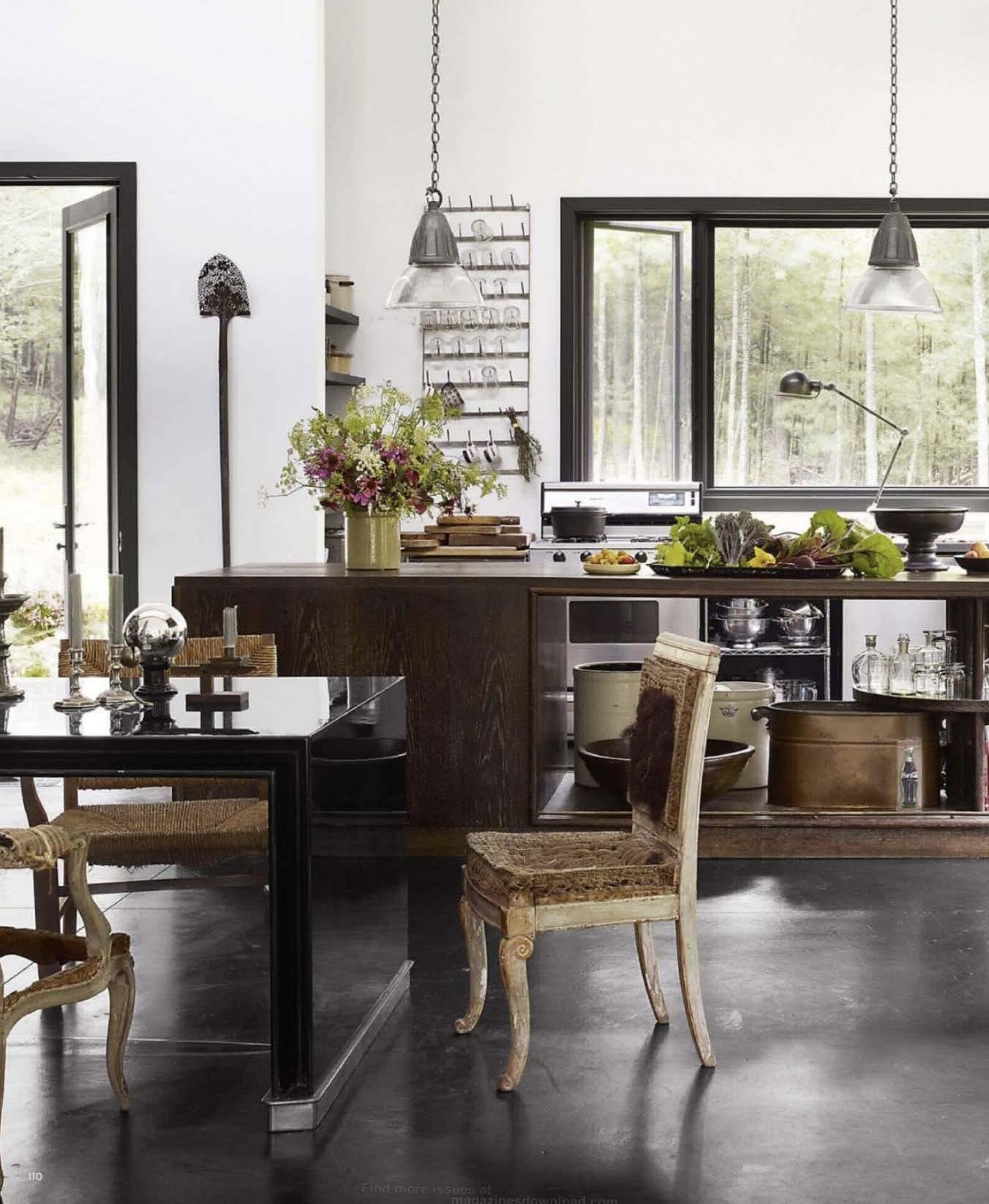
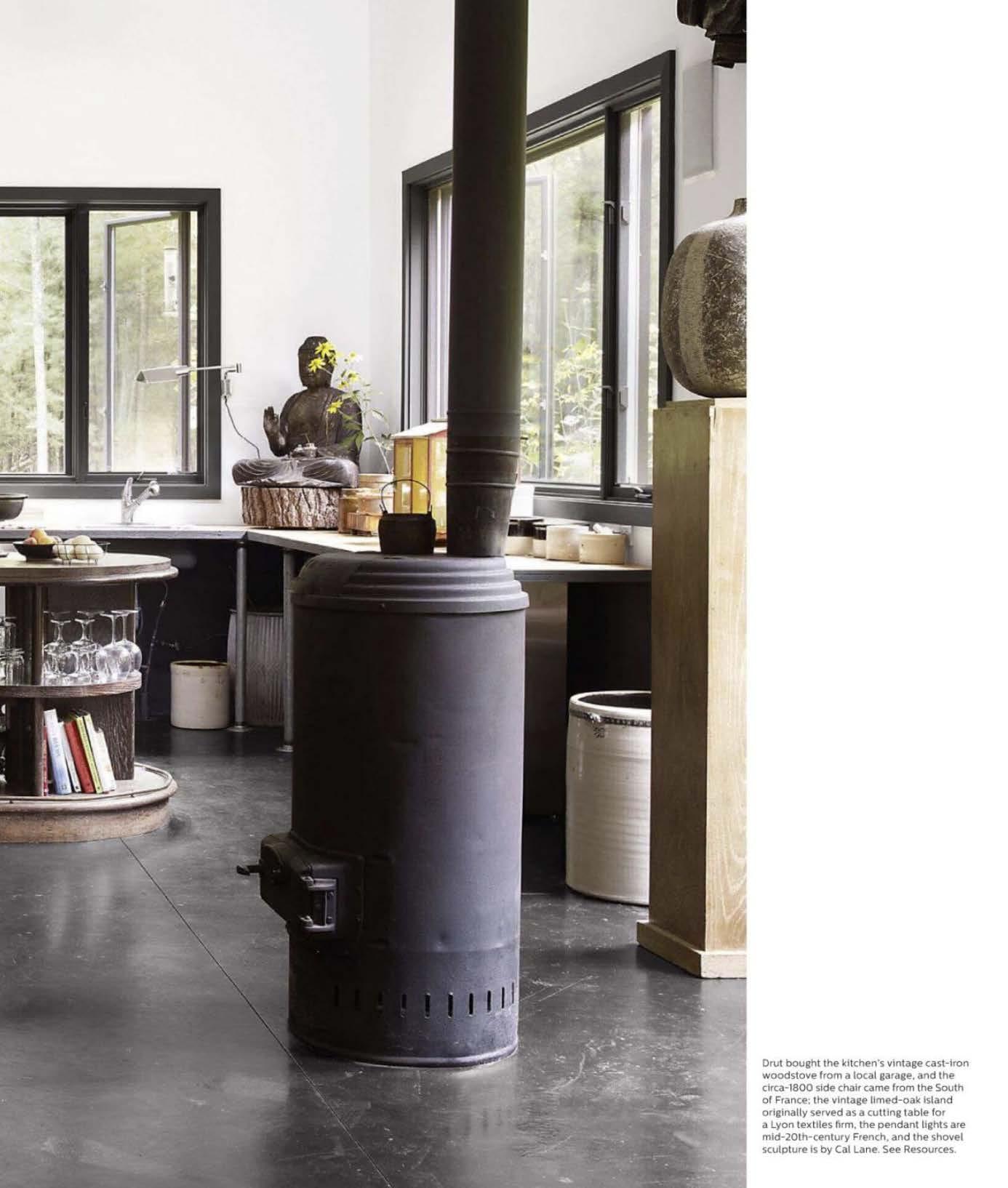
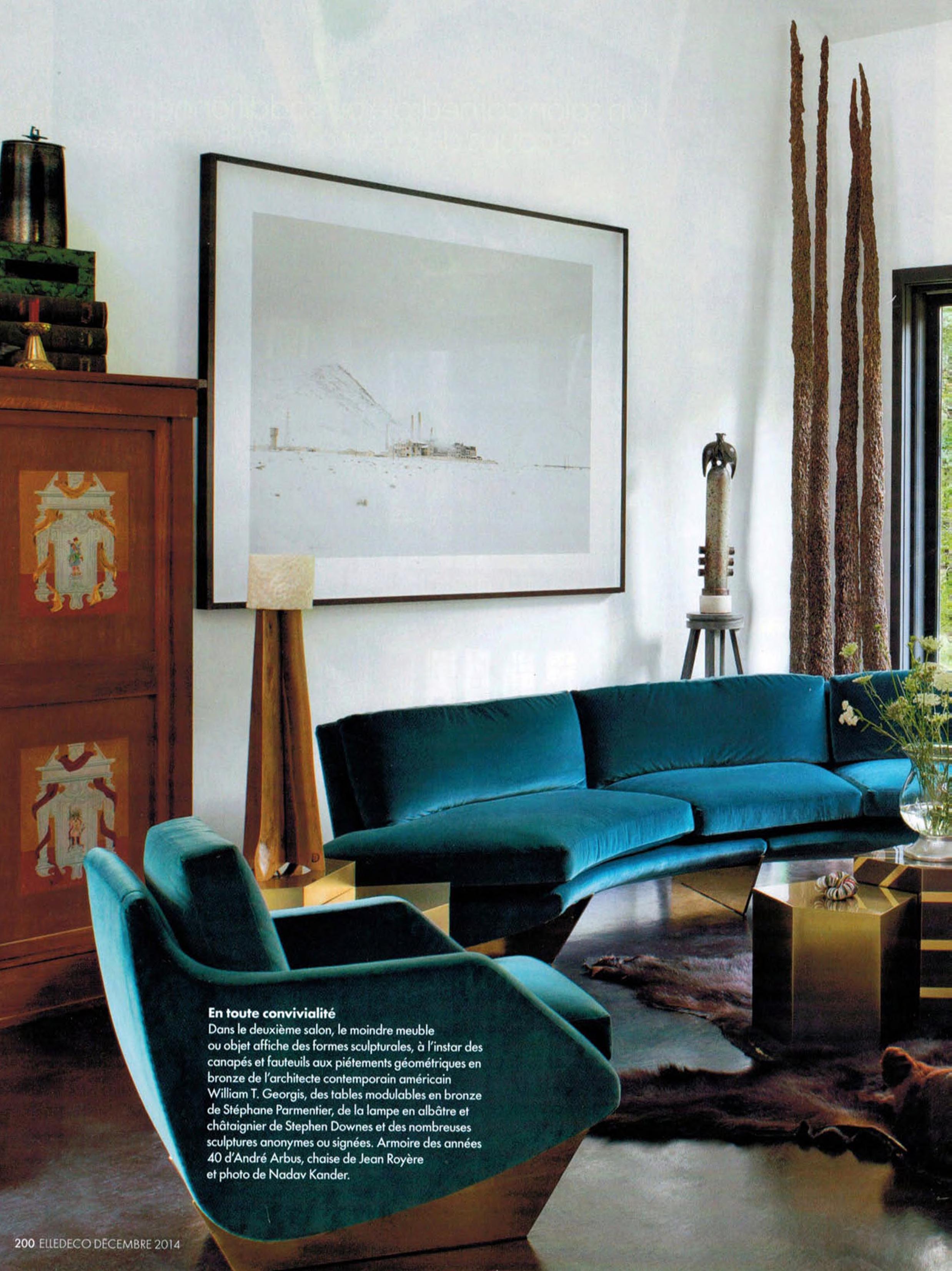
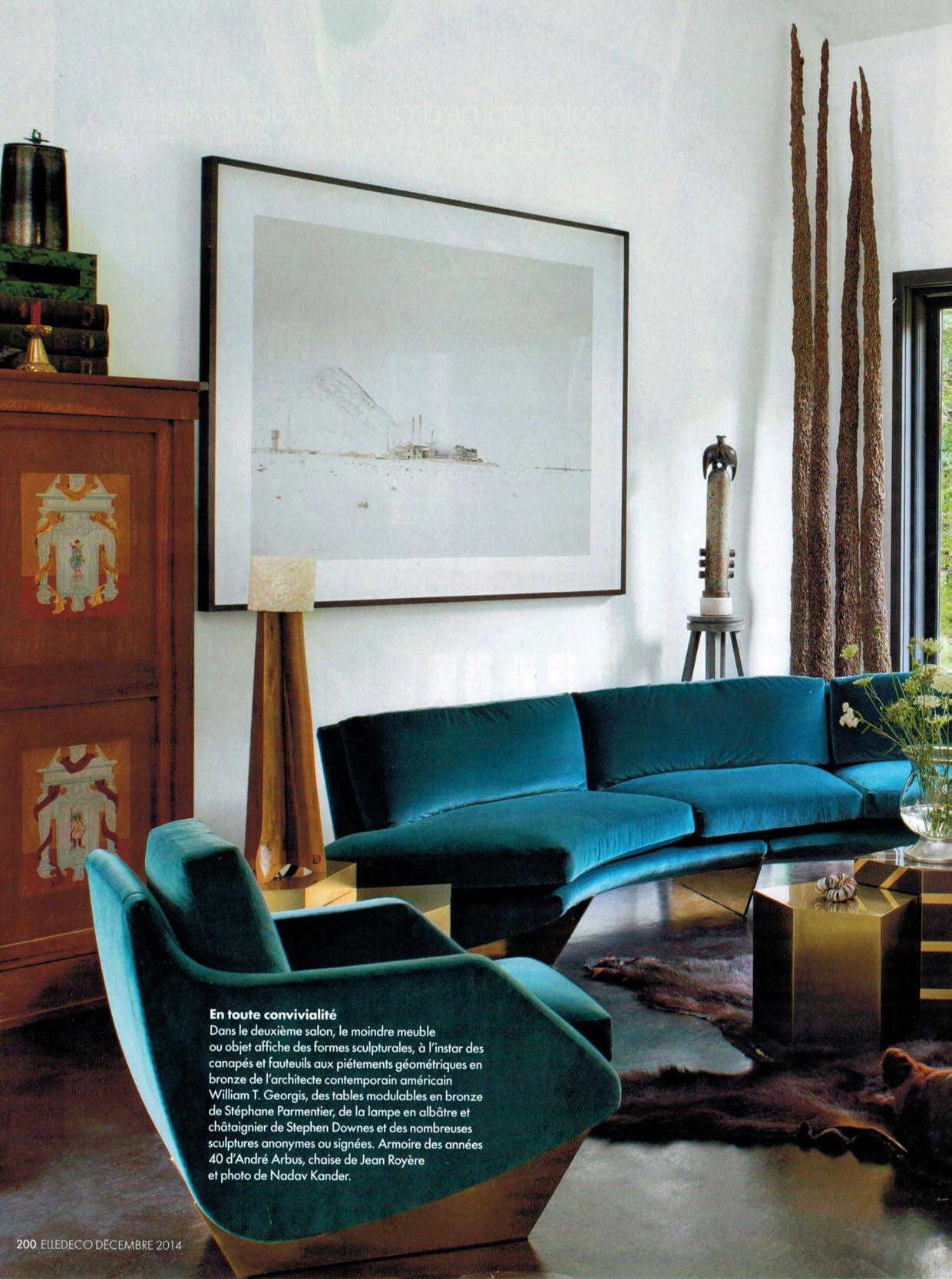
Dans la cuisine à l'esprit vintage, séparée du salon par un grand meuble de drapier, Benoist Drut affiche son goût pour la céramique rustique, saladiers à l'ancienne et pots à café, et se prête à l'un de ses jeux favoris, le détournement d'objets avec un sèche-bouteilles transformé en porte-tasses et un squelette de fauteuil Louis XV converti en « ready made ». L'esprit salon s'insinue dans le moindre détail, la lampe Jieldé pour éclairerJe plan de travail, les tabourets signés Charlotte Perriand, les bougeoirs en céramique de Jean Moráis, ou encore une pelle (à gauche) revisitée par Cal Lane, une artiste brodeuse de métal.