

One People, Two Shores

Anglo-American Art in the Age of Revolution



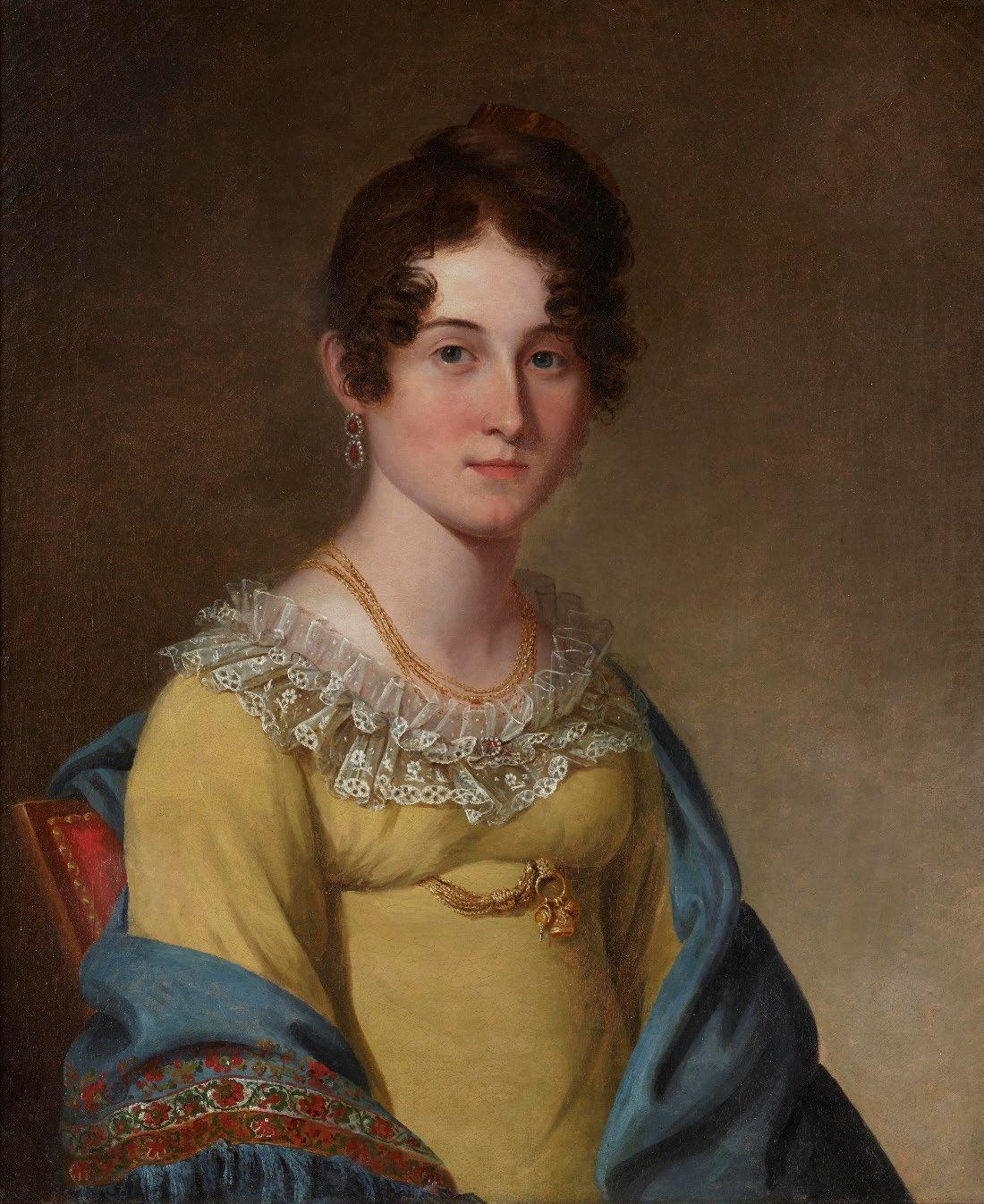
Signed lower left: JaPeale/1818
Full image reproduced above

One People, Two Shores: Anglo-American Art in the Age of Revolution
Paul Staiti Mount Holyoke College

“…our geniuses all go to Europe. In England, at present, the best History Painter, West, the best Portrait Painter, Copley; and the best Landscape Painter, Taylor at Bath, are all Americans.
Benjamin Franklin, 16 May 1783

In one of the remarkable letters exchanged with Jan Ingenhouz, who was a Dutch natural philosopher and Hapsburg court physician, Benjamin Franklin identified three American painters who had achieved excellence and high critical acclaim in England. Franklin was responding to Ingenhouz’s desire to know more about the arts and sciences in the emerging United States, telling Franklin that many European artists were tempted to move to “a country of freedom, whose laws are framed by those who submit to them, and where no frowns of a monarch will ever inspire terror and apprehensions to any man”.1 Franklin, however, had to report back, on May 16, 1783, that “Private persons are not rich enough to encourage sufficiently the fine arts [in America], and therefore our geniuses all go to Europe. In England, at present, the best History Painter, West, the best Portrait Painter, Copley; and the best Landscape Painter, Taylor at Bath, are all Americans”.2 All born British, yet culturally American, they were now pursuing careers in England.
It is significant that when Franklin touted those American “geniuses” in England, he was in the midst of negotiating the Treaty of Paris, which would end the American War of Independence and officially launch the United States on the world stage. Yet, he had to admit to Ingenhouz that it was difficult neigh on impossible for home-grown American
talent to reach its potential under present conditions; ambitious American artists who were interested in excelling necessarily had to travel to England for training, to Italy for art history, and in the case of West, Copley, and Taylor to remain in England for their careers.
The first artist Franklin cited in his 1783 letter was Benjamin West (1738-1820), born in Swarthmore, Pennsylvania, and at that moment Historical Painter to George III. In that year, West was celebrating his twentieth year in London, and was in the midst of painting nine portraits of members of the king’s family, and was already famous from earlier works, such as a multi-canvas a series on the life of Edward III, 28 canvases on Revealed Religion for a chapel at Windsor, and series of major historical paintings: The Landing of Agrippina at BrindisiumwiththeAshesofGermanicus(1768), TheDeathofGeneral Wolf (1770), TheBattleoftheBoyne (1778), TheBattleLaHogue (1778), OliverCromwellDissolvingtheLongParliament (1782), The American Commissioners of the Preliminary Peace Agreement with Great Britain (1783), and an emerging commission to paint a giant picture of Alexander III of Scotland Rescued from the Fury of a Stag by the Intrepidity of Colin Fitzgerald. All that, and more, by the time Franklin wrote Ingenhouz in 1783.
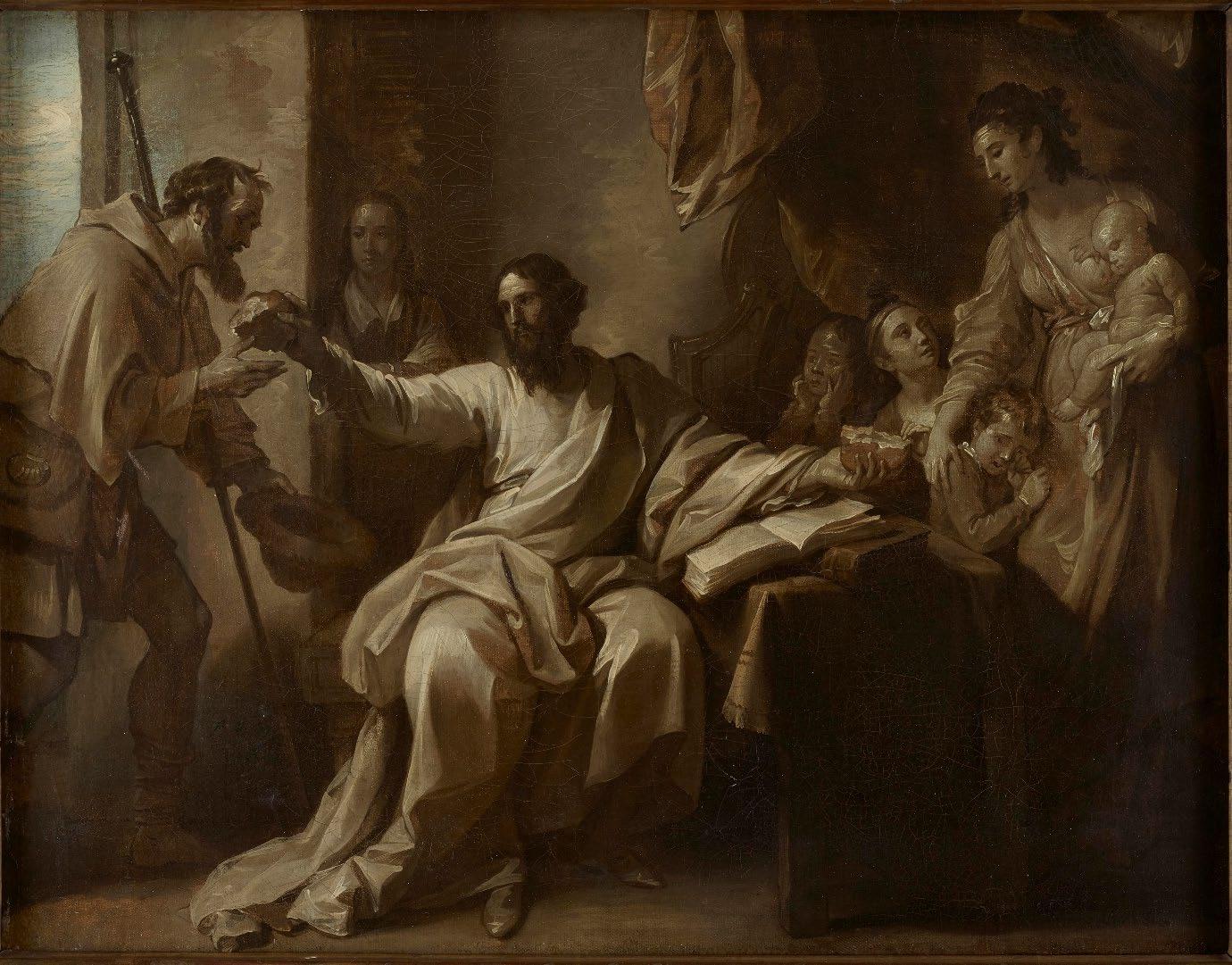
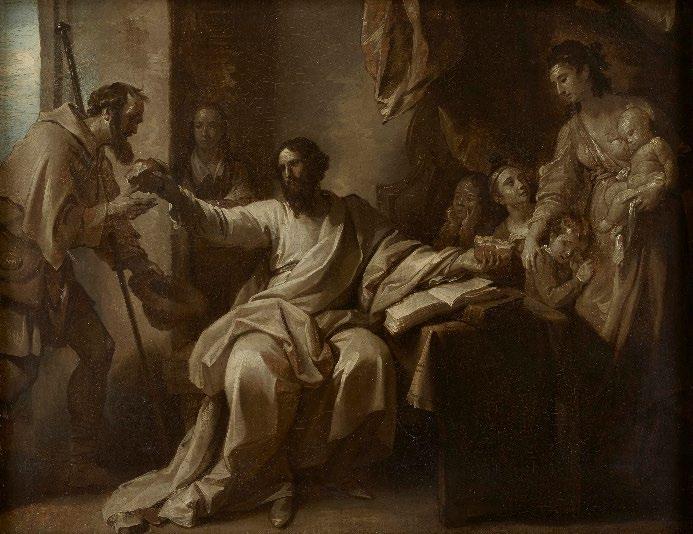
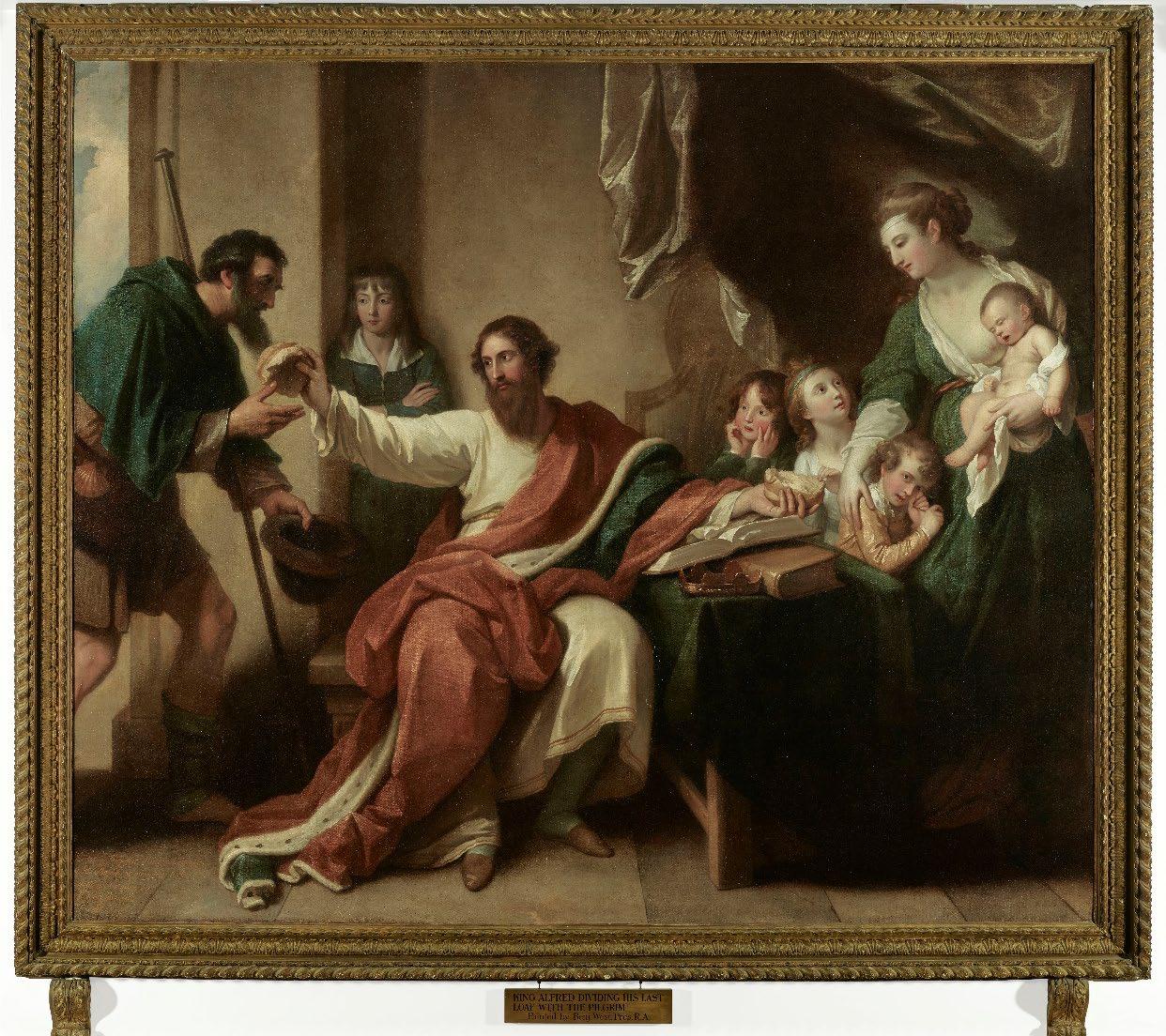
One of the outstanding pictures produced during that period, for The Stationers’ Hall in London, was KingAlfredDividinghisLoafwiththe Pilgrim (1779) (fig. 2). A handsome grisaille (fig. 1, cat. 2) shows the ninth-century king during the time he was in hiding from the Vikings in Somerset. A pilgrim arrives, bent over and emaciated. Out of pure compassion, Alfred tears off half a loaf of bread to share with the poor man, while his own family, equally famished, picks at the remains. A parable of Christian charity, the tale was told by Alexander Bicknell in TheLifeofKingAlfredtheGreat , a popularized biography published in 1777. The grisaille, painting, and biography each are marks of Alfredomania, which was the cult of the legendary Anglo-Saxon king whose recuperation in the eighteenth century had helped the new Hanoverian kings link themselves to England past.
John Boydell (1720-1804), a member of Stationers’ since 1751, gifted the full-size painting of KingAlfred to Stationers’, while at the same time he was leading a revolution in the printing and marketing of engravings that celebrate Shakespeare and British history. In 1782, Boydell hired William Sharp to produce an engraved print of King Alfred, for which the exhibition’s grisaille was most likely made.
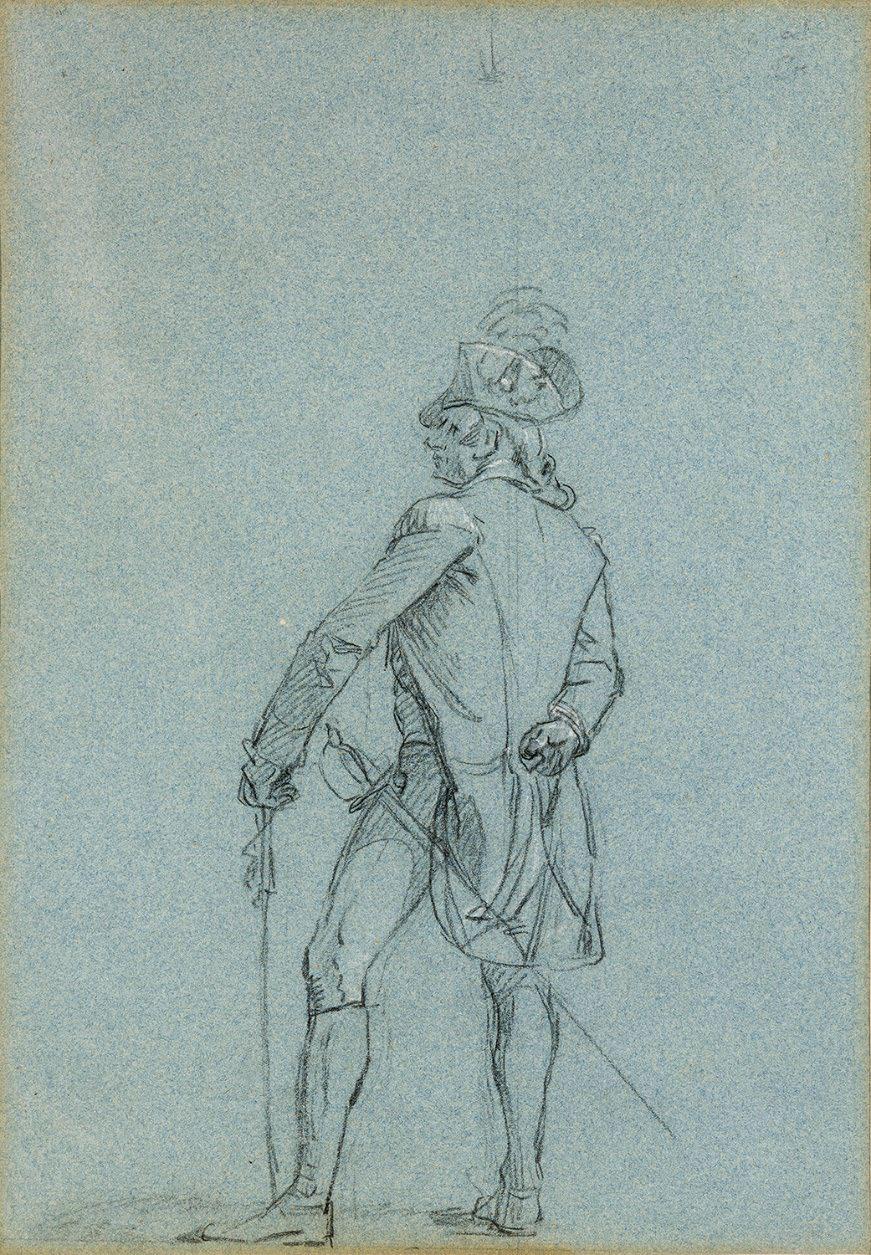
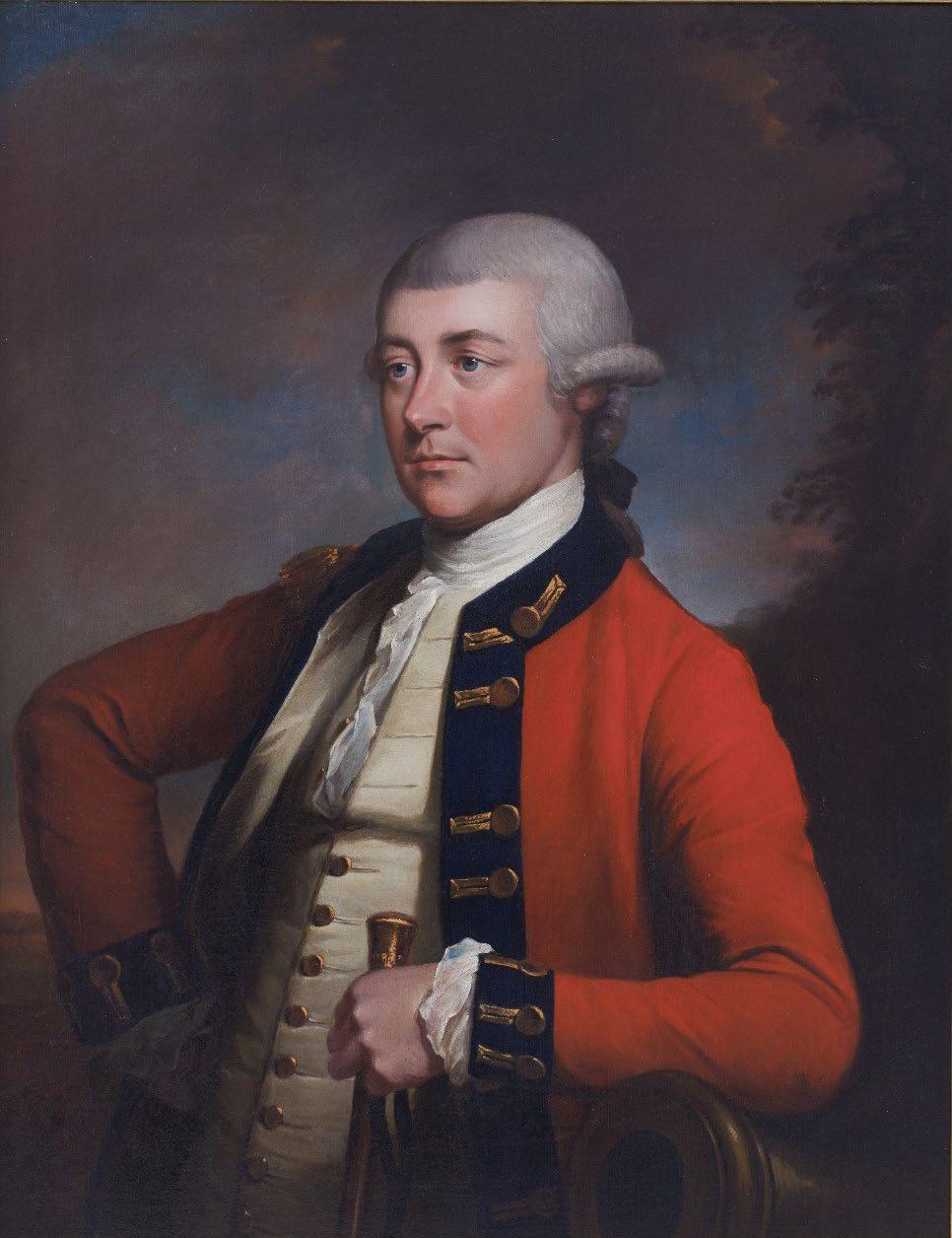
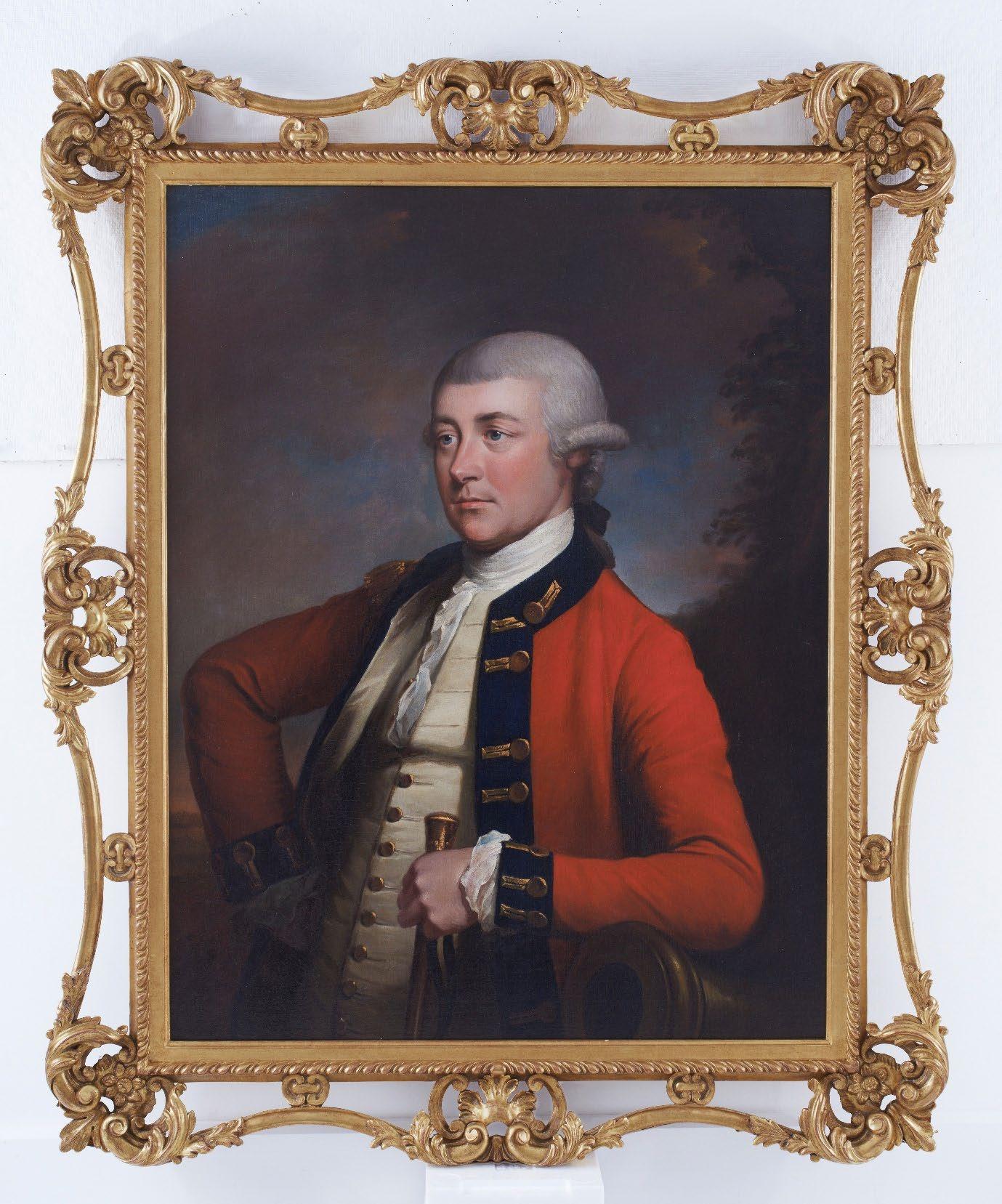
During his long career in London, West was the genial conduit to London for generations of American-born artists looking to train up and develop professional careers: Matthew Pratt (1734-1805), Ralph Earl (1751-1801), Charles Willson Peale (1741-1827), Gilbert Stuart (1755-1828), John Trumbull (1756-1843), Robert Fulton (1765-1815), Rembrandt Peale (1778-1860), Washington Allston (1779-1843), Thomas Sully 1783-1872), and Samuel F. B. Morse (1791-1872). In addition, West’s success as an American in London encouraged John Singleton Copley to move there in 1774. Copley was already the best portraitist in Boston and New York, having painted over 300 works ranging from Protestant clergy to trans-Atlantic merchants and their wives, from family members to military men: Paul Revere, Samuel Adams, John Hancock, Mercy Otis Warren, and Margaret Kemble Gage, to name a few. His portraits of British military men stationed in America are spectacularly attested to by his General Thomas Gage, Colonel John Montresor , and Captain Gabriel Maturin (fig. 3, cat. 8). Maturin was Gage’s aide-de-camp. Though Copley had only worked up to that point in Boston and New York, he was constantly striving to emulate British style without having had the advantage of British training or colleagues.
Nagged by that deficit, he craved the artistic milieu of Georgian London, complaining to West in 1766 that “I think myself peculiarly unlucky in Liveing in a place [America] into which there has not been
one portrait brought that is worthy to be call’d a Picture within my memory, which leaves me at a great loss to gess the stile that You, Mr. Renolds, and the other Artists pracktice.“ Feeling marooned, Copley wondered whether “I should sett down in London” and possibly “find myself much better off than I am in my present situation”.3
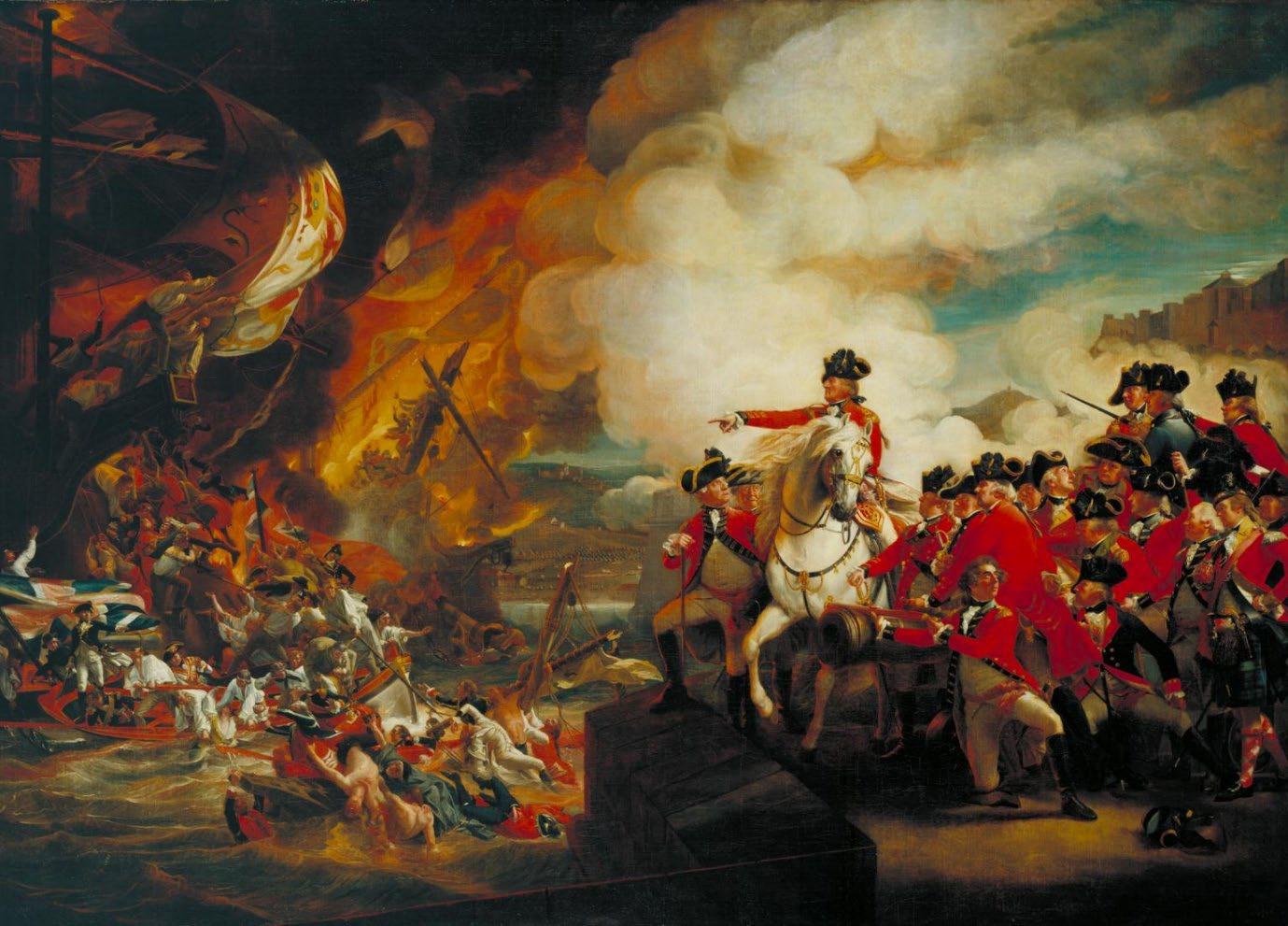
As political tensions and street violence increased during the 1760s, Copley wished to remain nonpartisan, which proved impossible to sustain. In 1774, he left Boston permanently, and after a grand tour of the continent, settled into Leicester Fields, and then Hanover Square. Ever-ambitious, he ascended through the Royal Academy and made himself known, often by unconventional ways, through a series of history paintings: by 1783, when Franklin described the best artists in Britain, Copley had painted Watson and the Shark (1778), The Death of Lord Chatham (1781), The Death of Major Peirson (1783), and was beginning TheDefeatoftheFloatingBatteriesatGibraltar,September 1782 (1783-1791) (fig, 4, see cat. 3), a gigantic picture commissioned by the City of London.
Fig. 4: John Singleton Copley (1738-1815), TheDefeatoftheFloatingBatteriesatGibraltar, September1782 , 1783-1791, oil on canvas, 544 x 754 cm. Guildhall Art Gallery, London.
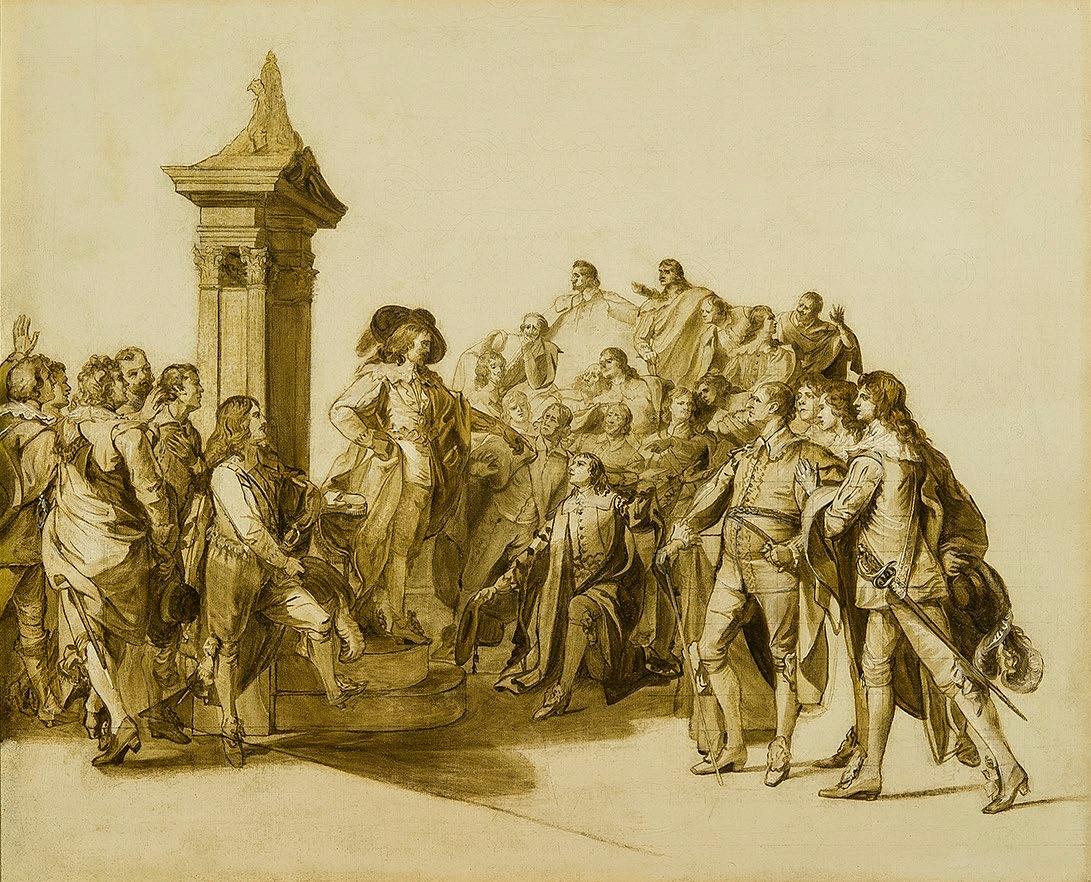
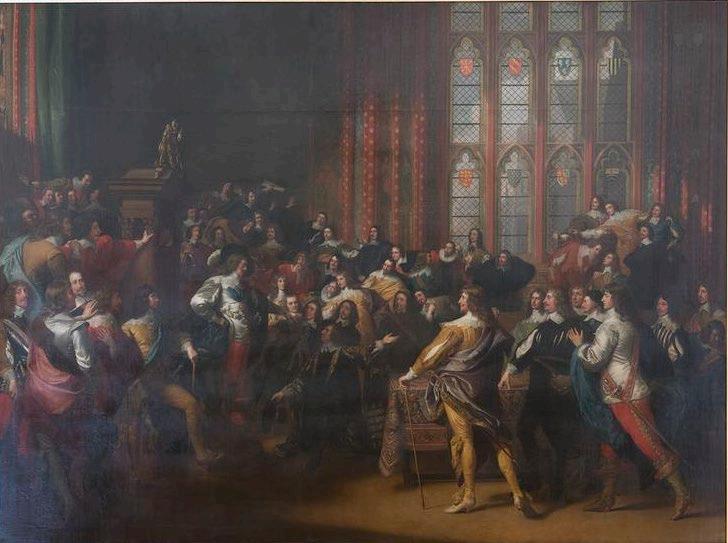
In 1781, John Boydell commissioned him to paint a picture on the subject of Charles I Demanding in the House of Commons the Five Impeached Members . The current exhibition displays the large grisaille for that painting (fig. 5, cat. 4). The subject depicts the electric moment of January 4, 1642, when Charles stood in Parliament to demand that the five members accused of treason against the crown step forward. That was to be the beginning of the fatal chain of events that led to civil war and Charles’s execution. The grisaille is simpler and much more dramatic than the finished painting, now in the Boston Public Library, for which Copley added the interior walls, windows, draperies, and dozens of other members (fig. 6)
The third of Franklin’s notable Americans in London was John Taylor. Unlike West and Copley, only fragments are known about Taylor’s life. He was born in Philadelphia, the son of Abraham Taylor (1702-1772), English-born and having immigrated to America in 1724, where he entered a prosperous partnership with John White as “Merchant Adventurers in the North American Trade.” Of the Taylor’s three children, John was born in 1735. His youth is largely undocumented, and that includes his artistic training and production while in America. The Taylor family, including John, moved to England in 1762. He settled in Bath in 1763, where he lived and worked in a terraced house within the recently designed and highly fashionable Circus (at no. 22).
Fig. 5: John Singleton Copley (1738-1815) CharlesIDemanding in the House of Commons the Five ImpeachedMembers, c. 1782-94. oil on canvas, en grisaille 54.6 x 67.3 cm. (cat. 4)
Fig. 6: John Singleton Copley (1738-1815), Charles IDemandinginthe House of Commons theFiveImpeached Members , 16411642, oil on canvas City of Boston, Massachusetts, on loan to the Boston Public Library.
Because of the significant wealth inherited from Taylor’s father and the British properties inherited from his wife Rebecca’s relations, John Taylor did not have to been as entrepreneurial as, say, Copley.
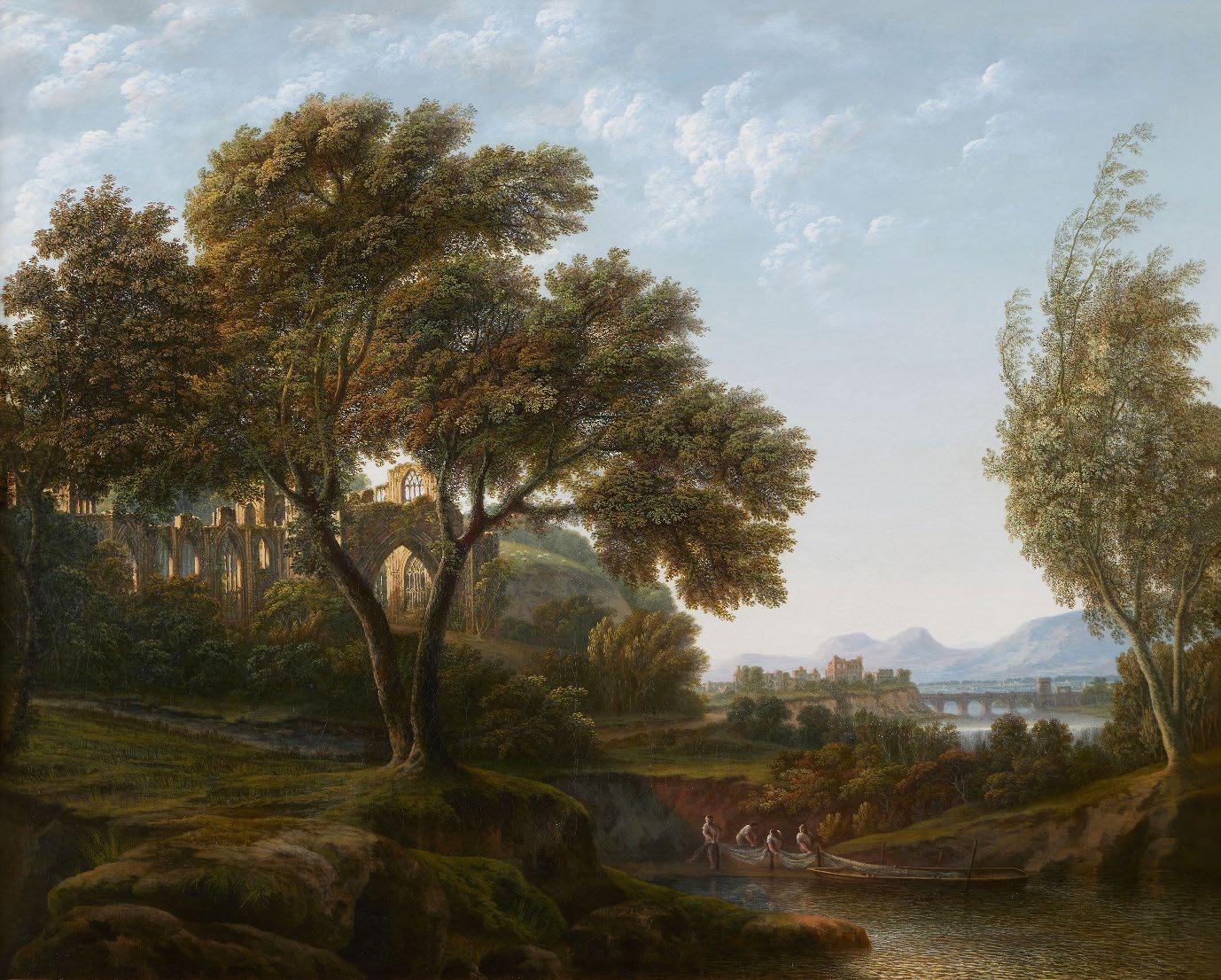
Taylor’s neighbour and new friend in Bath was Thomas Gainsborough, (1727-1788), who had come to Bath in 1759 and was the reigning artistic genius of the town. In one account, Taylor and Gainsborough entered into a friendly competition, judged by professional artists, over who could paint the better landscape, the results ending in a tie. Taylor would sell his Bath house in 1788. When he painted RiverLandscape with the Ruins of an Abbey in 1792, he was living in new quarters in Grosvenor Place, London, not far from Copley’s house in tony Hanover Square.
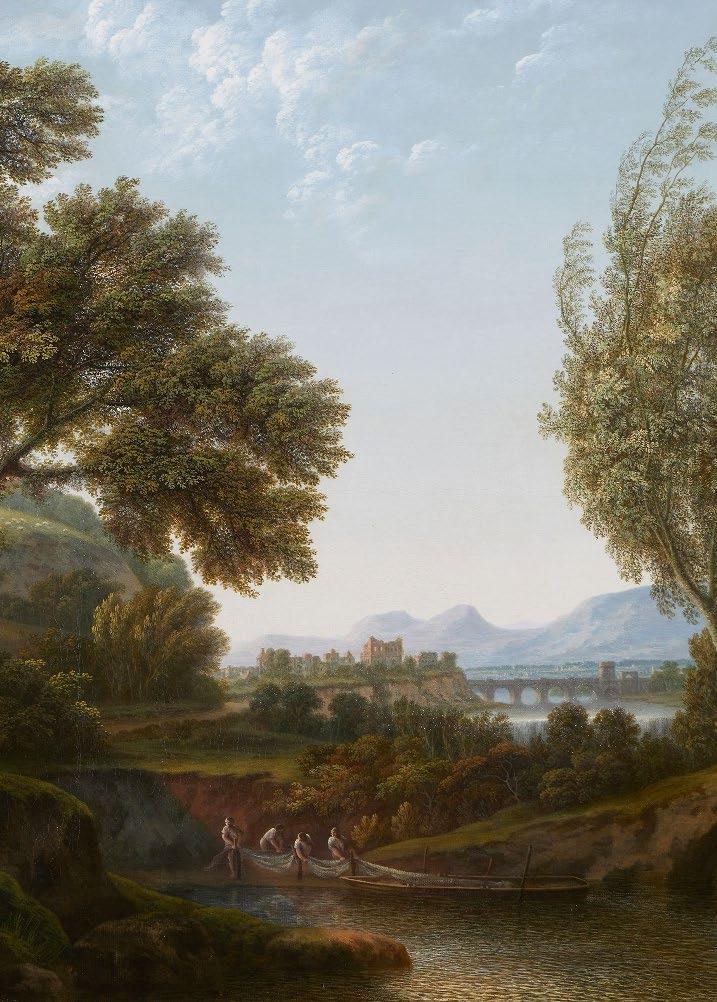
Taylor’s precise technique and compositional strategies indicate the influence of Italian art via Richard Wilson, Claude Lorrain, and Garpard Dughet rather than Gainsborough’s feathery rococo style. Taylor’s River Landscape with the Ruins of an Abbey is an exceptional work within his oeuvre, one of the best in eighteenth-century Britain, and certainly the best by an American (cat. 1). There is a spectacular silvery effect, almost a vibration, in the delicate foliage that is being teased by a gentle breeze. The upper branches of the slender tree on the right side of RiverLandscape catch a left-to-right wind and help to invest the picture with a sense of real time.
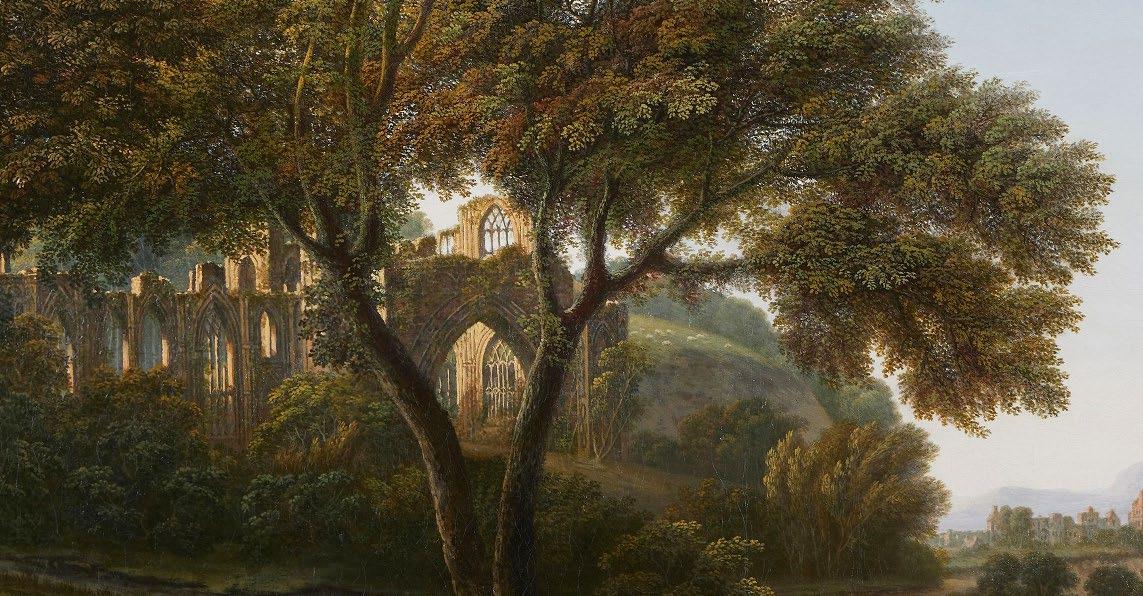
Fig. 7: (detail) John Taylor (1735-1806), RiverLandscapewithRuinsofanAbbey, 1792, oil on canvas, 122.6 x 147.3 cm (cat. 1)
Compositionally, Taylor followed Italianate landscape conventions. Massings of trees frame a central corridor of space that zigs and zags from near to far. That is, from the widened foreground pool of a stream that, in effect, serves as the viewer’s launch into the space of the picture. Angling left, the stream encounters fishermen casting nets near a boat, before angling right toward another broadening of the stream which is then crossed by an arcaded bridge in the middle distance that, in turn, serves the function of cinching, left and right, the two sides of the landscape. At that point, the previously diverse colour palette ebbs toward blue, the result of aerial perspective, and the voyage into the distance is finally closed by a range of hills.
Medieval ruins abound in the middle distance and most prominently in a collapsed Gothic abbey that evokes twelfth-century Tintern on the River Wye in Wales, which was only thirty miles from Taylor’s Bath home. At the time he painted the picture in 1792, Medieval subjects were newly in vogue. William Gilpin had introduced the aesthetic category of Picturesque, which highlighted and illustrated those places as well as pictures of those places redolent with Gothic and Celtic beauty, while Uvedale Price gave descriptive rubrics for what constituted the picturesque. Among painters, J. M. W. Turner was making his first trip to the Wye Valley in 1792, which would lead to a suite of watercolours on the subject of ruined Tintern. Other eighteenth-century painters, such as Richard Wilson, also gravitated
to picturesque ruins. Meanwhile, Horace Walpole’s “gothic castle,” StrawberryHill , was nearing completion in Twickenham when Taylor was painting RiverLandscape .
One of Taylor’s clever moments in the picture comes in the form of the reciprocal relationship between the wishbone trunk of a foreground tree and the Abbey’s lancet window that nestles in between (fig 7). As viewers, we first pass through the V of the tree, then the Gothic arch of a transept, and finally through the blown-out windows of the other transept.
Understandably, Taylor acquired a reputation for excellence. James Boswell and Hester Thrale noted their encounters with Taylor’s works.4 George III and George IV collected his landscapes, five of them identified in the Royal Collection. David Garrick, the renowned actor, upon the gift of a Taylor landscape, wrote of “a most exquisite piece of painting. . .. We have scarcely look’d at anything Else till this moment, . . . our wishes are fulfill’d by it, and our Expectation Exceeded.” John Henderson, another actor, wrote of Taylor that, “his genius is like the Dryads and Hamadryads, embosom’d in woods and fields. In plain English, he is perhaps the greatest Landscape painter we have”.5 Tobias Smollett, the Scottish novelist, said that “I had often heard very extraordinary encomiums passed on the performances of Mr. T. I went yesterday to see the pieces, which had been so warmly commended. . .. If I am not totally devoid of taste, however, this young gentleman of Bath is the best landscape-painter now living. I was struck with his performances in such a manner as I had never been by painting before. His trees not only have a richness of foliage and warmth of colouring, which delights the view, but also a certain magnificence in the disposition and spirit in the expression. . .. His management of the chiaro oscuro , or light and shadow, especially gleams of sunshine, is altogether wonderful, both in the contrivance and execution”.6
Richard Graves, the poet and novelist, wrote the most elaborate tribute to Taylor in his Euphrosyne [translation: muse of good cheer], an assembly of poetic encomiums in which Taylor is lauded as “equally excellent” to Gainsborough:
To J. T—yl—r, Esq. at Bath
On his admirable Landskips
Such are the scenes, thro’ which gay Fancy roves.
In airy dreams; and such th’ enchanted groves Which sacred Poets feign, the blest abodes Of fawns and dryads, nymphs and demi-gods. Landskip had long with curious search explor’d Each charm that Art or Nature’s view afford, To grace her works: hill, rocks, and sylvan bow’rs, Flocks, herds, or rural cots; or distant tow’rs, Or Gothic piles amidst the tufted woods; Cascades, wild cataracts, and crystal floods. Their harms exhaulted, T—yl—r figh’d to find Unfill’d the vast idea in his mind; Then search’d imagination’s teeming cell, Where yet unform’d ten thousand wonders dwell. There the sublime, the beautiful, the great, At Fancy’s call in bright assemblage meet. Drawn thence we view with pleasure and surprise Fresh objects with celestial splendor rise: Whilst Taste and Spirit animate the whole, And with their powerful charms transport the soul. From Nature, Art, and Fancy’s richest store,
Thus T yl r forms a style unknown before.
10 Oct 17707
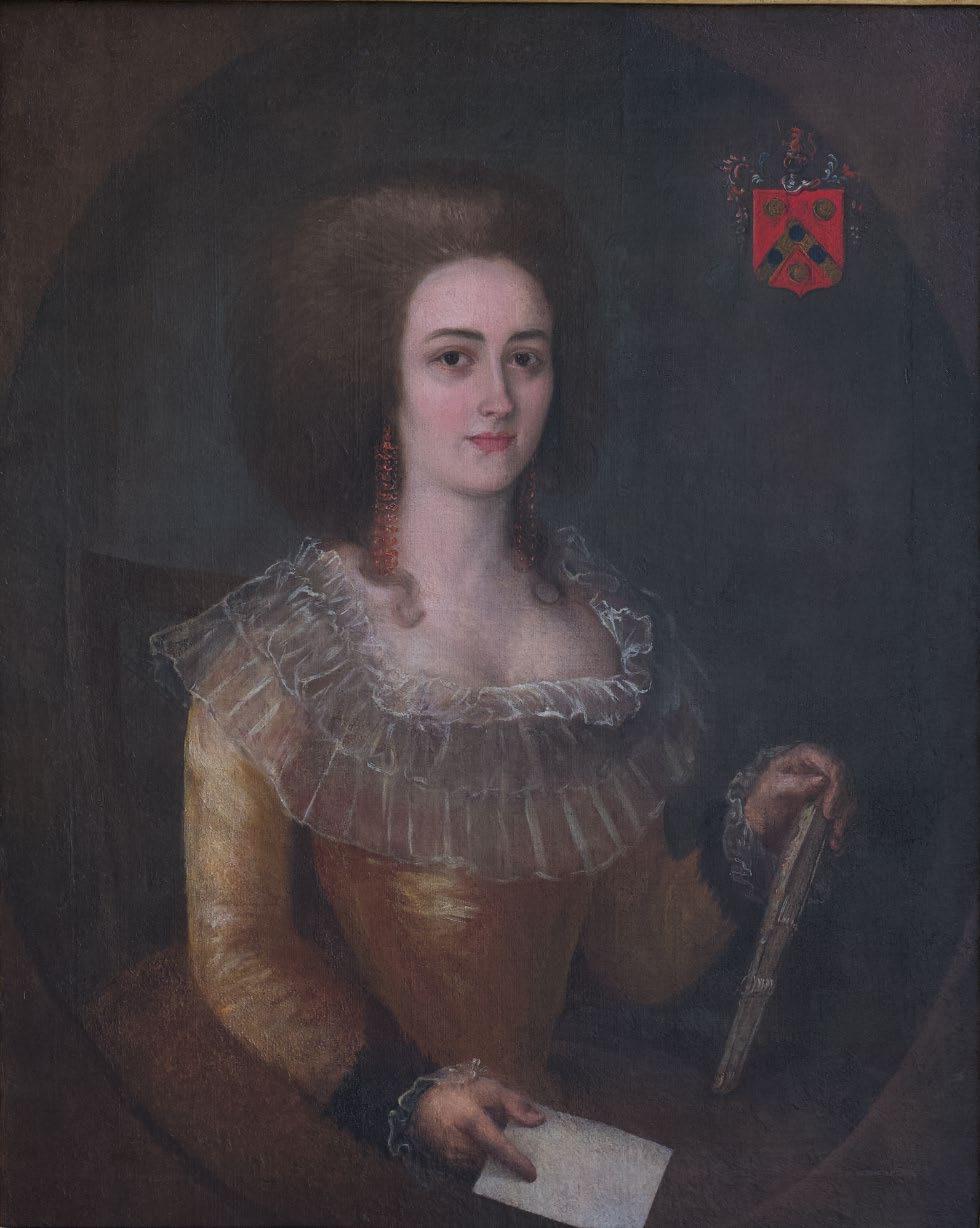
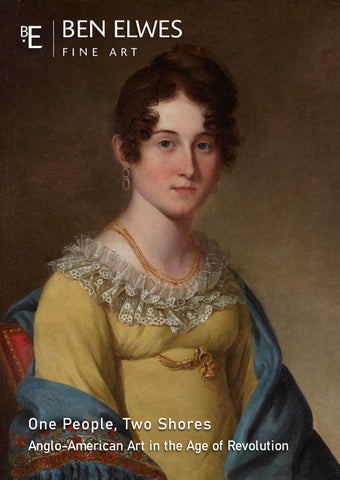
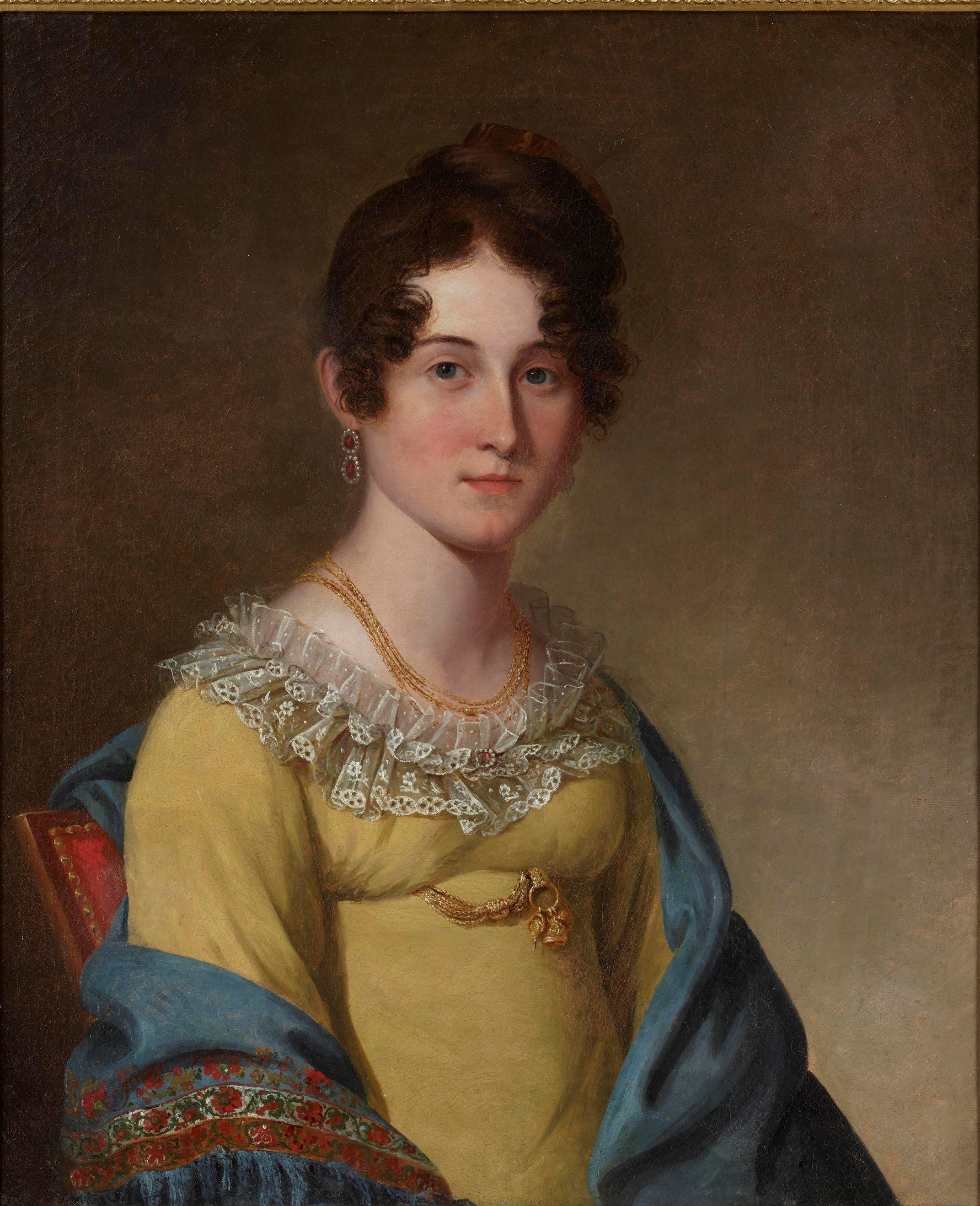
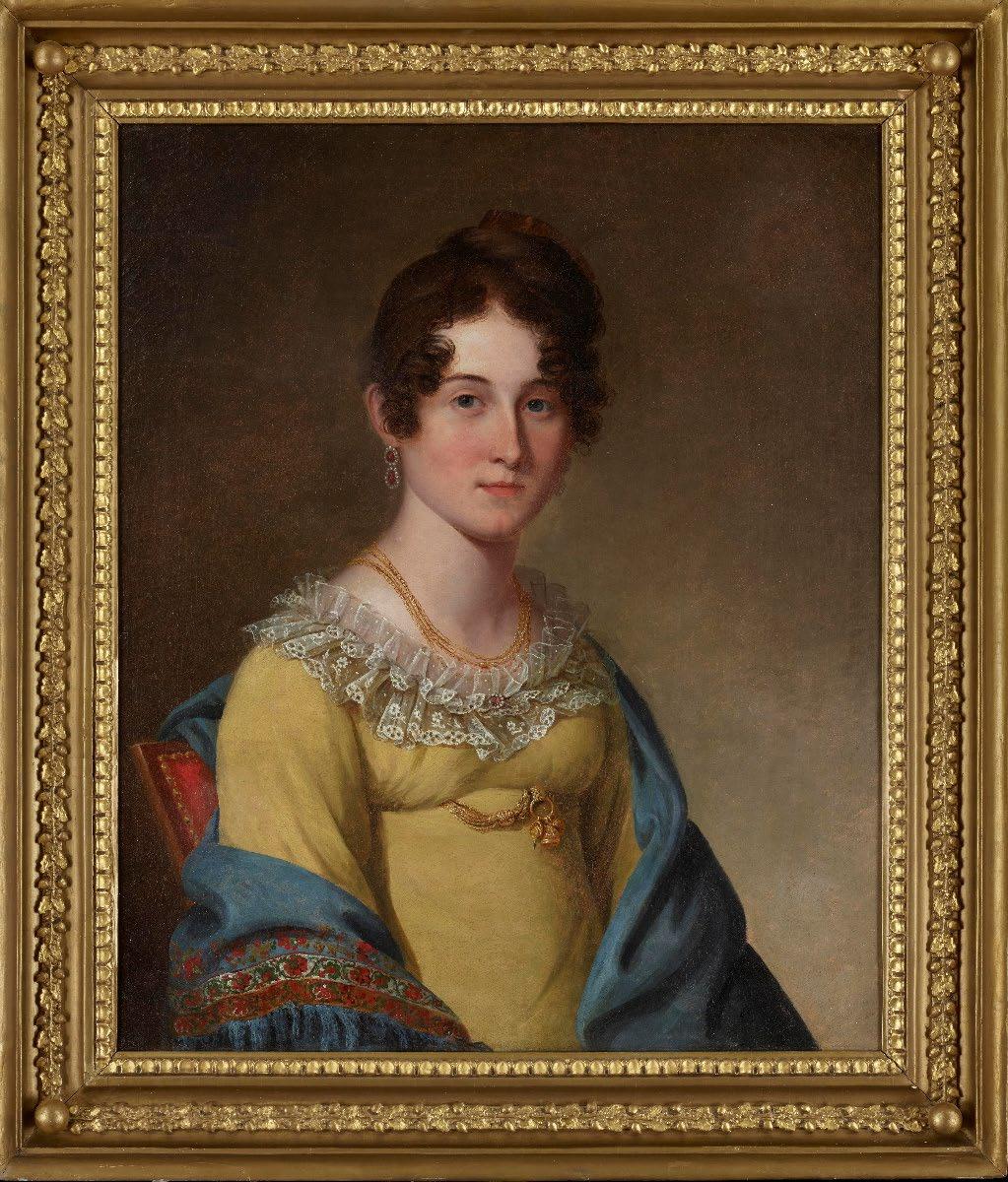
Franklin could have expanded his list of American-born excellence in London to include Stuart and Trumbull, both of whom publicly exhibited pictures (Stuart’s 1782 The Skater , a masterpiece shown at the Royal Academy, was once mistaken for a major Gainsborough). And he could have cited American artists who remained in the United States. James Peale (1749-1831), trained by his older brother Charles, was at first a miniature painter, and then, after 1810, he painted bustlength portraits. His Portrait of a Lady (1818) (p. 1, cat. 5) is shown dressed in the prevailing French style that was popular in Philadelphia. Her tight curls, stunning shawl, and garnet earrings frame her oval face and penetrating gaze.
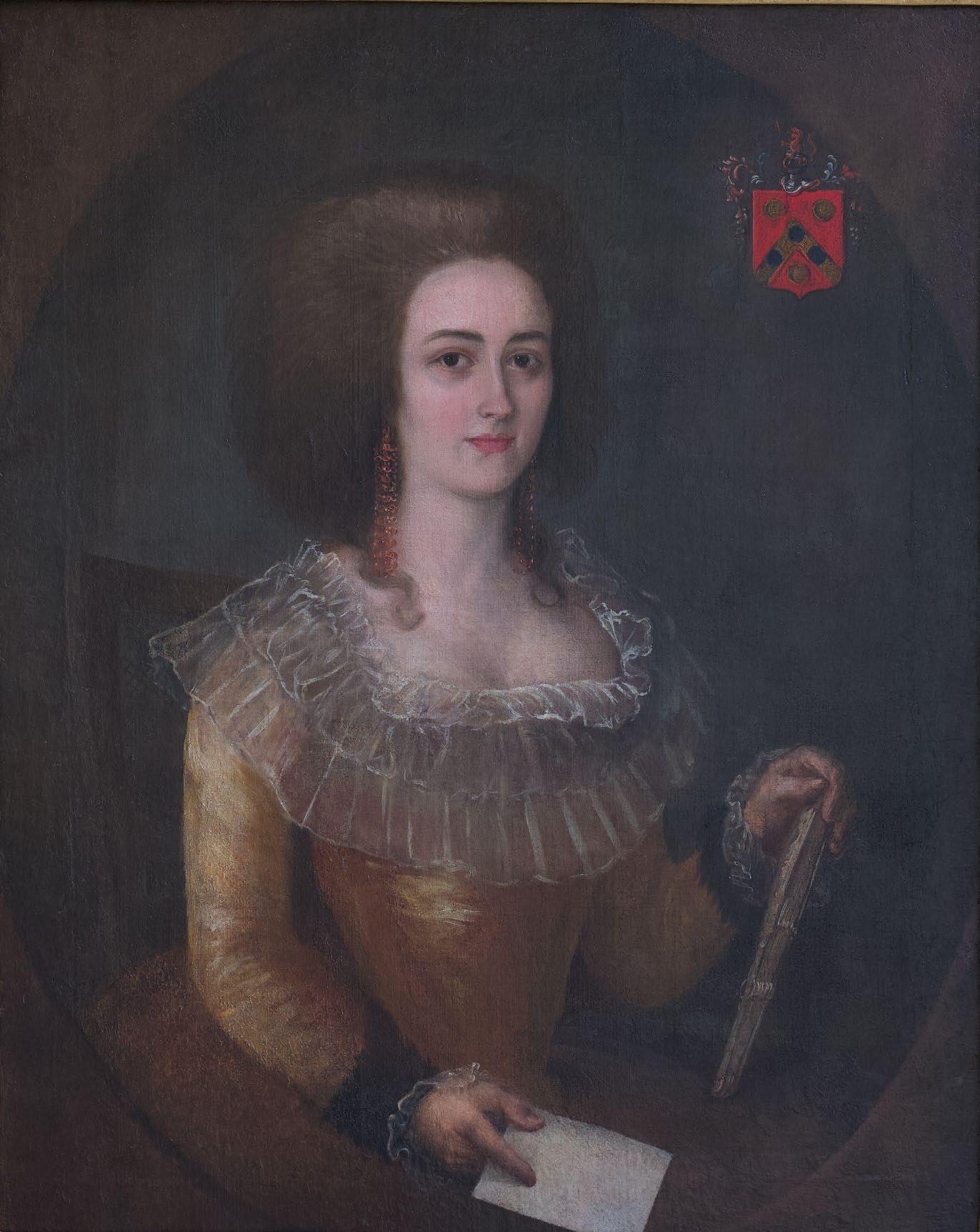
José Francisco Xavier de Salazar y Mendoza (1750–1802) was part of the expanding United States and the first artist in New Orleans. He painted many of Colonial Louisiana's prominent citizens, figures associated with the government, the military, and the church. His Portrait of a Lady from the Debuys/Delavillebeuvre & Dejan allied families (p. 3, cat. 9) shows how well-versed he was in the late eighteenth-century Spanish-style painting. His use of transparent glazes and dark backgrounds has been compared to the work of Goya, and he may well have been aware of that artist probably via print sources.
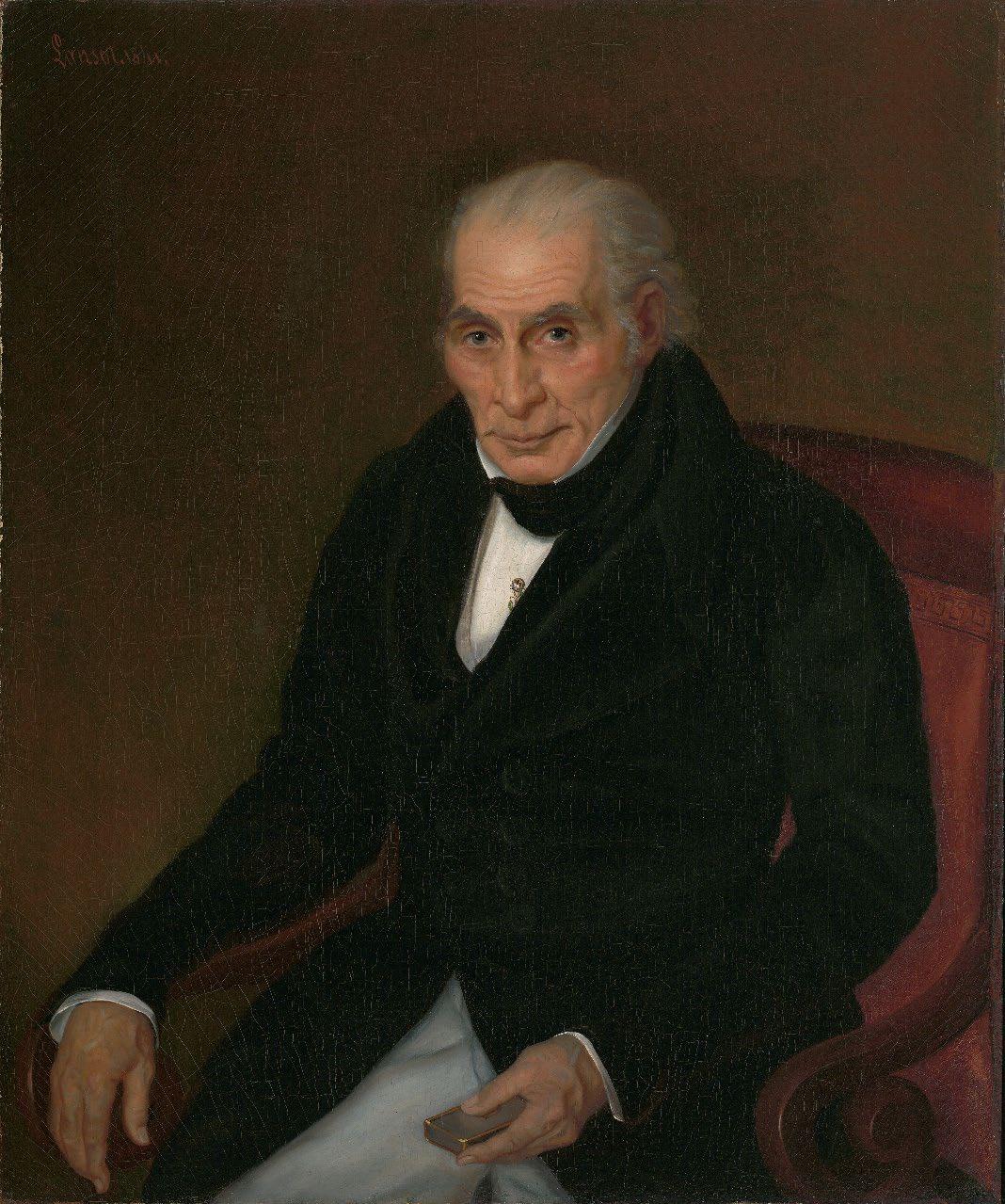
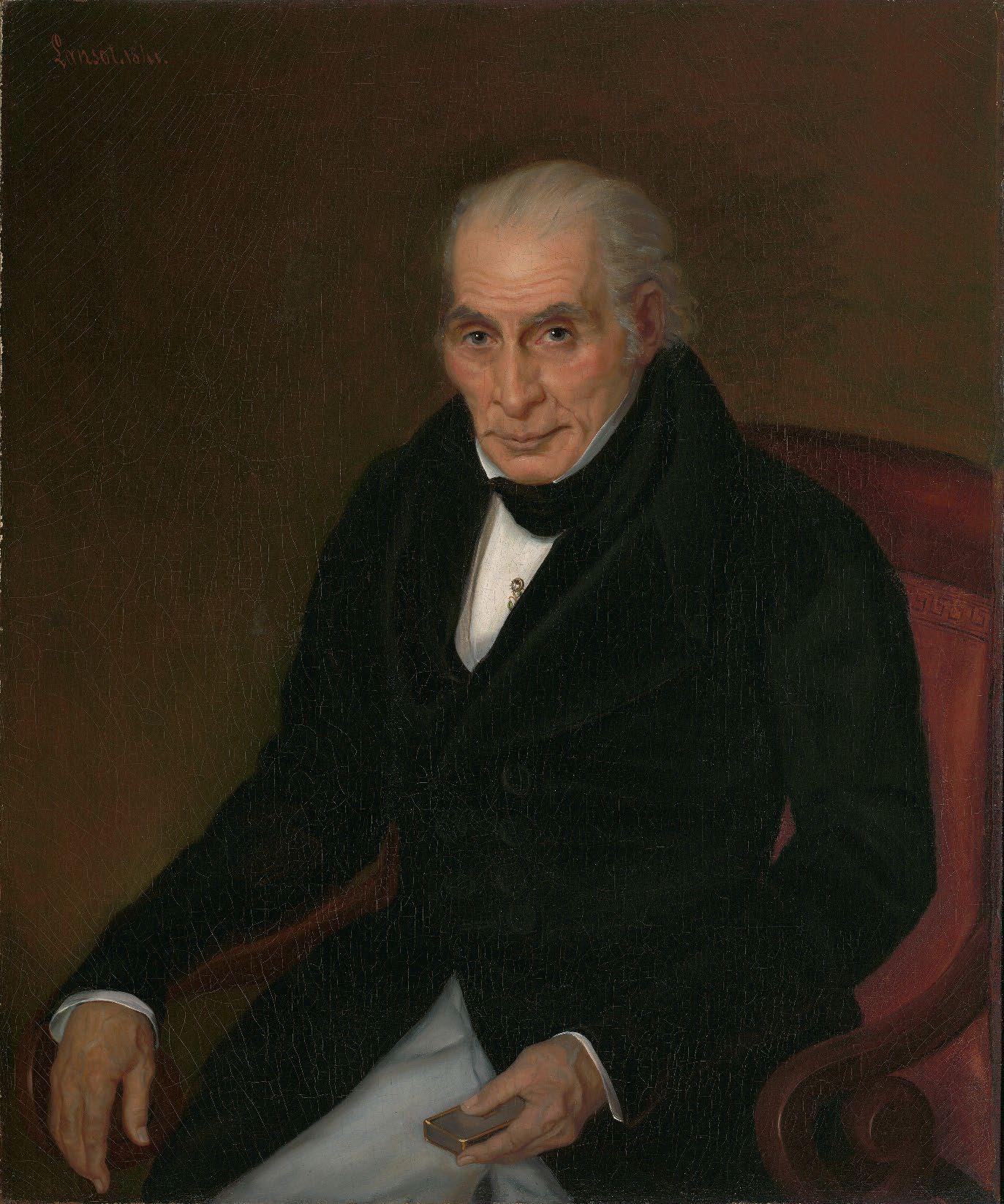
Also working in Louisiana was the French-born, Louisiana-based artist Aimable-Désiré Lansot (1799-1851). His engaging portrait of an aged gentleman encodes the history of the American South through an entanglement of race, enslavement, wealth, and status (fig. 8, cat. 10). The sitter, Martin Donato Bello, was the son of a mixed-race, onceenslaved mother and a white, Italian-born father, Maj Donato Bello. At the time of the picture’s completion, the approximately eighty-oneyear old Donato - was a wealthy proprietor of at least two plantations in St. Landry Parish, the patriarch of a large family, and the owner of
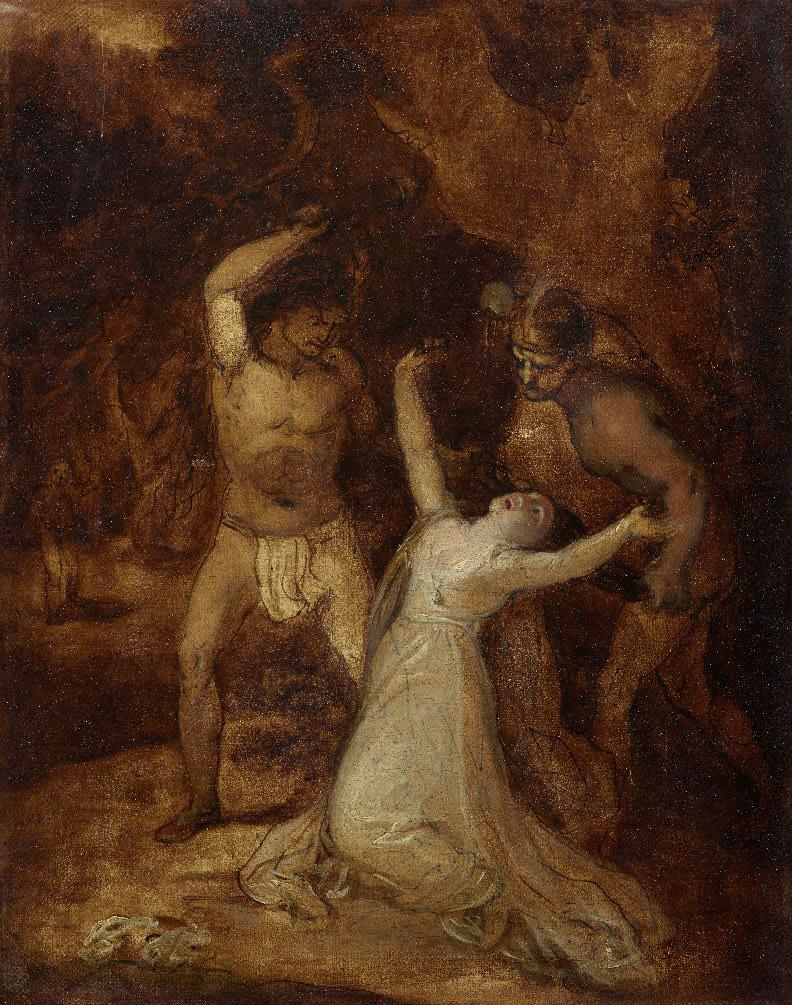
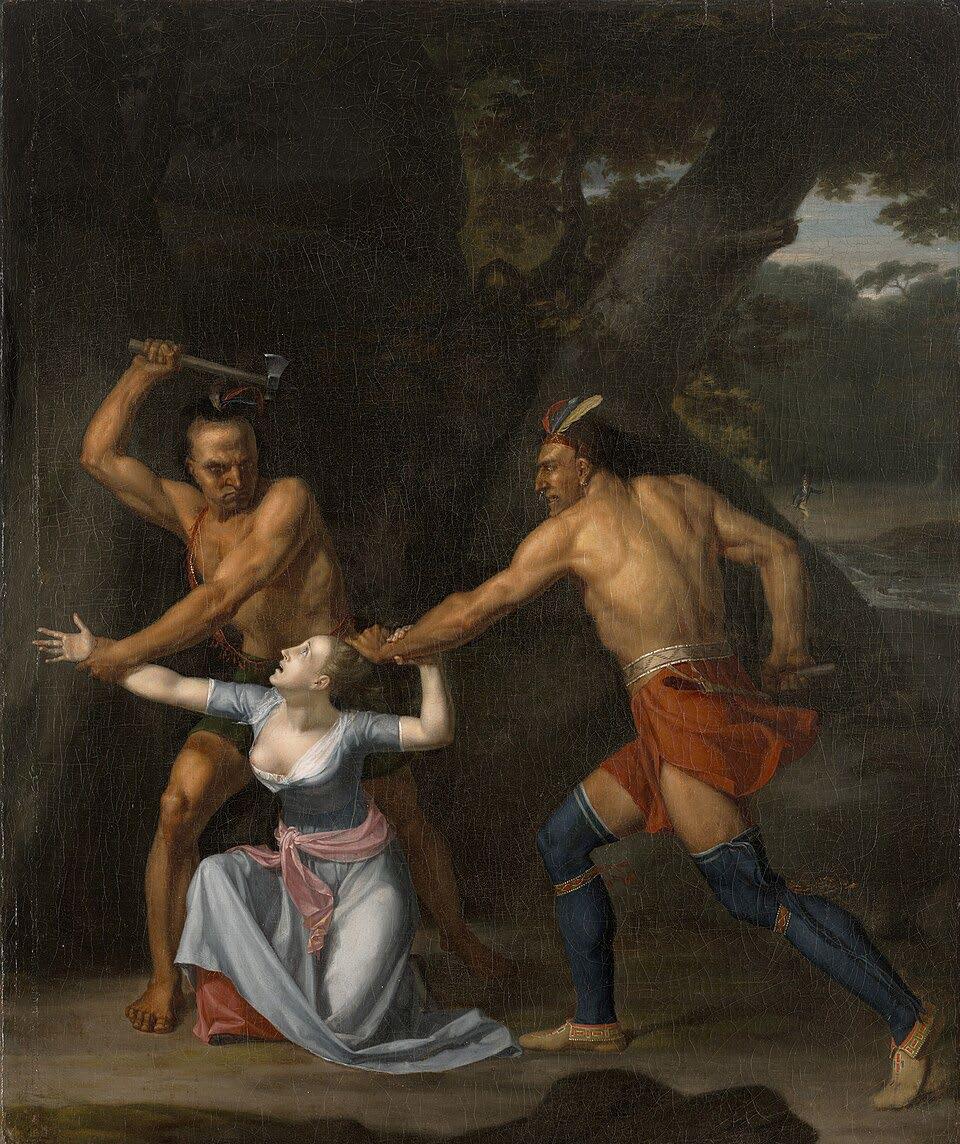
Fig. 9: Robert Smirke (18641935), The Murder of Lucinda, c. 1805, oil on canvas, en brunaille, 45 x 38.1 cm. (cat. 6)
almost ninety enslaved people. Calling upon the long traditions of European portraiture, Lansot’s depiction of Donato reinforces the latter’s status as a Creole gentleman of wealth and influence in Antebellum Louisiana. Despite his age, the elderly Martin Donato regards the viewer with a lively gaze, his eyes bright beneath arched grey eyebrows. Seated in a three-quarters pose, he is dressed in elegantly understated finery.
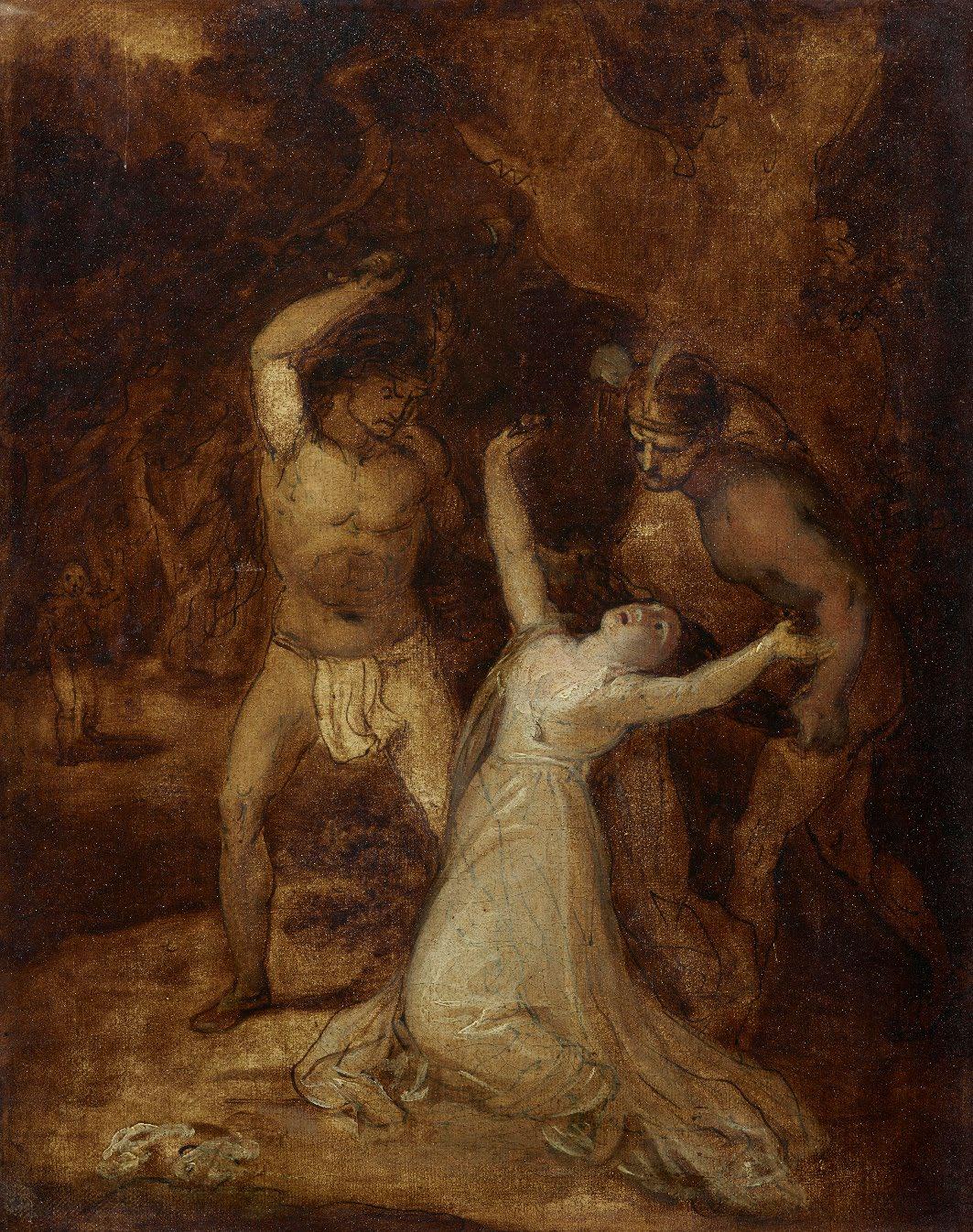
Franklin was also well-aware of a subject popular in America and known in Britain (fig. 10). Robert Smirke’s oil sketch of The Murder of Lucinda (fig. 9, cat. 6) was commissioned by the American poet Joel Barlow to illustrate his epic 514-page poem, The Columbiad (1807), which takes the reader across the sweep of Western history, narrates the American Revolution, and unveils the breathtaking debut of the United States. It made Barlow’s international reputation. Barlow hired the British artist Robert Smirke (1753-1845) to illustrate The Columbiad, including one of the most famous scenes from the American Revolution, the killing of a young woman in upstate New York by Native Americans working for the British in 1777. Barlow renamed her Lucinda.
Twenty-six-year-old Jane McCrea (1751-1777) was hardly the only civilian killed during the Northern Campaign, but she alone became an effective propaganda tool in winning over support for the American cause. American newspapers carried elaborate descriptions of her murder, and in short order seventy percent of British newspapers featured her death. On the floor of Parliament, she was the political cudgel effectively wielded by William Pitt, Edmund Burke, and John Wilkes to denounce the Tory government of Lord North. She quickly became a mythic subject for poets, historians, and painters, including Smirke and Barlow, the latter admonishing his readers never to forget “Lucinda’s fate; the tale, ye nations hear; Eternal ages, trace it with a tear.”
Smirke was elected Royal Academician in 1793. His specialty was illustrations and paintings from literary subjects, some of which were engraved for John Boydell’s Shakespeare Gallery. His eleven finished paintings for The Columbiad are all lost, but the oil sketch of The MurderofLucindasurvives. As a first draft or proof, it may have been submitted for Barlow’s approval. In his time, Smirke's works were considered "gems in the art of history painting." Franklin was American minister to the court of Louis XVI when McCrea died, and he was repeatedly approached by French historians and novelists to expound on the subject.
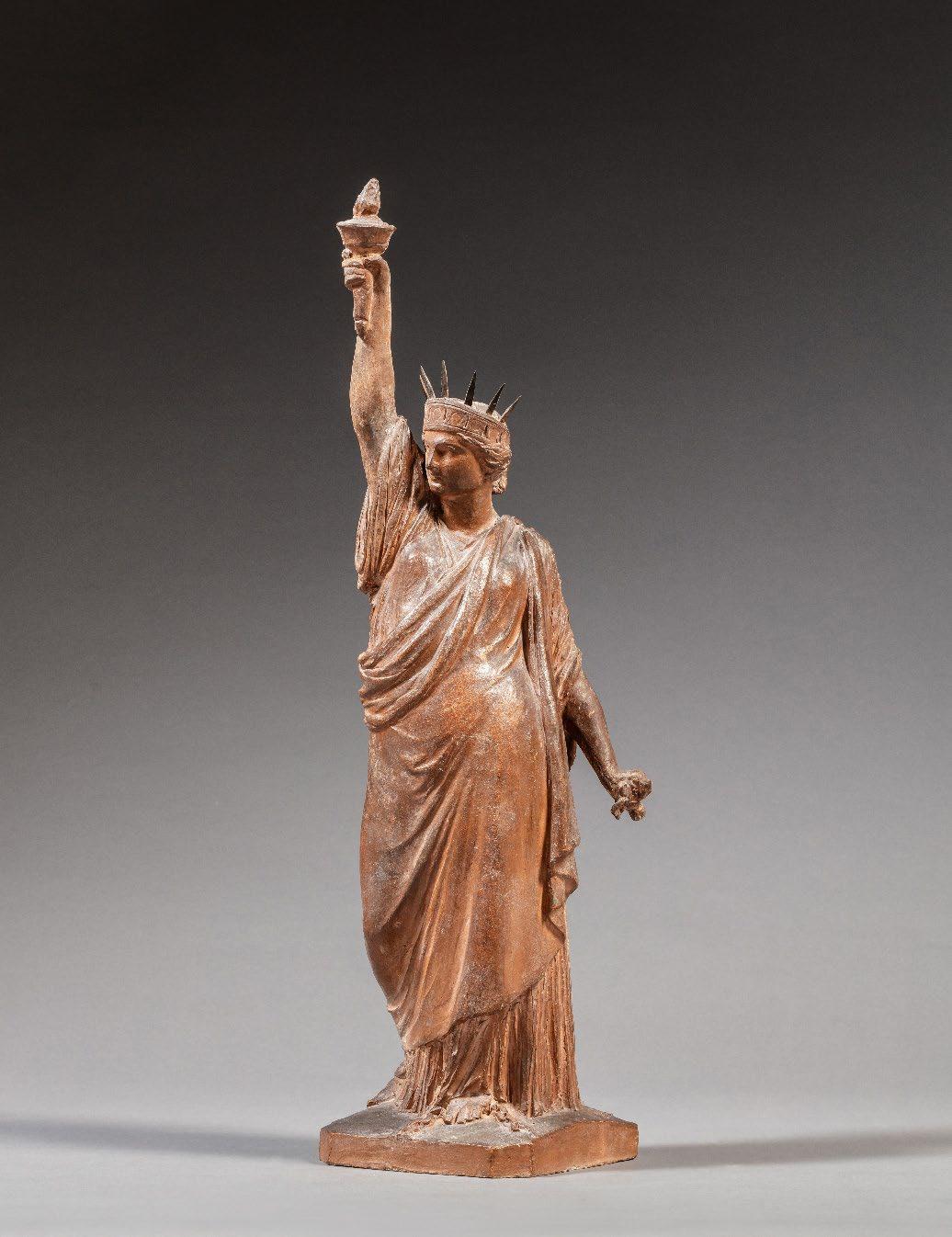
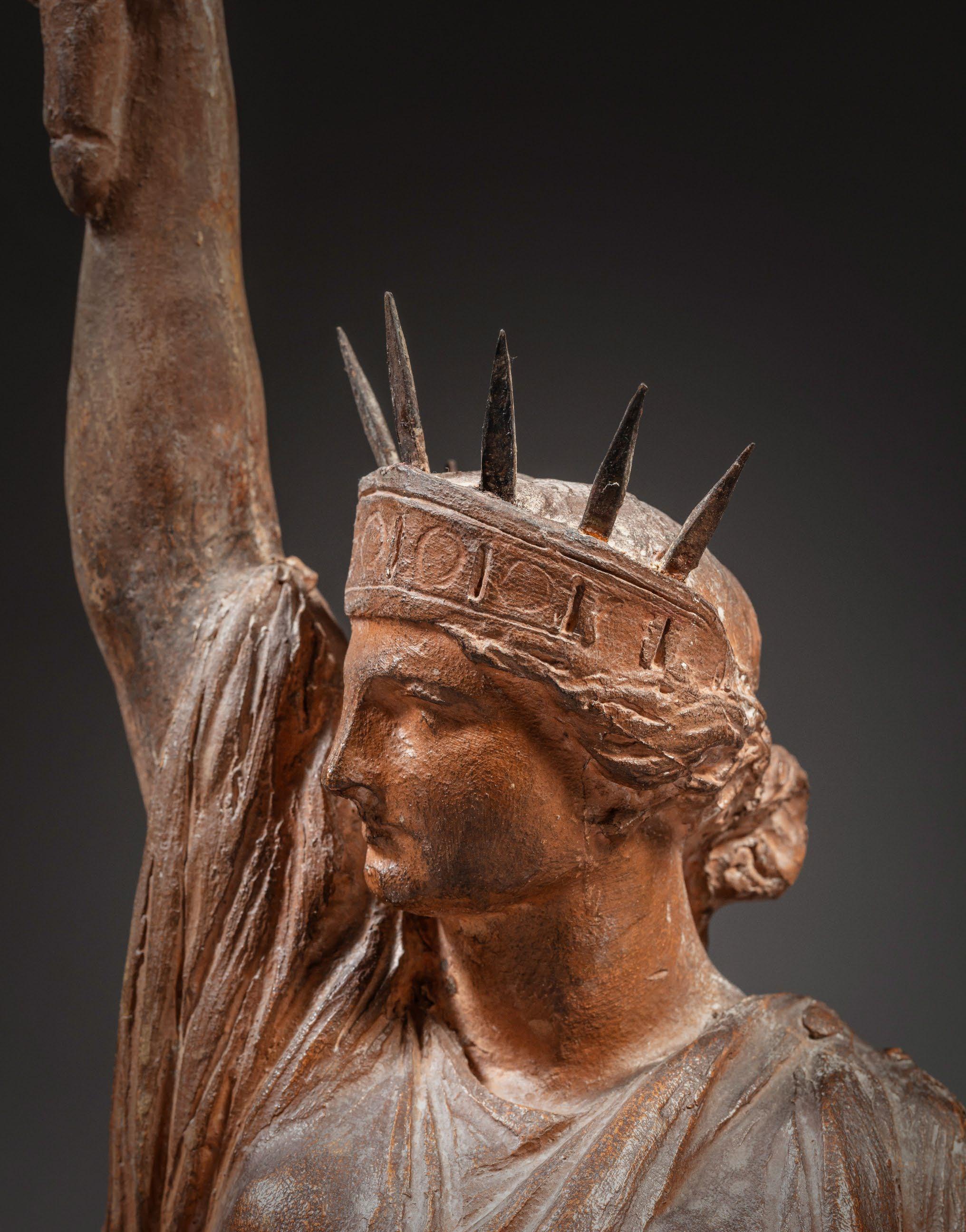
Frederic August Bartoldi’s first idea for a monumental statue in New York Harbor had been suggested to him in 1865 by his friend Édouard René de Laboulaye; that eventually resulted in the Statue of Liberty, for which Ben Elwes Fine Art is exhibiting one of the first maquettes (fig. 11, cat. 7).
Also in that year, Abraham Lincoln was assassinated at Ford’s Theatre in Washington, D.C. while watching a British farce by Tom Taylor, Our American Cousin . A family of British aristocrats has discovered that they have American cousins living in Brattleboro, Vermont. British and American: an uneasy yet familiar relationship, not unlike the eighteenth-century cousins in art. In the play, the British side possesses refinement, in sharp contrast to the American side, which flirts with occasional vulgarity. Turns out, however, that the British side has skeletons in the closet: conniving and alcoholic men, women headed for unhappy marriages, and vast debt. While on the “vulgar” American side, there is a clumsy kindness, clever ideas, and an inner honesty that softens their crudeness. As always in the play and in the eighteenth-century art world the “cousins” are more similar than different, and each brings something special to the shared table.
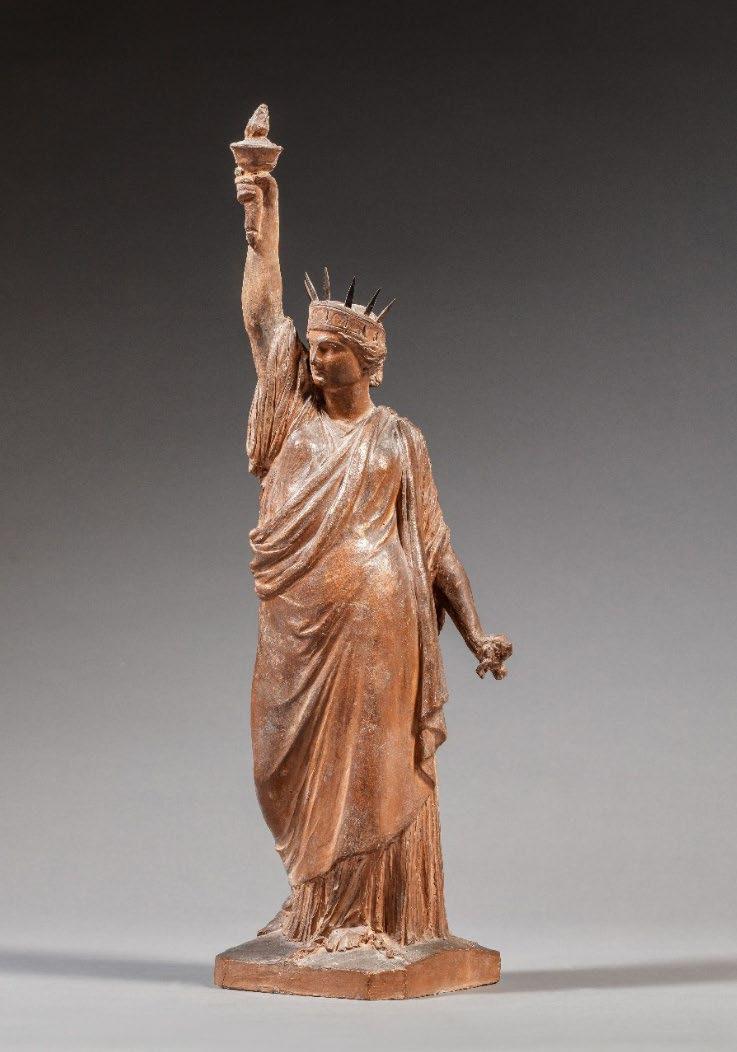
Fig. 11: Frédéric-Auguste Bartholdi (1834-1904), ModelforLaLiberté, LibertyEnlighteningtheWorld, c. 18691871, terracotta, 49 cm. (cat. 7)
Paul Staiti, Alumnae Foundation Professor of Fine Arts at Mount Holyoke College, is the author of books and essays on John Singleton Copley, Gilbert Stuart, Samuel F. B. Morse, William Michael Harnett, and Winslow Homer.
He has lectured at the Louvre, the Museum of Fine Arts Boston, and the Metropolitan Museum of Art, and has been the recipient of senior fellowships from the National Endowment for the Humanities three times.
He teaches courses on American art and architecture, as well as American cinema. In 2009 he was honoured with Mount Holyoke’s Distinguished Teacher award.
Notes
1. Ingenhouz to Franklin, August 20, 1782, Franklin Papers, American Philosophical Society, Philadelphia.
2. John Bigelow, editor, TheCompleteWorksofBenjaminFranklin (New York and London: G, P. Putnam’s Sons, 1888), volume 8, 292.
3. Copley to West, November 12, 1766, and Copley to unknown recipient, 1767, in John Davis and Sarah Burns, AmericanArtto1900:ADocumentaryHistory (Berkeley: University of California Press, 2009), 48-49.
4. Geoffrey Scott and Frederick A. Pottle, editors, Private Papers of James Boswell from Malahide Castle (Mount Vernon, NY: W. E. Rudge, 1929-36), vol. 11, 267. For Thrale: L. F. Powell, editor, Boswell’s Life of Johnson (Oxford, Clarendon Press, 1934-50) vol. 3, 422.
5. David M. Little and George M. Kahrl Garrick, TheLettersofDavidGarrick(Cambridge, MA: Belknap Press of Harvard University Press, 1963), vol. 2, 813.
6. Tobias Smollett, The Expedition of Humphrey Clinker; Originally published in 1772; (London: Harrison and Co, 1785), 45.
7. Richard Graves, Euphroysne: Or, Amusement on the Road of Life (London: J. Dodsley, 1776), vol 1, 130-131.