STRIKING SPEECHES IN WOODBURYS Bills Fans, Big Brothers, and Bold Ideas Take the Stage
By Brian Tang ’29 Panel Staff
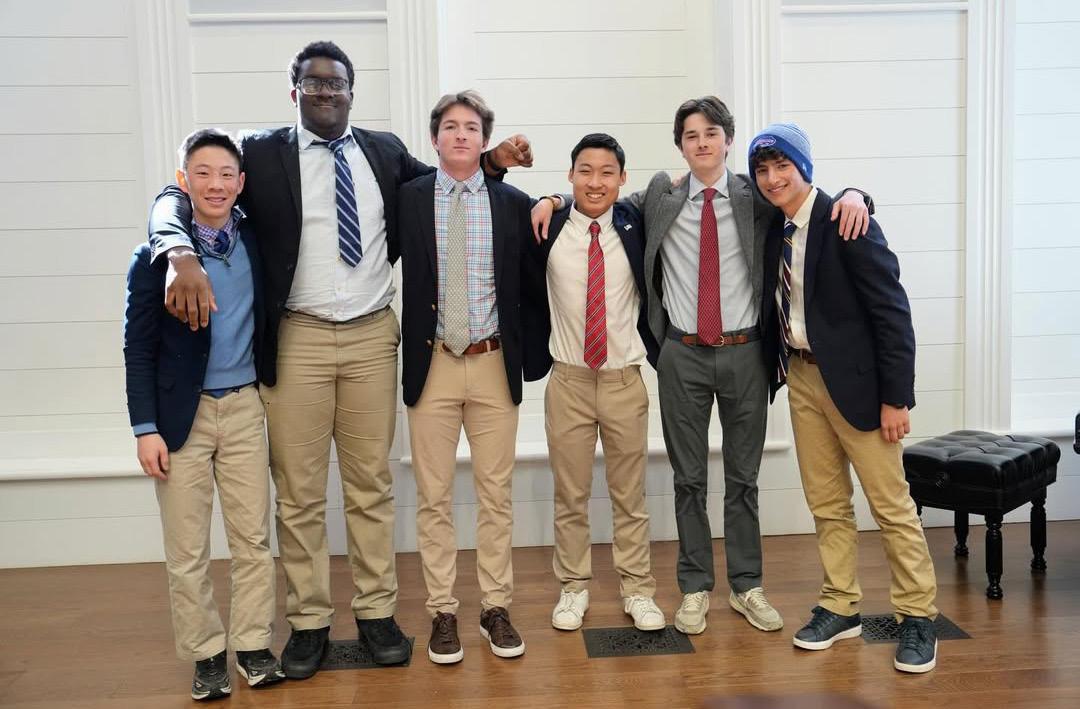
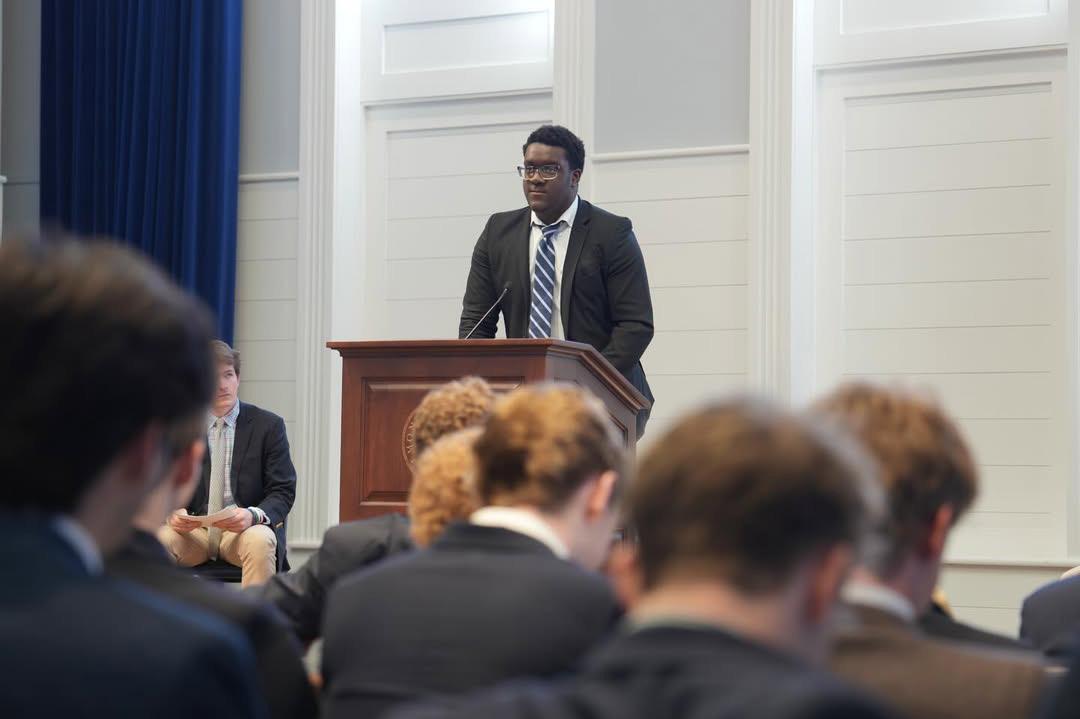
From the origin of an unwanted nickname to an unfulfilled Christmas wish turned into a moment of gratitude, the Woodbury Public Speaking Contest never ceases to amaze the Belmont Hill community. This year's speakers, Ryan Ho ’28, Chinweikem Anyanwu ’28, Christopher (Topher) Batchelder ’26, Alexander Chen ’27, Charlie Maws ’26, and Ari Itzkovits ’28, all delivered riveting stories that will be carried with them throughout their tenure at Belmont Hill.
The proceedings began with Ryan Ho’s informative speech on the history and value of tests. Drawing on his research, Ryan traced their origins from China to America, explaining how they eventually evolved into the military-style exams that helped shape the SAT. He then challenged the audience to consider whether tests truly benefit students, arguing that they often create anxiety and fail to reflect real proficiency in a subject. Using the example of Bob, a strong panel writer whose low SAT score limited his college options. Ryan highlighted the flaws of standardized testing. He closed by urging Belmont Hill to embrace an approach similar to Aristotle’s, less
testing, and more walking and talking.
Following Ryan’s speech, Ikem Anyanwu reflected on the many nicknames that have shaped his identity. From PM to Big E to Kem Kem, each name carried a memory and revealed a different side of who he is. The crowd laughed especially hard when he shared how a football coach dubbed him a “freak of nature,” inspiring the nickname Freakem. But beneath the humor was a
thoughtful message. He showed that the names others give us can reflect the impact they have had on our lives. Ikem closed with the powerful reminder that “One name can never be enough to describe yourself” and that “one label is too small to capture anyone’s true nature.”
After Ikem’s speech, Topher Batchelder shared a heartwarming and entertaining reflection on his childhood wish for an older brother. Begin -
ning almost like a poem, he described a young boy hoping to find one under the Christmas tree, only to come up empty-handed. He then brought the story to life by recounting how he once woke up his sisters on Christmas morning to search for that imagined brother, before joking that his mother had practically “rented” him a big brother, drawing plenty of laughter from the audience. Beyond the humor, though, Topher delivered a sincere realization: that he had been shaped all along by his two sisters, and that “what I wanted was not an older brother, but a mentor, and I had two around me the whole time.”
Next, Alex Chen spoke about his experience working as a congressional caller and how stepping beyond the script enabled him to form genuine human connections. He recounted everything from receiving threats over the phone to learning how to truly listen, showing how even difficult conversations can lead to understanding. Through these experiences, Alex reflected on the deep division in modern public life, observing that “we live in a world where politics has become a blood sport.” He closed with the reminder that many conflicts might soften if people simply took the time to listen.
Continued on page 2...
PWAP Brings Schools Together for Fun and Fundraising
By Sam Leviton ’28 & Cooper Schuldt ’28 Panel Staff
On Saturday, February 28th, the annual Party With a Purpose (PWAP) event took place at the Jordan Athletic Center. PWAP is a Dance Marathon organized annually to raise money for Boston Children’s Hospital. As stated in the party’s mission statement, PWAP’s goal is to “raise as much money as possible for the patients and families at Boston Children’s Hospital.” PWAP was organized by the student heads of the event: Will Achtmeyer ’26, TZ Snail ’26, Scotty Moreau ’26, Declan Woolbert ’27, Rylan Flynn ’27, Tyler Grossman ’27, and student leaders from Rivers, NCDS, Winsor, and Dana Hall. Faculty advisor Mr. George contributed immensely, helping to plan the event.
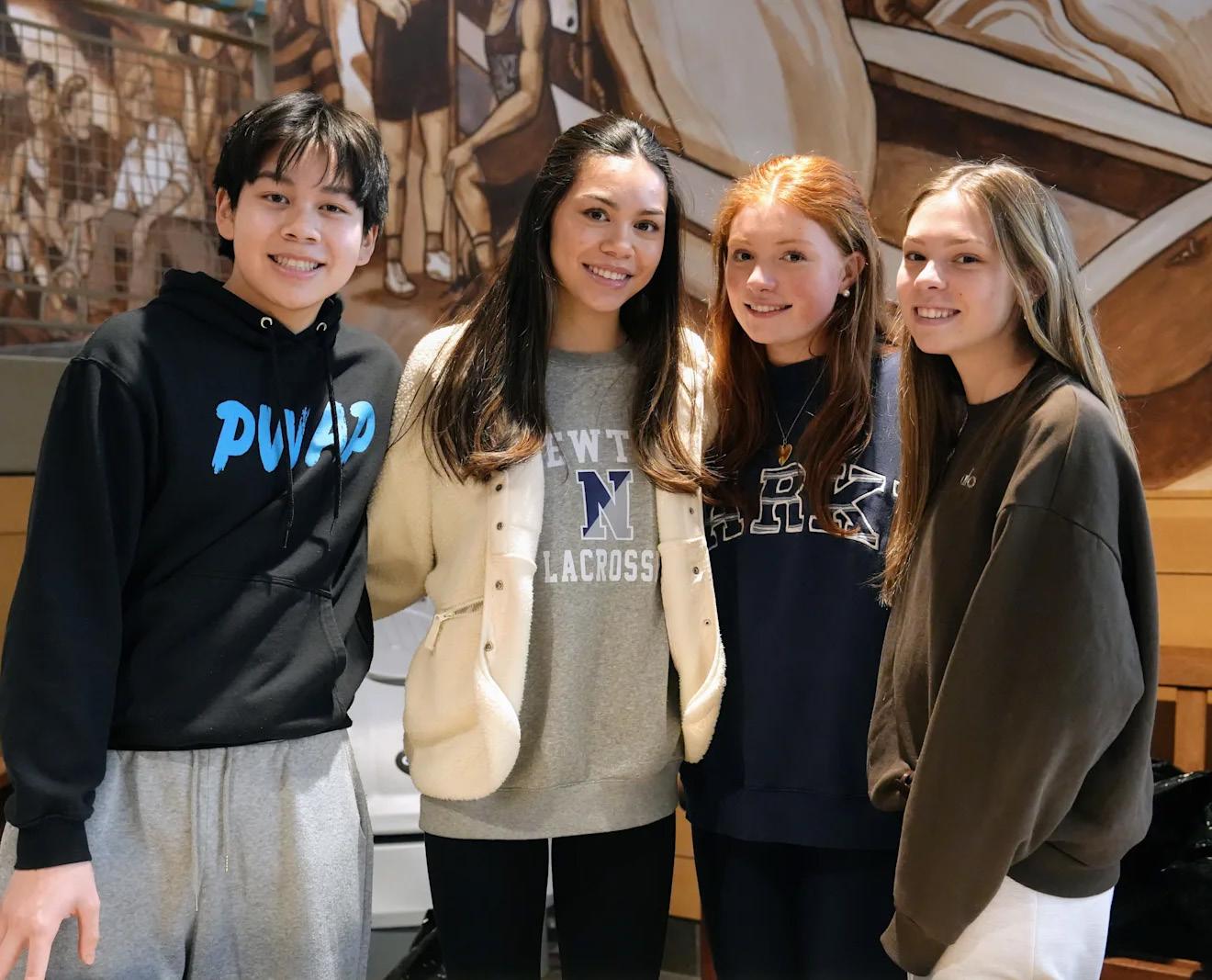
On the evening of PWAP, students from Belmont Hill, Rivers, Dana Hall, Winsor, and Newton Country Day School entered an athletic center that was buzzing with excitement. This year's event included the quintessential elements of previous
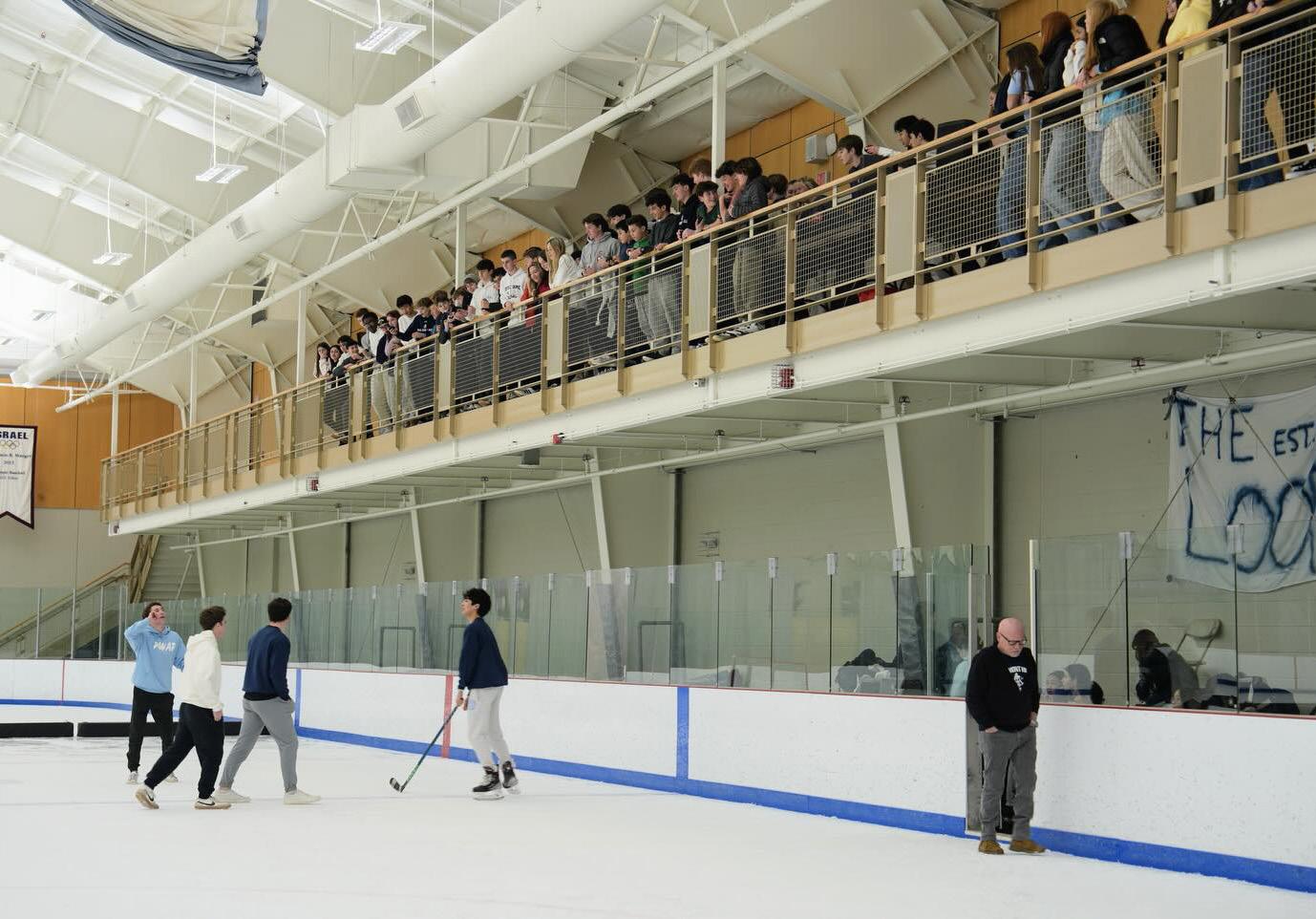
editions, including delicious snacks, yard games, free skate, and karaoke. The creative PWAP team came up with new ideas to make the event even more exciting. For the first time, the event included bubble soccer and a puck toss raffle. The team also gave students the opportunity to shoot pucks at their favorite history and science teachers.
A Look Inside The Panel
Page 2: US Iran Conflict
Adrian Chen ’28 and Patrick Snail ’28 delve into the US-Iran conflict, reflecting upon the social, economic, and political consequences of the recent militarization occuring in the Middle East.
Page 8: Artist of the Issue: Jake Ma ’27
Ryan Li ’28 interviews Jake Ma ’27, discovering his talents, both hidden and shared, as a multi-instrument musician. Additionally, he touches upon Jake's talent in other arts, such as drawing and engineering.
Page 4: Systematic Grade Inflation
Sam Leviton ’28 evaluates the trends of grade inflation in high schools across the United States, uncovering data from both public and private high schools and the consequences of the inflation on students.
Page 10: Fishing in Martha's Vinyard
Will Greenhill ’28 describes the Martha's Vinyard fishing scene and its revival as the Spring rolls around, featuring quotes from local fishermen, including Aiden Olsen, Doug Asselin, and Ryan Zipp.
One of the club heads said, “The bubble soccer and the chance to shoot pucks at teachers were very successful and a great way to bring more students to the event.”
The event was a success, raising around $30,000 dollars for Boston Children's Hospital, a massive high note for the PWAP club. Attendees also had an incredible time,
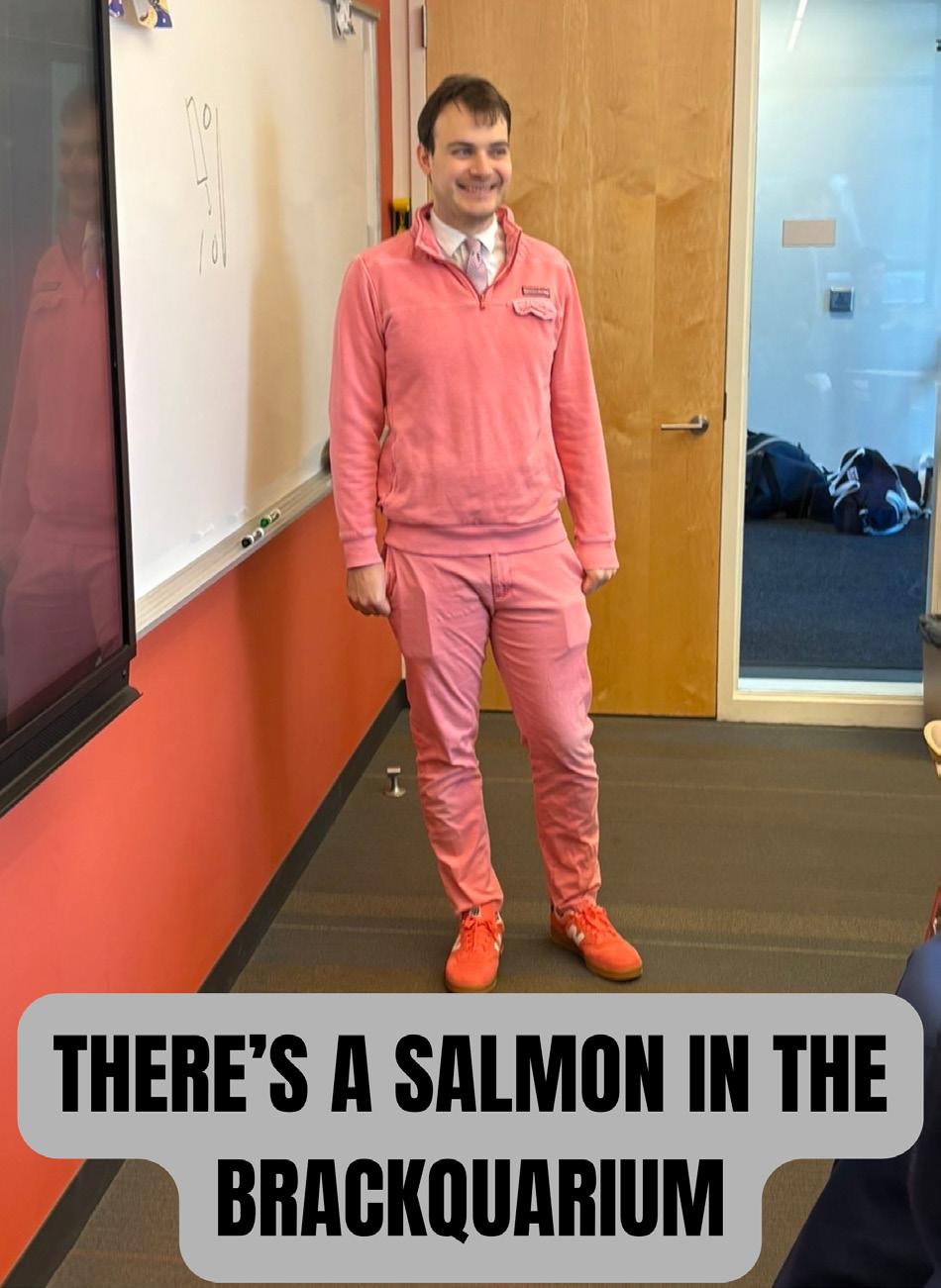
with one Belmont Hill student saying, “I had such a great time Saturday night. Being able to hang out with my friends and connect with new people was awesome, and I really loved shooting pucks at Mr. Bracken!” PWAP was a great night of fun and entertainment that raised a huge amount of money for Boston Children's Hospital. ☐
Letter from the Editor:
Welcome to Issue 1 of Volume 75! This month, our news and arts sections highlight a variety of school-wide events, including the Spring Woodburys, the Winter Concert, and the most recent Chapel speaker Clarice Assad. Additionally, our sports section features Luke Waldeck ’26 as the Athlete of the Issue, as well as other local and BH sports news. Our opinions section focused on close-to-home subjects, such as grade inflation, the US Iran conflict, and all boys schools through deep analysis. Finally the centerspread of the issue spotlights the many adventures Belmont Hill
students and faculty went on over March break. The photographic collage features language, outdoor exploring, and cultural experience trips, opportunities which Belmont Hill students are privileged and grateful to have! This issue marks the first of Volume 75, the three-quarter-centennial volume! As we transition into a new staff of editors and assistant editors, we thank all of the writers, editors, and faculty of Volume 74 who have set high expectations and helped mentor the new staff. None of this would be possible without your constant support! Thank you, and enjoy Volume 75!
PWAP Hockey Loop (Left) and BH & NCDS at PWAP (Right)
BH Communications
Woodbury Finalists Gather in Hamilton Chapel
BH Communications
Iran Conflict Sends Shockwaves in the Global Economy
By Adrian Chen ’28 & Patrick Snail ’28 Panel Staff
Following a period of immense geopolitical turmoil, an unprecedented conflict between the United States, Israel, and Iran erupted in late February 2026 as a result of failed diplomatic efforts and spiking tensions. Iran and Israel had repeatedly exchanged missile strikes in 2024, while the U.S. had launched airstrikes against Iran in the Twelve-Day War in June 2025. Domestically, Iran underwent mass political upheaval during the largest protests since the 1979 Iranian Revolution, coupled with Iranian security forces killing upwards of tens of thousands of protestors. In response, U.S. President Donald Trump threatened military action against Iran while beginning to mobilize the largest U.S. military buildup in the region since the 2003 Iraqi invasion.
In mid-February, the U.S. and Iran began a new round of nuclear negotiations that proved to be fruitless, as both parties refused to make concessions. There was simply no sign of a breakthrough that could avert the impending U.S. offensive. On February 28, U.S. and Israeli forces launched a series of coordinated airstrikes targeting Iranian military and nuclear-related facilities. Officials from both countries described the attacks as a preemptive initiative to limit Iran’s military capabilities, but the operation has only escalated conflicts in the region.
Shortly after the initial strikes, Iran’s Supreme Leader Ali Khamenei, along with several other high-ranking Iranian officials, was reported killed in the targeted attacks, decreasing the possibility of de-escalation. While many attacks targeted military bases and various government facilities, airstrikes
Woodbury Speeches continued...
Charlie Maws was next, speaking about the legacy he hopes to leave behind. Reflecting on his struggles as a new student trying to make others remember him, Charlie realized that what matters most is not how others see you, but how you see yourself. He emphasized that the more you focus on becoming someone you yourself can respect and like, the happier you will be. He closed with a thoughtful reminder of human imperfection and growth: “Like everyone in the world, I am just a rough draft.” Lastly, Ari Itzkovits spoke about the struggles and heartbreak of being a Bills fan. He vividly described his reaction to a painful Bills overtime loss to the Broncos, capturing the emotional highs and lows that come with

damaged schools, hospitals, and cultural heritage sites as well. In response, Iran launched hundreds of drones and ballistic missiles at Israeli targets as well as a plethora of U.S. military bases, ranging from Bahrain and Jordan to Saudi Arabia and the United Arab Emirates, marking rapidly growing escalations in conflict.
In late March, Iran further escalated the conflict, threatening to bomb and destroy the desalination plants in surrounding countries. These plants serve as the sole water source for over 90 million people living in the Middle East. However, on March 30th, Trump retaliated by making parallel threats to Iran, including “blowing up completely obliterating all of their Electric Generating Plants, Oil Wells and Kharg Island.” These developments have brought a sense of uncertainty, erasing and blurring the lines between humanitarian standards and forbidden acts of war. Aside from the warfare and threats, eco -
deep loyalty to a team. Yet the speech turned from heartbreak to community when Ari reflected on how the same friends who had teased him after the game later texted him “good game.” In that moment, he showed that rivalries and jokes aside, everyone is ultimately part of the Belmont Hill community.
This year’s group proved especially memorable, with many appreciating the introspective lessons and personal reflections woven throughout the speeches. Students echoed that sentiment, praising the overall quality of this year’s presentations. After deliberation, the judges selected Chinweikem Anyanwu as the winner. The Panel congratulates all of the contestants for delivering such thoughtful and memorable speeches and looks forward to the next round this fall. ☐
nomically, the war has been described as the world’s largest supply disruption since the 1970s energy crisis, marked by surges in oil and gas prices, disruptions to aviation and tourism, and financial market volatility. These issues have stemmed predominantly from Iran’s closure of the Strait of Hormuz, responsible for transporting roughly 20-25% of the world’s seaborne oil and 20% of global liquefied natural gas, and Israel/Iran attacks on energy facilities. On March 19, the cost of the war to the U.S. military was estimated at $18 billion, with the Pentagon requesting an additional $200 billion for the war efforts.
One country bearing the brunt of the price increases is the Philippines, whose president declared a national energy emergency on March 24th. In just over a month, gas prices have increased by 50%, and diesel has doubled, forcing the country to implement limits on everyday energy consumption, such as air
conditioning and travel. Additionally, the increased prices have “reset” the political effects on Philippine trade, as they have reopened trade with Russia and Japan to compensate for the dramatic loss of supply. Other Southeast Asian countries face similar issues, such as Cambodia, Vietnam, and Laos, which have implemented policies such as shortened school weeks, reduced fuel taxes, and encouragement of working from home to address the constant demand for oil.
Outside of Southeast Asia, the US economy has also taken hits from the war. Much like other countries, gas prices have skyrocketed, averaging $4.09 per gallon across the country (as of 4/3/26), a 33% rise, marking the highest prices since August 2022. Unfortunately, the increasing prices show no signs of slowing down, rising multiple cents each day. As a result of more expensive transportation, shipping prices have also increased with fuel surcharges. Additionaly, over the past five weeks, mortgage rates have steadily increased to over 6.5% for a thirty-year fixed rate, 0.5% greater than in February 2026. Lastly, although the central bank has remained neutral whilst evaluating the war, many economists predict that it will also affect borrowing costs, lowering interest rates; however, others disagree, noting that concerns over inflation may prolong the impact on interest rates beyond 2026. The trajectory of the conflict and the Hormuz Strait blockage remain uncertain, even as cease-fire negotiations have begun. The broader war serves as a stark reminder of the fragility of international stability and the urgent need for renewed diplomatic efforts. Without a push for de-escalation, the longterm consequences, both human and economic, may prove even more catastrophic than those already witnessed. ☐
Senior Faculty Basketball
By Eli Norden ’26 Panel Staff
The senior faculty basketball game was a complete and utter failure for the Senior squad. Armed in colorful, vintage NBA jerseys, armbands, bright shoes, headbands, and even a Belmont Hill kippah, the team lacked all forms of basketball skill. This is perhaps best exemplified by the 0/2 performance from three by the very writer of this article.
The faculty, unfortunately, on the other hand, displayed a star-studded lineup. Mr. Cofield and Mr. Pitcher are each taller than the entire First Form stacked vertically, and the beastliness of Mr. Messina and Mr. LaLiberte ’14 could not be matched by the seniors, who had no Varsity athletes on the Basketball squad this winter. On the other hand, however, both Mr. Glenn “Unc(le)” Harvey and Mr. Bracken ’15 put on dismal performances.
The Class of 2026 started the game off strong as Eli Warn ’26 splashed a three from the corner to get the guys on the board. Shortly thereafter, though, a string of airballs and bricks began that is truly inexplicable. Over and over again, the seniors hucked up shots from range, missing just about every single one. While I wasn’t able to consult any sort of official score or stat line, Warn described the situation as “Awful. Truly awful…it was the most embarrassing thing that has ever happened to me.” I proceeded to airball a three (I made
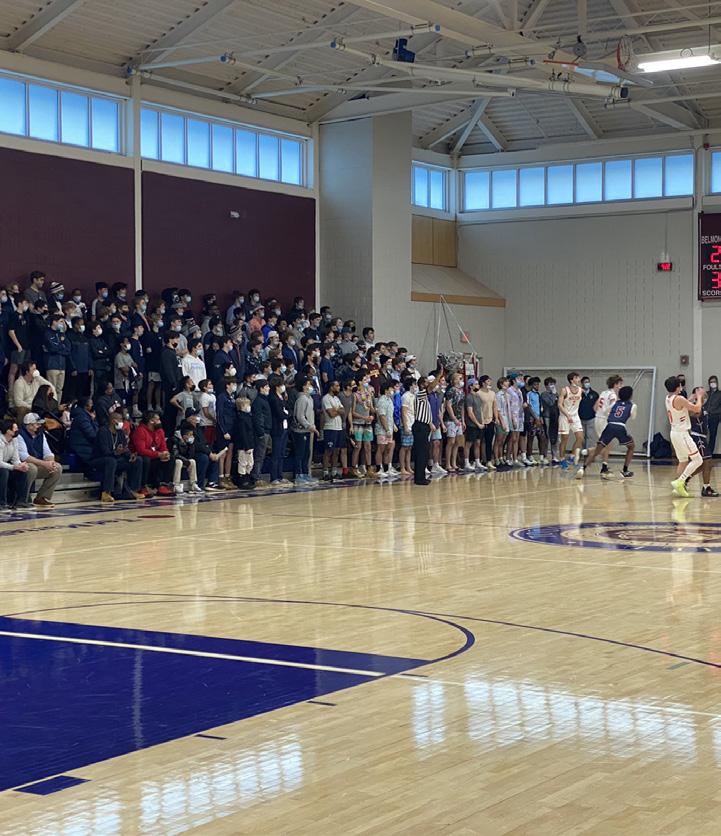
one in warmups, I swear), and I felt a form of despair I haven’t felt before.
The faculty used their size (and height) to their advantage, consistently driving to the rim and picking up crucial offensive and defensive boards. The seniors’ poor shooting from range was no match for the faculty posting up in the paint. While the seniors got nowhere close to beating the faculty, the team had an amazing experience on the court and bench, one that every non-senior should look forward to. Hopefully, the students will be able to best the faculty team in a proposed softball game this fall! Last, the whole squad extends a massive thank you to the professional refs who put up with our shenanigans, even though their calls clearly benefited the faculty.
Woman Waves Iranian Flag in Tehran
New York Times
Senior-Faculty Game BH Comms
Inside the AI Revolution in Military Strategy
By Adrian Chen ’28 Panel Staff
In recent years, applications of artificial intelligence have skyrocketed, moving from predominantly personal use to nearly every sector of the economy, from tech and marketing to medicine and data analytics. More interestingly, AI has become an increasingly central component of U.S. military strategy. The Department of War has begun to prioritize AI development as part of what officials describe as a global “AI arms race,” driven by competition with rival powers and the growing importance of data-driven warfare.
This shift, more broadly, has brought major technology companies into the military sphere. Massive AI figureheads like OpenAI (ChatGPT) and Anthropic (Claude), which were once cautious about defense applications, have begun developing systems for national security use. Notably, OpenAI, which previously restricted military access to its models, has reversed course in recent years, reflecting a broader industry trend towards such government partnerships.
In late February 2026, OpenAI finalized a landmark agreement with the Pentagon to deploy advanced AI systems in classified environments. According to the company, the deal includes “strict safeguards,” or “red lines,” intended to limit misuse. These include

prohibitions on certain types of surveillance applications and requirements for human oversight. The agreement also established ongoing collaboration with military officials and AI developers to monitor risks and adapt their policies as the technology continues to evolve.
In fact, AI is being extensively deployed by the US and Israel in military operations against Iran. Claude has been used to scan intelligence data and identify targets, significantly reducing the time required for mis -
sion planning. As a result, the US was able to launch over 1,000 strikes in the first 24 hours of its attack against Iran. These developments demonstrate the powerful capabilities of AI in modern warfare. But, simultaneously, they raise a range of important questions and concerns. Critics point to the risk of overreliance on these automated systems, worrying about the potential for misuse and complacency. Particularly, in the aforementioned high-stakes military contexts, errors and unreliable or
biased data could lead to unintended consequences. Additionally, ethical and legal experts have questioned certain issues of accountability regarding AI use in the military sphere: if an AI-assisted decision results in civilian harm or other repercussions, it is unclear who should ultimately be held responsible.
Proponents argue that AI has the potential to make military operations more precise and efficient, claiming that by analyzing vast amounts of data, these systems can help reduce human error, minimize casualties, and enable better-informed decision-making. AI tools may also enable quicker responses in new situations, which is increasingly important amid evolving warfare, giving countries a strategic advantage and possibly avoiding or limiting prolonged conflicts.
Looking ahead, the continued integration of AI into military systems will require careful consideration and human oversight in order to mitigate any potential mishaps. In the future, new legal guidelines must be created in order to ensure transparency and develop safeguards that can help keep pace with the rapidly advancing technological capabilities of artificial intelligence. As AI becomes increasingly incorporated into daily life, its use will only become more controversial, subject to ongoing debates about implications for the future of warfare, international stability, and ethical boundaries of emerging technologies. ☐
From Tradition to Tech: Belmont Hill's China Journey
By Kai McCallum ’28 Panel Staff
This spring break, Shen Laoshi, Mr. Lopez, and Mr. Ziff took 19 boys to China. The boys visited Hong Kong first, then traveled to Shenzhen in mainland China before flying to Hangzhou and Shanghai. The trip was filled with exciting moments and perspective-changing experiences. Over the course of the trip, the group had six tour guides, all of whom were incredibly kind. Michael, the main guide, helped organize all of the trips in mainland China and made the trip more immersive. Tony, the guide in Hangzhou, was super funny, and Kathy, the guide in Shanghai, was really nice and knew the city really well. On the first day in Hong Kong, the boys explored a local temple and a famous police station where many classic movies, including Jackie Chan films, have been shot. They then visited the highest point in Hong Kong and took in the full view of the city. The view from the peak was astonishing. The city’s skyscrapers, set against the beautiful lake in the background, created an unforgettable contrast. When the group arrived in Shenzhen, the first steps they took out of the train station were truly astonishing. The city looked incredibly clean and vibrant. Nearly all of the cars were electric, and futuristic technology was everywhere. The boys went on to visit the night markets and experienced the high-pressure environment of bargaining with sales associates. When asked about how he felt when talking to the locals, Henry Duffy ’29 said, “meeting people who didn’t speak any English was an extremely surreal experience, and not being able to communicate with them easily was something I thought would never happen.” During the stay at the night markets, the group bought loads of replica watches, replica clothing, and more. The boys also ordered KFC, which was de -

livered by drone, and got to live in the futuristic reality that people in China experience every day. The next day, they went to a tech market and saw technology from all over the world for a fraction of the price. Many kids bought fake iPhones and fake watches, and Mr. Ziff bought his own fake AirPod Max that was apparently “better than the real one,” even though airport security thought otherwise. That afternoon, the boys had lunch at a local restaurant and ordered
a pigeon that came with the head still intact. Brain, eyes, beak, and all, Steven Azzun ’30 and Stephane Durocher ’28 took it down together. When questioned about his unique dining choices, Stephane Durocher ’28 said, “My experience in China was actually really great. I got to try pigeon, which was strangely delicious, and it made me realize that genuine Chinese food is miles better than American Chinese food.”
In Hangzhou, the boys visited a
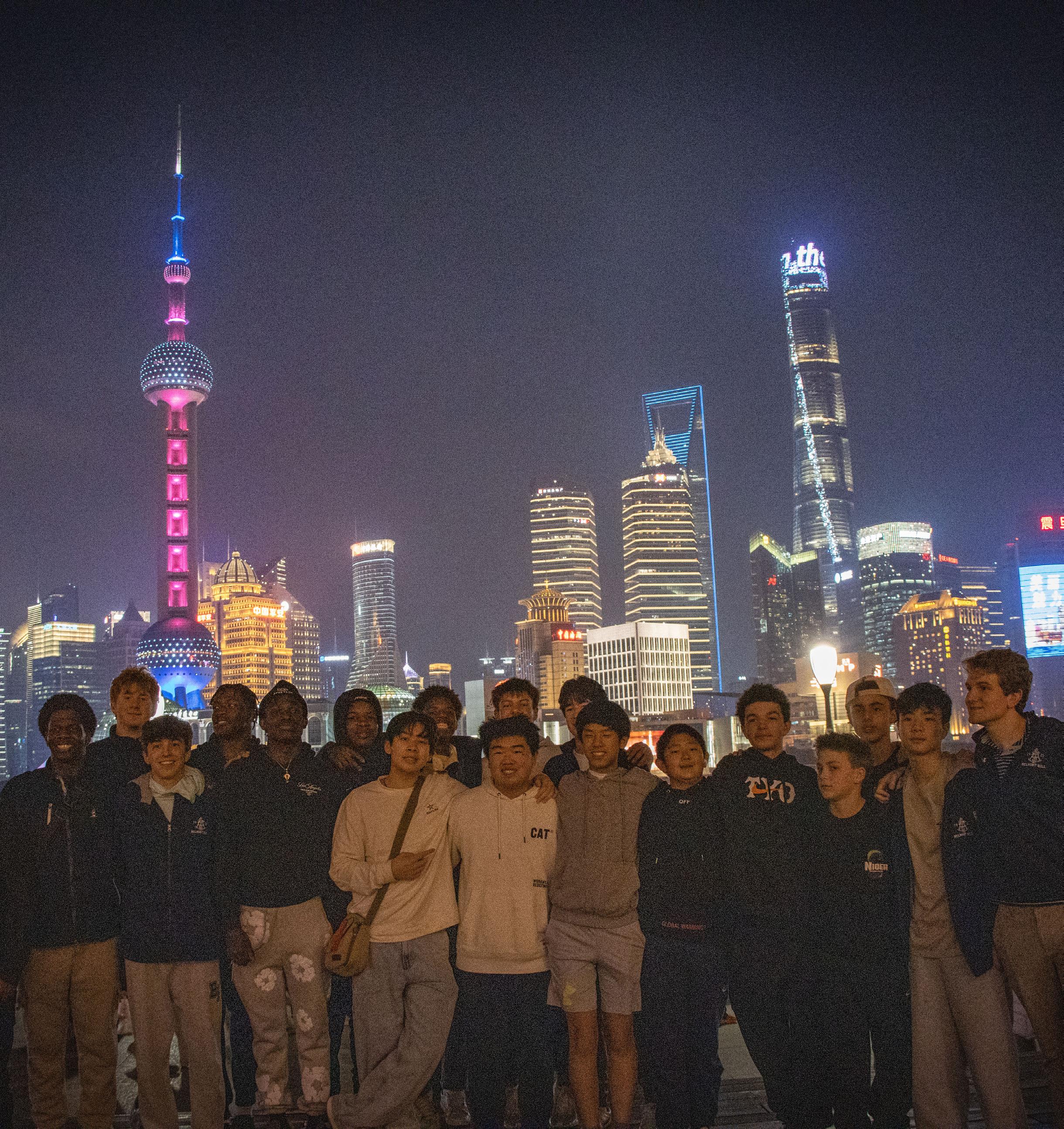
famous mountain temple and saw huge statues of the Buddha and other deities. Following that, they hiked up a mountain and got to see hills and hills of fresh green tea leaves at the top. Later in the day, the boys visited Alibaba’s headquarters and learned about the company’s future and the importance of asking AI the right questions rather than having it do your work for you. They then took the bus to a lake in an old village and saw old family homes and other small traditional Chinese architecture. The group rode on a boat that was paddled by a man in the back, using the rudder to propel it. After a calming boat ride, the crew headed to Shanghai and visited the city’s tallest building, the Shanghai Tower. They took an elevator to the top and got to see a bird’s-eye view of the city. The elevators in the Shanghai Tower were incredible; they climbed at a rate of about 67 feet per second, and it only took 55 seconds to reach the 118th floor. That night, the boys walked the Bund. The Bund is the main walkway offering an incredible view of the Shanghai Skyline. At night, the skyline of Shanghai lights up, creating a beautiful rainbow of lights. After an hour or two of taking pictures and enjoying the view, the boys, at last, headed back to the hotel for their final night in China. Overall, the China trip was filled with exciting experiences, eye-opening moments, and educational adventures. During the trip, the boys learned more about China than they could have ever imagined, and this applied to nearly everyone. As Ryan Azzun ’28 said, “The China trip was a great experience, and it gave a great opportunity to interact with the locals as well as people from our school that I didn’t know before.” From the bizarre food to the advanced technology, it is clear that China is one of the most fascinating countries ever, and if you ever have the opportunity to travel there, I strongly suggest you take it. ☐
Skyline of Hong Kong
Kai McCallum ’28
Open AI CEO Discussing New Policies
Google Images
Economic and Political Analysis on the Conflict in Iran
By Matthew Williams ’28 Panel Staff
On February 28th, 2026, the United States launched Operation Epic Fury. President Donald J. Trump claimed it was "[for the purpose of] dismantling the regime’s ability to threaten America or project power outside their borders.”
More specifically, the US launched missile attacks on Iranian integrated air defense systems, ballistic missile sites, and uranium enrichment facilities. Additionally, Supreme Leader of Iran Ali Khamenei was killed in US strikes to suppress the potential development of the Iranian nuclear program. Undoubtedly, the unregulated acquisition of nuclear weapons and the development of uranium enrichment facilities pose a significant threat to global security in any circumstance. And so, international organizations, notably the International Atomic Energy Agency (IAEA), have established suitable restrictions regarding non-proliferation agreements.
What was the US-Iran relationship like before the conflict? It is important to consider the relevance of the US’s previous diplomatic efforts before Operation Epic Fury, as well as the structure of the conflict that began on February 28th. After Iran’s advanced uranium enrichment operations were uncovered in 2005, they were found to violate the IAEA’s nuclear non-proliferation agreements. The United Nations Security Council imposed heavy economic sanctions on Iran until it complied with international standards. De -

spite the lifting of the sanctions in 2016, Iran’s failure to document its nuclear facilities violated the non-proliferation agreements of the IAEA. This violation led to the 12 Day War in 2025. Although diplomatic efforts have been attempted in the context of the Iranian nuclear program, they have failed to prevent its unregulated advancements adequately.
How is the war impacting the US? The initiation and continuation of US military involvement in Iran have deeply harmed US domestic economic security. The conflict has yielded a cascade of negative effects across the Middle East. Nevertheless, the elimination of the Iranian nuclear program is nec -
essary to uphold international security. How is the war impacting the Iranian people as well as the regime? The ongoing conflict has led to increasing suppression of speech and expression within Iran. Not only have members of religious minorities and political activists been arrested, but a significant number of US citizens traveling to Iran have been taken into custody.
OPINION — What should the US do next? Moving forward, the combined powers of the US and Israel must engage in either an advanced military operation or diplomatic talks to release these groups from custody. The aforementioned military operation or diplo -
matic decision must uphold the ethical standards upon which both countries are founded. Furthermore, the effective closure of the Strait of Hormuz, through which around 20% of the world’s oil travels, has led to an economic crisis in the oil and gas sector. Specifically, an estimated 12 sea mines were planted in the Strait. Because of these mines and the brief Iranian naval occupation, the Strait of Hormuz has been effectively closed. Additionally, oil distribution companies are unwilling to bear the financial risk of passing, which contributes to the oil crisis. Because of the closure of the Strait, median gas prices across the US have increased dramatically, reaching levels similar to those during the 2022 crisis. Moving forward, a main focus of the US’s policy in this conflict must be the opening of this strait. Undoubtedly, the needs of US consumers should take priority over international intervention in the development of the Iranian nuclear program. Despite the necessity for the maintenance of international security and the potential risk the Iranian nuclear facilities may pose to the world, it is necessary for the US to principally uphold its obligations as a nation that believes in the protection of its citizens. This upholding of values can be achieved through two facets: 1) deploying all efforts in restoring economic stability; 2) ensuring the safety of US citizens living abroad. While the initiation and continuation of the Iranian conflict is undoubtedly justified, it is important for the US to move forward with a greater focus on protecting its domestic interests.
Is There Systemic Grade Inflation in High Schools?
By Samuel Leviton ’28 Panel Staff
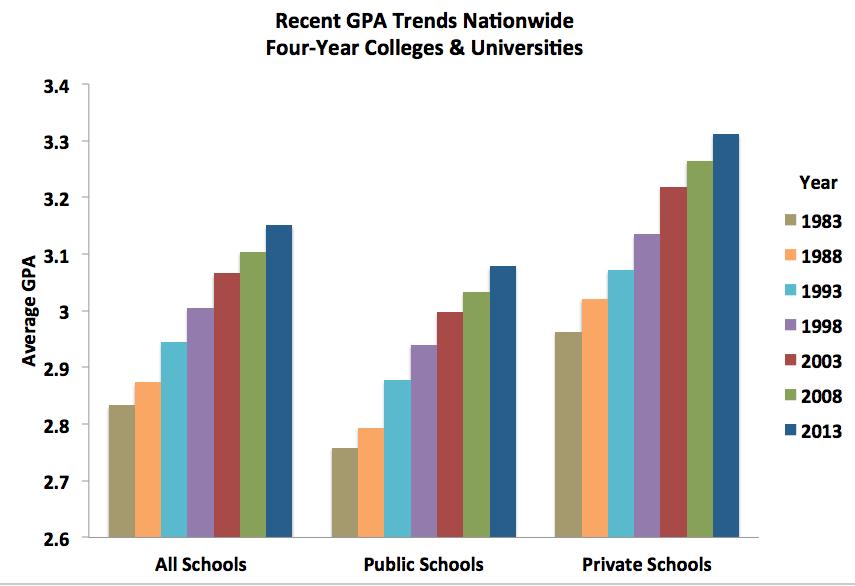
When my dad graduated high school in 1983, the National Center for Education Statistics reported that the average American high school student had a grade point average (GPA) of 2.47 on a 4.0 unweighted scale, corresponding to a grade between B- and C+. 40 years later, that same statistic has risen to a 3.1 GPA, which corresponds to just above a B grade. That means the average high school student’s grades in the U.S. have increased by more than 25% over the last 40 years. It’s not just the average student whose grades are rising: high schools have seen an influx of students graduating with a perfect 4.0 unweighted GPA, meaning they didn’t receive a single A-. In 2023, Harvard admissions posted that, for an incoming class of fewer than 2,000 students, nearly 8,000 applicants had a perfect 4.0 GPA. Students everywhere are earning A grades, making the once-coveted A an expectation for high school students. Before significant grade inflation hit high schools nationwide, students received grades based on the traditional bell curve. In this bell curve grading system, which often represented the grade distribution in an average high school class, a C grade was not, by any means, bad: it represented the average. Most students, labeled “average,” would be earning a respectable C grade. Only a few students would receive failing grades, and even fewer would earn an A. Using such a grading curve, only one or two students in a class of twenty would receive an A, reserving the honor for the highest level of work compared to their peers. That distribution of A grades is staggeringly different from the way students are
graded today. A 2017 study from Inside Higher Ed reported that in 2016, 47% of high school students in America graduated with grades ranging from A- to A+. As grades spike, it becomes harder
dent on the applicant’s GPA. As average GPAs skyrocket, the difference between receiving a scholarship and not can be the difference between an A and an A-.
This intense grade inflation only
and harder for schools to differentiate students’ academic success. While colleges and universities have transitioned to a holistic admissions process that factors in test scores, extracurriculars, essays, and recommendations, grades remain a significant factor in determining a student’s admissions outcome. Additionally, academic rankings and awards become increasingly competitive as more students earn high GPAs. For many state schools in America, admission into the honors college or the level of scholarship received is highly depen -
increases students’ anxiety, creating a toxic environment where even one grade below an A or A- can feel like a significant issue. In both public and private high schools across the country, students are increasingly worried about earning the highest possible grades. This shifts the academic environment from a learning space to a competition. Additionally, the spiked grades create a false sense of preparedness in high school students and set them up to fail. Many high schoolers have become accustomed to A’s being the norm, which
will create unrealistic expectations as they enter college and the job market, where 50% of the population isn’t given the highest grade. Additionally, students assume that an A grade means they are very prepared and going to do well, but if 50% of students are receiving A’s, it can create a false sense of preparedness. So, how do you fix a system that is inflated nationwide? For a renowned prep school with long-standing connections to elite schools, the fix can be realistic. Schools as described could publish a memo for students, teachers, parents, and collegiate admissions officers outlining a transition to a grading system in which only the top 20% of high school students in each class receive an A. Since these high schools already have strong relationships with colleges and universities, the transition could be more feasible, and may improve credibility over time. But for the average public high school in the United States, the transition to a more grade-intensive system is less feasible, given the lack of connections. These high schools can only make a school-wide grade shift if other schools in their state make the same decisions, which is an unlikely systemic switch. It is also hard for teachers to single-handedly make a change in the system. If they hand out fewer A grades, it is unfair to their students, as students taking the same class with a different teacher will receive better grades.
Grades are inflated to levels never seen before in high schools across the country, creating a new academic environment that grows more competitive every year. With individual teachers or schools unable to make significant changes to this system, it is unlikely that the ever-increasing grade inflation will end anytime soon. ☐
United States, Iranian, and Israeli Flag
Google Images
DOTI: Is Chili a Soup, Stew, or Something Else?
By Sean Park ’28 & Sam Norden ’28 Panel Staff
Sam: SOUP
Chili has been one of the most heavily debated topics in America for centuries. Is it its own food, a stew, or a soup? While many believe it to be something else due to its thick texture and bold flavor, it shares many important characteristics with traditional soup. Like soups, it simmers in a liquid, mixes beans, vegetables, and meat, and is served hot and in a bowl. It is without question a soup, and there is hardly an argument for any other opinion.
The first thing I would like to bring up is the menu at the New England Soup Factory. New England Soup Factory is the go-to soup factory for soup lovers across Massachusetts. If you were to look at their full dinner menu and proceed to the house soups, you will notice roughly 5 soups. However, the third soup on that list is chili, blending right in with all the other soups, clearly demonstrating that chili is, and always has been, a soup. High-caliber restaurants, such as New England Soup Factory, are calling chili a soup, making it clear that chili’s identity as a soup is recognized in the real world. Right underneath the chili on the menu, it says “A favorite at the Soup Factory. Slow-cooked, rich and zesty blend of ground beef, red beans, onions, and sweet bell peppers in a spicy tomato and cumin scented sauce.” This accurately represents what chili is as a whole and how it is a soup, since a favorite at the Soup Factory needs to be soup, or else they would not be serving it.
Secondly, according to the official Merriam-Webster dictionary,
one of the most widely used on planet Earth, soup is “a liquid food especially with a meat, fish, or vegetable stock as a base and often containing pieces of solid food.” chili is a liquid-based dish made with vegetables, beans, and meat. It is commonly cooked in a meat stock. There is no argument for any other possibility, and chili is most clearly a soup.
To conclude, chili is most definitely a soup. There is undeniable evidence. Chili is one of the world’s classic soups, beloved for its rich flavors and hearty ingredients.
Sean: STEW
Chili is not a soup, and lumping it into that broader category does it a complete injustice. Instead, it is a stew which, although it has some similarities with soup in certain respects, is a completely different concept.
First, chili does not place importance on its broth, unlike soups. Although some types of chili contain a broth-like liquid, it is not typically considered part of the dish. If a person were to consume soup, it would be normal to eat all of it, including the liquid. However, when eating chili, it would be abnormal to go out of their way to drink the meat juice that is left behind, therefore discrediting the soup argument, thus, it must be categorized as something other than a soup entirely.
This brings me to my second piece of evidence that distinguishes chili from soups: chili can be eaten with a fork. No soup can be eaten solely with a fork, and because chilis can, it is definitely different from soups. And so, with no other categorization being possible, it must be considered a stew.
To close it all out, just as Sam did,

I will present a dictionary definition to support my point. According to the Oxford Dictionary, stews are defined as “a dish of meat or vegetables (or both) cooked slowly in liquid in a closed dish or pan.” As anyone who has made chili before can tell you, making chili is a
long, arduous process that spans multiple hours. As it is a dish that requires slow cooking in liquid, it more accurately fits the description of a stew than a soup. Many people across the world consume chili every day, and it is important to make this distinction. ☐
The Undeniable Benefits of All Boys Schools
By Billy Palumbo ’28, Shea McDonnell ’28 & Tiernan Emmert ’28 Panel Staff
The environment where you learn plays a much bigger role than people usually realize. It doesn’t just affect what you learn—it shapes how you think, how confident you feel, and how willing you are to take risks academically and socially. Schools aren’t just places where information is delivered; they’re ecosystems that influence behavior, focus, and identity. Because of that, the structure of a school—whether it’s coeducational or single-sex—can meaningfully impact student outcomes.
A school like Belmont Hill chooses to remain all-boys not by accident, but because it believes that environment is a powerful lever for growth. Organizations like the International Boys School Coalition argue that boys, particularly during adolescence, benefit from an environment tailored to how they develop socially and academically. One of the most commonly cited advantages is focus. In coeducational settings, it’s normal for students—especially teenagers—to become distracted by social dynamics, including impressing peers or worrying about how they are perceived. Without that layer of social distraction, students often find it easier to concentrate on academics, participate in class, and engage more deeply with their work.
Another major factor is teaching style. While it’s important not to overgeneralize, research and educators often observe that boys and girls can develop differently during their teenage years—especially in areas like attention
span, risk-taking, and verbal participation. In an all-boys school, teachers can adapt their methods to better match those tendencies. That might mean more discussion-based classes, more movement or hands-on learning, or a classroom culture that encourages competition in a healthy way.
According to U.S. News & World Report, single-sex schools can also allow students to learn at a pace that feels more natural for them. That matters more than people think. When students feel like they’re either being rushed or held back, they disengage. But when the pace matches their development, they’re more likely to stay motivated and build real confidence in their abilities.
Confidence is actually one of the biggest advantages of single-sex education. In an all-boys environment, students may feel more comfortable taking intellectual risks—asking questions, making mistakes, or speaking up in class—without worrying about judgment from the opposite sex. That doesn’t mean judgment disappears entirely, but it changes the social dynamic in a way that can make participation feel safer. Over time, that builds stronger communication skills and a greater willingness to engage.
There’s also the social side. Friendships in single-sex schools can sometimes become especially strong because students are navigating similar developmental experiences together. That shared environment can create tight-knit communities and a strong sense of belonging. For many students, that translates into better mental well-being and a more positive overall school experience.
That said, it’s important to be honest, because single-sex education isn’t perfect, and it’s not the right fit for everyone. Coed schools offer their own advantages, especially in terms of preparing students for real-world interactions and diverse perspectives. The key point isn’t that one system is universally better, but that environ -
ment matters—and different environments serve different students well. For a school like Belmont Hill, the decision to stay all-boys reflects a belief that this particular structure helps its students thrive. When those pieces come together, they can significantly influence not just academic performance, but the kind of person a student becomes. ☐

Online Editor Ryan Li ’28
Arts Editor Jack Good ’27
Sports Editor Sam Norden ’28
Opinion Editor
Sam Leviton ’28
Editors-In-Chief
Tyler Grossman ’27
Patrick Snail ’28
Executive Editors
Liam MacLean ’27
Adrian Chen ’28
Assistant Editors
Matthew Williams ’28
Tiernan Emmert ’28
Shea McDonnell ’28
Cooper Schuldt ’28
Kai McCallum ’28
Will Greenhill ’28
Billy Palumbo ’28
Staff Artists/writers
Brian Tang ’29
Faculty Advisors
Paige Wallace
Juliette Zener
InDesign Support
Editor Sean Park ’28
News Editor Ryan Ho ’28
Backpage Editor
David Robinson ’27
The Panel, founded in 1953, is the official school newspaper of the Belmont Hill School. The Panel is the voice of the student body. We publish articles that are of consequence to the students, as well as the school communities. The views expressed in The Panel belong solely to the authors and editors and do not necessarily represent the student body, faculty or administration of the school. Any comment about the content should be addressed directly to the editors. The Panel encourages responsible opinion in the form of Letters to the Editor. We reserve the right to edit all submissions for length and content. Copyright © 2023 The Panel. All rights reserved. No part of this publication may be reproduced in any form without prior written permission of the Editor-in-Chief. Published by the Belmont Printing Co., Belmont, MA 02478.
Is Chili a Soup or Stew?
Google Images

Photos
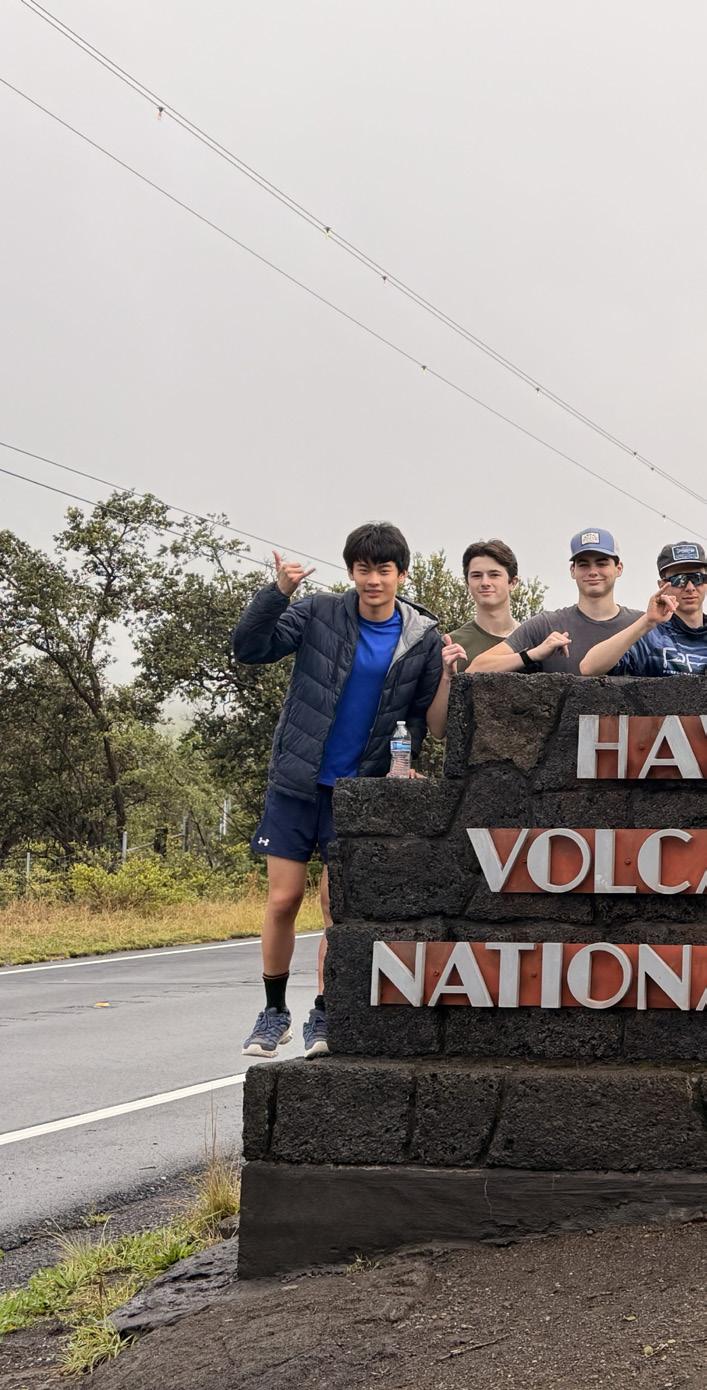
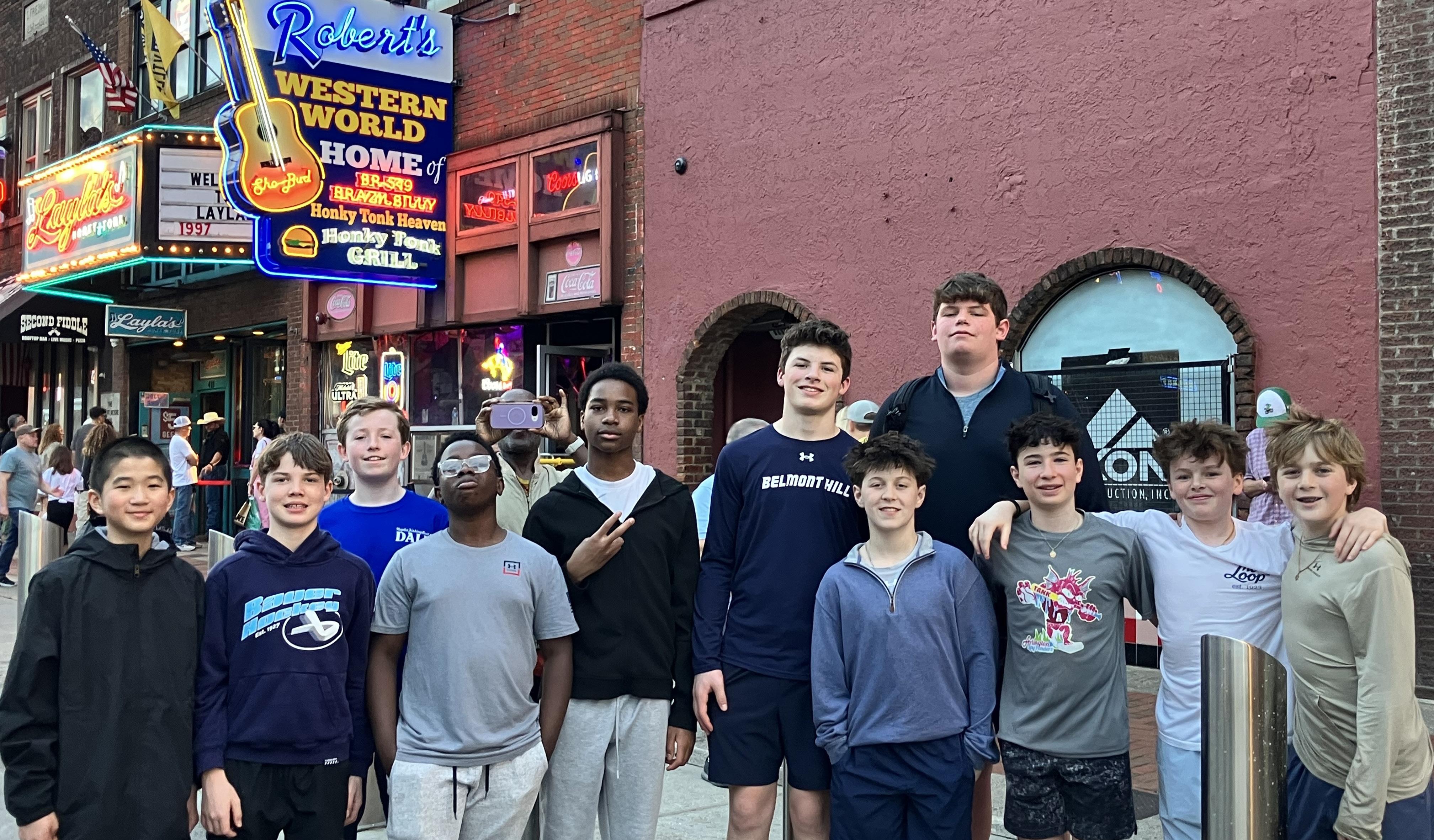
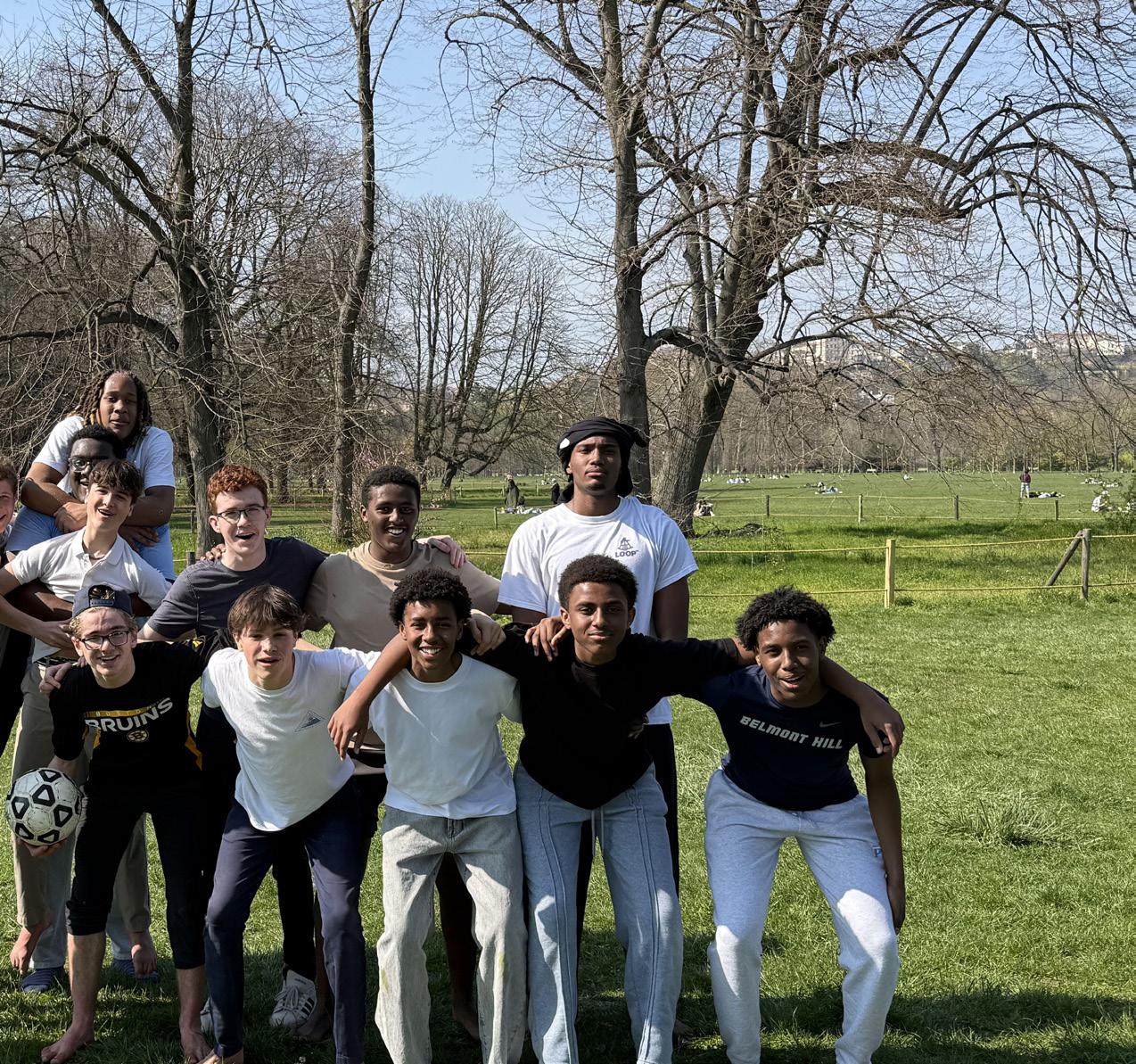
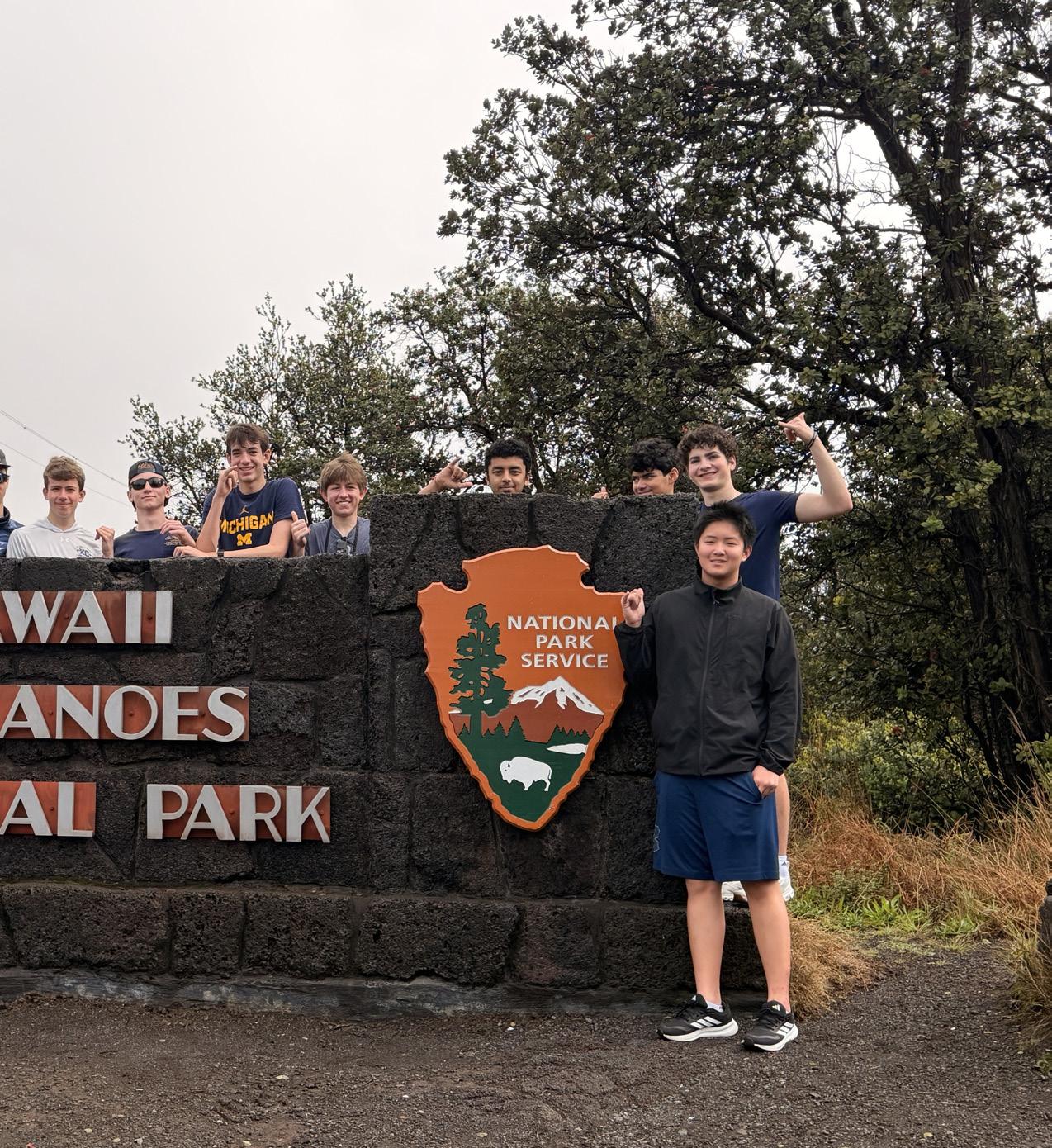
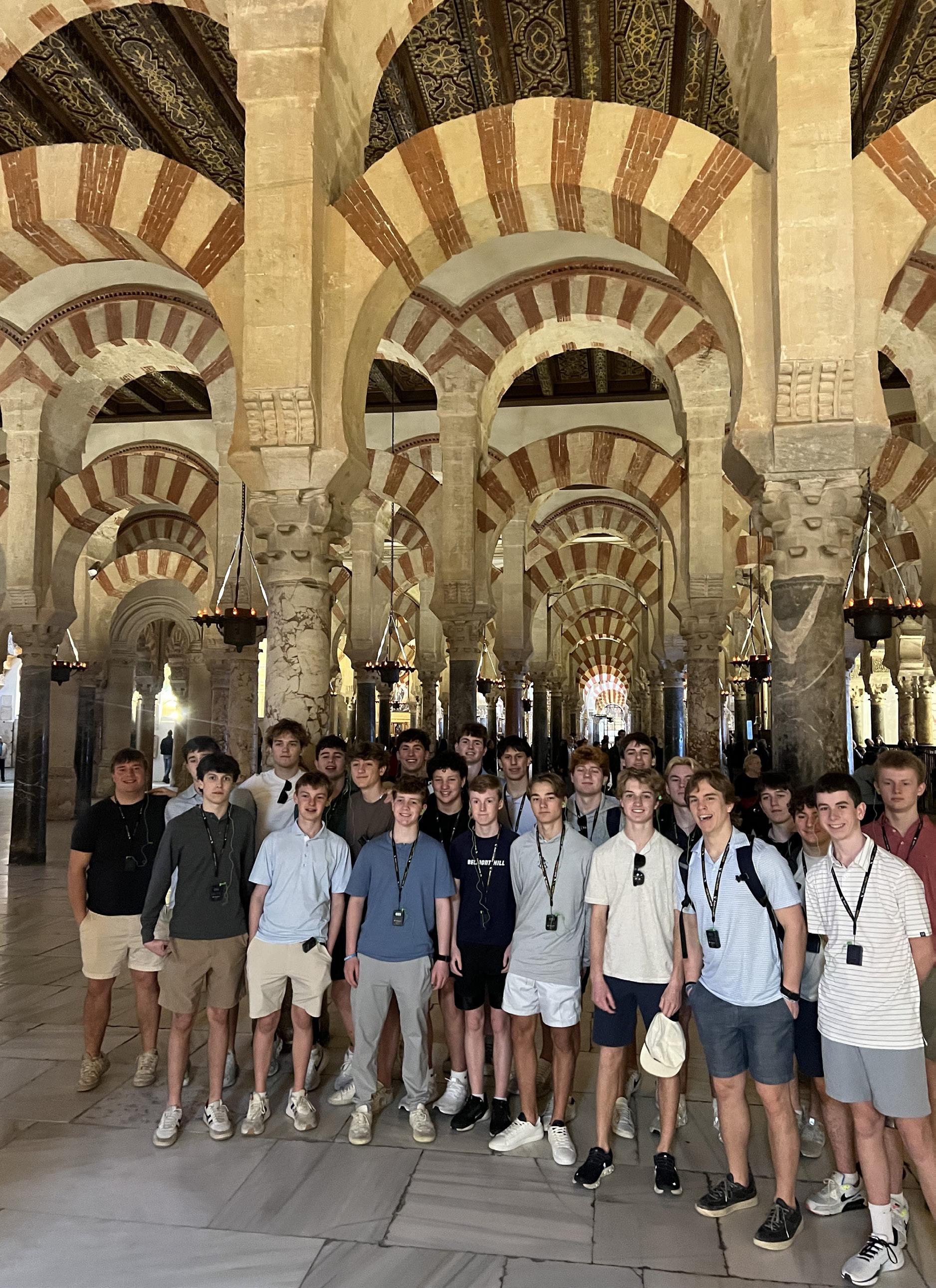
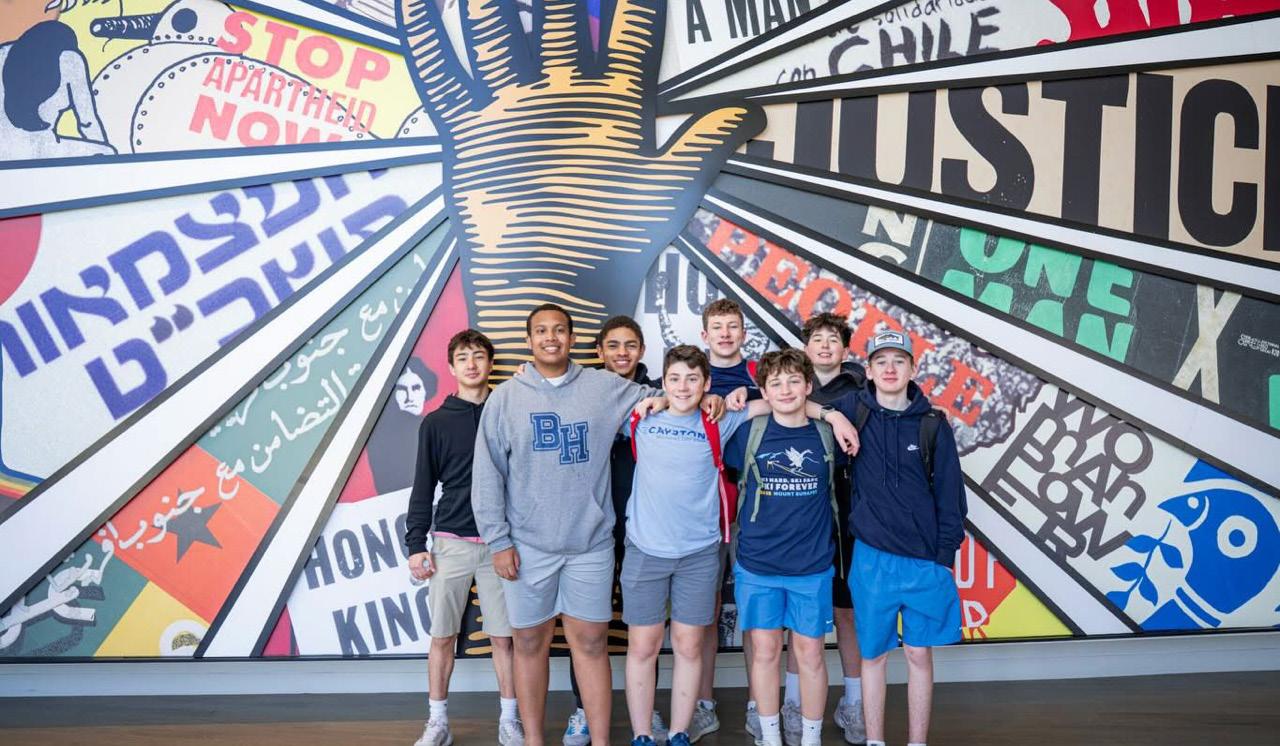
Hawaii, Nashville, China, France, Spain, AF
Talented Jake Ma ’27 Awarded Artist of the Issue
By Ryan Li ’28 Panel Staff
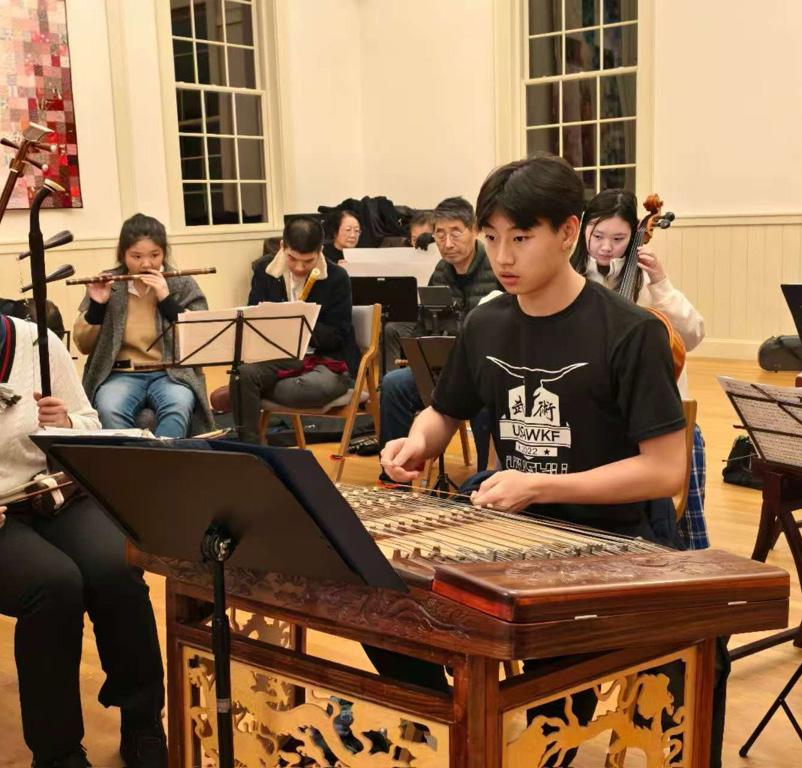
At first, Jake Ma’s musical journey may seem unconventional. Balancing two instruments, the Chinese hammered dulcimer and the trumpet, Jake’s artistic talent represents a unique duality between Eastern and Western musical cultures and styles. The Chinese dulcimer, also known as the “yangqin,” is a traditional Chinese instrument consisting of over 100 metal strings played with small mallets, or “hammers”.
Jake was first introduced to the dulcimer in first grade, watching his teacher perform at a Chinese New Year event. “I saw it and thought, that looks really cool,” Jake recalled. Soon after, his mother arranged lessons with the teacher, and he began learning the dulcimer himself. That short moment of curiosity marked the beginning of nearly a decade of dedication to the instrument. In addition, Jake also picked up the trumpet in fourth grade through a school music program. He has continued to play the trumpet since then, being a part of Belmont Hill’s Upper School Jazz Band.
While the trumpet remains a meaningful part of his musical career, his primary focus has shifted to the dulcimer. He currently studies with a professional musician who has performed with orchestras in China, including the China Central Chinese Orchestra. As his talents developed, Jake also joined his teacher’s orchestra, performing alongside students who specialize in other traditional Chinese instruments, such as the guzheng.
After COVID, Jake joined a much larger and more competitive orches -
tra, the Boston Chinese Music Association Youth Orchestra. Although he was initially in the youth orchestra, he was quickly promoted to the main ensemble. He now plays in both groups, which meet weekly. At one point, the orchestra was preparing for a performance at Carnegie Hall. “I thought it was going to be more chill,” Jake admitted, “But they take it really seriously.” The orchestra is filled with professional musicians, many of whom
Adam Richins Discussion
By Sam Norden ’28 Panel Staff
Celebrated for his work in sports and schools, Adam Richins has been a household name in the professional photography industry; this March, Belmont Hill students had the opportunity to meet the person behind the pixels. In MacPherson, Richins shared his story and provided insight and advice for the Belmont Hill students, remarking on his capturing the Patriots throughout the season and numerous other college and high school sports teams in the area.
Richins was born in Boston, but then moved to New Jersey, going to college in New York City. He came back to Boston in 2011 and first shot for Dana Hall. He now has his own company with 15 photographers and crew in addition to shooting for the Boston Sports Journal. Each high school game he shoots, Richins takes roughly 3,000 photos. After the game, he uploads the photos to his computer before leaving the parking lot. Out of the 3,000 photos he takes each game, only around 200-300 are truly edited and exported, and he does all the editing himself.
In the Super Bowl alone, he took 8,000 photos of the Patriots. He is able to take this many photos due to 100 terabytes of external storage in his basement. When he first started with the Boston Sports Journal, he shot whatever sports he could, though he liked football most, and eventually gained connections with the Patriots, Celtics, and Bruins. His work requires a lot of money, and his gear costs $150,000 overall. He spends this much on his equipment to be
the best he can, using four different cameras and various lenses depending on the situation. He tries to be unique when taking photos, finding new spots on the field, and making the best photos he can.
In addition to sports, he has shot at hospitals, conferences, and parties. He loves taking pictures everywhere, not just professionally. His talk at Belmont Hill inspired students, offering a behind-the-scenes look at the creativity and dedication required to succeed in professional photography: “Even though I shoot mostly film, hearing from Adam Richins process in professional sports photography sort of opened my eyes to what’s possible in terms of diligence and constantly trying to improve,” (Matthew Williams ’28). And so, Adam Richins’ visit to Belmont Hill was a very inspiring experience for the community and encouraged students to pursue artistic opportunities, especially with an entrepreneurial lens. ☐

played in other Chinese orchestras. Behind the scenes, Jake’s practice is just as intense. The dulcimer itself presents a unique challenge, having over one hundred strings. Changes in temperature, even if small, can throw off each individual string. “I had to spend three hours tuning it once,” he said. Earlier in his musical journey, mistakes were expensive, with the delicate strings being easy to break. However, the reward clearly outweighed the
risk, as Jake loved the dulcimer’s versatility. “You can play multiple notes, there are different techniques, and there’s just more variety,” he explained.
In the earlier stages of his musical life, Jake’s relationship with music was defined largely by discipline. However, as he began to progress musically, his motivation shifted towards enjoyment, especially when playing with others. Jake remembers, “But then, as I started actually playing [the dulcimer], and it was definitely just fun for me.” Playing both the dulcimer and the trumpet has given Jake a unique view on music. “It’s definitely cool to have that fusion and to be exposed to both sides,” Jake describes. With the two different musical cultures, Jake has experienced firsthand the difference between the traditions. Outside of music, Jake also pursues performance through acting, most notably having participated in every fall play since seventh grade. He also enjoys drawing and recently took Mr. Ziff’s Advanced Engineering and Design class, where he took his art into a more physical form. Looking ahead, Jake doesn’t plan to pursue music professionally but rather wants to focus on what he enjoys most. For him, this means continuing the dulcimer and playing in orchestras, as well as designing more projects that incorporate both art and engineering. Jake’s musical journey is not defined by a single instrument or moment, but rather by the communities and lifelong passions developed through music, across different cultures and experiences. The Panel wishes Jake the best of luck in his musical journies both on the Chinese hammer dulcimer and the trumpet. ☐
BH Winter Concert Recap
By Ryan Ho ’28 Panel Staff
On February 22, 2026, Belmont Hill musicians put their talent and skill on full display during the Winter Concert. As blizzard conditions began to move in, the concert was moved up three hours. Despite this change, the musicians were able to adapt and display a wide range of musical styles. The Orchestra kicked off the concert with “The Waltz of the Wicked” by Kirt Mosier and “Palladio” by Karl Jenkins. Before cueing the orchestra, Mr. Fiori noted that the latter was commonly used in TV commercials in the 1990s. In fact, even today, “Palladio” is played before Fulham F.C. home matches as players enter the field.
The B-Flats followed this performance with “Just the Way You Are” by Bruno Mars with a solo from Zach Park ’28. Ryan Li ’28 remarked, “Zach’s solo in the Bruno Mars song was sensational.” The B-Flats continued with an arrangement of “Mama” by Boyz II Men, with a myriad of solos, including Arun Lenhart ’29, Andrew Agular ’28, Owen Popkowski-Smith ’27, Chinweikem Anyanwu ’28, and more.
Following the B-Flats’ performance, the Middle School Rock Band delivered a wonderful rendition of “Hotel California” by The Eagles. Will Skordos ’27 impressively stepped up and played the essential guitar chords in the absence of Middle School Rock Band members, who were not able to attend the concert due to the timing change.
A jazz classic, “Superstition” by Stevie Wonder, was performed by the Middle School Jazz Band. Pierce Morris
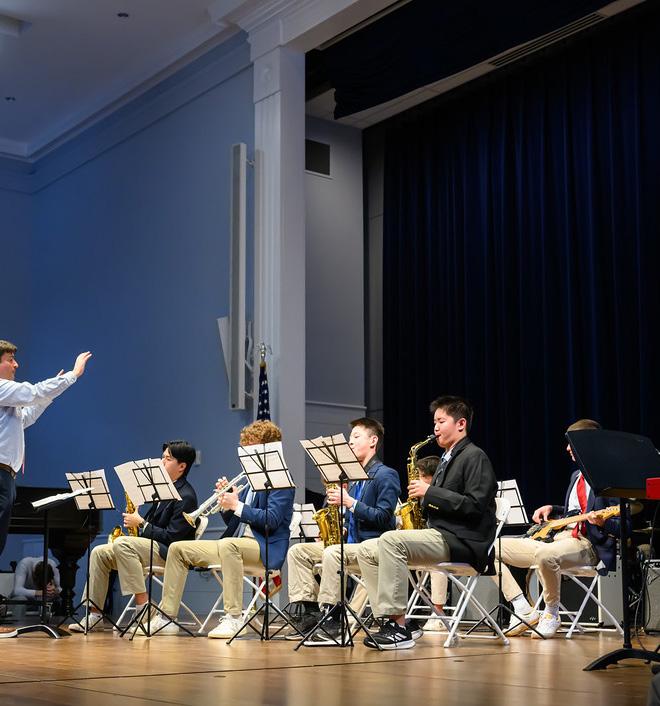
’28 noted, “It was a great tune that the crowd was able to get into.” The Upper School Jazz Band followed this performance with “Perdido” by Juan Tizol, a swing feel song. The Upper School Jazz Band finished with “Stolen Moments” by Oliver Nelson, a tune that they had put together in only two weeks. To end the Winter Concert, the Upper School Rockband played “Tuesday’s Gone” by Lynyrd Skynyrd. The performance featured an outstanding ensemble that included a guitar trio of Morgan Rich ’27, Sebastian Vuono ’28, and Pierce Courtney ’28, along with JJ Pena ’26 on the bass and Coby Kelly ’27 on the drums. In addition, Beckett Britt Webb ’27 and Zach Park ’28 serenaded the audience beautifully with the wellknown lyrics. The Panel would like to congratulate all the performers on an outstanding show, as well as Mr. Patterson and Mr. Fiori for their hard work in putting the production together.
Jake Ma playing the Chinese Hammered Dulcimer
Jake Ma ’27
Adam Richins Portrait Adam Richins
Jazz Band Performing Adam Richins
Project Hail Mary: A Thriller Clarice Assad Chapel Recap
By Liam Maclean ’27 Panel Staff
In 2021, Andy Weir, renowned author of works such as The Martian and Artemis, released his novel Project Hail Mary , a science-driven space thriller and mystery. Recently, the movie arrived in theaters on March 20th, and was an immediate success across the country, amassing over $300 million at the box office since. Right after the release of the novel Project Hail Mary , readers quickly dove into the book with high expectations following the success of The Martian both on paper and in theaters. A fanbase steadily grew around the story, drawing the attention of directors Phil Lord and Christopher Miller. News of production only drew more attention and buzz to the book, with readers anxiously awaiting the film’s release, contributing to the film’s status as an unquestioned success. Without spoiling the story in any depth, the film follows Dr. Ryland Grace, played by Ryan Gosling, on a mission to save Earth by saving the Sun. Dr. Grace awakes on the ship from an induced coma, with no knowledge of what the mission is or why he is there. As he explores the ship and experiences flashes of memory, he remembers his mission and the vitality of his position. He navigates the many issues that come with saving the solar system and discovers that Earth may not be the only planet with a dying star, sending its last hope, its “ Hail Mary, ” towards a distant star for rescue. Attempting to adapt a long, serious, and science-heavy novel into a three-hour film, Lord and Miller naturally had to make necessary adjustments. With the time constraint, the directors’ primary method of cutting was

to omit the in-depth scientific details the novel focused on, including why the sun was dying, its effects on Earth, the ship’s fuel, and more. Additionally, the novel mainly used Grace’s inner monologue to convey his thoughts and most of the mission. Because they couldn’t convey thoughts in movie format, Lord and Miller chose to use Grace’s voice instead, both through self-recorded videos and conversations. While Project Hail Mary lacks the groundbreaking feats of 2001: A Space Odyssey or the expansiveness of Interstellar , it was never trying to be one of these films. Instead, it follows an emotional plot with intense character development and companionship that forces you to care deeply about Dr. Ryland Grace by the end of the movie, not just because he is heroically saving humanity, but because you see him grow and overcome challenge after challenge. The cinematography is not revolutionary, but it is completely intentional and beautiful — not one scene is dull. Finally, it must be said that this emotion and connection were largely due to Ryan Gosling’s performance, whose acting beautifully and deeply immerses the viewer into the inner life and challenges of his character. ☐


By Patrick Snail ’28 Panel Staff
On February 27th, Belmont Hill welcomed Clarice Assad as part of the 2026 Kageyama-Hunt Speaker program. During her time, she delivered an impactful and playful rendition of her life story and integrated audience participation to engage and teach the students. She shared lessons she had learned in her career as a musician: singer-songwriter, composer, and a wide variety of instruments. Born and raised in Brazil, Assad was introduced to music before she could even remember. Her father and uncle played guitar together for shows around the world. She reminisced about learning piano and singing, sharing with the community a video of her toddler self singing with her father, who was playing the guitar. She mentioned her initial shyness as a child and how music allowed her to express herself without needing face-to-face interaction. She continued about her adult music career, focusing on her many performances and creations. Aside from her accomplishments as a music artist, Assad has dedicated a lot of time to teaching others about creating music, how she developed her own musical language, using shapes to convey different sounds and synchopations. One key theme and lesson she emphasized learning throughout her career was improvisation, and she encouraged all to indulge. During her talk, she invited the audience to join her in singing along, guided by her teaching technique. “The Chapel was a very interesting experience,” Nick MacCormack ’28 recalled, “not many times do you get to participate

or even talk yourself during the Chapel talks. It was a pleasant change.” Later, she called the B-flats onto the stage to improvise a song as a group. Following her lead, the Flats split into four unique parts, serving as an accompaniment as she improvised a melody, manipulating her voice to sound like an instrument. She controlled volume simply with her hands, incredibly controlling a couple of dozen voices like a radio. Clarice Assad’s visit under Belmont Hill’s Kageyama Hunt speaker program inspired curiosity for improvisation and the arts, engaging students with fun activities in the moment. Hearing from Assad, and her experience being immersed in the arts at a young age provided a wonderful example for musicians at Belmont Hill to follow; learning from her experiences in her Chapel talk was a great opportunity for all students, teachers, and administrators within the Belmont Hill community. All in all, it was an honor to hear Clarice Assad speak in Chapel this year.



Clarice Assad Google Images
Project Hail Mary Clip Youtube
April 2026 Playlist of the Issue: Childhood Favorites
Banana Pancakes - Jack Johnson
I’m Yours - Jason Mraz
The Middle - Jimmy Eat World
Torn - Natalie Imbruglia
Semi-Charmed Life - Third Eye Blind Drift Away - Uncle Kracker
is a Highway - Rascal Flatts
Waiting for the Bass: Martha’s Vineyard Revives
By Will Greenhill ’28 Panel Staff
On Martha’s Vineyard, winter is quiet – the kind of quiet where you can hear the rigging knock against empty masts in the harbor, and the only footprints on the beach are your own. On a late February morning, the island sits buried under snow, still recovering from a two-foot storm just days before. Storefronts are shuttered, their ‘closed for the season’ signs worn out from years of the same wait, and the roads that will choke with August traffic now stretch empty to the horizon. For year-round residents, this slow, unforgiving rhythm is simply life, sustained by the promise that spring and summer will return.
After weeks of quiet, the island finally stirs with the excitement of the return of spring, and more specifically, the striped bass. The striped bass is the prized inshore gamefish on the island, prized for its sporty fight and delicious taste. The bass spawn south in the Chesapeake Bay before embarking on a long journey up the Eastern Seaboard. They push north into the Delaware Bay, past the Jersey Shore, curl around the Long Island Sound, thread through the waters off Block Island, before finally making their way to Cape Cod, Nantucket, and Martha’s Vineyard. Taking approximately 60 days, these fish start their journey in the middle of March, appearing in Martha’s Vineyard sometime at the end of April or the start of May, with timing varying from year to year. These fish travel in groups, with the small “schoolies” leading the way, with larger fish on their tails. As March slowly passes, fishermen eagerly track water tempera -
tures and tide charts, watching for any sign the fish are near. For a fisherman, such as Aidan Olsen, the idea of the fish soon arriving gets him through the winter, where all there is to do is “hunt deer and ducks.” Aidan is a high school senior who has lived on the island his whole life and excels out on the water. When the stripers arrive, Aidan wakes up early every day to land a few before school starts. Whether from the beach or from a boat, on most days, he can land at least three fish. As a local, he has found spots that work for him year in and year out, and being able to rely on that consistency brings the Vineyard back to life for him. For him and many other young fishermen, the spring striper run isn’t just about catching, it’s about being part of a tradition that signals the end of the long winter and the start of spring on the island.
Doug Asselin loves this tradition so much that he made it his job. Also born and raised on the island, Dougie grew up with a fishing pole in his hand, always trying to find ways to get out on the water. He recognizes that the winter is slow, with not much to be done, and knows that once those first few fish find the waters surrounding the Vineyard, winter is over, and the best time of the year is ahead, the spring and summer. Dougie works at Dick’s Bait and Tackle, a fishing store located in Oak Bluffs, where he can make fishing his life. When he is not restocking new tackle or helping out a customer, Dougie is normally at one of his favorite beaches or piers, looking for hungry, explosive bass. He says that the early stripers “are usually chasing big baits like squid or mackerel, making them more aggressive and more


enjoyable to catch.” For Dougie, spring is the best time of the year on the Vineyard, and thoughts of that special time are what get him through the long winters.
For fishermen like Dougie and Aidan, the spring striped bass run is more than a season; rather, it’s a marker of life and energy returning to the island after a long, cold winter. The striper’s long journey from the Chesapeake Bay mirrors the dedication and patience of those who wait for them, and every cast, every catch, every time out on the water,
is a small reward for months of waiting. These fish do not simply arrive; they are summoned, drawn north by the same ancient pull that brings the local fisherman back to the shoreline each morning, rod in hand, answering the same call they always have. On Martha’s Vineyard, the arrival of these prized fish signals not just the start of spring and summer, but also the continuation of a tradition that connects the residents, the island, and the sea that has lasted for decades, and will continue for more to come. ☐
April Athlete of the Issue: Luke Waldeck ’26
By Tyler Grossman ’27 Panel Staff
Luke Waldeck ’26 has been playing baseball since T-ball, and now, as a senior captain of the Belmont Hill baseball team, he hopes to add to his already impressive individual and team resume with an ISL championship. In addition to playing baseball growing up, Luke also played basketball and soccer; however, when he entered high school, he dedicated himself solely to baseball. Luke joined Belmont Hill as a sophomore after attending The Fenn School. Outside of school, Luke has spent his summers playing for North East Baseball (NEB).
Adversity has defined Luke’s Belmont Hill career. Before his sophomore year, he underwent Tommy John surgery, sidelining him for the entire 2023 campaign and much of his first junior season. The extended recovery time forced Luke to reclassify and repeat his junior year. However, another injury derailed him, causing him to miss three-quarters of the season. Despite these setbacks, Luke has done everything he could to help the team become successful. Junior outfielder Rylan Flynn, 27, said: “Even while fighting his own injuries, he has put the team first.” Charlie Rubel ’27 added to this sentiment, stating, “Despite injuries, he has always been a great teammate and had a very positive outlook on the game.”
When Luke returned last season, he made an immediate impact on the team, pitching both out of relief spots and as a starter. One game that Luke is particularly proud of was his performance against Governors in the semi-finals, when he came in late and shut the door
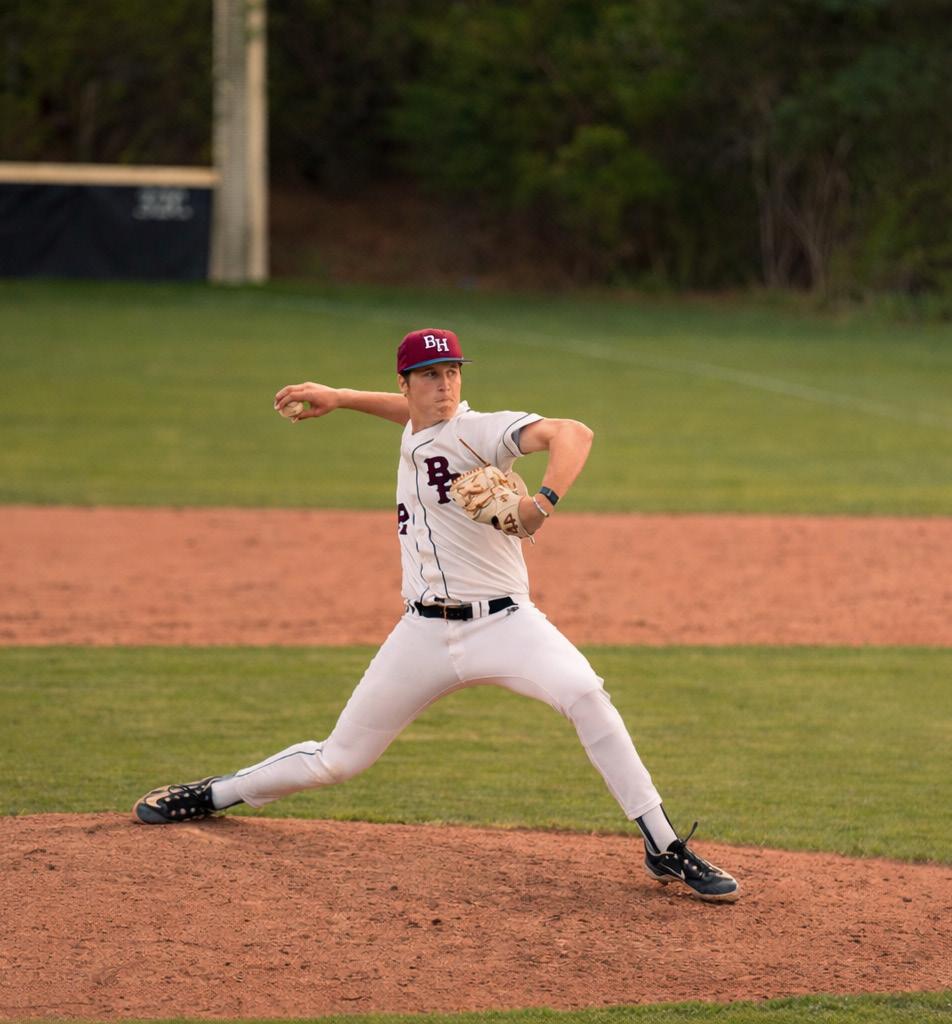
to help the team win 3-2 and advance to the championship game, where they fell to a talented Lawrence Academy team. As a team captain this year, Luke aims to avenge that loss by winning this year’s ISL championship, something that is very possible given that Belmont Hill arguably has the best pitching staff in the League, plus an array of talented bats. Luke observes that the culture has been great so far this season and that the team has already become a super close-knit group, which he credits to a strong collaborative nature and a productive preseason. Luke stressed that, while a league win is the goal,
they still have a lot to do to get there. In addition to discussing his goals for the coming season, Luke also reflected on the coaches and teammates who helped him get to where he is today. One person he thanked was Coach Cunningham ’12, who helped him become both a better player and a better person. When asked about Luke as a teammate and a player, Cunningham said, “Luke has dealt with incredible adversity, and his resilience separates him from the rest. As a leader, he has an infectious energy that his teammates are lucky to have.” Luke also mentioned his summer coaches at NEB and Coach Scott Patterson for their help in becoming a better baseball player and in the recruiting process. In addition to his coaches, Luke recalled how the older players on the team helped him when he joined Belmont Hill, teaching him how to do things the “right way”. As a captain this year, he hopes to do the same for the younger players by making sure they feel included and showing them how to do the little things right, like focusing on every rep in practice. Entering his senior year, Luke is topping out at over 91 MPH on his fastball and was ranked 24th in the Perfect Games class of 2026 rankings for Massachusetts. In addition to his talent on the field, Luke is a true student-athlete, having been inducted into the Cum Laude Society this past fall. Next year, Luke will continue his baseball career at Harvard University in Cambridge, where he hopes to find success and play as much as possible. The Panel wishes Luke the best of luck this season and in his future endeavors. ☐
Top: Snowy Edgartown; Bottom: Aidan Olsen & a Striper Ryan Zipp, Aidan Olsen
Luke Waldeck ’26 Dealing on the Mound
Mason Iandiorio
Belmont Hill Winter Athletic Awards Chapel
By Sam Norden ’28 Panel Staff
In early March, the Belmont Hill community gathered in the Chapel to celebrate another successful Belmont Hill athletic season. Belmont Hill’s winter athletes performed exceptionally well across the board, with 7th-grade teams through varsity competing at a high level.
To open, team captains announced varsity letter winners from the past Winter season, followed by team awards, sportmanship awards, and ISL and New England honors, with 28 Belmont Hill boys earning All-ISL honors and 12 boys earning All-New England honors, with Jack Dragoumanos ’26 and Isaac Novod ’27 receiving All-American honors in wrestling. Awards were given to each team, some based on improvement and some based on value to the team. Award winners in each sport are as follows:
ALPINE SKIING: Most Improved: Hugh Wylie ’28, Giacomo Turco ’26, Greatest team contribution: Griffin Vail ’26, Topher Batchelder ’26
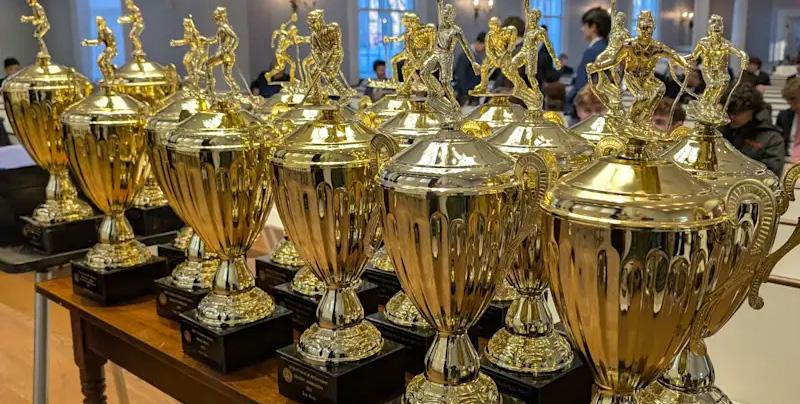
BASKETBALL: Greatest team contribution: Jahmier Stephenson ’27, Carl H. Amon Jr. Basketball Trophy, given to that member of the varsity team whose unselfishness, sportsmanship, and concern for team play have best exemplified the ideals of Belmont Hill athletics: Jackson Bowhers ’27
HOCKEY: Most Improved: Matt Carolan ’26, Kenneth M. Mar-
BH Hires Football Coach
By Tyler Grossman ’27 Panel Staff
Just a month after it was announced that Belmont Hill and former Varsity Football coach Mr. Fucillo parted ways after three successful seasons, the Sextants have found their new coach: Frank Roche. Coach Roche joins Belmont Hill after three seasons leading Arlington High School, where he successfully turned a 3-8 program into a 17-15 team. Before switching to coaching, Coach Roche excelled as a wide receiver at Tufts, hauling in 92 receptions for 1,573 yards and capping his senior season with 10 touchdowns at 109.9 yards per game.
At Belmont Hill, Coach Roche will also serve as Assistant Athletic Director and teach classes. This past week, Coach Roche held his first official meeting with the team, setting expectations and laying the groundwork for next season. At the first meeting, he also laid out his personal values of “Faith, Family, and Football,” a symbol of both his passion for the game and his commitment to the Belmont Hill motto
of developing “Young men of character.” Ky-mani Monteiro ’27, one of next fall’s captains, said that Coach Roche is “a great addition to Belmont Hill, and he seems really excited to get started.”
Mr. LaLiberte ’14, the defensive coordinator and former Belmont Hill player, observed, “Coach Roche brings a palpable positive energy and enthusiasm to our program. His reputation precedes him from his time at Arlington, where he was not just a major factor in turning around the success of their football program but also their culture.” Coach LaLiberte also stated that he thinks Coach Roche is “Gonna do a great job and fit in with our community,” adding that he is “Excited to work with him.”
Coach Roche seeks to continue the excellence the Belmont Hill football team strives for, as expectations are high for the boys next fall. His high energy and dedication to his coaching will pair very well with the team, making for many fun and successful seasons to come. The Panel congratulates Coach Roche on his new position and looks forward to welcoming him to campus next fall! ☐
tin Jr. Hockey Trophy, given to the player who, in the judgment of his coaches, is the most valuable player on the varsity team: Evan Jones ’26
NORDIC SKIING: Most Improved: Patrick Snail ’28, Greatest team contribution: Eita Fuse ’26
SQUASH: Most Improved: Griffin Ramirez ’28, Greatest team contribution: Griffin Calhoun ’26
WRESTLING : William “Bingo” Emerson Wrestling Trophy, given to the boy who has exhibited the greatest improvement in wrestling: Milo Davis ’29, Gilbert S. Jordan Athletic Achievement Award, presented to that boy who has made the greatest contribution to the Belmont Hill Wrestling program: Isaac Novod ’27, Jack Dragoumanos ’26 These awards were followed by the Henry B. Sawyer sportsmanship awards, presented to “the ideal sportsman whose emotions are controlled by a genuine love and respect for his fellow man as well as the game.”
WINNERS : Alpine Skiing: Jack Coughlin ’26, Basketball: Stephane Durocher ’28, Hockey : JJ Thibodeau ’26, Nordic Skiing: Fitz Courtney ’26, Timothy Snail ’26, Squash : Lucien Davis ’26, Wrestling: Grady Figler ’27, Zachary Lim ’29. Belmont Hill athletics this winter were marked not only by high performance but also by teamwork and sportsmanship, setting a strong benchmark for the upcoming spring season. ☐
2026 NFL Draft Preview
By Billy Palumbo ’28 Panel Staff
The 2026 NFL Draft will take place in Pittsburgh, Pennsylvania, from April 23-25. All 32 NFL teams will have the chance to select the highest-rated collegiate players to join their team for the upcoming season. The Las Vegas Raiders hold the 1st overall pick after completing the NFL season with an unfortunate 3-14 regular season record. Most draft analysts have the Raiders selecting Quarterback Fernando Mendoza out of Indiana University. He is coming off a remarkable season with Indiana, winning the Heisman Trophy and the National Championship. On the defensive side, draft analysts project standout players like Safety Caleb Downs and versatile Edge Rusher Arvell Reese from Ohio State to be selected early in the first round. Additional top prospects include Rueben Bain (Edge Rusher, Miami), Carnell Tate (Wide Receiver, Ohio State), and Jeremiyah Love (Running Back, Notre Dame). Over seven rounds, these teams will attempt to
balance their immediate needs with the best players available to become the cornerstones of their respective franchises. Coming into the draft, our New England Patriots hope to fill major roster holes following their poor performance in Super Bowl LX. The Patriots need to address key roster spots at edge rusher, wide receiver, and fill spots on the offensive line. With the Patriots selecting 31st overall in the first round, top prospects expected to be available include Cashius Howell (Edge Rusher, Texas A&M), Kevin “KC” Concepcion (Wide Receiver, Texas A&M), and Keylan Rutledge (Guard/Center, Georgia Tech). With eleven draft picks, the second most in the league, the New England Patriots are in a good position to provide roster depth and address important needs before the 2026-2027 season. Another possibility is a potential trade of our first round pick in hopes of acquiring a star player such as A.J. Brown from the Eagles. After a stellar season in 2025, the Patriots need to utilize their draft picks well in order to have the team in a strong spot for the upcoming season. ☐
Belmont Hill 2025-2026 Hockey Team Season Recap
By Jack Good ’27 Panel Staff
The 2026 season for Belmont Hill Hockey was expected to be a rebuilding year. Yet, the 2025-2026 hockey team performed better than anyone expected. With the loss of many key players from the year before and the recruitment of new players, many of whom had never played prep hockey, it was unclear how the team would perform. Coming into the season, there was certainly a different atmosphere surrounding the team than the prior year, in large part due to the influx of young talent, but the tone quickly shifted. After tryouts and practices, the mentality transformed from a new team looking to gain experience to a strong team wanting to win it all. Coach Phinney said, “The team did an excellent job of keeping their attention on the day right in front of them and focused on the things they could control. Rather than worrying too much about stand -
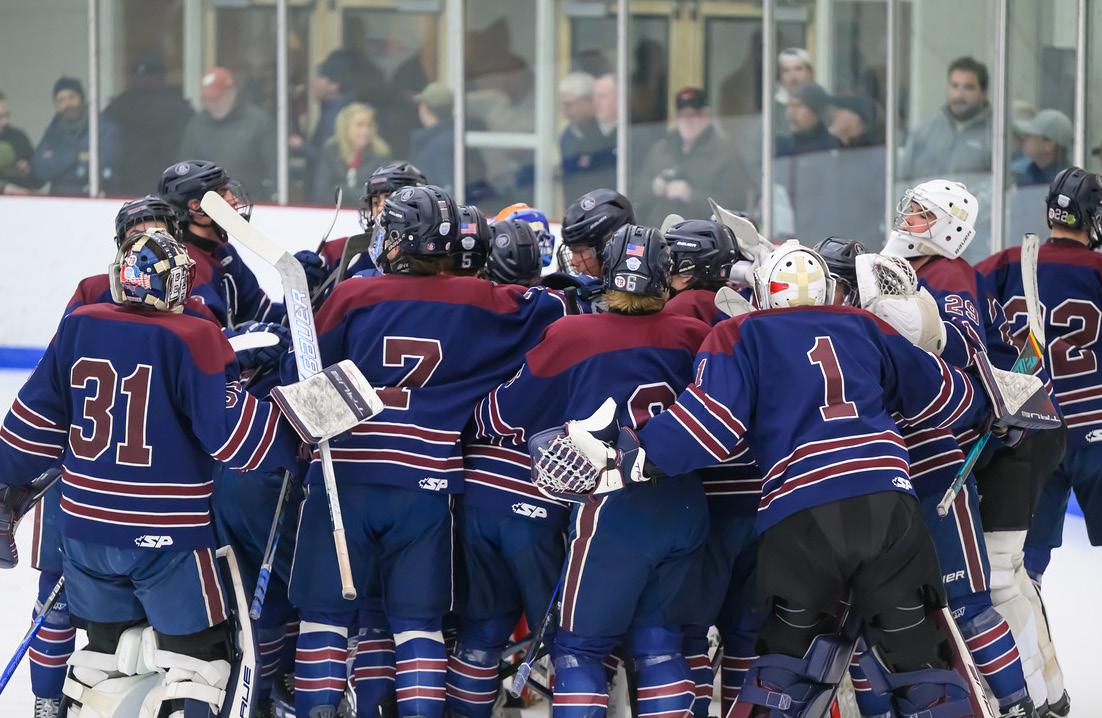
ings and outcomes, the team worked to improve each day.” The lessons and practice the team gained from its trip to Lawrenceville for the annual tournament were indispensable, even if the
team did not achieve the desired results. Following that tournament and after returning to school, the team went on a tear. With victories over high-ranked teams, Govs, in mid-January, followed
by a dominant 3-1 win over St. Mark's in late January, and finishing with a 4-2 win over Tabor, Belmont Hill was starting to make its way up the rankings. Making the Elite 8 tournament was the team's final goal. After two back-toback losses to Sebs and a nail-biter 3-2 game to Thayer, the boys knew that they needed to finish strong to make it into the tournament - and they did exactly that with key victories against Milton and Tabor, culminating in beating Westminster for the first time in several years. Belmont Hill finished 7th and earned a spot in the Elite 8 tournament. Alas, in the first round, held at #2 St. Mark’s rink, the boys unfortunately lost and were eliminated from the tournament. Despite this unfortunate loss, looking back on the season, the team completely outperformed expectations and with such young talent, can look forward to a strong future - and maybe winning it all next year. The Panel would like to congratulate the varsity hockey team on another successful season! ☐
Athletic Awards Trophies
BH Communications
BH Hockey 2025-2026
Adam Richins Photography



The Prestigous PBEOYAs (Panel Backpage End-OfYear-Awards) HAVE RETURNED
THIS YEAR’S CATEGORIES
Rookie of the Year (student)
BETTING ODDS FOR NOMINEES (Place a bet in your mind, if you win, find Mr. DeCaprio and tell him. He will pay you)
Mark Mattaliano (+250), Dylan Farrell (+450), Will Dee (+750), Nicholas MacCormack (+5000) Rookie of the Year (teacher)
Mr. Kendall (-150), Mr. Pitcher (+200), Mr. DeCaprio (+350), Mr. Palandjian (+500) William of the Year Will Butler (+125), Mr. Speer (+350), William Ferrari (+500), William Skordos (+650), William Cashel (+1200) Jack of the Year Jack Tarbox (-250), Jack Bartlett (+200), Jack Dragoumanos (+650), Jack Ramanathan (+850), Jack(son) Hurd (+1200) Name of the Year Chinweikem (Kem-Kem) Anyanwu (-100), Weston Wild (+150), Michael Zapach (+250), Tyler Smith (+650), Facial Hair of the Year Mr. Tahan (-5000), Charlie Largess (+800), Mr. Harvey (+1200), Mr. Fulham (+1500) Ginger of the Year Cameron Kelley (+250), Jack Creedon (+250), Mackie Grant (+600), Bradford Adams (+1000) Middle Schooler of the Year
Mr. DeCaprio (+150), Enzo LaLiberte (+400), Cian Emmert (+750), Will Dee (+1000) Upper Schooler of the Year Jack Dragoumanos (+250), Adonai Samuel (+450), Giacomo Turco (+10000000000000000000) Teacher of the Year Mr. LaLiberte (-150), Brother P. (+250), Mr. Bracken (+650), Ms. Wallace (+1000) MVP Grant Hanser (+300), Jeffrey Cardichon (+450), Gill Clinton (+750), Mr. LaLiberte (+1000)