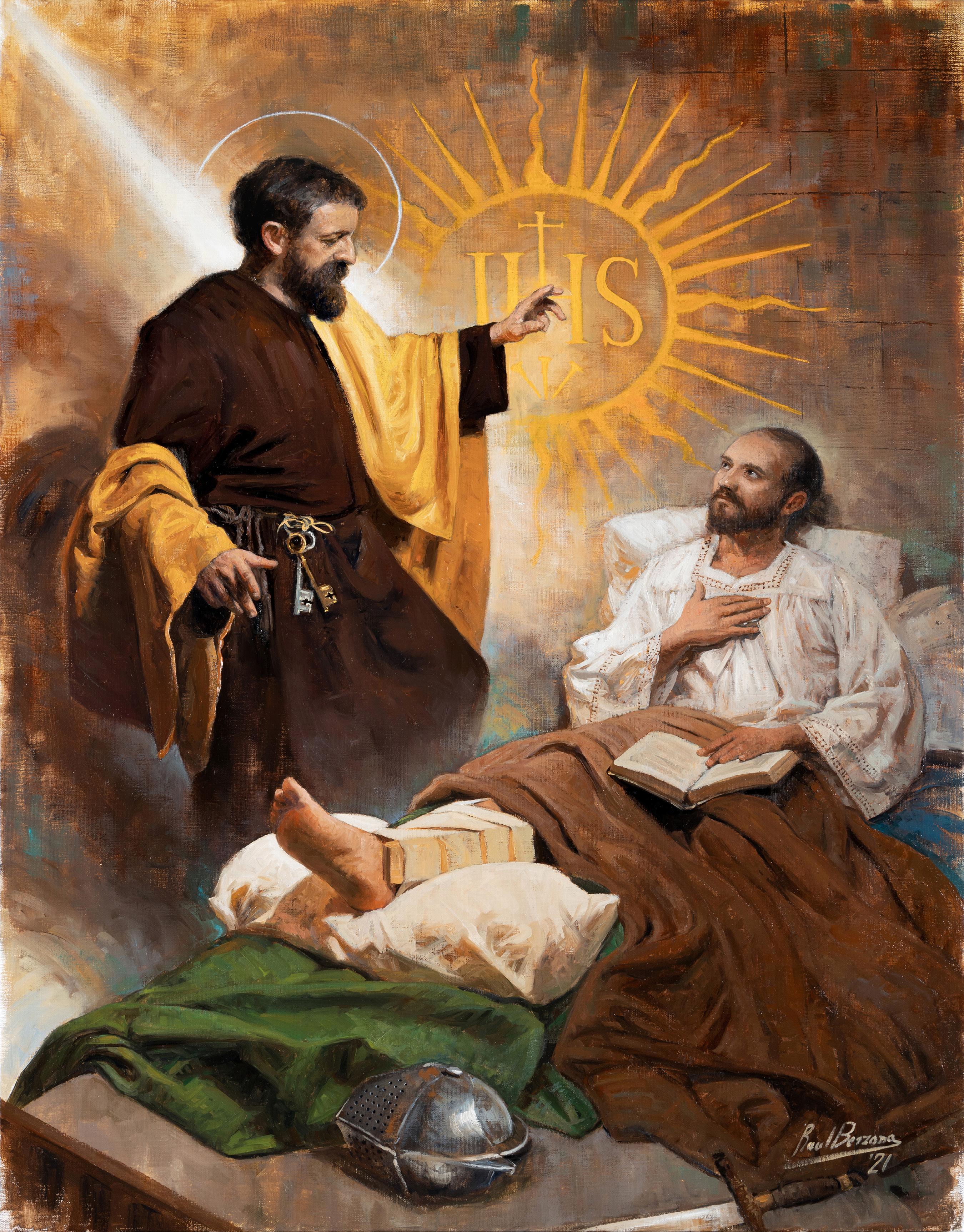
Ignatian Year:
From Wounded Soldier To Pilgrim Page 16

Ignatian Year:
From Wounded Soldier To Pilgrim Page 16
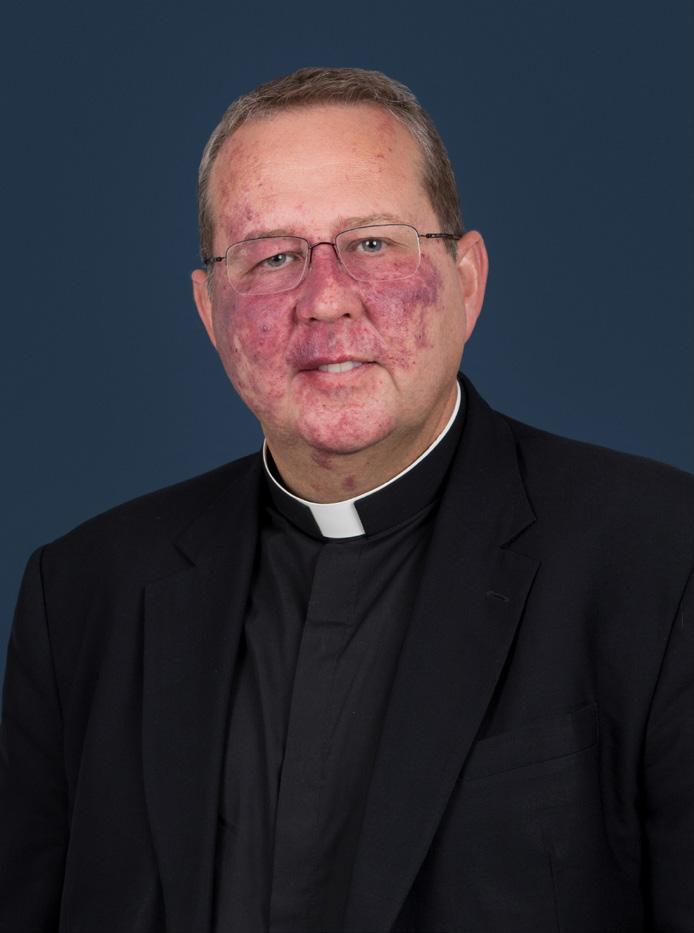
The 500th anniversary of the conversion of St. Ignatius of Loyola has provided us with a great opportunity. Celebrating the moment the founder of the Society of Jesus was seriously injured by a cannonball may seem a bit strange to some, but for those of us who know the whole story and have been impacted directly by its consequence, it is a great reason for rejoicing and thanksgiving.
When thinking about the theme for this academic year, I was moved to remain faithful to the theme of the already proclaimed Ignatian year: “To see all things new in Christ.”
This is the heart of Ignatius’s conversion story and one that set the road map for the rest of his life. There was not anything he did, not a letter he wrote, not a sermon he preached that did not have this call to newness in Christ at its center. Seeing both the good and the bad from the perspective of Jesus Christ empowered him to accomplish extraordinary things and eventually transform the world.
The purpose of this Ignatian year is not simply to honor the past. Its purpose is to set the standard for the future. It is an encouragement to convert, to change our hearts and our minds, and have them firmly rooted in Jesus Christ. It must set the tone for every decision we make. Whether those decisions affect only us or affect others, they must all pass through a process of discernment that holds the values of Jesus as revealed to us in the scriptures as its guide. We are encouraged to see all things with the eyes of Christ.
Belen Jesuit strives to do exactly this. Both in moments that provide us great consolation and success and those that are oftentimes painful and difficult, all of them must meet this standard. This too must be the attitude that determines our strategic vision, curriculum, athletic program, and all extracurricular activities. Teachers, coaches, staff, and administrators should evaluate constantly their roles and fields to assure that the eyes of Christ are the ones we use to move in the direction in which Belen Jesuit is called to move in.
This is no easy task. We are often led astray with thoughts of grandeur and success that find their roots in the pride that can steer us in the wrong direction. It is easy to be deceived. But, the good thing is that there is always the possibility of making amends and turning around. Conversion is a powerful thing and we are all called to it constantly if we are truly going to be the kind of community that God calls us to be.
As we pause this year to celebrate the 60th anniversary of Belen Jesuit in Miami, we also take the opportunity to evaluate what we have done and hold it up to the light. We are afforded the opportunity to feel deep satisfaction and gratitude for being able to maneuver through the ups and downs of an ever-changing world to establish the Belen Jesuit we are so very proud of today. But, it doesn’t end there. We now look toward the future. We look toward the next 60 years and what we can still do in order to make things even better.
It is in this spirit of great excitement that I thank all the many individuals who throughout our time in Miami have made Belen Jesuit possible. All of you have been relentless in your support for our school. We encourage those who may be new to the community to also buy into this extraordinary vision and mission. Just as our past has been bright, our future is even brighter. Join us as we strengthen our vision to see all of it through the eyes of Jesus Christ.
Auspice Maria,

Fr. Willie ’87
Fr. Guillermo M. García-Tuñón, S.J., Ed.D., ’87
President
Roberto Borbolla ’56 Alumni Content Editor
Carlos Bravo ’86
Teresita Pérez Communications Specialist
Felipe "Phil" Fernández ’94 Executive Director of Advancement and Alumni Relations
Teresa Martínez Director of Communications
Mirna Menéndez Copy
Crescencio Ruiz ’76 - President
José López-Varela ’87 - Vice President
Eduardo “Eddie” Macías ’02 - Secretary
Thomas Pla ’00 - Treasurer
Ramón Branger ’92
Vicente Cossío ’72
Alberto Gutiérrez ’88
Juan Luis Flores ’70
Carlos Hernández ’88
Javier Mariscal ’86
Peter Montadas ’76
Alberto Paradela ’11
Orlando Puente ’71
Francisco “Paco” Ruiz ’73
Fr. Juan Manuel Dorta-Duque, S.J., ’40 + Emeritus Spiritual Director
Fr. Christian Sáenz, S.J., Ph.D., ’95 Alumni Association Chaplain




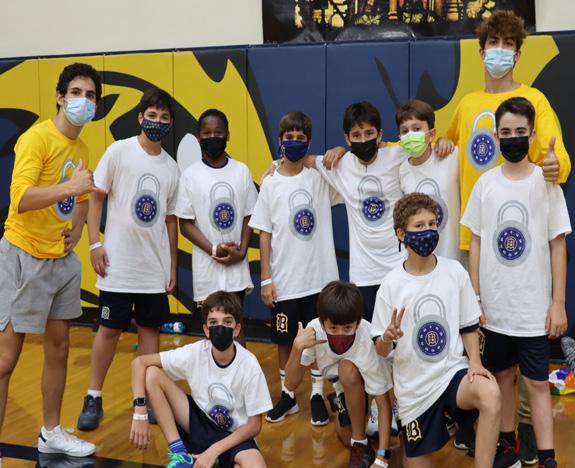
The class of 2028 took part in the annual Sixth Grade Lock-In on September 11. This event is an exciting and memorable tradition for the youngest Wolverines in the Belen community.
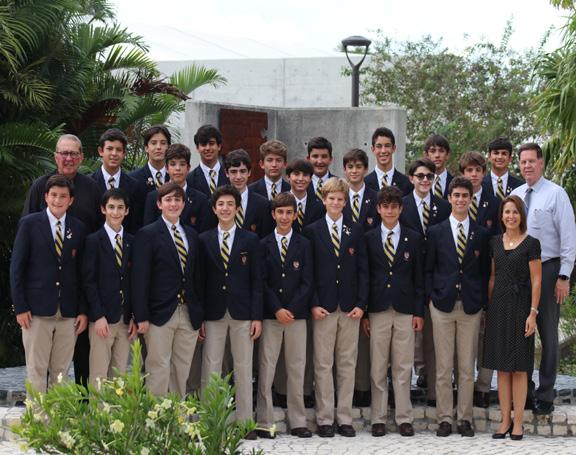
Congratulations to the students who received the Benjamin Matza Award at the Middle School Academic Awards Ceremony on September 20. This is the highest Academic Award given in Middle School. The recipients earned straight A’s every semester of all 3 years of Middle School at Belen Jesuit.
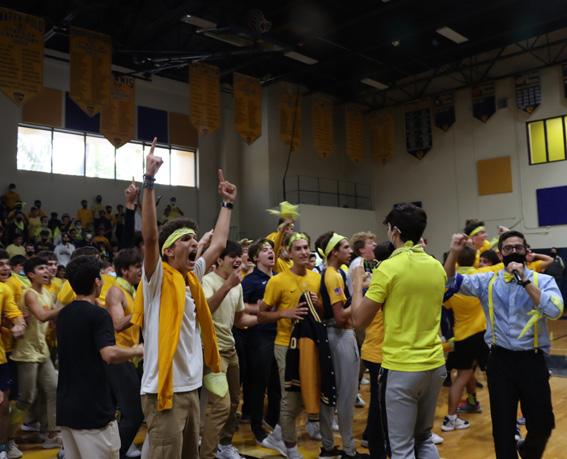
The first-ever WOLVERINE RUN was held on October 19 for the middle school and October 20 for the high school. This new Homecoming Week event pinned the Blue vs Gold teams against one another. The sections competed in 19 activities/ 13 stations across the campus.
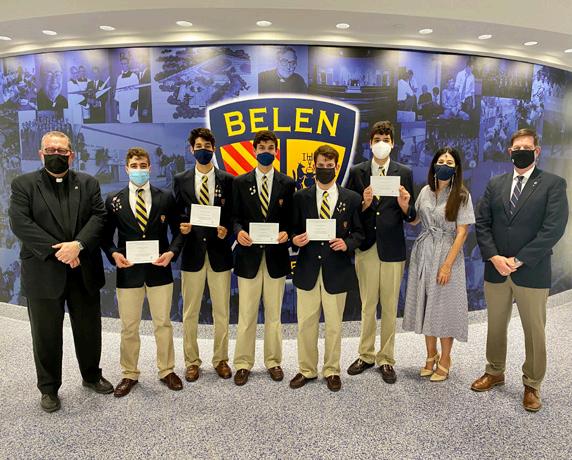
Seventeen seniors have been named Commended Scholars by the National Merit Scholarship Corporation (NMSC) of which five have advanced in the competition. Congratulations to the following members of the class of 2022 who were named Semifinalists: Alfredo Huete, Matías Gandarias, David González, Gabriel Suárez, and John Bohatch.
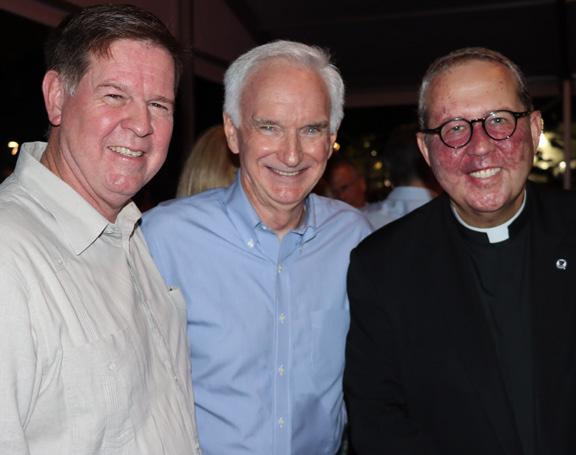
On September 25 longtime Belen Jesuit social studies teacher Pat Collins was celebrated for his over 50 years of teaching at Belen! The event was attended by alumni spanning all five decades of Mr. Collins’ tenure at Belen and his family and friends.
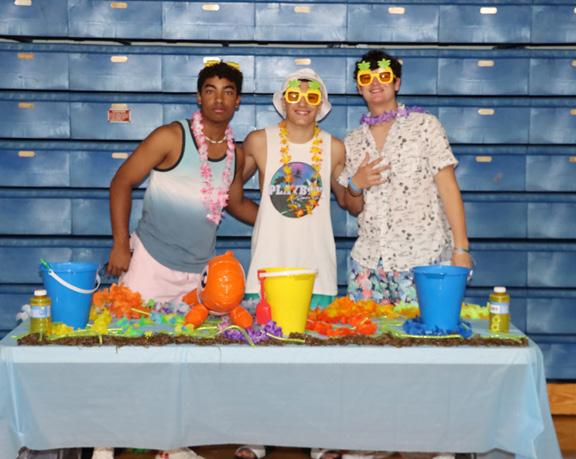
The rain didn’t put a damper on the special event planned by the class of 2023. Students led a Trunk or Treat event for students with special needs from area schools on October 22. Students visited Belen to trick or treat in stations set up around the campus which were decorated with different themes.
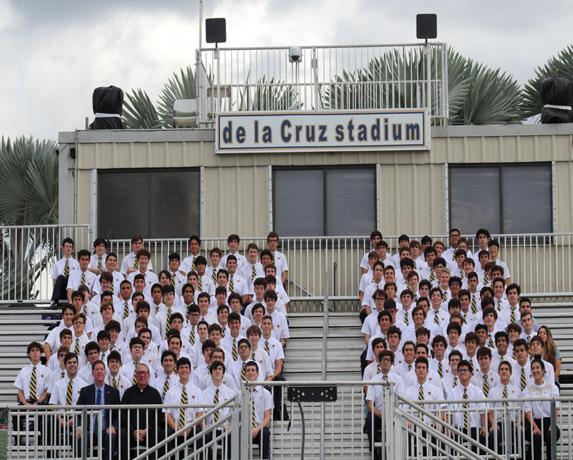
Congratulations to the 170 students who have been named Scholars by The College Board in at least one of the recognition programs: National African American Recognition Program, National Indigenous Recognition Program, and the National Hispanic Recognition Program.
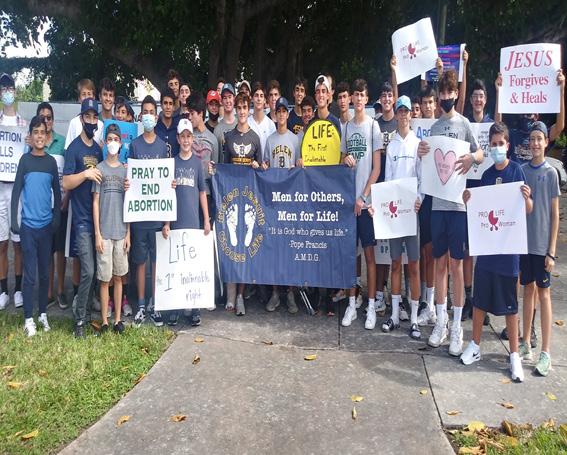
In honor of Respect Life Sunday our students joined hundreds of people from around the Archdiocese of Miami at the annual LifeChain on October 3. On October 30, the 6th annual National Pro Vida Congress awarded the club one of 5 pro-life awards for their witness and example through all the social media attacks endured as a result of participating in the Life Chain.
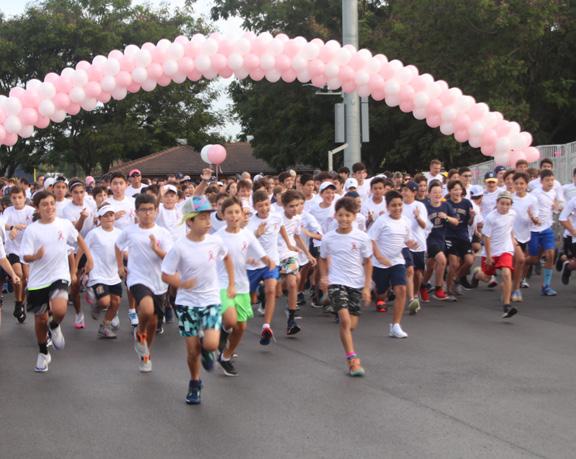
Over 550 people registered for the annual walk/run event which took place around campus on October 23. The two-mile family-friendly course raised awareness for breast cancer. The net proceeds from the campaign will benefit our partner, Baptist Health South Florida.
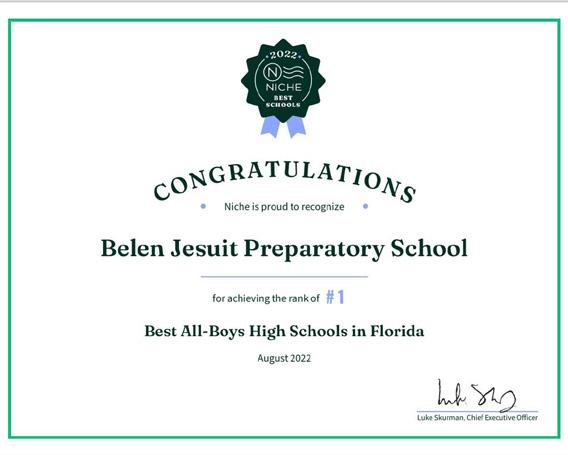
On September 20, Niche released their latest school rankings and ranked Belen Jesuit the #1 Best All-Boys High School in Florida and #2 Best Catholic High School in Florida. Another notable mention for Belen: ranked #6 Best High School for Athletes in Florida out of 1,198 schools!
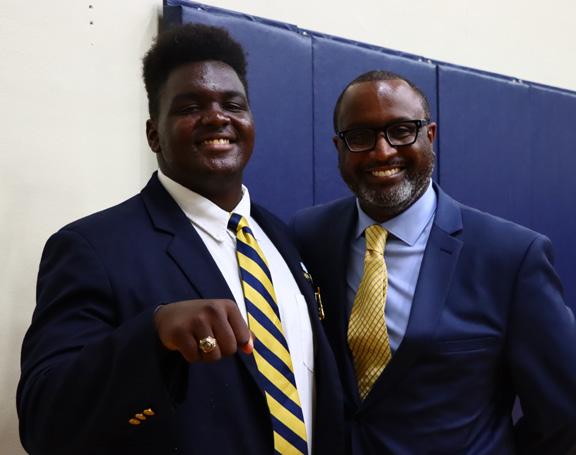
The senior class received their class ring during the Eucharistic Celebration on October 12 in the Roberto C. Goizueta Innovation Center. Fr. Willie, S.J. was the main celebrant.
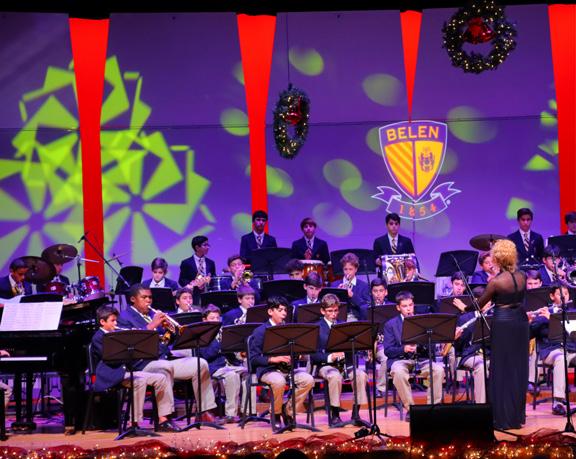
The Roca Theater was filled with festive cheer as the Belen bands took to the stage to perform at the annual Christmas concert to a sold-out show on December 3.

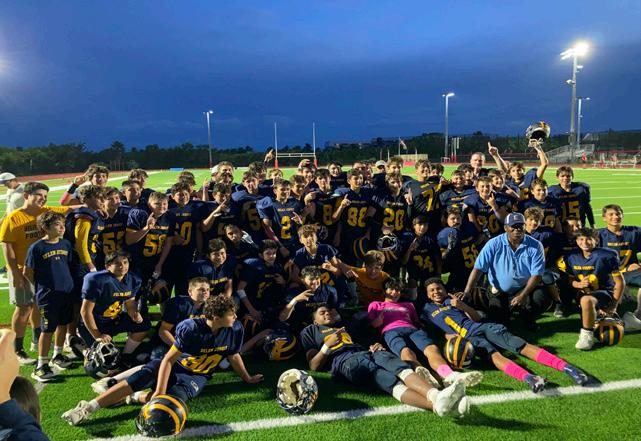
The Varsity Football team finished its season 7-3. The Junior Varsity Football team finished their season 3-3-1.
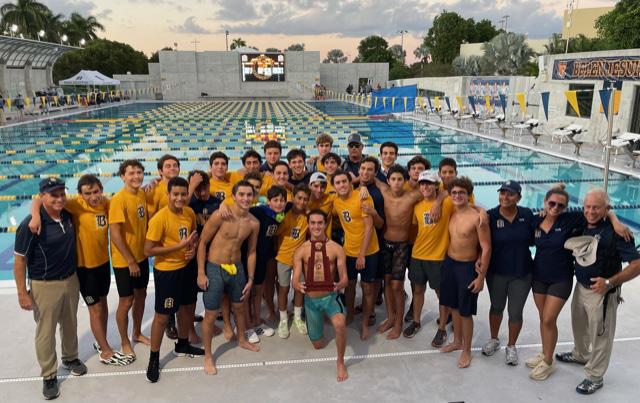
The Varsity Swimming team finished its season 3A-11 District Champions and 3A-4 Regional Runner-Ups. The team came in 21st place at the State Championship.
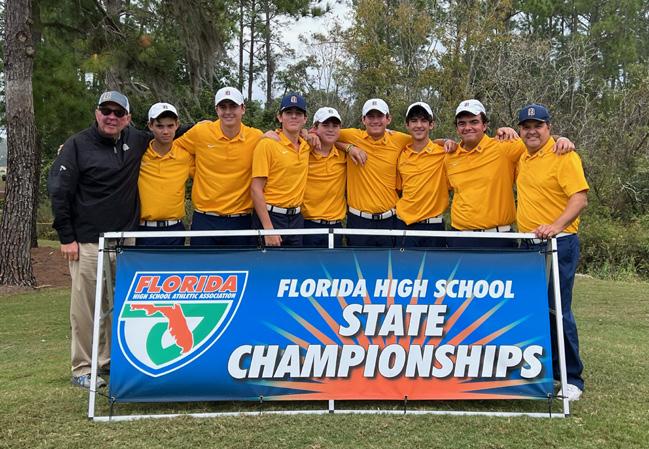
The Varsity Golf team finished its season 5-0 and District Runner-Ups. The team finished in 3rd place at the Regional Championship and 7th place at the State Championship.
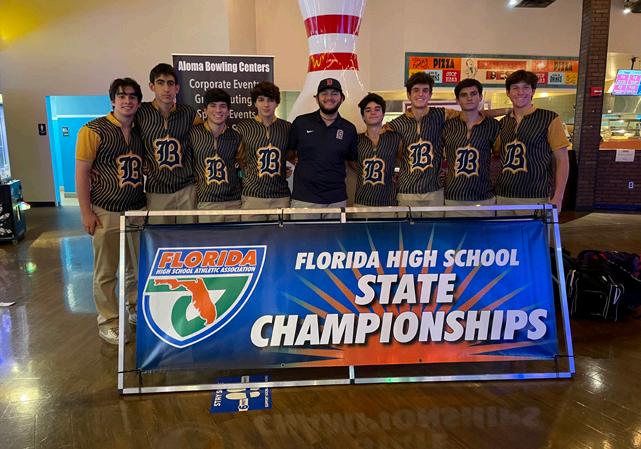
The Varsity Bowling team finished its season 9-2 as District Runner Up in Class 1A. The team also finished 28th in the State Championship.

The Varsity Cross Country team captured its fifth consecutive State Title after successfully winning the district and regional championships. The win also gives Head Coach Frankie Ruiz ’96 his 12th State Championship; the school’s 13th. Joshua Ruiz ’24 came in second place individually. Adam Magoulas ’22 set a new school record for the 5K with a time of 14:57.62.
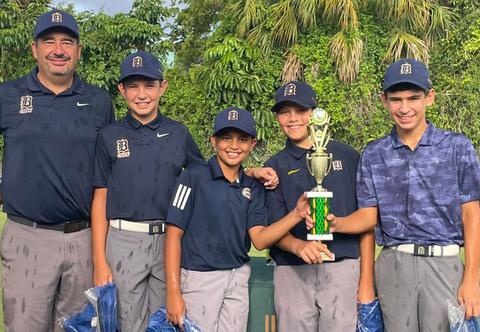
The Middle School Golf team went undefeated winning 9 tournaments. The team ended its season by winning the Wolverine

The Middle School Cross Country team won the program’s sixth FLYRA State Championship. Marcelo Mantecón ’27 took first place and Armando Cruz ’27 came in second at the meet. Marcelo also set a new school record for the 3k with a time of 10:00.30
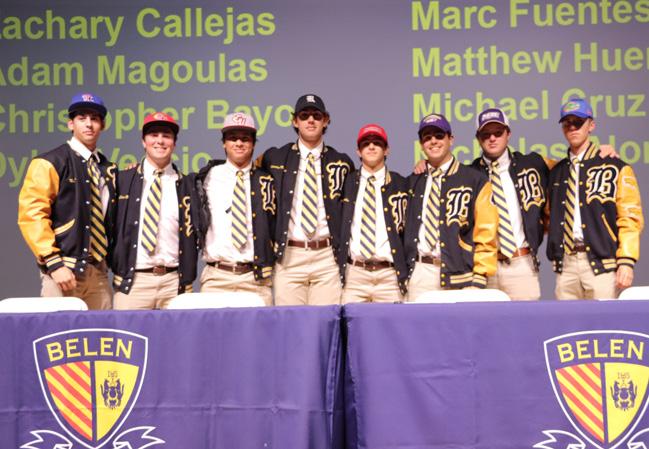
Eight student-athletes committed to play their respective sport at the collegiate level during a ceremony on November 18th in the Belen Jesuit Roca Theater. Baseball, Cross Country, and Water Polo athletes happily signed on the “dotted” line, looking forward to an exciting future.
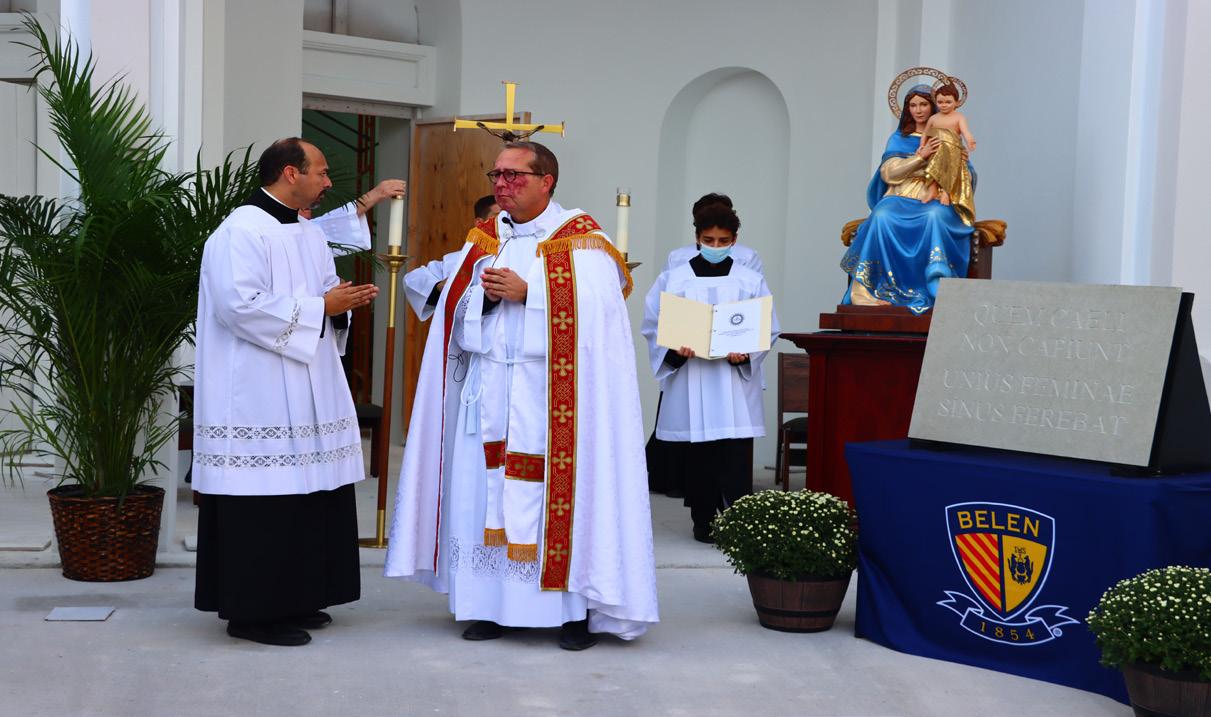
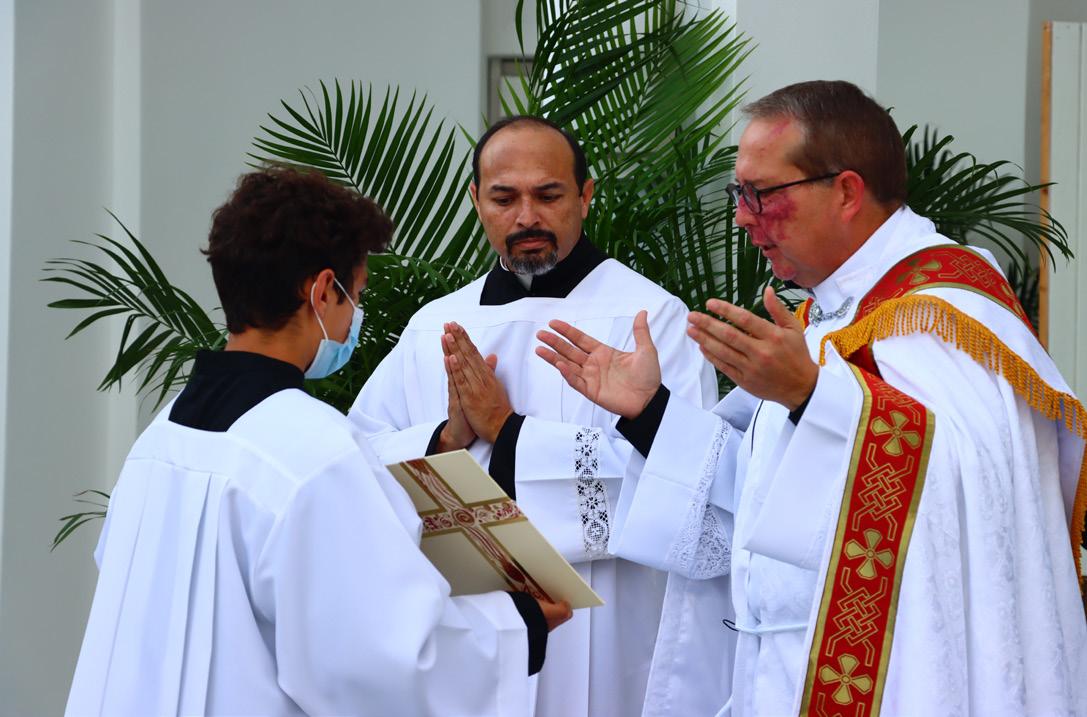
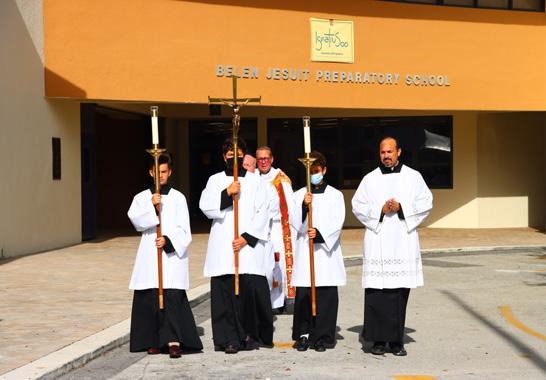
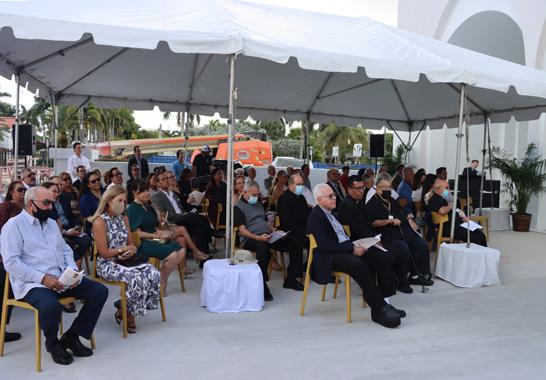
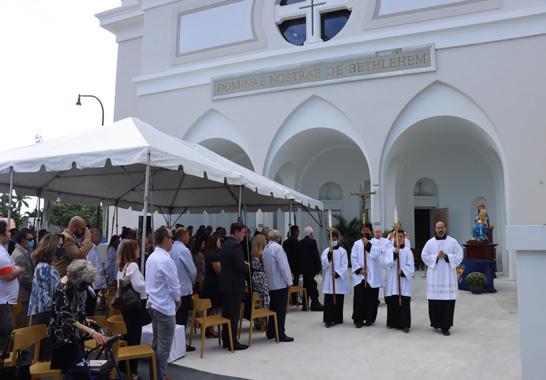
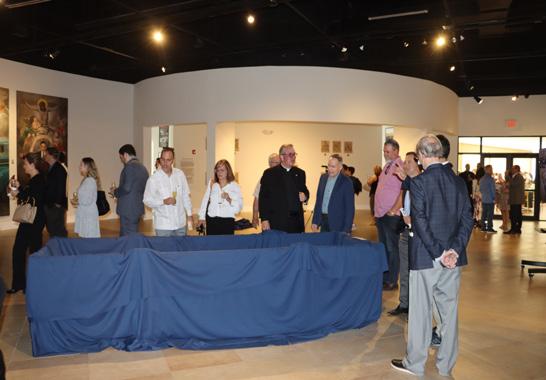
In a beautiful ceremony that began with a procession from the main entrance of the school to the entrance of the Our Lady of Belen Chapel, the cornerstone was blessed by school president Fr. Willie, S.J. ’87 on October 30. School chaplain Fr. Sáenz, S.J. ’95 concelebrated.
“One of the most significant aspects of Belen Jesuit Preparatory School is our Catholic-Jesuit identity,” said Fr. Willie. “It is unequivocally who we are and what we strive our students to become: good Catholic-Jesuit men of faith who will actively contribute to the community. As such, it is without a doubt that the most significant construction project in Belen’s history in Miami is the Our Lady of Belen Chapel.”
This special ritual is a significant moment in the building of any sacred structure. In a church/chapel, the cornerstone is important not only because of its purpose as the stone that must be set correctly in order for the structure to be built properly, but because of the symbolic nature of that stone in relation to the Risen Christ.
During the rite, the masons installed the cornerstone after Fr. Willie blessed it. The inscription on the stone reads, QUEM CAELI NON CAPIUNT, UNIUS FEMINAE SINUS FEREBAT. The translation is: HE WHOM THE HEAVENS COULD NOT CONTAIN, WAS CONTAINED IN THE WOMB OF A WOMAN and is taken from a Christmas sermon by St. Augustine.
The cornerstone is fundamental to the construction of a stable building. It is used metaphorically to refer to a key person or figure, namely the Messiah. In the gospel, Jesus uses Psalm 118 to declare himself the foundation stone for a new temple, “The stone that the builders rejected has become the chief cornerstone” (v.22).








NOVEMBER 6, 2021



P l a
By:Tomás Duque
’22
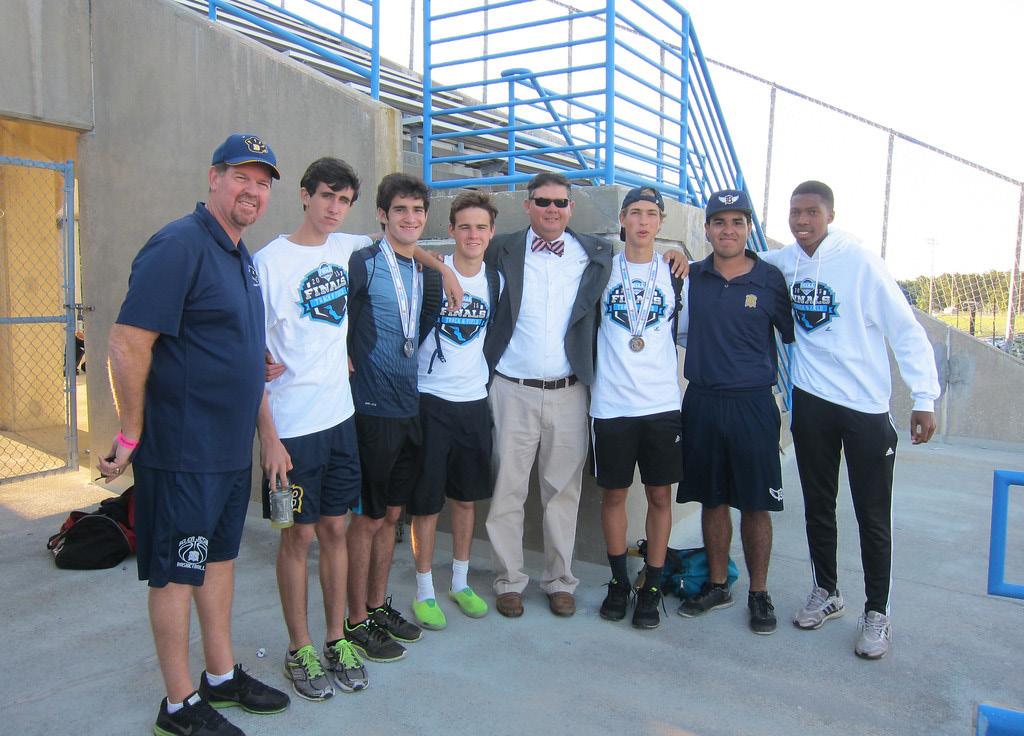
On his first day of class at Belen, Víctor Arrieta ’95 walked into school with his green backpack strapped on his shoulders. Three years later, he wore the same backpack on his first day working at his Alma Mater.
Born in Brazil and visiting the United States often, Víctor decided he wanted to move to Miami, Florida. At fourteen years old, he departed from his home country with a one-way ticket. Once settled in Miami, he enrolled at Belen for tenth grade. He ran cross country and track, qualifying for the regional championship race for the hurdles.
With his Belen Jesuit experience behind him, Víctor
a ’ 9 5
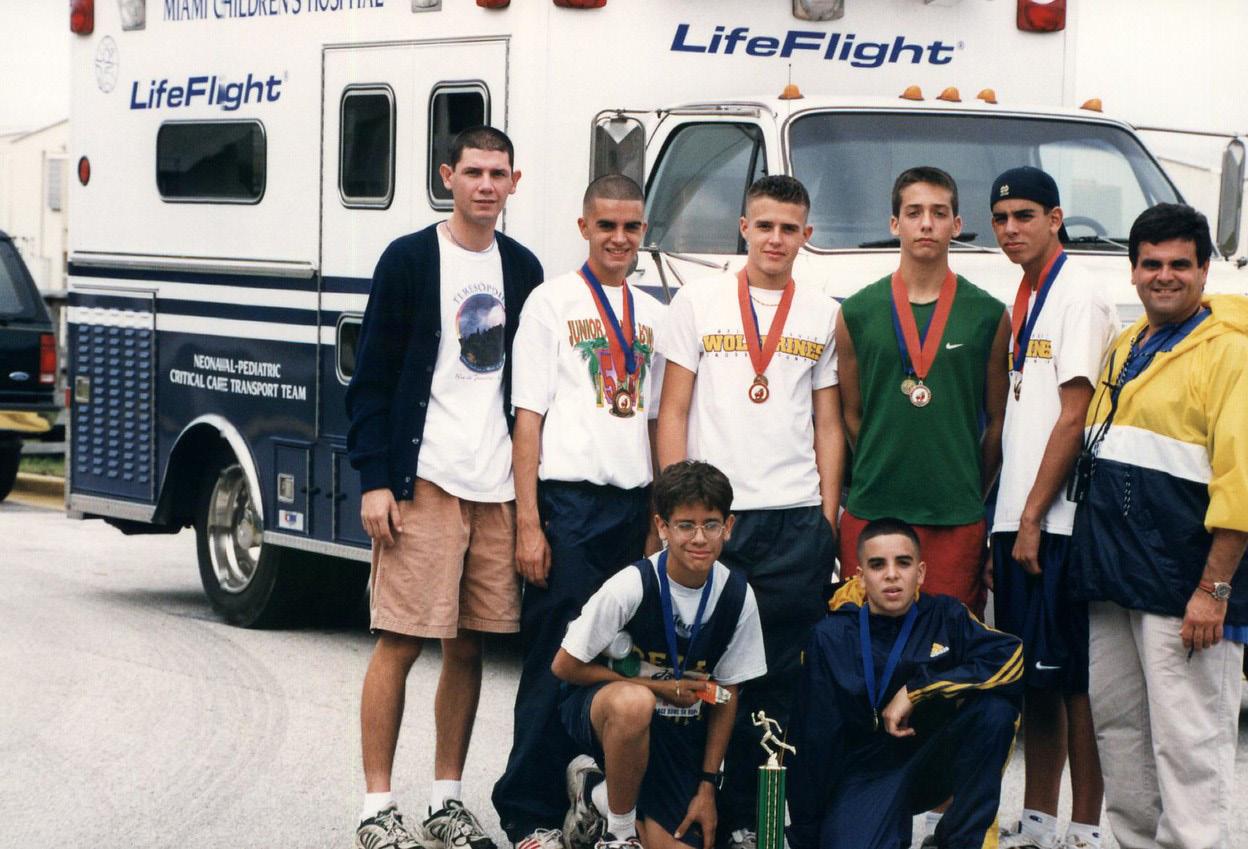

decided he wanted to give back and began to help out coaching the sixth-grade cross country team. With continued success, he was promoted to become the coach for middle school. He says, “I like coaching middle school because I get to train the runners that grow up to contribute to the high school team.” Without Víctor’s dedication to the job, the middle and high school programs would not see as much success as they do.
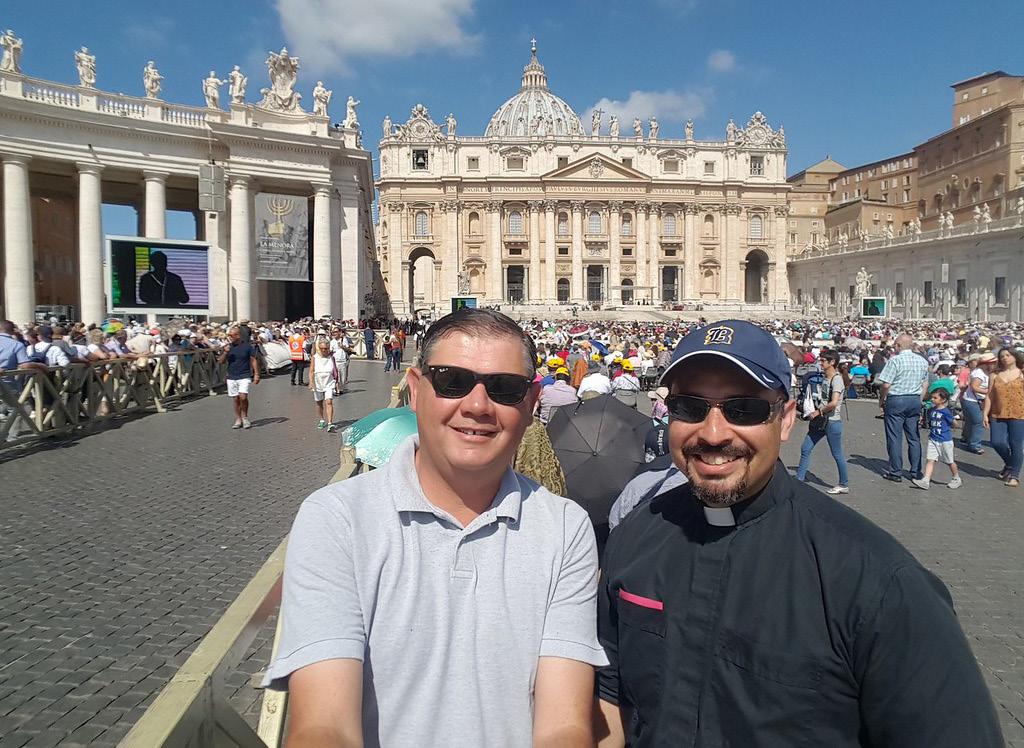
Working at Belen has given him the opportunity to connect with alumni that work at the school and build relationships with many students, the future alumni. For example, Víctor was good friends with Fr. Christian Sáenz, S.J. ’95 during high school and continues to be to this day. He has also made good friendships with
students that have become co-workers as they join the faculty. Carlos Jiménez ’15 would help Victor coach the track team while he was in school; now, though they work in different departments, Jiménez is steadfast in his commitment to aid Víctor in coaching.
For a time, Víctor could have been found in the classroom, teaching freshman PE and Health classes. Though teaching took some getting used to, he enjoyed forming relationships with his students and getting to know them on a personal level. Currently, he is the Assistant to the Athletic Director. In this position, he works with coaches from the entire athletic department, who have become good friends of his. Along with the coaching staff, Arrieta is excited to move into the new athletic building, knowing the facilities that await his runners and all of the school teams.
Debatably Víctor’s most important commitment on campus is being the head high school track and field coach. In contrast to other sports, track and field allows him to enjoy a variety of events which, “create a potpourri of athletes from the school: jumpers, throwers, runners.” He enjoyed coaching last year’s team and looks forward to the coming season. As one of his cross country
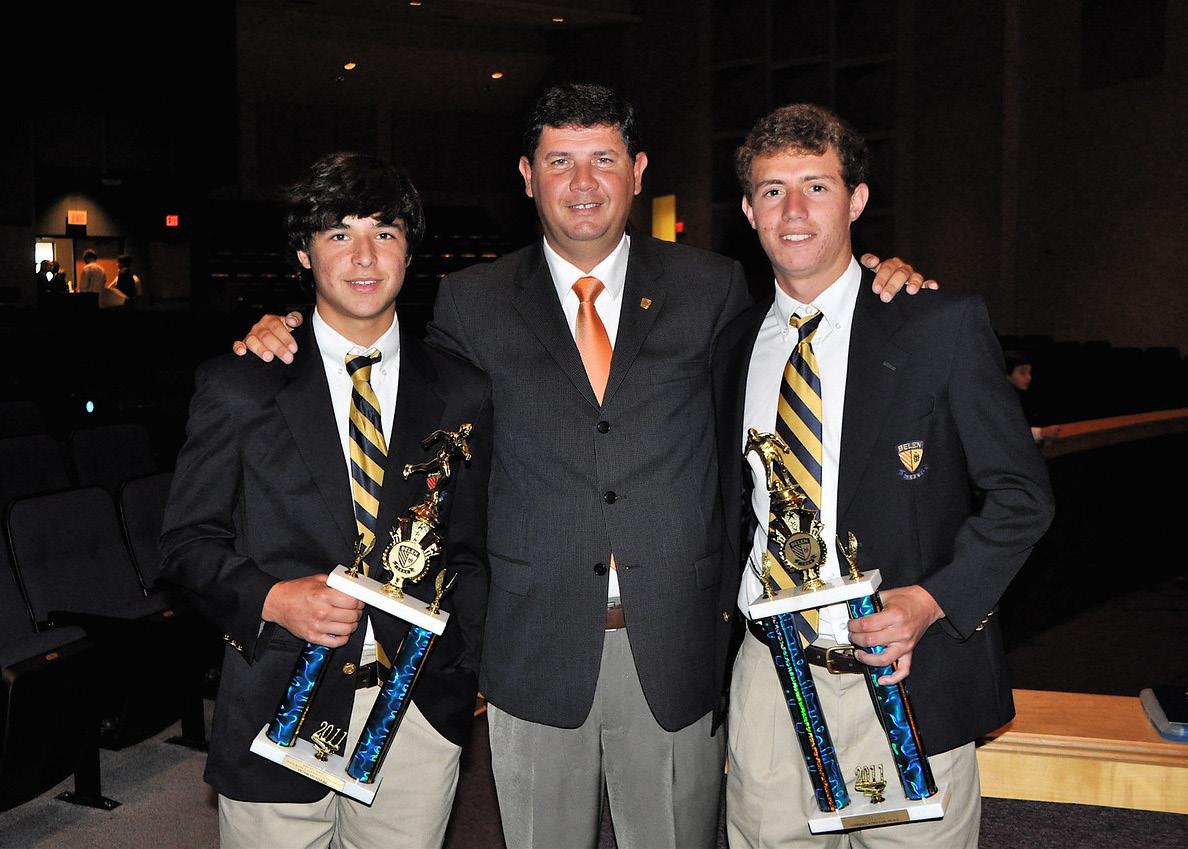
runners in middle school and track runners in high school, I have realized that the spirit in his coaching style is unmatched. While other coaches strive to see good athletic results in their athletes, Víctor pushes his athletes to be respectful men for others in addition to pursuing physical excellence.
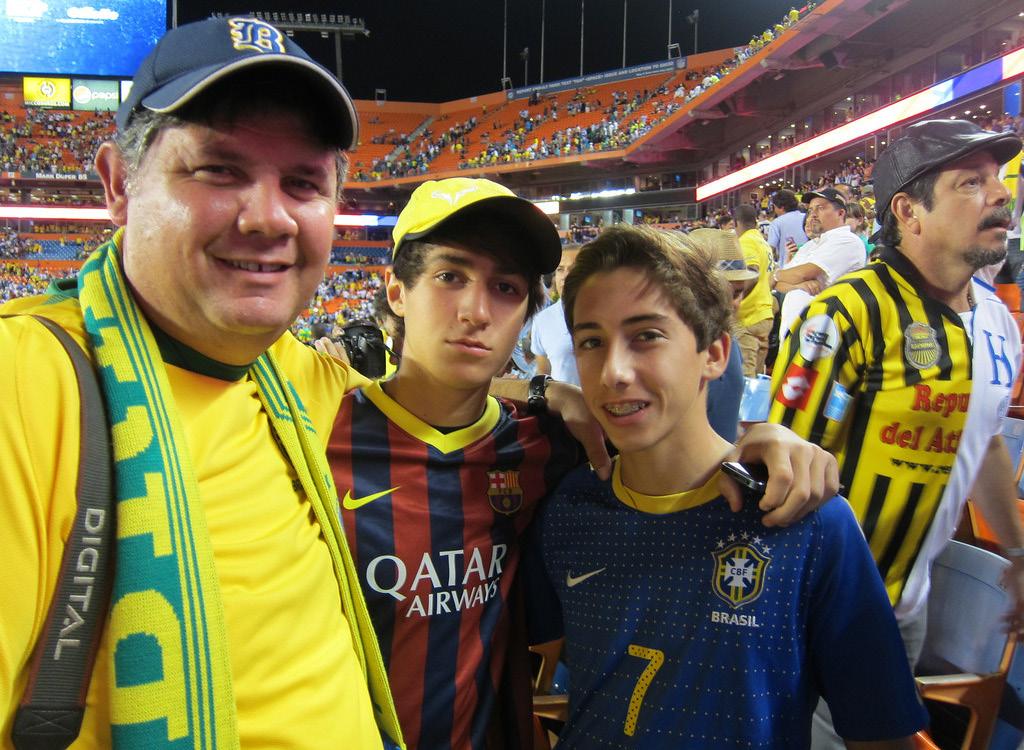
In addition to coaching, Víctor connects with studentathletes at Belen in a different way. He does this through his lens. In 1998, when Arrieta hosted his first sports banquet, he realized that he didn’t have enough pictures of every sport. The solution was simple: take the pictures himself. Since then, he has taken pictures documenting the games and competitions of most sports, including soccer, basketball, football, swimming, running, and more. By consistently attending games, Víctor builds relationships with teams and their players.
It is evident that Víctor works at his alma mater because of the values he instills in his athletes. His Belen education was part of what shaped him into the respectful, kindhearted, and diligent coach he has become. And now, he is helping form the same, new generation of men for others.




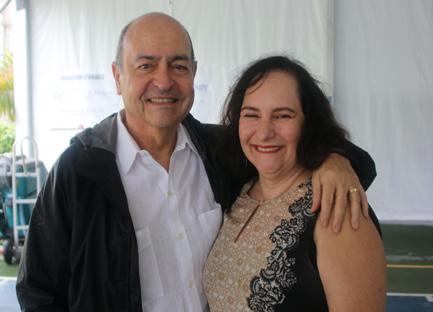
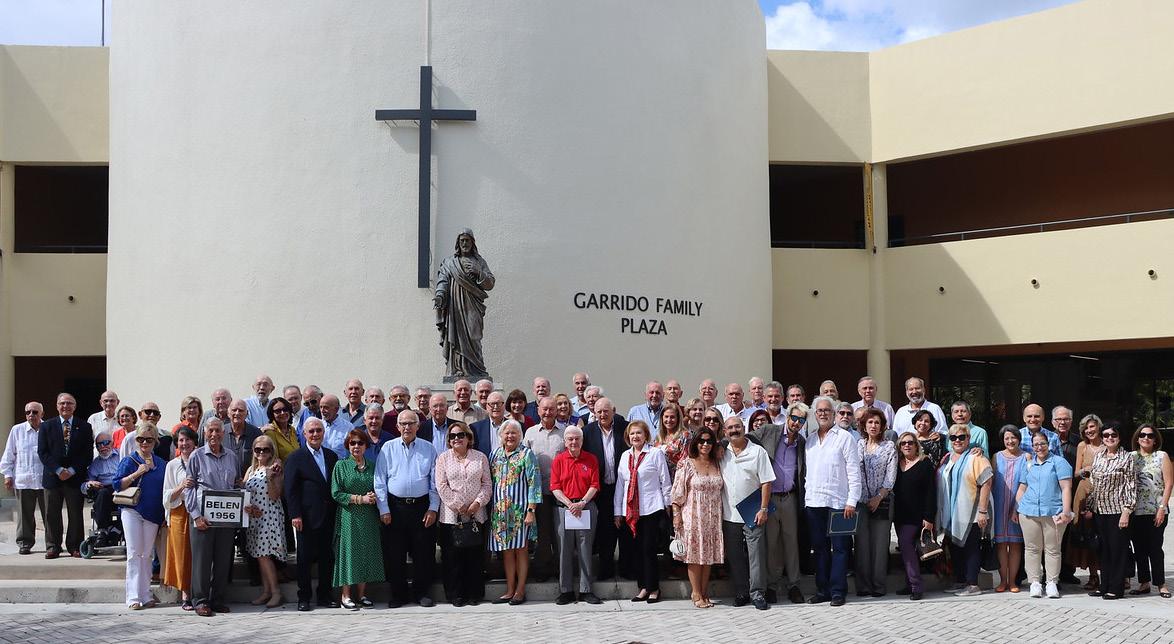
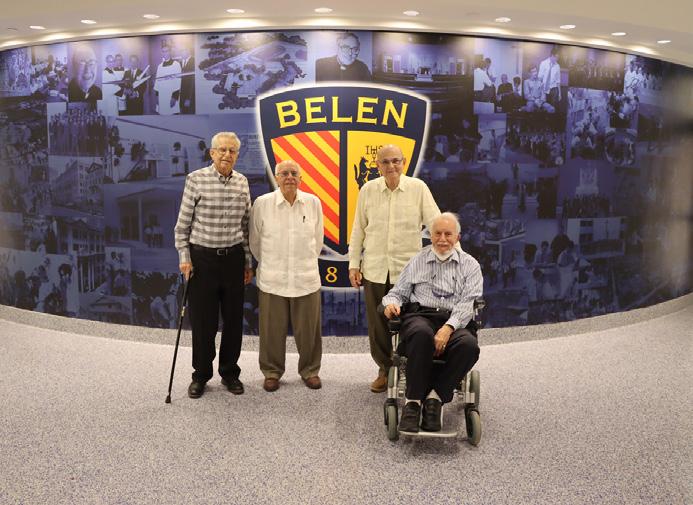
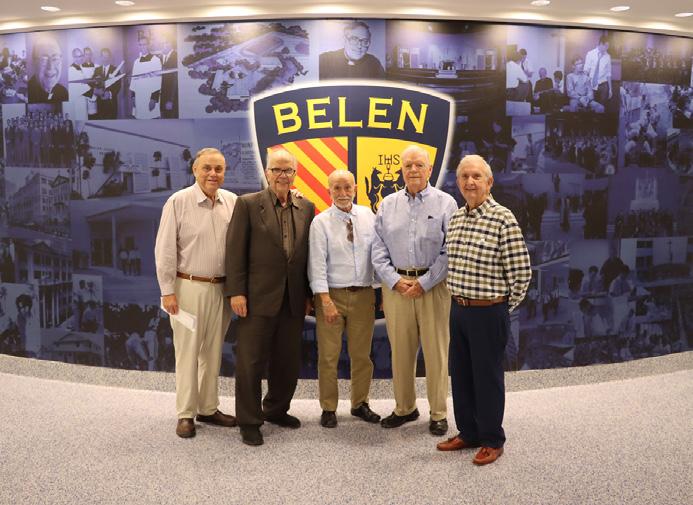
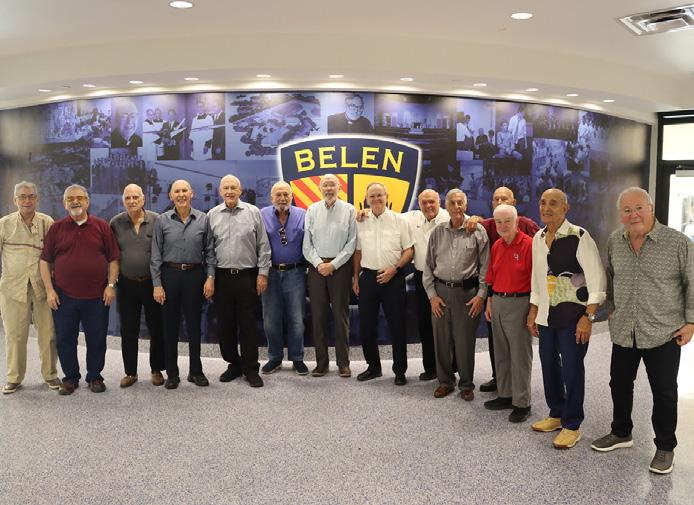
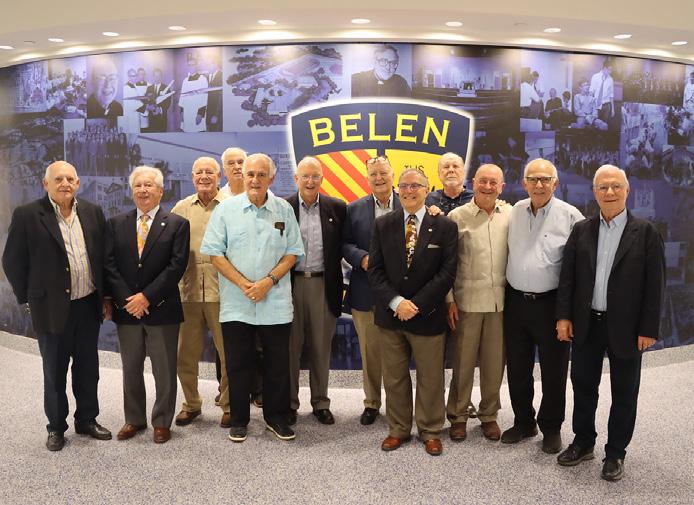
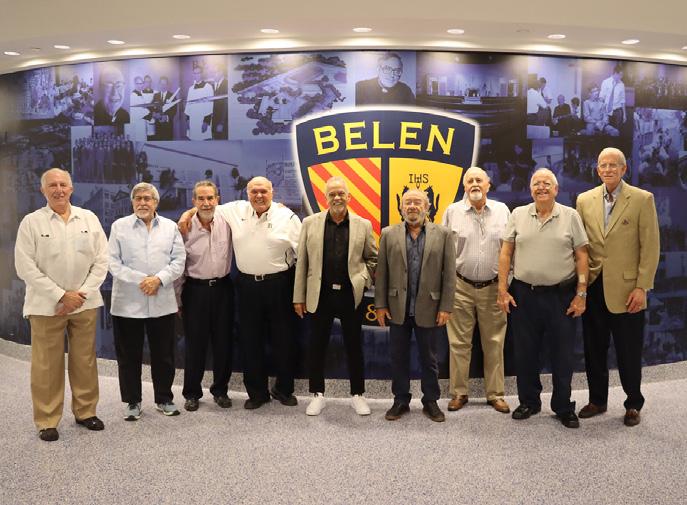
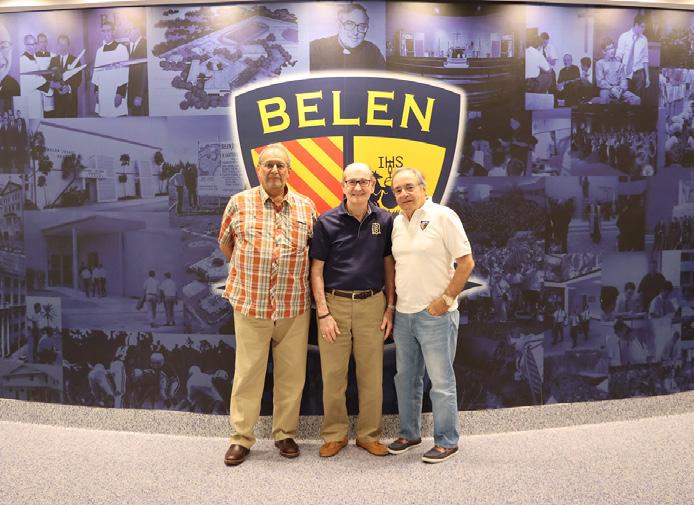
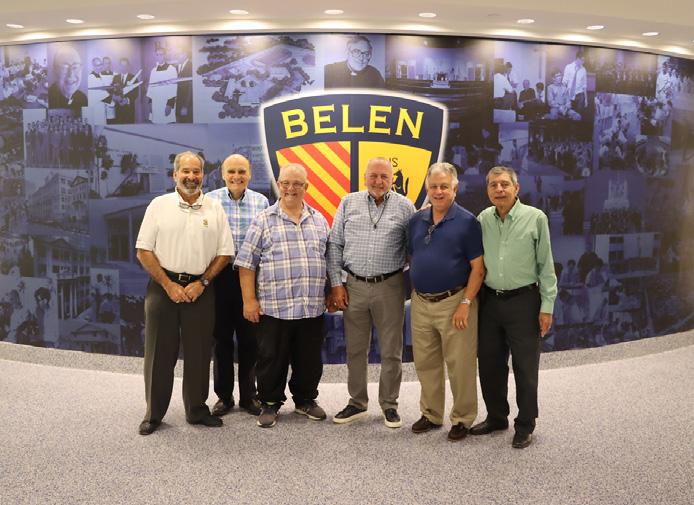
Honoring the classes celebrating their 50+ years of graduating from Belen.
’50, ’55 ’56, ’60, ’61 ’65, ’66, ’71
Andres F. Jiménez ’87
The world needs good entrepreneurs. The world needs entrepreneurs that value the dignity of the person along with achieving profitability, that live to serve others and create value in the world, and that create things that are true, good, and beautiful. The world needs Catholic entrepreneurial leaders that create human value and spread goodness through their ventures.
The new Belen Catholic Entrepreneurship Program seeks to build principled Catholic men that innovate, dream big and engage others with an empathic loving attitude in the service of their community. The program will begin next academic year (20222023) and will have its own dedicated classroom located on the second floor of the main school building. The ideals of Catholic social doctrine, developed over centuries, will form the base of the moral philosophy that will guide those emerging from the program. The multi-layered structure includes a curriculum that gives the Belen entrepreneur the knowledge of business needed to function in today’s changing world.
The courses include several dual enrollment courses in partnership with FIU and a final dual enrollment course with The Catholic University of America. This final course will serve as the pinnacle of the program, guiding the student into an introspective journey to discovering their place in the world and what they want to do in the world. When they are done, they will have a multi-year plan for a business of their choosing.
Outside the classroom, the new entrepreneur will have the chance to challenge himself with a variety of competitions, all while guided by experienced mentors selected from Belen’s Alumni base. They will have the opportunity to learn at conferences about other Catholic entrepreneurs and engage their faith to have a true mind and soul conversion. Catholic moral philosophy and the Jesuit leadership principles will be reinforced in every class to ensure that when they meet the world they will be unwavering in their commitment to make the world a better place and improve the moral fabric of society.
The program will continue to grow and evolve adding courses, experiences, and mentors. Stay tuned!
*Students will select their courses in the winter of 2022.
• Business Experience: Middle school, hands-on/activitybased with no textbook
• Introduction to Business Concepts: 9th grade only, basic concepts, 1 semester
• Principles of Business: Dual Enrollment with FIU, 1 semester
• Introduction to Entrepreneurship: Dual Enrollment with FIU, 1 semester
CatholiC EntrEprEnEurship and dEsign ExpEriEnCE at thE CatholiC univErsity of amEriCa
Born out of the popular Catholic University of America course The Vocation of Business, the Catholic Entrepreneurship, and Design Experience (CEDE) program is a life-changing course for all high school students with the courage to dream. CEDE breaks the mold of the standard classroom experience and invites students into hands-on learning and deep introspection in a transformative environment.
This course aims to teach students entrepreneurial thought and skills in light of Catholic theology — to create a new generation of Catholics who are inspired by God to make a meaningful impact in the workplace and beyond.

• Business Statistics/Data Analytics: Fulfills Senior year math requirement
• Marketing Design: 1 semester
• Business and Personal Financial Literacy: Based on the Dave Ramsey program
• Vocation of Work: CUA/ACU Dual Enrollment, Honors level, Senior year only, full-year course

By Ricardo Méndez
As our community moves past the difficult times that have befallen us over the last year, we look to those individuals who embody the MAGIS to guide us. These individuals are leaders who understand what it means to be selfless and put the needs of others before their own. José González, an alumnus from the class of 1991, exemplifies these values to an extraordinary degree.
González came from humble beginnings. He is a firstgeneration immigrant from Cuba who arrived here with his parents when he was young. In his first year at Belen, tragedy struck his family when his father passed away. Facing financial difficulties, his future at Belen was uncertain. However, the administration was there to support his family and allowed him to continue studying at Belen Jesuit.
After Belen, his professional career began when he was still studying in college. He began working in building and zoning with Miami-Dade County, while studying political science at FIU. Balancing his job and studies, his college experience was not the traditional 4-year path. Ultimately he graduated with a Bachelor’s Degree in Political Science in 2000. He jokes that he went to school for 9 years but isn't a doctor. While he worked at the county, he met developer Armando Codina ’65, who was featured in the last issue of MAGIS. This connection led to González’s involvement in the planning and approval of Dolphin Mall.
Today, he works at Florida East Coast Industries, the legacy company of American industrialist Henry Flagler. Among his more exciting developments is the new Brightline rail system that runs from Miami to Orlando, which is changing the face of transportation in Florida. He is currently working on a rail project connecting Las Vegas to Los Angeles.
In any project or business transaction, González lives by a set of basic principles. He establishes an environment of respect and inclusion. The janitor deserves just as much respect as the CEO. When he starts a project he meets with the community it will affect, he listens to their voices and makes sure their input is acknowledged. In his personal life, he does just the same. He says, “if you can’t get it right at home, you can't get it right anywhere.” He sets an
example for his family, recognizing that you have to practice what you preach.
Belen was there for him, and now he is there for Belen, committed to helping others with the success with which he's been blessed. He gives so that those who need it, have the ability to attend regardless of their circumstances. When both of his sons began attending Belen, his bond with the school became stronger, and he became more involved. Now, he sits on the board of advisors at Belen. González has contributed his knowledge in the field to help Belen complete its Master Plan. He was pivotal in the several approvals needed for the Master Plan, from the stadium lights to the chapel.
“It's important for people to feel that they matter.”
Beyond his support for Belen, González has become very involved in helping the homeless community in Miami. He began volunteering at the Chapman Partnership years ago with his family, serving meals to the homeless. Now, although he sits on their board and contributes philanthropically to the organization, he continues to serve the homeless community. He believes you can’t just write a check because the human connection is pivotal to making a difference. “It's important for people to feel that they matter.”
Catholics who feel especially connected to St. Ignatius of Loyola honored his legacy on May 20, 2021. That day marked the 500th anniversary of an event that signaled a turning point for the 26-year-old young man. While defending the fortress of Pamplona, he suffered a serious injury from a cannonball which kept him convalescing for eight months in his family home on the outskirts of Azpeitia, Guipuzcoa, Spain.
During those months of forced idleness, the reading of the De Vita Christi (Life of Christ) written by Ludolph of Saxony, and a collection of short hagiographies by the Dominican friar Jacobus de Voragine, led him to reassess his life in the presence of God and to experience a radical conversion that would make him renounce everything to go and live in the Holy Land.
His original name was Iñigo and he began to refer to himself as “the pilgrim.” The first stage of his pilgrimage took him to the sanctuary of Montserrat and then to the town of Manresa, where he spent the rest of 1522. There he had strong mystical experiences and wrote the core of the book called The Spiritual Exercises.
The Exercises of St. Ignatius precede the foundation of the Society of Jesus. They do not belong to the Jesuits, but to all the people of God. When the definitive version was published, it was widely accepted by religious communities as diverse as the Carthusians and Dominicans, as well as by diocesan priests and lay people in general. In the Exercises, one seeks to be what God wants each one to be. In the words of its author, “Spiritual Exercises to overcome oneself, and to order one’s life, without reaching a decision through some disordered affection” (EE. 21).
During Ignatius’ years of study, he was approached by other young men with a desire for perfection and ministry. Then, in 1540, he founded the Society of Jesus with them. Around that time, the pilgrim Iñigo would definitively adopt the name of Ignatius.
Ignatius and his companions took on the task of formalizing their “band of brothers.” In particular, they wrote the Constitutions of the Society of Jesus. Ignatius would also write instructions for Jesuits on special missions. He also dictated his autobiography, which has foundational value for the Jesuits.
There are many religious institutes that live their own spiritualities. Just to mention one, there is the spirituality of the Carmelites, whose greatest representatives were St. Teresa of Jesus and St. John of the Cross.
Ignatian spirituality belongs to the Jesuits and to the laity who are in tune with the spirit of St. Ignatius.
All Catholic spirituality should be theocentric, Christocentric, Eucharistic, ecclesial, apostolic, and Marian. But, each group lives these characteristics with different nuances and emphases.
The Spiritual Exercises propose a very detailed contemplation of all the mysteries narrated in the Gospels. Those who attend the spiritual retreat approach the Gospel scenes with the five senses of the imagination, especially sight and hearing.
The Ignatian Year invites Jesuits to examine the practice of evangelical poverty, taken as the first vow common to all religious. The founder of the Society of Jesus did not want to give detailed norms on many practical elements
of life in common, aware of the changing “circumstances of persons, places and times.”
During this period, we ask for the grace to see all things new in Christ. The Jesuits around the world will practice several one-day spiritual retreats centered on identification with the Jesus of the Gospels. They will contemplate the Messiah King who did not want to be born in a royal palace, but in a stable where his cradle was a rustic manger (cf. Lk 2:7). Jesus grew up as a member of a poor family in an insignificant village from where it was doubted that anything good could come from it (cf. Jn. 1:46). He was believed to be simply “the carpenter’s son” (Mt. 13:55).
We are all challenged to reflect on our cannonball moment. It took a cannonball to the legs to shatter Ignatius’ false images of himself. What does it take
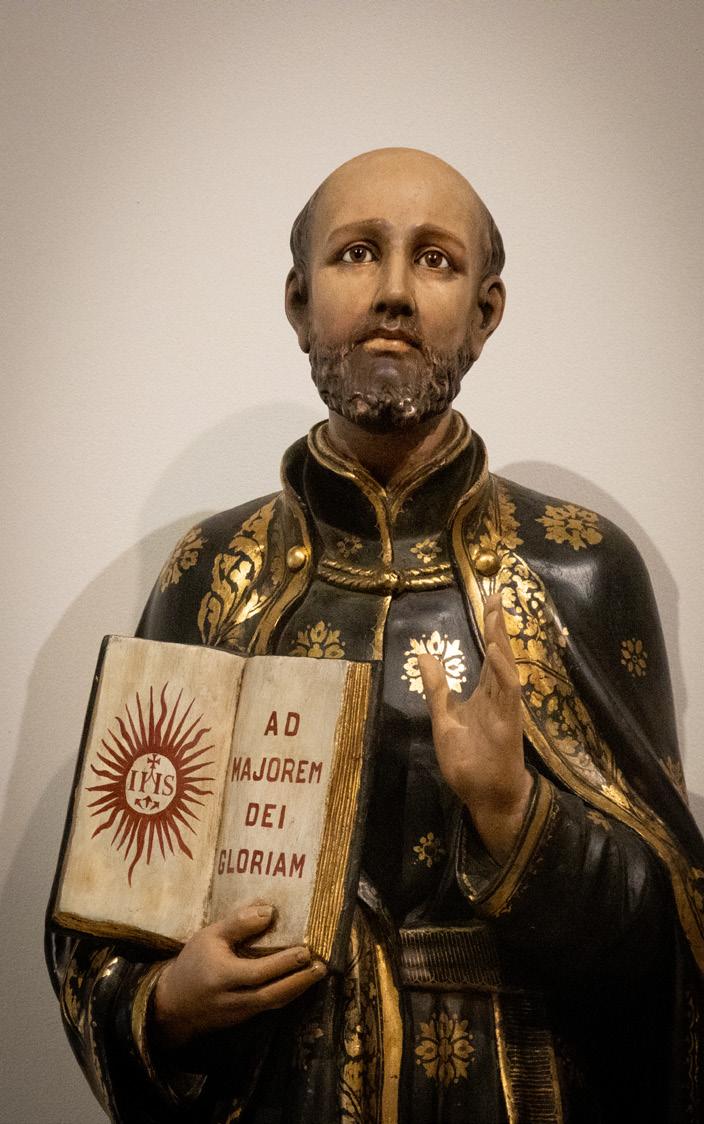
for us? What was Ignatius thinking as the cannonball struck? What’s going through our minds during our own cannonball moments?
The Ignatian Year concludes on July 31, 2022, the day of his liturgical feast. But the jubilee event being commemorated is the fourth centenary of his canonization. It was celebrated by Pope Gregory XV on March 12, 1622. On that day, St. Philip Neri, St. Teresa of Jesus, St. Isidore the Farmer, and St. Francis Xavier were also canonized.
Learn more about and find resources for the Ignatian Year at Jesuits.org/Ignatian-Year.
A prayer to celebrate the Ignatian Year from the Jesuit Conference of Canada and the United States
God of all people,
You were there when the cannonball shattered the leg of St. Ignatius, shattered his dreams, and shattered what he assumed his life would be. Even in a moment of pain and uncertainty, doubt and darkness, you spoke to Ignatius a word of peace and light. You showed him the path to you and the person he might become.
We may not be soldiers, standing in the path of a literal cannonball. And yet, we’ve been hit all the same. Cannonballs shatter our own hopes and dreams and expectations.
Like Ignatius, may we hear the compassionate voice of your Son in the aftermath of these cannonball blasts. May we seek the face of Christ even when our dreams are shattered. May we turn and follow Jesus with the courage it takes to change and grow.
As we journey through this Ignatian Year, may we be shown the path to you, God of all people, and live out our vocation, becoming the person you have invited us to be. Give us the grace to work for reconciliation every day: with you, with others and with your creation. Open our eyes so we might see all things new in Christ.
Amen.
Managing Director, Head of Digital Assets Group at Promontory Financial Group, IBM company
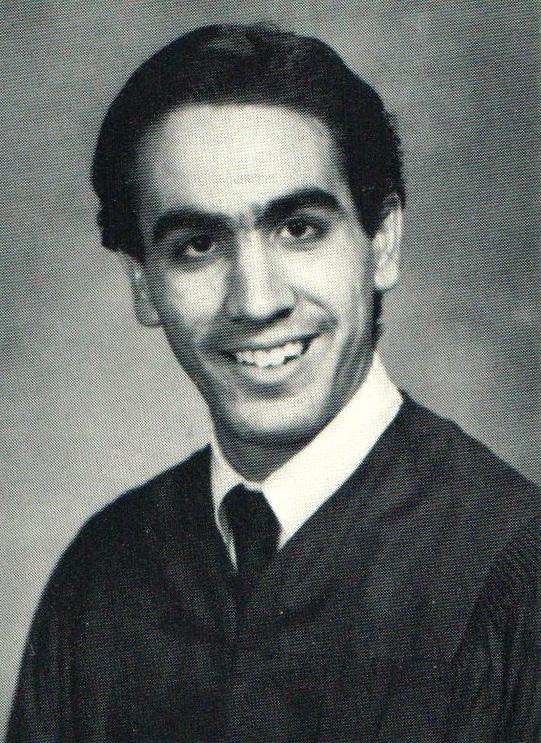
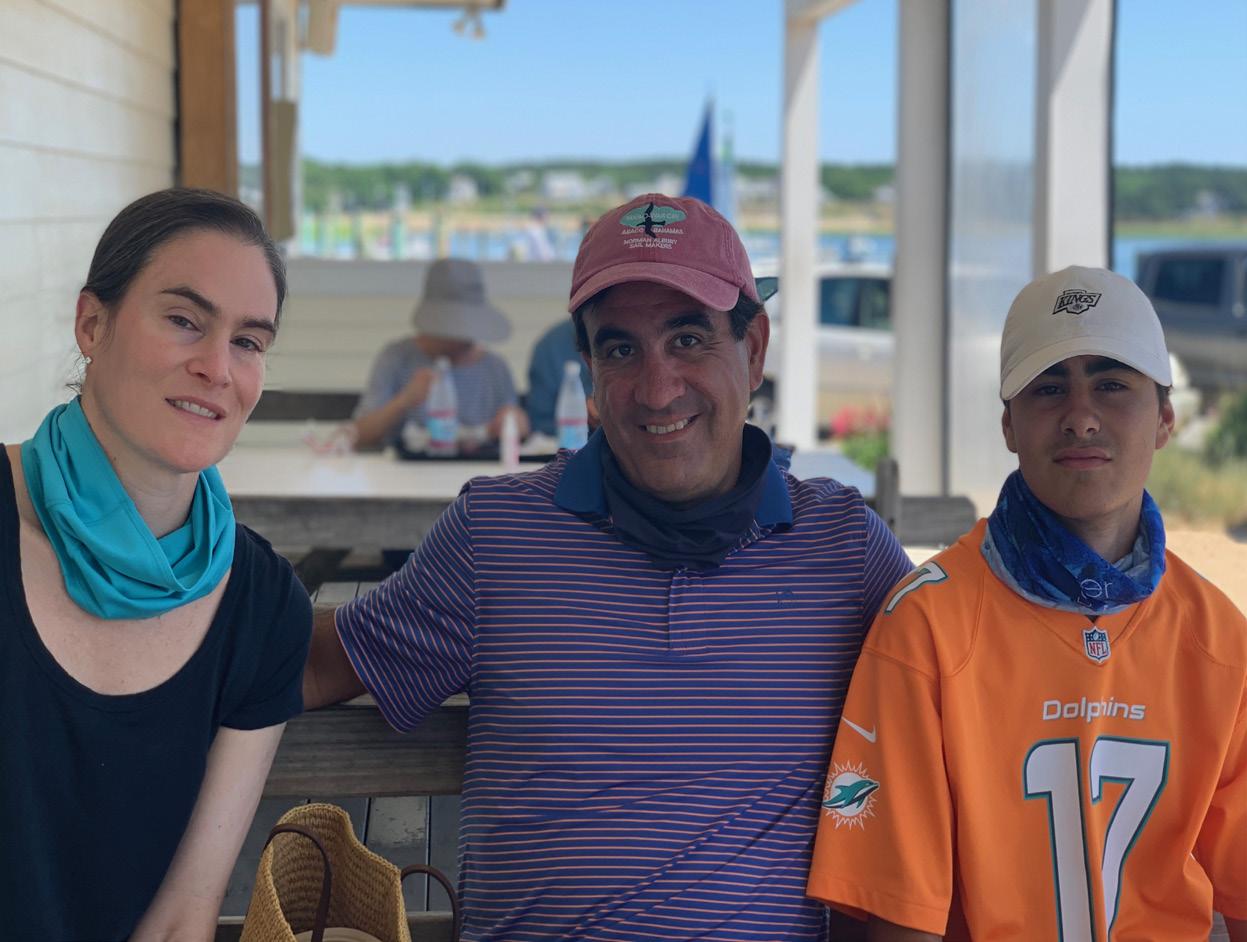
Q. What was your experience like at Belen?
A. It was a transformative experience. I did not want to go to Belen; my parents forced me to apply, and I tried to purposely fail the entrance exam. That landed me in summer school before 7th grade. Soon enough, I made friends, many of which are some of my dearest friends today. I am very grateful my parents made the decision to send my brother and me to Belen Jesuit.
Q. What type of student were you?
A. I was the kind of student that everybody thought got straight A’s, but the reality was different. I did well in languages and history, and I struggled in math and science. I was academically lazy, but I was a great test taker and was very active in the school community: Track and Field, Key Club, Vincam Editor in Chief, etc. This is how I managed to get into a decent college.
Q. Can you describe one funny moment while you were a student?
A. In my junior year, Vincam had been out of circulation for a while, so a few friends and I decided to revive the school newspaper. There were several controversial articles in that edition, and the Administration had not reviewed them. So, when 1,500 copies of the new Vincam got delivered to the school one morning, they confiscated them all, well, almost all of them. There are still a few copies out there, but you won’t find them in the school archives.
Q. What is one thing that you will never forget that you learned in school?
A. As you can tell from my prior answer, I was a bit of a contrarian. What I learned was that to be successful in life, you have to understand the rules of the game and find the most efficient and effective way to meet your objectives within those constraints. Even though the Administration wasn’t happy with the Vincam incident, they applauded my initiative and appointed me Editor in Chief in my senior year, on the condition that I promise to give them a chance to review the content (and those editions you will find in the archives).
Q. Who made an impact in your life?
A. There were many people at Belen that made an impact in my life, but I will mention a few. Father Sardiña, S.J. was a true man for others, Mr. Collins taught me to think critically about news and politics, Mrs. Vila helped me survive in math, and Mrs. Hernández taught me how to write in a clear and unbiased manner. These are all life skills that have helped shape me personally and professionally.
Q. What do you hold most dear?
A. The lifelong friendships that I made at Belen, and the privilege of forever being a part of the Belen brotherhood and legacy.
Q. How has your Jesuit education shaped and helped you in your life?
A. Men for Others is not just a motto, it is a way of life to which we should all aspire. I have been very fortunate in my life, and in my small way, I try my best to make a difference in the lives of others, particularly less privileged youth that just need a little help to get the chance to achieve great things.
Q. What prompted you to go into the finance industry?
A. I always loved finance. I read the Wall Street Journal as a kid and had this romantic idea of working on a trading floor on Wall Street. That never happened, but my finance career has given me so many amazing opportunities, including living in South America, traveling the world, eventually moving to San Francisco, and now working in the fascinating world of crypto and digital assets.
Q. How do you make a difference in that industry?
A. I think in any industry, you have to acquire a solid skill set that allows for being a positive contributor. Once you have the tools, you can begin to look around the corner to see what’s next. And that’s where you can begin to make the most impact, in driving growth and innovation. The skills I learned in banking, and later in the corporate world, allow me to be a very effective consultant for my clients.
Q. Cryptocurrency is picking up steam. What advice would you have for students interested in pursuing a career similar to yours?
A. Bitcoin, Etherium, and NFTs get all the headlines, but really it’s the underlying block chain technology that can be revolutionary for finance, art, entertainment, and other industries as well. This is why it’s called Web3.0. And the cool thing is that anyone can participate. If you want to learn more about crypto, read up on the white papers of the different crypto projects, experiment with the technology, and seek out opportunities for internships. There are several digital assets firms in Miami, including Recur, FTX, and Circle and you’ll find some Belen alumni in leadership positions at those firms.
















Jose Antonio “Tony” Garrido ’46
Ramón Mestre-Gutiérrez ’47
Generoso Eiroa ’52
Ramiro Fernández ’52
Manuel Buigas ’53
Jose Lopez-Trigo ’53

Carlos Alberto Muller ’53
Jose Vivó ’53
Jose Llarena ’54
Ivan Barrios ’55
Ignacio Duarte ’55
Rafael Puente-Duany ’55

Mario Robau Martin ’55
Jorge Andino Bolivar ’59
Manuel D. Castaño Montesinos ’59
Gustavo Godoy Andrews ’61
Fernando Cantens ’63
Javier Lasaga ’70
Sondra González-Falla, wife of Celso Miguel González-Falla ’53
Maria Mercedes Martinez, wife of Francisco Martinez ’71
Carmen San Pedro-Dominguez, wife of Manuel Dominguez ’48
Violeta San Pedro, wife of Frank Javier San Pedro ’59
Miriam Perez Corzo, wife of Julian Pérez Corzo ’54 and mother of Enrique J. Pérez ’89
Amy Linney, daughter of Eugenio Santiago ’62
Raquel Smith, mother of Jose Smith ’80 and grandmother of Jose Smith ’14
Maria Teresa Marrero, mother of Ruben ‘75 and Emilio Marrero ’85, and grandmother of Christian ’12, Matthew ’13, Christopher ’13, Jacob ‘20, and Gabriel Marrero ’22
Mercedes and Raymond Urgelles, parents of Daniel Urgelles ’07
Francis Plasencia, mother of Pablo Plasencia ’09
Ana and Juan Mora, Sr., parents of Juan Mora Jr. ’07
Josefina Alvarez, mother-in-law of Mauro Hernández ’56
Olga Zaragozi, mother of Jorge ’75, Henry ’78 and Richard Zaragozi ’81
Raul Aparicio M.D. ’73
Carlos Martinez ’82
Juan Mora ’07
Sarah V. Perez-Heydrich, mother of Carlos I. ’72 and Eduardo M. PerezHeydrich ‘75, and grandmother of Frank Carlos Quesada ’98, Eduardo F. ’10 and Carlos A. Perez-Heydrich ’15
Carlos E. Martinez, father of Enrique “Harry” ’76 and Juan Carlos “Mart” Martinez ’78
Carlos Saenz, father of Fr. Christian Saenz, S.J. ’95
Cali Garcia-Vélez, father of Carlos ’83 and Calixto Garcia-Vélez ’85 and grandfather of Calixto Garcia-Vélez Jr. ’15
Reinol González father of Reinol González ’79
Leonardo Caraballo, father of Leonardo Caraballo ’93 and Javier Caraballo ’07, and grandfather of Sebastian Caraballo ’27
Gabriel Villarreal, father of Alejandro Villarreal ’22
Manuel Mesa, grandfather of Michael Mesa ’20
Francisco Fernandez-Izquierdo, brother of Jesus Fernandez-Izquierdo ’58
Rosa Saez, sister of Fr. Manuel Maza, S.J. ’62
Richard Rovirosa (and his wife), brother of Frank Rovirosa ’78
José Coloma, husband of Maintenance Department employee Marlin Real
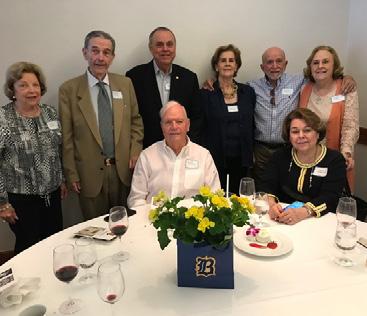
1. Members of the Class of 1955 celebrate the 66th anniversary of their graduation in the Pullman Hotel in Miami.
2. EDDY ’56 and Georgina MORALES, María Elena, widow of Belen Hall-of-Famer EDDY SOWERS ’56, and Carmen Rosa and ROBERTO BORBOLLA ’56 in Jacksonville FL.
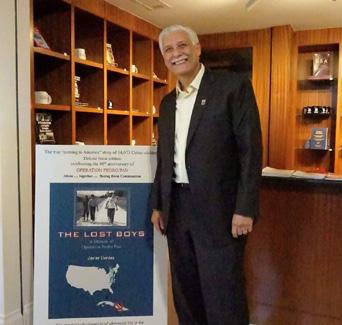
3. DR. JAVIER LLORENS ’69 presented his book “Lost Boys” at The Cuban Museum of Diaspora.
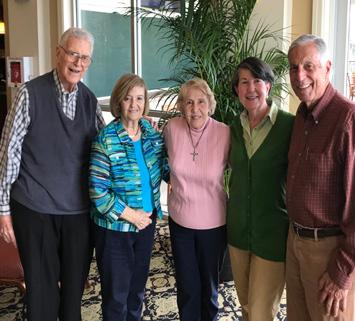
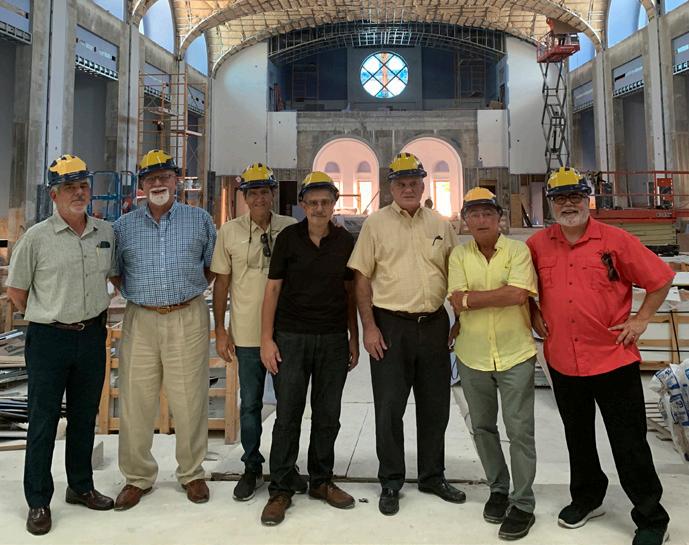
4. Members from the class of 1973 visited the Our Lady of Belen Chapel and then had lunch at La Carreta.
CARLOS A. PENÍN ’73 received the CAACE Plinio Villanueva award from the Cuban-American Association of Civil Engineers.
PETER MONTADAS ’76 received the “Ing. José M. Amézaga” award from the Association of Cuban-American Engineers.
5. Dr. ALBERTO CARDELLE ’82 was appointed President of SUNY Oneonta University in New York.
6. MANNY PORTUONDO ’85, CEO of Cervecería La Tropical, was featured in the Miami Herald.
7. JORGE PADRÓN ’86 of Padrón Cigars Inc. was featured in the Cigar Aficionado magazine.
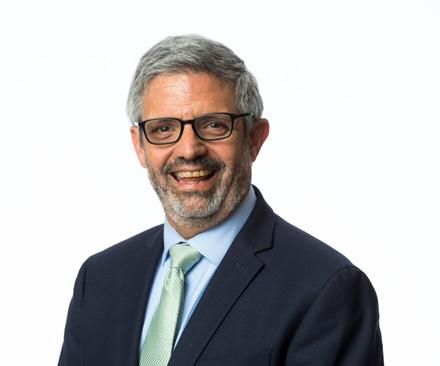


8. Restaurant Brands International CEO JOSÉ CIL ‘87 was named the Restaurant Leader of the Year by Restaurant Business daily. He has joined ‘Squawk on the Street’ to discuss the company’s earnings report, challenges in the U.S. Popeyes business and how Restaurant Brands is taking on the labor shortage.
GARCÍA-TUÑÓN S.J. ’87 was named by The South Florida Business Journal as a Power Leader in Education for the 4th consecutive year. He was also named Educator of the Year by the National Association of CubanAmerican Educators.
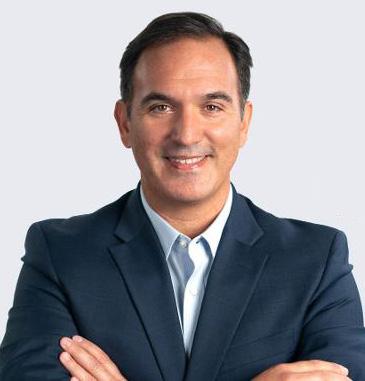
9. CALIXTO (Cali) GARCÍA-VÉLEZ ’85 has been named the new president and CEO of Banesco USA in Coral Gables.
DAVID DE CELIS ’89 and his firm, DCVL Design, received the US Department of Energy 2021 Housing Innovation Award for their Zero-Energy Home.
10. CARLOS RIVERA ’89 won an Emmy Award for his work in The Queen’s Gambit for Outstanding Music Composition.
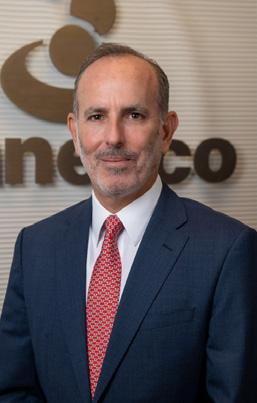
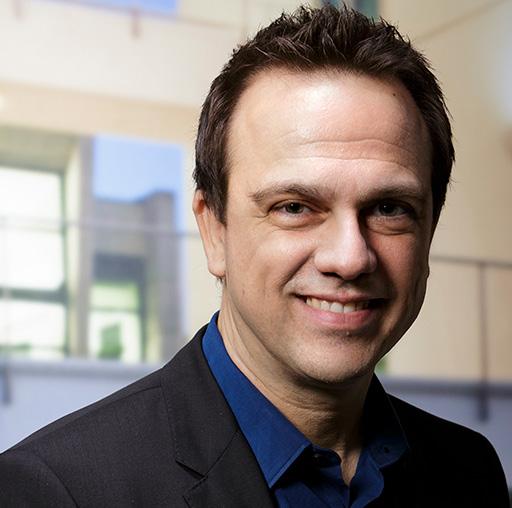
11. ALEX ZEQUEIRA ’90 Headmaster of St. John’s High School, received the Worcester Regional Chamber of Commerce’s Business/Community Leader Award.
12. DANIEL BALDOR ’91 was named the Miami Office Managing Director of Accenture, and will continue in his role as Life Sciences Client Group Lead and Strategy and Consulting Products Lead for the South Market Unit.
13. ANDRÉS DE ANGULO ’93 was appointed the Head Coach for Swimming & Diving at Belen Jesuit.
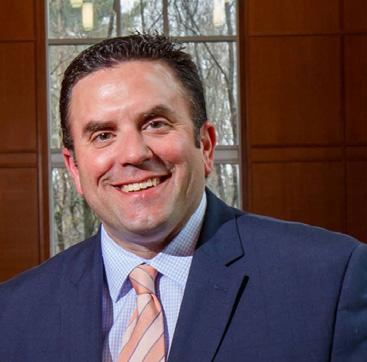
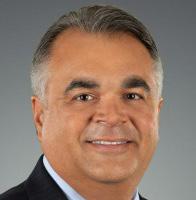
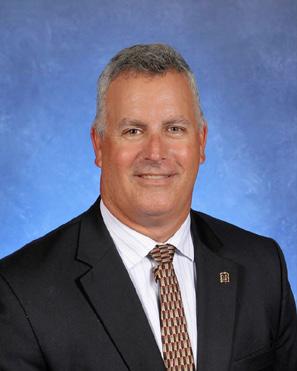
14. CARLOS DE SOLO ’96, CEO of CareMax Medical Group, LLC, and RICARDO CAMPO ’96, CEO of Endeavor Schools, both won Ernst and Young Entrepreneurs of the Year in Florida.
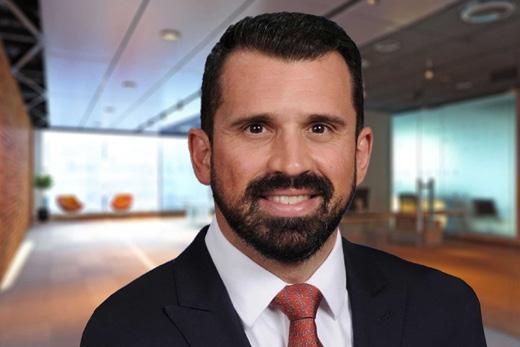
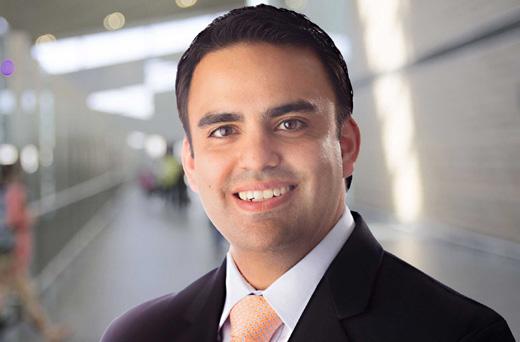
15. DR. NIBERTO MORENO ’96 was named Chief Medical Officer at CareMax, Inc. He was recently recognized as one of the 2021 Miguel Cervantes Award Honorees presented by the South Florida Hispanic Chamber of Commerce.
JAVIER TRUJILLO ’96 was named Teacher of the Year at Ponce de Leon Middle School. He has been a physical education teacher for 20 years and at Ponce de Leon for the past 16 years.
TOM LLAMAS ’97 will be the lead anchor of a new nightly newscast, “Top Story With Tom Llamas,” for NBC News Now.
16. LUIS A. PATIÑO ’97 was promoted to Vice President, Assistant General Counsel for ViacomCBS Inc.
17. ALEJANDRO USATEGUI ’97 competed at the Florida State Powerlifting Championships and qualified for Nationals.
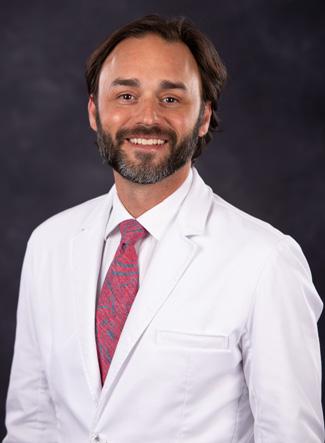

18. EUGENE RAMÍREZ ’01 was named anchor for Evening Edition of ‘National Desk’ by the Sinclair Broadcast Group.
19. MIGUEL FERRER ’03 will be re-teaming with Francisco Denis on a short film deMonica, a feature based on their horror short of the same name.
20. ANDREW OTAZO ’05 was featured in Brickell Magazine as
one of the 20 Professionals under 40.
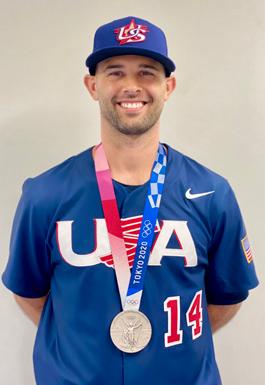
21. NICK MARTÍNEZ ’08 pitched for the USA Baseball team in the Olympic Games Tokyo 2020 and won a silver medal. Recently he signed a four-year agreement with the San Diego Padres.
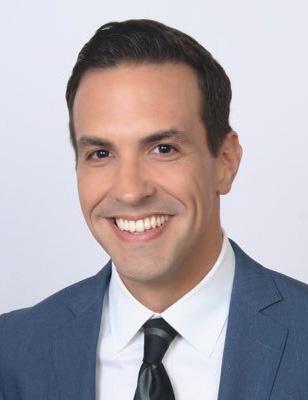
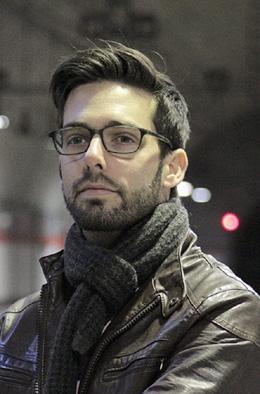

22. ANDRÉS CHINCHILLA ’15 has joined the Law firm of Heise Suarez Melville. He is a member of the University of Miami’s trial team. He competed on the team that won the regional competition, and for the first time in school history, qualified for the TYLA National Trial Competition, winning the Best Cross Examination Award in the process. He is also an Associate Editor of the Inter-American Law Review where his case note was selected for publication.
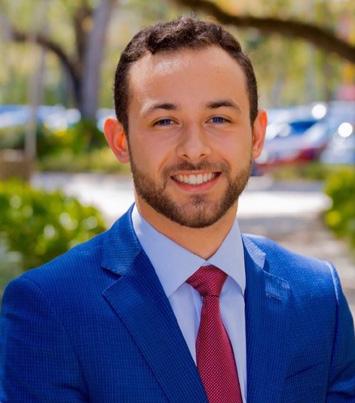
ANDRÉS PENA ’17 has created, written, produced and is hosting a podcast show called “Honey, what are the kids thinking” through Miami’s Community Newspapers, about bridging the gap between parents and kids to better understand “what they are thinking”.
LUIS HALVORSSEN ’21 and SANTIAGO CORTABARRÍA ’21 competed against each other at the Yale-Brown Rugby match.
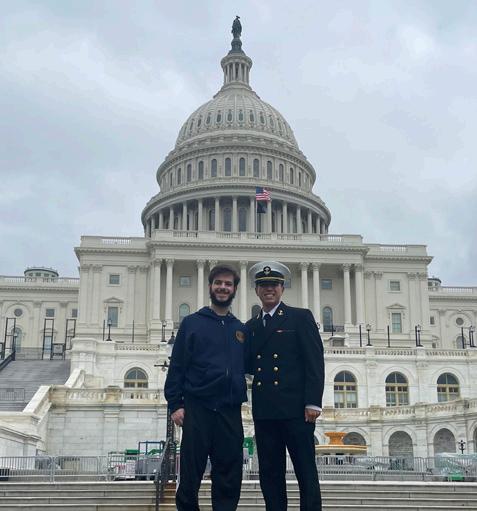
23. ROLAND REYES ’21 and GABRIEL NGUYEN ’21 at the Capitol.
Por: (Juan Manuel Salvat y la colaboración de miembros de la Asociación de Antiguos Alumnos de Sagua: Alejandro Bienes, Marcelino García, S.J., Carlos González, Henry Pujol y Florentino Rodríguez. Traducción al inglés por Marta Salvat Golik).
Sagua la Grande es una ciudad ubicada en el centro-norte de Cuba. El origen del nombre es aborigen, (Cagua o Sabaneque) pero durante la colonización cambió a Sagua la Grande. Una de sus características es tener el río más grande de la costa norte de Cuba: río Sagua la Grande o Undoso, como el que es regularmente conocido. El Undoso desemboca en el puerto Isabela de Sagua, un puerto muy activo, con barcos de todo el mundo, que cargaban sacos de azúcar de los centrales cercanos. La ciudad se fundó el 8 de diciembre de 1812, día tan especial de la Virgen Inmaculada, aunque mucho antes fue habitada por aserradores que surtían de lujosa madera los astilleros de La Habana y de España. Incluso la madera de Sagua sirvió para la construcción del palacio de Felipe II «El Escorial», en la segunda mitad del siglo XVI1. Una de las joyas arquitectónicas de Sagua es la Iglesia y el Colegio Sagrado Corazón de Jesús muy cerca del río Undoso. «El 12 de junio de 1906 el Padre Saturnino Ibarguren bendijo la primera piedra del colegio inaugurado en 1908. La tierra ya se había comprado en 1884. La construcción del templo comenzó a la par del colegio, inicialmente contaba con una nave central y techo de zinc, después del ciclón de 1933 fue ampliado con dos naves laterales, techo de hormigón y un nuevo campanario. El Sagrado Corazón sobre la torre fue el primer monumento público en Cuba. Esta imagen fue encomendada por el Episcopado de la República. El conjunto exhibe un estilo ecléctico dado por la presencia de pilastras corintias que sostienen el frontón del acceso principal y algunos elementos de interiores, a pesar del templo neogótico. La presencia de vitrales acompaña las ventanas y puertas de dos hojas con persianas francesas de madera. Además presenta un patio central. El templo tiene columnas que se reparten en dos filas y sostienen el espacio ayudando a salvar amplísimas luces. La azotea está protegida por pretiles compactos. A pesar de algunos cambios el edificio conserva sus valores originales»2.
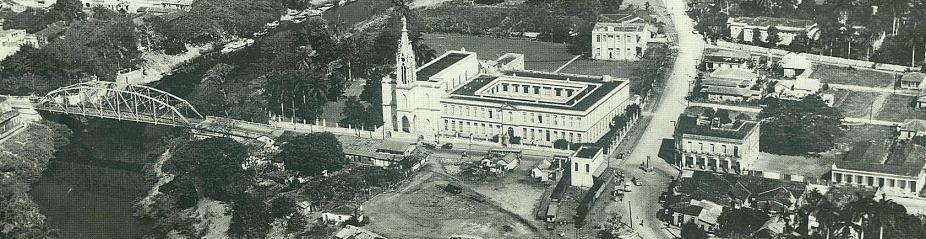
Jorge Mañach, nativo de Sagua y uno de los intelectuales más importantes de nuestra historia cubana la llamaba: Sagua la Máxima.
En varias ocasiones los sagüeros en el exilio han apoyado las obras de reconstrucción de las iglesias del colegio y la parroquia y por ello se han salvado de la destrucción que aqueja a tantos lugares importantes de Cuba. No nos olvidamos del colegio y los jesuitas que tanto significaron en nuestras vidas. En muchas computadoras nuestras aparece esta foto del colegio en la pantalla.
La labor educativa de los jesuitas en Sagua fue muy importante. Muchas generaciones de sagüeros aprendieron en ese colegio
a amar a Dios y ayudar a los demás. Entendimos la importancia esencial de acercarnos a Jesús como amigos, como hermanos. Esa cercanía y el conocimiento de su vida y muerte por todos nosotros, nos llenó el alma de una vida nueva, un sentido de ser partes de una misión apostólica durante toda nuestra existencia terrenal y después, la Vida Eterna con nuestro Señor.
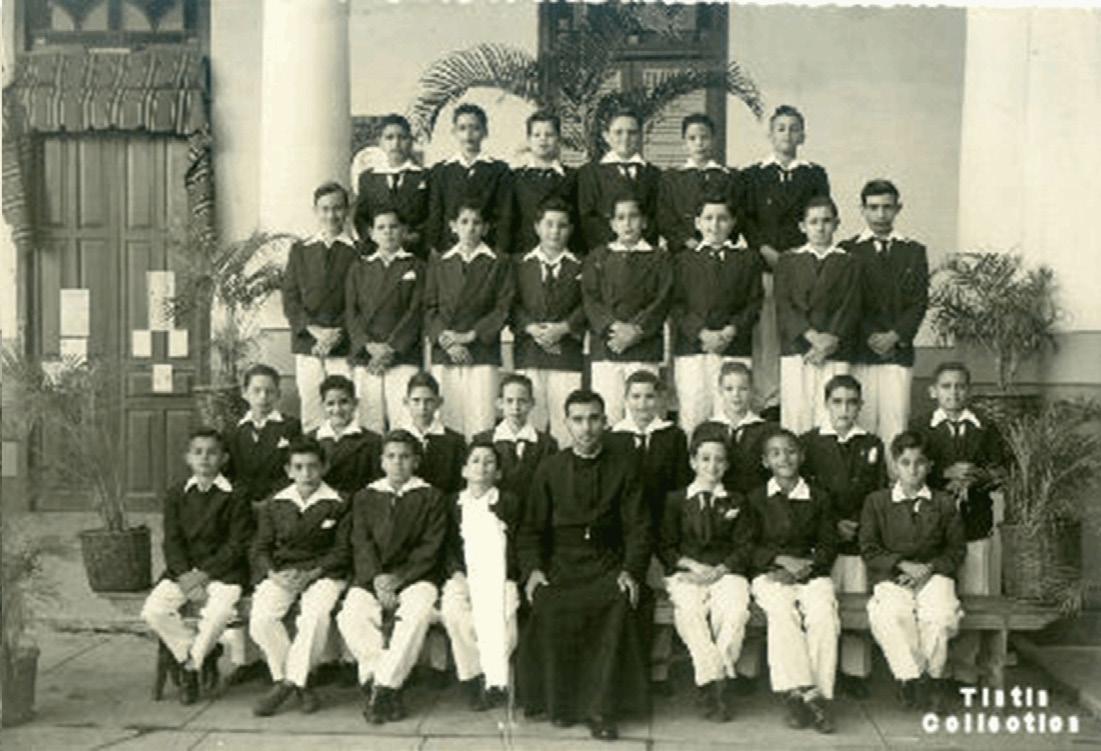
El colegio inicialmente tenía grados para menores como de kindergarten pero luego decidieron tener de primero a sexto (ingreso al bachillerato). La enseñanza la recordamos con admiración y agradecimiento. Todas las materias importantes, religión, ciencias y letras, eran explicadas por sacerdotes, hermanos y también laicos muy bien preparados y con gran paciencia pero también respeto. Las aulas eran cómodas y con los adelantos de la época. Muchos lograron entender la importancia de la lectura de libros de todos los temas y así preparar la mente para una vida útil. También contábamos con amplios terrenos para ejercicios, juegos de balón-pie, pelota, basket y nos deslizábamos en gajos de palma por un terreno muy cerca de la ribera del Undoso. En algunas clases, especialmente de historia, dividían a los alumnos en romanos y cartagineses, evocando las Guerras Púnicas. Así se desarrollaban competencias y discusiones sobre la importancia de los temas estudiados.
Podemos reflexionar sobre el bien cultural que ofrecía el colegio a la ciudad. Recordamos actos culturales, musicales, obras de teatro (una de ellas dirigida por el siempre recordado Eduardo Habach). En Semana Santa, el vía crucis, impulsado y respaldado por el colegio, los debates públicos para padres en el colegio sobre gramática, geografía, etc y las procesiones tradicionales que salían del colegio y recorrían las calles de la ciudad, son unos de los muchos ejemplos.
Todos los años partía la guagua del colegio con un nutrido grupo de alumnos hacia la Casa de Ejercicios Espirituales ignacianos en el Calvario. Estos retiros fueron muy importantes en nuestra formación y sirvieron inclusive para decidir crear la Agrupación
Católica de Sagua y así mantener el vínculo con los jesuitas cuando comenzábamos los estudios del bachillerato en el Instituto de Segunda Enseñanza de Sagua.
Recordamos la gran importancia que le dimos a las misiones jesuítas en remotos y necesitados lugares del mundo y las papeletas que vendíamos en toda la ciudad. También reuníamos sellos de correo usados, los metíamos en la fuente de agua que había en el centro del colegio y así salían limpias del papel pegado y listas para los filatélicos que pagaban por ellos.
Los domingos teníamos una misa muy especial, vestidos con saco y corbata. El p. Martín S.J., ya viejo y un poco sordo, era el que tenía siempre la línea más larga en el confesionario. Después un grupo de alumnos daba clases de catecismo a jóvenes sagüeros y los preparábamos para la Primera Comunión.
Había excursiones a distintos lugares cerca de nuestra ciudad. Recuerdo una al río San Juan, en la provincia de Matanzas, en que nos bañamos en sus tranquilas y bellas aguas.
La vida espiritual era intensa en la Congregación Mariana del colegio. Realizamos también otras obras apostólicas, de caridad y de formación espiritual.
Pero quizás la institución más importante que fundamos los graduados en 1952, extendida luego a los que se iban graduando del colegio, fue la creación de la Agrupación Católica de Sagua. (ACS), congregación Mariana parecida a la ACU de La Habana. Allí, tuvimos una formación espiritual y cultural mucho más avanzada como adultos.
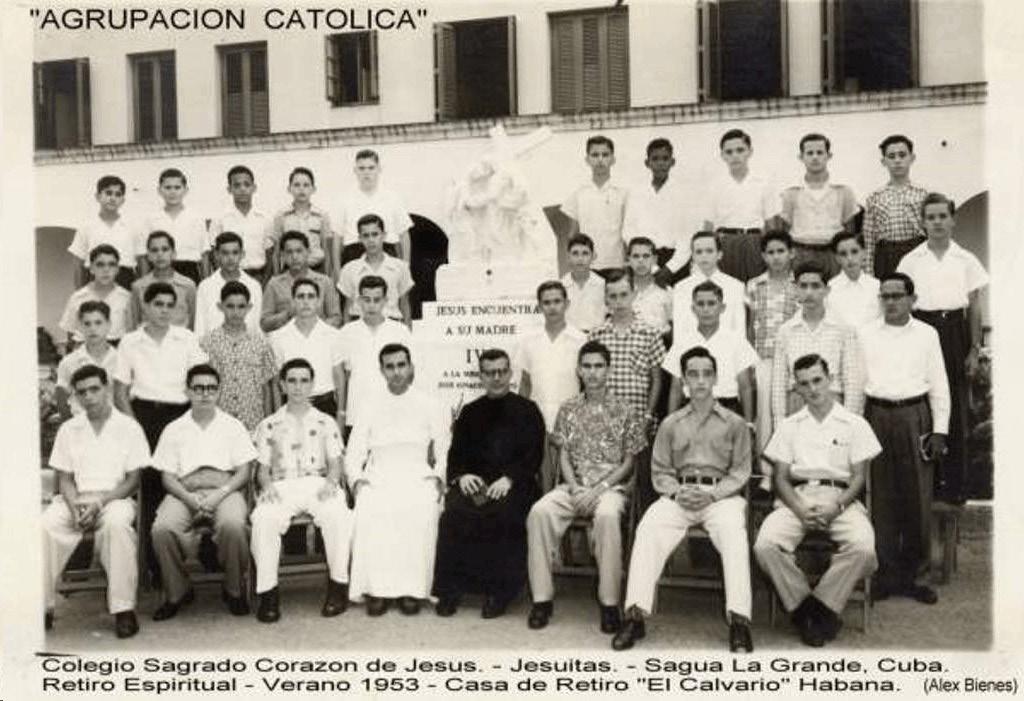
La Doctrina Social de la Iglesia fue comprendida en toda su importancia e hizo que comenzáramos un programa de radio semanal con el nombre de «Justicia Social». Todos los fines de semanas teníamos reuniones y cursos de formación y liderazgo en el colegio. Los domingos teníamos misa con los alumnos y sus novias, casi todas ellas estudiantes del Colegio de Apostolado. Después dirigíamos varios catecismos en los barrios de Sagua. En ocasiones también visitábamos el asilo de ancianos para llevarles entretenimiento, villancicos y golosinas. En 1960 la ACS tenía más de 125 congregantes activos.
De las clases de oratoria que dirigía el p. Juanes, S.J., salió la idea de un Concurso de Oratoria. Se celebró en el Casino Español de Sagua, se escogieron 6 discursos importantes cubanos. Ganó José Arenas, presidente entonces de la ACS, con el discurso de Martí «Con todos y para el bien de todos». En segundo lugar quedó Marcelino García con un discurso de Cortina y el tercero Salvat con un discurso de Zambrana.
No se nos olvidará nunca la visita que nos hizo un fraile que creo se llamaba Stefanish, exiliado de su país de Europa del Este, ocupado
entonces por la Unión Soviética. Gracias a sus conferencias y su libro, conocimos la filosofía marxista del materialismo dialéctico. Hegel, Feuerbach, Marx, Engels y Lenin, fueron desglosados en forma sencilla pero muy formativa. No sabíamos entonces que nos estábamos preparando para un terrible futuro cercano.
De Sagua salieron vocaciones importantes para los jesuitas como son la del p. Florentino Azcoitia, S.J., quien sirvió como espiritual en Belén de Miami y luego fundó el Centro de Espiritualidad Ignaciana (Manresa) y los Encuentros Familiares. También el p. Marcelino García, S.J., mi gran compañero de estudios y de actividades religiosas en Sagua, quien fue Rector de Belen Jesuit en Miami por más de 25 años (1983-2009) y ahora dirige el Centro de Espiritualidad Ignaciana. Ha vivido una vida dedicada totalmente a ser apóstol de Jesucristo, nuestro Jefe y Maestro.
Nuestro cariño y agradecimiento a los inolvidables jesuitas comenzando por los rectores que estuvieron en nuestra época: Victorino Cagigal (1944-1950), p. Mariano Ruiz (1950-1953), p. Benigno Juanes (1953-1955?), p. Marcial Bedoya (1955-1957?). Hubo otros muchos jesuitas que ayudaron en nuestra formación como el hermano Parada, quien nos enseñaba los primeros estudios, la caligrafía y lecturas (fue el jesuita más popular de Sagua), hermano Ibáñez, p. Escudero, p. Fiol, p. Altamira, uno de los primeros jesuitas cubanos que conocimos y que fue de los principales promotores de la Agrupación Católica de Sagua.
En 1957, los jesuitas pasaron el colegio a otra orden religiosa, los Misioneros del Sagrado Corazón de Jesús. Ellos continuaron la labor de enseñar a generaciones de sagüeros el amor a Dios y la importancia de la vida apostólica. Todo esto hasta que en 1961 el régimen comunista confiscó el colegio.
Debo decir que de nuestro colegio en Sagua salieron muchos de los cubanos que lucharon por la libertad de Cuba cuando se implantó la dictadura totalitaria. Uno de ellos, Rafael Marqués, fue Coordinador del Directorio R. Estudiantil en Sagua y sufrió prisión política por más de 15 años.
En el exilio se fundó la Asociación de Antiguos Alumnos que mantiene el mismo espíritu cristiano y se reúnen periódicamente aquellos hombres que muchos años antes pasaron por las aulas de ese colegio magnífico y querido que fue el Sagrado Corazón de Jesús de Sagua la Grande. AMDG.
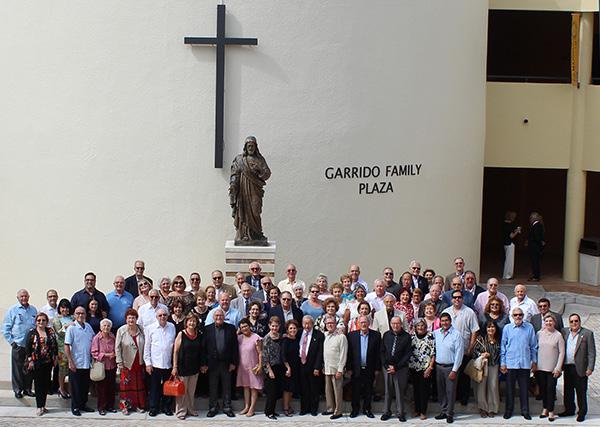
2 Escrito (internet) de Yoel Rivero Marín, periodista en Sagua la Grande. The English translation can be found on our website: https://www.belenjesuit.org/
1 Enciclopedia Histórica de Cuba, Tomo I: Mitos, Leyendas y 1 Curiosidades, Pedro Suárez (Tintín). Ediciones Universal, 2014 (978-1-59388-065-1).
r i n G s
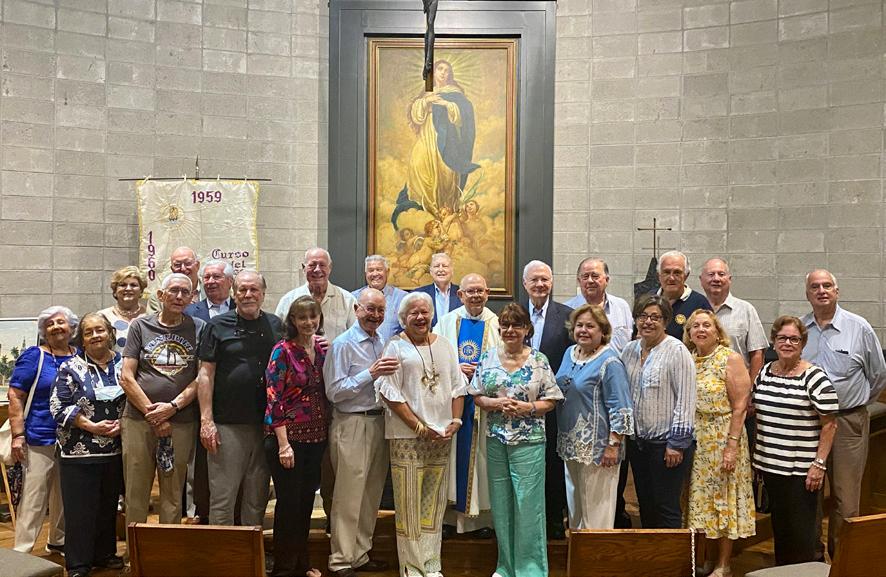
Members of the class of 1960 celebrated Mass together to commemorate the 61st anniversary of their graduation.
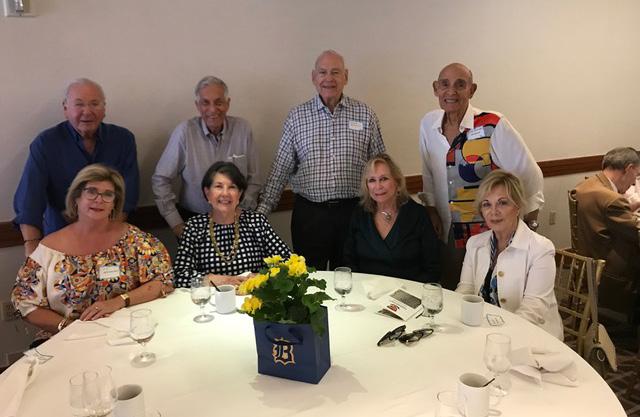
Members of the class of 1956 celebrated the 65th Anniversary of their graduation in the Pulman Hotel in Miami.

Members of the Class of 1971 celebrated the 50th Anniversary of their graduation at the
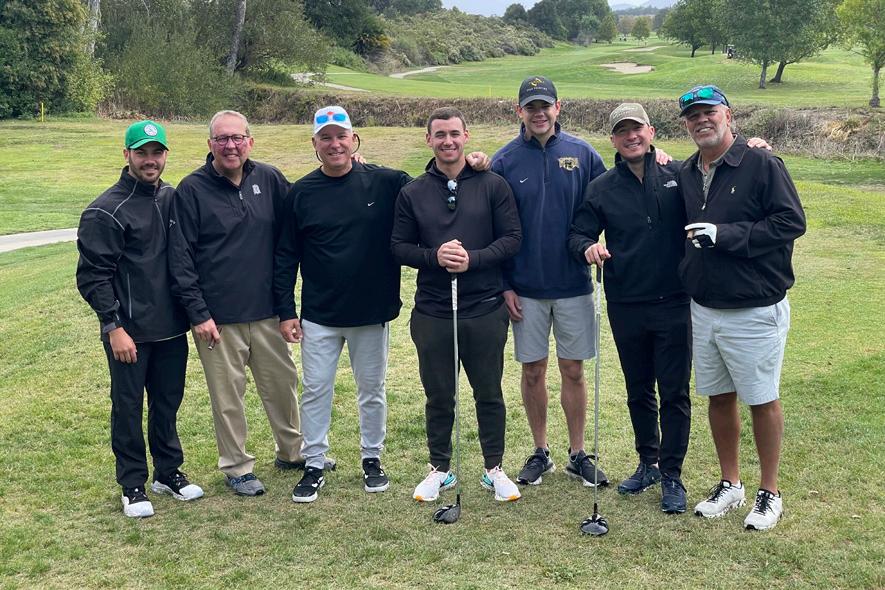
Sicre
Fr.
l u m n i
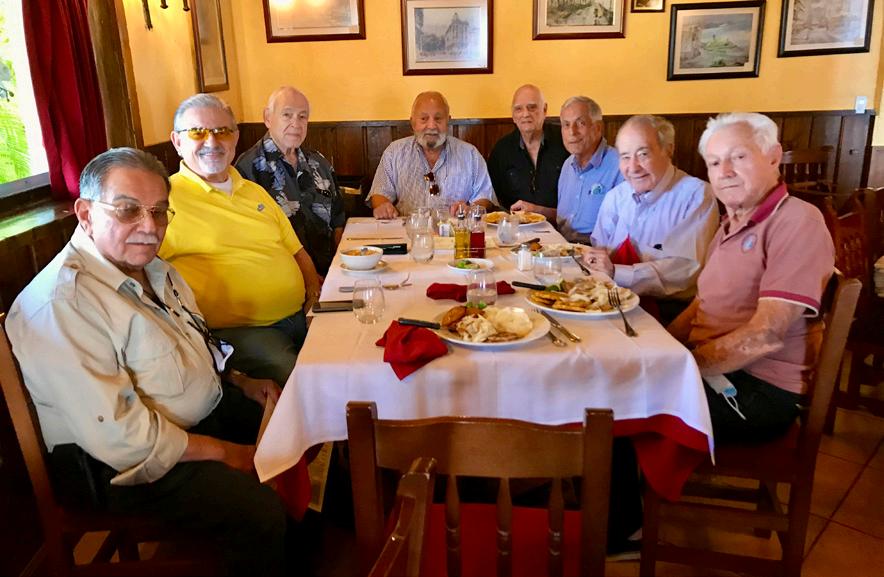
Class of 1956 Enrique Casuso, César Incera, Jorge Dominicis, Raúl Villaverde, Guillermo Fernández-Núñez, Roberto Borbolla, Francisco González-Learra and Gonzalo Bustillo get together at Casa Paco for their monthly lunch.

Colegio de Nuestra Señora de los Dolores alumni attend their annual reunion at Belen Jesuit.
Fr.
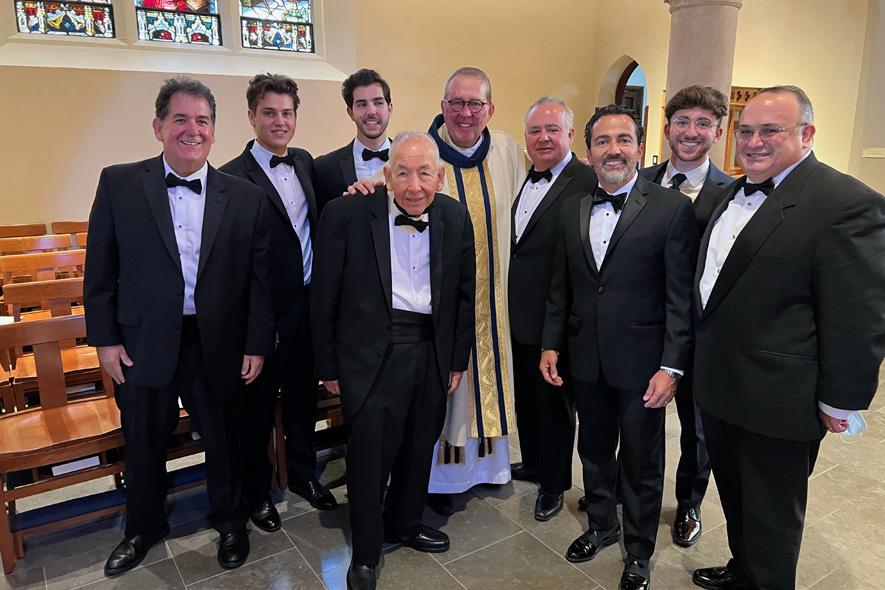
and
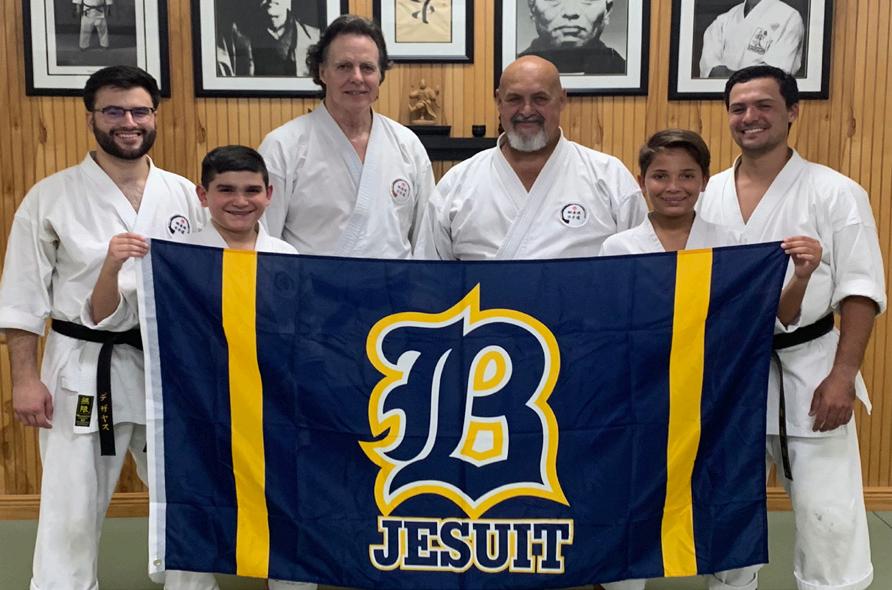

Fr. Alberto García S.J., Celso Ahumada ’68, Gerardo Simms ’69, Miguel de la Torre, Rafael Montejo ’67, Rene Walker ’69, Mariano Loret de Mola ’58, Juan García ’71 and Orlando Puente ’71 at the Cuban Museum presenting Ricardo González ’68 book Black Peter Pan.
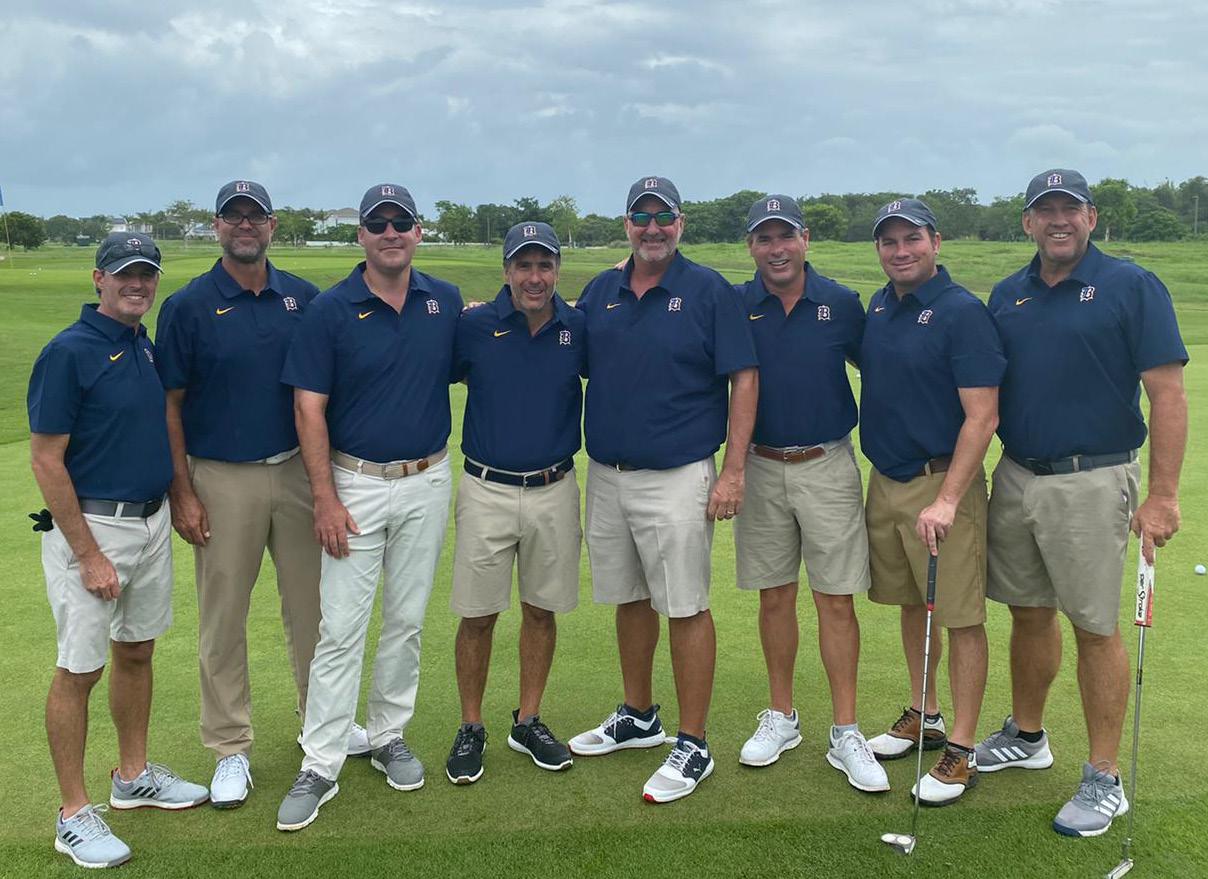
Adolfo Miñoso ’91, Roly Molina ‘91, Chris Collings (Parent), José Costa ’91, Alby Arazoza ’84, Charlie Erdmann ’91, Luis Zúñiga ’91 and Carlos Martell ’91 participated in the Golf Challenge held in Casa de Campo. Belen wins.

Members from the Belen Alumni Lawyers Section get together at Taurus in preparation for the St. Brendan football game.
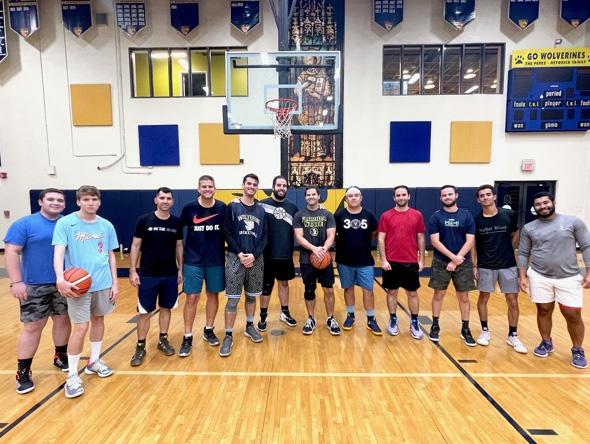
Alumni Basketball kicked off again after the pandemic.
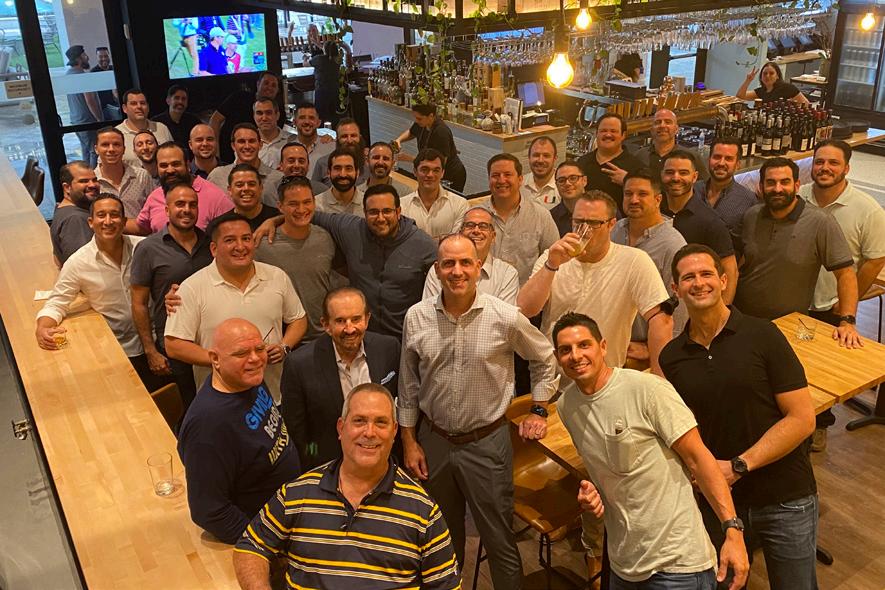
Members of the Class of 2001 celebrated their 20-year reunion at Bay 13 Brewery in Coral Gables.
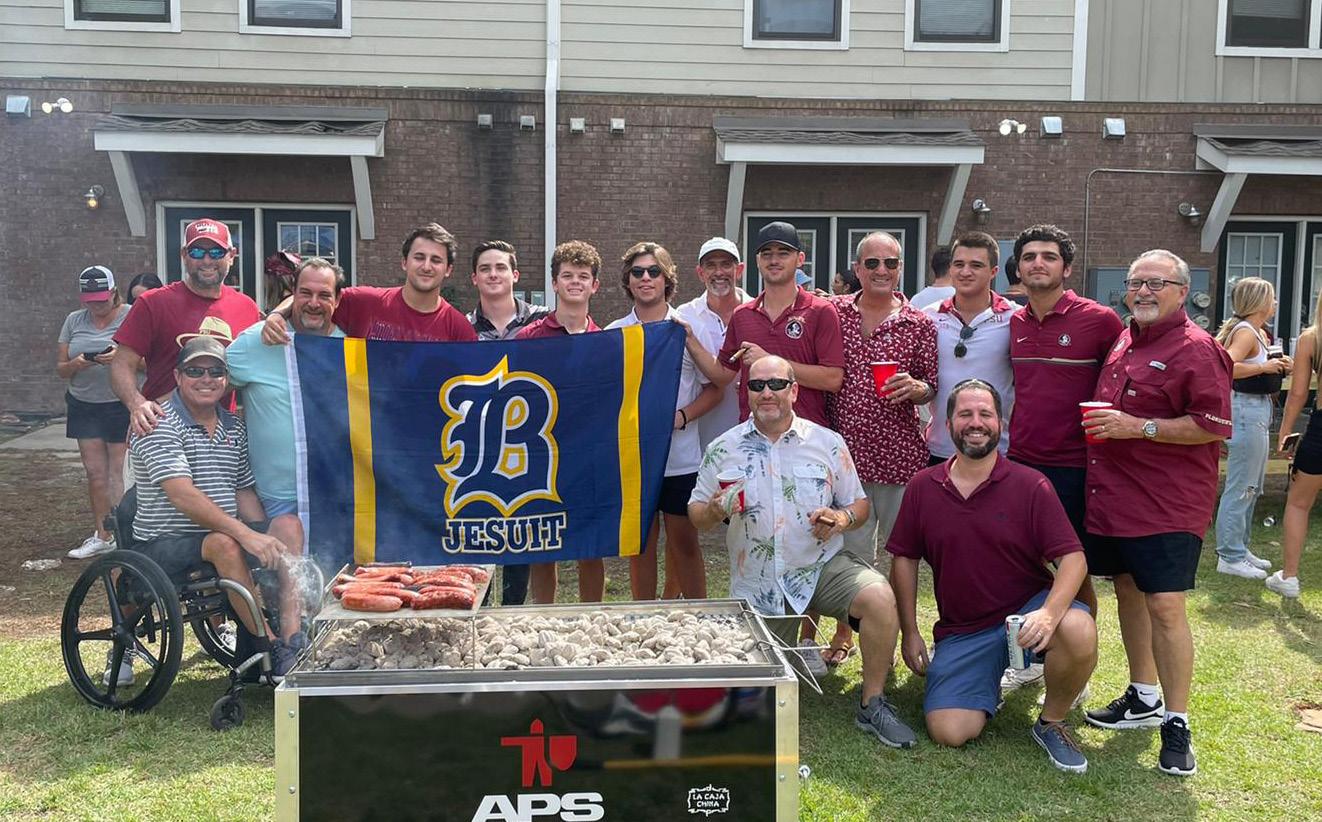
Mike Cardoso ’89, Diego del Pino ’88, Horacio García, Cristian García ’18, Robert Martínez ’18, Diego del Pino ’23, Oscar Fernández ’21, Raul Díaz ’88, Rogelio Consuegra ’18, Orlando Fernández ’80, Robert Fernández ’18, Carlos Díaz ’18, Crescencio Ruiz ’76, Erick Deeb ’85, and Gus Sardiña ’97 supporting the FSU Seminoles!
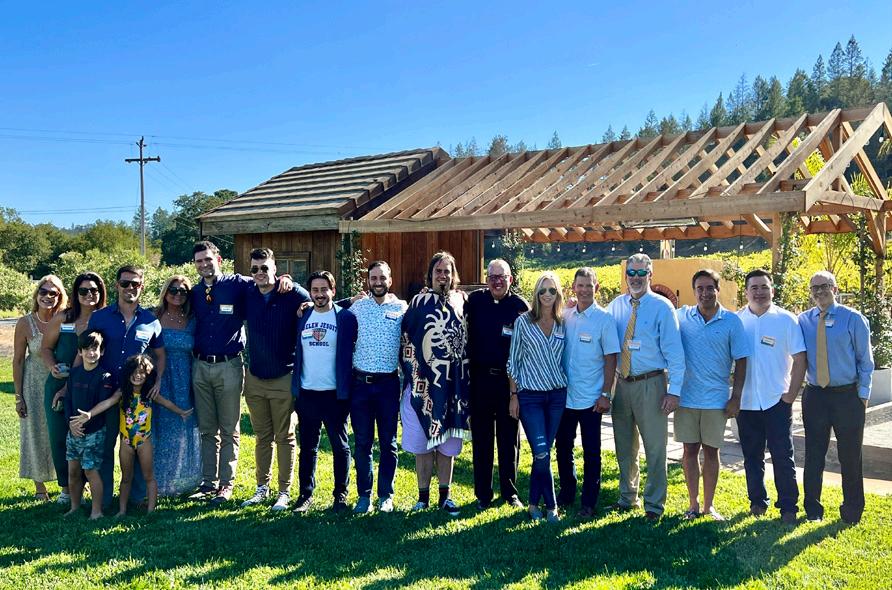
The first stop of the 2021-2022 Belen Alumni Tour was in the San Francisco Bay Area. The reunion was hosted at the home of Julián Sevillano ’90 in Sonoma County.
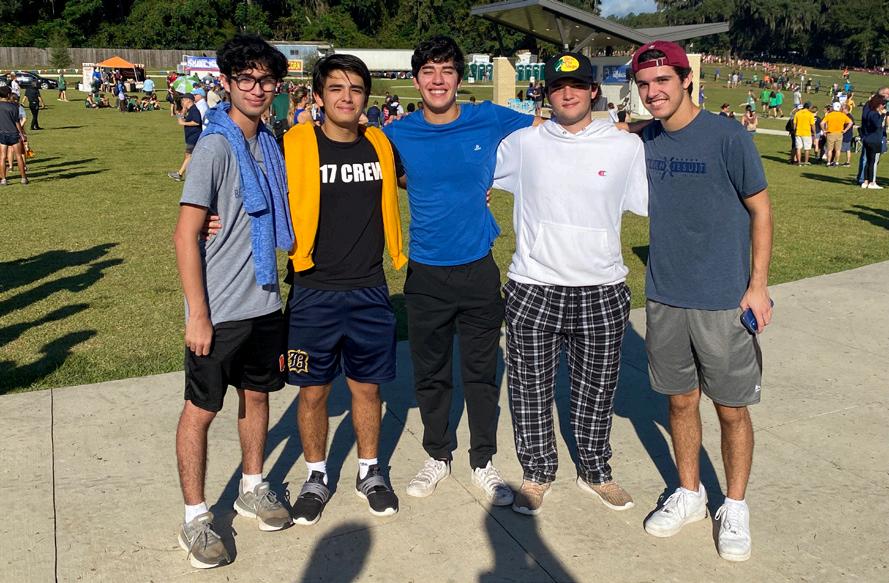
Jesse Rodríguez ’21, Nicolás Hidalgo ’21, Diego Gómez ’21, Ricardo Blanco ’21, and Brandon Delgado ’19 supporting the Belen Cross Country Team at Tallahassee for the Pre-State Invitational.
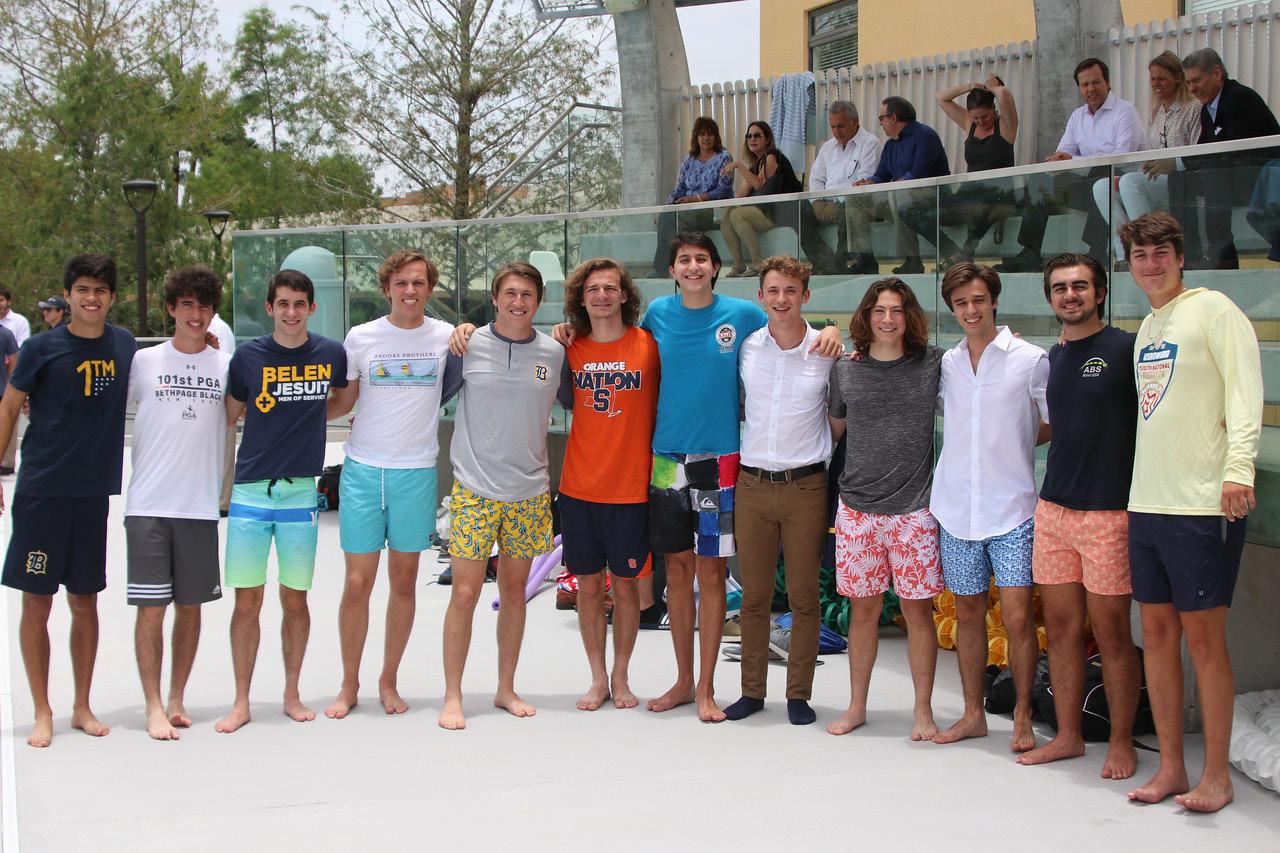
The class of MMXX was back on campus to celebrate the end-of-year events they couldn’t have as a result of the pandemic. The Alumni Pin Mass by Fr. Willie S.J. ’87 in the Roca Theater, a lechon lunch in the dining hall and the pool jump in the Gian Zumpano Aquatic Center.
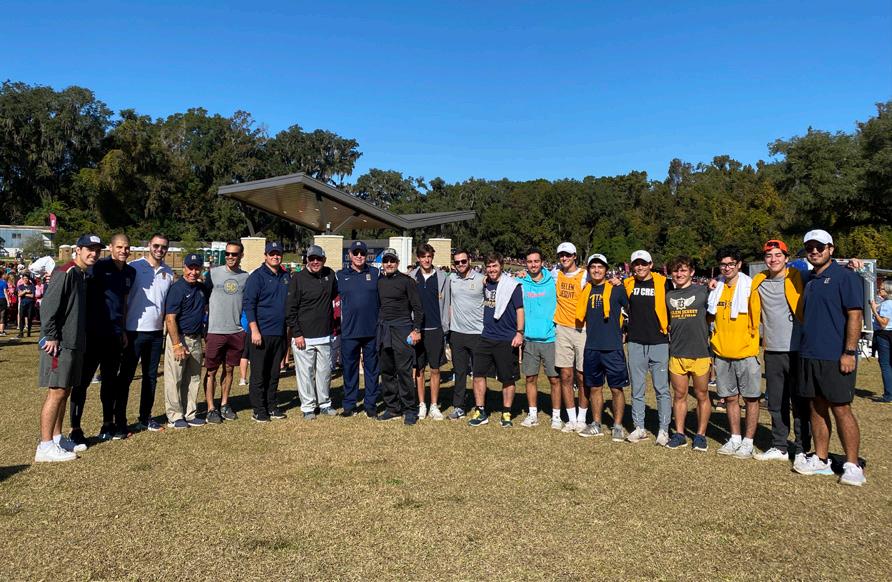
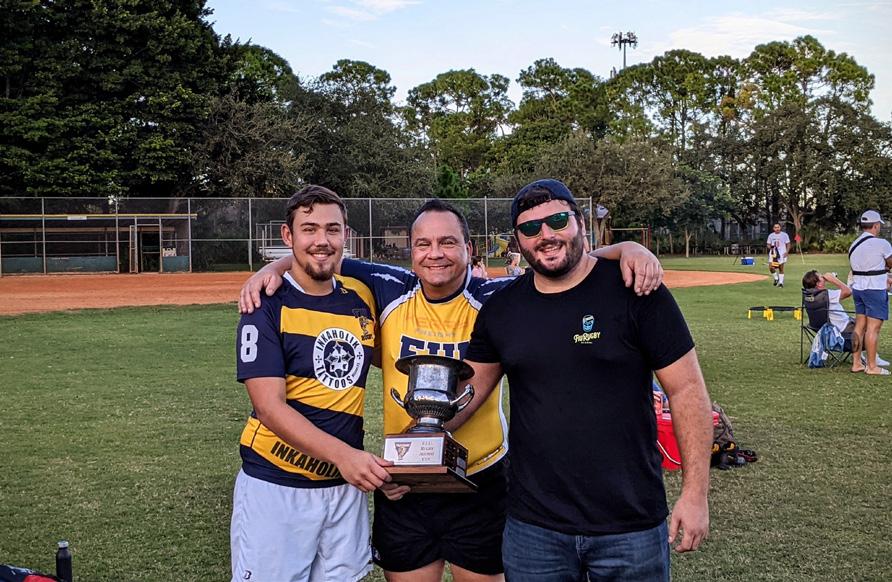
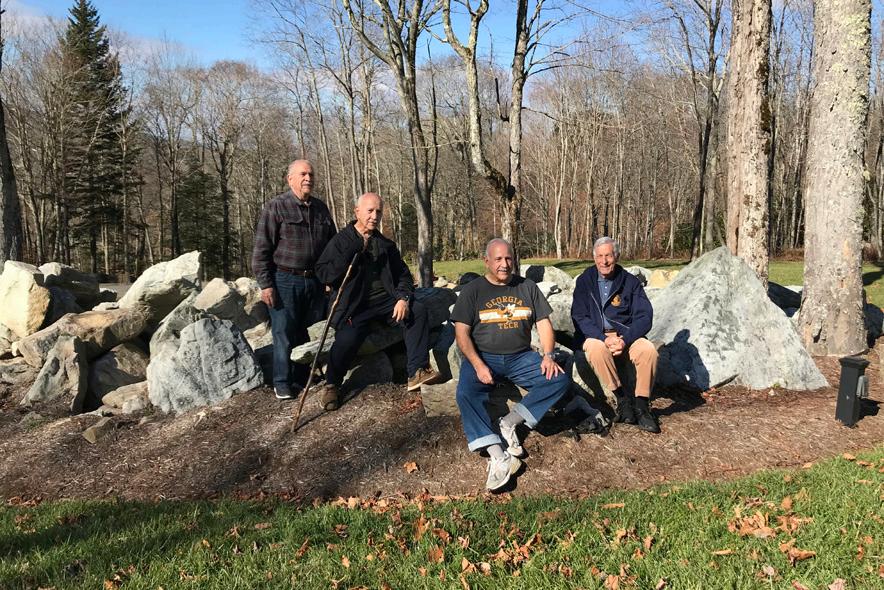

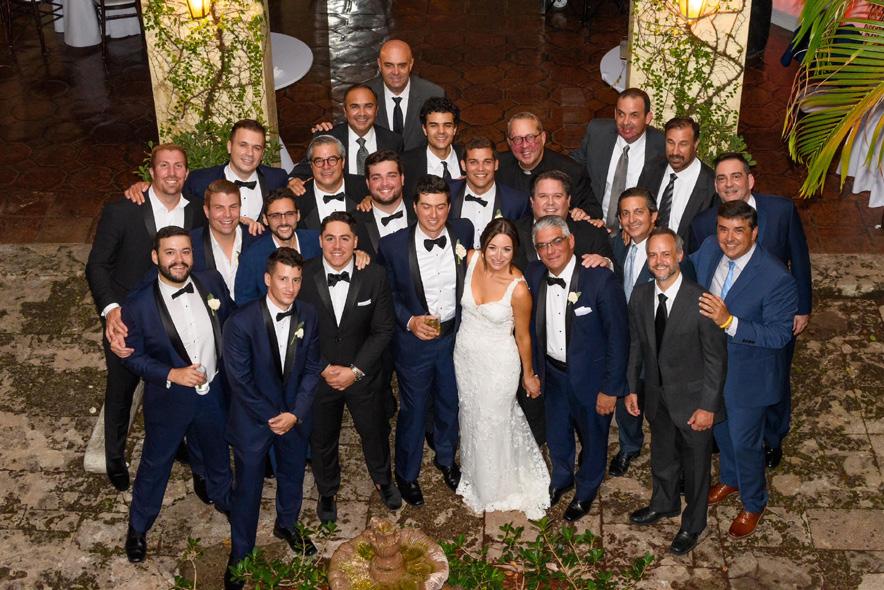
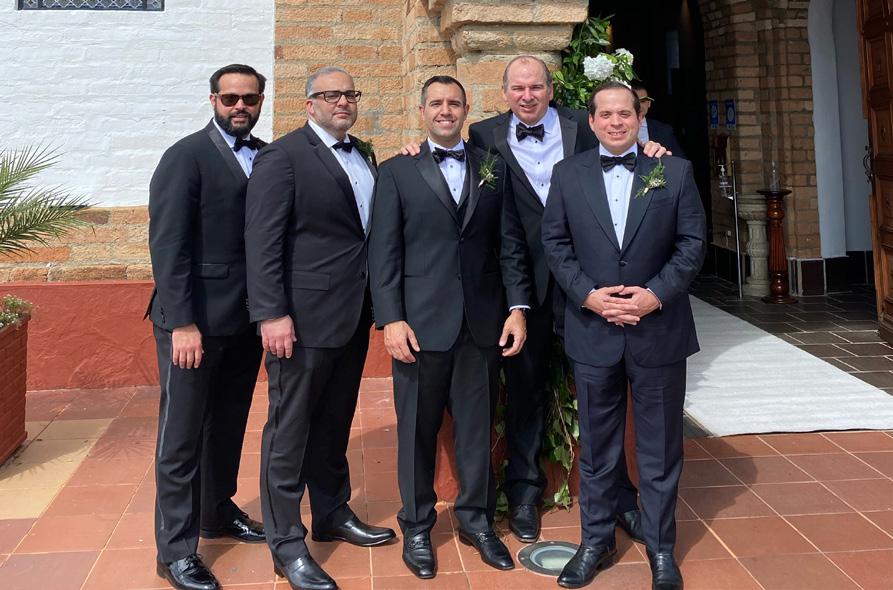
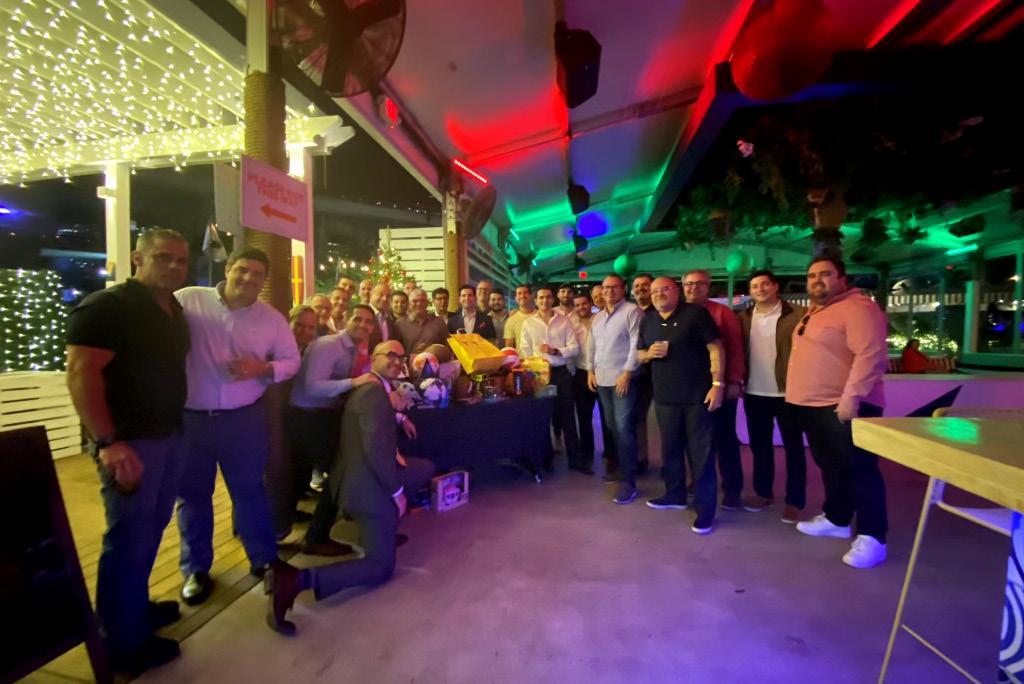




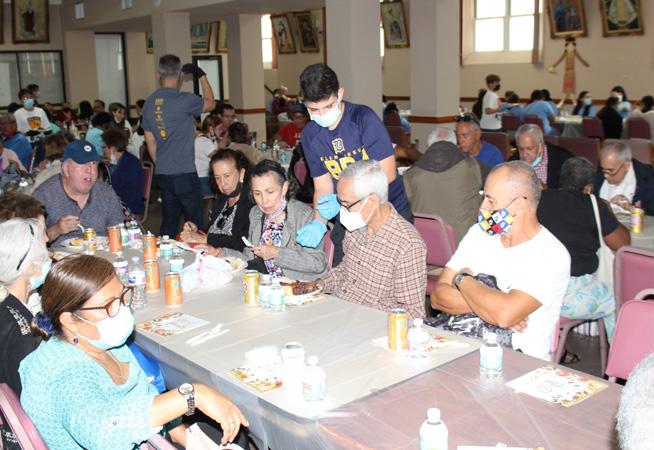
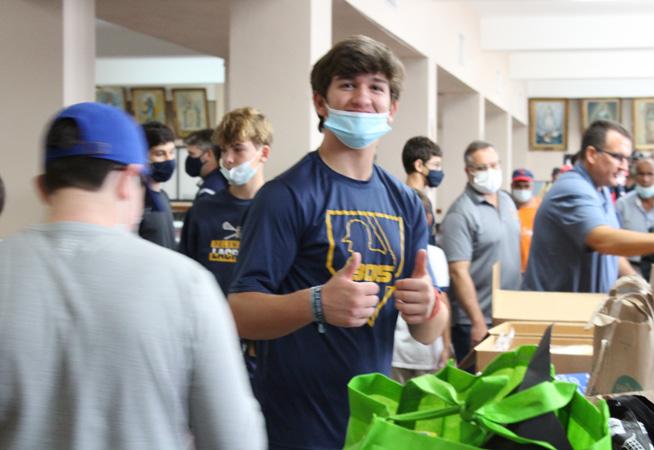
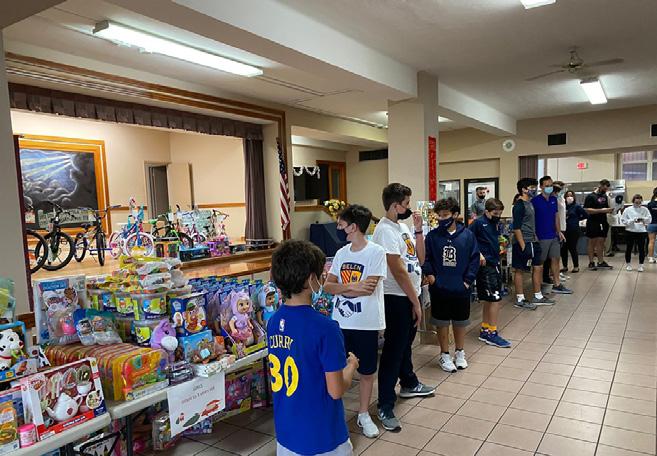
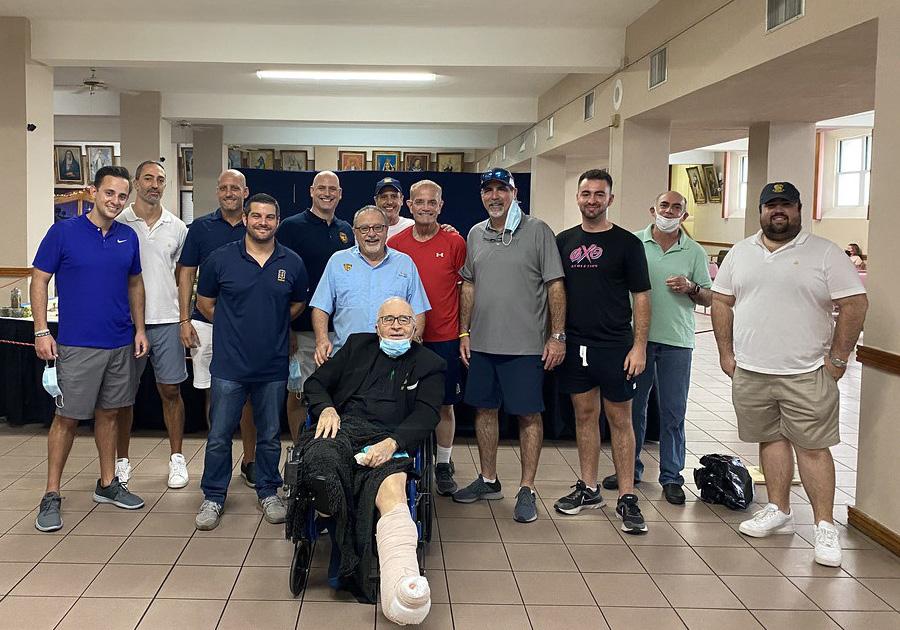
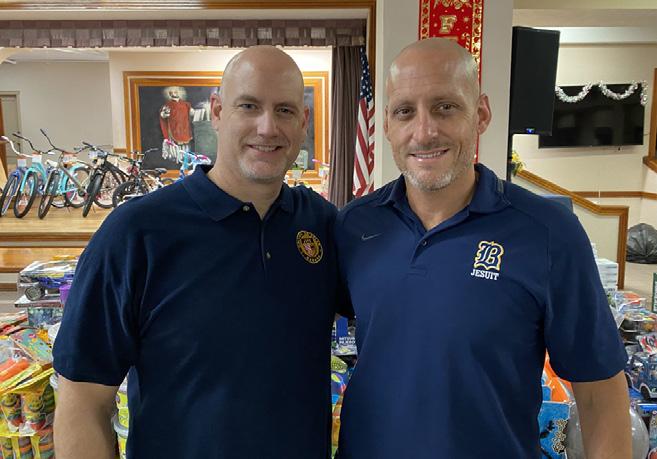
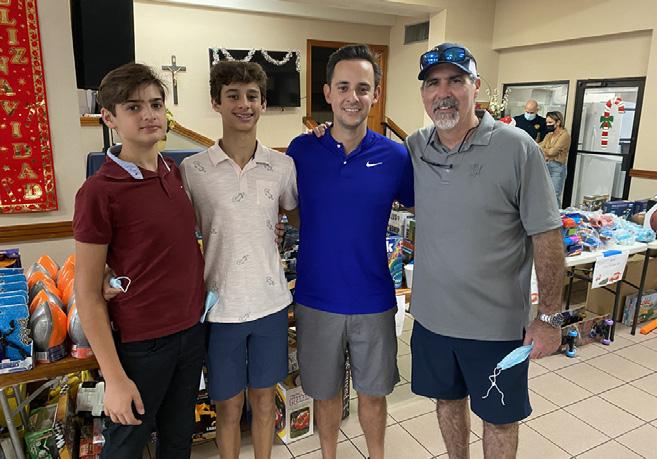
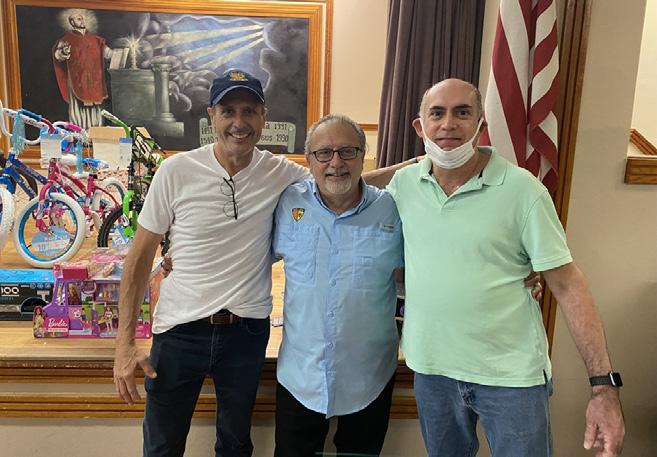
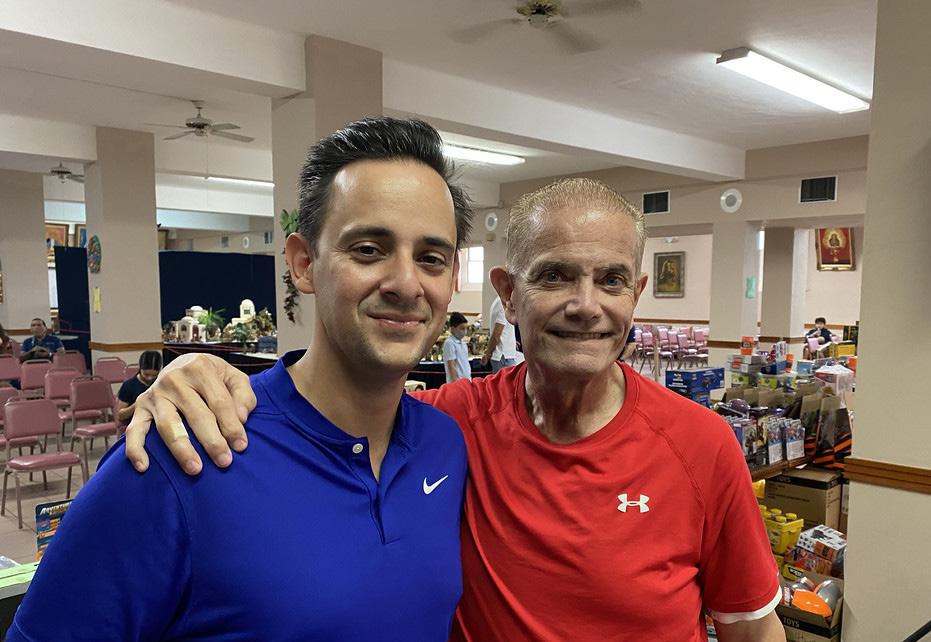

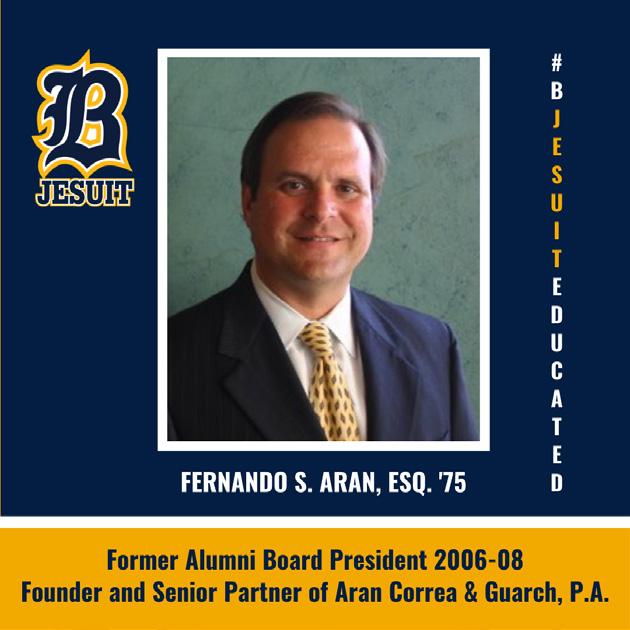
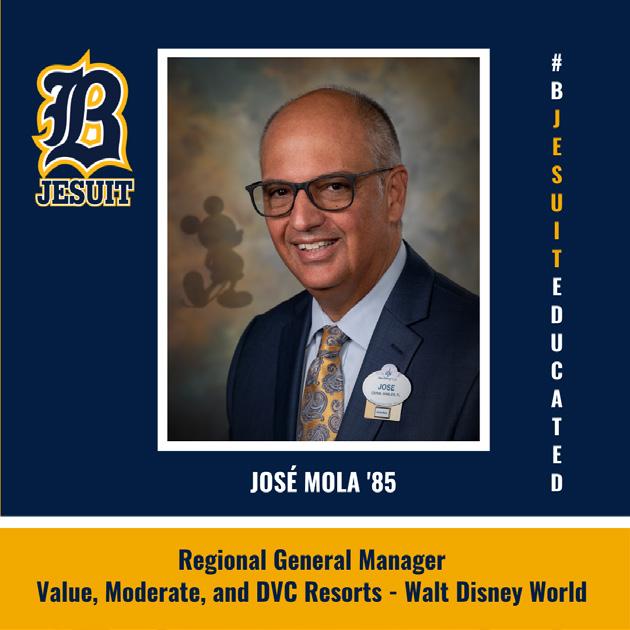

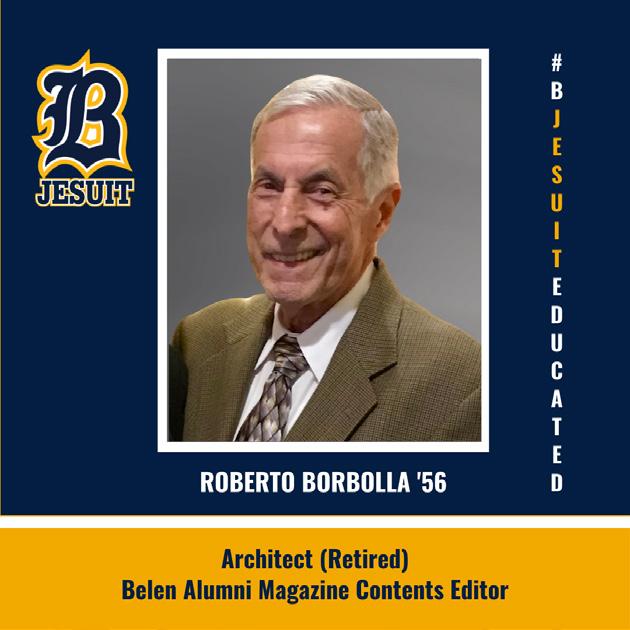
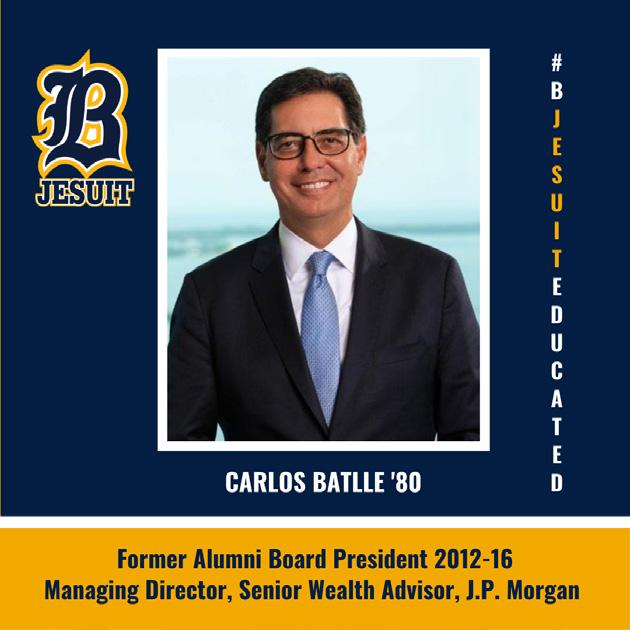
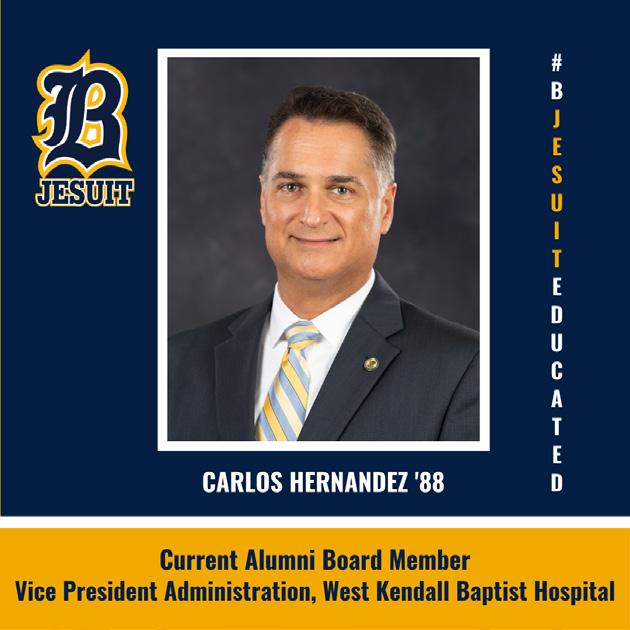
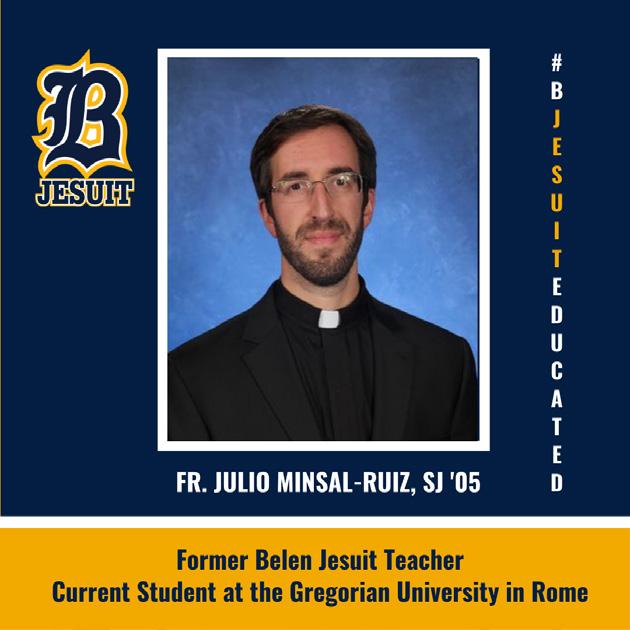
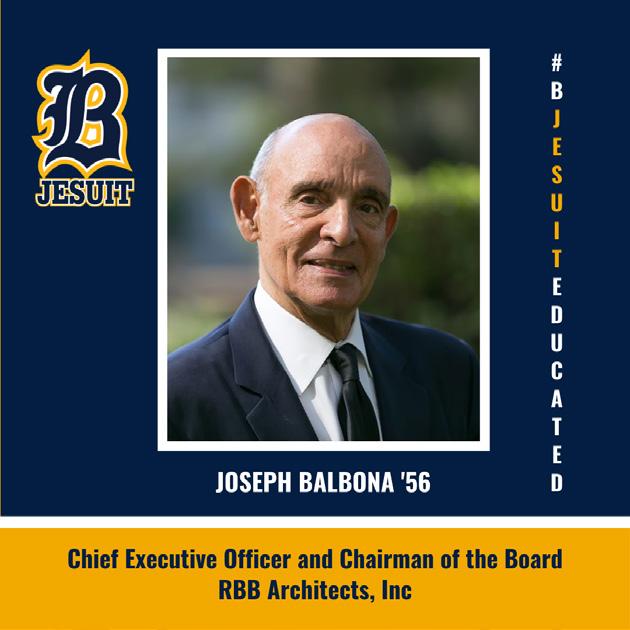


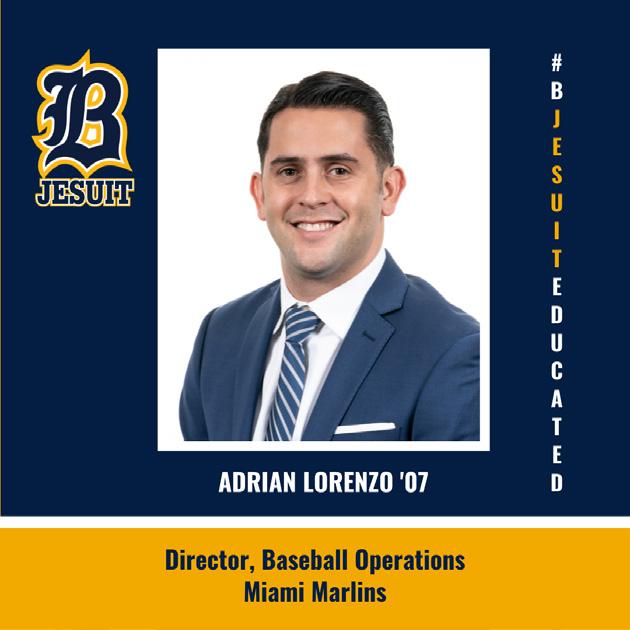
The #BJesuitEducated campaign highlights prominent alumni on our social media pages (Facebook, Twitter, and Instagram) to reinforce the Ignatian tradition of excellence in education, leadership, and service. These alumni only represent a small fraction of the thousands of young men educated at Belen in Cuba and in Miami that exemplify the Magis.
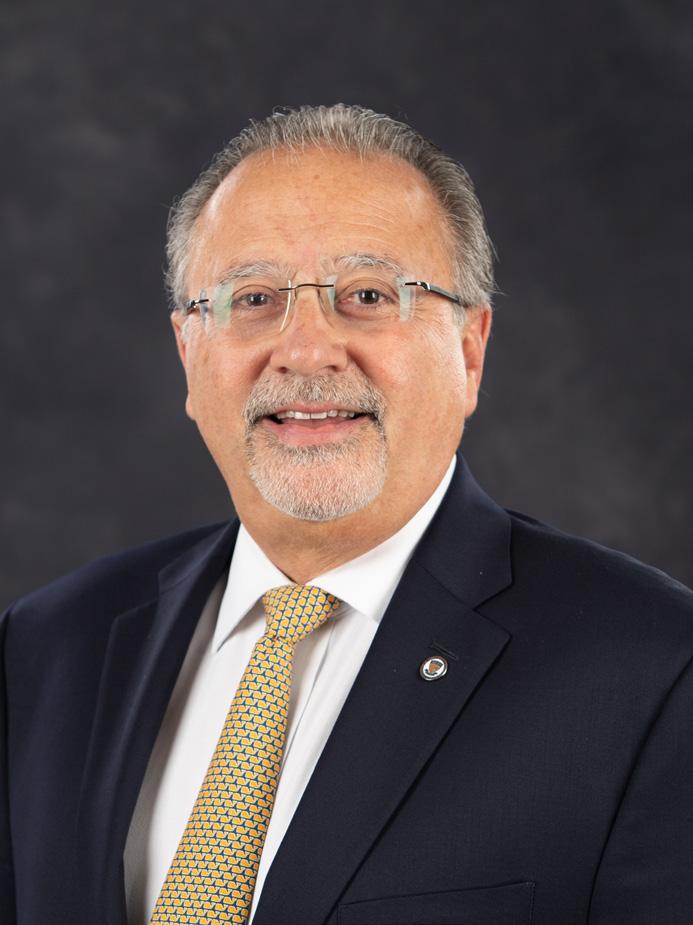
Greetings Belen Alumni,
The 2021-2022 school year for the Alumni Association can be best characterized by the word NEW. Your alumni leadership, in collaboration with Belen’s administration and Alumni Office personnel, created new and exciting initiatives and events in response to several opportunities and obstacles that presented themselves throughout the course of the year.
We have a NEW fellow alumnus in our beloved Patrick Collins. As we celebrated his 50 years of service to the school, we took the opportunity to make Mr. Collins an honorary Belen alumnus. He now joins Carlos Barquín as only the second honorary alumnus in school history. I had the privilege of being present at both celebrations which were very memorable. Both Pat and Barq said they were very humbled by the gesture, but we all know that their inclusion in our ranks is our great gain.
In July of this year, the school created a NEW position, Executive Director of Enrollment and Community Outreach, in order to further bolster the quality of our faculty and students. They named Dr. Tommy de Quesada to the post, an alumnus from the class of 1994 who bleeds blue
and gold. Although the relationship between the association and his office is still a work in progress, I am excited to see how the association can help in the success of this new venture.
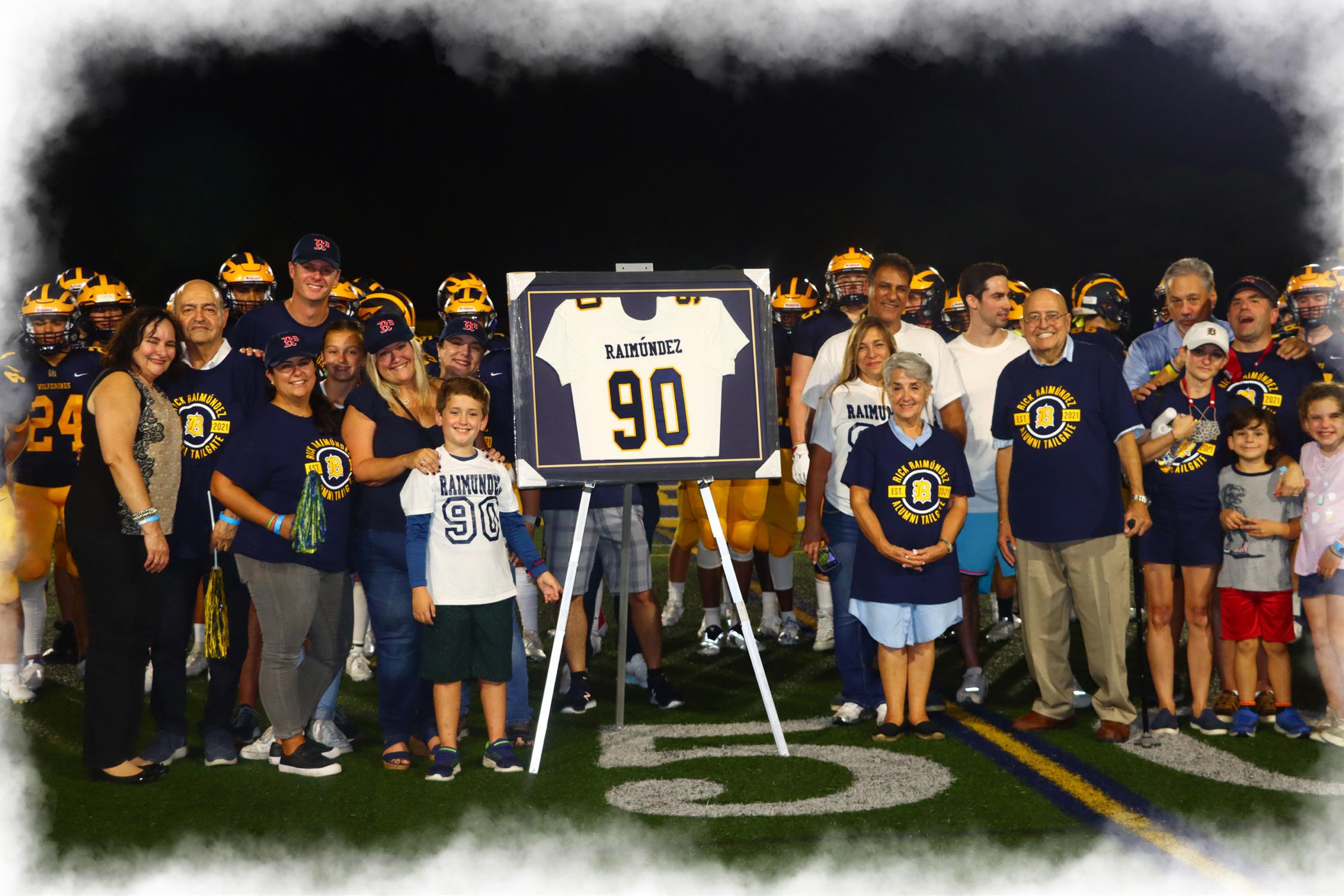
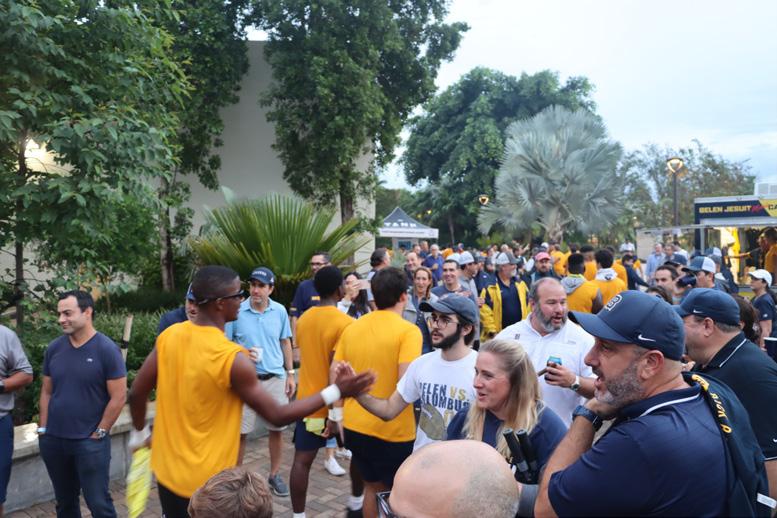
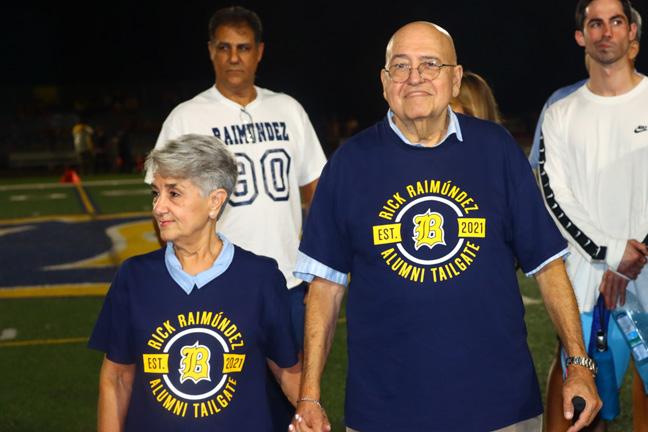
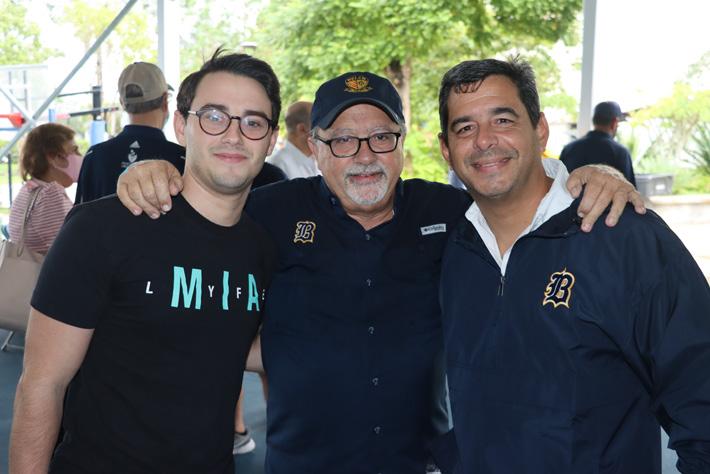
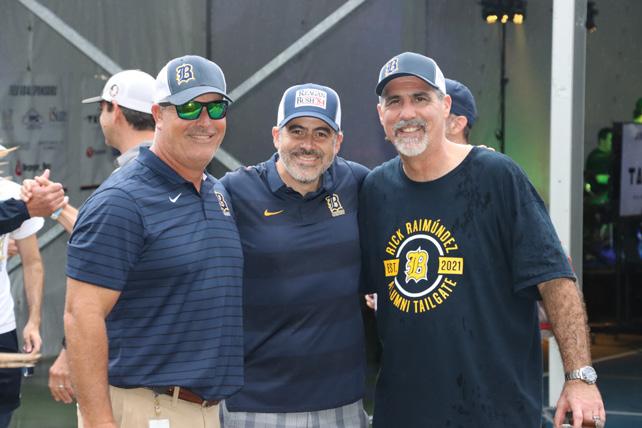
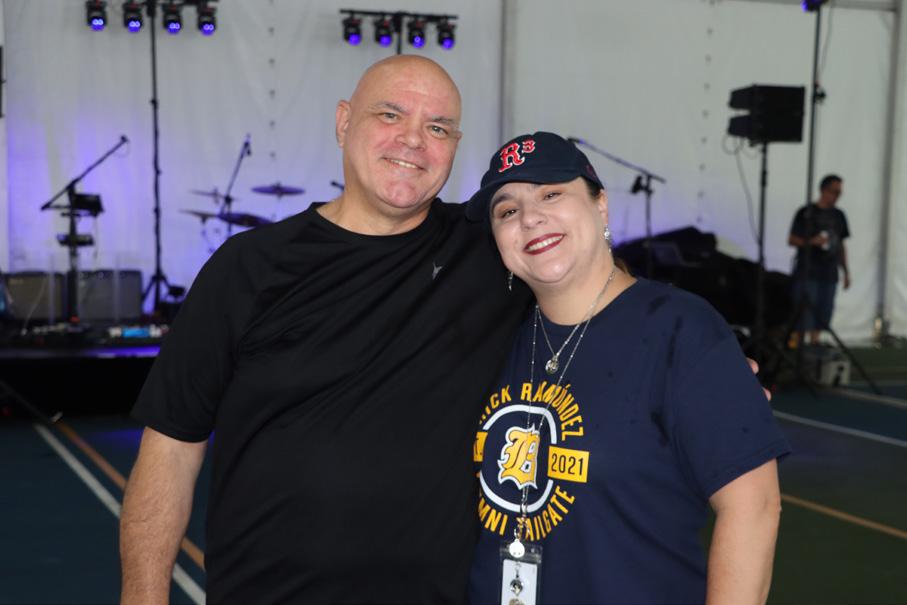
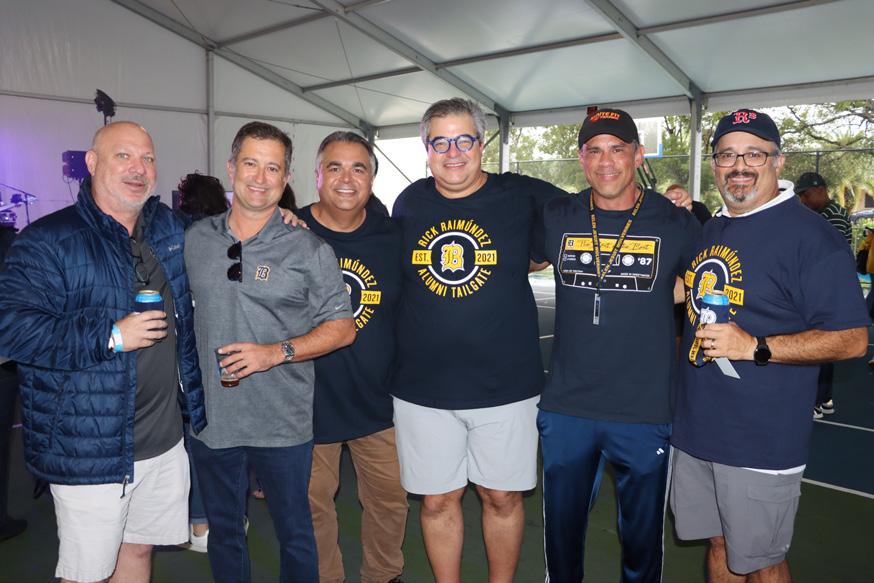
There is now a NEW Alumni Football Tailgate named after a dear departed alumnus, Rick Raimúndez ’90, who faithfully and lovingly served our association for over a decade. This new version of the Alumni Tailgate is no longer dependent on any opponent nor a “pre-season” football game in August. The new date of the Rick Raimúndez Memorial Alumni Tailgate will now always be held during Homecoming Week. Homecoming week is meant to bring the alumni back home, and to have our alumni front and center. That is as it should be.
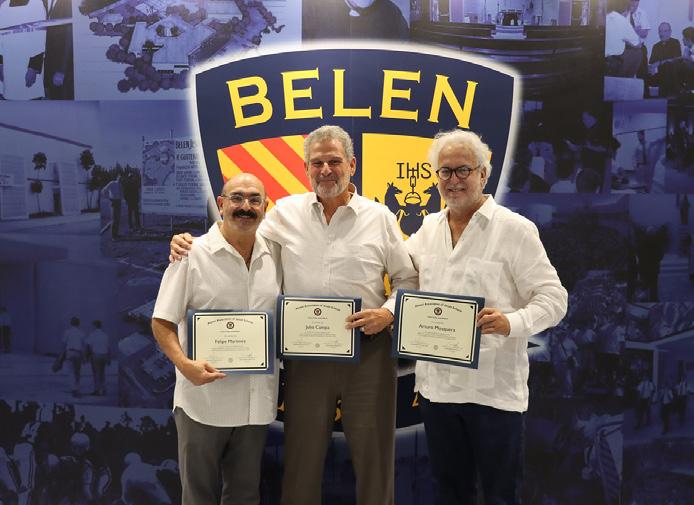
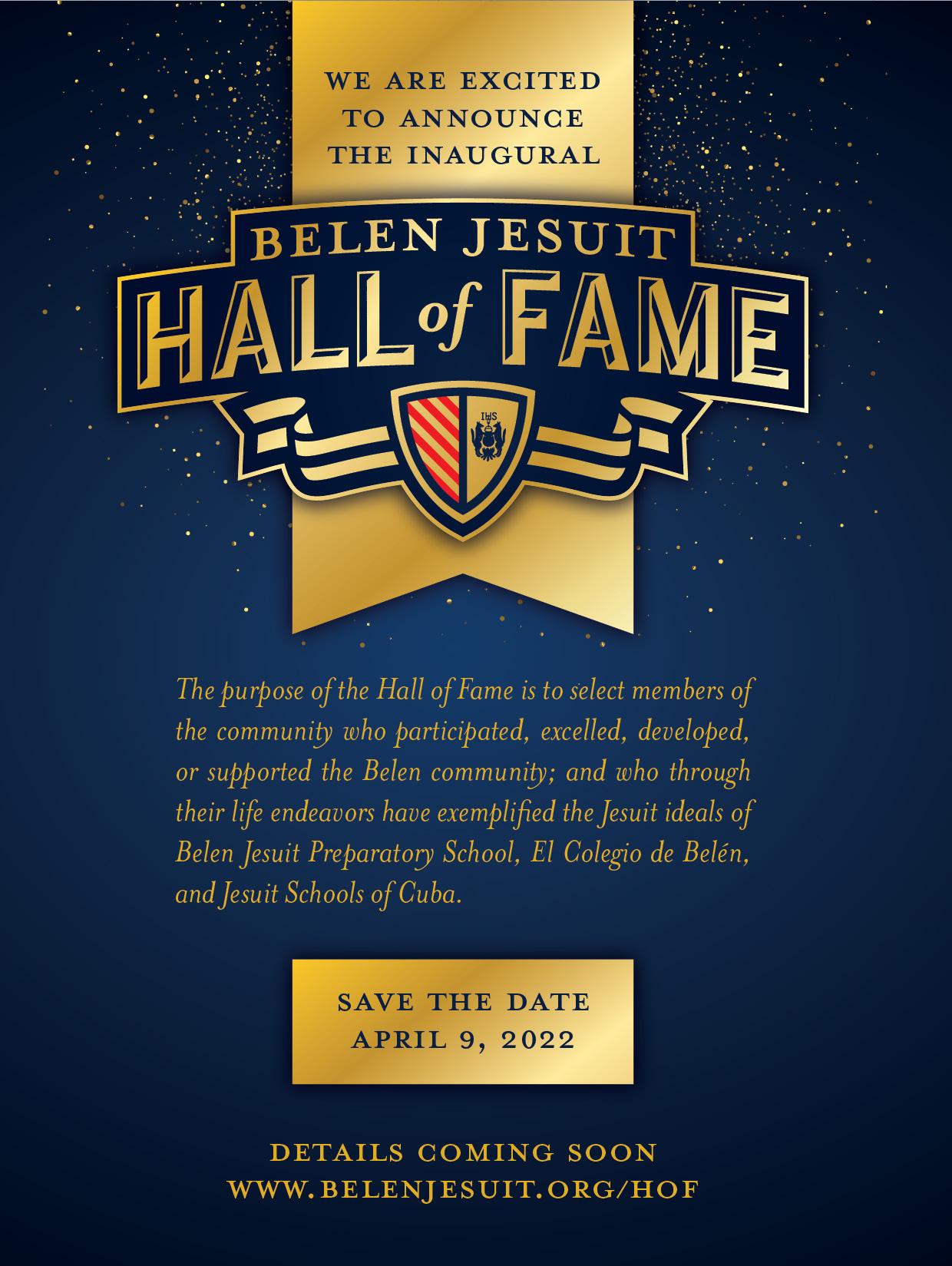
Newer still is the Belen Hall of Fame. For years, we have had the Belen Sports Hall of Fame, where our alumni have been honored for their athletic achievements. Our Board of Directors thought it was time to honor those individuals who have significantly impacted our community through their professional and career accomplishments, their community service, and their contributions to Belen. Our inaugural event will be held in the spring of 2022.
These are just some of the highlights, and there is more. During the first half of 2022, you will see new community service programs from the association. We will unveil new ways to deploy our mentoring program, Beyond Belen. The professional sections will have new tools with which to enhance the already robust networking, social, and educational events. And, of course, the great new spiritual resource- the long-awaited Our Lady of Belen Chapel will open. This will be the scene of many marriages, baptisms, and other religious ceremonies for our alumni and their families.
There is a new emphasis on collaborating effectively with all of the different departments in the school in order to deliver the best events and initiatives to our alumni. Not so new is the fact that none of this would have been possible without the enthusiastic leadership of your Alumni Board of Directors, your Professional Section Chairs, Carlos Bravo and Carlos Jiménez from our Alumni Office, and most importantly, your Class Delegates.
I encourage all of you to continue to support the Alumni Association and our beloved Belen. As always, I wish you my brothers all the best for 2022.
Un fuerte abrazo,
Crescencio J. Ruiz ’76
President Belen
Alumni Association of Jesuit Schools
From Cuba and Miami
500 Southwest 127th Avenue Miami, FL 33184