Belen Jesuit
50 YEARS OF EDUCATING MEN FOR OTHERS
16
16
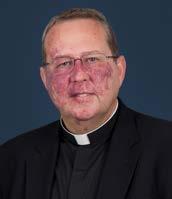
There is a popular book written by educator Robert Fulghum titled, “All I Really Need to Know I Learned in Kindergarten” (1989). The author claims the world would be a better place if adults put into practice the lessons learned as children in kindergarten. I do not disagree, but, based on my personal experience, would add a chapter to the book about the eleventh grade. Why this academic year in particular? Because of Patrick Collins.
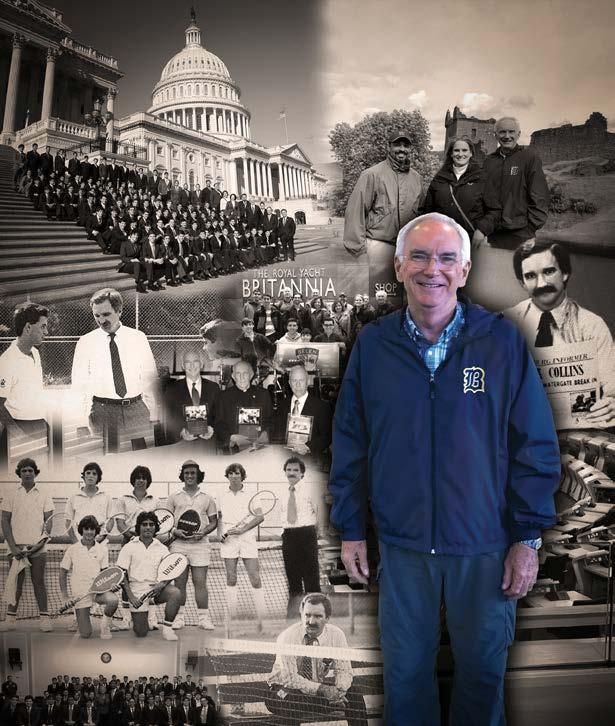
This issue of the Alumni Magazine highlights one of the most important members of the Belen Jesuit community in Miami. On the occasion of his golden anniversary, we dedicate this periodical appropriately to a man whose life has been focused on the education of men. For 50 years he has faithfully served our school as a teacher, department chairperson, Close Up and Founding of a Nation founder and moderator, tennis coach, and co-founder of the Overseas Study Program. Personally, his impact on my life as a student, priest, and educator has been significant.
I was a junior in high school and one of the most important classes I had on my schedule was U.S. Government. The teacher, of course, was Mr. Patrick Collins. My classmates and I had heard about one of the few “gringo” faculty members on
the Belen staff. Already a veteran teacher at the time, he had started walking the hallways of the school and dominating the classrooms when it was located in a warehouse in Little Havana. Mr. Collins was a bit intimidating to say the least. Teachers like Mr. Nuñez and Mr. Rodríguez, who were great teachers in their own right, spoke with the typical Cuban accent that reminded us of our parents back home, but Collins was different. His soft-spoken articulation of the English language was unlike anything we had heard before and it automatically made us realize he meant business.
I remember we were asked to read a book titled “Nuclear War: What’s in it for You?” by the Ground Zero War Foundation. The reading had to be followed by an extensive essay expressing our opinion of the book. The grade was important because, I believe, it was worth two test grades. I wrote my essay quickly the night before it was due. As you can imagine, my grade was less than stellar. What Mr. Collins returned to me was my essay filled with red pen marks indicating incomplete sentences, misused punctuations, and misspelled words (remember, this was before the world of computers and spell-check). I was devastated.
I met him in his office in order to plead my case and ask for an opportunity to make it better. He agreed and I got to work. I rewrote the essay with more care and turned it in only to get it back a couple of days later with other corrections. He asked me to write it again. Three essay versions later, he finally agreed it was a great paper. When I asked him what my grade was, he informed me it was the same as it was before. Flustered, I asked why he would make me rewrite it so many times if he never intended to change the grade. His response was simple, “Young man, what should motivate you in life to do better is to be better, not the grade.” Lesson learned.
I believe I speak for thousands of alumni in recognizing Mr. Patrick Collins as one of those teachers who impact, not simply the amount of information we carry in our brains, but profoundly impact the formative component of being men. His pedagogical goals were not ultimately our understanding of the workings of American government, but our growth in the virtues of citizenship, patriotism, responsibility, and leadership. Who we are as men is more important to him than what we know as students.
Many years removed from being a student, ordained and beginning my ministry at Belen Jesuit, I was asked by the school’s administration to give a lecture to the faculty on Ignatian pedagogy. The day after the presentation, I found a small sheet of paper on the desk of my office. On it was a quote from Leonardo da Vinci: “Wretched is the student who does not surpass his teacher.” It was followed by a signature that read, “Willie, you are not a wretched student... Pat.” Faded and creased, that slip of paper is framed and on my desk. It is a constant reminder of the true purpose of education. A purpose taught by Pat Collins.
Auspice Maria,
Fr. Willie ‘87
Fr. Guillermo M. García-Tuñón, S.J., Ed.D., '87 President
Roberto Borbolla ‘56 Alumni Content Editor
Carlos Bravo '86 Alumni Association Executive Director
Maria Virginia Deliz Communications Specialist
Felipe "Phil" Fernández '94 Executive Director of Advancement and Alumni Relations
Teresa Martínez Director of Communications
Mirna Menéndez Copy Editor
ASSOCIATION BOARD OF DIRECTORS
Crescencio Ruiz ’76 - President
Javier Mariscal ’86 - Vice President
Thomas Pla ’00 - Treasurer
Julio Jiménez ’06 - Secretary
Ramón Branger ’92
Vicente Cossío ’72
José Fernández ’99
José A. Garrido III ’99
Alberto Gutiérrez ’88
Carlos Hernández ’88
José Lopez-Varela ’87
Peter Montadas ’76
Alberto Paradela ’11
Orlando Puente ’71
Francisco “Paco” Ruiz ’73
Fr. Juan Manuel Dorta-Duque, S.J., ’40 + Emeritus Spiritual Director
Fr. Christian Sáenz, S.J., Ph.D., ’95 Alumni Association Chaplain
BELEN JESUIT ALUMNI MAGAZINE is published biannually.
Circulation: 12,250
Periodicals postage paid in Miami, FL and additional mailing points. Postmaster: Send address changes to:
Belen Alumni Office
500 Southwest 127 Avenue Miami, FL 33184
Phone: 786.621.4674 Fax: 786.621.4662 alumni@belenjesuit.org www.belenalumni.org
YEAR LVII - NO. 1


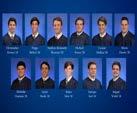
Congratulations to Christopher Alvarez, Diego Belfort, Stephen Alexander Brennan, Michael Fresco, Conner Mullins, Mario Osorio, Nicholas Oyarzun, Javier Prado, Ethan Silva, Enrique Sorí, and Miguel Walsh who have been selected by their peers as their class delegates. Due to the COVID-19 pandemic, the Alumni Pin Ceremony was unable to be held.
COMMENDED RECOGNITION BY THE NATIONAL MERIT SCHOLARSHIP CORPORATION
Sixteen seniors have been named Commended Scholars by the National Merit Scholarship Corporation (NMSC) of which six have advanced as Semifinalists. National Merit Scholarship winners of 2021 will be announced beginning in April.
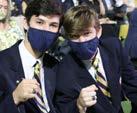
CLASS OF 2021 RING MASS
The Senior Ring Mass was held on October 27th under the lights on the Sanchez Football Field in the de la Cruz Stadium. Fr. Willie, S.J., ‚87 was the main celebrant, and Fr. Julio Minsal, S..J., ‚05 was the concelebrant.
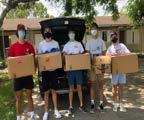
The school year began with the relaunch of our Christian Service Program. The goal is to place a greater emphasis on service at the margins and will work to implement more in-depth service-learning opportunities. Additionally, the online service board was revamped to include specific services and guidelines during the pandemic.

Freshman year is an integral and exciting time for our young men. It marks the beginning of their high school career and lays the foundation for the brotherhood they will develop for the rest of their lives. Members of the class of 2024 were able to enjoy a special „Freshman Spirit Day“ on October 14th.
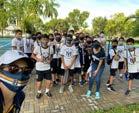
OF 2027 FIELD DAY
Our newest Wolverines had the opportunity to bond as a whole class for the first time by taking part in a field day on October 28th. Students, led by seniors and members of the faculty, played games throughout the campus.
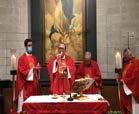
The Mass of the Holy Spirit was celebrated at the beginning of the school year on September 2nd and streamed online. The main celebrant was Fr. Willie, S.J., ‘87 and concelebrated by Fr. Julio Minsal, S.J., ‘05, Fr. Alberto García, S.J., and Fr. Guillermo Arias, S.J. The Mass was offered for the intentions of all those in the Belen Community.
On October 19th, students led a special novena to Blessed Carlos Acutis for his intercession to help heal Anthony and support his family. We continue to pray for his health and recovery and remind the community that they are invited to participate in the online daily rosary at 9 p.m. (link is on our social media profiles).
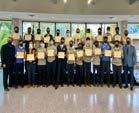
HISPANIC RECOGNITION SCHOLARS
The College Board announced that 31 Belen Jesuit seniors have been named National Hispanic Recognition Scholars. These are the students who scored in the top 2.5% on the PSAT among all Hispanic and Latino test-takers.
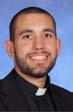

Br. Mike Martínez, S.J., ‘09, and Carlos Maza were selected for the University of Chicago’s Outstanding Educator Award. Each year, newly admitted UChicago students have the opportunity to reflect on their time in school and nominate an educator who played a significant role in their education, had a positive impact on their lives, and whose influence has brought them to where they are today.

VIRTUAL BATTLE LIKE A WOLVERINE
In light of the COVID-19 pandemic, the annual Breast Cancer Awareness 5K was held virtually. Participants were able to run on a treadmill, jog around the neighborhood, or walk around the block to support the cause. In all, thanks to the support of the community and our returning sponsors AutoNation, Inc. and the National Honor Society over $10,000 was raised.
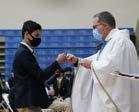
OF 2024 PIN CEREMONY
Due to the pandemic, we were unable to have the 8th Grade Pin Mass last school year. On December 9th, the class of 2024 received their pins at our gymnasium in The Roberto Goizueta Innovation Center.
November 7 & 21, 2020














The COVID-19 pandemic forced educators around the world to think outside of the box and figure out in the quickest way possible how to continue educating children despite school closures. In March of 2020, Belen Jesuit shifted to full-time distance learning for the remainder of the 2019-20 academic year. Innovation came into play and Zoom, a relatively unfamiliar platform, became the go-to for online classes.
“Over the summer, we worked tirelessly to develop our reopening plan and plot a path forward that would allow us to welcome students back in-person,” said José E. Roca ‚84, principal. “Our teachers rose to the challenge and worked throughout their summer break to learn new ways to engage and interact with students on a virtual platform. Their vocation to education has been on display at every stage during this trying time and I couldn’t be prouder of them.”
Despite the immense preparation over the summer to get the campus ready and the specialized professional development for teachers completed, the school was unable to reopen for in-person instruction on the first day of the new school year. “As Jesuit educators, we are committed to providing our students with an educational program that is not only intentionally planned for distance learning but also prepares our young men to face the challenges of tomorrow as we build God’s kingdom,” said Fr. Willie ‘87 in an email to the school community at the time.
However, the school was able to shift to its hybrid model for education in mid-September.
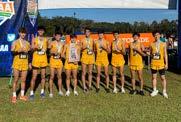
“Starting my Belen experience fully virtual mode and then coming in for part of the week with the hybrid model was great for acclimating to a new school and course load, but it was strange to meet my new classmates through a screen. Being part of the cross country team helped me as I made friends even if they were not in my cohort, making it easier for me to connect with my band of brothers,” said Davi Bodoh ‘27.
Finally, after months of anticipation, the school began a
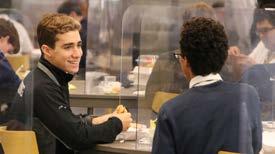
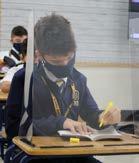
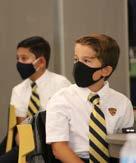
staggered return for all students on November 2nd and by November 12th, 88% of the student body was attending class in person.
“I was very excited to be returning to campus. Now I will be able to learn in a more fun and efficient way than sitting on a chair all day looking at a screen,” said Marcus Mantecon ‘25
Returning to campus, students quickly realized that the new guidelines put in place to protect them also meant getting used to a new “normal”.
“We have had to learn to live with wearing face masks all the time, only sitting with a couple of friends at lunch, standing in line socially distanced and sitting behind plexiglass,” said Adrian Delgado ‘22.
“In general, it’s been an interesting time,” said Mr. Roca. “With each step forward we’ve learned and adjusted our plan accordingly. Every decision made was made in the best interest of all the members of our community. I’m grateful for the overwhelming support of our amazing faculty, staff, students, and parents.”
The pandemic isn’t over and as such the community is reminded that the only way to protect one another from COVID-19 is to be mindful of the guidelines and follow the protocols that are in place for everyone’s safety.

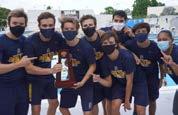
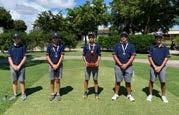
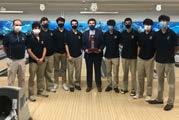

website for the full
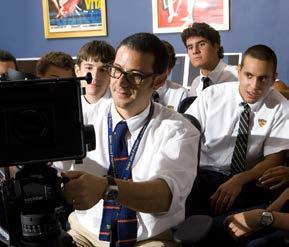
Agraduate of the Belen Jesuit class of 1992, Johnny Calderín was a quiet kid with a knack for music and media. As a student, he was involved in many clubs, participated in service projects, and was even the drummer of a Belen band.
“A few friends and I created a band while in the Alpha Club. The band had no name but would play at school football games,” Calderín recalled.
After graduation, Calderín left his nameless band drumming days behind as he headed to Emerson College in Massachusetts. He previously took a class related to film production and knew it was what he wanted to do.
“I didn’t know what I wanted to study but I knew I wanted to do something in communications. I liked being behind the scenes and dealing with the planning and the production side of things,” said Calderín.
While in college, his focus shifted to film. After college, Calderín came back to Miami and took on multiple mediarelated jobs. He freelanced making commercials, music videos, and other small productions.
A new opportunity opened up for Calderín when he was given a chance to open an independent movie
By Daniel Delgado ‚23
theater with a friend of his. “We ended up opening an independent movie theater that showed foreign and American independent films,” Calderín mentioned.
He was able to open a second theater, and everything seemed to be going uphill. After the attacks on September 11, however, American independent films had much less of an audience, and sadly in 2003, the theaters closed.
He didn’t give up, though. Johnny landed a job in the University of Miami’s film program. He was able to get his master’s degree in producing while he was at it, as well.
In 2006, Calderín was approached by Fr. Marcelino García, S.J., who was interested in creating a film program because a lot of students had expressed interest in the field. He knew Johnny Calderín was the right man for the job. After more than a decade away from his alma mater, he returned to Belen part-time and taught a small film history class. He began working full-time not long afterward. As the years progressed, the Belen film program became more advanced and intricate.
“Working at Belen was something I never thought I would do and I am eternally grateful to the Jesuits for giving me
a chance to teach and impart the lessons I have learned,” said Calderín. “It’s a privilege to be able to work with some of the most talented young men I know and seeing them grow into wonderful people. Belen is definitely a place I call home, in fact, it is my home away from home.”
“One of the most important teachers I had while at Belen in regards to my education and career development was Johnny,” said David Fonseca ‘09. “He taught me the terminology and the techniques to understand and express ideas about motion pictures. He also did it with a lot of patience, humility, and humor, and I am a better person for it.”
Today, he continues to expand the program and challenge his students with new technologies, programs, and techniques. He’s influenced numerous students and helped drive their passions for film production.
“We were basically operating from a closet, and now the program is bigger than it ever was,” said Calderín. “Being
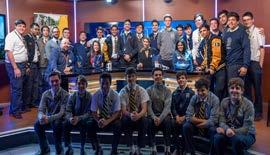
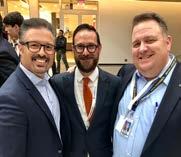
able to challenge students at every level has been a great experience. We’ve hosted table discussions, longer format shows, WBLN, short films, Spanish language programming and so much more. I’m excited for what’s to come!”
Calderín hopes his students are able to gain an appreciation for the filmmaking and television production process through his classes, as he spreads his passion for media and communication to students in both middle and high school.
“The guys that take the classes are obviously interested in media and film production to some capacity. I hope they are able to get something more out of the class, and that they’re able to take advantage of the tools that are provided to them to tell the stories they want to tell,” said Calderín. “It has been a great journey. We never had these kinds of opportunities or resources when I was a student at Belen, so the evolution of what we are now able to provide the students that have this interest is amazing.”
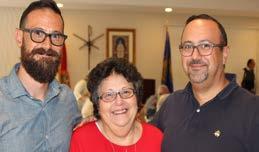
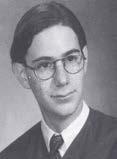

By Br. Michael A. MartÍnez, S.J. ‘09
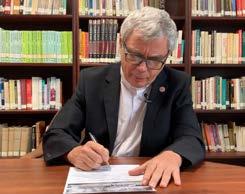
On September 1, 2020, the Superior General of the Jesuits, Fr. Arturo Sosa, S.J., missioned Fr. Martin Lenk, S.J., to become the new provincial of the Antilles Province of the Society of Jesus (Miami, Cuba, and the Dominican Republic). He succeeds Fr. Javier Vidal, S.J., who generously served from 2014-2020. The transition officially took place with a Solemn Mass in Santo Domingo, Dominican Republic on October 3, 2020, the Feast of St. Francis Borgia, S.J.
Martin Lenk was born in Germany, where he studied theology and was ordained a diocesan priest in 1985, serving in the Diocese of Mainz, Germany under Cardinal Karl Lehmann. He later went on to doctoral studies in Theology in Frankfurt. After some life-changing missionary experiences in the Dominican Republic as a diocesan priest, Lenk felt moved to join the mission of the Society of Jesus. In 1999, he decided to leave Germany and entered the Society of Jesus on September 5, 1999, in the Dominican Republic. He did his two-year novitiate as an ordained priest. He later became a professor, rector of the Juniorate-Philosophate in the Dominican Republic, and eventually rector of the Instituto Filosófico Pedro Francisco Bonó in Santo Domingo. He did his final stage of formation, known as Tertianship, in Shembaganur, India. He has served as socius to the provincial and in 2019 was named director of the Fe y Alegría Schools in the Dominican Republic.
Let us ask Our Lady of Belen to continue placing our new Father Provincial, Martin Lenk, with Her Son, Jesus, so that he too may adopt Christ’s way of proceeding in the work of the Kingdom of God.

Fr. Martin Lenk, S.J. at Gesu Catholic Church with the Miami Jesuits.
1961 Born in Germany (January 24)
1979 High School in Germany – Langen School
1980-85 Bachelors in Theology (University of Mainz) (3 years), Ludwig Maximilian University of Munich (1 year), Pontifical Seminary (Santo Domingo, DR) (1 year)
1985 Ordained Priest in Germany (June 29)
1985-89 Pastoral work in various parishes (4 years)
1989-92 Secretary to Bishop Lehmann in Germany (3 years)
1989-93 Doctorate in Theology (Sankt Georgen Graduate School of Philosophy and Theology – The Jesuit University of Frankfurt)
1992-98 Pastor of Jima Abajo Cristo Rey Parish, La Vega (DR)
1993-2019 Professor of Seminary St. Thomas Aquinas (Santo Domingo)
1998-99 Collaborated with Fe y Alegría (Santo Domingo)
1999 Entered the Society of Jesus (Novitiate) (Sept. 5th)
1999-2001 Novice in the Society of Jesus (Santiago de los Caballeros, DR)
2001-06 Pastor of Santo Domingo Savio (Los Guandules, Santo Domingo)
2006-14 Rector of Jesuit Juniorate-Philosophate San Pedro Claver (Santo Domingo, DR)
2008-18 Consultant for the Province and Delegate of Formation for the Provincial 2012 Tertianship Program (Shembaganur, India)
2013-19 Rector of Instituto Filosófico Pedro Francisco Bonó
2015-18 Socius of the Provincial 2019-20 Director of Fe y Alegría
By Peter and Yamile JimÉnez
Belen Jesuit has been an integral part of our family for almost two decades. Both of our sons, Peter John ‘10, and Gabriel ‘16, always talk about their experiences from their time at the school anytime they get together. The topics involve all aspects of student life at Belen, from teachers to after-school events. The countless memories and lifelong friendships are what they remember and cherish most about their time.
As parents, what has made us most proud and what we feel has had the biggest impact on them, is how they entered Belen as boys and left as men. The morals and principles instilled in the young men at Belen prepares them for the next step in life and makes them stand out amongst other peers. We can certainly say our boys left Belen confident in themselves and knew who they were at a much earlier age than most. As Belen is no longer as physically present in our lives and our sons’ lives as it used to be, what the school and its faculty were able to instill in them is with them every day.
When asked why one gives to Belen, the answers are vast and vary for everyone. But simply put, for us it is because Belen continues to mold young boys into men who distinguish themselves no matter the stage. The motto “Men for Others” has been something our sons have stood by from the moment Belen entered their lives. Looking out for the best interest and needs of your brothers is the reason the long-lasting friendships men make at Belen last a lifetime. While it is amazing that the motto is so engraved in the brotherhood at Belen, it is evident that this goes on to apply to relationships with significant others, co-workers, and all others these men encounter along their path.
What our family loves most about giving back to Belen is we can see the immediate impact it has on those who are currently at the school. Not many investments in this world have results that can tangibly be seen so soon. Our family is beyond blessed to contribute and give back to an institution that has done so much more than provide an education for our sons.
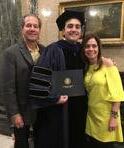
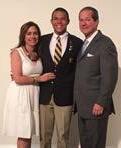
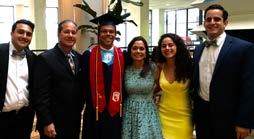
Belen prides itself in being a beacon in the community and providing financial aid to many of those who enroll. Much like the pride Belen has in providing an opportunity to those from all spectrums, the Jiménez family is proud to join the countless numbers of individuals and entities who have been able to give back to an institution that has stood for almost 170 years.
We encourage you to join us in giving back to the school we all love so much. No gift is ever too small and every contribution is appreciated.
Each generation of Belen men has developed its own special way to share experiences as Wolverines, from Father Cartaya‘s jokes to Father Willie‚s “To The Band of Brothers„ column. Now, a new generation of Belen storytellers is paving the way to reach a greater audience than ever before with the Because Belen Podcast, hosted by Bryan Herrera ‚06 and Jordan Sánchez ‚06.
In the midst of the pandemic, the Office of the Alumni Association and the Board of Directors knew it was vital to keep the brotherhood connected and supporting each other in their work. It was during one such Alumni Virtual Event (AVE) that Herrera realized that he had the means and the skills to do just that. “I saw the excitement this event brought to the speakers and the viewers. It hit me right then and there that the Belen community had so much value, resources, experience, and overall knowledge that they were looking to pass on, however, didn‚t have many means by which to do so.„
Herrera tapped his classmate and fellow entertainment industry professional, Jordan Sánchez ‚06, and pitched him the idea.
“Bryan and I have worked together in the past on different entertainment-based projects. So when he called me to pitch a Belen-based podcast idea, I was immediately interested,„ said Sánchez. “I thought this was a no-brainer. I also thought it would be very fitting for Belen to move into the podcast space, as Belen has always been on the cutting edge of technology and communications.„
A podcast was the perfect platform to share Belen‚s storied past, keep up with current issues facing the greater community and look to the future with up-and-coming Belen legends.
Herrera has been excited at the prospect, “We hope that Belen Alumni can walk away with a few laughs, valuable information about the Belen community, and as a way to connect with one another either by reminiscing on their time at Belen. I know that while producing these episodes, different classmates pop into my head, and immediately after the podcast, I reach out to them. I hope that this is a common effect for all alumni regardless of the year, and this podcast can be a conversation starter between the Belen family that may not speak as often as they would like.„
That integral connection is why the podcast was named “Because Belen.„ Jordan Sánchez elaborates, “For me, Belen has
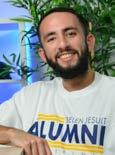
always been a place to hone and refine your real-world skills, but, most importantly, to better yourself as a human being. ‘Because Belen‚ simply signifies those things that stay with you forever. Work ethic, discipline, and brotherhood are the things that Belen helped me develop. But the most important thing I received because of my time here is the desire and need to be a man for others. Our motto, ‘Men For Others,‚ is the ultimate embodiment of charity, success, discipline, empathy, and respect. Because of Belen, I learned that true success means nothing if you aren’t giving back.„
The response across the generations has been incredible. In just 12 short weeks, over 2,000 listeners have logged onto Apple Podcasts and Spotify to listen to the podcast.
“You know alumni are listening when they call asking about the next podcast and start giving you ideas for future ones,„ shared Carlos Bravo ‚86, executive director of the Alumni Association.
Listener Nicolás Roca ‚16 shares why he‚s a fan, “The podcast is very intriguing. Listening to the podcast feels like a curtain being opened to behind the scenes of the history of Belen. The hosts bring great energy to each episode. My favorite episode so far had to be the one featuring Mr. Collins and Mr. Cleveland. The stories of how they ended up getting hired at Belen, and the experiences they have had while working at the school for the past decades were unbelievable.„
This podcast is also for future alumni, the students that are
following in the 166-year tradition of living out their Belen story. Herrera hopes to encourage young Wolverines, “We hope that the younger generations can walk away with a few messages that I know I personally struggled with growing up, which is that failure is not an option, it is the ONLY option. What this means to me is that so many people are scared to take a shot because of the fear of missing it. But the only way to get better at something is trying, failing, learning, getting better, and trying again. On this podcast we touch on the success stories the guests are sharing, but also the journey it took them to get there. Everybody always wants to talk about the finish line and how they are in first
place. But we seldom hear about the countless hours of practice, failure, and disappointment along the way, that got them there.„
Sánchez adds, “I hope that students will be able to hear the success stories of those who went to Belen and feel inspired to take on the challenges of the future. I hope teachers and faculty will find an efficient medium of communication for Belen happenings. I hope parents find this podcast to be a window into the lives of their sons who attend Belen. And, for everyone else listening, I hope this intensifies the beam of light that emits from Belen as a place (and community) of welcoming, friendship, and leadership.„










By
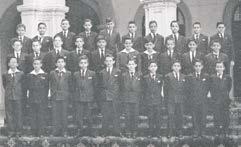
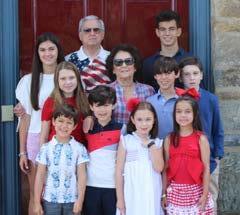
Though he prefers to give back quietly and without fanfare, the internet makes it easy to learn about Armando Codina, his wife Margarita, and their family’s philanthropic endeavors. Most notably, in 2000 Codina was the recipient of the American Red Cross Humanitarian of the Year Award. In 2016, Margarita and he were the recipients of the United Way of Miami-Dade’s prestigious Tocqueville Award for Outstanding Philanthropy.
”This country has been extraordinarily good to me and Miami has been extraordinarily good to me too,” Codina said, “There is not a city that I can think of in the United States that would have been as inviting to us Cuban-Americans. To whom much is given much is expected. So giving something back is the least that I can do.”
He is, among many other things, the founder and executive chairman of a real estate investment and development firm, Codina Partners, LLC. Though he is a member of the class of 1965, Codina didn’t graduate from Belen. Instead, his time at Havana’s ‘palacio de la educación’ was cut short by Fidel Castro’s communist takeover of Cuba.
“I hate to tell you what I remember most about Belén because I don ‚t think that‘s what people want to hear,” he said with a laugh. “The Tropicana was on the other side of the wall and at times I used to sneak over to watch the rehearsals during the day.”
And to think that Wolverines today — like Armando’s current 6th and 9th-grade grandsons — might get excited about walking across 8th street to eat at Wajiro’s.
Of course, the excitement came to a screeching halt when the school was taken over by the Castro dictatorship, and the Jesuits were expelled from the island. After Armando came to the United States as part of Operation Peter Pan, he spent time at Camp Matecumbe (a temporary shelter in South Miami), and three foster homes, before finally being reunited with his mother during his junior year at DePaul Catholic High School in Wayne, New Jersey. He finished high school at Bishop Kenny High School in Jacksonville, Florida. Armando worked two jobs while he lived with his
mom and didn’t go the college route. Still, he was fascinated by computers, and his work at banks showed him there was an opportunity in helping the medical industry shift to automation. In 1970, he moved to Miami and founded a medical billing company, which he sold in 1978. Wanting to engage with his community, he decided to try politics and led George H.W. Bush’s Florida Republican primary run against Ronald Reagan.
“Fortunately, during that campaign, I got cured of politics,” he said. “Luckily for Miami, I came to the conclusion that politics wasn’t for me.”
His venture in commercial real estate, Codina Group, was built on partnerships with and investments from some of the doctors he had come to know in his previous business. Armando built this new firm, which got off the ground with a particular focus on medical buildings, into a success and eventually sold it to Florida East Coast Industries. Armando stayed in real estate development, expanding his footprint into residential properties. In 2009, with his daughter Ana-Marie Codina Barlick he founded Codina Partners. The Codina Partners portfolio consists of residential, commercial and mixeduse projects including the over one-billion-dollar investment in Downtown Doral.
For Codina, thriving in business — which extended beyond real estate, as he has been on the boards of BellSouth, Home Depot, and General Motors, to name a few — also meant an increased capacity to engage with and give back to his community. “While I did not get involved in politics any further, I did become very involved in civic life in Miami,” said Codina. “I was involved with the chamber of commerce, the rebuilding after Hurricane Andrew, and I led the fight against casino gambling in Florida twice. So I‘ve been very involved civically.”
At the heart of his stellar business success is the staunch reminder of that 14-year old boy who came to Miami alone. He has not forgotten his roots, and continues to sow seeds of greatness in the legacy of his four accomplished daughters, Ana, Alexandra, Andria and Amanda and his grandchildren.
By Austin San Juan ‘21
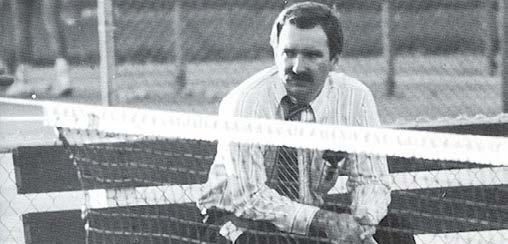
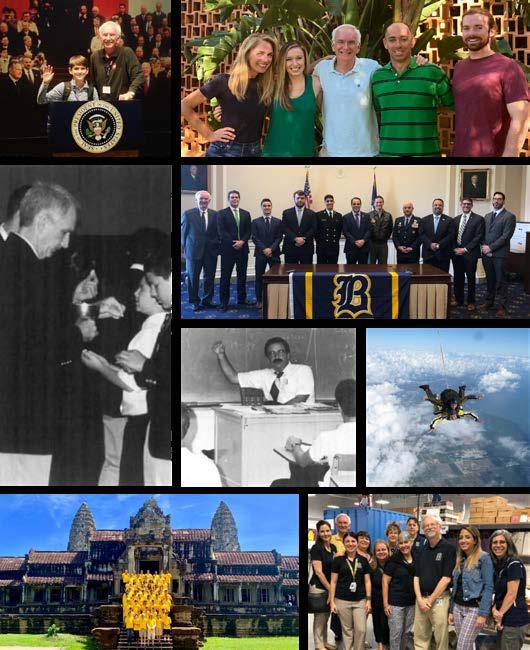
In no individual is the intimate connection between citizenship and faith more evident than in Mr. Patrick Collins. Through fifty years of service and storytelling, Mr. Collins (or “Pat,” depending on who you ask) has left an irrevocable mark on the spirit of Belen. From Student Body President at Archbishop Curley High School, to Resident Assistant at Spring Hill College, to Chairman of the Belen Social Studies department for 45 years, Mr. Collins has performed service in a plethora of ways. The common denominator among these diverse roles? Selfless excellence and a commitment to leadership.
Mr. Collins started at Belen in 1971, the very same year he graduated from Spring Hill. He adopted the role of Chairperson of the newly formed Social Studies Department within a single month, not surprising considering his natural capability for leadership and the small size of the Little Havana campus at the time. It is notable that Mr. Collins, as he admits on the “Because Belen” podcast, “did not know a lick” of Spanish—the first language of the majority of his students. He was
an Irish-Catholic teaching about democracy and our government to many students who had only grown up in the communist dictatorship of Fidel Castro. Mr. Collins provided many students their first exposure to American Democracy and civic engagement. Acutely aware of this, and naturally motivated to improve the Belen learning experience, Mr. Collins was able to pioneer the relationship between the CloseUp Foundation and Belen, starting in 1975. This program has allowed thousands of Belen students to experience the nation’s capital, many of whom had never experienced the Mecca of American government. Even within the intricately planned programming, CloseUp Foundation Vice-president Jodi Miteva notes that Mr. Collins always makes an additional effort to enrich students’ program experience, most significantly through meetings with Belen alumni. She asserts that this is not a typical gesture among other CloseUp groups, which reinforces her impression of Mr. Collins as someone with an indomitable ability to inspire and motivate.
The year 1975 was fruitful for Mr. Collins, as he also founded the Varsity tennis team that year, acting as Head Coach for the sport in which he competed throughout his adolescence. It is in this role that Cesar Conde ‘91, Chairman of NBC Universal, first came to know Mr. Collins—Conde still refers to Mr. Collins as “Coach Collins” today. He recalls being moved by Mr. Collins’ constant emphasis on simultaneous decency and ambition, even in competition. “He helped teach me values that I try to live by to this day,” said Conde. He recognizes the “incredible impact on my life” that Mr. Collins contributed within and beyond the classroom, especially in introducing him to the concepts of free press and civic engagement, which he continually practices today. While Cesar Conde is certainly an exceptional example of a student-athlete whose success is owed partially to Mr. Collins’ teachings, he is certainly not the only one. Coach Barquin, or “Barq” as he is amicably referred to, relays this impact on a multitude of alumni: “their success in the professional world, I am sure, also had a lot to do with his teachings.” Barq, who knows a thing or two about longevity at Belen, attributes this to the way Mr. Collins “projects himself as both teacher and human being.”
„ Storytelling does not just define Mr. Collins’ teaching philosophy, but also his approach with his students.
As chairperson and educator within Belen, Mr. Collins has epitomized openness and innovation. In his 45 years as chairperson, he supported the founding and kindling of an abundance of programs (over 20!) and relationships, many of which persist today. Mr. Collins was able to forge one of these relationships with Ileana Ros-Lehtinen, a twenty-year representative of Florida’s Twenty-seventh Congressional District. Initiated by means of the CloseUp trips, Mr. Collins and Congresswoman Ros-Lehtinen developed an ongoing partnership that, among other gains, allowed Belen students to interact more closely with the Congresswoman and her office than would be possible otherwise. Ros-Lehtinen expressed that she “shares in his passion for education and finds him to be a most exceptional instructor and mentor.”
Another major program that began under Mr. Collins is that of the Overseas Study Program (OSP). In 1994, when economics teacher Mr. Charles Cleveland approached Mr. Collins with the idea of a study abroad program to expand students’ horizons, Mr. Collins instantly saw
this as another opportunity for Belen students to have valuable learning experiences beyond the classroom. He readily approved this program and later expanded upon it to help found the Taiwan Exchange Program as well. As with CloseUp, Mr. Collins saw an opportunity to advance the quality of education for those who may never have experienced a culture beyond their own.
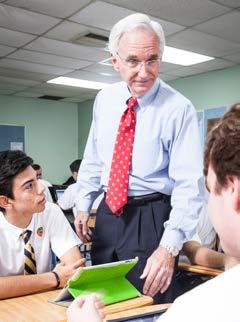
Mrs. Carol Vila, a coworker of Mr. Collins for 46 of his 50 years, shared how willing Mr. Collins was to embrace the radical shift from whiteboard to Smartboard. He justified this adaptability by saying “I do not like to waste any resource provided to me,” which manifestly applies far beyond his embrace of new technology and teaching methodology. Teaching in a virtual setting has not affected Mr. Collins’ usual candor.
Storytelling does not just define Mr. Collins’ teaching philosophy, but also his approach to students. He treats every interaction with students not as an isolated experience in their stories, but as part of a larger narrative; he acknowledges that they will be among Belen’s illustrious list of alumni, and teaches them according to this standard of excellence. In fact, it is this focus on his students beyond the classroom (through civics and otherwise) that has allowed him to forge relationships
with many of Belen’s most notable alumni. One such example is Joseph Zumpano Esq. ‘87, who believes Mr. Collins “formed the bedrock of social awareness and social conscience” for both him and his brother, Gian Zumpano ‘86, who names the recently christened Aquatic Center. Zumpano is a high-powered attorney and member of the Council on Foreign Relations whose own career exemplifies public service.
Daniel de Varona Brennan ‘16 was also moved by Mr. Collins’ AP US Government and Politics class, as well as the CloseUp trip, to pursue studies into US policy. “He provided me with the vocabulary to practice this calling I already felt,” said Brennan. Now on a full scholarship at the University of Oxford, Brennan realizes just how
Education:
• Archbishop Curley High School, Miami (1967)
• Spring Hill College (B.A. History, Secondary Education), Mobile (1971)
• Barry University (M.S. Administration in Secondary Ed.), Miami (1975)
Teaching:
• Belen Jesuit Preparatory School (1971present), 50 years
• Chairman, Social Studies Department (1971-2016), 45 years
• PROGRAMS CREATED IN THE SSD: Close Up, Overseas Study Program, Model United Nations, Latin American History Club, Senior Class Trip to Latin America, Taiwan Foreign Exchange Program, Founding of a Nation Program, Congressional Internship Program, Court Observer Program, Patriots Program, Adopt a Platoon, USS GRIDLEY Commission, Committee, High School Foreign Affairs Forum, Holocaust Survivors, Conference, Martin Luther King Day Observance, Social Studie Knowledge Bowl, Geography Bee, National History Bowl, Civics Class Tour of Miami-Dade County Corrections Center, Rho Kappa Honor Society
important it was to hear a “personal and relatable” side of politics and government, all attributable to Mr. Collins’ treatment of history and the “characters” within it. Mr. Collins’ role in these über-successful alumni’s formations are two of many testaments to his mentorship and ability to touch lives. Former Belen civics teacher Mr. Heriberto Cabada ‘99 summarized the matter perfectly and plainly: “Mr. Collins is a master of education.”
Now in his fiftieth year of exemplary education at Belen, Mr. Collins continues to practice and pursue the common tenets of both good Catholicism and good citizenship: knowledge, faith, and service. He also persists in nurturing a sustained passion for government and civic engagement, which is beautifully evident in the classroom and beyond.
Coaching:
• Founded Varsity Tennis (1975)
• Varsity Tennis Coach (1975-2007)
• Founded Middle School Tennis (1985)
• Middle School Tennis Coach (19852007)
• Belen Sports Hall of Fame Lifetime Achievement Award (2010)
Teaching-Related Experiences:
• Founded Close Up high school program (1975)
• Founded Close Up middle school program (2016)
• Close Up Representative to the Pacific Rim Conference in San Francisco (1988)
• Linda Myers Chozen Award for Teaching Excellence in Civic Education by the Close Up Foundation (2001)
• Close Up Foundation Educator Hall of Fame (2015)
• Lyndon B. Johnson Congressional Intern Fellowship in Washington, D.C. (1982)
• Congressman Dante Fascell Citizen Rating Board for the United States Service Academies (1980-1990)
• Coordinator of three nationally televised C-SPAN/Close Up Foundation seminars from Belen (1980)
• Wake Forest University School of Law
Fellowship to study the United States Constitution at WFU (1987)
• Member of the Commission on the Bicentennial of the United States
• Constitution in Washington, D.C. (1988)
• Faculty Representative at Society of Jesus Colloquium on Education Wernersville, PA (1980)
• Faculty Representative at Society of Jesus Forum on Education in Dallas, TX (1992)
• Faculty Representative at Society of Jesus Conference on Technology in Phoenix, AZ (2004)
• Outstanding Educator for having most influenced Merrill Presidential
• Scholar Pablo Hernandez Villalon ’86 in the School of Architecture at Cornell University (1991)
• Founded the Tombola Dunking Booth Hall of Fame (1995)
• Cervantes Outstanding Educator Award from Nova Southeastern University (2000)
• Collifontanum Award for Professional Achievement from Spring Hill College (2006)
• United States Southern Command for the Joint Civilian Orientation
• Conference (JCOC) to observe Camp Delta in Guantanamo, Cuba (August 15, 2007)
• U.S. Army Golden Knights tandem skydive above Homestead Air Reserve Base (November 15, 2011)
Ricardo Raimundez ‚90
Rick Raimundez ’90 passed away on March 31, 2020. Rick served as our Alumni Association’s Director of Alumni Services since 2006. He had a God-given talent to turn a difficult situation into a more bearable one. Rick also had a way with words and an uncanny ability to recall past events, historical facts, and movie lines. He was a beloved colleague, great friend, and an incredible father and husband.
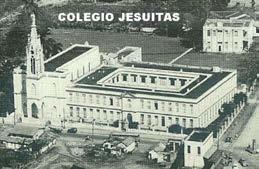
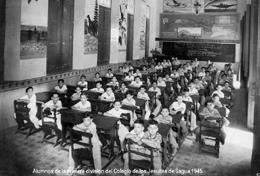
The Alumni Association includes alumni from the Jesuit Schools in Cuba and Miami: Colegio de Belén en Marianao, Escuela Electromecánica de Belén en Marianao, Colegio Sagrado Corazón de Jesús en Sagua, El Colegio de Nuestra Señora de los Dolores en Santiago, Colegio de Nuestra Señora de Monserrat en Cienfuegos, Belen Jesuit Preparatory School in Miami.
What can you tell us about your hometown?
The following is a reflection by his best friend and classmate Alex Zequeira ’90:
I grew up in Sagua la Grande, a city located in Las Villas, Cuba. In 1952, there were 36,000 people living in the city. I remember it being very windy, but the breeze was a blessing to help us with the heat. The beaches had white sand and very blue water. It was beautiful.
What was your experience with the Jesuits in Sagua?
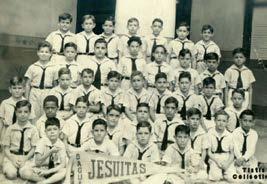
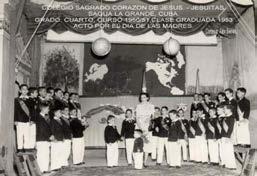
I received a first-class education at Colegio Sagrado Corazón de Jesús in Sagua la Grande which was an elementary school. At the age of 12, as sixth-graders, we began to participate in the Spiritual Exercises. It was there that my classmate and childhood friend, Marcelino García, began his vocation to the priesthood as a member of the Jesuits. After sixth grade, I went to study in a secular middle and high school, but my classmates and I still wanted to stay connected with the Jesuits. Our solution, supported by the Jesuits (Antonio Altamira, Mariano Ruiz, Benigno Juanes, M. Bedoya, and others such as Brother Estévez) was to create a Marian congregation. We created the Agrupación Católica de Sagua, a catholic youth group of 120 members. We had a radio show called Social Justice, where we tried to explain the Social Doctrine of the Church.
Today, my classmates and I meet once a year in the Cosculluela Hall and the Chapel of the Immaculate Conception at Belen Jesuit. Despite the time that has passed and the distance between us, thanks to the work of Alejandro Bienes, Henry Pujol, and others, we continue to reminisce about our time in Sagua and the Jesuits that meant so much to us.


How would you describe your younger years?
I was an average student. Over the years, my spirituality strengthened as a member of the Agrupación Católica de Sagua (especially during spiritual retreats). Throughout my years, I learned to love Jesus and follow the way of Mary. In 1956, during a spiritual retreat, I reflected and discerned what I had done so far and what I hoped to do in the future for Christ. I then understood that my vocation was marriage and building a family. Lucky for me, I was already in love with Marta, the woman I would eventually call my wife and whom I’ve been married to for 59 years.
What is an important lesson that you learned from the Jesuits?
The most important thing I learned was to “Amar a Dios y al prójimo como a ti mismo” (love God and others as yourself). The Jesuits also instilled in me a love of books that has stayed with me throughout my life.
Aside from my parents, I would say my wife Martica, whom I have been in love with for 65 years. I’ve also had many great friends, especially two who followed their vocation and became Jesuit priests (Marcelino García and Ernesto Fernández Travieso). Also, the Spiritual Exercises directed by Fr. Amando Llorente, S.J. of the ACU, played a very big role in my formation.
After God, I hold most dear my wife, our four children, five grandchildren, and a great-grandson (to date). I thank God the list is quite long and full of family and friends.
Can you describe a memorable moment while you were a student?
While at school, I was known for getting into fights with my friends for any little thing. I often had a short temper and was easily triggered. One day my classmate, César Menéndez, and some other friends gave a plaque to me that read paciencia y buen carácter, to remind me to be more patient and have a better disposition. At the time, it was funny, and I learned on that day that I needed to be better.
Initially, I thought I wanted to be a lawyer. Unfortunately, because of Cuba‘s political situation, I had to do my second year of law school twice. First from 1957-1958 at the University of La Salle. Then from 1959-1960 at the University of Havana, where I was expelled from because of my political ideology and anti-communist struggles. After 5 years of fighting for Cuba’s freedom, and with no foreseeable chance of winning the fight, plus a growing family, I began a business of selling, distributing, and publishing books: Librería y Distribuidora Universal y Ediciones Universal. I’m grateful for the 55 years I spent in that industry.
How do you make a difference in that industry?
Our bookstore was a hub for everyone interested in reading in Spanish- both in Miami and beyond. With almost 2,000 books published, especially about Cuban themes and authors, I think we contributed immensely to the Cuban culture. We served writers by making their publishing dreams a reality and then disseminating their works. One of our most important collections was the Félix Varela Collection- dedicated to Christian/Cuban themes. This idea was born at a Spiritual Retreat at the Agrupación Católica Universitaria (ACU) in Miami.
As an octogenarian, I‘m almost afraid of the present. I think the same thing has happened to every generation throughout time. However, the changes in our time are astonishing as can be seen with our arrival on the moon, artificial intelligence, and other forms of communication that make the virtual seem almost personal. The speed of these changes is a challenge for human consciousness. We cannot forget God or think there are more important things.

Rosita Masó and CARLOS BUSOT ’56 with Fr. Pedro Gónzalez-Llorente, S.J., ’58

LUCA JOSÉ Son of Kyle Aguilar ‚07

EMMA KATERINA daughter of Gabriel Henríquez ‚07

Courtney L. Rodríguez and JOSE GARCÍA ’03

Alison Belinsky and BENJAMÍN OTERO ’09



EVA ELEANORE daughter of Louie Iglesias ‚88


FRANCIS son of Nick López-Jenkins ‚88


Jeselyn Luis and JASON SAULEDA ’02 with Fr. Guillermo García-Tuñón, S.J., ’87



LUCÍA ELISE daughter of Luis A. Patiño ‚97


ANDREW LEO son of Luis A. Pérez-Codina ‚01


ANDRÉS AGUIRRE ‘62
CARLOS ALONSO ‘42
GERARDO BARRERA ALVERA ‘61
DR. JORGE M. CABRERA ‘72
PABLO CARREÑO ‘42
FR. JORGE CELA CARVAJAL, S.J., ‘59
VLADIMIR CRUZ ‘55
EDUARDO GARCÍA DARTAYET ‘59
RENÉ DE ARMAS ‘58
ISIDRO DÍAZ TOUS ‘61
CARLOS FONT ‘60
EMIR FONTES ‘59
MANUEL DE LA FUENTE ‘78
RAOUL GARCÍA-VIDAL ‘47
FR. JOSÉ LUIS LANZ, S.J., ‘48
RAMIRO PALMA ‘59
RAFAEL PINA ‘49
DEACON HÉCTOR J. ROMEU ‘42
CARMEN MARIA ALONSO daughter of Modesto Alonso ‘ 57
MARIA TERESA BARCELO-RAMÍREZ daughter of Luis Barcelo ‘ 52
FELIX A. BARQUIN brother of Athletic Director Carlos Barquin
MARIA ELENA BARRIOS wife of Ivan Barrios and mother of Ivan Jr. ’84 and Alexander Barrios ‘87
CISKA BAYAS daughter-in-law of Ignacio Blanco ‘ 56
MAYRA BLANCO widow of Pedro Blanco ‘ 56 +
JOSEPH A. BORRAS son of Alfredo Borras ‘61
JUAN CARLOS COMELLA
son of Manuel Comella ’ 56 +
JULIETTA CORZO
mother-in-law of Administrative Assistant Susana Corzo, grandmother of Alejandro ‚ 18 , Daniel ‚ 19 , Carlos Corzo ‚ 23 and Joshua Silva ‚ 12
TERESITA CUETO
sister of Manolito Cueto ‘52
LIGIA MARIA and OSCAR MANUEL CÉSPEDES
mother-in-law and father-in-law of Ricardo Echeverría ‘84 and grandparents of Ricardo Echeverría ‚ 23
ELENA FALLA
wife of Oscar Echevarría ‘53
MERCEDES RODRÍGUEZ FOWLER
mother of Christian Fowler ‘15
JESÚS LUIS FERNÁNDEZ
father of Belen teacher Raquel García and grandfather of James ’14 , Joseph ’16 , Jace ’25 and Jacob ‘25 García
MANUEL HERRÁN
father of Agustin Herrán ’86 and uncle of José Herrán ‘86
JUAN D. LEYVA
father of Campus Security Guard Bertha Leyva
JOSÉ LÓPEZ-PORTELA
father of José López-Varela ‘87
ELISA M. MASSENS
mother of Juan Carlos Massens ‘ 86 and aunt of Carlos ‘76 and Salvador Sotomayor ‘86 and Miguel J. Massens ‘04
MAURICIO MENESES
father of Ricardo ‘19 and Nicolás Meneses ‘20
LOURDES PAÑEDA
mother of José ’82 and Carlos ’84 and grandmother of Alex ’ 13 and José Pañeda ‘13
JULIA PADRÓN
aunt of Jorge A. Pérez ‘07
LAWRENCE W. PETERSON
grandfather of Nicholas Peterson ‘15
ALFONSO DEL PORTILLO TAMARGO
father of Alonso del Portillo ‘ 78
AMY SANTIAGO
daughter of Eugenio Santiago ‘ 62
HSIAO CHI CHIU
Belen teacher and mother of James Wu ‘ 22
RICARDO GONZÁLEZ ZAYAS ’68 published “Black Pedro Pan”, where he recounts his childhood and his participation in Operación Pedro Pan Pictured below.
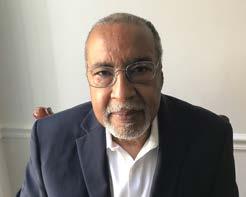
PETER MONTADAS ‘76 was recognized by the South Florida Business Journal as a Power Leader.
LUIS CARLOS SARMIENTO ’79, President of Aval Group, was elected CEO Of The Decade in Latin America by the Global Banking & Finance Review. Pictured below.

Fr. GUILLERMO GARCÍA-TUÑÓN S.J. ‘87, JOSE CIL ‘87 and TONY XAVIER SILVA ‘83 were recognized by the South Florida Business Journal as Power Leaders.
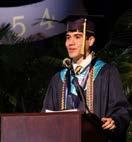
JOSÉ E. CIL ’87, CEO for Restaurant Brands Intl. Inc., delivered the commencement speech at the Belen Jesuit graduation ceremony to the class of 2020.
CARLOS E. HERNÁNDEZ ’88 was named Vice-President, Administration, at West Kendall Baptist Hospital.
DAVID DE CELIS ’89 was published in the July 2020 peer review Journal Interiority. Pictured below.

MANUEL COROALLES ’90 was named a 2020 Best-inState Wealth Advisor for Florida by SHOOK Research and Forbes.
DR. MARCOS MESTRE ‚91 was named Vice President and Chief Medical Officer for Nicklaus Children‘s Hospital. He was profiled in the Miami Herald.
TOMMY DE QUESADA ’94 is returning to Belen Jesuit on July 1, 2021 as the Executive Director of Enrollment and Community Outreach.
TOM LLAMAS ’97 included Belen Jesuit as part of his tribute to his roots as a Cuban American in ABC’s Good Morning America.



CARLOS I. SUÁREZ ’00 was appointed Senior Deputy Assistant Administrator for the United States Agency for International Development (USAID).
Miami almond milk company JOI, owned by TONY JIMÉNEZ ’00 and HÉCTOR GUTIÉRREZ ’08 was featured in the Miami Herald. Pictured below.

MARIO ARIZA ‚05’s book “Disposable City: Miami’s Future on the Shores of Climate Catastrophe” was published by Bold Type Books.
ANDRÉS KAIFER ’06 was named the Culinary Director for Mac’s Hospitality Group.
ADRIÁN LORENZO ’07 was promoted to Director of Baseball Operations for the Miami Marlins.
Br. MIKE MARTÍNEZ, S.J., ’09 was selected for the University of Chicago’s Outstanding Educator Award.


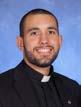
ERIC DÍAZ-PADRÓN ’13 was appointed to serve on the Florida League of Cities Land Use and Economic Development Committee.
LUCAS FERNÁNDEZ-ROCHA ‘13 passed the Florida Bar.
CARLOS JIMÉNEZ ’15 has joined the Alumni Office team as the Alumni Data & Support Administrator. A graduate of FIU with a Bachelor in Business Administration in Marketing and a Masters in Global Strategic Communication.
FRANCISCO DE LA CÁMARA ’16 graduated from Northeastern University with a Bachelor of Science in Finance.
PEDRO “Papo” GARCÍA ’17 was featured by The Catholic University of America as part of their NCAA Inclusion Series.


L to R: Eric Díaz-Padrón ‚13, Lucas Fernández-Rocha ‚13, Carlos Jiménez ‚15, Francisco De La Cámara ‚16
KEVIN VALIDO ’20 was selected by his peers and teachers as the Brigadier for his class. He is the first Brigadier of Belen Jesuit in Miami, returning to the tradition from Cuba. Pictured below.
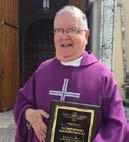
FR. MARCELINO GARCÍA, S.J. celebrated 50 years of priestly service. Pictured above.
By SebastiÁn Restrepo ‘21
Did you know that the alumni association does not only include Belen from Cuba and Miami? It has four other Jesuit schools from Cuba as well. The history between these five schools and the ability to stay so close even after all the hardships is incredible. Founded in 1913, El Colegio de Nuestra Señora de los Dolores was a primary and secondary school in the second-largest city in Cuba, Santiago de Cuba. In an interview with three Dolorinos, we learn how the school was in Cuba and the events that happened which led them to reunite here in the United States. The interviewees included brothers Héctor ‚62 and José Antonio Ortiz ‘64 and school delegate Pedro Haber ‘59.
The Ortiz brothers studied in Dolores until they were forced to leave in 1960 and ended their studies in El Colegio San Ignacio in Puerto Rico, while Haber was able to finish his studies in Belen before the exile. The Ortiz brothers explained that their grandfather graduated from Belen in La Habana in 1897, and shortly after met his wife and moved to Santiago. Once settled in Santiago, he sent his son to Dolores because he wanted to make sure his son studied under Jesuit values, and it continued like this for five generations.
The school at the time had about 300 students, and because of it, they were able to call their classmates family. For them, the school was their second home.
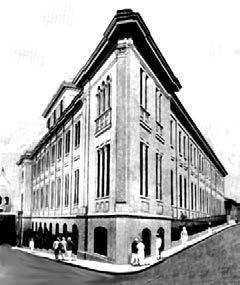
They spoke about the love they had for their school and the emotions they felt when they returned to visit. At the time, the Jesuit schools were mainly boarding schools, and so there were students, like Haber, who lived on campus. He spoke about how all his classmates were like brothers to him, and how he has kept in touch with some of them even after they were exiled from Cuba. “I formed long lasting friendships in boarding school, some of which are still strong today,” said Hector.
Dolores’ and Belen‘s relationship goes further than just being two Jesuit schools on the island of Cuba. Although the campuses are on opposite sides of the island, they shared teachers, priests, and the opportunity to attend both schools to graduate. With this relationship in mind, the camaraderie that both schools and the other Jesuit schools in Cuba shared becomes clearer.
Before the revolution, Dolores was preparing to renovate and expand its campus. They had bought land and were ready to start construction when they were forced to close their doors. In 1960, the Ortiz brothers left for Puerto Rico, while Haber had to serve time in the military after graduation and left Cuba in 1969 at the age of 27. They spoke about their banishment as one of the hardest things they have had to endure.
“We had to abandon everything,” said Haber.
Years later in Miami, Haber began his quest to reunite with people that went to Dolores. He was put into contact with Fr. Juan M. Dorta-Duque, S.J. ‚40 +, the first director of the alumni association at Belen. Knowing that many Dolorinos went to Belen, he asked Fr. Dorta-Duque to help him with a reunion. Fr. Dorta-Duque immediately agreed and they began planning. The date Haber chose for the reunion was July 18, 1992, which was the day of his graduation in Cuba. They rented the Miami Springs Country Club which had a capacity of eighty guests. Haber explains that he rented this place because he thought no more than 30-50 people would show up, but word spread and many alumni from Jesuit Schools in many Latin American countries attended. “It was as if we were celebrating our First Communion. So many people went,” said Héctor.
I think the Ortiz brothers speak for everyone when they praised Haber and the late Fr. Dorta-Duque for planning and organizing these successful yearly reunions. Others that were praised for their efforts in maintaining the alumni association were former president and principal Fr. Marcelino García, S.J., former Belen CFO Carola Calderín +, and the former Director of Alumni Services Ricardo Raimúndez ‘90 +.
“They were all instrumental to the formation of what the alumni association is now and the reunions we have been fortunate to have,” said José.
Once Dolores and the other Jesuit schools from Cuba joined the Belen Alumni Association, they continued to organize yearly reunions. During these reunions, alumni from all classes and campuses would share stories and pictures of when they were in Cuba. The Ortiz brothers explained how they made new friends because of the values they all shared under the Jesuit teachings.
“That is the spirit of the Jesuits, that no matter where you are from, they transmit their values and unite people,” said Hector. “We are all brothers and one family.”
These values brought about friendships from schools all over the world, not only from Cuba and Miami.
“Despite the differences in culture, age, and geographic location we have always been able to forge and maintain strong bonds with our brothers all over the world,” said Crescencio J. Ruíz ‘76, president of the Alumni Association. “The reason is found in the teachings of St. Ignatius: We share the belief that we are called to be excellent in our endeavors, we defend the dignity and value of each and every person, we are Men for Others, and we find God in all things.”
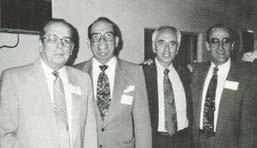

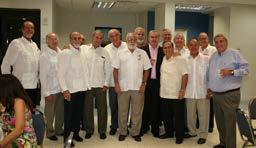
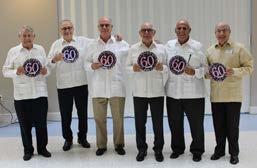
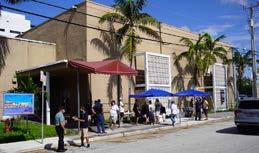
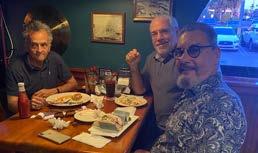
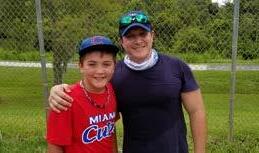
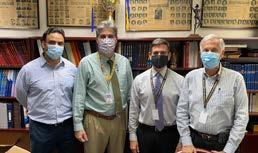
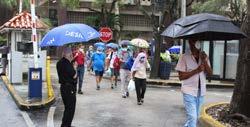
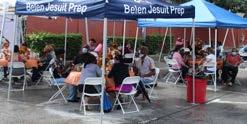

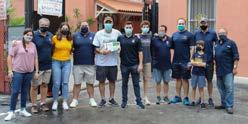
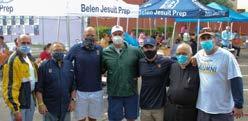

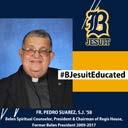
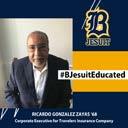
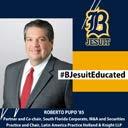
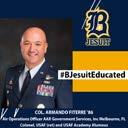
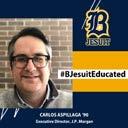
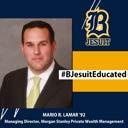
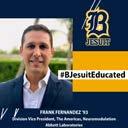
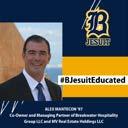
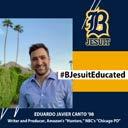
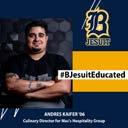
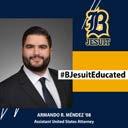
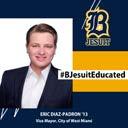
The #BJesuitEducated campaign highlights prominent alumni on our social media pages (Facebook, Twitter, and Instagram) to reinforce the Ignatian tradition of excellence in education, leadership, and service. These alumni only represent a small fraction of the thousands of young men educated at Belen in Cuba and in Miami that exemplify the Magis.
What a Year! Daily life as we know it changed drastically in every way for everyone. No one was exempt from the obstacles imposed by the pandemic. Businesses, families, governments, schools, and places of worship were adversely affected. Lives and livelihoods were lost, friends and families were made to stay distant from one another, and general unrest and a kind of uncertainty constantly loomed over our heads. But once again, in the face of all of this adversity, our Belen community was a shining example of faith, hope, courage, and perseverance.
The mission of the Belen Alumni Association is to “foster and facilitate the involvement of its members in the various missions of the Society of Jesus, including spiritual, educational, and volunteer and community service activities, in furtherance of the credo Men for Others.” I am proud to report that in the face of all of the obstacles, we did not miss a beat in accomplishing that mission. We had a registration drive that yielded over 1,000 new registrants on BConnected, our alumni website. We held 9 alumni virtual events (AVE’s) on subject matters ranging from social justice to current economic and legal issues. We started the Because Belen Podcast, an insightful series that will no doubt be a repository of our legacy for decades to come. There was also the drive-by event at the Old Belen Campus on 8th and 7th, the Thanksgiving and Christmas Reyes Magis events at Gesu, and unprecedented participation from our Alumni Board in making sure that the 2020 Belen Gala was a success.
It has been said that God never sends you anything you cannot handle. This year’s obstacles were overcome because of the talents, faithfulness, and enthusiasm of the Association’s leadership. I stand in awe of our Board of Directors and our Alumni Office, who have constantly labored to keep our membership informed and active by leveraging technology and vehicles of communication like never before. In a year that most people would “take off”, the opposite happened. We had a youth movement in our Association, with over 60 new delegates in 23 different classes. There is a sense of growing participation and engagement that is rooted in the fact that our leaders and members are truly living the teachings of the Gospel.
I became President of The Alumni Association back in June of 2020. I have not been able to shake your hands or give you a hug because of the circumstances. That day is coming soon, and I look forward to it every day. I want to thank all of you who are pushing forward and making a difference. I also want to encourage those who have been away for a while to re-engage. Being a part of this community is a blessing. We are unequaled in kindness, camaraderie, and love.
AMDG, Crescencio J. Ruiz ‘76