Portfolio Architecture
Beatrice BENETTON
01. THE MARKET SAILS 2025
02. FLOATING SCENE 2024
03. LITERARY LIGHT 2023
04. THE ARCHITECTURE OF A PROMENADE 2024
05. ATELIERS ALFONSO FEMIA 2025-2026
06. IT’S - REDRAWING ROME 2024
07. GNAM - GALLERIA NAZIONALE D’ARTE MODERNA 2025
08. REVIT
09. FILIGREE
10. MASSIVE CONSTRUCTION
01. THE MARKET SAILS
The Market Sails is located in Portugal, it’s a market building designed to reconnect the upper part of Afurada with its port, addressing the current disconnection between the city and the river. The project transforms an area dominated by parking and technical structures into a continuous public space, conceived as an extension of the city.
The market acts as both an economic and social anchor, rooted in the local fishing culture. Positioned along the central promenade and freshwater canal, it connects the city, the port, and the community while supporting activities throughout the day and into the evening. Its form follows the coastline, reinforcing landscape continuity and visual openness toward the river.
The building is organized around a central core with services, storage, and shared spaces that remain active after market hours. Market stalls are arranged on both sides and adapt to daily and seasonal changes through wooden folding doors. Built mainly in wood, the project integrates passive environmental strategies such as natural ventilation and rainwater collection, extending the market’s life into the surrounding public square.
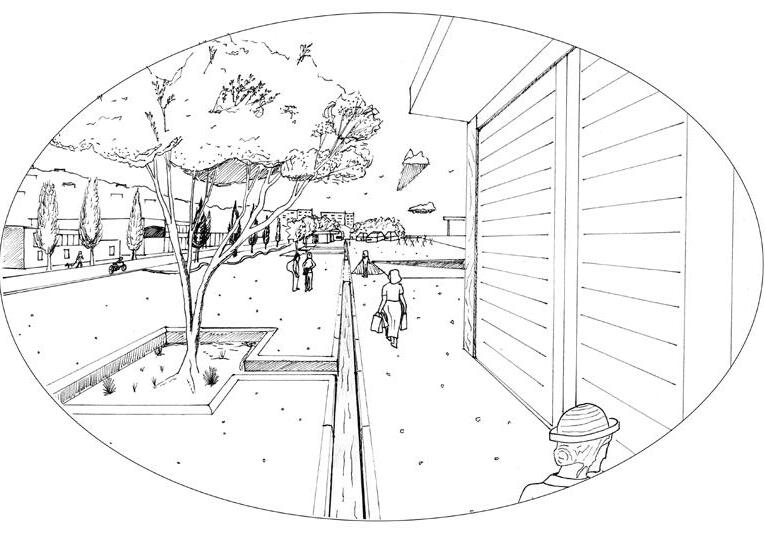
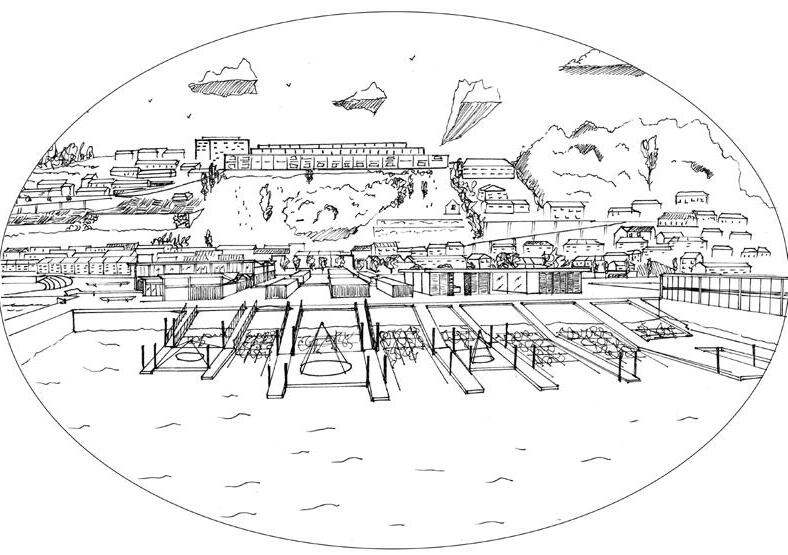
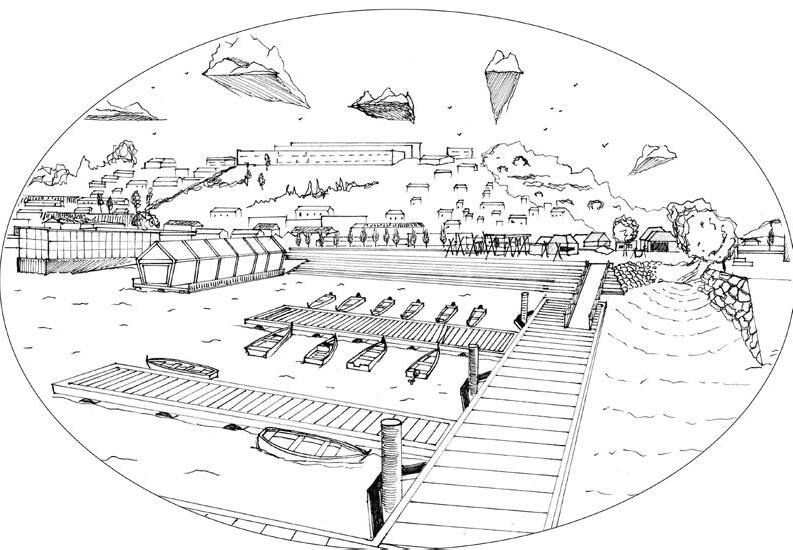
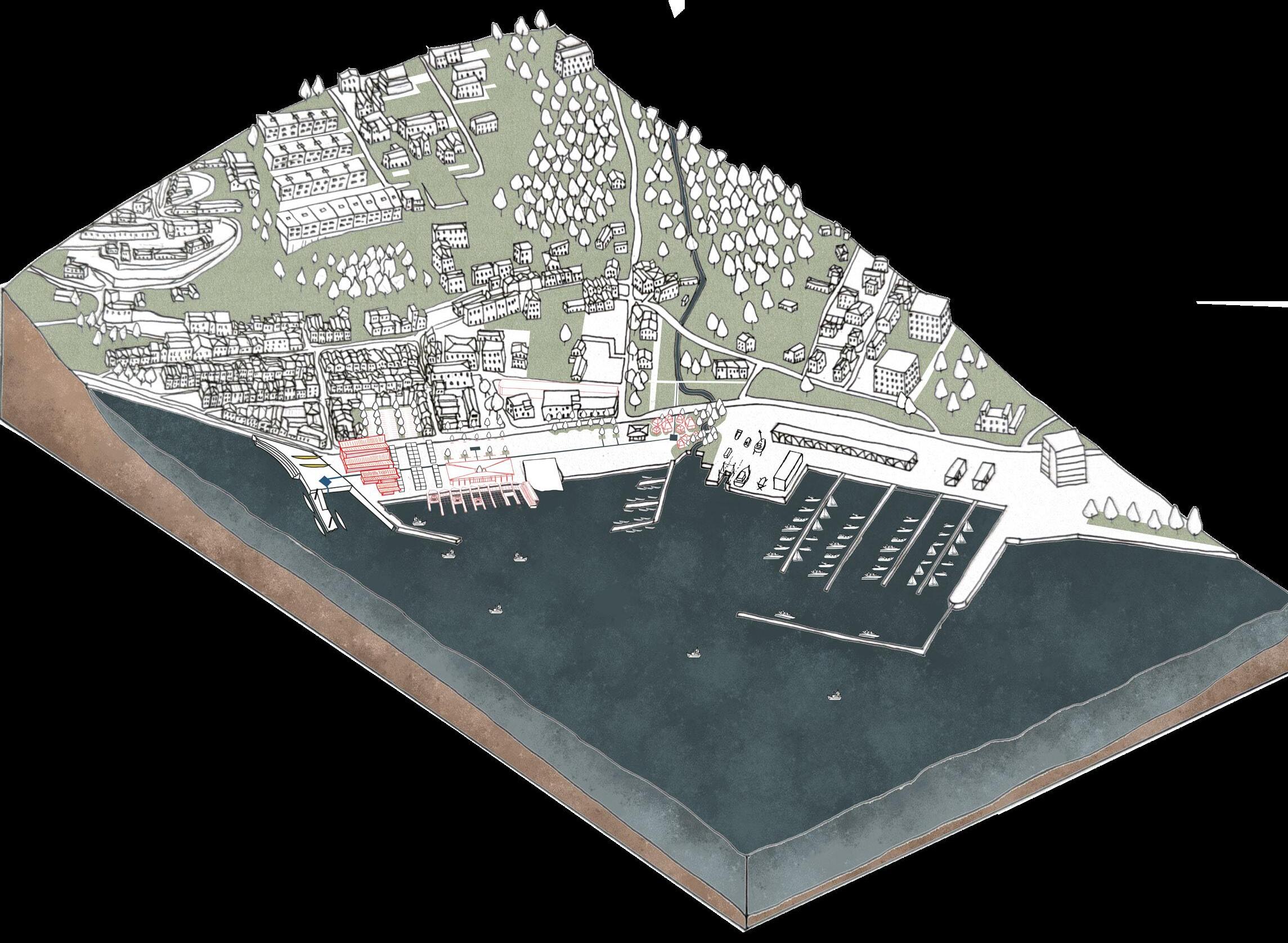
AXONOMETRIC VIEW SHOWING THE CONNECTION WITH THE REST OF THE PORT

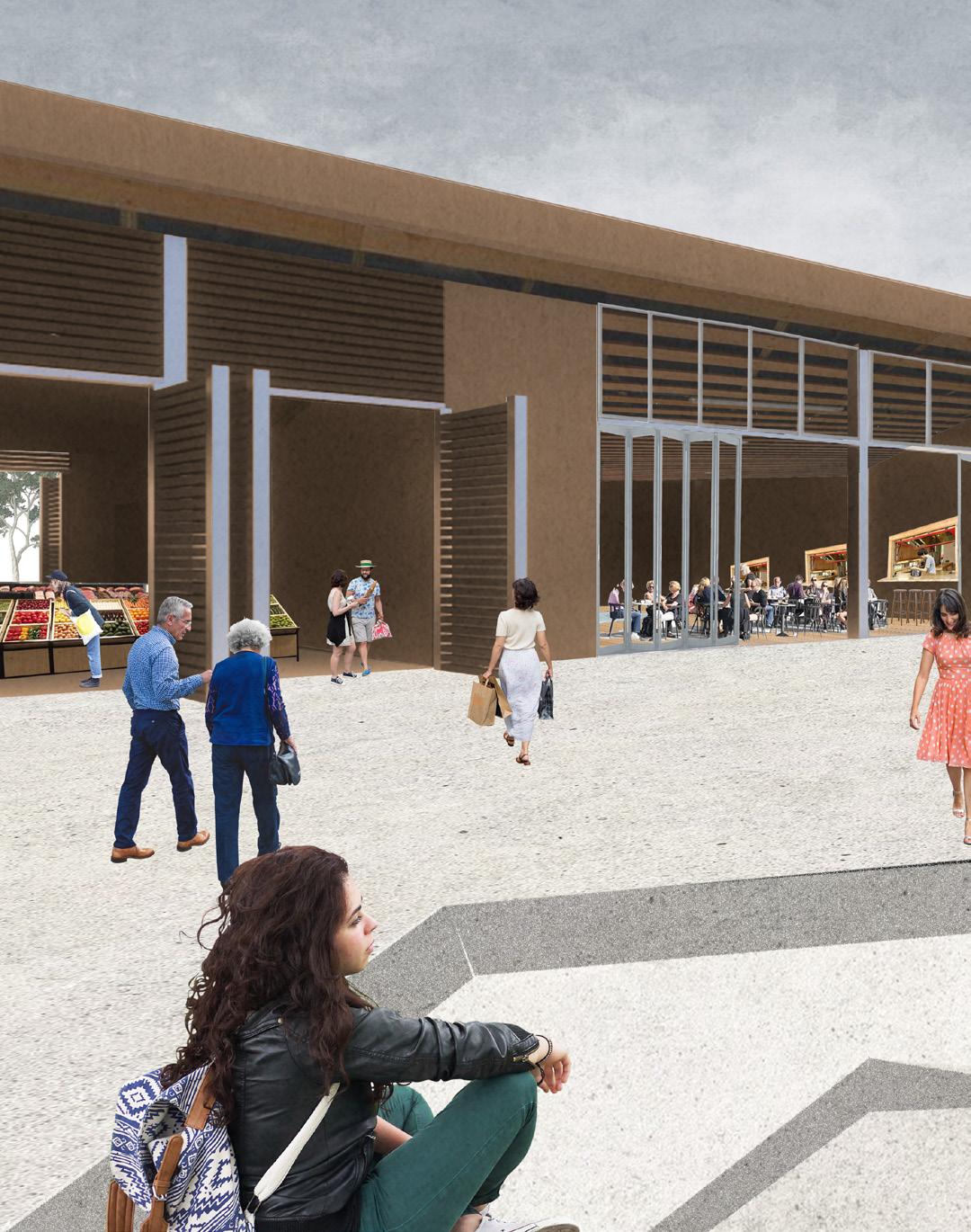
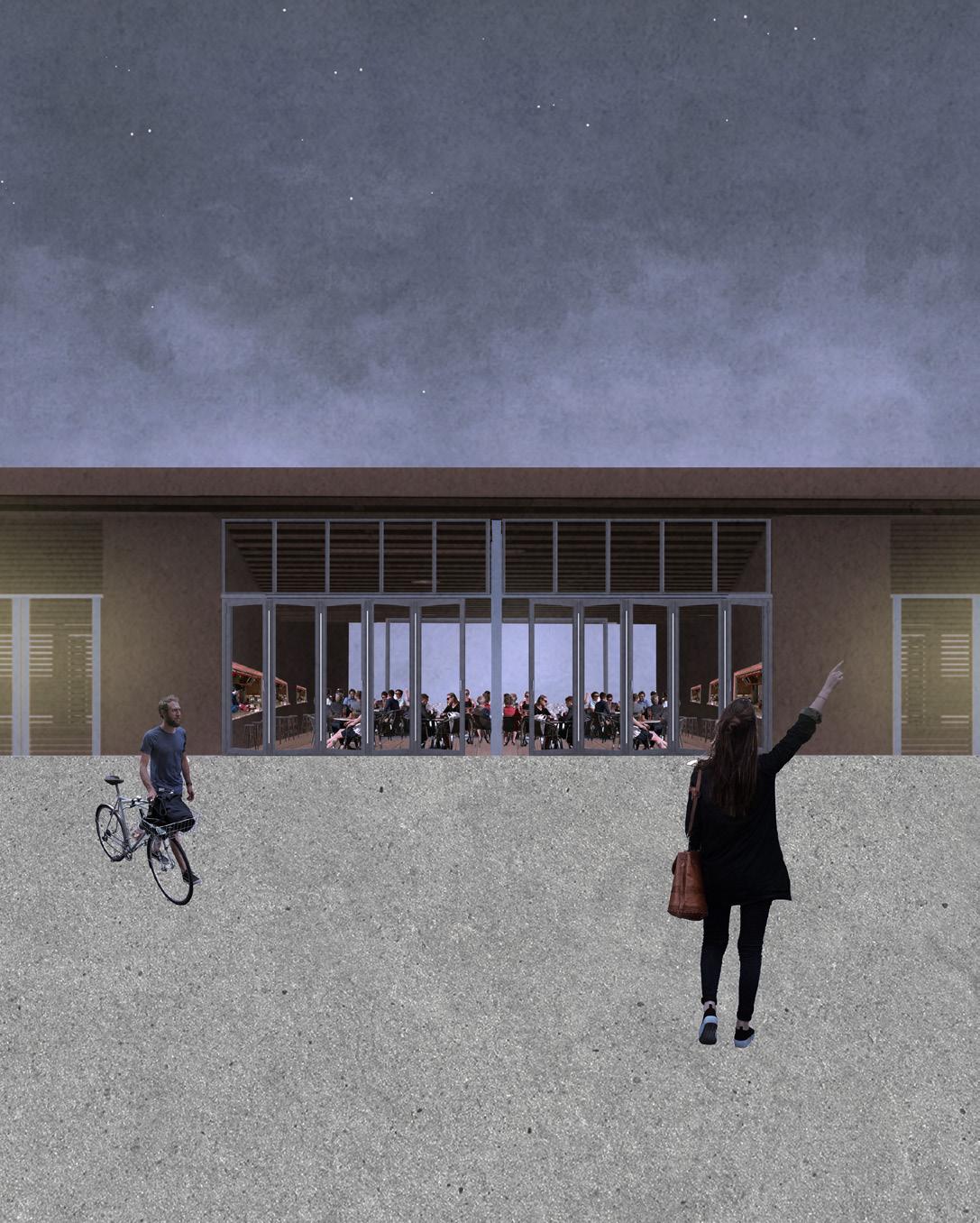
OF THE MARKET DURING THE EVENING

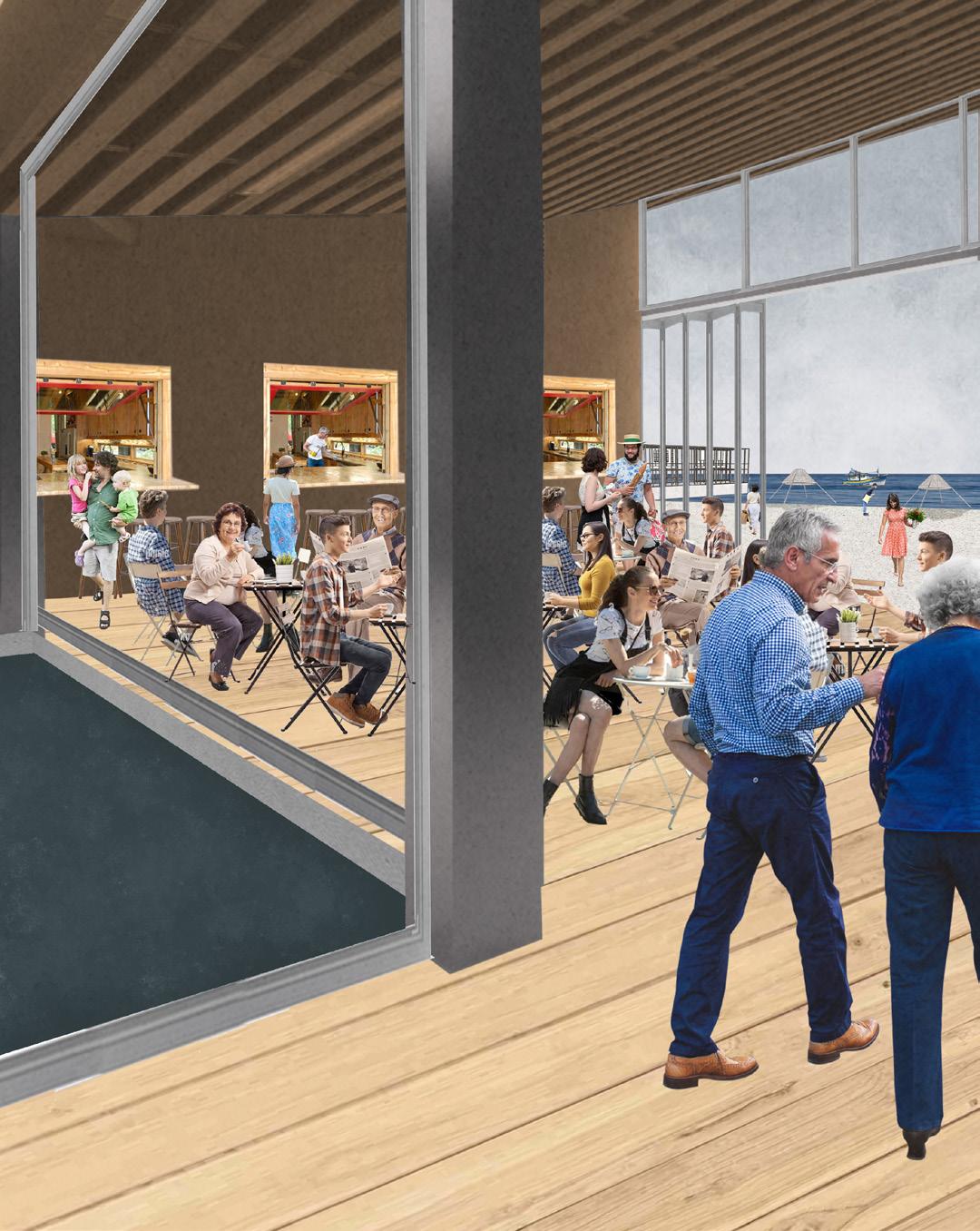
FROM THE CENTRAL AREA
VISUAL
VISUAL
VISUAL OF THE MARKET DURING THE NIGHT
VISUAL OF THE MARKET DURING THE DAY

02. FLOATING SCENE
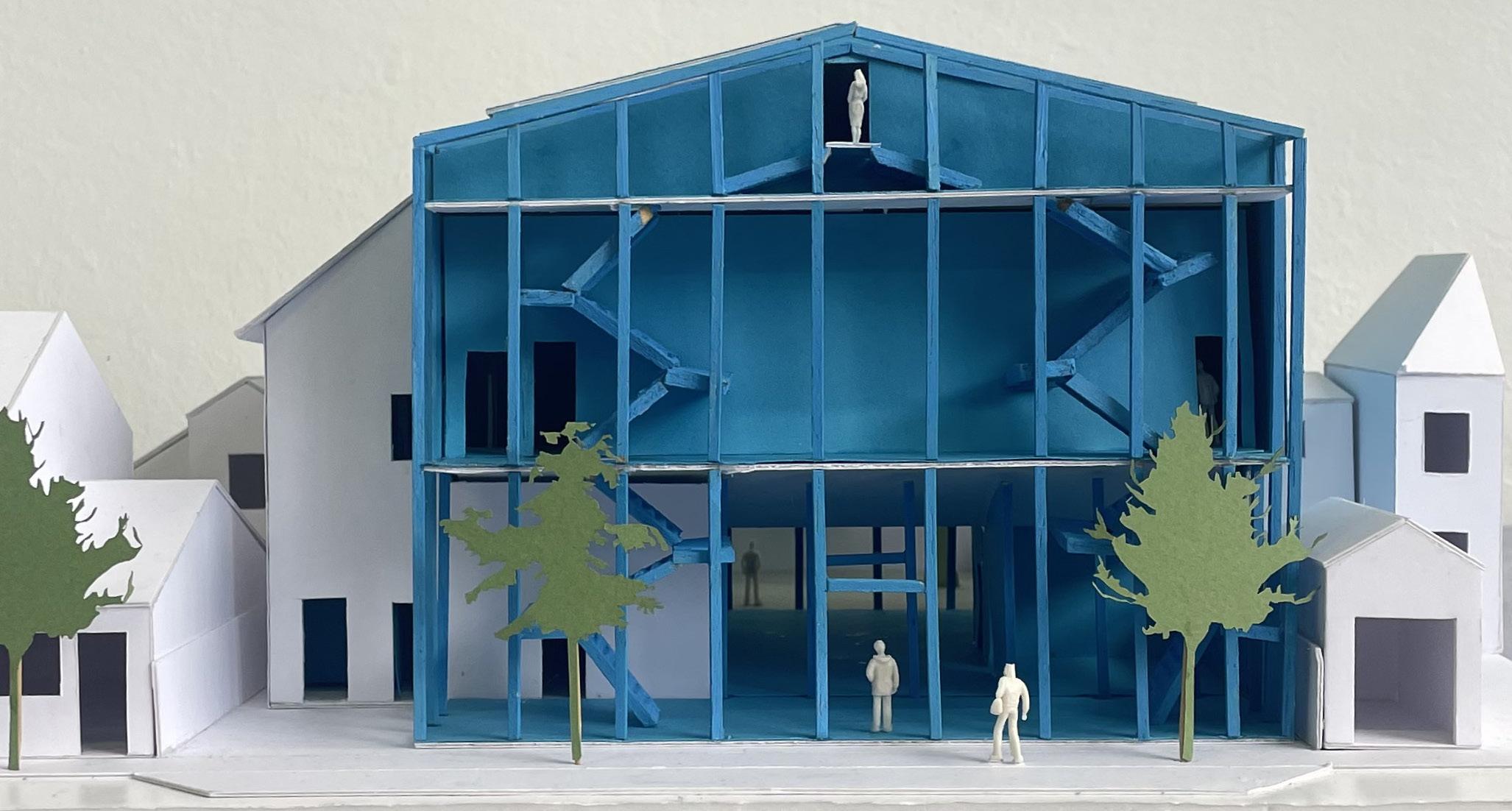
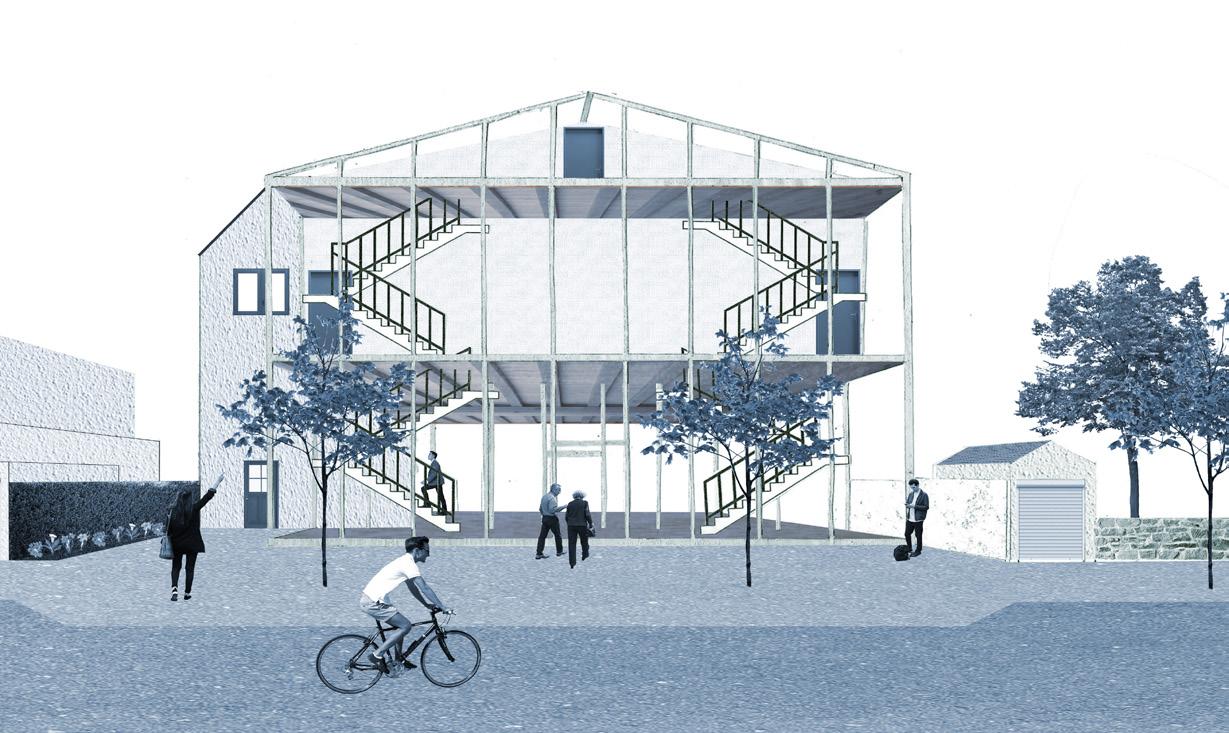
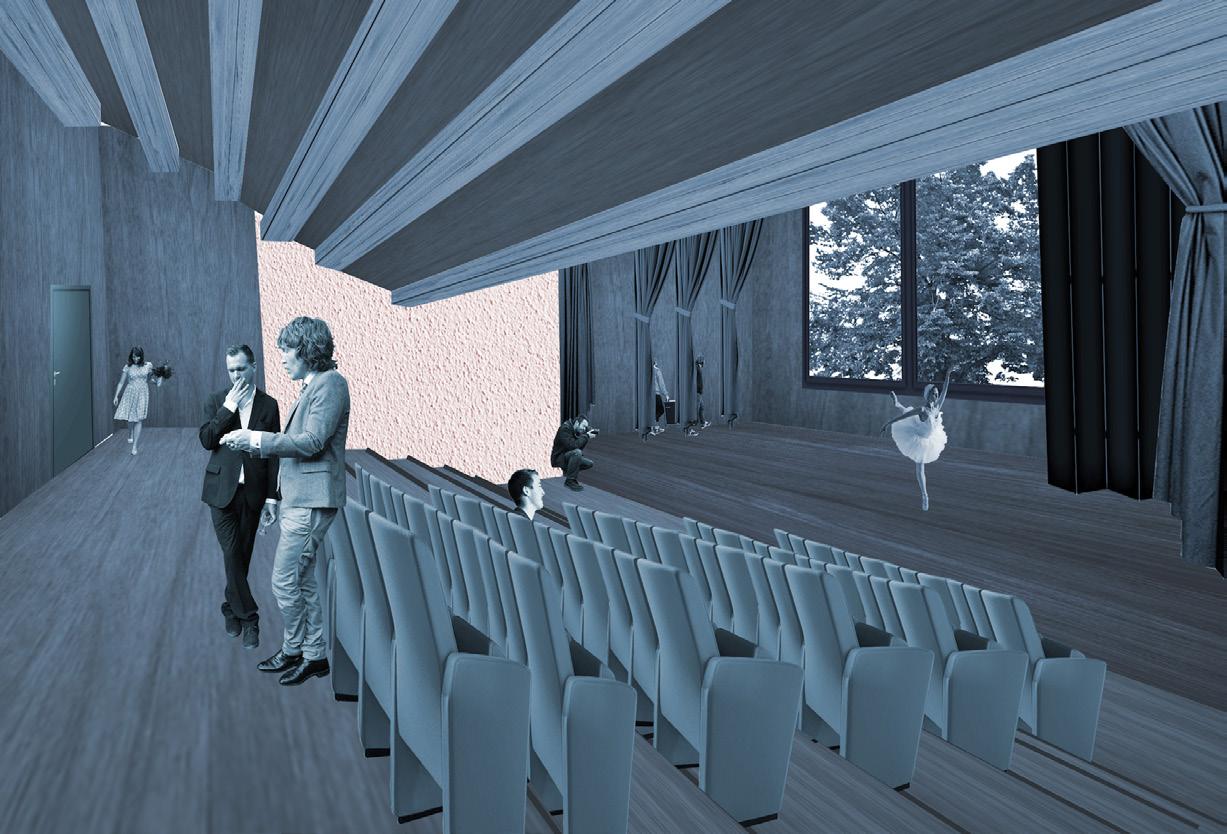
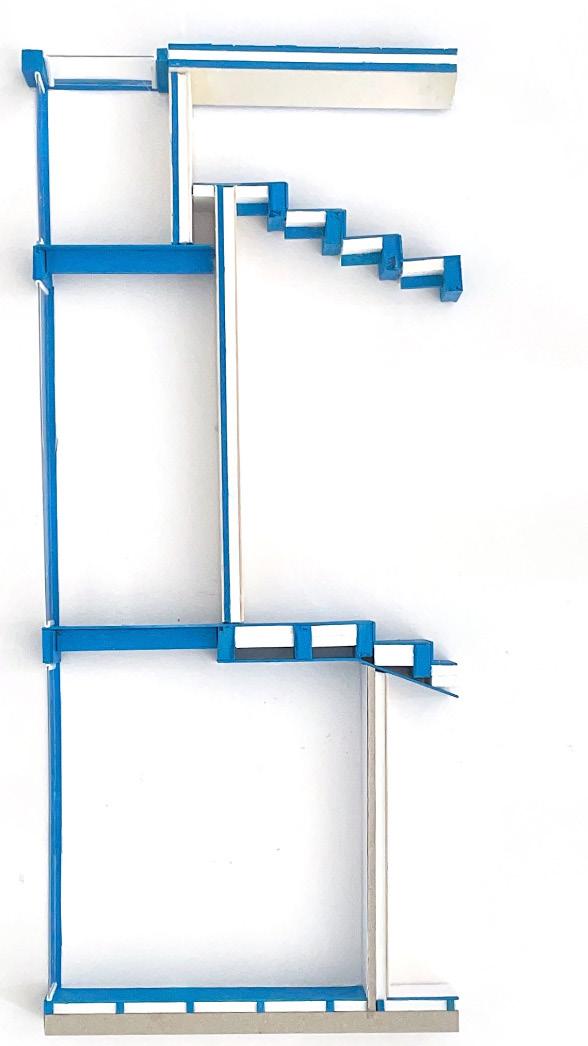
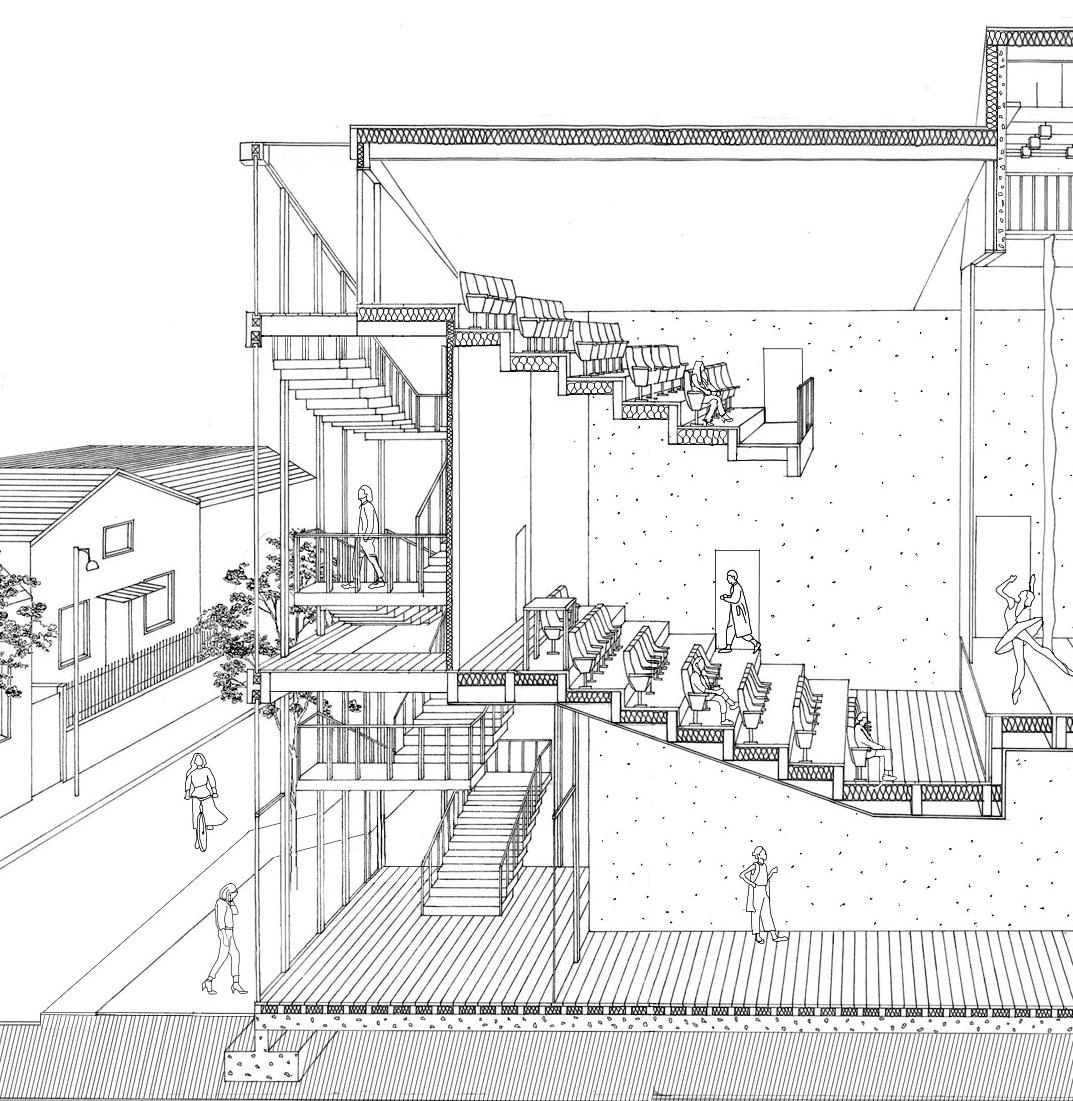
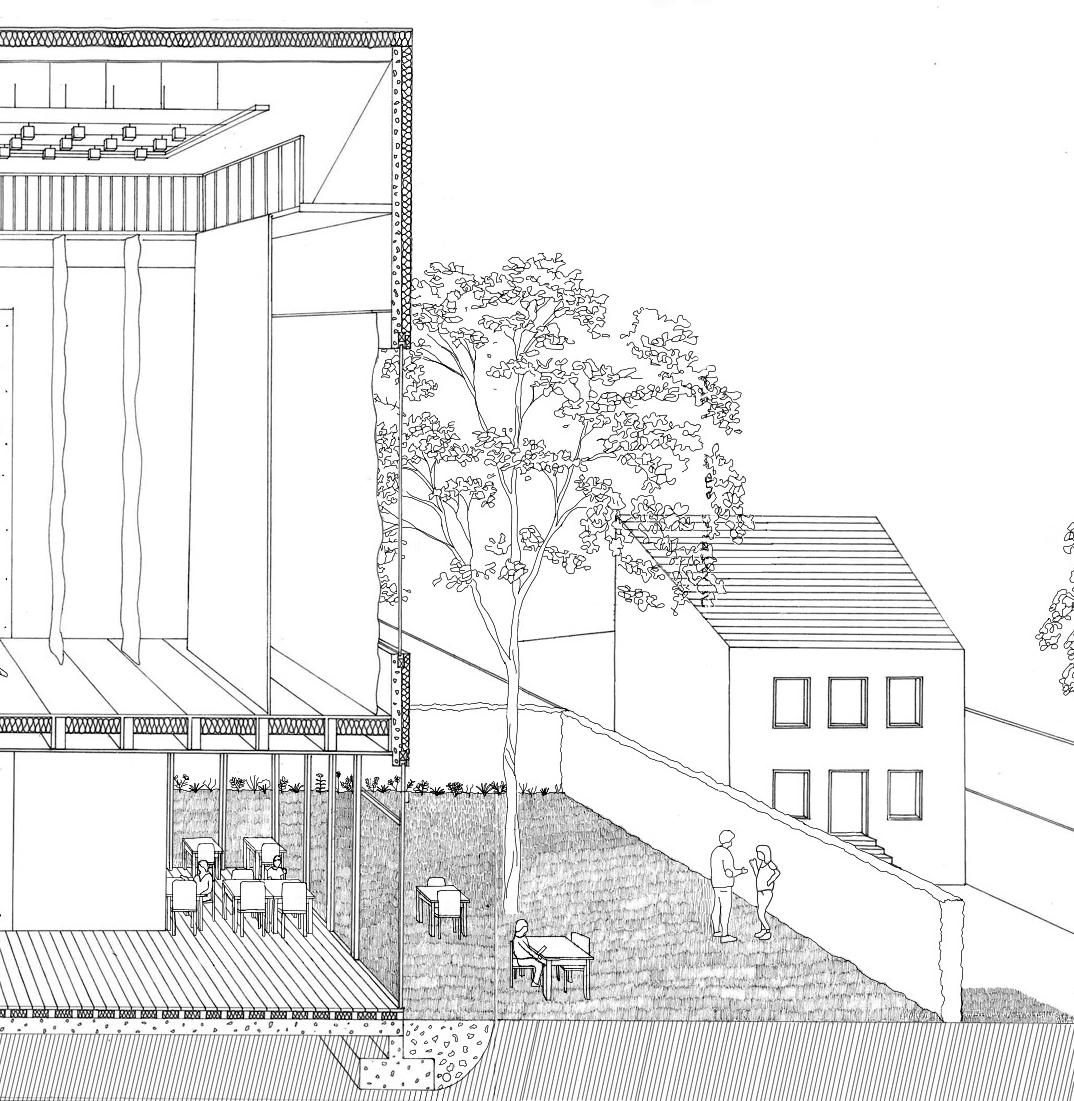
The project “Floating Scene” in Maisons-Alfort is a multi-purpose opera house capable of hosting conferences and performances. It incorporates an existing house intended for rehearsal rooms and dressing rooms.
The opera house consists of three levels: on the ground floor are the reception area, a cafe, offices, restrooms, rehearsal rooms, and a garden. The two upper levels accomodate the auditorium, the stage, the dressing rooms, and the technical catwalk.
Circulation areas are located on the street side and are markes by a curtain wall facade that maximizesnatural light intake, which is why this location was chosen.
Finally the project aims to be both imposing and respectufl of local characteristics, such as the pitched roof and roof tiles.
03. LITERARY LIGHT
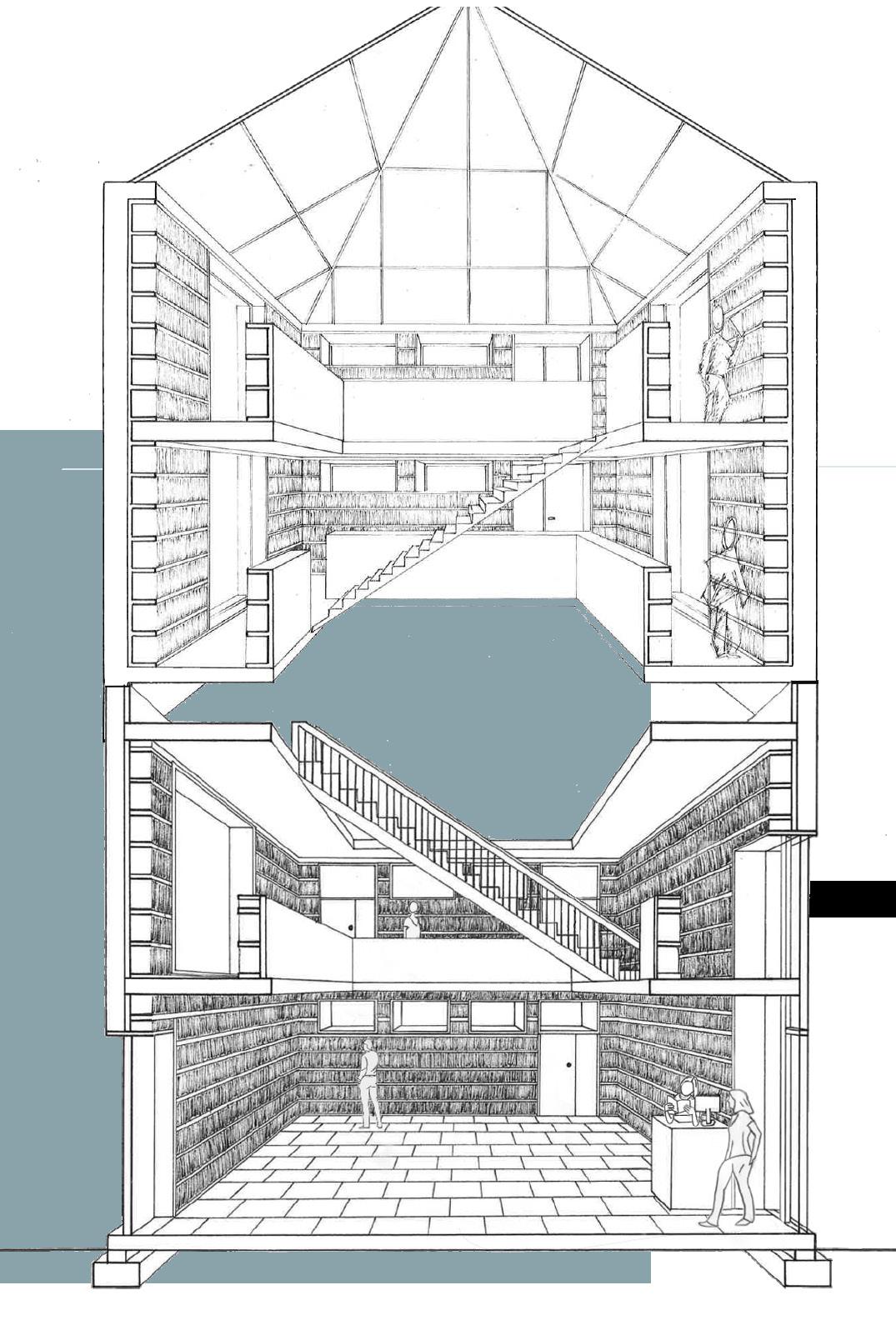
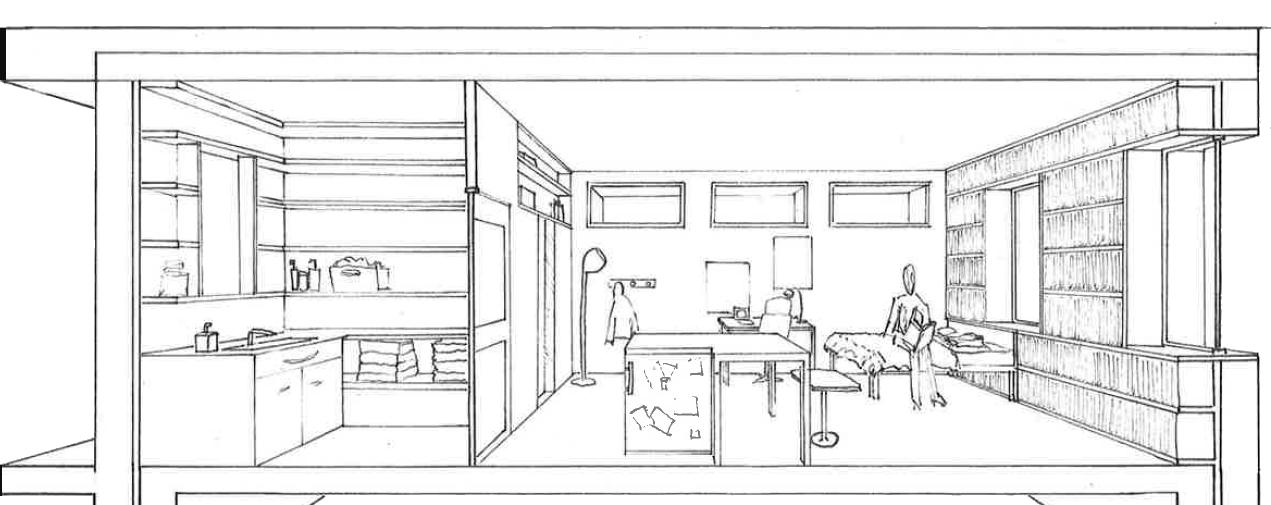
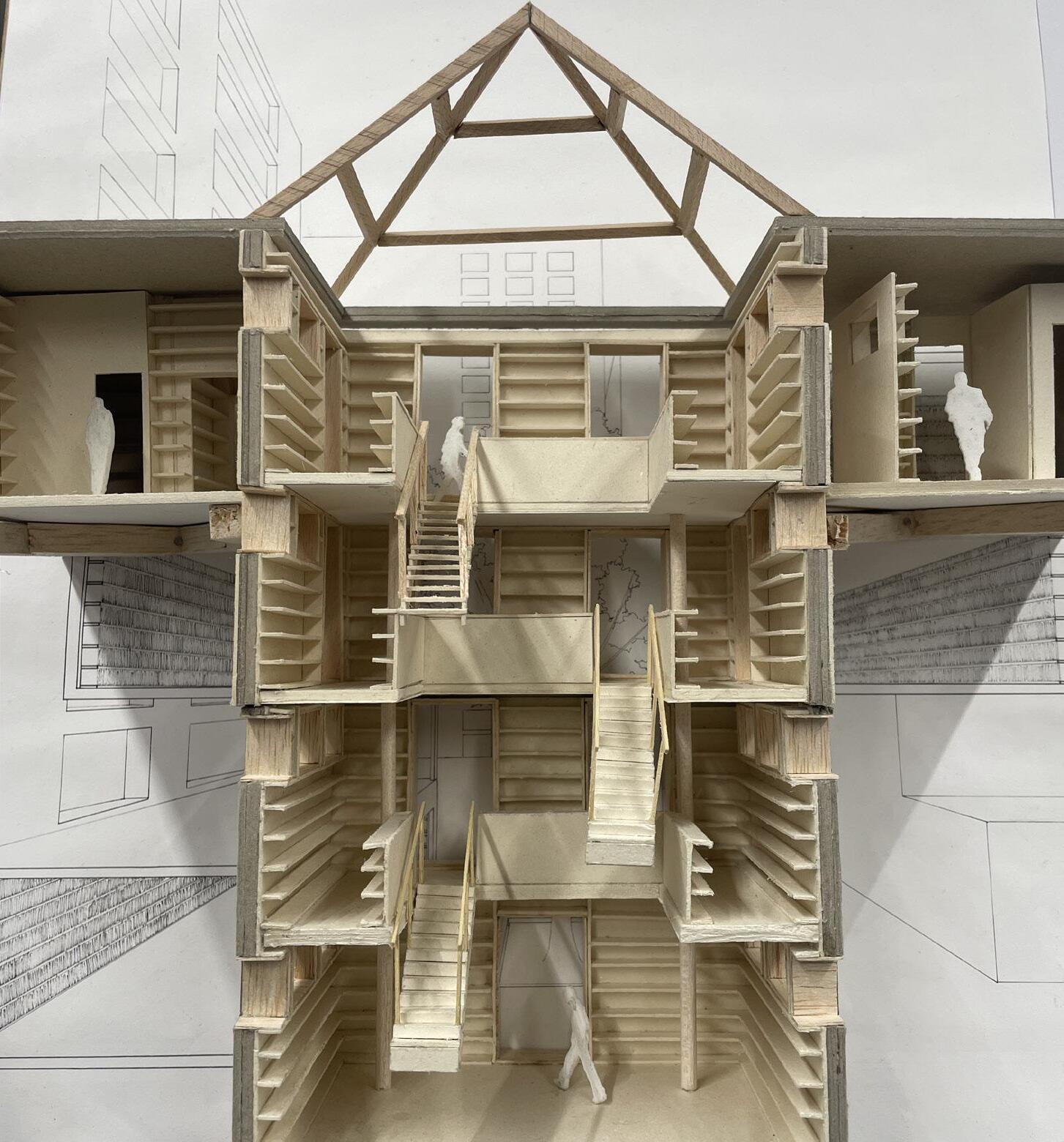
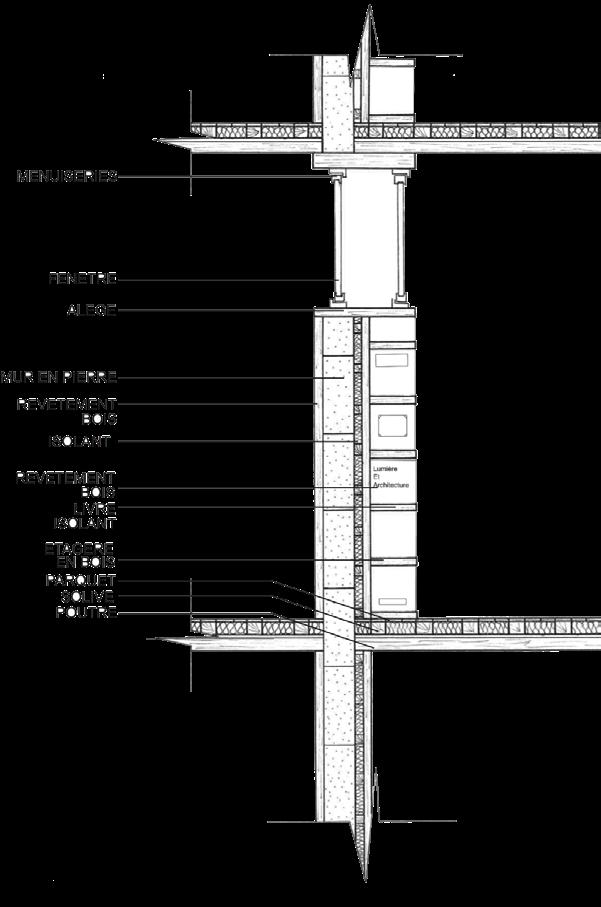
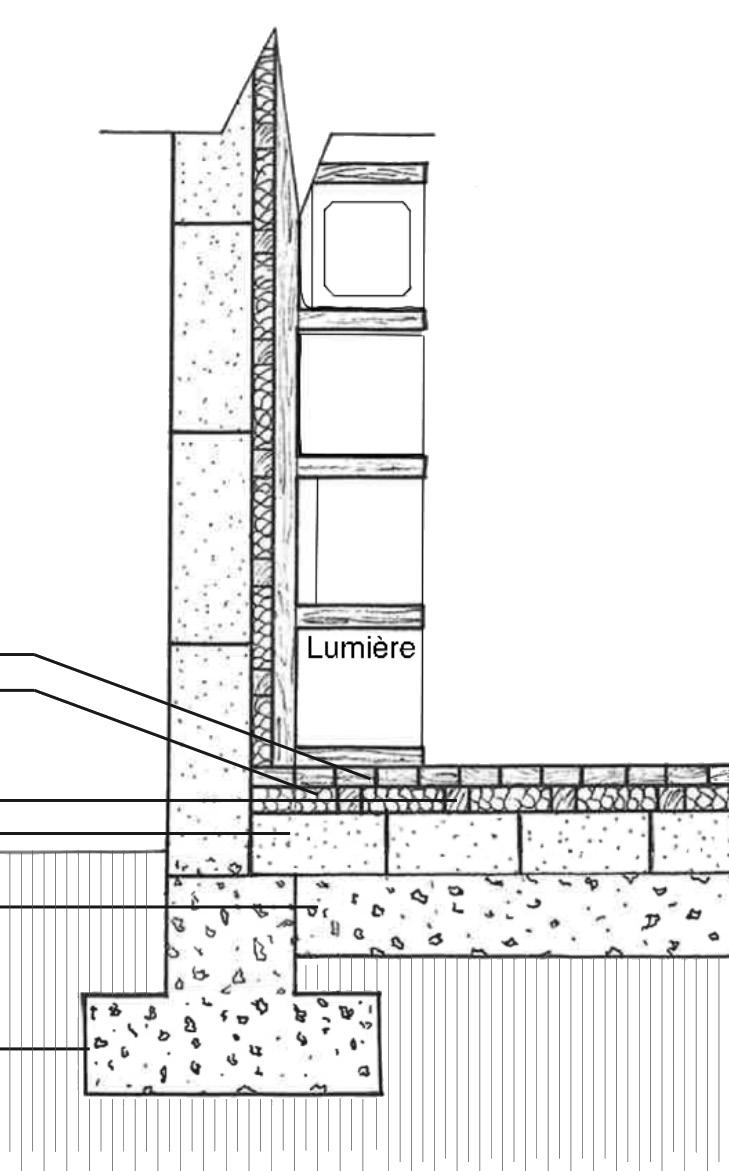
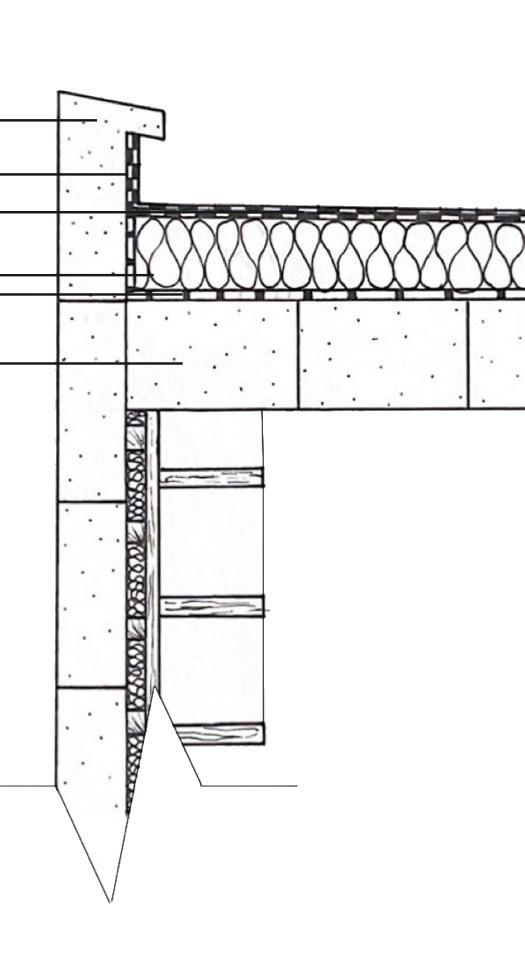
Literary Light is a hybrid project in which a library is embedded within a residential building, becoming both a spatial and structural generator. Rather than being treated as a programmatic addition, the library shapes the architecture itself: books are integrated into thick stone walls, forming a load-bearing and insulating system that defines the building’s skeleton.
This logic extends into the apartments, where libraries become part of everyday domestic space. Depending on residents’ choices, books can function as active insulation on exterior walls or as shelving within interior partitions, allowing the system to adapt to different ways of living. The project explores how architecture can evolve through personal interaction and use over time.
Light plays a central role in the composition. A glass pyramid roof crowns the central library space, capturing daylight and redistributing it through high side windows into the surrounding dwellings. Through the relationship between structure, light, and inhabitation, the library expresses its presence across the building, materialized through 570 linear meters of books.
LUMIERE LITTERAIRE

_ La bibliotheque rayonne par sa structure et sa lumiere
_Exploitation des 570metres lineaires de livres, et de leur capacite isolante
_Lieu de passage: circulation placee au coeur du batiment qui permet de faire le tour de la bibliotheque, tant pour les usagers, que pour les habitants du batiments.
04. THE ARCHITECTURE OF A PROMENADE
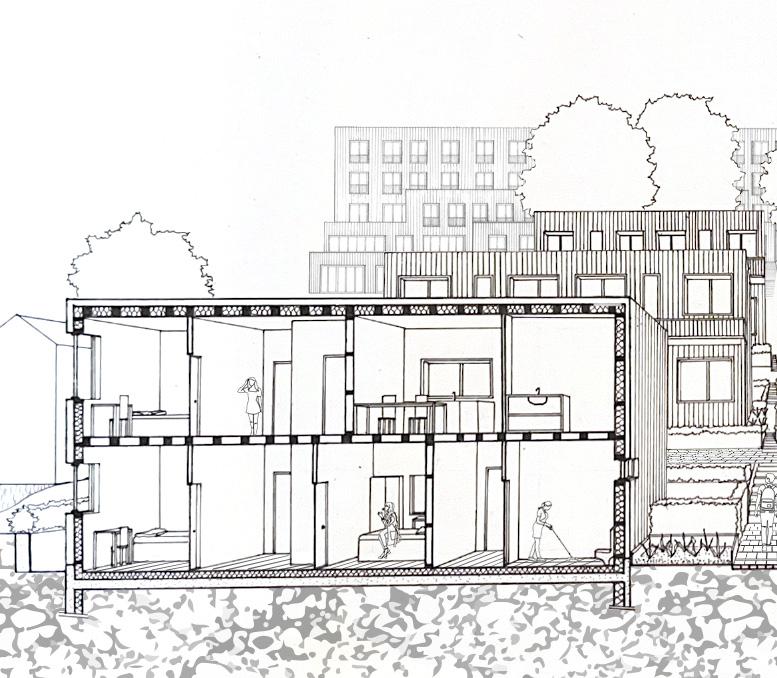
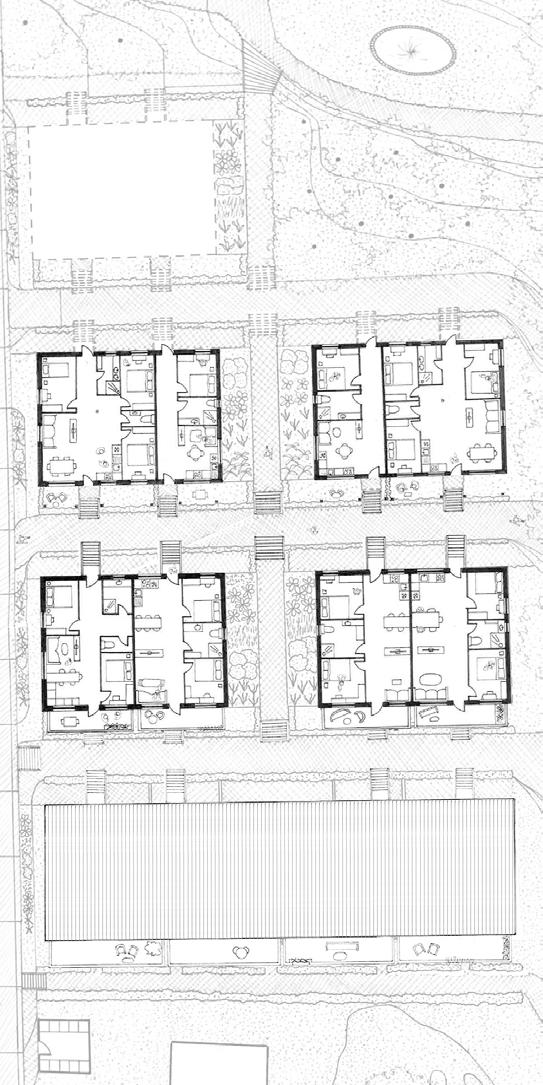
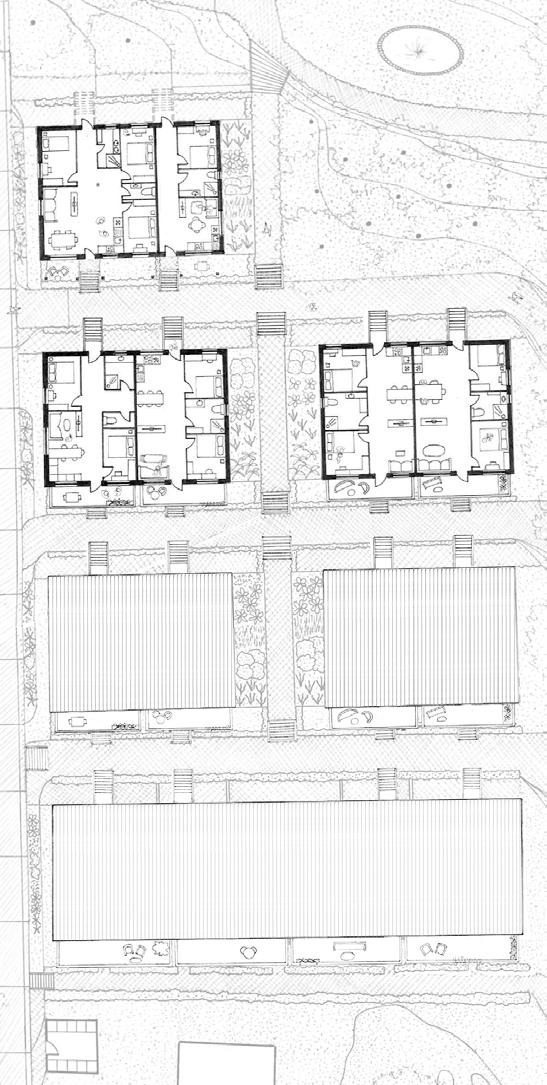
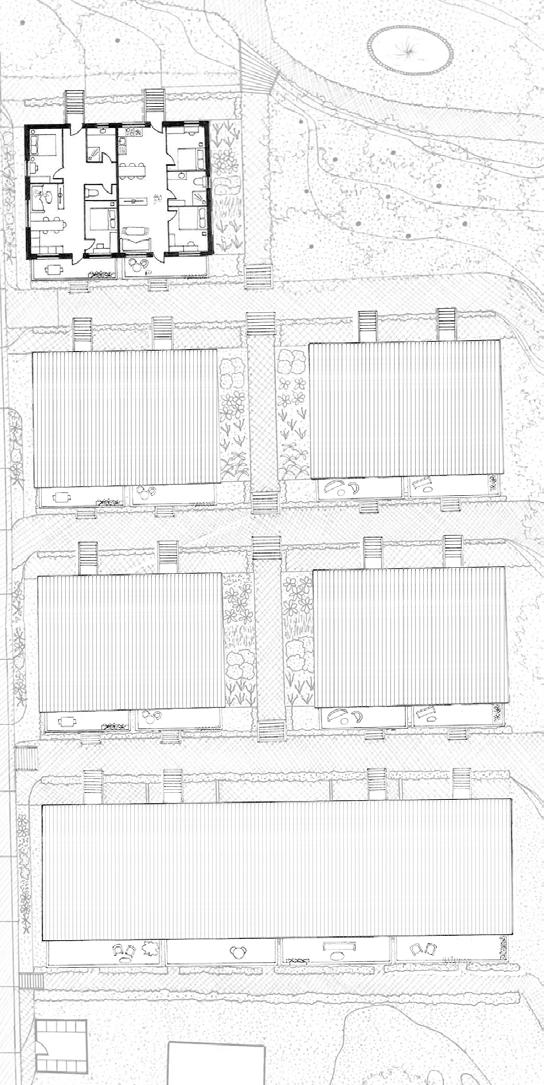
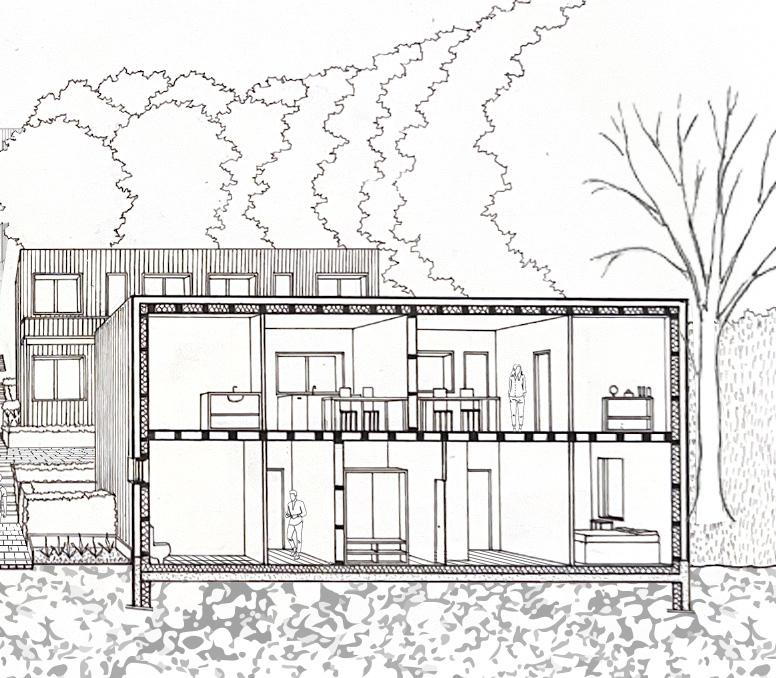
My architectural project, located in Montreuil near a park, creates a small sloping village composed of seven residential buildings arranged in paired rows along their entire lenght. Two types of promenades structure the complex: a horizontal promenade connects the main street to a central square at the heart of the park, featuring a kiosk, while a vertical promenade, laid out between the buildings, leads to a grove as well as to an elevated park equipped with landscaped seating areas.
The topography plays a key role, with a 3-meter level difference between each building, providing balconies with open views over the city. The pathways are highlighted by rows of trees and shrubs, and each building features planted terraces on its facade. Access to the buildings is provided via the horizontal promenades.

05. PRACTICE EXPERIENCE
ATELIERS ALFONSO FEMIA (YEAR OF WORK 2025-2026)
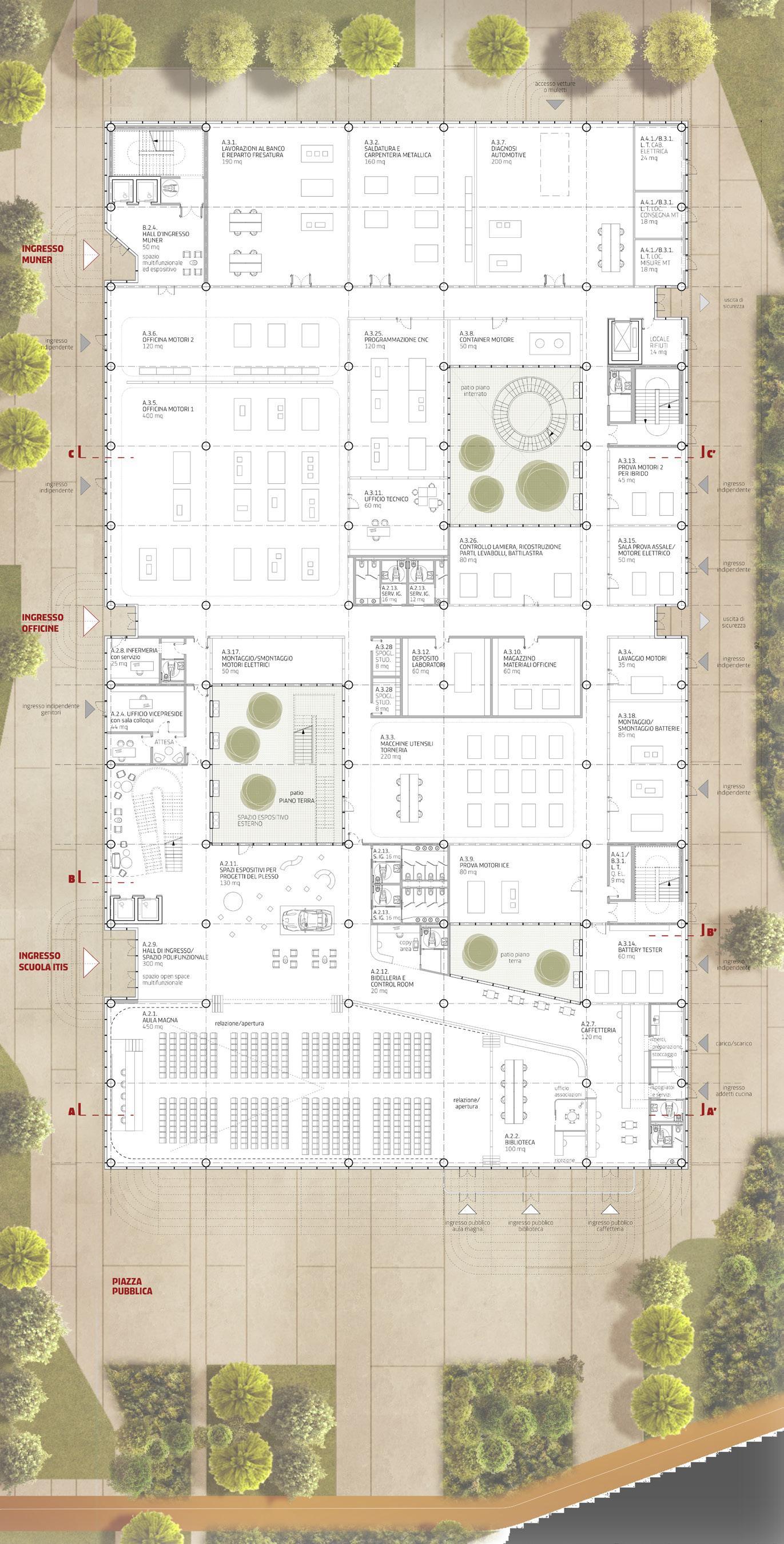
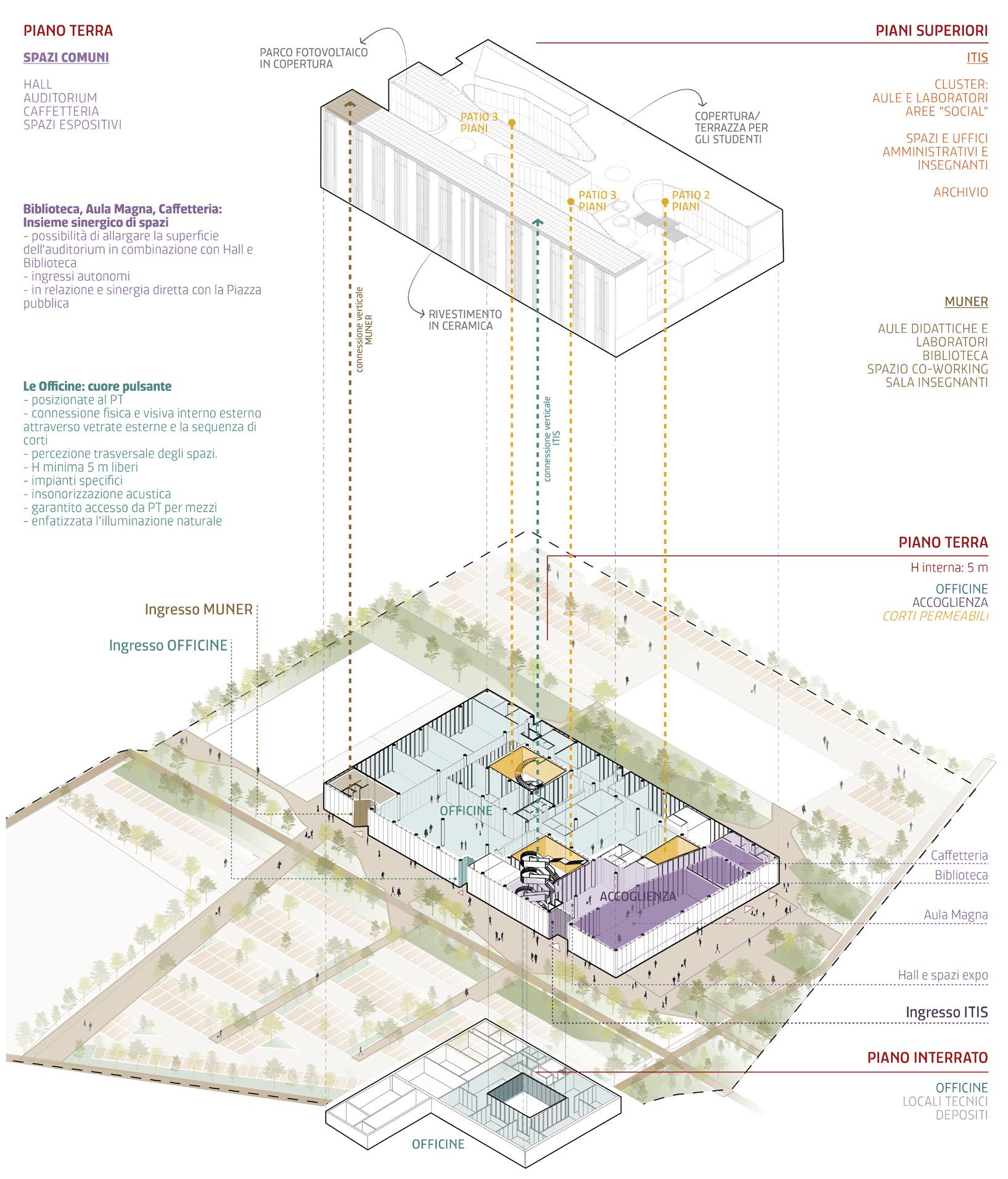
I am currently working at Atelier(s) Alfonso Femia in Milan. During this experience, I am learning a lot and taking part in different projects, both executive and competition-based. I started by contributing to a competition project for Ferrari in Maranello, focused on designing their new school. I mainly worked on refining and cleaning the drawings — including plans, axonometric views, and presentation boards. I also had the opportunity to assist with the cost estimation, which allowed me to better understand the economic and pricing aspects of an architectural project.
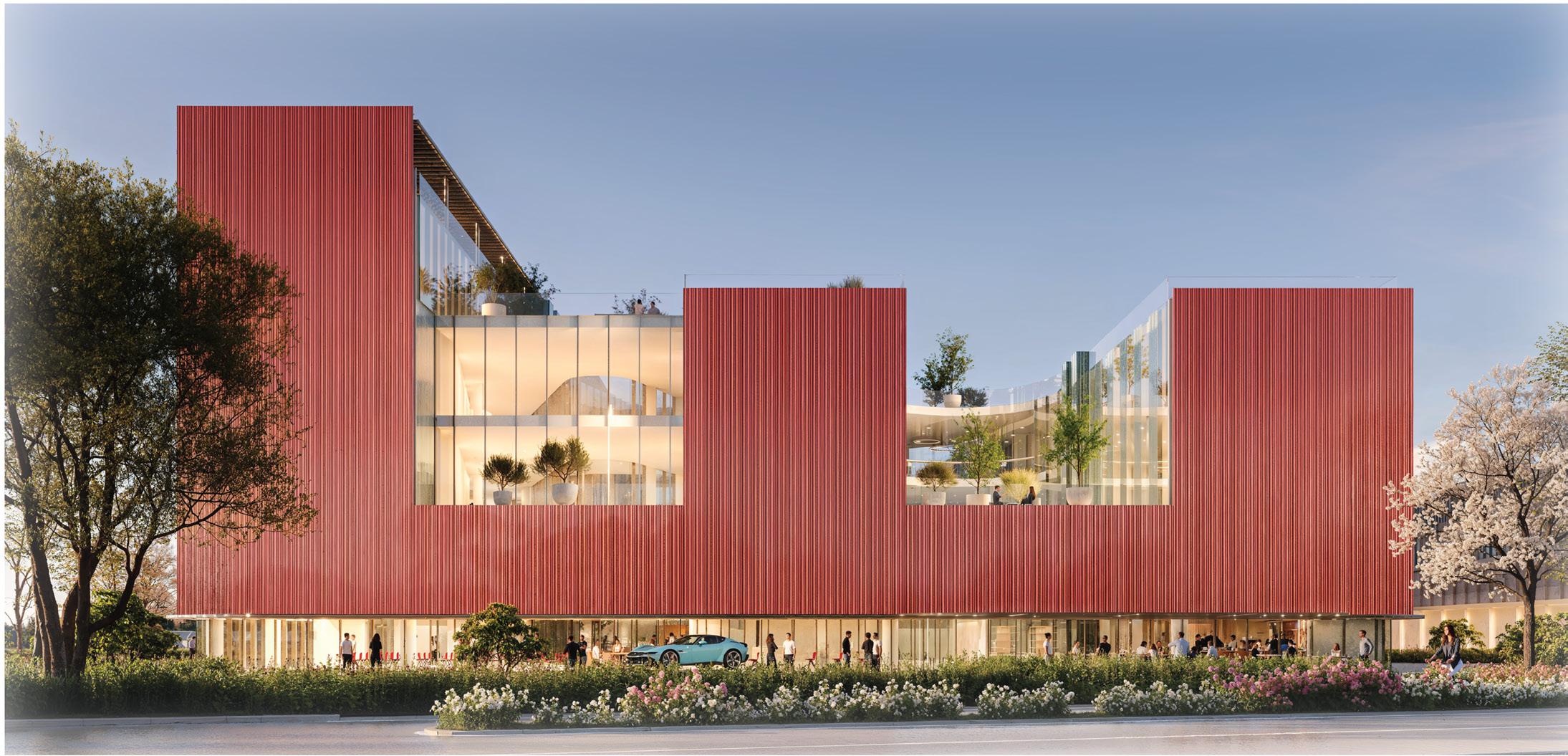
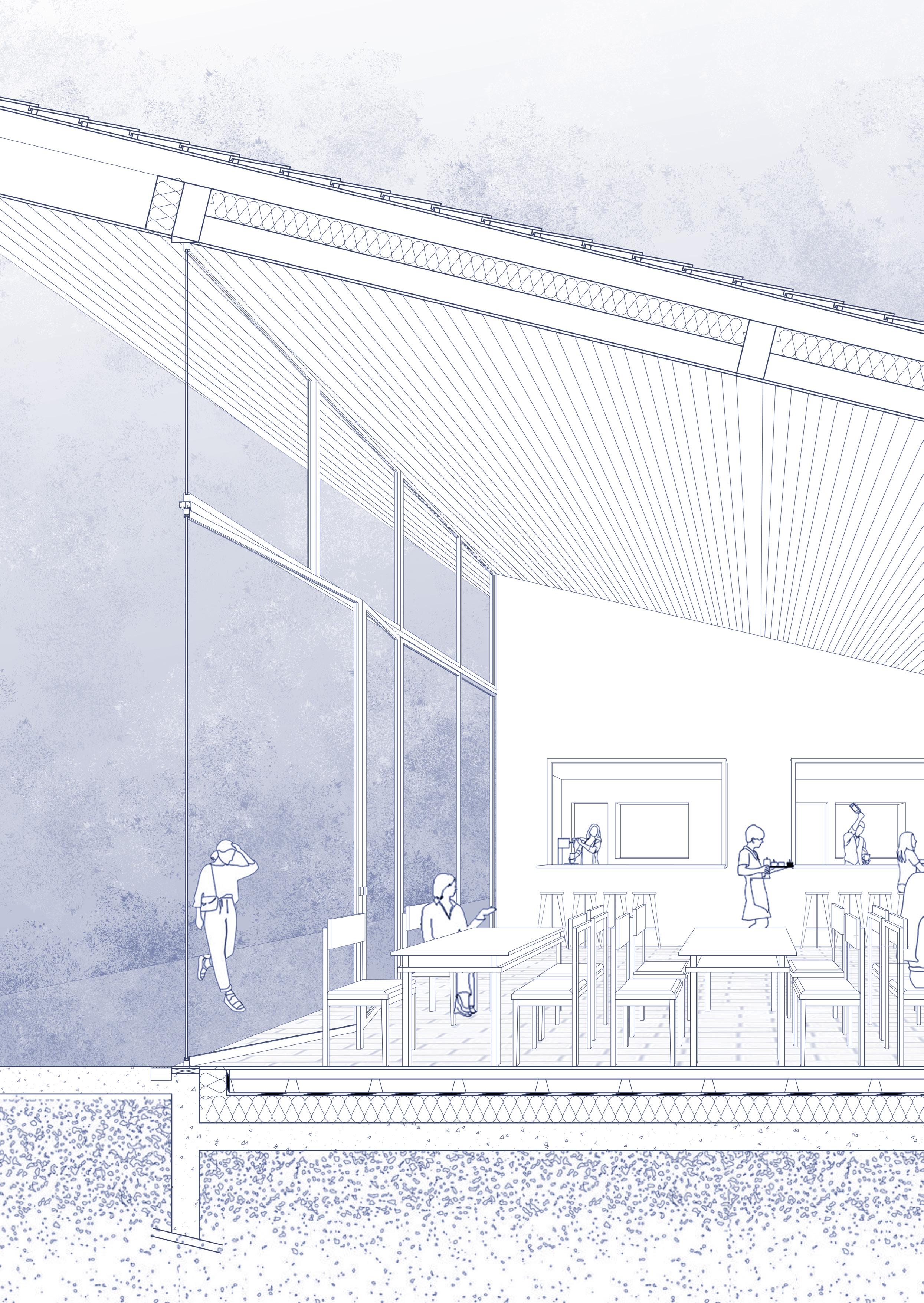
The project is based on a hybrid structural system combining concrete, steel, and laminated timber, balancing rigidity, lightness, and flexibility. A regular structural grid allows large column-free spaces in key areas such as workshops and the auditorium, ensuring adaptability over time. A concrete base supports the upper levels, which use mixed timber–steel elements and prefabricated CLT slabs, improving seismic performance, reducing structural mass, and enhancing construction efficiency.
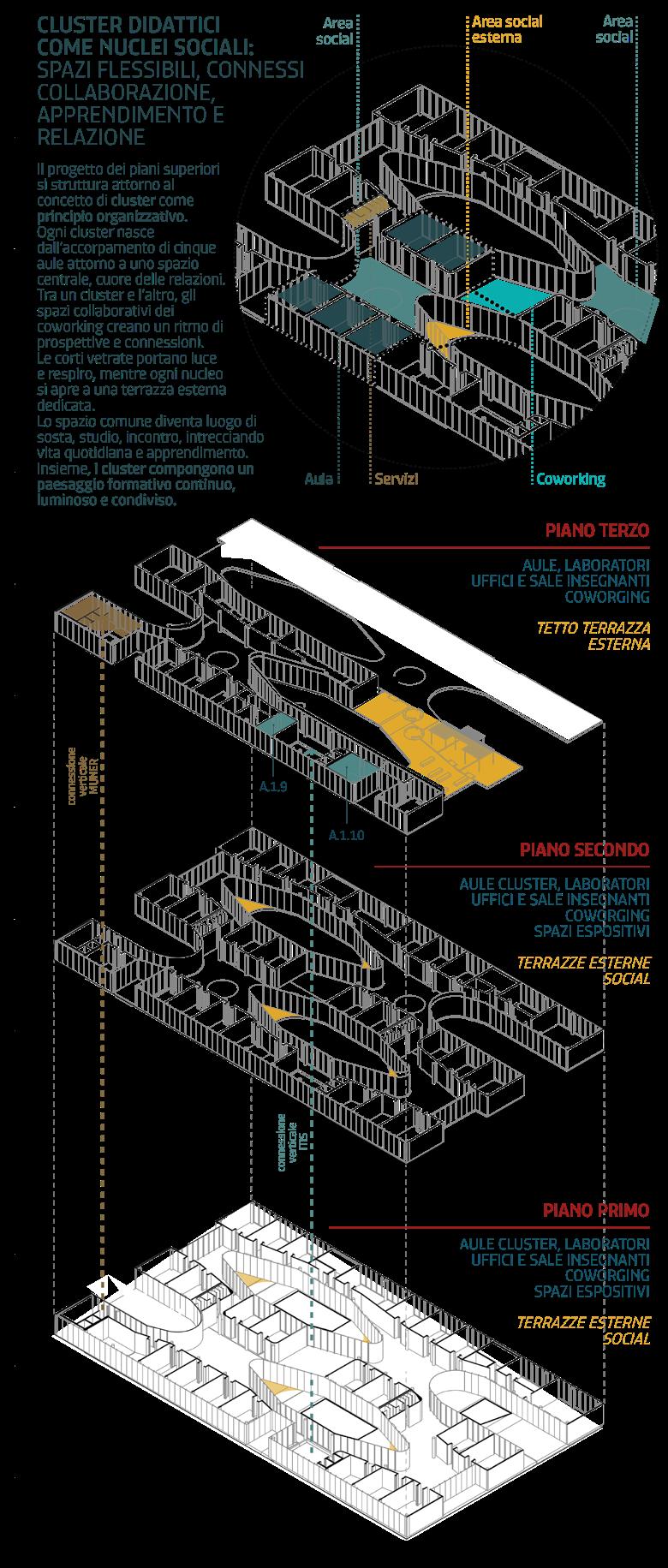
The upper floors are organized around educational clusters conceived as social cores. Each cluster groups five classrooms around a shared central space that encourages collaboration, informal learning, and daily interaction. Coworking areas connect the clusters, while glazed courtyards and dedicated terraces bring light, ventilation, and continuity, shaping a shared and flexible educational landscape.
La durabilité est pleinement intégrée au concept architectural. Le bâtiment fonctionne comme un organisme bioclimatique et sans carbone, dans lequel l’orientation solaire, la ventilation naturelle et des façades calibrées améliorent le confort tout en réduisant les besoins énergétiques. Un système entièrement renouvelable combinant des pompes à chaleur sur nappe phréatique, un chauffage par le sol, une ventilation mécanique contrôlée avec récupération de chaleur et une toiture photovoltaïque de 232 kWp dépasse les standards NZEB.
Les systèmes techniques sont rendus visibles, transformant le bâtiment en un véritable laboratoire vivant où architecture, technologie et conscience environnementale convergent.
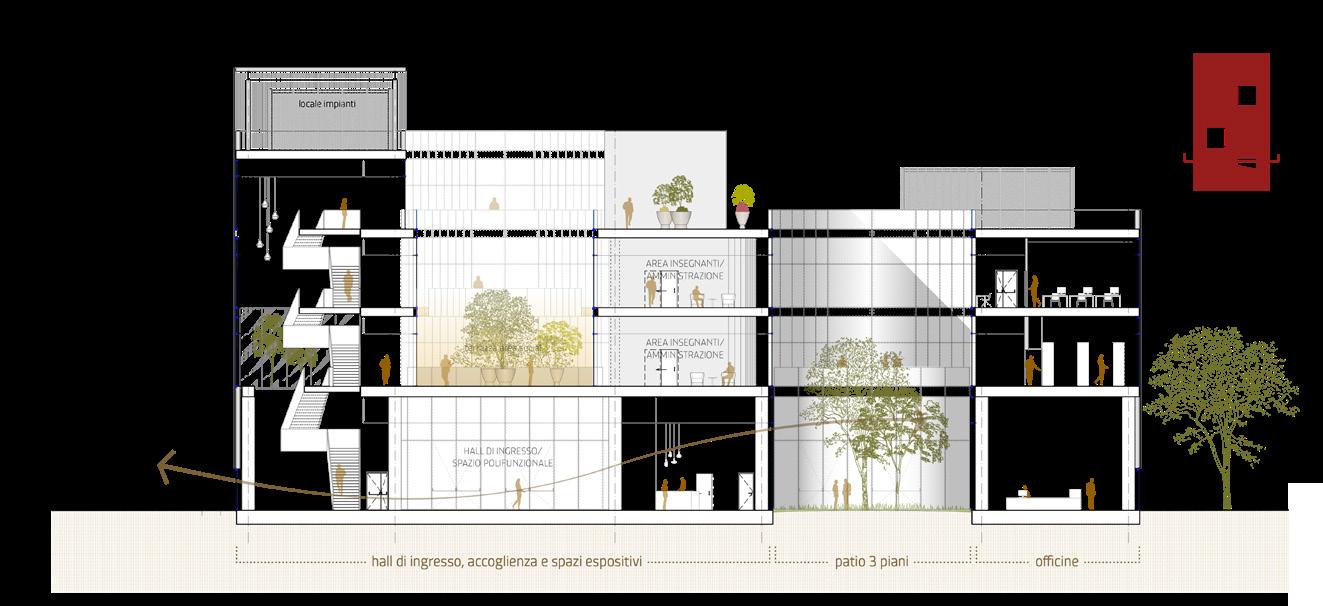
COUPE TRANSVERSALE - ENTRÉE
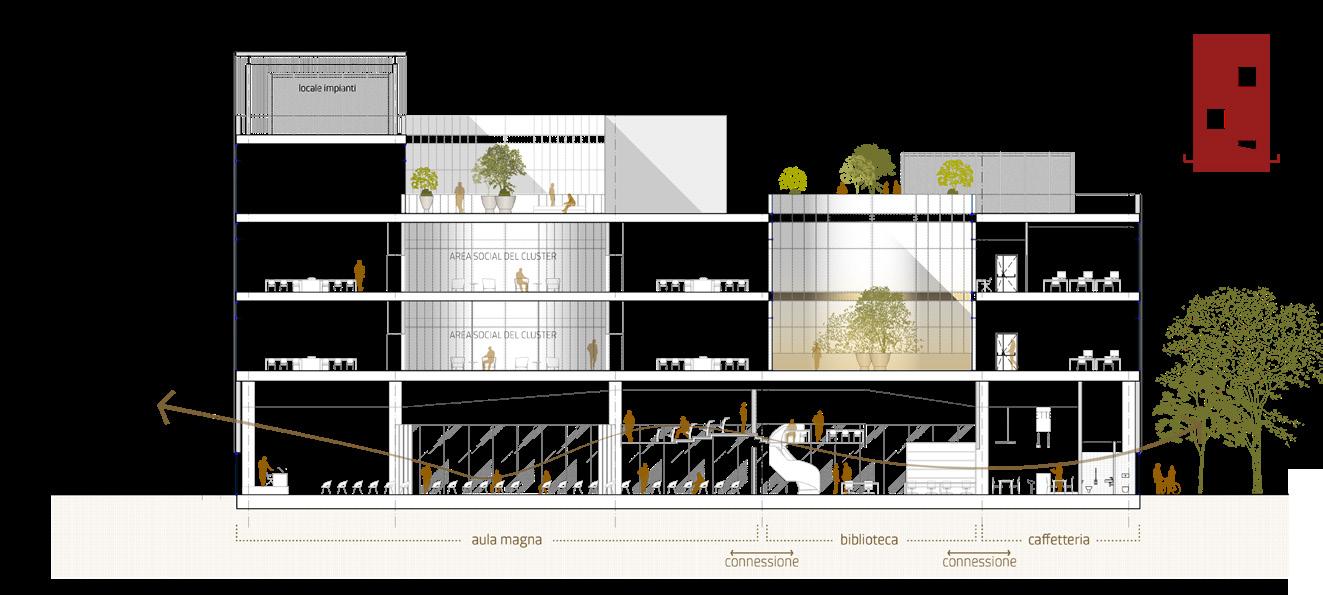
COUPE TRANSVERSALE - AUDITORIUM/LIBRAIRIE/CAFÉ
06. PRACTICE EXPERIENCE
IT’S - REDRAWING ROME (2024)
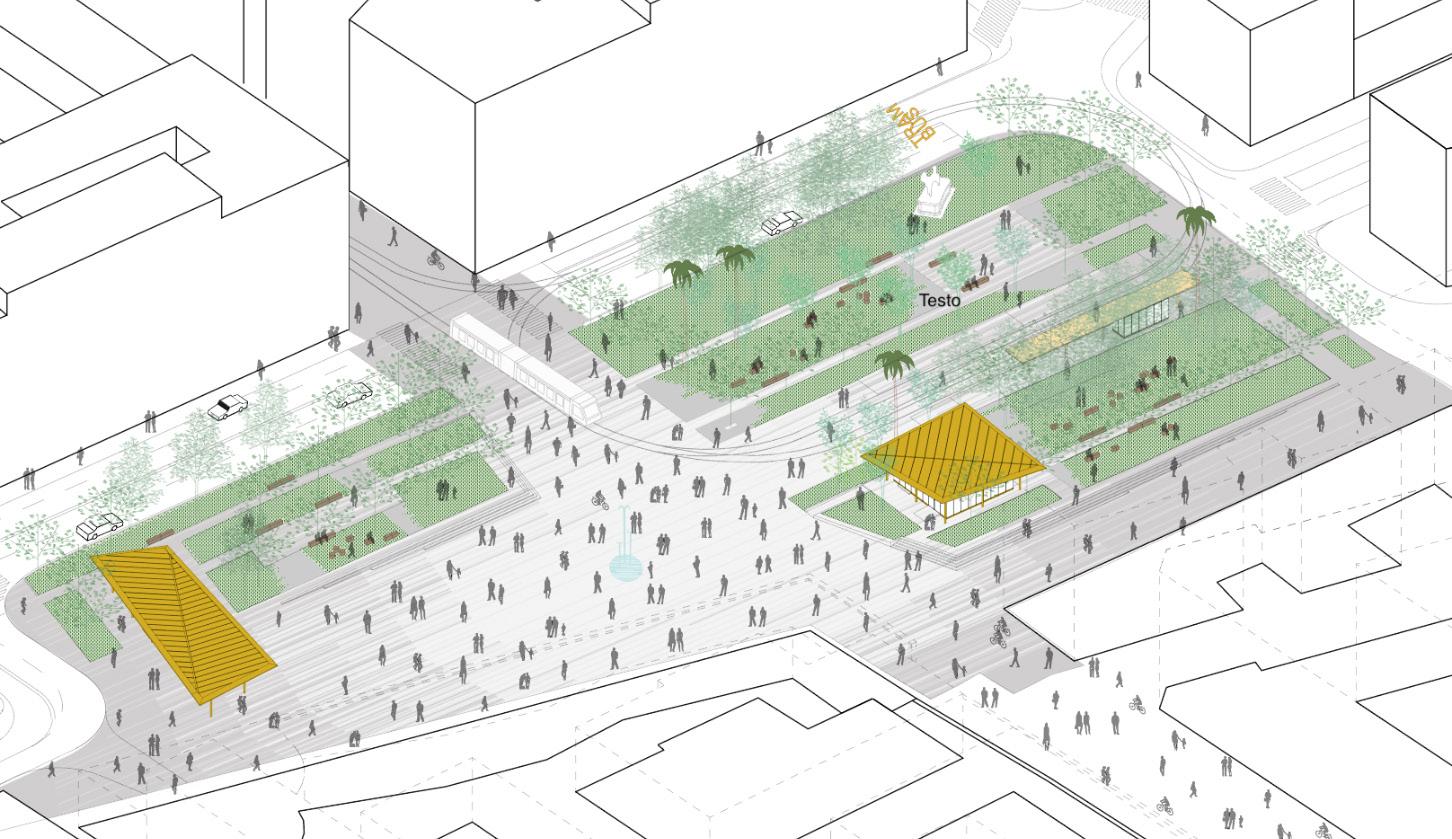
In my second year, I completed an internship at an architecture agency focused on research and innovation in the fields of architecture, urban planning, and design. I had the opportunity to work in a rich and dynamic environment. During this month-long internship, I worked on one of the agency’s most important projects, namely the redevelopment of a central square in Rome, Piazza Risorgimento. This square, being adjacent to the Vatican, will need to accommodate the many tourists and pilgrims arriving in Rome for the Jubilee in 2025. In particular, following this project allowed me to learn how to think about the urban redevelopment of a territory, gain confidence with programs like Illustrator and Photoshop, and also work in groups while respecting deadlines determined by the work of others.
EMISSION OF DIFFERENT TYPES OF SOUNDS
EMISSION OF ODORS
DIFFERENT TYPES OF TREE
PERMEABILITY
07. PRACTICE EXPERIENCE
GNAM- GALLERIA NAZIONALE D’ARTE MODERNA (2025)
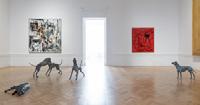
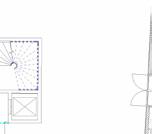
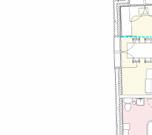
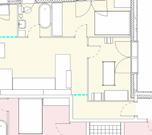
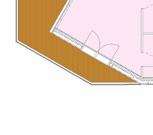
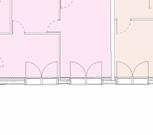
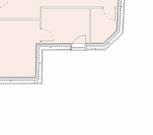
During my internship at the National Gallery of Modern Art, I took part in reorganizing the exhibition rooms in preparation for the museum’s reopening. As an architecture student, I was responsible for rethinking the spatial layout, particularly the placement of artworks and furniture. This assignment involved close collaboration with the art historian, the museum’s management, and the technical staff.
I carried out on-site measurements of the galleris, produced layout drawings both by hand and using AutoCAD, and integrated the artworks into the plans. This work, which required a high level of technical independence, entrusted me with significant responsibilities and enabled me to hurther develop both my architectural and artistic skills, while gaining hands-on experience and actively contributing to the museum’s operations.




Al centro della sala
P. Troubetzkoy, Mia moglie, 1911 Bronzo H.190; L.80; P.76 cm.
P. Troubetzkoy, Ritratto di Amélie Louis Rives, 1895 Bronzo H.55; L.60; P.33 cm.
A G. Boldini, Verdi, Olio su tela H.81; L.69.5 cm.


G. De Nittis, Corse al Bois de Boulogne, 1881, Pastello parte centrale H.200; L.195 cm., parti laterali H.200; L.100 cm.
F. Zandomeneghi, Casetta a Montmartre (1879-1880), Olio su tela H.52; L.43 cm.
B G. Boldini, La marchesa, H.142; L.105 cm.
G. De Nittis, La petite anglaise (1879-1880) Olio su tela H.35; L.46 cm.
G. De Nittis, Donna sulla rena (1874-1875) Olio su tela H.26.5; L.47 cm.

21
M. Rosso, Ritratto di Henri Rouart (1889-1890), Bronzo H.103; L.58; P.34.5 cm.
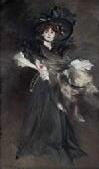
C G. Boldini, La marchesa Casati (1911-1913) Olio su tela, H.162; L.203 cm.
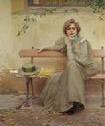
V. Corsos, Sogni (1896) Olio su tela, H.188.5; L.164 cm.
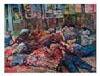
D G. Boldini, Mademoiselle Lanthèlme, 1907 Olio su tela H.260; L.150 cm.
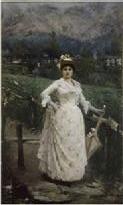
G. Grosso, Signora in aperta campagna (1889) Olio su tela H.313; L.195 cm.
SETTORE 2



Al centro della sala
L. Moro, Underdog (2005), Bronzo
A A. Sassu, Guerra civile (1944), Olio su tela H.116; L.200 cm.
R. Guttuso, Crocifissione (1940-1941), Olio su tela H.198.5; L.198.5 cm.
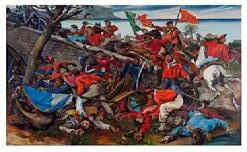
B R. Guttuso, La battaglia di Ponte dell’Ammiraglio (1955), Olio su tela H.300; L.500 cm.
M.Mazzacurati, Il fucilato (1954-1955), bronzo H.330; L.135; P.80 cm.
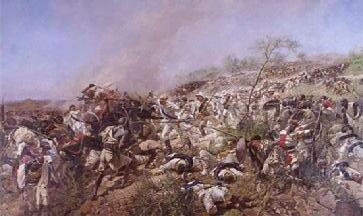
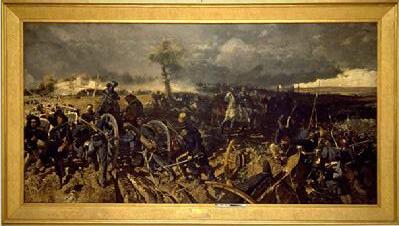
M. Cammarano, La battaglia di Dogali (1896), Olio su tela H.445; L.748 cm.
C M. Cattelan, Sunday (2024), Pannello d’acciaio dorato 24 Carati sparato con differenti calibri H.135.6; L.135.6; P.3.8 cm.
D. Induno, Trasteverina uccisa da una bomba (1850), Olio su tela H.138; L.182 cm.
D M. Cammarano, La battaglia di San Martino (1880-1883), Olio su tela H.420; L.820 cm.
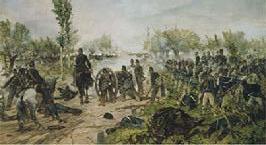
G. Fattori, La battaglia di Custoza (1880), Olio su tela H.297; L.546 cm.
SALA





































09. FILIGREE
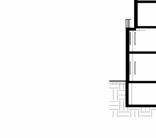
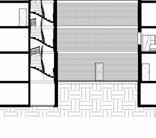
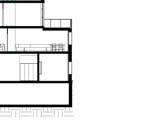
The objective of this work is to demonstrate a clear understanding of framed structural systems through physical models and technical drawings. The project explores the fundamental rules of structural composition, focusing on span fabrication, lateral stability, bracing systems, and the hierarchy of structural elements. Special attention is given to Saint Andrew’s crosses and diagonal bracing as key devices for ensuring global stability across six levels. The relationship between primary, secondary, and tertiary elements is used to clarify load transfer and structural logic, while the treatment of cantilevers tests the balance between constraint and structural performance.
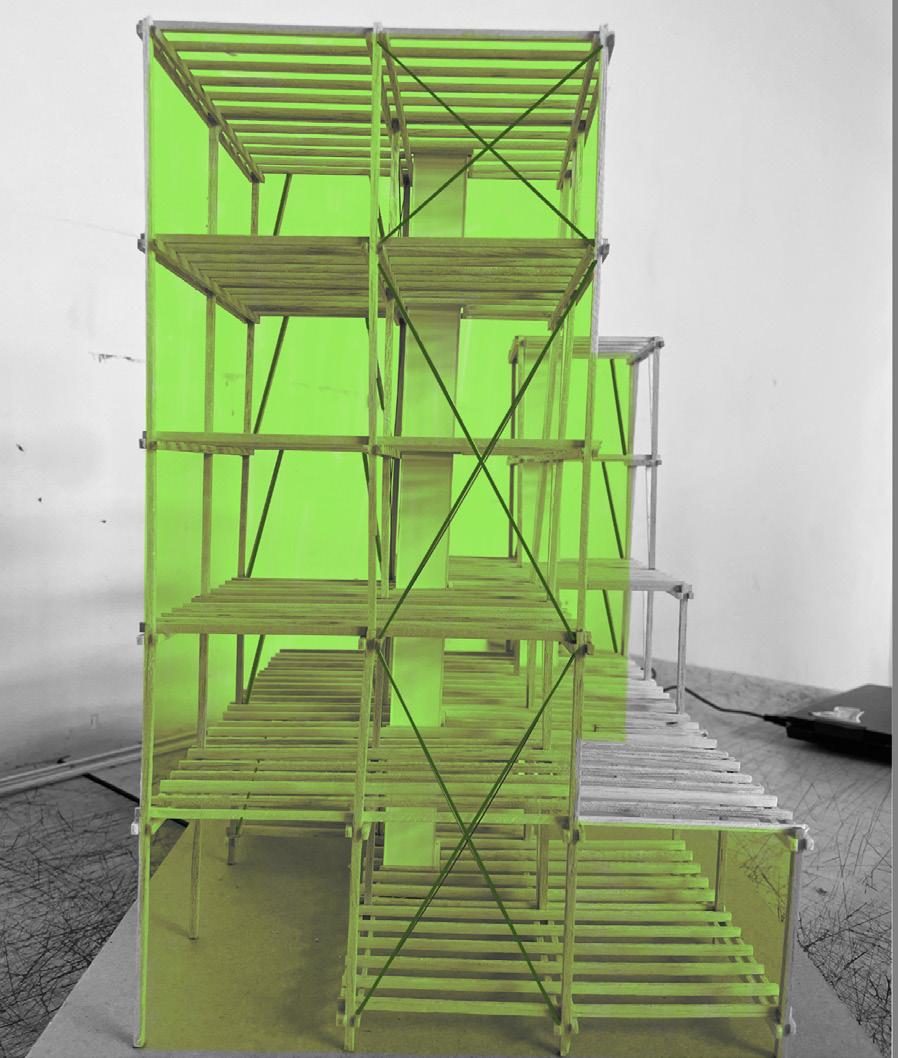
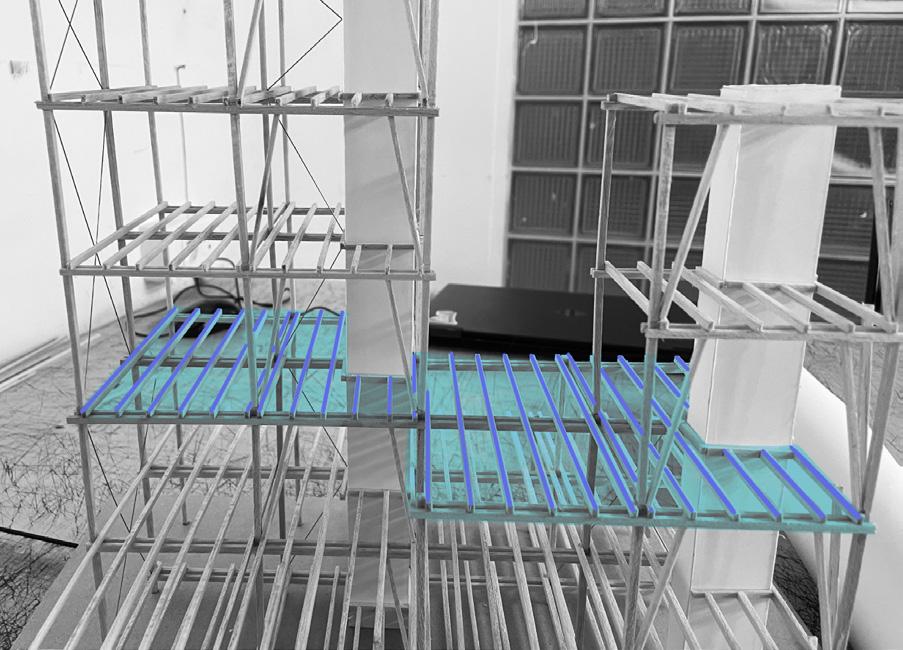
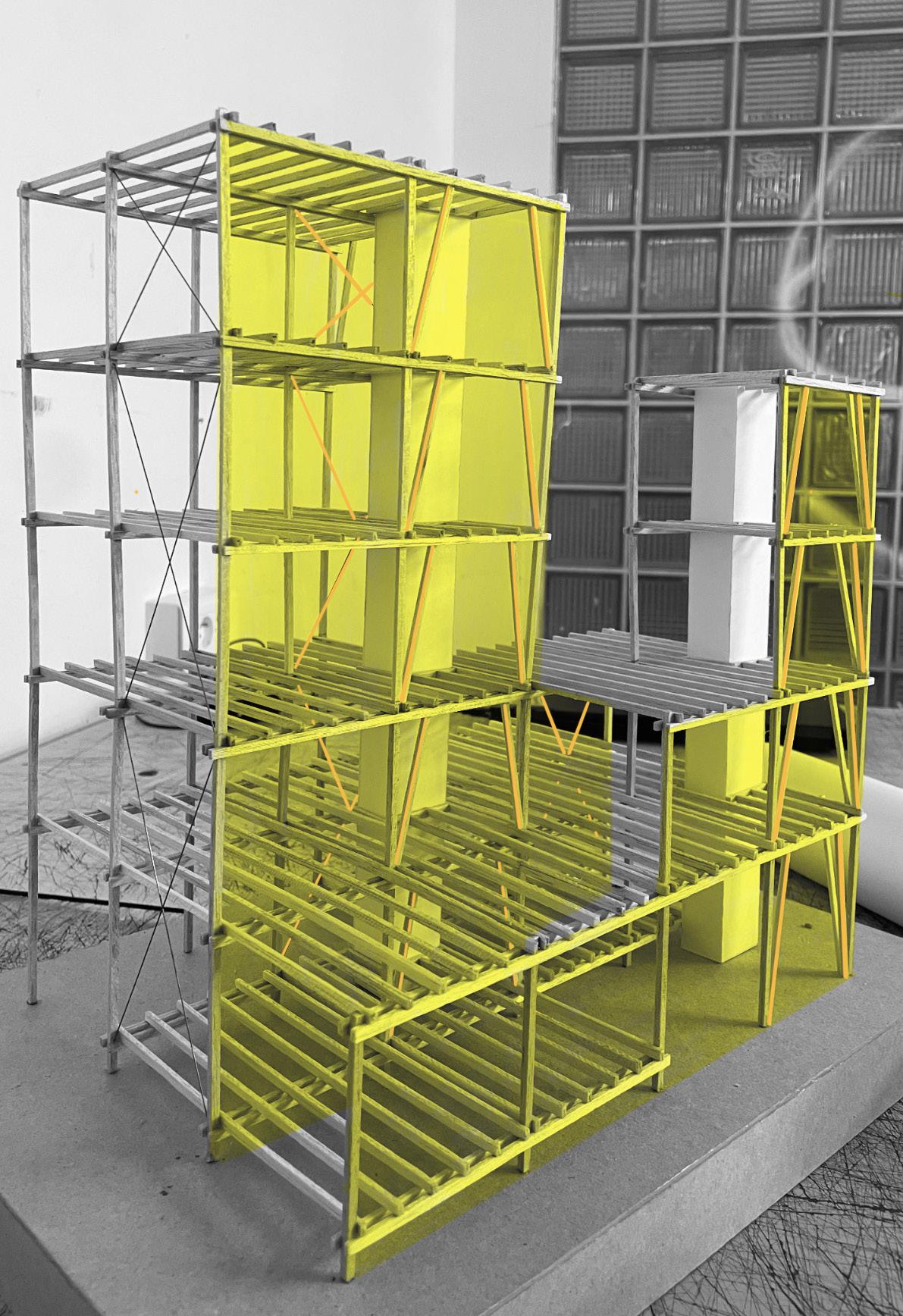
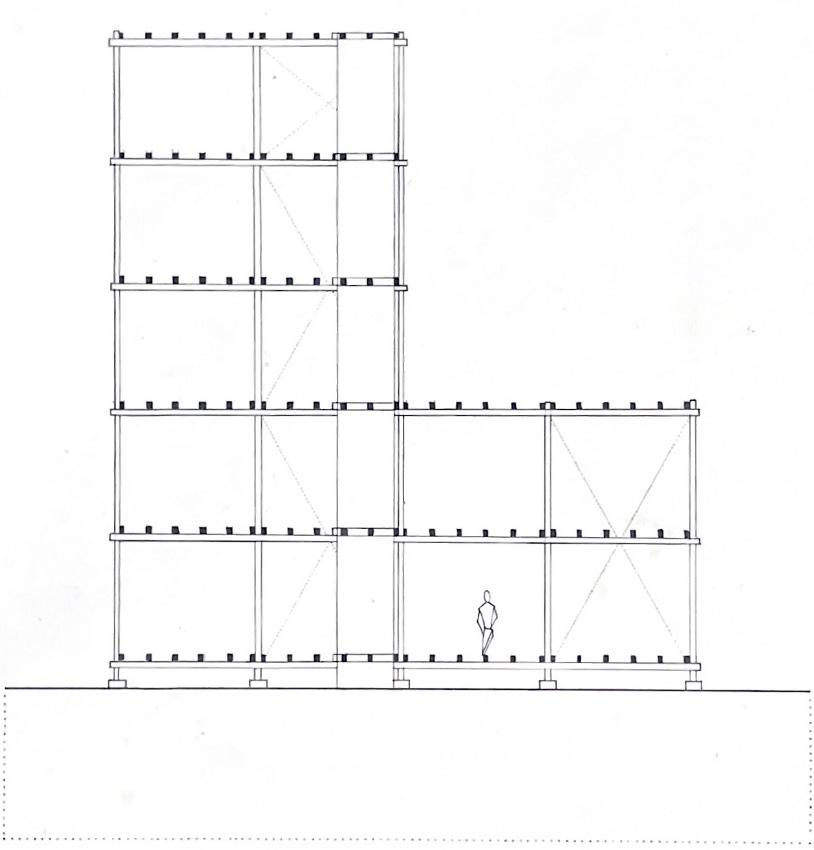
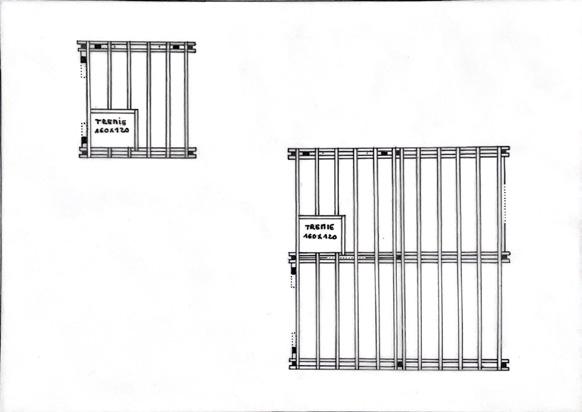
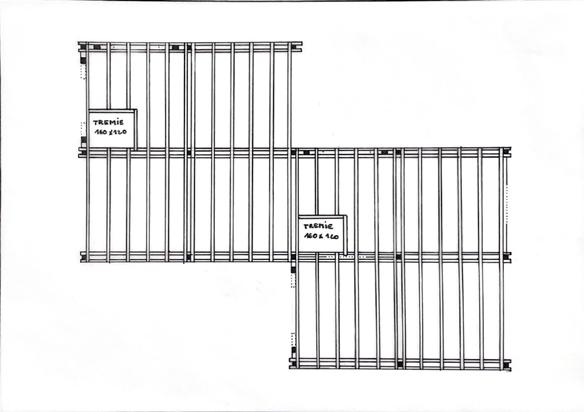
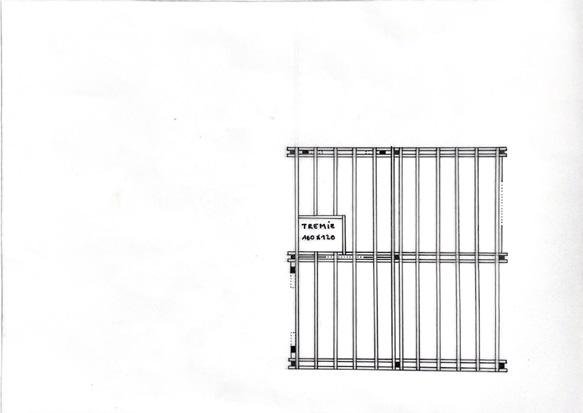
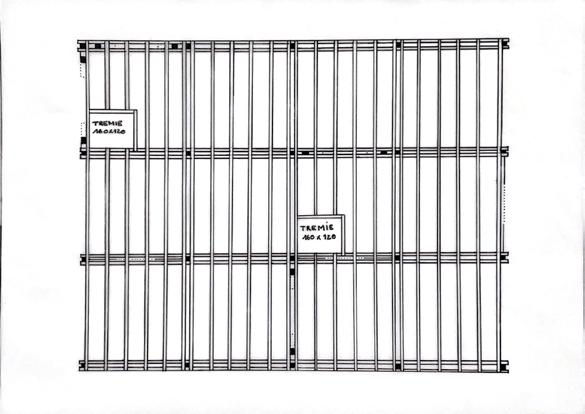
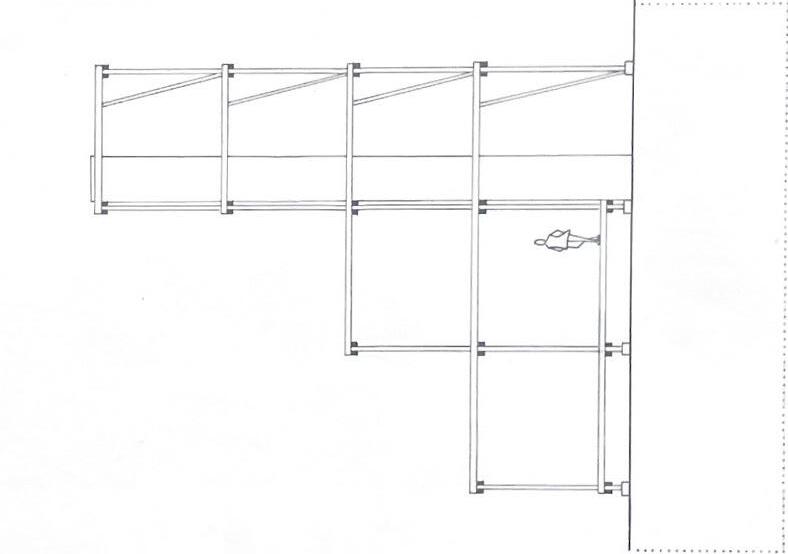


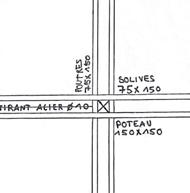
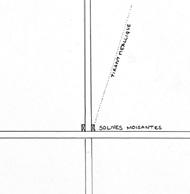
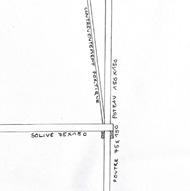
Imposed constraints simulate realistic construction conditions and guide the exploration of modularity, repetition, and coherence. Through this process, the structure is understood not only as a technical system, but as an architectural framework that actively shapes space and organization.
10. MASSIVE CONSTRUCTION
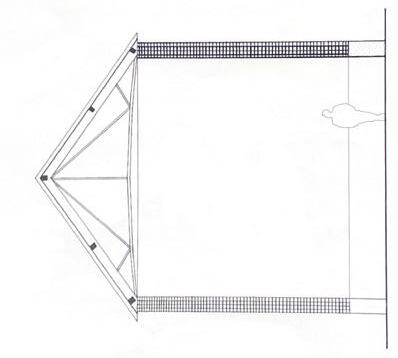
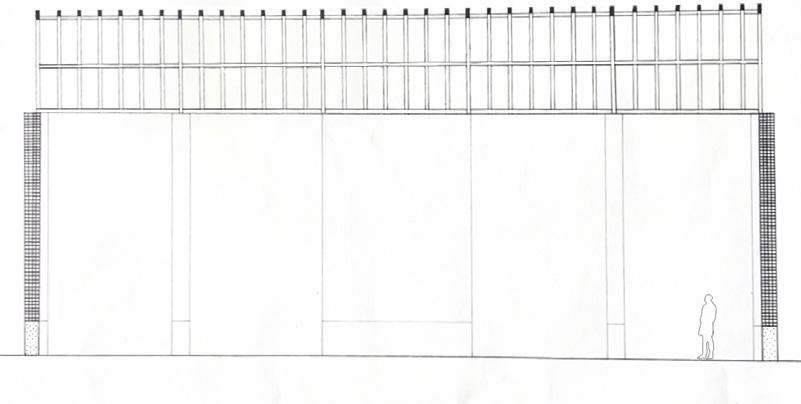
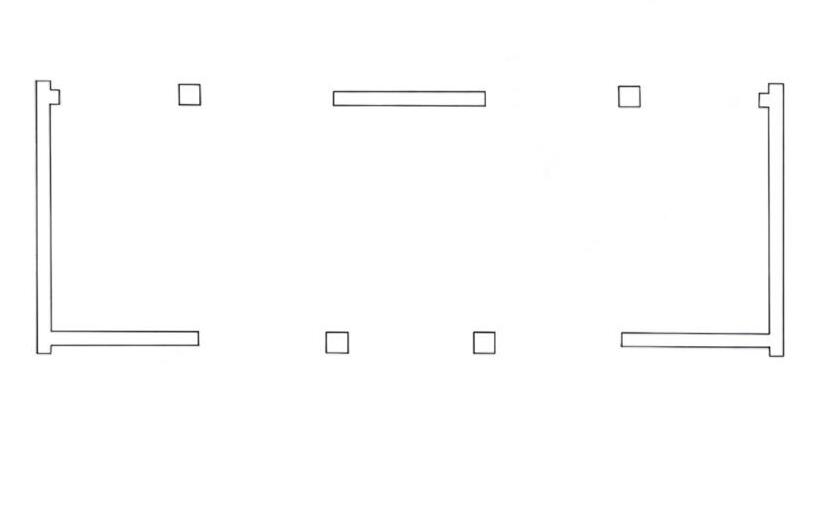
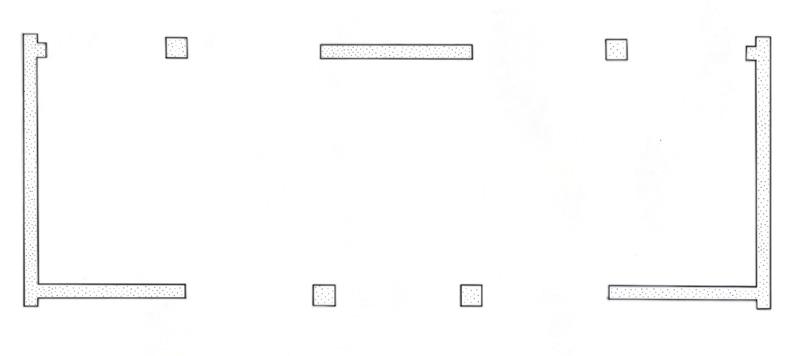
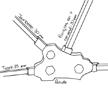
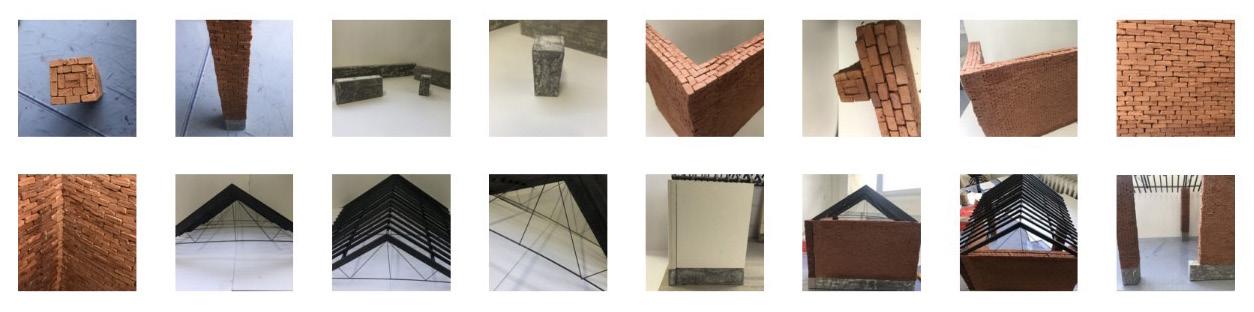
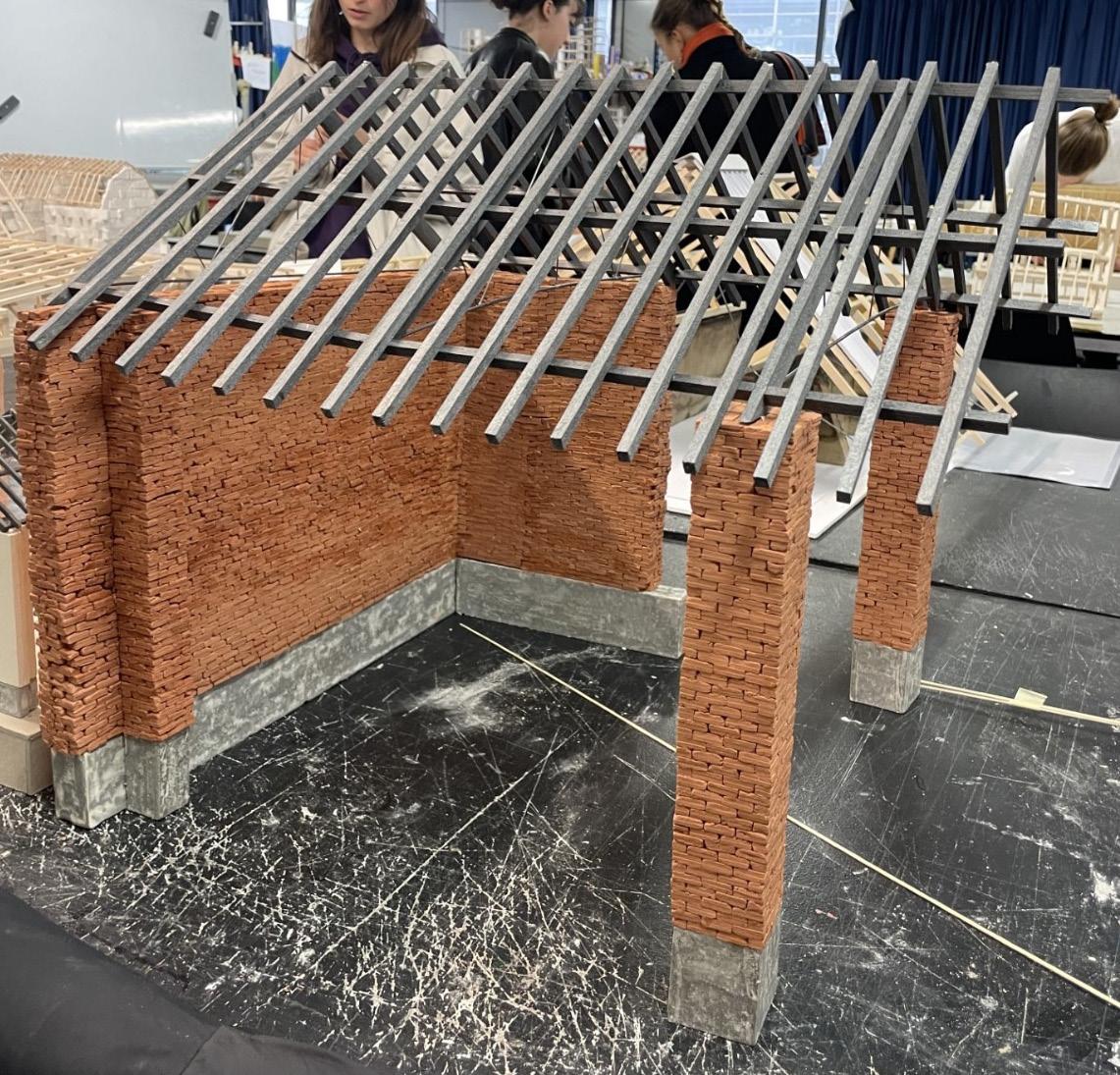
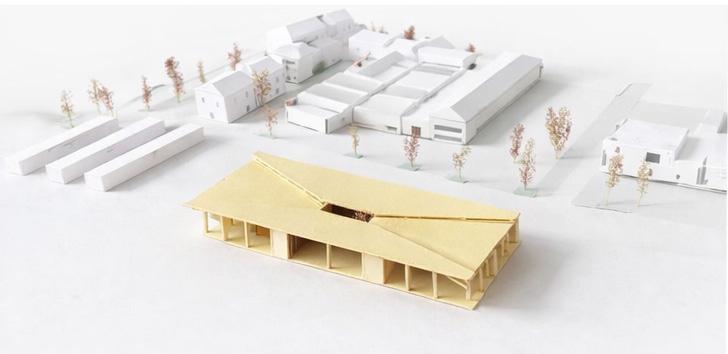
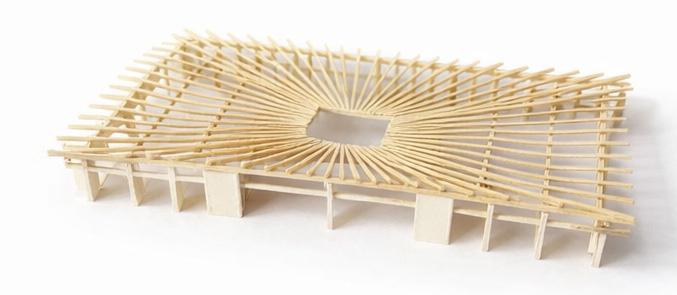
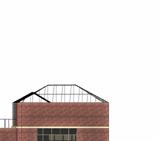
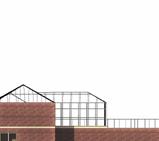
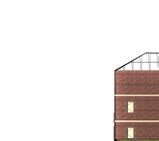
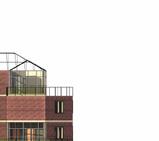
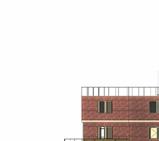
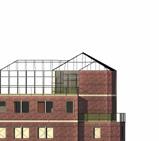
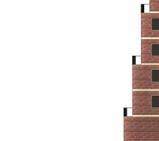
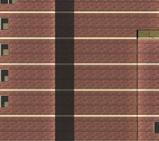
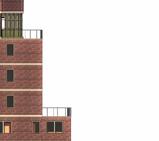
The objective of this work is to develop a family of hybrid constructions composed of massive vertical supports and a roof-bearing frame structure. The aim is to demonstrate a strong understanding of the compositional principles of massive structural systems (walls) and to explore their relationship with framed structures.
The project also examines how span is achieved, the nature of the connections and joints betweem masonry elements, and the lateral stability of the structure. Certain constraints were imposed, including the use of a Polonceau-type truss and massive supports made of terracotta brick.