&
Health Wellness FALL 2016
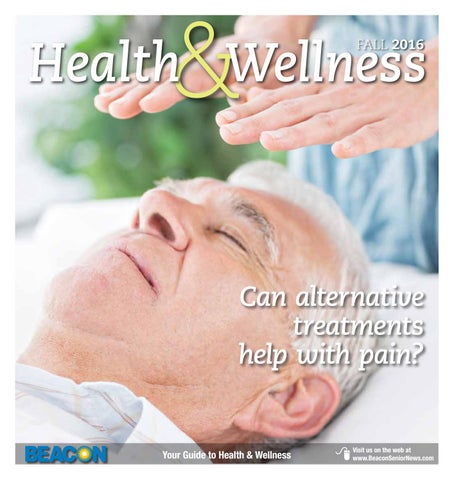
Can alternative treatments help with pain?
Your Guide to Health & Wellness
Visit us on the web at www.BeaconSeniorNews.com
2
HEALTH & WELLNESS
www.BeaconSeniorNews.com
FALL 2016
Can alternative treatments help with pain? By Amy Abbott
P
LARGE
SELECTION OF TOPICAL & CBD PRODUC T S E V E R Y S U N D AY S E N I O R S A N D V E T E R A N S RECEIVE 20% OFF! ( 1 5 % O F F E V E R Y O T H E R D AY ) 730 MAIN STREET • SILT, CO
844-420-DANK(3265) www.HighQSilt.com
ain is real and sometimes an aggravating part of aging. Pain is not inevitable with aging, but many seniors experience pain from various ailments. With all the media and societal discussion about pain medications, I explored some alternatives to pain that might be helpful to seniors. Most of us know the drill when speaking with our doctors about pain. Modern medicine provides treatment guidelines and protocols, but if those don’t work or have unwanted side effects, there are some alternatives. Acupuncture: The acupuncturist puts long, slender needles through the skin to stimulate certain points of the body. The National Institutes of Health reports that acupuncture from traditional Chinese medicine may provide pain relief for chronic conditions such as low-back pain, neck pain and osteoarthritis/knee
pain. The process was developed in ancient China before Western evidence-based medicine and has been used by millions of people. Many studies refute acupuncture as a pain reliever, yet it is still a widely used method. The NIH reported, “There have been extensive studies conducted on acupuncture, especially for back and neck pain, osteoarthritis/ knee pain, and headache. However, researchers are only beginning to understand whether acupuncture can be helpful for various health conditions. Research suggests that acupuncture can help manage certain pain conditions, but evidence about its value for other health issues is uncertain.” What do we know about the safety of acupuncture? The NIH says acupuncture is considered safe when performed by an experienced, well-trained practitioner using sterile needles. Acupuncture that is carried out haphaz-
Modern medicine provides treatment guidelines and protocols, but if those don’t work or have unwanted side effects, there are some alternatives.
FALL 2016
HEALTH & WELLNESS
www.BeaconSeniorNews.com
We still fully lack an understanding about the power of our mind to heal, but few adverse reactions exist for the three treatments discussed. ardly or by an untrained practitioner can result in adverse effects.
Reiki healing: Reiki is a Japanese spiritual practice not based on any particular religion that accesses a life force energy within the body and uses it for healing. A trained Reiki master will lay hands on a person, which heightens the energy within. I have experienced this several times. I am not a scientist, and as the daughter of a science teacher, I tend to be skeptical. Whether my pain reduction came from a quiet, restful hour or the touch of a Reiki master, I cannot say. It does, however, provide relief for me. While there are few studies showing the benefits of Reiki, one study reported by the University of Pennsylvania Medical Center cited benefits for cancer patients during
chemo. “Our recent study has shown that Reiki induces relaxation, and decreases anxiety, stress and a patient’s perception of pain,” said Jun Mao, director of the Integrative Oncology Initiative at the Abramson Cancer Center. Penn’s program for cancer patients also includes acupuncture, mindfulness-based stress reduction, yoga and massage. Physicians explained that Reiki doesn’t compete with other pain treatments. “Reiki itself does not cure cancer but it may help lead to better adherence to conventional therapies, which in turn will promote better clinical outcomes,” Mao added.
Jin Shin Jyutsu: During a recent massage, I complained to my massage therapist about my ongoing
struggle with asthma. I follow all the rules and use all the medications and techniques my doctors prescribed. She suggested a Jin Shin Jyutsu treatment along with my massage. Ever the skeptic, I quizzed her about it, and then decided—what the heck? Again, perhaps it was the quiet hour, relaxing music and massage touch, but I felt remarkably better. My breathing deepened and I will try it again. Of course, this anecdote is but one example. Clinical, evidence-based research is lacking, but likely the treatment can do no harm. The Jin Shin Jyutsu method also traces back into ancient times, before Buddha and Moses. Oral tradition passed the practice down through generations. The practice had all but disappeared until it was rediscovered by Master Jiro Murai, a healer and philosopher. The tale goes that Murai was able to heal Emperor Hirohito’s brother and was given access to ancient
3
texts that offered more information. During treatment, the practitioner uses his or her hands to work with 26 points of energy. This set of points is known as Safety Energy Locks along energy pathways in the body. The tradition says that when a pathway is blocked, energy stagnates, which initially affects the local area and ultimately can create an imbalance along the entire pathway. (This is similar to acupressure, though acupressure has 300 points.) Mary Burmeister met Murai in Japan and brought Jin Shin Jyutsu to the U.S. She did not believe in promoting the healing procedure as a business, so today it is still primarily learned by word of mouth. The science around our mind has exploded in the last 50 years. We still fully lack an understanding about the power of our mind to heal, but few adverse reactions exist for the three treatments discussed. As always, check with your regular health care providers before trying any therapies. ■
4
HEALTH & WELLNESS
www.BeaconSeniorNews.com
Opn™
Oticon helps people with hearing loss hear better F or millions of Americans with hearing loss, understanding speech in settings with multiple sound sources is challenging and exhausting for the brain. Until now, hearing aid technology has focused on directionality and noise reduction systems working independently so wearers can focus on sound sources in front of them. The latest hearing aid technology is changing that. AAA Hearing is pleased to announce the arrival of the Oticon Opn™, a breakthrough hearing device that provides better speech understanding in noisy environments and is proven to make speech understanding easier on the brain for people who experience hearing loss. Opn is a revolutionary new hearing aid with BrainHearing™ technology, which allows
people with hearing loss to not only hear better without having to work as hard but they also remember more of what is being said. Oticon Opn, a small, discreet hearing aid, is a powerhouse of innovative technology that expertly manages multiple speech and noise sources so people hear better with less effort even in challenging listening situations like restaurants or social gatherings. The high speed Velox™ platform, which is 50 times faster than previous technology, scans, analyzes and reacts to sounds in the environments more than 100 times per second. Opn allows wearers to enjoy an open-sound experience where surrounding sounds are available but not intrusive. This enables them to easily follow the sounds they want to hear and quick-
ly shift their attention when desired. Opn offers easy connectivity to a variety of mobile phones and devices. Audio is streamed directly to the hearing aids using technology similar to Bluetooth. With the free Oticon Opn App™ wearers can control volume, program or device selection with their mobile device.
TwinLink™ Technology Oticon Opn is the industry’s first hearing solution to offer TwinLink technology: two communication systems in one hearing solution. One system provides near-field magnetic communication, which optimizes binaural ear-to-ear processing to support communication between two hearing aids for a more natural sound experience. A second dedicated system uses 2.4GHz Bluetooth direct streaming for wireless communication to mobile phones, computers, TV and more. Internet connected Oticon Opn connects directly to
FALL 2016
the internet via the If This Then That service (IFTTT.com). Users can connect to a wide range of IFTTT-enabled devices such as doorbells, thermostats and baby monitors and more as they become available.
OpenSound Navigator™ OpenSound Navigator™ scans, analyzes and reacts to sounds in the environment more than 100 times per second. Thanks to this extreme processing speed, Oticon Opn is able to continually analyze and balance sounds, removing noise between words. Users can follow the sounds they want to hear and quickly shift attention when desired. Surrounding sounds are available but not intrusive so users can focus on the sounds they want to hear even in noisy situations. For an appointment to have your hearing tested or to discuss whether the Oticon Opn is right for you, call AAA Hearing at 243-6440. ■
FALL 2016
HEALTH & WELLNESS
www.BeaconSeniorNews.com
5
Cooking oils are not all good for you Dear Pharmacist By Suzy Cohen, RPH
D
o you whip up delicious meals without measuring a single thing? The oil you use in your kitchen can make or break your otherwise wonderful dish. Did you know that some oils are harmful? Did you know that fried chicken and French fries often use hydrogenated oils, which increase your risk of diabetes, heart attack, obesity and cancer? Some partially hydrogenated oils are even derived from soybean oil, discussed below. What’s in your kitchen?
of time. A little oil on your salad should be fine though. Tea seed. This is one of my favorite oils because you can use it at high temperatures, the flavor is mild and it contains antioxidants like vitamin E. It has both omega 3 and 6 fatty acids. Do not confuse tea seed oil with the essential oil of tea tree, which cannot be ingested.
GOOD High in monounsaturated fats
Canola oil (Rapeseed). Some of you think this is a healthy oil because it’s very low in saturated fat and like olive oil, it’s high in monounsaturated fat. However, hexane is used as a chemical solvent to extract canola oil from the seeds, and pesticides are sometimes used. Bleaching, too. It’s used for baking or stir-fry. Margarine. This is a man-made chemical. Do I need to say anything else?
Olive oil is an excellent source of antioxidants, polyphenols and essential fatty acids. It supports cardiovascular health and blood pressure. Coconut oil. I’m referring to the unheated, unrefined, virgin coconut oil which is healthy raw or baked. Don’t use super high heat. Please avoid hydrogenated coconut oil, which is manmade and contains trans fats. Almond oil is a good source of natural vitamin E. It has even less saturated fat than olive oil. Almond contains monounsaturated fat (like olive oil). Almond oil goes rancid easily, so store it in a dark cabinet.
High in omega 3 fatty acids Hemp oil. Unrefined oil has a good amount of gamma linolenic acid, which is considered a healthy omega 6 that may relieve PMS and skin conditions, such as eczema and psoriasis. Flax is a fragile oil that shouldn’t be heated. It’s good to make salad dressings with. Refrigerate the oil. Too much may be goitrogenic (suppress iodine absorption) so avoid consuming highdose supplements for extended periods
BAD High in saturated fats or trans fats
High in omega 6, which can increase inflammation Corn oil. It’s hard to find a non-GMO version of this, unless it specifically says organic. Plus, it may be bleached. Corn oil increases oxidized or bad cholesterol. Soybean oil. This is another oil that’s heavily refined and often genetically modified. Did you know that plants are somewhat toxic to humans? Soybean oil, milk and tofu contains a lectin called PHG, or phytohemagglutinin. PHG may interfere with digestion, affect memory and make your blood cells stick together. People use soybean oil for stir-fry because of the high smoke point. Read your supplement bottles because soybean oil is used in many dietary supplements. ■
Medications too expensive or no longer covered by insurance?
Why use a Compounding Pharmacy?
Call us today
• Customized hormone replacement therapy • Different formulations such as making a pill into a liquid • Combining multiple medicines into one • Hard to find or discontinued medicines • Topical pain creams
NEW ** ON LOCATI
970-243-5050 www.GJCompounding.com 2472 Patterson Road, Unit 12
ASK ABOUT OUR EASY LAB TESTING FOR HORMONES, THYROID, OR ADRENAL HEALTH
FREE - 20 gallons of Pure Fresh Water*
**1206 Ute Avenue Outside 24-Hour Teller
243-5744
HOURS: Monday - Friday 10 am - 6 pm Saturday 10 am - 2 pm • Closed Sunday *New Customers Only / Discount Senior Coupons Available
“Currently accepting new patients... We also accept most health insurance.”
Comprehensive Medical Care Jeri White, D.O. Charlotte Chance, F.N.P. 2478 Patterson Rd. Suite27 Grand Junction, CO 81505
970.242.3200
www.familyvaluesmedicalclinic.com
Our Services: · · · · · · · ·
General Health Prevention & Wellness Work/School/Travel Exams Sports Physicals Acute illness treatment Chronic Disease Management Medication management Specialist referrals
6
Please pour the coffee By Scott Rollins, MD
northern European countries and even Canada in consumption per egend has it that around 1,200 years ago an Ethiopian goat herd- capita. The unroasted coffee bean has all er observed his animals energeticalthe macronutrients, acids and cafly dancing around after eating the feine but none of the flavor of it’s bright red berries of a local plant. Following the goats’ lead the young roasted cousin. It takes heat to turn carbohydrates and fats into aromatman and soon those of his region began eating the berries for energy. ic oils, dry out the moisture, alter It wasn’t until a few hundred years the acids, and unleash the smell and flavor of coffee. later in Arabia that roasted beans Despite it’s popularity, coffee were brewed and imbibed as the has gotten a bad rap. Sometimes drink we know as coffee. Coffee growing and drinking first referred to as an addicting drug, there have been many permutations spread to Africa and India, then in the medical community as to Europe, Latin America, and finally whether coffee is good or bad for Brazil, where massive production your health. More recently, research and shipping changed coffee from suggests that not only is coffee okay an elite ritual to a drink for the for your health, it may actually be masses. Our global love affair with that dark elixir of energy was born. beneficial. Although they stopped short America now consumes the most coffee in total but lags behind many of actually recommending coffee for disease prevention, the 2015
L
www.BeaconSeniorNews.com
Dietary Guidelines Advisory Committee stated that moderate coffee consumption, up to about five cups or 400 mg of caffeine, is not associated with any long-term health risks. Better yet, they also noted observational data that showed coffee intake was associated with a lower risk of disease. People who drink coffee live longer. A 2012 study from the New England Journal of Medicine, and a 2014 study from the American Journal of Epidemiology both show a significant reduction in all cause mortality for people who drink three to four cups of coffee per day. Coffee is good for your heart. Research shows that people who drink a few cups of coffee daily have less heart disease and heart failure, and that it won’t increase the risk of abnormal heart rhythms. Perhaps the rich antioxidant and anti-inflammatory compounds in coffee help prevent cholesterol oxidation, which is a necessary step in the formation of artery plaque. Along the same line, coffee drinkers have as much as 25 percent less risk of having a stroke. Regular coffee drinkers have less diabetes, cancer, depression and
dementia. Studies show that coffee exerts strong antioxidant, anti-mutagenic and protective effects from chemical or radiation-induced cancer stressors. The interaction with “feel good” brain chemicals, such as serotonin and dopamine, may explain the improved mood, while the antioxidant, anti-inflammatory properties may be responsible for preventing depression. All this is not to say that coffee is risk free. Some people are sensitive to caffeine and don’t tolerate coffee. Chugging down copious amounts of the black stuff can lead to high blood pressure, anxiety, tremors and insomnia. Withdrawal from caffeine can be an unpleasant process. And when studies point to three to five cups as being healthy, they are 6 to 8 ounce cups, not the super size 32-ounce mug! I’m not suggesting you pick up a Starbucks habit to prevent disease. I’m talking about black coffee here, not the Caramel Macchiato doused with vanilla-flavored syrup, milk and caramel sauce. So with hands wrapped around the warm cup, inhaling the steaming aroma and sipping that beloved potion, bottom’s up! ■
Scott Rollins, MD, is founder and medical director of the Integrative Medicine Center of Western Colorado and Bellezza Laser Aesthetics.
M O N T RO S E- D E LTA
FREE Admission, Entertainment, seminars & food!
September 15, 2016 9 am - 2 pm
Montrose Pavilion, Montrose FOR INFORMATION CALL 970-243-8829
FALL
L 2016
7
www.BeaconSeniorNews.com
Bathroom updates for comfort and safety By Tait Trussell
P
erhaps the most important room in your home to ensure safety is the bathroom. It can be dangerous, especially as you get older. The Centers for Disease Control and Prevention warns that falling in the bathroom can be especially harmful for old people with brittle bones. Unfortunately, you just aren’t as strong and agile as you once were. Here are some bathroom updates to help improve comfort and safety.
Raise the fixtures. My wife and I recently replaced our old toilet, which was 14 or 15 inches tall with a new commode that is 17 inches in height. Those few extra inches make getting up
much easier. We also had a new basin put in that is higher than the former one. We no longer have to bend over when we wash our hands. The spigots are also levers so anyone with an arthritic problem in the fingers or hands can easily operate the faucet, without having to turn handles to get the right amount of flow.
Control the water temperature. Some seniors prefer a single-handle faucet. If you install this type of faucet, the CDC recommends that you get one with a hot limit safety stop that keeps you from turning it too far hot. A thermostatic mixing valve can also be installed to allow the
The Centers for Disease Control and Prevention warns that falling in the bathroom can be especially harmful for old people with brittle bones. temperature to be preselected. This way, a steady flow of your preferred temperature will continue from the time you turn it on to the time you turn it off.
Install grab bars and seats for convenience and safety In addition to a regular showerhead, our shower also has a handheld unit, which is convenient to use when sitting in the built-in seat, which we also have in our shower. A waterproof chair can fit into a bathtub for washing, too. Grab bars in the shower are a must. We have two strategically installed 18-inch grab bars in our shower. One can be used to aid in
rising from the shower seat. A grab bar near the toilet is also handy for easier rising.
Remove trip and slip hazards As for the bathroom floor, remove any small rug that might slip underfoot. The bathroom floor should be slip resistant. In fact, soft, pliable flooring material might keep a senior from cracking his or her skull in a fall—not a fun way to conclude a bath.
Hire a fair, qualified contractor Tile Meister can install these safety features, in addition to easy-access tubs and walk-in showers, and more. For more information, call 244-8453. ■
“I want to stay in my home as long as possible. at’s why I called the Tile Meister to make my bathroom safe.”
―Dixie
TILE MEISTER
25% OFF
Retail Price Walk-in Bathtubs
Retrofit almost any existing bathroom
Comfortable
seat & luxurious head rest
Air and water
jets improve circulation Expires 01/31/2017
TILE MEISTER
Convert your tub
to a walk-in shower Barrier free units available
FREE
Handheld Shower Wand on Slide Bar
($300 value) with purchase of
Easy Access Shower *Offer not valid on current installations.
Expires 01/31/2017
8
HEALTH & WELLNESS
www.BeaconSeniorNews.com
FALL 2016
Back Pain? Headaches? Taking care of teeth is important at any age Chronic Pain? To Regain Quality of Life, Contact or Visit Us Today.
Dr. William James, MD
Dr. Ashish Chavda, MD
Dr. Raymond (Seth) Sohn, DO
242-0162
970www.cipain.com 201 West Park • Grand Junction, CO 81505
The doctor will see you now! Total Health care! Primary Medical, Dental and Optical
WWW.MarillacClinic.org
Full service dental care – from exams and cleanings to dentures, crowns and bridges. Ask us about mini implants!
NOW ACCEPTING NEW PATIENTS! Medicaid • Medicare • Uninsured Delta Dental Insurance Sliding scale fees available
MarillacClinic
A Community Health Center Serving Mesa County
Two Locations! 2333 N. 6th Street (next to St. Mary’s Hospital) Mesa County Health Department at 510 29 ½ Road
Medical: 970.298.1782 • Dental: 970.298.6320
Y
ears ago, it was assumed that as we age we would lose our natural teeth. But that’s not the case for today’s older adults who are keeping their natural teeth longer than ever before. A healthy mouth and teeth help you look good, eat delicious and nutritious foods, and speak clearly and confidently. Being mouth healthy is essential for good quality of life.
Your mouth is the gateway to your body Maintaining good oral health habits now is especially important because unhealthy bacteria in the mouth can not only harm your teeth and gums, but may be associated with serious medical conditions. Research has shown that infections in the mouth may be associated with heart disease, stroke, diabetes, pneumonia and other health problems that are common in older adults. It really only takes a few simple steps, brushing and flossing daily, visiting your dentist regularly and eating nutritious foods to keep a healthy mouth.
Facts about seniors and oral health As people age, there are subtle
changes in the mouth that occur. Some of the changes include: Dry mouth due to some medications can cause difficulty chewing, speaking and swallowing. It also leads to cavities and can cause burning mouth syndrome and other soft tissue problems. Increased risk of gum disease. Gum disease, or periodontal disease, is an infection of the supporting structures of the teeth. Often it leads to tooth loss if left untreated. Risk of oral cancer. Cancers of the oral cavity are among the most debilitating and disfiguring, as surgery and treatment of oral cancer often affect appearance, speech, ability to eat and quality of life. Problems with cavities or decay due to inadequate brushing and flossing. Decay untreated by a dentist usually gets worse, resulting in pain and the potential loss of teeth. Marillac Clinic provides a full scope of dental care for all ages. Preventive care, fillings, crowns, bridges and dentures are provided at low-cost, based on the individual’s income. Learn more about Marillac’s special program for seniors by calling 298-6320. ■
FALL 2016
www.BeaconSeniorNews.com
Confessions of a chiropractor
habits can be very hard. That’s up to the patient on how strongly they desire to improve their spinal health. grew up in a small Colorado mounI’ve heard that the definition of tain town doing a lot of activities insanity is doing the same thing over that abused my body. I fell out of and over and expecting a different trees, played traumatic sports and result. I hope you are asking yoursnow-skied recklessly. As I got older, self, “Do I want a healthier spine? I worked on a ranch in the summers, Can I save myself from spinal suron the Rio Grande Railroad and in gery and painkillers? Could I even heavy construction. At the time, I prevent disabilities?” It’s possible. didn’t understand the damage I was Many seniors are in this category. doing to my spine and joints. Without any complications, it takes You can improve the way you 90 days to heal disc injuries. There’s approach your spinal health. It’s not hope for the majority of patients too late to learn some facts that can with disc problems. A good first step help you for the rest of your life. is to get a complete and compreDid you know that the most comhensive chiropractic evaluation by mon cause of damage to the spine or calling Good News Chiropractic at the discs in the spine is from bend252-8255. ing, lifting and twisting? I learned So here’s my confession: I’ve the hard way. experienced success on both sides Not everyone is willing to do what of the table because I am a doctor of it takes to help themselves. Changing chiropractic as well as a patient. ■ By Dr. Jack Bradley, Good News Chiropractic
I
Real life rehab T
he rehabilitation department at Palisade Living Center is providing the Grand Valley community with a new approach to physical therapy, occupational therapy and speech-language pathology. According to Rehabilitation Director William Cummins, this method of delivering therapy is focused on real-life functional approaches. Rather than the traditional use of repetitive drills or exercising on standard gym equipment, the rehab team has repeatedly demonstrated improved clinical outcomes through bridging patient-specific treatment goals to the functional daily activities needed to return the patient to their prior way of life. This approach to
rehabilitation means that therapy is no longer confined to the therapy office or gym but takes place everywhere—the grocery store, library, post office, park and kitchen. Simply put, Cummins said it is “real life rehab.” Since implementing the concepts of real life rehab at Palisade Living Center, the demand for their result-oriented rehab services has increased significantly. As a result, the rehab team has tripled in size and is now providing rehabilitation services for those with a busy schedule that need outpatient therapy from 6 a.m.-6 p.m. seven days a week. To learn more about real life rehab or to make an outpatient therapy appointment, contact Cummins at 464-7500 or WRCum mins@savasc.com. ■
HEALTH & WELLNESS
9
10
HEALTH & WELLNESS
www.BeaconSeniorNews.com
The psychology behind smoking addiction: a cure is possible By Gary Robertson
W
hen I talk to smokers, many say they have quit several times. My response is that they really never quit. They just stop for a while. When smokers stop, the addiction pattern continues operating. Smokers often substitute eating and gain weight if they quit. Vaping, patches and gum are nothing more than alternative delivery systems that don’t resolve the addiction long term. When I talk to smokers about a cure, I mean eradicating the entire addictive pattern. After all, tobacco addiction constitutes an aberration of normal behavior. None of us were born addicted to tobacco. We used to be air breathers. That is the state we need to return to—normal, healthy behavior that respects the
• • • •
health and wellbeing of everyone around us and values our own physical health. I know this is possible because when someone asks me for a light or a cigarette, I offer to cure them of wanting that particular cigarette instead. If they say yes, I show them how in less time than it takes for half a smoke. My point is that if anyone can be cured of a particular smoke, then curing everyone is possible, painless, quick and easy. So the difference between giving up tobacco for a time, as commendable as that may be, and being cured of tobacco addiction involves permanent resolution. When we just quit, the door remains there. We might have locked it, perhaps even nailed it shut. But the door remains, leaving the possibility of going back through later on. Being
cured means no doorway exists. I quit several times. I went to a hypnotherapist and received some suggestions that never stuck. I went to a hospital seminar and learned about the physiological aspects of tobacco smoking, complete with an actual smokers lung, blackened and shrunken. I tried acupuncture, too. I learned that information and partial interventions are insufficient once the addiction was making my decisions for me. The real key to dismantling the smoker’s dynamic involves discovering the benefits it gives you at considerable cost long term and getting that without tobacco. One of the most common motivations for smoking involves using nicotine energy as a substitute for natural will. We smoke to give us the ability to do things for longer periods with better concentration than we could without tobacco. Consequently, to stop means we cannot continue pushing ourselves beyond what our natural interest and motivation sup-
FALL 2016
port. Like when teamsters whipped their horses to force them beyond what they will do by offering carrots, we have a huge fear that we will not be able to function without artificial stimulation. The longer one smokes, the bigger the problem becomes. When I quit, cigarettes were 50 cents a pack. I have not wanted another one for over 35 years, so I can say I’m cured after smoking for 18 years. My stepmother died of lung cancer and when my father succumbed to smoking-related disease I wrote up a program, “The Smoquitz System” to help others quit before they suffered like he did, or like my brother who now needs to carry around an oxygen tank. Here’s to making that important switch to being an air breather once again. I hope the insight you gain from this article is that a complete cure of tobacco addiction is possible for you, as it was for me. For more information, visit www. smoquitz.com or call 417-4932. ■
• • • •
CARE H T L A E H R U O Y IN E YOU HAVE A CHOIC Call to get your FREE information packet
888.525.5111
www.NuclearCarePartners.com
FALL 2016
www.BeaconSeniorNews.com
Foods to reverse brain damage A
ttempting challenging puzzles and reading up on the theory of relativity aren’t the only ways to keep your brain at its finest. The right diet can do wonders, improving the brain’s function and even helping reverse brain damage. Meanwhile, the opposite is also true. Poor diet choices not only hurt the waistline, but have a negative effect on the brain. “When it comes to the brain, sugar is public enemy number one,” said Dr. Daniel Amen, a clinical neuroscientist and brain imaging expert who is also the founder of Amen Clinics (www.amenclinics. com) and author of the New York Times bestseller “Change Your Brain, Change Your Life.” Sugar is pro-inflammatory, increases erratic brain-cell firings and is addictive, said Amen, He doesn’t hold back his disdain. “Sugar is insidious, sort of like heroin,” he said. “It will make you want it over and over again. It’s like dating the bad boys. You fall in love with something that beats you up.” Sugar has company on Amen’s list of unfriendly brain foods, including a few surprises, such as corn, which has one of the worst fatty-acid profiles of any vegetable. Others on the avoid-at-all-costs list include artificial dyes, especially red dye; foods with trans fats, such as cookies, cakes and pie crusts; and low-fiber foods, which include many fast-food choices. Fortunately, there are also great food options that can heal the brain and even help reverse brain damage. • Healthy fats. Surprisingly, fat is not the enemy. That’s because there are good fats and bad fats. Some examples of good fats are olives, sunflower seeds and flaxseed. Amen also pointed out that
60 percent of the solid weight of the brain is fat. • Fish. Salmon, halibut, sardines, mackerel and other fish are loaded with healthy oils and healthy fat. “People who eat grilled or baked fish once a week have more grey matter in their brain,” Amen said. “You may not want grey in your hair, but grey in your brain is awesome.” • Avocados. This nutrient-dense fruit is loaded with healthy omega 3 fatty acids, which build braincell membranes, reduce brain inflammation and promote new brain-cell formation. • Raw nuts. Go easy on the amount because they pack a lot of calories, but raw nuts are very healthy for the brain. • Chocolate. Here’s another surprise. Chocolate has been shown to decrease cravings and increase blood flow to the brain. It’s what usually is added to chocolate, like sugar and dairy products, which makes it bad. • Colorful vegetables. Green is great, but with vegetables you can branch out into such choices as yellow squash, purple carrots and orange bell peppers. “You want things that are high in fiber, that are colorful, that are really medicine for your brain,” Amen said. “Anytime you prepare to eat something, don’t just think about the pounds you might put on. Ask yourself: Is this good for my brain or is it bad for my brain?” ■
HEALTH & WELLNESS
11