
By City News Service
The Los Angeles-Long Beach area retained its dubious distinction as the nation’s smoggiest region, with ozone pollution getting worse over the past year, according to an annual report by the American Lung Association.
The region has been ranked the worst area for ozone pollution in 26 of the past 27 years of the association’s “State of the Air” report. But the Southland isn’t alone in its misery. According to the latest report released Tuesday, nearly half of all American children live in places with unhealthy levels of air pollution.
“Clean air is not something we can take for granted. It takes work,” Harold Wimmer, president/ CEO of the American Lung Association, said in a statement. “For decades, people in the U.S. have breathed cleaner air thanks to the Clean Air Act. Unfortunately, that progress is now at risk due to extreme heat and wildfires, fueled by climate change, and policy changes that are making the problem worse.
“Now is the time to strengthen air pollution standards, but EPA is doing the opposite. In the last year, EPA has weakened enforcement and rolled back rules that would have protected kids from power plant and vehicle pollution. Children need clean air to grow and play, and communities need clean air to thrive. Leaders at every level must act to improve and protect America’s air quality.”
The report found that 44% of people in the United States live in a county that received a failing grade in at least one of the study’s three measures of air pollution, with 32.9 million people living in counties that earned poor grades in

all three categories.
People of color are more than twice as likely as white people to live in areas that failed in all three categories. Hispanic people are more than three times as likely as white people to live in such areas.
The Los Angeles-Long Beach area ranked the worst in the nation in terms of ozone pollution. Three other California communities placed in the top five in terms of smog, with Visalia placing second behind LA/Long Beach, followed by Bakersfield-Delano; Phoenix/Mesa, Arizona; and Fresno-Hanford-Corcoran placing fifth.
“Ground-level ozone pollution, also known as smog, is a powerful respiratory irritant whose effects have been likened to a sunburn of the lungs,” according to the Lung Association. “Inhaling ozone can cause shortness of breath, trigger coughing and asthma attacks, and can cause premature death. Though progress has been made over the years to clean up ozone, that progress is fragile, and more communities are seeing their worst ozone levels in years.”
The Los Angeles-Long Beach region was again ranked the seventh-most polluted region in the country for short-term particle pollution, the same ranking as last year. The region was also seventhworst for year-round particle pollution, an improvement from last year, when the area ranked fifth. The short- term figure represents daily spikes in particle pollution, or soot, while the year-round figure is an annual average.
On a countywide level, San Bernardino County was ranked as the nation’s most ozone-polluted place to live, followed by Riverside, Los Angeles, Tulare and Kern counties. Kern County also topped the list as the most polluted county for yearround particle pollution.
Los Angeles and Riverside counties all earned failing grades in the report for all three pollution categories, as did Fresno, Imperial, Kern, Kings, Merced, San Bernardino, Stanislaus and Tulare counties.
The South Coast Air Quality Management District, which works to improve air quality in most of Los Angeles, Orange, Riverside and San Bernardino counties,
issued a statement saying the Lung Association report does not reflect “significant progress” being made to improve the air.
“The region has seen a long-term decline in unhealthy ozone days and harmful pollution levels,” according to the AQMD.
“Notably, 2025 recorded some of the lowest ozone levels on record, demonstrating continued improvement in air quality,” the agency reported. “However, a few of the high pollution days captured in this year’s report were driven by largescale wildfires — events that are increasing in frequency and intensity. ...
“Progress toward clean air depends on strong partnerships at every level. South Coast AQMD will continue working with communities, businesses, and state and federal agencies to advance solutions that protect public health for all, while delivering critical benefits to sensitive populations, including children, by reducing exposure to harmful emissions and supporting clean air initiatives in communities where families live, learn, and play.”
TBy Joe Taglieri joet@beaconmedianews.com
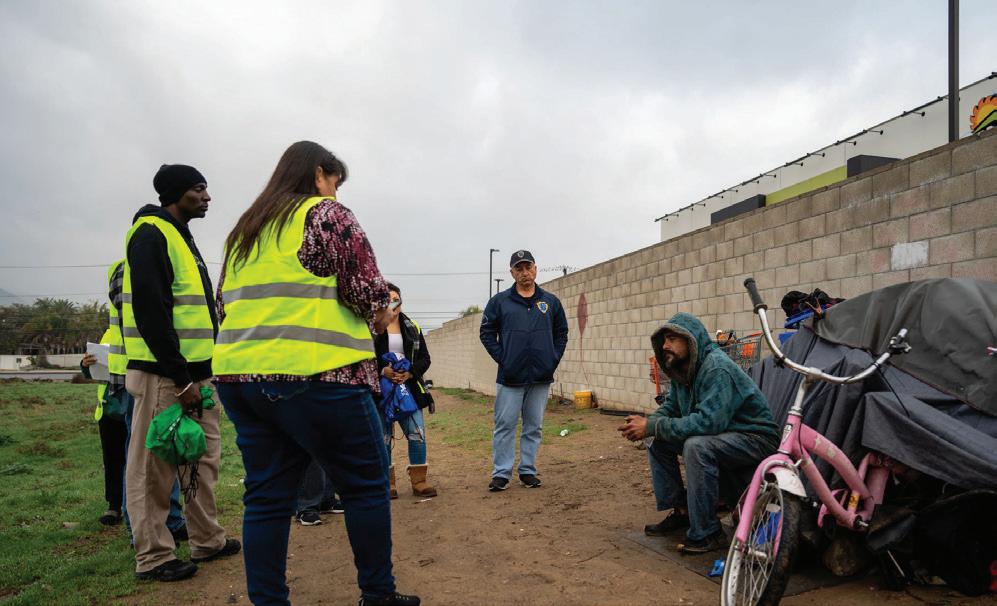
heSanBernardino CountyBoardof SupervisorsonTuesday proposed amendments on how to spend more than $9 million in federal grants for homelessness, housing and other services for low- and moderate-income residents in unincorporated areas and 13 cities.
Supervisors voted 5-0 to approve the proposed 2026-27 Annual Action Plan and an amendment to the 2019-20 Annual Action Plan, which will return to the board for a vote on May 5.
Officials said the Annual Action Plan guides spending of $9.36 million in funding from the U.S. Department of Housing and Urban Development to support infrastructure, affordable housing and homeless services.
The county’s projected 2026-27 allocation includes roughly $6 million in federal Community Development Block Grants, $2.78 million in HOME Investment Partnerships Program funds and $562,000 in an Emergency Solutions Grant.
“These funds will be strategically utilized to address essential community needs, ranging from Americans with Disabilities Act-compliant infrastructure and street improvements to the construction of new affordable housing units and the strengthening of the regional homeless response system, including street outreach and emergency shelter services,” according to a county statement.
HOME program money will be allocated through partnerships with qualified housing developers,
nonprofit organizations and county departments, Robert Gilliam, the county’s acting director of community development and housing, wrote in a report for the board.
“Funds support new construction of affordable rental housing for low and very low-income households within the HOME Consortium and unincorporated areas,” according to the report.
“To expand the supply of safe, stable, and affordable housing, (the county) anticipates receiving approximately $2.8 million in HOME funds. Of this total, approximately $2.3 million is being strategically directed to a high-impact affordable rental housing development.”
The HOME project will create approximately 106 new affordable housing units, including 22 dedicated units for “transitional-age youth,” or TAY, with the remaining units for low- and very lowincome county residents.
The Emergency Solutions Grant program to address unsheltered homelessness funds street outreach, emergency shelters, “rapid rehousing” efforts, homelessness prevention initiatives and the Homeless Management Information System, or HIMS. ESG spending reinforces the county’s regional shelter and homelessness response system in alignment with the 2022 Homeless Strategic Action Plan.
“Funding will be deployed to strengthen core system infrastructure, expand evidencebased interventions, and enhance regional coordination to ensure measurable reductions in unsheltered homelessness,” Gilliam reported. Priority ESG spending includes:
Editorial editorial@beaconmedianews.com
editor@hlrmedia.com
Graphics/Production production@beaconmedianews.com production@hlrmedia.com
Advertising advertising@beaconmedianews.com advertising@hlrmedia.com
Legal Advertising legals@beaconmedianews.com legals@hlrmedia.com
Business accounting@beaconmedianews.com accounting@hlrmedia.com
BEACON MEDIA ADDRESS: 820 S. Myrtle Ave. Monrovia, CA 91016
PHONE: (626) 301-1010
WEBSITE www.beaconmedianews.com
HLR MEDIA ADDRESS: 820 S. Myrtle Ave. Monrovia, CA 91016
PHONE: (626) 301-1010 www.HLRmedia.com
PRESS
editor@beaconmedianews.com editor@hlrmedia.com














By Hannah Allam, ProPublica
arch unfolded like a stress test for U.S. counterterrorism authorities.
The month opened with a gunman in an Iranian-flag shirt killing three people at a bar in Texas. Then, an attack with homemade explosives outside the mayor’s mansion in New York City. Next came a deadly shooting March 12 on a Virginia college campus and, the same afternoon, a car-ramming at a Michigan synagogue. Days later, agents arrested a man charged with threatening a mass shooting at an Ohio mosque.
To current and former national security officials, these were omens, signs of the dangers they predicted last year when President Donald Trump began redirecting counterterrorism resources toward his mass deportation campaign.


The Duarte Dispatchhas been adjudicated as a newspaper of general circulation in court case number GS 013893 City of Duarte, County of Los Angeles, State of California. The Rosemead Readerhas been adjudicated as a newspaper of general circulation in court case number GS 048894 City of Rosemead, County of Los Angeles, State of California. The Alhambra Press has been adjudicated as a newspaper of general circulation in court case number ES016581 City of Alhambra, County of Los Angeles, State of California. The Baldwin Park Press has been adjudicated as a newspaper of general circulation in court case number KS017174 City of Baldwin Park, County of Los Angeles, State of California.
The Burbank Independent has been adjudicated as a newspaper of general circulation in court case number ES016728 City of Burbank, County of Los Angeles, State of California.
The Glendale Independent has been adjudicated as a newspaper of general circulation in court case number ES016579 City of Glendale, County of Los Angeles, State of California.
The Monterey Park Press has been adjudicated as a newspaper of general circulation in court case number ES016580 City of Monterey











They had warned of a diminished ability to respond should major global events inflame threats at home and abroad. Now, they say, the war in Iran has locked the Trump administration into a showdown with a sophisticated state sponsor of terrorism at a time when U.S. security agencies have hemorrhaged expertise and leadership is in flux.
The urgency of the moment has trained a spotlight on Sebastian Gorka, the White House counterterrorism adviser tasked with drafting a blueprint for fighting homegrown and international threats. Nearly a year ago, Gorka declared a national counterterrorism strategy “imminent.” By July, he was “on the cusp” of unveiling the plan — a phrase he repeated three months later in October. And again in January.
To date, no strategy has appeared, and no explanation for the delay. When it is finally released, current and former counterterrorism personnel say, they expect a document rooted in politics rather than intelligence, with little detail on how to combat threats after a year of deep cuts across national security agencies.
“Strategies are only worth the amount of resources you put into them,” said a former senior official who served in the first Trump administration. “We’re entering very dangerous territory.”
The shifting promises are unsurprising to colleagues familiar with the brash, quick-tempered Gorka, a gate crasher in Washington’s buttoned-up defense establishment. His threats and boasts are laced with grandiose language and delivered in a booming, Britishaccented voice.
ProPublica interviewed more than two dozen national security specialists across party lines to trace Gorka’s path to one of the most sensitive jobs in government. Nearly all spoke on condition of anonymity because of the Trump administration’s record of retaliation.
His ascent, they said, tells the story of a startling transformation of the U.S. counterterrorism agenda in Trump’s second term. Eyerolling over Gorka’s bombast has given way to anxiety about the administration’s preparedness to identify and stop major plots.
In the first Trump administration, Gorka lasted just seven months before being forced out by the “adults in the room,” as some staffers referred to the more moderate gatekeepers then around the president. In that brief stint, he reportedly struggled to obtain security clearance and faced an outcry over ties — which he denies — to a far-right group in Hungary.
After the exit, he hosted a right-wing podcast and popped up in ads selling fish-oil pills for pain relief. Then his fortunes changed again with the 2024 election
that swept Trump back to power, this time with a more conspiratorially minded wing of the Make America Great Again movement. Gorka’s loyalty paid off with a phoenixlike return to the White House in a role sometimes called “counterterrorism czar.”
“I’ve been waiting 25 years for this job,” he confided on his podcast before taking office.
The first year of Trump’s second term was so frenzied that even the colorful Gorka faded into the background as the administration dismantled federal agencies and created a secretive, sometimes deadly immigration force. Now, however, the counterterrorism director’s role is coming back to light as hostilities roil the Middle East and heighten the risk of attacks in the United States or against American interests or allies overseas.
Days before U.S. military operations began in Iran, FBI Director Kash Patel fired a dozen personnel from a counterintelligence unit that monitored threats from Iran, CNN reported — part of a wider purge of some 300 agents specializing in counterterrorism.
Former officials said the sudden loss of that many colleagues is devastating to the sensitive, granular work of preventing attacks.
“I don’t think about it in raw numbers. I think about it in the wealth of expertise and knowledge that has been
cut across all levels,” a former senior Justice Department official said. “What you lose is that nuance — with a smaller team, you can only go so deep.”
An FBI spokesperson said the bureau does not comment on personnel numbers but that agents are “working around the clock” and had disrupted four alleged U.S.-based terrorist plots in December alone. “The FBI continuously assesses and realigns our resources to ensure the safety of the American people,” the statement said.
ProPublica sought an interview with Gorka directly and via the White House. He did not respond to a detailed list of questions but assailed the requests in two posts on X, where he has 1.8 million followers. The first was a “no,” along with insults, addressed to several journalists who had asked him to comment on the strategy. In the second post, directed at ProPublica, Gorka accused the reporter of writing a “putrid piece of hackery.”
“If the criticism is we’re killing too many Jihadis (759) since 20th January 2024, or rescuing more US hostages in 12 months (106) than Biden did in 4 years, I stand by our historic wins for AMERICA First,” Gorka wrote, with an apparent typo. Trump took office in January 2025.
White House spokesperson Anna Kelly said in an email that the restructuring of agencies “has made the
entire foreign policy apparatus even more responsive to potential threats” and praised Gorka for “an incredible job” leading interagency talks.
“Anyone attempting to smear him and the President’s national security team is only revealing that they haven’t been paying attention for the past year,” Kelly wrote, “as anyone with eyes can see that our homeland is more secure than ever.”
Inattention “Can Be Deadly”
Gorka has emerged as one of the last men standing after a tumultuous stretch for U.S. counterterrorism leadership.
His original boss, national security adviser Mike Waltz, was booted to the United Nations after the Signalgate scandal, leaving the role to Secretary of State Marco Rubio, who was already juggling portfolios and is busier now with Iran.
Another blow came when Joe Kent, director of the National Counterterrorism Center, resigned last month in protest of the war in Iran, which he said was pushing the United States “further toward decline and chaos.”
Gorka was livid. He told an audience at the Council on Foreign Relations that he called Kent the day of his resignation and left a
message calling him an “utter disgrace” for criticizing the president in wartime.
“At the end of my voicemail,” Gorka recounted, “I said, ‘Good riddance to you, Joe.’”
Within days, Gorka was angling for Kent’s old job at the counterterrorism center, the government’s hub for analyzing terrorist threats, The Washington Post reported. Colleagues said they weren’t surprised — the role brings more power — but added that Gorka would likely face a tough Senate confirmation process if nominated.
The leadership disarray compounds the risks of hollowed-out counterterrorism operations, say national security analysts.
At a time when hundreds of personnel typically would’ve been assigned to thwarting attacks amid international conflict, the administration “has gutted this capacity through firings, forced resignations, and slashed budgets,” a panel of national security analysts wrote in the journal Lawfare.
The Justice Department acknowledged in budget proposal documents that its National Security Division is facing “unprecedented personnel constraints,” struggling to keep up with increas-
ing caseloads and a 40% drop in the number of prosecutors.
At the State Department, former officials said, Iran specialists at the counterterrorism bureau were dispersed to regional offices where counterterrorism is one of many priorities. The entire team focused on threat prevention was eliminated. As a senior official who recently left put it, “They keep saying we can do it all even though they have half an arm now, and no legs.”
Since the Iran war started, officials say, some counterterrorism specialists who had been reassigned to immigration have returned to their old roles, creating a whiplash that can disrupt investigations and analysis.
“If you’ve dropped all the cases and have taken people off the target set for an extended period of time, you can’t just drop back in and pick up where you left off,” said Ben Connable, a former Marine Corps intelligence officer who leads the nonprofit Battle Research Group. “The men and women who are back on that portfolio are going to have to play catch-up, and that conveys risk.”
The Department of Homeland Security hasn’t published any national

terrorism advisory bulletins, periodic updates to alert the public to the current threat level, since September. It has not released the annual Homeland Threat Assessment since Trump returned to office, according to Colin Clarke, executive director of the security-focused Soufan Center, and fellow terrorism scholar Jacob Ware. A DHS spokesperson said updates on the documents “will be provided following the end of the Democrat DHS shutdown.”
Gorka’s long-awaited strategy, Clarke and Ware said in an op-ed, could help clarify White House thinking on how to handle threats when “defenses are divided, disorganized and underresourced.”
“This is the moment for the Trump administration to demonstrate that it recognizes the stakes,” the researchers wrote. “In counterterrorism, inattention can be deadly.”
Winding Path to White House
Gorka’s path to the White House began in the cottage industry of self-styled terrorism experts that sprang up after the 9/11 terrorist attacks. He became a regular on a training circuit where speakers received lucrative contracts from international governments and law enforcement agencies to teach about the threat of militant Islamist movements. Many trainers of that era maligned Islam and backed policies that violated the rights of ordinary American Muslims in the name of counterterrorism, according to civil liberties watchdogs.
“For him, counterterrorism is kinetic and it’s against one type of enemy: the jihadist enemy,” said an associate who has known Gorka for two decades.
Born in the United Kingdom to Hungarian parents, he attended college
in London and served as a reserve intelligence soldier in the British military. He later spent time in Hungary, dabbling in nationalist politics and earning a doctorate degree.
In 2008, Gorka moved to the United States with his American wife, also a counterterrorism specialist, and eventually became a naturalized citizen — “a legal immigrant,” as he is introduced at events.
As an instructor at think tanks and military institutes, he pushed an image of Muslims as inherently violent, according to current and former colleagues. They say his fixation on Islamist militancy crosses into a more generalized bigotry, a claim Gorka has dismissed as “absurd.” He insists that his focus is “the war inside Islam” between radicals and Western-aligned Muslim leaders. “We want to see our friends win that war,” he has said.
A former senior Justice Department official recalled an FBI agent lobbying hard to get Gorka hired as a counterterrorism trainer several years ago. The official “didn’t feel comfortable clearing him in on my credentials” for an office visit so instead drove over an hour to watch a lecture.
Gorka’s talk was “reductionist” in its portrayals of Islam as locked in a civilizational war with the West, the former official recalled.
Immediately after the event, the official advised against hiring Gorka because his teachings potentially violated department principles against bias in training.
“I came back and said to the U.S. attorneys, ‘Let’s be careful here,’” the former official said. “They put a flag.”
Concerns about Gorka’s approach flared again when he
See Counterterrorism Page 05
joined the first Trump administration through the MAGA strategist Steve Bannon. Gorka, who had worked at Bannon’s right-wing Breitbart outlet, was appointed to the Strategic Initiatives Group, an in-house think tank at the White House.
The appointment prompted 55 House Democrats to demand his firing in a letter calling his association with far-right groups “deeply troubling.” They focused on the Hungarian nationalist group Vitézi Rend, whose medal Gorka wore on a military tunic to Trump’s inaugural events. Gorka has denied belonging to the organization, which had Nazi ties during World War II, and said the medal honors his father’s escape from communism.
Gorka’s qualifications for the job also came under scrutiny. Critics dug out and posted his dissertation, which was pilloried by other academics for a simplistic chart that placed terrorism on a spectrum somewhere between “peacekeeping” and “thermonuclear war.”
He eventually was ousted in August 2017, days after Bannon, in an internal power struggle. In his resignation letter, Gorka blamed his departure on the idea that “forces that do not support the MAGA promise are — for now — ascendant within the White House.”
Reporters spotted him outside loading his belongings into the back of a Mustang convertible with vanity plates “ART WAR.”
Dream Job
Gorka’s comeback symbolizes the hard-right swing of Trump’s second term.
Even some prominent conservatives were shocked by Gorka’s return. Michael Anton, who also served in the last Trump administration,

all information in this statement is true and correct. (A registrant who declares as true information which he or she knows to be false is guilty of a crime.) Signed: LIJUN GAO, OWNER. The registrant commenced to transact business under the fictitious business name listed above on (date): 03/2026. This statement was filed with the County Clerk of Los Angeles County on (Date) 04/02/2026. NOTICE: This fictitious name statement expires five years from the date it was filed in the office of the county clerk. A new fictitious business name statement must be filed before that time. The filing of this statement does not of itself authorize the use in this state of a fictitious business name in violation of the rights of another under federal, state, or common law (see Section 14411 et seq. Business and Professions Code). Publish: 04/06/2026, 04/13/2026, 04/20/2026, 04/27/2026. ARCADIA WEEKLY. AAA1464885.
FICTITIOUS BUSINESS NAME STATEMENT FILE NO. 2026 066569 NEW FILING. The following person(s) is (are) doing business as (1). AL Enteshar Newspaper (2). LA Media , 13842 Candlewood Dr, Sylmar, CA 91342. This business is conducted by a individual. Registrant commenced to transact business under the fictitious business name or names listed herein on August 2021. Signed: Fatmeh Adib Bakhit, 13842 Candlewood Dr, Sylmar, CA 91342 (Owner). The statement was filed with the County Clerk of Los Angeles on March 25, 2026. NOTICE: This fictitious business name statement expires five years from the date it was filed in the office of the County Clerk. A new fictitious business name statement must be filed prior to that date. The filing of this statement does not of itself authorize the use in this state of a fictitious business name in violation of the rights of another under federal, state or common law (See Section 14400 et seq., Business and Professional Code). Pub. Monrovia Weekly 04/06/2026, 04/13/2026, 04/20/2026, 04/27/2026 sc
FICTITIOUS BUSINESS NAME STATEMENT FILE NO. 2026 066573 NEW FILING.
The following person(s) is (are) doing business as (1). Ghoul at heart (2). ghoulatheart.com , 5312 Downey Ave, Lakewood, CA 90712. This business is conducted by a individual. Registrant commenced to transact business under the fictitious business name or names listed herein on October 2021. Signed: Lorijo Castellon, 5312 Downey Ave, Lakewood, CA 90712 (Owner). The statement was filed with the County Clerk of Los Angeles on March 25, 2026. NOTICE: This fictitious business name statement expires five years from the date it was filed in the office of the County Clerk. A new fictitious business name statement must be filed prior to that date. The filing of this statement does not of itself authorize the use in this state of a fictitious business name in violation of the rights of another under federal, state or common law (See Section 14400 et seq., Business and Professional Code).
Pub. Monrovia Weekly 04/06/2026, 04/13/2026, 04/20/2026, 04/27/2026 sc
FICTITIOUS BUSINESS NAME STATEMENT FILE NO. 2026 066581 NEW FILING. The following person(s) is (are) doing business as Lindsey Lindsey Co, 12227 Osborne Pl 151, Pacoima, CA 91331. This business is conducted by a individual. Registrant commenced to transact business under the fictitious business name or names listed herein on January 2007. Signed: Edward Sebastian Lindsey, 12227 Osborne Pl 151, Pacoima, CA 91331 (Owner). The statement was filed with the County Clerk of Los Angeles on March 25, 2026. NOTICE: This fictitious business name statement expires five years from the date it was filed in the office of the County Clerk. A new fictitious business name statement must be filed prior to that date. The filing of this statement does not of itself authorize the use in this state of a fictitious business name in violation of the rights of another under federal, state or common law (See Section 14400 et seq., Business and Professional Code). Pub. Monrovia Weekly 04/06/2026, 04/13/2026, 04/20/2026, 04/27/2026 sc
FICTITIOUS BUSINESS NAME STATEMENT FILE NO. 2026 066561 NEW FILING.
The following person(s) is (are) doing business as Nery’s beauty salon, 14405 Prairie Ave #B, Lawndale, CA 90260. This business is conducted by a individual. Registrant commenced to transact business under the fictitious business name or names listed herein on March 2017. Signed: Nery Angelica Ramirez, 14405 Prairie Ave #B, Lawndale, CA 90260 (Owner). The statement was filed with the County Clerk of Los Angeles
on March 25, 2026. NOTICE: This fictitious business name statement expires five years from the date it was filed in the office of the County Clerk. A new fictitious business name statement must be filed prior to that date. The filing of this statement does not of itself authorize the use in this state of a fictitious business name in violation of the rights of another under federal, state or common law (See Section 14400 et seq., Business and Professional Code). Pub. Monrovia Weekly 04/06/2026, 04/13/2026, 04/20/2026, 04/27/2026 sc
FICTITIOUS BUSINESS NAME STATEMENT FILE NO. 2026 066591 NEW FILING. The following person(s) is (are) doing business as Streamline Parts, 1728 W Valley Blvd, Alhambra, CA 91803. This business is conducted by a individual. Registrant commenced to transact business under the fictitious business name or names listed herein on February 2017. Signed: Leticia S Leon Yu, 1174 Via Verde #228, San Dimas, Ca 91773 (Owner). The statement was filed with the County Clerk of Los Angeles on March 2, 2026. NOTICE: This fictitious business name statement expires five years from the date it was filed in the office of the County Clerk. A new fictitious business name statement must be filed prior to that date. The filing of this statement does not of itself authorize the use in this state of a fictitious business name in violation of the rights of another under federal, state or common law (See Section 14400 et seq., Business and Professional Code).
Pub. Monrovia Weekly 04/06/2026, 04/13/2026, 04/20/2026, 04/27/2026 sc
FICTITIOUS BUSINESS NAME STATEMENT FILE NO. 2026073215 NEW FILING.
The following person(s) is (are) doing business as (1). Echelon (2). Echelon Color , 8800 Venice Blvd. Suite 201, Los angeles, CA 90034. This business is conducted by a limited liability company (llc). Registrant commenced to transact business under the fictitious business name or names listed herein on May 2004. Signed: Echelon Creative, LLC (CA-200414910213, 8800 Venice Blvd. Suite 201, Los angeles, CA 90034; Tony Manzella, CEO. The statement was filed with the County Clerk of Los Angeles on April 2, 2026. NOTICE: This fictitious business name statement expires five years from the date it was filed in the office of the County Clerk. A new fictitious business name statement must be filed prior to that date. The filing of this statement does not of itself authorize the use in this state of a fictitious business name in violation of the rights of another under federal, state or common law (See Section 14400 et seq., Business and Professional Code). Pub. Monrovia Weekly 04/06/2026, 04/13/2026, 04/20/2026, 04/27/2026 sc
FICTITIOUS BUSINESS NAME STATEMENT FILE NO. 2026073041
NEW FILING.
The following person(s) is (are) doing business as So Green Design Studio, 2345 Atlantic Blvd #1161, Monterey Park, CA 91754. This business is conducted by a individual. Registrant commenced to transact business under the fictitious business name or names listed herein on March 2026. Signed: Yi Chun Wang, 2345 Atlantic Blvd #1161, Monterey Park, CA 91754 (Owner). The statement was filed with the County Clerk of Los Angeles on April 2, 2026. NOTICE: This fictitious business name statement expires five years from the date it was filed in the office of the County Clerk. A new fictitious business name statement must be filed prior to that date. The filing of this statement does not of itself authorize the use in this state of a fictitious business name in violation of the rights of another under federal, state or common law (See Section 14400 et seq., Business and Professional Code). Pub. Monrovia Weekly 04/06/2026, 04/13/2026, 04/20/2026, 04/27/2026
FICTITIOUS BUSINESS NAME STATEMENT FILE NO. 2026058327 NEW FILING.
The following person(s) is (are) doing business as (1). Gun Fighter TV (2). gunfightertv (3). gunfightertv , 230 Termino Avenue 5, Long Beach, CA 90803. This business is conducted by a individual. Registrant commenced to transact business under the fictitious business name or names listed herein on January 2026. Signed: Andrew Serrata, 230 Termino Avenue 5, Long Beach, CA 90803 (Owner). The statement was filed with the County Clerk of Los Angeles on March 16, 2026. NOTICE: This fictitious business name statement expires five years from the date it was filed in the office of the County Clerk. A new fictitious business name statement must be filed prior to that date. The filing of this statement does not of itself authorize the use in this state of a fictitious business name in violation of the rights of
another under federal, state or common law (See Section 14400 et seq., Business and Professional Code). Pub. Monrovia Weekly 04/06/2026, 04/13/2026, 04/20/2026, 04/27/2026
FICTITIOUS BUSINESS NAME STATEMENT FILE NO. 2026064786
NEW FILING.
The following person(s) is (are) doing business as Arrowhead Financial Group, 21550 Oxnard Street, Fl 3, woodland hills, CA 91367. This business is conducted by a general partnership. Registrant commenced to transact business under the fictitious business name or names listed herein on March 2026. Signed: (1). Livinus Reuben Uku, 21550 Oxnard Street, Fl 3, woodland hills, CA 91367 (2). Livinus Reuben Uku, 21550 Oxnard Street, Fl 3, woodland hills, CA 91367 (General Partner). The statement was filed with the County Clerk of Los Angeles on March 24, 2026. NOTICE: This fictitious business name statement expires five years from the date it was filed in the office of the County Clerk. A new fictitious business name statement must be filed prior to that date. The filing of this statement does not of itself authorize the use in this state of a fictitious business name in violation of the rights of another under federal, state or common law (See Section 14400 et seq., Business and Professional Code). Pub. Monrovia Weekly 04/06/2026, 04/13/2026, 04/20/2026, 04/27/2026
FICTITIOUS BUSINESS NAME STATEMENT FILE NO. 2026072035 NEW FILING. The following person(s) is (are) doing business as CURESTAT HOSPICE, 1157 S Beverly Dr STE c, Los Angeles, CA 90035. This business is conducted by a limited liability company (llc). Registrant has not yet begun to transact business under the fictitious business name or names listed herein. Signed: BRIGHT SOURCE HOSPICE LLC (CA-202012210239, 1157 S Beverly Dr STE c, Los Angeles, CA 90035; QUERUBIN M IGNACIO, CEO. The statement was filed with the County Clerk of Los Angeles on April 1, 2026. NOTICE: This fictitious business name statement expires five years from the date it was filed in the office of the County Clerk. A new fictitious business name statement must be filed prior to that date. The filing of this statement does not of itself authorize the use in this state of a fictitious business name in violation of the rights of another under federal, state or common law (See Section 14400 et seq., Business and Professional Code).
Pub. Monrovia Weekly 04/06/2026, 04/13/2026, 04/20/2026, 04/27/2026
FICTITIOUS BUSINESS NAME STATEMENT FILE NO. 2026072261
NEW FILING.
The following person(s) is (are) doing business as (1). Gold State Interior & Staging (2). Gold State Staging , 41734 32nd St W, Lancaster, CA 93536. This business is conducted by a individual. Registrant commenced to transact business under the fictitious business name or names listed herein on April 2026. Signed: SHIRLEY REYES, 41734 32nd St W, Lancaster, CA 93536 (Owner). The statement was filed with the County Clerk of Los Angeles on April 2, 2026. NOTICE: This fictitious business name statement expires five years from the date it was filed in the office of the County Clerk. A new fictitious business name statement must be filed prior to that date. The filing of this statement does not of itself authorize the use in this state of a fictitious business name in violation of the rights of another under federal, state or common law (See Section 14400 et seq., Business and Professional Code). Pub. Monrovia Weekly 04/06/2026, 04/13/2026, 04/20/2026, 04/27/2026
FICTITIOUS BUSINESS NAME STATEMENT FILE NO. 2026072756 NEW FILING.
The following person(s) is (are) doing business as CURESTAT PALLIATIVE, 1157 Beverly Way Ste B, LOS ANGELES, CA 90035. This business is conducted by a limited liability company (llc). Registrant has not yet begun to transact business under the fictitious business name or names listed herein. Signed: BRIGHT SOURCE HOSPICE LLC (CA202012210239, 1157 Beverly Way Ste B, LOS ANGELES, CA 90035; QUERUBIN IGNACIO, MEMBER. The statement was filed with the County Clerk of Los Angeles on April 2, 2026. NOTICE: This fictitious business name statement expires five years from the date it was filed in the office of the County Clerk. A new fictitious business name statement must be filed prior to that date. The filing of this statement does not of itself authorize the use in this state of a fictitious business name in violation of the rights of another under federal, state or common law (See Section 14400 et seq., Business and Professional Code). Pub. Monrovia Weekly 04/06/2026, 04/13/2026, 04/20/2026, 04/27/2026
FICTITIOUS BUSINESS NAME
STATEMENT FILE NO. 2026072450
NEW FILING. The following person(s) is (are) doing business as (1). Ross Alley Productions (2). Ross Alley Entertainment (3). Ross Alley Media (4). Ross Alley Creative , 3579 E Foothill Blvd Suite 296, Pasadena, CA 91107. This business is conducted by a corporation. Registrant has not yet begun to transact business under the fictitious business name or names listed herein. Signed: Clearform Inc. (CA-B20250188337, 3579 E Foothill Blvd 296, Pasadena, CA 91107; Kelly Li, CEO. The statement was filed with the County Clerk of Los Angeles on April 2, 2026. NOTICE: This fictitious business name statement expires five years from the date it was filed in the office of the County Clerk. A new fictitious business name statement must be filed prior to that date. The filing of this statement does not of itself authorize the use in this state of a fictitious business name in violation of the rights of another under federal, state or common law (See Section 14400 et seq., Business and Professional Code).
Pub. Monrovia Weekly 04/06/2026, 04/13/2026, 04/20/2026, 04/27/2026
FICTITIOUS BUSINESS NAME STATEMENT FILE NO. 2026066843 NEW FILING.
The following person(s) is (are) doing business as Velocity Reign Stunt team, 3223 N San Fernando Rd, glassell park, CA 90065. This business is conducted by a individual. Registrant has not yet begun to transact business under the fictitious business name or names listed herein. Signed: Vardan Kasabyan, 3223 N San Fernando Rd, glassell park, CA 90065 (Owner). The statement was filed with the County Clerk of Los Angeles on March 25, 2026. NOTICE: This fictitious business name statement expires five years from the date it was filed in the office of the County Clerk. A new fictitious business name statement must be filed prior to that date. The filing of this statement does not of itself authorize the use in this state of a fictitious business name in violation of the rights of another under federal, state or common law (See Section 14400 et seq., Business and Professional Code).
Pub. Monrovia Weekly 04/06/2026, 04/13/2026, 04/20/2026, 04/27/2026
FICTITIOUS BUSINESS NAME STATEMENT FILE NO. 2026064788
NEW FILING.
The following person(s) is (are) doing business as 10500 Foothill Ranch LLC, a limited liability company, 21550 Oxnard St, Fl 3, woodland hills, CA 91367. This business is conducted by a limited liability company (llc). Registrant commenced to transact business under the fictitious business name or names listed herein on March 2026. Signed: Livinus Reuben Uku, 21550 Oxnard St, Fl 3, woodland hills, CA 91367. (Owner). The statement was filed with the County Clerk of Los Angeles on March 24, 2026. NOTICE: This fictitious business name statement expires five years from the date it was filed in the office of the County Clerk. A new fictitious business name statement must be filed prior to that date. The filing of this statement does not of itself authorize the use in this state of a fictitious business name in violation of the rights of another under federal, state or common law (See Section 14400 et seq., Business and Professional Code).
Pub. Monrovia Weekly 04/06/2026, 04/13/2026, 04/20/2026, 04/27/2026
FICTITIOUS BUSINESS NAME STATEMENT FILE NO. 2026072047 NEW FILING.
The following person(s) is (are) doing business as CURESTAT HOME HEALTH, 1157 S Beverly Dr STE C, Los Angeles, CA 90035. This business is conducted by a corporation. Registrant has not yet begun to transact business under the fictitious business name or names listed herein. Signed: PROVIDE HOME HEALTH INC (CA4688036, 1157 S Beverly Dr STE C, Los Angeles, CA 90035; QUERUBIN M IGNACIO, CEO. The statement was filed with the County Clerk of Los Angeles on April 1, 2026. NOTICE:
This fictitious business name statement expires five years from the date it was filed in the office of the County Clerk. A new fictitious business name statement must be filed prior to that date. The filing of this statement does not of itself authorize the use in this state of a fictitious business name in violation of the rights of another under federal, state or common law (See Section 14400 et seq., Business and Professional Code).
Pub. Monrovia Weekly 04/06/2026, 04/13/2026, 04/20/2026, 04/27/2026
FICTITIOUS BUSINESS NAME STATEMENT FILE NO. 2026071569 NEW FILING. The following person(s) is (are) doing business as OhBento Productions, 5500 Owensmouth Ave APT 318, Woodland Hills, CA 91367. This business is conducted by a individual. Registrant commenced to transact business under the
fictitious business name or names listed herein on March 2026. Signed: Matthew Bento, 5500 Owensmouth Ave APT 318, Woodland Hills, CA 91367 (Owner). The statement was filed with the County Clerk of Los Angeles on April 1, 2026. NOTICE:
This fictitious business name statement expires five years from the date it was filed in the office of the County Clerk. A new fictitious business name statement must be filed prior to that date. The filing of this statement does not of itself authorize the use in this state of a fictitious business name in violation of the rights of another under federal, state or common law (See Section 14400 et seq., Business and Professional Code). Pub. Monrovia Weekly 04/06/2026, 04/13/2026, 04/20/2026, 04/27/2026
FICTITIOUS BUSINESS NAME STATEMENT FILE NO. 2026071478
NEW FILING. The following person(s) is (are) doing business as (1). Infocus Vision Optometric Center (2). Infocus Vision , 29 E. Huntington Dr Suite B, Arcadia, CA 91006. This business is conducted by a corporation. Registrant commenced to transact business under the fictitious business name or names listed herein on February 2026. Signed: Deborah Duan OD, AOC (CAB20260023725, 29 E. Huntington Dr Suite B, Arcadia, CA 91006; Deborah Duan, CEO. The statement was filed with the County Clerk of Los Angeles on April 1, 2026. NOTICE: This fictitious business name statement expires five years from the date it was filed in the office of the County Clerk. A new fictitious business name statement must be filed prior to that date. The filing of this statement does not of itself authorize the use in this state of a fictitious business name in violation of the rights of another under federal, state or common law (See Section 14400 et seq., Business and Professional Code).
Pub. Monrovia Weekly 04/06/2026, 04/13/2026, 04/20/2026, 04/27/2026
FICTITIOUS BUSINESS NAME STATEMENT FILE NO. 2026070838
NEW FILING. The following person(s) is (are) doing business as Deportes Contigo, 1512 S Garfield Ave, Alhambra, CA 91801. This business is conducted by a individual. Registrant commenced to transact business under the fictitious business name or names listed herein on February 2026. Signed: Sergio Sanchez, 1512 S Garfield Ave, Alhambra, CA 91801 (Owner). The statement was filed with the County Clerk of Los Angeles on April 1, 2026. NOTICE: This fictitious business name statement expires five years from the date it was filed in the office of the County Clerk. A new fictitious business name statement must be filed prior to that date. The filing of this statement does not of itself authorize the use in this state of a fictitious business name in violation of the rights of another under federal, state or common law (See Section 14400 et seq., Business and Professional Code).
Pub. Monrovia Weekly 04/06/2026, 04/13/2026, 04/20/2026, 04/27/2026
FICTITIOUS BUSINESS NAME STATEMENT FILE NO. 2026069463 NEW FILING. The following person(s) is (are) doing business as Jek Theatre, 5047 Topanga Canyon Boulevard, Woodland hills, CA 91364. This business is conducted by a individual. Registrant commenced to transact business under the fictitious business name or names listed herein on March 2026. Signed: Fatih Haciosmanoglu, 5047 Topanga Canyon Boulevard, Woodland hills, CA 91364 (Owner). The statement was filed with the County Clerk of Los Angeles on March 31, 2026.
NOTICE: This fictitious business name statement expires five years from the date it was filed in the office of the County Clerk. A new fictitious business name statement must be filed prior to that date. The filing of this statement does not of itself authorize the use in this state of a fictitious business name in violation of the rights of another under federal, state or common law (See Section 14400 et seq., Business and Professional Code).
Pub. Monrovia Weekly 04/06/2026, 04/13/2026, 04/20/2026, 04/27/2026
FICTITIOUS BUSINESS NAME STATEMENT FILE NO. 2026071558 NEW FILING. The following person(s) is (are) doing business as Jesus is Lord Apparel, 9514 Beach st, Los Angeles, CA 90002. This business is conducted by a individual. Registrant has not yet begun to transact business under the fictitious business name or names listed herein. Signed: Rodolfo Paz, 9514 Beach st, Los Angeles, CA 90002 (Owner). The statement was filed with the County Clerk of Los Angeles on April 1, 2026. NOTICE: This fictitious business name statement expires five years from the date it was filed in the office of the County Clerk. A new fictitious business name statement must be filed prior to that date. The
filing of this statement does not of itself authorize the use in this state of a fictitious business name in violation of the rights of another under federal, state or common law (See Section 14400 et seq., Business and Professional Code). Pub. Monrovia Weekly 04/06/2026, 04/13/2026, 04/20/2026, 04/27/2026
FICTITIOUS BUSINESS NAME STATEMENT FILE NO. 2026070219 NEW FILING. The following person(s) is (are) doing business as AAAA Demo and Hauling Trash Removal Plumbing Electrical Flooring, 12327 222nd St, Hawaiian Gardens, CA 90716. This business is conducted by a individual. Registrant has not yet begun to transact business under the fictitious business name or names listed herein. Signed: Alfredo Trinidad Gracian, 12327 222nd St, Hawaiian Gardens, CA 90716 (Owner). The statement was filed with the County Clerk of Los Angeles on March 31, 2026. NOTICE: This fictitious business name statement expires five years from the date it was filed in the office of the County Clerk. A
fictitious business name statement must be filed prior to that date. The filing of this statement does not of itself authorize
in this state of a fictitious
name in violation of the rights of another under federal, state or common law (See Section 14400 et seq., Business and Professional Code). Pub. Monrovia Weekly 04/06/2026, 04/13/2026, 04/20/2026, 04/27/2026
FICTITIOUS BUSINESS NAME STATEMENT FILE NO. 2026071425 NEW FILING. The following person(s) is (are) doing business as Thompson Real Estate Media, 11036 Woodward Ave, Sunland, CA 91040. This business is conducted by a individual. Registrant commenced to transact business under the fictitious business name or names listed herein on January 2026. Signed: Robb Thompson, 11036 Woodward Ave, Sunland, CA 91040 (Owner). The statement was filed with the County Clerk of Los Angeles on April 1, 2026. NOTICE: This fictitious business name statement expires five years from the date it was filed in the office of the County Clerk. A new fictitious business name statement must be filed prior to that date. The filing of this statement does not of itself authorize the use in this state of a fictitious business name in violation of the rights of another under federal, state or common law (See Section 14400 et seq., Business and Professional Code). Pub. Monrovia Weekly 04/06/2026, 04/13/2026, 04/20/2026, 04/27/2026
FICTITIOUS BUSINESS NAME STATEMENT FILE NO. 2026071471 NEW FILING. The following person(s) is (are) doing business as Kleon Painting, 17000 E Orkney, Azusa, CA 91702. This business is conducted by a trust. Registrant has not yet begun to transact business under the fictitious business name or names listed herein. Signed: Kevin Leon, 17000 E Orkney, Azusa, CA 91702 (Trustee). The statement was filed with the County Clerk of Los Angeles on April 1, 2026. NOTICE: This fictitious business name statement expires five years from the date it was filed in the office of the County Clerk. A new fictitious business name statement must be filed prior to that date. The filing of this statement does not of itself authorize the use in this state of a fictitious business name in violation of the rights of another under federal, state or common law (See Section 14400 et seq., Business and Professional Code). Pub. Monrovia Weekly 04/06/2026, 04/13/2026, 04/20/2026, 04/27/2026
FICTITIOUS BUSINESS NAME STATEMENT FILE NO. 2026071495 NEW FILING. The following person(s)
Watch and listen to the meeting via Zoom Webinar as follows: Zoom Webinar direct link: https://us02web.zoom.us/j/82735405361 Webinar ID: 827 3540 5361
Or by telephone by dialing (833) 548-0276 (Toll Free) or (833) 5480282 (Toll Free) or (877) 853-5257 (Toll Free) or (888) 475-4499 (Toll Free) or +1(669) 900-9128 or +1(253) 215-8782 or +1(346) 248-7799 or +1(301) 715-8592 or +1(312) 626-6799 or +1(646) 558-8656 and entering Webinar ID: 827 3540 5361. Please Note: All members of the public calling or logging into the meeting will be muted so that the meeting can proceed. If there are technical difficulties with Zoom during the meeting, the meeting will proceed regardless.
Addressing the Commission:
In person: Any person wishing to address the Commission during the meeting is asked to complete a Speaker Request Card and submit it to the Secretary. When called upon by the President, please step to the podium and give your name, address and organization or other party you represent, if any, in an audible tone of voice for the record.
Via Zoom or Telephone: “Raise your hand” - Members of the public may speak by using the “Raise Hand” function during the public comments portion, if on Zoom or telephone. Staff will unmute speakers participating via Zoom or telephone and announce your name when it is your time to speak.
Comments are limited to 5 minutes; however, the presiding officer may either extend or reduce the maximum time to such period of time as the Commission may determine.
All comments shall be addressed to the Commission as a body and not to any member thereof. No person, other than the Commission and the person having the floor, shall be permitted to enter into any discussion, either directly or through a member of the Commission, without the permission of the President. No question shall be asked a Commissioner except through the President.
Any member of the public who needs accommodations or who needs their comments translated should email or call the Community Development Department at mmccurley@alhambraca.gov or (626) 570-5034. All requests for accommodations or translation services shall be made by 4 p.m. the Thursday prior to the Planning Commission meeting. If accommodation or translation is not requested by 4 p.m. the Thursday prior to the Planning Commission meeting, staff will try to accommodate the request to the best of their efforts to provide as much accessibility as possible while also maintaining public safety. All participants are encouraged to email their comments prior to the beginning of the meeting, but are not required to do so. All written comments received prior to the meeting will be entered into the record and distributed to the Planning Commission for their review.
NOTICE IS HEREBY GIVEN that a regular meeting of the Alhambra Planning Commission will be held on Monday, May 18, 2026, at 7:00 P.M., or as soon thereafter as the matters may be heard, in the Council Chambers of the Alhambra City Hall, 111 South First Street. The Planning Commission will hold a public hearing on the following item:
ADDRESS: Citywide
APPLICANT: City of Alhambra
FILE NO.: AMD-26-05, AMD-26-06, AMD-26-07, AMD-26-08
REQUEST: This is an application for Zoning Text Amendment AMD-26-07, Zoning Map Amendment AMD-26-05, General Plan Amendment AMD-26-08, and General Plan Map Amendment AMD-26-06. The proposed City-initiated amendments include updates to the City’s existing Objective Design Standards and Standards for Specific Uses in Title 23 (Zoning) of the Alhambra Municipal Code, as well as the elimination of the West Main Corridor Master Plan Overlay District Zoning classification and the corresponding Downtown Specific Plan Overlay General Plan Land Use designation, in order to accommodate the adoption of new focus-area Design Guidelines. The amendments will ensure City documents reflect internal consistency in their references to General Plan Land Use designations and Zoning classifications. Additionally, updates are proposed to rectify prior mapping errors for two (2) existing parcels at APN 5364-018-019 and 5364-018-020.
Pursuant to the California Environmental Quality Act, staff has conducted an initial review of the project application and has determined
that the above referenced project is exempt from the California Environmental Quality Act (CEQA) unless otherwise noted above.
Further details and legal descriptions relating to the above application is on file and may be viewed in the Community Development Department in City Hall during City Hall business hours 7:00 A.M. to 5:30 P.M., Monday through Thursday.
Any person wishing to be heard on this matter is invited to attend the hearing and speak to the Planning Commission at the time and place stated. Written input may be submitted before or during the hearing. If you challenge the proposed action in Court, you may be limited to raising only those issues you or someone else raised at the public hearing described in this notice, or in written correspondence delivered to the Planning Commission at, or prior to, the public hearing.
CITY HALL: (626) 570 5034
NOTICE NO. N2M26-53
ALHAMBRA PLANNING COMMISSION
ANDREW HO
Director of Community Development
Publish: April 27, 2026
ALHAMBRA PRESS
AN ORDINANCE ADOPTING IMPLEMENTING MEASURE NDC BY ESTABLISHING A CITYWIDE PROHIBITION ON DATA CENTERS AND AMENDING THE MONTEREY PARK MUNICIPAL CODE TO IMPLEMENT SUCH PROHIBITION.
The Monterey Park City Council introduced an Ordinance at the April 20, 2026, special City Council meeting. If adopted, the ordinance would implement Measure NDC by establishing a citywide prohibition on data centers and become effective the same date as Measure NDC, if adopted by voters on June 2, 2026, in accordance with the Elections Code and Measure NDC.
The second reading and adoption of the proposed Ordinance is scheduled to take place at the May 6, 2026 regular City Council meeting at 6:30 p.m., in the City of Monterey Park, California, or as soon thereafter as possible.
For a copy of the proposed Ordinance, please contact the City Clerk’s office at (626) 307-1359.
Approved as submitted above:
Karl Berger, City Attorney
ATTEST:
Maychelle Yee, City Clerk
Publish April 27, 2026
MONTEREY PARK PRESS
LEGAL NOTICE
CITY OF MONTEREY PARK
AN ORDINANCE AMENDING VARIOUS CHAPTERS AND SECTIONS OF THE MONTEREY PARK MUNICIPAL CODE (“MPMC”) TO PROHIBIT DATA CENTER LAND USES CITYWIDE; AMEND VARIOUS REGULATIONS WITHIN THE SATURN PARK INNOVATION AND TECHNOLOGY ZONE (MPMC CHAPTER 21.14) TO IMPLEMENT THE GENERAL PLAN; AND AMEND THE MARKET PLACE SPECIFIC PLAN (ORDINANCE NO. 2231).
The Monterey Park City Council introduced an Ordinance at the April 20, 2026, special City Council meeting. If adopted, the proposed Ordinance would amend various chapters and sections of the MPMC to prohibit data center land uses citywide; amend various regulations within the Saturn Park Innovation and Technology Zone (MPMC Chapter 21.14) to implement the General Plan; and amend the Market Place Specific Plan (Ordinance No. 2231).
The second reading and adoption of the proposed Ordinance is scheduled to take place at the May 6, 2026 regular City Council meeting at 6:30 p.m., in the City of Monterey Park, California, or as soon thereafter as possible.
For a copy of the proposed Ordinance, please contact the City Clerk’s office at (626) 307-1359.
Approved as submitted above: Karl Berger, City Attorney
ATTEST:
Maychelle Yee, City Clerk
April 27, 2026
MONTEREY PARK PRESS
CITY OF GLENDALE –NOTICE OF PUBLIC COMMENT PERIOD 2.40*2
The City of Glendale is proposing a substantial amendment to its FY 2025-2026 Annual Action Plan to add a new activity using prior-year HOME Investment Partnerships Program (HOME) funds.
The City proposes to allocate $683,361 in HOME funds through a Community Housing Development Organization (CHDO) to support the rehabilitation and expansion of an existing affordable housing facility in Glendale into permanent supportive housing for low-income residents.
This amendment qualifies as a substantial amendment under the City's Citizen Participation Plan because it adds a new activity not previously described in the FY 2025-2026 Annual Action Plan.
The draft amendment is available for public review at:
• Online: www.glendaleca.gov/affordablehousing
• In person: Community Development Department – Housing Division, 141 N. Glendale Avenue, Suite 202, Glendale, CA 91206
Public Comment Period: April 27, 2026 – May 29th, 2026
Written comments may be submitted by email to abrownell@glendaleca.gov, by mail to the address above, or online at www.glendaleca.gov/affordablehousing. All comments received by May 29th, 2026 at 5:00 p.m. will be considered before the amendment is submitted to HUD.
Public Hearing: The Glendale City Council and Housing Authority will hold a joint public hearing on June 2nd, 2026 at 3:00 PM at 613 E. Broadway, 2nd floor, Glendale, CA 91206 to consider adoption of the substantial amendment.
Contact: Aaron Brownell, Senior Housing Project Manager | abrownell@glendaleca.gov | 818-550-4530
Publish: _____________
Publish April 27, 2026 GLENDALE INDEPENDENT
NOTICE OF PETITION TO ADMINISTER ESTATE OF MABEL CARIDAD GALINDO Case No. 26STPB04019
To all heirs, beneficiaries, creditors, contingent creditors, and persons who may otherwise be interested in the will or estate, or both, of MABEL CARIDAD GALINDO
A PETITION FOR PROBATE has been filed by Vanessa Galindo in the Superior Court of California, County of LOS ANGELES.
THE PETITION FOR PROBATE requests that Vanessa Galindo be appointed as personal representative to administer the estate of the decedent.
THE PETITION requests authority to administer the estate under the Independent Administration of Estates Act. (This authority will allow the personal representative to take many actions without obtaining court approval. Before taking certain very important actions, however, the personal representative will be required to give notice to interested persons unless they have waived notice or consented to the proposed action.)
The independent administration authority will be granted unless an interested person files an objection to the petition and shows good cause why the court should not grant the authority.
A HEARING on the petition will be held on May 21, 2026 at 8:30 AM in Dept. No. 5 located at 111 N. Hill St., Los Angeles, CA 90012.
IF YOU OBJECT to the granting of the petition, you should appear at the hearing and state your objections or file written objections with the court before the hearing. Your appearance may be in person or by your attorney.
IF YOU ARE A CREDITOR or a contingent creditor of the decedent, you must file your claim with the court and mail a copy to the personal representative appointed by the court within the later of either (1) four months from the date of first issuance of letters to a general personal representative, as defined in section 58(b) of the California Probate Code, or (2) 60 days from the date of mailing or personal delivery to you of a
notice under section 9052 of the California Probate Code. Other California statutes and legal authority may affect your rights as a creditor. You may want to consult with an attorney knowledgeable in California law. YOU MAY EXAMINE the file kept by the court. If you are a person interested in the estate, you may file with the court a Request for Special Notice (form DE-154) of the filing of an inventory and appraisal of estate assets or of any petition or account as provided in Probate Code section 1250. A Request for Special Notice form is available from the court clerk. Attorney for petitioner:
G MARK SANTA ANNA ESQ SBN 165416 GMSA LEGAL 360 E 2ND ST STE 800 LOS ANGELES, CA 90012-4607 CN126373 GALINDO Apr 20,23,27, 2026 GLENDALE INDEPENDENT
NOTICE OF PETITION TO ADMINISTER ESTATE OF Andre Felix Case No. 26STPB04271 To all heirs, beneficiaries, creditors, contingent creditors, and persons who may otherwise be interested in the will or estate, or both, of Andre Felix
A PETITION FOR PROBATE has been filed by Arturo Fernando Felix in the Superior Court of California, County of LOS ANGELES. THE PETITION FOR PROBATE requests that Arturo Fernando Felix be appointed as personal representative to administer the estate of the decedent. THE PETITION requests the decedent’s will and codicils, if any, be admitted to probate. The will and any codicils are available for examination in the file kept by the court. THE PETITION requests authority to administer the estate under the Independent Administration of Estates Act. (This authority will allow the personal representative to take many actions without obtaining court approval. Before taking certain very important actions, however, the personal representative will be required
to give notice to interested persons unless they have waived notice or consented to the proposed action.)
The independent administration authority will be granted unless an interested person files an objection to the petition and shows good cause why the court should not grant the authority.
A HEARING on the petition will be held on May 18, 2026 at 8:30 AM in Dept. 4. located at 111 N. Hill St., Los Angeles, CA 90012.
IF YOU OBJECT to the granting of the petition, you should appear at the hearing and state your objections or file written objections with the court before the hearing. Your appearance may be in person or by your attorney.
IF YOU ARE A CREDITOR or a contingent creditor of the decedent, you must file your claim with the court and mail a copy to the personal representative appointed by the court within the later of either (1) four months from the date of first issuance of letters to a general personal representative, as defined in section 58(b) of the California Probate Code, or (2) 60 days from the date of mailing or personal delivery to you of a notice under section 9052 of the California Probate Code.
Other California statutes and legal authority may affect your rights as a creditor. You may want to consult with an attorney knowledgeable in California law.
YOU MAY EXAMINE the file kept by the court. If you are a person interested in the estate, you may file with the court a Request for Special Notice (form DE-154) of the filing of an inventory and appraisal of estate assets or of any petition or account as provided in Probate Code section 1250. A Request for Special Notice form is available from the court clerk.
Petitioner:
Arturo Fernando Felix 3294 E. Lavender Drive Ontario, Ca 91762
626-373-5970
April 20, 23, 27, 2026
BALDWIN PARK PRESS
NOTICE OF PETITION TO ADMINISTER ESTATE OF:
EVERARDO PALACIOS MARTINEZ AKA EVERARDO
P. MARTINEZ AKA EVERARDO MARTINEZ
CASE NO. PROVA2600256
To all heirs, beneficiaries, creditors, contingent creditors, and persons who may otherwise be interested in the WILL or estate, or both of EVERARDO PALACIOS MARTINEZ
AKA EVERARDO P. MARTINEZ
AKA EVERARDO MARTINEZ.
A PETITION FOR PROBATE has been filed by ADRIANA PALACIOS MARTINEZ in the Superior Court of California, County of SAN BERNARDINO.
THE PETITION FOR PROBATE requests that ADRIANA PALACIOS MARTINEZ be appointed as personal representative to administer the estate of the decedent.
THE PETITION requests authority to administer the estate under the Independent Administration of Estates Act. (This authority will allow the personal representative to take many actions without obtaining court approval. Before taking certain very important actions, however, the personal representative will be required to give notice to interested persons unless they have waived notice or consented to the proposed action.)
The independent administration authority will be granted unless an interested person files an objection to the petition and shows good cause why the court should not grant the authority.
A HEARING on the petition will be held in this court as follows: 05/21/26 at 9:00AM in Dept. F3 located at 17780 ARROW BLVD., FONTANA, CA 92335
IF YOU OBJECT to the granting of the petition, you should appear at the hearing and state your objections or file written objections with the court before the hearing. Your appearance may be in person or by your attorney.
IF YOU ARE A CREDITOR or a contingent creditor of the decedent, you must file your claim with the court and mail a copy to the personal representative appointed by the court within the later of either (1) four months from the date of first issuance of letters to a general personal representative, as defined in section 58(b) of the California Probate Code, or (2) 60 days from the date of mailing or personal delivery to you of a notice under section 9052 of the California Probate Code.
Other California statutes and legal authority may affect your rights as a creditor. You may want to consult with an attorney knowledgeable in California law.
YOU MAY EXAMINE the file kept by the court. If you are a person interested in the estate, you may file with the court a Request for Special Notice (form DE-154) of the filing of an inventory and appraisal of estate assets or of any petition or account as provided in Probate Code section 1250. A Request for Special Notice form is available from the court clerk.
Attorney for Petitioner PAUL D. VELASCO, ESQ. - SBN 192421 VZ LAW, LLP
333 W. BROADWAY, SUITE 100 LONG BEACH CA 90802
Telephone (562) 432-5541
BSC 228351
4/23, 4/27, 4/30/26
CNS-4034055# ONTARIO NEWS PRESS
NOTICE OF PETITION TO ADMINISTER ESTATE OF: KAREN ELIZABETH PEET
CASE NO. 26STPB03971
To all heirs, beneficiaries, creditors, contingent creditors, and persons who may otherwise be interested in the WILL or estate, or both of KAREN ELIZABETH PEET.
A PETITION FOR PROBATE has been filed by KAREN HEARN in the Superior Court of California, County of LOS ANGELES.
THE PETITION FOR PROBATE requests that KAREN HEARN be appointed as personal representative to administer the estate of the decedent.
THE PETITION requests the decedent’s WILL and codicils, if any, be admitted to probate. The WILL and any codicils are available for examination in the file kept by the court.
THE PETITION requests authority to administer the estate under the Independent Administration of Estates Act. (This authority will allow the personal representative to take many actions without obtaining court approval. Before taking certain very important actions, however, the personal representative will be required to give notice to interested persons unless they have waived notice or consented to the proposed action.)
The independent administration authority will be granted unless an interested person files an objection to the petition and shows good cause why the court should not grant the authority.
A HEARING on the petition will be held in this court as follows: 05/11/26 at 8:30AM in Dept. 9 located at 111 N. HILL ST., LOS ANGELES, CA 90012
IF YOU OBJECT to the granting of the petition, you should appear at the hearing and state your objections or file written objections with the court before the hearing. Your appearance may be in person or by your attorney.
IF YOU ARE A CREDITOR or a contingent creditor of the decedent, you must file your claim with the court and mail a copy to the personal representative appointed by the court within the later of either (1) four months from the date of first issuance of letters to a general personal representative, as defined in section 58(b) of the California Probate Code, or (2) 60 days from the date of mailing or personal delivery to you of a notice under section 9052 of the California Probate Code.
Other California statutes and legal authority may affect your rights as a creditor. You may want to consult with an attorney knowledgeable in California law.
YOU MAY EXAMINE the file kept by the court. If you are a person interested in the estate, you may file with the court a Request for Special Notice (form DE-154) of the filing of an inventory and appraisal of estate assets or of any petition or account as provided in Probate Code section 1250. A Request for Special Notice form is available from the court clerk. Attorney for Petitioner LANI M. GOODMAN, ESQ. - SBN 240307
SUNDSTEDT GOODMAN PC 7755 CENTER AVENUE 11TH FLOOR HUNTINGTON BEACH CA 92647
Telephone (714) 960-9999
BSC 228358 4/23, 4/27, 4/30/26 CNS-4034082# WEST COVINA PRESS
NOTICE OF PETITION TO ADMINISTER ESTATE OF:
ANN M. GOLFARB AKA ANN MARIE GOLDFARB AKA
ANNE M. WINTER
CASE NO. 26STPB04170
To all heirs, beneficiaries, creditors, contingent creditors, and persons who may otherwise be interested in the WILL or estate, or both of ANN M. GOLFARB AKA ANN MARIE GOLDFARB AKA ANNE M. WINTER.
A PETITION FOR PROBATE has been filed by CHRISTINE WINTER in the Superior Court of California, County of LOS ANGELES.
THE PETITION FOR PROBATE requests that CHRISTINE WINTER be appointed as personal representative to administer the estate of the decedent.
THE PETITION requests the decedent’s WILL and codicils, if any, be admitted to probate. The WILL and any codicils are available for examination in the file kept by the court.
THE PETITION requests authority to administer the estate under the Independent Administration of Estates Act with limited authority. (This authority will allow the personal representative to take many actions without obtaining court approval. Before taking certain very important actions, however, the personal representative will be required to give notice to interested persons unless they have waived notice or consented to the proposed action.) The independent administration authority will be granted unless an interested person files an objection to the petition and shows good cause why the court should not grant the authority.
A HEARING on the petition will be held in this court as follows: 05/15/26 at 8:30AM in Dept. 9 located at 111 N. HILL ST., LOS ANGELES, CA 90012
IF YOU OBJECT to the granting of the petition, you should appear at the hearing and state your objections or file written objections with the court before the hearing. Your appearance may be in person or by your attorney. IF YOU ARE A CREDITOR or a contingent creditor of the decedent, you must file your claim with the court and mail a copy to the personal representative appointed by the court within the later of either (1) four months from the date of first issuance of letters to a general personal representative, as defined in section 58(b) of the California Probate Code, or (2) 60 days from the date of mailing or personal delivery to you of a notice under section 9052 of the California Probate Code.
Other California statutes and legal authority may affect your rights as a creditor. You may want to consult with an attorney knowledgeable in California law.
YOU MAY EXAMINE the file kept by the court. If you are a person interested in the estate, you may file with the court a Request for Special Notice (form DE-154) of the filing of an inventory and appraisal of estate assets or of any petition or account as provided in Probate Code section 1250. A Request for Special Notice form is available from the court clerk. Attorney for Petitioner
LAWRENCE J. KALFAYAN - SBN 100670
99 S. LAKE AVE., STE. 501 PASADENA CA 91101
Telephone (213) 488-1060 4/23, 4/27, 4/30/26 CNS-4034432# PASADENA PRESS
NOTICE OF PETITION TO ADMINISTER ESTATE OF:
MARIA RAMIREZ
RODRIGUEZ MORGAN
CASE NO.
30-2023-01354058-PR-LACMC
To all heirs, beneficiaries, creditors, contingent creditors, and persons who may otherwise be interested in the WILL or estate, or both of MARIA RAMIREZ RODRIGUEZ MORGAN.
A PETITION FOR PROBATE has been filed by LISA MACCARLEY in the Superior Court of California, County of ORANGE. THE PETITION FOR PROBATE requests that LISA MACCARLEY be appointed as personal representative to administer the estate of the decedent. THE PETITION requests authority to administer the estate under the Independent Administration of Estates Act. (This authority will allow the personal representative to take many actions without obtaining court approval. Before taking certain very important actions, however, the per-
sonal representative will be required to give notice to interested persons unless they have waived notice or consented to the proposed action.) The independent administration authority will be granted unless an interested person files an objection to the petition and shows good cause why the court should not grant the authority.
A HEARING on the petition will be held in this court as follows: 06/04/26 at 1:30PM in Dept. CM07 located at 3390 HARBOR BLVD., COSTA MESA, CA 92626
NOTICE IN PROBATE CASES
The court is providing the convenience to appear for hearing by video using the court’s designated video platform. This is a no cost service to the public. Go to the Court’s website at The Superior Court of CaliforniaCounty of Orange (occourts.org) to appear remotely for Probate hearings and for remote hearing instructions. If you have difficulty connecting or are unable to connect to your remote hearing, call 657-622-8452 for assistance. If you prefer to appear in-person, you can appear in the department on the day/time set for your hearing.
IF YOU OBJECT to the granting of the petition, you should appear at the hearing and state your objections or file written objections with the court before the hearing. Your appearance may be in person or by your attorney. IF YOU ARE A CREDITOR or a contingent creditor of the decedent, you must file your claim with the court and mail a copy to the personal representative appointed by the court within the later of either (1) four months from the date of first issuance of letters to a general personal representative, as defined in section 58(b) of the California Probate Code, or (2) 60 days from the date of mailing or personal delivery to you of a notice under section 9052 of the California Probate Code.
Other California statutes and legal authority may affect your rights as a creditor. You may want to consult with an attorney knowledgeable in California law.
YOU MAY EXAMINE the file kept by the court. If you are a person interested in the estate, you may file with the court a Request for Special Notice (form DE-154) of the filing of an inventory and appraisal of estate assets or of any petition or account as provided in Probate Code section 1250. A Request for Special Notice form is available from the court clerk. Attorney for Petitioner CHRISTOPHER R. MILTON - SBN 220361 MILTONLAW 2626 FOOTHILL BLVD., STE. 200 LA CRESCENTA CA 91214
Telephone (818) 463-3780 4/23, 4/27, 4/30/26 CNS-4034657# ANAHEIM PRESS
NOTICE OF PETITION TO ADMINISTER ESTATE OF: MARIA HIGA AKA MARIA TERESA HIGA AKA MARIA TERESA SILVIA HIGA CASE NO. PROVA2600271
To all heirs, beneficiaries, creditors, contingent creditors, and persons who may otherwise be interested in the WILL or estate, or both of MARIA HIGA AKA MARIA TERESA HIGA AKA MARIA TERESA SILVIA HIGA.
A PETITION FOR PROBATE has been filed by HERNAN PASTEN in the Superior Court of California, County of SAN BERNARDINO.
THE PETITION FOR PROBATE requests that HERNAN PASTEN be appointed as personal representative to administer the estate of the decedent.
THE PETITION requests the decedent’s WILL and codicils, if any, be admitted to probate. The WILL and any codicils are available for examination in the file kept by the court. THE PETITION requests authority to administer the estate under the Independent Administration of Estates Act. (This authority will allow the personal representative to take many actions without obtaining court approval. Before taking certain very important actions, however, the personal representative will be required to give notice to interested persons unless they have waived notice or consented to the proposed action.)
The independent administration authority will be granted unless an interested person files an objection to the petition and shows good cause why the court should not grant the authority.
A HEARING on the petition will be held in this court as follows: 05/19/26
at 9:00AM in Dept. F2 located at 17780 ARROW BLVD., FONTANA, CA 92335
IF YOU OBJECT to the granting of the petition, you should appear at the hearing and state your objections or file written objections with the court before the hearing. Your appearance may be in person or by your attorney.
IF YOU ARE A CREDITOR or a contingent creditor of the decedent, you must file your claim with the court and mail a copy to the personal representative appointed by the court within the later of either (1) four months from the date of first issuance of letters to a general personal representative, as defined in section 58(b) of the California Probate Code, or (2) 60 days from the date of mailing or personal delivery to you of a notice under section 9052 of the California Probate Code.
Other California statutes and legal authority may affect your rights as a creditor. You may want to consult with an attorney knowledgeable in California law.
YOU MAY EXAMINE the file kept by the court. If you are a person interested in the estate, you may file with the court a Request for Special Notice (form DE-154) of the filing of an inventory and appraisal of estate assets or of any petition or account as provided in Probate Code section 1250. A Request for Special Notice form is available from the court clerk. Attorney for Petitioner
DANIEL B. BURBOTT - SBN 279759
GAUDY LAW, INC.
267 D STREET
UPLAND CA 91786
Telephone (909) 982-3199
4/23, 4/27, 4/30/26
CNS-4035041# ONTARIO NEWS PRESS
NOTICE OF PETITION TO ADMINISTER ESTATE OF: MICHAEL CLAUDE PORTER CASE NO. 26STPB04273
To all heirs, beneficiaries, creditors, contingent creditors, and persons who may otherwise be interested in the WILL or estate, or both of MICHAEL CLAUDE PORTER.
A PETITION FOR PROBATE has been filed by GERALDINE GIRON PORTER in the Superior Court of California, County of LOS ANGELES.
THE PETITION FOR PROBATE requests that GERALDINE GIRON PORTER be appointed as personal representative to administer the estate of the decedent.
THE PETITION requests the decedent’s WILL and codicils, if any, be admitted to probate. The WILL and any codicils are available for examination in the file kept by the court.
THE PETITION requests authority to administer the estate under the Independent Administration of Estates Act. (This authority will allow the personal representative to take many actions without obtaining court approval. Before taking certain very important actions, however, the personal representative will be required to give notice to interested persons unless they have waived notice or consented to the proposed action.)
The independent administration authority will be granted unless an interested person files an objection to the petition and shows good cause why the court should not grant the authority.
A HEARING on the petition will be held in this court as follows: 05/18/26 at 8:30AM in Dept. 18 located at 111 N. HILL ST., LOS ANGELES, CA 90012
IF YOU OBJECT to the granting of the petition, you should appear at the hearing and state your objections or file written objections with the court before the hearing. Your appearance may be in person or by your attorney.
IF YOU ARE A CREDITOR or a contingent creditor of the decedent, you must file your claim with the court and mail a copy to the personal representative appointed by the court within the later of either (1) four months from the date of first issuance of letters to a general personal representative, as defined in section 58(b) of the California Probate Code, or (2) 60 days from the date of mailing or personal delivery to you of a notice under section 9052 of the California Probate Code.
Other California statutes and legal authority may affect your rights as a creditor. You may want to consult with an attorney knowledgeable in California law.
YOU MAY EXAMINE the file kept by the court. If you are a person interested in the estate, you may file with the court a Request for Special
Notice (form DE-154) of the filing of an inventory and appraisal of estate assets or of any petition or account as provided in Probate Code section 1250. A Request for Special Notice form is available from the court clerk. Attorney for Petitioner
WILLIAM BOON, ESQ. - SBN 202150
858 N. CURSON AVENUE
LOS ANGELES CA 90046
Telephone (323) 655-0908 4/23, 4/27, 5/4/26 CNS-4035067# WEST COVINA PRESS
NOTICE OF PETITION TO ADMINISTER ESTATE OF: SUNNY MONTIE CASE NO. 30-2026-01562637-PR-LACMC
To all heirs, beneficiaries, creditors, contingent creditors, and persons who may otherwise be interested in the WILL or estate, or both of SUNNY MONTIE.
A PETITION FOR PROBATE has been filed by LINDA MARTIN in the Superior Court of California, County of ORANGE. THE PETITION FOR PROBATE requests that LINDA MARTIN be appointed as personal representative to administer the estate of the decedent.
THE PETITION requests authority to administer the estate under the Independent Administration of Estates Act. (This authority will allow the personal representative to take many actions without obtaining court approval. Before taking certain very important actions, however, the personal representative will be required to give notice to interested persons unless they have waived notice or consented to the proposed action.) The independent administration authority will be granted unless an interested person files an objection to the petition and shows good cause why the court should not grant the authority.
A HEARING on the petition will be held in this court as follows: 06/24/26 at 1:30PM in Dept. CM08 located at 3390 HARBOR BLVD., COSTA MESA, CA 92626 NOTICE IN PROBATE CASES
The court is providing the convenience to appear for hearing by video using the court’s designated video platform. This is a no cost service to the public. Go to the Court’s website at The Superior Court of CaliforniaCounty of Orange (occourts.org) to appear remotely for Probate hearings and for remote hearing instructions. If you have difficulty connecting or are unable to connect to your remote hearing, call 657-622-8452 for assistance. If you prefer to appear in-person, you can appear in the department on the day/time set for your hearing.
IF YOU OBJECT to the granting of the petition, you should appear at the hearing and state your objections or file written objections with the court before the hearing. Your appearance may be in person or by your attorney. IF YOU ARE A CREDITOR or a contingent creditor of the decedent, you must file your claim with the court and mail a copy to the personal representative appointed by the court within the later of either (1) four months from the date of first issuance of letters to a general personal representative, as defined in section 58(b) of the California Probate Code, or (2) 60 days from the date of mailing or personal delivery to you of a notice under section 9052 of the California Probate Code. Other California statutes and legal authority may affect your rights as a creditor. You may want to consult with an attorney knowledgeable in California law.
YOU MAY EXAMINE the file kept by the court. If you are a person interested in the estate, you may file with the court a Request for Special Notice (form DE-154) of the filing of an inventory and appraisal of estate assets or of any petition or account as provided in Probate Code section 1250. A Request for Special Notice form is available from the court clerk. Attorney for Petitioner PIERRE J. RODNUNSKY, ESQ. SBN 182888 RODNUNSKY & ASSOCIATES 5959 TOPANGA CANYON BLVD., #220
WOODLAND HILLS CA 91367
Telephone (818) 737-1090 4/23, 4/27, 4/30/26 CNS-4035262# ANAHEIM PRESS
ment generally expires at the end of five years from the date on which it was filed in the office of the County Clerk, except, as provided in subdivision (b) of Section 17920, where it expires 40 days after any change in the facts set forth in the statement pursuant to Section 17913 other than a change in the residence address of a registered owner. A new Fictitious Business Name Statement must be filed before the expiration. The filing of this statement does not of itself authorize the use in this state of a fictitious business name in violation of the rights of another under federal, state, or common law (see Section 14411 et seq., Business and Professions Code) File#: FBN20260003489
Pub: 04/20/2026, 04/27/2026, 05/04/2026, 05/11/2026 San Bernardino Press
FICTITIOUS BUSINESS
NAME STATEMENT
File No. FBN20260003525
The following persons are doing business as: Empire Apartments, 3132 Triumph Lane, Ontario, CA 91764. Mailing Address, PO Box 1919, Rancho Cucamonga, CA 91727. VMA Apartments 1, LLC (CA, 3595 Inland Empire Blvd BLDG 2 #2100, Ontario, CA 91764; Victor M Martinez, Managing member. County of Principal Place of Business: San Bernardino This business is conducted by: a limited liability company (llc). Registrant commenced to transact business under the fictitious business name or names listed herein on April 9, 2026. By signing below, I declare that I have read and understand the reverse side of this form and that all information in this statement is true and correct. A registrant who declares as true any material matter pursuant to Section 17913 of the Business and Professions Code that the registrant knows to be false is guilty of a misdemeanor punishable by a fine not to exceed one thousand dollars ($1,000). I am also aware that all information on this statement becomes Public Record upon filing pursuant to the California Public Records Act (Government Code Sections 6250- 6277). /s/ Victor M Martinez, Managing member. This statement was filed with the County Clerk of San Bernardino on April 15, 2026 Notice- In accordance with subdivision (a) of Section 17920. A Fictitious Name Statement generally expires at the end of five years from the date on which it was filed in the office of the County Clerk, except, as provided in subdivision (b) of Section 17920, where it expires 40 days after any change in the facts set forth in the statement pursuant to Section 17913 other
than a change in the residence address of a registered owner. A new Fictitious Business Name Statement must be filed before the expiration. The filing of this statement does not of itself authorize the use in this state of a fictitious business name in violation of the rights of another under federal, state, or common law (see Section 14411 et seq., Business and Professions Code) File#: FBN20260003525 Pub: 04/20/2026, 04/27/2026, 05/04/2026, 05/11/2026 San Bernardino Press
FILE NO. FBN20260003378
FILED: April 13, 2026
FICTITIOUS BUSINESS NAME STATEMENT
ABANDONMENT:
County of Original Filing: San Bernardino
Date of Original Filing: April 13, 2022
File No.: FBN20220003383
Fictitious Business Name(s): Brow Bar threading studio 12200B Central Avenue Chino, CA 91710 San Bernardino County Mailing Address, 12200 B Central Ave, Chino, CA 92880. San Bernardino County
Name of Registrant: (1). Kalpana Bogati (2). Radha Dhami
This business is/was conducted by: a general partnership Registrant commenced to transact business under the fictitious business name or names listed herein on March 1, 2022 BY SIGNING BELOW, I DECLARE THAT I HAVE READ AND UNDERSTAND THE REVERSE SIDE OF THIS FORM AND THAT ALL INFORMATION IN THIS STATEMENT IS TRUE AND CORRECT. (A registrant who declares as true any material matter pursuant to Section 17913 of the Business and Professions Code that the registrant knows to be false is guilty of a misdemeanor punishable by a fine not to exceed one thousand dollars ($1,000).) I am also aware that all information on this statement becomes public record upon filing pursuant to the California Public Records Act (Government Code Sections 6250-6277).
FBN20260003378
/s/ Kalpana Bogati, Owner 04/20/2026, 04/27/2026, 05/04/2026, 05/11/2026
San Bernardino Press
FICTITIOUS BUSINESS NAME STATEMENT
File No. FBN20260003737
The following persons are doing business as: A1 Canvas, 8448 loma pl, upland, CA 91786. Mailing Address, V. louis G valentine. County of Principal
Place of Business: San Bernardino This business is conducted by: a individual. Registrant commenced to transact business under the fictitious business name or names listed herein on January 1, 2007. By signing below, I declare that I have read and understand the reverse side of this form and that all information in this statement is true and correct. A registrant who declares as true any material matter pursuant to Section 17913 of the Business and Professions Code that the registrant knows to be false is guilty of a misdemeanor punishable by a fine not to exceed one thousand dollars ($1,000). I am also aware that all information on this statement becomes Public Record upon filing pursuant to the California Public Records Act (Government Code Sections 6250- 6277). /s/ louis G valentine, Owner. This statement was filed with the County Clerk of San Bernardino on April 21, 2026 Notice- In accordance with subdivision (a) of Section 17920. A Fictitious Name Statement generally expires at the end of five years from the date on which it was filed in the office of the County Clerk, except, as provided in subdivision (b) of Section 17920, where it expires 40 days after any change in the facts set forth in the statement pursuant to Section 17913 other than a change in the residence address of a registered owner. A new Fictitious Business Name Statement must be filed before the expiration. The filing of this statement does not of itself authorize the use in this state of a fictitious business name in violation of the rights of another under federal, state, or common law (see Section 14411 et seq., Business and Professions Code) File#: FBN20260003737 Pub: 04/27/2026, 05/04/2026, 05/11/2026, 05/18/2026 San Bernardino Press
FICTITIOUS BUSINESS NAME STATEMENT File No. FBN20260003295
The following persons are doing business as: LA RESERVA DEL CORTE, 16200 Arrow Blvd #119E, Fontana, CA 92335. Mailing Address, 16200 Arrow Blvd #119E, Fontana, CA 92335. GEEARTS Legacy Holdings, LLC (CA-B20260154191, 16200 Arrow Blvd 102D, Fontana, CA 92335; MARIA D TORRES, Managing Member. County of Principal Place of Business: San Bernardino This business is conducted by: a limited liability company (llc). Registrant has not yet begun to transact business under the fictitious business name or names listed herein. By signing below, I declare that I have read and understand the reverse side of this form
and that all information in this statement is true and correct. A registrant who declares as true any material matter pursuant to Section 17913 of the Business and Professions Code that the registrant knows to be false is guilty of a misdemeanor punishable by a fine not to exceed one thousand dollars ($1,000). I am also aware that all information on this statement becomes Public Record upon filing pursuant to the California Public Records Act (Government Code Sections 6250- 6277). /s/ MARIA TORRES, Managing Member. This statement was filed with the County Clerk of San Bernardino on April 10, 2026 Notice- In accordance with subdivision (a) of Section 17920. A Fictitious Name Statement generally expires at the end of five years from the date on which it was filed in the office of the County Clerk, except, as provided in subdivision (b) of Section 17920, where it expires 40 days after any change in the facts set forth in the statement pursuant to Section 17913 other than a change in the residence address of a registered owner. A new Fictitious Business Name Statement must be filed before the expiration. The filing of this statement does not of itself authorize the use in this state of a fictitious business name in violation of the rights of another under federal, state, or common law (see Section 14411 et seq., Business and Professions Code) File#: FBN20260003295
Pub: 04/27/2026, 05/04/2026, 05/11/2026, 05/18/2026 San Bernardino Press
FICTITIOUS BUSINESS NAME STATEMENT File No. FBN20260003379
The following persons are doing business as: LN Eyebrow Threading, 12200B Central Ave, Chino, CA 91710. Mailing Address, 1220 W San Bernardino Rd Apt 115, Covina, CA 91722. Dhana Thapa. County of Principal Place of Business: San Bernardino This business is conducted by: a individual. Registrant commenced to transact business under the fictitious business name or names listed herein on April 1, 2026. By signing below, I declare that I have read and understand the reverse side of this form and that all information in this statement is true and correct. A registrant who declares as true any material matter pursuant to Section 17913 of the Business and Professions Code that the registrant knows to be false is guilty of a misdemeanor punishable by a fine not to exceed one thousand dollars ($1,000). I am also aware that all information on this statement becomes Public Record upon filing pur-
suant to the California Public Records Act (Government Code Sections 6250- 6277). /s/ Dhana Thapa, Owner. This statement was filed with the County Clerk of San Bernardino on April 13, 2026 Notice- In accordance with subdivision (a) of Section 17920. A Fictitious Name Statement generally expires at the end of five years from the date on which it was filed in the office of the County Clerk, except, as provided in subdivision (b) of Section 17920, where it expires 40 days after any change in the facts set forth in the statement pursuant to Section 17913 other than a change in the residence address of a registered owner. A new Fictitious Business Name Statement must be filed before the expiration. The filing of this statement does not of itself authorize the use in this state of a fictitious business name in violation of the rights of another under federal, state, or common law (see Section 14411 et seq., Business and Professions Code) File#: FBN20260003379 Pub: 04/27/2026, 05/04/2026, 05/11/2026, 05/18/2026
San Bernardino Press
The following person(s) is (are) doing business as (1). ReloPath (2). Vector Real Estate 33175 Temecula Pkwy A508 Temecula, CA 92592
Riverside County Donohue Group, Inc (CA, 33175 Temecula Pkwy A508, Temecula, CA 92592
Riverside County This business is conducted by: a corporation. Registrant has not yet begun to transact business under the fictitious business name or names listed herein. I declare that all the information in this statement is true and correct. (A registrant who declares as true any material matter pursuant to Section 17913 of the Business and Professions Code, that the registrant knows to be false, is guilty of a misdemeanor punishable by a fine not to exceed one thousands dollars ($1000).) s. William Robert Donohue, CEOStatement filed with the County of Riverside on April 15, 2026
NOTICE: In accordance with subdivision (a) of section 17920, a fictitious name statement generally expires at the end of the five years from the date on which it was filed in the office of the county clerk, except, as provided in subdivision (b) of section 17920, where it expires 40 days after any changes in the facts set forth in the statement pursuant to section 17913 other than a change in the residence address of a registered owner. A new Fictitious Business Name Statement must be filed before
the expiration. The filing of this statement does not of itself authorize the use this state of a fictitious business name in violation of the rights of another under federal, state, or common law (see Section 14411 Et Seq., business and professions code). I hereby certify that this copy is a correct copy of the original statement on file in my office. Peter Aldana, County, Clerk File# R-202605718 Pub. 04/27/2026, 05/04/2026, 05/11/2026, 05/18/2026
RIVERSIDE INDEPENDENT
The following person(s) is (are) doing business as Tortilleria Mi Rancho Mexican Food 19248 Harvill Ave Suite C Perris, CA 92570 Riverside County NIcolas Hernandez Lagunas, 19248 Harvill Ave Suite C, Perris, CA 92570 Riverside County
This business is conducted by: a individual. Registrant has not yet begun to transact business under the fictitious business name or names listed herein. I declare that all the information in this statement is true and correct. (A registrant who declares as true any material matter pursuant to Section 17913 of the Business and Professions Code, that the registrant knows to be false, is guilty of a misdemeanor punishable by a fine not to exceed one thousands dollars ($1000).)
s. NIcolas Lagunas Statement filed with the County of Riverside on April 23, 2026 NOTICE: In accordance with subdivision (a) of section 17920, a fictitious name statement generally expires at the end of the five years from the date on which it was filed in the office of the county clerk, except, as provided in subdivision (b) of section 17920, where it expires 40 days after any changes in the facts set forth in the statement pursuant to section 17913 other than a change in the residence address of a registered owner. A new Fictitious Business Name Statement must be filed before the expiration. The filing of this statement does not of itself authorize the use this state of a fictitious business name in violation of the rights of another under federal, state, or common law (see Section 14411 Et Seq., business and professions code). I hereby certify that this copy is a correct copy of the original statement on file in my office.
Peter Aldana, County, Clerk File# R-202606201 Pub. 04/27/2026, 05/04/2026, 05/11/2026, 05/18/2026 Riverside Independent
By Staff
Tarik Rahmani is San Bernardino’snew finance director, who brings nearly twenty-five years of high-level municipal finance and executive leadership experience to the organization.
Rahmani most recently was chief financial officer and interim deputy city manager for the city of North Miami Beach. There he oversaw multiple departments, including Finance, Utilities, Public Works, Parks and Recreation, and the Library. Rahmani was responsible for managing the city’s operating budget, capital improvement and infrastructure programs and long-term financial strategy.
“Tarik Rahmani brings a
proven track record of financial leadership, innovation, and strategic thinking to San Bernardino,” San Bernardino City Manager Eric Levitt said in a statement. “His extensive experience in municipal finance and his ability to align fiscal strategies with community priorities will be instrumental. He is a great addition to our team.”
Previously Rahmani held leadership roles with several cities in California, including as deputy city manager and finance director for Carson in southwest Los Angeles County, officials said. In Carson he served as the city’s chief financial and innovation officer, leading a large finance staff and overseeing budgeting, capital improve-
ment and infrastructure programs.
Rahmani also was president of finance for the League of California Cities, where he represented municipal finance interests on the organization’s Board of Directors and worked collaboratively to support cities across the state.
“I am honored to join the City of San Bernardino and look forward to working with the City Council, staff, and community to advance sound financial practices and support the City’s continued growth and success,” Rahmani said in a statement.
Rahmani’s earlier experience includes senior financial leadership positions in the Pacific Northwest cities
By City News Service
Goldenvoice,operator oftheCoachella
Valley Music and Arts Festival, was fined a total of $44,000 by the city of Indio for two artists breaking curfew during weekend two of the festival, city officials said Tuesday.
Electronic artist Anyma
was fined $24,000 for ending his set at 1:09 a.m. on April 17, and Justin Bieber was fined $20,000 for going two minutes past on April 18, according to a city spokesperson.
The city and Goldenvoice have an established agreement in which the city imposes a $20,000 fine for
any set exceeding the 1 a.m. curfew on Fridays and Saturdays and at midnight on Sundays, with an added $1,000 for every minute after five minutes past the deadline.
No fines were issued for the first weekend of the music festival.
By City News Service
Agas line was split open Thursday in the parking lot of San Jacinto High School, prompting firefighters to evacuate the campus as a precaution.
The leak was reported at 3:30 p.m. Thursday in the parking area near the intersection of Tiger Lane and North Ramona Boulevard, according to the Riverside County Fire Department.
The agency said two
engine crews were sent to the location and immediately detected the smell of natural gas outside the high school, where classes were already letting out for the day. Students and staff were directed to exit the grounds — away from where the gas line had been damaged, according to reports from the scene.
Crews ultimately confirmed that a 3-inch main located about four
of Seattle and Bellevue, Washington.
In San Bernardino, Rahmani will oversee all financial operations for the city, including budgeting, accounting, treasury, purchasing, payroll, grant management and business registration. Officials said he will play an important role in ensuring fiscal sustainability while supporting the city’s policy priorities and services for residents and businesses.
Rahmani has a master’s degree in agricultural economics from New Mexico State University and a bachelor’s degree in enterprise financial management from the University of Carthage in the North African nation of Tunisia.
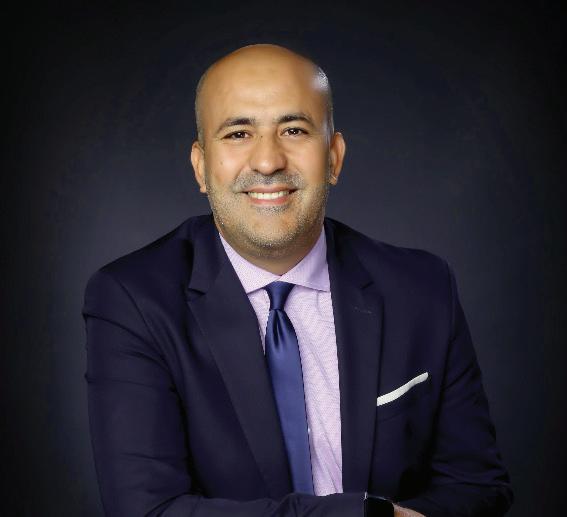

By City News Service

feet beneath the surface had been punctured as a result of construction activity. SoCal Gas Co. technicians were immediately summoned to make repairs. In the meantime, firefighters were able to shut off the gas at the campus. It was unclear why the construction workers had not confirmed the presence of the line prior to starting work at the site.
A50-year-old woman was fatally struck by a train after she stepped onto tracks near downtown Corona, authorities said Thursday. Silvia Gaitan of Hemet died just after 3 p.m. Wednesday when she was hit by a freight train on Burlington Santa Fe Railroad tracks in the 900 block of Railroad Street, near North Buena Vista Avenue, according to the Corona Police Depart-
ment.
Sgt. Brandon Palaoro told City News Service witnesses spotted Gaitan walking along the tracks, and when the freighter approached, she “appeared to intentionally remain on the tracks,” even as the train engineer “sounded the horn.”
Palaoro said the victim was hit at an unknown speed before the train came to a stop.
The witnesses and train
personnel, none of whom suffered injuries, immediately called 911. Corona Fire Department paramedics pronounced Gaitan dead at the scene. The tracks were closed for part of the afternoon while a preliminary investigation was conducted.
Anyone with information about the victim or the death was asked to contact the police department at 951-736-2330.
Efforts to slash the number of impounded dogs and cats who are euthanized in Riverside County animal shelters are gradually paying off, according to a report released Thursday by the Department of Animal Services.
“With targeted investments, passionate staff and impressive partner and community support, we have much to be proud of, with even more work ahead of us in 2026,” agency Director Mary Martin said Thursday. “I’m focused on enhancing and adding to our lifesaving programs, strengthening our national and local partnerships and providing real resources for pet owners when they need our help.”
Martin pointed to programs and campaigns implemented in 2025 that
have put the county on track to achieve a 90% pet life preservation rate in the county’s four shelters.
The Department of Animal Services published what specific strategies have been embraced in the agency’s 2025 Annual Report, which can be found at rcdas.org/ rivcorise.
Some of the programs have included elimination of most adoption fees -- with the exception of dog licenses, which generally run $25 or less -- “life flights” of large numbers of canines that nonprofit organizations pay to transport to shelters across the United States for adoption, pet fostering, expanded hours at most shelters and expedited “trap-neuter-return-to-field” programs for cats. The county is among the
By City News Service
nation’s largest pet intake centers. Last year, more than 29,000 dogs and cats were impounded, in addition to 5,000 other animals, including livestock and wildlife, according to the report.
Officials said 17,349 spay/ neuter surgeries were carried out in 2025. Adoptions went up 13%, and roughly 3,200 pets were successfully reclaimed by their owners after being impounded.
The gains resulted in an 82% “live release rate” for canines, and a 73% rate for cats last year, according to the agency.
“We’re making real progress toward a 90% release rate and a `No-Kill County,”’ Supervisor Manuel Perez said. “With ongoing community support -- through adoption, fostering, volunteering and responsible pet ownership --
we can save even more lives together.”
Last May, the Board of Supervisors approved the “no kill” policy, resolving that the county will make it an objective to preserve the lives of a minimum of 90% of all cats and dogs impounded at its shelters.
The no-kill effort dovetails with a reformation initiated by the board after one organization alleged that the county had the highest pet kill rate in the nation.
In 2024, the board hired Austin, Texas-based Outcomes for Pets LLC Principal Adviser Kristen Hassen to rectify problems within the agency, and in February 2025, the supervisors approved the Executive Office’s selection of Martin to head the department following a nationwide executive recruitment drive.

By City News Service
Afelonaccusedof gunningdowna
41-year-oldDesert Hot Springs man almost four years ago pleaded not guilty Wednesday to first-degree murder and other charges.
Camillo Castillo, 28, of Desert Hot Springs, allegedly killed Jayson Jamar Green in 2022.
Alongwithmurder, Castillo is charged with sentence-enhancing gun and great bodily injury allegations and being a prior-strike felon.
Hewasarraigned Wednesday before Riverside County Superior Court Judge Dean Benjamini, who
scheduled a felony settlement conference for June 12 at the Larson Justice Center in Indio.
The defendant was being held without bail at the Byrd Detention Center.
According to the Desert Hot Springs Police Department, on the morning of July 18, 2022, there was an unspecified confrontation between the defendant and Green in the area of Buena Vista Avenue and West Drive.
During the encounter, Castillo allegedly pulled a handgun and shot the victim multiple times, then fled the location, police said.
Paramedicsarrived moments later and found Green gravely wounded. He was taken to Desert Regional Medical Center in Palm Springs, where he lingered in a coma for a week before dying.
“Whileinvestigative efforts were exhaustive, detectives were unable to identify a suspect at the time, and the case remained unsolved,” according to a DHSPD statement.
The investigation was reopened earlier this year, netting “new leads” that pointed to Castillo as the alleged shooter, the agency stated.

No other details were disclosed, including a possible motive.
• “System-level investments that improve coordination, service delivery, and access to shelter connected to regional navigation centers;
• “Coordinated encampment response and proactive street outreach to connect unsheltered individuals to housing pathways;
• “Rapid rehousing interventions designed to reduce lengths of stay in emergency shelter and accelerate exits to permanent housing;
• “Strategic enhance-
ments to HMIS and coordinated entry infrastructure to improve data quality, performance management, and system accountability.”
With the funding, the county aims to achieve measurable decreases in unsheltered homelessness, improve “system outcomes and performance,” accelerate transitions into permanent housing and enhance the county’s ability to provide “equitable, datadriven and results-oriented services across the full
continuum of homelessness response,” according to the county staff report.
Supervisors also OK’d a substantial amendment to the 2019-20 Annual Action Plan to shift $425,000 in CDBG coronavirus funding.
“This adjustment allows for the reallocation of $300,000 to support nutritional services through senior meal programs in the western region of the county, while the remaining $125,000 will be redirected to fulfill funding require-
ments for other eligible existing projects,” according to the county statement.
The cities that receive portions of the county’s HUD funding are Adelanto, Barstow, Big Bear Lake, Colton, Grand Terrace, Highland, Loma Linda, Montclair, Needles, Redlands, Twentynine Palms, Yucaipa and the Town of Yucca Valley, Gilliam reported, Gilliam reported. The cities of Chino Hills and Rancho Cucamonga elected to participate only in the HOME program.