
Rosemead Reader
Report: Rents in LA County still una ordable but drop to 4-year low
By Joe Taglieri joet@beaconmedianews.com
The average residential rent in Los Angeles Countyhasfallen to the lowest level in four years, but housing affordability remains elusive for many residents, according to a report released Wednesday.
The median monthly rent cost fell to $2,520 in the first quarter of this year, down $97, or 3.7%, from 2025 and significantly under the peak of the 2022 pandemic-era spike, Realtor.com reported.
Despite the recent cost decline, economists said rents remain high relative to incomes. A household must earn over $107,000 annually in order to rent a typical residential housing unit in the region.
“Los Angeles is a market in transition,” Realtor.com Chief Economist Danielle Hale said in a statement. “Supply has finally caught up, giving renters more options and more negotiating power than they’ve had in years. But falling rents don’t automatically mean affordable rents.”
Within Los Angeles city limits, the median asking rent was $2,682 in the first quarter of 2026, down 3.5% from 2025, according to the report. A significant gap remains between current asking rents and what many tenants actually pay. The median contract rent was $1,804 in 2024, more than $1,000 lower than currently listed rental costs.
Analysts noted that disparity has contributed to the number of renters staying in place, with more than 86% of tenants remaining in the same unit year over year.
Policy changes enacted in December and scheduled to take effect in July are
also expected to shape the market. Los Angeles’ new Rent Stabilization Ordinance will limit annual rent increases to a maximum of 4%, down from a previous 8% cap, and apply to about 75% of rental units in the city totaling roughly 650,000.
“The new cap is meaningful protection for the renters it covers,” Realtor. com Economist Jiayi Xu said in a statement. “But rent control is a double-edged policy. The same financial incentives that keep tenants safely housed in belowmarket apartments also make it harder to move, for a new job, a bigger space, a different neighborhood. With the gap between staying and switching already exceeding $1,000 a month, that lock-in will only deepen.”
The result is a reduction of available housing inventory, as fewer tenants move
out of units renting below market rates. Xu said this reduced turnover is likely to intensify competition for the limited number of rental units that do become available, pushing rents higher throughout the market and increasing the likelihood of bidding wars among prospective tenants.
Market trends varied across LA County, with higher-priced coastal areas seeing some of the steepest median rent declines. In Beverly Hills, median asking rents dropped 9.3% to $4,574, while Santa Monica saw a 2.6% drop to $4,187.
Even higher-end markets such as Malibu saw rent cost declines, down 3.6% to $14,871.
Inland and transit-oriented communities, however, held steady or experienced increases. Pasadena rents
jumped 5.8% to $2,823, while Long Beach saw a 2.4% rise to $2,624.
Culver City rents were relatively flat, up 0.2% to $2,821.
Analysts said the divergence indicates changing demand, with renters attracted toward relatively more affordable areas and neighborhoods with transit access, while higher-cost coastal markets are adjusting after pandemic-era rent spikes.
Smaller units, primarily residences with zero to two bedrooms, have seen the most noteworthy rent decreases.
The median rent for these units fell to $2,241, representing a year-overyear drop of $135, or 5.7%.
In contrast, larger units with three or more bedrooms experienced a more modest decline of $103, or 2.8%,
UCI poll shows opposition to Trump’s immigration enforcement
The Trump administration aims to penalize disabled adults who live with their families
By Eli Hager, ProPublica
Even a glance at Shy’tyra Burton’s life reveals her need for the sort of federal government assistance that helps disabled Americans stay in their homes. Born two months prematurely into a poor family in Philadelphia, unable to breathe or swallow without tubes and largely confined to medical facilities until age 4, Burton was diagnosed with a litany of developmental and intellectual disabilities that left her with an IQ below 70.
She persevered and graduated from a high school special education program, then attempted community college. But she struggled to grasp basic tasks and information. She couldn’t get hired, including at McDonald’s. After multiple medical and psychological evaluations and a hearing before a judge, the federal government approved her for the Supplemental Security Income program, which provides a basic income to those with severe disabilities and to indigent older people.
For Burton, now 22, the $994 monthly benefit is lifesaving but not enough to completely support herself on her own. So, like many SSI recipients, she has continued to live with her father, who makes around $2,000 a month as a Philadelphia sanitation worker.
Now, President Donald Trump’s administration is poised to penalize people like Burton simply for living in the same home as their families, according to four federal officials, internal emails and a federal regulatory listing. The administration is working
it’s published.
on a rule change that would deduct the value of a disabled adult’s bedroom from their SSI allotment, even if the family members they live with are poor enough to qualify for food stamps. This would mean slashing the benefits of some of the most low-income SSI recipients by up to a third — about $330 a month in Burton’s case — or ending their support altogether.
The effort to cut SSI for families who also rely on food stamps, also known as the Supplemental Nutrition Assistance Program, or SNAP, was initiated by top White House and Department of Government Efficiency officials last year, multiple Social Security officials said. It marks a second attempt by the Trump administration to quietly but dramatically downsize disability benefit programs overseen by the Social Security Administration, despite those programs’ strict eligibility standards and minimal instances of fraud. White House Budget Director Russell Vought and Social Security Commissioner Frank Bisignano abandoned a different proposed regulation involving disability payments last year after ProPublica and other news outlets reported on the harm that the plan would cause to hundreds of thousands of largely bluecollar workers in red states. (The disability programs are administered by the Social Security Administration but separate from the retirement program for which the agency is named. The Trump administration has promised not to cut Social Security retirement payments.)
This story was originally published by ProPublica. ProPublica is a nonprofit newsroom that investigates abuses of power. Sign up to receive The Big Story newsletter as soon as
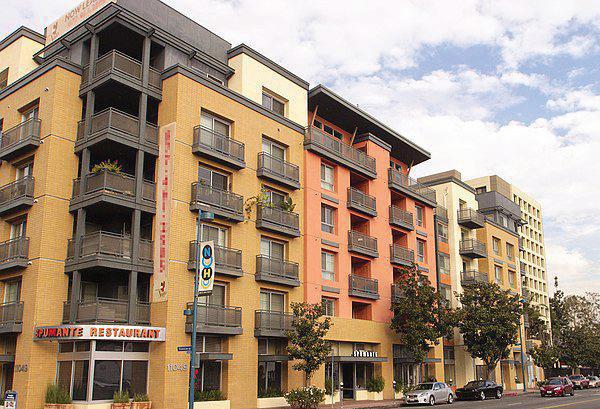
A high-density mixed-use apartment complex in North Hollywood. | Photo courtesy of Junkyarsparkle/ Wikimedia Commons (CC0 1.0)
FilmLA reports early signs of production growth across region
Film production in Los Angeles is starting to see some encouraging signs of growth according to a report released Tuesday, which found that on-location activity for the first quarter increased by 10.7% compared to the last three months of 2025.
On-location film production activity between January to March totaled 5,121 shoot days, up from the prior quarter’s 4,625, but that still represented a 3.3% decrease from the first quarter of 2025, which saw 5,295 shoot days.
FilmLA is the official film office for the city and county of Los Angeles and other local jurisdictions.
To date, 147 projects have been awarded tax credits through the latest round of the California Film & TV Tax Credit Program. Each approved production was given 180 days to start filming, with the first of the projects confirmed to be underway.
In quarter one, FilmLA found that incentivized projects accounted for nearly 7% of all shoot days taking place in the Greater Los Angeles area, including 21.8% of all feature production and 17.1% of all televi-
sion production happening on location.
The highlight of quarter one was the feature film category, which finished the quarter with 687 shoot days, an increase of 45.2% over the prior quarter, and a 52.3% increase year-overyear.
FilmLA Research found that 21.8% of all shoot days in this category went to state incentivized projects such as “Behemoth!” (Searchlight Pictures), “One Attempt Remaining” (Netflix), and “Nightwatching” (Amazon MGM Studios). The majority of feature film activity in the first quarter came from independent films.
The report also showed that an 33.7% increase of shoot days in the TV drama category can be attributed to the state’s film tax program. Shoot days in this category were up 40.5% in quarter one compared to the prior quarter, and up 7.3% compared to the same period last year.
Projects in this category include the “Baywatch” reboot (Fox), “The Rookie S8” (ABC), “Matlock” season two (CBS), “9-1-1” season nine (Fox), and “The Morning Show” season five
By Jose Herrera, City News Service
(Apple TV+).
In the TV comedy, there were a total of 120 shoot days, representing a 9.1% increase compared to the previous quarter of 110 shoot days, as well as the first quarter of 2025.
The report also showed that the state’s recent film tax credit expansion is boosting the number of projects with episodes lasting 20 minutes or more. In this category, there was a 38.3% increase in shoot days for incentivized projects, such as “It’s Always Sunny in Philadelphia” season 18 (FX), “The Studio” season two (Apple TV+), “High Potential” season two (ABC), “Nobody Wants This” season two (Netflix), and “Hacks” season five (HBO MAX).
Overall, the television category had 1,196 shoot days in quarter one, down slightly from the prior quarter of 1,247 shoot days, or about a 4.1% difference. Compared to the same period last year, the category is down by 28.4% from the 1,670 shoot days in the first quarter of 2025.
“While it’s still too early to make predictions for the coming months, the increase in shoot days we

are seeing in key categories gives hope for a broader rise in production activity and points to the California Film and Television Tax Program’s growing impact on local job creation,”
FilmLA CEO Denise Gutches said in a statement.
Gutches further stated she was optimistic about recently launched initiatives to support the industry, such as the Low Impact Permit Pilot Program.
“We have worked hand in hand with industry partners to make filming
in Los Angeles easier and more affordable,” Los Angeles Mayor Karen Bass said in a statement.
“City Hall will continue to partner with the industry to support good paying union jobs and expand economic opportunity across LA.”
The report, however, noted the TV reality category continued in a downward trend with 463 shoot days, or a 33.7% decline compared to the prior year, which had 698 shoot days, and a 55.2% decline compared to the first quarter of 2025.
The five-year average is down by 71.1%. Production of commercials increased, with 794 shoot days this quarter, an increase of 35.5% compared to the prior quarter, which stood at 586 shoot days. In the “other” category, which includes still photography, student films, documentaries, short films, online content, music and industrial videos, shoot days increased to 2,444, an increase of 5.4% compared to the prior quarter, and up 2.8% compared to the first quarter of 2025.
SGV Women’s Summit to spotlight dynamic speakers
By Staff
The San Gabriel Valley Women’s Summit
2026 will feature a dynamic lineup of speakers leading conversations across education, health, caregiving, entrepreneurship, and community resilience on May 15 from 9 a.m. to 2 p.m. at DoubleTree by Hilton Hotel Monrovia-Pasadena. Serving as keynote speaker, Dr. Kimberly J. Harris, Ed.D., chief executive officer of Mykal’s Corner, Inc., brings more than three decades of leadership across education and entertainment. A former classroom educator, charter school CEO, and senior leader at Houghton Mifflin Harcourt, Dr. Harris has dedicated her career to advancing student achievement, strengthening educational systems, and supporting families.Today, she continues her impact through national consulting work and by guiding families navigating the entertainment industry.
Session speakers will address timely and relevant topics:
-Dr. Mayra Serrano of City of Hope Comprehensive Cancer Center will lead a discussion on breast cancer prevention and environmental health, offering practical ways to reduce exposure to harmful chemicals while emphasizing early detection and informed health decisions.
-Maria DeRosa, founder of Ladies of the Kitchen, will present on the “Rule of Three,” sharing her personal journey of healing and how aligning body, mind, and spirit can help women rebuild strength and find balance.
-Yvonne Kuo, family consultant at the USC Family Caregiver Support Center, will present “Sandwich Caregiving: Reclaiming Self-Care While Caring for Others,” focusing on the emotional, physical, and financial realities faced by women caring
for multiple generations and strategies to maintain their own well-being.
-Ordained elder and founder of The Bo & Arrow Group, our closing speaker Bonita Marie, will close the day by distilling the key themes into clear, practical action. She draws on resilience and real-world strategy to help women and youth move from inspiration into execution.
A featured Resilient Communities Rise Together Panel will spotlight leaders working on the frontlines of recovery and community development after the 2025 Eaton Fire. Together, these speakers represent a crosssection of leadership, expertise, and lived experience to the panel:
-Christy Zamani, executive director of Day One, leading youth development and public health initiatives, including equitable recovery efforts following the Eaton
Fire
-Laura Ealy, senior director at San Gabriel Valley Habitat for Humanity, leading housing development and wildfire recovery efforts to help families rebuild and return home
-Judy Matthews, president of the Altadena Chamber of Commerce & Civic Association and longtime community advocate addressing issues such as food insecurity and homelessness
- Jhoana Hirasuna, executive director of Foothill Unity Center, providing essential services and food access to families across the region
-Keshia Darden, founder of Simply Divine Salon and Academy, advancing workforce development and creating accessible career pathways in the beauty industry
Tickets are $60 for members and $65 for nonmembers. Register at duartechamber.com/sgvwo-

| Photo courtesy of Jesus Loves Austin/Unsplash
Editorial editorial@beaconmedianews.com
editor@hlrmedia.com
Graphics/Production production@beaconmedianews.com production@hlrmedia.com
Advertising advertising@beaconmedianews.com advertising@hlrmedia.com
Legal Advertising legals@beaconmedianews.com legals@hlrmedia.com
Business accounting@beaconmedianews.com accounting@hlrmedia.com
BEACON MEDIA ADDRESS: 820 S. Myrtle Ave. Monrovia, CA 91016
PHONE: (626) 301-1010
WEBSITE www.beaconmedianews.com
HLR MEDIA ADDRESS: 820 S. Myrtle Ave. Monrovia, CA 91016
PHONE: (626) 301-1010
www.HLRmedia.com
PRESS
editor@beaconmedianews.com editor@hlrmedia.com














M38 film projects receive state tax credits to preserve local production
ore than three dozen film projects, including “The Simpsons Movie 2,” were awarded state tax credits aimed at retaining production in California, with the projects expected to collectively generate nearly $800 million in economic activity in the state, the governor’s office announced Thursday.
A total of 38 film projects were granted the credits through the state’s Film & Television Tax Credit Program. Other productions receiving the credits included Disney’s animated “Phineas and Ferb,” the Will Ferrell- produced film “Self Help,” the Laverne Coxstarring film “Black is Blue” and an upcoming animated feature from DreamWorks.

“California remains the entertainment capital of the world -- and we’re making sure it stays that way,” Gov. Gavin Newsom said in a statement. . Our expanded film and television tax credit is keeping more productions here in the Golden State, creating good-paying jobs and supporting communities statewide. I’m proud to announce the next round of projects that will keep











ABy City News Service
California films rolling and strengthen our leadership in the global creative economy.
According to the governor’s office, the latest productions granted tax credits are expected to conduct more than 460 filming days outside the traditional 30-mile Hollywood studio zone, “bringing good-paying jobs and meaningful investment to communities statewide.”
Since the state’s tax credit program was expanded last year in a further effort to curb runaway production, the California Film Commission has approved credits for 147 productions, up 53% from the same period a year ago. According to Newsom’s office, those productions represent $5.5 billion in total economic activity, including 21,504 cast and crew jobs.
The expansion of the program increased the tax credits from $330 million to $750 million.
“This round marks a truly exciting milestone for our program,” California Film Commission Director Colleen Bell said in a statement. “For the first time, we’re welcoming

animated feature films from powerhouses DreamWorks Animation, 20th Century Studios and Disney Television Animation, alongside a strong slate of big budget features and independent productions, that bring fresh voices and original storytelling to the screen.
“With more than 45% of filming days taking place
outside the traditional studio zone, we’re seeing the realworld economic impact of this program reach communities across the entire state. That’s what this program is about: creating good-paying jobs and supporting local businesses, while bolstering California’s creative economy in regions across the state.”
Legoland California invites soccer fans to World Cup celebration this summer
s the planet gears up for the World Cup this summer,Legoland will offer soccer fans the FIFA World Cup 2026 Experience at its resorts, including Legoland California.
The event, running from June 11 through July 19, is included with regular admission to the park. It “invites visitors of all ages to celebrate matchday moments, spark creativity and share a piece of the action during their visit,” according to a Legoland statement.
According to Legoland, guests can:
-- Score against a Lego minifigure: Soccer skills are put to the test in a fastpaced challenge that turns every kick into a brick-built celebration.
-- Play Spot Shot and Super Squad: Sharpen technique through playful, inclusivechallenges designed for every age and skill level.
-- Meet soccer legends

in Lego brick form: Get up close to LEGO brick versions of global icons including Cristiano Ronaldo, Kylian Mbappé, Lionel Messi and Vini Jr. created exclusively for the event;
-- Design a jersey: Build a dream soccer uniform in Lego bricks and add it to the Heroes of Play Wall; and
-- Lift a Lego FIFA World Cup trophy.
“We’re thrilled to bring the FIFA World Cup 2026
Experience exclusively to Legoland Resorts this summer, inviting our guests to experience the high-score mania of the FIFA World Cup with all the family,” said Kurt Stocks, president of
Legoland California Resort.
“It’s the perfect blend of soccer, Lego, creativity and family fun -- and we can’t wait to see guests of all ages build, play, share and score together.”
The event will also feature new Lego sets including a soccer ball and the World Cup trophy.
By City News Service
| Image courtesy of 20th Century Studios/California Film Commission
The main entrance to Legoland. | Photo courtesy of Coolcaesar/Wikimedia Commons (CC BY-SA 3.0)
California bills seek to end anti-poverty judicial policies
By Suzanne Potter, Public News Service
Three new bills before California lawmakers aim to end practices within the justice system that some groups argue amount to the criminalization of poverty.
Debt Free Justice California is a coalition of legal advocates, policy experts and movement-building organizations working to advance racial and economic justice.
Brandon Greene, director of policy advocacy for the Western Center on Law and Poverty, said Assembly Bill 2121 would stop courts from issuing bench warrants that allow police to arrest people who fail to appear in court for infractions that aren’t a jailable offense.
“So it gets people caught up within the criminal legal system for things that are very minor,” he said, “and it costs more money for courts and other entities to be trying to enforce it.”
A second proposal, Assembly Bill 2428, would abolish certain administrative costs that advocates say push families into debt. This would include fees for

bounced checks and fees to enter into a payment plan or participate in community service.
Opponents of the bill have said the fees are necessary to cover costs, but Greene argued that lawmakers just put these fees back into the justice system, so they don’t have to pass politically unpopular tax increases. He called the fees unfair, adding they disproportionately affect low-income
communities of color.
“We characterize these fees as racialized wealth extraction,” he said, “because oftentimes, these fees are utilized to fund services that should be funded by the state, not on the backs of poor Black and brown Californians.”
A third bill, Senate Bill 498, would stop California’s jails and prisons from charging a per-minute fee for video visits and electronic messaging systems.

UCLA health survey adds Armenian language option
By City News Service

UCLA’s California Health Interview Survey is now being offered in Armenian for the first time, expanding the state’s largest health survey to better capture data from one of California’s largest ethnic communities, officials announced April 22.
The CHIS survey, administered by the UCLA Center for Health Policy Research since 2001, is the largest population-representative state health survey in the nation, according to the university.
Officials said the 2026 survey will be conducted in seven languages -- English, Spanish, Chinese (Mandarin and Cantonese), Korean, Vietnamese, Tagalog and now Armenian -- as part of an effort to improve representation among underserved communities.
“CHIS is an important snapshot of what policies are working, who might be getting left behind, and where there’s room for improvement,” Ninez A. Ponce, director of the UCLA CHPR, said in a statement. “We’re proud to now offer CHIS in Armenian, which will allow us to capture a more complete picture.”
California is home to roughly 250,000 people of Armenian descent, the largest Armenian population in the United States, officials said.
Researchers said the effort to include Armenian went beyond translation, with teams reviewing materials for accuracy, clarity and cultural relevance to ensure meaningful participation.
“Being part of this effort reinforced for me how
critical linguistically inclusive data collection is, especially for communities that are often underrepresented in health policy research,” said Kathryn Sarkissian, a UCLA student who worked on the project.
Each year, the survey collects data from more than 20,000 households on topics ranging from access to health care and chronic conditions to housing, income, food security and other factors that influence health outcomes.
Officials said the data is made publicly available and is widely used by policymakers, researchers and public health professionals. In recent years, the survey has been cited in dozens of legislative analyses and hundreds of academic and media reports.

| Photo courtesy of UCLA Center for Health Policy Research
| Photo courtesy of Akira/Unsplash
SoCal woman to remain in federal custody in Iran arms sales case
By City News Service
AWoodlandHills woman charged with trafficking arms on behalf of the Iranian government was ordered April 23 to remain in federal custody pending trial.
Shamim Mafi, 44, is accused of plotting to violate the International Emergency Economic Powers Act by brokering the sale of Iranian-made weapons -drones, bombs and millions of rounds of ammunition -to Sudan’s military.
An Iranian national who became a lawful permanent resident of the United States in 2016, Mafi could face up to 20 years in federal prison if convicted, officials said.
She was arrested at Los Angeles International Airport on April 18 while attempting to board a flight to Turkey, according to the U.S. Attorney’s Office.
At the conclusion of a detention hearing April 23, a federal magistrate judge ruled that she should remain in custody pending trial in Los Angeles federal court. An arraignment date of May 8 was scheduled.
“While enjoying a life in the United States, this woman was allegedly breaking the law by brokering lethal weapons deals with Iranian adversaries.
“This will not stand, and anyone who breaks our laws and threatens national security will be prosecuted to the fullest extent.”
An attorney for Mafi could not immediately be reached for comment April 23.
According to an affidavit filed with the complaint, Mafi schemed to broker the sale of weapons, weapons components and ammunition on behalf of the government of Iran in violation of U.S. law.
She owns and operates an Oman-based company, Atlas International Business LLC, which also is known as Atlas Global Holding and Atlas Tech LLC, the U.S. Attorney’s Office stated. In early 2025, Mafi allegedly brokered weapons deals on Iran’s behalf through her company.
“This individual came from Iran and gained legal status under the Obama administration,”Acting Attorney General Todd Blanche said in a statement.
Prosecutors contend she facilitated a contract worth more than $70 million for the sale of the Iranian-made Mohajer-6 drone from Iran’s defense ministry to Sudan’s military. She also coordinated the Sudanese delegation’s travel to Iran and was paid more than $7 million, U.S. officials allege.
Federal prosecutors further allege Mafi brokered the sale of 55,000 bomb fuses to Sudan and submitted a letter of intent to Iran’s Islamic Revolutionary Guard Corps to purchase the fuses for Sudan. Mafi also allegedly brokered the sale of millions of rounds of ammunition from Iran to Sudan.
The IEEPA imposes controls and places restrictions on transactions involving Iran based on the threats posed by Iran to the national security of the United States including, among others, its pursuit of nuclear weapons and sponsorship of terrorism, according to the 1977 act.
At no time did Mafi apply for or obtain the required licenses from the U.S. Treasury Department

to engage in any transactions alleged in the affidavit, officials said. She also never registered with or applied for approval from the U.S. Department of State’s Directorate of Defense Trade
Controls to engage in brokering activities with respect to U.S. or foreign defense articles, prosecutors said.
Records obtained pursuant to a search warrant show nearly 62 bidirectional
contacts between Mafi and an Iranian intelligence officer’s phone numbers between December 2022 and June 2025, according to prosecutors in the Central District.
Amid Kimmel flap, FCC advances Disney station license renewals
By City News Service
Amid the latest flap between the Trump administrationand late-night talk show host Jimmy Kimmel, the Federal Communications Commission Tuesday ordered The Walt Disney Co. -- parent of ABC -- to submit early renewal applications for the TV stations it owns.
The two-page order makes no mention of Kimmel, but it was issued one day after President Donald Trump and first lady Melania Trump issued statements calling on ABC to fire the talk-show host over a joke he made on his show April 23. The remark came just days before an armed Torrance man tried to force his way into the White House Correspondents’ Dinner in Washington, D.C., in an alleged attempt to assassinate the president.
During April 23’s broadcast, Kimmel delivered a mock monologue as if he were hosting the annual Correspondents’ Dinner. During the bit, he joked that the first lady had “a glow like an expectant widow.”
“Jimmy Kimmel should be immediately fired by Disney and ABC,” Trump said in a Truth Social post last week, calling the joke a “despicable call to violence.”
Melania Trump also criticized Kimmel in a statement posted on X, saying the comments about her family crossed the line.
“His monologue about my family isn’t comedy -his words are corrosive and deepens the political sickness within America,” she said. There has been no response from ABC or Disney. But Kimmel personally rejected the criticism from the Trumps during his monologue on the April 20 night’s show. He said the joke was directed at the age difference between the couple.
“It was a very light roast joke about the fact that he’s almost 80 and she’s younger than I am,” Kimmel said. “It was not by any stretch of the definition a call to assassination. And they know that. I’ve been very vocal for many years speaking out against
gun violence in particular.”
The FCC issued its order to Disney on Tuesday, directing it to submit its TV station
renewal applications early -- by the end of May -- even though the licenses are not up for renewal until 2028.
The order notes that the FCC has been investigating Disney and ABC for possible rule violations, “including the agency’s prohibition on unlawful discrimination,” or more specifically, company practices related to diversity, equity and inclusion.
“FCC rules provide that whenever the FCC regards an application for a renewal of a license as essential to the proper conduct of an investigation, the FCC has the authority to call the broadcaster’s licenses in for early renewal,” the order states. “Doing so both allows the FCC to conduct its ongoing investigation and enables the FCC to ensure that the broadcaster has been meeting its public interest obligations more broadly.”
Anna Gomez, the only Democrat on the commission, issued a statement blasting the demand for early renewal applications.
“This is unprecedented, unlawful and going nowhere,” she wrote on X. “This political stunt won’t stick. Companies
should challenge it head-on. The First Amendment is on their side.”
Kimmel has come under fire from the White House before. He was briefly suspended last September following comments he made on the air about the fatal shooting of conservative activist Charlie Kirk that drew criticism from the Trump administration.
Cole Tomas Allen, 31, the Torrance man accused of trying to breach the Correspondents’ Dinner on April 25, was charged April 27 with attempting to assassinate the president of the United States. He is also facing a pair of weapons charges.
Allen’s attempted run through the Secret Service gauntlet at the Washington Hilton on April 25 prompted the evacuation of the president, first lady and other attendees from the hotel. Allen was subdued by the Secret Service and never made it to the ballroom where the event was being held.
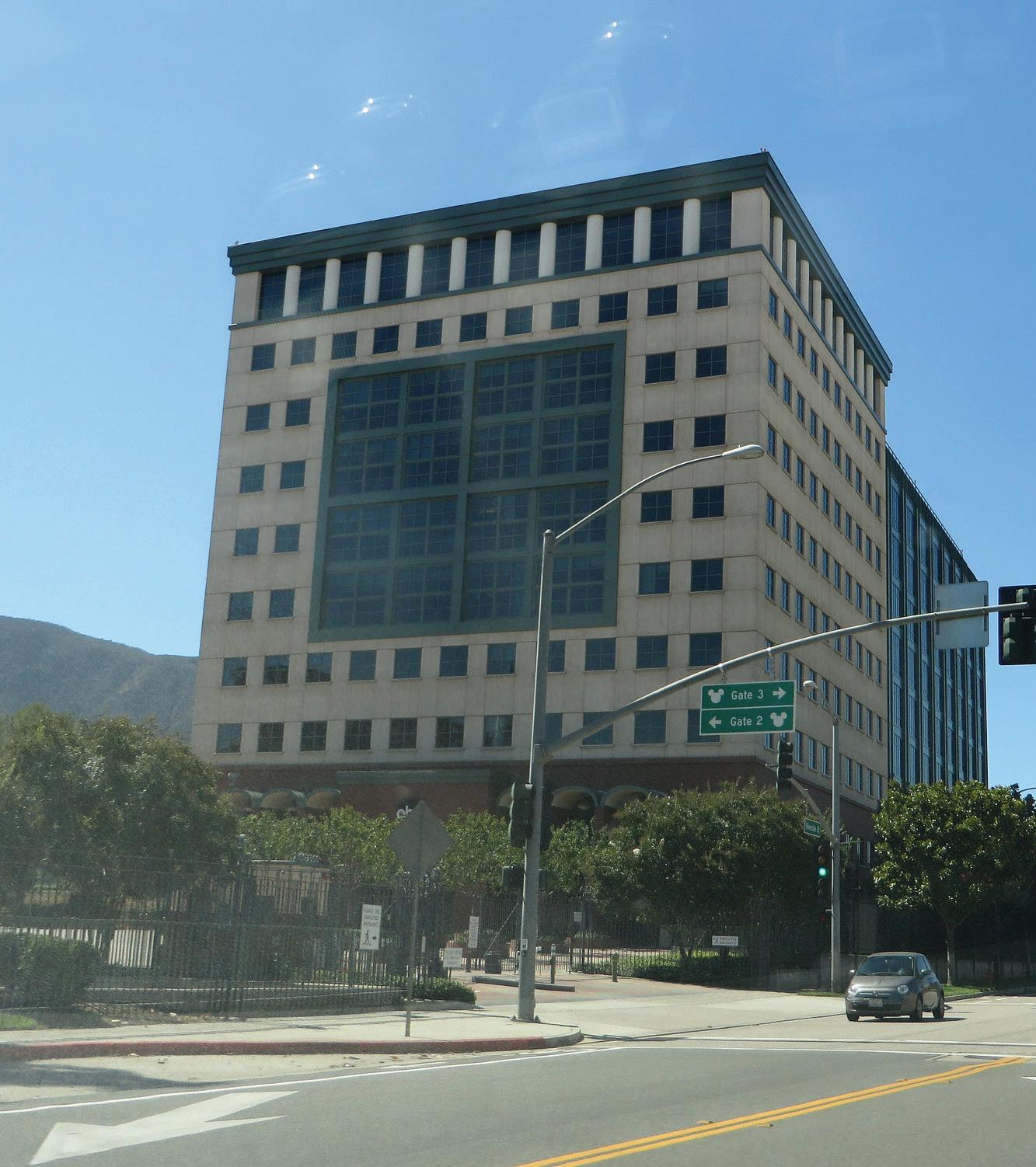
ABC Studios. | Photo courtesy of Ken Lund/Flickr (CC BY-SA 2.0)
FBI agents arrest Shamim Mafi. | Photo courtesy FBI - Los Angeles/Facebook
Home sales declined in California last month while prices went up, according to the California Association of Realtors.
Sales of existing, singlefamily homes totaled 265,320 in March on a seasonally adjusted basis, down 3.5% from February and down 2.5% from March 2025.
“March home sales were subdued, as higher mortgage rates and stock market volatility kept many buyers on the sidelines,” CAR President Tamara Suminski said last April 21. “As both geopolitical tension and interest rates ease for the third straight week, buyers and sellers who have been taking a wait-andsee strategy could return to the market if the conflict in the Middle East continues to stabilize.”
All five major regions in
Home sales down, prices up across California
California recorded yearover-year sales increases on a non-seasonally adjusted basis last month, but the yearly gains were due primarily to an additional business transaction day in March this year compared to last year, CAR said.
Riverside County saw a 30.4% increase in sales in March, and a 0.2% increase over March of 2025. The Inland Empire region saw a 31.1% increase from February and a 2.3% increase from last year.
The statewide sales numbers reported by CAR are on a seasonally adjusted annualized rate, adjusted to account for factors that typically influence home sales. Localized sales figures for March are not seasonally adjusted and therefore do not reflect the overall decrease in sales.
By City News Service
Following the traditional seasonal pattern, the statewide median home price rose solidly from February to March but only inched up slightly on a year- over-year basis. California’s median price increased 7.1% from February, from $830,370 to $889,190 -- 0.4% higher than one year ago.
It rose 2% in Riverside County, from $631,000 to $643,740, a 0.8% increase from one year ago. The Inland Empire’s median price rose 1.5% last month, from $601,350 to $610,480, 0.2% lower than last year.
The county with the highest median home price in California in March was San Mateo County at $2.25 million. The lowest median price was Lassen County’s $216,000, which was 8.5% higher than the previous month.




Audacy ending KNX FM simulcast, launching sports station
By City News Service
Audacyannounced
Tuesday it will end the FM simulcast of KNX News on 97.1 and launch an all-sports station on that frequency, while KNX will continue its all-news format on its AM signal.
The new station, branded as The Fan, is scheduled to debut May 11 at 6 a.m., according to the company.
Audacy said the outlet will focus on Southern California sports with local talk programming and what it described as an all-live, local weekday lineup.
KNX will continue broadcasting on AM 1070 and will also remain avail-
able on 97.1 HD2 and via the Audacy app and other streaming platforms.
“Los Angeles is the epicenter of the sports world, and 97.1 The Fan is its new voice,” Jeff Federman, regional president of Audacy West, said in a statement. “With legendary franchises and global events like the FIFA World Cup and the 2028 Summer Olympics on the horizon, the time was right to bring our industry-leading sports programming to this market.”
The move gives Audacy an FM sports presence in Los Angeles, where sports
talk listeners are currently served by AM station KLAC.
“Adding Los Angeles -- one of the most passionate and influential sports markets in the country -- completes our presence across the top 10 markets and meaningfully expands our reach and scale,” said Audacy’s Chief Business Officer Chris Oliviero.
The station will launch without live play-by-play coverage, although the company said it will pursue rights agreements with local teams as they become available.


Andrew Williams has been named brand manager and will
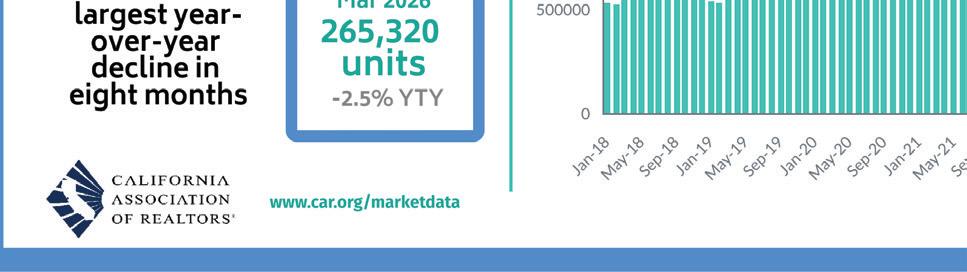
| Graphic courtesy of the California Association of Realtors
oversee the station’s programming rollout, offi-
cials said. Audacy acquired KNX in 2017 as part of its merger with CBS Corp.’s radio division.
| Photo courtesy of Milonica/Wikimedia Commons (CC
The likely SSI cut will affect not just younger adults with disabilities such as Down syndrome and severe autism who are still living at home with their low-income parents, but also older people with health or financial problems who have had to move in with their adult children on tight budgets. All told, as many as 400,000 poor and disabled people and indigent older people across the United States could have their support cut or eliminated, according to a ProPublica analysis of actuarial figures from the Social Security Administration.
Protecting the SSI program from such a fate is “about how the faithful will be judged, and our care for the most vulnerable,” said Galen Carey, vice president of government relations for the National Association of Evangelicals and himself the father of a 35-year-old son with Down syndrome who lives at home and receives SSI. Carey said it’s wrong to reduce a disabled person’s SSI benefits for choosing or needing to live with loved ones. “Knowing that they are contributing and not a burden to the family can be a source of great pride,” he said. (Some 40 Down syndrome organizations recently sent a letter to Bisignano expressing their opposition to the planned change.)
The reason this will especially affect SNAP families is complicated. Essentially, under a long-standing federal policy that was updated during the Biden administration, if a household has already demonstrated its poverty via SNAP or other public assistance programs’ own extensive incomereporting requirements, then the family is officially deemed unable to financially support a disabled loved one living at home. (The typical SNAP household that is also supporting a person who receives SSI has an annual total income of just $17,000, according to the nonpartisan Center on Budget and Policy Priorities.)
The Trump rule will undo this approach. It won’t matter if the SNAP program has already determined a family is poor enough to receive aid; anyone living at home beyond age 18 without paying full rent will be treated as if they have a benefactor. The value of their bedroom as well as any income and assets their family may have will be calculated and recalculated as often as every month
and deducted from their SSI check.
The SSI rule change is being reviewed by the White House Office of Management and Budget, a process that involves editing the draft regulation and considering where it falls on the list of the president’s priorities. Once it’s returned to the Social Security Administration for initial publication, there will be an opportunity for public comment; it could take until next year to be finalized, depending on the amount of opposition it faces.
Presented with a detailed list of this article’s findings, Rachel Cauley, the OMB’s communications director, asserted that “this story is false because it speculates about policies that have not yet been decided.” Asked to specify what was false, Cauley did not identify anything, instead reiterating that the story is “trash.”
A Social Security Administration spokesperson said “Commissioner Bisignano remains committed to protecting and strengthening Social Security and serving America’s most vulnerable populations.”
ProPublica interviewed families who rely on the SSI program in Philadelphia and across the country. We talked to a young couple struggling to support not just their kids but also a parent with Alzheimer’s. We heard from a mother, Opal Foster, whose 18-year-old son has Down syndrome and lives at home as he strives to become a chef. And we spoke with a middle-aged woman with schizophrenia and panic disorder who lives with her brother’s family because she can’t hold down a job and fears being left alone in a nursing home.
All of these people could have their SSI benefits cut because they live with family, even though disability advocates, evangelicals and budget experts agree that it’s more humane and less expensive for adults with disabilities to live at home rather than in institutional facilities. The potential cut to Burton’s SSI benefit, for example, would save taxpayers about $11 a day. But if her dad as a result of the reduced support can’t afford to provide for her anymore, then it could cost taxpayers many hundreds of dollars a day or more to house her at a residential facility, according to the state of Pennsylvania’s fee schedules.
Supplemental Security
Disabled adults
Income, which serves 7.5 million Americans who are unable to make a living because of severe disabilities or destitution in old age, has never been easy to qualify for. Fewer than a third of applicants are approved, and the process often takes years. Recipients of these benefits in turn regularly have their finances reevaluated, and are also intermittently examined by medical and vocational experts, to determine whether their payments will continue.
This paperwork-andreview-heavy process generates hefty overhead. The SSI program distributes just 5% of all Social Security Administration benefits yet accounts for nearly 35% of the agency’s administrative budget. Month after month, staffers have to pore over microscopic changes to SSI beneficiaries’ living arrangements and family members’ incomes and assets.
Current and former Social Security officials have told ProPublica over the past year that the SSI program’s complexities and absurdities remain perhaps the agency’s biggest bureaucratic headache. As ProPublica reported last summer, DOGE did nothing to address this, mostly ignoring SSI despite its obvious inefficiencies. In fact, DOGE and the White House pushed out roughly 7,000 Social Security employees, many of whom had been working on SSI reforms and backlogs.
The Biden administration had tried to do something about SSI’s excessive red tape. Under existing law, disabled people whose families have already established themselves to be poor by qualifying for certain other public assistance programs, such as veterans’ benefits or Temporary Assistance for Needy Families, don’t have to do all of the same check-ins, over and over again, to receive SSI. In 2024, Biden added SNAP — which is more widely used now than when these SSI rules were created — to the list of such programs.
This was ultimately an act of government efficiency, said Marianna LaCanfora, who was for years the deputy commissioner for retirement and disability policy at the Social Security Administration, including during Trump’s first term. Safety net programs like SSI don’t have to be so complicated and thus expensive, LaCanfora and others at

the agency said. But they often are that way because of all the effort spent triplechecking that the poor are actually poor.
Nevertheless, conservative think tanks opposed the Biden SNAP policy, with some claiming that paying these low-income SSI beneficiaries less could save the federal government $20 billion over the next decade. And the White House included the rule change as one of its agenda items for the SSA heading into 2025. It was part of a broader push by the administration and DOGE to undo anything that the Biden administration had touched.
If enacted, the change will require intellectually disabled young people like Burton as well as very elderly people to file extensive monthly reports if they want to continue their benefits even at the reduced level. They’ll have to provide details about the property where they live: whether it’s leased or owned, as well as the names of anyone in the home, and whether any of these people has any new income or assets. They’ll also have to include documentation of all household bills and expenses, showing how much they do or don’t contribute personally, as well as financial documents such as bank statements and any pay stubs.
Burton will likely have to make an appointment and report in person at a Social Security field office any time her father’s hours or wages change even slightly; any time she and he switch up how they split utility bills; and any time an adult sibling spends even a few nights at the house and helps her
with living expenses. If she doesn’t, she could later receive bills accusing her of having been overpaid by Social Security.
For his part, Bisignano, the Social Security commissioner, wants to be seen as a leader who’s making the agency more businesslike and efficient, according to interviews with agency staff and recordings of him speaking in private executive meetings. But the SSI rule change, by all accounts, will increase the administrative burden not just on families like Burton’s but also on the staff who’ll have to constantly assess the living arrangements and family incomes of her and millions of other people.
Given the tension between what the rule will do and the sense of efficiency that Bisignano says he wants to instill at Social Security, some agency insiders told ProPublica that he could still push the White House to drop the plan.
Shy’tyra Burton’s monthly SSI support check is what allows her to contribute to her household, by paying her own phone and internet bills and buying many of her own meals, according to her father, Rondell. “I’m still barely managing, though,” he said. He has largely been a single parent to Shy’tyra and her siblings, who need some support too, although they’re more self-sufficient. Groceries and gas have only gotten more expensive.
Burton is calmer and better at managing her disabilities when she can sense that her family’s economic circumstances are relatively stable, her father said. When he blew out his
shoulder last year trying to hurl a heavy recycling bin onto a garbage truck, and had to have surgery and take time off work, the loss of income soon manifested in her behavior, he said. “It’s a trickle-down effect,” he explained. “My daughter absorbs money stress in her body.”
One recent 75-degree afternoon, sitting on the front stoop of the rowhouse where she lives with her dad, Burton was rubbing her hands together vigorously, as if it were cold out. When asked why, she claimed it reminded her of being a baby in the neonatal intensive care unit and touching her parents’ hands through the small opening in her incubator.
Burton still has some childlike ways. She grips her stuffed animals when she’s nervous, which is often. She talks to imaginary friends out loud, the same ones she talked to when she was a girl. What she likes about living at home is in part that she can be herself, and her family will still be there to care for her. She doesn’t like the lack of freedom and that she can’t truly be “out there” like her adult siblings.
Burton wanted to go into the child development field, to help kids growing up with disabilities like hers, but some of the concepts were a bit too difficult. Now, she’s excited by cosmetology and intends to support herself one day as a hair stylist. She spends much of her time practicing on mannequin heads in her childhood room.
Republished with Creative Commons License (CC BY-NC-ND 3.0).
| Photo courtesy of AbsolutVision/Unsplash
Monterey Park City Notices
City of Monterey Park
Engineering Division
320 West Newmark Avenue
Monterey Park, CA 91754
Tel. No: (626) 307-1320
Fax: (626) 307-2500
NOTICE INVITING BIDS
FY 25-26 SEWER REHABILITATION PROJECT
SPEC. NO. 2026-005
Contract Time: 50 Working Days; Liquidated Damages: $1,000 per working day.
DESCRIPTION OF WORK
The project consists of the rehabilitation and coating of twenty-five (25) manholes with varying depths, the lining and replacement of multiple sewer lines, and all related work on file with the City’s Public Works Department. Prevailing wages required. A 10% Bidder’s Bond is required with bid. Successful contractor will be required to provide: (1) Liability insurance with City of Monterey Park as addition insured endorsement; (2) Proof of workers’ compensation insurance coverage; (3) 100% Faithful Performance, (4) 100% Labor and Material Bond, and (5) DIR Registration.
Plans are available to download for a fee from QuestCDN; link on the City’s website www.montereypark.ca.gov/444/Bids-Proposals.
Bid Package Cost: $22.00.
Bid Due Date and Time: Bids will be received via the online electronic bid service, Quest Construction Data Network (QuestCDN), www.questcdn.com, until 10:00 AM, Tuesday, May 26, 2026. Questions? Please call: Angelica Morales, Civil Engineering Assistant at (626) 307-1320.
Publish May 4 & May 11, 2026 MONTEREY PARK PRESS
Glendale City Notices
EXCEED $45,000,000 AGGREGATE PRINCIPAL AMOUNT OF CITY OF GLENDALE ELECTRIC REVENUE BONDS, 2026 REFUNDING SERIES, PAYABLE OUT OF THE ELECTRIC WORKS REVENUE FUND, AND APPROVING CERTAIN OTHER ACTIONS IN CONNECTION THEREWITH.”
A copy of said Ordinance will be on file and available for public inspection in the office of the City Clerk.
In substance, said Ordinance authorizes the City of Glendale to issue electric revenue bonds to refund the 2016 Refunding bonds for an estimated savings of approximately $5.6 million in accordance with Article XXVI, section 2 of the Glendale City Charter. Suzie Abajian PhD City Clerk
Publish May 4, 2026 GLENDALE INDEPENDENT
City of Baldwin Park Notice of Public Hearing and Notice of Intent to Adopt
an Initial Study-Mitigated Negative Declaration for the Bassett Villas Project
The purpose of this the Notice of Intent (NOI) to adopt a Draft Initial Study – Mitigated Negative Declaration (IS-MND) is to notify the public that the City of Balwin Park, as the Lead Agency under the California Environmental Quality Act, has prepared an IS-MND for the Bassett Villas Project (project), which involves the development of a 5.26-acre property located at 1314 Le Borgne Avenue in the City of Baldwin Park.
The project involves the development of 20 two-story, 27-foot tall, multi-family residential buildings, totaling 104 townhome units with private two-car garages on the vacant portion of the project site. The project would not involve demolition of any existing buildings on the project site. The project also involves the development of a leasing office and recreational building that would include a pool and jacuzzi. Other amenities would include a privately owned public park, dog park, common open spaces, and guest surface parking. In addition to incorporating an internal roadway network, the project would modify the existing private driveway, Le Borgne Avenue, which transverses the southwestern portion of the project site. Upon implementation of the proposed project, Le Borgne Avenue would include three speed cushions approved by the Los Angeles County Fire Department, 28 parallel parking spaces and 25, 90-degree parking spaces, including one ADA accessible space. Construction of the proposed project is anticipated to occur in two phases over an approximately 19 month-period from November 2026 to June 2028.
LEGALS
The proposed project would require a re-zoning of the project site from Open Space to High Density Multi-Family Residential (R-3) and a change in land use designation from Public Facilities to MultiFamily Residential (MFR).
Comment Period
The City of Baldwin Park Planning Department invites written comments on issues related to potential environmental impacts during the 30-day comment period, which starts on May 4, 2026, and will conclude on June 3, 2026. Due to the time limits mandated by State law, your response must be sent at the earliest possible time but no later than 5:00 PM on June 3, 2026. Please send written/typed comments (including a name, telephone number, email, and any other contact information) to the following:
Nick Baldwin, City Planner City of Baldwin Park City Hall, Planning Division, Department of Community Development 14403 East Pacific Avenue, 2nd Floor Baldwin Park, California 91706
You may also email your response to nbaldwin@baldwinparkca. gov. If applicable, please provide the name of a contact person at your agency. A physical copy of the environmental document and its appendices will be available for public review at Baldwin Park City Hall located at 14403 East Pacific Avenue, 2nd Floor, Baldwin Park, California 91706. A digital version of the environmental document is available on the Planning page of the City’s website at https://www. baldwinpark.com/DocumentCenter/View/4675/2026-4-29_BassettVillas_1314-Le-Borgne-Public-Draft-Review-ISMND.
Public Hearing
The Planning Commission of the City of Baldwin Park intends to hold a public hearing on Wednesday June 10, 2026, at 7:00 p.m. held at the City Hall Council Chambers located at: 14403 East Pacific Avenue, Balwin Park, California 91706. The purpose of the public hearing is to consider the project and its entitlements (General Plan Amendment AGP 25-01, Zone Change Z 25-01, Zone Variance 25-02, Design Review PR 25-17, Administrative Adjustment 25-02, and Lot Line Adjustment LLA 25-01) as well as the adoption of an IS-MND for the Bassett Villas Project pursuant to CEQA.
Dated: May 4, 2026
BALDWIN PARK PRESS
Probate Notices
NOTICE OF PETITION TO ADMINISTER ESTATE OF LEUNG KUI MOK
Case No. 26STPB04328
To all heirs, beneficiaries, creditors, contingent creditors, and persons who may otherwise be interested in the will or estate, or both, of LEUNG KUI MOK
A PETITION FOR PROBATE has been filed by Ka Wai Mok in the Su-perior Court of California, County of LOS ANGELES.
THE PETITION FOR PROBATE requests that Ka Wai Mok be appointed as personal representative to administer the estate of the decedent.
THE PETITION requests the decedent’s will and codicils, if any, be admitted to probate. The will and any codicils are available for examination in the file kept by the court.
THE PETITION requests authority to administer the estate under the Independent Administration of Estates Act. (This authority will allow the personal representative to take many actions without obtaining court approval. Before taking certain very important actions, however, the personal representative will be required to give notice to interested persons unless they have waived notice or consented to the proposed action.) The independent administration authority will be granted unless an interested person files an objection to the petition and shows good cause why the court should not grant the authority.
A HEARING on the petition will be held on May 21, 2026 at 8:30 AM in Dept. No. 44 located at 111 N. Hill St., Los Angeles, CA 90012.
IF YOU OBJECT to the granting of the petition, you should appear at the hearing and state your objections or file written objections with the court before the hearing. Your appearance may be in person or by your attorney.
IF YOU ARE A CREDITOR or a contingent creditor of the decedent, you must file your claim with the court and mail a copy to the personal representative appointed by the court within the later of either (1) four months from the date of first issuance of letters to a general personal representative, as defined in section 58(b) of the California Probate Code, or (2) 60 days from the date
The independent administration authority will be granted unless an interested person files an objection to the petition and shows good cause why the court should not grant the authority.
A HEARING on the petition will be held on May 29, 2026 at 8:30 AM in Dept. No. 244 located at 111 N. Hill St., Los Angeles, CA 90012.
IF YOU OBJECT to the granting of the petition, you should appear at the hearing and state your objections or file written objections with the court before the hearing. Your appearance may be in person or by your attorney.
IF YOU ARE A CREDITOR or a contingent creditor of the decedent, you must file your claim with the court and mail a copy to the personal representative appointed by the court within the later of either (1) four months from the date of first issuance of letters to a general personal representative, as defined in section 58(b) of the California Probate Code, or (2) 60 days from the date of mailing or personal delivery to you of a notice under section 9052 of the California Probate Code.
Other California statutes and legal authority may affect your rights as a creditor. You may want to consult with an attorney knowledgeable in California law.
YOU MAY EXAMINE the file kept by the court. If you are a person interested in the estate, you may file with the court a Request for Special Notice (form DE-154) of the filing of an inventory and appraisal of estate assets or of any petition or account as provided in Probate Code section 1250. A Request for Special Notice form is available from the court clerk.
Attorney for petitioner:
DINH LUU ESQ SBN 237418
GOLDFARB & LUU PC 18757 BURBANK BLVD STE 201
TARZANA CA 91356 CN126701 WEISER Apr 30, May 4,7, 2026 GLENDALE INDEPENDENT
of mailing or personal delivery to you of a notice under section 9052 of the California Probate Code.
Other California statutes and legal authority may affect your rights as a creditor. You may want to consult with an attorney knowledgeable in California law.
YOU MAY EXAMINE the file kept by the court. If you are a person interested in the estate, you may file with the court a Request for Special Notice (form DE-154) of the filing of an inventory and appraisal of estate assets or of any petition or account as provided in Probate Code section 1250. A Request for Special Notice form is available from the court clerk. Attorney for petitioner:
J BENJAMIN SELTERS III ESQ SBN 82786
SELTERS & SELTERS 399 W MISSION BLVD STE K POMONA CA 91766 CN126668 MOK Apr 30, May 4,7, 2026 ALHAMBRA PRESS
NOTICE OF PETITION TO ADMINISTER ESTATE OF CATHERINE E. WEISER
Case No. 26STPB04603
To all heirs, beneficiaries, creditors, contingent creditors, and persons who may otherwise be interested in the will or estate, or both, of CATHERINE E. WEISER
A PETITION FOR PROBATE has been filed by Robin Weiser in the Superior Court of California, County of LOS ANGELES.
THE PETITION FOR PROBATE requests that Robin Weiser be appointed as personal representative to administer the estate of the decedent.
THE PETITION requests the decedent’s lost will and codicils, if any, be admitted to probate. Copies of the lost will and any codicils are available for examination in the file kept by the court.
THE PETITION requests authority to administer the estate under the Independent Administration of Estates Act. (This authority will allow the personal representative to take many actions without obtaining court approval. Before taking certain very important actions, however, the personal representative will be required to give notice to interested persons unless they have waived notice or consented to the proposed action.)
YOU MAY EXAMINE the file kept by the court. If you are a person interested in the estate, you may file with the court a Request for Special Notice (form DE-154) of the filing of an inventory and appraisal of estate assets or of any petition or account as provided in Probate Code section 1250. A Request for Special Notice form is available from the court clerk. Attorney for Petitioner
TONY J. TYRE - SBN 269506
ALLYSON S. HELLER - SBN 315086
WILLIAM C. MASON III - SBN 319441
TYRE LAW GROUP, PC 100 S CITRUS AVE., SUITE 101 COVINA CA 91723
Telephone (626) 858-9378 (BSC 228383) 4/30, 5/4, 5/7/26 CNS-4036228# BALDWIN PARK PRESS
NOTICE OF PETITION TO ADMINISTER ESTATE OF: RICHARD GUBIOTTI CASE NO. 25STPB07062 To all heirs, beneficiaries, creditors, contingent creditors, and persons who may otherwise be interested in the WILL or estate, or both of RICHARD GUBIOTTI.
A PETITION FOR PROBATE has been filed by JOEY GUBIOTTI in the Superior Court of California, County of LOS ANGELES. THE PETITION FOR PROBATE requests that JOEY GUBIOTTI be appointed as personal representative to administer the estate of the decedent.
NOTICE OF PETITION TO ADMINISTER ESTATE OF: MARCO ANTHONY ARIAS CASE NO. 26STPB04365
To all heirs, beneficiaries, creditors, contingent creditors, and persons who may otherwise be interested in the WILL or estate, or both of MARCO ANTHONY ARIAS.
A PETITION FOR PROBATE has been filed by DANIEL ANTHONY ARIAS in the Superior Court of California, County of LOS ANGELES. THE PETITION FOR PROBATE requests that DANIEL ANTHONY ARIAS be appointed as personal representative to administer the estate of the decedent.
THE PETITION requests authority to administer the estate under the Independent Administration of Estates Act. (This authority will allow the personal representative to take many actions without obtaining court approval. Before taking certain very important actions, however, the personal representative will be required to give notice to interested persons unless they have waived notice or consented to the proposed action.)
The independent administration authority will be granted unless an interested person files an objection to the petition and shows good cause why the court should not grant the authority.
A HEARING on the petition will be held in this court as follows: 05/20/26 at 8:30AM in Dept. 9 located at 111 N. HILL ST., LOS ANGELES, CA 90012
IF YOU OBJECT to the granting of the petition, you should appear at the hearing and state your objections or file written objections with the court before the hearing. Your appearance may be in person or by your attorney.
IF YOU ARE A CREDITOR or a contingent creditor of the decedent, you must file your claim with the court and mail a copy to the personal representative appointed by the court within the later of either (1) four months from the date of first issuance of letters to a general personal representative, as defined in section 58(b) of the California Probate Code, or (2) 60 days from the date of mailing or personal delivery to you of a notice under section 9052 of the California Probate Code.
Other California statutes and legal authority may affect your rights as a creditor. You may want to consult with an attorney knowledgeable in California law.
THE PETITION requests authority to administer the estate under the Independent Administration of Estates Act with limited authority. (This authority will allow the personal representative to take many actions without obtaining court approval. Before taking certain very important actions, however, the personal representative will be required to give notice to interested persons unless they have waived notice or consented to the proposed action.) The independent administration authority will be granted unless an interested person files an objection to the petition and shows good cause why the court should not grant the authority.
A HEARING on the petition will be held in this court as follows: 06/02/26 at 8:32AM in Dept. 4 located at 111 N. HILL ST., LOS ANGELES, CA 90012
IF YOU OBJECT to the granting of the petition, you should appear at the hearing and state your objections or file written objections with the court before the hearing. Your appearance may be in person or by your attorney.
IF YOU ARE A CREDITOR or a contingent creditor of the decedent, you must file your claim with the court and mail a copy to the personal representative appointed by the court within the later of either (1) four months from the date of first issuance of letters to a general personal representative, as defined in section 58(b) of the California Probate Code, or (2) 60 days from the date of mailing or personal delivery to you of a notice under section 9052 of the California Probate Code. Other California statutes and legal authority may affect your rights as a creditor. You may want to consult with an attorney knowledgeable in California law. YOU MAY EXAMINE the file kept by the court. If you are a person interested in the estate, you may file with the court a Request for Special Notice (form DE-154) of the filing of an inventory and appraisal of estate assets or of any petition or account as provided in Probate Code section 1250. A Request for Special Notice form is available from the court clerk. Attorney for Petitioner
ALEXANDER D. NAPOLIN - SBN 280067 NAPOLIN APC
Baldwin Park City Notices
A PETITION FOR PROBATE has been filed by ELMER GLENN WILLIAMS in the Superior Court of California, County of LOS ANGELES.
THE PETITION FOR PROBATE requests that ELMER GLENN WILLIAMS be appointed as personal representative to administer the estate of the decedent.
THE PETITION requests authority to administer the estate under the Independent Administration of Estates Act. (This authority will allow the personal representative to take many actions without obtaining court approval. Before taking certain very important actions, however, the personal representative will be required to give notice to interested persons unless they have waived notice or consented to the proposed action.)
The independent administration authority will be granted unless an interested person files an objection to the petition and shows good cause why the court should not grant the authority.
A HEARING on the petition will be held in this court as follows: 05/22/26 at 8:30AM in Dept. 44 located at 111 N. HILL ST., LOS ANGELES, CA 90012
IF YOU OBJECT to the granting of the petition, you should appear at the hearing and state your objections or file written objections with the court before the hearing. Your appearance may be in person or by your attorney.
IF YOU ARE A CREDITOR or a contingent creditor of the decedent, you must file your claim with the court and mail a copy to the personal representative appointed by the court within the later of either (1) four months from the date of first issuance of letters to a general personal representative, as defined in section 58(b) of the California Probate Code, or (2) 60 days from the date of mailing or personal delivery to you of a notice under section 9052 of the California Probate Code. Other California statutes and legal authority may affect your rights as a creditor. You may want to consult with an attorney knowledgeable in California law.
YOU MAY EXAMINE the file kept by the court. If you are a person interested in the estate, you may file with the court a Request for Special Notice (form DE-154) of the filing of an inventory and appraisal of estate assets or of any petition or account as provided in Probate Code section 1250. A Request for Special Notice form is available from the court clerk.
Attorney for Petitioner
SAMUEL B. LEDWITZ - SBN 197721 BEZAIRE, LEDWITZ & ASSOCIATES
2780 SKYPARK DR., SUITE 295 TORRANCE CA 90505
Telephone (310) 316-2400 4/30, 5/4, 5/7/26 CNS-4036825# PASADENA PRESS
NOTICE OF PETITION TO ADMINISTER ESTATE OF: FRANK TETLEY CASE NO.
30-2026-01559178-PR-LACMC
To all heirs, beneficiaries, creditors, contingent creditors, and persons who may otherwise be interested in the WILL or estate, or both of FRANK TETLEY.
A PETITION FOR PROBATE has been filed by MARY TETLEY in the Superior Court of California, County of ORANGE.
THE PETITION FOR PROBATE requests that MARY TETLEY be appointed as personal representative to administer the estate of the decedent.
THE PETITION requests authority to administer the estate under the Independent Administration of Estates Act. (This authority will allow the personal representative to take many actions without obtaining court approval. Before taking certain very important actions, however, the personal representative will be required to give notice to interested persons unless they have waived notice or consented to the proposed action.)
The independent administration authority will be granted unless an interested person files an objection to the petition and shows good cause why the court should not grant the authority.
A HEARING on the petition will be held in this court as follows: 05/27/26 at 1:30PM in Dept. CM08 located at 3390 HARBOR BLVD., COSTA MESA, CA 92626
NOTICE IN PROBATE CASES
The court is providing the convenience to appear for hearing by video using the court’s designated video platform. This is a no cost service to the public. Go to the Court’s website at The Superior Court of California - County of Orange (occourts.org) to appear remotely for Probate hearings and for remote hearing instructions. If you have difficulty connecting or are unable to connect to your remote hearing, call 657-622-8452 for assistance. If you prefer to appear in-person, you can appear in the department on the day/ time set for your hearing.
IF YOU OBJECT to the granting of the petition, you should appear at the hearing and state your objections or file written objections with the court before the hearing. Your appearance may be in person or by your attorney.
IF YOU ARE A CREDITOR or a contingent creditor of the decedent, you must file your claim with the court and mail a copy to the personal representative appointed by the court within the later of either (1) four months from the date of first issuance of letters to a general personal representative, as defined in section 58(b) of the California Probate Code, or (2) 60 days from the date of mailing or personal delivery to you of a notice under section 9052 of the California Probate Code. Other California statutes and legal authority may affect your rights as a creditor. You may want to consult with an attorney knowledgeable in California law.
YOU MAY EXAMINE the file kept by the court. If you are a person interested in the estate, you may file with the court a Request for Special Notice (form DE-154) of the filing of an inventory and appraisal of estate assets or of any petition or account as provided in Probate Code section 1250. A Request for Special Notice form is available from the court clerk.
Attorney for Petitioner
VICTORIA KO - SBN 282539 LAW OFFICES OF VICTORIA KO 28202 CABOT RD., STE. 300 LAGUNA NIGUEL CA 92677
Telephone (949) 596-9070 4/30, 5/4, 5/7/26
CNS-4036889# ANAHEIM PRESS
NOTICE OF PETITION TO ADMINISTER ESTATE OF: GUSTAVO M. ROJO
CASE NO. 26STPB04529
To all heirs, beneficiaries, creditors, contingent creditors, and persons who may otherwise be interested in the lost WILL or estate, or both of GUSTAVO M. ROJO.
A PETITION FOR PROBATE has been filed by AARON JACOBS AND ETIENNE THIBAULT in the Superior Court of California, County of LOS ANGELES.
THE PETITION FOR PROBATE requests that AARON JACOBS AND ETIENNE THIBAULT be appointed as personal representative to administer the estate of the decedent.
THE PETITION requests the decedent’s lost WILL and codicils, if any, be admitted to probate. The lost WILL and any codicils are available for examination in the file kept by the court.
THE PETITION requests authority to administer the estate under the Independent Administration of Estates Act. (This authority will allow the personal representative to take many actions without obtaining court approval. Before taking certain very important actions, however, the personal representative will be required to give notice to interested persons unless they have waived notice or consented to the proposed action.) The independent administration authority will be granted unless an interested person files an objection to the petition and shows good cause why the court should not grant the authority.
A HEARING on the petition will be held in this court as follows: 05/22/26 at 8:30AM in Dept. 99 located at 111 N. HILL ST., LOS ANGELES, CA 90012
IF YOU OBJECT to the granting of the petition, you should appear at the hearing and state your objections or file written objections with the court before the hearing. Your appearance may be in person or by your attorney.
IF YOU ARE A CREDITOR or a contingent creditor of the decedent, you must file your claim with the court and mail a copy to the personal representative appointed by the court within the later of either (1) four
LEGALS
months from the date of first issuance of letters to a general personal representative, as defined in section 58(b) of the California Probate Code, or (2) 60 days from the date of mailing or personal delivery to you of a notice under section 9052 of the California Probate Code. Other California statutes and legal authority may affect your rights as a creditor. You may want to consult with an attorney knowledgeable in California law.
YOU MAY EXAMINE the file kept by the court. If you are a person interested in the estate, you may file with the court a Request for Special Notice (form DE-154) of the filing of an inventory and appraisal of estate assets or of any petition or account as provided in Probate Code section 1250. A Request for Special Notice form is available from the court clerk.
Attorney for Petitioner
JEFFREY MARVAN - SBN 203686
ANDRE ZAKARI - SBN 284129
MARVANLAW, A.P.C.
500 S. GRAND AVE., SUITE 1490
LOS ANGELES CA 90071
Telephone (213) 386-5988
4/30, 5/4, 5/7/26
CNS-4037375#
BALDWIN PARK PRESS
NOTICE OF PETITION TO ADMINISTER ESTATE OF:
ELKE BIANCA ARBUCCI
CASE NO. 26STPB04608
To all heirs, beneficiaries, creditors, contingent creditors, and persons who may otherwise be interested in the WILL or estate, or both of ELKE BIANCA ARBUCCI.
A PETITION FOR PROBATE has been filed by JOHN ARBUCCI in the Superior Court of California, County of LOS ANGELES.
THE PETITION FOR PROBATE requests that JOHN ARBUCCI be appointed as personal representative to administer the estate of the decedent.
THE PETITION requests the decedent’s WILL and codicils, if any, be admitted to probate. The WILL and any codicils are available for examination in the file kept by the court.
THE PETITION requests authority to administer the estate under the Independent Administration of Estates Act. (This authority will allow the personal representative to take many actions without obtaining court approval. Before taking certain very important actions, however, the personal representative will be required to give notice to interested persons unless they have waived notice or consented to the proposed action.) The independent administration authority will be granted unless an interested person files an objection to the petition and shows good cause why the court should not grant the authority.
A HEARING on the petition will be held in this court as follows: 05/27/26 at 8:30AM in Dept. 67 located at 111 N. HILL ST., LOS ANGELES, CA 90012
IF YOU OBJECT to the granting of the petition, you should appear at the hearing and state your objections or file written objections with the court before the hearing. Your appearance may be in person or by your attorney.
IF YOU ARE A CREDITOR or a contingent creditor of the decedent, you must file your claim with the court and mail a copy to the personal representative appointed by the court within the later of either (1) four months from the date of first issuance of letters to a general personal representative, as defined in section 58(b) of the California Probate Code, or (2) 60 days from the date of mailing or personal delivery to you of a notice under section 9052 of the California Probate Code. Other California statutes and legal authority may affect your rights as a creditor. You may want to consult with an attorney knowledgeable in California law.
YOU MAY EXAMINE the file kept by the court. If you are a person interested in the estate, you may file with the court a Request for Special Notice (form DE-154) of the filing of an inventory and appraisal of estate assets or of any petition or account as provided in Probate Code section 1250. A Request for Special Notice form is available from the court clerk.
Attorney for Petitioner
LINDA TOROSSIAN - SBN 238456
TAYLOR SUMMERS & TOROSSIAN, P.C.
301 E. COLORADO BOULEVARD, SUITE 450 PASADENA CA 91101
Telephone (626) 795-7400
4/30, 5/4, 5/7/26
CNS-4037690#
BURBANK INDEPENDENT
NOTICE OF PETITION TO ADMINISTER ESTATE OF: SOILA ALMA FUENTES CASE NO. 25STPB14505
To all heirs, beneficiaries, creditors, contingent creditors, and persons who may otherwise be interested in the WILL or estate, or both of SOILA ALMA FUENTES.
A PETITION FOR PROBATE has been filed by KRYSTAL RINGO in the Superior Court of California, County of LOS ANGELES.
THE PETITION FOR PROBATE requests that KRYSTAL RINGO be appointed as personal representative to administer the estate of the decedent.
THE PETITION requests authority to administer the estate under the Independent Administration of Estates Act. (This authority will allow the personal representative to take many actions without obtaining court approval. Before taking certain very important actions, however, the personal representative will be required to give notice to interested persons unless they have waived notice or consented to the proposed action.)
The independent administration authority will be granted unless an interested person files an objection to the petition and shows good cause why the court should not grant the authority.
A HEARING on the petition will be held in this court as follows: 05/15/26 at 8:30AM in Dept. 5 located at 111 N. HILL ST., LOS ANGELES, CA 90012
IF YOU OBJECT to the granting of the petition, you should appear at the hearing and state your objections or file written objections with the court before the hearing. Your appearance may be in person or by your attorney.
IF YOU ARE A CREDITOR or a contingent creditor of the decedent, you must file your claim with the court and mail a copy to the personal representative appointed by the court within the later of either (1) four months from the date of first issuance of letters to a general personal representative, as defined in section 58(b) of the California Probate Code, or (2) 60 days from the date of mailing or personal delivery to you of a notice under section 9052 of the California Probate Code. Other California statutes and legal authority may affect your rights as a creditor. You may want to consult with an attorney knowledgeable in California law.
YOU MAY EXAMINE the file kept by the court. If you are a person interested in the estate, you may file with the court a Request for Special Notice (form DE-154) of the filing of an inventory and appraisal of estate assets or of any petition or account as provided in Probate Code section 1250. A Request for Special Notice form is available from the court clerk. Attorney for Petitioner JAMES D. HORNBUCKLE - SBN 230407 GOMEZ LAW, APC 3250 WILSHIRE BLVD., STE. 1901 LOS ANGELES CA 90010
Telephone (855) 219-3333 4/30, 5/4, 5/7/26 CNS-4038051# WEST COVINA PRESS
NOTICE OF PETITION TO ADMINISTER ESTATE OF: MARIA AUXILIO FUENTES CASE NO. 25STPB14506
To all heirs, beneficiaries, creditors, contingent creditors, and persons who may otherwise be interested in the WILL or estate, or both of MARIA AUXILIO FUENTES.
A PETITION FOR PROBATE has been filed by KRYSTAL RINGO in the Superior Court of California, County of LOS ANGELES.
THE PETITION FOR PROBATE requests that KRYSTAL RINGO be appointed as personal representative to administer the estate of the decedent.
THE PETITION requests authority to administer the estate under the Independent Administration of Estates Act. (This authority will allow the personal representative to take many actions without obtaining court approval. Before taking certain very important actions, however, the personal representative will be required to give notice to interested persons unless they have waived notice or consented to the proposed action.)
The independent administration authority will be granted unless an interested person files an objection to the petition and shows good cause why the court should not grant the authority.
A HEARING on the petition will be held in this court as follows: 05/15/26 at 8:30AM in Dept. 5 Room 236 located at 111 N. HILL ST., LOS ANGELES, CA 90012
IF YOU OBJECT to the granting of the petition, you should appear at the hearing and state your objections or file written objections with the court before the hearing. Your appearance may be in person or by your attorney.
IF YOU ARE A CREDITOR or a contingent creditor of the decedent, you must file your claim with the court and mail a copy to the personal representative appointed by the court within the later of either (1) four months from the date of first issuance of letters to a general personal representative, as defined in section 58(b) of the California Probate Code, or (2) 60 days from the date of mailing or personal delivery to you of a notice under section 9052 of the California Probate Code.
Other California statutes and legal authority may affect your rights as a creditor. You may want to consult with an attorney knowledgeable in California law.
YOU MAY EXAMINE the file kept by the court. If you are a person interested in the estate, you may file with the court a Request for Special Notice (form DE-154) of the filing of an inventory and appraisal of estate assets or of any petition or account as provided in Probate Code section 1250. A Request for Special Notice form is available from the court clerk.
Attorney for Petitioner
JAMES D. HORNBUCKLE - SBN 230407
GOMEZ LAW, APC 3250 WILSHIRE BLVD., STE. 1901 LOS ANGELES CA 90010
Telephone (855) 219-3333 4/30, 5/4, 5/7/26
CNS-4038053# WEST COVINA PRESS
NOTICE OF PETITION TO ADMINISTER ESTATE OF Victor Del Rio
Case No. 25STPB11314
To all heirs, beneficiaries, creditors, contingent creditors, and persons who may otherwise be interested in the will or estate, or both, of Victor Del Rio
A PETITION FOR PROBATE has been filed by Marissa Dianne Del Rio in the Superior Court of California, County of LOS ANGELES.
THE PETITION FOR PROBATE requests that Marissa Dianne Del Rio be appointed as personal representative to administer the estate of the decedent.
THE PETITION requests authority to administer the estate under the Independent Administration of Estates Act. (This authority will allow the personal representative to take many actions without obtaining court approval. Before taking certain very important actions, however, the personal representative will be required to give notice to interested persons unless they have waived notice or consented to the proposed action.)
The independent administration authority will be granted unless an interested person files an objection to the petition and shows good cause why the court should not grant the authority.
A HEARING on the petition will be held on May 26, 2026 at 8:32 AM in Dept. 236. located at 111 N. Hill St., Los Angeles, CA 90012. IF YOU OBJECT to the granting of the petition, you should appear at the hearing and state your objections or file written objections with the court before the hearing. Your appearance may be in person or by your attorney.
IF YOU ARE A CREDITOR or a contingent creditor of the decedent, you must file your claim with the court and mail a copy to the personal representative appointed by the court within the later of either (1) four months from the date of first issuance of letters to a general personal representative, as defined in section 58(b) of the California Probate Code, or (2) 60 days from the date of mailing or personal delivery to you of a notice under section 9052 of the California Probate Code. Other California statutes and legal authority may affect your rights as a creditor. You may want to consult with an attorney knowledgeable in California law.
YOU MAY EXAMINE the file kept by the court. If you are a person interested in the estate, you may file with the court a Request for Special Notice (form DE-154) of the filing of an inventory and appraisal of estate assets or of any petition or account as provided in Probate Code section 1250. A Request for Special Notice form is available from the court clerk.
Petitioner:
Marissa Dianne Del Rio
4807 N Sunflower Ave, #D Covina, Ca 91724 626 494 1567
April 27, 30, May 4, 2026 WEST COVINA PRESS
NOTICE OF PETITION TO ADMINISTER ESTATE OF Karie Hoyt
Case No. 26STPB04696
To all heirs, beneficiaries, creditors, contingent creditors, and persons who may otherwise be interested in the will or estate, or both, of Karie Hoyt
A PETITION FOR PROBATE has been filed by Nathan Hoyt in the Superior Court of California, County of LOS ANGELES. THE PETITION FOR PROBATE requests that Nathan Hoyt be appointed as personal representative to administer the estate of the decedent. THE PETITION requests the decedent’s will and codicils, if any, be admitted to probate. The will and any codicils are available for examination in the file kept by the court. THE PETITION requests authority to administer the estate under the Independent Administration of Estates Act. (This authority will allow the personal representative to take many actions without obtaining court approval. Before taking certain very important actions, however, the personal representative will be required to give notice to interested persons unless they have waived notice or consented to the proposed action.) The independent administration authority will be granted unless an interested person files an objection to the petition and shows good cause why the court should not grant the authority.
A HEARING on the petition will be held on July 7, 2026 at 8:30 AM in Dept. 629. located at 111 N. Hill St., Los Angeles, CA 90012. IF YOU OBJECT to the granting of the petition, you should appear at the hearing and state your objections or file written objections with the court before the hearing. Your appearance may be in person or by your attorney. IF YOU ARE A CREDITOR or a contingent creditor of the decedent, you must file your claim with the court and mail a copy to the personal representative appointed by the court within the later of either (1) four months from the date of first issuance of letters to a general personal representative, as defined in section 58(b) of the California Probate Code, or (2) 60 days from the date of mailing or personal delivery to you of a notice under section 9052 of the California Probate Code. Other California statutes and legal authority may affect your rights as a creditor. You may want to consult with an attorney knowledgeable in California law.
YOU MAY EXAMINE the file kept by the court. If you are a person interested in the estate, you may file with the court a Request for Special Notice (form DE-154) of the filing of an inventory and appraisal of estate assets or of any petition or account as provided in Probate Code section 1250. A Request for Special Notice form is available from the court clerk. Attorney for petitioner: Antoniette Jauregui 1894 Commercecenter Dr. West, Suite 108 San Bernardino, Ca 92408 909-890-2350
May 4, 7, 11, 2026 WEST COVINA PRESS
the note(s), advances, under the terms of the Deed of Trust, interest thereon, fees, charges and expenses of the Trustee for the total amount (at the time of the initial publication of the Notice of Sale) reasonably estimated to be set forth below. The amount may be greater on the day of sale.
Trustor: CHI HO LI AND UN TENG LEI, Trustees of the Panorama Court Trust dated September 10, 2018 Duly Appointed Trustee: Beacon Default Management, Inc., a California corporation Recorded 7/5/2023, as Instrument No. 20230436082, of Official Records in the office of the Recorder of Los Angeles County, California, under the power of sale therein contained, WILL SELL AT PUBLIC AUCTION TO THE HIGHEST BIDDER, for cash, or cashier’s check made payable to Beacon Default Management, Inc. (payable at the time of sale in lawful money of the United States) without warranty express or implied as to title, use, possession or encumbrances, all right, title and interest conveyed to and now held by it as such Trustee, in and to the following described property situated in the aforesaid County and State, to-wit:
by said Deed of Trust, including, without limitation, fees, and expenses of sale. The total amount of the unpaid principal balance, together with reasonably estimated costs, charges, expenses, fees, and advances at the time of the initial publication of the Notice
Exhibit “B” attached hereto A.P.N.: 8493-051-028 The undersigned Trustee disclaims any liability for any incorrectness of the street address or other common designation, if any, shown above. If no street address or other common designation is shown, directions to the location of the property may be obtained by sending a written request to the beneficiary within 10 days of the date of first publication of this Notice of Sale. If the trustee is unable to convey title for any reason, the successful bidder’s sole and exclusive remedy shall be the return of monies paid to the Trustee, and the successful bidder shall have no further recourse. If the sale is set aside for any reason, the Purchaser at the sale shall be entitled only to a return of the deposit paid. The Purchaser shall have no further recourse against the Mortgagor, the Mortgagee, or the Mortgagee’s Attorney. If you have previously been discharged through bankruptcy, you may have been released of personal liability for this loan in which case this letter is intended to exercise the note holder’s rights against the real property only. THIS NOTICE IS SENT FOR THE PURPOSE OF COLLECTING A DEBT. THIS FIRM IS ATTEMPTING TO COLLECT A DEBT ON BEHALF OF THE HOLDER AND OWNER OF THE NOTE. ANY INFORMATION OBTAINED BY OR PROVIDED TO THIS FIRM OR THE CREDITOR WILL BE USED FOR THAT PURPOSE. As required by law, you are hereby notified that a negative credit report reflecting on your credit record may be submitted to a credit report agency if you fail to fulfill the terms of your credit obligations. The name, street address and telephone number of the Trustee is: Beacon Default Management, Inc. 30101 Agoura Court, Suite 203 Agoura Hills, California 91301 Phone: (310) 929-5457 Trustee’s Sale No. 2025-100893 FOR TRUSTEE
SALE INFORMATION PLEASE CALL: Stox Posting & Publishing, LLC Sale Line: (844) 477-7869 www.stoxposting.com NOTICE TO POTENTIAL BIDDERS: If you are considering bidding on this property lien, you should understand that there are risks involved in bidding at a trustee auction. You will be bidding on a lien, not on the property itself. Placing the highest bid at a trustee auction does not automatically entitle you to free and clear ownership of the property. You should also be aware that the lien being auctioned off may be a junior lien. If you are the highest bidder at the auction, you are or may be responsible for paying off all liens senior to the lien being auctioned off, before you can receive clear title to the property. You are encouraged to investigate the existence, priority, and size of outstanding liens that may exist on this property by contacting the county recorder’s office or a title insurance company, either of which may charge you a fee for this information. If you consult either of these resources, you should be aware that the same lender may hold more than one mortgage or Deed of Trust on the property. NOTICE TO PROPERTY OWNER: The sale date shown on this notice of sale may be postponed one or more times by the mortgagee, beneficiary, trustee, or a court, pursuant to Section 2924g of the California Civil Code. The law requires that information about trustee sale postponements be made available to you and to the public, as a courtesy to those not present at the sale. If you wish to learn whether your sale date has been postponed, and, if applicable, the rescheduled time and date for the sale of this property, you may call (844) 477-7869 or visit this Internet Web site www.stoxposting.com, using the file number assigned to this case 2025-100893. Information about postponements that are very short in duration or that occur close in time to the scheduled sale may not immediately be reflected in the telephone information or on the Internet Web site. The best way to verify postponement information is to attend the scheduled sale. NOTICE TO TENANT: You may have a right to purchase this property after the trustee auction pursuant to Section 2924m of the California Civil Code. If you are an “eligible tenant buyer,” you can purchase the property if you match the last and highest bid
placed at the trustee auction. There are three steps to exercising this right of purchase. First, 48 hours after the date of the trustee sale, you may call (844) 477-7869, or visit this internet website: www.stoxposting.com, using the file number assigned to this case 2025-100893 to find the date on which the trustee’s sale was held, the amount of the last and highest bid, and the address of the trustee. Second, you must send a written notice of intent to place a bid, so that the trustee receives it no more than 15 days after the trustee’s sale. Third, you must submit a bid, by remitting the funds and affidavit described in Section 2924m(c) of the Civil Code, so that the trustee receives it no more than 45 days after the trustee’s sale. If you think you may qualify as an “eligible tenant buyer” or “eligible bidder,” you should consider contacting an attorney or appropriate real estate professional immediately for advice regarding this potential right to purchase. Date: 4/08/2026 Beacon Default Management, Inc., a California corporation, as trustee Shannon Papa, Authorized Signatory EXHIBIT “A’ Legal Description Parcel 1: In the City of West Covina, County of Los Angeles, State of California, being a portion of Lot 151 of Tract No. 32324 as per Map filed in Book 989 Pages 77 through 93, inclusive of Maps in the Office of the County Recorder of said County, described as follows: Beginning at the intersection of that certain curve concave Southerly having a radius of 526.00 feet in the Southerly boundary of said Lot 151 with a line parallel with and 6.50 feet Westerly, measured at right angles, from the Easterly line of aid Lot 151, a radial line to said intersection bears North 13º 15’ 12” West; thence along said parallel line North 12º 32’ 43” West 242.39 feet to a point in that certain curve concave Southerly having a radius of 324.00 feet in the Northerly boundary of said Lot 151, a radial line to said point bears North 24º 16’ 27” West; thence along said boundary the following courses: Westerly along last said curve through a central angle of 06º 04’ 43” a distance of 34.37 feet, tangent to said curve South 59º 38’ 50” West 82.25 feet, South 21º 40’ 59” East 217.84 feet and Easterly along said curve having a radius of 526.00 feet through a central angle of 08º 25’ 47” a distance of 77.39 feet to the Point of Beginning. Except therefrom one-half of all oil, gas and other hydrocarbon substances in and under said land, as reserved in deed recorded in Book 10, Page 39 of Deeds. Also except therefrom one-half of all oil, gas and other hydrocarbon substances in and under said land, as reserved in Deed recorded in Book D2253, Page 119, Official Records. Parcel 2: Nonexclusive easements and rights for access, ingress and egress and other purposes, as set forth in the Declaration of Covenants, Conditions, Restrictions and Reservation of Easements for Claybourne ridge, recorded on November 9, 2000 as Instrument No. 2000-1760136, Official Records of said county, and any amendments thereto (“The Declaration”). EXHIBIT “B’ Personal Property All equipment, fixtures, and other articles of personal property now or hereafter owned by Trustor, and now or hereafter attached or affixed to the Real Property; together with all accessions, parts, and additions to, all replacements of, and all substitutions for, any of such property; and together with all proceeds (including without limitation all insurance proceeds and refunds of premiums) from any sale or other disposition of the Property. Please Publish 959171 / 2025-100893, West Covina- West Covina Press, 04-202026,04-27-2026,05-04-2026
T.S. No. 139142-CA APN: 5646-009-022 NOTICE OF TRUSTEE’S SALE IMPORTANT NOTICE TO PROPERTY OWNER: YOU ARE IN DEFAULT UNDER A DEED OF TRUST, DATED 10/19/2000. UNLESS YOU TAKE ACTION TO PROTECT YOUR PROPERTY, IT MAY BE SOLD AT A PUBLIC SALE. IF YOU NEED AN EXPLANATION OF THE NATURE OF THE PROCEEDING AGAINST YOU, YOU SHOULD CONTACT A LAWYER On 5/28/2026 at 9:00 AM, CLEAR RECON CORP, as duly appointed trustee under and pursuant to Deed of Trust recorded 10/24/2000 as Instrument No. 00 1659002 of Official Records in the office of the County Recorder of Los Angeles County, State of CALIFORNIA executed by: JAMES SARNOFF AND VIZMA SARNOFF, HUSBAND AND WIFE AS JOINT TENANTS WILL SELL AT PUBLIC AUCTION TO HIGHEST BIDDER FOR CASH, CASHIER’S CHECK DRAWN ON A STATE OR NATIONAL BANK, A CHECK DRAWN BY A STATE OR FEDERAL CREDIT UNION, OR A CHECK DRAWN BY A STATE OR FEDERAL SAVINGS AND LOAN ASSOCIATION, SAVINGS ASSOCIATION, OR SAVINGS BANK SPECIFIED IN SECTION 5102 OF THE FINANCIAL CODE AND AUTHORIZED TO DO BUSINESS IN THIS STATE; VINEYARD BALLROOM, DOUBLETREE HOTEL LOS ANGELESNORWALK, 13111 SYCAMORE DRIVE, NORWALK, CA 90650 all right, title and interest conveyed to and now held by it under said Deed of Trust in the property situated in said County and State described as: MORE ACCURATELY DESCRIBED IN SAID DEED OF TRUST. The street address and other common designation, if any, of the real property described above is purported to be: 1120 CORTEZ DR, GLENDALE, CA 91207-1808 The undersigned Trustee disclaims any liability for any incorrectness of the street address and other common designation, if any, shown herein. Said sale will be held, but without covenant or warranty, express or implied, regarding title, possession, condition, or encumbrances, including fees, charges and expenses of the Trustee and of the trusts created by said Deed of Trust, to
LEGALS
the obligation secured by the property to be sold and reasonable estimated costs, expenses and advances at the time of the initial publication of the Notice of Sale is: $362,939.08 If the Trustee is unable to convey title for any reason, the successful bidder’s sole and exclusive remedy shall be the return of monies paid to the Trustee, and the successful bidder shall have no further recourse. The beneficiary under said Deed of Trust heretofore executed and delivered to the undersigned a written Declaration of Default and Demand for Sale, and a written Notice of Default and Election to Sell. The undersigned or its predecessor caused said Notice of Default and Election to Sell to be recorded in the county where the real property is located.
NOTICE TO POTENTIAL BIDDERS: If you are considering bidding on this property lien, you should understand that there are risks involved in bidding at a trustee auction. You will be bidding on a lien, not on the property itself. Placing the highest bid at a trustee auction does not automatically entitle you to free and clear ownership of the property. You should also be aware that the lien being auctioned off may be a junior lien. If you are the highest bidder at the auction, you are or may be responsible for paying off all liens senior to the lien being auctioned off, before you can receive clear title to the property. You are encouraged to investigate the existence, priority, and size of outstanding liens that may exist on this property by contacting the county recorder’s office or a title insurance company, either of which may charge you a fee for this information. If you consult either of these resources, you should be aware that the same lender may hold more than one mortgage or deed of trust on the property.
NOTICE TO PROPERTY OWNER: The sale date shown on this notice of sale may be postponed one or more times by the mortgagee, beneficiary, trustee, or a court, pursuant to Section 2924g of the California Civil Code. The law requires that information about trustee sale postponements be made available to you and to the public, as a courtesy to those not present at the sale. If you wish to learn whether your sale date has been postponed, and, if applicable, the rescheduled time and date for the sale of this property, you may call (855) 3133319 or visit this Internet website www. clearreconcorp.com, using the file number assigned to this case 139142-CA. Information about postponements that are very short in duration or that occur close in time to the scheduled sale may not immediately be reflected in the telephone information or on the Internet Web site. The best way to verify postponement information is to attend the scheduled sale. NOTICE TO TENANT: Effective January 1, 2021, you may have a right to purchase this property after the trustee auction pursuant to Section 2924m of the California Civil Code. If you are an “eligible tenant buyer,” you can purchase the property if you match the last and highest bid placed at the trustee auction. If you are an “eligible bidder,” you may be able to purchase the property if you exceed the last and highest bid placed at the trustee auction. There are three steps to exercising this right of purchase. First, 48 hours after the date of the trustee sale, you can call (855) 313-3319, or visit this internet website www.clearreconcorp.com, using the file number assigned to this case 139142-CA to find the date on which the trustee’s sale was held, the amount of the last and highest bid, and the address of the trustee. Second, you must send a written notice of intent to place a bid so that the trustee receives it no more than 15 days after the trustee’s sale. Third, you must submit a bid so that the trustee receives it no more than 45 days after the trustee’s sale. If you think you may qualify as an “eligible tenant buyer” or “eligible bidder,” you should consider contacting an attorney or appropriate real estate professional immediately for advice regarding this potential right to purchase. FOR SALES INFORMATION: (855) 313-3319 CLEAR RECON CORP 3333 Camino Del Rio South, Suite 225 San Diego, California 92108 959097 / 139142-CA, Glendale - Glendale Independent, 04-27-2026,05-04-2026,05-112026, GLENDALE INDEPENDENT
FICTITIOUS BUSINESS NAME STATEMENT File No. FBN20260002799
The following persons are doing business as: West Coast Sourdough Ontario, 2780 E Riverside Dr Suite A, Ontario, CA 91761. Mailing Address, 603 S Milliken Ave, Suite F, Ontario, Ca 91761. # of Employees 12. WCS Ontario Inc (CA, 603 S Milliken Ave F, Ontario, CA 91761; Caleb Cabrera, President. County of Principal Place of Business: San Bernardino This business is conducted by: a corporation. Registrant commenced to transact business under the fictitious business name or names listed herein on February 6, 2026. By signing below, I declare that I have read and understand the reverse side of this form and that all information in this statement is true and correct. A registrant who declares as true any material matter pursuant to Section 17913 of the Business and Professions Code that the registrant knows to be false is guilty of a misdemeanor punishable by a fine not to exceed one thousand dollars ($1,000). I am also aware that all information on this statement becomes Public Record upon filing pursuant to the California Public Records Act (Government Code Sections 6250- 6277). /s/ Caleb Cabrera, President. This statement was filed with the County Clerk of San Bernardino on April 2, 2026 NoticeIn accordance with subdivision (a)
of Section 17920. A Fictitious Name Statement generally expires at the end of five years from the date on which it was filed in the office of the County Clerk, except, as provided in subdivision (b) of Section 17920, where it expires 40 days after any change in the facts set forth in the statement pursuant to Section 17913 other than a change in the residence address of a registered owner. A new Fictitious Business Name Statement must be filed before the expiration. The filing of this statement does not of itself authorize the use in this state of a fictitious business name in violation of the rights of another under federal, state, or common law (see Section 14411 et seq., Business and Professions Code) File#: FBN20260002799 Pub: 04/13/2026, 04/20/2026, 04/27/2026, 05/04/2026 San Bernardino Press
FICTITIOUS BUSINESS NAME STATEMENT 2026739916. The following person(s) is (are) doing business as: Utility Consultants of Orange County, 23101 Moulton Pkwy #202, Laguna Hills, CA 92653. Full Name of Registrant(s) Mike Schneider Inc (CA, 23101 Moulton Pkwy #202, Laguna Hills, CA 92653. This business is conducted by a corporation. Registrant commenced to transact business under the fictitious business name or names listed herein on March 1, 1989. Utility Consultants of Orange County. /S/ Michael Schneider, President. This statement was filed with the County Clerk of Orange County on April 7, 2026. Publish: Anaheim Press 04/20/2026, 04/27/2026, 05/04/2026, 05/11/2026
FICTITIOUS BUSINESS NAME STATEMENT File No. FBN20260003489
The following persons are doing business as: Ridge 909, 6371 haven ave ste 3 #52, Rancho Cucamonga, CA 91737. Mailing Address, 6371 haven ave ste 3 #52, Rancho Cucamonga, CA 91737. # of Employees 0. Gabriel Treuhaft. County of Principal Place of Business: San Bernardino This business is conducted by: a individual. Registrant commenced to transact business under the fictitious business name or names listed herein on April 8, 2026. By signing below, I declare that I have read and understand the reverse side of this form and that all information in this statement is true and correct. A registrant who declares as true any material matter pursuant to Section 17913 of the Business and Professions Code that the registrant knows to be false is guilty of a misdemeanor punishable by a fine not to exceed one thousand dollars ($1,000).
I am also aware that all information on this statement becomes Public Record upon filing pursuant to the California Public Records Act (Government Code Sections 6250- 6277). /s/ Gabriel Treuhaft, Owner. This statement was filed with the County Clerk of San Bernardino on April 14, 2026 NoticeIn accordance with subdivision (a) of Section 17920. A Fictitious Name Statement generally expires at the end of five years from the date on which it was filed in the office of the County Clerk, except, as provided in subdivision (b) of Section 17920, where it expires 40 days after any change in the facts set forth in the statement pursuant to Section 17913 other than a change in the residence address of a registered owner. A new Fictitious Business Name Statement must be filed before the expiration. The filing of this statement does not of itself authorize the use in this state of a fictitious business name in violation of the rights of another under federal, state, or common law (see Section 14411 et seq., Business and Professions Code) File#: FBN20260003489 Pub: 04/20/2026, 04/27/2026, 05/04/2026, 05/11/2026 San Bernardino Press
FICTITIOUS BUSINESS NAME STATEMENT File No. FBN20260003525
The following persons are doing business as: Empire Apartments, 3132 Triumph Lane, Ontario, CA 91764. Mailing Address, PO Box 1919, Rancho Cucamonga, CA 91727. VMA Apartments 1, LLC (CA, 3595 Inland Empire Blvd BLDG 2 #2100, Ontario, CA 91764; Victor M Martinez, Managing member. County of Principal Place of Business: San Bernardino This business is conducted by: a limited liability company (llc). Registrant commenced to transact business under the fictitious business name or names listed herein on April 9, 2026. By signing below, I declare that I have read and understand the reverse side of this form and that all information in this statement is true and correct. A registrant who declares as true any material matter pursuant to Section 17913 of the Business and Professions Code that the registrant knows to be false is guilty of a misdemeanor punishable by a fine not to exceed one thousand dollars ($1,000). I am also aware that all information on this statement becomes Public Record upon filing pursuant to the California Public Records Act (Government Code Sections 6250- 6277). /s/ Victor M Mar-
tinez, Managing member. This statement was filed with the County Clerk of San Bernardino on April 15, 2026 Notice- In accordance with subdivision (a) of Section 17920. A Fictitious Name Statement generally expires at the end of five years from the date on which it was filed in the office of the County Clerk, except, as provided in subdivision (b) of Section 17920, where it expires 40 days after any change in the facts set forth in the statement pursuant to Section 17913 other than a change in the residence address of a registered owner. A new Fictitious Business Name Statement must be filed before the expiration. The filing of this statement does not of itself authorize the use in this state of a fictitious business name in violation of the rights of another under federal, state, or common law (see Section 14411 et seq., Business and Professions Code) File#: FBN20260003525 Pub: 04/20/2026, 04/27/2026, 05/04/2026, 05/11/2026 San Bernardino Press
FILE NO. FBN20260003378
FILED: April 13, 2026
FICTITIOUS BUSINESS NAME STATEMENT ABANDONMENT:
County of Original Filing: San Bernardino
Date of Original Filing: April 13, 2022
File No.: FBN20220003383
Fictitious Business Name(s): Brow Bar threading studio 12200B Central Avenue Chino, CA 91710
San Bernardino County Mailing Address, 12200 B Central Ave, Chino, CA 92880. San Bernardino County Name of Registrant: (1). Kalpana Bogati (2). Radha Dhami
This business is/was conducted by: a general partnership Registrant commenced to transact business under the fictitious business name or names listed herein on March 1, 2022 BY SIGNING BELOW, I DECLARE THAT I HAVE READ AND UNDERSTAND THE REVERSE SIDE OF THIS FORM AND THAT ALL INFORMATION IN THIS STATEMENT IS TRUE AND CORRECT. (A registrant who declares as true any material matter pursuant to Section 17913 of the Business and Professions Code that the registrant knows to be false is guilty of a misdemeanor punishable by a fine not to exceed one thousand dollars ($1,000).) I am also aware that all information on this statement becomes public record upon filing pursuant to the California Public Records Act (Government Code Sections 6250-6277).
FBN20260003378 /s/ Kalpana Bogati, Owner 04/20/2026, 04/27/2026, 05/04/2026, 05/11/2026
San Bernardino Press
FICTITIOUS BUSINESS NAME STATEMENT File No. FBN20260003981
The following persons are doing business as: Aggie D Clough DBA Wienerschnitzel 467, 9421 Foothill Blvd, Rancho Cucamonga, CA 91730. Mailing Address, 5783 Shea Ct, Fontana, CA 5783 Shea Ct. Aggie D Davis Clough. County of Principal Place of Business: San Bernardino This business is conducted by: a individual. Registrant has not yet begun to transact business under the fictitious business name or names listed herein. By signing below, I declare that I have read and understand the reverse side of this form and that all information in this statement is true and correct. A registrant who declares as true any material matter pursuant to Section 17913 of the Business and Professions Code that the registrant knows to be false is guilty of a misdemeanor punishable by a fine not to exceed one thousand dollars ($1,000). I am also aware that all information on this statement becomes Public Record upon filing pursuant to the California Public Records Act (Government Code Sections 6250- 6277). /s/ Aggie D Davis Clough, Owner. This statement was filed with the County Clerk of San Bernardino on April 29, 2026 Notice- In accordance with subdivision (a) of Section 17920. A Fictitious Name Statement generally expires at the end of five years from the date on which it was filed in the office of the County Clerk, except, as provided in subdivision (b) of Section 17920, where it expires 40 days after any change in the facts set forth in the statement pursuant to Section 17913 other than a change in the residence address of a registered owner. A new Fictitious Business Name Statement must be filed before the expiration. The filing of this statement does not of itself authorize the use in this state of a fictitious business name in violation of the rights of another under federal, state, or common law (see Section 14411 et seq., Business and Professions Code) File#: FBN20260003981 Pub: 05/04/2026, 05/11/2026, 05/18/2026, 05/25/2026 San Bernardino Press
www.Notiecfiling. com
UCI poll shows opposition to Trump’s immigration enforcement
By City News Service
ArecentUCIrvine pollshowsabout two-thirds of Orange County residents have taken a dim view of the Trump administration’s immigration enforcement efforts, a professor who led the survey said Wednesday.
A majority of residents favor more pragmatic solutions to immigration issues for the most part, said Jon B. Gould, dean of UCI’s School of Social Ecology and director of the poll of 1,202 residents March 24 through March 31.
“This is a response from a county that seems to be generally supportive of immigration and willing to do some enforcement, but nothing severe or extreme,” Gould told City News Service.
“There’s a lot they don’t like” about President Donald Trump’s crackdown on illegal immigration, Gould said.
“The irony in all of this is if Trump stuck with what he wanted to do” when he campaigned for president, “he would have found support in the county, but by going so far in enforcement and using mechanisms never seen before he’s lost twothirds of the county on the question of immigration.”
Part of what drove the response is the county’s growing population of
migrants and those descended from immigrants, Gould said.
The dean said he was at an immigration event on campus recently where he asked attendees how many had descended from immigrants.
“And 80% of hands went up,” he said. “A lot of this is how Orange County has changed in the last three to four decades. It’s a much more diverse county and people want legal immigration.”
Overall, “immigration is a positive” to a majority of county residents, Gould said.
About 40% of the county has been raised by parents who were foreign born, Gould said. it is especially the case with Asian Americans with 82% and half of Latinos, according to the survey.
For residents 46 or older, about 25% have two foreignborn parents, but that number rises to just over 50% for those 18 to 45.
About one-third of respondents said they know an immigrant living in the country illegally, and another one in five are unsure.
Fifty-one percent of Latinos personally know an immigrant living in the country illegally and 23% of Asian Americans know someone

living in the country illegally.
Forty-four percent of respondents said immigration “mostly helps,” 21% said it balances out and 27% said it mostly hurts.
Sixty-four percent of Democrats say immigration mostly helps the county,
but 52% of Republicans say immigration mostly hurts. By a two-to-one margin, independents believe the pros outweigh the cons of immigration.
Democrats and independents are mostly aligned on immigration issues, accord-
ing to the survey.
Twenty-eight percent think immigration should go up with 30% want to see a decrease and 31% favor the status quo.
A majority of respondents also do not view immigration as prompting a rise in crime. Fifty-two percent do not think it boosts crime with 38% saying it does.
Broken down by partisanship, 80% of Democrats say no with 11% thinking it does. Among Republicans 72% think immigration increases crime with 18% disputing that. Among independents 54% say it does not lead to an increase and 34% think it does.
Overall, 62% of the county disapproves of Trump’s immigration enforcement policies with 36% favoring them. That mirrors is overall approval in the county at 35%.
As for Trump’s policies at the border, 41% approve and 55% disapprove.
Only 27% support enforcing immigration at hospitals or schools and 33% opposing asylum applications at the border. Only 36% support ending birthright citizenship and 37% favoring using the military to support deportations.
But 61% support restricting immigration from
Lucas Museum previews 20 inaugural exhibitions ahead of September opening
By City News Service
The Lucas Museum of Narrative Art will not open until September, but Thursday officials unveiled plans for about 20 inaugural exhibitions, including installations curated by George Lucas.
Theapproximately 300,000-square-foot complex in Exposition Park features a sweeping, modern design. The project also includes about 11 acres of landscaped green space extending onto the building’s roof.
Founded by Lucas and his wife, Mellody Hobson, the institution will showcase a rotating selection from the filmmaker’s extensive collection of narrative art, including works such as comic art, manga and imagery tied to children’s storytelling that are not typically emphasized in conventional museums.
Museum representatives said the opening presentations will feature more than
countries deemed by the government as dangerous or unstable and 81% favor cracking down on human trafficking.
Sixty-seven percent of respondents support efforts to help undocumented immigrants find a pathway to legal status. But 72% support kicking out convicted felons while only 23% favor that for non-violent offenders.
A slight majority of 53% oppose abolishing the Immigration and Customs Enforcement agency. By a 47% to 44% margin, the respondents favor efforts by cities and states to restrict cooperation with federal deportations.
Fifty-seven percent say it is acceptable for religious organizations to decline to assist deportations. It breaks down to 75% of Democrats and 57% of independents in support but 59% of Republicans wanting religious groups to help with deportations.
“This is a group that historically goes to church more often and has more attachment to religion so you’d expect them to carve out more freedom for churches, so that’s unusual,” Gould said.
As for sanctuary policies, 51% support them with 37% opposing.
1,200 artworks displayed across about 100,000 square feet of gallery space.
“George Lucas and Mellody Hobson co-founded the Lucas Museum of Narrative Art to honor the universal tradition of telling stories through images,” museum officials said in a statement. “Encompassing everything from prehistoric cave paintings to today’s screen art, the Museum explores and celebrates the power of visual storytelling to inspire individuals, give shape to beliefs and ideals, and forge community.”
The inaugural lineup will include a range of thematic galleries, beginning with exhibitions focused on architecture and the design influences behind the museum, as well as works by American painter Thomas Hart Benton portraying scenes of everyday life.
Additional galleries will highlight illustrations from
children’s literature by artists such as Beatrix Potter and E. H. Shepard.
Officials said other sections will center on filmmaking, featuring production materials from the Lucas archives, along with exhibits exploring themes such as childhood, family, work and community, and artistic depictions of civic life.
The museum will also present exhibitions dedicated to comic and graphic storytelling, with works by artists including Jack Kirby and Alison Bechdel, as well as displays highlighting Japanese manga and anime.
Additional galleries will feature illustrations by Frank Frazetta, paintings and prints interpreting historical events, and works by illustrators such as Norman Rockwell and N. C. Wyeth.
Large-scale mural works by artists including Diego Rivera are also planned,

along with photography exhibitions featuring images by Dorothea Lange and Gordon Parks.
Other galleries will explore genres such as fantasy, romance and science
fiction, as well as visual storytelling tied to myths of the American West.
The September 22 opening will mark the first time the public can view the full selection of artworks and experience the galleries as designed.
Additional details about specific works, programming and opening events are expected to be released in the coming months.
| Photo courtesy of AussieActive/Unsplash
| Photo courtesy of Lucas Museum
Port of LA to offer free harbor boat tours for World Trade Week
By City News Service
The Port of Los Angeles will host free public harbor boat tours next month to mark the 100th anniversary of World Trade Week, officials announced Thursday.
The tours are scheduled for May 9 from 11 a.m. to 2 p.m. at the Wilmington Waterfront Promenade, next to Banning’s Landing Community Center in Wilmington, according to port officials. Boats will depart every 30 minutes, with the final trip leaving at 1 p.m.
Officials said the tours will be offered on a first-come, first-served basis, with lines closing at 1 p.m. or when
capacity is reached.
“For a century, World Trade Week has highlighted how global commerce supports jobs, innovation and opportunity here at home,” Port of Los Angeles Executive Director Gene Seroka said in a statement. “These harbor tours give our community a front-row seat to see how the nation’s busiest port operates and connects Los Angeles to markets around the world.”
Each tour will last about 50 minutes and feature close-up views of cargo terminals, cranes and active vessels, along with land-
marks in San Pedro Bay such as the Vincent Thomas Bridge and the Wilmington Clock Tower.
Organizers said the event will also include on-site crafters and exhibitors from the Avalon Arts Alliance. Free parking and wheelchairaccessible boarding will be available, and all ages are welcome.
A dog-friendly tour is scheduled for 11:30 a.m. for leashed pets, and a Spanishlanguage tour will be offered at 1 p.m.
Additional free harbor tours are planned for Sept. 19, departing from the

Torrance suspect in DC shooting to remain jailed
By City News Service
The31-year-old Torrance man accused of trying to kill President Donald Trump at the White House Correspondents’ Dinner in Washington, D.C., was ordered Thursday to remain behind bars pending trial.
Cole Tomas Allen was charged April 27 with attempting to assassinate the president, transportation of a firearm and ammunition through interstate commerce to commit a felony, and discharging a firearm during a crime of violence.
The assassination charge alone could lead to a life prison sentence, officials said. Allen made his initial appearance in federal court in Washington, D.C., April 27, when the charges were announced, but he has not yet entered a plea.
During a bail hearing Thursday, a magistrate judge ordered that he remain behind bars, despite a written request by his attorneys this week that he be considered for pre-trial release contending Allen did not pose a threat to the public.
A preliminary hearing -at which a judge determines if there is enough evidence for the case to go to trial -- has been tentatively set for May
11.
Federal officials said Allen allegedly sent family members in Southern California a manifesto railing against the Trump administration moments before charging through a security area near the Correspondents’ Dinner on April 25 night.
The attack occurred around 5:40 p.m. California time April 25 in a ballroom of the Washington Hilton, the same hotel where President Ronald Reagan was shot in 1981. Security video showed a man attempting to sprint past the security checkpoint, prompting several officers to draw their weapons. The assailant never made it into the main ballroom where the Correspondents’ Dinner was being held one floor below.
Federal officials said Allen opened fire during his charge through the security area.
A Secret Service officer was shot, but saved by a bulletproof vest. Although initially suggesting that Allen shot the officer, it remained unclear if the bullet that struck the agent was fired by the suspect.
Acting U.S. Attorney General Todd Blanche said April 27 roughly five shots were fired by law enforcement at the suspect. Allen was not struck by gunfire, but he fell
to the ground and was taken into custody. Widely circulated images from the scene showed the suspect now identified as Allen handcuffed and face down on a carpeted floor.
U.S. Secret Service agents rushed Trump and first lady Melania Trump out of the hotel and back to the White House. Vice President JD Vance was also rushed out.
Neither the president nor the vice president was injured.
According to Blanche and Jeanine Pirro, U.S. attorney for the District of Columbia, Allen on April 6 made a three-night reservation at the Washington Hilton for the nights of April 24-26. Trump had announced in early March that he planned to attend the Correspondents’ Dinner on April 25.
Blanche said Allen traveled by train on April 21 from Los Angeles to Chicago, then from Chicago to the District of Columbia, where he arrived at 1 p.m. April 24 and checked into the Hilton.
Pirro said Allen had a clear intent to assassinate Trump and “to bring down as many of the high-ranking cabinet officials as he could.” She said the suspect was carrying a 12 gauge pump-action shotgun, a .38-caliber semiautomatic handgun, at least three knives
“and all kinds of paraphernalia.”
Pirro said the suspect’s “manifesto” made his intentions clear. She quoted it as reading, “I am targeting administration officials. They are my targets and I’m prioritizing from the top down.”
She said Allen also vowed to engage with anyone who tried to block him from entering the ballroom where the dinner was being held.
Allen’s parents’ Torrance home, where he lived, was also searched after FBI agents. Video from the scene April 25 showed a large law enforcement presence, including SWAT-type personnel and equipment outside Allen’s house. Shortly before midnight, video showed agents had entered the home.
Investigations by the Secret Service and the Metropolitan Police Department in Washington, D.C. were continuing.
According to multiple media reports, Allen sent his manifesto to family members about 10 minutes before the disruption at the Correspondents’ Dinner, calling himself the “Friendly Federal Assassin” and stating that he was trying to kill members of the administration.
“Turning the other cheek
Rents
bringing the median rent to $3,585.
On rent control, analysts observed that it “involves a notable trade-off” for tenants.
“Similar to the rent-freeze proposed in New York City, the protections that shield tenants from unaffordable rent increases can also reduce mobility — as households become reluctant to vacate below-market units, effectively locking them in place even when their housing
needs change,” according to the report.
The most recent American Community Survey in 2024 fond that 86.5% of renters in Los Angeles remained in the same unit they occupied one year ago, up from 79%
in 2010. Nationally, 69.3% of renters stayed in place in 2010 and 78.4% in 2024.
Data for the report is from all rentals advertised on Realtor.com. Rental units include apartments as well as private rentals involv-
is for when you yourself are oppressed. I’m not the person raped in a detention camp. I’m not the fisherman executed without trial. I’m not a schoolkid blown up or a child starved or a teenage girl abused by the many criminals in this administration,” Allen wrote. “Turning the other cheek when `someone else’ is oppressed is not Christian behavior; it is complicity in the oppressor’s crimes.”
According to his LinkedIn profile, Allen has been employed part-time since March 2020 at Torrancebased C2 Education, a private company that prepares students for college entrance exams. C2 Education provides “tutoring, test prep and college counseling,” according to its website. It also named Allen on its social media accounts as Teacher of the Month in December 2024 at C2 Education.
Allen identified himself on LinkedIn as a “self-employed” indie game developer, having apparently released on Steam an “atomic fighting game” in 2018 called Bohrdom, which was advertised using accounts on YouTube and Twitter.
A game trailer caption described it as a “non-violent, skill-based, asymmetrical fighting game loosely based
on a chemistry model that is itself loosely based on reality.”
Allen wrote on his page that he is a “mechanical engineer and computer scientist by degree, independent game developer by experience, teacher by birth.”
Allen earned a bachelor’s degree in mechanical engineering from Caltech in 2017, according to his LinkedIn page, and a master’s degree in computer science from Cal State Dominguez Hills in 2025.
Officials at Cal State Dominguez Hills issued a statement late April 25 confirming that he graduated from the university last year.
“A student named Cole Allen graduated with a master’s degree from California State University, Dominguez Hills in 2025,” the statement said.
NASA’s Jet Propulsion Laboratory in La Cañada Flintridge confirmed that Allen was an intern there in 2014.
“NASA’s Jet Propulsion Laboratory unequivocally denounces violence and extends our condolences and support to all those impacted by this incident,” the agency said in a statement. “We can confirm that the suspect interned at JPL for approximately three months in 2014.”
ing condos, townhomes and single-family houses. We use rental sources that reliably report data each month within LA county.
The full report is available online via tinyurl.com/ ys9ew5wt.
Realtor.com bills itself “as the No. 1 site trusted by real estate professionals ... delivering consumer connections and a robust suite of marketing tools to support business growth.” The website is operated by News Corp.
Downtown Harbor area in San Pedro, offering a different perspective of the port. More information is available at https://portoflosangeles.org/.
| Photo courtesy of Port of Los Angeles/Facebook