


By Alejandra Reyes-Velarde, CalMatters
Fireofficialsneara
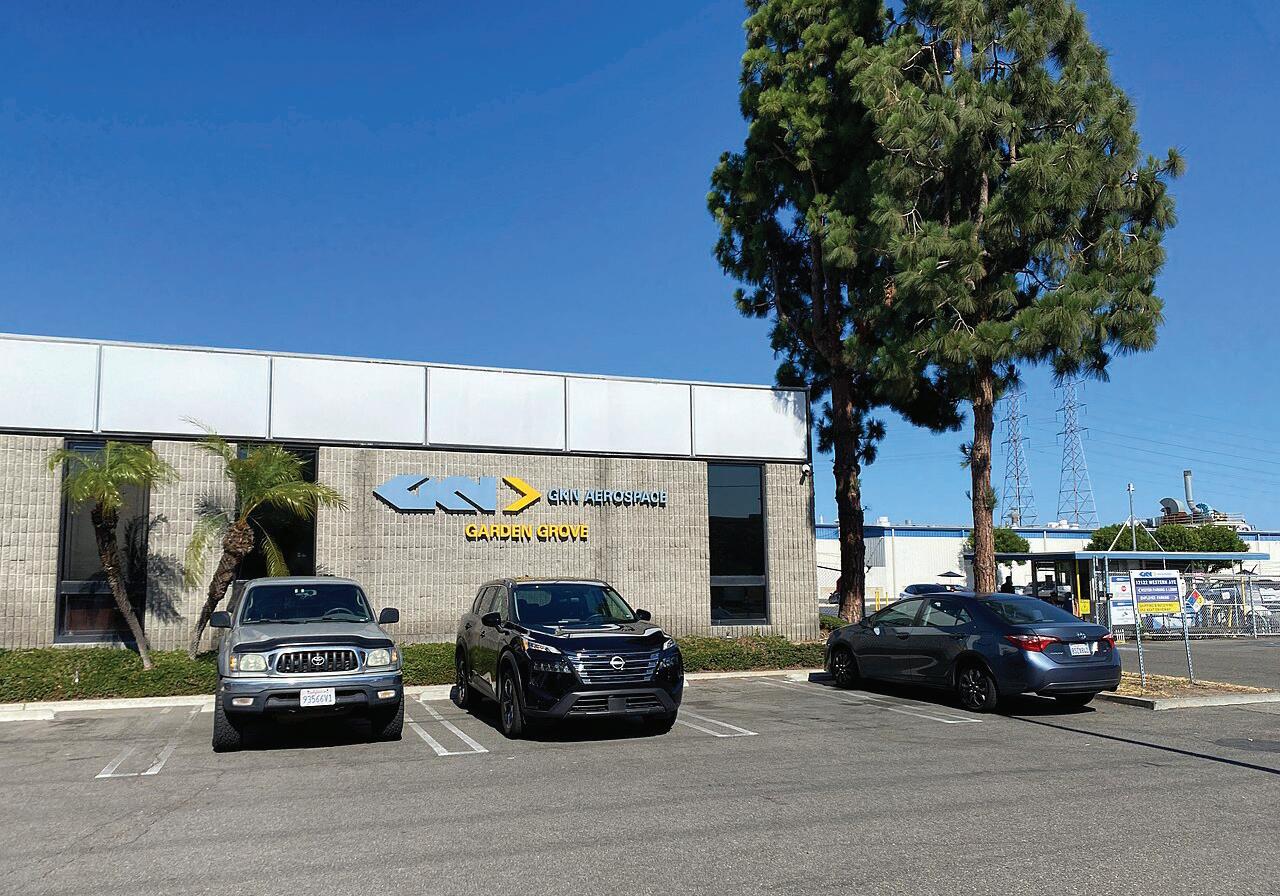
Garden Grove aerospace facility stared down two potentially bad outcomes over Memorial Day weekend: Either an industrial tank could explode, or it could unleash large amounts of a toxic chemical into the air.
For many, it was the first time they’d ever heard of the chemical — methyl methacrylate — and its potential consequences: respiratory issues, nosebleeds, nausea and skin reactions that could lead to hospitalization.
The Orange County Fire Authority narrowly avoided a disaster when the tank cracked just enough to relieve the pressure. Gov. Gavin Newsom declared a state of emergency, and multiple agencies are now investigating what happened. But the danger remains for some.
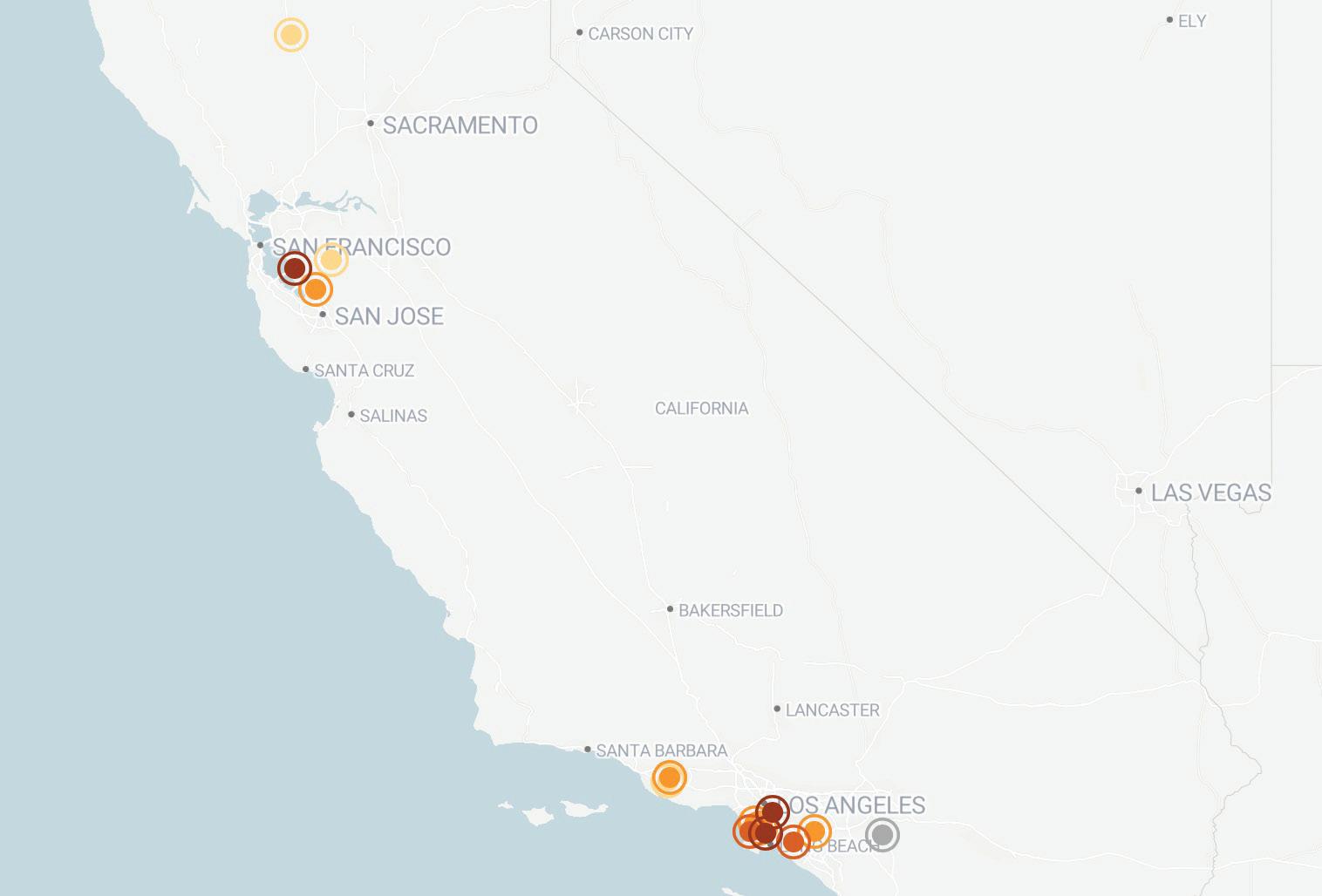
A CalMatters review of federal data from the Environmental Protection Agency found 14 facilities stored methyl methacrylate in California in 2024. That year, four of them stored amounts that are similar to or greater than the amount that nearly caused a disaster near the GKN Aerospace facility in Garden Grove.
Community advocates say the Garden Grove emergency illustrates how gaps in regulation and weak oversight allow dangerous chemicals to threaten the lives and property of thousands of people.
“This could happen anywhere,” said Ivana Castellanos, toxics program manager with Physicians for Social Responsibility Los Angeles. “There’s so many facilities that have toxic chemicals … and it’s very easy for (something) to go wrong.”
No rules, no plans, no warning
At GKN Aerospace, methyl methacrylate was stored in a tank as a liquid. Exposed to heat, that liquid can trigger a chemical reaction called “thermal runaway” in which the substance heats until it becomes highly flammable and even explosive. Federal data from 2024 shows the company stored from 100,000 to just under 1 million pounds of the toxic chemical.
Several of the other companies that also told federal regulators they stored the chemical have facilities near where people live. Three facilities stored far greater amounts of 1 million to 10 million pounds each: Rohm & Haas Chemicals in Hayward, Engineered Polymer Solutions in Commerce and Plaskolite West in Compton. A fifth
facility, Arkema Coating Resins Plant in Torrance, stored similar amounts to GKN Aerospace.
Methyl methacrylate is not a regulated substance under either the U.S. Environmental Protection Agency’s Risk Management Program or California’s parallel system, known as CalARP. In some places, process safety rules that protect workers may cause agencies to scrutinize the chemical. Facilities may still have to have fire or other emergency plans. But facilities holding chemicals that fall outside federal and state accident prevention programs may not have to participate in community emergency planning or drills.
Plaskolite West in
Compton stores up to 20,000 pounds of methyl methacrylate in tanks and under 2 million pounds in rail cars, said Roger Hamilton, the company’s vice president of operations. While it’s stored, the chemical is treated with an inhibiting agent to prevent a runaway reaction, he said.
Hamilton said the company reviews its internal emergency plans annually, and the Orange County incident has prompted another review. The plans include how to respond to spills, train operators and monitor the chemicals.
The company has received five violation notices from the South Coast Air Quality Management District since 2003. Regulators cited the company for failing to follow
Next phase of project to reduce travel hazards on Ramona Expressway Begins
By Joe Taglieri joet@civicnewsgroup.com
The San Bernardino County Supervisors approvedroughly $8.7 million Tuesday to expand supportive housing that prevents homelessness.
A project to expand the Pacific Village housing complex in San Bernardino received $3 million, bringing the project’s budget to approximately $17.8 million, according to the county. The funding approved Tuesday is a grant from the Yuhaaviatam of San Manuel Nation to support outdoor gathering areas, covered pedestrian pathways, campuswide “wayfinding systems” and therapeutic landscaping.
Officials said the design aims “to strengthen resident wellness, service integration and community connection.”
Approximately $5.7 million in funds from the state’s Homekey program goes to a housing development at 450 N. G St. in San Bernardino. The funding will pay for property management, security, maintenance and other operating costs “that help provide housing stability for individuals and families experiencing or at risk of homelessness,” according to a county statement.
The county established
Program geared to
WBy City News Service
orkingalongside CoachellaValley tribes, a Banningbased nonprofit is bolstering efforts to raise awareness among youths about the historical importance and need for preservation of ancestral lands throughout the region.
The Native American Land Conservancy’s “Native Youth Ambassador Program” focuses on turning adolescents into “ambassadors” with expertise on landscapes linked to area tribes for centuries.
“This program will provide young people around California with opportuni-
ties to explore ancient land and gain knowledge on its cultural significance, as well as on the necessary steps to support biodiversity, climate resilience and protect cultural connections,” NALC Executive Director Robert Przeklasa said.
Among those active in the ambassador program are members of the Torres Martinez Desert Cahuilla Indian Tribe in Thermal.
In April, tribal volunteers, along with NALC staff, traveled with youth ambassadors to Bonanza Spring at the Mojave Trails National Monument in the southeastern Mojave Desert,
By City News Service
The Board of Supervisors Tuesday approved the Riverside County Fire Department’s request to attach fire mitigation charges to the tax bills of 200 property owners who are reportedly delinquent in repaying the county for abating weeds and other potential fire hazards around their parcels.
In a 5-0 without comment, the board authorized the department to attach a total $142,749 in Fire Hazard Reduction Program assessments to the properties, located in unincorporated communities and municipalities countywide.
The amounts, which range from a low of $373 to a high of $5,044 per property, stem from activity in calendar year 2025.
Officials said property owners were served with orders to abate, or mitigate, the potential hazards, and when inspectors received no reply or saw that no action had been taken, contractors were sent to the locations under county authority to clear away the excess foliage.
“The purpose of the Fire Hazard Reduction Program is to reduce or eliminate fire hazards created by vegetative growth and the accumulation of combustible debris, which pose a danger to the health, safety and welfare of the
The reduction program involves deploying contractors to clear weeds and related overgrowth that might otherwise fuel brush fires during wildfire season, which generally spans May to November. In most cases, the parcels that were mitigated were vacant or set off from main residences, according to the fire department.
residents in the vicinity of any real property,” according to an agency statement. “Voluntary compliance is the primary goal of the program. Each parcel owner is provided the opportunity to abate the property prior to the county’s conducting the abatement.”
Properties in all five supervisorial districts were identified by the department as delinquent on payments. They included parcels in unincorporated parts of Corona, Hemet, Murrieta and Wildomar, as well as the cities of Banning, Beaumont, Lake Elsinore, Moreno Valley, Perris and Temecula, and the communities of Cabazon, Homeland, Juniper Flats, Nuevo and Sedco Hills.
Agency documents stated property owners were billed to recover the county’s expenditures, but the fire department received no response. A $254 admin-
istrative fee has also been folded into the final bill sent to the proprietors.
The charges will function as tax liens on the properties.
In a separate agenda item Tuesday, the board approved hiking the $254 admin fee to $380, beginning in the next fiscal year. Deputy Fire Chief Geoff Pemberton told the
board prior to its unanimous vote that the fee hadn’t been modified since 2011, and in order keep pace with inflation, an increase was overdue.
By City News Service
The Board of Supervisors Tuesday approved a 10-year compact sought by the Riverside County Sheriff’s Department with an organ procurement company for the pre-authorized recovery of anatomical parts from decedents received by the coroner’s office.
In a 5-0 vote without comment, the board signed off on the coroner’s office request to continue a standing agreement with Azusa-based OneLegacy until June 30, 2036.
The coroner’s office, which is under the sheriff’s umbrella, has had contracts with the nonprofit going back to 2008.
The new contract, with
an estimated annual cost of $35,000 -- or $350,000 for the entire period -requires the county to bear all expenses associated with surgical organ and tissue removals and storage initially. However, OneLegacy ultimately will be responsible for reimbursing the coroner’s office for the process of acquiring the potential life-saving elements.
OneLegacy CEO Prasad Garimella said in March that the firm is the only federally designated organ procurement organization, or OPO, across seven Southern California counties -- Los Angeles, Kern, Orange, Riverside, San Bernardino,
Santa Barbara and Ventura. Garimella said service agreements are in place with more than 200 hospitals, nine transplant centers and seven coroner’s offices.
The renewal agreement with Riverside County contains stipulations regarding how tissue and organs are to be obtained through the coroner’s office and maintained afterward until designated for recipients.
Organ donation registration is available through the California Department of Motor Vehicles and multiple nonprofit registries statewide. A decedent must have signed a donor card at some point in his or her lifetime

in order for transfer of vital internal organs, eyes and other parts to be passed on at the time of a person’s death from an accident, suicide or other act.
By Staff
Learntoquestion, persuade, and refer (QPR) through a free virtual suicide prevention training on Tuesday offered by San Bernardino County Behavioral Health.
QPR training is an evidence-based suicide preventionprogram designed to teach community members how to recognize the warning signs of a suicide crisis and respond effectively. Participants learn three simple, life-saving steps: how to ask someone if they are considering suicide, how to offer hope through supportive
communication, and how to connect them with appropriate help.
QPR is designed for anyone—no clinical backgroundrequired—and empowersparticipants to play an active role in supporting the safety and well-being of individuals in
the community. Tuesday’s training will be held from 5 to 6:30 p.m. Register for the virtual training at https://forms. cloud.microsoft/g/zaSnWn0uMs.For questions, email DBHOSP@DBH. SBCOUNTY.GOV or call 909-387-6221.
OneLegacy is accredited and licensed by multiple entities, including the American Association of Tissue Banks, Eye Bank Association of America,
Association of Organ Procurement Organizations and the U.S. Food & Drug Administration, according to documents posted to the board’s agenda.

Publisher Civic News Group
COO Andrea Olivas Tange
Vice President Sam Kubert
Editorial editorial@civicnewsgroup.com
Fabiola Diaz
Joe Taglieri
Designer/ Production production@civicnewsgroup.com
Renia Barouni
Contributor
May S. Ruiz
Sales advertising@civicnewsgroup.com
Raquel Mc Laughlin
Legal Advertising legals@civicnewsgroup.com
Annette Reyes Crystal Cortez
Accounting accounting@civicnewsgroup.com
All Inquiries info@civicnewsgroup.com










permit conditions for certain equipment in 2021, and in 2022, South Coast accused the company of creating a public nuisance after the chemical was released into the air.
Hamilton said the latter incident happened when a nylon bag carrying the methyl methacrylate broke, releasing a strong odor into the air. He said he was unaware of the earlier incident.















“Anytime you’re dealing with any kind of substrates or materials of any hazardous substance, there’s always risk associated with it,” he said. “We try to be very safety conscious when we’re handling this stuff, not only just for our employees, but for the communities around us, and we try to follow all the state and federal laws.”
Glynna Mayers, a representative for Rohm & Haas Chemicals, said the site currently stores less than 1 million pounds of the material and follows all applicable storage and handling requirements.
In Hayward, Mayers said, the company stores the chemical in an aboveground tank surrounded by concrete, protected by a fire suppression system. Like Plaskolite West, it uses a chemical inhibitor to prevent the methyl methacrylate from reacting. The company also conducts regular drills with local emergency responders, she said.
“Our priority remains the safety and security of our employees, neighbors, and the environment,” Mayers said.
Dave Schrader, a representative for the Arkema Coating Resins facility, said the company is reviewing what it can learn from the Garden Grove incident. He said the Torrance facility has a strong record of safety
and environmental compliance.
“Arkema and the Torrance facility are vigilant about safety and environmental compliance, which is reflected in the facility’s strong performance in these areas,” Schrader said. “The facility conducts regular emergency response drills with its own teams multiple times a year and with local emergency responders at least once a year to ensure the site is prepared in the unlikely event of an emergency,” Schrader said.
Engineered Polymer Solutions, which stores between 1 million and 10 million pounds of methyl methacrylate, didn’t respond to calls and emails from CalMatters by deadline.
Advocates seek better toxics regulation
The Garden Grove emergency caught environmental advocates off guard in one way — few had heard of methyl methacrylate. But
how the disaster unfolded was a familiar story.
GKN Aerospace agreed to pay more than $900,000 to settle a number of violations from the South Coast air district in an agreement signed in 2024. The district continued issuing the facility permits as part of its expansion plans.
“Systemically, government agencies … continue to allow companies to operate with inadequate safeguards, in some cases without permits, in some cases even issuing new permits despite decades of violations,” said Bradley Angel, director of Greenaction for Health and Environmental Justice. “This is business as usual.”
All five facilities are located in communities ranked among the top 50% of the most environmentally burdened communities in the state, according to CalEnviroScreen 5.0.
The Compton and the
Commerce facilities ranked highest, both in the top 10%.
Cynthia Babich, executive director of the Del Amo Action Committee, said she had no idea a facility handling methyl methacrylate operated so close to residents.
Without stronger regulations and public emergency plans for how to handle a disaster, she doesn’t think residents are safe.
“When things like what happened in Orange County happen, it just underlines all the fears that our community has — that people are not prepared and we’re not being protected, and they have really dangerous chemicals in our community,” Babich said.
Alejandro Lazo contributed to this report.
This article was originally published by CalMatters and was republished under the Creative Commons Attribution-NonCommercialNoDerivative license.
By City News Service

Dementia is expected to cost the United States an estimated $818 billion in 2026, with much of the burden falling on people living with the condition and family members who provide their care, according to a USC-led study released Wednesday.
The study, published in Alzheimer’s & Dementia: The Journal of the Alzheimer’s Association, estimated that 5.7 million Americans are living with dementia this year, including 5.1 million people ages 65 and older.
Researchers found that reduced quality of life for people living with dementia represents the largest share of the cost, totaling $320 billion. Unpaid care provided by family members and friends accounts for an additional $237 billion, while medical and long-
term care costs total $222 billion.
According to the study, about 5.2 million people provide 6.8 billion hours of unpaid care annually to family members or friends with dementia.
Researchers also estimated that people with dementia and their caregivers forgo a combined $23 billion in annual earnings.
Medicare and Medicaid cover about 70% of medical and long-term care costs associated with dementia, or roughly $154 billion, while patients and families pay about $46 billion out of pocket, according to the study.
“By providing annual, comprehensive and transparent estimates of dementia’s total costs, our research can help guide decisions about how to
allocate resources as the dementia population is set to grow substantially,” lead researcher Julie Zissimopoulos of the USC Schaeffer Center for Health Policy & Economics said in a statement.
The report was produced as part of the U.S. Cost of Dementia Project, a federally funded effort supported by the National Institute on Aging. Researchers said this year’s estimates include new measures of lost earnings and quality-of-life impacts on caregivers.
Officials said the findings could help policymakers, health care providers and researchers evaluate the potential effects of new treatments, care models and other efforts aimed at reducing the impact of dementia on patients and families.

By City News Service

AUCLA study released Thursday found that field-based health care programs serving people experiencing homelessness can significantly improve control of high blood pressure.
The study, published in the Journal of General Internal Medicine, examined nearly 900 adults experiencing homelessness who were assisted by the UCLA Homeless Healthcare Collaborative between January 2022 and November 2025.
Researchers found that the percentage of patients with controlled blood pressure increased from 35% to 45% during the study period, representing nearly 100 additional people whose hypertension came under control.
“Our findings show that field-based homeless healthcare can improve management of high blood pressure, which is a major cause of death and disability among
this population,” lead author Dr. Sae Takada, an assistant professor of medicine at the David Geffen School of Medicine at UCLA, said in a statement.
The UCLA Homeless Healthcare Collaborative provides primary and urgent care, mental health services, housing referrals and social services at street encampments and other locations serving people experiencing homelessness.
According to the study, average systolic blood pressure declined from about 146 mmHg at patients’ first visits to about 141 mmHg at their most recent visits. Average diastolic blood pressure fell from about 87 mmHg to 85 mmHg.
Researchers identified patients with hypertension based on diagnoses, prescriptions for blood pressure medication or repeated elevated blood pressure readings.
Takada said research-
ers previously did not know whether homeless health care programs could effectively improve management of chronic diseases.
“Health systems across the U.S. are investing in such programs with the goal of improving the health of their communities,” she said. “Our study shows that these programs can make a clinically significant impact on the health of people experiencing homelessness.”
Researchers noted several limitations, including the lack of a comparison group and incomplete information about patients who may have received care through other health systems.
Future research will compare outcomes for patients treated by the collaborative with similar people experiencing homelessness who did not receive services through the program, researchers said.
By City News Service
The Luka Doncic Foundation announced Wednesday the launch of a global grant program aimed at helping young athletes remain involved in organized sports by covering expenses that often force them to quit.
The three-year initiative, called Stay in Play, will provide grants of up to $25,000 to 77 athletes ages 12 to 15 from around the world.
According to the foundation, the grants can be used for coaching and training, equipment, travel expenses,
league and club fees, and other costs associated with youth sports participation.
Foundation officials said the program is designed to address a period when many young athletes leave sports because of financial barriers rather than a lack of interest or ability.
“When I was a kid growing up in Ljubljana, all I wanted to do was run to the outdoor court behind my apartment to play basketball. It was my peace place,” Doncic said in a statement. “I’m so sad to see kids walking away from
The California Science CenterWednesday provided the first public view of Space Shuttle Endeavour inside its permanent home — in upright launch position with two rocket boosters and an external fuel tank — and announced an opening date for the future air and space museum.
The Samuel Oschin Air and Space Center will open to the public Nov. 13. Officials said the exhibit will be the only place in the world where visitors can view a complete, authentic space shuttle system in launch position. The display features the flown orbiter Endeavour attached to a pair of real solid rocket boosters and ET-94, the last remaining flight-qualified external tank.
The display “will invite guests to learn how the world’s first reusable spacecraft advanced our ability to live and work in lowEarth orbit, while laying the groundwork for increasingly ambitious missions into space,” Science Center President and CEO Jeffrey Rudolph told reporters during an unveiling event Wednesday.
“The Samuel Oschin Air and Space Center is the fulfillment of a decadeslong dream and will stand as an enduring source of inspiration for generations of scientists, engineers and explorers to come,” he said.
The shuttle stack stands
youth sports because of circumstances outside their control.”
Applications are open through Aug. 20 for athletes in the United States, United Kingdom, France, Spain, Italy, Germany, Greece, Slovenia, Croatia and Serbia.
The foundation said the program supports participants in 176 sports, including basketball, soccer, gymnastics, swimming and track and field.
“Financial barriers shouldn’t decide whether a young athlete gets to keep playing the sport they love,”
foundation CEO Lara Beth Seager said in a statement.
The program is part of the foundation’s broader efforts to improve youth sports participation and accessibility. Since its launch in 2024, the organization has supported research and coaching initiatives focused on youth athletics.
The first recipients of Stay in Play grants are expected to be announced later this year.
Applications for the first cohort of Stay in Play athletes are at lukadoncicfoundation.org/sip. |

By City News Service

nearly 200 feet tall, allowing visitors to walk beneath the orbiter’s main engines, view its open payload bay and ascend to elevated viewing platforms overlooking the spacecraft, according to officials.
Construction of the Samuel Oschin Air and Space Center was completed in April, nearly four years after groundbreaking on the project in June 2022.
The 200,000-square-foot addition nearly doubles the Science Center’s exhibit space and will house more than 100 aerospace artifacts and hands-on exhibits
focused on aviation and space exploration, officials said.
In addition to the shuttle gallery, the facility will include the Korean Air Aviation Gallery and the Kent Kresa Space Gallery.
Lynda Oschin, chairperson of the Mr. and Mrs. Samuel Oschin Family Foundation, said the announcement marked a major milestone in realizing the vision for the center. She said she remembered being at the center in September 2011 and seeing the excitement of fifth-graders taking part in the Science
Center School when former Endeavour crew members walked in the room.
“The children reacted with such enthusiasm to the astronauts, asking so many questions,” she said Wednesday. “Of course, they wanted to know what they ate and how they go to the bathroom. But after that, they asked a lot of questions that were incredible for 10-year-olds. So I realized the potential to inspire these kids to encourage lifelong learning and open new worlds of possibilities to these children.”
During Wednesday’s
unveiling, Oschin held up a photo of her late husband, Samuel Oschin, and said the new Endeavour display honors “the tremendous legacy and the memory of my husband,” whom she called “a gentleman, and a gentle man.”
“Space shuttle Endeavour exemplified so many of the passions of my husband, especially astronomy, exploration, and the children,” she said. “With Endeavour as a star, the Air and Space Center will be an unparalleled educational resource that is accessible to everyone.”
Endeavour was lifted into its permanent vertical configuration in 2024 following a six-month assembly process known as “Go for Stack.” The orbiter, which flew 25 NASA missions between 1992 and 2011, has been on public display at the Science Center since arriving in Los Angeles in 2012.
Although the shuttle stack is now complete, the California Science Center still has several months of exhibit and artifact installation work ahead before the Samuel Oschin Air and Space Center opens in November.
When it debuts, the center’s shuttle gallery will feature interactive attractions including a 140-foot gantry-style elevator ride alongside the shuttle stack, a 115-foot slide simulating a shuttle’s return through the atmosphere, and a replica flight deck where visitors can operate controls similar to those used by shuttle astronauts.
Rudolph noted that due to anticipated high demand, entry to the museum will be done with timed-admission tickets. Details on how to buy tickets will be released in the coming months, but Rudolph encouraged people to visit the Science Center’s website and sign up for an e-newsletter to receive updates, and to follow the center’s social media channels.

to give notice to interested persons unless they have waived notice or consented to the proposed action.)
The independent administration authority will be granted unless an interested person files an objection to the petition and shows good cause why the court should not grant the authority.
A HEARING on the petition will be held on Sept. 22, 2026 at 8:32 AM in Dept. No. 217 located at 111 N. Hill St., Los Angeles, CA 90012.
2675 North Mayfair Road Suite 600 Milwaukee, WI 53226
Telephone: (414) 259-0600
Facsimile: (414) 259-0610
June 15, 22, 29, 2026
TEMPLE CITY TRIBUNE
ORDER TO SHOW CAUSE FOR CHANGE OF NAME PETITION OF Jeri Meili Keli’i Kai Yan- Carmack , Isabella Meixuan Milena Yan-Carmack by and through Lucy Yan FOR CHANGE OF NAME CASE NUMBER: 26NNCP00386
Notice of Public Hearing and Comment Period for the Temporary Emergency Lodging Services TO ALL INTERESTED PARTIES:
Notice of Public Hearing and Comment Period for the Temporary Emergency Lodging Services
TO ALL INTERESTED PARTIES:
NOTICE IS HEREBY GIVEN that the El Monte City Council will hold a public hearing on Wednesday, July 22, at 6:00 p.m., or as soon thereafter as the matter can be heard, to gain citizens' input on the upcoming Request for Qualification for Temporary Emergency Lodging Services.
IF YOU OBJECT to the granting of the petition, you should appear at the hearing and state your objections or file written objections with the court before the hearing. Your appearance may be in person or by your attorney.
The public hearing will be conducted as part of a City Council meeting to be held on Wednesday, July 22, 2026, starting at 6:00 p.m. at El Monte City Hall – East, City Council Chambers 11333 Valley Blvd., El Monte, CA 9173
NOTICE IS HEREBY GIVEN that the El Monte City Council will hold a public hearing on Wednesday, July 22, at 6:00 p.m., or as soon thereafter as the matter can be heard, to gain citizens’ input on the upcoming Request for Qualification for Temporary Emergency Lodging Services.
The City is required to conduct a public hearing to receive input and provide direction concerning the City Local Solution Funds allocation provided by Measure A for Temporary Emergency Lodging Services.
The public hearing will be conducted as part of a City Council meeting to be held on Wednesday, July 22, 2026, starting at 6:00 p.m. at El Monte City Hall – East, City Council Chambers , 11333 Valley Blvd., El Monte, CA 9173
The City is required to conduct a public hearing to receive input and provide direction concerning the City Local Solution Funds allocation provided by Measure A for Temporary Emergency Lodging Services.
The purpose of services and programs funded by the Local Solutions Fund shall support a variety of services and programs aimed at addressing homelessness, including but not limited to physical and mental health care, emergency housing, permanent housing, job counseling, substance use disorder treatment, short-term rental subsidies, and other related services, as well as the collection and analysis of data to assess the effectiveness of such services and programs; services and programs funded by Local Solutions Fund shall contribute to achieving the five outcome goals outlined in Measure A by demonstrating measurable progress from baseline metrics toward target metrics ("Metrics") as adopted by the Los Angeles County Board of Supervisors on March 25, 2025.
IF YOU ARE A CREDITOR or a contingent creditor of the decedent, you must file your claim with the court and mail a copy to the personal representative appointed by the court within the later of either (1) four months from the date of first issuance of letters to a general personal representative, as defined in section 58(b) of the California Probate Code, or (2) 60 days from the date of mailing or personal delivery to you of a notice under section 9052 of the California Probate Code.
Other California statutes and legal authority may affect your rights as a creditor. You may want to consult with an attorney knowledgeable in California law.
Superior Court of California, County of Los Angeles 600 East Broadway,. Glendale, Ca 91206-5904, North Central Judicial District TO ALL INTERESTED PERSONS: 1. Petitioner Jeri Meili Keli’i Kai Yan- Carmack Isabella Meixuan Milena Yan-Carmack by and through Lucy Yan filed a petition with this court for a decree changing names as follows: Present name (a). OF Jeri Meili Keli’i Kai Yan- Carmack to Proposed name Jeri Kailani Carmack (b). OF Isabella Meixuan Milena Yan-Carmack to Proposed name Isabella Leilani Carmack 2. THE COURT ORDERS that all persons interested in this matter shall appear before this court at the hearing indicated below to show cause, if any, why the petition for change of name should not be granted. Any person objecting to the name changes described above must file a written objection that includes the reason for the objection at least two court days before the matter is scheduled to be heard and must appear at the hearing to show cause why the petition should not be granted. If no written objection is timely filed, the court may grant the petition without a hearing NOTICE OF HEARING a. Date: 08/27/2026 Time: 8:30AM Dept: E. The address of the court is same as noted above. 3. a. A copy of this Order to Show Cause shall be published at least once each week for four successive weeks prior to the day set for hearing on the petition in the following newspaper of general circulation, printed in this county: Temple City Tribune DATED: June 16, 2026 Roberto Longoria JUDGE OF THE SUPERIOR COURT Pub. June 22, 29, July 6, 13, 2026 TEMPLE CITY TRIBUNE
the terms of the Deed of Trust, interest thereon, fees, charges and expenses of the Trustee for the total amount (at the time of the initial publication of the Notice of Sale) reasonably estimated to be set forth below. The amount may be greater on the day of sale. BENEFICIARY MAY ELECT TO BID LESS THAN THE TOTAL AMOUNT DUE. Trustor(s): Kassas 14 LLC, a California Limited Liability Company Recorded: 4/28/2025 as Instrument No. 20250276946 of Official Records in the office of the Recorder of LOS ANGELES County, California; Date of Sale: 7/14/2026 at 10:00 AM Place of Sale: In the Courtyard located in Civic Center Plaza, 400 Civic Center Plaza, Pomona, CA 91766 Amount of unpaid balance and other charges: $799,253.90
The purported property address is: 4445
HALIFAX ROAD, EL MONTE, CA 91731
Assessor's Parcel No. : 8576-022-026 All bidders, at the date, time, and place of the scheduled sale, will be required to show satisfactory support to the auctioneer of their ability to pay the amount they intend to bid, unless arrangements have been made with the trustee prior to the scheduled sale. NOTICE TO POTENTIAL BIDDERS: If you are considering bidding on this property lien, you should understand that there are risks involved in bidding at a trustee auction. You will be bidding on a lien, not on the property itself. Placing the highest bid at a trustee auction does not automatically entitle you to free and clear ownership of the
Affordable Housing, Homelessness Solutions, And Prevention Now Transactions and Use Tax Ordinance ("Measure A"): The allocation of Measure A funds from the Local Solutions Fund to the Local Jurisdiction is to be used solely for services and programs consistent with the purposes enumerated in the Ordinance or for the purposes set forth in Government Code section 64700 et seq., including but not limited to homelessness prevention, homelessness services, or affordable housing programs in Los Angeles County.
The Request for Proposal for Temporary Emergency Lodging Services will be available for a 15day public review and comment period beginning on June 29, 2026 and ending on July 13, 2026
The purpose of services and programs funded by the Local Solutions Fund shall support a variety of services and programs aimed at addressing homelessness, including but not limited to physical and mental health care, emergency housing, permanent housing, job counseling, substance use disorder treatment, short-term rental subsidies, and other related services, as well as the collection and analysis of data to assess the effectiveness of such services and programs; services and programs funded by Local Solutions Fund shall contribute to achieving the five outcome goals outlined in Measure A by demonstrating measurable progress from baseline metrics toward target metrics (“Metrics”) as adopted by the Los Angeles County Board of Supervisors on March 25, 2025.
Affordable Housing, Homelessness Solutions, And Prevention Now Transactions and Use Tax Ordinance (“Measure A”): The allocation of Measure A funds from the Local Solutions Fund to the Local Jurisdiction is to be used solely for services and programs consistent with the purposes enumerated in the Ordinance or for the purposes set forth in Government Code section 64700 et seq., including but not limited to homelessness prevention, homelessness services, or affordable housing programs in Los Angeles County.
The Request for Proposal for Temporary Emergency Lodging Services will be available for a 15-day public review and comment period beginning on June 29, 2026 and ending on July 13, 2026.
These documents will be available for public review at El Monte City Hall - West, 11333 Valley Blvd., El Monte, CA 91731 and on the City of El Monte’s website at https://www.ci.el-monte.ca.us/547/ News-Notices.
It is the intent of the City of El Monte to comply with the Americans with Disabilities Act (ADA). If you should need special assistance, please contact Vanessa Sedano, Housing Manager, at (626) 2588831, or via vsedano@elmonteca.gov TDD/Voice (626) 580-2078 at least 72 hours prior to the public hearing.
City Contact: For more information and to RSVP, contact Vanessa Sedano, Housing Manager Phone: (626) 258-8831 Email: vsedano@elmonteca.gov
Notice Date: June 29, 2026
Published: June 29, 2026
Gabriel Ramirez, City Clerk City of El Monte
The El Monte Examiner
NOTICE OF PETITION TO ADMINISTER ESTATE OF DON C. STOCKER
Case No. 26STPB02284
To all heirs, beneficiaries, creditors, contingent creditors, and persons who may otherwise be interested in the will or estate, or both, of DON C. STOCKER
A PETITION FOR PROBATE
has been filed by Donald P. Putman in the Superior Court of California, PUBLIC NOTICE CITY OF EL MONTE
County of LOS ANGELES.
THE PETITION FOR PROBATE requests that Donald P. Putman be appointed as personal representative to administer the estate of the decedent.
THE PETITION requests authority to administer the estate under the Independent Administration of Estates Act. (This authority will allow the personal representative to take many actions without obtaining court approval. Before taking certain very important actions, however, the personal representative will be required
YOU MAY EXAMINE the file kept by the court. If you are a person interested in the estate, you may file with the court a Request for Special Notice (form DE-154) of the filing of an inventory and appraisal of estate assets or of any petition or account as provided in Probate Code section 1250. A Request for Special Notice form is available from the court clerk. Attorney for petitioner: TIMOTHY G MISHLER ESQ SBN 156236
LAW OFC OF TIMOTHY G MISHLER 816 W FOOTHILL BLVD
MONROVIA CA 91016
CN128351 STOCKER Jun 25,29, Jul 2, 2026 ARCADIA WEEKLY
STATE OF WISCONSIN
CIRCUIT COURT LANGLADE COUNTY
STATE FARM FIRE AND CASUALTY COMPANY,
Case No.: 2026CV000057 Case Code: 30201
Plaintiff,
and
DAVID EDWARDS, Involuntary Plaintiff, v.
AQUAFAUCET LLC, and HARTFORD INSURANCE COMPANY
Defendants.
PUBLICATION SUMMONS
THE STATE OF WISCONSIN, To each person named above as a Defendant:
You are hereby notified that the Plaintiff named above has filed a lawsuit or other legal action against you. The complaint, which is also served upon you, states the nature and basis of the legal action.
Within 40 days after June 15, 2026 of this summons, you must respond with a written answer, as that term is used in Chapter 802 of the Wisconsin Statutes, to the complaint. The court may reject or disregard an answer that does not follow the requirements of the statutes. The answer must be sent or delivered to the Court, whose address is Langlade County Courthouse, 800 Clermont Street, Antigo, WI 54409, and to Teirney S. Christenson, Plaintiff’s attorney, whose address is 2675 North Mayfair Road, Suite 600, Milwaukee, WI 53226. You may have an attorney help or represent you.
If you do not provide a proper answer within 40 days, the court may grant judgment against you for the award of money or other legal action requested in the complaint, and you may lose your right to object to anything that is or may be incorrect in the complaint. A judgment may be enforced as provided by law. A judgment awarding money may become a lien against any real estate you own now or in the future, and may also be enforced by garnishment or seizure of property.
Dated this 11th day of June, 2026. YOST & BAILL, LLP
Attorneys for Plaintiff
Electronically signed by Teirney S. Christenson Attorney Teirney S. Christenson State Bar No: 1056438
Notice of Self Storage Sale
Please take notice Arcadia Self Storage located at 35 West Huntington Drive Arcadia CA 91007 intends to hold a public sale to the highest bidder of the property stored by the following tenants at the storage facility. The sale will occur as an online auction via www.storagetreasures.com on 7/16/2026 at 9:00 AM. Sabina Montoya; Catherine Hille. This sale may be withdrawn at any time without notice. Certain terms and conditions apply.
Publish June 29, 2026 & July 6, 2026 in THE ARCADIA WEEKLY
Amended ORDER TO SHOW CAUSE FOR CHANGE OF NAME PETITION OF Sreedhar Reddy Yeturu aka Sreedhar Reddy Yetur FOR CHANGE OF NAME CASE NUMBER: 26NNCP00299 Superior Court of California, County of Los Angeles 300 E Olive Avenue, Burbank CA 91502-1265 , North Central District Burbank Courthouse TO ALL INTERESTED
PERSONS: 1. Petitioner Sreedhar Reddy Yeturu aka Sreedhar Reddy Yetur filed a petition with this court for a decree changing names as follows: Present name a. OF Sreedhar Reddy Yeturu to Proposed name Sreedhar Reddy Yetur 2. THE COURT ORDERS that all persons interested in this matter shall appear before this court at the hearing indicated below to show cause, if any, why the petition for change of name should not be granted. Any person objecting to the name changes described above must file a written objection that includes the reason for the objection at least two court days before the matter is scheduled to be heard and must appear at the hearing to show cause why the petition should not be granted. If no written objection is timely filed, the court may grant the petition without a hearing NOTICE OF HEARING a. Date: 08/07/2026 Time: 9:00AM Dept: A. The address of the court is same as noted above. 3. a. A copy of this Order to Show Cause shall be published at least once each week for four successive weeks prior to the day set for hearing on the petition in the following newspaper of general circulation, printed in this county: Arcadia Weekly DATED: June 23, 2026 Roberto Longoria JUDGE OF THE SUPERIOR COURT Pub. June 29, July 6, 13, 20, 2026 ARCADIA WEEKLY
NOTICE OF TRUSTEE'S SALE TS No. CA-26-1034757-NJ Order No.: FIN26001754 YOU ARE IN DEFAULT UNDER A DEED OF TRUST DATED 4/16/2025. UNLESS YOU TAKE ACTION TO PROTECT YOUR PROPERTY, IT MAY BE SOLD AT A PUBLIC SALE. IF YOU NEED AN EXPLANATION
property. You are encouraged to investigate the existence, priority, and size of outstanding liens that may exist on this property by contacting the county recorder's office or a title insurance company, either of which may charge you a fee for this information. If you consult either of these resources, you should be aware that the same lender may hold more than one mortgage or deed of trust on the property. NOTICE TO PROPERTY OWNER: The sale date shown on this notice of sale may be postponed one or more times by the mortgagee, beneficiary, trustee, or a court, pursuant to Section 2924g of the California Civil Code. The law requires that information about trustee sale postponements be made available to you and to the public, as a courtesy to those not present at the sale. If you wish to learn whether your sale date has been postponed, and, if applicable, the rescheduled time and date for the sale of this property, you may call 916-939-0772 for information regarding the trustee's sale or visit this internet website http://www.qualityloan.com, using the file number assigned to this foreclosure by the Trustee: CA-26-1034757-NJ. Information about postponements that are very short in duration or that occur close in time to the scheduled sale may not immediately be reflected in the telephone information or on the internet website. The best way to verify postponement information is to attend the scheduled sale. NOTICE TO TENANT: You may have a right to purchase this property after the trustee auction pursuant to Section 2924m of the California Civil Code. If you are an "eligible tenant buyer," you can purchase the property if you match the last and highest bid placed at the trustee auction. If you are an "eligible bidder," you may be able to purchase the property if you exceed the last and highest bid placed at the trustee auction. There are three steps to exercising this right of purchase. First, 48 hours after the date of the trustee sale, you can call 866-645-7711, or visit this internet website http://www.qualityloan.com, using the file number assigned to this foreclosure by the Trustee: CA-26-1034757-NJ to find the date on which the trustee's sale was held, the amount of the last and highest bid, and the address of the trustee. Second, you must send a written notice of intent to place a bid so that the trustee receives it no more than 15 days after the trustee's sale. Third, you must submit a bid so that the trustee receives it no more than 45 days after the trustee's sale. If you think you may qualify as an "eligible tenant buyer" or "eligible bidder," you should consider contacting an attorney or appropriate real estate professional immediately for advice regarding this potential right to purchase. NOTICE
TO PROSPECTIVE OWNER-OCCUPANT: Any prospective owner-occupant as defined in Section 2924m of the California Civil Code who is the last and highest bidder at the trustee's sale shall provide the required affidavit or declaration of eligibility to the auctioneer at the trustee's sale or shall have it delivered to QUALITY LOAN SERVICE CORPORATION by 5 p.m. on the next business day following the trustee's sale at the address set forth in the below signature block. NOTICE
TO PROSPECTIVE POST-SALE OVER BIDDERS: For post-sale information in accordance with Section 2924m(e) of the California Civil Code, use file number CA26-1034757-NJ and call (866) 645-7711 or login to: http://www.qualityloan.com. The above statutorily mandated notices to Tenant, Prospective Owner-Occupant, and Prospective Post-Sale Over Bidders are brief summaries of what may be required under Section 2924m of the California Civil Code. Compliance with all relevant provisions will be required. The undersigned Trustee disclaims any liability for any incorrectness of the property address or other common designation, if any, shown herein. If no street address or other common designation is shown, directions to the location of the property may be obtained by sending a written request to the beneficiary within
NOTICE IS HEREBY GIVEN that a General Municipal Election will be held in the City of Monterey Park, California on Tuesday, November 3, 2026, for the following Officers:
For 1 Member of the City Council, District 1 Full term of four years
For 1 Member of the City Council, District 5 Full term of four years
For a City Clerk Full term of four years
For a City Treasurer Full term of four years
The nomination period for these offices begins on July 13, 2026 and closes on August 7, 2026 at 4:00 p.m.
If nomination papers for an incumbent officer of the city are not filed by August 7, 2026, the 88th day before the election, the voters shall have until the 83rd day before the election, August 12, 2026, to nominate candidates other than the person(s) who are the incumbents on the 88th day before the election, for that incumbent’s elective office. This extension is not applicable where there is no incumbent eligible to be elected.
If no one or only one person is nominated for an elective office, appointment to the elective office may be made as prescribed by § 10229, Elections Code of the State of California.
The polls will be open between the hours of 7:00 a.m. and 8:00 p.m.
Maychelle Yee, City Clerk
Dated: June 29, 2026 MONTEREY PARK PRESS
NOTICE OF PETITION TO ADMINISTER ESTATE OF JOHN FRANKLIN CLIFTON CASE NO. 26STPB06473
To all heirs, beneficiaries, creditors, contingent creditors, and persons who may otherwise be interested in the will or estate, or both, of: JOHN FRANKLIN CLIFTON
A Petition for Probate has been filed by TIMOTHY MICHAEL CRUZ in the Superior Court of California, County of LOS ANGELES.
The Petition for Probate requests that TIMOTHY MICHAEL CRUZ be appointed as personal representative to administer the estate of the decedent.
The Petition requests authority to administer the estate under the Independent Administration of Estates Act. (This authority will allow the personal representative to take many actions without obtaining court approval. Before taking certain very important actions, however, the personal representative will be required to give notice to interested persons unless they have waived notice or consented to the proposed action.) The independent administration authority will be granted unless an interested person files an objection to the petition and shows good cause why the court should not grant the authority. A hearing on the petition will be held in this court on 7/9/2026 at 8:30 A.M. in Dept. 600 Room N/A located at 111 N. HILL ST., LOS ANGELES, CA 90012.
If you object to the granting of the petition, you should appear at the hearing and state your objections or file written objections with the court before the hearing. Your appearance may be in person or by your attorney.
If you are a creditor or a contingent creditor of the decedent, you must file your claim with the court and mail a copy to the personal representative appointed by the court within the later of either (1) four months from the date of first issuance of letters to a general personal representative, as defined in section 58(b) of the California Probate Code, or (2) 60 days from the date of mailing or personal delivery to you of a notice under section 9052 of the California Probate Code.
A HEARING on the petition will be held in this court as follows: 07/13/26 at 8:30AM in Dept. 308 located at 111 N. HILL ST., LOS ANGELES, CA 90012
IF YOU OBJECT to the granting of the petition, you should appear at the hearing and state your objections or file written objections with the court before the hearing. Your appearance may be in person or by your attorney.
IF YOU ARE A CREDITOR or a contingent creditor of the decedent, you must file your claim with the court and mail a copy to the personal representative appointed by the court within the later of either (1) four months from the date of first issuance of letters to a general personal representative, as defined in section 58(b) of the California Probate Code, or (2) 60 days from the date of mailing or personal delivery to you of a notice under section 9052 of the California Probate Code. Other California statutes and legal authority may affect your rights as a creditor. You may want to consult with an attorney knowledgeable in California law.
YOU MAY EXAMINE the file kept by the court. If you are a person interested in the estate, you may file with the court a Request for Special Notice (form DE-154) of the filing of an inventory and appraisal of estate assets or of any petition or account as provided in Probate Code section 1250. A Request for Special Notice form is available from the court clerk.
Attorney for Petitioner
HILDA GARZON-AYVAZIAN - SBN 175294
LAW OFFICE OF HILDA GARZON-AYVAZIAN
620 W. SANTA ANITA STREET SAN GABRIEL CA 91776
Telephone (626) 282-9050
6/25, 6/29, 7/2/26
CNS-4053783# PASADENA PRESS
Other California statutes and legal authority may affect your rights as a creditor. You may want to consult with an attorney knowledgeable in California law. You may examine the file kept by the court. If you are a person interested in the estate, you may file with the court a Request for Special Notice (form DE-154) of the filing of an inventory and appraisal of estate assets or of any petition or account as provided in Probate Code section 1250. A Request for Special Notice form is available from the court clerk.
Petitioner: TIMOTHY MICHAEL CRUZ, 11347 BARBI LANE, LOS ALAMITOS, CA 90720, Telephone: 917-862-5706 6/18, 6/22, 6/29/26 CNS-4052093# BELMONT BEACON
NOTICE OF PETITION TO ADMINISTER ESTATE OF: ROSARIO BEATRIZ HOLDO CASE NO. 26STPB06613
To all heirs, beneficiaries, creditors, contingent creditors, and persons who may otherwise be interested in the WILL or estate, or both of ROSARIO BEATRIZ HOLDO.
A PETITION FOR PROBATE has been filed by ERIK EDVARD HOLDO in the Superior Court of California, County of LOS ANGELES. THE PETITION FOR PROBATE requests that ERIK EDVARD HOLDO be appointed as personal representative to administer the estate of the decedent.
THE PETITION requests the decedent’s WILL and codicils, if any, be admitted to probate. The WILL and any codicils are available for examination in the file kept by the court.
THE PETITION requests authority to administer the estate under the Independent Administration of Estates Act. (This authority will allow the personal representative to take many actions without obtaining court approval. Before taking certain very important actions, however, the personal representative will be required to give notice to interested persons unless they have waived notice or consented to the proposed action.) The independent administration authority will be granted unless an interested person files an objection to the petition and shows good cause why the court should not grant the authority.
YOU MAY EXAMINE the file kept by the court. If you are a person interested in the estate, you may file with the court a Request for Special Notice (form DE-154) of the filing of an inventory and appraisal of estate assets or of any petition or account as provided in Probate Code section 1250. A Request for Special Notice form is available from the court clerk.
Attorney for Petitioner
GUSTAVO GAVILANES - SBN 317273
LAW OFFICES OF GUSTAVO GAVILANES, APC 543 E. SAN BERNARDINO RD., STE. C COVINA CA 91723
Telephone (626) 600-5134 6/25, 6/29, 7/2/26 CNS-4054034# ONTARIO NEWS PRESS
NOTICE OF PETITION TO ADMINISTER ESTATE OF STEVE DUK PARK aka YONG DUK PARK
Case No. 26STPB05527
To all heirs, beneficiaries, creditors, contingent creditors, and persons who may otherwise be interested in the will or estate, or both, of STEVE DUK PARK aka YONG DUK PARK
A PETITION FOR PROBATE has been filed by Franklin S. Park in the Superior Court of California, County of LOS ANGELES.
THE PETITION FOR PROBATE requests that Franklin S. Park be appointed as personal representative to administer the estate of the decedent.
interested in the will or estate, or both, of FELICIANO SAPIEN
A PETITION FOR PROBATE has been filed by Claudia Fregoso in the Superior Court of California, County of SAN BERNARDINO.
THE PETITION FOR PROBATE requests that Claudia Fregoso be appointed as personal representative to administer the estate of the decedent.
THE PETITION requests authority to administer the estate under the Independent Administration of Estates Act. (This authority will allow the personal representative to take many actions without obtaining court approval. Before taking certain very important actions, however, the personal representative will be required to give notice to interested persons unless they have waived notice or consented to the proposed action.) The independent administration authority will be granted unless an interested person files an objection to the petition and shows good cause why the court should not grant the authority.
A HEARING on the petition will be held on Sept. 17, 2026 at 9:00 AM in Dept. No. F2 located at 17780 ARROW BLVD, FONTANA CA 92335.
IF YOU OBJECT to the granting of the petition, you should appear at the hearing and state your objections or file written objections with the court before the hearing. Your appearance may be in person or by your attorney.
NOTICE OF PETITION TO ADMINISTER ESTATE OF: FELICIANO SAPIEN CASE NO. PROVA2500932
To all heirs, beneficiaries, creditors, contingent creditors, and persons who may otherwise be interested in the WILL or estate, or both of FELICIANO SAPIEN.
A PETITION FOR PROBATE has been filed by RENE SAPIEN in the Superior Court of California, County of SAN BERNARDINO.
THE PETITION FOR PROBATE requests that RENE SAPIEN be appointed as personal representative to administer the estate of the decedent.
THE PETITION requests authority to administer the estate under the Independent Administration of Estates Act. (This authority will allow the personal representative to take many actions without obtaining court approval. Before taking certain very important actions, however, the personal representative will be required to give notice to interested persons unless they have waived notice or consented to the proposed action.) The independent administration authority will be granted unless an interested person files an objection to the petition and shows good cause why the court should not grant the authority.
A HEARING on the petition will be held in this court as follows: 07/30/26 at 9:00AM in Dept. F2 located at 17780 ARROW BLVD., FONTANA, CA 92335
IF YOU OBJECT to the granting of the petition, you should appear at the hearing and state your objections or file written objections with the court before the hearing. Your appearance may be in person or by your attorney.
IF YOU ARE A CREDITOR or a contingent creditor of the decedent, you must file your claim with the court and mail a copy to the personal representative appointed by the court within the later of either (1) four months from the date of first issuance of letters to a general personal representative, as defined in section 58(b) of the California Probate Code, or (2) 60 days from the date of mailing or personal delivery to you of a notice under section 9052 of the California Probate Code. Other California statutes and legal authority may affect your rights as a creditor. You may want to consult with an attorney knowledgeable in California law.
THE PETITION requests authority to administer the estate under the Independent Administration of Estates Act. (This authority will allow the personal representative to take many actions without obtaining court approval. Before taking certain very important actions, however, the personal representative will be required to give notice to interested persons unless they have waived notice or consented to the proposed action.) The independent administration authority will be granted unless an interested person files an objection to the petition and shows good cause why the court should not grant the authority.
A HEARING on the petition will be held on August 17, 2026 at 8:30 AM in Dept. No. 246 located at 111 N. Hill St., Los Angeles, CA 90012.
IF YOU OBJECT to the granting of the petition, you should appear at the hearing and state your objections or file written objections with the court before the hearing. Your appearance may be in person or by your attorney.
IF YOU ARE A CREDITOR or a contingent creditor of the decedent, you must file your claim with the court and mail a copy to the personal representative appointed by the court within the later of either (1) four months from the date of first issu-ance of letters to a general personal representative, as defined in section 58(b) of the California Probate Code, or (2) 60 days from the date of mailing or personal delivery to you of a notice under section 9052 of the California Probate Code.
Other California statutes and legal authority may affect your rights as a creditor. You may want to consult with an attorney knowledgeable in California law.
YOU MAY EXAMINE the file kept by the court. If you are a person interested in the estate, you may file with the court a Request for Special Notice (form DE-154) of the filing of an inventory and appraisal of estate assets or of any petition or account as provided in Probate Code section 1250. A Request for Special Notice form is available from the court clerk.
Attorney for petitioner: KEVIN FISHER ESQ SBN131455 PRAXIS LAW 2121 PARK DR
LOS ANGELES CA 90026 CN127476 PARK Jun 29, Jul 2,6, 2026 MONTEREY PARK PRESS
NOTICE OF PETITION TO ADMINISTER ESTATE OF FELICIANO SAPIEN Case No. PROVA2500932
To all heirs, beneficiaries, creditors, contingent creditors, and persons who may otherwise be
IF YOU ARE A CREDITOR or a contingent creditor of the decedent, you must file your claim with the court and mail a copy to the personal representative appointed by the court within the later of either (1) four months from the date of first issu-ance of letters to a general personal representative, as defined in section 58(b) of the California Probate Code, or (2) 60 days from the date of mailing or personal delivery to you of a notice under section 9052 of the California Probate Code.
Other California statutes and legal authority may affect your rights as a creditor. You may want to consult with an attorney knowledgeable in California law. YOU MAY EXAMINE the file kept by the court. If you are a person interested in the estate, you may file with the court a Request for Special Notice (form DE-154) of the filing of an inventory and appraisal of estate assets or of any petition or account as provided in Probate Code section 1250. A Request for Special Notice form is available from the court clerk.
Attorney for petitioner:
TAYLOR D FENNEL ESQ SBN295374
LAW OFFICES OF TANYA L WILLIS
545 N. MOUNTAIN AVE STE 111 UPLAND CA 91786 CN128561 SAPIEN Jun 29, Jul 2,6, 2026 ONTARIO NEWS PRESS
NOTICE OF PETITION TO ADMINISTER ESTATE OF JACK FRANCIS CONLEY CASE NO. 26STPB06864
To all heirs, beneficiaries, creditors, contingent creditors, and persons who may otherwise be interested in the will or estate, or both, of: JACK FRANCIS CONLEY
A Petition for Probate has been filed by DENNIS RONALD CONLEY in the Superior Court of California, County of LOS ANGELES.
The Petition for Probate requests that DENNIS RONALD CONLEY be appointed as personal representative to administer the estate of the decedent.
The Petition requests the decedent’s will and codicils, if any, be admitted to probate. The will and any codicils are available for examination in the file kept by the court.
The Petition requests authority to administer the estate under the Independent Administration of Estates Act. (This authority will allow the personal representative to take many actions without obtaining court approval. Before taking certain very important actions, however, the personal representative will be required to give notice to interested persons unless they have waived notice or consented to the proposed action.) The independent administration authority will be granted unless an interested person files an objection to the petition and shows good cause why the court should not grant the authority.
A hearing on the petition will be held in this court on 7/23/2026 at 8:30 AM in Dept. 614 located at 111 North Hill Street, Los Angeles, CA 90012, Stanley Mosk CourthouseCentral Probate. If you object to the granting of the petition, you should appear at the hearing and state your objections or file written objections with the court before the hearing. Your appearance may be in person or by your attorney. If you are a creditor or a contingent creditor of the decedent, you must file your claim with the court and mail a copy to the personal representative appointed by the court within the later of either (1) four months from the date of first issuance of letters to a general personal representative, as defined in section 58(b) of the California Probate Code, or (2) 60 days from the date of mailing or personal delivery to you of a notice under section 9052 of the California Probate Code. Other California statutes and legal authority may affect your rights as a creditor. You may want to consult with an attorney knowledgeable in California law. You may examine the file kept by the court. If you are a person interested in the estate, you may file with the court a Request for Special Notice (form DE-154) of the filing of an inventory and appraisal of estate assets or of any petition or account as provided in Probate Code section 1250. A Request for Special Notice form is available from the court clerk.
Attorney for Petitioner: KRISTAN SHEPARD, ESQ., GOODWIN BROWN GROSS & LOVELACE, LLP 3655 NOBEL DRIVE,
Order to Show Cause shall be published at least once each week for four successive weeks prior to the day set for hearing on the petition in the following newspaper of general circulation, printed in this county: Pasadena Press DATED: June 2, 2026 Michael B. Wilson JUDGE OF THE SUPERIOR
FICTITIOUS BUSINESS NAME STATEMENT 20266744353. The following person(s) is (are) doing business as: YSLV USA, 2619 W Porter Ave, Fullerton, CA 92833. Full Name of Registrant(s) Yousi LV, 2619 W Porter Ave, Fullerton, CA 92833. This business is conducted by a individual. Registrant commenced to transact business under the fictitious business name or names listed herein on October 13, 2020. /S/ Yousi LV. This statement was filed with the County Clerk of Orange County on June 2, 2026. Publish: Anaheim Press 06/08/2026, 06/15/2026, 06/22/2026, 06/29/2026
FICTITIOUS BUSINESS NAME STATEMENT File No. FBN20260005297
The following persons are doing business as: Queen Bee Photography Co, 34663 Maplewood lane, yucaipa, CA 92399. Mailing Address, 34663 Maplewood lane, yucaipa, CA 92399. # of Employees
1. Brandi M Lopez. County of Principal Place of Business: San Bernardino This business is conducted by: a individual. Registrant commenced to transact business under the fictitious business name or names listed herein on April 1, 2026. By signing below, I declare that I have read and understand the reverse side of this form and that all information in this statement is true and correct. A registrant who declares as true any material matter pursuant to Section 17913 of the Business and Professions Code that the registrant knows to be false is guilty of a misdemeanor punishable by a fine not to exceed one thousand dollars ($1,000). I am also aware that all information on this statement becomes Public Record upon filing pursuant to the California Public Records Act (Government Code Sections 6250- 6277). /s/ Brandi M Lopez, Owner. This statement was filed with the County Clerk of San Bernardino on June 5, 2026 Notice- In accordance with subdivision (a) of Section 17920. A Fictitious Name Statement generally expires at the end of five years from the date on which it was filed in the office of the County Clerk, except, as provided in subdivision (b) of Section 17920, where it expires 40 days after any change in the facts set forth in the statement pursuant to Section 17913 other than a change in the residence address of a registered owner. A new Fictitious Business Name Statement must be filed before the expiration. The filing of this statement does not of itself authorize the use in this state of a fictitious business name in violation of the rights of another under federal, state, or common law (see Section 14411 et seq., Business and Professions Code) File#: FBN20260005297 Pub: 06/15/2026, 06/22/2026, 06/29/2026, 07/06/2026 San Bernardino Press
The following person(s) is (are) doing business as Blue Canyon Cleaning Services 13835 Solara St Moreno Valley, CA 92555 Riverside County Sophia Miranda Galindo, 13835 Solara St, Moreno Valley, CA 92555 Riverside County This business is conducted by: a individual. Registrant has not yet begun to transact business under the fictitious business name or names listed herein. I declare that all the information in this statement is true and correct. (A registrant who declares as true any material matter pursuant to Section 17913 of the Business and Professions Code, that the registrant knows to be false, is guilty of a misdemeanor punishable by a fine not to exceed one thousands dollars ($1000).)
s. Sophia Miranda Galindo Statement filed with the County of Riverside on June 9, 2026 NOTICE: In accordance with subdivision (a) of section 17920, a fictitious name statement generally expires at the end of the five years from the date on which it was filed in the office of the county clerk, except, as provided in subdivision (b) of section 17920, where it expires 40 days after any changes in the facts set forth in the statement pursuant to section 17913 other than a change in the residence address of a registered owner. A new Fictitious Business Name Statement must be filed before the expiration. The filing of this statement does not of itself authorize the use this state of a fictitious business name in violation of the rights of another under federal, state, or common law (see Section 14411 Et Seq., business and professions code).
I hereby certify that this copy is a correct copy of the original statement on file in my office. Peter Aldana, County, Clerk File# R-202608606
Pub. 06/22/2026, 06/29/2026, 07/06/2026, 07/13/2026 Riverside Independent
The following person(s) is (are) doing business as Behavioral Grace 11801 Pierce St Suite 200 Riverside, CA 92505 Riverside County Dr. Sarah Nicole Consulting LLC (CA, 135 S State College 200, Brea, CA 92821 Riverside County This business is conducted by: a limited liability company (llc). Registrant commenced to transact business under the fictitious business name or names listed herein on May 30, 2023. I declare that all the information in this statement is true and correct. (A registrant who declares as true any material matter pursuant to Section 17913 of the Business and Professions Code, that the registrant knows to be false, is guilty of a misdemeanor punishable by a fine not to exceed one thousands dollars ($1000).)
s. Sarah Williams-Katuli, CEO Statement filed with the County of Riverside on June 17, 2026 NOTICE: In accordance with
subdivision (a) of section 17920, a fictitious name statement generally expires at the end of the five years from the date on which it was filed in the office of the county clerk, except, as provided in subdivision (b) of section 17920, where it expires 40 days after any changes in the facts set forth in the statement pursuant to section 17913 other than a change in the residence address of a registered owner.
A new Fictitious Business Name Statement must be filed before the expiration. The filing of this statement does not of itself authorize the use this state of a fictitious business name in violation of the rights of another under federal, state, or common law (see Section 14411 Et Seq., business and professions code). I hereby certify that this copy is a correct copy of the original statement on file in my office. Peter Aldana, County, Clerk File# 202608960 Pub. 06/22/2026, 06/29/2026, 07/06/2026, 07/13/2026 Riverside Independent
FICTITIOUS BUSINESS
NAME STATEMENT
File No. FBN20260005287
The following persons are doing business as: (1). Pape Material Handling (2). Pape Rents , 14535 Rancho Vista Drive, Fontana, CA 92335. Mailing Address, 355 GOODPASTURE ISLAND ROAD, SUITE 300, EUGENE, OR 97401. Pape Material Handling, Inc (OR1812128, 355 GOODPASTURE ISLAND ROAD, SUITE 300, EUGENE, OR 97401; Lance Jorgensen, CFO. County of Principal Place of Business: San Bernardino This business is conducted by: a corporation. Registrant commenced to transact business under the fictitious business name or names listed herein on March 1, 2016. By signing below, I declare that I have read and understand the reverse side of this form and that all information in this statement is true and correct. A registrant who declares as true any material matter pursuant to Section 17913 of the Business and Professions Code that the registrant knows to be false is guilty of a misdemeanor punishable by a fine not to exceed one thousand dollars ($1,000). I am also aware that all information on this statement becomes Public Record upon filing pursuant to the California Public Records Act (Government Code Sections 6250- 6277). /s/ Lance Jorgensen, CFO. This statement was filed with the County Clerk of San Bernardino on June 4, 2026 Notice- In accordance with subdivision (a) of Section 17920. A Fictitious Name Statement generally expires at the end of five years from the date on which it was filed in the office of the County Clerk, except, as provided in subdivision (b) of Section 17920, where it expires 40 days after any change in the facts set forth in the statement pursuant to Section 17913 other than a change in the residence address of a registered owner. A new Fictitious Business Name Statement must be filed before the expiration. The filing of this statement does not of itself authorize the use in this state of a fictitious business name in violation of the rights of another
under federal, state, or common law (see Section 14411 et seq., Business and Professions Code) File#: FBN20260005287
Pub: 06/22/2026, 06/29/2026, 07/06/2026, 07/13/2026
San Bernardino Press
FICTITIOUS BUSINESS
NAME STATEMENT File No. FBN20260005291
The following persons are doing business as: Pape Motive Power, 14535 Rancho Vista Drive, Fontana, CA 92335. Mailing Address, 355 GOODPASTURE ISLAND ROAD, SUITE 300, EUGENE, OR 97401. Pape Material Handling, Inc. (OR-1812128, 355 GOODPASTURE ISLAND ROAD, SUITE 300, EUGENE, OR 97401; Lance Jorgensen, CFO. County of Principal Place of Business: San Bernardino
This business is conducted by: a corporation. Registrant commenced to transact business under the fictitious business name or names listed herein on November 14, 2015. By signing below, I declare that I have read and understand the reverse side of this form and that all information in this statement is true and correct. A registrant who declares as true any material matter pursuant to Section 17913 of the Business and Professions Code that the registrant knows to be false is guilty of a misdemeanor punishable by a fine not to exceed one thousand dollars ($1,000). I am also aware that all information on this statement becomes Public Record upon filing pursuant to the California Public Records Act (Government Code Sections 6250- 6277). /s/ Lance Jorgensen, CFO. This statement was filed with the County Clerk of San Bernardino on June 4, 2026 Notice- In accordance with subdivision (a) of Section 17920.
A Fictitious Name Statement generally expires at the end of five years from the date on which it was filed in the office of the County Clerk, except, as provided in subdivision (b) of Section 17920, where it expires 40 days after any change in the facts set forth in the statement pursuant to Section 17913 other than a change in the residence address of a registered owner.
A new Fictitious Business Name Statement must be filed before the expiration. The filing of this statement does not of itself authorize the use in this state of a fictitious business name in violation of the rights of another under federal, state, or common law (see Section 14411 et seq., Business and Professions Code) File#: FBN20260005291 Pub: 06/22/2026, 06/29/2026, 07/06/2026, 07/13/2026 San Bernardino Press
FICTITIOUS BUSINESS
NAME STATEMENT
File No. FBN20260005284
The following persons are doing business as: Pape Motive Power, 8089 Cherry Ave, Fontana, CA 92336. Mailing Address, 355 GOODPASTURE ISLAND ROAD, EUGENE, OR 97401. Pape Material Handling, Inc. (OR-1812128, 355 GOODPASTURE ISLAND ROAD, SUITE 300, EUGENE, OR 97401; Lance Jorgensen, CFO. County of Principal Place of Business: San Bernardino This business is conducted by: a corporation.
Registrant commenced to transact business under the fictitious business name or names listed herein on March 20, 2020. By signing below, I declare that I have read and understand the reverse side of this form and that all information in this statement is true and correct. A registrant who declares as true any material matter pursuant to Section 17913 of the Business and Professions Code that the registrant knows to be false is guilty of a misdemeanor punishable by a fine not to exceed one thousand dollars ($1,000). I am also aware that all information on this statement becomes Public Record upon filing pursuant to the California Public Records Act (Government Code Sections 6250- 6277). /s/ Lance Jorgensen, CFO. This statement was filed with the County Clerk of San Bernardino on June 4, 2026 Notice- In accordance with subdivision (a) of Section 17920. A Fictitious Name Statement generally expires at the end of five years from the date on which it was filed in the office of the County Clerk, except, as provided in subdivision (b) of Section 17920, where it expires 40 days after any change in the facts set forth in the statement pursuant to Section 17913 other than a change in the residence address of a registered owner. A new Fictitious Business Name Statement must be filed before the expiration. The filing of this statement does not of itself authorize the use in this state of a fictitious business name in violation of the rights of another under federal, state, or common law (see Section 14411 et seq., Business and Professions Code) File#: FBN20260005284
Pub: 06/22/2026, 06/29/2026, 07/06/2026, 07/13/2026 San Bernardino Press
FICTITIOUS BUSINESS NAME STATEMENT File No. FBN20260005696
The following persons are doing business as: Frostiv Performance Mist, 9650 Milliken Ave 5310, Rancho Cucamonga, CA 91730. Mailing Address, 9650 Milliken Ave 5310, Rancho Cucamonga, CA 91730. Mary S Parsons. County of Principal Place of Business: San Bernardino This business is conducted by: a individual. Registrant commenced to transact business under the fictitious business name or names listed herein on June 12, 2026. By signing below, I declare that I have read and understand the reverse side of this form and that all information in this statement is true and correct. A registrant who declares as true any material matter pursuant to Section 17913 of the Business and Professions Code that the registrant knows to be false is guilty of a misdemeanor punishable by a fine not to exceed one thousand dollars ($1,000). I am also aware that all information on this statement becomes Public Record upon filing pursuant to the California Public Records Act (Government Code Sections 6250- 6277). /s/ Mary S Parsons. This statement was filed with the County Clerk of San Bernardino on June 17,
2026 Notice- In accordance with subdivision (a) of Section 17920. A Fictitious Name Statement generally expires at the end of five years from the date on which it was filed in the office of the County Clerk, except, as provided in subdivision (b) of Section 17920, where it expires 40 days after any change in the facts set forth in the statement pursuant to Section 17913 other than a change in the residence address of a registered owner. A new Fictitious Business Name Statement must be filed before the expiration. The filing of this statement does not of itself authorize the use in this state of a fictitious business name in violation of the rights of another under federal, state, or common law (see Section 14411 et seq., Business and Professions Code) File#: FBN20260005696 Pub: 06/29/2026, 07/06/2026, 07/13/2026, 07/20/2026 San Bernardino Press
The following person(s) is (are) doing business as Pandora 48400 Seminole Drive #410 Cabazon, CA 92230 Riverside County Mailing Address, 250 West Pratt Street Fl 17, BALTIMORE, MD 21201. Maryland County Pandora Ventures California, LLC (MD, 250 WEST PRATT ST FL 17, Maryland, MD 21201 Riverside County This business
of the Business and Professions Code, that the registrant knows to be false, is guilty of a misdemeanor punishable by a fine not to exceed one thousands dollars ($1000).) s. Matthew Scott, Secretary Statement filed with the County of Riverside on June 24, 2026 NOTICE: In accordance with subdivision
By City News Service
Officials broke ground Wednesday in Nuevo to mark the start of the next phase of an expansion project along the Ramona Expressway to improve traffic flow and safety between Perris and San Jacinto.
Riverside County Transportation Commission staff gathered with others Wednesday to announce that the second phase of the Mid County Parkway Project is officially underway.
“Improving safety and mobility between Perris and San Jacinto has been a longstanding priority for the region,” RCTC Chair Ray Gregory said during the groundbreaking at the agency’s Project Yard just off the expressway. “Thanks
Passengervolume through Ontario International Airport (ONT) was on autopilot in May growing by 0.4% while the traveler count rose 2.3% for the first five months of the year.
Ontario welcomed 632,441 travelers in May, including 577,523 domestic passengers. The number of international fliers continued to surge, increasing by 41.5% to nearly 55,000.
The Southern California gateway reported more than 2.7 million passengers for the first five months of the year, up 2.3%. Domestic passenger volume was 2.4 million, while the number of international travelers rose by 53.7% to more than
to our partnership with the county and state, we are delivering on that priority. This stretch of roadway has experienced serious safety challenges, and these improvements will make travel safer for drivers, bicyclists and wildlife.”
Joining Gregory were county Supervisor Yxstian Gutierrez, state Sen. Sabrina Cervantes, D-Corona, and California Transportation Commission Director Paulette Brown-Hinds.
The second phase of the Mid County Parkway Project is budgeted at $184 million. It will entail installing an additional east- and westbound lane -- turning the corridor into a four-lane, instead of a two-lane, passage -- on an
8.6-mile stretch, between the Lakeview community to the west and the northwestern edge of San Jacinto, near the junction of Highway 79 to the east.
Crews will also reconstruct the San Jacinto River Bridge to accommodate the extra traffic lanes, raise the center median for improved traffic separation, and add traffic signals at strategic locations, according to the RCTC.
Phase Two will likely wrap up before the end of 2028, officials said.
There will be periodic travel delays on the expressway over the duration of the work.
The first phase of the project involved erecting a new interchange at Interstate
215 and Placentia Avenue in Perris. The new interchange opened in late 2022. Following the current phase, two others are in the works, requiring further expansion projects on roughly 7.5 miles of the expressway. Those phases haven’t received funding yet.
The entire project area spans 16 miles, between I-215 to the west and Highway 79 to the east.
Federal transportation outlays, as well as state funds, countywide Measure A tax revenue and an allocation directly from the county are covering the costs of the current phase.
More information is available at rctc.org/projects/ mid-county-parkway-ramo
na/.
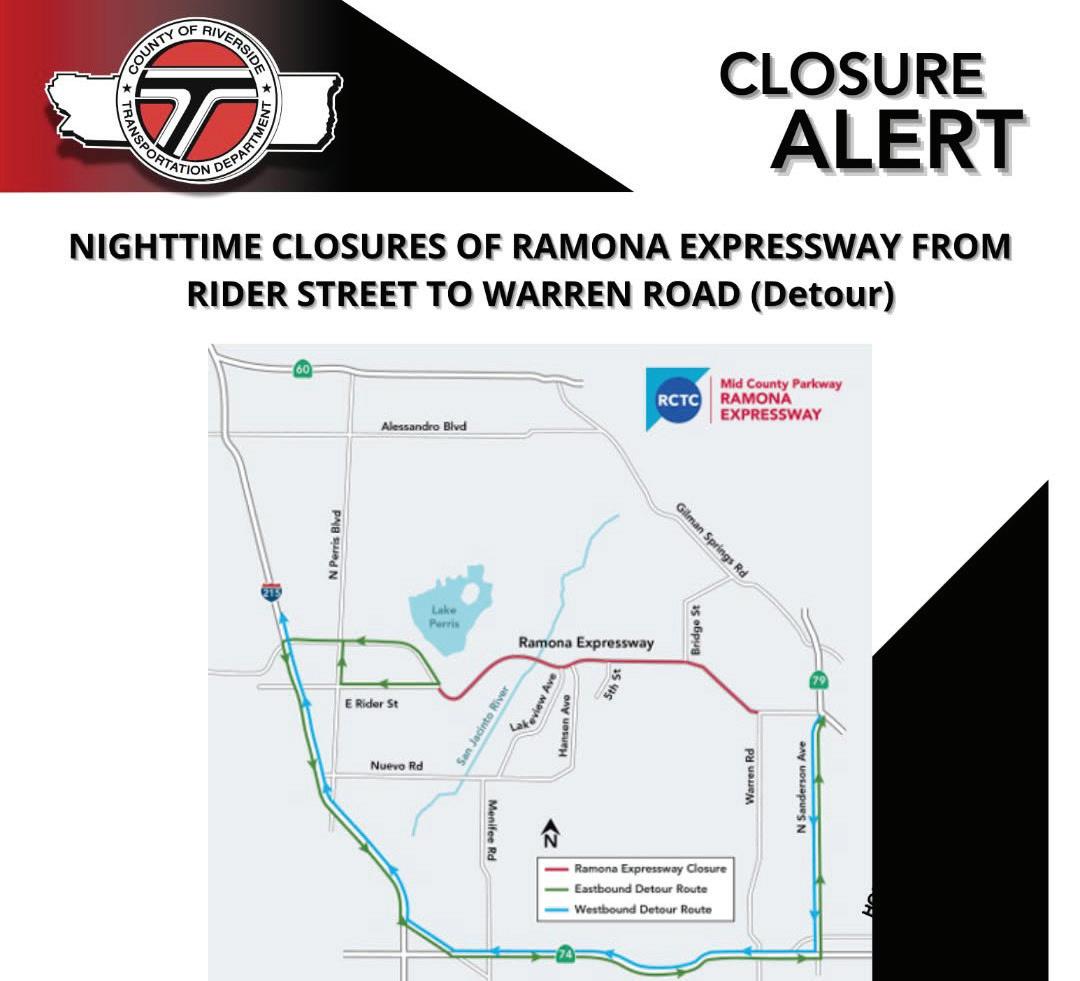
292,000.
“ONT has spent the last decade proving what is possible when an airport remains focused on serving its community, its airline partners, and its passengers,” said Atif Elkadi, chief executive officer of the Ontario International Airport Authority (OIAA).
“The continued growth in passenger traffic, especially among international travelers, reflects the strength of our market and the growing number of travelers who choose ONT as their preferred gateway to Southern California.”
The air carriers with the greatest passenger shares in May were: - Southwest Airlines
By City News Service
(35.7%)
- American Airlines (14.0%)
- Delta Air Lines (10.9%)
- Frontier Airlines (10.1%)
- Alaska Airlines (10.0%)
Air cargo including commercial freight and U.S. mail increased by 4.7% in May as freight tonnage rose by 8.2%, surpassing 63,000 tons.
Year to date, cargo tonnage rose by 7.4% to more than 356,000 tons with freight up by 11.2% to more than 307,000 tons. Shipments of mail were lower by 11.4%.
Ontario International consistently ranks among the top 10 cargo airports in the United States.
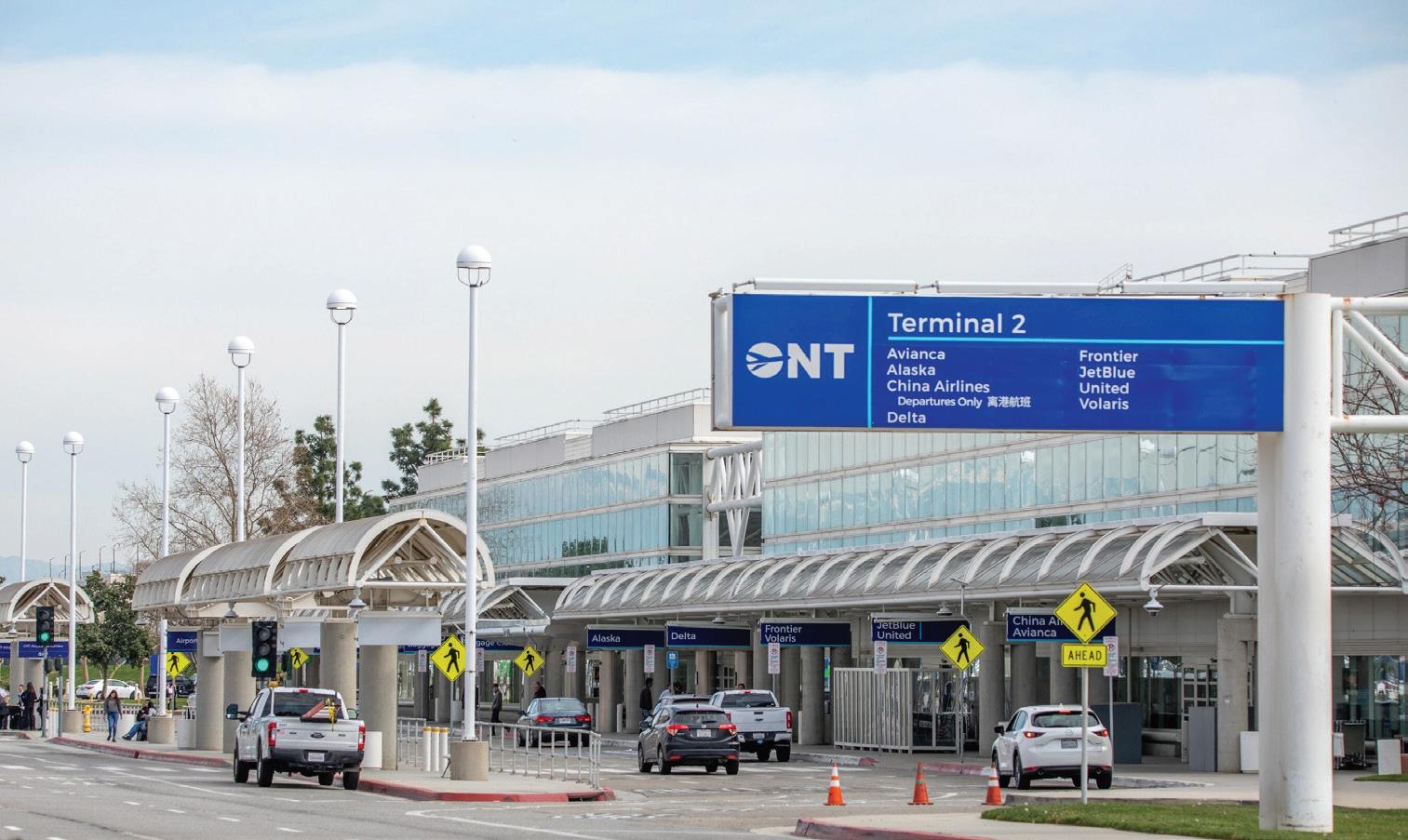
By City News Service
Amateur radio operators will broadcast from multiple locations in Riverside County over a 24-hour period this weekend, sending messages via their personalized sets as part of a continental event highlighting how nontraditional sources of communication can be vital during emergencies.
So-called “ham” radio operators in Cathedral City, Lake Perris, Riverside and San Jacinto will be among roughly 31,000 amateur
radio enthusiasts across the United States and Canada expected to take part in the American Radio Relay League’s annual Field Day, slated to begin Saturday morning and continue into Sunday morning at various locations.
During the event, participants establish temporary broadcasting stations in their homes, parks, schools — anywhere they can raise an antenna — to communicate with one another.
“Some groups use Field
Day as an opportunity to practice their emergency communications readiness,” the ARRL said on its website. “This is an annual demonstration ... to see how amateur radio can serve in an emergency.”
This year’s relay is expected to take on a higher level of intensity following the twin earthquakes Wednesday that devastated parts of Venezuela. The 7.1-magnitude and 7.5-magnitude quakes struck less than a minute
apart, according to the U.S. Geological Survey.
Venezuelan government sources have cited a current official death toll of 200, but over 40,000 people are unaccounted for, according to published reports. More than 200 buildings were damaged or destroyed in Venezuela’s capital, Caracas. A comprehensive account of the destruction, especially in surrounding locations, has not been provided.
The number of people rendered homeless is still
being assessed, and the condition or availability of utility services, which were already deficient, remains unknown.
The South American nation has been in a severe economic malaise since U.S. trade blockades started over a decade ago.
The Newington, Connecticut-based ARRL touts the utilization of ham radios as a means of ensuring connectivity to places throughout the country when modern devices, such as mobile
phones and wirelessly connected computers, may not work or be available.
Amateur radio operators have aided authorities and transmitted essential information to the public during wildfires, tornadoes, winter storms, hurricanes and other crises, the league said. Ham radios generally broadcast on high-frequency channels, with varying ranges, not found on most commercial receivers.
More information is available at arrl.org.
a facility to provide interim housing for residents experiencing homelessness with the purchase of the nearly 7-acre Pacific Village Campus for $3.4 million using Homekey Round 1 funds, county staff reported. The land acquisition included six permanent buildings — one three-bedroom, twobathroom home; two apartments; an administration building; a dining hall with a kitchen; former church facilities; along with 20 residential trailers and on-site parking.
Phase I of the project opened in March 2021, providing 28 individual living spaces to house individuals experiencing homelessness during the COVID-19 pandemic.
Pacific Village will be part of the roughly $53 million “multi-use collective partnership” between the county Community Development and Housing Department, the Department of Aging and Adult Services, the Department of Behavioral Health and third-party managers to expand “access to a safe home environment and resources for overall wellness and self-sufficiency,” county staff reported.
“Each department will use designated funding sources for its respective portions of the campus,” according to the report.
“The Pacific Village Campus will contain communal areas for persons and pets throughout the grounds such as a laundry facility, sitting areas, shaded spaces, and pet relief areas.”
G Street housing
In response to the coronavirus pandemic in 2020 and the need to offer more housing options for unhoused residents, the county sought to purchase and convert existing hotel properties with funding from the California Department of Housing and Community Development’s Homekey Program, according to a county staff report.
By City News Service
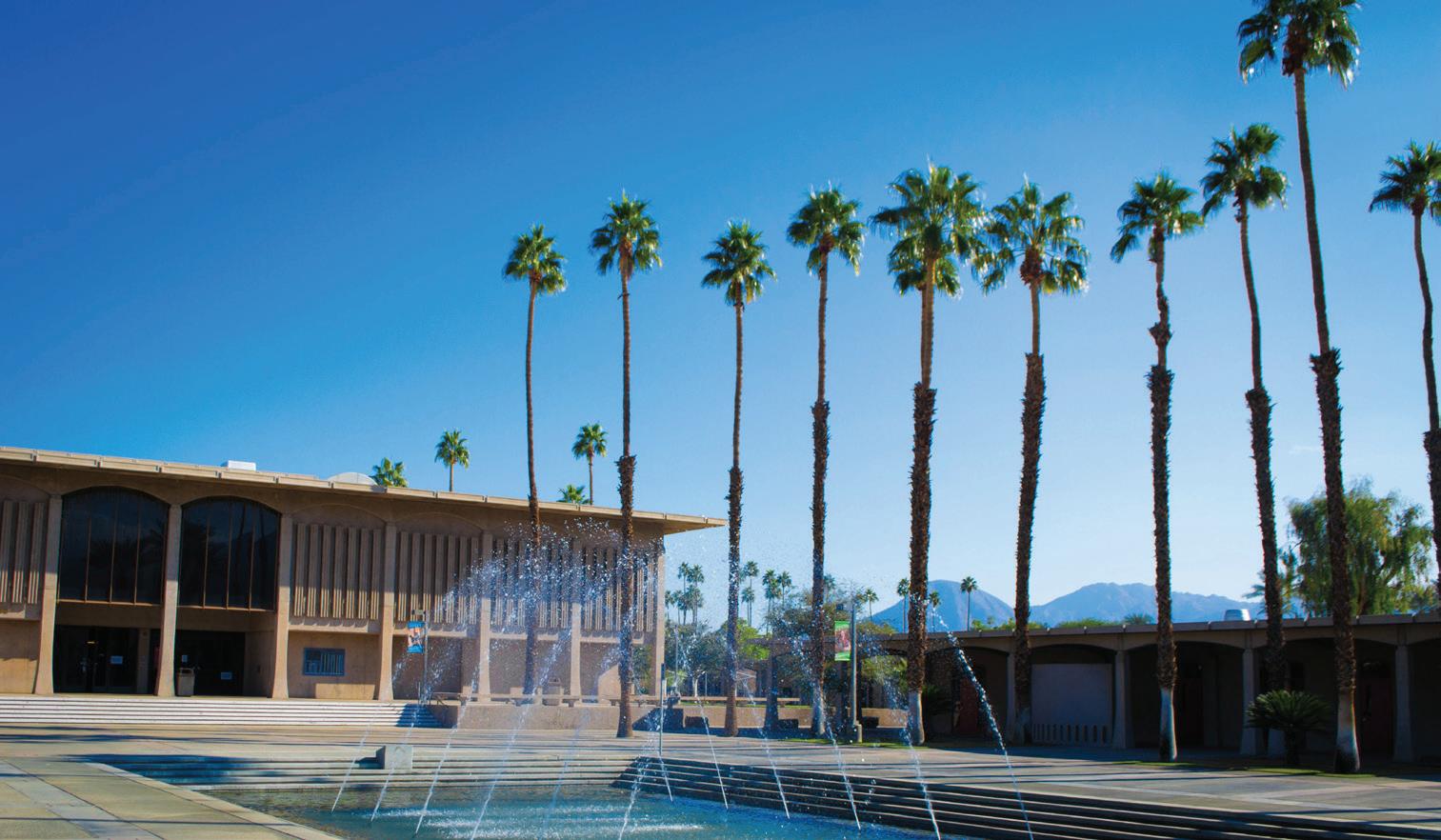
College of the Desert has received full reaffirmation of accreditation through 2031, it was announced Thursday.
The Accrediting Commission for Community and Junior Colleges re- accredited COD after the college implemented policy updates over the past year, including governance training and enhanced evaluation processes, officials said.
the board.
In January 2024, HCD filed a lawsuit in Los Angeles County against Shangri-La Industries, alleging breach of contract and related claims. San Bernardino County and other parties were also named as defendants.
“To resolve the litigation and protect the public investment, the parties negotiated a settlement that led to the County’s acquisition of the Property,” officials reported.
Such was the case at 450 N. G St. in San Bernardino, formerly the All Star Lodge.
The county jointly applied with developer Shangri-La Industries LLC, 450 G Street LP and Step Up on Second Inc. for Homekey funding to acquire and convert the property into housing for individuals and families experiencing or at risk of homelessness, offi-
cials reported.
Supervisors approved a deal with the state and the developer for use of the Homekey funds for a housing facility that included Homekey-mandated affordability and occupancy restrictions.
“Subsequently, the developer defaulted on its obligations under the Homekey Standard Agreement,” according to the staff report to
On April 8, the county acquired the G Street property and “immediately began incurring costs to stabilize property operations, including property management, security, and other operating expenses necessary to maintain safe and stable living conditions for residents and preserve the Property while planning for substantial rehabilitation,” officials reported. “These conditions have created significant ongoing operating pressures that exceed routine property management expenses. While rental revenue is anticipated to offset a portion of these costs, operating expenses exceed projected revenues.”
near Amboy in southern San Bernardino County.
tions seriously and committed itself to strengthening governance practices and continuous improvement,”
The reaffirmation comes during a transitional period for the college, including the expansion of workforce education programs and construction of a new Palm Springs campus set to open in 2027.
“The board took the commission’s recommenda-
“This outcome reflects the dedication and commitment of our entire college community,” Val Martinez Garcia, superintendent/president of COD, said in a statement.
Board of Trustees Chair Ron Oden said in a statement. “This reaffirmation reflects the progress we have made together and reinforces confidence in the college’s future.”
College of the Desert serves more than 20,000 students annually throughout the Coachella Valley.
While hiking in the foothills within the 1,000-squaremile area, participants learned about the vital role free-flowing water plays in the lives of indigenous people and wildlife, and how some animal species, including desert bighorn sheep and kit foxes, are under threat from encroachments, according to NALC.
“Springs throughout this landscape are a life source, so protecting them is not optional; it’s our responsibility,” Torres Martinez Desert
Cahuilla tribal member and youth ambassador Rachel Gallardo said. “Standing at Bonanza Spring, I reflected on how these free-flowing waters have sustained indigenous peoples ... for generations.”
Along with tribes, federal agencies and environmental groups are involved in the program, the educational aspects of which additionally stress advocacy, using the experiences of the Chemehuevi and Fort Mojave tribes as examples.
The two tribes have vigorously worked to prevent
foreign investors and companies, such as Cadiz Inc., from implementing projects to procure and market water from the area’s springs. For the remainder of 2026 and beyond, the program will support field trips, meetings and other endeavors that strengthen youth leadership education and research, featuring travel in the California and Arizona deserts.
More information about the ambassador program, including how to donate to sustain it, is available at https://www.nativeamericanland.org/