

By Paul J. Young, City News Service
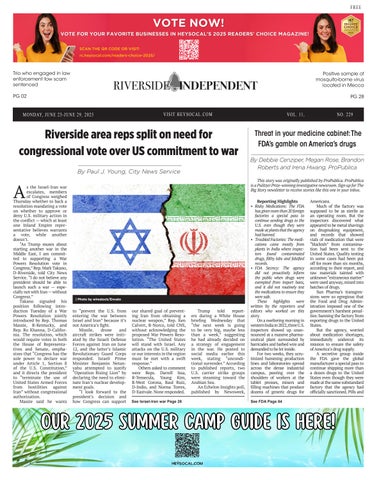
As the Israel-Iran war escalates, members of Congress weighed Thursday whether to back a resolution mandating a vote on whether to approve or deny U.S. military action in the conflict — which at least one Inland Empire representative believes warrants a vote, while another doesn’t.
“As Trump muses about starting another war in the Middle East, I am committed to supporting a War Powers Resolution vote in Congress,” Rep. Mark Takano, D-Riverside, told City News Service. “I do not believe any president should be able to launch such a war — especially not with Iran — without Congress.”
Takano signaled his position following introduction Tuesday of a War Powers Resolution jointly introduced by Rep. Thomas Massie, R-Kentucky, and Rep. Ro Khanna, D-California. The resolution, which would require votes in both the House of Representatives and Senate, emphasizes that “Congress has the sole power to declare war under Article 1, Section 8 of the U.S. Constitution,” and it directs the president to “terminate the use of United States Armed Forces from hostilities against Iran” without congressional authorization.
Massie said he wants

to “prevent the U.S. from entering the war between Israel and Iran” because it’s not America’s fight.
Missile, drone and aircraft strikes were initiated by the Israeli Defense Forces against Iran on June 12, and the latter’s Islamic Revolutionary Guard Corps responded. Israeli Prime Minister Benjamin Netanyahu attempted to justify “Operation Rising Lion” by declaring the need to eliminate Iran’s nuclear development goals.
“I look forward to the president’s decision and how Congress can support
our shared goal of preventing Iran from obtaining a nuclear weapon,” Rep. Ken Calvert, R-Norco, told CNS, without acknowledging the proposed War Powers Resolution. “The United States will stand with Israel. Any attacks on the U.S. military or our interests in the region must be met with a swift response.”
Others asked to comment were Reps. Darrell Issa, R-Temecula, Young Kim, R-West Corona, Raul Ruiz, D-Indio, and Norma Torres, D-Eastvale. None responded.
See Israel-Iran war Page 28
Trump told reporters during a White House briefing Wednesday that “the next week is going to be very big, maybe less than a week,” suggesting he had already decided on a strategy of engagement in the war. He posted to social media earlier this week, stating “unconditional surrender.” According to published reports, two U.S. carrier strike groups were steaming toward the Arabian Sea.
An Echelon Insights poll, published by Newsweek,
in your medicine cabinet: The FDA’s gamble on America’s drugs
By
Reporting Highlights
• Risky Medications: The FDA has given more than 20 foreign factories a special pass to continue sending drugs to the U.S. even though they were made at plants that the agency had banned.
• Troubled Factories: The medications came mostly from plants in India where inspectors found contaminated drugs, filthy labs and falsified records.
• FDA Secrecy: The agency did not proactively inform the public when drugs were exempted from import bans, and it did not routinely test the medications to ensure they were safe.
These highlights were written by the reporters and editors who worked on this story.
On a sweltering morning in western India in 2022, three U.S. inspectors showed up unannounced at a massive pharmaceutical plant surrounded by barricades and barbed wire and demanded to be let inside.
For two weeks, they scrutinized humming production lines and laboratories spread across the dense industrial campus, peering over the shoulders of workers at the tablet presses, mixers and filling machines that produce dozens of generic drugs for
Americans.
Much of the factory was supposed to be as sterile as an operating room. But the inspectors discovered what appeared to be metal shavings on drugmaking equipment, and records that showed vials of medication that were “blackish” from contamination had been sent to the United States. Quality testing in some cases had been put off for more than six months, according to their report, and raw materials tainted with unknown “extraneous matter” were used anyway, mixed into batches of drugs.
Sun Pharma’s transgressions were so egregious that the Food and Drug Administration imposed one of the government’s harshest penalties: banning the factory from exporting drugs to the United States.
But the agency, worried about medication shortages, immediately undercut its mission to ensure the safety of America’s drug supply.
A secretive group inside the FDA gave the global manufacturer a special pass to continue shipping more than a dozen drugs to the United States even though they were made at the same substandard factory that the agency had officially sanctioned. Pills and


By City News Service
Aformer Riverside County sheriff’s lieutenant, a former sergeant and a tow truck company owner who conspired in a scam that involved the lawmen steering business to the proprietor in exchange for bribes were on probation Wednesday.
Ex-Lt. Samuel Flores, ex-sheriff’s Sgt. Robert Martin Christolon and Cody Close were convicted a year ago in the fraud that resulted in unwarranted costs for an unknown number of county residents.
Their co-defendant, retired Deputy Kevin Alton Carpenter, pleaded guilty to receiving a bribe, conspiracy and unlawful use of a government computer network. He was sentenced in October to two years’ felony probation.
Following a trial last spring, Flores and Christolon were each convicted of accepting bribes and conspiracy, while Close was convicted of three counts of bribing public officers.
During a hearing at the Riverside Hall of Justice Tuesday, Superior Court Judge Jerry Yang sentenced Close, Flores and Christolon to two years’ probation.
The judge additionally imposed a sentence of nine months in county jail for Flores and four months for
Two wild burros attached to herds that drift through remote parts of Moreno Valley and east Riverside were shot with arrows by unknown assailants being sought Wednesday by Riverside County sheriff’s investigators. The donkeys were targeted in recent weeks and were spotted by area residents, who took pictures of the animals before they headed back into the wild, according to the sheriff’s department.
Close. However, given the overcrowded conditions in the county’s correctional facilities, it was doubtful they would spend more than a day or two behind bars.
Christolon was also sentenced to six months in a sheriff’s work release program, during which he’ll have to remain employed in some capacity, attend school or perform charitable work.
The District Attorney’s Office’s trial brief offered a comprehensive summary of how the scam was perpetrated.
Carpenter had been assigned to the Temecula station’s Traffic Bureau years before Flores and Christolon arrived, and he had developed a reputation for “devoting his time on duty to impounding parked vehicles, as well as for failing to properly enter those impounds into the sheriff’s computer system or complete the paperwork needed to let the vehicle owners know where their vehicles had been towed.”
When he came under Flores’ supervision in September 2017, the conspiracy began to take shape.
It was interrupted when Carpenter was the subject

of an internal affairs investigation directly related to citizen complaints about his slipshod, overzealous “towing habits,” the brief stated. However, after a temporary reassignment elsewhere, the deputy was placed back under Flores’ supervision, with Christolon acting as the lieutenant’s right-hand man.
Court papers said Flores and Close, owner of TJ’s Towing in Temecula, developed a relationship after the lieutenant received assis-
tance acquiring a classic International pickup truck in early 2018. Soon after, there were lunches and dinners between the men. Prosecutors said Carpenter was then granted permission to add his name to overtime shifts at the Traffic Bureau whenever he pleased.
The deputy began claiming so many overtime shifts “that other deputies started to complain and even scribble over his name on the sign-in sheets,”
according to the brief. When the aggrieved deputies took their complaints to Christolon, “he never did anything in response,” documents stated.
Prosecutors said Carpenter aggressively sought out street-parked vehicles to impound for little or no reason, and TJ’s Towing received virtually all of his calls for service. This occurred even though TJ’s Towing wasn’t always the company on the sheriff’s “rotation list,” maintained to ensure impound business is equitably distributed to multiple companies.
“Towing for the sheriff’s department is a lucrative business,” the brief said, outlining how there’s not only a charge for the tow, but a base charge for the impound and then daily storage fees imposed on owners.
TJ’s Towing received dozens of impound calls from Carpenter, and Flores “personally approved” the deputy’s OT requests. The lieutenant “exchanged hundreds of text messages” with Close, occasionally telling him, “make that money, homie,” the narrative stated.
It said Flores not only received a major cost break on the pickup, but also a
Officials said arrows could be seen protruding from the donkeys’ torsos. Department of Animal Services and California Fish & Game wardens have been trying to locate the wounded animals.
“We remind the public that harming a donkey ... is a criminal offense,” according to a sheriff’s statement. “The safety and welfare of animals in our community is a priority, and we are committed to holding those responsible
1979 Chevrolet Corvette that had been the subject of a “lien sale.” There was an arrangement for the then-lawman to receive a free stay at Close’s mother’s $4 million Oceanside home, which she periodically rented out. Flores also received free towing services for his personal vehicles, complimentary tickets for him and his family to the Temecula Balloon & Wine Festival, limousine rides and other gratuities, according to the brief.
In December 2018, after Close arranged it, Christolon was able to purchase a 2009 Honda Civic at a lien sale for $200, even though the collective fees attached to the vehicle totaled $3,290, according to the DA’s office. Prosecutors said the scheme came undone after Flores and Christolon transferred to the Jurupa Valley station in mid-2019 and arranged for the Traffic Bureau there to utilize TJ’s Towing — even though it wasn’t on the station’s approved list — immediately prompting an investigation. Carpenter had retired by that time and had started working for the company. The investigation culminated in indictments against the foursome in 2020.
By City News Service
accountable.”
Anyone with information was urged to call sheriff’s dispatch at 951776-1099, or the Department of Animal Services at 951-358-7387.
There was no word regarding when or exactly where the donkeys were targeted.
Wild burro herds are common around Box Springs Mountain Reserve, even drifting in and out of neighborhoods that abut the preserve east of the
UC Riverside campus, and around subdivisions in the Reche Canyon and Pigeon Pass areas of Moreno Valley.
The last reported incident of burros being shot with arrows occurred in 2022.
Riverside County Ordinance No. 934 makes it unlawful to feed, pet or otherwise draw wild donkeys toward roadsides and other locations where they might be hurt -- or wander into traffic and cause accidents.

Editorial editorial@beaconmedianews.com
editor@hlrmedia.com
Graphics/Production production@beaconmedianews.com production@hlrmedia.com
Advertising advertising@beaconmedianews.com advertising@hlrmedia.com
Legal Advertising legals@beaconmedianews.com legals@hlrmedia.com
Business accounting@beaconmedianews.com accounting@hlrmedia.com
BEACON MEDIA ADDRESS: 820 S. Myrtle Ave. Monrovia, CA 91016
PHONE: (626) 301-1010
WEBSITE www.beaconmedianews.com
HLR MEDIA ADDRESS: 820 S. Myrtle Ave. Monrovia, CA 91016
PHONE: (626) 301-1010
www.HLRmedia.com
PRESS
editor@beaconmedianews.com editor@hlrmedia.com






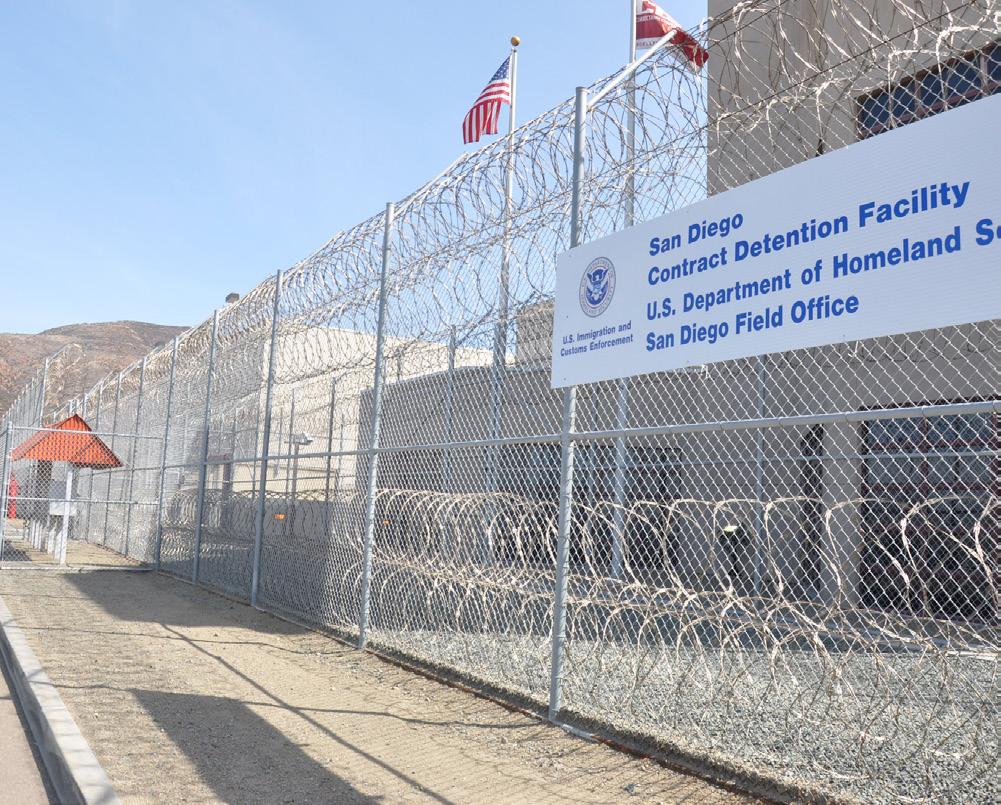
s federal authorities continuemoving Wednesday to end a 28-year consent decree governing how children and family migrants are detained, advocates of the settlement are claiming the terms of the agreement are being routinely violated, making it essential to keep it in place.
Justice Department officials last month filed a motion to end the Flores settlement agreement, prompting a response Tuesday from nonprofits requesting enforcement of the settlement.

“Flores requires that if the federal government chooses to jail children and family immigrants that they have to determine whether those individuals must be jailed in a speedy fashion, and so long as they are jailing these very vulnerable populations that they treat them with a basic human decency and basic conditions be met,” said Sergio Perez, executive director of the Santa Ana-based Center for Human Rights and Constitutional Law.
“And the government has never satisfied those provisions,” Perez added. “That’s why this settlement agreement is so necessary.”
Hearings are scheduled in federal court in Los Angeles on Monday and July 18.
“After 40 years of litigation and 28 years of judicial
By City News Service
control over a critical element of U.S. immigration policy by one district court located more than 100 miles from any international border, it is time for this case to end,” the Justice Department wrote in its motion.
The Justice Department attorneys argued that since 1997, the judges overseeing this agreement have “controlled federal policy regarding the custody of alien children who are in the United States without immigration status, enormous, cardinal changes have occurred: Surges of aliens have entered the U.S. in between ports of entry across the southwest border, including large groups
of aliens who voluntarily surrendered to border patrol -- surrenders orchestrated by traffickers; the demographics of aliens arriving at the border have shifted to include significantly higher numbers from countries outside the western hemisphere and higher numbers of children; a global pandemic necessitated the government’s utilization of its expulsion authority to protect public health; and the subsequent lifting of the policy led to an upheaval in immigration policy over two years.”
The attorneys for the federal government argue that the agreement constrains the Trump administration to
address the changes because of “ossified federal immigration policy.”
Perez said the “Trump administration is unique in the fact that it has effectively closed down our borders and is choosing to detain children and families for extended periods of time.”
Perez argued that the migrants are experiencing “horrible conditions where families with young children are being held in facilities not meant to jail individuals, places like airports, regular office buildings, places that don’t provide a bare modicum of privacy for families of young children.”
In some instances, the migrants are being held in “rooms meant for interrogations and interviews for short stays and they’re housing people for weeks.”
Perez said the “length of stay for these families and children are lengthening and the conditions that have been detailed to us for these vulnerable folks speak to the emergency situation.”
The advocates for the agreement say the percentage of children held for three days or more has quadrupled from 2.4% in May of last year to 10.3% in February of this year. The number of children being held for longer than two weeks has increased sevenfold.
By Suzanne Potter, Producer, Public News Service







California’s law legalizing medical aid in dying could be made permanent if lawmakers approve a bill currently before the State Assembly.
Senate Bill 403 would eliminate the sunset clause in the 2015 End of Life Option Act.
The law allows mentally capable, terminally ill patients with less than six months to live to get a prescription to end their life.
Advocate Dan Diaz says his wife, Brittany Maynard, moved to Oregon in 2014 to make use of that state’s Death With Dignity Act.
“Brittany is gone, so now I’m fighting for all terminally ill individuals that might find themselves in Brittany’s predicament,” said Diaz, “so
that they don’t have to do what she did, of leaving their home state after being told you have six months to live.”
The End of Life Option Act is currently set to expire in five years. Medical aid in dying is legal in 11 states plus Washington D.C. -- but California is the only jurisdiction with a sunset provision.
Leslie Chinchilla, California state manager with Compassion & Choices Action Network, said over the past decade, there hasn’t been a single substantiated case of abuse involving medical aid in dying statewide.

.In 2023, more than 1,200 terminally ill Californians obtained prescriptions for medical aid in dying and 69% took the medication.
Compassion &
“The California Department of Health does a yearly report on medical aid in dying,” said Chinchilla. “There has been no instance of coercion or abuse, and really the law is working as intended.”
otherwise would have been banned went to unsuspecting patients across the country, including those with cancer and epilepsy.
The FDA didn’t routinely test the medications for quality problems or use its vast repository of drugrelated complaints to proactively track whether they were harming the people who relied on them.
And the agency kept the exemptions largely hidden from the public and from Congress. Even others inside the FDA were unaware of the details.
In the hands of consumers, according to the FDA’s longtime head of drug safety, the information would have caused “some kind of frenzy.”
“We felt we didn’t have to make it a public thing,” said Janet Woodcock, who spent nearly four decades at the agency.
The exemptions for Sun weren’t a one-time concession. A ProPublica investigation found that over a dozen years, the same small cadre at the FDA granted similar exemptions to more than 20 other factories that had violated critical standards in drugmaking, nearly all in India. All told, the group allowed into the United States at least 150 medications or their ingredients from facto-
ries with mold, foul water, dirty labs or fraudulent testing protocols.
Some of the drugs were recalled — just before or just after they were exempted — because of contaminants or other defects that could cause health problems, government records show. And a ProPublica analysis identified more than 600 complaints in the FDA’s files about exempted drugs at three of those factories alone, each flagging concerns in the months or years after they were excluded from import bans in 2022 and 2023.
The “adverse event” reports about drugs from the Sun plant and two others run by Indian drugmaker Intas Pharmaceuticals described medication with an abnormal taste, odor or residue or patients who had experienced sudden or unexplained health problems.
The reports cite about 70 hospitalizations and nine deaths. And those numbers are conservative. ProPublica limited its count to reports that linked problems to a single drug. However, the total number of complaints to the FDA that mention exempted drugs is in the thousands.
“Abdominal pain … stomach was acting very crazy,” one report said about a woman using a seizure
drug from Sun Pharma. The FDA received the complaint in 2023, nine months after it excluded the medication from the import ban.
“Feeling really hot, breaking out with hives, hard to breathe, had confusion, glucose level was high, heart rate went up and head, arms and hands got numb,” noted another report about a patient taking a sedative from Intas. The complaint was sent to the FDA in June 2023, the same month the agency exempted the medication.
The outcomes described in the complaints may have no connection to the drug or could be unexpected side effects. In some cases, the FDA received complaints about the same drugs made by other manufacturers.
Still, the seriousness of the reports involving exempted drugs did not galvanize the agency to investigate, leaving the public and the government with no way of knowing whether people were being harmed and, if so, how many. Those unknowns have done little to slow the exemptions. In 2022, FDA inspectors described a “cascade of failure” at one of the Intas plants, finding workers had destroyed testing records, in one case pouring acid on some that had been stuffed in a trash bag. At the second

Intas factory, inspectors said in their report that records were “routinely manipulated” to cover up the presence of particulate matter — which could include glass, fiber or other contaminants — in the company’s drugs.
The FDA barred both plants in 2023 from shipping drugs to the U.S. Then the agency simultaneously granted more than 50 exemptions to those banned factories — the broadest use of exclusions in ProPublica’s analysis.
Intas, whose U.S. subsidiary is Accord Healthcare, said in a statement that the company has invested millions of dollars in upgrades and new hires and launched a companywide program focused on quality. Exempted drugs were sent to the United States in a “phased manner,” the company said, with thirdparty oversight and safety testing. Intas also said that some exempted drugs were never shipped to the United States because the FDA found other suppliers. The company would not provide details.
“Intas is well on its way towards full remediation of all manufacturing sites,” the company said.
Sun did not respond to multiple requests for comment. When the FDA imposed the ban, the company said it would “undertake all necessary steps to resolve these issues and to ensure that the regulator is completely satisfied with the company’s remedial action. Sun Pharma remains committed to being … compliant and in supplying high-quality products to its customers and patients globally.”
Both companies’ factories are still under import bans.
“We’re supposed to have the best medicine in the world,” said Joe DeMayo, a kidney transplant patient in Philadelphia who took an immunosuppression medication made by Intas until December 2023, unaware that a month earlier the FDA had excused the drug from an import ban. “Why are we buying from people who aren’t making it right?”
How the United States wound up here — playing a game of chance with risky drugs made thousands of miles away — is the story of an agency that has relentlessly pressed to keep the supply of low-cost generics flowing even as its own inspectors warned that some of those drugs posed a potentially lethal threat to the American public.
The vast majority of the prescriptions filled in the country are for generic drugs, from penicillin to blood thinners to emergency
contraception, and many of those come from overseas, including India and China. For years, the FDA has vouched for the quality of generics, assuring the public in press releases, speeches and social media campaigns that they are just as safe and effective as brand-name drugs.
That guarantee came under serious question in 2019 when journalist Katherine Eban published a breakthrough book, “Bottle of Lies,” that exposed rampant fraud and manufacturing violations in Indian factories and the FDA’s reluctance to aggressively investigate.
ProPublica identified another alarming level of entrenched failure: Even when the agency did investigate and single out factories that were among the worst in India, it still gave them access to American consumers. All the while, patients took their medicine without question, trusting an agency that has long been considered the gold standard in drug regulation.
While specialized business publications have sometimes reported on exemptions when they happen, they’ve offered little context and few specifics.
The FDA in many ways put itself in this untenable position, forced to decide between not having enough drugs or accepting potentially dangerous ones, interviews and government records show.
For years, the agency gave companies with a history of manufacturing breakdowns approval to produce an increasingly larger share of generic drugs, allowing them to become a dominant force in American medicine with the power to disrupt lives if production lines were shuttered.
“It’s our own fault,” said former FDA inspector Peter Baker, who reported a litany of failures during inspections in India and China from 2012 to 2018. “We allowed all these players into the market who never should have been there in the first place. They grew to be monsters and now we can’t go back.”
The decisions to weaken penalties and allow banned factories to continue sending drugs to the United States were approved by Woodcock, one of the agency’s most powerful administrators. For more than two decades, she led the Center for Drug Evaluation and Research, the arm of the FDA that serves as the country’s gatekeeper for new and generic drugs.
In a series of interviews with ProPublica, Woodcock said she supported the use of exemptions “as a practical approach.”
“We had to kind of deal with the hand we were dealt,” she said. Woodcock said she didn’t see a need to inform the public because the agency believed the drugs were safe. She said she mentioned the practice periodically in closed-door meetings with congressional staffers, but she did not provide specifics about those conversations.
After Woodcock left her post in 2020 to help lead the agency’s response to the COVID-19 pandemic, the exemptions — including those for Sun and Intas — continued under her successor, Patrizia Cavazzoni. Cavazzoni, who left the agency earlier this year and rejoined Pfizer, declined to comment.
Former FDA Commissioner Robert Califf, who led the agency when Sun and Intas received exemptions, told ProPublica that tough calls had to be made and the practice did not worry him.
The FDA did not respond to questions about who made those decisions or how the drugs were evaluated, and it declined requests for interviews with officials who currently oversee drug regulation. In an email, the agency said the exemptions are “thoroughly evaluated through a multi-disciplinary approach.”
Years after the FDA started granting exemptions, some current and former officials say they wrestle with a lingering fear that bad drugs are circulating in the United States.
“It’s not even a hypothetical,” said one senior FDA employee familiar with the exemptions, who, like others, spoke on the condition of anonymity because they were not authorized to speak publicly.
“It’s not a question of if — it’s a question of how much.”
“It Was Rotten Eggs”
Although the FDA has been giving companies a way around import bans since at least 2013, the internal process was so secretive that many current and former FDA officials said they have no idea how many exemptions have been granted or for what drugs. In an email, the agency said it did not maintain a comprehensive list.
Even two high-level FDA staff members who worked on drug shortage challenges for the agency said in interviews they had never heard of the exemptions.
Congress required the FDA in 2012 to provide specific information every year about how and when the agency relaxed its rules for errant drugmakers to prevent shortages. But the FDA did not mention exemptions to
By City News Service

California’seconomy, traditionally hailed for outpacing the United States as a whole, has considerably weakened, with key sectors either falling stagnant or contracting and the unemployment rate remaining elevated, according to a UCLA forecast released Wednesday.
Key California economic sectors such as manufacturing, entertainment and logistics have been faltering, leading to the state’s economy growing at only half the rate of the nation, UCLA Anderson Forecast Director Jerry Nickelsburg wrote in his report on the state’s economy.
“Over the first four months of the year the state lost 50,000 payroll jobs and the unemployment rate remained above 5%,” Nickelsburg wrote. “Moreover, the growth areas of the past year, health care, education, and government have likely hit their peak. Therefore, the data now indicate slow to negative economic growth and a further decline in jobs for 2025.”
Nickelsburg wrote that the state is anticipated to
experience a mild economic contraction for the balance of the year. But he predicted a resurgence in the technology, durable goods and construction sectors that will help rejuvenate the economy and “lead to superior growth in the Golden State once again.”
According to the report, the state’s unemployment rate has remained above 5% for the 18 months that ended in April, when the rate was 1.1 percentage points higher than the nation as a whole.
Decreases in employment in the entertainment industry and reductions in the technology and manufacturing sectors have played a large role in the problem, Nickelsburg wrote.
“In the first three months of 2025, the number of payroll jobs in the state declined,” he wrote. “There was a small gain of 17,000 jobs in April leaving a deficit of approximately 50,000 jobs for the year. This is the background upon which deportations of some of California’s workforce will happen.”
The Trump administration’s commitment to mass
deportations is expected to have continued impacts in the state, along with cuts in federal health care funding -- all affecting health care, social services, retail and leisure/hospitality industries, along with impacts on construction and nondurable goods manufacturing.
“For the California economy to grow faster than the U.S. economy, as it is accustomed to do, durable goods manufacturing including aerospace and technology laden sectors will have to rebound strongly,” Nickelsburg wrote. “Aerospace should benefit from the return to normal production at Boeing and Airbus and increased emphasis on space exploration and satellite production.”
Nickelsburg predicted a recovery for the state economy will begin next year, with economic growth picking up more steam in 2027. But for this year, the unemployment rate could peak at 6.1%, while averaging 5.8% for the year -- followed by average rates of 5.6% and 4.4% in the next two years.




import bans until 2024 — and only then in a single footnote of its 25-page report to Congress.
ProPublica uncovered the frequent use of exemptions by searching for the “import alert” list published on the FDA’s website that names factories banned from the U.S. marketplace. Because the agency publishes only a current list and doesn’t make the old ones public, the news organization used internet archives and FDA documents maintained by the data analytics company Redica Systems, ultimately compiling import alerts dating back more than a decade. The lists identify the drugs exempted from bans but provide few other details.
ProPublica reviewed scores of inspection reports and corporate documents for overseas factories and interviewed more than 200 people, including current and former officials of the FDA, to understand the little-known practice and the ongoing threat posed by the agency’s decisions.
The investigation revealed not only how many drugs received exemptions from import bans, but also how long the FDA allowed those exemptions to stay in place — in some cases for years.
The agency has removed exemptions when there is no longer a shortage concern. In those cases, the drugs are then banned along with the others at the factory. Both Sun and Intas have had drugs that lost their exemptions.
Two and a half years after the Sun factory was banned, five drugs are still exempted. Intas, whose factories were banned in 2023, currently has 24 drugs on the list. The bans themselves are removed only after companies fix the problems.
Earlier this month, the FDA went back to the Sun Pharma factory for a surprise inspection and found ongoing problems, according to a Sun filing with the Indian stock exchange and Indian media reports. The concerns focused on the way sterile drugs were made, including some of the exempted drugs still being sent to the United States, according to a person familiar with the situation who did not want to be named because they were not authorized to speak publicly.
The FDA said it put protections in place for exempted drugs: Manufacturers are required to conduct additional quality checks before they are sent to the United States. That has included extra drug-safety testing, in some cases at an independent lab, and bringing on third-party consultants to verify the results.
The agency did not provide ProPublica with the names of
the third-party consultants hired by Sun and Intas. Intas declined to name its consultants.
“The odds of these drugs actually not being safe or effective is tiny because of the safeguards,” said one former FDA official involved in the exemptions who declined to be named because he still works in the industry and fears professional retribution.
“Even though the facility sucks, it’s getting tested more often and it’s having independent eyes on it.”
But current and former FDA inspectors said those safety measures require trusting the vigilance of companies that were banned, at least in part, for providing unreliable or deceptive test results to the government or failing to investigate reports about drugs with contaminants or other quality concerns.
The FDA could have done its own routine testing of the exempted drugs but chose not to. The agency said in an email that it tests the drugs using a “risk-based approach” but would not provide ProPublica with any information about which drugs have been tested and what the results were.
Woodcock said testing was expensive and budgets were tight. She acknowledged that regularly assessing the exempted drugs for quality or safety concerns “would have enhanced our confidence … and made everyone more comfortable.”
The European Union, by contrast, requires drugs made in India and China to be checked for quality on EU soil. And the U.S. Department of Defense is conducting its own testing of more than three dozen generic medications and has already identified potency and other quality issues.
“If you don’t know about the quality of the product, why are you letting it in?” said Murray Lumpkin, the FDA’s former deputy commissioner for international programs, who left the agency in 2014 before most of the exemptions were granted.
Beyond the lack of testing, the FDA didn’t actively look for patterns of harm among the exempted drugs in its adverse event database, Woodcock and others said.
ProPublica’s analysis of that data found thousands of reports both before and after the factories were given a pass to sidestep import bans. The reports described unexpected cases of cardiac arrest, blurred vision, choking, vertigo and kidney injuries, among other issues — and in some instances identified specific concerns about how the drugs were made.
One person who took
Intas’ clonazepam, a sedative and epilepsy drug, reported getting “brain zaps” and bright blue teeth from the coating of dye on the drug. The FDA received the complaint the same month the agency exempted the drug from the import ban.
Even before the FDA exempted Intas’ antidepressant bupropion, consumers reported that it made them sick, wasn’t always effective and had an abnormal odor, which pharmacists and others say can happen when an inactive ingredient breaks down.
“It was rotten eggs,” Nari Miller, a geologist in California who took the pills in 2022 and had severe stomach pain, told ProPublica. “I opened it and smelled it when I got home and it was awful.”
Intas said it could not respond to specific complaints and that all drugs have side effects. “Intas and Accord pay attention to each and every adverse event report,” the company said, adding, “Accord and Intas are committed to continuing to bring safe and effective medicines to patients.”
In its statement, the FDA said the database is monitored weekly for new reports in general. Woodcock, however, acknowledged the reports about exempted drugs, ideally, “would be under much more scrutiny.”
Too Big to Fail Decisions made by the FDA decades ago gave rise to the use of exemptions and the risks that now confront the American public.
When new brand-name drugs come to market, they are protected by patents and exclusive sales rights that make them generally expensive. When patents expire, generic drug companies rush in to make their own versions, which are supposed to be equivalent to the brand. Generics are often far cheaper, and insurance companies typically insist that patients use them.
In the 2000s, as the cost of brand-name drugs soared, the FDA began to approve large numbers of generics. The agency, however, gave hundreds of those approvals to foreign manufacturers that had been in trouble before, companies well known to the inspectors working to stamp out safety and quality breakdowns at overseas factories, ProPublica found.
The FDA granted Sun Pharma alone more than 250 approvals for generic drugs since the late 2000s, when the company started amassing violations, records show. The agency’s decisions helped to transform the company from a local provider in India to one of the leading exporters

of medications to the United States, with nearly $2 billion in annual U.S. sales.
The approvals kept coming as inspectors continued to raise concerns about manufacturing practices at the company’s factories in India, government records show.
More problems were found at a factory that Sun had acquired in Detroit, where the diabetes drug metformin was contaminated with metal scrapings. The violations were so significant that federal marshals in 2009 raided the plant and seized drugs. The company eventually shuttered the factory.
The rapid expansion of Sun and other foreign drugmakers set off new alarms among inspectors, their supervisors and advisers to Woodcock.
“In a rational system, you would have said, ‘This company is not producing properly, so let’s not approve any more of their drugs,” said William Hubbard, former FDA deputy commissioner for policy, planning and legislation. “The agency in a sense kind of let this happen.”
Ajaz Hussain, the former deputy director of an FDA office that oversaw pharmaceutical science, said that after leaving the agency and becoming a consultant, he made his concerns known in meetings with Woodcock and others.
“They can’t manufacture it. Why do you keep approving it?” Hussain recalled in an interview with ProPublica. “I said, ‘Wake up.’ … But they didn’t listen.”
Hussain in 2012 went to work for Wockhardt, one of the largest pharmaceutical companies in India, but quit eight months later after he said he told his superiors about manufacturing failures in the company’s factories.
Although FDA inspec-
tors had reported lapses after multiple visits to Wockhardt plants between 2004 and 2012, the agency cleared the way for the company to export sedatives, antibiotics, beta blockers, painkillers and other generics to the United States, records show. Wockhardt received exemptions from import bans in 2013. The company did not respond to repeated requests for comment, but at the time, the company said it was going to quickly address the FDA’s concerns.
The FDA could have denied generic drug applications — nothing in the law prohibits the agency from saying no to companies with spotty track records. In an email, the FDA said it considers a company’s history and conducts inspections in some cases before issuing approvals.
Woodcock said the agency knew which factories were poor performers but feared being sued by companies blocked from introducing new drugs based on past behavior. Instead, she said that she tried to convince drugmakers to invest in equipment and practices that would turn out higher-quality drugs.
“We had many meetings about this, and we agonized about all these problems,” she said.
But little changed.
In 2008, dozens of Americans were killed by contaminated blood thinner from China. So when Margaret Hamburg was appointed commissioner of the FDA in the aftermath of the crisis, she pressed the agency to crack down on overseas drugmakers.
Her efforts ran headlong into what would become the worst drug shortage in modern
history. By 2010, cancer drugs were scarce. So were the drugs on hospital crash carts. In all, more than 200 critical medications were in short supply. Razor-thin profit margins had limited the number of companies that were willing to make generic drugs. And the FDA’s enforcement overseas had forced some manufacturing lines to temporarily shut down, which exacerbated the problem.
Congress lambasted the FDA for the shortages and started requiring the agency to prove every year how it was combatting the problem.
At the time, the FDA had a small team focused on shortages that operated on the edges of Woodcock’s 4,000person Center for Drug Evaluation and Research. With the pressure on, Woodcock elevated the team in 2010 to report directly to her deputy, a move that gave those staff members a commanding voice at the highest levels of the agency, several former staffers told ProPublica.
After 16 years in top leadership roles, Woodcock was formidable enough to force a culture change. Standing 5’2” in FDA conference rooms where she had often been disregarded as the lone woman, Woodcock had fought for her status — sometimes, she said, pushed nearly to tears with frustration. The boardcertified internist asserted her authority by wielding data, what she called “brute force” and the soft persuasion of an occasional gift of an orchid, picked from her garden in suburban Maryland.
By 2010, Woodcock had marshalled the center into a powerhouse with great independence — in many ways, outside the reach of the political whims of the commis-
sioners who came and went. Those who worked with her over the years said despite her approachable manner, she fiercely guarded her territory.
In the conference room next to Woodcock’s office, the drug shortage staff began to weigh in whenever the FDA’s compliance team moved to penalize wayward drugmakers because of bad inspections, according to several former FDA officials involved in the deliberations.
Sometimes the small group would decide that a factory could no longer ship drugs to the United States and would try to get other manufacturers to make more. And other times, the group determined that exemptions from import bans were the only course.
Discussions could be tense and often lasted for weeks. A former employee on the compliance team told ProPublica that they repeatedly argued to impose a total import ban on a foreign factory because they feared the drugs couldn’t be trusted. They were left feeling uncomfortable about an exemption granted anyway — for a product that they would not use themselves.
Without exemptions, Woodcock told ProPublica, the FDA might have been forced to source the drugs from a “totally unknown manufacturer, say, from China or somewhere.”
Current and former FDA officials said the concessions became a yearslong practice rather than a stopgap measure and that the protections put in place by the agency were not sufficient. They question why Woodcock and her successor didn’t do more to raise alarms with Congress or the public about the decision to rely on inadequate factories for critical drugs.
Woodcock said she thought the exemptions were a symptom of larger issues involving the drug supply that the FDA had no control over — the agency, for example, can’t force companies concerned about slim profit margins to produce generic drugs.
Two former FDA commissioners told ProPublica they knew about the practice but were not included in the decision-making.
Hamburg, who spent six years at the agency under the Obama administration, said the extent of the practice surprised her. “Had I known that it was sort of an openended policy, I would have been disturbed,” she said.
One of her successors, Stephen Hahn, appointed during President Donald Trump’s first term, said more people should have been involved in the decisions.
“You’re talking about a drug of questionable quality being brought into the country,” he said.
Woodcock said she did not believe she needed their input. “I didn’t think in the individual circumstances it was necessary to elevate,” she said, “because what could they do?”
“We Know What Was Found”
In 2020, the billionaire founder of Sun Pharma joined a pivotal conference call with FDA compliance and investigative staff.
Dilip Shanghvi, whose father had run a wholesale drug business in Kolkata, India, started the company in the 1980s and ultimately turned Sun Pharma into one of the largest suppliers of generic drugs in the United States. On the call, Shanghvi spoke about improvements at Sun’s enormous plant in the Indian city of Halol, according to an FDA official who attended the meeting.
Among other drugs, the plant produced at least 16 sterile injectables for the U.S. market, according to a Sun email to the FDA obtained by ProPublica. Injectables are particularly dangerous if contaminated because the medication is injected directly into the body, unlike a pill that goes through the filtering of the digestive tract.
In 2018 and 2019, inspectors had reported a series of violations at the factory, and Sun had received more than 700 complaints about what appeared to be crystals or spider webs forming in one
of its injectable medications, records show.
The company also had to recall more than 135,000 vials of vecuronium bromide, a muscle relaxer used during surgery, after reports that the medication contained glass particles. Sun said the defect could cause life-threatening blood clots.
On the call with the FDA, according to the agency official, Shanghvi assured the government that the Halol plant was turning out highquality products.
Yet, when the three investigators went back to the factory that scorching morning in 2022 for the surprise inspection, it was clear within days that the FDA would have to take swift action.
Splitting up to check different parts of the plant, the inspectors quizzed workers about cleaning procedures and looked at disassembled equipment to see if it was contaminated with residue from old drugs. At one point, they spotted water leaking near areas where sterile drugs were made, an alarming observation because water can introduce contaminants capable of causing infections or even death.
Digging through company records and test results, they found more evidence of quality problems, including how managers hadn’t properly investigated a series of complaints about foreign material, specks, spots and stains in tablets.
Several FDA employees familiar with the inspection report — 23 pages of detailed violations — said they had no idea why the agency went on to exclude so many of Sun’s drugs from the subsequent import ban.
“We know what was found,” said the FDA official who attended the meeting with Shanghvi. “How could you trust [those] drugs?”
Sun did not respond to questions about the recalls or its regulatory history with the FDA. In its 2023-24 annual report, the company said, “We have a relentless focus on 24x7 compliance to
ensure continuity of supplies to our customers and patients worldwide.”
The specific findings of the FDA’s latest inspection of the Sun plant conducted this month have not yet been made public, and the company did not respond to a request for comment.
To some current and former FDA officials and other experts, plugging a supply shortage with drugs that may be contaminated or ineffective is no solution at all.
“That might be helping a shortage but might be creating a new problem,” said Lumpkin, the former deputy commissioner.
Last summer, a pair of FDA investigators arrived at another manufacturing plant in India that had a bustling production line. After more than a week at the Viatris factory, they left with a familiar list of safety and quality violations.
The inspectors found that equipment wasn’t clean and managers failed to thoroughly investigate unexplained discrepancies in test results.
In a statement to ProPublica, Viatris said it immediately worked to resolve the FDA’s concerns. “Patient safety remains our primary and unwavering focus,” the company said.
Just before Christmas, the FDA banned the facility from exporting drugs.
Then the agency gave the factory a pass, and four of its drugs are still bound for the United States.
Patricia Callahan and Vidya Krishnan contributed reporting, and Alice Crites contributed research.
Medill Investigative Lab students Haajrah Gilani, Emma McNamee, Julian Andreone, Isabela Lisco, Aidan Johnstone, Megija Medne, Yiqing Wang, Phillip Powell, Gideon Pardo, Casey He, Lindsey Byman, Josh Sukoff, Kunjal Bastola, Shae Lake, Alyce Brown, Zhiyu Solstice Luo, Jessie Nguyen, Sinyi Au, Kate McQuarrie and Katherine Dailey contributed reporting.
Republished with Creative Commons License (CC BY-NC-ND 3.0).
By Suzanne Potter, Producer, Public News Service

California took a big step Tuesday toward the goal of conserving 30% of land and waters by 2030. The Ocean Protection Council adopted a roadmap to decide which protected waters will count toward the goal.
“We’re now at 21.9% of coastal waters conserved,” said Michael Esgro, the council’s senior biodiversity program manager and tribal liaison, “so more than three-quarters of the way to our 30 by 30 goal, here at the halfway point of the initiative. We have another almost 300,000 acres to conserve by 2030.”
The Council refined the roadmap over the past year in a series of public workshops and consultations with tribes. The next meeting in September will delve further into the specific criteria for evaluating improvements in biodiversity in protected waters.
Rebecca Schwartz Lesberg, president of a conservation consulting firm, Coastal Policy Solutions, said advocates are pleased that the final draft of the roadmap zeroes in on threats specific to estuaries, where the rivers meet the sea.
“On the open coast, we’re worried more about things like fishing and oil and gas extraction and impacts from shipping,” she said. “In bays and estuaries, we’re more concerned with impairments to water quality from urban runoff and lack of space for marsh migration under sea-level rise.”
At Tuesday’s hearing, tribal leaders praised the state and tribal cooperation that resulted in the new federal Chumash Heritage National Marine Sanctuary. However, Violet Sage Walker, chair of the Northern Chumash Tribal Council, said the sanctuary needs more state support if it is to be counted in the 30 x 30 initiative, citing cuts at the federal level.
“I am concerned as national leadership has removed so much of the funding,” she said, “so much of the staff and potentially co-management directives from marine sanctuaries and all protected areas.”
The roadmap allows for some commercial fishing within the marine sanctuary. Council staff will report back on biodiversity in those waters over the next year.
Support for this reporting was provided by The Pew Charitable Trusts.
By Suzanne Potter, Producer, Public News Service
Hunger among college students in California has jumped dramatically since the pandemic, yet Cal-Fresh -- a statewide low-income food assistance program -- fails to reach more than 70% of eligible students.
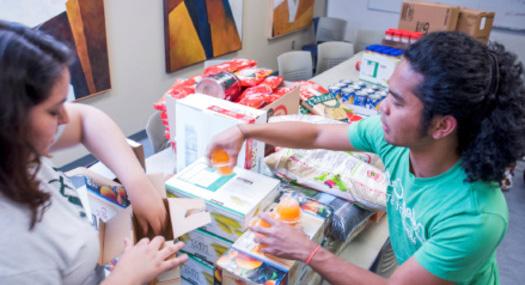
So, food pantries at colleges and universities are finding creative ways to meet student needs.
In the 2023-24 school year, 46% of students at Cal Poly Humboldt used the school’s Oh-SNAP! food pantry, 4% more than the year before.
Mira Friedman - lead for health education and clinic support services there, who coordinates the programsaid people may think that if students can afford tuition,
they can afford food.
But that’s often untrue.
“It’s a misconception, because oftentimes financial aid is not significant enough to pay for all the expenses,” said Friedman. “Food is very expensive, housing insecurity is very real, and food insecurity is very real for our students.”
Data from the California Student Aid Commission found that more than twothirds of college students surveyed were food insecure in 2023.
Humboldt’s Oh-SNAP! program offers cooking and gardening classes, sponsors a weekly farm stand with organic fruits and vegetables, and even has a pop-up thrift store with furniture and
kitchen items.
Students are also notified to pick up extra food from dining halls.
Contra Costa College, a 2-year school in San Pablo, recently launched a pilot program with 20 refrigerated lockers where students can pick up groceries they order online.
Basic needs coordinator Hope Dixon said the program also helps students with CalFresh applications.
“The eligibility requirements around CalFresh are incredibly challenging,” said Dixon. “I have a flow chart that helps students pre-review if they have some eligibility. In order to apply, there’s an interview, and students are often in classes.
If they miss the call, it’s very, very hard.”
Students who are on a
By Suzanne Potter, Producer, Public News Service
Tuesday was LGBTQIA+ Equal Pay Awareness Day and California advocates spoke out against federal attacks on workplace protections.
On his first day in office, President Donald Trump signed an executive order recognizing “male” and “female” as the only two sexes and withdrawing Biden-era guidance on harassment in the workplace.
Deborah Vagins, national campaign director for Equal Rights Advocates and director of the Equal Pay Today campaign, said Department of Government Efficiency cuts have devastated agencies like the Equal Employment Opportunity Commission, the Office of Federal Contract Compliance Programs and the National Labor Rela-
tions Board.
“President Trump took the unprecedented action to fire officials at these independent agencies,” Vagins pointed out. “He’s laid off hundreds of staff; he’s effectively undermined enforcement protections, especially, for LGBTQIA employees.”
The administration has said the cuts are necessary to fund an extension of Trump’s 2017 tax cuts.
A 2021 study from the Human Rights Campaign found LGBTQ+ workers make about 90 cents for every dollar earned by other workers, with LGBTQ+ women earning only 87 cents.
Vagins argued the new administration is sending the wrong signals so far.
“The recently renominated acting EEOC Chair
Andrea Lucas has made it clear that she does not plan to fully enforce employment protections for transgender and nonbinary workers,” Vagins noted. “They had cases pending at the EEOC that have since been dropped.”
Zakiya Thomas, president of the ERA Coalition, emphasized the Equal Rights Amendment has now been ratified by 38 state legislatures, so it should be added to the Constitution but the Trump administration has blocked it.
“The Supreme Court has actually upheld that discrimination against LGBTQ individuals is sexbased discrimination,” Thomas stressed. “The Equal Rights Amendment is for everyone and so we want to make sure that we can use it to

name statement expires five years from the date it was filed in the office of the county clerk. A new fictitious business name statement must be filed before that time. The filing of this statement does not of itself authorize the use in this state of a fictitious business name in violation of the rights of another under federal, state, or common law (see Section 14411 et seq. Business and Professions Code). Publish: 06/23/2025, 06/30/2025, 07/07/2025, 07/14/2025. ARCADIA WEEKLY. AAA1375367.
FICTITIOUS BUSINESS NAME STATEMENT 2025124363
The following person(s) is/are doing business as: EMERGENCE LOCKSMITH SERVICE 24/7, 7130 HOLLYWOOD BLVD., LOS ANGELES, CA 90046 LOS ANGELES. Mailing address if different: N/A. Articles of Incorporation or Organization Number: 6518346. The full name(s) of registrant(s) is/ are: LOCKSECURE LOCKSMITH INC., 7130 HOLLYWOOD BLVD. #28, LOS ANGELES, CA 90046 (State of Incorporation/Organization: CALIFORNIA). This business is conducted by: CORPORATION. I declare that all information in this statement is true and correct. (A registrant who declares as true information which he or she knows to be false is guilty of a crime.) Signed: DAWIT YBRAH, CEO. The registrant commenced to transact business under the fictitious business name listed above on (date): N/A. This statement was filed with the County Clerk of Los Angeles County on (Date) 06/18/2025. NOTICE: This fictitious name statement expires five years from the date it was filed in the office of the county clerk. A new fictitious business name statement must be filed before that time. The filing of this statement does not of itself authorize the use in this state of a fictitious business name in violation of the rights of another under federal, state, or common law (see Section 14411 et seq. Business and Professions Code). Publish: 06/23/2025, 06/30/2025, 07/07/2025, 07/14/2025. ARCADIA WEEKLY. AAA1375573.
FICTITIOUS BUSINESS NAME STATEMENT 2025124659
The following person(s) is/are doing business as: 1. MASTER PACKAGING & DISPLAY, 2. BEVERLY HILLS CONCEPTS, 130 W. LE ROY AVE., ARCADIA, CA 91007 LOS ANGELES. Mailing address if different: N/A. Articles of Incorporation or Organization Number: 2356353. The full name(s) of registrant(s) is/are: JEFF LEONARD INCORPORATED, PO BOX 1173, ARCADIA, CA 91077 (State of Incorporation/Organization: CALIFORNIA). This business is conducted by: CORPORATION. I declare that all information in this statement is true and correct. (A registrant who declares as true information which he or she knows to be false is guilty of a crime.)
Signed: NORMAN J. LEONARD, PRESIDENT. The registrant commenced to transact business under the fictitious business names listed above on (date): 01/1995. This statement was filed with the County Clerk of Los Angeles County on (Date) 06/18/2025. NOTICE: This fictitious name statement expires five years from the date it was filed in the office of the county clerk. A new fictitious business name statement must be filed before that time. The filing of this statement does not of itself authorize the use in this state of a fictitious business name in violation of the rights of another under federal, state, or common law (see Section 14411 et seq. Business and Professions Code). Publish: 06/23/2025, 06/30/2025, 07/07/2025, 07/14/2025. ARCADIA WEEKLY. AAA1375580.
FICTITIOUS BUSINESS NAME STATEMENT FILE NO. 2025 117524 NEW FILING. The following person(s) is (are) doing business as American Import Services, 4927 Dexter Court, Merced, CA 95348. This business is conducted by a individual. Registrant commenced to transact business under the fictitious business name or names listed herein on August 2015. Signed: Wei Qin, 4927 Dexter Court, Merced, CA 95348 (Owner). The statement was filed with the County Clerk of Merced on June 10, 2025. NOTICE: This fictitious business name statement expires five years from the date it was filed in the office of the County Clerk. A new fictitious business name statement must be filed prior to that date. The filing of this statement does not of itself authorize the use in this state of a fictitious business name in violation of the rights of another under federal, state or common law (See Section 14400 et seq., Business and Professional Code).
Pub. Monrovia Weekly 06/23/2025, 06/30/2025, 07/07/2025, 07/14/2025 sc
FICTITIOUS BUSINESS NAME
STATEMENT FILE NO. 2025 117519
NEW FILING. The following person(s) is (are) doing business as Cahuenga Rue productions, 4406 Beeman Ave, Studio City, CA 91604. This business is conducted by a individual. Registrant commenced to transact business under the fictitious business name or names listed herein on August 2010. Signed: John Vincent Basile, 4406 Beeman Ave, Studio City, CA 91604 (Owner). The statement was filed with the County Clerk of Los Angeles on June 10, 2025. NOTICE: This fictitious business name statement expires five years from the date it was filed in the office of the County Clerk. A new fictitious business name statement must be filed prior to that date. The filing of this statement does not of itself authorize the use in this state of a fictitious business name in violation of the rights of another under federal, state or common law (See Section 14400 et seq., Business and Professional Code).
Pub. Monrovia Weekly 06/23/2025, 06/30/2025, 07/07/2025, 07/14/2025 sc
FICTITIOUS BUSINESS NAME STATEMENT FILE NO. 2025 117517 NEW FILING. The following person(s) is (are) doing business as IDZ Trucking, 1312 Raymond Ave, Glendale, CA 91201. This business is conducted by a individual. Registrant commenced to transact business under the fictitious business name or names listed herein on November 2011. Signed: Armen V Safarian, 1312 Raymond Ave, Glendale, CA 91201 (Owner). The statement was filed with the County Clerk of Los Angeles on June 10, 2025. NOTICE: This fictitious business name statement expires five years from the date it was filed in the office of the County Clerk. A new fictitious business name statement must be filed prior to that date. The filing of this statement does not of itself authorize the use in this state of a fictitious business name in violation of the rights of another under federal, state or common law (See Section 14400 et seq., Business and Professional Code).
Pub. Monrovia Weekly 06/23/2025, 06/30/2025, 07/07/2025, 07/14/2025 sc
FICTITIOUS BUSINESS NAME STATEMENT FILE NO. 2025 117494 NEW FILING.
The following person(s) is (are) doing business as PZ Wear, 3703 Canehill Ave, Long Beach, CA 90808. This business is conducted by a individual. Registrant commenced to transact business under the fictitious business name or names listed herein on May 2006. Signed: Denise Porrazzo, 3703 Canehill Ave, Long Beach, CA 90808 (Owner). The statement was filed with the County Clerk of Los Angeles on June 10, 2025. NOTICE: This fictitious business name statement expires five years from the date it was filed in the office of the County Clerk. A new fictitious business name statement must be filed prior to that date. The filing of this statement does not of itself authorize the use in this state of a fictitious business name in violation of the rights of another under federal, state or common law (See Section 14400 et seq., Business and Professional Code). Pub. Monrovia Weekly 06/23/2025, 06/30/2025, 07/07/2025, 07/14/2025 sc
FICTITIOUS BUSINESS NAME STATEMENT FILE NO. 2025 117501 NEW FILING. The following person(s) is (are) doing business as Set point heating and air conditioning, 25329 Via Pacifica, Valencia, CA 91355. This business is conducted by a individual. Registrant commenced to transact business under the fictitious business name or names listed herein on December 2010. Signed: Craig Jay Barnett, 25329 Via Pacifica, Valencia, CA 91355 (Owner). The statement was filed with the County Clerk of Los Angeles on June 10, 2025. NOTICE: This fictitious business name statement expires five years from the date it was filed in the office of the County Clerk. A new fictitious business name statement must be filed prior to that date. The filing of this statement does not of itself authorize the use in this state of a fictitious business name in violation of the rights of another under federal, state or common law (See Section 14400 et seq., Business and Professional Code).
Pub. Monrovia Weekly 06/23/2025, 06/30/2025, 07/07/2025, 07/14/2025 sc
FICTITIOUS BUSINESS NAME STATEMENT FILE NO. 2025121457 NEW FILING. The following person(s) is (are) doing business as (1). RENAIXANCE or RENAISSANCE (2). VALMON CREATE or CREATIONS or DESIGNS (3). DUVAL REAL ESTATE or PROPERTIES (4). VALMON REAL ESTATE or PROPERTIES , 13270
Moorpark St, Unit 117, Sherman Oaks, CA 91423-5188. This business is conducted by a individual. Registrant commenced to transact business under the fictitious business name or names listed herein on January 2000. Signed: Simon Duval, 13270 Moorpark St, Unit 117, Sherman Oaks, CA 914235188 (Owner). The statement was filed with the County Clerk of Los Angeles on June 16, 2025. NOTICE: This fictitious business name statement expires five years from the date it was filed in the office of the County Clerk. A new fictitious business name statement must be filed prior to that date. The filing of this statement does not of itself authorize the use in this state of a fictitious business name in violation of the rights of another under federal, state or common law (See Section 14400 et seq., Business and Professional Code).
Pub. Monrovia Weekly 06/23/2025, 06/30/2025, 07/07/2025, 07/14/2025
FICTITIOUS BUSINESS NAME STATEMENT FILE NO. 2025112106 NEW FILING.
The following person(s) is (are) doing business as JD Group Enterprises, DBA Minuteman Press, 135 E Chestnut Ave, Monrovia, CA 91016. This business is conducted by a corporation. Registrant commenced to transact business under the fictitious business name or names listed herein on May 2025. Signed: JD Group Enterprises (CAB20250131343, 135 E Chestnut Ave Ste 4B, Monrovia, CA 91016; Jason Duarte, CEO. The statement was filed with the County Clerk of Los Angeles on June 3, 2025. NOTICE: This fictitious business name statement expires five years from the date it was filed in the office of the County Clerk. A new fictitious business name statement must be filed prior to that date. The filing of this statement does not of itself authorize the use in this state of a fictitious business name in violation of the rights of another under federal, state or common law (See Section 14400 et seq., Business and Professional Code). Pub. Monrovia Weekly 06/23/2025, 06/30/2025, 07/07/2025, 07/14/2025
FICTITIOUS BUSINESS NAME STATEMENT FILE NO. 2025124703 NEW FILING.
The following person(s) is (are) doing business as Kindle Tails Refuge, 461 W Woodbury Rd unit #327, Altadena, CA 91001. This business is conducted by a limited liability company (llc). Registrant has not yet begun to transact business under the fictitious business name or names listed herein. Signed: Kindle Tails Refuge LLC (CA-20250112906, 342 W Woodbury Rd, Altadena, Ca 91001; Viky Harelly Mejia Lopez, CEO. The statement was filed with the County Clerk of Los Angeles on June 18, 2025. NOTICE: This fictitious business name statement expires five years from the date it was filed in the office of the County Clerk. A new fictitious business name statement must be filed prior to that date. The filing of this statement does not of itself authorize the use in this state of a fictitious business name in violation of the rights of another under federal, state or common law (See Section 14400 et seq., Business and Professional Code). Pub. Monrovia Weekly 06/23/2025, 06/30/2025, 07/07/2025, 07/14/2025
FICTITIOUS BUSINESS NAME STATEMENT FILE NO. 2025104380 NEW FILING.
The following person(s) is (are) doing business as Rae Mobile Auto Repair, 1680 Miller Ave, Los Angeles, CA 90063. This business is conducted by a individual. Registrant has not yet begun to transact business under the fictitious business name or names listed herein. Signed: Rene Alonso Hernandez, 14613 Milestone St, Moreno Valley, Ca 92555 (Owner). The statement was filed with the County Clerk of Los Angeles on May 21, 2025. NOTICE: This fictitious business name statement expires five years from the date it was filed in the office of the County Clerk. A new fictitious business name statement must be filed prior to that date. The filing of this statement does not of itself authorize the use in this state of a fictitious business name in violation of the rights of another under federal, state or common law (See Section 14400 et seq., Business and Professional Code). Pub. Monrovia Weekly 06/23/2025, 06/30/2025, 07/07/2025, 07/14/2025
FICTITIOUS BUSINESS NAME STATEMENT FILE NO. 2025124230 NEW FILING.
The following person(s) is (are) doing business as (1). PARAKLETOS BY YOUR SIDE (2). THE PARAKLETOS , 317 E FOOYHILL BLVD Suite 208, Arcadia, CA 91006. This business is conducted by a corporation. Registrant commenced to transact business under the fictitious business name or names listed herein on December 2015. Signed: FERRER & HO PSYCHOLOGY CORPORATION (CA-3837706, 317 E FOOYHILL BLVD Suite 208, Arcadia,
CA 91006; BING-KING JOSEPH HO, VICE PRESIDENT. The statement was filed with the County Clerk of Los Angeles on June 18, 2025. NOTICE: This fictitious business name statement expires five years from the date it was filed in the office of the County Clerk. A new fictitious business name statement must be filed prior to that date. The filing of this statement does not of itself authorize the use in this state of a fictitious business name in violation of the rights of another under federal, state or common law (See Section 14400 et seq., Business and Professional Code).
Pub. Monrovia Weekly 06/23/2025, 06/30/2025, 07/07/2025, 07/14/2025
FICTITIOUS BUSINESS NAME STATEMENT FILE NO. 2025123880 NEW FILING. The following person(s) is (are) doing business as Dream Berry Dubai Chocolate, 9817 Marklein Ave, North Hills, CA 91343. This business is conducted by a individual. Registrant commenced to transact business under the fictitious business name or names listed herein on June 2025. Signed: Narek Barseghyan, 9817 Marklein Ave, North Hills, CA 91343 (Owner). The statement was filed with the County Clerk of Los Angeles on June 17, 2025. NOTICE: This fictitious business name statement expires five years from the date it was filed in the office of the County Clerk. A new fictitious business name statement must be filed prior to that date. The filing of this statement does not of itself authorize the use in this state of a fictitious business name in violation of the rights of another under federal, state or common law (See Section 14400 et seq., Business and Professional Code).
Pub. Monrovia Weekly 06/23/2025, 06/30/2025, 07/07/2025, 07/14/2025
FICTITIOUS BUSINESS NAME STATEMENT FILE NO. 2025122937
NEW FILING.
The following person(s) is (are) doing business as Document-USA, 700 N. Brand Blvd., Suite 590, Glendale, CA 91203. This business is conducted by a limited liability company (llc). Registrant has not yet begun to transact business under the fictitious business name or names listed herein. Signed: NU-WAVE GLOBAL LLC (CAB20250148579, 700 N. Brand Blvd., Suite 590, Glendale, CA 91203; oleksandr tuholukov, secretary. The statement was filed with the County Clerk of Los Angeles on June 17, 2025. NOTICE: This fictitious business name statement expires five years from the date it was filed in the office of the County Clerk. A new fictitious business name statement must be filed prior to that date. The filing of this statement does not of itself authorize the use in this state of a fictitious business name in violation of the rights of another under federal, state or common law (See Section 14400 et seq., Business and Professional Code). Pub. Monrovia Weekly 06/23/2025, 06/30/2025, 07/07/2025, 07/14/2025
FICTITIOUS BUSINESS NAME STATEMENT FILE NO. 2025120577 NEW FILING. The following person(s) is (are) doing business as (1). The Vacation Helper (2). Vacation Helper (3). The Vacation Helpers (4). Vacation Helpers , 1805 Morrison St, Pomona, CA 91766. This business is conducted by a co-partners. Registrant commenced to transact business under the fictitious business name or names listed herein on July 2024. Signed: (1). Janet Avila, 1805 Morrison St, Pomona, CA 91766 (2). Enrique Avila, 1805 Morrison St, Pomona, CA 91766 (Partner). The statement was filed with the County Clerk of Los Angeles on June 13, 2025.
NOTICE: This fictitious business name statement expires five years from the date it was filed in the office of the County Clerk. A new fictitious business name statement must be filed prior to that date. The filing of this statement does not of itself authorize the use in this state of a fictitious business name in violation of the rights of another under federal, state or common law (See Section 14400 et seq., Business and Professional Code).
Pub. Monrovia Weekly 06/23/2025, 06/30/2025, 07/07/2025, 07/14/2025
FICTITIOUS BUSINESS NAME STATEMENT FILE NO. 2025123840 NEW FILING. The following person(s) is (are) doing business as The Dough and Do, 749 North Citrus Ave, Covina, CA 91723. This business is conducted by a individual. Registrant commenced to transact business under the fictitious business name or names listed herein on June 2025. Signed: Tatiana Diaz, 749 North Citrus Ave, Covina, CA 91723 (Owner). The statement was filed with the County Clerk of Los Angeles on June 17, 2025. NOTICE: This fictitious business name statement expires five years from the date it was filed in the office of the County Clerk. A new fictitious business name statement must be filed prior to that date. The filing of this statement does not
of itself authorize the use in this state of a fictitious business name in violation of the rights of another under federal, state or common law (See Section 14400 et seq., Business and Professional Code).
Pub. Monrovia Weekly 06/23/2025, 06/30/2025, 07/07/2025, 07/14/2025
FICTITIOUS BUSINESS NAME STATEMENT FILE NO. 2025119750
NEW FILING. The following person(s) is (are) doing business as Wolf gang bakery & grooming south redondo, 163 E 213th St, Carson, CA 90745. This business is conducted by a limited liability company (llc). Registrant has not yet begun to transact business under the fictitious business name or names listed herein. Signed: Made for Pooch LLC (CA-B20250090154, 163 E 213th St, Carson, CA 90745; Amalia Santillan, Member. The statement was filed with the County Clerk of Los Angeles on June 12, 2025.
NOTICE: This fictitious business name statement expires five years from the date it was filed in the office of the County Clerk. A new fictitious business name statement must be filed prior to that date. The filing of this statement does not of itself authorize the use in this state of a fictitious business name in violation of the rights of another under federal, state or common law
(See Section 14400 et seq., Business and Professional Code).
Pub. Monrovia Weekly 06/23/2025, 06/30/2025, 07/07/2025, 07/14/2025
FICTITIOUS BUSINESS NAME STATEMENT FILE NO. 2025123891
NEW FILING.
The following person(s) is (are) doing business as pacific pro restoration inc, 15439 lefloss ave, Norwalk, CA 90650. This business is conducted by a corporation. Registrant commenced to transact business under the fictitious business name or names listed herein on June 2025. Signed: pacific pro restoration inc (CA-B20250150276, 15439 lefloss ave, Norwalk, CA 90650; alejandro nicola venegas, ceo. The statement was filed with the County Clerk of Los Angeles on June 17, 2025.
NOTICE: This fictitious business name statement expires five years from the date it was filed in the office of the County Clerk. A new fictitious business name statement must be filed prior to that date. The filing of this statement does not of itself authorize the use in this state of a fictitious business name in violation of the rights of another under federal, state or common law (See Section 14400 et seq., Business and Professional Code).
Pub. Monrovia Weekly 06/23/2025, 06/30/2025, 07/07/2025, 07/14/2025
FICTITIOUS BUSINESS NAME STATEMENT FILE NO. 2025115560 NEW FILING.
The following person(s) is (are) doing business as Underlying Wellness, 177 N Hudson Ave, 322, Pasadena, CA 91101. This business is conducted by a individual. Registrant commenced to transact business under the fictitious business name or names listed herein on June 2025. Signed: Sarah LaVoie, 177 N Hudson Ave, 322, Pasadena, CA 91101 (Owner). The statement was filed with the County Clerk of Los Angeles on June 6, 2025. NOTICE: This fictitious business name statement expires five years from the date it was filed in the office of the County Clerk. A new fictitious business name statement must be filed prior to that date. The filing of this statement does not of itself authorize the use in this state of a fictitious business name in violation of the rights of another under federal, state or common law (See Section 14400 et seq., Business and Professional Code). Pub. Monrovia Weekly 06/23/2025, 06/30/2025, 07/07/2025, 07/14/2025
FICTITIOUS BUSINESS NAME STATEMENT FILE NO. 2025113785
NEW FILING.
The following person(s) is (are) doing business as RAON Acupuncture, 1130 S. Diamond Bar Blvd, Diamond Bar, CA 91765. This business is conducted by a corporation. Registrant commenced to transact business under the fictitious business name or names listed herein on May 2025. Signed: RAON Acupuncture-Kim Professional Corporation (CA-6600299, 1130 S. Diamond Bar Blvd, Diamond Bar, CA 91765; Euna Kim, President. The statement was filed with the County Clerk of Los Angeles on June 4, 2025. NOTICE: This fictitious business name statement expires five years from the date it was filed in the office of the County Clerk. A new fictitious business name statement must be filed prior to that date. The filing of this statement does not of itself authorize the use in this state of a fictitious business name in violation of the rights of another under federal, state or common law (See Section 14400 et seq., Business and Professional Code). Pub. Monrovia Weekly 06/23/2025, 06/30/2025, 07/07/2025, 07/14/2025
FICTITIOUS BUSINESS NAME
STATEMENT FILE NO. 2025123587
NEW FILING. The following person(s) is (are) doing business as Shark Money Pool, 16133 Ventura Blvd Ste 700, Encino, CA 91436. This business is conducted by a general partnership. Registrant commenced to transact business under the fictitious business name or names listed herein on May 2025. Signed: Samvel Barseghyan (CA-, 16133 Ventura Blvd Ste 700, Encino, CA 91436; Samvel Barseghyan, General Partner (General Partner). The statement was filed with the County Clerk of Los Angeles on June 17, 2025. NOTICE: This fictitious business name statement expires five years from the date it was filed in the office of the County Clerk. A new fictitious business name statement must be filed prior to that date. The filing of this statement does not of itself authorize the use in this state of a fictitious business name in violation of the rights of another under federal, state or common law (See Section 14400 et seq., Business and Professional Code). Pub. Monrovia Weekly 06/23/2025, 06/30/2025, 07/07/2025, 07/14/2025
FICTITIOUS BUSINESS NAME STATEMENT FILE
This business is conducted by a corporation. Registrant commenced to transact business under the fictitious business name or names listed herein on May 2025. Signed: SYNERGY USA INC. (CAB20250120076, 578 Washington Blvd Unit 1083, Marina Del Rey, Ca 90292; Marian Hansen, Ceo. The statement was filed with the County Clerk of Los Angeles on May 23, 2025. NOTICE: This fictitious business name statement expires five years from the date it was filed in the office of the County Clerk. A new fictitious business name statement must be filed prior to that date. The filing of this statement does not of itself authorize the use in this state of a fictitious business name in violation of the rights of another under federal, state or common law (See Section 14400 et seq., Business and Professional Code). Pub. Monrovia Weekly 06/23/2025, 06/30/2025, 07/07/2025, 07/14/2025 FICTITIOUS BUSINESS NAME STATEMENT FILE NO. 2025118971 NEW FILING. The following person(s) is (are) doing business as Toñis distribucion MV, 8509 Hasty Ave Apt D, Pico Rivera, CA 90660. This business is conducted by a individual. Registrant has not yet begun to transact business under the fictitious business name or names listed herein. Signed: Marco Antonio Martinez Villaseñor, 8509 Hasty Ave Apt D, Pico Rivera, CA 90660 (Owner). The statement was filed with the County Clerk of Los Angeles on June 11, 2025. NOTICE: This fictitious business name statement expires five years from the date it was filed in the office of the County Clerk. A new fictitious business name statement must be filed prior to that date. The filing of this statement does not of itself authorize the use in this state of a fictitious business name in violation of the rights of another under federal, state or common law (See Section 14400 et seq., Business and Professional Code). Pub. Monrovia Weekly 06/23/2025, 06/30/2025, 07/07/2025, 07/14/2025
BEFORE THE CITY COUNCIL CITY OF MONTEREY PARKCOUNTY OF LOS ANGELES - STATE OF CALIFORNIA
NOTICE OF PUBLIC HEARING
TAKE NOTICE that the City Council of the City of Monterey Park will hold a public hearing on July 2, 2025, at the hour of 6:30 p.m. in the City Council Chambers, located at 320 West Newmark Avenue in the City of Monterey Park. The meeting information may be obtained by contacting the City Clerk’s Office at (626) 307-1359 or online at www.montereypark.ca.gov/AgendaCenter.
The City Council will consider whether to adopt the Office of the State Fire Marshal’s State Responsibility Area Fire Hazard Severity Map. Copies of all relevant materials are available to the general public for review in the City Clerk’s Office on or about June 26, 2025, and copies may be obtained at cost or online at www.montereypark. ca.gov/AgendaCenter.
Interested individuals may appear in person or by agent at the public hearing and be heard on any matter relevant to such proceedings. If you challenge the proposed action in court, you may be limited to raising only those issues you or someone else raised at the public hearing described in this notice, or in written correspondence delivered to the City Council at, or before, the public hearing.
Publish June 16 & 23, 2025 MONTEREY PARK PRESS
NOTICE OF PETITION TO ADMINISTER ESTATE OF:
BARBARA ANNE HOLLAND AKA BARBARA A. HOLLAND AKA BARBARA HOLLAND CASE NO. 25STPB06611
To all heirs, beneficiaries, creditors, contingent creditors, and persons who may otherwise be interested in the WILL or estate, or both of BARBARA ANNE HOLLAND AKA BARBARA A. HOLLAND AKA BARBARA HOLLAND.
A PETITION FOR PROBATE has been filed by CHRISTINE MARIE SCOTT in the Superior Court of California, County of LOS ANGELES. THE PETITION FOR PROBATE requests that CHRISTINE MARIE SCOTT be appointed as personal representative to administer the estate of the decedent.
THE PETITION requests authority to administer the estate under the Independent Administration of Es-tates Act. (This authority will allow the personal representative to take many actions without obtaining court approval. Before taking certain very important actions, however, the personal representative will be required to give notice to interested persons unless they have waived notice or consented to the proposed action.) The independent administration authority will be granted unless an interested person files an objection to the petition and shows good cause why the court should not grant the authority.
A HEARING on the petition will be held in this court as follows: 07/10/25 at 8:30AM in Dept. 79 located at 111 N. HILL ST., LOS ANGELES, CA 90012
IF YOU OBJECT to the granting of the petition, you should appear at the hearing and state your objections or file written objections with the court before the hearing. Your appearance may be in person or by your attorney.
IF YOU ARE A CREDITOR or a contingent creditor of the decedent, you must file your claim with the court and mail a copy to the personal representative appointed by the court within the later of either (1) four months from the date of first issuance of letters to a general personal representative, as defined in section 58(b) of the California Probate Code, or (2) 60 days from the date of mailing or personal delivery to you of a notice under section 9052 of the California Probate Code.
Other California statutes and legal authority may affect your rights as a creditor. You may want to consult with an attorney knowledgeable in California law.
YOU MAY EXAMINE the file kept by the court. If you are a person interested in the estate, you may file with the court a Request for Special Notice (form DE-154) of the filing of
Code.
Other California statutes and legal authority may affect your rights as a creditor. You may want to consult with an attorney knowledgeable in California law.
YOU MAY EXAMINE the file kept by the court. If you are a person interested in the estate, you may file with the court a Request for Special Notice (form DE-154) of the filing of an inventory and appraisal of estate assets or of any petition or account as provided in Probate Code section 1250. A Request for Special Notice form is available from the court clerk.
Attorney for petitioner: ANDERSON & LeBLANC, APLC JEFF W. LeBLANC 123 E.9th Street Suite 105 Upland, Ca 91786
909-949-2226
June 16, 19, 23, 2025
RIVERSIDE INDEPENDENT
NOTICE OF COMPETING PETITION TO ADMINISTER
ESTATE OF:
LONNIE CRAIG MARTIN
CASE NO. 24STPB08320
To all heirs, beneficiaries, creditors, contingent creditors, and persons who may otherwise be interested in the WILL or estate, or both of LONNIE CRAIG MARTIN.
an inventory and appraisal of estate
assets or of any petition or account as provided in Probate Code section 1250. A Request for Special Notice form is available from the court clerk.
Attorney for Petitioner LAYNE A. BARTHOLOMEW - SBN 178280
LAW OFFICES OF LAYNE A. BARTHOLOMEW
222 N. MOUNTAIN AVE., STE. 100 UPLAND CA 91786
Telephone (909) 931-4733
6/16, 6/19, 6/23/25
CNS-3937736# PASADENA PRESS
NOTICE OF PETITION TO ADMINISTER ESTATE OF Christian Barragan
Case No. PRRI2501591
To all heirs, beneficiaries, creditors, contingent creditors, and persons who may otherwise be interested in the will or estate, or both, of Christian Barragan
A PETITION FOR PROBATE has been filed by Maria Barragan in the Superior Court of California, County of RIVERSIDE.
THE PETITION FOR PROBATE requests that Maria Barragan be appointed as personal representative to administer the estate of the decedent.
THE PETITION requests authority to administer the estate under the Independent Administration of Estates Act. (This authority will allow the personal representative to take many actions without obtaining court approval. Before taking certain very important actions, however, the personal representative will be required to give notice to interested persons unless they have waived notice or consented to the proposed action.) The independent administration authority will be granted unless an interested person files an objection to the petition and shows good cause why the court should not grant the authority.
A HEARING on the petition will be held on July 21, 2025 at 8:30 AM in Dept. 12. located at 4050 Main Street, Riverside, Ca 92501.
IF YOU OBJECT to the granting of the petition, you should appear at the hearing and state your objections or file written objections with the court before the hearing. Your appearance may be in person or by your attorney.
IF YOU ARE A CREDITOR or a contingent creditor of the decedent, you must file your claim with the court and mail a copy to the personal representative appointed by the court within the later of either (1) four months from the date of first issuance of letters to a general personal representative, as defined in section 58(b) of the California Probate Code, or (2) 60 days from the date of mailing or personal delivery to you of a notice under section 9052 of the California Probate
ESTATE OF: FREDERICK O. ALEX
CASE NO. 25STPB00668
To all heirs, beneficiaries, creditors, contingent creditors, and persons who may otherwise be interested in the WILL or estate, or both of FREDERICK O. ALEX.
AN AMENDED PETITION FOR PROBATE has been filed by MARIA ALEX in the Superior Court of California, County of LOS ANGELES.
THE AMENDED PETITION FOR PROBATE requests that MARIA ALEX be appointed as personal representative to administer the estate of the decedent.
THE AMENDED PETITION requests authority to administer the estate under the Independent Administration of Estates Act. (This authority will allow the personal representative to take many actions without obtaining court approval. Before taking certain very important actions, however, the personal representative will be required to give notice to interested persons unless they have waived notice or consented to the proposed action.) The independent admin-istration authority will be granted unless an interested person files an objection to the petition and shows good cause why the court should not grant the authority.
A COMPETING PETITION FOR PROBATE has been filed by GARY C. MARTIN in the Superior Court of California, County of LOS ANGELES. THE COMPETING PETITION FOR PROBATE requests that GARY C. MARTIN be appointed as personal representative to administer the estate of the decedent. THE COMPETING PETITION requests authority to administer the estate under the Independent Administration of Estates Act. (This authority will allow the personal representative to take many actions without obtaining court approval. Before taking certain very important actions, however, the personal representative will be required to give notice to interested persons unless they have waived notice or consented to the proposed action.) The independent admin-istration authority will be granted unless an interested person files an objection to the petition and shows good cause why the court should not grant the authority.
A HEARING on the competing petition will be held in this court as follows: 07/14/25 at 8:30AM in Dept. 67 located at 111 N. HILL ST., LOS ANGELES, CA 90012
IF YOU OBJECT to the granting of the petition, you should appear at the hearing and state your objections or file written objections with the court before the hearing. Your appearance may be in person or by your attorney.
IF YOU ARE A CREDITOR or a contingent creditor of the decedent, you must file your claim with the court and mail a copy to the personal representative appointed by the court within the later of either (1) four months from the date of first issuance of letters to a general personal representative, as defined in section 58(b) of the California Probate Code, or (2) 60 days from the date of mailing or personal delivery to you of a notice under section 9052 of the California Probate Code.
Other California statutes and legal authority may affect your rights as a creditor. You may want to consult with an attorney knowledgeable in California law.
YOU MAY EXAMINE the file kept by the court. If you are a person interested in the estate, you may file with the court a Request for Special Notice (form DE-154) of the filing of an inventory and appraisal of estate assets or of any petition or account as provided in Probate Code section 1250. A Request for Special Notice form is available from the court clerk.
Attorney for Petitioner
GREGORY W. CABO - SBN 206108
LAW OFFICES OF GREGORY W. CABO
1855 W. KATELLA AVE., STE. 365 ORANGE CA 92867
Telephone (714) 771-2227
BSC 227003 6/19, 6/23, 6/26/25 CNS-3938328# BURBANK INDEPENDENT
NOTICE OF AMENDED PETITION TO ADMINISTER
dent administration authority will be granted unless an interested person files an objection to the petition and shows good cause why the court should not grant the authority.
A HEARING on the petition will be held on July 24, 2025 at 8:30 AM in Dept. 44. located at 111 North Hill Street, Los Angeles, CA 90012.
IF YOU OBJECT to the granting of the petition, you should appear at the hearing and state your objections or file written objections with the court before the hearing. Your appearance may be in person or by your attorney.
IF YOU ARE A CREDITOR or a contingent creditor of the decedent, you must file your claim with the court and mail a copy to the personal representative appointed by the court within the later of either (1) four months from the date of first issuance of letters to a general personal representative, as defined in section 58(b) of the California Probate Code, or (2) 60 days from the date of mail-ing or personal delivery to you of a notice under section 9052 of the California Probate Code. Other California statutes and legal authority may affect your rights as a creditor. You may want to consult with an attorney knowledgeable in California law.
A HEARING on the petition will be held in this court as follows: 07/24/25 at 8:30AM in Dept. 44 located at 111 N. HILL ST., LOS ANGELES, CA 90012
IF YOU OBJECT to the granting of the petition, you should appear at the hearing and state your objections or file written objections with the court before the hearing. Your appearance may be in person or by your attorney.
IF YOU ARE A CREDITOR or a contingent creditor of the decedent, you must file your claim with the court and mail a copy to the personal representative appointed by the court within the later of either (1) four months from the date of first issuance of letters to a general personal representative, as defined in section 58(b) of the California Probate Code, or (2) 60 days from the date of mailing or personal delivery to you of a notice under section 9052 of the California Probate Code.
Other California statutes and legal authority may affect your rights as a creditor. You may want to consult with an attorney knowledgeable in California law.
YOU MAY EXAMINE the file kept by the court. If you are a person interested in the estate, you may file with the court a Request for Special Notice (form DE-154) of the filing of an inventory and appraisal of estate assets or of any petition or account as provided in Probate Code section 1250. A Request for Special Notice form is available from the court clerk.
Attorney for Petitioner JAMES J. ALLEMAND - SBN 293571 ALLEMAND LAW, APC 8028 PAINTER AVE. WHITTIER CA 90602
Telephone (562) 867-1100 6/19, 6/23, 6/26/25 CNS-3938382# WEST COVINA PRESS
NOTICE OF PETITION TO ADMINISTER ESTATE OF Audrey Wilson
Case No. 25STPB06804
To all heirs, beneficiaries, creditors, contingent creditors, and persons who may otherwise be interested in the will or estate, or both, of Audrey Wilson, aka Audrey Silian
A PETITION FOR PROBATE has been filed by Richard Gregory Boghosian in the Superior Court of California, County of LOS ANGELES.
THE PETITION FOR PROBATE requests that Richard Gregory Boghosian be appointed as personal representative to administer the estate of the decedent.
THE PETITION requests the decedent’s will and codicils, if any, be admitted to probate. The will and any codicils are available for examination in the file kept by the court.
THE PETITION requests authority to administer the estate under the Independent Administration of Es-tates Act. (This authority will allow the personal representative to take many actions without obtaining court approval. Before taking certain very important actions, however, the personal representative will be required to give notice to interested persons unless they have waived notice or consented to the proposed action.) The indepen-
California law. YOU MAY EXAMINE the file kept by the court. If you are a person interested in the estate, you may file with the court a Request for Special Notice (form DE-154) of the filing of an inventory and appraisal of estate assets or of any petition or account as provided in Probate Code section 1250. A Request for Special Notice form is available from the court clerk.
Attorney for Petitioner
SHAUNA R. ANDERSON, ESQ.SBN 265989
KATHERINE LINDSEY, ESQ.SBN 252438
LAW STEIN ANDERSON LLP
2601 MAIN ST., STE. 1200 IRVINE CA 92614
Telephone (949) 501-4800 BSC 227019
6/23, 6/26, 6/30/25 CNS-3939786# BALDWIN PARK PRESS
YOU MAY EXAMINE the file kept by the court. If you are a person interested in the estate, you may file with the court a Request for Special Notice (form DE-154) of the filing of an inventory and appraisal of estate assets or of any petition or account as provided in Probate Code section 1250. A Request for Special Notice form is available from the court clerk.
Attorney for petitioner: ANNETTE DAWSON-DAVID, ESQ 400 MOBIL AVENUE SUITE #D-11
CAMARILLO, CALIFORNIA 93010 (805) 498-0909
JUNE 19, 23, 26, 2025 PASADENA PRESS
NOTICE OF PETITION TO ADMINISTER ESTATE OF: FRANK SILVESTRE MERAZ AKA FRANK SILVESTRE MERAZ, SR. CASE NO. 25STPB06869
To all heirs, beneficiaries, creditors, contingent creditors, and persons who may otherwise be interested in the WILL or estate, or both of FRANK SILVESTRE MERAZ AKA FRANK SILVESTRE MERAZ, SR..
A PETITION FOR PROBATE has been filed by WALTER REECE, JR. in the Superior Court of California, County of LOS ANGELES.
THE PETITION FOR PROBATE requests that WALTER REECE, JR. be appointed as personal representative to administer the estate of the decedent.
THE PETITION requests authority to administer the estate under the Independent Administration of Estates Act. (This authority will allow the personal representative to take many actions without obtaining court approval. Before taking certain very important actions, however, the personal representative will be required to give notice to interested persons unless they have waived notice or consented to the proposed action.) The independent administration authority will be granted unless an interested person files an objection to the petition and shows good cause why the court should not grant the authority.
A HEARING on the petition will be held in this court as follows: 07/24/25 at 8:30AM in Dept. 44 located at 111 N. HILL ST., LOS ANGELES, CA 90012
IF YOU OBJECT to the granting of the petition, you should appear at the hearing and state your objections or file written objections with the court before the hearing. Your appearance may be in person or by your attorney. IF YOU ARE A CREDITOR or a contingent creditor of the decedent, you must file your claim with the court and mail a copy to the personal representative appointed by the court within the later of either (1) four months from the date of first issuance of letters to a general personal representative, as defined in section 58(b) of the California Probate Code, or (2) 60 days from the date of mailing or personal delivery to you of a notice under section 9052 of the California Probate Code.
Other California statutes and legal authority may affect your rights as a creditor. You may want to consult with an attorney knowledgeable in
a nonprofit legal services program. You can locate these nonprofit groups at the California Legal Services Web site (www. lawhelpcalifornia.org), the California Courts Online Self-Help Center (www. courtinfo.ca.gov/selfhelp), or by contacting your local court or county bar association. NOTE: The court has a statutory lien for waived fees and costs on any settlement or arbitration award of $10,000 or more in a civil case. The court’s lien must be paid before the court will dismiss the case. ¡AVISO! Lo han demandado. Si no responde dentro de 30 días, la corte puede decidir en su contra sin escuchar su versión. Lea la información a continuación. Tiene 30 DÍAS DE CALENDARIO después de que le entreguen esta citación y papeles legales para presentar una respuesta por escrito en esta corte y hacer que se entregue una copia al demandante. Una carta o una llamada telefónica no lo protegen. Su respuesta por escrito tiene que estar en formato legal correcto si desea que procesen su caso en la corte. Es posible que haya un formulario que usted pueda usar para su respuesta. Puede encontrar estos formularios de la corte y más información en el Centro de Ayuda de las Cortes de California (www.sucorte.ca.gov), en la biblioteca de leyes de su condado o en la corte que le quede más cerca. Si no puede pagar la cuota de presentación, pida al secretario de la corte que le dé un formulario de exención de pago de cuotas. Si no presenta su respuesta a tiempo, puede perder el caso por incumplimiento y la corte le podrá quitar su sueldo, dinero y bienes sin más advertencia. Hay otros requisitos legales. Es recomendable que llame a un abogado inmediatamente. Si no conoce a un abogado, puede llamar a un servicio de remisión a abogados. Si no puede pagar a un abogado, es posible que cumpla con los requisitos para obtener servicios legales gratuitos de un programa de servicios legales sin fines de lucro. Puede encontrar estos grupos sin fines de lucro en el sitio web de California Legal Services, (www.lawhelpcalifornia. org), en el Centro de Ayuda de las Cortes de California, (www.sucorte.ca.gov) o poniéndose en contacto con la corte o el colegio de abogados locales. AVISO: Por ley, la corte tiene derecho a reclamar las cuotas y los costos exentos por imponer un gravamen sobre cualquier recuperación de $10,000 ó más de valor recibida mediante un acuerdo o una concesión de arbitraje en un caso de derecho civil. Tiene que pagar el gravamen de la corte antes de que la corte pueda desechar el caso. The name and address of the court is (El nombre y dirección de la corte es): COUNTY OF SAN BERNARDINO 247 WEST 3RD ST SAN BERNARDINO, CA 92415 SAN BERNARDINO JUSTICE CENTER The name, address, and telephone number of plaintiff’s attorney, or plaintiff without an attorney, is (El nombre, la dirección y el número de
the trustee receives it no more than 45 days after the trustee’s sale. If you think you may qualify as an “eligible tenant buyer” or “eligible bidder,” you should consider contacting an attorney or appropriate real estate professional immediately for advice regarding this potential right to purchase. FOR TRUSTEE SALE
INFORMATION PLEASE CALL: 833561-0243 WWW.SALES.BDFGROUP. COM BARRETT DAFFIN FRAPPIER TREDER & WEISS, LLP IS ACTING AS A DEBT COLLECTOR ATTEMPTING TO COLLECT A DEBT. ANY INFORMATION OBTAINED WILL BE USED FOR THAT PURPOSE. BARRETT DAFFIN FRAPPIER TREDER & WEISS, LLP as Trustee 3990 E. Concours Street, Suite 350 Ontario, CA 91764 (866) 795-1852 Dated: 06/12/2025 A-4845707 06/23/2025, 06/30/2025, 07/07/2025 ANAHEIM PRESS
T.S. No.: 2025-00348-CA
A.P.N.:482481025 Property Address: 24096 MOUNT RUSSELL DRIVE, MORENO VALLEY, CA 92553 NOTICE OF TRUSTEE’S SALE PURSUANT TO CIVIL CODE § 2923.3(a) and (d), THE SUMMARY OF INFORMATION REFERRED TO BELOW IS NOT ATTACHED TO THE RECORDED COPY OF THIS DOCUMENT BUT ONLY TO THE COPIES PROVIDED TO THE TRUSTOR. NOTE: THERE IS A SUMMARY OF THE INFORMATION IN THIS DOCUMENT ATTACHED
there are risks involved in bidding at a trustee auction. You will be bidding on a lien, not on the property itself. Placing the highest bid at a trustee auction does not automatically entitle you to free and clear ownership of the property. You should also be aware that the lien being auctioned off may be a junior lien. If you are the highest bidder at the auction, you are or may be responsible for paying off all liens senior to the lien being auctioned off, before you can receive clear title to the property. You are encouraged to investigate the existence, priority, and size of outstanding liens that may exist on this property by contacting the county recorder’s office or a title insurance company, either of which may charge you a fee for this information. If you consult either of these resources, you should be aware that the same lender may hold more than one mortgage or deed of trust on this property.
NOTICE TO PROPERTY OWNER: The sale date shown on this notice of sale may be postponed one or more times by the mortgagee, beneficiary, trustee, or a court, pursuant to Section 2924g of the California Civil Code. The law requires that information about trustee sale postponements be made available to you and to the public, as a courtesy to those not present at the sale. If you wish to learn whether your sale date has been postponed, and, if applicable, the rescheduled time and date for the sale of this property, you may call (866)-960-8299 or visit this Internet Web site https://www.altisource. com/loginpage.aspx using the file number assigned to this case 2025-00348-CA. Information about postponements that are very short in duration or that occur close in time to the scheduled sale may not immediately be reflected in the telephone information or on the Internet Web site. The best way to verify postponement information is to attend the scheduled sale.
NOTICE OF TRUSTEE’S SALE
LÀ BẢN TRÌNH BÀY TÓM LƯỢC VỀ THÔNG TIN TRONG TÀI LIỆU NÀY IMPORTANT NOTICE TO PROPERTY
OWNER: YOU ARE IN DEFAULT UNDER A DEED OF TRUST DATED 12/19/2005. UNLESS YOU TAKE ACTION TO PROTECT YOUR PROPERTY, IT MAY BE SOLD AT A PUBLIC SALE. IF YOU NEED AN EXPLANATION OF THE NATURE OF THE PROCEEDING AGAINST YOU, YOU SHOULD CONTACT A LAWYER. Trustor: MICHAEL RILEY AND DEBRA RILEY HUSBAND AND WIFE AS JOINT TENANTS
Duly Appointed Trustee: Western Progressive, LLC Deed of Trust Recorded 01/11/2006 as Instrument No. 2006-0024427 in book ---, page--- and of Official Records in the office of
NOTICE TO TENANT: You may have a right to purchase this property after the trustee auction, if conducted after January 1, 2021, pursuant to Section 2924m of the California Civil Code. If you are an “eligible tenant buyer,” you can purchase the property if you match the last and highest bid placed at the trustee auction. If you are an “eligible bidder,” you may be able to purchase the property if you exceed the last and highest bid placed at the trustee auction. There are three steps to exercising this right of purchase. First, 48 hours after the date of the trustee sale, you can call (866)-960-8299, or visit this internet website https://www.altisource. com/loginpage.aspx, using the file number assigned to this case 2025-00348-CA to find the date on which the trustee’s sale was held, the amount of the last and highest bid, and the address of the trustee. Second, you must send a written notice of intent to place a bid so that the trustee receives it no more than 15 days after the trustee’s sale. Third, you must submit a bid, by remitting the funds and affidavit described in Section 2924m(c) of the Civil Code, so that the trustee receives it no more than 45 days after the trustee’s sale. If you think you may qualify as an “eligible tenant buyer” or “eligible bidder,” you should consider contacting an attorney or appropriate real estate professional immediately for advice regarding this potential right to purchase. Date: June 16, 2025 Western Progressive, LLC, as Trustee for beneficiary C/o 1500 Palma Drive, Suite 238 Ventura, CA 93003 Sale Information Line: (866) 960-8299 https://www.altisource.com/loginpage. aspx ______________ Trustee Sale Assistant. Run Dates: 06/23/2025, 06/30/2025, 07/07/2025 RIVERSIDE INDEPENDENT
facts set forth in the statement pursuant to section 17913 other than a change in the residence address of a registered owner. A new Fictitious Business Name Statement must be filed before the expiration. The filing of this statement does not of itself authorize the use this state of a fictitious business name in violation of the rights of another under federal, state, or common law (see Section 14411 Et Seq., business and professions code). I hereby certify that this copy is a correct copy of the original statement on file in my office.
Peter Aldana, County, Clerk File# R-202504972 Pub. 04/21/2025, 04/28/2025, 05/05/2025, 05/12/2025 Riverside Independent
The following person(s) is (are) doing business as The Meat Boutique 371 Wilkerson Ave, Unit N Perris, CA 92570
Riverside County The Meat Boutique, LLC (CA, 371 Wilkerson Ave, Unit N, Perris, CA 92570 Riverside County
This business is conducted by: a individual. Registrant has not yet begun to transact business under the fictitious business name or names listed herein. I declare that all the information in this statement is true and correct. (A registrant who declares as true any material matter pursuant to Section 17913 of the Business and Professions Code, that the registrant knows to be false, is guilty of a misdemeanor punishable by a fine not to exceed one thousands dollars ($1000).)
s. Rosalia Zambrano Ruelas, Managing Member Statement filed with the County of Riverside on May 28, 2025 NOTICE: In accordance with subdivision (a) of section 17920, a fictitious name statement generally expires at the end of the five years from the date on which it was filed in the office of the county clerk, except, as provided in subdivision (b) of section 17920, where it expires 40 days after any changes in the facts set forth in the statement pursuant to section 17913 other than a change in the residence address of a registered owner.
A new Fictitious Business Name Statement must be filed before the expiration. The filing
of this statement does not of itself authorize the use this state of a fictitious business name in violation of the rights of another under federal, state, or common law (see Section 14411 Et Seq., business and professions code). I hereby certify that this copy is a correct copy of the original statement on file in my office.
Peter Aldana, County, Clerk File# R-202506756 Pub. 06/09/2025, 06/16/2025, 06/23/2025, 06/30/2025
Riverside Independent
The following person(s) is (are) doing business as Vazirian Events 3955 Ibbetson St Corona, CA 92882
Riverside County Mina Louise Vazirian, 3955 Ibbetson St, Corona, CA 92882
Riverside County
This business is conducted by: a individual. Registrant commenced to transact business under the fictitious business name or names listed herein on May 23, 2025. I declare that all the information in this statement is true and correct. (A registrant who declares as true any material matter pursuant to Section 17913 of the Business and Professions Code, that the registrant knows to be false, is guilty of a misdemeanor punishable by a fine not to exceed one thousands dollars ($1000).)
s. Mina Louise Vazirian
Statement filed with the County of Riverside on June 5, 2025
NOTICE: In accordance with subdivision (a) of section 17920, a fictitious name statement generally expires at the end of the five years from the date on which it was filed in the office of the county clerk, except, as provided in subdivision (b) of section 17920, where it expires 40 days after any changes in the facts set forth in the statement pursuant to section 17913 other than a change in the residence address of a registered owner.
A new Fictitious Business Name Statement must be filed before the expiration. The filing of this statement does not of itself authorize the use this state of a fictitious business name in violation of the rights of another under federal, state, or common law (see Section 14411 Et Seq., business and professions code). I hereby
certify that this copy is a correct copy of the original statement on file in my office.
Peter Aldana, County, Clerk File# R-202507147
Pub. 06/16/2025, 06/23/2025, 06/30/2025, 07/07/2025
Riverside Independent
The following person(s) is (are) doing business as CNC WELLNESS 812 Poppy lane Corona, CA 92881
Riverside County California Nursing consultants (CA, 812 Poppyseed Lane, Corona, CA 92881
Riverside County This business is conducted by: a corporation. Registrant has not yet begun to transact business under the fictitious business name or names listed herein. I declare that all the information in this statement is true and correct. (A registrant who declares as true any material matter pursuant to Section 17913 of the Business and Professions Code, that the registrant knows to be false, is guilty of a misdemeanor punishable by a fine not to exceed one thousands dollars ($1000).)
s. Holy Dove Quiboloy Paule, CEO Statement filed with the County of Riverside on June 11, 2025 NOTICE: In accordance with subdivision (a) of section 17920, a fictitious name statement generally expires at the end of the five years from the date on which it was filed in the office of the county clerk, except, as provided in subdivision (b) of section 17920, where it expires 40 days after any changes in the facts set forth in the statement pursuant to section 17913 other than a change in the residence address of a registered owner. A new Fictitious Business Name Statement must be filed before the expiration. The filing of this statement does not of itself authorize the use this state of a fictitious business name in violation of the rights of another under federal, state, or common law (see Section 14411 Et Seq., business and professions code). I hereby certify that this copy is a correct copy of the original statement on file in my office.
Peter Aldana, County, Clerk File# R-202507493 Pub. 06/16/2025, 06/23/2025, 06/30/2025, 07/07/2025 Riverside Independent
FICTITIOUS BUSINESS NAME STATEMENT File No. FBN20250005813
The following persons are doing business as: CMM Advantage, 14427 Huntridge Drive, Victorville, CA 92394. Mailing Address, 14427 Huntridge Drive, Victorville, CA 92394. Monique R. Jennings. County of Principal Place of Business: San Bernardino This business is conducted by: a individual. Registrant has not yet begun to transact business under the fictitious business name or names listed herein. By signing below, I declare that I have read and understand the reverse side of this form and that all information in this statement is true and correct. A registrant who declares as true any material matter pursuant to Section 17913 of the Business and Professions Code that the registrant knows to be false is guilty of a misdemeanor punishable by a fine not to exceed one thousand dollars ($1,000). I am also aware that all information on this statement becomes Public Record upon filing pursuant to the California Public Records Act (Government Code Sections 6250- 6277). /s/ Monique R.
bid less than the total debt owed, it is possible that at the time of the sale the opening bid may be less than the total debt. If the Trustee is unable to convey title for any reason, the successful bidder’s sole and exclusive remedy shall be the return of monies paid to the Trustee, and the successful bidder shall have no further recourse. The beneficiary of the Deed of Trust has executed and delivered to the undersigned a written request to commence foreclosure, and the undersigned caused a Notice of Default and Election to Sell to be recorded in the county where the real property is located. NOTICE OF TRUSTEE’S SALE NOTICE TO POTENTIAL BIDDERS: If you are considering bidding on this property lien, you should understand that
The following person(s) is (are) doing business as Special Strong Greater South Riverside 33391 Loquat Street Wildomar, CA 92595 Riverside County Faith & Fitness LLC (CA, 33391 Loquat Street, Wildomar, CA 92595 Riverside County This business is conducted by: a limited liability company (llc). Registrant has not yet begun to transact business under the fictitious business name or names listed herein. I declare that all the information in this statement is true and correct. (A registrant who declares as true any material matter pursuant to Section 17913 of the Business and Professions Code, that the registrant knows to be false, is guilty of a misdemeanor punishable by a fine not to exceed one thousands dollars ($1000).)
s. Marci Janiece Day, CEO Statement filed with the County of Riverside on April 15, 2025 NOTICE: In accordance with subdivision (a) of section 17920, a fictitious name statement generally expires at the end of the five years from the date on which it was filed in the office of the county clerk, except, as provided in subdivision (b) of section 17920, where it expires 40 days after any changes in the

By City News Service
Home prices dropped last month in Riverside County from $645,000 to $638,000 for an existing single-family home, as May’s sales pace fell 5.1% statewide, the California Association of Realtors announced.
Closed escrow sales of existing, single-family detached homes in California totaled a seasonally adjusted annualized rate of 254,190 in May. Last month’s sales pace fell 5.1% from the 267,710 homes sold in April and was down 4.0% from a year ago, when 264,850 homes were sold on an annualized basis.
May’s sales level statewide was the lowest in four months. The year- over-year decline was the largest since December 2023, and the monthly decline was the first in 17 months. Year-todate sales barely exceeded the same time frame in 2024 and could dip below last year’s level in June if the
market continues to lose momentum.
“With home prices leveling off and more homes coming onto the market, it’s a great time for wellqualified buyers to enter the market,” CAR President Heather Ozur said in a statement. “Lower prices are making homes more affordable, and the growing inventory means buyers have more choices. It’s a rare window where people can find their ideal home at a good value — making now an ideal time to buy.”
The CAR report found that sales of single-family homes in Riverside County dropped 2.5% from April to May, while prices decreased 1.1%. Home prices were $644,500 in May 2024.
Localized data is not seasonally adjusted, accounting for any discrepancies between their increases and the statewide decrease in sales.
After recording a new
high in April, the California median price pulled back in May but remained above the $900,000 benchmark. Last month’s median price of $900,170 declined 1.1% from April and was down 0.9% from $908,000 in May 2024. The monthly decline was below the historical average of the 1.2% increase recorded between April and May.
The statewide median price decline can be attributed to multiple factors including elevated interest rates, insurance availability/affordability, economic uncertainty and home sellers’ willingness to reduce prices.
Home prices will likely come down further from April’s record high as the market enters the second half of the year. Seasonality will play a role in the price moderation, and an increase in housing supply will also relieve upward price pressure.
“Although the market
By City News Service
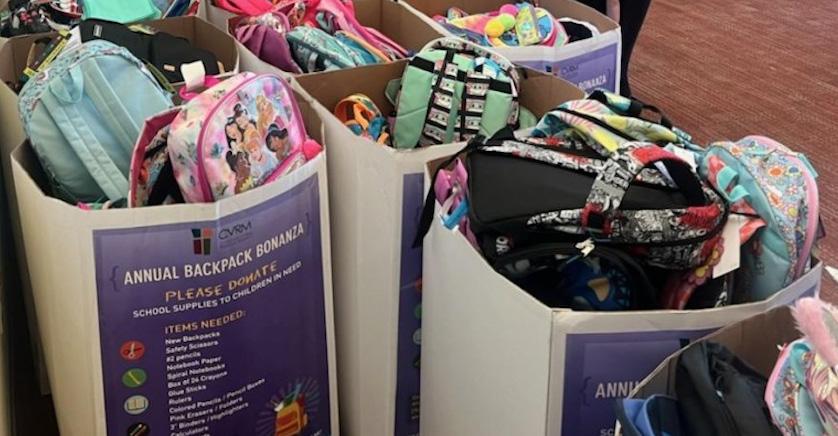
Low-income children in the Coachella Valley will receive free backpacks and school supplies through a donation drive in Indio hosted by the Coachella Valley Rescue Mission.
The 15th annual Backpack Bonanza drive-thru event is scheduled for 7 a.m. Aug. 14 at 47470 Van Buren St. Organizers aim to distribute school supply-filled backpacks to at least 2,500 children.

has slowed in recent months, there’s potential for a rebound if economic concerns subside,” said
CAR Senior Vice President and Chief Economist
Jordan Levine. “Consumer sentiment appears to have bottomed out and is now showing signs of improvement, which could support a stronger housing market in
the second half of the
Buyers may take advantage of improved conditions, including deeper price reductions and increased housing inventory.”

com/registries/gl/guestview/32WSH9HGFJWDV.
Official said donations of new backpacks, spiral notebooks, lined paper, index cards, rulers and calculators can be dropped off at the event site through Aug. 13.
An Amazon registry has also been set up, where all items bought by residents will be shipped to the rescue mission. The registry can be found at amazon.
“Being prepared for school is crucial,” said Coachella Valley Rescue Mission executive Amanda Galindo. “After food and shelter, education for children is a critical factor in helping break the cycle of poverty. We are grateful to help the community fill this need.”
Organizers said 31% of children in the Coachella Valley live at or below the poverty level, which can affect their academic success.
Participating donors include Agua Caliente corporate office in Palm Springs, Chase Bank, Augustine Casino, Westin Rancho Mirage, KESQ News Channel 3 and Palm Desert Community Presbyterian Church.
For more information, contact the rescue mission at 760-347-3512, or at cvrm.org.
The exhibit “Section 14 The Untold Story” opened this month in the Changing Gallery at the Agua Caliente Cultural Museum.
The new exhibition tells the story of Section 14, one square mile of the Agua Caliente Indian Reservation in the center of what Saturday is known as Palm Springs, including the ancient hot mineral spring protected by the Tribe.
Through the exhibit, the Agua Caliente Band of Cahuilla Indians share their perspectives on the land and the Tribe’s continuing
efforts to assert rightful sovereignty over it, officials announced.
In a 16-minute film at the center of the exhibition, tribe elders recall life on Section 14 and the struggles their families and their community endured.
“This is our home, and it has been since time immemorial. We have had to fight to protect our land, our culture, and our rights. We will always continue to do so,” Tribal Chairman Reid D. Milanovich said. “We invite you to hear our perspectives and learn about our efforts to assert rightful sovereign-
ty over our land.” The exhibition also presents documentary evidence, the facts of the matter drawn from local, state and national archives: How private interests worked to take the Tribe’s land and deny its rights, and How the Tribe fought to regain those rights and hold firmly onto its land and its culture, according to officials.
The museum at 140 N.Indian Canyon Drive is open from 10 a.m. to 5 p.m. Tuesday to Sunday. Tickets can be purchased at accmuseum.org/tickets.
By City News Service
After more than two yearsofwork,the reconfigured interchangeconnecting the Corona (71) Expressway with the Riverside (91) Freeway in Corona will be fully operational and available to motorists on Monday.
The “71/91 Interchange Project,” underway since the winter of 2023, is undergoing final touch-ups.
The last phase will be an upcoming weekend-long closure of the Green River Road on-ramp for further realignment work, according to the Riverside County Transportation Commission.
The activity will require a one-night closure of the
westbound 91 connector to the northbound 71, as well as full closure of the Green River entrance ramp to the eastbound 91. The westbound 91 connector will be closed from 9 p.m. Friday to 6 a.m. Saturday, while the Green River ramp will be shut down from 9 p.m. Friday to 6 a.m. Monday.
The newly constructed eastbound 91 to northbound 71 bridge will open at 6 a.m. Saturday, according to RCTC.
“The closure will also allow crews to perform final lane striping, guardrail and roadway signage installation, and electrical work,” the agency stated, adding that all new ramps and tran-
sition bridges will be available Monday morning.
Motorists were asked to plan ahead accordingly for the weekend.
The $137 million 71/91 Interchange Project has entailed replacing the current single-lane connector from the eastbound 91 to the 71 with a two-lane connector loop, which will accommodate a larger number of vehicles.
Along with expanding the connector itself, the project has further involved adding an eastbound auxiliary lane to the 91 and realigning the Green River Road on-ramp. The expressway, too, has been realigned to create space for the new

connector.
More than one-third of project funding — $58.1 million — was provided by the California Road Repair & Accountability Act of
2017, which hiked gasoline taxes to pay for infrastructure and other projects. The county’s Measure A receipts, generated by a half-cent sales tax, have covered a share of
the expense, while federal and other sources make up the difference.
Updates on the project are available via tinyurl. com/4t8senk4.
By City News Service
Apositive sample of St. LouisEncephalitis virus was confirmed Wednesday from a mosquito collection site in Mecca.
“St. Louis Encephalitis virus is endemic, which means we’ll detect it every year in our communities,” said Coachella Valley Mosquito and Vector Control District General Manager Jeremy Wittie. “As the weather heats up, more mosquitoes emerge and are ready to bite. Everyone should be inspecting and removing stagnant water around their home every week.”
The sample was collected near Hayes Street and 66th
Avenue, officials said. The agency stated there were no reported human
showed just 8% of respondents favored the U.S. joining Israel in attacks on Iran. The nation’s leader, Ayatollah Ali Khamenei, has warned America to steer clear, saying publicly that involvement would “result in irreparable damage.”
While the Netanyahu administration claims the sole intent of aggression has been to counter Iran’s nuclear development capabilities, Iran argues that the Jewish State, which has nuclear weapons, is bent on hegemony in the region.
As of Thursday, nearly
650 Iranians had been killed in the conflict, while two dozen Israelis had perished, according to published reports.
University of Tehran English Professor Seyed Marandi, now a spokesman for the Iranian government, said earlier this week that Israel has been emboldened by its freedom to “carry out extermination in Gaza ... something which we oppose.”
The Iranian missile strikes on Tel Aviv and other Israeli cities have not stopped the current IDF blockade of food and medicine into Gaza, where the Palestin-
ian Ministry of Health estimates 55,637 have been killed — one-third of them children — and another 129,880 injured since the Hamas incursion that led to Israeli hostages being taken in October 2023.
A United Nations Human Rights Council report released in March said the Israeli military was “intentionally directing attacks against civilians.” Amnesty International stated in December that the IDF’s “deliberately indiscriminate attacks” on Palestinians were acts of “genocide.”
According to the Watson Institute for International & Public Affairs, along with Reporters Without Borders, 232 journalists have been slain in Gaza.
One of the IDF’s early targets in Tehran was the Iran State Broadcasting Center, where two died.
“Israel has taken the necessary steps to ensure their safety and survival,” Calvert said. “The extensive air strikes against Iran were targeted, intended to take out senior military leadership and nuclear enrichment and military facilities.”
According to trackaipac. com, which documents contributions received by congressional representatives from pro-Israel lobbying groups, led by the American-Israel Public Affairs Committee, Calvert has received $883,040 in his 32 years in Congress.
In Kim’s four years, she’s received $478,226. Ruiz has received just under $200,000 in 12 years. The other reps with districts that include Riverside County have each received less than $100,000.
The IDF is using American-made aircraft and arma-
exists, most people will not exhibit symptoms if infected. In some cases, symptoms include fever, headaches, body aches or even death.
Officials advise residents to prevent bites by staying inside at dawn and dusk, when mosquitoes are most active, wear insect repellent, cover up with long-sleeve shirts and long pants, wash and clean pets, inspect swimming pools or ponds, clean drains regularly and inspect any drain water sources.
For additional information about the virus, go to cvmosquito.org, or call 760-342-8287.
ments in combat operations against Iran. There’s no consensus on the repercussions if the U.S. enters the war directly on Israel’s side, though Marandi and other Iranian officials warn that the nation, joined by Yemen, will show no restraint if threatened. One of the possibilities is closure of the Strait of Hormuz, controlled by Iran and through which almost one-third of international oil exports flow.
“No one campaigned on another war in the Middle East,” Massie said after introducing his resolution.