Can you trust that post about Tom Steyer? How paid influencers are flooding into the governor’s race
By Jeanne Kuang, Yue Stella Yu and Maya C. Miller, CalMatters
Jaz Roche, also known to nearly 11,000 Tiktok followers as @spo0kymom, hawks facial cleansing bars, baby wagons and AI tools in short social media videos.
On a website where clients can pay her to post videos about their products, she says she’s based in Pennsylvania. Yet the content creator has taken an interest in the California governor’s race lately.
Tiktok and Instagram accounts linked to Roche have posted 34 times in the past 10 days to boost the campaign of billionaire Tom Steyer or to criticize his main Democratic opponent, Xavier Becerra.
“Hear me out, I have something to admit,” she says in the first video, posted May 8, on an account where she describes herself as a “so-cal girlypop.” “I did not expect the most progressive governor candidate to be a billionaire. But look at the policies, you guys.”
What she didn’t say was that Steyer’s campaign is paying her to say it.
Steyer, who has poured nearly $200 million into the most expensive primary campaign in state history, is under scrutiny for using paid social media influencers to post favorable things about him.
Is that legal?
Gov. Gavin Newsom three years ago signed a law meant to bring transparency to the increasingly intertwined world of politics and content creators, enacting a law requiring influencers to be upfront in their posts about being paid by a political campaign. In one of the first tests of the law, regulators have opened an investigation into one of the Steyer influ-
encer videos.
But experts and transparency advocates aren’t optimistic: The law was intentionally designed with no real penalties, and the agency responsible for enforcing it sometimes takes years to resolve investigations.
“This is where the ‘Wild West’ analogy becomes useful,” said Dan Schnur, a political science professor and former chair of the state’s Fair Political Practices Commission.
‘Inundate the internet’ Campaign finance filings from January through April 18 show Steyer has paid over $123,400 to at least eight influencers. The New York Times reported that includes $100,000 to Texas-based Latino mega-influencer Carlos Eduardo Espina, whose 14.3 million Tiktok followers are a coveted target for Democrats and who has endorsed Steyer
The campaign is also paying over $870,000 to a
digital media agency, Group Project Digital, that solicits creators to post daily videos about Steyer. The listing initially offered $10 per video; it was amended last week to offer $1,000 a month and now includes a sentence telling creators they need to disclose the payments.
The state investigation covers just one of the influencer videos, in which content creator Isaiah Washington (known as @ zaydante) did not disclose that Steyer’s campaign paid him $10,000 for a nowdeleted video. It was sparked by a complaint from a pair of political social media influencers who post frequently in support of Becerra. On Tuesday, they filed another complaint alleging numerous additional paid, undisclosed posts, including from accounts in other countries.
“What he’s done is inundate the Internet in every way, shape and form to try and create an echo chamber,” said Beatrice Gomberg, one of the complainants.
Among the accounts they’ve recently highlighted: @foosgonewild, which has posted memes, content about Southern California street culture and, on May 5, an interview with Steyer talking about his opposition to ICE.
The account has 3.3 million followers on Instagram and 1 million on Tiktok.
The Tiktok video has no disclosures. On Instagram, at the bottom of the video description, the account notes it’s a partner with California-based social video firm Flighthouse. Neither the content creator nor Flighthouse responded to requests for comment. The Steyer campaign would not disclose
Wildfire leads to surge of dogs in 1 county shelter, adopters needed
By Joe Taglieri joet@civicnewsgroup.com
TheSanBernardino
County Board of SupervisorsonTuesday receivedarecommended budget totaling $10.9 billion for fiscal year 2026-27.
Spending dropped by $26.1 million, primarily due to a decrease in one-time funding obligations for various projects allocated in the 2025-26 mid-year budget report, according to County CEO Luther Snoke.
This year’s Recommended Budget proposes $273.7 million for priority spending, including $14.9 million in ongoing funding, $145.4 million in one-time spending, $81.7 million in reserve usage and $31.8 million in other funding, Snoke reported.
The County Administrative Office is keeping a close watch on these economic challenges:
AssessedValue —
“Property taxes, the primary revenue source for the County General Fund, are beginning to moderate after a prolonged period of strong expansion,” the CEO reported.
Market Volatility — “The geopolitical environment, stock market, and commodity market volatility pose risks by increasing uncertainty in revenue forecasts and potentially reducing investment returns for public pensions,” Snoke observed. “These factors can constrain the ability to maintain essential services and long-term financial stability.”
Uncertaintywith federal and state funding — “Federal and state funding face uncertainties due to policy changes, persistent inflation, and potential budgetary cuts,” according to the report. “Specifically,
the passing of ... (the federal) One Big Beautiful Bill Act introduced additional uncertainty, as changes could have significant fiscal impacts to the County.
Ongoing risks such as natural disasters, local emergencies and lawsuits against the county compound fiscal challenges, Snoke reported. “Through continued monitoring and careful financial planning, the 2026-27 Recommended Budget aims to mitigate these economic risks by prudently forecasting revenue and prioritizing one-time investments rather than creating longterm liabilities,” he wrote.
Spending priorities include:
“Capital needs” — “The Board prioritizes delivery of services within local communities across this expansive county by investing in modern, well-maintained facilities and addressing infrastructure needs early to avoid higher long-term costs,” according to Snoke. The 2026–27 Recommended Budget allocates $40.9 million in one-time funding, $15.6 million in reserve usage and $20.7 million in other funding for facility improvements, public safety infrastructure and community-serving capital projects.
Public safety — The proposed budget calls for $1.4 million in one-time funding, $16.3 million in reserve usage, $449,413 in ongoing funding, $4.9 million in other one-time funding and $4.7 million in other ongoing support “to strengthen code enforcement and illegal cannabis abatement, support Sheriff/ Coroner/Public Adminis-
This story was originally published by CalMatters. Sign up for their newsletters.
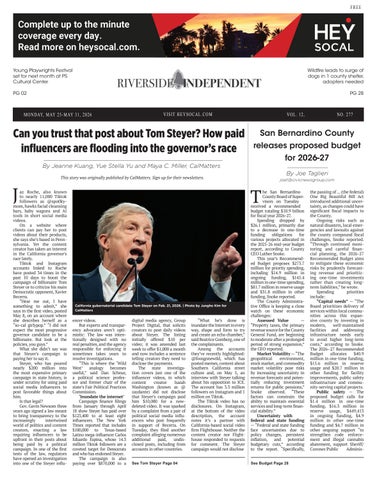
California gubernatorial candidate Tom Steyer on Feb. 21, 2026. | Photo by Jungho Kim for CalMatters
Young Playwrights Festival set for next month at PS Cultural Center
By City News Service
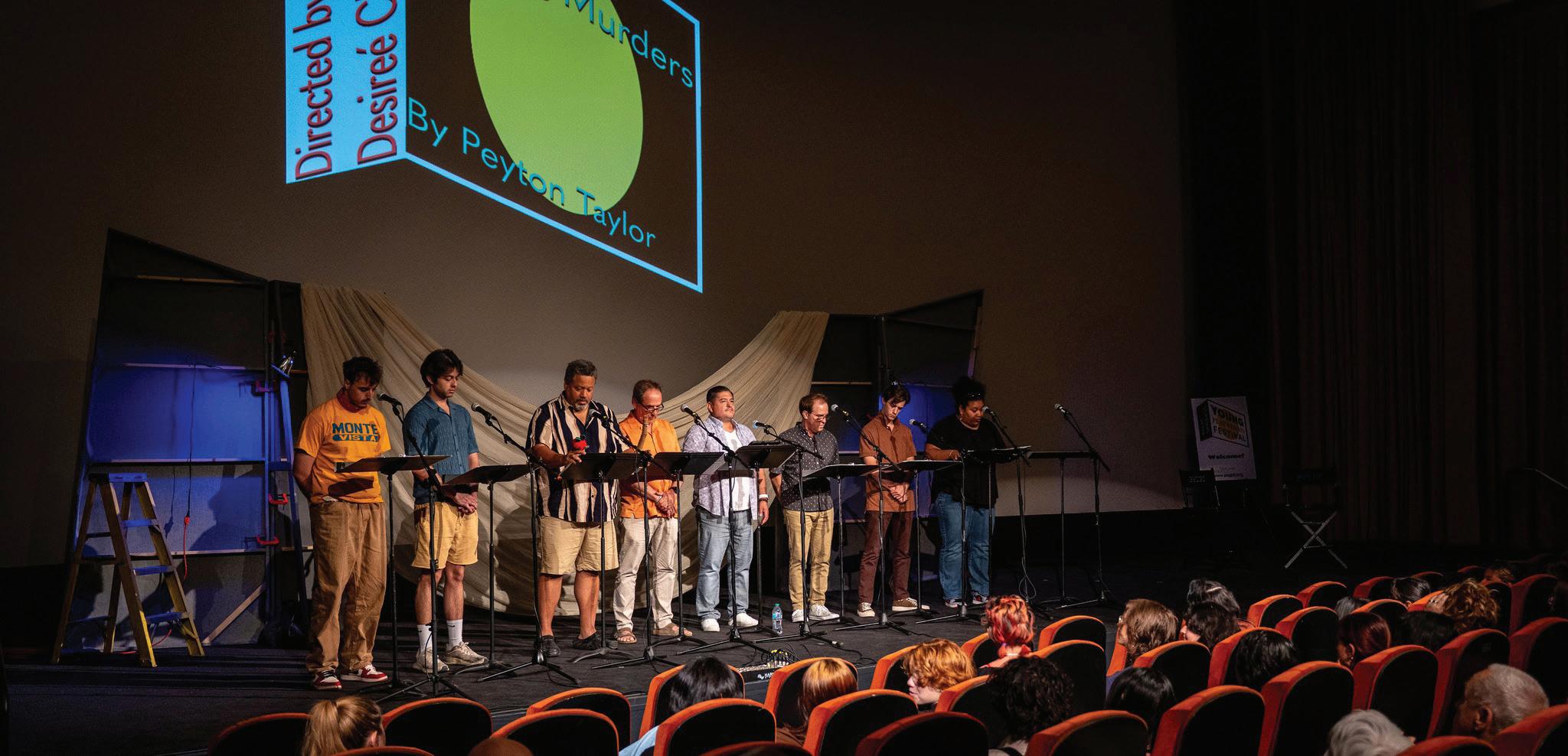
The ninth annual Palm Springs Young Playwrights Festival will showcase this year’s winning student plays with live staged readings next month at the city’s Cultural Center.
The event will be held from noon to 1:30 p.m. June 7 at 2300 E. Baristo Road.
The festival pairs playwright winners with professional directors from theatre, film and television, and this year’s lineup include Keith Hoffman, Chuck Yates, Deborah Harmon and Anne Etue.
The following plays and the directors who will be paired to the projects are:
-- “The Author Behind the Happily Ever After,” written by Allana Beckman of Valley View High School and directed by Keith Hoffman.
-- “The Rats of Broadway,” written by Jason Bulanek of Canyon Springs High School and directed by Chuck Yates.
-- “Look at Me, I Exist,” written by Ryleigh Sanchez of Valley View High School
“We are beyond thrilled to have these extraordinary artists guiding our students this year,” said David Youse, executive director of the festival. “These directors are donating not only their talent, but their hearts, to help elevate these young voices and give them a truly professional experience.”
and directed by Deborah Harmon.
-- “Mermaid Story,” written by Carleigh Rios of Martin Luther King High School and directed by Anne Etue.
In preparation for the festival’s staged readings, the playwrights have worked with Greg Cope White, co-executive producer and writer of Netflix’s “Boots,” over the past few months.
Festival organizers said casting was underway and results will be announced before the festival.
The festival encourages and promotes creative writing for elementary, middle and high school students throughout the county, and
County health officials promote water safety ahead of Memorial Day
By City News Service
In an effort to prevent drowning and promote water safety as Memorial Day approaches, county health officials reminded the public Thursday to stay alert and be safe around any body of water, especially with children involved.
According to data from the California Department of Public Health, there were 430 emergency department visits for drowning and submersion injuries among people under 18 in the county between 2020 and 2024, with roughly 84% of those cases involving children under five years of age. Additionally, there were 24 reported drowning deaths within the same time period, with 19 of those deaths being children under 5.
“People often think of drowning as a dramatic event where there’s a lot of flailing and splashing, but
really what we see is it can be a silent event. Watching the water is key to knowing when someone is in trouble,”
Dr. Michael Mesisca, department chair of emergency medicine at Riverside University Health System, said in a statement. “Drownings can happen wherever water is present — whether that’s a lake or something as small as a bucket.”
Heath officials recommend the following tips to prevent drowning-related incidents:
-- Have training in CPR, basic first aid and rescue methods;
-- Assign a “water watcher” whenever people get close to water and never allow anyone to swim alone;
-- Avoid consuming alcohol and medications that influence judgment, balance and the ability to swim;
-- Enroll children in
swim lesson with a certified instructor, and
-- Wear life jackets whether on or near natural water sources.
Additionally, there are numerous educational resources throughout the county to learn about water safety, officials said.
The Mecca Community Center will host a Mecca Splash Water Safety Fair from 4 p.m. to 7 p.m. June 12 at 62-250 Coahuilla St. The free fair will provided local residents with information on water safety by multiple organizations and county departments.
First 5 Riverside sponsors swimming lessons for children as young as six months old up to five-years- old.
“Every parent and caregiver deserves to know there are simple steps they can take before a child is ever in danger,” said First 5 Executive
Director Charna Whidby. “At First 5 Riverside County, we help families access swim lessons and practical water safety tools because prevention should happen before a
Palm Springs PD announces new addition to canine unit, Dwight
By City News Service
Ayear-oldBelgian Malinois was introducedWednesday as the latest member of the Palm Springs Police Department’s Canine Unit, thanks to a donation from Eisenhower Health.
“Our mission is to save lives, and that’s exactly what
law enforcement does every day. We may do different work, but the mission is the same,” Eisenhower Health President/CEO Martin Massiello said in a statement.
The canine, Dwight, was officially welcomed during a presentation at 11:15
a.m. Wednesday at the department’s headquarters, according to the Palm Springs Police Department.
Police said he was named in honor of President Dwight D. Eisenhower.
“Public safety is a shared community investment, and partnerships
like this makes a real difference,” Deputy Chief of Police Kyle Stjerne said.
“We are incredibly grateful to Eisenhower Health for their generosity and commitment to helping us strengthen our ability to serve and protect the Palm Springs community.”
crisis. If this reminder helps even one family sign up for lessons, assign a water watcher, or add another layer of protection around water, it can help save a
More
watcher tags are available online at rivcowatersafety. org.
selected playwrights receive mentorship and scholarship
to further their education in arts, officials said.
Tickets can be purchased at psypf.org.
A reading takes place at last year’s PSYPF. | Photo courtesy of the Palm Springs Young Playwrights Festival
child’s life.”
information and downloads of free water
| Photo courtesy of the Riverside University Health System
Officer Max Reynoso and his PSPD partner Dwight. | Photo courtesy Palm Springs Police Department, CA/Facebook
Publisher
COO
Andrea Olivas Tange
Vice President Sam Kubert
Editorial
editorial@civicnewsgroup.com
Fabiola Diaz
Joe Taglieri
Designer/ Production production@civicnewsgroup.com
Renia Barouni
Contributors
May S. Ruiz
Sales advertising@civicnewsgroup.com
Raquel Mc Laughlin
Legal Advertising legals@civicnewsgroup.com
Annette Reyes Crystal Cortez
Accounting accounting@civicnewsgroup.com
All Inquiries info@civicnewsgroup.com
Submissions
Reader
Did Newsom’s $3.8 billion hotels-to-housing program pay off? We filed 100 records requests to find out
By Lauren Hepler and Marisa Kendall, CalMatters
AsCOVID-19tore throughCalifornia, Jennifer Hark Dietz had a decision to make. The state was making perhaps its biggest push ever to get people off the street, offering up billions of dollars for cities and organizations like hers to turn old motels into new homes.
It was risky. The Homekey program came with up-front cash and a promise to move fast and cut red tape. But it also meant taking on old buildings with little vetting, which had the potential to put a developer in a deep financial hole.
such as Glenn County, the program provided crucial cash for their first-ever homeless housing. Officials from Mendocino County to Ventura say they were able to stabilize people longer term by adding stronger ties to public services and extra investment in resources such as counseling.
GabrielSan Sun
At first the gamble paid off. In just a few months, Hark Dietz’s nonprofit, People Assisting The Homeless, was housing people in the old 40-room Hollywood Orchid Suites in Los Angeles. She called it a “shining light” for what seemed possible with the radical new program.
local governments into a new role running multimillion-dollar real estate projects. Cities and counties could hire outside contractors to help or do the work themselves, skipping some of the usual building process for the sake of speed.
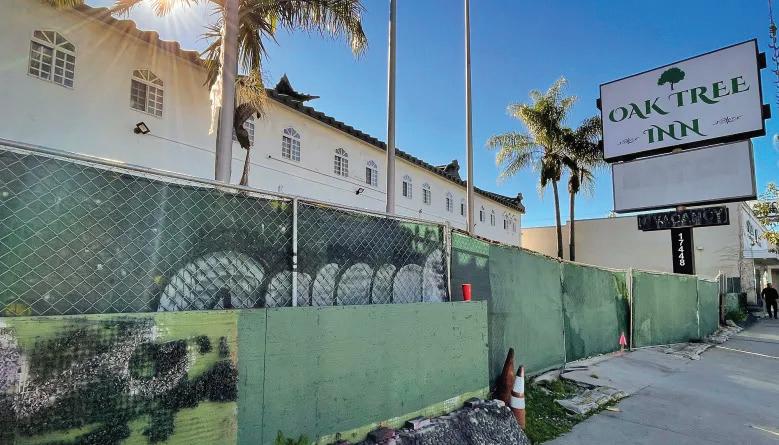
But then came a pale pink Travelodge in the suburb of Gardena. The city of LA had already bought the motel for $9 million, and Hark Dietz said her team didn’t have a chance to vet or tour the site. They’d only seen online photos and basic inspection reports before they took it over in December 2020. A city consultant estimated that it would take about $50,000 to start moving people into the roadside motel.
“Of course,” she said, “we know now that’s not the case.”
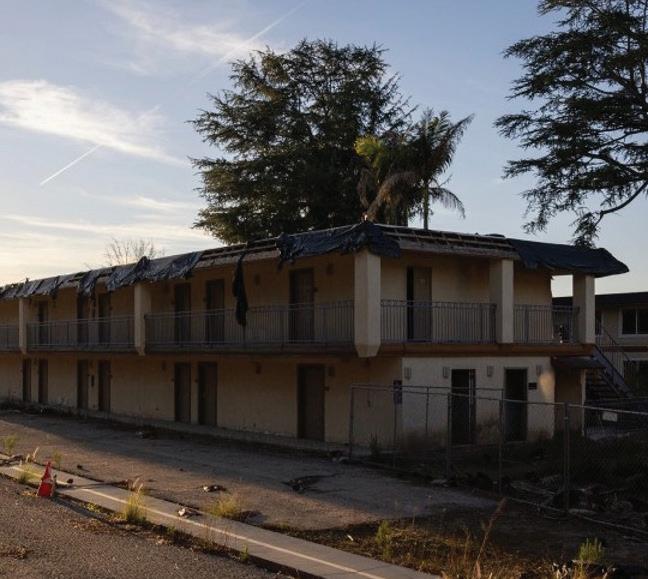
More than five years and nearly $3 million later, the motel — which turned out to need all new windows, plumbing and electrical, among other issues — was still vacant earlier this year. There was plywood over some of the windows, and someone graffitied a ghost on one side.
The boom-or-bust results in Los Angeles underscore how little is known publicly about a generational project with a high price tag and even higher stakes. Some projects were huge successes. Others were total failures. Dozens remain stuck in limbo. CalMatters found there’s been little public accountability for any of it.
Launched by Gov. Gavin Newsom in the summer of 2020, Homekey awarded more than $3.8 billion to local governments to convert motels and other buildings into homeless housing, thrusting many
It was unlike anything the state had ever done, largely because it sprang from desperation. Homekey launched during peak COVID, five months before vaccines were available, and after cities had already moved thousands of unhoused people into motels through Project Roomkey, another Newsom program. But those rooms were temporary, and officials were scrambling to prevent a mass exodus back to the streets.
With Homekey, local officials across the state bought and gutted Motel 6s, Best Westerns and roadside inns. They got more creative as the program evolved: Tiny homes sprouted in Silicon Valley, and Santa Cruz retrofitted an old dentist’s office. In Southern California, housing took shape in a former Tri-Delt sorority house, an earthquakestricken church and a hostel that once served as a refuge for Japanese Americans returning from World War II internment.
“What we’re doing here today is multiples of what any state in American history has committed to address this crisis of homelessness,” Newsom said at a 2021 press conference announcing a major Homekey expansion.
The program came with little built-in oversight. Earlier this year, state lawmakers killed a bill to audit Homekey. No state agency has publicly analyzed the program in detail to find out what’s working and what’s not.
The challenge now: A new and more complex phase is already underway with up to $2 billion from the voter-approved Prop. 1 mental health bond. But no one has publicly accounted for how many of the program’s original projects stalled out and how many succeeded.
To find out what happened, CalMatters filed more than 100 public records requests with cities and counties that were awarded Homekey funds. We asked for key details on 250 projects announced through the end of 2024, covering all but a handful of projects for which less public data was available. Those state and local records — along with dozens of visits to Homekey sites, plus interviews with people who built and lived in them — create a first-ofits-kind window into how it all played out.
Among our findings:
- Homekey made producing housing simpler. But it came at a cost. Homekey provided billions of dollars in housing funding up front, allowing some developers to sidestep the usual webs of investors and lenders and finish much faster than normal. But fewer funders also means less oversight. With rushed vetting, some projects got bogged down in delays, blown budgets or worse. At least one Homekey developer was forced out of business by an unwieldy project. Another is facing fraud charges.
- When Homekey worked, those involved stress that it reallyworked. Nearly 13,500 people now live at Homekey sites, according to the state Housing Department. For small and rural communities,
- Those successes magnify the opportunities squandered. Projects involving about 3,000 homes — roughly 1 in 5 promised by the program — weren’t finished as of the end of last year. Another 2,000 units have people living in them on a temporary basis but haven’t been converted into permanent housing, the program’s main goal. In 10 instances involving 500 more units, the state publicized grants that later were canceled or that never materialized because local officials or developers backed out.
- A lack of transparency raises familiar questions about the program’s future. State officials stress that they have extended deadlines and improved vetting for the program’s latest bond-funded iteration, Homekey+. But they refused to publicly provide details about that vetting process. And as homeless services providers have long warned, there remains no guaranteed state funding to keep existing or planned Homekey projects going.
Yes, many Homekey projects opened late or over budget. But, officials emphasize, they still opened.
Newsom said he considers the program a “phenomenal success.”
“We’re talking about hundreds and hundreds of projects all across the state of California that they’re trying to manage and organize and operate,” he said when CalMatters asked about it at a recent press conference.
“And I imagine each one of them brings its own opportunities and own challenges as we move forward and implement at a scale we’ve never implemented in the state’s history.”
Taryn Sandulyak knows that better than most. The Bay Area developer thought Homekey might be her big break, but it ultimately put her out of business. She sees a fundamental mismatch at
An unfinished motel conversion in the Encino neighborhood of Los Angeles on Jan. 27. The project is expected to finish more than a year after the original deadline, city records show. | Photo courtesy of CalMatters
This story was originally published by CalMatters. Sign up for their newsletters.
how much it paid the firm.
Steyer has defended soliciting influencers, saying they deserve to be paid for their work.
Spokesperson Kevin Liao called Gomberg’s first complaint “baseless” and said the campaign specified in its contracts with all thirdparty content firms that they needed to include payment disclosures, satisfying the campaign’s legal obligations under the state transparency law. The campaign doesn’t review posts in advance, he said.
Asked why the campaign had paid some creators who don’t live in California, he said, “I don’t see why that’s an issue.”
“Content creators, wherever they’re based, have followers in California,” he said.
‘Politics is all content now’
The blowback reveals the rising power and profitability of content creators in politics. One in five Americans regularly gets news on TikTok, rising to more than two in five for those under age 30. With traditional television hemorrhaging viewership and Americans hooked on the infinite scroll, campaigns are increasingly chasing posts.
They regularly hold events to court paid and unpaid influencers and sit for video interviews, aided by a new crop of talent agencies and digital media firms that represent influencers and solicit their content.
The relationship has contributed to at least one politician’s downfall: After attending a creator meeting for then-gubernatorial hopeful Eric Swalwell last fall, political influencer Arielle Fodor (aka @mrs.frazzled) received a flurry of messages warning her to stay away from him. It prompted her to post videos discussing rumors of his sexual misconduct, she has said. He quit the race after reporters covered several allegations of harassment and
assault.
“Politics is all content now,” said Alex Stack, a Democratic consultant and former communications staffer for Gov. Gavin Newsom. “Candidates need to be content creators and they need a little online army behind them to get traction.”
Roche’s videos about Steyer — some featuring her talking, some simply showing text praising Steyer over mundane videos of her life — have gotten no more than 1,100 views each. They’re posted on accounts with fewer than two dozen followers, a far cry from the millions of Californians Steyer’s TV ad spending blitz is reaching.
But they provide something critical for the billionaire candidate who’s funding his own campaign: the impression of grassroots support.
In a briefing memo for creators obtained by CalMatters, the campaign’s digital firm tells Tiktokers and Instagrammers that the “title of billionaire is his biggest sticking point,” and that the campaign wants to reach California women, Latinos and African Americans. The Sacramento Bee first reported on the memo.
Organic content?
Advertisers covet creators regardless of audience size for their ability to portray a product endorsement as an organic recommendation from a friend. Candidates courting voters are no different.
For example, an organization representing California lawyers is paying influencers to promote a ballot measure targeting Uber’s responsibility for sexual assaults by its drivers. Matt Mahan’s campaign for governor has also paid influencers and meme accounts for content boosting him. Instagram users see disclosures on those videos’ descriptions.
In the Los Angeles mayor’s race, Karen Bass’ challenger Spencer Pratt is
Tom Steyer
offering money on social media gig platforms to make videos featuring viral-friendly soundbites of him.
Serabeth Mullaney, a parttime San Francisco content creator promoting cat treats and AI tools, turned down an offer to make videos boosting Steyer’s campaign because of her opposition to billionaires in politics. The 29-year-old said she gets most of her news from social media so she’s concerned about the seep of paid political ads into influencer content.
“Anyone desperate to make that (money), they’re going to do the campaign,” she said. “Whether or not they believe in Tom Steyer, they’re going to post those videos.”
The concern mirrors the state Fair Political Practices Commission’s rationale for proposing the 2024 transparency law. Before that, campaigns only needed to disclose payment for ads they posted directly; paid content on third-party platforms was largely unregulated.
But the agency primarily relies on complaints to launch investigations, and violations of the law come with few consequences — no fines or criminal charges for creators or campaigns. The only thing the agency can do is ask a court to force an influencer to disclose payments, but experts say that’s an expensive and time-consuming effort for a fleeting video.
Sen. Tom Umberg, a Santa Ana Democrat who authored the law, said paid influencers in politics are more prevalent than three years ago and lawmakers should make the requirements more enforceable.
“Transparency is like whack-a-mole,” Umberg said. “Every year there’s a new modality, and so there’s a new way to get around stuff.”
Becerra’s online army
Now the gubernatorial candidates and their supporters are engaged in a mass scrutiny of all the posts boosting each others’ campaigns.
Critics have also questioned the relationship between Becerra and numerous creators who have boosted his campaign since Swalwell dropped out. The Becerra campaign has insisted it has never paid any content creator for a post.
The campaign seeks relationships with creators who are willing to post for free as a blend of campaign volunteer and reporter, said digital strategist Alf Lamont.
“Paid influencer campaigns don’t carry the kind of punch that organizing does,” Lamont said. “We want to make sure we’re getting folks who truly believe in it so we don’t face the secondguesses and the ‘paid by’ and the feeling you’re looking at something that’s insincere.”
Jordan “Jay” Gonzalez’s
posts included lifestyle content, Latino advocacy and even salmon DNA facials before he started creating pro-Becerra videos on multiple platforms in March, a month before the campaign hired him as a full-time social media strategist. Gonzalez has recently been amending his posts with disclosures that he is paid by the campaign, “out of extreme caution so as not to seem disingenuous to my audience.”
Opponents point out Gonzalez and another creator who has posted numerous times in Becerra’s favor, Maggie Reed or @mermaidmamamaggie, have previously charged for content. Antonio Villaraigosa’s campaign solicited unpaid videos from both of them in the spring, and received quotes from each influencer’s agent of $7,000 to $16,500, emails shared with CalMatters show. The Villaraigosa campaign confirmed the exchanges.
On Tuesday, Steyer’s campaign filed a complaint alleging both influencers’ videos were paid for by Becerra’s campaign with no disclosure.
Becerra’s campaign has not reported any payments to Reed in campaign finance filings, and Lamont denied paying either creator for content. Gonzalez, in an email, said that he had previously declined a paid offer from the Villaraigosa campaign. Reed did not respond to a request for comment.
‘A SoCal girl’
Gomberg and Kaitlyn Hennessy, friends who met at a Becerra rally, have both posted frequently in favor of his campaign — for free, they say.
The pair began sleuthing online in early May, eventually filing a complaint with the Fair Political Practices Commission last week alleging Steyer’s campaign hired Roche, Washington and several other content creators to post on his behalf without disclosing it.
Posing as another, unnamed campaign, they emailed creators offering paid political content work to prompt them to talk about posting for Steyer’s campaign.
One account, @isabel. speakss, purported to belong to a “so cal girl sharing her thoughts” named Isabel Mendoza and has exclusively posted about Steyer since May 9. The woman in the videos appears identical to Jade Johnson, a Florida-based influencer.
Another account, @jess. votes, is linked to another Florida content creator.
Since the complaint was filed, Roche and the other creators have included disclaimers in their posts. None of them responded to inquiries from CalMatters asking if they knew about the campaign disclosure law. After a CalMatters reporter asked Johnson whether she was asked to pose as a California voter, the @isabel. speakss account on last Monday afternoon removed the “so cal” description from its profile.
None of those creators are listed in Steyer’s latest campaign finance filings as subcontractors of any digital strategy firm. Steyer spokesperson Liao said they will appear in the next filing.
CalMatters reached out to all the creators listed in the filings; none agreed to an interview. They include lifestyle influencers, comedians and musicians whom Steyer paid between $1,500 and $10,000, mostly through another firm, to post video interviews with Steyer or talk about his platform. One of them labeled her video a “paid partnership;” others did not disclose campaign payments or have since deleted their videos.
This article was originally published by CalMatters and was republished under the Creative Commons Attribution-NonCommercial-NoDerivatives license.
Democratic gubernatorial candidate Xavier Becerra on April 1, 2026. | Photo by Larry Valenzuela, CalMatters
For millions of Americans, the math on locked savings products is simple. You commit your money for a fixed period, and you get a guaranteed return that beats a regular savings account. But most people aren’t doing it.
A new survey of 1,000 U.S. adults commissioned by Credit One Bank shows nearly half would consider a fixed-term savings product, yet most never actually open one. What’s stopping them has less to do with financial literacy and more to do with a basic fear of losing access to their money when they need it most.
The findings point to a gap between what consumers say they want and what they’re willing to do, and they suggest the financial industry may be missing what would actually move people to save more.
In this article, Credit One Bank explores who’s worried, what’s driving the hesitation and what could change the math.
Why most savers won’t lock in their money
Ask Americans about fixed-term savings products
A new survey shows why most Americans won’t lock in higher savings returns, even when they want to
By Richard Horowitz for Credit One Bank via Stacker
like CDs, and interest rates rarely come up first. Access does.
The study found that a little over half of respondents (51.9%) named losing emergency access as their single biggest concern about locking up savings. Among people aged 30 to 45, that figure jumped to 67.4%.
That age group is often juggling mortgages, childcare costs and aging parents at the same time. For them, cash on hand functions as a buffer against an unpredictable month, which makes any product that limits access a hard sell.
The fear has roots in recent history. People who entered the workforce around 2008 watched emergency funds vanish in real time. Add a pandemic and a couple of inflation spikes on top of that, and keeping savings within reach starts to feel like a sound strategy.
Nearly one in three couldn’t absorb a major surprise expense
Confidence in handling a financial shock varies sharply by income.
When asked how confident they were that they
could cover a $50,000 unexpected expense without tapping locked savings, nearly 1 in 3 respondents (30%) said “not confident at all.” For households earning between $25,000 and $50,000, that figure climbed to 40.6%.
For many of these households, the issue is less about reckless spending and more about not having the runway to take on extra risk, even the contained risk of a fixedterm product.
The pattern matches broader federal data. The Federal Reserve’s most
recent report on household economic well-being found that roughly 2 out of 3 of U.S. adults (63%) could cover a hypothetical $400 emergency expense in cash.
High earners and low earners aren’t worried about the same things
The fears that dominate one income bracket barely register in another.
Among households earning over $100,000, 1 in 4 (25.3%) said their top concern about locked savings was rate risk: committing to today’s rate and watching better ones appear later. For
The Broad will unveil Thursday the first solo museum exhibition in Los Angeles dedicated to artist, musician and activist Yoko Ono, featuring decades of conceptual works centered on peace, participation and human connection.
“Yoko Ono: Music of the Mind” opens with a media preview Thursday morning ahead of the exhibition’s public debut Saturday at the downtown Los Angeles museum.
“Since the 1950s, Yoko Ono has worked across genres and mediums from music and performance to visual art, contending with a complex spectrum of human emotion,” Sarah Loyer, curator and exhibitions manager of The Broad, said in a statement. “Her foundational contributions to 1960s conceptualism and her lifelong commitment to participation have redefined what art can be and do.”
The exhibition spans Ono’s career and includes instruction-based artworks,
households earning under $25,000, only 4.3% named rate risk as a top concern. Their question was more basic: If I need this money, can I get it?
That’s two completely different savings psychologies inside the same product category. High earners are optimizing. Lower earners are protecting. Banks and financial educators that treat both groups as a single audience tend to miss half the room.
The one feature that could make locked savings more attractive
There’s one finding from the survey that stands out for product designers.
Nearly 9 in 10 (89.1%) respondents said they’d be more interested in a locked savings product if it included one penalty-free emergency withdrawal. Of that group, 44.4% said they’d be “much more interested.” Only 6.5% said it wouldn’t change their interest at all.
That kind of nearuniversal agreement is rare in consumer research. The resistance to locked savings appears to be practical rather than philosophical,
The Broad to debut major Yoko Ono retrospective
By City News Service
films, installations and materials tied to her anti-war activism and collaborations with her late husband John Lennon.
Among the featured works is “Wish Trees for Los Angeles,” an outdoor installation inviting visitors to tie written wishes to olive tree
branches on The Broad’s plaza as part of a collective expression of hope.
The exhibition also includes materials from Ono and Lennon’s “Bed Peace” anti-war campaign and contemporary participatory installations such as “Helmets (Pieces of Sky)”
and “Add Colour (Refugee Boat).”
“For more than seven decades, Yoko Ono has expanded the possibilities of art as a force for connection and change,” said Joanne Heyler, founding director and president of The Broad. “Poetic and bold, her
with most people pointing to the worst-case scenario of needing the money and getting hit with a penalty. Take that scenario off the table, and the product becomes more attractive across nearly every demographic group surveyed. For now, the gap between intention and action remains wide. The appetite for better savings tools is clearly there, even if the trust to actually use them hasn’t caught up yet. For the financial institutions paying attention, the survey points to a clear path forward.
Methodology
The data comes from a survey of 1,000 U.S. adults conducted via Pollfish. Participants answered questions about their savings habits, their emotional relationship with money, and their willingness to lock funds away in exchange for a guaranteed return. Responses were analyzed across age, gender, and household income brackets. This story was produced by Credit One Bank and reviewed and distributed by Stacker. Republished with CC BY-NC 4.0 License.
emphasis on community and activism is especially timely, reminding us that imagination binds us together and can be a powerful source of collective strength.”
The Broad said the exhibition is designed to encourage audience participation and reflection through many
of Ono’s best-known conceptual works.
Timed to the exhibition, the museum also announced a season of related programming including concerts, theatrical performances and public art installations across Los Angeles.
The accompanying programming will include performances of Ono’s “Cut Piece” and “Sky Piece to Jesus Christ” at REDCAT, a concert titled “Yoko Only” featuring musicians including Yo La Tengo and Yuka Honda, and a multimedia musical titled “I Am Yoko” currently in development.
The Broad also announced outdoor “Sports Raves: Multiform” events tied to the World Cup and a citywide billboard campaign displaying Ono peace messages such as “THINK PEACE,” “ACT PEACE” and “PEACE is POWER.”
The exhibition will remain on view through Oct. 11.
More information can be found at thebroad.org.
Photo by Katie Harp/Unsplash
| Photos courtesy of The Broad
the heart of the program. It wanted high quality, high speed and low budgets.
“You can only have two of those,” Sandulyak said. “You really can’t ever have three. That’s the issue with Homekey, is they give you not quite enough money to do it, and they want you to do it really, really fast and really, really well.”
The chasm between Homekey successes and failures isn’t a simple, onesize-fits-all story. But it does provide an outline of what it will take to make good on California’s big effort to finally make a dent in its homelessness crisis.
‘Failing was not an option’
On the west side of Ventura, just as the surf town creeps up into the hills toward Ojai, sits what used to be one of the city’s worst nuisance properties: a nearly 100-year-old apartment building once known, in a nod to local drug slang, as the “Booyah Mansion.”
The city’s housing authority, Ventura Housing, cobbled together enough money in 2019 to buy the building. But it didn’t have enough cash to fix all 300-something code violations at the crime-ridden property — until Homekey came along.
“We had some scary stuff go on here,” said Karen Flock, Ventura Housing’s real estate development director. “This property failing was not an option.”
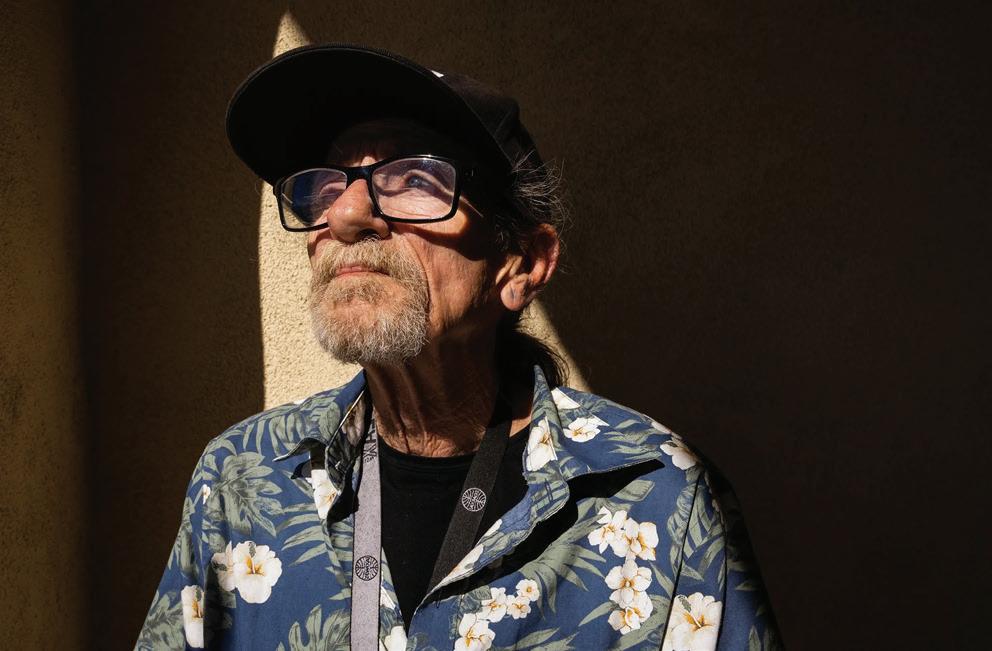
Now known as El Portal, the 29-unit apartment complex today serves as a lifeline for a mother with 9-year-old-twins, one severely autistic. It’s a refuge for a woman who lived for six years in a city-funded Tuff Shed. Another neighbor still keeps his shopping cart from the street in his apartment as a reminder of what he’s been through, and why he can never go back.
Ventura and other cities and counties that were able to pull off Homekey projects relatively on time and on budget credit a variety of factors for their success. Some grantees provided services themselves rather than contracting them out, better integrating public resources. Others raised extra money for on-site social services or worked closely with first responders to head off concerns about crime and stabilize residents.
Jeffrey Lambert, CEO of Ventura Housing, said the crucial thing was realizing early that Homekey money alone isn’t nearly enough. Instead, the city combined it with other public and private funding, staffing and resources. Projects that
failed or got stuck in limbo often fell apart after they ran out of money.
“Homekey works,” Lambert said, “because of all the stuff added on top of it.”
For housing researchers such as Ryan Finnigan, deputy director of research at UC Berkeley’s Terner Center for Housing Innovation, the real strength of Homekey was not the building minutiae. It was the attempt to challenge the state’s status quo of painstakingly slow housing development while people keep pouring onto the streets.
“If we’re not willing to try a new approach,” he said, “then we’re not going to learn as much about how we can be more creative, how we can work with more urgency than the current systems.”
As fraught and full of delays as the construction process can be, getting a project completed is often just the first hurdle for Homekey. Once a project opens its doors, it typically needs significant resources in addition to the state funding. Mendocino County credits much of its project’s success to extra services for residents, which aren’t paid for by the state grant, said Megan Van Sant, a senior program manager for the county who oversees the Homekey site.
At the former Best Western hotel now known as Live Oak Apartments, there’s a therapist on retainer for tenants, plus a dog trainer paid to work with problem pets. Both try to help residents resolve any issues that come up before they escalate into grounds for an eviction.
To provide those extras, the county runs the project itself, rather than contracting with an outside service provider as many Homekey projects do. Two county staffers work full-time inside the building, using their connections to do everything from enrolling residents in Medi-Cal to pairing them with mental health services.
All that is expensive.
“I think the state should continue to support these projects,” Van Sant said. “The state asked communities to do these projects, and they cost more to do well than what you can earn in rent.”
Sherry Collins, 66, moved into the project three years ago, at a time when she was terrified of what would come next. Her husband had died, her health was failing, she couldn’t work, and she couldn’t afford to keep living in her cabin in the tiny coastal city of Fort Bragg.
Now she feels like she’s home. Collins decorated the window of her room with
Housing
little red and pink hearts and adopted a kitten with extra toes, whom she named Mr. Handsome. She continues to deal with health challenges after losing a leg to diabetes about a year ago. The building has only four units accessible for people with disabilities, making it a challenge to accommodate everyone, but one recently opened up for Collins, where she can more comfortably shower.
“They have been awesome to me,” Collins said. “They’re more like family.”
Never-ending projects
For Sandulyak, Homekey was too good to refuse.
Five years earlier she had co-founded Firm Foundation Community Housing, which helped Bay Area churches turn their parking lots and backyards into tiny homes for homeless residents.
Homekey was a oncein-a-lifetime opportunity to dramatically scale up that vision by using millions in state funds to house dozens of people in Vallejo. It would be the small nonprofit’s most ambitious project by far.
Sandulyak never suspected that by applying for Homekey, she had doomed her organization.
Firm Foundation was awarded $12 million in 2022 to build a 47-unit modular apartment building called the Broadway Project. Over the next four years, nearly everything that could go wrong did.
Some problems had nothing to do with Homekey. The general contractor went bankrupt, and the nonprofit tapped to operate the facility squabbled with the city, leaving the project in limbo for a year. The state wouldn’t let Firm Foundation pick a new partner to run the housing, which Sandulyak says further delayed the opening.
Other problems were directly related to Homekey. By design, the program forced cities to take a much more hands-on role with housing development than they were used to. Vallejo
to celebrate what they, at times, had thought would be impossible: the Broadway Project was finally open. Behind them rose the terracotta-colored wall of the sleek, new, modular apartment building. A red ribbon waited in front of them.
On the count of three, Sandulyak helped Vallejo’s assistant city manager snip the ribbon. The crowd cheered.
diamond necklace and a $111,000 crocodile Birkin bag. A $5,000-a-month lease on a Ferrari Portofino.
Another $53,000 for Coachella passes, and $44,000 for flights on private jets.
All this while many of the desperately needed motel rooms sat empty.
wasn’t prepared for that responsibility. It fumbled its attempt to get a key federal grant and failed to set up important safeguards that protect affordable housing projects from financial risks.
Soon, Sandulyak had $2 million in bills and no way to pay them. With construction three-quarters done, the project ran out of money. Firm Foundation was forced to stop work.
It became such a nightmare that the Vallejo City Council asked for an independent audit to find out what went wrong and why. The audit blamed both the city and Firm Foundation for allowing the project to run out of money before it was finished. Firm Foundation vastly underestimated the project’s cost, and the city bungled efforts to secure additional funds.
In some ways, the audit found, the very nature of Homekey helped set the project up for failure.
One big problem was the timeline. Homekey required projects to finish construction within one year of their award, and to move people in 90 days after that. To meet those deadlines, Firm Foundation created budgets before the architectural drawings were even done, contributing to serious cost underestimates, the audit found.
The audit also found a lack of oversight at the Broadway Project, which it said is typical of Homekey projects. Normally, a single affordable housing project uses funding from multiple sources, including the city, the county, the state, federal funds, tax credits, private banks and more. The more funders and investors, the more eyes watching and holding the developer accountable. With Homekey, the city applying for the grant typically takes on all those risks by itself, the audit found.
On a recent Thursday morning, Sandulyak gathered with city officials and her construction partners in front of a crowd
The project ended up coming in two and a half years late and 70% over budget. Despite those setbacks, the audit found it still cost less per unit and was built more quickly than the region’s average affordable housing project.
But it cost Sandulyak everything. She laid off three of her four employees, and she plans to lay off the last one and dissolve her organization. The nonprofit is still on the hook for more than $1 million in unpaid bills related to the project.
Despite her pride in the finished building, Sandulyak wonders how much more housing her nonprofit could have built — if only she’d never applied for Homekey.
Still, 52 people now have somewhere to call home.
“I’m unshaken in my belief that that is worth it,” Sandulyak said.
One of those people is 62-year-old Terrence White, a former refinery worker who was forced into early retirement by an injury and can’t afford market-rate rent. Now, he pays $294 a month and finally has his own place.
“It feels wonderful,” he said.
The Homekey gold rush
During the frantic first two years of Homekey, when many experienced affordable housing developers were sitting out the untested new program, an LA company called Shangri-La Industries stepped in to help fill the void. It scored nearly $115 million in contracts to build 500 homes for homeless Californians in cities from Salinas to San Bernardino.
But a federal indictment and a separate civil lawsuit allege that millions in state funds instead went to fund a lavish lifestyle for the company’s chief financial officer.
Among the charges attributed in court records to Shangri-La’s former CFO, Cody Holmes: $46,000 in monthly rent for a Beverly Hills house with a pool. Designer gifts for a girlfriend, including a $127,000
Homekey set a low bar for contractors to qualify: They had to have worked on at least two affordable housing projects that included at least one homeless tenant.
Shangri-La easily cleared that hurdle. But had any state or local officials done more digging, they might have seen warning signs.
Shangri-La’s construction business was sued twice for breach of contract in 2018 and 2019, court records show, after two firms alleged that it failed to pay them. The company was also a contractor on a troubled LA veteran housing project, where records first reported by KCRW show Shangri-La partners sold the property to themselves, increasing the project’s budget by $8 million.
With Homekey, federal prosecutors allege that Holmes “knowingly submitted fake bank records” to the state Housing Department to boost Shangri-La’s credentials — financial claims that state officials apparently failed to verify with the banks. Holmes has pleaded not guilty, and an attorney representing him declined to comment.
As the company took on the Homekey projects, property records show that entities connected to Shangri-La or its partners paid around $13 million for actress Milla Jovovich’s Beverly Hills mansion, adding to a portfolio that included a $7 million oceanfront home in Long Beach purchased two years earlier.
In a separate civil fraud case, state prosecutors allege in court records that Shangri-La went behind the state’s back and took out undisclosed loans on the Homekey buildings, giving up control of the sites and violating their contract with the state. That became a major problem when the company defaulted on the loans.
For several of the properties, no one had filed crucial paperwork to ensure that they remained affordable housing. After the buildings ended up in foreclosure, some were scooped up by companies with no commitment to homeless housing.
Homekey contracts tasked local officials with
Gary Wish stands outside El Portal apartments in Ventura on Feb. 26. | Photo courtesy of Julie Leopo-Bermudez/CalMatters
vetting projects and reviewing contractors’ organizational documents, budgets and other key details. But records show state officials also reviewed Shangri-La’s financials, and once they paid out the Homekey money, they failed to verify that paperwork was completed to restrict the buildings to affordable housing.
The state Housing Department and several local governments that hired Shangri-La for Homekey projects declined to comment, citing ongoing litigation.
Andy Meyers, the former CEO of Shangri-La, acknowledged in an interview that he had “a lack of control” over his company. He has sued Holmes for fraud. He also blamed the local and state officials.
“My CFO had a lot of wrongdoing,” he said. “But it was a confluence of events that caused each project to go bad.”
Meyers said officials’ failure to file the proper affordable housing restrictions, which were also required by his lender, triggered a financial disaster that led his company to default on some of the properties. On two projects that Shangri-La did open in San Bernardino and Salinas, he estimated that the company incurred around $11 million in unexpected costs.
“We have spent so much money following their guidelines and following their timetables,” he said, “and they never followed their guidelines or timetables.”
Monterey County Supervisor Chris Lopez rallied support for a Homekey project in his hometown of King City. He thought Shangri-La made sense for four projects in the county, since it had already opened one Homekey site in Salinas.
But it didn’t take long for constituents to start asking why rooms were sitting empty behind chain-link fences.
“The longer it went on without seeing any movement, the flag started to get raised,” Lopez said. “I was starting to hear less and less communication and more sort of finger pointing.”
Local officials like Lopez had to start from scratch, raising millions more dollars to revive the projects as encampments swelled. It took 10 different deals totaling $16 million to open the King City project in March, three years behind schedule.
The full trail of ShangriLa’s deceit stretches from the state’s agricultural heartland to the edge of the Southern California desert.
A $27 million Thousand Oaks hotel project sits abandoned today, robbing a region of 77 homes while it had a decade-long housing waitlist. Another $16 million project scrapped in Salinas would have provided 58 homes. Officials still plan to salvage 200 homes in other parts of Monterey County.
The only two Shangri-La projects that stayed open during the legal battle, two motels in Southern California, were full of people who were plunged into messy foreclosure disputes.
Carrie Harmon, San Bernardino County’s director of community development and housing, said in an email that “the county entered into this effort in good faith, relying on representations that later proved to be inaccurate.”
Even some of those whose Homekey projects went well say they’re not surprised that things went sideways. In Mendocino County, Van Sant said the state’s oversight was limited to quarterly progress reports. Once the money was spent, the state stopped asking for any information at all.
“They gave us a bunch of money, made us do some paperwork, and then they’re out of here,” Van Sant said.
For Colleen Robinson, public officials’ failure to see the red flags with Shangri-La was life-changing.
Robinson, now 62, survived years on the street after losing her job and fleeing a bad relationship. The All Star Lodge in downtown San Bernardino was her chance to start over. Shangri-La did manage to renovate and open that project in late 2022.
Two years later, the bank foreclosed. Because no one had put the affordable housing restriction on the property, the new owner told Robinson and other tenants that it was going to quadruple the rent. She said the new owner neglected the building; weeds and stray cats reclaimed the parking lot, police sirens blared, and neighbors died with little explanation.
“This would give hell a run for its money,” Robinson said.
Harmon said the county was still trying to buy the building and figure something out, but Robinson didn’t wait around to see how the saga ended. On a Thursday in February, she packed up and boarded a Greyhound bus for Iowa, where one of her children lives.
Homeless veterans still waiting
Some Homekey projects still haven’t opened.
Housing
Santa Cruz County has three badly delayed Homekey projects, one of which will be more than four years late when it is slated to finally be finished at the end of next year. For that project, the county obtained more than $6 million to convert rustic vacation cabins under a grove of redwood trees into housing for homeless veterans. The state initially set a completion deadline of 2023, but the project ran out of money before it crossed the finish line, forcing construction to stop.
There were many reasons why, but one stands out: underestimating the cost, said Robert Ratner, director of Santa Cruz County’s Housing for Health division.
The developers had never undertaken a project this large, and that inexperience contributed to the budgeting error, Ratner said. But so did the design of Homekey, which capped what the state was willing to pay per unit at about half what it takes to build affordable housing in some parts of California.
The idea was that projects would be cheaper because they were converting existing buildings, while also cutting out extra layers of bureaucracy that add time and expense. That led developers to low-ball budgets, which came back to bite them when the savings weren’t as great as anticipated, Ratner said.
Once the budgeting error was made, neither the state nor the county caught it, Ratner said. The county assumed that the state would scrutinize all Homekey applications and throw out any that didn’t seem viable, Ratner said. But it appears that in reality, the state was relying on the counties to do that vetting.
Santa Cruz County had little experience analyz-
nonprofit partner pulled out.
Newsom’s legacy and a financial cliff
Despite the vastly different outcomes at Homekey projects around the state, there’s no plan for a comprehensive audit to see what worked and what didn’t — a decision that raises the question of whether the state has done enough to grapple with Homekey as it forges ahead with the new version of the program, Homekey+.
Earlier this year, lawmakers nixed a public accounting proposed by Assemblymember Leticia Castillo, a Republican from Corona.
project closely” if issues arise or deadline extensions are granted. Even with widespread delays, the agency maintains that “Homekey has helped build more and faster.”
ing whether a construction project was adequately budgeted. Typically, the county relies on other funders, such as construction lenders and tax credit investors, to do that job. But those investors weren’t present here.
When asked whether he and his colleagues had done their due diligence to make sure the projects were realistic, Ratner was straightforward.
“I would say no,” Ratner said. “I can’t say yes with a straight face at this juncture.”
Other projects just never happened.
A $14 million Homekey award was supposed to help breathe new life into the Hotel Travelers, a rundown, century-old building in Oakland’s Chinatown, as housing for people returning from incarceration. But once the developer got a look at the building, that plan fell apart. An inspection revealed such severe issues with the building’s construction that the developer determined it would be “morally untenable” to proceed. Oakland returned the grant.
In total, CalMatters found at least 10 cases where a Homekey award was announced, only for the grantee to later withdraw their application, return or redirect the money, or have the state claw it back. Some instances had more public explanation than others.
City officials in Fresno voted down their own project. Long Beach was unable to come up with a suitable location for $2 million worth of brand-new tiny homes left sitting in storage. Projects in Marin and Mariposa counties evaporated when real estate deals fell through, and the state rescinded its grant for a project in Salinas after a
“While the program has expanded housing options, critical questions remain about its long-term impact and cost-effectiveness,” a summary of Assembly Bill 505 said. “It is unclear how many Homekey-funded units remain occupied after one year, how many individuals successfully transition to stable, long-term housing, and whether Homekey’s cost per unit is competitive.”
The bill was never publicly debated. It died in January.
The state did do one audit of multiple homeless services programs in 2024. It didn’t get into Homekey delays or what actually happened to people living in the buildings, but it analyzed the costs of eight projects. Based on that small sample, the auditor concluded that Homekey was “likely” costeffective, with an average cost of $144,000 per unit, compared to the hundreds of thousands of dollars more it can cost for new construction in California.
The challenge is that when Homekey plans fell short of ambitions at job sites around the state, the consequences were often murky. In extreme cases, where cities acknowledged that projects failed to materialize, the state has clawed back grants. But usually, the main penalty for blown deadlines or other missteps is that the state may hold it against a local government or developer the next time it applies for funding — a dynamic that provides no public transparency.
What happens next will be left up to a new state housing agency set to be launched this summer, the California Housing and Homelessness Agency. That effort is expected to include a new development committee to “provide centralized, coordinated guidance to state housing policy and funding decisions.”
For now, the state’s Housing Department maintains that it “monitors each
The state said it is learning as it gives out the new Homekey+ funding. After seeing so many projects miss the one-year deadline, the state doubled the timeline for new construction to two years. Homekey+ projects that serve veterans now can propose bigger budgets for new builds, potentially addressing the issue of under-budgeted projects running out of money.
Officials also said they’re scrutinizing applications more closely now, including looking carefully at whether applicants are budgeting enough funds for their proposed projects, said California Health and Human Services Secretary Kim Johnson.
“We are improving our own vetting process, if you will,” she said during a recent news conference, “to ensure these projects are successful in delivering.”
The state’s housing department maintains that Homekey accomplished a major feat: building thousands of units despite a global pandemic, labor shortages, supply chain issues and other challenges.
“It is tremendously rewarding to see so many vulnerable Californians housed so quickly, and to have voters expand the successful Homekey model to house and support veterans and others facing behavioral health challenges,” Assistant Deputy Director Cari Scott said in a statement.
As the state’s housing policies shift, there’s one big question left for people like Van Sant in Mendocino: Will there be enough money to keep Homekey projects running?
Most of the projects have a pay-as-you-go model, versus standard 10- or 15-year affordable housing financing — a calculation that leaves a financial cliff looming for thousands of Homekey homes.
“If [Homekey] is going to be a long-term, permanent, successful program,” Van Sant said, “I think the state’s going to have to find a way to find some ongoing funding for it.”
Data reporters Erica Yee and Kate Li contributed to this story.
This article was originally published by CalMatters and was republished under the Creative Commons Attribution-NonCommercialNoDerivatives license.
The Quality Inn & Suites building, a former Shangri-La project, stands vacant in Thousand Oaks on Feb. 26. | Photo courtesy of Julie Leopo-Bermudez/CalMatters
has not yet begun to transact business under the fictitious business name or names listed herein. Signed:
Arianne Kraiman, 641 North Plymouth Boulevard Apt 4, Los Angeles, CA 90004 (Owner). The statement was filed with the County Clerk of Los Angeles on May 6, 2026. NOTICE: This fictitious business name statement expires five years from the date it was filed in the office of the County Clerk. A new fictitious business name statement must be filed prior to that date. The filing of this statement does not of itself authorize the use in this state of a fictitious business name in violation of the rights of another under federal, state or common law (See Section 14400 et seq., Business and Professional Code).
FICTITIOUS BUSINESS NAME STATEMENT FILE NO. 2026112407 NEW FILING.
The following person(s) is (are) doing business as Kinletics Performance, 201 N Brand Blvd 200, Glendale, CA 91203. This business is conducted by a limited liability company (llc). Registrant commenced to transact business under the fictitious business name or names listed herein on May 2026. Signed: Kinletics LLC (CAB20260211820, 201 North Brand Boulevard 200, Glendale, CA 91203; Gevork Arzumanyan, managing member. The statement was filed with the County Clerk of Los Angeles on May 21, 2026. NOTICE: This fictitious business name statement expires five years from the date it was filed in the office of the County Clerk. A new fictitious business name statement must be filed prior to that date. The filing of this statement does not of itself authorize the use in this state of a fictitious business name in violation of the rights of another under federal, state or common law (See Section 14400 et seq., Business and Professional Code).
FICTITIOUS BUSINESS NAME STATEMENT FILE NO. 2026104820 NEW FILING.
The following person(s) is (are) doing business as A AND E MARBLE GRANITE DESIGN, 4601 Brazil Street, Los Angeles, CA 90039. This business is conducted by a individual. Registrant commenced to transact business under the fictitious business name or names listed herein on May 2026. Signed: Norair Antonyan, 4601 Brazil Street, Los Angeles, CA 90039 (Owner). The statement was filed with the County Clerk of Los Angeles on May 12, 2026. NOTICE: This fictitious business name statement expires five years from the date it was filed in the office of the County Clerk. A new fictitious business name statement must be filed prior to that date. The filing of this statement does not of itself authorize the use in this state of a fictitious business name in violation of the rights of another under federal, state or common law (See Section 14400 et seq., Business and Professional Code).
FICTITIOUS BUSINESS NAME STATEMENT FILE NO. 2026112104
NEW FILING.
The following person(s) is (are) doing business as Patina Design, 1250 Philadelphia St., Pomona, CA 91766. This business is conducted by a corporation. Registrant commenced to transact business under the fictitious business name or names listed herein on May 2026. Signed: Siena Decor, Inc. (CA-3489068, 1250 Philadelphia St., Pomona, CA 91766; Hoang Do, President. The statement was filed with the County Clerk of Los Angeles on May 21, 2026. NOTICE: This fictitious business name statement expires five years from the date it was filed in the office of the County Clerk. A new fictitious business name statement must be filed prior to that date. The filing of this statement does not of itself authorize the use in this state of a fictitious business name in violation of the rights of another under federal, state or common law (See Section 14400 et seq., Business and Professional Code). Pub. Monrovia Weekly 05/25/2026, 06/01/2026, 06/08/2026, 06/15/2026
FICTITIOUS BUSINESS NAME STATEMENT FILE NO. 2026112050 NEW FILING.
The following person(s) is (are) doing business as Miru Clinical, 253 Irvine Lane, Stevenson Ranch, CA 91381. This business is conducted by a limited liability company (llc). Registrant has not yet begun to transact business under the fictitious business name or names listed herein.
Signed: Medforma Wellness LLC (CA-B20260184952, 253 Irvine Lane, Stevenson Ranch, CA 91381; elizabeth hwang, CEO. The statement was filed with the County Clerk of Los Angeles on May 21, 2026. NOTICE: This fictitious business name statement expires five years from the date it was filed in the office of the County Clerk. A new fictitious business name statement must be filed prior to that date. The filing of this statement does not of itself authorize the use in this state of a fictitious business name in
violation of the rights of another under federal, state or common law (See Section 14400 et seq., Business and Professional Code). Pub. Monrovia Weekly 05/25/2026, 06/01/2026, 06/08/2026, 06/15/2026
FICTITIOUS BUSINESS NAME STATEMENT FILE NO. 2026111955 NEW FILING. The following person(s) is (are) doing business as Poppy Plumbing, 1527 Abbot Avenue Unit C, San Gabriel, CA 91776. This business is conducted by a limited liability company (llc). Registrant commenced to transact business under the fictitious business name or names listed herein on May 2026. Signed: JXJ Plumbing Group LLC (CA-B20250339174, 1527 Abbot Avenue Unit C, San Gabriel, CA 91776; Xiao Yu Wang, Manager. The statement was filed with the County Clerk of Los Angeles on May 21, 2026. NOTICE: This fictitious business name statement expires five years from the date it was filed in the office of the County Clerk. A new fictitious business name statement must be filed prior to that date. The filing of this statement does not of itself authorize the use in this state of a fictitious business name in violation of the rights of another under federal, state or common law (See Section 14400 et seq., Business and Professional Code). Pub. Monrovia Weekly 05/25/2026, 06/01/2026, 06/08/2026, 06/15/2026
FICTITIOUS BUSINESS NAME STATEMENT FILE NO. 2026106442 NEW FILING. The following person(s) is (are) doing business as Mon Dieu Entertainment, 1090 walnut avenue apt 9, Long Beach, CA 90813-3824. This business is conducted by a limited liability company (llc). Registrant commenced to transact business under the fictitious business name or names listed herein on May 2026. Signed: Mon Dieu, LLC (CA-202464615365, 1090 walnut avenue apt 9, Long Beach, CA 90813-3824; Mauricio Correa Barboza, Managing Member. The statement was filed with the County Clerk of Los Angeles on May 14, 2026. NOTICE: This fictitious business name statement expires five years from the date it was filed in the office of the County Clerk. A new fictitious business name statement must be filed prior to that date. The filing of this statement does not of itself authorize the use in this state of a fictitious business name in violation of the rights of another under federal, state or common law (See Section 14400 et seq., Business and Professional Code).
FICTITIOUS BUSINESS NAME STATEMENT FILE NO. 2026111771
NEW FILING.
The following person(s) is (are) doing business as Pillar Fleet Services, 1100 Wall Street Unit 303, Los Angeles, CA 90015. This business is conducted by a individual. Registrant commenced to transact business under the fictitious business name or names listed herein on April 2026. Signed: Mathew Cabral, 5323 Monte Vista St 2, Los Angeles, Ca 90042 (Owner). The statement was filed with the County Clerk of Los Angeles on May 20, 2026. NOTICE: This fictitious business name statement expires five years from the date it was filed in the office of the County Clerk. A new fictitious business name statement must be filed prior to that date. The filing of this statement does not of itself authorize the use in this state of a fictitious business name in violation of the rights of another under federal, state or common law (See Section 14400 et seq., Business and Professional Code).
FICTITIOUS BUSINESS NAME STATEMENT FILE NO. 2026110152 NEW FILING.
The following person(s) is (are) doing business as Happy Feet Mobile, 640 S San Vicente Bl 584, Los Angeles, CA 90048. This business is conducted by a corporation. Registrant has not yet begun to transact business under the fictitious business name or names listed herein. Signed: Dianne Bedford, NP, A Professional Nursing Corp (CAB20250278604, 640 S San Vicente Bl 584, Los Angeles, CA 90048; Dianne Bedford, President. The statement was filed with the County Clerk of Los Angeles on May 19, 2026. NOTICE: This fictitious business name statement expires five years from the date it was filed in the office of the County Clerk. A new fictitious business name statement must be filed prior to that date. The filing of this statement does not of itself authorize the use in this state of a fictitious business name in violation of the rights of another under federal, state or common law (See Section 14400 et seq., Business and Professional Code). Pub. Monrovia Weekly 05/25/2026, 06/01/2026, 06/08/2026, 06/15/2026
FICTITIOUS BUSINESS NAME STATEMENT FILE NO. 2026109169 NEW FILING.
The following person(s) is (are) doing business as Senator event, 17400 Burbank Blvd Unit 122, Encino, CA 91316. This business is conducted by a individual. Registrant commenced to
LEGALS
transact business under the fictitious business name or names listed herein on May 2026. Signed: Daniyal Abdi, 17400 Burbank Blvd Unit 122, Encino, CA 91316 (Owner). The statement was filed with the County Clerk of Los Angeles on May 18, 2026. NOTICE: This fictitious business name statement expires five years from the date it was filed in the office of the County Clerk. A new fictitious business name statement must be filed prior to that date. The filing of this statement does not of itself authorize the use in this state of a fictitious business name in violation of the rights of another under federal, state or common law (See Section 14400 et seq., Business and Professional Code).
FICTITIOUS BUSINESS NAME STATEMENT FILE NO. 2026103830 NEW FILING.
The following person(s) is (are) doing business as KITCHEN LOPEZ BEACH PLACE, 1501 OCEAN FRONT WALK N 10, VENICE, CA 90291. This business is conducted by a individual. Registrant commenced to transact business under the fictitious business name or names listed herein on April 2026. Signed: JAVIER CARRASCO LOPEZ, 2481 W 18th Street, Los Angeles, Ca 90019 (Owner). The statement was filed with the County Clerk of Los Angeles on May 12, 2026. NOTICE: This fictitious business name statement expires five years from the date it was filed in the office of the County Clerk. A new fictitious business name statement must be filed prior to that date. The filing of this statement does not of itself authorize the use in this state of a fictitious business name in violation of the rights of another under federal, state or common law (See Section 14400 et seq., Business and Professional Code). Pub. Monrovia Weekly 05/25/2026, 06/01/2026, 06/08/2026, 06/15/2026
FICTITIOUS BUSINESS NAME STATEMENT FILE NO. 2026111720
NEW FILING.
The following person(s) is (are) doing business as HM Handyman, 8912 Greenbush Ave, Arleta, CA 91331. This business is conducted by a individual. Registrant commenced to transact business under the fictitious business name or names listed herein on April 2026. Signed: Hugo Moran, 8912 Greenbush Ave, Arleta, CA 91331 (Owner). The statement was filed with the County Clerk of Los Angeles on May 20, 2026. NOTICE: This fictitious business name statement expires five years from the date it was filed in the office of the County Clerk. A new fictitious business name statement must be filed prior to that date. The filing of this statement does not of itself authorize the use in this state of a fictitious business name in violation of the rights of another under federal, state or common law (See Section 14400 et seq., Business and Professional Code). Pub. Monrovia Weekly 05/25/2026, 06/01/2026, 06/08/2026, 06/15/2026
FICTITIOUS BUSINESS NAME
STATEMENT FILE NO. 2026112074
NEW FILING.
The following person(s) is (are) doing business as Jiuxin Insurance Services, 388 E Valley Blvd Ste 210, Alhambra, CA 91801. This business is conducted by a corporation. Registrant commenced to transact business under the fictitious business name or names listed herein on May 2026. Signed: 9 Fortunes Insurance Services, Inc. (CA-4686407, 388 E Valley Blvd Ste 210, Alhambra, CA 91801; Guno Sutiono, Secretary. The statement was filed with the County Clerk of Los Angeles on May 21, 2026. NOTICE: This fictitious business name statement expires five years from the date it was filed in the office of the County Clerk. A new fictitious business name statement must be filed prior to that date. The filing of this statement does not of itself authorize the use in this state of a fictitious business name in violation of the rights of another under federal, state or common law (See Section 14400 et seq., Business and Professional Code). Pub. Monrovia Weekly 05/25/2026, 06/01/2026, 06/08/2026, 06/15/2026
FICTITIOUS BUSINESS NAME
STATEMENT FILE NO. 2026109325
NEW FILING.
The following person(s) is (are) doing business as Barnyard Bunch Books, 5119 Bakman Avenue, North Hollywood, CA 91601. This business is conducted by a individual. Registrant commenced to transact business under the fictitious business name or names listed herein on May 2026. Signed: Jeremy Schaye, 5119 Bakman Avenue, North Hollywood, CA 91601 (Owner). The statement was filed with the County Clerk of Los Angeles on May 18, 2026. NOTICE: This fictitious business name statement expires five years from the date it was filed in the office of the County Clerk. A new fictitious business name statement must be filed prior to that date. The filing of this statement does not of itself authorize the use in this state of a fictitious business name in violation of the rights of another under federal, state or common law (See
Section 14400 et seq., Business and Professional Code).
The following person(s) is (are) doing business as DMS Clean Up, 4834 Marion Ave, Baldwin Park, CA 91706. This business is conducted by a General Partnership. Registrant has not yet begun to transact business under the fictitious business name or names listed herein. Signed: (1). Lucia Ruiz, 4834 Marion Ave, Baldwin Park, CA 91706 (2). Cynthia Sanchez, 4834 Marion Ave, Baldwin Park, CA 91706 (General Partner). The statement was filed with the County Clerk of Los Angeles on May 6, 2026. NOTICE: This fictitious business name statement expires five years from the date it was filed in the office of the County Clerk. A new fictitious business name statement must be filed prior to that date. The filing of this statement does not of itself authorize the use in this state of a fictitious business name in violation of the rights of another under federal, state or common law (See Section 14400 et seq., Business and Professional Code).
FICTITIOUS BUSINESS NAME STATEMENT FILE NO. 2026109663
NEW FILING.
The following person(s) is (are) doing business as Stella Amundson Creative, 8001 Chase Ave, Los Angeles, CA 90045-2705. This business is conducted by a individual. Registrant commenced to transact business under the fictitious business name or names listed herein on May 2026. Signed: Stella Amundson, 8001 Chase Ave, Los Angeles, CA 900452705 (Owner). The statement was filed with the County Clerk of Los Angeles on May 18, 2026. NOTICE: This fictitious business name statement expires five years from the date it was filed in the office of the County Clerk. A new fictitious business name statement must be filed prior to that date. The filing of this statement does not of itself authorize the use in this state of a fictitious business name in violation of the rights of another under federal, state or common law (See Section 14400 et seq., Business and Professional Code).
FICTITIOUS BUSINESS NAME STATEMENT FILE NO. 2026110894 NEW FILING.
The following person(s) is (are) doing business as Tito’s Flowers, 815 N Adams St, Glendale, CA 91206-2508. This business is conducted by a individual. Registrant commenced to transact business under the fictitious business name or names listed herein on April 2026. Signed: Liliana Bazikiyan, 815 N Adams St, Glendale, CA 91206-2508 (Owner). The statement was filed with the County Clerk of Los Angeles on May 20, 2026. NOTICE: This fictitious business name statement expires five years from the date it was filed in the office of the County Clerk. A new fictitious business name statement must be filed prior to that date. The filing of this statement does not of itself authorize the use in this state of a fictitious business name in violation of the rights of another under federal, state or common law (See Section 14400 et seq., Business and Professional Code).
FICTITIOUS BUSINESS NAME STATEMENT FILE NO. 2026109183 NEW FILING.
The following person(s) is (are) doing business as N & K ELECTRIC, 6622 Bakman Ave Apt 2, North Hollywood, CA 91606. This business is conducted by a individual. Registrant has not yet begun to transact business under the fictitious business name or names listed herein. Signed: JOSE DANILO MATIAS MACHON, 6622 Bakman Ave Apt 2, North Hollywood, CA 91606 (Owner). The statement was filed with the County Clerk of Los Angeles on May 18, 2026. NOTICE: This fictitious business name statement expires five years from the date it was filed in the office of the County Clerk. A new fictitious business name statement must be filed prior to that date. The filing of this statement does not of itself authorize the use in this state of a fictitious business name in violation of the rights of another under federal, state or common law (See Section 14400 et seq., Business and Professional Code).
The following person(s) is (are) doing business as La Madera, 215 N Toland Ave, West Covina, CA 91790. This business is conducted by a individual. Registrant has not yet begun to transact business under the fictitious business name or names listed herein.
Signed: Jade Alexander Flamenco, 215 N Toland Ave, West Covina, CA 91790 (Owner). The statement was filed with the County Clerk of Los Angeles on
May 18, 2026. NOTICE: This fictitious business name statement expires five years from the date it was filed in the office of the County Clerk. A new fictitious business name statement must be filed prior to that date. The filing of this statement does not of itself authorize the use in this state of a fictitious business name in violation of the rights of another under federal, state or common law (See Section 14400 et seq., Business and Professional Code).
FICTITIOUS BUSINESS NAME STATEMENT FILE NO. 2026109349 NEW FILING.
The following person(s) is (are) doing business as GV Accounting and Financial Services, 603 W 40th St, SAN PEDRO, CA 90731-7107. This business is conducted by a individual. Registrant commenced to transact business under the fictitious business name or names listed herein on January 2026. Signed: Gelson Vieira, 603 W 40th St, SAN PEDRO, CA 907317107 (Owner). The statement was filed with the County Clerk of Los Angeles on May 18, 2026. NOTICE: This fictitious business name statement expires five years from the date it was filed in the office of the County Clerk. A new fictitious business name statement must be filed prior to that date. The filing of this statement does not of itself authorize the use in this state of a fictitious business name in violation of the rights of another under federal, state or common law (See Section 14400 et seq., Business and Professional Code).
FICTITIOUS BUSINESS NAME STATEMENT FILE NO. 2026106594 NEW FILING. The following person(s) is (are) doing business as Fortune Ink, 12137 South St, Artesia, CA 90701. This business is conducted by a limited liability company (llc). Registrant has not yet begun to transact business under the fictitious business name or names listed herein. Signed: Fc Partners LLC (CA-B20260041763, 12137 South St, Artesia, CA 90701; Adam Foreman, Member. The statement was filed with the County Clerk of Los Angeles on May 14, 2026. NOTICE: This fictitious business name statement expires five years from the date it was filed in the office of the County Clerk. A new fictitious business name statement must be filed prior to that date. The filing of this statement does not of itself authorize the use in this state of a fictitious business name in violation of the rights of another under federal, state or common law (See Section 14400 et seq., Business and Professional Code). Pub. Monrovia Weekly 05/25/2026, 06/01/2026, 06/08/2026, 06/15/2026
FICTITIOUS BUSINESS NAME STATEMENT FILE NO. 2026109369 NEW FILING. The following person(s) is (are) doing business as Art Attack Films, 2699 1/2 N Beachwood Dr 4113, Los Angeles, CA 90068. This business is conducted by a corporation. Registrant commenced to transact business under the fictitious business name or names listed herein on May 2026. Signed: Jen Dessinger Photography, Inc. (CA-5176457, 2699 1/2 N Beachwood Dr #4113, Los Angeles, CA 90068; Jennifer Dessinger, President. The statement was filed with the County Clerk of Los Angeles on May 18, 2026. NOTICE: This fictitious business name statement expires five years from the date it was filed in the office of the County Clerk. A new fictitious business name statement must be filed prior to that date. The filing of this statement does not of itself authorize the use in this state of a fictitious business name in violation of the rights of another under federal, state or common law (See Section 14400 et seq., Business and Professional Code).
FICTITIOUS BUSINESS NAME STATEMENT FILE NO. 2026089832
NEW FILING. The following person(s) is (are) doing business as James L Company, 111 N Avenida Alipaz, Walnut, CA 91789. This business is conducted by a individual. Registrant commenced to transact business under the fictitious business name or names listed herein on April 2026. Signed: YUE LUO, 111 N Avenida Alipaz, Walnut, CA 91789 (Owner). The statement was filed with the County Clerk of Los Angeles on April 24, 2026. NOTICE: This fictitious business name statement expires five years from the date it was filed in the office of the County Clerk. A new fictitious business name statement must be filed prior to that date. The filing of this statement does not of itself authorize the use in this state of a fictitious business name in violation of the rights of another under federal, state or common law (See Section 14400 et seq., Business and Professional Code).
Adoption of the City of Pasadena 2025 Urban Water Management Plan and Water Shortage Contingency Plan
NOTICE IS HEREBY GIVEN that the City Council will hold a public hearing to receive input from the public and provide comments on the proposed 2025 Urban Water Management Plan (“UWMP”) and Water Shortage Contingency Plan (“WSCP”).
Date: Monday, June 8, 2026
Time: 6:00 p.m.
Place: City Hall
Council Chamber, Room S249
100 North Garfield Avenue, Pasadena CA 91101
Please refer to the City Council agenda for instructions to view the live stream of the meeting. The meeting agenda will be posted at: http://ww2.cityofpasadena. net/councilagendas/council_agenda.asp
The UWMP and the WSCP were prepared pursuant to the Urban Water Management Planning Act, California Water Code Sections 10608 and Sections 10610 through 10656. The California Department of Water Resources requires urban water suppliers to prepare and adopt an UWMP every five years. The UWMP is to support Pasadena’s long-term resource planning and ensure adequate water supplies are available to meet current and future water demands. The UWMP includes the water system description, water supplies and demands, water supply reliability, drought risk assessment, demand management measures, and climate change impacts. The WSCP is a required stand-alone document that presents strategies for how Pasadena Water and Power (“PWP”) intends to operate during actual water shortage conditions.
Drafts of the UWMP and WSCP are available for review online at www.PWPweb.com/UWMP.
Public Information: All interested persons may submit correspondence to correspondence@cityofpasadena.net prior to the start of the City Council meeting on June 8,2026. During the meeting and prior to the close of the public hearing, members of the public may provide live public comment by submitting an online speaker card form at the following webpage: www.cityofpasadena.net/city-clerk/ public-comment; or by calling the Speaker Card Helpline at (626) 744-4124. For information on how to provide live public comment, please refer to the posted agenda for additional details and instructions.
For more information:
Contact Person: Roumiana Voutchkova Phone: (626) 744-4486 E-mail: rvoutchkova@cityofpasadena.net Mailing Address: Pasadena Water & Power 150 S. Los Robles, Ste 200 Pasadena, CA 91101
ADA: To request a disability-related modification or accommodation necessary to facilitate meeting participation, please contact the City Clerk’s Office as soon as possible at (626) 744-4124 or cityclerk@ cityofpasadena.net. Providing at least 72 hours advance notice will help ensure availability.
Publish May 18, 2026 & May 25, 2026 PASADENA PRESS
Additional Bid Document 1. Bid America (951) 677-4819
Procurement Locations: 2. I SqFt Plan Room (800) 364-2059
3. McGraw Hill Blueprint Express (626) 471-9021
4. Reed Construction Data (800)876-4045
5. Construction Bid Board (559)325-7054
City of Glendale Contact Person: Tatevik Barakazyan, Project Manager Phone: 818-937-8238
Fax: 818-242-7087
E-mail: TBarakazyan@GlendaleCA.gov
Mandatory Qualifications for Bidder and Designated Subcontractors:
A Bid may be rejected as non-responsive if the Bid fails to document that Bidder meets the essential requirements for qualification. As part of the Bidder’s Statement of Qualifications, each Bid must provide satisfactory evidence that:
Bidder satisfactorily completed at least three (3) prevailing wage public contracts in California; comparable in scope to this Project, within five (5) years prior to the Bid Deadline.
General Scope of Work:
Phase I, 2026 Sewer Lining Project:
Contractor shall furnish labor, materials, equipment, services, and specialized skills to perform work involved in the Project. The Work included in the Bid is defined in accordance with Specification No. 3976 and Plan Nos. 3-1590 and 3-1595. The work generally includes: providing traffic control on residential, collector, and arterial streets; cleaning and preparation of existing pipelines; pre- and post-construction closed-circuit television (CCTV) inspection; installation of sectional and full cured-in-place pipe (CIPP) liners in sanitary sewers; provision of sewage bypass, removal and replacement of interfering trees and plants; repair of appurtenances; and all other related work as shown on the project plans and specifications, Standard Plans for Public Works Construction (SPPWC 2021 Edition), and the Standard Specifications for Public Works Construction (2024 Edition), including all supplements thereto issued prior to bid opening date.
Phase II, On-Call Sewer and Storm Drain Lining Services: Contractor shall dispatch and mobilize their resources necessary for on-call services within twenty-four (24) hours of notification by the City, unless otherwise directed by the Director or designee. The failure to dispatch on a timely manner will result the contract termination by the City per Paragraph 5.2, Termination by the City for Cause, of the General Conditions. The second phase of the work is on-call contract for Sewer and Storm Drain Lining Services. Contractor shall dispatch and mobilize its resources, including furnishing labor, materials, equipment, services, and specialized skills, within twenty-four (24) hours of notification by the City to perform sewer or storm drain repairs on an as-needed basis. The Work included in the Bid is defined in accordance with Specification No. 3976. The general sewer or storm drain work includes: providing traffic control on residential, collector, and arterial streets; cleaning and preparation of existing pipelines; pre- and post-construction closedcircuit television (CCTV) inspection; installation of sectional and full cured-in-place pipe (CIPP) liners in sanitary sewers and storm drains; provision of sewage and storm water bypass, removal and replacement of interfering trees and plants; repair of appurtenances; and all other related work as needed and directed by the Director or his designee and as shown on the project specifications, Standard Plans for Public Works Construction (SPPWC 2021 Edition), and the Standard Specifications for Public Works Construction (2024 Edition), including all supplements thereto issued prior to bid opening date.
Other Bidding Information:
Phase I, 2026 Sewer Lining Project:
Number of Contract Working Days: 365 Working Days
Amount of Liquidated Damages: $6,700 per Calendar Day
Phase II, On-Call Sewer and Storm Drain Lining Services:
Number of Contract Working Days: On-call, as-needed services.
Amount of Liquidated Damages: N/A
1. Bidding Documents: Bids must be made on the Bidder’s Proposal form contained herein. Bidding Documents may be obtained in the Public Works Engineering Department, 633 E. Broadway, Room 205, Glendale, CA 91206 where they may be examined. Electronic copies of bidding documents can be obtained at no cost from: https://www. glendaleca.gov/government/departments/finance/purchasing/rfp-rfq-bid-page. Future addenda, if any, will be available for download on the same page as the bidding documents. The city will not mail/deliver the addenda to the prospective bidders. It is the bidders’ sole responsibility to check the website to obtain future addenda to this bid document. Prospective bidders shall acknowledge the receipt of the addenda in the bid forms.
2. Engineer’s Estimate. The preliminary cost of construction of this Work is in the range of $5,000,000 to $5,500,000.
3. Completion:
• Phase I: This work must be completed within Three Hundred and Sixty - Five (365) Working days from the Date of Commencement as established by the City’s written Notice to Proceed.
• Phase II: Services shall be available for a period of three (3) years from the contract certification date, to be authorized by the City on an as-needed basis, with an option to extend for up to an additional two (2) years at the City’s discretion.
4. Acceptance or Rejection of Bids The City reserves the right to reject any and all Bids, to award all or any individual part/item of the Bid, and to waive any informalities, irregularities or technical defects in such Bids and determine the lowest responsible Bidder, whichever may be in the best interests of the City. No late Bids will be accepted, nor will any oral, facsimile or electronic Bids be accepted by the City.
5. Contractor License At the time of the Bid Deadline and at all times during performance of the Work, including full completion of all corrective work during the Correction Period, the Contractor must possess a California contractor license or licenses, current and active, of the classification required for the Work, in accordance with the provisions of Chapter 9, Division 3, Section 7000 et seq. of the Business and Professions Code. In compliance with Public Contract Code Section 3300, the City has determined that the Bidder must possess the following license(s):
• a. Pursuant to Section 3300, of the Public Contract Code, the classification of the bidder’s Contractor’s License shall be “Class A”, “C-42”, or “C-34”. Failure of a bidder to obtain adequate licensing at the time the contract is awarded shall constitute a failure to execute the Contract and shall result in the forfeiture of the Bidder’s Bond. The successful Bidder will not receive a Contract award if the successful Bidder is unlicensed, does not have all of the required licenses, or one or more of the licenses are not current and active. If the City discovers after the Contract’s award that the Contractor is unlicensed, does not have all of the required licenses, or one or more of the licenses are not current and active, the City may cancel the award, reject the Bid, declare the Bid Bond as forfeited, keep the Bid Bond’s proceeds, and exercise any one or more of the remedies in the Contract Documents.
6. Subcontractors’ Licenses and Listing. At the time of the Bid Deadline and at all times during performance of the Work, each listed Subcontractor must possess a current and active California contractor license or licenses appropriate for the portion of the Work listed for such Subcontractor and shall hold all specialty certifications required for such Work. When the Bidder submits its Bid to the City, the Bidder must list each Subcontractor whom the Bidder must disclose under Public Contract Code Section 4104 (Subcontractor Listing Law), and the Bidder must provide all of the Subcontractor information that Section 4104 requires (name, the location (address) of the Subcontractor’s place of business, California Contractor license number, California Department of Industrial Relations contractor registration number, and portion of the Work). In addition, the City requires that the Bidder list the dollar value of each Subcontractor’s labor or services. The City’s disqualification of a Subcontractor does not disqualify a Bidder. However, prior to and as a condition to award of the Contract, the successful Bidder shall substitute a properly licensed and qualified Subcontractor— without an adjustment of the Bid Amount.
7. Permits, Inspections, Plan Checks, Governmental Approvals,
12.
Beginning
2015) unless registered with the Department of Industrial Relations pursuant to Labor Code Section 1725.5. • This Project is subject to compliance monitoring and enforcement by the Department of Industrial Relations.
• The prime contractor must post job site notices prescribed by regulation. (See 8 Calif. Code Reg. Section 16451(d) for the notice that previously was required for projects monitored by the DIR Compliance Monitoring Unit.)
Furnishing of Electronic Certified Payroll Records to Labor Commissioner. For all new projects awarded on or after April 1, 2015, contractors and subcontractors must furnish electronic certified payroll records directly to the Labor Commissioner (aka Division of Labor Standards Enforcement).
Dated this ____ day of _______, 20___, City of Glendale, California.
Suzie Abajian, Ph.D., City Clerk of the City of Glendale
Publish May 25, 2026 GLENDALE INDEPENDENT
Probate Notices
NOTICE OF PETITION TO ADMINISTER ESTATE OF: EDWARD WELCH BODE CASE NO. PROVA2600353
To all heirs, beneficiaries, creditors, contingent creditors, and persons who may otherwise be interested in the WILL or estate, or both of EDWARD WELCH BODE.
A PETITION FOR PROBATE has been filed by RONALD W. BURCH in the Superior Court of California, County of SAN BERNARDINO.
THE PETITION FOR PROBATE requests that RONALD W. BURCH be appointed as personal representative to administer the estate of the decedent.
THE PETITION requests the decedent’s WILL and codicils, if any, be admitted to probate. The WILL and any codicils are available for examination in the file kept by the court.
THE PETITION requests authority to administer the estate under the Independent Administration of Estates Act. (This authority will allow the personal representative to take many actions without obtaining court approval. Before taking certain very important actions, however, the personal representative will be required to give notice to interested persons unless they have waived notice or consented to the proposed action.)
The independent administration authority will be granted unless an interested person files an objection to the petition and shows good cause why the court should not grant the authority.
A HEARING on the petition will be held in this court as follows: 06/24/26 at 9:00AM in Dept. F2 located at 17780 ARROW BLVD., FONTANA, CA 92335
IF YOU OBJECT to the granting of the petition, you should appear at the hearing and state your objections or file written objections with the court before the hearing. Your appearance may be in person or by your attorney.
IF YOU ARE A CREDITOR or a contingent creditor of the decedent, you must file your claim with the court
mail a copy to the personal representative appointed by the court within the later of either (1) four months from the date of first issuance of letters to a general personal representative, as defined in section 58(b) of the California Probate Code, or (2) 60 days from the date of mailing or personal delivery to you of a notice under section 9052 of the California Probate Code. Other California statutes and legal authority may affect your rights as a creditor. You may want to consult with an attorney knowledgeable in California law. YOU MAY EXAMINE the file kept by the court. If you are a person interested in the estate, you may file with the court a Request for Special Notice (form DE-154) of the filing of an inventory and appraisal of estate assets or of any petition or account as provided in Probate Code section 1250. A Request for Special Notice form is available from the court clerk. Attorney for Petitioner
MARCUS CHANG - SBN 268082 GUZMAN LAW GROUP, P.C. 111 N. SEPULVEDA BLVD., SUITE 250-22
NOTICE OF PETITION TO ADMINISTER ESTATE OF ROSEMARY FLORES CASE NO. 26STPB05449 To all heirs, beneficiaries, creditors, contingent creditors, and persons who may otherwise be interested in the will or estate, or both, of ROSEMARY FLORES A PETITION FOR PROBATE has been filed by TOMAS ORTEGA in the Superior Court of California, County of LOS ANGELES. THE PETITION FOR PROBATE requests that TOMAS ORTEGA be appointed as personal representative to administer the estate of the decedent. THE PETITION requests authority
except, as provided in subdivision (b) of Section 17920, where it expires 40 days after any change in the facts set forth in the statement pursuant to Section 17913 other than a change in the residence address of a registered owner. A new Fictitious Business Name Statement must be filed before the expiration. The filing of this statement does not of itself authorize the use in this state of a fictitious business name in violation of the rights of another under federal, state, or common law (see Section 14411 et seq., Business and Professions Code) File#: FBN20260003981 Pub: 05/04/2026, 05/11/2026, 05/18/2026, 05/25/2026 San Bernardino Press
The following person(s) is (are) doing business as (1). Squeaky Clean Mobile Car Wash (2). Shine on Wheels Mobile Wash 33071 Jamieson St Lake Elsinore, CA 92530 Riverside County (1). Vianey Bernal Salas, 33071 Jamieson St, Lake Elsinore, CA 92530 (2). Jaydon Bernal Sanchez, 33071 Jamieson St, Lake Elsinore, CA 92530
Riverside County
This business is conducted by: a General Partnership. Registrant has not yet begun to transact business under the fictitious business name or names listed herein. I declare that all the information in this statement is true and correct. (A registrant who declares as true any material matter pursuant to Section 17913 of the Business and Professions Code, that the registrant knows to be false, is guilty of a misdemeanor punishable by a fine not to exceed one thousands dollars ($1000).)
s. Vianey Bernal Salas Statement filed with the County of Riverside on April 9, 2026 NOTICE: In accordance with subdivision (a) of section 17920, a fictitious name statement generally expires at the end of the five years from the date on which it was filed in the office of the county clerk, except, as provided in subdivision (b) of section 17920, where it expires 40 days after any changes in the facts set forth in the statement pursuant to section 17913 other than a change in the residence address of a registered owner. A new Fictitious Business Name Statement must be filed before the expiration. The filing of this statement does not of itself authorize the use this state of a fictitious business name in violation of the rights of another under federal, state, or common law (see Section 14411 Et Seq., business and professions code).
I hereby certify that this copy is a correct copy of the original statement on file in my office.
Peter Aldana, County, Clerk File# R-202605358 Pub. 05/11/2026, 05/18/2026, 05/25/2026, 06/01/2026 Riverside Independent
The following person(s) is (are) doing business as Rivera Realty 20883 Dekalb St Riverside, CA 92508 Riverside County Mailing Address 20883 Dekalb St Riverside, CA 92508 Joshua Rivera, 20883 Dekalb St, Riverside, CA 92508 Riverside County
This business is conducted by: a individual. Registrant has not yet begun to transact business under the fictitious business name or names listed herein. I declare that all the information in this statement is true and correct. (A registrant who declares as true any material matter pursuant to Section 17913 of the Business and Professions Code, that the registrant knows to be false, is guilty of a misdemeanor punishable by a fine not to exceed one thousands dollars ($1000).)
s. Joshua Rivera Statement filed with the County of Riverside on May 11, 2026 NOTICE: In accordance with subdivision (a) of section 17920, a fictitious name statement generally expires at the end of the five years from the date on which it was filed in the office of the county clerk, except, as provided in subdivision (b) of section 17920, where it expires 40 days after any changes in the facts set forth in the statement pursuant to section 17913 other than a change in the residence address of a registered owner. A new Fictitious Business Name Statement
must be filed before the expiration. The filing of this statement does not of itself authorize the use this state of a fictitious business name in violation of the rights of another under federal, state, or common law (see Section 14411 Et Seq., business and professions code). I hereby certify that this copy is a correct copy of the original statement on file in my office. Peter Aldana, County, Clerk File# R-202606939 Pub. 05/18/2026, 05/25/2026, 06/01/2026, 06/08/2026 Riverside Independent
The following person(s) is (are) doing business as (1). PATENT CATEGORY (2). AIAINAI (3). PATENTCATEGORY.COM (4). AIAINAI.AI 41775 Elm St ste 202 Murrieta, CA 92562
Riverside County Mailing Address, 382 n Lemon Ave #189, Walnut, CA 91789. Riverside County AZOOCA INC (CA, 382 n Lemon Ave #189, Walnut, CA 91789 Riverside County
This business is conducted by: a corporation. Registrant has not yet begun to transact business under the fictitious business name or names listed herein. I declare that all the information in this statement is true and correct. (A registrant who declares as true any material matter pursuant to Section 17913 of the Business and Professions Code, that the registrant knows to be false, is guilty of a misdemeanor punishable by a fine not to exceed one thousands dollars ($1000).) s. Li LI, CFO Statement filed with the County of Riverside on April 16, 2026 NOTICE: In accordance with subdivision (a) of section 17920, a fictitious name statement generally expires at the end of the five years from the date on which it was filed in the office of the county clerk, except, as provided in subdivision (b) of section 17920, where it expires 40 days after any changes in the facts set forth in the statement pursuant to section 17913 other than a change in the residence address of a registered owner. A new Fictitious Business Name Statement must be filed before the expiration. The filing of this statement does not of itself authorize the use this state of a fictitious business name in violation of the rights of another under federal, state, or common law (see Section 14411 Et Seq., business and professions code). I hereby certify that this copy is a correct copy of the original statement on file in my office.
Peter Aldana, County, Clerk File# R-202605867 Pub. 05/18/2026, 05/25/2026, 06/01/2026, 06/08/2026 Riverside Independent
The following person(s) is (are) doing business as Project X Corrosion Engineering 22095 Palomar St Wildomar, CA 92595 Riverside County Mailing Address, 29727 Maxmillian ave, Murrieta, CA 92563. Riverside County Project X Engineers Inc. (CA, 22095 Palomar St Wildomar, Wildomar, CA 92595 Riverside County This business is conducted by: a corporation. Registrant commenced to transact business under the fictitious business name or names listed herein on September 5, 2014. I declare that all the information in this statement is true and correct. (A registrant who declares as true any material matter pursuant to Section 17913 of the Business and Professions Code, that the registrant knows to be false, is guilty of a misdemeanor punishable by a fine not to exceed one thousands dollars ($1000).)
s. Hanna Sorasahi Hernandez, CFO Statement filed with the County of Riverside on May 11, 2026
NOTICE: In accordance with subdivision (a) of section 17920, a fictitious name statement generally expires at the end of the five years from the date on which it was filed in the office of the county clerk, except, as provided in subdivision (b) of section 17920, where it expires 40 days after any changes in the facts set forth in the statement pursuant to section 17913 other than a change in the residence address of a registered owner. A new Fictitious Business Name Statement must be filed before the expiration. The filing of this statement does not of itself authorize the use this
LEGALS
state of a fictitious business name in violation of the rights of another under federal, state, or common law (see Section 14411 Et Seq., business and professions code). I hereby certify that this copy is a correct copy of the original statement on file in my office. Peter Aldana, County, Clerk File# R-202606889 Pub. 05/18/2026, 05/25/2026, 06/01/2026, 06/08/2026 Riverside Independent
FICTITIOUS BUSINESS
NAME STATEMENT
File No. FBN20260004200
The following persons are doing business as: Blue Star, 3921 BOYER ST, Chino, CA 91710-1577. Mailing Address, 3921 BOYER ST, Chino, CA 91710. # of Employees
0. Richard Lee. County of Principal Place of Business: San Bernardino This business is conducted by: a individual. Registrant commenced to transact business under the fictitious business name or names listed herein on April 29, 2026. By signing below, I declare that I have read and understand the reverse side of this form and that all information in this statement is true and correct. A registrant who declares as true any material matter pursuant to Section 17913 of the Business and Professions Code that the registrant knows to be false is guilty of a misdemeanor punishable by a fine not to exceed one thousand dollars ($1,000). I am also aware that all information on this statement becomes Public Record upon filing pursuant to the California Public Records Act (Government Code Sections 62506277). /s/ Richard Lee, Owner. This statement was filed with the County Clerk of San Bernardino on May 6, 2026 Notice- In accordance with subdivision (a) of Section 17920. A Fictitious Name Statement generally expires at the end of five years from the date on which it was filed in the office of the County Clerk, except, as provided in subdivision (b) of Section 17920, where it expires 40 days after any change in the facts set forth in the statement pursuant to Section 17913 other than a change in the residence address of a registered owner. A new Fictitious Business Name Statement must be filed before the expiration. The filing of this statement does not of itself authorize the use in this state of a fictitious business name in violation of the rights of another under federal, state, or common law (see Section 14411 et seq., Business and Professions Code) File#: FBN20260004200 Pub: 05/18/2026, 05/25/2026, 06/01/2026, 06/08/2026 San Bernardino Press
FICTITIOUS BUSINESS
NAME STATEMENT
File No. FBN20260004070
The following persons are doing business as: TINTED STRANDS HAIR SALON, 2416 S Grove Ave SUITE 18, Ontario, CA 91761. Mailing Address, 1510 Vía Santiago APT 2, Corona, CA 92882. # of Employees 1. MARILYN CARRILLO. County of Principal Place of Business: San Bernardino This business is conducted by: a individual. Registrant has not yet begun to transact business under the fictitious business name or names listed herein. By signing below, I declare that I have read and understand the reverse side of this form and that all information in this statement is true and correct. A registrant who declares as true any material matter pursuant to Section 17913 of the Business and Professions Code that the registrant knows to be false is guilty of a misdemeanor punishable by a fine not to exceed one thousand dollars ($1,000). I am also aware that all information on this statement becomes Public Record upon filing pursuant to the California Public Records Act (Government Code Sections 6250- 6277). /s/ MARILYN CARRILLO, Owner. This statement was filed with the County Clerk of San Bernardino on May 4, 2026 Notice- In accordance with subdivision (a) of Section 17920. A Fictitious Name Statement generally expires at the end of five years from the date on which it was filed in the office of the County Clerk, except, as provided in subdivision (b) of Section 17920, where it expires 40 days after any change in the facts set forth in the statement pursuant to Section 17913 other than a change in the residence address of a registered owner. A new Fictitious Business Name Statement must be filed before the expiration. The filing of this statement does not of itself authorize the use in this state of a fictitious business name in violation of the rights of
another under federal, state, or common law (see Section 14411 et seq., Business and Professions Code) File#: FBN20260004070 Pub: 05/18/2026, 05/25/2026, 06/01/2026, 06/08/2026
San Bernardino Press
FICTITIOUS BUSINESS
NAME STATEMENT
File No. FBN20260003959
The following persons are doing business as: Paul Toor & Associates, 762 Concord Lane, Redlands, CA 92374. Mailing Address, 762 Concord Lane, Redlands, CA 92374 . # of Employees 1. Virpal S Toor. County of Principal Place of Business: San Bernardino This business is conducted by: a individual. Registrant has not yet begun to transact business under the fictitious business name or names listed herein. By signing below, I declare that I have read and understand the reverse side of this form and that all information in this statement is true and correct. A registrant who declares as true any material matter pursuant to Section 17913 of the Business and Professions Code that the registrant knows to be false is guilty of a misdemeanor punishable by a fine not to exceed one thousand dollars ($1,000). I am also aware that all information on this statement becomes Public Record upon filing pursuant to the California Public Records Act (Government Code Sections 6250- 6277). /s/ Virpal S Toor, Principal. This statement was filed with the County Clerk of San Bernardino on April 28, 2026 Notice- In accordance with subdivision (a) of Section 17920. A Fictitious Name Statement generally expires at the end of five years from the date on which it was filed in the office of the County Clerk, except, as provided in subdivision (b) of Section 17920, where it expires 40 days after any change in the facts set forth in the statement pursuant to Section 17913 other than a change in the residence address of a registered owner. A new Fictitious Business Name Statement must be filed before the expiration. The filing of this statement does not of itself authorize the use in this state of a fictitious business name in violation of the rights of another under federal, state, or common law (see Section 14411 et seq., Business and Professions Code) File#: FBN20260003959 Pub: 05/18/2026, 05/25/2026, 06/01/2026, 06/08/2026 San Bernardino Press
FICTITIOUS BUSINESS
NAME STATEMENT File No. FBN20260004503
The following persons are doing business as: SAVE MORE AI, 6309 Camelback Lane, Fontana, CA 92336. Mailing Address, 6309 Camelback Lane, Fontana, CA 92336. # of Employees1. Abhimanue N Na. County of Principal Place of Business: San Bernardino This business is conducted by: a individual. Registrant commenced to transact business under the fictitious business name or names listed herein on May 13, 2026. By signing below, I declare that I have read and understand the reverse side of this form and that all information in this statement is true and correct. A registrant who declares as true any material matter pursuant to Section 17913 of the Business and Professions Code that the registrant knows to be false is guilty of a misdemeanor punishable by a fine not to exceed one thousand dollars ($1,000). I am also aware that all information on this statement becomes Public Record upon filing pursuant to the California Public Records Act (Government Code Sections 6250- 6277). /s/ Abhimanue N Na, Owner. This statement was filed with the County Clerk of San Bernardino on May 14, 2026 Notice- In accordance with subdivision (a) of Section 17920. A Fictitious Name Statement generally expires at the end of five years from the date on which it was filed in the office of the County Clerk, except, as provided in subdivision (b) of Section 17920, where it expires 40 days after any change in the facts set forth in the statement pursuant to Section 17913 other than a change in the residence address of a registered owner. A new Fictitious Business Name Statement must be filed before the expiration. The filing of this statement does not of itself authorize the use in this state of a fictitious business name in violation of the rights of another under federal, state, or common law (see Section 14411 et seq., Business and Professions Code) File#: FBN20260004503 Pub: 05/18/2026, 05/25/2026, 06/01/2026,
06/08/2026 San Bernardino Press
FICTITIOUS BUSINESS NAME STATEMENT File No. FBN20260003446
The following persons are doing business as: Hijos del carbon Taqueria & Mezcaleria, 11400 4th St. 105, Rancho Cucamonga, CA 91730. Mailing Address, 8605 Santa monica Blvd #633269, west hollywood, CA 90069. # of Employees 15. Raices Foods LLC (CA, 8605 Santa monica Blvd #633269, west hollywood, CA 90069; Rigoberto Espinoza Romero, Manager. County of Principal Place of Business: San Bernardino This business is conducted by: a limited liability company (llc). Registrant has not yet begun to transact business under the fictitious business name or names listed herein. By signing below, I declare that I have read and understand the reverse side of this form and that all information in this statement is true and correct.
A registrant who declares as true any material matter pursuant to Section 17913 of the Business and Professions Code that the registrant knows to be false is guilty of a misdemeanor punishable by a fine not to exceed one thousand dollars ($1,000). I am also aware that all information on this statement becomes Public Record upon filing pursuant to the California Public Records Act (Government Code Sections 6250- 6277). /s/ Rigoberto Espinoza Romero, Manager. This statement was filed with the County Clerk of San Bernardino on April 14, 2026 Notice- In accordance with subdivision (a) of Section 17920. A Fictitious Name Statement generally expires at the end of five years from the date on which it was filed in the office of the County Clerk, except, as provided in subdivision (b) of Section 17920, where it expires 40 days after any change in the facts set forth in the statement pursuant to Section 17913 other than a change in the residence address of a registered owner. A new Fictitious Business Name Statement must be filed before the expiration. The filing of this statement does not of itself authorize the use in this state of a fictitious business name in violation of the rights of another under federal, state, or common law (see Section 14411 et seq., Business and Professions Code) File#: FBN20260003446 Pub: 05/18/2026, 05/25/2026, 06/01/2026, 06/08/2026
San Bernardino Press
The following person(s) is (are) doing business as Grizzly’s Unique Toys 2220 TREEMONT PLACE PT 107 CORONA, CA 92879
Riverside County JONATHON DAVID JONES, 2220 TREEMONT PLACE PT 107, CORONA, CA 92879
Riverside County
This business is conducted by: a individual. Registrant has not yet begun to transact business under the fictitious business name or names listed herein. I declare that all the information in this statement is true and correct. (A registrant who declares as true any material matter pursuant to Section 17913 of the Business and Professions Code, that the registrant knows to be false, is guilty of a misdemeanor punishable by a fine not to exceed one thousands dollars ($1000).)
s. JONATHON DAVID JONES
Statement filed with the County of Riverside on May 18, 2026
NOTICE: In accordance with subdivision (a) of section 17920, a fictitious name statement generally expires at the end of the five years from the date on which it was filed in the office of the county clerk, except, as provided in subdivision (b) of section 17920, where it expires 40 days after any changes in the facts set forth in the statement pursuant to section 17913 other than a change in the residence address of a registered owner. A new Fictitious Business Name Statement must be filed before the expiration. The filing of this statement does not of itself authorize the use this state of a fictitious business name in violation of the rights of another under federal, state, or common law (see Section 14411 Et Seq., business and professions code).
I hereby certify that this copy is a correct copy of the original statement on file in my office.
Peter Aldana, County, Clerk File# R-202607397 Pub. 05/25/2026, 06/01/2026, 06/08/2026, 06/15/2026 Riverside Independent
PS International Airport joins national program to combat human trafficking
By City News Service
The Palm Springs International Airport has partnered with the U.S. Department of Homeland Security to combat human trafficking through a national program, officials announced Thursday.
PSP has voluntarily joined the Blue Lightning Initiative, a national program focused on preventing human trafficking across the transportation system, where airport employees and partners will receive training to recognize potential indicators of human trafficking and will allow them to report tips directly to federal law enforcement.
“At PSP, safety is more than a responsibility, it’s out top priority,” PSP Interim Executive Director
of Aviation Victoria Carpenter said in a statement. “By equipping our team with even more tools to protect travelers and our community, passengers can feel confident knowing PSP is committed to keeping them safe.”
“Airports are the front lines of the aviation sector, and their employees are uniquely positioned to recognize and respond to potential indicators of human trafficking,” said Julie Abraham, director of the Office of International Transportation and Trade. Airport officials said messages will be shown throughout the terminal to encourage travelers to remain vigilant of suspicious behavior.
The initiative is part of the DHS Blue Campaign and is led by DHS and the U.S. Department of Transportation.
“Human trafficking is a hidden crime that relies on everyday systems to operate,” said Tasha Reid Hippolyte, Acting Deputy Assistant Director of the DHS Center for Countering Human Trafficking. “The Blue Lightning Initiative empowers frontline transportation professionals with the knowledge and tools to identify warning signs and safely report concerns.
Palm Springs International Airport’s participation demonstrates how publicprivate partnerships can play a vital role in disrupting exploitation.”
Pair charged with stealing, damaging HVAC units at Riverside schools
Two convicted felons accused of gutting, or otherwise damaging, multiple HVAC units at nearly a dozen Riverside schools were out of custody Wednesday.
Rudy D. Hernandez, 47, and Kristy Lynn Zaragoza, 43, both of Riverside, were arrested last month following a joint investigation by the Riverside Police Department and Riverside Unified School District security personnel.
Each defendant is charged with grand theft and felony vandalism. Hernandez is additionally charged with sentence-enhancing allegations of acting in concert to perpetrate a felony offense and causing property damage in excess of $50,000.
The pair pleaded not guilty during a joint arraignment in April, after which Riverside County Superior Court Judge Gary Polk scheduled a felony settlement conference for July 24 at the Riverside Hall of Justice. He additionally set bail for each defendant at $40,000.
In recent weeks, Hernan-
By City News Service
air-conditioning and heat -stealing various components, likely for their copper content and other base metal value, Espinosa alleged. After the parts were ripped out, the systems were left inoperable, he said.
“The total estimated damage to HVAC systems across the affected campuses exceeded $130,000,” the detective said.
Coachella Valley Mountains Conservancy awards over $2M in conservation funds
By City News Service
TheCoachellaValley Mountains Conservancy awarded more than $2 million in grant funding to protect an endangered species and wildlife connectivity, it was announced Thursday.
“These projects reflect the conservancy’s commitment to collaborative sciencebased conservation that benefits both wildlife and local communities,” CVMC Executive Director Elizabeth King said. “We are proud to support our regional partners in advancing innovative solutions for habitat protection, climate resilience and species conservation.”
In a board meeting on May 11, board members approved of three grants through Proposition 1 and Proposition 4 funding programs.
Two institutions received funding to study and support sustainability efforts for the endangered desert pupfish. A grant of $695,751 went to the Center for Natural Lands Management for its Groundwater-Surface Water Monitoring project. This project aims to study why portions of the Simone Pond have been drying over the past two years, with the information expected to help maintain habit for the species at the Thousand Palms Oasis Preserve.
The Living Desert Zoo and Gardens received a conditional grant of up to $863,450 for the Desert PupfishConservation Refugia project on land owned by the TorresMartinez Desert Cahuilla Indians. This project will evaluate methods to estab-
lish sustainable refuge habitat and restore functionality to former wetland cells that has conveyed water between the Whitewater River and the Salton Sea ecosystem, officials said. The board has approved a grant of $512,000 through Proposition 4 local assistance planning grant to Mojave Desert Land Trust for its state Route 62 wildlife crossing project, which aims to advance planning for two wildlife crossings across state Route 62, a busy corridor from the Coachella Valley to Joshua Tree National Park. Organizers said the project is crucial for public and animal safety, as documented deaths of bighorn sheep and mountain lions have been reported along the highway corridor.
Desert X opens student art exhibition
By City News Service
dez and Zaragoza were able to satisfy the bond requirements and were released from jail.
According to Riverside police Detective Steve Espinosa, the duo committed thefts during the winter months at a total of nine campuses spread throughout the Riverside Unified School District.
They targeted HVAC systems -- which produce
After a theft at North High School in early March, RUSD staff and Riverside police investigators began coordinating efforts to identify the perpetrators. Espinosa said the combined resources led to recovery of video surveillance images that confirmed the vehicle used in the thefts.
That car was traced to the defendants, according to the police spokesman.
They were taken into custody without incident on April 9 along University Avenue.
Court records indicated that both Hernandez and Zaragoza have documented prior theft-related felony convictions.
More than 100 students will showcase their artwork at an exhibition this spring as part Desert X’s Art Club, which began Friday in Palm Desert.
The exhibition runs through June 7 at the Melissa Morgan Fine Art gallery, 73660 El Paseo Drive, with an opening that took place reception Friday evening. The hours of operation are from 10 a.m. through 5 p.m. Tuesdays through Saturdays and from noon to 5 p.m. on
Sundays.
The artwork will feature different mediums, including paintings, drawings, sculptures,installation, video and photography, and explore the relationship between art, landscape and community.
This year’s Desert X Art Club is comprised of students enrolled in the organization’s free after-school education program called the Expanded LearningOpportunities Program, in partnership with
Desert Sands Unified School District. Participating schools from DSUSD include Indio Middle School, Desert Ridge Academy, John Glenn Middle School, Carrillo Ranch Elementary and Gerald Ford Elementary School. Besides the event, students participate in after-school workshops and field trips with Desert X’s educators and artists that encourage young people the relationship with the desert environment and their surroundings.
PSP is now participating in the federal government’s initiative to stop human trafficking. | Graphic courtesy of the DHS Blue Campaign/X
| Photo courtesy of the State of California Coachella Valley Mountains Conservancy
| Photo courtesy of Desert X
HVAC thefts occurred at John W. North High School. | Photo courtesy of the Riverside Police Department/Facebook
Wildfire leads to surge of dogs in 1 county shelter, adopters needed
By City News Service
Afire in the Santa Ana River bottom in Jurupa Valley prompted the evacuation of impounded pets at the Western Riverside County Animal Shelter, with all of them going to the San Jacinto Valley Animal Campus, which is extremely overcrowded, leading to requests Wednesday for the public to consider fostering some of the canines to free up space.
“This is one of the most direct ways a community member can help right now,” Department of Animal Services Assistant Director Kimberly Youngberg said Wednesday. “Every person who walks through our doors today and takes home a pet is making room for another pet that may desperately need it before the day is over. This is the perfect time, as many people have an extended weekend for the Memorial holiday, so providing a safe haven for a pet in need is a fulfilling way to help right now.”
The specific number of animals taken out of the Jurupa Valley facility Tuesday night at the height of the roughly 1,400-acre “Bain Fire” was not provided, but the shelter typically has the most canines of the county’s four facilities.
The Department of Animal Services was waiting for the all-clear signal to begin returning the evacuated pets to the shelter, which is located at Van Buren Boulevard and Clay Street,
trator drone and technology initiatives, expand fieldbased operations in remote and hard-to-reach areas, equip first responders with modern tools and systems, enhance investigative capabilities, improve emergency response, and address quality-of-life issues,” Snoke said.
“Support for vulnerable populations” — $11.8 million in one-time funding, $8 million in ongoing funding and $2.5 million in reserve usage to promote housing stability, maintain crucial services “and support program continuity amid rising service demands and cost pressures, including increased costs associated with CalFresh administration,” the CEO reported. Funding also is for housing development, child-focused services, reentry programs and addressing homelessness.
Infrastructure — $1.8 million in one-time funding and $3.7 million from reserves “to support facility needs and advance transportation infrastructure and safety,” according to Snoke’s report to the board and public.
Financialsecurity
— The 2026–27 Recommended Budget allocates $18.7 million in one-time funding to support required contingency funds and maintain the General
Purpose Reserve at 20% for unforeseen expenses, “ensuring the county is well-positioned to respond to economic uncertainty and unforeseen events while sustaining essential services and long-term fiscal stability,” Snoke wrote. “Additionally, $25 million in reserve use funding; including $20 million to address a funding gap in law enforcement liability fund to support 80% confidence levels per policy, and $5.0 million to subsidize contract cities’ premium increases.”
Economic Development — Snoke’s recommendation includes $1 million in one-time funding to support tourism promotion, attract visitors to local businesses and enhance regional infrastructure.
Development assistance
— With board approval next month, property owners and developers could receive assistance for housing and commercial projects via roughly $4.9 million in one-time funding, $99,914 in ongoing funding and $2.9 million from reserves to expand the Land Use Services Department, enhance development services, improve processing timelines, modernize systems and strengthen planning capacity throughout unincorporated communities. Snoke’s proposal also subsidizes the Land
an area that remained under a mandatory evacuation order Wednesday afternoon.
“The department is currently nearing 240% capacity, and space is critically needed now,” according to an agency statement.
Budget
Use Services Department “to offset adopted fees that do not achieve full cost recovery and maintain continuity of development services.”
Communityservices
— The CEO’s recommendation includes $2 million in one-time funding and $2.2 million in ongoing funding to support disaster preparedness, emergency resources, public outreach and animal care operations.
Innovation and technology — Technology that improves efficiency, strengthens security and improves the delivery of services requires the county to spend on “modern systems, data tools and automated platforms. The 2026–27 Recommended Budget includes $40.1 million in one-time funding, $1.7 million in ongoing funding, $15.1 million in reserve usage and $675,980 in other ongoing funding for modernizing enterprise systems, enhancing cybersecurity and expanding county employees’ use of emerging technologies. Department programs with state and federal mandates — Officials are proposing $22.6 million in one-time funding, $2.4 million in ongoing funding, $601,058 in reserve usage and $859,541 in other ongoing funding for a wide range of “operational,
“Every home secured today directly creates space for an animal in crisis.”
Those unable to formally adopt were invited to try fostering impounded dogs and cats.
Fostering can be for any
length of time a resident prefers, and there is no obligation to adopt. The animals continue to receive free veterinary care provided by the county while a pet is being temporarily housed outside a shelter.
The San Jacinto Valley Animal Campus is open 11 a.m. to 6 p.m. Wednesday, Thursday and Friday, and from 10 a.m. to 4 p.m. during the weekend. It will be closed on Memorial Day.
Last May, the Board of Supervisors approved the “no kill” policy, resolving that the county will make it an objective to preserve the lives of a minimum of 90% of all cats and dogs impounded at the county’s shelters.
The county’s adoption fee waivers, which started last summer, continue, with adopters only asked to pay for canine licenses, which generally run $25 or less for altered pets.
There are no fees associated with pet fostering.
compliance and service delivery needs” countywide. “Notably, the allocation includes $7.0 million in one-time funding to support the Registrar of Voters in administering the 2026 November Statewide General Election, $5.7 million for Assessor/ Recorder/County Clerk mainly to provide revenue backfill, $3.6 million for Litigation for counsel services, and $2.7 million for Regional Parks support. Additional funding is recommended to support staffing and maintain continuity of County services
across departments.”
The Board of Supervisors encouraged residents to participate in the budget process. A key date is the Tuesday, June 9 budget hearing and adoption, where residents may comment during the board’s meeting ahead of final adoption in person or online by submitting written comments.
The June 9 meeting includes alternate locations for residents to address the board by interactive video:
- Bob Burke Joshua Tree Government Center, 63665 Twentynine Palms Highway in Joshua Tree and
- Jerry Lewis High Desert Government Center, 15900 Smoke Tree St. in Hesperia. The Board of Supervisors meet in the Covington Chambers on the first floor of the County Government Center, 385 N. Arrowhead Ave. in San Bernardino. Regular Board meetings are usually on Tuesdays, beginning with a closed session at 9 a.m. and a public session at 10. The Final Budget Book is published in December. More information about the 2026–27 budget process is on the county’s Finance and Budget webpages.
| Photo courtesy of Time Sullivan/StockSnap
| Photo courtesy of the Riverside County Department of Animal Services