



By Joe Taglieri joet@beaconmedianews.com
TheSanBernardino County Board of Supervisors approved a voter initiative Tuesday that seeks to continue indefinitely a half-cent sales tax for road repairs and other transportation improvements.
Officials expect the Measure I Expenditure Plan, which supervisors approved 5-0 without discussion, to be on the Nov. 3 ballot.
If voters OK the plan, it is projected to generate roughly $7.5 billion over the first 30 years to fund a wide assortment of transportation projects countywide, according to the plan.
Officials aimed for geographic equity by using a “Return to Source” model that ensures revenue generated within specific subareas is reinvested into those same communities.
In the San Bernardino Valley, direct local benefits will go to Chino, Chino Hills, Colton, Fontana, Grand Terrace, Highland, Loma Linda, Montclair, Ontario, Rancho Cucamonga, Redlands, Rialto, San Bernardino, Upland and Yucaipa, along with the valley’s unincorporated areas.
For mountain and desert communities, dedicated funding is for Adelanto, Apple Valley, Barstow, Big Bear Lake, Hesperia, Needles, Twentynine Palms, Victorville, Yucca Valley and surrounding rural unincorporated areas.
The plan prioritizes investments in local streets and roads, regional highway and transit improvements and transportation operations, including roadway repair, congestion relief, goods movement, transit services and active transportation infrastructure.
Spending priorities differ for the valley and mountaindesert designations.
“Local mobility” projects
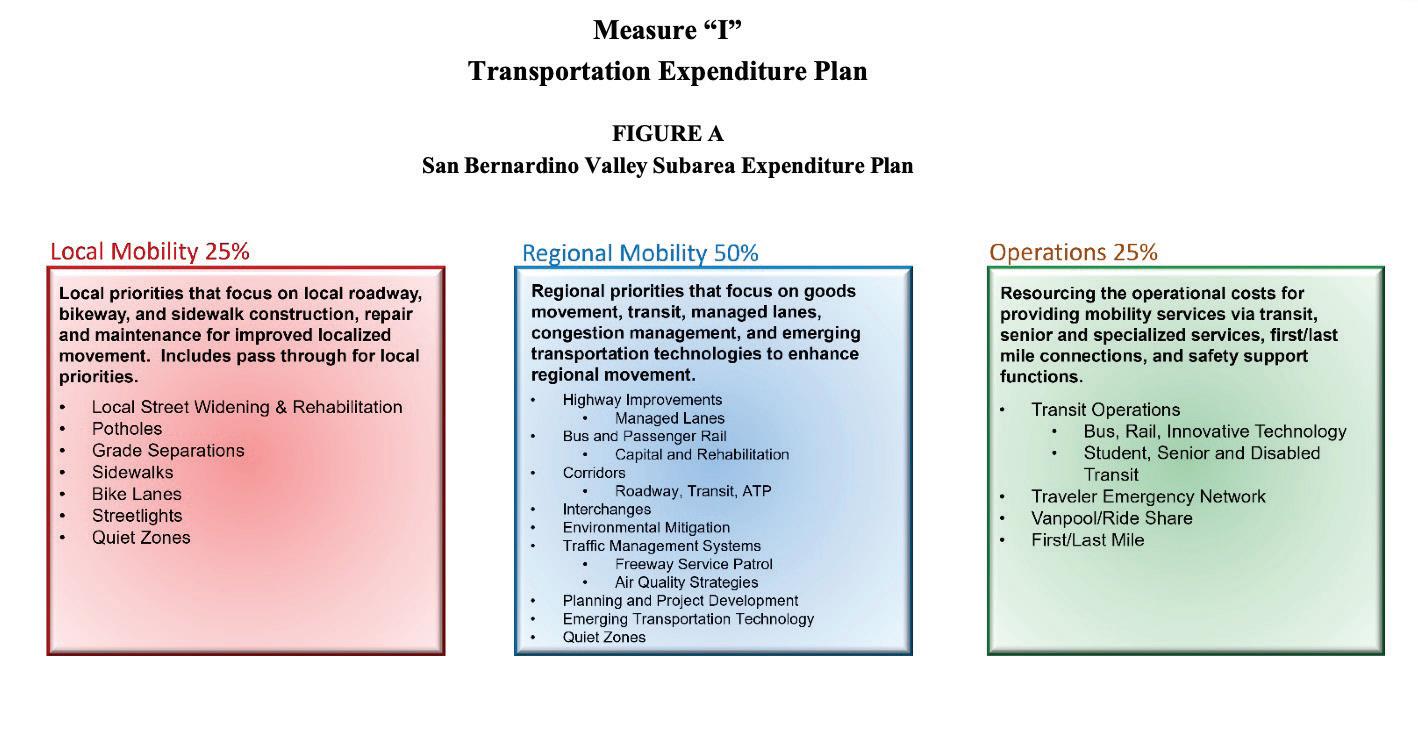
“that focus on local roadways, bikeways and sidewalks ... are defined as local street and road construction, repair and maintenance” and other local transportation elements, according to the plan. “Regional mobility” refers to a “focus on goods movement, transit, managed lanes, congestion management and emerging transportation technologies to enhance regional movement.”
The “operations” category of spending priorities refers to “mobility services via rail, transit, senior and specialized services, first/last mile connections, ridesharing and safety support functions,” the county reported.
For the San Bernardino Valley, local mobility and operations would receive 25% of voter-approved Measure I funds, with regional priorities commanding half of the funding.
Mountain and desert communities have a 70% focus on local mobility, with 20% for regional mobility priorities and 10% for the operations category.
The Measure I Plan allows the Transportation Authority Board of Directors can
increase mountain-desert operations funding “based upon recommendation of Subarea representatives and the Mountain/Desert Policy Committee ... upon on a finding that such increase is required to address unmet transit needs of the Subarea. All increases above the 10% initial revenue collected for the Operations category shall come from the Local Mobility category of the Subarea.”
The county officials and voters approved Measure I in 1989 and again in 2004. If approved in November, the sales tax will require a ballot initiative to repeal it.
The current Measure I ordinance is set to expire in 2040.
The sales-tax spending plan also needs approval from city councils representing both a majority of the cities in the county and a majority of the population residing in the incorporated areas, according to a county staff report.
“If passed, the Measure I Program will continue to provide long-term funding to help fight traffic conges-
tion, improve local streets, major roads, and highways; and enhance San Bernardino County’s economy by providing construction-related jobs, manufacturing jobs, and a transportation system to meet the needs of residents and the business communities,” county staff reported.
The San Bernardino CountyTransportation Authority, which OK’d the plan prior to the Board’s approval, manages Measure I funds, according to the report.
Since its inception, the dedicated tax has provided funding for numerous transportation projects, including freeways, local roads, major streets, interchanges, the Metrolink commuter train system, public buses, traffic signals and other improvements,officials reported.
This plan calls for infrastructure improvements in the Cajon Pass and other key corridors.
“It will also support evacuation planning, bolster emergency response capabilities, improve primary evacuation
Brush fire burns 25 acres in Temecula Wine Country, closes Callaway Winery
JBy
ust over $20 million in state funding earmarked for homeless relief programs will be allocated to Riverside County and the city of Riverside for ongoing mitigation efforts, it was announced Wednesday.
The county and city were included in the latest round of distributions from the California Homelessness Housing, Assistance and Prevention program, according to the governor’s office.
The total HHAP disbursal across the state is $145.4 million. Of that, the county and city are slated to receive a combined $20.4 million, offi-
cials said.
“HHAP grants are a testament to California’s commitment to driving real results through responsible, outcome-focused leadership in partnership with local regions,” Business, Consumer Services & Housing Agency Secretary Tomiquia Moss said Wednesday. “By investing in proven, collaborative solutions that prevent and address homelessness, we are strengthening local systems, expanding access to stable housing and ensuring our communities can deliver meaningful support to the Californians who need it
Aproposedinitiative to generate roughly $4 million per year to fund the expansion of the Convention Center by taxing the city’s hospitality industry was announced Thursday.
The City Council unanimously approved a resolution of intention during Wednesday’s council meeting to create a “Tourism Improvement District,” who would collect money from a 1% tax imposed on lodging businesses citywide, including hotels and short- term rentals. Restaurants and retail businesses will not be a part of the district.
The funds will go towards upgrading the Convention
Center and enhancements connecting to the facility.
“The Tourism Improvement District provides the dedicated funding needed to modernize our Convention Center, attract high-caliber events, and continue welcoming large groups and visitors whose spending supports our entire local economy,” Peggy Trott, chairwoman of P.S. Resorts, said in a statement. P.S. Resorts will serve as the owners’ association and will manage funds.
The purpose behind improving the Convention Center was to remain competitive in the tourism sector, in which city officials believe the facility will attract major
By City News Service
Amanaccusedof gunningdowna
Moreno Valley resident more than two decades ago pleaded not guilty Wednesday to first-degree murder and other charges, and authorities arrested a suspect in a 2022 Desert Hot Springs homicide.
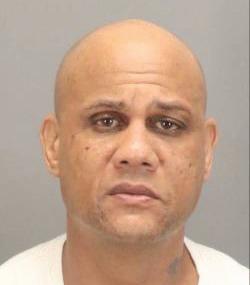
Corey Tajuan Sampson, 45, of Hesperia, was arrested last month following an investigation by the Riverside County Sheriff’s Department Cold Case Unit into the 2004 slaying of 29-year-old Israel Rangel.
Along with murder, Sampson is charged with sentence-enhancing gun and great bodily injury allegations. The defendant was arraigned Wednesday before Superior Court Judge Jay Kiel, who scheduled a felony settlement conference for April 17 at the Riverside Hall of Justice.
Sampson is being held in lieu of $1 million bail at the Smith Correctional Facility.
According to sheriff’s Sgt. Jarred Bishop, on the night of Sept. 1, 2004, there
A400-acre private residential community and club in La Quinta will include an 18-hole golf course designed by renowned golf course architect David McLay-Kidd and anticipated to be completed in 2028.
Developed by Meriweather Companies, a private resort real estate development firm, the Coral Mountain Desert Club -- described as “firstof- its-kind in the United States” -- will be anchored by the championship golf course and will offer its residents a lifestyle of wellness, social connection and recreation.
was an unspecified confrontation between Sampson and Rangel at a Moreno Valley property in the 15000 block of Perris Boulevard, near JFK Drive.
During the encounter, the defendant allegedly pulled a handgun and fired multiple rounds at the victim, mortally wounding him, then fleeing the location, Bishop said.
The gunfire prompted calls to 911, and Rangel was found unconscious but clinging to life. He was taken to the county hospital on the east end of the city, where he died a short time later.
Bishop said Sampson “was identified as a suspect” by homicide detectives at the time, “but there was insufficient evidence to file charges, and the case eventually went cold.”
Last year, the Cold Case Unit began re-examining evidence, resulting in “several leads” that helped uncover previously unknown details on which
investigators
obtain a
warrant for his arrest in mid-March, according to the sergeant.
No other information was disclosed, including a possible motive for the shooting.
Sampson has no documented prior felony convictions in Riverside County.
2022 DHS killing
A suspect in connection with a 2022 homicide of a Desert Hot Springs resident has been arrested, authorities said Thursday.
Camilo Castillo, 28, of Desert Hot Springs, was booked on suspicion of murder, according to the Desert Hot Springs Police Department.
He was being held on $1 million bail.
Officers responded to a report of a shooting near Buena Vista Avenue and West Drive on the morning of July 18, 2022 and found Jayson Jamar Green, 41, of Desert Hot Springs, suffering from multiple gunshot wounds and immediately provided medial intervention until parademics arrived at the scene a short time later. He was taken to
Scottish-born Kidd was raised in the world of golf by his father, a golf course superintendent,where he developed the passion of the sport, according to DMK Golf Design’s website, Kidd’s firm. His portfolio includes several golf course such as the Bandon Dunes in Oregon, Gamble Sands in Washington and Graybull in Nebraska. The La Quinta course will be Kidd’s first course in California.
“At Coral Mountain Desert Club, I have the opportunity to create my first original work in Southern California. On my very first
By City News Service
visit, I reveled in the light cast across the valley, shadows in the mountains and the colors in the rocks. I knew I had found another compelling landscape to do my best work, and where my team and I could craft a course unlike anything nearby,” Kidd said in a press release.
Organizers said that the golf course, which has not been named, said that Kidd’s inaugural course in the Greater Palm Springs will “celebrate the natural terrain while emphasizing strategic playability, creativity and accessibility for golfers of all skill levels.”
By City News Service
Sunnylands Center and Gardens will host its annual Family Day: In the Gardens, a day filled with activities dealing with native desert plants and wildlife, later this month in Rancho Mirage.
The free, all-ages event will be held from 9 a.m. to 2 p.m. on April 19 at 37977 Bob Hope Drive.
Attendees will be able to participate in a series of activities, including guided bird
Desert Regional Medical Center in Palm Springs and pronounced dead by hospital staff a week later, police said.
The case went cold after years of investigation, until detectives reviewed the case and found evidence or information leading the identity of the suspect.
On March 31, the Riverside County District Attorney’s Office Gang Impact team found and arrested Castillo in Los Angeles. He was transported back to Riverside County.
Police said the DA filed charges against Castillo on Wednesday, including firstdegree murder, a firearm enhancement during the commission of a felony and a prior prison offense enhancement.
Anyone with additional information regarding the case was urged to contact Detective George Bailey at 760-668-5857, or report tips anonymously through Crime Stoppers at 760-3417867.
walks, cardboard hummingbird activity, a worm lifecycle activity, creating a stick bug with materials found on the ground and interacting with local wildlife, such as reptiles, amphibians and arthopods.


Editorial editorial@beaconmedianews.com
editor@hlrmedia.com
Graphics/Production production@beaconmedianews.com production@hlrmedia.com
Advertising advertising@beaconmedianews.com advertising@hlrmedia.com
Legal Advertising legals@beaconmedianews.com legals@hlrmedia.com
Business accounting@beaconmedianews.com accounting@hlrmedia.com
BEACON MEDIA ADDRESS: 820 S. Myrtle Ave. Monrovia, CA 91016
PHONE: (626) 301-1010
WEBSITE www.beaconmedianews.com
HLR MEDIA ADDRESS: 820 S. Myrtle Ave. Monrovia, CA 91016
PHONE: (626) 301-1010
www.HLRmedia.com
PRESS
editor@beaconmedianews.com editor@hlrmedia.com














By Joe Taglieri joet@beaconmedianews.com
coalitionofenvironmentadvocates respondedTuesday to the California Department of Fish and Wildlife’s recent recommendations and evaluations on proposed changes to the state’s network of marine protected areas.
On March 20, CDFW recommended denying nearly all of the public’s proposed conservation measures. The department’s recommendations come three years after tribes, conservation organizations, and members of the public submitted 15 proposals that would expand or strengthen the state’s worldrenowned MPA network, according to the Power In Nature coalition.
CDFW has not yet evaluated five tribe-led proposals for marine conservation.
The department’s recommendations are the first step in the decision-making process that culminates with the approval or rejection of proposed changes to the MPA network.
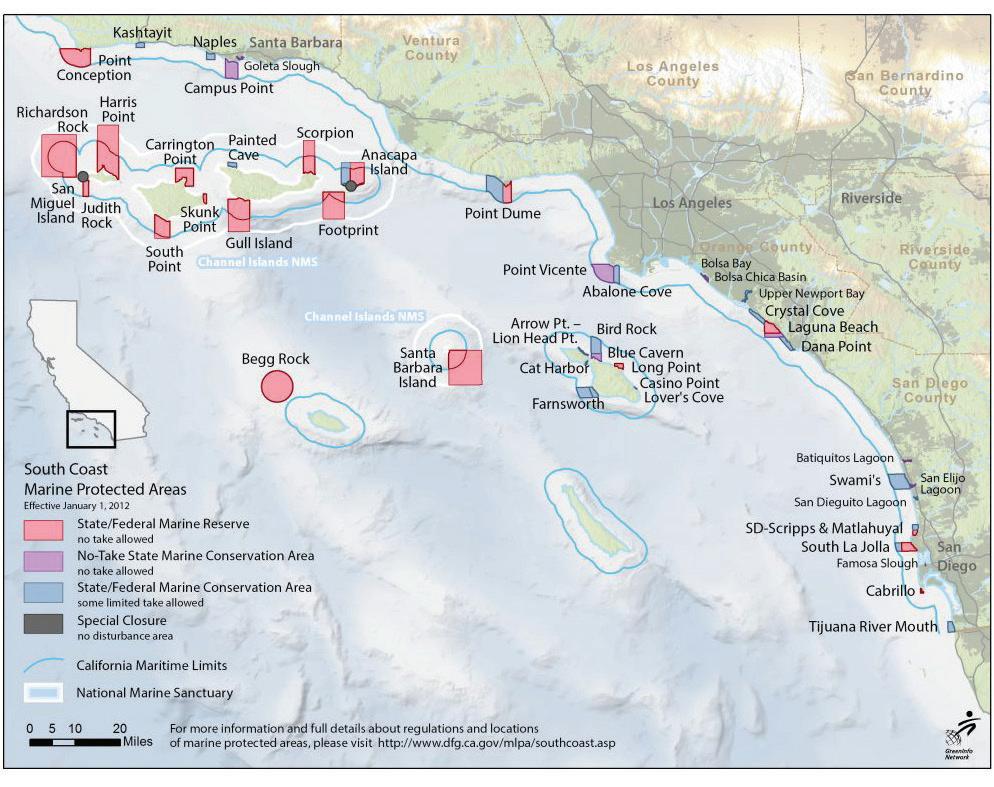

Following three regional public meetings in April and May, the California Fish and Game Commission is set to decide on June 17 whether California will continue with its robust ocean conservation policies.
In the meantime, the Ocean Protection Council plans issue its own recommendations that factor in additional and new information, coalition members said.











“We are concerned with CDFW’s recommendations, given how important strengthening the Marine Protected Area network is to reaching 30x30 and ensuring our oceans remain healthy far into the future,” Laura Deehan, state director for Environment California, said in a statement. “78 percent of Californians across broad and diverse demographics support Marine Protected Areas. We are counting on Governor Newsom, the California Natural Resources Agency and The Ocean Protection Council to push for new ocean protections that reflect the clear will of Cali-
fornians and the urgency of safeguarding our ocean ecosystems.”
CDFW officials did not respond to a request for comment.
In 2023, tribal governments along with environmental and community organizations submitted 15 proposals to strengthen and modestly expand the state’s MPA network amid increasing climate-related impacts to the environment, ocean industrialization and habitat loss, Power In Nature reported.
“These long-awaited recommendations from CDFW are concerning, given the state’s long-standing leadership on ocean conservation and its commitment to conserve 30% of California’s coastal waters by 2030,” according to the coalition. “Cumulatively, if all of the strengthening proposals were approved, this would conserve an additional 2% of state waters, and protect some of the state’s last remaining persistent kelp forests, habitat for endangered species, and other vulnerable habitats like rocky
intertidal reef.”
Environmentalists said the CDFW recommendations, as proposed, would increase protections by less than 0.1% of the state’s coastal waters.
Coalition members cited research that has shown the state’s globallyrecognized MPA network, which protects 16% of coastal waters, is working to enhance biodiversity, increase fish biomass and improve the resilience of key habitats such as kelp forests despite climate change-related impacts.
“However, we need over 275,000 additional acres to reach the state’s 30x30 goal,” according to Power In Nature. “Only 9% of state waters are conserved in fully protected MPAs, the most effective type of biodiversity protection.”
A global coalition of scientists agree that to protect life as humans currently know it, conservation of at least 30% of the Earth’s lands and coastal waters by 2030 is a must. First in 2020 then backed by 2023 legislation, Newsom committed California to the
30×30 goal.
Activists said California is leading the world towards “30×30,” especially for land conservation, but millions of acres still must be conserved in less than four years.
“Preserving the state’s lands and coastal waters will help address the impacts of climate change, protect animal and plant species at risk for extinction, and expand access to nature for Californians,” according to the coalition.
The CDFW recommendations released last month are available on the department’s website via tinyurl. com/2bnw4u5s.
According to Power In Nature, the coalition is comprised of 250 community groups, environmental and conservation organizations, land trusts, Indigenous organizations and tribal members. The group has identified nearly 100 potential 30x30 projects across the state and works on issues that include biodiversity protection, climate resilience, equity, recreation, outdoor access and social justice.
By City News Service
DaveyLopes,akey memberofthe Dodgers’ famed infield during the team’s 1970s and 1980s success, died Wednesday at age 80.
“The Dodgers mourn the loss of Davey Lopes, who passed away today at age 80,” the Dodgers posted on social media Wednesday. “Lopes was a member of the team’s record-setting infield of the 1970s and 1980s and one of the finest basestealers in MLB history. Our condolences go out to his family and friends.”
TMZ reported earlier that Lopes died in Rhode Island following a battle with Parkinson’s disease.
A four-time All-Star and two-time World Series champion, Lopes spent 10 seasons with the Dodgers and was a key part of one of baseball’s most celebrated infields alongside Steve Garvey, Bill Russell and Ron Cey.
Known for his speed and discipline at the plate, Lopes recorded 557 stolen bases over his 16-year major league career and was widely regarded as one of the premier leadoff hitters of his era. He led the National

was a key contributor to the Dodgers’ World Series championship in 1981.
Lopes broke into the major leagues at age 27 after years in the minors, but quickly established himself as a dynamic presence atop the Dodgers’ lineup with his ability to get on base and create scoring opportunities.
In addition to his time in
the Oakland Athletics, Chicago Cubs and Houston Astros before retiring.
Following his playing career, he remained in baseball for decades as a coach, serving with multiple teams, including the Dodgers, and earning widespread respect for his work developing base runners and improving offensive efficiency.

By Suzanne Potter, Public News Service

Expertsinhealth-care policyarespeaking out against further Medicaid cuts once Congress returns from its spring recess to work on a second budget reconciliation package.
The legislation will fund the Iran war and the Department of Homeland Security. Last summer, Republicans cut $1 trillion from Medicaid in their reconciliation bill known as the “One Big Beautiful Bill Act.”
Joan Alker, co-founder and executive director of the Center for Children and Families at Georgetown University, said she’s concerned that the administration may use allegations of Medi-Cal fraud to justify further cuts.
“The House Budget chair, Arrington, has been very explicit that he’d like
to see more Medicaid cuts,” she said. “We’re hearing a lot of rumors about this, so that is extremely concerning, and we will certainly be paying very close attention to that.”
Alker said she fears that the Trump administration’s focus on fraud is really an attempt to attack the president’s political enemies in blue states, to distract voters from past Medicaid cuts, and to lay the groundwork for additional cuts.
In January, the Centers for Medicaid Services sent a letter to Gov. Gavin Newsom questioningMediCal spending, noting that the In-Home Supportive Services program grew almost 350% over the past decade. The state responded that the program has grown as the state successfully moved more older Califor-
nians into cost-effective home-based care, limiting spending on institutional care such as nursing homes.
Andy Schneider, a research professor at Georgetown University’s McCourt School of Public Policy, said in-home services allow more people to age in place.
“The fact that IHSS spending has gone up, in the state’s view, is testament to a successful rebalancing,” he said, “one that in the past, the federal government has encouraged.”
Blue states have also been targeted in letters from the House Energy and Commerce Committee. Three weeks ago, Trump established a governmentwide anti-fraud task force, led by Vice President J.D. Vance and White House advisor Stephen Miller.

AnewIntuitCredit Karma/HarrisPoll
study finds 78% of Americans don’t feel financially secure — and doing everything right is not enough.
Most Americans believe they’ve made smart financial decisions, but doing the “right thing” doesn’t always feel like enough. Many believe that even if financial success exists on paper, it doesn’t guarantee that it will translate to comfort in real life.
According to the study, conducted online by The Harris Poll on behalf of Intuit Credit Karma among 2,081 U.S. adults ages 18 and older, 70% of Americans feel they have made smart financial decisions for themselves up until this point, yet 68% say that having a positive financial standing on paper is not enough to ensure a comfortable lifestyle. In this article, Intuit Credit Karma examines the data and why many Americans don’t feel financially secure.
Key takeaways: Why Americans feel like they will never have enough money
• 78% of Americans say they don’t feel financially secure. Even though 70% believe they’ve made smart financial decisions, 68% say that having a positive financial standing on paper is not enough to ensure a comfortable lifestyle.
• 59% of Gen Z (ages 18-29) and 58% of Gen X (ages 46-61) feel financially insecure compared to their peers — but likely for different reasons: 40% of Gen X are living paycheck to paycheck and 36% say their income as not kept up with inflation, while 26% of Gen Z say they are unable to keep up with bills/ payments, and report job instability.
• 43% of Americans believe they’ll never have enough money to achieve the American Dream, rising to more than half (56%) of Gen Z.
• 37% of Americans have given up on long-term savings to prioritize spending on shortterm purchases and experiences, increasing to nearly half (49%) of Gen Z. Why most Americans don’t feel financially secure today
More than 3 in 4 Americans (78%) report that they do not feel financially secure. The top culprit is the rising cost of living (47%), followed by the current state of the economy (42%).
Put simply, everyday life
I’ll never have enough’: Why Americans feel broke despite making smart financial decisions
By Jaime Duzi for Intuit Credit Karma via Stacker
has gotten more expensive, and incomes are not keeping up. These costs show up in three main ways: costs rising faster than income, little to no savings cushion, and unstable or unpredictable income. For example, when it comes to factors that make Americans feel they are not financially secure:
• 31% say it’s because their income has not kept up with inflation, including 36% of Gen X.
• 31% say it’s because they are living paycheck to paycheck, including 40% of Gen X and 38% of Gen Z.
• 28% say it’s because they are unable to put money into savings, including 37% of Gen X.
• 19% say it’s because they are unable to keep up with bills/payments, including 26% of Gen Z.
• 16% say it’s because of job instability, including 26% of Gen Z.
Comparison is the thief of joy for many, as more than half of Americans (51%) say they don’t feel as financially secure as other people their age, including 59% of Gen Z and 58% of Gen X. Additionally, more than one-third of Gen Z (34%) point to comparing themselves to others on social media as to why they don’t feel financially secure.
Why the American Dream feels out of reach for many Americans
For many decades, financial success followed a familiar script: Get a job with a steady income, buy a home and eventually retirement will follow.
Today, that script feels increasingly unrealistic for 43% of Americans who feel they will never have enough money to achieve the American Dream (i.e., achieving financial success, such as owning a home or supporting a family through hard work), climbing to 56% of Gen Z and 57% of renters.
Nearly 3 in 4 Americans (72%) share that certain aspects of their financial standing make them feel like they will never have enough money to achieve the American Dream. The biggest factors come down to three things: income not keeping up with rising costs of living, not being able to save after paying for essentials, and long-term financial pressure like retirement or debt.
For example:
• 31% say their income has not caught up with the rising cost of living, rising
to 41% among those with a household under $50,000 annually, and including 36% of Gen Z and 34% of Gen X.
• 24% say they are not saving enough for retirement, rising to 32% of Gen X.
• 23% say they are struggling to save money after covering monthly expenses.
• 21% say they are struggling to afford necessities (e.g. rent/mortgage, food, utilities), including 29% of Gen Z.
• 19% point to the amount of debt they have, including 23% of Gen Z.
• 17% say their income is unpredictable.
The reliance on financial support adds another layer to the picture, with more than a third of Americans (36%) admitting they receive financial support from someone else (excluding a significant other), most commonly from parents (22%). Among Gen Z, 69% receive financial support, and 53% receive it from their parents.
Why financial goals are falling out of reach
Among Americans who have financial goals, more than three quarters (76%) feel there are certain financial goals they will never be able to afford despite how much they’ve saved or how hard they’ve worked.
• The goals most commonly described as out of reach:
• Taking a dream vacation — 30%
• Retiring by 65 — 28%, rising to 43% of Gen X
• Buying a home — 26%, rising to 40% of Gen Z
• Paying off debt — 25%, rising to 34% of Gen X
Of those who feel they will never be able to afford certain financial goals, 44% have accepted they will need to compromise on what they want (e.g. buying a smaller home or cheaper car, having a smaller wedding), while 33% have concluded that achieving their goals simply will not be possible. Less than a quarter (23%) say they are not willing to compromise on their goals and will do whatever it takes to achieve them.
Among Americans who have financial goals, 78% say they’re willing to take extreme measures to achieve them. Half (50%) are prepared to reduce non-essential spending (e.g. eating out, entertainment), 26% would delay retirement — including 34% of Gen X — and 25% would take on a second job or work multiple jobs.
Why Americans are prioritizing bills over saving

Nearly half of Americans (46%) say paying bills and covering necessities, (e.g. rent/mortgage, food, utilities) is among their top priorities for money allocation, including 55% of those with a household income under $50,000 and 52% of Gen X.
Building savings comes in second at 43%, but that priority drops to just 33% among those with a household income of less than $50,000, where there’s likely little room left over after necessities are covered.
Most stark is that 37% of Americans have given up on long-term savings altogether in order to prioritize shortterm purchase and experiences, rising to 49% among Gen Z.
What to do if you feel financially insecure or behind financially
If you’re wondering what to do when you feel financially insecure or like you’ll never
have enough money, these steps can help you regain a sense of control over day-today money decisions.
• Build a budget around your reality, not your goals: Before allocating money toward savings or paying down debt, track what you’re actually spending for 30 days. It’s easy to underestimate regular expenses, which can make planning feel useless. Tracking your expenses can help you understand your spending habits better — e.g. how your month-to-month spending compares, including your top spend categories.
• Prioritize high-interest debt first: If debt is contributing to your sense of financial insecurity, focus any extra dollars on paying down your highest-interest balances first.
• Reframe the American Dream: If homeownership or retiring at a desired time
no longer feel attainable, set new and meaningful goals rather than chasing a one-size-fits-all definition of success. Adjusting your goals is not the same as giving up on them.
Methodology
This survey was conducted online within the United States by The Harris Poll on behalf of Intuit Credit Karma from March 24-26, 2026 among 2,081 U.S. adults ages 18 and older. The sampling precision of Harris online polls is measured by using a Bayesian credible interval. For this study, the sample data is accurate to within +/- 2.7 percentage points using a 95% confidence level. This credible interval will be wider among subsets of the surveyed population of interest.
This story was produced by Intuit Credit Karma and reviewed and distributed by Stacker.
Re-published with CC BY-NC 4.0 License.
By Paul Anderson, City News Service
OrangeCounty’s trending“purple”
politics makes it a good bellwether for the state, and that is reflected in a new poll from UC Irvine regarding the June primary for governor, the dean of UCI’s School of Ecology said Wednesday.
“We are arguably the only purple county (in the state) and even in this purple county there’s still a whole lot of folks up in the air what their choice will be” for governor, Jon Gould said. “A quarter of the electorate doesn’t have a candidate and even when we push someone to choose it’s unclear who comes in second place.”
The UCI poll of Orange County residents found that 25% of respondents were undecided on the governor race. The top two gubernatorial candidates will advance from the so-called jungle primary in June to the November election. Some polls indicate Republicans Steve Hilton and Riverside County Sheriff Chad Bianco will advance because there are so many Democrats splitting the rest of the vote. The UCI poll bore that out — with Hilton leading at 19% and Bianco in second with 11%.
And the UCI poll surveyed residents “before (President Donald) Trump made his announcement Monday that he’s supporting Hilton,” Gould said.
“One could expect
Bianco’s numbers to go down,” Gould said.
Among Democrats, billionaire Tom Steyer had support of 10% of pool respondents, while 9% backed former Rep. Katie Porter, 7% for Rep. Eric Swalwell and 5% for former Los Angeles Mayor Antonio Villaraigosa.
“Certainly Swalwell is poised to do well, as is Steyer, but both are taking incoming heat on negative advertising and Katie Porter is a former hometown congresswoman,” Gould said.
“It is a little surprising to a number of people here in the county where (Porter) served that she’s not doing as well,” Gould said.
Orange County has become a good barometer of the mood of the country and state because it is “so large” and politically split between Democrats and Republicans.
“There’s a lot of disappointment and disillusionment in everything these days,” Gould said of the poll’s findings.
The poll of 1,202 Orange County residents from March 24 thorough March 31 showed low marks for Trump and Gov. Gavin Newsom.
Trump’s approval stood at 35% with 65% disapproving. Newsom stood at 38% approval with 55% disapproval.
The poll showed 34% or respondents identifying as Democrat, 30% as Republican and 36% as independent or something else. That’s
about the same as a 2004 survey.
The poll showed 62% of respondents think the country is on the wrong track with 30% saying it is on the right track. For the state, it was 57% on the wrong track versus 31% right track.
The poll showed 41% of respondents think the county is on the right track, 36% on the wrong track and 24% unsure. Two years ago, half the respondents said the county was on the right track and 35% said it was on the wrong track.
Trump’s support in the county is “concentrated among Republicans, with more than 80% approving, while nearly 9 in 10 Democrats disapprove,” according to the poll. “Independents also lean clearly negative, with about 60% disapproving and 30% approving, preventing Trump from expanding beyond his core base.”
Younger generations are “especially negative” for Trump with the president’s disapproval exceeding 65% to 70%, according to the poll.
“Older residents are somewhat less negative, but still net disapproving, except for seniors, who modestly support Mr. Trump,” according to the poll.
Approval of Trump runs about mid-40% for whites while Latinos and Asians approval ratings are closer to 25% to 30%, according to the poll.
The poll has good news

for Democrats in the county on the generic congressional ballot. Democrats lead Republicans 49% to 36%, according to the poll.
“This margin exceeds the party identification gap, indicating that Democrats attract support beyond their base,” according to the poll.
Democrats are buoyed by Latino, Asian and younger voters, while Republicans perform best among whites and older voters, according to the poll.
Gould said the poll this year included a question on
socialism vs capitalism and showed that younger voters favor socialism.
While capitalism overall is supported by county residents, the younger residents “are more skeptical,” according to the poll.
“Gen Z is the only group with net negative views of capitalism (35% positive, 52% negative), while millennials are more divided,” according to the poll. “Socialism topped out at 42-45% support among Gen Z and millennials, with support declining noticeably
among older residents.”
The poll indicates it is possible Orange County will trend more Democratic over time, Gould said.
“I’d much rather be a Democrat with young people and hope they hold on to it as they grow older,” Gould said. “If they stay where they are then Orange County should become even more blue as time goes on.”
The school will release another poll on views of immigration issues at the end of the month, Gould said.
By Suzanne Potter, Public News Service
TheTrumpadministrationrecently pulled funding for 49 programs designed to help small farmers acquire land and get started, including five in California.
Communityprojects funded by the Increasing Land, Capital and Market Access program came to a halt in the Bay Area, the Central Coast, Fresno, Santa Ana and San Diego. The $300 million program directed aid to underserved farmers, many in rural areas.
Colleen Hotchkiss, sustainable agriculture specialist for the Alameda County Resource Conservation District, said the abrupt termination letter laid out the administration’s reasons.

“Our intention to prioritize underserved producers did not align with the USDA’s current priorities of unity, equality, meritocracy
and colorblindness,” Hotchkiss explained. The termination letter also claimed many of the programs distributed too
little aid to farmers. Hotchkiss noted the program in Alameda County had only spent $30,000 out of the $480,000 grant because the
federal officials froze funds and slow-walked approvals.
She added her agency was forced to cancel one
program to lease city-owned properties in Oakland and Hayward to small producers and another providing microgrants.
“Minigrants of even $2,000 to $3,000 are very impactful for small farms that have difficulty accessing traditional funding like Farm Service Agency loans and things like that,” Hotchkiss observed.
The Agriculture Department tried to terminate the same grant last year to one other program in California, a small nonprofit farming collective based in El Sobrante called Agroecology Commons. The collective sued, so the contract is technically still in place while the litigation plays out.
By Alex Berrio for NutraBio via Stacker
Weight loss has become easier to achieve, but the tradeoffs aren’t always apparent right away. For many patients starting GLP-1 medications, the early results can feel drastic, even disorienting, NutraBio reports.
Taryn J. Mitchell, a 54-yearold banker from Greensboro, North Carolina, began losing weight rapidly after starting Wegovy, without the strict diet and exercise routine she had relied on for years. But alongside that progress came something less expected. “It got scary,” she said, as the pace of weight loss raised new concerns about strength and muscle.
Clinicians say the concern is not unfounded, even if the science is still evolving. Weight loss has always included some reduction in lean mass. However, what is changing is the speed and scale. The drugs change appetite. But now patients must change their nutrition as well.
Why Now
The scale of adoption helps explain why this tension is gaining national attention now. A November 2025 KFF Health Tracking Poll found roughly one in eight American adults currently taking a GLP-1 medication, with nearly one in five having used one at some point. Use is highest among adults aged 50 to 64, a group already navigating changes in muscle and metabolism.
As use expands, attention is turning to body composition rather than weight alone. Early evidence suggests a meaningful share of weight lost can include lean mass, with outcomes shaped by diet, activity, age, and the pace of loss. That reality is beginning to influence behavior beyond the clinic.
Justin Bina, an assistant professor at Arizona State University, notes that GLP-1 adoption is already reshaping demand. “We find that GLP-1 adoption directly increases what users are willing to pay for protein products,” he said, adding that manufacturers and restaurants are responding with “GLP-1-friendly” products positioned around nutrient density and protein.
What The Science Actually Says
In the STEP-1 trial — the foundational study behind Wegovy’s approval — a subgroup of participants underwent dual-energy X-ray absorptiometry, an imaging technique that separates fat from lean tissue with more
precision than a standard scale.
Among those participants, semaglutide produced an average 15% reduction in body weight over 68 weeks, with fat mass dropping roughly 19% and lean body mass declining about 10%. Notably, the proportion of lean mass relative to total body weight actually increased, because fat dropped more.
A similar pattern emerged in the SURMOUNT1 trial examining tirzepatide: Participants lost an average 21% of body weight over 72 weeks, with approximately 75% of that loss attributable to fat and 25% to lean mass — a ratio consistent across age, sex, and weight-loss magnitude subgroups.
Both findings carry an important qualifier. The DXA analyses were conducted on small subsets of each trial population — 140 participants in STEP-1, 160 in SURMOUNT-1 — making them indicative rather than definitive. And the pattern itself is not unique to GLP1-based weight loss.
“No matter how much weight you lose, about 25% of that will be from muscle,” says Dr. Caroline Apovian, co-director for Weight Management and Wellness at Harvard-affiliated Brigham and Women’s Hospital. “And if you lose a lot of weight quickly, as can happen when you use GLP-1s or follow an extreme low-carb or low-calorie diet, you can lose even more muscle and at a faster rate.”
The stakes of that loss matter beyond appearance.
“Skeletal muscle is not just tissue that helps us move,” says Dr. Sangeeta Kashyap of New York-Presbyterian/ Weill Cornell Medical Center. “It’s our most metabolically active organ. It burns 80% of glucose postmeal and 20-30% of fat at rest, regulates insulin sensitivity, supports immune health, and helps maintain our resting metabolic rate.”
Research on mitigation points consistently in two directions: higher protein intake and resistance training.
Reviews and meta-analyses generally support protein intakes in the range of 1.2 to 1.6 grams per kilogram of body weight per day during energy restriction, substantially higher than standard dietary recommendations.
In controlled hypocaloric trials, higher protein intake preserved lean mass more effectively
than lower protein intake. Meta-analytic evidence, particularly in older adults, further supports pairing resistance exercise with adequate protein to improve muscle mass and strength outcomes, though results vary by population and protocol.
Much of the data comes from substudies, short-term trials, or specific populations, and results vary depending on protocol and adherence. The broader takeaway is less about eliminating lean-mass loss and more about managing it, with approaches that need to be adapted to individual health status, including age, comorbidities, and overall treatment goals.
The “Protein Problem” with GLP-1s
Appetite suppression is the mechanism that makes GLP-1s effective, and it is the same mechanism that makes adequate protein intake difficult to sustain. Patients eating significantly smaller portions are often not prioritizing protein — they are eating whatever feels tolerable, which tends to mean bland, carbohydrate-heavy foods that are easier on a sensitive stomach.
GI side effects, including nausea and early fullness, compound the pattern. The result is that many users are losing weight while quietly undereating the one macronutrient most critical to preserving what they are trying to keep.
Clinicalguidance published in 2025 reinforces that point, noting that adequate protein may be difficult to achieve for GLP-1 users due to reduced appetite and taste aversions, and recommending a protein-first approach at meals alongside structured resistance training at least three times per week.
Yet many patients are focused on the number on the scale, not on strength, and are skipping the resistance work entirely.
“The goal is fat loss, not muscle loss,” says Dr. Soohan Mansuri, a board-certified primary care physician with the Torrance Memorial Physician Network. “Without intentional protein intake and resistance exercise, muscle mass declines — and so does metabolism.”
The stakes are not equal across populations. Older adults and postmenopausal women often enter treatment with lower baseline muscle mass, meaning the same proportional loss carries heavier functional

consequences.
“When calories are restricted, adequate protein becomes essential to maintain muscle,” says Dr. Kashyap, who recommends working with a nutritionist to make every meal count as appetite patterns change during treatment.
The boom: supplements, shakes, and “GLP-1 food”
As GLP-1 adoption has scaled across nearly 12% of U.S. adults, food manufacturers, supplement brands, and restaurant chains have moved aggressively to meet the appetite-suppressed, protein-conscious consumer — with products explicitly built around the medication’s side effects and nutritional demands.
The response on store shelves has been concrete. Nestlé launched Vital Pursuit, a frozen meal line designed around the nutritional profile of GLP-1 users, and later added “GLP-1 Friendly” labeling after customers requested it.
Conagra followed, adding its “On Track” badge to 26 Healthy Choice products in early 2025.
Smoothie King built a GLP-1 Support Menu in partnership with a registered dietitian.
Danone reported that yogurt consumption is nearly three times higher in households using GLP-1 medications. It responded with new protein shakes carrying 30 grams of protein per serving, a cultured dairy drink formulated to support muscle retention, and a plant-based milk with added protein.
Restaurant chains, including Chipotle and Shake Shack, cited GLP-1 users when debuting protein-forward menu
items.
Protein from whole foods combined with resistance training remains the evidence-based foundation for lean mass preservation. The question the market has not answered is whether reformulated packaging addresses a genuine nutrition gap. Or monetizes the anxiety around one.
“GLP-1 medications are powerful tools, but they don’t replace the fundamentals of nutrition and physical activity,” says Matt Weik, BS, CSCS, CPT, CSN from NutraBio.
What should users do?
For anyone currently on a GLP-1 medication, the clinical guidance points in a consistent direction. Prioritize protein at the start of meals, when appetite is highest, and spread intake across the day rather than concentrating it in one sitting.
Reviews and meta-analyses on weight loss and lean mass preservation generally reference intakes in the range of 1.2 to 1.6 grams per kilogram of body weight daily during energy restriction, well above the standard dietary recommendation.
If nausea or low appetite make eating whole-food sources difficult, protein supplementation is a practical bridge, not a permanent solution.
Resistance training forms the other half of that equation. “Muscle acts as your body’s engine for burning calories and managing blood sugar,” says Dr. Sangeeta Kashyap. “The more muscle you have, the more efficiently your body processes energy.” Most clinical guidance recommends at least two full-body strength sessions per week, building gradually from
baseline.
For people with kidney disease, older adults managing frailty, or patients on complex diabetes regimens, these targets are not one-size-fits-all. “Talk to your doctor about your specific health goals,” says Dr. W. Scott Butsch, an obesity medicine specialist. “Together, you can come up with a plan that works best for you.”
Beyond the Scale in the Age of GLP-1 Medicine
Muscle reduction during weight loss is not a GLP-1 phenomenon. It is a weight loss phenomenon. But the speed and scale of these medications have pushed it to the center of nutrition science, consumer behavior, and a rapidly expanding market that is still catching up to the evidence.
Taryn J. Mitchell, from North Carolina, lost 40 pounds in under a year. She lost some muscle along the way, too, but followed her doctor’s guidance, picked up resistance bands and light weights, and kept moving.
As the weight came off, she found herself doing Pilates, moving with ease, and joining her daughters on the slopes rather than watching from the sidelines. “It’s honestly given me a sense of freedom,” she said. Her story is one version of what informed GLP-1 use can look like. It also illustrates why the science matters more now than ever, and why research, clinical education, and honest public conversation need to grow as fast as the prescriptions do.
This story was produced by NutraBio and reviewed and distributed by Stacker.
Re-published with CC BY-NC 4.0 License.
Immigrants don’t automatically get free healthcare in the United States. Some people may qualify for Medicaid, the Children’s Health Insurance Program (CHIP), or certain state programs, but eligibility depends on their status, state rules, and a number of other factors.
Many others get coverage through an employer, a school, the Affordable Care Act (ACA) Marketplace, or a private plan—in the same way that most U.S. citizens do.
Everyone in the U.S., regardless of citizenship or immigration status, has the right, under federal law, to emergency medical treatment. That, however, is different from ongoing healthcare for preventative treatment or disease management.
Starting Oct. 1, 2026, some Medicaid and CHIP rules affecting noncitizens will change. CMS has outlined the main restrictions and exceptions, but it has also said more guidance is coming, so the impact may depend on your immigration status and the state where you live. These changes are tied to the 2025 federal law commonly called the One Big Beautiful Bill Act (OBBA).
Manifest Law breaks down who may qualify for public health programs, how immigration status affects eligibility, and what recent federal changes mean for noncitizens.
Key takeaways
• Immigrants do not automatically get free healthcare in the United States.
• Some immigrants may qualify for Medicaid, CHIP, Emergency Medicaid, or state-funded programs, depending on their immigration status, income, where they live, and other factors.
• Many immigrants and nonimmigrants get health insurance through work, school, the ACA Marketplace, or a private plan.
• Undocumented immigrants generally do not qualify for fully funded (free) Medicaid, but some may qualify for Emergency Medicaid or local programs.
Some immigrants may qualify, but healthcare is not free
The term “immigrants” can be used to refer to many different types of people living in the U.S. There are lawful permanent residents, nonimmigrants, asylees, refugees, undocumented immigrants, and others.
Some may be eligible for certain healthcare programs, but not all immigrants have access to the same health coverage options.
By Amanda Sabetai for Manifest Law via Stacker
Why healthcare isn’t free
Although some people qualify for government programs or other lower-cost options, healthcare isn’t free for immigrants.
In many cases, a person must still meet eligibility rules for income and immigration status, and the coverage itself likely isn’t fully free. Some programs require copays or other out-of-pocket costs, while others only cover a limited amount of care, which is different from full, ongoing health insurance.
What affects healthcare eligibility?
Eligibility can depend on an individual’s:
• Age
• Income
• Immigration status
• The state where they live
• Whether they’re pregnant
• Whether they have a disability
• Who is in their household
Can immigrants get Medicaid?
Medicaid is available to certain categories of immigrants, but they must also meet income requirements and other eligibility rules under federal and state law.
Medicaid is jointly funded by the federal government and states, but states run their own programs within federal rules. That means there are national baseline rules under federal law, but states have some flexibility to decide whether to cover additional groups or services.
Who is eligible for Medicaid?
According to the Congressional Research Service, qualified noncitizens who may be eligible for Medicaid include:
• Lawful permanent residents
• Refugees
• People granted asylum or related relief
• Certain parolees
• Certain abused spouses and children
• Cuban-Haitian entrants
• Citizens of the Freely Associated States living in the United States
Even within these categories, not everyone can get Medicaid right away.
What is the 5-year rule?
The five-year rule refers to the five years that many green card holders must wait before they can receive full federally funded Medicaid.
Certain individuals are exempt from the five-year rule, including, but not strictly limited to:
• Refugees
• Asylees
• Certain trafficking survivors
• Some veterans and military family members

• Some lawfully residing children
• Some pregnant individuals
Whether someone is subject to the five-year rule differs significantly from one state to another, since federal law allows states to choose whether to cover some people.
Do undocumented immigrants get free healthcare?
In most cases, undocumented immigrants do not qualify for full federally funded Medicaid. They also are not generally eligible to enroll in marketplace coverage through Healthcare. gov. They may have access to limited emergency care and, in some places, limited state or local programs, but not the same broad coverage options available to many citizens or lawfully present immigrants.
This is despite the fact that a large portion of undocumented immigrants do file and pay taxes, using an ITIN number, even though they’re not eligible for a refund or many of the benefits funded by these taxes.
Emergency Medicaid for undocumented immigrants
Federal Medicaid law does allow payment for limited emergency services for certain people who are otherwise ineligible for full Medicaid coverage, if they meet all the other Medicaid eligibility requirements in their state. This is commonly called Emergency Medicaid. It is not the same as full health insurance coverage, and it does not replace regular access to preventive or ongoing care.
Some undocumented immigrants may also be able to get emergency medical care through:
• Emergency rooms under the Emergency Medical Treatment & Labor Act (EMTALA)
• Community health centers
• Migrant health centers
• State-funded or local coverage programs, where available
Do nonimmigrants receive free healthcare?
Nonimmigrants, including many people on work, student, or other temporary visas, don’t receive free public healthcare just because they’re in the United States.
Some may qualify as lawfully present for market-
who do not qualify for or cannot afford insurance.
New York City and New York State offer broader health coverage and options to access medical care than many other parts of the country.
place purposes, which can allow them to buy coverage through the ACA (also known as Obamacare) Marketplace if they meet the rules. But that is not the same thing as automatic free coverage.
Many nonimmigrants get health coverage through:
• An employer
• A school or university
• A private health insurance plan
• Marketplace coverage, if eligible
Many temporary workers, such as those on an O-1 visa or H-1B visa, and students purchase healthcare coverage through their employer or school.
How employer-sponsored plans benefit immigrants
For many immigrants and nonimmigrants who live and work in the United States, health insurance comes through a job, just as it does for American citizens.
Employer-sponsored plans are not free, but they may be subsidized because the employer often pays part of the premium. The employee may still have payroll deductions, copays, deductibles, and other out-of-pocket costs. That means this kind of coverage can be more affordable than buying a private plan through the marketplace, but it is not “free healthcare.”
State programs for immigrant healthcare
State rules can make a major difference in what healthcare programs are available to immigrants living there.
Federal rules set the baseline, but states often have more generous options for certain groups or people. Some states also fund their own programs for residents who would not qualify for full federal coverage.
Immigrants seeking health coverage should always check the guidelines for programs run by the state where they live.
Here are a few examples of state or city programs:
• New York City: NYC says immigrants can access low- and no-cost city health services regardless of immigration status, and the city points people to options including NYC Care, which offers services for people
• California: California has some of the broadest immigrant health coverage policies in the country.
Covered California says people can qualify for coverage regardless of immigration status. Current state guidance also says children can qualify for full-scope Medi-Cal regardless of immigration status.
(California’s rules changed in 2026, so new enrollment in full-scope Medi-Cal is no longer available for adults with certain immigration statuses.)
• Texas: Texas Health and Human Services says nonqualified or undocumented immigrants are generally not eligible for ongoing Medicaid, but may qualify for Emergency Medicaid if they meet other eligibility requirements and have an emergency medical condition.
• Florida: Florida is also more limited in its general Medicaid rules. State materials say noncitizens who meet all Medicaid factors except citizenship status may be eligible for Medicaid to cover medical emergencies, including childbirth. Florida does separately offer Refugee Health Program services, including health assessments for eligible refugees and certain related groups.
The takeaway is that some areas offer broader state- or locally funded healthcare, while others mainly provide emergency-only coverage unless a person fits into a specific eligibility category.
Always check eligibility rules in your city and state. Medicaid and CHIP rules vary by state, but some states or cities offer more coverage than others. Some areas also offer local clinics that offer low-cost care if insurance isn’t available or programs for specific populations, such as children or refugees.
How to apply for Medicaid or other health coverage
If you think you may qualify for Medicaid, CHIP, or another health coverage program, these are typically the first steps:
• Check your state Medicaid website. Medicaid and CHIP are run at the state level, so your state agency is usually the best place to confirm eligibility and apply.
• See whether your state uses the Marketplace application. In some cases, people start through the ACA Marketplace and are then routed to Medicaid or CHIP if they qualify.
• Gather key documents. You may need information about your income, household, and immigration status for the family members applying.
• Look for local enrollment help. Community health centers, hospitals, and city programs may have navigators or enrollment counselors who can explain available options.
• Check for local or state immigrant-health programs. Even if you don’t qualify for full Medicaid, you may still have options through Emergency Medicaid, refugee-related services, or local careaccess programs. Your immigration status can affect your healthcare options
Health coverage rules often depend on a person’s immigration category. Whether someone is a green card holder, a nonimmigrant work visa holder, receiving asylum, an undocumented immigrant, or someone with a pending application can affect which benefits are available.
While immigration lawyers can’t serve as health insurance navigators, immigration status can shape what options exist in the first place. FAQs on free healthcare for immigrants
Do green card holders get free healthcare?
Some green card holders qualify for Medicaid if they meet income and state eligibility rules, but many face a five-year waiting period unless they qualify for an exception.
Can undocumented immigrants get Medicaid?
Generally, undocumented immigrants are not eligible for full federally funded Medicaid, but they may qualify for emergency medical treatment. Can immigrants get health insurance through work?
Yes. Many immigrants and nonimmigrants qualify for employer-sponsored health insurance.
Can visa holders buy health insurance in the U.S.?
Some lawfully present nonimmigrants may qualify for Marketplace coverage, and others may get employer, school, or private insurance.
This story was produced by Manifest Law and reviewed and distributed by Stacker. Re-published with CC BY-NC 4.0 License.
doing business as: KRISTEN AMBER PHOTOS, 601 AMHERST AVE, CLAREMONT, CA 91711 LA.
Mailing address if different: N/A.
The full name(s) of registrant(s) is/ are: KRISTEN NICHOLS, 150 EAST 8TH STREET, CLAREMONT, CA 91711. This business is conducted by: INDIVIDUAL. I declare that all information in this statement is true and correct. (A registrant who declares as true information which he or she knows to be false is guilty of a crime.)
Signed: KRISTEN NICHOLS, OWNER. The registrant commenced to transact business under the fictitious business name listed above on (date): 04/2026. This statement was filed with the County Clerk of Los Angeles County on (Date) 04/08/2026. NOTICE: This fictitious name statement expires five years from the date it was filed in the office of the county clerk. A new fictitious business name statement must be filed before that time. The filing of this statement does not of itself authorize the use in this state of a fictitious business name in violation of the rights of another under federal, state, or common law (see Section 14411 et seq. Business and Professions Code). Publish: 04/13/2026, 04/20/2026, 04/27/2026, 05/04/2026. ARCADIA WEEKLY. AAA1465903.
FICTITIOUS BUSINESS NAME STATEMENT 2026077265
The following person(s) is/are doing business as: RUIZ DELIVERIES, 10962 SAMPSON AVE, LYNWOOD, CA 90262 LOS ANGELES. Mailing address if different: N/A. The full name(s) of registrant(s) is/are: OSCAR RUIZ SOLIS, 10962 SAMPSON AVE, LYNWOOD, CA 90262. This business is conducted by: INDIVIDUAL. I declare that all information in this statement is true and correct. (A registrant who declares as true information which he or she knows to be false is guilty of a crime.) Signed: OSCAR RUIZ SOLIS, OWNER. The registrant commenced to transact business under the fictitious business name listed above on (date): 11/2025. This statement was filed with the County Clerk of Los Angeles County on (Date) 04/08/2026. NOTICE: This fictitious name statement expires five years from the date it was filed in the office of the county clerk. A new fictitious business name statement must be filed before that time. The filing of this statement does not of itself authorize the use in this state of a fictitious business name in violation of the rights of another under federal, state, or common law (see Section 14411 et seq. Business and Professions Code). Publish: 04/13/2026, 04/20/2026, 04/27/2026, 05/04/2026. ARCADIA WEEKLY. AAA1465904. FICTITIOUS BUSINESS NAME STATEMENT 2026077580
The following person(s) is/are doing business as: 1. KAM CONSULTING, 2. KAM & B PROPERTY MANAGEMENT, 1835 NEWPORT BLVD. STE A-109 # 776, COSTA MESA, CA 92627 ORANGE. Mailing address if different: N/A. The full name(s) of registrant(s) is/are: KAM & B, LLC., 1835 NEWPORT BLVD. STE A-109 # 776776, COSTA MESA, CA 92627 (State of Incorporation/Organization: CA). This business is conducted by: LIMITED LIABILITY COMPANY. I declare that all information in this statement is true and correct. (A registrant who declares as true information which he or she knows to be false is guilty of a crime.) Signed: KENNETH N. MALPAS, CEO. The registrant commenced to transact business under the fictitious business names listed above on (date): N/A. This statement was filed with the County Clerk of Los Angeles County on (Date) 04/08/2026. NOTICE: This fictitious name statement expires five years from the date it was filed in the office of the county clerk. A new fictitious business name statement must be filed before that time. The filing of this statement does not of itself authorize the use in this state of a fictitious business name in violation of the rights of another under federal, state, or common law (see Section 14411 et seq. Business and Professions Code). Publish: 04/13/2026, 04/20/2026, 04/27/2026, 05/04/2026. ARCADIA WEEKLY. AAA1466101.
FICTITIOUS BUSINESS NAME STATEMENT FILE NO. 2026078541 NEW FILING. The following person(s) is (are) doing business as Thought and Opinion, 28085 Whites Canyon Rd 122, Canyon Country, CA 91351. This business is conducted by a limited liability company (llc). Registrant commenced to transact business under the fictitious business name or names listed herein on April 2026. Signed: Ewing-Smith 1 Limited Liability Company (CAb20260161237, 28085 Whites Canyon Rd 122, Canyon Country, CA 91351; Frederick Andre hollings, CEO. The statement was filed with the County Clerk of Los Angeles on April 9, 2026. NOTICE: This fictitious business name statement expires five years from the
date it was filed in the office of the County Clerk. A new fictitious business name statement must be filed prior to that date. The filing of this statement does not of itself authorize the use in this state of a fictitious business name in violation of the rights of another under federal, state or common law (See Section 14400 et seq., Business and Professional Code). Pub. Monrovia Weekly 04/13/2026, 04/20/2026, 04/27/2026, 05/04/2026
FICTITIOUS BUSINESS NAME STATEMENT FILE NO. 2026070462 NEW FILING.
The following person(s) is (are) doing business as CYD MUSIC, 1 W Mountain St Suite 10, Pasadena, CA 91103. This business is conducted by a individual. Registrant commenced to transact business under the fictitious business name or names listed herein on April 2005. Signed: Chanda Yvette DancyMorizawa, 1 W Mountain St Suite 10, Pasadena, CA 91103 (Owner). The statement was filed with the County Clerk of Los Angeles on March 31, 2026. NOTICE: This fictitious business name statement expires five years from the date it was filed in the office of the County Clerk. A new fictitious business name statement must be filed prior to that date. The filing of this statement does not of itself authorize the use in this state of a fictitious business name in violation of the rights of another under federal, state or common law (See Section 14400 et seq., Business and Professional Code).
Pub. Monrovia Weekly 04/13/2026, 04/20/2026, 04/27/2026, 05/04/2026
FICTITIOUS BUSINESS NAME STATEMENT FILE NO. 2026078423 NEW FILING. The following person(s) is (are) doing business as Robo-Planet, 25521 Durant Place, Stevenson Ranch, CA 91381. This business is conducted by a individual. Registrant commenced to transact business under the fictitious business name or names listed herein on April 2026. Signed: Ileana King, 25521 Durant Place, Stevenson Ranch, CA 91381 (Owner). The statement was filed with the County Clerk of Los Angeles on April 9, 2026. NOTICE: This fictitious business name statement expires five years from the date it was filed in the office of the County Clerk. A new fictitious business name statement must be filed prior to that date. The filing of this statement does not of itself authorize the use in this state of a fictitious business name in violation of the rights of another under federal, state or common law (See Section 14400 et seq., Business and Professional Code).
Pub. Monrovia Weekly 04/13/2026, 04/20/2026, 04/27/2026, 05/04/2026
FICTITIOUS BUSINESS NAME STATEMENT FILE NO. 2026075571 NEW FILING.
The following person(s) is (are) doing business as Bubblesinmysoup, 837 North Griffith Park Dr, Burbank, CA 91506. This business is conducted by a individual. Registrant commenced to transact business under the fictitious business name or names listed herein on April 2026. Signed: Olivia Perry Meier, 837 North Griffith Park Dr, Burbank, CA 91506 (Owner). The statement was filed with the County Clerk of Los Angeles on April 6, 2026. NOTICE: This fictitious business name statement expires five years from the date it was filed in the office of the County Clerk. A new fictitious business name statement must be filed prior to that date. The filing of this statement does not of itself authorize the use in this state of a fictitious business name in violation of the rights of another under federal, state or common law (See Section 14400 et seq., Business and Professional Code). Pub. Monrovia Weekly 04/13/2026, 04/20/2026, 04/27/2026, 05/04/2026
FICTITIOUS BUSINESS NAME STATEMENT FILE NO. 2026064596 NEW FILING. The following person(s) is (are) doing business as (1). Brkthru Art Co (2). breakthrough artist collective , 6125 Vineland Ave, north hollywood, CA 91606. This business is conducted by a limited liability company (llc). Registrant commenced to transact business under the fictitious business name or names listed herein on January 2022. Signed: Breakthrough Artist Collective LLC (CA-202200610202, 6125 Vineland Ave, north hollywood, CA 91606; Gabriel Gonzalez, president. The statement was filed with the County Clerk of Los Angeles on March 23, 2026. NOTICE: This fictitious business name statement expires five years from the date it was filed in the office of the County Clerk. A new fictitious business name statement must be filed prior to that date. The filing of this statement does not of itself authorize the use in this state of a fictitious business name in violation of the rights of another under federal, state or common law
(See Section 14400 et seq., Business and Professional Code).
Pub. Monrovia Weekly 04/13/2026, 04/20/2026, 04/27/2026, 05/04/2026
FICTITIOUS BUSINESS NAME STATEMENT FILE NO. 2026075785
NEW FILING.
The following person(s) is (are) doing business as Rosey Rover, 1455 N Los Robles Avenue Unit 11, Pasadena, CA 91104. This business is conducted by a individual. Registrant has not yet begun to transact business under the fictitious business name or names listed herein. Signed: Eleanor Archer, 1455 N Los Robles Avenue Unit 11, Pasadena, CA 91104 (Owner). The statement was filed with the County Clerk of Los Angeles on April 7, 2026.
NOTICE: This fictitious business name statement expires five years from the date it was filed in the office of the County Clerk. A new fictitious business name statement must be filed prior to that date. The filing of this statement does not of itself authorize the use in this state of a fictitious business name in violation of the rights of another under federal, state or common law (See Section 14400 et seq., Business and Professional Code). Pub. Monrovia Weekly 04/13/2026, 04/20/2026, 04/27/2026, 05/04/2026
FICTITIOUS BUSINESS NAME
STATEMENT FILE NO. 2026073984
NEW FILING.
The following person(s) is (are) doing business as Zoomie Zone, 10355 Nevada Ave, Chatsworth, CA 91311. This business is conducted by a limited liability company (llc). Registrant has not yet begun to transact business under the fictitious business name or names listed herein. Signed: RR Prime Goods LLC (CA-B20260143879, 10355 Nevada Ave, Chatsworth, CA 91311; Ron Gan, Member. The statement was filed with the County Clerk of Los Angeles on April 3, 2026. NOTICE: This fictitious business name statement expires five years from the date it was filed in the office of the County Clerk. A new fictitious business name statement must be filed prior to that date. The filing of this statement does not of itself authorize the use in this state of a fictitious business name in violation of the rights of another under federal, state or common law (See Section 14400 et seq., Business and Professional Code).
Pub. Monrovia Weekly 04/13/2026, 04/20/2026, 04/27/2026, 05/04/2026
FICTITIOUS BUSINESS NAME STATEMENT FILE NO. 2026077383
NEW FILING.
The following person(s) is (are) doing business as Lighthouse caregiving, 1649 W 109th Place, Los Angeles, CA 90047. This business is conducted by a individual. Registrant commenced to transact business under the fictitious business name or names listed herein on April 2026. Signed: TAMMIE NEAL, 1649 W 109th Place, Los Angeles, CA 90047 (Owner). The statement was filed with the County Clerk of Los Angeles on April 8, 2026. NOTICE: This fictitious business name statement expires five years from the date it was filed in the office of the County Clerk. A new fictitious business name statement must be filed prior to that date. The filing of this statement does not of itself authorize the use in this state of a fictitious business name in violation of the rights of another under federal, state or common law (See Section 14400 et seq., Business and Professional Code). Pub. Monrovia Weekly 04/13/2026, 04/20/2026, 04/27/2026, 05/04/2026
FICTITIOUS BUSINESS NAME STATEMENT FILE NO. 2026077857 NEW FILING.
The following person(s) is (are) doing business as Liujin Heating & Air Conditioning, 24268 Highcrest Dr, Diamond Bar, CA 91765. This business is conducted by a individual. Registrant commenced to transact business under the fictitious business name or names listed herein on April 2026. Signed: XIAOJING DONG, 24268 Highcrest Dr, Diamond Bar, CA 91765 (Owner). The statement was filed with the County Clerk of Los Angeles on April 9, 2026. NOTICE: This fictitious business name statement expires five years from the date it was filed in the office of the County Clerk. A new fictitious business name statement must be filed prior to that date. The filing of this statement does not of itself authorize the use in this state of a fictitious business name in violation of the rights of another under federal, state or common law (See Section 14400 et seq., Business and Professional Code). Pub. Monrovia Weekly 04/13/2026, 04/20/2026, 04/27/2026, 05/04/2026
FICTITIOUS BUSINESS NAME STATEMENT FILE NO. 2026070268
NEW FILING. The following person(s) is (are) doing business as JP Law, 115 W California Blvd. Suite 1089, Pasadena, CA 91105.
This business is conducted by a individual. Registrant commenced to transact business under the fictitious business name or names listed herein on October 2026. Signed: (Entity), 115 W California Blvd. Suite 1089, Pasadena, CA 91105 (Owner). The statement was filed with the County Clerk of Los Angeles on March 31, 2026. NOTICE: This fictitious business name statement expires five years from the date it was filed in the office of the County Clerk. A new fictitious business name statement must be filed prior to that date. The filing of this statement does not of itself authorize the use in this state of a fictitious business name in violation of the rights of another under federal, state or common law (See Section 14400 et seq., Business and Professional Code).
Pub. Monrovia Weekly 04/13/2026, 04/20/2026, 04/27/2026, 05/04/2026
FICTITIOUS BUSINESS NAME STATEMENT FILE NO. 2026077512 NEW FILING.
The following person(s) is (are) doing business as Anna’s Fresas, 508 E 5th St, Azusa, CA 91702. This business is conducted by a individual. Registrant has not yet begun to transact business under the fictitious business name or names listed herein. Signed: (Entity), 508 E 5th St, Azusa, CA 91702 (Owner). The statement was filed with the County Clerk of Los Angeles on April 8, 2026. NOTICE: This fictitious business name statement expires five years from the date it was filed in the office of the County Clerk. A new fictitious business name statement must be filed prior to that date. The filing of this statement does not of itself authorize the use in this state of a fictitious business name in violation of the rights of another under federal, state or common law (See Section 14400 et seq., Business and Professional Code).
Pub. Monrovia Weekly 04/13/2026, 04/20/2026, 04/27/2026, 05/04/2026
FICTITIOUS BUSINESS NAME STATEMENT FILE NO. 2026073146
NEW FILING.
The following person(s) is (are) doing business as American Little, 1311 Mar Vista , Pasadena, CA 91104. This business is conducted by a individual. Registrant has not yet begun to transact business under the fictitious business name or names listed herein. Signed: Paul Edward Little, 1311 Mar Vista Ave, Pasadena, CA 91104 (Owner). The statement was filed with the County Clerk of Los Angeles on April 2, 2026. NOTICE: This fictitious business name statement expires five years from the date it was filed in the office of the County Clerk. A new fictitious business name statement must be filed prior to that date. The filing of this statement does not of itself authorize the use in this state of a fictitious business name in violation of the rights of another under federal, state or common law (See Section 14400 et seq., Business and Professional Code).
Pub. Monrovia Weekly 04/13/2026, 04/20/2026, 04/27/2026, 05/04/2026
FICTITIOUS BUSINESS NAME STATEMENT FILE NO. 2026074645 NEW FILING.
The following person(s) is (are) doing business as FeverHaul, 177 N Hudson Ave Unit 322, Pasadena, CA 91101. This business is conducted by a individual. Registrant has not yet begun to transact business under the fictitious business name or names listed herein.
Signed: Sean Zingelewicz, 177 N Hudson Ave Unit 322, Pasadena, CA 91101 (Owner). The statement was filed with the County Clerk of Los Angeles on April 6, 2026. NOTICE: This fictitious business name statement expires five years from the date it was filed in the office of the County Clerk. A new fictitious business name statement must be filed prior to that date. The filing of this statement does not of itself authorize the use in this state of a fictitious business name in violation of the rights of another under federal, state or common law (See Section 14400 et seq., Business and Professional Code).
Pub. Monrovia Weekly 04/13/2026, 04/20/2026, 04/27/2026, 05/04/2026
FICTITIOUS BUSINESS NAME STATEMENT FILE NO. 2026073770
NEW FILING.
The following person(s) is (are) doing business as (1). Living Acupuncture (2). Livingacu , 1510 W Verdugo Ave Ste D, Burbank, CA 91506. This business is conducted by a individual. Registrant commenced to transact business under the fictitious business name or names listed herein on January 2026. Signed: Jung K Kim, 1510 W Verdugo Ave Ste D, Burbank, CA 91506 (Owner). The statement was filed with the County Clerk of Los Angeles on April 3, 2026. NOTICE: This fictitious business name statement expires five years from the date it was filed in the office of the County
Clerk. A new fictitious business name statement must be filed prior to that date. The filing of this statement does not of itself authorize the use in this state of a fictitious business name in violation of the rights of another under federal, state or common law (See Section 14400 et seq., Business and Professional Code).
Pub. Monrovia Weekly 04/13/2026, 04/20/2026, 04/27/2026, 05/04/2026
FICTITIOUS BUSINESS NAME STATEMENT FILE NO. 2026055780 NEW FILING.
The following person(s) is (are) doing business as D VINE NAIL LOUNGE AND HEAD SPA, 558A W HUNTINGTON DR, MONROVIA, CA 91016. This business is conducted by a corporation. Registrant commenced to transact business under the fictitious business name or names listed herein on March 2026. Signed: D VINE NAIL LOUNGE AND HEAD SPA (CAB20260083465, 10098 Westminster Ave, Garden Grove, Ca 92843; JOANNE M DOAN, CEO. The statement was filed with the County Clerk of Los Angeles on March 12, 2026. NOTICE: This fictitious business name statement expires five years from the date it was filed in the office of the County Clerk. A new fictitious business name statement must be filed prior to that date. The filing of this statement does not of itself authorize the use in this state of a fictitious business name in violation of the rights of another under federal, state or common law (See Section 14400 et seq., Business and Professional Code).
Pub. Monrovia Weekly 04/13/2026, 04/20/2026, 04/27/2026, 05/04/2026
FICTITIOUS BUSINESS NAME STATEMENT FILE NO. 2026070815
NEW FILING.
The following person(s) is (are) doing business as (1). Kam Kwong World Mission Ministries (2). Los Angeles Kam Kwong Church , 21 N Olive Ave, Alhambra, CA 91801. This business is conducted by a corporation. Registrant has not yet begun to transact business under the fictitious business name or names listed herein. Signed: Kam Kwong World Mission Ministries (CA1778231, 21 N Olive Ave, Alhambra, CA 91801; Mo Yin Lau, President. The statement was filed with the County Clerk of Los Angeles on April 1, 2026. NOTICE: This fictitious business name statement expires five years from the date it was filed in the office of the County Clerk. A new fictitious business name statement must be filed prior to that date. The filing of this statement does not of itself authorize the use in this state of a fictitious business name in violation of the rights of another under federal, state or common law (See Section 14400 et seq., Business and Professional Code). Pub. Monrovia Weekly 04/13/2026, 04/20/2026, 04/27/2026, 05/04/2026
FICTITIOUS BUSINESS NAME STATEMENT FILE NO. 2026077076 NEW FILING. The following person(s) is (are) doing business as Heart Circle Studio, 7289 Saint Estaban Street, Tujunga, CA 91042. This business is conducted by a corporation. Registrant has not yet begun to transact business under the fictitious business name or names listed herein. Signed: Grounded and Trusted, Inc. (CA-B20260041915, 7289 Saint Estaban Street, Tujunga, CA 91042; Nicole Capps, President. The statement was filed with the County Clerk of Los Angeles on April 8, 2026. NOTICE: This fictitious business name statement expires five years from the date it was filed in the office of the County Clerk. A new fictitious business name statement must be filed prior to that date. The filing of this statement does not of itself authorize the use in this state of a fictitious business name in violation of the rights of another under federal, state or common law (See Section 14400 et seq., Business and Professional Code).
Pub. Monrovia Weekly 04/13/2026, 04/20/2026, 04/27/2026, 05/04/2026
FICTITIOUS BUSINESS NAME STATEMENT FILE NO. 2026076402 NEW FILING. The following person(s) is (are) doing business as Vineland Parter I, 4795 Vineland Ave, North Hollywood, CA 91602. This business is conducted by a general partnership. Registrant has not yet begun to transact business under the fictitious business name or names listed herein. Signed: (1). Chung Sheng Pan, Trustee, 5033 Merita Place, La Canada Flintridge, Ca 91011 (2). Angela Pan, Trustee, 5033 Merita Place, La Canada Flintridge, Ca 91011(3). TSL Properties, LLC, 777 East Valley Blvd, Unit #16, Alhambra, Ca 91801 (4). Yu Memorial LLC, 11865 Porter Valley Dr, Northridge, Ca 91326 (Angela Pan, General Partner). The statement was filed with the County Clerk of Los Angeles on April 7, 2026.
NOTICE: This fictitious business name statement expires five years from the date it was filed in the office of the
County Clerk. A new fictitious business name statement must be filed prior to that date. The filing of this statement does not of itself authorize the use in this state of a fictitious business name in violation of the rights of another under federal, state or common law (See Section 14400 et seq., Business and Professional Code). Pub. Monrovia Weekly 04/13/2026, 04/20/2026, 04/27/2026, 05/04/2026 FICTITIOUS
Balloons, 1607 S 7th St, Alhambra, CA 91803. This business is conducted by a individual. Registrant has not yet begun to transact business under the fictitious business name or names listed herein. Signed: Gia Marini, 1607 S 7th St, Alhambra,
to that date. The filing of this statement does not of itself authorize the use in this state of a fictitious business name in violation of the rights of another under federal, state or common law (See Section 14400 et seq., Business and Professional Code). Pub. Monrovia Weekly 04/13/2026,
City of Monterey Park
Engineering Division
320 West Newmark Avenue
Monterey Park, CA 91754
Tel. No: (626) 307-1320
Fax: (626) 307-2500
NOTICE INVITING BIDS
GARVEY RANCH SHADE STRUCTURE PROJECT
SPEC. NO. 2026-002
Contract Time: 20 Working Days; Liquidated Damages: $1,000 per working day.
DESCRIPTION OF WORK
The project consists of the removal of existing canopy columns, and installation of new gazebo shelter at Garvey Ranch Park and all related work on file with the City’s Public Works Department. Prevailing wages required. A 10% Bidder’s Bond is required with bid. Successful contractor will be required to provide: (1) Liability insurance with City of Monterey Park as addition insured endorsement; (2)Proof of workers’ compensation insurance coverage; (3) 100% Faithful Performance, (4) 100% Labor and Material Bond, and (5) DIR Registration.
Plans are available to download for a fee from QuestCDN; link on the City’s website www.montereypark.ca.gov/444/Bids-Proposals.
Bid Package Cost: $22.00.
Bid Due Date and Time: Bids will be received via the online electronic bid service, Quest Construction Data Network (QuestCDN), www.questcdn.com, until 10:00 AM, Wednesday, April 22, 2026. Questions? Please call: Anthony Bendezu, Civil Engineering Associate at (626) 307-1320.
Publish April 6, 13, 2026 MONTEREY PARK PRESS
PROJECT DESCRIPTION: The Planning & Community Development Department has prepared a new Specific Plan for Fair Oaks Orange Grove, to replace the prior version (2002). The proposed Fair Oaks Orange Grove Specific Plan (FOOG) will result in refined vison, goals, policies, permitted uses, development and public realm standards, and guidelines that will shape the built environment for the FOOG area and implement General Plan Land Use policies.
The Proposed Specific Plan will require the following approvals: General Plan Map Amendment, Specific Plan Amendment, and Zoning Map and Text Amendments. You may find documents related to the Proposed Plan at www.ourpasadena.org/FOOG-PCHR-042226.
PROJECT LOCATION: The proposed FOOG is generally located along Fair Oaks Avenue and Orange Grove Boulevard and bounded by Woodbury Road to the north, Raymond Avenue and Oakland Avenue to the east, Maple Street to the south and Lincoln Avenue, Morton Avenue, Sunset Avenue, and Linder Alley to the west (Exhibit 1).
ENVIRONMENTAL DETERMINATION: An addendum to the 2015 Pasadena General Plan Environmental Impact Report (GP EIR) (State Clearinghouse No. 2013091009) to address the potential site-specific environmental impacts associated with the proposed FOOG has been prepared in accordance with the California Environmental Quality Act of 1970 (CEQA) (Cal. Public Resources Code Section 21000, et. seq., as amended) and its implementing guidelines (Cal. Code Regs., Title 14, Section 15000 et. seq., 2016). This Addendum has been prepared and will be processed consistent with CEQA Guidelines (Cal. Code Regs., Title 14, Section 15162 and Section 15164). The addendum found that the proposed FOOG will not result in any potentially significant impacts that were not already analyzed.
APPROVALS NEEDED: The Planning Commission will conduct a public hearing and consider the proposed amendments and addendum to the GP EIR. The Planning Commission recommendation will be forwarded to the City Council, who will make a final decision at a separately noticed public hearing.
NOTICE IS HEREBY GIVEN that the Planning Commission will hold a public meeting to review the latest update to the FOOG. The meeting is scheduled for:
Date: Wednesday, April 22, 2026
Time: 6:30 p.m.
Place: Council Chambers, Pasadena City Hall 100 North Garfield Avenue, Room S249. The meeting agenda will be posted by April 17, 2026 at www.cityofpasadena.net/commissions/plan
ning-commission.
PUBLIC INFORMATION: Any interested party or their representative may appear at the meeting and comment on the project. Prior to the start of the meeting, written correspondence may be emailed to commentsPC@cityofpasadena.net or mailed to the address below (note that this email address will not be checked once the meeting starts).
Contact Person: Ani Garibyan, Planner
Phone: (626) 744-6743
E-mail: agaribyan@cityofpasadena.net
Website: www.cityofpasadena.net/planning
Mailing Address:
Planning & Community Development Department Planning Division, Community Planning Section 175 North Garfield Avenue, Pasadena, CA 91101
ADA: To request a disability-related modification or accommodation necessary to facilitate meeting participation, please contact the Planning & Community Development Department as soon as possible at (626) 744-4009 or (626) 744-4371 (TDD) or agaribyan@ cityofpasadena.net. Providing at least 72 hours advance notice will help ensure availability. Language translation services may also be requested with 72-hour advance notice by calling (626) 744-4009.
Brandon Lamar. The Pasadena City Council will begin soliciting applications from individuals seeking to fill this vacancy on Monday, April 13, 2026 to serve the remaining balance of the unexpired term, with the term set to end on May 24, 2027.
Alternate tenant members and members of their Extended Families may not have owned, managed, or had a 5% or greater ownership stake in rental units in Los Angeles County in the three years prior to applying to this position.
The Board’s duties include making rules and regulations to implement Article XVIII of the City Charter, setting allowable rent increases, determining and publicizing the Annual General Adjustment in rents, appointing hearing officers, conducting hearings on petitions for rent adjustments for individual properties, adopting a budget, pursuing civil remedies against those who violate Article XVIII of the City Charter, holding public hearings, establishing a schedule of penalties for violations of Article XVIII of the City Charter, and establishing and maintaining a registry of rental housing in Pasadena. An Alternate Tenant member may only participate in the absence of a primary Tenant Member during a meeting.
Orange Grove Specific Plan Area Published on April 2, 13, 20, 2026
NOTICE OF SOLICITATION OF APPLICATIONS TO FILL AN ALTERNATE TENANT MEMBER VACANCY FOR UNEXPIRED TERM ON THE PASADENA RENTAL HOUSING BOARD
In accordance with Pasadena City Charter, Section 1811, a Pasadena Rental Housing Board has been established to administer and enforce Article XVIII of the City Charter, “The Pasadena Fair and Equitable Housing Charter Amendment”. The Board is comprised of eleven (11) members consisting of seven (7) Tenant Members, and four (4) At-Large Members. In addition, there are two (2) alternates, one serving as the alternate for the Tenant Members and one serving as the alternate for the At-Large Members.
Notice is hereby given that there is an unscheduled vacancy in the Alternate Tenant Member seat resulting from the resignation of
The City encourages interested residents of Pasadena to apply for appointment to the Board. In addition to a completed application, applicants must circulate a nomination petition and gather a minimum of 25 qualified signatures from residents living in the same Pasadena Council District as the applicant. A declaration of financial interests of the applicant, and of his or her Extended Family members, is also required and will be a public record. Nomination petitions and application materials are available in the City Clerk’s Office.
The application period for this appointment will open on Monday, April 13, 2026 at 7:30 a.m. with a deadline to submit forms by Wednesday, April 29, 2026. Application forms can be obtained by contacting the Pasadena City Clerk’s Office during regular business hours, Monday through Friday, 7:30 a.m. – 5:30 p.m.:
City of Pasadena, Office of the City Clerk 100 North Garfield Avenue, Room S228 Pasadena, California 91101 (626)744-4124, cityclerk@cityofpasadena.net
Mark Jomsky City Clerk
Published and Posted: Monday, April 13, 2026 PASADENA PRESS
NOTICE OF PETITION TO ADMINISTER ESTATE OF DAVID PAUL NEEDLES CASE NO. 26STPB03651
To all heirs, beneficiaries, creditors, contingent creditors, and persons who may otherwise be interested in the will or estate, or both, of: DAVID PAUL NEEDLES
A Petition for Probate has been filed by GILLIAN BAGWELL in the Superior Court of California, County of LOS ANGELES.
The Petition for Probate requests that GILLIAN BAGWELL be appointed as personal representative to administer the estate of the decedent.
The Petition requests authority to administer the estate under the Independent Administration of Estates Act. (This authority will allow the personal representative to take many actions without obtaining court approval. Before taking certain very important actions, however, the personal representative will be required to give notice to interested persons unless they have waived notice or consented to the proposed action.) The independent administration authority will be granted unless an interested person files an objection to the petition and shows good cause why the court should not grant the authority.
A hearing on the petition will be held in this court on 5/4/2026 at 8:30 A.M. in Dept. 4 Room N/A located at 111 NORTH HILL STREET, LOS ANGELES, CA 90012.
If you object to the granting of the petition, you should appear at the hearing and state your objections or file written objections with the court before the hearing. Your appearance may be in person or by your attorney.
If you are a creditor or a contingent creditor of the decedent, you must file your claim with the court and mail a copy to the personal representative appointed by the court within the later of either (1) four months from the date of first issuance of letters to a general personal representative, as defined in section 58(b) of the California Probate Code, or (2) 60 days from the date of mailing or personal delivery to you of a notice under section 9052 of the California Probate Code. Other California statutes and legal authority may affect your rights as
a creditor. You may want to consult with an attorney knowledgeable in California law. You may examine the file kept by the court. If you are a person interested in the estate, you may file with the court a Request for Special Notice (form DE-154) of the filing of an inventory and appraisal of estate assets or of any petition or account as provided in Probate Code section 1250. A Request for Special Notice form is available from the court clerk.
Attorney for Petitioner: G. FRANCHESCA CALLEJO, 1831 SOLANO AVENUE, NO. 7328, BERKELEY, CA 94707, Telephone: 510-526-7209 4/9, 4/13, 4/20/26 CNS-4030311# PASADENA PRESS
NOTICE OF PETITION TO ADMINISTER ESTATE OF MEI WAN KUO aka MEI-WAN KUO Case No. 26STPB03540
To all heirs, beneficiaries, creditors, contingent creditors, and persons who may otherwise be interested in the will or estate, or both, of MEI WAN KUO aka MEI-WAN KUO A PETITION FOR PROBATE has been filed by Yu Chen Kuo in the Superior Court of California, County of LOS ANGELES.
THE PETITION FOR PROBATE requests that Yu Chen Kuo be ap-pointed as personal representative to administer the estate of the decedent.
THE PETITION requests authority to administer the estate under the Independent Administration of Estates Act. (This authority will allow the personal representative to take many actions without obtaining court ap-proval. Before taking certain very important actions, however, the personal representative will be required to give notice to interested persons unless they have waived notice or consented to the proposed action.) The independent administration authority will be granted unless an interested person files an objection to the petition and shows good cause why the court should not grant the authority.
A HEARING on the petition will be held on May 1, 2026 at 8:30 AM in Dept. No. 11 located at 111 N. Hill St., Los Angeles, CA 90012.
IF YOU OBJECT to the granting of the petition, you should appear at the hearing and state your objections or file written objections with the court before the hearing. Your appearance may be in person or by your attorney.
IF YOU ARE A CREDITOR or a contingent creditor of the decedent, you must file your claim with the court and mail a copy to the personal representative appointed by the court within the later of either (1) four months from the date of first issuance of letters to a general personal representative, as defined in section 58(b) of the California Probate Code, or (2) 60 days from the date of mailing or personal delivery to you of a notice under section 9052 of the California Probate Code.
Other California statutes and legal authority may affect your rights as a creditor. You may want to consult with an attorney knowledgeable in California law.
YOU MAY EXAMINE the file kept by the court. If you are a person interested in the estate, you may file with the court a Request for Special Notice (form DE-154) of the filing of an inventory and appraisal of estate assets or of any petition or account as provided in Probate Code section 1250. A Request for Special Notice form is available from the court clerk. Attorney for petitioner:
CATHERINE KEN ESQ SBN 186470 LAW OFFICES OF CATHERINE KEN APC 805 W DUARTE RD STE 104 ARCADIA CA 91007 CN126029 KUO Apr 9,13,16, 2026 ALHAMBRA PRESS
NOTICE OF PETITION TO ADMINISTER ESTATE OF REIN HARK Case No. 26STPB03466
To all heirs, beneficiaries, cred-itors, contingent creditors, and persons who may otherwise be interested in the will or estate, or both, of REIN HARK A PETITION FOR PROBATE has been filed by Robert Marvel in the Superior Court of California, County of LOS ANGELES.
THE PETITION FOR PROBATE requests that Robert Marvel be appointed as personal representative to administer the estate of the decedent.
THE PETITION requests the decedent’s lost will and codicils, if any, be admitted to probate. Copies of the lost will and any codicils are available for examination in the file kept by the court.
THE PETITION requests authority to administer the estate under the Independent Administration of Estates Act. (This authority will allow the personal representative to take many actions without obtaining court approval. Before taking certain very important actions, however, the personal representative will be required to give notice to interested persons unless they have waived notice or consented to the proposed action.)
The independent administra-tion authority will be granted unless an interested person files an objec-tion to the petition and shows good cause why the court should not grant the authority.
A HEARING on the petition will be held on April 29, 2026 at 8:30 AM in Dept. No. 5 located at 111 N. Hill St., Los Angeles, CA 90012.
IF YOU OBJECT to the granting of the petition, you should appear at the hearing and state your objections or file written objections with the court before the hearing. Your ap-pearance may be in person or by your attorney.
IF YOU ARE A CREDITOR or a contingent creditor of the decedent, you must file your claim with the court and mail a copy to the personal representative appointed by the court within the later of either (1) four months from the date of first issuance of letters to a general personal representative, as defined in section 58(b) of the California Probate Code, or (2) 60 days from the date of mailing or personal delivery to you of a notice under section 9052 of the California Probate Code.
Other California statutes and legal authority may affect your rights as a creditor. You may want to consult with an attorney knowl-edgeable in California law. YOU MAY EXAMINE the file kept by the court. If you are a person interested in the estate, you may file with the court a Request for Special Notice (form DE-154) of the filing of an inventory and appraisal of estate assets or of any petition or account
as provided in Probate Code section 1250. A Request for Special Notice form is available from the court clerk.
Attorney for petitioner: CARLA D ALLEN ESQ SBN 195623
THE LAW OFFICE OF CARLA D ALLEN 4418 S MULLEN AVE LOS ANGELES CA 90043 CN126050 HARK Apr 9,13,16, 2026
GLENDALE INDEPENDENT
NOTICE OF PETITION TO ADMINISTER ESTATE OF: PETER EHLINGER
CASE NO. 26STPB03643
To all heirs, beneficiaries, creditors, contingent creditors, and persons who may otherwise be interested in the WILL or estate, or both of PETER EHLINGER.
A PETITION FOR PROBATE has been filed by JOSEPH EHLINGER AND SUSAN EHLINGER in the Superior Court of California, County of LOS ANGELES. THE PETITION FOR PROBATE requests that JOSEPH EHLINGER AND SUSAN EHLINGER be appointed as personal representative to administer the estate of the decedent.
THE PETITION requests the decedent’s WILL and codicils, if any, be admitted to probate. The WILL and any codicils are available for examination in the file kept by the court.
THE PETITION requests authority to administer the estate under the Independent Administration of Estates Act. (This authority will allow the personal representative to take many actions without obtaining court approval. Before taking certain very important actions, however, the personal representative will be required to give notice to interested persons unless they have waived notice or consented to the proposed action.)
The independent administration authority will be granted unless an interested person files an objection to the petition and shows good cause why the court should not grant the authority.
A HEARING on the petition will be held in this court as follows: 05/05/26 at 8:30AM in Dept. 44, Room 418 located at 111 N. HILL ST., LOS ANGELES, CA 90012
IF YOU OBJECT to the granting of the petition, you should appear at the hearing and state your objections or file written objections with the court before the hearing. Your appearance may be in person or by your attorney. IF YOU ARE A CREDITOR or a contingent creditor of the decedent, you must file your claim with the court and mail a copy to the personal representative appointed by the court within the later of either (1) four months from the date of first issuance of letters to a general personal representative, as defined in section 58(b) of the California Probate Code, or (2) 60 days from the date of mailing or personal delivery to you of a notice under section 9052 of the California Probate Code. Other California statutes and legal authority may affect your rights as a creditor. You may want to consult with an attorney knowledgeable in California law.
YOU MAY EXAMINE the file kept by the court. If you are a person interested in the estate, you may file with the court a Request for Special Notice (form DE-154) of the filing of an inventory and appraisal of estate assets or of any petition or account as provided in Probate Code section 1250. A Request for Special Notice form is available from the court clerk. Attorney for Petitioner
ZACHARIAS N. TRIPODES - SBN 311595 LAGERLOF, LLP 155 N. LAKE AVENUE, FLOOR 11 PASADENA CA 91101
Telephone (626) 793-9400 BSC 228284 4/9, 4/13, 4/16/26 CNS-4030487# PASADENA PRESS
NOTICE OF PETITION TO ADMINISTER ESTATE OF Henry Zhao
Case No. 26STPB03648
To all heirs, beneficiaries, creditors, contingent creditors, and persons who may otherwise be interested in the will or estate, or both, of Henry Zhao A PETITION FOR PROBATE has been filed by Shelly H. Cai in the Superior Court of California, County of LOS ANGELES. THE PETITION FOR PROBATE
requests that Shelly H. Cai be appointed as personal representative to administer the estate of the decedent.
THE PETITION requests the decedent’s will and codicils, if any, be admitted to probate. The will and any codicils are available for examination in the file kept by the court.
THE PETITION requests authority to administer the estate under the Independent Administration of Estates Act. (This authority will allow the personal representative to take many actions without obtaining court approval. Before taking certain very important actions, however, the personal representative will be required to give notice to interested persons unless they have waived notice or consented to the proposed action.)
The independent administration authority will be granted unless an interested person files an objection to the petition and shows good cause why the court should not grant the authority.
A HEARING on the petition will be held on May 4, 2026 at 8:30 AM in Dept. 99. located at 111 N. Hill St., Los Angeles, CA 90012.
IF YOU OBJECT to the granting of the petition, you should appear at the hearing and state your objections or file written objections with the court before the hearing. Your appearance may be in person or by your attorney.
IF YOU ARE A CREDITOR or a contingent creditor of the decedent, you must file your claim with the court and mail a copy to the personal representative appointed by the court within the later of either (1) four months from the date of first issuance of letters to a general personal representative, as defined in section 58(b) of the California Probate Code, or (2) 60 days from the date of mailing or personal delivery to you of a notice under section 9052 of the California Probate Code. Other California statutes and legal authority may affect your rights as a creditor. You may want to consult with an attorney knowledgeable in California law.
YOU MAY EXAMINE the file kept by the court. If you are a person interested in the estate, you may file with the court a Request for Special Notice (form DE-154) of the filing of an inventory and appraisal of estate assets or of any petition or account as provided in Probate Code section 1250. A Request for Special Notice form is available from the court clerk.
Attorney for petitioner: Jason J.L Yang Esq. 1100 West La Habra Boulevard La Habra, Ca 90631 909-861-8813
April 9, 13, 16, 2026
MONTEREY PARK PRESS
NOTICE OF PETITION TO ADMINISTER ESTATE OF Margaret Corea Case No. 26STPB03647
To all heirs, beneficiaries, creditors, contingent creditors, and persons who may otherwise be interested in the will or estate, or both, of Margaret Corea
A PETITION FOR PROBATE has been filed by Janal Renee Romo in the Superior Court of California, County of LOS ANGELES.
THE PETITION FOR PROBATE requests that Janal Renee Romo be appointed as personal representative to administer the estate of the decedent.
THE PETITION requests authority to administer the estate under the Independent Administration of Estates Act. (This authority will allow the personal representative to take many actions without obtaining court approval. Before taking certain very important actions, however, the personal representative will be required to give notice to interested persons unless they have waived notice or consented to the proposed action.)
The independent administration authority will be granted unless an interested person files an objection to the petition and shows good cause why the court should not grant the authority.
A HEARING on the petition will be held on May 4, 2026 at 8:30 AM in Dept. 18. located at 111 N. Hill St., Los Angeles, CA 90012.
IF YOU OBJECT to the granting of the petition, you should appear at the hearing and state your objections or file written objections with the court before the hearing. Your appearance may be in person or by your attorney.
IF YOU ARE A CREDITOR or a contingent creditor of the decedent, you must file your claim with the court and mail a copy to the personal representative appointed by the court within the later of either (1) four months from
the date of first issuance of letters to a general personal representative, as defined in section 58(b) of the California Probate Code, or (2) 60 days from the date of mailing or personal delivery to you of a notice under section 9052 of the California Probate Code. Other California statutes and legal authority may affect your rights as a creditor. You may want to consult with an attorney knowledgeable in California law. YOU MAY EXAMINE the file kept by the court. If you are a person interested in the estate, you may file with the court a Request for Special Notice (form DE-154) of the filing of an inventory and appraisal of estate assets or of any petition or account as provided in Probate Code section 1250. A Request for Special Notice form is available from the court clerk. Attorney for petitioner: James A. Long 10604 Trademark Pkwy N Ste 300 Rancho Cucamonga, Ca 91730 April 9, 13, 16, 2026
BALDWIN PARK PRESS
NOTICE OF PETITION TO ADMINISTER ESTATE OF:
REBECCA F. WHITE CASE NO. 26STPB03922
To all heirs, beneficiaries, creditors, contingent creditors, and persons who may otherwise be interested in the WILL or estate, or both of REBECCA F. WHITE. A PETITION FOR PROBATE has been filed by DANIEL R. GEORGIADES AND SARAH ERNST in the Superior Court of California, County of LOS ANGELES. THE PETITION FOR PROBATE requests that DANIEL R. GEORGIADES AND SARAH ERNST be appointed as personal representative to administer the estate of the decedent. THE PETITION requests the decedent’s WILL and codicils, if any, be admitted to probate. The WILL and any codicils are available for examination in the file kept by the court.
THE PETITION requests authority to administer the estate under the Independent Administration of Estates Act. (This authority will allow the personal representative to take many actions without obtaining court approval. Before taking certain very important actions, however, the personal representative will be required to give notice to interested persons unless they have waived notice or consented to the proposed action.)
The independent administration authority will be granted unless an interested person files an objection to the petition and shows good cause why the court should not grant the authority.
A HEARING on the petition will be held in this court as follows: 05/08/26 at 8:30AM in Dept. 29 located at 111 N. HILL ST., LOS ANGELES, CA 90012
IF YOU OBJECT to the granting of the petition, you should appear at the hearing and state your objections or file written objections with the court before the hearing. Your appearance may be in person or by your attorney. IF YOU ARE A CREDITOR or a contingent creditor of the decedent, you must file your claim with the court and mail a copy to the personal representative appointed by the court within the later of either (1) four months from the date of first issuance of letters to a general personal representative, as defined in section 58(b) of the California Probate Code, or (2) 60 days from the date of mailing or personal delivery to you of a notice under section 9052 of the California Probate Code. Other California statutes and legal authority may affect your rights as a creditor. You may want to consult with an attorney knowledgeable in California law.
YOU MAY EXAMINE the file kept by the court. If you are a person interested in the estate, you may file with the court a Request for Special Notice (form DE-154) of the filing of an inventory and appraisal of estate assets or of any petition or account as provided in Probate Code section 1250. A Request for Special Notice form is available from the court clerk.
Attorney for Petitioner
KEVIN CHIU - SBN 249479
HART, MIERAS & MORRIS, INC.
255 E. SANTA CLARA ST., #300 PASADENA CA 91006
Telephone (626) 607-1411 4/13, 4/16, 4/20/26 CNS-4032865# PASADENA PRESS
ORDER TO SHOW CAUSE FOR
CHANGE OF NAME PETITION OF Hannah Faheem Hayat FOR CHANGE OF NAME CASE NUMBER: 26LBCP00086
Superior Court of California, County of Los Angeles 275 Magnolia Ave, Long Beach, Ca 90802, South Judicial District TO ALL INTERESTED PERSONS: 1. Petitioner Hannah Faheem Hayat filed a petition with this court for a decree changing names as follows: Present name a. OF Hannah Faheem Hayat to Proposed name Hannah Hayat-Yanez 2. THE COURT ORDERS that all persons interested in this matter shall appear before this court at the hearing indicated below to show cause, if any, why the petition for change of name should not be granted. Any person objecting to the name changes described above must file a written objection that includes the reason for the objection at least two court days before the matter is scheduled to be heard and must appear at the hearing to show cause why the petition should not be granted. If no written objection is timely filed, the court may grant the petition without a hearing NOTICE OF HEARING a. Date: 05/01/2025 Time: 8:30AM Dept: S27. Room: 5400 The address of the court is same as noted above. 3. a. A copy of this Order to Show Cause shall be published at least once each week for four successive weeks prior to the day set for hearing on the petition in the following newspaper of general circulation, printed in this county: Burbank Independent DATED: March 16, 2026 Mark C. Kim JUDGE OF THE SUPERIOR COURT Pub. March 23, 30, April 6, 13, 2026 BURBANK INDEPENDENT
SUMMONS (CITACION JUDICIAL) FOR COURT USE ONLY (SOLO PARA USO DE LA CORTE) NOTICE TO DEFENDANT: (AVISO AL DEMANDADO): JO ANN ROLAND, SIDNEY ROLAND, JR.; and DOES 1-10, inclusive YOU ARE BEING SUED BY PLAINTIFF: (LO ESTÁ DEMANDANDO EL DEMANDANTE): MIDFIRST BANK NOTICE! You have been sued. The court may decide against you without your being heard unless you respond within 30 days. Read the information below. You have 30 CALENDAR DAYS after this summons and legal papers are served on you to file a written response at this court and have a copy served on the plaintiff. A letter or phone call will not protect you. Your written response must be in proper legal form if you want the court to hear your case. There may be a court form that you can use for your response. You can find these court forms and more information at the California Courts Online Self-Help Center ( www.courtinfo.ca.gov/ selfhelp), your county law library, or the courthouse nearest you. If you cannot pay the filing fee, ask the court clerk for a fee waiver form. If you do not file your response on time, you may lose the case by default, and your wages, money, and property may be taken without further warning from the court. There are other legal requirements. You may want to call an attorney right away. If you do not know an attorney, you may want to call an attorney referral service. If you cannot afford an attorney, you may be eligible for free legal services from a nonprofit legal services program. You can locate these nonprofit groups at the California Legal Services Web site ( www.lawhelpcalifornia.org), the California Courts Online Self-Help Center ( www. courtinfo.ca.gov/selfhelp), or by contacting your local court or county bar association.
NOTE: The court has a statutory lien for waived fees and costs on any settlement or arbitration aware of $10,000 or more in a civil case. The court’s lien must be paid before the court will dismiss the case. ¡AVISO! Lo han demandado. Si no responde dentro de 30 dias, la corte puede decidir en su contra sin escuchar su versión. Lea la información a continuación. Tiene 30 DÍAS DE CALENDARIO después de que le entreguen esta citación y papeles legales para presentar una respuesta por escrito en esta corte y hacer que se entregue una copia al demandante. Una carta o una llamada telefónica no lo protegen. Su respuesta por escrito tiene que estar en formato legal correcto si desea que procesen su caso en la corte. Es posible que haya un formulario que usted pueda usar para su respuesta. Puede encontrar estos formularios de la corte y más información en el Centro de Ayuda de las Cortes de California ( www.sucorte.ca.gov), en la biblioteca de leyes de su condado o en la corte que le quede más cerca. Si no puede pagar la cuota de presentación, pida al secretario de la corte que le dé un formulario de exención de pago de cuotas. Si no presenta su respuesta a tiempo, puede perder el caso por incumplimiento y la corte le podrá quitar su sueldo, dinero y bienes sin más advertencia. Hay otros requisitos legales. Es recomendable que llame a un abogado inmediatamente. Si no conoce a un abogado, puede llamar a un servicio de remisión a abogados. Si no puede pagar a un abogado, es posible que cumpla con los requisitos para obtener servicios legales gratuitos de un programa de servicios legales sin fines de lucro. Puede encontrar estos grupos sin fines de lucro en el sitio web de California Legal Services, ( www.lawhelpcalifornia.org), en el Centro de Ayuda de las Cortes de California, ( www.sucorte. ca.gov) o poniéndose en contacto con la corte o el colegio de abogados locales. AVISO: Por ley, la corte tiene derecho a reclamar las cuotas y los costos exentos por imponer un gravamen sobre cualquier recuperación de $10,000 ó más de valor recibida mediante un acuerdo o una concesión de arbitraje en un caso de derecho civil. Tiene que pagar el gravamen de la corte antes de que la corte pueda desechar el caso. The name and address of the court is: (El nombre y dirección de
CA, 91204, County of Los Angeles, State of California, the following: Customer Name: Unit #: Namaudi Harley 1264; Kirsten Stevens 1001; Adeliza Marnel Barz 2518; John Joseph Sheib 2121; John
FICTITIOUS BUSINESS NAME STATEMENT File No. FBN20260001423
The following persons are doing business as: (1). KOTI Real Estate (2). KOTI Realty (3). KOTI Property Management (4). KOTI Management (5). KOTI MGT (6). KOTI Realty & Property Management , 1407 CA-2, Wrightwood, CA 92397. Mailing Address, Po Box 212, Wrightwood, CA 92397. KOTI Company (CA, 1407 CA-2, Wrightwood, CA 92397; Edward Limbaga, President. County of Principal Place of Business: San Bernardino This business is conducted by: a corporation. Registrant commenced to transact business under the fictitious business name or names listed herein on February 1, 2026. By signing below, I declare that I have read and understand the reverse side of this form and that all information in this statement is true and correct. A registrant who declares as true any material matter pursuant to Section 17913 of the Business and Professions Code that the registrant knows to be false is guilty of a misdemeanor punishable by a fine not to exceed one thousand dollars ($1,000). I am also aware that all information on this statement becomes Public Record upon filing pursuant to the California Public Records Act (Government Code Sections 6250- 6277). /s/ Edward Limbaga, President. This statement was filed with the County Clerk of San Bernardino on February 24, 2026 Notice- In accordance with subdivision (a) of Section 17920. A Fictitious Name Statement generally expires at the end of five years from the date on which it was filed in the office of the County Clerk, except, as provided in subdivision (b) of Section 17920, where it expires 40 days after any change in the facts set forth in the statement pursuant to Section 17913 other than a change in the residence address of a registered owner. A new Fictitious Business Name Statement must be filed before the expiration. The filing of this statement does not of itself authorize the use in this state of a fictitious business name in violation of the rights of another under federal, state, or common law (see Section 14411 et seq., Business and Professions Code) File#: FBN20260001423 Pub: 03/23/2026, 03/30/2026, 04/06/2026, 04/13/2026 San Bernardino Press
FICTITIOUS BUSINESS NAME STATEMENT File No. FBN20260002050
The following persons are doing business as: Preserve Medical Supplies, 15983 Dexter St, Chino, CA 91708. Mailing Address, 15983 Dexter St, Chino, CA 91708 . # of Employees 1. RM Pagdanganan Inc (CA-4612272, 15983 Dexter st 15983 Dexter st, chino, CA 91708; Roderick Pagdanganan, President. County of Principal Place of Business: San Bernardino This business is conducted by: a corporation. Registrant commenced to transact business under the fictitious business name or names listed herein on March 7, 2026. By signing below, I declare that I have read and understand the reverse side of this form and that all information in this statement is true and correct. A registrant who declares as true any material matter pursuant to Section 17913 of the Business and Professions Code that the registrant knows to be false is guilty of a misdemeanor punishable by a fine not to exceed one thousand dollars ($1,000). I am also aware that all information on this statement becomes Public Record upon filing pursuant to the California Public Records Act (Government Code Sections 6250- 6277). /s/ Roderick Pagdanganan, President. This statement was filed with the County Clerk of San Bernardino on March 12, 2026 Notice- In accordance with subdivision (a) of Section 17920. A Fictitious Name Statement generally expires at the end of five years from the date on which it was filed in the office of the County Clerk, except, as provided in subdivision (b) of Section 17920, where it expires 40 days after any change in the facts set forth in the statement pursuant to Section 17913 other than a change in the residence address of a registered owner. A new Fictitious Business Name Statement must be filed before the expiration. The filing of this statement does not of itself authorize the use in this state of a fictitious business name in violation of the rights of another under federal, state, or common law (see Section 14411 et seq., Business and Professions Code) File#: FBN20260002050 Pub: 03/23/2026, 03/30/2026, 04/06/2026, 04/13/2026 San Bernardino Press
FICTITIOUS
1201 E Foothill Blvd, Upland, CA 91786. ANDREW ALKATIME. County of Principal Place of Business: San Bernardino This business is conducted by: a individual. Registrant commenced to transact business under the fictitious business name or names listed herein on February 20, 2026. By signing below, I declare that I have read and understand the reverse side of this form and that all information in this statement is true and correct. A registrant who declares as true any material matter pursuant to Section 17913 of the Business and Professions Code that the registrant knows to be false is guilty of a misdemeanor punishable by a fine not to exceed one thousand dollars ($1,000). I am also aware that all information on this statement becomes Public Record upon filing pursuant to the California Public Records Act (Government Code Sections 6250- 6277). /s/ ANDREW ALKATIME, Owner. This statement was filed with the County Clerk of San Bernardino on March 18, 2026 Notice- In accordance with subdivision (a) of Section 17920. A Fictitious Name Statement generally expires at the end of five years from the date on which it was filed in the office of the County Clerk, except, as provided in subdivision (b) of Section 17920, where it expires 40 days after any change in the facts set forth in the statement pursuant to Section 17913 other than a change in the residence address of a registered owner. A new Fictitious Business Name Statement must be filed before the expiration. The filing of this statement does not of itself authorize the use in this state of a fictitious business name in violation of the rights of another under federal, state, or common law (see Section 14411 et seq., Business and Professions Code) File#: FBN20260002292 Pub: 03/30/2026, 04/06/2026, 04/13/2026, 04/20/2026 San Bernardino Press
STATEMENT OF ABANDONMENT OF USE OF FICTITIOUS BUSINESS NAME 20266738622. The following person(s) has(have) abandoned the use of the Fictitious Business Name: COSTA MESA URGENT CARE, 660 BAKER ST SUITE A-102, COSTA MESA, CA 92626. Mailing Address, 17360 Brookhurst St, Fountain Valley, CA 92708. The Fictitious Business Name referred to above was filed in Orange County on: February 14, 2024. FILE NO. 20246683001 Full Name of Registrant(s): COASTAL FAMILY MEDICINE, INC (CA, 17360 Brookhurst St, Fountain Valley, CA 92708. This business is conducted by an corporation. COSTA MESA URGENT CARE. /s/ DAVID S. KIM, CEO (Chief Executive Officer). This statement was filed with the County Clerk on March 19, 2026. Published in: Anaheim Press 03/30/2026, 04/06/2026, 04/13/2026, 04/20/2026
STATEMENT OF ABANDONMENT OF USE OF FICTITIOUS BUSINESS NAME 20266738621. The following person(s) has(have) abandoned the use of the Fictitious Business Name: WOODBRIDGE WALK-IN MEDICAL GROUP, INC., 4950 BARRANCA PKWY SUITE 104, IRVINE, CA 92604. Mailing Address, 17360 Brookhurst St, Fountain Valley, CA 92708 . The Fictitious Business Name referred to above was filed in Orange County on: February 14, 2024. FILE NO. 20246682989 Full Name of Registrant(s): COASTAL FAMILY MEDICINE, INC (CA, 17360 Brookhurst St, Fountain Valley, CA 92708. This business is conducted by an corporation. WOODBRIDGE WALK-IN MEDICAL GROUP, INC.. /s/ DAVID S. KIM, CEO (Chief Executive Officer). This statement was filed with the County Clerk on March 19, 2026. Published in: Anaheim Press 03/30/2026, 04/06/2026, 04/13/2026, 04/20/2026
The following person(s) is (are) doing business as (1). Axios Enterprises (2). AXIOS ENGRAVING (3). AXIOS RECOGNITION SYSTEMS 33410 Rancho California Rd Temecula, CA 92591 Riverside County Mailing Address, 33410 Rancho California Road, Temecula, CA 92591. Riverside County CELEBRATION CELLARS LLC (CA, 33410 Rancho California Road, Temecula, CA 92591 Riverside County
This business is conducted by: a limited liability company (llc). Registrant has not yet begun to transact business under the fictitious business name or names listed herein. I declare that all the information in this statement is true and correct. (A registrant who declares as true any material matter pursuant to Section 17913 of the Business and Professions Code, that the registrant knows to be false, is guilty of a misdemeanor punishable by a fine not to exceed one thousands dollars ($1000).)
s. CANE VANDERHOOF, Manager, CEO Statement filed with the County
of Riverside on March 23, 2026
NOTICE: In accordance with subdivision (a) of section 17920, a fictitious name statement generally expires at the end of the five years from the date on which it was filed in the office of the county clerk, except, as provided in subdivision (b) of section 17920, where it expires 40 days after any changes in the facts set forth in the statement pursuant to section 17913 other than a change in the residence address of a registered owner. A new Fictitious Business Name Statement must be filed before the expiration. The filing of this statement does not of itself authorize the use this state of a fictitious business name in violation of the rights of another under federal, state, or common law (see Section 14411 Et Seq., business and professions code). I hereby certify that this copy is a correct copy of the original statement on file in my office.
Peter Aldana, County, Clerk File# R-202604237 Pub. 03/30/2026, 04/06/2026, 04/13/2026, 04/20/2026 Riverside Independent
The following person(s) is (are) doing business as Legend Massage 24490 Sunnymead Blvd, Suite 118 Moreno Valley, CA 92553
Riverside County Shaohua He, 24490 Sunnymead Blvd, Suite 118, Moreno Valley, CA 92553
Riverside County This business is conducted by: a individual. Registrant has not yet begun to transact business under the fictitious business name or names listed herein. I declare that all the information in this statement is true and correct. (A registrant who declares as true any material matter pursuant to Section 17913 of the Business and Professions Code, that the registrant knows to be false, is guilty of a misdemeanor punishable by a fine not to exceed one thousands dollars ($1000).)
s. Shaohua He Statement filed with the County of Riverside on March 10, 2026
NOTICE: In accordance with subdivision (a) of section 17920, a fictitious name statement generally expires at the end of the five years from the date on which it was filed in the office of the county clerk, except, as provided in subdivision (b) of section 17920, where it expires 40 days after any changes in the facts set forth in the statement pursuant to section 17913 other than a change in the residence address of a registered owner. A new Fictitious Business Name Statement must be filed before the expiration. The filing of this statement does not of itself authorize the use this state of a fictitious business name in violation of the rights of another under federal, state, or common law (see Section 14411 Et Seq., business and professions code). I hereby certify that this copy is a correct copy of the original statement on file in my office.
Peter Aldana, County, Clerk File# R-202603403 Pub. 03/30/2026, 04/06/2026, 04/13/2026, 04/20/2026 Riverside Independent
The following person(s) is (are) doing business as IDC HOMES 1152 Kendrick Court Corona, CA 92881 Riverside County Ghina Itani, 1152 Kendrick Court, Corona, CA 92881 Riverside County
This business is conducted by: a individual. Registrant has not yet begun to transact business under the fictitious business name or names listed herein. I declare that all the information in this statement is true and correct. (A registrant who declares as true any material matter pursuant to Section 17913 of the Business and Professions Code, that the registrant knows to be false, is guilty of a misdemeanor punishable by a fine not to exceed one thousands dollars ($1000).)
s. Ghina Itani
Statement filed with the County of Riverside on March 18, 2026
NOTICE: In accordance with subdivision (a) of section 17920, a fictitious name statement generally expires at the end of the five years from the date on which it was filed in the office of the county clerk, except, as provided in subdivision (b) of section 17920, where it expires 40 days after any changes in the facts set forth in the statement pursuant to section 17913 other than a change in the residence address of a registered owner. A new Fictitious Business Name Statement must be filed before the expiration. The filing of this statement does not of itself authorize the use this state of a fictitious business name in violation of the rights of another under federal, state, or common law (see Section 14411 Et Seq., business and professions code). I hereby certify that this copy is a correct copy of the original statement on file in my office. Peter Aldana, County, Clerk
File# R-202603906
Pub. 03/30/2026, 04/06/2026, 04/13/2026, 04/20/2026
Riverside Independent
The following person(s) is (are) doing business as 2S: TRUE CRIME QUARTERS
28039 Scott Rd STE. D #263
Murrieta, CA 92563
Riverside County Michael Santana, 28039 Scott Rd STE D #263, Murrieta, CA 92563
Riverside County
This business is conducted by: a individual. Registrant has not yet begun to transact business under the fictitious business name or names listed herein. I declare that all the information in this statement is true and correct. (A registrant who declares as true any material matter pursuant to Section 17913 of the Business and Professions Code, that the registrant knows to be false, is guilty of a misdemeanor punishable by a fine not to exceed one thousands dollars ($1000).)
s. Michael Santana Statement filed with the County of Riverside on March 17, 2026 NOTICE: In accordance with subdivision (a) of section 17920, a fictitious name statement generally expires at the end of the five years from the date on which it was filed in the office of the county clerk, except, as provided in subdivision (b) of section 17920, where it expires 40 days after any changes in the facts set forth in the statement pursuant to section 17913 other than a change in the residence address of a registered owner. A new Fictitious Business Name Statement must be filed before the expiration. The filing of this statement does not of itself authorize the use this state of a fictitious business name in violation of the rights of another under federal, state, or common law (see Section 14411 Et Seq., business and professions code). I hereby certify that this copy is a correct copy of the original statement on file in my office.
Peter Aldana, County, Clerk File# R-202603840 Pub. 03/30/2026, 04/06/2026, 04/13/2026, 04/20/2026 Riverside Independent
FICTITIOUS BUSINESS NAME STATEMENT 20266738269. The following person(s) is (are) doing business as: Julie’s Barber, 10515 Mcfadden Ave Ste 103, Garden Grove, CA 92843. Full Name of Registrant(s) Julie Trinh, 10515 Mcfadden Ave Ste 103, Garden Grove, CA 92843. This business is conducted by a individual. Registrant commenced to transact business under the fictitious business name or names listed herein on December 1, 2005. /S/ Julie Trinh. This statement was filed with the County Clerk of Orange County on March 17, 2026. Publish: Anaheim Press 04/06/2026, 04/13/2026, 04/20/2026, 04/27/2026s sc
FICTITIOUS BUSINESS NAME STATEMENT File No. FBN20260001541
The following persons are doing business as: (1). Nova Intelligence (2). BEU Institute AI (3). Business Elevation University (BEU) (4). AI Wealth Shift (5). Fiscal Roots (6). WealthKen (7). Prompt Profits (8). Tax Optimization Blueprint (9). AI Wealth Tools Accelerator (10). Key Money Club (11). BEU Institute (12). BEUInstitute.AI , 3350 Shelby St Ste 200, Ontario, CA 91764. Mailing Address, 3350 Shelby St Ste 200, Ontario, CA 91764. # of Employees 1. Nova intelligence. inc (CA-B20260054142, 3350 Shelby St Ste 200, Ontario, CA 91764; Remy S Chikasu, CEO. County of Principal Place of Business: San Bernardino This business is conducted by: a corporation. Registrant has not yet begun to transact business under the fictitious business name or names listed herein. By signing below, I declare that I have read and understand the reverse side of this form and that all information in this statement is true and correct. A registrant who declares as true any material matter pursuant to Section 17913 of the Business and Professions Code that the registrant knows to be false is guilty of a misdemeanor punishable by a fine not to exceed one thousand dollars ($1,000). I am also aware that all information on this statement becomes Public Record upon filing pursuant to the California Public Records Act (Government Code Sections 6250- 6277). /s/ Remy S Chikasu, CEO. This statement was filed with the County Clerk of San Bernardino on February 27, 2026 Notice- In accordance with subdivision (a) of Section 17920. A Fictitious Name Statement generally expires at the end of five years from the date on which it was filed in the office of the County Clerk, except, as provided in subdivision (b) of Section 17920, where it expires 40 days after any change in the facts set forth in the statement pursuant to Section
17913 other than a change in the residence address of a registered owner. A new Fictitious Business Name Statement must be filed before the expiration. The filing of this statement does not of itself authorize the use in this state of a fictitious business name in violation of the rights of another under federal, state, or common law (see Section 14411 et seq., Business and Professions Code) File#: FBN20260001541 Pub: 04/06/2026, 04/13/2026, 04/20/2026, 04/27/2026 San Bernardino Press
The following person(s) is (are) doing business as WESTCOAST AUTO BROKERS 11801 Pierce St Suite 265 Riverside, CA 92505 Riverside County WESTCOAST AUTO BROKERS, llc (CA, 9754 Foxglove Dr, Riverside, CA 92503 Riverside County
This business is conducted by: a limited liability company (llc). Registrant has not yet begun to transact business under the fictitious business name or names listed herein. I declare that all the information in this statement is true and correct. (A registrant who declares as true any material matter pursuant to Section 17913 of the Business and Professions Code, that the registrant knows to be false, is guilty of a misdemeanor punishable by a fine not to exceed one thousands dollars ($1000).)
s. GILBERTO A PUON MAZARIEGOS, MEMBER Statement filed with the County of Riverside on March 16, 2026
NOTICE: In accordance with subdivision (a) of section 17920, a fictitious name statement generally expires at the end of the five years from the date on which it was filed in the office of the county clerk, except, as provided in subdivision (b) of section 17920, where it expires 40 days after any changes in the facts set forth in the statement pursuant to section 17913 other than a change in the residence address of a registered owner. A new Fictitious Business Name Statement must be filed before the expiration. The filing of this statement does not of itself authorize the use this state of a fictitious business name in violation of the rights of another under federal, state, or common law (see Section 14411 Et Seq., business and professions code). I hereby certify that this copy is a correct copy of the original statement on file in my office.
Peter Aldana, County, Clerk File# R-202603754
Pub. 04/06/2026, 04/13/2026, 04/20/2026, 04/27/2026 Riverside Independent
FICTITIOUS BUSINESS
NAME STATEMENT
File No. FBN20260002799
The following persons are doing business as: West Coast Sourdough Ontario, 2780 E Riverside Dr Suite A, Ontario, CA 91761. Mailing Address, 603 S Milliken Ave, Suite F, Ontario, Ca 91761. # of Employees 12. WCS Ontario Inc (CA, 603 S Milliken Ave F, Ontario, CA 91761; Caleb Cabrera, President. County of Principal Place of Business: San Bernardino This business is conducted by: a corporation. Registrant commenced to transact business under the fictitious business name or names listed herein on February 6, 2026. By signing below, I declare that I have read and understand the reverse side of this form and that all information in this statement is true and correct. A registrant who declares as true any material matter pursuant to Section 17913 of the Business and Professions Code that the registrant knows to be false is guilty of a misdemeanor punishable by a fine not to exceed one thousand dollars ($1,000). I am also aware that all information on this statement becomes Public Record upon filing pursuant to the California Public Records Act (Government Code Sections 6250- 6277). /s/ Caleb Cabrera, President. This statement was filed with the County Clerk of San Bernardino on April 2, 2026 Notice- In accordance with subdivision (a) of Section 17920. A Fictitious Name Statement generally expires at the end of five years from the date on which it was filed in the office of the County Clerk, except, as provided in subdivision (b) of Section 17920, where it expires 40 days after any change in the facts set forth in the statement pursuant to Section 17913 other than a change in the residence address of a registered owner. A new Fictitious Business Name Statement must be filed before the expiration. The filing of this statement does not of itself authorize the use in this state of a fictitious business name in violation of the rights of another under federal, state, or common law (see Section 14411 et seq., Business and Professions Code) File#: FBN20260002799 Pub: 04/13/2026, 04/20/2026, 04/27/2026, 05/04/2026 San Bernardino Press
By City News Service
Callaway Vineyard & Winerysustained minor damage earlier this month as the result of a 25-acre brush fire in the Temecula Valley Wine Country that darkened the skies with black smoke.
The so-called “Serena Fire” was reported at 2:30 p.m. Sunday in the 32700 block of Rancho California Road in an area directly adjacent to the Callaway vineyards, according to the Riverside County Fire Department. That location is east of Butterfield Stage Road, where the wine region begins. In addition to Callaway, there are several other vineyards, wineries and resorts in the immediate vicinity including
the wineries of Thornton, Churon, Miramonte, Bel Vino and Europa Village, among others.
At the initial time of report, the fire was burning between 5 and 7 acres, but grew to 25 before the forward rate of spread was stopped around 4 p.m.
Fire danger in the region on Sunday was considered “extreme,” due to temperatures in the mid-80s and dry conditions, including humidity below 10% earlier in the day. Winds out of the southwest blew at up to 10 to 15 miles per hour.
``On behalf of Callaway Winery we want to send out a HUGE THANK YOU to CalFire for acting so quickly in putting out this fire! Words
cannot express how grateful we are for the dedication, skills and commitment to keeping our community safe! Callaway will be closed for the remainder of the day but we’ll be open Monday at our normal time. See you soon!” the winery posted on its Instagram account.
According to the Callaway Instagram page, only a few grapevines were affected by the fire. Video of the blaze near the vineyards was available at @callawaywinery.
Firefighters expected to remain on scene for several hours for full containment and mop-up.
The cause of the fire was not immediately known. No injuries were reported.

By City News Service
The Riverside Sheriffs’ Association endorsed Rep. Ken Calvert, RCorona, in the race for the new 40th District, Calvert’s office announced Thursday.
“Ken Calvert is a true champion for law enforcement here in Riverside County and in Washington, D.C.,” said Riverside Sheriffs’ Association President Jose Santos. “The Riverside Sheriffs’ Association is proud to endorse Ken and urge voters throughout the 40th District to send him back to
Congress to keep fighting for public safety.”
The endorsement from the RSA adds to the list of over 100 local officials, conservative groups and law enforcement officials, according to Calvert’s office.
“I am honored to have the support of Riverside Sheriffs’ Association. For too long, families in our district have paid the price for Gavin Newsom’s disastrous ‘soft-on-crime’ agenda and the radical policies in Sacramento that prioritize
criminals over victims,” said Calvert.
“I look forward to continuing my work with President Trump to restore law and order. Together, we will secure the border, shut down the flow of fentanyl into our neighborhoods, end the woke policies that have put our communities at risk, back the blue, and ensure officers the resources they need to keep our families safe.”
The primary election will occur on June 2 and general
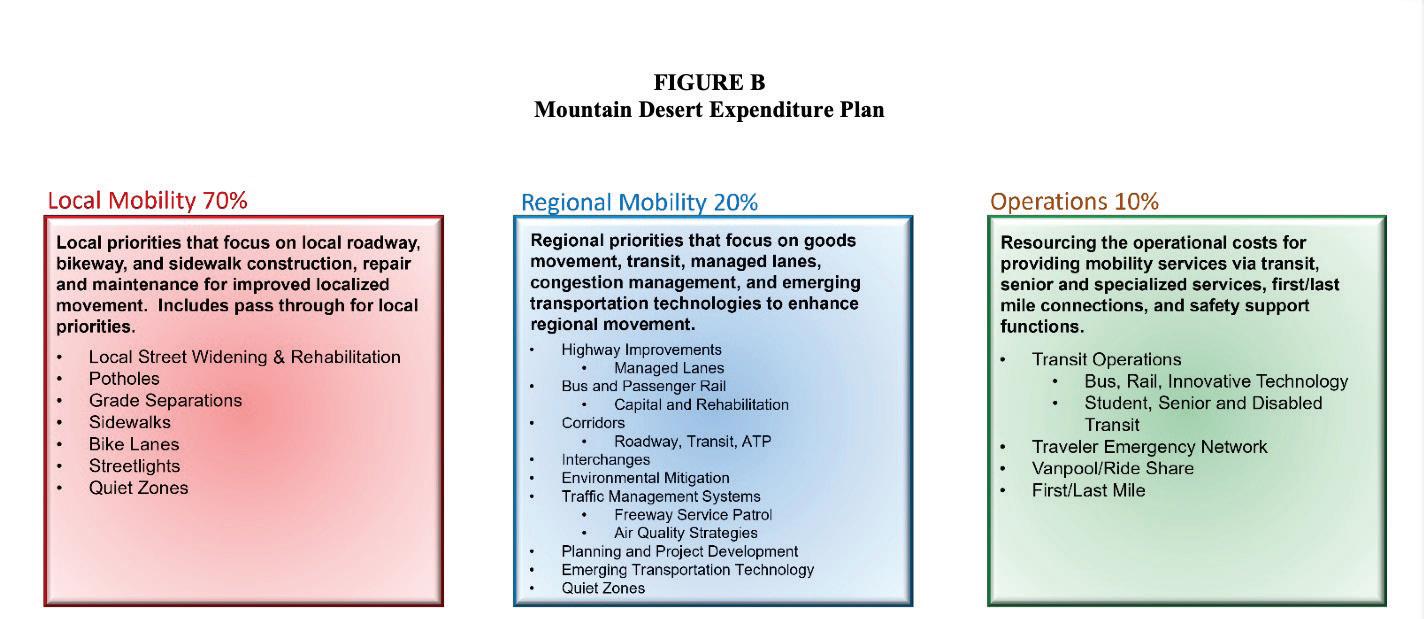
businesses and people to the city.
“The convention center and its surrounding district are vital economic engines for our city,” Karen Totaro, general manager for the center, said in a statement.
“This effort strategically invests in a maximizing economic impact, supporting local jobs and generating lasting value for our community, Totato adds.
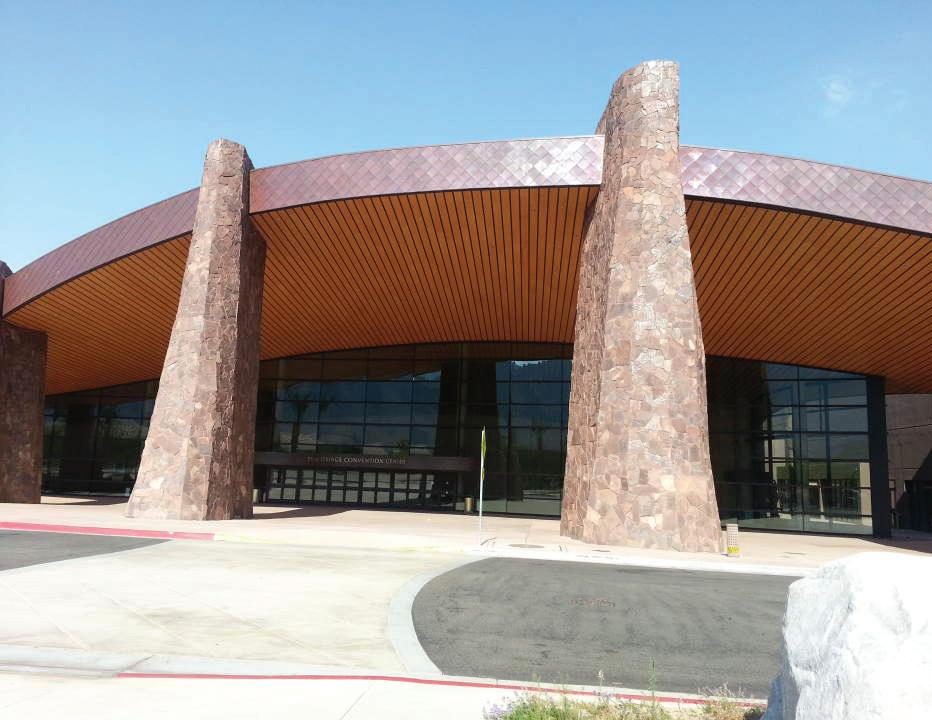
routes, and fund transit-related evacuation needs,” according to the Measure I Plan. “In addition, the program will be available to address unexpected infrastructure damage resulting from natural or human-caused disasters, ensuring rapid recovery and the restoration of essential interregional mobility.”
“By providing long-term, locally controlled funding that remains within the county, the program supports job creation, economic development and a transportation system that enhances
mobility and safety, further advancing the county’s goal of achieving the Countywide Vision,” according to a county statement.
The Measure I Expenditure Plan is available on the county’s website via tinyurl. com/4ce7k75t.
Mayor Naomi Soto remarked on the importance of the district stating, “I want to show my appreciation and thank P.S. Resorts for taking the lead on this initiative.
The Tourism Improvement District will provide a sustainable revenue path to ensure that our convention center remains competitive and drives our tourism economy. Now, we can be
destination for visitors worldwide.”
By City News Service

Authorities continued theirinvestigation Friday into the death of a 43-year-old hiker who trekked the Pacific Crest Trail near Anza.
The “hiker down” call was reported shortly after 11:30 a.m. Thursday near Coyote Canyon Road, according to the Riverside County Fire Department.
The agency stated that
crews attempted to reach the patient, who was suffering from an unspecified medical emergency but were unable, and requested assistance of the county’s sheriff’s aviation unit.
Deputies made contact with the hiker and provided medical aid but the hiker was pronounced dead at the scene, according to Sgt. Robert Martinez of the
Riverside County Sheriff’s Department.
The sheriff’s aviation unit removed the deceased man away from the remote area on the hiking trail.
The Riverside County Coroner’s office identified the hiker on Thursday as Ian Maclurg of San Diego.
No additional information was immediately available.

most.” Moss said another round of program grant distributions is set for the 2026-27 fiscal year, totaling $500 million.
The latest grants come following confirmation that, statewide, there’s been a documented 9% drop in unsheltered homelessness, according to the governor’s office. The funds bound for Riverside County and the county seat will be used “to support shelter operations, fund hotel and motel vouchers and provide financial assistance for move-in costs to prevent homelessness and relocate homeless individuals and families into housing,”

Threesuspects in the February fatal shooting of a 36-year-old Cathedral City man in Cathedral City were arrested Wednesday.
Gabriel Isaiah Rocha, 19, and two 14 year-old boys were arrested in connection with the killing of Cristian Zaragoza, according to the Cathedral City Police Department.
Police responded to the 30800 block of San Gabriel Circle on Feb. 17 at 11:17 a.m. regarding a shooting. When they arrived at the scene, Cathedral City officers found Zaragoza on the ground, suffering from gunshot wounds, police said.
Cathedral City paramedics were called to the scene, where Zaragoza was pronounced dead.
Detectives from the Cathedral City Police Department took over the investigation and identified the three suspects, police said. Working with the department’s Gang Impact Team and the Riverside County District Attorney’s office, detectives tracked the suspects to 69155 Dinah Shore Drive, where they were taken into custody.
The two juvenile suspects were taken to the Riverside County Juvenile Hall and Rocha to the John Benoit
Detention Center in Indio. They were all booked for murder, police said.
Anyone with information related to this shooting was asked to contact Cathedral City Police Department Detective. Naddalynt Paz at 760-770-0383 or npaz@ cathedralcity.gov or email tips@cathedralcity.gov. Information can be reported anonymously through Coachella Valley Crime Stoppers by calling 760-341STOP or through the WeTip hotline, 800-78-CRIME, or wetip.com. Some tip information may qualify for a cash reward, according to the CCPD.
By City News Service
Six retailers were cited for illegally selling tobacco productstounderage individuals during a tobacco retailer compliance operation, authorities said Thursday.
Theoperationwas conducted Wednesday in Palm Desert, according to the Riverside County Sheriff’s Department.
According to sheriff’s Sgt. Steven Nelson, underage decoys working on behalf of the department visited 34 stores and attempted to purchase tobacco products.
according to the governor’s office.
The county’s last pointin-time homeless survey, completed in the winter of 2025, showed that the number of people without a fixed place to live increased 7%, compared to two years earlier, rising from 3,725 to 3,990 individuals documented as dispossessed.
Nelson said the retailers who sold the products to the decoys were cited and will have further evaluation by the Palm Desert Code Compliance. The names of the retailers were not identified.
The operation was focused on the prevention of illegal sales to minors -under 21 years of age -- and

was conducted by deputies in partnership with the Rancho Mirage Problem Oriented Policing team and the Palm Desert Code Compliance. Anyone who would like information on tobacco sales compliance was asked to call 760-836-1674.