

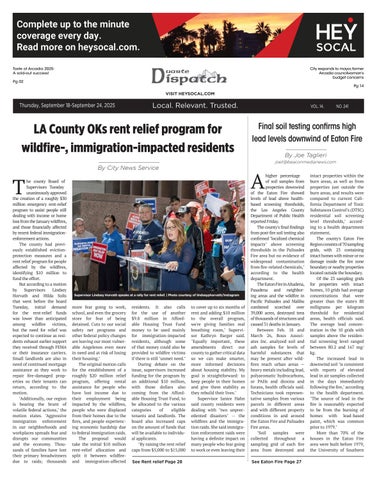
By City News Service
SupervisorsTuesday unanimously approved the creation of a roughly $30 million emergency rent-relief program to assist people still dealing with income or home loss from the January wildfires, and those financially affected by recent federal immigrationenforcement actions.
The county had previously established evictionprotection measures and a rent relief program for people affected by the wildfires, identifying $10 million to fund the effort.
But according to a motion by Supervisors Lindsey Horvath and Hilda Solis that went before the board Tuesday, initial demand for the rent-relief funds was lower than anticipated among wildfire victims, but the need for relief was expected to continue as residents exhaust earlier support they received through FEMA or their insurance carriers. Small landlords are also in need of continued mortgage assistance as they work to repair fire-damaged properties so their tenants can return, according to the motion.
"Additionally, our region is bearing the brunt of volatile federal actions," the motion states. "Aggressive immigration enforcement in our neighborhoods and workplaces spreads fear and disrupts our communities and the economy. Thousands of families have lost their primary breadwinners due to raids; thousands
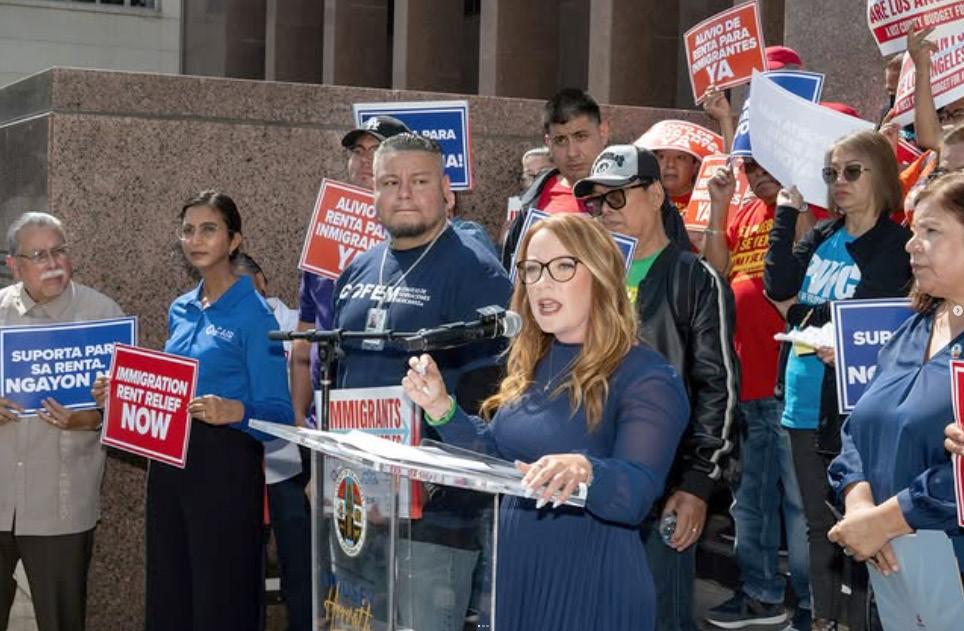
more fear going to work, school, and even the grocery store for fear of being detained. Cuts to our social safety net programs and other federal policy changes are leaving our most vulnerable Angelenos even more in need and at risk of losing their housing."
The original motion calls for the establishment of a roughly $20 million relief program, offering rental assistance for people who have lost income due to their employment being impacted by the wildfires, people who were displaced from their homes due to the fires, and people experiencing economic hardship due to federal immigration raids.
The proposal would take the initial $10 million rent-relief allocation and split it between wildfireand immigration-affected
residents. It also calls for the use of another $9.8 million in Affordable Housing Trust Fund money to be used mainly for immigration-impacted residents, although some of that money could also be provided to wildfire victims if there is still "unmet need."
During debate on the issue, supervisors increased funding for the program by an additional $10 million, with those dollars also coming from the Affordable Housing Trust Fund, to be allocated to the various categories of eligible tenants and landlords. The board also increased caps on the amount of funds that will be available to individual applicants.
"By raising the rent relief caps from $5,000 to $15,000
to cover up to six months of rent and adding $10 million to the overall program, we're giving families real breathing room," Supervisor Kathryn Barger said.
"Equally important, these amendments direct our county to gather critical data so we can make smarter, more informed decisions about housing stability. My goal is straightforward: to keep people in their homes and give them stability as they rebuild their lives."
Supervisor Janice Hahn said county residents were dealing with "two unprecedented disasters" -- the wildfires and the immigration raids. She said immigration enforcement raids were having a definite impact on many people who fear going to work or even leaving their
Final soil testing confirms high lead levels downwind of
By Joe Taglieri joet@beaconmedianews.com
Ahigherpercentage of soil samples from properties downwind of the Eaton Fire showed levels of lead above healthbased screening thresholds, the Los Angeles County Department of Public Health reported Friday.
The county's final findings from post-fire soil testing also confirmed "localized chemical impacts" above screening thresholds in the Palisades Fire area but no evidence of widespread contamination from fire-related chemicals," according to the health department.
The Eaton Fire in Altadena, Pasadena and neighboring areas and the wildfire in Pacific Palisades and Malibu combined scorched over 39,000 acres, destroyed tens of thousands of structures and caused 31 deaths in January.
Between Feb. 18 and March 26, Roux Associates Inc. analyzed soil and ash samples for levels of harmful substances that may be present after wildfires reach urban areas — heavy metals including lead, polyaromatic hydrocarbons, or PAHs and dioxins and furans, health officials said. Technicians took representative samples from various parcels in different areas and with different property conditions in and around the Eaton Fire and Palisades Fire areas.
"Soil samples were collected throughout a sampling grid of each fire area from destroyed and
intact properties within the burn areas, as well as from properties just outside the burn areas, and results were compared to current California Department of Toxic Substances Control’s (DTSC) residential soil screening level thresholds," according to a health department statement.
The county's Eaton Fire Region consists of 70 sampling grids, with 23 containing intact homes with minor or no damage inside the fire zone boundary or nearby properties located outside the boundary. Of the 23 sampling grids for properties with intact homes, 10 grids had average concentrations that were greater than the state's 80 milligrams per kilogram threshold for residential areas, health officials said. The average lead concentration in the 10 grids with samples above the residential screening level ranged between 80.2 and 167 mg/ kg.
The increased lead in downwind soil "is consistent with reports of elevated lead in air samples collected in the days immediately following the fire," according to the health department. "The source of lead in the fire is reasonably expected to be from the burning of homes with lead-based paint, which was common prior to 1979."
More than 70% of the houses in the Eaton Fire area were built before 1979, the University of Southern
By Raquel Mc Laughlin






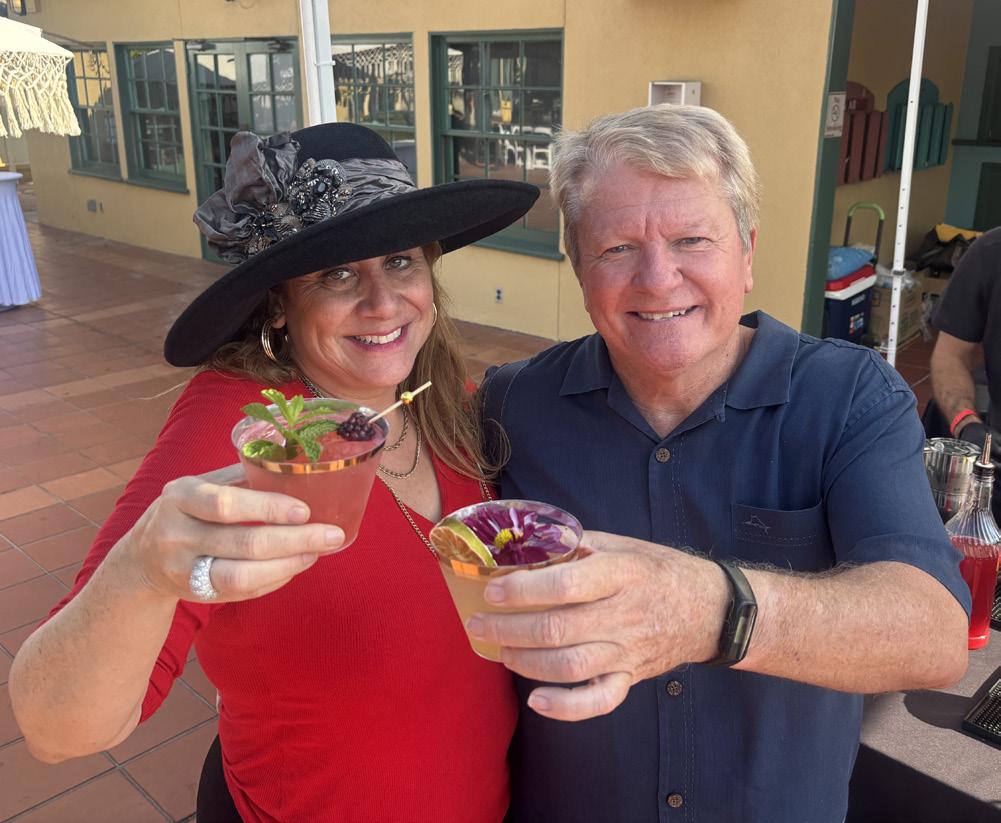
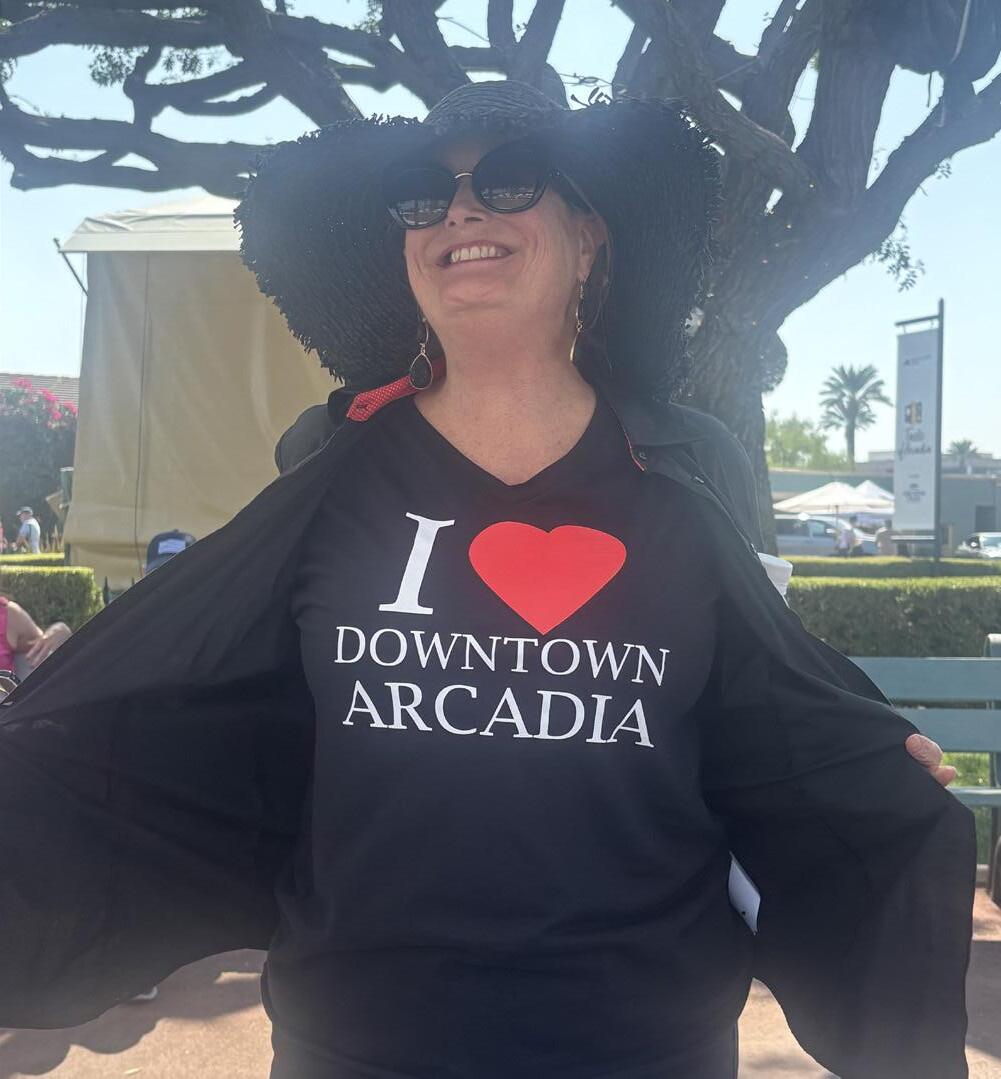
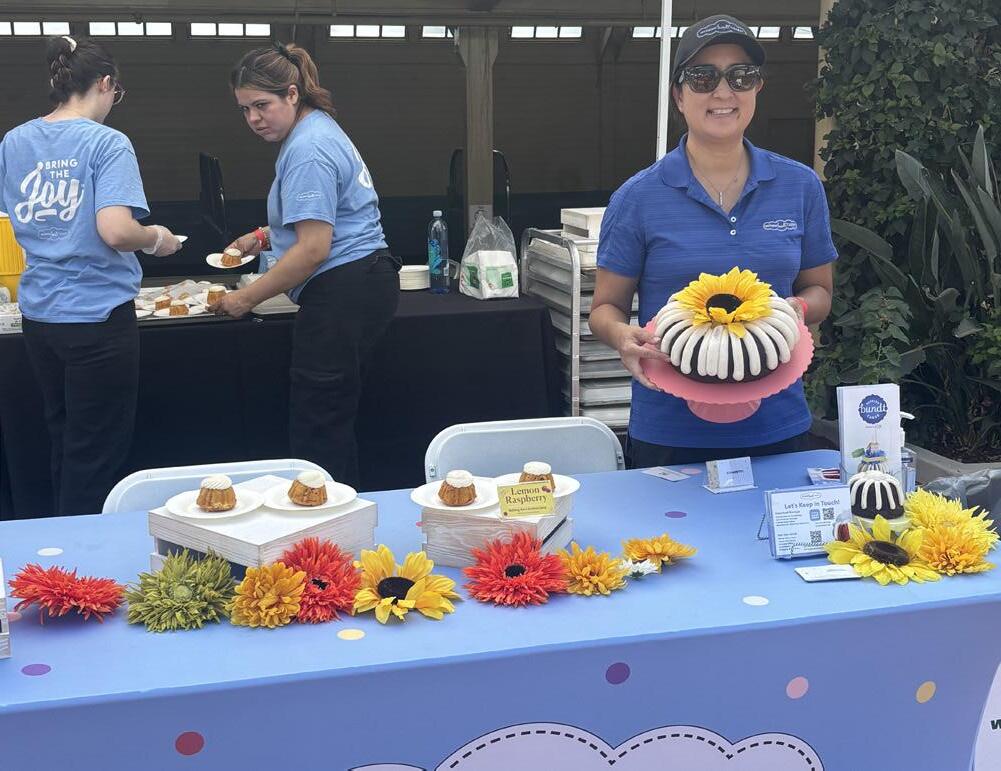
Another successful Taste of Arcadia is in the books! This year’s highly anticipated event, hosted by the Arcadia Chamber of Commerce at Santa Anita Park, sold out and welcomed more than 1,500 guests for an afternoon of incredible food, drinks, entertainment and community fun. Congratulations to the chamber for putting on such a vibrant, well-attended celebration that aptly showcased the flavors and culture of the community. Here are some highlights from the event.











By City News Service
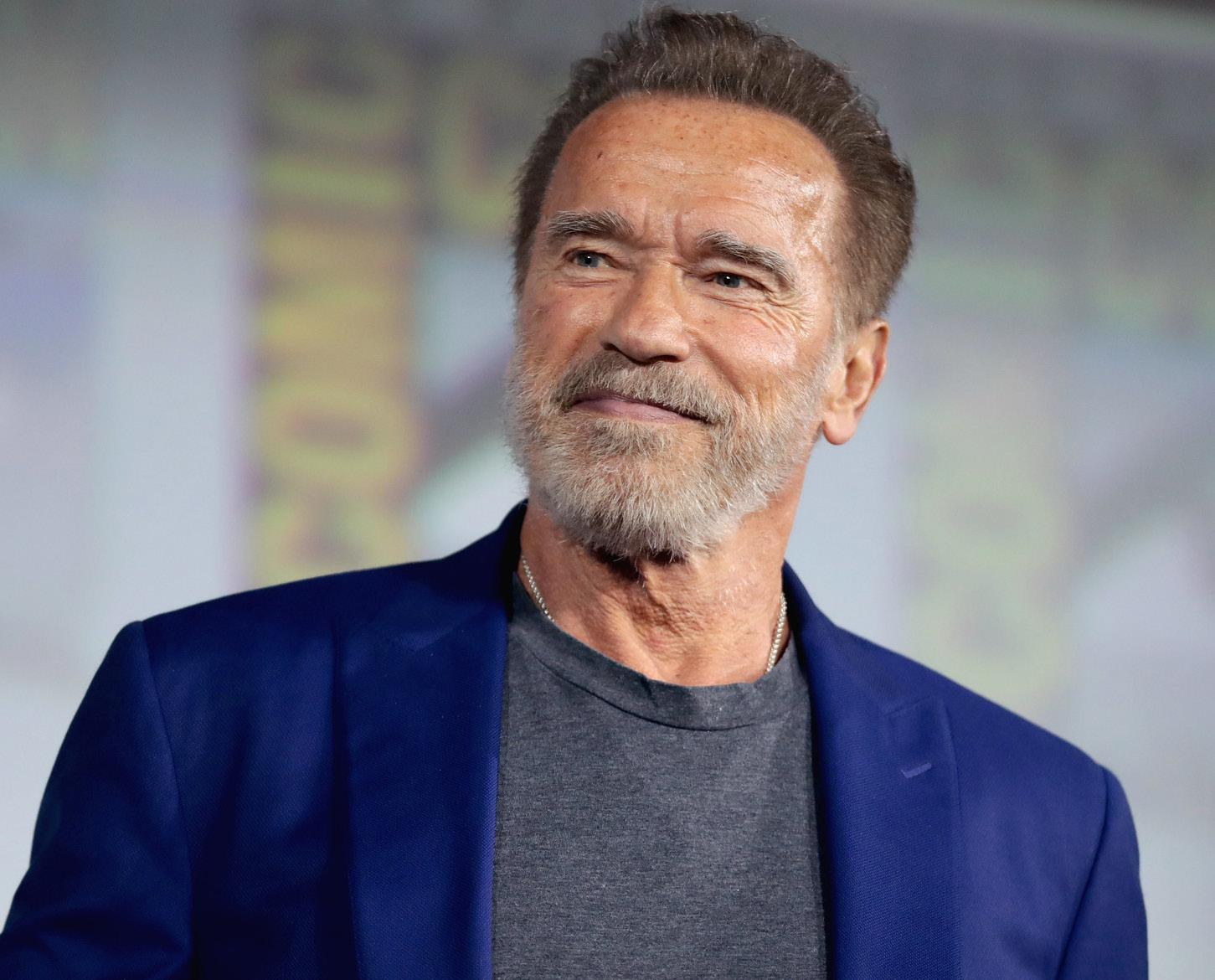
In an appearance at USC, former California Gov. Arnold Schwarzenegger urged voters Monday to reject Prop. 50, the ballot initiative backed by Gov. Gavin Newsom and other Democrats that would allow the party to temporarily redraw the state's congressional maps.
The proposition championed by Newsom on the November ballot would override the state Constitution and establish new congressional district maps for the 2026 election. The maps would also be in effect in 2028 and 2030.
The California redistricting effort comes in response to a similar undertaking by Texas legislators. President Donald Trump called on Republican- led states to undertake mid-decade redistricting to redraw congressional district maps in a manner that would benefit Republicans ahead of the midterm elections.
"It is insane," the former Republican governor and action-movie star said of Prop. 50, which is intended to add five Democratic U.S. House seats in California to offset Trump's moves in Texas to gain five Repub-
lican districts before the midterms.
"It doesn't make any sense to me that because we have to fight Trump, to become Trump," Schwarzenegger said. "Two wrongs don't make a right."
Representatives for the campaigns opposing and advancing the proposition did not immediately respond to requests for comment.
Prop. 50 would temporarily set aside districts crafted by an independent state commission and replace them with dramatically reshaped districts drafted by Democrats and designed to benefit the party's candidates.
"I hate to get political here, but this is not political," Schwarzenegger said Monday. "This is more about democracy. If you vote yes on that, we go backwards."
The ex-governor who played a robot in the "Terminator" film series and was frequently referred to as the "Governator" while he was in office, rejected the suggestion that the measure is being advanced in response to Trump's actions.
"It has nothing to do with the federal government," he said, adding that Demo-

crats are "trying to fight for democracy by getting rid of the democratic principles of California."
Newsom announced the ballot measure last month during an event in downtown Los Angeles.
Newsom stressed that the move would only be temporary, with the state returning to the independent redistricting process after the 2030 Census. He defended the move, saying it is essential to counter what he called a clear attempt to rig the 2026 midterm congressional elections -- noting that Trump called Texas Gov. Greg Abbott and told him to come up with five more GOP seats to ensure the party maintains a majority in the House.
"He's going to lose the midterms. He knows ... his presidency ends in 17 months," Newsom said. "He knows it. Why else would he try to rig the system? Why else would you make the phone call?"
He added, "These guys are not playing by any set of rules."
Newsom also urged other Democrat-majority states to also redraw their district lines to counter the GOP effort.


Arcadia
Arcadia to host Health Fair
Free flu shots, health screenings and doctor consultations will be available Saturday at the second annual Citywide Health Fair in Arcadia, the city announced last week. The fair runs from 9 a.m. to 1 p.m. at the Arcadia Community Center, 375 Campus Drive. Health screenings include mammograms, menopause, body fat analysis, glucose and cholesterol and dental. Mammograms will be available by appointment and walk-in, organizers said. Appointment scheduling is available online. Additionally at this year's fair, Type 1 and Type 2 diabetics can receive free diabetic retinopathy screenings with an on-site ophthalmology specialist. Registration is required and available online. Primary sponsors of the fair are Keck Medicine of USC, USC Arcadia Hospital, Huntington Health which is an affiliate of Cedars Sinai, Kaiser Permanente, American Chongqing General Chamber of Commerce, Orlando Steel Framing and ISEGSTAR, according to the city.
Azusa
Azusa’s first Night Market set for next week
Get ready for Azusa’s first-ever Night Market on Thursday, Sept. 25, from 5:30 to 9 p.m. at 609 N. Azusa Ave., downtown Azusa. The Azusa Night Market’s mission is to encourage residents and guests to visit Downtown
Azusa to patronize local eateries, merchant shops, and vendors. The night market will feature familyfriendly programming and entertainment, including a kid’s zone. For questions or more information, reach out to the Economic & Community Development Team by emailing CanyonCityEvents@azusaca.gov or calling 626-633-4314.
Long Beach seeks volunteers for California Coastal Cleanup Day Sept. 20
The City of Long Beach Department of Parks, Recreation and Marine (PRM) is inviting the community to get involved in the 41st Annual California Coastal Cleanup Day on Saturday, Sept. 20. Community members are encouraged to help keep the city’s beaches and marinas trash-free and protect coastal spaces where local communities and wildlife can thrive. El Dorado East Regional Park and Nature Center, in collaboration with the California Coastal Commission, will coordinate five cleanups from 9 a.m. to noon at Junipero Beach (2100 E. Ocean Blvd.), Belmont Pier (3998 E. Allin St.), Peninsula (72nd Place and East Ocean Boulevard), Mother's Beach (5839 Appian Way), and Alamitos Bay Marina (205 N. Marina Dr.). Gloves and trash bags will be provided to volunteers at each site, though participants are encouraged to bring their own reusable supplies, such as work gloves, buckets and grabbers
to limit waste. Volunteers are encouraged to preregister online through the Coastal Commission’s website or register in-person on the day of the event. Parking will be free to volunteers in the nearest beach lot for the duration of the event. Staff and volunteers from El Dorado Nature Center, and local partners Los Angeles Waterkeeper, Aquarium of the Pacific, Algalita and Seal Beach Yacht Club will staff the cleanup sites.
West Covina
West Covina’s Super Moon Festival set for Oct. 4
West Covina's 3rd Annual Super Moon Festival is set for Saturday, Oct. 4, from 11 a.m. to 9 p.m. at West Covina City Hall at 1444 W. Garvey Ave S. The festival will feature more than vendors, as well as music, entertainment, performances, mooncakes, food, and more. New Romantics, a Taylor Swift tribute band, will perform from 7 to 9 p.m.
FY 2023-2024 Veterans in Orange County report now available
The County of Orange has released the FY 2023-2024 Veterans in Orange County report. This report provides a comprehensive overview of Orange County veterans’ demographics, circumstances and needs, offering valuable insights to guide services and programs across Orange County. According to the
report, 7.3% of the state’s veteran population, or 84,235 veterans, reside in OC. The FY 2023–24 Veterans in Orange County report highlights the services received by OC veterans through the OC Veterans Service Office as well as data findings for OC veterans in the following six categories: health & well-being, housing, social connectedness, health care & services, education, and employment. The report addresses the large population of older adult OC veterans and their specific needs and opinions within these categories by utilizing data from the OC Older Adults Community Survey from those who identified as being a veteran within the sample. The OC Veterans Service Office provides hands-on support for veterans and their families to access earned benefits and resources. For more information about the OC Veterans Service Office, visit online at veterans. ocgov.com, call 714-4806555, or email ocvso@occr. ocgov.com.
Riverside County, South Coast AQMD to work on eastern Coachella Valley roads
Over a dozen mobile home parks in the eastern Coachella Valley will see dirt roads become paved streets as part of efforts to improve air quality. Riverside County and the South Coast Air Quality Manage -
ment District will work together on an upcoming $4.57 million road paving project. The South Coast AQMD governing board in August approved an agenda item to move the project forward by choosing the Riverside County Transportation Department to administer this project. The agencies are expected to develop a Memorandum of Understanding, which will provide a timeframe for implementation. Construction is projected to start in 2026. The locations were selected by community members as part of the AB 617 Eastern Coachella Valley Community Steering Committee process.
Riverside Dog Parade set for Sept. 27
Riverside's Dog Parade is set to welcome families and their furry friends on Saturday, Sept. 27, from 10 a.m. to 1 p.m. at Riverwalk Dog Park, 4198 Pierce St. This free, pet-friendly celebration will feature resources for pets, pet adoptions, and grand prize for the best dressed dog.
Corona
Corona’s Sheridan Park to reopen Sept. 24
Mark your calendars for 3 p.m. on Wednesday, Sept. 24, for the grand opening and ribbon cutting of Sheridan Park, 300 S. Sheridan St. Help the city unveil a brand-new community space built for
connection, creativity and out-of-this-world fun. l.Nielsen@CoronaCA.gov.
Bernardino County Harvest Festival, Haunted Hayrides return to Mojave Narrows Regional Park
Get ready for a spooky good time at Mojave Narrows Regional Park as it hosts its annual Harvest Festival and Haunted Hayride event on Saturday, Oct. 11, from 3 to 9 p.m. The festival celebrates the beginning of fall with this year’s theme "Dr. Pains Snake Oil and Tonics." Watch "Hotel Transylvania: in the park with free popcorn while supplies last. The event will also include trick-or-treating, costume contests for all ages, family games and activities, including an axe throwing booth, a pumpkin patch, live music by the High D Boys, a petting zoo, live animal presentations by Wildman Dan, food vendors and more. All ages are welcome as are leashed pets. Tickets for the hayrides will go on sale on Monday, Sept. 29, at 8 a.m., and will be first come, first served. Seating is limited and rides begin at 6:24 p.m. and run every 12 minutes. The last ride out is 9:24 p.m. Hayrides are $5 per person. To purchase tickets, visit parks.sbcounty.gov. Park admission is $15 per vehicle. Mojave Narrows is located at 18000 Yates Rd. in Victorville. For more information on Regional Parks, visit parks.sbcounty. gov.

Monrovia
Sept. 4
At 7:46 a.m., officers were dispatched to the 200 block of South Encinitas regarding two subjects that set up an encampment and were loitering on the property. Officers arrived and made contact with the subjects. A computer search revealed one of them had a warrant for his arrest. During a search of the subject the officer located drug paraphernalia. He was arrested and taken into custody.
At 3:49 p.m., a traffic collision between a vehicle and a bicycle was reported in the area of Mayflower and Colorado. No injuries were reported.
At 10:03 p.m., a juvenile was reported as a runaway in the 500 block of East Cherry. He was located the following morning. This investigation is continuing.
Sept. 5
At 2:53 a.m., while patrolling the 1500 block of South Myrtle an officer saw a bicyclist in violation of a vehicle code. The bicyclist was also found to be in possession of drug paraphernalia. He was arrested and taken into custody.
At 3:13 a.m., an officer conducted a traffic stop on a bicyclist for a vehicle code violation. An investigation revealed she was in possession of drug paraphernalia. She was arrested and taken into custody.
At 11:13 a.m., a resident in the 700 block of Oakdale reported a masked subject in his backyard looking through
his window. The suspect fled to a vehicle and left the area. This investigation is continuing.
At 2:02 p.m., a victim in the 500 block of West Duarte reported that her intoxicated boyfriend battered her and damaged property. He was arrested and taken into custody.
At 6:15 p.m., a traffic collision was reported in the 200 block of East Central. Officers arrived and made contact with the parties involved. One of the parties was injured and was transported to a hospital for treatment.
At 8:48 p.m., a resident in the 200 block of East Lemon reported property from his front yard stolen. This investigation is continuing.
At 9:13 p.m., a hit and run traffic collision was reported in the area of Mountain and Central. Officers arrived and made contact with the victim. This investigation is continuing.
At 10:44 p.m., a court order violation was reported in the 500 block of West Duarte. The suspect was gone prior to officers’ arrival. This investigation is continuing.
Sept. 6
At 11:24 a.m., a witness reported a possible intoxicated driver in the 1500 block of South Myrtle. Officers located the vehicle, conducted a traffic stop and made contact with the driver. The driver lifted a beer to show officers. A DUI investigation confirmed the driver was under the influence. The driver was
arrested and transported to the MPD jail to be held for a sobering period.
At 8:19 p.m., a disturbance was reported in the 300 block of West Lime. Officers arrived and made contact with the parties involved. An investigation revealed a mother and son had been drinking and were involved in a verbal altercation that turned physical. The parties did not desire prosecution. This investigation is continuing.
Sept. 7
At approximately 7:31 p.m., an officer responded to a parking lot in the 600 block of West Duarte Road regarding a vehicle that had driven over a curb. Upon contacting the driver, a 60-year-old male from Los Angeles, the officer detected a strong odor of alcohol emitting from his breath. The officer suspected the driver was under the influence of alcohol and arrested and transported him to the Arcadia City Jail for booking.
Sept. 8
At approximately 1:21 p.m., an officer responded to Macy’s, located at 400 S. Baldwin Ave., regarding a theft arrest. A loss prevention employee witnessed the suspect, a 28-year-old male from Rosemead, steal multiple articles of clothing. The suspect was arrested and transported to the Arcadia City Jail for booking.
Sept. 9
At approximately 6:30 p.m.,

an officer responded to a residence in the 00 block of Linda Rae Way regarding a residential burglary report. An investigation revealed burglars entered the location while the residents were home. The suspects fled with $400 in cash. The investigation is ongoing.
Sept. 10
At approximately 10:15 a.m., an officer responded to Oops Boba Tea & Coffee, located at 411 E. Huntington Drive, regarding a commercial burglary investigation. Sometime during the previous night, a lone Hispanic male tampered with the lock to the business and fled with money from the register.
Sept. 11
At approximately 4:33 a.m., an officer responded to a residence in the 1000 block of La Cadena Avenue regarding a grand theft incident. The victim stated he solicited a ride from someone in exchange for cash. When the victim was dropped off and went to pay the suspect, the suspect took the victim’s cash and two cellphones. The suspect is described as a Hispanic male in his 20s.
Sept. 12
At approximately 10:27 a.m., an officer responded to Chase Bank, located at 60 E, Huntington Drive, regarding a fight. An investigation revealed two males were arguing when one of them ran after the other with a knife. Both men were not desirous of prosecution, and no injuries were reported.
By Raquel Mc Laughlin

Edie A523679
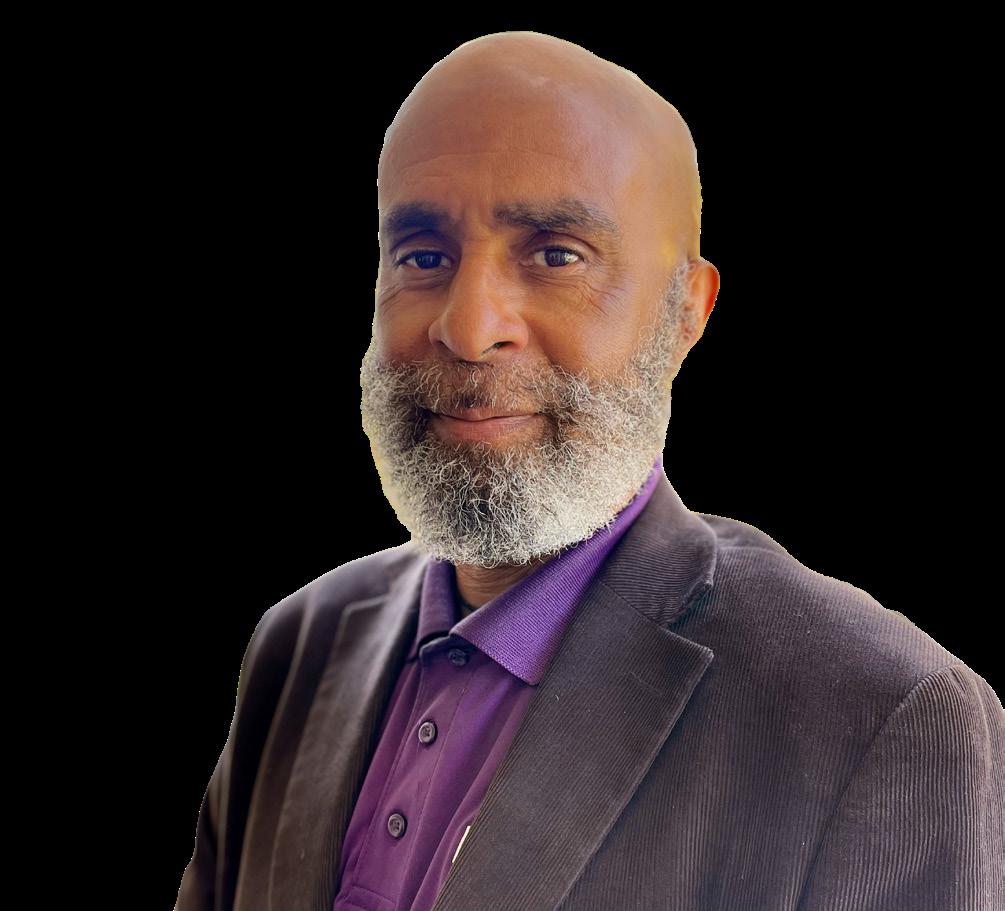
Meet Edie! Edie is a 4-year-old black and tan German Shepherd at Pasadena Humane with the sweetest heart. She’s well-mannered, potty trained, and even knows a few tricks! Her favorite things include squeaky toys, belly rubs, and plenty of attention from her people. This smart, strong girl loves exploring the yard, chasing lizards and squirrels, and showing off her speed when she plays. She’s also learning leash manners, enjoys lots of car rides, and settles nicely into a crate while in a home setting. She is gentle, calm, and is happiest when hanging out with her humans. If you’re looking for a sweet, playful, and affectionate companion who’s ready to join you on life’s adventures, Edie could be the perfect match for you. Come meet her and see why she’s so easy to fall in love with!
Octopus is a 3-year-old Rottweiler with a big heart and an even bigger love for people. This handsome guy at Pasadena Humane may look strong and serious, but he’s really a cuddle bug who would much rather soak up pets and attention than just about anything else. Octopus is easy to leash, walks well, and takes treats ever-so-gently. He’s playful in the Training Yard, curious with toys, and absolutely adores snuggle time. While he’s not a huge fan of new situations (like stairs), a little patience and some hot dogs go a long way in helping him feel comfortable. Once he knows, he can trust you, he’s all in! If you’re looking for a loyal, affectionate friend who will bring you lots of joy, come meet Octopus today! He’s ready to win you over with his snuggles and charm.
The adoption fee for dogs is $150. All dog adoptions include spay or neuter, microchip, and age-appropriate vaccines. Walk-in adoptions are available every day from 10:00 –5:00. View photos of adoptable pets at pasadenahumane.org. New adopters will receive a complimentary health-and-wellness exam from VCA Animal Hospitals, as well as a goody bag filled with information about how to care for your pet. Pets may not be available for adoption and cannot be held for potential adopters by phone calls or email.
Eliminate gutter cleaning forever! LeafFilter, the most advanced debris-blocking gutter protection. Schedule a FREE LeafFilter estimate today. 20% off Entire Purchase. 10% Senior & Military Discounts. Call 1-855424-7581 (Cal-SCAN)
GOT AN UNWANTED CAR??? DONATE IT TO PATRIOTIC HEARTS. Fast free pick up. All 50 States. Patriotic Hearts’ programs help veterans find work or start their own business. Call 24/7: 1-833-426-0105 (CalSCAN)
Tiene un vehiculo no deseado? Donelo a Patriotic Hearts! Recogida rápida y gratuita en los 50 estados. Patriotic Hearts ofrece programas para ayudar a los veteranos a encontrar trabajo o iniciar su propio negocio. Llama ahora: 1-833-695-1947 (24/7) (Cal-SCAN)
Struggling with debt? If you have over $10,000 in debt we help you be debt free in as little as 24-48 months. Pay nothing to enroll. Call Now: 1-833-641-3437 (Cal-SCAN)
Attention: VIAGRA and CIALIS USERS! A cheaper alternative to high drugstore prices! 50 Pill
Special - Only $99! 100% guaranteed. CALL NOW:1-833-6413889 (Cal-SCAN)
Jacuzzi Bath Remodel can install a new, custom bath or shower in as little as one day. For a limited time, waiving ALL installation costs! (Additional terms apply.) Subject to change and vary by dealer. (Offer ends 9/30/25.) Call 1-833-985-4766
Safe Step. North America's #1 Walk-In Tub. Comprehensive lifetime warranty. Top-of-the-line installation and service. Now featuring our FREE shower package and $1600 Off for a limited time! Call today! Financing available. Call Safe Step 1-888-989-5749 (Cal-SCAN)
DENTAL INSURANCE from Physicians Mutual Insurance Company. Coverage for 400 plus procedures. Real dental insurance - NOT just a discount plan. Do not wait! Call now! Get your FREE Dental Information Kit with all the details! 1-844-2032677 www.dental50plus.com/ calnews #6258 (Cal-SCAN)
The difference in winning and losing market share is how businesses use their advertising dollars. CNPA’s Advertising Services’ power to connect to nearly 13 million of the state’s readers who are an engaged audience, makes
our services an indispensable marketing solution. For more info call Cecelia @ (916) 288-6011 or cecelia@cnpa.com
DID YOU KNOW Newspapergenerated content is so valuable it’s taken and repeated, condensed, broadcast, tweeted, discussed, posted, copied, edited, and emailed countless times throughout the day by others? Discover the Power of Newspaper Advertising. For a free brochure call 916-288-6011 or email cecelia@cnpa.com (Cal-SCAN)
RETIRED COUPLE $$$$ for business purpose Real Estate loans. Credit unimportant. V.I.P. Trust Deed Company www.viploan. com Call 1-818-248-0000. Broker-principal DRE 01041073. No consumer loans. (Cal-SCAN)
BATH & SHOWER UPDATES in as little as ONE DAY! Affordable prices - No payments for 18 months! Lifetime warranty & professional installs. Senior & Military Discounts available. Call: 1-833-795-0042 (CalSCAN)
WATER DAMAGE CLEANUP & RESTORATION: A small amount of water can lead to major damage in your home. Our trusted professionals do complete repairs to protect your family and your home's value! Call 24/7: 1-833-712-3809. Have zip code of service location ready when you call! (Cal-SCAN)
HBO's medical drama
"The Pitt" pulled off a minor upset at the 77th annual Primetime Emmy Awards Sunday evening, besting "Severance" to claim the best drama series prize, while Apple TV+'s "The Studio" had a record-setting night as it won for best comedy series.
Netflix's "Adolescence," meanwhile, swept nearly all of the prizes in the limited series categories.
Apple TV+'s "Severance" went into Emmy season as the top overall nominee, collecting 27 total nominations, including its nod for outstanding drama series. It was considered a strong favorite to win the drama series prize, but "The Pitt" walked away with the honor, along with a prize for outstanding lead actor for Noah Wyle.
"What a dream this has been, oh my goodness," Wyle said as he accepted the acting honor on stage at the Peacock Theater in downtown Los Angeles. It was Wyle's first career Emmy Award. As he wrapped up his acceptance speech, he gave a shout-out to medical professionals.
"To anybody who's going on shift tonight or coming off shift tonight, thank you for being in that job. This is for you," he said.
"The Pitt" also earned a prize for outstanding supporting actress in a drama series for Katherine LaNasa.
"Severance" did earn prizes Sunday for Britt Lower, who won for outstanding lead actress in a drama series — her first win on her first nomination — and for Tramell Tillman, was was named best supporting actor in a drama series.
Dan Gilroy won his first career Emmy for drama series writing for Disney+'s "Andor." He thanked the legions of "Star Wars" fans for supporting the program.
"I want to thank the fans who did more than watch the show," he said. "They listened, they cared and they
By City News Service

made a story about ordinary people fighting extraordinary odds possible."
Adam Randall scored the prize for drama series directing for Apple TV+'s "Slow Horses."
On the comedy front, Seth Rogen's freshman series "The Studio" about a fictional Hollywood studio head won four awards Sunday. Combined with the nine it had already won in last weekend's Creative Arts Emmy Awards ceremonies, it gave the show a total of 13 wins, the most ever for a comedy series in a single year. The previous record of 11 was set last year by FX's "The Bear."
"I'm legitimately embarrassed by how happy this makes me," Rogen said as he accepted the outstanding comedy series honor.
Rogen also won Emmys for outstanding lead actor in a comedy, along with a directing prize shared with Evan Goldberg and as part of the show's writing team.
"I've never won anything in my life," Rogen said when he picked up the acting honor. "When I was a kid I bought a used bowling trophy in an estate sale. ... This is really just so lovely, and I feel like I should — I don't know what to say, this is so nice. I appreciate you all."
Jean Smart won the prize for outstanding actress in a drama series for her work in "Hacks," repeating her win from last year. It was her seventh career Emmy, and her fourth for her role on the HBO comedy. Smart's co-star, Hannah Einbinder, was named best supporting actress in a comedy series, marking her first Emmy win on her fourth nomination.
Einbinder joked that she had been committed to the idea of continuing to lose, but said, "This is cool too. This is also punk rock." She also thanked the show's creators, who she said "changed my life in every conceivable way."
Jeff Hiller won the Emmy for supporting actor in a comedy series for "Somebody Somewhere," also on his first career nomination.
"Adolescence" dominated the limited or anthology series categories. In addition to winning the prize for outstanding limited series, "Adolescence" also earned prizes for lead actor Stephen Graham, who also won a limited series writing prize along with Jack Thorne.
"For me to be here today in front of my peers ... is the most humbling thing I can ever imagine in my life
and shows that anything is possible," Graham said.
The show's 15-year-old Owen Cooper won the award for supporting actor in a limited series.
"This is so surreal," he said as he collected the prize. "Tonight proves that if you listen and you focus and step outside your comfort zone you can achieve anything in life."
Erin Doherty was named best supporting actress in a limited series for her work on the show, and Philip Barantini was named best director for a limited series.
The only limited series honor that didn't go to "Adolescence" was for lead actress, which went to Cristin Milioti for HBO's "The Penguin."
"I loved making this show," she said. "Getting to inhabit this woman was a bright spot for me. ... Playing her felt like flying."
Peacock's "The Traitors" won its second consecutive Emmy for reality competition program.
"Last Week Tonight with John Oliver" was named outstanding scripted variety series and also won the prize for writing for a variety series.
One of the more interesting twists on Emmy night came in the outstanding
note that he first won in the category 50 years ago, in 1975.
"I was younger and I had a lot of dreams about what would happen in my life," Michaels said, joking that not one of those dreams was that "we'd be doing the same show for the next 50 years."
"This (anniversary) show was two years in the planning, and they said we don't care what it costs, as long as its good," Michael said. "Maybe the didn't say that, maybe that's just the way I heard it."
talk series category. The prize went to CBS' "The Late Show with Stephen Colbert," which will be officially canceled next May.
The network called the decision purely financial, but many saw it as a capitulation to President Donald Trump — who is often the target of Colbert's jokes — to resolve a federal lawsuit and secure federal approval of the merger of CBS parent company Paramount Global with Skydance Media.
The Emmy win allowed Colbert to take the stage to accept the Emmy — during a ceremony televised on CBS. He received a standing ovation from the audience.
"Thank you for this honor," Colbert said. "I want to thank CBS for giving us the privilege to be part of the late night tradition, which I hope continues long after we're no longer doing this show."
He later added, "I have never loved my country more desperately. God bless America. Stay strong. Be brave. And if the elevator tries to bring you down, go crazy and punch a higher floor."
"SNL50: The Anniversary Special" won the Emmy for outstanding live variety special, prompting show creator Lorne Michaels to
During the ceremony, husband-wife actors Ted Danson and Mary Steenburgen were presented with the Television Academy's 2025 Bob Hope Humanitarian Award in recognition of their commitment to philanthropy, activism and "unwavering commitment to global good."
The award is considered one of the highest honor bestowed by the Academy's board of Governors.
Danson, best known for his roles in "Cheers" and "The Good Place," is a longtime environmental activist and co-founder of the American Oceans Campaign. He has also long supported organizations such as the ASPCA, Climate U.S. PAC, Elton John AIDS Foundation, Malaria No More and Young Storytellers.
Steenburgen, who won a supporting-actress Oscar in 1981 for "Melvin and Howard" and also appeared in films including "Philadelphia," "Parenthood" and "What's Eating Gilbert Grape," has lent her support to organizations including Artists for a Free South Africa, the Elizabeth Glaser Pediatric AIDS Foundation, Heifer International and No Kid Hungry.
Together, the couple co-founded the nonprofit Angels at Risk, which assists children, teens and their families at risk of drug and alcohol abuse. They are also vocal advocates for the LGBTQ community.
Comedian Nate Bargatze hosted the Emmy ceremony.
Public Notice: City Of San Gabriel Notice of Public Hearing Before the Planning Commission
You are invited to participate in a public hearing before the City’s Planning Commission. Members of the public may submit public comments by U.S. Mail addressed to Community Development Department, Attn: Public Hearing Comment, 425 S. Mission Drive, San Gabriel, CA 91776, which must be received by the hearing date, or electronically using the online public comment form at http://sangabrielcity.com/PlanningComment, by 5:00 p.m. of the hearing date to be considered by the Planning Commission. The meeting will be broadcast on the City of San Gabriel’s YouTube channel at the link shown below:
Hearing Date: Monday, October 13, 2025 TIME: 6:30 p.m.
Location Of Hearing: Council Chambers located on the second floor of San Gabriel City Hall (425 South Mission Drive, San Gabriel, CA 91776) The meeting can be viewed live at: https://www. youtube.com/CityofSanGabriel
Project Address: 1105 East Valley Boulevard, San Gabriel, CA 91776
Project Description: The application, Case No. TMAP22-014 is for a tentative tract map (TTM) No. 84118 for a mixed-use condominium subdivision at the address 1105 E. Valley Boulevard. The project would result in 65 condominium units and five live-work units. The application includes a density bonus request to provide six affordable housing units for very low-income households. The project site is located in the Mixed-Use Corridor (MU-C) zone within the Valley Boulevard Specific Plan area.
Questions: For additional information or to review the application, please contact Samantha Tewasart, Acting Community Development Director at (626) 308-2806 ext. 4623 or stewasart@sgch.org.
Environmental Review: The project was reviewed for compliance with the California Environmental Quality Act (CEQA). This project is exempt from the requirements of CEQA, per Guidelines Section 15332, Class 32 (In-Fill Development).
Per Government Code Section 65009, if you challenge the nature of this proposed action in court, you may be limited to only raising those issues you or someone else raised at the public hearing described in this notice, or in written correspondence delivered to the Planning Division at or prior to the public hearing.
By Samantha Tewasart, Acting Community Development Director
Published on September 18,2025
San Gabriel Sun
City of San Gabriel Summary of OrdinanceOrdinance No. 721
An Ordinance of the City Council of the City of San Gabriel, California, Amending San Gabriel Municipal Code Section 35.057 Relating to the Transient Occupancy Tax
On March 5, 2013, the City of San Gabriel held a General Municipal Election that included a ballot measure proposing to increase the City's Transient Occupancy Tax (TOT) from 10% to 12%. The measure was approved by a majority of San Gabriel voters. Subsequently, on March 26, 2013, the City Council adopted Resolution No. 13-03, which formally declared and confirmed the passage of the measure to increase the TOT rate. However, San Gabriel Municipal Code Section 35.057 was never updated to reflect the approved increase in the TOT rate from 10% to 12%. The proposed ordinance corrects this discrepancy.
Ordinance No. 721 was approved for introduction and first reading at the City Council Regular Meeting of August 19, 2025, by a vote of 5-0. City Council waived the reading of Ordinance No. 721 by title on September 16, 2025, by a vote of 5-0.
Ayes: Councilmember(s)- Ding, Herrera Avila, Wu, Chan, Menchaca Noes, Abstain, Absent: Councilmember(s)- None
A copy of the full text of the ordinance is available at the City Clerk Department by e-mailing cityclerk@sgch.org.
San Gabriel City Council
Julie Nguyen, City Clerk
Published on September 18,2025
SAN GABRIEL SUN
NOTICE OF PETITION TO ADMINISTER ESTATE OF JERRY MARTIN BASURA
aka JERRY M. BASURA aka JERRY BASURA
Case No. 25STPB09911
To all heirs, beneficiaries, cred-itors, contingent creditors, and persons who may otherwise be interested in the will or estate, or both, of JERRY MARTIN BASURA aka JERRY M. BASURA aka JERRY
BASURA
A PETITION FOR PROBATE has been filed by Matthew Basura and Maureen Kochan in the Superior Court of California, County of LOS ANGELES.
THE PETITION FOR PROBATE requests that Matthew Basura and Maureen Kochan be appointed as personal representative to administer the estate of the decedent.
THE PETITION requests the decedent's will and codicils, if any, be admitted to probate. The will and any codicils are available for examination in the file kept by the court.
THE PETITION requests authority to administer the estate under the Independent Administration of Estates Act. (This authority will allow the personal representative to take many actions without obtaining court approval. Before taking certain very important actions, however, the personal representative will be required to give notice to interested persons unless they have waived notice or consented to the proposed action.)
The independent administra-tion authority will be granted unless an interested person files an objec-tion to the petition and shows good cause why the court should not grant the authority.
A HEARING on the petition will be held on Oct. 6, 2025 at 8:30 AM in Dept. No. 67 located at 111 N. Hill St., Los Angeles, CA 90012.
IF YOU OBJECT to the granting of the petition, you should appear at the hearing and state your objections or file written objections with the court before the hearing. Your ap-pearance may be in person or by your attorney.
IF YOU ARE A CREDITOR or a contingent creditor of the decedent, you must file your claim with the court and mail a copy to the personal representative appointed by the court within the later of either (1) four months from the date of first issuance of letters to a general personal representative, as defined in section 58(b) of the California Probate Code, or (2) 60 days from the date of mailing or personal delivery to you of a notice under section 9052 of the California Probate Code.
Other California statutes and legal authority may affect your rights as a creditor. You may want to consult with an attorney knowl-edgeable in California law.
YOU MAY EXAMINE the file kept by the court. If you are a person interested in the estate, you may file with the court a Request for Special Notice (form DE-154) of the filing of an inventory and appraisal of estate assets or of any petition or account as provided in Probate Code section 1250. A Request for Special Notice form is available from the court clerk.
Attorney for petitioner: CYNTHIA R COX ESQ
SBN 153298
REENA SHAH ESQ
SBN 339391
JAMES O BERKEDAL
SBN 318772
COX LAW GROUP INC 23326 HAWTHORNE BLVD STE 390
TORRANCE CA90505-3771
CN119996 BASURA Sep 11,15,18, 2025 ARCADIA WEEKLY
NOTICE OF PETITION TO ADMINISTER ESTATE OF:
HELEN FRANCIS ZAMBRANO
CASE NO. 25STPB10151
To all heirs, beneficiaries, creditors, contingent creditors, and persons who may otherwise be interested in the WILL or estate, or both of HELEN FRANCIS ZAMBRANO.
A PETITION FOR PROBATE has been filed by ROBERT M. ZAMBRANO in the Superior Court of California, County of LOS ANGELES. THE PETITION FOR PROBATE requests that ROBERT M. ZAMBRANO be appointed as personal representative to administer the estate of the decedent.
THE PETITION requests the decedent's WILL and codicils, if any, be admitted to probate. The WILL and any codicils are available for examination in the file kept by the court.
THE PETITION requests authority to administer the estate under the Independent Administration of Estates Act. (This authority will allow the personal representative to take many actions without obtaining court approval. Before taking certain very important actions, however, the personal representative will be required to give notice to interested persons unless they have waived notice or consented to the proposed action.)
The independent administration authority will be granted unless an interested person files an objection to the petition and shows good cause why the court should not grant the authority.
A HEARING on the petition will be held in this court as follows: 10/24/25 at 8:30AM in Dept. 11 located at 111 N. HILL ST., LOS ANGELES, CA 90012
IF YOU OBJECT to the granting of the petition, you should appear at the hearing and state your objections or file written objections with the court before the hearing. Your appearance may be in person or by your attorney.
IF YOU ARE A CREDITOR or a contingent creditor of the decedent, you must file your claim with the court and mail a copy to the personal representative appointed by the court within the later of either (1) four months from the date of first issuance of letters to a general personal representative, as defined in section 58(b) of the California Probate Code, or (2) 60 days from the date of mailing or personal delivery to you of a notice under section 9052 of the California Probate Code. Other California statutes and legal authority may affect your rights as a creditor. You may want to consult with an attorney knowledgeable in California law.
YOU MAY EXAMINE the file kept by the court. If you are a person interested in the estate, you may file with the court a Request for Special Notice (form DE-154) of the filing of an inventory and appraisal of estate assets or of any petition or account as provided in Probate Code section 1250. A Request for Special Notice form is available from the court clerk. Attorney for Petitioner GREGORY M. AJALAT, ESQ.SBN 150878 AJALAT & AJALAT LLP
330 NORTH BRAND BOULEVARD, SUITE 1250 GLENDALE CA 91203
Telephone (818) 506-1500 9/15, 9/18, 9/22/25 CNS-3966722# ROSEMEAD READER
NOTICE OF PETITION TO ADMINISTER ESTATE OF: ALICE MARIE VON MOOS CASE NO. 25STPB10085
To all heirs, beneficiaries, creditors, contingent creditors, and persons who may otherwise be interested in the WILL or estate, or both of ALICE MARIE VON MOOS.
A PETITION FOR PROBATE has been filed by THERESA S. MOORE in the Superior Court of California, County of LOS ANGELES.
THE PETITION FOR PROBATE requests that THERESA S. MOORE be appointed as personal representative to administer the estate of the decedent.
THE PETITION requests the decedent's WILL and codicils, if any, be admitted to probate. The WILL and any codicils are available for examination in the file kept by the court.
THE PETITION requests authority to administer the estate under the Independent Administration of Estates Act with limited authority. (This authority will allow the personal representative to take many actions without obtaining court approval. Before taking certain very important actions, however, the personal representative will be required to give notice to interested persons unless they have waived notice or consented to the proposed action.) The independent administration authority will be granted unless an interested person files an objection to the petition and shows good cause why the court should not grant the authority.
A HEARING on the petition will be held in this court as follows: 10/09/25 at 8:30AM in Dept. 62 located at 111 N. HILL ST., LOS ANGELES, CA 90012
IF YOU OBJECT to the granting of the petition, you should appear at the hearing and state your objections or
file written objections with the court before the hearing. Your appearance may be in person or by your attorney.
IF YOU ARE A CREDITOR or a contingent creditor of the decedent, you must file your claim with the court and mail a copy to the personal representative appointed by the court within the later of either (1) four months from the date of first issuance of letters to a general personal representative, as defined in section 58(b) of the California Probate Code, or (2) 60 days from the date of mailing or personal delivery to you of a notice under section 9052 of the California Probate Code. Other California statutes and legal authority may affect your rights as a creditor. You may want to consult with an attorney knowledgeable in California law.
YOU MAY EXAMINE the file kept by the court. If you are a person interested in the estate, you may file with the court a Request for Special Notice (form DE-154) of the filing of an inventory and appraisal of estate assets or of any petition or account as provided in Probate Code section 1250. A Request for Special Notice form is available from the court clerk.
Attorney for Petitioner
TONY J. TYRE - SBN 269506; ALLYSON S. HELLER - SBN 315086, WILLIAM C. MASON III - SBN 319441
LAW OFFICES OF TONY J. TYRE, ESQ., APC. 100 S. CITRUS AVENUE, SUITE 101 COVINA CA 91723
Telephone (626) 858-9378 BSC 227414 9/15, 9/18, 9/22/25 CNS-3966829# TEMPLE CITY TRIBUNE
NOTICE OF PETITION TO ADMINISTER ESTATE OF: ANGELINA C. TOLEDO AKA ANGELINA COTA TOLEDO CASE NO. 25STPB10091
To all heirs, beneficiaries, creditors, contingent creditors, and persons who may otherwise be interested in the WILL or estate, or both of ANGELINA C. TOLEDO AKA ANGELINA COTA TOLEDO.
A PETITION FOR PROBATE has been filed by MICHAEL DERRICK TOLEDO in the Superior Court of California, County of LOS ANGELES.
THE PETITION FOR PROBATE requests that MICHAEL DERRICK TOLEDO be appointed as personal representative to administer the estate of the decedent.
THE PETITION requests authority to administer the estate under the Independent Administration of Estates Act. (This authority will allow the personal representative to take many actions without obtaining court approval. Before taking certain very important actions, however, the personal representative will be required to give notice to interested persons unless they have waived notice or consented to the proposed action.)
The independent administration authority will be granted unless an interested person files an objection to the petition and shows good cause why the court should not grant the authority.
A HEARING on the petition will be held in this court as follows: 10/09/25 at 8:30AM in Dept. 62 located at 111 N. HILL ST., LOS ANGELES, CA 90012
IF YOU OBJECT to the granting of the petition, you should appear at the hearing and state your objections or file written objections with the court before the hearing. Your appearance may be in person or by your attorney.
IF YOU ARE A CREDITOR or a contingent creditor of the decedent, you must file your claim with the court and mail a copy to the personal representative appointed by the court within the later of either (1) four months from the date of first issuance of letters to a general personal representative, as defined in section 58(b) of the California Probate Code, or (2) 60 days from the date of mailing or personal delivery to you of a notice under section 9052 of the California Probate Code.
Other California statutes and legal authority may affect your rights as a creditor. You may want to consult with an attorney knowledgeable in California law. YOU MAY EXAMINE the file kept by the court. If you are a person interested in the estate, you may file with the court a Request for Special Notice (form DE-154) of the filing of an inventory and appraisal of estate assets or of any petition or account
By Joe Taglieri joet@beaconmedianews.com
As the Arcadia City Council prepares to reconvene Tuesday following a first-ever censure action against Mayor Sharon Kwan, city officials responded to budget concerns voiced by the mayor and a recently termed-out councilwoman.
Kwan and former Councilwoman April Verlato have said they're concerned about pay increases for city employees possibly leading to depleted reserve funds and budget deficits.
In an email to HeySoCal. com, Deputy City Manager Justine Bruno referred to a May 20 meeting when City Manager Dominic Lazzaretto "presented a conservative budget for Fiscal Year 2025-26, highlighting potential imbalances in future years if no corrective action is taken. It’s important to keep in mind that city budgets are planning tools — they provide a highlevel overview of the services offered to the community and the resources needed to support them.
"The materials shared in May follow the same approach as previous City of Arcadia budgets: a snapshot in time with projections for the years ahead. Each year, the cost of delivering services increases. Without adjustments to spending or new revenue sources, deficits can occur," Bruno wrote. "Fortunately, Arcadia has benefited from several years of strong revenue growth. This, along with reserves exceeding $73.5 million, has allowed us to avoid budget cuts or reductions in service levels. ...
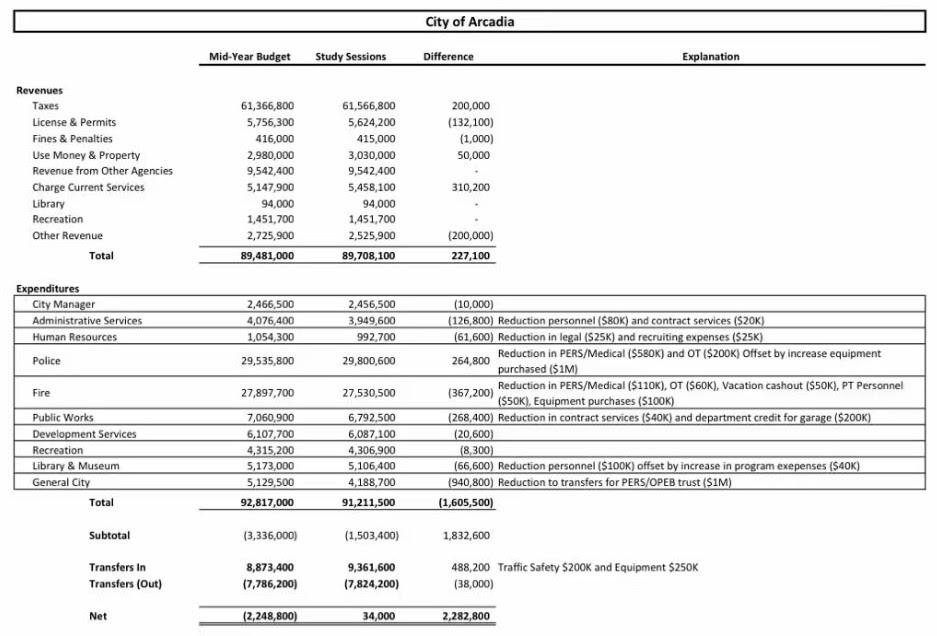
"The City turned a projected $3 million shortfall last year into a $34,000 surplus. It’s common for cities to face years where expenses outpace revenues, but Arcadia has consistently managed to make necessary adjustments, and we expect to continue doing so moving forward," Bruno wrote.
According to Verlato, $73.5 million in reserve funds "was the amount in reserves as of June 2024.
(Bruno is) not presenting current information," the former councilwoman and mayor wrote in an email to HeySoCal.com. "In the Equipment Fund report, it shows a $3M decline in funds just in that category alone:
"And, substantially less is expected to be spent from the equipment fund than the prior year. $5.2M less. That’s a cut," Verlato wrote.
Verlato also contended that the page above from the City Council-approved Operating Budget contradicts the following data from the June 3 budget presentation that says the city spend around $3.1 million on equipment.
"On top of that, Arcadia has not had strong revenue growth," Verlato added.
"Sales tax, which spiked
"For property tax, that growth is just 5%. It basically makes up for the decline in sales tax and UUT."
The transient occupancy tax increased in 2022 because of another voter initiative that increased taxes, Verlato said. Similarly, property revenues are increasing because of Proposition 19, a voter-approved tax hike.
"Yes, revenues will increase, but only if we vote in more taxes," according to Verlato. "They aren’t happening naturally.
"The 'corrective action' that will be needed is another voter increase in taxes," Verlato wrote. "I’m trying to sound the alarm to warn voters, the 'need' for an increase in taxes is

ballot initiative to increase either UUT or add a property tax to cover pension costs."
Verlato added that "none of these budgets incorporate the real amount of (city employee pension) payments once recalculated based on new compensa-
from $15.8M to $24.8M unexpectedly after COVID, but due in part to a new sales tax that was voted on in 2019, is flat and if anything, declining," she wrote. "It’s expected to be even lower this year because of tariffs. Sales tax is the City’s largest revenue source."
Revenue from the utility users tax, or UUT is also declining.
The "strong revenue growth" that Bruno mentioned "is only attributable to property tax and hotel tax and we are talking maybe $1M more for each," according to Verlato.
not because of something unexpected or unavoidable. It’s because of council increasing compensation of employees in excess of current revenue streams. The council had a choice. It could have stayed within the constraints of current revenues, but they chose to increase employee compensation beyond what the revenues could support, believing they could rely on reserves. But once reserves run out, council will need to make hard decisions and it will most likely result in council putting forth a
tion from last year. I expect that number to increase by several million (dollars)."
On employee compensation, Verlato warned that "while current projected revenues incorporate a 3% increase each year, it is possible that in (fiscal year) 2027-28 and FY 2028-29 the City may experience an uptick due to tourism generated by the Olympics.
These estimates do not include an increase in employee costs after the third year of current contracts. Contracts between the city and employee unions will
expire June 30, 2027, "and it should be expected that the unions will ask for a cost of living increase in excess of 3% per year," Verlato wrote in a mass email Monday.
"The current contract had increases of 7% the first year, 6% the second year and 5% the third year. The current contract also included an increase in benefits, such as medical, vacation pay, etc.," Verlato wrote. "When everything was combined, employee costs increased 20% in year one of the contract."
A slide from Lazzaretto's presentation in May illustrated that:
On Sept. 2, the council voted 4-1 to censure Kwan for alleged misconduct but suspended penalties against her if she adheres to rules for decorum that the panel also established at its last regular meeting.
Kwan claims the council is trying to silence her for raising concerns about the budget.
“I am delighted that the public saw my Council colleagues and the city attorney trying to silence me because of my insistence on transparency, financial responsibility, and professionalism, and that’s why so many people showed up to defend me against this obvious retaliation," Kwan said following the censure vote. "I know my colleagues and the city attorney are going to continue trying to intimidate me, and I will continue fighting against it because the residents of Arcadia deserve to know the
truth about what’s happening at City Hall and how their money is being spent.”
One point of contention during the censure proceedings centered around a financial document Kwan requested from the city manager. Lazzaretto said he repeatedly emailed the information to Kwan, and the mayor said she was unable to open the attachment.
According to Verlato, while the city has focused on the censure, "What was forgotten in all of this, a request by Mayor Kwan for a break-down of the cost saving measures that balanced the 2024-25 budget. She first inquired how the City Manager was able to balance the $3M deficit at the May Budget Study Session.
"On August 18, the Mayor had asked, for the 6th time, for the list of 'cost saving measures.'
Here is what Mayor Kwan received from the City Manager, handed to her just as she walked into the meeting on August 19, the same night Councilman (David) Fu moved to censure and remove Mayor Kwan," Verlato wrote, referring to the document above.
Video of the censure meeting is on the city’s website, along with access to the meeting Tuesday evening and documents that include the list of a Kwan's alleged misconduct.
The 2025-26 budget the council approved in June totals about $91 million with $92.5 million in expected revenues.
By May S. Ruiz mayrchu56@gmailcom
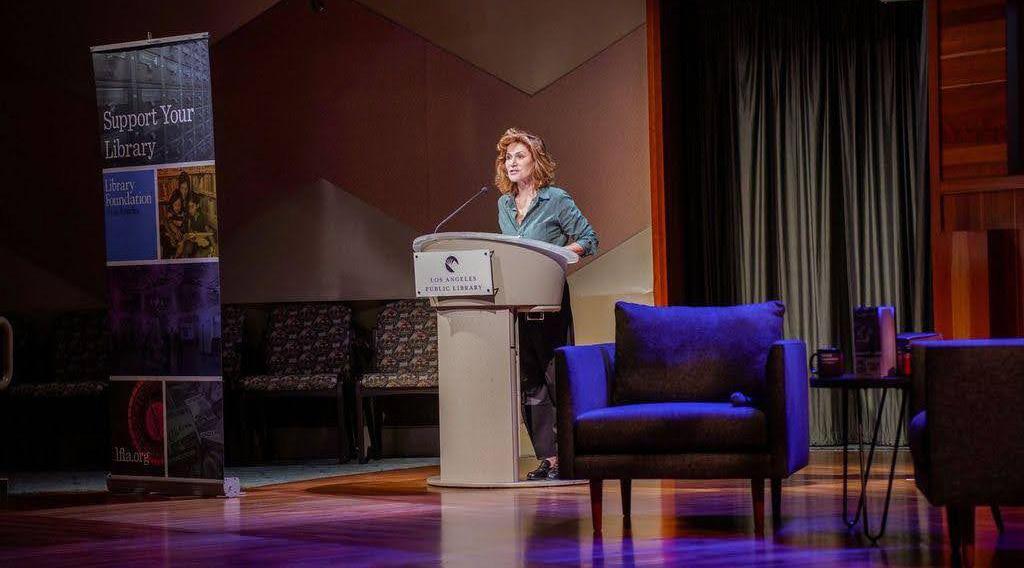
The Library Foundation of Los Angeles’s (LFLA) ALOUD Series returns this fall with a slate of timely conversations and urgent questions shaping our world today. Prominent creatives, cultural critics, and writers will discuss themes that include the rise of authoritarianism to the politics of tech platforms, and explore Black female friendship, queer joy, and new works by literary icons. These talks – some of which are free to the public – will take place at the Mark Taper Auditorium at the Central Library in Los Angeles at 7 p.m. from Sept. 18 through Dec. 10.
Distinguished political journalist and New York Times bestselling author Ben Rhodes opens the season that highlights vital new works by National Book Award finalist Angeles Flournoy, transgender artist and activist Tourmaline, acclaimed writer Susan Orlean, award-winning novelist Gish Jen, James Baldwin scholar Nicholas Burges, and legal scholar and tech policy expert Tim Wu.
Guest moderators and conversation partners include the new Executive Director of the ACLU of Southern California Chandra S. Bhatnagar. Emmy-award winning writers and actors Lena Waithe, Issa Rae, and Ashley Nicole Black, and Pulitzer Prize-winning playwright Tony Kushner will be
The season closes on a mirthful note with a pair of enjoyable programs featuring NY Times Cooking recipe creator and “Cookies” author Vaughn Vreeland and a special evening with lead puzzle editor at the NY Times Games Joel Fagliano and guests to mark the release of Puzzle Mania!
Selecting the themes for these discussions rests on LFLA’s senior director of programing and strategic engagement Jessica Strand. To shape the series, she partnered with the ACLU of Southern California and the New York Times for a balanced line-up aligned with the organization’s mission.
With her literary pedigree, East Coast credentials, and engagement with L.A.’s civic life, Strand is perfectly suited for the role. Her father was the Pulitzer Prize-winning poet Mark Strand; she has authored ten cookbooks and previously ran the Books at Noon series for the New York Public Library.
Strand’s mandate when she first came to LFLA was to do literary programs then branch out into current events and social justicerelated topics and people. To that end, she expanded the Library Foundation’s ALOUD series which was created in 1992 as a live conversation with authors.
“My predecessor is
and world politics, trends in culture and literature, and ideas that are being discussed. I have a wonderful team – Tiffany ColliMoon and Jorge Martinez – who both share their ideas and thoughts, and as a group we discuss what we think we should pursue in terms of talent.”
ALOUD’s fall 2025 line-up covers diverse and wide-ranging subjects –some of which are quite weighty, and others are lighthearted. It is an intentional blend of serious and cheerful topics.
responsible for creating the author series that put ALOUD on the map,” Strand clarifies. “I’ve altered it in the last seven years to include thematic programs, several Revues (more cabaret than conversation), and ALOUD in Community where we work with a curator or artist on a series for the Library. Together, we choose three to four branches to host the programs, with ALOUD’s financial and administrative support.”
ALOUD sets itself apart from other library series. Strand points out, “We’re different in that we present very high-level programming you’d usually have to pay for elsewhere. We also conceived a program called a ‘Night at the Library.’ It’s an event our small team, together with terrific partners, staged last February. From 8 p.m. to midnight, we welcomed 3,000 people into the Central Library, where more than 240 artists were performing, creating, and making throughout the building. The LA Phil performed an experimental opera on the escalators, ‘BodyTraffic’ performed in the Central Library’s rotunda. We’re planning to do it again this year and opening more of the library.”
The topics explored in the ALOUD series aren’t based on personal whim. Strand explains, “I respond to what is going on around me. This includes local
keep people engaged and interested by moving from different topic genres and production styles.”
“I went from heavy and important to something lighter and completely fun for the holiday season,” emphasizes Strand. “I am a strong believer in mixing up the programming. No one can tolerate a full diet of anything. I want our audience wanting to come back. The hope is to
Strand describes how she selects who will talk with the authors in the series. “Several things can happen. Often, the speaker has someone they’d like to be in conversation with – and if this person is a close friend, it usually makes for a terrific chat. Sometimes, I think about the person’s work and who has done something that may be similar in style or subject matter. Other times, it’s about influence – maybe the two speakers were heavily influenced by the same person. Pairing is a complicated game and is part feel, part knowledge, and part what would be off-beat and fun.”
It’s impossible for Strand to single out one engaging and memorable ALOUD discussion since she took over
the programming at LFLA. Says Strand, “That’s like naming a favorite child, which I can’t do. But I can tell you what makes me most happy after a program. First, if the audience is engaged, reacting in real time, completely taken with the discussion. Second, if the speaker loves the discussion and leaves invigorated and glad that they did the program. And third, if after the program is over the audience is still talking about it as they stream out of the theater and hang around the lobby.”
Much thought and deliberation go into each ALOUD show. Strand and her team ensure that both the presenters and audience take away something rewarding from the experience. And they don’t want to deliver an unforgettablediscussion; they aspire to provide an impetus for public involvement.

Code Amendment to
PROJECT DESCRIPTION: The Planning and Community Development Department is bringing forward a Zoning Code Amendment to amend Title 17 (the Zoning Code) of the Pasadena Municipal Code to implement objective design standards, related to items such as building bulk and mass, setbacks, articulation, and materials, applicable to residential and mixed-use projects, with a density greater than 48 dwelling units per acre.
PROJECT LOCATION: Citywide
ENVIRONMENTAL DETERMINATION: The Planning Commission will consider whether the proposed Zoning Code Amendment is exempt from the California Environmental Quality Act (CEQA), pursuant to State CEQA Guidelines Section 15061(b)(3) (Common Sense Exemption), that CEQA only applies to projects which have the potential for causing a significant effect on the environment. The proposed Amendment would implement new objective design standards related to building bulk and mass, setbacks, articulation, and materials, applicable to residential and mixed-use projects with a density greater than 48 dwelling units per acre. The Amendment would not increase development levels or intensity or add new uses that would generate impacts. Since it can be seen with certainty that there is no possibility that the proposed objective design standards will have a significant effect on the environment and there are no features that distinguish this project from others in the exempt class, the Zoning Code Amendments are not subject to CEQA.
APPROVALS NEEDED: The Planning Commission will conduct a public hearing and consider recommendations on the proposed Zoning Code Amendment and environmental determination. The Planning Commission recommendation will be forwarded to the City Council. The City Council will make a final decision at a separately noticed public hearing.
NOTICE IS HEREBY GIVEN that the Planning Commission will conduct a public hearing and consider the proposed Zoning Code Amendment and proposed environmental determination. The hearing is scheduled for:
Date: Wednesday, October 8, 2025
Time: 6:30 p.m.
Place: Council Chambers, Pasadena City Hall 100 North Garfield Avenue, Room S249. The meeting agenda packet will be posted by Oc tober 3, 2025 at https://www.cityofpasadena. net/commissions/planning-commission/.
PUBLIC INFORMATION: Any interested party or their representative may provide live public comment by following the instructions in the meeting agenda. Prior to the start of the meeting, written correspondence may be emailed to commentsPC@cityofpasadena.net or mailed to the address below (note that this email address will not be checked once the meeting starts).
Contact Person: Martin Potter, Principal Planner Phone: (626) 744-6710
E-mail: mpotter@cityofpasadena.net Website: www.cityofpasadena.net/planning
Mailing Address:
Planning & Community Development Department Planning Division, Community Planning Section 175 North Garfield Avenue, Pasadena, CA 91101
ADA: To request a disability-related modification or accommodation necessary to facilitate meeting participation, please contact the Planning & Community Development Department as soon as possible at (626) 744-4009 or (626) 744-4371 (TDD) or mpotter@ cityofpasadena.net. Providing at least 72 hours advance notice will help ensure availability. Language translation services may also be requested with 72-hour advance notice by calling (626) 744-4009
Published on September 18, 25 October 6, 2025 PASADENA PRESS
Introduced by: Councilmember Masuda
ORDINANCE NO. 7455
AN INTERIM URGENCY ORDINANCE OF THE CITY OF PASADENA PROHIBITING URBAN LOT SPLITS AND CONSTRUCTION OF MULTIPLE DWELLINGS PURSUANT TO SENATE BILL 9 IN VERY HIGH FIRE HAZARD SEVERITY ZONES WITHIN THE BOUNDARY OF THE EATON FIRE
WHEREAS, windstorms of extraordinary magnitude and widespread fires began on January 7, 2025, which included dangerous gusts of wind of over 80 miles per hour and wind-driven and destructive wildfires including the Eaton Fire and the Palisades Fire; and
WHEREAS, these conditions caused extensive damage to residential and nonresidential structures, businesses and critical infrastructure in the City of Pasadena (“City”) and the Eaton Fire specifically destroyed 185 structures in the City, a majority of which were zoned single-family residential, displacing Pasadena residents; and
WHEREAS, the combined fires in the County of Los Angeles (“County”) collectively burned over 47,900 acres, destroyed or damaged more than 16,250 structures, including homes, small businesses, and places of worship, with initial estimates placing this disaster among the most destructive in California history; and
WHEREAS, on January 8, 2025, the Director of Disaster Emergency Services of the City proclaimed the existence of a local emergency; and
WHEREAS, on January 13, 2025, the City Council ratified that January 8, 2025 Declaration of Local Emergency – Windstorms and Fires, which shall be deemed to continue to exist until its termination is proclaimed by the City Council; and
WHEREAS, on July 30, 2025, the Governor issued Executive Order N-32-25, which acknowledged that Senate Bill (“SB”) 9 was not tailored for circumstances like the present situation where more than 13,000 homes were destroyed including more than 5,000 single-family homes in the Palisades Fire that fall into a designated very high fire hazard severity zone; and
WHEREAS, Executive Order N-32-25 recognizes that widespread SB 9 development concentrated in neighborhoods rebuilding from destructive fires in very high fire hazard severity zones has the potential to crowd evacuation routes, and finds the unprecedent scale of the disaster calls for affording local governments increased discretion to ensure that SB 9 development in the rebuilding areas appropriately account for fire safety concerns, and suspends Government Code sections 65852.21 and 66411.7 in very high fire hazard severity zones within the boundaries of the Palisades and Eaton Fires to the extent they limit discretion in approval of applications for development of two units on a singlefamily parcel or lot split; and
WHEREAS, City residents are in the process of preparing for rebuild and rebuilding, and the City Council finds there is a need to address the current and immediate threat of overcrowding evacuation routes in very high fire hazard severity zones that are within the boundary of the destructive Eaton Fire to preserve public safety during emergencies; and
WHEREAS, under Government Code Section 8634, during a local emergency, the City Council may promulgate orders and regulations necessary to provide for the protection of life and property; and
WHEREAS, under Government Code Section 65858, the City Council may adopt by a four-fifths vote an interim zoning ordinance to protect the public safety, health, and welfare; and
WHEREAS, the City provided notice pursuant to Government Code Section 65090 and held a public hearing on September 8, 2025, regarding this proposed rebuild ordinance; and WHEREAS, the City Council finds that there is a local emergency that requires the City Council to promulgate this ordinance to protect life and property, and there is a current and immediate threat to the public health, safety and welfare and that the approvals of certain entitlements required to comply with the Zoning Code would result in a threat to the public health, safety or welfare by failing to appropriately account for fire safety concerns in the very high fire hazard severity zones in the boundaries of the Eaton Fire; NOW THEREFORE, the People of the City of Pasadena ordain as follows:
SECTION 1. This ordinance, due to its length and corresponding cost of publication, will be published by title and summary as permitted in Section 508 of the Pasadena City Charter. The approved summary of this ordinance is as follows:
“Summary
This proposed ordinance amends various sections of Pasadena Municipal Code Title 16 (Subdivision Ordinance), Chapter 16.08, Section 16.08.240, and Title 17 (Zoning Code), Chapter 17.22, Section 17.22.050 to prohibit Senate Bill 9 applications within very high fire severity zones within the boundary of the Eaton Fire in the City of Pasadena.
Ordinance No. 7455 shall take effect upon publication.”
SECTION 2. Pasadena Municipal Code, Title 16 (Subdivision Ordinance), Chapter 16.08 (Definitions), Section 16.08.240, is amended to read as follows:
“16.08.240 – Urban Lot Split
“Urban Lot Split” refers to any parcel zoned for single-family residential uses which is created through the division of an existing lot for the purpose of development with up to two dwelling units of all types. Applications for an Urban Lot Split must comply with the following requirements and with the provisions of Government Code Section 66411.7:
A. In no circumstance may an Urban Lot Split result in more than 2 residential units on any lot, inclusive of Accessory Dwelling Units and Junior Accessory Dwelling Units;
B. Parcels resulting from the Urban Lot Split must be no less than 40% the size of the original parcel;
C. Applications for an Urban Lot Split must be submitted concurrently with an application for proposed residential development;
D. If any existing dwelling unit is proposed to be demolished, the applicant will comply with the replacement housing provisions of Government Code Section 66300(d);
E. Proposed adjacent or connected dwelling units shall be permitted if they meet building code safety standards and are designed sufficient to allow separate conveyance;
F. If any existing housing is proposed to be altered or demolished, the owner of the property proposed for an Urban Lot Split shall provide a comprehensive history of the occupancy of the units to be altered or demolished for the past three years (five years if an existing unit is to be demolished); and
1. Sign an affidavit, in the form approved by the City Attorney, stating that the proposed lot split would not require demolition or alteration of any of the following types of housing:
a. Housing that is subject to a recorded covenant, ordinance or law that restricts rents to levels affordable to persons and families of moderate, low- or very-low income.
b. Housing that is subject to any form of rent or price control through a public entity’s valid exercise of its police power.
c. A parcel or parcels on which an owner of residential real property has exercised the owner’s rights under Chapter 12.75 (commencing with Section 7060) of Division 7 of Title 1 to withdraw accommodations from rent or lease within 15 years before the date that the development proponent submits an application.
d. Housing that has been occupied by a tenant in the last three years.
G. The owner and applicant shall sign an affidavit, in the form approved by the City Attorney, stating that neither the owner nor applicant, nor any person acting in concert with the owner or applicant, has previously subdivided an adjacent parcel using an Urban Lot Split;
H. Prior to the approval and recordation of the parcel map, the applicant shall record a restrictive covenant in the form prescribed by the City Attorney, which shall run with the land and provide for the following:
1. A prohibition against further subdivision of the parcel using the Urban Lot Split procedures as provided for in this section; and
2. A prohibition on non-residential uses of any units developed or constructed on either resulting parcel, including a prohibition against renting or leasing the units for fewer than 30 consecutive calendar days.
3. A prohibition on the development of a total of more than 2 residential units on any lot, inclusive of Accessory Dwelling Units and Junior Accessory Dwelling Units.
I. The applicant for an Urban Lot Split shall sign an affidavit, in the form approved by the City Attorney, stating that the applicant intends to occupy one of the housing units on the newly created lots as its principal residence for a minimum of three years from the date of the approval of the Urban Lot Split. This subsection shall not apply to an applicant that is a “community land trust,” as defined in clause (ii) of subparagraph (C) of paragraph (11) of subdivision (a) of Section 402.1 of the Revenue and Taxation Code or is a “qualified nonprofit corporation” as described in Section 214.15 of the Revenue and Taxation Code.
J. Urban Lot Splits are prohibited in very high fire hazard severity zones identified pursuant to Government Code section 51178 within the boundary of the 2025 Eaton Fire. A map of this area shall be maintained on file with the planning and community development department.”
SECTION 3. Pasadena Municipal Code, Title 17 (Subdivision Ordinance), Chapter 17.22 (Residential Zoning Districts), Section 17.22.050, is amended to read as follows: “17.22.050 - RS and RM-12 District Additional Development Standards
A. Front-yard setback measurement. The minimum front yard setback in the RS and RM-12 zoning districts shall be as follows. See also 17.40.160 (Setback and Encroachment Plane Requirements and Exceptions).
1. Where 40 percent or more of the lots on a blockface in the same zoning district (excluding corner yards of reversed corner lots) are developed with primary structures (including the existing setback of the proposed development site), the minimum front setback shall be the average of the front setbacks of the developed lots, but not less than 25 feet. In calculating the blockface average, measurement shall be from the front property line to the primary structure. Building projections and unenclosed porches shall not be used as the reference point for this measurement.
2. Where less than 40 percent of the lots on a blockface within the same zoning district (excluding corner yards or reversed corner lots) are developed with primary structures (including the existing setback of the proposed development site), the minimum front setback shall be 25 feet.
3. For blockfaces with two or fewer lots between two reversed corner lots, the minimum front setback shall be the larger required corner yard of the reversed corner lots. See Section 17.40.160 for allowed projections into front-yard setbacks.
B. Garage and carport requirements for all districts.
1. Garages. A garage proposed on a blockface, including reverse corner lots, where 50 percent or more of the existing garages are located behind
the primary structure shall also be located behind the primary structure. If the garage is required to be located to the rear of the primary structure and is attached, the garage shall be located so that the garage door is not visible from the street and the garage shall be the closest portion of the structure to the rear property line. This requirement shall not apply within the HD (Hillside Development) overlay zone. See 17.50.250.H for additional requirements for attached garages. A garage on a corner lot in which the garage doors face the street shall be set back a minimum of 18 feet from a street property line.
2. Carports. Carports shall be completely screened from view from the street and shall be located between the primary structure and the rear property line, so as to not be within the view down the driveway from the street. A carport shall not be permitted on a corner lot.
3. Exception to maximum floor area requirement. The maximum floor area requirement in Section 17.22.040, Table 2-3, may be exceeded to accommodate the reconstruction of a garage that previously existed on the site, but only to the extent of the floor area necessary or a two-car garage in compliance with the parking space dimension requirements of Section 17.46.110 (Parking Space Dimensions).
C. Restoration of a porte cochere. A porte cochere may be rebuilt or restored if evidence is provided to the City that the residence originally had a porte cochere. The porte cochere shall meet all building requirements. The Director shall review such requests.
D. Flagpoles. A flagpole can be constructed if it meets the following requirements.
1. The flagpole shall be located outside a required setback area. Flagpoles are allowed in front of a residence if located outside the required front setback.
2. The maximum height of the flagpole shall be the maximum height allowed for the principal structure.
3. The flagpole shall not be located in an encroachment plane.
E. Neighborhood Compatibility. For the purposes of neighborhood compatibility, the “neighborhood” is determined by the median square footage of all houses on properties within a 500-foot radius around the subject property. The “neighborhood” is not required to include:
• Properties located outside of the City of Pasadena;
• Properties not located in an RS district, or in a different RS district; and
• Properties separated by a significant manmade structure (e.g. freeway) or a significant natural feature (e.g. canyon) that, to the extent determinable by staff, is not the result of grading or other man-made alteration of the natural terrain.
F. Design Standards. The following design standards are applicable to all single-family zoned properties, excluding properties in historic districts, LD (Landmark District), HD (Hillside Overlay District), HD-1 (Upper Hastings Ranch Area), and ND (Neighborhood Overlay) overlay zones:
1. Prohibited materials in all RS zones include:
a. Unfinished concrete is prohibited as an exterior finish.
b. Architectural foam is prohibited as an exterior trim material.
2. Window placement:
a. New second-story windows shall not directly overlap with existing second story windows located within 30 feet of abutting properties. Clerestory windows and windows determined by the Building Official to be necessary for safe egress are exempt from this requirement.
G. Two-Unit Developments in Single-Family Residential Zones. In addition to the requirements of Section 17.22.040 (Residential Districts General Development Standards), additional development and design standards related to Two-Unit Developments (whether attached or detached) apply to all single-family zoned properties. Construction of Two-Unit Developments in single-family residential zones pursuant to Government Code Section 65852.21 is prohibited on historic sites and sites that fall within historic districts, which include (1) an historic district or property listed on either the National Historic Register or State Historic Resources Inventory, (2) an individual historic landmark property designated pursuant to the City’s Historic Preservation Ordinance, or (3) a Landmark District (LD overlay zone) designated pursuant to the City’s Historic Preservation Ordinance. A Landmark District is a grouping of properties that represents a significant and distinguishable entity of Citywide importance that is united historically by past events or aesthetically by plan or development and represents one or more of a defined historic, cultural, development and/or architectural context(s). Construction of Two-Unit Developments in single-family residential zones pursuant to Government Code Section 65852.21 is also prohibited in very high fire hazard severity zones identified pursuant to Government Code section 51178 within the boundary of the 2025 Eaton Fire. A map of this area shall be maintained on file with the Department.
Proposed adjacent or connected primary residences (Two-Unit Developments) shall be permitted if they meet building code standards, are designed sufficient to allow separate conveyance, and comply with the development standards of the underlying zoning district or additional standards prescribed by this section, as applicable. If any existing dwelling unit is proposed to be demolished, the applicant will comply with the replacement housing provisions of Government Code Section 66300(d). The following additional standards are for new construction of an additional primary residence on a site with an existing primary residence or for up to two new primary residences where no primary residence is present. In cases where the following standards preclude development of an 800 square-foot primary residence, the plan check review process shall only allow deviations sufficient to accommodate such development.
Development feature Development Standard
Minimum lot size
Minimum lot size establishes the minimum lot size and the minimum width required for new parcels
Minimum area 1,200 square feet
Width Per Section 17.22.040, Table 2-3
ROW Access (1) All newly created lots are required to have access to or abut a Public Right-ofWay
Maximum Density Two primary residences per lot
Setbacks
Minimum setbacks required. See Section 17.40.160 for setback measurement, allowed projections and encroachments into setbacks, and exceptions to setbacks.(2)
Front - Main facade See Section 17.22.050 Front - Garage See Section 17.22.050
Sides The required setback shall be no less than 4 feet.
Corner side The required setback shall be no less than 4 feet.
Rear The required setback shall be no less than 4 feet.
Building separation A minimum separation of 10 feet (measured from wall to wall) shall be required between detached dwelling units located on the same site. Eaves may encroach into this building separation.
Maximum floor area As prescribed by the underlying zoning district (3)
Exceptions to floor area 1) Habitable attic space that does not exceed 60% of the surface of the building footprint (including attached garages and porches), is not adjacent to a rooftop deck, patio attachment and/or exterior staircase and the combined width of all dormers along a roofline do not exceed 40% of the roofline.
2) An unenclosed area where only one side does not abut enclosed space (floor area), and that side is a minimum 80% open.
3) An unenclosed area where more than one side does not abut enclosed space (floor area), and each side is a minimum 60% open.
4) Basements and uncovered patios, decks, balconies and porches.
Height limit As prescribed by the underlying zoning district (4)
WELMLASW0D4IPR
Landscaping
Required Tree Canopy
Minimum amount of garden space required on-site in addition to the requirements of Chapter 17.44 (Landscaping). Garden space
Project must include at least two trees, each of which meets one of the following:
1) Retention of a tree of at least 19" DBH on-site.
2) Retention of a tree from the City's Native and Protected Species list that meets the minimum protected size.
3) A new 24-in box tree selected from the City's Native and Protected Species list.
Parking The required parking shall be one uncovered parking space per each newly constructed dwelling unit. No parking is required if the parcel is within ½ mile walking distance of a high-quality transit corridor or a major transit stop, as expressly defined in the California Public Resources Code, or if a car share vehicle (as defined in Section 17.80.020) is located within one block of the parcel.
Notes:
(1) See Chapter 17.40 for development on substandard lots and flag lots
(2) No new setback shall be required for an existing legally created structure or a structure constructed in the same location and to the same dimensions as an existing legally created structure. In no other case shall reductions be made in the required side, corner side, and rear setbacks.
(3) If all applicable development standards contained in the underlying zoning district cannot be met, the maximum size permitted is 800 square feet per dwelling unit.
(4) If all applicable development standards contained in the underlying zoning district cannot be met, the maximum height permitted is one story, not to exceed 12 feet to the top plate and 17 feet to the highest ridgeline.
H. Garden requirements for Two-Unit Developments in Single-Family Residential Zones. Each Two-Unit Development shall have a landscaped open space area as its central focus. This space may take the form of a garden.
H. Garden requirements for Two-Unit Developments in Single-Family Residential Zones. Each Two-Unit Development shall have a landscaped open space area as its central focus. This space may take the form of a garden.
1. Garden location. The placement of a garden shall comply with at least one of the following standards. In cases where the following standards preclude development of an 800 square-foot dwelling, the plan check review process shall only allow deviations sufficient to accommodate such development a. The garden may be placed so that a garden on an adjacent parcel combines to create the effect of one large garden or a wider connection between two spaces.
1. Garden location. The placement of a garden shall comply with at least one of the following standards. In cases where the following standards preclude development of an 800 square-foot dwelling, the plan check review process shall only allow deviations sufficient to accommodate such development
WELMLASW0D4IPR
a. The garden may be placed so that a garden on an adjacent parcel combines to create the effect of one large garden or a wider connection between two spaces.
b. The garden may adjoin the minimum front setback
line creating a deep, combined garden on the street. Decorative fences or other landscape elements shall be constructed so that the garden is visible from the street.
c. The garden may be an internal courtyard, entirely contained within the site, but visible from the street.
d. When a site contains existing, mature trees, the garden may be placed to retain one of those trees. See also Chapter 17.44 (Landscaping).
2. Minimum garden dimensions. The garden shall be a rectangular shape and shall have a minimum dimension of 20 feet in either direction. In cases where the garden requirements preclude development of an 800 square-foot dwelling, the plan check review process shall only allow deviations sufficient to accommodate such development.
3. Garden planting and paving standards. In cases where the garden planting and paving requirements preclude development of an 800 square-foot dwelling, the plan check review process shall only allow deviations sufficient to accommodate such development. The garden may only occur under the following three conditions, either alone or in combination.
a. The garden shall be at existing grade with no parking structure below, subject to the following requirements:
i. At least 50 percent of the garden shall be planted;
ii. Concrete may be used for walkways up to four feet in width but is not acceptable for area paving unless mandated by the Uniform Building Code. Unplanted areas with a minimum dimension of five feet or more shall be paved with unit pavers such as brick, tile or concrete or covered with decomposed granite or garden gravel.
iii. The maximum dimension of unit pavers shall be 24 inches.
iv. All planting shall comply with the requirements of Chapter 17.44 (Landscaping).
4. Allowed encroachments into a garden.
a. Eaves may project up to three feet and fireplaces or chimneys may project up to two feet for a length of 10 feet measured parallel to the building into the garden without having to maintain the minimum 20foot dimension. The following encroachments may occur within the garden as long as the minimum dimension in any direction of the garden is not reduced to less than 20 feet.
i. Exterior, unenclosed building elements such as stoops, balconies and open stairs may encroach into the garden subject to the following limitations:
1. Encroaching stairs shall be either wood or masonry and have closed risers.
2. Unenclosed encroachments shall have a maximum depth of four feet, measured perpendicular to the line defining the garden, and an unlimited width, measured parallel to the line defining the garden.
3. The total area of unenclosed encroachments shall not exceed seven percent of the area of the garden. ii. Enclosed living space may encroach into the garden subject to the following limitations:
1. Enclosed encroachments shall have a maximum depth of four feet, measured perpendicular to the line defining the garden, and maximum width of 15 feet, measured parallel to the line defining the garden.
2. There shall be a minimum separation of four feet, measured parallel to the line defining the garden, between enclosed encroachments.
3. The ground floor area of all enclosed encroachments shall not exceed 13 percent of the garden.”
SECTION 4. The amendments adopted under this ordinance are adopted pursuant to the Governor’s Executive Order N-32-25 (July 30, 2025) and shall remain in effect until such order ceases to be effective, unless the effect of such order is adopted into law permanently.
SECTION 5. If any subsection, sentence, clause or phrase of this ordinance is for any reason held to be invalid or unconstitutional by a court of competent jurisdiction, such decision shall not affect the validity of the remaining portions of this ordinance. The City Council hereby declares that it would have adopted this section, and each and every subsection, sentence, clause and phrase thereof not declared invalid or unconstitutional, without regard to whether any portion of the ordinance would be subsequently declared invalid or unconstitutional.
SECTION 6. The City Clerk shall certify the adoption of this ordinance and shall cause this ordinance to be published by title and summary.
SECTION 7. This ordinance shall take effect upon publication and shall remain in effect for 45 days unless extended by the City Council in accordance with Government Code 65858, in which case the ordinance shall remain in effect for the period of the extension approved by the City Council, subject to earlier termination in accordance with Section 4.
Signed and approved this 15th day of September, 2025.
Victor Gordo Mayor of the City of Pasadena
I HEREBY CERTIFY that the foregoing ordinance was adopted by the City Council of the City of Pasadena at its meeting held this 15th day of September 2025, by the following vote:
AYES: Councilmembers Cole, Hampton, Jones, Masuda, Mayor Gordo
NOES: Vice Mayor Rivas
ABSENT: Councilmembers Lyon, Madison
ABSTAIN: None
Date Published: September 18, 2025
Mark Jomsky City Clerk
Approved as to form:
(AUP) to allow the on-site sales for off-site consumption of beer and wine (Department of Alcoholic Beverage Control License Type 20) at the existing 1,250-square-foot (SF) automobile service station mini-market in the Neighborhood Commercial (C1) Zone District.
CODE REQUIRES
1) The sale of alcoholic beverages requires approval of an Administrative Use Permit in the C1 Zone (Glendale Municipal Code §30.12.020, Table 30.12-A).
APPLICANT’S PROPOSAL
1) To allow the on-site sales for off-site consumption of beer and wine at the existing 1,250-SF automobile service station mini-market.
ENVIRONMENTAL DETERMINATION
The project is exempt from CEQA review as a Class 1 "Existing Facilities" exemption, pursuant to State CEQA Guidelines Section 15301(e), because the request is to allow for the existing automobile service station mini-market the on-site sales for off-site consumption of beer and wine with no expansion of the mini-market.
PENDING DECISION AND COMMENTS
Copies of plans, staff analysis, and the proposed decision letter are available at GlendaleCA. gov/planning/pending-decisions.
If you would like to review plans, submit comments, or be notified of the decision, please contact case planner Alan Lamberg at (818) 937-8158 or ALamberg@GlendaleCA.gov.
DECISION
On or after SEPTEMBER 29, 2025, The Community Development Director will make a written decision regarding this request.
APPEAL
After the Director has made a decision, any person may file an appeal within 15 days of the written decision. Appeal forms are available at GlendaleCA.gov/home/ showdocument?id=11926.
Dr. Suzie Abajian, The City Clerk of the City of Glendale
Publish September 18, 2025
GLENDALE INDEPENDENT
NOTICE OF PETITION TO ADMINISTER ESTATE OF: FAYEK Y. NASIR CASE NO. 25STPB09879
To all heirs, beneficiaries, creditors, contingent creditors, and persons who may otherwise be interested in the WILL or estate, or both of FAYEK Y. NASIR.
A PETITION FOR PROBATE has been filed by ROUDAINA F. NASIR in the Superior Court of California, County of LOS ANGELES. THE PETITION FOR PROBATE requests that ROUDAINA F. NASIR be appointed as personal representative to administer the estate of the decedent. THE PETITION requests the decedent's WILL and codicils, if any, be admitted to probate. The WILL and any codicils are available for examination in the file kept by the court.
Probate Notices THE PETITION requests authority to administer the estate under the Independent Administration of Estates Act with limited authority. (This authority will allow the personal representative to take many actions without obtaining court approval. Before taking certain very important actions, however, the personal representative will be required to give notice to interested persons unless they have waived notice or consented to the proposed action.) The independent administration authority will be granted unless an interested person files an objection to the petition and shows good cause why the court should not grant the authority.
A HEARING on the petition will be held in this court as follows: 10/03/25 at 8:30AM in Dept. 62 located at 111 N. HILL ST., LOS ANGELES, CA 90012
IF YOU OBJECT to the granting of the petition, you should appear at the hearing and state your objections or file written objections with the court
before the hearing. Your appearance may be in person or by your attorney.
IF YOU ARE A CREDITOR or a contingent creditor of the decedent, you must file your claim with the court and mail a copy to the personal representative appointed by the court within the later of either (1) four months from the date of first issuance of letters to a general personal representative, as defined in section 58(b) of the California Probate Code, or (2) 60 days from the date of mailing or personal delivery to you of a notice under section 9052 of the California Probate Code.
Other California statutes and legal authority may affect your rights as a creditor. You may want to consult with an attorney knowledgeable in California law.
YOU MAY EXAMINE the file kept by the court. If you are a person interested in the estate, you may file with the court a Request for Special Notice (form DE-154) of the filing of an inventory and appraisal of estate assets or of any petition or account as provided in Probate Code section 1250. A Request for Special Notice form is available from the court clerk.
Attorney for Petitioner
MICHAEL G. EBINER, ESQ. - SBN 183499
EBINER LAW OFFICE
100 N. CITRUS STREET, SUITE 520 WEST COVINA CA 91791
Telephone (626) 918-9000 9/11, 9/15, 9/18/25
CNS-3965674# WEST COVINA PRESS
NOTICE OF PETITION TO ADMINISTER ESTATE OF:
AIDA F. NASIR
CASE NO. 25STPB09880
To all heirs, beneficiaries, creditors, contingent creditors, and persons who may otherwise be interested in the WILL or estate, or both of AIDA F. NASIR.
A PETITION FOR PROBATE has been filed by ROUDAINA F. NASIR in the Superior Court of California, County of LOS ANGELES.
THE PETITION FOR PROBATE requests that ROUDAINA F. NASIR be appointed as personal representative to administer the estate of the decedent.
THE PETITION requests the decedent's WILL and codicils, if any, be admitted to probate. The WILL and any codicils are available for examination in the file kept by the court.
THE PETITION requests authority to administer the estate under the Independent Administration of Estates Act with limited authority. (This authority will allow the personal representative to take many actions without obtaining court approval. Before taking certain very important actions, however, the personal representative will be required to give notice to interested persons unless they have waived notice or consented to the proposed action.) The independent administration authority will be granted unless an interested person files an objection to the petition and shows good cause why the court should not grant the authority.
A HEARING on the petition will be held in this court as follows: 10/03/25 at 8:30AM in Dept. 79 located at 111 N. HILL ST., LOS ANGELES, CA 90012
IF YOU OBJECT to the granting of the petition, you should appear at the hearing and state your objections or file written objections with the court before the hearing. Your appearance may be in person or by your attorney.
IF YOU ARE A CREDITOR or a contingent creditor of the decedent, you must file your claim with the court and mail a copy to the personal representative appointed by the court within the later of either (1) four months from the date of first issuance of letters to a general personal representative, as defined in section 58(b) of the California Probate Code, or (2) 60 days from the date of mailing or personal delivery to you of a notice under section 9052 of the California Probate Code.
Other California statutes and legal authority may affect your rights as a creditor. You may want to consult with an attorney knowledgeable in California law.
YOU MAY EXAMINE the file kept by the court. If you are a person interested in the estate, you may file with the court a Request for Special Notice (form DE-154) of the filing of an inventory and appraisal of estate assets or of any petition or account as provided in Probate Code section 1250. A Request for Special Notice form is available from the court clerk.
Attorney for Petitioner
MICHAEL G. EBINER, ESQ. - SBN 183499 EBINER LAW OFFICE
100 N. CITRUS STREET, SUITE 520 WEST COVINA CA 91791
Telephone (626) 918-9000 9/11, 9/15, 9/18/25
CNS-3965684# WEST COVINA PRESS
NOTICE OF PETITION TO ADMINISTER ESTATE OF: HUI MA
CASE NO. 25STPB09881
To all heirs, beneficiaries, creditors, contingent creditors, and persons who may otherwise be interested in the WILL or estate, or both of HUI MA.
A PETITION FOR PROBATE has been filed by GEQUN LIU in the Superior Court of California, County of LOS ANGELES.
THE PETITION FOR PROBATE requests that GEQUN LIU be appointed as personal representative to administer the estate of the decedent.
THE PETITION requests the decedent's WILL and codicils, if any, be admitted to probate. The WILL and any codicils are available for examination in the file kept by the court.
THE PETITION requests authority to administer the estate under the Independent Administration of Estates Act. (This authority will allow the personal representative to take many actions without obtaining court approval. Before taking certain very important actions, however, the personal representative will be required to give notice to interested persons unless they have waived notice or consented to the proposed action.)
The independent administration authority will be granted unless an interested person files an objection to the petition and shows good cause why the court should not grant the authority.
A HEARING on the petition will be held in this court as follows: 10/03/25 at 8:30AM in Dept. 62 located at 111 N. HILL ST., LOS ANGELES, CA 90012
IF YOU OBJECT to the granting of the petition, you should appear at the hearing and state your objections or file written objections with the court before the hearing. Your appearance may be in person or by your attorney.
IF YOU ARE A CREDITOR or a contingent creditor of the decedent, you must file your claim with the court and mail a copy to the personal representative appointed by the court within the later of either (1) four months from the date of first issuance of letters to a general personal representative, as defined in section 58(b) of the California Probate Code, or (2) 60 days from the date of mailing or personal delivery to you of a notice under section 9052 of the California Probate Code. Other California statutes and legal authority may affect your rights as a creditor. You may want to consult with an attorney knowledgeable in California law.
YOU MAY EXAMINE the file kept by the court. If you are a person interested in the estate, you may file with the court a Request for Special Notice (form DE-154) of the filing of an inventory and appraisal of estate assets or of any petition or account as provided in Probate Code section 1250. A Request for Special Notice form is available from the court clerk. Attorney for Petitioner PENG GAO - SBN 243339 LAW OFFICES OF GAO PENG 159 E. LIVE OAK AVE. #209 ARCADIA CA 91006 Telephone (626) 446-6588 9/11, 9/15, 9/18/25 CNS-3965868# GLENDALE INDEPENDENT
NOTICE OF PETITION TO ADMINISTER ESTATE OF: DALE SKOGMAN
CASE NO. PROVA2500706
To all heirs, beneficiaries, creditors, contingent creditors, and persons who may otherwise be interested in the WILL or estate, or both of DALE SKOGMAN.
A PETITION FOR PROBATE has been filed by OLIVIA SINGH in the Superior Court of California, County of SAN BERNARDINO.
THE PETITION FOR PROBATE requests that OLIVIA SINGH be appointed as personal representative to administer the estate of the decedent. THE PETITION requests authority to administer the estate under the Independent Administration of Estates Act. (This authority will allow
the personal representative to take many actions without obtaining court approval. Before taking certain very important actions, however, the personal representative will be required to give notice to interested persons unless they have waived notice or consented to the proposed action.)
The independent administration authority will be granted unless an interested person files an objection to the petition and shows good cause why the court should not grant the authority.
A HEARING on the petition will be held in this court as follows: 10/09/25 at 9:00AM in Dept. F3 located at 17780 ARROW BLVD., FONTANA, CA 92335
IF YOU OBJECT to the granting of the petition, you should appear at the hearing and state your objections or file written objections with the court before the hearing. Your appearance may be in person or by your attorney.
IF YOU ARE A CREDITOR or a contingent creditor of the decedent, you must file your claim with the court and mail a copy to the personal representative appointed by the court within the later of either (1) four months from the date of first issuance of letters to a general personal representative, as defined in section 58(b) of the California Probate Code, or (2) 60 days from the date of mailing or personal delivery to you of a notice under section 9052 of the California Probate Code.
Other California statutes and legal authority may affect your rights as a creditor. You may want to consult with an attorney knowledgeable in California law.
YOU MAY EXAMINE the file kept by the court. If you are a person interested in the estate, you may file with the court a Request for Special Notice (form DE-154) of the filing of an inventory and appraisal of estate assets or of any petition or account as provided in Probate Code section 1250. A Request for Special Notice form is available from the court clerk. Attorney for Petitioner RODNEY GOULD, ESQ. - SBN 219234
LAW OFFICE OF RODNEY GOULD 15233 VENTURA BLVD., STE. 1020
SHERMAN OAKS CA 91403
Telephone (818) 981-1760
BSC 227404
9/11, 9/15, 9/18/25
CNS-3965872# ONTARIO NEWS PRESS
NOTICE OF PETITION TO ADMINISTER ESTATE OF: JOSEPH KAUSER CASE NO. 25STPB09958
To all heirs, beneficiaries, creditors, contingent creditors, and persons who may otherwise be interested in the WILL or estate, or both of JOSEPH KAUSER.
A PETITION FOR PROBATE has been filed by LEOR KAUSER in the Superior Court of California, County of LOS ANGELES.
THE PETITION FOR PROBATE requests that LEOR KAUSER be appointed as Special Administrator with general powers to administer the estate of the decedent.
THE PETITION requests authority to administer the estate under the Independent Administration of Estates Act. (This authority will allow the personal representative to take many actions without obtaining court approval. Before taking certain very important actions, however, the personal representative will be required to give notice to interested persons unless they have waived notice or consented to the proposed action.)
The independent administration authority will be granted unless an interested person files an objection to the petition and shows good cause why the court should not grant the authority.
A HEARING on the petition will be held in this court as follows: 10/09/25 at 8:30AM in Dept. 44 located at 111 N. HILL ST., LOS ANGELES, CA 90012
IF YOU OBJECT to the granting of the petition, you should appear at the hearing and state your objections or file written objections with the court before the hearing. Your appearance may be in person or by your attorney.
IF YOU ARE A CREDITOR or a contingent creditor of the decedent, you must file your claim with the court and mail a copy to the personal representative appointed by the court within the later of either (1) four months from the date of first issuance of letters to a general personal representative, as defined in section 58(b) of the California Probate Code,
or (2) 60 days from the date of mailing or personal delivery to you of a notice under section 9052 of the California Probate Code. Other California statutes and legal authority may affect your rights as a creditor. You may want to consult with an attorney knowledgeable in California law. YOU MAY EXAMINE the file kept by the court. If you are a person interested in the estate, you may file with the court a Request for Special Notice (form DE-154) of the filing of an inventory and appraisal of estate assets or of any petition or account as provided in Probate Code section 1250. A Request for Special Notice form is available from the court clerk. Attorney for Petitioner LLOYD KIRSCHBAUM, ESQ. - SBN 113612 LAW OFFICES OF LLOYD KIRSCHBAUM
222 N. PACIFIC COAST HIGHWAY, SUITE 2000 EL SEGUNDO CA 90245
Telephone (310) 441-5200 9/15, 9/18, 9/22/25 CNS-3966877# BURBANK INDEPENDENT
NOTICE OF PETITION TO ADMINISTER ESTATE OF:
RODERICK MYRON CHILDS CASE NO. PROVA2500700 To all heirs, beneficiaries, creditors, contingent creditors, and persons who may otherwise be interested in the WILL or estate, or both of RODERICK MYRON CHILDS.
A PETITION FOR PROBATE has been filed by RODERICK CHILDS, JR. in the Superior Court of California, County of SAN BERNARDINO. THE PETITION FOR PROBATE requests that RODERICK CHILDS, JR. be appointed as personal representative to administer the estate of the decedent.
THE PETITION requests authority to administer the estate under the Independent Administration of Estates Act. (This authority will allow the personal representative to take many actions without obtaining court approval. Before taking certain very important actions, however, the personal representative will be required to give notice to interested persons unless they have waived notice or consented to the proposed action.) The independent administration authority will be granted unless an interested person files an objection to the petition and shows good cause why the court should not grant the authority.
A HEARING on the petition will be held in this court as follows: 10/20/25 at 9:00AM in Dept. F1 located at 17780 ARROW BLVD., FONTANA, CA 92335
IF YOU OBJECT to the granting of the petition, you should appear at the hearing and state your objections or file written objections with the court before the hearing. Your appearance may be in person or by your attorney. IF YOU ARE A CREDITOR or a contingent creditor of the decedent, you must file your claim with the court and mail a copy to the personal representative appointed by the court within the later of either (1) four months from the date of first issuance of letters to a general personal representative, as defined in section 58(b) of the California Probate Code, or (2) 60 days from the date of mailing or personal delivery to you of a notice under section 9052 of the California Probate Code.
Other California statutes and legal authority may affect your rights as a creditor. You may want to consult with an attorney knowledgeable in California law.
YOU MAY EXAMINE the file kept by the court. If you are a person interested in the estate, you may file with the court a Request for Special Notice (form DE-154) of the filing of an inventory and appraisal of estate assets or of any petition or account as provided in Probate Code section 1250. A Request for Special Notice form is available from the court clerk. Attorney for Petitioner
TATIANNA Y. METTERS - SBN 243998
LAW OFFICES OF TATIANNA Y. METTERS, APC 1631 BEVERLY BLVD. LOS ANGELES CA 90026
Telephone (213) 250-9315 9/15, 9/18, 9/22/25 CNS-3965874# ONTARIO NEWS PRESS
NOTICE OF PETITION TO ADMINISTER ESTATE OF
PAULINE PUGLIA
Case No. 25STPB10150
To all heirs, beneficiaries, creditors, contingent creditors, and persons who may otherwise be interested in the will or estate, or both, of PAULINE PUGLIA
A PETITION FOR PROBATE has been filed by Awilda Hernandez Ortiz (Named in the Will as Awilda Her-nandez) in the Superior Court of California, County of LOS ANGELES.
THE PETITION FOR PROBATE requests that Awilda Hernandez Ortiz be appointed as personal representative to administer the estate of the decedent.
THE PETITION requests the decedent's will and codicils, if any, be admitted to probate. The will and any codicils are available for examination in the file kept by the court.
THE PETITION requests authority to administer the estate under the Independent Administration of Estates Act. (This authority will allow the personal representative to take many actions without obtaining court approval. Before taking certain very important actions, however, the personal representative will be required to give notice to interested persons unless they have waived notice or consented to the proposed action.) The independent administra-tion authority will be granted unless an interested person files an objec-tion to the petition and shows good cause why the court should not grant the authority.
A HEARING on the petition will be held on Oct. 24, 2025 at 8:30 AM in Dept. No. 11 located at 111 N. Hill St., Los Angeles, CA 90012.
IF YOU OBJECT to the granting of the petition, you should appear at the hearing and state your objections or file written objections with the court before the hearing. Your ap-pearance may be in person or by your attorney.
IF YOU ARE A CREDITOR or a contingent creditor of the decedent, you must file your claim with the court and mail a copy to the personal representative appointed by the court within the later of either (1) four months from the date of first issuance of letters to a general personal representative, as defined in section 58(b) of the California Probate Code, or (2) 60 days from the date of mailing or personal delivery to you of a notice under section 9052 of the California Probate Code.
Other California statutes and legal authority may affect your rights as a creditor. You may want to consult with an attorney knowl-edgeable in California law.
YOU MAY EXAMINE the file kept by the court. If you are a person interested in the estate, you may file with the court a Request for Special Notice (form DE-154) of the filing of an inventory and appraisal of estate assets or of any petition or account as provided in Probate Code section 1250. A Request for Special Notice form is available from the court clerk. Attorney for petitioner:
GEORGE D LEE ESQ SBN 188736 LAW OFFICES OF GEORGE D LEE 707 WILSHIRE BLVD STE 4000 LOS ANGELES CA 90017 CN120351 PUGLIA Sep 18,22,25, 2025 GLENDALE INDEPENDENT
NOTICE OF PETITION TO ADMINISTER ESTATE OF: JOHN COWLES, III AKA
JOHN VANCE COWLES III CASE NO. 25STPB10214
To all heirs, beneficiaries, creditors, contingent creditors, and persons who may otherwise be interested in the WILL or estate, or both of JOHN COWLES, III AKA JOHN VANCE COWLES III.
A PETITION FOR PROBATE has been filed by CONNIE R. WARRENCOWLES in the Superior Court of California, County of LOS ANGELES. THE PETITION FOR PROBATE requests that CONNIE R. WARRENCOWLES be appointed as personal representative to administer the estate of the decedent. THE PETITION requests the decedent's WILL and codicils, if any, be admitted to probate. The WILL and any codicils are available for examination in the file kept by the court.
THE PETITION requests authority to administer the estate under the Independent Administration of Estates Act. (This authority will allow the personal representative
to take many actions without obtaining court approval. Before taking certain very important actions, however, the personal representative will be required to give notice to interested persons unless they have waived notice or consented to the proposed action.) The independent administration authority will be granted unless an interested person files an objection to the petition and shows good cause why the court should not grant the authority.
A HEARING on the petition will be held in this court as follows: 10/13/25 at 8:30AM in Dept. 9 located at 111 N. HILL ST., LOS ANGELES, CA 90012
IF YOU OBJECT to the granting of the petition, you should appear at the hearing and state your objections or file written objections with the court before the hearing. Your appearance may be in person or by your attorney.
IF YOU ARE A CREDITOR or a contingent creditor of the decedent, you must file your claim with the court and mail a copy to the personal representative appointed by the court within the later of either (1) four months from the date of first issuance of letters to a general personal representative, as defined in section 58(b) of the California Probate Code, or (2) 60 days from the date of mailing or personal delivery to you of a notice under section 9052 of the California Probate Code.
Other California statutes and legal authority may affect your rights as a creditor. You may want to consult with an attorney knowledgeable in California law.
YOU MAY EXAMINE the file kept by the court. If you are a person interested in the estate, you may file with the court a Request for Special Notice (form DE-154) of the filing of an inventory and appraisal of estate assets or of any petition or account as provided in Probate Code section 1250. A Request for Special Notice form is available from the court clerk.
Attorney for Petitioner SUSAN B. GEFFEN, ESQ. - SBN 146793
LAW OFFICES OF SUSAN B. GEFFEN 1732 AVIATION BLVD., #228 REDONDO BEACH CA 90278
Telephone (310) 406-0608 9/18, 9/22, 9/25/25
CNS-3967673# BURBANK INDEPENDENT
NOTICE OF PETITION TO ADMINISTER ESTATE OF GEORGE BERNARD MARVIN FETEN, aka GEORGE BM FETEN, aka GEORGE FETEN CASE NO. 25STPB10271
To all heirs, beneficiaries, creditors, contingent creditors, and persons who may otherwise be interested in the will or estate, or both, of GEORGE BERNARD MARVIN FETEN, aka GEORGE BM FETEN, aka GEORGE FETEN
A PETITION FOR PROBATE has been filed by ERIK FETEN in the Superior Court of California, County of LOS ANGELES.
THE PETITION FOR PROBATE requests that ERIK FETEN be appointed as personal representative to administer the estate of the decedent.
THE PETITION requests authority to administer the estate under the Independent Administration of Estates Act. (This authority will allow the personal representative to take many actions without obtaining court approval. Before taking certain very important actions, however, the personal representative will be required to give notice to interested persons unless they have waived notice or consented to the proposed action.) The independent administration authority will be granted unless an interested person files an objection to the petition and shows good cause why the court should not grant the authority.
A HEARING on the petition will be held on OCTOBER 13, 2025 at 8:30
A.M. in Dept.: “62” located at: 111 N. Hill Street, Los Angeles, CA 90012, Stanley Mosk Courthouse
IF YOU OBJECT to the granting of the petition, you should appear at the hearing and state your objections or file written objections with the court before the hearing. Your appearance may be in person or by your attorney.
IF YOU ARE A CREDITOR or a contingent creditor of the decedent, you must file your claim with the court and mail a copy to the personal representative appointed by the court within the later of either (1) four months from the date of first issuance of letters to a general personal representative ,as defined in section
58(b) of the California Probate Code, or (2) 60 days from the date of mailing or personal delivery to you of a notice under section 9052 of the California Probate Code.
OTHER CALIFORNIA statutes and legal authority may affect your rights as a creditor. You may want to consult with an attorney knowledgeable in California law.
YOU MAY EXAMINE the file kept by the court. If you are a person interested in the estate, you may file with the court a formal Request for Special Notice (form DE-154) of the filing of an inventory and appraisal of estate assets or of any petition or account as provided in Probate Code section 1250. A Request for Special Notice form is available from the court clerk.
DENAE L. OATEY, ESQ., SB# 215276
Attorney For Petitioner
MADDEN, JONES, COLE & JOHNSON 3010 Old Ranch Parkway, Suite 450 Seal Beach, CA 90740
PNSB# 107477
Published in: Belmont Beacon
Pub Dates: September 18, 22, 25, 2025
NOTICE OF PETITION TO ADMINISTER ESTATE OF CAROL LEE LAMOUR
CASE NO. 25STPB08923
To all heirs, beneficiaries, creditors, contingent creditors, and persons who may otherwise be interested in the will or estate, or both, of: CAROL LEE LAMOUR
A Petition for Probate has been filed by ASHLEY AGRON in the Superior Court of California, County of LOS ANGELES.
The Petition for Probate requests that ASHLEY AGRON be appointed as personal representative to administer the estate of the decedent.
The Petition requests the decedent's will and codicils, if any, be admitted to probate. The will and any codicils are available for examination in the file kept by the court.
The Petition requests authority to administer the estate under the Independent Administration of Estates Act. (This authority will allow the personal representative to take many actions without obtaining court approval. Before taking certain very important actions, however, the personal representative will be required to give notice to interested persons unless they have waived notice or consented to the proposed action.) The independent administration authority will be granted unless an interested person files an objection to the petition and shows good cause why the court should not grant the authority.
A hearing on the petition will be held in this court on 10/15/2025 at 8:30 AM in Dept. 9 located at 111 North Hill Street, Los Angeles, CA 90012, Stanley Mosk Courthouse.
If you object to the granting of the petition, you should appear at the hearing and state your objections or file written objections with the court before the hearing. Your appearance may be in person or by your attorney. If you are a creditor or a contingent creditor of the decedent, you must file your claim with the court and mail a copy to the personal representative appointed by the court within the later of either (1) four months from the date of first issuance of letters to a general personal representative, as defined in section 58(b) of the California Probate Code, or (2) 60 days from the date of mailing or personal delivery to you of a notice under section 9052 of the California Probate Code. Other California statutes and legal authority may affect your rights as a creditor. You may want to consult with an attorney knowledgeable in California law.
You may examine the file kept by the court. If you are a person interested in the estate, you may file with the court a Request for Special Notice (form DE-154) of the filing of an inventory and appraisal of estate assets or of any petition or account as provided in Probate Code section 1250. A Request for Special Notice form is available from the court clerk.
Attorney for Petitioner: CHRISTOPHER A. FORTUNATI, ESQ., WEINER LAW, 12626 HIGH BLUFF DRIVE, SUITE 440, SAN DIEGO, CA 92130, Telephone: (858) 3569070 9/18, 9/22, 9/25/25 CNS-3967995# PASADENA PRESS
NOTICE OF PETITION TO ADMINISTER ESTATE OF:
JUAN JOSE DELGADILLO CASE NO. 25STPB10316
To all heirs, beneficiaries, creditors, contingent creditors, and persons who may otherwise be interested in the WILL or estate, or both of JUAN JOSE DELGADILLO.
A PETITION FOR PROBATE has been filed by RICARDO DELGADILLO in the Superior Court of California, County of LOS ANGELES.
THE PETITION FOR PROBATE requests that RICARDO DELGADILLO be appointed as personal representative to administer the estate of the decedent.
THE PETITION requests authority to administer the estate under the Independent Administration of Estates Act. (This authority will allow the personal representative to take many actions without obtaining court approval. Before taking certain very important actions, however, the personal representative will be required to give notice to interested persons unless they have waived notice or consented to the proposed action.) The independent administration authority will be granted unless an interested person files an objection to the petition and shows good cause why the court should not grant the authority.
A HEARING on the petition will be held in this court as follows: 10/13/25 at 8:30AM in Dept. 67 located at 111 N. HILL ST., LOS ANGELES, CA 90012
IF YOU OBJECT to the granting of the petition, you should appear at the hearing and state your objections or file written objections with the court before the hearing. Your appearance may be in person or by your attorney.
IF YOU ARE A CREDITOR or a contingent creditor of the decedent, you must file your claim with the court and mail a copy to the personal representative appointed by the court within the later of either (1) four months from the date of first issuance of letters to a general personal representative, as defined in section 58(b) of the California Probate Code, or (2) 60 days from the date of mailing or personal delivery to you of a notice under section 9052 of the California Probate Code. Other California statutes and legal authority may affect your rights as a creditor. You may want to consult with an attorney knowledgeable in California law.
YOU MAY EXAMINE the file kept by the court. If you are a person interested in the estate, you may file with the court a Request for Special Notice (form DE-154) of the filing of an inventory and appraisal of estate assets or of any petition or account as provided in Probate Code section 1250. A Request for Special Notice form is available from the court clerk. Attorney for Petitioner NATHAN K. WATANABE - SBN 233897
WATANABE & SUEMORI, LLP 17592 IRVINE BLVD., #202 TUSTIN CA 92780
Telephone (714) 838-8755 9/18, 9/22, 9/25/25 CNS-3968103# WEST COVINA PRESS
NOTICE OF PETITION TO ADMINISTER ESTATE OF: BRIAN TERRANCE GAUGHAN AKA BRIAN T. GAUGHAN CASE NO. 25STPB10235
To all heirs, beneficiaries, creditors, contingent creditors, and persons who may otherwise be interested in the WILL or estate, or both of BRIAN TERRANCE GAUGHAN AKA BRIAN T. GAUGHAN.
A PETITION FOR PROBATE has been filed by LIANA A. GAUGHAN in the Superior Court of California, County of LOS ANGELES.
THE PETITION FOR PROBATE requests that LIANA A. GAUGHAN be appointed as personal representative to administer the estate of the decedent.
THE PETITION requests authority to administer the estate under the Independent Administration of Estates Act. (This authority will allow the personal representative to take many actions without obtaining court approval. Before taking certain very important actions, however, the personal representative will be required to give notice to interested persons unless they have waived notice or consented to the proposed action.) The independent administration authority will be granted unless an interested person files an objection to the petition and shows good cause why the court
should not grant the authority.
A HEARING on the petition will be held in this court as follows: 10/14/25 at 8:30AM in Dept. 79 located at 111 N. HILL ST., LOS ANGELES, CA 90012
IF YOU OBJECT to the granting of the petition, you should appear at the hearing and state your objections or file written objections with the court before the hearing. Your appearance may be in person or by your attorney.
IF YOU ARE A CREDITOR or a contingent creditor of the decedent, you must file your claim with the court and mail a copy to the personal representative appointed by the court within the later of either (1) four months from the date of first issuance of letters to a general personal representative, as defined in section 58(b) of the California Probate Code, or (2) 60 days from the date of mailing or personal delivery to you of a notice under section 9052 of the California Probate Code.
Other California statutes and legal authority may affect your rights as a creditor. You may want to consult with an attorney knowledgeable in California law.
YOU MAY EXAMINE the file kept by the court. If you are a person interested in the estate, you may file with the court a Request for Special Notice (form DE-154) of the filing of an inventory and appraisal of estate assets or of any petition or account as provided in Probate Code section 1250. A Request for Special Notice form is available from the court clerk.
Attorney for Petitioner
WILLIAM J. DAVIDSON, ATTORNEY AT LAW - SBN 251365
WILLIAM J. DAVIDSON, A LAW CORPORATION
35 N. LAKE AVE., STE. 710 PASADENA CA 91101
Telephone (626) 796-9166
9/18, 9/22, 9/25/25 CNS-3968104# PASADENA PRESS
NOTICE OF PETITION TO ADMINISTER ESTATE OF Kevin Matthews, Decedent CASE NO. 25STPB09988
To all heirs, beneficiaries, creditors, contingent creditors, and persons who may otherwise be interested in the will or estate, or both, of: Kevin Matthews, Decedent
A PETITION FOR PROBATE has been filed by Brian Matthews in the Superior Court of California, County of Los Angeles.
THE PETITION FOR PROBATE requests that Brian Matthews be appointed as personal representative to administer the estate of the decedent.
THE PETITION requests authority to administer the estate under the Independent Administration of Estates Act with full authority . (This authority will allow the personal representative to take many actions without obtaining court approval. Before taking certain very important actions, however, the personal representative will be required to give notice to interested persons unless they have waived notice or consented to the proposed action.)
The independent administration authority will be granted unless an interested person files an objection to the petition and shows good cause why the court should not grant the authority.
A HEARING on the petition will be held on 10/06/2025 at 8:30 A.M. in Dept. 9 located at 111 N. HILL ST. LOS ANGELES CA 90012 STANLEY MOSK COURTHOUSE.
IF YOU OBJECT to the granting of the petition, you should appear at the hearing and state your objections or file written objections with the court before the hearing. Your appearance may be in person or by your attorney.
IF YOU ARE A CREDITOR or a contingent creditor of the decedent, you must file your claim with the court and mail a copy to the personal representative appointed by the court within the later of either (1) four months from the date of first issuance of letters to a general personal representative, as defined in section 58(b) of the California Probate Code, or (2) 60 days from the date of mailing or personal delivery to you of a notice under section 9052 of the California Probate Code.
Other California statutes and legal authority may affect your rights as a creditor. You may want to consult with an attorney knowledgeable in California law.
YOU MAY EXAMINE the file kept by the court. If you are a person interested in the estate, you may file
with the court a Request for Special Notice (DE-154) of the filing of an inventory and appraisal of estate assets or of any petition or account as provided in Probate Code section 1250. A Request for Special Notice form is available from the court clerk. Attorney for Petitioner: Robert K. Smith, Attorney at Law (SBN 128726), 1150 Foothill Blvd., Suite J, La Canada, CA 91011(818) 949-0100 9/18, 9/22, 9/25/25 CNS-3968446# PASADENA PRESS
ACHILLES DEVELOPMENT & CONSTRUCTION, INC., a
WALTER PATROSKE, an individual and doing business as WALTER PATROSKE DE-SIGN; TZUU PIEN CHIANG, an individual; and DOES 1 through 10, inclusive
Plaintiff’s Title Thereto. YOU ARE BEING SUED BY PLAINTIFF: (LO ESTA DE-MANDANDO EL DEMANDANTE): SCOTT MOORE, an individual; and JACLYN MOORE, an individual
NOTICE! You have been sued. The court may decide against you without your being heard unless you respond within 30 days. Read the information below. You have 30 CALENDAR DAYS after this summons and legal papers are served on you to file a written response at this court and have a copy served on the plaintiff. A letter or phone call will not protect you. Your written response must be in proper legal form if you want the court to hear your case. There may be a court form that you can use for your re-sponse. You can find these court forms and more information at the California Courts Online Self-Help Center (www. courtinfo.ca.gov/selfhelp), your county law library, or the courthouse nearest you. If you cannot pay the filing fee, ask the court clerk for a fee waiver form. If you do not file your response on time, you may lose the case by default, and your wages, money, and prop-erty may be taken without further warning from the court. There are other legal requirements. You may want to call an attorney right away. If you do not know an attorney, you may want to call an attorney referral service. If you cannot af-ford an attorney, you may be eligible for free legal services from a nonprofit legal services program. You can locate these nonprofit groups at the California Legal Services Web site (www.lawhelpcalifornia.org), the California Courts Online Self-Help Center (www. courtinfo.ca.gov/selfhelp), or by con-tacting your local court or county bar associa-tion. NOTE: The court has a statutory lien for waived fees and costs on any settlement or arbitration award of $10,000 or more in a civil case. The court's lien must be paid before the court will dismiss the case. ¡AVISO! Lo han demandado. Si no responde dentro de 30 días, la corte puede decidir en su contra sin escuchar su versión. Lea la infor-mación a continuación. Tiene 30 DÍAS DE CALENDARIO después de que le entreguen esta citación y papeles legales para presentar una respuesta por escrito en esta corte y hacer que se entregue una copia al de-mandante. Una carta o una llamada telefónica no lo protegen. Su respuesta por escrito tiene que estar en formato legal correcto si desea que procesen su caso en la corte. Es posible que haya un formulario que usted pueda usar para su respuesta. Puede encontrar estos formularios de la corte y más información en el Centro de Ayuda de las Cortes de Califor-nia (www. sucorte.ca.gov), en la biblioteca de leyes de su condado o en la corte que le quede más cerca. Si no puede pagar la cuota de presentación, pida al secretario de la corte que le dé un formulario de exención de pago
By City News Service
Acoalitionoflaborunionsand facultyassociations representing UC employees Tuesday filed suit seeking to stop the Trump administration from suspending research grants and seeking a $1.2billion fine against UCLA.
The lawsuit filed in federal court for the Northern District of California accuses the administration of President Donald Trump of attempting to unlawfully stifle free speech within the UC system.
The coalition is seeking a court order to block the Trump administration from further use of financial threats to "coerce" the UC system to accede to demands that plaintiffs allege will harm faculty, staff and students, in violation of the Constitution and existing law.
"We will not stand by as the Trump administration tries to destroy one of the largest public university higher education systems in the country and bludgeons academic freedom at the University of California, the heart of the revered free speech movement," Todd Wolfson, president of the American Association of University Professors, said in a statement.
Wolfson's organization, which is affiliated with faculty groups on UC campuses, is among plaintiffs in the lawsuit.
The 123-page complaint references other attempts by the Trump administration to make significant changes at UCLA, and argues that demands to remake the university's mission could harm large numbers of UC
employees.
A Justice Department spokesperson did not immediately respond to a request for comment.
According to the plaintiffs, the Trump administration has attempted to implement a playbook to threaten colleges and universities based on a disdain for the institutions' curriculum, the nature and content of the activity that has taken place at those institutions, and diversity, equity and inclusion programs and initiatives.
"In America, there is no king," said Skye Perryman, president and chief executive of Democracy Forward, a legal organization representing the coalition of unions and faculty associations.
"Under our Constitution, the President cannot force people to think like he
does, believe like he does, nor be exposed to only the ideas he agrees with. Yet, he's trying to do just that.
The Trump-Vance admin-
California Lusk Center for Real Estate reported.
Officials noted that because many potential sources of lead exist in soil in the LA area, more analysis may help determine the amount of lead that resulted from the 2025 wildfires versus other sources.
Soil testing in the Palisades Fire area "did not identify any large-scale fire-related soil impacts, including for lead," health officials said. Testing identified two "isolated areas" where samples showed elevated levels of cadmium and thallium in one area, and arsenic and PAHs in another.
"The source of these impacts and whether they are fire-related is unknown at this time, but these are not consistent with communitywide impacts from fire-related smoke plumes," according to the health department.
Soil sampling from properties with destroyed structures from both wildfire areas showed a significant reduction in the potential health risk where soil removal by the U.S. Army Corps of Engineers.
"Nonetheless, results show that these parcels can still have areas where the concentration of chemicals in soil exceed residential screening levels, both in areas where soil removal did not occur and in areas where soils were removed," according to the county.
For efforts to rebuild on lots with destroyed homes, officials advised residents "to manage surface soils to prevent exposure to impacted soils during construction as well as in final landscaping design/ installation."
Individual properties may have unique factors that differ with the county's
representative samples, and the testing data is "not intended to imply cleanup or specific remediation is necessary; rather, the results are intended to provide public health data to help identify areas that may potentially present a health risk and may require additional evaluation," officials said.
The health department reminded residents to not inhale, ingest or make contact with ash, soot or fire debris and use personal protective equipment.
Residents of areas with elevated screening thresholds should take precautions, officials said and provided an online fact sheet — Public Health’s Frequently Asked Questions — that explains best practices for minimizing exposure to hazardous chemicals and heavy metals.
istration's attempt to stop students, faculty, and staff at UC campuses from exercising their First Amendment rights and to unlaw-
fully seek to intimidate educational institutions is a callous dismissal of one of the most important pillars of our democracy."
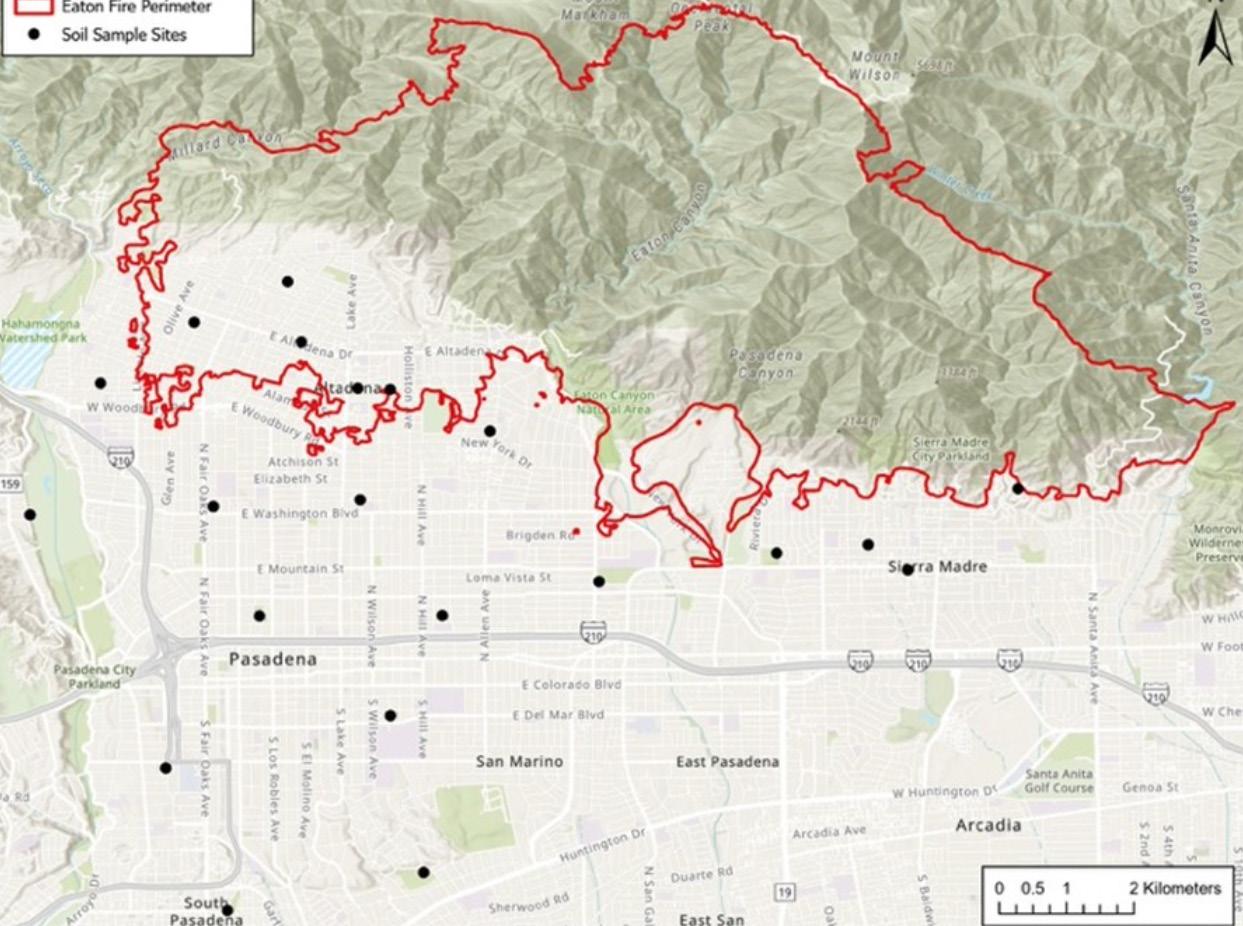
The county has established a soil-testing program for residents.
levels at Pasadena schools.
Earlier this year, reports surfaced of elevated lead
Testing at Pasadena parks did not reveal heavy metals above screening thresholds.
The soil-analysis report is available on the health department's website via tinyurl.com/mvu3mdte.


By City News Service
Tying the knot in Los Angeles County will be getting a little more expensive, with the Board of Supervisors voting unanimously Tuesday to increase the cost of marriage licenses, civil wedding ceremonies and ceremony witness services.
According to a letter sent to board members by Registrar-Recorder/County Clerk Dean Logan, the county has not substantially changed its marriage license fees since 2009, although the state added $1 to the cost in 2014. Ceremony and witness fees have not changed since 2015.
Logan said the current fees "no longer reflect the actual costs to the RR/CC to perform these services and do not take into account inflationary factors or mandated minimum wage increases."
As a result, Logan asked the board Tuesday to raise the cost of a standard marriage license from the current $91 to $176. The cost of a confidential marriage license will rise from $85 to $220, while a civil wedding ceremony fee

will rise from $35 to $44, and the ceremony witness fee will jump from $20 to $26.
The new fees -- approved by the board without discussion -- will take effect in 30 days.
"The proposed fee increase is significant as approximately 42% of this increase is attributed to cost-of-living adjustments for L.A. County employees since 2009, with the remainder reflecting several operational enhancements and mandated changes that have significantly impacted workload and administrative costs," Logan wrote in his letter to the board.
According to Logan, his
office conducted a survey of marriage fees charged in San Diego, Orange, Riverside, Contra Costa, San Bernardino, San Francisco and Ventura counties. The average fee for a marriage license in those counties is $100, and $107 for a confidential license. The highest current license cost in those counties is in San Diego, which charges $129 for a standard license and $144 for a confidential one. Orange County charges the least, at $61 and $66, respectively.
The fee increases will increase the RR/CC's annual revenue by roughly $5.1 million, according to Logan's letter.
homes.
"It's not an unfounded fear," she said. "The videos we have seen of agents slamming hardworking people at car washes and Home Depots to the ground..."
She added, "These are not criminals that this administration is targeting. These are hardworking people we have come to depend on in our community."
The board also asked county attorneys to report back in two weeks on the possibility of imposing an eviction moratorium or other tenant protections in response to immigration enforcement activities.
"With federal enforcement actions likely to continue, emboldened by the September 8th Supreme Court decision that seemingly allows for continued racial profiling, the county must do everything it can to protect our vulnerable families," that motion -- also by Horvath and Solis -- stated.
Both proposals were strongly backed by multiple community and advocacy groups including the Los Angeles Tenants Union.
"Since June, LATU along with dozens of community organizations have implored L.A.'s leadership to respond to the humanitarian and economic crises (Immigration and Customs Enforcement) has created by providing immediate relief for the working class, including rental assistance and an eviction moratorium for tenants and small businesses," LATU officials said in a statement. "The Board of Supervisors has the power to protect millions of Angelenos from displacement, detention, or death -- under expanded powers provided by the state of emergency created during January's Eaton and Palisades fires, the supervisors have jurisdiction of over 88 cities in the county, including the city of Los Angeles."
The rent-relief program will cover tenants and landlords countywide -- in both incorporated cities and unincorporated areas.