

Thursday, September 11-September 17, 2025
Thursday, September 11-September 17, 2025
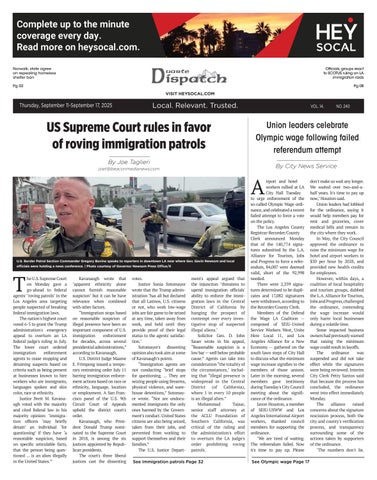
By Joe Taglieri joet@beaconmedianews.com

The U.S. Supreme Court on Monday gave a go-ahead to federal agents' "roving patrols" in the Los Angeles area targeting people suspected of breaking federal immigration laws.
The nation's highest court voted 6-3 to grant the Trump administration's emergency appeal to overturn an LA federal judge's ruling in July. The lower court ordered immigration enforcement agents to cease stopping and detaining suspects based on criteria such as being present at businesses known to hire workers who are immigrants, languages spoken and skin color, race or ethnicity.
Justice Brett M. Kavanaugh voted with the majority and cited federal law in his majority opinion: "immigration officers ‘may briefly detain’ an individual ‘for questioning’ if they have ‘a reasonable suspicion, based on specific articulable facts, that the person being questioned ... is an alien illegally in the United States.'”
Kavanaugh wrote that "apparent ethnicity alone cannot furnish reasonable suspicion" but it can be have relevance when combined with other factors.
“Immigration stops based on reasonable suspicion of illegal presence have been an important component of U.S. immigration enforcement for decades, across several presidential administrations,” according to Kavanaugh.
U.S. District Judge Maame E. Frimpong issued a temporary restraining order July 11 barring immigration enforcement actions based on race or ethnicity, language, location or employment. A San Francisco panel of the U.S. 9th Circuit Court of Appeals upheld the district court's order.
Kavanaugh, who President Donald Trump nominated to the Supreme Court in 2018, is among the six justices appointed by Republican presidents.
The court's three liberal justices cast the dissenting
votes.
Justice Sonia Sotomayor wrote that the Trump administration "has all but declared that all Latinos, U.S. citizens or not, who work low-wage jobs are fair game to be seized at any time, taken away from work, and held until they provide proof of their legal status to the agents' satisfaction."
Sotomayor's dissenting opinion also took aim at some of Kavanaugh’s points.
“Immigration agents are not conducting ‘brief stops for questioning. ... They are seizing people using firearms, physical violence, and warehouse detentions,” Sotomayor wrote. “Nor are undocumented immigrants the only ones harmed by the Government’s conduct. United States citizens are also being seized, taken from their jobs, and prevented from working to support themselves and their families.”
The U.S. Justice Depart-
ment's appeal argued that the injunction "threatens to upend immigration officials' ability to enforce the immigration laws in the Central District of California by hanging the prospect of contempt over every investigative stop of suspected illegal aliens."
Solicitor Gen. D. John Sauer wrote in his appeal, “Reasonable suspicion is a low bar — well below probable cause.” Agents can take into consideration “the totality of the circumstances," including that “illegal presence is widespread in the Central District (of California), where 1 in every 10 people is an illegal alien.”
Mohammad Tajsar, senior staff attorney at the ACLU Foundation of Southern California, was critical of the ruling and the administration's effort to overturn the LA judge's order prohibiting roving patrols.
By
Airportandhotel workers rallied at LA CityHallTuesday to urge enforcement of the so-called Olympic Wage ordinance, and celebrated a recent failed attempt to force a vote on the policy.
The Los Angeles County Registrar-Recorder/County Clerk announced Monday that of the 140,774 signatures submitted by the L.A. Alliance for Tourism, Jobs and Progress to force a referendum, 84,007 were deemed valid, short of the 92,998 needed.
There were 2,339 signatures determined to be duplicates and 17,082 signatures were withdrawn, according to the Recorder/County Clerk.
Members of the Defend the Wage LA Coalition -composed of SEIU-United Service Workers West, Unite Here Local 11, and Los Angeles Alliance for a New Economy -- gathered on the south lawn steps of City Hall to discuss what the minimum wage increase signifies to the members of those unions.
Later in the morning, several members gave testimony during Tuesday's City Council meeting about the significance of the ordinance.
Javon Houston, a member of SEIU-USWW and Los Angeles International Airport workers, thanked council members for supporting the ordinance.
"We are tired of waiting. The referendum failed. Now it's time to pay up. Please
don't make us wait any longer. We waited over two-and-ahalf years. It's time to pay up now," Houston said.
Union leaders had lobbied for the ordinance, saying it would help members pay for rent and groceries, cover medical bills and remain in the city where they work.
In May, the City Council approved the ordinance to raise the minimum wage for hotel and airport workers to $30 per hour by 2028, and provided new health credits for employees.
However, within days, a coalition of local hospitality and tourism groups, dubbed the L.A. Alliance for Tourism, Jobs and Progress, challenged the ordinance, contending the wage increase would only harm local businesses during a volatile time.
Some impacted business owners had previously warned that raising the minimum wage could result in layoffs.
The ordinance was suspended and did not take effect while the signatures were being reviewed. Interim City Clerk Petty Santos said that because the process has concluded, the ordinance went into effect immediately Monday.
The alliance raised concerns about the signature rescission process, both the city and county's verification process, and transparency surrounding some of the actions taken by supporters of the ordinance.
"The numbers don't lie.






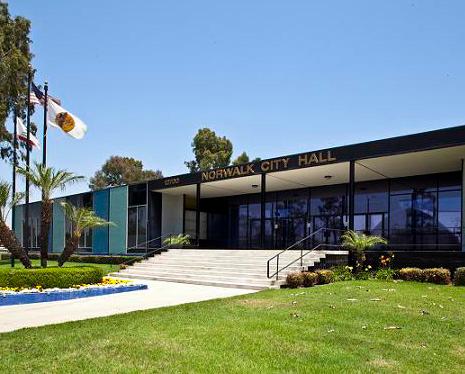
Tosettlealawsuit brought by the governor and state attorney general, the city of Norwalk has agreed to repeal its prohibition on homeless shelters and will contribute $250,000 for new affordable housing, officials said Friday.
The Norwalk City Council banned shelters last year as well as laundromats, payday lenders and other businesses known to have clienteles consisting of mostly residents who earn low incomes.
The settlement also requires Norwalk to create an affordable-housing trust fund and be subject to state monitoring.








By Joe Taglieri joet@beaconmedianews.com
"The Norwalk city council's failure to reverse this ban without a lawsuit, despite knowing it is unlawful, is inexcusable," Gov. Gavin Newsom said in a statement. "No community should turn its back on its residents in need — especially while there are people in your community sleeping on the streets. No city is exempt from doing their part to solve the homelessness crisis."
The city issued a statement in response: "The City's moratorium was never about turning our back on those in need — it was about pressing pause to ensure that the mistakes of past projects weren't repeated in Norwalk. Too often, cities have seen homeless programs rushed into place without adequate safeguards, accountability, or coordination. That approach fails both the unhoused and the broader community.
"Our pause allowed us to insist on collaboration with Los Angeles County, to integrate safety measures from the start, and to align with projects that actually deliver results," Norwalk officials said.
Newsom and state Attorney General Rob Bonta filed a lawsuit in November alleging the city's ban on shelters that provide a temporary place to sleep, supportive housing, single-
room occupancy housing and transitional housing violated many state laws. The state sought a court order compelling the city to repeal the shelter moratorium.
Last October in response to the city's failure to repeal the ban, the state decertified Norwalk's housing element, making the city ineligible for significant housing and homelessness funding and ensuring the Norwalk officials can no longer deny permits to construct "builder's remedy" low-income housing developments.
The settlement, which is subject to court approval, ensures the southeastern Los Angeles County community reaches compliance with the law and helps residents in need, Bonta said.
The city's statement noted that on May 17 "during the Contract Cities Association Annual Seminar, (LA County) Supervisor Janice Hahn publicly affirmed her partnership with Norwalk, and together we are moving forward with meaningful solutions: 54 Project Homekey housing vouchers, many for Norwalk residents experiencing homelessness, and the Mental Health Village at Metropolitan
State Hospital. That facility, which is in a secure and controlled environment, will provide the professional treatment and housing that is desperately needed.
"This moratorium was about protecting the safety of Norwalk residents, housed and unhoused alike, while ensuring that new investments are responsibly planned," city officials said.
"We are committed to deliberate collaboration with county and state partners to ensure every program here is accountable, well-run, and sustainable for the long term."
Bonta said that, before filing the lawsuit, state officials warned Norwalk on several occasions there would be serious consequences if the city moved forward with its housing ban.
"Regrettably, our warnings went unheeded, and we were forced to take legal action," Bonta said Friday. "We are more than willing to work with any city or county that wants to do its part to solve our housing crisis. By that same token, if any city or county wants to test our resolve, today's settlement is your answer. All of us have a legal
and moral responsibility to help — not hurt — those struggling to keep a roof over their heads or lacking housing altogether."
As part of the agreement, Norwalk will submit reports to the California Department of Housing and Community Development on the status of supportive and affordable housing projects so that the state can more readily monitor the city's actions, officials said.
"This case should send a clear message: When a city's leaders disregard the law to block housing — especially housing for those most in need — this administration will take swift legal action," HCD Director Gustavo Velasquez said in a statement. "This settlement ensures Norwalk will accept and process housing project applications, contribute meaningful funding for affordable housing development, and coordinate with Los Angeles County to address the needs of people experiencing homelessness. Going forward, HCD will continue to provide critical oversight to ensure accountability to that pledge."
A copy of the settlement agreement is online via tinyurl.com/msnkjnf4.
By Shawn Spencer shawn@girlfridaysolutions.net
Are you excited yet? Only six more weeks until we are smack dab in the middle of Myrtle, celebrating the return of our beloved Taste of Old Town Monrovia. I am so excited. We haven’t TOOTed this horn since the dreaded COVID shutdown. The Monrovia Kiwanis Club, with the help of the City of Monrovia, is rallying together to bring back this super-fun event. Personally, I cannot wait!
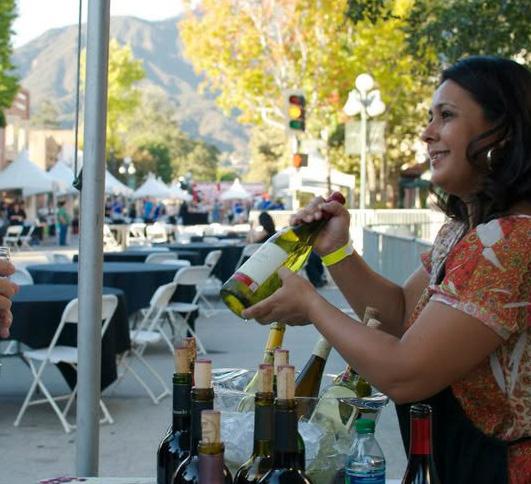
If you haven’t been to the Taste of Old Town (toot), allow me to share the joy with you. Myrtle is blocked off from Lime to Colorado. The streets are lined with white booths and canopies. Bistro lights are strung overhead, crisscrossing the street with a fairylike glow. Each booth houses a different vendor; some offering sweet bites, some offering savory. Wineries are pouring tastes of their wine while distilleries offer their whiskey or tequila. Upon entry, you get a plate and an event souvenir wine glass to facilitate the tasting
adventure you are about to embark on. You might decide to take a break and dance to the smooth sounds of the Delgado Brothers — maybe you need to work off some of those bites and make room for dessert. It’s a truly magical night and so much fun.
You can purchase tickets now at Eventbrite. Search Monrovia events under ‘A Taste of Old Town Monrovia.’ Next week, you’ll be able to purchase tickets at Charlie’s House, the Community Center, Homer’s Auto and the Money Store. You won’t be sorry! Unless you stay home…
Some of you want to live the high life, but some of us are just here for the Pie Life. Coming soon to 338 S. Myrtle Ave., formerly known as Old Town Pizza, is something new and improved. Pie Life is currently located at 691 S. Raymond in Pasadena. Please join me in welcoming Joseph, his wife Erika and their delicious pizza to Old Town! They plan on keeping their


OG location open but are looking forward to sharing the love with us too as they open their second location in our community. The opening date isn’t set in stone, just yet. The hope is November, and the reality may be December. Go visit them on Raymond. You’ll see that they are definitely worth the wait. Joseph, Erika and their three daughters are just delightful and a fantastic addition to our Old Town Business District.
If you frequent our Friday Night Street Faire, please note that fall and winter hours are about to commence. Beginning Sept. 12, the hours of operation will be from 5 to 9 p.m. Don’t forget the Hop Secret Beer Garden for those aged 21 and up. And don’t forget our Saturday morning Farmer’s Market. Get the freshest of fresh veggies, baked items and more. Shop early while it’s still cool. Hours of operation are 8 a.m. to 2 p.m.
Stay tuned for more Old Town info and updates.

Caltrans commits $8.5M to Rio Hondo Ecosystem Restoration Project
Arcadia, Bradbury, Duarte, Monrovia and Sierra Madre are members of the Rio Hondo San Gabriel River Watershed Management Authority (RH/SGR WMA), a Joint Powers Authority working to protect the local watershed, quality of rainwater runoff (stormwater) and help member agencies meet national environmental standards related to stormwater management. The Authority is currently in the design phase of the Rio Hondo Ecosystem Restoration Project, located at the Peck Road Conservation Park, which will improve water quality, recharge the local groundwater basin, and create new multi-benefit facilities for the community. While the Authority makes progress toward the project’s design, the group has made progress toward securing funds for both design and construction phases. Recently, the RH/SGR WMA secured $8.5 million from Caltrans to support the project’s construction. Caltrans officially committed this funding through a letter of support provided in July. With these funds, the RH/SGR WMA will be able to construct a project that will provide immediate benefits to the ecosystem and community. For more information on the Rio Hondo Ecosystem Restoration Project, visit rhsgrwma. org.
Burbank opens application period for Community Arts Grant
The Burbank Parks and Recreation Department, in collaboration with the Burbank Cultural Arts Commission, has opened applications for the Community Arts Grant Program, designed to support local artists and non-profit arts organizations. Grants from $1,000 to $5,000 are available to artists and non-profit art organizations intended to support visual and performing arts projects that encourage and provide access to the arts for all members of the community. This opportunity is open to individual professional artists and non-profit arts organizations located in Los Angeles County. The grant recipients' proposed projects must be completed in Burbank and serve Burbank residents, businesses, and visitors directly. Preference will be given to artists and organizations currently based in Burbank. The deadline to apply is Friday, Oct. 17. For more information, including eligibility requirements, detailed guidelines, important dates, and the application link, visit www.BurbankCA.gov/ CommunityArtsGrant.
Long Beach
Long Beach to hold moment of silence in remembrance of 9/11 terrorist attacks
To commemorate the 24th anniversary of the tragic events of the 9/11 terrorist attacks, the City of Long Beach will observe a citywide
moment of silence on Thursday. Hosted by Mayor Rex Richardson and the Long Beach Police and Fire Departments, the memorial ceremony will serve as a citywide opportunity to pay tribute to those who lost their lives on that tragic day. Join city leaders as they honor and remember those who were lost with a Last Alarm tribute at 9:11 a.m., followed by a ceremonial wreath placement, words of reflection by Mayor Rex Richardson, a moment of silence, and a bagpiper performance of “Amazing Grace.” All city facilities will fly the American flag at half-staff from sunrise to sunset on Thursday in remembrance and as a mark of respect for the first responders and civilians who died during the terrorist attack. The ceremony will begin at approximately 9:05 a.m. and residents are invited to watch it via livestream on the following city pages: (1) City of Long Beach Facebook and X pages @LongBeachCity and on YouTube @LongBeachCityCA (2) Long Beach Police and Fire Department Facebook pages @LongBeachPD.CA and @LongBeachFD and X pages @LBPD and @LBFD and (3) Long Beach Television at LBTV3.com.
John Wayne Airport posts July 2025 statistics
Airline passenger traffic at John Wayne Airport increased in July 2025 as compared to July 2024. In July 2025, the Airport served 1,052,623 passengers, an increase of 8.4% when compared with the July 2024 passenger traffic count of 970,828. Commer-
cial aircraft operations in July 2025 of 8,333 increased 6.0% and commuter aircraft operations of 791 increased 64.4% when comparing with 2024 levels. General aviation activity of 20,858 accounted for 69.5% of the total aircraft operations during July 2025, and decreased -3.5% compared with July 2024. The top three airlines in July 2025 based on passenger count were Southwest Airlines (289,416), American Airlines (182,722), and United Airlines (163,471).
Anaheim Ducks, city, KABOOM! team to build playground at Maxwell Park
The city of Anaheim, the Anaheim Ducks Foundation and nonprofit KABOOM! teamed up with the kids of Mattie Lou Maxwell Elementary School to build a custom playground in a day as part of an ongoing revitalization of Maxwell Park. About 150 volunteers came together on Sept. 4. to build a playground of swings, slides, climbing areas, sensory panels and shade umbrellas — all in Anaheim Ducks orange and black. The playground is big for Maxwell Park, a 25-acre park in the heart of west Anaheim that also hosts Mattie Lou Maxwell Elementary School and Haskett Branch Library. In April, 200 Maxwell Elementary kids drew designs and shared their wish list for the new playground. The top request? Monkey bars and other climbing spaces. The kids also designed in and asked for playground favorites including swings and slides. The playground will be accessible to kids of different ages and abilities, including companion swings, high-back seats, clear paths of travel and sensory panels for those wanting a different experience.
Riverside County Public Health IDs tuberculosis case at Indio High School
A Riverside County student has tested positive for tuberculosis, the Riverside University Health System – Public Health (RUHS-PH) department reported Friday, and
efforts are underway to notify those who may have been exposed to the disease. The Indio High School student is currently receiving treatment and expected to make a full recovery. TB testing will be offered for individuals who may have been exposed. If the test is positive, the individual will be sent for a chest X-ray and then follow up with Public Health. If the chest X-ray shows no disease in the lungs, treatment for latent TB infection is recommended to prevent progression to active TB illness. Faculty, staff and parents or guardians of students who are not considered at-risk were notified of the potential TB exposure and informed that no further action was needed. For questions or resources, call RUHS –PH Disease Control at 951-358-5107.
Student arrested with unloaded firearm on Corona school campus
On Monday, staff from Cesar Chavez Academy alerted a Corona police school resource officer that they detained a student in the office and located an unloaded firearm in a student’s backpack. School staff initially received information that a student may have a firearm in his backpack. Administrators called a school resource officer, while other staff quickly went to contact the child and seize the student’s belongings. A search of the backpack revealed an unloaded firearm; no ammunition was located. The school resource officer arrived and took custody of the firearm and student. Based on the circumstances of the original call, and items found during the search, the child’s father was arrested for child endangerment and failing to properly secure a firearm. The student was also arrested for a variety of weapons offenses. If you have any information regarding this investigation call Sergeant Michael Nielsen at 951-817-5785 or email Michael.Nielsen@CoronaCA. gov.
Explore Mojave River Forks under the stars in search of
nocturnal habitat
Explore the Mojave River Forks in search of owls, glowing scorpions and other nocturnal creatures on Friday from 5:30 to 7:30 p.m. With the night sky as a backdrop, uncover hidden surprises and learn about the wildlife that comes to life after sunset alongside staff from San Bernardino County Regional Parks. All ages may participate. Leashed pets are welcome too. Admission is $15 per vehicle (due to limited Wi-Fi service, only cash will be accepted). Wear comfortable clothing, shoes and pack water. The River Forks is a campground only and accepts reservations for camping. For more information on Regional Parks, events or camping, visit parks.sbcounty.gov.
San Bernardino's first futsal court to open at Lytle Creek Park
San Bernardino's Parks, Recreation, and Community Services Department will be holding a ribbon cutting to celebrate the completion of the city’s first futsal court at Lytle Creek Park on Tuesday at 5 p.m. The public is invited to attend. Lytle Creek Park is located at 380 S. K St. in San Bernardino. Futsal is a fast-paced indoor version of soccer played by two teams of five players on a smaller court, using a lowbounce ball. Played both outdoors and indoors, FIFA (the world governing body for soccer and futsal) recognizes futsal as the fastest growing indoor sport in the world, with over 30 million players worldwide. The court features a field with synthetic turf and fencing.
Ontario
Ontario Foodie Fest set for Saturday
Whether you are a devoted foodie or just looking for a delightful day out, Foodie Fest is set for Saturday from 3 to 8 p.m. at Ontario Town Square, located at 224 N. Euclid Ave. This free event is for all ages. No registration is necessary. For more information, call the Recreation & Community Services department at (909) 395-2020.
Today, the world faces mounting uncertainties and challenges— from prolonged conflicts and democratic backsliding to economic coercion and disinformation campaigns. Authoritarian regimes increasingly employ gray-zone tactics that undermine the rulesbased international order. In this fragile global environment, peace cannot be taken for granted. Democracies must unite to bolster resilience and safeguard our cherished values and way of life.
Taiwan is a key player and an indispensable partner in the Indo-Pacific region, working toward global peace, stability, and prosperity. It stands on the front line of the Indo-Pacific’s first island chain, defending democracy and freedom from authoritarian expansionism. Taiwan also contributes significantly to stability and prosperity through its robust economy and semiconductor ecosystem. As the 21st-largest economy, Taiwan leads in artificial intelligence and semiconductors—producing over 60 percent of the world’s chips and 90 percent of its most advanced ones. This economic strength fuels global growth and makes Taiwan an indispensable partner for global development in various fields.
Taiwan is determined to defend democratic values, both at home and abroad.
President Lai Ching-te launched the Four Pillars of
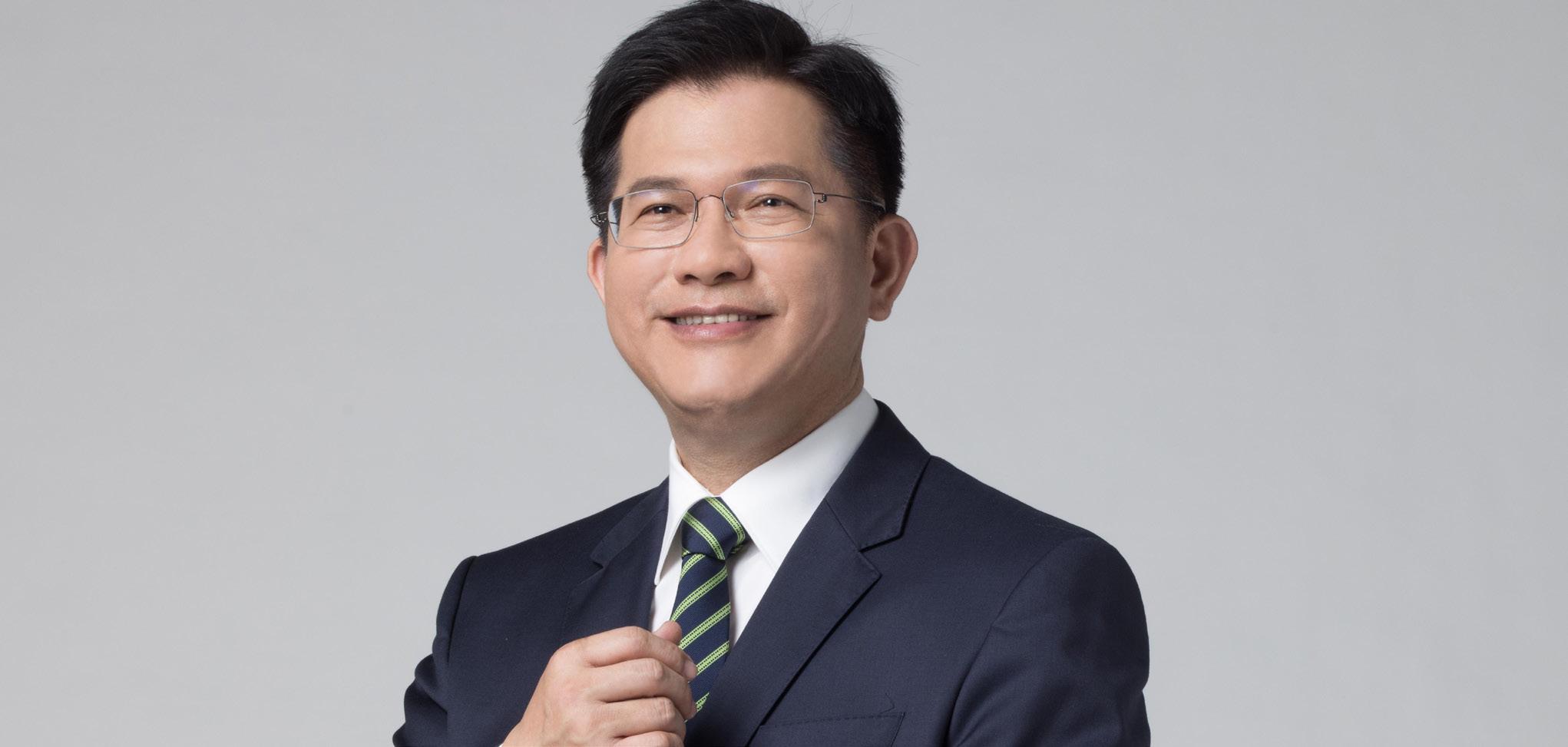
By Lin Chia-lung, Republic of China (Taiwan) minister of foreign affairs
Peace action plan last year, which commits to raising Taiwan’s defense spending and boosting whole-of-society resilience. Taiwan does not seek conflict with China and will not provoke it. In fact, Taiwan is urging Beijing to resume dialogue on the basis of parity and dignity. In addition, the Ministry of Foreign Affairs adopted an “Integrated Diplomacy” to leverage Taiwan’s diplomatic, defense, technological, and economic strengths. With this smart power approach, Taiwan is navigating complex international relations, enhancing its global presence, and contributing to a more stable and prosperous world.
Through the global democratic values chain, Taiwan strengthens partnership with democracies facing
uncertain geopolitical risks to resist authoritarian influence, promote human rights, advance digital governance, and uphold the rules-based international order. Taiwan’s resilience in the face of authoritarian threats proves that democracy can endure and thrive under pressure.
As a thriving economic powerhouse, Taiwan leads in semiconductor production and advanced technologies. Its economic strengths fuel innovation and growth in sectors of AI, digitalization and healthcare. To reinforce this position, Taiwan has launched an economic diplomacy strategy focused on non-red supply chains, aiming to build trusted and transparent networks that safeguard critical industries from authoritarian interference.
Taiwan also actively advances the Diplomatic Allies Prosperity Project, harnessing public-private collaboration to consolidate government resources and leverage Taiwan’s industrial strengths to promote mutually beneficial development. Initiatives include collaborating with Paraguay to develop an integrated hospital information system (HIS) to enhance nationwide medical information management; partnering with Eswatini on an oil reserve facility project to strengthen energy security and stimulate local industry; and assisting Palau in becoming a smart and sustainable island nation to exemplify Taiwan’s commitment to sustainable international cooperation.
Regrettably, despite Taiwan’s significant global
contributions, it remains largely unrecognized by the international community and is unable to participate in the United Nations system. Taiwan’s unwarranted exclusion stems from China’s deliberate misrepresentation of United Nations General Assembly Resolution 2758. The resolution is falsely linked with the so-called “one China principle” and continues to be wrongfully weaponized to block Taiwan’s participation.
However, UNGA Resolution 2758 does not mention Taiwan at all—it merely addresses China’s representation in the United Nations. The resolution does not state that Taiwan is part of the People’s Republic of China (PRC), nor does it grant the PRC the right to represent Taiwan in the
UN system. Nevertheless, the United Nations has yielded to China’s political pressure, using the resolution as a pretext to exclude Taiwan from the international community.
In response, Taiwan is speaking out against this injustice and garnering ever-more support. As international backing for Taiwan grows, countries worldwide are increasingly emphasizing the importance of peace and stability across the Taiwan Strait at bilateral and multilateral forums such as the Group of Seven (G7) summit.
And the executive and legislative branches of numerous nations have publicly clarified that UNGA Resolution 2758 neither determines Taiwan’s status nor precludes its participation in the international organizations, including the UN system.
As the United Nations celebrates its 80th anniversary—and with only five years remaining to realize the Sustainable Development Goals (SDGs)—it is time for it to fulfill its vision of “leaving no one behind” and becoming “better together’’ by including Taiwan.
Taiwan invites the world to “chip in” and help by recognizing Taiwan’s rightful place on the world stage and embracing the contributions it has to offer. Only by working together can we create a better and brighter future for the Indo-Pacific region and the world.


Eeyore A523015
Meet Eeyore, a gentle guy searching for safety, patience, and peace. This 5-yearold gray pit bull came to Pasadena Humane as a stray and has been slowly learning to trust again. While he hasn’t yet felt ready to emerge from his Hundred Acre Wood (his kennel), Eeyore has shown incredible softness with familiar people. He loves to greet those he loves with tail wags, gentle kisses, and a love for head scratches. Oh, and don’t forget the hot dogs! His journey is unfolding one small, brave step at a time, and each breakthrough is a testament to the loving dog beneath the uncertainty. Eeyore will need a quiet, low-traffic home with patient, understanding humans who can go at his pace. While he’s not ready for too much just yet, he is ready for kindness – for someone who will sit with him, offer treats, and celebrate every small win. In the right home, with time and care, we believe Eeyore will blossom beautifully.
Octavio A523127
Meet Octavio, Pasadena Humane’s gentle giant with a big head and an even bigger heart (truly)! This 5-year-old Rottweiler arrived to Pasadena Humane as a stray and quickly won everyone over with his calm, easygoing nature. He walks beautifully on a leash, takes treats with a softness unlike any other, and has been friendly with both people and other dogs. While he’s generally quiet and relaxed, his playful side shines when toys are involved. Give him a squeaky ball and watch the silliness unfold! Octavio is affectionate, goofy, and full of love, but he’s also looking for a home with a patient, adult-only household who can give him the space and trust he deserves. In return, you’ll get a loyal, fun-loving companion who brings big smiles and even bigger cuddles. If you’re ready to share your home with this extra-large teddy bear, come meet Octavio today.
The adoption fee for dogs is $150. All dog adoptions include spay or neuter, microchip, and age-appropriate vaccines. Walk-in adoptions are available every day from 10:00 –5:00. View photos of adoptable pets at pasadenahumane.org. New adopters will receive a complimentary health-and-wellness exam from VCA Animal Hospitals, as well as a goody bag filled with information about how to care for your pet. Pets may not be available for adoption and cannot be held for potential adopters by phone calls or email.
Eliminate gutter cleaning forever! LeafFilter, the most advanced debris-blocking gutter protection. Schedule a FREE LeafFilter estimate today. 20% off Entire Purchase. 10% Senior & Military Discounts. Call 1-855424-7581 (Cal-SCAN)
GOT AN UNWANTED CAR??? DONATE IT TO PATRIOTIC HEARTS. Fast free pick up. All 50 States. Patriotic Hearts’ programs help veterans find work or start their own business. Call 24/7: 1-833-426-0105 (CalSCAN)
Tiene un vehiculo no deseado? Donelo a Patriotic Hearts! Recogida rápida y gratuita en los 50 estados. Patriotic Hearts ofrece programas para ayudar a los veteranos a encontrar trabajo o iniciar su propio negocio. Llama ahora: 1-833-695-1947 (24/7) (Cal-SCAN)
Struggling with debt? If you have over $10,000 in debt we help you be debt free in as little as 24-48 months. Pay nothing to enroll. Call Now: 1-833-641-3437 (Cal-SCAN)
Attention: VIAGRA and CIALIS USERS! A cheaper alternative to high drugstore prices! 50 Pill
Special - Only $99! 100% guaranteed. CALL NOW:1-833-6413889 (Cal-SCAN)
Jacuzzi Bath Remodel can install a new, custom bath or shower in as little as one day. For a limited time, waiving ALL installation costs! (Additional terms apply.) Subject to change and vary by dealer. (Offer ends 9/30/25.) Call 1-833-985-4766
Safe Step. North America's #1 Walk-In Tub. Comprehensive lifetime warranty. Top-of-the-line installation and service. Now featuring our FREE shower package and $1600 Off for a limited time! Call today! Financing available. Call Safe Step 1-888-989-5749 (Cal-SCAN)
DENTAL INSURANCE from Physicians Mutual Insurance Company. Coverage for 400 plus procedures. Real dental insurance - NOT just a discount plan. Do not wait! Call now! Get your FREE Dental Information Kit with all the details! 1-844-2032677 www.dental50plus.com/ calnews #6258 (Cal-SCAN)
The difference in winning and losing market share is how businesses use their advertising dollars. CNPA’s Advertising Services’ power to connect to nearly 13 million of the state’s readers who are an engaged audience, makes
our services an indispensable marketing solution. For more info call Cecelia @ (916) 288-6011 or cecelia@cnpa.com
DID YOU KNOW Newspapergenerated content is so valuable it’s taken and repeated, condensed, broadcast, tweeted, discussed, posted, copied, edited, and emailed countless times throughout the day by others? Discover the Power of Newspaper Advertising. For a free brochure call 916-288-6011 or email cecelia@cnpa.com (Cal-SCAN)
RETIRED COUPLE $$$$ for business purpose Real Estate loans. Credit unimportant. V.I.P. Trust Deed Company www.viploan. com Call 1-818-248-0000. Broker-principal DRE 01041073. No consumer loans. (Cal-SCAN)
BATH & SHOWER UPDATES in as little as ONE DAY! Affordable prices - No payments for 18 months! Lifetime warranty & professional installs. Senior & Military Discounts available. Call: 1-833-795-0042 (CalSCAN)
WATER DAMAGE CLEANUP & RESTORATION: A small amount of water can lead to major damage in your home. Our trusted professionals do complete repairs to protect your family and your home's value! Call 24/7: 1-833-712-3809. Have zip code of service location ready when you call! (Cal-SCAN)
If you have questions about your pension, 401(k) or profit sharing plan, call the Western States Pension Assistance Project to get free legal advice. Funded by the U.S. Administration on Community
, WSPAP staff provides free legal assistance to anyone with a question about their retirement plan.
Aug. 28
At 12:10 a.m., officers responded to an apartment complex in the 200 block of West Pomona regarding a disturbing subject. Officers arrived and made contact with the subject who was yelling and acting erratically. It was determined he was a danger to himself and others. He was transported to a medical facility for a mental evaluation.
At 3:11 a.m., a disturbance was reported in the 700 block of East Lemon. Officers arrived and located a vehicle with loud music emitting from it and made contact with the occupant. An investigation revealed he was in possession of a controlled substance. He was arrested, cited, and released at the scene.
At 9:08 a.m., while patrolling the 400 block of West Huntington an officer saw a subject with an open alcohol container. The subject was arrested, cited and released at the scene.
At 3:03 p.m., a victim approached an officer in the 500 block of West Foothill to report that his work vehicle had been burglarized. An investigation revealed property was stolen. This investigation is continuing.
At 8:41 p.m., officers responded to the 100 block of Grand regarding a vehicle burglary. Property, which included a firearm was taken. This investigation is continuing.
Aug. 29
At 2:12 a.m., a suspicious subject was reported in the 1500 block of South Mayflower. Officers arrived and located the subject. A computer search revealed she had a warrant for her arrest. She was arrested and taken into custody.
At 3:35 a.m., a caller in the 100 block of Los Angeles reported two suspicious subjects. Officers arrived and made contact with the subjects. A computer search revealed they both had warrants for their arrest. They were arrested and taken into custody.
At 12:02 p.m., a passerby in the 100 block of West Foothill reported a female subject was walking around without clothes. Officers arrived and made contact with her. She was found to be in distress and not able to care for herself. She was transported to a medical facility for a mental evaluation.
At 3:14 p.m., a victim in the 600 block of West Huntington reported that his parked vehicle was burglarized. Nothing appeared to have been taken. This investigation is continuing.
Aug. 30
At 3:28 p.m., a caller in the 1600 block of South Myrtle reported two suspicious subjects. Officers arrived and made contact with the subjects. An investigation revealed they were in possession of drug paraphernalia and both had warrants for their arrest. They were arrested and taken into custody.
At 8:35 p.m., a vehicle fire was reported in a parking lot in the 100 block of West Huntington. Officers and MFD responded. No injuries were reported and the fire was extinguished. This investigation is continuing.
At 9:41 p.m., officers responded to the area of Sierra Terrace and Royal Oaks Drive regarding a female subject yelling. Officers arrived and made contact with the female subject. An investigation revealed she was a danger to herself. She was transported to a medical facility for a mental evaluation.
Aug. 24
At approximately 10:11 a.m., an officer responded to the front counter of the Arcadia Police Department regarding a fraud report that happened at 400 S. Baldwin Ave. The victim discovered unidentified suspects accessed his unattended bag left at Nordstrom, Arcadia, and stole his debit and credit cards. The cards were then used by two white male suspects to complete fraudulent transactions at two Glendale stores.
Aug. 25
At approximately 2:14 p.m., an officer responded to Macy’s, located at 400 S. Baldwin Ave., regarding a theft investigation. The loss prevention employee discovered a repeat offender, identified as a 39-year-old female from Valley Village, stole more than $350 worth of merchandise on Aug. 17. The suspect is outstanding as of the date of this report.

Aug. 26
At approximately 7:12 p.m., an officer responded to a residence in the 200 block of Alice Street regarding a vehicle burglary report. Upon reviewing their surveillance footage, the victim determined a lone male suspect broke a window of their vehicle, searched through the vehicle, but fled empty-handed. The suspect was seen wearing a green hooded sweatshirt.
Aug. 27
At approximately 6:07 p.m., an officer responded to Sunglass Hut, located at 400 S. Baldwin Ave., regarding a grand theft report. An investigation revealed two suspects each stole two pairs of designer sunglasses, resulting in a loss of more than $2,300. The suspects are both described as Hispanic males with medium builds, and wearing black shirts and shorts.
Aug. 28
At approximately 2:46 p.m., an officer responded to Motel 6, located at 225 W. Colorado Place, regarding a robbery investigation. The officer discovered the victim arrived at the location after being lured by an acquaintance asking for a ride, and was then robbed of his wallet by two of the four suspects involved in the incident. The suspect, a 40-year-old male from Covina, and a 31-year-old male from Covina were located, arrested, and transported to the Arcadia City Jail for booking. The 40-year-old male also had an outstanding felony warrant.

By Joe Taglieri joet@beaconmedianews.com
Federal, state and local officials along with immigrant rights advocates and other groups issued statements following the U.S. Supreme Court's ruling Monday lifting restrictions on enforcement activity in the Los Angeles area.
Justices voted 6-3 to stay a district court judge's order prohibiting agents' "roving patrols" that lead to arrests of people suspected of immigration law violations. In July, Judge Maame E. Frimpong determined federal agents were illegally targeting people for deportation based on race or ethnicity, language, location or employment.
The U.S. 9th Circuit Court of Appeals later upheld Frimpong's temporary restraining order on roving patrols targeting car washes, locations where day laborers gathered and garment factories spread fear throughout immigrant communities regionwide throughout June and July.
The Supreme Court's six affirmative-voting justices were appointed by Republican presidents. The three Democrat appointees voted against the Trump administration's request to stay the TRO.
White House spokeswoman Abigail Jackson said immigration enforcement operations would continue in Southern California.
"This stay reaffirms what we've always known: lower court activist judges are trying to impede the president from lawfully carrying out the American people's agenda," Jackson said. "We look forward to full vindication on this front in short order, but in the meantime, the Trump administration will continue fulfilling its mandate to arrest and deport criminal illegal aliens."
Los Angeles Mayor Karen Bass said the ruling was "un-American," and its danger to working families goes beyond the Southern California region.
"I want the entire nation to hear me when I say this
isn't just an attack on the people of Los Angeles, this is an attack on every person in every city in this country," Bass said. "Today's ruling is not only dangerous — it's un-American and threatens the fabric of personal freedom in the United States of America.
"Today, the highest court in the country ruled that the White House and masked federal agents can racially profile Angelenos with no due process, snatch them off the street with no evidence or warrant, and take them away with no explanation. This decision will lead to more working families being torn apart and fear of the very institutions meant to protect — not persecute — our people."
Gov. Gavin Newsom called noted the racial elements of Trump's massdeportation campaign and also warned of the legal precedent that the Supreme Court has set.
"Trump's hand-picked Supreme Court majority just became the grand marshal for a parade of racial terror in Los Angeles," Newsom said. "This isn't about enforcing immigration laws — it's about targeting Latinos and anyone who doesn't look or sound like Stephen Miller's idea of an American, including U.S. citizens and children, to deliberately harm California's families and small businesses. Trump's private police force now has a green light to come after your family — and every person is now a target."
LA City Attorney Hydee Feldstein Soto on Monday evening said the "Supreme Court decision allowing ICE agents to resume racial profiling in Los Angeles undermines fundamental constitutional protections. The 6-3 ruling permits federal agents to stop individuals based on 'apparent race or ethnicity,' speaking Spanish or accented English, location, and occupation — factors that disproportionately impact Latino commu-
nities."
Mark Rosenbaum, senior special counsel at the LA civil rights law firm Public Counsel, said in a statement that the ruling "allows the Trump administration to resume racially discriminatory raids across Los Angeles, giving federal agents license to detain people without evidence or due process simply because of the color of their skin, the language they speak, or the work they do. ...
"These raids were never about public safety but about targeting immigrants and sowing fear," Rosenbaum said. "This fight is not over. We will continue pressing our case in court until every person in our communities can live free from fear, with their rights and dignity fully protected."
The Supreme Court's ruling does not stop further proceedings in the lawsuit brought by LA-area workers, advocacy organizations, a union, the city of Los Angeles and a number of other local governments in Southern California. On Sept. 24, Frimpong has scheduled a hearing on whether to issue a preliminary injunction based on what is expected to be additional evidence presented by plaintiffs.
Assemblyman Mark González, D-Los Angeles, said the Supreme Court decision "unleashes" what he called "governmentsanctioned oppression."
"This wannabe king and his allies didn't just overturn a judge's common-sense order — they shredded the constitutional protections that are supposed to shield us from government overreach and racism," González said in a statement. "This ruling gives ICE a green light to hunt people down based on the color of their skin, the language they speak, or where they work."
The lawsuit's lead plaintiff Pedro Vasquez Perdomo, 54, a day laborer from Pasadena, also issued a statement following the

“When ICE grabbed me, they never showed a warrant or explained why," Vasquez Perdomo said. "I was treated like I didn’t matter–locked up, cold, hungry, and without a lawyer. Now, the Supreme Court says that’s okay? That’s not justice. That’s racism with a badge.“
He said he became a plaintiff in the lawsuit "because what happened to me is happening to others everyday just for being brown, speaking Spanish, or standing on a corner looking for work. The system failed us today, but I’m not staying silent. We’ll keep fighting because our lives are important.”
Armando Gudino, executive director of the Los Angeles Worker Center Network, said in a statement, "The Supreme Court has ruled in favor of racial profiling. A dark shadow has been cast over this country's Constitution and its future. This is a dangerous precedent for immigrant rights and civil liberties. ... It turns back the clock on decades of legal progress and reinforces a system where some communities are seen as suspect by default."
Frimpong's temporary restraining order had applied in the federal court system's Central District of California, which consists of Los Angeles, Orange, Riverside, San Bernardino, Ventura, Santa Barbara and San Luis Obispo counties.
Acting U.S. Attorney Bill Essayli of the Central District lauded Monday's ruling.
"We argued the order was overly broad, aiming to hinder our ability to apprehend and remove illegal immigrants in Los Angeles," Essayli posted on X. "We are a nation of laws."
LA County District 1 Supervisor Hilda Solis said the Supreme Court ruling allowing roving patrols to resume will create additional fear in Southern California communities.
Allowing immigration stops "based solely on occupation, language, or appearance, is an unacceptable attack on the rights and safety of our residents," she said in a statement.
"The timing of this ruling is especially outrageous, coming at the very start of Hispanic Heritage Month, a time meant to honor and uplift Latino communities and their contributions," Solis said. "This decision will only intensify the fear, trauma, and disruption faced by Angeleno families and neighbors who contribute so much to the strength, workforce and cultural diversity of Los Angeles County."
Janet Murguía, president and CEO of UnidosUS, a national Latino civil rights organization, said the ruling "undermines constitutional protections and opens the door to more indiscriminate stops and arrests. It authorizes targeting by
authorities that makes all immigrants, Hispanics and other non-white Americans, suspects simply because of the color of their skin or the language they speak. In doing so, the Court has put the civil rights of every person in the United States at risk.
“These types of tactics have already traumatized families, violated fundamental rights and led to the wrongful detention of U.S. citizens and other lawful residents," Murguía's statement continued. "This decision gives a green light to discriminatory enforcement that erodes trust in public institutions.
“The Supreme Court, without proper review or explanation, has signaled that the administration can, with impunity, use profiling-based tactics nationwide. It also continues to undermine the Court's own role as a check against unlawful actions. As Justice Sotomayor wrote in dissent, ‘We should not have to live in a country where the Government can seize anyone who looks Latino, speaks Spanish, and appears to work a low wage job.’"
Murguía called on Congress, state leaders and local officials to "mitigate the damage of these enforcement actions" with all legal and policy options available to make sure that immigration enforcement does not violate rights and public safety.
By City News Service
Los Angeles Mayor Karen Bass Tuesday threw her support behind former Mayor Antonio Villaraigosa — her longtime friend and political ally — to be the next governor of California.
"For me, this is a special moment," Bass said at a Crenshaw district news conference Tuesday morning attended by various faith and community leaders. "I know I have stood at a podium endorsing my brother from another mother on numerous occasions. Because, in fact, we have known each other and worked together our entire adult lives.
"Many, many years before we ever thought that we would wind up being elected officials, but when we were fighting on issues that were common to South LA and East LA, we have always believed that the way you bring about change is you do
it together. You build coalitions because our issues and our problems are similar."
She hailed Villaraigosa — also a former Assembly Speaker in addition to being the 41st mayor of Los Angeles — for his work on issues ranging from children's health to the environment to the need for a subway/light rail line in the Crenshaw area, which is now running as the Metro K Line.
"I know that as California's next governor, you are talking about somebody who knows the Legislature, who knows the legislative process, who knows how you build relationships, who knows our city. And I think as we are in this crossroads in our country ... we need a leader like Antonio Villaraigosa to be the next governor of California."
Recent polls have put former Democratic Rep.
Katie Porter as the leader in the crowded field of gubernatorial hopefuls. A recent Emerson College poll showed Porter with 18% of the vote, followed by Republicans Steve Hilton at 12% and Riverside County Sheriff Chad Bianco at 7 %, followed by Villaraigosa at 5%.
Villaraigosa was in a celebratory mood Tuesday as he accepted the endorsement from Bass, who he said he has known for more than 50 years.
"We've been working together across this town, focused on the issued that people care about — safe streets, clean neighborhoods, fair distribution of resources," he said. "We've stood up together decade after decade. ...
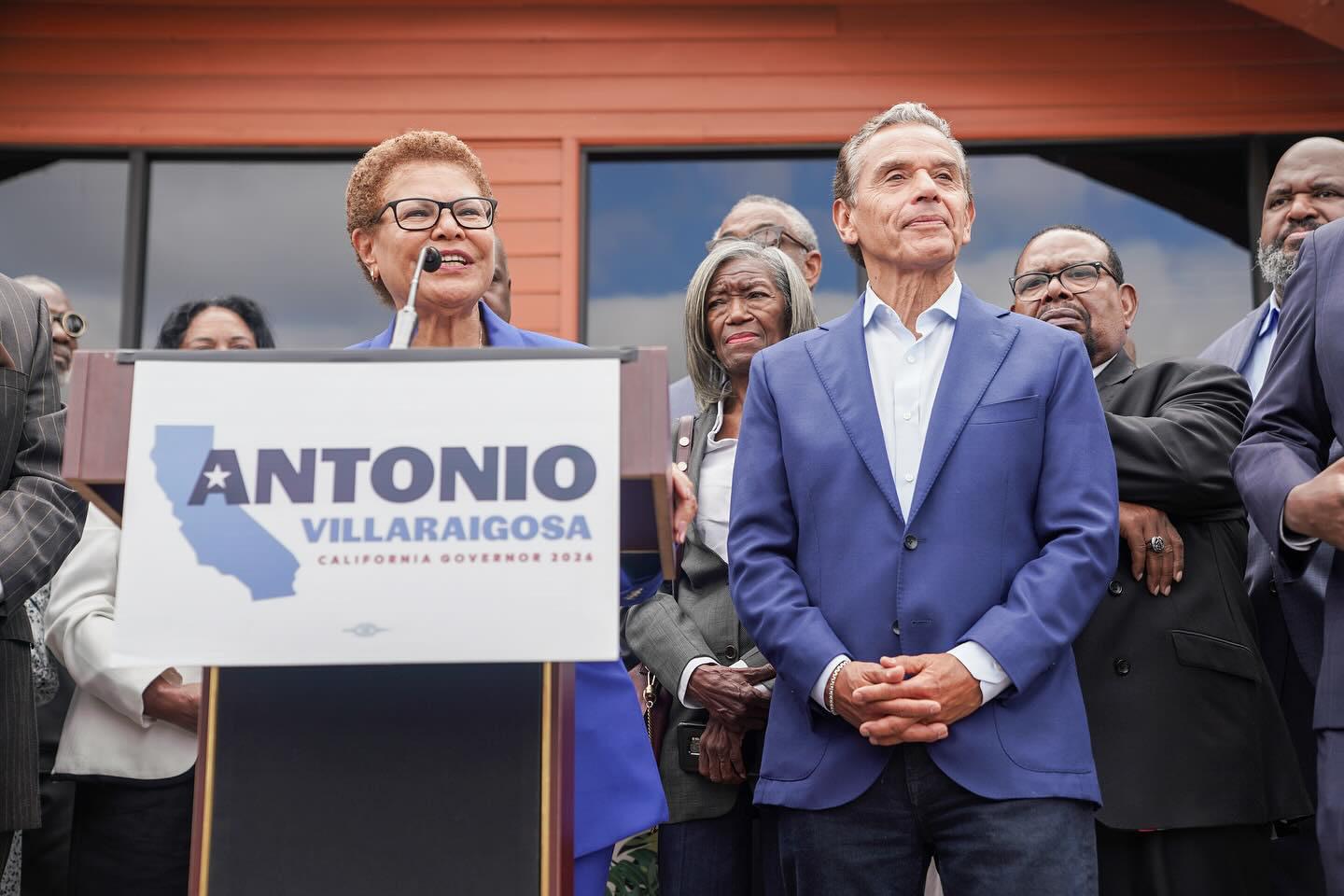
"But let's be clear. This isn't just about friendship. We aren't here today because we're all friends. We're here today because these times are difficult. We face big challenges in this state. We need a broad coalition of people in this state to take on those challenges. And I've said, 'To whom much is given, much is expected.' I'm here today and that's why I'm so proud to be here with all of you, I'm here today because there was as Civil Rights Act. I'm here today because there was a voting rights act. I'm here today because people fought to open up this country to us. ... But they didn't just say we want to open up the country. We want you to lead us and unite us right now in these tough times."
By City News Service
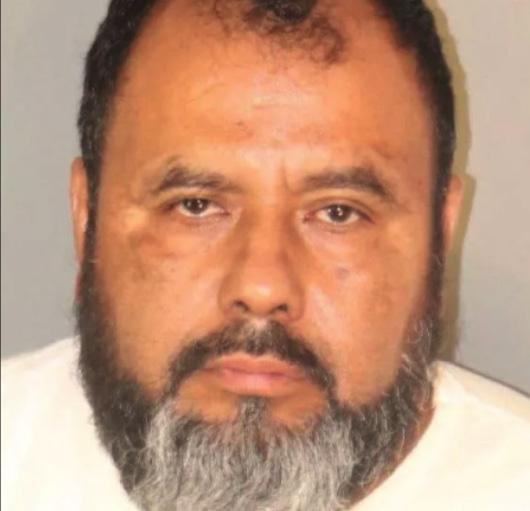
ASanta Ana pastor was convicted Monday of sexually assaulting three girls he met through churches in Riverside, Garden Grove and Santa Ana.
Carlos Ramirez Valdez, 61, was convicted of seven counts of lewd or lascivious acts with a minor younger than 14 and three counts of oral copulation or sexual penetration with a child 10 or younger, all felonies. Jurors also found true a sentencing enhancement for multiple victims.
Valdez was pastor of International Mission
Church USA at 505 S. Main St., police said. From 20142017, he was a member of Iglesia De Dios Ebenezer Church at 2020 W. Chestnut Ave. in Santa Ana, police said.
At that church he lured an 8-year-old girl into a van during a service and sexually assaulted her, police said. Valdez repeatedly assaulted the girl in the van over a period of three years, police said.
The girl told investigators she was molested in second through fifth grade, with the first attack happen-
ing when the defendant took her to a van in a parking lot of the church, police said in testimony at his preliminary hearing.
Valdez also molested the girl in his home in Riverside where he showed her an adult film, police said. He would lure her into the van saying he needed to comb her hair or required help with something and then touch the victim, police said.
Another girl said the defendant began molesting her at age 9 when he was a deacon at a church, police said.
A third victim said the defendant began molesting her when she was about 6 years old at a Santa Ana church, police said at the preliminary hearing. The sexual abuse continued as they resided together in Riverside, police said.
One of the victims told Riverside police in January 2020 she was molested by Valdez in 2017 when she was 8, police said. Also in January 2020, one of the victims went to Garden Grove police saying Valdez molested her in 2015, according to police.
When it comes to living longer, what you eat matters.
Emerging science suggests that certain foods may help you age better by targeting so-called zombie cells — damaged cells that don’t die, but linger in the body, releasing harmful chemicals that affect nearby healthy cells, explains longevity researcher Diogo Barardo, Ph.D.
As you get older, more of these zombie cells, also called senescent cells, build up in your body. This increase has been linked to diseases like diabetes, heart disease, and cancer.
The good news: Eating the right foods may help your body fight back. Here’s what experts recommend.
10 Foods that slow aging
Certain foods contain natural compounds called senolytics, which researchers believe may kill, reduce, or transform zombie cells. These compounds include:
- Fisetin
- Quercetin
- Resveratrol
- Omega-3 fatty acids
- Curcumin
- Piperlongumine
- Gingerenone A and 6-shogaol
- Sulforaphane
- Kaempferol
- Lipoic acid
Barardo points out that most studies investigating the anti-aging benefits of these senolytics use large doses of purified compounds — not food — so it’s hard to know exactly how eating these foods impacts aging. “Food has hundreds of other molecules,” he says, making it difficult to pinpoint which ones are doing the work.
Still, while no one food has been proven to kill zombie cells outright, eating a whole food diet rich in these compounds is a smart way to support healthy
By Jill Corleone for Hone Health via Stacker

aging, says registered dietitian Marjorie Nolan Cohn. Berries
According to Barardo, berries like strawberries contain compounds like ellagic acid, quercetin and fisetin.
Studies suggest quercetin, a natural antioxidant found in strawberries, apples, onions and broccoli, can rapidly reduce senescent cells. But there’s a catch: Most research uses much higher doses than you’d get from eating berries.
Even so, berries are packed with antioxidants, vitamins and fiber that benefit overall health.
Fatty fish
Salmon and mackerel are rich in omega-3 fatty acids, which support your heart, lungs, and immune system. But omega-3s may also combat zombie cells.
Studies show omega-3s may reduce the harmful chemicals released by zombie cells and slow their growth.
While most studies
looking at the senolytic activity of omega-3 fatty acids are from fish, flax seeds are another great source of omega-3s.
Turmeric and spinach
Combining turmeric and spinach may deliver a powerful anti-aging punch.
According to Barardo, turmeric contains curcumin and spinach provides lipoic acid — both compounds may help zombie cells behave more like healthy ones.
Dark chocolate
It’s not a fountain of youth, but dark chocolate may help zombie cells behave more like their younger, healthier counterparts. Early research shows that compounds called polyphenols in chocolate may slow aging and increase lifespan.
For the biggest benefits, choose dark chocolate with at least 70% cocoa.
Apples
An apple a day really may keep the doctor away. The popular fruit is rich in quercetin and fisetin —
compounds linked to killing zombie cells.
Ginger
Some of the compounds responsible for ginger’s unique flavor may help clear out zombie cells and prevent healthy cells from turning into them.
Tea
Studies in mice show that consumption of EGCG — a compound in green tea — may help reduce zombie cell production.
Barbardo also recommends chamomile tea, which contains apigenin, a potent compound that may be even more effective than EGCG in slowing zombie cell production.
Cruciferous vegetables
Vegetables like broccoli, kale, and spinach contain compounds like kaempferol and lipoic acid, which may help slow the production of zombie cells.
Preliminary studies show that kaempferol may also delay visible signs of aging by inhibiting the production of senescent cells and boosting collagen
production.
Long pepper (Piper longum)
Long pepper, a spice used in Southeast Asian cuisine, contains piperlongumine, a compound being studied as a possible anti-aging drug. Research indicates that it can selectively kill zombie cells.
The spice tastes similar to black pepper but with more heat and a hint of sweetness.
Other ways to kill zombie cells
Including foods rich in senolytic compounds isn’t the only strategy for combating zombie cells. Adopt these strategies to age better.
One small study found that the Mediterranean diet protects against zombie cell build-up better than a low-fat, high-carb diet. Cohn attributes its anti-aging benefits to its emphasis on healthy fats like fatty fish and olive oil, as well as other nutrientrich foods like leafy greens,
beans and whole grains. “Optimizing nutrients like omega-3 fatty acids, vitamin D, vitamin C, polyphenols and fiber will all support your longevity,” Cohn says.
Intermittent fasting may boost lifespan by reducing inflammation and supporting autophagy, your body’s natural cell recycling system, so cells function more efficiently. Fasting may also slow zombie cell production.
Clinical studies show that regular exercise reduces the number of zombie cells by inhibiting the genes that trigger them. Both aerobic and resistance training appear to be effective.
Exercise and intermittent fasting
Combining intermittent fasting with exercise may be the most effective strategy to target zombie cells.
In one study of 30 women, those who practiced intermittent fasting and exercised five times per week saw greater reductions in zombie cell activity than with either strategy alone.
More research is needed, but experts believe the combination of exercise and fasting led to the most significant reduction in mTOR, an enzyme linked to zombie cell production. This suggests intermittent fasting and exercise together may target one of the key factors in the aging process.
Still, the study was small and short-term. More research is needed to better understand how fasting and exercise lower senescent cell levels and improve longevity.
This story was produced by Hone Health and reviewed and distributed by Stacker. The article was copy edited from its original version.
NOTICE THAT UNCLAIMED FUNDS WILL BECOME THE PROPERTY OF THE CITY OF MONROVIA
NOTICE IS HEREBY GIVEN THAT the following sums of money, which the Treasurer of the City of Monrovia, County of Los Angeles, State of California, has attempted to pay out to the following individuals or entities, have remained unclaimed in the treasury of the City for a period of over three (3) years. Any remaining unclaimed property will become the property of the City of Monrovia on October 26, 2025, a date not less than forty-five days nor more than sixty days after the first date of publication of this notice in accordance with California Government Code Sections 50051-50055.
If you are the individual or entity named below, in order to make a claim for these funds, please contact the Administrative Services Department at 626-932-5515, or you may file a written claim with the City of Monrovia, Administrative Services Department, 415 S. Ivy Avenue, Monrovia, CA, 91016, which includes the claimant’s name, address, and telephone number, check number, and amount of claim, with supporting documentation as described on the form. The written claim form is available on the City’s website at https://monroviaca.gov/unclaimedproperty.
/s/ Alice D. Atkins, MMC, City Clerk
Publish Thursday September 4 and September 11, 2025
2/18/2009
9/13/2007
2/27/2014
12/30/2008
3/27/2008
9/13/2007
2/11/2010
11/6/2014
4/15/2010 GENERAL
PING ZHONG/RIVERSIDE RESEARCH 186684 $73.00 1/16/2014 GENERAL
& WAGNER CO 156729 $0.25 2/18/2009 GENERAL
8/27/2013
September 4, 11, 2025
Hablamos Español favor de hablar con Jeni Colon (626) 258-8626
TO: All Interested Parties
FROM: City of El Monte Planning Division
PROJECT LOCATION: 12137 Bonwood Road / APN: 8107-009017
APPLICATION: Minor Variance (MV) No. 04-2024
REQUEST: The Applicant is proposing a 750 square foot addition to an existing 1,036 square foot dwelling to create a second story. MV No. 04-2024 is requested to allow the reduction of the required second story setback (from 5 feet to 0 feet) from the first-floor wall line. The subject property is located within the R-1A (One-family Dwelling) zone. The Minor Variance request is made pursuant to Chapter 17.125 (Variance and Minor Variances) of the El Monte Municipal Code (EMMC).
PROPERTY OWNER: Wa K U & Jessica W Y Ho
APPLICANT: Michael Zhang
ENVIRONMENTAL DOCUMENTATION: Article 19. Categorical Exemptions – Class 1, Section 15301 (Existing Facilities) in accordance with the requirements of the California Environmental Quality Act (CEQA) of 1970 and the CEQA Guidelines, as amended.
PLACE OF HEARING: Pursuant to State Law, the Zoning Review Committee will hold a public hearing to receive testimony, orally and in writing, on the proposed project. The public hearing is scheduled for:
Date: Tuesday, September 23, 2025 (Special Meeting Date) Time: 6:00 p.m.
Place: El Monte City Hall City Hall East – Council Chambers 11333 Valley Boulevard El Monte, CA 91731
Members of the public wishing to observe the meeting may do so by attending the meeting in person at the City’s Council Chambers
Members of the public wishing to make public comment may do so in one of the following ways:
(1) In person by attending the public hearing at the date, time, and place specified above; or (2) E-mail – All interested parties can submit questions/comments in advance to the Planning Division’s general e-mail address: planning@elmonteca.gov. All questions/comments must be received by the Planning Division no later than 3:00 pm on September 23, 2025.
The staff report on this matter will be available on or about September 18, 2025, on the City of El Monte website, which may be accessed at https://www.ci.el-monte.ca.us/276/Zoning-Review-Comimittee or by e-mailing antoniaperez@elmonteca.gov.
Americans With Disabilities Act: In compliance with Section 202 of the Americans with Disabilities Act of 1990 (42 U.S.C. Sec. 12132) and the federal rules and regulations adopted in implementation thereof, the Agenda will be made available in appropriate alternative formats to persons with a disability. Should you need special assistance to participate in this meeting, please contact the City Clerk’s Office by calling (626) 580-2016. Notification 48 hours prior to the meeting will enable the City to make reasonable arrangements to ensure accessibility to this meeting.
Persons wishing to comment on the environmental documentation or proposed application may do so in in writing prior to the meeting date and must be received by 3:00 p.m., the day of the meeting. Public Comments of no more than 3-minutes shall be read into the record. Written comments shall be sent to Antonia Perez; El Monte City Hall West; 11333 Valley Boulevard; El Monte, CA 91731 or at antoniaperez@elmonteca.gov. If you challenge the decision of the City Zoning Review Committee, in court, you may be limited
to raising only those issues you or someone else raised at the public hearing described in this notice, or in written correspondence delivered to the City Zoning Review Committee at, or prior to, the public hearing.
For further information regarding this application please contact Antonia Perez at (626) 258-8660. Monday through Thursday, except legal holidays, between the hours of 7:00 a.m. and 5:30 p.m.
PUBLISHED DATE: Thursday, September 11, 2025, by Sandra Elias, City Planner
EL MONTE EXAMINER
CITY OF EL MONTE PLANNING COMMISSION NOTICE OF PUBLIC HEARING
Hablamos Español favor de hablar con Jeni Colon (626) 258-8626
TO: All Interested Parties
FROM: City of El Monte Planning Division
PROJECT LOCATION: 12432 Valley Boulevard / APNs: 8109-013014 and 8109-013-015
APPLICATION: Design Review (DR) No. DR 07-23 and Conditional Use Permit (CUP) No. 12-23
REQUEST: The original project involved demolition of two (2) existing commercial buildings and the development of a 58,955 square foot, four-story hotel with a subterranean level parking garage on an approximately 1.39-acre site. The project site consisted of merger of two parcels and the vacation of Rumford Avenue, a dead end street along the westerly side of the project site, to allow the development of a four (4) story, 52.5-foot tall hotel with 97 guest rooms, a total of 97 parking spaces, and amenity spaces for use by hotel guests and employees including a lobby, office, swimming pool, gym, and a small eating area (1,285 sf).
The Applicant now requests DR No. 07-23 and CUP No. 12-23 to revise the original project by no longer seeking the vacation and acquisition of Rumford Avenue and, thereby, reducing the overall allowable size and scale of the hotel development on an approximately 1.045-acre site in the C-3 zoning district. The proposed project is to allow the development and operation of a 45,483-square-foot, three (3) story, 42.5-foot-tall hotel with 90 guest rooms, a total of 90 on-site parking spaces located in the subterranean garage and atgrade, and amenity spaces for use by hotel guests and employees including a lobby, office, swimming pool, gym, and a small eating area.
PROPERTY OWNER: Ximin Zeng
Welcome Investment LLC
8932 E. Mission Drive #107
Rosemead, CA 91770
APPLICANT: Moises Barroso
JWDA-MS Architects
8932 E. Mission Drive #101
Rosemead, CA 91770
ENVIRONMENTAL DOCUMENTATION: An Initial Study/Mitigated Negative Declaration (IS/MND) was adopted for the original project in June 2018. An Addendum to the adopted IS/MND was prepared for the revised project. The Addendum substantiates that the analysis presented in the adopted IS/MND is sufficient to satisfy the environmental analysis for the revised project, and that with incorporation of the mitigation measures that were previously identified, the revised project would not result in any significant new, additional, substantially different, or substantially increased environmental impacts than were previously evaluated. The Addendum demonstrates through its impact analysis that the revised project does not require any major revisions to the adopted IS/MND and would not result in conditions that require preparation of additional environmental analysis. None of the conditions described in the State California Environmental Quality Act (CEQA) Guidelines Sections 15162 and 15164 calling for the preparation of a subsequent environmental document have occurred; thus, no further environmental review is required under CEQA.
The Addendum, adopted IS/MND, and supporting technical studies are available for public review at the Planning Division’s public counter at El Monte City Hall West.
PLACE OF HEARING: Pursuant to State Law, the Planning Commission will hold a public hearing to receive testimony, orally and in writing, on the proposed project. The public hearing is scheduled for:
Date: Tuesday, September 23, 2025
(Special Meeting Date)
Time: 7:00 p.m.
Place: El Monte City Hall City Hall East – Council Chambers 11333 Valley Boulevard El Monte, CA 91731
Members of the public wishing to observe the meeting may do
so in one of the following ways:
(1) Attend the meeting in person at the City’s Council Chambers.
(2) Turn your TV to Channel 3.
(3) City’s website at http://www.elmonteca.gov/378/Council-Meeting-Videos.
Members of the public wishing to make public comment may do so in one of the following ways: (1) In person at the City’s Council Chambers. (2) E-mail – All interested parties can submit questions/comments in advance to the Planning Division’s general e-mail address: planning@elmonteca.gov. All questions/comments must be received by the Planning Division no later than 3:00 pm on September 23, 2025.
The staff report on this matter will be available on or about September 18, 2025, on the City of El Monte website, which may be accessed at https://www.ci.el-monte.ca.us/AgendaCenter/PlanningCommission-2 or by e-mailing cminniti@elmonteca.gov.
Americans With Disabilities Act : In compliance with Section 202 of the Americans with Disabilities Act of 1990 (42 U.S.C. Sec. 12132) and the federal rules and regulations adopted in implementation thereof, the Agenda will be made available in appropriate alternative formats to persons with a disability. Should you need special assistance to participate in this meeting, please contact the City Clerk’s Office by calling (626) 580-2016. Notification 48 hours prior to the meeting will enable the City to make reasonable arrangements to ensure accessibility to this meeting.
Persons wishing to comment on the environmental documentation or proposed application may do so in in writing prior to the meeting date and must be received by 3:00 p.m., the day of the meeting. Public Comments of no more than 3-minutes shall be read into the record. Written comments shall be sent to Chris Minniti; El Monte City Hall West; 11333 Valley Boulevard; El Monte, CA 91731 or cminniti@elmonteca.gov. If you challenge the decision of the City Planning Commission, in court, you may be limited to raising only those issues you or someone else raised at the public hearing described in this notice, or in written correspondence delivered to the City Planning Commission at, or prior to, the public hearing.
For further information regarding this application please contact Chris Minniti at (626) 580-2152. Monday through Thursday, except legal holidays, between the hours of 7:00 a.m. and 5:30 p.m.
PUBLISHED DATE: Thursday, September 11, 2025, by Sandra Elias, Planning Commission Secretary EL MONTE EXAMINER
Public Notice: City of San Gabriel Notice of Public Hearing Before the City Council
You are invited to participate in a public hearing before the San Gabriel City Council. You will have an opportunity to present your opinion regarding this item at the meeting or in writing prior to the meeting. Please submit all written comments to the City Clerk Department, in person or electronically using the online public comment form at https://www.sangabrielcity.com/ PublicComment by the hearing date to be considered by the City Council. The meeting will be broadcast on the City of San Gabriel’s YouTube channel: https://www.youtube.com/CityofSanGabriel
Hearing Date: Tuesday, October 7, 2025 TIME: 6:30 p.m. Location Of Hearing: Council Chambers located on the second floor of San Gabriel City Hall (425 South Mission Drive, San Gabriel, CA 91776) The meeting can be viewed live at: https://www.youtube.com/CityofSanGabriel
Project Address: 220 S. San Gabriel Boulevard (APNS: 5373-001001, 5373-001-002, 5373-001-003, 5373-001-004, 5373-001-005, 5373-001-007, 5373-001-008, 5373-001-013, 5373-001-014, and 5373-002-026)
Project Description: The City of San Gabriel is considering an ordinance of the City Council of the City of San Gabriel extending a Development Agreement for Planning Case No. PL-16-162, a planned development and development agreement, and tentative tract map No. 80292 for a mixed-use project at 220 S. San Gabriel Boulevard via adoption of first amendment to the Development Agreement. Questions: For additional information or to review the application, please contact Samantha Tewasart, Acting Community Development Director at (626) 308-2806 ext. 4623 or stewasart@sgch.org Environmental Review: The Mitigated Negative Declaration adopted in conjunction with the Project remains valid and in effect and continues to be the proper and legal environmental document for the Project.
Per Government Code Section 65009, if you challenge the nature of the proposed action in court, you may be limited to only raising the issue you or someone else raised at the public hearing described in this notice or in written correspondence delivered to the City Clerk prior to the public hearing.
By Samantha Tewasart, Acting Community Development Director
Publish September 11, 2025
SAN
Public Notice: City of San Gabriel Notice of Public Hearing Before the Design Review Commission
You are invited to participate in a public hearing before the City’s Design Review Commission. Members of the public may submit public comments by U.S. Mail addressed to Community Development Department, Attn: Public Hearing Comment, 425 S. Mission Drive, San Gabriel, CA 91776, which must be received by the hearing date, or electronically using the online public comment form at http://sangabrielcity.com/DRComment, by 5:00 p.m. of the hearing date to be considered by the Design Review Commission. The meeting will be broadcast on the City of San Gabriel’s YouTube channel at the link shown below:
Hearing Date: Monday, September 22, 2025 TIME: 6:30 p.m.
Location Of Hearing: Council Chambers located on the second floor of San Gabriel City Hall (425 South Mission Drive, San Gabriel, CA 91776) The meeting can be viewed live at: https://www.youtube.com/CityofSanGabriel
Project Address: Assessor Parcel Number: 5364-025-007
Project Description: The application, Project No. SPR24-038 is for a Site Plan Review for the approval of a new two-story, single family residence with an attached three-car garage. The project site is located in the R-1 Zone (Single Family Residence).
Questions: For additional information or to review the application, please contact Christine Song, Senior Planner at (626) 308-2806 ext. 4625 or csong@sgch.org.
Environmental Review: The project was reviewed for compliance with the California Environmental Quality Act (CEQA). This project is exempt from the requirements of CEQA, per Guidelines Section 15303(a), Class 3 (New Construction or Conversion of Small Structures).
Per Government Code Section 65009, if you challenge the nature of the proposed action in court, you may be limited to only raising those issues you or someone else raised at the public hearing described in this notice, or in written correspondence delivered to the Planning Division at or prior to the public hearing.
SAN GABRIEL DESIGN REVIEW COMMISSION By Samantha Tewasart, Acting Community Development Director
Publish September 11, 2025
SAN GABRIEL SUN
NOTICE OF PETITION TO ADMINISTER ESTATE OF: DAVID DEH-PEI YOUNG CASE NO. 25STPB09294
To all heirs, beneficiaries, creditors, contingent creditors, and persons who may otherwise be interested in the WILL or estate, or both of DAVID DEH-PEI YOUNG.
A PETITION FOR PROBATE has been filed by YVONNE YOUNG in the Superior Court of California, County of LOS ANGELES.
THE PETITION FOR PROBATE requests that YVONNE YOUNG be appointed as personal representative to administer the estate of the decedent.
THE PETITION requests authority to administer the estate under the Independent Administration of Estates Act. (This authority will allow the personal representative to take many actions without obtaining court approval. Before taking certain very important actions, however, the personal representative will be required to give notice to interested persons unless they have waived notice or consented to the proposed action.)
The independent administration authority will be granted unless an interested person files an objection to the petition and shows good cause why the court should not grant the authority.
A HEARING on the petition will be held in this court as follows: 09/19/25 at 8:30AM in Dept. 5 located at 111 N. HILL ST., LOS ANGELES, CA 90012
IF YOU OBJECT to the granting of the petition, you should appear at the hearing and state your objections or file written objections with the court before the hearing. Your appearance may be in person or by your attorney. IF YOU ARE A CREDITOR or a contingent creditor of the decedent, you must file your claim with the court and mail a copy to the personal representative appointed by the court within the later of either (1) four months from the date of first issu-
ance of letters to a general personal representative, as defined in section 58(b) of the California Probate Code, or (2) 60 days from the date of mailing or personal delivery to you of a notice under section 9052 of the California Probate Code. Other California statutes and legal authority may affect your rights as a creditor. You may want to consult with an attorney knowledgeable in California law. YOU MAY EXAMINE the file kept by the court. If you are a person interested in the estate, you may file with the court a Request for Special Notice (form DE-154) of the filing of an inventory and appraisal of estate assets or of any petition or account as provided in Probate Code section 1250. A Request for Special Notice form is available from the court clerk. Attorney for Petitioner PETA-GAY GORDON, ESQ. - SBN 238995; MICHAEL J. SU, ESQ.SBN 330801, OLDMAN, APANIUS, GORDON & ROSENBLAT, LLP 16133 VENTURA BLVD., PENTHOUSE ENCINO CA 91436
Telephone (818) 986-8080 9/1, 9/4, 9/11/25 CNS-3963365# ARCADIA WEEKLY
NOTICE OF PETITION TO ADMINISTER ESTATE OF JERRY MARTIN BASURA aka JERRY M. BASURA aka JERRY BASURA Case No. 25STPB09911
To all heirs, beneficiaries, cred-itors, contingent creditors, and persons who may otherwise be interested in the will or estate, or both, of JERRY MARTIN BASURA aka JERRY M. BASURA aka JERRY BASURA A PETITION FOR PROBATE has been filed by Matthew Basura and Maureen Kochan in the Superior Court of California, County of LOS ANGELES. THE PETITION FOR PROBATE requests that Matthew Basura and Maureen Kochan be appointed
By City News Service
AnOrangeCounty
Superior Court judge Friday ruled in favor of a challenge to Huntington Beach's library restrictions on lending materials to children.
Judge Lindsey E. Martinez rejected the city's demurrer motion to dismiss the legal challengefromAlianza Translatinx,anonprofit groupfortransgender, gender nonconforming and intersex individuals focusing on the Latino community, and a 15-year-old boy and 16-year-old girl who attend school in Huntington Beach as well as the American Civil Liberties Union Foundation of Southern California and the First Amendment Coalition.
The lawsuit argued the city's restrictions, which became moot due to voters approving a ballot measure in June, violated the state's Freedom to Read Act.
The city's attorneys argued that the legal challenge was not ripe because the city had not implemented the restrictions. But Martinez noted legal precedent prohibits that sort of claim and that the plaintiffs "have indeed alleged facts showing the city began implementing" the restrictions.
Martinez also knocked down the city's arguments that it is a charter city and therefore has authority to adopt ordinances in conflict with state law. In addition, the judge sidestepped a new claim that the state law violates the 14th Amendment rights of parents to make decisions regarding their children.
"This is new argument in the reply which the court declines to consider," Martinez wrote in the ruling.
City officials did not immediately respond to requests for comment.
"Even if the court were to consider the argument, the argument lacks merits."
Former UCLA and Minnesota Vikings punter Chris Kluwe, who was arrested earlier this year protesting a plaque the city approved at the city library, which prompted his run for state Assembly, praised the ruling.
"Libraries are the backbone of a lot of American social institutions," Kluwe told City News Service. "It's important we protect them and keep them apolitical and free from partisan influence."
Kluwe noted that the June ballot measure "just goes to show that the voters know the law on this one better than our city council members do."
Erin Spivey, another plaintiff, said in a statement, "The freedom to read is one of the fundamental pillars of democracy, and
The city had established a 21-member review board to go over what books and materials would be restricted from lending. Any material containing "sexual content" would be placed in
the adult section and require a parent to check it out.
"While it is true minors would be able to access the materials with their parents' consent, the moving of materials to the adult section and the require-

ment of obtaining parental consent to view those materials itself appears to be an improper limitation on minors' access to library materials in violation of the Freedom to Read Act," Martinez wrote.
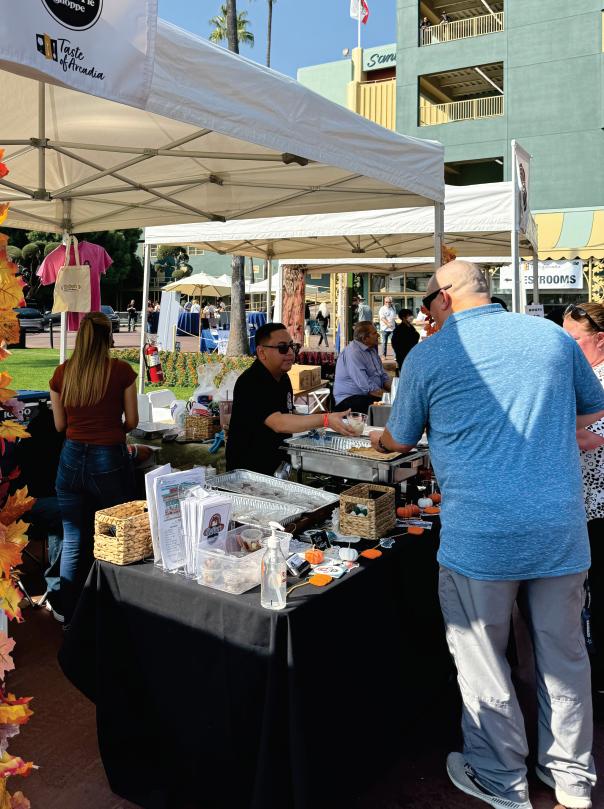



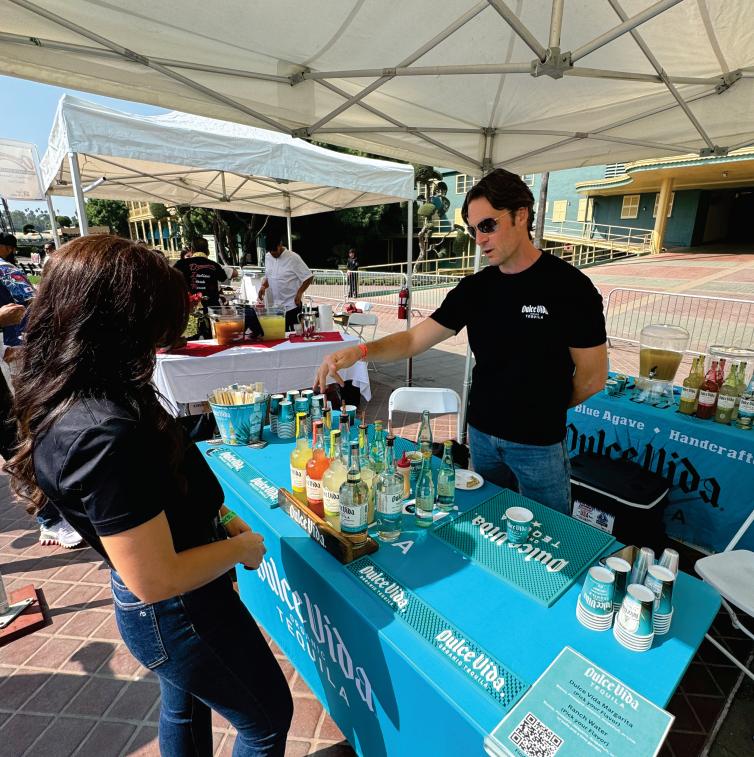

By City News Service
The Santa Monica City Council is expected Tuesday to consider declaring a fiscal emergency in the city — with officials saying the move is necessary to address financial strains from a reduction in tourism tax revenue and an increase in liability costs.
On Tuesday's agenda, council members are scheduled to discuss and vote on a resolution to declare the fiscal emergency. A report noted that the resolution would provide Santa Monica with an official document that would better position the city for future grant funding and interactions with regulatory and governmental entities.
In June, the City Council approved the budget for the 2025-26 fiscal year with adjusted expenditures estimated at $484.3 million and $473.5 million in expected revenue. Financial fore-
casts anticipate the city will continue to operate at a deficit for several years.
Part of the financial strain stems from impacts of the coronavirus pandemic, which resulted in a sudden 26.8% decline in general fund revenue for the 2020-21 fiscal year, city officials said. The city reduced spending by 23.9%, and that decision also resulted in 299 permanent and 122 temporary positions being eliminated.
City services have not been restored to the level before COVID-19.
An increase in liabilities is also exacerbating the city's financial issues.
In recent years, state legislators approved new legislation that effectively eliminated the statute of limitations for sexual abuse claims.
Santa Monica has paid more than $229 million in
settlements related to sexual abuse claims against Eric Uller, a former city police dispatcher. The city is expected to face an additional 180 claimants.
Uller worked with boys and girls at a police nonprofit's after-school program.
"The settlements have been funded largely by reserves in the general fund and by borrowing more than $52 million from various city funds," a report from the city reads. "Currently, the city faces additional abuse claims related to the former employee from over 180 claimants that are seeking several million dollars for their alleged damages, the payment of which will be due in full upon order of the court/ and or approval of the settlement."
City officials also cite tariffs, deportations, tax cuts and deregulation as additional fiscal challenges.
Comprehensive, high-quality cardiovascular care is more convenient than ever. At USC Arcadia Hospital, you’ll have access to our top-rated heart and vascular team, as well as the latest minimally-invasive surgical options. Better long-term cardiovascular care leads to better outcomes.
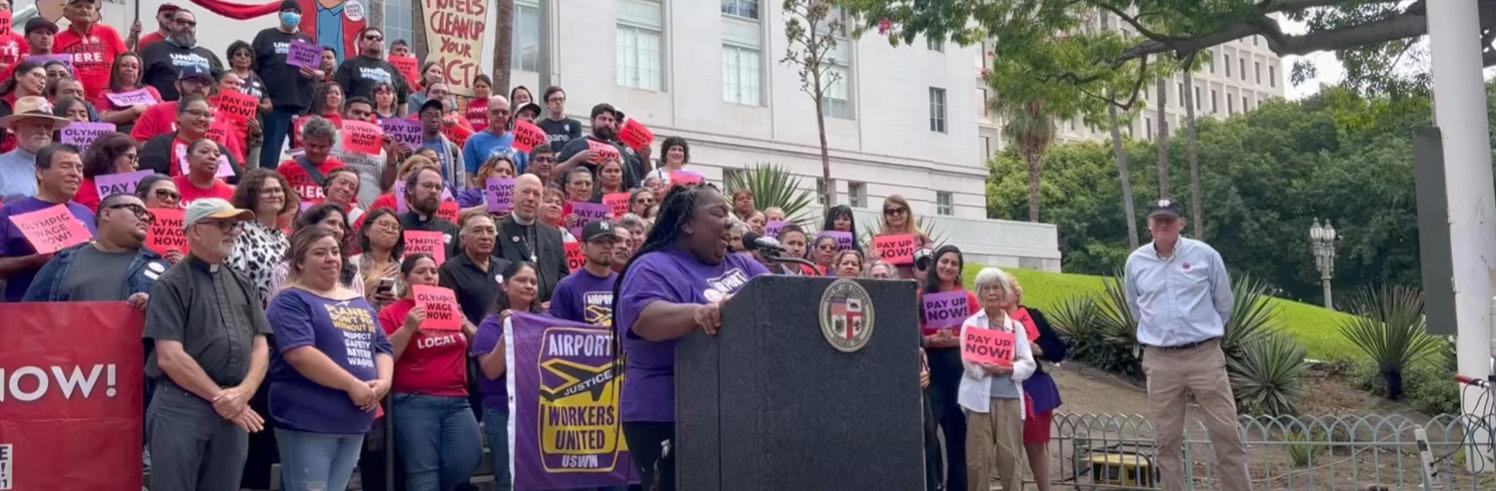
The opposition to the referendum had a resounding failure rate on their own signatures, but somehow managed to also have a sky-high match rate for our signers. That has never been seen before, despite over 100,000 positive signatures," the alliance said in a statement.
"This mismatch suggests foul play -- pure and simple," the statement continued.
Business leaders contended that the number of signature withdrawal requests, a total of 117,607, did not align with the total number of signatures that were withdrawn, or about 17,082, according to data from the county.
Josue Marcus, a spokesman for the L.A. City Clerk, told City News Service that a total of 17,082 were actually withdrawn but the remaining requests were not considered valid.
The alliance sent a letter to the District Attorney Nathan Hochman two weeks ago with "evidence of criminal conduct with respect to the signature withdrawal effort." They also called for an investigation into the matter.
A representative for Hochman's office did not immediately respond to a request for comment.
"The business community will stand strong in fighting back and ensuring Los Angeles can return to being
an affordable city to work and live in," the alliance said in a statement. "The initiative process, with a lower threshold for tax reductions and eliminations, has opened up many avenues by which we can accomplish those goals, in addition to other initiatives to continue to realign the interest of City Hall with everyday Angelenos." Additionally, the group criticized the City Clerk's office for failing to meet its charter-mandated 30-day deadline to release the results of the signature-gathering, which they described as reflecting a "broader pattern of troubling opacity that has plagued the entire verification process from the start."


the office of the County Clerk. A new fictitious business name statement must be filed prior to that date. The filing of this statement does not of itself authorize the use in this state of a fictitious business name in violation of the rights of another under federal, state or common law
(See Section 14400 et seq., Business and Professional Code).
Pub. Monrovia Weekly 08/07/2025, 08/14/2025, 08/21/2025, 08/28/2025
FICTITIOUS BUSINESS NAME STATEMENT FILE NO. 2025143568
NEW FILING.
The following person(s) is (are) doing business as MOTHER OF MERCY HOMES, 1615 CHESTNUT HILL DRIVE, WALNUT, CA 91789. This business is conducted by a corporation. Registrant has not yet begun to transact business under the fictitious business name or names listed herein. Signed: MOTHER OF MERCY HOMES, INC. (CA-3555530, 1615 CHESTNUT HILL DRIVE, WALNUT, CA 91789; LYDIA SEBASTIAN, CEO. The statement was filed with the County Clerk of Los Angeles on July 15, 2025.
NOTICE: This fictitious business name statement expires five years from the date it was filed in the office of the County Clerk. A new fictitious business name statement must be filed prior to that date. The filing of this statement does not of itself authorize the use in this state of a fictitious business name in violation of the rights of another under federal, state or common law (See Section 14400 et seq., Business and Professional Code).
Pub. Monrovia Weekly 08/07/2025, 08/14/2025, 08/21/2025, 08/28/2025
FICTITIOUS BUSINESS NAME STATEMENT FILE NO. 2025 145769 NEW FILING.
The following person(s) is (are) doing business as Crippen Mortuary, 2900 Honolulu Ave, La Crescenta, CA 91214. This business is conducted by a individual. Registrant commenced to transact business under the fictitious business name or names listed herein on July 2001. Signed: Robert Leslie Hansen, 2900 Honolulu Ave, La Crescenta, CA 91214 (Owner). The statement was filed with the County Clerk of Los Angeles on July 17, 2025. NOTICE: This fictitious business name statement expires five years from the date it was filed in the office of the County Clerk. A new fictitious business name statement must be filed prior to that date. The filing of this statement does not of itself authorize the use in this state of a fictitious business name in violation of the rights of another under federal, state or common law (See Section 14400 et seq., Business and Professional Code).
Pub. Monrovia Weekly 07/24/2025, 07/31/2025, 08/07/2025, 08/14/2025 sc FICTITIOUS BUSINESS NAME STATEMENT FILE NO. 2025 145777 NEW FILING.
The following person(s) is (are) doing business as Politesse, 674 Manzanita Ave, Sierra Madre, CA 91024. This business is conducted by a individual. Registrant commenced to transact business under the fictitious business name or names listed herein on September 2016. Signed: Erika Liv Erickson Pearson, 674 Manzanita Ave, Sierra Madre, CA 91024 (Owner). The statement was filed with the County Clerk of Los Angeles on July 17, 2025. NOTICE: This fictitious business name statement expires five years from the date it was filed in the office of the County Clerk. A new fictitious business name statement must be filed prior to that date. The filing of this statement does not of itself authorize the use in this state of a fictitious business name in violation of the rights of another under federal, state or common law (See Section 14400 et seq., Business and Professional Code).
Pub. Monrovia Weekly 07/24/2025, 07/31/2025, 08/07/2025, 08/14/2025 sc
FICTITIOUS BUSINESS NAME STATEMENT FILE NO. 2025148599 NEW FILING. The following person(s) is (are) doing business as All-Payments, 826 S 1st St, Alhambra, CA 91801. This business is conducted by a individual. Registrant has not yet begun to transact business under the fictitious business name or names listed herein. Signed: Richard Ayala, 826 S 1st St, Alhambra, CA 91801 (Owner). The statement was filed with the County Clerk of Alhambra on July 21, 2025. NOTICE: This fictitious business name statement expires five years from the date it was filed in the office of the County Clerk. A new fictitious business name statement must be filed prior to that date. The filing of this statement does not of itself authorize the use in this state of a fictitious business name in violation of the rights of another under federal, state or common law (See Section 14400 et seq., Business and Professional Code).
Pub. Monrovia Weekly 07/24/2025, 07/31/2025, 08/07/2025, 08/14/2025
FICTITIOUS BUSINESS NAME STATEMENT FILE NO. 2025147754 NEW FILING. The following person(s) is (are) doing business as Academy Handyman, 14755 Burbank Blvd Apt 200, Van Nuys, CA 91411. This business is conducted by a corporation. Registrant commenced to transact business under the fictitious business name or names listed herein on July 2023. Signed: DP Lead Generation (CA-5724686, 14755 Burbank Blvd Apt 200, Van Nuys, CA 91411; Dzmitry Prokharau, President. The statement was filed with the County Clerk of Los Angeles on July 21, 2025. NOTICE: This fictitious business name statement expires five years from the date it was filed in the office of the County Clerk. A new fictitious business name statement must be filed prior to that date. The filing of this statement does not of itself authorize the use in this state of a fictitious business name in violation of the rights of another under federal, state or common law (See Section 14400 et seq., Business and Professional Code). Pub. Monrovia Weekly 08/21/2025, 08/28/2025, 09/04/2025, 09/11/2025
FICTITIOUS BUSINESS NAME STATEMENT FILE NO. 2025164047
NEW FILING.
The following person(s) is (are) doing business as (1). Solvo (2). Solvo Financial , 15007 Califa St, Sherman Oaks, CA 91411. This business is conducted by a limited liability company (llc). Registrant has not yet begun to transact business under the fictitious business name or names listed herein. Signed: Solvo Services LLC (CA-B20250208421, 15007 Califa St, Sherman Oaks, CA 91411; Dzmitry Prokharau, President. The statement was filed with the County Clerk of Los Angeles on August 11, 2025. NOTICE: This fictitious business name statement expires five years from the date it was filed in the office of the County Clerk. A new fictitious business name statement must be filed prior to that date. The filing of this statement does not of itself authorize the use in this state of a fictitious business name in violation of the rights of another under federal, state or common law (See Section 14400 et seq., Business and Professional Code). Pub. Monrovia Weekly 08/21/2025, 08/28/2025, 09/04/2025, 09/11/2025
FICTITIOUS BUSINESS NAME STATEMENT FILE NO. 2025171364 NEW FILING.
The following person(s) is (are) doing business as Castris LLC, 9112 West Blvd, Pico Rivera, CA 90660. This business is conducted by a limited liability company (llc). Registrant commenced to transact business under the fictitious business name or names listed herein on August 2025. Signed: Amplify RJ LLC (CA202016710521, 9112 West Blvd, Pico Rivera, CA 90660; David Ryan Castro-Harris, CEO. The statement was filed with the County Clerk of Los Angeles on August 19, 2025. NOTICE: This fictitious business name statement expires five years from the date it was filed in the office of the County Clerk. A new fictitious business name statement must be filed prior to that date. The filing of this statement does not of itself authorize the use in this state of a fictitious business name in violation of the rights of another under federal, state or common law (See Section 14400 et seq., Business and Professional Code). Pub. Monrovia Weekly 08/21/2025, 08/28/2025, 09/04/2025, 09/11/2025
FICTITIOUS BUSINESS NAME STATEMENT FILE NO. 2025170039 NEW FILING.
The following person(s) is (are) doing business as On Lock, 612 N Valley St, Burbank, CA 91505. This business is conducted by a individual. Registrant has not yet begun to transact business under the fictitious business name or names listed herein. Signed: John Robert Teresi, 612 N Valley St, Burbank, CA 91505 (Owner). The statement was filed with the County Clerk of Los Angeles on August 18, 2025. NOTICE: This fictitious business name statement expires five years from the date it was filed in the office of the County Clerk. A new fictitious business name statement must be filed prior to that date. The filing of this statement does not of itself authorize the use in this state of a fictitious business name in violation of the rights of another under federal, state or common law (See Section 14400 et seq., Business and Professional Code). Pub. Monrovia Weekly 08/21/2025, 08/28/2025, 09/04/2025, 09/11/2025
FICTITIOUS BUSINESS NAME STATEMENT FILE NO. 2025155175 NEW FILING.
The following person(s) is (are) doing business as Blue Vista Arborscapes, 15930 Hart st, VAN NUYS, CA 91406. This business is conducted by a individual. Registrant has not yet begun to transact business under the fictitious business name
or names listed herein. Signed: DANIEL GONZALEZ, 15930 Hart st, VAN NUYS, CA 91406 (Owner). The statement was filed with the County Clerk of Los Angeles on July 30, 2025. NOTICE: This fictitious business name statement expires five years from the date it was filed in the office of the County Clerk. A new fictitious business name statement must be filed prior to that date. The filing of this statement does not of itself authorize the use in this state of a fictitious business name in violation of the rights of another under federal, state or common law (See Section 14400 et seq., Business and Professional Code). Pub. Monrovia Weekly 08/21/2025, 08/28/2025, 09/04/2025, 09/11/2025
FICTITIOUS BUSINESS NAME STATEMENT FILE NO. 2025168368
NEW FILING.
The following person(s) is (are) doing business as Vibe roofing, 5830 Las Virgenes Rd 492, Calabasas, CA 91302. This business is conducted by a corporation. Registrant commenced to transact business under the fictitious business name or names listed herein on August 2025. Signed: Vibe Remodeling (CA5139408, 5830 Las Virgenes Rd 492, Calabasas, CA 91302; tom merlin, President. The statement was filed with the County Clerk of Los Angeles on August 14, 2025. NOTICE: This fictitious business name statement expires five years from the date it was filed in the office of the County Clerk. A new fictitious business name statement must be filed prior to that date. The filing of this statement does not of itself authorize the use in this state of a fictitious business name in violation of the rights of another under federal, state or common law (See Section 14400 et seq., Business and Professional Code).
Pub. Monrovia Weekly 08/21/2025, 08/28/2025, 09/04/2025, 09/11/2025
FICTITIOUS BUSINESS NAME STATEMENT FILE NO. 2025169909
NEW FILING.
The following person(s) is (are) doing business as Custom Lights + Shades, 7683 San Fernando Rd, Burbank, CA 91505. This business is conducted by a corporation. Registrant commenced to transact business under the fictitious business name or names listed herein on May 2020. Signed: Custom Integrated Solutions (CA-C3845883, 7683 San Fernando Rd, Burbank, CA 91505; William Marsh, President. The statement was filed with the County Clerk of Los Angeles on August 18, 2025. NOTICE: This fictitious business name statement expires five years from the date it was filed in the office of the County Clerk. A new fictitious business name statement must be filed prior to that date. The filing of this statement does not of itself authorize the use in this state of a fictitious business name in violation of the rights of another under federal, state or common law (See Section 14400 et seq., Business and Professional Code).
Pub. Monrovia Weekly 08/21/2025, 08/28/2025, 09/04/2025, 09/11/2025
FICTITIOUS BUSINESS NAME STATEMENT FILE NO. 2025166723 NEW FILING.
The following person(s) is (are) doing business as (1). Baseline (2). Baseline Bears , 332 S Rosemead Blvd, Pasadena, CA 91107. This business is conducted by a corporation. Registrant commenced to transact business under the fictitious business name or names listed herein on August 2025. Signed: PCM LA (CA-6008385, 332 S Rosemead Blvd, Pasadena, CA 91107; Raymond Chen, Secretary. The statement was filed with the County Clerk of Los Angeles on August 13, 2025. NOTICE: This fictitious business name statement expires five years from the date it was filed in the office of the County Clerk. A new fictitious business name statement must be filed prior to that date. The filing of this statement does not of itself authorize the use in this state of a fictitious business name in violation of the rights of another under federal, state or common law (See Section 14400 et seq., Business and Professional Code).
Pub. Monrovia Weekly 08/21/2025, 08/28/2025, 09/04/2025, 09/11/2025
FICTITIOUS BUSINESS NAME STATEMENT FILE NO. 2025162154 NEW FILING.
The following person(s) is (are) doing business as (1). Visualtek (2). Eventsprovision , 20058 Roscoe Blvd 228, Woodland Hills, CA 91364. This business is conducted by a corporation. Registrant commenced to transact business under the fictitious business name or names listed herein on August 2025. Signed: Ryan Pictures (CA-3640556, 20058 Roscoe Blvd 228, Woodland Hills, CA 91364; Ryan Kayhan, President. The statement was filed with the County Clerk of Los Angeles on August 7, 2025. NOTICE: This fictitious business name statement expires five years from the date it was filed in the office of the County Clerk. A new
fictitious business name statement must be filed prior to that date. The filing of this statement does not of itself authorize the use in this state of a fictitious business name in violation of the rights of another under federal, state or common law (See Section 14400 et seq., Business and Professional Code).
Pub. Monrovia Weekly 08/21/2025, 08/28/2025, 09/04/2025, 09/11/2025
FICTITIOUS BUSINESS NAME STATEMENT FILE NO. 2025170457 NEW FILING.
The following person(s) is (are) doing business as Pickle Breath Productions, 1360 S Figueroa St Apt 319, Los Angeles, CA 90015. This business is conducted by a limited liability company (llc). Registrant has not yet begun to transact business under the fictitious business name or names listed herein. Signed: D. Jones-Wesley, LLC (CAB20250038178, 1360 S Figueroa St Apt 319, Los Angeles, CA 90015; Danielle Wesley, President. The statement was filed with the County Clerk of Los Angeles on August 18, 2025. NOTICE: This fictitious business name statement expires five years from the date it was filed in the office of the County Clerk. A new fictitious business name statement must be filed prior to that date. The filing of this statement does not of itself authorize the use in this state of a fictitious business name in violation of the rights of another under federal, state or common law (See Section 14400 et seq., Business and Professional Code).
Pub. Monrovia Weekly 08/21/2025, 08/28/2025, 09/04/2025, 09/11/2025
FICTITIOUS BUSINESS NAME STATEMENT FILE NO. 2025169924
NEW FILING.
The following person(s) is (are) doing business as Grace Tang MPH Consulting Services, 100 S Santa Fe Ave 538, Los Angeles, CA 90013. This business is conducted by a individual. Registrant commenced to transact business under the fictitious business name or names listed herein on August 2025. Signed: Grace Tang, 100 S Santa Fe Ave 538, Los Angeles, CA 90013 (Owner). The statement was filed with the County Clerk of Los Angeles on August 18, 2025. NOTICE: This fictitious business name statement expires five years from the date it was filed in the office of the County Clerk. A new fictitious business name statement must be filed prior to that date. The filing of this statement does not of itself authorize the use in this state of a fictitious business name in violation of the rights of another under federal, state or common law (See Section 14400 et seq., Business and Professional Code).
Pub. Monrovia Weekly 08/21/2025, 08/28/2025, 09/04/2025, 09/11/2025
FICTITIOUS BUSINESS NAME STATEMENT FILE NO. 2025170087
NEW FILING.
The following person(s) is (are) doing business as (1). MiltonLaw (2). Probate.Law , 2626 Foothill Blvd. Suite 200, La CrescentaMontrose, CA 91214. This business is conducted by a corporation. Registrant has not yet begun to transact business under the fictitious business name or names listed herein. Signed: Christopher R. Milton, a Professional Corporation (CA-2558019, 2626 Foothill Blvd. Suite 200, La Crescenta-Montrose, CA 91214; Christopher R. Milton, CEO. The statement was filed with the County Clerk of Los Angeles on August 18, 2025. NOTICE: This fictitious business name statement expires five years from the date it was filed in the office of the County Clerk. A new fictitious business name statement must be filed prior to that date. The filing of this statement does not of itself authorize the use in this state of a fictitious business name in violation of the rights of another under federal, state or common law (See Section 14400 et seq., Business and Professional Code). Pub. Monrovia Weekly 08/21/2025, 08/28/2025, 09/04/2025, 09/11/2025
FICTITIOUS BUSINESS NAME STATEMENT FILE NO. 2025169693
NEW FILING.
The following person(s) is (are) doing business as Glory House Media, 1225 S Alta Vista Ave B, Monrovia, CA 91016. This business is conducted by a married couple. Registrant has not yet begun to transact business under the fictitious business name or names listed herein. Signed: (1). Timothy Kirschenmann, 1225 S Alta Vista Ave B, Monrovia, CA 91016 (2). Kelry Kirschenmann, 1225 S Alta Vista Ave B, Monrovia, CA 91016 (Husband). The statement was filed with the County Clerk of Los Angeles on August 18, 2025. NOTICE: This fictitious business name statement expires five years from the date it was filed in the office of the County Clerk. A new fictitious business name statement must be filed prior to that date. The filing of this statement does not of itself authorize the use in this state of a fictitious business name in violation of the rights of
another under federal, state or common law (See Section 14400 et seq., Business and Professional Code).
Pub. Monrovia Weekly 08/21/2025, 08/28/2025, 09/04/2025, 09/11/2025
FICTITIOUS BUSINESS NAME STATEMENT FILE NO. 2025169750
NEW FILING.
The following person(s) is (are) doing business as CEP PLANNING, 6419 Danby Avenue, Whittier, CA 90606. This business is conducted by a individual. Registrant has not yet begun to transact business under the fictitious business name or names listed herein. Signed: ELIZABETH CRUZ, 6419 Danby Avenue, Whittier, CA 90606 (Owner). The statement was filed with the County Clerk of Los Angeles on August 18, 2025. NOTICE: This fictitious business name statement expires five years from the date it was filed in the office of the County Clerk. A new fictitious business name statement must be filed prior to that date. The filing of this statement does not of itself authorize the use in this state of a fictitious business name in violation of the rights of another under federal, state or common law (See Section 14400 et seq., Business and Professional Code).
Pub. Monrovia Weekly 08/21/2025, 08/28/2025, 09/04/2025, 09/11/2025
FICTITIOUS BUSINESS NAME STATEMENT FILE NO. 2025163980 NEW FILING.
The following person(s) is (are) doing business as (1). Doreshire Group (2). Haray Media , 1401 21st St STE R, Sacramento, CA 95811. This business is conducted by a limited liability company (llc). Registrant commenced to transact business under the fictitious business name or names listed herein on August 2025. Signed: C-Side Transportation LLC (CA-202253412405, 1401 21st St STE R, Sacramento, CA 95811; Charvina Williams, CEO. The statement was filed with the County Clerk of Sacramento on August 11, 2025. NOTICE: This fictitious business name statement expires five years from the date it was filed in the office of the County Clerk. A new fictitious business name statement must be filed prior to that date. The filing of this statement does not of itself authorize the use in this state of a fictitious business name in violation of the rights of another under federal, state or common law (See Section 14400 et seq., Business and Professional Code).
Pub. Monrovia Weekly 08/21/2025, 08/28/2025, 09/04/2025, 09/11/2025
FICTITIOUS BUSINESS NAME STATEMENT FILE NO. 2025169333 NEW FILING.
The following person(s) is (are) doing business as Time For Fun Company, 150 North Santa Anita Avenue #110, Arcadia, CA 91006. This business is conducted by a married couple. Registrant has not yet begun to transact business under the fictitious business name or names listed herein. Signed: (1). Lysette Freeman, 150 North Santa Anita Avenue #110, Arcadia, CA 91006 (2). William Witte, 150 North Santa Anita Avenue #110, Arcadia, CA 91006 (Wife). The statement was filed with the County Clerk of Los Angeles on August 15, 2025. NOTICE: This fictitious business name statement expires five years from the date it was filed in the office of the County Clerk. A new fictitious business name statement must be filed prior to that date. The filing of this statement does not of itself authorize the use in this state of a fictitious business name in violation of the rights of another under federal, state or common law (See Section 14400 et seq., Business and Professional Code).
Pub. Monrovia Weekly 08/21/2025, 08/28/2025, 09/04/2025, 09/11/2025
FICTITIOUS BUSINESS NAME STATEMENT FILE NO. 2025169198
NEW FILING.
The following person(s) is (are) doing business as 756 Mcdonnell, 756 S McDonnell Ave, East Los Angeles, CA 90022. This business is conducted by a married couple. Registrant has not yet begun to transact business under the fictitious business name or names listed herein. Signed: (1). Yong Park, 756 S McDonnell Ave, East Los Angeles, CA 90022 (2). Suk Park, 756 S McDonnell Ave, East Los Angeles, CA 90022 (Owner). The statement was filed with the County Clerk of Los Angeles on August 15, 2025.
NOTICE: This fictitious business name statement expires five years from the date it was filed in the office of the County Clerk. A new fictitious business name statement must be filed prior to that date. The filing of this statement does not of itself authorize the use in this state of a fictitious business name in violation of the rights of another under federal, state or common law (See Section 14400 et seq., Business and Professional Code). Pub. Monrovia Weekly 08/21/2025, 08/28/2025, 09/04/2025, 09/11/2025
FICTITIOUS BUSINESS NAME
seq., Business and Professional Code). Pub. Monrovia Weekly 08/21/2025, 08/28/2025, 09/04/2025, 09/11/2025
FICTITIOUS BUSINESS NAME STATEMENT FILE NO. 2025158900 NEW FILING. The following person(s) is (are) doing business as OG Speed Locos, 661 James Pl, Pomona, CA 91767. This business is conducted by a individual. Registrant commenced to transact business under the fictitious business name or names listed herein on August 2025. Signed: Primo Olivares III, 661 James Pl, Pomona, CA 91767 (Owner). The statement was filed with the County Clerk of Los Angeles on August 4, 2025. NOTICE: This fictitious business name statement expires five years from the date it was filed in the office of the County Clerk. A new fictitious business name statement must be filed prior to that date. The filing of this statement does not of itself authorize the use in this state of a fictitious business name in violation of the rights of another under federal, state or common law (See Section 14400 et seq., Business and Professional Code). Pub. Monrovia Weekly 08/21/2025, 08/28/2025, 09/04/2025, 09/11/2025
FICTITIOUS BUSINESS NAME STATEMENT FILE NO. 2025154111 NEW FILING. The following person(s) is (are) doing business as Assured Nurse Testing, 9863 Portola Dr, Beverly Hills, CA 90210. This business is conducted by a individual. Registrant commenced to transact business under the fictitious business name or names listed herein on July 2025. Signed: LANITA MORGAN, 9863 Portola Dr, Beverly Hills, CA 90210 (Owner). The statement was filed with the County Clerk of Los Angeles on July 29, 2025. NOTICE: This fictitious business name statement expires five years from the date it was filed in the office of the County Clerk. A new fictitious business name statement must be filed prior to that date. The filing of this statement does not of itself authorize the use in this state of a fictitious business name in violation of the rights of another under federal, state or common law (See Section 14400 et seq., Business and Professional Code). Pub. Monrovia Weekly 08/21/2025,
NE #1033, Albuquerque, NM 87111; Carissa Mitchell, CEO. The statement was filed with the County Clerk of Bernalillo on August 15, 2025.
NOTICE: This fictitious business name statement expires five years from the date it was filed in the office of the County Clerk. A new fictitious business name statement must be filed prior to that date. The filing of this statement does not of itself authorize the use in this state of a fictitious business name in violation of the rights of another under federal, state or common law (See Section 14400 et seq., Business and Professional Code).
Pub. Monrovia Weekly 08/21/2025, 08/28/2025, 09/04/2025, 09/11/2025
FICTITIOUS BUSINESS NAME STATEMENT FILE NO. 2025166591 NEW FILING.
The following person(s) is (are) doing business as E & E Montes Associates, 6519 Greenleaf Ave, Whittier, CA 90601. This business is conducted by a married couple. Registrant has not yet begun to transact business under the fictitious business name or names listed herein. Signed: (1). Elizabeth Montes, 6519 Greenleaf Ave, Whittier, CA 90601 (2). Ernesto Montes, 6519 Greenleaf Ave, Whittier, CA 90601 (Wife). The statement was filed with the County Clerk of Los Angeles on August 12, 2025. NOTICE: This fictitious business name statement expires five years from the date it was filed in the office of the County Clerk. A new fictitious business name statement must be filed prior to that date. The filing of this statement does not of itself authorize the use in this state of a fictitious business name in violation of the rights of another under federal, state or common law (See Section 14400 et seq., Business and Professional Code).
Pub. Monrovia Weekly 08/21/2025, 08/28/2025, 09/04/2025, 09/11/2025
FICTITIOUS BUSINESS NAME STATEMENT FILE NO. 2025163965 NEW FILING.
The following person(s) is (are) doing business as (1). Ramen Ginza Onodera (2). Onodera Ramen (3). Noodles Ginza Onodera (4). Go Go Curry (5). Go Go Curry Express , 23900 Crenshaw Blvd SUite 803, Torrance, CA 90501. This business is conducted by a limited liability company (llc). Registrant commenced to transact business under the fictitious business name or names listed herein on August 2025. Signed: International Food Creations LLC (CA-202034410261, 23900 Crenshaw Blvd SUite 803, Torrance, CA 90501; Timothy Cheng, Manager. The statement was filed with the County Clerk of Los Angeles on August 11, 2025. NOTICE: This fictitious business name statement expires five years from the date it was filed in the office of the County Clerk. A new fictitious business name statement must be filed prior to that date. The filing of this statement does not of itself authorize the use in this state of a fictitious business name in violation of the rights of another under federal, state or common law (See Section 14400 et seq., Business and Professional Code). Pub. Monrovia Weekly 08/21/2025, 08/28/2025, 09/04/2025, 09/11/2025
FICTITIOUS BUSINESS NAME STATEMENT FILE NO. 2025168626 NEW FILING. The following person(s) is (are) doing business as (1). TXP Detailing (2). Turtle Express Detailing and Ceramic Coatings , 1420 W Clark Ave, Burbank, CA 91506. This business is conducted by a individual. Registrant commenced to transact business under the fictitious business name or names listed herein on August 2025. Signed: Tony Gould, 1420 W Clark Ave, Burbank, CA 91506 (Owner). The statement was filed with the County Clerk of Los Angeles on August 15, 2025. NOTICE: This fictitious business name statement expires five years from the date it was filed in the office of the County Clerk. A new fictitious business name statement must be filed prior to that date. The filing of this statement does not of itself authorize the use in this state of a fictitious business name in violation of the rights of another under federal, state or common law (See Section 14400 et seq., Business and Professional Code).
Pub. Monrovia Weekly 08/21/2025, 08/28/2025, 09/04/2025, 09/11/2025
FICTITIOUS BUSINESS NAME STATEMENT FILE NO. 2025159355 NEW FILING. The following person(s) is (are) doing business as (1). BOSSARI PET WELLNESS (2). UMATTER (3). FLYING GODDESS DRESSES (4). NAKED INFUSIONS (5). ENSELE (6). YOUR FREQUENCY HEALING , 5038 PARKWAY CALABASS, Calabasas, CA 91302. This business isa conducted by a individual. Registrant has not yet begun to transact business under the fictitious business name or names listed herein. Signed: SELENE KEPILA, 5038 PARKWAY CALABASS, Calabasas, CA 91302 (Owner). The statement was filed with the County
Clerk of Los Angeles on August 4, 2025. NOTICE: This fictitious business name statement expires five years from the date it was filed in the office of the County Clerk. A new fictitious business name statement must be filed prior to that date. The filing of this statement does not of itself authorize the use in this state of a fictitious business name in violation of the rights of another under federal, state or common law (See Section 14400 et seq., Business and Professional Code). Pub. Monrovia Weekly 08/21/2025, 08/28/2025, 09/04/2025, 09/11/2025
FICTITIOUS BUSINESS NAME STATEMENT FILE NO. 2025159333 NEW FILING. The following person(s) is (are) doing business as MYLIFECOMPASS, 5038 PARKWAY CALABASS, Calabasas, CA 91302. This business is conducted by a individual. Registrant has not yet begun to transact business under the fictitious business name or names listed herein. Signed: SELENE KEPILA, 5038 PARKWAY CALABASS, Calabasas, CA 91302 (Owner). The statement was filed with the County Clerk of Los Angeles on August 4, 2025. NOTICE: This fictitious business name statement expires five years from the date it was filed in the office of the County Clerk. A new fictitious business name statement must be filed prior to that date. The filing of this statement does not of itself authorize the use in this state of a fictitious business name in violation of the rights of another under federal, state or common law (See Section 14400 et seq., Business and Professional Code).
Pub. Monrovia Weekly 08/21/2025, 08/28/2025, 09/04/2025, 09/11/2025
FICTITIOUS BUSINESS NAME STATEMENT FILE NO. 2025159342 NEW FILING.
The following person(s) is (are) doing business as FREESPEECHAUDIBBLES, 5038 PARKWAY CALABASS, Calabasas, CA 91302. This business is conducted by a individual. Registrant has not yet begun to transact business under the fictitious business name or names listed herein. Signed: SELENE KEPILA, 5038 PARKWAY CALABASS, Calabasas, CA 91302 (Owner). The statement was filed with the County Clerk of Los Angeles on August 4, 2025. NOTICE: This fictitious business name statement expires five years from the date it was filed in the office of the County Clerk. A new fictitious business name statement must be filed prior to that date. The filing of this statement does not of itself authorize the use in this state of a fictitious business name in violation of the rights of another under federal, state or common law (See Section 14400 et seq., Business and Professional Code).
Pub. Monrovia Weekly 08/21/2025, 08/28/2025, 09/04/2025, 09/11/2025
FICTITIOUS BUSINESS NAME STATEMENT FILE NO. 2025159293 NEW FILING.
The following person(s) is (are) doing business as (1). VYBE. LA (2). NAKED INFUSIONS (3). ENSELE (4). YOUR FREQUENCY HEALING (5). MY LIFE COMPASS (6). FREESPEECHAUDIBBLES , 5038 PARKWAY CALABASAS 100, Calabasas, CA 91302. This business is conducted by a individual. Registrant has not yet begun to transact business under the fictitious business name or names listed herein. Signed: SELENE KEPILA, 5038 PARKWAY CALABASAS 100, Calabasas, CA 91302 (Owner). The statement was filed with the County Clerk of Los Angeles on August 4, 2025. NOTICE: This fictitious business name statement expires five years from the date it was filed in the office of the County Clerk. A new fictitious business name statement must be filed prior to that date. The filing of this statement does not of itself authorize the use in this state of a fictitious business name in violation of the rights of another under federal, state or common law (See Section 14400 et seq., Business and Professional Code). Pub. Monrovia Weekly 08/21/2025, 08/28/2025, 09/04/2025, 09/11/2025
FICTITIOUS BUSINESS NAME STATEMENT FILE NO. 2025172799 NEW FILING. The following person(s) is (are) doing business as (1). MY TIME CAPSULE (2). MY COCOON , 5038 PARKWAY CALABASS, Calabasas, CA 91302. This business is conducted by a individual. Registrant has not yet begun to transact business under the fictitious business name or names listed herein. Signed: SELENE KEPILA, 5038 PARKWAY CALABASS, Calabasas, CA 91302 (Owner). The statement was filed with the County Clerk of Los Angeles on August 20, 2025. NOTICE: This fictitious business name statement expires five years from the date it was filed in the office of the County Clerk. A new fictitious business name statement must be filed prior to that date. The filing of this statement
does not of itself authorize the use in this state of a fictitious business name in violation of the rights of another under federal, state or common law (See Section 14400 et seq., Business and Professional Code).
Pub. Monrovia Weekly 08/25/2025, 09/01/2025, 09/08/2025, 09/15/2025
FICTITIOUS BUSINESS NAME STATEMENT FILE NO. 2025172038 NEW FILING.
The following person(s) is (are) doing business as Arcadia Medical Clinic, 501 South 1st Ave, Arcadia, CA 91006. Mailing Address, 306 Sierra Madre Blvd, Sierra Madre, CA 91024. This business is conducted by a limited liability company (llc). Registrant has not yet begun to transact business under the fictitious business name or names listed herein. Signed: LMH Properties LLC (CA-202464213426, 501 South 1st Ave, Arcadia, CA 91006; Maral Gazarian, Manager. The statement was filed with the County Clerk of Los Angeles on August 19, 2025. NOTICE: This fictitious business name statement expires five years from the date it was filed in the office of the County Clerk. A new fictitious business name statement must be filed prior to that date. The filing of this statement does not of itself authorize the use in this state of a fictitious business name in violation of the rights of another under federal, state or common law (See Section 14400 et seq., Business and Professional Code).
Pub. Monrovia Weekly 08/25/2025, 09/01/2025, 09/08/2025, 09/15/2025
FICTITIOUS BUSINESS NAME STATEMENT FILE NO. 2025176175
NEW FILING.
The following person(s) is (are) doing business as Sword & Whetstone, 27711 Jade Ct, Castaic, CA 91384. This business is conducted by a individual. Registrant commenced to transact business under the fictitious business name or names listed herein on July 2020. Signed: Charity Beckman, 27711 Jade Ct, Castaic, CA 91384 (Owner). The statement was filed with the County Clerk of Los Angeles on August 25, 2025. NOTICE: This fictitious business name statement expires five years from the date it was filed in the office of the County Clerk. A new fictitious business name statement must be filed prior to that date. The filing of this statement does not of itself authorize the use in this state of a fictitious business name in violation of the rights of another under federal, state or common law (See Section 14400 et seq., Business and Professional Code).
Pub. Monrovia Weekly 08/28/2025, 09/04/2025, 09/11/2025, 09/18/2025
FICTITIOUS BUSINESS NAME STATEMENT FILE NO. 2025176984
NEW FILING.
The following person(s) is (are) doing business as Huntington Law, 1496 Bradbury Rd, San Marino, CA 91108. This business is conducted by a individual. Registrant commenced to transact business under the fictitious business name or names listed herein on August 2025. Signed: Michael J. Rizzo, 1496 Bradbury Rd, San Marino, CA 91108 (Owner). The statement was filed with the County Clerk of Los Angeles on August 26, 2025. NOTICE: This fictitious business name statement expires five years from the date it was filed in the office of the County Clerk. A new fictitious business name statement must be filed prior to that date. The filing of this statement does not of itself authorize the use in this state of a fictitious business name in violation of the rights of another under federal, state or common law (See Section 14400 et seq., Business and Professional Code).
Pub. Monrovia Weekly 08/28/2025, 09/04/2025, 09/11/2025, 09/18/2025
FICTITIOUS BUSINESS NAME STATEMENT FILE NO. 2025166849
NEW FILING.
The following person(s) is (are) doing business as Infinite Wellness Med Spa, 799 East Green St; Unit 32, Pasadena, CA 91101. This business is conducted by a corporation. Registrant commenced to transact business under the fictitious business name or names listed herein on August 2025. Signed: Infinite Wellness Med Spa, Inc (CAB20250157671, 799 East Green St; Unit 32, Pasadena, CA 91101; Emelia Mardigian, CEO. The statement was filed with the County Clerk of Los Angeles on August 13, 2025. NOTICE: This fictitious business name statement expires five years from the date it was filed in the office of the County Clerk. A new fictitious business name statement must be filed prior to that date. The filing of this statement does not of itself authorize the use in this state of a fictitious business name in violation of the rights of another under federal, state or common law (See Section 14400 et seq., Business and Professional Code).
Pub. Monrovia Weekly 08/28/2025, 09/04/2025, 09/11/2025, 09/18/2025
FICTITIOUS BUSINESS NAME STATEMENT FILE NO. 2025176560
NEW FILING.
The following person(s) is (are) doing business as Academy of Polynesian Arts, 833 N Catalina Ave, Pasadena, CA 91104. This business is conducted by a individual. Registrant commenced to transact business under the fictitious business name or names listed herein on January 2019. Signed: Sharyn Gabriel, 833 N Catalina Ave, Pasadena, CA 91104 (Owner). The statement was filed with the County Clerk of Los Angeles on August 26, 2025. NOTICE: This fictitious business name statement expires five years from the date it was filed in the office of the County Clerk. A new fictitious business name statement must be filed prior to that date. The filing of this statement does not of itself authorize the use in this state of a fictitious business name in violation of the rights of another under federal, state or common law (See Section 14400 et seq., Business and Professional Code).
Pub. Monrovia Weekly 08/28/2025, 09/04/2025, 09/11/2025, 09/18/2025
FICTITIOUS BUSINESS NAME STATEMENT FILE NO. 2025176577 NEW FILING.
The following person(s) is (are) doing business as (1). Coffee Lava (2). Coffee Lava Co (3). Coffee Lava Company , 12448 Juniper Terrace, Santa Fe Springs, CA 90670. This business is conducted by a limited liability company (llc). Registrant commenced to transact business under the fictitious business name or names listed herein on August 2025. Signed: SW Enterprises LLC (CA202202010420, Po Box 1471, Whittier, Ca 90609; Walter Perez, CFO. The statement was filed with the County Clerk of Los Angeles on August 26, 2025. NOTICE: This fictitious business name statement expires five years from the date it was filed in the office of the County Clerk. A new fictitious business name statement must be filed prior to that date. The filing of this statement does not of itself authorize the use in this state of a fictitious business name in violation of the rights of another under federal, state or common law (See Section 14400 et seq., Business and Professional Code).
Pub. Monrovia Weekly 08/28/2025, 09/04/2025, 09/11/2025, 09/18/2025
FICTITIOUS BUSINESS NAME STATEMENT FILE NO. 2025173653 NEW FILING.
The following person(s) is (are) doing business as Worldwide Acquisitions, 12563 Crenshaw Blvd, Hawthorne, CA 90250. This business is conducted by a individual. Registrant commenced to transact business under the fictitious business name or names listed herein on August 2025. Signed: Chris Quang Do, 12563 Crenshaw Blvd, Hawthorne, CA 90250 (Owner). The statement was filed with the County Clerk of Los Angeles on August 21, 2025. NOTICE: This fictitious business name statement expires five years from the date it was filed in the office of the County Clerk. A new fictitious business name statement must be filed prior to that date. The filing of this statement does not of itself authorize the use in this state of a fictitious business name in violation of the rights of another under federal, state or common law (See Section 14400 et seq., Business and Professional Code).
Pub. Monrovia Weekly 08/28/2025, 09/04/2025, 09/11/2025, 09/18/2025
FICTITIOUS BUSINESS NAME STATEMENT FILE NO. 2025176476 NEW FILING.
The following person(s) is (are) doing business as Burbank Appliance, 919 W Isabel St unit H, Burbank, CA 91506. This business is conducted by a corporation. Registrant commenced to transact business under the fictitious business name or names listed herein on August 2025. Signed: Burbank Outlet (CA-5082200, 919 W Isabel St unit H, Burbank, CA 91506; Meline Nadzharyan, CEO. The statement was filed with the County Clerk of Los Angeles on August 26, 2025. NOTICE: This fictitious business name statement expires five years from the date it was filed in the office of the County Clerk. A new fictitious business name statement must be filed prior to that date. The filing of this statement does not of itself authorize the use in this state of a fictitious business name in violation of the rights of another under federal, state or common law (See Section 14400 et seq., Business and Professional Code).
Pub. Monrovia Weekly 08/28/2025, 09/04/2025, 09/11/2025, 09/18/2025
FICTITIOUS BUSINESS NAME STATEMENT FILE NO. 2025154018 NEW FILING.
The following person(s) is (are) doing business as SwordNArmory.com, 631 E Monterey Ave, Pomona, CA 91767. This business is conducted by a limited liability company (llc). Registrant commenced to transact business under the fictitious business name or names listed herein on July 2008. Signed: Cyber
Etrading LLC (CA-200817810085, 631 E Monterey Ave. Ste #101, Pomona, CA 91767; Haoran Ling, CEO. The statement was filed with the County Clerk of Los Angeles on July 29, 2025. NOTICE: This fictitious business name statement expires five years from the date it was filed in the office of the County Clerk. A new fictitious business name statement must be filed prior to that date. The filing of this statement does not of itself authorize the use in this state of a fictitious business name in violation of the rights of another under federal, state or common law (See Section 14400 et seq., Business and Professional Code).
Pub. Monrovia Weekly 08/28/2025, 09/04/2025, 09/11/2025, 09/18/2025
FICTITIOUS BUSINESS NAME STATEMENT FILE NO. 2025176217
NEW FILING.
The following person(s) is (are) doing business as Washington Property Management Incorporation, 600 E. Washington Blvd 217, Los Angeles, CA 90015. This business is conducted by a corporation. Registrant commenced to transact business under the fictitious business name or names listed herein on January 2004. Signed: Washington Property Management Incorporation (CA-2620475, 600 E. Washington Blvd 217, Los Angeles, CA 90015; Nara Ahn, Secretary. The statement was filed with the County Clerk of Los Angeles on August 26, 2025. NOTICE: This fictitious business name statement expires five years from the date it was filed in the office of the County Clerk. A new fictitious business name statement must be filed prior to that date. The filing of this statement does not of itself authorize the use in this state of a fictitious business name in violation of the rights of another under federal, state or common law
(See Section 14400 et seq., Business and Professional Code).
Pub. Monrovia Weekly 08/28/2025, 09/04/2025, 09/11/2025, 09/18/2025
FICTITIOUS BUSINESS NAME STATEMENT FILE NO. 2025170403
NEW FILING.
The following person(s) is (are) doing business as DIAMOND TRAINING ACADEMY, 2969 Gainsborough Dr, San Marino, CA 91108. This business is conducted by a individual.
Registrant commenced to transact business under the fictitious business name or names listed herein on July 2025. Signed: FLAVIO OLIVAS, 2969 Gainsborough Dr, San Marino, CA 91108 (Owner). The statement was filed with the County Clerk of Los Angeles on August 18, 2025. NOTICE: This fictitious business name statement expires five years from the date it was filed in the office of the County Clerk. A new fictitious business name statement must be filed prior to that date. The filing of this statement does not of itself authorize the use in this state of a fictitious business name in violation of the rights of another under federal, state or common law (See Section 14400 et seq., Business and Professional Code).
Pub. Monrovia Weekly 08/28/2025, 09/04/2025, 09/11/2025, 09/18/2025
FICTITIOUS BUSINESS NAME STATEMENT FILE NO. 2025174974
NEW FILING.
The following person(s) is (are) doing business as Bloom Within – Sarah Wesoff LPCC, 317 South Ivy 1365, Monrovia, CA 91016. This business is conducted by a individual. Registrant has not yet begun to transact business under the fictitious business name or names listed herein. Signed: Sarah Wesoff, 317 South Ivy Street 1365, Monrovia, CA 91016 (Owner). The statement was filed with the County Clerk of Los Angeles on August 22, 2025. NOTICE: This fictitious business name statement expires five years from the date it was filed in the office of the County Clerk. A new fictitious business name statement must be filed prior to that date. The filing of this statement does not of itself authorize the use in this state of a fictitious business name in violation of the rights of another under federal, state or common law
(See Section 14400 et seq., Business and Professional Code). Pub. Monrovia Weekly 08/28/2025, 09/04/2025, 09/11/2025, 09/18/2025
FICTITIOUS BUSINESS NAME STATEMENT FILE NO. 2025175938
NEW FILING.
The following person(s) is (are) doing business as (1). ROC (2). ROC Real Estate (3). ROC Property Management (4). ROC Real Estate Services , 8405 Pershing Dr Suite 404, Playa del Rey, CA 90293. This business is conducted by a corporation. Registrant commenced to transact business under the fictitious business name or names listed herein on January 2011. Signed: Quality Business Consulting, Inc (CA-2282440, 8405 Pershing Dr Suite 404, Playa del Rey, CA 90293; Jean-Paul Issock, President. The statement was filed with the County Clerk of Los Angeles on August 25, 2025. NOTICE: This fictitious business name statement expires
five years from the date it was filed in the office of the County Clerk. A new fictitious business name statement must be filed prior to that date. The filing of this statement does not of itself authorize the use in this state of a fictitious business name in violation of the rights of another under federal, state or common law (See Section 14400 et seq., Business and Professional Code). Pub. Monrovia Weekly 08/28/2025, 09/04/2025, 09/11/2025,
this statement does not of itself authorize the use in this state of a fictitious business name in violation of the rights of another under federal, state or common law (See Section 14400 et seq., Business and Professional Code). Pub. Monrovia Weekly 08/28/2025, 09/04/2025,
of this statement does not of itself authorize the use in this state of a fictitious business name in violation of the rights of another under federal, state or common law (See Section 14400 et seq., Business and Professional Code).
Pub. Monrovia Weekly 08/28/2025, 09/04/2025, 09/11/2025, 09/18/2025
FICTITIOUS BUSINESS NAME STATEMENT FILE NO. 2025170818 NEW FILING. The following person(s) is (are) doing business as Juicy Dumpling Factory, 1760 Aviation Blvd, Redondo Beach, CA 90278. This business is conducted by a corporation. Registrant commenced to transact business under the fictitious business name or names listed herein on August 2025. Signed: XLRB INC (CA-B20250243846, 1760 Aviation Blvd, Redondo Beach, CA 90278; Ning Xu, Secretary. The statement was filed with the County Clerk of Los Angeles on August 18, 2025. NOTICE: This fictitious business name statement expires five years from the date it was filed in the office of the County Clerk. A new fictitious business name statement must be filed prior to that date. The filing of this statement does not of itself authorize the use in this state of a fictitious business name in violation of the rights of another under federal, state or common law (See Section 14400 et seq., Business and Professional Code). Pub. Monrovia Weekly 08/28/2025, 09/04/2025, 09/11/2025, 09/18/2025
(See Section 14400 et seq., Business and Professional Code).
Pub. Monrovia Weekly 08/28/2025, 09/04/2025, 09/11/2025, 09/18/2025
FICTITIOUS BUSINESS NAME
STATEMENT FILE NO. 2025174128
NEW FILING.
The following person(s) is (are) doing business as RNG Garage Doors and Gates, 5053 fair avenue unit 508, north hollywood, CA 91601. This business is conducted by a corporation. Registrant commenced to transact business under the fictitious business name or names listed herein on August 2025. Signed: Repair N GO Inc (CA320628365, 5053 fair avenue unit 508, north hollywood, CA 91601; Aviel Hihinashvili, President. The statement was filed with the County Clerk of Los Angeles on August 22, 2025. NOTICE: This fictitious business name statement expires five years from the date it was filed in the office of the County Clerk. A new fictitious business name statement must be filed prior to that date. The filing of this statement does not of itself authorize the use in this state of a fictitious business name in violation of the rights of another under federal, state or common law (See Section 14400 et seq., Business and Professional Code).
Pub. Monrovia Weekly 08/28/2025, 09/04/2025, 09/11/2025, 09/18/2025
FICTITIOUS BUSINESS NAME STATEMENT FILE NO. 2025163648
NEW FILING.
The following person(s) is (are) doing business as Faustino Gonzalez Marquez Services, 17618 Pauline Ct 104, Santa Clarita, CA 91387. This business is conducted by a individual. Registrant commenced to transact business under the fictitious business name or names listed herein on August 2025. Signed: Faustino Gonzalez Marquez, 17618 Pauline Ct 104, Santa Clarita, CA 91387 (Owner). The statement was filed with the County Clerk of Los Angeles on August 8, 2025. NOTICE: This fictitious business name statement expires five years from the date it was filed in the office of the County Clerk. A new fictitious business name statement must be filed prior to that date. The filing of this statement does not of itself authorize the use in this state of a fictitious business name in violation of the rights of another under federal, state or common law (See Section 14400 et seq., Business and Professional Code).
Pub. Monrovia Weekly 08/28/2025, 09/04/2025, 09/11/2025, 09/18/2025
FICTITIOUS BUSINESS NAME STATEMENT FILE NO. 2025174621
NEW FILING.
The following person(s) is (are) doing business as Carpet Bros., 43831 10th St West, Lancaster, CA 93534. This business is conducted by a individual. Registrant has not yet begun to transact business under the fictitious business name or names listed herein. Signed: Fernando Hugo Rincon, 43831 10th St West, Lancaster, CA 93534 (Owner). The statement was filed with the County Clerk of Los Angeles on August 22, 2025. NOTICE: This fictitious business name statement expires five years from the date it was filed in the office of the County Clerk. A new fictitious business name statement must be filed prior to that date. The filing of this statement does not of itself authorize the use in this state of a fictitious business name in violation of the rights of another under federal, state or common law (See Section 14400 et seq., Business and Professional Code).
Pub. Monrovia Weekly 08/28/2025, 09/04/2025, 09/11/2025, 09/18/2025
FICTITIOUS BUSINESS NAME STATEMENT FILE NO. 2025173483 NEW FILING.
The following person(s) is (are) doing business as Rainbow, 8925 Garvey Ave, Rosemead, CA 91770. This business is conducted by a corporation. Registrant has not yet begun to transact business under the fictitious business name or names listed herein. Signed: FC & LT HONGHONGYILUFA INC (CA-3136171, 8925 Garvey Ave, Rosemead, CA 91770; Elton Chau, COO. The statement was filed with the County Clerk of Los Angeles on August 21, 2025. NOTICE: This fictitious business name statement expires five years from the date it was filed in the office of the County Clerk. A new fictitious business name statement must be filed prior to that date. The filing of this statement does not of itself authorize the use in this state of a fictitious business name in violation of the rights of another under federal, state or common law (See Section 14400 et seq., Business and Professional Code). Pub. Monrovia Weekly 08/28/2025, 09/04/2025, 09/11/2025, 09/18/2025
FICTITIOUS BUSINESS NAME STATEMENT FILE NO. 2025150388
NEW FILING.
The following person(s) is (are) doing business as UrgentPaws, 11541 South St, Cerritos, CA 90703.
This business is conducted by a corporation. Registrant has not yet begun to transact business under the fictitious business name or names listed herein. Signed: UrgentPaws of California Inc (CA-6440845, 11541 South St, Cerritos, CA 90703; Cassandra Knapp, President. The statement was filed with the County Clerk of Los Angeles on July 23, 2025. NOTICE: This fictitious business name statement expires five years from the date it was filed in the office of the County Clerk. A new fictitious business name statement must be filed prior to that date. The filing of this statement does not of itself authorize the use in this state of a fictitious business name in violation of the rights of another under federal, state or common law (See Section 14400 et seq., Business and Professional Code). Pub. Monrovia Weekly 08/28/2025, 09/04/2025, 09/11/2025, 09/18/2025
FICTITIOUS BUSINESS NAME STATEMENT FILE NO. 2025156798 NEW FILING.
The following person(s) is (are) doing business as (1). Flower Shop LA (2). Flower Shop LA LLC , 4327 Tweedy Blvd, South Gate, CA 90280. This business is conducted by a limited liability company (llc). Registrant has not yet begun to transact business under the fictitious business name or names listed herein. Signed: Flower Shop LA LLC (CA-202358414720, 4327 Tweedy Blvd, South Gate, CA 90280; Nidia Kelly, Manager. The statement was filed with the County Clerk of Los Angeles on July 31, 2025. NOTICE: This fictitious business name statement expires five years from the date it was filed in the office of the County Clerk. A new fictitious business name statement must be filed prior to that date. The filing of this statement does not of itself authorize the use in this state of a fictitious business name in violation of the rights of another under federal, state or common law (See Section 14400 et seq., Business and Professional Code). Pub. Monrovia Weekly 08/28/2025, 09/04/2025, 09/11/2025, 09/18/2025
FICTITIOUS BUSINESS NAME STATEMENT FILE NO. 2025171783
NEW FILING.
The following person(s) is (are) doing business as Calamigos Private Members Club, 327 Latigo Canyon Rd, Malibu, CA 90265. This business is conducted by a corporation. Registrant commenced to transact business under the fictitious business name or names listed herein on January 2023. Signed: The Guestology Group, Inc (CA-3765297, 327 Latigo Canyon Rd, Malibu, CA 90265; Garrett Gerson, President. The statement was filed with the County Clerk of Los Angeles on August 19, 2025. NOTICE: This fictitious business name statement expires five years from the date it was filed in the office of the County Clerk. A new fictitious business name statement must be filed prior to that date. The filing of this statement does not of itself authorize the use in this state of a fictitious business name in violation of the rights of another under federal, state or common law (See Section 14400 et seq., Business and Professional Code). Pub. Monrovia Weekly 08/28/2025, 09/04/2025, 09/11/2025, 09/18/2025
FICTITIOUS BUSINESS NAME STATEMENT FILE NO. 2025171798 NEW FILING. The following person(s) is (are) doing business as Calamigos Events, 327 Latigo Canyon Rd, Malibu, CA 90265. This business is conducted by a corporation. Registrant commenced to transact business under the fictitious business name or names listed herein on March 2021. Signed: Malibu Mountain Events, Inc (CA4708532, 327 Latigo Canyon Rd, Malibu, CA 90265; Garrett Gerson, President. The statement was filed with the County Clerk of Los Angeles on August 19, 2025. NOTICE: This fictitious business name statement expires five years from the date it was filed in the office of the County Clerk. A new fictitious business name statement must be filed prior to that date. The filing of this statement does not of itself authorize the use in this state of a fictitious business name in violation of the rights of another under federal, state or common law (See Section 14400 et seq., Business and Professional Code). Pub. Monrovia Weekly 08/28/2025, 09/04/2025, 09/11/2025, 09/18/2025
FICTITIOUS BUSINESS NAME STATEMENT FILE NO. 2025174503 NEW FILING. The following person(s) is (are) doing business as Touchpoint Smart Lock & Installation, 1578 W San Bernardino St unit A, Covina, CA 91722. Mailing Address, 3155 Athol St, Baldwin Park, CA 91706. This business is conducted by a individual. Registrant has not yet begun to transact business under the fictitious business name or names listed herein. Signed: Dayong
Luo, 1578 W San Bernardino St unit A, Covina, CA 91722 (Owner). The statement was filed with the County Clerk of Los Angeles on August 22, 2025. NOTICE: This fictitious business name statement expires five years from the date it was filed in the office of the County Clerk. A new fictitious business name statement must be filed prior to that date. The filing of this statement does not of itself authorize the use in this state of a fictitious business name in violation of the rights of another under federal, state or common law (See Section 14400 et seq., Business and Professional Code). Pub. Monrovia Weekly 08/28/2025, 09/04/2025, 09/11/2025, 09/18/2025
FICTITIOUS BUSINESS NAME STATEMENT FILE NO. 2025173650
NEW FILING.
The following person(s) is (are) doing business as Abode Club, 17578 ROWLAND ST, CITY OF INDUSTRY, CA 91748. This business is conducted by a corporation. Registrant has not yet begun to transact business under the fictitious business name or names listed herein. Signed: MW Lighting Inc (CA-4723880, 17578 ROWLAND ST, CITY OF INDUSTRY, CA 91748; Aaron Tam, CEO. The statement was filed with the County Clerk of Los Angeles on August 21, 2025. NOTICE: This fictitious business name statement expires five years from the date it was filed in the office of the County Clerk. A new fictitious business name statement must be filed prior to that date. The filing of this statement does not of itself authorize the use in this state of a fictitious business name in violation of the rights of another under federal, state or common law (See Section 14400 et seq., Business and Professional Code).
Pub. Monrovia Weekly 08/28/2025, 09/04/2025, 09/11/2025, 09/18/2025
FICTITIOUS BUSINESS NAME STATEMENT FILE NO. 2025174041
NEW FILING. The following person(s) is (are) doing business as YOU-MATTER, 5038 PARKWAY CALABASS, Calabasas, CA 91302. This business is conducted by a individual. Registrant has not yet begun to transact business under the fictitious business name or names listed herein. Signed: SELENE KEPILA, 5038 PARKWAY CALABASS, Calabasas, CA 91302 (Owner). The statement was filed with the County Clerk of Los Angeles on August 21, 2025. NOTICE: This fictitious business name statement expires five years from the date it was filed in the office of the County Clerk. A new fictitious business name statement must be filed prior to that date. The filing of this statement does not of itself authorize the use in this state of a fictitious business name in violation of the rights of another under federal, state or common law (See Section 14400 et seq., Business and Professional Code).
Pub. Monrovia Weekly 08/28/2025, 09/04/2025, 09/11/2025, 09/18/2025
FICTITIOUS BUSINESS NAME STATEMENT FILE NO. 2025174234
NEW FILING.
The following person(s) is (are) doing business as (1). Hysterical Chick Films (2). Hysterical Chick , 1050 W Alameda Ave. #213, Burbank, CA 91506. This business is conducted by a limited liability company (llc). Registrant commenced to transact business under the fictitious business name or names listed herein on February 2025. Signed: Hysterical Chick Films llc (CA202565714356, 1050 W Alameda Ave. #213, Burbank, CA 91506; Shanice Williamson, Managing Member. The statement was filed with the County Clerk of Los Angeles on August 22, 2025. NOTICE: This fictitious business name statement expires five years from the date it was filed in the office of the County Clerk. A new fictitious business name statement must be filed prior to that date. The filing of this statement does not of itself authorize the use in this state of a fictitious business name in violation of the rights of another under federal, state or common law (See Section 14400 et seq., Business and Professional Code).
Pub. Monrovia Weekly 08/28/2025, 09/04/2025, 09/11/2025, 09/18/2025
FICTITIOUS BUSINESS NAME STATEMENT FILE NO. 2025170750 NEW FILING.
The following person(s) is (are) doing business as Ricos Artwork, 629 N Workman St, San Fernando, CA 91340. This business is conducted by a individual. Registrant has not yet begun to transact business under the fictitious business name or names listed herein. Signed: (Entity), 629 N Workman St, San Fernando, CA 91340 (Owner). The statement was filed with the County Clerk of Los Angeles on August 18, 2025. NOTICE: This fictitious business name statement expires five years from the date it was filed in the office of the County Clerk. A new fictitious business name statement must be filed prior to that date. The
filing of this statement does not of itself authorize the use in this state of a fictitious business name in violation of the rights of another under federal, state or common law (See Section 14400 et seq., Business and Professional Code).
Pub. Monrovia Weekly 08/28/2025, 09/04/2025, 09/11/2025, 09/18/2025
FICTITIOUS BUSINESS NAME STATEMENT FILE NO. 2025172067 NEW FILING.
The following person(s) is (are) doing business as Liquid Logic, 2150 E. Petunia St., Glendora, CA 91740. This business is conducted by a individual. Registrant has not yet begun to transact business under the fictitious business name or names listed herein. Signed: Michael Espinosa, 2150 E. Petunia St., Glendora, CA 91740 (Owner). The statement was filed with the County Clerk of Los Angeles on August 20, 2025. NOTICE: This fictitious business name statement expires five years from the date it was filed in the office of the County Clerk. A new fictitious business name statement must be filed prior to that date. The filing of this statement does not of itself authorize the use in this state of a fictitious business name in violation of the rights of another under federal, state or common law (See Section 14400 et seq., Business and Professional Code).
Pub. Monrovia Weekly 08/28/2025, 09/04/2025, 09/11/2025, 09/18/2025
FICTITIOUS BUSINESS NAME STATEMENT FILE NO. 2025155424
NEW FILING.
The following person(s) is (are) doing business as Kevin Johnson Architecture, 419 W Hillsdale St, Inglewood, CA 90302. This business is conducted by a individual. Registrant commenced to transact business under the fictitious business name or names listed herein on July 2025. Signed: (Entity), 419 W Hillsdale St, Inglewood, CA 90302 (Owner). The statement was filed with the County Clerk of Los Angeles on July 30, 2025. NOTICE: This fictitious business name statement expires five years from the date it was filed in the office of the County Clerk. A new fictitious business name statement must be filed prior to that date. The filing of this statement does not of itself authorize the use in this state of a fictitious business name in violation of the rights of another under federal, state or common law (See Section 14400 et seq., Business and Professional Code).
Pub. Monrovia Weekly 08/28/2025, 09/04/2025, 09/11/2025, 09/18/2025
FICTITIOUS BUSINESS NAME STATEMENT FILE NO. 2025173463
NEW FILING.
The following person(s) is (are) doing business as Clear Loan, 14317 Martha St, Sherman Oaks, CA 91401. This business is conducted by a corporation. Registrant has not yet begun to transact business under the fictitious business name or names listed herein. Signed: HERSH, INC (CA-B20250 183284, 14317 Martha St, Sherman Oaks, CA 91401; Richard Hersh, President. The statement was filed with the County Clerk of Los Angeles on August 21, 2025. NOTICE: This fictitious business name statement expires five years from the date it was filed in the office of the County Clerk. A new fictitious business name statement must be filed prior to that date. The filing of this statement does not of itself authorize the use in this state of a fictitious business name in violation of the rights of another under federal, state or common law (See Section 14400 et seq., Business and Professional Code).
Pub. Monrovia Weekly 08/28/2025, 09/04/2025, 09/11/2025, 09/18/2025
FICTITIOUS BUSINESS NAME STATEMENT FILE NO. 2025172976 NEW FILING.
The following person(s) is (are) doing business as 3 Marys. Massage, 646 S Eremland Drive, Covina, CA 91723. This business is conducted by a limited liability company (llc). Registrant commenced to transact business under the fictitious business name or names listed herein on July 2025. Signed: 3 Marys Massage llc (CA-B2025021142, 646 S Eremland Dr, Covina, CA 91723; Andrea Guzman-Quaternik, Manager. The statement was filed with the County Clerk of Los Angeles on August 21, 2025. NOTICE: This fictitious business name statement expires five years from the date it was filed in the office of the County Clerk. A new fictitious business name statement must be filed prior to that date. The filing of this statement does not of itself authorize the use in this state of a fictitious business name in violation of the rights of another under federal, state or common law (See Section 14400 et seq., Business and Professional Code).
Pub. Monrovia Weekly 08/28/2025, 09/04/2025, 09/11/2025, 09/18/2025
FICTITIOUS BUSINESS NAME STATEMENT FILE NO. 2025170380 NEW FILING.
The following person(s) is (are) doing business as LED Lighting Closeout, 1266 Maple View Drive, Pomona, CA 91766-4105. This business is conducted by a limited liability company (llc). Registrant commenced to transact business under the fictitious business name or names listed herein on August 2025. Signed: StarForge Group LLC (CA-B20250235848, 1266 Maple View Drive, Pomona, CA 91766-4105; Fernando Sergio Segura, President. The statement was filed with the County Clerk of Los Angeles on August 18, 2025. NOTICE: This fictitious business name statement expires five years from the date it was filed in the office of the County Clerk. A new fictitious business name statement must be filed prior to that date. The filing of this statement does not of itself authorize the use in this state of a fictitious business name in violation of the rights of another under federal, state or common law (See Section 14400 et seq., Business and Professional Code). Pub. Monrovia Weekly 08/28/2025, 09/04/2025, 09/11/2025, 09/18/2025
FICTITIOUS BUSINESS NAME STATEMENT FILE NO. 2025173648 NEW FILING.
The following person(s) is (are) doing business as Divine Desserts with Love, 745 N SUNSET AVE APT 41, West Covina, CA 91790. This business is conducted by a individual. Registrant commenced to transact business under the fictitious business name or names listed herein on August 2025. Signed: Cherie Dye-Barker, 745 N SUNSET AVE APT 41, West Covina, CA 91790 (Owner). The statement was filed with the County Clerk of Los Angeles on August 21, 2025.
NOTICE: This fictitious business name statement expires five years from the date it was filed in the office of the County Clerk. A new fictitious business name statement must be filed prior to that date. The filing of this statement does not of itself authorize the use in this state of a fictitious business name in violation of the rights of another under federal, state or common law
(See Section 14400 et seq., Business and Professional Code).
Pub. Monrovia Weekly 08/28/2025, 09/04/2025, 09/11/2025, 09/18/2025
FICTITIOUS BUSINESS NAME STATEMENT FILE NO. 2025164959 NEW FILING.
The following person(s) is (are) doing business as Sketch to Paint, 5330 Walnut Grove , San Gabriel, CA 91776. This business is conducted by a general partnership. Registrant commenced to transact business under the fictitious business name or names listed herein on August 2025. Signed: (1). Matthew Schiavone, 5330 Walnut Grove , San Gabriel, CA 91776 (2). Shawna Banks, 9231 Wedgewood St, Temple City, Ca 91780 (General Partner). The statement was filed with the County Clerk of Los Angeles on August 11, 2025. NOTICE: This fictitious business name statement expires five years from the date it was filed in the office of the County Clerk. A new fictitious business name statement must be filed prior to that date. The filing of this statement does not of itself authorize the use in this state of a fictitious business name in violation of the rights of another under federal, state or common law (See Section 14400 et seq., Business and Professional Code). Pub. Monrovia Weekly 08/28/2025, 09/04/2025, 09/11/2025, 09/18/2025
FICTITIOUS BUSINESS NAME STATEMENT FILE NO. 2025172073 NEW FILING. The following person(s) is (are) doing business as Vital IV & WELLNESS MEDICAL CENTER, 1433 W Merced Ave suite 324, West Covina, CA 91790. This business is conducted by a corporation. Registrant has not yet begun to transact business under the fictitious business name or names listed herein. Signed: Renier Rosquete Mendez M.D. Inc. A Professional Medical Corporation (CA-6385834, 1433 W Merced Ave suite 324, West Covina, CA 91790; Renier Rosquete Mendez, President. The statement was filed with the County Clerk of Los Angeles on August 20, 2025. NOTICE: This fictitious business name statement expires five years from the date it was filed in the office of the County Clerk. A new fictitious business name statement must be filed prior to that date. The filing of this statement does not of itself authorize the use in this state of a fictitious business name in violation of the rights of another under federal, state or common law (See Section 14400 et seq., Business and Professional Code). Pub. Monrovia Weekly 08/28/2025, 09/04/2025, 09/11/2025, 09/18/2025
FICTITIOUS BUSINESS NAME STATEMENT FILE NO. 2025174146 NEW FILING.
The following person(s) is (are) doing business as Hue of Soul Art Shop, 3330 E Foothill Blvd, Apt 236,
Pasadena, CA 91107. This business is conducted by a individual. Registrant commenced to transact business under the fictitious business name or names listed herein on August 2025. Signed: Zenia Davis, 3330 E Foothill Blvd, Apt 236, Pasadena, CA 91107 (Owner). The statement was filed with the County Clerk of Los Angeles on August 22, 2025. NOTICE: This fictitious business name statement expires five years from the date it was filed in the office of the County Clerk. A new fictitious business name statement must be filed prior to that date. The filing of this statement does not of itself authorize the use in this state of a fictitious business name in violation of the rights of another under federal, state or common law (See Section 14400 et seq., Business and Professional Code). Pub.
is (are) doing business as Canterbury Court, 1985 Orlando Rd, San Marino, CA 91108. This business is conducted by a individual. Registrant commenced to transact business under the fictitious business name or names listed herein on February 2021. Signed: Keith Roger La Fonda, 1985 Orlando Rd, San Marino, CA 91108 (Owner). The statement was filed with the County Clerk of Los Angeles on August 27, 2025. NOTICE: This fictitious business name statement expires five years from the date it was filed in the office of the County Clerk. A new fictitious business name statement must be filed prior to that date. The filing of this statement does not of itself authorize the use in this state of a fictitious business name in violation of the rights of another under federal, state or common law (See Section 14400 et seq., Business and Professional Code). Pub. Monrovia Weekly 09/04/2025, 09/11/2025, 09/18/2025, 09/25/2025 sc
FICTITIOUS BUSINESS NAME STATEMENT FILE NO. 2025 177822 NEW FILING. The following person(s) is (are) doing business as Doctors resource, 766 W 22nd St, San pedro, CA 90731. This business is conducted by a individual. Registrant commenced to transact business under the fictitious business name or names listed herein on January 2012. Signed: Jeanette Lee Steele, 766 W 22nd St, San pedro, CA 90731 (Owner).
CA 91402 (General Partner). The statement was filed with the County Clerk of Los Angeles on August 25, 2025. NOTICE: This fictitious business name statement expires five years from the date it was filed in the office of the County Clerk. A new fictitious business name statement must be filed prior to that date. The filing of this statement does not of itself authorize the use in this state of a fictitious business name in violation of the rights of another under federal, state or common law (See Section 14400 et seq., Business and Professional Code).
Pub. Monrovia Weekly 09/04/2025, 09/11/2025, 09/18/2025, 09/25/2025
FICTITIOUS BUSINESS NAME STATEMENT FILE NO. 2025181571 NEW FILING.
The following person(s) is (are) doing business as Prohosts, 1001 Fremont Ave 6384, South Pasadena, CA 91030. This business is conducted by a general partnership. Registrant has not yet begun to transact business under the fictitious business name or names listed herein. Signed: Nopali Ventures, llc (CA-202122410116, 1001 Fremont Ave 6384, South Pasadena, CA 91030; David Jovani Fornelli, Manager (General Partner). The statement was filed with the County Clerk of Los Angeles on September 2, 2025. NOTICE: This fictitious business name statement expires five years from the date it was filed in the office of the County Clerk. A new fictitious business name statement must be filed prior to that date. The filing of this statement does not of itself authorize the use in this state of a fictitious business name in violation of the rights of another under federal, state or common law (See Section 14400 et seq., Business and Professional Code).
Pub. Monrovia Weekly 09/04/2025, 09/11/2025, 09/18/2025, 09/25/2025
FICTITIOUS BUSINESS NAME STATEMENT FILE NO. 2025154468 NEW FILING. The following person(s) is (are) doing business as Lucille’s Landscaping, 24226 Seagreen Drive, Diamond Bar, CA 91765. This business is conducted by a limited liability company (llc). Registrant has not yet begun to transact business under the fictitious business name or names listed herein. Signed: Mangifera LLC (CA-B20250211527, 24226 Seagreen Drive, Diamond Bar, CA 91765; Lucas Ponte, Managing member. The statement was filed with the County Clerk of Los Angeles on July 29, 2025. NOTICE: This fictitious business name statement expires five years from the date it was filed in the office of the County Clerk. A new fictitious business name statement must be filed prior to that date. The filing of this statement does not of itself authorize the use in this state of a fictitious business name in violation of the rights of another under federal, state or common law (See Section 14400 et seq., Business and Professional Code).
Pub. Monrovia Weekly 09/04/2025, 09/11/2025, 09/18/2025, 09/25/2025
FICTITIOUS BUSINESS NAME STATEMENT FILE NO. 2025174641 NEW FILING. The following person(s) is (are) doing business as ROD’S HYD. REPAIR, 621 Sandy Hook Ave, La Puente, CA 91744. This business is conducted by a individual. Registrant commenced to transact business under the fictitious business name or names listed herein on August 2025. Signed: Alfredo Rodarte, 621 Sandy Hook Ave, La Puente, CA 91744 (Owner). The statement was filed with the County Clerk of Los Angeles on August 22, 2025.
NOTICE: This fictitious business name statement expires five years from the date it was filed in the office of the County Clerk. A new fictitious business name statement must be filed prior to that date. The filing of this statement does not of itself authorize the use in this state of a fictitious business name in violation of the rights of another under federal, state or common law (See Section 14400 et seq., Business and Professional Code).
Pub. Monrovia Weekly 09/04/2025, 09/11/2025, 09/18/2025, 09/25/2025
FICTITIOUS BUSINESS NAME STATEMENT FILE NO. 2025178581 NEW FILING. The following person(s) is (are) doing business as Om Shanti Films, 1562 Royal Blvd, Glendale, CA 91207. This business is conducted by a individual. Registrant commenced to transact business under the fictitious business name or names listed herein on August 2025. Signed: Sheila Giammarco, 1562 Royal Blvd, Glendale, CA 91207 (Owner). The statement was filed with the County Clerk of Los Angeles on August 28, 2025. NOTICE: This fictitious business name statement expires five years from the date it was filed in the office of the County Clerk. A new fictitious business name statement must be filed prior to that date. The filing of this statement does not of itself authorize the use in this
state of a fictitious business name in violation of the rights of another under federal, state or common law (See Section 14400 et seq., Business and Professional Code). Pub. Monrovia Weekly 09/04/2025, 09/11/2025, 09/18/2025, 09/25/2025
FICTITIOUS BUSINESS NAME STATEMENT FILE NO. 2025169032 NEW FILING. The following person(s) is (are) doing business as (1). Torrance Naginata Club (2). SCNF , 466 Foothill Blvd., #A73, La Cañada Flintridge, CA 91011. This business is conducted by a corporation. Registrant commenced to transact business under the fictitious business name or names listed herein on January 2011. Signed: Southern California Naginata Federation (CA-3350122, 466 Foothill Blvd., #A73, La Cañada Flintridge, CA 91011; Catherine Mikuni, Vice President. The statement was filed with the County Clerk of Los Angeles on August 15, 2025. NOTICE: This fictitious business name statement expires five years from the date it was filed in the office of the County Clerk. A new fictitious business name statement must be filed prior to that date. The filing of this statement does not of itself authorize the use in this state of a fictitious business name in violation of the rights of another under federal, state or common law (See Section 14400 et seq., Business and Professional Code). Pub. Monrovia Weekly 09/04/2025, 09/11/2025, 09/18/2025, 09/25/2025
FICTITIOUS BUSINESS NAME STATEMENT FILE NO. 2025178686 NEW FILING.
The following person(s) is (are) doing business as Perez Behavior Solutions, 11143 Bryant Rd Apt 07, EL MONTE, CA 91731. This business is conducted by a limited liability company (llc). Registrant commenced to transact business under the fictitious business name or names listed herein on August 2025. Signed: Derek Perez Industries LLC (CA-B20250205589, 11143 Bryant Rd Apt 07, EL MONTE, CA 91731; Derek Perez, CEO. The statement was filed with the County Clerk of Los Angeles on August 28, 2025. NOTICE: This fictitious business name statement expires five years from the date it was filed in the office of the County Clerk. A new fictitious business name statement must be filed prior to that date. The filing of this statement does not of itself authorize the use in this state of a fictitious business name in violation of the rights of another under federal, state or common law (See Section 14400 et seq., Business and Professional Code). Pub. Monrovia Weekly 09/04/2025, 09/11/2025, 09/18/2025, 09/25/2025
FICTITIOUS BUSINESS NAME STATEMENT FILE NO. 2025163826 NEW FILING.
The following person(s) is (are) doing business as (1). BY ZAARA (2). RESORT STYLE LIFE BRAND (3). ZCLECTIC BY DESIGN (4). ZCLECTICS BY DESIGN (5). ZCLECTIC’S TEXTILES &Tones , 16251 Woodruff Ave Apt. 59, Bellflower, CA 90706. This business is conducted by a individual. Registrant commenced to transact business under the fictitious business name or names listed herein on August 2025. Signed: Zaara Gatson, 16251 Woodruff Ave Apt. 59, Bellflower, CA 90706 (Owner). The statement was filed with the County Clerk of Los Angeles on August 8, 2025. NOTICE: This fictitious business name statement expires five years from the date it was filed in the office of the County Clerk. A new fictitious business name statement must be filed prior to that date. The filing of this statement does not of itself authorize the use in this state of a fictitious business name in violation of the rights of another under federal, state or common law (See Section 14400 et seq., Business and Professional Code). Pub. Monrovia Weekly 09/04/2025, 09/11/2025, 09/18/2025, 09/25/2025
FICTITIOUS BUSINESS NAME STATEMENT FILE NO. 2025179599
NEW FILING.
The following person(s) is (are) doing business as AR Technology, 975 San Pasqual St #304, Pasadena, CA 91106. This business is conducted by a individual. Registrant commenced to transact business under the fictitious business name or names listed herein on August 2025. Signed: Steven B Yamashiro, 975 San Pasqual St #304, Pasadena, CA 91106 (Owner). The statement was filed with the County Clerk of Los Angeles on August 28, 2025.
NOTICE: This fictitious business name statement expires five years from the date it was filed in the office of the County Clerk. A new fictitious business name statement must be filed prior to that date. The filing of this statement does not of itself authorize the use in this state of a fictitious business name in violation of the rights of another under federal, state or common law (See Section 14400 et seq., Business
and Professional Code). Pub. Monrovia Weekly 09/04/2025, 09/11/2025, 09/18/2025, 09/25/2025
FICTITIOUS BUSINESS NAME STATEMENT FILE NO. 2025178183
NEW FILING.
The following person(s) is (are) doing business as Beverly Hills Table Tennis Club, 506 S San Vicente Blvd, Los Angeles, CA 90048. This business is conducted by a corporation. Registrant has not yet begun to transact business under the fictitious business name or names listed herein. Signed: R&Z, Inc. (CA-5692008, 1024 Bayside Drive #229, Newport Beach, Ca 92660; Robin Baker, CFO. The statement was filed with the County Clerk of Los Angeles on August 27, 2025.
NOTICE: This fictitious business name statement expires five years from the date it was filed in the office of the County Clerk. A new fictitious business name statement must be filed prior to that date. The filing of this statement does not of itself authorize the use in this state of a fictitious business name in violation of the rights of another under federal, state or common law (See Section 14400 et seq., Business and Professional Code). Pub. Monrovia Weekly 09/04/2025, 09/11/2025, 09/18/2025, 09/25/2025
FICTITIOUS BUSINESS NAME
STATEMENT FILE NO. 2025181276
NEW FILING.
The following person(s) is (are) doing business as (1). Beem Light Sauna Burbank (2). Beem light sauna north hollywood , 2925 N Lamer Street, Burbank, CA 91504. This business is conducted by a limited liability company (llc). Registrant commenced to transact business under the fictitious business name or names listed herein on August 2025. Signed: Gmerek Glow LLC (CA-202463410369, 2925 N Lamer Street, Burbank, CA 91504; Kenneth Gmerek, Member. The statement was filed with the County Clerk of Los Angeles on September 2, 2025.
NOTICE: This fictitious business name statement expires five years from the date it was filed in the office of the County Clerk. A new fictitious business name statement must be filed prior to that date. The filing of this statement does not of itself authorize the use in this state of a fictitious business name in violation of the rights of another under federal, state or common law (See Section 14400 et seq., Business and Professional Code).
Pub. Monrovia Weekly 09/04/2025, 09/11/2025, 09/18/2025, 09/25/2025
FICTITIOUS BUSINESS NAME
STATEMENT FILE NO. 2025163881
NEW FILING.
The following person(s) is (are) doing business as 3SP Prints & Illustrations, 1308 East Colorado Blvd, Pasadena, CA 91106. This business is conducted by a individual. Registrant commenced to transact business under the fictitious business name or names listed herein on August 2025.
Signed: Chelsea Linnel Dhanraj, 1308 East Colorado Blvd, Pasadena, CA 91106 (Owner). The statement was filed with the County Clerk of Los Angeles on August 8, 2025.
NOTICE: This fictitious business name statement expires five years from the date it was filed in the office of the County Clerk. A new fictitious business name statement must be filed prior to that date. The filing of this statement does not of itself authorize the use in this state of a fictitious business name in violation of the rights of another under federal, state or common law (See Section 14400 et seq., Business and Professional Code).
Pub. Monrovia Weekly 09/04/2025, 09/11/2025, 09/18/2025, 09/25/2025
FICTITIOUS BUSINESS NAME
STATEMENT FILE NO. 2025171349
NEW FILING.
The following person(s) is (are) doing business as CHIC NAILS & LASHES, 2215 N Broadway Unit A, Los Angeles, CA 90031. This business is conducted by a corporation. Registrant commenced to transact business under the fictitious business name or names listed herein on August 2025.
Signed: ANGEL NAILS LOUNGE INC (CA-B20250251550, 2215 N Broadway Unit A, Los Angeles, CA 90031; KITTY M DINH, CEO. The statement was filed with the County Clerk of Los Angeles on August 19, 2025. NOTICE: This fictitious business name statement expires five years from the date it was filed in the office of the County Clerk. A new fictitious business name statement must be filed prior to that date. The filing of this statement does not of itself authorize the use in this state of a fictitious business name in violation of the rights of another under federal, state or common law (See Section 14400 et seq., Business and Professional Code). Pub. Monrovia Weekly 09/04/2025, 09/11/2025, 09/18/2025, 09/25/2025
FICTITIOUS BUSINESS NAME STATEMENT FILE NO. 2025168001
NEW FILING. The following person(s) is (are) doing business as Malaia’s Ice Cream Parlor, 611 E Sierra Madre Ave, Azusa, CA 91702. This business is conducted by a individual. Registrant has not yet begun to transact business under the fictitious business name or names listed herein. Signed: Malaina Maestas, 611 E Sierra Madre Ave, Azusa, CA 91702 (Owner). The statement was filed with the County Clerk of Los Angeles on August 14, 2025. NOTICE: This fictitious business name statement expires five years from the date it was filed in the office of the County Clerk. A new fictitious business name statement must be filed prior to that date. The filing of this statement does not of itself authorize the use in this state of a fictitious business name in violation of the rights of another under federal, state or common law (See Section 14400 et seq., Business and Professional Code).
Pub. Monrovia Weekly 09/04/2025, 09/11/2025, 09/18/2025, 09/25/2025
FICTITIOUS BUSINESS NAME STATEMENT FILE NO. 2025176058
NEW FILING.
The following person(s) is (are) doing business as Salsa & Curtido, 809 S Victory Blvd, Burbank, CA 91502. This business is conducted by a individual. Registrant commenced to transact business under the fictitious business name or names listed herein on August 2025. Signed: Carlos Vladimir Munoz Lucha, 809 S Victory Blvd, Burbank, CA 91502 (Owner). The statement was filed with the County Clerk of Los Angeles on August 25, 2025.
NOTICE: This fictitious business name statement expires five years from the date it was filed in the office of the County Clerk. A new fictitious business name statement must be filed prior to that date. The filing of this statement does not of itself authorize the use in this state of a fictitious business name in violation of the rights of another under federal, state or common law (See Section 14400 et seq., Business and Professional Code).
Pub. Monrovia Weekly 09/04/2025, 09/11/2025, 09/18/2025, 09/25/2025
FICTITIOUS BUSINESS NAME STATEMENT FILE NO. 2025170206 NEW FILING.
The following person(s) is (are) doing business as MIG, 14151 Sherman Way Apt 12, Van Nuys, CA 91405. This business is conducted by a individual. Registrant commenced to transact business under the fictitious business name or names listed herein on August 2025. Signed: Melissa Garcia, 14151 Sherman Way Apt 12, Van Nuys, CA 91405 (Owner). The statement was filed with the County Clerk of Los Angeles on August 18, 2025. NOTICE: This fictitious business name statement expires five years from the date it was filed in the office of the County Clerk. A new fictitious business name statement must be filed prior to that date. The filing of this statement does not of itself authorize the use in this state of a fictitious business name in violation of the rights of another under federal, state or common law (See Section 14400 et seq., Business and Professional Code).
Pub. Monrovia Weekly 09/04/2025, 09/11/2025, 09/18/2025, 09/25/2025
FICTITIOUS BUSINESS NAME
STATEMENT FILE NO. 2025179410
NEW FILING.
The following person(s) is (are) doing business as LZ Services, 834 S Garfield Ave Unit 1, Alhambra, CA 91801. This business is conducted by a individual. Registrant commenced to transact business under the fictitious business name or names listed herein on August 2025. Signed: Zhao Luo, 834 S Garfield Ave Unit 1, Alhambra, CA 91801 (Owner). The statement was filed with the County Clerk of Los Angeles on August 28, 2025. NOTICE: This fictitious business name statement expires five years from the date it was filed in the office of the County Clerk. A new fictitious business name statement must be filed prior to that date. The filing of this statement does not of itself authorize the use in this state of a fictitious business name in violation of the rights of another under federal, state or common law (See Section 14400 et seq., Business and Professional Code). Pub. Monrovia Weekly 09/04/2025, 09/11/2025, 09/18/2025, 09/25/2025
FICTITIOUS BUSINESS NAME STATEMENT FILE NO. 2025179392 NEW FILING.
The following person(s) is (are) doing business as 1.00 PLUS MINI MARKET, 7928 STATE ST, HUNTINGTON PARK, CA 90255. This business is conducted by a individual. Registrant commenced to transact business under the fictitious business name or names listed herein on August 2025. Signed: DILMA LEMUS AMAYA, 7928 STATE ST, HUNTINGTON PARK, CA 90255 (Owner). The statement was filed with the County Clerk of Los Angeles on August 28, 2025.
NOTICE: This fictitious business name statement expires five years from the date it was filed in the office of the County Clerk. A new fictitious business name statement must be filed prior to that date. The filing of this statement does not of itself authorize the use in this state of a fictitious business name in violation of the rights of another under federal, state or common law (See Section 14400 et seq., Business and Professional Code). Pub. Monrovia Weekly 09/04/2025, 09/11/2025, 09/18/2025, 09/25/2025
FICTITIOUS BUSINESS NAME STATEMENT FILE NO. 2025187039 NEW FILING. The following person(s) is (are) doing business as Deluxe Medspa And Wellness, 1241 South Grand Ave Suite H, Diamond Bar, CA 91765. This business is conducted by a limited liability company (llc). Registrant commenced to transact business under the fictitious business name or names listed herein on August 2025. Signed: Joshua R. Groves, M.D., P.C (NC-5309287, 500 Westover Dr#30965, San ford, NC 27330; Lotus Chi, Manager. The statement was filed with the County Clerk of Los Angeles on September 9, 2025. NOTICE: This fictitious business name statement expires five years from the date it was filed in the office of the County Clerk. A new fictitious business name statement must be filed prior to that date. The filing of this statement does not of itself authorize the use in this state of a fictitious business name in violation of the rights of another under federal, state or common law (See Section 14400 et seq., Business and Professional Code).
Pub. Monrovia Weekly 09/11/2025, 09/18/2025, 09/25/2025, 10/02/2025
FICTITIOUS BUSINESS NAME STATEMENT FILE NO. 2025186780 NEW FILING. The following person(s) is (are) doing business as Kapp Kids Therapy, 5113 Mindora Drive, Torrance, CA 90505. This business is conducted by a individual. Registrant has not yet begun to transact business under the fictitious business name or names listed herein. Signed: Traci Kapp, 5113 Mindora Drive, Torrance, CA 90505 (Owner). The statement was filed with the County Clerk of Los Angeles on September 9, 2025. NOTICE: This fictitious business name statement expires five years from the date it was filed in the office of the County Clerk. A new fictitious business name statement must be filed prior to that date. The filing of this statement does not of itself authorize the use in this state of a fictitious business name in violation of the rights of another under federal, state or common law (See Section 14400 et seq., Business and Professional Code).
Pub. Monrovia Weekly 09/11/2025, 09/18/2025, 09/25/2025, 10/02/2025
STATEMENT OF ABANDONMENT OF USE OF FICTITIOUS BUSINESS NAME 2025186619. The following person(s) have abandoned the use of the fictitious business name: Party Décor Plus More, 28250 N. Via Sonata Drive, Valencia, CA 91354. The fictitious business name referred to above was filed on: January 7, 2021 in the County of Los Angeles. Original File No. 2021004269. Signed: LaKisha Gilmore-Atherton, 28250 N. Via Sonata Dr., Valencia, CA 91354 (Owner). This business is conducted by: a individual. This statement was filed with the Los Angeles County Registrar-Recorder on September 8, 2025. Pub. Monrovia Weekly 09/11/2025, 09/18/2025, 09/25/2025, 10/02/2025
FICTITIOUS BUSINESS NAME STATEMENT FILE NO. 2025187098 NEW FILING. The following person(s) is (are) doing business as Coached By Randall, 1821 Doverglen Way, Hacienda Heights, CA 91745. This business is conducted by a individual. Registrant has not yet begun to transact business under the fictitious business name or names listed herein. Signed: RANDALL BUSTAMANTE, 1821 Doverglen Way, Hacienda Heights, CA 91745 (Owner). The statement was filed with the County Clerk of Los Angeles on September 9, 2025. NOTICE: This fictitious business name statement expires five years from the date it was filed in the office of the County Clerk. A new fictitious business name statement must be filed prior to that date. The filing of this statement does not of itself authorize the use in this state of a fictitious business name in violation of the rights of another under federal, state or common law (See Section 14400 et seq., Business and Professional Code). Pub. Monrovia Weekly 09/11/2025, 09/18/2025, 09/25/2025, 10/02/2025
FICTITIOUS BUSINESS NAME STATEMENT FILE NO. 2025186650 NEW FILING.
The following person(s) is (are) doing business as Temerity Books, 3901 Los Feliz Blvd Apt 218, Los Angeles, CA 90027. This business is conducted by a limited liability company (llc). Registrant has not yet begun to transact business under the fictitious business name or names listed herein. Signed: Temerity Books LLC (CA-B20250279480, 3901 Los Feliz Blvd Apt 218, Los Angeles, CA 90027; Natalie Conrad, member. The statement was filed with the County Clerk of Los Angeles on September 9, 2025. NOTICE: This fictitious business name statement expires five years from the date it was filed in the office of the County Clerk. A new fictitious business name statement must be filed prior to that date. The filing of this statement does not of itself authorize the use in this state of a fictitious business name in violation of the rights of another under federal, state or common law (See Section 14400 et seq., Business and Professional Code). Pub. Monrovia Weekly 09/11/2025, 09/18/2025, 09/25/2025, 10/02/2025
FICTITIOUS BUSINESS NAME STATEMENT FILE NO. 2025169602 NEW FILING. The following person(s) is (are) doing business as Kaijin, 6420 Rosemead Blvd, San Gabriel, CA 91775. This business is conducted by a corporation. Registrant commenced to transact business under the fictitious business name or names listed herein on August 2025. Signed: Kaijin Group Inc (CAB20250196642, 8806 Duarte Rd, San Gbariel, Ca 91775; Joompong Kongchareon, President. The statement was filed with the County Clerk of Los Angeles on August 18, 2025. NOTICE: This fictitious business name statement expires five years from the date it was filed in the office of the County Clerk. A new fictitious business name statement must be filed prior to that date. The filing of this statement does not of itself authorize the use in this state of a fictitious business name in violation of the rights of another under federal, state or common law (See Section 14400 et seq., Business and Professional Code). Pub. Monrovia Weekly 09/11/2025, 09/18/2025, 09/25/2025, 10/02/2025
FICTITIOUS BUSINESS NAME STATEMENT FILE NO. 2025185737 NEW FILING. The following person(s) is (are) doing business as AJE Government Solutions, 9999 Imperial Hwy 238, Downey, CA 90242. This business is conducted by a limited liability company (llc). Registrant commenced to transact business under the fictitious business name or names listed herein on September 2025. Signed: AJE Ecommerce LLC (CA-202252917023, 9999 Imperial Hwy 238, Downey, CA 90242; Sandi Webb, Managing member. The statement was filed with the County Clerk of Los Angeles on September 8, 2025. NOTICE: This fictitious business name statement expires five years from the date it was filed in the office of the County Clerk. A new fictitious business name statement must be filed prior to that date. The filing of this statement does not of itself authorize the use in this state of a fictitious business name in violation of the rights of another under federal, state or common law (See Section 14400 et seq., Business and Professional Code). Pub. Monrovia Weekly 09/11/2025, 09/18/2025, 09/25/2025, 10/02/2025
FICTITIOUS BUSINESS NAME STATEMENT FILE NO. 2025159767 NEW FILING. The following person(s) is (are) doing business as Pacific Couriers, 1050 South Grand Ave Unit 2008, Los Angeles, CA 90015. This business is conducted by a corporation. Registrant has not yet begun to transact business under the fictitious business name or names listed herein. Signed: Integrated Parcel Network (CA-1336259, 1050 South Grand Ave Unit 2008, Los Angeles, CA 90015;
Weiss, 849 N Ave 63 Lower Level, Los Angeles, CA 90042 (Owner). The statement was filed with the County Clerk of Los Angeles on September 8, 2025. NOTICE: This fictitious business name statement expires five years from the date it was filed in the office of the County Clerk. A new fictitious business name statement must be filed prior to that date. The filing of this statement does not of itself authorize the use in this state of a fictitious business name in violation of the rights of another under federal, state or common law (See Section 14400 et seq., Business and Professional Code).
Pub. Monrovia Weekly 09/11/2025, 09/18/2025, 09/25/2025, 10/02/2025
FICTITIOUS BUSINESS NAME
STATEMENT FILE NO. 2025187490
NEW FILING.
The following person(s) is (are) doing business as Century Building Maintenance, 2116 Art Place, West Covina, CA 91792. This business is conducted by a individual. Registrant commenced to transact business under the fictitious business name or names listed herein on September 2025. Signed: Elton Sanchez, 2116 Art Place, West Covina, CA 91792 (Owner). The statement was filed with the County Clerk of Los Angeles on September 9, 2025. NOTICE: This fictitious business name statement expires five years from the date it was filed in the office of the County Clerk. A new fictitious business name statement must be filed prior to that date. The filing of this statement does not of itself authorize the use in this state of a fictitious business name in violation of the rights of another under federal, state or common law (See Section 14400 et seq., Business and Professional Code).
Pub. Monrovia Weekly 09/11/2025, 09/18/2025, 09/25/2025, 10/02/2025
FICTITIOUS BUSINESS NAME
STATEMENT FILE NO. 2025186872
NEW FILING.
The following person(s) is (are) doing business as Pseudogenius Studios, 2201 Golden Hills Rd, La Verne, CA 91750-1129. This business is conducted by a individual. Registrant has not yet begun to transact business under the fictitious business name or names listed herein. Signed: Gregory Christian Wyatt, 2201 Golden Hills Rd, La Verne, CA 91750-1129 (Owner). The statement was filed with the County Clerk of Los Angeles on September 9, 2025. NOTICE: This fictitious business name statement expires five years from the date it was filed in the office of the County Clerk. A new fictitious business name statement must be filed prior to that date. The filing of this statement does not of itself authorize the use in this state of a fictitious business name in violation of the rights of another under federal, state or common law (See Section 14400 et seq., Business and Professional Code).
Pub. Monrovia Weekly 09/11/2025, 09/18/2025, 09/25/2025, 10/02/2025
FICTITIOUS BUSINESS NAME
STATEMENT FILE NO. 2025162306
NEW FILING.
The following person(s) is (are) doing business as MP biz, Inc, 201 W Garvey Ave Suite 102, Monterey Park, CA 91754. This business is conducted by a corporation. Registrant has not yet begun to transact business under the fictitious business name or names listed herein. Signed: MP biz, inc. (CA-2635399, 201 W Garvey Ave Suite 102, Monterey Park, CA 91754; Francis Fong, President. The statement was filed with the County Clerk of Los Angeles on August 7, 2025. NOTICE: This fictitious business name statement expires five years from the date it was filed in the office of the County Clerk. A new fictitious business name statement must be filed prior to that date. The filing of this statement does not of itself authorize the use in this state of a fictitious business name in violation of the rights of another under federal, state or common law (See Section 14400 et seq., Business and Professional Code). Pub. Monrovia Weekly 09/11/2025, 09/18/2025, 09/25/2025, 10/02/2025
FICTITIOUS BUSINESS NAME STATEMENT FILE NO. 2025185591 NEW FILING.
The following person(s) is (are) doing business as FV Partners, 18565 Soledad Canyon Rd #110, Canyon country, CA 91351. This business is conducted by a corporation. Registrant has not yet begun to transact business under the fictitious business name or names listed herein. Signed: FV Financial Services Inc. (CA-4183890, 18565 Soledad Canyon Rd #110, Canyon country, CA 91351; Gulnaz Adigamova, CEO. The statement was filed with the County Clerk of Los Angeles on September 8, 2025. NOTICE: This fictitious business name statement expires five years from the date it was filed in the office of the County Clerk. A new fictitious business name statement must be filed prior to that date. The filing of this statement does not of itself authorize the use in this state of a fictitious business name
in violation of the rights of another under federal, state or common law (See Section 14400 et seq., Business and Professional Code). Pub. Monrovia Weekly 09/11/2025, 09/18/2025, 09/25/2025, 10/02/2025
FICTITIOUS BUSINESS NAME STATEMENT FILE NO. 2025186568 NEW FILING. The following person(s) is (are) doing business as FirstLight Home Care of Cerritos, 3605 Long Beach Blvd STE 219, Long Beach, CA 90807. This business is conducted by a limited liability company (llc). Registrant has not yet begun to transact business under the fictitious business name or names listed herein. Signed: Acehat LLC (CA-B20250197734, 3605 Long Beach Blvd STE 219, Long Beach, CA 90807; Hai Tran, Managing member. The statement was filed with the County Clerk of Los Angeles on September 8, 2025. NOTICE: This fictitious business name statement expires five years from the date it was filed in the office of the County Clerk. A new fictitious business name statement must be filed prior to that date. The filing of this statement does not of itself authorize the use in this state of a fictitious business name in violation of the rights of another under federal, state or common law (See Section 14400 et seq., Business and Professional Code). Pub. Monrovia Weekly 09/11/2025, 09/18/2025, 09/25/2025, 10/02/2025
FICTITIOUS BUSINESS NAME STATEMENT FILE NO. 2025186514 NEW FILING.
The following person(s) is (are) doing business as ARYA TRAVEL, 5818 Whitsett Ave Ph2, Valley Village, CA 91607. This business is conducted by a individual. Registrant commenced to transact business under the fictitious business name or names listed herein on July 2015. Signed: Farid Zekri, 5818 Whitsett Ave Ph2, Valley Village, CA 91607 (Owner). The statement was filed with the County Clerk of Los Angeles on September 8, 2025. NOTICE: This fictitious business name statement expires five years from the date it was filed in the office of the County Clerk. A new fictitious business name statement must be filed prior to that date. The filing of this statement does not of itself authorize the use in this state of a fictitious business name in violation of the rights of another under federal, state or common law (See Section 14400 et seq., Business and Professional Code).
Pub. Monrovia Weekly 09/11/2025, 09/18/2025, 09/25/2025, 10/02/2025
FICTITIOUS BUSINESS NAME STATEMENT FILE NO. 2025184704 NEW FILING.
The following person(s) is (are) doing business as (1). Kitchen Light Productions (2). Kitchen Light Creative (3). Ham Ranch , 26802 Rolling Hills Road, Rolling Hills Estates, CA 90274. This business is conducted by a individual. Registrant has not yet begun to transact business under the fictitious business name or names listed herein. Signed: Devon Deming, 26802 Rolling Hills Road, Rolling Hills Estates, CA 90274 (Owner). The statement was filed with the County Clerk of Los Angeles on September 5, 2025. NOTICE: This fictitious business name statement expires five years from the date it was filed in the office of the County Clerk. A new fictitious business name statement must be filed prior to that date. The filing of this statement does not of itself authorize the use in this state of a fictitious business name in violation of the rights of another under federal, state or common law (See Section 14400 et seq., Business and Professional Code).
Pub. Monrovia Weekly 09/11/2025, 09/18/2025, 09/25/2025, 10/02/2025
FICTITIOUS BUSINESS NAME STATEMENT FILE NO. B20250246426 NEW FILING.
The following person(s) is (are) doing business as Chada Thai, 2090 First St. E, Simi Valley, CA 93065. This business is conducted by a limited liability company (llc). Registrant has not yet begun to transact business under the fictitious business name or names listed herein. Signed: Chada Thai Group LLC (CAB20250246426, 3940 Laurel Canyon Blvd , 300, Studio City, Ca 91604; Santi Boonleerawath, President. The statement was filed with the County Clerk of Los Angeles on August 13, 2025. NOTICE: This fictitious business name statement expires five years from the date it was filed in the office of the County Clerk. A new fictitious business name statement must be filed prior to that date. The filing of this statement does not of itself authorize the use in this state of a fictitious business name in violation of the rights of another under federal, state or common law (See Section 14400 et seq., Business and Professional Code). Pub. Monrovia Weekly 09/11/2025, 09/18/2025, 09/25/2025, 10/02/2025
FICTITIOUS BUSINESS NAME STATEMENT FILE NO. 2025163828 NEW FILING.
The following person(s) is (are) doing business as Marlei Swim, 4900 N Grand Ave #138, Covina, CA 91724. This business is conducted by a individual. Registrant has not yet begun to transact business under the fictitious business name or names listed herein. Signed: Marleina Brittany Salazar Amaya, 4900 N Grand Ave #138, Covina, CA 91724 (Owner). The statement was filed with the County Clerk of Los Angeles on August 8, 2025. NOTICE: This fictitious business name statement expires five years from the date it was filed in the office of the County Clerk. A new fictitious business name statement must be filed prior to that date. The filing of this statement does not of itself authorize the use in this state of a fictitious business name in violation of the rights of another under federal, state or common law (See Section 14400 et seq., Business and Professional Code).
Pub. Monrovia Weekly 09/11/2025, 09/18/2025, 09/25/2025, 10/02/2025
FICTITIOUS BUSINESS NAME STATEMENT FILE NO. 2025184626
NEW FILING.
The following person(s) is (are) doing business as Covenant Construction, 578 W. 18th Street, San Pedro, CA 90731-5417. This business is conducted by a corporation. Registrant has not yet begun to transact business under the fictitious business name or names listed herein. Signed: Mark M DiBacco, Inc (CA-2449958, 578 W. 18th Street, San Pedro, CA 90731-5417; Mark M. DiBacco, President. The statement was filed with the County Clerk of Los Angeles on September 4, 2025. NOTICE: This fictitious business name statement expires five years from the date it was filed in the office of the County Clerk. A new fictitious business name statement must be filed prior to that date. The filing of this statement does not of itself authorize the use in this state of a fictitious business name in violation of the rights of another under federal, state or common law (See Section 14400 et seq., Business and Professional Code).
Pub. Monrovia Weekly 09/11/2025, 09/18/2025, 09/25/2025, 10/02/2025
FICTITIOUS BUSINESS NAME STATEMENT FILE NO. 2025182261 NEW FILING. The following person(s) is (are) doing business as Center of Truth and Transformation, 40101 Dapple Grey Ct, Tehachapi, CA 93561. This business is conducted by a limited liability company (llc). Registrant has not yet begun to transact business under the fictitious business name or names listed herein. Signed: Speak Your Truth LLC (CA-202464515811, 40101 Dapple Grey Ct, Tehachapi, CA 93561; Truth Thelma Akins, CEO. The statement was filed with the County Clerk of Los Angeles on September 3, 2025. NOTICE: This fictitious business name statement expires five years from the date it was filed in the office of the County Clerk. A new fictitious business name statement must be filed prior to that date. The filing of this statement does not of itself authorize the use in this state of a fictitious business name in violation of the rights of another under federal, state or common law (See Section 14400 et seq., Business and Professional Code).
Pub. Monrovia Weekly 09/11/2025, 09/18/2025, 09/25/2025, 10/02/2025
FICTITIOUS BUSINESS NAME STATEMENT FILE NO. 2025184970 NEW FILING.
The following person(s) is (are) doing business as This Chick Drinks, 416 S Spring St, Los Angeles, CA 90013. This business is conducted by a limited liability company (llc). Registrant commenced to transact business under the fictitious business name or names listed herein on May 2025. Signed: Featherlite Events LLC (CA-202565616962, 416 S Spring St, Los Angeles, CA 90013; Holly Garcia, CEO. The statement was filed with the County Clerk of Los Angeles on September 5, 2025. NOTICE: This fictitious business name statement expires five years from the date it was filed in the office of the County Clerk. A new fictitious business name statement must be filed prior to that date. The filing of this statement does not of itself authorize the use in this state of a fictitious business name in violation of the rights of another under federal, state or common law (See Section 14400 et seq., Business and Professional Code).
Pub. Monrovia Weekly 09/11/2025, 09/18/2025, 09/25/2025, 10/02/2025
FICTITIOUS BUSINESS NAME STATEMENT FILE NO. 2025185370 NEW FILING.
The following person(s) is (are) doing business as (1). All Set to Sign (2). All Set to Sign Mobile Notary & Apostille Services , 1407 Foothill Blvd #94, La Verne, CA 91750. This business is conducted by a individual. Registrant commenced to transact business under the fictitious business name or names listed herein on September 2025. Signed: Isabel G. Bautista, 1407 Foothill Blvd
#94, La Verne, CA 91750 (Owner). The statement was filed with the County Clerk of Los Angeles on September 5, 2025. NOTICE: This fictitious business name statement expires five years from the date it was filed in the office of the County Clerk. A new fictitious business name statement must be filed prior to that date. The filing of this statement does not of itself authorize the use in this state of a fictitious business name in violation of the rights of another under federal, state or common law (See Section 14400 et seq., Business and Professional Code).
Pub. Monrovia Weekly 09/11/2025, 09/18/2025, 09/25/2025, 10/02/2025
FICTITIOUS BUSINESS NAME STATEMENT FILE NO. 2025180893 NEW FILING.
The following person(s) is (are) doing business as J&T PACK AND SHIP, 667 S Brea Canyon Road Suite 21, Walnut, CA 91789. This business is conducted by a corporation. Registrant has not yet begun to transact business under the fictitious business name or names listed herein. Signed: J&T Stars Inc (CA-992228087, 667 S Brea Canyon Road Suite 21, Walnut, CA 91789; Tiantian Chen, CEO. The statement was filed with the County Clerk of Los Angeles on September 2, 2025. NOTICE: This fictitious business name statement expires five years from the date it was filed in the office of the County Clerk. A new fictitious business name statement must be filed prior to that date. The filing of this statement does not of itself authorize the use in this state of a fictitious business name in violation of the rights of another under federal, state or common law (See Section 14400 et seq., Business and Professional Code). Pub. Monrovia Weekly 09/11/2025, 09/18/2025, 09/25/2025, 10/02/2025
FICTITIOUS BUSINESS NAME STATEMENT FILE NO. 2025184777 NEW FILING. The following person(s) is (are) doing business as HURTADOS GARDENING SERVICES INC, 4848 BLEECKER ST, BALDWIN PARK, CA 91706. This business is conducted by a corporation. Registrant commenced to transact business under the fictitious business name or names listed herein on January 2025. Signed: HURTADOS GARDENING SERVICES INC (CA20250578986, 4848 BLEECKER ST, BALDWIN PARK, CA 91706; JOSE HURTADO GARCIA, CEO. The statement was filed with the County Clerk of Los Angeles on September 5, 2025. NOTICE: This fictitious business name statement expires five years from the date it was filed in the office of the County Clerk. A new fictitious business name statement must be filed prior to that date. The filing of this statement does not of itself authorize the use in this state of a fictitious business name in violation of the rights of another under federal, state or common law (See Section 14400 et seq., Business and Professional Code).
Pub. Monrovia Weekly 09/11/2025, 09/18/2025, 09/25/2025, 10/02/2025
FICTITIOUS BUSINESS NAME STATEMENT FILE NO. 2025178888 NEW FILING.
The following person(s) is (are) doing business as TaylorPresents, 1113 N Sweetzer Ave Apt 2, West Hollywood, CA 90069. This business is conducted by a individual. Registrant commenced to transact business under the fictitious business name or names listed herein on August 2025. Signed: Taylor Meadows, 1113 N Sweetzer Ave Apt 2, West Hollywood, CA 90069 (Owner). The statement was filed with the County Clerk of Los Angeles on August 28, 2025.
NOTICE: This fictitious business name statement expires five years from the date it was filed in the office of the County Clerk. A new fictitious business name statement must be filed prior to that date. The filing of this statement does not of itself authorize the use in this state of a fictitious business name in violation of the rights of another under federal, state or common law
(See Section 14400 et seq., Business and Professional Code).
Pub. Monrovia Weekly 09/11/2025, 09/18/2025, 09/25/2025, 10/02/2025
FICTITIOUS BUSINESS NAME STATEMENT FILE NO. 208172035
NEW FILING.
The following person(s) is (are) doing business as AES NDT Corp, 1821 213th Street, suite L, Torrance, CA 90501. This business is conducted by a corporation. Registrant commenced to transact business under the fictitious business name or names listed herein on September 2025. Signed: Advanced Examination Services, Inc (CA-B20250240481, 1821 213th Street, L, Torrance, CA 90501; Adam Shideler, President. The statement was filed with the County Clerk of Los Angeles on September 4, 2025.
NOTICE: This fictitious business name statement expires five years from the date it was filed in the office of the County Clerk. A new
fictitious business name statement must be filed prior to that date. The filing of this statement does not of itself authorize the use in this state of a fictitious business name in violation of the rights of another under federal, state or common law (See Section 14400 et seq., Business and Professional Code).
Pub. Monrovia Weekly 09/11/2025, 09/18/2025, 09/25/2025, 10/02/2025
FICTITIOUS BUSINESS NAME STATEMENT FILE NO. 2025181590
NEW FILING.
The following person(s) is (are) doing business as Self Love Studio, 301 S Glendora Ave Suite 119, West Covina, CA 91790. This business is conducted by a limited liability company (llc). Registrant has not yet begun to transact business under the fictitious business name or names listed herein. Signed: Ambys Services LLC (CA-393635216, 301 S Glendora Ave Suite 119, West Covina, CA 91790; Amber D Blake, CEO. The statement was filed with the County Clerk of Los Angeles on September 2, 2025. NOTICE: This fictitious business name statement expires five years from the date it was filed in the office of the County Clerk. A new fictitious business name statement must be filed prior to that date. The filing of this statement does not of itself authorize the use in this state of a fictitious business name in violation of the rights of another under federal, state or common law (See Section 14400 et seq., Business and Professional Code).
Pub. Monrovia Weekly 09/11/2025, 09/18/2025, 09/25/2025, 10/02/2025
ICTITIOUS BUSINESS NAME STATEMENT FILE NO. 2025181939
NEW FILING.
The following person(s) is (are) doing business as Blue Horizon Global, 1236 S Soderberg Ave, Glendora, CA 91740. This business is conducted by a limited liability company (llc). Registrant has not yet begun to transact business under the fictitious business name or names listed herein. Signed: Blue Horizon Commerce LLC (CAB20250272719, 1236 S Soderberg Ave, Glendora, CA 91740; Waseem Sattah, President. The statement was filed with the County Clerk of Los Angeles on September 2, 2025. NOTICE: This fictitious business name statement expires five years from the date it was filed in the office of the County Clerk. A new fictitious business name statement must be filed prior to that date. The filing of this statement does not of itself authorize the use in this state of a fictitious business name in violation of the rights of another under federal, state or common law (See Section 14400 et seq., Business and Professional Code).
Pub. Monrovia Weekly 09/11/2025, 09/18/2025, 09/25/2025, 10/02/2025
FICTITIOUS BUSINESS NAME STATEMENT FILE NO. 2025183539
NEW FILING.
The following person(s) is (are) doing business as Horizon Plumbing, 11917 Pendleton Street, Sun Valley, CA 91352. This business is conducted by a corporation. Registrant commenced to transact business under the fictitious business name or names listed herein on September 2025. Signed: Horizon Commercial Plumbing, Inc. (CA-C4819969, 11917 Pendleton Street, Sun Valley, CA 91352; Eduardo Medina Jr, CEO. The statement was filed with the County Clerk of Los Angeles on September 3, 2025. NOTICE: This fictitious business name statement expires five years from the date it was filed in the office of the County Clerk. A new fictitious business name statement must be filed prior to that date. The filing of this statement does not of itself authorize the use in this state of a fictitious business name in violation of the rights of another under federal, state or common law (See Section 14400 et seq., Business and Professional Code).
Pub. Monrovia Weekly 09/11/2025, 09/18/2025, 09/25/2025, 10/02/2025
FICTITIOUS BUSINESS NAME STATEMENT FILE NO. 2025184354 NEW FILING. The following person(s) is (are) doing business as Wild Swing Coaching, 3521 Griffith Park Boulevard, Los Angeles, CA 900271404. This business is conducted by a individual. Registrant commenced to transact business under the fictitious business name or names listed herein on September 2025. Signed: Patricia Sie, 3521 Griffith Park Boulevard, Los Angeles, CA 90027-1404 (Owner). The statement was filed with the County Clerk of Los Angeles on September 4, 2025. NOTICE: This fictitious business name statement expires five years from the date it was filed in the office of the County Clerk. A new fictitious business name statement must be filed prior to that date. The filing of this statement does not of itself authorize the use in this state of a fictitious business name in violation of the rights of another under federal, state or common law (See Section 14400 et seq., Business and Professional Code).
Pub. Monrovia Weekly 09/11/2025, 09/18/2025, 09/25/2025, 10/02/2025
FICTITIOUS BUSINESS NAME STATEMENT FILE NO. 2025183048 NEW FILING.
The following person(s) is (are) doing business as All Land Group, 749 E Ave 43, Los Angeles, CA 90031. This business is conducted by a general partnership. Registrant commenced to transact business under the fictitious business name or names listed herein on December 2009. Signed: (1). Dulce Aguilar, 749 E Ave 43, Los Angeles, CA 90031 (2). Paul Diaz, 749 E Ave 43, Los Angeles, CA 90031 (General Partner). The statement was filed with the County Clerk of Los Angeles on September 3, 2025.
rights of another under federal, state or common law (See Section 14400 et seq., Business and Professional Code). Pub. Monrovia Weekly 09/11/2025, 09/18/2025, 09/25/2025, 10/02/2025
FICTITIOUS BUSINESS NAME STATEMENT FILE NO. 2025184180 NEW FILING. The following person(s) is (are) doing business as provision metal worxs inc, 14821 el cariso rd, VICTORVILLE, CA 92392. This business is conducted by a corporation. Registrant commenced to transact business under the fictitious business name or names listed herein on January 2024. Signed: provision metal worxs inc (CA-B20250086600, 14821 el cariso rd, VICTORVILLE, CA 92392; ana s serrano guerrero, ceo. The statement was filed with the County Clerk of Los Angeles on September 4, 2025. NOTICE: This fictitious business name statement expires five years from the date it was filed in the office of the County Clerk. A new fictitious business name statement must be filed prior to that date. The filing of this statement does not of itself authorize the use in this state of a fictitious business name in violation of the rights of another under federal, state or common law (See Section 14400 et seq., Business and Professional Code). Pub. San Bernardino Press 09/11/2025, 09/18/2025, 09/25/2025, 10/02/2025
FICTITIOUS BUSINESS NAME STATEMENT FILE NO. 2025187586 NEW FILING. The following person(s) is (are) doing business as Mark Brunetz + Co, 1159 Highland Avenue, Glendale, CA 91202. This business is conducted by a corporation. Registrant commenced to transact business under the fictitious business name or names listed herein on August 2025. Signed: MB Universe Inc (CA3232350, 1159 Highland Avenue, Glendale, CA 91202; Mark H Brunetz, President. The statement was filed with the County Clerk of Los Angeles on September 9, 2025. NOTICE: This fictitious business name statement expires five years from the date it was filed in the office of the County Clerk. A new fictitious business name statement must be filed prior to that date. The filing of this statement does not of itself authorize the use in this state of a fictitious business name in violation of the rights of another under federal, state or common law (See Section 14400 et seq., Business and Professional Code). Pub. Monrovia Weekly 09/11/2025, 09/18/2025, 09/25/2025, 10/02/2025 FICTITIOUS BUSINESS NAME STATEMENT FILE NO. 2025185754 NEW FILING. The following person(s) is (are) doing business as SLUNKSPLACE, 10141 Lynrose St, Temple City, CA 91780. This business is conducted by a limited liability company (llc). Registrant commenced to transact business under the fictitious business name or names listed herein on September 2025. Signed: KANDBSERVICES LLC (CA-202463316317, 10141 Lynrose St, Temple City, CA 91780; Karen Lause, President. The statement was filed with the County Clerk of Los Angeles on September 8, 2025. NOTICE: This fictitious business name statement expires five years from the date it was filed in the office of the County Clerk. A new fictitious business name statement must be filed prior to that date. The filing of this statement does not of itself authorize the use in this state of a fictitious business name in violation of the rights of another under federal, state or common law (See Section 14400 et seq., Business and Professional Code). Pub. Monrovia Weekly 09/11/2025, 09/18/2025, 09/25/2025, 10/02/2025
PUBLIC NOTICE BY THE CITY OF PASADENA OF A SCHEDULED PUBLIC HEARING BY THE CITY COUNCIL RELATING TO THE 2024 CONSOLIDATED ANNUAL PERFORMANCE AND EVALUATION REPORT (CAPER) FOR THE COMMUNITY DEVELOPMENT BLOCK GRANT PROGRAM, EMERGENCY SOLUTIONS GRANT PROGRAM, AND THE HOME INVESTMENT PARTNERSHIPS PROGRAM
The City of Pasadena (City) announces that a draft copy of the Consolidated Annual Performance and Evaluation Report (CAPER) for Program Year 2024 (PY24), as required by the United States Department of Housing and Urban Development (HUD), will be available for public review and comment commencing on September 11, 2025 and continuing through September 29, 2025. This action, if approved, is exempt from the California Environmental Quality Act (CEQA) pursuant to State CEQA Guidelines, Section 15061(b)(3).
The CAPER assesses the City’s progress in carrying out the third year (July 1, 2024 – June 30, 2025) of the Strategic Plan which is described in the 5-Year (2020-2024) Consolidated Plan, regarding federal entitlement funding from the Community Development Block Grant (CDBG) Program, the Emergency Solutions Grants (ESG) Program, and the Home Investment Partnerships (HOME) Program.
The City of Pasadena’s City Council and Housing Department are vitally interested in improving and increasing communication with Pasadena citizens in the area of housing, community development, and economic development. The PY24 CAPER (draft) will be available for public review on the Housing Department website at: https://www.cityofpasadena.net/housing/cdbg/#cdbg-plans. Citizens wishing to submit written comments during the public review and comment period may mail them, postmarked no later than September 26, 2025, to the following:
City of Pasadena - Housing Department
Attention: Randy Mabson, Program Coordinator
199 S. Los Robles Ave. #450 Pasadena, CA 91101
The public hearing will be held at the following location and time:
City Council - Public Hearing
Monday, September 29, 2025, at 6:00 p.m. Pasadena City Hall – City Council Chambers 100 N. Garfield Avenue, Pasadena, CA 91109
A copy of the draft PY24 CAPER will be available for public review on the City’s website (http://www.cityofpasadena.net/) and at the following locations commencing on September 11, 2025, and continuing through September 29, 2025:
1.HOUSING DEPARTMENT:
199 S. Los Robles Ave., Suite 450, Pasadena, California (626)7448321
Mondays and Tuesdays between 8:00 a.m. and 1:00 p.m., Wednesdays and Thursdays between 12:00 p.m. and 5:00 p.m.
2. City of Pasadena Housing Department website: https://www. cityofpasadena.net/Housing/.
The final version of the CAPER will be available for public review following the required HUD submission. Comments in writing, from the public, regarding the draft CAPER will be received by the Housing Department, located at, 199 S. Los Robles Ave., Suite 450, Pasadena, from 12:00 p.m. through 5:00 p.m. on September 25, 2025. Comments may also be submitted verbally or in writing to the City Council at the public hearing on September 29, 2025. If you have any questions, you may contact Randy Mabson, CDBG Coordinator at the City of Pasadena Housing Department, at (626) 744-8321.
All interested persons may submit correspondence to correspondence@cityofpasadena.net prior to the start of the City Council meeting. During the meeting and prior to the close of the public hearing, members of the public may provide live public comment by submitting an online speaker card form at the following webpage: www.cityofpasadena.net/city-clerk/public-comment; or by calling the Speaker Card Helpline at (626) 744-4124.
Please refer to the City Council agenda when posted for instructions on to how to provide live public comment. If you challenge the matter in Court, you may be limited to raising those issues you or someone else raised at the public hearing, or in written correspondence sent to the City Council or the Housing Department’s designated comment recipient at, or prior to, the public hearing.
Miguel Márquez, City Manager
P.O. Box 7115 Pasadena, CA 91109-7215
Published September 11,2025
NOTICE INVITING BIDS
NOTICE is hereby given that the City of Glendale (“City”) will receive sealed Bids, before the Bid Deadline established below for the following work of improvement: Glorietta Park Field Light Replacement Project SPECIFICATION NO. 4025
Bid Deadline: Submit before 2:00 p.m. on Wednesday, October 15, 2025 (“the Bid Deadline”)
Original plus one (1) copy of Bid to be submitted to:
Office of City Clerk 613 E. Broadway, Room 110 Glendale, CA 91206
Bid Opening: 2:00 p.m. on Wednesday, October 15, 2025 City Council Chambers 613 E. Broadway, 2nd Floor Glendale, CA 91206
NO LATE BIDS WILL BE ACCEPTED.
Bidding Documents Available: September 8, 2025, on City of Glendale Website: https://www.glendaleca.gov/government/departments/finance/purchasing/rfp-rfq-bid-page
Pre-Bid Conference: Date: Tuesday, September 23, 2025 Time: 9:00 AM
Location: Glorietta Park 2801 N. Verdugo Rd. Glendale, CA 91208
City of Glendale Contact Person: Arthur Asaturyan, Senior Project Manager
Tel: 818-937-8247
Cell: 818-696-6720
Email: AAsaturyan@glendaleCA.gov
Mandatory Qualifications for Bidder and Designated Subcontractors:
A Bid may be rejected as non-responsive if the Bid fails to document that Bidder meets the essential requirements for qualification. As part of the Bidder’s Statement of Qualifications, each Bid must provide satisfactory evidence that:
Bidder: satisfactorily completed at least Three ( 3 ) prevailing wage public contracts in California; each comparable in scope and scale to this Project, within Five ( 5 ) years prior to the Bid Deadline and with a dollar value in excess of the Bid submitted for this Project for the concrete step portion of the project. Whereas for the tile restoration portion of the project the following Quality Assurances must be met:
General Scope of Work: Contractor shall furnish labor, materials, equipment, services, and specialized skills to perform work involved in the Project. The Work in the Bid is defined in the Plans and Specifications and will generally include the materials needed and steps for the installation of eight (8) factory-wired poletop luminaire assembly, thirty-four (34) factory-aimed and assembled luminaires, and one (1) galvanized steep pole with base plate at Glorietta Park Field.
Other Bidding Information:
1. Bidding Documents: Bids must be made on the Bidder’s Proposal form contained herein. Bidding Documents may be obtained by visiting City of Glendale’s website.
2.Completion: This Work must be completed within Sixty (60) calendar days from the Date of Commencement as established by the City’s written Notice to Proceed.
3. Acceptance or Rejection of Bids. The City reserves the right to reject any and all Bids, to award all or any individual part/item of the Bid, and to waive any informalities, irregularities or technical defects in such Bids and determine the lowest responsible Bidder, whichever may be in the best interests of the City. No late Bids will be accepted, nor will any oral, facsimile or electronic Bids be accepted by the City.
4. Pre-Bid Conference and Job Walk. A pre-bid conference and job walk will be held at the project site at 9:00 a.m. on Tuesday, September 23, 2025 at the Glorietta Park, located at 2801 N. Verdugo Rd., Glendale, CA 91208.
5. Contractors License. At the time of the Bid Deadline and at all times during performance of the Work, including full completion of all corrective work during the Correction Period, the Contractor must possess a California contractors license or licenses, current and active, of the classification required for the Work, in accordance with the provisions of Chapter 9, Division 3, Section 7000 et seq. of the Business and Professions Code. In compliance with Public Contract Code Section 3300, the City has determined that the Bidder must possess the following license(s): “C-10”. The successful Bidder will not receive a Contract award if the successful Bidder is unlicensed, does not have all of the required licenses, or one or more of the licenses are not current and active. If the City discovers after the Contract’s award that the Contractor is unlicensed, does not have all of the required licenses, or one or more of the licenses are not current and active, the City may cancel the award, reject the Bid, declare the Bid Bond as forfeited, keep the Bid Bond’s proceeds, and exercise any one or more of the remedies in the Contract Documents. Subcontractors’ Licenses and Listing. At the time of the Bid Deadline and at all times during performance of the Work, each listed Subcontractor must possess a current and active California contractor license or licenses appropriate for the portion of the Work listed for such Subcontractor and shall hold all specialty certifications required for such Work. When the Bidder submits its Bid to the City, the Bidder must list each Subcontractor whom the Bidder must disclose under Public Contract Code Section 4104 (Subcontractor Listing Law), and the Bidder must provide all of the Subcontractor information that Section 4104 requires (name, the location (address) of the Subcontractor’s place of business, California Contractor license number, California Department of Industrial Relations contractor registration number, and portion of the Work). In addition, the City requires that the Bidder list the dollar value of each Subcontractor’s labor or services. The City’s disqualification of a Subcontractor does not disqualify a Bidder. However, prior to and as a condition to award of the Contract, the successful Bidder shall substitute a properly licensed and qualified Subcontractor— without an adjustment of the Bid Amount.
6. Permits, Inspections, Plan Checks, Governmental Approvals, Utility Fees and Similar Authorizations: The City has applied and paid for the following Governmental Approvals and Utility Fees: City of Glendale Building Permits and Inspections
7. All other Governmental Approvals and Utility Fees shall be obtained and paid for by Contractor and will be reimbursed based on Contractor’s actual direct cost without markup. See Instructions to Bidders Paragraph 14, and General Conditions Paragraph 1.01 for definitions and Paragraph 1.03 for Contractor responsibilities.
8. Bid Forms and Bid Security: Each Bid must be made on the Bid Forms obtainable at the Public Works Facilities Management Division. Each Bid shall be accompanied by a cashier’s check or certified check drawn on a solvent bank, payable to “City of Glendale,” for an amount equal to ten percent (10%) of the total maximum amount of the Bid. Alternatively, a satisfactory corporate surety Bid Bond for an amount equal to ten percent (10%) of
Documents.
9. Bid Irrevocability. Bids shall remain open and valid for ninety (90) calendar days after the Bid Deadline.
10. Substitution of Securities. Pursuant to California Public Contract Code Section 22300, substitution of securities for withheld funds is permitted in accordance therewith.
11.
Work. The Director of Industrial Relations of the State of California, pursuant to the California Labor Code, and the United States Secretary of Labor, pursuant to the Davis-Bacon Act, have determined the general prevailing rates of wages in the locality in which the Work is to be performed. The rates determined by the California Director of Industrial Relations are available online at www.dir. ca.gov/DLSR/PWD/. Davis-Bacon wage rates are included in this Specification and are available online at www.wdol.gov/. To the extent that there are any differences in the federal and state prevailing wage rates for similar classifications of labor, Contractor and its Subcontractors shall pay the highest wage rate. California Department of Industrial Relations ― Public Works Contractor Registration.
Beginning July 1, 2014, under the Public Works Contractor Registration Law (California Senate Bill No. 854 - See Labor Code Section 1725.5), contractors must register and meet requirements using the online application https:// www.dir.ca.gov/Public-Works/Contractor-Registration.html before bidding on public works contracts in California. The application also provides agencies that administer public works programs with a searchable database of qualified contractors. Application and renewal are completed online with a non-refundable fee of $400 (updated as of July 1, 2017). More information is available at the following links:
https://www.dir.ca.gov/Public-Works/PublicWorkssb854.html https://www.dir.ca.gov/Public-Works/Contractor-Registration.html
Beginning April 1, 2015, the City must award public works projects only to contractors and subcontractors who comply with the Public Works Contractor Registration Law.
Notice to Bidders and Subcontractors:
• No contractor or subcontractor may be listed on a Bid proposal for a public works project (submitted on or after March 1, 2015) unless registered with the Department of Industrial Relations pursuant to Labor Code section 1725.5 [with limited exceptions from this requirement for
Dated this _______ day of ________________, 2025, City of Glendale, California. Dr. Suzie Abajian, PhD., City Clerk of the City of Glendale Publish Septmeber 11, 2025 GLENDALE INDEPENDENT
NOTICE INVITING BIDS
NOTICE is hereby given that the City of Glendale (“City”) will receive sealed Bids, before the Bid Deadline established below for the following work of improvement: Shoseian Tea House Rehabilitation Project SPECIFICATION NO.4024
Bid Deadline: Submit before 2:00 p.m. on Wednesday, October 15, 2025 (“the Bid Deadline”) Original plus one (1) copy of Bid to be submitted to: Office of City Clerk 613 E. Broadway, Room 110 Glendale, CA 91206
Bid Opening: 2:00 p.m. on Wednesday, October 15, 2025 City Council Chambers 613 E. Broadway, 2nd Floor Glendale, CA 91206
NO LATE BIDS WILL BE ACCEPTED.
Bidding Documents Available: September 8, 2025, on City of Glendale Website: https://www.glendaleca.gov/government/departments/finance/purchasing/rfp-rfq-bid-page
Pre-Bid Conference: Date: Thursday, September 25, 2025 Time: 9:00 AM Location: The Shoseian Whispering Pine Japanese Tea House (Brand Park) 1601 W Mountain St., Glendale, CA 91202
City of Glendale Contact Person: Arthur Asaturyan, Senior Project Manager Tel: 818-937-8247 Cell: 818-696-6720 Email: AAsaturyan@glendaleCA.gov
Mandatory Qualifications for Bidder and Designated Subcontractors:
A Bid may be rejected as non-responsive if the Bid fails to document that Bidder meets the essential requirements for qualification. As part of the Bidder’s Statement of Qualifications, each Bid must provide satisfactory evidence that:
Bidder: satisfactorily completed at least Three (3) prevailing wage public contracts in California; each comparable in scope and scale to this Project, within Five (5) years prior to the Bid Deadline and with a dollar value in excess of the Bid submitted for this Project. Following Quality Assurances must be met:
1.Contractor is hereby directed to recognize the value and significance of the building and exercise special care during the work to ensure that the existing building, its details, materials and finishes which are to remain are not damaged by the work being performed.
2. Contractor shall be responsible for protection of all existing materials and components to remain in place throughout the duration of construction. Extent of protection is to cover all historic elements to remain that are in the vicinity of construction activities or may be harmed by the movement of materials through the building and project site, whether specifically called out on the drawings, or not. It is the Contractor's responsibility to provide any additional protection required to prevent soiling and damage to existing finishes and elements to remain. All questionable protection requirements should be identified for
Architect’s review. In the event of damage, such items shall be repaired or replaced by the contractor at his expense, to the satisfaction of the Architect and City of Glendale.
3. Protection is to be secured adequately so as to maintain a safe environment for workers throughout the duration of the project.
General Scope of Work: Contractor shall furnish labor, materials, equipment, services, and specialized skills to perform work involved in the Project. The Work in the Bid is defined in the Project Drawings and Specifications and will generally include the repairs to the wood trim boards, repair rafter ends, fractured stucco, and replace missing roof tiles at The Shoseian Whispering Pine Japanese Tea House located at 1601 W Mountain St. The Japanese Tea House is a historic structure, and all provisions will be made to preserve, restore, and replicate the original features and finishes.
Other Bidding Information:
1. Bidding Documents: Bids must be made on the Bidder’s Proposal form contained herein. Bidding Documents may be obtained by visiting City of Glendale’s website.
2.Completion: This Work must be completed within Sixty (60) calendar days from the Date of Commencement as established by the City’s written Notice to Proceed.
3. Acceptance or Rejection of Bids. The City reserves the right to reject any and all Bids, to award all or any individual part/item of the Bid, and to waive any informalities, irregularities or technical defects in such Bids and determine the lowest responsible Bidder, whichever may be in the best interests of the City. No late Bids will be accepted, nor will any oral, facsimile or electronic Bids be accepted by the City.
4. Pre-Bid Conference and Job Walk. A pre-bid conference and job walk will be held at the project site at 9:00 a.m. on Thursday, September 25, 2025 at The Shoseian Whispering Pine Japanese Tea House (Brand Park), located at1601 W Mountain St., Glendale, CA 91202.
5. Contractors License. At the time of the Bid Deadline and at all times during performance of the Work, including full completion of all corrective work during the Correction Period, the Contractor must possess a California contractors license or licenses, current and active, of the classification required for the Work, in accordance with the provisions of Chapter 9, Division 3, Section 7000 et seq. of the Business and Professions Code. In compliance with Public Contract Code Section 3300, the City has determined that the Bidder must possess the following license(s): General “B”. The successful Bidder will not receive a Contract award if the successful Bidder is unlicensed, does not have all of the required licenses, or one or more of the licenses are not current and active. If the City discovers after the Contract’s award that the Contractor is unlicensed, does not have all of the required licenses, or one or more of the licenses are not current and active, the City may cancel the award, reject the Bid, declare the Bid Bond as forfeited, keep the Bid Bond’s proceeds, and exercise any one or more of the remedies in the Contract Documents.
6. Subcontractors’ Licenses and Listing. At the time of the Bid Deadline and at all times during performance of the Work, each listed Subcontractor must possess a current and active California contractor license or licenses appropriate for the portion of the Work listed for such Subcontractor and shall hold all specialty certifications required for such Work. When the Bidder submits its Bid to the City, the Bidder must list each Subcontractor whom the Bidder must disclose under Public Contract Code Section 4104 (Subcontractor Listing Law), and the Bidder must provide all of the Subcontractor information that Section 4104 requires (name, the location (address) of the Subcontractor’s place of business, California Contractor license number, California Department of Industrial Relations contractor registration number, and portion of the Work). In addition, the City requires that the Bidder list the dollar value of each Subcontractor’s labor or services. The City’s disqualification of a Subcontractor does not disqualify a Bidder. However, prior to and as a condition to award of the Contract, the successful Bidder shall substitute a properly licensed and qualified Subcontractor— without an adjustment of the Bid Amount.
7. Permits, Inspections, Plan Checks, Governmental Approvals, Utility Fees and Similar Authorizations. The City has applied and paid for the following Governmental Approvals and Utility Fees: City of Glendale Building Permits and Inspections.
8. All other Governmental Approvals and Utility Fees shall be obtained and paid for by Contractor and will be reimbursed based on Contractor’s actual direct cost without markup. See Instructions to Bidders Paragraph 14, and General Conditions Paragraph 1.01 for definitions and Paragraph 1.03 for Contractor responsibilities.
9. Bid Forms and Bid Security. Each Bid must be made on the Bid Forms obtainable at the Public Works Facilities Management Division. Each Bid shall be accompanied by a cashier’s check or certified check drawn on a solvent bank, payable to “City of Glendale,” for an amount equal to ten percent (10%) of the total maximum amount of the Bid. Alternatively, a satisfactory corporate surety Bid Bond for an amount equal to ten percent (10%) of the total maximum amount of the Bid may accompany the Bid. Said security shall serve as a guarantee that the successful Bidder, within fourteen (14) calendar days after the City’s Notice of Award of the Contract, will enter into a valid contract with the City for said Work in accordance with the Contract Documents.
10. Bid Irrevocability. Bids shall remain open and valid for ninety (90) calendar days after the Bid Deadline.
11. Substitution of Securities. Pursuant to California Public Contract Code Section 22300, substitution of securities for withheld funds is permitted in accordance therewith.
12. Prevailing Wages. This Project is subject to the provisions of California Labor Code Section 1720. Contractor awarded this Contract and all Subcontractors of any tier shall not pay less than the minimum prevailing rate of per diem wages for each craft, classification, or type of worker needed to perform the Work. The Director of Industrial Relations of the State of California, pursuant to the California Labor Code, and the United States Secretary of Labor, pursuant to the Davis-Bacon Act, have determined the general prevailing rates of wages in the locality in which the Work is to be performed. The rates determined by the California Director of Industrial Relations are available online at www.dir. ca.gov/DLSR/PWD/. Davis-Bacon wage rates are included in this Specification and are available online at www.wdol.gov/. To the extent that there are any differences in the federal and state prevailing wage rates for similar classifications of labor, Contractor and its Subcontractors shall pay the highest wage rate. California Department of Industrial Relations ― Public Works Contractor Registration.
Beginning July 1, 2014, under the Public Works Contractor Registration Law (California Senate Bill No. 854 - See Labor Code Section 1725.5), contractors must register and meet requirements using the online application https://www. dir.ca.gov/Public-Works/Contractor-Registration.html before bidding on public works contracts in California. The application also provides agencies that administer public works programs with a searchable database of qualified contractors. Application and renewal are completed online with a non-refundable fee of $300. More information is available at the following links: https://www.dir.ca.gov/Public-Works/PublicWorkssb854.html https://www.dir.ca.gov/Public-Works/Contractor-Registration.html
Beginning April 1, 2015, the City must award public works projects only to contractors and subcontractors who comply with the Public Works Contractor Registration Law. Notice to Bidders
this requirement for bid purposes only under Labor Code section 1771.1(a)].
• No contractor or subcontractor may be awarded a contract for public work on a public works project (awarded on or after April 1, 2015) unless registered with the Department of Industrial Relations pursuant to Labor Code section 1725.5.
• This Project is subject to compliance monitoring and enforcement by the Department of Industrial Relations.
• The prime contractor must post job site notices prescribed by regulation. (See 8 Calif. Code Reg. Section 16451(d) for the notice that previously was required for projects monitored by the DIR Compliance Monitoring Unit.)
Furnishing of Electronic Certified Payroll Records to Labor Commissioner. For all new projects awarded on or after April 1, 2015, contractors and subcontractors must furnish electronic certified payroll records directly to the Labor Commissioner (aka Division of Labor Standards Enforcement).
Dated this _______ day of ________________, 2025, City of Glendale, California.
Dr. Suzie Abajian, PhD., City Clerk of the City of Glendale Publish September 11, 2025
GLENDALE INDEPENDENT
NOTICE OF PLANNING HEARING OFFICER PUBLIC HEARING SETBACK & STANDARDS VARIANCE CASE NO. PVAR-003539-2024
ADMINISTRATIVE EXCEPTION CASE NO. PAE-005000-2025
LOCATION: 1719 GLADYS DRIVE
APPLICANT: Juan Barbieri, Heritage Group, Inc.
ZONE: “R1R I” – Restricted Residential Zone, FAR District I
LEGAL DESCRIPTION: Lot 17, Block N, Tract No. 7600
PROJECT DESCRIPTION
The applicant is requesting Setback and Standards Variances and Administrative Exceptions to construct a 2,216 square-foot (SF), three-story single-family home
Zone.
Administrative Exceptions 1)The
APPLICANT’S PROPOSAL Standards Variances
1)To construct a single-family
on the 5,234 SF lot
2)To construct a single-family residence with a FAR of .42 (2,216 SF)
Setback Variance
1)To construct a single-family residence with a minimum 5’-6” front setback.
Administrative Exceptions
1)To construct a single-family residence with a maximum height of 38 feet
2)To construct a single-family residence with a minimum interior setback of 7’-9”
ENVIRONMENTAL DETERMINATION: This project is categorically exempt from environmental review as a Class 3 “New Construction or Conversion of Small Structures” per Section 15303(a) of the State CEQA Guidelines because the project involves construction of one single-family residence on a lot zoned for single-family residential use.
HEARING INFORMATION
The Planning Hearing Officer will conduct a public hearing in Room 105 of Municipal Services Building, 633 East Broadway, Glendale, on September 24, 2025, at 9:30 a.m. or as soon thereafter as possible. The meeting will be in accord with the Glendale Municipal Code, Title 30, Chapter 30.43. The purpose of the meeting is to hear comments from the public with respect to zoning and environmental concerns.
The meeting can be viewed on Charter Cable Channel 6 or streamed online at: https://www. glendaleca.gov/government/departments/management-services/gtv6/live-video-stream. For public comments and questions during the meeting call 818-937-8100. City staff will be submitting these questions and comments in real time to the appropriate person during the Planning Hearing Officer Hearing. You may also testify in person at the hearing if you wish to do so. If the final decision is challenged in court, testimony may be limited to issues raised before or at the public hearing.
The staff report and case materials will be available prior to the hearing date at www. glendaleca.gov/agendas
QUESTIONS OR COMMENTS: If you desire more information on the proposal, please contact the case planner Nikola Hlady in the Planning Division at NHlady@glendaleca. gov, or (818) 937-8161, or (818) 548-2140.
Any person having an interest in the subject project may participate in the hearing, by phone as outlined above, and may be heard in support of his/her opinion. Any person protesting may file a duly signed and acknowledged written protest with the Director of Community Development not later than the hour set for public hearing before the Hearing Officer. "Acknowledged" shall mean a declaration of property ownership (or occupant if not owner) under penalty of perjury. If you challenge the decision of this project in court, you may be limited to raising only those issues you or someone else raised at the public hearing described in this notice, or in written correspondence delivered to the City of Glendale, at or prior to the public hearing. In compliance with the Americans with Disabilities Act (ADA) of 1990, please notify the Community Development Department at least 48 hours (or two business days) for requests regarding sign language translation and Braille transcription services. When a final decision is rendered, a decision letter will be posted online at www.glendaleca. gov/planning/decisions. An appeal may be filed within 15 days of the final decision date appearing on the decision letter. All appeals must be filed using the City’s online permit portal: www.glendaleca.gov/Permits.
Dr. Suzie Abajian, The City Clerk of the City of Glendale
Published on September 11, 2025
GLENDALE INDEPENDENT
NOTICE INVITING BIDS
NOTICE is hereby given that the City of Glendale (“City”) will receive sealed Bids, before the Bid Deadline established below for the following work of improvement: Maple Park Gym Ceiling Replacement Project S SPECIFICATION NO. 4020
Bid Deadline: Submit before 2:00 p.m. on Wednesday, October 15th, 2025 (“the Bid Deadline”)
Original Bid to be submitted to: Office of City Clerk 613 E. Broadway, Room 110 Glendale, CA 91206
Bid Opening: 2:00 p.m. on Wednesday, October 15th, 2025 City Council Chambers 613 E. Broadway, 2nd Floor Glendale, CA 91206
NO LATE BIDS WILL BE ACCEPTED.
Bidding Documents Available: September 10th, 2025, on City of Glendale Website: https:// www.glendaleca.gov/government/departments/finance/purchasing/rfp-rfq-bid-page
Mandatory Pre-Bid Conference: Date: Wednesday, September 24th, 2025
Time:10:00 am Location: Maple Park Gym Building (Parking Lot) 820 E. Maple St. Glendale, CA 91205
Note: • All Contractors planning to attend the job walk shall RSVP prior to 4 pm on September 23rd by email to EKulukian@glendaleca.gov.
City of Glendale Contact Person: Eddie Kulukian, Assistant Project Manager Phone: 818-937-8231
E-mail: EKulukian@glendaleca.gov
Mandatory Qualifications for Bidder and Designated Subcontractors:
A Bid may be rejected as non-responsive if the Bid fails to document that Bidder meets the essential requirements for qualification. As part of the Bidder’s Statement of Qualifications, each Bid must provide satisfactory evidence that:
Bidder: satisfactorily completed at least Three ( 3 ) prevailing wage public contracts in California; each comparable in scope and scale to this Project, within Ten ( 10 ) years prior to the Bid Deadline and with similar scope items as this Project.
General Scope of Work: Contractor shall furnish labor, materials, equipment, services, supervision, management, administration, and specialized skills to perform work involved in the Project. The Work in the Bid is defined in the Project Drawings and Specifications and generally includes:
•Protecting in place the existing gym, especially the floor, from dirt and damage during the project. Contractor will be responsible for rectifying any such dirt and damages.
•
• Complete abatement and proper disposal of the existing 1ft x 1ft ceiling tiles and their support systems, the entire drywall
and
and
•Installation of new drywall ceiling base layer, including joint finishing. No plaster layer across the face of the drywall is necessary.
•Installation of a new impact resistant acoustical ceiling panel surface.
•Modification of the depth of existing fire sprinkler heads (including draining, refilling, and testing).
Work must be started and completed between January 26th, 2026 to March 31st, 2026.
Other Bidding Information:
1.Bidding Documents: Bids must be made on the Bidder’s Proposal form contained herein. Bidding Documents may be obtained by visiting City of Glendale’s website.
2.Completion: This Work must be completed within 65 calendar days from the Date of Commencement as established by the City’s written Notice to Proceed.
3. Acceptance or Rejection of Bids. The City reserves the right to reject any and all Bids, to award all or any individual part/item of the Bid, and to waive any informalities, irregularities or technical defects in such Bids and determine the lowest responsible Bidder, whichever may be in the best interests of the City. No late Bids will be accepted, nor will any oral, facsimile or electronic Bids be accepted by the City.
4. Mandatory Pre-Bid Conference and Job Walk. A mandatory pre-bid conference and job walk will be held at the project site at 10 a.m. on Wednesday, September 24th at the Maple Park Gym Building, located at 820 E. Maple St., Glendale, CA 91205.
5.Contractors License. At the time of the Bid Deadline and at all times during performance of the Work, including full completion of all corrective work during the Correction Period, the Contractor must possess a California contractors license or licenses, current and active, of the classification required for the Work, in accordance with the provisions of Chapter 9, Division 3, Section 7000 et seq. of the Business andProfessions Code. In compliance with Public Contract Code Section 3300, the City has determined that the Bidder must possess the following license(s): “B, C-22.” The successful Bidder will not receive a Contract award if the successful Bidder is unlicensed, does not have all of the required licenses, or one or more of the licenses are not current and active. If the City discovers after the Contract’s award that the Contractor is unlicensed, does not have all of the required licenses, or one or more of the licenses are not current and active, the City may cancel the award, reject the Bid, declare the Bid Bond as forfeited, keep the Bid Bond’s proceeds, and exercise any one or more of the remedies in the Contract Documents. Subcontractors’ Licenses and Listing. At the time of the Bid Deadline and at all times during performance of the Work, each listed Subcontractor must possess a current and active California contractor license or licenses appropriate for the portion of the Work listed for such Subcontractor and shall hold all specialty certifications required for such Work. When the Bidder submits its Bid to the City, the Bidder must list each Subcontractor whom the Bidder must disclose under Public Contract Code Section 4104 (Subcontractor Listing Law), and the Bidder must provide all of the
dollar value of each Subcontractor’s labor or services as part of the Contractor’s Bid Forms: Designation of Subcontractors. The City’s disqualification of a Subcontractor does not disqualify a Bidder. However, prior to and as a condition to award of the Contract, the successful Bidder shall substitute a properly licensed and qualified Subcontractor— without an adjustment of the Bid Amount.
6. Permits, Inspections, Plan Checks, Governmental Approvals, Utility Fees and Similar Authorizations: The City has applied and paid for the following Governmental Approv-
7.All
8.
The sale date shown on this notice of sale may be postponed one or more times by the mortgagee, beneficiary, trustee, or a court, pursuant to Section 2924g of the California Civil Code. The law requires that information about trustee sale postponements be made available to you and to the public, as a courtesy to those not present at the sale. If you wish to learn whether your sale date has been postponed, and, if
AM, AT THE COURTYARD LOCATED AT, 400 CIVIC CENTER PLAZA, in the City of POMONA, County of LOS ANGELES, State of CALIFORNIA, PEAK FORECLOSURE SERVICES, INC., a California corporation, as duly appointed Trustee under that certain Deed of Trust executed by TIGRAN OGANESSIAN, A MARRIED MAN, AS HIS SOLE AND SEPARATE PROPERTY, as Trustors, recorded on 5/9/2025, as Instrument No. 20250307446, of Official Records in the office of the Recorder of LOS ANGELES County, State of CALIFORNIA, under the power of sale therein contained, WILL SELL AT PUBLIC AUCTION TO THE HIGHEST BIDDER, for cash, cashier's check drawn on a state or national bank, check drawn by a state or federal credit union, or a check drawn by a state or federal savings and loan association, or savings association, or savings bank specified in Section 5102 of the Financial Code and authorized to do business in this state will be held by the duly appointed trustee as shown below, of all right, title, and interest conveyed to and now held by the trustee in the hereinafter described property under and pursuant to a Deed of Trust described below. The sale will be made, but without covenant or warranty, expressed or implied, regarding title, possession, or encumbrances, to pay the remaining principal sum of the note(s) secured by the Deed of Trust, with interest and late charges thereon, as provided in the note(s), advances, under the terms of the Deed of Trust, interest thereon, fees, charges and expenses of the Trustee for the total amount (at the time of the initial publication of the Notice of Sale) reasonably estimated to be set forth below. The amount may be greater on the day of sale. Property is being sold "as is - where is".
TAX PARCEL NO. 5608-017-027 REAL
PROPERTY IN THE CITY OF BURBANK, COUNTY OF LOS ANGELES, STATE OF CALIFORNIA, DESCRIBED AS FOLLOWS: PARCEL 1 OF PARCEL MAP NO. 17953, IN THE CITY OF BURBANK, COUNTY OF LOS ANGELES, STATE OF CALIFORNIA, AS PER MAP RECORDED IN BOOK 202 PAGE 39 OF PARCEL MAPS, RECORDS OF SAID COUNTY.EXCEPT THAT PORTION OF SAID PARCEL 1, DESCRIBED AS FOLLOWS; BEGINNING AT THE MOST NORTHERLY CORNER OF SAID PARCEL 2, THENCE NORTH 41 DEGREES 17 MINUTES 30 SECONDS EAST ALONG THE NORTHWESTERLY LINE OF SAID PARCEL MAP, 28.00 FEET; THENCE PARALLEL WITH THE NORTHEASTERLY LINE OF SAID PARCEL 2, SOUTH 48 DEGREES 39 MINUTES 30 SECONDS EAST 38.60 FEET; THENCE PARALLEL WITH THE EASTERLY LINE OF SAID PARCEL 56 DEGREES 18 MINUTES 58 SECONDS WEST 26.87 FEET TO THE NORTHEASTERLY PROLONGATION OF THE SOUTHEASTERLY LINE OF SAID PARCEL2; THENCE SOUTH 41 DEGREES 17 MINUTES 30 SECONDS WEST ALONG SAID PROLONGATION 26.00 FEET TO THE MOST EASTERLY CORNER OF SAID PARCEL 2; THENCE NORTH 6 DEGREES 18 MINUTES 58 SECONDS EAST ALONG THE EASTERLY LINE OF SAID PARCEL, 24.42 FEET; THENCE NORTH 48 DEGREES 39 MINUTES 30 SECONDS WEST ALONG THE NORTHEASTERLY LINE OF SAID PARCEL, 40.00 FEET TO THE POINT OF BEGINNING. From information which the Trustee deems reliable, but for which Trustee makes no representation or warranty, the street address or other common designation of the above described property is purported to be 520 N. SUNSET CANYON DR, BURBANK, CA 91501. Said property is being sold for the purpose of paying the obligations secured by said Deed of Trust, including fees and expenses of sale. The total amount of the
purchase the property if you exceed the last and highest bid placed at the trustee auction. There are three steps to exercising this right of purchase. First, 48 hours after the date of the trustee sale, you can call 877-237-7878, or visit www.peakforeclosure.com using file number assigned to this case: CADWY-25021130 to find the date on which the trustee's sale was held, the amount of the last and highest bid, and the address of the trustee. Second, you must send a written notice of intent to place a bid so that the trustee receives it no more than 15 days after the trustee's sale. Third, you must submit a bid so that the trustee receives it no more than 45 days after the trustee's sale. If you think you may qualify as an "eligible tenant buyer" or "eligible bidder," you should consider contacting an attorney or appropriate real estate professional immediately for advice regarding this potential right to purchase.
NOTICE TO PERSPECTIVE OWNER-OCCUPANT: Any perspective owner-occupant as defined in Section 2924m of the California Civil Code who is the last and highest bidder at the trustee's sale shall provide the required affidavit or declaration of eligibility to the auctioneer at the trustee's sale or shall have it delivered to PEAK FORECLOSURE SERVICES, INC. by 5:00 PM on the next business day following the trustee's sale at the address set forth above. The undersigned Trustee disclaims any liability for any incorrectness of the property address or other common designation, if any, shown herein. If no street address or other common designation is shown, directions to the location of the property may be obtained by sending a written request to the beneficiary within 10 days of the date of the first publication of this Notice of Sale. If the sale is set aside for any reason, including if the Trustee is unable to convey title, the Purchaser at the sale will be entitled only to the return of the money paid to the Trustee. This shall be the Purchasers sole and exclusive remedy. The Purchaser shall have no further recourse the Trustee, the Beneficiary, the Beneficiary's Agent, or the Beneficiary's Attorney WE ARE ATTEMPTING TO COLLECT A DEBT, AND ANY INFORMATION WE OBTAIN WILL BE USED FOR THAT PURPOSE. SALE INFORMATION LINE: 714-730-2727 or www.servicelinkasap.com Dated: 9/2/2025 PEAK FORECLOSURE, SERVICES, INC., AS TRUSTEE By: Lilian Solano, Trustee Sale Officer A-4852096 09/11/2025, 09/18/2025, 09/25/2025 BURBANK INDEPENDENT
This business is conducted by: a individual. Registrant commenced to transact business under the fictitious business name or names listed herein on August 15, 2025. I declare that all the information in this statement is true and correct. (A registrant who declares as true any material matter pursuant to Section 17913 of the Business and Professions Code, that the registrant knows to be false, is guilty of a misdemeanor punishable by a fine not to exceed one thousands dollars ($1000).) s. Ricardo zauceda Statement filed with the County of Riverside on August 15, 2025 NOTICE: In accordance with subdivision (a) of section 17920, a fictitious name statement generally expires at the end of the five years from the date on which it was filed in the office of the county clerk,except,as providedin subdivision (b) of section 17920, where it expires 40 days after any changes in the facts set forth in the statement pursuant to section 17913 other than a change in the residence address of a registered owner. A new Fictitious Business Name Statement must be filed before the expiration. The filing of this statement does not of itself authorize the use this state of a fictitious business name in violation of the rights of another under federal, state, or common law (see Section 14411 Et Seq., business and professions code). I hereby certify that this copy is a correct copy of the original statement on file in my office.
Peter Aldana, County, Clerk File# R-202510110 Pub. 08/21/2025, 08/28/2025, 09/04/2025, 09/11/2025 Riverside Independent
I hereby certify that this copy is a correct copy of the original statement on file in my office. Peter Aldana, County, Clerk File# R-202510258 Pub. 08/28/2025, 09/04/2025, 09/11/2025, 09/18/2025
Riverside Independent
The following person(s) is (are) doing business as or2no properties
25536 Serpens Ct menifee, CA 92586
Riverside County Jose Luis Ortuno, 25536 Serpens Ct, menifee, CA 92586
Riverside County
This business is conducted by: a individual. Registrant has not yet begun to transact business under the fictitious business name or names listed herein. I declare that all the information in this statement is true and correct. (A registrant who declares as true any material matter pursuant to Section 17913 of the Business and Professions Code, that the registrant knows to be false, is guilty of a misdemeanor punishable by a fine not to exceed one thousands dollars ($1000).)
the end of the five years from the date on which it was filed in the office of the county clerk,except,as providedin subdivision (b) of section 17920, where it expires 40 days after any changes in the facts set forth in the statement pursuant to section 17913 other than a change in the residence address of a registered owner. A new Fictitious Business Name Statement must be filed before the expiration. The filing of this statement does not of itself authorize the use this state of a fictitious business name in violation of the rights of another under federal, state, or common law (see Section 14411 Et Seq., business and professions code).
I hereby certify that this copy is a correct copy of the original statement on file in my office.
Peter Aldana, County, Clerk File# R-202510004 Pub. 09/04/2025, 09/11/2025, 09/18/2025, 09/25/2025 Riverside Independent
Notice- In accordance with subdivision
FICTITIOUS BUSINESS NAME STATEMENT File No. FBN20250007092
The following persons are doing business as: KING TRUCK TRAILER SALES, 15083 Valley Blvd, FONTANA, CA 92335. Mailing Address, 15083 Valley Blvd, FONTANA, CA 92335. BEST INTERNATIONAL LLC (CA202032110147, 7400 Carambola Pl, Bakersfield, CA 93313; FAYYAZ MALIK, MANAGER. County of Principal Place of Business: San Bernardino This business is conducted by: a limited liability company (llc). Registrant has not yet begun to transact business under the fictitious business name or names listed herein. By signing below, I declare that I have read and understand the reverse side of this form and that all information in this statement is true and correct. A registrant who declares as true any material matter pursuant to Section 17913 of the Business and Professions Code that the registrant knows to be false is guilty of a misdemeanor punishable by a fine not to exceed one thousand dollars ($1,000). I am also aware that all information on this statement becomes Public Record upon filing pursuant to the California Public Records Act (Government Code Sections 6250- 6277). /s/ FAYYAZ MALIK, MANAGING MEMBER. This statement was filed with the County Clerk of SanBernardinoonJuly 28, 2025 Notice- In accordance with subdivision (a) of Section 17920. A Fictitious Name Statement generally expires at the end of five years from the date on which it was filed in the office of the County Clerk, except, as provided in subdivision (b) of Section 17920, where it expires 40 days after any change in the facts set forth in the statement pursuant to Section 17913 other than a change in the residence address of a registered owner. A new Fictitious Business Name Statement must be filed before the expiration. The filing of this statement does not of itself authorize the use in this state of a fictitious business name in violation of the rights of another under federal, state, or common law (see Section 14411 et seq., Business and Professions Code) File#: FBN20250007092 Pub: 07/31/2025, 08/07/2025, 08/14/2025, 08/21/2025, 08/28/2025, 09/04/2025, 09/11/2025, 09/18/2025 San Bernardino Press
The following person(s) is (are) doing business as Diecastz 22500 Town Cir 2196 Moreno Valley, CA 92553 Riverside County Mailing Address 22500 Town Cir 2196 Moreno Valley, CA 92553 Riverside County Ricardo zauceda, 22500 Town Cir, Moreno Valley, CA 92553 Riverside County
FICTITIOUS BUSINESS NAME STATEMENT 20256722902. The following person(s) is (are) doing business as: Boiling Point Restaurant Garden Grove, 13876 Brookhurst St #3173, Garden Grove,CA 92843. Mailing Address, 13668 Valley Blvd, Unit C2, City of Industry, Ca 91746. Full Name of Registrant(s) Boiling Point Restaurant (S.CA), Inc. (CA, 13668 Valley Blvd,Unit C2,City of Industry,CA 91746. This business is conducted by a corporation. Registrant commenced totransact business under the fictitious business name or names listed herein on August 1, 2014. Boiling Point Restaurant Garden Grove. /S/ Chi How Chou, CEO (Chief Executive Officer). This statement was filed with the County Clerk of Orange County on August 14, 2025. Publish: Anaheim Press 08/21/2025, 08/28/2025, 09/04/2025, 09/11/2025
FICTITIOUS BUSINESS NAME STATEMENT 20256722903. The following person(s) is (are) doing business as: Boiling Point Restaurant Irvine, 14140 Culver Dr #A, Irvine, CA 92604. Mailing Address, 13668 Valley Blvd, Unit C2,City ofIndustry,Ca 91746.Full Name of Registrant(s) BP PARTNERS I, INC. (CA, 13668 Valley Blvd, Unit C2, City of Industry, CA 91746. This business is conducted by a corporation. Registrant commenced to transact business under the fictitious business name or names listed herein on August 22, 2011. Boiling Point Restaurant Irvine. /S/ Chi How Chou, CEO (Chief Executive Officer). This statement was filed with the County Clerk of Orange County on August 14, 2025. Publish: Anaheim Press 08/21/2025, 08/28/2025, 09/04/2025, 09/11/2025
The following person(s) is (are) doing business as Corona Stringer 202 E Olive St Corona, CA 92879 Riverside County Javier Ronchietto, 202 E Olive St, Corona, CA 92879 Riverside County
This business is conducted by: a individual. Registrant commenced to transact business under the fictitious business name or names listed herein on October 1, 2015. I declare that all the information in this statement is true and correct. (A registrant who declares as true any material matter pursuant to Section 17913 of the Business and Professions Code, that the registrant knows to be false, is guilty of a misdemeanor punishable by a fine not to exceed one thousands dollars ($1000).)
s. Javier Ronchietto, Owner Statement filed with the County of Riverside on August 19, 2025
NOTICE: In accordance with subdivision (a) of section 17920, a fictitious name statement generally expires at the end of the five years from the date on which it was filed in the office of the county clerk,except,as providedin subdivision (b) of section 17920, where it expires 40 days after any changes in the facts set forth in the statement pursuant to section 17913 other than a change in the residence address of a registered owner. A new Fictitious Business Name Statement must be filed before the expiration. The filing of this statement does not of itself authorize the use this state of a fictitious business name in violation of the
s. Jose Luis Ortuno Statement filed with the County of Riverside on August 20, 2025 NOTICE: In accordance with subdivision (a) of section 17920, a fictitious name statement generally expires at the end of the five years from the date on which it was filed in the office of the county clerk,except,as providedin subdivision (b) of section 17920, where it expires 40 days after any changes in the facts set forth in the statement pursuant to section 17913 other than a change in the residence address of a registered owner. A new Fictitious Business Name Statement must be filed before the expiration. The filing of this statement does not of itself authorize the use this state of a fictitious business name in violation of the rights of another under federal, state, or common law (see Section 14411 Et Seq., business and professions code). I hereby certify that this copy is a correct copy of the original statement on file in my office.
Peter Aldana, County, Clerk File# R-202510309
Pub. 08/28/2025, 09/04/2025, 09/11/2025, 09/18/2025 Riverside Independent
The following person(s) is (are) doing business as (1). International Diversified Marketing, Inc. (2). Comfort First Products (3). Control-A-Flow (4). Comfort First Filtered Diffusers (5). Comfort First Products (IDM Inc.) (6). IDM Inc. 18277 Pasadena St Ste B102 Lake Elsinore, CA 92530 Riverside County International Diversified Marketing, inc. (CA, 18277 Pasadena St Ste B102, Lake Elsinore, CA 92530 Riverside County
This business is conducted by: a corporation. Registrant commenced to transact business under the fictitious business name or names listed herein on June 6, 2003. I declare that all the information in this statement is true and correct. (A registrant who declares as true any material matter pursuant to Section 17913 of the Business and Professions Code, that the registrant knows to be false, is guilty of a misdemeanor punishable by a fine not to exceed one thousands dollars ($1000).) s. Jan Northcutt, President Statement filed with the County of Riverside on August 14, 2025 NOTICE: In accordance with subdivision (a) of section 17920, a fictitious name statement generally expires at
FICTITIOUS BUSINESS NAME STATEMENT 20256724045. The following person(s) is (are) doing business as: JIN ANAHEIM, 321 W Katella Ave SUITE 466, Anaheim, CA 92802.Mailing Address, 13668 Valley Blvd Unit C2, City of Industry, Ca 91746 Full Name of Registrant(s) BP STC PARTNERS, INC. (CA, 13668 Valley Blvd UNIT C2, City of Industry, CA 91746. This business is conducted by a corporation. Registrant has not yet begun to transact business under the fictitious business name or names listed herein. JIN ANAHEIM. /S/ CHI HOW CHOU, CEO. This statement was filed with the County Clerk of Orange County on August 29, 2025. Publish: Anaheim Press 09/04/2025, 09/11/2025, 09/18/2025, 09/25/2025
FICTITIOUS BUSINESS NAME STATEMENT 20256724044. The following person(s) is (are) doing business as: BP ANAHEIM, 321 W Katella Ave suite 468, Anaheim, CA 92802. Mailing Address, 13668 Valley Blvd UNIT C2, City of Industry, CA 91746 . Full Name of Registrant(s) BP STC PARTNERSINC. (CA, 13668 Valley Blvd UNIT C2, City of Industry, CA 91746. This business is conducted by a corporation. Registrant has not yet begun to transact business under the fictitious business name or names listed herein. BP ANAHEIM. /S/ CHI HOW CHOU, CEO. This statement was filed with the County Clerk of Orange County on August 29, 2025. Publish: Anaheim Press 09/04/2025, 09/11/2025, 09/18/2025, 09/25/2025
FICTITIOUS BUSINESS NAME STATEMENT File No. FBN20250007897
The following persons are doing business as: LD Botanicals LLC, 12636 Pascal Ave, Grand Terrace, CA 92313. Mailing Address, Po Box 296, Rialto, CA 92377. LD BOTANICALS LLC (CA, 12636 Pascal Ave, Grand Terrace, CA 92313; TAMIA DAILY, CEO. County of Principal Place of Business: San BernardinoThis business is conducted by: a limited liability company (llc). Registrant commenced to transact business under the fictitious business name or names listed herein on July 21, 2015. By signing below, I declare that I have read and understand the reverse side of this form and that all information in this statement is true and correct. A registrant who declares as true any material matter pursuant to Section 17913 of the Business and Professions Code that the registrant knows to be false is guilty of a misdemeanor punishable by a fine not to exceed one thousand dollars ($1,000). I am also aware that all information on this statement becomes Public Record upon filing pursuant to the California Public Records Act (Government Code Sections 6250- 6277). /s/ TAMIA DAILY, Cheif Executive Officer. This statement was filed with the County Clerk of San Bernardino on August 20, 2025
accordance with subdivision (a) of section 17920, a fictitious name statement generally expires at the end of the five years from the date on which it was filed in the office of the county clerk,except,as providedin subdivision (b) of section 17920, where it expires 40 days after any changes in the facts set forth in the statement pursuant to section 17913 other than a change in the residence address of a registered owner. A new Fictitious Business Name Statement must be filed before the expiration. The filing of this statement does not of itself authorize the use this state of a fictitious business name in violation of the rights of another under federal, state, or common law (see Section 14411 Et Seq., business and professions code). I hereby certify that this copy is a correct copy of the original statement on file in my office.
Peter Aldana, County, Clerk File# R-202511058 Pub. 09/11/2025, 09/18/2025, 09/25/2025, 10/02/2025 Riverside Independent
By City News Service
David Baltimore, the former president of California Institute of Technology in Pasadena who won a Nobel Prize at the age of 37, has died at 87, officials confirmed Sunday.
Baltimore died Saturday at his home in Massachusetts. The cause of death was not immediately available.
He led the Caltech campus from 1997-2006, and was also a biology professor at the school.
"David Baltimore's contributions as a virologist, discerning fundamental mechanisms and applying those insights to immunology, to cancer, to AIDS, have transformed biology and medicine," Caltech President Thomas Rosenbaum said in a statement provided to City News Service.
"David's profound influence as a mentor to generations of students and postdocs, his generosity as a colleague, his leadership of great scientific institutions, and his deep involvement in international efforts to define ethical boundaries for biological advances, fill out an extraordinary intellectual life," he added. Baltimore's research in gene therapy led to breakthroughs in cancer research, including insights into chronic myelogenous
leukemia, a rare type of bone marrow cancer, according to the OC Register.
He was awarded the Nobel Prize in Physiology or Medicine in 1975, and the Lasker-Koshland Special Achievement Award in Medical Science in 2021.
By City News Service
ThestateAttorney General's Office sued Los Angeles County and the sheriff's department Monday alleging persistent unconstitutional and inhumane conditions inside the jail system, including lack of access to health care, rat and roach infestations and feces smeared on walls.
"We need comprehensive reform now, and that's what this lawsuit is about," Attorney General Rob Bonta said during a downtown Los Angeles news conference announcing the suit.
The legal action is the result of an investigation that began in 2021, and Bonta said the probe uncovered continued issues such as increasing inmate deaths despite a drop in the jail population, overcrowded facilities, inadequate or delayed access to medical and dental care, limited access to basic hygiene supplies such as soap, subpar plumbing and inadequate air conditioning.
"While the Los Angeles County Sheriff's Depart-
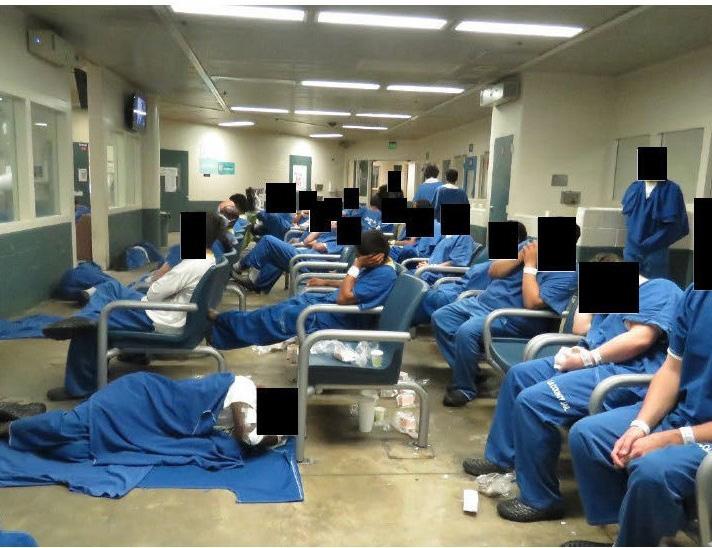
ment and Sheriff (Robert) Luna have made a number of reforms to patrol operations during the course of our investigation, they have remained obstinate on the issue of improving the unsafe and unconstitutional conditions at county jails," Bonta said. "We're going to court because we have no other choice — we will not let Los Angeles County continue to ignore its responsibility to the health, safety, and well-being of the individuals under its care.
By City News Service
Los Angeles County FireDepartment
Chief AnthonyMarrone hosted a media briefing Friday in which he and other officials showcased SuperScoopers, a Helitanker and other resources that will be crucial in the battle against future blazes.
The event at the Air Tanker Base at Van Nuys Airport marked the seasonal arrival of two SuperScoopers from Quebec.
A leased Coulson Group Chinook CH-47 helicopter known as a Helitanker 55 and the rest of the county fire department's fleet and aerial firefighting resources were also showcased.
Officials gave an update
on the current wildfire season and an overview of the county fire department's "Ready! Set! Go!" program that aims to help residents prepare for safe, rapid evacuations when fire danger comes.
"The question everyone wants to answer is, are we going to have a repeat of what happened in January (when the deadly Eaton and Palisades fires tore through Altadena and Pacific Palisades)?" asked Marrone. "The forecast is for higher fire potential in Los Angeles County."
While fire season is now widely considered to be year-round in Southern California, the hottest
weather typically comes in August and September.
Also Friday, California announced it has joined the Northwest Wildland Fire Protection Agreement, a compact created in 1998 that is one of eight of its kind operating across North America.
California and Nevada join the Canadian provinces of Alberta, Yukon Territory, Saskatchewan, Northwest Territories and British Columbia and the U.S. states Alaska, Idaho, Washington, Oregon, Montana and Hawaii.
The compact promotes "effective prevention, suppression and control of forest fires in the Northwest wildland
"Los Angeles operates the largest jail system in the United States — and one of the most problematic. When we're talking about feces smeared on the walls and medical care denied to those in need, we're talking about a disrespect for the basic dignity of our fellow humans and a violation of their most fundamental constitutional rights. We're confident the court will agree."
There was no immediate response from the county or the sheriff's department.

region of the United States and Western areas of Canada," according to a news release announcing that California and Nevada
have joined. "It provides an efficient way for member states, provinces and territories to cope with wildland fires that might be beyond
the capabilities of a single member agency, through information sharing, technology and resource distribution."








ThecountyBoard of SupervisorsTuesday approved a $20,000 reward offer for information leading to the people responsible for the 2023 killing of a man inside his home in the Littlerock area.
Barrington Spears, 36, was shot around 10:50 p.m. Nov. 27, 2023, inside his home in the 10800 block of East Avenue S.
According to Supervisor Kathryn Barger's office, two masked intruders forced their way into the home and killed Spears.
"When Mr. Spears answered a knock at the front door, a male wearing a ski mask pushed his way into the house, soon followed by a second male," according to Barger's motion requesting
By City News Service
the reward be offered. "During a fight, the first intruder pulled a black semi-automatic handgun from his waistband and shot Mr. Spears."
It was unclear what motivated the killing. According to Barger's motion, investigators have determined that Spears was not affiliated with any gangs, and no evidence has been found to suggest the suspects were gang members.
Spears was pronounced dead at the scene. He is survived by his mother and foster brother.
"When masked, armed immigration agents abducted people off the streets of Southern California simply because they appear to be Latino or low- wage workers, the entire nation saw how the federal government's reckless and cruel raids frayed the fabric of one of America's most vibrant and diverse regions," Tajsar said in a statement. "The federal government has now gone running to the Supreme Court asking it to undo a narrow court order — applicable in only one judicial district — that merely compels them to follow the Constitution. We look forward to making our case to the Supreme Court that the federal government cannot deprive individuals of their liberty without justification, regardless of their immigration status."
The raids targeting car washes, garment factories, Home Depot stores and other places where day laborers gather disrupted immigrant communities in Southern California for weeks starting June 6 through July.
The Supreme Court
decision Monday stems from a lawsuit filed July 2 in which Southern California residents, workers and advocacy groups accused the U.S. Department of Homeland Security of "abducting and disappearing" community members via illegal stop and warrantless arrest tactics, then detaining individuals at a federal facility in unlawful conditions in addition to denying detainees access to legal counsel.
Day laborer and lead plaintiff Pedro Vasquez Perdomo, 54, of Pasadena, has said he was waiting to be picked up for a construction job at a Metro bus stop in Pasadena on the morning of June 18 when he and two others were surrounded by armed men wearing masks, arrested and taken to a facility in Los Angeles. He was detained there for three weeks before being granted bond and released.
The men who arrested Vasquez Perdomo allegedly never identified themselves, never told plaintiffs they were immigration officers, never stated that they had arrest
The first suspect was described as a thin male who wore a black ski mask, black pants, black short-sleeved shirt and black or gray shoes. The second suspect was a man about 20 to 22 years old, chubby, with dark brown hair and a "baby face," according to Barger's motion.
Anyone with information about the shooting was asked to call the Sheriff's Homicide Bureau at 323-890-5500. Anonymous calls can be made to 800- 222-8477 or tips may be sent to lacrimestoppers. org.
"This was a senseless and brutal crime that stole the life of a young man who was simply in his own home," Barger said in a statement after Tuesday's board vote approving the reward offer. "Barrington's family deserves answers, and our community deserves justice. I will continue to do everything in my power to ensure that individuals who commit such heinous acts are held accountable."
warrants and never informed the plaintiffs of the basis for their arrests, according to the lawsuit.
Frimpong’s order had applied in an area that included the counties of Los Angeles Orange, Riverside, San Bernardino, Ventura, Santa Barbara and San Luis Obispo.
The case is in early phases. A hearing on a preliminary injunction is scheduled for this month.
Trump has vowed to conduct the largest massdeportation campaign in U.S. history. Administration officials assert that the roundups focus on people suspected of violent crimes.
“On day one, I will launch the largest deportation program of criminals in the history of America,” then-President-elect Trump said last November.
U.S. Department of Homeland Security Secretary Kristi Noem on Aug. 26 said Border Patrol and Immigration and Customs Enforcement agents have made 5,000 arrests in the LA area since June.