
Port of LA experiences drop in cargo volume in

SImmigrant survivors of crime sue ICE in LA over ‘unlawful’ removals
Port of LA experiences drop in cargo volume in
SImmigrant survivors of crime sue ICE in LA over ‘unlawful’ removals
By Joe Taglieri joet@beaconmedianews.com
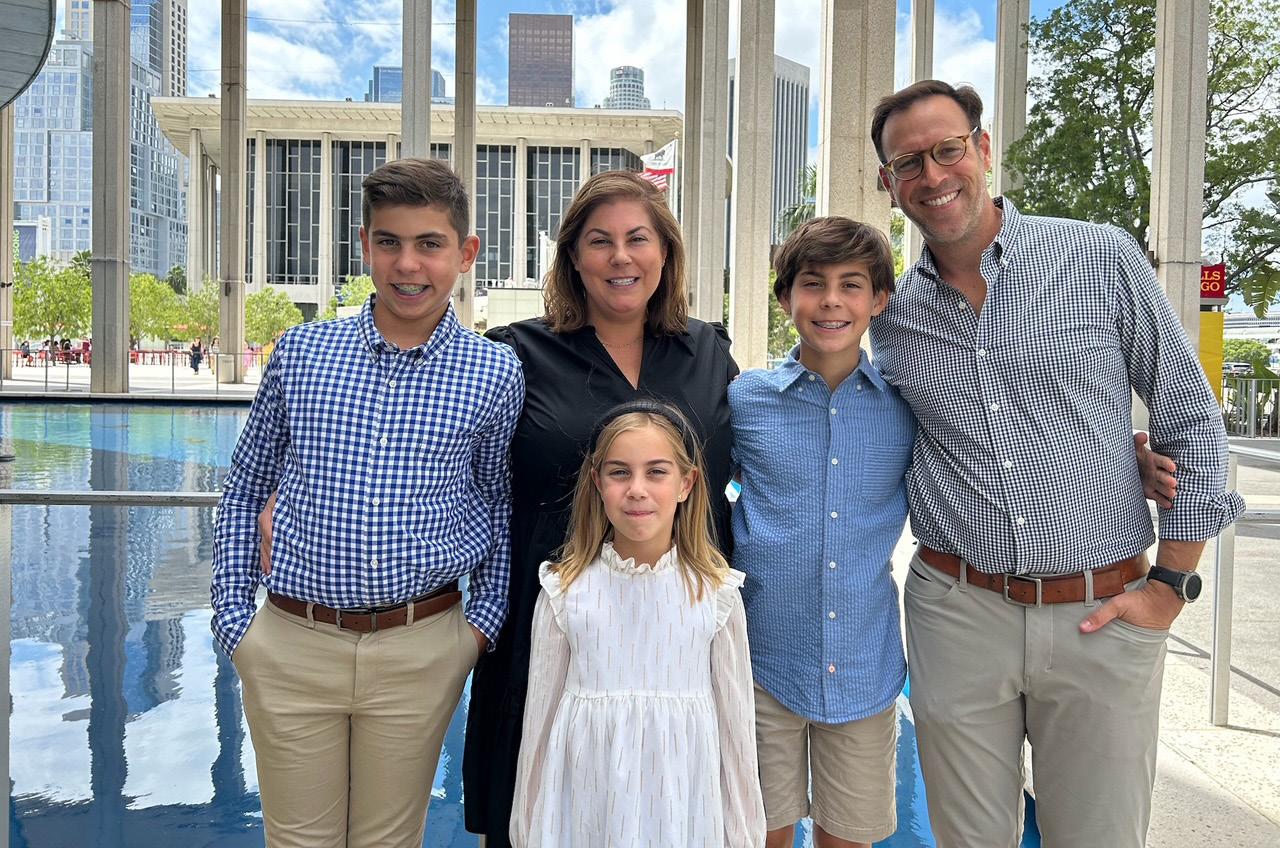
tatelegislationaimed atexpeditingwildfire recoveryhasdrawn supportfromGov.Gavin Newsom and Los Angeles county officials, but a group of Altadena residents blasted the recently signed Senate Bill 782.
The bill, which Newsom signed Oct. 10, allows cities and counties to create “disaster recovery financing districts” designed to raise and reinvest revenue directly into impacted neighborhoods, hastening recovery by eliminating long delays associated with other state funding sources, according to LA County Board of Supervisors Chair Kathryn Barger, whose 5th District includes fire-ravaged Altadena.
“This bill was passed without community input, rushed through under the label of an ‘emergency,’ and it strips away our right to protest,” Shawna Dawson Beer from the group Beautiful Altadena said in a statement.

“The Enhanced Infrastructure Financing District (EIFD) is a tool the County already has access to under existing law. The only difference this bill makes is removing public protections — why?” Beer, a longtime community organizer who lost her
home located west of Lake Avenue, added, “Our town of 43,000 lost 9,000 homes and businesses. We are a community still in recovery. And we are a community that has been fighting years of County mismanagement, lack of
accountability, and neglect — most painfully seen in the total absence of a functional emergency plan during the Eaton fire. Now they want to silence us entirely while taking even more control.”
According to Barger’s
office, SB 782 streamlines procedural steps that often slow disaster recovery efforts, making it easier for local governments to form infra-
By Megan O’Matz and Jennifer Smith Richards, ProPublica
In just over eight months, the second Trump administration has made a rapid succession of political hires and policy decisions at the U.S. Department of Education that could spur profound changes in the way schools are operated and children learn. After years of advocating to expand private and religious education and home-
schooling, using tax dollars, a cadre of conservative activists is in a position to push forward its agenda. Some of its policies are already undermining public schools, which it has denigrated as unsuccessful and out of step with Christian values, a ProPublica investigation found. In many communities, public schools are valued hubs for community life and
services, including meals, socializing and counseling. More than 80% of students are enrolled in traditional public schools, which must serve all children, including those with disabilities. The administration, however, views public schools as a monopoly that should be broken up.
“Millions of young Americans are trapped in failing schools, subjected to radical
anti-American ideology,”
Education Department Secretary Linda McMahon claimed immediately after taking office. She and others in the administration believe that progressive activists have led schools to focus too much on “woke” policies rather than on rigorous academic standards.
Agency officials and spokespeople declined to
speak to ProPublica.
Here are five ways the Education Department under McMahon is creating profound change in public schools.
1. Encouraging an exodus McMahon and President Donald Trump want to expand tax-funded school choice options, giving more
structure financing districts and start work quickly. An EIFD enables local agencies to share incremental tax revenue more easily and fasttrack key planning steps. Money generated through disaster recovery districts must be spent within the affected area for repairing and replacing damaged housing and infrastructure, hardening buildings and landscapes against fire risk, supporting economic recovery and investing in “resilience upgrades” to better protect communities in the future, county officials said.
AltadenaBeautiful members said SB 782 “removes the public’s right to protest, and expands the district 120% beyond the fire zone — potentially including wealthier neighboring towns like La Cañada.” The group also observed that state law allows developers to split and build upon
families the financial means to leave public schools. Trump pushed Congress to pass, and signed into law, a new federal tax credit to finance the first national school voucher program, set to open to families on Jan. 1, 2027. The Education Department has also encouraged
Despite a 7.5% decline in cargo volume in September compared to the same month last year, the Port of Los Angeles closed out its third quarter with a total of 2.9 million twentyfoot equivalent units moved, one of its best quarters ever, officials announced Wednesday.
In total, the port processed 883,053 TEUs in September with loaded imports at 460,044 TEUs, a 7.6% decrease compared to September 2024. Loaded exports came in at 114,693 TEUs, and empty container units stood at 308,317 TEUs, approximately 10% less than last year.
Nine months into 2025, the port has handled a little more than 7.8 million TEUs, a 3% increase over the same period in 2024.
“As we’ve reported for the last few months, imports continuedtooutweigh American exports by a fourto-one ratio. This data reflects the real impact that ongoing trade negotiations are having on our agriculture sector,” Port of Los Angeles Executive Director Gene Seroka said.
Amid the roller coaster of the last six months,
Seroka emphasized that what has remained constant at the port is the dedication and efficiency of waterfront workers and their logistics partners.
“As trade policy unfolds, we can only predict more unpredictability,” Seroka said in a statement. “When sweeping changes were first announced, importers abruptly stopped their orders from China. When those policies were softened and deadlines extended, cargo volume picked up again. The supply chain has been on a roller coaster all year and that ride continues.
“Approximately 20% of vessels that call at the Port of Los Angeles are Chinamade. Some cargo-handling equipment and cranes are also manufactured in China. Tariffs in one area tend to lead to rising prices in other segments, in the end, making goods more expensive,” Seroka added.
Last week, President Donald Trump announced a “100% across-the-board tariff” on imported goods from China, which he said would take effect Nov. 1. The move comes as retailers, among other stakeholders,
By Jose Herrera, City News Service
are just adapting to Trump’s previously announced 30% tariff on imported goods from China.
“Don’t worry about China, it will all be fine!” the president posted Sunday on Truth Social, his social media network.
In April, Trump threatened a 145% tariff on Chinese goods while China threatened a 125% tariff on American goods. The two nations later imposed tariffs at 30% and 10%, respectively, while they continued negotiations on a broader trade deal.
The president imposed tariffs ranging from 25% to 30% on other U.S. trading partners such as Japan, Korea, India, Mexico and Canada.
“It’s been a whirlwind, to say the least, and I’m not sure there are calm winds ahead just yet,” Seroka said.
Richard DiNucci, a senior international trade advisor and former U.S. Customs and Border Protection Director of Field Operations, joined Seroka to discuss the impacts of the federal government shutdown on global trade.
The shutdown entered

its 15th day Wednesday. While there have been ripple effects across many sectors, Customs and Border Protection offices remain open and ports remain fully operational, Seroka noted.
DiNucci explained that people shouldn’t see too much of a change at ports of entry as a result of the shutdown.
“Containers still move.
Seizures of contraband are still made. Passengers are still moving. Landing rights granted at airports. Cargo moving in express consignment facilities. Nothing really changes,” DiNucci said.
“Now with that said, I would be naive, and it would be rather inconclusive or some such to say that there is not an impact, there will
be an impact,” he added.
“These people are not being paid, and a lot of folks in the government sector go paycheck to paycheck, so they’ve got to stay focused at the same time they’re facing these challenges.” DiNucci said he expects that some government services or responses will be delayed, even within customs.
By City News Service
USC Thursday formally declinedtosigna
Trumpadministration compact sent to various universities calling on them to agree to a series of conservative ideals in exchange for priority consideration in seeking federal funding.
“USC fully agrees that academic excellence cannot exist without a ‘vibrant marketplace of ideas where all different views can be explored, debated, and challenged,”’ USC Interim President Beong-Soo Kim wrote in a letter sent to the U.S. Department of Education. “To foster such an environment at USC, we have committed ourselves to institutional neutrality and launched a number of initiatives designed to promote civil discourse across the ideological spectrum. Without an environment where students and faculty can freely debate a broad range of ideas and viewpoints, we could not produce outstanding research, teach our students
to think critically, or instill the civic values needed for our democracy to flourish.”
He added that “we are concerned that even though the compact would be voluntary, tying research benefits to it would, over time, undermine the same values of free inquiry and academic excellence that the compact seeks to promote.”
“Other countries whose governments lack America’s commitment to freedom and democracy have shown how academic excellence can suffer when shifting external priorities tilt the research playing field away from free, meritocratic competition,” Kim wrote.
The Trump administration sent the proposed “Compact for Academic Excellence in Higher Education” in early October to nine universities -- including USC -- calling on the institutions in part to adhere to restrictions on the use of race and gender
in the admissions process, banning biological males from competing in women’s sports, capping admission of international students and requiring a “vibrant marketplace of ideas” on campuses that ensures conservative concepts are not muffled.
Other universities that were sent the proposed compactwereVanderbilt University,Universityof Pennsylvania,Dartmouth College, Massachusetts Institute of Technology, University of Texas at Austin, University of Arizona, Brown University and University of Virginia. MIT and Brown have both previously declined to sign the compact.
The compact did not expressly state that universities refusing to sign it would lose federal funding, but those that did would be given preferential treatment in competing for funds.
After the compacts were sent by the White House, Gov. Gavin Newsom issued

a statement vowing to cut all state funding for any California university that signed it.
“If any California university signs this radical agree-
ment, they’ll lose billions in state funding -- including Cal Grants -- instantly,” Newsom said. “California will not bankroll schools that sell out their students, professors,
researchers and surrender academic freedom.” Newsom’s office called the proposed compact a “hostile takeover of America’s universities.”
Editorial editorial@beaconmedianews.com
editor@hlrmedia.com
Graphics/Production production@beaconmedianews.com production@hlrmedia.com
Advertising advertising@beaconmedianews.com advertising@hlrmedia.com
Legal Advertising legals@beaconmedianews.com legals@hlrmedia.com
Business accounting@beaconmedianews.com accounting@hlrmedia.com
BEACON MEDIA ADDRESS: 820 S. Myrtle Ave. Monrovia, CA 91016
PHONE: (626) 301-1010
WEBSITE www.beaconmedianews.com
HLR MEDIA ADDRESS: 820 S. Myrtle Ave. Monrovia, CA 91016
PHONE: (626) 301-1010 www.HLRmedia.com
PRESS
editor@beaconmedianews.com editor@hlrmedia.com















school districts to spend some federal money meant for disadvantaged students on services from private providers and on children from low-income families who live within district boundaries but attend private schools.
Public school leaders say they’ve already watched students transfer out to private and charter schools in recent years — and with them, they’ve lost essential per-pupil funding. They worry that voucher expansion will cause further damage to their budgets and threaten their survival.
Occasionally, McMahon has spoken positively of public schools — for example, praising some for literacy gains. But more often, and more emphatically, she portrays them as unsuccessful, as do her advisers.
EducationDepartment adviser Lindsey Burke came from The Heritage Foundation, where she co-authored the education chapter of Project 2025, the policy playbook for the Trump administration. It calls for tax-funded education accounts so parents can customize their children’s schooling. Years ago, Burke said she hoped that one day “we will marvel at the fact that we once assigned children to government-run schools consigning the poorest to schools that were often failing and sometimes unsafe.”
2. Cutting federal funding
In a move that affects public school students across the country, the department has slashed hundreds
of millions of dollars in grant funding for a variety of programs, including for mental health professionals and for training and supporting new teachers. More cuts are likely.
Theadministration’s proposed education budget for fiscal 2026 calls for combining 18 existing grant programs — including funds for rural schools and homeless students — into a single $2 billion block grant to be allocated to states. That is about $4.5 billion less than if the grants survived alone. Overall, the Trump administration has proposed reducing federal spending on education by 15% in the 2026 budget. Congress has not passed a budget yet, and the government is shut down.
3. Injecting God into the classroom
Departmentofficials have decried what they view as liberal indoctrination in public schools — what one top leader describes as a “Marxist and anti-God and anti-family agenda.” They now are pursuing policies that align with conservative Christian values, including opposing protections for transgender students and restricting materials about sexuality. Early this year, the department notified schools it would follow Trump’s executive order stipulating that there are “two sexes, male and female.”
McMahon has made Meg Kilgannon, who advocates for more Christian leader-
ship in school districts, a top adviser. Kilgannon has decried the removal of spirituality as a topic from classrooms, arguing that “if we’re not going to discuss our identity as Christians,” schools will push “racial identities” and “sexual identities” on students instead.
In a speech on Sept. 8 at the Museum of the Bible in Washington, D.C., Trump announced that the Education Department “will soon issue new guidance protecting the right to prayer in our public schools.”
He said that the Bible is “an important part of the American story” and that he intends to “protect the Judeo-Christian principles of our founding, and we will protect them with vigor.”
4. Promoting curriculum choices
The federal government historically has not dictated curriculum choices, and McMahon has stressed that she thinks what is taught in schools is best left to local communities. Yet the Education Department is prioritizing patriotic education, promoting civics lessons that present American history and the nation’s founding principles in an “inspiring” manner. History should portray an “ennobling characterization” of the country’s past, the department said. Critics contend that the administration’s aim is to present a sanitized version of history, downplaying bitter episodes, including racial
oppression and sexism.
The department has directed states and districts to avoid material that could make white students feel “intrinsic guilt” based on the oppressive acts of past generations.McMahon also supported the rights of parents to pull their children out of classes they find objectionable, such as those involving books with gay characters or themes.
5. Weakening civil rights protections
The department is using its Office for Civil Rights to press public schools to drop programs and policies designed to help Black or Hispanic students. The office has launched investigations against school districts for teaching lessons on systemic racism, hosting empowerment gatherings for students of color and providing remedial help for Black youth, all of which the administration says discriminates against white students. In addition, the department has repeatedly targeted school districts for allowing students who were born male but identify as female to play on girls sports teams and use bathrooms and locker rooms reserved for girls. In some instances, the department has issued or threatened sanctions, including the potential loss of federal funding and referral to the U.S. Department of Justice for further action. Republished with Creative CommonsLicense(CC BY-NC-ND 3.0).
By Suzanne Potter, Producer, Public News Service
This month the ALL IN for Safe Schools coalition is releasing resources for early childhood educators – including preschools and daycare centers, on how to follow the law and create safe spaces for families during this time of increased immigration enforcement.
The one-pager advises providers to update their emergency contacts, so the kids don’t end up with Child Protective Services.
Liza Davis, advocacy director on children and immigrant families with the Children’s Partnership, said it’s also a good idea to update security and privacy protocols.
“Things like which staff member is authorized to speak with an immigration agent should they show up at their center,” said Davis, “how they’re storing and releasing private information about parents, children, and staff.”
The coalition also advises providers to create a plan for communicating urgent information to staff and parents when an ICE action takes place.

Facilities can also establish private spaces within the building that are not open to the public, triggering Fourth Amendment protections, which require a judicial warrant for law enforcement to enter.
Davis said the coalition is working on a second set of guidelines for K-12 schools on how to create a welcoming atmosphere for LGBTQ+ and
immigrant students.
“Some of it is gender affirming, like using pronouns and bathrooms,” said Davis, “but then special accommodations, data privacy, so that they’re not outed to family members and or other support people without their consent.”
Providers can get more information at allinforsafeschools.org.

By Suzanne Potter, Producer, Public News Service
Californiahasjust become the first state toregulate “ultraprocessed foods” in school lunches. Gov. Gavin Newsom signed Assembly Bill 1264 this month. The state health department must adopt regulations defining those foods by June 2028.
A year later, public K-12 schools would begin to phase out the most concerning items. According to reporting from KFF Health News, the measure has attracted support from Republicans who have criticized past Democratic efforts to encourage healthier diets.
JamesGallagher, Republican Assemblymember, cosponsored the bill.
“Here in California, we grow some of the safest, healthiest food in the world and yet, in our classrooms, often kids are getting junk food,” he said. “We need to ensure that our kids are eating well. Let’s get the chemicals and the additives out of the food.”
Some 30 states, many in deeply conservative regions, have passed or are considering restrictions on chemicals in food or food packaging, according to the

Environmental Working Group, which co-sponsored the California bill. The term “ultraprocessed” generally refers to food that is industrially manufactured and contains ingredients not typically available in a home kitchen, such as thickeners, gases, emulsifiers, and artificial colors and flavors.
Jack Bobo, executive director of the UCLA Rothman Family Institute for Food Studies, supports the law’s intention but worries that the focus on additives is
a distraction from the more important task of serving foods low in salt, sugar, and unhealthy fats.
“The core challenges are salt, fat, and sugar,” he contended. “So, I think that a focus on those would be easier, less bureaucratic, and more likely to be able to deliver short-term gains and improvements in health and nutrition.”
Studies show close to 75% of Americans are overweight or obese, and childhood obesity is rising quickly.
By Laura Hatch, Public News Service
Cleantransportation projects in California and across the country are paying off, according to a new report.
The research firm Atlas Public Policy analyzed the benefits of the Biden era Infrastructure Investment and Jobs Act of 2021 and the Inflation Reduction Act of 2022. The report cited California’s Port of Oakland, which is updating its aging equipment and reducing air pollution with a $322 million grant through the Environmental Protection Agency’s Clean Ports program.
Matt Davis, chief public engagement officer for the Port of Oakland, said the money will fund zero-emissions cargo handling machinery and electric trucks for cargo deliveries.
“This provides local benefits through reduction of pollutants but it also intro-
duces a high degree of technical modernization and reliability,” Davis explained.
“Because some of these pieces of equipment just have a lot less moving parts, frankly, that don’t require as much maintenance.”
Davis pointed out neighboring states will also benefit as the port reduces its greenhouse gas emissions.
Tina Hodges, senior policy analyst for Atlas, pointed to the National Electric Vehicle Infrastructureprogram, funded by the Infrastructure Investment and Jobs Act. The report showed by the end of last year, nearly 60% of the nation’s busiest highway corridors had fast-charging stations for electric vehicles every 50 miles or more, up from 38% in 2020.
Hodges said it is just one example of the upsides of investments.
“We found large benefits
with cleaner air, new manufacturing jobs and transportation benefits, affordable ways to get around,” Hodges outlined.
The Trump administration paused the program earlier this year, asking states asked to update and resubmit their plans for EV infrastructure by September. The report noted funding for some programs is in doubt, with Congress rescinding more than $2.7 billion this year; money which had been appropriated but not yet committed to a contract. Hodges hopes lawmakers will see the value in what has happened with federal dollars.
“This is a key moment for Congress to decide whether they’ll continue to fund these clean transportation programs, or stop the momentum,” Hodges emphasized.
By City News Service

California has become the first and only state to make its own affordable insulin, with the medication expected to be available for purchase starting Jan. 1., Gov. Gavin Newsom announced in Los Angeles Thursday.
Through a state-backed deal with Civica Rx, a nonprofit generic drug manufacturer, and Biocon Biologics, California residents will have access to an interchangeable biosimilar insulin glargine pen offered under the CalRx brand and pricing, the governor said. Insulin glargine is a long-acting insulin analog used in the management of diabetes.
The pens will be available to California pharmacies for $45 and to consumers at a suggested retail price of no more than $55 per five-pack of 3ml pens -a substantial reduction from current retail prices, according to the governor’s office.
“California didn’t wait for the pharmaceutical industry to do the right thing -- we took matters into our own hands,” Newsom said in
a statement. “By beginning the process to manufacture our own insulin and pricing it at a maximum cost of $11 a pen in a five-pack, California and Civica are showing the nation what it looks like to put people over profits.
“No Californian should ever have to ration insulin or go into debt to stay alive -- and I won’t stop until health care costs are crushed for everyone,” Newsom added.
The insulin glargine pen agreement with Biocon Biologics complements Civica Rx’s broader insulin development strategy, according to the governor’s office.
“In a moment where inflation is spiking everyday prices for Californians and our health care system is under attack in the form of Medicaid cuts from H.R. 1, a lower cost insulin will bring much needed relief both to California pocketbooks and our state budget,” Chris Noble, Health Access California’s organizing director and member of the CalRx Insulin Patient Advisory Council, said in a statement.
Noble noted that California consumers need relief now.
“As a person dependent on insulin to live and a health care advocate, I’m relieved to see CalRx moving quickly to lower insulin costs for the people of California while continuing to pursue other needed prescription drug cost solutions,” Noble said.
According to the governor’s office, the launch of affordable insulin is part of a broader strategy Newsom led under his first executive order in 2019, which aimed to lower prescription drug costs.
It also builds on the CalRx Naloxone Access Initiative, which makes accessible and affordable life-saving medication to reverse opioid overdoses.
Newsom recently signed SB 40 and SB 41 into law -- capping consumer costsharing for insulin at $35 for a month-long supply and reducing drug prices by regulating the practices of pharmacy benefit managers, respectively.



cityofpasadena.net. Providing at least 72 hours advance notice will help ensure availability.
Language translation services are available for this meeting by calling (626) 744-4124 at least 24 hours in advance. Habrá servicio de interpretación disponible para éstas juntas llamando al (626) 7444124 por lo menos con 24 horas de anticipación.
Publish October 13, 20, 23, 2025 PASADENA PRESS
City of Pasadena Notice of Public Hearing City Council
An Ordinance to Adopt the 2025 California Building Standards Code and Related Codes
PROJECT DESCRIPTION: The purpose of the hearing is for Pasadena City Council to consider adoption of the 2025 California Building Standards Code, local City of Pasadena amendments to the Codes, and justification of local conditions.
NOTICE IS HEREBY GIVEN that the City Council will hold a public hearing to receive testimony, oral and written, and make a determination on the ordinance at a hearing scheduled for:
Date: November 3, 2025 Time: 6:00 p.m.
Place: Pasadena City Hall Council Chambers, Room S249 100 North Garfield Avenue Pasadena, California 91101
The Pasadena City Council will consider an ordinance of the City of Pasadena amending Title 14 (Building and Construction) of the Pasadena Municipal Code by adopting the 2025 California Building Standards Code incorporating the 2025 California Administrative Code; 2025 California Building Code with Appendix Chapters G, H, I, J, N, P and Q; California Residential Code with Appendix Chapters BB, BF, BG, CH, CI, and CJ; 2025 California Electrical Code with Annexes A, C, I; 2025 California Mechanical Code with Appendix Chapters B, C, F, G and H; 2025 California Plumbing Code with Appendix Chapters A, D, G, H, I, J, M, and R; 2025 California Energy Code; 2025 California Wildland-Urban Interface Code, 2025 California Historical Building Code; 2025 California Fire Code with local amendments to state adopted Chapters including Chapter 1, 3, Section 503 of Chapter 5, Sections 1101 and 1104 of Chapter 11, Appendix Chapter 4, and certain appendices within Appendix Chapters B through P; 2025 California Existing Building Code; 2025 California Green Buildings Standards Code; 2025 California Referenced Standards Code.
Every three years the California Building Standards Commission adopts a new set of building codes which include building, residential, electrical, mechanical, plumbing, fire, energy, and green building standards. Local jurisdictions must adopt and enforce these adopted codes and apply the minimum requirements to all construction projects that file a building permit application beginning January 1, 2026. Local jurisdictions may amend the State regulation to address issues of local or regional importance such as fire or earthquake hazards or a desire to seek increased energy efficiencies.
PUBLIC INFORMATION: Any interested party or their representative may appear at the meeting virtually and comment on the project. Written comments may also be mailed to the City Clerk’s office (100 N. Garfield Avenue, Room S228, Pasadena, CA 91101) for transmittal to the City Council. If you wish to challenge this matter in court, you may be limited to raising only those issues you or someone else raised at the public hearing described in this notice, or written correspondence delivered to the hearing body, at or prior to the public hearing.
For more information about the project or to schedule an appointment:
Contact Person: Jesse De Anda
Mailing Address: Planning and Community Development Depar ment
Building and Safety Division
175 N. Garfield Avenue, 1st Floor
Pasadena, CA 91101
Phone: (626) 744-7063
E-mail: jdeanda@cityofpasadena.net
Website: For a copy of the proposed Ordinance of the Adoption of the 2025 California Building Standards Code and Related Code, or for more information about Pasadena’s building standards, please visit: https://www.cityofPasadena.net/
The 2025 California Building Standards Code and Related Code being considered for adoption are on file with the City Clerk, and are open to public inspection.
ADA: In compliance with the American with Disabilities Act (ADA) of 1990, listening assistive devices are available with a 24-hour advance notice. Please call (626) 744-4009 or (626) 744-4371 (TDD)
to request use of a listening device. Language translation services are available for this meeting by calling (626) 744-4009 at least 48 hours in advance.
Published on October 20, 2025 PASADENA PRESS
NOTICE OF PETITION TO ADMINISTER ESTATE OF CHARLES LANKFORD JR.
Case No. 25STPB10201
To all heirs, beneficiaries, cred-itors, contingent creditors, and persons who may otherwise be interested in the will or estate, or both, of CHARLES LANKFORD JR.
A PETITION FOR PROBATE has been filed by Phillip Lankford and James Lankford in the Superior Court of California, County of LOS AN-GELES.
THE PETITION FOR PROBATE requests that Phillip Lankford and James Lankford be appointed as personal representative to administer the estate of the decedent.
THE PETITION requests authority to administer the estate under the Independent Administration of Estates Act. (This authority will allow the personal representative to take many actions without obtaining court approval. Before taking certain very important actions, however, the personal representative will be required to give notice to interested persons unless they have waived notice or consented to the proposed action.) The independent administra-tion authority will be granted unless an interested person files an objec-tion to the petition and shows good cause why the court should not grant the authority.
A HEARING on the petition will be held on Dec. 4, 2025 at 8:30 AM in Dept. No. 29 located at 111 N. Hill St., Los Angeles, CA 90012.
IF YOU OBJECT to the granting of the petition, you should appear at the hearing and state your objections or file written objections with the court before the hearing. Your ap-pearance may be in person or by your attorney. IF YOU ARE A CREDITOR or a contingent creditor of the decedent, you must file your claim with the court and mail a copy to the personal representative appointed by the court within the later of either (1) four months from the date of first issu-ance of letters to a general personal representative, as defined in section 58(b) of the California Probate Code, or (2) 60 days from the date of mailing or personal delivery to you of a notice under section 9052 of the California Probate Code.
Other California statutes and legal authority may affect your rights as a creditor. You may want to consult with an attorney knowledgeable in California law.
YOU MAY EXAMINE the file kept by the court. If you are a person interested in the estate, you may file with the court a Request for Special Notice (form DE-154) of the filing of an inventory and appraisal of estate assets or of any petition or account as provided in Probate Code section 1250. A Request for Special Notice form is available from the court clerk.
Attorney for petitioner: SANDRA B DeMEO ESQ SBN 194795
LAW OFFICES OF SANDRA B DEMEO 9121 ATLANTA AVE PMB 119 HUNTINGTON BEACH CA 92646 CN120996 LANKFORD Oct 13, 2015, Oct 16,20, 2025 WEST COVINA PRESS
NOTICE OF PETITION TO ADMINISTER ESTATE OF: PERCIVAL SILVERIO CASE NO. 25STPB11411
To all heirs, beneficiaries, creditors, contingent creditors, and persons who may otherwise be interested in the WILL or estate, or both of PERCIVAL SILVERIO.
A PETITION FOR PROBATE has been filed by PATRICK SILVERIO in the Superior Court of California, County of LOS ANGELES.
THE PETITION FOR PROBATE requests that PATRICK SILVERIO be appointed as personal representative to administer the estate of the decedent.
THE PETITION requests authority to administer the estate under the Independent Administration of
Estates Act. (This authority will allow the personal representative to take many actions without obtaining court approval. Before taking certain very important actions, however, the personal representative will be required to give notice to interested persons unless they have waived notice or consented to the proposed action.) The independent administration authority will be granted unless an interested person files an objection to the petition and shows good cause why the court should not grant the authority.
A HEARING on the petition will be held in this court as follows: 11/06/25 at 8:30AM in Dept. 44 located at 111 N. HILL ST., LOS ANGELES, CA 90012
IF YOU OBJECT to the granting of the petition, you should appear at the hearing and state your objections or file written objections with the court before the hearing. Your appearance may be in person or by your attorney.
IF YOU ARE A CREDITOR or a contingent creditor of the decedent, you must file your claim with the court and mail a copy to the personal representative appointed by the court within the later of either (1) four months from the date of first issuance of letters to a general personal representative, as defined in section 58(b) of the California Probate Code, or (2) 60 days from the date of mailing or personal delivery to you of a notice under section 9052 of the California Probate Code.
Other California statutes and legal authority may affect your rights as a creditor. You may want to consult with an attorney knowledgeable in California law.
YOU MAY EXAMINE the file kept by the court. If you are a person interested in the estate, you may file with the court a Request for Special Notice (form DE-154) of the filing of an inventory and appraisal of estate assets or of any petition or account as provided in Probate Code section 1250. A Request for Special Notice form is available from the court clerk.
Attorney for Petitioner
CALVIN BRYNE - SBN 322272 DAY BRYNE & MCINTOSH 129 W. WILSON ST., SUITE 105 COSTA MESA CA 92627
Telephone (949) 650-2827
BSC 227526 10/13, 10/16, 10/20/25 CNS-3975891# PASADENA PRESS
NOTICE OF PETITION TO ADMINISTER ESTATE OF MARIAN S. MICKUS aka MARIAN S MICKUS Case No. 25STPB11406
To all heirs, beneficiaries, cred-itors, contingent creditors, and persons who may otherwise be interested in the will or estate, or both, of MARIAN S. MICKUS aka MARIAN S MICKUS A PETITION FOR PROBATE has been filed by County of Los Angeles Public Administrator in the Superior Court of California, County of LOS ANGELES. THE PETITION FOR PROBATE requests that County of Los Angeles Public Administrator be appointed as personal representative to administer the estate of the decedent.
THE PETITION requests authority to administer the estate under the Independent Administration of Estates Act. (This authority will allow the personal representative to take many actions without obtaining court approval. Before taking certain very important actions, however, the personal representative will be required to give notice to interested persons unless they have waived notice or consented to the proposed action.) The independent administra-tion authority will be granted unless an interested person files an objec-tion to the petition and shows good cause why the court should not grant the authority.
A HEARING on the petition will be held on Nov. 14, 2025 at 8:30 AM in Dept. No. 62 located at 111 N. Hill St., Los Angeles, CA 90012.
IF YOU OBJECT to the grant-
ing of the petition, you should appear at the hearing and state your objections or file written objections with the court before the hearing. Your ap-pearance may be in person or by your attorney. IF YOU ARE A CREDITOR or a contingent creditor of the decedent, you must file your claim with the court and mail a copy to the personal representative appointed by the court within the later of either (1) four months from the date of first issu-ance of letters to a general personal representative, as defined in section 58(b) of the California Probate Code, or (2) 60 days from the date of mailing or personal delivery to you of a notice under section 9052 of the California Probate Code.
Other California statutes and legal authority may affect your rights as a creditor. You may want to consult with an attorney knowledgeable in California law.
YOU MAY EXAMINE the file kept by the court. If you are a person interested in the estate, you may file with the court a Request for Special Notice (form DE-154) of the filing of an inventory and appraisal of estate assets or of any petition or account as provided in Probate Code section 1250. A Request for Special Notice form is available from the court clerk.
Attorney for petitioner: BRETT WAKINO DEPUTY COUNTY COUNSEL SBN 162417
DAWYN HARRISON OFFICE OF COUNTY COUNSEL 500 WEST TEMPLE ST STE 648 LOS ANGELES CA 90012
CN121033 MICKUS Oct 16,20,23, 2025 WEST COVINA PRESS
NOTICE OF PETITION TO ADMINISTER ESTATE OF: SANDRA SUE MARTINEZ CASE NO. PROVA2500801
To all heirs, beneficiaries, creditors, contingent creditors, and persons who may otherwise be interested in the WILL or estate, or both of SANDRA SUE MARTINEZ.
A PETITION FOR PROBATE has been filed by FELIX M. MARTINEZ in the Superior Court of California, County of SAN BERNARDINO.
THE PETITION FOR PROBATE requests that FELIX M. MARTINEZ be appointed as personal representative to administer the estate of the decedent.
THE PETITION requests authority to administer the estate under the Independent Administration of Estates Act. (This authority will allow the personal representative to take many actions without obtaining court approval. Before taking certain very important actions, however, the personal representative will be required to give notice to interested persons unless they have waived notice or consented to the proposed action.) The independent administration authority will be granted unless an interested person files an objection to the petition and shows good cause why the court should not grant the authority.
A HEARING on the petition will be held in this court as follows: 11/18/25 at 9:00AM in Dept. F2 located at 17780 ARROW BLVD., FONTANA, CA 92335
IF YOU OBJECT to the granting of the petition, you should appear at the hearing and state your objections or file written objections with the court before the hearing. Your appearance may be in person or by your attorney.
IF YOU ARE A CREDITOR or a contingent creditor of the decedent, you must file your claim with the court and mail a copy to the personal representative appointed by the court within the later of either (1) four months from the date of first issuance of letters to a general personal representative, as defined in section 58(b) of the California Probate Code, or (2) 60 days from the date of mailing or personal delivery to you of a notice under section 9052 of the California Probate Code. Other California statutes and legal authority may affect your rights as a creditor. You may want to consult with an attorney knowledgeable in California law. YOU MAY EXAMINE the file kept by the court. If you are a person interested in the estate, you may file with the court a Request for Special Notice (form DE-154) of the filing of an inventory and appraisal of estate assets or of any petition or account
as provided in Probate Code section 1250. A Request for Special Notice form is available from the court clerk. Attorney for Petitioner C. TRACY KAYSER - SBN 230022 KAYSER LAW GROUP, APC 1407 N. BATAVIA ST., SUITE 103 ORANGE CA 92867
Telephone (714) 984-2004 BSC 227535
10/16, 10/20, 10/23/25 CNS-3976774# ONTARIO NEWS PRESS
NOTICE OF PETITION TO ADMINISTER ESTATE OF ROBERT T. GARCIA Case No. 25STPB11617
To all heirs, beneficiaries, cred-itors, contingent creditors, and persons who may otherwise be interested in the will or estate, or both, of ROBERT T. GARCIA A PETITION FOR PROBATE has been filed by Edward Garcia in the Superior Court of California, County of LOS ANGELES. THE PETITION FOR PROBATE requests that Edward Garcia be appointed as personal representative to administer the estate of the decedent.
THE PETITION requests authority to administer the estate under the Independent Administration of Estates Act. (This authority will allow the personal representative to take many actions without obtaining court approval. Before taking certain very important actions, however, the personal representative will be required to give notice to interested persons unless they have waived notice or consented to the proposed action.) The independent administra-tion authority will be granted unless an interested person files an objec-tion to the petition and shows good cause why the court should not grant the authority.
A HEARING on the petition will be held on Nov. 14, 2025 at 8:30 AM in Dept. No. 62 located at 111 N. Hill St., Los Angeles, CA 90012. IF YOU OBJECT to the granting of the petition, you should appear at the hearing and state your objections or file written objections with the court before the hearing. Your ap-pearance may be in person or by your attorney.
IF YOU ARE A CREDITOR or a contingent creditor of the decedent, you must file your claim with the court and mail a copy to the personal representative appointed by the court within the later of either (1) four months from the date of first issu-ance of letters to a general personal representative, as defined in section 58(b) of the California Probate Code, or (2) 60 days from the date of mailing or personal delivery to you of a notice under section 9052 of the California Probate Code.
Other California statutes and legal authority may affect your rights as a creditor. You may want to consult with an attorney knowledgeable in California law. YOU MAY EXAMINE the file kept by the court. If you are a person interested in the estate, you may file with the court a Request for Special Notice (form DE-154) of the filing of an inventory and appraisal of estate assets or of any petition or account as provided in Probate Code section 1250. A Request for Special Notice form is available from the court clerk.
Attorney for petitioner: JOHN P PRINGLE ESQ SBN 72300 ROQUEMORE PRINGLE & MOORE INC 13300 CROSSROADS PKWY N SUITE 185 CITY OF INDUSTRY CA 91746 CN121293 GARCIA Oct 20,23,27, 2025 MONTEREY PARK PRESS
NOTICE OF PETITION TO ADMINISTER ESTATE OF: GEORGE A. BESS AKA GEORGE ALLAN BESS AKA GEORGE ALLEN BESS CASE NO. 25STPB11607
To all heirs, beneficiaries, creditors, contingent creditors, and persons who may otherwise be interested in the WILL or estate, or both of GEORGE A. BESS AKA GEORGE ALLAN BESS AKA GEORGE ALLEN BESS. A PETITION FOR PROBATE has been filed by JASON W. BESS AND KENNETH A. BESS in the Superior Court of California, County of LOS ANGELES.
business as: Levia Jade & Co., 13969 Cameo Drive, Fontana, CA 92337. Mailing Address, 10950 Arrow Route Ste 2362, Rancho Cucamonga, Ca 91729. # of employees 1. Aarica Sanders, 13969 Cameo Dr, Fontana, CA 92337. County of Principal
Place of Business: San Bernardino
This business is conducted by: a individual. Registrant commenced to transact business under the fictitious business name or names listed herein on January 16, 2015. By signing below, I declare that I have read and understand the reverse side of this form and that all information in this statement is true and correct. A registrant who declares as true any material matter pursuant to Section 17913 of the Business and Professions Code that the registrant knows to be false is guilty of a misdemeanor punishable by a fine not to exceed one thousand dollars ($1,000). I am also aware that all information on this statement becomes Public Record upon filing pursuant to the California Public Records Act (Government Code Sections 6250- 6277). /s/ Aarica Sanders, Owner. This statement was filed with the County Clerk of San Bernardino on August 21, 2025 Notice- In accordance with subdivision (a) of Section 17920. A Fictitious Name Statement generally expires at the end of five years from the date on which it was filed in the office of the County Clerk, except, as provided in subdivision (b) of Section 17920, where it expires 40 days after any change in the facts set forth in the statement pursuant to Section 17913 other than a change in the residence address of a registered owner. A new Fictitious Business Name Statement must be filed before the expiration. The filing of this statement does not of itself authorize the use in this state of a fictitious business name in violation of the rights of another under federal, state, or common law (see Section 14411 et seq., Business and Professions Code) File#: 20250007947 Pub: 09/18/2025, 09/25/2025, 10/02/2025, 10/09/2025, 10/16/2025, 10/23/2025, 10/30/2025, 11/06/2026 San Bernardino Press
FICTITIOUS BUSINESS NAME STATEMENT
File No. FBN20250005813
The following persons are doing business as: CMM Advantage, 14427 Huntridge Drive, Victorville, CA 92394. Mailing Address, 14427 Huntridge Drive, Victorville, CA 92394. #mof Employees 1. Monique
R. Jennings, County of Principal Place of Business: San Bernardino
This business is conducted by: a individual. Registrant has not yet begun to transact business under the fictitious business name or names listed herein. By signing below, I declare that I have read and understand the reverse side of this form and that all information in this statement is true and correct. A registrant who declares as true any material matter pursuant to Section 17913 of the Business and Professions Code that the registrant knows to be false is guilty of a misdemeanor punishable by a fine not to exceed one thousand dollars ($1,000). I am also aware that all information on this statement becomes Public Record upon filing pursuant to the California Public Records Act (Government Code Sections 6250- 6277). /s/ Monique R. Jennings, Owner. This statement was filed with the County Clerk of San Bernardino on June 18,
2025 Notice- In accordance with subdivision (a) of Section 17920. A Fictitious Name Statement generally expires at the end of five years from the date on which it was filed in the office of the County Clerk, except, as provided in subdivision (b) of Section 17920, where it expires 40 days after any change in the facts set forth in the statement pursuant to Section 17913 other than a change in the residence address of a registered owner. A new Fictitious Business Name Statement must be filed before the expiration. The filing of this statement does not of itself authorize the use in this state of a fictitious business name in violation of the rights of another under federal, state, or common law (see Section 14411 et seq., Business and Professions Code) File#: FBN20250005813 Pub: 06/23/2025, 06/30/2025, 07/07/2025, 07/14/2025, 07/21/2025, 07/28/2025, 08/04/2025, 08/11/2025 San Bernardino Press
FICTITIOUS BUSINESS NAME STATEMENT File No. FBN20250008581
The following persons are doing business as: Eli’s honey & Bloom, 12980 Ramona Avenue, Chino, CA 91710. Mailing Address, 12980 Ramona Avenue, Chino, CA 91710. # of Employees 1. Elisa Gallardo Hernandez. County of Principal Place of Business: San Bernardino
This business is conducted by: a individual. Registrant commenced to transact business under the fictitious business name or names listed herein on August 27, 2025. By signing below, I declare that I have read and understand the reverse side of this form and that all information in this statement is true and correct. A registrant who declares as true any material matter pursuant to Section 17913 of the Business and Professions Code that the registrant knows to be false is guilty of a misdemeanor punishable by a fine not to exceed one thousand dollars ($1,000). I am also aware that all information on this statement becomes Public Record upon filing pursuant to the California Public Records Act (Government Code Sections 6250- 6277). /s/ Elisa Gallardo Hernandez, Owner. This statement was filed with the County Clerk of San Bernardino on September 11, 2025 Notice- In accordance with subdivision (a) of Section 17920. A Fictitious Name Statement generally expires at the end of five years from the date on which it was filed in the office of the County Clerk, except, as provided in subdivision (b) of Section 17920, where it expires 40 days after any change in the facts set forth in the statement pursuant to Section 17913 other than a change in the residence address of a registered owner. A new Fictitious Business Name Statement must be filed before the expiration. The filing of this statement does not of itself authorize the use in this state of a fictitious business name in violation of the rights of another under federal, state, or common law (see Section 14411 et seq., Business and Professions Code) File#: FBN20250008581 Pub: 09/22/2025, 09/29/2025, 10/06/2025, 10/13/2025, 10/20/2025, 10/27/2025, 11/03/2025, 11/10/2025 San Bernardino Press
The following person(s) is (are) doing business as (1). CCP A CRUSHCRUSH PROMOS
COMPANY (2). CRUSHCRUSH PROMOS 79010 Dry Creek Rd La Quinta, CA 92253
Riverside County Cheryl Kalista Eaton, 74923 Hwy 111 #408, I ndian Wells, CA 92210
Riverside County
This business is conducted by: a individual. Registrant commenced to transact business under the fictitious business name or names listed herein on December 5, 2019. I declare that all the information in this statement is true and correct. (A registrant who declares as true any material matter pursuant to Section 17913 of the Business and Professions Code, that the registrant knows to be false, is guilty of a misdemeanor punishable by a fine not to exceed one thousands dollars ($1000).)
s. Cheryl Kalista Eaton Statement filed with the County of Riverside on July 31, 2025 NOTICE: In accordance with subdivision (a) of section 17920, a fictitious name statement generally expires at the end of the five years from the date on which it was filed in the office of the county clerk, except, as provided in subdivision (b) of section 17920, where it expires 40 days after any changes in the facts set forth in the statement pursuant to section 17913 other than a change in the residence address of a registered owner. A new Fictitious Business Name Statement must be filed before the expiration. The filing of this statement does not of itself authorize the use this state of a fictitious business name in violation of the rights of another under federal, state, or common law (see Section 14411 Et Seq., business and professions code). I hereby certify that this copy is a correct copy of the original statement on file in my office. Peter Aldana, County, Clerk File# R-202509482 Pub. 09/01/2025, 09/08/2025, 09/15/2025, 09/22/2025 Riverside Independent
FICTITIOUS BUSINESS NAME STATEMENT
File No. FBN20250008832
The following persons are doing business as: (1). Cognition Insurance Services (2). Cognition Coffee Consulting (3). Cave and Cognition Clothing , 540 w mesa st, Rialto, CA 92376. Mailing Address, 540 w mesa st, Rialto, CA 92376. Joseph J Valverde,. County of Principal Place of Business: San Bernardino This business is conducted by: a individual. Registrant has not yet begun to transact business under the fictitious business name or names listed herein. By signing below, I declare that I have read and understand the reverse side of this form and that all information in this statement is true and correct. A registrant who declares as true any material matter pursuant to Section 17913 of the Business and Professions Code that the registrant knows to be false is guilty of a misdemeanor punishable by a fine not to exceed one thousand dollars ($1,000). I am also aware that all information on this statement becomes Public Record upon filing pursuant to the California Public Records Act (Government Code Sections 6250- 6277). /s/ Joseph J Valverde. This statement was filed with the County Clerk of San Bernardino on September 17,
2025 Notice- In accordance with subdivision (a) of Section 17920. A Fictitious Name Statement generally expires at the end of five years from the date on which it was filed in the office of the County Clerk, except, as provided in subdivision (b) of Section 17920, where it expires 40 days after any change in the facts set forth in the statement pursuant to Section 17913 other than a change in the residence address of a registered owner. A new Fictitious Business Name Statement must be filed before the expiration. The filing of this statement does not of itself authorize the use in this state of a fictitious business name in violation of the rights of another under federal, state, or common law (see Section 14411 et seq., Business and Professions Code) File#: FBN20250008832 Pub: 09/29/2025, 10/06/2025, 10/13/2025, 10/20/2025 San Bernardino Press
The following person(s) is (are) doing business as NorJenn Merch Hub 39520 Murrieta Hot Springs Rd. Ste 219 Murrieta, CA 92563
Riverside County Mailing Address, 30479 Fern Gully Drive, Murrieta, CA 92563. Riverside County NorJenn Ventures LLC (CA, 30479 Fern Gully Drive, Murrieta, CA 92563
Riverside County
This business is conducted by: a limited liability company (llc). Registrant has not yet begun to transact business under the fictitious business name or names listed herein. I declare that all the information in this statement is true and correct. (A registrant who declares as true any material matter pursuant to Section 17913 of the Business and Professions Code, that the registrant knows to be false, is guilty of a misdemeanor punishable by a fine not to exceed one thousands dollars ($1000).) s. Norberto Dominix, Member Statement filed with the County of Riverside on September 11, 2025 NOTICE: In accordance with subdivision (a) of section 17920, a fictitious name statement generally expires at the end of the five years from the date on which it was filed in the office of the county clerk, except, as provided in subdivision (b) of section 17920, where it expires 40 days after any changes in the facts set forth in the statement pursuant to section 17913 other than a change in the residence address of a registered owner. A new Fictitious Business Name Statement must be filed before the expiration. The filing of this statement does not of itself authorize the use this state of a fictitious business name in violation of the rights of another under federal, state, or common law (see Section 14411 Et Seq., business and professions code). I hereby certify that this copy is a correct copy of the original statement on file in my office.
Peter Aldana, County, Clerk File# R-202511311 Pub. 09/29/2025, 10/06/2025, 10/13/2025, 10/20/2025 Riverside Independent
FICTITIOUS BUSINESS NAME STATEMENT File No. FBN20250009082
The following persons are doing
business as: True Purpose Skincare, 7285 Magnolia Place, Fontana, CA 92335. Mailing Address, 7285 Magnolia place, fontana, CA 92336. Nicole V. Keen. County of Principal Place of Business: San Bernardino
This business is conducted by: a individual. Registrant has not yet begun to transact business under the fictitious business name or names listed herein. By signing below, I declare that I have read and understand the reverse side of this form and that all information in this statement is true and correct.
A registrant who declares as true any material matter pursuant to Section 17913 of the Business and Professions Code that the registrant knows to be false is guilty of a misdemeanor punishable by a fine not to exceed one thousand dollars ($1,000). I am also aware that all information on this statement becomes Public Record upon filing pursuant to the California Public Records Act (Government Code Sections 6250- 6277). /s/ Nicole V. Keen. This statement was filed with the County Clerk of San Bernardino on September 26, 2025 Notice- In accordance with subdivision (a) of Section 17920. A Fictitious Name Statement generally expires at the end of five years from the date on which it was filed in the office of the County Clerk, except, as provided in subdivision (b) of Section 17920, where it expires 40 days after any change in the facts set forth in the statement pursuant to Section 17913 other than a change in the residence address of a registered owner. A new Fictitious Business Name Statement must be filed before the expiration. The filing of this statement does not of itself authorize the use in this state of a fictitious business name in violation of the rights of another under federal, state, or common law (see Section 14411 et seq., Business and Professions Code) File#: FBN20250009082 Pub: 10/06/2025, 10/13/2025, 10/20/2025, 10/27/2025 San Bernardino Press
FICTITIOUS BUSINESS NAME STATEMENT File No. FBN20250009050
The following persons are doing business as: (1). CPL Ministries (2). CPL International (3). Changing People’s Lives Ministries (4). Changing People’s Lives International (5). Changing People’s Lives International Ministries , 11340 Mountain View Avenue Suite C, Loma Linda, CA 92354. Mailing Address, PO Box 11888, San Bernardino, CA 92423. Changing People’s Lives Inc. (CA 2524734, 11340 Mountain View Avenue Suite C, Loma Linda, CA 92354; Eliseo Lozano, President. County of Principal Place of Business: San Bernardino This business is conducted by: a corporation. Registrant commenced to transact business under the fictitious business name or names listed herein on September 18, 2003. By signing below, I declare that I have read and understand the reverse side of this form and that all information in this statement is true and correct. A registrant who declares as true any material matter pursuant to Section 17913 of the Business and Professions Code that the registrant knows to be false is guilty of a misdemeanor punishable by a fine not to exceed one thousand dollars ($1,000). I am also aware that all information on this statement
becomes Public Record upon filing pursuant to the California Public Records Act (Government Code Sections 6250- 6277). /s/ Eliseo Lozano, President. This statement was filed with the County Clerk of San Bernardino on September 25, 2025 Notice- In accordance with subdivision (a) of Section 17920. A Fictitious Name Statement generally expires at the end of five years from the date on which it was filed in the office of the County Clerk, except, as provided in subdivision (b) of Section 17920, where it expires 40 days after any change in the facts set forth in the statement pursuant to Section 17913 other than a change in the residence address of a registered owner. A new Fictitious Business Name Statement must be filed before the expiration. The filing of this statement does not of itself authorize the use in this state of a fictitious business name in violation of the rights of another under federal, state, or common law (see Section 14411 et seq., Business and Professions Code) File#: FBN20250009050 Pub: 10/16/2025,
By City News Service
Acoalitionoflegal organizationsand undocumented immigrants has filed suit in Los Angeles challenging an ICE policy that authorizes the “routine” jailing and deportation of noncitizen survivors of domestic violence and human trafficking, according to court papers obtained Wednesday.
The suit filed Tuesday by the Center for Human Rights and Constitutional Law and others contends the policy “violates the very legal protections, crafted by Congress and passed with bipartisan support, that were designed to shield vulnerable adults and children from harm.”
The plaintiffs also allege in Los Angeles federal court that ICE “routinely imprisons and deports immigrant survivors who have been formally granted the right to remain in the U.S.” and “regularly deports survivors of trafficking and other
serious crimes without carrying out the required legal review to determine if they are eligible for protections that Congress specifically created to keep survivors safe from deportation.”
A message requesting comment sent to U.S. Immigration and Customs Enforcement was not immediately answered Wednesday.
According to the lawsuit, the government’s practices are harming “vulnerable survivors,” including Yessenia Ruano, who says she came to the United States from El Salvador seeking safety from human trafficking in 2011 and worked as a teacher’s aid in Milwaukee until June 2025, when she says she was forced by ICE to self-deport.
In compliance with the law, Ruano said she applied for a T Visa, which protects survivors of crimes related to human trafficking, in
February while working in Wisconsin, and her attorney requested a stay. ICE denied the stay in March and informed her attorney that if she did not “promptly” return to El Salvador, she would be detained at a forthcoming June check-in with ICE, according to the lawsuit.
Ruano returned to her home country with her U.S. citizen children.
“At the first check-in, the agents told me I would be deported,” Ruano said, according to a news release from the plaintiffs in the suit. “They said that if I didn’t go on my own, they would hunt me down and find me, and that I would be separated from my daughters, detained, and deported. I was in turmoil, because I also could not face being taken away from my kids and imprisoned.”

To address the fear that frequently prevents immigrant survivors from seeking help due to the threat of deportation, Congress created the U and T visa programs in 2000 through its renewal of the Violence Against Women Act and the Victims of Trafficking and Violence Protection Act.
LA County reports 1st locally acquired dengue case of 2025
By City News Service

LosAngelesCounty health officials Wednesdayconfirmedthe first locally acquired case of the mosquito-borne illness dengue of the 2025 mosquito season.
The patient is a San Gabriel Valley resident with no history of travel to areas where dengue is endemic.
According to the county Department of Public Health, the unidentified person developed symptoms in late September and is recovering.
“While the potential risk for widespread dengue virus transmission in Los Angeles County remains low, this case highlights the presence of infected mosquitoes locally and underscores the impor-
tance of preventive measures to control the spread of this virus,” health officials said in a statement.
The Department of Public Health reported a total of 14 locally acquired dengue cases last year. Such infections are considered “extremely rare” in a region where the virus had never been previously transmitted by mosquitoes. The illness is transmitted primarily through the bite of an infected Aedes mosquito.
People infected with the virus could develop flu-like symptoms such as fever, headache, muscle pain, rash and mild bleeding. Severe cases can lead to shock and organ impairment requiring immediate medical attention.
“Dengue is preventable, and community action is our strongest defense,” Dr. Muntu Davis, Los Angeles County health officer, said in a statement. “Preventing mosquito bites and mosquito breeding is the best way stop local transmission of dengue. People should follow these simple steps to reduce their exposure to mosquitoes and risk for mosquito bites: 1) Use insect repellent on you and your family; 2) Remove items that hold standing water around your home where mosquitoes can lay eggs and breed; and 3) Use, install, or repair window and door screens to prevent mosquitoes from entering your home.”
Those protections were designed to offer a pathway to permanent status, according to legal organizations focusing on immigration. The lawsuit’s plaintiffs allege the administration of President Donald Trump “is actively denying and unlawfully dismantling these vital protections, all in the service of illegal enforcement actions that ignore the law.”
1st major storm of the season adds 700M gallons to local water supply
By City News Service

This week’s storm, the first major rainfall of the 2025-26 season, dropped roughly 3 inches of rain in Los Angeles County, adding more than 700 million gallons to local water supplies, officials announced Thursday.
The storm began late Monday night with rain intensifying into the following morning and later slowed in the evening. Rain collected during Tuesday’s storm was enough to supply 18,400 people for a full year and brought the total amount collected since Oct. 1 to a billion gallons, according to Los Angeles County Public Works.
The majority of stormwater was captured behind the region’s 14 major dams, which will be held and
later distributed among the county’s 27 spreading ground facilities to recharge local groundwater aquifers.
County officials patrolled and monitored the rainfall to ensure a prompt response for any potential storm damages, particularly in fire-impacted areas such as Pacific Palisades and Altadena. No major issues were reported in LA County’s burn scar areas, although homeowners and local agencies were prepared, according to Public Works.
The county’s flood control system consists of 491 miles of open channel, 3,400 miles of underground storm drain, 97,466 catch basins and 189 debris basins, among other facilities.
While the National Weather Service forecasted
dry weather for the next few weeks, county officials encouraged residents to take the following steps to prepare for future storms:
-- Visit Ready.LACounty. gov for storm tips, free sandbag distribution locations, and to sign up for automatic emergency alerts;
-- Know your property’s risk factors, clear drainage paths and use sandbags to direct runoff and protect structures;
-- Stay tuned to local weather reports and follow instructions of law enforcement if told to evacuate; and
-- Call the LA County Public Works 24-hour Dispatch Center to report storm-related damage, traffic signal outages, flooding or other concerns at 800-675HELP (4357).
By City News Service
The Los Angeles County Department of Public HealthThursday confirmed another case of a more severe strain of mpox in a local patient who has no known history of travel to areas where the virus is usually found.
TheL.A.County announcement came two days after Long Beach health officials announced the first locally acquired case of clade I mpox. The two local cases are believed to be the only clade I mpox infections in the nation involving people with no known history of travel.
Clade I mpox is a more serious strain of mpox that
clade II, which led to a 2022-23 mpox outbreak in the United States. Clade I generally causes more severe illness. Symptoms can include rash or lesions, fever, chills, sore throat, swollen lymph nodes and body aches.
Only about eight cases of clade I mpox have been confirmed nationally, health officials said. The county Department of Public Health has confirmed 118 cases of clade II mpox this year.
The clade I mpox patients in Los Angeles County and Long Beach were both hospitalized but are recovering at home.

Neither patient was identified.
“The identification of cases of clade I mpox, which may cause more severe illness
single-family properties.
Protections against that are “being quietly overridden by LA County Supervisor Kathryn Barger, even as Supervisor Lindsey Horvath has paused (Senate Bill 9) enforcement for the Palisades fire zone,” according to a statement from the residents group. “Governor Newsom previously exempted Altadena from SB 9. The county is now pushing it forward anyway.”
“Altadena was exempted. The Palisades was protected. Why are we being left behind?” Beer said. “SB 782 is not about recovery — it’s about control. And it’s happening without a vote, without input, and without consent. Why aren’t we getting the same protection as the Palisades? This is a blatant double standard and a betrayal of a recovering community that has already endured enough. Altadena deserves equal treatment.”
Helen Chavez, a spokesperson for Barger, challenged Altadena Beautiful’s criticisms.
“The claims being made about Senate Bill 782 and SB 9’s application in Altadena are inaccurate and misleading,” she said in an email.
“Supervisor Barger remains firmly committed to a community-driven recovery process — one grounded in transparency, accountability, and respect for public input,” Chavez said. “Any suggestion that she is acting to ‘silence’ Altadena residents or bypass state protections is simply false.”
SB 782, authored by state Sen. Sasha Renée Pérez, D-Pasadena, creates
a framework for generating and directing local revenues to fix parks, roads, streetlights, flood control systems and infrastructure, Chavez said. EIFDs are governed by a Public Financing Agency Board that is tasked with providing public oversight and community participation in decisions.
“The bill does not remove public protections — it accelerates access to urgently needed recovery funds before local tax base growth limits that opportunity,” Chavez said.
“The County faces roughly $1.5 billion in infrastructure repair and replacement costs in Altadena alone,” she added. “Supervisor Barger has been clear: any EIFD created under this bill will be narrowly focused on supporting Altadena’s fire recovery, with full transparency and community input guiding funding priorities.”
Chavez also took issue with Altadena Beautiful’s SB 9 analysis.
“Assertions about the ability to ‘override’ Governor Newsom’s SB 9 protections are factually incorrect,” she said. “The Governor’s Executive Order only allows local jurisdictions to suspend SB 9 lot splits and duplex construction in areas designated as Very High Fire Hazard Severity Zones (VHFHSZ) — not throughout entire communities. In Altadena, the vast majority of parcels, including most of those impacted by the Eaton Fire, are outside of the VHFHSZ.
“By contrast, the Palisades area — where SB 9 implementation was paused
than the more common clade II, is concerning,” Dr. Muntu Davis, Los Angeles County health officer, said in a state-
under Mayor Bass — is entirely within a VHFHSZ, which is why broader restrictions apply there. In unincorporated Los Angeles County, including Altadena and the Santa Monica Mountains, the Department of Regional Planning has already administratively suspended SB 9 lot splits and SB 9 accessory dwelling units within VHFHSZ zones, consistent with the Governor’s order.”
Altadena Beautiful member Stephen Sachs cautioned that land-use “decisions will be centered around whatever can be done to increase the taxable rolls in Altadena,” he said during a recent podcast. “The quickest way to do it is to increase the number of units on the land, increasing land values and structures from the property tax perspective. Remember, the majority of the ‘tax growth’ within the new Climate Resiliency District will occur for the oldest residences and increasing their values from 1975-1976 values to modern rates. SB9 is an indication of where it is going clearly.”
Sachs also warned of the potential for gentrification to result after rebuilding happens.
“We understand gentrification will occur, but it will be without input from our community,” Sachs said. “Decisions will be made around creating more taxable value, which might leave other community decisions and compromises by the wayside. We are all for creating a (financing) district, so long as there is accountability. ... There is no competition here. There is no control. There is
ment. “Mpox continues to be spread largely through close, intimate contact with symptomatic people, mainly during sexual activity. Early detection, testing and vaccination are vital to controlling the spread of this virus. Getting both doses of the JYNNEOS vaccine provides the best protection against mpox.”
Clade I mpox has been primarily found in Central and Eastern Africa.
Mpox can spread through direct contact with infectious sores or body fluids, sexual or intimate contact, and touching contaminated items such as bedding or clothes. Most people recover
within 2-4 weeks, but antiviral treatments may be considered for individuals with or at risk of developing severe illness, health officials said.
Despite the low risk of infection, health officials recommended vaccines for people who may be at increased risk, such as people who are gay or bisexual, men who have sex with men, transgender and nonbinary people, people who are immunocompromised, someone who was exposed to a person with mpox, those with occupational exposure, and people planning to travel to areas with ongoing mpox outbreaks.
no accountability. There is no way to withdraw the ‘license’ which this bill creates if the intent is not met. There is no way to shut off funds if promises are not kept. It is those things that scare us.”
Barger expressed support for Newsom’s signing and Pérez’s sponsorship of SB 782, calling it “a pivotal moment for communities across California still healing from wildfires and other disasters,” the supervisor said in a statement.
“With Governor Newsom’s signature on SB 782, that I was proud to sponsor, we now have a mechanism to rebuild with resilience, restore critical infrastructure, and revitalize neighborhoods hurt by catastrophe.
Barger said she “will continue working with our County teams, planners, fire safety officials, and community leaders in and around the
Eaton area to move quickly and responsibly to establish a disaster recovery financing district to uplift survivors and rebuild stronger. ...
“Because the funding will stay in the community, it creates a path toward longterm stability and economic renewal rather than temporary fixes,” she said.
Tara Gallegos, a spokesperson for the governor, said Newsom “did not exempt specific communities but provided local authorities with the discretion to adjust SB 9 rules and limit development under these rules in those areas of the Eaton and Palisades fire burn scars that are designated as very high fire hazard severity zones.”
In addition to SB 782, Newsom signed a number of other bills related to recovery from the January wildfires.
“Together with the legislature, we’re putting the lessons we learned in January into action and delivering the most significant upgrade to California’s disaster response and recovery efforts in years — supporting wildfire survivors now and in the future,” Newsom said in a statement.
Information on the legislative package is available from the governor’s office via tinyurl.com/c5wjbfmu. Pérez did not immediately respond to a request for comment.
The full text of SB 782 is available on the State Legislature’s website via tinyurl.com/ye2yfme7. SB 9 is also online, tinyurl. com/7s6xjdaw. The podcast with Altadena Beautiful members is available at buzzsprout. com/2534093/episodes.