


By Joe Taglieri joet@beaconmedianews.com
The number of troops guarding federal buildings in the Los Angeles area reduced further Wednesday after U.S. Defense Secretary Pete Hegseth ordered over 1,300 to end their deployment.
President Donald Trump federalized several thousand California National Guard troops in June to assist immigration enforcement operations and protect federal facilities amid civil unrest in response to the administration’s mass deportation effort throughout Southern California and nationwide.
“On Wednesday, Secretary Hegseth ordered the release of approximately 1,350 California National Guardsmen from the federal protection mission,” Chief Pentagon Spokesman Sean Parnell said in a statement. “Approximately 250 California National Guardsmen remain in Los Angeles to protect federal personnel and property. We greatly appreciate the support of the more than 5,000 Guardsmen and Marines who mobilized to Los Angeles to defend Federal functions against the rampant lawlessness occurring in the city.”
Gov. Gavin Newsom welcomed the move and called for the remaining military personnel’s withdrawal.

“President Trump is realizing that his political theater backfired. This militarization was always unnecessary and deeply unpopular,” Newsom said in his statement. “The President must do the right thing to end this illegal militarization now because the economic and societal impacts are dire. The women and men of our military deserve more than to be used as props in the federal government’s propaganda machine.”
Los Angeles Mayor Karen Bass also praised the drawdown.
“Another win for Los Angeles,” Bass posted on social media Wednesday night. “We will continue this pressure until ALL troops are out of L.A.”
Wednesday’s order follows the Pentagon’s earlier removal of about 2,000 California National Guard troops and 700 active-duty U.S. Marines from the LA area.
In June, U.S. Immigration and Customs Enforcement began operations in Los Angeles and throughout the county, triggering widespread protests and clashes with federal immigration agents.
In response, Trump ordered 2,000 California National Guard troops be placed under federal control and sent to Los Angeles to protect federal property. An additional 2,000 Cal Guard soldiers and 700 Marines later joined the deployment.
Since the June 7 deployment, Newsom and others
have criticized Trump’s federalization of the National Guard. The governor, Bass and Democratic politicians in the region called the move an unnecessary militarization of immigration law enforcement, and Newsom and California Attorney General Rob Bonta filed a lawsuit challenging the legality of the federalization. A federal judge, however, ruled in favor of the Trump administration.
The Pentagon estimated the LA troops deployment will cost around $134 million.
Newsom’s office noted adverse economic consequences for the LA region as a result of the administration’s deportation campaign.
“The number of people reporting to work in the private sector in California decreased by 3.1% — a downturn only recently matched by the period when people stayed home from work during the COVID-19 lockdown,” according to the governor’s office.
State officials said the
immigration raids, as well as the Trump administration’s tariff policies, will likely cause the state’s economy to contract later this year as Los Angeles and other cities experience disruptions in the key sectors of construction, hospitality, and agriculture, a UCLA Anderson forecast reported.
The governor’s office estimated that “mass arrests, detentions and deportations in California could slash $275 billion from the state’s economy and eliminate $23 billion in annual tax revenue,” officials said.
Undocumented immigrants contributed $8.5 billion in state and local taxes in 2022, with an estimated increase to $10.3 billion if they could apply to work lawfully, according to Newsom’s office.
Last week, U.S. Sen. Alex Padilla, D-California, proposed legislation that aims to make it easier for undocumented residents to obtain legal immigration status and work permits.
Governor’s order stops duplexes in LA fire rebuilding zones
By Joe Taglieri joet@beaconmedianews.com
Gov. Gavin Newsom on Wednesday exempted fire-ravaged areas of Los Angeles County from a state law that allows duplexes and multiunit residences to replace singlefamily homes.
The governor’s executive order came after local officials voiced concerns about increased population density possibly leading to public safety and infrastructure issues. The order allows local governments in the LA area to limit development in neighborhoods impacted by January’s wildfires by suspending provisions in Senate Bill 9, a 2021 law that allows up to four units on properties that previously were zoned for singlefamily residences.
“We will continue to assist communities in rebuilding safely in ways that are responsive to local concerns,” Newsom said in a statement. “This executive order responds directly to requests from local officials and community feedback, recognizing the need for local discretion in recovery and that not all laws are designed for rebuilding entire communities destroyed by fires overnight.”
The exemption applies to high-severity burn areas, including the entirety of Pacific Palisades within the city of LA, Malibu, unincorporated Sunset Mesa and the eastern foothills of Altadena, according to the governor’s office. The order’s duration coincides with the state of Newsom’s state of emergency declaration for the Los Angeles region.
The executive order also paused SB 9 developments for seven days in the affected areas to give local governments time to develop their own standards.
The move drew positive responses from city and county officials.
“I appreciate Governor Newsom’s executive order today, which restores local control over important land use matters, like SB 9, in high fire severity zones,” District 3 LA County Supervisor and Board Chair Kathryn Barger, who represents Altadena and areas in the path of the Eaton Fire, said in a statement.
“SB 9, like other state housing legislation, was intended to support thoughtful, phased-in development — not immediate implementation in the wake of a major disaster,” Barger said. “Empowering local jurisdictions to make reasonable decisions about development patterns in wildfire-prone areas is a smart and necessary step.”
Barger added that before “lot splitting or additional housing is considered in these high-risk zones, we must ensure proper infrastructure and fire safety measures are in place.”
She also said a “top priority remains protecting Altadena’s unique community character and preventing the displacement of my constituents.”
Despite the concerns about density and public safety, Barger called for “balanced housing solutions — ones that responsibly expand access to housing while protecting public safety and preserving the integrity of our neighborhoods.”
She noted “the value of allowing property owners outside of high fire severity zones to build additional units — whether to generate supplemental income, support recovery efforts or preserve multi-generational living arrangements that have long existed in our communities. This kind of flexibility is essential for helping residents stay rooted while also contributing to
Rebuilding
By City News Service
UCLA Tuesday agreed to pay over $6 million to settle discrimination complaints stemming from last year’s pro-Palestinian demonstrations, in which Jewish students and faculty were prevented from accessing classrooms, the library and other campus locations.
The agreement comes as a result of a lawsuit against UCLA filed in June 2024 in which two law students and an undergraduate alleged the university allowed a group of students and outsiders to set up a pro-Palestinian encampment that forcibly kept Jewish students and faculty from accessing critical parts of campus.
UCLA allegedly reinforced the pro-Palestinian zones -- both by providing metal barriers and by sending away Jewish students and faculty -- while taking no effective action to ensure safe passage for the students, the suit alleged. In response to the complaint, UCLA initially disavowed any obligation to protect its Jewish students.
The settlement requires UCLA to pay $6.13 million, including damages to each of the plaintiffs, $2.33 million in charitable contributions to eight organizations that support the Jewish community, and attorneys’ fees and costs.
As part of the settlement, UCLA also agreed to a permanent court order preventing it from facilitating efforts to exclude Jewish students and faculty from campus.
The agreement is believed to be the largest private settlement in a campus antisemitism case, plaintiffs’ attorneys said.
“We are pleased with the terms of today’s settlement,” according to a joint statement from the parties. “The injunction and other

terms UCLA has agreed to demonstrate real progress in the fight against antisemitism.”
In a separate statement, UC Board of Regents Chair Janet Reilly said the university recognized where it went wrong.
“Antisemitism, harassment, and other forms of intimidation are antithetical to our values and have no place at the University of California,” Reilly said. “We have been clear about where we have fallen short, and we are committed to doing better moving forward. Today’s settlement reflects a critically important goal that we share with the plaintiffs: to foster a safe, secure and inclusive environment for all members of our community and ensure that there is no room for antisemitism anywhere on campus.
“As we build upon our systemwide efforts to further this goal, we remain steadfastly committed to
cultivating an environment where all are afforded the opportunity to live, learn and teach safely and peacefully, no matter who they are, where they come from, or how they pray.”
The lawsuit, filed in Los Angeles federal court, alleged the so-called proPalestinian zones broke civil rights laws and discriminated against the university’s Jewish students.
In the wake of the Hamas attacks on Israel on Oct. 7, 2023, and the ensuing warfare, pro-Palestinian demonstrations emerged on college campuses nationwide. Attorneys for the plaintiffs alleged in court papers that by allowing the encampment on the Westwood campus, UCLA caused Jewish students and faculty to be barred from accessing parts of the campus “unless they agreed to disavow Israel’s right to exist.”
According to the plaintiffs, the activists -- many
of them masked -- used checkpoints, issued wrist bands, built barriers, and often locked arms to prevent Jewish students from passing through.
For a week, the lawsuit said, UCLA’s administration was aware of these practices and chose to let them persist. The suit contends that rather than clearing the encampment, UCLA instructed security staff to discourage unapproved students from attempting to cross through the areas blocked by the activists.
“When antisemites were terrorizing Jews and excluding them from campus, UCLA chose to protect the thugs and help keep Jews out,” said plaintiff Yitzchok Frankel, a recent UCLA Law graduate. “That was shameful, and it is sad that my own school defended those actions for more than a year. But today’s court judgment brings justice back to our campus and ensures Jews will be safe
By City News Service
The Los Angeles County Board of Supervisors unanimously approved an ordinance Tuesday extending price-gouging protections on local rental housing through Aug. 30 in accordance with an emergency declaration sparked by January’s wildfires.
On Jan. 7, a state of emer-
gency was declared in the county following the windstorm and deadly wildfires in Pacific Palisades and Altadena, activating price gouging protections that barred price hikes of 10% or more on critical goods and services, including housing.
While the declaration remains in effect, the county
can continue to extend the protections every 30 days.
“Seven months in, our residents still need protection from predatory practices that make housing even more unaffordable and unattainable in these times of crisis,” Supervisor Lindsey P. Horvath said in a statement after Tuesday’s
vote. “By extending these protections, we’re helping ensure that every family has the chance to rebuild without fear of being priced out. If you suspect price gouging, report it to our Department of Consumer and Business Affairs so we can hold these bad actors accountable.”
across the country willingly bent the knee to antisemites during the encampments,” Rienzi said in a statement. “They are now on notice: treating Jews like secondclass citizens is wrong, illegal, and very costly. UCLA should be commended for accepting judgment against that misbehavior and setting the precedent that allowing mistreatment of Jews violates the Constitution and civil rights laws. Students across the country are safer for it.”
Police ultimately dismantled the UCLA encampment in an overnight operation that saw more than 200 people arrested.
and be treated equally once again.”
The settlement comes nearly a year after U.S. District Judge Mark Scarsi ordered UCLA to stop assisting antisemitic agitators who set up a “Jew Exclusion Zone” on campus, blocking Jews from accessing classes, the library, and other critical areas of campus.
Mark Rienzi, an attorney for the students, said UCLA’s actions in catering to the agitators instead of ensuring safe passage for Jews on campus were documented in a report filed by UCLA’s own Task Force to Combat Antisemitism and Anti-Israeli Bias. The report admitted UCLA had fostered an antisemitic environment, and condemned the university’s own behavior as “de facto or structural antisemitism” and failing in its legal obligation to protect First Amendment rights to the free exercise of religion, the attorney said.
“Campus administrators
Supporters of the demonstrators have accused officials of ignoring a violent attack on the encampment by counterprotesters on April 30, 2024, while being quick to arrest those sympathetic to the Palestinians.
The Jewish Federation of Los Angeles welcomed the settlement.
“We appreciate UC’s stated commitment to protecting Jewish students and combating antisemitism, which is encouraging,” according to a statement from the organization. “Our Jewish students, like all students, must be protected and able to learn in a secure environment, free from harassment, bullying, and hate. We also commend those Jewish students who bravely came forward to protect their civil rights. While no settlement can erase the sense of isolation and fear that so many Jewish students continue to feel, this settlement clearly affirms: antisemitism has no place at UCLA or on any campus.”
The agreement, which would be in effect for 15 years, is awaiting approval by Scarsi.

Editorial editorial@beaconmedianews.com
editor@hlrmedia.com
Graphics/Production production@beaconmedianews.com production@hlrmedia.com
Advertising advertising@beaconmedianews.com advertising@hlrmedia.com
Legal Advertising legals@beaconmedianews.com legals@hlrmedia.com
Business accounting@beaconmedianews.com accounting@hlrmedia.com
BEACON MEDIA ADDRESS: 820 S. Myrtle Ave. Monrovia, CA 91016
PHONE: (626) 301-1010
WEBSITE www.beaconmedianews.com
HLR MEDIA ADDRESS: 820 S. Myrtle Ave. Monrovia, CA 91016
PHONE: (626) 301-1010 www.HLRmedia.com
PRESS
editor@beaconmedianews.com editor@hlrmedia.com






By Roshan Abraham for Next City via Stacker
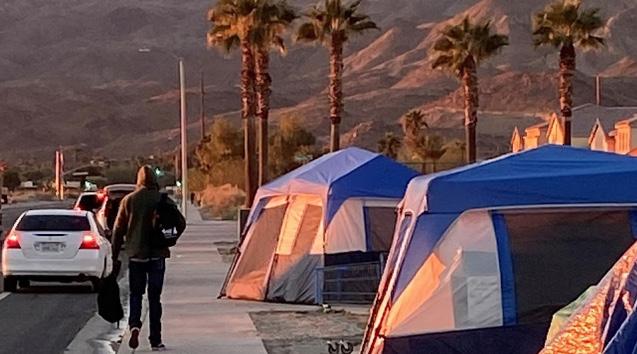
Arecent study shows that encampment bans and other policies that criminalizehomelessness don’t keep people from living on the street, Next City reports. The analysis did not find any reduction in homelessness in any of the cities studied as a result of such ordinances.
The study examined the effect of ordinances enacted between 2000 and 2021 across the 100 most populous U.S. cities, using data pulled from Continuums of Care — local entities that administer federal homelessness funding from the Department of Housing and Urban Development.
The study, published in May in the Policy Studies Journal, looked beyond camping bans and included laws criminalizing public drunkenness, urination, or other actions that are criminalized when conducted in public but not behind closed doors.

can result in arrest records that make it more difficult to secure housing and because belongings, including identification and work gear, are often discarded in sweeps. Lebovits stressed that the report she co-authored did not look at these consequences, which would require a more longterm look at housing and employment.
pandemic stimulus funding.
HUD’s most recent Point in Time count found that on a single night in January 2024, 771,480 people were homeless, the highest number since the count began. That includes 274,224 people who were unsheltered.
same justifications once used to legitimize vagrancy laws, which are historically intertwined with economic and racial subordination and rely on the false idea that poverty is synonymous with criminality.”
Laws passed in the last year include an ordinance in California’s San Joaquin County that requires people sleeping outside to move at least 300 feet every hour. Violation can lead to a $1,000 fine or six months in jail.
In February of 2025, the city of Fremont, CA passed a camping ban that also made it illegal to aid or abet a homeless encampment, a law that could criminalize outreach workers, also with a $1,000 fine or six months in jail.
California.
The Duarte Dispatchhas been adjudicated as a newspaper of general circulation in court case number GS 013893 City of Duarte, County of Los Angeles, State of California. The Rosemead Readerhas been adjudicated as a newspaper of general circulation in court case number GS 048894 City of Rosemead, County of Los Angeles, State of California. The Alhambra Press has been adjudicated as a newspaper of general circulation in court case number ES016581 City of Alhambra, County of Los Angeles, State of California. The Baldwin Park Press has been adjudicated as a newspaper of general circulation in court case number KS017174 City of Baldwin Park, County of Los Angeles, State of California.
The Burbank Independent has been adjudicated as a newspaper of general circulation in court case number ES016728 City of Burbank, County of Los Angeles, State of California.
The Glendale Independent has been adjudicated as a newspaper of general circulation in court case number ES016579 City of Glendale, County of Los Angeles, State of California.
The Monterey Park Press has been adjudicated as a newspaper of general circulation in court case number ES016580 City of Monterey Park, County of Los Angeles, State of California.







In some cases, the study found a quick dip in visible homelessness when laws were passed followed by a surge in homelessness that exceeded prior levels.
The authors say it is the first nationwide study examining criminalization laws and their impact on homelessness.
“The deterrence logic doesn’t hold,” says co-author Hannah Lebovits, assistant director of the Institute of Urban Studies at the University of Texas at Arlington.
Lebovits says she and her co-author Andrew Sullivan, an assistant professor in the University of Central Florida’s School of Public Administration, began studying the issue after a series of anti-camping ordinances were passed in 2020 and 2021, when homeless encampments were growing across the country. Lebovits says they wanted to look specifically at the issue of deterrence, the underlying logic behind many camping ordinances.
The report found that there was a 2.2% average increase in unsheltered homelessness in cities that implemented criminalization ordinances compared with cities that did not introduce ordinances, but noted that this number is “statistically insignificant” and not evidence that ordinances are increasing homelessness.
Advocates for unhoused people, including the Housing Not Handcuffs campaign, have argued that criminalization and homeless encampment sweeps increase rates of homelessness because they
The authors did look into whether criminalization ordinances could decrease unsheltered homelessness at the local level by pushing unhoused people into neighboring cities and counties without sanctions, but didn’t find any evidence to support this.
Homeless encampment bans are increasing
Big city mayors across the political spectrum have embraced some level of sanctions and homeless sweeps to address encampments.
This is largely because mayors have direct control over their police force, but less control over the policies that could house people. A 2021 survey of 126 mayors in 39 states found that 78% of mayors said that police have some influence over their city’s homeless policies. Meanwhile, 81% of mayors surveyed said they didn’t have much control over the issue of homelessness, though 73% said that they would be held accountable for it by their constituents. Over 40% of mayors defined success as reducing the number of people who are homeless in their city. Several mayors said their main goal was to move people along temporarily.
Public encampments popped up across the country during the first several months of the COVID-19 pandemic, when the CDC recommended against encampment clearance because congregate shelters could increase the spread of the virus.
Homelessness overall has also grown in the past few years as a result of rising housing costs, although that was briefly slowed by
On June 28, 2024, the Supreme Court issued a ruling in Grants Pass, deciding that cities could sweep homeless encampments and implement other punitive measures even if there was no shelter for homeless people to go to. The decision led to a swell of new anti-camping laws.
According to National Homelessness Law Center, in the year since Grants Pass, 260 laws criminalizing homelessness have been passed in cities across the country, most of them camping bans. And 57 state level laws criminalizing homelessness were introduced in 17 states, although only four were passed.
To stem the tide of criminalization, the National Homelessness Law Center created model legislation called the Gloria Johnson Act — named for the unhoused plaintiff in the Grants Pass case — which would make it illegal to cite or arrest someone for sleeping outside when there is nowhere else to go. It would also change zoning laws to allow more RV parking. The bill has been introduced in 11 states but has not been passed yet.
A national version of the bill was introduced in Congress by Representatives Pramila Jayapal and Maxwell Frost. On June 26, elected officials and co-sponsors gathered at a press conference in Washington, D.C. to introduce the bill. “Homelessness is not a personal failure, it is a policy failure,” Rep. Jayapal said at the press conference.
In a press release ahead of the bill’s introduction, Southern Poverty Law Center CEO Maragaret Huang, CEO said, “The arguments driving these anti-camping laws and litigation are rooted in the
In May of this year, Gov. Gavin Newsom called on California cities to make encampments illegal. The governor posted a model ordinance written by his office that said that the “Supreme Court’s decision in Grants Pass v. Johnson clarified that officials can take reasonable actions to clear encampments.” Confusingly, Newsom’s model ordinance also claims that the main holding of Grants Pass is inhumane without attributing it to the Supreme Court, saying “No person should face criminal punishment for sleeping outside when they have nowhere else to go.” The model ordinance does not lay out any specific criminal sanctions or fees for sleeping outdoors.
The Cicero Institute, a conservative think tank started by Palantir founder and billionaire Joe Lonsdale, has been pushing to criminalize homeless encampments across the country with its own model ordinance that would also penalize counties with “housing first” approaches.
Lebovits believes these types of laws are driven by the idea that “the reason why we see visible homelessness is the cities are permissive.” That means it’s important, she says, “to have a study that shows definitively that is not the case.”
This story was co-published in collaboration with Shelterforce, the only independent, non-academicpublication covering the worlds of affordable housing, community development and housing justice.
This story was produced by Next City, a nonprofit newsroom covering solutions for equitable cities, and reviewed and distributed by Stacker.
Republished with CC BY-NC 4.0 license.


UCSD: As climate change continues, fewer die from cold, more go to ER
By City News Service

Changing climate in California is reducing the number of people dying of cold temperatures, but increasing heat-related emergency room visits, according to a study released Wednesday by UC San Diego researchers.
The study, a joint collaboration between UCSD and Stanford, found that as the average temperature increases, fewer Californians die during cold weather. While more people are now dying of extreme heat, the pure numbers of those not dying during low temperatures outweigh it.
However, higher temperatures cause a sharp increase in ER visits.
“Heat can harm health even when it doesn’t kill,” said Carlos Gould, assistant professor at the Herbert Wertheim School of Public Health and Human Longevity Science at UC San Diego and first author of the study.
“Warmer temperatures were consistently associated with more trips to the emergency department, so studies and planning that only consider mortality miss a big slice of
the burden.”
The researchers used data covering all deaths, emergency department visits, hospitalizations and daily temperatures in California from 2006 to 2017, publishing the findings in Wednesday’s edition of the journal Science Advances.
According to the data, emergency room visits rise sharply with hotter days. Injuries, mental health issues and poisonings show marked increases with heat but are not major causes of death, so they are often missed in studies that focus only on mortality, the authors write.
“Age plays a critical role in shaping health risks from temperatures,” Gould said. “Older adults are particularly vulnerable to cold temperatures, whereas younger adults and children are more affected by heat.”
The benefit of fewer people dying of cold-related causes may be offset by the many hospitalizations and emergency room visits, the authors write. They suggest health policy needs to account for this trend as
climate change continues, with hospitals, insurers and public health agencies preparing for higher demand during heat events and tailoring heat warnings and resources to different age groups.
“We often think about only the most extreme health impacts of heat waves: deaths. This work is showing that many things that we may not think about being sensitive to extreme heat are, like poisonings, endocrine disorders, injuries and digestive issues,” said Alexandra Heaney, assistant professor at the Wertheim School and co-author of the paper. “We need to focus on the full spectrum of health impacts when we think about heat waves, now and in the future.”
Using projections based on moderate climate change scenarios through 2050, the researchers estimate California will see around 53,500 fewer deaths overall due to less cold weather -- partially offset by an estimated additional 1.5 million heat-driven emergency department visits.

His former company got caught employing undocumented workers. Now he’s profiting off an immigrant detention camp.
By Avi Asher-Schapiro and Jeff Ernsthausen, ProPublica
On July 21, the DepartmentofDefense announced that it had awarded a massive new contract to build the nation’s largest migrant detention camp on the Fort Bliss military base, a facility that will play a key role in the Trump administration’s deportation plans.
Unmentioned was that one of the subcontractors slated to work on the project, Disaster Management Group, is owned by Nathan Albers, who previously co-owned a company that pleaded guilty in 2019 to a scheme to hire undocumented workers and conceal them from immigration authorities. Albers is a big-time Republican donor who has spent time at Mara-Lago.
Two people with direct knowledge of the award and two familiar with the company told ProPublica that Disaster Management Group would help build the new facility, receiving a substantial chunk of the more than $1.2 billion the government has allocated for the project.
“The idea that you could use illegal labor and then sell services to ICE, the irony is thick,” said Scott Shuchart, a former official with the Department of Homeland Security and U.S. Immigration and Customs Enforcement during President Donald Trump’s first term and later under President Joe Biden, referring to the immigration case involving TentLogix, the company Albers once co-owned.
In response to questions from ProPublica, a spokesperson for Disaster Management said that Albers and Disaster Management had been dropped from the DHS’ investigation of TentLogix and exonerated. Upon learning of illegal actions by TentLogix’s co-founder, the spokesperson said, “Mr. Albers parted ways as a
minority and non-operating owner of TentLogix.”
The spokesperson didn’t directly answer questions about Disaster Management’s role in the detention camp at Fort Bliss, saying only that the company “is proud to support projects of national importance for nearly 20 years.”
The White House didn’t answer questions about Disaster Management or Albers, referring ProPublica to the DOD and DHS, neither of which provided comment.
The new migrant detention camp near El Paso, Texas, is expected to hold up to 5,000 people. The prime contractor is Virginia-based Acquisition Logistics, and people with direct knowledge of the work at Fort Bliss told ProPublica that Amentum, a major engineering and technology services contractor, will be another subcontractor.
Neither Acquisition Logistics nor Amentum replied to questions from ProPublica about the project.
Disaster Management specializes in building temporary structures. Since 2020, it’s won over $500 million in government contracting work, mostly to construct lodgings for a U.S. program to resettle Afghan refugees.
Last year, the Department of Labor announced that it had found Disaster Management and subcontractors it worked with on the Afghan refugee contract violated federal labor laws, including those on minimum wages and overtime. The agency recovered nearly $16 million in pay for workers, and Disaster Management signed a compliance agreement with the agency designed to prevent further violations. The company didn’t respond to questions about the case.
Albers’ ties to TentLogix wouldn’t have excluded him or Disaster Management
from other government contracting work, explained Scott Amey, the general counsel at the Project On Government Oversight.
TentLogix reported its criminal conviction in the federal contracting database, but Albers and his other businesses are considered separate legal entities. Companies awarded federal contracts are required to certify that they operate with a satisfactory record of business ethics, but “a lot of things are not required to be reported,” Amey said. “I don’t even think this would appear on the radar of a contracting officer.”
Still, there’s a web of connections between TentLogix and Disaster Management. Albers was one of TentLogix’s two directors when it pleaded guilty to violating immigration law. The other, Gary Hendry, co-founded Disaster Management with Albers, and the two were once brothers-in-law. When immigration authorities raided TentLogix in 2018, it shared an address with Disaster Management.
The raid followed a 2016 Homeland Security Investigations audit of Tentlogix, which found the company had 96 undocumented employees on its books. According to court records, Hendry then attempted to deceive investigators by creating a shell company and transferring the undocumented workers to that entity to conceal them from Homeland Security Investigations auditors. But the agency discovered the scheme and found undocumented workers at the company’s site when officials raided it in 2018. That year, Albers was listed as one of four officers on the company’s corporate filings.
In 2019, Hendry pleaded guilty to immigration charges alongside another company officer and was

sentenced to a year in prison. (He served a little over three months, then was granted an early release because of the pandemic.)
TentLogix, the corporate entity, also pleaded guilty and was ordered to forfeit over $3 million. Although Albers was not personally charged, he signed off on the company’s guilty plea, court records show. The company filed for bankruptcy in 2020. Hendry did not respond to a request for comment.
Disaster Management’s federal contracting work has been lucrative for Albers. Last year, he purchased a $30 million house in Jupiter, Florida, that then ranked as the area’s most expensive home.
Albers also has recently become a large donor to Republican campaigns, to which he’s given more than $150,000 in the last year alone. He and his wife spent election night at Mar-a-Lago in 2024 and once co-chaired a charity fundraiser at the Trump National Golf Club with the president’s son, Eric, and his wife. They attended the “Crypto Ball,” a cryptocurrency event sponsored by Trump supporters in the digital currency industry; participants paid between $2,500 and $1 million for tickets. (The Trump Orga-
nization did not respond to questions from ProPublica.)
Since late last year, Disaster Management has spent $210,000 lobbying Congress and the administration on immigrationrelated issues, including “funding related to temporary facilities.” The company had no prior history of lobbying, according to federal disclosures.
Disaster Management’s share of the immigration detention contract for Fort Bliss could rank among the company’s largest contracts.
The Fort Bliss award comes as immigration arrests have soared in recent months and ICE is running low on space to hold everyone it has detained. In the past, those arrested by ICE would mostly be housed in brick-and-mortar detention facilities.
But in its urgency to increase deportations, the Trump administration has turned to contractors to build so-called soft-sided facilities — tents with rigid structures inside — that can be set up much more quickly.
The administration has eyed military bases as locations to set up these new detention camps. In April, ICE announced a $3.8 billion award to build such a facility to Deployed Resources,
which had operated the lion’s share of the soft-sided facilities used in the past to temporarily house immigrants entering the country along the southern border.
ICE abruptly canceled that contract just days after it was announced without explanation. Now it appears Disaster Management could do much of that work. An industry insider estimated to ProPublica that Disaster Management’s slice of the $1.2 billion contract at Fort Bliss could be worth hundreds of millions for the company in the next year, though it’s not clear how the three contractors will split the work. Bloomberg first reported the total value of the Fort Bliss contract.
The facility at Fort Bliss is expected to be the first of many. Earlier in July, Trump signed a spending bill that allocates $45 billion to build new migrant detention sites. Experts estimate this could roughly double the country’s capacity for immigration detention from around 50,000 people to more than 100,000.
Mica Rosenberg contributed reporting. Pratheek Rebala, Kirsten Berg and Mario Ariza contributed research.
Republished with Creative Commons License (CC BY-NC-ND 3.0).
By Jonathan D. Salant for OpenSecrets via Stacker
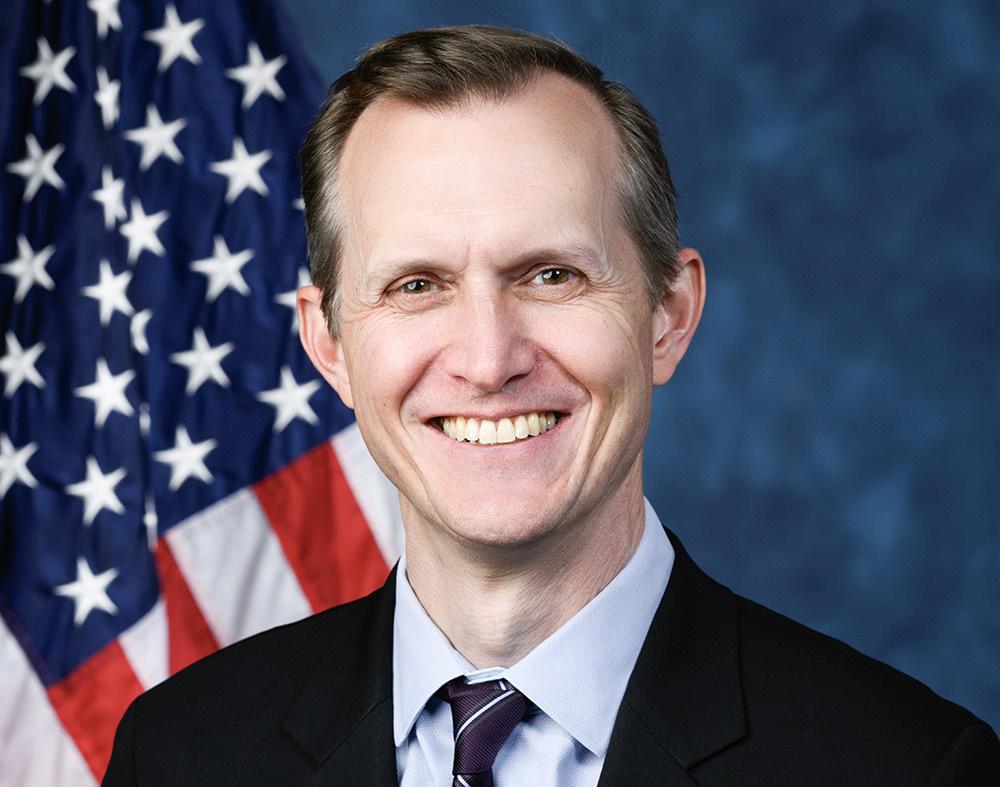
WhenCalifornia DemocratSam Liccardo ran for the U.S. House of Representatives last year, 13% of his political action committee contributions came from finance companies, insurers, and real estate agents, OpenSecrets data shows.
Liccardo won, and received a coveted appointment to the Financial Services Committee. During the first three months of 2025, as he began raising money for his re-election, more than half of his political action committee donations — 57% — came from the industries under his panel’s jurisdiction, according to his April 15 Federal Election Commission filing.
Citigroup contributed $1,000 to Liccardo’s re-election campaign after keeping its checkbooks closed during his first campaign.
Liccardo, who did not respond to requests for comment, is not alone.
Take Rep. Rob Bresnahan (R-Pa.) for example. When he first ran in 2024, transportation PACs donated $7,500 to his campaign. During the first three months of 2025, he took in $18,500 from the sector’s PACs.
Among his new PAC donors was the Owner-Operator Independent Drivers Association, which represents truckers.
“OOIDA supports candidates and elected officials who are engaged on the policy issues that matter most to the 150,000 truckers we proudly represent,” spokesman George O’Connor said. “Contributions are made based on a demonstrated interest in and commitment to transportation policies that improve roadway safety and the livelihood of truckers across America.”
Bresnahan did not respond to requests for comment.
Rep. Mark Messmer (R-Ind.) received one $1,000 contribution from a defense company PAC when he ran for
First-quarter FEC reports found plenty of other firstterm lawmakers now filling their re-election campaign coffers with PAC money from industries that fall under the jurisdiction of the committees the lawmakers now sit on.
the House last year. As a newly minted member of the Armed Services Committee, he took in $8,500 in March of this year alone, including $1,000 apiece from the PACs associated with Boeing, Lockheed Martin, and Textron.
“Our employee PAC program continues to observe long-standing principles of non-partisan political engagement in support of our business interests,” Lockheed said in a statement.
Messmer did not respond to requests for comment.

from energy and resources sector PACs after landing a seat on the Natural Resources Committee in January. When he ran last year, he took in only $17,000 from those PACs.
- Rep. Janelle Bynum (D-Ore.) received $1,000 from one financial sector PAC as a candidate for office. As a member of the Financial Services Committee, she received $20,000 during the first three months of 2025.
- Rep. Josh Riley (D-N.Y.) didn’t receive any donations from agriculture PACs when he ran for Congress last year. Now a member of the Agriculture Committee, he collected $17,000 from that sector’s PACs through March 31.
“The system is fundamentally broken,” said Bawadden Sayed, a spokesman for End Citizens United, which supports overhauling campaign finance laws. “The moment lawmakers receive committee assignments, special interests see an opportunity — and the money follows. This is a defining feature of how Washington works.”
The pattern is bipartisan. Consider:
- Rep. Nick Begich III (R-Alaska) raised $32,000
- Rep. Jeff Crank (R-Colo.), now a member of the Armed Services Committee, raised 6 percent of his PAC money from the defense sector during his first successful campaign. From January to March of this year, that sector accounted for onefourth of his PAC contributions.
- Rep. Julie Fedorchak (R-N.D.) a member of the Energy and Commerce Committee, saw PAC donations from the health sector grow to $19,500 during the first three months of 2025 from $8,500 in 2024. The sector accounted for 11 percent of PAC donations, up from 2 percent last year.
- Rep. George Whitesides (D-Calif.) joined the Science, Space and Technology Committee, and subsequently saw space industry PACs give his campaign committee $10,500 during the first three months of 2025 after ignoring him in 2024 — even though he is a former NASA chief of staff. Among the new donors were Jeff Bezos’ Blue Origin, whose PAC contributed $2,000.
“The American people are told their interests come first, but that’s a hard sell when lawmakers are cashing checks from the industries they’re supposed to regulate,” Sayed said. “People see this transactional relationship for what it is, and it’s why they don’t have any trust in Congress.” This story was produced by OpenSecrets and reviewed and distributed by Stacker. Re-published with CC BY-NC 4.0 License.

By City News Service
Endingmonthsof speculation,former
Vice President Kamala Harris announced Wednesday she will not run for governor of California, leaving the gubernatorial race wide open and immediately fueling speculation about whether she might again seek the presidency in 2028.
Harris said earlier this year she was considering a gubernatorial bid but wanted to take time to weigh the decision. In a statement Wednesday, the Brentwood resident said that while “I love this state, its people and its promise,” she will not throw her hat in the ring.
“For now, my leadership -- and public service -- will not be in elected office,” Harris said. “I look forward to getting back out and listening to the American people, helping elect Democrats across the nation who will fight fearlessly, and sharing more details in the months ahead about my own plans.
“In the United States of America, power must lie with the people. And We, the People must use our power to fight for freedom, opportunity, fairness, and the dignity of all. I will remain in that fight.”
She did not give a specific reasoning behind her decision, but said, “I have extraordinary admiration
and respect for those who dedicate their lives to public service -- service to their communities and to our nation. At the same time, we must recognize that our politics, our government, and our institutions have too often failed the American people, culminating in this moment of crisis. As we look ahead, we must be willing to pursue change through new methods and fresh thinking -- committed to our same values and principles, but not bound by the same playbook.”
Harris’ announcement immediately fueled online speculation about a possible 2028 presidential bid. After serving as vice president under President Joe Biden, Harris lost her 2024 presidential run to now-President Donald Trump.
Harris also ran for the presidency in 2020, but withdrew from the race relatively early, later being tabbed by Biden as his running mate.
Two Republicans -Riverside County Sheriff Chad Bianco and former Fox News host Steve Hilton -- have already announced a 2026 bid for the governor’s office. A host of Democrats have also joined the race -- former congressman and U.S. Health and Human Services Secretary Xavier
They appeared in plain clothes outside a San Diego hotel, wore camouflage as they raided a Los Angeles factory and arrived with military gear at a Ventura County farm.
The presence of thousands of hard-to-identify federal agents is a new fact of life in Southern California this summer as the Trump administration carries out the president’s promised deportations.
Residents may assume these masked agents are officers from Immigration and Customs Enforcement, or ICE. But that’s not always the case.
Many of them belong to the Border Patrol, the agency that traditionally has policed the nation’s border
Becerra, former Orange County Rep. Katie Porter, former Los Angeles Mayor Antonio Villaraigosa, Lt. Gov. Eleni Kounalakis, state schools chief Tony Thurmond, former Controller Betty Yee, former state Senate President Pro Tem Toni Atkins and entrepreneur Stephen Cloobeck.
Rep. Robert Garcia, D-Long Beach, reacted to Harris’ announcement, writing on X, “Kamala Harris has served our state as attorney general, U.S. Senator, and vice president. We could not be more grateful. Excited about her hitting the road and traveling the country to help us flip the House and win back Congress. Let’s go!”
Mayor Karen Bass, also a Democrat, also praised Harris.
“The vice president has always made our city and our state proud and there is no doubt in my mind that whatever she does next will be rooted in service for the people,” Bass wrote on social media.
Kollin Crompton of the Republican Governors Association said Wednesday’s announcement means Harris’ “political career is over thanks to President Trump.”
“She would have been a disaster for California: tanking the state’s economy even further, protecting criminal illegal immigrants over law-abiding citizens, and further bringing the

Democrat Party brand down with her, just like she did as vice president,” Crompton said. “Americans across the country can sigh in relief that they won’t have to see or hear from Kamala Harris any longer.”
Bianco issued a statement calling Harris’ decision “the first right decision in a career full of wrong ones.”
“Californians are tired of living in an unsafe state they cannot afford, and Kamala seems to understand that the status quo is impossible to defend,” he said. “We need
real leadership -- grounded in public safety, common sense, and accountability -- not more empty promises from the political elite. I*m running to fix what they broke.”
Some Democratic gubernatorial contenders, however, were predictably more supportive.
“Kamala Harris is a focused leader and I’m proud of the work we accomplished together on consumer protections during the housing crisis and grateful for her service to California and
with Mexico. But the Trump administration sent officers from other agencies to Los Angeles, too, including the FBI and special tactical teams from the Department of Homeland Security, not widely seen until now.
CalMatters examines the history of the agents and officers behind the masks and the efforts some are taking to change the rules.
Democrats in California’s Legislature have proposed measures to unmask the federal agents. Senate Bill 627, the “No Secret Police Act,” seeks to prohibit all local, state and federal officers from using masks with some exceptions. SB 805, the “No Vigilantes Act,” would require that officers clearly display their name or
badge number. It’s disputed whether the state can regulate federal officers, and law enforcement agencies are lobbying against the proposals.
Federal regulations state that ICE and Border Patrol agents should identify themselves when arresting someone “as soon as it is practical and safe to do so.”
And the public is allowed to ask federal agents to identify themselves.
But David Levine, a professor at UC Law San Francisco said, “they can ask but it doesn’t mean they’ll get the information.”
The number of sweeps and detentions appeared to slow last week after a federal judge issued a temporary restraining order, finding
our country,” Porter said in a statement. “I look forward to seeing her next accomplishments and continuing our work together.”
Becerra said, “The vice president and I have been together in this fight to restore the American Dream for a long time -- from when I succeeded her as California attorney general to when we served side by side in the president’s Cabinet. She has always put working families first, and she continues to be a trailblazing leader in our country and for our party.”

that agents stopped people based on someone’s race, language, accent, presence at a specific location or job.
For ensuing stops, agents
must have “reasonable suspicion” that doesn’t consider those factors “alone or in combination,” according to the judge’s order. While ICE is a different agency from Border Patrol, See ICE Page 08
both are part of the Department of Homeland Security and carry out immigration enforcement.
The difference may not always matter much, but misidentifying an agency can confuse the public, as it did with the sighting of federal agents outside Dodger Stadium in June. The agents reportedly had no visible names or badges and attempted to enter the stadium’s parking lots. The Dodgers put out a statement that “ICE agents” had been denied entry to the stadium. ICE denied it was ever there; the Department of Homeland Security then clarified that it had been Customs and Border Protection agents at the venue.
Images on social media show a constellation of federal agencies supporting immigration sweeps in Southern California. Here’s how you can identify them.
Border Patrol far from the border
Border Patrol agents often wear green uniforms, and “Border Patrol” and “U.S. Customs and Border Protection” might be labeled on their badge, vest, shoulder, back, bucket hat or cap, and usually in yellow text over blue.
Their marked vehicles tend to be white with a green slash, reading “Border Patrol” on the side.
Some might confuse Border Patrol with Customs and Border Protection officers. Those officials wear blue and usually stay stationed at ports of entry.
You may be wondering why Border Patrol agents are conducting immigration operations deep into Los Angeles neighborhoods, rather than staying closer to the border.
Border Patrol agents can search vehicles without a warrant throughout much of the country. They’re allowed to operate 100 miles from any edge of the country and coastline, reaching roughly two-thirds of the U.S. population, according to a CalMatters investigation and documentary produced in partnership with Evident and Bellingcat.
Since its creation by Congress in 1924, the Border Patrol’s role has been to prevent unauthorized entry into the United States. The agency polices trade, narcotics, contraband and combats human trafficking.
The agency has a SWATlike unit known as BORTAC, or Border Patrol Tactical Unit, which has also been documented in immigrant hubs such as MacArthur Park, Los Angeles’ Toy District, and Bell. Border

Patrol sources describe the unit’s use for “high-risk” purposes.
In fatigues, the unit wears a “BORTAC” patch on the left shoulder with, at times, black undershirts.
Customs and Border Protection also deployed its tactical Special Response Team in Los Angeles’ North Hills late June, executing a federal search warrant at a “human smuggling hub” tied to national security threats, arresting two, according to the agency.
ICE in police vests
ICE agents might wear an “ICE” patch on the front or back of their vest, usually in black-and-white, though they also can carry a badge of the same design in gold. The ICE emblem features the U.S. Department of Homeland Security eagle seal.
ICE agents might display “police” on their uniforms. The ACLU wants ICE to stop using the word “police” on uniforms, contending the agency is impersonating local law enforcement officers.
After 9/11, the Bush administration created the Department of Homeland Security, and Immigration and Customs Enforcement within it shortly thereafter. ICE is tasked with enforcing trade and immigration laws, including within the interior of the country.
The Cato Institute found that ICE booked over 200,000 people into detention between Oct. 1 and June 14. More than 93% of book-ins had no violent conviction, and 65% had no criminal conviction whatsoever.
ICE itself has a few enforcement divisions. That’s why some ICE uniforms might read ERO
— part of their “Enforcement and Removal Operations” team — or HSI for “Homeland Security Investigations.”
In 2024, ICE launched a rebrand and created the investigations unit to develop cases, and improve public outreach, including with local law enforcement, an HSI official told ABC News.
According to its website, HSI combats a broad array of transnational-related crime, ranging from narcotics smuggling to cybercrime, and from human trafficking to intellectual property theft.
ERO, meanwhile, manages all aspects of the typical immigration enforcement process: identifying, arresting, GPS monitoring, and deporting unauthorized immigrants. Their site description also says they seek to deport priority undocumented immigrants after they are released from U.S. jails and prisons. They can also assist multi-agency task forces in arresting unauthorized immigrants without any other criminal history who are “deemed a threat to public safety.”
ICE also deployed its Special Response Team, or SRT decked in military wear and weaponry, in San Diego late May. It sent a dozen or more of those officers to the Santa Fe Springs Swap Meet near southeast Los Angeles in June, detaining two people for deportation.
Agents from those teams will often feature their logo on the shoulder and will be seen in heavy military-like uniforms. The teams are meant to engage in “high risk” situations, according to ICE.
Rare National Guard deployment
National Guard troops
had been most visible outside a federal building during protests in downtown Los Angeles, but have also accompanied a few immigration enforcement operations. In mid-June, National Guard soldiers accompanied federal agents raiding marijuana farms around Thermal, a desert town near Coachella, where about 70 undocumented immigrants were arrested, according to the Drug Enforcement Administration.
On July 7, about 90 California National Guard soldiers swept through the Los Angeles immigrant hub of MacArthur Park, a defense official said, to protect immigration agents from potentially hostile crowds, according to the Associated Press. They were also on site in Carpinteria last week.
The National Guard troops in LA wear Army uniforms. Soldiers in the state units have patches on their left shoulder that show a raven, a sunburst, or a sunburst on top of a diamond, each in black and green color schemes. Troops will also have a fullcolor U.S. flag on the right shoulder. The patch under that, if any, can vary and may be based on a soldier’s past deployments.
Part of the U.S. military, the National Guard is able to serve both domestically and globally for state and federal duties, assisting with natural disasters, border security, civil unrest, overseas combat, counterdrug efforts and more. Soldiers largely stay in their home state and can be called on by the state governor or president.
Gov. Gavin Newsom opposed President Trump’s decision to send the troops to Los Angeles, and the
On X, U.S. Marshals touted themselves as “on the front lines of immigration enforcement” in Los Angeles while showing officers interviewing a man on a bike. Marshals were also on site at a Ventura County marijuana farm raid where more than 200 people were arrested. Can California unmask federal agents?
The use of masked agents without clearly identifying uniforms has confused the public, including local police, who have received reports of kidnappings.
California Attorney General Rob Bonta warned in March that reports of ICE impersonations were growing. Alleged federal agent impersonations have occurred in Huntington Park, Wisconsin, Philadelphia and elsewhere.
assignment marked the first time that a president has deployed the National Guard over the objections of a governor since the Civil Rights era.
More federal law enforcement officers
In January, a Homeland Security memo called for Justice Department agents to carry out immigration enforcement, according to ABC News. Deputized bureaus include the Drug Enforcement Administration, the Bureau of Alcohol, Tobacco, Firearms and Explosives, the U.S. Marshals Service and the Federal Bureau of Prisons, receiving the “same authority already granted to the FBI.”
Officers’ affiliations can be seen on their vests, jackets, or at times, their shoulder patches.
Agents wearing FBI fatigues were most visible in the worksite sweep at Ambiance Apparel in LA’s Fashion District, arguably the first major operation of the current wave of raids.
On June 10, FBI Los Angeles’ X account touted its collaboration with an ICE operation in Ventura County. They have also participated in other immigration raids across the country.
A spokesperson with the Justice Department declined to comment on how it deployed agents from various agencies. In early June, the FBI told KTLA that it is participating in immigration enforcement in Los Angeles and nationwide “as directed by the Attorney General,” supporting with SWAT, intelligence and more.
The ATF was also seen at the Ambiance Apparel raid. The DEA was there, too, and has since collaborated with ICE in the region.
“We don’t even know who these people are. It’s so dangerous, it’s so horrific, and it’s time to put standards in place,” said Sen. Scott Wiener, a San Francisco Democrat who is backing two proposals that would compel law enforcement officers to go without masks and display identification.
The Trump administration maintains that the masks are necessary to protect officers’ identities as they carry out investigations.
“So, I’m sorry if people are offended by them wearing masks but I’m not going to let my officers and agents go out there and put their lives on the line and their family on the line because people don’t like what immigration enforcement is,” said acting ICE Director Todd Lyons in a press conference early June.
And some law enforcement experts say the federal government has that authority.
“Certain legislators are giving a false sense of hope that California can legislate laws to control the practices of federal agents,” said Ed Obayashi, a longtime sheriff’s deputy in California and policy adviser to the Modoc County Sheriff’s Office.
“They cannot do that — bottom line. Plain and simple. Federal law is supreme.”
Acknowledging potential legal disputes, Wiener said he’s willing to test the “timesensitive” bills in the courts.
“Federal employees can’t just come in and ignore all California laws,” he said. “There are laws that they have to follow.”
This story was produced by CalMatters and reviewed and distributed by Stacker. The article was copy edited and retitled from its original version. Republished with CC BY-NC 4.0 license.
unless they have waived notice or consented to the proposed action.) The independent administration authority will be granted unless an interested person files an objection to the petition and shows good cause why the court should not grant the authority.
A HEARING on the petition will be held in this court as follows: 09/23/25 at 8:30AM in Dept. 79 located at 111 N. HILL ST., LOS ANGELES, CA 90012
Public Notice: City of San Gabriel Notice of Public Hearing Before the City Council
You are invited to participate in a public hearing before the San Gabriel City Council. You will have an opportunity to present your opinion regarding this item at the meeting or in writing prior to the meeting. Please submit all written comments to the City Clerk Department, in person or electronically using the online public comment form at https://www.sangabrielcity. com/PublicComment by the hearing date to be considered by the City Council. The meeting will be broadcast on the City of San Gabriel’s YouTube channel: https://www.youtube.com/ CityofSanGabriel
Hearing Date: Tuesday, August 19, 2025 TIME: 6:30 p.m. Location Of Hearing: Council Chambers located on the second floor of San Gabriel City Hall (425 South Mission Drive, San Gabriel, CA 91776) The meeting can be viewed live at: https://www. youtube.com/CityofSanGabriel Project Address: Citywide
Project Description: Citywide Draft Historic Resources Survey Report Phase 2. In Phase 2, each potential district identified in the Phase 1 survey was evaluated and documented. Each district was extensively researched, its boundaries and period(s) of significance were confirmed, and each property within the district boundaries were documented and assigned the status of contributor and noncontributor. The Draft Historic Resources Survey Report Phase 2 may be viewed on the City’s website: https://www.sangabrielcity.com/DocumentCenter/View/23220/ ARG_San-Gabriel-HRS-Report-Phase-2-FINAL_20250312
Questions: For additional information, please contact Samantha Tewasart, Acting Community Development Director at (626) 3082806 ext. 4623 or stewasart@sgch.org.
Environmental Review: This project is exempt from the requirements of the California Environmental Quality Act (CEQA), pursuant to Sections 15061(B)(3) and 15262 of the CEQA Guidelines. This includes a section known as the general rule and exempts projects where it can be seen with certainty that there is no possibility that the activity in question may have a significant effect on the environment.
Per Government Code Section 65009, if you challenge the nature of the proposed action in court, you may be limited to only raising the issue you or someone else raised at the public hearing described in this notice or in written correspondence delivered to the City Clerk prior to the public hearing.
By Samantha Tewasart, Acting Community Development Director
Published on August 4, 2025 SAN
NOTICE IS HEREBY GIVEN THAT in accordance with Title 2, Chapter 2.64, Section 160 of the El Monte Municipal Code, the El Monte Police Department is holding unclaimed money in the amount of $333,734.23. This money has remained unclaimed for over three (3) years. Funds not claimed within 45 days of publication of this notice will become the property of the City of El Monte.
Published on: Monday, August 4, 2025
Gabriel Ramirez, City Clerk City of El Monte EL MONTE EXAMINER
been filed by JAMEL ZITOUNI in the Superior Court of California, County of LOS ANGELES. THE PETITION FOR PROBATE requests that JAMEL ZITOUNI be appointed as personal representative to administer the estate of the decedent.
THE PETITION requests authority to administer the estate under the Independent Administration of Estates Act. (This authority will allow the personal representative to take many actions without obtaining court approval. Before taking certain very important actions, however, the personal representative will be required to give notice to interested persons
IF YOU OBJECT to the granting of the petition, you should appear at the hearing and state your objections or file written objections with the court before the hearing. Your appearance may be in person or by your attorney.
IF YOU ARE A CREDITOR or a contingent creditor of the decedent, you must file your claim with the court and mail a copy to the personal representative appointed by the court within the later of either (1) four months from the date of first issuance of letters to a general personal representative, as defined in section 58(b) of the California Probate Code, or (2) 60 days from the date of mailing or personal delivery to you of a notice under section 9052 of the California Probate Code. Other California statutes and legal authority may affect your rights as a creditor. You may want to consult with an attorney knowledgeable in California law.
YOU MAY EXAMINE the file kept by the court. If you are a person interested in the estate, you may file with the court a Request for Special Notice (form DE154) of the filing of an inventory and appraisal of estate assets or of any petition or account as provided in Probate Code section 1250. A Request for Special Notice form is available from the court clerk.
Attorney for Petitioner
TONY J. TYRE SBN 269506; ALLYSON S. HELLER SBN 315086, WILLIAM C. MASON III SBN 319441
LAW OFFICES OF TONY J. TYRE, ESQ., APC
100 S. CITRUS AVENUE, SUITE 101 COVINA CA 91723
Telephone (626) 8589378 7/28, 7/31, 8/4/25 CNS3951616# AZUSA BEACON
NOTICE OF PETITION TO ADMINISTER ESTATE OF PHYLLIS ILENE RENEAU aka PHYLLIS ILENE (nee HOAK) RENEAU aka PHYLLIS I. RENEAU
Case No. 25STPB01214
To all heirs, beneficiaries, creditors, contingent creditors, and persons who may otherwise be interested in the will or estate, or both, of PHYLLIS ILENE RENEAU aka PHYLLIS ILENE (nee HOAK) RENEAU aka PHYLLIS I. RENEAU
A PETITION FOR PROBATE has been filed by Shoushan Movsesian in the Superior Court of California, County of LOS ANGELES.
THE PETITION FOR PROBATE requests that Shoushan Movsesian be appointed as personal representative to administer the estate of the decedent.
THE PETITION requests authority to administer the estate under the Independent Administration of Estates Act. (This authority will allow the personal representative to take many actions without obtaining court approval. Before taking certain very important actions, however, the personal representative will be required to give notice to interested persons unless they have waived notice or consented to the proposed action.) The independent administration authority will be granted unless an interested person files an objection to the petition and shows good cause why the court should not grant the authority.
A HEARING on the petition will be held on August 15, 2025 at 8:30 AM in Dept. No. 11 located at 111 N. Hill St., Los Angeles, CA 90012.
IF YOU OBJECT to the granting of the petition, you should appear at the hearing and state your objections or file written objections with the court before the hearing. Your appearance may be in person or by your attorney.
IF YOU ARE A CREDITOR or a contingent creditor of the decedent, you must file your claim with the court and mail a copy to the personal representative appointed by the court within the later of either (1) four months from the date of first issuance of letters to a general personal representative, as defined in sec-
tion 58(b) of the California Probate Code, or (2) 60 days from the date of mailing or personal delivery to you of a notice under section 9052 of the California Probate Code. Other California statutes and legal authority may affect your rights as a creditor. You may want to consult with an attorney knowledgeable in California law. YOU MAY EXAMINE the file kept by the court. If you are a person interested in the estate, you may file with the court a Request for Special Notice (form DE154) of the filing of an inventory and appraisal of estate assets or of any petition or account as provided in Probate Code section 1250. A Request for Special Notice form is available from the court clerk. Attorney for petitioner: M JUSTIN MCDERMOTT ESQ SBN 303235 LAW OFFICES OF STUART D ZIMRING 16133 VENTURA BLVD STE 1075 ENCINO CA 91436 CN118855 RENEAU Jul 31, Aug 4,7, 2025 TEMPLE CITY TRIBUNE
NOTICE OF PETITION TO ADMINISTER ESTATE OF: DAWEI MIAO AKA DA WEI MIAO CASE NO. 25STPB08582
To all heirs, beneficiaries, creditors, contingent creditors, and persons who may otherwise be interested in the WILL or estate, or both of DAWEI MIAO AKA DA WEI MIAO.
A PETITION FOR PROBATE has been filed by ANDREW MIAO in the Superior Court of California, County of LOS ANGELES.
THE PETITION FOR PROBATE requests that ANDREW MIAO be appointed as personal representative to administer the estate of the decedent.
THE PETITION requests authority to administer the estate under the Independent Administration of Estates Act. (This authority will allow the personal representative to take many actions without obtaining court approval. Before taking certain very important actions, however, the personal representative will be required to give notice to interested persons unless they have waived notice or consented to the proposed action.)
The independent administration authority will be granted unless an interested person files an objection to the petition and shows good cause why the court should not grant the authority.
A HEARING on the petition will be held in this court as follows: 08/28/25 at 8:30AM in Dept. 99 located at 111 N. HILL ST., LOS ANGELES, CA 90012
IF YOU OBJECT to the granting of the petition, you should appear at the hearing and state your objections or file written objections with the court before the hearing. Your appearance may be in person or by your attorney.
IF YOU ARE A CREDITOR or a contingent creditor of the decedent, you must file your claim with the court and mail a copy to the personal representative appointed by the court within the later of either (1) four months from the date of first issuance of letters to a general personal representative, as defined in section 58(b) of the California Probate Code, or (2) 60 days from the date of mailing or personal delivery to you of a notice under section 9052 of the California Probate Code. Other California statutes and legal authority may affect your rights as a creditor. You may want to consult with an attorney knowledgeable in California law.
YOU MAY EXAMINE the file kept by the court. If you are a person interested in the estate, you may file with the court a Request for Special Notice (form DE154) of the filing of an inventory and appraisal of estate assets or of any petition or account as provided in Probate Code section 1250. A Request for Special Notice form is available from the court clerk.
Attorney for Petitioner
DANIEL B. BURBOTT SBN 279759 GAUDY LAW INC. 267 D STREET UPLAND CA 91786
Telephone (909) 9823199 8/4, 8/7, 8/11/25 CNS3953598# EL MONTE EXAMINER
NOTICE OF PETITION TO ADMINISTER ESTATE OF: FREDERICK ANDREW
WILLIAMS
CASE NO. 25STPB08608
To all heirs, beneficiaries, creditors, contingent creditors, and persons who may otherwise be interested in the WILL or estate, or both of FREDERICK ANDREW WILLIAMS.
A PETITION FOR PROBATE has been filed by KIMBERLY SEGO in the Superior Court of California, County of LOS ANGELES.
THE PETITION FOR PROBATE requests that KIMBERLY SEGO be appointed as personal representative to administer the estate of the decedent.
THE PETITION requests authority to administer the estate under the Independent Administration of Estates Act. (This authority will allow the personal representative to take many actions without obtaining court approval. Before taking certain very important actions, however, the personal representative will be required to give notice to interested persons unless they have waived notice or consented to the proposed action.)
The independent administration authority will be granted unless an interested person files an objection to the petition and shows good cause why the court should not grant the authority.
A HEARING on the petition will be held in this court as follows: 08/29/25 at 8:30AM in Dept. 5 located at 111 N. HILL ST., LOS ANGELES, CA 90012
IF YOU OBJECT to the granting of the petition, you should appear at the hearing and state your objections or file written objections with the court before the hearing. Your appearance may be in person or by your attorney.
IF YOU ARE A CREDITOR or a contingent creditor of the decedent, you must file your claim with the court and mail a copy to the personal representative appointed by the court within the later of either (1) four months from the date of first issuance of letters to a general personal representative, as defined in section 58(b) of the California Probate Code, or (2) 60 days from the date of mailing or personal delivery to you of a notice under section 9052 of the California Probate Code. Other California statutes and legal authority may affect your rights as a creditor. You may want to consult with an attorney knowledgeable in California law.
YOU MAY EXAMINE the file kept by the court. If you are a person interested in the estate, you may file with the court a Request for Special Notice (form DE-154) of the filing of an inventory and appraisal of estate assets or of any petition or account as provided in Probate Code section 1250. A Request for Special Notice form is available from the court clerk. Attorney for Petitioner LARRY D. STRATTON - SBN 116955, LAW OFFICE OF LARRY D. STRATTON 35 N. LAKE AVE., STE. 710 PASADENA CA 91101 Telephone (626) 447-1446 8/4, 8/7, 8/11/25 CNS-3953541# ARCADIA WEEKLY
NOTICE OF PETITION TO ADMINISTER ESTATE OF: EDWARD VINCENT OLIVA CASE NO. 25STPB08622
To all heirs, beneficiaries, creditors, contingent creditors, and persons who may otherwise be interested in the WILL or estate, or both of EDWARD VINCENT OLIVA.
A PETITION FOR PROBATE has been filed by VINCENT P. OLIVA in the Superior Court of California, County of LOS ANGELES.
THE PETITION FOR PROBATE requests that VINCENT P. OLIVA be appointed as personal representative to administer the estate of the decedent.
THE PETITION requests the decedent’s WILL and codicils, if any, be admitted to probate. The WILL and any codicils are available for examination in the file kept by the court.
THE PETITION requests authority to administer the estate under the Independent Administration of Estates Act with limited authority. (This authority will allow the personal representative to take many actions without obtaining court approval. Before taking certain very important actions, however, the personal representative will be required to give notice to interested persons unless they have waived notice or consented to the proposed action.) The independent administration authority will be granted unless an interested person
files an objection to the petition and shows good cause why the court should not grant the authority.
A HEARING on the petition will be held in this court as follows: 09/09/25 at 8:30AM in Dept. 11 located at 111 N. HILL ST., LOS ANGELES, CA 90012
IF YOU OBJECT to the granting of the petition, you should appear at the hearing and state your objections or file written objections with the court before the hearing. Your appearance may be in person or by your attorney.
IF YOU ARE A CREDITOR or a contingent creditor of the decedent, you must file your claim with the court and mail a copy to the personal representative appointed by the court within the later of either (1) four months from the date of first issuance of letters to a general personal representative, as defined in section 58(b) of the California Probate Code, or (2) 60 days from the date of mailing or personal delivery to you of a notice under section 9052 of the California Probate Code. Other California statutes and legal authority may affect your rights as a creditor. You may want to consult with an attorney knowledgeable in California law.
YOU MAY EXAMINE the file kept by the court. If you are a person interested in the estate, you may file with the court a Request for Special Notice (form DE-154) of the filing of an inventory and appraisal of estate assets or of any petition or account as provided in Probate Code section 1250. A Request for Special Notice form is available from the court clerk.
Attorney for Petitioner
Telephone (213) 572-3700 8/4, 8/7, 8/11/25 CNS-3954075# EL MONTE EXAMINER
NOTICE OF PUBLIC HEARING OF THE ALHAMBRA CITY COUNCIL TO CONSIDER AN APPLICATION FOR ZONING TEXT AMENDMENT AMD-25-03 TO ADOPT A HISTORIC PRESERVATION ORDINANCE
NOTICE IS HEREBY GIVEN that on Monday, August 25, 2025 at 6:00 p.m., or as soon thereafter as the matter may be heard, in the Council Chambers of the Alhambra City Hall, 111 South First Street, Alhambra, California, the Alhambra City Council will hold a public hearing to consider an application for Zoning Text Amendment AMD-25-03 to adopt a Historic Preservation Ordinance establishing regulations and standards for designating historic resources within the City and regulating designated resources as part of a comprehensive Historic Preservation Program, as well as amending various sections of the Alhambra Municipal Code to establish consistency with the proposed Historic Preservation Ordinance.
This meeting will be held in person in the Council Chambers of City Hall located at 111 S. First St., Alhambra, CA but viewing and participation will also be available via Zoom. Details regarding how to listen to and participate in the meeting will be outlined in the agenda posted for the August 25, 2025 meeting or please contact the City Clerk’s Office at (626) 570-5090.
ADDRESS: Citywide
APPLICANT: City of Alhambra FILE NO.: AMD-25-03
Pursuant to the California Environmental Quality Act, staff has conducted an initial review of the project application and has determined that the above referenced project is exempt from the California Environmental Quality Act (CEQA) pursuant to Sections 15060(c)(2), 15061(b)(3), and 15308 of Title 14 of the California Code of Regulations, since the proposed amendments will not result in a direct or reasonably foreseeable indirect physical change in the environment; there is no possibility that the proposed amendments will have a significant effect on the environment; and the proposed amendments will assure the maintenance, restoration, enhancement, or protection of the environment.
Further details and legal descriptions relating to the above ordinance is on file and may be viewed in the Community Development Department or City Clerk’s Office in the Alhambra City Hall during normal business hours (7:00 a.m. to 5:30 p.m., Monday thru Thursday) or online at: www.HistoricAlhambra. com.
Any person wishing to be heard on this matter is invited to attend the public hearing and speak to the Council at the time and place stated. Pursuant to California Public Resources Code Section 21177, no action or proceeding may be brought in court unless the alleged grounds for noncompliance with the California Environmental Quality Act were presented to the Council orally or in writing by any person and no persons shall maintain an action or proceeding unless that person objected to the approval of the Project orally or in writing to the Council.
LAUREN MYLES, CMC CITY CLERK
Notice No. N2M25-101
File No. F2M20-51
Publish & Post: 8-4-25
Published August 4, 2025 ALHAMBRA PRESS
NOTICE OF PETITION TO ADMINISTER ESTATE OF:
JOAN MARY IOZZO AKA
JOAN M IOZZO AKA J M IOZZO AKA JOAN IOZZA CASE NO. 25STPB08094
To all heirs, beneficiaries, creditors, contingent creditors, and persons who may otherwise be interested in the WILL or estate, or both of JOAN MARY IOZZO AKA JOAN M IOZZO AKA J M IOZZO AKA JOAN IOZZA.
A PETITION FOR PROBATE has been filed by COUNTY OF LOS AN-
GELES PUBLIC ADMINISTRATOR in the Superior Court of California, County of LOS ANGELES.
THE PETITION FOR PROBATE requests that COUNTY OF LOS AN-
GELES PUBLIC ADMINISTRATOR be appointed as personal representative to administer the estate of the decedent.
THE PETITION requests the decedent’s WILL and codicils, if any, be admitted to probate. The WILL and any codicils are available for examination in the file kept by the court. THE PETITION requests authority to administer the estate under the Independent Administration of Estates Act with limited authority. (This authority will allow the personal representative to take many actions without obtaining court approval. Before taking certain very important actions, however, the personal representative will be required to give notice to interested persons unless they have waived notice or consent-ed to the proposed action.) The independent administration authority will be granted unless an interested person files an objection to the petition and shows good cause why the court should not grant the authority.
A HEARING on the petition will be held in this court as follows: 08/15/25 at 8:30AM in Dept. 79 located at 111
N. HILL ST., LOS ANGELES, CA
90012
IF YOU OBJECT to the granting of the petition, you should appear at the hearing and state your objections or file written objections with the court before the hearing. Your appearance may be in person or by your attorney.
IF YOU ARE A CREDITOR or a contingent creditor of the decedent, you must file your claim with the court and mail a copy to the personal representative appointed by the court within the later of either (1) four months from the date of first issuance of letters to a general personal representative, as defined in section 58(b) of the California Probate Code, or (2) 60 days from the date of mailing or personal delivery to you of a notice under section 9052 of the California Probate Code.
Other California statutes and legal authority may affect your rights as a creditor. You may want to consult with an attorney knowledgeable in California law.
YOU MAY EXAMINE the file kept by the court. If you are a person interested in the estate, you may file with the court a Request for Special Notice (form DE-154) of the filing of an inventory and appraisal of estate assets or of any petition or account as provided in Probate Code section 1250. A Request for Special Notice form is available from the court clerk.
Attorney for Petitioner
DEBORAH P. MOGIL, DEPUTY COUNTY COUNSEL - SBN 199609
LOS ANGELES COUNTY COUNSEL
500 W. TEMPLE ST., #648 LOS ANGELES CA 90012, Telephone (213) 584-1422 7/28, 7/31, 8/4/25 CNS-3951357# BELMONT BEACON
NOTICE OF PETITION TO ADMINISTER ESTATE OF
representative, as defined in section 58(b) of the California Probate Code, or (2) 60 days from the date of mailing or personal delivery to you of a notice under section 9052 of the California Probate Code. Other California statutes and legal authority may affect your rights as a creditor. You may want to consult with an attorney knowledgeable in California law.
YOU MAY EXAMINE the file kept by the court. If you are a person interested in the estate, you may file with the court a Request for Special Notice (form DE-154) of the filing of an inventory and appraisal of estate assets or of any petition or account as provided in Probate Code section 1250. A Request for Special Notice form is available from the court clerk. Attorney for petitioner:
PENELOPE BERGMAN ESQ SBN 220452
BERGMAN & LEE LLP 9415 CULVER BLVD #309
CULVER CITY CA 90232
CN118836 BRETZMAN Jul 31, Aug 4,7, 2025 ONTARIO NEWS PRESS
NOTICE OF PETITION TO ADMINISTER ESTATE OF DANIEL GARAY
Case No. 25STPB08335
To all heirs, beneficiaries, creditors, contingent creditors, and persons who may otherwise be interested in the will or estate, or both, of DANIEL GARAY
A PETITION FOR PROBATE has been filed by Karla Baly in the Superior Court of California, County of LOS ANGELES.
THE PETITION FOR PROBATE requests that Karla Baly be appointed as personal representative to administer the estate of the decedent.
THE PETITION requests authority to administer the estate under the Independent Administration of Estates Act. (This authority will allow the personal representative to take many actions without obtaining court approval. Before taking certain very important actions, however, the personal representative will be required to give notice to interested persons unless they have waived notice or consented to the proposed action.) The independent administration authority will be granted unless an interested person files an objection to the petition and shows good cause why the court should not grant the authority.
A HEARING on the petition will be held on August 21, 2025 at 8:30 AM in Dept. No. 67 located at 111 N. Hill St., Los Angeles, CA 90012.
STEPHEN LOUIS BRETZMAN
Case No. PROVA2500561
To all heirs, beneficiaries, creditors, contingent creditors, and persons who may otherwise be interested in the will or estate, or both, of STEPHEN LOUIS BRETZMAN
A PETITION FOR PROBATE has been filed by Deborah Lerma in the Superior Court of California, County of SAN BERNARDINO.
THE PETITION FOR PROBATE requests that Deborah Lerma be appointed as personal representative to administer the estate of the decedent.
THE PETITION requests authority to administer the estate under the Independent Administration of Estates Act. (This authority will allow the personal representative to take many actions without obtaining court approval. Before taking certain very important actions, however, the personal representative will be required to give notice to interested persons unless they have waived notice or consented to the proposed action.)
The independent administration authority will be granted unless an interested person files an objection to the petition and shows good cause why the court should not grant the authority.
A HEARING on the petition will be held on August 25, 2025 at 9:00 AM in Dept. No. F1 located at 17780 ARROW BLVD, FONTANA CA 92335.
IF YOU OBJECT to the granting of the petition, you should appear at the hearing and state your objections or file written objections with the court before the hearing. Your appearance may be in person or by your attorney.
IF YOU ARE A CREDITOR or a contingent creditor of the decedent, you must file your claim with the court and mail a copy to the personal representative appointed by the court within the later of either (1) four months from the date of first issuance of letters to a general personal
Case No. 25STPB08417
To all heirs, beneficiaries, creditors, contingent creditors, and persons who may otherwise be interested in the will or estate, or both, of VILIAM J. FURDIK
A PETITION FOR PROBATE has been filed by Augusto Rivadeneira in the Superior Court of California, County of LOS ANGELES.
THE PETITION FOR PROBATE requests that Augusto Rivadeneira be appointed as special administrator to administer the estate of the decedent.
THE PETITION requests authority to administer the estate under the Independent Administration of Estates Act. (This authority will allow the personal representative to take many actions without obtaining court approval. Before taking certain very important actions, however, the personal representative will be required to give notice to interested persons unless they have waived notice or consented to the proposed action.)
The independent administration authority will be granted unless an interested person files an objection to the petition and shows good cause why the court should not grant the authority.
A HEARING on the petition will be held on Oct. 23, 2025 at 8:30 AM in Dept. No. 11 located at 111 N. Hill St., Los Angeles, CA 90012.
IF YOU OBJECT to the granting of the petition, you should appear at the hearing and state your objections or file written objections with the court before the hearing. Your appearance may be in person or by your attorney.
IF YOU ARE A CREDITOR or a contingent creditor of the decedent, you must file your claim with the court and mail a copy to the personal representative appointed by the court within the later of either (1) four months from the date of first issuance of letters to a general personal representative, as defined in section 58(b) of the California Probate Code, or (2) 60 days from the date of mailing or personal delivery to you of a notice under section 9052 of the California Probate Code.
Other California statutes and legal authority may affect your rights as a creditor. You may want to consult with an attorney knowledgeable in California law.
YOU MAY EXAMINE the file kept by the court. If you are a person interested in the estate, you may file with the court a Request for Special Notice (form DE-154) of the filing of an inventory and appraisal of estate assets or of any petition or account as provided in Probate Code section 1250. A Request for Special Notice form is available from the court clerk. Attorney for petitioner:
IF YOU OBJECT to the granting of the petition, you should appear at the hearing and state your objections or file written objections with the court before the hearing. Your appearance may be in person or by your attorney.
IF YOU ARE A CREDITOR or a contingent creditor of the decedent, you must file your claim with the court and mail a copy to the personal representative appointed by the court within the later of either (1) four months from the date of first issuance of letters to a general personal representative, as defined in section 58(b) of the California Probate Code, or (2) 60 days from the date of mailing or personal delivery to you of a notice under section 9052 of the California Probate Code.
Other California statutes and legal authority may affect your rights as a creditor. You may want to consult with an attorney knowledgeable in California law.
YOU MAY EXAMINE the file kept by the court. If you are a person interested in the estate, you may file with the court a Request for Special Notice (form DE-154) of the filing of an inventory and appraisal of estate assets or of any petition or account as provided in Probate Code section 1250. A Request for Special Notice form is available from the court clerk. Attorney for petitioner: MARIO D VEGA ESQ SBN 197659
NELSON E CAVOUR ESQ SBN 347330
VISTAS LAW GROUP LLP 1150 S OLIVE ST STE 600 LOS ANGELES CA 90015
CN118844 GARAY Jul 31, Aug 4,7, 2025 WEST COVINA PRESS
NOTICE OF PETITION TO ADMINISTER ESTATE OF VILIAM J. FURDIK
ity. A HEARING on the petition will be held on August 29, 2025 at 8:30 AM in Dept. No. 11 located at 111 N. Hill St., Los Angeles, CA 90012. IF YOU OBJECT to the granting of the petition, you should appear at the hearing and state your objections or file written objections with the court before the hearing. Your appearance may be in person or by your attorney. IF YOU ARE A CREDITOR or a contingent creditor of the decedent, you must file your claim with the court and mail a copy to the personal representative appointed by the court within the later of either (1) four months from the date of first issuance of letters to a general personal representative, as defined in section 58(b) of the California Probate Code, or (2) 60 days from the date of mailing or personal delivery to you of a notice under section 9052 of the California Probate Code. Other California statutes and legal authority may affect your rights as a creditor. You may want to consult with an attorney knowledgeable in California law.
YOU MAY EXAMINE the file kept by the court. If you are a person interested in the estate, you may file with the court a Request for Special Notice (form DE-154) of the filing of an inventory and appraisal of estate assets or of any petition or account as provided in Probate Code section 1250. A Request for Special Notice form is available from the court clerk. Attorney for petitioner: ANTHONY C GROSSMAN ESQ SBN 175408 SCHOFIELD & GROSSMAN APC 201 S LAKE AVE STE 403 PASADENA CA 91101 CN118877 EATON Aug 4,7,11, 2025 WEST COVINA PRESS
NOTICE OF PETITION TO ADMINISTER ESTATE OF: JAMES HAROLD HEINE CASE NO. 25STPB08508
To all heirs, beneficiaries, creditors, contingent creditors, and persons who may otherwise be interested in the WILL or estate, or both of JAMES HAROLD HEINE.
JENNIFER E LAROSSA ESQ SBN 195328
MORRISON LAROSSA PRICE & ITURRIOZ 3711 LONG BEACH BL STE 801
LONG BEACH CA 90807
CN118878 FURDIK Aug 4,7,11, 2025
BURBANK INDEPENDENT
NOTICE OF PETITION TO ADMINISTER ESTATE OF DARLENE R. EATON Case No. 25STPB08465
To all heirs, beneficiaries, creditors, contingent creditors, and persons who may otherwise be interested in the will or estate, or both, of DARLENE R. EATON
A PETITION FOR PROBATE has been filed by Gary J. Galanda and Sherri Carlin in the Superior Court of California, County of LOS ANGELES.
THE PETITION FOR PROBATE requests that Gary J. Galanda and Sherri Carlin be appointed as personal representative to administer the estate of the decedent.
THE PETITION requests the decedent’s will and codicils, if any, be admitted to probate. The will and any codicils are available for examination in the file kept by the court.
THE PETITION requests authority to administer the estate under the Independent Administration of Estates Act. (This authority will allow the personal representative to take many actions without obtaining court approval. Before taking certain very important actions, however, the personal representative will be required to give notice to interested persons unless they have waived notice or consented to the proposed action.)
The independent administration authority will be granted unless an interested person files an objection to the petition and shows good cause why the court should not grant the author-
A PETITION FOR PROBATE has been filed by SUSAN HEINE in the Superior Court of California, County of LOS ANGELES. THE PETITION FOR PROBATE requests that SUSAN HEINE be appointed as personal representative to administer the estate of the decedent. THE PETITION requests authority to administer the estate under the Independent Administration of Estates Act. (This authority will allow the personal representative to take many actions without obtaining court approval. Before taking certain very important actions, however, the personal representative will be required to give notice to interested persons unless they have waived notice or consented to the proposed action.) The independent administration authority will be granted unless an interested person files an objection to the petition and shows good cause why the court should not grant the authority.
A HEARING on the petition will be held in this court as follows: 08/27/25 at 8:30AM in Dept. 29 located at 111 N. HILL ST., LOS ANGELES, CA 90012
IF YOU OBJECT to the granting of the petition, you should appear at the hearing and state your objections or file written objections with the court before the hearing. Your appearance may be in person or by your attorney. IF YOU ARE A CREDITOR or a contingent creditor of the decedent, you must file your claim with the court and mail a copy to the personal representative appointed by the court within the later of either (1) four months from the date of first issuance of letters to a general personal representative, as defined in section 58(b) of the California Probate Code, or (2) 60 days from the date of mailing or personal delivery to you of a notice under section 9052 of the California Probate Code. Other California statutes and legal authority may affect your rights as a creditor. You may want to consult with an attorney knowledgeable in California law.
YOU MAY EXAMINE the file kept by the court. If you are a person interested in the estate, you may file with the court a Request for Special Notice (form DE-154) of the filing of an inventory and appraisal of estate assets or of any petition or account as provided in Probate Code section
By City News Service
The county Board of Supervisors Tuesday voted to move into the technical planning phase of a years-long project to convert the Los Angeles General Hospital campus in Boyle Heights into a “Healthy Village” of wellness services, housing and other neighborhood amenities.
As part of the action spurred by Supervisor Hilda Solis, the county approved roughly $3.3 million in funding for a development team known as Centennial Partners to conduct the planning effort, which will include a thorough survey and analysis of land use at the campus, environmental conditions, engineering, transportation and parking.
“This historic project
is about preserving our past while investing in our future,” Solis said in a statement following the vote.
“We are creating a community space that prioritizes housing, health care, sustainability and dignity for our most vulnerable. The General Hospital has long been a symbol of healing, and through this effort, it will continue to serve as a beacon of hope and opportunity.”
The motion approved unanimously by the board also directed county staff to apply to have the art-deco building added to the National Register of Historic Places, a move Solis said could free up preservation funding and tax credits to assist with the overall
project cost.
The building opened in 1934 and operated until it suffered structural damage in the 1994 Northridge earthquake.
“This moment has been years in the making,” Rosa Soto, executive director of The Wellness Center at General Hospital, said in a statement. “From the beginning, we’ve brought community voices to the table -- not just to be heard, but to shape what this space becomes. The Healthy Village is a vision born from our community members’ lived experiences, and this next phase is a powerful step toward making that vision real: housing that’s affordable, care that’s accessible, and a place where our families can truly thrive.”
By City News Service
Afederal judge Wednesday dismissed the case against an East Los Angeles immigration activist who was accused of handing out protective face shields to protesters last month during an anti-ICE demonstration.
Alejandro Orellana, 29, a member of the Boyle Heights-based community organization Centro CSO, was indicted in June by a federal grand jury on felony charges of conspiracy and aiding and abetting civil disorder, court records show.
However, at the request of the U.S. Attorney’s Office, U.S. District Judge Serena Murillo on Wednesday issued a judgment of discharge in the case, dismissing the charges against Orellana without prejudice -- meaning it can be refiled -- and ordering his bond exonerated.
Prosecutors filed a motion to toss the charges on Tuesday.
No reason was given for the decision to dismiss the case, and a spokesman for the U.S. Attorney’s Office declined comment.
“Protecting our community is not a crime,” Orellana said in a statement. “Thanks to all those across the country who mobilized to demand that the charges (be dropped). We won because our cause is just.”
Orellana was expected to speak about the decision later Wednesday at Mariachi Plaza in Boyle Heights.
According to the indictment, Orellana and at least
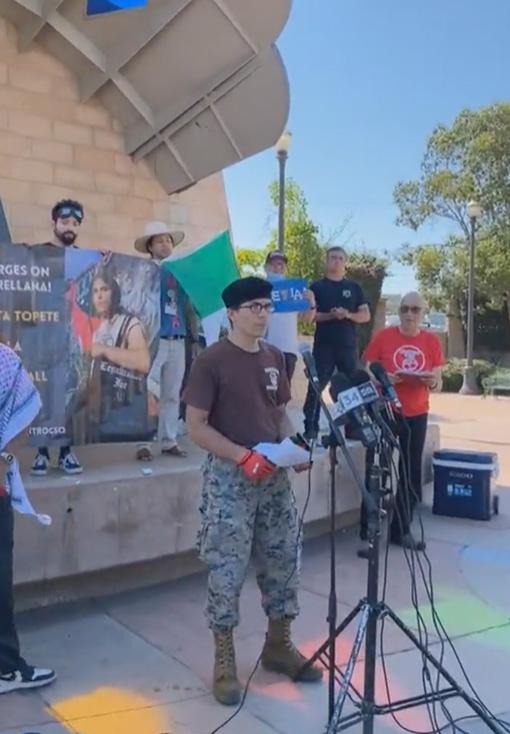
two others drove around downtown L.A. in a pickup truck distributing Uvex Bionic face shields and other items to a crowd engaged in a protest near the federal building on Los Angeles Street on June 9. The face shields are designed to protect from chemical splashes and flying debris.
Workinginpartnershipwiththe Australian government, the Los Angeles Zoo announced Tuesday it will serve as the home of two male Tasmanian devils for the first time in five years.
The devils, named Danny Zuko and Crush, were born at Aussie Ark, a nonprofit conservation group in New South Wales that manages breeding and rewilding programs for endangered Australian species.
They are now featured in the zoo’s Animals of Australia exhibit.
“The L.A. Zoo has a long history of caring for this
species and we are thrilled to once again have the opportunity to share them with our guests,” Candace Sclimenti, curator of mammals for the L.A. Zoo, said in a statement.
“Australia is home to so many unique species and wildlife plays a pivotal role in Australian culture. We are honored to provide an experience that will help people better understand these wonderful animals and the challenges they face in the wild,” Sclimenti added.
Tasmanian devils are found only in Tasmania, an island state located south of mainland Australia. They inhabit eucalyptus forests,
Centro CSO contends his arrest was “political repression” due to Orellana’s activism.
At the time Orellana was arraigned, trial was set for Aug. 26 in Los Angeles federal court. At his initial court appearance, Orellana -- a former U.S. Marine -- was ordered by a magistrate judge to not come within 100 yards of federal agents or buildings -- except for court appearances and meetings with his legal counsel.
By City News Service
woodlands and coastal scrublands, and often shelter under rocks, in caves, dense brush, burrows or hollow logs.
Though they may look awkward, Tasmanian devils are the island’s top predator, with the strongest bite force relative to body size of any mammal, according to zoo officials.
They also have a sharp sense of smell and excellent hearing, which help them locate live prey and carrion. While they are primarily scavengers, they are capable of hunting small birds and mammals.
Tasmanian devils are listed as endangered by the

By City News Service
West Nile virus has been detected in a mosquito sample collected from a surveillance trap in the city of El Monte, officials said Tuesday.
The San Gabriel Valley Mosquito & Vector Control District said it was the first such activity in its service area this season.
“West Nile virus is a recurring concern in our region,” Director of Scientific Programs Tristan Hallum said. “It’s endemic to the San Gabriel Valley, meaning we expect to detect it every year in mosquitoes, birds, and occasionally humans. The key to staying protected is avoiding mosquito bites.”
The San Gabriel District is one of five vector control districts in Los Angeles County. The agency monitors stagnant water sources such as gutters, storm drains, channels and non-functional swimming pools. Staff also routinely monitor populations of adult mosquitoes using traps and test groups of adult female mosquitoes for the presence of mosquitoborne diseases.
Last month, the Greater Los Angeles County Vector Control District confirmed mosquito samples testing positive for West Nile virus in Arleta, South El Monte and Valley Glen, and Orange County health officials found
mosquito samples testing positive for West Nile virus in Anaheim and Garden Grove.
West Nile virus is naturally found in the environment across the entire county, even in areas where recent mosquito sample detections have not occurred. Because there is currently no human vaccine for the virus, health experts said residents should take personal protective measures by using mosquito repellent when spending time outdoors, especially during peak mosquito activity.
The U.S. Centers for Disease Control and Prevention recommend using insect repellent with any of the following active ingredients:
DEET, Picaridin, IR3535, or Oil of Lemon Eucalyptus.
To avoid virus-carrying mosquitoes, health experts recommend finding and disposing of standing water to eliminate breeding grounds. Residents can take precautions by wearing mosquito repellent when mosquitoes are most active, at dawn and dusk.
People infected with the virus generally experience mild symptoms such as fever, muscle aches, and tiredness. People over age 50 and people with underlying health problems can develop more serious health problems if they are infected with the virus.
By Suzanne Potter, Producer, Public News Service
If you have an extra five minutes, you can save a life because you can learn cardiopulmonary resuscitation at no cost from a new mobile, hands-only CPR kiosk.
The new kiosk is in the lobby of Saint John’s Health Center in Santa Monica. The machine’s touch screen gives a brief overview of handsonly CPR and you can practice right there, on a mannequin.
Dr. Rigved Tadwalkar, cardiologist at St. John’s, said it is an easy way for people to get more comfortable giving chest compressions in an emergency.
“It’s a lot like a video game but of course, a lot more important than a video game,” Tadwalkar pointed out. “It gives real-time feedback about the depth and rate of compressions, proper hand placement, which are all factors that influence the effectiveness of CPR.”
The American Heart Association operates the St. John’s mobile kiosk and a stationary model at L-A-X with support from the hospital. Santiago Canyon College in Orange County also has a mobile hands-only C-P-R kiosk now through September, sponsored by Edwards Life-
sciences.
Steven Munatones, an Orange County business owner, said he survived what’s known as a “widowmaker” heart attack which led to cardiac arrest nine years ago, thanks to his 17-year-old son, who gave him immediate CPR with instructions from a 911 operator.
“You don’t have to put your mouth to anybody’s mouth,” Munatones explained. “You just put your hand on their chest and pump. He saved me, and others can do the same, anywhere. So, it’s absolutely a lifesaving, heroic act that anybody can do.”
Statistics show 350,000 Americans suffer from cardiac arrest outside a hospital each year and about 90% die, in part because they do not receive CPR. About 70% of those cardiac arrests happen at home, so people often depend on family or friends to give CPR before an ambulance arrives.
Disclosure: The American Heart Association Western States Region contributes to Public News Service’s fund for reporting on Health Issues. If you would like to help support news in the public interest, visithttps://www.publicnewsservice.org/dn1.php.

our region’s broader housing needs.”
Los Angeles Mayor Karen Bass issued a similar order to Newsom’s prohibiting SB 9 applications within the Pacific Palisades burn area.
“SB 9 was not originally intended to be used in the rebuilding of a community that was decimated by the worst natural disaster LA has ever seen,” Bass said in a statement. “I thank Governor Newsom for working with my office to provide some sense of solace for a community working to rebuild.”
In a statement issued Tuesday, Bass said SB 9 was passed to create more housing, which is in critically short supply in the LA area and many other locations
statewide.
“Legislators in Sacramento could not have foreseen the bill’s impact on the Palisades community as it works to rebuild from one of the worst natural disasters in state history,” Bass said.
More than 5,000 singlefamily homes were damaged or destroyed by the Palisades Fire, with over 4,000 lost in the Eaton Fire.
Bass warned that SB 9 could allow property owners and developers to rebuild with structure that have multiple residential units, which could significantly hinder access to a very high severity zone for fire hazards.
“It could fundamentally alter the safety of the area by straining local infrastructure,”
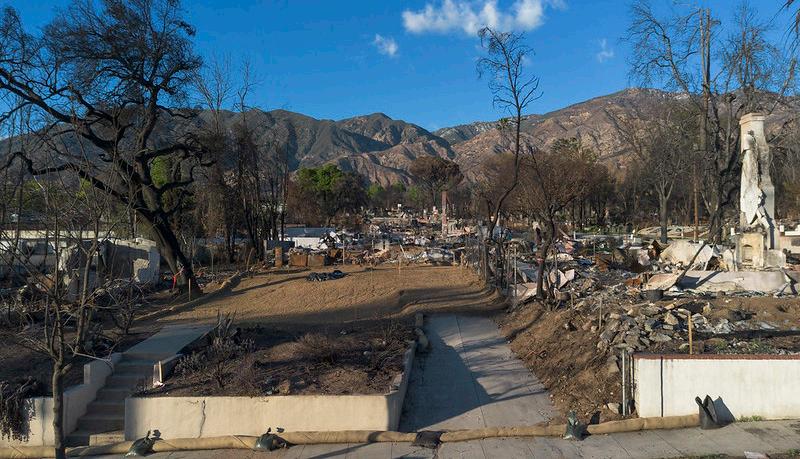
the mayor said. “I oppose this usage as it relates to the rebuilding in the Palisades, and I look forward to continuing work with Governor Newsom and state leaders to advocate for the Palisades
community and identify a path forward as we continue to rebuild.”
LA City Councilwoman Traci Park, who represents Pacific Palisades, sent a letter Tuesday to Newsom that
warned SB 9 could lead to an “unforeseen explosion of density.”
According to Park, “Given the widespread destruction of the Pacific Palisades, its topography, and limitations to infrastructure, ingress and egress, I am requesting that SB 9 and other laws permitting increases in density be suspended until such time an analysis can be conducted to determine the capacity of our evacuation routes and infrastructure can adequately accommodate this increased density.”
The Pacific Palisades Community Council, a residents group, also wrote to Newsom and LA elected officials requesting suspension of SB 9.
“We write now to urgently request that our government officials take immediate steps to protect the community from forced additional density that will result from opportunistic developers seeking to take advantage of the widespread destruction of single-family homes caused by the Palisades Fire to build multi-family housing under the streamlined procedures of SB 9,” the community council’s letter said. “These efforts, if unchecked, pose a grave risk to public safety, and ultimately, to preservation of the essential character of Pacific Palisades.”
The county’s website with information on wildfire recovery is recovery.lacounty. gov.