


By City News Service
The county Board of Supervisors directed its staff Tuesday to develop a regional strategy by December 2025 for addressing homelessness in areas where major sporting events -- including the 2026 FIFA World Cup, 2027 Super Bowl and 2028 Olympics -- are scheduled to take place.
“The surge in international tourism, and the need to establish adequate security perimeters, will also put pressure on the region to address homeless encampments near the venues and neighborhoods hosting these events,” according to a motion by Supervisors Hilda Solis and Janice Hahn.

ations since its launch in late 2022, according to the motion.
“In advance of the upcoming sporting events, it is imperative that Los Angeles County and our local jurisdictional partners have a plan to effectively and humanely address encampments, with a strategy that prioritizes housing and services for our most vulnerable residents,” the motion states.
The report is also expected to include budget estimates and recommendations for ways area stakeholders can support the implementation of the strategy.
“Efforts to address homelessness in advance of international sporting events in other jurisdictions have had uneven results, leading to accusations that governments are busing unhoused individuals to the outskirts of host cities without addressing the underlying lack of shelter capacity.”
TThe motion approved by the board calls for the development of a written regional strategy “to increase and
sustain the capacity to address unsheltered homelessness around areas where major sporting events will take place.”
The motion states the county already has several tools at its disposal to addressencampments, noting that the Pathway Home program has cleared 17 encampments and 465 recreational vehicles near the venues in the cities of Los Angeles, Inglewood and Long Beach, including 749
people who were moved into interim housing.
The county also partners with the city of Los Angeles on Mayor Karen Bass’ Inside Safe program, which has brought almost 3,000 Angelenos into housing situ-
Relevant stakeholders such as the city of Los Angeles, LA 2028, the Executive Committee on Regional Homelessness Alignment, Los Angeles Homeless Services Authority and others are expected to collaborate on the report.
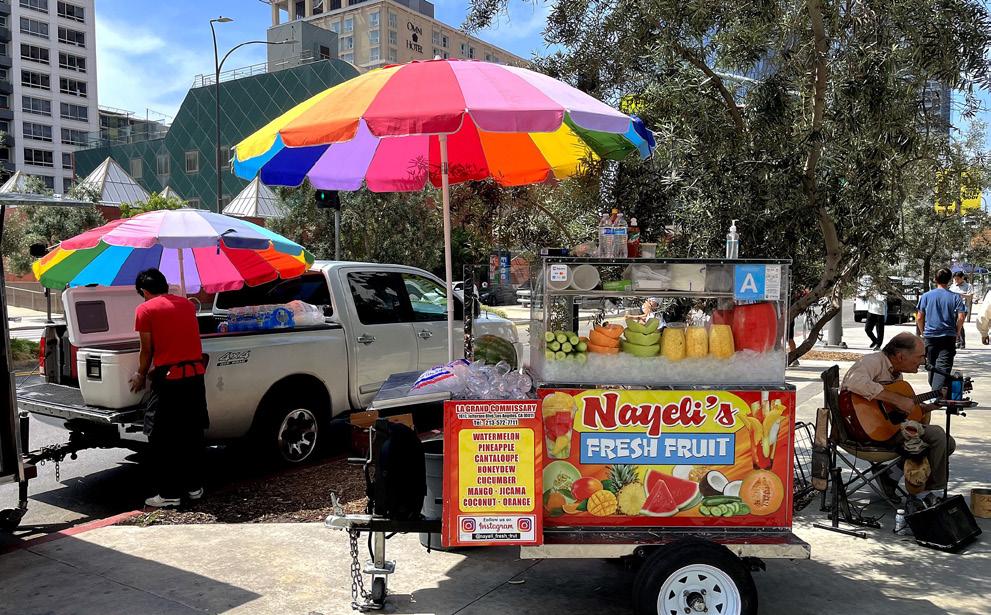
he county Board of Supervisors Tuesday agreed to accept $1.67 million in federal funds from the city of Los Angeles to support the manufacture and distribution of code-compliant vending carts to support local street vendors.
The county had previously approved an allocation of $2.5 million of its own American Rescue Plan Act funding to procure carts that comply with the county’s newly enacted sidewalk vending ordinance.
The city enacted a vending program of its own and has been working to support vendors, including working with the county Department
of Economic Opportunity to purchase and distribute vending carts to eligible vendors.
“In recognition of the economic benefits sidewalk vending provides to immigrant and low-income communities and the overall health of our local economy, and because the boundaries lines between the city of Los Angeles and the unincorporated areas of Los Angeles County are often blurred for most vendors, it is a benefit to the county to collaboratively partner with the city in its procurement and distribution of sidewalk vending carts,” according to a motion by Supervisors Hilda Solis
By City News Service
and Holly Mitchell.
The board approved the motion, which allows the county to accept the federal
dollars from the city and sign an agreement with the city for the manufacture and distribution of the carts.
The county’s Sidewalk Vending Ordinance was approved in February and took effect in early August.
Under the county ordinance, vendors must obtain a health permit, which requires an initial fee, ranging from $508 for a low-risk operation selling pre-packaged food to $1,186 for higher-risk vendors who prepare and sell hot food, such as a taco stand or hot dog cart. Vendors then have to pay ongoing annual fees ranging from $226 to $1,000, depending on the type of vending.
A subsidy program was also adopted to cover about 75% of the health permit costs for vendors who meet certain qualifications, including annual revenue of less than $50,000. A separate county ordinance also imposes regulations for vendors in unincorporated areas, including restrictions on where and when they can operate and requirements for distance between vendors. Under that ordinance, vendors must register with the county and pay a registration fee of $604. That fee, however, will be largely subsidized by the county Department of Economic Opportunity, which will cover the full cost of the permit in the first year, then reduce it to $100 in subsequent years.
Aveteran member of the Los Angeles County Fire Department sued his employer Tuesday, alleging he has been wrongfully denied a promotion to deputy chief because he is a white male.
Assistant Chief Frank Forman’s Los Angeles Superior Court lawsuit alleges discrimination and failure to prevent discrimination, harassment and/or retaliation. He seeks unspecified damages.
A county representative did not immediately reply to a request for comment.
Forman was hired in October 1991 and has been an assistant chief since 2021 with a good record as an upperlevel manager, the suit states.
Fire Chief Anthony C. Marrone, during a March 2023 operations staff meeting, told Forman and all others present that the department would promote women and people of color, the suit alleges.
“Some will be happy and others who are more qualified will not be happy,” Marrone allegedly said while looking at Forman.
By City News Service

Marrone’s comment was clear that women and people of color would be promoted “for the look” at the department, the suit states. Forman applied for a deputy fire chief position that same month, and the plaintiff was given a first interview in June 2023,
according to the suit. But Forman was not given a second interview, and he was not promoted when the new deputy chief selections were announced last November with non-white men getting the majority of the promotions, the suit states.

By City News Service

Afederal appeals court Wednesday upheld a Chinese-owned real estate development company’s convictions for bribing disgraced former Los Angeles City Councilman José Huizar with more than $1.5 million in cash, gambling trips and escorts in exchange for the then-councilman’s support of a planned downtown hotel project.
The company, Shen Zhen New World I, was owned and operated by Chinese billionaire Wei Huang, who, for over four years, lavished extravagant Las Vegas hotel stays, gambling chips and prostitutes on Huizar. Shen Zhen sought to redevelop the L.A. Grand Hotel into Los Angeles’ tallest skyscraper, evidence showed.
Huang’s right-hand man confided to Huizar’s aide that Huang’s strategy was to “give, give, give” so that he could later make a “big ask” for Huizar’s support on the redevelopment project, according to trial testimony.
Huizar was not only the councilmember of the district that encompassed the hotel but also a key figure on committees that oversaw all development in the city.
A three-judge panel of the U.S. 9th Circuit Court of Appeals ruled Wednesday that sufficient evidence supports the company’s November 2022 convictions in Los Angeles federal court on three counts of
honest service wire fraud, four counts of interstate and foreign travel in aid of bribery, and one count of bribery.
In May 2023, downtown Los Angeles-based Shen Zhen New World was sentenced to five years of probation and fined $4 million -- the maximum penalty under the law.
The Pasadena appellate panel rejected Shen Zhen’s appeal, including an argument that the government’s failure to establish either an agreement between the parties or any official action by Huizar taints all of the counts against the company.
Although indicted along with his company, Huang never stood trial and remains a fugitive in China.
In 2010, Shen Zhen bought the L.A. Grand Hotel for $63 million. Huang hoped to transform the 13-story hotel into a 77-story mixeduse skyscraper that would constitute the tallest tower in Los Angeles.
Huizar was concurrently running a “pay-to-play” bribery scheme with Los Angeles developers. The then-councilmember’s office treated developers who provided Huizar with money and perks as “friends of the office,” leveraging his power to advance their projects, according to trial testimony. Huizar’s aide, George Esparza, testified that
he tracked requests from “friends of the office” and relayed Huizar’s requests for benefits to developers. Developers who failed to pay got “no play,” and Huizar “would essentially pay no attention to their project,” according to trial testimony.
Along with other perks, Huang provided Huizar with $260,000 in gambling chips over the course of four years and 20 trips to Las Vegas, and assisted Huizar with a hush-money payment after a sexual-harassment lawsuit threatened Huizar’s 2015 reelection campaign.
Huizar, 55, pleaded guilty to accepting bribes from downtown developers and cheating on his taxes, and was sentenced to a 13-year federal prison term. He was allowed to surrender to begin his prison term no later than Oct. 7.
Huizar’s co-defendant, former Deputy Mayor Raymond Chan -- who was general manager of the Department of Building and Safety before becoming the city’s deputy mayor of economic development -was convicted at retrial of a dozen federal counts, including racketeering conspiracy, bribery, honest services fraud and other charges for helping Huizar in the bribery scheme.
Chan’ssentencing hearing is set for Oct. 4 in downtown Los Angeles.
Editorial editorial@beaconmedianews.com
editor@hlrmedia.com
Graphics/Production production@beaconmedianews.com production@hlrmedia.com
Advertising advertising@beaconmedianews.com advertising@hlrmedia.com
Legal Advertising legals@beaconmedianews.com legals@hlrmedia.com
Business accounting@beaconmedianews.com accounting@hlrmedia.com
BEACON MEDIA ADDRESS: 820 S. Myrtle Ave. Monrovia, CA 91016
PHONE: (626) 301-1010
WEBSITE www.beaconmedianews.com
HLR MEDIA ADDRESS: 820 S. Myrtle Ave. Monrovia, CA 91016
PHONE: (626) 301-1010 www.HLRmedia.com PRESS
editor@beaconmedianews.com editor@hlrmedia.com






C San Diego’s Scripps Institution of Oceanography will receive a $10 million grant over four years to study how climate change is impacting the way marine animals’ brains change in warming oceans, school officials said.
The funding, from the Paul G. Allen Frontiers Group, will establish the Allen Discovery Center for Neurobiology in Changing Environments.
“At UC San Diego, our visionary scientists are working across disciplines to tackle the pressing issue of climate change and its impact on marine life,” Chancellor Pradeep Khosla said. “The new Allen Discovery Center for Neurobiology in Changing Environments will enable our researchers to better understand these effects and inform ocean conservation efforts.”

With warming oceans comes more acid leaching into the water and lowering its oxygen content. These factors can change how the brain develops in early life and impact how quickly neurons fire and senses work later in life for marine animals.
To investigate this further, researchers will have to study the nervous systems of these animals -focusing on staghorn coral, the slipper snail, the painted sea urchin and the three-
By City News Service

spined stickleback fish -and how they function in a “natural” environment.
“The question is how the nervous systems of marine animals deal with natural environmental variability and whether they can adapt to the swiftly changing conditions brought about by anthropogenic climate change,” said Martin Tresguerres, a marine physiologist at Scripps who will lead the Allen Discovery Center. “Some species or populations may be more resilient or more vulnerable than others, and we want to identify them and try to
understand the mechanisms behind this resiliency or vulnerability.”
The team chose the four species because they represent a “diversity of evolutionary lineages that each play important ecological roles,” according to a statement from Scripps.
Scientists from several academic institutions and multiple disciplines will study the effects of warming, acidic oceans through genetic research and physiological and behavioral experiments.
According to Scripps, the ultimate goals include developing a map of the nervous
system for the four species and determining what, exactly, allows these species to be resilient or vulnerable to the effects of climate change in the oceans.
“Nervous systems have evolved to be adaptable to changing environmental conditions, but not without limits,” said Matthew Lovett-Barron from UCSD’s School of Biological Sciences. “Marine organisms are at the front lines of a changing climate, and it is essential to understand how these diverse nervous systems adapt or fail to adapt to a changing ocean.”
By Suzanne Potter, Producer, Public News Service







Hundreds of thousands of older Californians will see huge savings on prescription drugs starting in January, according to a new report from AARP.
The Biden administration’s Inflation Reduction Act caps prescription drug costs at $2,000 per year for people on Medicare, starting in 2025.
NinaWeiler-Harwell, associate director of advocacy and community engagement for AARP California, said an estimated 271,000 people in the Golden State will hit the out-of-pocket maximum next year.
“Medicare drug plan enrollees nationwide who reach the new out-of-pocket cap will see an average
savings of roughly $1,500,” said Weiler-Harwell, “or 56% in 2025 for new prescription drugs.”
On average, 40% of people on Medicare who reach the cap will save at $1,000 a year. And 12% will see savings of more than $3,000.
Every year from 2025 to 2029, between 3 and 4 million Part D plan enrollees are estimated to benefit from the new out-of-pocket cap.
Weiler-Harwell said the Inflation Reduction Act introduced a number of new policies to cut costs for Americans on Medicare.
“Copays for insulin capped at $35 a month,” said WeilerHarwell. “Vaccines such as shingles and pneumonia are

There’s not enough coffee in the world.
In 2023, the world produced 3 percent less than it consumed. Growing consumer demand in Asia exacerbates the deficit, while climate change affects supply. Coffee is susceptible to heat and drought. It needs predictable conditions to thrive, and conditions now are anything but predictable.
Heat and novel rain patterns harm plants and encourage coffee rust, a devastating fungal disease. Rains may come too early or too late. There may be too much rain or too little. Or all of the above.
Climate change causes labor problems and hurts farm owners, too. Lower yields mean less cash flow, contributing to wage stagnation. Underpaid pickers don’t show up, and coffee cherries rot on the ground, wasting the harvest. Heat can also cause coffee to ripen before pickers are available; again, the cherries fall and are wasted. Some harvests last for six months instead of the standard two, and some are shockingly short.
Climate also intersects with infrastructure. Sometimes, the coffee is picked, but heavy rains wash out the roads, and farmers can’t get their product to market. Or harvests are compressed into a two-week period, and the coffee mills can’t handle the tsunami of cherries waiting to be processed.
With increasingly tight margins, farm owners can’t afford the upgrades needed to make their coffee production more water-efficient, and they can’t buy new cultivars that resist coffee rust and heat.
If smallholder farmers are “deciding between ‘feed my family,’ or ‘renovate the farm,’ they’re going to feed their family,” says Maria Cleaveland, a coffee industry expert and board member of the U.S. chapter of the International Women’s Coffee Alliance (IWCA). Without hope, people leave—and many of them head for the U.S.
About 70 percent of global coffee is arabica, favored in the U.S. But climate models show what farmers are already experiencing on the ground: Climate change and arabica are incompatible, at least
By Anne Connor for Civil Eats.
Potter
Service

where coffee is currently grown.
Some 50 percent of current coffee-growing land will likely be unsuitable for arabica by 2050. Brazil, Vietnam, Colombia, and Indonesia, four of the biggest coffee nations, are on that list. Growers there are looking for ways to delay the tipping point.
On the plus side, locations further from the equator—the U.S. Gulf Coast, China’s Yunnan province, and parts of Uruguay and Argentina— will likely be coffee-friendly by 2050. Enabled by increasingly favorable weather in Yunnan, coffee production there has soared by nearly 500 percent since 2006.
Coffee plants usually take three to four years to produce their first yield, making the crop a gamble at startup, but rising global demand may provide the incentive. In fact, coffee is increasingly grown in California, says Cleaveland.
Coffee roasters and retailers strategically adjust their sourcing to regional conditions. “We definitely think a lot about that,” says Andi Trindle Mersch, vice president of coffee operations and sustainability at Philz Coffee. “I consider this to be our job as coffee buyers now.” Trindle Mersch says that Philz plans 10 to
15 years ahead in sourcing and is strongly invested in Brazil. Beyond 15 years? “We’re going to keep tasting and trying.”
Could the Answer Come From Trees?
Working in the field at very high temperatures has been exhausting,” says Miriam Monteiro de Aguiar of Brazil’s Cachoeira Farm, which has produced certified organic coffee since 1994. The blazing heat also harms the fragile coffee plants, driving Monteiro de Aguiar back to coffee’s agroforestry roots.
Even considering agroforestry, growing coffee in the shade, is unusual in Brazil. Most farms there still use open-field agriculture— but this approach may not work for much longer in the new climate reality.
“We have been experimenting with shade-grown coffees,” Monteiro de Aguiar says. “More recently, we’ve been fascinated by and experimenting with syntropic agriculture.”
Syntropic agroforestry involves carefully trimming the tree canopy, balancing sun and shade to prevent fungal diseases. As they prune, workers pile leaves and branches on the ground. The biomass retains water and decomposes, enriching the soil. Using fruit trees for shade improves food
security for the producers, too.
Although these regenerative models are “vigorous,” as Monteiro de Aguiar says, they are still rare. “Many producers, scientists, and researchers believe and invest more in the scientific development of droughtresistant varieties,” she notes.
Globally, many coffee farmers are moving uphill into forested areas to escape the heat. Coffee was once grown exclusively in the forest, shaded by native trees. Agroforestry reduces the ambient temperature, enriches the soil, and controls evaporation so the plants don’t dry out. It also protects coffee blossoms against frost.
But shade-grown coffee has its own problems. Perhaps most damningly, it increases the incidence and severity of coffee rust by 22 percent, although new techniques like syntropic agroforestry could help. Harvesting shade-grown coffee can be costly and difficult, as workers must contend with roots, branches, machetes, ants, and snakes while reaching for coffee cherries.
Attracted by the higher yields of sun-grown coffee, some conventional farmers clear-cut the hills, a practice that robs the coffee of shade and the land of biodiver-
sity. One study found that arabica’s move into forested areas could result in the loss of 35 percent of threatened vertebrate species, including mammals, birds, and amphibians, due to clearcutting.
Policy changes could offer new hope for agroforestry. Starting in late 2024, the E.U. will prohibit coffee imports from countries with new deforestation. “It’s in the air; everybody wants to know how this will affect their relationship with their buyers,” says Blanca Castro of Guatemala, executive director of the IWCA.
Some national governments have set policies to encourage shade-grown coffee. This includes Mexico, says Santiago José Arguello Campos, Coordinador General de Agricultura of Mexico. Agroforestry is “very important to preserve biodiversity,” he says. The agriculture department backs up this recommendation with technical assistance. That help is working: 96 percent of the coffee grown in Mexico is now shade-grown. Mexico has nearly 1.5 million acres of shade-grown coffee, much of it bordering protected natural areas.
Coffee worldwide is increasingly grown alongside other crops, such as avocados, plantains, cacao,
sugarcane, nuts, citrus, and spices. Castro says this intercropping offers shade for coffee plants and financial stability for farmers.
Some Mexican producers grow coffee under banana trees, for example. The fruit is for farmers to consume themselves, says Arguello Campos, and farmers sell the large banana leaves to the U.S. food market for tamale wraps. This practice can generate up to 30 percent of their total income.
In places that are increasingly too hot or dry to grow coffee, such crops may someday support former coffee producers, but for now, they supplement coffee revenues.
Daniele Giovannucci, a former coffee consultant for the World Bank and founder of the Committee on Sustainability Assessment, sees coffee’s climate adaptation as splitting into two paths. One is specialty coffees, such as shadegrown gourmet varieties. The other, which is easier to scale, is varietals suited to new climate conditions.
Hardier coffee plants could buy time in the coming decades. One possibility is robusta, popular in Europe for espresso and more heatresistant than arabica. A 2022 study predicted that about 83 percent of the world’s future coffee-growing areas would support robusta, but only 17 percent would support arabica.
Arabica’s ideal temperature range is 64-73 degrees Fahrenheit, with 47 inches of rainfall annually. By contrast, robusta thrives (in some places) at 72-86 degrees Fahrenheit. Notably, a study of robusta’s ideal temperature in Southeast Asia found it to be less heat-tolerant there. Robusta also requires more rainfall, at least 69 inches annually.
David Pohl, founder of Pohl Coffee Consulting and a certified coffee quality rater, says robusta is starting to be recognized as a specialty coffee. To bring out its best flavors, robusta must be processed, roasted, and brewed differently from arabica. Robusta prepared like arabica would not be considered a fine coffee. Despite robusta’s potential climate advantages, Big
Coffee has yet to embrace it fully. Robusta didn’t get its own quality standards until 2010. Pohl was one of the first “R-raters,” experts trained by the Coffee Quality Institute in robusta standards. Before 2010, robusta was judged by the same standards as arabica, which is rated on its “bright notes” and is rewarded for acidity. Robusta is less acidic; a fine robusta is balanced between sweet and salty, for example.
Robusta has vastly greater genetic diversity than arabica; most of its thousands of varieties have yet to be explored. The best robustas Pohl has tasted are from Africa. “They just have more to work with. And so, their coffees tend to be really, really good, whether or not they’re known to the world,” says Pohl.
Hybrid coffee plants are another possible climate solution—for farms that can get them. One hybrid, Centroamericano, introduced in 2010, scores well in “cupping” or taste ratings. It is high-yielding and rustresistant and thrives in the shade at high altitudes. However, “only a handful” of hybrids “have become commercially available to farmers in the last 15 years, and only in select countries,” according to the nonprofit World Coffee Research.
World Coffee Research has operated a non-GMO breeding program to develop more climate-resistant coffee varieties for the past two years. They use a vast dataset to determine future conditions by country and aim for plants that will thrive in specific regions.
Trindle Mersch says Philz Coffee would be open to robustas or hybrids if the right flavor profiles came along. So far, however, they haven’t tasted one that works for their blends. She notes that Philz supports World Coffee Research. “We’re definitely believers in using science to create quality hybrids and breeds we can work with,” she says.
In 2012, coffee rust hit Mexico and Central America hard, depressing yields through 2015. Mexico’s agriculture department distributed rust-resistant cultivars such as Oro Azteca, Marsellesa, and Costa Rica 95, along with technical assistance on Fair Trade and organic certification. The project also encouraged shade-planting.
Arguello Campos says the three-year project put 200 million plants a year directly into the hands of farmers. The organizers released them in waves, allowing the original plants to yield what they could
while the new ones matured.
“The goal was to increase density and resilience,” says Arguello Campos. The Mexican government invested the equivalent of $70 million per year in the project, supplemented by corporate investments and farm labor, in what Arguello Campos describes as a public-private-social venture.
Beanless Coffee
What if these options can’t hold back the impact of climate change? Scientists are exploring sustainable coffee alternatives in laboratories around the world.
A Seattle startup, Atomo Coffee, says it has cracked coffee’s flavor code—without coffee beans. Atomo extracts compounds from ingredients such as ramón seeds, which the ancient Mayans used to make a hot beverage with notes of chocolate and darkroasted coffee. Atomo also uses date pits that might otherwise end up in landfills; for millennia, date pits have been used to make a coffee-like beverage in the Middle East. The company uses a mass spectrometer to compare its product to coffee at the molecular level.
Atomo founder Andy Kleitsch says the company started its global hunt by analyzing these traditional ingredients and wartime substitutes like chicory and acorns.
“What we found is that these substitutes don’t taste like coffee. And we don’t think consumers are ready to give up conventional coffee to drink a substitute. For us to be successful, we had to create a product that is an exact replica of coffee,” says Kleitsch.
Large coffee companies are concerned about the looming crisis, he says. “They’re all looking to address supply chain problems and quality issues.” Atomo, whose factory starts production in spring 2024, plans to introduce its product as a sideline in existing coffee shops.
In San Francisco, Minus Coffee uses an upcycled approach similar to Atomo’s but with different ingredients, like chicory, millet, and carob. Founder Maricel Saenz, who grew up in Costa Rica, says Minus distributes canned cold brews to large food-service companies. The company donates 1 percent of its profits to a group called Doselva, which equips coffee farmers for intercropping. And yes, both companies add caffeine—it’s extracted from tea.
Will consumers accept beanless coffee? Kleitsch
and Saenz say their products fare well in blind taste tests. Atomo’s backers think there’s a market; they include Horizons Ventures, an early funder of Impossible Foods, and S2G Ventures, an early funder of Beyond Meat.
Trindle Mersch says these alternatives are “just a different product,” like carob versus chocolate. And, she says, “I never moved away from chocolate.”
Beanless coffee can also come from coffee plants.
A research team in Finland released a proofof-concept study on labcultured coffee in late 2023 in hopes that food scientists would find it useful. They used a bioreactor—a container of liquid growth medium—to grow coffee from plant cells, like brewing beer, but without the fermentation.
“The benefit of this technology is that it’s not location-specific; you can run it wherever you want,” says Heiko Rischer, principal scientist and head of plant biotechnology at VTT Technical Research Centre of Finland. He notes that the closed system gives growers control over water purity and nutrients.
Cultured coffee grows fast, in about 10 days, and inexpensively in the lab, and it’s real coffee. It doesn’t look like a coffee bean but is easy to harvest because it’s essentially pre-ground. When the floating mat of coffee cells is drained and dried, it yields a fine powder, ready to roast. Of course, roasting powdered coffee requires a different approach than roasting whole beans, a challenge for this emerging product.
But is lab-cultured coffee good coffee? The research group readily admits that the flavor profile needs some tweaking. Its primary flavor is a smoky burned-sugar aroma with “appropriate bitterness.”
Cultured coffee’s flavor can be refined with experimentation, says Sarah O’Connor, a molecular biologist at the Max Planck Institute in Germany. For example, changing the media in which cells are grown can have a dramatic effect.
David Pohl thinks it’s too soon to take coffee production into the lab. In a doomsday scenario, with farmed coffee no longer viable, he’d be happy to have alternatives. But for right now, “it’s not necessary,” he says. “You have millions of coffee farmers around the world looking for viable ways to produce coffee, and you’ve got a lot of scientists trying to do the right thing.” He adds, “We do have hope for the future.”



By Fabrienne Bottero, LegalZoom via Stacker
Divorce rates say a lot about who we are as a society. Trends in how unions dissolve reflect the social, economic, and cultural characteristics that define our time. Divorce rates have shifted over time, introducing new insights into why modern couples decide to end their marriage.
LegalZoom reports that there are two ways to measure divorce rates:
1. Crude divorce rates measure the number of divorces per 1,000 people
2. Refined divorce rates measure the number of divorces per 1,000 married women.
While the crude divorce rate is more common, many believe refined divorce rates are more accurate. Not only do they reflect the population actually at risk of divorce, but also, women’s reports tend to be more exact.
Revealing divorce trends
Surprising divorce statistics offer insight into the myths, realities, and core influences on the dissolution of marriages in the United States. These statistics all reflect the crude divorce rate.
Divorce rates over time
Discussions around divorce often suggest that divorce rates have drastically grown in the past few decades. Marriage and divorce statistics show a different reality.
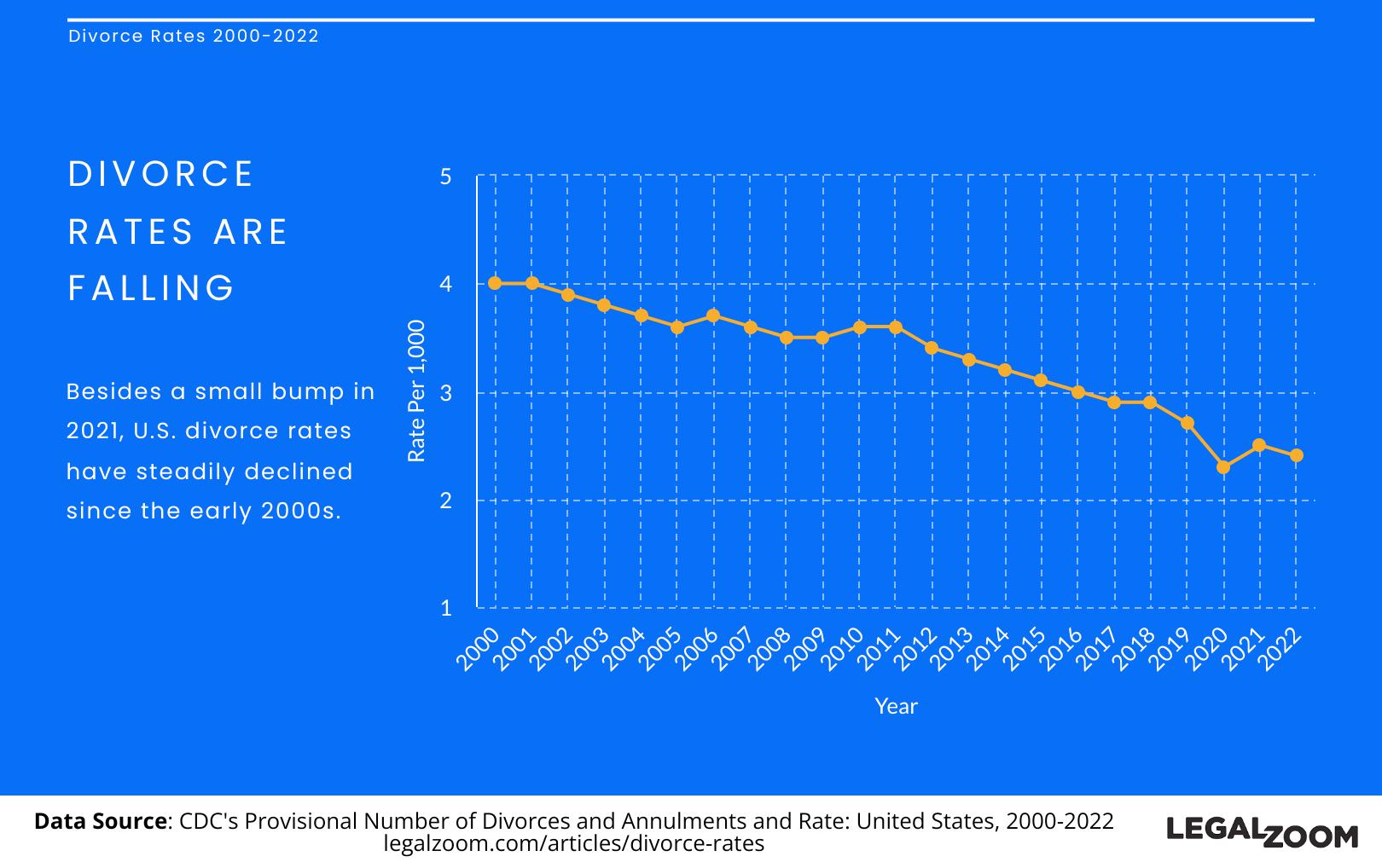
Here’s a look at how crude divorce rates have changed over time: 10 years ago (2014): 3.20; 20 years ago (2004): 3.70; and 30 years ago (1994): 4.60.
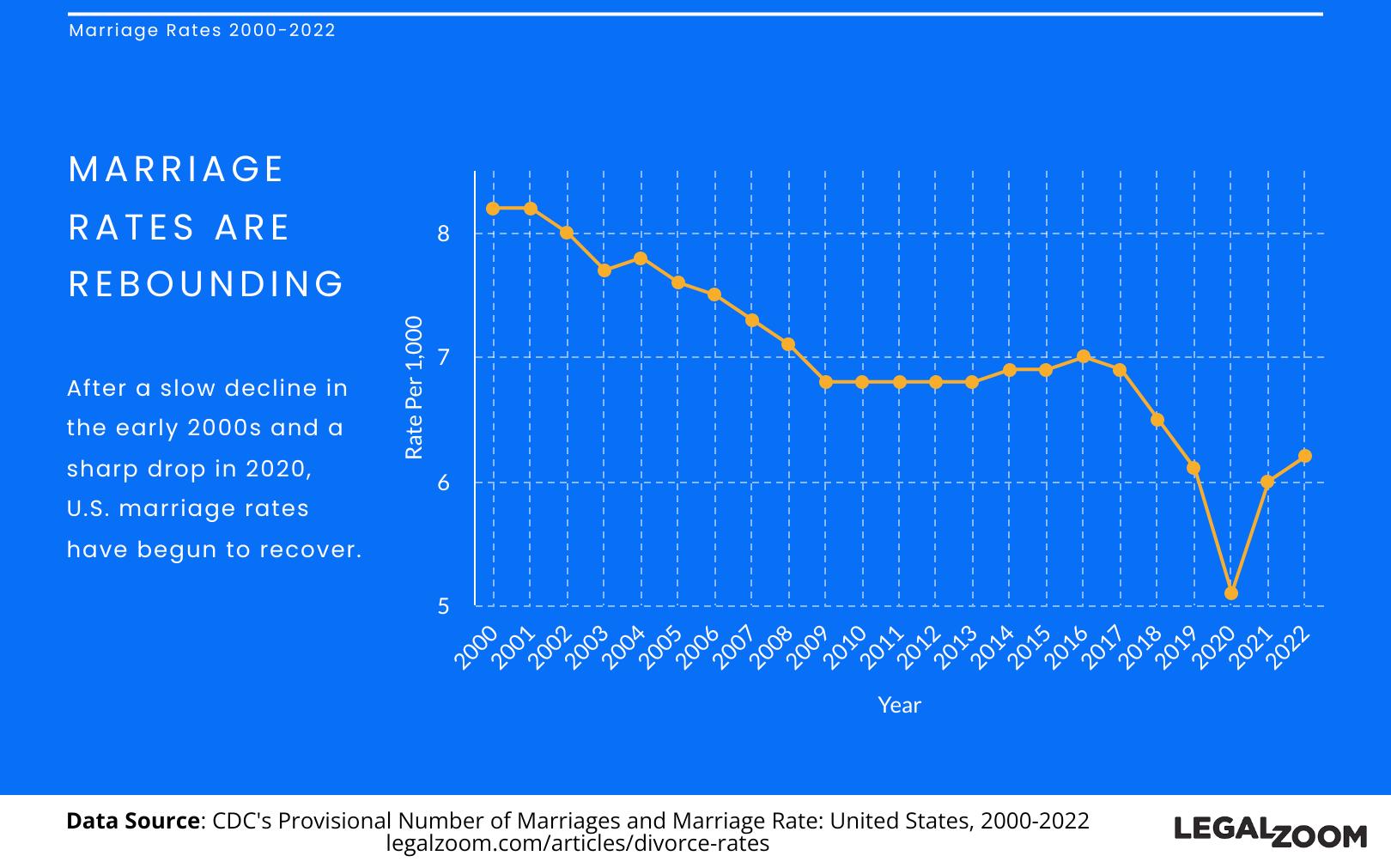
Similarly, marriage rates dropped significantly recently, from 8.6 in 2000 to 6.2 in 2022.
Rates from 2020–2021 during COVID-19
In a reversal from the steady downward trend, divorce rates rose slightly from 2020-21 and then dropped again from 2021-22 — 2020: 2.3; 2021: 2.5; and 2022: 2.4.
The impact of COVID-19 on physical, social, and financial health likely contributed to this small uptick in divorces, further underlining the effect of socioeconomic influence on marriages ending.
Here’s a breakdown of divorce rates among various demographic groups.
Gender divorce rates
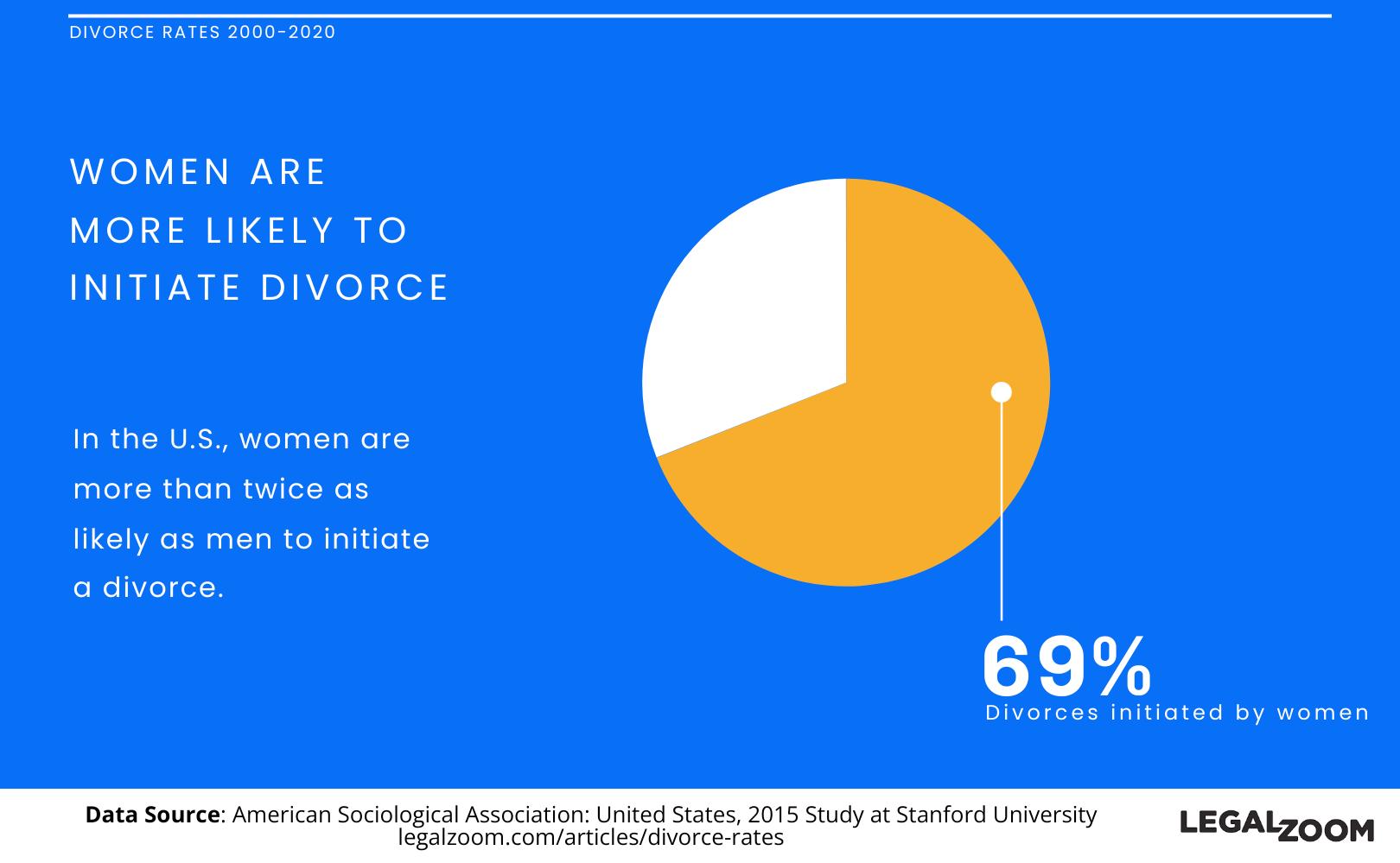
Women are much more likely to initiate divorce in an opposite-sex marriage:
69% of women initiate divorce.
31% of men move to dissolve the union.
While men receive financial and health benefits from marriage, such as a longer lifespan and higher income, women tend to take on more stress from household and child-rearing labor. This may contribute to imbalances in marriage satisfaction between genders in heterosexual marriages.
Gray divorce rates
While the U.S. has maintained a steady decline in divorce rates, the situation is different for divorce among middle-aged and older adults, also known as gray divorce: 36% of U.S. adults getting divorced are aged 50 or older.
The only age group with an increasing divorce rate is adults aged 65 and older.
The divorce rate in those aged 65 and older tripled from 1.8 in 1990 to 2021’s 5.5.
Same-sex divorce statistics
As same-sex marriage is still relatively new, there’s less data on the divorce trends among same-sex couples. So far, trends show many similarities with opposite-sex divorce rates.
About 2% of same-sex couples divorce annually, a similar rate as opposite-sex marriages.
Female same-sex marriages also have a higher divorce rate than male same-sex marriages.
Divorce rates in America
While the divorce rate in America is higher than the world average — 1.6 per 1,000 people — national marriage and divorce dates in the U.S. both mirror the global decline. State and regional differences in the number of marriages that end in divorce provide potential insight as to why many Americans still choose to dissolve their unions.
Marriage and divorce rates
A common criticism of no-fault divorce law is the sharp increase in divorces in the United States since its legalization in 1969. However, after a 10-year spike, divorce rates declined and continued a steady downward trend, prompting us to reevaluate whether or not there truly is a correlation.
Recent divorce rates mirror the years before the legalization of no-fault divorce. In 2022, 673,989 couples dissolved their marriage — 2.4 per 1,000 people — less than the 2.9 per 1,000 people recorded in 1968.
Similar to trends in divorce, marriage rates have also dropped steadily from
10.6 per 1,000 people in 1969. In 2022, 2,065,905 couples married — a rate of 6.2 marriages per 1,000 people. These numbers indicate that state and federal regulations impact marriage and divorce less than socioeconomic factors, which we’ll explore later.
States with the highest divorce rates
While there is a national downward trend, divorce rates by state vary considerably. According to refined divorce rate data by the United States Census Bureau, these five states had the highest divorce rates in 2022:
1. Arkansas: 11.9
2. Wyoming: 11
3. Kentucky: 9.9
4. West Virginia: 9.7
5. Oklahoma: 9.3
These numbers show a higher divorce rate in South and Central states. Interestingly, many of these states prioritize equal asset distribution after divorce.
That said, other states — such as Alaska, New Hampshire and Washington — offer streamlined divorce processes and equitable division of assets but have significantly lower divorce rates.
States with the lowest divorce rates
Statistics show that coastal states have markedly lower divorce rates than those in the center of the country. The Northeast, West and Midwest states have especially low divorce rates.
1. Vermont: 4.6
2. New Jersey: 5.2
3. Alaska: 5.5
4. New York: 5.7
5. Minnesota: 5.7
It’s worth noting that while divorce rates are higher in the South, marriage rates are also higher. This could point to a link between divorce and marriage pressure in religious communities. Conversely, first marriages tend to be later in the Northeast, and the marriage rates are lower, which would result in fewer divorces.
Divorce rate by country
Global divorce rates offer deeper insights into how cultural, legal, and economic factors impact marriage length.
For example, many developed countries — such as the U.K., U.S., Germany, Australia, New Zealand, and Singapore — show lower divorce rates and an increase in the duration of time couples are married before they divorce.
Although developed countries see fewer divorces, developing countries have lower divorce rates.

Countries with the highest divorce rate
The Maldives remains the country with the highest divorce rate. Increased domestic violence since COVID-19, paired with women’s rights initiatives, could contribute to this trend. Their growing economy is another potential influence.
1. The Maldives: 5.52
2. Kazakhstan: 4.6
3. Russia: 4.4
4. Belarus: 3.7
5. China: 3.2
All of these countries have no-fault divorce laws and a relatively easy and affordable divorce process.
Countries with the lowest divorce rate
Sri Lanka has the lowest crude divorce rate globally, 0.15 per 1,000 people. Legal obstacles to divorce could impact the low number of marriages that end in Sri Lanka.
1. Sri Lanka: 0.15
2. Vietnam: 0.2
3. Guatemala: 0.2
4. Saint Vincent and the Grenadines: 0.4
5. Peru: 0.5
Except for Peru, all of these countries require grounds for a divorce.
Divorce rates by age
Age appears to play a key role in how long a marriage lasts in the United States. Divorce statistics show that younger and older marriages are less likely to succeed.
The average age of divorce
While divorce rates are declining, the median age of divorce is going up. Since 1970, the median age of a firsttime divorce has increased from 30.5 to 42.6 for men and 22.7 to 40.1 for women.
Divorce rates by generation
Since 1990, the divorce rate has decreased for those
aged 15 to 44, whereas it increased for those aged 45 and older. However, the divorce rate for couples aged 15-34 is higher than that for those aged 35 and above.
The divorce rates for older women have shown the most significant average increase. Dissolved marriages increased nearly four-fold for women aged 65 and older. From 1990 to 2021, the divorce rate rose from 1.4 per 1,000 people to 5.6 per 1,000 people.
One reason for this trend could be the rise in financial independence in older women. Divorce has a higher economic impact on older couples, but more older women today have more of a financial safety net than in the past.
Divorce rates by race
Divorce rates by race and ethnicity propose essential clues to the cultural and economic impacts of divorce in America. For example, systematic bias impacting economic status, religious beliefs, and cultural norms can all contribute to differences in divorce rates.
These are the statistics for divorce from first-time marriages by race in 2021:
Black men and women had the highest divorce rates: 22.6 and 24.5, respectively.
Hispanic men and women had the second highest divorce rates: 11.4 and 14.9, respectively.
White men and women had the third highest divorce rates: 10.8 and 11.4, respectively.
Asian men and women had the least amount of divorces: 7.7 and 8.3, respectively.
Native-born couples were more likely to divorce than foreign-born spouses.
Compared to divorce rates by income and education,
these statistics give a deeper look at the layers of influence on marital longevity.
Divorce rates by income
While it’s a cliche that money can’t buy happiness, it might help maintain the stability of your marriage. That said, too much income can increase your risk of divorce.
Divorce rates for high incomes
The 2019 American Community Survey estimates suggest that divorce rates decrease steadily from 45% to 30% as household income rises to $200,000. Household incomes between $200,000 and $400,000 remain steady at around 30%, dropping to 25% from $400,000 to $600,000.
Conversely, divorce rates for household incomes exceeding $600,000 rise to nearly 30% until they reach $800,000, after which they drop back down to around 25%.
This suggests that a higher income can reduce the risk of divorce, but only to a certain point. Divorce rates for earners between $200,000 and $100,000,000 only fluctuate by 5%.
Divorce rates for low incomes
It’s important to note that while the divorce rate only marginally fluctuates by 5% once a household income reaches $200,000, it rises as much as 10%-15% as the household income drops toward the poverty line.
This statistic demonstrates that while possessing a lot of money may not impact the quality of a marriage, not having money will.
Divorce rates by unemployment
Unemployment similarly impacts divorce rates for both unemployed men and women. In 2022, 21%-22% of divorces involved a man or woman who was not working.
Divorce rates by education level
Similar to income, education level has a notable influence on divorce trends. Based on an American Community Survey from 2021, both male and female college graduates are less likely to divorce than those with only a high school diploma or some college education.
Masters degrees further reduced the divorce rate for both men and women, but the decline was higher in men than in women. The number of divorces for male college graduates vs. men with a master’s degree dropped from 10 to 7.8 divorces per 1,000 first marriages. For women, the dip was only 10.6 to 10.2 divorces.
Divorce rates by profession
Income, stress levels, and hours can all impact a marriage’s success, so it isn’t surprising that the divorce rate also varies by industry.
The industries with the highest divorce rate are office and administrative support, transportation, protective services, and personal care and service industries, each with a 40%–41% divorce rate. Many of these industries involve long or odd hours and high stress.
The industries with the lowest divorce rates include architecture and engineering, computer and mathematics, the military, sciences, and education, ranging from around 28%–30%. These industries offer a higher income and greater flexibility.
Factors influencing divorce statistics
Many of these statistics show that divorce trends
don’t arise from just one source but from a complex mix of factors, such as finan-
Regardless of age, education, or income, women always display a higher divorce rate
Impact on children and families
Divorce impacts family members differently. Studies show that children are unlikely to experience psychological effects from divorce itself. Rather, individual, family, ethnic, and cultural factors direct the risks associated with changes in children’s family life.
Men and women also generally face different challenges post-divorce. For example, women tend to face more damage to their financial stability, quality of life, and homeownership and bear more child-rearing responsibilities. However, men show more damage to their health, life expectancy, family-life satisfaction, and emotional well-being.
Economic implications
Women are more likely to bear the economic brunt
cial stability, adherence to traditional gender roles, and legal accessibility to divorce.
Economic factors
Beyond household income, which can be more situational, employment rates and economic downturns can set the pace for national marriage and divorce trends. For example, inflation following a major war correlates with sharp spikes in divorce rates in 1946, 1977, and 2011, demonstrating a possible link between inflation and divorce rates. Similarly, high unemployment rates can lead to financial problems that put stress on couples, straining the marriage. We saw this with the slight rise in divorce rates post-COVID-19 lockdown.
Social factors
The social factors in divorce rates are impossible to ignore. Arguably, the most consistent influencer on divorce trends across every category is gender.
than men. This could imply that the most crucial factor in divorce is how much it impacts the woman’s quality of life, followed by whether or not she can legally obtain one.
Legal factors
Global divorce rates show a clear correlation between legal obstacles and lower divorce rates by country. National statistics show similar trends, as Nevada, the state with the highest divorce rate, has one of the most accessible divorce laws. Conversely, Vermont has one of the most complex divorce laws and the lowest divorce rate. However, the steady return to pre-no-faultdivorce-law rates implies that legal factors are only the first tier of influence.
Implications of divorce rates
Divorce is time-consuming and costly, but there’s a reason it exists. Research shows numerous positive and negative effects of divorce.
ability from having taken on a higher load of household labor.
Impact on quality of life
Although women also experience a much higher decrease in their standard of living compared to their male spouses, these adverse effects can be short-term. In a 2000 review of the consequences of divorce, many women reported higher financial and emotional satisfaction postdivorce.
Impact on life expectancy
Divorce is more likely to lower life expectancy. A study by the National Center for Health Statistics showed that the age-adjusted death rate for both divorced men and women aged 25 and older was higher than that of married men and women 25 and older. Although the rate had declined 7% in the last seven years, divorced couples still showed a glaringly higher mortality rate of 1,363 per 100,000 people compared to 779 per 100,000 for married couples.
This risk is higher for divorced males, whose mortality rates are 1,772 per 100,000, compared to divorced women, with mortality rates of 1,095 per 100,000 people.
Policy considerations
The need for supportive measures such as counseling services, legal aid, and economic support for affected families is critical. Changes in the implications of divorce over time show that support significantly impacts the health and well-being of men, women, and children after divorce.
The rise of the prenup
of divorce. This is often due to higher economic need as the primary caregiver, insuf-
The landscape of divorce is constantly changing. More equality in education
and more prenuptial agreements. Although divorce rates have steadily declined, many millennials and older Gen Z couples grew up with divorced parents and recognize the realities of marriage. It’s both an emotional and financial commitment, and proper preparation sets up a better, lasting foundation. Soon-to-be newlyweds who want to clarify expectations before marriage should seek the guidance of a prenup attorney.
Frequently asked questions
What percentage of marriages end in divorce?
43% of first marriages, 60% of second marriages, and 73% of third marriages end in divorce.
What are the top reasons for divorce?
According to a survey of 191 Certified Divorce Financial Analysts from across North America, the leading cause of divorce is basic incompatibility (43%), infidelity (28%), money issues (22%), emotional or physical abuse (5.8%), parenting issues (5%), addiction (5%).
Why are divorce rates so high?
Divorce rates aren’t as high as we think. In recent years, they’ve returned to relatively the same crude rate as in the 1960’s. However, addressing social and economic factors that increase the risk of divorce could lower them even further.
What is the median age for divorce?
The median age of a firsttime divorce is 42.6 for men and 40.1 for women.
This story was produced by LegalZoom and reviewed and distributed by Stacker Media. The article was copy
ficient childcare support, disproportionate loss of income, and lower employ-
and income levels among younger generations has led to higher marriage ages
The City Council invites business owners of the Rosemead community to apply to serve on the Public Safety Commission, which consists of residents and business owners. The Commission organizes, promotes, and participates in public safety efforts concerning matters relating to public safety, including understanding police and fire operations, crime prevention, and emergency preparedness. The Public Safety Commission meets the fourth Thursday of the month at 7:00 p.m. Commissioners are appointed by the City Council and serve a two-year term.
Please note business owners of the Rosemead community applying to the Public Safety Commission are not required to reside in the city. We invite interested applicants to complete a Commissioner Application on the city’s website at www.cityofrosemead.org. Applications can be submitted to the City Clerk’s Office at City Hall or via email to CityClerk@cityofrosemead.org, by Wednesday, October 9, 2024.
For additional information, please visit www.cityofrosemead.org or call the Office of the City Clerk at (626) 569-2100.
Submittal Deadline: Wednesday, October 9, 2024
Ericka Hernandez, CMC City Clerk
Publish September 16, 2024 ROSEMEAD READER
A SUMMARY OF ORDINANCE OF THE CITY COUNCIL OF THE CITY OF ROSEMEAD, CALIFORNIA, AMENDING MUNICIPAL CODE SECTION 13.17.040, RELATING TO SUBSTANTIAL IMPROVEMENT AND SUBSTANTIAL DAMAGE WITHIN THE FLOODPLAIN MANAGEMENT CODE
On September 10th, 2024, the City Council of the City of Rosemead introduced by title only, at first reading, Ordinance No. 1022. The Ordinance amends Municipal Code Section 13.17.040 (C), to incorporate substantial improvement and substantial damage determinations for applications for building permits to improve buildings and structures, including alterations, movement, enlargement, replacement, repair, additions, rehabilitations, renovations, substantial improvements, repairs of substantial damage, and any other improvement of or work on such buildings and structures, the Floodplain Administrator, in coordination with the Building Official.
In addition to the requirements of the building code and these regulations, and regardless of any limitation on the period required for retention of public records, the Floodplain Administrator shall maintain and permanently keep and make available for public inspection all records that are necessary for the administration of these regulations and the flood provisions of the building codes, including Flood Insurance Studies and Flood Insurance Rate Maps; documents from FEMA that amend or revise FIRMs; records of issuance of permits and denial of permits; determinations of whether proposed work constitutes substantial improvement or repair of substantial damage; required certifications and documentation specified by the building codes and these regulations; notifications to adjacent communities, FEMA, and the State related to alterations of watercourses; assurance that the flood carrying capacity of altered waterways will be maintained; documentation related to variances, including justification for issuance or denial; and records of enforcement actions taken pursuant to these regulations and the flood resistant provisions of the building codes.
The full text of Ordinance No. 1022 is available for inspection during regular business hours at the City Clerk’s Office, 8838 E. Valley Blvd. Monday –Thursday 7:00 a.m. till 6:00 p.m. or at www.cityofrosemead.org.
DATED THIS 16th DAY OF SEPTEMBER 2024
Ericka Hernandez, City Clerk City of Rosemead
8838 E. Valley Boulevard
Publish September 16, 2024
ROSEMEAD READER
NOTICE OF PETITION TO ADMINISTER ESTATE OF:
CLINTON FORREST AMENT
CASE NO. 24STPB09857
To all heirs, beneficiaries, creditors, contingent creditors, and persons who may otherwise be interested in the WILL or estate, or both of CLINTON FORREST AMENT.
A PETITION FOR PROBATE has been filed by CHAD CANNON in the Superior Court of California, County of LOS ANGELES.
THE PETITION FOR PROBATE requests that CHAD CANNON be appointed as personal representative to administer the estate of the decedent.
THE PETITION requests authority to administer the estate under the Independent Administration of Estates Act. (This authority will allow the personal representative to take many actions without obtaining court approval. Before taking certain very important actions, however, the personal representative will be required to give notice to interested persons unless they have waived notice or consented to the proposed action.) The independent administration authority will be granted unless an interested person files an objection to the petition and shows good cause why the court should not grant the authority.
A HEARING on the petition will be held in this court as follows: 09/30/24 at 8:30AM in Dept. 67 located at 111 N. HILL ST., LOS ANGELES, CA 90012
IF YOU OBJECT to the granting of the petition, you should appear at the hearing and state your objections or file written objections with the court before the hearing. Your appearance may be in person or by your attorney. IF YOU ARE A CREDITOR or a contingent creditor of the decedent, you must file your claim with the court and mail a copy to the personal representative appointed by the court within the later of either (1) four months from the date of first issuance of letters to a general personal representative, as defined in section 58(b) of the California Probate Code, or (2) 60 days from the date of mailing or personal delivery to you of a notice under section 9052 of the California Probate Code. Other California statutes and legal authority may affect your rights as a creditor. You may want to consult with an attorney knowledgeable in California law.
YOU MAY EXAMINE the file kept by the court. If you are a person interested in the estate, you may file with the court a Request for Special Notice (form DE-154) of the filing of an inventory and appraisal of estate assets or of any petition or account as provided in Probate Code section 1250. A Request for Special Notice form is available from the court clerk. Attorney for Petitioner
ALEXANDRA SMYSER, ESQ.SBN 258181
SCHWEITZER LAW PARTNERS, APC 201 SOUTH LAKE AVENUE, STE. 800 PASADENA CA 91101
Telephone (626) 683-8113
9/9, 9/12, 9/16/24
CNS-3849896# EL MONTE EXAMINER
NOTICE OF PETITION TO ADMINISTER ESTATE OF:
NATALIE M. BUGELLI
CASE NO. 24STPB09886
To all heirs, beneficiaries, creditors, contingent creditors, and persons who may otherwise be interested in the WILL or estate, or both of NATALIE M. BUGELLI.
A PETITION FOR PROBATE has been filed by DAVID D. BUGELLI in the Superior Court of California, County of LOS ANGELES. THE PETITION FOR PROBATE requests that DAVID D. BUGELLI be appointed as personal representative to administer the estate of the decedent.
THE PETITION requests authority to administer the estate under the Independent Administration of Estates Act. (This authority will allow the personal representative to take many actions without obtaining court approval. Before taking certain very important actions, however, the personal representative will be required to give notice to interested persons unless they have waived notice or consented to the proposed action.) The independent
administration authority will be granted unless an interested person files an objection to the petition and shows good cause why the court should not grant the authority.
A HEARING on the petition will be held in this court as follows: 09/30/24 at 8:30AM in Dept. 62 located at 111 N. HILL ST., LOS ANGELES, CA 90012
IF YOU OBJECT to the granting of the petition, you should appear at the hearing and state your objections or file written objections with the court before the hearing. Your appearance may be in person or by your attorney.
IF YOU ARE A CREDITOR or a contingent creditor of the decedent, you must file your claim with the court and mail a copy to the personal representative appointed by the court within the later of either (1) four months from the date of first issuance of letters to a general personal representative, as defined in section 58(b) of the California Probate Code, or (2) 60 days from the date of mailing or personal delivery to you of a notice under section 9052 of the California Probate Code. Other California statutes and legal authority may affect your rights as a creditor. You may want to consult with an attorney knowledgeable in California law.
YOU MAY EXAMINE the file kept by the court. If you are a person interested in the estate, you may file with the court a Request for Special Notice (form DE-154) of the filing of an inventory and appraisal of estate assets or of any petition or account as provided in Probate Code section 1250. A Request for Special Notice form is available from the court clerk. Attorney for Petitioner
STEPHEN L. COHEN, ESQ. - SBN 341883
THE PACELLA GROUP, APC 5000 N. PARKWAY CALABASAS, STE 219 CALABASAS CA 91302
Telephone (818) 614-9245 9/9, 9/12, 9/16/24 CNS-3850165# MONROVIA WEEKLY
NOTICE OF PETITION TO ADMINISTER ESTATE OF NANCY KEIKO
NAKAMURA-LIM aka NANCY KEIKO NAKAMURA aka NANCY KEIKO LIM
Case No. 24STPB09972
To all heirs, beneficiaries, cred-itors, contingent creditors, and persons who may otherwise be interested in the will or estate, or both, of NANCY KEIKO NAKAMURA-LIM aka NANCY KEIKO NAKAMURA aka NANCY KEIKO LIM
A PETITION FOR PROBATE has been filed by Emmy T. Nozawa in the Superior Court of California, County of LOS ANGELES.
THE PETITION FOR PROBATE requests that Emmy T. Nozawa be appointed as personal representative to administer the estate of the decedent.
THE PETITION requests authority to administer the estate under the Independent Administration of Estates Act. (This authority will allow the personal representative to take many actions without obtaining court approval. Before taking certain very important actions, however, the personal representative will be required to give notice to interested persons unless they have waived notice or consented to the proposed action.) The independent administra-tion authority will be granted unless an interested person files an objec-tion to the petition and shows good cause why the court should not grant the authority.
A HEARING on the petition will be held on Oct. 4, 2024 at 8:30 AM in Dept. No. 79 located at 111 N. Hill St., Los Angeles, CA 90012.
IF YOU OBJECT to the granting of the petition, you should appear at the hearing and state your objections or file written objections with the court before the hearing. Your ap-pearance may be in person or by your attorney.
IF YOU ARE A CREDITOR or a contingent creditor of the decedent, you must file your claim with the court and mail a copy to the personal representative appointed by the court within the later of either (1) four months from the date of first issuance of letters to a general personal representative, as defined in section 58(b) of the California Probate Code, or (2) 60 days from the date of mailing or personal delivery to you of a notice under section 9052 of the California Probate Code.
Other California statutes and legal authority may affect your rights
as a creditor. You may want to consult with an attorney knowl-edgeable in California law.
YOU MAY EXAMINE the file kept by the court. If you are a person interested in the estate, you may file with the court a Request for Special Notice (form DE-154) of the filing of an inventory and appraisal of estate assets or of any petition or account as provided in Probate Code section 1250. A Request for Special Notice form is available from the court clerk.
Attorney for petitioner: TOMOHIRO J KAGAMI ESQ SBN 219744
LAMB & KAWAKAMI LLP 229 AVE I STE 200 REDONDO BEACH CA 90277
CN109949 NAKAMURA Sep 12,16,19, 2024 ROSEMEAD READER
NOTICE OF PETITION TO ADMINISTER ESTATE OF BETTY JEAN BROOKS
Case No. 24STPB03901
To all heirs, beneficiaries, cred-itors, contingent creditors, and persons who may otherwise be interested in the will or estate, or both, of BETTY JEAN BROOKS
A PETITION FOR PROBATE has been filed by Dana Marie Kliem in the Superior Court of California, County of LOS ANGELES.
THE PETITION FOR PROBATE requests that Dana Marie Kliem be appointed as personal representative to administer the estate of the decedent.
THE PETITION requests the decedent’s lost will and codicils, if any, be admitted to probate. Copies of the lost will and any codicils are available for examination in the file kept by the court.
THE PETITION requests authority to administer the estate under the Independent Administration of Estates Act. (This authority will allow the personal representative to take many actions without obtaining court approval. Before taking certain very important actions, however, the personal representative will be required to give notice to interested persons unless they have waived notice or consented to the proposed action.) The independent administra-tion authority will be granted unless an interested person files an objec-tion to the petition and shows good cause why the court should not grant the authority.
A HEARING on the petition will be held on Oct. 4, 2024 at 8:30 AM in Dept. No. 29 located at 111 N. Hill St., Los Angeles, CA 90012.
IF YOU OBJECT to the granting of the petition, you should appear at the hearing and state your objections or file written objections with the court before the hearing. Your ap-pearance may be in person or by your attorney.
IF YOU ARE A CREDITOR or a contingent creditor of the decedent, you must file your claim with the court and mail a copy to the personal representative appointed by the court within the later of either (1) four months from the date of first issuance of letters to a general personal representative, as defined in section 58(b) of the California Probate Code, or (2) 60 days from the date of mailing or personal delivery to you of a notice under section 9052 of the California Probate Code.
Other California statutes and legal authority may affect your rights as a creditor. You may want to consult with an attorney knowl-edgeable in California law.
YOU MAY EXAMINE the file kept by the court. If you are a person interested in the estate, you may file with the court a Request for Special Notice (form DE-154) of the filing of an inventory and appraisal of estate assets or of any petition or account as provided in Probate Code section 1250. A Request for Special Notice form is available from the court clerk.
Attorney for petitioner: MARK MOKTARIAN ESQ SBN 131419
LAW OFFICES OF MARK MOKTARIAN 1801 CENTURY PARK EAST STE 2400 LOS ANGELES CA 90067
CN109964 BROOKS Sep 12,16,19, 2024 MONROVIA WEEKLY
NOTICE OF PETITION TO ADMINISTER ESTATE OF MANUEL A. CARREON Case No. 22STPB06270
To all heirs, beneficiaries, cred-itors, contingent creditors, and
persons who may otherwise be interested in the will or estate, or both, of MANUEL A. CARREON A PETITION FOR PROBATE has been filed by Victoria Y. Gonzalez in the Superior Court of California, County of LOS ANGELES. THE PETITION FOR PROBATE requests that 6ictoria Y. Gonzalez be appointed as personal representative to administer the estate of the decedent. THE PETITION requests authority to administer the estate under the Independent Administration of Estates Act. (This authority will allow the personal representative to take many actions without obtaining court approval. Before taking certain very important actions, however, the personal representative will be required to give notice to interested persons unless they have waived notice or consented to the proposed action.) The independent administra-tion authority will be granted unless an interested person files an objec-tion to the petition and shows good cause why the court should not grant the authority.
A HEARING on the petition will be held on Sept. 5, 2024 at 8:30 AM in Dept. No. 62 located at 111 N. Hill St., Los Angeles, CA 90012. IF YOU OBJECT to the granting of the petition, you should appear at the hearing and state your objections or file written objections with the court before the hearing. Your ap-pearance may be in person or by your attorney.
IF YOU ARE A CREDITOR or a contingent creditor of the decedent, you must file your claim with the court and mail a copy to the personal representative appointed by the court within the later of either (1) four months from the date of first issuance of letters to a general personal representative, as defined in section 58(b) of the California Probate Code, or (2) 60 days from the date of mailing or personal delivery to you of a notice under section 9052 of the California Probate Code. Other California statutes and legal authority may affect your rights as a creditor. You may want to consult with an attorney knowl-edgeable in California law. YOU MAY EXAMINE the file kept by the court. If you are a person interested in the estate, you may file with the court a Request for Special Notice (form DE-154) of the filing of an inventory and appraisal of estate assets or of any petition or account as provided in Probate Code section 1250. A Request for Special Notice form is available from the court clerk. Attorney for petitioner:
DARRELL G BROOKE ESQ SBN 118071 THE BROOKE LAW GROUP PC 525 S MYRTLE AVE STE 204 MONROVIA CA 91016 CN109989 CARREON Sep 16,19,23, 2024 TEMPLE CITY TRIBUNE
NOTICE OF PETITION TO ADMINISTER ESTATE OF: CHUNG JEN WANG AKA PETER CHUNG-JEN WANG AKA WANG CHUNG JEN PETER AKA WANG ZHONGREN CASE NO. 24STPB10215
To all heirs, beneficiaries, creditors, contingent creditors, and persons who may otherwise be interested in the WILL or estate, or both of CHUNG JEN WANG AKA PETER CHUNG-JEN WANG AKA WANG CHUNG JEN PETER AKA WANG ZHONGREN. A PETITION FOR PROBATE has been filed by MONA WANG in the Superior Court of California, County of LOS ANGELES. THE PETITION FOR PROBATE requests that MONA WANG be appointed as personal representative to administer the estate of the decedent.
THE PETITION requests authority to administer the estate under the Independent Administration of Estates Act. (This authority will allow the personal representative to take many actions without obtaining court approval. Before taking certain very important actions, however, the personal representative will be required to give notice to interested persons unless they have waived notice or consented to the proposed action.) The independent administration authority will be granted unless an interested person files an objection to the petition and shows good cause why the court should not grant the authority.
FINDING OF NO SIGNIFICANT IMPACT AND NOTICE OF INTENT TO REQUEST RELEASE OF FUNDS
September 12, 2024 City of Glendale, California Community Development and Housing 141 N. Glendale Ave., Suite 202 Glendale, CA 91206-4975
This Notice shall satisfy the above-cited two separate but related procedural notification requirements for activities to be undertaken by the City of Glendale.
REQUEST FOR RELEASE OF FUNDS
On or about September 30, 2024, the City of Glendale will submit a request to the U.S. Department of Housing and Urban Development (HUD) for the release of $2,181,500 in Home Investment Partnerships Program – American Rescue Plan (HOME-ARP) funds, as authorized by the American Rescue Plan Act of 2021, as amended, to undertake a project known as Piedmont Glendale Senior Housing for the purpose of providing affordable senior housing.
EAH Housing proposes to develop the Piedmont Glendale Senior Housing project on a developed 0.91-acre site owned by the Housing Authority of the City of Glendale, with address 426 Piedmont Avenue and 507 Naranja Drive, Glendale, Los Angeles County, California 91206 and comprised of two contiguous parcels (APNs 5645-007-006 and -021).
EAH Housing was awarded the project through a Request for Proposals with the City of Glendale Housing Authority for the rehab and adaptive re-use of a former 112-bedroom Senior Assisted Living facility. The 112-bedroom facility will be converted to include a total of 67 affordable housing units for low income seniors 62 years of age and older, and a manager’s unit. The property consists of a two-story Main building built in 1973 and a threestory Annex built in 1990. In early 2019, the original owners began a major renovation to the exterior of the building and the interior of the Annex, but work was subsequently halted. About 90% of the exterior work was completed, including new stucco, windows, roof, and decorative details to the exterior and interior work was initiated on the 21 units in the Annex. No work was done to the Main building. In February 2021, the property became vacant and in September 2022 the property was sold to the Housing Authority. Development plans include 68 units of senior affordable housing comprised of 20 studios, 47 one-bedrooms, and 1 two-bedroom manager’s unit, three courtyards, an accessible community garden, a community room, and offices for staff. The project is 100% affordable for seniors. Scope of work includes rehabilitation activities as described in the Environmental Assessment. The total project cost is estimated to be $40,000,000.
FINDING OF NO SIGNIFICANT IMPACT
The City of Glendale has determined that the project will have no significant impact on the human environment. Therefore, an Environmental Impact Statement under the National Environmental Policy Act (NEPA) of 1969 is not required. Additional project information is contained in the Environmental Review Record (ERR). The ERR will be made available to the public for review electronically. Please submit your request by email to Michael Fortney, mfortney@glendaleca.gov . The ERR can be accessed online at the following website: https://www.glendaleca.gov/government/departments/community-development/housing/ affordable-housing-news
PUBLIC COMMENTS
Any individual, group or agency may submit written comments on the ERR to the City of Glendale, Community Development and Housing, Attn: Michael Fortney, electronically to mfortney@glendaleca.gov. All comments received on or before September 30, 2024, will be considered by the City of Glendale prior to authorizing submission of a request for release of funds. Comments should specify which Notice they are addressing.
ENVIRONMENTAL CERTIFICATION
The City of Glendale certifies to HUD that Roubik Golanian, City Manager, in his capacity as NEPA Certifying Officer, consents to accept the jurisdiction of the Federal Courts if an action is brought to enforce responsibilities in relation to the environmental review process and that these responsibilities have been satisfied. HUD’s approval of the certification satisfies its responsibilities under NEPA and related laws and authorities and allows the City of Glendale to use Program funds.
OBJECTIONS TO RELEASE OF FUNDS
HUD will accept objections to its release of funds and the City of Glendale’s certification for a period of fifteen days following the anticipated submission date or its actual receipt of the request (whichever is later) only if they are on the following bases: (a) the certification was not executed by the Certifying Officer of the City of Glendale; (b) the City of Glendale has omitted a step or failed to make a decision or finding required by HUD regulations at 24 CFR Part 58; (c) the grant recipient or other participants in development process have committed funds, incurred costs or undertaken activities not authorized by 24 CFR Part 58 before approval of a release of funds by HUD; or (d) another Federal agency acting pursuant to 40 CFR Par 1504 has submitted a written finding that the project is unsatisfactory from the standpoint of environmental quality. Objections must be prepared and submitted in accordance with the required procedures (24 CFR Part 58, Sec. 58.76) and shall be emailed to the HUD grant administration office at: CPDLA@hud.gov or mailed to 300 North Los Angeles Street, Suite 4054, Los Angeles, CA 90012. Potential objectors should contact the Los Angeles Field Office via email at CPDLA@hud.gov to verify the actual last day of the objection period.
Roubik Golanian, City Manager
Publish September 9, 12, 16, 19, 2024 GLENDALE INDEPENDENT
NOTICE INVITING BIDS
NOTICE is hereby given that the City of Glendale (“City”) will receive sealed Bids, before the Bid Deadline established below for the following work of improvement: Elevator Renovation at Former Police Building SPECIFICATION NO. 3988
Bid Deadline: Submit before 2:00 p.m. on Wednesday, October 23, 2024 (“the Bid Deadline”)
Original plus two (2) copies of Bid to be submitted to: Office of City Clerk 613 E. Broadway, Room 110 Glendale, CA 91206
Bid Opening: 2:00 p.m. on Wednesday, October 23, 2024 City Council Chambers 613 E. Broadway, 2nd Floor Glendale, CA 91206
NO LATE BIDS WILL BE ACCEPTED.
Bidding Documents Available: September 18, 2024, on
Mandatory Pre-Bid Conference: Date: Wednesday, October 9, 2024
Time: 10:00 am
Location:Former Glendale Police Building (Rear Parking Lot) 140 N. Isabel St., Glendale, CA 91206
Note:
•All Contractors planning to attend the job walk on October 9th shall RSVP prior to 4 pm on October 7th by email to EKulukian@glendaleca.gov or by calling (818) 937-8231.
City of Glendale Contact Person: Eddie Kulukian, Assistant Project Manager Phone: 818-937-8247
E-mail: EKulukian@glendaleca.gov
Mandatory Qualifications for Bidder and Designated Subcontractors:
A Bid may be rejected as non-responsive if the Bid fails to document that Bidder meets the essential requirements for qualification. As part of the Bidder’s Statement of Qualifications, each Bid must provide satisfactory evidence that:
Bidder: satisfactorily completed at least Three ( 3 ) prevailing wage public contracts in California; each comparable in scope and scale to this Project, within Five ( 5 ) years prior to the Bid Deadline and with a dollar value in excess of the Bid submitted for this Project.
General Scope of Work: Contractor shall furnish labor, materials, equipment, services, and specialized skills to perform work involved in the Project. The Work in the Bid is defined in the Project Drawings and Specifications and will generally include the complete overhaul of six existing elevators, including a variety of new components such as motors, hydraulic power units, door operators and related door equipment, controllers, counterweights, wiring, and communication equipment while refurbishing some existing equipment including car enclosures, car frame & platform, and guide rails; install improved and emergency lighting; install seismic rupture pit valves; upgrade the current handrails in compliance with ADA requirements and replace the entrance Braille to comply with current ADA requirements.
Other Bidding Information:
1. Bidding Documents: Bids must be made on the Bidder’s Proposal form contained herein. Bidding Documents may be obtained by visiting City of Glendale’s website.
2. Completion: This Work must be completed within 365 calendar days from the Date of Commencement as established by the City’s written Notice to Proceed.
3. Acceptance or Rejection of Bids. The City reserves the right to reject any and all Bids, to award all or any individual part/item of the Bid, and to waive any informalities, irregularities or technical defects in such Bids and determine the lowest responsible Bidder, whichever may be in the best interests of the City. No late Bids will be accepted, nor will any oral, facsimile or electronic Bids be accepted by the City.
4. Mandatory Pre-Bid Conference and Job Walk. A mandatory pre-bid conference and job walk will be held at the project site at 9 a.m. on Wednesday, January 25 at the Marketplace Parking Structure, located at 120 Artsakh Avenue, Glendale, CA 91205.
5. Contractors License. At the time of the Bid Deadline and at all times during performance of the Work, including full completion of all corrective work during the Correction Period, the Contractor must possess a California contractors license or licenses, current and active, of the classification required for the Work, in accordance with the provisions of Chapter 9, Division 3, Section 7000 et seq. of the Business and Professions Code. In compliance with Public Contract Code Section 3300, the City has determined that the Bidder must possess the following license(s): “C-11, CCQC, and CCCM.” The successful Bidder will not receive a Contract award if the successful Bidder is unlicensed, does not have all of the required licenses, or one or more of the licenses are not current and active. If the City discovers after the Contract’s award that the Contractor is unlicensed, does not have all of the required licenses, or one or more of the licenses are not current and active, the City may cancel the award, reject the Bid, declare the Bid Bond as forfeited, keep the Bid Bond’s proceeds, and exercise any one or more of the remedies in the Contract Documents. Subcontractors’ Licenses and Listing. At the time of the Bid Deadline and at all times during performance of the Work, each listed Subcontractor must possess a current and active California contractor license or licenses appropriate for the portion of the Work listed for such Subcontractor and shall hold all specialty certifications required for such Work. When the Bidder submits its Bid to the City, the Bidder must list each Subcontractor whom the Bidder must disclose under Public Contract Code Section 4104 (Subcontractor Listing Law), and the Bidder must provide all of the Subcontractor information that Section 4104 requires (name, the location (address) of the Subcontractor’s place of business, California Contractor license number, California Department of Industrial Relations contractor registration number, and portion of the Work). In addition, the City requires that the Bidder list the dollar value of each Subcontractor’s labor or services. The City’s disqualification of a Subcontractor does not disqualify a Bidder. However, prior to and as a condition to award of the Contract, the successful Bidder shall substitute a properly licensed and qualified Subcontractor— without an adjustment of the Bid Amount.
6. Permits, Inspections, Plan Checks, Governmental Approvals, Utility Fees and Similar Authorizations: The City has applied and paid for the following Governmental Approvals and Utility Fees: City of Glendale Building Permits and Inspections
7. All other Governmental Approvals and Utility Fees shall be obtained and paid for by Contractor and will be reimbursed based on Contractor’s actual direct cost without markup. See Instructions to Bidders Paragraph 14, and General Conditions Paragraph 1.01 for definitions and Paragraph 1.03 for Contractor responsibilities.
8. Bid Forms and Bid Security: Each Bid must be made on the Bid Forms obtainable at the Public Works Facilities Management Division. Each Bid shall be accompanied by a cashier’s check or certified check drawn on a solvent bank, payable to “City of Glendale,” for an amount equal to ten percent (10%) of the total maximum amount of the Bid. Alternatively, a satisfactory corporate surety Bid Bond for an amount equal to ten percent (10%) of the total maximum amount of the Bid may accompany the Bid. Said security shall serve as a guarantee that the successful Bidder, within fourteen (14) calendar days after the City’s Notice of Award of the Contract, will enter into a valid contract with the City for said Work in accordance with the Contract Documents.
9. Bid Irrevocability. Bids shall remain open and valid for ninety (90) calendar days after the Bid Deadline.
10. Substitution of Securities. Pursuant to California Public Contract Code Section 22300, substitution of securities for withheld funds is permitted in accordance therewith.
11. Prevailing Wages. This Project is subject to the provisions of California Labor Code Section 1720. Contractor awarded this Contract and all Subcontractors of any tier shall not pay less than the minimum prevailing rate of per diem wages for each craft, classification, or type of worker needed to perform the Work. The Director of Industrial Relations of the State of California, pursuant to the California Labor Code, and the United States Secretary of Labor, pursuant to the Davis-Bacon Act, have determined the general prevailing rates of wages in the locality in which the Work is to be performed. The rates determined by the California Director of Industrial Relations are available online at www. dir.ca.gov/DLSR/PWD/. Davis-Bacon wage rates are included in this Specification and are available online at www.wdol.gov/. To the extent that there are any differences in the federal and state prevailing wage rates for similar classifications of labor, Contractor and its Subcontractors shall pay the highest wage rate. California Department of Industrial Relations ― Public Works Contractor Registration. Beginning July 1, 2014, under the Public Works Contractor Registration Law (California Senate Bill No. 854 - See Labor Code Section 1725.5), contractors must register and meet requirements using the online application https://efiling.dir.ca.gov/PWCR/ActionSe rvlet?action=displayPWCRegistrationForm before bidding on public works contracts in California. The application also provides agencies that administer public works programs with a searchable database of qualified contractors. Application and renewal are completed online with a non-refundable fee of $300. More information is available at the following links:
http://www.dir.ca.gov/DLSE/PublicWorks/SB854FactSheet_6.30.14.pdf http://www.dir.ca.gov/Public-Works/PublicWorks.html Beginning April 1, 2015, the City must award public works projects only to contractors and
subcontractors who comply with the Public Works Contractor Registration Law. Notice to Bidders and Subcontractors:
• No contractor or subcontractor may be listed on a Bid proposal for a public works project (submitted on or after March 1, 2015) unless registered with the Department of Industrial Relations pursuant to Labor Code section 1725.5 [with limited exceptions from this requirement for bid purposes only under Labor Code section 1771.1(a)].
• No contractor or subcontractor may be awarded a contract for public work on a public works project (awarded on or after April 1, 2015) unless registered with the Department of Industrial Relations pursuant to Labor Code section 1725.5.
• This Project is subject to compliance monitoring and enforcement by the Department of Industrial Relations.
• The prime contractor must post job site notices prescribed by regulation. (See 8 Calif. Code Reg. Section 16451(d) for the notice that previously was required for projects monitored by the DIR Compliance Monitoring Unit.)
Furnishing of Electronic Certified Payroll Records to Labor Commissioner. For all new projects awarded on or after April 1, 2015, contractors and subcontractors must furnish electronic certified payroll records directly to the Labor Commissioner (aka Division of Labor Standards Enforcement).
PUBLISHED ON 12, 16 day of September , 2024, City of Glendale, California. GLENDAEL INDEPENDENT
NOTICE INVITING BIDS
NOTICE is hereby given that the City of Glendale (“City”) will receive sealed Bids, before the Bid Deadline established below for the following work of improvement: Vault Dewatering, Hazardous Waste Disposal and Emergency Response Clean-Up SPECIFICATION NO. 3982R
Bid Deadline: Submit before 2:00 p.m. on Wednesday, October 9, 2024 (“the Bid Deadline”)
Original plus one (1) copy of Bid to be submitted to: Office of City Clerk 613 E. Broadway, Room 110 Glendale, CA 91206
Bid Opening: 2:00 p.m. on Wednesday, October 9, 2024 613 E. Broadway, 2nd Floor Glendale, CA 91206
NO LATE BIDS WILL BE ACCEPTED.
Bidding Documents Are Available on This Link: https://www.glendaleca.gov/government/departments/finance/purchasing/rfp-rfq-bid-page City of Glendale Contact Person: Miriam C. Sykes, Project Manager Phone:818-548-3807, or 818-254-5788 (Cell) Fax: 818-543-1428
E-mail: MSykes@GlendaleCA.gov
Mandatory Qualifications for Bidder and Designated Subcontractors:
A Bid may be rejected as non-responsive if the Bid fails to document that Bidder meets the essential requirements for qualification. As part of the Bidder’s Statement of Qualifications, each Bid must provide satisfactory evidence that: Bidder satisfactorily completed at least three (3) prevailing wage public contract in California; each comparable in scope and scale to this Project, within five (5) years prior to the Bid Deadline and will a dollar value in excess of the Bid submitted for this Project.
General Scope of Work: Contractor shall furnish labor, materials, equipment, services, and specialized skills to perform work involved in the Project. The Work included in the Bid involves dewatering of subterranean facilities, including vaults, disposal of hazardous materials and other wastes, and responding and cleaning up of spills from Glendale Water and Power (GWP) facilities located throughout the City of Glendale. The Contractor shall provide test results, reports or other necessary documentation at the conclusion of the work, as required by the regulators or GWP.
Other Bidding Information:
1. Bidding Documents: Bids must be made on the Bidder’s Proposal form contained herein. Bidding Documents may be obtained in the location identified on the Notice Inviting Bids where they may be examined, and copies obtained. Bidding Documents (including Drawings and Specifications) are available at the location identified on the Notice Inviting Bids.
2. Completion: This Work must be performed as needed during the term of the contract for three (3) calendar years with an option to renew for a fourth (4th) and fifth (5th) year from the Date of Commencement as established by the City’s written Notice to Proceed.
3. Acceptance or Rejection of Bids: The City reserves the right to reject any and all Bids, to award all or any individual part/item of the Bid, and to waive any informalities, irregularities or technical defects in such Bids and determine the lowest responsible Bidder, whichever may be in the best interests of the City. No late Bids will be accepted, nor will any oral, facsimile or electronic Bids be accepted by the City.
4. Mandatory Pre-Bid Conference: _September 25, 2024 at 10:00 A.M. at the UOC Training Center, 900 Fairmont Avenue, Glendale CA 91201
5. Contractor License and Certification: At the time of the Bid Deadline and at all times during performance of the Work, including full completion of all corrective work during the Correction Period, the Contractor shall be licensed applicable to performing the required tasks in this project and in accordance with the provisions of Chapter 9, Division III, of the Business and Professional Code of the State of California. A General Contractor’s A license is required.
6. Subcontractors’ Licenses and Listing: At the time of the Bid Deadline and at all times during performance of the Work, each listed Subcontractor must possess a current and active California contractor license or licenses appropriate for the portion of the Work listed for such Subcontractor and shall hold all specialty certifications required for such Work. When the Bidder submits its Bid to the City, the Bidder must list each Subcontractor whom the Bidder must disclose under Public Contract Code Section 4104 (Subcontractor Listing Law), and the Bidder must provide all of the Subcontractor information that Section 4104 requires (name, the location (address) of the Subcontractor’s place of business, California Contractor license number, and portion of the Work). In addition, the City requires that the Bidder list the dollar value of each Subcontractor’s labor or services. The City’s disqualification of a Subcontractor does not disqualify a Bidder. However, prior to and as a condition to award of the Contract, the successful Bidder shall substitute a properly licensed and qualified Subcontractor— without an adjustment of the Bid Amount.
7. Bid Forms and Bid Security: Each Bid must be made on the Bid Forms obtainable at the location identified on the Notice Inviting Bids. Each Bid shall be accompanied by a cashier’s check or certified check drawn on a solvent bank, payable to “City of Glendale,” for an amount equal to ten percent (10%) of the total maximum amount of the Bid. Alternatively, a satisfactory corporate surety Bid Bond for an amount equal to ten percent (10%) of the total maximum amount of the Bid may accompany the Bid. Said security shall serve as a guarantee that the successful Bidder, within fourteen (14) calendar days after the City’s Notice of Award of the Contract, will enter into a valid contract with the City for said Work in accordance with the Contract Documents.
8. Bid Irrevocability: Bids shall remain open and valid for ninety (90) calendar days after the Bid Deadline.
9. Substitution of Securities: Pursuant to California Public Contract Code Section 22300, substitution of securities for withheld funds is permitted in accordance therewith.
10. Prevailing Wages: This Project is subject to the provisions of California Labor Code Section 1720. Contractor awarded this Contract and all Subcontractors of any tier shall not pay less than the minimum prevailing rate of per diem wages for each craft, classification, or type of worker needed to perform the Work. The Director of Industrial Relations of the State of California, pursuant to the California Labor Code, has determined the general prevailing rates of wages in the locality in which the Work is to be performed. The rates determined by the California Director of Industrial Relations are available online at www.dir.ca.gov/DLSR/PWD/.
11. California Department of Industrial Relations ― Public Works Contractor Registration:
The Public Works Contractor Registration Law (California Senate Bill No. 854 - See Labor Code Section 1725.5) requires contractors to register and meet requirements using the online application https://efiling.dir.ca.gov/PWCR/ActionServlet?action=displayPWCRegis trationForm before bidding on public works contracts in California. The application also provides agencies that administer public works programs with a searchable database of qualified contractors. Application and renewal are completed online with a non-refundable fee. More information is available at the following link: https://www.dir.ca.gov/Public-Works/PublicWorks.html
The City must award public works projects only to contractors and subcontractors who comply with the Public Works Contractor Registration Law.
Notice to Bidders and Subcontractors:
• No contractor or subcontractor may be listed on a Bid proposal for a public works project unless registered with the Department of Industrial Relations pursuant to Labor Code section 1725.5 [with limited exceptions from this requirement for bid purposes only under Labor Code section 1771.1(a)].
• No contractor or subcontractor may be awarded a contract for public work on a public works project unless registered with the Department of Industrial Relations pursuant to Labor Code section 1725.5.
• This Project is subject to compliance monitoring and enforcement by the Department of Industrial Relations.
• The prime contractor must post job site notices prescribed by regulation. (See 8 Calif. Code Reg. Section 16451(d) for the notice that previously was required for projects monitored by the DIR Compliance Monitoring Unit.)
Furnishing of Electronic Certified Payroll Records to Labor Commissioner. Contractors and subcontractors must furnish electronic certified payroll records directly to the Labor Commissioner (aka Division of Labor Standards Enforcement).
Dated this September 11, 2024, City of Glendale, California.
Suzie Abajian, PhD, City Clerk of the City of Glendale. Published September 12, 16, 2024 GLENDALE INDEPENDENT
Zoning Code Amendments related to Adaptive Reuse of Existing Non-Residential Buildings, including changes related to Shared Parking, Tandem Parking, and Variances for Historic Resources
PROJECT DESCRIPTION: The Planning and Community Development Department is bringing forward Zoning Code Amendments to amend Title 17 (the Zoning Code) of the Pasadena Municipal Code (PMC) to establish procedures to facilitate the adaptive reuse of underutilized non-residential buildings, including modifying the entitlement process for shared parking, to facilitate the reuse of buildings and comply with new state legislation, and modify the entitlement process for variances for historic resources, to facilitate the reuse of historic resources.
PROJECT LOCATION: Citywide
ENVIRONMENTAL DETERMINATION: An Addendum to the 2015 Pasadena General Plan Environmental Impact Report (GP EIR) (State Clearinghouse No. 2013091009) to address the potential site-specific environmental impacts associated with the proposed amendments has been prepared in accordance with the California Environmental Quality Act of 1970 (CEQA) (Cal. Public Resources Code Section 21000, et. seq., as amended) and its implementing guidelines (Cal. Code Regs., Title 14, Section 15000 et. seq.). This Addendum has been prepared and will be processed consistent with State CEQA Guidelines (Cal. Code Regs., Title 14, Section 15162 and Section 15164). The addendum found that the proposed amendments will not result in any potentially significant impacts that were not already analyzed.
PLANNING COMMISSION RECOMMENDATION: On July 10, 2024, the Planning Commission considered the proposed Zoning Code Amendments at a publicly noticed hearing and recommended that the City Council approve the Zoning Code Amendments as presented by staff, with the following amendments:
1. Remove the maximum density limits for existing buildings. However, density limits would apply to new construction with units;
2. Require an average unit size of 450 square feet for projects; with 10 or more units, exempting 100% affordable housing projects;
3. Reduce parking requirements when providing on-site car/ vehicle sharing; and
4. Reduce open space requirements for properties in proximity to public parks.
The Planning Commission made two additional recommendations that the City Council direct staff to study:
1. Whether adaptive reuse should be allowed in zones that do not currently allow housing (e.g. Industrial General and Commercial General zones); and 2. Financial incentives to facilitate adaptive reuse projects.
NOTICE IS HEREBY GIVEN that the City Council will conduct a public hearing and consider the proposed Zoning Code Amendments and proposed environmental determination. The hearing is scheduled for:
Date: Monday, September 30, 2024
Time: 5:30 p.m.
Place: Council Chambers, 100 North Garfield Avenue, Pasadena, CA. Please refer to the City Council agenda for instructions to view a live stream of the meeting. The meeting agenda will be posted at: http://ww2.cityofpasadena.net/councilagendas/ council_agenda.asp
Public Information: All interested persons may submit correspondence to correspondence@cityofpasadena.net prior to the start of the meeting. During the meeting and prior to the close of the public hearing, members of the public may provide live public comment. Please refer to the agenda when posted for instructions on to how to provide live public comment. If you challenge the matter in Court, you may be limited to raising those issues you or someone else raised at the public hearing, or in written correspondence sent to the Council or the case planner at, or prior to, the public hearing.
For more information about the project:
Contact Person: Melanie Hall, Planner
Phone: (626) 744-7101
E-mail: mhall@cityofpasadena.net
Website: www.cityofpasadena.net/planning
Mailing Address:
Planning & Community Development Department
Planning Division, Community Planning Section 175 North Garfield Avenue, Pasadena, CA 91101
ADA: To request a disability-related modification or accommodation necessary to facilitate meeting participation, please contact the City Clerk’s Office as soon as possible at (626) 744-4124 or cityclerk@ cityofpasadena.net. Providing at least 72 hours advance notice will help ensure availability.
PUBLISHED ON SEPTEMBER 16, 23, 26, 2024 PASADENA PRESS
NOTICE OF PUBLIC MEETING LOS ANGELES COUNTY FIFTH SUPERVISORIAL DISTRICT CONSOLIDATED OVERSIGHT BOARD REGARDING THE PROPOSED SALE OF REAL PROPERTY BY THE SUCCESSOR AGENCY TO THE PASADENA COMMUNITY DEVELOPMENT COMMISSION
NOTICE IS HEREBY GIVEN, pursuant to Health and Safety Code Section 34181(f), that the Los Angeles County Fifth Supervisorial District Consolidated Oversight Board (the “Oversight Board”) will hold a meeting as follows:
Date: September 25, 2024
Time: 11:00 a.m.
Location: Kenneth Hahn Hall of Administration 500 West Temple Street, Conference Room B-50 Los Angeles, CA 90012
To participate via computer or smartphone, please join at:
Join from the webinar link: https://lacountyboardofsupervisors.webex.com/ lacountyboardofsupervisors/j.php?MTID=m44b4b2f301c107bb012 6ead283f52b0a
Webinar Access Code: 2535 497 5965 Password: 5lacob092524
To join by telephone: +1- 213-306-3065 United States Toll (Los Angeles) Access Code: 253 549 75965 Password: 55226209 from phones
At the above-described meeting, the Fifth Supervisorial District Oversight Board (“Oversight Board”) will consider adoption of a resolution authorizing the execution and delivery of a Purchase and Sale Agreement (“PSA”) for the sale of real property located at 145 North Raymond Avenue in the City of Pasadena, California (the “Property”), between the Successor Agency to the Pasadena Community Development Commission (the “Successor Agency”) and Armory Center for the Arts, (the “Purchaser”), pursuant to the Successor Agency’s Long-Range Property Management Plan (the “LRPMP”), approved by the California Department of Finance (“DOF”) under Health and Safety Code Section 31419.3, substantially in the form presented to the Oversight Board.
Pursuant to California Health and Safety Code Section 34191.5(f), the action of the Oversight Board to approve the sale of the Property pursuant to the Successor Agency’s approved LRPMP shall not re-
quire review by the DOF. The Property consists of a lot containing a building that is listed on the National Register of Historic Places. The Property is identified as Assessor’s Parcel No. 5723-021-901 and is listed on the Successor Agency’s LRPMP as “to be sold.”
A copy of the PSA is available for public inspection at the office of the City Clerk, Pasadena City Hall, 100 North Garfield Ave., Pasadena, CA 91101 during regular business hours, Monday through Friday from 8:00 a.m. to 5:00 p.m.
All interested persons and organizations are invited and encouraged to attend the Oversight Board meeting and express their opinions for, against, or neutral to this agenda item. For those interested persons and organizations that would like to be heard regarding this matter, you must register to join the WebEx Event or attend in person. For those calling in via telephone, you will not be able to comment during the meeting. However, you may email your comments to lacobsubmittal@bos.lacounty.gov or via mail to: Los Angeles County First Supervisorial District Consolidated Oversight Board, 500 W. Temple Street, Room B-50-B. Los Angeles, CA 90012, for receipt by the Oversight Board by 5:00 pm the day prior to the scheduled meeting. The staff report, resolution, and PSA will be available on the Oversight Board’s website at http://lacob.lacounty. gov at least 72 hours prior to the meeting.
If you challenge the item listed above in court, you may be limited to raising only those issues you or someone else raised at the meeting at which this matter is considered and action taken, or in a written correspondence delivered to the Oversight Board prior to such meeting. Furthermore, you must exhaust any administrative remedies prior to commencing a court challenge to the Oversight Board’s action on this matter.
Further information regarding the PSA may be obtained by contacting Christopher Page, Project Manager, at Pasadena City Hall at 626-744-6776; email cpage@cityofpasadena.net.
Dated this __12th__ day of September 2024 Christopher Page, Project Manager
Publish September 16, 2024 PASADENA PRESS
CITY OF MONTEREY PARK COMBINED NOTICE OF REVIEW/COMMENT PERIOD AND
PUBLIC HEARING FOR THE DRAFT FY 2023-24 CONSOLIDATED ANNUAL PERFORMANCE AND EVALUATION REPORT (CAPER)
Public Review/Comment Period
NOTICE IS HEREBY GIVEN that the City of Monterey Park’s draft FY 2023-24 Consolidated Annual Performance and Evaluation Report (CAPER) for the City of Monterey Park’s Community Development Block Grant (CDBG) Program and HOME Investment Partnerships (HOME) Program is available for public review. The review period begins on September 17, 2024, and ends on October 1, 2024, at 5:30 p.m. Comments may be delivered or mailed to the Finance Department, attention Martha Garcia, City of Monterey Park, 320 W Newmark Avenue, Monterey Park, CA 91754 or sent by e-mail to magarcia@montereypark.ca.gov.
The CAPER is an annual report prepared in accordance with U.S. Department of Housing and Urban Development (HUD) regulations as specified in the Housing and Community Development Act of 1974, as amended. The CAPER is designed to report on progress in carrying out the Consolidated Plan; provide the jurisdiction an opportunity to assess its annual performance in relation to meeting its overall five-year Consolidated Plan priorities and objectives; and discuss what actions or changes it contemplates as a result of its annual performance.
All interested persons are invited to review and comment on the CAPER. Copies of the CAPER are available for review at City Hall, Library, and on the City’s website at www.montereypark.ca.gov. For further information or alternative arrangements for reviewing the document, please call (626) 307-1348.
A public hearing to solicit comments on the draft FY 2023-2024 CAPER will be held on October 2, 2024, at 6:30 p.m. in the City Council Chambers located at Monterey Park City Hall, 320 West Newmark Avenue, Monterey Park. In addition, the draft FY 2023-24 CAPER will be presented to the City Council for approval on that date.
At this meeting, the City Council will (1) receive public comment on the draft FY 2023-24 CAPER, and (2) approve the submission of the document to HUD. All interested persons are invited to attend the public hearing to comment on the City’s draft documents.
Observing the City Council meeting: The public may watch the meeting live on the City’s cable channel MPKTV (AT&T U-verse, Channel 99 or Charter Communications, channel 182) or by visiting the city’s website at http://www.montereypark.ca.gov/133/City-
Council-Meeting-Videos.
Public Participation: You may speak up to 5 minutes on Agenda item. You may combine up to 2 minutes of time with another person’s speaking. No person may speak more than a total of 10 minutes. The Mayor and City Council may change the amount of time allowed for speakers. Written Communication will be accepted up to 24 hours before the meeting via email to mpclerk@montereypark.ca.gov.
Americans with Disabilities Act (ADA): Per the Americans with Disabilities Act, if you need special assistance to participate in this meeting, please call City Hall at (626) 307-1359 for reasonable accommodation at least 24 hours before a meeting. Council Chambers are wheelchair accessible.
09/16/2024
MONTEREY PARK PRESS
NOTICE OF PETITION TO ADMINISTER ESTATE OF:
SCOTT RICHARD KAPITAN AKA SCOTT R. KAPITAN CASE NO. PROVA2400776
To all heirs, beneficiaries, creditors, contingent creditors, and persons who may otherwise be interested in the WILL or estate, or both of SCOTT RICHARD KAPITAN AKA
SCOTT R. KAPITAN.
A PETITION FOR PROBATE has been filed by KENNETH M. KAPITAN in the Superior Court of California, County of SAN BERNARDINO. THE PETITION FOR PROBATE requests that KENNETH M. KAPITAN be appointed as personal representative to administer the estate of the decedent.
THE PETITION requests authority to administer the estate under the Independent Administration of Estates Act with limited authority. (This authority will allow the personal representative to take many actions without obtaining court approval. Before taking certain very important actions, however, the personal representative will be required to give notice to interested persons unless they have waived notice or consented to the proposed action.) The independent administration authority will be granted unless an interested person files an objection to the petition and shows good cause why the court should not grant the authority.
A HEARING on the petition will be held in this court as follows: 10/01/24 at 9:00AM in Dept. F3 located at 17780 ARROW BLVD., FONTANA, CA 92335
IF YOU OBJECT to the granting of the petition, you should appear at the hearing and state your objections or file written objections with the court before the hearing. Your appearance may be in person or by your attorney.
IF YOU ARE A CREDITOR or a contingent creditor of the decedent, you must file your claim with the court and mail a copy to the personal representative appointed by the court within the later of either (1) four months from the date of first issuance of letters to a general personal representative, as defined in section 58(b) of the California Probate Code, or (2) 60 days from the date of mailing or personal delivery to you of a notice under section 9052 of the California Probate Code. Other California statutes and legal authority may affect your rights as a creditor. You may want to consult with an attorney knowledgeable in California law.
YOU MAY EXAMINE the file kept by the court. If you are a person interested in the estate, you may file with the court a Request for Special Notice (form DE-154) of the filing of an inventory and appraisal of estate assets or of any petition or account as provided in Probate Code section 1250. A Request for Special Notice form is available from the court clerk. Attorney for Petitioner
TONY J. TYRE - SBN 269506
ALLYSON S. HELLER - SBN 315086
WILLIAM C. MASON III - SBN 319441
LAW OFFICES OF TONY J. TYRE, ESQ., APC
100 S. CITRUS AVE., STE. 101 COVINA CA 91723
Telephone (626) 858-9378
9/9, 9/12, 9/16/24 CNS-3849353#
ONTARIO NEWS PRESS
NOTICE OF PETITION TO ADMINISTER ESTATE OF HILDA LUGO
Case No. 24STPB09888
To all heirs, beneficiaries,
cred-itors, contingent creditors, and persons who may otherwise be interested in the will or estate, or both, of HILDA LUGO
A PETITION FOR PROBATE has been filed by Wandalucia Polendo in the Superior Court of California, County of LOS ANGELES.
THE PETITION FOR PROBATE requests that Wandalucia Polendo be appointed as personal representative to administer the estate of the decedent.
THE PETITION requests authority to administer the estate under the Independent Administration of Estates Act. (This authority will allow the personal representative to take many actions without obtaining court approval. Before taking certain very important actions, however, the personal representative will be required to give notice to interested persons unless they have waived notice or consented to the proposed action.)
The independent administra-tion authority will be granted unless an interested person files an objec-tion to the petition and shows good cause why the court should not grant the authority.
A HEARING on the petition will be held on Oct. 2, 2024 at 8:30 AM in Dept. No. 5 located at 111 N. Hill St., Los Angeles, CA 90012.
IF YOU OBJECT to the granting of the petition, you should appear at the hearing and state your objections or file written objections with the court before the hearing. Your ap-pearance may be in person or by your attorney.
IF YOU ARE A CREDITOR or a contingent creditor of the decedent, you must file your claim with the court and mail a copy to the personal representative appointed by the court within the later of either (1) four months from the date of first issuance of letters to a general personal representative, as defined in section 58(b) of the California Probate Code, or (2) 60 days from the date of mailing or personal delivery to you of a notice under section 9052 of the California Probate Code. Other California statutes and legal authority may affect your rights as a creditor. You may want to consult with an attorney knowl-edgeable in California law.
YOU MAY EXAMINE the file kept by the court. If you are a person interested in the estate, you may file with the court a Request for Special Notice (form DE-154) of the filing of an inventory and appraisal of estate assets or of any petition or account as provided in Probate Code section 1250. A Request for Special Notice form is available from the court clerk.
Petitioner: Wandalucia Polendo WANDALUCIA POLENDO 1245 W HUDGINS ST GRAPEVINE TX 76051 CN109942 LUGO Sep 12,16,19, 2024 MONTEREY PARK PRESS
NOTICE OF PETITION TO ADMINISTER ESTATE OF Sharon Suffet (a.k.a. Sharon M. Suffet) Case No. 24STPB10106
To all heirs, beneficiaries, creditors, contingent creditors, and persons who may otherwise be interested in the will or estate, or both, of Sharon Suffet (a.k.a. Sharon M. Suffet)
A PETITION FOR PROBATE has been filed by Lynn A. Dean in the Superior Court of California, County of LOS ANGELES. THE PETITION FOR PROBATE requests that Lynn A. Dean be appointed as personal representative to administer the estate of the decedent.
THE PETITION requests authority to administer the estate under the Independent Administration of Es-
tates Act. (This authority will allow the personal representative to take many actions without obtaining court approval. Before taking certain very important actions, however, the personal representative will be required to give notice to interested persons unless they have waived notice or consented to the proposed action.)
The independent administration authority will be granted unless an interested person files an objection to the petition and shows good cause why the court should not grant the authority.
A HEARING on the petition will be held on October 7, 2024 at 8:30 AM in Dept. 4. located at 111 N. Hill St., Los Angeles, CA 90012.
IF YOU OBJECT to the granting of the petition, you should appear at the hearing and state your objections or file written objections with the court before the hearing. Your appearance may be in person or by your attorney.
IF YOU ARE A CREDITOR or a contingent creditor of the decedent, you must file your claim with the court and mail a copy to the personal representative appointed by the court within the later of either (1) four months from the date of first issuance of letters to a general personal representative, as defined in section 58(b) of the California Probate Code, or (2) 60 days from the date of mailing or personal delivery to you of a notice under section 9052 of the California Probate Code. Other California statutes and legal authority may affect your rights as a creditor. You may want to consult with an attorney knowledgeable in California law.
YOU MAY EXAMINE the file kept by the court. If you are a person interested in the estate, you may file with the court a Request for Special Notice (form DE-154) of the filing of an inventory and appraisal of estate assets or of any petition or account as provided in Probate Code section 1250. A Request for Special Notice form is available from the court clerk. Attorney for petitioner: Alyssa L. Bolan Seasons Law, P.C. 2270 Douglas Blvd Suite 120 Roseville, Ca 95661
916-786-7515
September 12, 16, 19, 2024
GLENDALE INDEPENDENT
NOTICE OF PETITION TO ADMINISTER ESTATE OF Shylana Rose Lightfeldt Case No. PRRI2402202
To all heirs, beneficiaries, creditors, contingent creditors, and persons who may otherwise be interested in the will or estate, or both, of Shylana Rose Lightfeldt
A PETITION FOR PROBATE has been filed by John B. Lightfeldt in the Superior Court of California, County of RIVERSIDE.
THE PETITION FOR PROBATE requests that John B. Lightfeldt be appointed as personal representative to administer the estate of the decedent.
THE PETITION requests authority to administer the estate under the Independent Administration of Estates Act. (This authority will allow the personal representative to take many actions without obtaining court approval. Before taking certain very important actions, however, the personal representative will be required to give notice to interested persons unless they have waived notice or consented to the proposed action.)
The independent administration authority will be granted unless an interested person files an objection to the petition and shows good cause why the court should not grant the authority.
A HEARING on the petition will be held on October 2, 2024 at 8:30 AM in Dept. 8. located at 4050 Main St, Riverside, Ca 92501.
IF YOU OBJECT to the granting of the petition, you should appear at the hearing and state your objections or file written objections with the court before the hearing. Your appearance may be in person or by your attorney.
IF YOU ARE A CREDITOR or a contingent creditor of the decedent, you must file your claim with the court and mail a copy to the personal representative appointed by the court within the later of either (1) four months from the date of first issuance of letters to a general personal representative, as defined in section 58(b) of the California Probate Code, or (2) 60 days from the date of mailing or personal delivery to you of a notice under section 9052 of the
California Probate Code. Other California statutes and legal authority may affect your rights as a creditor. You may want to consult with an attorney knowledgeable in California law. YOU MAY EXAMINE the file kept by the court. If you are a person interested in the estate, you may file with the court a Request for Special Notice (form DE-154) of the filing of an inventory and appraisal of estate assets or of any petition or account as provided in Probate Code section 1250. A Request for Special Notice form is available from the court clerk. Petitioner:
John B. Lightfeldt 3610 Central Avenue Suite 400 Riverside, Ca 92506 (951) 233-8898
September 12, 16, 19, 2024
RIVERSIDE INDEPENDENT
NOTICE OF PETITION TO ADMINISTER ESTATE OF: JOSE EFREN RIOS CASE NO. 24STPB10165
To all heirs, beneficiaries, creditors, contingent creditors, and persons who may otherwise be interested in the WILL or estate, or both of JOSE EFREN RIOS.
A PETITION FOR PROBATE has been filed by MARIZA GOMEZ in the Superior Court of California, County of LOS ANGELES. THE PETITION FOR PROBATE requests that MARIZA GOMEZ be appointed as personal representative to administer the estate of the decedent.
THE PETITION requests authority to administer the estate under the Independent Administration of Estates Act with limited authority. (This authority will allow the personal representative to take many actions without obtaining court approval. Before taking certain very important actions, however, the personal representative will be required to give notice to interested persons unless they have waived notice or consented to the proposed action.) The independent administration authority will be granted unless an interested person files an objection to the petition and shows good cause why the court should not grant the authority.
A HEARING on the petition will be held in this court as follows: 10/09/24 at 8:30AM in Dept. 29 located at 111 N. HILL ST., LOS ANGELES, CA 90012
IF YOU OBJECT to the granting of the petition, you should appear at the hearing and state your objections or file written objections with the court before the hearing. Your appearance may be in person or by your attorney.
IF YOU ARE A CREDITOR or a contingent creditor of the decedent, you must file your claim with the court and mail a copy to the personal representative appointed by the court within the later of either (1) four months from the date of first issuance of letters to a general personal representative, as defined in section 58(b) of the California Probate Code, or (2) 60 days from the date of mailing or personal delivery to you of a notice under section 9052 of the California Probate Code. Other California statutes and legal authority may affect your rights as a creditor. You may want to consult with an attorney knowledgeable in California law.
YOU MAY EXAMINE the file kept by the court. If you are a person interested in the estate, you may file with the court a Request for Special Notice (form DE-154) of the filing of an inventory and appraisal of estate assets or of any petition or account as provided in Probate Code section 1250. A Request for Special Notice form is available from the court clerk. Attorney for Petitioner JAMES G. BEIRNE - SBN 163755 LAW OFFICE OF JAMES G. BEIRNE 16633 VENTURA BLVD., STE. 900 ENCINO CA 91436
Telephone (818) 224-4500 9/16, 9/19, 9/23/24 CNS-3851641# BALDWIN PARK PRESS
NOTICE OF PETITION TO ADMINISTER ESTATE OF: ESPERANZA P. UCBARRERA AKA ESPERANZA BARRERA
CASE NO. 24STPB04415
To all heirs, beneficiaries, creditors, contingent creditors, and persons who may otherwise be interested in the WILL or estate, or both of ESPERANZA P. UC-BARRERA AKA
ESPERANZA BARRERA.
A PETITION FOR PROBATE has been filed by DIANA GOMEZ in the Superior Court of California, County of LOS ANGELES.
THE PETITION FOR PROBATE requests that DIANA GOMEZ be appointed as personal representative to administer the estate of the decedent.
THE PETITION requests authority to administer the estate under the Independent Administration of Estates Act. (This authority will allow the personal representative to take many actions without obtaining court approval. Before taking certain very important actions, however, the personal representative will be required to give notice to interested persons unless they have waived notice or consented to the proposed action.)
The independent administration authority will be granted unless an interested person files an objection to the petition and shows good cause why the court should not grant the authority.
A HEARING on the petition will be held in this court as follows: 10/23/24 at 8:30AM in Dept. 79 located at 111 N. HILL ST., LOS ANGELES, CA 90012
IF YOU OBJECT to the granting of the petition, you should appear at the hearing and state your objections or file written objections with the court before the hearing. Your appearance may be in person or by your attorney. IF YOU ARE A CREDITOR or a contingent creditor of the decedent, you must file your claim with the court and mail a copy to the personal representative appointed by the court within the later of either (1) four months from the date of first issuance of letters to a general personal representative, as defined in section 58(b) of the California Probate Code, or (2) 60 days from the date of mailing or personal delivery to you of a notice under section 9052 of the California Probate Code.
Other California statutes and legal authority may affect your rights as a creditor. You may want to consult with an attorney knowledgeable in California law.
YOU MAY EXAMINE the file kept by the court. If you are a person interested in the estate, you may file with the court a Request for Special Notice (form DE-154) of the filing of an inventory and appraisal of estate assets or of any petition or account as provided in Probate Code section 1250. A Request for Special Notice form is available from the court clerk.
Attorney for Petitioner REYES VALENZUELA, ESQ. - SBN 216283
LAW OFFICES OF REYES VALENZUELA 8136 2ND ST STE 100 DOWNEY CA 90241
Telephone (213) 623-3300 9/16, 9/19, 9/23/24 CNS-3851672# BURBANK INDEPENDENT
NOTICE OF PETITION TO ADMINISTER ESTATE OF: MARIA ELENA LUNDEN CASE NO. 24STPB09933
To all heirs, beneficiaries, creditors, contingent creditors, and persons who may otherwise be interested in the WILL or estate, or both of MARIA ELENA LUNDEN.
A PETITION FOR PROBATE has been filed by HECTOR HERNANDEZ in the Superior Court of California, County of LOS ANGELES.
THE PETITION FOR PROBATE requests that HECTOR HERNANDEZ be appointed as personal representative to administer the estate of the decedent.
THE PETITION requests authority to administer the estate under the Independent Administration of Estates Act. (This authority will allow the personal representative to take many actions without obtaining court approval. Before taking certain very important actions, however, the personal representative will be required to give notice to interested persons unless they have waived notice or consented to the proposed action.)
The independent administration authority will be granted unless an interested person files an objection to the petition and shows good cause why the court should not grant the authority.
A HEARING on the petition will be held in this court as follows: 10/15/24 at 8:30AM in Dept. 11 located at 111 N. HILL ST., LOS ANGELES, CA
90012
IF YOU OBJECT to the granting of the petition, you should appear at the hearing and state your objections or file written objections with the court
before the hearing. Your appearance may be in person or by your attorney. IF YOU ARE A CREDITOR or a contingent creditor of the decedent, you must file your claim with the court and mail a copy to the personal representative appointed by the court within the later of either (1) four months from the date of first issuance of letters to a general personal representative, as defined in section 58(b) of the California Probate Code, or (2) 60 days from the date of mailing or personal delivery to you of a notice under section 9052 of the California Probate Code. Other California statutes and legal authority may affect your rights as a creditor. You may want to consult with an attorney knowledgeable in California law. YOU MAY EXAMINE the file kept by the court. If you are a person interested in the estate, you may file with the court a Request for Special Notice (form DE-154) of the filing of an inventory and appraisal of estate assets or of any petition or account as provided in Probate Code section 1250. A Request for Special Notice form is available from the court clerk. Attorney for Petitioner
LANE J. LOPEZ - SBN 227998 FERGUSON CASE ORR PATERSON LLP 1050 S. KIMBALL
am
is:
S24 The
of
of
County of
San Bernardino DistrictCivil Division 247 West Third Street, San Bernardino, CA 92415-0210 A copy of this Order to Show Cause shall be published at least once a week for four successive weeks prior to the date set for hearing on the petition in the following newspaper of general circulation printed in this county: Ontario New Press Newspaper. Date: August 27, 2024 STAMPED/s/: Gilbert G. Ochoa, Judge of the Superior Court Publish Dates: 9/2/2024, 9/9/2024, 9/16/2024, 9/23/2024 ONTARIO NEWS PRESS ORDER TO SHOW CAUSE FOR CHANGE OF NAME PETITION OF Shelsi Iliana Castro FOR CHANGE OF NAME CASE NUMBER: 24NNCP00523 Superior Court of California, County of Los Angeles 150 West Commonwealth Ave, Alhambra, Ca 91801, NorthEast Judicial District TO ALL INTERESTED PERSONS: 1. Petitioner Shelsi Iliana Castro filed a petition with this court for a decree changing names as follows: Present name a. OF Shelsi Iliana Castro to Proposed name Veronica Pierson 2. THE COURT ORDERS that all persons interested in this matter shall appear before this court at the hearing indicated below to show cause, if any, why the petition for change of name should not be granted. Any person objecting to the name changes described above must file a written objection
violation of the rights of another under federal, state, or common law (see Section 14411 et seq., Business and Professions Code) File#: FBN20240007094
Pub: 09/05/2024, 09/12/2024, 09/19/2024, 09/26/2024 San Bernardino Press
FICTITIOUS BUSINESS NAME STATEMENT
File No. FBN20240006461
The following persons are doing business as: Twelve Oaks Farm, 40100 Pine Bench Rd, Oak Glen, CA 92399. Mailing Address, 40100 Pine Bench Rd, Oak Glen, CA 92399. Dion A Cuevas. County of Principal Place of Business: San Bernardino
This business is conducted by: a individual. Registrant commenced to transact business under the fictitious business name or names listed herein on May 1, 2019. By signing below, I declare that I have read and understand the reverse side of this form and that all information in this statement is true and correct. A registrant who declares as true any material matter pursuant to Section 17913 of the Business and Professions Code that the registrant knows to be false is guilty of a misdemeanor punishable by a fine not to exceed one thousand dollars ($1,000). I am also aware that all information on this statement becomes Public Record upon filing pursuant to the California Public Records Act (Government Code Sections 6250- 6277). /s/ Dion A Cuevas. This statement was filed with the County Clerk of San Bernardino on July 15, 2024 Notice- In accordance with subdivision (a) of Section 17920. A Fictitious Name Statement generally expires at the end of five years from the date on which it was filed in the office of the County Clerk, except, as provided in subdivision (b) of Section 17920, where it expires 40 days after any change in the facts set forth in the statement pursuant to Section 17913 other than a change in the residence address of a registered owner. A new Fictitious Business Name Statement must be filed before the expiration. The filing of this statement does not of itself authorize the use in this state of a fictitious business name in violation of the rights of another under federal, state, or common law (see Section 14411 et seq., Business and Professions Code) File#: FBN20240006461 Pub: 09/02/2024, 09/09/2024, 09/15/2024, 09/23/2024 San Bernardino Press
The following person(s) is (are) doing business as Mindful Mortgage Solutions 31630 Railroad Canyon Rd Suite 15 Canyon Lake, CA 92587 Riverside County First Link Mortgage (CA, 31630 Railroad Canyon Rd suite 15, Canyon Lake, CA 92587 Riverside County This business is conducted by: a corporation. Registrant has not yet begun to transact business under the fictitious business name or names listed herein. I declare that all the information in this statement is true and correct. (A registrant who declares as true any material matter pursuant to Section 17913 of the Business and Professions Code, that the registrant knows to be false, is guilty of a misdemeanor punishable by a fine not to exceed one thousands dollars ($1000).)
s. Coby Chatwin, CEO Statement filed with the County of Riverside on August 15, 2024
NOTICE: In accordance with subdivision (a) of section 17920, a fictitious name statement generally expires at the end of the five years from the date on which it was filed in the office of the county clerk, except, as provided in subdivision (b) of section 17920, where it expires 40 days after any changes in the facts set forth in the statement pursuant to section 17913 other than a change in the residence address of a registered owner.
A new Fictitious Business Name Statement must be filed before the expiration. The filing of this statement does not of itself authorize the use this state of a fictitious business name in violation of the rights of another under federal, state, or common law (see Section 14411 Et Seq., business and professions code). I hereby certify that this
copy is a correct copy of the original statement on file in my office. Peter Aldana, County, Clerk File# R-202410498 Pub. 09/02/2024, 09/09/2024, 09/16/2024, 09/23/2024 Riverside Independent
FICTITIOUS BUSINESS NAME STATEMENT 20246697730. The following person(s) is (are) doing business as: BRIDGEUS, 8 Corporate Park Ste 300, Irvine, CA 92606. Full Name of Registrant(s) BRIDGEUS LLC (CA, 8 Corporate Park Ste 300, Irvine, CA 92606. This business is conducted by a limited liability company (llc). Registrant has not yet begun to transact business under the fictitious business name or names listed herein. BRIDGEUS. /S/ Junsoo Lim, Secretery. This statement was filed with the County Clerk of Orange County on August 29, 2024. Publish: Anaheim Press 09/02/2024, 09/09/2024, 09/16/2024, 09/23/2024
FICTITIOUS BUSINESS NAME STATEMENT File No. FBN20240007718
The following persons are doing business as: HENLIV, 13969 Cameo Drive, Fontana, CA 92337. Mailing Address, 10950 Arrow Route 2362, Rancho Cucamonga, Ca , CA 91279. Aarica M Sanders, 13969 Cameo Drive, Fontana, CA 92337. County of Principal Place of Business: San Bernardino This business is conducted by: a individual. Registrant has not yet begun to transact business under the fictitious business name or names listed herein. By signing below, I declare that I have read and understand the reverse side of this form and that all information in this statement is true and correct. A registrant who declares as true any material matter pursuant to Section 17913 of the Business and Professions Code that the registrant knows to be false is guilty of a misdemeanor punishable by a fine not to exceed one thousand dollars ($1,000). I am also aware that all information on this statement becomes Public Record upon filing pursuant to the California Public Records Act (Government Code Sections 6250- 6277). /s/ Aarica M Sanders, Owner. This statement was filed with the County Clerk of San Bernardino on August 26, 2024 Notice- In accordance with subdivision (a) of Section 17920. A Fictitious Name Statement generally expires at the end of five years from the date on which it was filed in the office of the County Clerk, except, as provided in subdivision (b) of Section 17920, where it expires 40 days after any change in the facts set forth in the statement pursuant to Section 17913 other than a change in the residence address of a registered owner. A new Fictitious Business Name Statement must be filed before the expiration. The filing of this statement does not of itself authorize the use in this state of a fictitious business name in violation of the rights of another under federal, state, or common law (see Section 14411 et seq., Business and Professions Code) File#: FBN20240007718 Pub: 09/02/2024, 09/09/2024, 09/16/2024, 09/23/2024 San Bernardino Press
FICTITIOUS BUSINESS NAME STATEMENT File No. FBN20240007719
The following persons are doing business as: A/S CONCEPTS CO, 13969 Cameo Drive, Fontana, CA 92337. Mailing Address, 10950 Arrow Route 2362, Rancho Cucamonga, CA 92337. Aarica M Sanders, 13969 Cameo Drive, Fontana, CA 92337. County of Principal Place of Business: San Bernardino This business is conducted by: a individual. Registrant has not yet begun to transact business under the fictitious business name or names listed herein. By signing below, I declare that I have read and understand the reverse side of this form and that all information in this statement is true and correct. A registrant who declares as true any material matter pursuant to Section 17913 of the Business and Professions Code that the registrant knows to be false is guilty of a misdemeanor punishable by a fine not to exceed one thousand dollars
($1,000). I am also aware that all information on this statement becomes Public Record upon filing pursuant to the California Public Records Act (Government Code Sections 6250- 6277). /s/ Aarica M Sanders, Owner. This statement was filed with the County Clerk of San Bernardino on August 26, 2024 Notice- In accordance with subdivision (a) of Section 17920. A Fictitious Name Statement generally expires at the end of five years from the date on which it was filed in the office of the County Clerk, except, as provided in subdivision (b) of Section 17920, where it expires 40 days after any change in the facts set forth in the statement pursuant to Section 17913 other than a change in the residence address of a registered owner. A new Fictitious Business Name Statement must be filed before the expiration. The filing of this statement does not of itself authorize the use in this state of a fictitious business name in violation of the rights of another under federal, state, or common law (see Section 14411 et seq., Business and Professions Code) File#: FBN20240007719 Pub: 09/02/2024, 09/09/2024, 09/16/2024, 09/23/2024 San Bernardino Press
FICTITIOUS BUSINESS NAME STATEMENT File No. FBN20240007793
The following persons are doing business as: (1). HUGGING HEARTS (2). CC ADVISING AND SERVICES , 551 E Riverside Dr APT 43, Ontario, CA 91761. Mailing Address, 551 E Riverside Dr APT 43, Ontario, CA 91761. JOAN CORDERO, 551 E Riverside Dr APT 43, Ontario, CA 91761. County of Principal Place of Business: San Bernardino This business is conducted by: a individual. Registrant has not yet begun to transact business under the fictitious business name or names listed herein. By signing below, I declare that I have read and understand the reverse side of this form and that all information in this statement is true and correct. A registrant who declares as true any material matter pursuant to Section 17913 of the Business and Professions Code that the registrant knows to be false is guilty of a misdemeanor punishable by a fine not to exceed one thousand dollars ($1,000). I am also aware that all information on this statement becomes Public Record upon filing pursuant to the California Public Records Act (Government Code Sections 6250- 6277). /s/ JOAN CORDERO, Owner. This statement was filed with the County Clerk of San Bernardino on August 27, 2024 Notice- In accordance with subdivision (a) of Section 17920. A Fictitious Name Statement generally expires at the end of five years from the date on which it was filed in the office of the County Clerk, except, as provided in subdivision (b) of Section 17920, where it expires 40 days after any change in the facts set forth in the statement pursuant to Section 17913 other than a change in the residence address of a registered owner. A new Fictitious Business Name Statement must be filed before the expiration. The filing of this statement does not of itself authorize the use in this state of a fictitious business name in violation of the rights of another under federal, state, or common law (see Section 14411 et seq., Business and Professions Code) File#: FBN20240007793 Pub: 09/02/2024, 09/09/2024, 09/16/2024, 09/23/2024 San Bernardino Press
The following person(s) is (are) doing business as Keller Williams Sierra Madre 37 W Sierra Madre Blvd #200 Sierra Madre, CA 91024 Los Angeles County Mailing Address, 27290 Madison Ave 200, Temecula, CA 92590. Riverside County Temecula Valley Real Estate, Inc (CA, 27290 Madison Ave #200 Temecula, CA 92590
Riverside County This business is conducted by: a corporation. Registrant commenced to transact business under the fictitious business name or names listed herein on September 1, 2024. I declare that all the information
in this statement is true and correct. (A registrant who declares as true any material matter pursuant to Section 17913 of the Business and Professions Code, that the registrant knows to be false, is guilty of a misdemeanor punishable by a fine not to exceed one thousands dollars ($1000).)
s. Home David Benton, President Statement filed with the County of Riverside on September 5, 2024 NOTICE: In accordance with subdivision (a) of section 17920, a fictitious name statement generally expires at the end of the five years from the date on which it was filed in the office of the county clerk, except, as provided in subdivision (b) of section 17920, where it expires 40 days after any changes in the facts set forth in the statement pursuant to section 17913 other than a change in the residence address of a registered owner.
A new Fictitious Business Name Statement must be filed before the expiration. The filing of this statement does not of itself authorize the use this state of a fictitious business name in violation of the rights of another under federal, state, or common law (see Section 14411 Et Seq., business and professions code). I hereby certify that this copy is a correct copy of the original statement on file in my office.
Peter Aldana, County, Clerk File# R-202411366 Pub. 09/09/2024, 09/16/2024, 09/23/2024, 09/30/2024
Riverside Independent
The following person(s) is (are) doing business as Sarangheajjj 3519 Millhouse Ct Riverside, CA 92503 Riverside County Mailing Address 3519 Millhouse Ct Riverside, CA 92503 Riverside County Angelina Barlow, 3519 Millhouse Crt, Riverside, CA 92503 Riverside County
This business is conducted by: a individual. Registrant has not yet begun to transact business under the fictitious business name or names listed herein. I declare that all the information in this statement is true and correct. (A registrant who declares as true any material matter pursuant to Section 17913 of the Business and Professions Code, that the registrant knows to be false, is guilty of a misdemeanor punishable by a fine not to exceed one thousands dollars ($1000).)
s. Angelina Barlow Statement filed with the County of Riverside on September 3, 2024 NOTICE: In accordance with subdivision (a) of section 17920, a fictitious name statement generally expires at the end of the five years from the date on which it was filed in the office of the county clerk, except, as provided in subdivision (b) of section 17920, where it expires 40 days after any changes in the facts set forth in the statement pursuant to section 17913 other than a change in the residence address of a registered owner. A new Fictitious Business Name Statement must be filed before the expiration. The filing of this statement does not of itself authorize the use this state of a fictitious business name in violation of the rights of another under federal, state, or common law (see Section 14411 Et Seq., business and professions code). I hereby certify that this copy is a correct copy of the original statement on file in my office.
Peter Aldana, County, Clerk File# R-202411245
Pub. 09/09/2024, 09/16/2024, 09/23/2024, 09/30/2024 Riverside Independent
FICTITIOUS BUSINESS
NAME STATEMENT
File No. FBN20240007613
The following persons are doing business as: Sevenfold, 1900 S Proforma Ave Suite G-2, Ontario, CA 91761. Mailing Address, 1900 S Proforma Ave Suite G-2, Ontario, CA 91761. Parallel Ventures LLC (CA, 1900 S Proforma Ave Unit G-2, Ontario, CA 91761; Nancy Li, Managing Member. County of Principal Place of Business:
San Bernardino This business is conducted by: a limited liability company (llc). Registrant commenced to transact business under the fictitious business name or names listed herein on July 31, 2024. By signing below, I declare that I have read and understand the reverse side of this form and that all information in this statement is true and correct. A registrant who declares as true any material matter pursuant to Section 17913 of the Business and Professions Code that the registrant knows to be false is guilty of a misdemeanor punishable by a fine not to exceed one thousand dollars ($1,000). I am also aware that all information on this statement becomes Public Record upon filing pursuant to the California Public Records Act (Government Code Sections 6250- 6277). /s/ Nancy Li, Managing Member. This statement was filed with the County Clerk of San Bernardino on August 22, 2024 Notice- In accordance with subdivision (a) of Section 17920. A Fictitious Name Statement generally expires at the end of five years from the date on which it was filed in the office of the County Clerk, except, as provided in subdivision (b) of Section 17920, where it expires 40 days after any change in the facts set forth in the statement pursuant to Section 17913 other than a change in the residence address of a registered owner. A new Fictitious Business Name Statement must be filed before the expiration. The filing of this statement does not of itself authorize the use in this state of a fictitious business name in violation of the rights of another under federal, state, or common law (see Section 14411 et seq., Business and Professions Code) File#: FBN20240007613 Pub: 09/09/2024, 09/16/2024, 09/23/2024, 09/30/2024
San Bernardino Press
FICTITIOUS BUSINESS NAME STATEMENT File No. FBN20240008022
The following persons are doing business as: CIYA PET, 3238 E Orchard St, Ontario, CA 91762. Mailing Address, 3238 E Orchard St, Ontario, CA 91762. CIYA PETSUPP TRADE LLC (CA, 3238 E Orchard St, Ontario, CA 91762; RUNTAO DENG, MANAGER. County of Principal Place of Business: San Bernardino This business is conducted by: a limited liability company (llc). Registrant commenced to transact business under the fictitious business name or names listed herein on March 21, 2023. By signing below, I declare that I have read and understand the reverse side of this form and that all information in this statement is true and correct. A registrant who declares as true any material matter pursuant to Section 17913 of the Business and Professions Code that the registrant knows to be false is guilty of a misdemeanor punishable by a fine not to exceed one thousand dollars ($1,000). I am also aware that all information on this statement becomes Public Record upon filing pursuant to the California Public Records Act (Government Code Sections 6250- 6277). /s/ RUNTAO DENG, MANAGER. This statement was filed with the County Clerk of San Bernardino on September 4, 2024 Notice- In accordance with subdivision (a) of Section 17920. A Fictitious Name Statement generally expires at the end of five years from the date on which it was filed in the office of the County Clerk, except, as provided in subdivision (b) of Section 17920, where it expires 40 days after any change in the facts set forth in the statement pursuant to Section 17913 other than a change in the residence address of a registered owner. A new Fictitious Business Name Statement must be filed before the expiration. The filing of this statement does not of itself authorize the use in this state of a fictitious business name in violation of the rights of another under federal, state, or common law (see Section 14411 et seq., Business and Professions Code) File#: FBN20240008022 Pub: 09/09/2024, 09/16/2024, 09/23/2024, 09/30/2024 San Bernardino Press
By City News Service
Afederal appeals panel reversed a lower court’s ruling in a lawsuit alleging that Los Angeles’ $63 late-payment penalty for failure to pay a fine for a parking meter violation, set at the same amount as the initial fine itself, is excessive, according to court papers obtained Tuesday.
A three-judge panel of the U.S. 9th Circuit Court of Appeals in Pasadena on Monday sent the case back to Los Angeles federal court to decide whether the $63 late-payment fee is unconstitutional and a violation of the Eighth Amendment, which prohibits excessive fines.
In his opinion, Judge Kenneth K. Lee wrote that trying to find a parking spot in Los Angeles “can sometimes feel like traipsing through Dante’s nine circles of hell.”
The class-action suit brought in 2015 by local residents Jesus Pimentel and David R. Welch challenged the fine and the penalty after the plaintiffs received a $63 ticket and the subsequent late fee after parking at meters downtown. The $63 latepayment fee is imposed if a driver does not pay the initial parking fine within 21 days.
In 2018, U.S. District Judge Fernando M. Olguin granted summary judgment to the city on all claims, setting the stage for the first appeal.
Two years later, the appellate panel held that the initial fine of $63 did not
violate the excessive fines clause because it was not grossly disproportionate to the offense of overstaying time at a metered parking space. The panel reversed, however, the district court’s summary judgment in favor of the city as to the latepayment penalty of $63. Olguin again granted the defendant’s motion for
summary judgment as to the late-payment fee. The plaintiffs appealed to the 9th Circuit for a second time.
The appellate court Monday again remanded the late-payment issue back to the lower court to determine whether the city’s late penalty runs afoul of the excessive fines clause.
By City News Service
Orange County supervisors removed Supervisor Andrew Do from the Orange County Transportation Authority board as well as various county committees and commissions Tuesday as his daughter faces allegations of corruption involving a nonprofit funded in part by discretionary funds from Do’s office.
Do was removed from the following commissions and committees:
-- National Association of Counties;
-- Orange County Community Corrections Partnership;
-- Orange County Criminal Justice Coordinating Council;
-- Orange County Emergency Management Council;
-- South Coast Air Quality Management District.
Do, who was not at Tuesday’s board meeting, declined comment to City News Service.
Orange County Supervisor Katrina Foley noted that the board cannot remove Do from office. That would be up to state authorities, she said.
“Unfortunately, we’re having to do this because he will not resign and we hope that he will resign because he could not continue to be enriched off of the taxpayers when he — one — isn’t doing his job and — two — is embroiled in a terrible corruption scandal,” Foley said.
Supervisor Vicente Sarmiento, who has joined Foley’s calls for Do to step down, said, “We do this deliberately because we understand what he and his office are facing.”

Sarmiento had proposed censuring Do at Tuesday’s board meeting, but he said he postponed it for his fellow supervisors to study the issue more.
“To remove (Do) from these commissions and (OCTA) board is a critical step to show transparency,” Sarmiento said.
“We know the residents of District 1 don’t have a representative that is available or as available as he should be. ... I don’t think any of us take this lightly or do it for pleasure. It is unfortunate, but these are necessary decisions we have to take.”
Do, who is termed out after this year, has faced calls for his resignation as authorities investigate allegations of fraudulent
spending of COVID-19 relief funds by a nonprofit that employed Do’s daughter, Rhiannon.
Last month, the county sued the Viet America Society and its President Peter Pham, alleging misappropriation of millions of dollars of pandemic relief earmarked for delivery of meals to needy residents. The Hand to Hand Relief organization, which subcontracted with Viet America Society, was also sued.
The FBI last month searched the Garden Grove home of Pham and the Tustin home of Rhiannon Do as well as the Perfume River restaurant in Westminster, where meals were prepared for Viet America Society’s delivery services.
By Staff
The Biddy Mason Charitable Foundation (BMCF) hit a milestone this August when it awarded nearly $100,000 in scholarships to current and former foster youth from LA County. Now in its seventh year distributing the awards, 2024 also marked the nonprofit’s highest number of applicants and recipients to date, with winners in all eight service planning areas in LA. Among the recipients, 31 were from the San Gabriel Valley.
“Submissions increased 75 percent over 2023, and we’ve awarded approximately $650,000 in scholarship aid since 2018,” says Dr. Cynthia Hudley, BMCF board member who runs the scholarship program. The amount is notable, adds BMCF CEO and President Jackie Broxton, given that the program launched with an unsolicited $30,000 gift from a single donor. “We’re grateful to have been able to
impact the lives of so many current and former foster youth in such a meaningful way.”
Foster youth face arduous barriers to completing their education, including frequently changing schools and a lack of familial support, financial resources, and access to college-preparatory programming. To help them overcome these challenges, the nonprofit imposes no age limit on their scholarship, and applicants
pursuing any vocational program or college degree can apply, including community college or graduate school students.
At the ceremony celebrating the recipients, BMCF board member Dr. Krystal Bowen shared her own story going from foster care to single motherhood to her successful career as a psychologist. She left the crowd with a crucial reminder: “Education is your most powerful weapon.”

By Staff
18 Arcadia High students have been recognized as semifinalists in the 70th annual National Merit Scholarship Program. Arcadia High’s 2025 National Merit Scholarship Semifinalists join an elite group of students that represent the top 1% of high school seniors across the nation. Over the past 30 years, Arcadia High School has had at least 11 or more students earn this distinction. A total of over 700 students from Arcadia High have been named semifinalists in the last three decades.
Arcadia High’s 2025 National Merit Scholarship semifinalists are Avani A. Athavale, Minjun Cha, Lewis Cheng, Hei Yin Choi, Syed S. Hussain, Dhruti G. Kulkarni, Avik Kumar, Annette L. Lin, Mia Y. Liu, Don C. Luc, Max M. Ma, Zuni Ng, Atharv A. Prabhutendolkar, Anas, S. G. Yousuf Mohammed, Cath-
erine Z. Wang, Herrick X. Wang, Zejin Xu, and Evan S. Yen.
Students begin their National Merit Scholarship Program journey during their junior year of high school when they take the Preliminary SAT/National Merit Scholarship Qualifying Test. Over 1.3 million juniors from about 21,000 high schools across the country took the 2023 PSAT/NMSQT, which operated as the initial screening tool for entry into the National Merit Scholarship Program. The nationwide cohort of this year’s Semifinalists represent the highest-scoring entrants from each state.
Of the approximately 16,000 National Merit Scholarship semifinalists selected, more than 15,000 are expected to advance to the Finalist level and will be notified of this designa-
tion in February 2025. To be considered for a finalist spot in the National Merit Scholarship Program, Arcadia High’s 18 semifinalists will work closely with their school counselors to submit a detailed scholarship application, which will include information about their academic records, participation in school and community activities, demonstrated leadership abilities, employment, and honors and rewards received. Each semifinalist must have an outstanding academic record throughout high school, be endorsed and recommended by a high school official, write an essay, and earn SAT or ACT scores that confirm the student’s earlier performance on the qualifying test to be considered for advancement in the program.
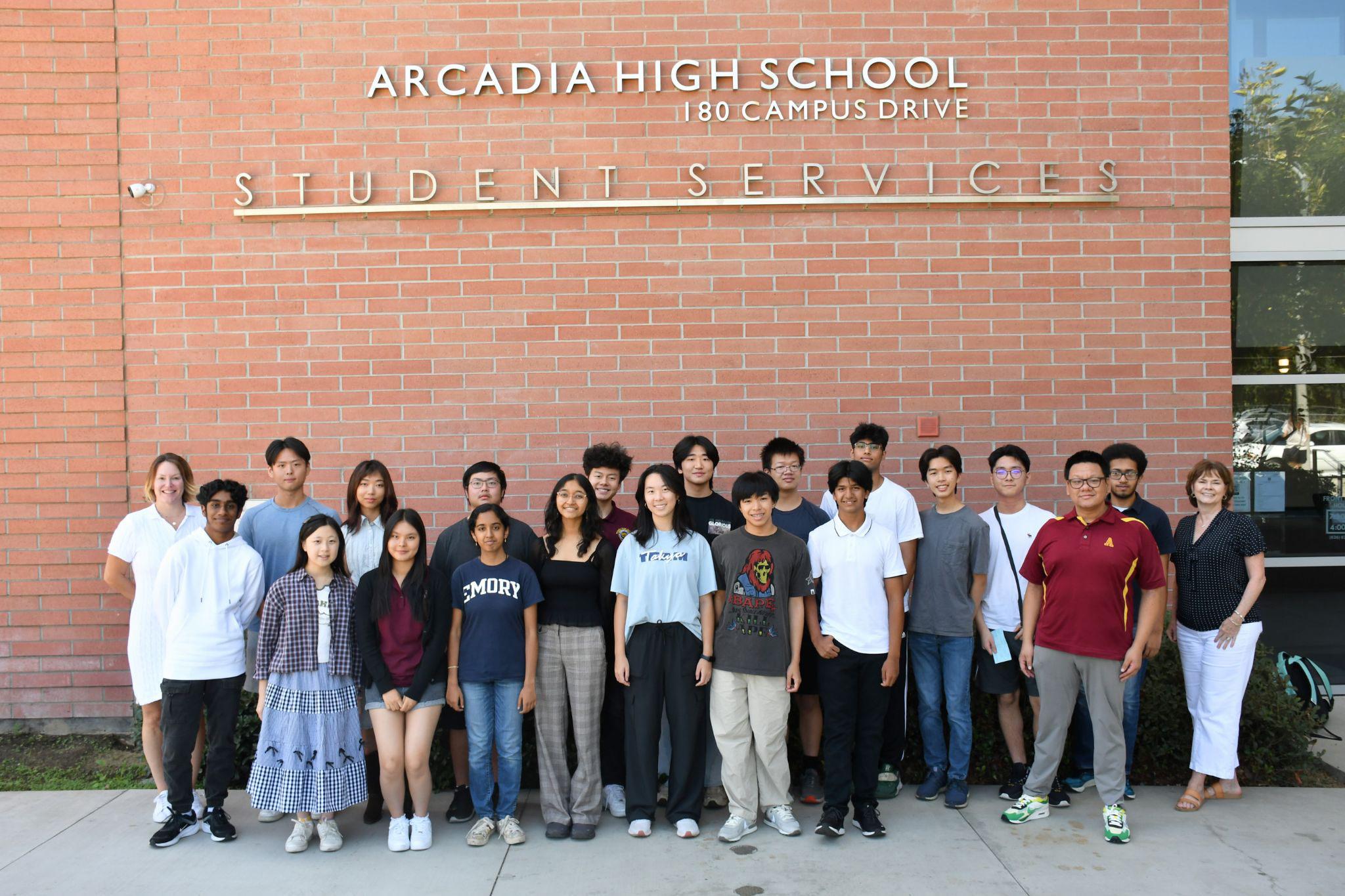
National Merit Scholarship finalists will be
By Staff

“WhittierBoulevard,” the critically acclaimed, ensemble-devised
“Chicano Noir” satire that employs the company’s trademark blend of comedy, drama, music, dance and theatrical magic to explore ageism and the divine that exists within us all, is back at Latino Theater Company.
Earthquake strikes near Malibu; no damage, injuries reported
Amagnitude 4.7 earthquake centered near Malibu rattled a large swath of the Southland Thursday, but there were no immediate reports of damage or injuries.
The earthquake struck at 7:28 a.m., centered 3.5 miles northwest of Malibu and 4.9 miles southwest of Agoura Hills, according to the U.S. Geological Survey. It was about 6.5 miles deep.
The earthquake was felt across a wide area, including Burbank, Santa Clarita, Long Beach, Torrance and Anaheim.
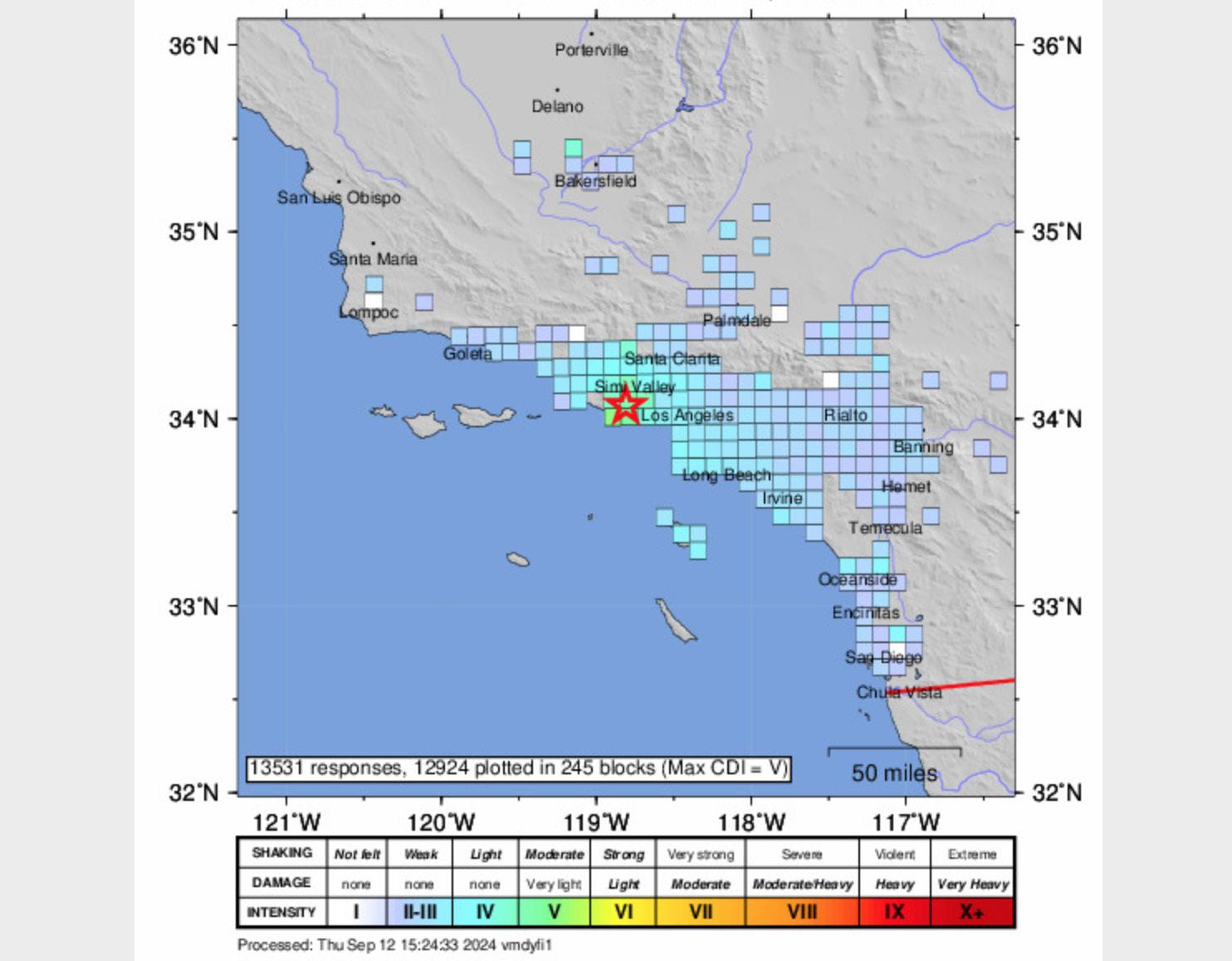
“Whittier Boulevard” will run through Oct. 20. It’s Los Angeles in 2042, and years of fires, torrential rain, anarchy and bloodshed have led to a totalitarian city-state where the elderly disappear, their stories forgotten. When authorities make a surprise visit to the home of faded Chicana starlet Veronica Del Rio on the eve of her 75th birthday, she enlists the help of her loudmouth nurse, a kindhearted policeman-fan, and a down-on-his-luck poet. Will Veronica disappear and be forgotten before she finds true love?
Tickets range from $10 to $48, except opening night which is $75 and includes a post-performance reception.
“In this play we look at ageism, but we also explore finding the divine within ourselves so that we can create a better society. It’s fun and campy, but we also address serious social issues, such as the current whittling away of civil rights in this country,” said co-creator Jose Luis Valen-
The Los Angeles Theatre Center is located at 514 S. Spring St., Los Angeles, CA 90013. Parking is available for $8 with box office validation at Los Angeles Garage Associate Parking structure, 545 S. Main St., Los Angeles, CA 90013 (between 5th and 6th Streets, just behind the theater).
For more information and to purchase tickets, call (213) 489-0994 or go to www.latinotheaterco.org.
The quake, which was originally reported with a magnitude of 5.1 but quickly downgraded to 4.7, was followed by a series of aftershocks, beginning with a magnitude 2.8 shaker then progressively reducing in strength until 8:40 a.m., when a 3.4 magnitude quake struck.
Police and fire departments across the Southland quickly went into earthquake mode to check for damage.
“Pursuant to protocol, the Los Angeles Fire Department is now in earthquake mode, as personnel from all 106 neighborhood fire stations conduct a strategic survey by land, air and sea of their districts, examin-
ing critical infrastructure and areas of local concern across our 470-square-mile city of Los Angeles jurisdiction,” the LAFD said in a statement shortly after the temblor.
The “earthquake mode” was completed by about 8:30 a.m., the LAFD reported.
“No significant infra/ structure damage or injuries have been noted within the City of Los Angeles,” the LAFD said in a statement.
The National Weather Service reported there was no tsunami warning generated by the quake.
Los Angeles Mayor Karen
Bass told KNX, “All of our departments are on alert. As of right now, everything is looking like it’s OK.”
Multiple other cities reported that they were conducting surveys, but no damage was immediately detected.
The Southland’s earthquake czar, seismologist Lucy Jones, said it was still uncertain which fault system generated the shaker. She quickly denounced the notion that the recent heat wave played any role in triggering the quake, stressing that weather plays no part in temblors.