
Thursday, August 08-August 14, 2024
Thursday, August 08-August 14, 2024
By Staff
The U.S. Department of Energy granted $600 million to a public-private partnership to improve California's electric power grid that officials hope will lead to energy savings and better reliability for consumers, the governor's office announced Tuesday.
The federal grant will fund upgrades to 100 miles of electricity transmission lines with technologies that improve reliability and more swiftly deliver "clean, affordable electricity," according to Gov. Gavin Newsom's office.
A consortium comprised of the California Energy Commission, California Public Utilities Commission, California Independent System Operator, Pacific Gas & Electric Co., and Southern California Edison will administer the grant, known as the Grid Resilience and Innovation Partnership, or GRIP.
“Once again, the BidenHarris Administration is not just talking the talk, they’re walking the walk," Newsom said in a statement.
"This funding is critical to our efforts to build a power grid that ensures all Californians have access to cleaner, cheaper, more reliable electricity."
Officials highlighted these aspects of the project:
-- It will support over 300 direct jobs;
-- equip over 100 miles of transmission lines with updated conductor technologies that officials said "will help connect more clean energy resources than the existing grid can accommodate at this time";
-- deliver savings of a projected $200 million in energy costs because of enhanced grid efficiency;
-- "create economic and community benefits for disadvantaged communities," according to Newsom's office;
"The agencies, grid operator and utilities will partner on the California Harnessing Advanced Reliable Grid Enhancing Technologies for Transmission (CHARGE 2T) program, which will expand transmission capacity and provide interconnection improvements to increase and accelerate equitable access to clean energy resources across the state," according to the governor's office.

-- invest in energy and utility workforce training programs; and
-- "develop a portal to improve transparency and efficiency in the interconnection process," officials said.
“As California grapples with increasingly extreme weather as a result of the climate crisis, bolstering our transmission network is essential for protecting public
safety and ensuring a successful clean energy transition,”
U.S. Senator Alex Padilla said in a statement. “To meet the challenges we face, we must modernize our grid, and there is no better way to achieve that than through reconductoring. Thanks to this historic investment in our state’s CHARGE 2T program through the Bipartisan Infrastructure Law, we’re
Tupdating our transmission lines to efficiently, reliably, and affordably deliver clean electricity while creating new green jobs.”
Clean energy leadership
The governor's office touted the state's status as the world’s fifth largest economy that is being powered by more clean energy than ever in the past, setting new records and accelerating progress toward 100% carbon-free electricity by 2045.
At 10,379 megawatts, the state's battery capacity has jumped 1,250% from 770 MW in 2019 when Newsom took office.
California’s electricity grid broke "a series of clean energy records this year," officials said. "For at least 100 days this year, clean energy has exceeded grid demand consumed at some point during the day."
Newsom's office credited the new clean energy resources and surge in battery storage with enabling the state's grid to withstand July’s two-week heat wave "and even exported power to other states."
Tribal collaborations
The tribal communities currently rely on the Hoopa 1101 circuit, which according to state officials is among the least reliable circuits in the PG&E service area. Hoopa 1101 customers experience average outages that last twice as long as outages that occur with most other circuits.
"The project’s innovative approach — developed in collaboration with a new grid services laboratory at Cal Poly Humboldt — addresses the difficulties posed by rugged, rural, and wildfire-prone environments, and will allow communities to move away from relying on fossil fuels," according to Newsom's office.
More information on energy projects in in California is at build.ca.gov.
A Northern California electrical grid project, led by the Blue Lake Rancheria, Hoopa Valley, Karuk and Yurok tribes, also received $88 million in GRIP funds, Newsom's office announced. Matching funds from other sources will total about $200 million to develop a "network of community microgrids to ultimately create a highly reliable, resilient, and decarbonized system."
By Anusha Shankar, City News Service
he Board of Supervisors voted Tuesday to expand its "Breathe" guaranteed-income program to provide financial stipends to more than 2,000 non-minor dependents in the foster care system. In addition to the stipends, the foster dependents will also have access to career and education counseling, financial empowerment training, housing and other programs as recommended by the Department of Consumer and Business Affairs' Center for Financial Empowerment.
The Breathe guaranteed income program began as a pilot project in March 2022, providing regular payments to 1,000 in-need residents. Last year, the board agreed to expand the program to include 200 former foster care youth
adjusting to life outside the system.
"While Breathe's initial expansion supports 200 former foster youth, the
continued support of transitioning foster youth can provide essential financial stability during such a critical and pivotal time





in their lives where data has demonstrated the risks youth exiting care face, including homelessness to justice system involvement," according to a motion by Supervisor Holly Mitchell.
According to the motion, funding to expand the program is available through the state's Flexible Family Support funding. The FFS funding is subject to criteria when it comes to providing stipends to youth, meaning the recipients will have to use the money for specific purposes, defined as "extracurricular and enrichment activities that are designed to enhance the foster child or non-minor dependant's skills, abilities, self-esteem, relationships, and overall well-being and healing."

Noting that L.A. County is home to the largest population of youth living in foster care, Mitchell on Tuesday called guaranteed income a "powerful and effective way to truly disrupt poverty."
Supervisor Lindsey



THorvath also spoke out in favor of the idea, saying foster youth often have the worst outcomes when transitioning out of the system, including homelessness, dropping out of schools, poor health and poverty.
"By offering financial support combined with career and education counseling, financial literacy, housing and benefit access support, we'll begin to provide a stable transition out of care," Horvath said.
The expansion will provide support to two groups of people in the foster system between ages 18 and 21:
-- The first group will be 1,000 people aged 18 and 19, providing them $500 monthly stipends for 18 months, along with access to career and education counseling, financial empowerment training, and other supportive services; and
-- the second group would be 1,000 individuals between ages 19 and 21

who are likely to age out of foster care during the 18-month program, providing them with $1,500 quarterly stipends, with the final payment provided in the quarter in which the person turns 21. They would also be provided access to counseling and other supportive services.
To enact the expansion, the board approved through the motion a $4 million increase to a contract with
Strength Based Community Change -- the program administrator -- which will also evaluate the program's impact and how recipients are using the funds. It also backed a roughly $15 million expansion in the contract with MoCaFi, which distributes the debit cards used in the program and also distributes the stipends to those cards, to cover the costs of the payments.
he county Board of Supervisors Tuesday re-established a pair of $20,000 reward offers for information leading to the arrest and conviction of those responsible for vandalizing two cemeteries in Compton and Carson, stealing bronze plaques and memorial markers.
On Jan. 6, vandals targeted Woodlawn Celestial Gardens cemetery in Compton, "one of the oldest operating cemeteries in Los Angeles County," dating back to the 1880s, according to a motion by Supervisor Holly Mitchell requesting the reward.
"The cemetery includes numerous prominent figures and many local military veterans going as far back as the Civil War and the Spanish-American War," according to the motion.
By City News Service
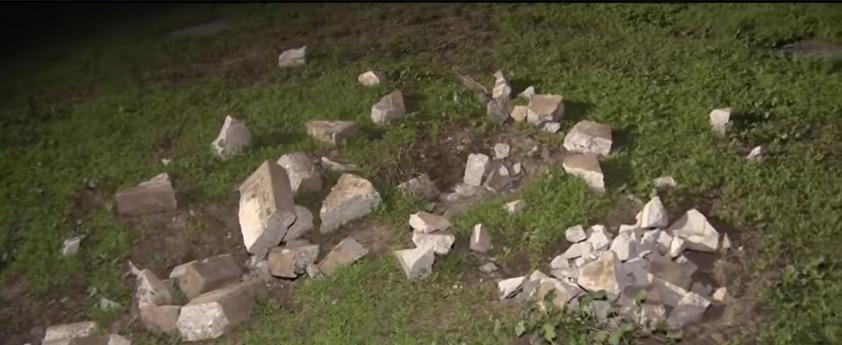
"The property owner estimates the financial loss to be in the hundreds of thousands of dollars."
On Jan. 12, Lincoln Memorial Park in Carson was hit by vandals who ripped bronze markers and plaques from headstones and walls of a mausoleum.
According to Mitchell, damage from that heist was estimated to be more than $2 million.
"A prominent bronze statue of President Abraham Lincoln that was dedicated in 1934 was damaged in an attempt to remove a plaque from the facade of the statue," according to Mitchell's motion. "Additionally, a large bronze plaque that was gifted and dedicated to the cemetery in 1949 by former World Heavyweight Boxing Champion Joe Louis to commemorate and honor
local veterans who died in combat had also been removed and stolen."
The rewards initially offered by the board in February expired in May. No suspects have been identified in either theft. Anyone with information on the crimes was urged to call Lt. Vincent Ursini from the Sheriff's Department at 562-946-7008 or Crime Stoppers at 800- 222-8477.
By City News Service
An Escondido-based anti-abortion clinic filed a federal lawsuit against the California Attorney General's Office, which sued anti-abortion groups last year for allegedly forwarding misleading claims regarding a procedure known as Abortion Pill Reversal.
The lawsuit filed July 27 on behalf of Culture of Life Family Services alleges California Attorney General Rob Bonta's office "is targeting protected speech and activities" through its litigation against groups marketing the practice.
The clinic, which states on its website that it provides "Christ-centered medical care and pregnancy clinic
services," is headed by Dr. George Delgado, who is credited with founding the Abortion Pill Reversal procedure, sometimes abbreviated as APR.
APR proponents say that after a pregnant woman takes mifepristone with aims of terminating a pregnancy, she can counteract its effects by taking the hormone progesterone within 72 hours.
But Bonta's office says there isn't any scientific evidence to support Abortion Pill Reversal's efficacy or safety.
Last fall, the California Attorney General's Office sued a chain of Northern California pregnancy centers and national anti-abortion group
Heartbeat International for promoting APR. Bonta's office said the organizations used "fraudulent and misleading claims" to advertise Abortion Pill Reversal, which it called "an unproven and largely experimental procedure" that presents potential health risks for patients who undergo the treatment.
Bonta's office did not immediately respond for comment on the lawsuit.
Culture of Life Family Services' lawsuit seeks to block the state AG's office from filing similar suits against organizations providing APR.
"Attorney General Rob Bonta refuses to recognize a woman's right to reverse an abortion in progress when she
DOJ sues TikTok in LA, alleging illegal collection of children's data
By City News Service
The U.S. Department of Justice sued TikTok and its China-based owner Friday, alleging in federal court the popular Culver City-based app violated a child privacy law by collecting personal information from millions of Americans under the age of 13.
For years, the company has allowed children under 13 to create and use TikTok accounts without their parents' knowledge or consent, collected extensive data, and failed to comply with parents' requests to delete their children's accounts and personal information, according to the complaint.
The DOJ alleges TikTok violates a federal statute and regulations that protect children's privacy and safety online, and defies a 2019 court order resolving a similar lawsuit in L.A. federal court against TikTok's predecessor. Among other things, the company was fined $5.7 million and ordered to keep records demonstrating its compliance with federal regulations, according to court papers.

TikTok did not immediately respond to a request for comment.
In a separate action, President Joe Biden signed a bill in April that could lead to a nationwide TikTok ban. The legislation gives TikTok's owner, ByteDance, potentially up to a year to sell the video-based social media platform to a non-Chinese buyer or face a ban from app stores in the United States and hosting services that support it.
In a video posted to TikTok, the company's chief executive, Singaporean businessman Shou Chew, told users in April, "Rest assured, we aren't going

has changed her mind about the procedure," said Peter Breen, executive vice president and head of litigation for the Thomas More Society, a law firm that frequently files lawsuits on behalf of conservative causes. "Abortion Pill
Reversal gives these women a second chance to choose life, a choice that Bonta and the abortion industry would strip from her."
Delgado was also a plaintiff in another case challenging the U.S. Food and Drug
Administration's approval of mifepristone and seeking to remove access to the drug.
In June, the U.S. Supreme Court unanimously ruled that the plaintiffs lacked standing to sue and threw out the lawsuit.
USC researchers call for legislation to combat
By Suzanne Potter, Producer, Public News Service
Research shows many people in low-income California communities are having a hard time filling their prescriptions because pharmacies in their area are struggling and even closing.
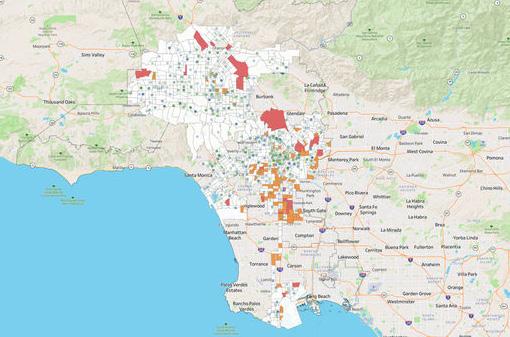
One in four communities in Los Angeles County, for example, is now considered a "pharmacy desert."
anywhere."
According to the lawsuit, TikTok has more than 170 million users in the U.S., including many children and teens. In 2022, twothirds of U.S. teens reported using TikTok, including about 61% of teens aged 13 or 14. By late 2023, nearly half of U.S. teens reported using TikTok multiple times a day, the lawsuit states.
The complaint contends that TikTok allows children to bypass or evade the platform's "age gate," which asks for birthday information, and collects personal information even from users who identify themselves as children.
Dima Qato, associate professor of pharmaceutical sciences at the University of Southern California, and her team have developed a mapping tool that reveals the extent of the problem, which she said hits communities of color hardest in both urban and rural areas.
"I think that it's getting worse," Qato observed. "In the next several years, a lot of chains have announced plans to close many of their stores. At the same time, one and three independents are at risk for closing."
Qato would like to see Congress reform the practices of pharmacy benefit managers, who decide where a patient can go to fill their
medications, how much a pharmacy will be paid and which pharmacies are considered "in network" for health insurance. The bipartisan Pharmacy Benefits Manager Accountability Act, currently in Congress, would increase oversight of the industry.
Qato argued stronger policies could keep more independent pharmacies from going out of business, which could also improve health equity.
"It's due to the role of pharmacy benefit managers and low reimbursement rates, and the growth of pharmacy networks, which restrict where patients can and cannot go," Qato outlined. "Sometimes, patients have to bypass the nearest pharmacy to go to another pharmacy that's within their network."
University of Southern California researchers have called for policies encouraging pharmacies to locate in pharmacy deserts, including increases to Medicaid and Medicarereimbursement rates for those most at risk for closure.
Arcadia
Arcadia hosting Health Fair Saturday
Arcadia’s inaugural Citywide Health Fair is set for Saturday from 9 a.m. to noon. The event will consist of a variety of free health screenings, medical lectures, doctor consultations,medical information booths, and at 9:15 a.m. keynote speaker Lieutenant General Mary K. Izaguirre, who serves as the 46th US Army Surgeon General and the Commanding General of US Army Medical Command. This free event will be held at the Arcadia Community Center located at 365 Campus Drive, Arcadia. There is free parking on premises and overflow parking at Holy Angels Church located at 370 Campus Drive. For more information visit www. ArcadiaCa.gov/Healthfair, or call the Arcadia Recreation and Community Services Department at 626-574-5113.
Monterey Park
Monterey Park to celebrate Romance Awareness Month with author Justinian Huang
Author Justinian Huang will discuss his debut novel at a special literary event at the Monterey Park Bruggemeyer Library on Saturday at 2 p.m. in the Friends Room. The event is free to the public. Justinian Huang is a Monterey
Park-born author whose first novel, “The Emperor and the Endless Palace,” has been hailed by critics as “a sweeping triumph in queer romance” (Booklist) and “a mesmerizing debut” (Publishers Weekly, starred review). Huang will appear in conversation with Madeleine Nakamura, an LA-based author and editor.
Long Beach to study policy changes to boost housing production
The City of Long Beach will host a series of housing policy forums focused on gathering input and informing the community of numerous housing policy and zoning initiatives currently underway. The forums will be held Saturday, Aug. 24, from 10 to 11:30 a.m. at Houghton Park Community Center (6301 Myrtle Ave.); Wednesday, Aug. 28, from 6 to 7:30 p.m. at Long Beach Energy Resources Auditorium (2400 Spring St.); and Thursday, Sept. 12, from 6 to 7:30 p.m. at McBride Park Community Center (1550 Martin Luther King Jr. Ave.). To learn more and RSVP to attend one of the forums, visit the Housing Policies webpage.
Glendale
Glendale to host Beyond Plastic Vendor Fair this month
The City of Glendale will host the Beyond Plastic Vendor Fair on Aug. 24 at Perkins Plaza behind City Hall. This event will showcase reusable,
compostable, and recyclable materials in compliance with the city's proposed plastic waste reduction ordinance. Attendees can learn about sustainable alternatives and connect with suppliers who offer eco-friendly products. For more information on the gas-powered leaf blower prohibition and the event, visitGlendaleCA.gov/ Plastics.
Orange County
Measles case reported in Orange County
The OC Health Care Agency has confirmed a case of measles in an adult international traveler visiting Orange County. The person visited several locations in Orange County while infectious including Denny's Restaurant (1168 W. Katella Ave., Anaheim, CA 92802), CVS Pharmacy (1803 S. Harbor Blvd., Anaheim, CA 92802), Walmart (1120 S. Anaheim Blvd., Anaheim, CA 92805), Anaheim Global Medical Center Emergency Department (1025 S. Anaheim Blvd., Anaheim, CA 92805), and CVS Pharmacy (1676 W. Katella Ave., Anaheim CA 92802). For information about measles in Orange County including any updates to this case in Orange County visit www. ochealthinfo.com/measles.
Anaheim
Anaheim church volunteer sentenced to over 120 years for molesting
girls as young as 6
Todd Christian Hartman, 41, of Newport Beach, a former Anaheim church children’s ministry volunteer has been sentenced to more than 120 years to life for molesting several girls, including one as young as 6 years old, and taking sexually suggestive photos of one of the girls he met through his church. He also was in possession of hundreds of pornographic images of children, including children stripping, dancing in their underwear, and performing oral sex.
County
Riverside County
RivCoDCSS’ Family Support Resource Fair to be held Saturday
Join the Riverside County Department of Child Support Services (RivCoDCSS) on Saturday, from 8 a.m. to noon, at the Riverside branch office located at 2081 Iowa Ave, Riverside, CA 92507. The event will feature presentations and educational sessions focused on child support services, community resources, and employment opportunities for job seekers. The event will also provide free haircuts, bicycle helmets, and snacks. Each attendee will receive a bag containing Riverside County and local parent resource packets, complete with school supplies. Giveaways will include essential backpack materials for children aged 3-17, such as
writing pads, pens, pencils, crayons, markers, and more. To register, visit www. RivCoDCSS.com.
City of Riverside
Visit RAM and The Cheech for free Sunday
The Riverside Art Museum and The Cheech Center will open their doors Free Summer Sundays through Sept. 1, 2024 and Sunday, Aug. 11, is the next scheduled date. Brought through generous support provided by Art Bridges Foundation’s Access for All program, on Free Summer Sundays, admission to both the Riverside Art Museum and The Cheech are free for all who would like to attend.
San Bernardino County
San Bernardino County awarded $99M for flood control projects
San Bernardino County has been awarded $99 million to partially fund four flood control projects in a new federal water bill. The Water Resources Development Act (WRDA) reauthorizes funding for the Army Corps of Engineers and supports major water infrastructure projects. The bill, H.R. 8812, passed the House of Representatives on a bipartisan vote July 22. In addition to the funding, the legislation directs the Army Corps to conduct extensive feasibility studies on three county projects.
Board of Supervisors proposes protections for law enforcement funding
On Tuesday, the San Bernardino County Board of Supervisors voted unanimously to place the San Bernardino County Law Enforcement Staffing and Community Protection Act of 2024 on the Nov. 5 General Election ballot. If approved by a majority of voters, the act will establish a funding formula for law enforcement resources in unincorporated communities and make it difficult for future boards to reduce law enforcement funding. The act would require the board to allocate a minimum amount of funding in its annual budget to fund patrol personnel’s direct salary and benefit costs for operations in the unincorporated areas of the county. The minimum amount would be the average of actual patrol personnel salary and benefit costs in the unincorporated area of the county in the three preceding fiscal years.
Ontario
Ontario Foodie Fest slated for Sept. 14
Whether you are a devoted foodie or just looking for a delightful day out, Foodie Fest promises to be a paradise for your taste buds. An array of food vendors will gather at Celebration Park North (4980 S Celebration Ave.) on Saturday, Sept. 14, from 3 to 8 p.m. for this free event. There will also be live entertainment for everyone to enjoy.
July 26
At 4:49 p.m., officers responded to a complex located in the 200 block of West Pomona regarding a parked suspicious vehicle. Officers located the vehicle and contacted the solo occupant. A computer check revealed she was reported missing out of Los Angeles. The subject was an adult and advised that someone reported her missing. She was removed from the system.
At 5:30 p.m., officers responded to a business in the 700 block of East Huntington regarding two subjects concealing items. Officers arrived and contacted the suspects outside of the business. These subjects were found in possession of the taken items. A computer search revealed one of the subjects had a warrant for his arrest. He was arrested and taken into custody. The other subject was arrested, cited, and released at the scene.
At 6:59 p.m., El Monte PD requested assistance locating a robbery suspect vehicle that had just committed a robbery in their city. Officers patrolling the area of Shamrock and Walnut saw the suspect vehicle and conducted a high-risk traffic stop. El Monte PD responded and arrested all three occupants.
July 27
At 8:04 a.m., a resident in the 200 block of Linwood reported his tires were slashed while his vehicle was parked. This investigation is continuing.
At 10:26 a.m., officers responded to the area of Duarte and Mayflower regarding an injury traffic collision. One of the parties involved suffered injuries.
July 28
At 12:01 a.m., an officer patrolling the 900 block of West Duarte saw a male adult subject asleep behind the wheel of a parked car. The officer made contact with the subject to do a wellness check and discovered the subject displayed symptoms of being under the influence. An investigation revealed he was too intoxicated to care for himself. He was arrested and transported to the MPD jail to be held for a sobering period.
At 2:44 a.m., an alarm company for a car dealership in the 1300 block of South Mountain reported two males removing tires from a vehicle belonging to the dealership. When officers arrived the suspects were already gone and could not be located. This investigation is continuing.
At 4:05 p.m., a resident in the 100 block of East Colorado reported the front window to the residence was broken. An officer arrived and noticed a pair of brass knuckles lying on the window ledge. This investigation is continuing.
At 6:11 p.m., a caller in a shopping center in the 700 block of East Huntington reported a catalytic converter theft in progress. The suspect vehicle fled and responding officers were unable to locate it. Officers confirmed a catalytic converter had been sto-
len from the victim's vehicle. Through investigation, the suspect vehicle was identified and entered as a felony wanted vehicle. On July 29 at 4:23 a.m., the suspect vehicle was stopped by El Monte PD. MPD officers responded to the scene, identified and interviewed the vehicle's occupants. This investigation is continuing.
At 10:37 p.m., officers responded to a family disturbance in the 1300 block of South Alta Vista. A male at the residence with a history of mental illness was causing a disturbance and challenging other family members to fight. It was determined that he was a danger to others. He was transported to a medical facility for treatment.
At 12:17 a.m., a victim in the 400 block of Los Angeles reported their vehicle had been stolen. Officers arrived and were unable to locate the vehicle. This investigation is continuing.
At 1:09 a.m., an officer patrolling the 1300 block of South Mayflower saw a subject on the sidewalk who appeared to be passed out. The officer made contact with the subject to check on his well-being. A computer search revealed he was a parolee at large with a no bail warrant. He was arrested and taken into custody.
At 10:13 a.m., while patrolling the 800 block of East Huntington an officer saw a vehicle in violation of a vehicle code. The officer conducted a traffic stop and made contact with the driver. A computer check revealed the driver had a warrant for his arrest. He was arrested and
taken into custody.
At 12:45 p.m., a victim in the 900 block of West Olive reported that he was attacked by a male subject at the location. Officers arrived and made contact with all of the parties involved. An investigation revealed the suspect was involved in a verbal argument with the victim, hit the victim multiple times, and brandished a gun. The victim suffered a laceration. The suspect was arrested and taken into custody.
At 5:01 p.m., several callers in the area of Mountain and Evergreen reported a traffic collision. Officers arrived and saw two involved vehicles. Both parties complained of pain and one was transported to the hospital for further treatment.
At 5:10 p.m., a victim in the 700 block of South Shamrock reported an unknown female subject gave her a hug and without the victim knowing, the subject removed the victim's watch from her wrist. The victim didn't realize it until after the suspect was walking away. This investigation is continuing.
At 6:04 p.m., an employee from a store in the 700 block of East Huntington reported a male and female subject concealing merchandise. Officers arrived and located the subjects as they were exiting the store. They were both arrested and taken into custody.
At 10:45 p.m., an officer patrolling the 300 block of West Foothill saw a bicyclist commit a violation. A traffic stop was conducted and
the bicyclist was contacted. A computer search revealed a warrant for his arrest. He was arrested and taken into custody.
July 21
At 2:43 p.m., officers were dispatched to The Shops at Santa Anita at 400 S. Baldwin Ave. (Macy's) regarding Macy's loss prevention detaining a suspect for theft. The suspect and his wife were observed by a loss prevention officer entering Macy's with an empty bag, filling it with clothing items, and leaving the store. The suspect was confronted and detained until the officers arrived. The loss prevention officer provided the officers with CCTV footage showing the incident, a report, and a detailed list of the stolen items. The suspect was cited for petty theft and ordered to appear before Pasadena Superior Court.
July 22
At 9:23 a.m. officers were called to the area of Sycamore Avenue and Ramona Road following a report of a man with a rifle. An investigation revealed that a nearby resident was using a BB gun to shoot rats in his backyard. The resident cooperated with officers, who found the BB gun inside his house. The resident was warned for violating a municipal code and released.
July 23
At 8:30 a.m., a graffiti abatement worker arrived at the cleaning site near Second
and Colorado to remove graffiti. While driving his truck along the trail, the victim encountered a man standing in front of a tent, blocking the path. The victim got out of his truck, instructed the man to move, but he refused and brandished a metal object, threatening the victim. Officers responded to the incident, but the suspect escaped. The encampment was cleared by the Public Works department. The suspect, described as a thin black male in his thirties, wearing a white shirt and blue shorts, fled the scene.
July 24
At 12:17 a.m., officers responded to the 30 block of Miren Place regarding an incident that involved a male subject attempting to open a residence's rear sliding door. The resident identified the individual as her ex-boyfriend who admitted to prowling. After an investigation officers determined the ex-boyfriend was under the influence of alcohol which led to his arrest for public intoxication.
July 25
At 11:30 a.m., an officer responded to Bellezza Studio Salon at 292 E. Foothill Blvd. for a report of a recent commercial burglary. Upon investigation, it was found that between July 24, 2024, at 6:30 p.m. and July 25, 2024, at 7:30 a.m., unknown individual(s) broke a key lock box attached to the door handle. The individual(s) then used the key from the lock box to gain entry and stole around $400 worth of miscellaneous equipment. The location does not have any alarms or CCTV cameras.




Eliminate gutter cleaning forever! LeafFilter, the most advanced debris-blocking gutter protection. Schedule a FREE LeafFilter estimate today. 20% off Entire Purchase. 10% Senior & Military Discounts. Call 1-855-424-7581 (Cal-SCAN)
DONATE YOUR VEHICLE to fund the SEARCH FOR MISSING CHILDREN. FAST FREE PICKUP. 24 hour response. Running or not. Maximum Tax Deduction and No Emission Test Required! Call 24/7: 1-877-434-6852 (CalSCAN)
GOT AN UNWANTED CAR??? DONATE IT TO PATRIOTIC HEARTS. Fast free pick up. All 50 States. Patriotic Hearts’ programs help veterans find work or start their own business. Call 24/7: 1-855-408-6546 (CalSCAN)
Tiene un vehiculo no deseado? Donelo a Patriotic Hearts! Recogida rápida y gratuita en los 50 estados. Patriotic Hearts ofrece programas para ayudar a los veteranos a encontrar trabajo o iniciar su propio negocio. Llama ahora: 1-855-408-7368 (24/7) (Cal-SCAN)
Get a break on your taxes! Donate your car, truck, or SUV to assist the blind and visually impaired. Arrange a swift, nocost vehicle pickup and secure a generous tax credit for 2025. Call Heritage for the Blind Today at 1-844-491-2884 today! (Cal-SCAN)
National and State Award
Winning Newspaper For Sale. Northern California community weekly newspaper and multimedia company. Growing region of the San Francisco Bay area. Owners are retiring and want to spend more time with family. Looking to expand your Properties?? Call 925-487-6383 to start the conversation. (Cal-SCAN)
Struggling with debt? If you have over $10,000 in debt we help you be debt free in as little as 24-48 months. Pay nothing to enroll. Call Now: 1-877435-4860 (Cal-SCAN)
Attention: VIAGRA and CIALIS USERS! A cheaper alternative to high drugstore prices! 50 Pill Special - Only $99! 100% guaranteed. CALL NOW: 1-888-256-9155 (Cal-SCAN_
Jacuzzi Bath Remodel can install a new, custom bath or shower in as little as one day. For a limited time, we're waiving ALL installation costs. (Additional terms apply. Subject to change and vary by dealer. Offer ends 6/30/24 Call 1-833985-4766 (Cal-SCAN)
Safe Step. North America's #1 Walk-In Tub. Comprehensive lifetime warranty. Top-ofthe-line installation and service. Now featuring our FREE shower package and $1600 Off for a limited time! Call today! Financing available. Call Safe Step 1-888-989-5749 (CalSCAN)
DENTAL INSURANCE from Physicians Mutual Insurance Company. Coverage for 400 plus procedures. Real dental insurance - NOT just a discount plan. Do not wait! Call now! Get your FREE Dental Information Kit with all the details! 1-844-203-2677 www.dental50plus.com/calnews #6258 (Cal-SCAN)
Switch and save up to $250/ year on your talk, text and data. No contract and no hidden fees. Unlimited talk and text with flexible data plans. Premium nationwide coverage. 100% U.S. based customer service. For more information, call 1-844-908-0605 (Cal-SCAN)
The difference in winning and losing market share is how businesses use their advertising dollars. CNPA’s Advertising Services’ power to connect to nearly 13 million of the state’s readers who are an engaged audience, makes our services an indispensable marketing solution. For more info call Cecelia @ (916) 288-6011 or cecelia@cnpa.com
DID YOU KNOW Newspapergenerated content is so valu -
able it’s taken and repeated, condensed, broadcast, tweeted, discussed, posted, copied, edited, and emailed countless times throughout the day by others? Discover the Power of Newspaper Advertising. For a free brochure call 916-2886011 or email cecelia@cnpa. com (Cal-SCAN)
RETIRED COUPLE $$$$ for business purpose Real Estate loans. Credit unimportant. V.I.P. Trust Deed Company www.viploan.com Call 1-818248-0000. Broker-principal DRE 01041073. No consumer loans. (Cal-SCAN)
BATH & SHOWER UPDATES in as little as ONE DAY! Affordable prices - No payments for 18 months! Lifetime warranty & professional installs. Senior & Military Discounts available. Call: 1-877-252-9868 (CalSCAN)
Don't Pay For Covered Home Repairs Again! Our home warranty covers ALL MAJOR SYSTEMS AND APPLIANCES. We stand by our service and if we can't fix it, we'll replace it! Pick the plan that fits your budget! Call:1-855-411-1731 (Cal-SCAN)
WATER DAMAGE CLEANUP & RESTORATION: A small amount of water can lead to major damage in your home. Our trusted professionals do complete repairs to protect your family and your home's value! Call 24/7: 1-888-2480815. Have zip code of service location ready when you call! (Cal-SCAN)
GoGo. Live and age your way. Get help with rides, groceries, meals and more. Memberships start as low as $1 per day. Available 24/7 nationwide. BBB Rated A+ Business. Call GoGo to get started. 1-855-476-0033
By Shawn Spencer shawn@girlfridaysolutions.net
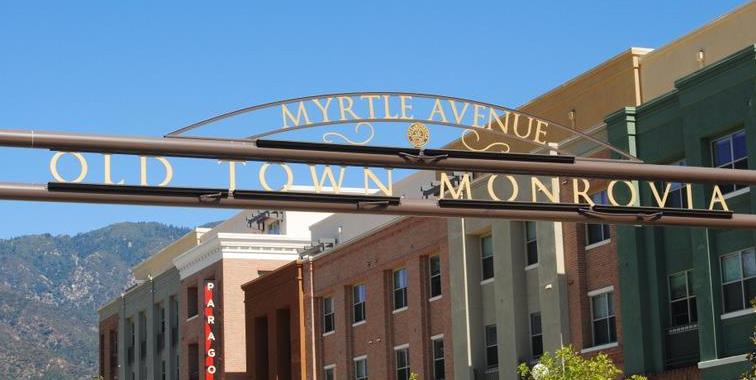
And so, we bid adieu to another Old Town business. Clever Bear Toys and Books opened on Myrtle in February 2023, to the delight of children and adults alike. The store was adorable, and the owner even more so. I was a huge lover of the Dollmaker’s Kattywompus, and even more so of the family that owned it. It was a huge loss to Old Town when they shuttered their doors, which was why I was so happy to see Clever Bear come to town.
The loss of a second beautiful toy store is doubly hard. The owner had wonderful events: scavenger hunts, author led readings, sales, demo events, Easter egg hunts and more. Sadly, store sales were not what they needed to be to sustain Clever Bear. As sorry as I am to see this store close, I am happy that the owner Christine will still be present in our community. She plans to move her toy store to a booth at our Friday night street fair to augment her online store. I love that she will still have a physical
presence where children can see and touch her toys and books.
Although this is not the path Christine planned for, I am a firm believer in the metaphor “when one door closes, another one opens.” Life is full of opportunities, even in the face of adversity and disappointment. Thank you, Christine, for bringing your wonderful store to Old Town. We wish you well and look forward to seeing you every Friday night!
To take the metaphor literally, as Clever Bear’s doors close, the doors of Saint Aesthetix open.
Moving into the newly vacated 526 S. Myrtle Ave., Saint Aesthetix is a boutique wellness clinic that plans to offer the following services: electrolysis, scalp treatment with massage & hair wash, wrinkle relaxers, dermal fillers, IV therapy, skincare treatments, hair restoration, fat loss, laser therapy, PDO threads and more. They will have an entire retail section dedicated to the retail of high-end skin care.
Aesthetix has been a long-time resident of Monrovia but is excited to be relocating to our historic Old Town District. The owner of Saint Aesthetix, Eunice, is an absolute delight. Saint Aesthetix has just begun the design phase of their build-out, with the help of Mark Houston Associates, Old Town’s very own designbuild firm.
They hope to be open by Christmas and I, for one, am super excited about this. I think this will be an excellent addition to Old Town. I wish for them a fast opening and longevity during these trying times of being a small business owner.
“Let us find gratitude for the chapters that have closed, courage for the chapters that await, and compassion for ourselves as we navigate the complexities of goodbyes and new beginnings. For in every goodbye lies the promise of a new hello, and in every farewell, the opportunity for growth, renewal, and transformation.”- Masibwrites
By Brian Ryan, Ballotpedia via Stacker
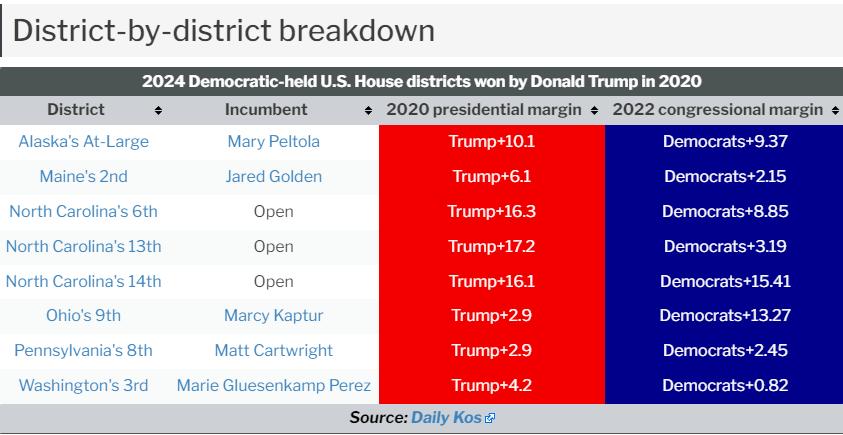
Thereareeight Democratic-held
U.S. House districts up for election in 2024 that Republican candidate Donald Trump won in the 2020 presidential election. As of June 2024, Ballotpedia has identified all eight districts as 2024 U.S. House battlegrounds. Trump's margin of victory in the eight districts ranged from 2.9 percentage points to 17.2 percentage points.
Representation changes each election
Five incumbents in Democratic-held districts that Trump won in 2020 are seeking reelection in 2024. Three incumbents are retiring from public office.
In 2022, there were 13 Democratic-held U.S. House districts up for election that Trump won in 2020. Incumbents did not seek reelection in eight of the 13 districts. Ten of the Democraticheld districts flipped and
elected a Republican in 2022.
Click here to see the 19 U.S. House districts represented by a Republican in 2022 and won by Democratic candidate Joe Biden in 2020.
Split congressional districts historically
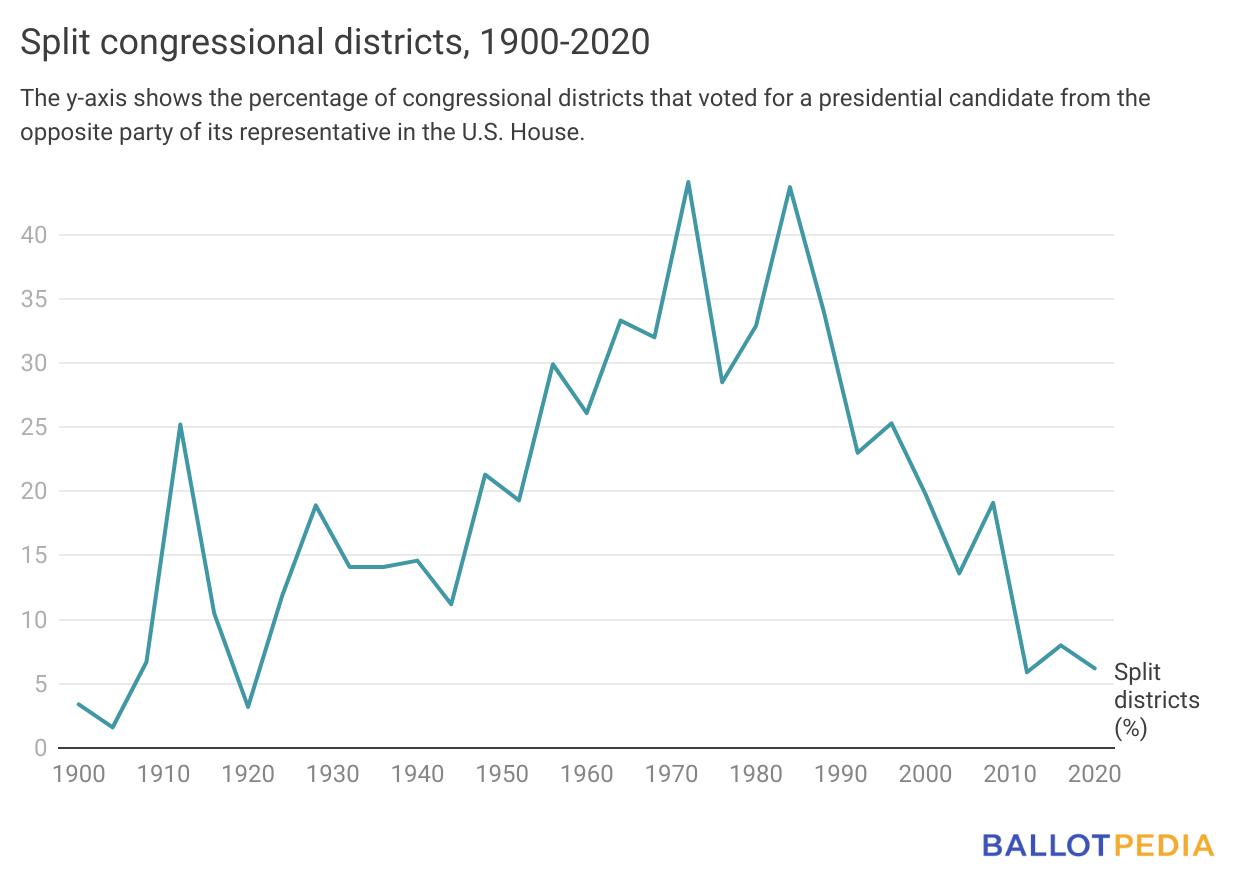
From 1900 to 2020, the percentage of congressional districts that voted for a presidential candidate of one party and a U.S. representative from a different party ranged
from 1.6% (five districts) in 1904 to 44.1% (192 districts) in 1972. The number of districts available changes year-byyear. The 2020 election had the sixth fewest split districts since 1904 with 6.2% (27 total). This story was produced by Ballotpedia and reviewed and distributed by Stacker Media. The article was retitled and copy edited from its original version. Republished pursuant to a CC BY-NC 4.0 license.
By Zeynep Guler Tuck, Stacker
Most Americans can count on one hand theIndigenous Americans who they know contributed to the colonial history of this land — perhaps Sacagawea, Geronimo, Pocahontas or Sitting Bull.
However, the reality is the one-sided nature of American history taught to children in the U.S. has minimized the contributions of Indigenous people, making for a challenging journey to truth and reconciliation with the native people of this land.
With the discoveries of a burial site for Indigenous children in Albuquerque, New Mexico, in September 2021 and the unmarked graves of children in Canada in the summer of 2021, more of the world finally began reckoning with the brutal realities of the boarding school system and the insidious legacy of colonization — injustices that Indigenous activists and concerned communities have been speaking up about for years.
Speaking as an expert on a panel about Indigenous boarding schools, Dena Ned, a Chickasaw Nation of Oklahoma member, stressed the importance of remembering and learning our history. By doing so, Ned explained, we can understand why it's essential for policies, systems and institutions to recognize and respond to community members.
As recognition of influential Indigenous Americans has grown, so have wrongful claims of Indigenous heritage, leading to the term "pretendian." Notable figures like award-winning folk singer Buffy Sainte Marie, actor Sacheen Littlefeather and author Joseph Boyden have sparked public debate on what it means to be Indigenous. The controversy lies in the damaging effects that claiming Indigenous ancestry can have on communities. When a non-Indigenous person misrepresents their heritage, they occupy spaces meant for Indigenous people, falsely represent a community they don't belong to
and prioritize their fabricated identity over those with genuine Indigenous heritage.
While many people want to support and advocate for Indigenous communities, inaccurately claiming Indigenous heritage is not the same as being a trusted ally.
By learning about the backgrounds, contributions and sacrifices of Indigenous leaders, you can take action as an ally to break down the systems of oppression that threaten the rights and identities of Indigenous peoples.
Backed by news articles and historical sources, Stacker
people, including those in Canada and the Gulf of Mexico, hoping they would set aside any differences or ancestral rivalries to unite to defend their lives and homelands against white colonizers.
While Tecumseh's mission failed and he died in battle in 1813, his efforts exposed the duplicitous underbelly of the foundation of America. His impact in the Midwest contributed to the American Indian Movement, which was started in Minneapolis in the 1960s and continues its work to this day.
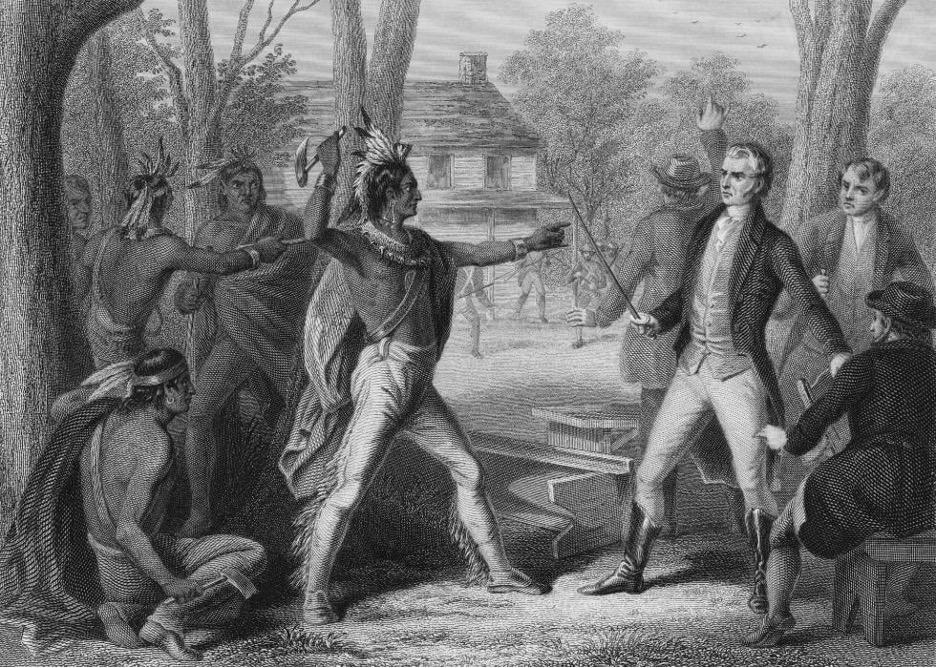
compiled a list of 19 influential Indigenous Americans you might not know about. Read on to find out about these Indigenous heroes and revolutionaries from across North America who resisted oppression, broke down barriers and changed the course of history.
Editor's note: A previous version of this story included Sacheen Littlefeather on the list. The author has updated this article by providing more context on the matter of "pretendians."
Tecumseh
Wedged between the American expansionists and the British invaders, Tecumseh was a Shawnee leader who attempted to carve out a sovereign Indigenous state in the Midwest. Tecumseh and his spiritually enlightened brother Tenskwatawa were descended from a long line of Indigenous leaders who fought for the land against the intruders.
Tecumseh strived for an alliance of all Indigenous

One of the first Black professional sculptors, Edmonia Lewis, broke down racial and gender barriers with her works of art. Born in 1844 to a Haitian father and Ojibwe mother, Lewis has a shared African and Indigenous American heritage. However, she lost both of her parents by the age of 7.
Oglala Sioux Chief Red Cloud was among a group of Indigenous leaders who confronted the white settlers who had discovered gold in Montana during the 1860s. The settlers attempted to construct a road lined with protective forts to facilitate the mining of this gold.
However, following a two-year battle, Red Cloud and his army were able to halt the construction of this road, which caused the U.S. to abandon its forts. Red Cloud then signed a treaty securing land for his people in Wyoming, Montana and South Dakota.
A warrior turned diplomat, Red Cloud was committed to nonviolent advocacy. Later in life, after settling in the Pine Ridge Reservation in South Dakota, Red Cloud campaigned for Indigenous land and civil rights in Washington. Red Cloud died on Pine Ridge Reservation in 1909 at 88 years old, outliving most
Her most famous work of art is the marble "The Death of Cleopatra," which she carved in 1876 and was acquired by the Smithsonian in the 1990s. Lewis spent time sculpting in Europe, and many of her sculptures speak to the Black experience throughout history. She died in 1907. Her work is still in some of the most famous U.S. museums, including the Smithsonian, the Metropolitan Museum of Art and the Baltimore Museum of Art.
Susan La Flesche Picotte
Born on Nebraska's Omaha reservation in 1865, Susan La Flesche Picotte was young when she first saw a sick Indigenous community member suffer and die while waiting for a white doctor. By pursuing a Euro-American education while honoring the customs of her people, La Flesche Picotte battled backlash and became the first Indigenous person to earn a medical degree.
She defied the odds again in 1913 when she opened the Omaha reservation's first hospital. La Flesche Picotte died in 1915, and she
was commemorated on her deathbed for bridging the gap between her Indigenous roots and her Euro-American medical education. The Picotte Memorial Hospital was designated a National Historic Landmark in 1993 and, as of 2024, is undergoing a major renovation.
Allan Houser
Indigenous sculptor Allan Houser is considered to be among the most influential artists of the 20th century. His parents, members of the Chiricahua Apache Tribe, were held as war prisoners for 20 years, and his family tree includes legendary Apache leader Geronimo, who was a first cousin to Houser's father.
Houser's career began in 1939 when he was commissioned by the U.S. government to paint murals. He did so for the New York World's Fair, the Department of the Interior in Washington D.C., and the Golden Gate International Exposition in San Francisco. Houser was one of the first Indigenous artists to receive the National Medal of Arts in 1992. His statue, "Swift Messenger," sits in President Biden's Oval Office.
Charlie Parker
One of the most prolific jazz musicians of our time, Charlie "Yardbird" Parker was a renowned saxophonist whose bebop style left a lasting effect on American culture. Born to a Black father and an Indigenous mother, the Kansas City native would go on to collaborate with the
Though he died in 1955 at the mere age of 34, Parker's legacy continues to live on today. The Grammy Award winner's influence on the jazz art form is undeniable. In 2021, the American Jazz Museum committed to celebrating Parker's legacy by raising funds for youth activities and enhanced programming. Parker's iconic works of art will be digitized and preserved by the museum for future generations.
Maria Tallchief
Maria Tallchief moved to New York at just 17 to achieve her dream of becoming a dancer. However, many of the companies she approached turned her away because of her Osage Nation heritage. Her drive and determination against all odds, even refusing to change her last name, led her to become one of America's most revered ballerinas.
Tallchief was the first American to perform at the Paris Opera Ballet, and she and her sister Marjorie went on to found the Chicago City Ballet. Maria Tallchief received the National Medal for the Arts in 1999, and five years after her death in 2013 she was posthumously inducted into the National Native American Hall of Fame in 2018.
Mildred Loving
Many Americans will have heard of Mildred Loving, as she and her husband (and co-plaintiff) Richard battled
By City News Service
After initially indicating he would likely have to retire from filmmaking due to health concerns, legendary director David Lynch has rewritten the script -- and, in a socialmedia post Monday, now says he "will never retire."
The "Blue Velvet" director and "Twin Peaks" creator clarified his future in a statement on X, following an article published in the British magazine Sight & Sound in which he said he cannot leave his L.A. home over fears he will get COVID-19.
"I've gotten emphysema from smoking for so long and so I'm homebound whether I like it or not," the 78-year-old Lynch told the publication. "It would be very bad for me to get sick, even with a cold."
The director added he "can only walk a short distance before" running out of oxygen -- and that he's unlikely to direct a film again unless he could shoot

remotely.
But Monday, Lynch took to social media to provide a health update -- and to reassure his concerned fans.
"Yes, I have emphysema from my many years of smoking," he wrote. "I have to say that I enjoyed smoking very much, and I do love tobacco -- the smell of it, lighting cigarettes on fire, smoking them -- but there is a price to pay for this enjoyment, and the price for me is emphysema."
The director added that he has quit smoking for over
two years.
"Recently I had many tests and the good news is that I am in excellent shape except for emphysema. I am filled with happiness, and I will never retire," he wrote.
"I want you all to know that I really appreciate your concern."
Lynch's last major project was Showtime's "Twin Peaks: The Return" in 2017. The revival of the ABC series was well received by critics and fans alike. The director's last movie was 2006's "Inland Empire."
the ban against interracial marriage in the super-charged case of Loving v. Virginia. What many Americans may not know is that Mildred Loving was of Black and Indigenous descent. She was part of the Rappahannock Tribe and her heritage continues to be a topic of controversy today.
The Lovings took their case to the Supreme Court in 1967 and won, legalizing interracial marriage across the nation. In order to exclusively focus on the white-Black binary that was dominating American discourse around race, coverage of the Loving v. Virginia case — as well as the 2016 film "Loving" — left out Mildred Loving's multiracial heritage.
Ben Nighthorse Campbell
The National Native American Veterans Memorial opened its doors to the public on Veterans Day in 2020. This museum honors the contributions of the Indigenous community and would not have been erected without the support of former Colorado Sen. Ben Nighthorse Campbell. When Campbell was elected in 1992, he was the first Indigenous American to serve in the Senate in over 60 years and the only Indigenous American in Congress.
Besides being a former congressman and a member of the Northern Cheyenne Tribe, Campbell is a Korean War vet, former Olympian, rancher and jewelry designer. As of 2024, his jewelry is for sale at Sorrel Sky Gallery in Santa Fe, New Mexico; Durango, Colorado; and New York City. Wilma Mankiller
One of Time magazine's 100 Women of the Year in 2020, Wilma Mankiller was the first woman appointed Principal Chief of Cherokee Nation. Mankiller faced discrimination and racism growing up, which fueled her commitment to feminism and self-governance for Indigenous people.
The Cherokee community thrived under her two terms as principal chief. Mankiller published her autobiography — "Mankiller: A Chief and Her People" — in 1993 and five years later, she received the Presidential Medal of Freedom from then-President Bill Clinton. She passed away in 2010, leaving a legacy of prosperity, pride and hope.
Additional research by Emilia Ruzicka. Story editing by Aly Marti. Copy editing by Nicole Caldwell and Kristen Wegrzyn. Photo selection by Clarese Moller.
The story was retitled and copy edited from its original version. Republished pursuant to a CC BY-NC 4.0 license.

Rocky is a perfect addition to any home that is seeking a chill companion with lots of love! He’s an eight-year-old German Shepherd with an easy going, laid-back vibe. He’s stunningly handsome and smart as well! Rocky has been spending time with one of the Pasadena Humane foster families, and they have wonderful things to report. They say he is very low maintenance and prefers to sleep throughout the day. He loves car rides, loves to stick his head out the window, and is very well-behaved in public. He can be taken anywhere, and he’s received countless compliments from strangers. Rocky is housetrained and knows basic cues. He sits well and has learned to lie down on command. He even walks right by your If you’re looking for a lower-energy buddy to relax in the shade with, come meet Rocky today!
Are you looking for a copilot to travel across the galaxy (or even just around town)? Chewbarka might be the wingman you’ve been looking for! This handsome sweetheart is a five-year-old American Bulldog mix whose favorite activity is being right by your side. Chewie is a mellow guy- he loves wandering around the yard sniffing and exploring, but as soon as he sees people he’ll lumber over to say hello with a huge smile on his face and a non-stop wagging tail. Then he gets playful and excited to get a belly rub or to try to sit in your lap. Once he bonds with you, you have a BFF. He will walk right by your side, sit next to you if you want to just chill out, and probably take a nap with his giant head on your feet to make sure you don’t leave without him. Chewbarka is a large dog- he weighs about 75 pounds, but he doesn’t require a lot of exercise. A short walk or two a day would be great for him- he won’t need a run or long hike to keep him happy. He’s also a quick learner- he knows some basic training cues and with the right motivation, he’s happy to perform those as often as you’d like. He appears to be housetrained and walks next to you nicely on leash. Chewie might prefer to be the only dog in the household- he's a bit of an attention hog, so sharing isn’t his favorite thing.
Rocky, Chewbarka, and all other dogs, cats and critters can be adopted at no charge during Pasadena Humane’s Clear the Shelters adoption event, happening Saturday, August 17th from 10:00 AM to 2:00 PM. The adoption fee for dogs is $150. All dog adoptions include spay or neuter, microchip, and age-appropriate vaccines. Walk-in adoptions are available every day from 2:00 – 5:00. For those who prefer, adoption appointments are available daily from 10:30 – 1:30, and can be scheduled online. View photos of adoptable pets at pasadenahumane.org. New adopters will receive a complimentary health-and-wellness exam from VCA Animal Hospitals, as well as a goody bag filled with information about how to care for your pet. Pets may not be available for adoption and cannot be held for potential adopters by phone calls or email.
By City News Service
The United States defeated Canada 16-13 in the women's 3x3 basketball bronze medal game Monday at the Paris Olympics, with Los Angeles Sparks forward Dearica Hamby giving the Americans their first lead with a layup and free throw with 1 minute, 17 seconds to play.
The U.S. never trailed again. The Americans increased their lead to 15-13 with 39 seconds remaining on Cierra Burdick's free throw. Burdick made another free throw with 7 seconds left for the game's final point.
Canada didn't score again after Katherine Plouffe's basket with 1:28 to play gave it a 13-12 lead. The Canadians were scoreless on their final four possessions, missing four shots and committing a turnover.
Baskets inside the arc and free throws are worth one point in 3x3 and baskets made from outside the arc are worth two points.
Canada scored four consecutive points on Plouffe's two baskets and Kacie Bosch's 2-point basket, taking what would be its biggest lead, 7-3, with 6:20 remaining. The U.S. respond-
ed with a 5-1 run, tying the score 8-8 with 4:28 left.
Hailey Van Lith and Rhyne Howard both scored two points during the run which lifted the Americans into the third of six ties. The score was also tied at 9-9, 12-12 and 13-13.
The U.S. made 11 of 17 1-point shots, 64.7%, 0 of 7 2-point shots and 5 of 7 free throws, 71.4%. The Canadians made 7 of 11 1-point shots, 63.6%, 3 of 14 2-point shots and 21.4% and did not attempt a free throw.
Hamby had a game-high equaling 6 rebounds as the U.S. was out-rebounded 15-13. Canada made 10 turnovers, 3 more than the Americans.
Van Lith, a Texas Christian guard, scored a gamehigh 6 points. Howard, an Atlanta Dream guard added 4, and Hamby and Burdick, who played for six WNBA teams between 2015 and 2021 and in Spain, 3 each.
Plouffe led Canada with 5, her twin sister Michelle and Bosch 3 each and Paige Crozon 2.
3x3 is played with a 12-second shot clock on a half court. Coaches are not permitted to be courtside.

The winner is the first team to score 21 points, or the leading team at the end of the 10-minute game clock.
The Olympic tournament was played at a temporary facility at Place de la Concorde, a square that was the site of many notable public executions, including
those of Louis XVI, Marie Antoinette and Maximilien Robespierre during the French Revolution.
Earlier Monday, the U.S. lost a semifinal to Spain, 18-16, in overtime. The first team to score two points in overtime is the winner.
Sandra Ygueravide made a driving layup 25 seconds
into overtime. Howard shot an airball on a 2-point shot 12 seconds later.
Ygueravide ended the game with a free throw 50 seconds into overtime after she was fouled by Hamby driving to the basket.
Spain tied the score with 5 seconds left in regulation on Ygueravide's layup. Hamby had the ball under the basket as time expired in regulation.
The Americans committed 11 fouls to 6 for Spain, which made 6 of 7 free throws, 85.7%. The U.S. made 1 of 3 free throws, with Hamby missing both of hers.
The U.S. committed 9 turnover to 1 for Spain. The Americans out- rebounded the Spaniards, 23-14, with Hamby pulling down a gamehigh 7.
The U.S. made 13 of 23 1-point shots, 56.5%, and 1 of 4 2-point shots, 25%. Spain made 6 of 18 1-point shots, 33.3% and 3 of 13 2-point shots, 23%.
Van Lith led the Americans with 8, Hamby added 5 and Howard 3. Ygueravide led all scorers with 9.
The 6-foot-3-inch, 30-year-old Hamby was selected as a replacement
for her Sparks' teammate Cameron Brink, who suffered a torn anterior cruciate ligament in her left knee June 18 in a 79-70 loss to the Connecticut Sun in Uncasville, Connecticut, that will cause her to miss the Olympics and the rest of the WNBA season.
USA Basketball was required to choose a replacement among the top 50 Americans in the FIBA 3x3 rankings or have the minimum number of ranking points. Hamby's playing for the Sparks had no connection to her selection as Brink's replacement, Justin Trujillo, USA Basketball's communications manager, told City News Service. Hamby is in her ninth season in the WNBA and second with the Sparks. The former Wake Forest standout was the sixth overall selection in the 2015 WNBA draft by the San Antonio Stars. The team moved to Las Vegas before the start of the 2018 season. Hamby was the league's Sixth Woman of the Year in 2019 and 2020 and a WNBA all-star in 2021 and 2022, helping the Aces to the WNBA championship the latter year.
By City News Service
UniversityofCalifornia President Dr. MichaelV.Drake, whosetenureoverseeing the 10-campus system included the disruptions of the COVID-19 pandemic and the more recent protests over the IsraelHamas war, announced last week he will step down from his post after the 2024-25 academic year.
Drake, 74, has been president of the UC system since July 2020.
As UC president, Drake also oversees six
academic health systems and three nationally affiliated labs, in addition to the university campuses. Prior to assuming his role as the 21st UC president, he served as Ohio State University president for six years from 2014 through June 2020.
Born in New York City and raised in New Jersey and Sacramento, Drake attended Stanford University before moving to UC San Francisco for medical school.
Drake's history with the
UC system runs longer than 25 years from the onset of his academic career at UCSF, through which he has held academic and administrative roles in UCSF, UC Irvine and UC Riverside.
According to the UC, some of his notable accomplishments have been strengthening relations with Gov. Gavin Newsom, including a five-year funding Compact, development of a systemwide Tuition Stability Plan and creation of the UC Native
American Opportunity Plan.
"At every turn, I have sought to listen to those I served, to uphold our shared UC values, and to do all I could to leave this institution in better shape than it was before," Drake said in a statement. "I'm proud to see the university continuing to make a positive impact on the lives of countless Californians through research, teaching, and public service."
His tenure was riddled with high-profile chal-
lenges, such as a switch to remove instruction during the COVID pandemic, calls for defunding of campus law enforcement following protests over the death of George Floyd in Minnesota and the more recent pro-Palestinian protests on campus and demands that the university system divest from Israel.
According to a statement from his office, "One of the president's core priorities has been creating a safe and respectful community that fosters a free exchange of
ideas. He led a comprehensive, systemwide effort with key stakeholders across the University to reimagine public safety and launch a Systemwide Office of Civil Rights to help ensure that every member of the UC community feels safe and respected."
The UC Board of Regents will establish a committee to search for Drake's successor. The committee will include students, faculty, staff and alumni representatives, according to the UC.
(FONSI). The EA, FONSI, Notice of Intent to Request Release of Funds, and the associated Environmental Review Record was available for public review from July 1, 2024 to July 16, 2024.
The Addendum, adopted IS/MND, EA, FONSI, and supporting technical studies are available for public review at the Planning Division’s public counter at El Monte City Hall West.
PLACE OF HEARING: The City Council will hold a public hearing to receive testimony, orally and in writing, on the revised project. The public hearing is scheduled for the following date, time, and location:
Dates: Tuesday, August 20, 2024
Time: 7:00 p.m.
Place: El Monte City Hall East – Council Chambers 11333 Valley Boulevard, El Monte, California
Members of the public wishing to observe the meeting may do so in one of the following ways:
(1) Turn your TV to Channel 3;
(2) City’s website at http://www.elmonteca.gov/378/CouncilMeeting-Videos; or
(3) In Person
Persons wishing to offer public comment for this meeting may do so in one of the following ways:
(1) By directly addressing the City Council in person at the time(s) allotted on the agenda for such comment. Persons wishing to address the City Council in person are asked to fill-out a blue speaker card providing their name and indicating the specific agenda item(s) they wish to comment on or if they wish to speak during the portion of the agenda designated for comment on non-agendized matters. Speaker cards should be handed to City staff) before the City Council’s approval of the agenda, if possible. The City Council shall be under no obligation to recognize a speaker who submits a speaker card on a particular agenda item after the City Council has completed its handling of the agenda item and has moved on to the next item of business on the agenda. As members of the public are now free to attend City Council meetings in person, the City Council will no longer receive public comment by telephone.
(2) E-mail – All interested parties can submit questions/comments in advance to the Planning Division’s general e-mail address: planning@elmonteca.gov. All questions/comments must be received by the Planning Division no later than 12:00 pm on August 20, 2024.


The staff report on this matter will be available before the City Council meeting on the City of El Monte website, which may be accessed at https://www.ci.el-monte.ca.us/AgendaCenter/ or by e-mailing bdonavanik@elmonteca.gov.
Americans With Disabilities Act: In compliance with Section 202 of the Americans with Disabilities Act of 1990 (42 U.S.C. Sec. 12132) and the federal rules and regulations adopted in implementation thereof, the Agenda will be made available in appropriate alternative formats to persons with a disability. Should you need special assistance to participate in this meeting, please contact the City Clerk’s Office by calling (626) 580-2016. Notification 48 hours prior to the meeting will enable the City to make reasonable arrangements to ensure accessibility to this meeting.
Persons wishing to comment on the proposed application may do so orally at the public hearing or in writing prior to the meeting date and must be received by 12:00 pm the day of the meeting. Written comments shall be sent to Teresa Li, AICP; El Monte City Hall West; 11333 Valley Boulevard; El Monte, CA 91731 or at bdonavanik@ elmonteca.gov. If you challenge the decision of the City Council, in court, you may be limited to raising only those issues you or someone else raised at the public hearing described in this notice, or in written correspondence delivered to the City Council at, or prior to, the public hearing. For further information regarding this application please contact Teresa Li, AICP, Contract Planner at bdonavanik@elmonteca.gov Monday through Thursday, except legal holidays, between the hours of 7:00 a.m. and 5:30 p.m.
Published and mailed on: Thursday, August 8, 2024
Gabriel Ramirez, City Clerk
Publish August 8, 2024
EL MONTE EXAMINER
CITY OF EL MONTE CITY COUNCIL NOTICE OF PUBLIC HEARING
Hablamos Español - Favor de hablar con Jeni Colon (626) 258-8626
TO: All Interested Parties
FROM: City of El Monte Community & Economic Development Department
TO BE CONSIDERED:
The City Council will conduct a public hearing to consider an Ordinance to consider municipal code amendments to implement certain
NOTICE IS HEREBY GIVEN that the City Council will hold a public hearing and consider the Planning Commission’s recommendation on the following Project:
A. CEQA – Notice of Intent to Adopt an Addendum to the adopted Mitigated Negative Declaration (MND); and
B. Architectural Design Review No. ADR 23-13 with a Density B onus and Conditional Use Permit No. CUP 23-09
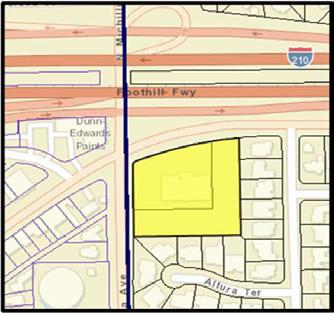
Project Description: The proposal is to amend a project that was previously approved by the City Council in 2020 for a new senior assisted living care facility (Artis Senior Living) . The new Applicant, O&I Development, LLC, is requesting to amend the original approval with a three- story, 107,706 square foot senior assisted living care facility (dba: The Ivy Arcadia). The proposal will also include a density bonus under the California Density Bonus Law that would also allow the project to provide a Floor Area Ratio (FAR) of 0.88 in lieu of the maximum
provide 60 parking spaces.
The Ivy Arcadia assisted living care facility plans, Addendum to the MND, and adopted MND are all available for public review at: 1. www.arcadiaca.gov/significantprojects 2. City Hall Development Services Department, 240 W. Huntington Dr. Arcadia
provisions of the California Vehicle Code creating certain parking restrictions for oversized vehicles within the City of El Monte.
ENVIRONMENTAL
DOCUMENTATION: The proposed Ordinance is not a “project” within the meaning of Section 15061(b)(3) of the CEQA Guidelines as it has no potential for resulting in a physical change in the environment, either directly or indirectly. Alternatively, the proposed Ordinance is not subject to CEQA under the general rule set forth in Section 15601(b)(3) of the CEQA Guidelines that CEQA only applies to projects which have the potential for causing a significant effect on the environment. For the reasons set forth in the initial sentence of this section, above, it can be seen with certainty that there is no possibility that the proposed Ordinance will have a significant effect on the environment.
PUBLIC HEARING: Pursuant to State Law, the City Council will hold a public hearing to receive testimony, orally and in writing, regarding the proposed Ordinance. The public hearing is scheduled for:
Date: Tuesday, August 20, 2024 Time: 7:00 PM
Place: El Monte City Hall East – City Council Chambers 11333 Valley Boulevard El Monte, CA 91731
OPTIONS TO PARTICIPATE: This meeting shall be conducted in compliance with the procedures of Government Code section 54953 as most recently amended by AB 2449 which took effect January 1, 2023.
Observe the Meeting Remotely (1) Turn your TV to Channel 3; or (2) City’s website at http://www.elmonteca. gov/378/Council-Meeting-Videos; or (3) In person.
Provide Public Comment in Person Persons wishing to address the City Council in person are asked to attend the City Council on the date and at the time noted in this notice. Persons will be asked to fill-out a blue speaker card providing their name and identifying the agenda item. Speaker cards should be submitted to the City Clerk or the Sergeant at Arms (a uniformed El Monte Police Officer) before the City Council’s approval of the agenda, if possible.
Provide Public Comment Remotely Call the conference line at (888) 204-5987; Code 8167975 by or before the agenda item. When calling in, members of the public shall inform the attendant the agenda item which they wish to speak on, and callers will be connected by telephone when the time for commenting on such items is commenced.
The City Council shall be under no obligation to entertain comments from persons who (i) submit a speaker card after the City Council closes the applicable commenting period; or (ii) call-in after the City Council closes the applicable commenting period. With this in mind, speakers are strongly encouraged to submit cards or call in as early as possible to avoid missing the opportunity to speak. The City Council shall be under no obligation to respond to or deliberate upon any specific questions or comments posed by a speaker or take action on any issue raised by a speaker beyond such action as the City Council may be lawfully authorized to take on an agendized matter pursuant to the Brown Act (Govt. Code Section 54950 et seq.) (“Brown Act”)
Members of the City Council may provide brief clarifying responses to any comment made or questions posed. Persons who wish to address the City Council (in person or by calling-in) are asked to state their name and address for the record. Speakers may not lend any portion of their speaking time to other persons or borrow additional time from other persons. All comments or queries presented by a speaker/caller shall be addressed to the City Council as a body and not to any specific member thereof. No questions
shall be posed to any member of the City Council except through the presiding official of the meeting, the Mayor.
If you challenge the decision of the City Council, in court, you may be limited to raising only those issues you or someone else raised at the public hearing described in this notice, or in written correspondence delivered to the City Council at, or prior to, the public hearing. For further information regarding this application please contact J.D. Whitaker at (626) 580-2080 or jdwhitaker@elmonteca. gov, Monday through Thursday, except legal holidays, between the hours of 7:00 a.m. and 5:30 p.m.
The staff report and attachments on this matter will be available on or about August 15, 2024 on the City of El Monte website, which may be accessed at https://www.elmonteca. gov/AgendaCenter.
AMERICAN WITH DISABILITIES ACT:In compliance with Section 202 of the Americans with Disabilities Act of 1990 (42 U.S.C. Sec. 12132) and the federal rules and regulations adopted in implementation thereof, the agenda will be made available in appropriate alternative formats to persons with a disability. Should you need special assistance to participate in this meeting, please contact the City Clerk’s Office by calling (626) 580-2016. Notification 48 hours prior to the meeting will enable the City of El Monte to make reasonable arrangements to ensure accessibility to this meeting.
PUBLISHED ON: Thursday, August 8, 2024
City of El Monte Gabriel Ramirez, City Clerk
EL MONTE EXAMINER
NOTICE OF PETITION TO ADMINISTER ESTATE OF JOHN THOMAS HACKL aka JOHN T. HACKL aka JOHN HACKL
Case No. 24STPB08352
To all heirs, beneficiaries, cred-itors, contingent creditors, and persons who may otherwise be interested in the will or estate, or both, of JOHN THOMAS HACKL aka JOHN T. HACKL aka JOHN HACKL
A PETITION FOR PROBATE has been filed by Chris Anne M. Wheeler in the Superior Court of California, County of LOS ANGELES.
THE PETITION FOR PROBATE requests that Chris Anne M. Wheeler be appointed as personal repre-sentative to administer the estate of the decedent.
THE PETITION requests the decedent's will and codicils, if any, be admitted to probate. The will and any codicils are available for examination in the file kept by the court.
THE PETITION requests authority to administer the estate under the Independent Administration of Estates Act. (This authority will allow the personal representative to take many actions without obtaining court approval. Before taking certain very important actions, however, the personal representative will be required to give notice to interested persons unless they have waived notice or consented to the proposed action.) The independent administra-tion authority will be granted unless an interested person files an objec-tion to the petition and shows good cause why the court should not grant the authority.
A HEARING on the petition will be held on August 30, 2024 at 8:30 AM in Dept. No. 44 located at 111 N. Hill St., Los Angeles, CA 90012.
IF YOU OBJECT to the granting of the petition, you should appear at the hearing and state your objections or file written objections with the court before the hearing. Your ap-pearance may be in person or by your attorney.
IF YOU ARE A CREDITOR or a contingent creditor of the decedent, you must file your claim with the court and mail a copy to the personal representative appointed
Estates Act. (This authority will allow the personal representative to take many actions without obtaining court approval. Before taking certain very important actions, however, the personal representative will be required to give notice to interested persons unless they have waived notice or consented to the proposed action.) The independent administration authority will be granted unless an interested person files an objection to the petition and shows good cause why the court should not grant the authority.
A HEARING on the petition will be held in this court as follows: 09/09/24 at 8:30AM in Dept. 9 located at 111 N. HILL ST., LOS ANGELES, CA 90012
IF YOU OBJECT to the granting of the petition, you should appear at the hearing and state your objections or file written objections with the court before the hearing. Your appearance may be in person or by your attorney.
IF YOU ARE A CREDITOR or a contingent creditor of the decedent, you must file your claim with the court and mail a copy to the personal representative appointed by the court within the later of either (1) four months from the date of first issuance of letters to a general personal representative, as defined in section 58(b) of the California Probate Code, or (2) 60 days from the date of mailing or personal delivery to you of a notice under section 9052 of the California Probate Code.
Other California statutes and legal authority may affect your rights as a creditor. You may want to consult with an attorney knowledgeable in California law.
YOU MAY EXAMINE the file kept by the court. If you are a person interested in the estate, you may file with the court a Request for Special Notice (form DE-154) of the filing of an inventory and appraisal of estate assets or of any petition or account as provided in Probate Code section 1250. A Request for Special Notice form is available from the court clerk.
Attorney for Petitioner LOREN J. CASTRO, ESQ. - SBN 168623
by the court within the later of either (1) four months from the date of first issu-ance of letters to a general personal representative, as defined in section 58(b) of the California Probate Code, or (2) 60 days from the date of mailing or personal delivery to you of a notice under section 9052 of the California Probate Code.
Other California statutes and legal authority may affect your rights as a creditor. You may want to consult with an attorney knowledgeable in California law.
YOU MAY EXAMINE the file kept by the court. If you are a person interested in the estate, you may file with the court a Request for Special Notice (form DE-154) of the filing of an inventory and appraisal of estate assets or of any petition or account as provided in Probate Code section 1250. A Request for Special Notice form is available from the court clerk.
Attorney for petitioner:
JOHN S MORRIS ESQ SBN 173014
MORRIS & MORRIS
ATTORNEYS AT LAW 150 N SANTA ANITA AVE STE 300 ARCADIA CA 91006 CN108922 HACKL Aug 8,12,15, 2024 ARCADIA WEEKLY
NOTICE OF PETITION TO ADMINISTER ESTATE OF: ELDA TIRADO CASE NO. 24STPB08526
To all heirs, beneficiaries, creditors, contingent creditors, and persons who may otherwise be interested in the WILL or estate, or both of ELDA TIRADO.
A PETITION FOR PROBATE has been filed by TIZOC TIRADO in the Superior Court of California, County of LOS ANGELES. THE PETITION FOR PROBATE requests that TIZOC TIRADO be appointed as personal representative to administer the estate of the decedent. THE PETITION requests the decedent's WILL and codicils, if any, be admitted to probate. The WILL and any codicils are available for examination in the file kept by the court.
THE PETITION requests authority to administer the estate under the Independent Administration of
(1) four months from the date of first issuance of letters to a general personal representative, as defined in section 58(b) of the California Probate Code, or (2) 60 days from the date of mailing or personal delivery to you of a notice under section 9052 of the California Probate Code. Other California statutes and legal authority may affect your rights as a creditor. You may want to consult with an attorney knowledgeable in California law. YOU MAY EXAMINE the file kept by the court. If you are a person interested in the estate, you may file with the court a Request for Special Notice (form DE-154) of the filing of an inventory and appraisal of estate assets or of any petition or account as provided in Probate Code section 1250. A Request for Special Notice form is available from the court clerk.
Attorney for Petitioner
JENNIFER L. FIELD - SBN 236565 LAW OFFICE OF JENNIFER L. FIELD 405 N. INDIAN HILL BOULEVARD CLAREMONT CA 91711
Telephone (909) 625-0220 BSC 225571 8/8, 8/12, 8/15/24 CNS-3840825# DUARTE DISPATCH
BEACON
Extra Space Storage on behalf of itself or its affiliates, Life Storage or Storage Express, will hold a public auction to sell personal property described below belonging to those individuals listed below at the location indicated: 115 E Lime Ave Monrovia, Ca, 91016 August 21, 2024 at 12:00 PM Michael Carrillo
Rosales
Brown
Hodge
Camonte Sr. The auction will be listed and advertised on www.storagetreasures.com. Purchases must be made with cash only and paid at the above referenced facility in order to complete the transaction. Extra Space Storage may refuse any bid and may rescind any purchase up until the winning bidder takes possession of the personal property.
Publish August 8, 2024 in the MONROVIA WEEKLY
CASTRO LAW, A PROFESSIONAL CORPORATION 377 E. CHAPMAN AVE., STE. 220 PLACENTIA CA 92870
Telephone (714) 880-8275
BSC 225562 8/8, 8/12, 8/15/24
CNS-3840512# EL MONTE EXAMINER
NOTICE OF PETITION TO ADMINISTER ESTATE OF: MAE ETTA BEE
CASE NO. 24STPB08613
To all heirs, beneficiaries, creditors, contingent creditors, and persons who may otherwise be interested in the WILL or estate, or both of MAE ETTA BEE.
A PETITION FOR PROBATE has been filed by GEORGE EARL BENSON in the Superior Court of California, County of LOS ANGELES. THE PETITION FOR PROBATE requests that GEORGE EARL BENSON be appointed as personal representative to administer the estate of the decedent. THE PETITION requests authority to administer the estate under the Independent Administration of Estates Act. (This authority will allow the personal representative to take many actions without obtaining court approval. Before taking certain very important actions, however, the personal representative will be required to give notice to interested persons unless they have waived notice or consented to the proposed action.) The independent administration authority will be granted unless an interested person files an objection to the petition and shows good cause why the court should not grant the authority.
A HEARING on the petition will be held in this court as follows: 09/06/24 at 8:30AM in Dept. 62 located at 111 N. HILL ST., LOS ANGELES, CA 90012
IF YOU OBJECT to the granting of the petition, you should appear at the hearing and state your objections or file written objections with the court before the hearing. Your appearance may be in person or by your attorney.
IF YOU ARE A CREDITOR or a contingent creditor of the decedent, you must file your claim with the court and mail a copy to the personal representative appointed by the court within the later of either
NOTICE Extra Space Storage, on behalf of itself or its affiliates, Life Storage or Storage Express, will hold a public auction to satisfy Extra Space's lien, by selling personal property de-scribed below belonging to those individuals listed below at the location indicated. 17925 Valley Blvd, La Puente, CA 91744, (626) 4364117, 8/21/2024 at 10:30 AM. Junior Segura, Guadalupe Ruiz, Angel Linares, Fumin Dong, Gregory Garcia Jr, Frank Cardiel, Gary Verdi, Alvyn Arrieta, Jose Luis Cortez, Sherice Martinez. The auction will be listed and advertised on www. storagetreasures.com. Pur-chases must be made with cash only and paid at the above referenced facility in order to complete the transaction. Extra Space Storage may refuse any bid and may rescind any purchase up until the winning bidder takes possession of the personal property. CN108979 08-21-2024 Aug 8, 2024 EL MONTE EXAMINER
NOTICE TO CREDITORS OF BULK SALE
(Division 6 of the Commercial Code) Escrow No. 333794-BY
(1) Notice is hereby given to creditors of the within named Seller(s) that a bulk sale is about to be made on personal property hereinafter described.
(2) The name and business addresses of the seller are: BO LOV, 4315 Rosemead Blvd., #C, Rosemead, CA 91770-1446
(3) The location in California of the chief executive office of the Seller is: Same as above
(4) The names and business address of the Buyer(s) are: SOK THINH LOEUNG, 4315 Rosemead Blvd., #C, Rosemead, CA 91770-1446
(5) The location and general description of the assets to be sold are all fixture and equipment of of that certain business located at: 4315 Rosemead Blvd. #C, Rosemead, CA 91770-1446
(6) The business name used by the seller(s) at that location is: ROSEMEAD DONUTS.
(7) The anticipated date of the bulk sale is 08/26/24 at the office of Jade Escrow, inc., 9604 Las Tunas Drive Temple City, CA 91780, Escrow No.333794-BY, Escrow Officer:Betty Sit
(8) Claims may be filed with Same as "7" above.
(9) The last date for filing claims is 08/26/24.
(10) This Bulk Sale is subject to Section 6106.2 of the Uniform Commercial Code. (11) As listed by the Seller, all other business names and addresses used by the Seller within three years before the date such list was sent or delivered to the Buyer are: none.
Dated: July 31, 2024
Transferees: S/ SOK THINH LOEUNG
8/8/24
CNS-3839764# EL MONTE EXAMINER
Extra Space Storage, on behalf of itself or its affiliates, Life Storage or Storage Express, will hold a public auction to satisfy Extra Space’s lien, by selling personal property belonging to those individuals listed below at the location indicated. 900 W. Foothill Blvd. Azusa, CA, 91702 on August 21, 2024 at 11 AM
Daisy Palacios
Grace Rodriguez
Adrienne Ellena
Daniel Seanez
Rosemary Briseno
Donna Martinez Suazo
Justin Peterson Diana Moniz
The auction will be listed and advertised on www.storagetreasures.com.
ORDER TO SHOW CAUSE FOR CHANGE OF NAME PETITION OF Chih Chao Hong FOR CHANGE OF NAME CASE NUMBER: 24NNCP00367 Superior Court of California, County of Los Angeles 300 E Olive Ave, Burbank, Ca 91502, North Central Judicial District TO ALL INTERESTED PERSONS: 1. Petitioner Chih Chao Hong filed a petition with this court for a decree changing names as follows: Present name a. OF Chih Chao Hong to Proposed name Larry Chih Chao Hong 2. THE COURT
ORDERS that all persons interested in this matter shall appear before this court at the hearing indicated below to show cause, if any, why the petition for change of name should not be granted. Any person objecting to the name changes described above must file a written objection that includes the reason for the objection at least two court days before the matter is scheduled to be heard and must appear at the hearing to show cause why the petition should not be granted. If no written objection is timely filed, the court may grant the petition without a hearing NOTICE OF HEARING a. Date: 09/13/2024 Time: 8:30AM Dept: B. The address of the court is same as noted above. 3. a. A copy of this Order to Show Cause shall be published at least once each week for four successive weeks prior to the day set for hearing on the petition in the following newspaper of general circulation, printed in this county: Arcadia Weekly DATED: July 16, 2024 Robin Miller Sloan JUDGE OF THE SUPERIOR COURT Pub. July 25, August 1, 8, 15, 2024 ARCADIA WEEKLY
ORDER TO SHOW CAUSE FOR CHANGE OF NAME PETITION OF Cameron Elizabeth Keene FOR CHANGE OF NAME CASE NUMBER: 24NNCP00310
Superior Court of California, County of Los Angeles 300 East Walnut Street, Pasadena, Ca 91101, Northeast Judicial District TO ALL INTERESTED PERSONS: 1. Petitioner Cameron Elizabeth Keene filed a petition with this court for a decree changing names as follows: Present name a. OF Cameron Elizabeth Keene to Proposed name Cameron Elizabeth Edkins 2. THE COURT ORDERS that all persons interested in this matter shall appear before this court at the hearing indicated below to show cause, if any, why the petition for change of name should not be granted. Any person objecting to the name changes described above must file a written objection that includes the reason for the objection at least two court days before the matter is scheduled to be heard and must appear at the hearing to show cause why the petition should not be granted. If no written objection is timely filed, the court may grant the petition without a hearing NOTICE OF HEARING a. Date: 09/06/2024 Time: 8:30AM Dept: V. The address of the court is same as noted above. 3. a. A copy of this Order to Show Cause shall be published at least once each week for four successive weeks prior to the day set for hearing on the petition in the following newspaper of general circulation, printed in this county: Arcadia Weekly DATED: June 26, 2024 Robin Miller Sloan JUDGE OF THE SUPERIOR COURT Pub. August 1, 8, 15, 22, 2024 ARCADIA WEEKLY
NOTICE TO CREDITORS OF BULK SALE AND OF INTENTION TO TRANSFER ALCOHOLIC BEVERAGE LICENSE(S) (UCC Sec. 6101 et seq. and B & P Sec. 24073 et seq.) Escrow No. 9577-JB NOTICE IS HEREBY GIVEN that a bulk sale of assets and a transfer of alcoholic beverage license(s) is about to be made. The name(s) and business address of the seller(s)/licensee(s) are: ROMAN INC, 13030 VALLEY BLVD., BASSETT, CA 91746 Doing business as: MARISCOS SAN ISIDRO #2 All other business names(s) and address(es) used by the seller(s)/ licensee(s) within the past three years, as stated by the seller(s)/licensee(s),
By Staff
Arcadia Mayor Michael Cao became the next board president for the League of California Cities Los Angeles County Division after a ceremony Thursday at Santa Anita Park.
“I am grateful for the opportunity to represent Arcadia on the Division’s Board of Directors and appreciate the chance to lead as President," Cao said in a statement. "I look forward to working with the other cities in the Division to make the organization an even stronger voice for the cities we represent.”
Cao was sworn in as president of the division after serving on its Executive Board. He was elected to the Arcadia City Council in 2022.
“We are pleased to install Michael as our Division President and know his experience and knowledge will be a great asset to the Division in the coming year," LA County Division Executive Director Jennifer Quan said in a statement. "His leadership in Los Angeles County is important to advancing the strategic priorities of Cal Cities and of cities throughout the state."
Cao, a medical doctor with a specialty in cardiology, "is a longtime public servant ... (who) has spent his life in service of others," according to a city statement that noted Cao's experience leading a Critical Care Airlift Team in the U.S. Air Force and providing medical care for his patients.
Public safety issues top Cao's policy agenda. He opposes "zero bail,"
At the swearing-in ceremony U.S. Army Deputy Under Secretary Mario Diaz delivered remarks, and LA County Supervisor Kathryn Barger administered the oath of office to Cao and the entire panel of Executive Board officers. County Assessor Jeff Prang and Sheriff Robert Luna also spoke at the event.
which refers to the county's decision last year to eliminate cash bail for nonviolent crimes.
"In 2023, Arcadia joined numerous cities in opposing the implementation of the zero bail schedule in Los Angeles County," according to the city statement. "Arcadia maintains that this schedule, which eliminates cash bail for nonviolent crimes, does not prioritize public safety and is harmful due to its one-sizefits-all approach. Mayor Cao supports revisions to the bail schedules that discourage reoffenders and restore the full capacity of the justice system."
Cao also supports the efforts of the Organized Retail Crime Task Force.
"With a major mall in its borders, Arcadia understands firsthand the devastating impacts of smash-and-grab incidents," city officials said. "Mayor Cao has been vocal about supporting the efforts

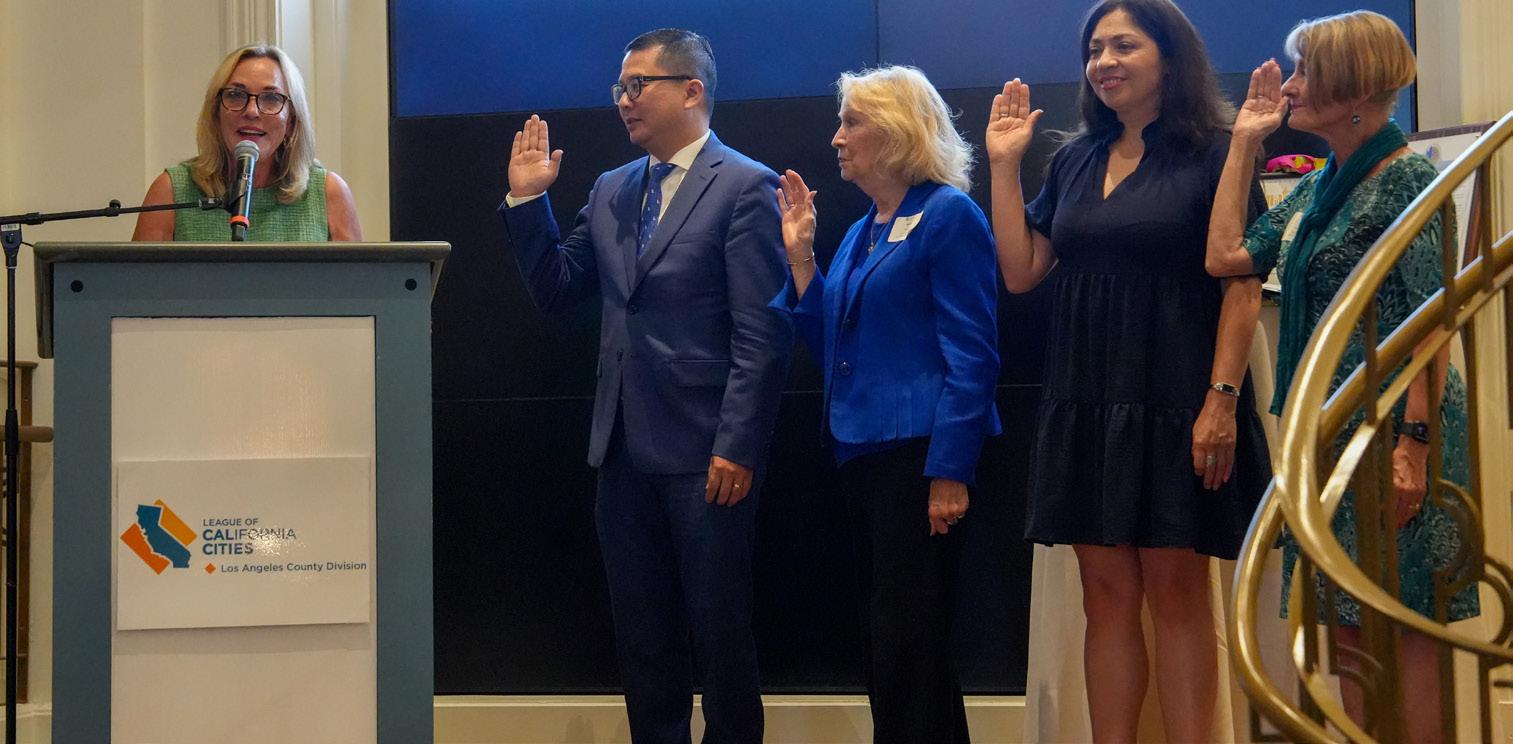
of the Organized Retail Crime Task Force through Cal Cities and the Arcadia Police Department ... (and) maintains the need for an aggressive response to retail crime that better protects the public and California retailers."
The Homelessness, Drug Addiction, and Theft Reduction Act is also legislation Cao and Arcadia council members support.
"Mayor Cao will continue
to back smart legislative reforms that address unintended consequences (of Proposition 47) and hold repeat offenders accountable," officials said.
The LA County Division, comprised of 85 municipalities, is the largest of the League of California Cities' 16 regional divisions.
"Elected city officials and professional city staff attend division meetings throughout the year to share what
they are doing and advocate for their interests in Sacramento and regionally," according to the city statement. "The Division strives to provide its members with information and resources to assist in providing highquality service to cities and residents."
More information on the LA County Division and Executive Board is online at calcities.org/los-angelescounty-division.
•
• Learn about improved 2024 plan benefits
• Learn about $0 copays for virtual care, including email, chat, e-visits, video visits, phone appointments, and our 24/7 advice line1
• Understand the benefits

By City News Service
Federal prosecutors and Los Angeles County have settled allegations that voters with mobility and vision disabilities were excluded for years at local polling places in violation of the Americans with Disabilities Act, officials announced last week.
The U.S. Attorney's Office sued the county last year, alleging that a seven-year probe into the county's voting program found that disabled residents were prevented from voting in person as far back as 2016. Investigators who surveyed more than 100 county voting centers noted such architectural barriers as steep ramps, abrupt level changes at walkways and entrance doors, and lack of accessible parking.
The impediments prevented people with mobility and vision disabilities from being able to safely access vote centers and cast their ballots in person, according to the U.S. Attorney's Office.
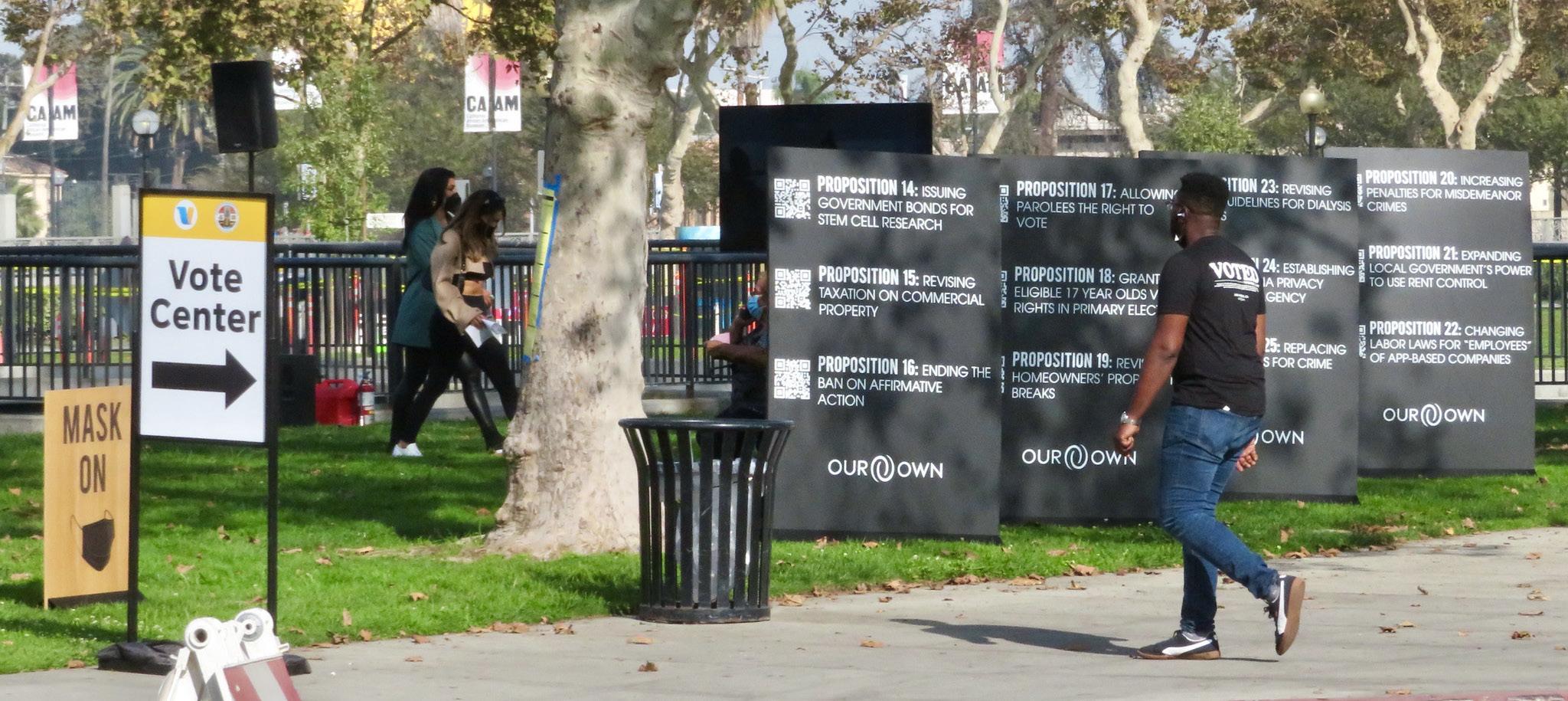
The lawsuit filed in Los Angeles federal court also alleged that the county's curbside voting program was inaccessible, as certain polling centers lacked signage indicating that curbside voting was available or failed to provide sufficient means for a voter to contact an election worker for assistance with curbside voting.
County Registrar-Recorder/County Clerk Dean C. Logan said in a statement that while no systemic deficiencies were identified in the probe, aging infrastructure and facilities were partly to blame for access issues. The county's agreement with the federal government will spur a focus on "the intricacies of sidewalk slopes, public

transit access, and clear paths of travel leading to voting areas," he said.
Under the settlement, filed last Thursday, the county will work with an independent accessibility expert on site selection policies and procedures to ensure that facilities, buildings, sites or locations chosen to serve as vote centers are ADA compli-
ant or can be made more accessible during the voting period by employing temporary measures.
The expert will provide biannual reports on the county's progress, according to the agreement.
With more than 500 political districts and about 4.3 million registered voters, L.A. County is the largest election jurisdiction in the nation.
"The right to vote is essential to our democracy and must be protected for all voters," U.S. Attorney Martin Estrada said. "Voters with disabilities are entitled to an equal opportunity to vote in person, privately and independently,alongside their neighbors and friends. We commend Los Angeles County for its commitment to work with the Justice Department to ensure equal access for individuals with disabilities."
"Our mission has always been to provide fair, accessible, and transparent voting services to the voters of Los Angeles County," Logan said in a statement. "We take pride in our longstanding engagement with the disability rights community and our direct collaboration with voters with disabilities in designing and developing our voting services. This resolution reinforces our commitment to these principles."

filing of this statement does not of itself authorize the use in this state of a fictitious business name in violation of the rights of another under federal, state or common law (See Section 14400 et seq., Business and Professional Code).
Pub. Monrovia Weekly 07/18/2024, 07/25/2024, 08/01/2024, 08/08/2024
FICTITIOUS BUSINESS NAME STATEMENT FILE NO. 2024134402 NEW FILING.
The following person(s) is (are) doing business as MEMORIAL APTS, 316 N Alameda Ave, Azusa, CA 91702. This business is conducted by a limited liability company (llc). Registrant commenced to transact business under the fictitious business name or names listed herein on August 2018. Signed: PI Properties LLC (CA-201125510267, 610 N Santa Anita Ave Second Floor, Arcadia, CA 91006; Rao R Yalamanchili, Manager. The statement was filed with the County Clerk of Los Angeles on June 24, 2024. NOTICE: This fictitious business name statement expires five years from the date it was filed in the office of the County Clerk. A new fictitious business name statement must be filed prior to that date. The filing of this statement does not of itself authorize the use in this state of a fictitious business name in violation of the rights of another under federal, state or common law (See Section 14400 et seq., Business and Professional Code).
Pub. Monrovia Weekly 07/18/2024, 07/25/2024, 08/01/2024, 08/08/2024
FICTITIOUS BUSINESS NAME STATEMENT FILE NO. 2024133828 NEW FILING.
The following person(s) is (are) doing business as HENDERSON APTS, 5155 Henderson St, Los Angeles, CA 90032. This business is conducted by a limited liability company (llc). Registrant commenced to transact business under the fictitious business name or names listed herein on August 2018. Signed: PI Properties LLC (CA-201125510267, 610 N Santa Anita Ave Second Floor, Arcadia, CA 91006; Rao R Yalamanchili, Manager. The statement was filed with the County Clerk of Los Angeles on June 21, 2024. NOTICE: This fictitious business name statement expires five years from the date it was filed in the office of the County Clerk. A new fictitious business name statement must be filed prior to that date. The filing of this statement does not of itself authorize the use in this state of a fictitious business name in violation of the rights of another under federal, state or common law (See Section 14400 et seq., Business and Professional Code).
Pub. Monrovia Weekly 07/18/2024, 07/25/2024, 08/01/2024, 08/08/2024
FICTITIOUS BUSINESS NAME STATEMENT FILE NO. 2024133822 NEW FILING.
The following person(s) is (are) doing business as HAMILTON DUPLEX, 1141 E 71st St, Los Angeles, CA 90001. This business is conducted by a limited liability company (llc). Registrant commenced to transact business under the fictitious business name or names listed herein on June 2017. Signed: PI Properties LLC (CA-201125510267, 610 N Santa Anita Ave Second Floor, Arcadia, CA 91006; Rao R Yalamanchili, Manager. The statement was filed with the County Clerk of Los Angeles on June 21, 2024. NOTICE: This fictitious business name statement expires five years from the date it was filed in the office of the County Clerk. A new fictitious business name statement must be filed prior to that date. The filing of this statement does not of itself authorize the use in this state of a fictitious business name in violation of the rights of another under federal, state or common law (See Section 14400 et seq., Business and Professional Code).
Pub. Monrovia Weekly 07/18/2024, 07/25/2024, 08/01/2024, 08/08/2024
FICTITIOUS BUSINESS NAME STATEMENT FILE NO. 2024133812 NEW FILING.
The following person(s) is (are) doing business as COLIMA APTS, 11757 Colima Rd, Whittier, CA 90604. This business is conducted by a limited liability company (llc). Registrant commenced to transact business under the fictitious business name or names listed herein on February 2020. Signed: PI Properties LLC (CA-201125510267, 610 N Santa Anita Ave Second Floor, Arcadia, CA 91006; Rao R Yalamanchili, Manager. The statement was filed with the County Clerk of Los Angeles on June 21, 2024. NOTICE: This fictitious business name statement expires five years from the date it was filed in the office of the County Clerk. A new fictitious business name statement must be filed prior to that date. The filing of this statement does not of itself authorize the use in this state of a fictitious business name in violation of the rights of another under federal, state or common law
(See Section 14400 et seq., Business and Professional Code). Pub. Monrovia Weekly 07/18/2024, 07/25/2024, 08/01/2024, 08/08/2024
FICTITIOUS BUSINESS NAME STATEMENT FILE NO. 2024133815 NEW FILING. The following person(s) is (are) doing business as COVINA STEWART APTS, 1212 E Pine St, Covina, CA 91723. This business is conducted by a limited liability company (llc). Registrant commenced to transact business under the fictitious business name or names listed herein on January 2019. Signed: PI Properties LLC (CA201125510267,610 N Santa Anita Ave Second Floor, Arcadia, CA 91006; Rao R Yalamanchili, Manager. The statement was filed with the County Clerk of Los Angeles on June 21, 2024. NOTICE: This fictitious business name statement expires five years from the date it was filed in the office of the County Clerk. A new fictitious business name statement must be filed prior to that date. The filing of this statement does not of itself authorize the use in this state of a fictitious business name in violation of the rights of another under federal, state or common law (See Section 14400 et seq., Business and Professional Code). Pub. Monrovia Weekly 07/18/2024, 07/25/2024, 08/01/2024, 08/08/2024
FICTITIOUS BUSINESS NAME STATEMENT FILE NO. 2024133809 NEW FILING. The following person(s) is (are) doing business as CLARKDALE APTS, 12007 Sycamore St, Norwalk, CA 90650. This business is conducted by a limited liability company (llc). Registrant commenced to transact business under the fictitious business name or names listed herein on September 2018. Signed: PI Properties LLC (CA201125510267, 610 N Santa Anita Ave Second Floor, Arcadia, CA 91006; Rao R Yalamanchili, Manager. The statement was filed with the County Clerk of Los Angeles on June 21, 2024. NOTICE: This fictitious business name statement expires five years from the date it was filed in the office of the County Clerk. A new fictitious business name statement must be filed prior to that date. The filing of this statement does not of itself authorize the use in this state of a fictitious business name in violation of the rights of another under federal, state or common law (See Section 14400 et seq., Business and Professional Code). Pub. Monrovia Weekly 07/18/2024, 07/25/2024, 08/01/2024, 08/08/2024
FICTITIOUS BUSINESS NAME STATEMENT FILE NO. 2024133803 NEW FILING. The following person(s) is (are) doing business as BRYCE DUPLEX, 1928 Bryce Rd, South El Monte, CA 91733. This business is conducted by a limited liability company (llc). Registrant commenced to transact business under the fictitious business name or names listed herein on April 2018. Signed: PI Properties LLC (CA-201125510267, 610 N Santa Anita Ave Second Floor, Arcadia, CA 91006; Rao R Yalamanchili, Manager. The statement was filed with the County Clerk of Los Angeles on June 21, 2024. NOTICE: This fictitious business name statement expires five years from the date it was filed in the office of the County Clerk. A new fictitious business name statement must be filed prior to that date. The filing of this statement does not of itself authorize the use in this state of a fictitious business name in violation of the rights of another under federal, state or common law (See Section 14400 et seq., Business and Professional Code). Pub. Monrovia Weekly 07/18/2024, 07/25/2024, 08/01/2024, 08/08/2024
FICTITIOUS BUSINESS NAME STATEMENT FILE NO. 2024133799 NEW FILING. The following person(s) is (are) doing business as 14033 PARAMOUNT APTS, 14033 Paramount Blvd, Paramount, CA 90723. This business is conducted by a limited liability company (llc). Registrant commenced to transact business under the fictitious business name or names listed herein on May 2022. Signed: PI Properties LLC (CA201125510267, 610 N Santa Anita Ave Second Floor, Arcadia, CA 91006; Rao R Yalamanchili, Manager. The statement was filed with the County Clerk of Los Angeles on June 21, 2024. NOTICE: This fictitious business name statement expires five years from the date it was filed in the office of the County Clerk. A new fictitious business name statement must be filed prior to that date. The filing of this statement does not of itself authorize the use in this state of a fictitious business name in violation of the rights of another under federal, state or common law (See Section 14400 et seq., Business and Professional Code). Pub. Monrovia Weekly 07/18/2024, 07/25/2024, 08/01/2024, 08/08/2024
FICTITIOUS BUSINESS NAME STATEMENT FILE NO. 2024147616 NEW FILING.
FICTITIOUS BUSINESS NAME STATEMENT FILE NO. 2024133788 NEW FILING. The following person(s) is (are) doing business as 58TH ST TRIPLEX, 127 W 58th St, Los Angeles, CA 90037. This business is conducted by a limited liability company (llc). Registrant commenced to transact business under the fictitious business name or names listed herein on May 2018. Signed: PI Properties LLC (CA201125510267, 610 N Santa Anita Ave Second Floor, Arcadia, CA 91006; Rao R Yalamanchili, Manager. The statement was filed with the County Clerk of Los Angeles on June 21, 2024. NOTICE: This fictitious business name statement expires five years from the date it was filed in the office of the County Clerk. A new fictitious business name statement must be filed prior to that date. The filing of this statement does not of itself authorize the use in this state of a fictitious business name in violation of the rights of another under federal, state or common law (See Section 14400 et seq., Business and Professional Code). Pub. Monrovia Weekly 07/18/2024, 07/25/2024, 08/01/2024, 08/08/2024
FICTITIOUS BUSINESS NAME STATEMENT FILE NO. 2024133778
NEW FILING.
The following person(s) is (are) doing business as 2822 DUPLEX, 2822 N Eastern Ave, Los Angeles, CA 90032. This business is conducted by a limited liability company (llc). Registrant commenced to transact business under the fictitious business name or names listed herein on October 2017. Signed: PI Properties, LLC (CA-201125510267, 610 N Santa Anita Ave Second Floor, Arcadia, CA 91006; Rao R Yalamanchili, Manager. The statement was filed with the County Clerk of Los Angeles on June 21, 2024. NOTICE: This fictitious business name statement expires five years from the date it was filed in the office of the County Clerk. A new fictitious business name statement must be filed prior to that date. The filing of this statement does not of itself authorize the use in this state of a fictitious business name in violation of the rights of another under federal, state or common law (See Section 14400 et seq., Business and Professional Code). Pub. Monrovia Weekly 07/18/2024, 07/25/2024, 08/01/2024, 08/08/2024
FICTITIOUS BUSINESS NAME
STATEMENT FILE NO. 2024133766
NEW FILING.
The following person(s) is (are) doing business as HUNTINGTON COTTAGES, 4669 Huntington Dr N, Los Angeles, CA 90032. This business is conducted by a limited liability company (llc). Registrant commenced to transact business under the fictitious business name or names listed herein on April 2015. Signed: PI Properties NO. 99, LLC (CA-201503610430, 610 N Santa Anita Ave Second Floor, Arcadia, CA 91006; Rao R Yalamanchili, Manager. The statement was filed with the County Clerk of Los Angeles on June 21, 2024. NOTICE: This fictitious business name statement expires five years from the date it was filed in the office of the County Clerk. A new fictitious business name statement must be filed prior to that date. The filing of this statement does not of itself authorize the use in this state of a fictitious business name in violation of the rights of another under federal, state or common law (See Section 14400 et seq., Business and Professional Code). Pub. Monrovia Weekly 07/18/2024, 07/25/2024, 08/01/2024, 08/08/2024
FICTITIOUS BUSINESS NAME STATEMENT FILE NO. 2024133760 NEW FILING.
The following person(s) is (are) doing business as SAGEWOOD GARDENS, 14814 Gale Ave, Hacienda Heights, CA 91745. This business is conducted by a limited liability company (llc). Registrant commenced to transact business under the fictitious business name or names listed herein on May 2019. Signed: PI Properties NO. 97, LLC (CA-201503610426, 610 N Santa Anita Ave Second Floor, Arcadia, CA 91006; Roa R Yalamanchili, Manager. The statement was filed with the County Clerk of Los Angeles on June 21, 2024. NOTICE: This fictitious business name statement expires five years from the date it was filed in the office of the County Clerk. A new fictitious business name statement must be filed prior to that date. The filing of this statement does not of itself authorize the use in this state of a fictitious business name in violation of the rights of another under federal, state or common law (See Section 14400 et seq., Business and Professional Code).
Pub. Monrovia Weekly 07/18/2024, 07/25/2024, 08/01/2024, 08/08/2024
The following person(s) is (are) doing business as MENDOZA ELECTRIC, 13903 Nubia St, Baldwin Park, CA 91706. This business is conducted by a individual. Registrant has not yet begun to transact business under the fictitious business name or names listed herein. Signed: Adan Mendoza Montero, 13903 Nubia St, Baldwin Park, CA 91706 (Owner). The statement was filed with the County Clerk of Los Angeles on July 11, 2024. NOTICE: This fictitious business name statement expires five years from the date it was filed in the office of the County Clerk. A new fictitious business name statement must be filed prior to that date. The filing of this statement does not of itself authorize the use in this state of a fictitious business name in violation of the rights of another under federal, state or common law (See Section 14400 et seq., Business and Professional Code).
Pub. Monrovia Weekly 07/25/2024, 08/01/2024, 08/08/2024, 08/15/2024
FICTITIOUS BUSINESS NAME STATEMENT FILE NO. 2024144019 NEW FILING.
The following person(s) is (are) doing business as EL LEÓN TIRES MOBILE SERVICE AND AUTO SERVICE, 3323 Nevada Ave, El Monte, CA 91731. This business is conducted by a individual. Registrant has not yet begun to transact business under the fictitious business name or names listed herein. Signed: Leon Alatorre Alatorre, 3323 Nevada Ave, El Monte, CA 91731 (Owner). The statement was filed with the County Clerk of Los Angeles on July 8, 2024. NOTICE: This fictitious business name statement expires five years from the date it was filed in the office of the County Clerk. A new fictitious business name statement must be filed prior to that date. The filing of this statement does not of itself authorize the use in this state of a fictitious business name in violation of the rights of another under federal, state or common law (See Section 14400 et seq., Business and Professional Code).
Pub. Monrovia Weekly 07/25/2024, 08/01/2024, 08/08/2024, 08/15/2024
FICTITIOUS BUSINESS NAME STATEMENT FILE NO. 2024152213 NEW FILING.
The following person(s) is (are) doing business as SOCALA TRADING, 1501 Santee St Suite 201, Los Angeles, CA 90015. This business is conducted by a individual. Registrant has not yet begun to transact business under the fictitious business name or names listed herein. Signed: Jamal Saleh Rezkallah, 1501 Santee St Suite 201, Los Angeles, CA 90015 (Owner). The statement was filed with the County Clerk of Los Angeles on July 18, 2024. NOTICE: This fictitious business name statement expires five years from the date it was filed in the office of the County Clerk. A new fictitious business name statement must be filed prior to that date. The filing of this statement does not of itself authorize the use in this state of a fictitious business name in violation of the rights of another under federal, state or common law (See Section 14400 et seq., Business and Professional Code).
Pub. Monrovia Weekly 07/25/2024, 08/01/2024, 08/08/2024, 08/15/2024
FICTITIOUS BUSINESS NAME STATEMENT FILE NO. 2024134942 NEW FILING.
The following person(s) is (are) doing business as CANDELITA CHURRERIA MEXICANA, 1131 E Alosta Ave, Azusa, CA 91702. This business is conducted by a limited liability company (llc). Registrant has not yet begun to transact business under the fictitious business name or names listed herein. Signed: CANDELARIA FOODS LLC (CA202461015287, 959 N Sunrise Ln Unit A, Azusa, Ca 91702; Jessica Millot, CEO. The statement was filed with the County Clerk of Los Angeles on June 24, 2024. NOTICE: This fictitious business name statement expires five years from the date it was filed in the office of the County Clerk. A new fictitious business name statement must be filed prior to that date. The filing of this statement does not of itself authorize the use in this state of a fictitious business name in violation of the rights of another under federal, state or common law (See Section 14400 et seq., Business and Professional Code).
Pub. Monrovia Weekly 07/25/2024, 08/01/2024, 08/08/2024, 08/15/2024
FICTITIOUS BUSINESS NAME STATEMENT FILE NO. 2024127534
NEW FILING.
The following person(s) is (are) doing business as ACAI REPUBLIC, 521 N Hollywood Way Suite C, Burbank, CA 91505. This business is conducted by a corporation. Registrant commenced to transact business under the fictitious business name or names listed herein on July 2024. Signed: Acai Republic Burbank Corp (CA-6229784, 521 N Hollywood Way Suite C, Burbank, CA 91505; Rodrigo Pioli, CEO. The statement was filed
with the County Clerk of Los Angeles on June 13, 2024. NOTICE: This fictitious business name statement expires five years from the date it was filed in the office of the County Clerk. A new fictitious business name statement must be filed prior to that date. The filing of this statement does not of itself authorize the use in this state of a fictitious business name in violation of the rights of another under federal, state or common law (See Section 14400 et seq., Business and Professional Code).
Pub. Monrovia Weekly 07/25/2024, 08/01/2024, 08/08/2024, 08/15/2024
FICTITIOUS BUSINESS NAME STATEMENT FILE NO. 2024141360
NEW FILING.
The following person(s) is (are) doing business as STATE OF MIND LA, 9850 Park St, Bellflower, CA 90706. This business is conducted by a individual. Registrant has not yet begun to transact business under the fictitious business name or names listed herein. Signed: carlos ivan higuera, 9850 Park St, Bellflower, CA 90706 (Owner). The statement was filed with the County Clerk of Los Angeles on July 2, 2024. NOTICE: This fictitious business name statement expires five years from the date it was filed in the office of the County Clerk. A new fictitious business name statement must be filed prior to that date. The filing of this statement does not of itself authorize the use in this state of a fictitious business name in violation of the rights of another under federal, state or common law (See Section 14400 et seq., Business and Professional Code).
Pub. Monrovia Weekly 07/25/2024, 08/01/2024, 08/08/2024, 08/15/2024
FICTITIOUS BUSINESS NAME STATEMENT FILE NO. 2024146568 NEW FILING.
The following person(s) is (are) doing business as (1). SOUL CATS STUDIOS (2). SOUL PROVIDER ENTERTAINMENT , 4160 Nagle Avenue, sherman oaks, CA 91423. This business is conducted by a individual. Registrant commenced to transact business under the fictitious business name or names listed herein on January 2020. Signed: Christine Elmassian, 4160 Nagle Avenue, sherman oaks, CA 91423 (Owner). The statement was filed with the County Clerk of Los Angeles on July 11, 2024. NOTICE: This fictitious business name statement expires five years from the date it was filed in the office of the County Clerk. A new fictitious business name statement must be filed prior to that date. The filing of this statement does not of itself authorize the use in this state of a fictitious business name in violation of the rights of another under federal, state or common law (See Section 14400 et seq., Business and Professional Code).
Pub. Monrovia Weekly 07/25/2024, 08/01/2024, 08/08/2024, 08/15/2024
FICTITIOUS BUSINESS NAME STATEMENT FILE NO. 2024144458
NEW FILING.
The following person(s) is (are) doing business as FANCY KIDS CUTS, 2711 Huntington Dr, Duarte, CA 91010. This business is conducted by a individual. Registrant commenced to transact business under the fictitious business name or names listed herein on May 1977. Signed: Monica Magana, 2711 Huntington Dr, Duarte, CA 91010 (Owner). The statement was filed with the County Clerk of Los Angeles on July 8, 2024. NOTICE: This fictitious business name statement expires five years from the date it was filed in the office of the County Clerk. A new fictitious business name statement must be filed prior to that date. The filing of this statement does not of itself authorize the use in this state of a fictitious business name in violation of the rights of another under federal, state or common law (See Section 14400 et seq., Business and Professional Code).
Pub. Monrovia Weekly 07/25/2024, 08/01/2024, 08/08/2024, 08/15/2024
FICTITIOUS BUSINESS NAME STATEMENT FILE NO. 2024142189 NEW FILING. The following person(s) is (are) doing business as WORLD SOFT SCULPTURE ALLIANCE, 801 S Garfield Ave 102, Alhambra, CA 91801. This business is conducted by a corporation. Registrant commenced to transact business under the fictitious business name or names listed herein on June 2024. Signed: C-A EDUCATION DEVELOPMENT FOUNDATIONS (CA3151272, 801 S Garfield Ave 102, Alhambra, CA 91801; LEVI GONG, SECRETARY. The statement was filed with the County Clerk of Los Angeles on July 3, 2024. NOTICE: This fictitious business name statement expires five years from the date it was filed in the office of the County Clerk. A new fictitious business name statement must be filed prior to that date. The filing of this statement does not of itself authorize the use in this state of a fictitious business name in violation of the rights of another under
federal, state or common law (See Section 14400 et seq., Business and Professional Code). Pub. Monrovia Weekly 07/25/2024, 08/01/2024, 08/08/2024, 08/15/2024
FICTITIOUS BUSINESS NAME STATEMENT FILE NO. 2024149152 NEW FILING. The following person(s) is (are) doing business as BEACHES TROPICANA, 8911 Santa Monica Blvd, West Hollywood, CA 90069. This business is conducted by a limited liability company (llc). Registrant commenced to transact business under the fictitious business name or names listed herein on July 2024. Signed: Baracoa Beach LLC (CA202461111521, 8911 Santa Monica Blvd, West Hollywood, CA 90069; Julio
and
Monrovia
07/25/2024, 08/01/2024, 08/08/2024, 08/15/2024
BUSINESS NAME STATEMENT FILE NO. 2024144339 NEW FILING. The following person(s) is (are) doing business as (1). GRANDRIDGE RESIDENTIAL CARE (2). CHALET TERRACE SENIOR LIVING (3). PALOMINO SENIOR LIVING , 1400 Piedra Way, Monterey Park, CA 91754. This business is conducted by a corporation. Registrant commenced to transact business under the fictitious business name or names listed herein on July 2024. Signed: Palomino Residential Care, Inc. (CA-3650433, 1400 Piedra Way, Monterey Park, CA 91754; Amanda Palomino, PRESIDENT. The statement was filed with the County Clerk of Los Angeles on July 8, 2024. NOTICE: This fictitious business name statement expires five years from the date it was filed in the office of the County Clerk. A new fictitious business name statement must be filed prior to that date. The filing of this statement does not of itself authorize the use in this state of a fictitious business name in violation of the rights of another under federal, state or common law (See Section 14400 et seq., Business and Professional Code). Pub. Monrovia Weekly 07/25/2024, 08/01/2024,
statement was filed with the County Clerk of Los Angeles on August 5, 2024. NOTICE: This fictitious business name statement expires five years from the date it was filed in the office of the County Clerk. A new fictitious business name statement must be filed prior to that date. The filing of this statement does not of itself authorize the use in this state of a fictitious business name in violation of the rights of another under federal, state or common law (See Section 14400 et seq., Business and Professional Code).
Pub. Monrovia Weekly 08/08/2024, 08/15/2024, 08/22/2024, 08/29/2024
FICTITIOUS BUSINESS NAME
STATEMENT FILE NO. 2024154198
NEW FILING.
The following person(s) is (are) doing business as Joyland Travel Services, 8476 Glencrest Dr, Sun Valley, CA 91352. This business is conducted by a general partnership. Registrant has not yet begun to transact business under the fictitious business name or names listed herein. Signed: (1). Hilda Hacoobei, 8476 Glencrest Dr, Sun Valley, CA 91352 (2). Hilda Sarkisians, 8476 Glencrest Dr, Sun Valley, CA 91352 (General Partner). The statement was filed with the County Clerk of Los Angeles on July 23, 2024. NOTICE: This fictitious business name statement expires five years from the date it was filed in the office of the County Clerk. A new fictitious business name statement must be filed prior to that date. The filing of this statement does not of itself authorize the use in this state of a fictitious business name in violation of the rights of another under federal, state or common law (See Section 14400 et seq., Business and Professional Code). Pub. Monrovia Weekly 08/08/2024, 08/15/2024, 08/22/2024, 08/29/2024
FICTITIOUS BUSINESS NAME STATEMENT FILE NO. 2024162612
NEW FILING. The following person(s) is (are) doing business as WSI, 2001 Santa Anita Ave Suite 201, South El Monte, CA 91733. This business is conducted by a corporation. Registrant commenced to transact business under the fictitious business name or names listed herein on January 2018. Signed: JEC Customs House Brokerage (CA-3261425, 2001 Santa Anita Ave Suite 201, South El Monte, CA 91733; Marshall Young, Vice President. The statement was filed with the County Clerk of Los Angeles on August 2, 2024. NOTICE: This fictitious business name statement expires five years from the date it was filed in the office of the County Clerk. A new fictitious business name statement must be filed prior to that date. The filing of this statement does not of itself authorize the use in this state of a fictitious business name in violation of the rights of another under federal, state or common law (See Section 14400 et seq., Business and Professional Code).
Pub. Monrovia Weekly 08/08/2024, 08/15/2024, 08/22/2024, 08/29/2024
FICTITIOUS BUSINESS NAME STATEMENT FILE NO. 2024140015 NEW FILING. The following person(s) is (are) doing business as Manufacturing Resources, 16263 Midwood Dr, Granda Hills, CA 91344. This business is conducted by a corporation. Registrant has not yet begun to transact business under the fictitious business name or names listed herein. Signed: YLSEG INC (CA-4217840, 16263 Midwood Dr, Granda Hills, CA 91344; Lilik N Nazarian, CEO. The statement was filed with the County Clerk of Los Angeles on July 1, 2024. NOTICE: This fictitious business name statement expires five years from the date it was filed in the office of the County Clerk. A new fictitious business name statement must be filed prior to that date. The filing of this statement does not of itself authorize the use in this state of a fictitious business name in violation of the rights of another under federal, state or common law (See Section 14400 et seq., Business and Professional Code).
Pub. Monrovia Weekly 08/08/2024, 08/15/2024, 08/22/2024, 08/29/2024
FICTITIOUS BUSINESS NAME STATEMENT FILE NO. 2024162626 NEW FILING. The following person(s) is (are) doing business as Exceptional Dentistry, 41230 11th St West Suite F, Palmdale, CA 93551. This business is conducted by a corporation. Registrant has not yet begun to transact business under the fictitious business name or names listed herein. Signed: Ramy Garsdean DDD Dental Corporation (CA-4711035, 41230 11th St West Suite F, Palmdale, CA 93551; Ramy Garsdean, CEO. The statement was filed with the County Clerk of Los Angeles on August 1, 2024. NOTICE: This fictitious business name statement expires five years from the date it was filed in the office of
the County Clerk. A new fictitious business name statement must be filed prior to that date. The filing of this statement does not of itself authorize the use in this state of a fictitious business name in violation of the rights of another under federal, state or common law (See Section 14400 et seq., Business and Professional Code). Pub. Monrovia Weekly 08/08/2024, 08/15/2024, 08/22/2024, 08/29/2024
FICTITIOUS BUSINESS NAME STATEMENT FILE NO. 2024162953 NEW FILING. The following person(s) is (are) doing business as GOGO Medical Transport, 8628 Utica Ave Suite 300, Rancho Cucamonga, CA 91730. This business is conducted by a corporation. Registrant commenced to transact business under the fictitious business name or names listed herein on January 2023. Signed: GOGO Medical Transport Inc. (CA-4231414, 8628 Utica Ave Suite 300, Rancho Cucamonga, CA 91730; Palak Chopra, Vice President. The statement was filed with the County Clerk of Los Angeles on August 2, 2024. NOTICE: This fictitious business name statement expires five years from the date it was filed in the office of the County Clerk. A new fictitious business name statement must be filed prior to that date. The filing of this statement does not of itself authorize the use in this state of a fictitious business name in violation of the rights of another under federal, state or common law (See Section 14400 et seq., Business and Professional Code). Pub. Monrovia Weekly 08/08/2024, 08/15/2024, 08/22/2024, 08/29/2024
FICTITIOUS BUSINESS NAME STATEMENT FILE NO. 2024163262 NEW FILING. The following person(s) is (are) doing business as So Cal Media Alliance, 17480 Colima Rd Unit #2010, Rowland Heights, CA 91748. This business is conducted by a individual. Registrant has not yet begun to transact business under the fictitious business name or names listed herein. Signed: Jeff Ortiz, 17480 Colima Rd Unit #2010, Rowland Heights, CA 91748 (Owner). The statement was filed with the County Clerk of Los Angeles on August 2, 2024. NOTICE: This fictitious business name statement expires five years from the date it was filed in the office of the County Clerk. A new fictitious business name statement must be filed prior to that date. The filing of this statement does not of itself authorize the use in this state of a fictitious business name in violation of the rights of another under federal, state or common law (See Section 14400 et seq., Business and Professional Code). Pub. Monrovia Weekly 08/08/2024, 08/15/2024, 08/22/2024, 08/29/2024
FICTITIOUS BUSINESS NAME STATEMENT FILE NO. 2024163031 NEW FILING. The following person(s) is (are) doing business as Crafty Mango, 21312 E Venton St, Covina, CA 91724. This business is conducted by a limited liability company (llc). Registrant has not yet begun to transact business under the fictitious business name or names listed herein. Signed: Bear Good Fruit, LLC (CA-202462915399, 21312 E Venton St, Covina, CA 91724; Maria Katrina Akim, President. The statement was filed with the County Clerk of Los Angeles on August 2, 2024. NOTICE: This fictitious business name statement expires five years from the date it was filed in the office of the County Clerk. A new fictitious business name statement must be filed prior to that date. The filing of this statement does not of itself authorize the use in this state of a fictitious business name in violation of the rights of another under federal, state or common law (See Section 14400 et seq., Business and Professional Code). Pub. Monrovia Weekly 08/08/2024, 08/15/2024, 08/22/2024, 08/29/2024
FICTITIOUS BUSINESS NAME STATEMENT FILE NO. 2024163117 NEW FILING. The following person(s) is (are) doing business as (1). Cream LA (2). Cream LA Studio , 3018 Midwick Dr, Alhambra, CA 91803. This business is conducted by a individual. Registrant commenced to transact business under the fictitious business name or names listed herein on August 2024. Signed: Tracy Fu, 3018 Midwick Dr, Alhambra, CA 91803 (Owner). The statement was filed with the County Clerk of Los Angeles on August 2, 2024. NOTICE: This fictitious business name statement expires five years from the date it was filed in the office of the County Clerk. A new fictitious business name statement must be filed prior to that date. The filing of this statement does not of itself authorize the use in this state of a fictitious business name in violation of the rights of another under federal, state or common law
(See Section 14400 et seq., Business and Professional Code). Pub. Monrovia Weekly 08/08/2024, 08/15/2024, 08/22/2024, 08/29/2024
FICTITIOUS BUSINESS NAME
STATEMENT FILE NO. 2024163010
NEW FILING.
The following person(s) is (are) doing business as Intellect Insurance & Tax Services, 8200 Allott Ave, Van Nuys, CA 91402. This business is conducted by a individual. Registrant has not yet begun to transact business under the fictitious business name or names listed herein. Signed: Lusine Hakhverdyan, 8200 Allott Ave, Van Nuys, CA 91402 (Owner). The statement was filed with the County Clerk of Los Angeles on August 2, 2024. NOTICE: This fictitious business name statement expires five years from the date it was filed in the office of the County Clerk. A new fictitious business name statement must be filed prior to that date. The filing of this statement does not of itself authorize the use in this state of a fictitious business name in violation of the rights of another under federal, state or common law (See Section 14400 et seq., Business and Professional Code).
Pub. Monrovia Weekly 08/08/2024, 08/15/2024, 08/22/2024, 08/29/2024
FICTITIOUS BUSINESS NAME
STATEMENT FILE NO. 2024161043
NEW FILING.
The following person(s) is (are) doing business as SIRCA DESIGNS LA, 5444 Yolanda Ave SUITE 110, Los Angeles, CA 91356. This business is conducted by a individual. Registrant commenced to transact business under the fictitious business name or names listed herein on July 2024. Signed: VERONICA FLETCHER, 5444 Yolanda Ave SUITE 110, Los Angeles, CA 91356 (Owner). The statement was filed with the County Clerk of Los Angeles on July 31, 2024. NOTICE: This fictitious business name statement expires five years from the date it was filed in the office of the County Clerk. A new fictitious business name statement must be filed prior to that date. The filing of this statement does not of itself authorize the use in this state of a fictitious business name in violation of the rights of another under federal, state or common law (See Section 14400 et seq., Business and Professional Code).
Pub. Monrovia Weekly 08/08/2024, 08/15/2024, 08/22/2024, 08/29/2024
FICTITIOUS BUSINESS NAME
STATEMENT FILE NO. 2024162924
NEW FILING.
The following person(s) is (are) doing business as Palm Dental Studio, 411 E Palm Ave, Burbank, CA 91501. This business is conducted by a corporation. Registrant has not yet begun to transact business under the fictitious business name or names listed herein. Signed: Abrahamian Dental Inc (CA-4292419, 411 E Palm Ave, Burbank, CA 91501; Ariga Abrahamian, President. The statement was filed with the County Clerk of Los Angeles on August 2, 2024. NOTICE: This fictitious business name statement expires five years from the date it was filed in the office of the County Clerk. A new fictitious business name statement must be filed prior to that date. The filing of this statement does not of itself authorize the use in this state of a fictitious business name in violation of the rights of another under federal, state or common law (See Section 14400 et seq., Business and Professional Code). Pub. Monrovia Weekly 08/08/2024, 08/15/2024, 08/22/2024, 08/29/2024
FICTITIOUS BUSINESS NAME STATEMENT FILE NO. 2024160945 NEW FILING. The following person(s) is (are) doing business as Rosewood Park, 2230 S Eastern Ave, Commerce, CA 90040. This business is conducted by a limited partnership. Registrant commenced to transact business under the fictitious business name or names listed herein on March 2017. Signed: (1). Rosewood Park, LLC, 610 N Snata Anita Ave Floor 2, Arcadia, Ca 91006 (2). Ffah II Rosewood Park, LLC, 384 Forest Park Avenue Suite 14, Laguna Beach, Ca 92651. (Rao R Yalamanchili, General partner) The statement was filed with the County Clerk of Los Angeles on July 31, 2024. NOTICE: This fictitious business name statement expires five years from the date it was filed in the office of the County Clerk. A new fictitious business name statement must be filed prior to that date. The filing of this statement does not of itself authorize the use in this state of a fictitious business name in violation of the rights of another under federal, state or common law (See Section 14400 et seq., Business and Professional Code). Pub. Monrovia Weekly 08/08/2024, 08/15/2024, 08/22/2024, 08/29/2024
FICTITIOUS BUSINESS NAME
STATEMENT FILE NO. 2024161411
NEW FILING.
The following person(s) is (are) doing business as RioMaid Cleaning Services LLC, 865 S Marengo Ave Apartment 2, Pasadena, CA 91106. This business is conducted by a limited liability company (llc). Registrant commenced to transact business under the fictitious business name or names listed herein on December 2022. Signed: RioMaid Cleaning Services llc (CA202253517767, 865 S Marengo Ave Apartment 2, Pasadena, CA 91106; Czar Ribeiro De Oliveira, Manager. The statement was filed with the County Clerk of Los Angeles on July 31, 2024. NOTICE: This fictitious business name statement expires five years from the date it was filed in the office of the County Clerk. A new fictitious business name statement must be filed prior to that date. The filing of this statement does not of itself authorize the use in this state of a fictitious business name in violation of the rights of another under federal, state or common law (See Section 14400 et seq., Business and Professional Code).
Pub. Monrovia Weekly 08/08/2024, 08/15/2024, 08/22/2024, 08/29/2024
FICTITIOUS BUSINESS NAME STATEMENT FILE NO. 2024162605 NEW FILING. The following person(s) is (are) doing business as Danny’s Auto Sales, 767 East Arrow Hwy Suite 1A, Azusa, CA 91702. This business is conducted by a limited liability company (llc). Registrant has not yet begun to transact business under the fictitious business name or names listed herein. Signed: DANNY’S TEST ONLY SMOG CHECK LLC (CA-201915410479, 767 East Arrow Hwy Suite 1A, Azusa, CA 91702; Daniel Mahli, Managing Member. The statement was filed with the County Clerk of Los Angeles on August 2, 2024. NOTICE: This fictitious business name statement expires five years from the date it was filed in the office of the County Clerk. A new fictitious business name statement must be filed prior to that date. The filing of this statement does not of itself authorize the use in this state of a fictitious business name in violation of the rights of another under federal, state or common law (See Section 14400 et seq., Business and Professional Code).
Pub. Monrovia Weekly 08/08/2024, 08/15/2024, 08/22/2024, 08/29/2024
FICTITIOUS BUSINESS NAME STATEMENT FILE NO. 2024160950 NEW FILING.
The following person(s) is (are) doing business as Sierra Vista Apts, 70 Esperanza Ave, Sierra Madre, CA 91024. This business is conducted by a limited partnership. Registrant commenced to transact business under the fictitious business name or names listed herein on October 2021. Signed: (1). Sierra Vista Senior Apartments, LLC, 610 N Santa Anita Ave Floor 2, Arcadia, Ca 91006 (2). Ffah II Sierra Vista Senior, LLC, 384 Forest Avenue Suite 14, Laguna Beach, Ca 92651. (Rao R Yalamanchili, General partner). The statement was filed with the County Clerk of Los Angeles on July 31, 2024. NOTICE: This fictitious business name statement expires five years from the date it was filed in the office of the County Clerk. A new fictitious business name statement must be filed prior to that date. The filing of this statement does not of itself authorize the use in this state of a fictitious business name in violation of the rights of another under federal, state or common law (See Section 14400 et seq., Business and Professional Code).
Pub. Monrovia Weekly 08/08/2024, 08/15/2024, 08/22/2024, 08/29/2024
FICTITIOUS BUSINESS NAME STATEMENT FILE NO. 2024158729 NEW FILING.
The following person(s) is (are) doing business as Interlink Wipers, 1014 S Susanna Ave, West Covina, CA 91790. This business is conducted by a individual. Registrant has not yet begun to transact business under the fictitious business name or names listed herein. Signed: Donavan Jefferson Balan, 1014 S Susanna Ave, West Covina, CA 91790 (Owner). The statement was filed with the County Clerk of Los Angeles on July 29, 2024. NOTICE: This fictitious business name statement expires five years from the date it was filed in the office of the County Clerk. A new fictitious business name statement must be filed prior to that date. The filing of this statement does not of itself authorize the use in this state of a fictitious business name in violation of the rights of another under federal, state or common law (See Section 14400 et seq., Business and Professional Code). Pub. Monrovia Weekly 08/08/2024, 08/15/2024, 08/22/2024, 08/29/2024
FICTITIOUS BUSINESS NAME STATEMENT FILE NO. 2024160982
NEW FILING.
The following person(s) is (are) doing business as Vista Valle Townhomes, 670 W San Jose Ave, Claremont, CA 91711. This business is conducted by a limited partnership. Registrant commenced to transact business under the fictitious business name or names listed herein on July 2020. Signed: (1). Vista Valle Townhomes, LLC, 610 N Santa Anita Ave Floor 2, Arcadia, Ca 91006 (2). Ffah V Vista Valle Townhomes, LLC, 384 Forest Avenue Suite 14, Laguna Beach, Ca 92651. (Rao R Yalamanchili, General Partner). The statement was filed with the County Clerk of Los Angeles on July 31, 2024. NOTICE: This fictitious business name statement expires five years from the date it was filed in the office of the County Clerk. A new fictitious business name statement must be filed prior to that date. The filing of this statement does not of itself authorize the use in this state of a fictitious business name in violation of the rights of another under federal, state or common law (See Section 14400 et seq., Business and Professional Code).
Pub. Monrovia Weekly 08/08/2024, 08/15/2024, 08/22/2024, 08/29/2024
FICTITIOUS BUSINESS NAME STATEMENT FILE NO. 2024162494 NEW FILING. The following person(s) is (are) doing business as TYMM, 8136 Emerson Place, Rosemead, CA 91770. This business is conducted by a limited liability company (llc). Registrant commenced to transact business under the fictitious business name or names listed herein on August 2024. Signed: QING LONG ENTERPRISE LLC (CA-201905810455, 8136 Emerson Place, Rosemead, CA 91770; VICTORIA SHUI CHING TANG, MANAGING MEMBER. The statement was filed with the County Clerk of Los Angeles on August 1, 2024. NOTICE: This fictitious business name statement expires five years from the date it was filed in the office of the County Clerk. A new fictitious business name statement must be filed prior to that date. The filing of this statement does not of itself authorize the use in this state of a fictitious business name in violation of the rights of another under federal, state or common law (See Section 14400 et seq., Business and Professional Code).
Pub. Monrovia Weekly 08/08/2024, 08/15/2024, 08/22/2024, 08/29/2024
FICTITIOUS BUSINESS NAME STATEMENT FILE NO. 2024162480 NEW FILING. The following person(s) is (are) doing business as Wahl Consulting, 1613 Chelsea Rd Suite 848, San Marino, CA 91108. This business is conducted by a married couple. Registrant has not yet begun to transact business under the fictitious business name or names listed herein. Signed: (1). Erik Wahl, 1613 Chelsea Rd Suite 848, San Marino, CA 91108 (2). Pallavi Wahl, 1613 Chelsea Rd Suite 848, San Marino, CA 91108 (Co-Owner). The statement was filed with the County Clerk of Los Angeles on August 1, 2024. NOTICE: This fictitious business name statement expires five years from the date it was filed in the office of the County Clerk. A new fictitious business name statement must be filed prior to that date. The filing of this statement does not of itself authorize the use in this state of a fictitious business name in violation of the rights of another under federal, state or common law (See Section 14400 et seq., Business and Professional Code).
Pub. Monrovia Weekly 08/08/2024, 08/15/2024, 08/22/2024, 08/29/2024
FICTITIOUS BUSINESS NAME STATEMENT FILE NO. 2024159410 NEW FILING. The following person(s) is (are) doing business as Franklin CW International, 2 N Lake Ave Suite 580, Pasadena, CA 91101. This business is conducted by a individual. Registrant commenced to transact business under the fictitious business name or names listed herein on July 2024. Signed: Zhanfeng Lin, 2 N Lake Ave Suite 580, Pasadena, CA 91101 (Owner). The statement was filed with the County Clerk of Los Angeles on July 29, 2024. NOTICE: This fictitious business name statement expires five years from the date it was filed in the office of the County Clerk. A new fictitious business name statement must be filed prior to that date. The filing of this statement does not of itself authorize the use in this state of a fictitious business name in violation of the rights of another under federal, state or common law (See Section 14400 et seq., Business and Professional Code). Pub. Monrovia Weekly 08/08/2024, 08/15/2024, 08/22/2024, 08/29/2024
FICTITIOUS BUSINESS NAME STATEMENT FILE NO. 2024160910 NEW FILING. The following person(s) is (are) doing business as Claremont Villas, 100 S Indian Hill Blvd, Claremont, CA 91711. This business is conducted by a limited partnership. Registrant commenced to transact business under the fictitious business name or names listed herein on May 2016. Signed: (1). Claremont Villas Apartments LLC, 610 N Santa Anita Ave Floor 2, Arcadia, Ca 91006 (2). Ffah Claremont Villas, LLC, 384 Forest Avenue Suite 14, Laguna Beach, Ca 92651. (Rao R Yalamanchili, General Partner). The statement was filed with the County Clerk of Los Angeles on July 31, 2024. NOTICE: This fictitious business name statement expires five years from the date it was filed in the office of the County Clerk. A new fictitious
or common law (See Section 14400 et seq., Business and Professional Code). Pub. Monrovia Weekly 08/08/2024, 08/15/2024, 08/22/2024, 08/29/2024
FICTITIOUS BUSINESS NAME STATEMENT FILE NO. 2024160899 NEW FILING. The following person(s) is (are) doing business as 7314 Richfield Apts, 7314 Richfield St, Paramount, CA 90723. This business is conducted by a trust. Registrant commenced to transact business under the fictitious business name or names listed herein on July 2022. Signed: Rao R Yalamanchili, 610 N Santa Anita Ave Floor 2, Arcadia, Ca 91006 Rao R Yalamanchili, Trustee of the Rao Trust (Trustee). The statement was filed with the County Clerk of Los Angeles on July 31, 2024. NOTICE: This fictitious business name statement expires five years from the date it was filed in the office of the County Clerk. A new fictitious business name statement must be filed prior to that date. The filing of this statement does not of itself authorize the use in this state of a fictitious business name in violation of the rights of another under federal, state or common law (See Section 14400 et seq., Business and Professional Code). Pub. Monrovia Weekly 08/08/2024, 08/15/2024, 08/22/2024, 08/29/2024
FICTITIOUS BUSINESS NAME STATEMENT FILE NO. 2024160923 NEW FILING. The following person(s) is (are) doing business as Del Rio Apts, 7139 E Gage Ave, Commerce, CA 90040. This business is conducted by a limited partnership. Registrant commenced to transact business under the fictitious business name or names listed herein on August 2018. Signed: Rao R. Yalamanchili (CA-201529900009, 610 N Santa Anita Ave Floor 2, Arcadia, Ca 91006; Rao R Yalamanchili, General Partner. The statement was filed with the County Clerk of Los Angeles on July 31, 2024. NOTICE: This fictitious business name statement expires five years from the date it was filed in the office of the County Clerk. A new fictitious business name statement must be filed prior to that date. The filing of this statement does not of itself authorize the use in this state of a fictitious business name in violation of the rights of another under federal, state or common law (See Section 14400 et seq., Business and Professional Code). Pub. Monrovia Weekly 08/08/2024, 08/15/2024, 08/22/2024, 08/29/2024
Introduced by Councilmember Williams
AN ORDINANCE OF THE CITY OF PASADENA ORDERING THE SUBMISSION OF A PROPOSITION INCURRING BONDED INDEBTEDNESS TO THE QUALIFIED ELECTORS OF THE CITY OF PASADENA AT THE GENERAL MUNICIPAL ELECTION TO BE HELD ON NOVEMBER 5, 2024, FOR THE PURPOSE OF FINANCING THE COST OF THE EARTHQUAKE RETROFIT, REPAIR AND UPDATE OF THE CENTRAL LIBRARY
The People of the City of Pasadena ordain as follows:
Under Section 909 of the City of Pasadena Charter and pursuant to authority provided by the California Constitution, the California Government Code, the California Elections Code, the City Council (the “City Council”) of the City of Pasadena (the “City”) proposes to order the submission of a proposition authorizing the City to issue general obligation bonds (the “Bonds”) to the qualified voters of the City at the general municipal election to be held on November 5, 2024.
The City Council hereby makes the following findings with respect to the proposed measure for the Bonds:
A. The City owns the Central Library, which due to its age and condition, is in need of earthquake retrofit, repair and upgrade.
B. On July 22, 2024, the City Council adopted, by a two-thirds vote of all of its members, a resolution entitled “A Resolution of the City Council of the City of Pasadena, California, Determining that the Public Interest and Necessity Demand the Earthquake Retrofit and Building Repairs and Upgrades to the Central Library and its Financing through the Issuance of General Obligation Bonds,” pursuant to which the City Council has found and determined, inter alia, that the public interest and necessity demand the issuance of general obligations bonds to finance the cost of the earthquake retrofit, repair and upgrade project for the Central Library (the “Project”).
C. In order to provide for the issuance by the City of general obligation bonds to provide for the financing for the Project, it is necessary for the City Council to adopt an ordinance ordering the submission of the proposition of incurring bonded indebtedness for such purpose to the qualified voters of the City at a municipal election.
D. The City Council desires to submit said ballot measure to the qualified voters of the City at a regular election to be held by the City on November 5, 2024, and to consolidate the bond election with other elections held within the City on that date.
E. Existing funds and funding sources of the City are inadequate to finance the Project and the City Council has evaluated alternative funding sources for the Project.
F. Assembly Constitutional Amendment No. 10, also known as Proposition 5 (“Proposition 5”), has qualified for the November 5, 2024 Statewide election. Proposition 5, if approved by the voters, inter alia, would lower the voter approval requirement for the issuance of general obligation bonds issued by a city to fund construction of “public infrastructure” from two-thirds (2/3) to fifty-five percent (55%) of the voting electorate, provided the bond authorization includes certain accountability requirements. Proposition 5 further provides that its terms, including the lower 55% voter approval requirements, would apply to any proposition authorizing the incurrence of general obligation bonds by a city approved at the same election as Proposition 5 (i.e., November 5, 2024). The City Council intends that the provisions of this Ordinance comply with the requirements of Proposition 5, and accordingly, if Proposition 5 is approved by the Statewide voters at the November 5, 2024 election, the proposition for the incurrence of the Bonds will be subject to the approval of 55% of the City electorate voting on the measure. The City Council further finds, for clarity, that if Proposition 5 is not approved by the Statewide voters, a two-thirds (2/3) vote of the City electorate voting on the measure will be required to approve the proposition for the incurrence of the Bonds. It is determined that the design, construction and improvements comprising the Project are “public infrastructure” within the meaning of Proposition 5.
structure built in the historic Pasadena Civic Center alongside the Pasadena City Hall and Civic Auditorium and is a cornerstone of the community's architectural and cultural heritage, forming a key part of Pasadena’s historical identity.
H. The Project will enable the Central Library to reopen after earthquake and seismic repairs, meet current fire safety regulations, replace the leaky roof, remove asbestos and lead paint, update outdated technology and mechanical systems, and restore library services and programs while maintaining the historic and architectural characteristic.
I. The Central Library promotes access to knowledge and learning by providing educational resources, supporting lifelong learning for residents of all ages crucial for personal and professional development, fostering a more informed and skilled community.
J. The Central Library offers various programs and services that cater to different community needs, including literacy programs, cultural events, and technological training, helping to bridge educational gaps and promote community engagement.
K. The Central Library acts as a vital resource for underserved populations, offering equal and free access to books, the internet, and other learning materials that might otherwise be inaccessible.
L. The Central Library provides a gateway to crucial opportunities by providing access to knowledge and educational resources enabling residents to pursue future opportunities and achieve their goals that are particularly transformative for individuals from low-income backgrounds.
M. The Central Library served as a refuge, especially for those experiencing homelessness, offering a temperaturecontrolled, safe space while providing a full-time Care Navigator from the Pasadena Public Health Department, providing essential social services not replicated at the library branches and which will return upon the reopening.
N. The Project not only aims to preserve the Central Library's historical essence but also to modernize its facilities and bring it into the 21st century ensuring that the Central Library continues to meet contemporary needs and can adapt to future demands, thereby sustaining its role as a critical community resource.
O. Beyond its educational role, the Central Library contributes to the City's broader mission of providing numerous critical support services that include offering a reliable space for community gatherings, growth, educational workshops, a location to seek assistance and needed support, an outlet for the arts, and as a shelter during emergencies.
P. The closure of the Central Library has significantly impacted library services in the City, as evidenced by key metrics comparing Fiscal Year 2019, when all libraries were open, to Fiscal Year 2023, with the Central Library closed, despite the continued operation of our branch libraries, and the absence of the Central Library has led to marked declines in various aspects of library usage, highlighting its critical role in the community.
The City Council hereby orders that there be submitted to the qualified voters of the City a proposition on incurring bonded indebtedness for the purposes set forth in this Ordinance, at the regular election to be held on November 5, 2024.
The object and single purpose of the issuing the Bonds is to finance the cost of the design, construction and improvement of the Central Library, including earthquake retrofit, repair of the building and upgrades. The proceeds of the Bonds may only be applied to costs relating to that purpose.
The Project includes all work, facilities and expenditures necessary and incidental to the Project described above. Examples of such work, facilities and expenditures, include but are not limited to: costs of design, engineering, architect and other professional services, inspections, site preparation, utilities (including improvements to plumbing, sewer and electrical systems to preserve energy and water), landscaping, construction management and other planning and permitting, legal, accounting and similar costs; a customary construction contingency; demolition and disposal of existing structures; rental or construction of storage facilities and other space on an interim basis for materials and other equipment and furnishings displaced during construction; interim facilities for municipal functions, including modular facilities; addressing unforeseen conditions revealed by construction or renovation, and other necessary improvements required to comply with existing building codes; environmental improvements to preserve energy and water; access requirements of the Americans with Disabilities Act; costs of the election; bond issuance costs; and project administration during the duration of such projects, as permitted by law.
The final costs, locations, designs, layouts and other details of the Project will be determined as plans are finalized, construction bids are awarded, and projects are completed.
SECTION 6. HISTORICAL BUILDING DESIGNATION.
Work on the Project, where required by California law, shall be done in accordance with the State Historical Building Code (Part 2.7 (commencing with Section 18950) of Division 13 of the California Health and Safety Code).
SECTION 7. ESTIMATED COSTS OF PROJECT.
The estimated cost of the Project is $205,000,000. The estimated cost includes legal and other fees, the costs of printing the Bonds, and other costs and expenses which are incidental to or connected with the authorization, issuance and sale of the Bonds.
SECTION 8. AMOUNT OF PRINCIPAL OF THE INDEBTEDNESS.
The amount of the principal of the Bonds shall not exceed $195,000,000.
SECTION 9. MAXIMUM INTEREST RATE.
The maximum interest rate to be paid on the Bonds shall be the statutory maximum of 12% per annum. Said interest shall be payable semiannually, except that interest for the first year after the date of the Bonds may be payable at the end of said year.
SECTION 10. FORM AND DATE OF BONDS.
The form of the Bonds shall be general obligation bonds, issued in one or more series pursuant to the Charter of the City of Pasadena, and certain provisions of the California Government Code, including Article 1, commencing with Section 43600 of Chapter 4 of Division 4 of Title 4 and Article 4.5, commencing with Section 53506, of Chapter 3 of Part 1 of Division 2 of Title 5 (collectively, the “Bond Law”). The maximum number of years any series of Bonds shall run shall not exceed thirty (30) years.
SECTION 11 ISSUANCE AND SALE OF BONDS.
The City Council hereby submits to the qualified voters of the City, at the regular election to be held on November 5, 2024, a proposition on issuing the Bonds. The statement of the measure shall be in substantially the following form:
The City Council hereby submits to the qualified voters of the City, at the regular election to be held on November 5, 2024, a proposition on issuing the Bonds. The statement of the measure shall be in substantially the following form:
PASADENA CENTRAL LIBRARY
EARTHQUAKE RETROFIT, REPAIR, UPGRADE MEASURE
Shall the measure to earthquake retrofit the 97-year-old library building; meet current fire safety regulations; replace the leaky roof; remove asbestos/mold/lead paint; update outdated technology; restore Pasadena Central Library services by the City of Pasadena issuing $195,000,000 in bonds at legal rates, levying $28.90 per $100,000 of assessed valuation, generating $12,000,000 annually while bonds are outstanding, requiring independent audits, public spending disclosure, all funds staying local, be adopted? YES
The City proposes to issue and sell the Bonds pursuant to the Bond Law, in one or more series, in the maximum amount and for the objects and purposes set forth above if fifty-five percent (55%) or two-thirds (2/3), as applicable, of all qualified voters voting on the proposition set forth above vote in favor thereof. The Bonds will be general obligations of the City payable from and secured by ad valorem taxes levied and collected in the manner prescribed by the laws of the State of California. The revenue generated by the ad valorem tax levied and collected will be used for the payment of debt service on the Bonds. All of the Bonds shall be equally and ratably secured, without priority, by the taxing power of the City.
The election shall be consolidated with the Statewide general election and such other elections to be held on November 5, 2024 under State law within the territory of the City, and shall be held and conducted, and all other proceedings incidental to and connected with the election, shall be regulated and done, in accordance with the provisions of law regulating regularly scheduled elections. The precincts, polling places to said precincts in the County of Los Angeles (the “County”), and persons appointed and designated to serve as election officers for said election will be those determined, designated and appointed pursuant to State law by the RegistrarRecorder/County Clerk of the County of Los Angeles (the “Registrar”). The City, by resolution, has requested that the election be consolidated with the Statewide general election and that the Registrar conduct the election as well as perform various other
services required by law on behalf of the City.
SECTION 13.PROCEDURE FOR VOTING ON PROPOSITION.
Ballots for the election shall be provided in the form and in the number provided by law. Voters shall be provided an opportunity to vote for or against the proposition on the ballot, in accordance with procedures to be adopted by the authorized officers of the County charged with conducting the election.
SECTION 14 ACCOUNTABILITY REQUIREMENTS.
In accordance with Sections 53410 and 53411 of the California Government Code, the City Council hereby adopts the following accountability requirements relating to the bonds:
(a) The specific purpose of the bonds is to finance the Project.
(b) The proceeds from the sale of the Bonds will be used only for the purposes specified in Section 5 of this Ordinance, and not for any other purpose.
(c) The proceeds of the Bonds will be deposited into an account to be created and held by the City.
(d) The Finance Director of the City shall file a report with the City Council no later than September 30, 2025, and at least once a year thereafter, showing the amount of funds collected and expended, and the status of the Project.
SECTION 15 IDENTIFICATION OF TAX
The tax imposed by this measure is an ad valorem tax levied upon taxable real property in the City, and will be used to pay the principal and interest on the Bonds.
In the event Proposition 5 is adopted by the Statewide voters, the following findings and additional accountability requirements are hereby adopted and will be effective:
(a) The Project constitutes a public infrastructure as defined in Proposition 5;
(b) Proceeds from the sale of the Bonds shall be used only for the purposes specified in Section 5, and not for any other purpose, including City employee salaries and other operating expenses. The administrative cost of the City executing the Project shall not exceed 5 percent of the proceeds from the sale of the Bonds;
(c) The Project serves the jurisdiction of the City;
(d) The City shall certify that the City has evaluated alternative funding sources;
(e) The City shall conduct an annual, independent performance audit to ensure that the funds have been expended pursuant to this Ordinance;
(f) The City shall conduct an annual, independent financial audit of the proceeds from the sale of the Bonds until all of those proceeds have been expended for the public infrastructure;
(g) The City shall post the audits required by clauses (e) and (f) in a manner that is easily accessible to the public;
(h) The audits required by clauses (e) and (f) will be submitted to the California State Auditor for review;
(i) The City shall appoint a citizens’ oversight committee to ensure that proceeds of the Bonds are expended only for the purposes described in the measure approved by the voters. Members appointed to an oversight committee established pursuant to this subclause (i) shall receive educational training about bonds and fiscal oversight; and
(j) An entity owned or controlled by a local official of the City that votes on whether to put this measure on the ballot will be prohibited from bidding on any work funded by the proposition.
The Mayor, the City Manager, the Finance Director, the City Clerk, and any of their designees, are hereby authorized to execute any documents and to perform all acts necessary to place the bond measure on the ballot.
The provisions of this Ordinance, being necessary for the health, welfare, and safety of the City and its residents, is to be liberally interpreted to carry out its purposes. No error, irregularity or informality, and no neglect or omission of any officer, in any proceeding taken related to the submission of the proposition incurring bonded indebtedness to the qualified voters of the City shall void or invalidate any such proceeding, any Bonds issued by the City or any levy of ad valorem taxes to pay principal of and interest on the Bonds.
If any provision of this Ordinance or the application thereof to any person or circumstance is held invalid, such invalidity shall not affect any other provisions or applications, and to this end the provisions this Ordinance are declared to be severable.
SECTION 20 PUBLICATION OF ORDINANCE.
The City Clerk shall certify to the adoption of this Ordinance and shall cause this Ordinance to be published in accordance with the Charter and the Bond Law.
SECTION 21 EFFECTIVENESS.
This Ordinance shall take effect on the date of its publication pursuant to Section 508 of the Charter, following adoption by twothirds vote of all of the members of the City Council. Signed and approved this 29th day of July, 2024.
Victor Gordo Mayor of the City of Pasadena
I HEREBY CERTIFY that the foregoing ordinance was adopted by the City Council of the City of Pasadena at its meeting held this 29th day of July, 2024, by the following vote:
AYES: Councilmembers Hampton, Jones, Masuda, Williams, Vice Mayor Madison, Mayor Gordo
NOES: Councilmembers Lyon, Rivas
ABSENT: None
ABSTAIN: None
Date Published: August 1, 2024, August 8, 2024
APPROVED AS TO FORM
Javan N. Rad Chief Assistant
APPROVED AS TO FORM
Eric Tashman
Norton Rose Fulbright US LLP Bond Counsel
Published August 1, 8, 2024

NOTICE OF ELECTION AND NOTICE TO VOTERS OF THE DATE OF AUGUST 16, 2024, AFTER WHICH NO ARGUMENTS FOR OR AGAINST ANY OF THE SIX CITY MEASURES TO BE CONSIDERED BY VOTERS AT THE NOVEMBER 5, 2024, GENERAL MUNICIPAL ELECTION, MAY BE SUBMITTED TO THE PASADENA CITY CLERK:
PASADENA PRESS NOTICE OF ELECTION AND NOTICE TO VOTERS OF THE DATE OF AUGUST 16, 2024, AFTER WHICH NO ARGUMENTS FOR OR AGAINST ANY OF THE SIX CITY MEASURES TO BE CONSIDERED BY VOTERS AT THE NOVEMBER 5, 2024, GENERAL MUNICIPAL ELECTION, MAY BE SUBMITTED TO THE PASADENA CITY CLERK:
(1) PASADENA CENTRAL LIBRARY EARTHQUAKE RETROFIT, REPAIR, UPGRADE MEASURE
(1) PASADENA CENTRAL LIBRARY EARTHQUAKE RETROFIT, REPAIR, UPGRADE MEASURE
(2) CHARTER AMENDMENT MEASURE – ARTICLE IV, CITY GOVERNANCE, ELECTIONS/APPOINTMENTS, RESIDENCY, AND ADMINISTRATIVE CHANGES
2. A City-initiated Charter Amendment Ballot Measure to amend Article IV related to City (Elections and Appointments, Residency Requirement, and Other Administrative Changes), as follows:
2. A City-initiated Charter Amendment Ballot Measure to amend Article IV related to City Council Governance (Elections and Appointments, Residency Requirement, and Other Administrative Changes), as follows:
pointments, Residency Requirement, and Other Administrative Changes), as follows:
2. A City-initiated Charter Amendment Ballot Measure to amend Article IV related to City Council Governance (Elections and Appointments, Residency Requirement, and Other Administrative Changes), as follows:
Shall amendments to Pasadena City Charter, Article IV, to require special elections: 1) to fill Council District vacancies if two or more years remain on an unexpired term, or 2) if the City Council fails to appoint a replacement to fill an unexpired term of less than two years within 75 days of the vacancy being declared; to establish a 30-day City residency requirement for appointed office; and to make other administrative revisions, including those restricting changes to Campaign Contribution Limits, be adopted?
Shall amendments to Pasadena City Charter, Article IV, to require special elections: 1) to fill Council District vacancies if two or more years remain on an unexpired term, or 2) if the City Council fails to appoint a replacement to fill an unexpired term of less than two years within 75 days of the vacancy being declared; establish a City residency requirement for appointed office; and to make other administrative revisions, including those restricting changes to Campaign Contribution be adopted?
Shall amendments to Pasadena City Charter, Article IV, to require special elections: 1) to fill Council District vacancies if two or more years remain on an unexpired term, or 2) if the City Council fails to appoint a replacement to fill an unexpired term of less than two years within 75 days of the vacancy being declared; to establish a 30-day City residency requirement for appointed office; and to make other administrative revisions, including those restricting changes to Campaign Contribution Limits, be adopted?
3. A City-initiated Charter Amendment Ballot Measure to amend Article IV related to City Council Governance (Organizational Meeting, Vice Mayor, and Acting Mayor), as follows:
3. A City-initiated Charter Amendment Ballot Measure to amend Article IV related to City Council Governance (Organizational Meeting, Vice Mayor, and Acting Mayor), as follows:
3. A City-initiated Charter Amendment Ballot Measure to IV related to City Council Governance (Organizational Meeting, Vice Mayor, and Acting Mayor), as follows:
3. A City-initiated Charter Amendment Ballot Measure to amend Article IV related to City Council Governance (Organizational Meeting, Vice Mayor, and Acting Mayor), as follows:
Shall amendments to Pasadena City Charter, Article IV, requiring the Organizational Meeting of the City Council to occur annually in December, the Vice Mayor’s election to occur annually at the Organizational Meeting for a term of one year; and creating an Acting Mayor position to serve in the Mayor’s role in the event of a Mayoral vacancy, with the Acting Mayor to be chosen from among the remaining members of the City Council, be adopted?
Shall amendments to Pasadena City Charter, Article IV, requiring the Organizational Meeting of the City Council to occur annually in December, the Vice Mayor’s election to occur annually at the Organizational Meeting for a term of one year; and creating an Acting Mayor position to serve in the Mayor’s role in the event of a Mayoral vacancy, with the Acting Mayor to be chosen from among the remaining members of the City Council, be adopted?
Shall amendments to Pasadena City Charter, Article IV, requiring the Organizational Meeting of the City Council to occur annually in December, the Vice Mayor’s election to occur annually at the Organizational Meeting for a term of one year; and creating an Acting Mayor position to serve in the Mayor’s role in the event of a Mayoral vacancy, with the Acting Mayor to be chosen from among the remaining members of the City Council, be adopted?
4. A City-initiated Charter Amendment Ballot Measure to amend Article IV related to City Council Governance (Term Limits for the Mayor and City Council), as follows:
4. A City-initiated Charter Amendment Ballot Measure to amend Article IV related to City Council Governance (Term Limits for the Mayor and City Council), as follows:
4. A City-initiated Charter Amendment Ballot Measure to amend Article IV related to City Council Governance (Term Limits for the Mayor and City Council), as follows:
4. A City-initiated Charter Amendment Ballot Measure to amend Article IV related to City Council Governance (Term Limits for the Mayor and City Council), as follows:
Shall amendments to Pasadena City Charter, Article IV, to establish term limits of no more than three consecutive terms for the elected offices of Mayor and Councilmember, respectively, and allowing an additional two terms after at least a four-year hiatus from the elected office held, for a maximum of five total terms in the same office, be adopted?
Shall amendments to Pasadena City Charter, Article IV, to establish term limits of no more than three consecutive terms for the elected offices of Mayor and Councilmember, respectively, and allowing an additional two terms after at least a four-year hiatus from the elected office held, for a maximum of five total terms in the same office, be adopted?
Shall amendments to Pasadena City Charter, Article IV, to establish term limits of no more than three consecutive terms for the elected offices of Mayor and Councilmember, respectively, and allowing an additional two terms after at least a four-year hiatus from the elected office held, for a maximum of five total terms in the same office, be adopted?
NO
5. A City-initiated Charter Amendment Ballot Measure to amend Article XV related to Fire and Police Retirement System Board, as follows:
5. A City-initiated Charter Amendment Ballot Measure to amend Article XV related to Fire and Police Retirement System Board, as follows:
Shall an amendment to Section 1502 of the Pasadena City Charter to ensure continued fire and police representation on the Pasadena Fire and Police Retirement System Board by allowing fire and police trustees be selected pursuant to a policy approved by resolution of the Retirement Board, be adopted?
5. A City-initiated Charter Amendment Ballot Measure to amend Article XV related to Fire and Police Retirement System Board, as follows: Shall an amendment to Section 1502 of the Pasadena City Charter to ensure continued fire and police representation on the Pasadena Fire and Police Retirement System Board by allowing fire and police trustees be selected pursuant to a policy approved by resolution of the Retirement Board, be adopted?
6. A City-initiated Charter Amendment Ballot Measure to amend Article XVIII related to Rent Control, as follows:
6. A City-initiated Charter Amendment Ballot Measure to amend Article XVIII related to Rent Control, as follows:
6. A City-initiated Charter Amendment Ballot Measure to amend Article XVIII related to Rent Control, as follows:
Shall amendments to Pasadena City Charter, Article XVIII, that align senior and disabled definitions, and eviction rules with state law; exempt certain government-subsidized housing from rent control; adjust relocation assistance timelines for certain evictions; establish processes for Board Member removal due to misconduct and for voter-initiated petitions; clarify penalties for violations; update various dates and deadlines; and make other minor corrections, be adopted?
(2) CHARTER AMENDMENT MEASURE – ARTICLE IV, CITY GOVERNANCE, ELECTIONS/APPOINTMENTS, RESIDENCY, AND ADMINISTRATIVE CHANGES
(3) CHARTER AMENDMENT MEASURE – ARTICLE IV, CITY GOVERNANCE, ORGANIZATIONAL MEETING, VICE MAYOR, AND ACTING MAYOR
Shall amendments to Pasadena City Charter, Article XVIII, that align senior and disabled definitions, and eviction rules with state law; exempt certain government-subsidized housing from rent control; adjust relocation assistance timelines for certain evictions; establish processes for Board Member removal due to misconduct and for voter-initiated petitions; clarify penalties for violations; update various dates and deadlines; and make other minor corrections, be adopted?
YES NO
YES NO
NOTICE OF ELECTION AND NOTICE TO VOTERS OF THE DATE OF AUGUST 16, 2024, AFTER WHICH NO ARGUMENTS FOR OR AGAINST ANY OF THE SIX CITY MEASURES TO BE CONSIDERED BY VOTERS AT THE NOVEMBER 5, 2024, GENERAL MUNICIPAL ELECTION, MAY BE SUBMITTED TO THE PASADENA CITY CLERK:
(4) CHARTER AMENDMENT MEASURE – ARTICLE IV, CITY GOVERNANCE, TERM LIMITS FOR MAYOR AND CITY COUNCIL
(3) CHARTER AMENDMENT MEASURE – ARTICLE IV, CITY GOVERNANCE, ORGANIZATIONAL MEETING, VICE MAYOR, AND ACTING MAYOR
(5) CHARTER AMENDMENT MEASURE – ARTICLE XV, FIRE AND POLICE RETIREMENT SYSTEM
(1) PASADENA CENTRAL LIBRARY EARTHQUAKE RETROFIT, REPAIR, UPGRADE MEASURE
(4) CHARTER AMENDMENT MEASURE – ARTICLE IV, CITY GOVERNANCE, TERM LIMITS FOR MAYOR AND CITY COUNCIL
(2) CHARTER AMENDMENT MEASURE – ARTICLE IV, CITY GOVERNANCE, ELECTIONS/APPOINTMENTS, RESIDENCY, AND ADMINISTRATIVE CHANGES
(5) CHARTER AMENDMENT MEASURE – ARTICLE XV, FIRE AND POLICE RETIREMENT SYSTEM
NOTICE IS FURTHER GIVEN that pursuant to Article 4, Chapter 3, Division 9 of the Elections Code of the State of California, the legislative body of the City, or any member or members thereof authorized by the body, or any individual voter or bona fide association of citizens, or any combination of voters and associations, may file a written argument, not to exceed 300 words in length, accompanied by the printed name(s) and signature(s) of the author(s) submitting it, or if submitted on behalf of an organization, the name of the organization, and the printed name and signature of at least one of its principal officers who is the author of the argument, for or against any of the six ballot measures above.
NOTICE IS FURTHER GIVEN that pursuant to Article 4, Chapter 3, Division 9 of the Elections Code of the State of California, the legislative body of the City, or any member or members thereof authorized by the body, or any individual voter or bona fide association of citizens, or any combination of voters and associations, may file a written argument, not to exceed 300 words in length, accompanied by the printed name(s) and signature(s) of the author(s) submitting it, or if submitted on behalf of an organization, the name of the organization, and the printed name and signature of at least one of its principal officers who is the author of the argument, for or against any of the six ballot measures above.
(6) CHARTER AMENDMENT MEASURE – ARTICLE XVIII, PASADENA FAIR AND EQUITABLE HOUSING CHARTER AMENDMENT
NOTICE IS HEREBY GIVEN that a General Municipal Election will be held in the City of Pasadena on Tuesday, November 5, 2024, at which there will be submitted to the voters the following six ballot measures:
(3) CHARTER AMENDMENT MEASURE – ARTICLE IV, CITY GOVERNANCE, ORGANIZATIONAL MEETING, VICE MAYOR, AND ACTING MAYOR
(4) CHARTER AMENDMENT MEASURE – ARTICLE IV, CITY GOVERNANCE, TERM LIMITS FOR MAYOR AND CITY COUNCIL
NOTICE IS FURTHER GIVEN that pursuant to Article 4, Chapter 3, Division 9 of the Elections Code of the State of California, the legislative body of the City, or any member or members thereof authorized by the body, or any individual voter or bona fide association of citizens, or any combination of voters and associations, may file a written argument, not to exceed 300 words in length, accompanied by the printed name(s) and signature(s) of the author(s) submitting it, or if submitted on behalf of an organization, the name of the organization, and the printed name and signature of at least one of its principal officers who is the author of the argument, for or against any of the six ballot measures above.
1. A City-initiated Library General Obligation Bond measure (subject to the approval of two-thirds of the votes cast), as follows:
(6) CHARTER AMENDMENT MEASURE – ARTICLE XVIII, PASADENA FAIR AND EQUITABLE HOUSING CHARTER AMENDMENT
(5) CHARTER AMENDMENT MEASURE – ARTICLE XV, FIRE AND POLICE RETIREMENT SYSTEM
PASADENA CENTRAL LIBRARY EARTHQUAKE RETROFIT, REPAIR, UPGRADE MEASURE
(6) CHARTER AMENDMENT MEASURE – ARTICLE XVIII, PASADENA FAIR AND EQUITABLE HOUSING CHARTER AMENDMENT
NOTICE IS HEREBY GIVEN that a General Municipal Election will be held in the City of Pasadena on Tuesday, November 5, 2024, at which there will be submitted to the voters the following six ballot measures:
NOTICE IS HEREBY GIVEN that a General Municipal Election will be held in the City of Pasadena on Tuesday, November 5, 2024, at which there will be submitted to the voters the following six ballot measures:
Shall the measure to earthquake retrofit the 97-year-old library building; meet current fire safety regulations; replace the leaky roof; remove asbestos/mold/lead paint; update outdated technology; restore Pasadena Central Library services by the City of Pasadena issuing $195,000,000 in bonds at legal rates, levying $28.90 per $100,000 of assessed valuation, generating $12,000,000 annually while bonds are outstanding, requiring independent audits, public spending disclosure, all funds staying local, be adopted? YES
NOTICE IS FURTHER GIVEN that, based upon the time reasonably necessary to prepare and print the arguments and sample ballots for the election, the City Clerk has fixed August 16, 2024, during normal City Clerk office hours, as posted, as the date after which no arguments for or against either measure may be submitted to the City Clerk for printing and distribution to the voters as provided in Article 4. Arguments shall be submitted to the City Clerk, accompanied by the printed name(s) and signatures(s) of the author(s) submitting it, or if submitted on behalf of an organization, the name of the organization, and the printed name and signature of at least one of its principal officers who is the author of the argument, at the City Clerk’s Office, 100 North Garfield Avenue, Room S228, Pasadena, California 91109. Arguments may be changed or withdrawn during normal business hours (7:30 a.m. – 5:30 p.m.) until and including the date fixed by the City Clerk.
1. A City-initiated Library General Obligation Bond measure (subject to the approval of two-thirds of the votes cast), as follows:
1. A City-initiated Library General Obligation Bond measure (subject to the approval of two-thirds of the votes cast), as follows:
PASADENA CENTRAL LIBRARY EARTHQUAKE RETROFIT, REPAIR, UPGRADE MEASURE
Shall the measure to earthquake retrofit the 97-year-old library building; meet current fire safety regulations; replace the leaky roof; remove asbestos/mold/lead paint; update outdated technology; restore Pasadena Central Library services by the City of Pasadena issuing $195,000,000 in bonds at legal rates, levying $28.90 per $100,000 of assessed valuation, generating $12,000,000 annually while bonds are outstanding, requiring independent audits, public spending disclosure, all funds staying local, be adopted?
2. A City-initiated Charter Amendment Ballot Measure to amend Article IV related to City Council Governance (Elections and Ap-
NOTICE IS FURTHER GIVEN that, based upon the time reasonably necessary to prepare and print the arguments and sample ballots for the election, the City Clerk has fixed August 16, 2024, during normal City Clerk office hours, as posted, as the date after which no arguments for or against either measure may be submitted to the City Clerk for printing and distribution to the voters as provided in Article 4. Arguments shall be submitted to the City Clerk, accompanied by the printed name(s) and signature(s) of the author(s) submitting it, or if submitted on behalf of an organization, the name of the organization, and the printed name and signature of at least one of its principal officers who is the author of the argument, at the City Clerk’s Office, 100 North Garfield Avenue, Room S228, Pasadena, California 91109. Arguments may be changed or withdrawn during normal business hours (7:30 a.m. – 5:30 p.m.) until and including the date fixed by the City Clerk.
NOTICE IS FURTHER GIVEN that, based upon the time reasonably necessary to prepare and print the arguments and sample ballots for the election, the City Clerk has fixed August 16, 2024, during normal City Clerk office hours, as posted, as the date after which no arguments for or against either measure may be submitted to the City Clerk for printing and distribution to the voters as provided in Article 4. Arguments shall be submitted to the City Clerk, accompanied by the printed name(s) and signatures(s) of the author(s) submitting it, or if submitted on behalf of an organization, the name of the organization, and the printed name and signature of at least one of its principal officers who is the author of the argument, at the City Clerk’s Office, 100 North Garfield Avenue, Room S228, Pasadena, California 91109. Arguments may be changed or withdrawn during normal business hours (7:30 a.m. – 5:30 p.m.) until and including the date fixed by the City Clerk.
NOTICE IS FURTHER GIVEN that rebuttal arguments, as submitted by the authors of the opposing direct arguments, may be filed with the City Clerk, accompanied by the printed name(s) and signature(s) of the author(s) submitting it, or if submitted on behalf of an organization, the name of the organization, and the printed name and signature of at least one of its principal officers who is the author of the argument, not more than 10 days (deadline is set as August 26, 2024 by 5:30 p.m.) after the final date for filing direct arguments.
NOTICE IS FURTHER GIVEN that any impartial analysis or direct argument filed under the authority of the California Elections Code
hearing and state your objections or file written objections with the court before the hearing. Your appearance may be in person or by your attorney.
IF YOU ARE A CREDITOR or a contingent creditor of the decedent, you must file your claim with the court and mail a copy to the personal representative appointed by the court within the later of either (1) four months from the date of first issuance of letters to a general personal representative, as defined in section 58(b) of the California Probate Code, or (2) 60 days from the date of mailing or personal delivery to you of a notice under section 9052 of the California Probate Code. Other California statutes and legal authority may affect your rights as a creditor. You may want to consult with an attorney knowledgeable in California law.
YOU MAY EXAMINE the file kept by the court. If you are a person interested in the estate, you may file with the court a Request for Special Notice (form DE-154) of the filing of an inventory and appraisal of estate assets or of any petition or account as provided in Probate Code section 1250. A Request for Special Notice form is available from the court clerk. Attorney for Petitioner
TORI J. FREEBORN, ESQ. - SBN 293750
EICK & FREEBORN LLP 2604 FOOTHILL BLVD., SUITE C LA CRESCENTA CA 91214
Telephone (818) 248-0050
8/8, 8/12, 8/15/24
CNS-3840932#
GLENDALE INDEPENDENT
NOTICE OF PETITION TO ADMINISTER ESTATE OF:
DANIEL EDWARD FAUGHNAN III
CASE NO. 24STPB08280
To all heirs, beneficiaries, creditors, contingent creditors, and persons who may otherwise be interested in the WILL or estate, or both of DANIEL EDWARD FAUGHNAN III.
A PETITION FOR PROBATE has been filed by BRIAN PAUL FAUGHNAN in the Superior Court of California, County of LOS ANGELES. THE PETITION FOR PROBATE requests that BRIAN PAUL FAUGHNAN be appointed as personal representative to administer the estate of the decedent.
THE PETITION requests authority to administer the estate under the Independent Administration of Estates Act with limited authority.
(This authority will allow the personal representative to take many actions without obtaining court approval. Before taking certain very important actions, however, the personal representative will be required to give notice to interested persons unless they have waived notice or consented to the proposed action.) The independent administration authority will be granted unless an interested person files an objection to the petition and shows good cause why the court should not grant the authority.
A HEARING on the petition will be held in this court as follows: 08/29/24 at 8:30AM in Dept. 67 located at 111 N. HILL ST., LOS ANGELES, CA 90012
IF YOU OBJECT to the granting of the petition, you should appear at the hearing and state your objections or file written objections with the court before the hearing. Your appearance may be in person or by your attorney.
IF YOU ARE A CREDITOR or a contingent creditor of the decedent, you must file your claim with the court and mail a copy to the personal representative appointed by the court within the later of either (1) four months from the date of first issuance of letters to a general personal representative, as defined in section 58(b) of the California Probate Code, or (2) 60 days from the date of mailing or personal delivery to you of a notice under section 9052 of the California Probate Code.
Other California statutes and legal authority may affect your rights as a creditor. You may want to consult with an attorney knowledgeable in California law.
YOU MAY EXAMINE the file kept by the court. If you are a person interested in the estate, you may file with the court a Request for Special Notice (form DE-154) of the filing of an inventory and appraisal of estate assets or of any petition or account as provided in Probate Code section 1250. A Request for Special Notice form is available from the court clerk.
Attorney for Petitioner
MATTHEW C. YU, ESQ.
THE LAW OFFICE OF MATTHEW C. YU
3620 PACIFIC COAST HIGHWAY #200
TORRANCE CA 90505
Telephone (310) 891-0016
8/5, 8/8, 8/12/24
CNS-3838872#
GLENDALE INDEPENDENT
ORDER TO SHOW CAUSE FOR CHANGE OF NAME CASE # CIVSB2419996 TO ALL INTERESTED
PERSONS: Petitioner: Ashley Zuniga, filed a petition with this court for a decree changing names as follows: Present Name(s): Jesus Jr Mendoza to Proposed name: Jr Alexander Zuniga, THE COURT ORDERS that all persons interested in this matter appear before this court at the hearing indicated below to show cause, if any, why the petition for change of name should not be granted. Any person objecting to the name changes described above must file a written objection that includes the reasons for the objection at least two court days before the matter is scheduled to be heard and must appear at the hearing to show cause why the petition should be granted. If no written objection is timely filed, the court may grant the petition without a hearing. NOTICE OF HEARING Date: 08/27/24 Time: 8:30 am Dept.: S37 The address of the court is: Superior Court of California, County of San Bernardino, San Bernardino District - Civil Division 247 West 3rd Street, San Bernardino, CA 92415-0210 A copy of this Order to Show Cause shall be published at least once a week for four successive weeks prior to the date set for hearing on the petition in the following newspaper of general circulation printed in this county: Ontario News Press. Date: July 16, 2024 STAMPED/s/: Gilbert G Ochoa, Judge of the Superior Court Publish Dates: July 18,25, August 1, 8 ,2024 ONTARIO PRESS
ORDER TO SHOW CAUSE FOR CHANGE OF NAME PETITION OF Yongqin Liang, Zhiyuan Lin a minor by through guardian litem Yongqin Liang FOR CHANGE OF NAME CASE NUMBER: 24NNCP00350 Superior Court of California, County of Los Angeles 150 W Commonwealth Ave, Alhambra, Ca 91801, Northeast Judicial District TO ALL INTERESTED PERSONS: 1.
Petitioner Yongqin Liang filed a petition with this court for a decree changing names as follows: Present name a. OF Yongqin Liang to Proposed name Linda Yongqin Liang ; name b. OF Zhiyuan Lin to Proposed name Lucas Zhiyuan Lin 2. THE COURT ORDERS that all persons interested in this matter shall appear before this court at the hearing indicated below to show cause, if any, why the petition for change of name should not be granted. Any person objecting to the name changes described above must file a written objection that includes the reason for the objection at least two court days before the matter is scheduled to be heard and must appear at the hearing to show cause why the petition should not be granted. If no written objection is timely filed, the court may grant the petition without a hearing NOTICE OF HEARING a. Date: 09/20/2024 Time: 8:30AM Dept: V. The address of the court is same as noted above. 3. a. A copy of this Order to Show Cause shall be published at least once each week for four successive weeks prior to the day set for hearing on the petition in the following newspaper of general circulation, printed in this county: Alhambra Press DATED: July 10, 2024 Robin Miller Sloan JUDGE OF THE SUPERIOR COURT Pub. July 18, 25, August 1, 8, 2024 ALHAMBRA PRESS
NOTICE OF $20,000 REWARD OFFERED BY THE LOS ANGELES COUNTY BOARD OF SUPERVISORS
Notice is hereby given that the Board of Supervisors of the County of Los Angeles has reestablished the $20,000 reward offered in exchange for information leading to the apprehension and conviction of the person or persons responsible for the heinous murder of Sheriff's Deputy Juan Escalante, who was fatally shot in front of his mother's house in the Cypress Park area, on Saturday, August 2, 2008 at approximately 5:40 a.m. Si no entiende esta noticia o necesita más información, favor de llamar al (213) 974-1579. Any person having any information related to this crime is requested to call Lieutenant Patricia Thomas at the Los Angeles County Sheriff's Department, Homicide Bureau at (323) 890-5500, and refer to Report No. 008-00095-3199-011, or Detective Carlos Camacho at the Los Angeles Police Department, Homicide Division at (213) 486-6890, and refer to Report No. 08-1119483), or the Los Angeles Regional Crime Stoppers Hotline at (800) 222-8477 The terms of the reward provide that: The information
given that leads to the determination of the identity, the apprehension and conviction of any person or persons must be given no later than September 22, 2024. All reward claims must be in writing and shall be received no later than November 21, 2024. The total County payment of any and all rewards shall in no event exceed $20,000 and no claim shall be paid prior to conviction unless the Board of Supervisors makes a finding of impossibility of conviction due to the death or incapacity of the person or persons responsible for the crime or crimes. The County reward may be apportioned between various persons and/or paid for the conviction of various persons as the circumstances fairly dictate. Any claims for the reward funds should be filed no later than November 21, 2024, with the Executive Office of the Board of Supervisors, 500 West Temple Street, Room 383 Kenneth Hahn Hall of Administration, Los Angeles, California 90012, Attention: Sheriff's Deputy Juan Escalante Reward Fund. For further information, please call (213) 974-1579.
EDWARD YEN EXECUTIVE OFFICER BOARD OF SUPERVISORS OF THE COUNTY OF LOS ANGELES
7/25, 7/29, 8/1, 8/5, 8/8, 8/12, 8/15, 8/19, 8/22, 8/26/24 CNS-3831046# GLENDALE INDEPENDENT
Order To Show Cause For Change of Name Case No. 30-2024-01412860 To All Interested Persons: Arren Matthew Yost filed a petition with this court for a decree changing names as follows: PRESENT NAME Arren Matthew Yost PROPOSED NAME Arren Matthew Mendoza The Court Orders that all persons interested in this matter shall appear before this court at the hearing indicated below to show cause, if any, why the petition for change of name should not be granted. Any person objecting to the name changes described above must file a written objection that includes the reasons for the objection at least two court days before the matter is scheduled to be heard and must appear at the hearing to show cause why the petition should not be granted. If no written objection is timely filed, the court may grant the petition without a hearing. Notice Of Hearing Date: 09/18/2024 Time: 8:30am Dept. D100 REMOTE HEARING The address of the court is Central Justice Center, 700 Civic Center Drive West, Santa Ana, Ca 92701. A copy of this Order to Show Cause shall be published at least once each week for four successive weeks prior to the date set for hearing on the petition in the following newspaper of general circulation, printed in this county: Anaheim Press Date: July 18, 2024 Layne H. Melzer, Judge of the Superior Court Pub Dates: July 25, August 1, 8, 15, 2024 ANAHEIM PRESS
ORDER TO SHOW CAUSE FOR CHANGE OF NAME PETITION OF Minor Adam Nader Yousif, Parents Nader Feniar Youssef and Georgette William Youssef FOR CHANGE OF NAME CASE NUMBER: 24VECP00303 Superior Court of California, County of Los Angeles 6230 Sylmar Ave, Van Nuys, Ca 91401, Northwest Judicial District TO ALL INTERESTED PERSONS: 1. Petitioner Adam Nader Yousif filed a petition with this court for a decree changing names as follows: Present name a. OF Adam Nader Yousif to Proposed name Adam Nader Youssef 2. THE COURT ORDERS that all persons interested in this matter shall appear before this court at the hearing indicated below to show cause, if any, why the petition for change of name should not be granted. Any person objecting to the name changes described above must file a written objection that includes the reason for the objection at least two court days before the matter is scheduled to be heard and must appear at the hearing to show cause why the petition should not be granted. If no written objection is timely filed, the court may grant the petition without a hearing NOTICE OF HEARING a. Date: 09/05/2024 Time: 8:30AM Dept: T. Room: 600 The address of the court is same as noted above. 3. a. A copy of this Order to Show Cause shall be published at least once each week for four successive weeks prior to the day set for hearing on the petition in the following newspaper of general circulation, printed in this county: Glendale Independent DATED: July 12, 2024 Shirley K. Watkins JUDGE OF THE SUPERIOR COURT Pub. July 25, August 1, 8, 15, 2024 GLENDALE INDEPENDENT
NOTICE OF LIEN SALE
Notice is given that pursuant to sections 21700-21713 of the Business and Professions Code, Section 2328 of the Commercial Code, Section 535 of the Penal Code, that Dieterle Family Trust - E Street Self Storage at 1723 S. E Street, San Bernardino, CA 92408 will sell by competitive bidding, on or after August 22, 2024 at 1:30pm, property belonging to those listed below. Auction will be held at the above address. Property to be sold as follows: household goods, furniture, personal items, clothing, electronics,
tools, auto parts, and miscellaneous unknown boxes belonging to the following: Crawford, Donald Reynolds, George W. Hernandez, Alissa Cabezas, Irving Cromwell, Shelia Langston, Vanessa Vasquez, Yvette Sanchez, Celia Scott, Chantel Arredondo, Angelica D. Tapia, Mary Medrano, Johnny White, Trayvon W. Hawkins, Tiesha Scheene, John C. Hernandez, Cindy Ventura, Rebecca Middleton, Syreeta Bell, Megan Gum, Greg Siggers, Rochelle D. Armendariz, Danielle Briceno, Jose F. Covert, Donna
Publish August 1, 2024 & August 8, 2024 in THE SAN BERNARDINO PRESS
NOTICE OF SHERIFF'S SALE
CICINDELAE, INC. VS CARR, SHERRIE
CASE NO: 19GDCV00813 R Under a writ of Sale issued on 05/02/24. Out of the L.A. SUPERIOR COURT, PASADENA, of the NORTHEAST DISTRICT, County of Los Angeles, State of California, on a judgment entered on 02/29/24. The described property is sold subject to the right of redemption. The amount of the secured indebtedness with interest and costs is $1,075,196.68 (Amount subject to revision)
In favor of CICINDELAE, INC. and against CARR, SHERRIE.
I have levied upon all the right, title and interest of said judgment debtor(s) in the property in the County of Los Angeles, State of California, described as follows:
LOT 39 OF TRACT NO. 21134, IN THE CITY OF LA CANADA FLINTRIDGE, COUNTY OF LOS ANGELES, STATE OF CALIFORNIA, AS PER MAP RECORDED IN BOOK 584, PAGES 23 THROUGH 26 INCLUSIVE OF MAPS, IN THE OFFICE OF THE COUNTY RECORDER OF SAID COUNTY. APN: 5870-029-006
Commonly known as: 5433 ROCK CASTLE DRIVE, LA CANADA FLINTRIDGE, CA 91011
Public notice is hereby given that I will sell at public auction to the highest bidder for cash in lawful money of the United States all the right, title and interest of the debtor(s) in the above described property or so much as will be sufficient to satisfy said writ or warrant with interest and all costs on 08/28/24, 10:00 AM at the following location. STANLEY MOSK COURTHOUSE 111 N. HILL STREET, ROOM 125B LOS ANGELES, CA 90012
( ) This sale is subject to a minimum bid in the amount of $0.00. (Subject to revision) Prospective bidders should refer to sections 701.510 to 701.680, inclusive, of the Code of Civil Procedure for provisions governing the terms, conditions and effect of the sale and the liability of defaulting bidders.
Creditor's Attorney FREEDMAN TAITELMAN + COOLEY, LLP 1801 CENTURY PARK WEST, 5TH FL. LOS ANGELES, CA 90067
Dated: 07/18/24
Branch: Los Angeles
ROBERT G. LUNA, Sheriff By: LISA MOJARRO, Deputy Operator Id: E612694 Para obtener esta informaciontraduccion en Espanol llame a este numero: (213) 972-3950
NOTE: IT IS A MISDEMEANOR TO TAKE DOWN OR DEFACE A
POSTED NOTICE BEFORE THE DATE OF SALE. (Penal Code section 616) CN108873 19GDCV00813 R Aug 1,8,15, 2024
GLENDALE INDEPENDENT
ORDER TO SHOW CAUSE FOR
CHANGE OF NAME PETITION OF Dulce
Yesenia Gutierrez FOR CHANGE OF NAME CASE NUMBER:24NNCP00406
Superior Court of California, County of Los Angeles 150 West Commonwealth , Alhambra Ca 91801, Northeast Judicial District TO ALL INTERESTED
PERSONS: 1. Petitioner Dulce Yesenia Gutierrez filed a petition with this court for a decree changing names as follows: Present name a. OF Dulce Yesenia Gutierrez to Proposed name Dulce Yesenia Gutierrez Vizcarra 2. THE COURT ORDERS that all persons interested in this matter shall appear before this court at the hearing indicated below to show cause, if any, why the petition for change of name should not be granted. Any person objecting to the name changes described above must file a written objection that includes the reason for the objection at least two court days before the matter is scheduled to be heard and must appear at the hearing to show
cause why the petition should not be granted. If no written objection is timely filed, the court may grant the petition without a hearing NOTICE OF HEARING a. Date: 10/11/2024 Time: 8:30AM Dept: V. The address of the court is same as noted above. 3. a. A copy of this Order to Show Cause shall be published at least once each week for four successive weeks prior to the day set for hearing on the petition in the following newspaper of general circulation, printed in this county: ALHAMBRA PRESS DATED: July 29, 2024 Robin Miller Sloan JUDGE OF THE SUPERIOR COURT Pub. August 1, 8, 15, 22, 2024 ALHAMBRA PRESS
ORDER TO SHOW CAUSE FOR CHANGE OF NAME PETITIO N OF Aubrey Jiayi Zhang, a minor by and through Guardian ad litem Ben T FOR CHANGE OF NAME CASE NUMBER: 24NNCP00397 Superior Court of California, County of Los Angeles 600 E. Broadway, Glendale, Ca 91206, North Central Judicial District TO ALL INTERESTED PERSONS: 1. Petitioner Aubrey Jiayi Zhang filed a petition with this court for a decree changing names as follows: Present name a. OF Aubrey Jiayi Zhang to Proposed name Kyle Jiayi Zhang 2. THE COURT ORDERS that all persons interested in this matter shall appear before this court at the hearing indicated below to show cause, if any, why the petition for change of name should not be granted. Any person objecting to the name changes described above must file a written objection that includes the reason for the objection at least two court days before the matter is scheduled to be heard and must appear at the hearing to show cause why the petition should not be granted. If no written objection is timely filed, the court may grant the petition without a hearing NOTICE OF HEARING a. Date: 10/3/2024 Time: 8:30AM Dept: E. The address of the court is same as noted above. 3. a. A copy of this Order to Show Cause shall be published at least once each week for four successive weeks prior to the day set for hearing on the petition in the following newspaper of general circulation, printed in this county: Monterey Park DATED: July 26, 2024 Robin Miller Sloan JUDGE OF THE SUPERIOR COURT Pub. August 1, 8, 15, 22, 2024 MONTEREY PARK PRESS
NOTICE OF LIEN SALE
StorQuest – Rancho Cucamonga/ Hampshire
Notice is hereby given, StorQuest Self Storage – 9419 Hampshire Street, Rancho Cucamonga, CA 91730 will sell at public sale by competitive bidding the personal property Sequawa Lalyn Corbin, Jerry Martinez, Edward Kline, Ryan Moore, Paulette Renee Bommarito, Louie Lobo, James Bradley Waterman, Antiwne Le Mon Grant, Diego Mendoza Coria, Sienna Carissa Avila, Adriana Gaspar-Lopez, Melissa Delgado, Lewis Corey Price. Property to be sold: Misc. household goods, furniture, tools, clothes, boxes, & personal contents. Auctioneer Company: www. storagetreasures.com. The Sale will conclude at 3 PM on August 16th, 2024. Goods must be paid in CASH and removed at time of sale. Sale is subject to cancellation in the event of settlement between owner and obligated party.
Publish August 1, 2024 & August 8, 2024 in THE SAN BERNARDINO PRESS
Order To Show Cause For Change of Name Case No. 24FL000535 To All Interested Persons: Heidi Hernandez Gutierrez on behalf of Camila Maria Maldonado Hernandez, a minor filed a petition with this court for a decree changing names as follows: PRESENT NAME Camila Maria Maldonado Hernandez PROPOSED NAME Camila Hernandez . The Court Orders that all persons interested in this matter shall appear before this court at the hearing indicated below to show cause, if any, why the petition for change of name should not be granted. Any person objecting to the name changes described above must file a written objection that includes the reasons for the objection at least two court days before the matter is scheduled to be heard and must appear at the hearing to show cause why the petition should not be granted. If no written objection is timely filed, the court may grant the petition without a hearing.
Notice Of Hearing Date: 09/26/2024
Time: 8:30 am Dept. L74 REMOTE
HEARING The address of the court is Lamoreaux Justice Center, 341 The City Drive South, Post Office Box 14170, Orange CA 92868-1570. A copy of this Order to Show Cause shall be published at least once each week for four successive weeks prior to the date set for hearing on the petition in the following newspaper of general circulation, printed in this county: Anaheim Press Date: May 9, 2024 Eric K. Wersching Judge of the Superior Court Pub Dates: August 1, 8, 15, 22, 2024 ANAHEIM PRESS
ORDER TO SHOW CAUSE FOR CHANGE OF NAME PETITION OF Mary
Carlisle Jacobson FOR CHANGE OF NAME CASE NUMBER:24VECP00335
Superior Court of California, County of Los Angeles 6230 Sylmar Avenue, Ca 91401, Northwest Judicial District TO ALL INTERESTED
PERSONS: 1. Petitioner Mary Carlisle Jacobson filed a petition with this court for a decree changing names as follows: Present name a. OF Mary Carlisle Jacobson to Proposed name Elizabeth Jacobson Carlisle 2. THE COURT ORDERS that all persons interested in this matter shall appear before this court at the hearing indicated below to show cause, if any, why the petition for change of name should not be granted. Any person objecting to the name changes described above must file a written objection that includes the reason for the objection at least two court days before the matter is scheduled to be heard and must appear at the hearing to show cause why the petition should not be granted. If no written objection is timely filed, the court may grant the petition without a hearing NOTICE OF HEARING a. Date: 09/13/2024 Time: 8:30AM Dept: W. Room: 610 The address of the court is same as noted above. 3. a. A copy of this Order to Show Cause shall be published at least once each week for four successive weeks prior to the day set for hearing on the petition in the following newspaper of general circulation, printed in this county: Burbank Independent DATED: July 30, 2024 Virginia Keeny JUDGE OF THE SUPERIOR COURT Pub. August 1, 8, 15, 22, 2024 BURBANK INDEPENDENT
NOTICE Extra Space Storage, on behalf of itself or its affiliates, Life Storage or Storage Express, will hold a public auction to satisfy Extra Space's lien, by selling personal property belonging to those individuals listed below at the location indicated. Extra Space Storage, 825 E Arrow Hwy, Glendora, CA 91740, August 21, 2024, at 11:30 am. Jiayi Xu. The auction will be listed and advertised on www.storagetreasures.com. Pur-chases must be made with cash only and paid at the above referenced facility in order to complete the transaction. Extra Space Storage may refuse any bid and may rescind any purchase up until the winning bidder takes possession of the personal property.
CN108990 08-21-2024 Aug 8, 2024 BALDWIN PARK PRESS
Notice of Self Storage Sale Please take notice A Storage Place Yucaipa located at 35056 County Line Rd Yucaipa CA 92339 intends to hold a public sale to the highest bidder of the property stored by the following tenants at the storage facility. Thes ale will occur as an online auction via www. storageauctions.net on 8/26/2024 at 12:00PM. Ryan Clevenger; Michael A Clifton; Tracina Holliday; Carlos I Gomez; Martin Marin; Tammara L Matula. This sale may be withdrawn at any time without notice. Certain terms and conditions apply.
Publish August 8, 2024 in the San Bernardino Press
Extra Space Storage, on behalf of itself or its affiliates, Life Storage or Storage Express, will hold a public auction to sell personal property described below belonging to those individuals listed below at the location indicated:
12737 Garvey Ave., Baldwin Park, CA 91706 August 21st , 2024 at 11:00am Allison Pippen Francisco Montes
The auction will be listed and advertised on www.storagetreasures.com. Purchases must be made with cash only and paid at the above referenced facility in order to complete the transaction. Extra Space Storage may refuse any bid and may rescind any purchase up until the winning bidder takes possession of the personal property.
Publish August 8, 2024 in the BALDWIN PARK PRESS
NOTICE OF PUBLIC LIEN SALE In accordance with the provisions of Sections 21700-21716 of the Business & Professions Code, Section 2328 of the UCC, Section 535 of the Penal Code and provisions of the Civil Code., there being due and unpaid charges for which the undersigned is entitled to satisfy an owner and/or manager’s lien of the goods hereafter
Record upon filing pursuant to the California Public Records Act (Government Code Sections 6250- 6277). /s/ BRENDA BROWN, MEMBER. This statement was filed with the County Clerk of San Bernardino on June 27, 2024 Notice- In accordance with subdivision (a) of Section 17920. A Fictitious Name Statement generally expires at the end of five years from the date on which it was filed in the office of the County Clerk, except, as provided in subdivision (b) of Section 17920, where it expires 40 days after any change in the facts set forth in the statement pursuant to Section 17913 other than a change in the residence address of a registered owner. A new Fictitious Business Name Statement must be filed before the expiration. The filing of this statement does not of itself authorize the use in this state of a fictitious business name in violation of the rights of another under federal, state, or common law (see Section 14411 et seq., Business and Professions Code) File#: FBN20240005919 Pub: 07/04/2024, 07/11/2024, 07/18/2024, 07/25/2024 San Bernardino Press
FICTITIOUS BUSINESS NAME STATEMENT File No. FBN20240005755
The following persons are doing business as: Golden bear Plaza LLC, 41609 & 41619 Big Bear Blvd, Big bear Lake, CA 92315. Mailing Address, Po Box 660266, Arcadia, CA 91066. Golden Bear Plaza LLC (CA, 41609 & 41619 Big Bear Blvd, Big bear Lake, CA 92315; Jonathan Mu, Chief Executive Officer (CEO). County of Principal Place of Business: San Bernardino This business is conducted by: a Limited Liability Company. Registrant commenced to transact business under the fictitious business name or names listed herein on November 22, 2022. By signing below, I declare that I have read and understand the reverse side of this form and that all information in this statement is true and correct. A registrant who declares as true any material matter pursuant to Section 17913 of the Business and Professions Code that the registrant knows to be false is guilty of a misdemeanor punishable by a fine not to exceed one thousand dollars ($1,000). I am also aware that all information on this statement becomes Public Record upon filing pursuant to the California Public Records Act (Government Code Sections 6250- 6277). /s/ Jonathan Mu, Chief Executive Officer (CEO). This statement was filed with the County Clerk of San Bernardino on June 25, 2024 Notice- In accordance with subdivision (a) of Section 17920. A Fictitious Name Statement generally expires at the end of five years from the date on which it was filed in the office of the County Clerk, except, as provided in subdivision (b) of Section 17920, where it expires 40 days after any change in the facts set forth in the statement pursuant to Section 17913 other than a change in the residence address of a registered owner. A new Fictitious Business Name Statement must be filed before the expiration. The filing of this statement does not of itself authorize the use in this state of a fictitious business name in violation of the rights of another under federal, state, or common law (see Section 14411 et seq., Business and Professions Code) File#: FBN20240005755 Pub: 07/01/2024, 07/08/2024, 07/15/2024, 07/22/2024 San Bernardino Press
FICTITIOUS BUSINESS NAME STATEMENT 20246693744. The following person(s) is (are) doing business as: Carmelle International Cuisine & Banquet Hall Inc, 24416 Muirlands Blvd Ste 222, Huntington Beach, CA 92648. Full Name of Registrant(s) Carmelle Cuisine & Banquet Hall Inc (CA, 24416 Muirlands Blvd, Lake Forest, CA 92620. This business is conducted by a corporation. Registrant commenced to transact business under the fictitious business name or names listed herein on April 26, 2022. Carmelle International Cuisine & Banquet Hall Inc. /S/ M Torres, secretary. This statement was filed with the County Clerk of Orange County on July 2, 2024. Publish: Anaheim Press 07/18/2024, 07/25/2024, 08/01/2024, 08/08/2024
FICTITIOUS BUSINESS
NAME STATEMENT
FBN20240006021
File No.
The following persons are doing business as: UPLAND CERTIFIED
AUTO CARE, 1201 E Foothill Blvd, Upland, CA 91786. Mailing Address, 1201 E Foothill Blvd, Upland, CA 91786. CERTIFIED AUTO CARE, INC. (CA, 1201 E Foothill Blvd, Upland, CA 91786; SALEEM ALKATIME, PRESIDENT. County of Principal Place of Business: San Bernardino This business is conducted by: a corporation. Registrant commenced to transact business under the fictitious business name or names listed herein on January 7, 2000. By signing below, I declare that I have read and understand the reverse side of this form and that all information in this statement is true and correct. A registrant who declares as true any material matter pursuant to Section 17913 of the Business and Professions Code that the registrant knows to be false is guilty of a misdemeanor punishable by a fine not to exceed one thousand dollars ($1,000). I am also aware that all information on this statement becomes Public Record upon filing pursuant to the California Public Records Act (Government Code Sections 62506277). /s/ SALEEM ALKATIME, PRESIDENT. This statement was filed with the County Clerk of San Bernardino on July 3, 2024 NoticeIn accordance with subdivision (a) of Section 17920. A Fictitious Name Statement generally expires at the end of five years from the date on which it was filed in the office of the County Clerk, except, as provided in subdivision (b) of Section 17920, where it expires 40 days after any change in the facts set forth in the statement pursuant to Section 17913 other than a change in the residence address of a registered owner. A new Fictitious Business Name Statement must be filed before the expiration. The filing of this statement does not of itself authorize the use in this state of a fictitious business name in violation of the rights of another under federal, state, or common law (see Section 14411 et seq., Business and Professions Code) File#: FBN20240006021 Pub: 07/18/2024, 07/25/2024, 08/01/2024, 08/08/2024 San Bernardino Press
FICTITIOUS BUSINESS NAME STATEMENT File No. FBN20240006019
The following persons are doing business as: CERTIFIED AUTO SALES, 1201 E Foothill Blvd, Upland, CA 91786. Mailing Address, 1201 E Foothill Blvd, Upland, CA 91786. UPLAND CERTIFIED AUTO SALES, INC. (CA, 1201 E Foothill Blvd, Upland, CA 91786; SALEEM ALKATIME, PRESIDENT. County of Principal Place of Business: San Bernardino This business is conducted by: a corporation. Registrant commenced to transact business under the fictitious business name or names listed herein on March 15, 2007. By signing below, I declare that I have read and understand the reverse side of this form and that all information in this statement is true and correct. A registrant who declares as true any material matter pursuant to Section 17913 of the Business and Professions Code that the registrant knows to be false is guilty of a misdemeanor punishable by a fine not to exceed one thousand dollars ($1,000). I am also aware that all information on this statement becomes Public Record upon filing pursuant to the California Public Records Act (Government Code Sections 62506277). /s/ SALEEM ALKATIME, PRESIDENT. This statement was filed with the County Clerk of San Bernardino on July 3, 2024 NoticeIn accordance with subdivision (a) of Section 17920. A Fictitious Name Statement generally expires at the end of five years from the date on which it was filed in the office of the County Clerk, except, as provided in subdivision (b) of Section 17920, where it expires 40 days after any change in the facts set forth in the statement pursuant to Section 17913 other than a change in the residence address of a registered owner. A new Fictitious Business Name Statement must be filed before the expiration. The filing of this statement does not of itself authorize the use in this state of a fictitious business name in violation of the rights of another under federal, state, or common law (see Section 14411 et seq., Business and Professions Code) File#: FBN20240006019 Pub: 07/18/2024, 07/25/2024, 08/01/2024, 08/08/2024 San Bernardino Press
FICTITIOUS BUSINESS NAME STATEMENT File No. FBN20240006022
The following persons are doing business as: GEORGIE’S MEDITERRANEAN CUISINE, 15338
Central Ave # 116, Chino, CA 91710. Mailing Address, 15338
Central Ave # 116, Chino, CA 91710. IMAD ALTAREH, 15338
Central Ave # 116, Chino, CA 91710. County of Principal Place of Business: San Bernardino
This business is conducted by: a individual. Registrant has not yet begun to transact business under the fictitious business name or names listed herein. By signing below, I declare that I have read and understand the reverse side of this form and that all information in this statement is true and correct. A registrant who declares as true any material matter pursuant to Section 17913 of the Business and Professions Code that the registrant knows to be false is guilty of a misdemeanor punishable by a fine not to exceed one thousand dollars ($1,000). I am also aware that all information on this statement becomes Public Record upon filing pursuant to the California Public Records Act (Government Code Sections 62506277). /s/ IMAD ALTAREH, Owner. This statement was filed with the County Clerk of San Bernardino on July 3, 2024 Notice- In accordance with subdivision (a) of Section 17920. A Fictitious Name Statement generally expires at the end of five years from the date on which it was filed in the office of the County Clerk, except, as provided in subdivision (b) of Section 17920, where it expires 40 days after any change in the facts set forth in the statement pursuant to Section 17913 other than a change in the residence address of a registered owner. A new Fictitious Business Name Statement must be filed before the expiration. The filing of this statement does not of itself authorize the use in this state of a fictitious business name in violation of the rights of another under federal, state, or common law (see Section 14411 et seq., Business and Professions Code) File#: FBN20240006022 Pub: 07/18/2024, 07/25/2024, 08/01/2024, 08/08/2024 San Bernardino Press
FICTITIOUS BUSINESS NAME STATEMENT 20246693919. The following person(s) is (are) doing business as: Tippi Toes Huntington Beach, 155 N Riverview Dr Ste. 205, Anaheim, CA 92808. Full Name of Registrant(s) GCPink LLC (CA, 155 N Riverview Dr Ste. 205, Anaheim, CA 92808. This business is conducted by a limited liability company (llc). Registrant has not yet begun to transact business under the fictitious business name or names listed herein. Tippi Toes Huntington Beach. /S/ Jon E Palmatier, CEO. This statement was filed with the County Clerk of Orange County on July 5, 2024. Publish: Anaheim Press 07/18/2024, 07/25/2024, 08/01/2024, 08/08/2024
The following person(s) is (are) doing business as Deadly Glam Co. 268 N Lincoln Ave Suite #9 Corona, CA 92882
Riverside County Mailing Address, 11305 Sunflower Lane, corona, CA 92883. Riverside County Lizbeth Jimenez, 268 N Lincoln Ave, Corona, CA 92882 Riverside County This business is conducted by: a individual. Registrant commenced to transact business under the fictitious business name or names listed herein on June 1, 2024. I declare that all the information in this statement is true and correct. (A registrant who declares as true any material matter pursuant to Section 17913 of the Business and Professions Code, that the registrant knows to be false, is guilty of a misdemeanor punishable by a fine not to exceed one thousands dollars ($1000).)
s. Lizbeth Jimenez Statement filed with the County of Riverside on July 3, 2024
NOTICE: In accordance with subdivision (a) of section 17920, a fictitious name statement generally expires at the end of the five years from the date on which it was filed in the office of the county clerk, except, as provided in subdivision (b) of section 17920, where it expires 40 days after any changes in the facts set forth in the statement pursuant to section 17913 other than a change in the residence address of a registered owner. A new Fictitious Business Name Statement must be filed before the expiration. The filing of this statement does not of itself authorize the use this state of a fictitious business name in violation of the rights of another under federal, state, or common
law (see Section 14411 Et Seq., business and professions code). I hereby certify that this copy is a correct copy of the original statement on file in my office. Peter Aldana, County, Clerk File# R-202408630 Pub. 07/18/2024, 07/25/2024, 08/01/2024, 08/08/2024
Riverside Independent
The following person(s) is (are) doing business as (1). Girlfriend Can We Talk Ministries (2). GFCWT 11993 Magnolia Ave Riverside, CA 92503 Riverside County Mailing Address, P. O. Box 416, Moreno Valley, CA 92556. Riverside County Alicia Darsel Norton, P. O. Box 416, Moreno Valley, CA 92556 Riverside County This business is conducted by: a individual. Registrant has not yet begun to transact business under the fictitious business name or names listed herein. I declare that all the information in this statement is true and correct. (A registrant who declares as true any material matter pursuant to Section 17913 of the Business and Professions Code, that the registrant knows to be false, is guilty of a misdemeanor punishable by a fine not to exceed one thousands dollars ($1000).) s. Alicia Darsel Norton Statement filed with the County of Riverside on July 11, 2024 NOTICE: In accordance with subdivision (a) of section 17920, a fictitious name statement generally expires at the end of the five years from the date on which it was filed in the office of the county clerk, except, as provided in subdivision (b) of section 17920, where it expires 40 days after any changes in the facts set forth in the statement pursuant to section 17913 other than a change in the residence address of a registered owner. A new Fictitious Business Name Statement must be filed before the expiration. The filing of this statement does not of itself authorize the use this state of a fictitious business name in violation of the rights of another under federal, state, or common law (see Section 14411 Et Seq., business and professions code). I hereby certify that this copy is a correct copy of the original statement on file in my office. Peter Aldana, County, Clerk File# R-202409052 Pub. 07/18/2024, 07/25/2024, 08/01/2024, 08/08/2024 Riverside Independent
The following person(s) is (are) doing business as Raincross Cottages 5200 Central Ave Riverside, CA 92504 Mailing Address, 610 N Santa Anita Ave Floor 2, Arcadia, CA 91006. Los Angeles County PI Properties NO. 103, LLC (CA, 610 N Santa Anita Ave Floor 2, Arcadia, CA 91006 Los Angeles County
This business is conducted by: a limited liability company (llc). Registrant commenced to transact business under the fictitious business name or names listed herein on June 16, 2015. I declare that all the information in this statement is true and correct. (A registrant who declares as true any material matter pursuant to Section 17913 of the Business and Professions Code, that the registrant knows to be false, is guilty of a misdemeanor punishable by a fine not to exceed one thousands dollars ($1000).) s. Rao R Yalamanchili, Manager Statement filed with the County of Riverside on June 26, 2024
NOTICE: In accordance with subdivision (a) of section 17920, a fictitious name statement generally expires at the end of the five years from the date on which it was filed in the office of the county clerk, except, as provided in subdivision (b) of section 17920, where it expires 40 days after any changes in the facts set forth in the statement pursuant to section 17913 other than a change in the residence address of a registered owner. A new Fictitious Business Name Statement must be filed before the expiration. The filing of this statement does not of itself authorize the use this state of a fictitious business name in violation of the rights of another under federal, state, or common law (see Section 14411 Et Seq., business and professions code).
I hereby certify that this copy is a correct copy of the original statement on file in my office. Peter Aldana, County, Clerk
File# R-202408336
Pub. 07/18/2024, 07/25/2024, 08/01/2024, 08/08/2024
Riverside Independent
The following person(s) is (are) doing business as Sunnymead Apts 13325 Heacock St Moreno Valley, CA 92553
Riverside County Mailing Address, 610 N Santa Anita Ave Floor 2, Arcadia, CA 91006.
Los Angeles County 610 Investments 23-6, LLC (CA, 610 N Santa Anita Ave Floor 2, Arcadia, CA 91006
Los Angeles County
This business is conducted by: a limited liability company (llc).
Registrant commenced to transact business under the fictitious business name or names listed herein on September 28, 2023. I declare that all the information in this statement is true and correct.
(A registrant who declares as true any material matter pursuant to Section 17913 of the Business and Professions Code, that the registrant knows to be false, is guilty of a misdemeanor punishable by a fine not to exceed one thousands dollars ($1000).)
s. Rao Yalamcnhili, Manager Statement filed with the County of Riverside on June 24, 2024 NOTICE: In accordance with subdivision (a) of section 17920, a fictitious name statement generally expires at the end of the five years from the date on which it was filed in the office of the county clerk, except, as provided in subdivision (b) of section 17920, where it expires 40 days after any changes in the facts set forth in the statement pursuant to section 17913 other than a change in the residence address of a registered owner. A new Fictitious Business Name Statement must be filed before the expiration. The filing of this statement does not of itself authorize the use this state of a fictitious business name in violation of the rights of another under federal, state, or common law (see Section 14411 Et Seq., business and professions code).
I hereby certify that this copy is a correct copy of the original statement on file in my office. Peter Aldana, County, Clerk File# R-202408241 Pub. 07/18/2024, 07/25/2024, 08/01/2024, 08/08/2024 Riverside Independent
FICTITIOUS BUSINESS NAME STATEMENT File No. FBN20240006295
The following persons are doing business as: VCN ALARM SECURITY, 9303 Archibald Ave, Rancho Cucamonga, CA 91730. Mailing Address, 9303 Archibald Ave, Rancho Cucamonga, CA 91730. VISIONCELLNET INC (CA, 9303 Archibald Ave, Rancho Cucamonga, CA 91730; JACKIE WU, Secretary. County of Principal Place of Business: San Bernardino This business is conducted by: a corporation. Registrant commenced to transact business under the fictitious business name or names listed herein on June 24, 2024. By signing below, I declare that I have read and understand the reverse side of this form and that all information in this statement is true and correct. A registrant who declares as true any material matter pursuant to Section 17913 of the Business and Professions Code that the registrant knows to be false is guilty of a misdemeanor punishable by a fine not to exceed one thousand dollars ($1,000). I am also aware that all information on this statement becomes Public Record upon filing pursuant to the California Public Records Act (Government Code Sections 62506277). /s/ JACKIE WU, Secretary. This statement was filed with the County Clerk of San Bernardino on July 10, 2024 Notice- In accordance with subdivision (a) of Section 17920. A Fictitious Name Statement generally expires at the end of five years from the date on which it was filed in the office of the County Clerk, except, as provided in subdivision (b) of Section 17920, where it expires 40 days after any change in the facts set forth in the statement pursuant to Section 17913 other than a change in the residence address of a registered owner. A new Fictitious Business Name Statement must be filed before the expiration. The filing of this statement does not of itself authorize the use in this state of a fictitious business name in violation of the rights of another under federal, state, or common law (see Section 14411 et seq., Business and Professions Code) File#: FBN20240006295 Pub: 07/25/2024, 08/01/2024, 08/08/2024, 08/15/2024
San Bernardino Press
FICTITIOUS BUSINESS NAME STATEMENT File No. FBN20240006445
The following persons are doing business as: HSU EXPRESS, 3270 E Mt Rainier Drive, Ontario, CA 91762. Mailing Address, 3270 E Mt Rainier Drive, Ontario, CA 91762. YEN TIEN HSU, 3270 E Mt Rainier Drive, Ontario, CA 91762. County of Principal Place of Business: San Bernardino This business is conducted by: a individual. Registrant has not yet begun to transact business under the fictitious business name or names listed herein. By signing below, I declare that I have read and understand the reverse side of this form and that all information in this statement is true and correct. A registrant who declares as true any material matter pursuant to Section 17913 of the Business and Professions Code that the registrant knows to be false is guilty of a misdemeanor punishable by a fine not to exceed one thousand dollars ($1,000). I am also aware that all information on this statement becomes Public Record upon filing pursuant to the California Public Records Act (Government Code Sections 62506277). /s/ YEN TIEN HSU, Owner. This statement was filed with the County Clerk of San Bernardino on July 15, 2024 Notice- In accordance with subdivision (a) of Section 17920. A Fictitious Name Statement generally expires at the end of five years from the date on which it was filed in the office of the County Clerk, except, as provided in subdivision (b) of Section 17920, where it expires 40 days after any change in the facts set forth in the statement pursuant to Section 17913 other than a change in the residence address of a registered owner. A new Fictitious Business Name Statement must be filed before the expiration. The filing of this statement does not of itself authorize the use in this state of a fictitious business name in violation of the rights of another under federal, state, or common law (see Section 14411 et seq., Business and Professions Code) File#: FBN20240006445 Pub: 07/25/2024, 08/01/2024, 08/08/2024, 08/15/2024 San Bernardino Press
FICTITIOUS BUSINESS NAME STATEMENT File No. FBN20240005988
The following persons are doing business as: SYXMOTO, 10580 Mulberry Ave, Fontana, CA 92337. Mailing Address, 10580 Mulberry Ave, Fontana, CA 92337. Liang Chang, 10580 Mulberry Ave, Fontana, CA 92337. County of Principal Place of Business: San Bernardino This business is conducted by: a individual. Registrant commenced to transact business under the fictitious business name or names listed herein on January 1, 2019. By signing below, I declare that I have read and understand the reverse side of this form and that all information in this statement is true and correct. A registrant who declares as true any material matter pursuant to Section 17913 of the Business and Professions Code that the registrant knows to be false is guilty of a misdemeanor punishable by a fine not to exceed one thousand dollars ($1,000). I am also aware that all information on this statement becomes Public Record upon filing pursuant to the California Public Records Act (Government Code Sections 62506277). /s/ Liang Chang, Owner. This statement was filed with the County Clerk of San Bernardino on July 3, 2024 Notice- In accordance with subdivision (a) of Section 17920. A Fictitious Name Statement generally expires at the end of five years from the date on which it was filed in the office of the County Clerk, except, as provided in subdivision (b) of Section 17920, where it expires 40 days after any change in the facts set forth in the statement pursuant to Section 17913 other than a change in the residence address of a registered owner. A new Fictitious Business Name Statement must be filed before the expiration. The filing of this statement does not of itself authorize the use in this state of a fictitious business name in violation of the rights of another under federal, state, or common law (see Section 14411 et seq., Business and Professions Code) File#: FBN20240005988 Pub: 08/01/2024, 08/08/2024, 08/15/2024, 08/22/2024 San Bernardino Press
The following persons are doing business as: TWIN’S DENTAL TECHNICIANS, 26063 9th St, San Bernardino, CA 92410. Mailing Address, 26063 9th St, San Bernardino, CA 92410. NORMA MIRANDA, 26063 9th St, San Bernardino, CA 92410. County of Principal Place of Business: San Bernardino This business is conducted by: a individual. Registrant commenced to transact business under the fictitious business name or names listed herein on November 26, 2019. By signing below, I declare
I have read and understand the reverse
is
and
of this form and
in
who declares as
A
matter pursuant to Section 17913 of the
and Professions Code that the registrant knows
be
is guilty of a misdemeanor punishable by
not
exceed one thousand dollars ($1,000). I am
on
Record
aware that
becomes
pursuant to the
Act (Government Code Sections 6250- 6277). /s/ NORMA MIRANDA. This statement was filed with the County Clerk of San Bernardino on July 24, 2024 Notice- In accordance with subdivision (a) of Section 17920. A Fictitious Name Statement generally expires at the end of five years from the date on which it was filed in the office of the County Clerk, except, as provided in subdivision (b) of Section 17920, where it expires 40 days after any change in the facts set forth in the statement pursuant to Section 17913 other than a change in the residence address of a registered owner. A new Fictitious Business Name Statement must be filed before the expiration. The filing of this statement does not of itself authorize the use in this state of a fictitious business name in violation of the rights of another under federal, state, or common law (see Section 14411 et seq., Business and Professions Code) File#: FBN20240006675 Pub: 08/01/2024, 08/08/2024, 08/15/2024, 08/22/2024 San Bernardino Press
The following person(s) is (are) doing business as Lakeside Mansion LLC 17210 Grand Ave Lake Elsinore, CA 92530 Riverside County Mailing Address, 520 S Claudina St suite E, Anaheim, CA 92805. Riverside County
Lakeview Mansion inc (CA, 17210 Grand Ave, Lake Elsinore, CA 92530 Riverside County This business is conducted by: a corporation. Registrant commenced to transact business under the fictitious business name or names listed herein on June 27, 2024. I declare that all the information in this statement is true and correct. (A registrant who declares as true any material matter pursuant to Section 17913 of the Business and Professions Code, that the registrant knows to be false, is guilty of a misdemeanor punishable by a fine not to exceed one thousands dollars ($1000).)
s. Haiyun Weimholt, President Statement filed with the County of Riverside on June 28, 2024 NOTICE: In accordance with subdivision (a) of section 17920, a fictitious name statement generally expires at the end of the five years from the date on which it was filed in the office of the county clerk, except, as provided in subdivision (b) of section 17920, where it expires 40 days after any changes in the facts set forth in the statement pursuant to section 17913 other than a change in the residence address of a registered owner. A new Fictitious Business Name Statement must be filed before the expiration. The filing of this statement does not of itself authorize the use this state of a fictitious business name in violation of the rights of another under federal, state, or common law (see Section 14411 Et Seq., business and professions code).
I hereby certify that this copy is a correct copy of the original statement on file in my office. Peter Aldana, County, Clerk File# R2024408475 Pub. 08/01/2024, 08/08/2024, 08/15/2024, 08/22/2024 Riverside Independent
The following person(s) is (are) doing business as Fabulous Me Magic 11542 Hartford Ct Riverside, CA 92503 Riverside County Jason christopher Rogers, 11542 Hartford Ct, Riverside, CA 92503 Riverside County This business is conducted by: a individual. Registrant has not yet begun to transact business under the fictitious business name or names listed herein. I declare that all the information in this statement is true and correct. (A registrant who declares as true any material matter pursuant to Section 17913 of the Business and Professions Code, that the registrant knows to be false, is guilty of a misdemeanor
punishable by a fine not to exceed one thousands dollars ($1000).)
s. Jason Rogers Statement filed with the County of Riverside on July 29, 2024 NOTICE: In accordance with subdivision (a) of section 17920, a fictitious name statement generally expires at the end of the five years from the date on which it was filed in the office of the county clerk, except, as provided in subdivision (b) of section 17920, where it expires 40 days after any changes in the facts set forth in the statement pursuant to section 17913 other than a change in the residence address of a registered owner. A new Fictitious Business Name Statement must be filed before the expiration. The filing of this statement does not of itself authorize the use this state of a fictitious business name in violation of the rights of another under federal, state, or common law (see Section 14411 Et Seq., business and professions code).
I hereby certify that this copy is a correct copy of the original statement on file in my office.
Peter Aldana, County, Clerk File# R-202409749 Pub. 08/01/2024, 08/08/2024, 08/15/2024, 08/22/2024 Riverside Independent
The following person(s) is (are) doing business as Off The Charts 875 Airway Place Hemet, CA 92545 Riverside County Mailing Address, 15030 Ventura Blvd #169, Sherman Oaks, CA 91403. Los Angeles County ASHS THIRD LLC (CA, 1336 GRANITE HILLS DRIVE, EL CAJON, CA 92019
San Diego County This business is conducted by: a limited liability company (llc). Registrant has not yet begun to transact business under the fictitious business name or names listed herein. I declare that all the information in this statement is true and correct. (A registrant who declares as true any material matter pursuant to Section 17913 of the Business and Professions Code, that the registrant knows to be false, is guilty of a misdemeanor punishable by a fine not to exceed one thousands dollars ($1000).)
s. Norman Yousif, Managing Member Statement filed with the County of Riverside on July 29, 2024 NOTICE: In accordance with subdivision (a) of section 17920, a fictitious name statement generally expires at the end of the five years from the date on which
it was filed in the office of the county clerk, except, as provided in subdivision (b) of section 17920, where it expires 40 days after any changes in the facts set forth in the statement pursuant to section 17913 other than a change in the residence address of a registered owner. A new Fictitious Business Name Statement must be filed before the expiration. The filing of this statement does not of itself authorize the use this state of a fictitious business name in violation of the rights of another under federal, state, or common law (see Section 14411 Et Seq., business and professions code). I hereby certify that this copy is a correct copy of the original statement on file in my office.
Peter Aldana, County, Clerk File# R-202409777 Pub. 08/01/2024, 08/08/2024, 08/15/2024, 08/22/2024
Riverside Independent
The following person(s) is (are) doing business as International Village 1100 Everton Pl Riverside, CA 92507
Riverside County Mailing Address, 610 N Santa Anita Ave Floor 2, Arcadia, CA 91006. Los Angeles County PI Properties NO. 39, LLC (CA, 610 N Santa Anita Ave Floor 2, Arcadia, CA 91006
Los Angeles County
This business is conducted by: a limited liability company (llc).
Registrant commenced to transact business under the fictitious business name or names listed herein on June 21, 2016. I declare that all the information in this statement is true and correct. (A registrant who declares as true any material matter pursuant to Section 17913 of the Business and Professions Code, that the registrant knows to be false, is guilty of a misdemeanor punishable by a fine not to exceed one thousands dollars ($1000).)
s. Rao R Yalamanchili, Manager Statement filed with the County of Riverside on July 23, 2024
NOTICE: In accordance with subdivision (a) of section 17920, a fictitious name statement generally expires at the end of the five years from the date on which it was filed in the office of the county clerk, except, as provided in subdivision (b) of section 17920, where it expires 40 days after any changes in the facts set forth in the statement pursuant to section 17913 other than a change in the residence address of a registered owner. A new Fictitious Business
Name Statement must be filed before the expiration. The filing of this statement does not of itself authorize the use this state of a fictitious business name in violation of the rights of another under federal, state, or common law (see Section 14411 Et Seq., business and professions code).
I hereby certify that this copy is a correct copy of the original statement on file in my office.
Peter Aldana, County, Clerk File# R-202409604
Pub. 08/08/2024, 08/15/2024, 08/22/2024, 08/29/2024 Riverside Independent
The following person(s) is (are) doing business as Rio Rancho Apts
225 S G St Perris, CA 92570
Riverside County Mailing Address, 610 N Santa Anita Ave Floor 2, Arcadia, CA 91006. Los Angeles County
225 S. G Street LLC (CA, 610 N Santa Anita Ave Floor 2, Arcadia, CA 91006
Los Angeles County
This business is conducted by: a limited liability company (llc).
Registrant commenced to transact business under the fictitious business name or names listed herein on May 10, 2019. I declare that all the information in this statement is true and correct. (A registrant who declares as true any material matter pursuant to Section 17913 of the Business and Professions Code, that the registrant knows to be false, is guilty of a misdemeanor punishable by a fine not to exceed one thousands dollars ($1000).)
s. Rao R Yalamanchili, Manager Statement filed with the County of Riverside on July 29, 2024 NOTICE: In accordance with subdivision (a) of section 17920, a fictitious name statement generally expires at the end of the five years from the date on which it was filed in the office of the county clerk, except, as provided in subdivision (b) of section 17920, where it expires 40 days after any changes in the facts set forth in the statement pursuant to section 17913 other than a change in the residence address of a registered owner. A new Fictitious Business Name Statement must be filed before the expiration. The filing of this statement does not of itself authorize the use this state of a fictitious business name in violation of the rights of another under federal, state, or common law (see Section 14411 Et Seq., business and professions code). I hereby certify that this copy is a correct copy of the original
By Staff
The Pasadena Chorale’s expansive 2024-2025 concert season features a lineup of performances that highlight the richness of American choral music and showcase the talents of its 90-member ensemble. The season introduces the new Sunday Series, a set of intimate concerts at Altadena Community Church featuring a select group of 24 singers from the Chorale. Additionally, the full Chorale will be showcased in the Wednesday Series, consisting of four major concerts that celebrate the diversity and vibrancy of American choral traditions.
“The Pasadena Chorale is growing, and that means more concert offerings and options. If you haven’t heard the Pasadena Chorale, there’s a lot to
discover this year, ” said founding artistic and executive director Jeffrey Bernstein. “We’re proud to offer so many choral experiences at no cost to the community.”
Sunday Series Schedule
Sonic Bloom | Sept. 8 | 4 p.m.
A showcase of vocal harmonies featuring works by Ysaye Barnwell, Samuel Barber, Elaine Hagenberg, and the premiere of Jeffrey Bernstein’s “Sinfonietta.”
Twilight of the Year | Dec. 14 & 15 |Sat. 7:30 p.m. & Sun. 4 p.m.
Luscious choral music of the season.
Rebirth | March 9 | 4 p.m.
An afternoon of sublime Renaissance choral music. Wednesday Series: Cele-
brating American Composers
The season will showcase the diversity and evolution of the American choral tradition, bringing to the forefront the voices of celebrated composers like Aaron Copland and Leonard Bernstein, alongside the innovative contributions of lesser-known talents.
The Light of Hope Returning | Dec. 4 | 7:30 p.m. | First United Methodist Church Pasadena
Shawn Kirchner’s American oratorio with the composer at the piano.
Sing America, Part One: I, Too | Feb. 12, 2025 | 7:30 p.m.| First United Methodist Church Pasadena Exploring the American choral traditions with works by Jen Wang, Florence Price

and Margaret Bonds. Listening to the Future | May 10, 2025 | 7 p.m. | Neighborhood Unitarian Universalist Church
Showcasing new works composed by Pasadena area high school students, mentored by composer and Pasadena Chorale singing member Jen Wang.
Sing America, Part Two: E Pluribus Unum | June 11, 2025 | 7:30 p.m. | First United Methodist Church Pasadena
A grand finale featuring works by Aaron Copland, Leonard Bernstein, Randall Thompson, and diverse voices from today’s generation of American composers.
The High Notes, Pasadena Chorale’s middle school choir, returns for its second season and will perform alongside the Chorale in Shawn Kirchner’s “The Light of Hope Returning.” For more information, visit the Chorale’s new website at pasadenachorale. org.
By Staff
TheLosAngeles CountyDepartment ofPublicHealth urged residents last week to take common-sense precautions to halt the spread of COVID-19, amid a doubling since May of several coronavirus metrics.
"As families return from summer travel and children in LA County prepare to go back to school in the coming weeks, protection from COVID-19 infection remains important, especially for those at high risk for severe illness," Public Health officials said in a statement.
Last week county health officials reported 452 average daily COVID-19 cases, an increase from the 229 cases four weeks ago. Reported cases are an undercount because the large number of at-home test results are not reported to the health department.
Wastewater concentrations of SARS CoV-2, the viral microorganism that causes a COVID-19 infection, are at
"44% of last winter's peak, double the 17% reported the first week of July, indicating increasing transmission in LA County," officials said. "Wastewater concentrations may provide more complete information about COVID-19 transmission levels than reported cases alone."
The county reported an average of 81.6 new COVID hospital admissions per day, a doubled increase from 41.4 admissions logged four weeks ago. The seven-day average number of daily COVID hospitalizations in LA County is 389, with 10% of those patients in intensive care units this past week.
Coronavirus-related deaths were relatively stable, 1.9 daily average COVID-19 deaths were reported this week, compared with 0.9 in early July.
"Changes in the death metric may be seen later than other metrics due to both the time needed to receive death certificates and the natural progression of the disease,"

officials said.
Since mid-May, coronavirus infections in LA County have consistently increased.
"In the past four weeks, reported COVID-19 cases, hospitalizations, virus concentrations in wastewater, and the percentage of positive COVID-19 tests have doubled," according to the county. "Being proactive to prevent illness can significantly reduce the risk of travel disruptions, last-minute cancellations, and inadvertently spreading illness, ensuring a more enjoyable end of summer season for everyone."
The health department urged vaccination and other
precautions to reduce the virus' spread.
"Vaccination remains the most powerful tool to protect against the severe effects of COVID-19," according to Public Health. An updated vaccine will be available this fall in LA County, and the U.S. Centers for Disease Control and Prevention recommends all people 6 months and older get the updated vaccine whether or not they have previously received a COVID-19 vaccine.
Additional doses of the 2023-24 vaccine are still available for county residents 65 and older, who can receive a dose of the updated vaccine four months after their prior
dose. Information on where to get the vaccine is online: ph.lacounty.gov/vaccines.
Anyone who suspects they have COVID or have had a recent virus exposure should get tested, officials said. Free tests are available countywide and at pharmacies through most insurance plans. More information on testing is at ph.lacounty.gov/ COVIDtests.
People who test positive for COVID-19 should stay away from others until they are fever-free for 24 hours without taking anti-fever medicine and symptoms have resolved, according to Public Health. Wearing masks when around other people "is necessary to reduce transmission for 10 days after testing positive or after symptoms started."
Free and low-cost medications that can help prevent serious illness from COVID are available in LA County, with more information at ph.lacounty.gov/acd/ ncorona2019/medication.
"Residentsshould continue taking commonsense precautions to avoid transmitting or becoming ill with COVID-19," health officials said. "This includes washing their hands often or using hand sanitizer, especially before eating, after sneezing or coughing, or when in public places, and considering mask use when in crowded indoor spaces."
Individuals should stay home if they show any illness symptoms, such as coughing, sneezing, fever or sore throat, officials advised. County residents should also consider letting friends and family know about their illness to promote caution about getting together if signs of infection are present. The county's Public Health InfoLine, 833-5400473, connects callers with answers to questions, free telehealth care for COVID-19 treatment and vaccination appointments, including for people who are homebound.
By Paul Anderson, City News Service
A29-year-old man was sentencedFriday to 16 years to life in prison for fatally stabbing a man in an Anaheim restaurant parking lot nearly four years ago.
Armando Andrei UrbinaMartinez was convicted April 9 of second-degree murder with a sentencing enhancement for the personal use of a deadly weapon.
Urbina-Martinez was convicted of killing 22-yearold Cody Stewart on Oct. 30, 2020, outside the Las Brisas Mexican restaurant, 1734 S. Euclid St.
Stewart and two other friends — Daniel Canales and Zachary Chavez — went to Harvey's Sports Bar at 1728 S. Euclid, but the bar was closed so they went to the restaurant in the same shopping center, prosecutors said.
When the restaurant closed for the night, the three got into a dispute with another group in the parking lot at about 2:15 a.m., Senior Deputy District Attorney Jeff Moore said.
Either Stewart or someone in his group made an insulting remark derogatory to homosexuals toward someone else in the parking lot, and that led ultimately to the fatal stabbing, Moore said.
Stewart's grandmother, Dianna Cowell, told Orange County Superior Court Judge Richard King that her grandson, "At 22, he was such an amazing young man." She added that "He was the heart of our family."
The victim's friend, Jonathan Kilgore, recalled how the two met in high school and became close. Stewart played college football and "wanted to give back as a coach" of high school sports, Kilgore said.
"Not only was he a great person, he was the life of the party," Kilgore said.
The "spontaneous" Stewart enjoyed traveling with Kilgore to Las Vegas, Palm Springs and once to Paris.
"We winged it, the whole trip," Kilgore said. "Life was never dull with Cody."
Family friend, Frank Chacon, said his daughter was

so close to Stewart that he imagined the two would one day get married.
"Perhaps he would have been father to my grandchildren, which would have been awesome for us," Chacon said.
Stewart was a "caring, gentle soul," who was also, "free- spirited," Chacon said.
Urbina-Martinez's family also praised the defendant's character and said they often pray for the victim and his family.
The defendant's mother, Maricela Martinez, said he was a "loving, responsible son, who always is taking care of me" and the rest of the family.
Urbina-Martinez has two children, who are 12 and 7,
she said.
The defendant's sister, Katherine Urbina-Martinez, said her younger brother is "compassionate, charismatic," and took it upon himself to care for the family when their father left when he was 11. She said he would take "odd jobs" around the neighborhood to help out.
The defendant's cousin, Ronnie Martinez, said he enlisted in the Marines at the urging of Urbina-Martinez.
"He is someone I look up to. He is someone I look for when I need help," he said. "I see him more as an older brother."
The defendant's wife, Mariana Urbina, said her husband has "expressed
remorse" since the stabbing. She said the family was "committed to supporting him" while he is in custody.
Moore argued for the 16-to-life punishment, saying the defendant the evening of the conflict was "drunk, having a bad night and engaged two individuals he didn't know ... and he escalated it into a fight."
Even though UrbinaMartinez did not throw the first punch, he introduced a "weapon meant to dominate a fight" into the conflict, Moore said.
"He ultimately goaded Cody Stewart into a fight," Moore said.
The defendant's attorney, Cameron Talley, argued that sometimes jurors get verdicts wrong as he said happened in this case. The jury deliberated for about six days, he noted.
Talley argued at trial that his client was acting in selfdefense.
Talley read a written statement from his client to the judge expressing sympathy to the victim's family.
"I want to express sorrow and anguish that someone died that night," he said. "My heart breaks (for the victim's family)."
He said, "If I could turn the block bac I would have simply left."
Urbina-Martinez said he was "committed to learning from this experience and becoming a better person and closer to God."
King said "there are just no winners in this case."
He added, "Someone who was dearly loved is lost and will be missed," referring to Stewart.
"And someone who is dearly loved in a moment will be lost for a period of time and will be missed. But there is a difference. Cody is not coming back," King said.
The judge said, "It goes down to that moment at the restaurant where the defendant decided to go and get a knife and go into a situation that didn't involve him."
Urbina-Martinez was given credit for 1,373 days in custody.
By City News Service
The county Board of SupervisorsTuesday re-establisheda $20,000 reward offer for information leading to a conviction in the death of Mitrice Richardson, a woman who went missing after being released from the Malibu/Lost Hills Sheriff's Station in 2009.
The 24-year-old Cal State Fullerton graduate had been arrested Sept. 16, 2009, when she was unable to pay her $89 bill at Geoffrey's, a Malibu restaurant. Deputies also found some marijuana in her car and impounded it.
Richardson was released from the station in Calabasas a little after midnight the following morning without transportation, a cell phone or her purse. She disappeared soon after her release. Neighbors reported seeing a woman who may have been Richardson sleeping on a porch later that morning, but she was gone by the time deputies arrived. Sheriff's deputies and volunteers mounted extensive air and ground searches, fruitlessly. She remained missing until August 2010, when skeletal remains were found by state rangers searching an abandoned marijuana farm in the unincorporated Monte Nido area, about 30 miles from the sheriff's station. Using dental records, the remains were identified as Richardson.
The board extended the reward again in 2022 and increased it to $20,000 for any information leading to the arrest and conviction of the person or people responsible for her disappearance and death, but that reward offer expired in May this year.
Malibu and Calabasas still have active reward offers totaling $20,000 in the case.
they found evidence in Richardson's diaries and text messages that she was suffering from bipolar disorder and may have been awake for as many as five nights when she had what appeared to be a mental breakdown on Sept. 16, 2009.
nel offered Ms. Richardson the choice to remain voluntarily at the station jail until the arrival of daylight hours or her transportation, she chose to leave the station jail," according to the report, copies of which were released by the Sheriff's Department.
The Board of Supervisors initially offered a $10,000 reward for information into Richardson's disappearance in 2009, before her remains were found. It was re-established in 2010 and again in 2021.
The exact cause of Richardson's death was never determined, but authorities at the time insisted there was no sign of foul play -- a contention challenged by her family.
Richardson's disappearance led to an outcry by her relatives and others about the actions of sheriff's deputies in their handling of her arrest and release.
Investigators have said
Her mother, Latice Sutton, contended that authorities should have recognized her daughter's erratic behavior as abnormal and given her a mental health evaluation. Her father said she should have been placed on a 72-hour psychiatric hold, rather than being released.
The county's Office of Independent Review concluded in a report that deputies at the station acted properly the night Richardson was released.
"Although station person-
"... OIR has closely monitored the department's actions regarding Ms. Richardson's arrest and subsequent release from custody and each phase of the department's efforts to learn what occurred at Geoffrey's restaurant and at the station and to search for her," the report states.
"As a result of the monitoring process, OIR has concluded that the station personnel acted legally and reasonably in taking Ms. Richardson into custody and then releasing her from

custody."
Richardson's family sued the county, and a settlement of roughly $900,000 was reached in 2011.
Anyone with information on the case was urged to call the Los Angeles Police Department at 213-486-6900 or the sheriff's department at 323-890-5500.