By Joe Taglieri joet@beaconmedianews.com
ThecityofSan Bernardino and officials representing the Los Angeles area responded to the U.S. Supreme Court's decision Friday easing legal restrictions on removing homeless encampments.
In the case Grants Pass v. Johnson, the Supreme Court considered whether cities could legally clear encampments and have police cite homeless individuals for sleeping in public places. A 6-3 majority found that laws prohibiting camping in public places were not considered cruel and unusual punishment.
In December 2018, two homeless individuals filed a lawsuit in December 2018 on behalf of the homeless population of Grants Pass, Oregon, that challenged the city's anti-camping regulations. The city is currently under an injunction preventing local police from removing encampments or citing people who sleep outside in public space.
“Today’s ruling by the Supreme Court will not solve the homelessness issue, however it does provide much needed clarity," according to a statement by city spokesman Jeff Kraus. "It confirms that cities like San Bernardino have the legal authority to maintain and clean public property and can make that public property available to all residents, not just those who are unhoused.
"We hope this ruling will encourage more individuals to accept the services
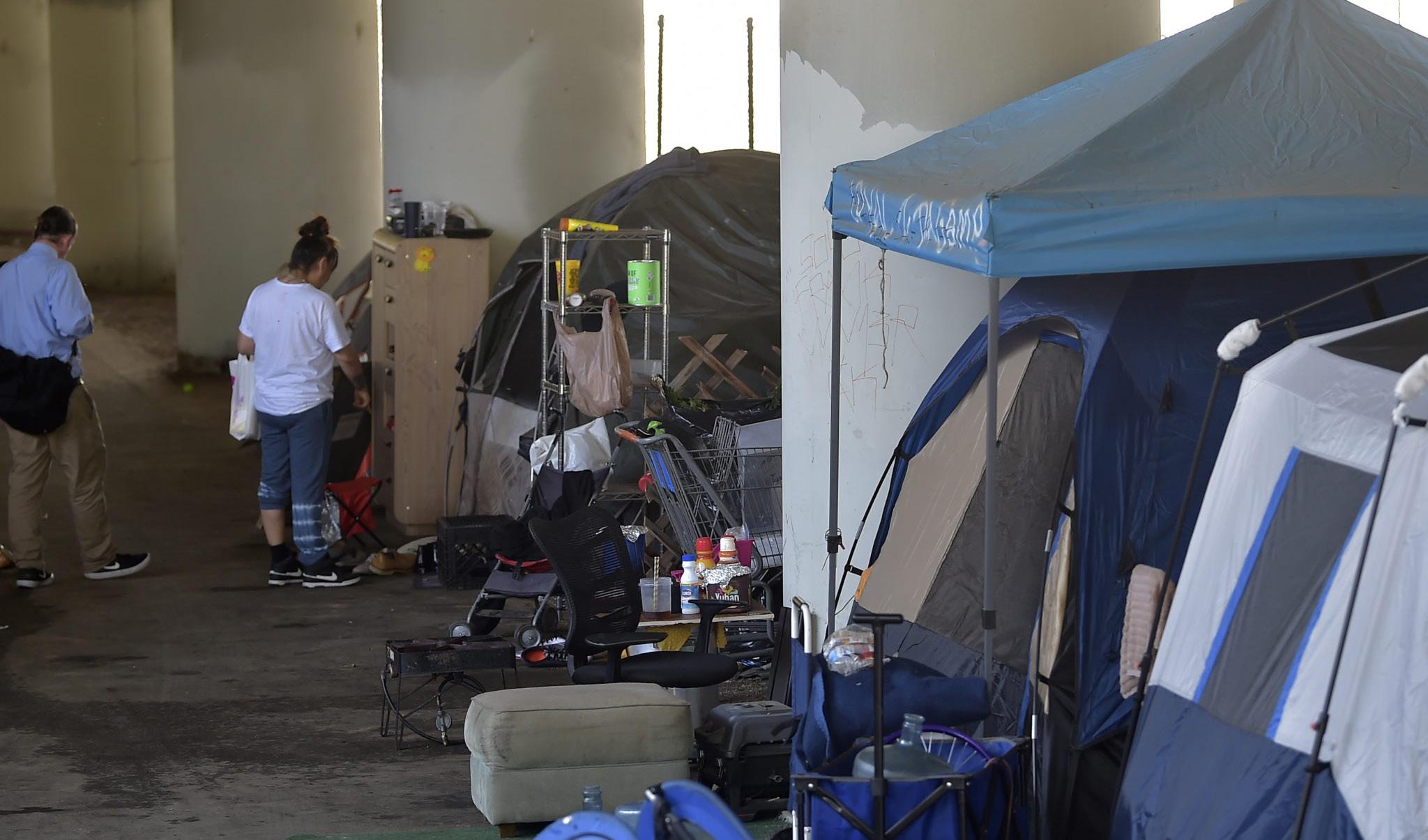
available to help them stabilize their lives and we look forward to returning San Bernardino parks to our families and children.
"The ruling does not affect the current injunction the City of San Bernardino is under restricting its ability to address encampments," Kraus worte. "So, despite the ruling, the City remains prohibited from performing encampment cleanups. We continue to work to have the injunction lifted or end the case and expect to have a resolution very soon.”
San Bernardino is subject to a preliminary injunction issued in January by Judge Terry Hatter in a lawsuit filed by the American Civil Liberties Union, the SoCal Trash Army and three individuals alleging violations of the Americans with Disabilities Act. The plaintiffs also claim authorities illegal handled individuals' personal belongings during
an encampment cleanup.
The Supreme Court's 6-3 rejection of the constitutional challenge held that penalizing unhoused people for sleeping outside when there is no available shelter does not violate the Eighth Amendment. Justices Sonya Sotomayor, Elena Kagan and Ketanji Brown Jackson dissented.
The ruling gave cities and counties broader legal powers to arrest, cite and fine people for sleeping outdoors in public areas and reversed legal protections for homeless residents in California and other states.
A prior federal court decision in Martin v. Boise by the 9th Circuit Court of Appeals "held that the Eighth Amendment’s Cruel and Unusual Punishments Clause bars cities from enforcing public-camping ordinances like these
against homeless individuals whenever the number of homeless individuals in a jurisdiction exceeds the number of 'practically available' shelter beds," according to the Supreme Court ruling.
"A handful of federal judges (can't) begin to 'match' the collective wisdom the American people possess in deciding 'how best to handle' a pressing social question like homelessness," Justice Neil Gorsuch wrote in the majority opinion. "The Constitution’s Eighth Amendment serves many important functions, but it does not authorize federal judges to wrest those rights and responsibilities from the American people and in their place dictate this Nation’s homelessness policy."
In the dissenting opinion, Sotomayor wrote, "Sleep is a biological necessity, not a crime. For some
Aproposal for Metro to create its own police department has been approved by a 10-0 vote of its Board of Directors following public safety concerns and months of highly publicized violent crimes on its system, and Friday there is five-year plan to put it in place.
The Transit Community Public Safety Department will be rolled out over the course of five years. Metro's current contracts with its three law enforcement agencies — Los Angeles County Sheriff's Department, Los Angeles Police Department and Long Beach Police Department — will remain in place until then, according to Robert Gummer, the agency's interim deputy chief of system security and law enforcement.
"So having greater control and accountability over law enforcement, centering on community safety and carebased strategies, and addressing the unique quality of life challenges on trains and buses — this is why I'm supporting us moving forward with a new model," Board Chair and Los Angeles Mayor Karen Bass said prior to the vote, who joined the meeting remotely. "Again, a new model that will take years to implement."
Bass said she has felt strongly that law enforcement agencies were essentially "dumped" with the social, health and economic problems that governmental agencies have not supported. She added that Metro has an opportunity to create a department that can respond aggressively in a traditional manner similar to that of law enforcement, but also not burden law enforcement with social service needs.
The Board of Directors discussed four deployment models, outlining options to improve visibility of officers on bus and rail systems. Metro leaders chose to move forward with what was described as the "Enhanced Service Model."
This model will build upon what the agency currently has — retaining 386 officers — but adding more ambassadors, crisis interventionists, clinicians and homeless outreach providers. The goal is for the in-house department to have 673 staff working in public safety, an increase of about 227 from the current figure.
According to Metro officials, the plan is estimated to cost $192.6 million per year compared to the $194 million multiagency contract. The agency is expected to implement a "Zone-Based Deployment," creating five areas which will be overseen by the in-house public safety.
"You will have the ability to impart the values and expectations on all levels of the organization," Gummer told City News Service. "We will also be able to ensure a continuous and engaged law enforcement presence."
Gummer explained that through this in-house public





The number of people experiencing homelessness in the Los Angeles area decreased slightly in 2024 compared with six consecutive years of increases, according to figures from the Greater Los Angeles Homeless Count released Friday.
According to the Los Angeles Homeless Services Authority, a city-county joint powers agency:
- 75,312 unhoused people LA County in 2024 compared with 75,518 in 2023, a decrease of 0.27%
-45,252 homeless individuals in the city of LA in 2024 compared with 46,260 in 2023, a 2.2% drop

-5.1% reduction in unsheltered homelessness in the county versus a 5.1% decrease last year, while the shelter count rose by 12.7% -10.7% decrease in unsheltered homelessness in the city, while the shelter count increased by 17.7%.


LAHSA officials said the downward trends happened because of "unprecedented policy alignment and investments" made by the local, state and federal governments, and they are
By Staff
"cautiously optimistic about the direction of homelessness across LA County," according to published reports.
"For so many years, the count has shown increases in homelessness, and we have all felt that in our neighborhoods," LA Mayor Karen Bass said in a statement Friday. "But we leaned into change. And we have changed the trajectory of this crisis and have moved L.A. in a new direction.”
Bass added, "There is nothing we cannot do by taking on the status quo, putting politics aside, and rolling up our sleeves to work together. I want to thank the City Council, the County Board of Supervisors, LAHSA, our state, federal and community partners and our service provider partners for locking arms to confront this crisis with the urgency that it requires. This is not the end, it is the beginning — and we will build on this progress, together.”
LA County Supervisor Janice Hahn also released a statement Friday: "For the first time in years, the number of people sleeping
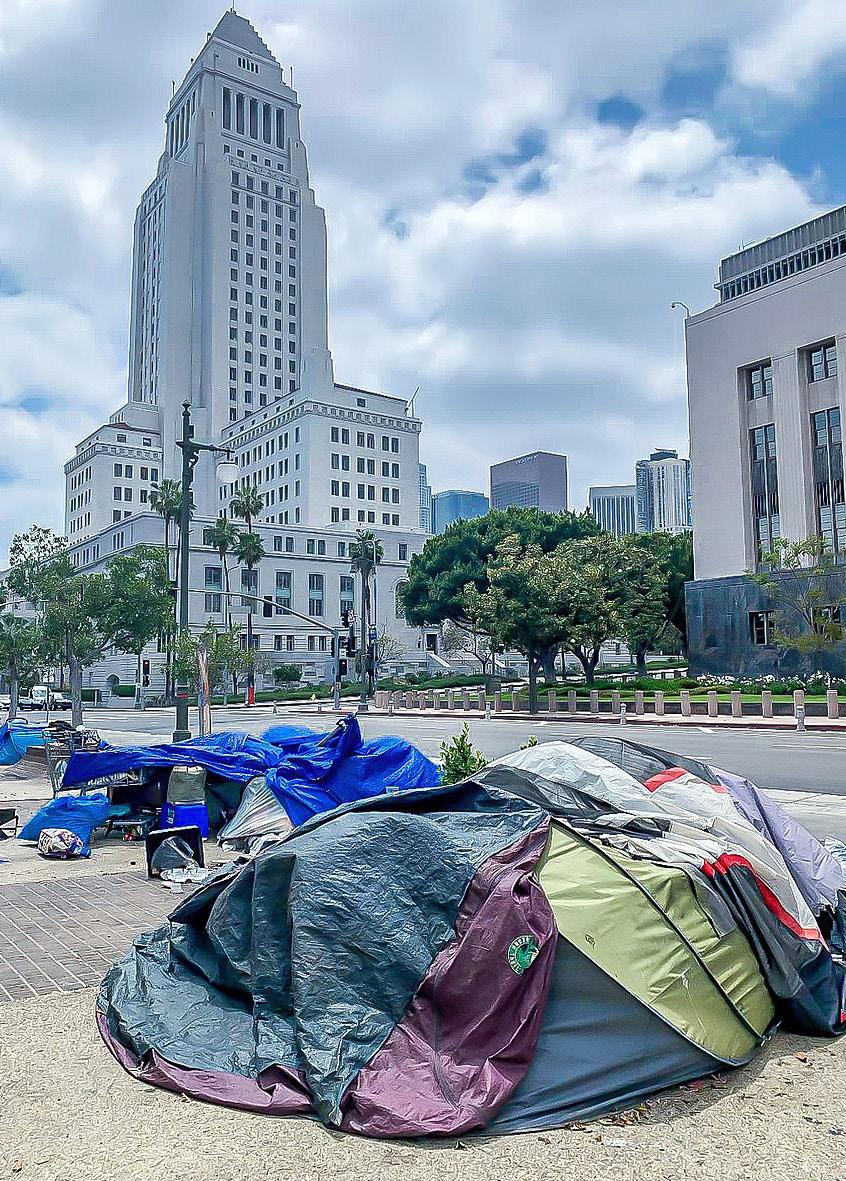


The Alhambra City Council last week authorized a staff to start accepting bids from firms to design a permanent dog park.
The future canine recreation facility will be located near the former Paw-Pup Dog Park pilot project area at 630 S. Almansor St., next to the Alhambra Golf Course.
“The Alhambra City Council is thrilled to see this initiative advancing,” Mayor Sasha Renée Pérez said in a statement. “Alhambra residents have long expressed their desire for a permanent dog park, particularly following the success of our pilot
on our streets is down and the number of people in our shelters is up. We have focused on shelters and we are doing a better job convincing people to come inside. The next step is building more permanent supportive housing and investing in long-term solutions to this crisis."
The data is available to view online at tinyurl.com/ bdfkrr4a.
By Staff
program. Now, we are able to make this a permanent feature for our residents and their furry friends!”
Last fall, the city hosted a temporary pilot “Paw-Pup Dog Park” for two months. The pop-up program fielded public input regarding a permanent dog park with a survey that earned more than 1,300 responses, according to the city. About 99% of survey-takers supported a permanent dog park in Alhambra.
Next steps entail city staff to find a professional engineering and design services firm to craft plans and specifications for the
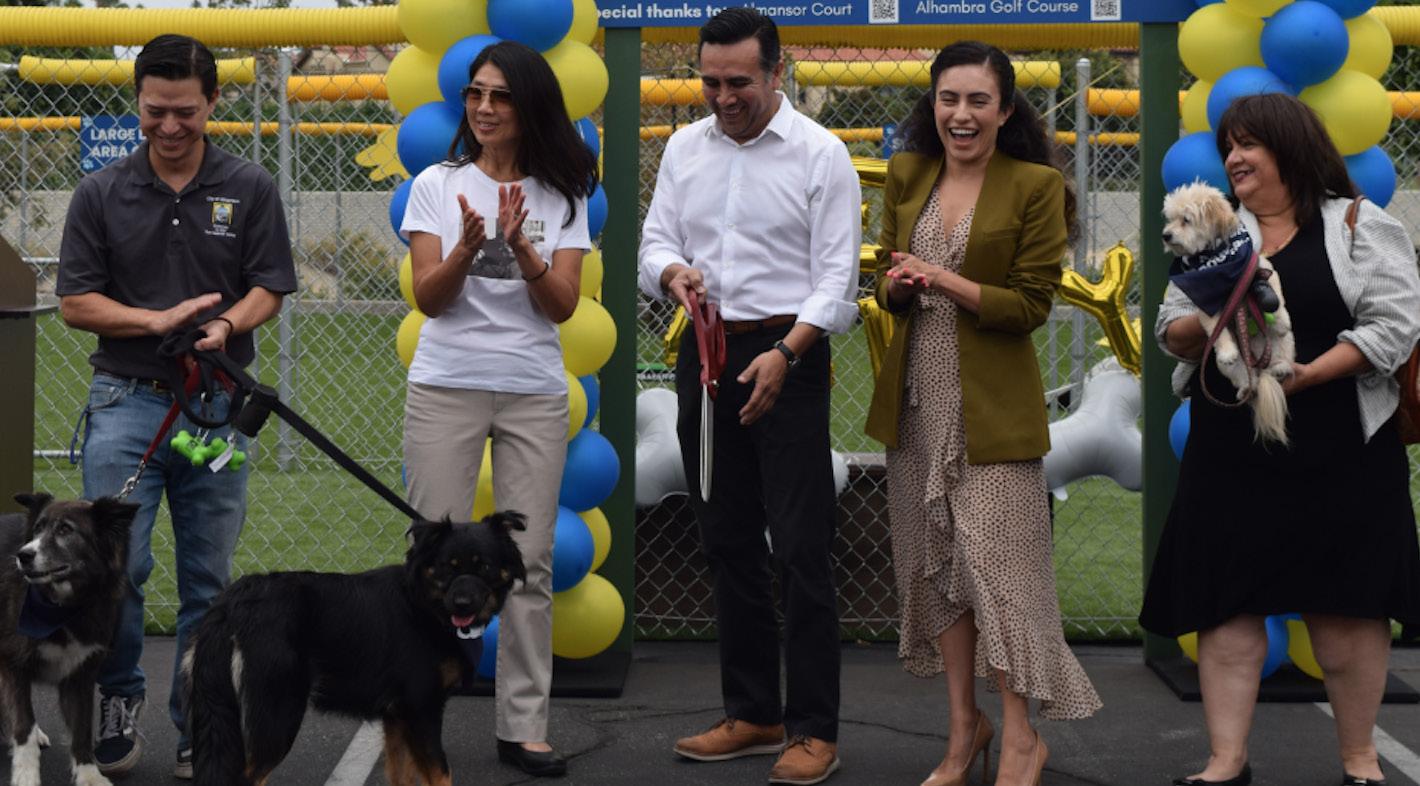
Alhambra Dog Park Project, officials said. Expected dog park features include trees, synthetic turf, walking paths, a restroom, secure double fencing, benches, shade structures and dog play elements.
Proposals for the engineering and design services contract must be submitted to the Parks and Recreation Department no later than 5 p.m. Monday, July 22. More information is available at cityofalhambra.org.
By Trimmel Gomes, Producer, Public News Service By Staff

Astatewidefentanyl crackdownthat focused on ports of entry along the southern border has resulted in authorities seizing 7 million pills and 3,725 pounds of power since January, Gov. Gavin Newsom announced last week.
Last month alone, investigators seized 1,170,893 pills containing fentanyl and 986 pounds of fentanyl powder.
“California’s robust partnerships to tackle illegal fentanyl are leading to significant results time and time again," Newsom said in a statement. "We will continue to take fentanyl out of our neighborhoods, hold drug traffickers accountable, and expand access to lifesaving medicine to benefit all Californians.”
The California National Guard’s Counterdrug Task Force assists local and federal law enforcement agencies attempting to take the deadly drug off the streets.
The task force "continues to play an important role in the fight against fentanyl,” CalGuard Maj. Gen. Matthew Beevers said in a statement. “We are proud to be a part of this effort and will continue to provide critical resources to our local, state, federal, and tribal law enforcement partners.”
The task force gathers information to intercept illegal drug trafficking, using aircraft and ground
assets to support criminal investigations as well as supporting law enforcement personnel at border ports of entry to stop narcotics trafficking.
"CalGuard members who serve with the Counterdrug Task Force are embedded in cross-government initiatives to combat transnational criminal organizations and the trafficking of illegal narcotics — like fentanyl," according to a statement from the governor's office.
Earlier this month, Newsom more than doubled the number of CalGuard troops tasked with assisting the fentanyl smuggling crackdown from 155 troops to nearly 400.
The state has also launched opioids.ca.gov to help Californians find resources for addiction prevention and treatment and information on state efforts "to hold Big Pharma and drug-traffickers accountable in this crisis," according to Newsom's office.
As part of the governor’s Master Plan for Tackling the Fentanyl and Opioid Crisis, over-the-counter CalRxbranded naloxone — the anti-overdose medication — is becoming increasingly available statewide.
"Through the Naloxone Distribution Project ... CalRx-branded over-thecounter ... naloxone HCL nasal spray, 4 mg, will be available for free to eligible organizations through the state or for sale for $24 per
twin-pack through Amneal," state officials said.
In 2023, Newsom raised the number of National Guard troops deployed to interdict drugs at U.S. ports of entry along the border by approximately 50%, according to the governor's office.
CalGuard-supported operations resulted in the record seizure of 62,224 pounds of fentanyl last year, a 1066% increase since 2021, officials said, adding that drug interdiction efforts are funded partially by $30 million from the state budget for expanding CalGuard’s efforts to stop drug trafficking by transnational criminal organizations.
Fentanyl is primarily smuggled into the country by U.S. citizens, state officials said.
In support of the Biden administration's bilateral agreement with China on counternarcotics, Newsom spoke with Chinese President Xi Jinping in October about combating the transnational shipping of chemicals used to make fentanyl.
In June, the federal officials announced sanctions against drug traffickers who bring fentanyl and other drugs into the United States.
"The U.S. Treasury Department leverages its expertise to fight illicit financing and financial crimes to disrupt the flows of money that criminal organizations rely on to operate," state officials said.
Some select alleyways across San Diego are set to get vibrant makeovers thanks to a transformative community initiative.
Sue Peerson, lecturer in urban studies and planning at the University of California-San Diego, has been spearheading a project to transform drab alleys, typically used for parking and trash pickup, into greener, safer public spaces.
The "Alleys in Action" project has received a $20,000 flagship AARP Community Challenge grant, part of a broader initiative including 11 organizations throughout California.
The grants aim to help cities, towns, neighborhoods and rural areas become great places to live for people of all ages. With the help of her students and the Adams Avenue Business Association, they solicited community feedback through a pop-up event in the Normal Heights neighborhood.
"Our hope is that improving the physical conditions of this alleyway will create it as a public space that's a draw for people that are already in this neighborhood, that also has a connection to the business district and to these public spaces," Peerson explained.
The Normal Heights alley will see the creation of a large mural along with other beautification efforts
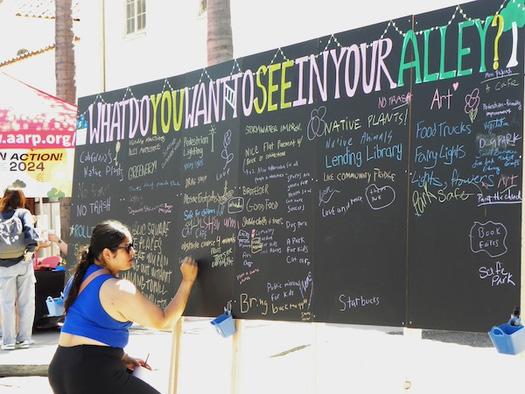
by November. This grant program is a cornerstone of AARP's nationwide Livable Communities initiative.
The grant initiative is part of its largest investment in community projects to date, with a total of $3.8 million awarded to 343 organizations nationwide.
Jennifer Berdugo, senior planning adviser to AARP California, said since 2017, the organization has awarded 57 grants totaling more than $660,000 to nonprofit organizations and government entities across the state.
"The goals are really to inspire change in communities in different areas like housing, transportation, parks, community resilience, which ties into disaster resilience as well," Berdugo noted.
Among this year's 11 grantees are PlacemakingUS, which will receive
more than $16,000 for a project to build a community comal, or traditional griddle, and engage older Meso-American women to revive the weekly tradition of tortilla making. Sacramento Area Bicycle Advocates will receive $2,500 to conduct a bike audit of Rancho Cordova's first-ever roundabout project. And the Sojourner Truth African Heritage Museum will receive $10,000 to transform a parking lot into an outdoor plaza, with accessible benches to accommodate older adults attending planned events in the space.
Disclosure: AARP California contributes to Public News Service’s fund for reporting on Health Issues, and Senior Issues. If you would like to help support news in the public interest, visit https://www.publicnewsservice.org/dn1.php.
Monrovia
Monrovia to host 4th of July concert, fireworks show
The City of Monrovia's 4th of July Concert and Fireworks Show is scheduled to take place on Thursday in Library Park. Spectators may reserve a supervised space (a maximum of 10 feet by 10 feet) in the park beginning at 6 a.m. but festivities will begin at 7 p.m. with live entertainment from Stone Soul. Following the concert, a free 20-minute fireworks show will begin at 9 p.m.
Glendale Library, JPL present ‘Blended Worlds: Experiments in Interplanetary Imagination’ exhibit
The City of Glendale’s Library, Arts & Culture Department, in collaboration with the Jet Propulsion Laboratory (JPL), an operating division of Caltech and a Federally Funded Research and Development Center for NASA, have announced a new
exhibition titled “Blended Worlds: Experiments in Interplanetary Imagination,” on view at the Brand Library & Art Center in Glendale from Sept. 21, 2024 to Jan. 4, 2025. “Blended Worlds” is presented as part of Getty’s regional art event PST ART: Art & Science Collide which explores the intersections of art and science — past, present and in the imaginable future.
Long Beach
Long Beach Airport sets record-breaking month for commercial travelers
For the second time this year, Long Beach Airport (LGB) has set a new all-time monthly record for the most passengers to board flights.
A total of 189,435 passengers departed from LGB in May 2024, surpassing the previous record of 182,382 set in March 2024. Prior to the records set this year, the previous record of 178,836 enplanements was set in July 2018. Measuring enplaned, also known as outbound, passengers is the industry standard because the majority of airport revenue is
directly or indirectly related to enplaned passengers.
Azusa
Azusa inaugurates operation of its newest wind energy turbines
On June 19, the City of Azusa held a ribbon-cutting ceremony to inaugurate the operation of eight new wind turbines in North Palm Springs, expanding the city’s current clean energy capacity. The Mesa RP30 Wind Energy Center will generate up to 30-megawatts (MW) of wind power, supplying approximately half of Azusa’s energy needs under a 25-year agreement with renewable energy company, Brookfield Renewable. These new turbines, replacing over 400 older turbines with advanced Vestas models, are taller and more efficient, with longer blades that increase electricity production even in low wind conditions.
2 Romanian nationals posing as immigration agents targeted Hispanic

victims in OC robberies
Two Romanian nationals have been charged with hate crimes for posing as United States immigration agents while targeting Hispanic victims across Orange County whom they believed are undocumented immigrants fearful of deportation to steal their cash and debit cards. The men are accused of wearing fake law enforcement badges around their necks while they spoke to their victims in Spanish and threatened to have them deported if they refused to hand over money and debit cards. They had a gun in their car during at least one of the robberies.
OC’s only children’s advocacy center receives re-accreditation, expands services
Orange County's Child Abuse Services Team (CAST) is once again nationally recognized as a Children’s Advocacy Center (CAC) through its renewed accreditation by the National Children’s Alliance (NCA). The organization also awarded CAST with accreditation under the optional Commercially Sexually Exploited Children (CSEC) and Physical Abuse Standards.
City of Riverside Riverside commemorates Disability Pride Month

society. It also represents the light and creativity of the disability community that cuts through the darkness of ableism.
Corona
Corona to celebrate July 4th with annual parade, fireworks
The City of Corona Independence Day Celebration returns with the annual Main Street USA Parade, entertainment at Santana Park, and a fireworks show Thursday. Corona’s Main Street USA Independence Day Parade, a non-competitive parade which provides entertainment and community spirit,starts at 9 a.m. Drawing more than 4,000 families, friends, and neighbors, the parade takes place on Main Street from Ontario Avenue to Olive Street. Entertainment at Santana Park begins at 5 p.m. with music from Radio Rebels, an ‘80s rock and variety dance band, and Black Rock Candy, a classic rock tribute band. There will also be a variety of food vendors including Brain Freeze, Don Chuy, Salt N Pepper, Churromadness, Raul's Dirty Dogs, Oh Papa, 24 Vegan, Aguas Compita, Luzzies Kitchen, Daniels Toys, The Baja Shrimp, Pop it Up, Sweet Shop, Canvas Coffee, Wetzels Pretzels, Perro Taco, Webu, Maui Wowi, Wicked Sausage, and Tiki's Shaved Ice. The celebration concludes with the eagerly anticipated firework show at 9 p.m.
Riverside City Council recently adopted a resolution to display commemorative flags. Friday's flag raising ceremony recognized Disability Pride Month. Within the flag, each color has a meaning. The charcoal gray background commemorates and mourns disabled people who have died due to ableism, violence, negligence, suicide, rebellion, illness and eugenics. The gray background also represents rage and protest against the mistreatment of the disabled community. The diagonal band is for "cutting across" the walls and barriers that separate disabled people from
engine bays, one battalion chief’s bay, six crew dorms, two captain’s dorms and one dorm for the battalion chief.
City of San Bernardino
San Bernardino issues statement on Supreme Court’s decision on homeless encampment case
The City of San Bernardino has issued a statement regarding the Supreme Court decision involving the case Grants Pass v Johnson, which considered whether the prohibition of camping in public places by cities was considered cruel and unusual punishment. “Today’s ruling by the Supreme Court will not solve the homelessness issue, however it does provide much needed clarity. It confirms that cities like San Bernardino have the legal authority to maintain and clean public property and can make that public property available to all residents, not just those who are unhoused,” reads the statement. The city went on to clarify, “The ruling does not affect the current injunction the City of San Bernardino is under restricting its ability to address encampments. So, despite the ruling, the City remains prohibited from performing encampment cleanups. We continue to work to have the injunction lifted or end the case and expect to have a resolution very soon.”
San Bernardino County
State-of-the art Fire Station 81 opens to serve Fontana
San Bernardino County Fire and the City of Fontana proudly celebrated the grand opening of the highly anticipated Fire Station 81, June 18. This state-of-the-art facility, strategically located in the north end of Fontana, is designed to serve the city’s growing population and development needs. The new facility spans 13,247 square feet and features three
Ontario Recreation & Community Services celebrates Parks and Recreation Month
The Ontario Recreation & Community Services Department is celebrating Parks and Recreation Month throughout July. NRPA and the Ontario Recreation & Community Services Department encourage everyone who supports parks and recreation to share how it has fostered belonging and why their local park and recreation professionals are important to them on social media with #OntarioIsWhereIBelong.
June 20
At 12:44 p.m., officers responded to the 300 block of West Foothill regarding a traffic collision. Upon arrival officers made contact with the parties involved. The party at fault was cited.
At 7:04 p.m., a caller in the 200 block of West Foothill reported a disturbing subject. Officers arrived and found the subject too intoxicated to care for himself. He was arrested and transported to the MPD jail for a sobering period.
At 7 p.m., officers were dispatched to the 500 block of West Huntington regarding a male subject who was running in and out of traffic. Officers arrived and detained the subject. An investigation revealed he was a danger to himself. He was transported to a medical facility for a mental evaluation.
At 11:31 p.m., officers were dispatched to an apartment complex in the 700 block of South Myrtle regarding a disturbing subject. Officers contacted the subject and found he had a no-bail warrant from an adjacent county. The subject was arrested and transported to the outside county's jail.
June 21
At 3:07 a.m., an officer on patrol contacted a subject in the 900 block of South Mountain who was lying on the sidewalk. The subject was too intoxicated to care for himself, so he was arrested and housed for a sobering period.
At 8:30 a.m., while patrolling the 600 block of South Shamrock an officer made contact with a subject who he knew from previous contacts. A computer check revealed he had warrants for his arrest. He was arrested and taken into custody.
At 8:53 a.m., while patrolling the 200 block of West Pomona, an officer saw a vehicle violating a vehicle code. A traffic stop was conducted, and the driver was contacted. Further investigation revealed the driver was in possession of a loaded firearm. The driver was arrested and taken into custody.
At 1:23 p.m., officers were dispatched to a park in the 300 block of South Myrtle regarding an intoxicated subject. Officers arrived and made contact with the subject, who displayed symptoms of being under the influence. Officers determined he was too intoxicated to care for himself. He was arrested and transported to the MPD jail for a sobering period.
At 2:56 p.m., an employee from a business in the 1500 block of South Myrtle reported a male subject soliciting. Officers arrived and located the subject. A computer search revealed he had a warrant for his arrest. He was arrested and taken into custody.
At 5:02 p.m., officers were dispatched to the 100 block of West Olive regarding a possible domestic violence incident. Officers arrived and contacted both parties involved. An investigation revealed the female subject was heavily intoxicated and hit her boyfriend. She was arrested and taken into custody.
At 5:41 p.m., while patrolling the 1600 block of South Myrtle officers saw two subjects who appeared to be under the influence of a controlled substance. The officers made contact with the subjects and a computer search revealed both subjects had warrants for their arrest. One of the subjects was found to be in possession of drug paraphernalia. They were both arrested and taken into custody.
At 7:08 p.m., officers patrolling the area of Magnolia and Cypress made contact with a subject known to be on parole from previous contacts. A search revealed the subject was found to be in possession of drug paraphernalia. He was arrested and taken into custody.
At 9:20 p.m. While patrolling the area of Alta Vista and Huntington, officers saw a vehicle driving recklessly and conducted a traffic stop. The driver was arrested and taken into custody.
June 22
At 1:12 a.m., an officer on patrol in the 400 block of South Myrtle saw a subject outside of a closed business. The officer made contact with the subject who displayed symptoms of being heavily intoxicated. It was determined he was unable to care for himself. He was arrested and transported to the MPD jail to be held for a sobering period.
At 8:23 a.m., the manager of a business in the 700 block of East Huntington reported electrical fuses stolen from the rear of the property. This investigation is continuing.
At 10:33 p.m., an em-

ployee from a retail store in the 600 block of West Huntington called to report a subject who was stealing merchandise. Officers arrived as the subject was exiting the store, the subject fled on foot and surrendered a short distance away. He was found to be in possession of drug paraphernalia and stolen property. He was arrested and taken into custody.
June 16
At 7:38 a.m., a male suspect entered Vons at 745 W. Naomi Ave. He approached an employee and requested a pen. Upon receiving the pen, the employee observed the suspect writing a note claiming he had a gun and demanding $60. The suspect then attempted to hand the note to the employee. However, before the employee could take the note, the suspect became frightened, pulled back his hand, and left the store. The employee immediately contacted the Police Department and noticed the suspect entering the Starbucks next door. Inside Starbucks, the suspect handed the note to an employee who refused to comply with the demand for money. Subsequently, the suspect left Starbucks. As he exited, law enforcement officers arrived and took him into custody without incident.
June 17
At 6:57 a.m., an officer was dispatched to 11633 Clark St. in response to a report of a recent cold commercial burglary. Upon investigation, it was determined that between June 15, 2024, at 1:30 a.m. and June 17, 2024, at 6 a.m.,
unidentified suspect(s) forced open the front door. Although there is no alarm system in place, CCTV cameras are installed. The reporting party was unable to access the surveillance footage and has requested the video from their corporate office. The extent of the loss is currently unknown.
June 18
At 4:30 a.m., an officer was dispatched to the 300 block of West Naomi Avenue in response to a report of a recent residential burglary. Upon investigation, it was discovered that between 6 p.m. on June 17, 2024, and 1 p.m. on June 18, 2024, unknown suspect(s) broke a rear door and searched through the house. Although there was an alarm system, it was not activated. Despite the presence of CCTV cameras, the footage is unavailable as the residents are away until June 23, 2024. The suspect seemed to have attempted to open the door, prompting the officer to collect a DNA sample from the door handle as evidence. The extent of the loss is currently unknown.
At 12:10 p.m., an officer was dispatched to the front counter of the Police Department regarding a theft report at A Ming Seafood, located at 171 E. Live Oak Ave. The reporting party, who is the business owner's daughter, mentioned that her father had his cellphone and wallet stolen from the premises. The business owner was unaware of the theft when it happened. After watching CCTV footage, it was discovered that a Black male distracted the owner at the cash register while a Hispanic male took the items from the other side of the store. Although the parties
did not enter the store together, they left in sync, leading to suspicions of collaboration. The total loss amounts to around $1,500. The business owner wishes to pursue legal action if the suspect(s) are identified.
At 1:23 a.m., an officer was dispatched to the intersection of First Avenue and Duarte Road in response to reports of a vehicle swerving and moving slowly on the road. The officer located the vehicle and initiated a traffic stop. Upon investigation, it was discovered that the driver had bloodshot and watery eyes, along with a strong smell of alcohol coming from them. A Standardized Field Sobriety Test was conducted, but the driver struggled due to an existing neck injury. However, the driver agreed to a Preliminary Alcohol Screening Test, which revealed a blood alcohol level exceeding the legal limit. Subsequently, the driver was arrested for driving under the influence ("DUI") and was taken to USC Arcadia Hospital for medical clearance. A blood sample was collected as evidence. The driver was cited for DUI and released due to medical reasons.
At 4:30 a.m., officers were called to Kiyo Sushi, located at 815 W. Naomi Ave., Unit A, in response to an alarm. Upon investigation, it was discovered that two unidentified suspects broke into the lock box connected to the front door and acquired a key to access the business. Using the key, they entered the premises and took an iPad worth $500. Surveillance footage captured the suspects inside the establishment.


Eliminate gutter cleaning forever! LeafFilter, the most advanced debris-blocking gutter protection. Schedule a FREE LeafFilter estimate today. 20% off Entire Purchase. 10% Senior & Military Discounts. Call 1-855-424-7581 (Cal-SCAN)
DONATE YOUR VEHICLE to fund the SEARCH FOR MISSING CHILDREN. FAST FREE PICKUP. 24 hour response. Running or not. Maximum Tax Deduction and No Emission Test Required! Call 24/7: 1-877-434-6852 (CalSCAN)
GOT AN UNWANTED CAR??? DONATE IT TO PATRIOTIC HEARTS. Fast free pick up. All 50 States. Patriotic Hearts’ programs help veterans find work or start their own business. Call 24/7: 1-855408-6546 (Cal-SCAN)
Tiene un vehiculo no deseado? Donelo a Patriotic Hearts! Recogida rápida y gratuita en los 50 estados. Patriotic Hearts ofrece programas para ayudar a los veteranos a encontrar trabajo o iniciar su propio negocio. Llama ahora: 1-855-408-7368 (24/7) (Cal-SCAN)
anteed. CALL NOW: 1-888-2569155 (Cal-SCAN_
Jacuzzi Bath Remodel can install a new, custom bath or shower in as little as one day. For a limited time, we're waiving ALL installation costs. (Additional terms apply. Subject to change and vary by dealer. Offer ends 6/30/24
Call 1-833-985-4766 (Cal-SCAN)
Safe Step. North America's #1 Walk-In Tub. Comprehensive lifetime warranty. Top-of-the-line installation and service. Now featuring our FREE shower package and $1600 Off for a limited time! Call today! Financing available. Call Safe Step 1-888-989-5749 (Cal-SCAN)
DENTAL INSURANCE from Physicians Mutual Insurance Company. Coverage for 400 plus procedures. Real dental insurance - NOT just a discount plan. Do not wait! Call now! Get your FREE Dental Information Kit with all the details! 1-844-203-2677 www.dental50plus.com/calnews #6258 (Cal-SCAN)
discussed, posted, copied, edited, and emailed countless times throughout the day by others? Discover the Power of Newspaper Advertising. For a free brochure call 916-288-6011 or email cecelia@cnpa.com (Cal-SCAN)
When veterinary care is unavailable or unaffordable, ask for Happy Jack® flea/tick, mane dandruff, and allergy control at Tractor Supply® (www.happyjackinc.com) (Cal-SCAN)
RETIRED COUPLE $$$$ for business purpose Real Estate loans. Credit unimportant. V.I.P. Trust Deed Company www.viploan. com Call 1-818-248-0000. Broker-principal DRE 01041073. No consumer loans. (Cal-SCAN)
BATH & SHOWER UPDATES in as little as ONE DAY! Affordable prices - No payments for 18 months! Lifetime warranty & professional installs. Senior & Military Discounts available. Call: 1-877-252-9868 (CalSCAN)

Get a break on your taxes! Donate your car, truck, or SUV to assist the blind and visually impaired. Arrange a swift, no-cost vehicle pickup and secure a generous tax credit for 2025. Call Heritage for the Blind Today at 1-844-4912884 today! (Cal-SCAN)
Struggling with debt? If you have over $10,000 in debt we help you be debt free in as little as 24-48 months. Pay nothing to enroll. Call Now: 1-877-435-4860 (Cal-SCAN)
Attention: VIAGRA and CIALIS USERS! A cheaper alternative to high drugstore prices! 50 Pill Special - Only $99! 100% guar-

Switch and save up to $250/ year on your talk, text and data. No contract and no hidden fees. Unlimited talk and text with flexible data plans. Premium nationwide coverage. 100% U.S. based customer service. For more information, call 1-844-908-0605 (Cal-SCAN)
The difference in winning and losing market share is how businesses use their advertising dollars. CNPA’s Advertising Services’ power to connect to nearly 13 million of the state’s readers who are an engaged audience, makes our services an indispensable marketing solution. For more info call Cecelia @ (916) 288-6011 or cecelia@cnpa.com
DID YOU KNOW Newspapergenerated content is so valuable it’s taken and repeated, condensed, broadcast, tweeted,
Don't Pay For Covered Home Repairs Again! Our home warranty covers ALL MAJOR SYSTEMS AND APPLIANCES. We stand by our service and if we can't fix it, we'll replace it! Pick the plan that fits your budget! Call:1-855-411-1731 (Cal-SCAN)
WATER DAMAGE CLEANUP & RESTORATION: A small amount of water can lead to major damage in your home. Our trusted professionals do complete repairs to protect your family and your home's value! Call 24/7: 1-888-248-0815. Have zip code of service location ready when you call! (Cal-SCAN)
GoGo. Live and age your way. Get help with rides, groceries, meals and more. Memberships start as low as $1 per day. Available 24/7 nationwide. BBB Rated A+ Business. Call GoGo to get started. 1-855-476-0033
Doyou remember the dot com crash in 2000? And, do you remember the mortgage crisis in 2008? When those devastating events occurred, it felt like things might never turn around. Finding a job felt impossible and, if you had one, you may have felt stuck. There weren’t many options. I remember friends who both could not find a job, but who could not sell their home. The stress was high all the way around.
When you're in the middle of a difficult time, it's hard to picture a different reality. It can feel hopeless. Hard times can bring up feelings of fear and desperation. We may feel paralyzed. Job searching can feel like an impossible task.
But, after events such as the dot com crash passed, we don't think about it too

much anymore. It's so far in the past that at times, we may forget that it ever happened. Additionally, if you were lucky enough to be in a good situation during tough times, you may not have felt their economic impact.
One hopeful statistic to remember is that economic downturns have historically lasted anywhere from six months to eighteen months. Although this length of time is certainly not nothing, it is not as long as it feels in the moment. And, there is an end to the pain. In addition, companies can sometimes be slow to change just before a presidential election – another event with an endpoint. In other words, if you are going through a difficult time, just remember that it's not permanent. It's not
By Angela Copeland angela@copelandcoaching.com
a reflection of who you are, or what you are capable of. It's not the sign of the end of your career, or of what's to come in the future. Many very talented people are going through tough times at this moment. Often, these tough times are a reflection of things outside of your control, despite how they feel in the moment.
In fact, the reverse is also true. Many of the billionaires we admire are not only talented, but they also had good timing. For example, imagine if Bill Gates hadn't started using computers until the 90s. Or, imagine if Mark Zuckerberg were just finishing college today. They likely would have missed their window of success, despite how smart they might be.
During this tough time, give yourself a break. It's

to feel discouraged, and it makes sense to feel upset. Do your best to influence what you can control. Prepare for the future, when things will be more calm and fruitful. This may mean updating your resume. It
may mean getting involved in community organizations. It might even mean taking the time to work with a therapist or a career coach.
Take care of yourself, so that when things naturally turn around, you'll
By Shawn Spencer shawn@girlfridaysolutions.net
As always, the City of Monrovia is set to bring us a spectacular fireworks extravaganza for the 4th of July as we celebrate the “birth” or independence of our nation. The fireworks show is set to be larger and longer than ever before. Library Park and the surrounding areas will likely be packed with people. A huge thank you to the city and city staff for putting on such an amazing party. I don’t think I can go one week without saying how lucky we are to live here!
be ready. And, remember, things will turn around. The economy will get better. The job market will improve. You will be okay.
Angela Copeland, a leadership and career expert, can be reached at www.angelacopeland.com.
June 30 marked the last of the summer concerts at Station Square. The remaining concerts from July 7 through Aug. 11 will be held at Library Park from 7 to 8:30 p.m. The line-up in order of appearance is The Skinny Ties (‘80s), Chico Band (Latin), Bumptown (Disco/ R&B), OC Groove (Soul/ Funk), Thunder (Country) and Upstream (Reggae). Pack up your favorite picnic fare, a picnic or chairs and a spot in the shade. These concerts are always lots of fun. I always get a kick out of watching everyone cuttin’ loose on the dance floor.
Looks like we have a new business coming to Old Town. At one point, 412 S. Myrtle was once home to our beloved Dollmaker’s Kattywompus. Since then, Lover Boys had a brief run there with a vintage clothing store. Super cute clothes and such a vibe! We were sad to see them go. Next up was supposed to be Sweet Ethan’s Café. Yes, you read that correctly. I guess the owners of Sweet Ethan’s Candy Store want to continue on with their marketing plan and are opening up under the split personality name of Evil Ethan’s. I would give you all three chances to guess
what their business concept is, but this isn’t the right forum for that. So, I’ll just tell you, and no, this isn’t déjà vu. According to their website, Evil Ethan’s will be a coffee shop. I know that once this gets to Facebook, people will ask questions like “Why would the city let another coffee shop open?” or say something like “We need a Cracker Barrel!” Well, the location being leased is zoned under Historic Downtown Commercial. Once someone applies for a business license, the city expects them to have a sound business plan. It is not up to the city to tell someone what a good business concept is or should be. Well, I love a good cup o’Joe, so best of luck to Ethan and all of the businesses named after him.
Just a reminder about our wonderful Farmer’s Market: It is EVERY Saturday, from

9 a.m. to 2 p.m. I just love it! Fruits, veggies, honey, a French bakery with THE BEST sourdough bread, there is hummus, frozen custard, a butcher and fishmonger. I know I am forget-
ting a few but go and see for yourself. There is live music and it is a lovely addition to our town. It’s not in Old Town, but I like to call it Old Town adjacent. One word of advice: get there early. It heats up out there. Last week I thought I was going to ignite. That probably saved me a lot of money, though. Wear a hat, wear sunscreen, but do try to get there early to beat the heat.
This Notice is to inform you of a public hearing to determine whether or not the following project should be granted under Title 16 and/or 17 of the Monrovia Municipal Code:
APPLICATION: Minor Conditional Use Permit (MCUP2024-0002) and Minor Exception (ME2024-0007)
NOTICE OF PUBLIC HEARING MONROVIA DEVELOPMENT
Este aviso es para informarle sobre una junta pública acerca de la propiedad indicada más arriba. Si necesita información adicional en español, favor de ponerse en contacto con el Departamento de Planificación al número (626) 932-5565.
Austin Arnold, Assistant
Planner
PUBLISH ON JULY 4, 2024 MONROVIA WEEKLY
ing described in this notice, or in written correspondence delivered to the Planning Division at, or prior to, the public hearing. This application will not alter the zoning status of your property. For further information regarding this application, please contact the Planning Division at (626) 932-5565, or by email to planning@monroviaca. gov.
Staff Report pertaining to this item will be available on Thursday, July 11, 2024 after 4:00 PM on-line at the following hyperlink: www. monroviaca.gov/your-government/meeting-agendas-minutes
Este aviso es para informarle sobre una junta pública acerca de la propiedad indicada más arriba. Si necesita información adicional en español, favor de ponerse en contacto con el Departamento de Planificación al número (626) 932-5565.
Craig Jimenez, AICP Community Development Director
This Notice is to inform you of a public hearing to determine whether or not the following request should be granted under Title 16 and/or 17 of the Monrovia Municipal Code:
to inform you of a public hearing to determine whether or not the following project should be Title 16 and/or 17 of the Monrovia Municipal Code:
APPLICATION: Historic Landmarks (HL-166) and (HL167) and Mills Act Contract (MA-155)
APPLICATION: Minor Conditional Use Permit (MCUP2024-0002) and Minor Exception (ME2024-0007)
REQUEST: Applicant is requesting a Minor Conditional Use Permit (MCUP) to operate a light auto repair business, Auto Repair Services, LCC, within an existing tenant space. A Minor Exception (ME) is also requested to allow a reduction in the parking requirement set forth in Monrovia Municipal Code (MMC) Section 17.24.060 (4 spaces in lieu of 5 spaces). The property is located in the M (Manufacturing) zone.
Additional information regarding this request may be found on the City’s website at https://www.monroviaca. gov/projectsunderreview
Applicant is requesting a Minor Conditional Use Permit (MCUP) to operate a light auto repair business, Auto Repair Services, LCC, within an existing tenant space. A Minor Exception (ME) is also requested to allow a reduction in the parking requirement set forth in Monrovia Municipal Code (MMC) Section 17.24.060 (4 spaces in lieu of 5 spaces). The property is located in the M (Manufacturing) zone.
ENVIRONMENTAL
DETERMINATION: Categorical Exemption (Class 1). Class 1 consists of the operation, repair, maintenance, and permitting, leasing, licensing, or minor alteration of existing public or private structures.
Additional information regarding this request may be found on the City’s website at https://www.monroviaca.gov/projectsunderreview
ENVIRONMENTAL DETERMINATION: Categorical Exemption (Class 1). Class 1 consists of the operation, repair, maintenance, and permitting, leasing, licensing, or minor alteration of existing public or private structures.
APPLICANT: Auto Repair Services, LLC (Hratch Ourichian)
Auto Repair Services, LLC (Hratch Ourichian)
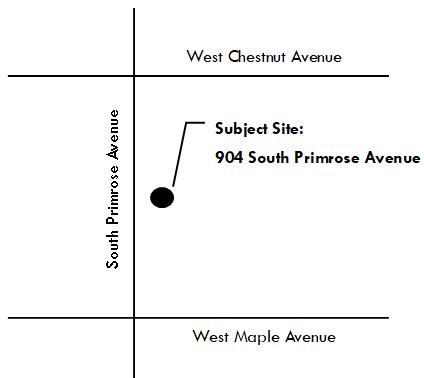
ADDRESS: 904 South Primrose Avenue
This Notice is to inform you of a public hearing to determine whether or not the following request should be granted under Title 16 and/or 17 of the Monrovia Municipal Code: APPLICATION: Historic Landmarks (HL-166) and (HL-167) and Mills Act Contract (MA155)
PROJECT ADDRESS: 904 South Primrose Avenue
REQUEST:
ENVIRONMENTAL DETERMINATION:
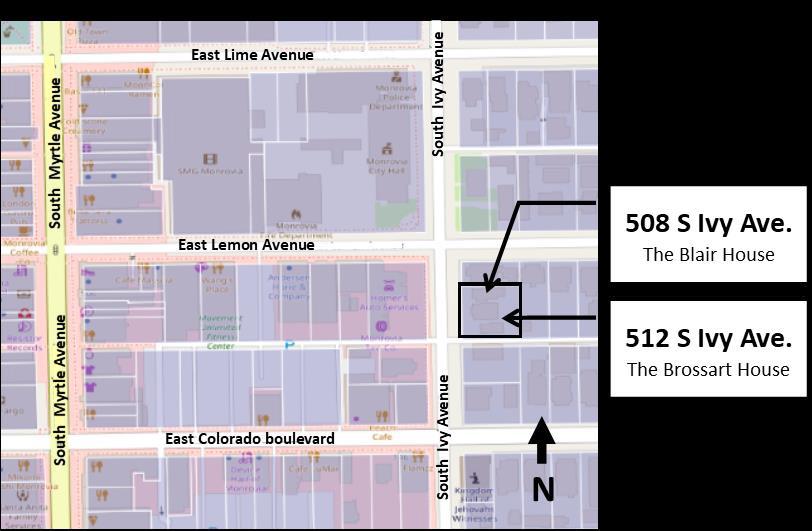
REQUEST: Applicant is requesting a Historic Landmark designation for the structure located at 508 South Ivy Avenue based on its association with Luther Blair (an early Master Architect) and for its Queen Anne Victorian-era style design features. Applicant is also requesting a Historic Landmark designation for the structure located at 512 South Ivy Avenue based on its association with John F. Brossart (an early developer of Monrovia) and for its Victorian-era farmhouse characteristics and Queen Anne style design details. On June 26, 2024, the Monrovia Historic Preservation Commission recommended approval of these two landmark nominations, and a request for a Mills Act contract applied to both structures.
Additional information regarding this request may be found on the City’s website at https://www.monroviaca.gov/projectsunderreview.
ENVIRONMENTAL DETERMINATION:
Applicant is requesting a Historic Landmark designation for the structure located at 508 South Ivy Avenue based on its association with Luther Blair (an early Master Architect) and for its Queen Anne Victorian-era style design features. Applicant is also requesting a Historic Landmark designation for the structure located at 512 South Ivy Avenue based on its association with John F. Brossart (an early developer of Monrovia) and for its Victorian-era farmhouse characteristics and Queen Anne style design details. On June 26, 2024, the Monrovia Historic Preservation Commission recommended approval of these two landmark nominations, and a request for a Mills Act contract applied to both structures.
Additional information regarding this request may be found on the City’s website at https://www.monroviaca.gov/projectsunderreview
This project is Categorically Exempt from the California Environmental Quality Act (CEQA) §15303, under Class 31. Class 31 consists of projects limited to maintenance, repair, stabilization, rehabilitation, restoration, preservation, conservation, or reconstruction of historical resources in a manner consistent with the Secretary of Interior’s Standards for the Treatment of Historic Properties with Guidelines for Preserving, Rehabilitating, Restoring, and Reconstructing Historic Buildings.
PLEASE PUBLISH ON JULY 4, 2024 MONROVIA WEEKLY
City of San Gabriel
Summary of Ordinance - Ordinance No. 709
An Ordinance of the City Council of the City of San Gabriel, California, Amending Title XV, Chapter 153 (Zoning) Relating to Emergency Shelters, Group Homes, Low Barrier Navigation Center, Supportive and Transitional Housing
For three and a half years, the City has been working on housing programs due to existing and new housing legislation from the State. Most notable of the projects was the completion of Housing Element update between 2021-2022. The updated Housing Element was adopted by the City Council and certified by the Department of Housing and Community Development (HCD) in February 2022. With a certified Housing Element, the City has been able to proceed with implementation of the housing programs and will continue to evaluate zoning changes and development standards. The proposed Zone Text Amendment would amend Chapter 153 of the San Gabriel Municipal Code (SGMC) relating to Emergency Shelters, Group Homes, Lower Barrier Navigation Center, Supportive and Transitional Housing. The proposed Zone Text Amendment is intended to implement the goals and programs identified in the 2021-2029 Housing Element.
Ordinance No. 709 was approved for introduction and first reading at the City Council Regular Meeting of July 2, 2024, by the following vote:
Ayes: Councilmember(s)- Chan, Ding, Menchaca, Wu Noes, Abstain: Councilmember(s)- None Absent: Councilmember(s)- Harrington
The Ordinance will be considered for adoption by the City Council at its July 16, 2024, regular meeting held at 6:30 p.m. Anyone having questions may contact the City Clerk at (626) 308-2816 or cityclerk@sgch.org.

APPLICANT: Saxony Holdings, LLC (Jeff Godbold and Joshua Cain)
This project is Categorically Exempt from the California Environmental Quality Act (CEQA) §15303, under Class 31. Class 31 consists of projects limited to maintenance, repair, stabilization, rehabilitation, restoration, preservation, conservation, or reconstruction of historical resources in a manner consistent with the Secretary of Interior’s Standards for the Treatment of Historic Properties with Guidelines for Preserving, Rehabilitating, Restoring, and Reconstructing Historic Buildings.
APPLICANT: Saxony Holdings, LLC (Jeff Godbold and Joshua Cain)
PROJECT ADDRESSES: 508 South Ivy Avenue (The Blair House) and 512 South Ivy Avenue (The Brossart House)
PROJECT ADDRESSES:508 South Ivy Avenue (The Blair House), and 512 South Ivy Avenue (The Brossart House)
Julie Nguyen, City Clerk
Published on July 4, 2024 SAN GABRIEL SUN
HEARING DATE AND TIME: Wednesday, July 17, 2024 at 4:00 PM
DATE AND TIME: Wednesday, July 17, 2024 at 4:00 PM
COMMENTS: Public comments regarding this item may be stated in person at the meeting, or submitted in writing. Written comments submitted by Project Location Map
HEARING LOCATION: Monrovia City Hall (Council Chambers), 415 South Ivy Avenue, Monrovia, California 91016
LOCATION: Monrovia City Hall (Council Chambers), 415 South Ivy Avenue, Monrovia, California 91016
PUBLIC COMMENTS: Public comments regarding this item may be stated in person at the meeting, or submitted in writing. Written comments submitted by 3 p.m. on the meeting date will be distributed to the Development Review Committee.
HEARING DATE AND TIME: Tuesday, July 16, 2024 at 7:30 PM
HEARING DATE AND TIME: Tuesday July 16, 2024 at 7:30 PM
If you challenge this application in court, you may be limited to raising only those issues you or someone else raised at the public hearing described in this notice, or in written correspondence delivered to the Planning Division at, or prior to, the public hearing. This application will not alter the zoning status of your property. For further information regarding this application, please contact the Planning Division at (626) 932-5565, or by email at planning@ monroviaca.gov.
Supporting documents pertaining to this item will be available on Thursday, July 11, 2024, after 4:00 PM. on-line at the following hyperlink: https://www.monroviaca.gov/your-government/boardsand-commissions/planning-commission/agendas-minutes
HEARING LOCATION: Monrovia City Hall (Council Chambers), 415 South IvyAvenue, Monrovia, California
PUBLIC COMMENTS: Public comments regarding this item may be stated in person at the meeting, or submitted in writing. Written comments submitted by 5 p.m. on the meeting date will be distributed to the City Council members.
If you challenge this application in court, you may be limited to raising only those issues you or someone else raised at the public hear-
Public Notice: City Of San Gabriel Notice of Public Hearing Before the Planning Commission
You are invited to participate in a public hearing before the City’s Planning Commission. Members of the public may submit public comments by U.S. Mail addressed to Community Development Department, Attn: Public Hearing Comment, 425 S. Mission Drive, San Gabriel, CA 91776, which must be received by the hearing date, or electronically using the online public comment form at http://sangabrielcity.com/PlanningComment, by 5:00 p.m. of the hearing date to be considered by the Planning Commission. The meeting will be broadcast on the City of San Gabriel’s YouTube channel at the link shown below:
Hearing Date: Monday, July 15, 2024 TIME: 6:30 p.m.
Location Of Hearing: Council Chambers located on the second floor of San Gabriel City Hall (425 South Mission Drive, San Gabriel, CA 91776) The meeting can be viewed live at: https://www.youtube.com/CityofSanGabriel
Project Address: 607 West Roses Road, San Gabriel, CA 91776
Project Description: The application, Case Nos. GPA21-001, ZC21-001, ZTA21-001, and LTLA21-004, is a request for a General Plan Amendment, Zone Change, Zone Text Amendment, and a Lot Line Adjustment to allow for the property to be converted to a cemetery use at the address 607 W. Roses Road. The project site is in the Single-Family Residence (R-1) zone.
Questions: For additional information or to review the application, please contact Samantha Tewasart, Planning Manager at (626) 308-2806 ext. 4623 or stewasart@sgch.org
Environmental Review: In accordance with the California Environmental Quality Act (CEQA), the City of San Gabriel determined that an Environmental Impact Report (EIR) would be required for this project, after preparation of an Initial Study. The Initial Study and the Draft EIR were made available for public review from April 16, 2024 to May 30, 2024.
Per Government Code Section 65009, if you challenge the nature of this proposed action in court, you may be limited to only raising those issues you or someone else raised at the public hearing described in this notice, or in written correspondence delivered to the Planning Division at or prior to the public hearing.
Project Address: 708 West Las Tunas Drive, Unit A San Gabriel, CA 91776
Project Description: The application, Project No. CUP24-002 is for a request for a Conditional Use Permit to allow the on-site sale of beer and wine (Type 41 ABC license) in a proposed restaurant in a previously approved commercial center. The project site is zoned MD (Mission District Village) in the MDSP (Mission District Specific Plan).
Questions: For additional information or to review the application, please contact Marlon Cervantes, Associate Planner (626) 3082806 ext. 4631 or mcervantes@sgch.org
Environmental Review: The project was reviewed for compliance with the California Environmental Quality Act (CEQA). This project is exempt from the requirements of CEQA, per Guidelines Section 15301, Class 1 (Existing Facilities).
Per Government Code Section 65009, if you challenge the nature of this proposed action in court, you may be limited to only raising those issues you or someone else raised at the public hearing described in this notice, or in written correspondence delivered to the Planning Division at or prior to the public hearing.
SAN GABRIEL PLANNING COMMISSION
By Samantha Tewasart, Planning Manager
Published July 4, 2024 SAN GABRIEL SUN
NOTICE OF PETITION TO ADMINISTER ESTATE OF Josephine Cabral CASE NO. 24STPB06931
To all heirs, beneficiaries, creditors, contingent creditors, and persons who may otherwise be interested in the will or estate, or both, of: Josephine Cabral
A PETITION FOR PROBATE has been filed by Daniel Cabral in the Superior Court of California, County of Los Angeles.
THE PETITION FOR PROBATE requests that Daniel Cabral be appointed as personal representative to administer the estate of the decedent.
THE PETITION requests authority to administer the estate under the Independent Administration of Estates Act with full authority . (This authority will allow the personal representative to take many actions without obtaining court approval. Before taking certain very important actions, however, the personal representative will be required to give notice to interested persons unless they have waived notice or consented to the proposed action.) The independent administration authority will be granted unless an interested person files an objection to the petition and shows good cause why the court should not grant the authority.
A HEARING on the petition will be held on 08/02/2024 at 8:30AM in Dept. 44 located at 111 N. HILL ST. LOS ANGELES CA 90012 STANLEY MOSK COURTHOUSE.
IF YOU OBJECT to the granting of the petition, you should appear at the hearing and state your objections or file written objections with the court before the hearing. Your appearance may be in person or by your attorney.
IF YOU ARE A CREDITOR or a contingent creditor of the decedent, you must file your claim with the court and mail a copy to the personal representative appointed by the court within the later of either (1) four months from the date of first issuance of letters to a general personal representative, as defined in section 58(b) of the California Probate Code, or (2) 60 days from the date of mailing or personal delivery to you of a notice under section 9052 of the California Probate Code. Other California statutes and legal authority may affect your rights as a creditor. You may want to consult with an attorney knowledgeable in California law.
YOU MAY EXAMINE the file kept by the court. If you are a person interested in the estate, you may file
representative appointed by the court within the later of either (1) four months from the date of first issuance of letters to a general personal representative, as defined in section 58(b) of the California Probate Code, or (2) 60 days from the date of mailing or personal delivery to you of a notice under section 9052 of the California Probate Code.
Other California statutes and legal authority may affect your rights as a creditor. You may want to consult with an attorney knowl-edgeable in California law.
YOU MAY EXAMINE the file kept by the court. If you are a person interested in the estate, you may file with the court a Request for Special Notice (form DE-154) of the filing of an inventory and appraisal of estate assets or of any petition or account as provided in Probate Code section 1250. A Request for Special Notice form is available from the court clerk. Attorney for petitioner: JAMES OOI
2347 BEARDSLEE ST DUARTE CA 91010
CN106077 OOI
July 1,4,8, 2024 DUARTE DISPATCH
NOTICE OF PETITION TO ADMINISTER ESTATE OF:
SERGIO M. CERDA
CASE NO. 24STPB06616
To all heirs, beneficiaries, creditors, contingent creditors, and persons who may otherwise be interested in the WILL or estate, or both of SERGIO M. CERDA.
A PETITION FOR PROBATE has been filed by WENDY C. MONTOYA in the Superior Court of California, County of LOS ANGELES. THE PETITION FOR PROBATE requests that WENDY C. MONTOYA be appointed as personal representative to administer the estate of the decedent.
with the court a Request for Special Notice (DE-154) of the filing of an inventory and appraisal of estate assets or of any petition or account as provided in Probate Code section 1250. A Request for Special Notice form is available from the court clerk. Attorney for Petitioner: Sherlock K. Lau, SBN 352182 41 Corporate Park, Suite 320 Telephone: (714) 543 6829 6/27, 7/1, 7/4/24 CNS-3826967# EL MONTE EXAMINER
NOTICE OF PETITION TO ADMINISTER ESTATE OF CHRISTINE OOI
Case No. 24STPB03191
To all heirs, beneficiaries, cred-itors, contingent creditors, and persons who may otherwise be interested in the will or estate, or both, of CHRISTINE OOI
A PETITION FOR PROBATE has been filed by James Ooi in the Superior Court of California, County of LOS ANGELES.
THE PETITION FOR PROBATE requests that James Ooi be ap-pointed as personal representative to administer the estate of the dece-dent.
THE PETITION requests the decedent's will and codicils, if any, be admitted to probate. The will and any codicils are available for examination in the file kept by the court.
THE PETITION requests authority to administer the estate under the Independent Administration of Estates Act. (This authority will allow the personal representative to take many actions without obtaining court approval. Before taking certain very important actions, however, the personal representative will be required to give notice to interested persons unless they have waived notice or consented to the proposed action.) The independent administra-tion authority will be granted unless an interested person files an objec-tion to the petition and shows good cause why the court should not grant the authority.
A HEARING on the petition will be held on July 26, 2024 at 8:30 AM in Dept. No. 62 located at 111 N. Hill St., Los Angeles, CA 90012.
IF YOU OBJECT to the granting of the petition, you should appear at the hearing and state your objections or file written objections with the court before the hearing. Your ap-pearance may be in person or by your attorney.
IF YOU ARE A CREDITOR or a contingent creditor of the decedent, you must file your claim with the court and mail a copy to the personal
Case No. 24STPB07100
To all heirs, beneficiaries, cred-itors, contingent creditors, and persons who may otherwise be interested in the will or estate, or both, of NORMAN CARTER
A PETITION FOR PROBATE has been filed by Doris Wang in the Superior Court of California, County of LOS ANGELES.
THE PETITION FOR PROBATE requests that Doris Wang be ap-pointed as personal representative to administer the estate of the dece-dent.
THE PETITION requests the decedent's will and codicils, if any, be admitted to probate. The will and any codicils are available for examination in the file kept by the court.
THE PETITION requests authority to administer the estate under the Independent Administration of Estates Act. (This authority will allow the personal representative to take many actions without obtaining court approval. Before taking certain very important actions, however, the personal representative will be required to give notice to interested persons unless they have waived notice or consented to the proposed action.)
The independent administra-tion authority will be granted unless an interested person files an objec-tion to the petition and shows good cause why the court should not grant the authority.
A HEARING on the petition will be held on August 6, 2024 at 8:30 AM in Dept. No. 44 located at 111 N. Hill St., Los Angeles, CA 90012.
IF YOU OBJECT to the granting of the petition, you should appear at the hearing and state your objections or file written objections with the court before the hearing. Your ap-pearance may be in person or by your attorney.
THE PETITION requests authority to administer the estate under the Independent Administration of Estates Act. (This authority will allow the personal representative to take many actions without obtaining court approval. Before taking certain very important actions, however, the personal representative will be required to give notice to interested persons unless they have waived notice or consented to the proposed action.)
The independent administration authority will be granted unless an interested person files an objection to the petition and shows good cause why the court should not grant the authority.
A HEARING on the petition will be held in this court as follows: 08/08/24 at 8:30AM in Dept. 79 located at 111 N. HILL ST., LOS ANGELES, CA 90012
IF YOU OBJECT to the granting of the petition, you should appear at the hearing and state your objections or file written objections with the court before the hearing. Your appearance may be in person or by your attorney.
IF YOU ARE A CREDITOR or a contingent creditor of the decedent, you must file your claim with the court and mail a copy to the personal representative appointed by the court within the later of either (1) four months from the date of first issuance of letters to a general personal representative, as defined in section 58(b) of the California Probate Code, or (2) 60 days from the date of mailing or personal delivery to you of a notice under section 9052 of the California Probate Code. Other California statutes and legal authority may affect your rights as a creditor. You may want to consult with an attorney knowledgeable in California law.
YOU MAY EXAMINE the file kept by the court. If you are a person interested in the estate, you may file with the court a Request for Special Notice (form DE-154) of the filing of an inventory and appraisal of estate assets or of any petition or account as provided in Probate Code section 1250. A Request for Special Notice form is available from the court clerk. Attorney for Petitioner PENG GAO - SBN 243339 LAW OFFICE OF GAO PENG 159 E. LIVE OAK AVE. #209 ARCADIA CA 91006
Telephone (626) 446-6588 7/1, 7/4, 7/8/24 CNS-3827827# ARCADIA WEEKLY
NOTICE OF PETITION TO ADMINISTER
files an objection to the petition and shows good cause why the court should not grant the authority.
A HEARING on the petition will be held in this court as follows: 07/31/24 at 8:30AM in Dept. 5 located at 111 N. HILL ST., LOS ANGELES, CA 90012
IF YOU OBJECT to the granting of the petition, you should appear at the hearing and state your objections or file written objections with the court before the hearing. Your appearance may be in person or by your attorney.
IF YOU ARE A CREDITOR or a contingent creditor of the decedent, you must file your claim with the court and mail a copy to the personal representative appointed by the court within the later of either (1) four months from the date of first issuance of letters to a general personal representative, as defined in section 58(b) of the California Probate Code, or (2) 60 days from the date of mailing or personal delivery to you of a notice under section 9052 of the California Probate Code.
Other California statutes and legal authority may affect your rights as a creditor. You may want to consult with an attorney knowledgeable in California law.
YOU MAY EXAMINE the file kept by the court. If you are a person interested in the estate, you may file with the court a Request for Special Notice (form DE-154) of the filing of an inventory and appraisal of estate assets or of any petition or account as provided in Probate Code section 1250. A Request for Special Notice form is available from the court clerk. Attorney for Petitioner
IF YOU ARE A CREDITOR or a contingent creditor of the decedent, you must file your claim with the court and mail a copy to the personal representative appointed by the court within the later of either (1) four months from the date of first issuance of letters to a general personal representative, as defined in section 58(b) of the California Probate Code, or (2) 60 days from the date of mailing or personal delivery to you of a notice under section 9052 of the California Probate Code.
Other California statutes and legal authority may affect your rights as a creditor. You may want to consult with an attorney knowl-edgeable in California law.
YOU MAY EXAMINE the file kept by the court. If you are a person interested in the estate, you may file with the court a Request for Special Notice (form DE-154) of the filing of an inventory and appraisal of estate assets or of any petition or account as provided in Probate Code section 1250. A Request for Special Notice form is available from the court clerk. Attorney for petitioner: PAUL G YEE ESQ SBN 176576
LAW OFFICES OF PAUL G YEE 1401 MISSION ST STE C-1
SOUTH PASADENA CA 91030 CN107955 CARTER Jul 1,4,8, 2024 ROSEMEAD READER
NOTICE OF PETITION TO ADMINISTER ESTATE OF: FRANK ANDREW BELA CASE NO. 24STPB07207
To all heirs, beneficiaries, creditors, contingent creditors, and persons who may otherwise be interested in the WILL or estate, or both of FRANK ANDREW BELA.
A PETITION FOR PROBATE has been filed by RHONDA WEISENBERGER in the Superior Court of California, County of LOS ANGELES.
THE PETITION FOR PROBATE requests that RHONDA WEISENBERGER be appointed as personal representative to administer the estate of the decedent.
THE PETITION requests authority to administer the estate under the Independent Administration of Estates Act with limited authority. (This authority will allow the personal representative to take many actions without obtaining court approval. Before taking certain very important actions, however, the personal representative will be required to give notice to interested persons unless they have waived notice or consented to the proposed action.) The independent administration authority will be granted unless an interested person
JENNIFER N. SAWDAY, ESQ.SBN 228320 TREDWAY LUMSDAINE & DOYLE LLP 3900 KILROY AIRPORT WAY, SUITE 240 LONG BEACH CA 90806 Telephone (562) 923-0971 BSC 225369
7/4, 7/8, 7/11/24 CNS-3828929# MONROVIA WEEKLY
NOTICE OF $10,000 REWARD OFFERED BY THE LOS ANGELES COUNTY BOARD OF SUPERVISORS
Notice is hereby given that the Board of Supervisors of the County of Los Angeles has extended the $10,000 reward offered in exchange for information leading to the apprehension and conviction of the person or persons responsible for the fatal shooting of 46-year-old Terry Alford, who was found in front of a residence located on the 100 block of Los Angeles Avenue in the City of Monrovia suffering from multiple gunshot wounds on January 29, 2021, at approximately 5:00 p.m. Si no entiende esta noticia o necesita mas informacion, favor de llamar al (213) 974-1579. Any person having any information related to this crime is requested to call Detective Cynthia Sanchez at the Los Angeles County Sheriff's Department, Homicide Bureau at (323) 890-5617 or Crime Stoppers at (800) 222-8477 and refer to Report No. 02100014-3199-011. The terms of the reward provide that: The information given that leads to the determination of the identity, the apprehension and conviction of any person or persons must be given no later than October 10, 2024. All reward claims must be in writing and shall be received no later than December 9, 2024. The total County payment of any and all rewards shall in no event exceed $10,000 and no claim shall be paid prior to conviction unless the Board of Supervisors makes a finding of impossibility of conviction due to the death or incapacity of the person or persons responsible for the crime or crimes. The County reward may be apportioned between various persons and/or paid for the conviction of various persons as the circumstances fairly dictate. Any claims for the reward funds should be filed no later than December 9, 2024, with the Executive Office of the Board of Supervisors, 500 West Temple Street, Room 383 Kenneth Hahn Hall of Administration, Los Angeles, California 90012, Attention: Terry Alford Reward Fund. For further information, please call (213) 974-1579. JEFF LEVINSON INTERIM EXECUTIVE OFFICER BOARD OF SUPERVISORS OF THE COUNTY OF LOS ANGELES CN107572 04142 Jun 13,17,20,24,27, Jul 1,4,8,11,15, 2024 MONROVIA WEEKLY
ORDER TO SHOW CAUSE FOR CHANGE OF NAME PETITION OF Liam Michael Stewart by and through Guardian Ad liam Erica Gutierrez FOR CHANGE OF NAME CASE NUMBER: 24NNCP00114 Superior Court of California, County of Los Angeles 150 W Commonwealth, Alhambra, Ca 91801, Northeast Judicial District TO ALL INTERESTED PERSONS: 1. Petitioner
By Staff
The Syncopaths will perform songs from their new album Saturday at Caltech in Pasadena.
The quartet's spirited American and Celtic folk sounds, delivered with an improvisational and playful style, have attracted fans for years.
Ashley Hoyer of the Syncopaths says that at this Caltech concert, the band plans to feature songs from their new album "Be Like the Sea."
"The Syncopaths can knock you over with the powerful singing of Christa Burch and get you jumping with lively interplay of fiddle and mandolin by Ryn McKasson and Hoyer, gaining extra drive from Jeffrey Spero on piano and Burch on the bodhran, and Irish hand drum," according to the Pasadena Folk Music Society.

The concert starts at 8 p.m. in Caltech's Beckman Institute Auditorium, 400 S. Wilson Ave. The Beckman Institute building is just west of the larger, round Beckman Auditorium, event organizers said.
Free parking lots are on both sides of Michigan Avenue just south of Del Mar Boulevard. Two structures on Wilson Avenue just south of Del Mar Boulevard will also
provide free parking.
Tickets are sold at the Caltech Ticket Office, 626-395-4652. General admission is $25, and $10 tickets are available for Caltech students and attendees 16 years old or younger.
The concert is presented by the Pasadena Folk Music Society.
More information is available at pasadenamusicsociety.org.
By City News Service
Hollywood Burbank Airport will receive an $8.2 million grant to fund the third phase of construction for a new terminal building, the U.S. Department of Transportation's Federal Aviation Administration announced.
The funds will be used for construction of the foundation and waterproofing of the new terminal to meet design standards, the FAA said.
On Monday, the FAA announced a seventh round of Airport Infrastructure Grants totaling $289 million to 129 airports across 40 states. The grants are part of $25 billion in total funding for airport improvements such as terminal expansions, baggage system upgrades, runway safety enhancements and air traffic infrastructure improvements, the agency said.
"Americans are flying

in record numbers, and the Biden-Harris Administration continues to invest in our airports to make travel safer and more convenient for the people who pass through these airports each day," Transportation Secretary Pete Buttigieg said in a statement.
"This latest round of funding will support key improvements to terminals, runways and baggage systems and build on the work

Shay is a 4-year old German Shepherd mix who loves everyone she meets. She has a new BFF every day! Her favorite thing in the world seems to be snuggling next to whoever is lucky enough to be sitting within her sight. Shay is also very well trained. She knows all her basic training cues and will eagerly show off whenever she’s asked. She is also house trained and has had really good experiences with the Pasadena Humane foster families who have taken her on overnight trips. She likes playing fetch, but only half-heartedly returns the tennis ball to you- she seems to enjoy just carrying it around like a security blanket. Shay is a relatively calm girl who is very content to lay by your side and snooze. She’s had some mixed feelings about other dogs, so it might be ideal for her to be the only dog, or maybe a buddy for another similar-sized dog with a similar energy level. If you’re looking for an instant best friend who is ready for a good time, Shay might be the girl for you. Shay and all other dogs over 40 pounds can be adopted at no charge during Pasadena Humane’s Big Dog Summer adoption event, happening 7/11 - 7/25.
Ashoka (A514321)
this administration is doing to modernize our aviation infrastructure."
In June, the Transportation Security Administration screened a record- breaking 2.99 million passengers in a single day at airports. The agency expects to screen more than 32 million individuals this Independence Day holiday travel season, a 5.4% increase over last year's travel volume.
Ashoka is a sweet, affectionate senior dog looking for her snuggle buddy! Seven-year-old Ashoka enjoys the simple things in life – a mellow walk around the block, delicious snacks, long naps, and cuddling on the couch. This senior gal has a calm personality, but still enjoys a round of fetch or a spirited game of tug-o-war with a squeaky toy. However, she will definitely follow that up with lots of rest and relaxation! Ashoka is a smart girl who already knows “sit” and is happy to learn more, especially if treats are involved as a reward. She also appears to be housebroken. Ashoka would be the perfect companion for someone who enjoys taking life at a slower pace and doesn’t mind sharing their bed with a snuggler! Ashoka and all other dogs over 40 pounds can be adopted at no charge during Pasadena Humane’s Big Dog Summer adoption event, happening 7/11 - 7/25.
The adoption fee for dogs is $150. All dog adoptions include spay or neuter, microchip, and age-appropriate vaccines. Walk-in adoptions are available every day from 2:00 – 5:00. For those who prefer, adoption appointments are available daily from 10:30 – 1:30, and can be scheduled online. View photos of adoptable pets at pasadenahumane.org. New adopters will receive a complimentary healthand-wellness exam from VCA Animal Hospitals, as well as a goody bag filled with information about how to care for your pet. Pets may not be available for adoption and cannot be held for potential adopters by phone calls or email.


safety department, officials will be able to tactically assign resources to protect Metro's bus and rail by having more foot patrols and officers riding the system. The agency will have a "zone-deployment model," breaking up the system across the county into five areas, which officials said will give them the ability to meet the specific needs of those areas.
Metro staff explained that the multi-agency contract has had its challenges, such as the lack of alignment with Metro policies, procedures and safety approaches; a lack of power over how law enforcement personnel are deployed and their methods; and what officials described as a "continuous and unsustainable cost escalation."
Staff noted that each year the contract with law enforcement agencies has grown 10% to 15% annually.
County Sheriff Robert Luna, Los Angeles Police Department interim Chief Dominic Choi and Long Beach Police Department Chief Wally Hebeish — who attended the directors' meeting — pushed back against the proposal and exchanged, at times, tense words with members of the board.
"We have the same mission to keep our ridership safe and that is the number one priority, but we're responsible for meeting the terms of our contract, which I believe all of us are doing," Luna said. "I am concerned about the report that we


just talked about — that may be inaccurate and potentially misleading. I'm very concerned that the decisions being made are being made without the consultation of the current contracted law enforcement executives."
In response to concerns over deployment and law enforcement agencies being non-compliant with Metro's policies, Luna said they would willingly have more open conversations and address any issues with the other two chiefs agreeing.
"None of us have come up here before you in several years. I think that's unacceptable. You need to hear from us," Luna said.
Luna also said Metro may face a challenge in hiring — noting it takes about three years to get a police officer from recruiting, training and sworn-in.
Gummer told City News Service the agency feels that they will be able to recruit and hire potential candidates because the mission will be focused on protecting riders and ensuring the safety of the system.
"As the county sheriff responsible for public safety in this county, I have to
make sure that with the World Cup coming in, the Olympics and the (2027) Super Bowl — this is not a time to experiment with new projects," Luna said. "Public safety is too critical to do that with."
The law enforcement executives explained why the contractual costs have increased over the years, pointing to growth the Metro system has experienced. Choi noted that the department bills the agency about $188 to $189 per hour because 70% of the system is within their jurisdiction.
Luna noted that whether the agency moved forward with its plan for an in-house department that all three law enforcement executives would collaborate with Metro.
"It's kind of like a divorce where you still love each other but certain things have gotten in the way," said Ara J. Najarian, a Metro director and Glendale city councilman. "Sometimes things just don't work out. I don't think we are ever going to envision a system where we don't have any contact with our law enforcement partners."
By Staff
Police sought at least three men suspected of three separate armed robberies that occurred June 27 in Pasadena, according to published reports.
At 10:20 a.m. two thieves, one of whom was armed with a handgun, robbed a 54-yearold man depositing cash at an ATM in the 3500 block of East Foothill Boulevard before fleeing in a getaway car driven by a third suspect.
At 4:30 p.m. a 73-year-old woman was robbed outside a Trader Joe’s in the 400 block of North Rosemead Boulevard, and a gas station cashier was robbed at gunpoint at 9:30 p.m.
The ATM robbery victim was not physically harmed, and his total loss was approximately $175, his wallet and car keys, police told Pasadena Now. Police described the three suspects as Black men wearing dark clothing and ski masks. The
getaway vehicle may have been a light-colored, latemodel sedan, but police were still working to confirm the vehicle description.
In the second armed robbery, an elderly local woman was confronted in a parking lot after exiting her vehicle. Pasadena Police Department Lt. Tim Bundy told Pasadena Now that the suspect demanded her purse and brandished a firearm after she hesitated.
“The victim tried to hold onto her purse, but the suspect forcibly pulled it from her hands,” Bundy said.
The thief then fled in a vehicle driven by an accomplice southbound on Rosemead Boulevard. The victim was not injured, but the suspects stole her purse that contained about $280.
According to KTLA, the woman was standing next to her vehicle when two men —
one armed with a handgun — demanded her purse. She resisted and the suspects forcibly took her handbag, then got into a getaway car driven by a third suspect and fled the scene.
The third crime took place at an unspecified gas station where a cashier was working behind the counter around 9:30 p.m. as male suspect wearing a mask entered the store, KTLA reported.
“He suddenly asked me to hand over all the money from the register,” said the cashier, who declined to be identified. “I didn’t scream out, but I just questioned him saying, ‘Why would I give you the money?’”
At that point the suspect became quiet, produced a gun and started to threaten the cashier.
“He said, ‘I’m going to start counting right now and if you don’t hand over the

money, I’m going to straight shoot you,’” the victim said. Police believe the three suspects were involved in both robberies targeting victims at the bank and at Trader Joe’s, KTLA reported.
For the gas station hold-up, that incident involved a lone gunman and it was
unclear if that incident was connected to the other two robberies.
KTLA reported the suspect vehicle may be an older-model Honda SUV.
“I’m very surprised,” Mary Ann Hierman, the Trader Joe’s victim, told the TV station. “I thought
we were safe out here. It’s getting bad.” Authorities asked anyone with information about these armed robberies to contact the Pasadena police at 626-744-4241 or file an anonymous report via Crime Stoppers at 800-2228477.

NOTICE is hereby given that the City Council of the City of Monterey Park will hold a public hearing on July 17, 2024, at the hour of 6:30 p.m. located at 320 W. Newmark Avenue, Monterey Park, CA 91754, in the Council Chambers. The meeting information can be obtained by contacting the City Clerk’s office at (626) 307-1359 or online at www.montereypark.ca.gov/AgendaCenter.
SAID hearing is to consider the approval of the annual weed abatement charge list submitted by the County of Los Angeles Agricultural Commissioners and Weights and Measures Weed Abatement Division for abatement of noxious and dangerous weeds and rubbish for fiscal year 2023/2024.
REFERENCE is hereby made to the documents on file with the Code Compliance Division for further particulars. The Staff Report on this matter will be available in the City Clerk's Office on or about July 11, 2024, and copies may be obtained at cost or online at www. montereypark.ca.gov/agendacenter.
ANY interested individual may appear in person or by agent at such hearing and be heard on any matter relevant to such proceedings. If you challenge the proposed action in court, you may be limited to raising only those issues you or someone else raised at the public hearing described in this notice, or in written correspondence delivered to the City Council at, or prior to, the public hearing. For additional information about this matter, please contact the Code Compliance Division at (626) 307-1415.
Maychelle
Yee, City Clerk
Publish July 4, 2024
MONTEREY PARK PRESS
CITY OF MONTEREY PARK
TAKE NOTICE that, on July 17, 2024, the Monterey Park City Council will conduct a public hearing to consider an Interim Ordinance of the City of Monterey Park, extending Urgency Ordinance No. 2245 “An Interim Ordinance Prohibiting Permits for Land Use Entitlements Within the McCaslin Business Park (commonly known as Saturn Park) to Consider Adopting a Saturn Park Specific Plan in Accordance with the Land Use Element of the General Plan.”
WHEN: July 17, 2024, 6:30 p.m.
WHERE: City Hall Council Chambers – 320 West Newmark Avenue
The City Council will consider an Interim Ordinance to extend the initial 45-day term of Urgency Ordinance No. 2245 for an additional 10 months and 15 days. Copies of Urgency Ordinance No. 2245 are available for public review at the City Clerk’s Office, City of Monterey Park Hall, 320 W. Newmark Avenue, Monterey Park. A copy of the 10-day report required by Government Code Section 65858 describing the measures taken to alleviate the condition that led to the adoption of Urgency Ordinance No. 2245 is also available.
PURSUANT to the California Environmental Quality Act (Public Resources Code §§ 21000, et seq.; “CEQA”) and the CEQA Guidelines, the Interim Ordinance to extend the moratorium is exempt because it establishes rules and procedures for operation of existing facilities; minor temporary use of land; minor alterations in land use; new construction of small structures; and minor structures accessory to existing commercial facilities. The Urgency Ordinance, therefore, is categorically exempt from further CEQA review under CEQA Guidelines §§ 15301; 15303, 15304(e); 15305; and 15311. Further, the adoption of the Urgency Ordinance is also exempt from review under CEQA pursuant to CEQA Guidelines § 15061(b)(3) because the Ordinance is for general policies and procedure-making. This Ordinance does not authorize any new development entitlements, but simply establishes policies and procedures for allowing the previously approved project to be constructed. Any proposed project that will utilize the changes set forth in this Ordinance will be subject to CEQA review as part of the entitlement review of the project. The Ordinance will not adversely impact the environment and is therefore exempt from the provisions of CEQA.
DOCUMENTS, including copies Urgency Ordinance No. 2245, the 10-day report for an Interim Ordinance is on file with the City Clerk’s office located at Monterey Park City Hall, 320 West Newmark Avenue. The staff report on this matter will be available in the City Clerk’s office on or about July 11, 2024, and available on the City’s website at http://www.montereypark.ca.gov/AgendaCenter. Copies may be obtained at cost. For additional information, please call (626) 307-1359 or e-mail mpclerk@montereypark.ca.gov.
PERSONS INTERESTED IN THIS MATTER are invited to attend this hearing to express their opinion on the above matter. If you challenge the proposed action in court, you may be limited to raising
only those issues you or someone else raised at the public hearing described in this notice, or in written correspondence delivered to the City Council at, or prior to the public hearing. You may mail or deliver comments to 320 West Newmark Ave, Monterey Park, CA, attention City Clerk’s office.
Maychelle Yee City Clerk, City of Monterey Park
POSTED: July 3, 2024
PUBLISHED: July 4, 2024
MONTEREY PARK PRESS
NOTICE OF PLANNING COMMISSION PUBLIC HEARING CITY OF GLENDALE GLENDALE MUNICIPAL CODE AMENDMENT
NOTICE IS HEREBY GIVEN:
Project Description
The Planning Commission will make a recommendation to the City Council regarding proposed amendments to Title 30 of the Glendale Municipal Code, 1995 (Zoning Code Amendment), relating generally to requirements for drive-through establishments. (Zoning Code Amendment Case No. PZC-0010-2024)
Environmental Determination
The proposed amendments to the Zoning Code are exempt from the California Environmental Quality Act (CEQA) pursuant to CEQA Guidelines, Section 15061(b)(3) and 15305 because the project involves minor changes to land use regulations which do not result in any changes in land use or density, and because there is no possibility that the project may have a significant effect on the environment.
Public Hearing
Said matter concerning the proposed amendments will be the subject of a public hearing by the Planning Commission at 633 East Broadway (Municipal Services Building), Room 105, Glendale, CA 91206, on the 17th day of July 2024, at or after the hour of 5:00 p.m. The Planning Commission will make a recommendation to the City Council concerning this matter. The meeting can be viewed on Charter Cable Channel 6 or streamed online at: https://www.glendaleca.gov/government/departments/management-services/gtv6/livevideo-stream.
For public comments and questions during the meeting call 818-937-8100. City staff will be submitting these questions and comments in real time to the appropriate person during the Planning Commission meeting.
If you desire more information on the proposal, please contact Vista Ezzati, Principal Planner, in the Community Development Department at (818) 937-8180 or email: VEzzati@ glendaleca.gov.
Any person having an interest in the subject project may participate in the hearing, in person or by phone as outlined above, and may be heard in support of his/her opinion. Any person protesting may file a duly signed and acknowledged written protest with the Director of Community Development not later than the hour set for public hearing before the Planning Commission. "Acknowledged" shall mean a declaration of property ownership (or occupant if not owner) under penalty of perjury. If you challenge the decision of this project in court, you may be limited to raising only those issues you or someone else raised at the public hearing described in this notice, or in written correspondence delivered to the City of Glendale, at or prior to the public hearing. In compliance with the Americans with Disabilities Act (ADA) of 1990, please notify the Community Development Department at least 48 hours (or two business days) for requests regarding sign language translation and Braille transcription services.
Staff reports are accessible prior to the meeting through hyperlinks in the ‘Agendas and Minutes’ section. Website Internet Address: www.glendaleca.gov/agendas
Dr. Suzie Abajian, The City Clerk of the City of Glendale
Published on July 4 ,2024
GLENDALE INDEPENDENT
NOTICE OF ADOPTION OF ORDINANCE
On June 25, 2024, the Council of the City of Glendale adopted Ordinance No. 6026 entitled “AN ORDINANCE OF THE CITY OF GLENDALE AUTHORIZING THE ISSUANCE BY THE CITY OF NOT TO EXCEED $230,000,000 AGGREGATE PRINCIPAL AMOUNT OF CITY OF GLENDALE ELECTRIC REVENUE BONDS, 2024 SECOND SERIES, PAYABLE OUT OF THE ELECTRIC WORKS REVENUE FUND, AND APPROVING CERTAIN OTHER ACTIONS IN CONNECTION THEREWITH.”
A copy of said Ordinance will be on file and available for public inspection in the office of the City Clerk.
In substance, said Ordinance authorizes the City of Glendale to issue Electric Revenue Bonds, 2024 Second Series in an amount not to exceed $230,000,000 aggregate principal amount, In accordance with Article XXVI, section 2 of the Glendale City Charter, said Ordinance recites the objects and purposes for which the bonds are to be issued, the principal amount thereof, the maximum rate of interest thereon, the date of issue of said bonds, the maturity dates thereof, and the revenue fund from which said bonds and the interest thereon are to be payable.
Suzie Abajian PhD City Clerk
Publish July 4, 2024 GLENDALE INDEPENDENT
LOCATION: 1601 W Mountain Street, 91201
APPLICANT: John McDonald, AT&T Wireless ZONE: SR “Special Recreation” Zone LEGAL DESCRIPTION/APN: APN 5630-002-904
PROJECT DESCRIPTION
The applicant is proposing a new Wireless Telecommunications Facility at 1601 W Mountain Street, above Brand Park. The project scope includes a 65-foot mono-eucalyptus with 10 attached antennas. The proposal also includes a 8-foot tall CMU enclosure and required equipment. The project site is located in the SR “Special Recreation” Zone.
ENVIRONMENTAL DETERMINATION: The project is exempt from environmental review as a Class 3 “New Construction or Conversion of Small Structures” exemption pursuant to section 15303 of the State CEQA Guidelines, because the project involves installation of new wireless telecommunications equipment and facilities on an existing structure.
HEARING INFORMATION: The Planning Commission will conduct a public hearing regarding the above project at 633
comments from the public with respect to zoning concerns. The hearing will be held in accordance with Glendale Municipal Code, Title 30, Chapter 30.48.
The meeting can be viewed on Charter Cable Channel 6 or streamed online at: https://www.glendaleca.gov/government/departments/management-services/gtv6/livevideo-stream. For public comments and questions during the meeting call 818-937-8100. City staff will be submitting these questions and comments in real time to the appropriate person during the Planning Commission meeting. You may also testify in person at the hearing if you wish to do so.
The staff report and case materials are accessible prior to the meeting through the ‘Agenda and Minutes” section: www.glendaleca.gov/agendas.
QUESTIONS OR COMMENTS: If you desire more information on the proposal, please contact the case planner Chloe Cuffel in the Planning Division at CCuffel@glendaleca. gov or (818) 937- 8162.
Any person having an interest in the subject project may participate in the hearing, by phone as outlined above, and may be heard in support of his/her opinion. Any person protesting may file a duly signed and acknowledged written protest with the Director of Community Development not later than the hour set for public hearing before the Planning Commission. "Acknowledged" shall mean a declaration of property ownership (or occupant if not owner) under penalty of perjury. If you challenge the decision of this project in court, you may be limited to raising only those issues you or someone else raised at the public hearing described in this notice, or in written correspondence delivered to the City of Glendale, at or prior to the public hearing. In compliance with the Americans with Disabilities Act (ADA) of 1990, please notify the Community Development Department at least 48 hours (or two business days) for requests regarding sign language translation and Braille transcription services. When a final decision is rendered, a decision letter will be posted online at www.glendaleca. gov/planning/decisions. An appeal may be filed within 15 days of the final decision date appearing on the decision letter. All appeals must be filed using the City’s online permit portal: www.glendaleca.gov/Permits. Create an account, click “Apply,” “Skip Application Guidance,” then type “appeal” in the search bar, and apply for “Appeal of Planning Decision.” Information regarding appeals and fees may be obtained by calling the Community Development Department staff at 818-548-2140, or contacting the case planner, Chloe Cuffel at CCuffel@ glendaleca.gov or 818-937-8162.
Dr. Suzie Abajian The City Clerk of the City of Glendale
Publish July 4, 2024 GLENDALE INDEPENDENT
LOCATION: 3795 La Crescenta Avenue, 91208
APPLICANT: John McDonald
ZONE: C1 (Neighborhood Commercial) Zone
LEGAL DESCRIPTION/APN: APN: 5671-003-011
PROJECT DESCRIPTION
The applicant is requesting approval from the Planning Commission to allow the construction of a new rooftop wireless facility on an existing commercial building. The facility includes 16 panel antennas mounted to the existing parapet and screened. The total height of the rooftop equipment will be 30-feet where the maximum allowed height is 25-feet in the C1-I “Neighborhood Commercial” Zone.
ENVIRONMENTAL DETERMINATION: The project is exempt from environmental review as a Class 3 “New Construction or Conversion of Small Structures” exemption pursuant to section 15303 of the State CEQA Guidelines, because the project involves installation of new wireless telecommunications equipment and facilities on an existing structure.
HEARING INFORMATION:
The Planning Commission will conduct a public hearing regarding the above project at 633 East Broadway (Municipal Services Building) Room 105, Glendale, CA 91206, on July 17 , 2024 at 5:00 p.m. or as soon thereafter as possible. The purpose of the hearing is to hear comments from the public with respect to zoning concerns. The hearing will be held in accordance with Glendale Municipal Code, Title 30, Chapter 30.36.
The meeting can be viewed on Charter Cable Channel 6 or streamed online at: https://www.glendaleca.gov/government/departments/management-services/gtv6/livevideo-stream. For public comments and questions during the meeting call 818-937-8100. City staff will be submitting these questions and comments in real time to the appropriate person during the Planning Hearing Officer Hearing. You may also testify in person at the hearing if you wish to do so.
If the final decision is challenged in court, testimony may be limited to issues raised before or at the public hearing.
The staff report and case materials will be available a week before the hearing date at www. glendaleca.gov/agendas.
QUESTIONS OR COMMENTS: If you desire more information on the proposal, please contact the case planner Chloe Cuffel in the Planning Division at (818) 548-2140 or (818) 937- 8162 (email: ccuffel@glendaleca.gov).
Any person having an interest in the subject project may participate in the hearing, by phone as outlined above, and may be heard in support of his/her opinion. Any person protesting may file a duly signed and acknowledged written protest with the Director of Community Development not later than the hour set for public hearing before the Hearing Officer. "Acknowledged" shall mean a declaration of property ownership (or occupant if not owner) under penalty of perjury. If you challenge the decision of this project in court, you may be limited to raising only those issues you or someone else raised at the public hearing described in this notice, or in written correspondence delivered to the City of Glendale, at or prior to the public hearing. In compliance with the Americans with Disabilities Act (ADA) of 1990, please notify the Community Development Department at least 48 hours (or two business days) for requests regarding sign language translation and Braille transcription services.
When a final decision is rendered, a decision letter will be posted online at www.glendaleca. gov/planning/decisions. An appeal may be filed within 15 days of the final decision date appearing on the decision letter. Appeal forms are available at https://www.glendaleca.gov/ home/showdocument?id=11926
Dr. S. Abajian, The City Clerk of the City of Glendale
Publish July 4, 2024 GLENDALE INDEPENDENT
NOTICE OF PETITION TO ADMINISTER ESTATE OF:
WALTER D. GERMOND CASE NO. 24STPB06946
To all heirs, beneficiaries, creditors, contingent creditors, and persons who may otherwise be interested in the WILL or estate, or both of WALTER D. GERMOND. A PETITION FOR PROBATE has been filed by TRACEY GERMOND in the Superior Court of California, County of LOS ANGELES.`THE PETITION FOR PROBATE requests that TRACEY GERMOND be appointed as personal representative to administer the estate of the decedent.
THE PETITION requests authority to administer the estate under the Independent Administration of Estates Act. (This authority will allow the personal representative to take many actions without obtaining court approval. Before taking certain very important actions, however, the personal representative will be required to give notice to interested persons unless they have waived notice or consented to the proposed action.) The independent administration authority will be granted unless an interested person files an objection to the petition and shows good cause why the court should not grant the authority. A HEARING on the petition will be held in this court as follows: 07/22/24 at 8:30AM in Dept. 9 located at 111 N. HILL ST., LOS ANGELES, CA 90012
IF YOU OBJECT to the granting of the petition, you should appear at the hearing and state your objections or file written objections with the court before the hearing. Your appearance may be in person or by your attorney.
IF YOU ARE A CREDITOR or a contingent creditor of the decedent, you must file your claim with the court and mail a copy to the personal representative appointed by the court within the later of either (1) four months from the date of first issuance of letters to a general personal representative, as defined in section 58(b) of the California Probate Code, or (2) 60 days from the date of mailing or personal delivery to you of a notice under section 9052 of the California Probate Code. Other California statutes and legal authority may affect your rights as a creditor. You may want to consult with an attorney knowledgeable in California law.
YOU MAY EXAMINE the file kept by the court. If you are a person interested in the estate, you may file with the court a Request for Special Notice (form DE-154) of the filing of an inventory and appraisal of estate assets or of any petition or account as provided in Probate Code section 1250. A Request for Special Notice form is available from the court clerk.
Attorney for Petitioner
ALEXANDRA SMYSER, ESQ. - SBN 258181
SCHWEITZER LAW PARTNERS, APC
201 SOUTH LAKE AVE., #800 PASADENA CA 91101
Telephone (626) 683-8113
6/27, 7/1, 7/4/24
CNS-3826935#
BURBANK INDEPENDENT
NOTICE OF PETITION TO ADMINISTER ESTATE OF:
ISABEL PADILLA CASE NO. PROVA2400525
To all heirs, beneficiaries, creditors, contingent creditors, and persons who may otherwise be interested in the WILL or estate, or both of ISABEL PADILLA.
A PETITION FOR PROBATE has been filed by OLIVIA PADILLA in the Superior Court of California, County of SAN BERNARDINO.
THE PETITION FOR PROBATE requests that OLIVIA PADILLA be appointed as personal representative to administer the estate of the decedent.
THE PETITION requests authority to administer the estate under the Independent Administration of Estates Act with limited authority. (This authority will allow the personal representative to take many actions without obtaining court approval. Before taking certain very important actions, however, the personal representative will be required to give notice to interested persons unless they have waived notice or consented to the proposed action.) The independent administration authority will be granted unless an interested person files an objection to the petition and shows good cause why the court should not grant the authority.
A HEARING on the petition will be held in this court as follows: 07/23/24 at 9:00AM in Dept. F3 located at 17780 ARROW BLVD., FONTANA, CA 92335
IF YOU OBJECT to the granting of the petition, you should appear at the hearing and state your objections or file written objections with the court before the hearing. Your appearance may be in person or by your attorney.
IF YOU ARE A CREDITOR or a contingent creditor of the decedent, you must file your claim with the court and mail a copy to the personal representative appointed by the court within the later of either (1) four months from the date of first issuance of letters to a general personal representative, as defined in section 58(b) of the California Probate Code, or (2) 60 days from the date of mailing or personal delivery to you of a notice under section 9052 of the California Probate Code.
Other California statutes and legal authority may affect your rights as a creditor. You may want to consult with an attorney knowledgeable in California law.
YOU MAY EXAMINE the file kept by the court. If you are a person interested in the estate, you may file with the court
a Request for Special Notice (form DE-154) of the filing of an inventory and appraisal of estate assets or of any petition or account as provided in Probate Code section 1250. A Request for Special Notice form is available from the court clerk.
Attorney for Petitioner
MATTHEW SHEASBY - SBN 197617
SHEASBY AND ASSOCIATES
3110 GUASTI RD., STE. 550 ONTARIO CA 91761
Telephone (909) 922-2543
BSC 225349 6/27, 7/1, 7/4/24
CNS-3827074# ONTARIO NEWS PRESS
NOTICE OF PETITION TO ADMINISTER ESTATE OF: BRYCE MILTON BROWNE CASE NO. PROVA2400534
To all heirs, beneficiaries, creditors, contingent creditors, and persons who may otherwise be interested in the WILL or estate, or both of BRYCE MILTON BROWNE.
A PETITION FOR PROBATE has been filed by BRYAN LEE SHARTZER in the Superior Court of California, County of SAN BERNARDINO. THE PETITION FOR PROBATE requests that BRYAN LEE SHARTZER be appointed as personal representative to administer the estate of the decedent.
THE PETITION requests authority to administer the estate under the Independent Administration of Estates Act. (This authority will allow the personal representative to take many actions without obtaining court approval. Before taking certain very important actions, however, the personal representative will be required to give notice to interested persons unless they have waived notice or consented to the proposed action.) The independent administration authority will be granted unless an interested person files an objection to the petition and shows good cause why the court should not grant the authority.
A HEARING on the petition will be held in this court as follows: 07/23/24 at 9:00AM in Dept. F3 located at 17780 ARROW BLVD., FONTANA, CA 92335
IF YOU OBJECT to the granting of the petition, you should appear at the hearing and state your objections or file written objections with the court before the hearing. Your appearance may be in person or by your attorney.
IF YOU ARE A CREDITOR or a contingent creditor of the decedent, you must file your claim with the court and mail a copy to the personal representative appointed by the court within the later of either (1) four months from the date of first issuance of letters to a general personal representative, as defined in section 58(b) of the California Probate Code, or (2) 60 days from the date of mailing or personal delivery to you of a notice under section 9052 of the California Probate Code. Other California statutes and legal authority may affect your rights as a creditor. You may want to consult with an attorney knowledgeable in California law.
YOU MAY EXAMINE the file kept by the court. If you are a person interested in the estate, you may file with the court a Request for Special Notice (form DE-154) of the filing of an inventory and appraisal of estate assets or of any petition or account as provided in Probate Code section 1250. A Request for Special Notice form is available from the court clerk.
Attorney for Petitioner
DANIEL B. BURBOTT - SBN 279759 GAUDY LAW INC. 267 D STREET UPLAND CA 91786
Telephone (909) 982-3199 6/27, 7/1, 7/4/24 CNS-3827286# ONTARIO NEWS PRESS
NOTICE OF PETITION TO ADMINISTER ESTATE OF Kenji F. Uyetake Case No. 30-2024-01407194-PR-PW-
CMC To all heirs, beneficiaries, creditors, contingent creditors, and persons who may otherwise be interested in the will or estate, or both, of Kenji F. Uyetake AKA Kenji Frank Uyetake
A PETITION FOR PROBATE has been filed by Javier E. Morgan in the Superior Court of California, County of Orange.
THE PETITION FOR PROBATE requests that Javier E. Morgan be appointed as personal representative to administer the estate of the decedent. THE PETITION requests the decedent’s will and codicils, if any, be admitted to probate. The will and any codicils are available for examination in the file kept by the court.
THE PETITION requests authority to administer the estate under the Independent Administration of Estates Act. (This authority will allow the personal representative to take many actions without obtaining court approval. Before taking certain very important actions, however, the personal representative will be required to give notice to interested persons unless they have
waived notice or consented to the proposed action.) The independent administration authority will be granted unless an interested person files an objection to the petition and shows good cause why the court should not grant the authority.
A HEARING on the petition will be held on September 4, 2024 at 1:30 PM in Dept. CM08. located at 3390 Harbor Blvd, Costa Mesa, Ca 92626.
IF YOU OBJECT to the granting of the petition, you should appear at the hearing and state your objections or file written objections with the court before the hearing. Your appearance may be in person or by your attorney.
IF YOU ARE A CREDITOR or a contingent creditor of the decedent, you must file your claim with the court and mail a copy to the personal representative appointed by the court within the later of either (1) four months from the date of first issuance of letters to a general personal representative, as defined in section 58(b) of the California Probate Code, or (2) 60 days from the date of mailing or personal delivery to you of a notice under section 9052 of the California Probate Code. Other California statutes and legal authority may affect your rights as a creditor. You may want to consult with an attorney knowledgeable in California law.
YOU MAY EXAMINE the file kept by the court. If you are a person interested in the estate, you may file with the court a Request for Special Notice (form DE-154) of the filing of an inventory and appraisal of estate assets or of any petition or account as provided in Probate Code section 1250. A Request for Special Notice form is available from the court clerk.
Attorney for petitioner:
Tiffany Morgan 519 S. 1st Ave Arcadia, Ca 91007 626-414-6508
June 27, July 1, 4, 2024 ANAHEIM PRESS
NOTICE OF PETITION TO ADMINISTER ESTATE OF:
JAKE PETROSINO CASE NO. 30-2024-01406994-PR-PWCMC
To all heirs, beneficiaries, creditors, contingent creditors, and persons who may otherwise be interested in the WILL or estate, or both of JAKE PETROSINO.
A PETITION FOR PROBATE has been filed by STEVE PETROSINO in the Superior Court of California, County of ORANGE.
THE PETITION FOR PROBATE requests that STEVE PETROSINO be appointed as personal representative to administer the estate of the decedent.
THE PETITION requests the decedent's WILL and codicils, if any, be admitted to probate. The WILL and any codicils are available for examination in the file kept by the court. THE PETITION requests authority to administer the estate under the Independent Administration of Estates Act. (This authority will allow the personal representative to take many actions without obtaining court approval. Before taking certain very important actions, however, the personal representative will be required to give notice to interested persons unless they have waived notice or consented to the proposed action.) The independent administration authority will be granted unless an interested person files an objection to the petition and shows good cause why the court should not grant the authority.
A HEARING on the petition will be held in this court as follows: 09/04/24 at 1:30PM in Dept. CM08 located at 3390 HARBOR BLVD., COSTA MESA, CA 92626-1554
NOTICE IN PROBATE CASES
The court is providing the convenience to appear for hearing by video using the court's designated video platform. This is a no cost service to the public. Go to the Court's website at The Superior Court of California - County of Orange (occourts.org) to appear remotely for Probate hearings and for remote hearing instructions. If you have difficulty connecting or are unable to connect to your remote hearing, call 657-6228278 for assistance. If you prefer to appear in-person, you can appear in the department on the day/time set for your hearing.
IF YOU OBJECT to the granting of the petition, you should appear at the hearing and state your objections or file written objections with the court before the hearing. Your appearance may be in person or by your attorney.
IF YOU ARE A CREDITOR or a contingent creditor of the decedent, you must
file your claim with the court and mail a copy to the personal representative appointed by the court within the later of either (1) four months from the date of first issuance of letters to a general personal representative, as defined in section 58(b) of the California Probate Code, or (2) 60 days from the date of mailing or personal delivery to you of a notice under section 9052 of the California Probate Code. Other California statutes and legal authority may affect your rights as a creditor. You may want to consult with an attorney knowledgeable in California law.
YOU MAY EXAMINE the file kept by the court. If you are a person interested in the estate, you may file with the court a Request for Special Notice (form DE-154) of the filing of an inventory and appraisal of estate assets or of any petition or account as provided in Probate Code section 1250. A Request for Special Notice form is available from the court clerk.
Attorney for Petitioner
SCOTT E. RAHN - SBN 222528
STEPHANIE K. DELANEY - SBN 317557 RMO LLP 901 BRINGHAM AVENUE
LOS ANGELES CA 90049-4771
Telephone (424) 320-9444 6/27, 7/1, 7/4/24 CNS-3827685# ANAHEIM PRESS
NOTICE OF PETITION TO ADMINISTER ESTATE OF: FRANCIS JOHN DUFFY CASE NO.
30-2024-01407917-PR-LA-CMC
To all heirs, beneficiaries, creditors, contingent creditors, and persons who may otherwise be interested in the WILL or estate, or both of FRANCIS JOHN DUFFY.
A PETITION FOR PROBATE has been filed by JOHN FRANCIS DUFFY in the Superior Court of California, County of ORANGE.
THE PETITION FOR PROBATE requests that JOHN FRANCIS DUFFY be appointed as personal representative to administer the estate of the decedent.
THE PETITION requests authority to administer the estate under the Independent Administration of Estates Act with limited authority. (This authority will allow the personal representative to take many actions without obtaining court approval. Before taking certain very important actions, however, the personal representative will be required to give notice to interested persons unless they have waived notice or consented to the proposed action.) The independent administration authority will be granted unless an interested person files an objection to the petition and shows good cause why the court should not grant the authority.
A HEARING on the petition will be held in this court as follows: 09/05/24 at 1:30PM in Dept. CM07 located at 3390 HARBOR BLVD., COSTA MESA, CA 92626-1554 NOTICE IN PROBATE CASES
The court is providing the convenience to appear for hearing by video using the court's designated video platform. This is a no cost service to the public. Go to the Court's website at The Superior Court of California - County of Orange (occourts.org) to appear remotely for Probate hearings and for remote hearing instructions. If you have difficulty connecting or are unable to connect to your remote hearing, call 657-6228278 for assistance. If you prefer to appear in-person, you can appear in the department on the day/time set for your hearing.
IF YOU OBJECT to the granting of the petition, you should appear at the hearing and state your objections or file written objections with the court before the hearing. Your appearance may be in person or by your attorney.
IF YOU ARE A CREDITOR or a contingent creditor of the decedent, you must file your claim with the court and mail a copy to the personal representative appointed by the court within the later of either (1) four months from the date of first issuance of letters to a general personal representative, as defined in section 58(b) of the California Probate Code, or (2) 60 days from the date of mailing or personal delivery to you of a notice under section 9052 of the California Probate Code. Other California statutes and legal authority may affect your rights as a creditor. You may want to consult with an attorney knowledgeable in California law.
YOU MAY EXAMINE the file kept by the court. If you are a person interested in the estate, you may file with the court a Request for Special Notice (form DE-154) of the filing of an inventory and appraisal of estate assets or of
any petition or account as provided in Probate Code section 1250. A Request for Special Notice form is available from the court clerk.
Attorney for Petitioner
MATTHEW C. YU, ESQ. - SBN 256235
THE LAW OFFICE OF MATTHEW C. YU
3620 PACIFIC COAST HIGHWAY #200
TORRANCE CA 90505
Telephone (310) 891-0016
6/27, 7/1, 7/4/24
CNS-3827634#
ANAHEIM PRESS
NOTICE OF PETITION TO ADMINISTER ESTATE OF:
GAYE J. GRANET
CASE NO. 24STPB07127
To all heirs, beneficiaries, creditors, contingent creditors, and persons who may otherwise be interested in the WILL or estate, or both of GAYE J. GRANET.
A PETITION FOR PROBATE has been filed by DAVIDA HARLEM in the Superior Court of California, County of LOS ANGELES.
THE PETITION FOR PROBATE requests that DAVIDA HARLEM be appointed as personal representative to administer the estate of the decedent.
THE PETITION requests the decedent's WILL and codicils, if any, be admitted to probate. The WILL and any codicils are available for examination in the file kept by the court.
THE PETITION requests authority to administer the estate under the Independent Administration of Estates Act.
(This authority will allow the personal representative to take many actions without obtaining court approval. Before taking certain very important actions, however, the personal representative will be required to give notice to interested persons unless they have waived notice or consented to the proposed action.) The independent administration authority will be granted unless an interested person files an objection to the petition and shows good cause why the court should not grant the authority.
A HEARING on the petition will be held in this court as follows: 08/01/24 at 8:30AM in Dept. 11 located at 111 N. HILL ST., LOS ANGELES, CA 90012
IF YOU OBJECT to the granting of the petition, you should appear at the hearing and state your objections or file written objections with the court before the hearing. Your appearance may be in person or by your attorney.
IF YOU ARE A CREDITOR or a contingent creditor of the decedent, you must file your claim with the court and mail a copy to the personal representative appointed by the court within the later of either (1) four months from the date of first issuance of letters to a general personal representative, as defined in section 58(b) of the California Probate Code, or (2) 60 days from the date of mailing or personal delivery to you of a notice under section 9052 of the California Probate Code.
Other California statutes and legal authority may affect your rights as a creditor. You may want to consult with an attorney knowledgeable in California law.
YOU MAY EXAMINE the file kept by the court. If you are a person interested in the estate, you may file with the court a Request for Special Notice (form DE-154) of the filing of an inventory and appraisal of estate assets or of any petition or account as provided in Probate Code section 1250. A Request for Special Notice form is available from the court clerk.
Attorney for Petitioner
LESLIE BARNETT, ESQ. - SBN 161040
LAW OFFICE OF LESLIE BARNETT 1631 BEVERLY BLVD. LOS ANGELES CA 90026
Telephone (213) 250-7800 7/1, 7/4, 7/8/24 CNS-3827830# GLENDALE INDEPENDENT
NOTICE OF PETITION TO ADMINISTER ESTATE OF: ENEDINA PINA CASE NO. 24STPB07121
To all heirs, beneficiaries, creditors, contingent creditors, and persons who may otherwise be interested in the WILL or estate, or both of ENEDINA PINA.
A PETITION FOR PROBATE has been filed by ENEDINA HOLGUIN in the Superior Court of California, County of LOS ANGELES. THE PETITION FOR PROBATE requests that ENEDINA HOLGUIN be appointed as personal representative to administer the estate of the
decedent. THE PETITION requests the decedent's WILL and codicils, if any, be admitted to probate. The WILL and any codicils are available for examination in the file kept by the court. THE PETITION requests authority to administer the estate under the Independent Administration of Estates Act. (This authority will allow the personal representative to take many actions without obtaining court approval. Before taking certain very important actions, however, the personal representative will be required to give notice to interested persons unless they have waived notice or consented to the proposed action.) The independent administration authority will be granted unless an interested person files an objection to the petition and shows good cause why the court should not grant the authority.
A HEARING on the petition will be held in this court as follows: 08/08/24 at 8:30AM in Dept. 44 located at 111 N. HILL ST., LOS ANGELES, CA 90012
IF YOU OBJECT to the granting of the petition, you should appear at the hearing and state your objections or file written objections with the court before the hearing. Your appearance may be in person or by your attorney.
IF YOU ARE A CREDITOR or a contingent creditor of the decedent, you must file your claim with the court and mail a copy to the personal representative appointed by the court within the later of either (1) four months from the date of first issuance of letters to a general personal representative, as defined in section 58(b) of the California Probate Code, or (2) 60 days from the date of mailing or personal delivery to you of a notice under section 9052 of the California Probate Code. Other California statutes and legal authority may affect your rights as a creditor. You may want to consult with an attorney knowledgeable in California law. YOU MAY EXAMINE the file kept by the court. If you are a person interested in the estate, you may file with the court a Request for Special Notice (form DE-154) of the filing of an inventory and appraisal of estate assets or of any petition or account as provided in Probate Code section 1250. A Request for Special Notice form is available from the court clerk.
Attorney for Petitioner KATHERINE LINDSEY, ESQ. - SBN 252438, BARTH CALDERON LLP 333 CITY BOULEVARD WEST, SUITE 2050 ORANGE CA 92868
Telephone (714) 704-4828 BSC 225365 7/1, 7/4, 7/8/24 CNS-3827850# BURBANK INDEPENDENT
NOTICE OF PETITION TO ADMINISTER ESTATE OF: EDWARD SILVER CASE NO. 24STPB05477 To all heirs, beneficiaries, creditors, contingent creditors, and persons who may otherwise be interested in the WILL or estate, or both of EDWARD SILVER.
A PETITION FOR PROBATE has been filed by GLENN KRAKOFF in the Superior Court of California, County of LOS ANGELES. THE PETITION FOR PROBATE requests that GLENN KRAKOFF be appointed as personal representative to administer the estate of the decedent. THE PETITION requests the decedent's WILL and codicils, if any, be admitted to probate. The WILL and any codicils are available for examination in the file kept by the court. THE PETITION requests authority to administer the estate under the Independent Administration of Estates Act. (This authority will allow the personal representative to take many actions without obtaining court approval. Before taking certain very important actions, however, the personal representative will be required to give notice to interested persons unless they have waived notice or consented to the proposed action.) The independent administration authority will be granted unless an interested person files an objection to the petition and shows good cause why the court should not grant the authority.
A HEARING on the petition will be held in this court as follows: 09/13/24 at 8:30AM in Dept. 67 located at 111 N. HILL ST., LOS ANGELES, CA 90012
IF YOU OBJECT to the granting of the petition, you should appear at the hearing and state your objections or file written objections with the court before the hearing. Your appearance may be in person or by your attorney.
IF YOU ARE A CREDITOR or a contingent creditor of the decedent, you must
file your claim with the court and mail a copy to the personal representative appointed by the court within the later of either (1) four months from the date of first issuance of letters to a general personal representative, as defined in section 58(b) of the California Probate Code, or (2) 60 days from the date of mailing or personal delivery to you of a notice under section 9052 of the California Probate Code. Other California statutes and legal authority may affect your rights as a creditor. You may want to consult with an attorney knowledgeable in California law.
YOU MAY EXAMINE the file kept by the court. If you are a person interested in the estate, you may file with the court a Request for Special Notice (form DE-154) of the filing of an inventory and appraisal of estate assets or of any petition or account as provided in Probate Code section 1250. A Request for Special Notice form is available from the court clerk.
Attorney for Petitioner
FRANK O. FOX - SBN 117780
THE LAW FIRM OF FOX AND FOX
4262 WILSHIRE BOULEVARD, THIRD FLOOR
LOS ANGELES CA 90010-3505
Telephone (323) 937-4422
7/1, 7/4, 7/8/24
CNS-3828199#
BURBANK INDEPENDENT
NOTICE OF PETITION TO ADMINISTER ESTATE OF:
MARTIN LEE WEISS
CASE NO. 24STPB06769
To all heirs, beneficiaries, creditors, contingent creditors, and persons who may otherwise be interested in the WILL or estate, or both of MARTIN LEE WEISS.
A PETITION FOR PROBATE has been filed by BEVERLY ANN WEISS in the Superior Court of California, County of LOS ANGELES.
THE PETITION FOR PROBATE requests that BEVERLY ANN WEISS be appointed as personal representative to administer the estate of the decedent.
THE PETITION requests the decedent's WILL and codicils, if any, be admitted to probate. The WILL and any codicils are available for examination in the file kept by the court.
THE PETITION requests authority to administer the estate under the Independent Administration of Estates Act.
(This authority will allow the personal representative to take many actions without obtaining court approval. Before taking certain very important actions, however, the personal representative will be required to give notice to interested persons unless they have waived notice or consented to the proposed action.) The independent administration authority will be granted unless an interested person files an objection to the petition and shows good cause why the court should not grant the authority.
A HEARING on the petition will be held in this court as follows: 07/19/24 at 8:30AM in Dept. 99 located at 111 N. HILL ST., LOS ANGELES, CA 90012
IF YOU OBJECT to the granting of the petition, you should appear at the hearing and state your objections or file written objections with the court before the hearing. Your appearance may be in person or by your attorney.
IF YOU ARE A CREDITOR or a contingent creditor of the decedent, you must file your claim with the court and mail a copy to the personal representative appointed by the court within the later of either (1) four months from the date of first issuance of letters to a general personal representative, as defined in section 58(b) of the California Probate Code, or (2) 60 days from the date of mailing or personal delivery to you of a notice under section 9052 of the California Probate Code. Other California statutes and legal authority may affect your rights as a creditor. You may want to consult with an attorney knowledgeable in California law.
YOU MAY EXAMINE the file kept by the court. If you are a person interested in the estate, you may file with the court a Request for Special Notice (form DE-154) of the filing of an inventory and appraisal of estate assets or of any petition or account as provided in Probate Code section 1250. A Request for Special Notice form is available from the court clerk.
Attorney for Petitioner
ROSEANN FRAZEE - SBN 262516
FRAZEE LAW GROUP
5133 EAGLE ROCK BLVD. LOS ANGELES CA 90041
Telephone (323) 274-4287
7/1, 7/4, 7/8/24 CNS-3829071# PASADENA PRESS
ORDER TO SHOW CAUSE FOR CHANGE OF NAME PETITION OF Nancy Edith Ramirez FOR CHANGE OF NAME CASE NUMBER: 24PSCP00253
Superior Court of California, County of Los Angeles 400 Civic Center Plaza , Pomona Ca 91766, East Judicial District TO ALL INTERESTED PERSONS: 1.
Petitioner Nancy Edith Ramirez filed a petition with this court for a decree changing names as follows: Present name a. OF Nancy Edith Ramirez to Proposed name Nancy Edith Arizmendi 2. THE COURT ORDERS that all persons interested in this matter shall appear before this court at the hearing indicated below to show cause, if any, why the petition for change of name should not be granted. Any person objecting to the name changes described above must file a written objection that includes the reason for the objection at least two court days before the matter is scheduled to be heard and must appear at the hearing to show cause why the petition should not be granted. If no written objection is timely filed, the court may grant the petition without a hearing NOTICE OF HEARING a. Date: 07/26/2024 Time: 8:30AM Dept: K, 4th Floor The address of the court is same as noted above. 3. a. A copy of this Order to Show Cause shall be published at least once each week for four successive weeks prior to the day set for hearing on the petition in the following newspaper of general circulation, printed in this county: West Covina Press DATED: May 31, 2024 Peter A Hernandez JUDGE OF THE SUPERIOR COURT Pub. June 13, 20, 27, July 4, 2024 WEST COVINA PRESS
Order To Show Cause For Change of Name Case No. 30-2024-01403873 To All Interested Persons: Marcela Zamora filed a petition with this court for a decree changing names as follows: PRESENT NAME Marcela Zamora PROPOSED NAME Marcela Z Engle. The Court Orders that all persons interested in this matter shall appear before this court at the hearing indicated below to show cause, if any, why the petition for change of name should not be granted. Any person objecting to the name changes described above must file a written objection that includes the reasons for the objection at least two court days before the matter is scheduled to be heard and must appear at the hearing to show cause why the petition should not be granted. If no written objection is timely filed, the court may grant the petition without a hearing. Notice Of Hearing Date: 07/23/2024 Time: 8:30pm Dept. D100 REMOTE HEARING The address of the court is Superior Court of California, County of Orange - CJC, 700 Civic Center Drive West, Orange CA 92701. A copy of this Order to Show Cause shall be published at least once each week for four successive weeks prior to the date set for hearing on the petition in the following newspaper of general circulation, printed in this county: Anaheim Press Date: June 6, 2024 Layne H Melzer. Judge of the Superior Court Pub Dates: June 13, 20, 27, July 4, 2024 ANAHEIM PRESS
CVCO2403696 ORDER TO SHOW CAUSE FOR CHANGE OF NAME SUPERIOR COURT OF CALIFORNIA, COUNTY OF RIVERSIDE, 505 S. Buena Vista RM.201, Corona, Ca 92882 Branch name: Corona Superior Court. TO ALL INTERESTED PERSONS: 1. Petitioner: Lina Pham filed a petition with this court for a decree changing names as follows: a. Present name: Melanie Mai Robledo changed to Proposed name Melanie Mai Pham 2. THE COURT ORDERS that all persons interested in this matter shall appear before this court at the hearing indicated below to show cause, if any, why the petition for change of name should not be granted. Any person objecting to the name changes described above must file a written objection that includes the reasons for the objection at least two court days before the matter is scheduled to be heard and must appear at the hearing to show cause why the petition should not be granted. If no written objection is timely filed, the court may grant the petition without a hearing. NOTICE OF HEARING a. Date: 07/31/2024 Time: 8:00AM, Dept. C2. The address of the court is same as noted above. 3. a. A copy of this Order to Show Cause shall be published at least once each week for four successive weeks prior to the date set for hearing on the petition in the following newspaper of general circulation, printed in this county: Riverside independent . Date: June 12, 2022 Hon. Tamar Wagner JUDGE OF THE SUPERIOR COURT Pub. June 20, 27, July 4, 11, 2024 Riverside Independent
ORDER TO SHOW CAUSE FOR CHANGE OF NAME PETITION OF Chiung Ling Lin and Jack C Chang FOR CHANGE OF NAME CASE NUMBER: 24PSCP00273 Superior Court of California, County of Los Angeles, West Covina Courthouse, 1427 West Covina Parkway, West Covina, Ca
91790, East Judicial District TO ALL INTERESTED PERSONS: 1. Petitioner Tzu Yu Chang, Jack C. Chang, Chiung Ling Lin filed a petition with this court for a decree changing names as follows: Present name a. OF Tzu Yu Chang to Proposed name Bryan Tzuyu Chang 2. THE COURT ORDERS that all persons interested in this matter shall appear before this court at the hearing indicated below to show cause, if any, why the petition for change of name should not be granted. Any person objecting to the name changes described above must file a written objection that includes the reason for the objection at least two court days before the matter is scheduled to be heard and must appear at the hearing to show cause why the petition should not be granted. If no written objection is timely filed, the court may grant the petition without a hearing NOTICE OF HEARING a. Date: 08/16/2024 Time: 8:30AM Dept: 6. The address of the court is same as noted above. 3. a. A copy of this Order to Show Cause shall be published at least once each week for four successive weeks prior to the day set for hearing on the petition in the following newspaper of general circulation, printed in this county: Alhambra Press DATED: June 11, 2024 Lynette Gridiron Winston JUDGE OF THE SUPERIOR COURT Pub. June 20, 27, July 4, 11, 2024 ALHAMBRA PRESS
ORDER TO SHOW CAUSE FOR CHANGE OF NAME CASE # CIV SB 2418239 TO ALL INTERESTED PERSONS: Petitioner: Jana Lynn Ramirez Dominguez, filed a petition with this court for a decree changing names as follows: Present Name(s): Jana Lynn Ramirez Dominguez to Proposed name: Jana Lynn Delia, THE COURT ORDERS that all persons interested in this matter appear before this court at the hearing indicated below to show cause, if any, why the petition for change of name should not be granted. Any person objecting to the name changes described above must file a written objection that includes the reasons for the objection at least two court days before the matter is scheduled to be heard and must appear at the hearing to show cause why the petition should be granted. If no written objection is timely filed, the court may grant the petition without a hearing. NOTICE OF HEARING Date: 07/22/2024 Time: 8:30 am Dept.: S25 The address of the court is: Superior Court of California, County of San Bernardino, San Bernardino District - Civil Division 247 West Third Street, San Bernardino, CA 92415-0210
A copy of this Order to Show Cause shall be published at least once a week for four successive weeks prior to the date set for hearing on the petition in the following newspaper of general circulation printed in this county: San Bernardino. Date: June 6, 2024 STAMPED /s Gilbert G. Ocha, Judge of the Superior Court Publish Dates: June 20, 27, July 4, 11, 2024 ONTARIO NEWS PRESS
NOTICE OF LIEN SALE
Notice is given that pursuant to sections 21700-21713 of the Business and Professions Code, Section 2328 of the Commercial Code, Section 535 of the Penal Code, that Self Storage Investors, LLC at 26677 State Highway 18, Lake Arrowhead, CA 92352 will sell by competitive bidding, on or after July 23, 2024 at 11:45am, property belonging to those listed below. Auction will be held at the above address. Property to be sold as follows: household goods, furniture, personal items, clothing, electronics, tools, auto parts, and miscellaneous unknown boxes belonging to the following:
MCHENRY, KARRIE WITTER, ASHLEY
LOPEZ, ROBERT BUTLER, MARY JANTZEN, LIAM PIERCE, JOEY PASILLAS, JADIRA MUNOZ, ENRIQUE GEORGE, SARA DENNISON, ERIC CAZARES, LUIS
ALEJO DE LEON, SANDRO DAHLQUIST, SUSAN DYKSTRA, DAVID
Publish July 4, 2024 & July 11, 2024 in The SAN BERNARDINO PRESS
NOTICE OF LIEN SALE
Notice is given that pursuant to sections 21700-21713 of the Business and Professions Code, Section 2328 of the Commercial Code, Section 535 of the Penal Code, that Riverside Self Service Storage, LP at 7200 Indiana Ave., Riverside, CA 92504 will sell by competitive bidding, on or after July 23, 2024 at 9:30am, property belonging to those listed below. Auction will be held at the above address. Property to be sold as follows: household goods, furniture, personal items, clothing, electronics, tools, auto parts, and miscellaneous unknown boxes belonging to the following: Wooten, Anita ORNELAS, PEDRO Dudding, James Aguilar, Amber Lee, Donald
Kelly, Ariana Rocha, Isaiah Alvarran, Tony BOATNER, ROBINESHIA ANDRADE, ENGELBERT Grant, Dejonna GARCIALOONEY, JENNY Mora, Angelica PERRY, LOUKISHA Rangel, Daniel Joseph Freeze, Brook Rodriguez, Elias Joseph Rangel, Michael Anthony Ciancio, Estelle BLANCAS CONTREAS, SANDRA Galindo, Richard Premier plumbing maintenance COLES, KIZZY
Published July 4, 2024 & July 11, 2024 in the RIVERSIDE INDEPENDENT
NOTICE OF LIEN SALE
Notice is given that pursuant to sections 21700-21713 of the Business and Professions Code, Section 2328 of the Commercial Code, Section 535 of the Penal Code, that Tri-City Self Storage, LTD at 485 W. La Cadena Dr., Riverside, CA 92501 will sell by competitive bidding, on or after July 25, 2024 at 9:30am, property belonging to those listed below. Auction will be held at the above address. Property to be sold as follows: household goods, furniture, personal items, clothing, electronics, tools, auto parts, and miscellaneous unknown boxes belonging to the following: LONG KEARNEY, BELINDA Delacruz, Manuel VALENCIA, LYDIA SWEENEY, MICHAEL Chacon, Ricardo SCOTT, LAMETRIA DIXON, MELINDA MOSQUEDA, DELLA RABAGO, VIVIAN MENA, ELIZABETH ASKEW, VIRGINIA Flores, Antonio DELATORRE, JALLYN STORMS, SUSAN ORELLANA AYALA, LISSETTE MENDEZ, SAMMY COLON, MARQUITA AGUILAR, ENGELICA LONGBOTHAM, KATHLEEN
Publish July 4, 2024 & July 11, 2024 in RIVERSIDE INDEPENDENT
NOTICE OF PUBLIC SALE PURSUANT TO THE CALIFORNIA SELF-SERVICE STORAGE FACILITY ACT (B & P CODE 21700 ET SEQ.) THE UNDERSIGNED WILL SELL AT PUBLIC AUCTION, ON JULY 19, 2024 THE PERSONAL PROPERTY INCLUDING BUT NOT LIMITED TO: FURNITURE, CLOTHING, ELECTRONICS, TOOLS, BUSINESS EQUIPMENT, APPLIANCES, AND/OR MISC HOUSEHOLD ITEMS LOCATED AT:
STORQUEST SELF STORAGE SAN BERNARDINO 194 COMMERCIAL ROAD SAN BERNARDINO, CA 92408
909-300--3411 TIME: 10:00 AM
THIS AUCTION WILL BE LISTED AND ADVERTISED ON WWW.STORAGETREASURES.COM PURCHASES MUST BE MADE WITH CASH OR CREDIT/ DEBIT CARD ONLY AND PAID AT THE FACILITY IN ORDER TO COMPLETE THE TRANSACTION STORED BY THE FOLLOWING PERSONS:
"KIMBERLY MURRELL" “SIXTO RAMIREZ”
ALL SALES ARE SUBJECT TO PRIOR CANCELLATION. TERMS, RULES, AND REGULATIONS AVAILABLE AT SALE. DATED THIS JULY 19, 2024 BY STORQUEST SELF STORAGE SAN BERNARDINO. 194 COMMERCIAL RD SAN BERNARDINO, CA 92408
909-825-4955, 7/4/2024 & 7/11/2024
Published in The SAN BERNARDINO PRESS on July 4th, 2024 and July 11th, 2024
Extra Space Storage, on behalf of itself or its affiliates, Life Storage or Storage Express, will hold a public auction to sell personal property described below belonging to those individuals listed below at the location indicated:
12737 Garvey Ave., Baldwin Park, CA 91706 July 17th, 2024 at 11:00am
Lenn Kristal
Lenn Kristal
The auction will be listed and advertised on www.storagetreasures.com. Purchases must be made with cash only and paid at the above referenced facility in order to complete the transaction. Extra Space Storage may refuse any bid and may rescind any purchase up until the winning bidder takes possession of the personal property.
Publish July 4, 2024 in the BALDWIN PARK PRESS
NOTICE OF PUBLIC LIEN SALE
Notice is hereby given that the undersigned intends to sell the property described below to enforce a lien imposed on said property under the California Self-Service Storage Facility Act (Business and Professions Code Section 21700-21716), Section 2328 of the UCC, Section 535 of the Penal Code and provisions of the Civil Code.
The undersigned will sell at www.storagetreasures.com by competitive bidding ending on the 17th day of July 2024 at 11:30 A.M. the said property has been stored and which are located at LONG BEACH SELF STORAGE, 1856 Cherry Ave, Long Beach, County of Los Angeles, State of California, the following:
Account: Description
Krystle Begley: Boxes, Bags, Clothing/ Shoes
Dawn Del Bello: Boxes, Cabinets/ Shelves, Clothing/Shoes
Don West: Boxes, Clothing/Shoes, Household Furniture
Denise O. Grine: Office Equipment, Cabinets/Shelves, Toys/Baby Items
Myisha Edwards: Bag
Barbara Hewett: Electronics, Bikes, Sports/Outdoor Equipment, Bags
Linda Moreno: Clothing/Shoes, TV
Edwin Contreras: Bike, Holiday, Bags
Kyle Sean: Furniture, Electronics, Boxes
Terri Marple: Boxes, Bags, Holiday stuff, Bikes
Angel Walkington: Electronics, Movie/ Music Items, Tools, Bike
Barbara Hewett: Boxes, Clothing/Shoes, Bags, Luggage
E Thomas Dunn Jr: Boxes
Roshawn Walker: Furniture, Sports/ Outdoor Equipment, Toys/Baby Items
Annette Cisneros: Boxes, Electronics, Appliances, Bags
Deborah L. Chinen: Boxes, Furniture
Purchase must be paid in full at the time of purchase, cash only. All purchased items sold as is, where is, and must be removed within 72 hours of the time of sale. Sale is subject to cancellation in the event of settlement between owner and obligated party. Company reserves the right to refuse any online bids.
Dated July 2nd, 2024.
Auction by storagetreasures.com
Phone: (855) 722-8853
nct 2324030 1017, 10/24/2012
Publish July 4, 2024 in THE SAN BERNARDINO PRESS
NOTICE OF PUBLIC LIEN SALE
Notice is hereby given that the undersigned intends to sell the property described below to enforce a lien imposed on said property under the California Self-Service Storage Facility Act (Business and Professions Code Section 21700-21716), Section 2328 of the UCC, Section 535 of the Penal Code and provisions of the Civil Code.
The undersigned will sell at www.storagetreasures.comby competitive bidding ending on the 17th day of July 2024 at 1:00 P.M., the said property has been stored and which are located at PASADENA SELF STORAGE, 1885 Locust St, Pasadena, County of Los Angeles, State of California, the following:
Account: Description
Lakhysa A. Ross: Boxes, Clothing/ Shoes, Office Equipment, Sports/Outdoor Equipment
Clare Nease: Boxes, Cabinets/Shelves, Treasure Chest, Office Equipment
Natalie Ruprecht: Boxes, Collectibles, Furniture, Sports/Outdoor Equipment
Jose Sanchez: Boxes, Appliances, Furniture, Totes, Air Conditioner
Purchase must be paid in full at the time of purchase, cash only. All purchased items sold as is, where is, and must be removed within 72 hours of the time of sale. Sale is subject to cancellation in the event of settlement between owner and obligated party. Company reserves the right to refuse any online bids.
Dated July 2nd, 2024.
Auction by StorageTreasures.com
Phone: (855) 722-8853 nct 2324030 1017, 10/24/2012
Publish on July 4, 2024 In THE PASADENA PRESS
HLR Media, 6/4/2024 Pasadena Press $75 ($75 /week X 1 week)
BILLING: EMAIL AND SEND HARD COPY TO: Pouch Self Storage Attention: Bonnie c/o Yelland Properties, Inc. 6 Venture, Suite 215 Irvine CA 92618 bgarcia@pouchselfstorage.com
P O ## REFERENCE ON BILL- PASADEN
NOTICE OF WAREHOUSEMAN'S LIEN SALE In accordance with the California Commercial Code 7209 and 7210, BANNING WILSON GARDENS LLC will sell the mobile home located at 35011 AVENUE E SPC 81, YUCAIPA, CA 92399 by public sale on 7/16/2024 at 10:00 AM. The sale will take place on site. The mobile home is STAR STAR Serial # S2557XX/XXU, DECAL # LBK9691. The total amount of the warehouseman's lien through is $ 7,281.89. This lien is based on a termination of tenancy notice dated 10/09/2023. Legal demand has been made to the registered owners, legal owners and/or lienholders to pay the lien, yet no payment was tendered within the required period. In order for you to be permitted to bid at the sale, you must be in possession of cash or a cashier's check equal to the minimum starting bid of $ 7,281.89. Upon purchase, the mobile must be removed from the premises. Please call 909-889-2000 for more details. Publish July 4 & July 11, 2024 SAN BERNARDINO PRESS
NOTICE TO CREDITORS OF BULK SALE (Division 6 of the Commercial Code) Escrow No. L- 041271-JL (1) Notice is hereby given to creditors of the within named Seller(s) that a bulk sale is about to be made on personal property hereinafter described. (2) The name and business addresses of the seller are: CRYSTAL CAVE CAR WASH 1, LLC, 1211 S. GILBERT STREET, ANAHEIM, CA 92804 (3) The location in California of the chief executive office of the Seller is: (4) The names and business address of the Buyer(s) are: EAST HILLS, CC, INC, 1999 TAFT HWY, BAKERSFIELD, CA 93313 (5) The location and general description of the assets to be sold are: FURNITURE, FIXTURE AND EQUIPMENT, TRADENAME, GOODWILL AND LEASEHOLDER IMPROVEMENT of that certain business located at: 1211 S. GILBERT STREET, ANAHEIM, CA 92804 (6) The business name used by the seller(s) at said location is: CRYSTAL CAVE CAR WASH (7) The anticipated date of the bulk sale is JULY 23, 2024, at the office of TOWER ESCROW INC, 3400 W. OLYMPIC BLVD, #201, LOS ANGELES, CA 90019, Escrow No. L-041271-JL, Escrow Officer: JOANNE LEE (8) Claims may be filed with Same as “7” above. (9) The last date for filing claims is: JULY 22, 2024 (10) This Bulk Sale is subject to Section 6106.2 of the Uniform Commercial Code. (11) As listed by the Seller, all other business names and addresses used by the Seller within three years before the date such list was sent or delivered to the Buyer are: NONE Dated: JUNE 25, 2024 TRANSFEREES: EAST HILLS, CC, INC, A CALIFORNIA CORPORATION 2468338-PP ANAHEIM PRESS 7/4/24
NOTICE TO CREDITORS OF BULK SALE (Division 6 of the Commercial Code) Escrow No. 019294-IH (1) Notice is hereby given to creditors of the within named Seller(s) that a bulk sale is about to be made on personal property hereinafter described. (2) The name and business addresses of the seller are: ELADIO CABRAL AND ANGELA A. CABRAL, 1858 SOUTH EUCLID AVENUE, ONTARIO, CA 91762 (3) The location in California of the chief executive office of the Seller is: SAME (4) The names and business address of the Buyer(s) are: RIVER ROAD PIZZA, LLC, A CALIFORNIA LIMITED LIABILITY COMPANY, 1858 SOUTH EUCLID AVENUE, ONTARIO, CA 91762
(5) The location and general description of the assets to be sold are: FURNITURE, FIXTURES, EQUIPMENT, GOODWILL, LEASE, LEASEHOLD INTEREST AND IMPROVEMENTS, COVENANT NOT TO COMPETE of that certain business located at: 1858 SOUTH EUCLID AVENUE, ONTARIO, CA 91762
(6) The business name used by the seller(s) at said location is: DOUBLE OR NOTHIN' PIZZA (7) The anticipated date of the bulk sale is JULY 18, 2024 at the office of: HANA ESCROW COMPANY, INC., 6281 BEACH BLVD., SUITE 333, BUENA PARK, CA 90621 (8) Claims may be filed with Same as “7” above (9)
With just over 185 days before the 2025 Tournament of Roses Parade, Fiesta Parade Floats — the annual procession's "most awarded float builder" — has been removed as an authorized designer due to its "failure to meet financial and technical criteria," leaving the organization without two long-time contributors to the traditional procession Monday.
The decision by the Tournament of Roses Association, which oversees the parade and the football game that follows, comes barely six months after the Irwindale-based designer won awards for all five of the floats it created for the January 2024 parade.
The firm and its founder had been an authorized Rose Parade designer for more than 40 years.
"We are grateful to Fiesta Parade Floats for
their decades of service to the Pasadena Tournament of Roses Association and the Rose Parade," Candy Carlson, communications director for the Tournament of Roses, told Pasadena Now. "We celebrate the amazing legacy of Fiesta Parade Floats, a legacy that we will never forget,"
The decision leaves the parade with two authorized designers, Phoenix Decorating Company in Irwindale and Artistic Entertainment Services in Azusa. In addition, several floats are designed and built by volunteers, including those for the cities of South Pasadena, La Cañada Flintridge and Downey. It also means the company, which was established in 1988, will close, leaving its 18 employees in limbo, according to the Los Angeles Times.
Fiesta Floats owner Tim Estes, 68, said his company
By City News Service
has struggled financially since closing temporarily during the COVID-19 pandemic, saying the decision cost him roughly $3.2 million.
Estes was also hospitalized for nine weeks after suffering a fractured skull, seven broken ribs and enduring multiple surgeries following a motorcycle crash, the Times reported.
"I feel horrible," Estes told the Times. "I feel horrible for my workers. I feel bad for my clients who depended on us to build nice floats ... I feel like I've let them all down."
The company's website credits Estes with more than "40 years of experience building floats. Fiesta Parade Floats president, Tim Estes, has personally overseen the construction of over 500 Rose Parade floats. Working handin-hand with a team of world-renowned designers,
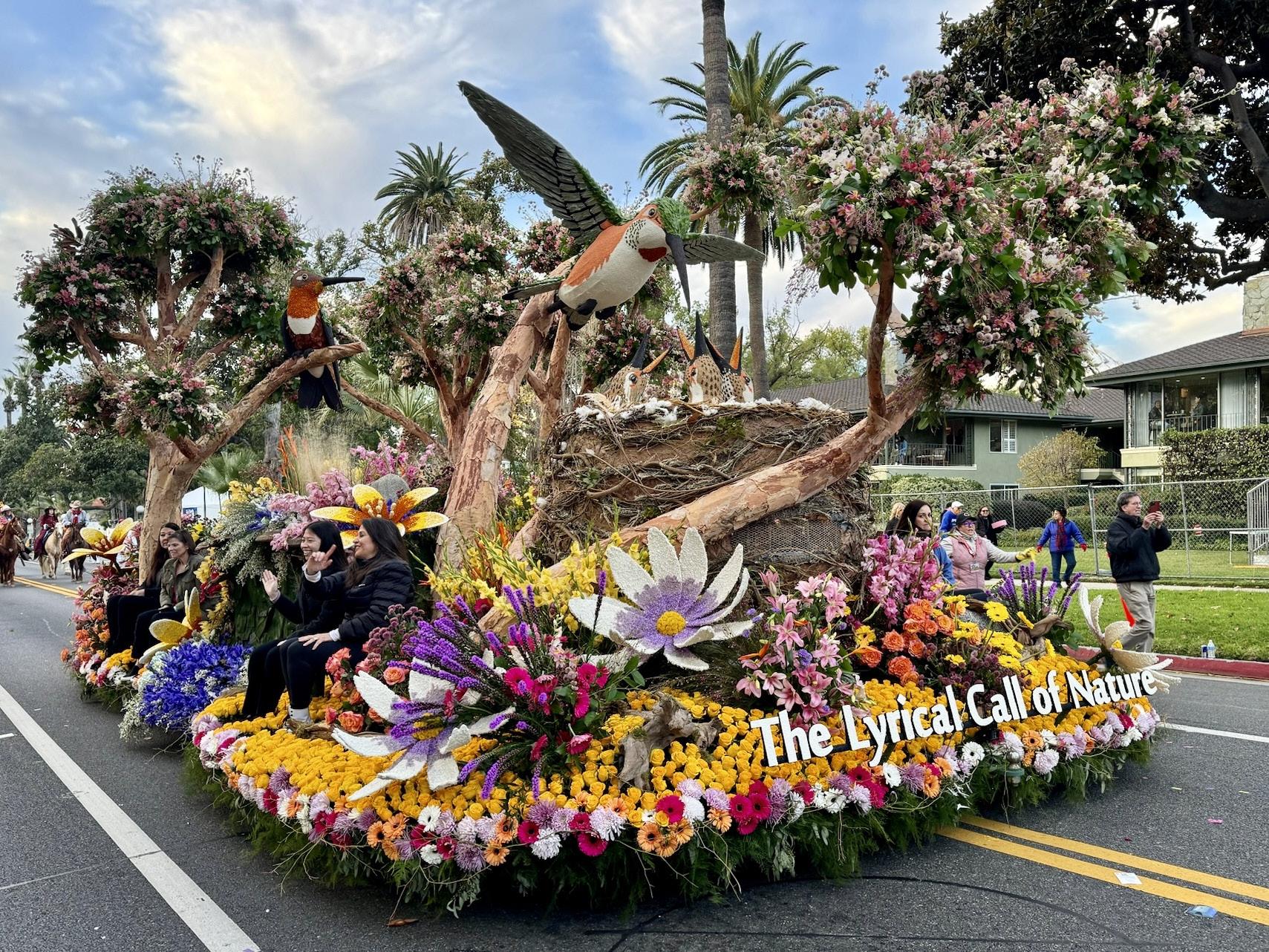
and year-round support staff, Fiesta Parade Floats surpasses all other builders in floral technology, appli-
cation, and animation."
Fiesta Parade Floats was already creating designs for the 2025 parade, work that will either be turned over to the two remaining authorized designers or created through other means.
By City News Service
The Los Angeles Unified School District is suing multiple insurance companies for allegedly balking at defending and compensating the district for more than 60 sexual abuse lawsuits filed under a 2019 law that allowed alleged victims to overcome the statute of limitations barrier.
The Los Angeles Superior Court lawsuit names as defendants Aetna Insurance Co.; Central National Insurance Co. of Omaha; Cravens, Dargan & Co., Pacific Coast; Pacific Indemnity Co.; and Providence Washington Insurance Co. Representatives for Aetna and Central National Insurance did not immediately reply to requests for comment on the breach-of-contract suit
filed Wednesday. In October 2019, Gov. Gavin Newsom signed into law AB 218, which created a three-year revival window for adult victims who were abused as minors to file civil sexual abuse lawsuits that were previously barred by the statute of limitations.
The bill's passage "resulted in a flood of litigation against LAUSD, as plaintiffs asserted, and continue to assert, claims against the district involving alleged childhood sexual assault, abuse and/or molestation," the suit states.
Each of the 61 underlying lawsuits were filed by victims of alleged childhood sexual assaults, allegedly by an LAUSD employee or someone affiliated with the district, according to
the suit, which further states that the insurance policies at issue were taken out by the LAUSD in the 1950s, 1960s and early to mid-1970s.
For the most part, the insurance companies "have shirked their contractual responsibilities to defend and indemnify the district against the negligence claims asserted in these alleged sex abuse cases, choosing instead to abandon the LAUSD and sit on the sidelines," the suit alleges.
The insurers have instead "constructed arbitrary and capricious obstacles to side-step their obligations and they have delayed, stalled, stonewalled and otherwise engaged in insurance coverage games-

manship to attempt to avoid their contractual duties to defend and indemnify LAUSD against the underlying lawsuits," the suit states.
with compensatory damages, the LAUSD is seeking recovery of attorneys' fees and the benefits the district believes
people, sleeping outside is their only option. The City of Grants Pass jails and fines those people for sleeping anywhere in public at any time, including in their cars, if they use as little as a blanket to keep warm or a rolled-up shirt as a pillow. For people with no access to shelter, that punishes them for being homeless. That is unconscionable and unconstitutional. Punishing people for their status is 'cruel and unusual' under the Eighth Amendment."
Los Angeles County Supervisor Kathryn Barger said in a statement that the court ruling "empowers local governments to make judicious decisions about when to apply enforcement."
"To decrease the number of homeless individuals living on our streets, we need to use every tool available to compassionately extend housing hand in hand with supportive services," Barger said. "We must also be balanced in our approach to enforcement so that communities can enjoy public spaces taken over by homeless encampments. ...
"I want to be clear," she added. "The criminalization of people experiencing homelessness is wrong. But, having another tool to make measurable and effec-
tive change is critical. Our county and its cities must work collaboratively and in sync with one another so that we can successfully end homelessness. Homelessness is not a problem that can simply be shuffled around."
LA County Supervisor Hilda L. Solis in a statement called the ruling "unconscionable and inhumane," and said, "people experiencing homelessness should not be punished, whether it's a criminal violation or a civil citation, for simply trying to survive."
"Make no mistake, anticamping ordinances will be implemented unevenly across Los Angeles County by some jurisdictions that refuse to be a part of the solution in offering housing or wrap-around services," Solis said. "Allowing jurisdictions to implement anticamping ordinances will put a strain on those who want to do the right thing. Furthermore, it will only enable jurisdictions to shirk their responsibility and push their unhoused residents across their borders into other cities or even unincorporated areas. ...
"Allowing unsheltered homelessness to be a crime, even when there is no shelter, would mean more people cycling in and out

of our carceral systems, and would bring us no closer to solving our homelessness crisis."
Gov. Gavin Newsom supported the court's decision.
"Today's ruling by the U.S. Supreme Court provides state and local officials the definitive authority to implement and enforce policies to clear unsafe encampments from our
streets," Newsom said in a statement. "This decision removes the legal ambiguities that have tied the hands of local officials for years and limited their ability to deliver on common sense measures to protect the safety and well-being of our communities."
LA County Public Defender Ricardo D. García in a statement called the ruling "a shameful failure
to addressing the underlying issues that led to this crisis. It is fundamentally wrong to punish individuals for their lack of housing, which is often the result of systemic failures rather than personal choice."
Va Lecia Adams Kellum, CEO of Los Angeles Homeless Services Authority, said the high court decision could lead to the numerous cities in LA County taking different approaches to enforcement.
"In the wake of the Grants Pass decision, it will be up to every city in the County of Los Angeles and the Board of Supervisors to decide how they move forward," Adams Kellum said in a statement.
"LAHSA will stay focused on ending unsheltered homelessness and speeding up how quickly people move into permanent housing," she said. "We do not agree with criminalizing homelessness. In fact, the results of this year's Homeless Count strongly support our best practices approach that aligns all levels of government and our providers around saving lives by resolving encampments and bringing people indoors. We believe in housing and services, not arrests."
The most recent
homeless count conducted in January reported Los Angeles County had an unhoused population of 75,312, compared with 75,518 in 2023, a 0.27% drop. The city of LA had 45,252 people experiencing homelessness, compared with 46,260 in 2023, a decrease of 2.2%.
LA Mayor Karen Bass' office touted these 2024 findings: homelessness in the city is down for the first time in six years; street homelessness dropped 10%, the first double-digit decrease in at least nine years; makeshift shelters declined 38%; and "the number of people who moved into permanent housing is at an all time high."
SanBernardino's homeless population this year was 1,417 with 977 unsheltered, according to a report by the U.S. Department of Housing and Urban Development.
According to national data, the U.S. homeless population increased last year to 12%, its highest level on record. Rising rents and dwindling pandemic relief have made it harder to obtain adequate shelter. Roughly 33% of the nation's homeless people live in California.
City News Service contributed to this report.
By City News Service and Staff
Authoritieson
Monday identified a man who was fatally shot by police at a residence in Downey over the weekend.
Officers were dispatched at about 6:15 p.m. Saturday to a call of a disturbance in the 7100 block of Stewart and Gray Road, the Downey Police Department reported. The area is just east of the Long Beach (710) Freeway.
"A male subject was shot and died from his injuries," police said in a statement.
On Monday, the Los Angeles County Department of Medical Examiner identified the man as Alberto Arenas, 29, of Downey, who died at the scene. No officers were hurt and no other injuries were reported, police said.
Witnesses said Arenas, who allegedly had mental health issues, was lighting fireworks in the backyard and got into an argument with a neighbor before being fatally shot by a responding officer.
"Officers made several attempts to gain control and deescalate the situation," police said in a statement. "However, Arenas pointed what appeared to be a rifle at the officers. An Officer involved shooting occurred and the suspect was struck by gunfire.
"It was later determined the rifle the Arenas was holding during the OIS was an air soft style rifle," police said.
Arenas was treated by the Downey Fire Department and pronounced
deceased at the scene.
Downey police reported that the California Department of Justice was handling the investigation. The state Justice Department is required to investigate all fatal shootings of unarmed civilians by law enforcement officers under a law that took effect in 2021.
Anyone with information about the shooting was urged to call Crime Stoppers at 800-222-8477 or go directly to lacrimestoppers. org.