

By Anusha Shankar, City News Service
Onefactorpeople consider when looking for a new home is how easy it is to get around. Driving and walking are the most common modes of transportation, but prospective buyers and renters are also increasingly considering public transportation.
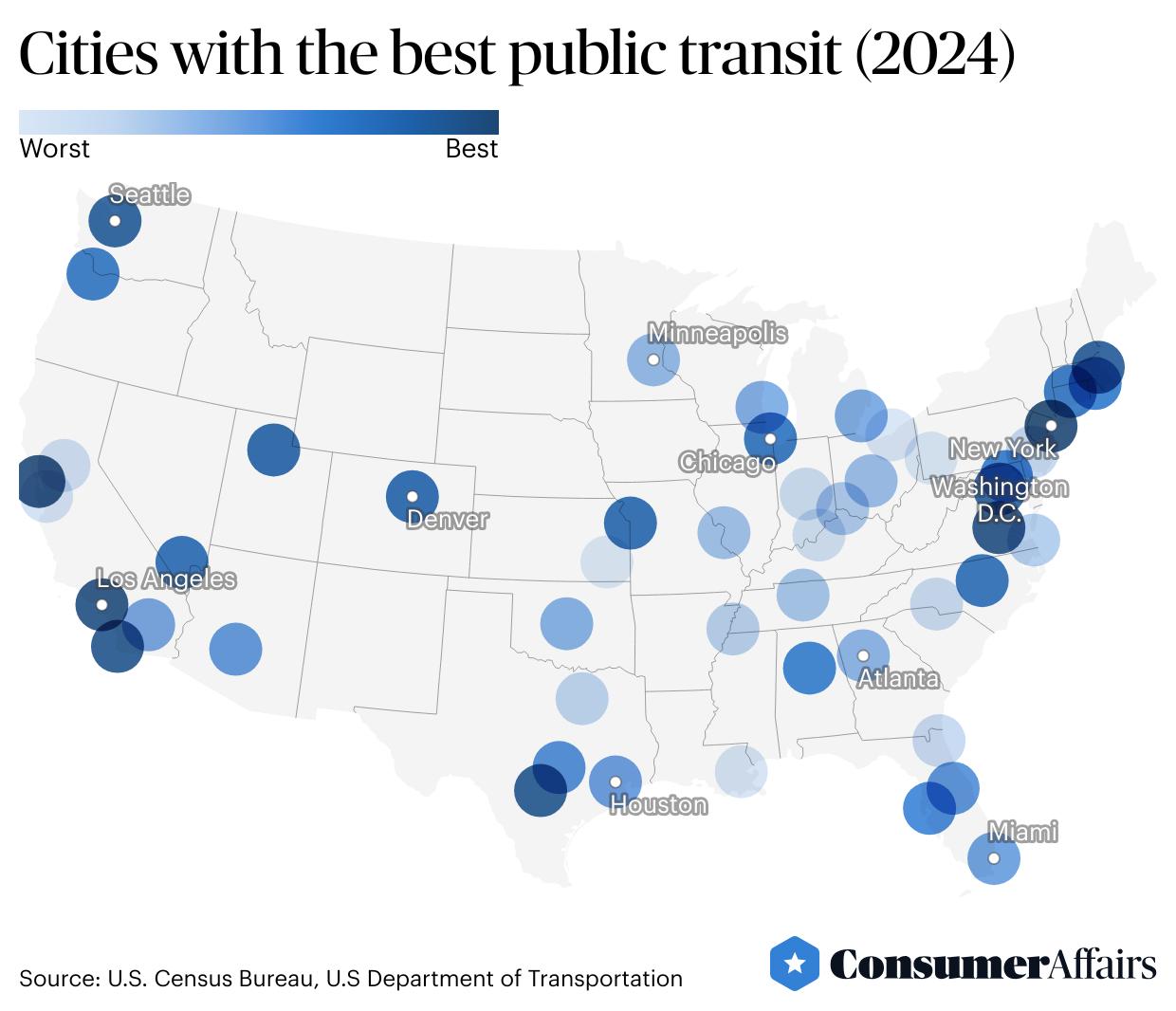
Knowing how you'll get around your new hometown is vital before hiring movers to take you there. To help, the ConsumerAffairs Research Team investigated and ranked the nation's 50 largest cities to see which have the best public transit systems. The analysis is based on 2022 data from the U.S. Department of Transportation's National Transit Database, and it takes into account how useful, safe, affordable and efficient transit services are in the nation's top cities.
No. 1. New York, New York
Annual public transit trips per metro area resident: 144.2
Share of stations ADAcompliant: 51.4%
Safety score (combining fatalities and serious injuries): 13.07 out of 20
Average fare revenue per trip: $1.75
The nation's most populous metro area is served by a large number of transit agencies, with trains and buses covering the five boroughs of New York City itself, as well as areas well into New Jersey, Connecticut and downstate New York. While the average fare revenue is higher than most, it's still cheaper per trip than in Pittsburgh, Pennsylva-
nia, and Buffalo, New York.
2. San Francisco
Annual public transit trips per metro area resident: 53.6
Share of stations ADAcompliant: 97%
Safety score: 13.91 out of 20
Average fare revenue per one-way trip: $1.63
With the third-worst commuter traffic in the nation, San Francisco residents might be desperate for other ways to get around.
Fortunately, Bay Area Rapid Transit connects the city with its suburbs, and the Muni bus and train system — including the city's famous cable cars — gets people around the city itself. There are also free shuttles to get people to and from public parks.
3. Los Angeles
Annual public transit trips per metro area resident: 29
Share of stations ADAcompliant: 100%
Safety score: 16.48 out of 20
Average fare revenue per one-way trip: 49 cents
Los Angeles, well known as a sprawling car-oriented metropolis, has a transit system that doesn't get as much use per capita as other cities' services. However, it's one of the safest and most affordable transit systems nationwide.
4. Richmond, Virginia
Annual public transit trips per metro area resident: 8.5
Share of stations ADA-
compliant: 100%
Safety score: 18.27 out of 20
Average fare revenue per one-way trip: 24 cents
With free local bus fares across the city, including high-speed buses with some dedicated lanes that provide service every 10 minutes on weekdays and every 15 minutes on weekends, Richmond's public transit system is safer and more efficient than many other large cities' services. Unfortunately, it is used less frequently than any other system mentioned in our top 10 list.
5. San Diego
Annual public transit trips per metro area resident: 21
By City News Service
Aminority bloc of Huntington Beach City Council members called for Attorney General Rob Bonta to investigate the city's settlement of a lawsuit with the annual Pacific Airshow stemming from a one-day cancellation due to the 2021 oil spill.
City officials issued a statement July 10 regarding the settlement agreement with the Pacific Airshow on Wednesday, claiming it generates "tens of millions of dollars" annually. That triggered a statement from City Council members Dan Kalmick, Rhonda Bolton and Natalie Moser, criticizing the deal and "inviting" Bonta's office to investigate.
In September, U.S. District Judge David Carter signed off on a $95 million settlement of all claims in class-action litigation involving the pipeline oil leak that gushed thousands of gallons of crude into the ocean off Huntington Beach in 2021.
Carter ruled that the air show was a member of the class and would have a claim of about $1.9 million, but the attorney for the show at the time indicated it might opt out of the class to pursue a potentially more lucrative lawsuit against Amplify Energy.
The city had not released terms of a May 2023 settlement with the air show, but decided to publish it Wednesday.
"The city's settlement with Pacific Airshow LLC ensures the potential for future airshow events, which bring in over a hundred million dollars in economic benefit to the region and tens of millions of dollars directly to the city of Huntington Beach each year," Mayor Gracey Van Der Mark said in a prepared statement.
City Attorney Michael Gates held back the terms of the agreement "due to the city's imminent lawsuit with Amplify Energy and other oil spill defendants who have taken responsibility for causing the oil spill in Huntington Beach in 2021," according to the city's statement.
City Councilman Dan Kalmick called the deal a "massive gift of public funds and I don't think it's legal."
Kalmick told City News Service the deal is a contractual agreement ensuring the air show stays in Huntington Beach for 40 years.
"We give all the parking away," he said. "We waive all fees, including security fees."
Kalmick said, "I believe criminal malfeasance has happened" with the deal, adding, "I'm not an attorney, but if it's not illegal it should be."
Kalmick said "no investigation was done to see what our (legal) exposure was" with the lawsuit. He said the city gave away $7 million for "unproven losses," and noted that it was the "unified command" that canceled the last day of the air show in 2021, not the city.
Kalmick said the agreement is a 10-year-exclusive contract with three 10-year extensions that only the air show can terminate.
If the air show sells the contract to another buyer, the city can only object with a super majority of a City Council vote.





Photography Artist
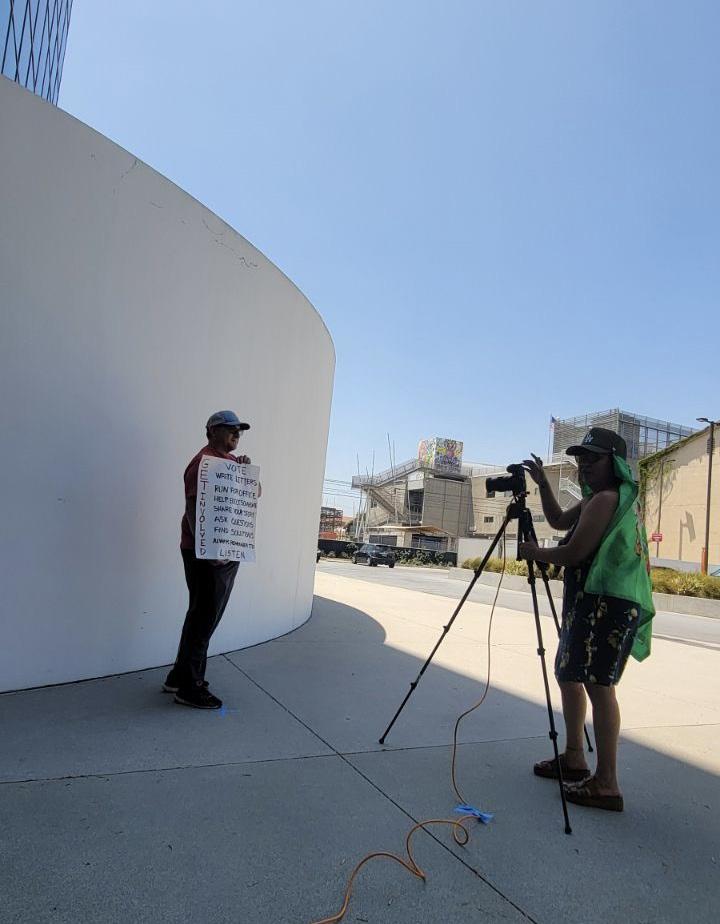
Alejandra Cordero has launched a portrait series, “What’s Your Sign?,” visually documenting political discourse within the San Gabriel Valley community. The series aims to capture the diverse perspectives, emotions, and stories of individuals engaged in political dialogue, providing a safe space and a platform for voices often unheard.

Cordero is inviting her community to be part of this project and encourages interested participants to get creative and design a sign expressing a political stand. Participants will then have a portrait taken with their sign. The portrait photo series is taking place at the 1111 ArtCenter building off South Arroyo Parkway right outside the Peter and Merle Mullin Gallery every Saturday through July 27 from 11 a.m.



Share of stations ADAcompliant: 100%
Safety score: 14.74 out of 20
Average fare revenue per one-way trip: $1.10
A new safety initiative, expanded service and upcoming investments in new vehicles, including electric buses, are drawing riders to San Diego's trolleys and buses, which serve the downtown area and the surrounding communities.
Methodology
The ConsumerAffairs Research Team conducted a comprehensive analysis of the public transit systems in the 50 most populous metropolitan areas across the United States and scored each on a point scale from zero to 100.
To determine which cities had the best public transportation, we looked at the following metrics:
Usefulness to riders: We defined how useful a transit system was to its city's resi-
By Staff
to 5 p.m. Cordero emphasizes that the portrait series is free and open to anyone who wishes to participate and that it will be a safe space where all signs are welcome.
“I wanted to create a project that not only documents the current political climate but also fosters understanding and empathy among people with different viewpoints and invites the community to cope with it artistically as I do,” shared Cordero, a student ArtCenter College of Design.
“What’s Your Sign?” will be a collection of portraits and accompanying narratives through signage that look into the personal and collective experiences of community members as they navigate the complexities of political engagement. Through her lens, Cordero will be capturing the essence of each subject’s sign high-
dents based on three factors:
First, we calculated how many independent passenger trips the population took in 2022 in relation to the metro area's population. This information was based on the National Transit Database annual metrics for 2022. (25 possible points)
Second, we calculated how far passengers traveled in 2022 per resident in the metro area. (20 possible points)
Third, we looked at how easy the main public transit system was to access for people with physical disabilities. We used the 2022 National Transit Database information on transit stations to calculate the percentage of all ADA-compliant systems. (10 possible points)
Safety: Based on the National Transit Database's Safety & Security Major Event Time Series data for 2022, we calculated the number of major events, including colli-

sions and derailments, per vehicle revenue mile in 2022. (10 possible points)
We also calculated the rate of fatalities and injuries in major events per 2022 vehicle revenue mile. (5 possible points each)
Affordability: We looked at the fare revenue per unlinked passenger trip based on the National Transit Database annual metrics for 2022. We compared that with the median household income in 2022 for that metro area according to the U.S.
Census Bureau's American Community Survey. (15 possible points)
Efficiency: We determined the average operating cost per passenger mile based on the National Transit Database annual metrics for 2022. (10 possible points) This story was produced by ConsumerAffairs and reviewed and distributed by Stacker Media. The article was retitled and copy edited from its original version. Republished pursuant to a CC BY-NC 4.0 license.
By Tim Haddock, City News Service
As she prepares for her third summer Olympics,U.S. swimmer Abbey Weitzeil from Santa Clarita said she is reveling in the growth of interest she has witnessed in women's sports over the years.
Weitzeil went to her first Summer Olympics in Rio de Janeiro in 2016 and made her second U.S. swim team in 2021 for the Tokyo Olympics. She also competed in the U.S. Olympic Swim Trials in 2012.
Over that time, she said she has seen meets move into pro football stadiums and attract record-breaking crowds. The U.S. Olympic Swim Trials in June were at Lucas Oil Stadium, home of the NFL's Indianapolis Colts.
"Over the years I've been in this sport, women's sports has slowly been growing," Weitzeil said in an exclusive interview with City News Service. "Recently there's been a big spike in interest in media around women's sports. In the swimming world, we're loving the fresh faces. You have Gretchen Walsh. You have the veteran Simone (Manuel). People are really interested in our sport."
Women's sports in general have exploded in popularity in recent years. Caitlin Clark, who played at the Univer-
sity of Iowa, burst onto the basketball scene and created a fan and media frenzy during this year's NCAA women's tournament. It continued when she was drafted by the Indiana Fever and began her WNBA career.
Angel Reese from Louisiana State University also joined the WNBA this year, and has added to the sudden interest in women's basketball and women's sports.
In the world of women's swimming, Katie Ledecky has emerged as arguably the sport's biggest star and most popular athlete. She has won seven Olympic gold medals and holds the record for most individual Olympic gold medals in women's swimming with six. She holds world records in the 800-meter and 1,500-meter freestyle events. She will be competing on the U.S. swim team for the fourth time at the Olympics in Paris and made her Olympics debut at the 2012 Summer Games in London.
"Swimming is growing in general and the interest in women in swimming, in any sport. I think it's amazing and I think we've seen a boost in the last year or two, especially with people bringing attention to it like Caitlin Clark," Weitzeil said. "It's becoming bigger and bigger and bigger."
In addition to Clark,

Reese and the WNBA, the U.S. women's national soccer team has grown in popularity. Alex Morgan and Megan Rapinoe contributed to its rise by winning World Cup championships and gold medals at the Olympics. It continued the success of teams led by Mia Hamm and Brandi
Chastain in previous years. U.S. gymnast Simone Biles has been one of the most popular athletes in America, and around the world, for years.
Weitzeil said she has seen that interest in women in other sports spill over to swimming.
By City News Service
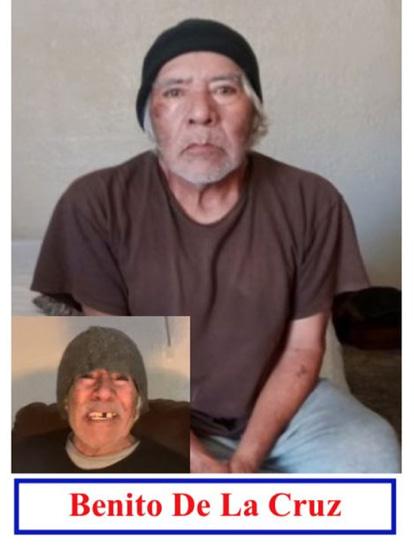
A65-year-old Alzheimer's patient who went missing from his Los Angeles County home could be in neighboring counties, authorities said July 11.
Benito de la Cruz was last seen in South Gate on July 1, and last week, the California Highway Patrol issued a Silver Alert due to the period of time that he has been gone.
A Silver Alert focuses
on finding missing seniors throughout the state.
The CHP included the Temecula and Coachella valleys in disseminating the notification. It was unclear whether de la Cruz had relatives in either area.
The CHP issued the alert on behalf of the South Gate Police Department, which said de la Cruz was last seen about 7 a.m. on July 1 in the area of Missouri and
Truba avenues.
"De la Cruz is believed to be on foot," the agency stated.
He stands 5 feet, 6 inches tall, weighs around 125 pounds, with brown eyes and gray hair. He has a missing front tooth and was last seen wearing a gray beanie, gray shirt and blue jeans, authorities said.
Due to health compli -
"You look at trials and we're now swimming in football stadiums. We have record-breaking attendance and it's so fun to be a part of. It truly is amazing. I think it's awesome that media is shifting to be more interested and bring more attention to more women's sports," Weitzeil said. "People are more intrigued. It takes just one and then it starts to skyrocket. It's definitely awesome to see."
Weitzeil set the course record in the 50-meter freestyle at Lucas Oil Stadium in 2023 in 24.00. In the Olympic Trials in Indianapolis in June, she was third in the 50-meter freestyle final, narrowly missing qualifying individually for the Olympics in the event.
She was fifth in the 100-meter freestyle, earning her a spot on the U.S. women's freestyle relay team. She has won four Olympic medals in her two previous Summer Games. She has one gold, two silvers and a bronze, all in relays.
Kate Douglass won the 100-meter freestyle final at the Olympic Trials in 52.56 seconds. Torri Huske was second in 52.93 seconds. They will compete individually in the 100-meter freestyle at the Paris Olympics.
Walsh was third in 53.13
seconds and Manuel was fourth in 53.25 seconds.
Weitzeil was fifth in 53.70 seconds. The top five swimmers in the 100- meter freestyle were separated by 1.14 seconds.
Weitzeil said she tested positive for COVID-19 after the Olympic Trials and was sick during the meet. When asked if she would like another chance to qualify in the 50-meter freestyle, she said, "I wish I could do it again immediately."
In the 50-meter freestyle final, Manuel won in 24.13 seconds. Walsh was second in 24.15 seconds. Weitzeil touched in third place in 24.26 seconds, 0.11 seconds behind Walsh.
"The 50 is my favorite race. I swam it every year since 2014. Knowing it was my last chance to do an individual swim and it being my favorite race, I kind of went out there ... the coaches came up to me afterward and said that was the best race of the meet, even though it wasn't what I wanted.
"I gave it everything I had and that is what I had that day. I look back at it, obviously I didn't get top two in that, but I got third and I was proud of myself for getting up and having the best race of the meet for me after a long nine days."
cations, de la Cruz may be disoriented.
South Gate Police Department Detective Gina Vargas said the missing man's family is growing concerned about his well-being and is asking for the public's help in locating him.
Anyone with information was asked to contact their nearest law enforcement agency.
Los Angeles
Monterey Park
Classic film actress Constance Towers to visit Monterey Park Bruggemeyer Library Aug. 3
Film enthusiasts are invited to a special screening of the John Ford classic, “Sergeant Rutledge,” at the Monterey Park Bruggemeyer Library on Saturday, August 3 at 1 p.m. After the movie, film historian Foster Hirsch will lead a discussion with the star of the film, Constance Towers and Christopher Hunter, son of the film's co-star, Jeffrey Hunter. “Sergeant Rutledge” (1960) is notable for its frank treatment of racism and for being the first major studio western to cast a Black actor in the lead. Set on a US Army fort in the late 1800s, it tells the story of Braxton Rutledge, a Black sergeant being court martialed for murder and rape.
Monrovia
MWRP holding online auction from July 22-28
The Monrovia Parks Wilderness Recreation (MPWR) is a non-profit organization within Monrovia that aims to support park facilities and community programs within Monrovia. Starting July 22 through July 28 MPWR is holding an online auction to further support Monrovia’s parks and youth scholarships. There's a lunch and tour of Canyon Park with the city manager available to bid on among experiences such as bartending lessons and
sporting events and items like jewelry and collectibles.
Baldwin Park
Mariachi Los Camperos to perform during Downtown Street Market
As part of Summer Concerts in the Park Mariachi Los Camperos will perform on the Athletic field at the back of Morgan Park Thursday. Be sure to bring your favorite pair of dancing shoes, a picnic blanket and lawn chair to enjoy an evening of great music and fun. The Downtown Street Market will complement the performance with local artisans, produce farmers, merchants and a beer garden.
Long Beach’s Multi-Service Center selected as site for pet food pantry
Friday, the Long Beach Department of Health and Human Services announced a new pet food pantry, sponsored by Project Street Vet, a nonprofit serving pets belonging to people experiencing homelessness, and Kismet, a new pet brand co-founded by John Legend and Chrissy Teigen. Legend was on site to celebrate the opening, with Kismet donating over 2,500 pounds of food and treats for dogs to the Project Street Vet initiative. Anyone who visits the Multi-Service Center (MSC), Long Beach’s one-stop shop for accessing homeless services, will be able to pick up pet food whenever they need it, as the pet food pantry will be available whenever the MSC
is open.
Orange County
OC Parks encouraging community-led shoreline monitoring in Dana Point
OC Parks recently installed the first community-driven shoreline monitoring location in Orange County. Located along the Strands Beach access ramp, the CoastSnap station encourages community members to help with coastal monitoring efforts. The CoastSnap station includes a smartphone cradle and instructions on how to upload and submit a photo of the shoreline. Residents and visitors alike are invited to place their phones in the cradle and snap a photo. The cradle is set at a precise location and angle to ensure the public is capturing consistent images. Afterward, the public is asked to scan a QR code to then upload the photo. From there, the images are sent to OC Parks and will be used to assist with monitoring seasonal and long-term beach width. The cradle works in conjunction with surveyed control points and time stamps allowing for photos to be stitched together, accounting for tidal variations.
Anaheim
Anaheim Health Fair to return Sept. 28
Anaheim's free Health Fair is returning Saturday, Sept. 28, from 8 a.m. to 5 p.m. at the Anaheim Convention Center. The free healthcare services include dental
fillings and extractions and volunteers are needed. For information on how to volunteer or register, visit anaheim.net/3154/ Anaheim-Health-Fair.
Riverside County Free compost at landfills in Beaumont and Moreno Valley
The Riverside County Department of Waste Resources has been making compost from organic clean green waste material processed at the Lamb Canyon Landfill compost facility, and will make the finished compost material available for free. Piles of finished compost will be available to participants that want to load their own material. Free compost is available during regular business hours, Monday through Saturday from 6 a.m. to 4:30 p.m. at Badlands Landfill, 31125 Ironwood Ave. in Moreno Valley, and Lamb Canyon Landfill, 16411 Lamb Canyon Road in Beaumont. Landfills close promptly at 4:30 p.m. and the public must complete loading their material and leave the site by that time.
Riverside residents encouraged to sign up with Recycle From Home
Say goodbye to trips to the recycling center. With Recycle From Home, you can get paid to recycle your CA CRV recyclables without leaving your doorstep. Sign up for convenient curbside pickup at www.recycle-
fromhome.com
Corona
Piano rock to entertain during Summer Street Fair
The Corona Summer Street Fair will feature The Kings of 88, “Legends of the Piano Rock,” Thursday at the Historic Civic Center Front Lawn from 6 to 9 p.m. There will also be food trucks, vendors and drinks.
San Bernardino County
Federal funding boost for Prado Regional Park
San Bernardino County has received nearly $1 million in federal funding for updates to the Prado Regional Park tent campground restroom and shower facilities. During an Independence Day program in Chino, Representative Norma Torres presented a ceremonial check to Fourth District Supervisor Curt Hagman. This investment will enhance the overall visitor experience at Prado Regional Park, providing modern amenities for campers while making the park accessible for families and outdoor recreation enthusiasts.
City of San Bernardino
City updated on Harris Department Store Building fire
On June 8, a fire was reported at the former Harris Department Store Building, located on E Street between 2nd and Court streets. Several tran-
sient occupants were evacuated from the structure but there were no fatalities, and no one reported any injuries. Two firefighters were treated at the scene, and two were transported to local hospitals for evaluation of minor injuries. The City of San Bernardino has been in negotiations to acquire the building. The fire is not expected to affect the acquisition,
On July 7, at 5:21 p.m., Ontario Police Officers were dispatched to a possible shooting in the alleyway of the 1100 block of East Nocta Street. Police determined that Guillermo Gonzalez, a 24-year-old resident of Ontario, and Miguel Alvarez-Rangel, a 30-year-old resident of Montclair, had been involved in the incident. Simultaneously, additional responding officers located two shooting victims in the alley. Officers provided emergency medical treatment to one unresponsive male, but he succumbed to his injuries and was declared deceased at the scene. The other adult male victim was transported to a local hospital with critical injuries and has since been stabilized. AlvarezRangel was identified as the primary suspect and was promptly arrested upon his release from the hospital. He was charged with murder in the first degree and assault with a firearm. In addition, Gonzalez was also determined to have an active role in the incident and was charged with murder in the first degree and accessory to murder.
July 3
At 2:49 a.m., a resident in the 600 block of Royal Oaks reported a catalytic converter stolen from his vehicle. This investigation is continuing.
At 9:37 a.m., a solo vehicle traffic collision was reported in the area of Foothill and Grand. Officers arrived and determined that the driver fell asleep and collided into a stop sign. There was no indication the driver was under the influence of alcohol or drugs.
At 2:35 a.m., while patrolling the area of Peck and Camino Real, officers saw a vehicle in violation of vehicle code and conducted a traffic stop. The driver parked the vehicle and was attempting to walk away, but officers were able to detain him. The driver displayed symptoms of being under the influence. A DUI investigation determined the driver was under the influence. He was arrested and transported to the MPD jail to be held for a sobering period.
At 2:47 p.m., a theft in progress was reported in a store in the 500 block of West Huntington. Officers arrived and determined the suspect assaulted an employee before fleeing the store. Officers located the suspect and made contact with her. She was arrested and taken into custody.
At 3:44 p.m., officers were dispatched to the area of Mayflower and Huntington regarding a traffic collision. Officers arrived and made contact with the driver who caused the collision. The driver displayed symptoms of
being under the influence. A DUI investigation revealed the driver was under the influence. The driver was arrested and transported to the MPD jail to be held for a sobering period.
At 11:35 p.m., an officer patrolling the area of Myrtle and Live Oak saw a vehicle commit a traffic violation. The officer conducted a traffic stop and made contact with the driver. A computer check revealed the driver had a warrant for his arrest. The female passenger was found to be in possession of drug paraphernalia and had a warrant for her arrest. They were both arrested and taken into custody.
July 4
At 9:45 a.m., a victim in a hotel in the 700 block of West Huntington reported the wheels of his car were stolen. This investigation is continuing.
At 11:23 a.m., a caller in the 600 block of South Shamrock reported a male subject suffering a medical emergency. Officers arrived and began to administer CPR successfully. MFD arrived and transported the male subject to a hospital.
At 7:12 p.m., a traffic collision was reported in the 600 block of South Primrose where a vehicle collided into two parked vehicles. Officers arrived and made contact with the driver who displayed symptoms of being under the influence. A DUI investigation determined the driver was under the influence. The driver was arrested and transported to the MPD jail to be held for a sobering period.
July 5
At 12:34 a.m., a caller notified MPD Dispatch that several subjects were lighting fireworks at a park in the 900 block of California. Officers arrived and located the subjects lighting fireworks. The subject was arrested, cited, and released at the scene.
At 2:57 p.m., officers were dispatched to the 2000 block of South Myrtle regarding an injury traffic collision. A vehicle lost control after a tire blew out, collided with two parked vehicles and flipped over. The driver only sustained minor injuries and declined medical assistance.
July 6
At 7:21 a.m., an employee from a business in the 1400 block of California called to report a grand theft of copper wire. This investigation is continuing.
At 8:27 a.m., an officer patrolling the area of Myrtle and Lime conducted a traffic stop on a vehicle for a violation. The officer made contact with the driver who displayed symptoms of being under the influence. A DUI investigation confirmed the driver was under the influence. She was arrested and transported to the MPD Jail to be held for a sobering period.
At 9:30 p.m., while patrolling the 600 block of South Myrtle officers contacted two subjects who were passed out on a sidewalk from being heavily intoxicated. Both subjects were unable to care for themselves. They were arrested and transported to the MPD jail to be held for a sobering period.
At 10:51 p.m., a caller
in a store in the 900 block of West Duarte reported a subject passed out in his vehicle. Officers arrived and made contact with the subject who appeared too intoxicated to care for himself. He was arrested and transported to the MPD jail to be held for a sobering period.
July 7
At 2:38 p.m., a caller in a business in the 400 block of South Myrtle reported a disturbed subject inside. Officers arrived and made contact with the subject. Officers determined the subject was too intoxicated to care for himself. He was arrested and transported to the MPD jail to be held for a sobering period.
July 8
At 2:01 p.m., an employee from a business in the 400 block of South Myrtle reported a male subject in the business bothering customers. Officers arrived and made contact with the subject. Officers determined he was too intoxicated to care for himself. He was arrested and transported to the MPD jail to be held for a sobering period.
At 4:14 p.m., a victim walked into the MPD lobby to report that her purse was stolen from a vehicle parked in the 300 block of West Palm and her cards were being fraudulently used. This investigation is continuing.
July 9
At 5:53 a.m., officers were dispatched to the area of Duarte and 8th regarding a male subject sleeping in a truck with some miscellaneous property lying around the truck. The owner of the vehicle confirmed
that the male subject did not have permission to be in the vehicle. He was arrested and taken into custody.
At 11:03 a.m., a caller in the 100 block of Lincoln reported a female subject walked onto her front porch and stole property. Officers arrived and located the female subject. An investigation revealed the shoes were returned to the owner by bystanders. A computer search of the female subject revealed she had an outstanding warrant. She was arrested and taken into custody.
At 12:34 p.m., a witness in the area of Myrtle and Duarte reported a male subject walking around hitting vehicles. Officers arrived and located the male subject who they recognized from previous contacts for being drunk in public. He was arrested and transported to the MPD jail to be held for a sobering period.
At 12:45 p.m., a resident in the 1700 block of Nichols Canyon reported his brother who lives in Hollywood has been missing for two weeks. Report was taken and he was entered as missing. This investigation is continuing.
At 7:35 p.m., several callers in a park in the 300 block of South Myrtle reported a male adult subject drinking liquor. Officers arrived and found the subject with an open liquor bottle. He had just been released from the MPD Jail after sobering up. He was arrested and taken into custody.
At 8:03 p.m., a resident in the 100 block of North Primrose walked outside his home and saw a male adult on the street flashing a gun at him.
Officers arrived and located the suspect who was found to be in possession of a replica firearm. He was arrested and taken into custody.
At 9:47 p.m., a caller in the 500 block of East Walnut reported an unknown female subject who he was communicating with via text convinced him to purchase items for her and that she would repay him, however, no payment was returned to the resident. This investigation is continuing.
Fraud
July 10
At 8:06 a.m., a victim in the 500 block of West Duarte reported an unknown subject used his information to open a phone account. This investigation is continuing.
At 11:29 a.m., a traffic collision was reported in the area of Myrtle and Evergreen. Officers arrived and an investigation revealed that the driver at fault failed to stop for a red light and complained of pain. The driver at fault was cited and released at the scene.
At 1:34 p.m., officers were dispatched to the area of Foothill and Alta Vista regarding a traffic collision with complaints of pain. The collision caused one of the vehicles to hit a stop sign and up over the curb into the wall of a business. The driver at fault was cited.
At 5:02 p.m., a caller in the area of Lime and Primrose reported a female subject sitting on a bench crying. Officers arrived and made contact with her, she admitted to being under the influence of a narcotic. She was arrested and transported to the MPD jail to be held for a sobering period.

Eliminate gutter cleaning forever! LeafFilter, the most advanced debris-blocking gutter protection. Schedule a FREE LeafFilter estimate today. 20% off Entire Purchase. 10% Senior & Military Discounts. Call 1-855-424-7581 (Cal-SCAN)


tive to high drugstore prices! 50 Pill Special - Only $99! 100% guaranteed. CALL NOW: 1-888-256-9155 (Cal-SCAN_
DONATE YOUR VEHICLE to fund the SEARCH FOR MISSING CHILDREN. FAST FREE PICKUP. 24 hour response. Running or not. Maximum Tax Deduction and No Emission Test Required! Call 24/7: 1-877-434-6852 (CalSCAN)
GOT AN UNWANTED CAR??? DONATE IT TO PATRIOTIC HEARTS. Fast free pick up. All 50 States. Patriotic Hearts’ programs help veterans find work or start their own business. Call 24/7: 1-855-408-6546 (CalSCAN)
Tiene un vehiculo no deseado? Donelo a Patriotic Hearts! Recogida rápida y gratuita en los 50 estados. Patriotic Hearts ofrece programas para ayudar a los veteranos a encontrar trabajo o iniciar su propio negocio. Llama ahora: 1-855-408-7368 (24/7) (Cal-SCAN)
Get a break on your taxes! Donate your car, truck, or SUV to assist the blind and visually impaired. Arrange a swift, nocost vehicle pickup and secure a generous tax credit for 2025. Call Heritage for the Blind Today at 1-844-491-2884 today! (Cal-SCAN)

Struggling with debt? If you have over $10,000 in debt we help you be debt free in as little as 24-48 months. Pay nothing to enroll. Call Now: 1-877435-4860 (Cal-SCAN)
Attention: VIAGRA and CIALIS USERS! A cheaper alterna-
Jacuzzi Bath Remodel can install a new, custom bath or shower in as little as one day. For a limited time, we're waiving ALL installation costs. (Additional terms apply. Subject to change and vary by dealer. Offer ends 6/30/24 Call 1-833985-4766 (Cal-SCAN)
Safe Step. North America's #1 Walk-In Tub. Comprehensive lifetime warranty. Top-ofthe-line installation and service. Now featuring our FREE shower package and $1600 Off for a limited time! Call today! Financing available. Call Safe Step 1-888-989-5749 (CalSCAN)
DENTAL INSURANCE from Physicians Mutual Insurance Company. Coverage for 400 plus procedures. Real dental insurance - NOT just a discount plan. Do not wait! Call now! Get your FREE Dental Information Kit with all the details! 1-844-203-2677 www.dental50plus.com/calnews #6258 (Cal-SCAN)
Switch and save up to $250/ year on your talk, text and data. No contract and no hidden fees. Unlimited talk and text with flexible data plans. Premium nationwide coverage. 100% U.S. based customer service. For more information, call 1-844-908-0605 (Cal-SCAN)
The difference in winning and losing market share is how businesses use their advertising dollars. CNPA’s Advertising Services’ power to connect to nearly 13 million of the state’s readers who are an engaged audience, makes our services an indispensable marketing solution. For more info call Cecelia @ (916) 288-6011 or
cecelia@cnpa.com
DID YOU KNOW Newspapergenerated content is so valuable it’s taken and repeated, condensed, broadcast, tweeted, discussed, posted, copied, edited, and emailed countless times throughout the day by others? Discover the Power of Newspaper Advertising. For a free brochure call 916-2886011 or email cecelia@cnpa. com (Cal-SCAN)
RETIRED COUPLE $$$$ for business purpose Real Estate loans. Credit unimportant. V.I.P. Trust Deed Company www.viploan.com Call 1-818248-0000. Broker-principal DRE 01041073. No consumer loans. (Cal-SCAN)
BATH & SHOWER UPDATES in as little as ONE DAY! Affordable prices - No payments for 18 months! Lifetime warranty & professional installs. Senior & Military Discounts available. Call: 1-877-252-9868 (CalSCAN)
Don't Pay For Covered Home Repairs Again! Our home warranty covers ALL MAJOR SYSTEMS AND APPLIANCES. We stand by our service and if we can't fix it, we'll replace it! Pick the plan that fits your budget! Call:1-855-411-1731 (Cal-SCAN)
WATER DAMAGE CLEANUP & RESTORATION: A small amount of water can lead to major damage in your home. Our trusted professionals do complete repairs to protect your family and your home's value! Call 24/7: 1-888-2480815. Have zip code of service location ready when you call! (Cal-SCAN)
GoGo. Live and age your way. Get help with rides, groceries, meals and more. Memberships start as low as $1 per day. Available 24/7 nationwide. BBB Rated A+ Business. Call GoGo to get started. 1-855-476-0033
By Phoebe Petrovic, Wisconsin Watch, ProPublica
Wisconsin Pastor Matthew Trewhella has an affable routine when he’s trying to persuade government officials to abolish abortion, ignore gun laws and question election results.
The 63-year-old opens his talks with a photo of “Trewhella nation”: his wife of over 40 years, their 11 homeschooled children and dozens of grandchildren. He cracks jokes. He quotes history and scripture. He floats secession as a regretful possibility. With half-rim glasses and collared shirts, Trewhella looks and sounds more like a professor than a provocateur.
But when addressing his congregation at an Embassy Suites in suburban Milwaukee, he sneers and shouts, deriding his enemies as wicked dogs, whores and tyrants.
“When you see sodomy running rampant, when you see women in government, when you see men behaving like effeminate little squirrels, judgment is in the land,” Trewhella said during a 2020 sermon.
Last year, he said homosexuality should be treated as a crime, noting that the Bible called for the death penalty for “the filth of sodomy.”
For much of his public life, Trewhella has made a career of denouncing the law while railing against abortion and gun restrictions. Twenty years ago, that made him a political pariah. His reputation for blockading abortion clinics, calling for churches to form militias and defending the murder of abortion providers was so extreme that two state chapters of Right to Life, the anti-abortion group, condemned him.
But today, the world has changed. He has been invited to speak by local Republican parties and other groups across the country. He gave a prayer breakfast sermon to one of the nation’s preeminent law enforcement associations. And a prolific booster
of election conspiracy theories has used his work as the basis for a campaign to disrupt elections.
Trewhella’s ability to tailor his message for different audiences has helped. He’s gracious to the women who introduce him at political events but tells his congregation that the idea of women in government is “sickening” and “perverse.”
In the cast of characters who might influence the upcoming election, he’s not rallying crowds like Steve Bannon, the former Donald Trump strategist, or Charlie Kirk, the founder of the conservative student group Turning Point USA. Trewhella is more behind the scenes, providing a religious justification for some far-right policies and causes. With the political establishment shifting, he exemplifies how in this splintered landscape, even the most fringe figures can become influencers.
Trewhella gained his newfound acceptance with a self-published 2013 book, “The Doctrine of the Lesser Magistrates,” which relies on a theory developed by 16th-century Calvinists seeking holy justification for fighting political oppression amid the religious wars of the Protestant Reformation. Trewhella has applied it to today’s political battles, writing that government officials have a divine “right and duty” to defy any laws, policies or court opinions that violate “the law of God.”
To him, that means outlawing abortion and same-sex marriage, or even violently resisting the government if necessary, noting in his book that there are times when men “must redden their swords.”
In recent years, Trewhella’s teachings have popped up in legislatures and local boards as the Christian right has increasingly influenced Republican politics. A Missouri state representative
applied the doctrine when he proposed banning abortion in 2020, when Roe vs. Wade was still in effect. Commissioners in western North Carolina invoked it when they declared their county a “gun sanctuary” to protest state laws.
Former President Trump’s first national security adviser, Michael Flynn, has praised Trewhella’s book several times, extolling it as a “masterful blueprint showing Americans how to successfully resist tyranny.” And a member of Trump’s 2020 campaign legal team, Jenna Ellis, cited Trewhella’s work as a solution to government overreach in her 2015 book advocating for a biblical interpretation of the Constitution.
Trewhella’s acceptance into more mainstream circles has surprised extremism researchers who have tracked him for decades. It’s important to pay attention to a man “creating the ideological rationalizations for these ideas,” said Devin Burghart, president of the Institute for Research and Education on Human Rights, a nonprofit that tracks the far right.
“I think that the public needs to know that he’s a dangerous theocrat who would fundamentally alter the United States in irreparable ways that would harm many, including women, people of color and the LGBTQ community,” Burghart said.
In Wisconsin, Trewhella has forged a close relationship with the Republican Party of Waukesha County, the stronghold for state GOP power. His book is the only one the group promotes on its website. Twice in the past two-and-a-half years, the party has invited him to speak at events, including one where he addressed local candidates. A young leader in Trewhella’s church gave the opening prayer at a county GOP dinner, and the party paid that member to do political canvassing just a month after he was charged in state court for calling in a bomb scare against an LGBTQ+ event. The member is awaiting a plea hearing in August and said his lawyer
advised him not to comment. During a speech to the Waukesha GOP last year, Trewhella focused on how local officials were best positioned to safeguard Americans’ most cherished freedoms.
“You may have to do things in the future you’re not authorized to do,” Trewhella told them. “The country is breaking apart. Counties are becoming important in the process. Counties may secede from one state and join an adjoining state as things break apart. Several adjoining counties may end up leaving a state and forming their own state. Remember, this happened during the Civil War.”
The Waukesha GOP chair declined to comment through executive director Kathy Pape, who wrote in response to repeated interview requests, “We are done with this.”
Approached near a suburban strip mall at one of his regular anti-abortion street protests in May, Trewhella smiled when asked by a reporter about his reputational rehabilitation. Dozens of his followers spread out at an intersection beneath a punishing sun, handing out pamphlets and displaying 5-foot signs of aborted fetuses.
“Most people will always only care about three things in life: me, myself and I,” he said. “It’s only because of their mundane, self-absorbed lives that they would think someone like me is an extremist. That’s my answer.” He chuckled and returned to his flock.
Trewhella’s Transformation
Trewhella tells his own life story in biblical terms: a fallen man finds redemption. Trewhella said he wrote it all down in a 23-page conversion testimony after his 5-year-old son asked him, “Dad, when are you going to write a book where you can tell us how you went from being a bad guy to a good guy?”
Growing up in a Catholic family, Trewhella wrote, he was forced to attend “nearly unbearable” Sunday Masses.
He described his mother as a “classic merciful mom” and his father as “short on words and quick on corporal punishment.” When Trewhella was 11, his parents divorced, which he called an “ugly thing” that “removes all innocence.”
As a bad guy, Trewhella wrote, he joined a Detroit gang and “dealt drugs, stole cars, firebombed houses, robbed businesses, burglarized homes, fought other gangs, and fenced stolen items to the Mafia.”
Then, he said, he landed in an evangelical rehab program at 17 and had an epiphany during church.
“Understand, I had told the shrink at the psyche ward just three days earlier that I would burn down more houses when I got out of jail,” Trewhella wrote. “But sitting there — I saw my sin for how truly reprehensible it was. I was in the presence of a holy God.”
As a good guy, Trewhella got married, graduated from a Pentecostal college and, in 1989, founded Mercy Seat Christian Church in the Milwaukee area.
He also became one of the nation’s most militant anti-abortion activists. He joined the so-called rescue movement, in which activists blockaded clinics. In 1990, he founded his own organization, Missionaries to the Preborn, whose members chained themselves to cars parked in front of clinic entrances.
Trewhella racked up arrests and jail time for misdemeanor convictions, though other charges were dropped. By 2007, the group took credit for permanently closing down six of eight Milwaukee clinics.
Trewhella has professed nonviolence. But after an activist killed an abortion provider in 1993, he signed a document describing the murder of these doctors as “justifiable.” Around the same time, Planned Parenthood recorded Trewhella urging churches to form militias and telling parents to teach their children to assemble weapons
blindfolded: “This Christmas, I want you to do the most loving thing. I want you to buy your children an SKS rifle and 500 rounds of ammunition.”
A man who reportedly used Trewhella’s group’s address on his driver’s license shot and killed a physician who performed abortions in 1998. The group fundraised for the families of people imprisoned for anti-abortion violence, according to a 2001 book. And Trewhella wrote that in 2003 that he visited a man awaiting execution for murdering an abortion provider, saying that “when abortion is outlawed,” future generations would view the man “as the sanest and bravest man of our age.” It all made Trewhella persona non grata. Republican politicians disregarded him. Wisconsin Right to Life said Trewhella’s group had scant support from “the mainline right-to-life people.” Vermont Right to Life called his group’s statements “disturbing.” And by the time Trewhella’s group announced a tour through Montana in 2001, the state’s Right to Life organization warned its supporters to steer clear.
“They’re really out there,” Steven Ertelt, head of the Montana group, said at the time. “They know we won’t give them the time of day.”
After Wisconsin Watch and ProPublica’s initial interview with Trewhella, the pastor did not return more than a dozen calls, emails and text messages seeking a follow-up interview. The news organizations tried to speak with Trewhella at another protest and at his church service, but he was not there. He did not respond to emailed questions and refused receipt of a certified letter containing them.
Through his anti-abortion militancy, Trewhella came across an idea that would give him a religious foundation for his crusade: the doctrine of the lesser magistrates. For years, the theory had circulated among Christian Reconstructionists, who
believe that all of society — including government, education and culture — should follow their strict reading of Old Testament law. Its adherents included some of the most violent members of the rescue movement.
Trewhella recalled in an interview first encountering the lesser magistrates doctrine during a talk by a minister in 1990. It drew from the Bible to claim that those vested with political power could actively resist tyranny on behalf of the people — including, in extreme cases, with lethal violence.
“Immediately that made sense to me because I was very involved on behalf of the preborn,” he said. Then, at a 2007 prayer meeting, the spirit moved Trewhella to do more. “I just felt from the Lord,” he said, “that I should write a book on the doctrine of the lesser magistrates, make a website for it, teach it to the government officials and the people of America.”
The obsession led him to a 1550 German Lutheran text called the Magdeburg Confession, which he claims is the doctrine’s first formalization. Trewhella commissioned an English translation, releasing it in 2012.
The next year, he selfpublished his book, in which he beseeched readers to deploy the doctrine against “abhorrent” issues such as same-sex marriage and abortion. The back cover called it “a hopeful blueprint for freedom.”
Trewhella’s Embrace
After his book came out in 2013, Trewhella hustled. He used his blog and talks to spread the doctrine across the religious right. He seized on controversy and the attention it brought.
Often, he veiled the more extreme elements of his philosophy in American patriotism, asserting that the doctrine influenced framers like Thomas Jefferson and James Madison. In interviews with half a dozen academics, including conservative, Christian professors of government and religion, all but one disputed Trewhella’s claim. Two leading scholars on the revolutionary period
and constitutional law said they had never even heard of the doctrine. All of them considered its application in modern-day America inappropriate and dangerous. But to those of a certain political or religious persuasion, Trewhella has proved convincing.
The book helped Trewhella attract the ear of high-level officials.
In 2015, in a remarkable turnabout, Republican lawmakers welcomed Trewhella to the Montana Capitol for a sermon in which he discussed the doctrine.
“The federal government has already attacked and abridged liberty; they are now in the process of plundering the American people,” he said. “The phalanx of laws created by the state to invade our domestic affairs, disarm the people, seize our property and harass our persons all point to the growing tyranny in America.”
Trewhella’s message resonated in the rotunda and in the nation’s politics, coming in the period between the Tea Party’s rise and Trump’s election.
That speech, Trewhella later said, helped put his book “on the map.”
In 2017, Kentucky’s thenGov. Matt Bevin met with Trewhella and Operation Save America, an abortion abolition group now run by Trewhella’s son-in-law.
“We were able to pray for him and challenge him with the Doctrine of the Lesser Magistrate and the abolition of abortion,” a group blog post said. “He told Pastor Matt Trewhella and the rest of us that he read the book and has passed it to others.” Bevin did not respond to repeated requests for comment.
In 2019, Missouri state Rep. Mike Moon, now a state senator, helped run a conference on the doctrine of the lesser magistrates, where Trewhella spoke. A few months later, Moon introduced a bill to completely outlaw abortion in the state, leading Trewhella to claim credit on social media. Moon and his office did not return repeated requests for comment.
Trewhella’s ideas also gained favor among gun rights activists, as a wave of counties declared themselves “Second Amendment sanctuaries,” some of which state that local law enforcement will not act on any gun laws they deem unconstitutional. The hard-line Gun Owners of America has consistently cited Trewhella and his book in its support of such resolutions. At least 10 resolutions across the country specifically refer to lesser magistrates. One of the earliest, issued in 2019, was authored by a county commissioner who has described reading Trewhella’s book as a “turning point” in his leadership.
“It gave me the foundation I needed as a county commissioner to be the big brother to protect my constituents,” Dr. Dan Eichenbaum, a Republican in Cherokee County, North Carolina, said on his podcast. In an interview, Eichenbaum said his Second Amendment resolution inspired several other jurisdictions to take action. He said he was not aware of the details of Trewhella’s anti-abortion activism, including that Trewhella had defended the murder of abortion providers. “I can’t make excuses for that,” he said.
Like many leaders on the right, Trewhella suddenly found a much larger audience when the COVID-19 pandemic took hold. As some people questioned public health measures like masks and vaccines, they began looking for ways to resist government officials they saw as trampling their rights.
They found answers in Trewhella, who pumped out short-form videos and spoke on conservative podcasts and other platforms.
“In light of the tyrannical acts by the state regarding COVID-19, we are rebooting our efforts,” he posted on social media in April 2020.
The doctrine appeared in local meetings in Indiana and Tennessee as officials challenged public health measures. Andy Ogles, thenmayor of Maury County, Tennessee, south of Nashville, invoked the doctrine when he took steps to allow unvac-
cinated health care workers to keep their jobs. Ogles is now a Republican member of Congress. His office did not respond to requests for comment.
Frustrated by pandemic measures like restaurant closures and masking in schools, Republican activists in Ottawa County, Michigan, west of Grand Rapids, invited Trewhella to speak several times. In 2022, one group that invited him, Ottawa Impact, helped flip the county board of commissioners to Christian control.
Since then, the board has tried to fire its health administrator and declared Ottawa a “constitutional county.”
The largely symbolic resolution states the board will not enforce any measure that it believes infringes on constitutional rights.
Trewhella called Ottawa “a blueprint for counties across America.”
Two Ottawa Impact founders denied that Trewhella influenced their work. But that sort of denial is common: When asked about their relationship with Trewhella or his ideas, people often distance themselves or are reluctant to give him credit.
Last spring, conservative activist David Clements made the 44th stop on his “Greater Magistrates Tour” in northwestern Wisconsin. The tour, which took its name from Trewhella's book (revising it to promote the voters as “greater” magistrates), blended Christianity and conspiracy theory to encourage disrupting future elections.
As about 200 people listened on, Clements ran through the familiar debunked claims about the “rigged” system, urging attendees to demand their local officials withhold certification of voting machines and results. Using Trewhella’s playbook, Clements said, they might save their country county by county.
Referring to certain voting machine vendors, Clements told the crowd, Jesus Christ had been resurrected to “restore you to a place where there are no
tears, there is no suffering, there are no Dominion or ES&S machines.”
Throughout his tour, Clements had the company of some of the nation’s most prominent election denialists, including Bannon and Mike Lindell, the founder of MyPillow. Joe Oltmann, an activist who concocted the baseless claim that a Dominion Voting Systems employee had rigged the election, appeared several times. Oltmann has hosted Trewhella on his podcast and told his Telegram channel that Trewhella’s book is “required reading for all freedom minded Americans.”
Clements said he would only do an interview if Wisconsin Watch and ProPublica allowed him to record a video and broadcast it in its entirety. Oltmann had similar terms. The news organizations did not agree, and neither Clements nor Oltmann answered written questions.
Trewhella’s name has previously come up in attempts to challenge the 2020 election. Pennsylvania state Sen. Cris Dush, a Republican who led a legislative investigation into election results, called upon the doctrine of the lesser magistrates when he “urged people to take action against the certification of presidential electors,” the Pennsylvania attorney general said in a court filing.
In an interview, Dush said the doctrine resonated with his military training, which permitted him to disobey an unlawful order.
Extremism researchers and pro-democracy groups say Trewhella’s influence on attempts to disrupt elections is particularly concerning because he claims some of his most vocal supporters have been sheriffs.
Sheriffs wield significant law enforcement power in much of America. Some have claimed they have the power to seize voting machines should they believe there’s fraud. A faction known as “constitutional sheriffs” claim that within their jurisdictions, they have the sole authority to interpret the
constitutionality of state and federal laws. Leaders of the movement have promoted election conspiracies and urged sheriffs to investigate possible fraud. They have also celebrated Trewhella, namedropping him at conferences and giving his book to attendees.
Trewhella also spoke last year at a prayer breakfast at a conference held by the National Sheriffs’ Association, which represents thousands of law enforcement officers across the country. Trewhella said he spoke at their invitation.
The organization did not respond to repeated requests for comment. But former Daviess County, Kentucky, Sheriff Keith Cain, a past board member who coordinated the prayer breakfast, said by email that Trewhella had asked to give the sermon after registering a booth. Cain said he requested Trewhella stick to spiritual matters.
Trewhella did not abide. He told a group of about 40 — each with a complimentary copy of his book placed in front of them — that sheriffs are “ministers of God first” and must defy laws, policies or court opinions deemed “unjust or immoral” under the law of God.
“America is languishing under the blithe compliance of the lesser magistrates,” he told them. “The filth of Sodom is paraded down the streets.”
Now, with a presidential contest looming, what worries Frederick Clarkson, an extremism researcher who has tracked Trewhella for decades, is not the pastor’s influence on who wins, but the impact he’ll continue to have on state and local politics.
“There’s a tectonic shift that’s gone on in American public life and politics,” he said. “All of those county commissioners and mayors and whatnot who are entertaining this stuff, they’re putting people’s lives and the entirety of civil order at risk by playing footsie with Matt Trewhella.”
Republished with Creative Commons License (CC BY-NC-ND 3.0).
By Suzanne Potter, Producer, Public News Service
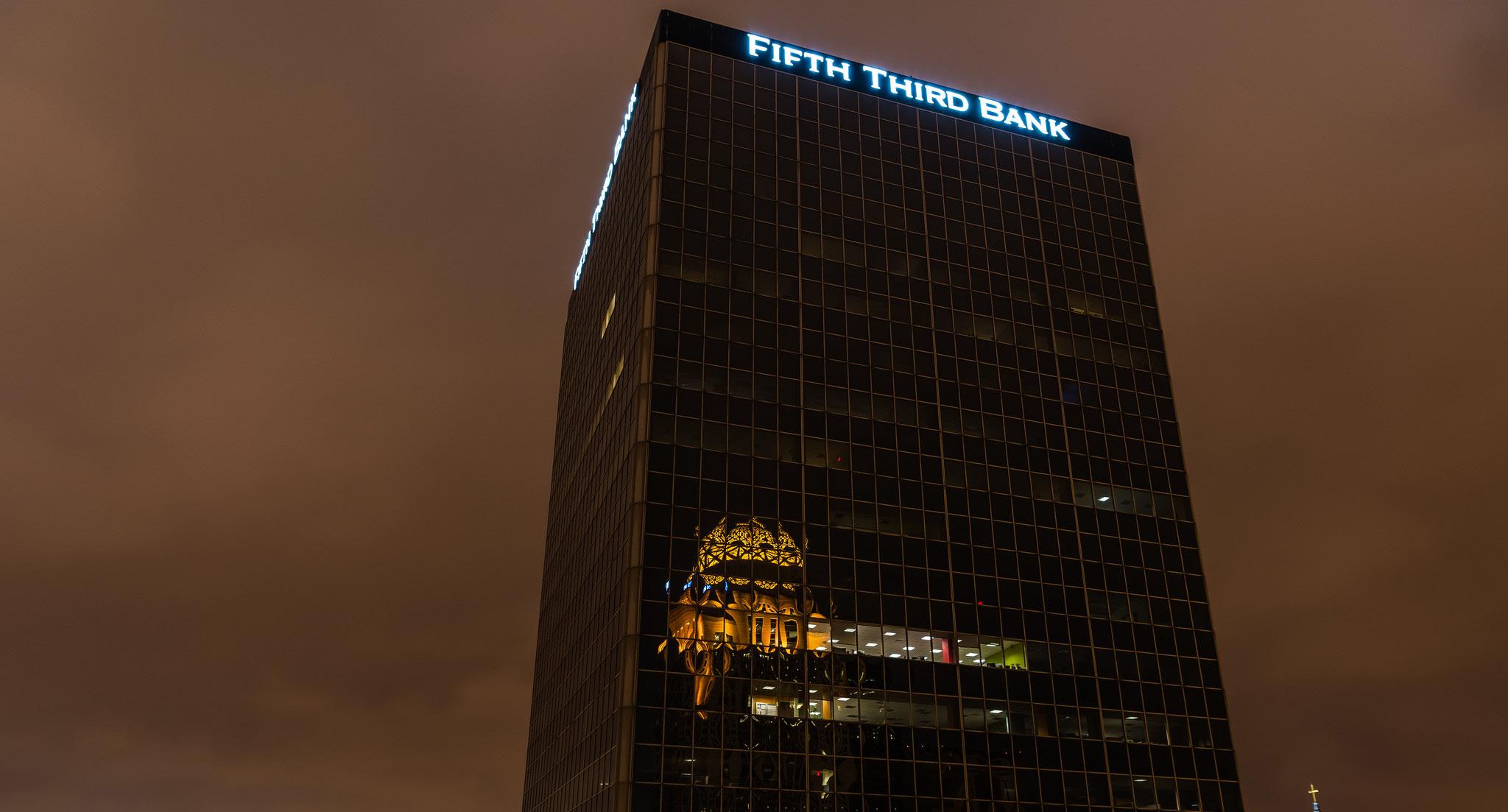
Fifth Third Bank just agreed to pay a $20 million fine to settle charges it forced car buyers to purchase unnecessary insurance and created fake accounts in customers' names.
The Consumer Financial Protection Bureau said the bank required customers with car loans to buy insurance, even if they already had coverage or got their own within 30 days.
Rosemary Shahan, president of Consumers for Auto Reliability and Safety, said some customers then could not afford the payments.
"There were about 1,000 consumers who had their
cars repossessed," Shahan recounted. "Most people rely on their car to get to and from work, and get their kids to school, and get to medical appointments. So that is really devastating when they lose their car."
In a statement, Fifth Third Bank said it shut down the protection insurance program in 2019 and is taking action to set things right. The money from the fine will go to a fund to reimburse 35,000 customers who were harmed. The court order also bans the company from setting employee sales goals incentivizing fraudulently opening accounts. Shahan pointed out car
dealers sometimes make verbal promises differing from the written contract or fail to even print out the financing paperwork. She wants people to know they cannot be required to buy insurance if they already have coverage.
"The best way to avoid all these scams is join a credit union, get your own financing, and deal with a reputable bank," Shahan recommended. "Don't let the dealer get financing for you."
In 2015, Fifth Third Bank was ordered to pay more than $21 million in fines for discriminatory auto loan pricing and for illegal credit card practices.
By City News Service
ASpace X Falcon 9 rocketcarrying
Starlink satellites exploded after takeoff from Vandenburg Space Force Base and Friday efforts were made to deploy the satellites into proper places in orbit around Earth.
The Falcon 9 rockets made by Space X, based in Hawthorne, carry satellites and NASA astronauts into space. The launch last Thursday night, which originated from the US
Space Force Base in California, failed in the second stage around 10:30 p.m.
It was carrying 20 satellites for Space X's Starlink network, which already operates through more than 6,000 satellites that are in orbit.
The first stage of the mission completed successfully, but the Falcon 9 rocket, which is designed to fire in the second stage, failed. The cause was not immediately known,
according to reports from Space X.
"During tonight's Falcon 9 launch of Starlink, the second stage engine did not complete its second burn. As a result, the Starlink satellites were deployed into a lower than intended orbit," according to a statement from Space X.
Elon Musk, the CEO of Space X, posted on social media that the second stage did not just fail --
it experienced what his company tends to call an "RUD" or "rapid unscheduled disassembly," which typically refers to an explosion.
"Reasons unknown," Musk's post reads.
In a later update, posted after 10:30 p.m., Space X said it had made contact with five of the 20 satellites and was attempting to raise their orbit.
"We're updating satellite software to run the ion

thrusters at their equivalent of warp 9," Musk said. "Unlike a Star Trek episode, this will probably not work, but it's worth a shot."
By Suzanne Potter, Producer, Public News Service
Federal dollars are pouring into Californiatransportation projects as a result of the Bipartisan Infrastructure Law. The Federal Transit Administration recently announced almost $8 million for 17 projects to improve public transportation for people with disabilities, older adults and low-income families.
Tiffani Scott, CEO of Paratransit, said her organization received a $134,000 grant to improve mobility van service in Sacramento.
"So, we use a very robust scheduling software, so that we can maximize the number of trips we can do and be extremely efficient. And so, the cost per trip
that's being subsidized is a fraction of what it would be if they were on a public transit service," she explained.
The infrastructure law also funds the federal program known as "RAISE," which stands for "Rebuilding American Infrastructure with Sustainability and Equity." This year's RAISE
grants include $25 million each for a rail project in Santa Ana and road improvements in Rancho Cordova; plus $5 million each to improve rail lines in Escondido and near the Port of San Diego.
Scott added she applauds the Biden administration's focus on transportation as a way to improve low-income communities.
"If we're trying to solve issues - like job insecurity, education, workforce, homelessness, food insecurity - access is one of the largest determinants to how people can get to things. If you can't get there, a lot of times it's as if they're invisible." she continued.
In April, the feds announced more than $23
million for projects under the Thriving Communities Program. They support efforts to make neighborhoods more livable near the Ports of Los Angeles and Long Beach, fund greenspace in Santa Rosa, and help Tulare County bid for grants to widen a key freeway in the Central Valley town of Pixley.
件必须在不迟于 2024 年 8 月 9 日(星期五)下午 5 时之前在位于 上述地址的艾尔蒙地市书记官办公室存档。
市书记官办公室和所有其他市政厅办公室通常在星期五关闭,但市 书记官办公室将于 2024 年 8 月 9 日(星期五)上午 7 时至下午 5 时之间开放,但仅为了发布和接受上述统一市级普选候选人的提名 文件。 进一步提请准候选人和公众注意,根据《艾尔蒙地市政法》 第 2.68.010 条规定,市书记官办公室在星期六、星期天或本市的任 何公共假期不开放。
根据《选举法》第 10225 条规定,如果在 2024 年 8 月 9 日(星 期五)下午 5 时之前现任官员没有提交提名文件,提名期应延长至 2024 年 8 月 14 日(星期三)下午 5 时。如果没有人或仅有一人被 提名担任选举职位,可依照《加利福尼亚州选举法》第 10229 条的 规定任命担任该选举职位的人选。
SIRVA EL PRESENTE PARA COMUNICAR que se llevará a cabo una Elección Municipal General Consolidada en la ciudad de El Monte el martes, 5 de noviembre de 2024, para ocupar los siguientes cargos:
Para 1 (un) alcalde electo independiente para toda la ciudad Mandato completo de 2 (dos) años
Para 1 (un) miembro del Concejo Municipal para el Distrito 1 Mandato completo de 4 (cuatro) años
Para 1 (un) miembro del Concejo Municipal para el Distrito 4 Mandato completo de 4 (cuatro) años
Para 1 (un) miembro del Concejo Municipal para el Distrito 5 Mandato completo de 4 (cuatro) años
El periodo de nominación para los cargos mencionados inicia el 15 de julio de 2024 y finaliza el 9 de agosto de 2024 a las 5:00 p. m.
Si la documentación de la nominación para un funcionario titular de la ciudad no se presenta para el 9 de agosto de 2024 (el día 88 previo a las elecciones), los votantes tendrán hasta el día 83 previo a las elecciones, es decir, el 14 de agosto de 2024, para nominar a otros candidatos diferentes de la o las personas titulares que ocupen el o los cargos electivos al día 88 previo a las elecciones. La prórroga no aplicará cuando no haya una persona titular que pueda postularse.
Si nadie (1) o sólo una (1) persona resulta nominada para un cargo electivo, el nombramiento para dicho cargo se podrá hacer según lo dispuesto en la sección 10229 del Código electoral del estado de California.
Se podrá votar en persona en cualquier Centro de votación del condado de Los Ángeles, en ubicaciones designadas, los días entre semana y fines de semana a partir del 26 de octubre de 2024 y hasta el 5 de noviembre de 2024. Los Centros de votación abrirán a las 7:00 a. m. el día de las elecciones y permanecerán abiertos sin interrupciones desde esa hora hasta las 8:00 p. m. del mismo día, momento en que se cerrarán las urnas (de acuerdo con la sección 10242 del Código de electoral, salvo lo estipulado en la sección 14401 del Código electoral del estado de California). Gabriel Ramirez, Secretario Municipal Ciudad de El Monte
Fecha de publicación: 11 de julio de 2024; 15 de julio de 2024; 22 de julio de 2024; y 29 de julio de 2024
AVISO DE ELECCIÓN CIUDAD DE EL MONTE
SIRVA EL PRESENTE PARA COMUNICAR A TODOS LOS VOTANTES CALIFICADOS de la ciudad de El Monte que se realizará una Elección General Municipal Consolidada el MARTES, 5 DE NOVIEMBRE DE 2024, para ocupar los siguientes cargos:
Para 1 (un) alcalde electo independiente para toda la ciudad Mandato completo de 2 (dos) años
Para 1 (un) miembro del Concejo Municipal para el Distrito 1 Mandato completo de 4 (cuatro) años
Para 1 (un) miembro del Concejo Municipal para el Distrito 4 Mandato completo de 4 (cuatro) años
Para 1 (un) miembro del Concejo Municipal para el Distrito 5 Mandato completo de 4 (cuatro) años
Además de cumplir con cualesquiera otros criterios para calificar que establezcan el Código de gobierno de California, el Código electoral de California o el Código municipal de El Monte, los candidatos para la elección mencionada previamente deben ser votantes registrados que residan en la ciudad de El Monte. La documentación de nominación para la elección estará disponible no antes del lunes, 15 de julio de 2024, ni más tarde del viernes, 9 de agosto de 2024, en virtud de las secciones 10220, 10224 y 10407 del Código electoral, en la Oficina de la secretaria municipal de la ciudad de El Monte, ubicada en 11333 Valley Boulevard, El Monte, California 91731, entre las 7:00 a. m. y las 5:00 p. m. La
documentación para la nominación debe presentarse en la Oficina de la secretaria municipal de El Monte, ubicada en la dirección mencionada previamente, a más tardar a las 5:00 p. m. del viernes, 9 de agosto de 2024.
Aunque la oficina de la secretaria municipal esté cerrada al público los viernes junto con las demás oficinas del Ayuntamiento, la Oficina de la secretaria municipal estará abierta el viernes, 9 de agosto de 2024, de 7:00 a. m. a 5:00 p. m. con el único fin de emitir y aceptar documentación de nominación de candidatos para las Elecciones Municipales Generales Consolidadas que se mencionan más arriba. Además, se informa a los candidatos potenciales y a los miembros del público que la Oficina de la secretaria municipal no abre los sábados, domingos ni días feriados obligatorios para la ciudad, de conformidad con la sección 2.68.010 del Código municipal de El Monte.
De conformidad con la sección 10225 del Código electoral, si no se presenta la documentación de nominación para un funcionario titular antes de las 5:00 p. m. del viernes, 9 de agosto de 2024, el periodo de nominación podrá extenderse hasta las 5:00 p. m. del miércoles, 14 de agosto de 2024. Si nadie o sólo una persona resulta nominada para un cargo electivo, el nombramiento para dicho cargo se podrá hacer según lo dispuesto en la sección 10229 del Código electoral del estado de California.
El día de las Elecciones Municipales Generales Consolidadas, los centros de votación estarán abiertos en un horario de 7:00 a. m. a 8:00 p. m.
Quienes necesiten asistencia en otros idiomas como español, chino, vietnamita, tagalo, japonés, coreano, tailandés, khmer e hindi sobre la información del aviso pueden comunicarse al (626) 5802016.
Gabriel Ramirez, Secretario Municipal Ciudad de El Monte
PAUNAWA NG HALALAN LUNGSOD NG EL MONTE
Ang PAUNAWA AY IBINIBIGAY SA PAMAMAGITAN NITO na isang Pangkalahatang Munisipal na Halalan ang gaganapin sa Martes, Nobyembre 5, 2024 para sa mga sumusunod na inihahalal na opisyal ng Lungsod ng El Monte:
Para sa Isang (1) Mayor na Inihalal sa Pangkabuuan mula sa Buong Lungsod
Buong terminong dalawang (2) taon
Para sa Isang (1) Miyembro ng Konseho ng Lungsod para sa Distrito 1
Buong terminong apat (4) na taon
Para sa Isang (1) Miyembro ng Konseho ng Lungsod para sa Distrito 4
Buong terminong apat (4) na taon
Para sa Isang (1) Miyembro ng Konseho ng Lungsod para sa Distrito 5
Buong terminong apat (4) na taon
Ang panahon ng nominasyon para sa mga katungkulang ito ay magsisimula sa Hulyo 15, 2024 at magtatapos sa Agosto 9, 2024 sa ganap na 5:00 p.m.
Kung ang mga dokumento para sa nominasyon para sa nanunungkulang opisyal ng Lungsod ay hindi naihain hanggang Agosto 9, 2024 (ika-88 araw bago ng halalan) ang mga botante ay mayroong hanggang ika-83 araw bago ng halalan, sa Agosto 14, 2024, para magnomina ng mga kandidatong bukod sa (mga) indibidwal na nanunungkulan sa ika-88 araw bago ng halalan, para sa inihahalal na katungkulan ng nanunungkulan. Ang pagpapalawig na ito ay hindi naaangkop kapag walang kasalukuyang nanunungkulan na karapat-dapat na maihalal.
Kung walang ni isa (1), o iisa (1) lamang na indibidwal ang manonomina para sa isang inihahalal na katungkulan, ang paghirang sa inihahalal na katungkulan ay maaaring isagawa ayon sa itinatakda sa § 10229, Kodigo ng mga Halalan ng Estado ng California. Mayroong sa-personal na pagboto sa anumang Voting Center (Sentro ng Pagboto) na matatagpuan sa County ng Los Angeles sa mga itinakdang lokasyon sa mga araw ng Lunes hanggang Biyernes at mga araw ng Sabado at Linggo mula Oktubre 26, 2024 hanggang Nobyembre 5, 2024. Magbubukas ang mga Voting Center sa ganap na 7:00 a.m. sa araw ng halalan at patuloy na mananatiling bukas mula sa oras na iyon hanggang 8:00 p.m. sa parehong araw kung kailan magsasara ang mga botohan (alinsunod sa Kodigo ng mga Halalan § 10242, maliban kung nakasaad sa § 14401 ng Kodigo ng mga Halalan ng Estado ng California.)
Gabriel Ramirez, Klerk ng Lungsod Lungsod ng El Monte
Petsa ng Paglalathala: Hulyo 11, 2024; Hulyo 15, 2024; Hulyo 22, 2024; at Hulyo 29, 2022
LUNGSOD NG EL MONTE
ANG PAUNAWA AY IBINIBIGAY SA PAMAMAGITAN NITO SA LAHAT NG KUWALIPIKADONG BOTANTE ng Lungsod ng El Monte na isang Pinagsamang Pangkalahatang Munisipal na Halalan ang gaganapin sa MARTES, NOBYEMBRE 5, 2024 para sa layunin ng paghalal:
Para sa Isang (1) Mayor na Inihalal sa Pangkabuuan mula sa Buong Lungsod
Buong terminong dalawang (2) taon
Para sa Isang (1) Miyembro ng Konseho ng Lungsod para sa Distrito 1
Buong terminong apat (4) na taon
Para sa Isang (1) Miyembro ng Konseho ng Lungsod para sa Distrito 4
Buong terminong apat (4) na taon
Para sa Isang (1) Miyembro ng Konseho ng Lungsod para sa Distrito 5
Buong terminong apat (4) na taon
Kasama ang anumang iba pang mga kuwalipikadong pamantayang iniaatas sa Kodigo ng Pamahalaan ng California, ng Kodigo ng mga Halalan ng California o ng Kodigong Munisipal ng El Monte, ang mga kandidato para sa halalan sa itaas ay dapat mga rehistradong botanteng naninirahan sa Lungsod ng El Monte. Ang mga dokumento para sa nominasyon para sa halalan ay makukuha nang hindi mas aaga pa sa Lunes, Hulyo 15, 2024, at hindi lalampas ng Biyernes, Agosto 9, 2024, alinsunod sa Kodigo ng mga Halalan Seksyon 10220, 10224 at 10407, sa Lungsod ng El Monte, Tanggapan ng Klerk ng Lungsod na matatagpuan sa 11333 Valley Boulevard, El Monte, California 91731, sa pagitan ng mga oras ng 7:00 a.m. at 5:00 p.m. Ang mga dokumento para sa nominasyon ay dapat ihain sa tanggapan ng Klerk ng Lungsod ng El Monte na matatagpuan sa tinutukoy na address sa itaas nang hindi lalampas ng 5:00 p.m. sa Biyernes, Agosto 9, 2024.
Bagaman sarado ang Tanggapan ng Klerk ng Lungsod tuwing Biyernes kasama ang lahat ng iba pang Tanggapan ng City Hall, magbubukas ang Tanggapan ng Klerk ng Lungsod sa Biyernes, Agosto 9, 2024, sa pagitan ng mga oras ng 7:00 a.m. at 5:00 p.m. para sa natatanging layunin ng paglalabas at pagtanggap ng mga papeles para sa nominasyon ng mga kandidato para sa binanggit sa itaas na Pinagsamang Pangkalahatang Munisipal na Halalan. Higit pang ipinapaalam sa mga kandidato sa hinaharap at sa mga miyembro ng publiko na ang Tanggapan ng Klerk ng Lungsod ay hindi bukas sa mga araw ng Sabado, Linggo o anumang holiday na ipinagdiriwang ng Lungsod alinsunod sa Seksyon 2.68.010 ng Kodigong Munisipal ng El Monte.
Alinsunod sa Kodigo ng mga Halalan Seksyon 10225, kung ang mga dokumento para sa nominasyon para sa isang nanunungkulan ay hindi naihain hanggang 5:00 p.m. sa Biyernes, Agosto 9, 2024, palalawigin ang panahon ng nominasyon hanggang 5:00 p.m. sa Miyerkules, Agosto 14, 2024. Kung wala o iisang tao lamang ang nominado para sa isang inihahalal na katungkulan, maaaring isagawa ang paghirang sa inihahalal na katungkulan gaya ng iniaatas sa § 10229, Kodigo ng mga Halalan ng Estado ng California.
Sa petsa ng Pinagsamang Pangkalahatang Munisipal na Halalan, ang mga lugar ng botohan ay magiging bukas sa pagitan ng mga oras ng 7:00 a.m. at 8:00 p.m.
Ang mga indibidwal na nangangailangan ng tulong sa iba’t ibang wika sa Espanyol, Chinese, Vietnamese, Tagalog, Hapon, Koreano, Thai, Khmer, at Hindi, tungkol sa impormasyong nasa paunawa, ay maaaring tumawag sa (626) 580-2016.
Gabriel Ramirez, Klerk ng Lungsod Lungsod ng El Monte
ตำ�แหน่งน�ยกเทศมนตรีหนึ่ง (1) คนจ�กก�รเลือกตั้งทั้งเมือง
(2) ปี ตำ�แหน่งสม�ชิกสภ�เทศบ�ลเขต 1 หนึ่ง (1) ตำ�แหน่ง ครบว�ระสี่ (4) ปี ตำ�แหน่งสม�ชิกสภ�เทศบ�ลเขต 4 หนึ่ง (1) ตำ�แหน่ง ครบว�ระสี่ (4) ปี ตำ�แหน่งสม�ชิกสภ�เทศบ�ลเขต 5 หนึ่ง (1) ตำ�แหน่ง
Blvd Suite 204, Pasadena, CA
91107 (Owner). The statement was filed with the County Clerk of Los Angeles on June 25, 2024. NOTICE: This fictitious business name statement expires five years from the date it was filed in the office of the County Clerk. A new fictitious business name statement must be filed prior to that date. The filing of this statement does not of itself authorize the use in this state of a fictitious business name in violation of the rights of another under federal, state or common law (See Section 14400 et seq., Business and Professional Code).
Pub. Monrovia Weekly
06/27/2024, 07/04/2024, 07/11/2024, 07/18/2024
FICTITIOUS BUSINESS NAME STATEMENT FILE NO.
2024130209 NEW FILING.
The following person(s) is (are) doing business as (1).
THE ARCHITECH GROUP (2).
ARCHITECH GROUP , 235 E Main St, Alhambra, CA 91801. This business is conducted by a individual. Registrant commenced to transact business under the fictitious business name or names listed herein on June 2024. Signed: Yung Kao, 235 E Main St, Alhambra, CA 91801 (Owner). The statement was filed with the County Clerk of Los Angeles on June 18, 2024. NOTICE: This fictitious business name statement expires five years from the date it was filed in the office of the County Clerk. A new fictitious business name statement must be filed prior to that date. The filing of this statement does not of itself authorize the use in this state of a fictitious business name in violation of the rights of another under federal, state or common law (See Section 14400 et seq., Business and Professional Code).
Pub. Monrovia Weekly
06/27/2024, 07/04/2024, 07/11/2024, 07/18/2024
FICTITIOUS BUSINESS NAME STATEMENT FILE NO.
2024134445 NEW FILING.
The following person(s) is (are) doing business as LEAF STAR THERAPY, 316 California Street Unit B, Arcadia, CA 91006. This business is conducted by a corporation. Registrant commenced to transact business under the fictitious business name or names listed herein on June 2024. Signed: Ann Yip, Licensed Professional Clinical Counselor, a Professional Corporation (CA6256683, 316 California Street Unit B, Arcadia, CA 91006; Ann Gi Hun Pak Yip, President. The statement was filed with the County Clerk of Los Angeles on June 24, 2024. NOTICE: This fictitious business name statement expires five years from the date it was filed in the office of the County Clerk. A new fictitious business name statement must be filed prior to that date. The filing of this statement does not of itself authorize the use in this state of a fictitious business name in violation of the rights of another under federal, state or common law (See Section 14400 et seq., Business and Professional Code).
Pub. Monrovia Weekly
06/27/2024, 07/04/2024, 07/11/2024, 07/18/2024
FICTITIOUS BUSINESS NAME STATEMENT FILE NO. 2024131288 NEW FILING.
The following person(s) is (are) doing business as JENA NAIL, 1029 1/2 S Baldwin Ave, Arcadia, CA 91007. This business is conducted by a individual. Registrant has not yet begun to transact business under the fictitious business name or names listed herein. Signed: JIAMEI CHEN, 1029 1/2 S Baldwin Ave, Arcadia, CA 91007 (Owner). The statement was filed with the County Clerk of Los Angeles on June 18, 2024. NOTICE: This fictitious business name statement expires five years from the date it was filed in the office of the County Clerk. A new fictitious business name statement must be filed prior to that date. The filing of this statement does not
of itself authorize the use in this state of a fictitious business name in violation of the rights of another under federal, state or common law (See Section 14400 et seq., Business and Professional Code).
Pub. Monrovia Weekly 06/27/2024, 07/04/2024, 07/11/2024, 07/18/2024
FICTITIOUS BUSINESS NAME STATEMENT FILE NO. 2024125089 NEW FILING.
The following person(s) is (are) doing business as ELITE TOWER, 6730 vineland avenue, sun valley, CA 91606. This business is conducted by a individual. Registrant commenced to transact business under the fictitious business name or names listed herein on February 2019. Signed: Karim Farasatzadeh, 5535 Canoga Ave Unit 219, Woodland hills, Ca 91367(Owner). The statement was filed with the County Clerk of Los Angeles on June 11, 2024. NOTICE: This fictitious business name statement expires five years from the date it was filed in the office of the County Clerk. A new fictitious business name statement must be filed prior to that date. The filing of this statement does not of itself authorize the use in this state of a fictitious business name in violation of the rights of another under federal, state or common law (See Section 14400 et seq., Business and Professional Code). Pub. Monrovia Weekly 06/27/2024, 07/04/2024, 07/11/2024, 07/18/2024
FICTITIOUS BUSINESS NAME STATEMENT FILE NO. 2024134775 NEW FILING.
The following person(s) is (are) doing business as UNPHOTOGETTABLE BOOTH, 505 E Sandra Ave, Arcadia, CA 91006. This business is conducted by a limited liability company (llc). Registrant commenced to transact business under the fictitious business name or names listed herein on June 2024. Signed: VnP Ent Productions, LLC (CA202461713462, 505 E Sandra Ave, Arcadia, CA 91006; Steven Chew, CEO. The statement was filed with the County Clerk of Los Angeles on June 24, 2024. NOTICE: This fictitious business name statement expires five years from the date it was filed in the office of the County Clerk. A new fictitious business name statement must be filed prior to that date. The filing of this statement does not of itself authorize the use in this state of a fictitious business name in violation of the rights of another under federal, state or common law (See Section 14400 et seq., Business and Professional Code).
Pub. Monrovia Weekly 06/27/2024, 07/04/2024, 07/11/2024, 07/18/2024
FICTITIOUS BUSINESS NAME STATEMENT FILE NO. 2024125099 NEW FILING. The following person(s) is (are) doing business as SUN TOWER, 9415 Sylmar Ave, Panorama city, CA 91402. This business is conducted by a individual. Registrant commenced to transact business under the fictitious business name or names listed herein on September 2018. Signed: Karim Farasatzadeh, 5535 Canoga Ave #219, Woodland hills, Ca 91367 (Owner). The statement was filed with the County Clerk of Los Angeles on June 11, 2024. NOTICE: This fictitious business name statement expires five years from the date it was filed in the office of the County Clerk. A new fictitious business name statement must be filed prior to that date. The filing of this statement does not of itself authorize the use in this state of a fictitious business name in violation of the rights of another under federal, state or common law (See Section 14400 et seq., Business and Professional Code). Pub. Monrovia Weekly 06/27/2024, 07/04/2024, 07/11/2024, 07/18/2024
FICTITIOUS BUSINESS
NAME STATEMENT FILE NO. 2024125104 NEW FILING.
The following person(s) is (are) doing business as PACIFIC VALLEY TOWER, 8407 Cedros Ave, Panorama city, CA 91402. This business is conducted by a individual. Registrant commenced to transact business under the fictitious business name or names listed herein on September 2018. Signed: karim farasatzadeh, 5535 Canoga Ave #219, Woodland hills, Ca 91367 (Owner). The statement was filed with the County Clerk of Los Angeles on June 11, 2024. NOTICE: This fictitious business name statement expires five years from the date it was filed in the office of the County Clerk. A new fictitious business name statement must be filed prior to that date. The filing of this statement does not of itself authorize the use in this state of a fictitious business name in violation of the rights of another under federal, state or common law (See Section 14400 et seq., Business and Professional Code). Pub. Monrovia Weekly 06/27/2024, 07/04/2024, 07/11/2024, 07/18/2024
FICTITIOUS BUSINESS
NAME STATEMENT FILE NO.
2024125108 NEW FILING.
The following person(s) is (are) doing business as ROYAL TOWER, 7048 Fulton Avenue, North Hollywood, CA 91605. This business is conducted by a individual. Registrant commenced to transact business under the fictitious business name or names listed herein on December 2021. Signed: Karim farasatzadeh, 5535 Canoga Ave #219, Woodland hills, Ca 91367 (Owner). The statement was filed with the County Clerk of Los Angeles on June 11, 2024. NOTICE: This fictitious business name statement expires five years from the date it was filed in the office of the County Clerk. A new fictitious business name statement must be filed prior to that date. The filing of this statement does not of itself authorize the use in this state of a fictitious business name in violation of the rights of another under federal, state or common law (See Section 14400 et seq., Business and Professional Code).
Pub. Monrovia Weekly
06/27/2024, 07/04/2024, 07/11/2024, 07/18/2024
FICTITIOUS BUSINESS
NAME STATEMENT FILE NO.
2024125095 NEW FILING.
The following person(s) is (are) doing business as PALM TOWER, 6650 Woodman Ave, Van Nuys, CA 91401. This business is conducted by a individual. Registrant commenced to transact business under the fictitious business name or names listed herein on November 2019. Signed: karim farasatzadeh, 5535 Canoga Ave 219, Woodland hills, Ca 91367(Owner). The statement was filed with the County Clerk of Los Angeles on June 11, 2024. NOTICE: This fictitious business name statement expires five years from the date it was filed in the office of the County Clerk. A new fictitious business name statement must be filed prior to that date. The filing of this statement does not of itself authorize the use in this state of a fictitious business name in violation of the rights of another under federal, state or common law (See Section 14400 et seq., Business and Professional Code).
Pub. Monrovia Weekly 06/27/2024, 07/04/2024, 07/11/2024, 07/18/2024
FICTITIOUS BUSINESS NAME STATEMENT FILE NO. 2024131023 NEW FILING.
The following person(s) is (are) doing business as COURTHOUSE APTS, 323 W Laurel St, Compton, CA 90220. This business is conducted by a limited liability company (llc). Registrant commenced to transact business under the fictitious business name or names listed herein on June 2024. Signed: PI Properties No.
108, LLC (CA-201509710257, 610 N Santa Anita Ave Second Floor, Arcadia, Ca 91006; Rao R Yalamanchili, Manager. The statement was filed with the County Clerk of Los Angeles on June 18, 2024. NOTICE: This fictitious business name statement expires five years from the date it was filed in the office of the County Clerk. A new fictitious business name statement must be filed prior to that date. The filing of this statement does not of itself authorize the use in this state of a fictitious business name in violation of the rights of another under federal, state or common law (See Section 14400 et seq., Business and Professional Code).
Pub. Monrovia Weekly 06/27/2024, 07/04/2024, 07/11/2024, 07/18/2024
FICTITIOUS BUSINESS NAME STATEMENT FILE NO. 2024 129817 NEW FILING. The following person(s) is (are) doing business as GOLDENFIELD MEDICAL RESEARCH, 1433 W Merced Avenue Ste 217, West Covina, CA 91790. This business is conducted by a corporation. Registrant commenced to transact business under the fictitious business name or names listed herein on March 2024. Signed: Goldenfield Investment Corp (CA-6162736, 1433 W Merced Avenue Suite 217, West Covina, CA 91790; GISELLA C ZIMMER, CEO. The statement was filed with the County Clerk of Los Angeles on June 17, 2024. NOTICE: This fictitious business name statement expires five years from the date it was filed in the office of the County Clerk. A new fictitious business name statement must be filed prior to that date. The filing of this statement does not of itself authorize the use in this state of a fictitious business name in violation of the rights of another under federal, state or common law (See Section 14400 et seq., Business and Professional Code).
Pub. Monrovia Weekly 06/27/2024, 07/04/2024, 07/11/2024, 07/18/2024
FICTITIOUS BUSINESS NAME STATEMENT FILE NO. 2024127218 NEW FILING.
The following person(s) is (are) doing business as VOCABULARY24, 1921 Peyton Ave Apt K, Burbank, CA 91504. This business is conducted by a individual. Registrant has not yet begun to transact business under the fictitious business name or names listed herein. Signed: Jennifer L. Martin, 1921 Peyton Ave Apt K, Burbank, CA 91504 (Owner). The statement was filed with the County Clerk of Los Angeles on June 13, 2024. NOTICE: This fictitious business name statement expires five years from the date it was filed in the office of the County Clerk. A new fictitious business name statement must be filed prior to that date. The filing of this statement does not of itself authorize the use in this state of a fictitious business name in violation of the rights of another under federal, state or common law (See Section 14400 et seq., Business and Professional Code).
Pub. Monrovia Weekly 06/27/2024, 07/04/2024, 07/11/2024, 07/18/2024
FICTITIOUS BUSINESS
NAME STATEMENT FILE NO. 2024131001 NEW FILING.
The following person(s) is (are) doing business as PARKSIDE APTS, 1306 S San Antonio Ave, Pomona, CA 91766. This business is conducted by a limited liability company (llc). Registrant commenced to transact business under the fictitious business name or names listed herein on June 2024. Signed: PI Properties No, 105, LLC (CA-201509710216, 610 N Santa Anita Ave Second Floor, Arcadia, Ca 91006; Rao R Yalamanchili, Manager. The statement was filed with the County Clerk of Los Angeles on June 18, 2024. NOTICE: This fictitious business name statement expires five years from the date it was filed in the
office of the County Clerk. A new fictitious business name statement must be filed prior to that date. The filing of this statement does not of itself authorize the use in this state of a fictitious business name in violation of the rights of another under federal, state or common law (See Section 14400 et seq., Business and Professional Code). Pub. Monrovia Weekly 06/27/2024, 07/04/2024, 07/11/2024, 07/18/2024
FICTITIOUS BUSINESS NAME STATEMENT FILE NO. 2024134572 NEW FILING. The following person(s) is (are) doing business as NZ GROUP, 1201 LARRABEE ST APT 107, West Hollywood, CA 90069. This business is conducted by a individual. Registrant commenced to transact business under the fictitious business name or names listed herein on July 2018. Signed: ZINOVY GANOPOLSKY, 1201 LARRABEE ST APT 107, West Hollywood, CA 90069 (Owner). The statement was filed with the County Clerk of Los Angeles on June 24, 2024. NOTICE: This fictitious business name statement expires five years from the date it was filed in the office of the County Clerk. A new fictitious business name statement must be filed prior to that date. The filing of this statement does not of itself authorize the use in this state of a fictitious business name in violation of the rights of another under federal, state or common law (See Section 14400 et seq., Business and Professional Code). Pub. Monrovia Weekly 06/27/2024, 07/04/2024, 07/11/2024, 07/18/2024
FICTITIOUS BUSINESS NAME STATEMENT FILE NO. 2024130946 NEW FILING.
The following person(s) is (are) doing business as VERA APTS, 333 N Brand Blvd, San Fernando, CA 91340. This business is conducted by a limited liability company (llc). Registrant commenced to transact business under the fictitious business name or names listed herein on June 2024. Signed: PI Properties No. 10, LLC (CA-201203710331, 160 N Santa Anita Ave 2nd Floor, Arcadia, Ca 91006; Rao R Yalamanchili, Manager. The statement was filed with the County Clerk of Los Angeles on June 18, 2024. NOTICE: This fictitious business name statement expires five years from the date it was filed in the office of the County Clerk. A new fictitious business name statement must be filed prior to that date. The filing of this statement does not of itself authorize the use in this state of a fictitious business name in violation of the rights of another under federal, state or common law (See Section 14400 et seq., Business and Professional Code). Pub. Monrovia Weekly 06/27/2024, 07/04/2024, 07/11/2024, 07/18/2024
FICTITIOUS BUSINESS NAME STATEMENT FILE NO. 2024133688 NEW FILING. The following person(s) is (are) doing business as SUBWAY 58214, 21213-B Hawthorne Blvd Unit 5487, Torrance, CA 90503. This business is conducted by a corporation. Registrant commenced to transact business under the fictitious business name or names listed herein on June 2024. Signed: Subway R Us, Inc. (CA-3251337, 21816 Barbara Street, Torrance, Ca 90503; Wanda W Chung, Secretary. The statement was filed with the County Clerk of Los Angeles on June 21, 2024. NOTICE: This fictitious business name statement expires five years from the date it was filed in the office of the County Clerk. A new fictitious business name statement must be filed prior to that date. The filing of this statement does not of itself authorize the use in this state of a fictitious business name in violation of the rights of another under federal, state or common law (See Section 14400 et seq., Business and
Professional Code). Pub. Monrovia Weekly 06/27/2024, 07/04/2024, 07/11/2024, 07/18/2024
FICTITIOUS BUSINESS NAME STATEMENT FILE NO. 2024130984 NEW FILING. The following person(s) is (are) doing business as PRESIDENT APTS, 26200 President Ave, Harbor City, CA 90710. This business is conducted by a limited liability company (llc). Registrant commenced to transact business under the fictitious business name or names listed herein on June 2024. Signed: PI Properties No. 104, LLC (CA-201509710099, 610 N Santa Anita Ave Second Floor, Arcadia, Ca 91006; Rao R Yalamanchili, Manager. The statement was filed with the County Clerk of Los Angeles on June 18, 2024. NOTICE: This fictitious business name statement expires five years from the date it was filed in the office of the County Clerk. A new fictitious business name statement must be filed prior to that date. The filing of this statement does not of itself authorize the use in this state of a fictitious business name in violation of the rights of another under federal, state or common law (See Section 14400 et seq., Business and Professional Code). Pub. Monrovia Weekly 06/27/2024, 07/04/2024, 07/11/2024, 07/18/2024
FICTITIOUS BUSINESS NAME STATEMENT FILE NO. 2024 130749 FIRST FILING. The following person(s) is (are) doing business as BLUE RAVEN, 1330 S. Vermont Ave, Los Angeles, CA 90006. This business is conducted by a corporation. Registrant has not yet begun to transact business under the fictitious business name or names listed herein. Signed: Blue Raven (CA6251764, 1330 S. Vermont Ave, Los Angeles, CA 90006; Juan Molina, CEO. The statement was filed with the County Clerk of Los Angeles on June 18, 2024. NOTICE: This fictitious business name statement expires five years from the date it was filed in the office of the County Clerk. A new fictitious business name statement must be filed prior to that date. The filing of this statement does not of itself authorize the use in this state of a fictitious business name in violation of the rights of another under federal, state or common law (See Section 14400 et seq., Business and Professional Code). Pub. Monrovia Weekly 06/27/2024, 07/04/2024, 07/11/2024, 07/18/2024
FICTITIOUS BUSINESS NAME STATEMENT FILE NO. 2024132518 NEW FILING. The following person(s) is (are) doing business as SYNDICATE VOLLEYBALL CLUB, 12021 Valleyheart Dr #307, Studio City, CA 91604. This business is conducted by a individual. Registrant commenced to transact business under the fictitious business name or names listed herein on June 2024. Signed: Michael Joseph James, 1Po Box 162, Burbank, Ca 91503 (Owner). The statement was filed with the County Clerk of Los Angeles on June 20, 2024. NOTICE: This fictitious business name statement expires five years from the date it was filed in the office of the County Clerk. A new fictitious business name statement must be filed prior to that date. The filing of this statement does not of itself authorize the use in this state of a fictitious business name in violation of the rights of another under federal, state or common law (See Section 14400 et seq., Business and Professional Code). Pub. Monrovia Weekly 06/27/2024, 07/04/2024, 07/11/2024, 07/18/2024
FICTITIOUS BUSINESS NAME STATEMENT FILE NO. 2024131437 NEW FILING. The following person(s) is (are) doing business as SUPER STYLE CUTS, 2212
By City News Service
Animal rights demonstrators confronted the makers of the new film "Twisters” at its premiere in Westwood last week, objecting to the film's depiction of rodeos.
One PETA protester was escorted from the premiere after running down the theater aisle toward the stage as director Lee Isaac Chung and actors Glen Powell and Daisy Edgar-Jones were introducing the film. The woman shouted "There's no excuse for animal abuse" as she was escorted from the theater by security.
Meanwhile, a group of protesters, some wearing cow masks, staged a protest outside the building, blasting the film for "forcing animals to stage distressing scenes that glorify rodeos." "Twisters" is a sequel to the 1996 film "Twister," and stars Powell as a former rodeo star and storm chaser.
PETA is calling on Universal Pictures to include a disclaimer in the movie's credits about the "real-life cruelty inherent in the events -- in which cows (including calves), horses, and other animals are tormented, maimed, and often killed -- and to discourage audiences from attending them."
Attempts to reach Universal Pictures for comment were not immediately successful.

TheEchoTheater Companynewest production is a very dark comedy about the lengths to which a woman might go for the love of a man. Abigail Deser directs the West Coast premiere of “Dido of Idaho” by Abby Rosebrock, running July 20 through Aug. 26 at Atwater Village Theatre.
Alana Dietze (Echo productions of “Everything Will Be Different,” for which she was Ovation nominated) brings us Nora, a lovelorn baroque musicologist with a drinking problem who is head-over-heels for an English professor, Michael, played by Joby Earle. Unfortunately, this particular good man has already been claimed by Crystal, a former Miss Idaho with a penchant for home manicures. When the extramarital hijinks go brutally awry, Nora flees to the Rocky Mountains to seek comfort from her estranged mother, Julie and Julie’s new partner, Ethel. In her desperate bid to find compassion, Nora risks losing the only family she’s ever had — maybe forever.
“This play is wonderfully raw, original, authentic and funny,” says Deser. “Nora faces her own potential annihilation because she only knows how to exist in the reflection of the male gaze. Self-love is the only beacon that might help her find her way back to safe shores.”
By Staff
The title of the play is derived from the story of Dido and Aeneas. In the course of his travels, Aeneas stops in Carthage, where he has a passionate love affair with the recently widowed Queen Dido. As soon as he learns that the gods have assigned him another, more glorious fate, Aeneas abandons Dido, whereupon she kills herself in rage and despair.
“I wanted to write about a woman who feels hopeless of ever being loved, and to imagine a way out of that for her,” Rosebrock explained in an interview.
“The only way to make that kind of play bearable for me or for anyone experiencing it is to make it as funny and exciting as possible. My hope has been that crafting a lot of physical comedy, wordplay and rapid-fire
punchlines, all situated in something like realism, makes the story something people can really inhale, even as it challenges them.”
“Dido of Idaho” opens on Saturday with performances continuing on Fridays and Saturdays at 8 p.m.; Sundays at 4 p.m.; and Mondays at 8 p.m. through Aug. 26. Preview performances are set for Thursday, July 18, and Friday, July 19, each at 8 p.m. Tickets are $34 on Fridays, Saturdays and Sundays. All Monday night performances, as well as previews, are pay–what–you–want. Atwater Village Theatre is located at 3269 Casitas Ave. in Los Angeles, CA 90039.
For more information and to purchase tickets, call (747) 350-8066 or go to www.EchoTheaterCompany.com.
By Jose Herrera, City News Service
The owners of La Carreta -- home to a beloved Olvera Street attraction known as "El Burro" -- are considering their options after a Los Angeles commission voted to evict them despite a City Council attempt to save it.
The Board of El Pueblo de Los Angeles Historical Monument Authority Commissioners gave the owners of the restaurant a 30-day eviction notice July 11. Richard Hernandez, owner of La Carreta, told City News Service he was devastated and will be considering his next steps, which may include suing the city to stop the eviction.
Hernandez said he feels as if the General Manager Arturo Chavez worked against him in every step of the way.
"I don't plan to leave easily," Hernandez said. "I was talking to my attorney about an injunction and to try to stop this eviction. We're going to file the paperwork that we need."
El Pueblo General Manager Arturo Chavez declined to comment any further in a phone call with City News Service July 11, and he did not respond to further inquiries Friday afternoon.
Hernandez told CNS representatives from both
Mayor Karen Bass' office and L.A. City Councilman Kevin de León -- who represents the 14th Council District which includes Olvera Street -- were in attendance of the board's meeting but only observed and remained quiet.
Hernandez said is expecting to hear from both their offices, though he remains uncertain about what may come from it.
Bass' office did not immediately respond to requests for comment Friday afternoon.
"As of today, our office was not made aware of any extenuating circumstances preventing the commission from providing a lease agreement," Pete Brown, communications director for de León, said in a statement. "Therefore, it's disappointing to see that the El Pueblo Commission could not find a way to amicably resolve the situation with Mr. Hernandez."
"This leaves El Pueblo with one less legacy-family business to uphold the history and traditions of our city's birthplace," the statement continued.
The board discussed the Hernandez case in closed session as part of their July 11 meeting, meaning their deliberation was not open to the public.
Tickets to the 2024 Los Angeles Auto Show are now on sale and the organizers have announced that GMC/Buick, Stellantis multi-brand (Jeep, Ram, Dodge, and more), and VinFast are returning to the show this year. Even at this early stage, exhibitor commitments indicate that brand representation has increased significantly over last year as automakers recognize the value and
Hernandez told CNS that he was nervous prior to the vote.
"I wasn't prepared for this -- the last three months have been just hell. Everything went out the window during COVID-19 and didn't come back the same," Hernandez said.
He explained that many businesses are still behind on rent. Hernandez criticized management for what he called a lack of effort to promote Olvera Street and help the businesses.
"This business means the world to my family and myself. I want to stick it out," Hernandez said. "At my age, I don't want to work for Walmart or flip burgers. My son is starting university and I have to pay his tuition. I won't be able to in the long run."
Hernandez said he had the community on his side, as well as his fellow merchants, the City Council and his council representative, de León.
Hernandez claimed Chavez did not want to work out a deal with him and complicated his situation as he tried to resolve issues with the leasing contract sparked by the death of his mother in the spring.
"They don't seem to grasp that idea. They think they're safe, but a lot of

businesses have stepped down and closed down because of the same actions that management wants to take," Hernandez said.
La Carreta was founded in the late 1960s by Jesus "Don Chuy" Hernandez and his wife Maria Trancito Hernandez. Visitors to La Carreta at the time could get photos with the family's pet donkey, Cirila. The burro was later replaced by a "Jorge," a life-sized stuffed burro.
The stuffed burro became a major attraction for El Pueblo, as people lined up to take photos.
In 2019, Maria Hernandez submitted paperwork to the city requesting to have her children, Patricia and Richard Hernandez, added to the lease contract -- but due to a clerical error, it never happened.
In June, the City Council -- led by de León -- asked the Board of El Pueblo to immediately consider the leasing agreement.
At the time of the council's action, de León said the council does not have jurisdiction to order the commission to review it, but the "right thing to do would be to review the case espe-
capitalize on the unmatched consumer impact of the LA Auto Show.
Genesis, Toyota, and Hyundai will continue their annual presence at this year’s show. Many more brands, exhibitors, and new activations will be announced over the next few months. The 2024 show will open to the public Nov. 22 through Dec. 1.
The 2024 show will also feature many custom acti-
cially relative to the city's commitment to upholding the historic integrity of the historic location and the administrative process."
De León described El Pueblo as more than just a tourist destination. The councilman said it is the "beating heart of our city's history and culture."
El Pueblo, commonly referred to as Olvera Street, was founded in 1781. The complex is made up of 27 historic buildings, seven museums and home to about 75 merchants, who sell various traditional and cultural wares.
By Staff
vations and experiences for attendees, including:
Camp Jeep
Ford Bronco activation
Free test drives
“Electric Avenue” an approximately mile-long outdoor EV test track
“The Garage” aftermarket hall with over 100,000 square feet of lowriders, customs, exotics, and retailers
The 2024 Show season kicks off with a special promotion for the month
of July where fans can save 15% on any day and weekday tickets. For full details, visit https://laautoshow.com.
The show will be held at the Los Angeles Convention Center, 1201 S. Figueroa Street, Los Angeles, CA 90015. Paid parking is available at the Convention Center, nearby lots, and on-street meters. Public transportation via Metro on the Blue Line to the Pico stop is also an option for visitors.

East Colorado Blvd, Pasadena, CA 91107. This business is conducted by a individual. Registrant has not yet begun to transact business under the fictitious business name or names listed herein. Signed: Aryga Khachatorian, 2212 East Colorado Blvd, Pasadena, CA 91107 (Owner). The statement was filed with the County Clerk of Los Angeles on June 19, 2024. NOTICE: This fictitious business name statement expires five years from the date it was filed in the office of the County Clerk. A new fictitious business name statement must be filed prior to that date. The filing of this statement does not of itself authorize the use in this state of a fictitious business name in violation of the rights of another under federal, state or common law (See Section 14400 et seq., Business and Professional Code).
Pub. Monrovia Weekly 06/27/2024, 07/04/2024, 07/11/2024, 07/18/2024
FICTITIOUS BUSINESS NAME STATEMENT FILE NO. 2024132059 NEW FILING.
The following person(s) is (are) doing business as TNT SERVICES, 13534 Delano St., Valley Glen, CA 91401. This business is conducted by a corporation. Registrant commenced to transact business under the fictitious business name or names listed herein on June 2024. Signed: TransVidea, Inc. (CA-C2828325, 13534 Delano St., Valley Glen, CA 91401; Robert Gibbons, President. The statement was filed with the County Clerk of Los Angeles on June 20, 2024. NOTICE: This fictitious business name statement expires five years from the date it was filed in the office of the County Clerk. A new fictitious business name statement must be filed prior to that date. The filing of this statement does not of itself authorize the use in this state of a fictitious business name in violation of the rights of another under federal, state or common law (See Section 14400 et seq., Business and Professional Code).
Pub. Monrovia Weekly
06/27/2024, 07/04/2024, 07/11/2024, 07/18/2024
FICTITIOUS BUSINESS NAME STATEMENT FILE NO.
2024105423 NEW FILING.
The following person(s) is (are) doing business as THOSE LITTLE LOAFS, 16511 Holton St, La Puente, CA 91744. This business is conducted by a individual. Registrant commenced to transact business under the fictitious business name or names listed herein on May 2024. Signed: Rafael Matthew Chavira, 16511 Holton St, La Puente, CA 91744 (Owner). The statement was filed with the County Clerk of Los Angeles on May 15, 2024. NOTICE: This fictitious business name statement expires five years from the date it was filed in the office of the County Clerk. A new fictitious business name statement must be filed prior to that date. The filing of this statement does not of itself authorize the use in this state of a fictitious business name in violation of the rights of another under federal, state or common law (See Section 14400 et seq., Business and Professional Code).
Pub. Monrovia Weekly
06/27/2024, 07/04/2024, 07/11/2024, 07/18/2024
FICTITIOUS BUSINESS NAME STATEMENT FILE NO.
2024122409 NEW FILING.
The following person(s) is (are) doing business as S & V BROKER LLC, 852 Vineland Ave, La Puente, CA 91746. This business is conducted by a limited liability company (llc). Registrant commenced to transact business under the fictitious business name or names listed herein on March 2024. Signed: S & V Broker LLC (CA-202461013002, 852 Vineland Ave, La Puente, CA 91746; Elizabeth Solis, CEO. The statement was filed with the County Clerk of Los Angeles on June 6, 2024. NOTICE: This fictitious business name
statement expires five years from the date it was filed in the office of the County Clerk. A new fictitious business name statement must be filed prior to that date. The filing of this statement does not of itself authorize the use in this state of a fictitious business name in violation of the rights of another under federal, state or common law (See Section 14400 et seq., Business and Professional Code).
Pub. Monrovia Weekly 06/27/2024, 07/04/2024, 07/11/2024, 07/18/2024
FICTITIOUS BUSINESS NAME STATEMENT FILE NO.
2024114357 NEW FILING.
The following person(s) is (are) doing business as QUANTUM WELLNESS SPA, 1027 Wilshire Blvd, Los Angeles, CA 90017. This business is conducted by a limited liability company (llc). Registrant commenced to transact business under the fictitious business name or names listed herein on February 2024. Signed: quantum wellness spa la LLC (CA-202461311721, 1027 Wilshire Blvd, Los Angeles, CA 90017; Jeremy Hoffmann, President. The statement was filed with the County Clerk of Los Angeles on May 28, 2024. NOTICE: This fictitious business name statement expires five years from the date it was filed in the office of the County Clerk. A new fictitious business name statement must be filed prior to that date. The filing of this statement does not of itself authorize the use in this state of a fictitious business name in violation of the rights of another under federal, state or common law (See Section 14400 et seq., Business and Professional Code).
Pub. Monrovia Weekly 06/27/2024, 07/04/2024, 07/11/2024, 07/18/2024
FICTITIOUS BUSINESS NAME STATEMENT FILE NO. 2024133833 NEW FILING.
The following person(s) is (are) doing business as META EXPRESS TRANS SOLUTIONS, 611 Wilshire Blvd Suite 900 #1150, Los Angeles, CA 90017. This business is conducted by a limited liability company (llc). Registrant commenced to transact business under the fictitious business name or names listed herein on June 2024. Signed: Meta Cleanse LLC (CA-202461616397, 611 Wilshire Blvd Suite 900 #1150, Los Angeles, CA 90017; John Williams III, Managing Member. The statement was filed with the County Clerk of Los Angeles on June 24, 2024. NOTICE: This fictitious business name statement expires five years from the date it was filed in the office of the County Clerk. A new fictitious business name statement must be filed prior to that date. The filing of this statement does not of itself authorize the use in this state of a fictitious business name in violation of the rights of another under federal, state or common law (See Section 14400 et seq., Business and Professional Code). Pub. Monrovia Weekly 06/27/2024, 07/04/2024, 07/11/2024, 07/18/2024
FICTITIOUS BUSINESS NAME STATEMENT FILE NO. 2024132905 NEW FILING. The following person(s) is (are) doing business as JJBJR TRANSPORT, 16081 Garo St, Hacienda Heights, CA 91745. This business is conducted by a individual. Registrant commenced to transact business under the fictitious business name or names listed herein on June 2024. Signed: Jimmy J Cardines, 16081 Garo St, Hacienda Heights, CA 91745 (Owner). The statement was filed with the County Clerk of Los Angeles on June 21, 2024. NOTICE: This fictitious business name statement expires five years from the date it was filed in the office of the County Clerk. A new fictitious business name statement must be filed prior to that date. The filing of this statement does not of itself authorize the use in this state of a fictitious business
name in violation of the rights of another under federal, state or common law (See Section 14400 et seq., Business and Professional Code). Pub. Monrovia Weekly 06/27/2024, 07/04/2024, 07/11/2024, 07/18/2024
FICTITIOUS BUSINESS NAME STATEMENT FILE NO. 2024128798 NEW FILING.
The following person(s) is (are) doing business as L’AMOUR SALON, 358 W Valley Blvd Suite 101, san gabriel, CA 91776. This business is conducted by a limited liability company (llc). Registrant commenced to transact business under the fictitious business name or names listed herein on June 2024. Signed: namo salon llc (CA-2017003, 358 W Valley Blvd Suite 101, san gabriel, CA 91776; vicky zhao, CEO. The statement was filed with the County Clerk of Los Angeles on June 14, 2024. NOTICE: This fictitious business name statement expires five years from the date it was filed in the office of the County Clerk. A new fictitious business name statement must be filed prior to that date. The filing of this statement does not of itself authorize the use in this state of a fictitious business name in violation of the rights of another under federal, state or common law (See Section 14400 et seq., Business and Professional Code).
Pub. Monrovia Weekly 06/27/2024, 07/04/2024, 07/11/2024, 07/18/2024
FICTITIOUS BUSINESS NAME STATEMENT FILE NO. 2024132368 NEW FILING.
The following person(s) is (are) doing business as LOS REYES CUISINE, 9546 Brierfield St, Pico Rivera, CA 90660. This business is conducted by a individual. Registrant has not yet begun to transact business under the fictitious business name or names listed herein. Signed: Yesenia Morales, 9546 Brierfield St, Pico Rivera, CA 90660 (Owner). The statement was filed with the County Clerk of Los Angeles on June 20, 2024. NOTICE: This fictitious business name statement expires five years from the date it was filed in the office of the County Clerk. A new fictitious business name statement must be filed prior to that date. The filing of this statement does not of itself authorize the use in this state of a fictitious business name in violation of the rights of another under federal, state or common law (See Section 14400 et seq., Business and Professional Code). Pub. Monrovia Weekly 06/27/2024, 07/04/2024, 07/11/2024, 07/18/2024
FICTITIOUS BUSINESS
NAME STATEMENT FILE NO.
2024121207 NEW FILING.
The following person(s) is (are) doing business as CULICHI BALLOONS, 10306 La Reina Ave Apt. J, Downey, CA 90241. This business is conducted by a individual. Registrant has not yet begun to transact business under the fictitious business name or names listed herein.
Signed: Lizbeth Guadalupe Castillo Toscano, 10306 La Reina Ave Apt. J, Downey, CA 90241 (Owner). The statement was filed with the County Clerk of Los Angeles on June 5, 2024. NOTICE: This fictitious business name statement expires five years from the date it was filed in the office of the County Clerk. A new fictitious business name statement must be filed prior to that date. The filing of this statement does not of itself authorize the use in this state of a fictitious business name in violation of the rights of another under federal, state or common law (See Section 14400 et seq., Business and Professional Code).
Pub. Monrovia Weekly
06/27/2024, 07/04/2024, 07/11/2024, 07/18/2024
FICTITIOUS BUSINESS NAME STATEMENT FILE NO. 2024129417 NEW FILING. The following person(s) is (are) doing business as LOS
POLLOS DEL PUEBLO, 1010 N Citrus Ave, Covina, CA 91722. This business is conducted by a individual. Registrant has not yet begun to transact business under the fictitious business name or names listed herein. Signed: Melody Botello Montero, 925 N Summit Ave Apt 4, Pasadena, Ca 91103 (Owner). The statement was filed with the County Clerk of Los Angeles on June 17, 2024. NOTICE: This fictitious business name statement expires five years from the date it was filed in the office of the County Clerk. A new fictitious business name statement must be filed prior to that date. The filing of this statement does not of itself authorize the use in this state of a fictitious business name in violation of the rights of another under federal, state or common law (See Section 14400 et seq., Business and Professional Code).
Pub. Monrovia Weekly 06/27/2024, 07/04/2024, 07/11/2024, 07/18/2024
FICTITIOUS BUSINESS NAME STATEMENT FILE NO. 2024131591 NEW FILING. The following person(s) is (are) doing business as MODERN MID, 907 Westwood Blvd 341, Los Angeles, CA 90024. This business is conducted by a corporation. Registrant has not yet begun to transact business under the fictitious business name or names listed herein. Signed: Laura Kokinda, Psychologist, PC (CA6259921, 907 Westwood Blvd 341, Los Angeles, CA 90024; Laura Kokinda, President. The statement was filed with the County Clerk of Los Angeles on June 21, 2024. NOTICE: This fictitious business name statement expires five years from the date it was filed in the office of the County Clerk. A new fictitious business name statement must be filed prior to that date. The filing of this statement does not of itself authorize the use in this state of a fictitious business name in violation of the rights of another under federal, state or common law (See Section 14400 et seq., Business and Professional Code).
Pub. Monrovia Weekly 06/27/2024, 07/04/2024, 07/11/2024, 07/18/2024
FICTITIOUS BUSINESS NAME STATEMENT FILE NO. 2024114348 NEW FILING. The following person(s) is (are) doing business as (1). TOBACCO & MORE #11 (2). ARLETA TOBACCO SHOP INC , 8634 Woodman Ave, Los Angeles, CA 91331. This business is conducted by a corporation. Registrant commenced to transact business under the fictitious business name or names listed herein on May 2024. Signed: ARLETA TOBACCO SHOP INC. (CA-6207149, 8634 Woodman Ave, Los Angeles, CA 91331; PATRICK ABDULHAI, President. The statement was filed with the County Clerk of Los Angeles on May 28, 2024. NOTICE: This fictitious business name statement expires five years from the date it was filed in the office of the County Clerk. A new fictitious business name statement must be filed prior to that date. The filing of this statement does not of itself authorize the use in this state of a fictitious business name in violation of the rights of another under federal, state or common law (See Section 14400 et seq., Business and Professional Code).
Pub. Monrovia Weekly 06/27/2024, 07/04/2024, 07/11/2024, 07/18/2024
FICTITIOUS BUSINESS
NAME STATEMENT FILE NO. 2024103833 NEW FILING.
The following person(s) is (are) doing business as (1). WEEDLAND (2). FLOWERHEAD , 80 W Sierra Madre Blvd #120, Sierra Madre, CA 91024. This business is conducted by a limited liability company (llc). Registrant commenced to transact business under the fictitious business name or names listed herein on February 2021. Signed: Afiyh,
llc (CA-, 80 W Sierra Madre Blvd #120, Sierra Madre, CA 91024; John Goldman, manager. The statement was filed with the County Clerk of Los Angeles on May 14, 2024. NOTICE: This fictitious business name statement expires five years from the date it was filed in the office of the County Clerk. A new fictitious business name statement must be filed prior to that date. The filing of this statement does not of itself authorize the use in this state of a fictitious business name in violation of the rights of another under federal, state or common law (See Section 14400 et seq., Business and Professional Code). Pub. Monrovia Weekly 06/27/2024, 07/04/2024, 07/11/2024, 07/18/2024
FICTITIOUS BUSINESS NAME STATEMENT FILE NO. 2024132881 NEW FILING.
The following person(s) is (are) doing business as SERVANT LEADER PUBLISHING, 2555
E Colorado Blvd Suite 400, Pasadena, CA 91107. This business is conducted by a corporation. Registrant commenced to transact business under the fictitious business name or names listed herein on June 2024.
Signed: Harvest International Publishing (CA-6261225, 2555
E Colorado Blvd Suite 400, Pasadena, CA 91107; Corinne Kershaw, CFO. The statement was filed with the County Clerk of Los Angeles on June 21, 2024. NOTICE: This fictitious business name statement expires five years from the date it was filed in the office of the County Clerk. A new fictitious business name statement must be filed prior to that date. The filing of this statement does not of itself authorize the use in this state of a fictitious business name in violation of the rights of another under federal, state or common law (See Section 14400 et seq., Business and Professional Code).
Pub. Monrovia Weekly 06/27/2024, 07/04/2024, 07/11/2024, 07/18/2024
FICTITIOUS BUSINESS NAME STATEMENT FILE NO. 2024131759 NEW FILING.
The following person(s) is (are) doing business as MOSA CAFE, 436 N Azusa Ave SUITE B, WEST COVINA, CA 91791. This business is conducted by a individual. Registrant has not yet begun to transact business under the fictitious business name or names listed herein.
Signed: MAITE E MENDEZ, 436 N Azusa Ave SUITE B, WEST COVINA, CA 91791 (Owner). The statement was filed with the County Clerk of Los Angeles on June 20, 2024. NOTICE: This fictitious business name statement expires five years from the date it was filed in the office of the County Clerk. A new fictitious business name statement must be filed prior to that date. The filing of this statement does not of itself authorize the use in this state of a fictitious business name in violation of the rights of another under federal, state or common law (See Section 14400 et seq., Business and Professional Code).
Pub. Monrovia Weekly 06/27/2024, 07/04/2024, 07/11/2024, 07/18/2024
FICTITIOUS BUSINESS NAME STATEMENT FILE NO. 2024 129011 FIRST FILING.
The following person(s) is (are) doing business as PARTNER REAL ESTATE, 8932 Mission Dr #102, Rosemead, CA 91770. This business is conducted by a corporation. Registrant has not yet begun to transact business under the fictitious business name or names listed herein. Signed: Carsten Phillips, Inc. (CA-3413436, 8932 Mission Dr #102, Rosemead, CA 91770; Rudy Lira Kusuma, President. The statement was filed with the County Clerk of Los Angeles on June 14, 2024. NOTICE: This fictitious business name statement expires five years from the date it was filed in the office of the County Clerk. A new fictitious business name statement must
be filed prior to that date. The filing of this statement does not of itself authorize the use in this state of a fictitious business name in violation of the rights of another under federal, state or common law (See Section 14400 et seq., Business and Professional Code).
Pub. Monrovia Weekly 06/27/2024, 07/04/2024, 07/11/2024, 07/18/2024
FICTITIOUS BUSINESS NAME STATEMENT FILE NO. 2024 126105 FIRST FILING. The following person(s) is (are) doing business as LUCIANO’S CONSTRUCTION, 2432 Loy Ln, Los Angeles, CA 90041. This business is conducted by a individual. Registrant has not yet begun to transact business under the fictitious business name or names listed herein. Signed: Luciano Santoro, 2432 Loy Ln, Los Angeles, CA 90041 (Owner). The statement was filed with the County Clerk of Los Angeles on June 12, 2024. NOTICE: This fictitious business name statement expires five years from the date it was filed in the office of the County Clerk. A new fictitious business name statement must be filed prior to that date. The filing of this statement does not of itself authorize the use in this state of a fictitious business name in violation of the rights of another under federal, state or common law (See Section 14400 et seq., Business and Professional Code). Pub. Monrovia Weekly 06/27/2024, 07/04/2024, 07/11/2024, 07/18/2024
FICTITIOUS BUSINESS NAME STATEMENT FILE NO. 2024131759 NEW FILING. The following person(s) is (are) doing business as MOSA CAFE, 436 N Azusa Ave SUITE B, WEST COVINA, CA 91791. This business is conducted by a individual. Registrant has not yet begun to transact business under the fictitious business name or names listed herein. Signed: MAITE MENDEZ, 436 N Azusa Ave SUITE B, WEST COVINA, CA 91791 (Owner). The statement was filed with the County Clerk of Los Angeles on June 20, 2024. NOTICE: This fictitious business name statement expires five years from the date it was filed in the office of the County Clerk. A new fictitious business name statement must be filed prior to that date. The filing of this statement does not of itself authorize the use in this state of a fictitious business name in violation of the rights of another under federal, state or common law (See Section 14400 et seq., Business and Professional Code). Pub. Monrovia Weekly 06/27/2024, 07/04/2024, 07/11/2024, 07/18/2024
FICTITIOUS BUSINESS NAME STATEMENT FILE NO. 2024128215 NEW FILING. The following person(s) is (are) doing business as PEAK SOCCER, 426 N Maryland Ave unit 103, Glendale, CA 91206. This business is conducted by a limited liability company (llc). Registrant commenced to transact business under the fictitious business name or names listed herein on January 2024. Signed: Vanguard Wright LLC (CA-202359412865, 426 N Maryland Ave unit 103, Glendale, CA 91206; Phillip Wright, President. The statement was filed with the County Clerk of Los Angeles on June 14, 2024. NOTICE: This fictitious business name statement expires five years from the date it was filed in the office of the County Clerk. A new fictitious business name statement must be filed prior to that date. The filing of this statement does not of itself authorize the use in this state of a fictitious business name in violation of the rights of another under federal, state or common law (See Section 14400 et seq., Business and Professional Code). Pub. Monrovia Weekly 06/27/2024, 07/04/2024, 07/11/2024, 07/18/2024
FICTITIOUS BUSINESS
NAME STATEMENT FILE NO.
2024131976 NEW FILING.
The following person(s) is (are) doing business as YY DENTISTRY, 1669 S Azusa Ave, Hacienda Heights, CA 91745. This business is conducted by a corporation. Registrant commenced to transact business under the fictitious business name or names listed herein on June 2024.
Signed: YINAN YANG DENTAL CORPORATION (CA-6273557, 1669 S Azusa Ave, Hacienda Heights, CA 91745; YINAN YANG, CEO. The statement was filed with the County Clerk of Los Angeles on June 20, 2024. NOTICE: This fictitious business name statement expires five years from the date it was filed in the office of the County Clerk. A new fictitious business name statement must be filed prior to that date. The filing of this statement does not of itself authorize the use in this state of a fictitious business name in violation of the rights of another under federal, state or common law (See Section 14400 et seq., Business and Professional Code).
Pub. Monrovia Weekly
06/27/2024, 07/04/2024, 07/11/2024, 07/18/2024
FICTITIOUS BUSINESS NAME STATEMENT FILE NO.
2024138964 NEW FILING.
The following person(s) is (are) doing business as ATLAS JEWELRY , 9301 Tampa Ave, Northridge, CA 91324. This business is conducted by a corporation. Registrant commenced to transact business under the fictitious business name or names listed herein on June 2024. Signed: Atlas Jewelry Inc (CA-6224167, 22600 Saticoy St, West Hills, Ca 91307; Niloufar Khafajizad, President. The statement was filed with the County Clerk of Los Angeles on June 28, 2024. NOTICE: This fictitious business name statement expires five years from the date it was filed in the office of the County Clerk. A new fictitious business name statement must be filed prior to that date. The filing of this statement does not of itself authorize the use in this state of a fictitious business name in violation of the rights of another under federal, state or common law (See Section 14400 et seq., Business and Professional Code). Pub. Monrovia Weekly 07/04/2024, 07/11/2024, 07/18/2024, 07/25/2024
FICTITIOUS BUSINESS
NAME STATEMENT FILE NO.
2024124223 NEW FILING.
The following person(s) is (are) doing business as EZ FABRICATORS, 15016 Ramona Blvd, Baldwin Park, CA 91706. This business is conducted by a corporation. Registrant commenced to transact business under the fictitious business name or names listed herein on November 2023. Signed: EZ FABRICATORS INC (CA-5981917, 15016 Ramona Blvd, Baldwin Park, CA 91706; Javier Montes De Oca, PRESIDENT. The statement was filed with the County Clerk of Los Angeles on June 10, 2024. NOTICE: This fictitious business name statement expires five years from the date it was filed in the office of the County Clerk. A new fictitious business name statement must be filed prior to that date. The filing of this statement does not of itself authorize the use in this state of a fictitious business name in violation of the rights of another under federal, state or common law (See Section 14400 et seq., Business and Professional Code). Pub. Monrovia Weekly 07/04/2024, 07/11/2024, 07/18/2024, 07/25/2024
FICTITIOUS BUSINESS NAME STATEMENT FILE NO. 2024124211 NEW FILING. The following person(s) is (are) doing business as ENERGY COLLISION CENTER, 14941 Ramona Blvd, Baldwin Park, CA 91706. This business is conducted by a corporation. Registrant commenced to transact business under the fictitious business name or names listed herein on November 2023. Signed:
ENERGY COLLISION CENTER INC. (CA-5981838, 14941 Ramona Blvd, Baldwin Park, CA 91706; Javier Montes De Oca, president. The statement was filed with the County Clerk of Los Angeles on June 10, 2024. NOTICE: This fictitious business name statement expires five years from the date it was filed in the office of the County Clerk. A new fictitious business name statement must be filed prior to that date. The filing of this statement does not of itself authorize the use in this state of a fictitious business name in violation of the rights of another under federal, state or common law (See Section 14400 et seq., Business and Professional Code). Pub. Monrovia Weekly 07/04/2024, 07/11/2024, 07/18/2024, 07/25/2024
FICTITIOUS BUSINESS NAME STATEMENT FILE NO. 2024140755 NEW FILING. The following person(s) is (are) doing business as BLAST BUDDY, 6457 E Pacific Coast Hwy Suite 739, Long Beach, CA 90803. This business is conducted by a individual. Registrant commenced to transact business under the fictitious business name or names listed herein on July 2024. Signed: Courtney Frazier, 225 W. 3rd Street, Apt 202, long Beach, Ca 90802 (Owner). The statement was filed with the County Clerk of Los Angeles on July 2, 2024. NOTICE: This fictitious business name statement expires five years from the date it was filed in the office of the County Clerk. A new fictitious business name statement must be filed prior to that date. The filing of this statement does not of itself authorize the use in this state of a fictitious business name in violation of the rights of another under federal, state or common law (See Section 14400 et seq., Business and Professional Code).
Pub. Monrovia Weekly 07/04/2024, 07/11/2024, 07/18/2024, 07/25/2024
FICTITIOUS BUSINESS NAME STATEMENT FILE NO. 2024 122340 FIRST FILING. The following person(s) is (are) doing business as BALDWIN AUTO BODY, 14941 RAMONA BLVD, Baldwin Park, CA 91706. This business is conducted by a corporation. Registrant commenced to transact business under the fictitious business name or names listed herein on May 1993. Signed: Baldwin Auto Craft Inc (CA1725890, 14941 RAMONA BLVD, Baldwin Park, CA 91706; Javier Montes De Oca, president. The statement was filed with the County Clerk of Los Angeles on June 6, 2024. NOTICE: This fictitious business name statement expires five years from the date it was filed in the office of the County Clerk. A new fictitious business name statement must be filed prior to that date. The filing of this statement does not of itself authorize the use in this state of a fictitious business name in violation of the rights of another under federal, state or common law (See Section 14400 et seq., Business and Professional Code). Pub. Monrovia Weekly 07/04/2024, 07/11/2024, 07/18/2024, 07/25/2024
FICTITIOUS BUSINESS NAME STATEMENT FILE NO. 2024139634 NEW FILING. The following person(s) is (are) doing business as (1). OLD GLORY TEA CO. (2). OLD GLORY TEA , 17480 Colima Rd #3007, Rowland Heights, CA 91748. This business is conducted by a limited liability company (llc). Registrant has not yet begun to transact business under the fictitious business name or names listed herein. Signed: Old Glory Tea Co. LLC (CA-202462719835, 17480 Colima Rd #3007, Rowland Heights, CA 91748; Justin Jensen, Manager. The statement was filed with the County Clerk of Los Angeles on July 1, 2024. NOTICE: This fictitious business name statement expires five years from the date it was filed in the office of the County Clerk. A new fictitious business name
statement must be filed prior to that date. The filing of this statement does not of itself authorize the use in this state of a fictitious business name in violation of the rights of another under federal, state or common law (See Section 14400 et seq., Business and Professional Code). Pub. Monrovia Weekly 07/04/2024, 07/11/2024, 07/18/2024, 07/25/2024
FICTITIOUS BUSINESS
NAME STATEMENT FILE NO. 2024140402 NEW FILING.
The following person(s) is (are) doing business as VINTAGE SWEETS INC, 4310 Molino, Irvine, CA 92618. This business is conducted by a corporation. Registrant has not yet begun to transact business under the fictitious business name or names listed herein. Signed: J. OSBORNE SOLUTIONS INC. (CA-4650415, 9343 Hayvenhurst Ave, North Hills, Ca 91343, Arianna Osborne, CFO. The statement was filed with the County Clerk of Los Angeles on July 1, 2024. NOTICE: This fictitious business name statement expires five years from the date it was filed in the office of the County Clerk. A new fictitious business name statement must be filed prior to that date. The filing of this statement does not of itself authorize the use in this state of a fictitious business name in violation of the rights of another under federal, state or common law (See Section 14400 et seq., Business and Professional Code).
Pub. Monrovia Weekly 07/04/2024, 07/11/2024, 07/18/2024, 07/25/2024
FICTITIOUS BUSINESS NAME STATEMENT FILE NO. 2024139575 NEW FILING.
The following person(s) is (are) doing business as LALA HALVA, 1332 Winchester Ave, Glendale, CA 91201. This business is conducted by a general partnership. Registrant commenced to transact business under the fictitious business name or names listed herein on June 2024. Signed: (1). Hermine Babakhanloo, 1332 Winchester Ave, Glendale, CA 91201 (2). TEVIN ABDESSIAN, 1332 Winchester Ave, Glendale, CA 91201 (General Partner). The statement was filed with the County Clerk of Los Angeles on July 1, 2024. NOTICE: This fictitious business name statement expires five years from the date it was filed in the office of the County Clerk. A new fictitious business name statement must be filed prior to that date. The filing of this statement does not of itself authorize the use in this state of a fictitious business name in violation of the rights of another under federal, state or common law (See Section 14400 et seq., Business and Professional Code). Pub. Monrovia Weekly 07/04/2024, 07/11/2024, 07/18/2024, 07/25/2024
FICTITIOUS BUSINESS NAME STATEMENT FILE NO. 2024 136485 NEW FILING. The following person(s) is (are) doing business as (1). WEST COVINA PRESS (2). HLR MEDIA (3). ALHAMBRA PRESS (4). BALDWIN PARK PRESS (5). BELMONT BEACON (6). BURBANK INDEPENDENT (7). CYPRESS NEWS PRESS (8). GLENDALE INDEPENDENT (9). HLR MEDIA NEWS (10). MONTEREY PARK PRESS (11). PASADENA PRESS , 820 S. Myrtle Ave, Monrovia, CA 91016. This business is conducted by a limited liability company (llc). Registrant commenced to transact business under the fictitious business name or names listed herein on July 2014. Signed: Hlr Media, LLC (CA-201211510265, 820 S. Myrtle Ave, Monrovia, CA 91016; Vafa Von Raees, President. The statement was filed with the County Clerk of Los Angeles on June 26, 2024. NOTICE: This fictitious business name statement expires five years from the date it was filed in the office of the County Clerk. A new fictitious business name statement must be filed prior to that date. The filing of this statement does not of itself authorize the use in this
state of a fictitious business name in violation of the rights of another under federal, state or common law (See Section 14400 et seq., Business and Professional Code).
Pub. Monrovia Weekly 07/04/2024, 07/11/2024, 07/18/2024, 07/25/2024
FICTITIOUS BUSINESS NAME STATEMENT FILE NO. 2024 136136 FIRST FILING. The following person(s) is (are) doing business as PETALS D’AMOUR, 805 S Cerritos Ave. Apt F-1, AZUSA, CA 91702. This business is conducted by a limited liability company (llc). Registrant has not yet begun to transact business under the fictitious business name or names listed herein. Signed: Petals d’amour LLC (CA202461916144, 805 S Cerritos Ave F-1, AZUSA, CA 91702; Rubidia Mendoza, CEO. The statement was filed with the County Clerk of Los Angeles on June 25, 2024. NOTICE: This fictitious business name statement expires five years from the date it was filed in the office of the County Clerk. A new fictitious business name statement must be filed prior to that date. The filing of this statement does not of itself authorize the use in this state of a fictitious business name in violation of the rights of another under federal, state or common law (See Section 14400 et seq., Business and Professional Code).
Pub. Monrovia Weekly 07/04/2024, 07/11/2024, 07/18/2024, 07/25/2024
FICTITIOUS BUSINESS NAME STATEMENT FILE NO. 2024139143 NEW FILING. The following person(s) is (are) doing business as BRAINIACTOR BOOKS AND MEDIA, 12244 Burbank Blvd Apt 316, Valley Village, CA 91607. This business is conducted by a individual. Registrant commenced to transact business under the fictitious business name or names listed herein on June 2024. Signed: Lavinia Hart, 12244 Burbank Blvd Apt 316, Valley Village, CA 91607 (Owner). The statement was filed with the County Clerk of Los Angeles on June 28, 2024. NOTICE: This fictitious business name statement expires five years from the date it was filed in the office of the County Clerk. A new fictitious business name statement must be filed prior to that date. The filing of this statement does not of itself authorize the use in this state of a fictitious business name in violation of the rights of another under federal, state or common law (See Section 14400 et seq., Business and Professional Code).
Pub. Monrovia Weekly
07/04/2024, 07/11/2024, 07/18/2024, 07/25/2024
FICTITIOUS BUSINESS NAME STATEMENT FILE NO. 2024130066 NEW FILING.
The following person(s) is (are) doing business as SOULAR SYSTEM CONTENT ALLIANCE, 7215 Willoughby Ave Apt 208, Los Angeles, CA 90046. This business is conducted by a limited liability company (llc). Registrant has not yet begun to transact business under the fictitious business name or names listed herein. Signed: Innergalactic MerkaBAE Ventures LLC (CA202359512389, 7215 Willoughby Ave Apt 208, Los Angeles, CA 90046; Jocelyn Ellis, Managing member. The statement was filed with the County Clerk of Los Angeles on June 18, 2024. NOTICE: This fictitious business name statement expires five years from the date it was filed in the office of the County Clerk. A new fictitious business name statement must be filed prior to that date. The filing of this statement does not of itself authorize the use in this state of a fictitious business name in violation of the rights of another under federal, state or common law (See Section 14400 et seq., Business and Professional Code). Pub. Monrovia Weekly 07/04/2024, 07/11/2024, 07/18/2024, 07/25/2024
FICTITIOUS BUSINESS NAME STATEMENT FILE NO.
2020136680 NEW FILING.
The following person(s) is (are) doing business as LASERDREW LA, 1422 Walnut st., San Gabirel, CA 91776. This business is conducted by a limited liability company (llc). Registrant commenced to transact business under the fictitious business name or names listed herein on June 2024. Signed: Maker’s Guild LLC (CA-202253016693, 1422 Walnut st., San Gabirel, CA 91776; Andrew Lu, President. The statement was filed with the County Clerk of Los Angeles on June 26, 2024. NOTICE: This fictitious business name statement expires five years from the date it was filed in the office of the County Clerk. A new fictitious business name statement must be filed prior to that date. The filing of this statement does not of itself authorize the use in this state of a fictitious business name in violation of the rights of another under federal, state or common law (See Section 14400 et seq., Business and Professional Code). Pub. Monrovia Weekly 07/04/2024, 07/11/2024, 07/18/2024, 07/25/2024
FICTITIOUS BUSINESS NAME STATEMENT FILE NO. 2024132637 NEW FILING. The following person(s) is (are) doing business as FILLET, 618 S Myrtle Ave, Monrovia, CA 91016. This business is conducted by a limited liability company (llc). Registrant has not yet begun to transact business under the fictitious business name or names listed herein. Signed: Luckyspoon LLC (CA-202462417783, 618 S Myrtle Ave, Monrovia, CA 91016; Sureeporn Pramotpaibool, Member. The statement was filed with the County Clerk of Los Angeles on June 20, 2024. NOTICE: This fictitious business name statement expires five years from the date it was filed in the office of the County Clerk. A new fictitious business name statement must be filed prior to that date. The filing of this statement does not of itself authorize the use in this state of a fictitious business name in violation of the rights of another under federal, state or common law (See Section 14400 et seq., Business and Professional Code).
Pub. Monrovia Weekly 07/04/2024, 07/11/2024, 07/18/2024, 07/25/2024
FICTITIOUS BUSINESS NAME STATEMENT FILE NO. 2024125472 NEW FILING.
The following person(s) is (are) doing business as GENTLE CARE HEALTH SPA, 247 N Lake Ave, Pasadena, CA 91101. This business is conducted by a individual. Registrant commenced to transact business under the fictitious business name or names listed herein on June 2024. Signed: Gamal Tayab, 247 N Lake Ave, Pasadena, CA 91101 (Owner).
The statement was filed with the County Clerk of Los Angeles on June 11, 2024. NOTICE: This fictitious business name statement expires five years from the date it was filed in the office of the County Clerk. A new fictitious business name statement must be filed prior to that date. The filing of this statement does not of itself authorize the use in this state of a fictitious business name in violation of the rights of another under federal, state or common law (See Section 14400 et seq., Business and Professional Code).
Pub. Monrovia Weekly 07/04/2024, 07/11/2024, 07/18/2024, 07/25/2024
FICTITIOUS BUSINESS NAME STATEMENT FILE NO. 2024 132845 NEW FILING.
The following person(s) is (are) doing business as ZOEE BOUTIQUE, 640 S GLENDORA AVENUE SUITE D, WEST COVINA, CA 91790. This business is conducted by a individual. Registrant commenced to transact business under the fictitious business name or names listed herein on May 2024. Signed: PETER GLENN TIONGSON BATUNGBACAL, 640 S GLENDORA AVENUE SUITE D, WEST COVINA, CA 91790
(Owner). The statement was filed with the County Clerk of Los Angeles on June 21, 2024. NOTICE: This fictitious business name statement expires five years from the date it was filed in the office of the County Clerk. A new fictitious business name statement must be filed prior to that date. The filing of this statement does not of itself authorize the use in this state of a fictitious business name in violation of the rights of another under federal, state or common law (See Section 14400 et seq., Business and Professional Code). Pub. Monrovia Weekly 07/04/2024, 07/11/2024, 07/18/2024, 07/25/2024
FICTITIOUS BUSINESS NAME STATEMENT FILE NO. 2024136787 NEW FILING. The following person(s) is (are) doing business as MANGO HOUSE BABIES, 412 South 2nd Street, Alhambra, CA 91801. This business is conducted by a limited liability company (llc). Registrant commenced to transact business under the fictitious business name or names listed herein on June 2024. Signed: Mango House Creations LLC (CA202251015135, 412 South 2nd Street, Alhambra, CA 91801; Donna Dinh, CEO. The statement was filed with the County Clerk of Los Angeles on June 26, 2024. NOTICE: This fictitious business name statement expires five years from the date it was filed in the office of the County Clerk. A new fictitious business name statement must be filed prior to that date. The filing of this statement does not of itself authorize the use in this state of a fictitious business name in violation of the rights of another under federal, state or common law (See Section 14400 et seq., Business and Professional Code). Pub. Monrovia Weekly 07/04/2024, 07/11/2024, 07/18/2024, 07/25/2024
FICTITIOUS BUSINESS NAME STATEMENT FILE NO. 2024127505 NEW FILING. The following person(s) is (are) doing business as WISH 4 MUSIC , 18034 VENTURA BLVD # 141, ENCINO, CA 91316. This business is conducted by a individual. Registrant commenced to transact business under the fictitious business name or names listed herein on December 2014. Signed: EVAN WISH, 18034 VENTURA BLVD # 141, ENCINO, CA 91316 (Owner). The statement was filed with the County Clerk of Los Angeles on June 13, 2024. NOTICE: This fictitious business name statement expires five years from the date it was filed in the office of the County Clerk. A new fictitious business name statement must be filed prior to that date. The filing of this statement does not of itself authorize the use in this state of a fictitious business name in violation of the rights of another under federal, state or common law (See Section 14400 et seq., Business and Professional Code). Pub. Monrovia Weekly 07/18/2024, 07/25/2024, 08/01/2024, 08/08/2024 sc
FICTITIOUS BUSINESS NAME STATEMENT FILE NO. 2024127521 NEW FILING. The following person(s) is (are) doing business as VILLAGE PROPPERTIES, 13963 CHANDLER BLVD, Van Nuys, CA 91401. This business is conducted by a individual. Registrant commenced to transact business under the fictitious business name or names listed herein on April 2015. Signed: CARLOS SANTANA GOMEZ, 13963 CHANDLER BLVD, Van Nuys, CA 91401 (Owner). The statement was filed with the County Clerk of Los Angeles on June 13, 2024. NOTICE: This fictitious business name statement expires five years from the date it was filed in the office of the County Clerk. A new fictitious business name statement must be filed prior to that date. The filing of this
statement does not of itself authorize the use in this state of a fictitious business name in violation of the rights of another under federal, state or common law (See Section 14400 et seq., Business and Professional Code).
Pub. Monrovia Weekly
07/18/2024, 07/25/2024, 08/01/2024, 08/08/2024 sc
FICTITIOUS BUSINESS NAME STATEMENT FILE NO.
2024127521 NEW FILING.
The following person(s) is (are) doing business as VILLAGE PROPPERTIES, 13963 CHANDLER BLVD, Van Nuys, CA 91401. This business is conducted by a individual. Registrant commenced to transact business under the fictitious business name or names listed herein on April 2015. Signed: CARLOS SANTANA GOMEZ, 13963 CHANDLER BLVD, Van Nuys, CA 91401 (Owner). The statement was filed with the County Clerk of Los Angeles on June 13, 2024. NOTICE: This fictitious business name statement expires five years from the date it was filed in the office of the County Clerk. A new fictitious business name statement must be filed prior to that date. The filing of this statement does not of itself authorize the use in this state of a fictitious business name in violation of the rights of another under federal, state or common law (See Section 14400 et seq., Business and Professional Code).
Pub. Monrovia Weekly
07/18/2024, 07/25/2024, 08/01/2024, 08/08/2024 sc
FICTITIOUS BUSINESS NAME STATEMENT FILE NO. 2024127531 NEW FILING. The following person(s) is (are) doing business as MAD ELECTRICAL SYSTEMS, 5542 CAHUENGA BLVD, NORTH HOLLYWOOD, CA 91601. This business is conducted by a individual. Registrant commenced to transact business under the fictitious business name or names listed herein on July 2024. Signed: MAD ELECTRICAL SYSTEMS (CA-, 5542 CAHUENGA BLVD, NORTH HOLLYWOOD, CA 91601; RICHARD MATHEW DELGADO, PRESIDENT (Owner). The statement was filed with the County Clerk of Los Angeles on June 13, 2024. NOTICE: This fictitious business name statement expires five years from the date it was filed in the office of the County Clerk. A new fictitious business name statement must be filed prior to that date. The filing of this statement does not of itself authorize the use in this state of a fictitious business name in violation of the rights of another under federal, state or common law (See Section 14400 et seq., Business and Professional Code).
Pub. Monrovia Weekly
07/18/2024, 07/25/2024, 08/01/2024, 08/08/2024 sc
FICTITIOUS BUSINESS NAME STATEMENT FILE NO. 20241275223 NEW FILING. The following person(s) is (are) doing business as JACKIE PUBLIC RELATION SPECIALIST, 1002 W 223RD ST, TORRANCE, CA 90502. This business is conducted by a individual. Registrant commenced to transact business under the fictitious business name or names listed herein on July 2024. Signed: JACKELYN GONZALEZ LOPEZ, 1002 W 223RD ST, TORRANCE, CA 90502 (Owner). The statement was filed with the County Clerk of Los Angeles on June 13, 2024. NOTICE: This fictitious business name statement expires five years from the date it was filed in the office of the County Clerk. A new fictitious business name statement must be filed prior to that date. The filing of this statement does not of itself authorize the use in this state of a fictitious business name in violation of the rights of another under federal, state or common law (See Section 14400 et seq., Business and Professional Code).
Pub. Monrovia Weekly 07/18/2024, 07/25/2024, 08/01/2024, 08/08/2024
sc
FICTITIOUS BUSINESS NAME STATEMENT FILE NO. 2024127507 NEW FILING. The following person(s) is (are) doing business as J H TRANSPORT, 1010 S RECORD AVE APT E, LOS ANGELES, CA 90023. This business is conducted by a individual. Registrant commenced to transact business under the fictitious business name or names listed herein on March 2019. Signed: JESUS HERNANDEZ, 1010 S RECORD AVE APT E, LOS ANGELES, CA 90023 (Owner). The statement was filed with the County Clerk of Los Angeles on June 13, 2024. NOTICE: This fictitious business name statement expires five years from the date it was filed in the office of the County Clerk. A new fictitious business name statement must be filed prior to that date. The filing of this statement does not of itself authorize the use in this state of a fictitious business name in violation of the rights of another under federal, state or common law (See Section 14400 et seq., Business and Professional Code). Pub. Monrovia Weekly 07/18/2024, 07/25/2024, 08/01/2024, 08/08/2024 sc
FICTITIOUS BUSINESS NAME STATEMENT FILE NO. 2024127525 NEW FILING. The following person(s) is (are) doing business as HOT CHILLI GRILL & BURGERS, 2511 OLIVE DR, PALDALE, CA 93550. This business is conducted by a individual. Registrant commenced to transact business under the fictitious business name or names listed herein on February 2019. Signed: SERGIO GOMEZ MARTINEZ, 2511 OLIVE DR, PALDALE, CA 93550 (Owner). The statement was filed with the County Clerk of Los Angeles on June 13, 2024. NOTICE: This fictitious business name statement expires five years from the date it was filed in the office of the County Clerk. A new fictitious business name statement must be filed prior to that date. The filing of this statement does not of itself authorize the use in this state of a fictitious business name in violation of the rights of another under federal, state or common law (See Section 14400 et seq., Business and Professional Code). Pub. Monrovia Weekly 07/18/2024, 07/25/2024, 08/01/2024, 08/08/2024 sc
FICTITIOUS BUSINESS NAME STATEMENT FILE NO. 2024127517 NEW FILING.
The following person(s) is (are) doing business as FIRST ST HEALTH CENTER, 3612 E 1ST ST, LOS ANGELES, CA 90063. This business is conducted by a individual. Registrant commenced to transact business under the fictitious business name or names listed herein on March 2005. Signed: GEORGE G RODRIGUEZ, 3612 E 1ST ST, LOS ANGELES, CA 90063 (Owner). The statement was filed with the County Clerk of Los Angeles on June 13, 2024. NOTICE: This fictitious business name statement expires five years from the date it was filed in the office of the County Clerk. A new fictitious business name statement must be filed prior to that date. The filing of this statement does not of itself authorize the use in this state of a fictitious business name in violation of the rights of another under federal, state or common law (See Section 14400 et seq., Business and Professional Code). Pub. Monrovia Weekly 07/18/2024, 07/25/2024, 08/01/2024, 08/08/2024 sc
FICTITIOUS BUSINESS NAME STATEMENT FILE NO. 2024127529 NEW FILING. The following person(s) is (are) doing business as CATALINA CUSTOM CLEANING, 28 AVALON TR RD , AVALON, CA 90704. This business is
conducted by a individual. Registrant commenced to transact business under the fictitious business name or names listed herein on September 2014. Signed: JOSE L MORENO, 28 AVALON TR RD , AVALON, CA 90704 (Owner). The statement was filed with the County Clerk of Los Angeles on June 13, 2024. NOTICE: This fictitious business name statement expires five years from the date it was filed in the office of the County Clerk. A new fictitious business name statement must be filed prior to that date. The filing of this statement does not of itself authorize the use in this state of a fictitious business name in violation of the rights of another under federal, state or common law (See Section 14400 et seq., Business and Professional Code).
Pub. Monrovia Weekly 07/18/2024, 07/25/2024, 08/01/2024, 08/08/2024 sc
FICTITIOUS BUSINESS NAME STATEMENT FILE NO. 2024127515 NEW FILING.
The following person(s) is (are) doing business as BJ’S HAUTE CREATION, 1427 SIERRA BONITA AVE, LOS ANGELES, CA 90019. This business is conducted by a individual. Registrant has not yet begun to transact business under the fictitious business name or names listed herein. Signed: BETTY J ALEXANDER, 1427
SIERRA BONITA AVE, LOS ANGELES, CA 90019 (Owner). The statement was filed with the County Clerk of Los Angeles on June 13, 2024. NOTICE: This fictitious business name statement expires five years from the date it was filed in the office of the County Clerk. A new fictitious business name statement must be filed prior to that date. The filing of this statement does not of itself authorize the use in this state of a fictitious business name in violation of the rights of another under federal, state or common law (See Section 14400 et seq., Business and Professional Code).
Pub. Monrovia Weekly 07/18/2024, 07/25/2024, 08/01/2024, 08/08/2024
sc
FICTITIOUS BUSINESS NAME STATEMENT FILE NO. 2024127513 NEW FILING. The following person(s) is (are) doing business as ALH, 9201 W SUNSET BLVD STE 612, west hollywood, CA 90069. This business is conducted by a individual. Registrant commenced to transact business under the fictitious business name or names listed herein on May 2014. Signed: Anita Lee Hasen, 9201 W SUNSET BLVD STE 612, west hollywood, CA 90069 (Owner). The statement was filed with the County Clerk of Los Angeles on June 13, 2024. NOTICE: This fictitious business name statement expires five years from the date it was filed in the office of the County Clerk. A new fictitious business name statement must be filed prior to that date. The filing of this statement does not of itself authorize the use in this state of a fictitious business name in violation of the rights of another under federal, state or common law (See Section 14400 et seq., Business and Professional Code).
Pub. Monrovia Weekly 07/18/2024, 07/25/2024, 08/01/2024, 08/08/2024
sc
FICTITIOUS BUSINESS
NAME STATEMENT FILE NO. 2024145232 NEW FILING.
The following person(s) is (are) doing business as ALL STARS CARGO, 14914 S Figueroa St, Gardena, CA 90248. This business is conducted by a limited liability company (llc). Registrant has not yet begun to transact business under the fictitious business name or names listed herein. Signed: 4 A’s Express Cargo LLC (CA-202461818699, 14914 S Figueroa St, Gardena, CA 90248; Alnair Tanaleon, Manager. The statement was filed with the County Clerk of Los Angeles on July 9, 2024. NOTICE: This fictitious
business name statement expires five years from the date it was filed in the office of the County Clerk. A new fictitious business name statement must be filed prior to that date. The filing of this statement does not of itself authorize the use in this state of a fictitious business name in violation of the rights of another under federal, state or common law (See Section 14400 et seq., Business and Professional Code). Pub. Monrovia Weekly 07/18/2024, 07/25/2024, 08/01/2024,08/08/2024
FICTITIOUS BUSINESS NAME STATEMENT FILE NO. 2024129095 NEW FILING. The following person(s) is (are) doing business as MLM ENTERPRISES, 363 E. Badillo St, Covina, CA 91723. This business is conducted by a married couple. Registrant has not yet begun to transact business under the fictitious business name or names listed herein. Signed: (1). Martin A. Reina, 363 E. Badillo St, Covina, CA 91723 (2). Lisa J. Reina, 363 E. Badillo St, Covina, CA 91723 (Husband). The statement was filed with the County Clerk of Los Angeles on June 14, 2024. NOTICE: This fictitious business name statement expires five years from the date it was filed in the office of the County Clerk. A new fictitious business name statement must be filed prior to that date. The filing of this statement does not of itself authorize the use in this state of a fictitious business name in violation of the rights of another under federal, state or common law (See Section 14400 et seq., Business and Professional Code).
Pub. Monrovia Weekly 07/18/2024, 07/25/2024, 08/01/2024, 08/08/2024
FICTITIOUS BUSINESS NAME STATEMENT FILE NO. 2024140233 NEW FILING.
The following person(s) is (are) doing business as BARLOW APTS, 10736 Barlow Ave, Lynwood, CA 90262. This business is conducted by a limited liability company (llc). Registrant commenced to transact business under the fictitious business name or names listed herein on April 2022. Signed: SVPP Properties, LLC (CA-201631310044, 610 N Santa Anita Ave Floor 2, Arcadia, CA 91006; Srinivas Yalamanchili, Manager. The statement was filed with the County Clerk of Los Angeles on July 1, 2024. NOTICE: This fictitious business name statement expires five years from the date it was filed in the office of the County Clerk. A new fictitious business name statement must be filed prior to that date. The filing of this statement does not of itself authorize the use in this state of a fictitious business name in violation of the rights of another under federal, state or common law (See Section 14400 et seq., Business and Professional Code).
Pub. Monrovia Weekly 07/18/2024, 07/25/2024, 08/01/2024, 08/08/2024
FICTITIOUS BUSINESS NAME STATEMENT FILE NO. 2024142421 NEW FILING. The following person(s) is (are) doing business as SYMPHONIC WINDS OF THE PACIFIC, 3540 Autumn Ave None, Chino Hills, CA 91709. This business is conducted by a corporation. Registrant commenced to transact business under the fictitious business name or names listed herein on June 2024. Signed: The Claremont Symphonic Winds (CA-2219034, 3540 Autumn Ave, Chino Hills, CA 91709; Marcie A Guerrero, Treasurer. The statement was filed with the County Clerk of Los Angeles on July 3, 2024. NOTICE: This fictitious business name statement expires five years from the date it was filed in the office of the County Clerk. A new fictitious business name statement must be filed prior to that date. The filing of this statement does not of itself authorize the use in this state of a fictitious business name in violation of the rights of another under federal, state or common law (See Section
14400 et seq., Business and Professional Code). Pub. Monrovia Weekly 07/18/2024, 07/25/2024, 08/01/2024, 08/08/2024
FICTITIOUS BUSINESS NAME STATEMENT FILE NO. 2024140502 NEW FILING. The following person(s) is (are) doing business as ALHAMBRA COTTAGES, 3937 Lowell Ave, Los Angeles, CA 90032. This business is conducted by a limited liability company (llc). Registrant commenced to transact business under the fictitious business name or names listed herein on January 2017. Signed: MG Properties 00, LLC (CA-201621710380, Mailing Address, 610 N Santa Anita Ave Floor 2, Arcadia, CA 91006; Erik A Wahl, Manager. The statement was filed with the County Clerk of Los Angeles on July 1, 2024. NOTICE: This fictitious business name statement expires five years from the date it was filed in the office of the County Clerk. A new fictitious business name statement must be filed prior to that date. The filing of this statement does not of itself authorize the use in this state of a fictitious business name in violation of the rights of another under federal, state or common law (See Section 14400 et seq., Business and Professional Code).
Pub. Monrovia Weekly 07/18/2024, 07/25/2024, 08/01/2024, 08/08/2024
FICTITIOUS BUSINESS NAME STATEMENT FILE NO. 2024140506 NEW FILING. The following person(s) is (are) doing business as SUN VALLEY APTS, 7233 Vineland Ave, Sun Valley, CA 91352. This business is conducted by a limited liability company (llc). Registrant commenced to transact business under the fictitious business name or names listed herein on January 2020. Signed: MG Properties 19, LLC (CA-201930210643, 610 N Santa Anita Ave Floor 2, Arcadia, CA 91006; Erik A Wahl, Manager. The statement was filed with the County Clerk of Los Angeles on July 1, 2024. NOTICE: This fictitious business name statement expires five years from the date it was filed in the office of the County Clerk. A new fictitious business name statement must be filed prior to that date. The filing of this statement does not of itself authorize the use in this state of a fictitious business name in violation of the rights of another under federal, state or common law (See Section 14400 et seq., Business and Professional Code).
Pub. Monrovia Weekly
07/18/2024, 07/25/2024, 08/01/2024, 08/08/2024
FICTITIOUS BUSINESS NAME STATEMENT FILE NO. 2024140096 NEW FILING.
The following person(s) is (are) doing business as MOUNTAINVIEW VENTURE, 1375 W San Bernardino Rd, Covina, CA 91722. This business is conducted by a limited liability company (llc). Registrant commenced to transact business under the fictitious business name or names listed herein on June 2022. Signed: MV Covina Investor 1, LLC (CA202250313014, 610 N Santa Anita Ave Floor 2, Arcadia, CA 91006; Rao R Yalamanchili, Manager. The statement was filed with the County Clerk of Los Angeles on July 1, 2024. NOTICE: This fictitious business name statement expires five years from the date it was filed in the office of the County Clerk. A new fictitious business name statement must be filed prior to that date. The filing of this statement does not of itself authorize the use in this state of a fictitious business name in violation of the rights of another under federal, state or common law (See Section 14400 et seq., Business and Professional Code). Pub. Monrovia Weekly 07/18/2024, 07/25/2024, 08/01/2024, 08/08/2024
FICTITIOUS BUSINESS NAME STATEMENT FILE NO. 2024140105 NEW FILING.
The following person(s) is (are) doing business as TUJUNGA CANYON APTS, 10285 Tujunga Canyon Blvd, Los Angeles, CA 91042. . This business is conducted by a limited liability company (llc). Registrant commenced to transact business under the fictitious business name or names listed herein on January 2022. Signed: PI Broadway, LLC (CA-202200611295, 610 N Santa Anita Ave Floor 2, Arcadia, CA 91006; Rao R Yalamanchili, Manager. The statement was filed with the County Clerk of Los Angeles on July 1, 2024. NOTICE: This fictitious business name statement expires five years from the date it was filed in the office of the County Clerk. A new fictitious business name statement must be filed prior to that date. The filing of this statement does not of itself authorize the use in this state of a fictitious business name in violation of the rights of another under federal, state or common law (See Section 14400 et seq., Business and Professional Code). Pub. Monrovia Weekly 07/18/2024, 07/25/2024, 08/01/2024, 08/08/2024
FICTITIOUS BUSINESS NAME STATEMENT FILE NO. 2024140148 NEW FILING. The following person(s) is (are) doing business as GLEN HAVEN APTS, 5123 Rosemead Blvd, San Gabriel, CA 91776. This business is conducted by a limited liability company (llc). Registrant commenced to transact business under the fictitious business name or names listed herein on December 2021. Signed: San Gabriel Rosemead, LLC (CA202133610212,610 N Santa Anita Ave Floor 2, Arcadia, CA 91006; Rao R Yalamanchili, Manager. The statement was filed with the County Clerk of Los Angeles on July 1, 2024. NOTICE: This fictitious business name statement expires five years from the date it was filed in the office of the County Clerk. A new fictitious business name statement must be filed prior to that date. The filing of this statement does not of itself authorize the use in this state of a fictitious business name in violation of the rights of another under federal, state or common law (See Section 14400 et seq., Business and Professional Code). Pub. Monrovia Weekly 07/18/2024, 07/25/2024, 08/01/2024, 08/08/2024
FICTITIOUS BUSINESS NAME STATEMENT FILE NO. 2024140167 NEW FILING. The following person(s) is (are) doing business as SHOEMAKER COURT APTS, 14121 Shoemaker Ave, Norwalk, CA 90650. This business is conducted by a limited liability company (llc). Registrant commenced to transact business under the fictitious business name or names listed herein on August 2021. Signed: Shoemaker Investor 1, LLC (CA-202120210831, 610 N Santa Anita Ave Floor 2, Arcadia, CA 91006; Rao R Yalamanchili, Manager. The statement was filed with the County Clerk of Los Angeles on July 1, 2024. NOTICE: This fictitious business name statement expires five years from the date it was filed in the office of the County Clerk. A new fictitious business name statement must be filed prior to that date. The filing of this statement does not of itself authorize the use in this state of a fictitious business name in violation of the rights of another under federal, state or common law (See Section 14400 et seq., Business and Professional Code). Pub. Monrovia Weekly 07/18/2024, 07/25/2024, 08/01/2024, 08/08/2024
FICTITIOUS BUSINESS NAME STATEMENT FILE NO. 2024140563 NEW FILING. The following person(s) is (are) doing business as SOUTH POINTE APTS, 1408 N Citrus Ave, Covina, CA 91722. This business is conducted by a limited liability company (llc). Registrant commenced to transact business under the fictitious business name or names listed herein on
August 2022. Signed: SP Covina Investor 1, LLC (CA202251316941, 610 N Santa Anita Ave Floor 2, Arcadia, CA 91006.; Rao R Yalamanchili, Manager. The statement was filed with the County Clerk of Los Angeles on July 1, 2024. NOTICE: This fictitious business name statement expires five years from the date it was filed in the office of the County Clerk. A new fictitious business name statement must be filed prior to that date. The filing of this statement does not of itself authorize the use in this state of a fictitious business name in violation of the rights of another under federal, state or common law (See Section 14400 et seq., Business and Professional Code).
Pub. Monrovia Weekly
07/18/2024, 07/25/2024, 08/01/2024, 08/08/2024
FICTITIOUS BUSINESS
NAME STATEMENT FILE NO.
2024140185 NEW FILING.
The following person(s) is (are) doing business as MEEKER APTS, 11537 Meeker Ave, El Monte, CA 91732 This business is conducted by a limited liability company (llc). Registrant commenced to transact business under the fictitious business name or names listed herein on October 2023. Signed: Sunshine Investor 1 LLC (CA202250312528, 610 N Santa Anita Ave Floor 2, Arcadia, CA 91006.; Rao R Yalamanchili, Manager. The statement was filed with the County Clerk of Los Angeles on July 1, 2024. NOTICE: This fictitious business name statement expires five years from the date it was filed in the office of the County Clerk. A new fictitious business name statement must be filed prior to that date. The filing of this statement does not of itself authorize the use in this state of a fictitious business name in violation of the rights of another under federal, state or common law (See Section 14400 et seq., Business and Professional Code).
Pub. Monrovia Weekly 07/18/2024, 07/25/2024, 08/01/2024, 08/08/2024
FICTITIOUS BUSINESS NAME STATEMENT FILE NO.
2024140177 NEW FILING.
The following person(s) is (are) doing business as 1ST AVE COTTAGES, 620 N 1st Ave, Arcadia, CA 91006. This business is conducted by a limited liability company (llc). Registrant commenced to transact business under the fictitious business name or names listed herein on August 2019. Signed: SVPP Properties, LLC (CA-201631310044, 610 N Santa Anita Ave Floor 2, Arcadia, CA 91006.; Srinivas Yalamanchili, Manager. The statement was filed with the County Clerk of Los Angeles on July 1, 2024. NOTICE: This fictitious business name statement expires five years from the date it was filed in the office of the County Clerk. A new fictitious business name statement must be filed prior to that date. The filing of this statement does not of itself authorize the use in this state of a fictitious business name in violation of the rights of another under federal, state or common law (See Section 14400 et seq., Business and Professional Code). Pub. Monrovia Weekly 07/18/2024, 07/25/2024, 08/01/2024, 08/08/2024
FICTITIOUS BUSINESS NAME STATEMENT FILE NO. 2024140199 NEW FILING. The following person(s) is (are) doing business as 261ST ST APTS, 1669 W 261st St, Harbor City, CA 90710. This business is conducted by a limited liability company (llc). Registrant commenced to transact business under the fictitious business name or names listed herein on June 2021. Signed: SVPP Properties, LLC (CA-201631310044, 610 N Santa Anita Ave Floor 2, Arcadia, CA 91006.; Srinivas Yalamanchili, Manager. The statement was filed with the County Clerk of Los Angeles on July 1, 2024. NOTICE: This fictitious business name statement expires five years
from the date it was filed in the office of the County Clerk. A new fictitious business name statement must be filed prior to that date. The filing of this statement does not of itself authorize the use in this state of a fictitious business name in violation of the rights of another under federal, state or common law (See Section 14400 et seq., Business and Professional Code). Pub. Monrovia Weekly 07/18/2024, 07/25/2024, 08/01/2024, 08/08/2024
FICTITIOUS BUSINESS NAME STATEMENT FILE NO. 2024140210 NEW FILING. The following person(s) is (are) doing business as BEECHWOOD APTS, 3603 Beechwood Ave, Lynwood, CA 90262. This business is conducted by a limited liability company (llc). Registrant commenced to transact business under the fictitious business name or names listed herein on March 2019. Signed: SVPP Properties, LLC (CA201631310044, 610 N Santa Anita Ave Floor 2, Arcadia, CA 91006; Srinivas Yalamanchili, Manager. The statement was filed with the County Clerk of Los Angeles on July 1, 2024. NOTICE: This fictitious business name statement expires five years from the date it was filed in the office of the County Clerk. A new fictitious business name statement must be filed prior to that date. The filing of this statement does not of itself authorize the use in this state of a fictitious business name in violation of the rights of another under federal, state or common law (See Section 14400 et seq., Business and Professional Code). Pub. Monrovia Weekly 07/18/2024, 07/25/2024, 08/01/2024, 08/08/2024
FICTITIOUS BUSINESS NAME STATEMENT FILE NO. 2024139964 NEW FILING.
The following person(s) is (are) doing business as CRYSTAL VILLA, 7357 Eton Ave, Canoga Park, CA 91303. This business is conducted by a limited liability company (llc). Registrant commenced to transact business under the fictitious business name or names listed herein on October 2020. Signed: 7357 Eton, LLC (CA-202029510457, 610 N Santa Anita Ave Floor 2, Arcadia, CA 91006.; Rao R Yalamanchili, Manager. The statement was filed with the County Clerk of Los Angeles on July 1, 2024. NOTICE: This fictitious business name statement expires five years from the date it was filed in the office of the County Clerk. A new fictitious business name statement must be filed prior to that date. The filing of this statement does not of itself authorize the use in this state of a fictitious business name in violation of the rights of another under federal, state or common law (See Section 14400 et seq., Business and Professional Code). Pub. Monrovia Weekly 07/18/2024, 07/25/2024, 08/01/2024, 08/08/2024
FICTITIOUS BUSINESS NAME STATEMENT FILE NO. 2024139979 NEW FILING. The following person(s) is (are) doing business as PALM ST APTS, 9254 Palm St, Bellflower, CA 90706. This business is conducted by a limited liability company (llc). Registrant commenced to transact business under the fictitious business name or names listed herein on March 2020. Signed: 9254 Palm St, LLC (CA202005010096, 610 N Santa Anita Ave Floor 2, Arcadia, CA 91006; Rao R Yalamanchili, Manager. The statement was filed with the County Clerk of Los Angeles on July 1, 2024. NOTICE: This fictitious business name statement expires five years from the date it was filed in the office of the County Clerk. A new fictitious business name statement must be filed prior to that date. The filing of this statement does not of itself authorize the use in this state of a fictitious business name in violation of the rights of another under federal, state or common law (See Section
14400 et seq., Business and Professional Code). Pub. Monrovia Weekly 07/18/2024, 07/25/2024, 08/01/2024, 08/08/2024
FICTITIOUS BUSINESS NAME STATEMENT FILE NO. 2024139996 NEW FILING. The following person(s) is (are) doing business as ALOSTA PLACE, 1130 E Alosta Ave, Azusa, CA 91702. This business is conducted by a limited liability company (llc). Registrant commenced to transact business under the fictitious business name or names listed herein on October 2022. Signed: Alosta Portfolio, LLC (CA-202252013224, 610 N Santa Anita Ave Floor 2, Arcadia, CA 91006. ; Rao R Yalamanchili, Manager. The statement was filed with the County Clerk of Los Angeles on July 1, 2024. NOTICE: This fictitious business name statement expires five years from the date it was filed in the office of the County Clerk. A new fictitious business name statement must be filed prior to that date. The filing of this statement does not of itself authorize the use in this state of a fictitious business name in violation of the rights of another under federal, state or common law (See Section 14400 et seq., Business and Professional Code).
Pub. Monrovia Weekly 07/18/2024, 07/25/2024, 08/01/2024, 08/08/2024
FICTITIOUS BUSINESS
NAME STATEMENT FILE NO. 2024140003 NEW FILING.
The following person(s) is (are) doing business as BOWLES APTS, 1150 E Alosta Ave, Azusa, CA 91702. This business is conducted by a limited liability company (llc). Registrant commenced to transact business under the fictitious business name or names listed herein on October 2022. Signed: Alosta Portfolio, LLC (CA-202252013224, 610 N Santa Anita Ave Floor 2, Arcadia, CA 91006.; Rao R Yalamanchili, Manager. The statement was filed with the County Clerk of Los Angeles on July 1, 2024. NOTICE: This fictitious business name statement expires five years from the date it was filed in the office of the County Clerk. A new fictitious business name statement must be filed prior to that date. The filing of this statement does not of itself authorize the use in this state of a fictitious business name in violation of the rights of another under federal, state or common law (See Section 14400 et seq., Business and Professional Code). Pub. Monrovia Weekly 07/18/2024, 07/25/2024, 08/01/2024, 08/08/2024
FICTITIOUS BUSINESS NAME STATEMENT FILE NO. 2024140020 NEW FILING. The following person(s) is (are) doing business as FASHION LANE APTS, 3815 Baldwin Ave, El Monte, CA 91731. This business is conducted by a limited liability company (llc). Registrant commenced to transact business under the fictitious business name or names listed herein on December 2021. Signed: El Monte Baldwin, LLC (CA202133610178, 610 N Santa Anita Ave Floor 2, Arcadia, CA 91006.; Rao R Yalamanchili, Manager. The statement was filed with the County Clerk of Los Angeles on July 1, 2024. NOTICE: This fictitious business name statement expires five years from the date it was filed in the office of the County Clerk. A new fictitious business name statement must be filed prior to that date. The filing of this statement does not of itself authorize the use in this state of a fictitious business name in violation of the rights of another under federal, state or common law (See Section 14400 et seq., Business and Professional Code). Pub. Monrovia Weekly 07/18/2024, 07/25/2024, 08/01/2024, 08/08/2024
FICTITIOUS BUSINESS NAME STATEMENT FILE NO. 2024140041 NEW FILING.
The following person(s) is (are) doing business as ELMCROFT APTS, 12010 Elmcroft Ave, Norwalk, CA 90650. This business is conducted by a limited liability company (llc). Registrant commenced to transact business under the fictitious business name or names listed herein on July 2021. Signed: Elmcroft Apts LLC (CA-202117410642, 610 N Santa Anita Ave Floor 2, Arcadia, CA 91006.; Rao R Yalamanchili, Manager. The statement was filed with the County Clerk of Los Angeles on July 1, 2024. NOTICE: This fictitious business name statement expires five years from the date it was filed in the office of the County Clerk. A new fictitious business name statement must be filed prior to that date. The filing of this statement does not of itself authorize the use in this state of a fictitious business name in violation of the rights of another under federal, state or common law (See Section 14400 et seq., Business and Professional Code).
Pub. Monrovia Weekly 07/18/2024, 07/25/2024, 08/01/2024, 08/08/2024
FICTITIOUS BUSINESS NAME STATEMENT FILE NO. 2024140052 NEW FILING. The following person(s) is (are) doing business as FAIR AVE APTS, 5624 Fair Ave, North Hollywood, CA 91601. This business is conducted by a limited liability company (llc). Registrant commenced to transact business under the fictitious business name or names listed herein on January 2022. Signed: Fair Ave Investor, LLC (CA-202200610674, 610 N Santa Anita Ave Floor 2, Arcadia, CA 91006.; Rao R Yalamanchili, Manager. The statement was filed with the County Clerk of Los Angeles on July 1, 2024. NOTICE: This fictitious business name statement expires five years from the date it was filed in the office of the County Clerk. A new fictitious business name statement must be filed prior to that date. The filing of this statement does not of itself authorize the use in this state of a fictitious business name in violation of the rights of another under federal, state or common law (See Section 14400 et seq., Business and Professional Code).
Pub. Monrovia Weekly 07/18/2024, 07/25/2024, 08/01/2024, 08/08/2024
FICTITIOUS BUSINESS NAME STATEMENT FILE NO. 2024140063 NEW FILING.
The following person(s) is (are) doing business as HAWAIIAN TERRACE SENIOR APTS, 12100 226th St, Hawaiian Gardens, CA 90716. This business is conducted by a limited liability company (llc). Registrant commenced to transact business under the fictitious business name or names listed herein on July 2021. Signed: HP Hawaiian Terrace, LLC (CA202115810422, 610 N Santa Anita Ave Floor 2, Arcadia, CA 91006.; Rao R Yalamanchili, Manager. The statement was filed with the County Clerk of Los Angeles on July 1, 2024. NOTICE: This fictitious business name statement expires five years from the date it was filed in the office of the County Clerk. A new fictitious business name statement must be filed prior to that date. The filing of this statement does not of itself authorize the use in this state of a fictitious business name in violation of the rights of another under federal, state or common law (See Section 14400 et seq., Business and Professional Code).
Pub. Monrovia Weekly 07/18/2024, 07/25/2024, 08/01/2024, 08/08/2024
FICTITIOUS BUSINESS NAME STATEMENT FILE NO. 2024140077 NEW FILING.
The following person(s) is (are) doing business as HELIX AT UNIVERSITY VILLAGE, 510 E 3rd St, Pomona, CA 91766. This business is conducted by a limited liability company (llc). Registrant commenced to transact business under
the fictitious business name or names listed herein on October 2021. Signed: Joy St Apartments, LLC (CA201434610113, 610 N Santa Anita Ave Floor 2, Arcadia, CA 91006; Rao R Yalamanchili, Manager. The statement was filed with the County Clerk of Los Angeles on July 1, 2024. NOTICE: This fictitious business name statement expires five years from the date it was filed in the office of the County Clerk. A new fictitious business name statement must be filed prior to that date. The filing of this statement does not of itself authorize the use in this state of a fictitious business name in violation of the rights of another under federal, state or common law (See Section 14400 et seq., Business and Professional Code). Pub. Monrovia Weekly 07/18/2024, 07/25/2024, 08/01/2024, 08/08/2024
FICTITIOUS BUSINESS NAME STATEMENT FILE NO. 2024134359 NEW FILING.
The following person(s) is (are) doing business as WOODLAWN APTS, 5128 Woodlawn Ave, Los Angeles, CA 90011. This business is conducted by a limited liability company (llc). Registrant commenced to transact business under the fictitious business name or names listed herein on January 2019. Signed: PI Properties LLC (CA-201125510267, 610 N Santa Anita Ave Floor 2, Arcadia, CA 91006; Rao R Yalamanchili, Manager. The statement was filed with the County Clerk of Los Angeles on June 24, 2024. NOTICE: This fictitious business name statement expires five years from the date it was filed in the office of the County Clerk. A new fictitious business name statement must be filed prior to that date. The filing of this statement does not of itself authorize the use in this state of a fictitious business name in violation of the rights of another under federal, state or common law (See Section 14400 et seq., Business and Professional Code).
Pub. Monrovia Weekly 07/18/2024, 07/25/2024, 08/01/2024, 08/08/2024
FICTITIOUS BUSINESS NAME STATEMENT FILE NO. 2024138562 NEW FILING. The following person(s) is (are) doing business as ROSELLE APTS, 12903 Roselle Ave, Hawthorne, CA 90250. This business is conducted by a limited liability company (llc). Registrant commenced to transact business under the fictitious business name or names listed herein on October 2020. Signed: 12903 Roselle, LLC (CA-202028910572, 610 N Santa Anita Ave Floor 2, Arcadia, CA 91006; Rao R Yalamanchili, Manager. The statement was filed with the County Clerk of Los Angeles on June 27, 2024. NOTICE: This fictitious business name statement expires five years from the date it was filed in the office of the County Clerk. A new fictitious business name statement must be filed prior to that date. The filing of this statement does not of itself authorize the use in this state of a fictitious business name in violation of the rights of another under federal, state or common law (See Section 14400 et seq., Business and Professional Code).
Pub. Monrovia Weekly 07/18/2024, 07/25/2024, 08/01/2024, 08/08/2024
FICTITIOUS BUSINESS NAME STATEMENT FILE NO. 2024138574 NEW FILING. The following person(s) is (are) doing business as COMPTON APTS, 1315 E Kay St, Compton, CA 90221. This business is conducted by a limited liability company (llc). Registrant commenced to transact business under the fictitious business name or names listed herein on June 2018. Signed: 1315 Kay St, LLC (CA201835310629, 610 N Santa Anita Ave Floor 2, Arcadia, CA 91006; Srinivas Yalamanchili, Manager. The statement was filed with the County Clerk of Los Angeles on June 27,
2024. NOTICE: This fictitious business name statement expires five years from the date it was filed in the office of the County Clerk. A new fictitious business name statement must be filed prior to that date. The filing of this statement does not of itself authorize the use in this state of a fictitious business name in violation of the rights of another under federal, state or common law (See Section 14400 et seq., Business and Professional Code). Pub. Monrovia Weekly 07/18/2024, 07/25/2024, 08/01/2024, 08/08/2024
FICTITIOUS BUSINESS NAME STATEMENT FILE NO. 2024138588 NEW FILING. The following person(s) is (are) doing business as 253RD ST APTS, 1340 W 253rd St, Harbor City, CA 90710. This business is conducted by a limited liability company (llc). Registrant commenced to transact business under the fictitious business name or names listed herein on November 2020. Signed: 1340 West 253rd, LLC (CA-202028910499, 610 N Santa Anita Ave Floor 2, Arcadia, CA 91006; Rao R Yalamanchili, Manager. The statement was filed with the County Clerk of Los Angeles on June 27, 2024. NOTICE: This fictitious business name statement expires five years from the date it was filed in the office of the County Clerk. A new fictitious business name statement must be filed prior to that date. The filing of this statement does not of itself authorize the use in this state of a fictitious business name in violation of the rights of another under federal, state or common law (See Section 14400 et seq., Business and Professional Code). Pub. Monrovia Weekly 07/18/2024, 07/25/2024, 08/01/2024, 08/08/2024
FICTITIOUS BUSINESS NAME STATEMENT FILE NO. 2024138600 NEW FILING. The following person(s) is (are) doing business as ARBOR VITAE APTS, 139 W Arbor Vitae St, Inglewood, CA 90301. This business is conducted by a limited liability company (llc). Registrant commenced to transact business under the fictitious business name or names listed herein on September 2019. Signed: 139 W. Arbor Vitae St, LLC (CA201921710194, 610 N Santa Anita Ave Floor 2, Arcadia, CA 91006; Rao R Yalamanchili, Manager. The statement was filed with the County Clerk of Los Angeles on June 27, 2024. NOTICE: This fictitious business name statement expires five years from the date it was filed in the office of the County Clerk. A new fictitious business name statement must be filed prior to that date. The filing of this statement does not of itself authorize the use in this state of a fictitious business name in violation of the rights of another under federal, state or common law (See Section 14400 et seq., Business and Professional Code). Pub. Monrovia Weekly 07/18/2024, 07/25/2024, 08/01/2024, 08/08/2024
FICTITIOUS BUSINESS NAME STATEMENT FILE NO. 2024138608 NEW FILING. The following person(s) is (are) doing business as FOOTHILL APTS, 15500 Foothill Blvd, Sylmar, CA 91342. This business is conducted by a limited liability company (llc). Registrant commenced to transact business under the fictitious business name or names listed herein on June 2021. Signed: 15500 Foothill Apts, LLC (CA-202115810703, 610 N Santa Anita Ave Floor 2, Arcadia, CA 91006; Rao R Yalamanchili, Manager. The statement was filed with the County Clerk of Los Angeles on June 27, 2024. NOTICE: This fictitious business name statement expires five years from the date it was filed in the office of the County Clerk. A new fictitious business name statement must be filed prior to that date. The filing of this statement does not of itself authorize the use in this state of a fictitious business name in violation of the rights of
another under federal, state or common law (See Section 14400 et seq., Business and Professional Code).
Pub. Monrovia Weekly
07/18/2024, 07/25/2024, 08/01/2024, 08/08/2024
FICTITIOUS BUSINESS NAME STATEMENT FILE NO.
2024138611 NEW FILING.
The following person(s) is (are) doing business as 259TH PLACE APTS, 1642 259th Place, Harbor City, CA 90710. This business is conducted by a limited liability company (llc). Registrant commenced to transact business under the fictitious business name or names listed herein on August 2018. Signed: 1642 259th Place, LLC (CA-201912810468, 610 N Santa Anita Ave Floor
2, Arcadia, CA 91006; Rao R Yalamanchili, Manager. The statement was filed with the County Clerk of Los Angeles on June 27, 2024. NOTICE: This fictitious business name statement expires five years from the date it was filed in the office of the County Clerk. A new fictitious business name statement must be filed prior to that date. The filing of this statement does not of itself authorize the use in this state of a fictitious business name in violation of the rights of another under federal, state or common law (See Section 14400 et seq., Business and Professional Code).
Pub. Monrovia Weekly 07/18/2024, 07/25/2024, 08/01/2024, 08/08/2024
FICTITIOUS BUSINESS NAME STATEMENT FILE NO.
2024138633 NEW FILING.
The following person(s) is (are) doing business as SCHOENBORN APTS, 18006 Schoenborn St, Northridge, CA 91325. This business is conducted by a limited liability company (llc). Registrant commenced to transact business under the fictitious business name or names listed herein on October 2020. Signed: 18006 Schoenborn Apts, LLC (CA-202029310601, 610 N Santa Anita Ave Floor 2, Arcadia, CA 91006; Rao R Yalamanchili, Manager. The statement was filed with the County Clerk of Los Angeles on June 27, 2024. NOTICE: This fictitious business name statement expires five years from the date it was filed in the office of the County Clerk. A new fictitious business name statement must be filed prior to that date. The filing of this statement does not of itself authorize the use in this state of a fictitious business name in violation of the rights of another under federal, state or common law (See Section 14400 et seq., Business and Professional Code). Pub. Monrovia Weekly 07/18/2024, 07/25/2024, 08/01/2024, 08/08/2024
FICTITIOUS BUSINESS NAME STATEMENT FILE NO. 2024138639 NEW FILING. The following person(s) is (are) doing business as WILLOW APTS, 209 S Willow Ave, Compton, CA 90221. This business is conducted by a limited liability company (llc). Registrant commenced to transact business under the fictitious business name or names listed herein on September 2018. Signed: 209 S Willow Ave LLC (CA201901010336, 610 N Santa Anita Ave Floor 2, Arcadia, CA 91006; Srinivas Yalamanchili, Manager. The statement was filed with the County Clerk of Los Angeles on June 27, 2024. NOTICE: This fictitious business name statement expires five years from the date it was filed in the office of the County Clerk. A new fictitious business name statement must be filed prior to that date. The filing of this statement does not of itself authorize the use in this state of a fictitious business name in violation of the rights of another under federal, state or common law (See Section 14400 et seq., Business and Professional Code).
Pub. Monrovia Weekly
07/18/2024, 07/25/2024, 08/01/2024, 08/08/2024
FICTITIOUS BUSINESS
NAME STATEMENT FILE NO. 2024138644 NEW FILING. The following person(s) is (are) doing business as MANTRA APTS, 236 N San Gabriel Ave, Azusa, CA 91702. This business is conducted by a limited liability company (llc). Registrant commenced to transact business under the fictitious business name or names listed herein on August 2018. Signed: 236 N San Gabriel Ave LLC (CA-201821810318, 610 N Santa Anita Ave Floor 2, Arcadia, CA 91006; Rao R Yalamanchili, Manager. The statement was filed with the County Clerk of Los Angeles on June 27, 2024. NOTICE: This fictitious business name statement expires five years from the date it was filed in the office of the County Clerk. A new fictitious business name statement must be filed prior to that date. The filing of this statement does not of itself authorize the use in this state of a fictitious business name in violation of the rights of another under federal, state or common law (See Section 14400 et seq., Business and Professional Code).
Pub. Monrovia Weekly 07/18/2024, 07/25/2024, 08/01/2024, 08/08/2024
FICTITIOUS BUSINESS NAME STATEMENT FILE NO. 2024138650 NEW FILING. The following person(s) is (are) doing business as EASTERN MANOR APTS, 2448 N Eastern Ave, Los Angeles, CA 90032. This business is conducted by a limited liability company (llc). Registrant commenced to transact business under the fictitious business name or names listed herein on June 2011. Signed: 2448 N. Eastern Ave., LLC (CA-201113310186, 610 N Santa Anita Ave Floor 2, Arcadia, CA 91006; Rao R Yalamanchili, Manager. The statement was filed with the County Clerk of Los Angeles on June 27, 2024. NOTICE: This fictitious business name statement expires five years from the date it was filed in the office of the County Clerk. A new fictitious business name statement must be filed prior to that date. The filing of this statement does not of itself authorize the use in this state of a fictitious business name in violation of the rights of another under federal, state or common law (See Section 14400 et seq., Business and Professional Code). Pub. Monrovia Weekly 07/18/2024, 07/25/2024, 08/01/2024, 08/08/2024
FICTITIOUS BUSINESS NAME STATEMENT FILE NO. 2024138653 NEW FILING. The following person(s) is (are) doing business as MIDLAND APTS, 4020 Midland St, Los Angeles, CA 90031. This business is conducted by a limited liability company (llc). Registrant commenced to transact business under the fictitious business name or names listed herein on July 2018. Signed: 4020 Midland St LLC (CA-201901010307, 610 N Santa Anita Ave Floor 2, Arcadia, CA 91006; Srinivas Yalamanchili, Manager. The statement was filed with the County Clerk of Los Angeles on June 27, 2024. NOTICE: This fictitious business name statement expires five years from the date it was filed in the office of the County Clerk. A new fictitious business name statement must be filed prior to that date. The filing of this statement does not of itself authorize the use in this state of a fictitious business name in violation of the rights of another under federal, state or common law (See Section 14400 et seq., Business and Professional Code). Pub. Monrovia Weekly 07/18/2024, 07/25/2024, 08/01/2024, 08/08/2024
FICTITIOUS BUSINESS NAME STATEMENT FILE NO. 2024138656 NEW FILING. The following person(s) is (are) doing business as WALNUT APTS, 4324 Walnut St, Baldwin Park, CA 91706. This business is conducted by a limited liability company (llc). Registrant
commenced to transact business under the fictitious business name or names listed herein on December 2021. Signed: 4324 Walnut St., LLC (CA-202128510773, 610 N Santa Anita Ave Floor 2, Arcadia, CA 91006; Rao R Yalamanchili, Manager. The statement was filed with the County Clerk of Los Angeles on June 27, 2024. NOTICE: This fictitious business name statement expires five years from the date it was filed in the office of the County Clerk. A new fictitious business name statement must be filed prior to that date. The filing of this statement does not of itself authorize the use in this state of a fictitious business name in violation of the rights of another under federal, state or common law (See Section 14400 et seq., Business and Professional Code). Pub. Monrovia Weekly 07/18/2024, 07/25/2024, 08/01/2024, 08/08/2024
FICTITIOUS BUSINESS NAME STATEMENT FILE NO. 2024140583 NEW FILING. The following person(s) is (are) doing business as CYPRESS VILLAS APARTMENT HOMES, 21833 Verne Ave, Hawaiian Gardens, CA 90716. This business is conducted by a limited liability company (llc). Registrant commenced to transact business under the fictitious business name or names listed herein on July 2021. Signed: 610 Investments 21-1, LLC (CA-202110210449, 610 N Santa Anita Ave Floor 2, Arcadia, CA 91006; Rao R Yalamanchili, Manager. The statement was filed with the County Clerk of Los Angeles on July 1, 2024. NOTICE: This fictitious business name statement expires five years from the date it was filed in the office of the County Clerk. A new fictitious business name statement must be filed prior to that date. The filing of this statement does not of itself authorize the use in this state of a fictitious business name in violation of the rights of another under federal, state or common law (See Section 14400 et seq., Business and Professional Code).
Pub. Monrovia Weekly 07/18/2024, 07/25/2024, 08/01/2024, 08/08/2024
FICTITIOUS BUSINESS NAME STATEMENT FILE NO.
2024138669 NEW FILING.
The following person(s) is (are) doing business as MAYWOOD APTS, 5118 Corona Ave, Maywood, CA 90270. This business is conducted by a limited liability company (llc). Registrant commenced to transact business under the fictitious business name or names listed herein on March 2022. Signed: 610 Investments 21-3, LLC (CA-202119710821, 610 N Santa Anita Ave Floor 2, Arcadia, CA 91006; Rao Yalamanchili, Manager. The statement was filed with the County Clerk of Los Angeles on June 27, 2024. NOTICE: This fictitious business name statement expires five years from the date it was filed in the office of the County Clerk. A new fictitious business name statement must be filed prior to that date. The filing of this statement does not of itself authorize the use in this state of a fictitious business name in violation of the rights of another under federal, state or common law (See Section 14400 et seq., Business and Professional Code). Pub. Monrovia Weekly 07/18/2024, 07/25/2024, 08/01/2024, 08/08/2024
FICTITIOUS BUSINESS NAME STATEMENT FILE NO. 2024138672 NEW FILING. The following person(s) is (are) doing business as BRENTON APTS, 3544 Brenton Ave, Lynwood, CA 90262. This business is conducted by a limited liability company (llc). Registrant commenced to transact business under the fictitious business name or names listed herein on June 2024. Signed: 610 Investments 22-1, LLC (CA-202250312567, 610 N Santa Anita Ave Floor 2, Arcadia, CA 91006; Rao R Yalamanchili, Manager. The
statement was filed with the County Clerk of Los Angeles on June 27, 2024. NOTICE: This fictitious business name statement expires five years from the date it was filed in the office of the County Clerk. A new fictitious business name statement must be filed prior to that date. The filing of this statement does not of itself authorize the use in this state of a fictitious business name in violation of the rights of another under federal, state or common law (See Section 14400 et seq., Business and Professional Code). Pub. Monrovia Weekly 07/18/2024, 07/25/2024, 08/01/2024, 08/08/2024
FICTITIOUS BUSINESS NAME STATEMENT FILE NO. 2024138681 NEW FILING. The following person(s) is (are) doing business as EDWARDS APTS, 2528 Edwards Ave, South El Monte, CA 91733. This business is conducted by a limited liability company (llc). Registrant commenced to transact business under the fictitious business name or names listed herein on October 2022. Signed: 610 Investments 22-2 LLC (CA-202250312583, 610 N Santa Anita Ave Floor 2, Arcadia, CA 91006; Rao R Yalamanchili, Manager. The statement was filed with the County Clerk of Los Angeles on June 27, 2024. NOTICE: This fictitious business name statement expires five years from the date it was filed in the office of the County Clerk. A new fictitious business name statement must be filed prior to that date. The filing of this statement does not of itself authorize the use in this state of a fictitious business name in violation of the rights of another under federal, state or common law (See Section 14400 et seq., Business and Professional Code).
Pub. Monrovia Weekly 07/18/2024, 07/25/2024, 08/01/2024, 08/08/2024
FICTITIOUS BUSINESS NAME STATEMENT FILE NO. 2024142924 NEW FILING. The following person(s) is (are) doing business as ER POLYGRAPH, 375 Via Moreno, Pomona, CA 91766. This business is conducted by a individual. Registrant has not yet begun to transact business under the fictitious business name or names listed herein. Signed: Jihye Lee, 375 Via Moreno, Pomona, CA 91766 (Owner). The statement was filed with the County Clerk of Los Angeles on July 5, 2024. NOTICE: This fictitious business name statement expires five years from the date it was filed in the office of the County Clerk. A new fictitious business name statement must be filed prior to that date. The filing of this statement does not of itself authorize the use in this state of a fictitious business name in violation of the rights of another under federal, state or common law (See Section 14400 et seq., Business and Professional Code). Pub. Monrovia Weekly 07/18/2024, 07/25/2024, 08/01/2024, 08/08/2024
FICTITIOUS BUSINESS NAME STATEMENT FILE NO. 2024138684 NEW FILING. The following person(s) is (are) doing business as CLAREMONT PACIFICA APTS, 750 W Bonita Ave, Claremont, CA 91711. This business is conducted by a limited liability company (llc). Registrant commenced to transact business under the fictitious business name or names listed herein on November 2022. Signed: 610 Investments 22-3 LLC (CA202250312606, 610 N Santa Anita Ave Floor 2, Arcadia, CA 91006; Rao R Yalamanchili, Manager. The statement was filed with the County Clerk of Los Angeles on June 27, 2024. NOTICE: This fictitious business name statement expires five years from the date it was filed in the office of the County Clerk. A new fictitious business name statement must be filed prior to that date. The filing of this statement does not of itself authorize the use in this state of a fictitious business
name in violation of the rights of another under federal, state or common law (See Section 14400 et seq., Business and Professional Code).
Pub. Monrovia Weekly 07/18/2024, 07/25/2024, 08/01/2024, 08/08/2024
FICTITIOUS BUSINESS NAME STATEMENT FILE NO. 2024139913 NEW FILING. The following person(s) is (are) doing business as AMBER COURT, 9210 Somerset Blvd, Bellflower, CA 90706. This business is conducted by a limited liability company (llc). Registrant commenced to transact business under the fictitious business name or names listed herein on May 2023. Signed: 610 Investments 23-2, LLC (CA-202354811450, 610 N Santa Anita Ave Floor 2, Arcadia, CA 91006; Rao R Yalamanchili, Manager. The statement was filed with the County Clerk of Los Angeles on July 1, 2024. NOTICE: This fictitious business name statement expires five years from the date it was filed in the office of the County Clerk. A new fictitious business name statement must be filed prior to that date. The filing of this statement does not of itself authorize the use in this state of a fictitious business name in violation of the rights of another under federal, state or common law (See Section 14400 et seq., Business and Professional Code).
Pub. Monrovia Weekly 07/18/2024, 07/25/2024, 08/01/2024, 08/08/2024
FICTITIOUS BUSINESS NAME STATEMENT FILE NO. 2024139928 NEW FILING.
The following person(s) is (are) doing business as CHADRON TWINS, 14715 Chadron Ave, Gardena, CA 90249. This business is conducted by a limited liability company (llc). Registrant commenced to transact business under the fictitious business name or names listed herein on September 2023. Signed: 610 Investments 23-4, LLC (CA202358110765, 610 N Santa Anita Ave Floor 2, Arcadia, CA 91006; Rao R Yalamanchili, Manager. The statement was filed with the County Clerk of Los Angeles on July 1, 2024. NOTICE: This fictitious business name statement expires five years from the date it was filed in the office of the County Clerk. A new fictitious business name statement must be filed prior to that date. The filing of this statement does not of itself authorize the use in this state of a fictitious business name in violation of the rights of another under federal, state or common law (See Section 14400 et seq., Business and Professional Code). Pub. Monrovia Weekly 07/18/2024, 07/25/2024, 08/01/2024, 08/08/2024
FICTITIOUS BUSINESS NAME STATEMENT FILE NO. 2024139942 NEW FILING. The following person(s) is (are) doing business as TERRAMONTE APARTMENT HOMES, 150 w Foothill Blvd, Pomona, CA 91767. This business is conducted by a limited liability company (llc). Registrant commenced to transact business under the fictitious business name or names listed herein on October 2023. Signed: 610 Investments 23-8, LLC (CA-202359114917, 610 N Santa Anita Ave Floor 2, Arcadia, CA 91006; Rao R Yalamanchili, Manager. The statement was filed with the County Clerk of Los Angeles on July 1, 2024. NOTICE: This fictitious business name statement expires five years from the date it was filed in the office of the County Clerk. A new fictitious business name statement must be filed prior to that date. The filing of this statement does not of itself authorize the use in this state of a fictitious business name in violation of the rights of another under federal, state or common law (See Section 14400 et seq., Business and Professional Code). Pub. Monrovia Weekly 07/18/2024, 07/25/2024, 08/01/2024, 08/08/2024
FICTITIOUS BUSINESS NAME STATEMENT FILE NO. 2024134371 NEW FILING. The following person(s) is (are) doing business as THE ISLANDER, 2828 Consol Ave, El Monte, CA 91733. This business is conducted by a limited liability company (llc). Registrant commenced to transact business under the fictitious business name or names listed herein on June 2022. Signed: PI Properties LLC (CA-201125510267,610 N Santa Anita Ave Second Floor, Arcadia, CA 91006; Rao R Yalamanchili, Manager. The statement was filed with the County Clerk of Los Angeles on June 24, 2024. NOTICE: This fictitious business name statement expires five years from the date it was filed in the office of the County Clerk. A new fictitious business name statement must be filed prior to that date. The filing of this statement does not of itself authorize the use in this state of a fictitious business name in violation of the rights of another under federal, state or common law (See Section 14400 et seq., Business and Professional Code). Pub. Monrovia Weekly 07/18/2024, 07/25/2024, 08/01/2024, 08/08/2024
FICTITIOUS BUSINESS NAME STATEMENT FILE NO. 2024134345 NEW FILING. The following person(s) is (are) doing business as STANFORD APTS – CLAREMONT, 320 Stanford Dr, Claremont, CA 91711. This business is conducted by a limited liability company (llc). Registrant commenced to transact business under the fictitious business name or names listed herein on February 2022. Signed: PI Properties LLC (CA-201125510267, 610 N Santa Anita Ave Second Floor, Arcadia, CA 91006; Rao R Yalalmanchili, Manager. The statement was filed with the County Clerk of Los Angeles on June 24, 2024. NOTICE: This fictitious business name statement expires five years from the date it was filed in the office of the County Clerk. A new fictitious business name statement must be filed prior to that date. The filing of this statement does not of itself authorize the use in this state of a fictitious business name in violation of the rights of another under federal, state or common law (See Section 14400 et seq., Business and Professional Code). Pub. Monrovia Weekly 07/18/2024, 07/25/2024, 08/01/2024, 08/08/2024
FICTITIOUS BUSINESS NAME STATEMENT FILE NO. 2024134335 NEW FILING. The following person(s) is (are) doing business as RODNEY APTS, 2050 Rodney Dr, Los Feliz, CA 90027. This business is conducted by a limited liability company (llc). Registrant commenced to transact business under the fictitious business name or names listed herein on March 2022. Signed: PI Properties LLC (CA-201125510267, 610 N Santa Anita Ave Second Floor, Arcadia, CA 91006; Rao R Yalamanchili, Manager. The statement was filed with the County Clerk of Los Angeles on June 24, 2024. NOTICE: This fictitious business name statement expires five years from the date it was filed in the office of the County Clerk. A new fictitious business name statement must be filed prior to that date. The filing of this statement does not of itself authorize the use in this state of a fictitious business name in violation of the rights of another under federal, state or common law (See Section 14400 et seq., Business and Professional Code).
Pub. Monrovia Weekly 07/18/2024, 07/25/2024, 08/01/2024, 08/08/2024
FICTITIOUS BUSINESS NAME STATEMENT FILE NO. 2024134329 NEW FILING. The following person(s) is (are) doing business as ROSEVIEW APTS, 2665 Roseview Ave, Los Angeles, CA 90065. This business is conducted by a
limited liability company (llc).
Registrant commenced to transact business under the fictitious business name or names listed herein on January 2019. Signed: PI Properties LLC (CA-201125510267, 610 N Santa Anita Ave Second Floor, Arcadia, CA 91006; Rao Yalamanchili, Manager. The statement was filed with the County Clerk of Los Angeles on June 24, 2024. NOTICE: This fictitious business name statement expires five years from the date it was filed in the office of the County Clerk. A new fictitious business name statement must be filed prior to that date. The filing of this statement does not of itself authorize the use in this state of a fictitious business name in violation of the rights of another under federal, state or common law (See Section 14400 et seq., Business and Professional Code).
Pub. Monrovia Weekly
07/18/2024, 07/25/2024, 08/01/2024, 08/08/2024
FICTITIOUS BUSINESS NAME STATEMENT FILE NO.
2024134316 NEW FILING.
The following person(s) is (are) doing business as PEPPER PINES, 17516 Grand Ave, Bellflower, CA 90706. This business is conducted by a limited liability company (llc). Registrant commenced to transact business under the fictitious business name or names listed herein on March 2023. Signed: PI Properties LLC (CA-201125510267, 610 N Santa Anita Ave Second Floor, Arcadia, CA 91006; Rao R Yalamanchli, Manager. The statement was filed with the County Clerk of Los Angeles on June 24, 2024. NOTICE: This fictitious business name statement expires five years from the date it was filed in the office of the County Clerk. A new fictitious business name statement must be filed prior to that date. The filing of this statement does not of itself authorize the use in this state of a fictitious business name in violation of the rights of another under federal, state or common law (See Section 14400 et seq., Business and Professional Code).
Pub. Monrovia Weekly
07/18/2024, 07/25/2024, 08/01/2024, 08/08/2024
FICTITIOUS BUSINESS NAME STATEMENT FILE NO.
2024138543 NEW FILING.
The following person(s) is (are) doing business as PUEBLO APTS, 3711 Pueblo Ave, Los Angeles, CA 90032. This business is conducted by a limited liability company (llc). Registrant commenced to transact business under the fictitious business name or names listed herein on March 2019. Signed: PI Properties LLC (CA-201125510267, 610 N Santa Anita Ave Second Floor, Arcadia, CA 91006; Rao R Yalamanchili, Manager. The statement was filed with the County Clerk of Los Angeles on June 27, 2024. NOTICE: This fictitious business name statement expires five years from the date it was filed in the office of the County Clerk. A new fictitious business name statement must be filed prior to that date. The filing of this statement does not of itself authorize the use in this state of a fictitious business name in violation of the rights of another under federal, state or common law (See Section 14400 et seq., Business and Professional Code).
Pub. Monrovia Weekly
07/18/2024, 07/25/2024, 08/01/2024, 08/08/2024
FICTITIOUS BUSINESS NAME STATEMENT FILE NO. 2024134306 NEW FILING. The following person(s) is (are) doing business as NORWALK COTTAGES, 12141 Pine St, Norwalk, CA 90650. This business is conducted by a limited liability company (llc). Registrant commenced to transact business under the fictitious business name or names listed herein on March 2015. Signed: PI Properties LLC (CA-201125510267, 610
N Santa Anita Ave Second Floor, Arcadia, CA 91006; Rao R Yalamanchili, Manager. The statement was filed with the County Clerk of Los Angeles on June 24, 2024. NOTICE: This fictitious business name statement expires five years from the date it was filed in the office of the County Clerk. A new fictitious business name statement must be filed prior to that date. The filing of this statement does not of itself authorize the use in this state of a fictitious business name in violation of the rights of another under federal, state or common law (See Section 14400 et seq., Business and Professional Code).
Pub. Monrovia Weekly 07/18/2024, 07/25/2024, 08/01/2024, 08/08/2024
FICTITIOUS BUSINESS NAME STATEMENT FILE NO. 2024134402 NEW FILING. The following person(s) is (are) doing business as MEMORIAL APTS, 316 N Alameda Ave, Azusa, CA 91702. This business is conducted by a limited liability company (llc). Registrant commenced to transact business under the fictitious business name or names listed herein on August 2018. Signed: PI Properties LLC (CA-201125510267, 610 N Santa Anita Ave Second Floor, Arcadia, CA 91006; Rao R Yalamanchili, Manager. The statement was filed with the County Clerk of Los Angeles on June 24, 2024. NOTICE: This fictitious business name statement expires five years from the date it was filed in the office of the County Clerk. A new fictitious business name statement must be filed prior to that date. The filing of this statement does not of itself authorize the use in this state of a fictitious business name in violation of the rights of another under federal, state or common law (See Section 14400 et seq., Business and Professional Code). Pub. Monrovia Weekly 07/18/2024, 07/25/2024, 08/01/2024, 08/08/2024
FICTITIOUS BUSINESS NAME STATEMENT FILE NO. 2024133828 NEW FILING.
The following person(s) is (are) doing business as HENDERSON APTS, 5155 Henderson St, Los Angeles, CA 90032. This business is conducted by a limited liability company (llc).
Registrant commenced to transact business under the fictitious business name or names listed herein on August 2018. Signed: PI Properties LLC (CA-201125510267, 610 N Santa Anita Ave Second Floor, Arcadia, CA 91006; Rao R Yalamanchili, Manager. The statement was filed with the County Clerk of Los Angeles on June 21, 2024. NOTICE: This fictitious business name statement expires five years from the date it was filed in the office of the County Clerk. A new fictitious business name statement must be filed prior to that date. The filing of this statement does not of itself authorize the use in this state of a fictitious business name in violation of the rights of another under federal, state or common law (See Section 14400 et seq., Business and Professional Code). Pub. Monrovia Weekly 07/18/2024, 07/25/2024, 08/01/2024, 08/08/2024
FICTITIOUS BUSINESS NAME STATEMENT FILE NO. 2024133822 NEW FILING. The following person(s) is (are) doing business as HAMILTON DUPLEX, 1141 E 71st St, Los Angeles, CA 90001. This business is conducted by a limited liability company (llc). Registrant commenced to transact business under the fictitious business name or names listed herein on June 2017. Signed: PI Properties LLC (CA-201125510267, 610 N Santa Anita Ave Second Floor, Arcadia, CA 91006; Rao R Yalamanchili, Manager. The statement was filed with the County Clerk of Los Angeles on June 21, 2024. NOTICE: This fictitious business name
statement expires five years from the date it was filed in the office of the County Clerk. A new fictitious business name statement must be filed prior to that date. The filing of this statement does not of itself authorize the use in this state of a fictitious business name in violation of the rights of another under federal, state or common law (See Section 14400 et seq., Business and Professional Code). Pub. Monrovia Weekly 07/18/2024, 07/25/2024, 08/01/2024, 08/08/2024
FICTITIOUS BUSINESS NAME STATEMENT FILE NO. 2024133812 NEW FILING.
The following person(s) is (are) doing business as COLIMA APTS, 11757 Colima Rd, Whittier, CA 90604. This business is conducted by a limited liability company (llc). Registrant commenced to transact business under the fictitious business name or names listed herein on February 2020. Signed: PI Properties LLC (CA-201125510267, 610 N Santa Anita Ave Second Floor, Arcadia, CA 91006; Rao R Yalamanchili, Manager. The statement was filed with the County Clerk of Los Angeles on June 21, 2024. NOTICE: This fictitious business name statement expires five years from the date it was filed in the office of the County Clerk. A new fictitious business name statement must be filed prior to that date. The filing of this statement does not of itself authorize the use in this state of a fictitious business name in violation of the rights of another under federal, state or common law (See Section 14400 et seq., Business and Professional Code).
Pub. Monrovia Weekly 07/18/2024, 07/25/2024, 08/01/2024, 08/08/2024
FICTITIOUS BUSINESS NAME STATEMENT FILE NO. 2024133815 NEW FILING. The following person(s) is (are) doing business as COVINA STEWART APTS, 1212 E Pine St, Covina, CA 91723. This business is conducted by a limited liability company (llc). Registrant commenced to transact business under the fictitious business name or names listed herein on January 2019. Signed: PI Properties LLC (CA-201125510267,610 N Santa Anita Ave Second Floor, Arcadia, CA 91006; Rao R Yalamanchili, Manager. The statement was filed with the County Clerk of Los Angeles on June 21, 2024. NOTICE: This fictitious business name statement expires five years from the date it was filed in the office of the County Clerk. A new fictitious business name statement must be filed prior to that date. The filing of this statement does not of itself authorize the use in this state of a fictitious business name in violation of the rights of another under federal, state or common law (See Section 14400 et seq., Business and Professional Code).
Pub. Monrovia Weekly 07/18/2024, 07/25/2024, 08/01/2024, 08/08/2024
FICTITIOUS BUSINESS NAME STATEMENT FILE NO. 2024133809 NEW FILING.
The following person(s) is (are) doing business as CLARKDALE APTS, 12007 Sycamore St, Norwalk, CA 90650. This business is conducted by a limited liability company (llc). Registrant commenced to transact business under the fictitious business name or names listed herein on September 2018. Signed: PI Properties LLC (CA-201125510267, 610 N Santa Anita Ave Second Floor, Arcadia, CA 91006; Rao R Yalamanchili, Manager. The statement was filed with the County Clerk of Los Angeles on June 21, 2024. NOTICE: This fictitious business name statement expires five years from the date it was filed in the office of the County Clerk. A new fictitious business name statement must be filed prior to that date. The filing of this
statement does not of itself authorize the use in this state of a fictitious business name in violation of the rights of another under federal, state or common law (See Section 14400 et seq., Business and Professional Code).
Pub. Monrovia Weekly 07/18/2024, 07/25/2024, 08/01/2024, 08/08/2024
FICTITIOUS BUSINESS NAME STATEMENT FILE NO. 2024133803 NEW FILING. The following person(s) is (are) doing business as BRYCE DUPLEX, 1928 Bryce Rd, South El Monte, CA 91733. This business is conducted by a limited liability company (llc). Registrant commenced to transact business under the fictitious business name or names listed herein on April 2018. Signed: PI Properties LLC (CA-201125510267, 610 N Santa Anita Ave Second Floor, Arcadia, CA 91006; Rao R Yalamanchili, Manager. The statement was filed with the County Clerk of Los Angeles on June 21, 2024. NOTICE: This fictitious business name statement expires five years from the date it was filed in the office of the County Clerk. A new fictitious business name statement must be filed prior to that date. The filing of this statement does not of itself authorize the use in this state of a fictitious business name in violation of the rights of another under federal, state or common law (See Section 14400 et seq., Business and Professional Code).
Pub. Monrovia Weekly 07/18/2024, 07/25/2024, 08/01/2024, 08/08/2024
FICTITIOUS BUSINESS NAME STATEMENT FILE NO. 2024133799 NEW FILING.
The following person(s) is (are) doing business as 14033 PARAMOUNT APTS, 14033 Paramount Blvd, Paramount, CA 90723. This business is conducted by a limited liability company (llc). Registrant commenced to transact business under the fictitious business name or names listed herein on May 2022. Signed: PI Properties LLC (CA-201125510267, 610 N Santa Anita Ave Second Floor, Arcadia, CA 91006; Rao R Yalamanchili, Manager. The statement was filed with the County Clerk of Los Angeles on June 21, 2024. NOTICE: This fictitious business name statement expires five years from the date it was filed in the office of the County Clerk. A new fictitious business name statement must be filed prior to that date. The filing of this statement does not of itself authorize the use in this state of a fictitious business name in violation of the rights of another under federal, state or common law (See Section 14400 et seq., Business and Professional Code).
Pub. Monrovia Weekly 07/18/2024, 07/25/2024, 08/01/2024, 08/08/2024
FICTITIOUS BUSINESS NAME STATEMENT FILE NO. 2024133788 NEW FILING. The following person(s) is (are) doing business as 58TH ST TRIPLEX, 127 W 58th St, Los Angeles, CA 90037. This business is conducted by a limited liability company (llc). Registrant commenced to transact business under the fictitious business name or names listed herein on May 2018. Signed: PI Properties LLC (CA-201125510267, 610 N Santa Anita Ave Second Floor, Arcadia, CA 91006; Rao R Yalamanchili, Manager. The statement was filed with the County Clerk of Los Angeles on June 21, 2024. NOTICE: This fictitious business name statement expires five years from the date it was filed in the office of the County Clerk. A new fictitious business name statement must be filed prior to that date. The filing of this statement does not of itself authorize the use in this state of a fictitious business name in violation of the rights of another under federal, state or common law (See Section 14400 et seq., Business and
Professional Code). Pub. Monrovia Weekly 07/18/2024, 07/25/2024, 08/01/2024, 08/08/2024
FICTITIOUS BUSINESS NAME STATEMENT FILE NO. 2024133778 NEW FILING. The following person(s) is (are) doing business as 2822 DUPLEX, 2822 N Eastern Ave, Los Angeles, CA 90032. This business is conducted by a limited liability company (llc). Registrant commenced to transact business under the fictitious business name or names listed herein on October 2017. Signed: PI Properties, LLC (CA-201125510267, 610 N Santa Anita Ave Second Floor, Arcadia, CA 91006; Rao R Yalamanchili, Manager. The statement was filed with the County Clerk of Los Angeles on June 21, 2024. NOTICE: This fictitious business name statement expires five years from the date it was filed in the office of the County Clerk. A new fictitious business name statement must be filed prior to that date. The filing of this statement does not of itself authorize the use in this state of a fictitious business name in violation of the rights of another under federal, state or common law (See Section 14400 et seq., Business and Professional Code).
Pub. Monrovia Weekly
07/18/2024, 07/25/2024, 08/01/2024, 08/08/2024
FICTITIOUS BUSINESS NAME STATEMENT FILE NO. 2024133766 NEW FILING.
The following person(s) is (are) doing business as HUNTINGTON COTTAGES, 4669 Huntington Dr N, Los Angeles, CA 90032. This business is conducted by a limited liability company (llc). Registrant commenced to transact business under the fictitious business name or names listed herein on April 2015. Signed: PI Properties NO. 99, LLC (CA-201503610430, 610 N Santa Anita Ave Second Floor, Arcadia, CA 91006; Rao R Yalamanchili, Manager. The statement was filed with the County Clerk of Los Angeles on June 21, 2024. NOTICE: This fictitious business name statement expires five years from the date it was filed in the office of the County Clerk. A new fictitious business name statement must be filed prior to that date. The filing of this statement does not of itself authorize the use in this state of a fictitious business name in violation of the rights of another under federal, state or common law (See Section 14400 et seq., Business and Professional Code). Pub. Monrovia Weekly 07/18/2024, 07/25/2024, 08/01/2024, 08/08/2024
FICTITIOUS BUSINESS NAME STATEMENT FILE NO. 2024133760 NEW FILING. The following person(s) is (are) doing business as SAGEWOOD GARDENS, 14814 Gale Ave, Hacienda Heights, CA 91745. This business is conducted by a limited liability company (llc). Registrant commenced to transact business under the fictitious business name or names listed herein on May 2019. Signed: PI Properties NO. 97, LLC (CA-201503610426, 610 N Santa Anita Ave Second Floor, Arcadia, CA 91006; Roa R Yalamanchili, Manager. The statement was filed with the County Clerk of Los Angeles on June 21, 2024. NOTICE: This fictitious business name statement expires five years from the date it was filed in the office of the County Clerk. A new fictitious business name statement must be filed prior to that date. The filing of this statement does not of itself authorize the use in this state of a fictitious business name in violation of the rights of another under federal, state or common law (See Section 14400 et seq., Business and Professional Code).
Pub. Monrovia Weekly 07/18/2024, 07/25/2024, 08/01/2024, 08/08/2024
Notice is hereby given that the City of Pasadena is calling for sealed bids for the Transportation Department and will receive sealed bids prior to 2:00 pm, Wednesday, August 7, 2024 and will electronically unseal and make them available online (https://procurement. opengov.com/portal/pasadena/projects/102043) for this solicitation named "Replacement of Awnings at the Schoolhouse Garage" Project ID: 2024-IFB-LM-0497.
1.1. Summary
The City of Pasadena owns and operates the Schoolhouse Garage at 33 E Green St. The garage has retail units on the ground floor on Fair Oaks Ave, Raymond Ave and Green St. These spaces have 17 awnings that need to be replaced including: new fabric; removal, repainting and remounting of the frames; and replacing the existing lettering on 13 awnings.
1.2. Delivery Instructions
Bids will be received via the City's eProcurement Portal (https://procurement.opengov.com/portal/pasadena). A bid received after the time set for the bid opening shall not be considered. Bidders are required to submit (upload) all items listed in the Submittals/Checklist. Bids will be received prior to 2:00 pm on Wednesday, August 7, 2024 and will be opened online at that time.
Copies of the Specifications and all required forms may be obtained for this solicitation online: https://procurement.opengov.com/portal/ pasadena/projects/102043
Addenda shall be acknowledged via the City's eProcurement Portal. Refer to the Specifications for complete details and bidding requirements. The Specification and this Notice shall be considered a part of any contract made pursuant thereunder.
1.3. Pre-bid Conference
See the Timeline in the section named "Instructions to Bidders." If there is a Mandatory pre-bid meeting, bidders are required to attend at the time, date, and location included in the Timeline (#Instructions to Bidders) of this solicitation. If there is a Non-Mandatory pre-bid meeting, bidders not required to attend.
Each prospective bidder will have the opportunity to clarify and ask questions regarding these Specifications. The Pre-bid Meeting will be held at the time, date, and location in the Timeline of this solicitation.
1.4. NOTICE REQUIREMENTS
No contractor or subcontractor may be listed on a bid proposal for a public works project unless registered with the Department of Industrial Relations pursuant to Labor Code section 1725.5 [with limited exceptions from this requirement for bid purposes only under Labor Code section 1771.1(a)].
1.5. Deadline for Questions
The deadline to submit questions related to this solicitation is Thursday, July 25, 2024, prior to 10:00 am.
Questions regarding this solicitation should be submitted directly through the City's eProcurement Portal Q&A function. Do not contact any other City employee or official regarding this solicitation. Any questions submitted after the date and time specified may not be considered.
1.6. Release Date
Release Dated: Thursday, July 18, 2024
MIGUEL MÁRQUEZ City Manager Published on July 18,
Introduced by: Councilmember Hampton ORDINANCE NO. 7428
AN ORDINANCE OF THE CITY OF PASADENA AMENDING TITLE 4, CHAPTER 4.08 OF THE PASADENA MUNICIPAL CODE, THE PURCHASING ORDINANCE
The People of the City of Pasadena ordain as follows:
SECTION 1. This ordinance, due to its length and corresponding cost of publication, will be published by title and summary as permitted in Section 508 of the Pasadena City Charter. The approved summary of this ordinance is as follows:
“Summary
This proposed ordinance amends a variety of provisions of Chapter 4.08 of the Pasadena Municipal Code, the Purchasing Ordinance. Of note, this ordinance requires that all contracts in excess of $250,000 be approved by the City Council, and makes other revisions to the Purchasing Ordinance.
Ordinance No. 7428 shall take effect upon publication.”
SECTION 2. Pasadena Municipal Code, Title 4, Chapter 4.08 (Competitive Bidding and Purchasing), Section 4.08.010 is amended to read as follows:
“4.08.010 – Short title.
This chapter shall be known as the “purchasing ordinance.””
SECTION 3. Pasadena Municipal Code, Title 4, Chapter 4.08 (Competitive Bidding and Purchasing), Section 4.08.020, subdivision (I) to the conclusion of the Section is amended to read as follows:
“I. “MWBE” means a business owned and controlled by a woman, minority or a group of women or minorities or other individual or group.
J. "Owned or Controlled" means owning at least 51 percent of the business and having management control of the business.
K. ”Operating company” means or refers to any non-profit public benefit corporation established by the city, which includes the Rose Bowl Operating Company, Pasadena Center Operating Company, and Pasadena Community Access Corporation.
L. “Operating company chief executive” means or refers to the operating company’s highest ranking executive in charge of day-to-day operations.
M. "Public works" means all fixed works for the construction, alteration, repair, improvement, reconstruction, or demolition of any public improvement, including, but not limited to, constructed for public use or protection, including but not limited to, bridges, waterworks, sewers, electric works, public buildings or facilities, street improvements, and park or open space improvements.”
N. “Purchase order" means a written authorization by the issuing party for the recipient to provide labor, materials or services, for which the issuing party agrees to pay.
O. "Services" means, but is not limited to, rental, repair and maintenance of equipment, machinery and other personal property, and professional services, but does not include public works.
P. For the purposes of this chapter, "small business" and "microbusiness" shall be any business which has been certified by the state of California or by the city, under purchasing procedures adopted by the city manager, as meeting the definitions set forth in California Government Code Section 14837, or any successor provision.”
SECTION 4. Pasadena Municipal Code, Title 4, Chapter 4.08 (Competitive Bidding and Purchasing), Section 4.08.025 is amended to read as follows:
“4.08.025 - Contracts requiring city council approval.
A. Pursuant to Section 1001 of the Charter, all contracts shall be approved by the city council except contracts of a total value equal to or less than $250,000, except contracts of the city’s operating companies as set forth in Section 4.08.026, and contracts that have been exempted from this chapter by ordinance or resolution of the city council. The total value for a contract shall include the value of all potential extensions, renewals, and options contemplated by the contract award.
B. The city manager is authorized to approve contracts not reserved to the city council by the Charter or this chapter, unless otherwise authorized by ordinance or resolution of the city council. The city manager may delegate the authority to make purchases and awards, with such authority to be in writing and on file with director of finance.
C. The city manager, without further city council approval and assuming there remain sufficient funds for the procurement, may increase the value of existing (not expired) contracts previously authorized by the city council to amounts not to exceed $250,000. The director of finance shall maintain a list of any such contracts amended to increase the contract value, as set forth in this subdivision. This subdivision shall sunset on December 31, 2028.
SECTION 5. Pasadena Municipal Code, Title 4, Chapter 4.08 (Competitive Bidding and Purchasing), Section 4.08.026, title and first paragraph, are amended to read as follows, with the remainder of the section unchanged:
“4.08.026 - Contracts of the City’s Operating Companies.
All contracts of the City’s operating companies shall be signed on behalf of the city by the operating company’s chief executive and approved as to form by the city attorney. The operating company’s chief executive may award contracts within the amount specified in Section 4.08.025(A) which conform to the requirements of this chapter and which are reflected in any budget approved by the city
council. The city council shall approve all operating company contracts in excess of the amount specified in Section 4.08.025(A), unless prescribed by ordinance, resolution, or contract.”
SECTION 6. Pasadena Municipal Code, Title 4, Chapter 4.08 (Competitive Bidding and Purchasing), Section 4.08.027 is amended to read as follows: “4.08.027 - Authority of the City’s Operating Companies.
For all competitive bidding and purchasing processes which it undertakes pursuant to this chapter, the operating companies shall have all authority granted to the city council under this chapter except as explicitly reserved to the city council in Sections 4.08.025, 4.08.026 and 4.08.155 or otherwise reserved by the Charter. The operating company’s chief executive shall have all authority granted to the city manager and director of finance under this chapter, except as explicitly reserved in Section 4.08.180.”
SECTION 7. Pasadena Municipal Code, Title 4, Chapter 4.08 (Competitive Bidding and Purchasing), Section 4.08.030 is amended to read as follows: “4.08.030 - Bidding—Not required when.
The city manager shall establish procedures for procurements excluded from competitive bidding requirements under Section 1002 of the Charter. These procedures shall include requiring city departments to consider quotes from local vendors, as shall be defined in the procedures, prior to considering quotes from non-local vendors and to purchase goods and service locally where commercially reasonable. When the material or service is in fact a single purchase, it shall not be divided into parts for the purpose of reducing the amount of the contract below the sum of the $75,000.”
SECTION 8. Pasadena Municipal Code, Title 4, Chapter 4.08 (Competitive Bidding and Purchasing), Section 4.08.035, subdivision (A)(1) is amended to read as follows:
“Contractor certifies and represents that, during the performance of this contract, the contractor and any other parties with whom it may subcontract shall adhere to equal opportunity employment practices to assure that applicants and employees are treated equally and are not discriminated against because of their race, religious creed, color, national origin, ancestry, physical disability, mental disability, reproductive health decision making, medical condition, genetic information, marital status, sex, gender, gender identity, gender expression, age, sexual orientation, or veteran or military status, or any other class protected by Government Code Section 12940, subdivision (a). Contractor further certifies that it will not maintain any segregated facilities.”
SECTION 9. Pasadena Municipal Code, Title 4, Chapter 4.08 (Competitive Bidding and Purchasing), Section 4.08.035, subdivision (C) is amended to read as follows: “C. For contracts in excess of the competitive bidding threshold of Section 4.08.045 involving the provision of labor or services, the contractor shall submit information requested on a form provided by the city which, among other requested information, specifies the number of minority, women, and city of Pasadena residents who are employed by contractor and the number of minority owned, women owned, and local business subcontractors.”
SECTION 10. Pasadena Municipal Code, Title 4, Chapter 4.08 (Competitive Bidding and Purchasing), Section 4.08.040 (Purchases not subject to preaudit) is hereby repealed.
SECTION 11. Pasadena Municipal Code, Title 4, Chapter 4.08 (Competitive Bidding and Purchasing), Section 4.08.045, is amended to read as follows:
“4.08.045 - Bidding—Competitive.
The bidding procedure specified in this chapter shall be required for all contracts of $75,000 or more for supplies, materials, labor or other valuable consideration, to be furnished to the city, except for contracts otherwise excluded from competitive bidding requirements by the city council; or by a provision of the Charter or state law. Where not otherwise provided by this chapter, the city manager shall establish procedures for bid openings and for the preparation and execution of bids and contracts.”
SECTION 12. Pasadena Municipal Code, Title 4, Chapter 4.08 (Competitive Bidding and Purchasing), Section 4.08.046, is amended to read as follows:
“4.08.046 - Local preference for competitively bid contracts. For competitively bid contracts for the purchase of goods and materials of a total value in excess of the amount specified in Section 4.08.045 where it has been determined that the city will receive a return of sales and use tax, a preference to local businesses equal to the amount the city will receive in sales and use tax revenue shall be provided. The city manager may modify or eliminate this preference where it is in conflict with federal or state laws or regulations.”
SECTION 13. Pasadena Municipal Code, Title 4, Chapter 4.08 (Competitive Bidding and Purchasing), Section 4.08.047, is amended to read as follows:
“4.08.047 - Competitive selection.
For contracts of a total value in excess of the amount specified by Section 4.08.045 that are not required to be competitively bid, a competitive selection process shall be provided which will be open to all persons qualified to perform such service. Competitive selection is a process where factors in addition to cost are weighed, where a contract can be awarded to other than the proposer with the lowest price and shall be based upon a written request for proposals or qualifications approved as to form by the city attorney and the di-
rector of finance. Competitive selection of professional service firms shall be evaluated and determined on the basis of demonstrated competence and on the professional qualifications necessary for the satisfactory performance of the services required.”
SECTION 14. Pasadena Municipal Code, Title 4, Chapter 4.08
(Competitive Bidding and Purchasing), Section 4.08.048, is amended to read as follows:
“4.08.048 - Local and small/micro business preference for competitively selected contracts.
For contracts that are subject to competitive selection as required by Section 4.08.047, local businesses shall receive a preference equal to 5 percent of the overall evaluation. In addition, small businesses and microbusinesses shall receive a preference equal to 5 percent of the overall evaluation. The city manager may modify or eliminate the local, small or micro business preference where it is in conflict with federal or state laws or regulations.”
SECTION 15. Pasadena Municipal Code, Title 4, Chapter 4.08 (Competitive Bidding and Purchasing), Section 4.08.049 is amended to read as follows:
“A. The following contracts are exempt from the competitive selection process upon a determination by the director of finance or purchasing administrator that the facts support the exemption:
1. Contracts for labor or services rendered by any city officer or employee.
2. Contracts for labor, material, supplies or services furnished by one city department to another department.
3. Contracts with other governmental entities.
4. Contracts for legislative liaison and lobbying services.
5. Contracts relating to the acquisition, disposal or lease of real property.
6. Contracts for labor, material, supplies or services for actual emergency work.
B. Contracts may be exempted from the competitive selection process where a determination is made that the best interests of the city are served by a direct award of a contract without a competitive selection process. The city council (by resolution or motion) shall have the authority to make such an exemption for all contracts authorized by Section 4.08.025(A), and the city manager shall have the authority for all contracts authorized by Section 4.08.025(B).”
SECTION 16. Pasadena Municipal Code, Title 4, Chapter 4.08 (Competitive Bidding and Purchasing), Section 4.08.050, is amended to read as follows:
“4.08.050 - Informal selection.
For contracts with a total value less than $75,000, an informal selection process shall be provided which will be open to all persons qualified to provide the required labor, material, supplies or services. Where appropriate the selection process may consider factors other than cost. The informal selection process for purchases in excess of $10,000 shall include the solicitation of no fewer than three vendor quotes unless otherwise exempted by this chapter.”
SECTION 17. Pasadena Municipal Code, Title 4, Chapter 4.08 (Competitive Bidding and Purchasing), Section 4.08.051, is amended to read as follows:
“4.08.051 - Exemptions from informal selection.
Exemptions from the informal selection process shall be the same as those stated in Section 4.08.049. The director of finance may approve all exemptions under $75,000.”
SECTION 18. Pasadena Municipal Code, Title 4, Chapter 4.08 (Competitive Bidding and Purchasing), Section 4.08.060, is amended to read as follows:
“4.08.060 - Notice inviting bids.
For contracts subject to competitive bidding, a notice inviting bids shall be published for at least one day in at least one of the following: (1) a newspaper of general circulation in the city; or (2) a trade journal reaching the industry that may bid on the procurement, and shall fix a period during which such bids will be received, which shall be for at least 10 calendar days after the first publication of the notice. The notice shall include a general description of the material, services or public works to be purchased or contracted for, and shall state where bid forms and specifications may be obtained and shall specify the time and place for receiving and opening of bids.”
SECTION 19. Pasadena Municipal Code, Title 4, Chapter 4.08 (Competitive Bidding and Purchasing), Section 4.08.065 (Charge for specifications) is hereby repealed.
SECTION 20. Pasadena Municipal Code, Title 4, Chapter 4.08 (Competitive Bidding and Purchasing), Section 4.08.070, is amended to read as follows:
“4.08.070 - Approval of specifications.
Specifications shall be approved as to form by the city attorney prior to publication.”
SECTION 21. Pasadena Municipal Code, Title 4, Chapter 4.08 (Competitive Bidding and Purchasing), Section 4.08.090, is amended to read as follows:
“4.08.090 - Bid opening.
All bids shall be sealed and submitted to the city in the form and manner as specified in the notice inviting bids. Bids shall be opened at the time stated in said notice. Any bid that does not conform to the requirements of this chapter, the specifications, or notice inviting bids shall be rejected.”
SECTION 22. Pasadena Municipal Code, Title 4, Chapter 4.08 (Competitive Bidding and Purchasing), Section 4.08.100, is amended to read as follows:
“4.08.100 - Contract award.
For contracts subject to competitive bidding, the contract shall be awarded by the city council to the lowest and best bidder.
SECTION 23. Pasadena Municipal Code, Title 4, Chapter 4.08 (Competitive Bidding and Purchasing), Section 4.08.110, is amended to read as follows:
“4.08.110 - Return of bid securities.
The city shall promptly return to the unsuccessful bidders their bid security. The city shall retain the bid security of the successful bidder until after execution of the contract and approval of the bonds or other security furnished by the bidder for the faithful performance of the contract, and then shall return such bid security to the successful bidder.”
SECTION 24. Pasadena Municipal Code, Title 4, Chapter 4.08 (Competitive Bidding and Purchasing), Section 4.08.135, subdivision (A) is amended to read as follows: “A. Competitive bidding for a project may be completed in a twopart bidding process, including a request for qualifications element, when approved by the city manager and approved as to form by the city attorney prior to publication.”
SECTION 25. Pasadena Municipal Code, Title 4, Chapter 4.08 (Competitive Bidding and Purchasing), Section 4.08.150, is amended to read as follows:
“4.08.150 - Emergency purchases.
In case of actual emergency which requires immediate purchase of material or services, the director of finance or his authorized representative with the approval of the city manager may secure without competitive bidding, at the lowest obtainable price, any material or services regardless of the amount of the expenditure. A full report of the circumstances of any such emergency purchase shall be filed with the city manager, and, where the expenditure exceeds $250,000, with the city council.”
SECTION 26. Pasadena Municipal Code, Title 4, Chapter 4.08 (Competitive Bidding and Purchasing), Section 4.08.151, is amended to read as follows:
“4.08.151 - Monitoring and reporting.
The director of finance shall report annually on the past fiscal year's procurement activity. Such annual report shall include a statistical report on all procurements awarded to minority business enterprises, women business enterprises, and local businesses.”
SECTION 27. Pasadena Municipal Code, Title 4, Chapter 4.08 (Competitive Bidding and Purchasing), Section 4.08.155, is amended to read as follows:
“4.08.155 - Emergency purchases by operating companies.
In case of actual emergency which requires immediate purchase of materials or services by an operating company’s chief executive, with the approval of the chair or president of the operating company’s board of directors, an operating company may secure, without competitive bidding, at the lowest obtainable price, any material or service regardless of the amount of the expenditure. A full report of the circumstances of any such emergency purchase shall be filed with the operating company’s board of directors, and, where the expenditure exceeds the contracting threshold set forth in Section 4.08.026, with the city council and the operating company’s board of directors.
SECTION 28. Pasadena Municipal Code, Title 4, Chapter 4.08 (Competitive Bidding and Purchasing), Section 4.08.175, is added to read as follows:
“4.08.175 - Exemption from public contract code.
A. Pursuant to California Public Contract Code Section 1100.7, the City of Pasadena, as a charter city, is exempt from the provisions of the Public Contract Code, except as provided by ordinance, agreement, or where the city chooses, in its discretion, to follow portions of the Public Contract Code.
B. When public works projects or other applicable contracts are funded by state or federal sources, including but not limited to, loans or grants, the city shall comply with any contract solicitation, bidding, evaluation and award rules or regulations required in order to receive such state or federal funds.”
SECTION 29. Pasadena Municipal Code, Title 4, Chapter 4.08 (Competitive Bidding and Purchasing), Section 4.08.180, is amended to read as follows:
“4.08.180 - Availability of department funds.
Except for emergency purchases and except where the amount of the purchase is under the amount specified in Section 1004 of the Charter, no contract shall be awarded and no purchase order issued until the director of finance or his authorized representative shall have certified after preaudit that there is a sufficient unencumbered appropriated balance, in excess of all unpaid obligations, to defray the amount of the proposed expenditure.”
SECTION 30. Pasadena Municipal Code, Title 4, Chapter 4.08 (Competitive Bidding and Purchasing), Section 4.08.182 (Powers and responsibilities), subdivisions (A), (B), and (E) is amended to read as follows:
“A. The city council shall approve all policies and regulations related to broad outreach efforts and data reporting requirements for MWBE.
B. The city manager shall be responsible for the administration of the MWBE program and assuring its implementation by city agencies and departments.
* * *
E. The city manager shall develop rules and regulations to implement the provisions of this chapter, shall function as the MWOBE
contract compliance officer for purposes of enforcing the provisions of this chapter and its accompanying rules and regulations, and shall monitor program compliance and produce the required audits and reports required under this chapter and its rules and regulations.”
SECTION 31. Pasadena Municipal Code, Title 4, Chapter 4.08 (Competitive Bidding and Purchasing), Section 4.08.184, is amended to read as follows:
“4.08.184 - Rules and regulations.
The city manager shall promulgate rules and regulations to carry out the provisions of this chapter and shall generate or collect statistics on the representation of women and minorities identified by race, color, national origin or sex within the relevant labor market for various job classification groupings. Such rules and regulations shall be reviewed and approved as to form by the city attorney prior to submission to the city council, to assure that they are compatible with the city's contracting practices, this chapter and local, state and federal law. Such rules and regulations shall be submitted to the city council and shall not become operative or effective until approved and ordered filed by the city council.”
SECTION 32. The City Clerk shall certify the adoption of this ordinance and shall cause this ordinance to be published by title and summary.
SECTION 33. This ordinance shall take effect upon publication. Signed and approved this 15th day of July, 2024.
I HEREBY CERTIFY that the foregoing ordinance was adopted by the City Council of the City of Pasadena at its meeting held this 15th day of July 2024, by the following vote:
AYES: Councilmembers Hampton, Jones, Lyon, Masuda, Rivas, Williams, Vice Mayor Madison, Mayor Gordo NOES: None
ABSENT: None
ABSTAIN: None
Date Published: July 18, 2024
Approved as to form:
Javan N. Rad
Chief Assistant City Attorney
Publish July 18, 2024 PASADENA PRESS
Introduced by Councilmember Hampton
Mark Jomsky City Clerk
ORDINANCE NO. 7429
AN ORDINANCE AMENDING TITLE 6, CHAPTER 6.18 OF THE PASADENA MUNICIPAL CODE TO ESTABLISH A HEARING OFFICER FORM OF ADJUDICATION FOR VICIOUS, POTENTIALLY DANGEROUS, AND PUBLIC NUISANCE DOG HEARINGS
The People of the City of Pasadena ordain as follows: SECTION 1. Pasadena Municipal Code, Title 6 (Animals), Chapter 6.18 (Regulation of Public Nuisance Dogs) is amended to read as follows: “Chapter 6.18 Regulation of Vicious, Potentially Dangerous, and Public Nuisance Dogs
Sections
6.18.010 - Declaration of policy.
6.18.015 - Obligations of Dog Owners and Prohibited activities.
6.18.020 - Definitions – as used in this chapter.
6.18.030 - Impoundment.
6.18.040 - Hearings - Procedures.
6.18.050 - Determination and orders.
6.18.060 - Appeals.
6.18.070 - Fines.
6.18.080 - Administrative rules and regulations.
6.18.010 - Declaration of policy.
It is declared that potentially dangerous and vicious dogs have become a serious and widespread threat to the safety and welfare of community members who are persons living in, working in, or visiting Pasadena, in that potentially dangerous and vicious dogs throughout the city have in recent years assaulted without provocation and seriously injured individuals, including children, and have
killed numerous dogs. The number and severity of these attacks are attributable to the failure of owners to confine and properly control vicious dogs and potentially dangerous dogs. In addition, it is declared that the owning, keeping or harboring of a potentially dangerous or vicious dog is a public safety problem. Moreover, dogs that unreasonably annoy humans substantially interfere with the rights of community members to the enjoyment of life or property, can also be declared a public nuisance pursuant to this Chapter.
6.18.015 - Obligations of Dog Owners and Prohibited activities.
A. Obligations of dog owner.
1. An owner or possessor of a dog shall at all times prevent the dog from (1) biting or harassing a person engaged in a lawful act, (2) interfering with the lawful use of public or private property, and (3) substantially interfering with the rights of Pasadena community members to the enjoyment of life or property.
2. An owner or possessor of a dog shall at all times prevent the dog from causing injury to another domestic animal while the domestic animal is lawfully upon public or private property.
3. A person with knowledge that an animal has bitten or attacked a human being must promptly report that fact to the poundmaster.
B. It is unlawful and a public nuisance for any person to own, harbor or keep a vicious dog, a potentially dangerous dog or a public nuisance dog as defined by this chapter, except in full compliance with an order issued by the poundmaster or Hearing Officer after a hearing conducted pursuant to Section 6.18.040.
6.18.020 – Definitions – as used in this chapter.
A. “Hearing Officer” means an individual who has been designated by the City Manager to adjudicate public nuisance, potentially dangerous, and vicious dog determination hearings.
B. “Impounded” means taken into custody of the poundmaster for placement in the City’s animal shelter.
C. “Interested party” means the City of Pasadena, poundmaster, dog owner, anyone identified with estate or other interest in the animal (to the extent it is practical to do so), and all victims.
D. “Potentially dangerous dog” means a dog that exhibits behavior that, although not rising to the level of vicious dog as defined in this Chapter, potentially endangers the life or health of other animals or persons including, but not limited to, any of the following types of behaviors:
1. Any dog which, when unprovoked, bites or otherwise attacks a person, causing a less severe injury than as defined in Section 6.18.020(F);
2. Any dog which, when unprovoked, kills or has caused severe injury to a domestic animal as defined in Section 6.18.020(F);
3. Any dog that has a propensity or disposition to attack unprovoked or to cause injury to human beings or domestic animals and the owner of the dog is aware of said propensity or disposition; or
4. Any dog that has been determined, or otherwise declared, to be a potentially dangerous dog by another government agency which, after its owner or keeper has been notified of that determination, continues the behavior described in Section 6.18.020(D).
E. "Public nuisance dog" means any dog that unreasonably annoys humans, endangers the life or health of other animals or persons, or substantially interferes with the rights of community members, other than their owners or family members, to the enjoyment of life or property but does not rise to the level of potentially dangerous dog or vicious dog as defined in this chapter. The term "public nuisance dog" means and includes, but is not limited to, a dog who exhibits any of the following types of behavior:
1. When unprovoked, approaches any person and attempts to attack upon private or public property, except inside an owner's home or fenced rear yard to which all gates or other places of general ingress or egress to the fenced area are each posted with a warning sign stating that a dog is on the premises. The letters on said sign shall be at least 1 inch in height and said sign shall be visible within 10 feet of the entrances to the fenced area;
2. Causes a less severe injury to a domestic animal than as defined in Section 6.18.020(F) except inside an owner's home or fenced rear yard to which all gates or other places of general ingress or egress to the fenced area are each posted with a warning sign stating that a dog is on the premises. The letters on said sign shall be at least 1 inch in height and said sign shall be visible within 10 feet of the entrances to the fenced area;
3. Is found at large more than two times within the preceding 12 months;
4. Damages the property of any person other than its owner;
5. Threatens or intimidates pedestrians, bicyclists, joggers, or others on transportation devices;
6. Makes excessive and unprovoked disturbing noises, including, but not limited to, continued and repeated howling, barking, whining, or other utterances causing unreasonable annoyance, disturbance or discomfort to neighbors or others in proximity to the premises where the animal is kept or harbored;
7. Causes fouling of the air by odor and thereby creates
unreasonable annoyance or discomfort to neighbors or others in proximity to the premises where the dog is kept or harbored;
8. Causes unsanitary conditions in enclosures or surroundings where the dog is kept or harbored; 9. Is dangerous to the health, safety, or welfare of the community by virtue of it being maintained with a number and/or types of other dogs and/or other animals; or
10. Has previously been found to be a public nuisance dog by the poundmaster, Hearing Officer, or another government agency which, after its owner or keeper has been notified of that determination, continues the behavior described in Section 6.18.020(E) .
F. “Severe injury” means any physical injury to a human being that results in muscle tears or disfiguring lacerations or requires multiple sutures or corrective or cosmetic surgery, or an injury to a domestic animal that causes the animal to be admitted at the recommendation of a veterinarian for inpatient treatment, surgical care, or hospitalization.
G. “Unprovoked” means the absence of antagonizing behavior such as teasing, taunting, tormenting, abusing or assaulting of a dog, or if the person or animal bitten or attacked by the dog was committing a willful trespass or other tortious or criminal activity upon the premises occupied by the owner or keeper of the dog.
H. “Vicious dog” means a dog that endangers the life or health of other animals or persons including, but not limited to, any of the following behaviors:
1. Any dog that, when unprovoked, in an aggressive manner, inflicts severe injury on or kills a human being when the person and the dog are either off the property of the owner or keeper of the dog, or the person is an invitee on the property of the owner or keeper of the dog;
2. Inflicts severe injury on a human being without provocation on public or private property;
3. Any dog that is owned or harbored primarily or in part for the purpose of dog fighting or any dog trained for dog fighting;
4. Any dog previously determined to be and currently listed as a potentially dangerous dog which, after its owner or keeper has been notified of this determination, continues the behavior described in Section 6.18.020(D); or
5. Any dog that has been declared a vicious dog by another government agency which, after its owner or keeper has been notified of this determination, continues the behavior described in Section 6.18.020(D) or (H);
I. Notwithstanding the definitions above, no dog may be declared a public nuisance dog, potentially dangerous dog, or vicious dog if:
1. An injury or damage is sustained by a person or animal who, at the time such injury or damage was sustained, was committing a willful trespass or other tort upon premises occupied by the owner or keeper of the dog, or was teasing, taunting, tormenting, abusing or assaulting the dog or was committing or attempting to commit a crime;
2. The dog was protecting or defending a human being or an injured dog within the immediate vicinity of the dog from an attack or assault; or 3. The dog was used by any public law enforcement agency.
6.18.030 - Impoundment.
A. The poundmaster shall have the power to summarily and immediately impound a dog where there is reasonable cause to believe it is a public nuisance dog, potentially dangerous dog, or vicious dog.
B. Any person who fails to surrender to the poundmaster upon demand a dog which is subject to being impounded pursuant to this section, in addition to the administrative penalties in this Chapter, may be prosecuted and punished as provided in Chapter 1.24 of this code.
C. A dog impounded pursuant to the authority of this section shall be returned to the owner or custodian when it is no longer required as evidence in another proceeding, or if a notice of a hearing pursuant to Section 6.18.040 has not been served on the owner or custodian within 10 calendar days after the impoundment.
D. A dog impounded pursuant to the authority of this section shall remain impounded until a hearing held pursuant to 6.18.040 is completed. The owner or keeper of the impounded dog shall be liable to the City for the costs and expenses of keeping the dog, if the dog is later determined to be a public nuisance, potentially dangerous, or vicious.
E. When a dog has been impounded and it is not contrary to public safety, the poundmaster may permit the dog to be confined at the owner’s residence or at the owner’s expense in a poundmaster approved kennel or veterinary facility within the city limits provided that the owner:
1. Shall not remove the dog from the kennel, veterinary facility or residence without the prior written approval of the poundmaster; and
2. Shall make the dog available for observation and inspection by the poundmaster or members of the public health or police departments.
F. Any dog subject to this section must be permanently iden-
tified by the poundmaster by the use of photographs, permanent marking, or both, prior to its release from impound or confinement.
G. All impound, kenneling and licensing fees shall be paid prior to release of the dog from confinement.
6.18.040 – Hearings - Procedures.
A. A Hearing Officer shall conduct a hearing to determine whether or not a dog is a public nuisance, potentially dangerous, or vicious dog as defined by Section 6.18.020. The hearing shall afford the owner and the owner's witnesses a full opportunity to be heard.
B. Notice of the hearing shall be given, which shall set forth a description of the dog, and the name and the street address of the dog's owner, which is the subject of the hearing. It shall contain a brief statement of the violations rendering the owner or the dog in violation of this code or state law. It shall state the date, hour and place of the hearing and shall order all interested parties who desire to be heard in the matter to appear before the Hearing Officer.
C. A copy of the notice shall be served at least 10 calendar days prior to the date set for hearing exclusive of the day of service either by personal service or by first class mail at the owner's last known address by the poundmaster.
D. To the extent it is practical to do so, the poundmaster shall give notice to any person having any other estate or interest in the animal involved.
E. For any dog-related complaint presented for a hearing, the poundmaster shall provide the Hearing Officer a report that includes, at a minimum, the following information: 1. Conclusions from an investigation; and 2. Presentation of any evidence that the dog satisfies the definition of public nuisance, potentially dangerous, or vicious dog.
F. In making a determination that a dog is or is not a potentially dangerous or vicious dog, evidence of the following shall be considered:
1. Any previous history of the dog attacking, biting or causing injury to a human being or other animal;
2. The nature and extent of injuries inflicted and the number of victims involved;
3. The place where the bite, attack or injury occurred;
4. The presence or absence of any provocation for the bite, attack or injury;
5. The extent to which property has been damaged or destroyed;
6. Whether the dog exhibits any characteristics of being trained for fighting or attack or other evidence to show such training or fighting;
7. The manner in which the dog has been maintained by its owner;
8. Any other relevant evidence concerning the maintenance of the dog;
9. Prior registration as a potentially dangerous dog in Pasadena or other jurisdictions;
10. Prior determination as a vicious dog by other jurisdictions; and
11. Any other relevant evidence regarding the ability of the owner, or the poundmaster, to protect the public safety in the future if the dog is permitted to remain in the city.
G. After a hearing, the Hearing Officer may declare any dog to be a public nuisance, potentially dangerous, or vicious dog whenever the criteria set forth in Section 6.18.020 are met.
H. Based upon a preponderance of evidence, the Hearing Officer may make determinations and issue orders pursuant to 6.18.050.
6.18.050 – Determinations and orders.
A. Within seven calendar days after a hearing, the Hearing Officer may order that the owner of any dog determined to be a public nuisance dog comply with one or more of the following actions:
1. The dog shall be immediately surrendered to the poundmaster, and it is the duty of the poundmaster to take up and impound any such dog;
2. The owner shall accept custody of the dog upon agreeing to reasonable terms, conditions or restrictions imposed for the training, handling or maintenance of the dog to protect the health, safety and welfare of the community. Any dog which is impounded or otherwise confined and which is not claimed within 5 calendar days of service of a notice of conditional release shall be deemed abandoned. Any owner who fails, refuses or neglects to follow the conditions as ordered by the Hearing Officer shall surrender the dog to the poundmaster upon demand; or
3. The owner shall be ordered to remove the dog from the city provided that the dog is taken to its new location immediately and directly upon its release from impound or confinement. Any owner who fails, refuses or neglects to remove the dog permanently, immediately and directly from the city upon release from impound or confinement shall surrender the dog to the poundmaster upon demand.
B. Within seven calendar days after a hearing, the Hearing Officer shall order the owner of any dog determined to be a potentially dangerous dog to comply with one or more of the following actions:
1. A potentially dangerous dog, while on the owner’s property, shall, at all times, be kept indoors, or in a securely fenced yard from which the dog cannot escape, and into which children cannot trespass; the potentially dangerous dog may be off the owner’s premises only if such dog wears a muzzle and is securely confined by a strong cord, chain or leash, not exceeding 6 feet, securely and continuously held by a competent adult owning, having an interest in, harboring, or having charge, care control, custody or possession of such dog, unless such dog is lawfully confined within an automobile;
2. The owner shall maintain and provide proof of a current general liability or other applicable insurance policy from an insurer licensed to practice in the state of California, in a single incident amount established by the City of Pasadena for each such dog, for injury to or death of any person or persons, or loss or damage to any property, caused by or resulting from any act of such dog;
3. The owner shall defend, indemnify, and hold harmless the city, including the poundmaster, and its officers and agents from any damage or injury caused after their dog is declared a potentially dangerous dog if it inflicts severe injury on or kills a human being or kills, seriously bites, inflicts severe injury, or otherwise causes injury attacking a domestic animal off the property of the owner or keeper of the dog;
4. If a potentially dangerous dog dies, or is sold, transferred, or permanently removed from the city where the owner or keeper resides, the owner of a potentially dangerous dog shall notify the poundmaster in writing within two business days, and shall provide the poundmaster with the name, address and telephone number to whom the dog was sold, transferred, or moved; and
5. Comply with one or more of the actions set forth in 6.18.050(A) or have the dog humanely destroyed, pursuant to Section 6.18.050(D).
C. All dogs determined to be potentially dangerous shall have the designation permanently noted on their records with the poundmaster.
1. Designation as a potentially dangerous dog shall be included in licensing and registration records of the dog with the poundmaster, either after the owner or keeper of the dog has agreed to the designation or after a hearing pursuant to Section 6.18.040 has determined the designation applies to the dog.
2. The City of Pasadena or poundmaster may charge a potentially dangerous dog fee in addition to the regular licensing fee to provide for the increased costs of maintaining records for the dog.
D. Within seven calendar days after a hearing, the Hearing Officer shall order any dog determined to be a vicious dog to be humanely destroyed and shall sign an order authorizing the poundmaster to destroy the dog.
E. The Environmental Health Services Division Manager shall serve, either by personal service or by first class mail, a copy of the Hearing Officer orders to all interested parties within 10 calendar days of the hearing. 6.18.060 - Appeals.
A. Any interested party may, within five business days of the receipt of the notice of determination, appeal the Hearing Officer’s public nuisance dog determination to the Superior Court pursuant to Code of Civil Procedure Section 1094.5. Regarding potentially dangerous or vicious dog decisions, the petitioner or the owner or keeper of the dog may contest the decision of the Hearing Officer to the Superior Court pursuant to the provisions set forth in the California Food and Agriculture Code. Upon a timely appeal of the Hearing Officer’s vicious dog determination, any order to humanely destroy the dog shall be stayed until after the conclusion of appellate proceedings conducted pursuant to the California Food and Agricultural Code. The fee for filing an appeal, payable to the clerk of the court, is as provided in the Government Code. The appellant shall serve personally or by first-class mail postage prepaid, notice of the appeal upon the respondent and by notifying the Environmental Health Services Division Manager.
B. The court hearing the appeal of the potentially dangerous or vicious dog decision shall be conducted pursuant to relevant sections within Chapter Nine, Division 14 of the California Food and Agriculture Code
C. The determination of the court hearing the appeal shall be final and conclusive upon all parties.
6.18.070 – Administrative Fines.
A. In addition to any criminal violation authorized in this Chapter, any violation involving a public nuisance or potentially dangerous dog may be subject to an administrative fine not to exceed five hundred dollars ($500) for each instance of violation.
B. In addition to any criminal violation authorized in this Chapter, any violation involving a vicious dog may be subject to an administrative fine not to exceed one thousand dollars ($1,000) for each instance of violation
6.18.080 - Administrative rules and regulations. The public health department shall promulgate written rules and regulations pertaining to the enforcement and implementation of this chapter in consultation with the city poundmaster.
SECTION 2. The City Clerk shall certify the adoption of this
ordinance and shall cause this ordinance to be published in full text.
SECTION 3. This ordinance shall take effect 30 days from its publication.
Signed and approved this 15th day of July, 2024.
Victor M. Gordo Mayor of the City of Pasadena
I HEREBY CERTIFY that the foregoing ordinance was adopted by the City Council of the City of Pasadena at its meeting held this 15th day of July 2024, by the following vote:
AYES: Councilmembers Hampton, Jones, Lyon, Masuda, Rivas, Williams, Vice Mayor Madison, Mayor Gordo NOES: None
ABSENT: None
ABSTAIN: None
Date Published: July 18, 2024
Approved as to form:
Dion O’Connell
Assistant City Attorney
Publish July 18, 2024 PASADENA PRESS
NOTICE OF PETITION TO ADMINISTER ESTATE OF SONG GO SIA Case No. 24STPB07386
To all heirs, beneficiaries, creditors, contingent creditors, and persons who may otherwise be interested in the will or estate, or both, of SONG GO SIA
A PETITION FOR PROBATE has been filed by Emily Luu in the Superior Court of California, County of LOS ANGELES.
THE PETITION FOR PROBATE requests that Emily Luu be appointed as personal representative to admin-ister the estate of the decedent.
THE PETITION requests authority to administer the estate under the Independent Administration of Estates Act. (This authority will allow the personal representative to take many actions without obtaining court ap-proval. Before taking certain very important actions, however, the personal representative will be required to give notice to interested persons unless they have waived notice or consented to the proposed action.) The independent administration authority will be granted unless an interested person files an objection to the petition and shows good cause why the court should not grant the authority.
A HEARING on the petition will be held on August 14, 2024 at 8:30 AM in Dept. No. 5 located at 111 N. Hill St., Los Angeles, CA 90012.
IF YOU OBJECT to the granting of the petition, you should appear at the hearing and state your objections or file written objections with the court before the hearing. Your appearance may be in person or by your attorney.
IF YOU ARE A CREDITOR or a contingent creditor of the decedent, you must file your claim with the court and mail a copy to the personal rep-resentative appointed by the court within the later of either (1) four months from the date of first issuance of letters to a general personal representative, as defined in section 58(b) of the California Probate Code, or (2) 60 days from the date of mailing or personal delivery to you of a notice under section 9052 of the California Probate Code. Other California statutes and legal authority may affect your rights as a creditor. You may want to consult with an attorney knowledgeable in California law.
YOU MAY EXAMINE the file kept by the court. If you are a person interested in the estate, you may file with the court a Request for Special Notice (form DE-154) of the filing of an inventory and appraisal of estate assets or of any petition or account as provided in Probate Code section
California Probate Code.
Other California statutes and legal authority may affect your rights as a creditor. You may want to consult with an attorney knowledgeable in California law.
YOU MAY EXAMINE the file kept by the court. If you are a person interested in the estate, you may file with the court a Request for Special Notice (form DE-154) of the filing of an inventory and appraisal of estate assets or of any petition or account as provided in Probate Code section 1250. A Request for Special Notice form is available from the court clerk.
Attorney for Petitioner
STEPHEN L. SNOW - SBN 116250
SNOW LAW CORPORATION
28212 KELLY JOHNSON PKWY., STE. 195 VALENCIA CA 91355
Telephone (661) 259-9443 7/11, 7/15, 7/18/24 CNS-3830940# BURBANK INDEPENDENT
NOTICE OF PETITION TO ADMINISTER ESTATE OF: EMIKO FUKUHARA CASE NO.
30-2024-01410295-PR-LACMC
To all heirs, beneficiaries, creditors, contingent creditors, and persons who may otherwise be interested in the WILL or estate, or both of EMIKO FUKUHARA.
A PETITION FOR PROBATE has been filed by LILLIAN FUKUHARA in the Superior Court of California, County of ORANGE.
1250. A Request for Special Notice form is available from the court clerk. Attorney for petitioner: PAUL HORN ESQ SBN 243227 PAUL HORN LAW GROUP PC 11404 SOUTH STREET CERRITOS CA 90703 CN108324 SIA Jul 11,15,18, 2024 ALHAMBRA PRESS
NOTICE OF PETITION TO ADMINISTER ESTATE OF: LARRY LEDUC AKA LARRY D. LEDUC AKA LARRY DONALD LEDUC CASE NO. 24STPB03178
To all heirs, beneficiaries, creditors, contingent creditors, and persons who may otherwise be interested in the WILL or estate, or both of LARRY LEDUC AKA LARRY D. LEDUC AKA LARRY DONALD LEDUC.
A PETITION FOR PROBATE has been filed by DANIELLE LEDUC in the Superior Court of California, County of LOS ANGELES.
THE PETITION FOR PROBATE requests that DANIELLE LEDUC be appointed as personal representative to administer the estate of the decedent.
THE PETITION requests authority to administer the estate under the Independent Administration of Estates Act. (This authority will allow the personal representative to take many actions without obtaining court approval. Before taking certain very important actions, however, the personal representative will be required to give notice to interested persons unless they have waived notice or consented to the proposed action.)
The independent administration authority will be granted unless an interested person files an objection to the petition and shows good cause why the court should not grant the authority.
A HEARING on the petition will be held in this court as follows: 08/15/24 at 8:30AM in Dept. 9 located at 111 N. HILL ST., LOS ANGELES, CA 90012
IF YOU OBJECT to the granting of the petition, you should appear at the hearing and state your objections or file written objections with the court before the hearing. Your appearance may be in person or by your attorney.
IF YOU ARE A CREDITOR or a contingent creditor of the decedent, you must file your claim with the court and mail a copy to the personal representative appointed by the court within the later of either (1) four months from the date of first issuance of letters to a general personal representative, as defined in section 58(b) of the California Probate Code, or (2) 60 days from the date of mailing or personal delivery to you of a notice under section 9052 of the
DIANE KAWATA WATANABESBN 73076
WATANABE & SUEMORI, LLP
17592 IRVINE BLVD STE 202 TUSTIN CA 92780
Telephone (714) 838-8755
7/11, 7/15, 7/18/24 CNS-3831148# ANAHEIM PRESS
NOTICE OF PETITION TO ADMINISTER ESTATE OF ALBERT MICHAEL GRIBSCHAW aka ALBERT M. GRIBSCHAW
Case No. 24STPB07828
To all heirs, beneficiaries, cred-itors, contingent creditors, and persons who may otherwise be interested in the will or estate, or both, of ALBERT MICHAEL GRIBSCHAW aka ALBERT M. GRIBSCHAW
A PETITION FOR PROBATE has been filed by Christine Ann McCarthy in the Superior Court of California, County of LOS ANGELES. THE PETITION FOR PROBATE requests that Christine Ann McCar-thy be appointed as personal repre-sentative to administer the estate of the decedent.
THE PETITION FOR PROBATE requests that LILLIAN FUKUHARA be appointed as personal representative to administer the estate of the decedent.
THE PETITION requests authority to administer the estate under the Independent Administration of Estates Act. (This authority will allow the personal representative to take many actions without obtaining court approval. Before taking certain very important actions, however, the personal representative will be required to give notice to interested persons unless they have waived notice or consented to the proposed action.)
The independent administration authority will be granted unless an interested person files an objection to the petition and shows good cause why the court should not grant the authority.
A HEARING on the petition will be held in this court as follows: 09/05/24 at 1:30PM in Dept. CM07 located at 3390 HARBOR BLVD, COSTA MESA, CA 92626
NOTICE IN PROBATE CASES
The court is providing the convenience to appear for hearing by video using the court's designated video platform. This is a no cost service to the public. Go to the Court's website at The Superior Court of California - County of Orange (occourts.org) to appear remotely for Probate hearings and for remote hearing instructions. If you have difficulty connecting or are unable to connect to your remote hearing, call 657-622-8278 for assistance. If you prefer to appear in-person, you can appear in the department on the day/time set for your hearing.
IF YOU OBJECT to the granting of the petition, you should appear at the hearing and state your objections or file written objections with the court before the hearing. Your appearance may be in person or by your attorney.
IF YOU ARE A CREDITOR or a contingent creditor of the decedent, you must file your claim with the court and mail a copy to the personal representative appointed by the court within the later of either (1) four months from the date of first issuance of letters to a general personal representative, as defined in section 58(b) of the California Probate Code, or (2) 60 days from the date of mailing or personal delivery to you of a notice under section 9052 of the California Probate Code. Other California statutes and legal authority may affect your rights as a creditor. You may want to consult with an attorney knowledgeable in California law.
YOU MAY EXAMINE the file kept by the court. If you are a person interested in the estate, you may file with the court a Request for Special Notice (form DE-154) of the filing of an inventory and appraisal of estate assets or of any petition or account as provided in Probate Code section 1250. A Request for Special Notice form is available from the court clerk. Attorney for Petitioner
THE PETITION requests authority to administer the estate under the Independent Administration of Estates Act. (This authority will allow the personal representative to take many actions without obtaining court approval. Before taking certain very important actions, however, the personal representative will be required to give notice to interested persons unless they have waived notice or consented to the proposed action.) The independent administra-tion authority will be granted unless an interested person files an objec-tion to the petition and shows good cause why the court should not grant the authority.
A HEARING on the petition will be held on August 13, 2024 at 8:30 AM in Dept. No. 11 located at 111 N. Hill St., Los Angeles, CA 90012. IF YOU OBJECT to the granting of the petition, you should appear at the hearing and state your objections or file written objections with the court before the hearing. Your ap-pearance may be in person or by your attorney.
IF YOU ARE A CREDITOR or a contingent creditor of the decedent, you must file your claim with the court and mail a copy to the personal representative appointed by the court within the later of either (1) four months from the date of first issu-ance of letters to a general personal representative, as defined in section 58(b) of the California Probate Code, or (2) 60 days from the date of mailing or personal delivery to you of a notice under section 9052 of the California Probate Code. Other California statutes and legal authority may affect your rights as a creditor. You may want to consult with an attorney knowl-edgeable in California law.
YOU MAY EXAMINE the file kept by the court. If you are a person interested in the estate, you may file with the court a Request for Special Notice (form DE-154) of the filing of an inventory and appraisal of estate assets or of any petition or account as provided in Probate Code section 1250. A Request for Special Notice form is available from the court clerk. Attorney for petitioner: DONATO R LEOMBRUNI ESQ SBN 219980
JOHN P
NOTICE OF PETITION TO ADMINISTER ESTATE OF: PAUL MICHAEL GUYER CASE NO. 24STPB07644
To all heirs, beneficiaries, creditors, contingent creditors, and persons who may otherwise be interested in the WILL or estate, or both of PAUL MICHAEL GUYER.
A PETITION FOR PROBATE has been filed by CHRISTOPHER MICHAEL GUYER in the Superior Court of California, County of LOS ANGELES. THE PETITION FOR PROBATE requests that CHRISTOPHER MICHAEL GUYER be appointed as personal representative to administer the estate of the decedent.
THE PETITION requests the decedent's WILL and codicils, if any, be admitted to probate. The WILL and any codicils are available for examination in the file kept by the court.
THE PETITION requests authority to administer the estate under the Independent Administration of Estates Act. (This authority will allow the personal representative to take many actions without obtaining court approval. Before taking certain very important actions, however, the personal representative will be required to give notice to interested persons unless they have waived notice or consented to the proposed action.)
The independent administration authority will be granted unless an interested person files an objection to the petition and shows good cause why the court should not grant the authority.
A HEARING on the petition will be held in this court as follows: 08/15/24 at 8:30AM in Dept. 5 located at 111 N. HILL ST., LOS ANGELES, CA 90012
IF YOU OBJECT to the granting of the petition, you should appear at the hearing and state your objections or file written objections with the court before the hearing. Your appearance may be in person or by your attorney.
IF YOU ARE A CREDITOR or a contingent creditor of the decedent, you must file your claim with the court and mail a copy to the personal representative appointed by the court within the later of either (1) four months from the date of first issuance of letters to a general personal representative, as defined in section 58(b) of the California Probate Code, or (2) 60 days from the date of mailing or personal delivery to you of a notice under section 9052 of the California Probate Code.
Other California statutes and legal authority may affect your rights as a creditor. You may want to consult with an attorney knowledgeable in California law.
YOU MAY EXAMINE the file kept by the court. If you are a person interested in the estate, you may file with the court a Request for Special Notice (form DE-154) of the filing of an inventory and appraisal of estate assets or of any petition or account as provided in Probate Code section 1250. A Request for Special Notice form is available from the court clerk. Attorney for Petitioner
HENRY H. DEARING - SBN 060946 GIFFORD, DEARING & ABERNATHY, LLP
515 S. FIGUEROA ST. STE 2060
LOS ANGELES CA 90071
Telephone (213) 626-4481
7/15, 7/18, 7/22/24
CNS-3832208#
GLENDALE INDEPENDENT
NOTICE OF AMENDED PETITION TO ADMINISTER
ESTATE OF NERCESS
EDWARD BABAYAN
Case No. 24STPB01673
To all heirs, beneficiaries, cred-itors, contingent creditors, and persons who may otherwise be interested in the will or estate, or both, of NERCESS EDWARD BABAYAN
AN AMENDED PETITION FOR PROBATE has been filed by Her-mineh K. Babayan; Edward N. Babayan; Tallin H. Babayan in the Superior Court of California, County of LOS ANGELES.
THE AMENDED PETITION FOR PROBATE requests that Hermineh K. Babayan be appointed as personal representative to administer the estate of the decedent.
THE AMENDED PETITION requests authority to administer the estate under the Independent Ad-ministration of Estates Act. (This authority will allow the personal representative to take many actions without obtaining court approval. Before taking certain very important actions, however, the personal representative will be required to give notice to interested persons unless they have waived notice or consented to the proposed action.) The independent administration authority will be granted unless an interested person files an objection to the petition and shows good cause why the court should not grant the au-thority.
A HEARING on the amended petition will be held on Sept. 17, 2024 at 8:30 AM in Dept. No. 99 located at 111 N. Hill St., Los Angeles, CA 90012.
IF YOU OBJECT to the granting of the petition, you should appear at the hearing and state your objections or file written objections with the court before the hearing. Your
ap-pearance may be in person or by your attorney. IF YOU ARE A CREDITOR or a contingent creditor of the decedent, you must file your claim with the court and mail a copy to the personal representative appointed by the court within the later of either (1) four months from the date of first issu-ance of letters to a general personal representative, as defined in section 58(b) of the California Probate Code, or (2) 60 days from the date of mailing or personal delivery to you of a notice under section 9052 of the California Probate Code.
Other California statutes and legal authority may affect your rights as a creditor. You may want to consult with an attorney knowl-edgeable in California law.
YOU MAY EXAMINE the file kept by the court. If you are a person interested in the estate, you may file with the court a Request for Special Notice (form DE-154) of the filing of an inventory and appraisal of estate assets or of any petition or account as provided in Probate Code section 1250. A Request for Special Notice form is available from the court clerk. Attorney for petitioner:
ROUPEN AVSHARIAN ESQ SBN 182647
AVSHARIAN & ASSOCIATES 450 N BRAND BLVD STE 600 GLENDALE CA 91203 CN108364 BABAYAN Jul 15,18,22, 2024
GLENDALE INDEPENDENT
NOTICE OF PETITION TO ADMINISTER ESTATE OF:
DUANE MICHAEL HABERMEHL CASE NO. 30-2024-01410246-PR-PWCMC
To all heirs, beneficiaries, creditors, contingent creditors, and persons who may otherwise be interested in the WILL or estate, or both of DUANE MICHAEL HABERMEHL.
A PETITION FOR PROBATE has been filed by JAMES RAYMOND HASTINGS in the Superior Court of California, County of ORANGE. THE PETITION FOR PROBATE requests that JAMES RAYMOND HASTINGS be appointed as personal representative to administer the estate of the decedent.
THE PETITION requests the decedent's WILL and codicils, if any, be admitted to probate. The WILL and any codicils are available for examination in the file kept by the court.
THE PETITION requests authority to administer the estate under the Independent Administration of Estates Act. (This authority will allow the personal representative to take many actions without obtaining court approval. Before taking certain very important actions, however, the personal representative will be required to give notice to interested persons unless they have waived notice or consented to the proposed action.)
The independent administration authority will be granted unless an interested person files an objection to the petition and shows good cause why the court should not grant the authority.
A HEARING on the petition will be held in this court as follows: 08/29/24 at 1:30PM in Dept. CM07 located at 3390 HARBOR BLVD, COSTA MESA, CA 92626
NOTICE IN PROBATE CASES
The court is providing the convenience to appear for hearing by video using the court's designated video platform. This is a no cost service to the public. Go to the Court's website at The Superior Court of California - County of Orange (occourts.org) to appear remotely for Probate hearings and for remote hearing instructions. If you have difficulty connecting or are unable to connect to your remote hearing, call 657-622-8278 for assistance. If you prefer to appear in-person, you can appear in the department on the day/time set for your hearing.
IF YOU OBJECT to the granting of the petition, you should appear at the hearing and state your objections or file written objections with the court before the hearing. Your appearance may be in person or by your attorney.
IF YOU ARE A CREDITOR or a contingent creditor of the decedent, you must file your claim with the court and mail a copy to the personal representative appointed by the court within the later of either (1) four months from the date of first issuance of letters to a general personal representative, as defined in section 58(b) of the California Probate Code,
or (2) 60 days from the date of mailing or personal delivery to you of a notice under section 9052 of the California Probate Code. Other California statutes and legal authority may affect your rights as a creditor. You may want to consult with an attorney knowledgeable in California law.
YOU MAY EXAMINE the file kept by the court. If you are a person interested in the estate, you may file with the court a Request for Special Notice (form DE-154) of the filing of an inventory and appraisal of estate assets or of any petition or account as provided in Probate Code section 1250. A Request for Special Notice form is available from the court clerk. In Pro Per Petitioner
JAMES RAYMOND HASTINGS 3735 HWY 101 N YACHATS OR 97498 7/15, 7/18, 7/22/24 CNS-3832204# ANAHEIM PRESS
NOTICE OF PETITION TO ADMINISTER ESTATE OF:
LARRY EUGENE WISEMAN, SR.
CASE NO. 24STPB07581
To all heirs, beneficiaries, creditors, contingent creditors, and persons who may otherwise be interested in the WILL or estate, or both of LARRY EUGENE WISEMAN, SR..
A PETITION FOR PROBATE has been filed by ROBERT SHELLY in the Superior Court of California, County of LOS ANGELES.
THE PETITION FOR PROBATE requests that ROBERT SHELLY be appointed as personal representative to administer the estate of the decedent.
THE PETITION requests authority to administer the estate under the Independent Administration of Estates Act. (This authority will allow the personal representative to take many actions without obtaining court approval. Before taking certain very important actions, however, the personal representative will be required to give notice to interested persons unless they have waived notice or consented to the proposed action.) The independent administration authority will be granted unless an interested person files an objection to the petition and shows good cause why the court should not grant the authority.
A HEARING on the petition will be held in this court as follows: 08/05/24 at 8:30AM in Dept. 62 located at 111 N. HILL ST., LOS ANGELES, CA 90012
IF YOU OBJECT to the granting of the petition, you should appear at the hearing and state your objections or file written objections with the court before the hearing. Your appearance may be in person or by your attorney. IF YOU ARE A CREDITOR or a contingent creditor of the decedent, you must file your claim with the court and mail a copy to the personal representative appointed by the court within the later of either (1) four months from the date of first issuance of letters to a general personal representative, as defined in section 58(b) of the California Probate Code, or (2) 60 days from the date of mailing or personal delivery to you of a notice under section 9052 of the California Probate Code. Other California statutes and legal authority may affect your rights as a creditor. You may want to consult with an attorney knowledgeable in California law.
YOU MAY EXAMINE the file kept by the court. If you are a person interested in the estate, you may file with the court a Request for Special Notice (form DE-154) of the filing of an inventory and appraisal of estate assets or of any petition or account as provided in Probate Code section 1250. A Request for Special Notice form is available from the court clerk.
Attorney for Petitioner
RICHARD T. LEBHERZSBN316037
KAMINSKI LAW GROUP, APC 140 DIAMOND CREEK PLACE SUITE 165 ROSEVILLE CA 95747
Telephone (916) 540-7618 7/15, 7/18, 7/22/24 CNS-3832778# BELMONT BEACON
NOTICE OF PETITION TO ADMINISTER ESTATE OF: ANN KATTON READ CASE NO. 24STPB04778
To all heirs, beneficiaries, creditors, contingent creditors, and persons
who may otherwise be interested in the WILL or estate, or both of ANN KATTON READ.
A PETITION FOR PROBATE has been filed by KAREN PARTRIDGE in the Superior Court of California, County of LOS ANGELES.
THE PETITION FOR PROBATE requests that KAREN PARTRIDGE be appointed as personal representative to administer the estate of the decedent.
THE PETITION requests the decedent's WILL and codicils, if any, be admitted to probate. The WILL and any codicils are available for examination in the file kept by the court.
THE PETITION requests authority to administer the estate under the Independent Administration of Estates Act. (This authority will allow the personal representative to take many actions without obtaining court approval. Before taking certain very important actions, however, the personal representative will be required to give notice to interested persons unless they have waived notice or consented to the proposed action.)
The independent administration authority will be granted unless an interested person files an objection to the petition and shows good cause why the court should not grant the authority.
A HEARING on the petition will be held in this court as follows: 08/12/24 at 8:30AM in Dept. 62 located at 111 N. HILL ST., LOS ANGELES, CA 90012
IF YOU OBJECT to the granting of the petition, you should appear at the hearing and state your objections or file written objections with the court before the hearing. Your appearance may be in person or by your attorney.
IF YOU ARE A CREDITOR or a contingent creditor of the decedent, you must file your claim with the court and mail a copy to the personal representative appointed by the court within the later of either (1) four months from the date of first issuance of letters to a general personal representative, as defined in section 58(b) of the California Probate Code, or (2) 60 days from the date of mailing or personal delivery to you of a notice under section 9052 of the California Probate Code.
Other California statutes and legal authority may affect your rights as a creditor. You may want to consult with an attorney knowledgeable in California law.
YOU MAY EXAMINE the file kept by the court. If you are a person interested in the estate, you may file with the court a Request for Special Notice (form DE-154) of the filing of an inventory and appraisal of estate assets or of any petition or account as provided in Probate Code section 1250. A Request for Special Notice form is available from the court clerk. Attorney for Petitioner
JOHN M. BYRNE - SBN 160925
MARGARET H. STRONG - SBN 329710
HILL, FARRER & BURRILL LLP
300 SOUTH GRAND AVENUE, 37TH FLOOR LOS ANGELES CA 90071
Telephone (213) 620-0640 7/18, 7/22, 7/25/24 CNS-3833312# WEST COVINA PRESS
NOTICE OF PETITION TO ADMINISTER ESTATE OF Linda Montoya Case No. PROVA2400598
To all heirs, beneficiaries, creditors, contingent creditors, and persons who may otherwise be interested in the will or estate, or both, of Linda Montoya
A PETITION FOR PROBATE has been filed by Roseanna Ruiz in the Superior Court of California, County of SAN BERNARDINO.
THE PETITION FOR PROBATE requests that Roseanna Ruiz be appointed as personal representative to administer the estate of the decedent.
THE PETITION requests the decedent’s will and codicils, if any, be admitted to probate. The will and any codicils are available for examination in the file kept by the court.
THE PETITION requests authority to administer the estate under the Independent Administration of Estates Act. (This authority will allow the personal representative to take many actions without obtaining court approval. Before taking certain very important actions, however, the personal representative will be required to give notice to interested persons unless they have waived notice or consented to the proposed action.)
The independent administration
authority will be granted unless an interested person files an objection to the petition and shows good cause why the court should not grant the authority.
A HEARING on the petition will be held on August 26, 2024 at 9:00 AM in Dept. F1. located at 17780 Arrow Boulevard, Fontana, Ca 92335.
IF YOU OBJECT to the granting of the petition, you should appear at the hearing and state your objections or file written objections with the court before the hearing. Your appearance may be in person or by your attorney.
IF YOU ARE A CREDITOR or a contingent creditor of the decedent, you must file your claim with the court and mail a copy to the personal representative appointed by the court within the later of either (1) four months from the date of first issuance of letters to a general personal representative, as defined in section 58(b) of the California Probate Code, or (2) 60 days from the date of mailing or personal delivery to you of a notice under section 9052 of the California Probate Code.
Other California statutes and legal authority may affect your rights as a creditor. You may want to consult with an attorney knowledgeable in California law.
YOU MAY EXAMINE the file kept by the court. If you are a person interested in the estate, you may file with the court a Request for Special Notice (form DE-154) of the filing of an inventory and appraisal of estate assets or of any petition or account as provided in Probate Code section 1250. A Request for Special Notice form is available from the court clerk. Attorney for petitioner:
Kristine M. Borgia
Kristine M. Borgia Law Corporation SB#276777 3963 11th Street Suite 202 Riverside, Ca 92501 (951) 823 - 5138
July 18, 22, 25, 2024 ONTARIO NEWS PRESS
NOTICE OF PETITION TO ADMINISTER ESTATE OF JAIME R. GUTIERREZ Case No. 23STPB08465 (related 23STPB11645)
To all heirs, beneficiaries, cred-itors, contingent creditors, and persons who may otherwise be interested in the will or estate, or both, of JAIME R. GUTIERREZ
A PETITION FOR PROBATE has been filed by Margaret Ramirez in the Superior Court of California, County of LOS ANGELES.
THE PETITION FOR PROBATE requests that Margaret Ramirez be appointed as personal representative to administer the estate of the decedent.
THE PETITION requests authority to administer the estate under the Independent Administration of Estates Act. (This authority will allow the personal representative to take many actions without obtaining court approval. Before taking certain very important actions, however, the personal representative will be required to give notice to interested persons unless they have waived notice or consented to the proposed action.)
The independent administra-tion authority will be granted unless an interested person files an objec-tion to the petition and shows good cause why the court should not grant the authority.
A HEARING on the petition will be held on August 12, 2024 at 9:30 AM in Dept. No. 9 located at 111 N. Hill St., Los Angeles, CA 90012.
IF YOU OBJECT to the granting of the petition, you should appear at the hearing and state your objections or file written objections with the court before the hearing. Your ap-pearance may be in person or by your attorney.
IF YOU ARE A CREDITOR or a contingent creditor of the decedent, you must file your claim with the court and mail a copy to the personal representative appointed by the court within the later of either (1) four months from the date of first issu-ance of letters to a general personal representative, as defined in section 58(b) of the California Probate Code, or (2) 60 days from the date of mailing or personal delivery to you of a notice under section 9052 of the California Probate Code. Other California statutes and legal authority may affect your rights as a creditor. You may want to consult with an attorney knowl-edgeable in California law.
YOU MAY EXAMINE the file
kept by the court. If you are a person interested in the estate, you may file with the court a Request for Special Notice (form DE-154) of the filing of an inventory and appraisal of estate assets or of any petition or account as provided in Probate Code section 1250. A Request for Special Notice form is available from the court clerk. Attorney for petitioner: ALEXANDRA PRADO ESQ SBN 247351 PRABAX LEGAL 355 S GRAND AVE STE 2450 LOS ANGELES CA 90071-9500 CN108397 GUTIERREZ Jul 18,22,25, 2024 BALDWIN PARK PRESS
ORDER TO SHOW CAUSE FOR CHANGE OF NAME PETITION OF Ahleeyah Nichols for Da’Viaire M. Thomas FOR CHANGE OF NAME CASE NUMBER:24PSCP00294 Superior Court of California, County of Los Angeles 400 Civic Center Plaza , Pomona Ca 91366, East Judicial District TO ALL INTERESTED PERSONS: 1.
DaViaire Jay
2. THE COURT ORDERS that all persons interested in this matter shall
before
below to show
petition for change of
if
should
be
Any person objecting to the name changes described
file a written objection that includes the reason for the objection at least two court days before the matter is scheduled to be heard and must appear at the hearing to show cause why the petition should not be granted. If no written objection is timely filed, the court may grant the petition without a hearing NOTICE OF HEARING a. Date: 08/23/2024 Time: 9:00AM Dept: O. Room: 5th Floor The address of the court is same as noted above. 3. a. A copy of this Order to Show Cause shall be published at least once each week for four successive weeks prior to the day set for hearing on the petition in the following newspaper of general circulation, printed in this county: West Covina Press DATED: June 20, 2024 Christian R. Gullon JUDGE OF THE SUPERIOR COURT Pub. July 11, 18, 25, August 1, 2024 WEST COVINA PRESS
ORDER TO SHOW CAUSE FOR CHANGE OF NAME PETITION OF Eduardo Espinosa FOR CHANGE OF NAME CASE NUMBER: 24NNCP00317 Superior Court of California, County of Los Angeles 300 E Walnut St, Pasadena, Ca 91101, Northeast Judicial District TO ALL INTERESTED PERSONS: 1. Petitioner Eduardo Espinosa filed a petition with this court for a decree changing names as follows: Present name a. OF Eduardo Espinosa to Proposed name Eduardo Sauza 2. THE COURT ORDERS that all persons interested in this matter shall appear before this court at the hearing indicated below to show cause, if any, why the petition for change of name should not be granted. Any person objecting to the name changes described above must file a written objection that includes the reason for the objection at least two court days before the matter is scheduled to be heard and must appear at the hearing to show cause why the petition should not be granted. If no written objection is timely filed, the court may grant the petition without a hearing NOTICE OF HEARING a. Date: 09/06/2024 Time: 8:30AM Dept: P. The address of the court is same as noted above. 3. a. A copy of this Order to Show Cause shall be published at least once each week for four successive weeks prior to the day set for hearing on the petition in the following newspaper of general circulation, printed in this county: Monterey Park Press DATED: June 28, 2024 Robin Miller Sloan JUDGE OF THE SUPERIOR COURT Pub. July 11, 18, 25, August 1, 2024 MONTEREY PARK PRESS
ORDER TO SHOW CAUSE FOR CHANGE OF NAME PETITION OF Huy Tran Alpuche FOR CHANGE OF NAME CASE NUMBER:24NNCP00326 Superior Court of California, County of Los Angeles 150 W Commonwealth Ave ,Alhambra Ca 91801, Northeast Judicial District TO ALL INTERESTED PERSONS: 1. Petitioner Huy Tran Alpuche filed a petition with this court for a decree changing names as follows: Present name a. OF Huy Tran Alpuche to Proposed name Cody Huy Tran Alpuche 2. THE COURT ORDERS that all persons interested in this matter shall appear before this court at the hearing indicated below to show cause, if any, why the petition for change of name should not be granted. Any person objecting to the name changes described above must file a written objection that includes the
on this statement becomes Public Record upon filing pursuant to the California Public Records Act (Government Code Sections 6250- 6277). /s/ Anthony Morel, President. This statement was filed with the County Clerk of San Bernardino on March 29, 2024 Notice- In accordance with subdivision (a) of Section 17920. A Fictitious Name Statement generally expires at the end of five years from the date on which it was filed in the office of the County Clerk, except, as provided in subdivision (b) of Section 17920, where it expires 40 days after any change in the facts set forth in the statement pursuant to Section 17913 other than a change in the residence address of a registered owner. A new Fictitious Business Name Statement must be filed before the expiration. The filing of this statement does not of itself authorize the use in this state of a fictitious business name in violation of the rights of another under federal, state, or common law (see Section 14411 et seq., Business and Professions Code) File#: FBN20240003130 Pub:4/25/2024, 5/2/204, 5/9/2024, 5/16/2024, 5/23/2024,5/30/2024, 6/3/2024, 6/10/2024 San Bernardino Press
FICTITIOUS BUSINESS NAME STATEMENT File No. FBN202400004141
The following persons are doing business as: Inland Empire Project Management, 3045 S Archibald Ave, Ste H514, Ontario, CA 91761. Mailing Address, 3045 S Archibald Ave Ste H514, Ontario, CA 91761. US Fengze Solutions Inc (CA5887199), 3045 S Archibald Ave Ste H514, Ontario, CA 91761; Zhuorui Li, Secretary. County of Principal Place of Business: San Bernardino
This business is conducted by: a corporation. Registrant commenced to transact business under the fictitious business name or names listed herein on April 22, 2024. By signing below, I declare that I have read and understand the reverse side of this form and that all information in this statement is true and correct. A registrant who declares as true any material matter pursuant to Section 17913 of the Business and Professions Code that the registrant knows to be false is guilty of a misdemeanor punishable by a fine not to exceed one thousand dollars ($1,000). I am also aware that all information on this statement becomes Public Record upon filing pursuant to the California Public Records Act (Government Code Sections 62506277). /s/ Zhuorui Li, Secretary. This statement was filed with the County Clerk of San Bernardino on May 1, 2024 Notice- In accordance with subdivision (a) of Section 17920. A Fictitious Name Statement generally expires at the end of five years from the date on which it was filed in the office of the County Clerk, except, as provided in subdivision (b) of Section 17920, where it expires 40 days after any change in the facts set forth in the statement pursuant to Section 17913 other than a change in the residence address of a registered owner. A new Fictitious Business Name Statement must be filed before the expiration. The filing of this statement does not of itself authorize the use in this state of a fictitious business name in violation of the rights of another under federal, state, or common law (see Section 14411 et seq., Business and Professions Code) File#: FBN202400004141 Pub: 06/17/2024, 06/24/2024, 07/01/2024, 07/08/2024 San Bernardino Press
The following person(s) is (are) doing business as CHAOTIC NEUTRAL CREATIONS 32085 Beecher St Wildomar, CA 92595 Riverside County (1). gunnar douroux, 32085 Beecher St, Wildomar, CA 92595 (2). danielle michelle bernal, 32085 Beecher St, Wildomar, CA 92595 Riverside County
This business is conducted by: a married couple. Registrant has not yet begun to transact business under the fictitious business name or names listed herein. I declare that all the information in this statement is true and correct. (A registrant who declares as true any material matter pursuant to Section 17913 of the Business and Professions Code, that the registrant knows to be false, is guilty of a misdemeanor punishable by a fine not to exceed one thousands dollars ($1000).) s. gunnar douroux Statement filed with the County of Riverside on June 21, 2024 NOTICE: In accordance with
subdivision (a) of section 17920, a fictitious name statement generally expires at the end of the five years from the date on which it was filed in the office of the county clerk, except, as provided in subdivision (b) of section 17920, where it expires 40 days after any changes in the facts set forth in the statement pursuant to section 17913 other than a change in the residence address of a registered owner. A new Fictitious Business Name Statement must be filed before the expiration. The filing of this statement does not of itself authorize the use this state of a fictitious business name in violation of the rights of another under federal, state, or common law (see Section 14411 Et Seq., business and professions code).
I hereby certify that this copy is a correct copy of the original statement on file in my office. Peter Aldana, County, Clerk File# R-202408136 Pub. 06/27/2024, 07/04/2024, 07/11/2024, 07/18/2024 Riverside Independent
The following person(s) is (are) doing business as Kanguros Bros Pool 6050 Troth St Jurupa Valley, CA 91752 Riverside County Braulio Cisneros Ontiveros, 6050 Troth St, Jurupa Valley, CA 91752 Riverside County This business is conducted by: a individual. Registrant commenced to transact business under the fictitious business name or names listed herein on January 1, 2023. I declare that all the information in this statement is true and correct. (A registrant who declares as true any material matter pursuant to Section 17913 of the Business and Professions Code, that the registrant knows to be false, is guilty of a misdemeanor punishable by a fine not to exceed one thousands dollars ($1000).)
s. Braulio Cisneros Ontiveros Statement filed with the County of Riverside on June 14, 2024 NOTICE: In accordance with subdivision (a) of section 17920, a fictitious name statement generally expires at the end of the five years from the date on which it was filed in the office of the county clerk, except, as provided in subdivision (b) of section 17920, where it expires 40 days after any changes in the facts set forth in the statement pursuant to section 17913 other than a change in the residence address of a registered owner. A new Fictitious Business Name Statement must be filed before the expiration. The filing of this statement does not of itself authorize the use this state of a fictitious business name in violation of the rights of another under federal, state, or common law (see Section 14411 Et Seq., business and professions code).
I hereby certify that this copy is a correct copy of the original statement on file in my office. Peter Aldana, County, Clerk File# R-202407845 Pub. 06/27/2024, 07/04/2024, 07/11/2024, 07/18/2024 Riverside Independent
FICTITIOUS BUSINESS NAME STATEMENT File No. FBN20240005783
The following persons are doing business as: JC Churros, 5159 Brooks st, Unit D, Montclair, CA 91763. Mailing Address, 5159 Brooks st, Unit D, Montclair, CA 91763. JC Taste Fusion LLC (CA, 5159 Brooks st, Unit D, Montclair, CA 91763; Elsy Carolina De Jabbour. County of Principal Place of Business: San Bernardino
This business is conducted by: a individual. Registrant has not yet begun to transact business under the fictitious business name or names listed herein. By signing below, I declare that I have read and understand the reverse side of this form and that all information in this statement is true and correct. A registrant who declares as true any material matter pursuant to Section 17913 of the Business and Professions Code that the registrant knows to be false is guilty of a misdemeanor punishable by a fine not to exceed one thousand dollars ($1,000). I am also aware that all information on this statement becomes Public Record upon filing pursuant to the California Public Records Act (Government Code Sections 62506277). /s/ Elsy Carolina De Jabbour. This statement was filed with the County Clerk of San Bernardino on June 26, 2024 Notice- In accordance with subdivision (a) of Section 17920. A Fictitious Name Statement generally expires at the end of five years from the date on which it was filed in the office of the
County Clerk, except, as provided in subdivision (b) of Section 17920, where it expires 40 days after any change in the facts set forth in the statement pursuant to Section 17913 other than a change in the residence address of a registered owner. A new Fictitious Business Name Statement must be filed before the expiration. The filing of this statement does not of itself authorize the use in this state of a fictitious business name in violation of the rights of another under federal, state, or common law (see Section 14411 et seq., Business and Professions Code) File#: FBN20240005783 Pub: 07/04/2024, 07/11/2024, 07/18/2024, 07/25/2024 San Bernardino Press
FICTITIOUS BUSINESS
NAME STATEMENT
File No. FBN20240005919
The following persons are doing business as: SPECIALTY CARE RX, 5871 Pine Ave Ste 130, Chino Hills, CA 91709. Mailing Address, 200 E. KATELLA AVE Ste C, ORANGE, CA 92867. IVIGRX LLC (CA, 200 E. KATELLA AVE SUITE C, ORANGE, CA 92867; BRENDA A BROWN, MEMBER. County of Principal Place of Business: San Bernardino This business is conducted by: a limited liability company (llc). Registrant has not yet begun to transact business under the fictitious business name or names listed herein. By signing below, I declare that I have read and understand the reverse side of this form and that all information in this statement is true and correct. A registrant who declares as true any material matter pursuant to Section 17913 of the Business and Professions Code that the registrant knows to be false is guilty of a misdemeanor punishable by a fine not to exceed one thousand dollars ($1,000). I am also aware that all information on this statement becomes Public Record upon filing pursuant to the California Public Records Act (Government Code Sections 62506277). /s/ BRENDA A BROWN, MEMBER. This statement was filed with the County Clerk of San Bernardino on June 27, 2024 Notice- In accordance with subdivision (a) of Section 17920. A Fictitious Name Statement generally expires at the end of five years from the date on which it was filed in the office of the County Clerk, except, as provided in subdivision (b) of Section 17920, where it expires 40 days after any change in the facts set forth in the statement pursuant to Section 17913 other than a change in the residence address of a registered owner. A new Fictitious Business Name Statement must be filed before the expiration. The filing of this statement does not of itself authorize the use in this state of a fictitious business name in violation of the rights of another under federal, state, or common law (see Section 14411 et seq., Business and Professions Code) File#: FBN20240005919 Pub: 07/04/2024, 07/11/2024, 07/18/2024, 07/25/2024 San Bernardino Press
FICTITIOUS BUSINESS
NAME STATEMENT
File No. FBN20240005536
The following persons are doing business as: ABC Surgery, 557 N Central Ave, Upland, CA 91786. Mailing Address, 517 West 9th St, Claremont, CA 91711. Medical Youth Fountain Incorporated (CA, 517 West 9th ST, Claremont, CA 91711; Farabi M Hussain, CEO. County of Principal Place of Business: San Bernardino This business is conducted by: a corporation. Registrant commenced to transact business under the fictitious business name or names listed herein on July 1, 2023. By signing below, I declare that I have read and understand the reverse side of this form and that all information in this statement is true and correct. A registrant who declares as true any material matter pursuant to Section 17913 of the Business and Professions Code that the registrant knows to be false is guilty of a misdemeanor punishable by a fine not to exceed one thousand dollars ($1,000). I am also aware that all information on this statement becomes Public Record upon filing pursuant to the California Public Records Act (Government Code Sections 62506277). /s/ Farabi M Hussain, CEO. This statement was filed with the County Clerk of San Bernardino on June 17, 2024 Notice- In accordance with subdivision (a) of Section 17920. A Fictitious Name Statement generally expires at the end of five years from the date on which it was filed in the office of the County Clerk, except, as provided in subdivision (b) of Section 17920, where it expires 40 days after any
change in the facts set forth in the statement pursuant to Section 17913 other than a change in the residence address of a registered owner. A new Fictitious Business Name Statement must be filed before the expiration. The filing of this statement does not of itself authorize the use in this state of a fictitious business name in violation of the rights of another under federal, state, or common law (see Section 14411 et seq., Business and Professions Code) File#: FBN20240005536 Pub: 07/04/2024, 07/11/2024, 07/18/2024, 07/25/2024 San Bernardino Press
FICTITIOUS BUSINESS NAME STATEMENT File No. FBN20240004824
The following persons are doing business as: Juniper Building LLC, 6455 Juniper Rd, Joshua Tree, CA 92252. Mailing Address, 6455 Juniper Rd, Joshua Tree, CA 92252. Juniper Building LLC (CA, 6455 Juniper Rd, Joshua Tree, CA 92252; Mark Walsh, Manager. County of Principal Place of Business: San Bernardino This business is conducted by: a limited liability company (llc). Registrant commenced to transact business under the fictitious business name or names listed herein on January 1, 2024. By signing below, I declare that I have read and understand the reverse side of this form and that all information in this statement is true and correct. A registrant who declares as true any material matter pursuant to Section 17913 of the Business and Professions Code that the registrant knows to be false is guilty of a misdemeanor punishable by a fine not to exceed one thousand dollars ($1,000). I am also aware that all information on this statement becomes Public Record upon filing pursuant to the California Public Records Act (Government Code Sections 62506277). /s/ Mark Walsh, Manager. This statement was filed with the County Clerk of San Bernardino on May 20, 2024 Notice- In accordance with subdivision (a) of Section 17920. A Fictitious Name Statement generally expires at the end of five years from the date on which it was filed in the office of the County Clerk, except, as provided in subdivision (b) of Section 17920, where it expires 40 days after any change in the facts set forth in the statement pursuant to Section 17913 other than a change in the residence address of a registered owner. A new Fictitious Business Name Statement must be filed before the expiration. The filing of this statement does not of itself authorize the use in this state of a fictitious business name in violation of the rights of another under federal, state, or common law (see Section 14411 et seq., Business and Professions Code) File#: FBN20240004824 Pub: 07/04/2024, 07/11/2024, 07/18/2024, 07/25/2024 San Bernardino Press
The following person(s) is (are) doing business as ACE Cash Express 6302 Van Buren Blvd Riverside, CA 92503
Mailing Address,
300 E John W Carpenter Freeway, Irving, TX 75062. Dallas County
Populus Financial Group, Inc. (TX, 300 E John W Carpenter freeway Suite 900, Irving, TX 75062
Dallas County
This business is conducted by: a corporation. Registrant commenced to transact business under the fictitious business name or names listed herein on July 11, 2019. I declare that all the information in this statement is true and correct. (A registrant who declares as true any material matter pursuant to Section 17913 of the Business and Professions Code, that the registrant knows to be false, is guilty of a misdemeanor punishable by a fine not to exceed one thousands dollars ($1000).)
s. RB Ramsey, EVP General Counsel & Secretary Statement filed with the County of Riverside on July 1, 2024
NOTICE: In accordance with subdivision (a) of section 17920, a fictitious name statement generally expires at the end of the five years from the date on which it was filed in the office of the county clerk, except, as provided in subdivision (b) of section 17920, where it expires 40 days after any changes in the facts set forth in the statement pursuant to section 17913 other than a change in the residence address of a registered owner. A new Fictitious Business Name Statement must be filed before the expiration. The filing of this statement does not of itself authorize the use this state of a fictitious business name in violation of the rights of another
under federal, state, or common law (see Section 14411 Et Seq., business and professions code).
I hereby certify that this copy is a correct copy of the original statement on file in my office.
Peter Aldana, County, Clerk File# R202408524 Pub. 07/04/2024, 07/11/2024, 07/18/2024, 07/25/2024 Riverside Independent
The following person(s) is (are) doing business as Empire Electrical Service 3099 Bradley Road Perris, CA 92571 Riverside County Miguel Angel Munguia, 3099 Bradley Road, Perris, CA 92571
Riverside County
This business is conducted by: a individual. Registrant commenced to transact business under the fictitious business name or names listed herein on May 20, 2024. I declare that all the information in this statement is true and correct. (A registrant who declares as true any material matter pursuant to Section 17913 of the Business and Professions Code, that the registrant knows to be false, is guilty of a misdemeanor punishable by a fine not to exceed one thousands dollars ($1000).)
s. Miguel A Munguia Statement filed with the County of Riverside on June 3, 2024 NOTICE: In accordance with subdivision (a) of section 17920, a fictitious name statement generally expires at the end of the five years from the date on which it was filed in the office of the county clerk, except, as provided in subdivision (b) of section 17920, where it expires 40 days after any changes in the facts set forth in the statement pursuant to section 17913 other than a change in the residence address of a registered owner. A new Fictitious Business Name Statement must be filed before the expiration. The filing of this statement does not of itself authorize the use this state of a fictitious business name in violation of the rights of another under federal, state, or common law (see Section 14411 Et Seq., business and professions code). I hereby certify that this copy is a correct copy of the original statement on file in my office. Peter Aldana, County, Clerk File# R-202407151 Pub. 07/04/2024, 07/11/2024, 07/18/2024, 07/25/2024 Riverside Independent
FICTITIOUS BUSINESS NAME STATEMENT 20246692629. The following person(s) is (are) doing business as: (1). Catalyst OC3 Santa Ana (2). CATALYST – OC3 SANTA ANA (3). CATALYST CANNABIS – OC3 SANTA ANA (4). CATALYST CANNABIS OC3 SANTA ANA (5). CATALYST CANNABIS CO. – OC3 SANTA ANA (6). CATALYST CANNABIS CO. OC3 SANTA ANA , 3122 S Halladay St, Santa Ana, CA 92705. Full Name of Registrant(s) Catalyst – Santa Ana LLC (CA, 3122 S Halladay St, Santa Ana, CA 92705. This business is conducted by a limited liability company (llc). Registrant has not yet begun to transact business under the fictitious business name or names listed herein. (1). Catalyst OC3 Santa Ana (2). CATALYST –OC3 SANTA ANA (3). CATALYST CANNABIS – OC3 SANTA ANA (4). CATALYST CANNABIS OC3 SANTA ANA (5). CATALYST CANNABIS CO. – OC3 SANTA ANA (6). CATALYST CANNABIS CO. OC3 SANTA ANA . /S/ Elliot Lewis, Managing Member/Manager. This statement was filed with the County Clerk of Orange County on June 17, 2024. Publish: Anaheim Press 07/04/2024, 07/11/2024, 07/18/2024, 07/25/2024
FICTITIOUS BUSINESS NAME STATEMENT 20246693142. The following person(s) is (are) doing business as: Anaheim Press, 820 S. Myrtle Ave, Monrovia, CA 91016. Full Name of Registrant(s) HLR Media, LLC (CA, 820 S. Myrtle Ave, Monrovia, CA 91016. This business is conducted by a individual. Registrant commenced to transact business under the fictitious business name or names listed herein on July 7, 2015. Anaheim Press. /S/ Vafa Von Raees, President. This statement was filed with the County Clerk of Orange County on June 24, 2024. Publish: Anaheim Press 07/04/2024, 07/11/2024, 07/18/2024, 07/25/2024
FICTITIOUS BUSINESS NAME STATEMENT 20246693070. The following person(s) is (are) doing business as: Los AL Property's LLC, 3561 Howard Ave, Ste 101,
Los Alamitos, CA 90720. Full Name of Registrant(s) Los Al Property's LLC (CA, 3561 Howard Ave Ste 101, Los Alamitos, CA 90720. This business is conducted by a individual. Registrant commenced to transact business under the fictitious business name or names listed herein on January 17, 2013. Los AL Property's LLC. /S/ Patricia Lynn Malley, Managing Member / Manager. This statement was filed with the County Clerk of Orange County on June 24, 2024. Publish: Anaheim Press 07/04/2024, 07/11/2024, 07/18/2024, 07/25/2024
FICTITIOUS BUSINESS NAME STATEMENT 20246693744. The following person(s) is (are) doing business as: Carmelle International Cuisine & Banquet Hall Inc, 24416 Muirlands Blvd Ste 222, Huntington Beach, CA 92648. Full Name of Registrant(s) Carmelle Cuisine & Banquet Hall Inc (CA, 24416 Muirlands Blvd, Lake Forest, CA 92620. This business is conducted by a corporation. Registrant commenced to transact business under the fictitious business name or names listed herein on April 26, 2022. Carmelle International Cuisine & Banquet Hall Inc. /S/ M Torres, secretary. This statement was filed with the County Clerk of Orange County on July 2, 2024. Publish: Anaheim Press 07/18/2024, 07/25/2024, 08/01/2024, 08/08/2024
FICTITIOUS BUSINESS NAME STATEMENT 20246693484. The following person(s) is (are) doing business as: Cordes Photography, 22511 Auburn Dales Drive, Lake Forest, CA 92630. Full Name of Registrant(s) Candra Lynn JacksCordes, 22511 Auburn Dales Drive, Lake Forest, AL 92630. This business is conducted by a individual. Registrant commenced to transact business under the fictitious business name or names listed herein on June 7, 1996. /S/ Candra Lynn Jacks-Cordes. This statement was filed with the County Clerk of Orange County on June 28, 2024. Publish: Anaheim Press 07/15/2024, 07/22/2024, 07/29/2024, 08/05/2024
FICTITIOUS BUSINESS NAME STATEMENT File No. FBN20240006021
The following persons are doing business as: UPLAND CERTIFIED AUTO CARE, 1201 E Foothill Blvd, Upland, CA 91786. Mailing Address, 1201 E Foothill Blvd, Upland, CA 91786. CERTIFIED AUTO CARE, INC. (CA, 1201 E Foothill Blvd, Upland, CA 91786; SALEEM ALKATIME, PRESIDENT. County of Principal Place of Business: San Bernardino This business is conducted by: a corporation. Registrant commenced to transact business under the fictitious business name or names listed herein on January 7, 2000. By signing below, I declare that I have read and understand the reverse side of this form and that all information in this statement is true and correct. A registrant who declares as true any material matter pursuant to Section 17913 of the Business and Professions Code that the registrant knows to be false is guilty of a misdemeanor punishable by a fine not to exceed one thousand dollars ($1,000). I am also aware that all information on this statement becomes Public Record upon filing pursuant to the California Public Records Act (Government Code Sections 62506277). /s/ SALEEM ALKATIME, PRESIDENT. This statement was filed with the County Clerk of San Bernardino on July 3, 2024 NoticeIn accordance with subdivision (a) of Section 17920. A Fictitious Name Statement generally expires at the end of five years from the date on which it was filed in the office of the County Clerk, except, as provided in subdivision (b) of Section 17920, where it expires 40 days after any change in the facts set forth in the statement pursuant to Section 17913 other than a change in the residence address of a registered owner. A new Fictitious Business Name Statement must be filed before the expiration. The filing of this statement does not of itself authorize the use in this state of a fictitious business name in violation of the rights of another under federal, state, or common law (see Section 14411 et seq., Business and Professions Code) File#: FBN20240006021 Pub: 07/18/2024, 07/25/2024, 08/01/2024, 08/08/2024 San Bernardino Press
The following persons are doing business as: CERTIFIED AUTO SALES, 1201 E Foothill Blvd, Upland, CA 91786. Mailing Address, 1201 E Foothill Blvd, Upland, CA 91786. UPLAND CERTIFIED AUTO
SALES, INC. (CA, 1201 E Foothill Blvd, Upland, CA 91786; SALEEM ALKATIME, PRESIDENT. County of Principal Place of Business: San Bernardino This business is conducted by: a corporation. Registrant commenced to transact business under the fictitious business name or names listed herein on March 15, 2007. By signing below, I declare that I have read and understand the reverse side of this form and that all information in this statement is true and correct. A registrant who declares as true any material matter pursuant to Section 17913 of the Business and Professions Code that the registrant knows to be false is guilty of a misdemeanor punishable by a fine not to exceed one thousand dollars ($1,000). I am also aware that all information on this statement becomes Public Record upon filing pursuant to the California Public Records Act (Government Code Sections 62506277). /s/ SALEEM ALKATIME, PRESIDENT. This statement was filed with the County Clerk of San Bernardino on July 3, 2024 NoticeIn accordance with subdivision (a) of Section 17920. A Fictitious Name Statement generally expires at the end of five years from the date on which it was filed in the office of the County Clerk, except, as provided in subdivision (b) of Section 17920, where it expires 40 days after any change in the facts set forth in the statement pursuant to Section 17913 other than a change in the residence address of a registered owner. A new Fictitious Business Name Statement must be filed before the expiration. The filing of this statement does not of itself authorize the use in this state of a fictitious business name in violation of the rights of another under federal, state, or common law (see Section 14411 et seq., Business and Professions Code) File#: FBN20240006019 Pub: 07/18/2024, 07/25/2024, 08/01/2024, 08/08/2024 San Bernardino Press
FICTITIOUS BUSINESS NAME STATEMENT
File No. FBN20240006022
The following persons are doing business as: GEORGIE’S MEDITERRANEAN CUISINE, 15338
Central Ave # 116, Chino, CA 91710. Mailing Address, 15338 Central Ave # 116, Chino, CA 91710. IMAD ALTAREH, 15338 Central Ave # 116, Chino, CA 91710. County of Principal Place of Business: San Bernardino
This business is conducted by: a individual. Registrant has not yet begun to transact business under the fictitious business name or names listed herein. By signing below, I declare that I have read and understand the reverse side of this form and that all information in this statement is true and correct. A registrant who declares as true any material matter pursuant to Section 17913 of the Business and Professions Code that the registrant knows to be false is guilty of a misdemeanor punishable by a fine not to exceed one thousand dollars ($1,000). I am also aware that all information on this statement becomes Public Record upon filing pursuant to the California Public Records Act (Government Code Sections 62506277). /s/ IMAD ALTAREH, Owner. This statement was filed with the County Clerk of San Bernardino on July 3, 2024 Notice- In accordance with subdivision (a) of Section 17920. A Fictitious Name Statement generally expires at the end of five years from the date on which it was filed in the office of the County Clerk, except, as provided in subdivision (b) of Section 17920, where it expires 40 days after any change in the facts set forth in the statement pursuant to Section 17913 other than a change in the residence address of a registered owner. A new Fictitious Business Name Statement must be filed before the expiration. The filing of this statement does not of itself authorize the use in this state of a fictitious business name in violation of the rights of another under federal, state, or common law (see Section 14411 et seq., Business and Professions Code) File#: FBN20240006022 Pub: 07/18/2024, 07/25/2024, 08/01/2024, 08/08/2024 San Bernardino Press
FICTITIOUS BUSINESS NAME STATEMENT 20246693919. The following person(s) is (are) doing business as: Tippi Toes Huntington Beach, 155 N Riverview Dr Ste. 205, Anaheim, CA 92808. Full Name of Registrant(s) GCPink LLC (CA, 155 N Riverview Dr Ste. 205, Anaheim, CA 92808. This business is conducted by a limited liability
company (llc). Registrant has not yet begun to transact business under the fictitious business name or names listed herein. Tippi Toes Huntington Beach. /S/ Jon E Palmatier, CEO. This statement was filed with the County Clerk of Orange County on July 5, 2024. Publish: Anaheim Press 07/18/2024, 07/25/2024, 08/01/2024, 08/08/2024
The following person(s) is (are) doing business as Deadly Glam Co. 268 N Lincoln Ave Suite #9 Corona, CA 92882
Riverside County Mailing Address, 11305 Sunflower Lane, corona, CA 92883. Riverside County Lizbeth Jimenez, 268 N Lincoln Ave, Corona, CA 92882
Riverside County
This business is conducted by: a individual. Registrant commenced to transact business under the fictitious business name or names listed herein on June 1, 2024. I declare that all the information in this statement is true and correct. (A registrant who declares as true any material matter pursuant to Section 17913 of the Business and Professions Code, that the registrant knows to be false, is guilty of a misdemeanor punishable by a fine not to exceed one thousands dollars ($1000).) s. Lizbeth Jimenez Statement filed with the County of Riverside on July 3, 2024 NOTICE: In accordance with subdivision (a) of section 17920, a fictitious name statement generally expires at the end of the five years from the date on which it was filed in the office of the county clerk, except, as provided in subdivision (b) of section 17920, where it expires 40 days after any changes in the facts set forth in the statement pursuant to section 17913 other than a change in the residence address of a registered owner. A new Fictitious Business Name Statement must be filed before the expiration. The filing of this statement does not of itself authorize the use this state of a fictitious business name in violation of the rights of another under federal, state, or common law (see Section 14411 Et Seq., business and professions code).
I hereby certify that this copy is a correct copy of the original statement on file in my office.
Peter Aldana, County, Clerk File# R-202408630 Pub. 07/18/2024, 07/25/2024, 08/01/2024, 08/08/2024
Riverside Independent
The following person(s) is (are) doing business as (1). Girlfriend Can We Talk Ministries (2). GFCWT 11993 Magnolia Ave Riverside, CA 92503
Riverside County Mailing Address, P. O. Box 416, Moreno Valley, CA 92556.
Riverside County Alicia Darsel Norton, P. O. Box 416, Moreno Valley, CA 92556
Riverside County This business is conducted by: a individual. Registrant has not yet begun to transact business under the fictitious business name or names listed herein. I declare that all the information in this statement is true and correct. (A registrant who declares as true any material matter pursuant to Section 17913 of the Business and Professions Code, that the registrant knows to be false, is guilty of a misdemeanor punishable by a fine not to exceed one thousands dollars ($1000).)
s. Alicia Darsel Norton
Statement filed with the County of Riverside on July 11, 2024
NOTICE: In accordance with subdivision (a) of section 17920, a fictitious name statement generally expires at the end of the five years from the date on which it was filed in the office of the county clerk, except, as provided in subdivision (b) of section 17920, where it expires 40 days after any changes in the facts set forth in the statement pursuant to section 17913 other than a change in the residence address of a registered owner. A new Fictitious Business Name Statement must be filed before the expiration. The filing of this statement does not of itself authorize the use this state of a fictitious business name in violation of the rights of another under federal, state, or common law (see Section 14411 Et Seq., business and professions code).
I hereby certify that this copy is a correct copy of the original statement on file in my office.
Peter Aldana, County, Clerk File# R-202409052 Pub. 07/18/2024, 07/25/2024, 08/01/2024, 08/08/2024 Riverside Independent
The following person(s) is (are) doing business as Raincross Cottages 5200 Central Ave Riverside, CA 92504
Mailing Address, 610 N Santa Anita Ave Floor 2, Arcadia, CA 91006. Los Angeles County PI Properties NO. 103, LLC (CA, 610 N Santa Anita Ave Floor 2, Arcadia, CA 91006
Los Angeles County
This business is conducted by: a limited liability company (llc). Registrant commenced to transact business under the fictitious business name or names listed herein on June 16, 2015. I declare that all the information in this statement is true and correct. (A registrant who declares as true any material matter pursuant to Section 17913 of the Business and Professions Code, that the registrant knows to be false, is guilty of a misdemeanor punishable by a fine not to exceed one thousands dollars ($1000).) s. Rao R Yalamanchili, Manager Statement filed with the County of Riverside on June 26, 2024 NOTICE: In accordance with subdivision (a) of section 17920, a fictitious name statement generally expires at the end of the five years from the date on which it was filed in the office of the county clerk, except, as provided in subdivision (b) of section 17920, where it expires 40 days after any changes in the facts set forth in the statement pursuant to section 17913 other than a change in the residence address of a registered owner. A new Fictitious Business Name Statement must be filed before the expiration. The filing of this statement does not of itself authorize the use this state of a fictitious business name in violation of the rights of another under federal, state, or common law (see Section 14411 Et Seq., business and professions code). I hereby certify that this copy is a correct copy of the original statement on file in my office.
Peter Aldana, County, Clerk File# R-202408336 Pub. 07/18/2024, 07/25/2024, 08/01/2024, 08/08/2024 Riverside Independent
The following person(s) is (are) doing business as Sunnymead Apts 13325 Heacock St Moreno Valley, CA 92553
By City News Service
Rep.MikeLevin, D-Dana Point, Friday called on President Joe Biden to step aside as the party's candidate for the White House, but Rep. Lou Correa, D-Santa Ana, emphatically continued his support for Biden's re-election.
In a statement, Levin said, "Like so many of you, I was naturally concerned about President Biden's performance in the recent debate," referring to the tipping point that has led to many other elected leaders in Washington to call for the president to suspend his re-election campaign.
"Since then, I've made my opinions known in the appropriate manner with House Democratic leadership and my colleagues," Levin continued. "And I called upon all Americans to give the president a window to make an expeditious decision about his candi-
dacy."
But despite praise for Biden as an "outstanding leader," and his "deep respect" for the president's decades of public service, the congressman said he believed it was time for Biden to "pass the torch."
Levin added, "We must prevail against the incalculable threat Donald Trump poses to the American institutions of freedom and democracy. Donald Trump actively seeks a bleak authoritarianism and the overthrow of the values which have guided us towards justice and prosperity for nearly two and a half centuries."
The Orange County Republican Party quickly responded with a statement critical of Levin.
"Let's be clear: Mike Levin simply has his finger to the wind and knows Biden's days are numbered. Levin campaigned with Biden for
two days straight just before the midterm election. He knew first-hand Washington DC's worst-kept secret -- Biden's failing cognitive state. And he said nothing."
The Republicans claimed Levin was losing ground to GOP challenger Matt Gunderson and bailed on Biden for political reasons. A spokesman for Levin did not have an immediate response to the statement.
Correa said he was on a phone call with Biden Friday set up with the congressional Hispanic political arm that Levin joined.
Correa said he was "absolutely" still backing Biden.
"I was one of the first to endorse him five years ago and I'm still there," Correa told City News Service. "He has a spectacular track record, one that any president would be proud of."
Correa said he tried to impress on the president
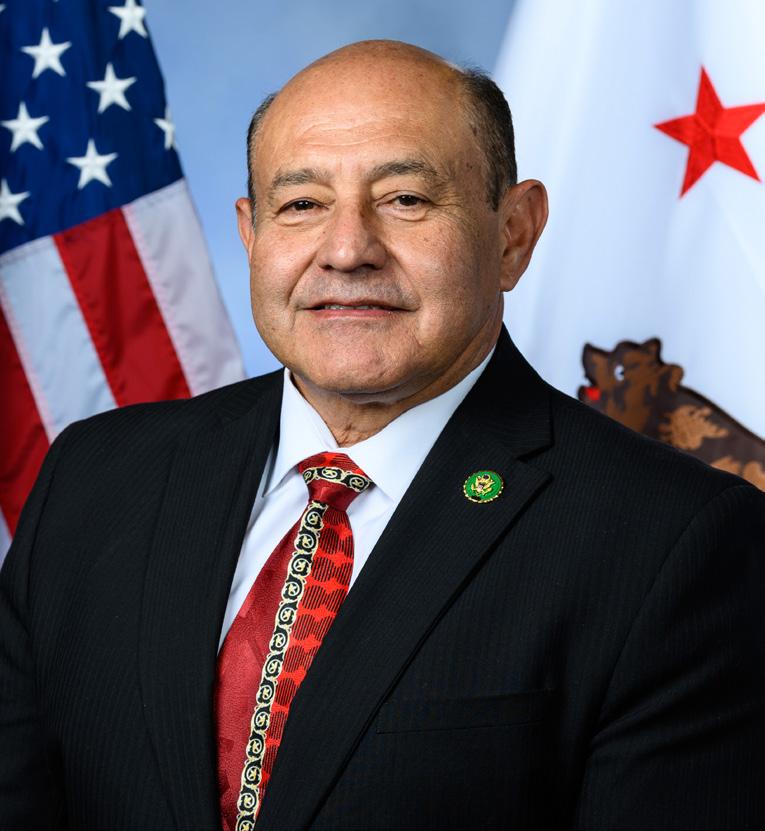
that a lot of business leaders tell him they have a labor shortage and some admit to hiring undocumented immigrants because they have no choice.
"Now you've got (former) President Trump promising massive deportations -what's that going to do to the American economy?" Correa said. "Immigration is about
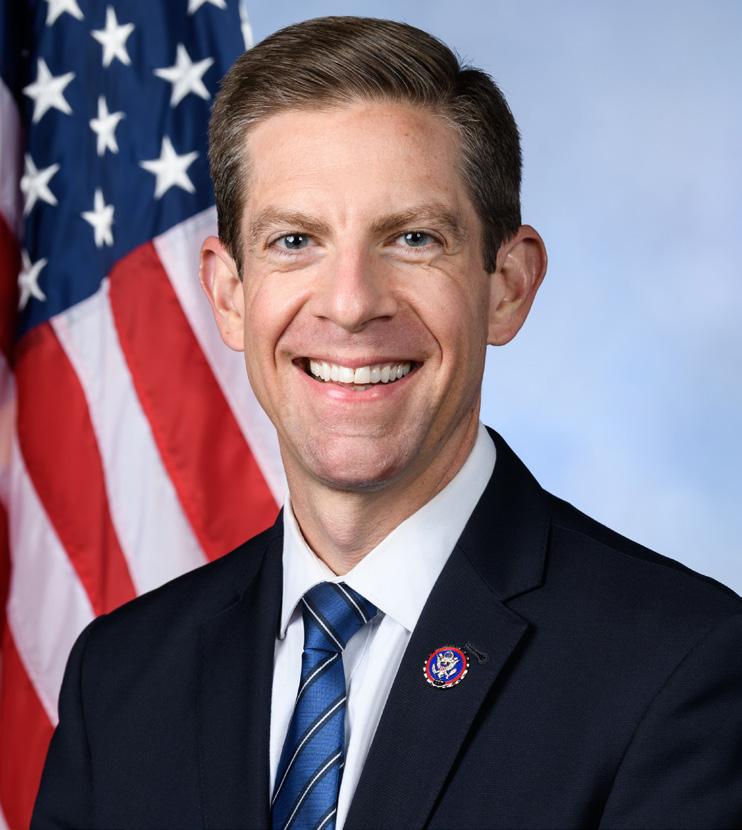
our American economy and how to sustain it. We're going to have worker shortages around the world."
Correa said Biden "clearly got sacked in his own end zone" at the debate.
"But give him a chance to put together some drives," Correa said. "He's putting together a beautiful drive. It's Michigan-style -- four or five yards at a time."
Correa said the turmoil may end up being a blessing in disguise if anxiety about Trump encourages more Democratic turnout.
"Democrats are waking up -- we have a real dog fight on our hands," Correa said. "We have to really work hard and in a way that's the silver lining."
By City News Service
Metro is continuing recruitment efforts forthesecond phase of a program, which will provide 2,000 participants with money to spend on transportation.
Dubbed the Mobility Wallet, qualifying participants can apply at metro.net/ mobilitywallet1, and will have until the end of August to do so. Participants are selected at random and will receive a debit card with $900 in the fall, followed by another $900 refill six months later.
Individuals who apply must be at least 18 years old, live in Los Angeles County and who did not participate in Phase 1 of the pilot. Additionally, applicants must meet the program's household annual income requirements, which is based on the agency's LIFE program:
-- One-person household with an annual income $44.1K or less;
-- Three-person household with an annual income of $56.7K or less;
-- Four-person household with an annual income of $63K or less;
-- Five-person household with an annual income of $68.1K or less; and
-- Six-person household with an annual income of $73.1K or less.
Metro will be working with UCLA and UC Davis to randomly select participants in Phase II. Like in Phase I, the agency will attempt to identify a representative sample and look at different parameters/indicators to select participants. An example of this is transitrich communities versus communities that might be in a transit desert.
Of the 2,000 Mobility Wallets distributed, about 1,000 will be given to participants in South Los Angeles
-- Two-person household with an annual income of $50.4K or less;
and the remaining 1,000 will be sent out countywide.
The agency first launched its prepaid debit card program in May 2023, which provided 1,000 South L.A. participants with $150 per month for 12 months. It allowed them to ride public transportation such as buses, trains, bike shares and Metro Micro vans as well as regional services such as Metrolink and Amtrak. Money could also be used for private buses like Greyhound, Flix Bus and shared rides such as Uber and Lyft.
Metro reported about 60,700 trips via ride hail/taxi/ access services, 70,800 trips via public transit, 2,200 trips via shared scooters and bikes, and 169 bike shop purchases.
Hector Gutierrez, Metro's senior manager of strategic innovation, said based on feedback from the first phase that there's statistical significance the program is providing transportation security.
"It really has been a lifeline to support social connections, supporting the financial security of households in not thinking about transportation cost burden, and I think importantly, it's also been a way to support access to opportunity," Gutierrez told City News Service.
People have been able to get to work, interviews, and medical appointments as a result of the program.
According to Metro, some challenges found in phase one of the program included pre-authorization holds (required by ridehailing and shared mobility service companies), clarification on eligible merchants, and accounts being locked, a security measure for the prepaid debit cards.
To address these issues moving forward, Metro made some changes in this next stage by having two $900 fund distributions.
Additionally, Metro is
developing a Mobility Wallet How-To Guide to help recipients maximize their funds. This guide will provide best practices for signing up for the LIFE program, accessing other income-eligible services, and optimizing wallet usage to meet mobility needs.
"We are also implementing several customer service enhancements, such as Apple/Google Pay functionality, text message alerts and email reminders to encourage participants to check their balances and prevent account locks. Metro is committed to putting customers first and resolving issues quickly," the agency said in a statement.
Avital Shavit, senior director of strategic innovation, told City News Service that in phase two participants will be able to access a virtual Mobility Wallet, something similar to ApplePay.
Similar systems have been in use in New York and San Francisco.
"That's something that the Mobility Wallet is preparing for and something that we will be doing additional research to understand how that kind of fits into the ecosystem long term," Shavit said.
Metro partnered with the city of Los Angeles' Department of Transportation for the program. In the first phase, Mobility Wallet received funding from $2 million from a larger $13.8 million State Trade and Expansion Grant and another $2 million from L.A. City.
In this second phase, Metro secured a $4 million grant from the Southern California Association of Governments.
The pilot program is also aimed at helping the agency test an open loop system for fare collection, meaning riders would be able to use a debit or credit card to tap on a bus or train.
By City News Service
Following updates to venue plans for the 2028 Olympic and Paralympic Games, LA28 officials Friday announced more than a dozen facility assignments that will host sporting events in Los Angeles, Carson and Long Beach.
In addition to diving, gymnastics and track and field, seven more Olympic sports will be coming to venues along Figueroa Street between Exposition Park and downtown Los Angeles, according to LA28, the planning committee preparing for the Games.
Badminton will be played at the USC Sports Center, home of the University of Southern California's basketball and volleyball teams. The Convention Center -- used at the 1984 Games as the Main Press Center -will host five Olympic sports in 2028, including fencing, judo, table tennis, Taekwondo and wrestling.
Judo and wrestling competitions were previously assigned to Pauley Pavillion at UCLA's campus.
Across the street, the Peacock Theater in
San Gabriel Valley Habitat for Humanity (SGV Habitat) last week announced its new program to help low-income homeowners add an accessory dwelling unit (ADU) to their property to provide an affordable rental for a lowincome household. Their program offers a zero-interest construction loan with SGV Habitat serving as the contractor for the project.
This opportunity comes at a time when many Californians are finding that an affordable home is becoming harder than ever to come by, and as ADUs are increasing in popularity across the state.
downtown Los Angeles will host the weightlifting competition. On the other side of the city, golf will be played at The Riviera Country Club in the Pacific Palisades neighborhood of Los Angeles.
The country club has also been used to host the Los Angeles' annual PGA TOUR event, and has previously hosted the US Open, PGA Championship, US Amateur, US Senior Open and NCAA Championships.
In Carson, the L.A. Galaxy's home stadium, Dignity Health Sports Park, will host cycling-track events in the Velodrome, hockey at The Fields adjacent to the stadium, Rugby Sevens in the stadium and tennis in the Tennis Center.
The Velodrome is an official U.S. Olympic Training Site and serves as the home track for USA Cycling's national track and cycling program. The Fields, currently used as training grounds for the LA Galaxy, will be made into a temporary hockey venue.
The Tennis Center is home to the U.S. Tennis Association's High-Performance
Training Center and has hosted various professional Women's Tennis championships and tournaments.
In the 1984 Games, Carson's Velodrome hosted cycling-track events, and has since been refurbished.
Long Beach will host handball events at the Long Beach Arena, canoe-spring and rowing events at Marine Stadium, sailing will be held in the water along the Belmont Shore, water polo at temporary aquatics center at the Convention Center lot, and marathon swimming and triathlon competitions will be held at the Waterfront along Alamitos Beach.
Rowing and canoe spring was previously set to be held at Lake Perris, in Riverside County, but officials relocated the event to Long Beach, which involved arrangements supported by the World Rowing Congress.
The city of Long Beach previously hosted archery, fencing, sailing and volleyball at the 1984 Games. Long Beach's Marine Stadium also hosted rowing events at the 1932 Games.
"The 2028 Olympic and Paralympic Games will reflect
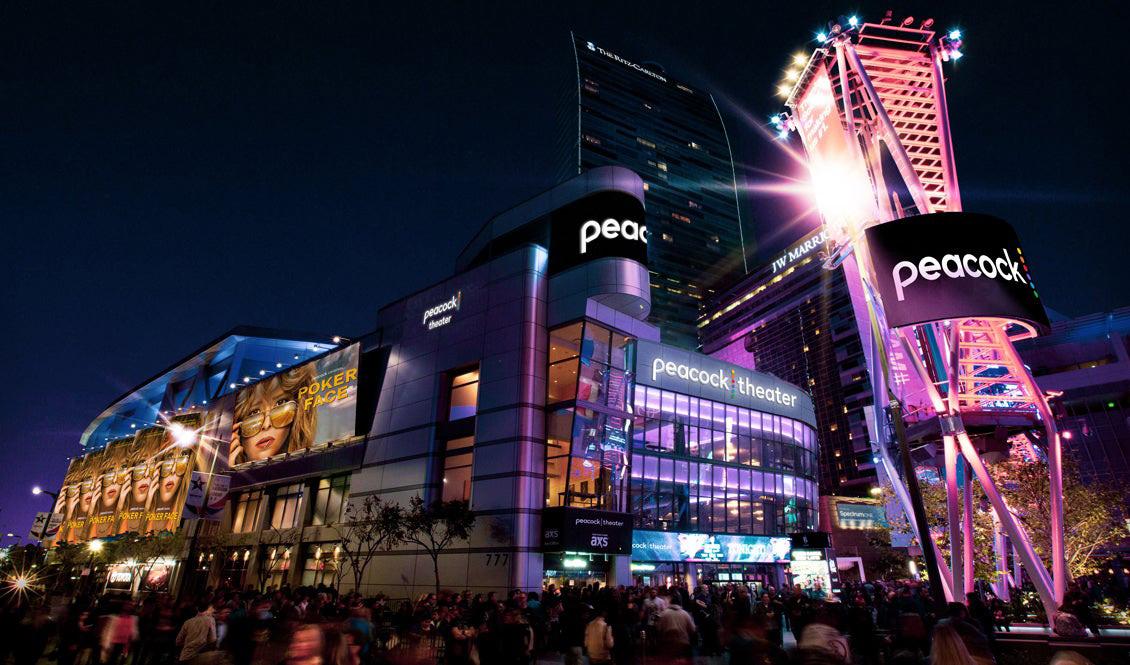
all that the Los Angeles area has to offer, and with these venue assignments, we're very proud to bring the Games to many of our vibrant and diverse communities," said LA28 Chief Athlete Officer Janet Evans. "The city of Los Angeles will host more Olympic sports than anywhere else, and Carson and Long Beach, which hosted competitions in previous Games, will host more competitions than ever before."
Evans described the venues as "world-class," and these sites will provide the
best conditions for athletes and fans.
According to LA28, the announcement includes venue assignments that are both unchanged from the original 2017 bid plan, along with new facilities. These assignments have been approved by the International Olympic Committee Executive Board and assessed in consultation with each respective International Federation, as well as follow Games Agreements with the cities of Carson and Long Beach.
Per guidelines, LA28 will
not use existing corporate or philanthropic names for stadiums and arenas for Games purposes.
Officials say that in the months ahead, additional venue assignments in the city of L.A. and elsewhere will be announced, including for new sports that have been added since the original bid plan. LA28 previously proposed several venue assignments that move some competitions outside of L.A.'s boundaries, which requires written consent from city leaders. The L.A. City Council is currently reviewing that proposal.
By Staff
According to a recent report by the California Housing Partnership, the state needs to build 1.2 million affordable homes to meet the needs of lowincome renters. However, nationwide median rent in the United States increased by 22 percent in the five years between 2016 and 2021, while median household incomes increased by only 15 percent during the same period.
“The need for affordable housing in the area is overwhelming and opportunities like adding ADUs to communities allow families to stay in neighborhoods they grew up in and helps

aging adults stay close to their support systems,” says SGV Habitat CEO Bryan
Wong. “Since I started this job in 2021 it has been my goal to dramatically
increase the number of affordable dwellings in the San Gabriel Valley and this is just one way we are doing that.”
Housing advocates have long touted ADUs as a solution to shortages and rising living costs. ADUs (small rental units that can be added to existing properties and ease housing shortages) are at the forefront of the efforts to supply more affordable units. ADUs are an attractive option because these units are affordable to construct, quick to build and generate revenue to the homeowner.
Through Friday SGV Habitat will showcase
their ADU program as a 3-bedroom, 2-bathroom ADU home is built in partnership with a local Baldwin Park family. Hundreds of volunteers will assist with the project including individuals from throughout the San Gabriel Valley and groups from the Western States Regional Council of Carpenters, Southern California Edison, San Gabriel Valley Council of Governments, the International Brotherhood of Electrical Workers (IBEW) and others. Those interested in volunteering can learn more and sign up at https:// sgvhabitat.org/volunteer/ blitz-build/.