
Trump’s lawyers told the court that no one would give him a bond. Then he got a lifeline, but they didn’t tell the judges.
By Robert Faturechi, Justin Elliott and Alex Mierjeski, ProPublica
Former President Donald Trump scored a victory last month when a New York court slashed the amount he had to put up while appealing his civil fraud case to $175 million.
His lawyers had told the appellate court it was a “practical impossibility” to get a bond for the full amount of the lower court’s judgment, $464 million. All of the 30 or so firms Trump had approached balked, either refusing to take the risk or not wanting to accept real estate as collateral, they said. That made raising the full amount “an impossible bond requirement.”
But before the judges ruled, the impossible became possible: A billionaire lender approached Trump about providing a bond for the full amount.
The lawyers never filed paperwork alerting the appeals court. That failure may have violated ethics rules, legal experts say.
In an interview with ProPublica, billionaire California financier Don Hankey said he reached out to Trump’s camp several days before the bond was lowered, expressing willingness to offer the full amount and to use real estate as collateral.
“I saw that they were rejected by everyone and I said, ‘Gee, that doesn’t seem like a difficult bond to post,’” Hankey said.
As negotiations between

Hankey and Trump’s representatives were underway, the appellate court ruled in Trump’s favor, lowering the bond to $175 million. The court did not give an explanation for its ruling.
Hankey ended up giving Trump a bond for the lowered amount.
It’s unclear if Trump lawyer Alina Habba or the rest of his legal team were made aware that Hankey reached out about a deal for the full amount. Trump’s legal team did not respond to requests for comment.
After ProPublica reached out to Trump’s representatives, Hankey called back and revised his account. He said he had heard “indirectly” about ProPublica’s subsequent inquiries to Trump’s lawyers. In the second conversation, he said that accepting the real estate as
collateral would have been complicated and that he wouldn’t have been able to “commit” to providing a bond in the full amount “until I evaluate the assets.”
Legal ethics experts said it would be troubling if Trump’s lawyers knew about Hankey’s approach and failed to notify the court.
New York state’s rules of professional conduct for lawyers forbid attorneys from knowingly making false statements to a court. At the time Trump’s lawyers told the court that meeting the bond would be impossible, Hankey said he had not yet reached out to the Trump team.
But the rules of conduct also dictate that lawyers must “correct a false statement of material fact or law previously made” to the court.
“If that deal was on the table for the taking, the representation from the earlier time would be untrue, and the lawyer would have an obligation to correct,” said Stephen Gillers, a legal ethics professor at New York University Law School.
In the rules of conduct for lawyers, the failure to update an important piece of evidence would fall under what’s referred to as the “duty of candor to a tribunal,” said Ellen Yaroshefsky, a professor of legal ethics at Hofstra Law.
“Any judge is going to be furious that this wasn’t corrected,” she said.
Scott Cummings, a legal ethics professor at UCLA’s law school, agreed that there was a potential ethical failure but said Trump’s lawyers could argue that they were not obligated to alert the court.
“A very narrow reading of this rule would be there is no obligation to report because it wasn’t a false statement at the time,” Cummings said.
The need for the bond arose from a case brought against Trump by the New York attorney general, who accused him of fraudulently inflating his net worth to get favorable loans and other benefits. A judge agreed and ordered Trump and the other defendants to pay $464 million.
We Are LA program
receives
$2.8M investment
By City News Service
Two organizations on Monday donated a combined $2.8 million to support the Mayor's Fund of Los Angeles, a nonprofit closely associated with Mayor Karen Bass and efforts to prevent evictions and homelessness.
The Bob & Dolores Hope Foundation gave $1.5 million and Health Net gave $1.3 million to invest in the Mayor's Fund for Los Angeles' We Are LA program, which aims to prevent evictions by connecting renters with resources. On its website, the nonprofit, which is overseen by an independent board of directors, noted it has helped more than 411,000 at-risk Angelenos, and provided targeted outreach to people who have received notices of intended eviction.
"We must bring unhoused Angelenos inside while doing all that we can to prevent people from falling into homelessness in the first place, and that means local government partnering with businesses and philanthropists across the city to confront this crisis," Mayor Karen Bass said in a statement.
The two organizations join L.A. Care Health Plan, which made previous investments totaling $1.8 million, as the program's largest donors. L.A. Care Health Plan's donation helped the program off the ground.
Bass recognized L.A. Care Health Plan's "generous donation" and commended The Bob & Dolores Hope Foundation and Health Net for taking a similar step and joining the effort.
"This is not a fight we will win if private philanthropy does not lock arms with us in this effort to provide the life-saving resources that Angelenos deserve," Bass said in a statement. "Thank you to our philanthropic partners for locking arms and partnering with us to confront the greatest challenge facing our city."
On top of outreach, the We Are LA program offers a hotline and organizes tenant resource clinics to help reach anyone who may face eviction. A member of the program will connect with a person in need of help, then a caseworker assesses all of the resources available to that individual and helps them through the process of applying for government, other charitable aid and even legal services.
"There were nearly 6,000 notices of eviction filed in March alone," President and CEO Conway Collis of the Mayor's Fund said in a statement. "These are life-saving gifts that will help us prevent thousands of Angelenos — including families and children — from falling into homelessness."
The Mayor's Fund has served more than 32,000 individuals and families to help them avoid eviction and stay housed. Additionally, the nonprofit recently formed a partnership with U.S. VETS to help service veterans in Los Angeles and is beginning new programs to directly serve vulnerable popu-
Local. Relevant. Trusted. VOL. 12, NO. 166
April 11-April 17,
Thursday,
2024
Pg 02
Caltrans puts up fences to deter illegal dumping in SFV, Pasadena
Pg
Billboards promote gun safety, free locks in Los Angeles County
14
See We Are LA Page 28
This story was originally published by ProPublica. ProPublica is a Pulitzer Prize-winning investigative newsroom. Sign up for The Big Story newsletter to receive stories like this one in your inbox.
Former President Donald Trump holds a campaign rally at the Rochester Opera House in Rochester, New Hampshire, on Sunday, Jan. 21, 2024. | Photo by Liam Enea CC BY-SA 2.0 DEED
See Trump Page 28 INDEPENDENT VISIT BURBANKINDEPENDENT.COM
Caltrans puts up fences to deter illegal dumping in SFV, Pasadena
By Staff





Caltrans on Tuesday announced the completion of a $1.3 million project in the north San Fernando Valley and Pasadena that installed new fences to combat illegal dumping, bolster litter collection and remove graffiti.
Via the Clean California initiative, "more durable and visually appealing fencing" is now up along stretches of the Golden State (5) Freeway, Interstate 210 and the 118 Freeway, according to Caltrans.

“These fencing improvements capture the vision of Clean California by improving infrastructure in both form and function,” Caltrans Director Tony Tavares said in a statement. “Protecting freeway access and roadside cleanliness from illegal dumping lifts community spirit and provides a better transportation experience for everyone.”
Gov. Gavin Newsom’s Clean California initiative is a $1.2 billion, multiyear clean-up effort that directs Caltrans to remove trash and "transform and beautify public spaces," officials said.

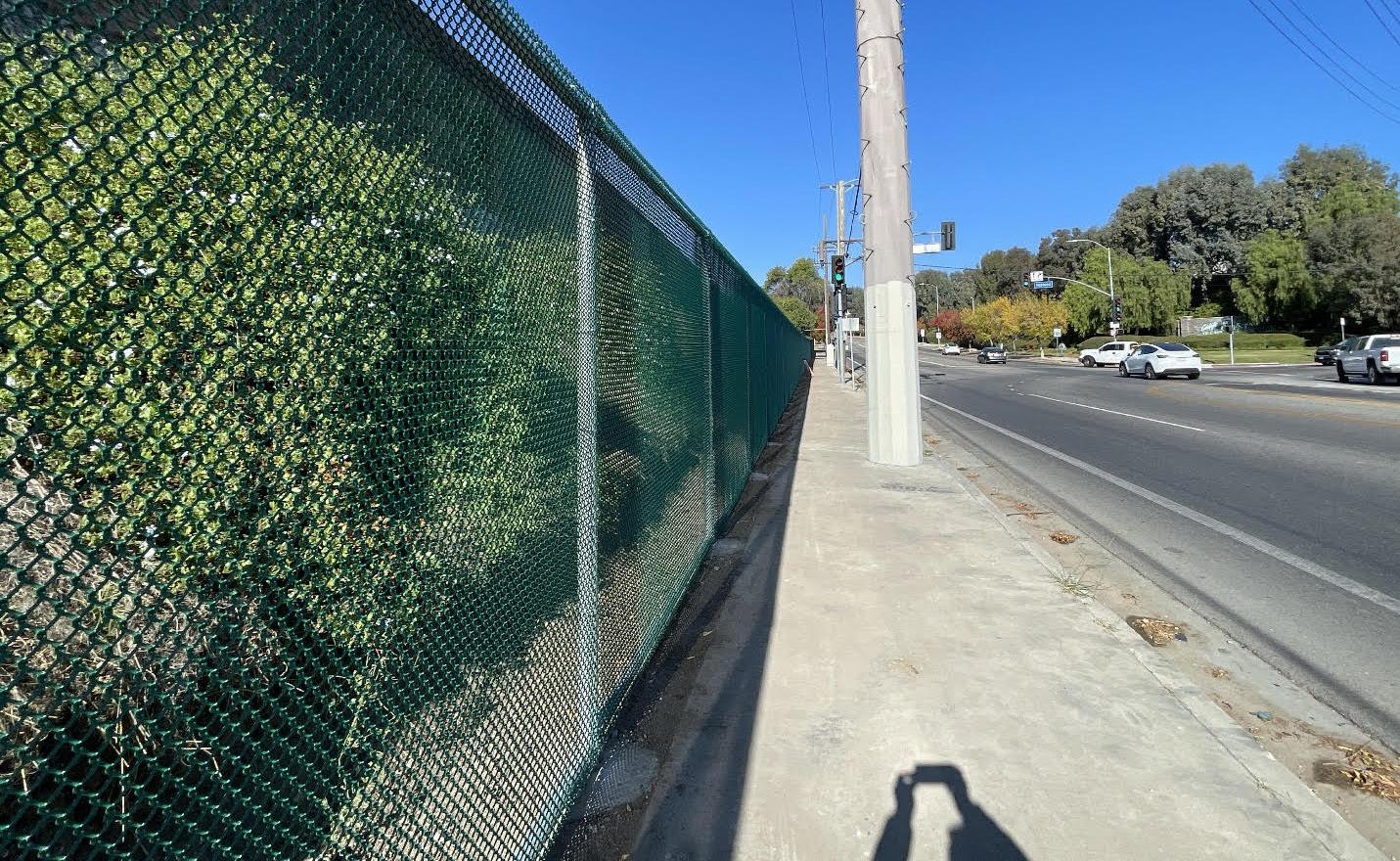



Eight locations received new fencing:
Sylmar — along the northbound 5 Freeway at Hubbard Street and near the I-210 interchange;
Lake View Terrace — along the 210 Freeway at eastbound Foothill Boulevard; and Pasadena — at three locations along the 210: eastbound Washington Boulevard, eastbound Claremont Street and eastbound Hammond Street.
“I’m very pleased that this project benefits the traveling public and several underserved communities by enhancing neighborhood connectivity and aesthetics," Gloria Roberts, director of Caltrans District 7, said in a statement. "This includes
Arleta — along I-5 on the southbound side of Paxton Street; Pacoima — along the 118 Freeway from eastbound Dronefield Avenue to Foothill Boulevard;
improving the visual quality of the communities, preventing unsafe freeway access, and reducing litter and graffiti.”
Clean California funding has gone to 319 projects statewide since July 2021, according to Caltrans. The projects help improve "public spaces, tribal lands, parks, neighborhoods, transit centers, walking paths, streets, roadsides, recreation fields, community gathering spots, and places of cultural importance or historical interest in underserved communities."
Caltrans estimated that the initiative, driven by local volunteers, has picked up 2.3 million cubic yards of trash — which would fill
approximately 700 Olympicsize swimming pools. That's a 760% increase compared with previous Caltrans efforts to collect litter.
California's transportation agency has hosted more than 500 free dump days in communities statewide that has collected more than 12,000 mattresses and nearly 50,000 tires, officials reported. Clean California has drawn more than 10,000 volunteers to community clean-up events and created 15,000 jobs that include positions for individuals who were incarcerated, on probation or at risk of becoming homeless.
More information on Clean California is online at cleancalifornia.dot.ca.gov/.
San Gabriel Farmers Market to begin April 27
By Staff
The San Gabriel Farmers Market is set to debut later this month, offering market offers a wide variety of farm-fresh fruits and vegetables, hot foods and artisanal goods, the city announced Friday.
The grand opening celebration, planned for April 27, seeks to draw San Gabriel residents and visitors to shop from more than 20 vendors, according to the city. The market will continue every Saturday from
8:30 a.m. to 1:30 p.m. at the San Gabriel Park and Ride Lot, 257 S. Mission Dr.
"As a special treat, the first 50 shoppers each Saturday until May 25 will receive a free San Gabriel Farmers Market tote bag," officials said.

Street parking and additional parking at the Mission Playhouse is available. Market vendors accept EBT and WIC payment methods "to support incomequalified and senior visitors," city officials said. Pets are not permitted at the market, but service animals are welcome, officials said.
Questions about the event should be sent to farmersmarket@sgch.org, and a list of vendors is online at sangabrieled.com/farmersmarket.
2 APRIL 11-APRIL 17, 2024 BeaconMediaNews.com Alhambra PRESS Baldwin Park INDEPENDENT INDEPENDENT San Bernardino Press Belmont Beacon City Temple Tribune GabrielSan Sun A zusa B eacon Rosemead Reader D uarte ispatch Publisher Von Raees COO Andrea Tange Vice President Sam Kubert Editorial Fabiola Diaz Joe Taglieri Designer/ Production Renia Barouni Weekly Contributors May S. Ruiz Sales Fred Bankston José Luis Correa Legal Advertising Annette Reyes Crystal Cortez Accounting Vera Shamon All Inquiries info@beaconmedianews.com info@hlrmedia.com BEACON MEDIA ADDRESS: 820 S. Myrtle Ave. Monrovia, CA 91016 Phone: (626) 301-1010 www.beaconmedianews.com HLR MEDIA ADDRESS: 820 S. Myrtle Ave. Monrovia, CA 91016 Phone: (626) 301-1010 www.HLRmedia.com PRESS RELEASE SUBMISSIONS editor@beaconmedianews.com editor@hlrmedia.com Submissions Policy Beacon Media, Inc. and HLR Media, LLC All contents herein are copyrighted and may not be reproduced in any manner, either in whole or in part, without the express written consent of the publisher. The Views and opinions expressed in this paper are not necessarily that of the management and staff at Beacon Media, Inc. or HLR Media, LLC. The Arcadia Weekly has been adjudicated as a newspaper of general circulation in court case number GS 004333 for the City of Arcadia, County of Los Angeles, State of California. The Monrovia Weekly has been adjudicated as a newspaper of General Circulation in Court Case GS 004759 City of Monrovia, County of Los Angeles, State of California. The Temple City Tribune has been adjudicated as a newspaper of general circulation in court case number GS 012440 City of Temple City, County of Los Angeles, State of California. The El Monte Examiner has been adjudicated as a newspaper of general circulation in court case number KS 015872 City of El Monte, County of Los Angeles, State of California. The Azusa Beacon has been adjudicated as a newspaper of general circulation in court case number KS 015970 City of Azusa, County of Los Angeles, State of California. The San Gabriel Sun has been adjudicated as a newspaper of general circulation in court case number GS 013808 City of San Gabriel, County of Los Angeles, State of California. The Duarte Dispatch has been adjudicated as a newspaper of general circulation in court case number GS 013893 City of Duarte, County of Los Angeles, State of California. The Rosemead Reader has been adjudicated as a newspaper of general circulation in court case number GS 048894 City of Rosemead, County of Los Angeles, State of California. The Alhambra Press has been adjudicated as a newspaper of general circulation in court case number ES016581 City of Alhambra, County of Los Angeles, State of California. The Baldwin Park Press has been adjudicated as a newspaper of general circulation in court case number KS017174 City of Baldwin Park, County of Los Angeles, State of California. The Burbank Independent has been adjudicated as a newspaper of general circulation in court case number ES016728 City of Burbank, County of Los Angeles, State of California. The Glendale Independent has been adjudicated as a newspaper of general circulation in court case number ES016579 City of Glendale, County of Los Angeles, State of California. The Monterey Park Press has been adjudicated as a newspaper of general circulation in court case number ES016580 City of Monterey Park, County of Los Angeles, State of California. The West Covina Press has been adjudicated as a newspaper of general circulation in court case number KS017304 City of West Covina, County of Los Angeles, State of California. The San Bernardino Press has been adjudicated as a newspaper of general circulation in court case number CIVDS 1506881 City of San Bernardino, County of San Bernardino, State of California. The Riverside Independent has been adjudicated as a newspaper of general circulation in court case number RIC1505351 City of Riverside, County of Riverside, State of California. The Pasadena Press has been adjudicated as a newspaper of general circulation in court case number ES018815 City of Pasadena, County of Los Angeles, State of California. The Belmont Beacon has been adjudicated as a newspaper of general circulation in court case number NSO30275 City of Long Beach, County of Los Angeles, State of California. The Anaheim Press has been adjudicated as a newspaper of general circulation in court case number 30-2017-00942735-CU-PT-CJC City of Anaheim, County of Orange, State of California. The Ontario News Press has been adjudicated as a newspaper of general circulation in court case number CIVDS 1506881 City of Ontario, County of San Bernardino, State of California. The Corona News Press has been adjudicated as a newspaper of general circulation in court case number RIC1723524 City of Corona, County of Riverside, State of California.
NEWS
Caltrans officials hope a new fence in Pacoima on Dronefield Avenue will prevent illegal dumping.
| Photo courtesy of Caltrans
| Photo courtesy of the city of San Gabriel
If you've shopped at Walmart, Target, Costco, Whole Foods or many other large grocery chains recently, there's a chance you purchased food produced by prison labor, according to a years-long investigation published by The Associated Press this week. Beef, soybeans, corn and wheat are just some of the products that have found their way into consumer markets from prison farms and barns.
While a 1935 law makes it illegal to transport goods made by "convict labor" across state lines, an exemption exists for agricultural commodities that today amounts to hundreds of millions of dollars of commerce, according to the AP's reporting.
The Marshall Project found that the discovery itself isn't totally novel. Reports dating back years have routinely revealed that prison labor is part of the American food supply chain. But by dispatching reporters to follow trucks leaving prison industries, the AP was able to uncover some of the ways that these products are hidden in complex trade networks that obscure where things come from and where they go; often to be sold by corporations that claim not to use prison labor.
As the report notes, agriculture is actually just a small portion of the overall labor that incarcerated people do in prisons and jails nationwide. That includes both
The food on your table, brought to you by prison labor
By Jamiles Lartey for The Marshall Project and Stacker
work in prisons tied to their daily maintenance, prison industries, and people who are leased out to work in the free world.
For the vast majority, that work is barely paid — if at all — with the average prison salary maxing out at 52 cents per hour. A recently proposed raise in California and a recently passed raise in Pennsylvania were both measured in cents, not dollars. Prison labor is also performed without legal health and safety protections, even for extremely unsanitary or dangerous work, like fighting wildfires.
For many people in prison, jobs are done under threat of penalty.
"What makes it forced … is that if you quit, you're punished," Johnny Perez told The Nation last year.
Perez worked in textile manufacturing in the New York State prison system, making 32 cents an hour. He continued: "In prison, there's no calling in [sick] for Covid;
you're going into solitary, or you're going to get a behavior report."
The deprivations of prison life create their own grim work incentives, even when it's not built explicitly on punishment.
Carla Simmons described how the food has gone from bad to worse at her Georgia prison, and how she's never full from kitchen meals alone. Georgia is one of a few remaining states where prisoners are generally paid nothing, and prison staff there reward work with quarterly "incentive meals" or the fleeting possibility of a prize bag full of mostly expired snacks.
Simmons described people jockeying for work assignments based on the likelihood of being able to fish a prison guard's disposed food out of the trash.
"The desire for a stable food source is a basic human need, and the carceral system operates by exploiting that desire," Simmons wrote.
The Associated Press investigation came two months after a group of incarcerated people in Alabama sued the state prison system for creating what they call a "modern-day form of slavery."
The suit alleges that prison officials deny parole to worthy candidates in order to keep them in the state's program that leases out prisoners to local businesses and governments. People who participate in these programs are legally required to be paid the prevailing wage for the job, but the corrections department is allowed to take 40%, and to charge fees for necessities like laundry and transportation to the job site.
The suit alleges that the state's prison labor practices violate several laws, including the Alabama constitution, which, due to a recent amendment, bans slavery and involuntary servitude as punishment for crime.
The amendment passed in 2022, when Alabama joined a handful of other states
in ratifying the language. Since then, about a dozen more states have introduced similar proposals.
Such amendments don't always have the impact that advocates intend.
Colorado was the first state to pass one in 2018, but four years later incarcerated people there also filed a lawsuit against the prison system, arguing that the state still uses punishment to force prisoners to work against their will. The state said in court filings that it does take privileges away from people who refuse to work, but argued that this is different from punishment.
Like many people on the outside, people in prison often find deep purpose and satisfaction in work. For the Prison Journalism Project, Lexie Handlang described how a job driving a tractor was the one thing that made her feel like a human behind bars, offering a sense of normalcy and a break from the monotony of life in her housing unit.
In a 2017 opinion article, Chandra Bozelko, who found similar fulfillment in her prison job, worried that political pressure against prison labor might actually be hurting incarcerated people.
"Socially conscious businesses and agencies are likely to pay inmates higher wages, train them for better jobs and do more to prepare them for life after prison," Bozelko reasoned, so it would be better "if those companies aren't scared away by vociferous critics of prison labor."
Bozelko argued that the best solution is for incarcerated workers to be allowed to unionize. Currently, the right to organize is one of the many labor protections that is not available in prisons, according to a 2022 report by the American Civil Liberties Union.
Others feel very differently. Ivan Kilgore views prison labor as a distraction from the degradations of the carceral system, and argued that to consider himself a "worker" in prison is to misunderstand the situation.
"Prison work assignments, presented to us as privileges, serve to lure us into conformity with the prison's disciplinary regime, amounting to complicity and participation in the production of our own continued enslavement," Kilgore wrote for Inquest last year.
Republished pursuant to a CC BY-NC 4.0 license. This article was copy edited from its original version.

APRIL 11-APRIL 17, 2024 3 BeaconMediaNews.com NEWS
V.I.P. TRUST DEED COMPANY OVER 40 YEARS OF FAST FUNDING Principal (818) 248-0000 Broker WWW.VIPLOAN.COM *Sufficient equity required - no consumer loans Real Estate License #01041073 Private Party loans generally have higher interest rates, points & fees than conventional discount loans RETIRED COUPLE HAS $1MIL TO LEND ON CA. REAL ESTATE* CA Department of Real Estate, NMLS #339217 Buys T.D.s and Buys/Lends on Partial Interests
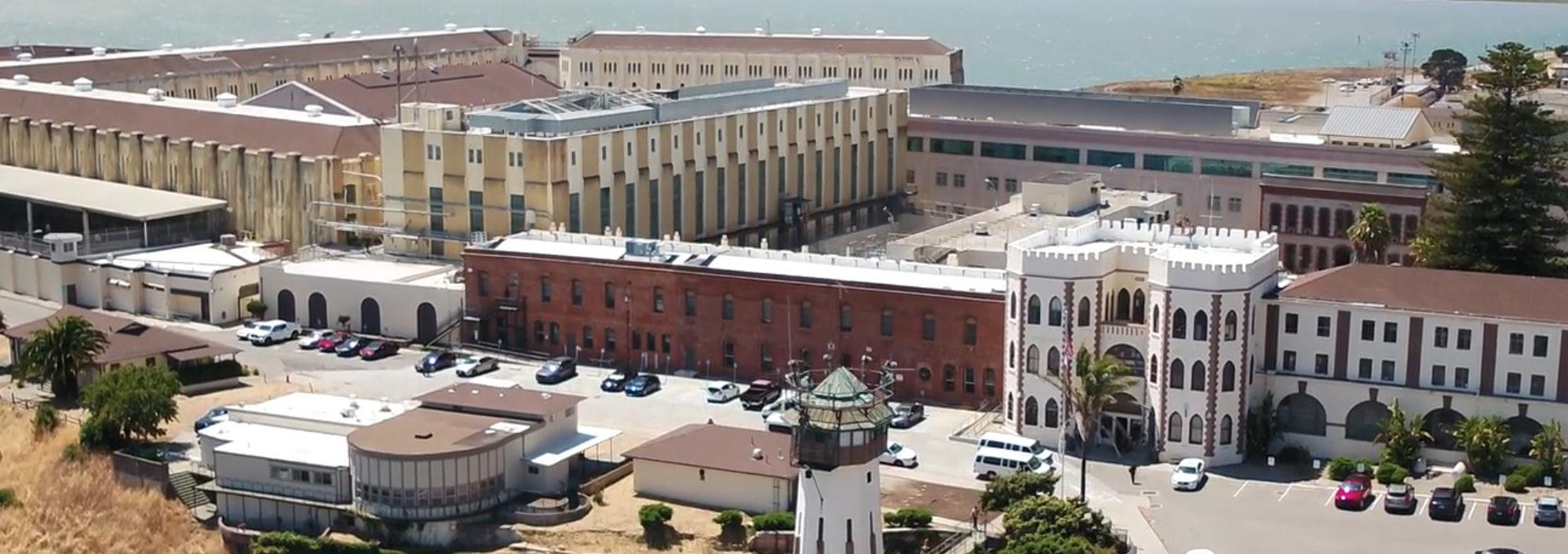
San Quentin state prison in the San Francisco Bay Area. | Photo courtesy of the California Department of Corrections and Rehabilitation
Los Angeles
Monterey Park
Monterey Park’s annual Cherry Blossom Festival slated for April 27-28
Monterey Park has announced that the 24th Annual Cherry Blossom Festival will be April 27-28. The free two-day event will include music and dance performances on two stages, a food court with a delicious spread of Japanese and Asian food, a children’s craft booth, and a full line-up of vendors selling unique crafts and merchandise. This year the Cherry Blossom Festival will also feature an anime and cosplay exhibition—complete with a costume contest. The City will be offering free shuttles from Langley Senior Center, and Ynez and Repetto Elementary Schools.
Glendale
Glendale announces annual Armenian Genocide commemorative events
The City of Glendale has announced its Annual ArmenianGenocide
Commemorative Event, for Sunday, April 21, 2024, at 4 p.m., at the Alex Theatre. This year's theme, "1.5 Million+," pays tribute to the strength of survivors while honoring the memory of the victims of the 1915 Genocide. Attendees can expect firsthand accounts of the persistent challenges and displacement confronting Armenians as produced by Nairi Bandari including footage from Zartonk Media. The event will showcase traditional performances by the Character Dance Group and the Haikian Chamber Choir. For a list of all events, visit glendaleca.gov.
Monrovia
Old Town Wine Walk this Saturday
The annual Old Town Wine Walk will take place Saturday from 6 to 9 p.m. Stroll down the street and explore each business while sampling various wine offerings. Registration is required, so purchase your tickets at eventbrite.com/e/2024-oldtown-monrovia-wine-walktickets-795685535857 or in person at the Community
REGIONALS
Center or Charlie’s House, 430 S. Myrtle Ave. Tickets are $45.00 pre-sale and $60.00 at the event, if it does not sell out. Contact the Community Center for any questions at (626) 256 – 8246.
Duarte
City to host in-person broadband focus group
The City of Duarte will be hosting an in-person Broadband Focus Group on Thursday, May 2 at the Duarte Community Center (1600 Huntington Drive). The event will run from 67:30 p.m. This focus group allows members of the Duarte community to share their thoughts, experiences, and ideas regarding internet access in the city.
Orange County
Orange County
OC Zoo awarded by California Parks and Recreation Society
The OC Zoo recently received the Parks Make Life Better Award from California Parks

and Recreation Society District 10. The award is given to an outstanding facility, park or program in Orange and Los Angeles counties that has made a significant impact on the community it serves. Admission to the OC Zoo is $2 per person ages 3 and older. Visit ocparks.com/ oc-zoo for more information.
Rancho Days Fiesta slated for next month
Explore the history of Orange County's rancho era through hands-on activities, crafts, music, dance and more at the free Rancho Days Fiesta on May 2 at 25151 Serrano Rd, Lake Forest, CA 92630. There will be Native American and folklorico dancing, early California ranching hands-on activities and exhibitors, music, piñata breaking, crafts for children, charro horse riding, and roping demonstrations. Pets are welcome outdoors only on leashes no longer than 6 feet.
Riverside
Riverside Art Market slated for April 13
The 9th annual Riverside Art Market, at White Park in downtown Riverside, will feature 100 artist vendors, art and other activities for children, art demonstrations, entertainment, food, beer and wine, and much more. All proceeds support the Riverside Art Museum; last year over $25,000.
City of Riverside
Riverside Convention Center to host 2024 FCCLA Conference
The California Family, Career
and Community Leaders of America will host its 2024 State Leadership Conference at the Riverside Convention Center
April 27-30. According to the FCCLA, the conference will focus on leadership development, career exploration and competitive recognition events. Members will compete in the state finals of the Competitive Recognition Events, showcasing their talents and achievements in various areas. "Each year, the State Leadership Conference brings together our state's brightest young leaders to learn, grow, and inspire one another," FCCLA representative Melissa Webb said. More information is available at ca-fccla. org.
Corona
Cinco de Mayo Parade and Fiesta slated for May 4
The Cinco de Mayo Parade and Fiesta returns Saturday, May 4. The parade will start at 10 a.m. and will run from 6th Street and Merrill and will end at Corona City Park. The fiesta will be from 11 a.m. to 5 p.m. For more information, visit coronacincodemayo.net.
San Bernardino
San Bernardino County Agriculture/Weights & Measures issues precautions on backyard fruits
San Bernardino County Agriculture/Weights & Measures is working to raise awareness about the threats of citrus diseases, such as Huanglongbing and the Asian citrus psyllid, that has been infecting citrus crops, including backyard fruits, in San Bernardino County. San Bernardino County
residents are highly encouraged to learn more about the guidelines before donating fresh homegrown produce by checking the agricultural quarantine areas first. For more information or questions about the San Bernardino County quarantines, visit awm. sbcounty.gov/acp-hlb, the CDFA Citrus Pest and Disease Division at.cdfa.ca.gov/Citrus/, or the California Citrus Threat at californiacitrusthreat.org.
City of San Bernardino
Feldheym Library to hold book sale on April 13
The popular Saturday Book Sale is returning to San Bernardino’s Norman F. Feldheym Library on April 13 from 10 a.m. until 4 p.m. Books, magazines and various types of reading materials, in addition to DVDs, music and more will be available for purchase. The sale will also feature a special $3 bag sale on Saturday, April 13, where patrons can fill a bag with books for only $3. Feldheym Central Library is located 555 West Sixth Street in San Bernardino. The Book Sale room is on the south side of the Library, with the entrance separate from the main library. All sales are cash only and denominations of $20 or less will be accepted.
Ontario
Community Clean-Up Event in Ontario Saturday
Stop by the Ontario Police Department on Saturday from 8 a.m. to noon for the Community Clean-Up Event. The department will be accepting items, like recyclables, lumber, mattresses and more. Workshop tools, car batteries, and household hazardous waste will not be accepted.

4 APRIL 11-APRIL 17, 2024 BeaconMediaNews.com
Monrovia
March 28
At 2:55 p.m., Azusa PD requested assistance regarding a grand theft auto vehicle pursuit that ended in the area of Myrtle and the 210 freeway in Monrovia. The suspect crashed the vehicle into an uninvolved party and then struck an Azusa PD vehicle. Azusa PD had two suspects detained while two other suspects had fled on foot. With the assistance of MFD one of the suspects was located and the other suspect was located nearby. All suspects were taken into custody by Azusa PD.
March 29
At 1:12 a.m., an officer conducted a traffic stop in the 200 block of South Myrtle on a vehicle for a vehicle code violation. Further investigation revealed the driver was too intoxicated to safely operate a motor vehicle. The driver was arrested and transported to the MPD jail to be held for a sobering period.
At 9:12 a.m., a caller in the 200 block of West Colorado called to report that she lost her car keys and that her vehicle had been stolen. The vehicle was entered in the system as stolen. This investigation is continuing.
At 10:14 a.m., a vehicle burglary was reported in the 1600 block of South Mountain. The caller reported that tools were taken. This investigation is continuing.
At 2:48 p.m., a caller in the 700 block of South Myrtle reported his bicycle was stolen. This investigation is continuing.
At 4:58 p.m., a petty theft was reported in the 1100 block of South Fifth. The caller stated that the tailgate to his truck was stolen. This investigation is continuing.
At 7:59 p.m., a victim in the 300 block of East Lemon reported her husband battered her. Officers and MFD responded and made contact with the victim who was visibly suffering from injuries. She was treated at the scene. The husband was arrested and taken into custody.
At 11:03 p.m., a resident in the 800 block of West Walnut reported that her friend collapsed and was not breathing.
Officers responded and found a male adult subject on the ground with bluish skin and barely breathing. After using three separate doses of narcan the male adult subject started breathing normally and was revived. Paramedics arrived and transported him to a hospital for medical treatment.
March 30
At 2:20 a.m., a collision was reported in the 600 block of West Duarte. Officers arrived and made contact with the driver who had collided into a parked car and a city sign. The driver was not injured but appeared to be heavily intoxicated. An investigation revealed the driver was under the influence. He was arrested and transported to the MPD jail to be held for a sobering period.
At 6:51 a.m., officers were dispatched to the 200 block of East Central regarding a traffic collision. Officers arrived and made contact with the driver who displayed signs of being under the influence. An investigation revealed that the driver was driving on the wrong side of the road and he was under the influence of alcohol. He was arrested and transported to the MPD jail to be held for a sobering period.
At 9:52 a.m., a caller in the 1000 block of Royal Oaks stated her vehicle was stolen. This investigation is continuing.
At 4:14 p.m., a theft was reported in the 700 block of East Huntington. The caller reported her wallet stolen. This investigation is continuing.
At 7:30 p.m., an employee of a store in the area of 6th and Duarte reported a customer failed to place his car in park and it slowly rolled forward, shattering the front window with the customer still in the vehicle. Officers and MFD arrived, but no one was injured. This investigation is continuing.
At 8:58 p.m., a caller reported two motorists collided into one another in the area of Huntington and California. Officers arrived and found one of the drivers was complaining of pain. MFD responded and provided care for the injured driver. He refused to be transported to a hospital. The driver who was found to have caused the crash
BLOTTERS
was issued a citation.
March 31
At 2:59 a.m., a resident in the 600 block of Royal Oaks reported an adult male subject shattered several front windows to their home and left the area. Officers were able to locate the suspect a short distance away. An investigation revealed the suspect was also intoxicated. He was arrested and taken into custody.
April 1
At 10:10 p.m., a caller in the 1600 block of South Mountain called to report a male and female subject walked into the store, the female grabbed merchandise, and left without paying. The male subject dropped the items before exiting the store. Officers arrived and located both subjects a short distance away. The stolen property was returned to the store who refused prosecution. A computer search revealed the male subject had warrants for his arrest. He was arrested and taken into custody.
April 2
At 8:11 a.m., officers were dispatched to a business in the 700 block of Wesst Huntington regarding a dispute. The caller reported that a male subject entered the store and was consuming items without paying for them. Officers arrived and located the subject nearby. A computer search revealed he had warrants for his arrest and he was found to be in possession of drug paraphernalia. He was arrested and taken into custody.
At 6:55 p.m., a victim in the 600 block of West Huntington called to report his vehicle stolen. This investigation is continuing.
At 7:44 p.m., a hit and run traffic collision was reported in the area of Myrtle and Mill Run. The caller reported that a vehicle ran into a light pole. The vehicle was gone prior to officers’ arrival. This investigation is counting.
At 8:30 p.m., a female called and said she was arguing with her girlfriend and requested police. Officers arrived and while they were talking to the couple, they saw a visible injury on one of the female’s hands.
She said the other female threw items at her and hit her hand. The aggressor was arrested and taken into custody.
At 10:55 p.m., a caller in the 900 block of West Duarte called to report that a male subject at the location was yelling at customers and jumping in front of vehicles. Officers arrived and identified the male subject who appeared to be under the influence. AN investigation revealed he was under the influence of alcohol and a controlled substance. He was arrested and taken into custody.
Arcadia
March 24
At 3:42 a.m., an officer responded to the intersection of South Baldwin Avenue and West Huntington Drive regarding a driver asleep at the wheel. Officers found the driver asleep in his car with the engine running. Upon contacting the driver, the officer detected a strong odor of alcohol emitting from him. Through a series of tests, the officer determined the 33-year-old male from San Gabriel was driving under the influence of an alcoholic beverage. He was arrested and transported to the Arcadia City Jail for booking.
At 6:39 p.m., officers responded to a residence in the 600 block of Hampton Road regarding an attempted burglary report. A group of approximately five male suspects wearing facemasks jumped the rear fence of the location. The suspects broke a surveillance camera and were about to force entry into the home when they saw the resident inside. They fled the scene in a silver Honda.
At 9:49 p.m., officers responded to In-N-Out, 420 N. Santa Anita Ave., regarding a hostile subject causing a disturbance. An investigation revealed the subject had been advised numerous times regarding trespassing at the location. The 41-year-old male transient was arrested and transported to the Arcadia City Jail for booking.
March 25
At 7:38 p.m., officers responded to JCPenney, 400 S. Baldwin Ave., regarding a shoplifting report. Two suspects entered the store and began filling a shopping cart with over $1,000 worth of merchandise. The suspects then attempted to leave the store with the cart when they were stopped by a loss prevention officer. The suspects fled the scene in a black Chrysler sedan.
March 26
At 4:42 p.m., officers responded to Angela Preschool & Kindergarten, 100 E. Live Oak Ave., regarding a robbery that had just occurred. The victim had just arrived to pick up her child from school when the suspect approached her and pointed a gun at her head demanding her purse. An investigation revealed the victim had been followed from Commerce Casino. Arcadia Police Detectives identified the suspect, a 31-year-old male from San Bernardino with eight outstanding warrants for his arrest. With the assistance of outside agencies, the suspect was located, arrested, and transported to the Arcadia City Jail for booking.
March 28
At 3:48 p.m., officers were patrolling the wash area near
First Avenue and Foothill Boulevard after receiving reports of a transient encampment in the area. Officers contacted one subject who was living on the trail. She was discovered to have an outstanding warrant for her arrest. The 35-year-old female transient was arrested and transported to the Arcadia City Jail for booking.
At 12:13 p.m., officers responded to 32 E. Huntington Drive regarding the report of a subject drinking alcohol in front of the location. Officers contacted the subject and determined he was under the influence of alcohol and unable to care for himself. The 59-year-old male transient was arrested and transported to the Arcadia City Jail for booking.
March 30
At 10:36 a.m., an officer responded to 24 Hour Fitness, 125 N. First Ave., regarding the report of a burglary. An unknown suspect broke into a locker inside the men’s locker room and stole a wallet.
At 6:14 p.m., officers responded to a residence in the 1500 block of South Tenth Avenue regarding a burglary that had just occurred. Surveillance footage revealed two male suspects parked a white SUV in the driveway of the residence and entered the home through an unlocked rear sliding glass door. The suspects ransacked the home, stealing jewelry. One suspect was described as male, wearing a black baseball hat, a black facemask, black gloves, and a green reflective vest. The second suspect was described as male, wearing a black bucket hat, black facemask, a black jacket, and blue jeans.

APRIL 11-APRIL 17, 2024 5 BeaconMediaNews.com
ANNOUNCEMENTS
Eliminate gutter cleaning forever! LeafFilter, the most advanced debris-blocking gutter protection. Schedule a FREE LeafFilter estimate today. 20% off Entire Purchase. 10% Senior & Military Discounts. Call 1-855-424-7581 (Cal-SCAN)
AUTOS WANTED
DONATE YOUR CAR TO KIDS Fast Free Pickup – Running or Not - 24 Hour Response - Maximum Tax
Donation – Help Find Missing
Kids! Call 1-888-491-1453. (CalSCAN)
GOT AN UNWANTED CAR???
Your car donation to Patriotic Hearts helps veterans find work or start their own business. Fast free pick. Running or not! Call 24/7: 1-877-529-0495. (Cal-SCAN)
Tiene un vehiculo no deseado?
Donelo a Patriotic Hearts! Recogida rápida y gratuita en los 50 estados. Patriotic Hearts ofrece programas para ayudar a los veteranos a encontrar trabajo o iniciar su propio negocio. Llama ahora: 1-844-244-5441 (24/7) (Cal-SCAN)
Get your deduction ahead of the year-end! Donate your car, truck, or SUV to assist the blind and visually impaired. Arrange a swift, no-cost vehicle pickup and secure a generous year-end tax credit. Call Heritage for the Blind Today at 1-844-491-2884 today! (Cal-SCAN)
CABLE/SATELLITE TV
DIRECTV Sports Pack 3 Months on Us! Watch pro and college sports LIVE. Plus over 40 regional and specialty networks included. NFL, College Football, MLB, NBA, NHL, Golf and more. Some restrictions apply. Call DIRECTV 1-888-641-5762 (Cal-SCAN)
FINANCIAL SERVICES
Over $10K in Debt? Be debt free in 24 to 48 months. No upfront fees to enroll. A+ BBB rated. Call National Debt Relief 1-888-2314274. (Cal-SCAN)
HOME IMPROVEMENT
Jacuzzi Bath Remodel can install a new, custom bath or shower in as little as one day. For a limited time, we're cutting all installation costs in half and offering a FREE safety upgrade! (Additional terms apply. Subject to change and vary by dealer. Offer ends 6/30/24 Call 1-833-985-4766 (Cal-SCAN)
Safe Step. North America's #1 Walk-In Tub. Comprehensive lifetime warranty. Top-of-the-line installation and service. Now featuring our FREE shower package and $1600 Off for a limited time! Call today! Financing available.
Call Safe Step 1-888-989-5749 (Cal-SCAN)
INSURANCE/HEALTH
DENTAL INSURANCE from Physicians Mutual Insurance Company. Coverage for 400 plus procedures. Real dental insurance - NOT just a discount plan. Do not wait! Call now! Get your FREE Dental Information Kit with all the details! 1-844-203-2677 www.dental50plus.com/calnews #6258 (Cal-SCAN)
MISCELLANEOUS
Switch and save up to $250/year on your talk, text and data. No contract and no hidden fees. Unlimited talk and text with flexible data plans. Premium nationwide coverage. 100% U.S. based customer service. For more information, call 1-844-908-0605 (Cal-SCAN) The difference in winning and losing market share is how busi-
NEWS
Inesses use their advertising dollars. CNPA’s Advertising Services’ power to connect to nearly 13 million of the state’s readers who are an engaged audience, makes our services an indispensable marketing solution. For more info call Cecelia @ (916) 288-6011 or cecelia@ cnpa.com
DID YOU KNOW Newspaper-generated content is so valuable it’s taken and repeated, condensed, broadcast, tweeted, discussed, posted, copied, edited, and emailed countless times throughout the day by others? Discover the Power of Newspaper Advertising. For a free brochure call 916-2886011 or email cecelia@cnpa.com (Cal-SCAN)
REAL ESTATE LOANS
RETIRED COUPLE $$$$ for business purpose Real Estate loans. Credit unimportant. V.I.P. Trust Deed Company www.viploan.
com Call 1-818-248-0000. Broker-principal DRE 01041073. No consumer loans. (Cal-SCAN)
TIMESHARES/RESORTS
Wesley Financial Group, LLC
Timeshare Cancellation Experts. Over $50,000,000 in timeshare debt and fees cancelled in 2019. Get free informational package and learn how to get rid of your timeshare! Free consultations. Over 450 positive reviews. Call 866-675-2404 (Cal-SCAN)
TRAVEL/VACATIONS
Alaska, Europe, Hawaii plus dozens of other popular trips! Starting at $1649 per person (double occupancy required.) YMT Vacations plans everything, leaving you to relax and enjoy. Call 1-844-301-9235 for more details. Use promo code YMT2024 for $250 off. Limited time only. (CalSCAN)
Rainbow spectacle returns: Disneyland After Dark: Pride Nite 2024 announced
By HeyWire AI
n a celebration of diversity and inclusion, Disneyland Park will once again become the kaleidoscope of colors as it gears up to host Disneyland After Dark: Pride Nite for the second consecutive year. This special LGBTQIA+ community event is set to illuminate the park for two nights on June 18 and 20, 2024.
As the park transitions into the night, a palette of rainbow projections and lively decor will set the stage for an array of event-exclusive experiences. The celebrations
kick off with the Disneyland After Dark: Pride Nite fireworks show "WELCOME!," an explosive display of pyrotechnics and music that sets the tone for the evening. Not to be missed is the Welcome Pride Cavalcade, a colorful procession featuring Mickey Mouse, Minnie Mouse, and their friends dressed in multihued outfits.
The festivities continue with the Pride Nite Dance Club along the Rivers of America and the Ohana Dance Party in Tomorrowland, where Stitch and a
resident DJ unite everyone through the universal language of dance and celebration of family. Meanwhile, multiple immersive photo opportunities allow guests to capture their vibrant memories against backdrops inspired by Disney characters and films.
Culinary delights are on the menu as well, with new offerings including a key lime pudding and red berry sangria at River Belle Terrace, and the Instagram-worthy funnel cake with cereal milk and multi-colored marshmal-
low cereal topping at Stage Door Café. Café Orleans and Hungry Bear Restaurant join in with their own specialty items. For a cherry on top, the Plaza Inn presents a dining package with coveted reserved viewing for the fireworks and cavalcade.
The event opens with a mix-in period starting from 6 p.m., where guests with tickets can enjoy early access.

Commemorative keepsakes such as an event guide map, Pride Nite credentials, and unlimited digital downloads of Disney PhotoPass photos add to the exclusive party favors.
Magic Key holders get first dibs on tickets starting on April 9 from a select pool of pre-sale tickets. Two days later, the general public will have their chance to join the event, with tickets going live on April 11. Attendees can make use of the virtual queue system's new feature to be notified when it's their turn to purchase.
6 APRIL 11-APRIL 17, 2024 BeaconMediaNews.com
Subscribe to our newsletter for local news, giveaways, and updates
CLASSIFIEDS
Pride tees at California Adventure. | Photo by Cory Doctorow CC BY-SA 2.0 DEED V.I.P. TRUST DEED COMPANY OVER 40 YEARS OF FAST FUNDING Principal (818) 248-0000 Broker WWW.VIPLOAN.COM *Sufficient equity required - no consumer loans Real Estate License #01041073 Private Party loans generally have higher interest rates, points & fees than conventional discount loans RETIRED COUPLE HAS $1MIL TO LEND ON CA. REAL ESTATE* CA Department of Real Estate, NMLS #339217 Buys T.D.s and Buys/Lends on Partial Interests
Thousands of Southland residents wearing protective eye-wear or utilizing other safety gadgets stared skyward Monday to view a partial solar eclipse, although Southern California was far from the "path of totality" that saw the sun completely blocked out in some other parts of the country.
Griffith Observatory was closed on Monday, but hundreds of people still flocked to the iconic landmark to get a mountaintop view of the eclipse, that began in the late morning and continued through early afternoon. Hundreds more gathered at the California Science Center in Griffith Park and other locations around the area.
Coachella Valley residents who wanted a safe glimpse of the total solar eclipse on Monday joined amateur astronomers and others for a viewing event at the College of the Desert.
"A solar eclipse is a rare astronomical event
Southland experiences partial solar eclipse
that is worth pausing for," CoD's Dean of Math & Science Michael Silveira said prior to the event. "We are excited to hold this event for our students and community because it helps bring education out of the classroom and into the real world. Watching an event like this makes you wonder about the natural world and inspires curiosity."
The Palm Desert campus hosted its viewing session from 10 a.m. to noon Monday at the Science Building, 43-500 Monterey Ave.
Anyone from the community was welcome on campus, where School of Math & Science volunteers provided solar viewers so that attendees could observe the eclipse in progress without risk of eye damage.
The total eclipse, where the moon fully blocks the light of the sun for several minutes, made landfall Monday morning along Mexico's Pacific coast and
By City News Service
crossed into Texas and 14 other U.S. states, before exiting over Canada. Elsewhere in North America, including Los Angeles, there was only a partial eclipse.
In areas of total eclipse, the moon shrouded the sun for up to 4 minutes, 28 seconds. The celestial event attracted millions of people to cities and towns in its path.
Griffith Observatory hosted a live online broadcast from Belton, Texas, from 10 a.m. to 1 p.m. Monday to provide people with a glimpse of the eclipse's totality.
In Los Angeles, the height of the partial eclipse occurred around 11:15 a.m., with the moon covering 57% of the sun's diameter and 49% of the sun's area, according to observatory officials.
Eclipse observers were cautioned well in advance about the danger of staring directly at the sun to see the eclipse. For Monday's

eclipse and all future eclipses, health officials offered a series of tips:
-- Do not look directly at the sun;
-- Do not use sunglasses, binoculars, or telescopes;
-- Always supervise children using solar viewers;
-- Use a pinhole viewer to view the eclipse indirectly without looking at the sun; and
-- Wear eclipse glasses, or solar viewers, with certified solar filters and ensure lenses are in good condition.
Free eclipse glasses were offered at select Los Angeles public libraries, and a number of libraries hosted solar eclipse events.
The next partial eclipse visible in the Los Angeles area will be on Jan. 14, 2029.
The U.S. won't see another total eclipse until 2044.
The last total eclipse across the United States happened on Aug. 21, 2017, when the path of totality swept from Oregon to South Carolina, within a narrow 73-mile wide band. The width of Monday's path was estimated to be closer to 120 miles wide, according to NASA.
Ex-Dodgers pitcher Julio Urías charged in domestic violence case
By City News Service
Former Dodgers pitcher
Julio Urías is facing five misdemeanor counts
Wednesday stemming from his arrest on suspicion of domestic violence last September outside BMO Stadium in Exposition Park.
Urías , 27, is set to be arraigned May 2 in a downtown Los Angeles courtroom on two counts of domestic battery and one count each of injuring a spouse/cohabitant/fiance/ date/child's parent, assault and false imprisonment, according to court records.
The charges were filed just under three months after the Los Angeles County District Attorney's Office declined to file a felony case against Urías and instead referred the matter to the Los Angeles City Attorney's
Office for consideration of whether a misdemeanor case was warranted.
Urías, who became a free agent at the end of the 2023 season, was arrested Sept. 3 by Exposition Park police following a much-publicized soccer match between LAFC and Inter Miami — featuring star Lionel Messi — at BMO Stadium. He was released the next morning on $50,000 bond.
According to a District Attorney's Office charge evaluation worksheet in January, the alleged victim in the case was Urías' wife, who was not identified.
"They engaged in an argument whereby the defendant pushed the victim against a fence and pulled her by the hair or shoulders," according to
the document. "Neither the victim's injuries nor the defendant's criminal history justify a felony filing. The case is accordingly referred to the city attorney for misdemeanor filing consideration."
Urías was placed on administrative leave by Major League Baseball days after his arrest, and the Dodgers issued a statement saying the team was cooperating fully with the investigation.
"The Dodgers take all allegations of the kind in this case very seriously, and we do not condone or excuse any acts of domestic violence," the team said.
Urías was 11-8 during the 2023 season with a 4.60 earned-run average. He began his Major League
Baseball career with the Dodgers in 2016, and has a lifetime record of 60-25 with a 3.11 ERA.
He was suspended for 20 games in 2019 by MLB Commissioner Rob Manfred for an incident in the parking lot of the Beverly Center on May 13 of that year. TMZ reported that a witness called police saying that Urías was arguing with a woman and shoved her to the ground. Officers responded to the scene and spoke with the woman, who denied anything physical took place, insisting it was nothing more than a heated argument.
Urías was arrested on suspicion of misdemeanor domestic battery in that incident, but no charges were filed.

APRIL 11-APRIL 17, 2024 7 BeaconMediaNews.com NEWS
The 2024 solar eclipse. | Photo courtesy of NASA
Julio Urías. | Photo courtesy of Major League Baseball
The 5 most and least reliable cars, according to US car owners
By Silas Smith, Stacker
The search for the most reliable car brands has risen in recent years. Increasing fuel costs and the booming acceptance of electric and hybrid vehicles have influenced people's mindsets. However, since buying a car is a long-term investment, you should be extra careful in finding the best car for your needs.
According to recent trends, some brands have gained acceptance among the U.S. public, while some popular names have fallen to the bottom. In addition, the hybrid cars category proved to be the most reliable, while electric vehicles were at the opposite end.
Way.com discusses how reliability is measured and what brands you can count on. You will also see some of the most reliable car brands as of December 2023 and some of their best-performing models. In addition, you can also find some of the least reliable brands of the year.
What is the most reliable car brand?
According to car owners' feedback in the U.S. nonprofit Consumer Reports' annual survey, Lexus — the luxury arm of Toyota — is the most reliable car brand in the country. Japanese manufacturers have impressed again this year — no surprises there.
Six of the top 10 reliable car brands in the U.S. are from the island nation.
No American brands made the list. In fact, over the past few years, few American brands have had a good showing on these reliability rankings. But Japanese companies are making the list repeatedly with old and new models.
And some brands got
kicked out of the top five. The biggest drop was BMW, which was ranked third in 2022 but is ninth at the end of 2023. Audi also saw a massive drop in rankings — from fifth in 2022 to 19th in 2023. One has to ask, what's happening to German brands? Some other most reliable brands in the U.S. are Subaru, Mazda, Porsche, BMW and Kia in that order. Let's take a look at these in detail.
Lexus
The son has dethroned the father from the top of the reliability rankings. Luxury brand Lexus gets ranked first, with models like the 2023 Lexus GX proving to be the most reliable. They are also doing well in the hybrid model section. Better fuel economy, low maintenance costs, and top-rated technology are what you get when you buy a Lexus.
Toyota
Even though it was knocked to second place by Lexus, Toyota is not complaining. They have models like the Prius, Prius Prime and Corolla hybrid, which are the poster children of reliability. Also, the Corolla is still churning out in numbers and is still the most-sold car in the world. Affordable prices and longevity are what make Toyota the reliable king in the car kingdom.
Mini
It's been a good minute since this iconic brand broke into the top five in the United States. The small two-door and four-door cars are making inroads into the minds of American car lovers. It is easy to maintain and cheap compared to other brands. Countryman, hardtop, convertible and Clubman are the available models of the
Mini. In addition, there is the electric version, too.
Acura
Yet another luxury brand has topped its parent company. Acura, a part of Honda, offers premium SUVs and sedans — Integra, TLX, MDX and RDX are some of the models Acura offers for the U.S. market. All-electric versions like the ZDX are also available.
Honda
Coming in at number five, Honda has improved its position from last year. The CR-V, HR-V, Civic, Accord and Pilot are popular, and even the Hybrid variants are performing well. You can get a Honda Civic for as low as $24,000. Service and maintenance charges are also often lower than other brands.
Least reliable car brands
Jeep Jeep models are expensive — everyone knows that. Every year, only a limited number of cars roll out of Jeep's production line. Even though they have some of the best offroaders, the reliability is very poor compared to the competition. Massive recalls due to the engine shutting off and fuel tank design flaws have cost Jeep dearly. Wrangler and Cherokee are decent performers in sales for the brand.
Volkswagen
Once a giant, this German brand continues to fall in rankings. The high frequency of repairs and shop visits is something that has been plaguing VW owners. Coil failure, poor fuel economy and other engine issues are common issues with VW vehicles. Even their EVs are getting a bad rep. Let's hope they learn from their mistakes and bounce back in the coming years.
 | Photo courtesy of Mikbiz/Shutterstock/Stacker
Rivian
The "Tesla-killer" is one of the least reliable brands in the U.S. with leaks, climate control issues and trouble with the drive system, but give them some time. Rivian is suffering from common concerns like software bugs and battery issues. With more investments in research and development, the electric R1T and R1S-makers can still grab a significant market share.
Mercedes-Benz
Things are not looking good for the German manufacturer, especially on the EV front. Where to start? There are build quality issues, noises from the car body and engine, electrical accessories malfunction, and so on. With a huge price tag on each of their models, owners will expect best-in-line offerings. Long-term reliability is not Mercedes' strong point for the time being. Again, what's happening to the powerhouses of German automotive engineering?
What is the least reliable car brand?
Chrysler
Chrysler takes the unenviable title of the least reliable brand in the market as of December 2023. The least
reliable car of the year goes to its Pacifica Hybrid. It has been a bad year for their hybrids and EVs, and the Pacifica is a mess, to say the least. Battery issues, a poor charging system, motor troubles and the usual electronic problems are what pushed Chrysler to the bottom of the list.
How do you measure the reliability of a brand?
The Consumer Reports survey compiled results from more than 300,000 cars and owners and learned about many issues that may hinder a vehicle's performance. In a broader classification, mechanical problems and other serious issues are considered in determining whether a car is the most reliable or vice versa.
Problems arising factoring in the cost (of repairs), failure (engine and other systems), safety (airbags not considered) and downtime are taken into account for measuring how reliable a car brand is. How often you visit repairs and how much money you spend on repairs will greatly impact your finances.
All problems covered in the warranty are not taken into account. A total of 17 trouble areas are studied,
and each of these is ranked in terms of how severe they are. After collecting the data, the reliability score is calculated on a scale of 0 to 100.
Among the data collected, major engine and transmission troubles, engine cooling, and drivetrain issues are given more weight when given a reliability score. These are errors that could cause more damage, cost more to repair and even render your car useless in the worst-case scenario. A few other problems considered in ranking the most reliable car brands are given below.
-- Minor engine (or electric motor) and transmission
-- Emissions or fuel system
-- Charging system/electrical system
-- Climate system
-- Steering and suspension
-- Brakes
-- Exhaust
-- Trim or paint
-- Body integrity
-- Body hardware
-- Power equipment and accessories
-- In-car electronics
Republished pursuant to a
8 APRIL 11-APRIL 17, 2024 BeaconMediaNews.com NEWS
license.
article was retitled and copy edited from its original version.
CC BY-NC 4.0
This
BUSINESS?
NOTICEFILING.COM
STARTING A NEW
VISIT
Walt Disney Co. chief executive Bob Iger last week fought off an aggressive proxy challenge by billionaire activist investor Nelson Peltz in a vote at the Burbank-based company's annual shareholders meeting.
The company's full slate of 12 directors, including Iger, was reelected April 3 by a substantial margin over the nominees of Peltz's Trian Partners and Blackwells Capital, Disney announced.
"We are immensely grateful to our shareholders for their investment in Disney and their belief in its future, particularly during this period of great change in the broader entertainment industry," Disney Chairman Mark Parker said in a statement.
"We are fortunate to have a highly qualified Board of Directors who possess a profound commitment to the enduring strength of this company and an enormous amount of experience and expertise, including succession planning. I'm thankful for Bob and his exceptional management team, as well as Disney's employees and cast members around the world, for continuing to deliver for consumers and shareholders throughout this distracting proxy battle."
Iger thanked shareholders in a statement "for their trust and confidence in our Board and management. With the distracting proxy contest now behind us, we're eager to focus 100% of our attention on our most important priorities: growth and value creation for our shareholders and creative excellence for our consumers."
Iger, who had retired as CEO in 2020 and ceded control to Bob Chapek, was pulled back into service by the Mouse House about a year later when Chapek was ousted amid what was seen as uneven management of the firm, which was struggling with the impacts of the COVID-19 pandemic.
Disney's Bob Iger triumphs in shareholder vote
By City News Service
Iger's return led to an ambitious cost-cutting and corporate restructuring plan, and Disney has insisted that with the success of those efforts, the company is back on solid financial footing that should not warrant a change in leadership direction.
But Peltz's Trian Partners had long challenged Iger's leadership and the direction of the Disney Board of Directors. Peltz began waging a proxy war in an effort to gain a seat on the board in late 2022 and early 2023. He dropped the bid early last year when Iger announced his restructuring plan — which included roughly 7,000 layoffs and nearly $6 billion in spending cuts — but by November, Peltz renewed his battle for board control.
"While we are disappointed with the outcome of this proxy contest, Trian greatly appreciates all of the support and dialogue we have had with Disney stakeholders," Trian said in a statement.
"We are proud of the impact we have had in refocusing this company on value creation and good governance. Since
we re-engaged with the company in late 2023, Disney has announced a host of new operating initiatives and capital improvement plans. The Board has been refreshed with two new directors. Over the last six months, Disney's stock is up approximately 50% and is the Dow Jones Industrial Average's best performer year-todate."
The official results of the vote will be released in a filing with the U.S. Securities and Exchange Commission within the next four business days. Each director holds office for a term of one year.
In its statement, Blackwells said its "primary objective was achieved — keeping Norman Peltz out of the Disney boardroom."
"The company would have benefited from any one of our candidates for the hard work needed over the next few years to advance this iconic company, but we respect the will of the shareholders and the outcome.
Disney, for its part, showed that it needs to be more focused on transparency and truly acting in the best interests of all its shareholders."
Iger, who has extended his contract as CEO through the end of 2026, has said he will step down at the end of that term.
Disney officials insisted there was an ulterior motive behind the Trian proxy fight, noting Peltz's ties with former Marvel Entertainment chairman Isaac Perlmutter, who was fired by Disney in March of last year.
"Mr. Peltz, in partnership with Isaac Perlmutter, a former Disney executive, intends to take its case to shareholders," according to Disney's statement in November.
"Mr. Perlmutter owns 78% of the shares that Mr. Peltz claims beneficial ownership of, or more than 25 million of the 33 million shares. This dynamic is relevant to assessing Mr. Peltz and any other nominees he may put forth as directors, as Mr. Perlmutter was terminated from his employment by Disney earlier this year and has voiced his longstanding personal agenda against Disney's CEO, Robert A. Iger, which may be different than that of all other shareholders."
Complicating matters was the entry of the Black-
Disney "has a strong board with a clear vision."
"Disney's board has the range of talent, skill sets, experiences and professional backgrounds that are particularly relevant to the company's business and strategic objectives," according to the letter.
"With Bob Iger at the helm, alongside the Board of Directors and senior leaders, the company is intensely focused on building for the future."
Trian, however, countered that message with a statement of its own last week, continuing to blast the current management structure.
wells Capital group into the fray in January. That group, in an effort to support Iger, nominated three people of its own for spots on the Disney board — former Warner Bros. and NBC Universal executive Jessica Schell, real estate executive and Tribeca Film Festival co-founder Craig Hatkoff, and venture capitalist and TaskRabbit co-founder Leah Solivan.
Blackwells also proposed that any current Disney board members who might be displaced by one of Blackwells' nominees be immediately reinstated through an expansion of the board.
"Blackwells' highly qualified candidates have the necessary backgrounds and expertise to support Mr. Iger's efforts constructively, and complement the board," according to a Blackwells statement. "The Trian nominees, and the reductive nature of its campaign do not provide shareholders those benefits."
For its part, Disney waged an all-out campaign in favor of its existing board members.
The company sent a missive to shareholders last week touting its financial success and insisting that
"Trian believes that Disney is the most advantaged consumer entertainment company in the world," according to the statement. "Over the last one, three, five and 10 years, however, Disney has woefully underperformed its potential and its peers, costing shareholders more than $200 billion in value."
Trian insisted that "Disney's problems lay at the feet of the board, which lacks focus, alignment and accountability."
The company also denied that it specifically targeted Iger for removal, saying it supports Iger as a board member and CEO. Trian has instead focused its efforts on challenging the candidacy of two board members — Maria Elena Lagomasino and Michael B.G. Froman.
The Wall Street Journal on April 1, citing people familiar with the vote, said Disney's slate of current board members was leading in early shareholder balloting. According to the report, Disney's slate has the backing of BlackRock, which owns about 78 million shares, or a 4.2% stake. T. Rowe Price, with 9.3 million shares, was also backing Disney.
Trian controls about 32 million Disney shares, a roughly 1.8% stake, making it Disney's seventh-largest shareholder.
APRIL 11-APRIL 17, 2024 9 BeaconMediaNews.com
NEWS
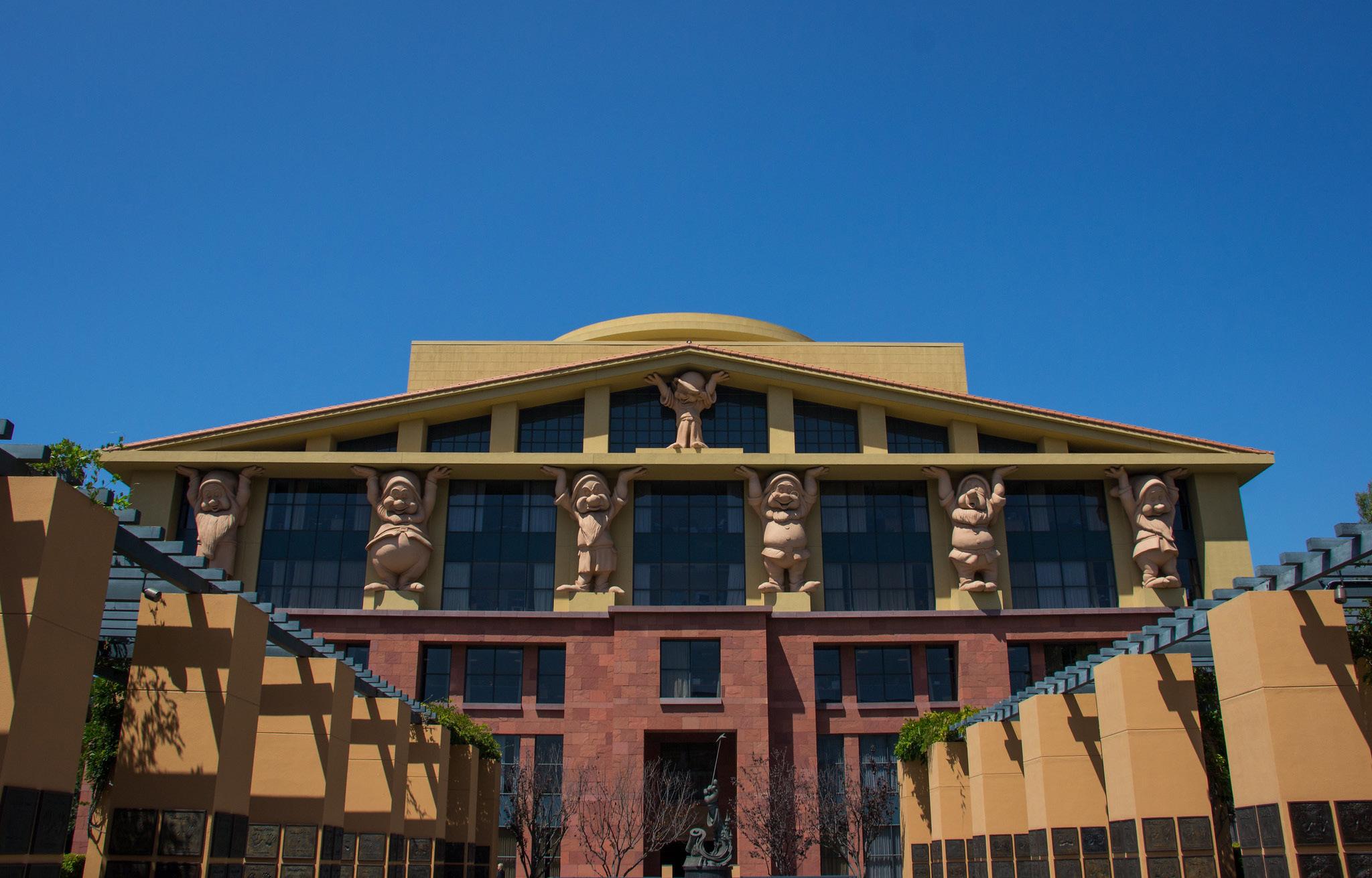
The Team Disney building at the Walt Disney Studios in Burbank. | Photo by HarshLight CC BY 2.0 DEED
Monrovia City Notices
ORDINANCE NO. 2024-04
AN ORDINANCE OF THE CITY COUNCIL OF THE CITY OF MONROVIA, CALIFORNIA, ADOPTING A SCHEDULE OF WASTEWATER (SEWER) AND WATER SERVICE CHARGES
WHEREAS, the City Council is authorized pursuant to the California Health and Safety Code Section 5471 to prescribe, revise, and collect rates and charges for services and facilities furnished by the City in connection with the City’s sewer service system and water service system.
WHEREAS, the City of Monrovia has conducted an analysis of its services, the costs reasonably borne by providing those services, the beneficiaries of those services, and the revenues produced by those paying fees and charges for special services; and
WHEREAS, the City has previously developed and instituted sewer and water service charges to finance the sewer and water utilities furnished by the City, including the costs of sewer and water system operations, capital projects, and maintenance; and
WHEREAS, the City has identified additional costs associated with operating the City’s sewer and water system, as detailed in Resolution No. 2024-03 and Resolution No. 2024-04, adopted on January 16, 2024, incorporated herein by reference; and
WHEREAS, Chapter 3.46 (Fee and Service Charge Revenue/Cost Comparison System) of the Monrovia Municipal Code establishes a policy of recovering the full costs reasonably borne of providing special services of a voluntary and limited nature, such that general taxes are not diverted from general services of a broad nature and thereby utilized to subsidize unfairly and inequitably such special services; and
WHEREAS, the City Council adopted Ordinance No. 2000-09 on the 25th day of April, 2000, establishing its policy as to the recovery of costs and more particularly the percentage of costs reasonably borne to be recovered from users of City services and directing staff as to the methodology for implementing said Ordinance; and
WHEREAS, a properly noticed public hearing to receive public comments and protests and to consider the proposed Schedule of Sewer and Water Service Charges was held on March 19, 2024.
THE CITY COUNCIL OF THE CITY OF MONROVIA, CALIFORNIA DOES ORDAIN AS FOLLOWS:
SECTION 1. The City Council hereby adopts the sewer and water service charges set forth in the schedules below. Schedule
The rates for Lifeline will increase from $3.30 to $3.54 for 5/8” and 3/4” metered accounts and from $5.95 to $6.38 for 1” metered accounts. The per unit consumption rate will also increase from $0.85 to $0.91
of the effective date of this Ordinance, the above
As of the effective date of this Ordinance, the above Sewer Service Charges shall replace the existing charges and be charged and paid as set forth in the above schedule and shall remain in effect until amended or replaced by the City Council. Schedule
As of the effective date of this Ordinance, the above Water Service Charges shall replace the existing charges and be charged as set forth in the above schedule and shall remain in effect until amended or replaced by the City Council; provided, however, that each July 1, commencing July 1, 2025, through July 1, 2028, each Water Service
Service Charges shall replace the existing charges and be charged as set forth in the above schedule and shall remain in effect until amended or replaced by the City Council; provided, however, that each July 1, commencing July 1, 2025, through July 1, 2028, each Water Service
As of the effective date of this Ordinance, the above Water Service Charges shall replace the existing charges and be charged as set forth in the above schedule and shall remain in effect until amended or replaced by the City Council; provided, however, that each July 1, commencing July 1, 2025, through July 1, 2028, each Water Service Charge shall increase by an amount that is equal to the annual percentage increase in the Construction Cost Index, as provided by the Engineering News-Record for the twelve-month period ending the immediately preceding March 1.
SECTION 2. Discounts for the sewer and water service charges may be provided for senior, low income, and veteran account holders that meet the eligibility requirements established by the City and administered by the Public Works Department or the Administrative Services Department. The discount rates shall be set by resolution.
SECTION 3. If any section, subsection, subdivision, sentence, clause, phrase, or portion of this ordinance or the application thereof to any person or place, is for any reason held to be invalid or unconstitutional by the decision of any court of competent jurisdiction, such decision shall not affect the validity of the remainder of this ordinance. The City Council hereby declares that it would have adopted this ordinance, and each and every section, subsection, subdivision, sentence, clause, phrase, or portion thereof, irrespective of the fact that any one or more sections, subsections, subdivisions, sentences, clauses, phrases, or portions thereof be declared invalid or unconstitutional.
SECTION 4. The City Clerk shall certify to the adoption of this ordinance and cause the same to be published in the manner required by law within fifteen (15) days after its passage, and this ordinance shall become effective thirty (30) days after its passage.
INTRODUCED this 19th day of March, 2024.
PASSED, APPROVED, AND ADOPTED this 2nd day of April, 2024 by the following vote: AYES: Councilmembers Crudgington, Jimenez, Dr. Kelly, Mayor Pro Tem Spicer, Mayor Shevlin.
/s/ Alice D. Atkins, MMC, City Clerk
10 APRIL 11-APRIL 17, 2024 BeaconMediaNews.com LEGALS
of Sewer Service Charges
of Water Service Charges
April
2024
WEEKLY Schedule of Sewer Service Charges Sewer Fee Description Current Rate Recommended Rates FY 2023-24 FY 2024-25 FY 2025-26 FY 2026-27 FY 2027-28 Effective Date 5/2/2024 7/1/2024 7/1/2025 7/1/2026 7/1/2027 Residential $9.66 $12.61 $14.25 $14.96 $15.71 $16.50 Multiple Dwelling For first unit $9.66 $12.61 $14.25 $14.96 $15.71 $16.50 Plus, for each additional unit $5.42 $4.51 $5.09 $5.35 $5.61 $5.89 Duplex $15.08 $17.12 $19.34 $20.31 $21.32 $22.39 Triplex $20.50 $21.62 $24.43 $25.65 $26.93 $28.28 Quadplex $25.92 $26.13 $29.52 $31.00 $32.55 $34.17 Trailer Park For first space $9.66 $12.61 $14.25 $14.96 $15.71 $16.50 Plus, for each additional space $5.42 $4.51 $5.09 $5.35 $5.61 $5.89 Lifeline $3.62 $4.74 $5.36 $5.63 $5.91 $6.20 Cemetery/Horticultural Facilities $9.66 $12.61 $14.25 $14.96 $15.71 $16.50 Government/Public Facilities $156.10 $210.65 $238.04 $249.94 $262.44 $275.56 Commercial/Industrial(Corp, Motels, Hotels, Churches) For first 1,000 cubic feet of water used $21.03 $23.89 $26.99 $28.34 $29.76 $31.25 Plus, for each additional 100 cubic feet of water used $0.23 $0.24 $0.27 $0.28 $0.30 $0.31 As of the effective date of this Ordinance, the above Sewer Service Charges shall replace the existing charges and be charged and paid as set forth in the above schedule and shall remain in effect until amended or replaced by the City Council. Schedule of Water Service Charges FIXED RATES [STANDBY CHARGE] – EFFECTIVE 5/2/2024 Single-Family Residential/ Multi-Family Residential New Construction Developments of Five (5) or More Units Hotel Meter Size Current Rate Eff. 05/02/24 Meter Size Current Rate Eff. 05/02/24 Meter Size Current Rate Eff. 05/02/24 5/8 inch $41.10 $44.06 5/8 inch $55.23 $59.20 5/8 inch $41.10 $44.06 3/4 inch $41.10 $44.06 3/4 inch $55.23 $59.20 3/4 inch $51.38 $55.08 1 inch $52.08 $55.83 1 inch $69.98 $75.02 1 inch $77.42 $83.00 1.5 inch $82.13 $88.04 1.5 inch $110.35 $118.29 1.5 inch $143.82 $154.18 2 inch $103.94 $111.43 2 inch $139.67 $149.73 2 inch $216.39 $231.97 Single-Family Residential/ Multi-Family Residential New Construction Developments of Five (5) or More Units Hotel Meter Size Current Rate Eff. 05/02/24 Meter Size Current Rate Eff. 05/02/24 Meter Size Current Rate Eff. 05/02/24 5/8 inch $41.10 $44.06 5/8 inch $55.23 $59.20 5/8 inch $41.10 $44.06 3/4 inch $41.10 $44.06 3/4 inch $55.23 $59.20 3/4 inch $51.38 $55.08 1 inch $52.08 $55.83 1 inch $69.98 $75.02 1 inch $77.42 $83.00 1.5 inch $82.13 $88.04 1.5 inch $110.35 $118.29 1.5 inch $143.82 $154.18 2 inch $103.94 $111.43 2 inch $139.67 $149.73 2 inch $216.39 $231.97 3 inch $158.77 $170.20 3 inch $213.32 $228.69 3 inch $408.22 $437.62 4 inch $207.86 $222.83 4 inch $279.30 $299.41 4 inch $617.73 $662.22 6 inch $347.07 $372.07 6 inch $466.34 $499.92 6 inch $1,201.14 $1,287.65 8 inch $590.95 $633.51 8 inch $794.03 $851.21 8 inch $3,172.77 $3,401.28 Fire Meter Commercial / Industrial / Landscape ADDITIONAL UNIT CHARGE [HOTEL & MULTI-FAMILY ONLY] Meter Size Current Rate Eff. 05/02/24 Meter Size Current Rate Eff. 05/02/24 5/8 inch $30.56 $32.76 5/8 inch $41.10 $44.06 Each Multi-Family Residential (MFR) & Hotel is Currently Charged a Fixed + an Additional Unit Charge for Each Additional MFR or Hotel Dwelling Unit 3/4 inch $30.56 $32.76 3/4 inch $41.10 $44.06 1 inch $38.72 $41.51 1 inch $52.08 $55.83 Applicable to Current Rate Eff. 05/02/24 1.5 inch $61.06 $65.46 1.5 inch $82.13 $88.04 Hotel & All MFR $23.05 $24.71 2 inch $77.28 $82.85 2 inch $103.94 $111.43 3 inch $118.04 $126.54 3 inch $408.22 $437.62 4 inch $154.54 $165.67 4 inch $617.73 $662.22 6 inch $258.04 $276.62 6 inch $1,201.14 $1,287.65 8 inch $439.36 $471.00 8 inch $3,172.77 $3,401.28 12 inch $745.49 $799.18 CONSUMPTION RATES [PER UNIT CHARGE] - EFFECTIVE 5/2/2024 Consumption Charges for All Classes Applicable to Current Rate Eff. 05/02/24 All Classes & Meter Sizes $2.44 $2.62 Consumption Charges for New Construction Developments of Five (5) or More Units Applicable to Current Rate Eff. 05/02/24 New Const. Developments of 5+ Units $3.27 $3.50 The rates for Lifeline will increase from $3.30 to $3.54 for 5/8” and 3/4” metered accounts
$5.95 to $6.38 for 1” metered accounts. The per unit consumption rate will also increase from $0.85 to $0.91
Single-Family Residential/ Multi-Family Residential New Construction Developments of Five (5) or More Units Hotel Meter Size Current Rate Eff. 05/02/24 Meter Size Current Rate Eff. 05/02/24 Meter Size Current Rate Eff. 05/02/24 5/8 inch $41.10 $44.06 5/8 inch $55.23 $59.20 5/8 inch $41.10 $44.06 3/4 inch $41.10 $44.06 3/4 inch $55.23 $59.20 3/4 inch $51.38 $55.08 1 inch $52.08 $55.83 1 inch $69.98 $75.02 1 inch $77.42 $83.00 1.5 inch $82.13 $88.04 1.5 inch $110.35 $118.29 1.5 inch $143.82 $154.18 2 inch $103.94 $111.43 2 inch $139.67 $149.73 2 inch $216.39 $231.97 3 inch $158.77 $170.20 3 inch $213.32 $228.69 3 inch $408.22 $437.62 4 inch $207.86 $222.83 4 inch $279.30 $299.41 4 inch $617.73 $662.22 6 inch $347.07 $372.07 6 inch $466.34 $499.92 6 inch $1,201.14 $1,287.65 8 inch $590.95 $633.51 8 inch $794.03 $851.21 8 inch $3,172.77 $3,401.28 Fire Meter Commercial / Industrial / Landscape ADDITIONAL UNIT CHARGE [HOTEL & MULTI-FAMILY ONLY] Meter Size Current Rate Eff. 05/02/24 Meter Size Current Rate Eff. 05/02/24 5/8 inch $30.56 $32.76 5/8 inch $41.10 $44.06 Each Multi-Family Residential (MFR) & Hotel is Currently Charged a Fixed + an Additional Unit Charge for Each Additional MFR or Hotel Dwelling Unit 3/4 inch $30.56 $32.76 3/4 inch $41.10 $44.06 inch $38.72 $41.51 1 inch $52.08 $55.83 Applicable to Current Rate Eff. 05/02/24 1.5 inch $61.06 $65.46 1.5 inch $82.13 $88.04 Hotel & All MFR $23.05 $24.71 inch $77.28 $82.85 2 inch $103.94 $111.43 3 inch $118.04 $126.54 3 inch $408.22 $437.62 4 inch $154.54 $165.67 4 inch $617.73 $662.22 6 inch $258.04 $276.62 6 inch $1,201.14 $1,287.65 8 inch $439.36 $471.00 8 inch $3,172.77 $3,401.28 12 inch $745.49 $799.18 CONSUMPTION RATES [PER UNIT CHARGE] - EFFECTIVE 5/2/2024 Consumption Charges for All Classes Applicable to Current Rate Eff. 05/02/24 All Classes & Meter Sizes $2.44 $2.62 Consumption Charges for New Construction Developments of Five (5) or More Units Applicable to Current Rate Eff. 05/02/24 New Const. Developments of 5+ Units $3.27 $3.50 The rates for Lifeline will increase from $3.30 to $3.54 for 5/8” and 3/4” metered accounts and from $5.95 to $6.38 for 1” metered accounts. The per unit consumption rate will also increase from $0.85 to $0.91
File your DBA with us at filedba.com NOTICE INVITING FORMAL SEALED BIDS LAS TUNAS DRIVE PAVER LEVELLING AND RESETTING PROJECT CITY PROJECT ID: P-24-06 PUBLIC NOTICE IS HEREBY GIVEN that the City of Temple City invites sealed bids for the above stated project and will receive such bids in the office of the City Clerk, City of Temple City, 9701 Las Tunas Drive, Temple City, CA 91780, up to the hour of 2:00 PM on May 8, 2024. The bids received will be publicly opened approximately 15 minutes after the bid submittal deadline in the City Hall. Late bids will not be considered. There is no pre-bid meeting for this project. Copies of the Bidding and Contract Documents, Plans and Specifications can be obtained by e-mailing your request with your contact information to: furkan.cetinkale@transtech.org. Upon receipt of your e-mail, you will be registered as a plan holder, and a pdf file of the Bidding and Contract Documents, Plans and Specifications will be e-mailed to you at no cost. Hard copies will not be provided. All questions regarding this bid shall be directed via email, no later than 10 calendar days prior to the Bid due date and time, to furkan. cetinkale@transtech.org. Any questions received after this deadline Temple City Notices Starting a New Business? Start it off Right File your D.B.A. Online www.filedba.com
Publish
11,
MONROVIA
and from
As
Water
will not be answered. It is the responsibility of the bidder to confirm transmission of correspondence.
Estimated cost for base bid schedule is in the range of $300,000.
Bids must be accompanied by a bid bond, made payable to the City of TEMPLE CITY for an amount no less than ten percent (10%) of the bid amount.
Contractor who has not been licensed in accordance with the provisions of the Business and Professions Code.
This project is subject to the requirements of SB 854. Prevailing wages shall be paid to all workers in accordance with California Labor Code 1771.
Bids must be prepared on the approved Proposal forms in conformance with the Instructions to Bidders and submitted in a sealed envelope plainly marked on the outside.
The City reserves the right to reject any or all bids, to waive any irregularity, and to take all bids under advisement for a period of 60 calendar days.
Any contract entered into pursuant to this notice shall become effective or enforceable against the City of TEMPLE CITY only when the formal written contract has been duly executed by the appropriate officers of the City.
If there are any questions regarding this project, please submit your questions to following e-mail: Furkan Cetinkale, Project Manager furkan.cetinkale@transtech.org BY ORDER of the City of Temple City, California. Published: April 11, 2024
Questions: For additional information or to review the application, please contact Marlon Cervantes, Associate Planner at (626) 3082806 ext. 4631 or mcervantes@sgch.org.
Environmental Review: The project was reviewed for compliance with the California Environmental Quality Act (CEQA). This project is exempt from the requirements of CEQA, per Guidelines Section 15303 Class 3 (New Construction or Conversion of Small Structures).
Per Government Code Section 65009, if you challenge the nature of the proposed actions in court, you may be limited to only raising those issues you or someone else raised at the public hearing described in this notice, or in written correspondence delivered to the Planning Division at or prior to the public hearing.
SAN GABRIEL DESIGN REVIEW COMMISSION
By Samantha Tewasart, Planning Manager
Probates Notices
NOTICE OF PETITION TO ADMINISTER ESTATE OF: FREDERICK SEARS EATON
CASE NO. 24STPB03469
To all heirs, beneficiaries, creditors, contingent creditors, and persons who may otherwise be interested in the WILL or estate, or both of FREDERICK SEARS EATON.
A PETITION FOR PROBATE has been filed by VICKIE EATON in the Superior Court of California, County of LOS ANGELES.
THE PETITION FOR PROBATE requests that VICKIE EATON be appointed as personal representative to administer the estate of the decedent.
THE PETITION requests the decedent's WILL and codicils, if any, be admitted to probate. The WILL and any codicils are available for examination in the file kept by the court.
Case No. 24STPB03527
To all heirs, beneficiaries, cred-itors, contingent creditors, and persons who may otherwise be interested in the will or estate, or both, of ANITA GOMEZ
A PETITION FOR PROBATE has been filed by Jeannette Echeverria in the Superior Court of California, County of LOS ANGELES.
THE PETITION FOR PROBATE requests that Jeannette Echeverria be appointed as personal repre-sentative to administer the estate of the decedent.
To all heirs, beneficiaries, cred-itors, contingent creditors, and persons who may otherwise be interested in the will or estate, or both, of DAVID MICHAEL GALANDA
A PETITION FOR PROBATE has been filed by Gary Galanda in the Superior Court of California, County of LOS ANGELES.
THE PETITION FOR PROBATE requests that Gary Galanda be appointed as personal representative to administer the estate of the decedent.
THE PETITION requests authority to administer the estate under the Independent Administration of Estates Act. (This authority will allow the personal representative to take many actions without obtaining court approval. Before taking certain very important actions, however, the personal representative will be required to give notice to interested persons unless they have waived notice or consented to the proposed action.) The independent administra-tion authority will be granted unless an interested person files an objec-tion to the petition and shows good cause why the court should not grant the authority.
A HEARING on the petition will be held on April 26, 2024 at 8:30 AM in Dept. No. 29 located at 111 N. Hill St., Los Angeles, CA 90012.
IF YOU OBJECT to the granting of the petition, you should appear at the hearing and state your objections or file written objections with the court before the hearing. Your ap-pearance may be in person or by your attorney.
You are invited to participate in a public hearing before the City’s Design Review Commission. Members of the public may submit public comments by U.S. Mail addressed to Community Development Department, Attn: Public Hearing Comment, 425 S. Mission Drive, San Gabriel, CA 91776, which must be received by the hearing date, or electronically using the online public comment form at http://sangabrielcity.com/DRComment, by 5:00 p.m. of the hearing date to be considered by the Design Review Commission. The meeting will be broadcast on the City of San Gabriel’s
THE PETITION requests authority to administer the estate under the Independent Administration of Estates Act. (This authority will allow the personal representative to take many actions without obtaining court approval. Before taking certain very important actions, however, the personal representative will be required to give notice to interested persons unless they have waived notice or consented to the proposed action.)
The independent administration authority will be granted unless an interested person files an objection to the petition and shows good cause why the court should not grant the authority.
A HEARING on the petition will be held in this court as follows: 04/29/24 at 8:30AM in Dept. 2D located at 111 N. HILL ST., LOS ANGELES, CA 90012
IF YOU OBJECT to the granting of the petition, you should appear at the hearing and state your objections or file written objections with the court before the hearing. Your appearance may be in person or by your attorney.
IF YOU ARE A CREDITOR or a contingent creditor of the decedent, you must file your claim with the court and mail a copy to the personal representative appointed by the court within the later of either (1) four months from the date of first issuance of letters to a general personal representative, as defined in section 58(b) of the California Probate Code, or (2) 60 days from the date of mailing or personal delivery to you of a notice under section 9052 of the California Probate Code. Other California statutes and legal authority may affect your rights as a creditor. You may want to consult with an attorney knowledgeable in California law.
THE PETITION requests authority to administer the estate under the Independent Administration of Estates Act. (This authority will allow the personal representative to take many actions without obtaining court approval. Before taking certain very important actions, however, the personal representative will be required to give notice to interested persons unless they have waived notice or consented to the proposed action.) The independent administra-tion authority will be granted unless an interested person files an objec-tion to the petition and shows good cause why the court should not grant the authority.
A HEARING on the petition will be held on April 29, 2024 at 8:30 AM in Dept. No. 4 located at 111 N. Hill St., Los Angeles, CA 90012.
IF YOU OBJECT to the granting of the petition, you should appear at the hearing and state your objections or file written objections with the court before the hearing. Your ap-pearance may be in person or by your attorney.
IF YOU ARE A CREDITOR or a contingent creditor of the decedent, you must file your claim with the court and mail a copy to the personal representative appointed by the court within the later of either (1) four months from the date of first issuance of letters to a general personal representative, as defined in section 58(b) of the California Probate Code, or (2) 60 days from the date of mailing or personal delivery to you of a notice under section 9052 of the California Probate Code. Other California statutes and legal authority may affect your rights as a creditor. You may want to consult with an attorney knowl-edgeable in California law.
IF YOU ARE A CREDITOR or a contingent creditor of the decedent, you must file your claim with the court and mail a copy to the personal representative appointed by the court within the later of either (1) four months from the date of first issuance of letters to a general personal representative, as defined in section 58(b) of the California Probate Code, or (2) 60 days from the date of mailing or personal delivery to you of a notice under section 9052 of the California Probate Code. Other California statutes and legal authority may affect your rights as a creditor. You may want to consult with an attorney knowl-edgeable in California law. YOU MAY EXAMINE the file kept by the court. If you are a person interested in the estate, you may file with the court a Request for Special Notice (form DE-154) of the filing of an inventory and appraisal of estate assets or of any petition or account as provided in Probate Code section 1250. A Request for Special Notice form is available from the court clerk. Attorney for petitioner: ANTHONY C GROSSMAN ESQ SBN 175408
SCHOFIELD & GROSSMAN APC 201 S LAKE AVE STE 403 PASADENA CA 91101 CN105705 GALANDA Apr 4,8,11, 2024
EL MONTE EXAMINER
NOTICE OF PETITION TO ADMINISTER ESTATE OF CAROLANN WALLACE
Case No. 23STPB14035
To all heirs, beneficiaries, creditors, contingent creditors, and persons who may otherwise be interested in the will or estate, or both, of Carolann Wallace
A PETITION FOR LOST WILL has been filed by Alexander Martin Wallace in the Superior Court of California, County of LOS ANGELES.
308-2806 ext. 4625 or csong@sgch.org.
Environmental Review: The project was reviewed for compliance with the California Environmental Quality Act (CEQA). This project is exempt from the requirements of CEQA, per Guidelines Section 15303(a), Class 3 (New Construction
YOU MAY EXAMINE the file kept by the court. If you are a person interested in the estate, you may file with the court a Request for Special Notice (form DE-154) of the filing of an inventory and appraisal of estate assets or of any petition or account as provided in Probate Code section 1250. A Request for Special Notice form is available from the court clerk. Attorney for Petitioner WILLIAM R. REMERY - SBN 89897, REMERY LAW FIRM
YOU MAY EXAMINE the file kept by the court. If you are a person interested in the estate, you may file with the court a Request for Special Notice (form DE-154) of the filing of an inventory and appraisal of estate assets or of any petition or account as provided in Probate Code section 1250. A Request for Special Notice form is available from the court clerk. Attorney for petitioner: TIMOTHY G MISHLER ESQ
THE PETITION FOR PROBATE requests that Alexander Martin Wallace be appointed as personal representative to administer the estate of the decedent.
THE PETITION requests the decedent’s will and codicils, if any, be admitted to probate. The will and any codicils are available for examination in the file kept by the court.
THE PETITION requests authority to administer the estate under the Independent Administration of Estates Act. (This authority will allow the personal representative to take many actions without obtaining court approval. Before taking certain very important actions, however, the personal representative will be required to give notice to interested persons unless they have waived notice or consented to the proposed action.)
The independent administration authority will be granted unless an interested person files an objection to the petition and shows good cause why the court should not grant the authority.
IF YOU OBJECT to the granting of the petition, you should appear at the hearing and state your objections or file written objections with the court before the hearing. Your appearance may be in person or by your attorney.
IF YOU ARE A CREDITOR or a contingent creditor of the decedent, you must file your claim with the court and mail a copy to the personal representative appointed by the court within the later of either (1) four months from the date of first issuance of letters to a general personal representative, as defined in section 58(b) of the California Probate Code, or (2) 60 days from the date of mailing or personal delivery to you of a notice under section 9052 of the California Probate Code. Other California statutes and legal authority may affect your rights as a creditor. You may want to consult with an attorney knowledgeable in California law. YOU MAY EXAMINE the file kept by the court. If you are a person interested in the estate, you may file with the court a Request for Special Notice (form DE-154) of the filing of an inventory and appraisal of estate assets or of any petition or account as provided in Probate Code section 1250. A Request for Special Notice form is available from the court clerk. Petitioner: ALEXANDER MARTIN WALLACE 10484 VALLEY BLVD SPC. 27 EL MONTE, CA 91731
requests that ANDREA R. BURNS be appointed as personal representative to administer the estate of the decedent. THE PETITION requests the decedent's WILL and codicils, if any, be admitted to probate. The WILL and any codicils are available for examination in the file kept by the court. THE PETITION requests authority to administer the estate under the Independent Administration of Estates Act. (This authority will allow the personal representative to take many actions without obtaining court approval. Before taking certain very important actions, however, the personal representative will be required to give notice to interested persons unless they have waived notice or consented to the proposed action.) The independent administration authority will be granted unless an interested person files an objection to the petition and shows good cause why the court should not grant the authority.
A HEARING on the petition will be held in this court as follows: 05/03/24 at 8:30AM in Dept. 29 located at 111 N. HILL ST., LOS ANGELES, CA 90012
IF YOU OBJECT to the granting of the petition, you should appear at the hearing and state your objections or file written objections with the court before the hearing. Your appearance may be in person or by your attorney.
IF YOU ARE A CREDITOR or a contingent creditor of the decedent, you must file your claim with the court and mail a copy to the personal representative appointed by the court within the later of either (1)
A HEARING on the petition will be held on May 6, 2024 at 8:30 AM in Dept. 4. located at 111 N. Hill St., Los Angeles, CA 90012.
APRIL 11-APRIL 17, 2024 11 BeaconMediaNews.com LEGALS
GLENOAKS BLVD. GLENDALE CA 91201 Telephone (818) 558-5909 4/4,
CNS-3799463# SAN GABRIEL SUN
1955 WEST
4/8, 4/11/24
DUARTE
RUBEN
A PETITION
THE
APRIL 8, 11, 15, 2024
DISPATCH NOTICE OF PETITION TO ADMINISTER ESTATE OF:
LAWLER CHAVIRA CASE NO. 24STPB03566 To all heirs, beneficiaries, creditors, contingent creditors, and persons who may otherwise be interested in the WILL or estate, or both of RUBEN LAWLER CHAVIRA.
FOR PROBATE has been filed by ANDREA R. BURNS in the Superior Court of California, County of LOS ANGELES.
PETITION FOR PROBATE
four months from the date of first issuance of letters to a general personal representative, as defined in section 58(b) of the California Probate Code, or (2) 60 days from the date of mailing or personal delivery to you of a notice under section 9052 of the California Probate Code. Other California statutes and legal authority may affect your rights as a creditor. You may want to consult with an attorney knowledgeable in California law. YOU MAY EXAMINE the file kept by the court. If you are a person interested in the estate, you may file with the court a Request for Special Notice (form DE-154) of the filing of an inventory and appraisal of estate
License Classification is State of
Licenses A-General Engineering
or B-General Building Contractor. No bid will be
from a
Required
California Contractor
Contractor
accepted
TEMPLE CITY TRIBUNE
San Gabriel City Notices
of Public Hearing Before the Design Review Commission
Public Notice: City Of San Gabriel Notice
Hearing Date: Monday, April 22, 2024 TIME: 6:30 p.m. Location Of Hearing: Council Chambers located on the second floor of San Gabriel City Hall (425 South Mission Drive, San Gabriel,
91776)
meeting
viewed
https://www.youtube.com/CityofSanGabriel Project Address: 101 East Valley Boulevard, San Gabriel, CA 91776 Project Description: The application, Case No. MSP24-002, is for an amendment to a Public Art Program for a mixed-use project at the address 101 E. Valley Boulevard. The project site is in the Mixed-Use Transit (MU-T) zone within the Valley Boulevard Specific Plan (VBSP) area. Questions: For additional information
to review the application, please contact Samantha Tewasart, Planning Manager at (626) 308-2806 ext. 4623 or stewasart@sgch.org. Environmental Review: This project is exempt from the requirements of the California Environment Quality Act (CEQA), per Guidelines section 15303, Class 3 (New Construction or Conversion of Small Structures). Class 3, which consists of construction of small accessory structures. Project Address: 1019 South Gladys Avenue, San Gabriel, CA 91776 Project Description: The application, Project No. SPR23-100 is for a Site Plan Review for the approval of a new two-story, single family residence with an attached two-car garage. The project site is located in the R-1 Zone (Single Family Residence). Questions: For additional information or to review the application, please contact Christine Song, Senior Planner at (626)
YouTube channel at the link shown below:
CA
The
can be
live at:
or
Project Address: 1060 East Broadway Avenue,
91776 Project Description:
Site Plan
new
in the R-1
or Conversion of Small Structures).
San Gabriel, CA
The application, Project No. SPR23-038, is for a
Review for a
two-story single-family residence
(Single Family Residence) zone.
on
SAN GABRIEL SUN NOTICE OF PETITION TO ADMINISTER ESTATE OF ANITA GOMEZ
Published
April 11, 2024
LAW OFFICES OF TIMOTHY G MISHLER 816 W FOOTHILL BLVD MONROVIA
CN105693 GOMEZ Apr
DUARTE DISPATCH NOTICE OF PETITION TO ADMINISTER ESTATE OF DAVID MICHAEL GALANDA Case No. 24STPB03403
SBN 156236
CA 91016
4,8,11, 2024
Case No. 23STPB12959 To all heirs, beneficiaries, cred-itors, contingent creditors, and persons who may otherwise be interested in the will or estate, or both, of CAROLINE SNYDER
A PETITION FOR PROBATE has been filed by Michael R. Snyder in the Superior Court of California, County of LOS ANGELES.
THE PETITION FOR PROBATE requests that Michael R. Snyder be appointed as personal representative to administer the estate of the decedent.
THE PETITION requests the decedent's will and codicils, if any, be admitted to probate. The will and any codicils are available for examination in the file kept by the court.
THE PETITION requests authority to administer the estate under the Independent Administration of Estates Act. (This authority will allow the personal representative to take many actions without obtaining court approval. Before taking certain very important actions, however, the personal representative will be required to give notice to interested persons unless they have waived notice or consented to the proposed action.) The independent administra-tion authority will be granted unless an interested person files an objec-tion to the petition and shows good cause why the court should not grant the authority.
A HEARING on the petition will be held on May 14, 2024 at 8:30 AM in Dept. No. 9 located at 111 N. Hill St., Los Angeles, CA 90012.
IF YOU OBJECT to the granting of the petition, you should appear at the hearing and state your objections or file written objections with the court before the hearing. Your ap-pearance may be in person or by your attorney.
IF YOU ARE A CREDITOR or a contingent creditor of the decedent, you must file your claim with the court and mail a copy to the personal representative appointed by the court within the later of either (1) four months from the date of first issuance of letters to a general personal representative, as defined in section 58(b) of the California Probate Code, or (2) 60 days from the date of mailing or personal delivery to you of a notice under section 9052 of the California Probate Code.
Other California statutes and legal authority may affect your rights as a creditor. You may want to consult with an attorney knowl-edgeable in California law.
YOU MAY EXAMINE the file kept by the court. If you are a person interested in the estate, you may file with the court a Request for Special Notice (form DE-154) of the filing of an inventory and appraisal of estate assets or of any petition or account as provided in Probate Code section 1250. A Request for Special Notice form is available from the court clerk. Attorney for petitioner:
THE PETITION FOR PROBATE requests that County of Los Angeles Public Administrator be appointed as personal representative to administer the estate of the decedent.
THE PETITION requests authority to administer the estate under the Independent Administration of Estates Act. (This authority will allow the personal representative to take many actions without obtaining court approval. Before taking certain very important actions, however, the personal representative will be required to give notice to interested persons unless they have waived notice or consented to the proposed action.) The independent administration authority will be granted unless an interested person files an objection to the petition and shows good cause why the court should not grant the authority.
A HEARING on the petition will be held on May 10, 2024 at 8:30 AM in Dept. No. 44 located at 111 N. Hill St., Los Angeles, CA 90012.
IF YOU OBJECT to the granting of the petition, you should appear at the hearing and state your objections or file written objections with the court before the hearing. Your appearance may be in person or by your attorney.
IF YOU ARE A CREDITOR or a contingent creditor of the decedent, you must file your claim with the court and mail a copy to the personal representative appointed by the court within the later of either (1) four months from the date of first issuance of letters to a general personal representative, as defined in section 58(b) of the California Probate Code, or (2) 60 days from the date of mailing or personal delivery to you of a notice under section 9052 of the California Probate Code.
Other California statutes and legal authority may affect your rights as a creditor. You may want to consult with an attorney knowledgeable in California law.
YOU MAY EXAMINE the file kept by the court. If you are a person interested in the estate, you may file with the court a Request for Special Notice (form DE-154) of the filing of an inventory and appraisal of estate assets or of any petition or account as provided in Probate Code section 1250. A Request for Special Notice form is available from the court clerk. Attorney for petitioner: SUSAN LONG PRIN DEP CO COUNSEL SBN 163000
DAWYN HARRISON OFFICE OF COUNTY COUNSEL 500 WEST TEMPLE ST STE 648 LOS ANGELES CA 90012 CN105710 HUTCHINGS Apr 11,15,18, 2024 SAN GABRIEL SUN
NOTICE OF PETITION TO ADMINISTER ESTATE OF: ALMA ELIZABETH WILSON CASE NO. 24STPB03800
To all heirs, beneficiaries, creditors, contingent creditors, and persons who may otherwise be interested in the WILL or estate, or both of ALMA ELIZABETH WILSON. A PETITION FOR PROBATE has been filed by LARRY WILSON in the Superior Court of California, County of LOS ANGELES.
representative
of
decedent. THE PETITION requests authority to administer the estate under the Independent Administration of Estates Act. (This authority will allow the personal representative to take many actions without obtaining court approval. Before taking certain very important actions, however, the personal representative will be required to give notice to interested persons unless they have waived notice or consented to the proposed action.) The independent administration authority will be granted unless an interested person files an objection to the petition and shows good cause why the court should not grant the authority.
IF YOU OBJECT to the granting of the petition, you should appear at the hearing and state your objections or file written objections with the court before the hearing. Your appearance may be in person or by your attorney.
IF YOU ARE A CREDITOR or a contingent creditor of the decedent, you must file your claim with the court and mail a copy to the personal representative appointed by the court within the later of either (1) four months from the date of first issuance of letters to a general personal representative, as defined in section 58(b) of the California Probate Code, or (2) 60 days from the date of mailing or personal delivery to you of a notice under section 9052 of the California Probate Code. Other California statutes and legal authority may affect your rights as a creditor. You may want to consult with an attorney knowledgeable in California law.
YOU MAY EXAMINE the file kept by the court. If you are a person interested in the estate, you may file with the court a Request for Special Notice (form DE-154) of the filing of an inventory and appraisal of estate assets or of any petition or account as provided in Probate Code section 1250. A Request for Special Notice form is available from the court clerk.
Attorney for Petitioner CECIL R. MCNAB ESQ. - SBN 163551
LAW OFFICE OF CECIL R. MCNAB 3130 WILSHIRE BLVD. SUITE 508 LOS ANGELES CA 90010
Telephone (310) 649-0916 4/11, 4/15, 4/18/24 CNS-3801838#
MONROVIA WEEKLY
NOTICE OF PETITION TO ADMINISTER ESTATE OF:
NORMA J. CROUCH AKA
NORMA JEAN CROUCH
CASE NO. 24STPB03817
To all heirs, beneficiaries, creditors, contingent creditors, and persons who may otherwise be interested in the WILL or estate, or both of NORMA J. CROUCH AKA NORMA JEAN CROUCH.
A PETITION FOR PROBATE has been filed by ANITA M. LEYVA in the Superior Court of California, County of LOS ANGELES.
THE PETITION FOR PROBATE requests that ANITA M. LEYVA be appointed as personal representative to administer the estate of the decedent.
THE PETITION requests authority to administer the estate under the Independent Administration of Estates Act with limited authority. (This authority will allow the personal representative to take many actions without obtaining court approval. Before taking certain very important actions, however, the personal representative will be required to give notice to interested persons unless they have waived notice or consented to the proposed action.) The independent administration authority will be granted unless an interested person files an objection to the petition and shows good cause why the court should not grant the authority.
A HEARING on the petition will be held in this court as follows: 05/06/24 at 8:30AM in Dept. 67 located at 111 N. HILL ST., LOS ANGELES, CA 90012
IF YOU OBJECT to the granting of the petition, you should appear at the hearing and state your objections or file written objections with the court before the hearing. Your appearance may be in person or by your attorney.
IF YOU ARE A CREDITOR or a contingent creditor of the decedent, you must file your claim with the court and mail a copy to the personal representative appointed by the court within the later of either (1) four months from the date of first issuance of letters to a general personal representative, as defined in section 58(b) of the California Probate Code, or (2) 60 days from the date of mailing or personal delivery to you of a notice under section 9052 of the California Probate Code. Other California statutes and legal authority may affect your rights as a creditor. You may want to consult with an attorney knowledgeable in California law.
YOU MAY EXAMINE the file kept by the court. If you are a person interested in the estate, you may file with the court a Request for Special
tive to administer the estate of the decedent.
THE PETITION requests authority to administer the estate under the Independent Administration of Estates Act. (This authority will allow the personal representative to take many actions without obtaining court approval. Before taking certain very important actions, however, the personal representative will be required to give notice to interested persons unless they have waived notice or consented to the proposed action.) The independent administration authority will be granted unless an interested person files an objection to the petition and shows good cause why the court should not grant the authority.
A HEARING on the petition will be held in this court as follows: 05/08/24 at 8:30AM in Dept. 29 located at 111 N. HILL ST., LOS ANGELES, CA 90012
IF YOU OBJECT to the granting of the petition, you should appear at the hearing and state your objections or file written objections with the court before the hearing. Your appearance may be in person or by your attorney.
IF YOU ARE A CREDITOR or a contingent creditor of the decedent, you must file your claim with the court and mail a copy to the personal representative appointed by the court within the later of either (1) four months from the date of first issuance of letters to a general personal representative, as defined in section 58(b) of the California Probate Code, or (2) 60 days from the date of mailing or personal delivery to you of a notice under section 9052 of the California Probate Code. Other California statutes and legal authority may affect your rights as a creditor. You may want to consult with an attorney knowledgeable in California law.
MAY EXAMINE the file kept by
12 APRIL 11-APRIL 17, 2024 BeaconMediaNews.com
Public Notices ORDER TO SHOW CAUSE FOR CHANGE OF NAME PETITION OF Sally Mae Olivas FOR CHANGE OF NAME CASE NUMBER: Superior Court of California, County of Los Angeles 600 East Broadway, Glendale, Ca 91206, North Central Judicial District TO ALL INTERESTED PERSONS: 1. Petitioner Sally Mae Olivas filed a petition with this court for a decree changing names as follows: Present name a. OF Sally Mae Olivas to Proposed name Sally Mae Kirkeby 2. THE COURT ORDERS that all persons interested in this NOTICE TO CREDITORS OF BULK SALE (UCC Sec. 6105) Escrow No.: 825245-JK Notice is hereby given that a bulk sale is about to be made. The name(s), business address(es) of the Seller(s) are: OPTIMA AUTO SERVICE INC., 2444 SAN GABRIEL BLVD., ROSEMEAD, CA 91770 Doing Business as: AUTO SERVICE All other business name(s) and address(es) used by the Seller(s) within the past three years, as stated by the Seller(s) is/are: N/A The location in California of the Chief Executive Officer of the Seller(s) is: 2444 SAN GABRIEL BLVD. ROSEMEAD, CA 91770-3648 The name(s) and address of the Buyer(s) is/are: WEI WEI 1012 E NEWMARK AVE APT 3 MONTEREY PARK, CA 91755 The assets to be sold are described in general as: and are located at: 2444 SAN GABRIEL BLVD., ROSEMEAD, CA 91770 The bulk sale is intended to be consummated at the office of: Central Escrow Group, Inc., 1675 HANOVER ROAD CITY OF INDUSTRY, CA 91748 and the anticipated sale date is: 04/29/24 The bulk sale is subject to California Uniform Commercial Code Section 6106.2. YES The names and address of the person with whom claims may be filed is: Central Escrow, Inc., 1675 Hanover Road, City of Industry, CA 91748, and the last date for filing claims shall be 04/26/24, which is the business day before the sale date specified above. Dated: 03/25/2024 Buyer: WEI WEI 4/11/24 CNS-3800836# EL MONTE EXAMINER Notice of Public Sale Pursuant to the California Self Service Storage Facility Act (B&P Code 21700 ET seq.) The undersigned will sell at public auction on Friday April 26, 2024 at 3:00 pm. Personal property including but not limited to furniture, clothing, tools and/ or other household items located at: The sale will take place online at www.selfstorageauction.com. Patricia S Depew Angelica Garcia Patricia S Depew Andrew C Mejia Gary W Lookabaugh Larry G Harper Larry G Harper All sales are subject to prior cancellation. All terms, rules and regulations are available online at www.selfstorageauction. com. Dated this April 11, 2024 by StorAmerica - Arcadia, 5630 Peck Rd, Arcadia, CA, 91006 (626) 303-3000 4/11/24 CNS-3801297# ARCADIA WEEKLY Notice of Public Sale Pursuant to the California Self Service Storage Facility Act (B&P Code 21700 ET seq.) The undersigned will sell at public auction on Friday April 26, 2024 at 2:30 pm. Personal property including but not limited to furniture, clothing, tools and/ or other household items located at: The sale will take place online at www.selfstorageauction.com. Enrique Maravilla Barragan David Gomez Armando Luna Jr. Michael C Lucio Adriana Ivonne Rocha Irene Correa Guerra All sales are subject to prior cancellation. All terms, rules and regulations are available online at www.selfstorageauction. com. Dated this April 11, 2024 by Power Self Storage, 16408 E Gale Ave, City of Industry, CA, 91745 (626) 330-3554 4/11/24 CNS-3801305# AZUSA BEACON NOTICE TO CREDITORS OF BULK SALE AND OF INTENTION TO TRANSFER ALCOHOLIC BEVERAGE LICENSE (U.C.C. 6101 et seq. and B & P 24073 et seq.) Escrow No. CEG111407-BW NOTICE IS HEREBY GIVEN that a bulk sale of assets and a transfer of alcoholic beverage license is about to be made. The name(s) and business address of the Seller(s) are: TONY BACH HONG and KIM MY LU 106 WEST FOOTHILL BLVD., GLENDORA, CA 91741 Doing Business as: PHO 1 All other business name(s) and address(es) used by the Seller(s) within the past three years, as stated by the Seller(s), is/are: NONE The name(s) and address of the Buyer(s) is/are: GUI YI INC. 1361 MOCCASIN STREET, LA PUENTE, CA 91746 The assets being sold are generally described as: RESTAURANT and is located at: 106 WEST FOOTHILL BLVD, GLENDORA, CA 91741 The type of License to be transferred is/ are: ON-SALE BEER & WINE EATING PLACE, #41602713 now issued for the premises located at: SAME AS ABOVE The Bulk Sale and transfer of the Alcoholic Beverage License is intended to be consummated at the office of: CENTRAL ESCROW GROUP, INC., 515 WEST GARVEY AVE., SUITE 118, MONTEREY PARK, CA 91754 and the anticipated sale date is 04/29/24. The purchase price or consideration in A HEARING on the petition will be held in this court as follows: 05/06/24 at 8:30AM in Dept. 62 located at 111 N. HILL ST., LOS ANGELES, CA 90012
LEGALS
Notice (form DE-154) of the filing of an inventory and appraisal of estate assets or of any petition or account as provided in Probate Code section 1250. A Request for Special Notice form is available from the court clerk. Attorney for Petitioner TONY J. TYRE - SBN 269506/ ALLYSON S. HELLER - SBN 315086 WILLIAM C. MASON III - SBN 319441 LAW OFFICES OF TONY J. TYRE, ESQ. 100 S. CITRUS
NOTICE OF
ESTATE OF:
IRENE LILLY BULIAVAC. A PETITION FOR PROBATE
by LEAH JOHNSON in the
Court of California, County of LOS ANGELES. THE
AVENUE, SUITE 101 COVINA CA 91723 Telephone (626) 858-9378 4/11, 4/15, 4/18/24 CNS-3802262# TEMPLE CITY TRIBUNE
PETITION TO ADMINISTER
IRENE LILLY BULIAVAC CASE NO. 24STPB03733 To all heirs, beneficiaries, creditors, contingent creditors, and persons who may otherwise be interested in the WILL or estate, or both of
has been filed
Superior
PETITION FOR PROBATE requests that LEAH JOHNSON be appointed as personal representa-
may
the court a
for Special Notice (form DE-154) of the filing of an inventory and appraisal of estate assets or of any petition or account as provided in Probate Code section 1250. A Request for Special Notice form is available from the court clerk. Attorney for Petitioner WILLIAM HAYES - SBN 059479 THE HAYES LAW FIRM 729 MISSION ST. #300 SOUTH PASADENA CA 91030 Telephone (626) 403-2292 4/11, 4/15, 4/18/24 CNS-3802442# MONROVIA WEEKLY assets or of any petition or account as provided in Probate Code section 1250. A Request for Special Notice form is available from the court clerk. Attorney for Petitioner E. LAWRENCE BROCK - SBN 92527 KAYCEE R. LINK - SBN 347416, PROVENLAW, PLLC 216 W. ST. GEORGE BLVD., STE. 200 ST. GEORGE UT 84770 Telephone (435)
4/11, 4/15, 4/18/24 CNS-3801504# ARCADIA WEEKLY
OF PETITION TO
YOU
the court. If you are a person interested in the estate, you
file with
Request
688-9231
NOTICE
ADMINISTER ESTATE OF CAROLINE SNYDER
MICHAEL J HEMMING ESQ SBN 74538 LAW OFFICE OF MICHAEL J HEMMING 333 W MISSION BLVD POMONA CA 91766 CN105147 SNYDER Apr 11,15,18, 2024 AZUSA BEACON NOTICE OF PETITION TO ADMINISTER ESTATE OF THELES HUTCHINGS aka PHYLLIS HUTCHINGS, THELES PHYLLIS HUTCHINGS,
Case No.
To all heirs, beneficiaries, creditors, contingent creditors, and persons who
be
PHYLLIS HUTCHINGS THELES, HUTCHINGS THELES
24STPB03643
may otherwise
A
interested in the will or estate, or both, of THELES HUTCHINGS aka PHYLLIS HUTCHINGS, THELES PHYLLIS HUTCHINGS, PHYLLIS HUTCHINGS THELES, HUTCHINGS THELES
PETITION FOR PROBATE has been filed by County of Los Angeles Public Administrator in the Superior Court of California, County of LOS ANGELES.
THE PETITION FOR PROBATE
that
be
matter shall appear before this court at the hearing indicated below to show cause, if any, why the petition for change of name should not be granted. Any person objecting to the name changes described above must file a written objection that includes the reason for the objection at least two court days before the matter is scheduled to be heard and must appear at the hearing to show cause why the petition should not be granted. If no written objection is timely filed, the court may grant the petition without a hearing NOTICE OF HEARING a. Date: 05/23/2024 Time: 8:30AM Dept: E. The address of the court is same as noted above. 3. a. A copy of this Order to Show Cause shall be published at least once each week for four successive weeks prior to the day set for hearing on the petition in the following newspaper of general circulation, printed in this county: Monrovia Weekly DATED: March 14, 2024 Robin Miller Sloan JUDGE OF THE SUPERIOR COURT Pub. March 21, 28, April 1, 8, 2024 MONROVIA WEEKLY ORDER TO SHOW CAUSE FOR CHANGE OF NAME PETITION OF Andreana Lillian Luu FOR CHANGE OF NAME CASE NUMBER:24NNCP00097 Superior Court of California, County of Los Angeles 300 East Walnut St, Pasadena, Ca 91101, Northeast Judicial District TO ALL INTERESTED PERSONS: 1. Petitioner Andreana Lillian Luu filed a petition with this court for a decree changing names as follows: Present name a. OF Andreana Lillian Luu to Proposed name Andreanna Lillian Luu 2. THE COURT ORDERS that all persons interested in this matter shall appear before this court at the hearing indicated below to show cause, if any, why the petition for change of name should not be granted. Any person objecting to the name changes described above must file a written objection that includes the reason for the objection at least two court days before the matter is scheduled to be heard and must appear at the hearing to show cause why the petition should not be granted. If no written objection is timely filed, the court may grant the petition without a hearing NOTICE OF HEARING a. Date: 06/10/2024 Time: 8:30AM Dept: P. The address of the court is same as noted above. 3. a. A copy of this Order to Show Cause shall be published at least once each week for four successive weeks prior to the day set for hearing on the petition in the following newspaper of general circulation, printed in this county: Temple City Tribune DATED: March 29, 2024 Robin Miller Sloan JUDGE OF THE SUPERIOR COURT Pub. April 4, 11, 18, 25, 2024 TEMPLE CITY TRIBUNE NOTICE Extra Space Storage, on behalf of itself or its affiliates, Life Storage or Storage Express, will hold a public auction to satisfy Extra Space's lien, by selling personal property de-scribed below belonging to those individuals listed below at the location indicated. 17925 Valley Blvd, La Puente, CA 91744, (626) 436-4117, 4/24/2024 at 10:30 AM. Jessica Torres, Ralph Garza, Guadalupe Ruiz, Mary Helen Perez. The auction will be listed and advertised on www.storagetreasures.com. Pur-chases must be made with cash only and paid at the above referenced facility in order to complete the transaction. Extra Space Storage may refuse any bid and may rescind any purchase up until the winning bidder takes possession of the personal property. CN105119 04-24-2024 Apr 11, 2024 EL MONTE EXAMINER NOTICE TO CREDITORS OF BULK SALE (Division 6 of the Commercial Code) Escrow No. 419666-24 (1) Notice is hereby given to creditors of the within named Seller(s) that a bulk sale is about to be made on personal property hereinafter described. (2) The name and business addresses of the seller are: SARKIS VARTANIAN, 740 ALPHA STREET, DUARTE, CA 91010-3582 (3) The location in California of the chief executive office of the Seller is: SAME AS ABOVE (4) The names and business address of the Buyer(s) are: YING JIAN XIE, 740 ALPHA STREET, DUARTE, CA 91010-3582 (5) The location and general description of the assets to be sold are ALL FURNITURE, FIXTURES, EQUIPMENT PRESENTLY OWNED BY THE SELLER AND USED IN THE OPERATION OF THE BUSINESS, TRADENAME, LEASEHOLD IMPROVEMENTS, GOODWILL, AND INVENTORY REMAINING AT CLOSING of that certain business located at: 740 ALPHA STREET, DUARTE, CA 91010-3582 (6) The business name used by the seller(s) at that location is: S & J AUTO (7) The anticipated date of the bulk sale is 04/29/24 at the office of VIVA ESCROW! INC., 60 ALTA STREET, SUITE 102 ARCADIA, CA 91006, Escrow No. 419666-24, Escrow Officer: JULIANA TU. (8) Claims may be filed with Same as "7" above. (9) The last date for filing claims is 04/26/24. (10) This Bulk Sale IS subject to Section 6106.2 of the Uniform Commercial Code. (11) As listed by the Seller, all other business names and addresses used by the Seller within three years before the date such list was sent or delivered to the Buyer are: NONE Dated: MARCH 27, 2024 Transferees: S/ YING JIAN XIE 4/11/24 CNS-3800840# ARCADIA WEEKLY
requests
LARRY WILSON
appointed as personal
to administer the estate
the
LA County ramps up recruitment for juvenile hall jobs
By Staff

Facing staffing issues and pressure from the state to improve conditions at juvenile detention facilities, the Los Angeles County Probation Department is attempting to hire more officers
Two positions are currently in need of job applicants: detention services officers and group supervisor, nights.
Detention Services Officers are essential to the Probation Department’s 24-hour, sevenday-a-week facilities, officials said. They directly supervise youth detainees and help maintain a safe environment during a variety of scheduled activities and group movements
Prospective detention services officers must have completed 60 semester units
or 90 quarter units from an accredited college that includes coursework in social or behavioral sciences. The annual salary is $64,789$78,330.
The nighttime group supervisor "oversees living units during sleeping hours in facilities dedicated to youth custody, care, treatment, and rehabilitation," according to the county. Applicants must have a high school diploma or equivalent and "must demonstrate the ability to provide adequate supervision and support to youth during overnight hours." The pay range is $48,318-$61,675 annually.
“We are seeking individuals who are passionate about making a positive
impact in the lives of youth and contributing to the safety and well-being of our community,” Chief Probation Officer Guillermo Viera said in a statement. “These positions offer rewarding opportunities for personal and professional growth, as well as the chance to work in a supportive team environment.”
Primarily because of staffing deficiencies, in February state regulators declared LA County's juvenile halls “unsuitable" and gave the Probation Department until April 16 to prevent the closure of the two facilities in Sylmar and Downey.
More information and job applications are available at joinlacountyprobation.com.
1 person found dead in Arcadia apartment fire
By Staff
Firefighters responding to an apartment fire found a person dead, the Arcadia Fire Department announced Monday.
Arcadia firefighters and crews from Monrovia Fire & Rescue and the Sierra Madre Fire Department responded at 9:18 p.m. Sunday to a fire at an apartment building on Genoa Street between Santa Anita and First avenues.
Upon arrival first-responders observed light smoke coming from one of the building's units, according to Battalion Chief Charles Tuggle from the Arcadia Fire Department.
"Fire crews entered the apartment and encountered heavy smoke conditions," Tuggle said in a statement. "The main portion of the fire was in a bathroom, where a deceased person was located."
Firefighters found the man dead on the floor, AFD Capt. Drew Prior told the Pasadena Star-News.
Crews extinguished the fire within 15 minutes and confirmed that the blaze had not spread into adjacent units, Tuggle said.
The deceased person's identity and cause of death will be determined by the Los Angeles County Medical Examiner’s Office.
There were no immediate indications of foul play, Arcadia police Lt. Kollin Cieadlo told the Star-News.
The Arcadia Fire Department and Arcadia Police Department are investigating the cause of the fire.

Remy (A513577)
Four-year-old Doberman Pinscher Remy is as resilient as he is adorable. He’s gentle, lovable and he can’t wait to snuggle up to you on the couch. Remy arrived at the shelter with a badly fractured leg that had healed improperly. Because of the way the bones had set, he could not put weight on his leg. He must have been in constant pain and discomfort, so the veterinary staff at Pasadena Humane decided the best way forward was to amputate the leg. Now, just a few weeks after his surgery, Remy is running around like a puppy again- pain-free for the first time in a long time. Since he had not been using the leg anyway, he has adapted very quickly to being a tripod. Remy is such a sweet boy! He loves leaning into you for pets, and if you happen to sit down next to him, he’ll crawl right into your lap like a slightly oversized lap dog. He also seems to be housetrained and has had some training. He is one of the rare dogs who doesn’t seem to care about food- he just wants pets and attention as a reward. Remy has bonded so quickly with some of the staff and volunteers at the shelter, we’re sure that he will become just as connected to his forever family. If you’re ready for you next BFF, come meet Remy today! Remy and all other dogs over 6 months old can be adopted for only $25 during the Love is Blooming adoption promotion at Pasadena Humane. The promotion ends on Sunday, April 14.
Hawkeye (A513562)
Handsome Hawkeye hopes he can be the apple of your eye. Hawkeye is two years old, weighs about 60 pounds and is such a good boy! Hawkeye got to spend a few days in a foster home, and he was an ideal houseguest. He is crate trained, housetrained and loved having someone to snuggle with on the couch. He walks well on a harness and seems interested in meeting similar-sized dogs. He's also a ton of fun! He loves dissecting plush toys to uncover the squeaker, which he is convinced is the best part. He enjoys walks and trips in the car, so he would be a great hiking or maybe running buddy. We have found that Hawkeye can be a bit shy with new people, but within a matter of minutes, he’ll attach his head to your lap for as many pets as he can get. Hawkeye and all other dogs over 6 months old can be adopted for only $25 during the Love is Blooming adoption promotion at Pasadena Humane. The promotion ends on Sunday, April 14.
The adoption fee for dogs is $150. All dog adoptions include spay or neuter, microchip, and age-appropriate vaccines. All dog adoptions include spay or neuter, microchip, and age-appropriate vaccines. New adopters will receive a complimentary health-and-wellness exam from VCA Animal Hospitals, as well as a goody bag filled with information about how to care for your pet. View photos of adoptable pets and schedule an adoption appointment at pasadenahumane.org. Daily adoption appointments can be scheduled online. New adoption appointments are released every Sunday and Wednesday at 10:00 a.m. Walk-in adoptions are available every day from 2:00 – 5:00. Pets may not be available for adoption and cannot be held for potential adopters by phone calls or email.
APRIL 11-APRIL 17, 2024 13 BeaconMediaNews.com NEWS
A mural painted by former detainees adorns a wall at the Los Padrinos youth detention facility in Downey. | Photo courtesy of the Los Angeles County Probation Department
Politics and art collide in ‘Stalin’s Master Class’ at the Odyssey
By Staff
Politics collide with art when Joseph Stalin and Soviet cultural minister Andrei Zhdanov summon composers Sergei Prokofiev and Dmitri Shostakovich to the Kremlin for a vodka-fueled “music lesson.”
Odyssey Theatre Ensemble founding artistic director Ron Sossi directs “Stalin’s Master Class,” a comic, music-filled ride by British playwright David Pownall. Can artistic expression be forced to conform to political ideology? In this darkly funny satire, Pownall imagines a chilling encounter — Prokofiev (Jan Munroe) and Shostakovich (Randy Lowell) are subjected to the rant and bullying of Stalin (Ilia Volok) and Zhdanov (John Kayton), who accuse the composers of anti-democratic, “formalist” musical tendencies that are alien to the Soviet people and their artistic tastes. “Music that could make a whole population sick!” Post-war Soviet society may be the backdrop for “Stalin’s Master Class,”
but the themes raised about the relationship between art and politics remain universally relevant.
“I’ve always been fascinated by the nature of so-called ‘evil people,’” explains Sossi. “What makes them tick? Do they see themselves as evil, or do they see themselves as doing the right thing? In ‘Master Class,’ you see a side of Stalin that is very patriotic, a man who wants to resuscitate his country. He wants to get these guys to write music that is more accessible and comforting to the sad survivors of the devastating World War, the children and the old people. The play is very funny, which some might find disturbing, and there’s a lot of great music, all played live. Get ready for a big musical surprise at the end!”
Pownall explained that, in writing “Master Class,” he wanted to convey the feelings of horror and mockery he felt after reading the minutes of the
1948 Moscow Composers’ Conference held by the Communist party. Although the meeting imagined in the play never actually took place, the composers’ conference and other events make the evening’s goings-on only “too depressingly real.”
David Pownall (1938–2022) was an award-winning British novelist and playwright who had over 80 radio plays broadcast on the BBC and worldwide, and his work for stage has been produced in many countries throughout the world. During his extensive career, Pownall wrote in a number of different mediums including 13 novels. Written in 1983, “Master Class” was his best-known play, transferring from the Leicester Haymarket to the Old Vic and then to Wyndham’s in the West End. His book, “Writing Master Class,” is an account of the inception and development of the play, interspersed with twists of his authorial life-story.
Performances of Stalin’s
Master Class take place on Fridays and Saturdays at 8 p.m. and Sundays at 2 p.m. from April 13 through May 26. There will be two additional weeknight performances, on Wednesday, April 17 and Wednesday, May 15, each at 8 p.m. Three previews on Wednesday, April 10; Thursday, April 11; and Friday, April 12 also begin at 8 p.m. Post-
performance discussions are scheduled on Wednesday, April 17; Friday, April 26; Wednesday, May 15; and Sunday, May 5. Every Friday is “Wine Night”: enjoy complimentary wine and snacks and mingle with the cast after the show.
Tickets to performances range from $20 to $40 on Wednesdays, Saturdays and Sundays. Performances
on Fridays are Pay-WhatYou-Can (reservations open online and at the door starting at 5:30 p.m.).
Previews are priced at $15. The Odyssey Theatre is located at 2055 S. Sepulveda Blvd., West Los Angeles, 90025
For more information and to purchase tickets, call (310) 477-2055 or go to OdysseyTheatre.com.
Billboards promote gun safety, free locks in Los Angeles County
A countywide billboard campaign designed to promote gun safety and encourage the use of free gun locks to keep children safe from accidents was announced Monday by county officials.
"A significant portion of the gun violence that plagues our communities -- especially unintentional deaths or injuries and gun suicides -- can be prevented if firearms in the home are kept locked and unloaded," Barbara Ferrer, director of the Department of Public Health, said in a statement. "The billboard campaign and the free gun lock distribution program are critically important steps in the effort to reduce gun violence, especially gun violence involving children."
The digital billboard advertising campaign is a collaboration with the Los Angeles County Medical Association, L.A. Care Health Plan and the Los Angeles County Department of Public Health's Office of Violence Prevention. The initiative is funded by the Los Angeles County Medical Association and L.A. Care Health Plan.
As of this month, the digital billboards are on display on heavily traveled portions of the Santa Monica (10) Freeway and Long Beach (710) Freeway. They depict a young person next to the statistic that in Los Angeles County a child is either injured or killed by gun violence every 30 hours. Another 150 poster billboards with the same message are located at bus
By City News Service
benches across the county.
The advertisements direct viewers to visit lockedandunloaded.org to obtain a free gun lock. The website features an interactive map where residents can find distribution locations for more than 60,000 available cable gun locks.
"Gun violence exacts a devastating toll on our communities, especially our youth," county Medical Association CEO Gustavo Friederichsen said. "By advocating for responsible gun safety measures, such as the use of gun locks, we can prevent tragic accidents and save lives. We invite our healthcare community to help spread the word and we urge every member of our community to take advantage of this oppor-

tunity to make our homes safer and protect our loved ones. Together, we can make a meaningful difference in the fight against gun violence."
According to a report from the U.S. Centers
for Disease Control and Prevention, between 2003 and 2021, accidental gun deaths of children ages 17 and younger were most likely to occur in a house or apartment. Eight in 10 such incidents took place in a home, and 56% happened in the child's own home. The report also stated that in 2022, more than 800 deaths in Los Angeles County involved a firearm and 313 of those deaths were due to gun suicide.
14 APRIL 11-APRIL 17, 2024 BeaconMediaNews.com
NEWS
Ilia Volok, John Kayton, and Jan Munro in “Stalin’s Master Class.” | Photo by Cooper Bates
A .357 magnum is displayed with a gun lock. | Photo by U.S. Air Force photo by Senior Airman Beaux Heber
Be Part of The Ripple Effect
Discover how PWP is dedicated to ensuring safe, reliable water supply for you and your loved ones, and see how your awareness and actions can contribute to this journey

Learn about what you can do and how you can support resilient infrastructure.

APRIL 11-APRIL 17, 2024 15 BeaconMediaNews.com
Scan Here
PWPweb.com/TheRippleEffect
APRIL 11-APRIL 17, 2024 21 BeaconMediaNews.com LEGALS File your D.B.A. Online www.filedba.com Managing member. The statement was filed with the County Clerk of Los Angeles on April 8, 2024. NOTICE: This fictitious business name statement expires five years from the date it was filed in the office of the County Clerk. A new fictitious business name statement must be filed prior to that date. The filing of this statement does not of itself authorize the use in this state of a fictitious business name in violation of the rights of another under federal, state or common law (See Section 14400 et seq., Business and Professional Code). Pub. Monrovia Weekly 04/11/2024, 04/18/2024, 04/25/2024, 05/02/2024 FICTITIOUS BUSINESS NAME STATEMENT FILE NO. 2024075427 NEW FILING. The following person(s) is (are) doing business as RM MOTORS, 948 E Fourth Street, Pomona, CA 91766. This business is conducted by a limited liability company (llc). Registrant has not yet begun to transact business under the fictitious business name or names listed herein. Signed: RM MOTORS LLC (CA-202461217760, 948 E Fourth Street, Pomona, CA 91766; RENE MENDEZ TEAHULOS, Manager. The statement was filed with the County Clerk of Los Angeles on April 8, 2024. NOTICE: This fictitious business name statement expires five years from the date it was filed in the office of the County Clerk. A new fictitious business name statement must be filed prior to that date. The filing of this statement does not of itself authorize the use in this state of a fictitious business name in violation of the rights of another under federal, state or common law (See Section 14400 et seq., Business and Professional Code). Pub. Monrovia Weekly 04/11/2024, 04/18/2024, 04/25/2024, 05/02/2024 FICTITIOUS BUSINESS NAME STATEMENT FILE NO. 2024074322 NEW FILING. The following person(s) is (are) doing business as CAFECITO TALENT MANAGEMENT, 17135 Roscoe Blvd #10, Northridge, CA 91325. This business is conducted by a individual. Registrant has not yet begun to transact business under the fictitious business name or names listed herein. Signed: Azusena Saray MartinezCarranza, 17135 Roscoe Blvd #10, Northridge, CA 91325 (Owner). The statement was filed with the County Clerk of Los Angeles on April 5, 2024. NOTICE: This fictitious business name statement expires five years from the date it was filed in the office of the County Clerk. A new fictitious business name statement must be filed prior to that date. The filing of this statement does not of itself authorize the use in this state of a fictitious business name in violation of the rights of another under federal, state or common law (See Section 14400 et seq., Business and Professional Code). Pub. Monrovia Weekly 04/11/2024, 04/18/2024, 04/25/2024, 05/02/2024 FICTITIOUS BUSINESS NAME STATEMENT FILE NO. 2024 073365 FIRST FILING. The following person(s) is (are) doing business as TRIPLE-I ACADEMY, 20955 Pathfinder Rd, Diamond Bar, CA 91765. This business is conducted by a corporation. Registrant commenced to transact business under the fictitious business name or names listed herein on September 2018. Signed: Triple-I Group (CA-C4194844, 20955 Pathfinder Rd, Diamond Bar, CA 91765; Stella Yu, CEO. The statement was filed with the County Clerk of Los Angeles on April 4, 2024. NOTICE: This fictitious business name statement expires five years from the date it was filed in the office of the County Clerk. A new fictitious business name statement must be filed prior to that date. The filing of this statement does not of itself authorize the use in this state of a fictitious business name in violation of the rights of another under federal, state or common law (See Section 14400 et seq., Business and Professional Code). Pub. Monrovia Weekly 04/11/2024, 04/18/2024, 04/25/2024, 05/02/2024 FICTITIOUS BUSINESS NAME STATEMENT FILE NO. 2024073446 NEW FILING. The following person(s) is (are) doing business as (1). HENRY FAMILY CHILD CARE (2). BLUE HIGH VIEW , 12521 GREVILLEA AVE #23, Hawthorne, CA 90250. This business is conducted by a limited liability company (llc). Registrant commenced to transact business under the fictitious business name or names listed herein on April 2024. Signed: Fine Productz LLC (CA201733510130, 12521 GREVILLEA AVE #23, Hawthorne, CA 90250; JOSHUA HENRY, CEO. The statement was filed with the County Clerk of Los Angeles on April 4, 2024. NOTICE: This fictitious business name statement expires five years from the date it was filed in the office of the County Clerk. A new fictitious business name statement must be filed prior to that date. The filing of this statement does not of itself authorize the use in this state of a fictitious business name in violation of the rights of another under federal, state or common law (See Section 14400 et seq., Business and Professional Code). Pub. Monrovia Weekly 04/11/2024, 04/18/2024, 04/25/2024, 05/02/2024 FICTITIOUS BUSINESS NAME STATEMENT FILE NO. 2024059861 NEW FILING. The following person(s) is (are) doing business as A YOON, 1250 4th Ave Apt 1, Los Angeles, CA 90019. This business is conducted by a individual. Registrant has not yet begun to transact business under the fictitious business name or names listed herein. Signed: Adela Suwitra, 1250 4th Ave Apt 1, Los Angeles, CA 90019 (Owner). The statement was filed with the County Clerk of Los Angeles on March 19, 2024. NOTICE: This fictitious business name statement expires five years from the date it was filed in the office of the County Clerk. A new fictitious business name statement must be filed prior to that date. The filing of this statement does not of itself authorize the use in this state of a fictitious business name in violation of the rights of another under federal, state or common law (See Section 14400 et seq., Business and Professional Code). Pub. Monrovia Weekly 04/11/2024, 04/18/2024, 04/25/2024, 05/02/2024 FICTITIOUS BUSINESS NAME STATEMENT FILE NO. 2024074510 NEW FILING. The following person(s) is (are) doing business as THE UPS STORE 1578, 13502 Whittier Blvd Ste H, Whittier, CA 90605. This business is conducted by a corporation. Registrant commenced to transact business under the fictitious business name or names listed herein on April 2024. Signed: Solis Business Services Inc. (CA-6153862, 13502 Whittier Blvd Ste H, Whittier, CA 90605; Louis Solis Jr, President. The statement was filed with the County Clerk of Los Angeles on April 5, 2024. NOTICE: This fictitious business name statement expires five years from the date it was filed in the office of the County Clerk. A new fictitious business name statement must be filed prior to that date. The filing of this statement does not of itself authorize the use in this state of a fictitious business name in violation of the rights of another under federal, state or common law (See Section 14400 et seq., Business and Professional Code). Pub. Monrovia Weekly 04/11/2024, 04/18/2024, 04/25/2024, 05/02/2024 FICTITIOUS BUSINESS NAME STATEMENT FILE NO. 2024064496 NEW FILING. The following person(s) is (are) doing business as PHOTOGRAPHY GRAY, 6201 Hollywood Blvd Unit 2611, Los Angeles, CA 90028. This business is conducted by a individual. Registrant has not yet begun to transact business under the fictitious business name or names listed herein. Signed: Kseniia Gray, 6201 Hollywood Blvd Unit 2611, Los Angeles, CA 90028 (Owner). The statement was filed with the County Clerk of Los Angeles on March 26, 2024. NOTICE: This fictitious business name statement expires five years from the date it was filed in the office of the County Clerk. A new fictitious business name statement must be filed prior to that date. The filing of this statement does not of itself authorize the use in this state of a fictitious business name in violation of the rights of another under federal, state or common law (See Section 14400 et seq., Business and Professional Code). Pub. Monrovia Weekly 04/11/2024, 04/18/2024, 04/25/2024, 05/02/2024 FICTITIOUS BUSINESS NAME STATEMENT FILE NO. 2024073408 NEW FILING. The following person(s) is (are) doing business as DYNASTY NAILS, 26566 Bouquet Canyon Rd, Santa Clarita, CA 91350. This business is conducted by a individual. Registrant commenced to transact business under the fictitious business name or names listed herein on July 2022. Signed: Khanh Doan Pham, 26566 Bouquet Canyon Rd, Santa Clarita, CA 91350 (Owner). The statement was filed with the County Clerk of Los Angeles on April 4, 2024. NOTICE: This fictitious business name statement expires five years from the date it was filed in the office of the County Clerk. A new fictitious business name statement must be filed prior to that date. The filing of this statement does not of itself authorize the use in this state of a fictitious business name in violation of the rights of another under federal, state or common law (See Section 14400 et seq., Business and Professional Code). Pub. Monrovia Weekly 04/11/2024, 04/18/2024, 04/25/2024, 05/02/2024 FICTITIOUS BUSINESS NAME STATEMENT FILE NO. 2024050863 NEW FILING. The following person(s) is (are) doing business as SHOPMELMADE, 42636 28th Street West, Lancaster, CA 93536. This business is conducted by a individual. Registrant commenced to transact business under the fictitious business name or names listed herein on March 2024. Signed: Melissa Esparza, 42636 28th Street West, Lancaster, CA 93536 (Owner). The statement was filed with the County Clerk of Los Angeles on March 7, 2024. NOTICE: This fictitious business name statement expires five years from the date it was filed in the office of the County Clerk. A new fictitious business name statement must be filed prior to that date. The filing of this statement does not of itself authorize the use in this state of a fictitious business name in violation of the rights of another under federal, state or common law (See Section 14400 et seq., Business and Professional Code). Pub. Monrovia Weekly 04/11/2024, 04/18/2024, 04/25/2024, 05/02/2024 FICTITIOUS BUSINESS NAME STATEMENT FILE NO. 2024073600 NEW FILING. The following person(s) is (are) doing business as (1). NOIR REAL ESTATE (2). NADIA’S CLEANING SERVICES , 1909 S Primrose Ave, Alhambra, CA 91803. This business is conducted by a individual. Registrant commenced to transact business under the fictitious business name or names listed herein on April 2024. Signed: Nadia Olivia Ibarra Rodriguez, 1909 S Primrose Ave, Alhambra, CA 91803 (Owner). The statement was filed with the County Clerk of Los Angeles on April 4, 2024. NOTICE: This fictitious business name statement expires five years from the date it was filed in the office of the County Clerk. A new fictitious business name statement must be filed prior to that date. The filing of this statement does not of itself authorize the use in this state of a fictitious business name in violation of the rights of another under federal, state or common law (See Section 14400 et seq., Business and Professional Code). Pub. Monrovia Weekly 04/11/2024, 04/18/2024, 04/25/2024, 05/02/2024 FICTITIOUS BUSINESS NAME STATEMENT FILE NO. 2024072147 NEW FILING. The following person(s) is (are) doing business as A2Z BANKCARD, 21719 Mulholland , woodland hills, CA 91364. This business is conducted by a individual. Registrant commenced to transact business under the fictitious business name or names listed herein on April 2024. Signed: EVLIN MEGHERDICH MIRZAIAN, 21719 Mulholland , woodland hills, CA 91364 (Owner). The statement was filed with the County Clerk of Los Angeles on April 3, 2024. NOTICE: This fictitious business name statement expires five years from the date it was filed in the office of the County Clerk. A new fictitious business name statement must be filed prior to that date. The filing of this statement does not of itself authorize the use in this state of a fictitious business name in violation of the rights of another under federal, state or common law (See Section 14400 et seq., Business and Professional Code). Pub. Monrovia Weekly 04/11/2024, 04/18/2024, 04/25/2024, 05/02/2024 FICTITIOUS BUSINESS NAME STATEMENT FILE NO. 2024050173 NEW FILING. The following person(s) is (are) doing business as HONEST SIGN & STAMP NOTARY & APOSTILLE SERVICES, 434 W Harvard St Apt 1, Glendale, CA 91204. This business is conducted by a limited liability company (llc). Registrant commenced to transact business under the fictitious business name or names listed herein on September 2023. Signed: Windiejade Enterprises LLC (CA-202359015490, 434 W Harvard St Apt 1, Glendale, CA 91204; Windie Rios, President. The statement was filed with the County Clerk of Los Angeles on March 7, 2024. NOTICE: This fictitious business name statement expires five years from the date it was filed in the office of the County Clerk. A new fictitious business name statement must be filed prior to that date. The filing of this statement does not of itself authorize the use in this state of a fictitious business name in violation of the rights of another under federal, state or common law (See Section 14400 et seq., Business and Professional Code). Pub. Monrovia Weekly 04/11/2024, 04/18/2024, 04/25/2024, 05/02/2024 FICTITIOUS BUSINESS NAME STATEMENT FILE NO. 2024069027 NEW FILING. The following person(s) is (are) doing business as R AND PAINTING, 10427 MCCLEMONT AVE, TUJUNGA, CA 91042. This business is conducted by a married couple. Registrant has not yet begun to transact business under the fictitious business name or names listed herein. Signed: (1). ROGER BADRAN, 10427 MCCLEMONT AVE, TUJUNGA, CA 91042 (2). OVSANNA WARTIWARIAN, 10427 MCCLEMONT AVE, TUJUNGA, CA 91042 (Owner). The statement was filed with the County Clerk of Los Angeles on March 29, 2024. NOTICE: This fictitious business name statement expires five years from the date it was filed in the office of the County Clerk. A new fictitious business name statement must be filed prior to that date. The filing of this statement does not of itself authorize the use in this state of a fictitious business name in violation of the rights of another under federal, state or common law (See Section 14400 et seq., Business and Professional Code). Pub. Monrovia Weekly 04/11/2024, 04/18/2024, 04/25/2024, 05/02/2024 FICTITIOUS BUSINESS NAME STATEMENT FILE NO. 2024067310 NEW FILING. The following person(s) is (are) doing business as SIK WIT IT, 2532 mountain view rd, El monte, CA 91733. This business is conducted by a individual. Registrant commenced to transact business under the fictitious business name or names listed herein on February 2024. Signed: Mayra Langarica, 2532 mountain view rd, El monte, CA 91733 (Owner). The statement was filed with the County Clerk of Los Angeles on March 28, 2024. NOTICE: This fictitious business name statement expires five years from the date it was filed in the office of the County Clerk. A new fictitious business name statement must be filed prior to that date. The filing of this statement does not of itself authorize the use in this state of a fictitious business name in violation of the rights of another under federal, state or common law (See Section 14400 et seq., Business and Professional Code). Pub. Monrovia Weekly 04/11/2024, 04/18/2024, 04/25/2024, 05/02/2024 STATEMENT OF ABANDONMENT OF USE OF FICTITIOUS BUSINESS NAME 2024075843 The following person(s) have abandoned the use of the fictitious business name: ANTARES PRIVATE SECURITY, 2540 Grand Ave, Huntington Park, CA 90255. The fictitious business name referred to above was filed on: January 23, 2024 in the County of Los Angeles. Original File No. 2024015226. Signed: JR LOPEZ & SONS LLC (CA202250213782, 2540 GRAND AVE, HUNTINGTON PARK, CA 90255; JOSE RENE LOPEZ, Managing Member. This business is conducted by: a limited liability company (llc). This statement was filed with the Los Angeles County Registrar-Recorder on April 8, 2024. Pub. Monrovia Weekly 04/11/2024, 04/18/2024, 04/25/2024, 05/02/2024 FICTITIOUS BUSINESS NAME STATEMENT FILE NO. 2024 076465 NEW FILING. The following person(s) is (are) doing business as CODE 3 BAIL BONDS, 1322 Paseo Encanto, San Dimas, CA 91773. This business is conducted by a individual. Registrant commenced to transact business under the fictitious business name or names listed herein on March 2016. Signed: Lynda Appleton, 1322 Paseo Encanto, San Dimas, CA 91773 (Owner). The statement was filed with the County Clerk of Los Angeles on April 9, 2024. NOTICE: This fictitious business name statement expires five years from the date it was filed in the office of the County Clerk. A new fictitious business name statement must be filed prior to that date. The filing of this statement does not of itself authorize the use in this state of a fictitious business name in violation of the rights of another under federal, state or common law (See Section 14400 et seq., Business and Professional Code). Pub. Monrovia Weekly 04/11/2024, 04/18/2024, 04/25/2024, 05/02/2024 FICTITIOUS BUSINESS NAME STATEMENT FILE NO. 2024073009 NEW FILING. The following person(s) is (are) doing business as PERMIT EXPEDITE, 5280 E Beverly Blvd Ste C 200, Los Angeles, CA 90022. This business is conducted by a corporation. Registrant commenced to transact business under the fictitious business name or names listed herein on March 2024. Signed: DELMAR CONSTRUCTION INC (CA-5833556, 2059 Capehart Ave, Duarte, Ca 91010; CHRISTOPHER K. KALBAKLIAN, CFO. The statement was filed with the County Clerk of Los Angeles on April 4, 2024. NOTICE: This fictitious business name statement expires five years from the date it was filed in the office of the County Clerk. A new fictitious business name statement must be filed prior to that date. The filing of this statement does not of itself authorize the use in this state of a fictitious business name in violation of the rights of another under federal, state or common law (See Section 14400 et seq., Business and Professional Code). Pub. Monrovia Weekly 04/11/2024, 04/18/2024, 04/25/2024, 05/02/2024 FICTITIOUS BUSINESS NAME STATEMENT FILE NO. 2024076178 NEW FILING. The following person(s) is (are) doing business as SS ASSOCIATES, 1401 21st Street Suite R, Sacramento, CA 95811. This business is conducted by a limited liability company (llc). Registrant has not yet begun to transact business under the fictitious business name or names listed herein. Signed: SS Associates Group LLC (CA-202253710419, 1401 21st Street Suite R, Sacramento, CA 95811; Sherry Shi, manager. The statement was filed with the County Clerk of Los Angeles on April 8, 2024. NOTICE: This fictitious business name statement expires five years from the date it was filed in the office of the County Clerk. A new fictitious business name statement must be filed prior to that date. The filing of this statement does not of itself authorize the use in this state of a fictitious business name in violation of the rights of another under federal, state or common law (See Section 14400 et seq., Business and Professional Code). Pub. Monrovia Weekly 04/11/2024, 04/18/2024, 04/25/2024, 05/02/2024 FICTITIOUS BUSINESS NAME STATEMENT FILE NO. 2024069169 NEW FILING. The following person(s) is (are) doing business as TUTTI FRUTTI FROZEN YOGURT, 112 Plaza Dr Suite #9008, West Covina, CA 91790. This business is conducted by a corporation. Registrant commenced to transact business under the fictitious business name or names listed herein on March 2024. Signed: P&H INC (CA-6136778, 3381 Seaman Ave, El Monte, Ca 91733; SOPHAT LONG, President. The statement was filed with the County Clerk of Los Angeles on March 29, 2024. NOTICE: This fictitious business name statement expires five years from the date it was filed in the office of the County Clerk. A new fictitious business name statement must be filed prior to that date. The filing of this statement does not of itself authorize the use in this state of a fictitious business name in violation of the rights of another under federal, state or common law (See Section 14400 et seq., Business and Professional Code). Pub. Monrovia Weekly 04/11/2024, 04/18/2024, 04/25/2024, 05/02/2024 FICTITIOUS BUSINESS NAME STATEMENT FILE NO. 2024076653 NEW FILING. The following person(s) is (are) doing business as ANGEL FLIGHT MEDIA, 8620 Calmosa Ave, Whittier, CA 90605. This business is conducted by a individual. Registrant commenced to transact business under the fictitious business name or names listed herein on April 2024. Signed: Miguel A. Torres, 8620 Calmosa Ave, Whittier, CA 90605 (Owner). The statement was filed with the County Clerk of Los Angeles on April 9, 2024. NOTICE: This fictitious business name statement expires five years from the date it was filed in the office of the County Clerk. A new fictitious business name statement must be filed prior to that date. The filing of this statement does not of itself authorize the use in this state of a fictitious business name in violation of the rights of another under federal, state or common law (See Section 14400 et seq., Business and Professional Code). Pub. Monrovia Weekly 04/11/2024, 04/18/2024, 04/25/2024, 05/02/2024 FICTITIOUS BUSINESS NAME STATEMENT FILE NO. 20240744560 NEW FILING. The following person(s) is (are) doing business as (1). THAT DANCE SHOW (2). BUCCO (3). BUCCO LABS (4). BUCCO CREATIVE , 14311 Dickens St Apt 210, Sherman Oaks, CA 91423. This business is conducted by a limited liability company (llc). Registrant commenced to transact business under the fictitious business name or names listed herein on April 2024. Signed: Little Biddle Creative LLC (CA-202358812365, 14311 Dickens St Apt 210, Sherman Oaks, CA 91423; Conor Biddle, CEO. The statement was filed with the County Clerk of Los Angeles on April 5, 2024. NOTICE: This fictitious business name statement expires five years from the date it was filed in the office of the County Clerk. A new fictitious business name statement must be filed prior to that date. The filing of this statement does not of itself authorize the use in this state of a fictitious business name in violation of the rights of another under federal, state or common law (See Section 14400 et seq., Business and Professional Code). Pub. Monrovia Weekly 04/11/2024, 04/18/2024, 04/25/2024, 05/02/2024 FICTITIOUS BUSINESS NAME STATEMENT FILE NO. 2024076667 NEW FILING. The following person(s) is (are) doing business as POPCORN CREATIVE, 14311 Dickens Street Apt 210, Sherman Oaks, CA 91423. This business is conducted by a limited liability company (llc). Registrant commenced to transact business under the fictitious business name or names listed herein on April 2024. Signed: Little Biddle Creative LLC (CA202358812365, 14311 Dickens Street Apt 210, Sherman Oaks, CA 91423; Conor Biddle, CEO. The statement was filed with the County Clerk of Los Angeles on April 9, 2024. NOTICE: This fictitious business name statement expires five years from the date it was filed in the office of the County Clerk. A new fictitious business name statement must be filed prior to that date. The filing of this statement does not of itself authorize the use in this state of a fictitious business name in violation of the rights of another under federal, state or common law (See Section 14400 et seq., Business and Professional Code). Pub. Monrovia Weekly 04/11/2024, 04/18/2024, 04/25/2024, 05/02/2024
Pasadena City Notices CITY OF PASADENA Notice Inviting Bids For Swimming Pool Maintenance & Services
Notice is hereby given that the City of Pasadena is calling for sealed bids for the Parks, Recreation and Community Services Department and will receive sealed bids prior to 3:00 pm, Thursday, May 2, 2024 and will electronically unseal and make them available online (https:// procurement.opengov.com/portal/pasadena/projects/82783) for this solicitation named "Swimming Pool Maintenance & Services" Project ID: 2024-IFB-LM-0144.
1.1. Summary
The City of Pasadena Parks, Recreation, & Community Services (PRCS) is seeking solicitation for a vendor to conduct pool maintenance and services for two City of Pasadena Pools.
1.2. Delivery Instructions
Bids will be received via the City's eProcurement Portal (https://procurement.opengov.com/portal/pasadena). A bid received after the time set for the bid opening shall not be considered. Bidders are required to submit (upload) all items listed in the Submittals/Checklist. Bids will be received prior to 3:00 pm on Thursday, May 2, 2024 and will be opened online at that time.
Copies of the Specifications and all required forms may be obtained for this solicitation online: https://procurement.opengov.com/portal/ pasadena/projects/82783
Addenda shall be acknowledged via the City's eProcurement Portal. Refer to the Specifications for complete details and bidding requirements. The Specification and this Notice shall be considered a part of any contract made pursuant thereunder.
1.3. Pre-bid Conference
See the Timeline in the section named "Instructions to Bidders." If there is a Mandatory pre-bid meeting, bidders are required to attend at the time, date, and location included in the Timeline (#Instructions to Bidders) of this solicitation. If there is a Non-Mandatory pre-bid meeting, bidders not required to attend.
Each prospective bidder will have the opportunity to clarify and ask questions regarding these Specifications. The Pre-bid Meeting will be held at the time, date, and location in the Timeline of this solicitation.
1.4. Deadline for Questions
The deadline to submit questions related to this solicitation is Wednesday, April 24, 2024, prior to 3:00 pm.
Questions regarding this solicitation should be submitted directly through the City's eProcurement Portal Q&A function. Do not contact any other City employee or official regarding this solicitation. Any questions submitted after the date and time specified may not be considered.
1.5. Release Date
Release Dated: Thursday, April 11, 2024
MIGUEL MÁRQUEZ
City Manager
Publish April 11, 2024
PASADENA PRESS
CITY OF PASADENA Notice Inviting Bids For Project FY 24-25 Sewer Relining and Point Repair City Project No. 76918
In the City of Pasadena, California
3.1. Submitting Bids
Bids will be received electronically via the City's eProcurement Portal no later than 2:00 pm on Monday, May 13, 2024 and will be opened at that time and date. A bid received after the time set for the bid opening shall not be considered. Bidders are required to submit their proposal/bid via the City's eProcurement Portal. Plans and Specifications are available at:
https://procurement.opengov.com/portal/pasadena
https://procurement.opengov.com/portal/pasadena/projects/79554
3.2. Questions and Answers
Questions must be submitted via the City's eProcurement Portal. Any questions submitted after 2:00 pm on Thursday, April 25, 2024 will not be answered. During the bidding period, the City may find it necessary to issue addendum(a) to bid Specifications after those bid Specifications have been released. Only those parties that have registered with the City as a follower of a particular project will re-
ceive the addendum(a) for that project. The City is not responsible for notifications to those parties who do not directly register as a plan holder on the City’s database. It is the responsibility of all perspective Bidders to register on the City’s eProcurement Portal to ensure receipt of any addendum(a) prior to bid submittals. The City reserves the right to reject as nonresponsive any bid that fails to include the information required by any addendum(a) posted on the City’s website. The Bidder is required to acknowledge all addenda received in Bidder’s Proposal.
3.3. Pre Bid Meeting
See the Timeline in the "Instructions to Bidders" (#Instructions to Bidders). If there is a Mandatory pre-bid meeting, bidders are required to attend at the time, date, and location included in the Timeline (#Instructions to Bidders.) of this solicitation. If there is a NonMandatory pre-bid meeting, bidders not required to attend. A pre-bid meeting is scheduled for Monday, April 22, 2024 at 10:30 am in the Public Works TBD. This meeting is to answer any questions regarding the project Plans and Specifications.
3.4. California Public Contract Code, § 3300
In accordance with the provisions of California Public Contract Code, § 3300, each Bidder must hold an active California State Contractor's License at the time of bid submission, except as to joint venture Bidders, who shall be licensed as provided in California Business and Professions Code, §§ 7029.1 and 7028.15(c). Pursuant to the provisions of §§ 1770 to 1782 of the California Labor Code, the California Department of Industrial Relations has determined the general prevailing rate of wages in the county in which the work is to be done. A copy of the general prevailing rate of wages is on file with the City Engineer and is available for inspection and reference during regular business hours.
3.5. § 4104 of the California Public Contract Code
A Contractor or subcontractor shall not be qualified to bid on, be listed in a bid proposal, subject to the requirements of § 4104 of the California Public Contract Code, or engage in the performance of this public works project unless currently registered and qualified to perform public work pursuant to California Labor Code, § 1725.5. It is not a violation of California Labor Code, § 1771.1 for an unregistered Contractor to submit a bid that is authorized by § 7029.1 of the California Business and Professions Code or by §§ 10164 or 20103.5 of the California Public Contract Code, provided the Contractor is registered to perform public work pursuant to § 1725.5 at the time the contract is awarded.
3.6. Department of Industrial Relations
The Contractor must post job site notices prescribed by regulation in accordance with California Labor Code, § 1771.4.
This project is subject to compliance monitoring and enforcement by the Department of Industrial Relations.
Contractors and subcontractors must furnish electronic certified payroll records directly to the California Labor Commissioner’s Office utilizing the Department of Industrial Relation’s electronic certified payroll reporting system.
3.7. Electronic Bid bond
Electronic Bid bond is required. Bidders must provide all required information for the City to verify the bond with their bid. The bond must meet the following requirements and characteristics: Bid security in the amount of five-percent (5%) of the total bid price in the form of a redeemable or callable electronic surety bond, meeting City requirements, must accompany all bids.
Bid Bond Instruction:
Electronic Bid bond is required. Bidders must provide all required information for the City to verify the bond with their bid (PDF file). The bond must meet the following requirements and characteristics: Bid security in the amount of five percent (5%) of the total bid amount in the form of a redeemable or callable electronic surety bond, meeting City requirements, must accompany all bids. If the Bidder to whom the contract is awarded shall for fifteen (15) calendar days after such award fail or neglect to enter into the contract with the required insurance documentation, submit the Construction & Demolition Waste Management Plan, and file the required bonds, the City may deposit in its treasury said bid security and, under no circumstances, shall it be returned to the defaulting Bidder. Failure to return signed contract with all the attachments stated above may result in having the project awarded to the next lowest bidder.
Here is what bidders must provide to their bonding agent when trying to setup a bid bond for the City of Pasadena: The Project ID of the solicitation on which you are bidding. Your Contractor Vendor ID which is your Federal Tax ID or it’s equivalent. Both fields are required for validation. If you are having trouble finding these ID’s, please contact Surety2000 at 1-800-660-3263 or email help@ surety2000.com
3.8. Refer to the Specifications
Refer to the Specifications for complete details and bid requirements. The Specifications and this notice shall be considered a part of any contract made pursuant thereto.
Release Date: Thursday, April 11, 2024
MIGUEL MÁRQUEZ
CITY OF PASADENA Notice Inviting Bids For
Speed Table and Temporary Median Furnishment and Installation on Concrete Roadway Surface
Notice is hereby given that the City of Pasadena is calling for sealed bids for the Transportation Department and will receive sealed bids prior to 2:00 pm, Tuesday, April 23, 2024 and will electronically unseal and make them available online (https://procurement.opengov. com/portal/pasadena/projects/88600) for this solicitation named "Speed Table and Temporary Median Furnishment and Installation on Concrete Roadway Surface" Project ID: 2024-IFB-LM-0200.
1.1. Summary
The City of Pasadena is looking to procure and install nine (9) speed tables and up to 400 feet of vertical median treatment on a concrete roadway, specifically the segment of North Raymond Avenue between Montana Street and Washington Boulevard in the city of Pasadena, California. Both speed tables and vertical median treatment are to be of temporary materials such as rubber or plastic that can be removed at a later time. Each speed table will need to be 40 feet wide, 18 feet long, and 3 to 3.5 inches tall. The vertical median treatment is envisioned to be a set of median separators approximately 6 inches tall and at least 1 foot long that can be oriented along a double yellow center line at approximately 5 foot intervals. This vertical median treatment is intended to prevent U-turns on a street segment in front of a school where U-turns are prohibited.
Materials and installation is anticipated to have a lifespan of two to five years.
1.2. Delivery Instructions
Bids will be received via the City's eProcurement Portal (https://procurement.opengov.com/portal/pasadena). A bid received after the time set for the bid opening shall not be considered. Bidders are required to submit (upload) all items listed in the Submittals/Checklist. Bids will be received prior to 2:00 pm on Tuesday, April 23, 2024 and will be opened online at that time.
Copies of the Specifications and all required forms may be obtained for this solicitation online: https://procurement.opengov.com/portal/ pasadena/projects/88600
Addenda shall be acknowledged via the City's eProcurement Portal. Refer to the Specifications for complete details and bidding requirements. The Specification and this Notice shall be considered a part of any contract made pursuant thereunder.
1.3. Pre-bid Conference
See the Timeline in the section named "Instructions to Bidders." If there is a Mandatory pre-bid meeting, bidders are required to attend at the time, date, and location included in the Timeline (#Instructions to Bidders) of this solicitation. If there is a Non-Mandatory pre-bid meeting, bidders not required to attend.
Each prospective bidder will have the opportunity to clarify and ask questions regarding these Specifications. The Pre-bid Meeting will be held at the time, date, and location in the Timeline of this solicitation.
1.4. NOTICE REQUIREMENTS
No contractor or subcontractor may be listed on a bid proposal for a public works project unless registered with the Department of Industrial Relations pursuant to Labor Code section 1725.5 [with limited exceptions from this requirement for bid purposes only under Labor Code section 1771.1(a)].
1.5. Deadline for Questions
The deadline to submit questions related to this solicitation is Tuesday, April 16, 2024, prior to 2:00 pm.
Questions regarding this solicitation should be submitted directly through the City's eProcurement Portal Q&A function. Do not contact any other City employee or official regarding this solicitation. Any questions submitted after the date and time specified may not be considered.
1.6. Release Date Release Dated: Thursday, April 11, 2024
MIGUEL MÁRQUEZ City Manager
22 APRIL 11-APRIL 17, 2024 BeaconMediaNews.com
LEGALS
City Manager
April
2024
PRESS
Publsh
11,
PASADENA
Publish April 11, 2024 PASADENA PRESS
NOTICE IS HEREBY GIVEN THAT a public hearing to consider the following case will be held at 7:00 p.m. by the Planning Commission of the City of Baldwin Park on Wednesday, April 24, 2024. The Council Chamber will be open to the public in accordance with health official’s recommendations. Live audio of the hearing will be available via YouTube by clicking on the YouTube icon located on the upper right-hand corner of the City of Baldwin Park Webpage www.BaldwinPark.com.
If you wish to comment on this agenda item, please provide a comment no later than 6:30 PM on April 24, 2024. Comments sent via email can be directed to pc-comments@baldwinpark.com. Comments made by phone can be given to the case planner whose contact information is provided at the end of the notice.
CASE NUMBER: Conditional Use Permit No. CP 24-05
ADDRESS: 14200 Ramona Blvd, Suite 102
REQUEST: A request for approval of a Conditional Use Permit to allow an Alcoholic Beverage Control (ABC) License Type 41 for on-sale of beer and wine in conjunction with an existing full-service restaurant (Tacos Madres) in Downtown Corridor Zoning District, pursuant to Table 4.3 of the Downtown Baldwin Park Specific Plan. (Location: 14200 Ramona Blvd, Suite 102; Applicant: Tacos Madres Inc; Case Number: CP 24-05).
CEQA: It has been determined that CP 24-05 will not have a significant impact upon the environment and is Categorically Exempt from the California Environmental Quality Act (CEQA) pursuant to Section 15301 Class 1 (Existing Facilities) in that it consists of allowing an existing full-service restaurant to sell alcohol to dine-in patrons. Therefore, no further environmental analysis is required.
If in the future anyone wishes to challenge a decision of the Planning Commission in court, you may be limited to raising only those issues you or someone else raise at the public hearing described above or in written correspondence delivered to the Planning Commission at, or prior to, the Public Hearing. Decisions on this matter will be final unless appealed within 10 days of the decision by any interested party.
If further information is desired on the above case, please contact Assistant Planner Jesus Astorga-Rios of the Planning Division at (626)960-4011 Ext.489 or jarios@baldwinpark.com and refer to the case number. If you are aware of someone who would be interested in becoming informed of the contemplated action, please pass this notice along as a community service. Para información en Español referente a este caso, favor de llamar al (626) 960-4011 Ext. 489.
Jesus Astorga-Rios Assistant Planner Published
CITY OF BALDWIN PARK NOTICE OF PUBLIC HEARING
NOTICE IS HEREBY GIVEN THAT a public hearing to consider the following case will be held at 7:00 p.m. by the Planning Commission of the City of Baldwin Park on Wednesday, April 24, 2024. The Council Chamber will be open to the public in accordance with health official’s recommendations. Live audio of the hearing will be available via YouTube by clicking on the YouTube icon located on the upper right-hand corner of the City of Baldwin Park Webpage www.BaldwinPark.com.
If you wish to comment on this agenda item, please provide a comment no later than 6:30 PM on April 24, 2024. Comments sent via email can be directed to pc-comments@baldwinpark.com. Comments made by phone can be given to the case planner whose contact information is provided at the end of the notice.
CASE NUMBER: Tentative Parcel Map (TPM 84384) and Design Review (PR 22-58)
ADDRESS: 4837 Bleecker Street
REQUEST: A request for approval of a Tentative Parcel Map (TPM) to subdivide one (1) 24,113.82-square foot parcel into four (4) parcels within the R-1, Single Family Residential Zone pursuant to Table 153.040.030 in the City’s Municipal Code, and for architectural design review for four (4)new primary dwellings and 4837 Bleecker Street. APN: 8414-019-088; Applicant: Guadalupe Burgos; Case Number: TPM 84384, PR 22-58.
CEQA: In accordance with the California Environmental Quality Act (CEQA), the project is categorically exempt pursuant to Article 19, Section 15158.3 (Streamlining for In-Fill projects) of the CEQA Guidelines. Therefore, no further environmental analysis is required, and a Notice of Exemption for this project was filed with the Los Angeles County Clerk on November 29, 2022.
If in the future anyone wishes to challenge a decision of the Planning Commission in court, you may be limited to raising only those issues you or someone else raise at the public hearing described above or in written correspondence delivered to the Planning Commission at, or prior to, the Public Hearing. Decisions on this matter will be final unless appealed within 10 days of the decision by any interested party.
If further information is desired on the above case, please contact Associate Planner Melissa Chipres of the Planning Division at (626)960-4011 Ext.452 or melissac@baldwinpark.com and refer to the case number. If you are aware of someone who would be interested in becoming informed of the contemplated action, please pass this notice along as a community service. Para información en Español referente a este caso, favor de llamar al (626) 9604011 Ext. 452.
Melissa Chipres Associate Planner
Published on April 11, 2024 BALDWIN PARK PRESS
to the petition and shows good cause why the court should not grant the authority.
A HEARING on the petition will be held in this court as follows: 07/29/24
To all heirs, beneficiaries, creditors, contingent creditors, and persons who may otherwise be interested in the lost WILL or estate, or both of LUZ V. MANALANSAN AKA LUZ MANA AKA LUZ DURAN. A PETITION FOR PROBATE has been filed by ANGELA DURAN AKA ANGELA GREENBERG AND AMELIA DURAN-STANTON in the Superior Court of California, County of SAN BERNARDINO.
THE PETITION FOR PROBATE requests that ANGELA DURAN AKA ANGELA GREENBERG AND AMELIA DURAN-STANTON be appointed as personal representative to administer the estate of the decedent.
THE PETITION requests the decedent's lost WILL and codicils, if any, be admitted to probate. The lost WILL and any codicils are available for examination in the file kept by the court.
THE PETITION requests authority to administer the estate under the Independent Administration of Estates Act. (This authority will allow the personal representative to take many actions without obtaining court approval. Before taking certain very important actions, however, the personal representative will be required to give notice to interested persons unless they have waived notice or consented to the proposed action.)
The independent administration authority will be granted unless an interested person files an objection to the petition and shows good cause why the court should not grant the authority.
A HEARING on the petition will be held in this court as follows: 04/30/24 at 9:00AM in Dept. F1 located at 17780 ARROW BLVD., FONTANA, CA 92335
IF YOU OBJECT to the granting of the petition, you should appear at the hearing and state your objections or file written objections with the court before the hearing. Your appearance may be in person or by your attorney.
IF YOU ARE A CREDITOR or a contingent creditor of the decedent, you must file your claim with the court and mail a copy to the personal representative appointed by the court within the later of either (1) four months from the date of first issuance of letters to a general personal representative, as defined in section 58(b) of the California Probate Code, or (2) 60 days from the date of mailing or personal delivery to you of a notice under section 9052 of the California Probate Code. Other California statutes and legal authority may affect your rights as a creditor. You may want to consult with an attorney knowledgeable in California law.
YOU MAY EXAMINE the file kept by the court. If you are a person interested in the estate, you may file with the court a Request for Special Notice (form DE-154) of the filing of an inventory and appraisal of estate assets or of any petition or account as provided in Probate Code section 1250. A Request for Special Notice form is available from the court clerk.
THE PETITION requests authority to administer the estate under the Independent Administration of Estates Act. (This authority will allow the personal representative to take many actions without obtaining court approval. Before taking certain very important actions, however, the personal representative will be required to give notice to interested persons unless they have waived notice or consented to the proposed action.)
The independent administration authority will be granted unless an interested person files an objection to the petition and shows good cause why the court should not grant the authority.
A HEARING on the petition will be held in this court as follows: 04/23/24 at 8:30AM in Dept. 29 located at 111 N. HILL ST., LOS ANGELES, CA 90012
IF YOU OBJECT to the granting of the petition, you should appear at the hearing and state your objections or file written objections with the court before the hearing. Your appearance may be in person or by your attorney.
IF YOU ARE A CREDITOR or a contingent creditor of the decedent, you must file your claim with the court and mail a copy to the personal representative appointed by the court within the later of either (1) four months from the date of first issuance of letters to a general personal representative, as defined in section 58(b) of the California Probate Code, or (2) 60 days from the date of mailing or personal delivery to you of a notice under section 9052 of the California Probate Code. Other California statutes and legal authority may affect your rights as a creditor. You may want to consult with an attorney knowledgeable in California law. YOU MAY EXAMINE the file kept by the court. If you are a person interested in the estate, you may file with the court a Request for Special Notice (form DE-154) of the filing of an inventory and appraisal of estate assets or of any petition or account as provided in Probate Code section 1250. A Request for Special Notice form is available from the court clerk. Attorney for Petitioner ROBERT K.
may affect your rights as a creditor. You may want to consult with an attorney knowledgeable in California law. YOU MAY EXAMINE the file kept
the decedent's WILL and codicils, if any, be admitted to probate. The WILL and any codicils are available for examination in the file kept by the court.
PETITION requests authority to administer the estate under the Independent Administration of Estates Act. (This authority will allow the personal representative to take many actions without obtaining court approval. Before taking certain very important actions, however, the personal representative will be required to give notice to interested persons unless they have waived notice or consented to the proposed action.) The independent administration authority will be granted unless an interested person files an objection to the petition and shows good cause why the court should not grant the authority. A HEARING on the petition will be held in this court as follows: 05/02/24 at 8:30AM in Dept. 79 located at 111 N. HILL ST., LOS ANGELES, CA 90012 IF YOU OBJECT to the granting of the petition, you should appear at the hearing and state your objections or file written objections with the court
APRIL 11-APRIL 17, 2024 23 BeaconMediaNews.com
NOTICE OF PETITION TO ADMINISTER ESTATE OF: JUNE LOUISE ROWAN CASE NO. 24STPB02032 To all heirs, beneficiaries, creditors, contingent creditors, and persons who may otherwise be interested in the WILL or estate, or both of JUNE LOUISE ROWAN. A PETITION FOR PROBATE has been filed by CONNIE WARRENCOWLES in the Superior Court of California, County of LOS ANGELES. THE PETITION FOR PROBATE requests that CONNIE WARRENCOWLES be appointed as personal representative to administer the estate of the decedent. THE PETITION requests the decedent's WILL and codicils, if any, be admitted to probate. The WILL and any codicils are available for examination in the file kept by the court. THE PETITION requests authority to administer the estate under the Independent Administration of Estates Act. (This authority will allow the personal representative to take many actions without obtaining court approval. Before taking certain very important actions, however, the personal representative will be required to give notice to interested persons unless they have waived notice or consented to the proposed action.) The independent administration authority will be granted unless an interested person files an
Glendale City Notices PUBLIC NOTICE CITY OF GLENDALE NOTICE OF INTENT TO ADOPT A NEGATIVE DECLARATION NOTICE IS HEREBY GIVEN: The Community Development Department, after having conducted an Initial Study, has prepared a Negative Declaration for the following project: Project Description: The project includes the Action Plan for the proposed Fiscal Year 2024-2025 Community Development Block Grant (CDBG), Emergency Solutions Grant (ESG), and HOME Programs for the City of Glendale. Project Title: Fiscal Year 2024-2025 CDBG, ESG, and HOME Programs Project Location: Citywide, Glendale, Los Angeles County Project Applicant: City of Glendale Community Services & Parks Department 613 E. Broadway, Room 120 Glendale, CA 91206 The Proposed Negative Declaration and all documents referenced therein are available for review in the Community Development Department, Planning Division office, Room 103 of the Municipal Services Building, 633 East Broadway, Glendale, California 91206-4386 and on the Planning Division website http://www.glendaleca.gov/environmental. For information on the proposed project and any upcoming public hearings and/or meetings please contact Maggie Kavarian in the Community Services & Parks Department at (818) 548-3715 or MKavarian@Glendaleca.gov. Written comments may be submitted to the Community Development Department, Planning Division office, at the address listed above for a period of 20 days after publication of this notice. Proposed Negative Declaration Comment Period: April 11, 2024, to May 1, 2024 Date Published: April 11, 2024 GLENDALE INDEPENDENT Baldwin Park City Notices CITY OF BALDWIN PARK NOTICE OF PUBLIC HEARING
LEGALS
objection Probate Notices
on
BALDWIN PARK PRESS
April 11,2024
at 8:30AM in Dept. 9 located at 111 N. HILL ST., LOS ANGELES, CA 90012 IF YOU OBJECT to the granting of the petition, you should appear at the hearing and state your objections or file written objections with the court before the hearing. Your appearance may be in person or by your attorney. IF YOU ARE A CREDITOR or a contingent creditor of the decedent, you must file your claim with the court and mail a copy to the personal representative appointed by the court within the later of either (1) four months from the date of first issuance of letters to a general personal representative, as defined in section 58(b) of the California Probate Code, or (2) 60 days from the date of mailing or personal delivery to you of a notice under section 9052 of the California Probate Code. Other California statutes and legal authority
court.
Special
(form DE-154)
of
inventory and appraisal of estate
or of any petition or account as provided in Probate Code section 1250. A Request for Special Notice form is available from the court clerk. Attorney for Petitioner JOSEPH MCHUGH - SBN 128665, L.A. LAW CENTER, PC 2600 W. OLIVE AVENUE, 5TH FLOOR BURBANK CA 91505 Telephone (818) 241-4238 4/4, 4/8, 4/11/24 CNS-3798954# BURBANK INDEPENDENT
OF PETITION TO ADMINISTER ESTATE
LUZ
by the
If you are a person interested in the estate, you may file with the court a Request for
Notice
of the filing
an
assets
NOTICE
OF:
V. MANALANSAN AKA LUZ MANA AKA LUZ DURAN CASE NO. PROVA2400247
LAW
267 D STREET UPLAND
Telephone (909) 982-3199 4/4, 4/8, 4/11/24 CNS-3799331# ONTARIO NEWS PRESS NOTICE OF PETITION TO ADMINISTER ESTATE OF: MIKE KOSOR AKA MICHAEL T.KOSOR AKA MIROSLAV KOSOR CASE NO. 24STPB03128 To all heirs, beneficiaries, creditors, contingent creditors, and persons who may otherwise be interested in the WILL or estate, or both of MIKE KOSOR AKA MICHAEL T. KOSOR AKA MIROSLAV KOSOR. A PETITION FOR PROBATE has been filed by JOHN KOSOR in the Superior Court of California, County of LOS ANGELES. THE PETITION FOR PROBATE requests that JOHN KOSOR be appointed as personal representative to administer the estate of the decedent.
Attorney for Petitioner DANIEL B. BURBOTT - SBN 279759, GAUDY
INC.
CA 91786
128726
FOOTHILL BLVD., SUITE J LA CANADA CA 91011 Telephone (818) 949-0100 4/8, 4/11, 4/15/24 CNS-3800581# GLENDALE INDEPENDENT NOTICE OF PETITION TO ADMINISTER ESTATE OF: PHILIP A. MCGRATH AKA PHILIP MCGRATH CASE NO. 24STPB03578 To all
contingent
be
in the WILL or
or both of PHILIP A. MCGRATH AKA PHILIP
A PETITION FOR PROBATE has been
by VINCENT
the
LOS
THE
to administer the estate
the decedent. THE PETITION requests
SMITH - SBN
1150
heirs, beneficiaries, creditors,
creditors, and persons who may otherwise
interested
estate,
MCGRATH.
filed
J. MCGRATH in
Superior Court of California, County of
ANGELES.
PETITION FOR PROBATE requests that VINCENT J. MCGRATH be appointed as personal representative
of
THE
LA Zoo celebrates 5 California condor hatchlings, with more to come
By City News Service
Five California condor chicks recently hatched at the Los Angeles Zoo, the first hatchlings of this breeding season for the endangered bird, the zoo announced Monday.
According to the announcement, the first egg was laid at the zoo at the beginning of January, marking an early start to the breeding period, and since then 15 more eggs have been laid. The first hatchling arrived March 1, with four more hatching in the past two weeks.
"Our condor pairs here are having a pretty epic egg laying season so far, and they are not done yet," Mike Clark, the zoo's condor keeper, said in a statement. "We are seeing excellent fertility in the eggs produced so far, and we expect four to five more eggs before the 2024 laying season is over."
The chicks are bred and reared at the zoo as part of
the state's Condor Recovery Program, administered by the U.S. Fish and Wildlife Service and partners across local, state and federal agencies, as well as indigenous tribes and nongovernment organizations.
All the offspring bred at the zoo are candidates for release into their native range, the zoo said.
The LA Zoo has housed California condors since 1967, when Topa Topa arrived as a malnourished fledgling rescued in the wild, zoo officials said. By 1983, there were only 22 California condors left on the planet, so the Fish and Wildlife Service and the state's Fish and Game Commission agreed to create a captive breeding program for the species.
As of December 2023, there were 561 California condors in the world, with 344 living in the wild.
The zoo said the condor's population fluctuates daily as a result of challenges such as habitat loss, pesticide contamination, consumption of micro trash and lead poisoning from eating lead bullet fragments or shot pellets found in animal carcasses. In recent years, the Highly Pathogenic Avian Influenza has become another threat.
"The California Condor Recovery Program is a critical and highly successful component within the zoo's Conservation Strategic Plan," Jake Owens, director of conservation at the LA Zoo, said in a statement.
"As a conservation organization, we are not only focused on saving endangered wildlife in far-off habitats around the globe, but also species that are right here in our own backyard. The last 30 years has confirmed that

by breeding and raising condors into adolescents here at the Los Angeles Zoo, we are giving them the best chance of survival after their release into the wild."
The California condor is the largest land bird in North America, with wings spanning 9 1/2 feet. Adult condors stand at around
3 feet tall and weigh 17 to 25 pounds. The species can soar to heights of 15,000 feet and may travel up to 150 miles a day.
Condors find their food mostly by their keen eyesight, similar to that of vultures and other scavengers. Condors feed on the carcasses of large mammals
including deer, cattle, and marine mammals such as whales and seals.
While California condors are not on exhibit at the zoo, guests can catch glimpses by participating in Condor Spotting, held daily except Tuesdays from 12:30-1 p.m. at the picnic area next to the World of Birds Show.
LA County health department decries Arizona abortion ruling
By Joe Taglieri joet@beaconmedianews.com
In response to the Arizona Supreme Court's decision that could severely restrict abortion in the state, the Los Angeles County Department of Public Health blasted the court ruling and promised continued access to reproductive care.
"Abortion in LA County: Still Legal, Still Safe, Still Available," according to the county's statement Tuesday following the court ruling.
"Access to abortion is essential to the health and well-being of individuals and communities and continues to be a priority for Los Angeles County," health officials said.
"Physicians are now on notice that all abortions, except those necessary to save a woman’s life, are illegal ... and that additional criminal and regulatory sanctions may apply to abortions performed after fifteen weeks’ gestation," Justice John R. Lopez IV wrote in the majority opinion.
The court voted 4-2 in favor of upholding the abortion ban, with Lopez and Justices Clint Bolick, James P. Beene and Kathryn H.King in the majority. Vice Chief Justice Ann A. Scott Timmer and Chief Justice Robert M. Brutinel dissented. Justice William G.Montgomery recused himself from the case.
“Life is a human right,
The Arizona Supreme Court ruled to uphold an 1864 law that makes it a felony for anyone to perform or help a woman obtain an abortion with a penalty of two to five years in prison. According to the ruling, the U.S. Supreme Court's 2022 overturning of Roe v. Wade abortion protections opened the door for Arizona's renewed enforcement of the 160-year-old abortion ban that was enacted prior to statehood.
and today’s decision allows the state to respect that right and fully protect life again — just as the Legislature intended,” Alliance Defending Freedom senior attorney Jake Warner, who argued the case for the abortion ban. before the court, told the Arizona Republic.
"This decision is unconscionable and directly threatens women’s health and freedom," LA County's statement said. "The harms of restricting abortion access will always hurt the most vulnerable among us, disproportionately impacting those who face discrimination and are marginalized including people with low incomes; people of color; young people; people with disabilities; immigrants; people in rural communities; lesbian, bisexual, queer women, and transgender, gender non-conforming, and intersex people."
President Joe Biden was
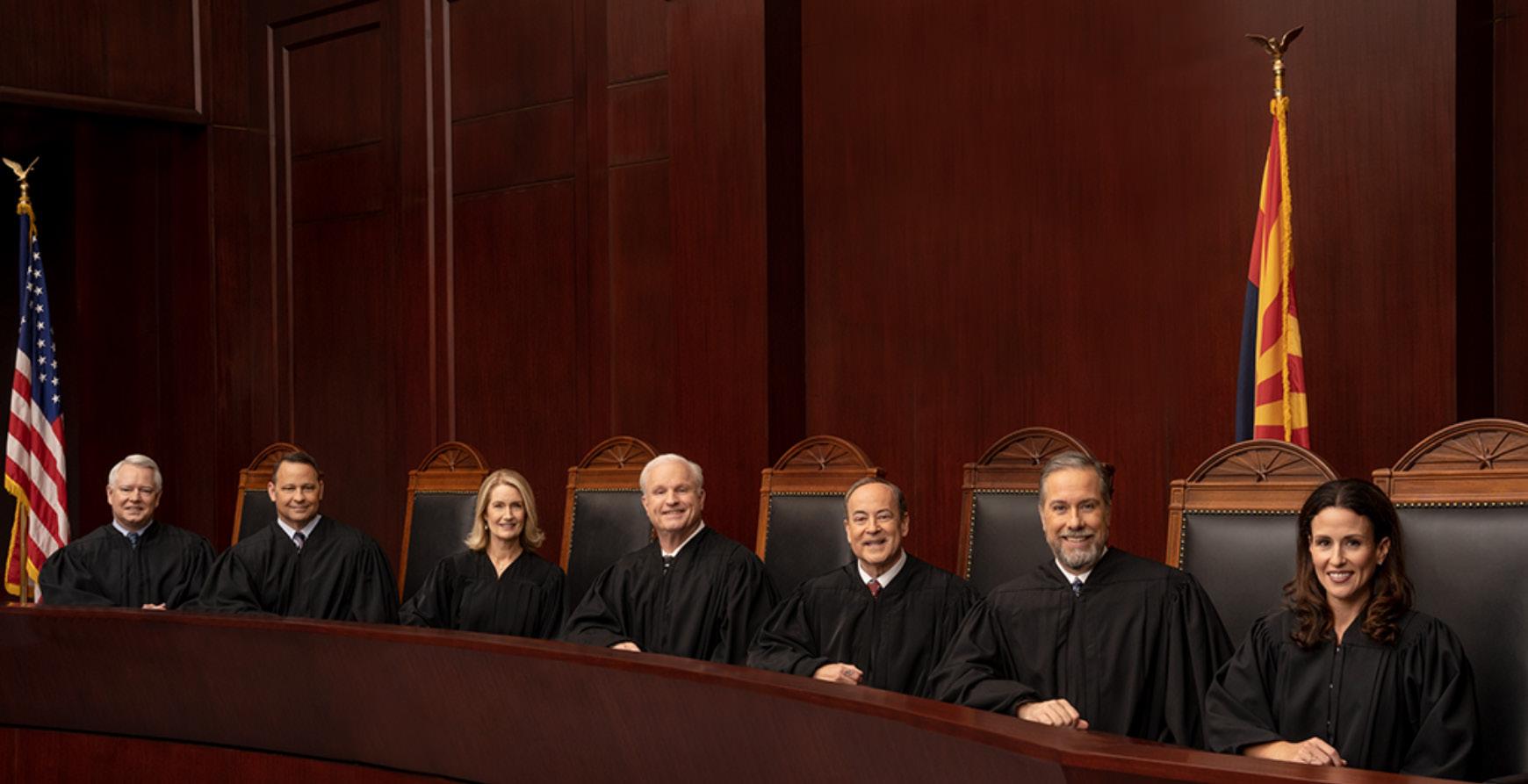
also critical of the court's decision.
"Millions of Arizonans will soon live under an even more extreme and dangerous abortion ban, which fails to protect women even when their health is at risk or in tragic cases of rape or incest," Biden said in a statement. "This cruel ban was first enacted in 1864 — more than 150 years ago, before Arizona was
even a state and well before women had secured the right to vote. This ruling is a result of the extreme agenda of Republican elected officials who are committed to ripping away women’s freedom."
LA County and the state of California created the Abortion Safe Haven Project to provide reproductive care for all residents as well as those who travel
to the county, officials said. The project is a network of county agencies, community service organizations, businesses, reproductive health advocates and health care providers that work to ensure safe access to abortion and reproductive health care.
Los Angeles County’s Abortion Safe Haven Guide is online at http://abortionsafehaven.lacounty.gov/.
APRIL 11-APRIL 17, 2024 27 BeaconMediaNews.com NEWS
One of the five California condor hatchlings at the Los Angeles Zoo. | Photo courtesy of the LA Zoo
Arizona's Supreme Court justices. | Photo courtesy of the Arizona Supreme Court
lations, like former foster youth.
"The Bob & Dolores Hope Foundation is proud to support Mayor Karen Bass' emergency homelessness plan with We Are LA and their efforts to reach out to hundreds of thousands of Angelenos facing the threat of eviction and connecting them to services and support," Linda Hope, chair and CEO of the Bob & Dolores Hope Foundation, said in a statement.
Hope also thanked the organization for assisting veterans, an issue that was near and dear to her parents' hearts.
"My mom and dad always had a heartfelt devotion and concern for those individuals who have and continue to serve our country," Hope said in a statement. "They believed that prevention was an intricate step in any effort to help those at risk, and their foundation was created, in part, with the hope of meeting the needs of all those individuals."
We Are LA Trump
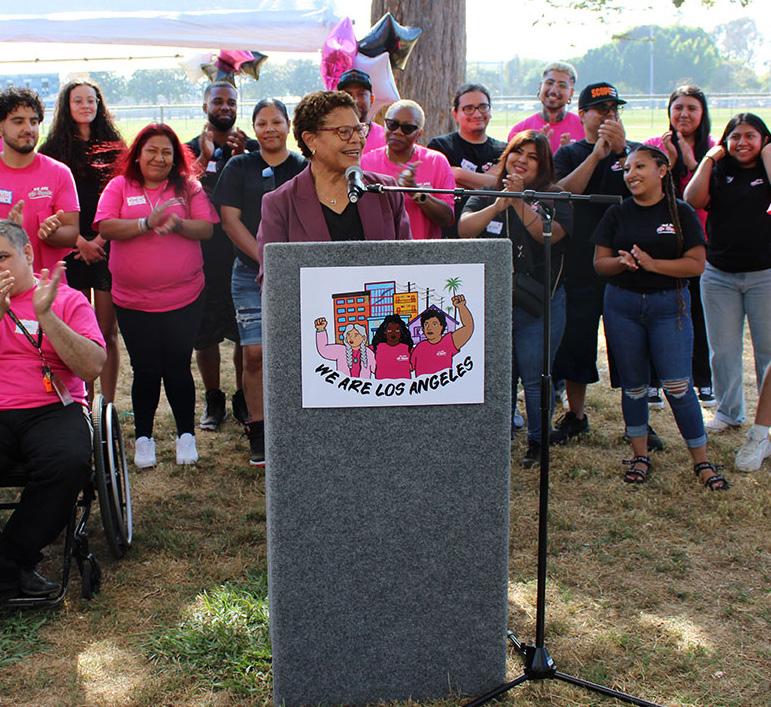
The Mayor's Fund created the program more than eight months ago. It has also helped residents in need with programs such as MediCal, CalFresh and earned income tax credits, officials said. More than 350 pro bono attorneys provide legal information and defense as well.
"Housing is a critical key to health, with research
showing that housing stability, quality, safety and affordability all affect our physical and mental health outcomes," Martha SantanaChin, president of Medi-Cal and Medicare at Health Net, said in a statement. She added, "Moreover, homelessness significantly undermines preventive health measures and exacerbates existing health issues."



Trump had a month to come up with the sum or risked having his properties seized.
When a defendant loses a civil case in New York, the creditor — in this case the attorney general — can immediately go after the defendant’s assets to collect the judgment. The defendant can protect his assets while pursuing an appeal by posting a bond. Typically obtained from an insurance company for a fee, the bond is essentially a promise that the company will guarantee payment of the judgment if the appeal fails.
In his first interview with ProPublica, Hankey said that when he heard Trump was having trouble getting a bond, he reached out to Trump’s camp, several days before the bond was reduced, with an offer to help.
Hankey, who took a break from a game of bocce to speak to ProPublica, is rated by Forbes as one of the 400 wealthiest people
in the world with an estimated net worth of more than $7 billion. He made much of his fortune with high-interest car loans to risky borrowers, and he is chairman of a Los Angelesbased network of companies across a range of industries, including real estate, insurance and finance. He has said he supports Trump politically but would have wanted to make the deal no matter his politics.
Hankey told ProPublica that during the talks he came to the conclusion that Trump’s “got the liquidity” and was confused why others would have rejected him, speculating that some may have wanted to avoid political backlash: “If you’re a public company, maybe you don’t want to offend 45% of the population.”
Hankey said he informed Trump’s camp that he was willing to work with them, and “they said they had the collateral.” The two sides went over the assets that had to be pledged, and it
was up to Trump “if they wanted to do it.” (In his second call, Hankey said making a deal would have been “difficult.”)
But, he said, the deal for the larger amount was dropped during a large Zoom call between the two sides, when Trump’s camp got a call informing them that the bond was reduced.
“They thanked us for trying to help: ‘Maybe next year, we’ll try to do business again,’” Hankey recalled them saying.
But several days later, Hankey said, they called back, hoping to make a deal for the reduced bond, and Hankey agreed.
The bond saga is not over. In a brief court filing last Thursday, the New York attorney general asked Trump or Hankey’s company to show that the company has the financial means to fulfill the $175 million bond.
28 APRIL 11-APRIL 17, 2024 BeaconMediaNews.com
NEWS
Mayor Karen Bass speaks at a We Are LA event. | Photo courtesy of the Mayor's Fund for Los Angeles
Republished with Creative Commons License (CC BY-NC-ND 3.0). IT’S SHOWTIME! Come laugh with us! View full calendar/purchase tickets @ theicehouse.com Tonight • April 11th 7PM • Jimmy O. Yang, George Perez, Jay Larson 7:30PM • Jimmy O. Yang, George Perez, Jackie Fabulous Friday • April 12th 7:30PM • Maz Jobrani, Pablo Francisco, Moshe Kasher 9:30PM • Maz Jobrani, Pablo Francisco, Moshe Kasher Saturday • April 13th 5PM • Deez Nuts 5:30PM • Rudy Moreno and Friends 7:30PM • Eddie Ifft 8PM • Kiki Yeung’s Night Out 9:30PM • The Shindig Show w/ Shang and Momo Rodriguez 10PM • Drew Lynch, Joey Bragg, Zahra Ali Happy Hours: 6:30pm - 7:30pm & 10pm - close (bar & patio only)
