Brush fire west of Perris fully contained, burns 68 acres
PG 02

Brush fire west of Perris fully contained, burns 68 acres
PG 02
Series: Uncovered
How the Insurance IndustryDenies
Coverage to Patients
It’s one of the most crucial questions people have when deciding which health plan to choose: If my doctor orders a test or treatment, will my insurer refuse to pay for it?

After all, an insurance company that routinely rejects recommended care could damage both your health and your finances. The question becomes ever more pressing as many working Americans see their premiums rise as their benefits shrink.
Yet, how often insurance companies say no is a closely held secret. There’s nowhere that a consumer or an employer can go to look up all insurers’ denial rates — let alone whether a particular company is likely to decline to pay for procedures or drugs that its plans appear to cover.
The lack of transparency is especially galling because state and federal regulators have the power to fix it, but haven’t.
ProPublica,in collaboration with The Capitol Forum, has been examining the hidden world of insurance denials. A previous story detailed how one of the nation’s largest insurers flagged expensive claims for special scrutiny; a second story showed how a different top insurer used a computer program to bulk-deny claims for some common procedures with
little or no review.
The findings revealed how little consumers know about the way their claims are reviewed — and denied — by the insurers they pay to cover their medical costs.
When ProPublica set out to find information on insurers’ denial rates, we hit a confounding series of roadblocks.
In 2010, federal regulators were granted expansive authority through the Affordable Care Act to require that insurers provide information on their denials. This data could have meant a sea change in transparency for consumers. But more than a decade later, the federal government has collected only a fraction of what it’s entitled to. And what information it has released, experts say, is so crude, inconsistent and confusing that it’s essentially meaningless.
The national group for state insurance commissioners gathers a more detailed, reliable trove of information. Yet, even though commissioners’ primary duty is to protect consumers, they withhold nearly all of these details from the public. ProPublica requested the data from every state’s insurance department, but none provided it.
Two states collect their own information on denials and make it public, but their data covers only a tiny subset of health plans serving a small number of people.
The minuscule amount of details available about denials robs consumers of a vital tool for comparing health plans.
“This is life and death for people: If your insurance won’t cover the care you need, you could die,” said Karen Pollitz, a senior
fellow at KFF (formerly known as the Kaiser Family Foundation) who has written repeatedly about the issue. “It’s all knowable. It’s known to the insurers, but it is not known to us.”
The main trade groups for health insurance companies, AHIP (formerly known as America’s Health Insurance Plans) and the Blue Cross Blue Shield Association, say the industry supports transparency and complies with government disclosure requirements. Yet the groups have often argued against expanding this reporting, saying the burdens it would impose on insurance companies would outweigh the benefits for consumers.
“Denial rates are not directly comparable from one health plan to another and could lead consumers to
Trial date set for felon accused of trying to murder ex in Eastvale
PG 27
By City News Service
Riverside County sheriff’s investigators Wednesday were continuing to try to identify additional victims of sexual abuse allegedly at the hands of a Coronita man already charged with assaulting two female relatives, who are now adults.
Abimael Hernandez Saldana, 70, was arrested in May following a sheriff’s investigation that authorities said was prompted by one of the defendant’s family members. Saldana is charged with lewd acts on a child under 14 years old and sexual penetration of a child under 10 years old.
He pleaded not guilty in May and is slated to appear for a felony settlement conference before Superior Court Judge Mark Johnson at the Riverside Hall of Justice on Aug. 2.
Saldana is being held in lieu of $1 million bail at the Smith Correctional Facility in Banning.
According to sheriff’s Sgt. Brandon Mullins, in early April, deputies were contacted by law enforcement officials in Orange County, Florida, who had received information from a woman alleging she was sexually abused by Saldana as a child.
“The victim stated she had been sexually assaulted multiple times ... while she slept,” Mullins said.
According to the District Attorney’s Office, along
Investigators believe a probationer currently in jail on robbery charges is responsible for at least seven burglaries in Riverside, officials said Friday.
Michael Aria Javdani, 27, of Riverside, is facing additional burglary charges and a weapons charge after police served a search warrant at his residence last Tuesday in the 4000 block of Sedgwick Avenue. Officers recovered an unregistered handgun and evidence linking the suspect to the additional burglaries.
“Late last month, the Riverside Police Department’s Property Crimes Unit began following up on a commercial burglary that occurred in the 2000 block of Iowa Avenue,” Riverside officials said in a statement. “Several thousand dollars was stolen from an ATM machine inside the
See Burglaries Page 28
A32-year-old man accused of dragging his girlfriend out of a Banning motel and taking her away with him will ask a judge on Monday to lower his bail so he can get out of jail.
Hector Puga Sanchez of Banning was arrested and charged last week with kidnapping, domestic violence and a sentenceenhancing great bodily injury allegation.
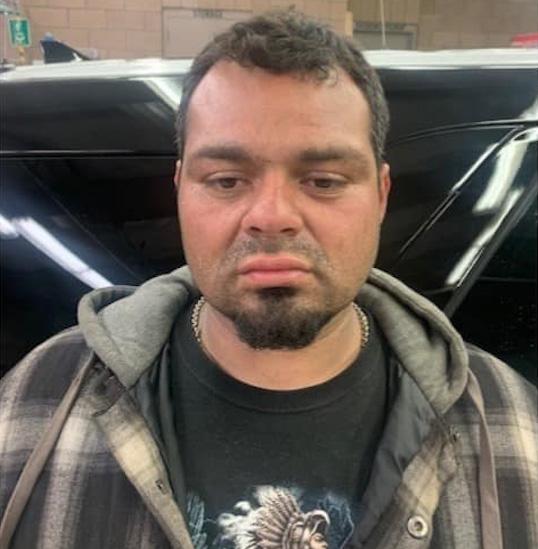
Sanchez pleaded not guilty during an arraignment Thursday before Riverside County Superior Court Judge Joshlyn Pulliam, who ordered the defendant held without bail at the Smith Correctional Facility in Banning.
At the request of Sanchez’s public defender, the judge scheduled a bail review hearing for Monday morning at the Banning Justice Center.
The defendant has no documented prior felony convictions in Riverside County. However, he does have several unresolved misdemeanor cases for alleged drug-related offenses.

According to the Banning Police Department, on the night of June 11, Sanchez allegedly went to the Days Inn at 2320 Ramsey St. and kicked in a door to one of the
Jurors found a 30-yearold man guilty Thursday of fatally shooting a man in the living room of a Desert Hot Springs home after finding out the victim was in the same home as his girlfriend.
Daniel Ray Martinez of Desert Hot Springs was charged with one felony count each of murder and being a felon and narcotic addict in possession of a firearm. He additionally faces a sentence-enhancing allegation of discharging a firearm causing great bodily injury.
His co-defendant, 41-yearold Jesus Gabriel Pena, was charged as an accessory for allegedly deleting evidence.
The charges stem from the Sept. 8, 2021, fatal shooting of Javier “Happy” Torres.
Jurors began deliberating Wednesday afternoon and reached a verdict by 11 a.m. Thursday, according to Riverside County District Attorney’s office director of communications Amy
rooms, where his girlfriend was staying.
Police spokeswoman Sol Avila alleged that he “dragged the female out of the room by force,” fleeing with her as witnesses called 911.
Patrol officers reached the location a short time later, but they could not locate the defendant or victim, Avila said.
She said five days later, detectives tracked down the woman, whose name was
not disclosed, and discovered she “had sustained a serious injury.” The victim identified Avila as her alleged attacker. She received treatment at a hospital and is recovering.
According to police, investigators confirmed the defendant was residing in a transient encampment near railroad tracks off of 22nd Street, where an arrest warrant was served on him, and he was taken into custody without incident.
Abrush fire that broke out west of Perris, scorching roughly 68 acres and destroying two homes, was fully contained Thursday.
The Juniper Fire erupted about 2:30 p.m. Tuesday near the intersection of Juniper and Santa Rosa Mine roads, between Gavilan Hills and Perris, according to the Riverside County Fire Department.
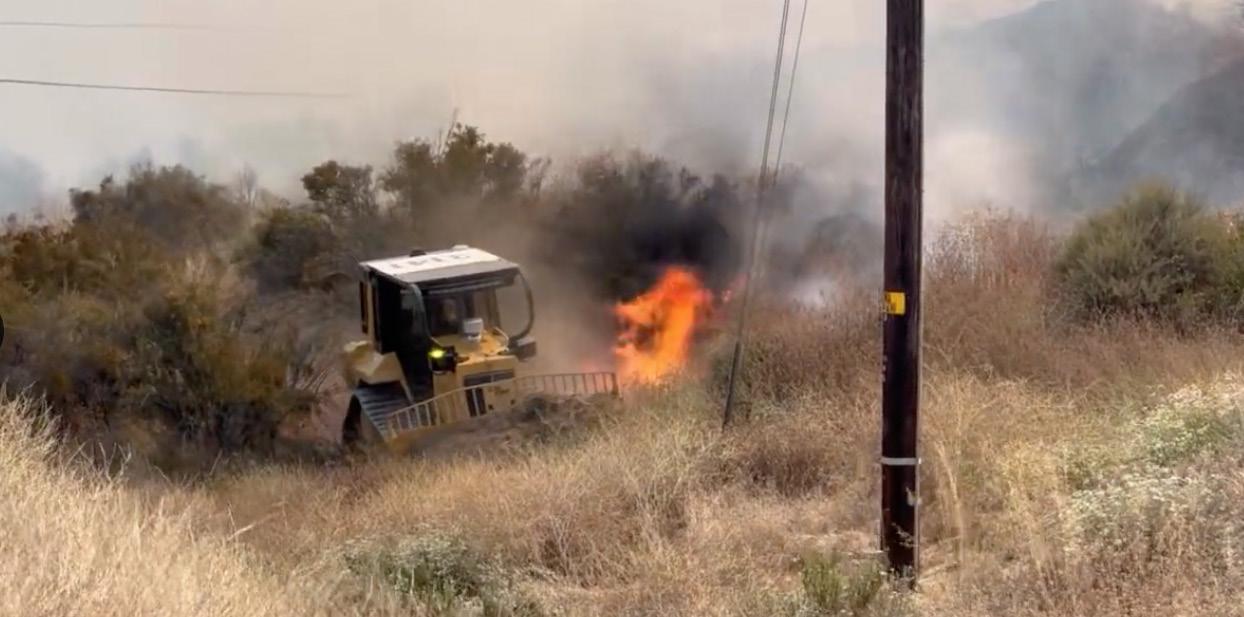
The fire also damaged at least two outbuildings, three cars and a recreational vehicle, officials said.
An evacuation order went into effect within an hour of the blaze starting, impacting properties south of Blue Sky Road, east of Baquero Road, west of Maywood Club Road and north of Rocky Hills Road. It was lifted Thursday night when fire officials confirmed the fire had been extinguished.
At the height of the fire, multiple engine and hand crews from the Riverside County Fire Department, Hemet Fire Department, Corona Fire Department, Murrieta Fire & Rescue and Riverside Fire Department were at the location, battling flames that moved at a rapid rate to the east amid moderate winds.
Cal Fire air tankers and water-dropping helicopters began making runs on the fire prior to the arrival of ground crews, slowing the blaze and closing off one of its flanks.
Six tankers and four helicopters were over the fire, with about 160 personnel on the ground, working to contain it Tuesday, officials said. The fire’s rate of spread was stopped at 5:15 p.m. Tuesday.
The cause of the blaze was under investigation.
McKenzie.
Martinez was found guilty of both charges and the allegation was found true while Pena was found not guilty of being an accessory.
A sentencing date for Martinez was set for July 18.
Deputy District Attorney Samantha Paixao told jurors Wednesday during closing arguments at the Larson Justice Center in Indio that Martinez didn’t like Torres because the decedent was previously in a relationship with his girlfriend, so when they got into an argument and he found out they were both in her friend Jonathan Berry’s house, he drove there, kicked down the door and shot Torres three times before fleeing the scene.
“This is made up in his head. ... They weren’t in the same room,” Paixao said.
She added that Pena admitted to using the home’s surveillance footage to see what the girlfriend
did throughout the day and that a recorded interview with police shows his guilt because of his certainty of not being in any video footage and how he stumbled over his words when he was asked directly.
Paixao said Torres was dropped off by Pena at the fire department in Desert Hot Springs and that he ultimately died from the gunshot wounds.
Martinez’s defense attorney, Andrea Bouchard, told jurors that they were given a false premise and that they were asked to believe testimony from Berry, who she said is unreliable and might even be the true culprit.
“Let’s not forget about Mr. Berry’s immunity agreement. ... Because he’s concerned about his own interests,” Bouchard said. “He knows that if he sticks to the story that he told the police ... that got him released at that time and free of being charged, that
he gets away free and clear. He has an incentive to stick to that story.”
Pena’s defense attorney Alexander Reed told jurors that his client had no motive to protect Martinez
because they have no evidence to connect them as friends and that there was not a thorough enough investigation to prove that Pena manipulated anything in
the surveillance system. Martinez was arrested in San Diego County. He is being held at the John Benoit Detention Center in Indio in lieu of $1.05 million bail.
Editorial editorial@beaconmedianews.com editor@hlrmedia.com
Graphics/Production production@beaconmedianews.com production@hlrmedia.com
Advertising advertising@beaconmedianews.com advertising@hlrmedia.com
Legal Advertising legals@beaconmedianews.com legals@hlrmedia.com

Business accounting@beaconmedianews.com accounting@hlrmedia.com

BEACON MEDIA ADDRESS: 125 E. Chestnut Ave., Monrovia, CA 91016

PHONE: (626) 301-1010 WEBSITE www.beaconmedianews.com
HLR MEDIA ADDRESS: 820 S. Myrtle Ave. Monrovia, CA 91016 PHONE: (626) 301-1010 www.HLRmedia.com
PRESS RELEASE SUBMISSIONS editor@beaconmedianews.com editor@hlrmedia.com

 By City News Service
The Arcadia Weeklyhas been adjudicated as a newspaper of general circulation in court case number GS 004333 for the City of Arcadia, County of Los Angeles, State of California.

The Monrovia Weeklyhas been adjudicated as a newspaper of General Circulation in Court Case GS 004759 City of Monrovia, County of Los Angeles, State of California.

The Temple City Tribunehas been adjudicated as a newspaper of general circulation in court case number GS 012440 City of Temple City, County of Los Angeles, State of California.

The El Monte Examinerhas been adjudicated as a newspaper of general circulation in court case number KS 015872 City of El Monte, County of Los Angeles, State of California.
The Azusa Beaconhas been adjudicated as a newspaper of general circulation in court case number KS 015970 City of Azusa, County of Los Angeles, State of California.
The San Gabriel Sunhas been adjudicated as a newspaper of general circulation in court case number GS 013808 City of San Gabriel, County of Los Angeles, State of California.
The Duarte Dispatchhas been adjudicated as a newspaper of general circulation in court case number GS 013893 City of Duarte, County of Los Angeles, State of California.
The Rosemead Readerhas been adjudicated as a newspaper of general circulation in court case number GS 048894 City of Rosemead, County of Los Angeles, State of California.
The Alhambra Press has been adjudicated as a newspaper of general circulation in court case number ES016581 City of Alhambra, County of Los Angeles, State of California.
The Baldwin Park Press has been adjudicated as a newspaper of general circulation in court case number KS017174 City of Baldwin Park, County of Los Angeles, State of California.
The Burbank Independent has been adjudicated as a newspaper of general circulation in court case number ES016728 City of Burbank, County of Los Angeles, State of California.
The Glendale Independent has been adjudicated as a newspaper of general circulation in court case number ES016579 City of Glendale, County of Los Angeles, State of California.
The Monterey Park Press has been adjudicated as a newspaper of general circulation in court case number ES016580 City of Monterey Park, County of Los Angeles, State of California.
The West Covina Press has been adjudicated as a newspaper of general circulation in court case number KS017304 City of West Covina, County of Los Angeles, State of California.
The San Bernardino Press has been adjudicated as a newspaper of general circulation in court case number CIVDS 1506881 City of San Bernardino, County of San Bernardino, State of California.
The Riverside Independent has been adjudicated as a newspaper of general circulation in court case number RIC1505351 City of Riverside, County of Riverside, State of California.
The Pasadena Press has been adjudicated as a newspaper of general circulation in court case number ES018815 City of Pasadena, County of Los Angeles, State of California.
The Belmont Beacon has been adjudicated as a newspaper of general circulation in court case number NSO30275 City of Long Beach, County of Los Angeles, State of California.

The Anaheim Press has been adjudicated as a newspaper of general circulation in court case number 30-2017-00942735-CU-PT-CJC City of Anaheim, County of Orange, State of California.
The Ontario News Press has been adjudicated as a newspaper of general circulation in court case number CIVDS 1506881 City of Ontario, County of San Bernardino, State of
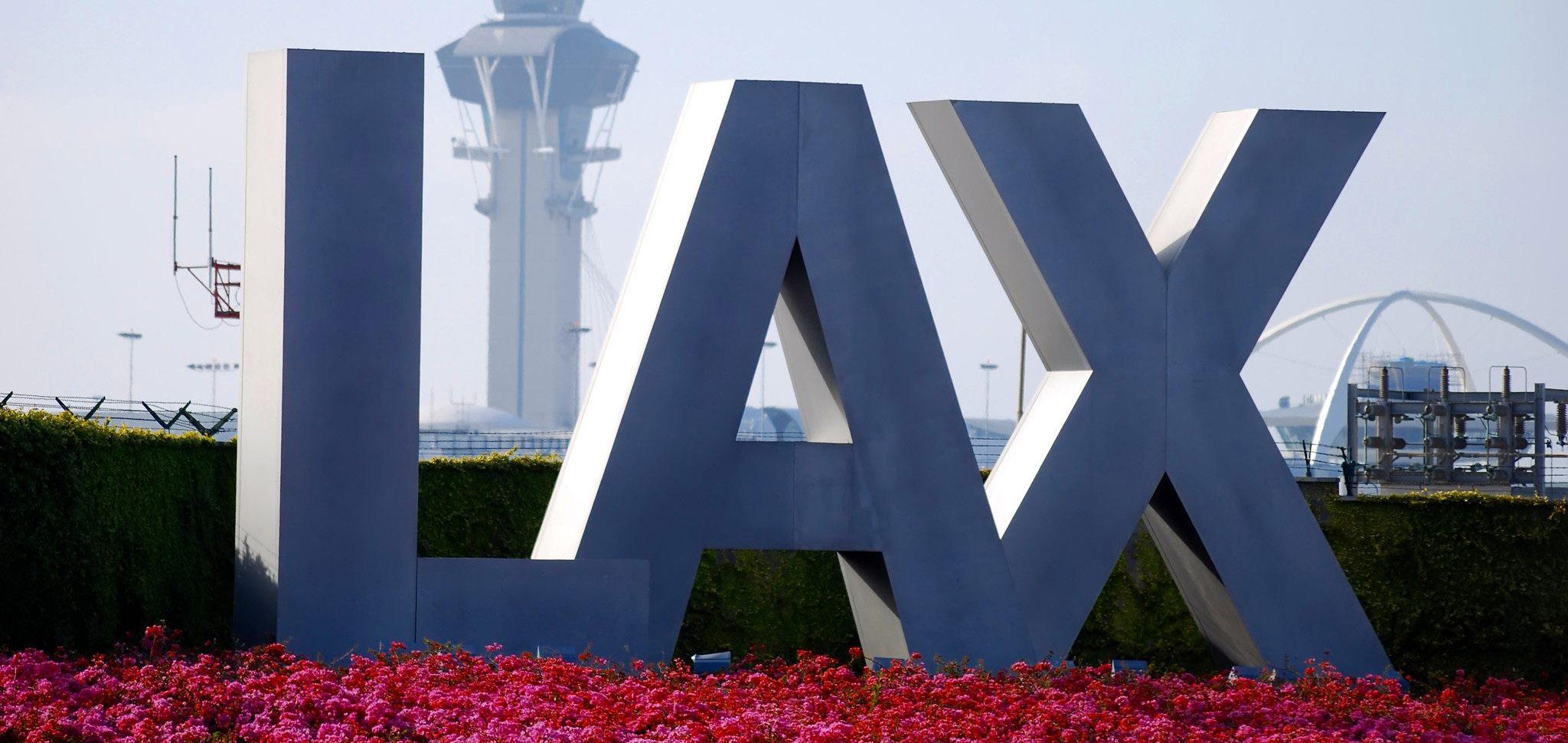
While severe weather continues to cause air-traffic delays and flight cancellations nationally, Los Angeles International Airport officials said Wednesday they anticipate July will be LAX’s busiest month of the summer travel season, starting with an anticipated 3 million passengers over the Fourth of July travel period.
“The busy summer travel season is upon us at LAX and we expect passenger volumes to reach the highest levels we have seen so far this year with an average of 228,000 daily passengers in the days before and after the Independence Day holiday,” Justin Erbacci, CEO of Los Angeles World Airports, said in a statement.
“Our parking structures are nearing capacity or filling up on a daily basis, so we encourage guests to take advantage of our awardwinning smart parking system to pre-book a parking space in any Central Area
Terminal structure or the LAX Economy Parking facility. Passengers can also make the travel journey more enjoyable by arriving early and ordering food and beverage ahead of time for pickup or delivery to the gate.”
LAX officials define the Fourth of July travel period as Wednesday through July 10. The busiest days of that period are expected to be Thursday when about 241,000 passengers are expected to pass through the airport; Friday, with about 245,000 passengers expected; and Monday, July 10, when about 251,000 passengers are anticipated.
Airport officials said those anticipated peak days represent about 90% of the passenger volume seen in pre-pandemic March 2019 and are expected to be the busiest travel days at the airport since early 2020.
The travel crunch comes during a week when severe weather in other parts of the country have been
prompting flight delays and cancellations. Those issues were continuing Wednesday, with 28 cancellations of flights in or out of LAX reported by midday, according to the flight-tracking website FlightAware. More than 180 flight delays affecting the airport were also reported.
Earlier this week, the Automobile Club of Southern California predicted that a near-record 3.4 million Southern California residents are expected to travel for the Fourth of July holiday period, a 4.4% increase from last year and just 1% below the all-time high set in 2019.
According to the Auto Club, roughly 2.7 million Southern Californians are expected to travel by automobile over the holiday, with 517,000 traveling by air and 253,000 relying on some other means, such as bus, train or cruise.
Nationally, nearly 51 million people are expected to travel, surpassing the 2019 record.
With the Fourth of July holiday falling on a Tuesday, the Auto Club defined the holiday travel period as beginning Friday and ending on July 4.
For Southern California travelers, the top destinations are expected to be Las Vegas, San Diego, the Central Coast, Mexico and the Grand Canyon.
According to the traffic analytics firm INRIX, the worst traffic congestion over the holiday period in Southern California is expected to occur Sunday evening on the 15 Freeway heading toward Las Vegas. The company estimated that the usual four-hour drive is likely to take six hours during that peak travel period.
Auto Club officials noted that gas prices are about $1.50 per gallon lower in Southern California than they were last year, but the average price is still at the second-highest level ever for the Fourth of July period.
This Fourth of July, visit your local Applebee’s and receive a free kid’s meal for a celebratory treat that is sure to have you ready for the fireworks. Applebee’s locations owned and operated by Flynn Restaurant Group will offer a Kids Eat Free special, valid all-day Tuesday, July 4 for one day only.
Participating locations include: Alhambra
By StaffPorterville
Salinas San
Santa Maria
Signal
Visalia
Watsonville
The offer is good for dine-in only and patrons must mention the offer.
The free kid’s meal must be accompanied by an adult entrée purchase. The offer excludes tax and gratuity. There is a limit of one kid, 12-years-old and under, per adult. Patrons must order from the Kid’s Menu only. The offer cannot be combined with any other offer or discount. Special valid only at Flynn Restaurant Group owned and operated Applebee’s locations.


AU.S. Supreme Court rulingThursday strikingdown affirmative action policies for college and university admissions was met with disappointmentfrom Southland leaders, while USC President Carol Folt insisted the decision will not affect the university’s commitment to diversity.
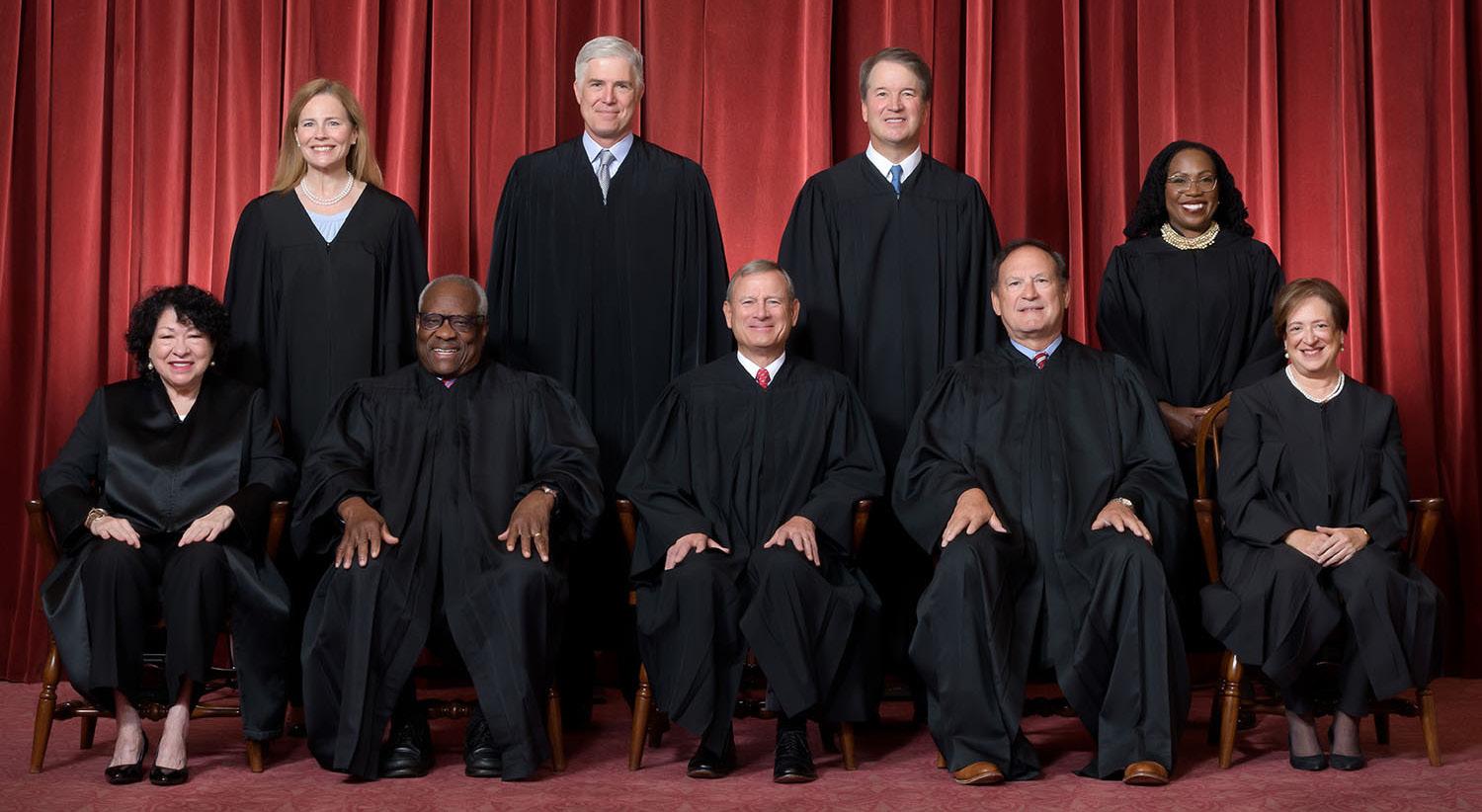
The ruling will have a limited effect on California public universities, thanks to previous ballot measures prohibiting race-based admissions. But the ruling will extend to private universities like USC.
Folt, in a statement Thursday morning, called the Supreme Court ruling “very disappointing.”
“USC has long understood that excellence and diversity are inextricably intertwined,” Folt said. “We educate innovative, thoughtful students from across the globe, who become leaders in every field. Each of our students, faculty and staff has earned a place here and contributes to creating one of the most stimulating and creative educational communities in the world.
“This decision will not impact our commitment to creating a campus that is welcoming, diverse and inclusive to talented individuals from every background,” she said. “USC provides an outstanding learning community where differing backgrounds and points of view are embraced, where ideas collide, beliefs are challenged and innovation thrives. We will not go backward.”
Although the ruling will not have a direct impact on the University of California system, UC President Dr. Michael V. Drake also expressed disappointment
in the decision.
“Since the consideration of race in admissions was banned in California 27 years ago by Proposition 209, the University of California has adjusted its admissions practices to comply with the law while continuing to aggressively pursue avenues for increasing diverse student applications, admissions, enrollment, and retention,” Drake said in a statement. “Through a comprehensive admissions review process, we have made important strides in this area — but more work remains to be done by us all.

“Today’s court decision bars the use of an important tool for other higher education institutions,” he said. “The consideration of race was not the conclusive solution to inequities in college admissions, but it was a necessary pathway to addressing systemic deficiencies. Without it, we must work much harder to identify and address the root causes of societal inequities that hinder diverse students in pursuing and achieving a higher education.”
Response from local elected officials was predictably split on party lines.
“Our students benefit when our institutions reflect the diversity of our country,” Rep. Nanette Barragán, D-Long Beach, said. “(The) ruling dismantles years of precedent & exacerbates obstacles to higher education for students of color. This ignores the realities of the need for equitable & equal opportunities for all.”
Gov. Gavin Newsom blasted the decision as upending a longstanding precedent “without any care for the costs to society
and students around the country.”
“Right-wing activists — including those donning robes — are trying to take us back to the era of book bans and segregated campuses,” Newsom said in a statement.
“While the path to equal opportunity has now been narrowed for millions of students, no court case will ever shatter the California Dream,” the governor said. “Our campus doors remain open for all who want to work hard, and our commitment to diversity, equity, and equal opportunity has never been stronger.”
Rep. Michelle Steel, R-Cypress, applauded the decision.
“I immigrated to this country from Korea when I was 19 years old to pursue an education,” Steel said in a statement. “I am living my American Dream because, in this country, your actions determine your success — not your race and ethnicity. For 40 years, American colleges and universities have stacked the deck against Asian Americans in the name of diversity. As a nation, we believe, as taught by Dr. Martin Luther King Jr., that every human should be judged ‘not by the color of their skin, but by the content of their character.’
“Thanks to the brave young men and women who spoke up about their experiences with racial discrimination, today’s victory marks a new chapter in the fight for equality in education,” she said.
Assemblyman Bill Essayli, R-Riverside, hailed the ruling as “upholding the fundamental American ideal that all men and women are created equal and shall not be treated differently based on his or her race.”
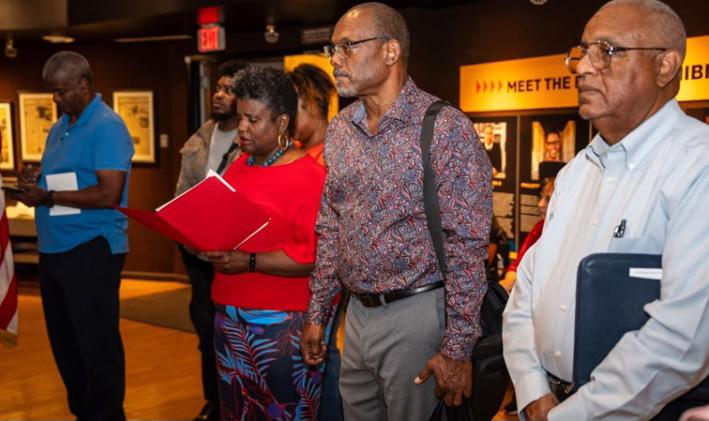
“ There is enough room for everybody to succeed,” Fifth District Supervisor Joe Baca, Jr. said during a June 22 update provided to more than 100 Black community leaders on the San Bernardino County’s equity efforts.
These efforts, inspired by action taken by the Board of Supervisors three years ago declaring racism as a public health crisis, resulted in the creation of a Countywide Vision Equity Element Group made up of 16 Black community organizations and the inclusion of equity as a guiding force within other vision element groups addressing public safety, education, wellness, housing, jobs and the economy, the environment, infrastructure, and water.
“We have an opportunity in this space unlike any other,” said County Chief Executive Officer Leonard X. Hernandez. “I believe in this county the best things can grow… We are poised right now as an organization to push forward in a bold way, to push forward in a new way, and to push forward in a sustainable way to do things we’ve never done before.”
County Assistant Executive Officer Diana Alexander, who heads the County’s equity efforts, said groundwork carried out by the
By StaffEquity Element Group and the County will soon result in:
Workshops to teach minority-run businesses and community organizations how to effectively compete for county contracts.
Building capacity within community organizations with the assistance of skilled young people supported by county funding.
Establishment of a county equity office led by a county equity officer.
Prioritization of investments in minority communities.
An equity cohort program to ensure county departments think in terms of equity as they provide services to residents and businesses.
Contracting with a Black-owned communications firm to ensure minority communities are aware of the Equity Element
 By City News Service
Group and county’s efforts, and have the opportunity to participate in programs and decision-making.
“We’ve been doing things behind the scenes and now we’re bringing it out,” Alexander said. “Please believe me when I say you will see change.”
The county’s declaration of racism as a public health crisis, the addition of equity as a Countywide Vision element and the creation of the Equity Element Group came in the wake of the May 25, 2020, murder of George Floyd, a Black man, by a Minneapolis police officer, which is why efforts have initially focused on the Black community.
Alexander said the lessons learned and successes will be applied to eventually address the equity needs of all minority communities of color, gender, age, and disabilities.
Officials from the ports of Los Angeles and Nagoya, Japan, on Thursday signed a new agreement to broaden cooperation on key sustainability and operational efficiency initiatives.
“Today marks another major milestone in the longstanding partnership between the ports of Los Angeles and Nagoya,” Gene Seroka, Port of LA CEO, said in a statement. “This agreement is a testament to the success that can be achieved when ports commit to work together, share ideas and advance mutual priorities.”
The new three-year memorandum of understanding involves sharing best practices and exchanging information on issues of operational efficiencies, such as the development, deployment and promotion of port community systems for end-to-end supply chain information sharing.
Under the agreement, both ports will continue to collaborate on the development and testing of zero-emission vehicles and equipment; environmental initiatives focused on terminal operations, ships in port and drayage trucks; and on energy use and alternative energy sources.
Both ports agreed to the formation of a new Green Shipping Corridor in the coming years, guided by a port decarbonization plan. This project aims to reduce greenhouse gas emissions from cargo movement between Nagoya and Los Angeles.
It will also encourage the use and promotion of low and zero-carbon ships and fuels.
“This agreement paves the way to advance environmental sustainability and operational efficiencies at both of our ports,” Yuji Kamata, executive vice president of the Nagoya Port Authority, said in a statement. “We look forward to further cooperation with the Port of Los Angeles so that both ports can further prosper as we move toward a new era of achieving carbon neutrality.”
Cooperation between Los Angeles and Nagoya dates back to 1959, when the two cities established a Sister City Affiliation as part of President Dwight Eisenhower’s Citizen’s International Exchange Program.
Over the decades, the two ports’ relationship has been celebrated by numerous visits, exchange programs, meetings and agreements on operational and environmental cooperation.
The Los Angeles Board of Airport Commissioners Wednesday celebrated the groundbreaking of a multibillion-dollar capital improvement project intended to expand LAX.
The Midfield Satellite Concourse South project will add approximately 150,000 square feet and eight gates for narrow-body aircraft. The project utilizes what officials are calling a first-of-its kind construction technique called Offsite Construction and Relocation.
MSC South will be built in nine segments roughly a mile and a half away from the project’s site and then carefully delivered and assembled in place.
Officials said the OCR technique is both “innovate and adaptive, saving public
funds and time with a high degree of building control and supervision.”
“MSC South is original in both the way it is being constructed and its overall design, which celebrates our transformation while paying tribute to the architectural legacy of our airport,” Los Angeles World Airports CEO Justin Erbacci said in a statement.

The project will pay homage to the city of Los Angeles with elements of the design being influenced by notable modernist homes, according to officials.
“Drawing inspiration from California Modernism, the design for LAX’s MSC South captures a feeling of ease, simple but functional design, and timeless beauty,” said Matt Ducharme of
Woods Bagot, design architect for the project.
The project’s exterior brise soleil system, a solar shading feature, will frame sight lines of the surrounding landscape and enable passive cooling and energy conservation. Officials said the interior of MSC South will feel more like “a domestic space than a traditional airport concourse.”
The team delivering the project is composed of local workers.
“LAX’s MSC South is amazing because of what we’ve figured out how to do together -- deliver the job faster without sacrificing precision and care by building the concourse offsite then meticulously moving the segments into place,”
NOTICE OF PUBLIC HEARING
APPROVAL OF ANNUAL LEVY OF FISCAL YEAR 2023-2024 CITYWIDE SEWER SERVICE CHARGE
TUESDAY, JULY 18, 2023
BEFORE THE CITY COUNCIL OF THE CITY OF EL MONTE
TO: All Members of the Public and All Other Interested Parties
FROM: City Council of the City of El Monte
NOTICE IS HEREBY GIVEN as required by Section 5473.1 of the Health & Safety Code and Section 6066 of the Government Code, the El Monte City Council hereby gives notice that a public hearing will be held on TUESDAY, JULY 18, 2023 at 7:00 P.M. to determine for the purpose of considering and taking action to approve the following:
APPROVAL SOUGHT:
Approval of the Fiscal Year 2023-2024 levy of the sewer service charge applicable to all parcels located within the City of El Monte. As part of the annual levy approval, the City Council will review and take action to approve a report setting forth the specific sums to be levied against each property subject to the Citywide sewer service charge. A copy of this report is maintained by the City Engineering Division located at El Monte City Hall – West, 11333 Valley Boulevard, El Monte, California and is available for inspection during City business hours.
Prior to the conduct of the June 20, 2023 hearing but in no event later than 15 days prior to the date of the hearing, a written report containing, among other things, a listing of each of the real property parcels subject to the levy/lien and the total sums to be charged against the parcel for the Fiscal Year in question will be available for inspection in the City Engineering Division webpage (https://www. ci.el-monte.ca.us/292/Engineering) or call Engineering Division at (626) 580-2058 to make arrangements for reviewing the said documents.
THE PUBLIC HEARING WILL BE HELD AT: El Monte City Hall –East, City Council Chambers, 11333 Valley Boulevard, El Monte, California.
Members of the public wishing to observe the meeting may do so in one of the following ways:
(1) Turn your TV to Channel 3;
(2) City’s website at http://www.elmonteca.gov/378/Council-Meeting-Videos; or
(3) In person.
Members of the public wishing to make public comment may do so via the following ways:
(4) Call-in Conference Line – comments/questions can be submitted per the instructions at the beginning of the meeting; and
(5) Email – All interested parties can submit questions/comments in advance to the City Clerk’s general email address: CityClerk@ elmonteca.gov; or
(6) In person.
For further information regarding this matter please contact the El Monte Engineering Division at (626) 580-2058, Monday through Thursday (excluding legal holidays), between the hours of 8:00 a.m. and 5:30 p.m.
Published:June 26, 2023 and July 3, 2023
Gabriel Ramirez, City Clerk City of El Monte
EL MONTE EXAMINER
NOTICE OF PUBLIC HEARING
APPROVAL OF ANNUAL LEVY OF FISCAL YEAR 2023-2024
MOUNTAIN VIEW COMMUNITY FACILITIES DISTRICT (CFD) 13-1 ASSESSMENT
TUESDAY, JULY 18, 2023
BEFORE THE CITY COUNCIL OF THE CITY OF EL MONTE
TO: All Members of the Public and All Other Interested Parties
FROM: City Council of the City of El Monte
NOTICE IS HEREBY GIVEN pursuant Section 6066 of the Government Code, the El Monte City Council hereby gives notice that a public hearing will be held on TUESDAY, JULY 18, 2023 at 7:00 P.M. to determine for the purpose of considering and taking action to approve the following:
APPROVAL SOUGHT: Approval of the Fiscal Year 2023-2024 CFD 13-1 was established as a mechanism to pay for ongoing public service costs created through the development and maintenance of the municipal sewer system, street pavement, lighting and opera-
tion charges included in the annual property tax bill for certain real property parcels located within Tract No. 71784 located within the City of El Monte – a tract commonly referred to as the Mountain View Community Facilities District 13-1. The amount of the special tax levy to be assessed in the 2023-2024 Fiscal Year in the CFD 13-1 has been calculated in accordance with the methodology set forth in Resolution of Formation No. 9390. The specific CFD public service costs are as follows: As part of the annual levy approval, the City Council will review and take action to approve a report setting forth the specific sums to be levied against each property subject to the charge. A copy of this report is maintained by the City Engineering Division located at El Monte City Hall – West, 11333 Valley Boulevard, El Monte, California and is available for inspection during City business hours.
Prior to the conduct of the June 20, 2023 hearing but in no event later than 15 days prior to the date of the hearing, a written report containing, among other things, a listing of each of the real property parcels subject to the levy/lien and the total sums to be charged against the parcel for the fiscal year in question will be available for inspection in the City Engineering Division webpage (https://www. ci.el-monte.ca.us/292/Engineering) or call Engineering Division at (626) 580-2058 to make arrangements for reviewing the said documents.
THE PUBLIC HEARING WILL BE HELD AT:
El Monte City Hall – East, City Council Chambers, 11333 Valley Boulevard, El Monte, California.
Members of the public wishing to observe the meeting may do so in one of the following ways:
(1) Turn your TV to Channel 3;
(2) City’s website at http://www.elmonteca.gov/378/Council-Meeting-Videos; or
(3) In person.
Members of the public wishing to make public comment may do so via the following ways:
(1) Call-in Conference Line – comments/questions can be submitted per the instructions at the beginning of the meeting;
(2) Email – All interested parties can submit questions/comments in advance to the City Clerk’s general email address: CityClerk@ elmonteca.gov; or
(3) In person.
For further information regarding this matter please contact the El Monte Engineering Division at (626) 580-2058, Monday through Thursday (excluding legal holidays), between the hours of 8:00 a.m. and 5:30 p.m.
Published: June 26, 2023 and July 3, 2023
Gabriel Ramirez, City Clerk City of El Monte
EL MONTE EXAMINER
NOTICE OF PUBLIC HEARING
APPROVAL OF LEVYING VALLEY VISTA SERVICES DELINQUENT RESIDENTIAL REFUSE ACCOUNTS ON THE FISCAL YEAR 2023-2024 TAX ROLL
TUESDAY, JULY 18, 2023
BEFORE THE CITY COUNCIL OF THE CITY OF EL MONTE
TO: All Members of the Public and All Other Interested Parties
FROM: City Council of the City of El Monte
NOTICE IS HEREBY GIVEN as required by Section 5473.1 of the Health & Safety Code and Section 6066 of the Government Code the El Monte City Council hereby gives notice that a public hearing will be held on TUESDAY, July 18, 2023 at 7:00 P.M. to determine for the purpose of considering and taking action to approve the following:
APPROVAL SOUGHT: Approval of the levy of the past due and delinquent charges for solid waste refuse disposal service on all applicable residential parcels delinquent between May 1, 2022 through April 30, 2023, located within the Valley Vista Services, Service Area. As part of the levy approval, the City Council will review and take action to approve a report setting forth the specific sums to be levied against each applicable property. A copy of this report is maintained by the City Engineering Division located at El Monte City Hall – West, 11333 Valley Boulevard, El Monte, California and is available for inspection during City business hours.
Prior to the conduct of the June 20, 2023 hearing but in no event later than 15 days prior to the date of the hearing, a written report containing, among other things, a listing of each of the real property parcels subject to the levy/lien and the total sums to be charged against the parcel for the Fiscal Year in question will be available for inspection in the City Engineering Division.
THE PUBLIC HEARING WILL BE HELD AT: El Monte City Hall East, City Council Chambers, 11333 Valley Boulevard, El Monte, California.
Members of the public wishing to observe the meeting may do so
in one of the following ways:
(1) Turn your TV to Channel 3;
(2) City’s website at http://www.elmonteca.gov/378/Council-Meeting-Videos; or
(3) In person.
Members of the public wishing to make public comment may do so via the following ways:
(1) Call-in Conference Line Call-in (888) 204-5987; Code 8167975 – comments/questions can be submitted per the instructions at the beginning of the meeting;
(2) Email – All interested parties can submit questions/comments in advance to the City Clerk’s general email address: CityClerk@ elmonteca.gov; or
(3) In person.
For further information regarding this matter please contact the El Monte Engineering Division at (626) 580-2058, Monday through Thursday (excluding legal holidays), between the hours of 8:00 a.m. and 5:30 p.m.
Published: June 26, 2023 and July 3, 2023
Gabriel Ramirez, City Clerk
City of El Monte EL MONTE EXAMINER
A SUMMARY OF ORDINANCE NO. 1016 ADOPTED BY THE CITY COUNCIL OF THE CITY OF ROSEMEAD, CALIFORNIA, FOR THE APPROVAL OF ZONE CHANGE 22-02 AND SPECIFIC PLAN AMENDMENT 22-01
On June 27, 2023, the City Council of the City of Rosemead introduced for first reading, by title only, Ordinance No. 1016, approving Zone Change 22-02 and Specific Plan Amendment 22-01, “An ordinance of the City Council of the City of Rosemead, County of Los Angeles, State of California, for the approval of Zone Change 22-02 and Specific Plan Amendment 22-01, amending the zoning map of the subject site from Garvey Avenue Specific Plan (GSP) (APNs: 5287-038-018, -019, -020 and -029) and Garvey Avenue Specific Plan, Residential/Commercial (GSP-R/C) (APNs: 5287-038-030 and -033) to Garvey Avenue Specific Plan, Incentivized Mixed-Use (GSP-MU) zone. The subject site is located at 7849-7857 Garvey Avenue and 7900-7916 Virginia Street. The following is a summary of Ordinance No. 1016.
Ordinance 1016 (Zone Change 22-02 and Specific Plan Amendment 22-01)
Green Park Property LLC has submitted entitlement applications requesting to amend the Zoning Map and Garvey Avenue Specific Plan by changing the zone of the subject properties from Garvey Avenue Specific Plan (GSP) (APNs: 5287-038-018, -019, -020 and -029) and Garvey Avenue Specific Plan, Residential/Commercial (GSP-R/C) (APNs: 5287-038-030 and -033) to Garvey Avenue Specific Plan, Incentivized Mixed-Use (GSP-MU) zone, for the development of a new residential/commercial mixed-use development. The project is located at 7849-7857 Garvey Avenue and 7900-7916 Virginia Street, on a 1.21 acre site, north of Garvey Avenue, and bounded by Virginia Street to the north and Strathmore Avenue to the east. The project proposes the construction of a seven-story, mixed-use development with 35,105 square feet of nonresidential use and 93 residential apartments, which includes 24 live/work units. The project will include 208 parking spaces, new landscaping, and private and common open space.
Environmental Determination
The City of Rosemead acting as a Lead Agency has completed an Initial Study to determine if the proposed project may have a significant effect on the environment. The Initial Study was prepared and completed in accordance with the California Environmental Quality Act (CEQA) Guidelines. On the basis of the Initial Study, the City of Rosemead has concluded that the project would have significant impacts unless mitigated; therefore, a Mitigated Negative Declaration (MND) was prepared. The MND reflects the independent judgment of the City as a lead agency per CEQA Guidelines. The project site is not on a list compiled pursuant to Government Code section 65962.5.
The full text of Ordinance No. 1016 is available for inspection during regular business hours at the City Clerk’s Office (8838 E. Valley Boulevard, Rosemead, California 91770) Monday – Thursday 7:00 a.m. till 6:00 p.m. or at www.cityofrosemead.org.
DATED THIS 3rd DAY OF JULY 2023
Ericka Hernandez, City Clerk City of Rosemead 8838 E. Valley Boulevard
Publish July 3, 2023
ROSEMEAD READER
NOTICE OF PETITION TO ADMINISTER ESTATE OF:
CLIFFORD PAUL WILLIAMSON
CASE NO. 23STPB06906
To all heirs, beneficiaries, creditors, contingent creditors, and persons who may otherwise be interested in the WILL or estate, or both of CLIFFORD PAUL WILLIAMSON.
A PETITION FOR PROBATE has been filed by KYLE WILLIAMSON in the Superior Court of California, County of LOS ANGELES.
THE PETITION FOR PROBATE requests that KYLE WILLIAMSON be appointed as personal representative to administer the estate of the decedent.
THE PETITION requests authority to administer the estate under the Independent Administration of Estates Act. (This authority will allow the personal representative to take many actions without obtaining court approval. Before taking certain very important actions, however, the personal representative will be required to give notice to interested persons unless they have waived notice or consented to the proposed action.) The independent administration authority will be granted unless an interested person files an objection to the petition and shows good cause why the court should not grant the authority.
A HEARING on the petition will be held in this court as follows: 08/04/23 at 8:30AM in Dept. 2D located at 111 N. HILL ST., LOS ANGELES, CA 90012
IF YOU OBJECT to the granting of the petition, you should appear at the hearing and state your objections or file written objections with the court before the hearing. Your appearance may be in person or by your attorney.
IF YOU ARE A CREDITOR or a contingent creditor of the decedent, you must file your claim with the court and mail a copy to the personal representative appointed by the court within the later of either (1) four months from the date of first issuance of letters to a general personal representative, as defined in section 58(b) of the California Probate Code, or (2) 60 days from the date of mailing or personal delivery to you of a notice under section 9052 of the California Probate Code.
Other California statutes and legal authority may affect your rights as a creditor. You may want to consult with an attorney knowledgeable in California law.
YOU MAY EXAMINE the file kept by the court. If you are a person interested in the estate, you may file with the court a Request for Special Notice (form DE-154) of the filing of an inventory and appraisal of estate assets or of any petition or account as provided in Probate Code section 1250. A Request for Special Notice form is available from the court clerk. Attorney for Petitioner
RAMON LAMELAS, ESQ. - SBN 321698, JAKLE, ALEXANDER & PATTON, LLP
1250 6TH STREET, SUITE 300 SANTA MONICA CA 90401
BSC 223584 6/29, 7/3, 7/6/23
CNS-3715235# TEMPLE CITY TRIBUNE
NOTICE OF PETITION TO ADMINISTER ESTATE OF DORIS WANDA DAVIS
Case No. 23STPB06828
To all heirs, beneficiaries, cred-itors, contingent creditors, and persons who may otherwise be interested in the will or estate, or both, of DORIS WANDA DAVIS
A PETITION FOR PROBATE has been filed by Cyrus C. Davis in the Superior Court of California, County of LOS ANGELES.
THE PETITION FOR PROBATE requests that Cyrus C. Davis be appointed as personal representative to administer the estate of the decedent.
THE PETITION requests authority to administer the estate under the Independent Administration of Estates Act. (This authority will allow the personal representative to take many actions without obtaining court approval. Before taking certain very important actions, however, the personal representative will be required to give notice to interested persons unless they have waived notice or consented to the proposed action.)
The independent administra-tion authority will be granted unless an in-
terested person files an objec-tion to the petition and shows good cause why the court should not grant the authority.
A HEARING on the petition will be held on August 8, 2023 at 8:30 AM in Dept. No. 79 located at 111 N. Hill St., Los Angeles, CA 90012.
IF YOU OBJECT to the granting of the petition, you should appear at the hearing and state your objections or file written objections with the court before the hearing. Your ap-pearance may be in person or by your attorney.
IF YOU ARE A CREDITOR or a contingent creditor of the decedent, you must file your claim with the court and mail a copy to the personal representative appointed by the court within the later of either (1) four months from the date of first issuance of letters to a general personal representative, as defined in section 58(b) of the California Probate Code, or (2) 60 days from the date of mailing or personal delivery to you of a notice under section 9052 of the California Probate Code.
Other California statutes and legal authority may affect your rights as a creditor. You may want to consult with an attorney knowl-edgeable in California law.
YOU MAY EXAMINE the file kept by the court. If you are a person interested in the estate, you may file with the court a Request for Special Notice (form DE-154) of the filing of an inventory and appraisal of estate assets or of any petition or account as provided in Probate Code section 1250. A Request for Special Notice form is available from the court clerk.
Attorney for petitioner:
ARTHUR H LAMPEL ESQ SBN 77101
LAW OFFICES OF ARTHUR H LAMPEL 981 W ARROW HWY STE 210
SAN DIMAS CA 91773
CN997750 DAVIS
Jun 29, Jul 3,6, 2023
EL MONTE EXAMINER
CASE
To all heirs, beneficiaries, creditors, contingent creditors, and persons who may otherwise be interested in the WILL or estate, or both of MARTIN PANGILINAN.
A PETITION FOR PROBATE has been filed by LUMI PANGILINAN in the Superior Court of California, County of LOS ANGELES.
THE PETITION FOR PROBATE requests that LUMI PANGILINAN be appointed as personal representative to administer the estate of the decedent.
THE PETITION requests authority to administer the estate under the Independent Administration of Estates Act. (This authority will allow the personal representative to take many actions without obtaining court approval. Before taking certain very important actions, however, the personal representative will be required to give notice to interested persons unless they have waived notice or consented to the proposed action.)
The independent administration authority will be granted unless an interested person files an objection to the petition and shows good cause why the court should not grant the authority.
A HEARING on the petition will be held in this court as follows: 08/04/23 at 8:30AM in Dept. 2D located at 111 N. HILL ST., LOS ANGELES, CA 90012
IF YOU OBJECT to the granting of the petition, you should appear at the hearing and state your objections or file written objections with the court before the hearing. Your appearance may be in person or by your attorney.
IF YOU ARE A CREDITOR or a contingent creditor of the decedent, you must file your claim with the court and mail a copy to the personal representative appointed by the court within the later of either (1) four months from the date of first issuance of letters to a general personal representative, as defined in section 58(b) of the California Probate Code, or (2) 60 days from the date of mailing or personal delivery to you of a notice under section 9052 of the California Probate Code. Other California statutes and legal authority may affect your rights as a creditor. You may want to consult with an attorney knowledgeable in California law.
YOU MAY EXAMINE the file kept by the court. If you are a person interested in the estate, you may file
with the court a Request for Special Notice (form DE-154) of the filing of an inventory and appraisal of estate assets or of any petition or account as provided in Probate Code section 1250. A Request for Special Notice form is available from the court clerk. Attorney for Petitioner KELLY F. RYAN - SBN 195921; JILLIAN M. REYES - SBN 285584, THUC DAN TON NU - SBN 336225, THE RYAN LAW FIRM, APLC 139 E. OLIVE AVENUE, 1ST FLOOR MONROVIA CA 91016
6/29, 7/3, 7/6/23
CNS-3715604# DUARTE DISPATCH
Public Notices
LOS ANGELES COUNTY REQUEST FOR PROPOSALS FOR FLEET SERVICES (RFP #GCS-10610-S)
The Internal Services Department is issuing a Request for Proposals (RFP) to solicit proposals from qualified vendors that can provide Vehicle Fleet Maintenance and Repair Services for County of Los Angeles. A Mandatory Virtual Proposers' Conference and Mandatory Virtual Site Visits will be held on Tuesday, July 11, 2023. Additional information can be obtained on the County's website at: https://lacovss.lacounty.gov
Instructions: On the Los Angeles County Vendor Self Service website, in the left-hand column select Public Access. On the Public Access Page use the Detailed Search section to type Solicitation Number: GCS-10610-S and enter.
7/3, 7/6/23
CNS-3711999# MONROVIA WEEKLY
APN: 8527-008-019 TS No:
CA08000158-23-1 TO No: 2253412CAD NOTICE OF TRUSTEE'S SALE (The above statement is made pursuant to CA Civil Code Section 2923.3(d)(1). The Summary will be provided to Trustor(s) and/or vested owner(s) only, pursuant to CA Civil Code Section 2923.3(d)(2).) YOU ARE IN DEFAULT UNDER A DEED OF TRUST DATED October 28, 2014. UNLESS YOU TAKE ACTION TO PROTECT YOUR PROPERTY, IT MAY BE SOLD AT A PUBLIC SALE. IF YOU NEED AN EXPLANATION OF THE NATURE OF THE PROCEEDINGS AGAINST YOU, YOU SHOULD CONTACT A LAWYER.
On August 1, 2023 at 10:00 AM, behind the fountain located in the Civic Center Plaza, 400 Civic Center Plaza, Pomona CA 91766, MTC Financial Inc. dba Trustee Corps, as the duly Appointed Trustee, under and pursuant to the power of sale contained in that certain Deed of Trust recorded on October 31, 2014 as Instrument No. 20141155297, of official records in the Office of the Recorder of Los Angeles County, California, executed by IEK CHON SENG AND NGAN YU WONG, HUSBAND AND WIFE AS JOINT TENANTS, IEK CHON SENG, as Trustor(s), in favor of MORTGAGE ELECTRONIC REGISTRATION SYSTEMS, INC., as Beneficiary, as nominee for HSBC BANK USA, N.A. as Beneficiary, WILL SELL AT PUBLIC AUCTION TO THE HIGHEST BIDDER, in lawful money of the United States, all payable at the time of sale, that certain property situated in said County, California describing the land therein as: AS MORE FULLY DESCRIBED IN SAID DEED OF TRUST The property heretofore described is being sold "as is". The street address and other common designation, if any, of the real property described above is purported to be: 135 MOUNT OLIVE DR, BRADBURY, CA 91008 The undersigned Trustee disclaims any liability for any incorrectness of the street address and other common designation, if any, shown herein. Said sale will be made without covenant or warranty, express or implied, regarding title, possession, or encumbrances, to pay the remaining principal sum of the Note(s) secured by said Deed of Trust, with interest thereon, as provided in said Note(s), advances if any, under the terms of the Deed of Trust, estimated fees, charges and expenses of the Trustee and of the trusts created by said Deed of Trust.
The total amount of the unpaid balance of the obligations secured by the property to be sold and reasonable estimated costs, expenses and advances at the time of the initial publication of this Notice of Trustee’s Sale is estimated to be $1,539,374.68 (Estimated). However, prepayment premiums, accrued interest and advances will increase this figure prior to sale. Beneficiary’s bid at said sale may include all or part of said amount. In addition to cash, the Trustee will accept a cashier’s check drawn on a state or national bank, a check drawn by a state or federal credit union or a check drawn by a state or federal savings and loan association, savings association or savings bank specified in Section 5102 of the California Financial Code and authorized to do busi-
ness in California, or other such funds as may be acceptable to the Trustee. In the event tender other than cash is accepted, the Trustee may withhold the issuance of the Trustee’s Deed Upon Sale until funds become available to the payee or endorsee as a matter of right. The property offered for sale excludes all funds held on account by the property receiver, if applicable. If the Trustee is unable to convey title for any reason, the successful bidder’s sole and exclusive remedy shall be the return of monies paid to the Trustee and the successful bidder shall have no further recourse. Notice to Potential Bidders
If you are considering bidding on this property lien, you should understand that there are risks involved in bidding at a Trustee auction. You will be bidding on a lien, not on the property itself. Placing the highest bid at a Trustee auction does not automatically entitle you to free and clear ownership of the property. You should also be aware that the lien being auctioned off may be a junior lien. If you are the highest bidder at the auction, you are or may be responsible for paying off all liens senior to the lien being auctioned off, before you can receive clear title to the property. You are encouraged to investigate the existence, priority, and size of outstanding liens that may exist on this property by contacting the county recorder's office or a title insurance company, either of which may charge you a fee for this information. If you consult either of these resources, you should be aware that the same Lender may hold more than one mortgage or Deed of Trust on the property. Notice to Property Owner The sale date shown on this Notice of Sale may be postponed one or more times by the Mortgagee, Beneficiary, Trustee, or a court, pursuant to Section 2924g of the California Civil Code. The law requires that information about Trustee Sale postponements be made available to you and to the public, as a courtesy to those not present at the sale. If you wish to learn whether your sale date has been postponed, and, if applicable, the rescheduled time and date for the sale of this property, you may call In Source Logic at 702-659-7766 for information regarding the Trustee's Sale or visit the Internet Website address listed below for information regarding the sale of this property, using the file number assigned to this case, CA0800015823-1. Information about postponements that are very short in duration or that occur close in time to the scheduled sale may not immediately be reflected in the telephone information or on the Internet Website. The best way to verify postponement information is to attend the scheduled sale. Notice to Tenant
You may have a right to purchase this property after the trustee auction pursuant to Section 2924m of the California Civil Code. If you are an “eligible tenant buyer,” you can purchase the property if you match the last and highest bid placed at the trustee auction. If you are an “eligible bidder,” you may be able to purchase the property if you exceed the last and highest bid placed at the trustee auction. There are three steps to exercising this right of purchase. First, 48 hours after the date of the trustee sale, you can call 702-659-7766, or visit this internet website www.insourcelogic.com, using the file number assigned to this case CA08000158-23-1 to find the date on which the trustee’s sale was held, the amount of the last and highest bid, and the address of the trustee. Second, you must send a written notice of intent to place a bid so that the trustee receives it no more than 15 days after the trustee’s sale. Third, you must submit a bid so that the trustee receives it no more than 45 days after the trustee’s sale. If you think you may qualify as an “eligible tenant buyer” or “eligible bidder,” you should consider contacting an attorney or appropriate real estate professional immediately for advice regarding this potential right to purchase. Date: June 23, 2023 MTC Financial Inc. dba Trustee Corps TS No. CA08000158-23-1 17100 Gillette Ave Irvine, CA 92614 Phone: 949-2528300 TDD: 711 949.252.8300 By: Loan Quema, Authorized Signatory SALE INFORMATION CAN BE OBTAINED ONLINE AT www.insourcelogic.com FOR AUTOMATED SALES INFORMATION
PLEASE CALL: In Source Logic AT 702-659-7766 Order Number 92905, Pub Dates: 7/3/2023, 7/10/2023, 7/17/2023, ARCADIA WEEKLY
This fictitious business name statement expires five years from the date it was filed in the office of the County Clerk. A new fictitious business name statement must be filed prior to that date. The filing of this statement does not of itself authorize the use in this state of a fictitious business name in violation of the rights of another under federal, state or common law (See Section 14400 et seq., Business and Professional Code).
Pub. Monrovia Weekly 05/25/2023, 06/01/2023, 06/08/2023, 06/15/2023
FICTITIOUS BUSINESS NAME STATEMENT FILE NO. 2023085414 NEW FILING. The following person(s) is (are) doing business as CALMING THE STORM THERAPY, 4874 Fratus Dr, Temple City, CA 91780. This business is conducted by a individual. Registrant commenced to transact business under the fictitious business name or names listed herein on February 2023. Signed: Patricia Rodriguez, 4874 Fratus Dr, Temple City, CA 91780 (Owner). The statement was filed with the County Clerk of Los Angeles on April 18, 2023. NOTICE:
This fictitious business name statement expires five years from the date it was filed in the office of the County Clerk. A new fictitious business name statement must be filed prior to that date. The filing of this statement does not of itself authorize the use in this state of a fictitious business name in violation of the rights of another under federal, state or common law (See Section 14400 et seq., Business and Professional Code). Pub. Monrovia Weekly 05/22/2023, 05/29/2023, 06/05/2023, 06/12/2023
FICTITIOUS BUSINESS NAME STATEMENT FILE NO. 2023 101429
NEW FILING.
The following person(s) is (are) doing business as THE DRAIN CHIEF, 10113 Rincon Ave, Pacoima, CA 91331. This business is conducted by a individual. Registrant commenced to transact business under the fictitious business name or names listed herein on May 2004. Signed: Mario Ray Mendoza, 10113 Rincon Ave, Pacoima, CA 91331 (Owner). The statement was filed with the County Clerk of Los Angeles on May 8, 2023. NOTICE: This fictitious business name statement expires five years from the date it was filed in the office of the County Clerk. A new fictitious business name statement must be filed prior to that date. The filing of this statement does not of itself authorize the use in this state of a fictitious business name in violation of the rights of another under federal, state or common law (See Section 14400 et seq., Business and Professional Code).
Pub. Monrovia Weekly 05/22/2023, 05/29/2023, 06/05/2023, 06/12/2023
FICTITIOUS BUSINESS NAME STATEMENT FILE NO. 2023100504
NEW FILING.
The following person(s) is (are) doing business as F&E HAULING SERVICES, 8101 Mcnulty ave, Winnetka, CA 91306. This business is conducted by a limited liability company (llc). Registrant commenced to transact business under the fictitious business name or names listed herein on April 2023. Signed: F&E HAULING LLC (CA-), 8101 Mcnulty ave, Winnetka, CA 91306; Maria Fernanda Juarez, CEO. The statement was filed with the County Clerk of Los Angeles on May 5, 2023. NOTICE: This fictitious business name statement expires five years from the date it was filed in the office of the County Clerk. A new fictitious business name statement must be filed prior to that date. The filing of this statement does not of itself authorize the use in this state of a fictitious business name in violation of the rights of another under federal, state or common law (See Section 14400 et seq., Business and Professional Code).
Pub. Monrovia Weekly 05/22/2023, 05/29/2023, 06/05/2023, 06/12/2023
FICTITIOUS BUSINESS NAME
STATEMENT FILE NO. 2023110639
NEW FILING. The following person(s) is (are) doing business as (1). ORGANIZED TO THE T (2). OT³ , 2355 Westwood Blvd 582, Los Angeles, CA 90064. This business is conducted by a individual. Registrant commenced to transact business under the fictitious business name or names listed herein on October 2016. Signed: Tenice Holman, 2355 Westwood Blvd 582, Los Angeles, CA 90064 (Owner). The statement was filed with the County Clerk of Los Angeles on May 18, 2023.
NOTICE: This fictitious business name statement expires five years from the date it was filed in the office of the County Clerk. A new fictitious business name statement must be filed prior to that date. The filing of this statement does not of itself authorize the use in this state of a fictitious business name in violation of the rights of another under federal, state or common law (See Section 14400 et seq., Business and Professional Code).
Pub. Monrovia Weekly 05/25/2023, 06/01/2023, 06/08/2023, 06/15/2023
FICTITIOUS BUSINESS NAME STATEMENT FILE NO. 2023111822
NEW FILING. The following person(s) is (are) doing business as CHERISH CREATIVE, 4240 Sarah St. #8, Burbank, CA 91505. This business is conducted by
a individual. Registrant commenced to transact business under the fictitious business name or names listed herein on May 2023. Signed: Nicole Guglielmi, 4240 Sarah St. 8, Burbank, CA 91505 (Owner). The statement was filed with the County Clerk of Los Angeles on May 19, 2023. NOTICE: This fictitious business name statement expires five years from the date it was filed in the office of the County Clerk. A new fictitious business name statement must be filed prior to that date. The filing of this statement does not of itself authorize the use in this state of a fictitious business name in violation of the rights of another under federal, state or common law (See Section 14400 et seq., Business and Professional Code). Pub. Monrovia Weekly 06/05/2023, 06/12/2023, 06/19/2023, 06/26/2023
FICTITIOUS BUSINESS NAME STATEMENT FILE NO. 2023111793 NEW FILING. The following person(s) is (are) doing business as INTREND NAIL STUDIO, 702 S Del Mar Ave Unit C, San Gabriel, CA 91776. This business is conducted by a limited liability company (llc). Registrant commenced to transact business under the fictitious business name or names listed herein on May 2023. Signed: GQ Hair Salon LLC (CA851305054), 702 S Del Mar Ave Unit C, San Gabriel, CA 91776; Dong Jic Xic, CEO. The statement was filed with the County Clerk of Los Angeles on May 19, 2023. NOTICE: This fictitious business name statement expires five years from the date it was filed in the office of the County Clerk. A new fictitious business name statement must be filed prior to that date. The filing of this statement does not of itself authorize the use in this state of a fictitious business name in violation of the rights of another under federal, state or common law (See Section 14400 et seq., Business and Professional Code). Pub. Monrovia Weekly 05/25/2023, 06/01/2023, 06/08/2023, 06/15/2023
FICTITIOUS BUSINESS NAME STATEMENT FILE NO. 2023111801 NEW FILING.
The following person(s) is (are) doing business as SUPERBCUT HAIR STUDIO, 120 N San Gabriel Blvd STE E, San Gabriel, CA 91775. This business is conducted by a corporation. Registrant commenced to transact business under the fictitious business name or names listed herein on May 2023. Signed: Jason Salon LLC (CA-87226384), 120 N San Gabriel Blvd STE E, San Gabriel, CA 91775; Dong jic Xie, Vice President. The statement was filed with the County Clerk of Los Angeles on May 19, 2023.
NOTICE: This fictitious business name statement expires five years from the date it was filed in the office of the County Clerk. A new fictitious business name statement must be filed prior to that date. The filing of this statement does not of itself authorize the use in this state of a fictitious business name in violation of the rights of another under federal, state or common law (See Section 14400 et seq., Business and Professional Code).
Pub. Monrovia Weekly 05/25/2023, 06/01/2023, 06/08/2023, 06/15/2023
FICTITIOUS BUSINESS NAME STATEMENT 2023124274
The following person(s) is/are doing business as: DL PAINTING & MORE, 143 W 75TH ST, LOS ANGELES, CA 90003 LOS ANGELES. Mailing address if different: N/A. The full name(s) of registrant(s) is/are: DANIEL AUGUSTO LOPEZ CASTELLANOS, 143 W 75TH ST, LOS ANGELES, CA 90003. This business is conducted by: INDIVIDUAL. I declare that all information in this statement is true and correct. (A registrant who declares as true information which he or she knows to be false is guilty of a crime.) Signed: DANIEL AUGUSTO LOPEZ CASTELLANOS, OWNER. The registrant commenced to transact business under the fictitious business name listed above on (date): N/A. This statement was filed with the County Clerk of Los Angeles County on (Date) 06/06/2023. NOTICE: This fictitious name statement expires five years from the date it was filed in the office of the county clerk. A new fictitious business name statement must be filed before that time. The filing of this statement does not of itself authorize the use in this state of a fictitious business name in violation of the rights of another under federal, state, or common law (see Section 14411 et seq. Business and Professions Code). Publish: 06/12/2023, 06/19/2023, 06/26/2023, 07/03/2023. ARCADIA WEEKLY. AAA1123811.
FICTITIOUS BUSINESS NAME
STATEMENT 2023099766
The following person(s) is/are doing business as: SWEETMOTHER CONTINENTAL RESTURANT, 514
make inaccurate conclusions on the robustness of the health plan,” Kelly Parsons, director of media relations for the Blue Cross Blue Shield Association, said in an email.
The trade groups stress that a substantial majority of patient claims are approved and that there can be good reasons — including errors and incomplete information from doctors — for some to be denied.
“More abstract data about percentages of claims that are approved or denied have no context and are not a reliable indicator of quality — it doesn’t address why a claim was or was not approved, what happened after the claim was not approved the first time, or how a patient or their doctor can help ensure a claim will be approved,” AHIP spokesperson Kristine Grow said in a written response to questions from ProPublica. “Americans deserve information and data that has relevance to their own personal health and circumstances.”
The limited government data available suggests that, overall, insurers deny between 10% and 20% of the claims they receive. Aggregate numbers, however, shed no light on how denial rates may vary from plan to plan or across types of medical services.
Some advocates say insurers have a good reason to dodge transparency. Refusing payment for medical care and drugs has become a staple of their business model, in part because they know customers appeal less than 1% of denials, said Wendell Potter, who oversaw Cigna’s communications team for more than a decade before leaving the industry in 2008 to become a consumer advocate.
“That’s money left on the table that the insurers keep,” he said.

At least one insurer disputes this. Potter’s former employer, Cigna, said in an email that his “unsubstantiated opinions” don’t reflect the company’s business model. In a separate written statement, Cigna said it passes on the money it saves “by lowering the cost of health care services and reducing wasteful spending” to the employers who hire it to administer their plans or insure their workers.
The few morsels insurers have served up on denials stand in stark contrast to the avalanche of information
they’ve divulged in recent years on other fronts, often in response to government mandates. Starting last year, for example, insurers began disclosing the prices they’ve negotiated to pay medical providers for most services.
Experts say it’ll take similar mandates to make insurers cough up information on denials, in part because they fear plans with low denial rates would be a magnet for people who are already ailing.
“Health plans would never do that voluntarily, would give you what their claim denial rates are, because they don’t want to attract sicker people,” said Mila Kofman, who leads the District of Columbia’s Affordable Care Act exchange and previously served as Maine’s superintendent of insurance.
About 85% of people with insurance who responded to a recent KFF survey said they want regulators to compel insurers to disclose how often they deny claims. Pollitz, who co-authored a report on the survey, is a cancer survivor who vividly recalls her own experiences with insurance denials.
“Sometimes it would just make me cry when insurance would deny a claim,” she said. “It was like, ‘I can’t deal with this now, I’m throwing up, I just can’t deal with this.’”
She should have been able to learn how her plan handled claims for cancer treatment compared with other insurers, she said.
“There could be much more accountability.”
In September 2009, amid a roiling national debate over health care, the California Nurses Association made a startling announcement: Three of the state’s six largest health insurers had each denied 30% or more of the claims submitted to them in the first half of the year.
California insurers instantly said the figures were misleading, inflated by claims submitted in error or for patients ineligible for coverage.
But beyond the unexpectedly high numbers, the real surprise was that the nurses association was able to figure out the plans’ denial rates at all, by using information researchers found on the California Department of Managed Health Care’s website.
At the time, no other state or federal regulatory agency was collecting or publishing details about
how often private insurers denied claims, a 2009 report by the Center for American Progress found.
The Affordable Care Act, passed the following year, was a game changer when it came to policing insurers and pushing them to be more transparent.
The law took aim at insurers’ practice of excluding people with preexisting conditions, the most flagrant type of denial, and required companies offering plans on the marketplaces created under the law to disclose their prices and detail their benefits.
A less-noticed section of the law demanded transparency from a much broader group of insurers about how many claims they turned down, and it put the Department of Health and Human Services in charge of making this information public. The disclosure requirements applied not only to health plans sold on the new marketplaces but also to the employer plans that cover most Americans.
The law’s proponents in the Obama administration said they envisioned a flow of accurate, timely information that would empower consumers and help regulators spot problematic insurers or practices.
That’s not what happened.
The federal government didn’t start publishing data until 2017 and thus far has only demanded numbers for plans on the federal marketplace known as Healthcare.gov. About 12 million people get coverage from such plans — less than 10% of those with private insurance. Federal regulators say they eventually intend to compel health plans outside the Obamacare exchanges to release details about denials, but so far have made no move to do so.
Within the limited universe of Healthcare.gov, KFF’s analyses show that insurers, on average, deny almost 1 in 5 claims and that each year some reject more than 1 in 3.
But there are red flags that suggest insurers may not be reporting their figures consistently. Companies’ denial rates vary more than would be expected, ranging from as low as 2% to as high as almost 50%. Plans’ denial rates often fluctuate dramatically from year to year. A gold-level plan from Oscar Insurance Company of Florida rejected 66% of
payment requests in 2020, then turned down just 7% in 2021. That insurer’s parent company, Oscar Health, was co-founded by Joshua Kushner, the younger brother of former President Donald Trump’s son-in-law Jared Kushner.
An Oscar Health spokesperson said in an email that the 2020 results weren’t a fair reflection of the company’s business “for a variety of reasons,” but wouldn’t say why. “We closely monitor our overall denial rates and they have remained comfortably below 20% over the last few years, including the 2020-2021 time period,” the spokesperson wrote.
Experts say they can’t tell if insurers with higher denial rates are counting differently or are genuinely more likely to leave customers without care or stuck with big bills.
“It’s not standardized, it’s not audited, it’s not really meaningful,” Peter Lee, the founding executive director of California’s state marketplace, said of the federal government’s information. Data, he added, “should be actionable. This is not by any means right now.”
Officials at the Centers for Medicare & Medicaid Services, which collects the denial numbers for the federal government, say they’re doing more to validate them and improve their quality. It’s notable, though, that the agency doesn’t use this data to scrutinize or take action against outliers.
“They’re not using it for
anything,” Pollitz said.
Pollitz has co-authored four reports that call out the data’s shortcomings. An upshot of all of them: Much of what consumers would most want to know is missing.
The federal government provides numbers on insurers’ denials of claims for services from what the industry calls “in-network” medical providers, those who have contracts with the insurer. But it doesn’t include claims for care outside those networks. Patients often shoulder more costs for out-ofnetwork services, ramping up the import of these denials.
In recent years, doctors and patients have complained bitterly that insurers are requiring them to get approval in advance for an increasing array of services, causing delays and, in some instances, harm. The government, however, hasn’t compelled insurers to reveal how many requests for prior authorization they get or what percent they deny.
These and other specifics — particularly about which procedures and treatments insurers reject most — would be necessary to turn the government’s data into a viable tool to help consumers choose health plans, said Eric Ellsworth, the director of health data strategy at Consumers’ Checkbook, which designs such tools.
A spokesperson for CMS said that, starting in plan year 2024, the agency will require insurers offering
federal marketplace plans to submit a few more numbers, including on out-of-network claims, but there’s no timeline yet for much of what advocates say is necessary.
Another effort, launched by a different set of federal regulators, illustrates the resistance that government officials encounter when they consider demanding more.
The U.S. Department of Labor regulates upwards of 2 million health plans, including many in which employers pay directly for workers’ health care coverage rather than buying it from insurance companies. Roughly two-thirds of American workers with insurance depend on such plans, according to KFF.
In July 2016, an arm of the Labor Department proposed rules requiring these plans to reveal a laundry list of never-beforedisclosed information, including how many claims they turned down.
In addition, the agency said it was considering whether to demand the dollar amount of what the denied care cost, as well as a breakdown of the reasons why plans turned down claims or denied behavioral health services.
The disclosures were necessary to “remedy the current failure to collect data about a large sector of the health plan market,” as well as to satisfy mandates in the Affordable Care Act and provide critical information
 By Staff
The newly restored Prado Dam mural will be bathed in light this Fourth of July, a sight to be seen by evening motorists traveling the 91 or 71 freeways in Corona, Riverside County officials announced Thursday.
In the spirit of Independence Day, the Riverside County Flood Control and Water Conservation District, in partnership with the U.S. Army Corps of Engineers, has arranged to light up the Prado Dam Bicentennial Mural. The one-night only event will be designed and implemented by Atmosphere Events Pro.
“We are thrilled to display the Prado Dam Bicentennial Mural in a different manner and in celebration of this nation’s independence,” Jason Uhley, general manager and chief engineer of the county water district, said in a statement.
“After celebrating the
collaborative effort to restore the mural to its original glory, we wanted to take another step and honor all those who made it possible.”
Citing “environmental concerns,” officials said the mural lighting will only occur on the evening of the Fourth of July, and lighting equipment will be removed the next day.
“The original mural was completed on June 17, 1976, by 20 girls and ten boys
from Corona High School to celebrate our nation’s bicentennial,” officials said. “In April 2023, the mural was restored after an extensive effort led by Supervisor Karen Spiegel and the Riverside County Flood Control and Water Conservation District.”
The Prado Dam Bicentennial Mural spans 76,800 square feet and is about six times the size of Mount Rushmore, officials said.
California Highway Patrol officers will be ramping up patrols on state highways and roads in Riverside County starting Friday to catch drunken and drugimpaired drivers as part of the agency’s annual Fourth of July weekend crackdown.
The statewide “maximum enforcement period” will begin at 6 p.m. and conclude at 11:59 p.m. Tuesday, during which all available officers will hit the streets for targeted patrols.
“Maximum enforcement helps save lives and protects everyone on our roads by holding drivers accountable for dangerous, unlawful behaviors like speeding and impaired driving,” California Office of Traffic Safety Director Barbara Rooney said. “Whether you are traveling near or far, make a plan to go safely before heading to your destination. We want you and your loved ones to enjoy a safe and happy Fourth of July weekend.”
During last year’s Independence Day MEP, officers arrested nearly 1,000 motorists on suspicion of DUI statewide, about equal to the number of arrests that occurred during the 2021 campaign, according to the CHP.
Forty-four people were killed in crashes within the CHP’s jurisdiction during the 2022 Fourth of July weekend.
Officers from the Beaumont, Blythe, Indio, Riverside and Temecula CHP stations will deploy on Inland Empire freeways, highways and unincorporated roads for this year’s effort.
CHP Commissioner Sean Duryee said officers will take a zero tolerance approach to any roadway actions that put other drivers at risk.
“Reckless driving is a serious concern on California’s roadways, and it is the responsibility of CHP to help keep the public safe,” Duryee said. “Every year, speed is the leading cause of roadway crashes in our state, resulting in thousands of injuries and hundreds of deaths. Slow down and help us make our roads safer for everyone. Travel at a safe speed, avoid distraction behind the wheel, buckle up and drive sober.”
The Riverside County Sheriff’s Department and municipal police departments throughout the county will be carrying out targeted patrols of their own to snare DUI suspects and other scofflaws this holiday weekend.
for agency oversight, a Labor Department factsheet said.
Trade groups for employers, including retailers and the construction industry, immediately pushed back.
The U.S. Chamber of Commerce said complying with the proposal would take an amount of work not justified by “the limited gains in transparency and enforcement ability.” The powerful business group made it sound like having to make the disclosures could spark insurance Armageddon: Employers might cut back benefits or “eliminate health and welfare benefits altogether.”
Trade groups for health insurance companies, which often act as administrators for employers that pay directly for workers’ health care, joined with business groups to blast the proposal. The Blue Cross Blue Shield Association called the mandated disclosures “burdensome and expensive.”
AHIP questioned whether the Labor Department had the legal authority to collect the data and urged the agency to withdraw the idea “in its entirety.”
The proposal also drew opposition from another, less expected quarter: unions. Under some collective bargaining agreements, unions co-sponsor members’ health plans and would have
been on the hook for the new reporting requirements, too. The AFL-CIO argued the requirements created a higher standard of disclosure for plans overseen by the Labor Department. To be fair and avoid confusion, the group said, the Labor Department should put its rules on ice until federal health regulators adopted equivalent ones for plans this proposal didn’t cover.
That left the transparency push without political champions on the left or the right, former Assistant Secretary of Labor Phyllis Borzi, who ran the part of the agency that tried to compel more disclosure, said in a recent interview.
“When you’re up against a united front from the industry, the business community and labor, it’s really hard to make a difference,” she said.
By the time the Labor Department stopped accepting feedback, Donald Trump had been elected president.
One trade association for large employers pointed out that the Affordable Care Act, which partly drove the new rules, was “a law that the incoming Administration and the incoming leadership of the 115th Congress have vowed to repeal, delay,
dismantle, and otherwise not enforce.”
The law managed to survive the Trump administration, but the Labor Department’s transparency push didn’t. The agency withdrew its proposal in September 2019.
A Labor Department spokesperson said the Biden administration has no immediate plan to revive it.
Ultimately, it’s the National Association of Insurance Commissioners, a group for the top elected or appointed state insurance regulators, that has assembled the most robust details about insurance denials.
The association’s data encompasses more plans than the federal information, is more consistent and captures more specifics, including numbers of out-ofnetwork denials, information about prior authorizations and denial rates for pharmacy claims. All states except New York and North Dakota participate.
Yet, consumers get almost no access. The commissioners’ association only publishes national aggregate statistics, keeping the rest of its cache secret.
When ProPublica requested the detailed data from each state’s insurance department, none would hand it over. More than 30
states said insurers had submitted the information under the authority commissioners are granted to examine insurers’ conduct. And under their states’ codes, they said, examination materials must be kept confidential.
The commissioners association said state insurance regulators use the information to compare companies, flag outliers and track trends.
Birny Birnbaum, a longtime insurance watchdog who serves on the group’s panel of consumer representatives, said the association’s approach reflects how state insurance regulators have been captured by the insurance industry’s demands for secrecy.
“Many seem to view their roles as protectors of industry information, as opposed to enforcers of public information laws,” Birnbaum said in an email.
Connecticut and Vermont compile their own figures and make them publicly accessible. Connecticut began reporting information on denials first, adding these numbers to its annual insurer report card in 2011.
Vermont demands more details, requiring insurers that cover more than 2,000 Vermonters to publicly release prior authorization and prescription drug
information that is similar to what the state insurance commissioners collect. Perhaps most usefully, insurers have to separate claims denied because of administrative problems — many of which will be resubmitted and paid — from denials that have “member impact.” These involve services rejected on medical grounds or because they are contractually excluded.
Mike Fisher, Vermont’s state health care advocate, said there’s little indication consumers or employers are using the state’s information, but he still thinks the prospect of public scrutiny may have affected insurers’ practices.
The most recent data shows Vermont plans had denial rates between 7.7% and 10.26%, considerably lower than the average for plans on Healthcare.gov.
“I suspect that’s not a coincidence,” Fisher said. “Shining a light on things helps.”
Despite persistent complaints from insurers that Vermont’s requirements are time-consuming and expensive, no insurers have left the state over it. “Certainly not,” said Sebastian Arduengo, who oversees the reporting for the Vermont Department of Financial Regulation.
In California, once considered the most transparent state, the Department of Managed Health Care in 2011 stopped requiring insurance carriers to specify how many claims they rejected.
A department spokesperson said in an email that the agency follows the requirements in state law, and the law doesn’t require health plans to disclose denials.
The state posts reports that flag some plans for failing to pay claims fairly and on time. Consumers can use those to calculate bare-bones denial rates for some insurers, but for others, you’d have to file a public records request to get the details needed to do the math.
Despite the struggles of the last 15 years, Pollitz hasn’t given up hope that one day there will be enough public information to rank insurers by their denial rates and compare how reliably they provide different services, from behavioral health to emergency care.
“There’s a name and shame function that is possible here,” she said. “It holds some real potential for getting plans to clean up their acts.”
Republished with Creative Commons License (CC BY-NC-ND 3.0).
NOTICE INVITING BIDS
NOTICE is hereby given that the City of Glendale (“City”) will receive sealed Bids, before the Bid Deadline established below for the following work of improvement:
10. Substitution of Securities. Pursuant to California Public Contract Code Section 22300, substitution of securities for withheld funds is permitted in accordance therewith.
11. Prevailing Wage Resolution. Bidders are hereby notified that in accordance with the provisions of the Labor Code of the State of California, the City Council of the City has ascertained and determined by Resolution No. 18,626 (as amended), the general prevailing rate of per diem wages of a similar character in the locality in which the Work is performed and the general prevailing rate for legal holiday and overtime Work for each craft or type of worker needed in the execution of agreements with the City. Said resolution is on file in the Office of the City Clerk and is hereby incorporated and made a part hereof by the same as though fully set forth herein. Copies of said resolution may be obtained at the Office of the City Clerk.
12. Prevailing Wages. This Project is subject to the provisions of California Labor Code Section 1720. Contractor awarded this Contract and all Subcontractors of any tier shall not pay less than the minimum prevailing rate of per diem wages for each craft, classification, or type of worker needed to perform the Work. The Director of Industrial Relations of the State of California, pursuant to the California Labor Code, and the United States Secretary of Labor, pursuant to the Davis-Bacon Act, have determined the general prevailing rates of wages in the locality in which the Work is to be performed. The rates determined by the California Director of Industrial Relations are available online at www. dir.ca.gov/DLSR/PWD/. Davis-Bacon wage rates are available online at www.wdol.gov/.
To the extent that there are any differences in the federal and state prevailing wage rates for similar classifications of labor, Contractor and its Subcontractors shall pay the highest wage rate.
13. California Department of Industrial Relations Public Works Contractor
Registration.
documents are available to view and download online at: https://www.glendaleca.gov/government/departments/finance/purchasing/rfp-rfq-bid-page
Beginning July 1, 2014, under the Public Works Contractor Registration Law (California Senate Bill No. 854 - See Labor Code Section 1725.5), contractors must register and meet requirements using the online application https://efiling.dir.ca.gov/PWCR/ActionServlet?ac tion=displayPWCRegistrationForm before bidding on public works contracts in California. The application also provides agencies that administer public works programs with a searchable database of qualified contractors. Application and renewal are completed online with a non-refundable fee of $300. More information is available at the following links: http://www.dir.ca.gov/DLSE/PublicWorks/SB854FactSheet_6.30.14.pdf http://www.dir.ca.gov/Public-Works/PublicWorks.html
Beginning April 1, 2015, the City must award public works projects only to contractors and subcontractors who comply with the Public Works Contractor Registration Law.
Notice to Bidders and Subcontractors:
• No contractor or subcontractor may be listed on a Bid proposal for a public works project (submitted on or after March 1, 2015) unless registered with the Department of Industrial Relations pursuant to Labor Code Section 1725.5 [with limited exceptions from this requirement for bid purposes only under Labor Code Section 1771.1(a)]. No contractor or subcontractor may be awarded a contract for public work on a public works project (awarded on or after April 1, 2015) unless registered with the Department of Industrial Relations pursuant to Labor Code Section 1725.5.
PUBLIC HEARING
Council on August 23, 2016.
The Planning Commission will conduct a public hearing regarding the above project in Room 105 of the Municipal Services Building, 633 E. Broadway, Glendale, CA 91206, on July 19, 2023, at 5:00 pm or as soon thereafter as possible.
The hearing will be open to the public. For public comments and questions during the meeting, the public may call 818-937-8100. City staff will be submitting these questions and comments in real time to the appropriate person during the meeting. You may also testify in person at the hearing if you wish to do so. Written comments may be submitted to the planner above prior to the hearing.
The meeting can be viewed on Charter Cable Channel 6 or by streaming online at: https:// www.glendaleca.gov/government/departments/management-services/gtv6/live-videostream
If you would like more information on the proposal, please contact the case planner Kristen Asp in the Planning Division at (818) 548-2140 or (818) 937-8161 (email: kasp@glendaleca.gov). The staff report and case materials will be available before the hearing date at www.glendaleca.gov/agendas.
Any person having an interest in the project described above may participate in the hearing, by phone as outlined above, or appear in person and may be heard in support of their opinion. Any person protesting may file a duly signed and acknowledged written protest with the Director of Community Development not later than the hour set for public hearing before the Planning Commission. “Acknowledged” shall mean a declaration of property ownership (or occupant if not owner) under penalty of perjury. If you challenge the decision of this project in court, you may be limited to raising only those issues you or someone else raised at the public hearing described in this notice, or in written correspondence delivered to the City of Glendale, at or prior to the public hearing. In compliance with the Americans with Disabilities Act (ADA) of 1990, please notify the Community Development Department at least 48 hours (or two business days) for requests regarding sign language translation and Braille transcription services.
Dr. Suzie Abajian, The City Clerk of the City of Glendale
A Bid may be rejected as non-responsive if the Bid fails to document that Bidder meets the essential requirements for qualification. As part of the Bidder’s Statement of Qualifications, each Bid must provide satisfactory evidence that: Bidder satisfactorily completed at least three (3) prevailing wage public contracts in California; each comparable in scope and scale to this Project, within three (3) years prior to the Bid Deadline and with a dollar value in excess of the Bid submitted for this Project.
General Scope of Work:
Contractor shall furnish labor, materials, equipment, services, and specialized skills to perform work involved in the Project. The Work included in the Bid is defined in accordance with Specifications No. 3920 and Plan Nos. 4-646, and 18-113. The work generally includes: Installation of drywells, bioretention, catch basins, local depressions, localized surface grinding and placement of Asphalt Concrete (AC), curb markings, and planting new trees.as shown on the project plans and specifications, Standard Plans for Public Works Construction (SPPWC 2021 Edition), and the Standard Specifications for Public Works Construction (2021 Edition), including all supplements thereto issued prior to bid opening date.
Other Bidding Information:
1. Bidding Documents: Bids must be made on the Bidder’s Proposal form contained herein. Bidding Documents may be obtained in the Public Works Engineering Department, 633 E. Broadway, Room 205, Glendale, CA 91206 where they may be examined. Electronic copy of bidding documents can be obtained at no cost from: https:// www.glendaleca.gov/government/departments/finance/purchasing/rfp-rfq-bid-page. Future addendums, if any will be available for download on the same page as the bidding documents. The city will not mail/deliver the addendums to the prospective bidders. It is the bidders’ sole responsibility to check the website to obtain future addendums to this bid documents.
2. Engineer’s Estimate. The preliminary cost of construction of this Work has been prepared. The estimate is in the range of $1,800,000 to $2,000,000.
3. Completion: This Work must be completed within Forty (40) Working days from the Date of Commencement as established by the City’s written Notice to Proceed.
4. Acceptance or Rejection of Bids. The City reserves the right to reject any and all Bids, to award all or any individual part/item of the Bid, and to waive any informalities, irregularities or technical defects in such Bids and determine the lowest responsible Bidder, whichever may be in the best interests of the City. No late Bids will be accepted, nor will any oral, facsimile or electronic Bids be accepted by the City.
5. Contractor License. At the time of the Bid Deadline and at all times during performance of the Work, including full completion of all corrective work during the Correction Period, the Contractor must possess a California contractor license or licenses, current and active, of the classification required for the Work, in accordance with the provisions of Chapter 9, Division 3, Section 7000 et seq. of the Business and Professions Code. In compliance with Public Contract Code Section 3300, the City has determined that the Bidder must possess the following license(s):
• a. Pursuant to Section 3300, of the Public Contract Code, the classification of the bidder’s Contractor’s License shall be “Class A and C-10”. Failure of a bidder to obtain adequate licensing at the time the contract is awarded shall constitute a failure to execute the Contract and shall result in the forfeiture of the Bidder’s Bond.
The successful Bidder will not receive a Contract award if the successful Bidder is unlicensed, does not have all of the required licenses, or one or more of the licenses are not current and active. If the City discovers after the Contract’s award that the Contractor is unlicensed, does not have all of the required licenses, or one or more of the licenses are not current and active, the City may cancel the award, reject the Bid, declare the Bid Bond as forfeited, keep the Bid Bond’s proceeds, and exercise any one or more of the remedies in the Contract Documents.
6. Subcontractors’ Licenses and Listing. At the time of the Bid Deadline and at all times during performance of the Work, each listed Subcontractor must possess a current and active California contractor license or licenses appropriate for the portion of the Work listed for such Subcontractor and shall hold all specialty certifications required for such Work. When the Bidder submits its Bid to the City, the Bidder must list each Subcontractor whom the Bidder must disclose under Public Contract Code Section 4104 (Subcontractor Listing Law), and the Bidder must provide all of the Subcontractor information that Section 4104 requires (name, the location (address) of the Subcontractor’s place of business, California Contractor license number, California Department of Industrial Relations contractor registration number, and portion of the Work). In addition, the City requires that the Bidder list the dollar value of each Subcontractor’s labor or services. The City’s disqualification of a Subcontractor does not disqualify a Bidder. However, prior to and as a condition to award of the Contract, the successful Bidder shall substitute a properly licensed and qualified Subcontractor— without an adjustment of the Bid Amount.
7. Permits, Inspections, Plan Checks, Governmental Approvals, Utility Fees and Similar Authorizations:
All Governmental Approvals and Utility Fees shall be obtained and paid for by Contractor and will be reimbursed based on Contractor’s actual direct cost without markup. See Instructions to Bidders Paragraph 14, and General Conditions Paragraph 1.01 for definitions and Paragraph 1.03 for Contractor responsibilities.
8. Bid Forms and Bid Security: Each Bid must be made on the Bid Forms obtainable from the City’s Bidding website listed in the paragraph 1 above. Each Bid shall be accompanied by a cashier’s check or certified check drawn on a solvent bank, payable to “City of Glendale,” for an amount equal to ten percent (10%) of the total maximum amount of the Bid. Alternatively, a satisfactory corporate surety Bid Bond for an amount equal to ten percent (10%) of the total maximum amount of the Bid may accompany the Bid. Said security shall serve as a guarantee that the successful Bidder, within fourteen (14) calendar days after the City’s Notice of Award of the Contract, will enter into a valid contract with the City for said Work in accordance with the Contract Documents.
9. Bid Irrevocability. Bids shall remain open and valid for ninety (90) calendar days after the Bid Deadline.
• This Project is subject to compliance monitoring and enforcement by the Department of Industrial Relations.
• The prime contractor must post job site notices prescribed by regulation.
(See 8 Calif. Code Reg. Section 16451(d) for the notice that previously was required for projects monitored by the DIR Compliance Monitoring Unit.)
Furnishing of Electronic Certified Payroll Records to Labor Commissioner. For all new projects awarded on or after April 1, 2015, contractors and subcontractors must furnish electronic certified payroll records directly to the Labor Commissioner (aka Division of Labor Standards Enforcement).
Dated this day of _______, 20___, City of Glendale, California.
Suzie Abajian, Ph.D., City Clerk of the City of Glendale
Publish June 29, 2023 & July 3, 2023
GLENDALE
APPLICANT: Techna Land Co. Inc. c/o Hayk Martirosian
OWNER: George Dagliyan
ZONE: “R-1250” - (High Density Residential)
LEGAL DESCRIPTION: Lots 36 and 38, Glendale Home Tract
PROJECT DESCRIPTION
A time extension request has been filed for the approved tentative subdivision map for a 12-unit residential development located at 361 and 365 Myrtle Street. Pursuant to State law, the approval is automatically extended for 60 days upon submittal of the time extension request. Approval of the tentative map was set to expire May 6, 2023 and is extended to July 4, 2023 or upon Planning Commission action, whichever is earlier.
ENVIRONMENTAL DETERMINATION: This project is exempt from CEQA review as a Class 32- “In-fill Development Project” exemption pursuant to state CEQA Guidelines Section 15332 because the project meets all conditions for an in-fill development project
PUBLIC HEARING
The Planning Commission will conduct a public hearing regarding the above project in ROOM 105 OF THE MUNICIPAL SERVICES BUILDING, 633 E. BROADWAY, Glendale, CA 91206, on JULY 19, 2023, at 5:00 pm or as soon thereafter as possible.
The hearing will be open to the public. For public comments and questions during the meeting, the public may call 818-937-8100. City staff will be submitting these questions and comments in real time to the appropriate person during the meeting. You may also testify in person at the hearing if you wish to do so. Written comments may be submitted to the planner above prior to the hearing.
The meeting can be viewed on Charter Cable Channel 6 or by streaming online at: https:// www.glendaleca.gov/government/departments/management-services/gtv6/live-videostream
If you would like more information on the proposal, please contact the case planner Milca Toledo in the Planning Division at (818) 548-2140 or (818) 937-8181 (email: mitoledo@ glendaleca.gov). The staff report and case materials will be available before the hearing date at www.glendaleca.gov/agendas.
Any person having an interest in the project described above may participate in the hearing, by phone as outlined above, or appear in person and may be heard in support of their opinion. Any person protesting may file a duly signed and acknowledged written protest with the Director of Community Development not later than the hour set for public hearing before the Planning Commission. “Acknowledged” shall mean a declaration of property ownership (or occupant if not owner) under penalty of perjury. If you challenge the decision of this project in court, you may be limited to raising only those issues you or someone else raised at the public hearing described in this notice, or in written correspondence delivered to the City of Glendale, at or prior to the public hearing. In compliance with the Americans with Disabilities Act (ADA) of 1990, please notify the Community Development Department at least 48 hours (or two business days) for requests regarding sign language translation and Braille transcription services.
Dr. Suzie Abajian, The City Clerk of the City of Glendale
Piblish July 3, 2023
GLENDALE INDEPENDENT
Publish July 3, 2023
GLENDALE INDEPENDENT
NOTICE OF PETITION TO ADMINISTER ESTATE OF ROBERT DODD aka ROBERT J. DODD
Case No. 23STPB06531
To all heirs, beneficiaries, creditors, contingent creditors, and persons who may otherwise be interested in the will or estate, or both, of ROBERT DODD aka ROBERT J. DODD
A PETITION FOR PROBATE has been filed by Cecilia A. Dodd in the Superior Court of California, County of LOS ANGELES.
THE PETITION FOR PRO-
BATE requests that Cecilia A. Dodd be appointed as personal representative to administer the estate of the decedent.
THE PETITION requests the decedent’s will and codicils, if any, be admitted to probate. The will and any codicils are available for examination in the file kept by the court.
THE PETITION requests authority to administer the estate under the Independent Administration of Estates Act. (This authority will allow the personal representative to take many actions without obtaining court ap-proval. Before taking certain very important actions, however, the personal representative will be required to give notice to interested persons unless they have waived notice or consented to the proposed action.) The independent administration authority will be granted unless an interested person files an objection to the petition and shows good cause why the court should not grant the authority.
A HEARING on the petition will be held on July 19, 2023 at 8:30 AM in Dept. No. 29 located at 111 N. Hill St., Los Angeles, CA 90012.
IF YOU OBJECT to the granting of the petition, you should appear at the hearing and state your objections or file written objections with the court before the hearing. Your appearance may be in person or by your attorney.
IF YOU ARE A CREDITOR or a contingent creditor of the decedent, you must file your claim with the court and mail a copy to the personal rep-resentative appointed by the court within the later of either (1) four months from the date of first issuance of letters to a general personal representative, as defined in section 58(b) of the California Probate Code, or (2) 60 days from the date of mailing or personal delivery to you of a notice under section 9052 of the California Probate Code.
Other California statutes and legal authority may affect your rights as a creditor. You may want to consult with an attorney knowledgeable in California law.
YOU MAY EXAMINE the file kept by the court. If you are a person interested in the estate, you may file with the court a Request for Special
Notice (form DE-154) of the filing of an inventory and appraisal of estate assets or of any petition or account as provided in Probate Code section 1250. A Request for Special Notice form is available from the court clerk.
Attorney for petitioner:
JUDITH M HILLS ESQ SBN 279582 LAW OFFICES OF JAMES F MILLER PC 1275 EAST GREEN STREET PASADENA CA 91106 CN997704 DODD Jun 26,29, Jul 3, 2023 ALHAMBRA PRESS
NOTICE OF PETITION TO ADMINISTER ESTATE OF: KAY GREEN
CASE NO. 23STPB06622
To all heirs, beneficiaries, creditors, contingent creditors, and persons who may otherwise be interested in the WILL or estate, or both of KAY GREEN.
A PETITION FOR PROBATE has been filed by KENNITH GREEN SR. in the Superior Court of California, County of LOS ANGELES.
THE PETITION FOR PROBATE requests that KENNITH GREEN SR. be appointed as personal representative to administer the estate of the decedent.
THE PETITION requests the decedent’s WILL and codicils, if any, be admitted to probate. The WILL and any codicils are available for examination in the file kept by the court.
THE PETITION requests authority to administer the estate under the Independent Administration of Estates Act. (This authority will allow the personal representative to take many actions without obtaining court approval. Before taking certain very important actions, however, the personal representative will be required to give notice to interested persons unless they have waived notice or consented to the proposed action.)
The independent administration authority will be granted unless an interested person files an objection to the petition and shows good cause why the court should not grant the authority.
A HEARING on the petition will be held in this court as follows: 09/07/23 at 8:30AM in Dept. 5 located at 111 N. HILL ST., LOS ANGELES, CA 90012
IF YOU OBJECT to the granting of the petition, you should appear at the hearing and state your objections or file written objections with the court before the hearing. Your appearance may be in person or by your attorney.
IF YOU ARE A CREDITOR or a contingent creditor of the decedent, you must file your claim with the court and mail a copy to the personal representative appointed by the court within the later of either (1) four months from the date of first issuance of letters to a general personal representative, as defined in section 58(b) of the California Probate Code, or (2) 60 days from the date
of mailing or personal delivery to you of a notice under section 9052 of the California Probate Code.
Other California statutes and legal authority may affect your rights as a creditor. You may want to consult with an attorney knowledgeable in California law.
YOU MAY EXAMINE the file kept by the court. If you are a person interested in the estate, you may file with the court a Request for Special Notice (form DE-154) of the filing of an inventory and appraisal of estate assets or of any petition or account as provided in Probate Code section 1250. A Request for Special Notice form is available from the court clerk. Attorney for Petitioner
LANE J. LOPEZ - SBN 227998
FERGUSON CASE ORR PATERSON LLP
1050 S. KIMBALL ROAD VENTURA CA 93004
6/26, 6/29, 7/3/23
CNS-3713958#
PASADENA PRESS
NOTICE OF PETITION TO ADMINISTER ESTATE OF SCOTT STEPHEN WEITZ aka STEPHEN SCOTT WEITZ
Case No. 23STPB06542
To all heirs, beneficiaries, cred-itors, contingent creditors, and persons who may otherwise be interested in the will or estate, or both, of SCOTT STEPHEN WEITZ aka STEPHEN SCOTT WEITZ
A PETITION FOR PROBATE has been filed by Julie Weitz-Gondar in the Superior Court of California, County of LOS ANGELES.
THE PETITION FOR PRO-
BATE requests that Julie Weitz-Gondar be appointed as personal representative to administer the estate of the decedent.
THE PETITION requests authority to administer the estate under the Independent Administration of Estates Act. (This authority will allow the personal representative to take many actions without obtaining court approval. Before taking certain very important actions, however, the personal representative will be required to give notice to interested persons unless they have waived notice or consented to the proposed action.) The independent administra-tion authority will be granted unless an interested person files an objec-tion to the petition and shows good cause why the court should not grant the authority.
A HEARING on the petition will be held on July 21, 2023 at 8:30 AM in Dept. No. 2D located at 111 N. Hill St., Los Angeles, CA 90012.
IF YOU OBJECT to the granting of the petition, you should appear at the hearing and state your objections or file written objections with the court before the hearing. Your ap-pearance may be in person or by your attorney.
IF YOU ARE A CREDITOR or a contingent creditor of the decedent, you must file your claim with the court and mail a copy to the personal representative appointed by the court within the later of either (1) four months from the date of first issuance of letters to a general personal representative, as defined in section 58(b) of the California Probate Code, or (2) 60 days from the date of mailing or personal delivery to you of a notice under section 9052 of the California Probate Code.
Other California statutes and legal authority may affect your rights as a creditor. You may want to consult with an attorney knowl-edgeable in California law.
YOU MAY EXAMINE the file kept by the court. If you are a person interested in the estate, you may file with the court a Request for Special Notice (form DE-154) of the filing of an inventory and appraisal of estate assets or of any petition or account as provided in Probate Code section 1250. A Request for Special Notice form is available from the court clerk. Attorney for petitioner:
CHRISTOPHER M BLATTER ESQ
SBN 273245
6080 CENTER DR 6TH FLR
LOS ANGELES CA 90045
CN997717 WEITZ
Jun 26,29, Jul 3, 2023
BURBANK INDEPENDENT
NOTICE OF PETITION TO ADMINISTER ESTATE OF BARBARA M. ALM
Case No. 23STPB06694
To all heirs, beneficiaries, cred-itors, contingent creditors, and persons who may otherwise be interested in the will or estate, or both, of
BARBARA M. ALM
A PETITION FOR PROBATE has been filed by Karen Alm Merman in the Superior Court of California, County of LOS ANGELES.
THE PETITION FOR PROBATE requests that Karen Alm Merman be appointed as personal representative to administer the estate of the decedent.
THE PETITION requests the decedent’s will and codicils, if any, be admitted to probate. The will and any codicils are available for examination in the file kept by the court.
THE PETITION requests authority to administer the estate under the Independent Administration of Estates Act. (This authority will allow the personal representative to take many actions without obtaining court approval. Before taking certain very important actions, however, the personal representative will be required to give notice to interested persons unless they have waived notice or consented to the proposed action.) The independent administra-tion authority will be granted unless an interested person files an objec-tion to the petition and shows good cause why the court should not grant the authority.
A HEARING on the petition will be held on August 8, 2023 at 8:30 AM in Dept. No. 79 located at 111 N. Hill St., Los Angeles, CA 90012.
IF YOU OBJECT to the granting of the petition, you should appear at the hearing and state your objections or file written objections with the court before the hearing. Your ap-pearance may be in person or by your attorney.
IF YOU ARE A CREDITOR or a contingent creditor of the decedent, you must file your claim with the court and mail a copy to the personal representative appointed by the court within the later of either (1) four months from the date of first issuance of letters to a general personal representative, as defined in section 58(b) of the California Probate Code, or (2) 60 days from the date of mailing or personal delivery to you of a notice under section 9052 of the California Probate Code.
Other California statutes and legal authority may affect your rights as a creditor. You may want to consult with an attorney knowl-edgeable in California law.
YOU MAY EXAMINE the file kept by the court. If you are a person interested in the estate, you may file with the court a Request for Special Notice (form DE-154) of the filing of an inventory and appraisal of estate assets or of any petition or account as provided in Probate Code section 1250. A Request for Special Notice form is available from the court clerk.
Attorney for petitioner:
DARRELL G BROOKE ESQ SBN 118071
THE BROOKE LAW GROUP PC 525 S MYRTLE AVE STE 204 MONROVIA CA 91016 CN997729 ALM Jun 26,29, Jul 3, 2023
GLENDALE INDEPENDENT
NOTICE OF PETITION TO ADMINISTER ESTATE OF:
PATRICIA ANNE NATION
CASE NO. 23STPB06805
To all heirs, beneficiaries, creditors, contingent creditors, and persons who may otherwise be interested in the WILL or estate, or both of PATRICIA ANNE NATION.
A PETITION FOR PROBATE has been filed by SHOUSHAN MOVSESIAN in the Superior Court of California, County of LOS ANGELES.
THE PETITION FOR PROBATE requests that SHOUSHAN MOVSESIAN be appointed as personal representative to administer the estate of the decedent.
THE PETITION requests authority to administer the estate under the Independent Administration of Estates Act. (This authority will allow the personal representative to take many actions without obtaining court approval. Before taking certain very important actions, however, the personal representative will be required to give notice to interested persons unless they have waived notice or consented to the proposed action.)
The independent administration authority will be granted unless an interested person files an objection to the petition and shows good cause why the court should not grant the authority.
A HEARING on the petition will be held in this court as follows: 09/08/23 at 8:30AM in Dept. 5 located at 111 N. HILL ST., LOS ANGELES, CA 90012
IF YOU OBJECT to the granting of the petition, you should appear at the
hearing and state your objections or file written objections with the court before the hearing. Your appearance may be in person or by your attorney.
IF YOU ARE A CREDITOR or a contingent creditor of the decedent, you must file your claim with the court and mail a copy to the personal representative appointed by the court within the later of either (1) four months from the date of first issuance of letters to a general personal representative, as defined in section 58(b) of the California Probate Code, or (2) 60 days from the date of mailing or personal delivery to you of a notice under section 9052 of the California Probate Code. Other California statutes and legal authority may affect your rights as a creditor. You may want to consult with an attorney knowledgeable in California law.
YOU MAY EXAMINE the file kept by the court. If you are a person interested in the estate, you may file with the court a Request for Special Notice (form DE-154) of the filing of an inventory and appraisal of estate assets or of any petition or account as provided in Probate Code section 1250. A Request for Special Notice form is available from the court clerk.
Attorney for Petitioner MINA N. SIRKIN, ESQ. - SBN 159441 SIRKIN LAW GROUP, P.C. 21550 OXNARD ST. 3RD FLOOR WOODLAND HILLS CA 91367 6/29, 7/3, 7/6/23 CNS-3714508# PASADENA PRESS
NOTICE OF PETITION TO ADMINISTER ESTATE OF: DENNIS LUDWIG MATSON CASE NO. 23STPB06765
To all heirs, beneficiaries, creditors, contingent creditors, and persons who may otherwise be interested in the WILL or estate, or both of DENNIS LUDWIG MATSON.
A PETITION FOR PROBATE has been filed by DONALD WARREN MATSON in the Superior Court of California, County of LOS ANGELES.
THE PETITION FOR PROBATE requests that DONALD WARREN MATSON be appointed as personal representative to administer the estate of the decedent.
THE PETITION requests the decedent’s WILL and codicils, if any, be admitted to probate. The WILL and any codicils are available for examination in the file kept by the court.
THE PETITION requests authority to administer the estate under the Independent Administration of Estates Act. (This authority will allow the personal representative to take many actions without obtaining court approval. Before taking certain very important actions, however, the personal representative will be required to give notice to interested persons unless they have waived notice or consented to the proposed action.)
The independent administration authority will be granted unless an interested person files an objection to the petition and shows good cause why the court should not grant the authority.
A HEARING on the petition will be held in this court as follows: 07/27/23 at 8:30AM in Dept. 44 located at 111 N. HILL ST., LOS ANGELES, CA 90012
IF YOU OBJECT to the granting of the petition, you should appear at the hearing and state your objections or file written objections with the court before the hearing. Your appearance may be in person or by your attorney.
IF YOU ARE A CREDITOR or a contingent creditor of the decedent, you must file your claim with the court and mail a copy to the personal representative appointed by the court within the later of either (1) four months from the date of first issuance of letters to a general personal representative, as defined in section 58(b) of the California Probate Code, or (2) 60 days from the date of mailing or personal delivery to you of a notice under section 9052 of the California Probate Code.
Other California statutes and legal authority may affect your rights as a creditor. You may want to consult with an attorney knowledgeable in California law.
YOU MAY EXAMINE the file kept by the court. If you are a person interested in the estate, you may file with the court a Request for Special Notice (form DE-154) of the filing of an inventory and appraisal of estate assets or of any petition or account as provided in Probate Code section 1250. A Request for Special Notice form is available from the court clerk. Attorney for Petitioner
ANDREW J. MILLER, ESQ. - SBN 109631 ENGEL & MILLER 656 FIFTH AVE, STE 1 SAN DIEGO CA 92101 6/29, 7/3, 7/6/23
CNS-3714553# PASADENA PRESS
CASE NO. PROSB2300783
To all heirs, beneficiaries, creditors, contingent creditors, and persons who may otherwise be interested in the WILL or estate, or both of ALVARO MANUEL MARTINS.
A PETITION FOR PROBATE has been filed by ALVARO MARTINS JR. in the Superior Court of California, County of SAN BERNARDINO.
THE PETITION FOR PROBATE requests that ALVARO MARTINS JR. be appointed as personal representative to administer the estate of the decedent.
THE PETITION requests authority to administer the estate under the Independent Administration of Estates Act. (This authority will allow the personal representative to take many actions without obtaining court approval. Before taking certain very important actions, however, the personal representative will be required to give notice to interested persons unless they have waived notice or consented to the proposed action.)
The independent administration authority will be granted unless an interested person files an objection to the petition and shows good cause why the court should not grant the authority.
A HEARING on the petition will be held in this court as follows: 07/31/23 at 9:00AM in Dept. S35 located at 247 W. THIRD STREET, SAN BERNARDINO, CA 92415
IF YOU OBJECT to the granting of the petition, you should appear at the hearing and state your objections or file written objections with the court before the hearing. Your appearance may be in person or by your attorney.
IF YOU ARE A CREDITOR or a contingent creditor of the decedent, you must file your claim with the court and mail a copy to the personal representative appointed by the court within the later of either (1) four months from the date of first issuance of letters to a general personal representative, as defined in section 58(b) of the California Probate Code, or (2) 60 days from the date of mailing or personal delivery to you of a notice under section 9052 of the California Probate Code. Other California statutes and legal authority may affect your rights as a creditor. You may want to consult with an attorney knowledgeable in California law.
YOU MAY EXAMINE the file kept by the court. If you are a person interested in the estate, you may file with the court a Request for Special Notice (form DE-154) of the filing of an inventory and appraisal of estate assets or of any petition or account as provided in Probate Code section 1250. A Request for Special Notice form is available from the court clerk. Attorney for Petitioner CARLO AURE - SBN 235896, LAW OFFICE OF CARLO AURE 20955 PATHFINDER RD., SUITE #100 DIAMOND BAR CA 91765 6/29, 7/3, 7/6/23
CNS-3714727#
ONTARIO NEWS PRESS
NOTICE OF PETITION TO ADMINISTER ESTATE OF:
JEANNE ARDELL NIMS CASE NO. PROSB2300788
To all heirs, beneficiaries, creditors, contingent creditors, and persons who may otherwise be interested in the WILL or estate, or both of JEANNE ARDELL NIMS.
A PETITION FOR PROBATE has been filed by DAVID HOWARD WILDER in the Superior Court of California, County of SAN BERNARDINO.
THE PETITION FOR PROBATE requests that DAVID HOWARD WILDER be appointed as personal representative to administer the estate of the decedent.
THE PETITION requests the decedent’s WILL and codicils, if any, be admitted to probate. The WILL and any codicils are available for examination in the file kept by the court.
THE PETITION requests authority to administer the estate under the Independent Administration of Estates Act. (This authority will allow
the personal representative to take many actions without obtaining court approval. Before taking certain very important actions, however, the personal representative will be required to give notice to interested persons unless they have waived notice or consented to the proposed action.) The independent administration authority will be granted unless an interested person files an objection to the petition and shows good cause why the court should not grant the authority.
A HEARING on the petition will be held in this court as follows: 08/01/23 at 9:00AM in Dept. S37 located at 247 W. THIRD STREET, SAN BERNARDINO, CA 92415-0212
IF YOU OBJECT to the granting of the petition, you should appear at the hearing and state your objections or file written objections with the court before the hearing. Your appearance may be in person or by your attorney.
IF YOU ARE A CREDITOR or a contingent creditor of the decedent, you must file your claim with the court and mail a copy to the personal representative appointed by the court within the later of either (1) four months from the date of first issuance of letters to a general personal representative, as defined in section 58(b) of the California Probate Code, or (2) 60 days from the date of mailing or personal delivery to you of a notice under section 9052 of the California Probate Code. Other California statutes and legal authority may affect your rights as a creditor. You may want to consult with an attorney knowledgeable in California law.
YOU MAY EXAMINE the file kept by the court. If you are a person interested in the estate, you may file with the court a Request for Special Notice (form DE-154) of the filing of an inventory and appraisal of estate assets or of any petition or account as provided in Probate Code section 1250. A Request for Special Notice form is available from the court clerk.
In Pro Per Petitioner DAVID HOWARD WILDER 13295 DERON AVENUE SAN DIEGO CA 92129 6/29, 7/3, 7/10/23
CNS-3715182#
ONTARIO NEWS PRESS
NOTICE OF PETITION TO ADMINISTER ESTATE OF FRANCISCA MEDRANO
Case No. 23STPB06827
To all heirs, beneficiaries, cred-itors, contingent creditors, and persons who may otherwise be interested in the will or estate, or both, of FRANCISCA MEDRANO
A PETITION FOR PROBATE has been filed by Nolan Medrano in the Superior Court of California, County of LOS ANGELES.
THE PETITION FOR PROBATE requests that Nolan Medrano be appointed as personal representative to administer the estate of the decedent.
THE PETITION requests authority to administer the estate under the Independent Administration of Estates Act. (This authority will allow the personal representative to take many actions without obtaining court approval. Before taking certain very important actions, however, the personal representative will be required to give notice to interested persons unless they have waived notice or consented to the proposed action.) The independent administra-tion authority will be granted unless an interested person files an objec-tion to the petition and shows good cause why the court should not grant the authority.
A HEARING on the petition will be held on Sept. 8, 2023 at 8:30 AM in Dept. No. 5 located at 111 N. Hill St., Los Angeles, CA 90012.
IF YOU OBJECT to the granting of the petition, you should appear at the hearing and state your objections or file written objections with the court before the hearing. Your ap-pearance may be in person or by your attorney.
IF YOU ARE A CREDITOR or a contingent creditor of the decedent, you must file your claim with the court and mail a copy to the personal representative appointed by the court within the later of either (1) four months from the date of first issuance of letters to a general personal representative, as defined in section 58(b) of the California Probate Code, or (2) 60 days from the date of mailing or personal delivery to you of a notice under section 9052 of the California Probate Code.
Other California statutes and legal authority may affect your rights as a creditor. You may want to con-
sult with an attorney knowl-edgeable in California law. YOU MAY EXAMINE the file kept by the court. If you are a person interested in the estate, you may file with the court a Request for Special Notice (form DE-154) of the filing of an inventory and appraisal of estate assets or of any petition or account as provided in Probate Code section 1250. A Request for Special Notice form is available from the court clerk.
Attorney for petitioner:
STEPHEN G MCKEE ESQ SBN 62091
MCKEE LAW OFFICES
25375 ORCHARD VILLAGE RD
STE 105
VALENCIA CA 91355
CN997751 MEDRANO
Jun 29, Jul 3,6, 2023
BURBANK INDEPENDENT
NOTICE OF PETITION TO ADMINISTER ESTATE OF Linda Pearl Lopez
Case No. PRRI2201031
To all heirs, beneficiaries, creditors, contingent creditors, and persons who may otherwise be interested in the will or estate, or both, of Linda Pearl Lopez
A PETITION FOR PROBATE has been filed by Steve Lopez in the Superior Court of California, County of RIVERSIDE.
THE PETITION FOR PROBATE requests that Steve Lopez be appointed as personal representative to administer the estate of the decedent.
THE PETITION requests authority to administer the estate under the Independent Administration of Estates Act. (This authority will allow the personal representative to take many actions without obtaining court approval. Before taking certain very important actions, however, the personal representative will be required to give notice to interested persons unless they have waived notice or consented to the proposed action.)
The independent administration authority will be granted unless an interested person files an objection to the petition and shows good cause why the court should not grant the authority.
A HEARING on the petition will be held in this court as follows: July 31, 2023 at 8:30 AM in Dept. 8. located at 4050 Main Street, Riverside, Ca 92501.
IF YOU OBJECT to the granting of the petition, you should appear at the hearing and state your objections or file written objections with the court before the hearing. Your appearance may be in person or by your attorney.
IF YOU ARE A CREDITOR or a contingent creditor of the decedent, you must file your claim with the court and mail a copy to the personal representative appointed by the court within the later of either (1) four months from the date of first issuance of letters to a general personal representative, as defined in section 58(b) of the California Probate Code, or (2) 60 days from the date of mailing or personal delivery to you of a notice under section 9052 of the California Probate Code. Other California statutes and legal authority may affect your rights as a creditor. You may want to consult with an attorney knowledgeable in California law.
YOU MAY EXAMINE the file kept by the court. If you are a person interested in the estate, you may file with the court a Request for Special Notice (form DE-154) of the filing of an inventory and appraisal of estate assets or of any petition or account as provided in Probate Code section 1250. A Request for Special Notice form is available from the court clerk.
Attorney for Petitioner:
LAW OFFICES OF AARON F. GARCIA, APLC AARON F. GARCIA
71-780 SAN JACINTO DRIVE, BUILDING J RANCHO MIRAGE, CA 92270 (760) 346-3788
JULY 3, 6, 10, 2023
RIVERSIDE INDEPENDENT
NOTICE OF PETITION TO ADMINISTER ESTATE OF Robert H. Dennis aka Robert Henry Dennis Case No. 23STPB06878
To all heirs, beneficiaries, creditors, contingent creditors, and persons who may otherwise be interested in the will or estate, or both, of Robert H. Dennis A PETITION FOR PROBATE has been filed by D’Anna Alcantar in the Superior Court of California, County of LOS ANGELES.
SALE OFFICER 1780 Town and Country
Drive, Suite 105, Norco, CA 92860-3618
(SEAL) Tel.: (951) 270-0164 or (800)3437377 FAX: (951)270-2673 Trustee’s Sale
Information: (916) 939-0772 or www.
nationwideposting.com NPP0436946 To: SAN BERNARDINO PRESS 07/03/2023, 07/10/2023, 07/17/2023
Name Filings
NAME STATEMENT
File No. FBN20230005708
The following persons are doing business as: LAPIS ENTERPRISE, 12892 Elegance Dr, Rancho Cucamonga, CA 91739. (1). ELLEN LEE, 12892 Elegance Dr, Rancho Cucamonga, CA 91739 (2). TAI YEU CHAO, 12892 Elegance Dr, Rancho Cucamonga, CA 91739 . County of Principal Place of Business: San Bernardino This business is conducted by: a married couple. Registrant commenced to transact business under the fictitious business name or names listed herein on June 1, 2023. By signing below, I declare that I have read and understand the reverse side of this form and that all information in this statement is true and correct.
A registrant who declares as true any material matter pursuant to Section 17913 of the Business and Professions Code that the registrant knows to be false is guilty of a misdemeanor punishable by a fine not to exceed one thousand dollars ($1,000). I am also aware that all information on this statement becomes Public Record upon filing pursuant to the California Public Records Act (Government Code Sections 6250- 6277). /s/ ELLEN LEE. This statement was filed with the County Clerk of San Bernardino on June 2, 2023 Notice- In accordance with subdivision (a) of Section 17920. A Fictitious Name Statement generally expires at the end of five years from the date on which it was filed in the office of the County Clerk, except, as provided in subdivision (b) of Section 17920, where it expires 40 days after any change in the facts set forth in the statement pursuant to Section 17913 other than a change in the residence address of a registered owner. A new Fictitious Business Name Statement must be filed before the expiration. The filing of this statement does not of itself authorize the use in this state of a fictitious business name in violation of the rights of another under federal, state, or common law (see Section 14411 et seq., Business and Professions Code) File#: FBN20230005708 Pub: 06/12/2023, 06/19/2023, 06/26/2023, 07/03/2023 San Bernardino Press
The following person(s) is (are) doing business as MR. YOU CHINESE FOOD 406 E 4th St Perris, CA 92570 Riverside County LUCKY WOK 1 INC (CA), 406 E 4th St, Perris, CA 92570 Riverside County
This business is conducted by: a corporation. Registrant commeanced to transact business under the fictitious business name or names listed herein on February 14, 2023. I declare that all the information in this statement is true and correct. (A registrant who declares as true any material matter pursuant to Section 17913 of the Business and Professions Code, that the registrant knows to be false, is guilty of a misdemeanor punishable by a fine not to exceed one thousands dollars ($1000).)
s. ZHIHUA CHEN, PRESIDENT
Statement filed with the County of Riverside on June 1, 2023
NOTICE: In accordance with subdivision (a) of section 17920, a fictitious name statement generally expires at the end of the five years from the date on which it was filed in the office of the county clerk, except, as provided in subdivision (b) of section 17920, where it expires 40 days after any changes in the facts set forth in the statement pursuant to section 17913 other than a change in the residence address of a registered owner. A new Fictitious Business Name Statement must be filed before the expiration. The filing of this statement does not of itself authorize the use this state of a fictitious business name in violation of the rights of another under federal, state, or common law (see Section 14411 Et Seq., business and professions code). I hereby certify that this copy is a correct copy of the original statement on file in my office.
Peter Aldana, County, Clerk
File# R-202308533
Pub. 06/12/2023, 06/19/2023, 06/26/2023, 07/03/2023
Riverside Independent
The following person(s) is (are) do-
ing business as Perfectly Clean 24840 Elder Avenue Moreno Valley, CA 92557
Mailing Address, 1074 Eden Valley Way, San Jacinto, CA 92582. Riverside County Heather Marie Duncan, 1074 Eden Valley Way, San Jacinto, CA 92582
Riverside County
This business is conducted by: a individual. Registrant commenced to transact business under the fictitious business name or names listed herein on October 21, 2017.
I declare that all the information in this statement is true and correct.
(A registrant who declares as true any material matter pursuant to Section 17913 of the Business and Professions Code, that the registrant knows to be false, is guilty of a misdemeanor punishable by a fine not to exceed one thousands dollars ($1000).)
s. Heather Marie Duncan
Statement filed with the County of Riverside on June 2, 2023
NOTICE: In accordance with subdivision (a) of section 17920, a fictitious name statement generally expires at the end of the five years from the date on which it was filed in the office of the county clerk, except, as provided in subdivision (b) of section 17920, where it expires 40 days after any changes in the facts set forth in the statement pursuant to section 17913 other than a change in the residence address of a registered owner. A new Fictitious Business Name Statement must be filed before the expiration. The filing of this statement does not of itself authorize the use this state of a fictitious business name in violation of the rights of another under federal, state, or common law (see Section 14411 Et Seq., business and professions code). I hereby certify that this copy is a correct copy of the original statement on file in my office.
Peter Aldana, County, Clerk File# R-202308572 Pub. 06/12/2023, 06/19/2023, 06/26/2023, 07/03/2023
Riverside Independent
FICTITIOUS BUSINESS
NAME STATEMENT File No. FBN20230005648
The following persons are doing business as: (1). Catalyst – Fontana (2). Catalyst Cannabis – Fontana (3). Catalyst Fontana (4). Catalyst Cannabis Fontana (5). Catalyst Cannabis Co. – Fontana , 6810 -6830 Sierra Ave., Fontana, CA 92336. Mailing Address, 401 Pine Ave, Long Beach, CA 90802. Catalyst – Fontana LLC (CA), 401 Pine Ave, Long Beach, CA 90802; Elliot Lewis, Managing Member. County of Principal Place of Business: San Bernardino This business is conducted by: a limited liability company (llc). Registrant commenced to transact business under the fictitious business name or names listed herein on April 28, 2023. By signing below, I declare that I have read and understand the reverse side of this form and that all information in this statement is true and correct. A registrant who declares as true any material matter pursuant to Section 17913 of the Business and Professions Code that the registrant knows to be false is guilty of a misdemeanor punishable by a fine not to exceed one thousand dollars ($1,000). I am also aware that all information on this statement becomes Public Record upon filing pursuant to the California Public Records Act (Government Code Sections 6250- 6277). /s/ Elliot Lewis, Managing Member. This statement was filed with the County Clerk of San Bernardino on June 1, 2023 Notice- In accordance with subdivision (a) of Section 17920. A Fictitious Name Statement generally expires at the end of five years from the date on which it was filed in the office of the County Clerk, except, as provided in subdivision (b) of Section 17920, where it expires 40 days after any change in the facts set forth in the statement pursuant to Section 17913 other than a change in the residence address of a registered owner. A new Fictitious Business Name Statement must be filed before the expiration. The filing of this statement does not of itself authorize the use in this state of a fictitious business name in violation of the rights of another under federal, state, or common law (see Section 14411
MAR AVE UNIT A , COSTA MESA, CA 92627. This business is conducted by a individual. Registrant commenced to transact business under the fictitious business name or names listed herein on August 15, 2019. /S/ TED VINCENT CALLIGORI. This statement was filed with the County Clerk of Orange County on June 5, 2023. Publish: Monrovia Weekly 06/19/2023, 06/26/2023, 07/03/2023, 07/10/2023
SOCAL
FICTITIOUS BUSINESS NAME STATEMENT 20236664715. The following person(s) is (are) doing business as: CVT SALES AND EXPORT , 23502 COMMERCE CENTER DR # B, LAGUNA HILLS, CA 92653. Full Name of Registrant(s) TED VINCENT CALLIGORI, 289 DEL MAR AVE UNIT A , COSTA MESA, CA 92627. This business is conducted by a individual. Registrant commenced to transact business under the fictitious business name or names listed herein on August 15, 2019. /S/ TED VINCENT CALLIGORI. This statement was filed with the County Clerk of Orange County on June 5, 2023. Publish: Monrovia Weekly 06/19/2023, 06/26/2023, 07/03/2023, 07/10/2023
The following person(s) is (are) doing business as (1). REXERA AUTO GROUP (2). REXERA AUTO REGISTRATION SERVICES 41695 S Enterprise Cir Temecula, CA 92590 Riverside County RODEO AUTO INC (CA), 8504 Indiana Ave, Riverside, CA 92504 Riverside County
This business is conducted by: a corporation. Registrant commenced to transact business under the fictitious business name or names listed herein on June 13, 2023. I declare that all the information in this statement is true and correct. (A registrant who declares as true any material matter pursuant to Section 17913 of the Business and Professions Code, that the registrant knows to be false, is guilty of a misdemeanor punishable by a fine not to exceed one thousands dollars ($1000).)
s. RANIA ALKANJ, CEO Statement filed with the County of Riverside on June 15, 2023
NOTICE: In accordance with subdivision (a) of section 17920, a fictitious name statement generally expires at the end of the five years from the date on which it was filed in the office of the county clerk, except, as provided in subdivision (b) of section 17920, where it expires 40 days after any changes in the facts set forth in the statement pursuant to section 17913 other than a change in the residence address of a registered owner. A new Fictitious Business Name Statement must be filed before the expiration. The filing of this statement does not of itself authorize the use this state of a fictitious business name in violation of the rights of another under federal, state, or common law (see Section 14411 Et Seq., business and professions code). I hereby certify that this copy is a correct copy of the original statement on file in my office.
Peter Aldana, County, Clerk
File# 202309284
Pub. 06/19/2023, 06/26/2023, 07/03/2023, 07/10/2023 Riverside Independent
The following person(s) is (are) doing business as Win or Out Slots
6953 Stillbrook Way Eastvale, CA 92880 Riverside County Pristina Holmes, 6953 Stillbrook Way, Eastvale, CA 92880 Riverside County
This business is conducted by: a individual. Registrant has not yet begun to transact business under the fictitious business name or names listed herein. I declare that all the information in this statement is true and correct. (A registrant who declares as true any material matter pursuant to Section 17913 of the Business and Professions Code, that the registrant knows to be false, is guilty of a misdemeanor punishable by a fine not to exceed one thousands dollars ($1000).)
s. Pristina Holmes Statement filed with the County of Riverside on May 22, 2023
NOTICE: In accordance with subdivision (a) of section 17920, a fictitious name statement generally expires at the end of the five years from the date on which it was filed in the office of the county clerk, except, as provided in subdivision (b) of section 17920, where it expires 40 days after any changes in the facts set forth in the statement pursuant to section 17913 other than a change in the residence address of a registered owner. A new Fictitious Business Name Statement must be filed before the expiration. The fil-
ing of this statement does not of itself authorize the use this state of a fictitious business name in violation of the rights of another under federal, state, or common law (see Section 14411 Et Seq., business and professions code). I hereby certify that this copy is a correct copy of the original statement on file in my office.
Peter Aldana, County, Clerk File# 202307888 Pub. 06/19/2023, 06/26/2023, 07/03/2023,
The
07/13/2023, 07/17/2023
Riverside Independent
The following person(s) is (are) doing business as Knights of Columbus Council 17085 – St. John The Evangelist 19510 Van Buren Boulevard F3-399 Riverside, CA 92508
Riverside County Harold Patrick Mullen, 36682 Acanthus Dr, Lake Elsinore, CA 92532
Riverside County
commenced
under
name or names listed herein on June 5, 2023. By signing below, I declare that I have read and understand the reverse side of this form and that all information in this statement is true and correct. A registrant who declares as true any material matter pursuant to Section 17913 of the Business and Professions Code that the registrant knows to be false is guilty of a misdemeanor punishable by a fine not to exceed one thousand dollars ($1,000). I am also aware that all information on this statement becomes Public Record upon filing pursuant to the California Public Records Act (Government Code Sections 6250- 6277). /s/ Kunqi Li, ceo. This statement was filed with the County Clerk of San Bernardino on June 5, 2023 Notice- In accordance with subdivision (a) of Section 17920. A Fictitious Name Statement generally expires at the end of five years from the date on which it was filed in the office of the County Clerk, except, as provided in subdivision (b) of Section 17920, where it expires 40 days after any change in the facts set forth in the statement pursuant to Section 17913 other than a change in the residence address of a registered owner. A new Fictitious Business Name Statement must be filed before the expiration. The filing of this statement does not of itself authorize the use in this state of a fictitious business name in violation of the rights of another under federal, state, or common law (see Section 14411 et seq., Business and Professions Code)
File#: 20230005750 Pub: 06/19/2023, 06/26/2023, 07/03/2023, 07/10/2023 San Bernardino Press
The following person(s) is (are) doing business as SoCal Ritual Bodywork 40555 California Oaks Road suite 118 murrieta, CA 92562 Mailing Address, 35858 Octopus Ln, Wildomar, CA 92595. Riverside County Lauren Amy Tucker, 35858 Octopus Ln, Wildomar, CA 92595 Riverside County
This business is conducted by: a individual. Registrant has not yet begun to transact business under the fictitious business name or names listed herein. I declare that all the information in this statement is true and correct. (A registrant who declares as true any material matter pursuant to Section 17913 of the Business and Professions Code, that the registrant knows to be false, is guilty of a misdemeanor punishable by a fine not to exceed one thousands dollars ($1000).)
s. Lauren Amy Tucker Statement filed with the County of Riverside on June 22, 2023
NOTICE: In accordance with subdivision (a) of section 17920, a fictitious name statement generally expires at the end of the five years from the date on which it was filed in the office of the county clerk, except, as provided in subdivision (b) of section 17920, where it expires 40 days after any changes in the facts set forth in the statement pursuant to section 17913 other than a change in the residence address of a registered owner. A new Fictitious Business Name Statement must be filed before the expiration. The filing of this statement does not of itself authorize the use this state of a fictitious business name in violation of the rights of another under federal, state, or common law (see Section 14411 Et Seq., business and professions code). I hereby certify that this copy is a correct copy of the original statement on file in my office.
Peter Aldana, County, Clerk File# 202309625 Pub. 06/29/2023, 07/06/2023,
This business is conducted by: a individual. Registrant has not yet begun to transact business under the fictitious business name or names listed herein. I declare that all the information in this statement is true and correct. (A registrant who declares as true any material matter pursuant to Section 17913 of the Business and Professions Code, that the registrant knows to be false, is guilty of a misdemeanor punishable by a fine not to exceed one thousands dollars ($1000).)
s. Harold Patrick Mullen
Statement filed with the County of Riverside on May 19, 2023
NOTICE: In accordance with subdivision (a) of section 17920, a fictitious name statement generally expires at the end of the five years from the date on which it was filed in the office of the county clerk, except, as provided in subdivision (b) of section 17920, where it expires 40 days after any changes in the facts set forth in the statement pursuant to section 17913 other than a change in the residence address of a registered owner. A new Fictitious Business Name Statement must be filed before the expiration. The filing of this statement does not of itself authorize the use this state of a fictitious business name in violation of the rights of another under federal, state, or common law (see Section 14411 Et Seq., business and professions code). I hereby certify that this copy is a correct copy of the original statement on file in my office.
Peter Aldana, County, Clerk
File# R-2023070810
Pub. 07/03/2023, 07/10/2023, 07/17/2023, 07/24/2023
Riverside Independent
The following person(s) is (are) doing business as
(1). Founder Bourne Consulting Group (2). Founder Bourne 12983 Moreno Beach Drive Unit 13201 Moreno Valley, CA 92555 Riverside County Mailing Address Po Box 70806 Riverside, Ca 92513
Riverside County
Founder Bourne LLC (CA), 12983 Moreno Beach Drive, Moreno Valley, CA 92555 Riverside County
This business is conducted by: a limited liability company (llc). Registrant commenced to transact business under the fictitious business name or names listed herein on June 11, 2023. I declare that all the information in this statement is true and correct. (A registrant who declares as true any material matter pursuant to Section 17913 of the Business and Professions Code, that the registrant knows to be false, is guilty of a misdemeanor punishable by a fine not to exceed one thousands dollars ($1000).)
s. Kevin M Gallegos, Member Statement filed with the County of Riverside on June 27, 2023
NOTICE: In accordance with subdivision (a) of section 17920, a fictitious name statement generally expires at the end of the five years from the date on which it was filed in the office of the county clerk, except, as provided in subdivision (b) of section 17920, where it expires 40 days after any changes in the facts set forth in the statement pursuant to section 17913 other than a change in the residence address of a registered owner. A new Fictitious Business Name Statement must be filed before the expiration. The filing of this statement does not of itself authorize the use this state of a fictitious business name in violation of the rights of another under federal, state, or common law (see Section 14411 Et Seq., business and professions code). I hereby certify that this copy is a correct copy of the original statement on file in my office.
Peter Aldana, County, Clerk
File# 202309811 Pub. 07/03/2023, 07/10/2023, 07/17/2023, 07/24/2023 Riverside Independent
www.Notiecfiling.com
Aphysician and operator of a Riverside skin care clinic was arrested Tuesday on suspicion of sexually assaulting a patient.
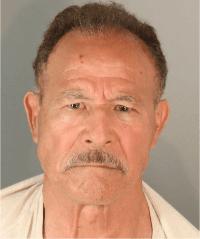
Dr. Sam Sannoufi, 52, of Newport Beach was booked into the Robert Presley Jail in Riverside on suspicion of sexual battery and forcible digital penetration.
Sannoufi posted a $1 million bond and was released within a few hours.
According to Riverside Police Department Officer Ryan Railsback, a woman contacted the agency’s Sexual Assault-Child Abuse Unit earlier this month, alleging that she was
assaulted by the suspect during a consultation at his business, Timeless Skincare Laser Clinic Primary Care at 6900 Brockton Ave.
The specific circumstances behind the alleged offense, and the victim’s identity, were not disclosed.
Railsback said SACA detectives gathered sufficient evidence to obtain an arrest warrant, and Sannoufi was summoned to the department’s Orange Street station, where he was taken into custody without incident.
“Investigators believe there may be other victims who have not yet come
forward,” the police spokesman said.
Anyone with information was encouraged to contact SACA investigators at 951-353-7950.
Sannoufi has no documented prior misdemeanor or felony convictions in Riverside County.
According to the Medical Board of California, the suspect has been a licensed doctor in the state since March 2009. He is a graduate of the Ukrainian State Medical University in Kyiv and has no listed disciplinary actions, administrative citations or malpractice suits on file with regulators.
Reopening a shuttered Riverside County animal shelter in San Jacinto will likely happen toward the end of the year, officials said Wednesday, though a firm timetable is not yet in place.
“We are ... working quickly to open the shelter and provide assistance to our mid-county residents and their pets,” Department of Animal Services Director Erin Gettis said. “Reopening the shelter will improve the department’s ability to provide comprehensive services to
people and their pets. It’s an important step in addressing the overcrowding of our shelters here in Riverside County.”
The Board of Supervisors tentatively approved a 2023-24 fiscal year budget Tuesday that appropriated $3.4 million to cover the cost of reactivating the San Jacinto Valley Animal Campus, located at 581 S. Grand Ave.
The shelter was closed during the 2019-20 fiscal year due to the department’s inability to overcome yearslong budgetary shortfalls.
It has been partially reopened several times during emergencies requiring the immediate placement of pets, such as during wildfires, and some veterinary services were available on a periodic basis. But daily operations stopped in 2020.
According to officials, a recruitment campaign will be initiated this summer to staff the shelter, with possible fulltime hours starting in late fall.
The county’s other shelters — in Blythe, Jurupa Valley and Thousand Palms — have remained active.
with the reporting party, another alleged victim was identified. They were named only by their initials in court documents — “E.S.” and “A.G.”
The latter was abused in December 1996, and E.S. was assaulted between October 2012 and October 2013, prosecutors allege.
Mullins said detectives believe other female relatives of the defendant
may have been molested going back to the 1980s.
All of the alleged acts occurred at Saldana’s house in 1900 block of Pine Crest Drive.
The small unincorporated community of Coronita is largely encircled by the city of Corona.
Anyone with information was asked to contact the sheriff’s Lake Mathews station at 951-272-5600.
 By City News Service
AJuly 20 trial date was confirmed Wednesday for a 53-year-old convicted felon who allegedly shot his ex-girlfriend multiple times at her Eastvale residence then fled to Texas, eluding capture for almost two months.
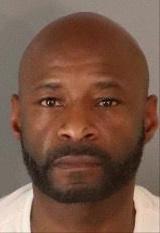
Malik Daron Minnix of Eastvale is charged with attempted murder, firearm assault, domestic violence, being a felon in possession of a gun, violating a domestic violence restraining order and sentence-enhancing gun and great bodily injury allegations stemming from the alleged 2020 attack.
During a status hearing Wednesday, Riverside County Superior Court Judge John Molloy conferred with the prosecution and defense regarding trial scheduling, and both sides agreed to work on clearing their calendars for proceedings to start during
the third week of July. Minnix is being held on $1 million bail at the Byrd Detention Center in Murrieta.
According to Sgt. Brian Gutierrez of the Riverside County Sheriff’s Department, Minnix confronted his former partner at about 10 a.m. on Aug. 15, 2020, at a residence in the 6400 block of Peridot Court, near Osprey Street, and opened fire on her with a handgun.
Gutierrez said the victim, identified in court documents only as “D.S.,” suffered several wounds and was taken to a hospital, where she underwent surgery.
She has since recovered.
Deputies scoured the area for Minnix, but there was no sign of him, according to the sergeant. An arrest warrant was issued on Aug. 20, and over the ensuing six weeks, fugitive apprehensions investigators worked on tracking him down.
The defendant was located and taken into custody without incident in Dallas, Texas, on Oct. 4, 2020. Court records show he has prior convictions for assault with a deadly weapon, domestic abuse and violating a criminal protective order.
The Morongo Casino Resort & Spa in Cabazon will host two job recruitment fairs next month, seeking to fill dozens of positions.
The first hiring event is scheduled for July 7, followed by another fair on July 18. Both events are slated from 10 a.m. to noon in the resort’s Marketplace food court.
“Morongo’s job fairs represent more than just new employment opportunities, but a chance to join a worldclass team that values service, growth and community,”
resort Chief Operating Officer Richard St. Jean said. “The surge in summer demand offers a unique opportunity for job seekers to enter an environment where they can truly make a difference. We’re especially excited to meet individuals with previous hospitality experience and a desire to exceed guest expectations.”
Similar recruitment drives were held in May. Officials
said the goal is to fill about 60 positions in a variety of roles, including cashiers, custodians, housekeeping and food and beverage.
Jobs are open in the food hall that opened just over a year ago, with international menus designed by celebrity chef Fabio Viviani.
St. Jean noted the resort “offers competitive wages and
benefits,” including “medical, dental and vision insurance options for full-time team members and dependents.”
Jobs additionally feature 401K retirement plans and vacation time.
Prospects can see listings and upload their resumes ahead of time at morongocasinoresort.com/ employment.
building and damage was caused during the burglary.”
From video of the break-in, police recognized Javdani, who officials described as “a local man on probation for theft crimes.”
As the investigation progressed, detectives noted several other crimes to which they believed Javdani was involved, claiming “he was responsible for at least 7 burglaries and/or thefts where he would break in to the business and steal money from the cash register, steal money from the safe, and in two cases, steal the safe,” officials said.
The burglarized local businesses included a sushi restaurant, tea vendor and sandwich shop, officials said. Javdani allegedly struck the Riverside County Department of Child Support Services building and the VIP Nightclub two times each, stealing several thousand dollars from an ATM machine and safe and causing building damage.
Investigators discovered Javdani had recently been arrested and booked into jail by the Riverside County Sheriff’s Department for an unrelated burglary and home invasion robbery.
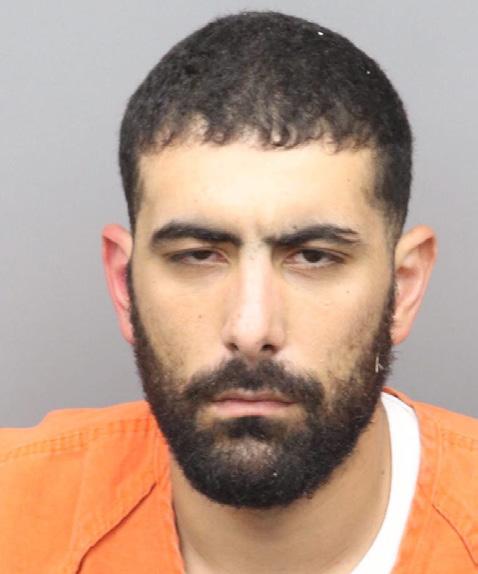
They then obtained a search warrant for Javdani’s residence. In addition to the allegedly incriminating burglary evidence, police also found a one-wheeled electric skateboard on which Javdani allegedly was seen riding away after some of the burglaries.
Investigators learned that someone on social media had recently posted about their one-wheeled electric skateboard being stolen in May and believed it may be the same device.
“That victim was contacted and detectives were able to confirm by serial number that it was his property,” officials said. “The skateboard was valued at over $2,000.”
Javdani is currently on probation in Riverside and San Bernardino counties
for theft-related crimes, and police intend to file additional charges for the crimes he allegedly committed in Riverside. Javdani remains in custody without bail at a Riverside County Sheriff’s jail facility.
“It was good old-fashioned police work that led our detectives to identifying this repeat offender breaking into our local businesses,” Riverside Police Chief Larry Gonzalez said in a statement. “But it’s also an important reminder
to keep records on expensive and unique property just in case anything were to happen. Because the owner of this skateboard kept a receipt with his serial number, along with his tenacity on social media, he’s back riding it again.”
Police urged anyone
with information on the burglaries and arrest to contact Detective Victoria Mutuku at 951-353-7209 or VMutuku@RiversideCA. gov. Those wishing to provide anonymous tips can email RPDTips@ RiversideCA.gov or use the Riverside Police
Department’s Atlas 1 mobile app via the “Send a Message” feature.
The app can be downloaded at https://apps. apple.com/us/app/atlas-1/ id1509528933 for iOS or https://play.google.com/ store/apps/details?id=app. atlasone for Android.

A60-year-old woman suspected of killing her 85-year-old mother in La Quinta reentered not guilty pleas to felony charges Thursday.
Sally Martha Webster of La Quinta is charged with one felony count each of murder and cruelty on an elder, according to court records. She additionally faces special circumstance allegations of inflicting torture and committing a heinous murder.

At the end of the preliminary hearing June 16, Riverside County Court Judge Anthony Villalobos ruled that there was sufficient evidence to warrant a trial for Webster on all charges and allegations. She reentered not guilty pleas to the charges and denied the allegations Thursday at the Larson Justice Center in Indio.
The charges stem from
the death of her mother, 85-year-old Rosemary Webster, who was found on March 17, 2022, when deputies responded to a report of an unattended death in the 51200 block of Avenida Ramirez.
During a preliminary hearing at the Larson Justice Center in Indio Dec. 9, 2022, Deputy District Attorney Anne Marie Lofthouse presented photos from June 23, 2021, when Deputy Sean Verigan from the Riverside County Sheriff’s Department Thermal Station responded to a call about possible elder abuse.
Verigan testified that the mother told him she had recently started living with her daughter, and that “it was good at first and they seemed to get along but they began to argue after a while.
... At some point she worried that her daughter was going to kill her.”
The defendant testified during the hearing that her mother would often scream and wander off, so on separate occasions she put tape over her mother’s mouth and bound her wrists together. On one occasion, the defendant said her mother’s eye and shoulders became bruised as she attempted stop her from driving, but that all her efforts were attempts to protect her mother from herself.
Sally Webster testified that the day of her mother’s death, she woke up to find her mother dead on the floor and immediately called police.
As the preliminary hearing continued May 19, Lofthouse presented the judge with a video of Riverside County Sheriff’s Department Investigator Nick Jones interviewing the defendant on March
18, 2022, a day after her mom was found dead. In the recorded interview, the defendant described the last fight they had because her mom went out the front door and started causing a disturbance.
“I had enough and I guess I lost my temper and really beat the crap out of her. I thought she was clearly bedridden but somehow she was just up again, able to walk again,” Sally Webster said in the recorded interview. “I couldn’t keep her down so I finally ended up beating the (expletive) out of her and she was still moving. And then I went to my room and I just turned on some music, calming, to help get me through the night, and she was still yelling and trying to argue and then snoring. Just like a beast, so loud, unbelievable. So I knew she was still alive.”
The defendant said when
she woke up and found out her mother was dead, she cut the clothes off of her, threw them in the trash and after about an hour, called the police.
“I didn’t think it through. It wasn’t really that premeditated. It just
happened. Basically, I was trying to ... preserve my own self from getting beat up and killed or hurt,” Sally Webster said in the interview. She remains held without bail at Larry D. Smith Correctional Facility in Banning.