
strike
By City News ServiceThousands of Kaiser Permanente health care workers began a three-day strike Wednesday in what according to their union is the largest action of its type in U.S. history after contract negotiations failed to produce an agreement.
The nationwide strike began at 3 a.m. on the East Coast, and strikes started at 6 a.m. in California.
Late Tuesday afternoon, a Kaiser spokesman told City News Service that talks were continuing "and could last into the night."
According to Kaiser "several agreements over specific provisions have been reached" with the Coalition of Kaiser Permanente Unions, and the health system's negotiators were prepared to meet around the clock "until we reach a fair and equitable agreement."
The union, however, continued circulating plans for picketing — with 75,000 Kaiser workers expected to take part across California and several other states.
This story was originally published by ProPublica. ProPublica is a Pulitzer Prize-winning investigative newsroom. Sign up for The Big Story newsletter to receive stories like this one in your inbox.
The California Legislature recently passed a bill that would provide the state’s taxpayers some of the strongest protections in the nation against having to pay for the cleanup of orphaned oil and gas wells. But Gov. Gavin Newsom has not indicated if he will sign it.

AB1167 would require companies that purchase idle or low-producing wells — those at high risk of being left to the state — to set aside enough money to cover the entire cost of cleanup. Assemblymember Wendy Carrillo, a Los Angeles Democrat who authored the bill with the support of the Natural Resources Defense Council and Environment California, said it’s needed to “stem the tide” of orphaned wells.
Newsom has until Oct. 14 to make a decision. A spokesperson declined to comment, saying the governor would evaluate the bill “on its merits.” The state’s Department of Finance released a two-page analysis opposing it.
It costs more than $180,000 to clean up an average orphan well in California, the state told the U.S. Department of the Interior in 2021, according to documents ProPublica obtained via a public records request. This includes plugging the well with cement, removing aboveground infrastructure like pumpjacks and decontaminating the site. But bonds, which are financial instruments guaranteeing to pay for cleanup, cover only a tiny fraction of that cost. A ProPublica analysis
of state data found that oil and gas companies have set aside only about $2,400 per well. (State oil regulators are currently reevaluating companies’ bonds to increase them within existing law, which does not mandate that they cover the entire cleanup cost.)
Left unplugged, many wells leak climate-warming methane, brine and toxins that were used in the drilling process.
“It’s a setup for disaster,” said Ann Alexander, a Natural Resources Defense Council senior attorney.
The bill follows ProPublica’s reporting on the exodus of oil majors from the state’s declining industry — one sale last year saw more than 23,000 wells move from Shell and ExxonMobil to a little-known German asset management group called IKAV — and on the multibillion-dollar cost to clean
up the industry. ProPublica’s work was repeatedly cited by the Legislature and the bill’s supporters.
Despite its green reputation, California has a long history of weak oversight of its oil and gas industry, which has left behind an estimated 5,300 orphaned wells. Many are scattered across Los Angeles, complicating redevelopment. Others spew methane in Kern County’s huge oilfields.
Companies have little incentive to plug wells; it’s cheaper to sell or to walk away and forfeit the small bonds currently required by the state.
“It’s too easy for them right now to offload those unproductive oil wells to newer or less-resourced companies that may turn around and go bankrupt and that don’t have the adequate financial capacity to do the job of cleaning
"Kaiser executives are refusing to listen to us and are bargaining in bad faith over the solutions we need to end the Kaiser short-staffing crisis," Jessica Cruz, a licensed voca -
Use of ARPA funds for Coachella housing project draws criticism
By City News Service
The Board of Supervisors on Tuesday approved allocating $3.5 million in federal taxpayer funds to support an affordable housing project underway in Coachella, which several Riverside County residents questioned, stemming mainly from concerns over proper use of public money.
The unanimous vote in favor of appropriating 2021 American Rescue Plan Act dollars for the Placita Dolores Huerta Housing Project was preceded by a brief discussion based on the reservations expressed by two board speakers — Roy Bleckert of Moreno Valley and Brad Anderson of Rancho Mirage.
"We should have the best of everything, but we're not getting it here," Bleckert complained, pointing to what he viewed as a general lack of sound financial stewardship on the part of the board. "Which side of history do you want to be on? These votes are going to show that."
Placita Dolores Huerta is slated for completion before
Local. Relevant. Trusted. VOL. 7, NO. 141 Thursday, October 05-October 11, 2023
Pg 16
Man who shot 3 in Perris pleads guilty, gets 9 years in prison
Pg 28 See Kaiser Page 27 See Coachella housing Page 27
Menifee appoints Travis Hickey as new chief financial officer
Cleanup Page 28
‘A
See
Chevron oil pump jacks drawing oil from the Lost Hills Oil Field in the San Joaquin Valley in Central California. | Photo by Richard Masoner CC BY-SA 2.0 DEED
VISIT CORONANEWSPRESS.COM
CALENDAR
OCT. 6
Carved
Descanso Gardens | 1418
Descanso Drive, La Cañada Flintridge, CA 91011 | Oct. 6-29 | descansogardens.org


As you stroll through the captivating displays, you’ll be amazed by luminous jack-o’lanterns, fallen tree sculptures and whimsical installations, including Tom&Lien Dekyvere’s glow-in-the-dark Rhizome installation in the Rose Garden Labyrinth and giant carved pumpkins under the Rose Pavilion. Don’t miss the expanded Día de los Muertos ofrenda altar, providing guests with a place to meditate and remember loved ones. The pumpkin house, hay maze, and fall food offerings will all be back to round out the fun.
OCT. 7
City of Alhambra
Autumn Fest
Alhambra Park | 500 N. Palm Ave., Alhambra, CA 91801 | Oct. 7 | cityofalhambra.org
Spend the morning at the pumpkin patch, exploring a maze, visiting the petting zoo, and enjoying a performance from Jack & Sally at the Autumn Fest. There will also be pony rides, crafts, games, fall foods and drinks.

OCT. 8
La Feria De Los Moles
Grand Park | 200 N. Grand Ave., Los Angeles, CA 90012 | Oct. 8 | feriadelosmoles.com

Billed as the largest Mexican food festival in the country, La Feria de los Moles feature moles from Oaxaca and Puebla in traditional forms and imagined in all new ways (mole pizza anyone?). This is a celebration for your tastebuds.
OCT. 9
Country Line Dancing
The Pour House | 405 S. Myrtle Ave., Monrovia, CA 91016 | Oct. 9 | eventbrite.com
Put on your cowboy boots for line dancing starting at 6 p.m. If you’re not familiar with line dancing, there are lessons starting at 7 p.m. for $8. There are also pool tables, music, drinks and food.

OCT. 10
Cool Girl Cinema Club: ‘Jennifer’s Body’ Screening
WHAMMY! | 2514 Sunset Blvd., Rear, Los Angeles, CA 90026 | Oct. 10 | eventbrite.com
The evening will include a viewing of the horror comedy classic written by Diablo Cody
and starring Megan Fox and Amanda Seyfried, tarot card readings, drinks and snacks.
OCT. 11
Lila Downs – Día De Los Muertos
Renée and Henry Segerstrom Concert Hall | 600 Town Center Drive, Costa Mesa, CA 92626 | Oct. 11 | scfta.org


Six-time Latin Grammy awardwinner Lila Downs is known for her commanding stage presence, storytelling, and memorable mix of Mexican, Indigenous and US influences.
OCT. 12
‘The Engagement Party’
Geffen Playhouse | 10886 Le Conte Ave., Los Angeles, CA 90024 | Oct. 12 – Nov. 5 | geffenplayhouse.org

The champagne is on ice, the hors d’oeuvres are perfectly
arranged, and the table is exquisitely set. At a swank Park Avenue apartment, a young couple is celebrating their engagement with an intimate gathering of family and friends. When a glass of wine is spilled, the night takes an unexpected turn, unleashing a spiraling sequence of events and revelations that will irrevocably change their lives.
ONGOING ‘The Right Is Ours!’
Sierra Madre Playhouse | 87 W. Sierra Madre Blvd., Sierra Madre, CA 91024 | Through Oct. 8 | sierramadreplayhouse.org


“The Right Is Ours!” is about the extraordinary friendship of two women, Elizabeth Cady Stanton and Susan B. Anthony, whose efforts spurred the creation of the Women’s Suffragist Movement, and the impact of that relationship on the suffragist movement and women getting the right to vote.

2 OCTOBER 05-OCTOBER 11, 2023 BeaconMediaNews.com Alhambra PRESS Baldwin Park INDEPENDENT INDEPENDENT San Bernardino Press Belmont Beacon City Temple Tribune GabrielSan Sun A zusa B eacon Rosemead Reader D uarte ispatch Publisher Von Raees COO Andrea Tange Vice President Sam Kubert Editorial Jordan Green Fabiola Diaz Joe Taglieri Designer/ Production Renia Barouni Weekly Contributors May S. Ruiz Sales Fred Bankston José Luis Correa Legal Advertising Annette Reyes Crystal Cortez Marketing Jamaire Revis Accounting Vera Shamon All Inquiries info@beaconmedianews.com info@hlrmedia.com BEACON MEDIA ADDRESS: 125 E. Chestnut Ave. Monrovia, CA 91016 Phone: (626) 301-1010 www.beaconmedianews.com HLR MEDIA ADDRESS: 820 S. Myrtle Ave. Monrovia, CA 91016 Phone: (626) 301-1010 www.HLRmedia.com PRESS RELEASE SUBMISSIONS editor@beaconmedianews.com editor@hlrmedia.com Submissions Policy Beacon Media, Inc. and HLR Media, LLC All contents herein are copyrighted and may not be reproduced in any manner, either in whole or in part, without the express written consent of the publisher. The Views and opinions expressed in this paper are not necessarily that of the management and staff at Beacon Media, Inc. or HLR Media, LLC. The Arcadia Weekly has been adjudicated as a newspaper of general circulation in court case number GS 004333 for the City of Arcadia, County of Los Angeles, State of California. The Monrovia Weekly has been adjudicated as a newspaper of General Circulation in Court Case GS 004759 City of Monrovia, County of Los Angeles, State of California. The Temple City Tribune has been adjudicated as a newspaper of general circulation in court case number GS 012440 City of Temple City, County of Los Angeles, State of California. The El Monte Examiner has been adjudicated as a newspaper of general circulation in court case number KS 015872 City of El Monte, County of Los Angeles, State of California. The Azusa Beacon has been adjudicated as a newspaper of general circulation in court case number KS 015970 City of Azusa, County of Los Angeles, State of California. The San Gabriel Sun has been adjudicated as a newspaper of general circulation in court case number GS 013808 City of San Gabriel, County of Los Angeles, State of California. The Duarte Dispatch has been adjudicated as a newspaper of general circulation in court case number GS 013893 City of Duarte, County of Los Angeles, State of California. The Rosemead Reader has been adjudicated as a newspaper of general circulation in court case number GS 048894 City of Rosemead, County of Los Angeles, State of California. The Alhambra Press has been adjudicated as a newspaper of general circulation in court case number ES016581 City of Alhambra, County of Los Angeles, State of California. The Baldwin Park Press has been adjudicated as a newspaper of general circulation in court case number KS017174 City of Baldwin Park, County of Los Angeles, State of California. The Burbank Independent has been adjudicated as a newspaper of general circulation in court case number ES016728 City of Burbank, County of Los Angeles, State of California. The Glendale Independent has been adjudicated as a newspaper of general circulation in court case number ES016579 City of Glendale, County of Los Angeles, State of California. The Monterey Park Press has been adjudicated as a newspaper of general circulation in court case number ES016580 City of Monterey Park, County of Los Angeles, State of California. The West Covina Press has been adjudicated as a newspaper of general circulation in court case number KS017304 City of West Covina, County of Los Angeles, State of California. The San Bernardino Press has been adjudicated as a newspaper of general circulation in court case number CIVDS 1506881 City of San Bernardino, County of San Bernardino, State of California. The Riverside Independent has been adjudicated as a newspaper of general circulation in court case number RIC1505351 City of Riverside, County of Riverside, State of California. The Pasadena Press has been adjudicated as a newspaper of general circulation in court case number ES018815 City of Pasadena, County of Los Angeles, State of California. The Belmont Beacon has been adjudicated as a newspaper of general circulation in court case number NSO30275 City of Long Beach, County of Los Angeles, State of California. The Anaheim Press has been adjudicated as a newspaper of general circulation in court case number 30-2017-00942735-CU-PT-CJC City of Anaheim, County of Orange, State of California. The Ontario News Press has been adjudicated as a newspaper of general circulation in court case number CIVDS 1506881 City of Ontario, County of San Bernardino, State of California. The Corona News Press has been adjudicated as a newspaper of general circulation in court case number RIC1723524 City of Corona, County of Riverside, State of California.
Scan the QR code to see more events
Filled with jack-o'-lanterns, statues, and more, the Pumpkin Forest brings out the best of Halloween at Carved. | Photo: © Descanso Gardens
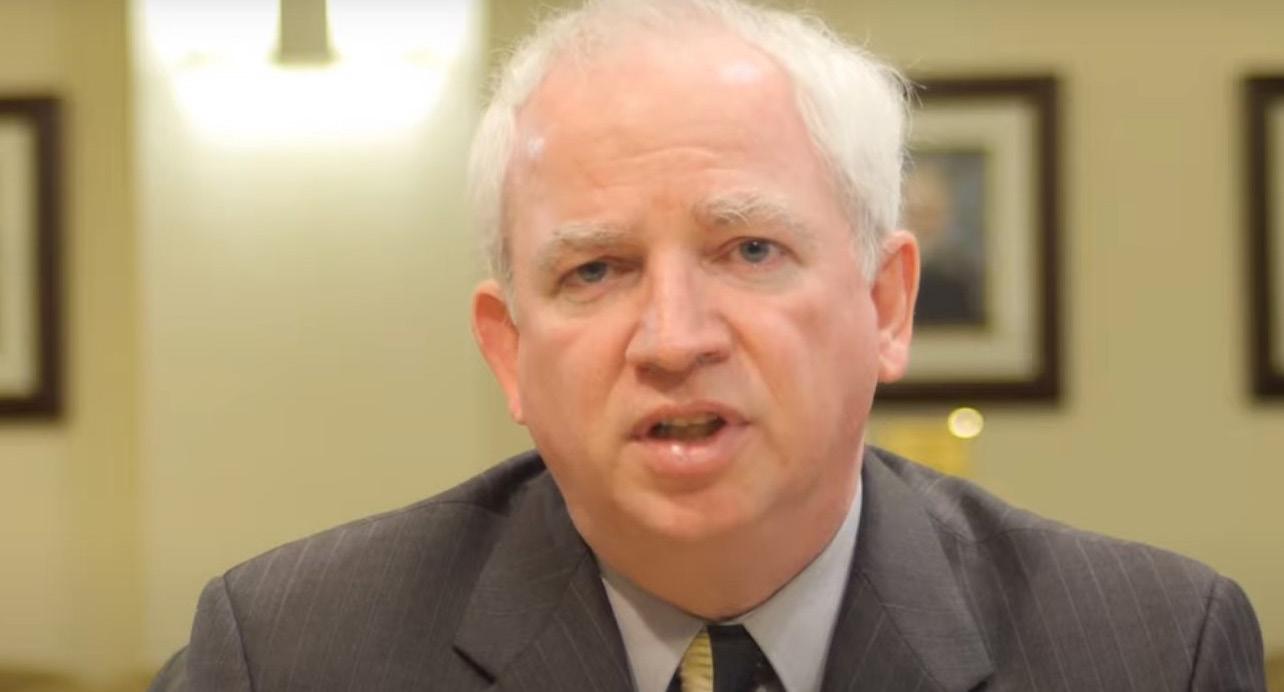
The U.S. Supreme Court Monday denied a petition for an appeal brought by former Chapman University law school dean John Eastman regarding his lawsuit, which unsuccessfully sought to block the congressional committee investigating the Jan. 6 unrest from obtaining Eastman's emails he left behind on the university's server.
U.S. District Judge David O. Carter overruled Eastman's
Supreme Court rejects Eastman appeal in Jan. 6 case
By City News Servicesions that have become moot, through no fault of the party exercising his right to an appeal. But we also acknowledge that the Supreme Court is not a court of mere error correction. The Munsingwear doctrine is clearly established, and we remain of the view that the Ninth Circuit erred in refusing to vacate the erroneous district court decision."
confidential documents which were downloaded by several reporters following the case, thereby mooting (Eastman's) appeal. The Ninth Circuit subsequently denied (Eastman's) motion to vacate the judgment of (Carter)."
privileged communications, has cast aspersions not just on Dr. Eastman but also on his former client, the former president of the United States, who is a candidate for the office of president in 2024."
attorney-client privilege as former President Donald Trump's attorney as he cited a "crime-fraud exception."
Last year, Eastman appealed to the 9th Circuit Court of Appeals regarding 10 of the emails that he argued should remain private under the privilege attorneys legally have with clients.
In his petition to the Supreme Court, Eastman argued that Carter's ruling
"created a stigma for (himself) and his client, the former president of the United States and current candidate for the presidency."
Eastman's attorney, Anthony Caso, said in an email, "We're disappointed, of course, that the (Supreme Court) did not accept our request to correct this clear violation of its Munsingwear doctrine, which requires vacating lower court deci-
When Carter refused Eastman's request for a hold on the ruling while he appealed, he asked for the 9th Circuit to intervene. Eastman argued that while that request was pending he provided a link to the documents to the Jan. 6 committee and asked for them to not be viewed while he appealed, he said.
"Defendants ignored (Eastman's) request and distributed the emails to members of the committee," Eastman argued. "Then, in a public filing, defendants published the link to the
Eastman was asking the high court "to review the judgment" of the 9th Circuit "denying a motion to vacate a judgment of the district court, which was rendered moot by action of the counsel for the congressional defendants."
Supreme Court Justice Clarence Thomas recused himself from the case. Eastman once clerked for Thomas.
In his appeal to the high court, Eastman argued, "This case presents a question of exceptional importance. The District Court's crime-fraud holding, which (Eastman) has described as `clearly erroneous' when viewed in the context of numerous
Eastman added, "The ramifications, both political and legal, of such a holding are significant, and (Eastman), both on his own behalf and for his former client's benefit, should not have to be subjected to those ramifications on an ongoing basis when he was deprived of his right to appeal by the unilateral actions of the government — the party that prevailed in the district court — that mooted the appeal."
Eastman has since been charged in a racketeering case in the state of Georgia regarding attempts to overturn the election of President Joe Biden in 2020, and the former law school dean is also facing disbarment hearings in California.
Butler sworn in to serve out Dianne Feinstein's Senate term
By City News ServiceLaphonza Butler was officially sworn in Tuesday to serve out the remainder of the late Dianne Feinstein's term in the U.S. Senate, just two days after she was tabbed by Gov. Gavin Newsom to fill the seat.
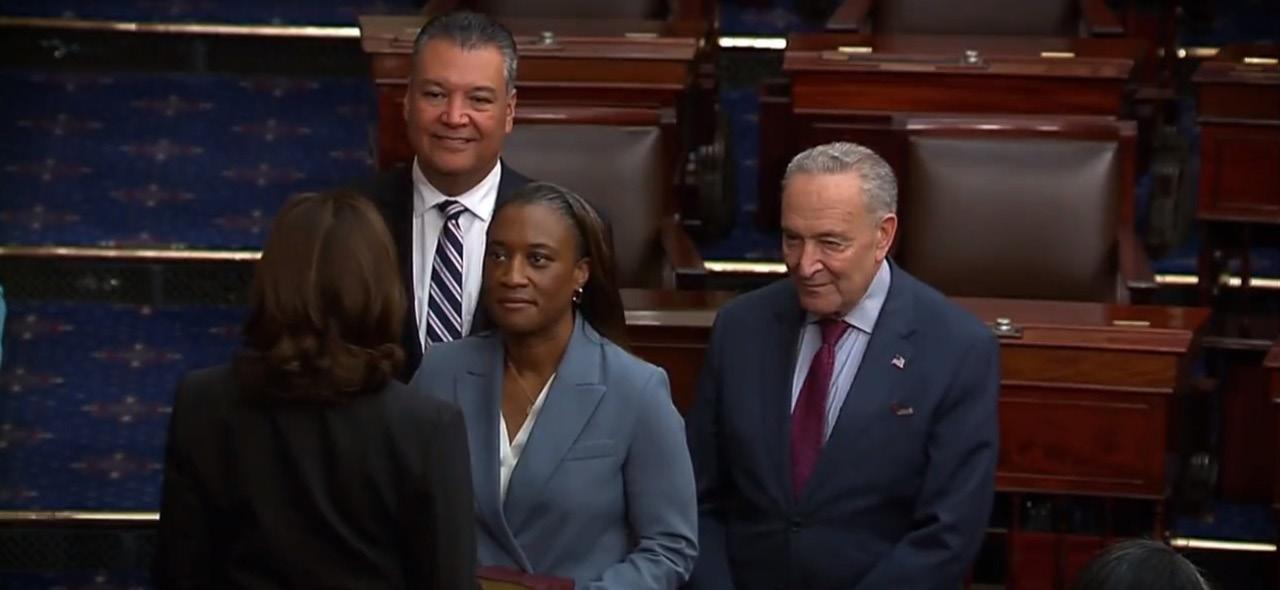
Butler will fill out Feinstein's term that runs through the end of 2024. She was sworn in on the Senate floor by Vice President Kamala Harris. Feinstein died Thursday night at her home in Washington, D.C., at age 90.
With her swearing in, Butler became California's first openly LGBTQ U.S. senator and the first Black lesbian to openly serve in Congress in American history. She is the second Black woman to represent California in the U.S. Senate, following Harris.
"I'm honored to accept (Newsom's) nomination to
be U.S. senator for a state I have made my home and honored by his trust in me to serve the people of California and this great nation," Butler wrote on X, formerly Twitter, Monday morning.
"No one will ever measure up to the legacy of Sen. Dianne Feinstein, but I will do my best to honor her legacy and leadership by committing to work for women and girls, workers and unions, struggling parents and all of California. I am ready to serve."
Butler was serving as president of EMILY's List, the nation's largest organization dedicated to electing women who support abortion rights, but she stepped down from that role to serve in the Senate.
It was unclear if Butler plans to enter the race to for a full term in the California Senate seat. Already in the field of candidates seeking
the position are Reps. Adam Schiff, Barbara Lee and Katie Porter.
Newsom had vowed to appoint a Black woman to the Senate seat if it became open. He announced Butler's appointment Sunday night.
"An advocate for women and girls, a second-generation fighter for working people and a trusted adviser to Vice President Harris, Laphonza Butler represents the best of California, and she'll represent us proudly in the United States Senate," Newsom said in a statement announcing the appointment. "As we mourn the enormous loss of Senator Feinstein, the very freedoms she fought for -- reproductive freedom, equal protection and safety from gun violence -- have never been under greater assault. Laphonza will carry the baton left by Senator Feinstein, continue to break
glass ceilings, and fight for all Californians in Washington D.C."
Butler ran political campaigns for and led strategy efforts for Harris and Secretary of State Hillary Clinton. For more than a decade, she served as president of Service Employees International Union Local 201, which represents more than 325,000 nursing home and home care workers in California and is the state's
largest labor union, and she held other leadership positions in the union.
Butler was the director of the Board of Governors of the Los Angeles branch of the Federal Reserve System. In 2018, she was appointed to the University of California Board of Regents by Gov. Jerry Brown, where she served until 2021. She served in various other roles, including as a board member for the National Children's
Defense Fund, BLACK PAC, and the Bay Area Economic Council Institute, and as a fellow for the MIT Community Innovators Lab. Butler was named a "Champion for Change" by President Barack Obama.
She received a bachelor of arts degree in political science from Jackson State University.
Butler is married to her wife, Neneki, and together they have a daughter, Nylah.
OCTOBER 05-OCTOBER 11, 2023 3 BeaconMediaNews.com NEWS
Laphonza Butler is sworn in by Vice President Kamala Harris as Senate Majority Leader Chuck Schumer and Senator Alex Padilla of California stand behind. | Photo courtesy of Senate Democrats/X
John Eastman. | Photo courtesy of ISCOTUS/Wikimedia Commons (CC BY 3.0)
Los Angeles
El Monte
I-10 Freeway closures scheduled from Los Angeles to El Monte
The California Department of Transportation (Caltrans) announces various closures along Interstate 10 between Los Angeles and El Monte for road repair work from 7 p.m. Friday, Oct. 6 to 7 a.m. Saturday, Oct. 7. Those closures include eastbound I-10 from Eastern on-ramp to Peck off-ramp and westbound I-10 from Peck on-ramp to Eastern off-ramp. Motorists should expect delays and are strongly advised to avoid the area and use alternate routes. Additionally, motorists can check traffic conditions before they leave by visiting the Caltrans Quickmap. The work on I-10 is part of a $8.8 million project to slurry seal ramps, replacing damaged slabs, and maintain shoulders on a 10-mile stretch of highway between the Los Angeles community of Boyle Heights and the city of El Monte.
Pasadena
Metro A Line train, car collide in Pasadena; motorist injured
A Metro A Line train and a car collided Thursday in Pasadena, leaving the motorist with moderate injuries and also sending the train operator to a hospital with what were believed to be minor injuries. The crash was reported at about 9:20 a.m. at Raymond Avenue and California Boulevard, according to Lisa Derderian of the city of Pasadena. Firefighters freed the injured woman,
who was the sole occupant of the vehicle, and she was taken to a hospital, Derderian said. Pasadena officials indicated that nobody aboard the train was injured, but Metro spokesman Jose Ubaldo told City News Service the train operator was also taken to a hospital with unspecified injuries that were not considered to be life-threatening.
Burbank
Burbank student, 13, arrested for social media threat
A 13-year-old Burbank Unified School District student was arrested for allegedly posting criminal threats on social media, authorities said Thursday. According to Burbank Police Department spokesman Stephen Turner, detectives were made aware of a possible threat against Luther Burbank Middle School, located in the 3700 block of Jeffries Avenue, Wednesday evening on social media. After finding the post, police initiated an investigation to identify the individual responsible for the threat, Turner said. Police then arrested a 13-year-old student and released him into the custody of his parents with a citation for criminal threats, he said. Detectives also recovered a replica firearm, which had been depicted in the social media post.
Long Beach
Woman to be arraigned in Long Beach for attack on teen at Harbor City McDonald's
A woman who was arrested on suspicion of attacking a 13-year-old girl in a
crime caught on cell phone video inside a McDonald's restaurant in Harbor City was charged Monday with a felony child abuse count. Ariana Lauifi, 31, is set to be arraigned Oct. 23 in a Long Beach courtroom on one felony count of child abuse under circumstances or conditions likely to cause great bodily injury or death, according to the Los Angeles County District Attorney's Office. Lauifi was arrested last Thursday by the Los Angeles Police Department and released on $100,000 bond just before 1 a.m. Monday, jail records show. She is suspected in the Sept. 6 attack on 13-year-old Kassidy Jones, who went into the restaurant in the 1700 block of Lomita Boulevard with friends when she was attacked, seemingly without provocation.
Orange County
Orange County
Deputies confiscate 200 pounds of drugs, cash in Orange
Orange County Sheriff's Department deputies confiscated approximately 200 pounds of marijuana and an undisclosed sum of cash Tuesday during a traffic stop in Orange. Deputies stopped a Chevy Suburban truck at 12:30 a.m. near OrangeOlive Road and Santa Ana Canyon Road, Sgt. Mike Woodroof told City News Service. When they searched the truck, deputies found the money and the drugs in plastic bags. The driver and the Chevy's occupants were not detained, Woodroof said, and the investigation is ongoing.
Anaheim
Angels fire manager
Phil NevinThe Los Angeles Angels parted ways with manager Phil Nevin Monday, opting against picking up the option on his contract and starting the search for a new clubhouse leader. "The club will begin the process of hiring a new manager immediately," according to a statement from the Angels. There was some speculation that General Manager Perry Minasian might also be shown the door in Anaheim, but his job appears secure. Minasian is expected to hold a news conference Tuesday to discuss Nevin's departure. Nevin took over the team in June of last year following the firing of Joe Maddon amid a 14-game losing streak. Nevin was originally hired in 2022 as the team's third-base coach.
Riverside Riverside County

Hiker dies after suffering medical emergency on Riverside County trail
A hiker died last Saturday on the San Jacinto Peak trail near Pine Cove, the Riverside County Fire Department announced. Firefighters responded to the trail around 11:40 a.m. Saturday where they tried to gain access to the hiker, who had suffered a medical emergency. The Riverside County Sheriff's Department Rescue 9 helicopter was unable to access the area where the hiker was located, and the victim died before first responders arrived, according to the fire department. The hiker's identity was not immediately known.
Riverside
Ex-Texas sheriff's corporal pleads not guilty in Riverside fatal hit and run
A former Texas sheriff's corporal accused of driving drunk and causing a hit-andrun in Riverside that killed a man who was trying to put gas in his pickup on the shoulder of Interstate 215 pleaded not guilty Monday to a murder charge. Giovanni Ceja, 31, is
charged with second-degree murder and hit-and-run causing death for the crash that occurred around 1:45 a.m. Aug. 7 on the southbound Moreno Valley (215) Freeway south of state Route 91. According to investigators, 38-year-old Gilberto Sotelo of Lake Elsinore was putting gasoline into his disabled Chevrolet Silverado on the right shoulder when a Honda Ridgeline struck him and the Chevrolet. Sotelo was pronounced dead at the scene by emergency personnel.
Corona
2 killed in fiery wrongway crash on 91 Freeway in Corona
A motorist driving eastbound on the westbound Riverside (91) Freeway in Corona caused a fiery head-on crash early Monday, killing himself and the other driver. The crash was reported at 12:10 a.m. on the westbound Riverside Freeway west of Lincoln Avenue, according to the California Highway Patrol. According to the CHP, officers responded to a report of a Tesla Model 3 being driven the wrong way on westbound state Route 91, ultimately slamming head-on into a Mitsubishi Lancer being driven by a 22-year-old man. Both vehicles caught fire, witnesses told the CHP. Efforts by civilians to put out the flames were not successful.
San Bernardino
San Bernardino County County Transportation Authority seeks public input to improve transportation plan
The San Bernardino County Transportation Authority (SBCTA) is holding a virtual public meeting on Tuesday, Oct. 3 from 6 to 7 p.m. to gather public input for the county’s Long Range Multimodal Transportation Plan (LRMTP). The county is requesting residents’ help to identify challenges to getting around, and how the transportation system could work better in your community. Input from citizens will help shape strategies for improving access, safety, connectivity and sustainability for bus and rail riders, auto and truck drivers, vanpool and carpool
riders, bicyclists, and pedestrians. County members could join via Zoom these public meetings, and both will present the same material. Spanish interpretation will be provided at both meetings. For more information, head to the county’s website.
San Bernardino
Suspected perfume thieves from San Bernardino arrested after vehicle pursuit
Two men suspected of stealing more than $10,000 worth of fragrances from a Palm Desert business, then leading sheriff's deputies on a vehicle pursuit were arrested, authorities said Thursday. Deputies responded at 7:43 p.m. Tuesday to a report of a grand theft that had just occurred in the 72300 block of Highway 111, according to Riverside County Sheriff's Department Sgt. Christian Lopez. Two men allegedly entered the business with empty bags, filled them with perfume and fled in what was believed to have been a blue sedan, which was subsequently spotted on Interstate 10 near Date Palm Drive, according to Lopez. Deputies attempted to stop the vehicle, but the driver didn't yield, prompting a pursuit. The deputies then arrested the driver, 27-year-old Phillip Noble, and his passenger, Dalin Sasser, 24, both of San Bernardino.
Ontario
Ontario Museum of History & Art curating Dia de los Muertos exhibition
The Ontario Museum of History & Art proudly celebrates its 25th year of curating Dia de los Muertos exhibitions. This year’s exhibit, Día de Los Muertos: Recuerdos de Sabores/Flavorful Memories, commemorates the food connected with the holiday. During this reception, participate in various artmaking activities, watch live folklorico performances and shop from a multitude of vendors. Come to check out amazing local artwork, and learn more about the Day of the Dead holiday. Food will also be available for purchase. For more information visit: https://www.ontariomuseum.org/programs/.
4 OCTOBER 05-OCTOBER 11, 2023 BeaconMediaNews.com REGIONALS
M onrovia
September 21
At 2:25 a.m., an officer was patrolling the 1600 block of South Myrtle, when she located a male subject who appeared to need assistance walking. When she contacted the subject, she discovered he was heavily intoxicated and unable to care for himself. He was arrested and transported to the MPD jail to be held for a sobering period.
At 9:35 a.m., a mother came into the police station to report her son's backpack was stolen the day before between 3 p.m. and 5 p.m. He had placed his backpack in the locker room while he went to football practice. When he returned, the backpack was missing. This investigation is continuing.
At 12:09 p.m., a victim in the 400 block of Linwood reported that the catalytic converters from two vehicles were stolen. This investigation is continuing.
At 1:11 p.m., an injury traffic collision was reported in the area of Mountain and Evergreen. The parties were treated at the scene by MFD.
At 3:12 p.m., a caller reported a male subject in the 900 block of West Duarte was sleeping on the ground and he was not waking up. Officers arrived and determined the subject was overdosing on narcotics. Officers administered Narcan and the male subject was revived. Paramedics arrived and he was transported to a hospital for further treatment.
At 3:15 p.m., a female juvenile was reported as a runaway from the 100 block of North Ivy. This investigation is continuing.
September 22
At 6:45 a.m., a victim in the 600 block of West Huntington reported a female subject threw coffee at her. Officers arrived and located the female subject. The victim positively identified the female subject but did not desire prosecution. A computer check revealed the female subject was in violation of
parole. She was arrested and taken into custody.
At 8:15 a.m., a vehicle theft was reported in a parking lot in the 300 block of East Foothill. The victim parked her vehicle and when she returned she realized her vehicle had been broken into and property was taken. This investigation is continuing.
At 10:42 a.m., a victim walked into the MPD lobby to report that the catalytic converter from their vehicle was stolen while parked in the 500 block of Bradbury. This investigation is continuing.
At 3:53 p.m., a victim walked into the MPD lobby to report that he had been scammed. This investigation is continuing.
At 4:46 p.m., a victim reported that he parked his vehicle in the 100 block of West Huntington. When he returned to his vehicle, his window was shattered and the property was missing. This investigation is continuing.
At 9:52 p.m., a resident in the 300 block of South Primrose called to report suspicious subjects who looked like they were breaking into vehicles. Offices arrived and confirmed that a crime had occurred. The suspects were gone prior to the officer’s arrival. This investigation is continuing.
At 11:47 p.m., officers were dispatched to the 300 block of West Foothill regarding a possible drunk driver who exited his vehicle stumbling. Officers arrived and located the driver. A DUI investigation revealed the driver was under the influence. The driver was arrested and transported to the MPD jail to be held for a sobering period.
At 10:55 p.m., a caller in the area of Monterey and Chestnut called to report a group of juveniles attempting to steal a vehicle. The suspects were gone prior to the officers’ arrival.
September 23
At 12:07 a.m., a new reporting party called to report the same juveniles from the previous call had returned to the same vehicle and were
BLOTTERS
once again attempting to steal it. Officers arrived and officers gave pursuit, eventually detaining four juvenile suspects. The juvenile suspects were positively identified by the caller. Three juvenile suspects were released to parents with citations. A records check of the fourth juvenile suspect revealed he was on probation for vehicle theft and was taken into custody.
September 24
At 8:21 p.m., an employee from a business in the 1600 block of South Mountain called to report a male and female subject were attempting to conceal store items in their clothing. Officers arrived and spoke with store management, who requested officers contact the subjects and ask them to leave. Officers contacted the two inside the store. The items were returned to the store and were issued a no-trespassing notice. This investigation is continuing.
September 25
At 2:50 a.m., officers responded to a business burglary alarm in the 300 block of Huntington. The officer arrived and saw the front glass doors were forced open. While searching the inside, officers saw the steel office door had been forced open. This investigation is continuing.
At 10:19 a.m., a caller in the 1400 block of Alamitas reported her license plate was stolen from her vehicle. This investigation is continuing.
At 12:11 p.m., a resident in the 300 block of West Huntington reported his credit cards were stolen from his mailbox and were being fraudulently used. This investigation is continuing.
At 2:41 p.m., a resident in the 800 block of West Duarte reported their community mailbox was pried open and mail was stolen. This investigation is continuing.
At 4:20 p.m., a threevehicle traffic collision was reported in the area of Mountain and Royal Oaks. One party complained of pain and was treated at the scene by MFD.
At 9:37 p.m., a passerby witnessed an adult female
subject setting debris on fire in the area of Myrtle and California. Officers arrived and contacted the subject, who was next to burnt trash. When an officer attempted to search the female, she abruptly punched him in the face, causing him an injury. The suspect was positively identified by the witness. She was arrested and taken into custody.
Arcadia
September 17
At 6:47 a.m., an officer responded to Arcadia Korean Market, located at 171 E. Live Oak Ave., regarding a commercial burglary investigation. Surveillance cameras captured a lone male suspect ransack the office of the business. The owner discovered the suspect had forced open a rear door and likely fled empty-handed as it did not appear as though anything had been stolen.
At 7:47 p.m., an officer responded to 24 Hour Fitness, located at 125 N. First Ave., regarding a commercial burglary investigation. Sometime between 6 p.m. and 7:20 p.m., someone removed the lock to the victim’s locker and stole jewelry and other personal items. The incident happened in the men’s locker room.

September 18
At 12:18 a.m., an officer responded to Chevron, located at 11 E. Live Oak Ave.,
regarding a robbery investigation. The officer determined the suspect stole the victim’s cellphone. When the victim confronted the suspect, the suspect hit the victim with a metal pole and then attacked him while stealing a gold necklace. The suspect, a 35-year-old homeless male, was arrested and transported to the Arcadia City Jail for booking.
At 4:11 a.m., an officer responded to N16 Cellars, located at 16 N. First Ave., regarding a commercial burglary investigation. Surveillance cameras captured two suspects as they stole numerous bottles of wine. The officer discovered they pried open the front door. The suspects are described as two males wearing hooded sweatshirts, masks, and gloves.
At 11:16 a.m., an officer responded to a residence in the 800 block of West Camino Avenue regarding a burglary investigation. Sometime between Sept. 13 and 17, someone stole the victim’s bicycle from his open garage.
At 2:12 p.m., an officer responded to Mercedes-Benz of Arcadia, located at 101 N. Santa Anita Ave., regarding a stolen vehicle investigation. The officer determined two unidentified suspects used someone else’s identity to fraudulently purchase a vehicle.
Sunset Boulevard regarding a battery investigation. The officer determined an altercation between neighbors resulted in a mutual battery. Both individuals sustained injuries, but neither was desirous of prosecution. No arrests were made.
September 19
At 9:04 a.m., an officer responded to a residence in the 1000 block of Singingwood Drive regarding a burglary investigation. The officer discovered an unknown suspect(s) shattered a rear window and ransacked the home. The suspect(s) also ransacked a vehicle parked in the garage. The loss is unknown at the time of this report.
September 20
At 8:11 a.m., an officer responded to a residence in the 2400 block of El Capitan Avenue regarding a burglary investigation. Sometime between June 20 and Sept. 20, unknown suspect(s) entered the home by unknown means and ransacked it. The suspect(s) fled with cash, handbags, and firearms.
At 9:58 p.m., an office responded to the area of 900
OPINION
At 11:41 p.m., an officer responded to a residence in the 200 block of West Lemon Avenue regarding a burglary investigation. The officer determined someone smashed a rear glass door and ransacked the home. The loss is unknown at this time. Send
Re: “Mother of deputy shot to death in Palmdale calls DA’s decision a ‘disgrace’” (Sept. 28 issue)
In my opinion, District Attorney Gascon discharged with unquestionable justice his decision not to seek the death penalty for the man who shot and killed Deputy Ryan Clinkunbroomer. But Ryan’s mother is not satisfied with justice. No! She demands vengeance.
Nevertheless, the law in enlightened societies administers fairness instead of helping citizens settle scores with their foes.
Inasmuch as most Americans are Christian, I presume Mrs. Clinkunbroomer is an advocate of that faith — and thus it is my fondest wish that in her sorrow and anger she will listen to Romans 12:19, where St. Paul gives this advice to the faithful: “Dearly beloved, avenge not yourselves, but rather give peace unto wrath. For it is written: Vengeance is mine. I will repay, saith the Lord.”
David Quintero MonroviaOCTOBER 05-OCTOBER 11, 2023 5 BeaconMediaNews.com
your letters to editorial@beaconmedianews.com - Please be brief.
Create novel and exciting gastronomic experiences with sake and food pairings
MostAmerican diners and food enthusiasts know that Wagyu beef makes the best steaks and other meat dishes. After sushi and ramen, it is the latest Japanese food to gain popularity in the U.S. Unlike sushi and ramen, though, it can be found on every American steakhouse’s menu and not just at Japanese restaurants. And we value Kobe — Wagyu beef from black cattle raised in Japan’s Hyogo Prefecture — for its flavor, tenderness, and perfectly-marbled texture. It can be prepared as steak, sukiyaki, shabu-shabu, sashimi, and teppanyaki.
The company behind the Japanese cuisine that largely changed the American culinary landscape is Mutual Trading Co., Inc. It was founded in 1926 as a co-op by several Little Tokyo businessmen to import commodities from Japan, including kitchenware for home use and foods — mostly dried and canned.
In 1989 Mutual Trading held its first Japanese Restaurant show as a modest chinaware sale held at their warehouse area and parking lot. Their staff designed and produced the event — from the theme that changed yearly, to product selection, to seminar highlights — and even procured special items aimed at filling customers’ needs. It was so successful that in 2013 they had to find a larger venue.
After a four-year absence because of the pandemic and post-Covid health and safety concerns, Mutual Trading returned to the Pasadena Convention Center
on Sept. 23 for the 32nd annual Japanese Food and Restaurant Expo. About 3,000 pre-registered for the expo, with 146 suppliers participating. Attendees were business owners, managers, buyers, and chefs representing various trades — restaurateurs, retailers, and wholesalers. There was a significant increase in the number of wholesalers and Thai business operators.
Atsuko Kanai, Mutual Trading’s executive vice president, talks about the challenges they navigated and still face today, what this year’s event had to offer, and the future of the food industry.
“Chefs want this show so we try to bring in things that they would appreciate,” says Kanai. “There are suppliers participating from Japan, China, Southeast Asia, Canada, Mexico, and the U.S. They carry dry items and ingredients like tempura flour and rice; chilled, frozen, and super frozen grocery items like beef and other meats; a line of kitchenware for the chefs; alcohol like beer, wine, and hard liquor. The school that trains the chefs joins the show as well.”
“However, Japanese food isn’t just for the Japanese anymore — it’s for everyone,” Kanai points out. “So we have an obligation to grow the industry for our business and our customers’ business. We also believe that food is a gateway to cultural understanding, much the same way as sports, fashion, and the arts unify us and transcend wars and politics.”
The pandemic upended everyone’s life and altered
what we thought of as normal day-to-day existence. The food business, in particular, was severely affected and Mutual Trading quickly reacted to mitigate the anxiety and pressure caused by the crisis.
“No one was able to go grocery shopping, especially the elderly. So we started a food delivery service,” states Kanai. “Depending on where the customers are, they would order online and, with a minimum order, we would deliver certain products to their home. We offered the service for a couple of years and discontinued it only this past spring.”
“On the restaurant and wholesale side, we couldn’t in good conscience send our reps on sales calls,” Kanai continues, “We asked them, though, to make sure they stayed in touch with their customers — who were themselves going through hardship and were having to cut back service hours and staff — by Zoom or phone calls. All our suppliers in Japan were also worried because Mutual Trading wasn’t ordering from them. The bigger issue was that they had lost faith in Mutual Trading so we managed to keep their confidence in us by sending out newsletters to let them know that the slowdown wasn’t just in the Japanese restaurants but was also happening in the fast food and take-out business.”
Kanai says, “Having been through a pandemic, we’ve learned to be flexible. We can pivot when needed while ensuring our employees’ safety. We still face a few challenges postpandemic. The first of which is less-trained staff. So we’re
teaching them to use items they don’t have to prepare from scratch when they cook. Some of the sauces will already have seven out of the ten ingredients and that eliminates the hard part, like making the dashi or umami.
“Another challenge is meeting the demands of customers on extreme price points. While some like turnkey volume-priced items, there are others who want to have a rare food experience like the omakase – $300 to $500 dinners. So we have to give something different for that market. We thought Kobe beef was hot but then we discovered that Miyazaki beef (the four-consecutive winner of the Wagyu Olympics Championship) was better. We constantly look for, and try to achieve something different to distinguish from the other.”
With that in mind, Mutual Trading brought in several new products and suppliers to this year’s show. They also highlighted Japanese liquors and wines

with four sake pairing workshops presented by chefs, bartenders, and master sommeliers in an effort to start a trend showing that sake isn’t just a beverage.
The Western San Gabriel Valley, Pasadena specifically, is a foodie heaven. It’s every gourmet’s paradise! There are over 2,000 restaurants dotting the area, from Duarte to Alhambra – from fast food chains, to holein-the-wall mom-and-pop cafés, to Michelin-recognized restaurants – offering a global cuisine.
Eating places offering dishes that cater to the taste of this largely Asian market are enjoying a booming business. Omakase is not just being offered in Japanese restaurants but at American steakhouses as well. It wouldn’t be too far-fetched to imagine that chefs and restaurateurs could take their cue from the expo’s workshops and put on sake and food pairings as a mainstay on their menu. And that would take us on a new and extraordinary gastronomic journey.

OCTOBER 05-OCTOBER 11, 2023 7 BeaconMediaNews.com
MayChu@att.net NEWS
May S. Ruiz
| Photo courtesy of May S.Ruiz/Hey SoCal
of each even-numbered years to the date of the statewide general election in even-numbered years and adjusting the terms of office accordingly.
In order to remain in compliance with Senate Bill 415 by changing the date of the General Municipal Election to the date of the statewide general election of each even-numbered years; it is necessary to extend the terms of two Council Members by eight months from March to November, to align with a Statewide General Election cycle, and extend the terms of three Council Members by five months from June to November, to align with a Statewide General Election cycle on November 3, 2026.
Code Amendment - Section 1.12.010 of the Rosemead Municipal Code is hereby amended to read:
“1.12.010 - General Election
Pursuant to Section 1301 and 10403.5 of the California Elections Code and as authorized thereby, the City’s general elections shall, commencing on the next statewide general election of November 3, 2026 and henceforth, be held on statewide general election date in even-numbered years.”
PASSED, APPROVED AND ADOPTED BY THE FOLLOWING
VOTES:
AYES: ARMENTA, DANG, LOW AND LY
NOES: CLARK
ABSENT: NONE
ABSTAIN: NOES
The full text of Ordinance No. 1019 is available for inspection during regular business hours at the City Clerk’s Office (8838 E. Valley Boulevard, Rosemead, California 91770) Monday – Thursday 7:00 a.m. till 6:00 p.m. or at www.cityofrosemead.org.
DATED THIS 5th DAY OF OCTOBER 2023
Ericka Hernandez, City Clerk City of Rosemead 8838 E. Valley Boulevard
Published on October 5,2023
ROSEMEAD READER
Probate Notices
NOTICE OF PETITION TO ADMINISTER ESTATE OF LINDA LEE CARTER aka LINDA L. CARTER
Case No. 23STPB10448
To all heirs, beneficiaries, cred-itors, contingent creditors, and persons who may otherwise be interested in the will or estate, or both, of LINDA LEE CARTER aka LINDA L. CARTER
A PETITION FOR PROBATE has been filed by Shelley Jenkins in the Superior Court of California, County of LOS ANGELES.
THE PETITION FOR PROBATE requests that Shelley Jenkins be appointed as personal representative to administer the estate of the decedent.
THE PETITION requests authority to administer the estate under the Independent Administration of Estates Act. (This authority will allow the personal representative to take many actions without obtaining court approval. Before taking certain very important actions, however, the personal representative will be required to give notice to interested persons unless they have waived notice or consented to the proposed action.)
The independent administra-tion authority will be granted unless an interested person files an objec-tion to the petition and shows good cause why the court should not grant the authority.
A HEARING on the petition will be held on Oct. 25, 2023 at 8:30 AM in Dept. No. 9 located at 111 N. Hill St., Los Angeles, CA 90012.
IF YOU OBJECT to the granting of the petition, you should appear at the hearing and state your objections or file written objections with the court before the hearing. Your ap-pearance may be in person or by your attorney.
IF YOU ARE A CREDITOR or a contingent creditor of the decedent, you must file your claim with the court and mail a copy to the personal representative appointed by the court within the later of either (1) four months from the date of first issuance of letters to a general personal representative, as defined in section 58(b) of the California Probate Code, or (2) 60 days from the date of mailing or personal delivery to you of a notice under section 9052 of the California Probate Code.
tive will be required to give notice to interested persons unless they have waived notice or consented to the proposed action.) The independent administration authority will be granted unless an interested person files an objection to the petition and shows good cause why the court should not grant the authority.
A HEARING on the petition will be held in this court as follows: 10/24/23 at 8:30AM in Dept. 79 located at 111 N. HILL ST., LOS ANGELES, CA 90012
IF YOU OBJECT to the granting of the petition, you should appear at the hearing and state your objections or file written objections with the court before the hearing. Your appearance may be in person or by your attorney.
IF YOU ARE A CREDITOR or a contingent creditor of the decedent, you must file your claim with the court and mail a copy to the personal representative appointed by the court within the later of either (1) four months from the date of first issuance of letters to a general personal representative, as defined in section 58(b) of the California Probate Code, or (2) 60 days from the date of mailing or personal delivery to you of a notice under section 9052 of the California Probate Code. Other California statutes and legal authority may affect your rights as a creditor. You may want to consult with an attorney knowledgeable in California law.
YOU MAY EXAMINE the file kept by the court. If you are a person interested in the estate, you may file with the court a Request for Special Notice (form DE-154) of the filing of an inventory and appraisal of estate assets or of any petition or account as provided in Probate Code section 1250. A Request for Special Notice form is available from the court clerk. Attorney for Petitioner
KAREN J. LA MADRID - SBN 113665, LAW OFFICES OF KAREN J. LA MADRID
authority may affect your rights as a creditor. You may want to consult with an attorney knowledgeable in California law. YOU MAY EXAMINE the file kept by the court. If you are a person interested in the estate, you may file with the court a Request for Special Notice (form DE-154) of the filing of an inventory and appraisal of estate assets or of any petition or account as provided in Probate Code section 1250. A Request for Special Notice form is available from the court clerk. Attorney for Petitioner DANIEL FONG, ESQ. - SBN 248397, FONG LAW GROUP 300 S. GARFIELD AVE., #207 MONTEREY PARK CA 91754, Telephone (626) 289-8299 9/28, 10/2, 10/5/23 CNS-3742108# EL MONTE EXAMINER
NOTICE OF PETITION TO ADMINISTER ESTATE OF: CHEE KONG MOK CASE NO. 23STPB09996
To all heirs, beneficiaries, creditors, contingent creditors, and persons who may otherwise be interested in the WILL or estate, or both of CHEE KONG MOK.
A PETITION FOR PROBATE has been filed by RAYMOND MOK in the Superior Court of California, County of LOS ANGELES. THE PETITION FOR PROBATE requests that RAYMOND MOK be appointed as personal representative to administer the estate of the decedent.
THE PETITION requests the decedent's WILL and codicils, if any, be admitted to probate. The WILL and any codicils are available for examination in the file kept by the court.
Case No. 23STPB09821
To all heirs, beneficiaries, cred-itors, contingent creditors, and persons who may otherwise be interested in the will or estate, or both, of PETER CHRISTOPHER FLETCHER
A PETITION FOR PROBATE has been filed by Silvia A. Samuelson in the Superior Court of California, County of LOS ANGELES.
THE PETITION FOR PROBATE requests that Silvia A. Samuelson be appointed as personal representative to administer the estate of the decedent.
THE PETITION requests the decedent's will and codicils, if any, be admitted to probate. The will and any codicils are available for examination in the file kept by the court.
THE PETITION requests authority to administer the estate under the Independent Administration of Estates Act. (This authority will allow the personal representative to take many actions without obtaining court approval. Before taking certain very important actions, however, the personal representative will be required to give notice to interested persons unless they have waived notice or consented to the proposed action.)
The independent administra-tion authority will be granted unless an interested person files an objec-tion to the petition and shows good cause why the court should not grant the authority.
A HEARING on the petition will be held on Nov. 2, 2023 at 8:30 AM in Dept. No. 5 located at 111 N. Hill St., Los Angeles, CA 90012.
sonal representative will be required to give notice to interested persons unless they have waived notice or consented to the proposed action.)
The independent administration authority will be granted unless an interested person files an objection to the petition and shows good cause why the court should not grant the authority.
A HEARING on the petition will be held in this court as follows: 12/07/23 at 8:30AM in Dept. 11 located at 111 N. HILL ST., LOS ANGELES, CA 90012
IF YOU OBJECT to the granting of the petition, you should appear at the hearing and state your objections or file written objections with the court before the hearing. Your appearance may be in person or by your attorney.
IF YOU ARE A CREDITOR or a contingent creditor of the decedent, you must file your claim with the court and mail a copy to the personal representative appointed by the court within the later of either (1) four months from the date of first issuance of letters to a general personal representative, as defined in section 58(b) of the California Probate Code, or (2) 60 days from the date of mailing or personal delivery to you of a notice under section 9052 of the California Probate Code. Other California statutes and legal authority may affect your rights as a creditor. You may want to consult with an attorney knowledgeable in California law.
Other California statutes and legal authority may affect your rights as a creditor. You may want to consult with an attorney knowl-edgeable in California law.
YOU MAY EXAMINE the file kept by the court. If you are a person interested in the estate, you may file with the court a Request for Special Notice (form DE-154) of the filing of an inventory and appraisal of estate assets or of any petition or account as provided in Probate Code section 1250. A Request for Special Notice form is available from the court clerk.
Attorney for petitioner:
JOHN S MORRIS ESQ SBN 173014
MORRIS & MORRIS ATTORNEYS AT LAW 150 N SANTA ANITA AVE STE 300
ARCADIA CA 91006
CN100372 CARTER Sep 28, Oct 2,5, 2023
ARCADIA WEEKLY
NOTICE OF PETITION TO ADMINISTER ESTATE OF:
ELOISA PASCUAL SAME AKA ELOISA WENDY
PASCUAL SAMEVELASQUEZ
CASE NO. 23STPB10346
To all heirs, beneficiaries, creditors, contingent creditors, and persons who may otherwise be interested in the WILL or estate, or both of ELOISA PASCUAL SAME AKA ELOISA WENDY PASCUAL SAME-VELASQUEZ.
A PETITION FOR PROBATE has been filed by YVONNE DEMOSS in the Superior Court of California, County of LOS ANGELES.
THE PETITION FOR PROBATE requests that YVONNE DEMOSS be appointed as personal representative to administer the estate of the decedent.
THE PETITION requests the decedent's WILL and codicils, if any, be admitted to probate. The WILL and any codicils are available for examination in the file kept by the court.
THE PETITION requests authority to administer the estate under the Independent Administration of Estates Act with limited authority. (This authority will allow the personal representative to take many actions without obtaining court approval. Before taking certain very important actions, however, the personal representa-
4505 ALLSTATE DRIVE, SUITE 202 RIVERSIDE CA 92501, Telephone (951) 224-9209 9/28, 10/2, 10/5/23 CNS-3741792# ARCADIA WEEKLY
THE PETITION requests authority to administer the estate under the Independent Administration of Estates Act. (This authority will allow the personal representative to take many actions without obtaining court approval. Before taking certain very important actions, however, the personal representative will be required to give notice to interested persons unless they have waived notice or consented to the proposed action.)
IF YOU OBJECT to the granting of the petition, you should appear at the hearing and state your objections or file written objections with the court before the hearing. Your ap-pearance may be in person or by your attorney.
IF YOU ARE A CREDITOR or a contingent creditor of the decedent, you must file your claim with the court and mail a copy to the personal representative appointed by the court within the later of either (1) four months from the date of first issuance of letters to a general personal representative, as defined in section 58(b) of the California Probate Code, or (2) 60 days from the date of mailing or personal delivery to you of a notice under section 9052 of the California Probate Code.
YOU MAY EXAMINE the file kept by the court. If you are a person interested in the estate, you may file with the court a Request for Special Notice (form DE-154) of the filing of an inventory and appraisal of estate assets or of any petition or account as provided in Probate Code section 1250. A Request for Special Notice form is available from the court clerk. Attorney for Petitioner SHAMICA E. KENNEDY - SBN 283944, KENNEDY LAW GROUP, P.C. 1801 CENTURY PARK E., STE. 2400 LOS ANGELES CA 90067, Telephone (818) 394-6585 10/2, 10/5, 10/9/23 CNS-3743686# SAN GABRIEL SUN
NOTICE
OF
PETITION TO ADMINISTER
ESTATE OF: DAVID WEI ZHENG LEE CASE NO. 23STPB10479
To all heirs, beneficiaries, creditors, contingent creditors, and persons who may otherwise be interested in the WILL or estate, or both of DAVID WEI ZHENG LEE.
A PETITION FOR PROBATE has been filed by QING LI in the Superior Court of California, County of LOS ANGELES.
THE PETITION FOR PROBATE requests that QING LI be appointed as personal representative to administer the estate of the decedent.
THE PETITION requests authority to administer the estate under the Independent Administration of Estates Act. (This authority will allow the personal representative to take many actions without obtaining court approval. Before taking certain very important actions, however, the personal representative will be required to give notice to interested persons unless they have waived notice or consented to the proposed action.)
The independent administration authority will be granted unless an interested person files an objection to the petition and shows good cause why the court should not grant the authority.
A HEARING on the petition will be held in this court as follows: 12/05/23 at 8:30AM in Dept. 11 located at 111 N. HILL ST., LOS ANGELES, CA 90012
IF YOU OBJECT to the granting of the petition, you should appear at the hearing and state your objections or file written objections with the court before the hearing. Your appearance may be in person or by your attorney.
IF YOU ARE A CREDITOR or a contingent creditor of the decedent, you must file your claim with the court and mail a copy to the personal representative appointed by the court within the later of either (1) four months from the date of first issuance of letters to a general personal representative, as defined in section 58(b) of the California Probate Code, or (2) 60 days from the date of mailing or personal delivery to you of a notice under section 9052 of the California Probate Code. Other California statutes and legal
The independent administration authority will be granted unless an interested person files an objection to the petition and shows good cause why the court should not grant the authority.
A HEARING on the petition will be held in this court as follows: 10/30/23 at 8:30AM in Dept. 67 located at 111 N. HILL ST., LOS ANGELES, CA 90012
IF YOU OBJECT to the granting of the petition, you should appear at the hearing and state your objections or file written objections with the court before the hearing. Your appearance may be in person or by your attorney.
IF YOU ARE A CREDITOR or a contingent creditor of the decedent, you must file your claim with the court and mail a copy to the personal representative appointed by the court within the later of either (1) four months from the date of first issuance of letters to a general personal representative, as defined in section 58(b) of the California Probate Code, or (2) 60 days from the date of mailing or personal delivery to you of a notice under section 9052 of the California Probate Code. Other California statutes and legal authority may affect your rights as a creditor. You may want to consult with an attorney knowledgeable in California law.
YOU MAY EXAMINE the file kept by the court. If you are a person interested in the estate, you may file with the court a Request for Special Notice (form DE-154) of the filing of an inventory and appraisal of estate assets or of any petition or account as provided in Probate Code section 1250. A Request for Special Notice form is available from the court clerk.
Attorney for Petitioner XIPENG HUANG, ESQ. - SBN 264231, LAW OFFICE OF XIPENG HUANG 20955 PATHFINDER ROAD, SUITE 100 DIAMOND BAR CA 91765, Telephone (909) 843-6482 9/28, 10/2, 10/5/23
CNS-3742467# EL MONTE EXAMINER
NOTICE OF PETITION TO ADMINISTER ESTATE OF PETER CHRISTOPHER FLETCHER
Other California statutes and legal authority may affect your rights as a creditor. You may want to consult with an attorney knowl-edgeable in California law.
YOU MAY EXAMINE the file kept by the court. If you are a person interested in the estate, you may file with the court a Request for Special Notice (form DE-154) of the filing of an inventory and appraisal of estate assets or of any petition or account as provided in Probate Code section 1250. A Request for Special Notice form is available from the court clerk.
Attorney for petitioner:
TOM MOSER ESQ SBN 72028
TOM MOSER A LAW CORPORATION 5743 CORSA AVE STE 101 WESTLAKE VILLAGE CA 913626400 CN100396 FLETCHER Oct 5,9,12, 2023
MONROVIA WEEKLY
NOTICE OF PETITION TO ADMINISTER ESTATE OF:
ROSANNE STEPHANIE
HARRIS AKA ROSANNE S. HARRIS
CASE NO. 23STPB10677
To all heirs, beneficiaries, creditors, contingent creditors, and persons who may otherwise be interested in the WILL or estate, or both of ROSANNE STEPHANIE HARRIS AKA ROSANNE S. HARRIS.
A PETITION FOR PROBATE has been filed by WILLIAM HARRIS AND STEPHANIE HARRIS in the Superior Court of California, County of LOS ANGELES.
THE PETITION FOR PROBATE requests that WILLIAM HARRIS AND STEPHANIE HARRIS be appointed as personal representative to administer the estate of the decedent. THE PETITION requests authority to administer the estate under the Independent Administration of Estates Act. (This authority will allow the personal representative to take many actions without obtaining court approval. Before taking certain very important actions, however, the per-
NOTICE OF ANCILLARY PETITION TO ADMINISTER ESTATE OF:
EDGELL LOCKWOOD RODGERS
CASE NO. 23STPB10705
To all heirs, beneficiaries, creditors, contingent creditors, and persons who may otherwise be interested in the WILL or estate, or both of EDGELL LOCKWOOD RODGERS. AN ANCILLARY PETITION FOR PROBATE has been filed by SHERRI MARTIN, PUBLIC ADMINISTRATOR, GREENE COUNTY, MISSOURI in the Superior Court of California, County of LOS ANGELES. THE ANCILLARY PETITION FOR PROBATE requests that SHERRI MARTIN, PUBLIC ADMINISTRATOR be appointed as personal representative to administer the estate of the decedent.
THE ANCILLARY PETITION requests the decedent's WILL and codicils, if any, be admitted to probate. The WILL and any codicils are available for examination in the file kept by the court.
THE ANCILLARY PETITION requests authority to administer the estate under the Independent Administration of Estates Act. (This authority will allow the personal representative to take many actions without obtaining court approval. Before taking certain very important actions, however, the personal representative will be required to give notice to interested persons unless they have waived notice or consented to the proposed action.) The independent administration authority will be granted unless an interested person files an objection to the petition and shows good cause why the court should not grant the authority.
A HEARING on the ancillary petition will be held in this court as follows:
10/31/23 at 8:30AM in Dept. 79 located at 111 N. HILL ST., LOS ANGELES, CA 90012
IF YOU OBJECT to the granting of the petition, you should appear at the hearing and state your objections or file written objections with the court before the hearing. Your appearance may be in person or by your attorney.
IF YOU ARE A CREDITOR or a con-
OCTOBER 05-OCTOBER 11, 2023 9 BeaconMediaNews.com LEGALS
Felony charges filed against man suspected of sexually assaulting 3 girls
By City News ServiceA51-year-oldman suspected of sexually assaultingthree girls, including one from Lake Elsinore, and escaping to Guatemala, where he was apprehended, was charged Friday with 16 felony counts of lewd acts with a child who is under 14 years old.
In addition to the 16 charges, Santos Erasmo Garcia faces four felony counts of aggravated sexual assault on a minor with force and two felony counts of aggravated sexual assault on a child, according to court records. He also faces sentence-enhancing allegations of having multiple victims.
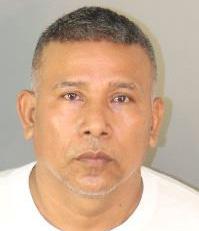
Garcia is set to be arraigned Oct. 13 at the Southwest Justice Center. He is being held at the Larry D. Smith Correctional Facility in Banning on $22.1 million bail.
It's alleged that, between September 2010 and April 2017, he assaulted three different victims identified in court documents only as "J.H." "L.R." and "M.R."
A warrant was issued for the suspect's arrest.
A 12-year-old girl said that Garcia allegedly forced her to have sex with him and sexually assaulted her on more than one occasion, with the first occurrence being when she was eight years old, according to a declaration in support of Garcia's arrest warrant filed by sheriff department Investigator R. Deanne. In that first occurrence, he allegedly picked her up and threw her onto a bed, got on top of her and kissed her neck, but she screamed and he stopped shortly after.
When the girl turned nine, the defendant allegedly began to touch her chest and
private areas, Deanne wrote. He would allegedly pull over to do it whenever she was in the car with him and would tell her that if she wanted a new phone or a ride to a second victim's home, she would have to "do it."
By the time she was 11 or 12 years old, Garcia allegedly began trying to penetrate her and would attempt to make her perform oral sex, according to Deanne. He also allegedly began to have sex with her and the second victim, making each other watch.
The second victim said that her first experience with Garcia was when she was five years old when he allegedly touched her private area over clothing, Deanne wrote. He also allegedly attempted to penetrate her for the first time when she was seven and a few times when she was 10 or 11.
It's alleged that he also tried to make her perform oral sex on him and began to molest her on a weekly basis.
The last sexual assault on the two victims allegedly happened in March 2017, and in that same year the first victim contacted the second victim, saying that she was going to disclose what Garcia allegedly did, according to Deanne.
On June 6, 2017, the first victim participated in a forensic interview, the second victim on July 13, 2017, and a third victim on July 19, 2017, Deanne wrote. The only information available about the third victim was that Garcia allegedly touched her chest and private area.
The suspect came under investigation in April 2017 after deputies were alerted to alleged inappropriate acts by him involving a Lake Elsinore
girl, whose identity was not disclosed, according to Riverside County Sheriff's Department Sgt. Jeff Reese.
"Garcia learned about the accusations and fled to Guatemala," Reese said.
Earlier this month, law enforcement personnel in Guatemala, working in concert with federal and local
authorities, were able to track down and arrest him without incident. He was extradited back to the U.S., where sheriff's deputies took him into custody and transported him to the Banning jail. Garcia has no prior convictions in Riverside County, according to court records.
Felon sentenced to life without parole for robbery-murder
By City News ServiceA34-year-old man who joined another offender in an allnight robbery spree that culminated in the slaying of a Riverside convenience store clerk has been sentenced to life in prison without the possibility of parole.
John Lamont Bush of Los Angeles was convicted March 15 of one felony count each of first-degree murder and being a convicted felon and narcotic addict in possession of a firearm and three felony counts each of robbery and assault with a gun, according to court records. Sentence enhancing firearm allegations were also found true.
The murder charge stems from the killing of 28-year-old Waqar Tanveer of Fontana in 2020 during a robbery.
Bush was sentenced Friday morning at the Southwest Justice Center in Murrieta to a determinate sentence of 18 years, eight months plus life without the possibility of parole, according to court records.
Hisco-defendant, Roderick Lamar Grandison, 51, of Compton, was tried separately and was convicted April 17 of the same charges except for one felony count of assault with a gun, on which was acquitted, according to court records. He was sentenced May 26 to state prison for 170 years to life.
During a hearing at the Southwest Justice Center, Riverside County Superior Court Judge Stephen Gallon imposed the maximum term of imprisonment for Grandison's offenses. The judge postponed Bush's sentencing after his attorney requested additional time to prepare a motion seeking a new trial, which was denied by the judge Friday.
A third co-defendant, 36-year-old Marleiya Onshel Barnes of Moreno Valley, pleaded guilty in 2021 to three counts of armed robbery and was sentenced to 15 years in state prison.

According to a trial brief filed by the District Attorney's Office, Barnes, Bush and Grandison joined in the
predawn hours of Feb. 28, 2020, to rob convenience stores.
With Barnes at the wheel of her sedan, their first stop was a 7-Eleven on Fourth Street in Perris. Bush entered the store at 1:35 a.m., prepared himself some coffee, then went to the counter as if to pay, but instead pulled a compact semiautomatic pistol from his pocket and leveled it at the clerk. The defendant snatched $400 and fled, prosecutors said.
An hour later, the trio headed to a 7-Eleven on Sunnymead Boulevard in Moreno Valley, where Grandison entered, acting as though he wanted to purchase cigarettes, according to the prosecution. When the clerk walked over to retrieve a pack for the defendant, Grandison "removed a small pistol from the front of his sweater and pointed it at the victim," court papers stated.
Grandison forced the clerk to open the two cash registers at gunpoint, racking
the slide on the handgun and telling him, "I'll shoot you," according to the brief. The man handed over a handful of money, and the defendant left.
At 3:15 a.m., the trio drove to the 7-Eleven at 6692 Indiana Ave. in Riverside, where Bush went in, armed with the same pistol he had used in the first holdup, the brief said.
Tanveer was at the register and asked whether he could help the defendant as he approached the counter. The ensuing interaction was captured by security surveillance videotape.
"(Bush) then produced (his) handgun from his sweatshirt," the brief said. "After pointing the gun at the clerk, he jumped over the counter. Once on the other side of the counter, (Bush) and Tanveer had a physical struggle. At 3:17 a.m., the (defendant) uses his right hand and raises the gun and points it at the face of Tanveer. Tanveer then drops to the ground. A pool of
blood begins forming under him."
Bush grabbed some cash from the register and fled. A customer arrived a short time later and discovered the victim mortally wounded.
Riverside police detectives and sheriff's investigators initiated a joint investigation, and after learning of the holdup earlier in Moreno Valley, sheriff's personnel obtained images from Moreno Valley's Citywide Camera System, using the video to identify the getaway car driven by Barnes, according to court papers.
After confirming the
car belonged to her, detectives tracked down the defendant and arrested her without incident a few days later. During interviews with investigators, Barnes "admitted that she drove her two friends ... to the various robberies," according to the brief.
Based on that information, detectives procured arrest warrants for Barnes and Grandison, who were taken into custody within a week
The men had prior felony convictions in another jurisdiction, but the offenses were not listed.
OCTOBER 05-OCTOBER 11, 2023 13 BeaconMediaNews.com NEWS
John Lamont Bush. | Photo courtesy of the Riverside Police Department
Santos Erasmo Garcia. | Photo courtesy of the Riverside County Sheriff's Department
Group accused in $7.6M recycling fraud to be arraigned next month
 By City News Service
Alfredo Giron Henriquez, 36, Jose Antonio Interiano Martinez, 35, Manuela Rodriguez Rizo, 58, and Francisco Balmore Amaya Saenz, 24, are charged with multiple felonies, including fraud, perjury, grand theft and embezzlement.
Fuentes is the only one unaccounted for, his whereabouts unknown.
formally set the defendants' group arraignment for Nov. 14 at the downtown courthouse.
They are all free on varying bond amounts.
Justice Department, coordinate investigative efforts to "stop criminals and protect funds that belong to Californians," such as in the present case.
Arizona does not have a similar program. California Redemption Value, or CRV, fees apply only to those recyclable materials sold in California.
Members of a Riverside-area family accused of operating a recycling redemption scheme that resulted in nearly $8 million in fraudulent receipts from the state's CalRecycle program
will be arraigned together in November, a judge ruled Thursday.
Jose Raul Chica, 50, Genaro Solis Fuentes, 43, Maria Ermelinda Saenz Gonzalez, 41, Victor Manuel Hernandez, 23, Jose
The other defendants had arraignments scheduled separately over the last two months, but because they were seeking private counsel and other reasons, the hearings did not go forward.
During a status hearing Thursday at the Riverside Hall of Justice, Riverside County Superior Court Judge Jason Armand
The California Department of Justice alleges that between October 2022 and June of this year, the defendants engaged in a series of recycling transfers, smuggling 178 tons of aluminum cans and plastic bottles from Arizona to recycling centers located throughout Riverside County. They redeemed the out-of-state recyclables in California, netting $7.6 million in illgotten gains, prosecutors allege.
CalRecycle Director Rachel Wagoner said in July the agency, along with the
"California will not tolerate fraud against our recycling deposit system that has kept nearly a halftrillion bottles and cans from being littered or landfilled in our state," Wagoner said.

The California Beverage Container Recycling Program provides 5- to 10-cent redemption payments for each bottle and can turned in for recycling. The program is funded by extra fees charged to consumers for the sale of canned and bottled beverages statewide.
CalRecycle officials detected illegally imported bottles and cans last fall and initiated an investigation that was joined by the state Justice Department's Bureau of Investigation Recycle Fraud Team.
The agency said the recycling centers which facilitated the conspirators' transfers will also face criminal penalties.
Officials said the investigation resulted in the seizure of $1.06 million in illegally imported containers that had yet to be recycled.
Indian Canyon Drive reopens with 2 newly constructed temporary lanes
By City News ServiceNorth Indian Canyon Drive at the wash, which was heavily impacted from Tropical Storm Hilary in August, reopened Monday with two newly constructed temporary lanes.
"This is an essential gateway artery to our region's only trauma center, Desert Regional Medical Center — and we understand how important it is that residents and visitors are able to
access this critical roadway so they can to get to get to the hospital, school, or work in a timely manner," Palm Springs Mayor Grace Garner said in a statement.
After 4 p.m. Monday, motorists were able to access two lanes while crews continued to repair the remaining road damage caused by the storm, according to Palm Springs chief communications officer
Amy Blaisdell.
Heavy rainfall from Tropical Storm Hilary hit the Coachella Valley on Aug. 18, flooding and damaging several roads including Indian Canyon Drive, Date Palm Drive in Cathedral City, Interstate 10 off-ramps and Avenue 44 in Indio among others.
A new four-way stop was also installed at the intersection of Palm Springs
Station Road, Blaisdell said, advising motorists to be cautious when crossing the construction zone.
"A big thank you to our street crews for their hard work and ingenuity making this happen," City Manager Scott Stiles said in a statement. "I am extremely proud of this incredibly dedicated team for putting in the hours and going the extra mile."
Banning man suspected of sexually assaulting girl at church to stand trial
By City News ServiceA26-year-oldman accused of sexually assaulting a girl at a Banning church must stand trial on a felony charge, a judge ruled Friday.
Nicholas Garrett Corl of Banning was charged with one felony count of lewd acts with a 15-year-old child who is more than 10 years younger than him, according to court records.
At the end of a preliminary hearing Friday at the
Banning Justice Center, Riverside County Superior Court Judge Francisco Navarro ruled that there was sufficient evidence to warrant a trial for Corl on the charge. A post-preliminary hearing arraignment was set for Oct. 13.
Corl, who was a faculty member of the Calvary Christian School in Banning, was allegedly with a 15-yearold girl in a storage room on school grounds, according to
a declaration in support of increased bail that was filed.
It is alleged that someone saw the girl on his lap, faceto-face with him, in a dark room while class was in session.
According to a police statement, an employee from the Mountain Avenue Baptist Church at 1325 Mountain Avenue went to the Banning Police Department at 3:42 p.m. Sept. 12 and reported "criminal acts
against a child that occurred on church property."
The ensuing investigation culminated in the defendant's arrest at the Vista Serena Condominium Complex shortly before 6 p.m. that day.
He remains held at the Larry D. Smith Correctional Facility in Banning on $100,000 bail.
Corl has no documented prior felony convictions in Riverside County.
14 OCTOBER 05-OCTOBER 11, 2023 BeaconMediaNews.com
NEWS
| Photo by FabrikaPhoto/Envato Elements
| Photo courtesy of the Desert Hospital Outpatient Pharmacy/ Facebook
Bales of plastic at a recycling center. | Photo by MatthewWilliamsEllis/Envato Elements



OCTOBER 05-OCTOBER 11, 2023 15 BeaconMediaNews.com
Board OKs contract with new vendor for elections, despite reservations
By Paul J. Young, City News ServiceThe Board of Supervisors on Tuesday signed off on a $3 milliona-year contract with a ballot printing firm for upcoming elections in Riverside County, though the chairman and one other supervisor hesitated in supporting the agreement based on another vendor's complaints about actions by the now-former registrar of voters.
"There are some real discrepancies," Supervisor Karen Spiegel said prior to the 5-0 vote in favor of the county contract with Porterville-based ProVote Solutions. "I am not confident this was a fair deal."
Jim Suver, spokesman for Phoenix-based Runbeck Election Services, appeared before the board to request that the county continue an extension agreement for election services through June 2024. Runbeck had been under contract with the Office of the Registrar of Voters since 2018.
"We have been a stalwart vendor. But we shared some not-so-favorable information about (the former registrar)," Suver said, referring to an independent audit conducted earlier this year by former Orange County Registrar of Voters Neal Kelley. In a letter submitted
to board Chairman Kevin Jeffries on Sept. 21, Runbeck expressed concerns that former Registrar of Voters Rebecca Spencer engaged in "contract retaliation" after the company cooperated with Kelley, turning over documents that he had requested.
"In multiple instances in 2022, the registrar attempted to use Runbeck as a shield to cover up certain mistakes that she had caused," according to the company.
Kelley's audit, which ran from March to July at a cost of $26,750 to the county, was intended to identify deficiencies in the registrar's office to which corrective measures could be applied to improve operations.
The probe resulted in multiple findings pointing to the need for change.
Kelley wrote that the "entire process of ballot material preparation, production and proofing ... should be modernized" because "Riverside County is consistently the last in the state among medium- and large-sized counties" to distribute information ahead of statutory deadlines.

The audit found communication breakdowns were a routine problem in the Office of the Registrar of Voters and that sound financial practices
were a concern.
"While I was conducting my review, (ROV staff) were still working on billing from the November 2022 general election," Kelley wrote.
He found that Spencer, who was appointed to the top spot in 2014, had been exceedingly involved in minute details connected to all operations, failing to delegate many tasks.
"My observations are that she has taken these tasks on because she either dealt with them directly during her previous roles in the department, or she has encountered errors along the way," Kelley said.
"She started with the ROV as a temporary employee during high school and moved through multiple positions over the years," he added. "This is both positive and negative, depending on the cycle of the operation."
The office has been plagued with difficulties going back well over a decade, under different leadership, running budget deficits and experiencing challenges reporting election results. Spencer was an assistant to Barbara Dunmore, who was fired in November 2010 following a clash with the board over a series of technical foul-ups during the
general election that year.
On Friday, the Executive Office announced Spencer had resigned after being placed on paid administrative leave two weeks earlier. The county and Spencer "entered into a settlement agreement whereby the parties mutually agree that this action is done solely for the purposes of compromise and to eliminate the burden and expense of any litigation," according to an Executive Office statement.
The agreement specifies a $799,591 payout to Spencer.
Jeffries agreed with Runbeck that "they were not at fault for what occurred" on Spencer's watch.
"They have the documentation to back up their claims," he said, asking County Chief Operating
Officer Juan Perez whether it was really necessary to drop an extension to the Runbeck contract in preference to a new five-year agreement with ProVote.
Perez replied that Runbeck competed with ProVote and another vendor, and the contract vetting process in August involved six people — two of whom were Registrar of Voters' employees — who engaged in "blind scoring" to determine the best fit for the county going forward.
"The process was followed scrupulously," he said. "We stand behind the work that was done. It was an independent evaluation (of prospective vendors)."
Jeffries said he preferred not "to be in the business of second-guessing the process, if done fairly and ethically."
"I feel that the current company (Runbeck) was wronged on so many levels, doing everything they were told to do," the chair said.
"Now they're hung out to dry. But we're trying to clean the slate and start fresh."
Spiegel said her "first instinct is to vote no" on the compact with ProVote. But she worried that going against the Executive Office's recommendation would jeopardize operations in an already-troubled department.
She and Jeffries were assuaged after learning the ProVote agreement could be canceled at any time.
Assistant Registrar Art Tinoco has been appointed interim registrar while a recruitment campaign is conducted to find a new chief.
Man who shot 3 in Perris pleads guilty, gets 9 years in prison
By City News ServiceA24-year-old probationer who allegedly shot three men, one fatally, during a confrontation in Perris pleaded guilty Friday to voluntary manslaughter and was immediately sentenced to nine years in prison.
Jonathan Manriquez of Lake Elsinore was also charged with one felony count of and two felony counts of assault with a gun, according to court records. He also faced sentence-enhancing allegations of discharging a firearm causing great bodily injury, using a
firearm, and causing great bodily injury.
He pleaded guilty Friday at the Southwest Justice Center to voluntary manslaughter and admitted to one sentenceenhancing allegation of using a firearm, according to court records. His other charges were dismissed and the sentence-enhancing allegations were stricken.
He was immediately sentenced to nine years in prison, according to Riverside County District Attorney's office public information specialist Brooke Beare.
According to sheriff's Sgt. Ben Ramirez, shortly before 1 a.m. on Aug. 14, 2022, Manriquez was involved in an unspecified dispute with the three victims, among whom was 36-year-old Robert Chavez of Perris.
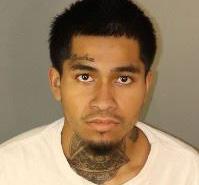
During the confrontation, Manriquez pulled a handgun and fired multiple rounds, allegedly hitting all three men, according to court documents.
Ramirez said that Chavez was killed on the spot. The other two men were seriously wounded.
Manriquez fled the
location before patrol deputies arrived, the sergeant said.
In the ensuing 24 hours, homicide detectives were able to gather sufficient evidence pointing to the defendant as the shooter. He was arrested without incident the following day, while seeking treatment for undisclosed injuries at Inland Valley Medical Center in Wildomar.
The two wounded individuals were identified in court documents only as "F.M.," and "S.C."
Court records show that Manriquez has prior
reckless
16 OCTOBER 05-OCTOBER 11, 2023 BeaconMediaNews.com
NEWS
| Photo by Rawpixel/Envato Elements
misdemeanor convictions for
driving and hit-and-run resulting in property damage.
Jonathan Manriquez. | Photo courtesy of the Riverside County Sheriff's Department
Glendale
NOTICE
NOTICE is hereby given that the City of Glendale (“City”) will receive sealed Bids, before the Bid Deadline established below for the following work of improvement:
9. Bid Irrevocability. Bids shall remain open and valid for ninety (90) calendar days after the Bid Deadline.
10. Prevailing Wage Resolution. Bidders are hereby notified that in accordance with the provisions of the Labor Code of the State of California, the City Council of the City has ascertained and determined by Resolution No. 18,626 (as amended), the general prevailing rate of per diem wages of a similar character in the locality in which the Work is performed and the general prevailing rate for legal holiday and overtime Work for each craft or type of worker needed in the execution of agreements with the City. Said resolution is on file in the Office of the City Clerk and is hereby incorporated and made a part hereof by the same as though fully set forth herein. Copies of said resolution may be obtained at the Office of the City Clerk.
11. California Department of Industrial Relations Public Works Contractor Registration.
Beginning July 1, 2014, under the Public Works Contractor Registration Law (California Senate Bill No. 854 - See Labor Code Section 1725.5), contractors must register and meet requirements using the online application https://efiling.dir.ca.gov/PWCR/ActionServlet?actio n=displayPWCRegistrationForm before bidding on public works contracts in California. The application also provides agencies that administer public works programs with a searchable database of qualified contractors. Application and renewal are completed online with a nonrefundable fee of $300. More information is available at the following links: http://www.dir.ca.gov/DLSE/PublicWorks/SB854FactSheet_6.30.14.pdf http://www.dir.ca.gov/Public-Works/PublicWorks.html
Beginning April 1, 2015, the City must award public works projects only to contractors and subcontractors who comply with the Public Works Contractor Registration Law.
Notice to Bidders and Subcontractors:
• No contractor or subcontractor may be listed on a Bid proposal for a public works project (submitted on or after March 1, 2015) unless registered with the Department of Industrial Relations pursuant to Labor Code Section 1725.5 [with limited exceptions from this requirement for bid purposes only under Labor Code Section 1771.1(a)].
• No contractor or subcontractor may be awarded a contract for public work on a public works project (awarded on or after April 1, 2015) unless registered with the Department of Industrial Relations pursuant to Labor Code Section 1725.5.
• This Project is subject to compliance monitoring and enforcement by the Department of Industrial Relations.
• The prime contractor must post job site notices prescribed by regulation. (See 8 Calif. Code Reg. Section 16451(d) for the notice that previously was required for projects monitored by the DIR Compliance Monitoring Unit.)
Furnishing of Electronic Certified Payroll Records to Labor Commissioner. For all new projects awarded on or after April 1, 2015, contractors and subcontractors must furnish electronic certified payroll records directly to the Labor Commissioner (aka Division of Labor Standards Enforcement).
Dated this day of _______, 20___, City of Glendale, California.
Aram Adjemian, City Clerk of the City of Glendale
Published on October 2 & 5, 2023
GLENDALE INDEPENDENT
scale to this Project, within Five (5) years prior to the Bid Deadline and with a dollar value in excess of the Bid submitted for this Project.
General Scope of Work:
Contractor shall furnish labor, materials, equipment, services, and specialized skills to perform work involved in the Project. The scope of work includes the removal of existing deteriorated asphalt concrete pavement and replacement with a permeable concrete gutter and new asphalt concrete pavement; and installation of stormwater infiltration infrastructure in the form of drywells and bioswales.
Other Bidding Information:
Number of Contract Working Days: 115 Working Days
Amount of Liquidated Damages: $ 4,600 per Calendar Day
Other Bidding Information:
Bidding Documents: Bids must be made on the Bidder’s Proposal form contained herein. Bidding Documents may be obtained in the Public Works Engineering Department, 633 E. Broadway, Room 205, Glendale, CA 91206 where they may be examined. Electronic copies of bidding documents can be obtained at no cost from: https://www.glendaleca.gov/government/departments/finance/purchasing/rfp-rfq-bid-page
1. . Future addenda, if any, will be available for download on the same page as the bidding documents. The city will not mail/deliver the addenda to the prospective bidders. It is the bidders’ sole responsibility to check the website to obtain future addenda to this bid document. Prospective bidders shall acknowledge the receipt of the addenda in the bid forms.
2. Engineer’s Estimate. The preliminary cost of construction of this Work has been prepared. The estimate is in the range of $ 7,586,000 to $ 8,385,000.
3. Completion:
This Work must be completed within One Hundred Fifteen (115) Working days from the Date of commencement as established by the City’s written Notice to Proceed.
4. Acceptance or Rejection of Bids. The City reserves the right to reject any and all Bids, to award all or any individual part/item of the Bid, and to waive any informalities, irregularities or technical defects in such Bids and determine the lowest responsible Bidder, whichever may be in the best interests of the City. No late Bids will be accepted, nor will any oral, facsimile or electronic Bids be accepted by the City.
5. Contractor License. At the time of the Bid Deadline and at all times during performance of the Work, including full completion of all corrective work during the Correction Period, the Contractor must possess a California contractor license or licenses, current and active, of the classification required for the Work, in accordance with the provisions of Chapter 9, Division 3, Section 7000 et seq. of the Business and Professions Code. In compliance with Public Contract Code Section 3300, the City has determined that the Bidder must possess the following license(s): • a. Pursuant to Section 3300, of the Public Contract Code, the classification of the bidder’s Contractor’s License shall be “Class A” Failure of a bidder to obtain adequate licensing at the time the contract is awarded shall constitute a failure to execute the Contract and shall result in the forfeiture of the Bidder’s Bond.
• b. For federally funded projects, the Contractor shall be properly licensed at the time of award.
The successful Bidder will not receive a Contract award if the successful Bidder is unlicensed, does not have all of the required licenses, or one or more of the licenses are not current and active. If the City discovers after the Contract’s award that the Contractor is unlicensed, does not have all of the required licenses, or one or more of the licenses are not current and active, the City may cancel the award, reject the Bid, declare the Bid Bond as forfeited, keep the Bid Bond’s proceeds, and exercise any one or more of the remedies in the Contract Documents.
6. Subcontractors’ Licenses and Listing. At the time of the Bid Deadline and at all times during performance of the Work, each listed Subcontractor must possess a current and active California contractor license or licenses appropriate for the portion of the Work listed for such Subcontractor and shall hold all specialty certifications required for such Work.
When the Bidder submits its Bid to the City, the Bidder must list each Subcontractor whom the Bidder must disclose under Public Contract Code Section 4104 (Subcontractor Listing Law), and the Bidder must provide all of the Subcontractor information that Section 4104 requires (name, the location (address) of the Subcontractor’s place of business, California Contractor license number, California Department of Industrial Relations contractor registration number, and portion of the
7. Permits,
meeting, the public may call 818-937-8100. City staff will be submitting these questions and comments in real time to the appropriate person during the meeting. You may also testify in person at the hearing if you wish to do so. Written comments may be submitted to the planner prior to the hearing.
The meeting can be viewed on Charter Cable Channel 6 or by streaming online at: https:// www.glendaleca.gov/government/departments/management-services/gtv6/live-video-stream
If you would like more information on the proposal, please contact the case planner Roger Kiesel in the Planning Division at (818) 548-2140 or (818) 937-8152 (email: rkiesel@glendaleca.gov). The staff report and case materials will be available before the hearing date at www.glendaleca.gov/agendas.
Any person having an interest in the project described above may participate in the hearing, by phone as outlined above, or appear in person and may be heard in support of their opinion. Any person protesting may file a duly signed and acknowledged written protest with the Director of Community Development not later than the hour set for public hearing before the Planning Commission. “Acknowledged” shall mean a declaration of property ownership (or occupant if not owner) under penalty of perjury. If you challenge the decision of this project in court, you may be limited to raising only those issues you or someone else raised at the public hearing described in this notice, or in written correspondence delivered to the City of Glendale, at or prior to the public hearing. In compliance with the Americans with Disabilities Act (ADA) of 1990, please notify the Community Development Department at least 48 hours (or two business days) for requests regarding sign language translation and Braille transcription services.
Dr. Suzie Abajian, The City Clerk of the City of Glendale
NOTICE OF PLANNING HEARING OFFICER PUBLIC HEARING ADMINISTRATIVE USE PERMIT NO. PAUP-001383-2023
LOCATION: 3706 PARK PLACE Glendale, CA 91020
APPLICANT: Vahan Mkrtchyan
ZONE: “IND” - (Industrial)
LEGAL DESCRIPTION/APN: Portion of Lot 2, Tract No. 1701, in the City of Glendale, County of Los Angeles. APN: 5613-002-011.
PROJECT DESCRIPTION
An application for an administrative use permit to allow the operation of a dance school within an existing 1,997 square-foot building, located in the “IND”- (Industrial) zone.
CODE REQUIRES
The establishment of a physical instruction school requires an administrative use permit in the IND (Industrial) zone.
APPLICANT’S PROPOSAL
To allow the operation of a new physical instruction school (dance school).
ENVIRONMENTAL DETERMINATION: The project is exempt from CEQA review as Class
1 “Existing Facilities”, exemption pursuant to State CEQA Guidelines Section 15301 because the project consists of operation of a new physical instruction school without expansion of the existing building.
PENDING DECISION AND COMMENTS: Copies of plans, staff analysis, and pending decision letter are available in the Planning Division office, located at 633 East Broadway, Room 103, and on the City’s website at https://www.glendaleca.gov/government/departments/community-development/planning/current-projects/pending-decisions
Comments may be submitted in writing to the above address or by email to Aileen Babakhani at ababakhani@glendaleca.gov. Comments must be received by October 20, 2023, to be considered in the final decision.
DECISION
On or after October 20, 2023, the Community Development Director will make a written decision regarding the operation of a new physical instruction school (dance school) in the IND Zone. When a final decision is rendered, a decision letter will be posted online at https://www.glendaleca.gov/government/departments/community-development/planning/ current-projects/pending-decisions
APPEAL
After the Director has made a decision, any person may file an appeal within 15 days of the final decision date appearing on the decision letter. Appeal forms are available at https:// www.glendaleca.gov/home/showdocument?id=11926 and Appeal must be filed using the City’s online permit portal: www.glendaleca.gov/Permits.
Published on October
Dr. Suzie Abajian, The City Clerk of the City of Glendale
Published on October 5,2023
GLENDALE INDEPENDENT
PUBLIC NOTICE
HISTORIC PRESERVATION COMMISSION MEETING
The Historic Preservation Commission will conduct a public meeting in accordance with Glendale Municipal Code, Chapter 15.20.030, regarding the following application requesting:
The owner of the property at 1705 Rancho Avenue is proposing to construct a 715-square-foot addition to the existing 3,221-square-foot, two-story residence. The project also includes a dormer addition on the west façade roof and the removal of a non-original deck roof on the east façade. The project is in the RI-II H (Low Density Residential, FAR District II) Horse Overlay Zone. The house is the former residence of prominent actress Bette Davis and is identified as eligible for listing in the Glendale Register of Historic Resources.
Case Number: PDR002063-2023
Project Address: 1705 RANCHO AVENUE, Glendale, CA 91201
Case Planner: Jay Platt, Principal Planner Planner Phone: (818) 937-8155
Planner Email: jplatt@glendaleca.gov
ENVIRONMENTAL DETERMINATION
The project is exempt from CEQA review as a Class 31 “Historic Restoration or Rehabilitation” pursuant to Section 15331 of the State CEQA Guidelines because the project meets the Secretary of the Interiors Standards for the Treatment of Historic Properties.
PUBLIC MEETING/HEARING
The Historic Preservation Commission will conduct a public hearing regarding the above project on THURSDAY, OCTOBER 19, 2023, at 5:00 pm or as soon thereafter as possible. The meeting will be held in Room 105 of the Municipal Services Building 633 E. Broadway, Glendale. The meeting is open to the public and anyone interested in the above case (and/ or their counsel) may participate in person, by phone, or in writing:
In Person
Please join us in Room 105 of the Municipal Services Building, 633 E. Broadway, Glendale at the time and date noted above.
By Phone
During the meeting, please call 818-937-8100. After staff takes down your name and the item you’re calling about, you will be placed on hold until your call is answered while the item is being heard.
In Writing Prior to the meeting, written comments can be submitted to the case planner, Jay Platt, at jplatt@glendaleca.gov. These will be relayed to the commissioners before the hearing. The meeting can be viewed on Charter Cable Channel 6 or by streaming online at: https:// www.glendaleca.gov/government/departments/management-services/gtv6/live-video-stream For more information, please call (818) 548-2115. You may also visit our web site at: www. glendaleca.gov/agendas. Staff reports are accessible prior to the meeting through hyperlinks in the “Agendas and Minutes” section. Environmental related issues/information may be discussed at this meeting.
Any person having any interest in the project described above may appear at the public meeting listed above either in person or by counsel of both and may be heard in support of their opinion. Any person protesting may file a duly signed and acknowledged written protest with the City Clerk at, or prior to, the public meetings. “Acknowledged” shall mean a declaration of property ownership (or occupant if not owner) under penalty or perjury. If you challenge the Project described above, per Government Code Section 65009, you may be limited to raising only those issues you or someone else raised at the public meetings described in this notice, or in written correspondence delivered to the City of Glendale at, or prior to, the public meetings. In compliance with the Americans with Disabilities Act (ADA) of 1990, please notify the Community Development Department at least 48 hours (two business days) for requests regarding sign language translation and Braille transcription services.
Dr Suzie Abajian City Clerk of the City of Glendale
Publish October 5, 2023
GLENDALE INDEPENDENT
PUBLIC NOTICE
HISTORIC PRESERVATION COMMISSION MEETING
The Historic Preservation Commission will conduct a public meeting in accordance with Glendale Municipal Code, Chapter 15.20.030, regarding the following application requesting:
The owner of the property at 1730 Grandview Avenue is proposing to construct a 1,029-square-foot, two-story addition at the rear of the existing 1,638-square-foot, one-story residence. The project is in the RI-I HD (Low Density Residential, FAR District I) Zone. The Minimal Traditional style home was constructed in 1936 and is a contributor to the North Cumberland Heights Historic District.
Case Number: PDR001056-2023
Project Address: 1730 GRANDVIEW AVENUE, Glendale, CA 91202
Case Planner: Jay Platt, Principal Planner
Planner Phone: (818) 937-8155
Planner Email: jplatt@glendaleca.gov
ENVIRONMENTAL DETERMINATION
The project is exempt from CEQA review as a Class 31 “Historic Restoration or Rehabilitation” pursuant to Section 15331 of the State CEQA Guidelines because the project meets the Secretary of the Interiors Standards for the Treatment of Historic Properties.
PUBLIC MEETING/HEARING
The Historic Preservation Commission will conduct a public hearing regarding the above project on THURSDAY, OCTOBER 19, 2023, AT 5:00 PM or as soon thereafter as pos-
20 OCTOBER 05-OCTOBER 11, 2023 BeaconMediaNews.com
LEGALS
INVITING BIDS
PERMEABLE ALLEY PROJECT SPECIFICATION NO. 3954 Bid Deadline: Submit before 2:00 p.m. on Wednesday, October 25, 2023 (“the Bid Deadline”) Original Bid to be submitted to: Office of City Clerk 613 E. Broadway, Room 110 Glendale, CA 91206 Bid Opening: 2:00 p.m. on Wednesday, October 25, 2023 City Council Chambers 613 E. Broadway, 2nd Floor Glendale, CA 91206 NO LATE BIDS WILL BE ACCEPTED. Bidding Documents Available: Bidding documents
Additional Bid Document 1. Bid America (951) 677-4819 Procurement Locations: 2. Construct Connect (877)422-8665 3. Dodge Construction Network (844)326-3826 x 9110 4. CMD Group (877)797-6051 5. BidNet Direct (800)835-4603 Option 2 City of Glendale Contact Person: Mr. Saumil Mody, Project Manager Phone: 818-548-3945 Fax: 818-242-7087 E-mail: Smody@GlendaleCA.Gov Mandatory Qualifications for Bidder and Designated Subcontractors: A Bid may be rejected as non-responsive if the Bid fails to document that Bidder meets the essential requirements for qualification. As part of the Bidder’s Statement of Qualifications, each Bid must provide satisfactory evidence that: Bidder satisfactorily completed Three (3) prevailing wage public contracts in California; each comparable in scope and
are available to view and download online at: https://www.glendaleca.gov/government/departments/finance/purchasing/rfp-rfq-bid-page
Subcontractor’s
services.
City’s
does not disqualify
Bidder.
to
Contract,
Bidder
Subcontractor— without an adjustment of
Work). In addition, the City requires that the Bidder list the dollar value of each
labor or
The
disqualification of a Subcontractor
a
However, prior
and as a condition to award of the
the successful
shall substitute a properly licensed and qualified
the Bid Amount.
Inspections, Plan Checks, Governmental Approvals, Utility Fees and Similar Authorizations: The City has applied and paid for the following Governmental Approvals and Utility Fees: Excavation Permit All other Governmental Approvals and Utility Fees shall be obtained and paid for by Contractor and will be reimbursed based on Contractor’s actual direct cost without markup. See Instructions to Bidders Paragraph 14, and General Conditions Paragraph 1.01 for definitions and Paragraph 1.03 for Contractor responsibilities. 8. Bid Forms and Bid Security: Each Bid must be made on the Bid Forms obtainable from the City’s Bidding website listed in the paragraph 1 above. Each Bid shall be accompanied by a cashier’s check or certified check drawn on a solvent bank, payable to “City of Glendale,” for an amount equal to ten percent (10%) of the total maximum amount of the Bid. Alternatively, a satisfactory corporate surety Bid Bond for an amount equal to ten percent (10%) of the total maximum amount of the Bid may accompany the Bid. Said security shall serve as a guarantee that the successful Bidder, within fourteen (14) calendar days after the City’s Notice of Award of the Contract, will enter into a valid contract with the City for said Work in accordance with the Contract Documents.
5,2023 GLENDALE INDEPENDENT CITY OF GLENDALE NOTICE OF PLANNING COMMISSION PUBLIC HEARING TENTATIVE TRACT MAP NO. 82713 (PTTMCP 1920707) TIME EXTENSION REQUEST LOCATION: 520 NORTH CENTRAL AVENUE & 521 NORTH ORANGE STREET, Glendale, CA 91203 APPLICANT: Techna Land Co. Inc. c/o Hayk Martirosian OWNER: Patrick Chraghchian ZONE: “(DSP)” - Downtown Specific Plan Orange Central District Zone LEGAL DESCRIPTION: Lots 8, 9 and 10 and portions of Lots 11, 12 and 13, Tract No. 614 PROJECT DESCRIPTION A time extension request has been filed for the approved tentative subdivision map for 98-unit multi-family residential condominium units and one commercial unit development in two buildings at 520 North Central Avenue and 521 North Orange Street. The time extension request is for a two-year extension and the vesting tentative subdivision map will expire on May 20, 2025. ENVIRONMENTAL DETERMINATION: The project was exempt from CEQA review as a Class 32 “In-fill Development Projects” exemption pursuant to Section 15332 of the State CEQA Guidelines; the project meets all the conditions for an in-fill development project. PUBLIC HEARING The Planning Commission will conduct a public hearing regarding the above project in Room 105 of the Municipal Services Building, 633 E. Broadway, Glendale, CA 91206, on OCTOBER 18, 2023, AT 5:00 PM or as soon thereafter as possible. The hearing will be open to the public. For public comments and questions during the
City Notices
sible. The meeting will be held in Room 105 of the Municipal Services Building 633 E. Broadway, Glendale. The meeting is open to the public and anyone interested in the above case (and/or their counsel) may participate in person, by phone, or in writing:
In Person
Please join us in Room 105 of the Municipal Services Building, 633 E. Broadway, Glendale at the time and date noted above.
By Phone
During the meeting, please call 818-937-8100. After staff takes down your name and the item you’re calling about, you will be placed on hold until your call is answered while the item is being heard.
In Writing
Prior to the meeting, written comments can be submitted to the case planner, Jay Platt, at jplatt@glendaleca.gov. These will be relayed to the commissioners before the hearing.
The meeting can be viewed on Charter Cable Channel 6 or by streaming online at: https:// www.glendaleca.gov/government/departments/management-services/gtv6/live-video-stream
For more information, please call (818) 548-2115. You may also visit our web site at: www. glendaleca.gov/agendas. Staff reports are accessible prior to the meeting through hyperlinks in the “Agendas and Minutes” section. Environmental related issues/information may be discussed at this meeting.
Any person having any interest in the project described above may appear at the public meeting listed above either in person or by counsel of both and may be heard in support of their opinion. Any person protesting may file a duly signed and acknowledged written protest with the City Clerk at, or prior to, the public meetings. “Acknowledged” shall mean a declaration of property ownership (or occupant if not owner) under penalty or perjury. If you challenge the Project described above, per Government Code Section 65009, you may be limited to raising only those issues you or someone else raised at the public meetings described in this notice, or in written correspondence delivered to the City of Glendale at, or prior to, the public meetings. In compliance with the Americans with Disabilities Act (ADA) of 1990, please notify the Community Development Department at least 48 hours (two business days) for requests regarding sign language translation and Braille transcription services
Dr. Suzie Abadjian
Published on October 5,2023
GLENDALE INDEPENDENT
Release Dated: Thursday, October 5, 2023
MIGUEL MÁRQUEZ City Manager
Published on October 5,2023 PASADENA PRESS
CITY OF PASADENA Notice Inviting Bids For Utility Power Distribution Transformers
Notice is hereby given that the City of Pasadena is calling for sealed bids for the Water & Power Department, Power Delivery and will receive sealed bids prior to 11:00 am, Thursday, October 19, 2023 and will electronically unseal and make them available online (https://procurement.opengov.com/portal/pasadena) for this solicitation named “Utility Power Distribution Transformers” Project ID: 2023-IFB-MS-811.
1.1. Summary
PWP seeks to purchase power distribution transformers to support electric utility operations and maintenance.
the Brookside and Oak Knoll Substations within the City of Pasadena Water and Power Department’s (PWP) electrical distribution system.
Engineer’s estimate will not be made available for these projects.
1.2. Delivery Instructions
Bids will be received via the City’s eProcurement Portal (https://procurement.opengov.com/portal/pasadena). A bid received after the time set for the bid opening shall not be considered. Bidders are required to submit (upload) all items listed in the Submittals/Checklist. Bids will be received prior to 11:00 am on Thursday, November 9, 2023 and will be opened online at that time.
Copies of the Specifications and all required forms may be obtained for this solicitation online: https://procurement.opengov.com/portal/ pasadena/projects/57934
Addenda shall be acknowledged via the City’s eProcurement Portal. Refer to the Specifications for complete details and bidding requirements. The Specification and this Notice shall be considered a part of any contract made pursuant thereunder.
1.3. Pre-bid Conference
The City Clerk Of The City Clerk
Pasadena City Notices
CITY OF PASADENA Notice Inviting Bids For Mobile Document Destruction
and Removal Services (PWP)
Notice is hereby given that the City of Pasadena is calling for sealed bids for the Water & Power Department and will receive sealed bids prior to 2:00 pm, Wednesday, October 25, 2023 and will electronically unseal and make them available online (https://procurement. opengov.com/portal/pasadena) for this solicitation named "Mobile Document Destruction and Removal Services (PWP)" Project ID: 2023-IFB-MS-821.
1.1. Summary
Pasadena Water and Power ("PWP"), a department within the City of Pasadena, seeks onsite, secure FACTA-compliant document and removal services at 10 PWP locations in Pasadena, California.
1.2. Delivery Instructions
Bids will be received via the City's eProcurement Portal (https://procurement.opengov.com/portal/pasadena). A bid received after the time set for the bid opening shall not be considered. Bidders are required to submit (upload) all items listed in the Bidder's Submittals/Checklist. Bids will be received prior to the time and date in this Notice Inviting Bids and will be opened online at that time.
Copies of the Specifications and all required forms may be obtained for this solicitation online: https://procurement.opengov.com/portal/ pasadena/projects/61393
Addenda shall be acknowledged via the City's eProcurement Portal (https://procurement.opengov.com/portal/pasadena). Refer to the Specifications for complete details and bidding requirements. The Specification and this Notice shall be considered a part of any contract made pursuant thereunder.
1.3. Pre-bid Conference
See the Timeline in the section named "Instructions to Bidders." If there is a Mandatory pre-bid meeting, bidders are required to attend at the time, date, and location included in the Timeline Instructions to Bidders of this solicitation. If there is a Non-Mandatory pre-bid meeting, bidders not required to attend.
Each prospective bidder will have the opportunity to clarify and ask questions regarding these Specifications. The Pre-bid Meeting will be held at the time, date, and location in the Timeline of this solicitation.
1.4. Deadline for Questions
The deadline to submit questions related to this solicitation is Friday, October 13, 2023, prior to 2:00 pm.
Questions regarding this solicitation should be submitted directly through the City's eProcurement Portal (https://procurement.opengov.com/portal/pasadena) Q&A function. Do not contact any other City employee or official regarding this solicitation. Any questions submitted after the date and time specified may not be considered.
1.2. Delivery Instructions
Bids will be received via the City’s eProcurement Portal (https://procurement.opengov.com/portal/pasadena). A bid received after the time set for the bid opening shall not be considered. Bidders are required to submit (upload) all items listed in the Bidder’s Submittals/Checklist. Bids will be received prior to the time and date in this Notice Inviting Bids and will be opened online at that time.
Copies of the Specifications and all required forms may be obtained for this solicitation online: https://procurement.opengov.com/portal/ pasadena/projects/60505
Addenda shall be acknowledged via the City’s eProcurement Portal (https://procurement.opengov.com/portal/pasadena). Refer to the Specifications for complete details and bidding requirements. The Specification and this Notice shall be considered a part of any contract made pursuant thereunder.
1.3.
Pre-bid Conference
See the Timeline in the section named “Instructions to Bidders.” If there is a Mandatory pre-bid meeting, bidders are required to attend at the time, date, and location included in the Timeline Instructions to Bidders of this solicitation. If there is a Non-Mandatory pre-bid meeting, bidders not required to attend.
Each prospective bidder will have the opportunity to clarify and ask questions regarding these Specifications. The Pre-bid Meeting will be held at the time, date, and location in the Timeline of this solicitation.
1.4. Deadline for Questions
The deadline to submit questions related to this solicitation is Thursday, October 12, 2023, prior to 11:00 am.
Questions regarding this solicitation should be submitted directly through the City’s eProcurement Portal (https://procurement.opengov.com/portal/pasadena) Q&A function. Do not contact any other City employee or official regarding this solicitation. Any questions submitted after the date and time specified may not be considered.
1.5. Release Date Release Dated: Thursday, October 5, 2023
MIGUEL MÁRQUEZ City Manager
Publish October 5, 2023 PASADENA PRESS
CITY OF PASADENA Notice Inviting Bids For
Seismic Anchorage of Equipment at Brookside and Oak Knoll Substations
Notice is hereby given that the City of Pasadena is calling for sealed bids for the Water & Power Department, Power Delivery and will receive sealed bids prior to 11:00 am, Thursday, November 9, 2023 and will electronically unseal and make them available online (https://procurement.opengov.com/portal/pasadena) for this solicitation named “Seismic Anchorage of Equipment at Brookside and Oak Knoll Substations” Project ID: 2023-IFB-LM-773.
1.1. Summary
The selected vendor(s) shall install a seismic anchoring system for
See the Timeline in the section named “Instructions to Bidders.” If there is a Mandatory pre-bid meeting, bidders are required to attend at the time, date, and location included in the Timeline (#Instructions to Bidders) of this solicitation. If there is a Non-Mandatory pre-bid meeting, bidders not required to attend.
Each prospective bidder will have the opportunity to clarify and ask questions regarding these Specifications. The Pre-bid Meeting will be held at the time, date, and location in the Timeline of this solicitation.
1.4. NOTICE REQUIREMENTS
No contractor or subcontractor may be listed on a bid proposal for a public works project unless registered with the Department of Industrial Relations pursuant to Labor Code section 1725.5 [with limited exceptions from this requirement for bid purposes only under Labor Code section 1771.1(a)].
1.5. Required Licenses (Eligibility Requirement)
Bidders must possess and provide the following license(s) or certification(s) to be deemed qualified to perform the work specified: Class A - General Engineering and/or C-60 - Welding Contractor
1.6. Deadline for Questions
The deadline to submit questions related to this solicitation is Thursday, October 26, 2023, prior to 11:00 am.
Questions regarding this solicitation should be submitted directly through the City’s eProcurement Portal Q&A function. Do not contact any other City employee or official regarding this solicitation. Any questions submitted after the date and time specified may not be considered.
1.7. Release Date
Release Dated: Thursday, October 5, 2023
MIGUEL MÁRQUEZ City Manager
Published on October 5,2023
PASADENA PRESS
Baldwin Park City Notices
CITY OF BALDWIN PARK
NOTICE OF PUBLIC HEARING
NOTICE IS HEREBY GIVEN THAT a public hearing to consider the following case will be held at 7:00 p.m. by the Planning Commission of the City of Baldwin Park on Wednesday, November 8, 2023. The Council Chamber will be open to the public in accordance with health official’s recommendations. Live audio of the hearing will be available via YouTube by clicking on the YouTube icon located on the upper right-hand corner of the City of Baldwin Park Webpage www.BaldwinPark.com.
If you wish to comment on this agenda item, please provide a comment no later than 6:30 PM on November 8, 2023. Comments sent via email can be directed to pc-comments@baldwinpark.com. Comments made by phone can be given to the case planner whose contact information is provided at the end of the notice.
CASE NUMBER: Zoning Code Amendment No. AZC 22-03, Variance No. ZV 22-07, Conditional Use Permit No. CP 22-11, and Design Review No. PR 22-46
ADDRESS: 14624 Dalewood Street (Assessor’s Parcel Numbers 8463-001-014 & -015).
REQUEST: The consideration and adoption of a Mitigated
OCTOBER 05-OCTOBER 11, 2023 21 BeaconMediaNews.com LEGALS
1.5. Release
Date
Negative Declaration (MND) in conjunction with a request for consideration and approval of a Zoning Code Amendment to reduce the minimum number of total rooms required for a hotel from 100 to 72, a Zoning Variance to deviate from the minimum number of required parking, a Conditional Use Permit to allow a hotel use, and a Design Review to facilitate the Hotel Renovation and parking lot modification (Location: 14624 Dalewood Street; Applicant: Lisette Sanchez-Mendoza - MIG; Case Number: AZC 22-03, ZV-22-07, CP 22-11, PR 22-46).
CEQA: Pursuant to the California Environmental Quality Act (CEQA) of 1970, a MITIGATED NEGATIVE DECLARATION OF ENVIRONMENTAL IMPACT has been prepared. The Initial Study/MND found that the environmental effects from the project would be less than significant with the incorporation of standard conditions and mitigation measures. The Initial Study, Draft MND and supporting documents are available for review and comment on the City website at https://www.baldwinpark.com/online-documents/community-development/planning/environmental-documents and during normal business hours at City of Baldwin Park, Planning Division, 14403 E. Pacific Avenue, Baldwin Park, CA, 91706. Members of the public are invited to make written statements regarding said report prior to the public hearing and to make verbal presentations at the public hearing. The public review period for the Initial Study Mitigated Negative Declaration will run from October 5, 2023 and ends on October 24, 2023.
If in the future anyone wishes to challenge a decision of the Planning Commission in court, you may be limited to raising only those issues you or someone else raise at the public hearing described above or in written correspondence delivered to the Planning Commission at, or prior to, the Public Hearing. Decisions on this matter will be final unless appealed within 10 days of the decision by any interested party.
If further information is desired on the above case, please contact Ron Garcia, Director of Community Development of the Planning Division at (626) 960-4011 Ext.477 or rgarcia@baldwinpark. com and refer to the case number. If you are aware of someone who would be interested in becoming informed of the contemplated action, please pass this notice along as a community service. Para información en Español referente a este caso, favor de llamar Associate Planner Melissa Chipres al (626) 960-4011 Ext. 452.
Nick Baldwin, AICP City PlannerPublished on October 5,2023
BALDWIN PARK PRESS
Probate Notices
NOTICE OF PETITION TO ADMINISTER ESTATE OF: RICHARD RUSSELL WENGER AKA RICHARD R. WENGER AKA RICHARD WENGER CASE NO. 23STPB10544
To all heirs, beneficiaries, creditors, contingent creditors, and persons who may otherwise be interested in the WILL or estate, or both of RICHARD RUSSELL WENGER AKA RICHARD R. WENGER AKA RICHARD WENGER.
A PETITION FOR PROBATE has been filed by SCOTT DALE WEDDING in the Superior Court of California, County of LOS ANGELES.
THE PETITION FOR PROBATE requests that SCOTT DALE WEDDING be appointed as personal representative to administer the estate of the decedent.
THE PETITION requests authority to administer the estate under the Independent Administration of Estates Act. (This authority will allow the personal representative to take many actions without obtaining court approval. Before taking certain very important actions, however, the personal representative will be required to give notice to interested persons unless they have waived notice or consented to the proposed action.) The independent administration authority will be granted unless an interested person files an objection to the petition and shows good cause why the court should not grant the authority.
A HEARING on the petition will be held in this court as follows: 10/27/23 at 8:30AM in Dept. 29 located at 111 N. HILL ST., LOS ANGELES, CA 90012
IF YOU OBJECT to the granting of the petition, you should appear at the hearing and state your objections or file written objections with the court before the hearing. Your appearance may be in person or by your attorney.
IF YOU ARE A CREDITOR or a contingent creditor of the decedent, you must file your claim with the court and
quests that AVERM SHLOMOF AND AVIGAIL SHLOMOF be appointed as personal representative to administer the estate of the decedent.
THE PETITION requests authority to administer the estate under the Independent Administration of Estates Act with limited authority. (This authority will allow the personal representative to take many actions without obtaining court approval. Before taking certain very important actions, however, the personal representative will be required to give notice to interested persons unless they have waived notice or consented to the proposed action.) The independent administration authority will be granted unless an interested person files an objection to the petition and shows good cause why the court should not grant the authority.
A HEARING on the petition will be held in this court as follows: 11/17/23 at 8:30AM in Dept. 44 located at 111 N. HILL ST., LOS ANGELES, CA 90012
IF YOU OBJECT to the granting of the petition, you should appear at the hearing and state your objections or file written objections with the court before the hearing. Your appearance may be in person or by your attorney.
IF YOU ARE A CREDITOR or a contingent creditor of the decedent, you must file your claim with the court and mail a copy to the personal representative appointed by the court within the later of either (1) four months from the date of first issuance of letters to a general personal representative, as defined in section 58(b) of the California Probate Code, or (2) 60 days from the date of mailing or personal delivery to you of a notice under section 9052 of the California Probate Code.
Other California statutes and legal authority may affect your rights as a creditor. You may want to consult with an attorney knowledgeable in California law.
YOU MAY EXAMINE the file kept by the court. If you are a person interested in the estate, you may file with the court a Request for Special Notice (form DE-154) of the filing of an inventory and appraisal of estate assets or of any petition or account as provided in Probate Code section 1250. A Request for Special Notice form is available from the court clerk.
mail a copy to the personal representative appointed by the court within the later of either (1) four months from the date of first issuance of letters to a general personal representative, as defined in section 58(b) of the California Probate Code, or (2) 60 days from the date of mailing or personal delivery to you of a notice under section 9052 of the California Probate Code.
Other California statutes and legal authority may affect your rights as a creditor. You may want to consult with an attorney knowledgeable in California law.
YOU MAY EXAMINE the file kept by the court. If you are a person interested in the estate, you may file with the court a Request for Special Notice (form DE-154) of the filing of an inventory and appraisal of estate assets or of any petition or account as provided in Probate Code section 1250. A Request for Special Notice form is available from the court clerk. Attorney for Petitioner TONY J. TYRE - SBN 269506/ALLYSON S. HELLER - SBN 315086/ WILLIAM C. MASON, III - SBN 319441, LAW OFFICES OF TONY J. TYRE, ESQ.
100 S. CITRUS AVENUE, SUITE 101 COVINA CA 91723, Telephone (626) 858-9378 10/2, 10/5, 10/9/23
CNS-3743389# WEST COVINA PRESS
NOTICE OF AMENDED PETITION TO ADMINISTER ESTATE OF:
CHARLES SATRUSTEGUI
CASE NO. 23STPB09717
To all heirs, beneficiaries, creditors, contingent creditors, and persons who may otherwise be interested in the WILL or estate, or both of CHARLES SATRUSTEGUI.
AN AMENDED PETITION FOR PROBATE has been filed by EDDIE SATRUSTEGUI in the Superior Court of California, County of LOS ANGELES.
BSC 224026
10/2, 10/5, 10/9/23
CNS-3743815#
GLENDALE INDEPENDENT
NOTICE OF PETITION TO
ADMINISTER ESTATE OF:
EMILIE LOQUET
CASE NO. 23STPB10783
To all heirs, beneficiaries, creditors, contingent creditors, and persons who may otherwise be interested in the lost WILL or estate, or both of EMILIE LOQUET.
A PETITION FOR PROBATE has been filed by CATHERINE LOQUET in the Superior Court of California, County of LOS ANGELES.
THE PETITION FOR PROBATE requests that CATHERINE LOQUET be appointed as personal representative to administer the estate of the decedent.
THE PETITION requests the decedent’s lost WILL and codicils, if any, be admitted to probate. The lost WILL and any codicils are available for examination in the file kept by the court.
THE PETITION requests authority to administer the estate under the Independent Administration of Estates Act.
(This authority will allow the personal representative to take many actions without obtaining court approval. Before taking certain very important actions, however, the personal representative will be required to give notice to interested persons unless they have waived notice or consented to the proposed action.) The independent administration authority will be granted unless an interested person files an objection to the petition and shows good cause why the court should not grant the authority.
A HEARING on the petition will be held in this court as follows: 10/30/23 at 8:30AM in Dept. 44 located at 111 N. HILL ST., LOS ANGELES, CA 90012
IF YOU OBJECT to the granting of the petition, you should appear at the hearing and state your objections or file written objections with the court before the hearing. Your appearance may be in person or by your attorney.
resentative will be required to give notice to interested persons unless they have waived notice or consented to the proposed action.) The independent administration authority will be granted unless an interested person files an objection to the petition and shows good cause why the court should not grant the authority.
A HEARING on the petition will be held in this court as follows: 12/04/23 at 8:30AM in Dept. 67 located at 111 N. HILL ST., LOS ANGELES, CA 90012
IF YOU OBJECT to the granting of the petition, you should appear at the hearing and state your objections or file written objections with the court before the hearing. Your appearance may be in person or by your attorney.
IF YOU ARE A CREDITOR or a contingent creditor of the decedent, you must file your claim with the court and mail a copy to the personal representative appointed by the court within the later of either (1) four months from the date of first issuance of letters to a general personal representative, as defined in section 58(b) of the California Probate Code, or (2) 60 days from the date of mailing or personal delivery to you of a notice under section 9052 of the California Probate Code. Other California statutes and legal authority may affect your rights as a creditor. You may want to consult with an attorney knowledgeable in California law.
YOU MAY EXAMINE the file kept by the court. If you are a person interested in the estate, you may file with the court a Request for Special Notice (form DE-154) of the filing of an inventory and appraisal of estate assets or of any petition or account as provided in Probate Code section 1250. A Request for Special Notice form is available from the court clerk. Attorney for Petitioner
SIBYLLE GREBE - SBN 141553
LORENZO C. STOLLER - SBN 291581
THE PROBATE HOUSE, L.C. 3424 W CARSON ST #320 TORRANCE CA 90503
Telephone (310) 542-9888
10/5, 10/9, 10/12/23
mail a copy to the personal representative appointed by the court within the later of either (1) four months from the date of first issuance of letters to a general personal representative, as defined in section 58(b) of the California Probate Code, or (2) 60 days from the date of mailing or personal delivery to you of a notice under section 9052 of the California Probate Code.
Other California statutes and legal authority may affect your rights as a creditor. You may want to consult with an attorney knowledgeable in California law.
YOU MAY EXAMINE the file kept by the court. If you are a person interested in the estate, you may file with the court a Request for Special Notice (form DE-154) of the filing of an inventory and appraisal of estate assets or of any petition or account as provided in Probate Code section 1250. A Request for Special Notice form is available from the court clerk. Attorney for Petitioner RANDALL D. ARMOUR - SBN 186309, LAW OFFICE OF RANDALL D. ARMOUR 25600 RYE CANYON ROAD, SUITE 201 VALENCIA CA 91355, Telephone (661) 259-0003 9/28, 10/2, 10/5/23
CNS-3742357# BURBANK INDEPENDENT
NOTICE OF PETITION TO ADMINISTER ESTATE OF: AVETIS A. AVETIKIAN AKA AVETIS AVETIKIAN
CASE NO. 23STPB10606
To all heirs, beneficiaries, creditors, contingent creditors, and persons who may otherwise be interested in the WILL or estate, or both of AVETIS A. AVETIKIAN AKA AVETIS AVETIKIAN. A PETITION FOR PROBATE has
Attorney for Petitioner SCOTT P. SCHOMER SBN 150027, SCHOMER LAW GROUP, APC 2155 CAMPUS DRIVE, SUITE 250 EL SEGUNDO CA 90245, Telephone (310) 337-7696 BSC 224015 9/28, 10/2, 10/5/23 CNS-3743178# PASADENA PRESS
NOTICE OF PETITION TO ADMINISTER ESTATE OF: YVONNE P. SANCHEZ AKA YVONNE PERALTA SANCHEZ
CASE NO. 23STPB10621
To all heirs, beneficiaries, creditors, contingent creditors, and persons who may otherwise be interested in the WILL or estate, or both of YVONNE P. SANCHEZ AKA YVONNE PERALTA SANCHEZ.
A PETITION FOR PROBATE has been filed by PAUL PERALTA SANCHEZ in the Superior Court of California, County of LOS ANGELES.
THE PETITION FOR PROBATE requests that PAUL PERALTA SANCHEZ be appointed as personal representative to administer the estate of the decedent.
THE PETITION requests authority to administer the estate under the Independent Administration of Estates Act. (This authority will allow the personal representative to take many actions without obtaining court approval. Before taking certain very important actions, however, the personal representative will be required to give notice to interested persons unless they have waived notice or consented to the proposed action.) The independent administration authority will be granted unless an interested person files an objection to the petition and shows good cause why the court should not grant the authority.
A HEARING on the petition will be held in this court as follows: 11/20/23 at 8:30AM in Dept. 67 located at 111 N. HILL ST., LOS ANGELES, CA 90012
IF YOU OBJECT to the granting of the petition, you should appear at the hearing and state your objections or file written objections with the court before the hearing. Your appearance may be in person or by your attorney.
IF YOU ARE A CREDITOR or a contingent creditor of the decedent, you must file your claim with the court and
THE AMENDED PETITION FOR PROBATE requests that EDDIE SATRUSTEGUI be appointed as personal representative to administer the estate of the decedent.
THE AMENDED PETITION requests authority to administer the estate under the Independent Administration of Estates Act with limited authority. (This authority will allow the personal representative to take many actions without obtaining court approval. Before taking certain very important actions, however, the personal representative will be required to give notice to interested persons unless they have waived notice or consented to the proposed action.) The independent administration authority will be granted unless an interested person files an objection to the petition and shows good cause why the court should not grant the authority.
A HEARING on the petition will be held in this court as follows: 11/01/23 at 8:30AM in Dept. 5 located at 111 N. HILL ST., LOS ANGELES, CA 90012
IF YOU OBJECT to the granting of the petition, you should appear at the hearing and state your objections or file written objections with the court before the hearing. Your appearance may be in person or by your attorney.
IF YOU ARE A CREDITOR or a contingent creditor of the decedent, you must file your claim with the court and mail a copy to the personal representative appointed by the court within the later of either (1) four months from the date of first issuance of letters to a general personal representative, as defined in section 58(b) of the California Probate Code, or (2) 60 days from the date of mailing or personal delivery to you of a notice under section 9052 of the California Probate Code.
Other California statutes and legal authority may affect your rights as a creditor. You may want to consult with an attorney knowledgeable in California law.
YOU MAY EXAMINE the file kept by the court. If you are a person interested in the estate, you may file with the court a Request for Special Notice (form DE-154) of the filing of an inventory and appraisal of estate assets or of any petition or account as provided in Probate Code section 1250. A Request for Special Notice form is available from the court clerk. Attorney for Petitioner
ZEV S. BROOKS - SBN 162830, LAW OFFICE OF ZEV BROOKS 18627 BROOKHURST ST. PMB 435 FOUNTAIN VALLEY CA 92708, Telephone (714) 965-0179
IF YOU ARE A CREDITOR or a contingent creditor of the decedent, you must file your claim with the court and mail a copy to the personal representative appointed by the court within the later of either (1) four months from the date of first issuance of letters to a general personal representative, as defined in section 58(b) of the California Probate Code, or (2) 60 days from the date of mailing or personal delivery to you of a notice under section 9052 of the California Probate Code. Other California statutes and legal authority may affect your rights as a creditor. You may want to consult with an attorney knowledgeable in California law.
YOU MAY EXAMINE the file kept by the court. If you are a person interested in the estate, you may file with the court a Request for Special Notice (form DE-154) of the filing of an inventory and appraisal of estate assets or of any petition or account as provided in Probate Code section 1250. A Request for Special Notice form is available from the court clerk.
Attorney for Petitioner
KEVIN CHIU - SBN 249479, HART, MIERAS & MORRIS, INC. 255 E SANTA CLARA ST. #300 ARCADIA CA 91006, Telephone (626) 607-1411 10/5, 10/9, 10/12/23
CNS-3744560#
PASADENA PRESS
NOTICE OF PETITION TO ADMINISTER ESTATE OF:
MELANIE ANN THOMAS AKA
MELANIE A. THOMAS
CASE NO. 23STPB00323
To all heirs, beneficiaries, creditors, contingent creditors, and persons who may otherwise be interested in the WILL or estate, or both of MELANIE ANN THOMAS AKA MELANIE A. THOMAS.
A PETITION FOR PROBATE has been filed by ROBERT R. THOMAS in the Superior Court of California, County of LOS ANGELES.
THE PETITION FOR PROBATE requests that ANDREW R. BRODY be appointed as personal representative to administer the estate of the decedent.
THE PETITION requests authority to administer the estate under the Independent Administration of Estates Act.
(This authority will allow the personal representative to take many actions without obtaining court approval. Before taking certain very important actions, however, the personal rep-
CNS-3745074#
BURBANK INDEPENDENT
ORDER TO SHOW CAUSE FOR CHANGE OF NAME PETITION OF Yeshaya Shlomo Muller by Crystal Vargas FOR CHANGE OF NAME CASE NUMBER: 23VECP00519 Superior Court of California, County of Los Angeles 6230 Sylmar Ave, Room 107, Van Nuys, Ca 91401, Northwest Judicial District TO ALL INTERESTED PERSONS:
1. Petitioner Yeshaya Shlomo Muller by Crystal Vargas filed a petition with this court for a decree changing names as follows: Present name a. OF Yeshaya Shlomo Muller to Proposed name Yaakov Shlomo Muller 2. THE COURT ORDERS that all persons interested in this matter shall appear before this court at the hearing indicated below to show cause, if any, why the petition for change of name should not be granted. Any person objecting to the name changes described above must file a written objection that includes the reason for the objection at least two court days before the matter is scheduled to be heard and must appear at the hearing to show cause why the petition should not be granted. If no written objection is timely filed, the court may grant the petition without a hearing NOTICE OF HEARING a. Date: 10/23/2023 Time: 8:30AM Dept: W. Room: 610 The address of the court is same as noted above. 3. a. A copy of this Order to Show Cause shall be published at least once each week for four successive weeks prior to the day set for hearing on the petition in the following newspaper of general circulation, printed in this county: Burbank Independent DATED: September 7, 2023 Virginia Keeny JUDGE OF THE SUPERIOR COURT Pub. September 14, 21, 28, October 5, 2023 BURBANK
INDEPENDENT
CIV SB 2321339 ORDER TO SHOW CAUSE FOR CHANGE OF NAME SUPERIOR COURT OF CALIFORNIA, COUNTY OF RIVERSIDE, 247 West Third Street, San Bernardino, Ca 924150210 Branch name: San Bernardino District – Civil Division. TO ALL INTERESTED PERSONS: 1. Petitioner: Amie Marie Gavin filed a petition with this court for a decree changing names as follows: a. Present name: Amie Marie Gavin changed to Proposed name Amy Marie Gavin 2. THE COURT ORDERS that all persons interested in this matter shall appear before this court at the hearing indicated below to show cause, if any, why the petition for change of
22 OCTOBER 05-OCTOBER 11, 2023 BeaconMediaNews.com LEGALS
in the Superior Court of California, County of LOS ANGELES. THE PETITION FOR PROBATE re-
been filed by AVERM SHLOMOF AND AVIGAIL SHLOMOF
Public Notices
tional nurse at Kaiser Los Angeles Medical Center — one of the planned picket locations — said in a statement released by the union Monday.
"I see my patients' frustrations when I have to rush them and hurry on to my next patient. That's not the care I want to give,” Cruz said. “We're burning ourselves out trying to do the jobs of two or three people, and our patients suffer when they can't get the care they need due to Kaiser's short-staffing."
According to the union, picket locations include Kaiser facilities across the state, including in Los Angeles, San Diego, Riverside and Orange counties. Picketing was also occurring in Colorado, Washington, Oregon, Virginia and Washington, D.C.
Kaiser issued a statement Wednesday that rising inflation has led to a "massive surge" in expenses, and has made it tough for the company to balance taking care of its employees with being affordable to patients.
"It's our responsibility to continue to balance taking care of our employees and being more affordable to our patients, members and communities. Wages and benefits make up about half the cost of health care in America, so we all need to work together on that critical goal," according to Kaiser.

"As noted in a recent
Kaiser Coachella housing
the end of the year and will feature a 55-unit apartment complex oriented to lowincome county residents.
The project is under construction on 2.3 acres in the 84900 block of Bagdad Avenue. The developer, Fairfield-based CVDH which formed in 2021, received over $20 million in loan guarantees.
report from the American Hospital Association, rising inflation has led to health care experiencing a `massive surge' in expenses driven by drugs and supplies, equipment shortages, staffing costs and supply chain disruptions," the statement continued. "At the same time, in the wake of the pandemic, demand for care has increased dramatically, as people come in for care that has been delayed. Kaiser Permanente is not immune to these inflationary pressures."
The workers' contract expired Saturday, but bargaining continued over the weekend and again Monday, Tuesday and through the night into Wednesday.
Kaiser cited progress in the talks.
"There has been a lot of progress, with agreements reached on several specific proposals late Tuesday," according to Kaiser. "We remain committed to reaching a new agreement that continues to provide our employees with market-leading wages, excellent benefits, generous retirement income plans, and valuable professional development opportunities."

Among the workers involved in the strike are licensed vocational nurses, emergency department technicians, radiology technicians, ultrasound sonographers, teleservice representatives, respiratory therapists, X-ray technicians, certified
nursing assistants, dietary services, behavioral health workers, surgical technicians, pharmacy technicians, transporters, home health aides, phlebotomists and medical assistants, union officials said.
The union has accused Kaiser of cutting performance bonuses for employees, failing to protect employees against subcontracting, offering wages that fail to keep pace with inflation and falling short in efforts to maintain adequate staffing levels.
"At issue, healthcare workers say, are a series of unfair labor practices related to bargaining in bad faith, along with simmering staff concerns related to unsafe staffing levels that can lead to dangerously long wait times, mistaken diagnosis, and neglect," according to a statement from the Coalition of Kaiser Permanente Unions. "After years of the COVID pandemic and chronic understaffing, Kaiser healthcare workers are calling on management to provide safe staffing levels."
According to Kaiser, the company is offering "across the board wage increases," with a minimum wage starting at $21 an hour. The health care provider denied allegations it is slashing performance bonuses and raising premiums for members without any relation to health care costs or improvements in care.
However, documents posted to the board's agenda indicated that the principal thrift backing the project was Silicon Valley Bank, which collapsed in March after a series of defaults that culminated in the Federal Deposit Insurance Corp. taking over the failed institution.
SVB's portfolio was ultimately transferred to San Francisco-based First-Citizens Bank & Trust Co., which is now the primary lender in interest. The county's $3.5 million allocation will stand as a "subordinate loan" for the project, according to Housing & Workforce Solutions documents.
It is backed by rents and fees, with a 3% per annum interest rate until retired in full.
"I don't believe ARPA money should be used as a bank," Anderson told the board. "We should be concerned about this as a county. In the city of Coachella, the mayor (Steve Hernandez) is the chief of staff for Mr. Perez."
Supervisor Manuel Perez represents the 4th District, where the project is located.
"These funds are going to be very helpful for that community," the Coachella native said. "They will help us reach our housing element goals (set by the state)."
Supervisor Karen Spiegel said she had no doubt the
county's ARPA provision was for a good cause.
"These are things that will better the county as a whole," she said.
The county received nearly $500 million in ARPA distributions, ostensibly tied to relief from COVIDrelated disruptions.
In October 2022, the board approved equally dividing $165 million in ARPA "Local Fiscal Recovery Funds" for the benefit of each of the five supervisorial districts, resulting in each one receiving $33 million.
The Placita Dolores Huerta loan from the county is a draw on the $33 million placed at the disposal of the 4th District.
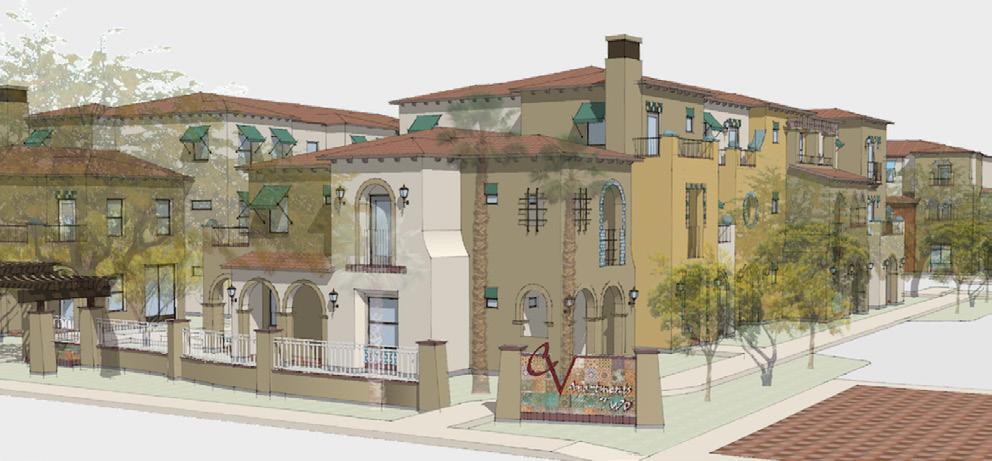
OCTOBER 05-OCTOBER 11, 2023 27 BeaconMediaNews.com
NEWS
Continued From Page 1
Union members announce strike plans on Sept. 22. | Photo courtesy of Coalition of Kaiser Permanente Unions/X
From Page 1
Continued
A rendering shows the planned Placita Dolores Huerta in Coachella. | Photo courtesy of the Interactive Design Corporation
Menifee appoints Travis Hickey as new chief financial officer
By City News ServiceContinued From Page 1
up,” said Laura Deehan, director of Environment California.
Menifee announced Monday the appointment of Travis Hickey as the new chief financial officer for the city.
As the new CFO, Hickey will manage the city's Finance Department as well as coordinate with other city departments and outside agencies on financial matters.
Hickey has more than 26 years of experience in local government finance, according to the Menifee public information and legislative affairs officer.
"The first 14 years of his career were in public accounting providing auditing and consulting services to a variety of California government agencies," according to the city's announcement. "His experience primarily includes city governments, but he also has experience working with counties, school districts and special purpose governments."
In 2011, Hickey transitioned into municipal government. He most recently has served as director of finance and administrative services for the city of Santa Fe Springs since 2018.
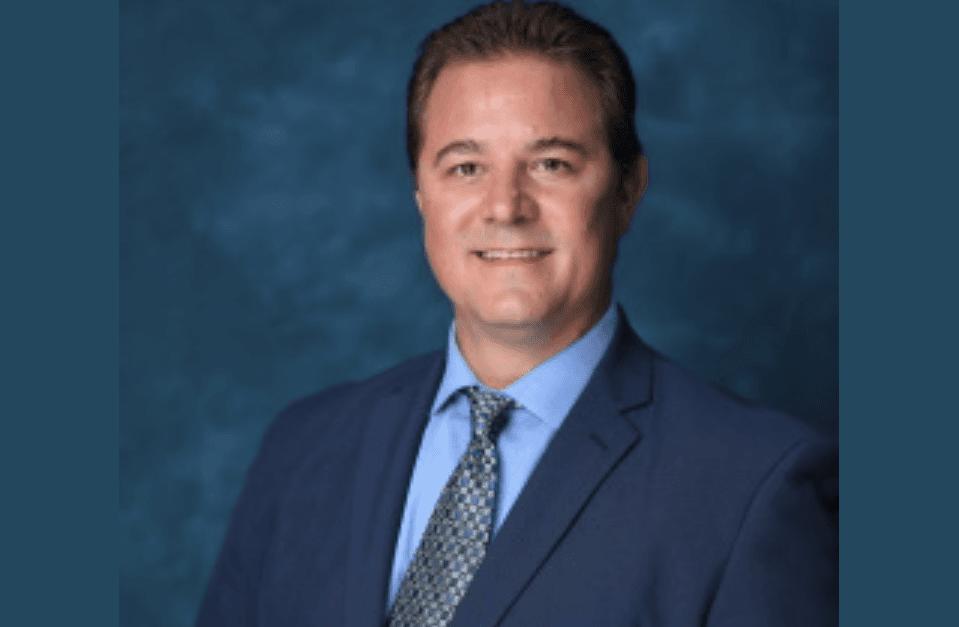
"Travis has a tremendous wealth of experience in financial matters, especially as they relate to local government," Menifee City Manager Armando G. Villa said in a statement. "We are confident that he will continue to ensure that our city's finances are held to the highest standards of excellence."
Hickey is a California-licensed certified public accountant and a member of several professional associations including the American Institute of Certified Public Accountants, the Government Finance Officers Association and the California Society of Municipal Finance Officers. He holds a Bachelor of Science degree in business administration accounting from California State University, San Bernardino.
Hickey will officially start his new role in Menifee on Oct. 16.
"I am very excited for the opportunity to lead the well-established and knowledgeable finance team in Menifee," Hickey said in a statement. "Working with our city leadership and staff, we will continue to maintain strong financial practices to safeguard taxpayer dollars and ensure the city continues to thrive."
The Western States Petroleum Association and California Independent Petroleum Association industry trade groups warned state lawmakers that “this misguided bill will increase the number of orphan oil wells in California.” The organizations argued that requiring bonds that cover the full cleanup cost would dissuade sales to companies hoping to enter the market. This, in turn, could lead to well owners getting stuck with the expensive cleanup, causing insolvency and ultimately leaving the wells with the state.
Dwayne Purvis is a petroleum reservoir engineer who authored a study that estimated it would cost as much as $21.5 billion to clean up California’s oil industry. He pointed out that the most common type of bond — a surety policy — is similar to insurance guaranteeing a well will be plugged, so oil companies wouldn’t have to set aside the full cleanup cost in cash to comply with AB1167. Federal regulators recently found these bonds are relatively cheap.
If that stops companies from buying wells in California, Purvis said, then there’s a bigger problem: “This admits — implicitly but almost inescapably — that the cost of plugging exceeds the value of remaining production,” he told ProPublica via email.
A Western States Petroleum Association spokesperson did not address questions about its claims. The California Independent Petroleum Association did not respond to requests for comment.
In negotiations over the bill, according to people present, the trade associations pointed to one example in particular to highlight why the legislation would create more orphan wells — the sales
of some of the more than 750 wells orphaned following bankruptcy filings by multiple entities in the Greka group of companies. The sales, the industry argued, presented an opportunity for the wells to be plugged by an oil company, not the state.
However, hundreds of the wells remain on the orphaned list to this day, only they’re now associated with a new company: Team Operating.
Greka’s CEO and Team Operating didn’t respond to emails requesting comment.
The bill does carry a potential loophole, experts cautioned: whether the increased bond requirements in the bill would apply to wells transferred through shell companies, as is often the case.
The state Department of Finance’s opposition to the bill relied on three arguments.
The agency’s report claimed that large companies with enough resources to plug wells are coming into the California market. But research shows these producers are exiting the state and handing off their aging, unprofitable wells to smaller companies that are less likely to be able to afford cleanup.
Its analysis also suggested that bond underwriting companies are “becoming hesitant” to do business in California. Purvis said that if these companies believe the situation is too risky to guarantee cleanup costs will be paid, “then the taxpayers of California probably should not extend producers the same credit.”
Finally, the report argued the bill is unnecessary because California regulators already have the authority to recoup plugging costs from wells’ previous owners.
While existing law gives the state this authority, it only applies to wells transferred after Jan. 1, 1996. Oil drilling in California dates back to the 1860s, and many thousands of wells were sold prior to the law’s cutoff, meaning the state can’t go after the wells’ former operators.

ProPublica reviewed the state’s list of orphaned wells and found numerous examples of well cleanups being left to taxpayers despite the wells being sold after 1996. In those cases, the state either hasn’t used its authority or has otherwise failed to secure plugging funds.
Department of Finance analysts referred questions to the state’s oil regulators, who were the source for much of the report. A spokesperson for the California Geologic Energy Management Division said state regulators have obtained money from previous owners on occasion.
But going after older operators is difficult, said Rob Schuwerk, a former New York assistant attorney general and the North American executive director of the energy finance think tank Carbon Tracker Initiative, and bonds are guaranteed money.
“There’s no better substitute for having the cash,” he said.
Republished with Creative Commons License (CC BY-NC-ND 3.0).
28 OCTOBER 05-OCTOBER 11, 2023 BeaconMediaNews.com NEWS V.I.P. TRUST DEED COMPANY OVER 40 YEARS OF FAST FUNDING Principal (818) 248-0000 Broker WWW.VIPLOAN.COM *Sufficient equity required - no consumer loans Real Estate License #01041073 Private Party loans generally have higher interest rates, points & fees than conventional discount loans RETIRED COUPLE HAS $1MIL TO LEND ON CA. REAL ESTATE* CA Department of Real Estate, NMLS #339217 Buys T.D.s and Buys/Lends on Partial Interests
Cleanup
Travis Hickey. | Photo courtesy of the city of Menifee
| Photo courtesy of Canva