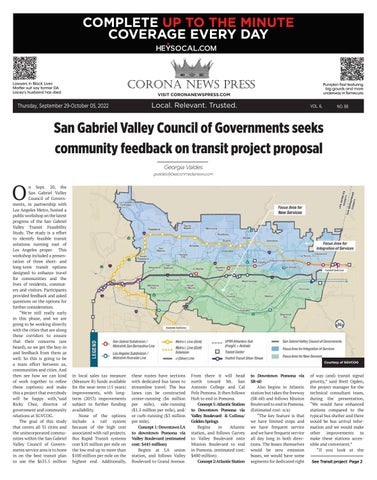
San Gabriel Valley Council of Governments seeks community feedback on transit project proposal
Georgia Valdes gvaldes@beaconmedianews.com

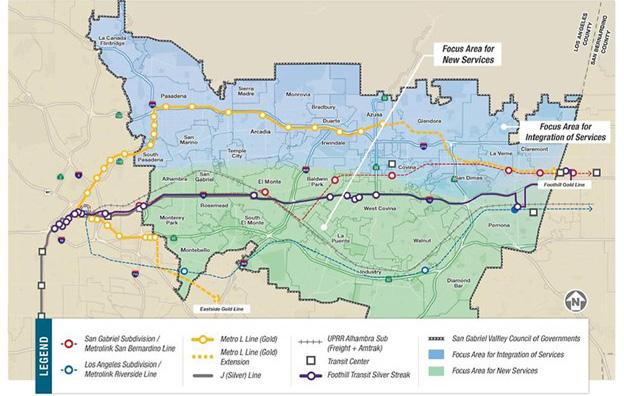
On Sept. 20, the San Gabriel Valley Council of Govern ments, in partnership with Los Angeles Metro, hosted a public workshop on the latest progress of the San Gabriel Valley Transit Feasibility Study. The study is a effort to identify feasible transit solutions running east of Los Angeles proper. This workshop included a presen tation of three short- and long-term transit options designed to enhance travel for communities and the lives of residents, commut ers and visitors. Participants provided feedback and asked questions on the options for further consideration.
“We're still really early in this phase, and we are going to be working directly with the cities that are along these corridors to ensure that their concerns (are heard), so we get the buy-in and feedback from them as well. So this is going to be a team effort between us, communities and cities. And then see how we can kind of work together to refine these (options) and make this a project that everybody will be happy with,”said Ricky Choi, director of government and community relations at SGVCOG.
The goal of this study that covers all 31 cities and the unincorporated commu nities within the San Gabriel Valley Council of Govern ments service area is to hone in on the best transit plan to use the $635.5 million
in local sales tax measure (Measure R) funds available for the near-term (15 years) improvements, with longterm (2053) improvements subject to further funding availability.

None of the options include a rail system because of the high cost associated with rail projects.
Bus Rapid Transit systems cost $10 million per mile on the low end up to more than $100 million per mile on the highest end. Additionally,
these routes have sections with dedicated bus lanes to streamline travel. The bus lanes can be constructed center-running ($6 million per mile), side-running ($1.5 million per mile), and/ or curb-running ($3 million per mile).
Concept 1: Downtown LA to downtown Pomona via Valley Boulevard (estimated cost: $445 million)
Begins at LA union station, and follows Valley Boulevard to Grand Avenue.
From there it will head north toward Mt. San Antonio College and Cal Poly Pomona. It then follows Holt to end in Pomona.
Concept 5: Atlantic Station to Downtown Pomona via Valley Boulevard & Colima/ Golden Springs
Begins in Atlantic station, and follows Garvey to Valley Boulevard onto Mission Boulevard to end in Pomona. (estimated cost: $400 million)
Concept 2:Atlantic Station
to Downtown Pomona via SR-60
Also begins in Atlantic station but takes the freeway (SR-60) and follows Mission Boulevard to end in Pomona. (Estimated cost: n/a)
“The key feature is that we have limited stops and we have frequent service and we have frequent service all day long in both direc tions. The buses themselves would be zero emission buses, we would have some segments for dedicated right
of way (and) transit signal priority,” said Brett Ogden, the project manager for the technical consultant team, during the presentation, “We would have enhanced stations compared to the typical bus shelter and there would be bus arrival infor mation and we would make other improvements to make these stations acces sible and convenient.”
“If you look at the
Lawyers in Black Lives Matter suit say former DA Lacey’s husband has died
Pumpkin Fest featuring big gourds and more underway in Temecula
Courtesy of SGVCOG
VISIT CORONANEWSPRESS.COM
Local. Relevant. Trusted. VOL. 6, NO. 88Thursday, September 29-October 05, 2022
See Transit project Page 2
LA COUNTY
Arcadia
Arcadia to host Newcastle Park ceremonial ground breaking
Join the City of Arcadia in celebrating the ceremonial groundbreaking of New castle Park. The City of Ar cadia received a grant for Land and Water Conserva tion Fund in the amount of $2.2 million. The reno vation of the park is tar geted to begin in 2023 and completed by 2024. New castle Park renovation will include a new play ground, pickleball courts, a lighted walking path, and restrooms. The event will take place on Tues day, Oct. 4, at 5:30 p.m. at Newcastle Park, 143 Colorado Blvd. in Arcadia.
Monrovia
City still offering free coun tertop compost bin and compostable liners
California’s new mandate, SB1383, requires residents and businesses to separate their organic materials to keep them out of the land fill with the goal of reduc ing greenhouse gas emis sions. In response, the city is offering countertop compost bins and com postable bin liners to all residents of Monrovia. The countertop compost bins are breathable to prevent odors, compact to avoid taking up space, and con venient for separating ed ible waste while you cook.
San Gabriel
Dumpling & Beer Fest re turns Oct. 14
The City of San Gabriel in partnership with local non-profit Asian Youth Center (AYC) are hosting the 8th Annual Dumpling & Beer Fest on Friday, Oct. 14, from 6-10 p.m. in the Historic Mission District at 320 S. Mission Drive, San Gabriel CA 91776. This event is the City’s “local twist on Oktoberfest” and features dumpling food booths, food trucks, des sert booths, a craft beer garden, and live enter
tainment. Admission is free and open to the pub lic. Early-bird beer tast ing wristbands are avail able to purchase for $30 through Sept. 30 on Event brite. Beer tasting wrist bands will be $35 after.
Azusa
Azusa Golden Days Carni val returns Oct. 7-9
As part of its Golden Days celebrations, the City of Azusa will host a carnival on the weekend of Oct. 7-9 at Memorial Park, lo cated at 320 N. Orange Place, Azusa, CA 91702. The carnival will feature food, rides, games, live entertainment and prizes.
Long Beach
Grocery Outlet to open newest store in Long Beach on Thursday
Grocery Outlet will soon open its second store in Long Beach on 300 E Wil low St. on Thursday, Sept. 29, adding 33 new jobs. The first 100 customers at 8 a.m. will receive a Gro cery Outlet Bliss Buck gift card in mystery amounts ranging from $5 to $500. In addition, all shoppers will receive a free limit ed-edition reusable bag, while supplies last. Limit 1. Shoppers can also play the Wheel of Bargains' Spin & Win for a chance to win a prize.In celebra tion of the opening, from Monday, September 19 through Thursday, Oc tober 27, customers may enter for a chance to win $1,000 in groceries! To en ter, customers may access the online contest at gro ceryoutlet.com/win-gro ceries-long-beach-willow.
SAN BERNARDINO
San Bernardino County
County high school voter education week kicks off with secretary of state visit
Last Wednesday, California Secretary of State Dr. Shirley Weber, Ph.D., visited Chaffey and Ontario High Schools speaking to students about
REGIONALS
the importance of voter preregistration, opportunities to partner with county elec tion officials, and how to fos ter environments that cre ate a desire among teens to be lifelong, civically engaged citizens. “When you don’t vote you lose your opportu nity to influence your life, because even though you achieve certain things peo ple can write laws and make certain rules that can take away your right,” Weber told students. “That is your pow er, that is your voice.” Sec ond District Supervisor Jan ice Rutherford joined Weber at Ontario High School, her alma mater, for a meet and greet with students high lighting the importance of voter education among the next generation of leaders.
San Bernardino
First 5 San Bernardino seek ing applicants for $1.5M in “innovation funding”
First 5 San Bernardino, wellknown for its 23-year history of investing in children from prenatal through five years, is launching a new and inno vative funding opportunity. Local organizations seeking financial support to initiate or develop programs or ide as aligning with First 5 San Bernardino’s strategic plan are encouraged to apply for funding through the organi zation’s request for applica tions process https://first 5sanbernardino.org. “This is an amazing opportunity, especially for smaller-sized organizations who may al ready be collaborating with each other, to apply for fund ing to address critical issues and needs facing young children and their families,” said First 5 San Bernardino Executive Director Karen E. Scott. “Further, we’re hop ing it may spark additional creative thinking on how to engage with families and the community in identifying and meeting needs as pos sible, which is exactly why the initiative was created.”
Ontario
Inland Empire caregiving service cited for OT comp violations
The City of Ontario is invit ing you to participate in the city’s most popular annual

run. Join the fun and reg ister today for the Annual Ontario 5K Reindeer Run and Rudolph's Dash. The Ontario 5K Reindeer Run and Rudolph's Dash will be held on Saturday, Dec. 17 on Euclid Avenue. All proceeds from this race will be do nated to Ontario-Montclair Promise Scholars and the Recreation & Community Services Empowerment Scholarships. For more in formation and to register, visit www.Ontario5KRun. com or call (909) 395-2020.
RIVERSIDE
Riverside County
Riverside County man ac cused of sexually assaulting 15-year-old girl pleads not guilty
An 18-year-old man ac cused of sexually assault ing a 15- year-old girl in Thermal while giving her a ride home pleaded not guilty Monday. Richard Beltran Ortega of Indio was charged with one felony count of sexual penetra tion with bodily injury on a minor over the age of 14, according to court records. He pleaded not guilty to the charge at the Larson Justice Center in Indio on Monday afternoon. Depu ties responded to the 83800 block of Airport Boulevard on the morning of May 18 in reference to a girl who was allegedly sexually as saulted by Ortega, accord ing to Sgt. David Aldrich from the Riverside County Sheriff's Department.
Riverside
Owner of Riverside air craft parts manufacturing firm sentenced for fraud
A 73-year-old convicted felon who sold substand ard and knockoff parts from his Riverside busi ness for use in commer cial and military aircraft was sentenced Monday to nearly four years in federal prison. Aman Khan, also known as Amanullah Khan, pleaded guilty in June to two counts of fraud involv ing interstate and foreign commerce stemming from his distribution of wheel assemblies, turbine noz
zles and other items from Riverside-based California Aircraft & Avionics Corp. U.S. District Court Judge Gary Klausner in Los An geles imposed the sentence deemed appropriate under the plea agreement and ad ditionally ordered Khan to pay $1.53 million in victim restitution, as well as for feit all components from his now-shuttered business.
Corona
Half of 91 Freeway in Co rona set for second weekend shutdown
The eastbound Riverside (91) Freeway in downtown Corona is set to be shut down this weekend for the second time this month to enable crews to continue resurfacing work, and mo torists were advised to plan for alternate routes in ad vance or be prepared for long delays going through the construction zone. The full eastbound closure is slated to start at 10:00 P.M. on Friday between Main Street and the 91/Interstate 15 interchange, with all five lanes out of service until 5 a.m. on Monday, accord ing to the Riverside County Transportation Commis sion. The agency said that the second weekend closure in September is required for ongoing operations con nected to the $12.6 million "91 Refresh Project," which entails resurfacing lanes, modifying retaining walls and repairing concrete bar riers on both sides of the 91.
ORANGE
Orange County
OC man sentenced to 4 years in prison for COV ID-19 relief loan fraud
An Orange County man was sentenced Monday to four years behind bars for fraud ulently obtaining more than $5 million in COVID-19 re lief loans, which he used to purchase properties in Eagle Rock, Malibu and Ir vine. Reddy Budamala, 36, of Irvine, was also ordered to pay $5.15 million in resti tution to the Small Business Administration, according to the U.S. Attorney's Of
fice. Budamala — who was arrested in February when he attempted to abscond from the United States to Mexico via the San Ysidro border crossing — pleaded guilty in June to one federal count each of bank fraud and money laundering. Defense attorney Diane C. Bass wrote that Budamala had "fallen on hard times and became desperate" and was suffering from a "mental breakdown" when he committed the fraud.
Anaheim
2 suspects arrested in Ana heim ‘Big Lots’ robbery
Anaheim police arrested a man and a woman Satur day who allegedly took a shopping cart full of mer chandise from an Anaheim Hills Big Lots store and flashed a handgun at an employee. The robbery oc curred around 10 a.m. Sat urday at 6336 E. Santa Ana Canyon Road, Sgt. Shane Carringer of the Anaheim Police Department told City News Service. The suspects, who are both 18 years old, walked past the register with a cart full of merchandise and made no attempt to pay, Carringer said. "When the employee confronted them, the male suspect flashed a handgun from his waistband," he said. "The employee backed away and called the police."
4 SEPTEMBER 29-OCTOBER 05, 2022 BeaconMediaNews.com
STARTING A NEW BUSINESS? VISITE: NOTICEFILING.COM
ARCADIA
Sept. 15
At 3:47 a.m., a resident in the 100 block of North Encinitas reported his catalytic converter was stolen from his vehicle. Of ficers arrived and noticed the suspect vehicle traveling at a high rate of speed onto the 210 freeway. This investigation is continuing.
At 6:57 a.m., a caller in the 2600 block of South California reported his trailer was taken from a parking lot. This investi gation is continuing.
At 12:32 p.m., an employee from a business in the 300 block of West Huntington called to re port that a subject was drinking alcohol at the location and ap peared drunk. Officers arrived and spoke with the subject. He was too intoxicated to care for himself. He was arrested and transported to the MPD jail to be held for a sobering period. While in jail the subject was at tempting to harm himself. Mon rovia Paramedics arrived and transported him to a local hos pital for a mental evaluation.
Sept. 16
At 2:01 a.m., an officer was patrolling the area of Alta Vista and Lime when she saw a motorist commit a driving vio lation. She stopped the vehicle and discovered the driver was in possession of a pipe. The driver was arrested and released with a citation.
At 2:18 a.m., an officer was patrolling the area of Myrtle and Duarte when she saw a motorist
commit a driving violation. She stopped the driver and found he was heavily intoxicated. After field sobriety tests were con ducted, the driver was arrested for DUI and transported to MPD jail to be held for sobering.
At 9:03 a.m., a caller re ported a traffic collision in the 200 block of East Foothill. Offic ers and Paramedics arrived and checked on the well-being of the occupants. One of the driv ers complained of pain. This in vestigation is continuing.
At 3:58 p.m., a caller re ported a traffic collision in the area of Mayflower and Chest nut. The driver at fault was is sued a citation.
Sept. 17
At 12:53 a.m., an of ficer was patrolling the area of Longden and Myrtle when he saw a motorist commit a driv ing violation. He stopped the motorist and found the driver to be intoxicated. The driver was arrested and transported to the MPD jail to be held for a sobering period.
At 10:42 p.m., officers were dispatched to a residence in the 400 block of North Can yon regarding a male who made suicidal statements. Upon ar rival, it was determined the male had taken an excessive amount of medication, and he was determined to be a danger to himself. He was transported to a local hospital for further evaluation.
Sept. 18
At 1:29 a.m., an officer conducted a traffic stop on a
BLOTTERS

vehicle for a vehicle code viola tion in the area of Live Oak and Mayflower. During the inves tigation, the officer discovered the driver was under the influ ence of alcohol and unable to operate a motor vehicle safely. The subject was arrested and transported to the MPD jail to be held for a sobering period.
At 2:09 a.m., an officer conducted a traffic stop on a vehicle for a vehicle code vio lation in the area of Shamrock and Foothill. During the inves tigation, the officer discovered the driver was under the influ ence of alcohol and unable to operate a motor vehicle safely. The subject was arrested and transported to the MPD jail to be held for a sobering period.
At 9:14 a.m., an employee from a residential complex in the 1110 block of South Fifth called to report that two subjects were in the building’s bathroom. He told them to leave, but in stead of leaving, the male sub ject brandished a knife. The em ployee left and called the police. This investigation is continuing.
At 10:34 p.m., an officer was patrolling the area of Myrtle and California when she saw a motorist commit a driving vio lation. The officer conducted a traffic stop and found the driver to be intoxicated. The subject was arrested and transported to the MPD jail to be held for a sobering period.
MONROVIA
Sept. 15
At 3:47 a.m., a resident in the 100 block of North En cinitas reported his catalytic converter was stolen from his vehicle. Officers arrived and noticed the suspect vehi cle traveling at a high rate of speed onto the 210 freeway. This investigation is continu ing.
At 6:57 a.m., a caller in the 2600 block of South Cali fornia reported his trailer was taken from a parking lot. This investigation is continuing.
At 12:32 p.m., an em ployee from a business in the 300 block of West Huntington called to report that a subject was drinking alcohol at the location and appeared drunk. Officers arrived and spoke with the subject. He was too intoxi cated to care for himself. He was arrested and transported to the MPD jail to be held for a sobering period. While in jail the subject was attempting to harm himself. Monrovia Para medics arrived and transport ed him to a local hospital for a mental evaluation.
Sept. 16
At 2:01 a.m., an officer was patrolling the area of Alta Vista and Lime when she saw
a motorist commit a driving violation. She stopped the ve hicle and discovered the driver was in possession of a pipe. The driver was arrested and released with a citation.
At 2:18 a.m., an officer was patrolling the area of Myrtle and Duarte when she saw a motorist commit a driv ing violation. She stopped the driver and found he was heav ily intoxicated. After a field so briety test was conducted, the driver was arrested for DUI and transported to MPD jail to be held for sobering.
At 9:03 a.m., a caller re ported a traffic collision in the 200 block of East Foothill. Of ficers and Paramedics arrived and checked on the well-being of the occupants. One of the driver's complained of pain. This investigation is continu ing.
At 3:58 p.m., a caller re ported a traffic collision in the area of Mayflower and Chest nut. The driver at fault was is sued a citation.
Sept. 17
At 12:53 a.m., an officer was patrolling the area of Longden and Myrtle when he saw a motorist commit a driv ing violation. He stopped the motorist and found the driver to be intoxicated. The driver was arrested and transported
to the MPD jail to be held for a sobering period.
At 10:42 p.m., officers were dispatched to a residence in the 400 block of North Can yon regarding a male who made suicidal statements. Upon arrival, it was deter mined the male had taken an excessive amount of medica tion, and he was determined to be a danger to himself. He was transported to a local hospital for further evaluation.
Sept. 18
At 1:29 a.m., an officer conducted a traffic stop on a vehicle for a vehicle code violation in the area of Live Oak and Mayflower. During the investigation, the officer discovered the driver was un der the influence of alcohol and unable to operate a mo tor vehicle safely. The subject was arrested and transported to the MPD jail to be held for a sobering period.
At 2:09 a.m., an officer conducted a traffic stop on a vehicle for a vehicle code vio lation in the area of Sham rock and Foothill. During the investigation, the officer dis covered the driver was under the influence of alcohol and unable to operate a motor ve hicle safely. The subject was arrested and transported to the MPD jail to be held for a sobering period.
SEPTEMBER 29-OCTOBER 05, 2022 5BeaconMediaNews.com
V.I.P. TRUST DEED COMPANY OVER 40 YEARS OF FAST FUNDING Principal (818) 248-0000 Broker WWW.VIPLOAN.COM *Sufficient equity required - no consumer loans Real Estate License #01041073 Private Party loans generally have higher interest rates, points & fees than conventional discount loans WE BUY TRUST DEEDS We Purchase and Loan on Partial Interests* CA Department of Real Estate, NMLS #339217
ANNOUNCEMENTS
NEW AUTHORS WANTED! Page Publishing will help you self-publish your own book. FREE author submission kit! Limited offer! Why wait? Call now: 1-855-667-0380 (CalSCAN)
27 Quick and Easy Fix Ups to Sell Your Home Fast and for Top Dollar
27 Quick and Easy Fix Ups to Sell Your Home Fast and for Top Dollar
San Gabriel Valley - Because your home may well be your largest asset, selling it is probably one of the most important decisions you will make in your life. And once you have made that decision, you’ll want to sell your home for the highest price in the shortest time possible without compromis ing your sanity.
San Gabriel Valley Because your home may well be your largest asset, selling it is probably one of the most important decisions you will make in your life. And once you have made that decision, you’ll want to sell your home for the highest price in the shortest time possible without compromising your san ity. Before you place your home on the market, here’s a way to help you to be as prepared as possible.
Before you place your home on the market, here’s a way to help you to be as prepared as possible.
To assist homesellers, a new industry report has just been released called “27 Valuable Tips That You Should Know to Get Your Home Sold Fast and for Top Dollar.” It tackles the important issues you need to know to make your home competitive in today’s tough, aggressive marketplace.
To assist homesellers, a new industry report has just been released called “27 Valuable Tips That You Should Know to Get Your Home Sold Fast and for Top Dollar.” It tackles the impor tant issues you need to know to make your home com petitive in today’s tough, aggressive marketplace.
Through these 27 tips you will discover how to pro tect and capitalize on your most important investment,
Through these 27 tips you will discover how to protect and capitalize on your most important investment, re
duce stress, be in control of your situation, and make the best profit possible.
reduce stress, be in control of your situation, and make the best profit possible.
In this report you’ll discover how to avoid financial disappointment or worse, a financial disaster when selling your home. Using a common-sense approach, you will get the straight facts about what can make or break the sale of your home.
In this report you’ll discover how to avoid financial dis appointment or worse, a financial disaster when selling your home. Using a commonsense approach, you will get the straight facts about what can make or break the sale of your home.
You owe it to yourself to learn how these important tips will give you the competitive edge to get your home sold fast and for the most amount of money.
You owe it to yourself to learn how these important tips will give you the competitive edge to get your home sold fast and for the most amount of money.
Order your free report today. To order a FREE Special Report, visit www.27HomeSellersTips.com or to hear a brief recorded message about how to order your FREE copy of this report call toll-free1-888-300-4632 and enter 1023.
Become a Published Author. We want to Read Your Book! Dorrance Publishing-Trusted by Authors Since 1920. Book manuscript submissions cur rently being reviewed. Com prehensive Services: Consul tation, Production, Promotion and Distribution. Call for Your Free Author`s Guide 1-877538-9554 or visit http:// dorranceinfo.com/Cali (CalSCAN)
DIRECTV for $79.99/mo for 12 months with CHOICE Pack age. Watch your favorite live sports, news & entertainment anywhere. First 3 months of HBO Max, Cinemax, Show time, Starz and Epix included! Directv is #1 in Customer Sat isfaction (JD Power & Assoc.) Some restrictions apply. Call 1-888-641-5762. (Cal-SCAN)
community in California. Our on-the-ground knowledge is indispensable to campaigns that want results. For more info on multi-market ethnic and non-ethnic solutions call Cecelia @ (916) 288-6011 or cecelia@cnpa.com
DID YOU KNOW Newspa per-generated content is so valuable it’s taken and repeat ed, condensed, broadcast, tweeted, discussed, posted, copied, edited, and emailed countless times throughout the day by others? Discover the Power of Newspaper Ad vertising. For a free brochure call 916-288-6011 or email ce celia@cnpa.com (Cal-SCAN)
You can call any time, 24 hours a day, 7 days a week.
Get your free special report NOW.
Order your free report today. To order a FREE Special Report, visit www.27HomeSellersTips. com or to hear a brief recorded message about how to order your FREE copy of this report call tollfree1-888-300-4632 and enter 1023. You can call any time, 24 hours a day, 7 days a week.
Prepare for power outages today with a GENERAC home standby generator. $0 Money Down + Low Monthly Pay ment Options. Request a FREE Quote -Call now before the next power outage: 1-844439-5645 (SCAN)
Eliminate gutter cleaning for ever! LeafFilter, the most ad vanced debris-blocking gutter protection. Schedule a FREE LeafFilter estimate today. 15% off Entire Purchase. 10% Se nior & Military Discounts. Call 1-855-424-7581 (Cal-SCAN)
AUTOS WANTED
DONATE YOUR CAR TO KIDS
Fast Free Pickup – Running or Not - 24 Hour Response - Maximum Tax Donation –Help Find Missing Kids! Call 1-888-491-1453. (Cal-SCAN)
DONATE YOUR CAR OR TRUCK TO HERITAGE FOR THE BLIND. Free 3 Day Vacation, Tax Deductible, Free Towing, All Paperwork Taken Care Of. CALL 1-844-491-2884 (CalSCAN)
AUTOS WANTED/ LUXURY
Over $10K in Debt? Be debt free in 24 to 48 months. No upfront fees to enroll. A+ BBB rated. Call National Debt Relief 1-888-231-4274. (CalSCAN)
WANTED! Old Porsche 356/911/912 for restoration by hobbyist 1948-1973 Only. Any condition, top $ paid! PLEASE LEAVE MESSAGE 1-707-3395994. Email: porscheres toration@yahoo.com (CalSCAN)
Aloe Care Health, medical alert system. The most ad vanced medical alert product on the market. Voice-activat ed! No wi-fi needed! Special offer call and mention offer code CARE20 to get $20 off Mobile Companion. Call today 1-844-790-1673. (SCAN)

RETIRED COUPLE $$$$ for business purpose Real Estate loans. Credit unimportant. V.I.P. Trust Deed Company www.viploan.com Call 1-818248-0000. Broker-principal DRE 01041073. No consumer loans. (Cal-SCAN)
SAVE BIG on HOME INSUR ANCE! Compare 20 A-rated insurances companies. Get a quote within minutes. Aver age savings of $444/year! Call 1-844-410-9609! (M-F 8am8pm Central) (Cal-SCAN)
LONG DISTANCE MOVING: Call today for a FREE QUOTE from America’s Most Trusted Inter state Movers. Let us take the stress out of moving! Speak to a Relocation Specialist, call 844-857-1737 (Cal-SCAN)
The difference in winning and losing market share is how businesses use their ad vertising dollars. CNPA’s Ad vertising Services’ power to connect to nearly 13 million of the state’s readers who are an engaged audience, makes our services an indispensable marketing solution. For more info call Cecelia @ (916) 2886011 or cecelia@cnpa.com
The difference in winning and losing an election is how campaign dollars are spent. Get the best ROI by using our deep relationships in every
 This report is courtesy of Rudy L. Kusuma Real Estate Broker Lic# 01820322. Not intended to solicit buyers or sellers currently under contract.
6 SEPTEMBER 29-OCTOBER 05, 2022 BeaconMediaNews.com
FINANCIAL SERVICES CABLE / SATELLITE TV INSURANCE HEALTH/ MEDICAL MISCELLANEOUS REAL ESTATE LOANS SERVICES STARTING A NEW BUSINESS? VISITE: NOTICEFILING.COM CLASSIFIEDS
Copyright © 2012
This report is courtesy of Rudy L. Kusuma Real Estate Broker Lic# 01820322. Not intended to solicit buyers or sellers currently under contract. Copyright © 2012
LEGALS
TEMPLE CITY NOTICE OF PUBLIC HEARING FOR THE CITY COUNCIL
The City Council is holding a public hearing on the project described below. You are receiving this notice because your property is located near the project, the project may directly, or indirectly affect you, or because you have requested to be notified.
Project Location: Citywide, City of Temple City, County of Los Angeles
Project: File 20-2640, Housing Element Update (2021-2029) and Addendum to the Environ mental Impact Report (EIR) of the Mid-Century General Plan
The proposed Draft Housing Element is a mandatory element of the general Plan. The Element needs to be updated every eight years and is subject to the review and certification of the State Department of Housing and Community Development.
Applicant: City of Temple City, 9701 Las Tunas Drive, Temple City, CA 91780
Environmental The environmental impact of the Housing Element has been reviewed by way of Review: an addendum to the General Plan Environmental Impact Report. The Addendum finds that the project will not have a significant impact on the environment. A copy of the Addendum can be viewed on the City’s website or can be obtained from City Hall.
Planning On September 13, 2022, the Planning Commission reviewed the proposed Housing Commission Element Update and the Addendum to the General Plan Environmental Impact Report.
Recommendation: The Planning Commission made the following recommendations to the City Council:
1. Adopt the Addendum to the Final Mid-Century General Plan EIR;
2. Amend the General Plan by replacing the current Housing Element with the Draft Housing Element; and
3. Authorize the City Manager, or designee, to make technical changes and oth er non-substantive edits that may result from the Department of Housing and Community Development review for final certification without further consider ation or re-adoption by the City Council.
The City Council Public Hearing will be held:
Meeting Date & Time: Tuesday, October 18, at 7:30 P.M.
Meeting Location: City Council Chambers, 5938 Kauffman Avenue, Temple City, California 91780
For questions or concerns regarding this project, or if you wish to review the project file, please contact: Project Planner: Hesty Liu, AICP, Associate Planner (626) 656-7316, hliu@templecity.us;
or visit the Community Development Department offices at City Hall located at:
Monday – Thursday: 7:30 a.m. to 5:00 p.m.; Friday: 7:30 a.m. to 4:00 p.m.
If you challenge any of the foregoing actions in court, you may be limited to raising only those issues you or someone else raised at the public hearing or in written correspondence delivered to the hearing body at, or prior to, the public hearing.
Date: 09/28/2022
Signature:Hesty Liu, AICP, Associate Planner
Publish September 29, 2022
CITY
REQUEST FOR PROPOSALS
NOTICE IS HEREBY GIVEN that the City of Arcadia is accepting bids to provide Graffiti Removal and Nuisance Abatement Services. Proposals shall be submitted in a sealed envelope marked “Graffiti Removal and Nuisance Abatement Services” and shall be sent to the Development Services Department located at 240 West Hun tington Drive, Arcadia, California 91007. Proposals are due no later than 4:00 p.m. on Friday, October 14, 2022, at which time said pro posals shall be publicly opened. Bids received after said time shall be returned unopened. Proposals shall be valid for a period of 90 calendar days after the opening date. The award of this contract shall be made by the Arcadia City Council.
A copy of the Request for Proposals and a Sample Professional Ser vices Agreement are now available. For further information, contact Kenneth Fields, Building Official at kfields@ArcadiaCA.gov or (626) 574-5432.
/s/ Linda Rodriguez Assistant City Clerk
Dated: September 27, 2022
Publish: September 29 and October 6, 2022
ARCADIA WEEKLY
Monrovia City Notices
NOTICE OF PUBLIC HEARING
MONROVIA PLANNING COMMISSION
This Notice is to inform you of a public hearing to determine whether or not the following project should be granted under Title 16 and/or 17 of the Monrovia Municipal Code:
APPLICATION: Conditional Use Permit (CUP2022-0010)
NOTICE OF PUBLIC HEARING MONROVIA PLANNING COMMISSION
This Notice is to inform you of a public hearing to determine whether or not the following project should granted under Title 16 and/or 17 of the Monrovia Municipal Code:
APPLICATION: Conditional Use Permit (CUP2022 0010)
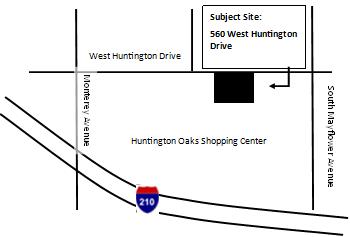
PROJECT DESCRIPTION: Applicant is requesting a Conditional Use Permit to construct a new 3,879 square foot In-N-Out restaurant with drivethru service and outdoor dining area at 560 West Huntington Drive in the Huntington Oaks Shopping Center. A vacant 10,927 square foot restaurant building (former Black Angus) would be removed for project implementation. The restaurant will include a drive-thru with a total queue length of 26 vehicles, a traditional layout of indoor and outdoor dining areas, kitchen area, and service area. Additional in formation regarding this request may be found on the City’s website at www.cityofmonrovia.org/projectsunderreview.
ENVIRONMENTAL
PROJECT DESCRIPTION: Applicant is requesting a Conditional Use Permit to construct a new 3,879 square foot In N Out restaurant with drive thru service and outdoor dining area at 560 West Huntington Drive in the Huntington Oaks Shopping Center. A vacant 10,927 square foot restaurant building (former Black Angus) would be removed for project implementation. The restaurant include a drive thru with a total queue length of 26 vehicles, a traditional layout of indoor and outdoor dining areas, kitchen area, and service area Additional information regarding this request may be found on the Ci website at www.cityofmonrovia.org/projectsunderreview
ENVIRONMENTAL
DETERMINATION: This project is Categorically Exempt from the California Environmental Quality Act (CEQA) §15303, under Class 3. Class 3(c) consists of constructing limited numbers of new small facilities or structures such as a store, motel, office, restaurant or similar structures on sites zoned for such uses in urbanized areas if not involving the use of significant amounts of hazardous substanc es where all necessary public services and facilities are available and the surrounding area is not environmentally sensitive.
DETERMINATION: This project is Categorically Exempt from the California Environmental Quality Act (CEQA) §15303, under Class 3. Class 3(c) consists constructing limited numbers of new small facilities or structures such a store, motel, office, restaurant or similar structures on sites zoned such uses in urbanized areas if not involving the use of significant amounts of hazardous substances where all necessary public services and facilities are available and the surrounding area is not environmentally sensitive.
APPLICANT: Marc Levun for In-N-Out Burger
PROPERTY ADDRESS: 560 West Huntington Drive
APPLICANT: Marc Levun for In N Out Burger
PROPERTY ADDRESS: 560 West Huntington Drive
HEARING DATE AND TIME: Wednesday, October 12, 2022 at 7:30 PM
HEARING DATE AND TIME: Wednesday, October 12, 2022 at 7:30 PM
HEARING LOCATION: Monrovia City Hall (Council Chambers), 415 South Ivy Avenue, Monrovia, California
HEARING LOCATION: Monrovia City Hall (Council Cham bers), 415 South Ivy Avenue, Monrovia, California
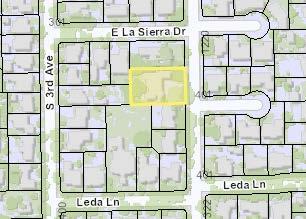
PROJECT LOCATION MAP
PROJECT LOCATION MAP

PUBLIC COMMENTS: Public comments regarding this item may be stated in person at meeting or submitted in writing at planning@ci.monrovia.ca.us. Written comments submitted by 5 p.m. on the meeting date will be distributed the Planning Commissioners.
PUBLIC COMMENTS: Public comments regarding this item may be stated in person at the meeting or submitted in writing at planning@ci.monrovia.ca.us. Written comments submitted by 5 p.m. on the meeting date will be distributed to the Planning Com missioners.
If you challenge this application in court, you may be limited to rais ing only those issues you or someone else raised at the public hear

SEPTEMBER 29-OCTOBER 05, 2022 7BeaconMediaNews.com
TEMPLE CITY TRIBUNE Temple City Notices File your D.B.A. Online www.filedba.comNOTICE IS HEREBY GIVEN that the Planning & Community Development Administrator has referred a new metal roof on a single family house to the Planning Commission for consideration, as described below A. A Categorical Exemption from CEQA Pursuant to Section 15301 of the CEQA Guidelines pertaining to the maintenance of an existing facility; and B. Administrative Architectural Design Review (Very Minor Review) No. Admin ADR 22 321 Project Description: The Applicant is requesting to install a new standing seam metal roof to the existing two story house at 1231 S. 4th Ave. The request is subject to an administrative architectural design review (very minor review), but is being referred to the Planning Commission for their review and consideration since the proposed roof material is discouraged by the City’s Single Family Design Guidelines. Applicant: Julie Tokushige, Property Owner Hearing Date and Time: Tuesday, October 11, 2022, at 7:00 PM Place of Hearing: Arcadia City Council Chambers 240 W. Huntington Drive, Arcadia, CA Contact Information: Project Planner Vanessa Quiroz, Associate Planner vquiroz@ArcadiaCA.gov (626) 574 5422 City of Arcadia Planning Services 240 W. Huntington Drive P.O. Box 60021 Arcadia, CA 91066 Persons wishing to comment on the project and/or environmental documents may do so at the public hearing or by submitting wri tten statements to Planning Services prior to the October 11, 2022 hearing. This notice was mailed and published in the Arcadia Weekly on September 29, 2022. The staff report for this project will be available on the City’s website at www.ArcadiaCA.gov after 5:30 PM on October 6, 2022. For more information you may a lso visit the City’s website at www.ArcadiaCA.gov/noticesanddecisions. City Hall will be closed on Friday, October 7, 2022. Per Government Code Section 65009 – If you challenge this project in court or in administrative hearing, you may be limited to raising o nly those issues you or someone else raised at the public hearing described in this notice, or in written correspondence delivered to the City of Arcadia, or prior to the public hearing. In compliance with the American with Disabilities Act, if you need special assistance to participate in this meeting, please contact Planning Services at (626) 574 5423. Notification of three business days prior to the meeting will enable the City to make reasonable arrangements to assure accessibility to this meeting. 很想知道这里讲的是什么吗?我们也希望你们了解这些信息。阿凯迪亚市向公众免费提供文件翻译服务。 请致电 (626) 574 5455,向市书记官办公室了解详情。 PUBLIC HEARING NOTICE – PLANNING COMMISSION Project Location: 1231 S. 4th Ave APN: 5781 021 015 1231 S. 4 th Ave Ilene Dr. Arcadia City Notices
OF ARCADIA
September 26, 2022
Publish September 29, 2022 ARCADIA WEEKLY
ing described in this notice, or in written correspondence delivered to the Planning Division at, or prior to, the public hearing. This ap plication will not alter the zoning status of your property. For further information regarding this application, please contact the Planning Division at (626) 932-5565.
Staff Report pertaining to this item will be available on Thursday, October 6, 2022 after 4:00 PM. on-line at the following hyperlink: https://www.cityofmonrovia.org/your-government/boards-and-com missions/planning-commission/agendas-minutes
Este aviso es para informarle sobre una junta pública acerca de la propiedad indicada más arriba. Si necesita información adicional en español, favor de ponerse en contacto con el Departamento de Planificación al número (626) 932-5565.
Austin Arnold Assistant Planner
PLEASE PUBLISH ON SEPTEMBER 29, 2022
El Monte City Notices
CITY OF EL MONTE ZONING REVIEW COMMITTEE
NOTICE OF PUBLIC HEARING
Hablamos Español favor de hablar con Jeni Colon - (626) 258-8626
TO: All Interested Parties
FROM: City of El Monte Planning Division
PROPERTY 9454 Cortada Street / APN: 8581-036-016
LOCATION:
APPLICATION: Minor Variance (MV) Nos. 02-22 and 08-22
REQUEST: The Applicant is proposing an addition of 1,048 square feet to an existing 796 square foot single story dwelling to create a second story and an addition of 103 square feet to an existing 359 square foot garage. Minor Variance (MV) No. 02-22 is requested to al low the reduction of a required second story setback (from 5 feet to 0 feet) from the firstfloor wall line along the dwelling’s northern and southern elevations. In addition, MV No. 08-22 is requested to allow the reduction of the required interior side setback (from 5 feet to 2 feet) along the dwelling’s northeast erly elevation. The subject site is located in the R-3 (Medium-Density/Multiple-Family) zone. The MV requests are made pursu ant to Chapter 17.125 (Variances & Minor Variances) of the El Monte Municipal Code (EMMC).
APPLICANT: Mandy Huang 1295 Heritage Way Covina, CA 91724
PROPERTY OWNER: Xi Q. Guan & Tracy Situ 9454 Cortada Street El Monte, CA 91733
ENVIRONMENTAL Article 19. Categorical Exemptions – Section DOCUMENTATION: 15301 (Class 1 – Existing Facilities) in ac cordance with the requirements of the Cali fornia Environmental Quality Act of 1970 and the CEQA Guidelines, as amended.
PLACE OF HEARING: Pursuant to State Law, the Zoning Review Committee will hold a public hearing to re ceive testimony, orally and in writing, on the proposed project. The public hearing is scheduled for:
Date: Tuesday, October 11, 2022
Time: 6:00 p.m.
Place: El Monte City Hall East – Council Chambers 11333 Valley Boulevard, El Monte, CA 91731
Members of the public wishing to observe the meeting may do so in one of the following ways:
(1) Attend the meeting in person at the City’s Council Chambers. All COVID-19 safety precautions (e.g.wearing a mask and social distancing) shall be followed at all times.
(2) Turn your TV to Channel 3;
(3) Visit the City’s website at http://www.elmonteca.gov/378/Coun cil-Meeting-Videos; or
(4) Call-in Conference (669) 444 9171; Meeting ID 819 5313 8958 and then press #. Press # again when prompted for participant ID.
Members of the public wishing to make public comment may do so via the following ways:
(1) Call-in Conference (669) 444 9171; Meeting ID 819 5313 8958 and then press #. Press # again when prompted for participant ID. Once admitted into the meeting, press *9 to request to speak.
LEGALS
(2) Email – All interested parties can submit questions/comments in advance to the Planning Division’s general email address: plan ning@elmonteca.gov. All questions/comments must be received by the Planning Division no later than 3:00 pm, October 11, 2022.
The staff report on this matter will be available on or about Sep tember 8, 2022, on the City of El Monte website, which may be ac cessed at https://www.ci.el-monte.ca.us/AgendaCenter/PlanningCommission-2 or by e-mailing selias@elmonteca.gov.
Americans With Disabilities Act
In compliance with Section 202 of the Americans with Disabilities Act of 1990 (42 U.S.C. Sec. 12132) and the federal rules and regu lations adopted in implementation thereof, the Agenda will be made available in appropriate alternative formats to persons with a disabil ity. Should you need special assistance to participate in this meet ing, please contact the City Clerk’s Office by calling (626) 580-2016. Notification 48 hours prior to the meeting will enable the City to make reasonable arrangements to ensure accessibility to this meeting.
Persons wishing to comment on the environmental documentation or proposed application may do so in in writing prior to the meeting date and must be received by 3:00 p.m., the day of the meeting.
Public Comments of no more than 3-minutes shall be read into the record. Written comments shall be sent to Sandra Elias; El Monte City Hall West; 11333 Valley Boulevard; El Monte, CA 91731 or at selias@elmonteca.gov. If you challenge the decision of the City Zoning Review Committee, in court, you may be limited to raising only those issues you or someone else raised at the public hearing described in this notice, or in written correspondence delivered to the City Zoning Review Committee at, or prior to, the public hear ing. For further information regarding this application please contact Sandra Elias at (626) 258-8621. Monday through Thursday, except legal holidays, between the hours of 7:00 a.m. and 5:30 p.m.
Published:Thursday, September 29, 2022
Mailed: Wednesday, September 28, 2022
City of El Monte Zoning Review Committee
Sandra Elias, Zoning Review Committee Secretary
EL MONTE EXAMINER
CITY OF EL MONTE PLANNING COMMISSION NOTICE OF PUBLIC HEARING
Hablamos Español favor de hablar con Sandra Elias (626) 258-8626
TO: All Interested Parties
FROM: City of El Monte Planning Division
PROJECT 3449 Santa Anita Avenue / 8578-020-908 (A LOCATION: full legal description of the property is on file in the office of the El Monte Planning Division).
APPLICATION: Development Agreement (DA) No. 06-22 and Design Review (DR) No. 18-22
REQUEST: The applicant (All Vision, LLC) is requesting the construction of an electronic reader board billboard on a 7.58 acre property currently developed with a bus maintenance and park ing facility for Los Angeles County Metropoli tan Transit Authority (Metro). The property is located south of the El Monte Bus Station. The billboard will be located at the southwest corner of the property, adjacent to the I-10 San Bernardino (westbound) freeway. Entitle ments include a Design Review to review the aesthetics of the billboard and a Development Agreement between the City of El Monte and All Vision, LLC. The subject property is within the Gateway Specific Plan and is zoned Spe cific Plan No. 1 (SP-1).
The Planning Commission will act as the rec ommending body, with the final determina tion made by the City Council. The request is made pursuant to Chapters 17.122 (Design and Minor Review) and 17.129 (Development Agreements) of the El Monte Municipal Code (EMMC).
APPLICANT: All Vision, LLC 125 Park Avenue, 25th Floor New York, NY 10017
PROPERTY Los Angeles County Metropolitan Transit OWNER: Authority(Metro)
1 Gateway Plaza Los Angeles, CA 90012
ENVIRONMENTAL: An Initial Study (IS) was completed as part of DOCUMENTATION the Billboard Ordinance and Freeway Overlay Zone. The project established seven (7) Free way Overlay Zones to allow the construction of electronic billboards. A Mitigated Negative Declaration (MND) was circulated from April 7, 2017 to May 8, 2017. The MND was adopted
by the City Council on July 18, 2017. A total of four (4) mitigation measures were incorpo rated including one (1) on aesthetics, two (2) on cultural resources and one (1) on hazard ous and hazardous materials. If the project is approved, the mitigation measures will be incorporated as part of the resolution. No ad ditional environmental impacts are foreseen as part of this application, therefore no further environmental analysis is required.
PLACE OF: Pursuant to State Law, the Planning Commission HEARING will hold a public hearing to receive testimony, orally and in writing, on the proposed project. The hearing is scheduled for:
Date: Tuesday, October 11, 2022
Time: 7:00 p.m.
Place: El Monte City Hall City Hall East – Council Chambers 11333 Valley Boulevard, El Monte, California
Members of the public wishing to observe the meeting may do so in one of the following ways:
(1) Attend the meeting in person at the City’s Council Chambers. All COVID-19 safety precautions shall be followed at all times.
(2) Turn your TV to Channel 3.
(3) Visit the City’s website at http://www.elmonteca.gov/378/CouncilMeeting-Videos.
(4) Call-in Conference Line at (253) 215-8782; Meeting ID 838 4114 2659, then press #, press # again when prompted for participant ID.
Members of the public wishing to make public comment may do so in one of the following ways:
(1) Call-in Conference Line at (253) 215-8782; Meeting ID 838 4114 2659, then press #, press # again when prompted for participant ID. Once admitted into the meeting, press *9 to request to speak.
(2) E-mail or Telephone – All interested parties can submit ques tions/comments in advance to the Planning Division’s general e-mail address: planning@elmonteca.gov or by calling (626) 258-8626. All questions/comments must be received by the Planning Division no later than 3:00 pm on October 11, 2022.
Persons wishing to comment on the environmental documentation or proposed application may do so in in writing prior to the meeting date and must be received by 3:00 p.m., the day of the meeting.
Public Comments of no more than 3-minutes shall be read into the record. Written comments shall be sent to Jason Mikaelian; El Mon te City Hall West; 11333 Valley Boulevard; El Monte, CA 91731 or at jmikaelian@elmonteca.gov. If you challenge the decision of the City Planning Commission, in court, you may be limited to raising only those issues you or someone else raised at the public hearing described in this notice, or in written correspondence delivered to the City Planning Commission at, or prior to, the public hearing. For further information regarding this application please contact Jason Mikaelian at (626) 258-8626. Monday through Thursday, except le gal holidays, between the hours of 7:00 a.m. and 5:30 p.m.
The staff report on this matter will be available on or about October 6, 2022 on the City of El Monte website, which may be accessed at https://www.ci.el-monte.ca.us/AgendaCenter/Planning-Commis sion-2 or by e-mailing jmikaelian@elmonteca.gov.
Americans With Disabilities Act
In compliance with Section 202 of the Americans with Disabilities Act of 1990 (42 U.S.C. Sec. 12132) and the federal rules and regulations adopted in implementation thereof, the Agenda will be made avail able in appropriate alternative formats to persons with a disability. Should you need special assistance to participate in this meeting, please contact the City Clerk’s Office by calling (626) 580-2016. No tification 48 hours prior to the meeting will enable the City to make reasonable arrangements to ensure accessibility to this meeting.
Published and Thursday, September 29, 2022 mailed on: Wednesday, September 28, 2022
City of El Monte Planning Commission
Jason C. Mikaelian, AICP, Planning Commission Secretary
EL MONTE EXAMINER
San Gabriel City Notices
PUBLIC NOTICE: CITY OF SAN GABRIEL NOTICE OF PUBLIC HEARING BEFORE THE PLANNING COMMISSION
You are invited to participate in a public hearing before the City’s Planning Commission Meeting. Members of the public may submit public comment by U.S. Mail addressed to Community Develop ment Department, Attn: Public Hearing Comment, 425 S. Mission Drive, San Gabriel, CA 91776, which must be received by the hear ing date, or by email to PC-PublicComment@sgch.org, with Subject Line, “PUBLIC COMMENT: Public Hearing” by 5:00 p.m. of the hear ing date to be considered by the Planning Commission. The meeting will be broadcast on the City of San Gabriel’s YouTube channel at the link: https://www.youtube.com/CityofSanGabriel
8 SEPTEMBER 29-OCTOBER 05, 2022 BeaconMediaNews.com
MONROVIA WEEKLY
HEARING DATE: Monday, October 10, 2022 TIME: 6:30 p.m.
LOCATION OF HEARING: Council Chambers located on the sec ond floor of San Gabriel City Hall (425 South Mission Drive, San Gabriel, CA 91776) The meeting can be viewed live at: https://www. youtube.com/CityofSanGabriel
PROJECT ADDRESS: 409-411 South Mission Drive, San Gabriel, CA 91776
PROJECT DESCRIPTION: The application, Project No. CUP22-006 is for a request for a Conditional Use Permit to allow for an event space business. The project site is zoned MD (Mission District Vil lage) and is within the Mission District Specific Plan Area.
PROJECT ADDRESS: 606-612 West Las Tunas Drive, San Gabriel, CA 91776
PROJECT DESCRIPTION: The application, Project No. CUP22005 is for a request to amend an existing Conditional Use Permit (PL-02-025) to expand on an existing adult day care business locat ed at 606 W. Las Tunas Drive. The project site is zoned C-1M (The Market Place) and is within the Mission District Specific Plan Area.
QUESTIONS: For additional information or to review the applica tions, please contact Anthony Alvarado, Associate Planner at (626) 308-2806 ext. 4638 or aalvarado@sgch.org
PROJECT ADDRESS: 264 South Mission Drive, San Gabriel, CA 91776
PROJECT DESCRIPTION: The application, Project Case No. CUP22007 is a request to amend Conditional Use Permit (CUP18-013) for shared parking reduction, on-site beer and wine sales, and live enter tainment in conjunction with a food hall. The project site is zoned MD (Mission District Village) within the Mission District Specific Plan Area.
QUESTIONS: For additional information or to review the applica tions, please contact Samantha Tewasart at (626) 308-2806 ext. 4623 or stewasart@sgch.org
ENVIRONMENTAL REVIEW: The projects (CUP22-006, CUP22005, CUP22-007) were reviewed for compliance with the California Environmental Quality Act (CEQA). The projects are exempt from the requirements of CEQA, per Guidelines Section 15301, Class 1 (Existing Facilities).
PROJECT ADDRESS: 1421 Stevens Avenue, San Gabriel, CA 91776
PROJECT DESCRIPTION: The application, Project No. TMAP22008 is for a Tentative Parcel Map (TPM) No. 83784 for the subdivi sion of three lots for condominium purposes. The project would result in three condominium units. The project site is located in the R-3 zone.
ENVIRONMENTAL REVIEW: The project was reviewed for compli ance with the California Environmental Quality Act (CEQA). This project is exempt from the requirements of CEQA, per Guidelines Section 15315, Class 15 (Minor Land Divisions).
QUESTIONS: For additional information or to review the application, please contact Marlon Cervantes, Assistant Planner at (626) 3082806 ext. 4631 or mcervantes@sgch.org
Per Government Code Section 65009, if you challenge the nature of this proposed action in court, you may be limited to only raising those issues you or someone else raised at the public hearing de scribed in this notice, or in written correspondence delivered to the Planning Division at or prior to the public hearing.
SAN GABRIEL PLANNING COMMISSION
By Samantha Tewasart, Planning Manager
Publish September 29, 2022
Rosemead City Notices
NOTICE OF PUBLIC HEARING BEFORE THE CITY COUNCIL OF THE CITY OF ROSEMEAD ON OCTOBER 11, 2022
NOTICE IS HEREBY GIVEN that the Rosemead City Council will conduct a public hearing on Tuesday, October 11, 2022 at 7:00 PM, or soon thereafter as the matter may be heard, at Rosemead City Hall, located at 8838 East Valley Boulevard, Rosemead, regarding the adoption of a revised Comprehensive Fee Resolution for the proposed addition of new Finance Department and Public Works Engineering fees, and other proposed fee changes. Anyone inter ested in this matter is invited to comment on the project by written response or personal appearance at the public hearing.
COMPREHENSIVE FEE RESOLUTION: City Council will be taking under consideration, approval of a resolution approving the full cost analysis of the user fees and the amendment and update of the City of Rosemead User Fee Schedule. The City Council will review and take action to approve a report setting forth the specific sums to be established as fees.
In addition to being able to provide Public Comment orally at the hearing, written comments regarding the proposed Comprehensive Fee Resolution Update for the City of Rosemead fees can be pro
LEGALS
vided but they must be received by 6:00 p.m. on October 11, 2022. Comments should be sent to: City Clerk 8838 East Valley Boule vard, Rosemead, CA 91770, Attention: Ericka Hernandez, City Clerk or by emailing publiccomment@cityofrosemead.org.
Pursuant to Government Code Section 65009 (b), if this matter is subsequently challenged in court, the challenge may be limited to only those issues raised at the public hearing described in this no tice or in written correspondence delivered to the City of Rosemead at, or prior to, the public hearing.
The user fee report and other data pertinent to the above item as required by the Government Code for the adoption of the fees are on file in the office of the Finance Department. For further details on this proposal, please contact Bryan Chua, Finance Director at (626) 569-2146 or bchua@cityofrosemead.org. Any person interested in the above proceedings may appear at the time and place indicated to testify in support of, or in opposition to, the item(s).
In compliance with the Americans with Disabilities Act, if you require special assistance to participate in this public hearing, please con tact the City Clerk at (626) 569-2171. Notification at least 72 hours prior to the scheduled hearing will enable the City to make reason able arrangements to facilitate participation.
DATED THIS 29th DAY OF SEPTEMBER, 2022.
Ben Kim, City Manager City of Rosemead 8838 E. Valley Boulevard Rosemead, California 91770
Publish Septemer 29, October 3, 6, 10, 2022
ROSEMEAD READER
Probate Notices
NOTICE OF PETITION TO ADMINISTER ESTATE OF:
JEFFREY V. MERRIFIELD
CASE NO. 22STPB09249
To all heirs, beneficiaries, creditors, contingent creditors, and persons who may otherwise be interested in the WILL or estate, or both of JEF FREY V. MERRIFIELD.
A PETITION FOR PROBATE has been filed by RALPH SPOSATO AND KAREN SPOSATO in the Su perior Court of California, County of LOS ANGELES.
THE PETITION FOR PROBATE re quests that RALPH SPOSATO AND KAREN SPOSATO be appointed as personal representative to adminis ter the estate of the decedent.
THE PETITION requests the dece dent's WILL and codicils, if any, be admitted to probate. The WILL and any codicils are available for exami nation in the file kept by the court.
THE PETITION requests authority to administer the estate under the Independent Administration of Es tates Act. (This authority will allow the personal representative to take many actions without obtaining court approval. Before taking certain very important actions, however, the per sonal representative will be required to give notice to interested persons unless they have waived notice or consented to the proposed action.)
The independent administration au thority will be granted unless an in terested person files an objection to the petition and shows good cause why the court should not grant the authority.
A HEARING on the petition will be held in this court as follows: 10/21/22 at 8:30AM in Dept. 9 located at 111 N. HILL ST., LOS ANGELES, CA 90012
IF YOU OBJECT to the granting of the petition, you should appear at the hearing and state your objections or file written objections with the court before the hearing. Your appearance may be in person or by your attorney.
IF YOU ARE A CREDITOR or a con tingent creditor of the decedent, you must file your claim with the court and mail a copy to the personal rep resentative appointed by the court within the later of either (1) four months from the date of first issu ance of letters to a general personal representative, as defined in sec tion 58(b) of the California Probate Code, or (2) 60 days from the date of mailing or personal delivery to you of a notice under section 9052 of the California Probate Code.
Other California statutes and legal authority may affect your rights as a creditor. You may want to consult with an attorney knowledgeable in California law.
YOU MAY EXAMINE the file kept by the court. If you are a person in terested in the estate, you may file with the court a Request for Special Notice (form DE-154) of the filing of an inventory and appraisal of estate assets or of any petition or account
as provided in Probate Code section 1250. A Request for Special Notice form is available from the court clerk.
Attorney for Petitioner C. TIMOTHY GENOVESE - SBN 136185, MICHAEL W. BROWN, INC. 22632 GOLDEN SPRINGS DR., STE. 115 DIAMOND BAR CA 91765 BSC 222272 9/22, 9/26, 9/29/22 CNS-3627298#
ROSEMEAD READER
NOTICE OF PETITION TO ADMINISTER ESTATE OF: GERALD JAMES MCCAULEY CASE NO. 22STPB09236
To all heirs, beneficiaries, creditors, contingent creditors, and persons who may otherwise be interested in the WILL or estate, or both of GER ALD JAMES MCCAULEY.
A PETITION FOR PROBATE has been filed by TERRY JEAN PETRIL LO in the Superior Court of Califor nia, County of LOS ANGELES.
THE PETITION FOR PROBATE re quests that TERRY JEAN PETRIL LO be appointed as personal repre sentative to administer the estate of the decedent.
THE PETITION requests authority to administer the estate under the In dependent Administration of Estates Act with limited authority. (This au thority will allow the personal repre sentative to take many actions with out obtaining court approval. Before taking certain very important actions, however, the personal representa tive will be required to give notice to interested persons unless they have waived notice or consented to the proposed action.) The indepen dent administration authority will be granted unless an interested person files an objection to the petition and shows good cause why the court should not grant the authority.
A HEARING on the petition will be held in this court as follows: 10/21/22 at 8:30AM in Dept. 9 located at 111 N. HILL ST., LOS ANGELES, CA 90012
IF YOU OBJECT to the granting of the petition, you should appear at the hearing and state your objections or file written objections with the court before the hearing. Your appearance may be in person or by your attorney.
IF YOU ARE A CREDITOR or a con tingent creditor of the decedent, you must file your claim with the court and mail a copy to the personal rep resentative appointed by the court within the later of either (1) four months from the date of first issu ance of letters to a general personal representative, as defined in sec tion 58(b) of the California Probate Code, or (2) 60 days from the date of mailing or personal delivery to you of a notice under section 9052 of the California Probate Code.
Other California statutes and legal authority may affect your rights as a creditor. You may want to consult with an attorney knowledgeable in California law.
YOU MAY EXAMINE the file kept by the court. If you are a person in terested in the estate, you may file with the court a Request for Special Notice (form DE-154) of the filing of an inventory and appraisal of estate assets or of any petition or account as provided in Probate Code section 1250. A Request for Special Notice form is available from the court clerk.
Attorney for Petitioner
ROBERT E. PEARSON - SBN 059839, ROBERT E. PEARSON APLC 17782 E. 17TH ST., STE. 109 TUSTIN CA 92780 BSC 222274 9/22, 9/26, 9/29/22 CNS-3627305#
MONROVIA WEEKLY
NOTICE OF PETITION TO ADMINISTER ESTATE OF ALICIA ARIZMENDI ALVAREZ aka CELIA A. ALVAREZ Case No. 22STPB04118
To all heirs, beneficiaries, cred-itors, contingent creditors, and persons who may otherwise be inter ested in the will or estate, or both, of ALICIA ARIZMENDI ALVAREZ aka CELIA A. ALVAREZ
A PETITION FOR PROBATE has been filed by Bryant Arizmendi Alvarez in the Superior Court of Cali fornia, County of LOS ANGELES.
THE PETITION FOR PRO BATE requests that Bryant Arizmen di Alvarez be appointed as personal representative to administer the es tate of the decedent.
THE PETITION requests the decedent's will and codicils, if any, be admitted to probate. The will and any codicils are available for exami nation in the file kept by the court.
THE PETITION requests authority to administer the estate under the Independent Administration of Estates Act. (This authority will allow the personal representative to take many actions without obtaining court approval. Before taking certain very important actions, however, the per sonal representative will be required to give notice to interested persons unless they have waived notice or consented to the proposed action.)
The independent administra-tion au thority will be granted unless an in terested person files an objec-tion to the petition and shows good cause why the court should not grant the authority.
A HEARING on the petition will be held on Oct. 12, 2022 at 8:30 AM in Dept. No. 2D located at 111 N. Hill St., Los Angeles, CA 90012.
IF YOU OBJECT to the grant ing of the petition, you should appear at the hearing and state your objec tions or file written objections with the court before the hearing. Your ap-pearance may be in person or by your attorney.
IF YOU ARE A CREDITOR or a contingent creditor of the decedent, you must file your claim with the court and mail a copy to the personal representative appointed by the court within the later of either (1) four months from the date of first issuance of letters to a general personal representative, as defined in sec tion 58(b) of the California Probate Code, or (2) 60 days from the date of mailing or personal delivery to you of a notice under section 9052 of the California Probate Code.
Other California statutes and legal authority may affect your rights as a creditor. You may want to con sult with an attorney knowl-edgeable in California law.
YOU MAY EXAMINE the file kept by the court. If you are a person interested in the estate, you may file with the court a Request for Special Notice (form DE-154) of the filing of an inventory and appraisal of estate assets or of any petition or account as provided in Probate Code section 1250. A Request for Special Notice form is available from the court clerk.
Attorney for petitioner:
ALICE A SALVO ESQ SBN 103796
LAW OFFICES OF ALICE A SALVO 20350 VENTURA BLVD STE 110 WOODLAND HILLS CA 91364-2452 CN990289 ALVAREZ Sep 26,29, Oct 3, 2022 EL MONTE EXAMINER
SUPERIOR COURT OF THE STATE OF CALIFORNIA AND FOR THE COUNTY OF LOS ANGELES
NOTICE OF SALE OF REAL PROPERTY
Case No. 22STPB03902
Estate of Katherine Sue Elliott, Decedent.
Notice is hereby given that on Oc tober 10, 2022, at Monrovia, Cali fornia, or thereafter within the time allowed by law, Judy Stout, Personal Representative of the Estate of Kath erine Sue Elliott, will sell the property described below at private sale to the highest and best bidder, on the terms and conditions described be low, subject to confirmation by this Court. The property to be sold con sists of all right, title, and interest of the Decedent and all right, title, and interest that the Decedent's Estate has acquired, in and to the real prop erty located in the City of Duarte, County of Los Angeles, State of Cali fornia, described as: Lot 30 of Tract No. 43290, in the City of Duarte, County of Los Angeles. State of Cali fornia, as per Map recorded in Book 1065, Pages 73 to 77 inclusive of Maps, in the Office of the County Re corder of said County; APN: 8604026-102; more commonly known as 935 Swiss Trail, Duarte, California 91010-2181. The sale is subject to easements of record, restrictions, reservations, covenants, conditions, rights of way and current taxes with any encumbrances of record to be satisfied from the purchase price.
The property is to be sold on an “as is” basis, except for title. Written bids or offers are invited for this property.
They will be received at the office of Kelly F. Ryan and Jillian M. Reyes, The Ryan Law Firm, APLC, attor neys for the Personal Representa tive, at 139 E. Olive Avenue, First Floor, Monrovia, CA 91016. Such bids or offers may also be filed with the clerk of this Court or delivered to The Ryan Law Firm, APLC, person ally at any time after first publication of this notice and before the sale.
Offers must be sealed and will be opened at the office of the Ryan Law Firm, APLC at 139 E. Olive Avenue, First Floor, Monrovia, CA 91016, on the date specified above. The offer must be accompanied by a certi fied check for 10% percent of the amount of the offer and the balance shall be paid on confirmation of sale by the court. First bid considered: $639,900.00
Dated: September 26, 2022, Judy Stout, Personal Representa tive of the Estate of Katherine Sue Elliott By: Kelly F. Ryan and Jillian M. Reyes, The Ryan Law Firm, APLC Attorneys for Judy Stout. 9/29, 10/3, 10/6/22 CNS-3629483#
Public Notices
NOTICE
Extra Space Storage will hold a public auc tion to sell personal property described below belonging to those individuals listed below at the location indicated: 17925 Valley Blvd, La Puente, Ca. 91744, (626) 436-4117, 10/12/2022 at 10:30AM. Juan Es-trada C97, Household items including refrigerator and bags of clothes; Guada lupe Ruiz C107, Furniture, appliances, household items; Jacob Rios B86, Furni ture and household items; Renee Tarin B46, Household items; Sergio Fierro B282, Furniture, appliances, baby items, etc; Leonard Munoz B271, Large ice chests; Gary Altamirano B216B, Toys, household items; Susanna Varela B149, Clothes, household items; Yesenia Zambrano B109, Clothes, furniture; Desiree Morales A20, Furniture and house-hold items. The auc tion will be listed and advertised on www. storagetreasures.com. Pur-chases must be made with cash only and paid at the above referenced facility in order to com plete the transaction. Extra Space Storage may refuse any bid and may rescind any purchase up until the winning bidder takes possession of the personal property. CN990246 10-12-2022 Sep 22,29, 2022
EL MONTE EXAMINER
ORDER TO SHOW CAUSE FOR CHANGE OF NAME PETITION OF Sun Moo Lee FOR CHANGE OF NAME CASE NUMBER: 22TRCP00305 Superior Court of California, County of Los Angeles 825 Maple Ave, Torrance, Ca 90503, South west District TO ALL INTERESTED PER SONS: 1. Petitioner Sun Moo Lee 1filed a petition with this court for a decree chang ing names as follows: Present name a. OF Sun Moo Lee to Proposed name Samuel Sun-Moo Lee 2. THE COURT ORDERS that all persons interested in this matter shall appear before this court at the hear ing indicated below to show cause, if any, why the petition for change of name should not be granted. Any person objecting to the name changes described above must file a written objection that includes the reason for the objection at least two court days before the matter is scheduled to be heard and must appear at the hearing to show cause why the petition should not be grant ed. If no written objection is timely filed, the court may grant the petition without a hearing NOTICE OF HEARING a. Date: 10/28/2022 Time: 8:30AM Dept: B. Room: The address of the court is same as noted above. 3. a. A copy of this Order to Show Cause shall be published at least once each week for four successive weeks prior to the day set for hearing on the petition in the following newspaper of general circula tion, printed in this county: Arcadia Weekly
DUARTE DISPATCH
SEPTEMBER 29-OCTOBER 05, 2022 9BeaconMediaNews.com
SAN GABRIEL SUN
Lightscape—a trail of illuminated art instal lations—returns to the 127-acre Los Angeles County Arboretum and Botanic Garden from Nov. 11 through Jan. 8. The illuminated trail will span one mile and feature new installations along an


Lightscape returns to the LA County Arboretum for the 2022 holiday season Tickets on-sale now for the limited-run light event
expanded trail.
“In response to the success of its inaugural run, we are thrilled to return this magnificent holiday experience to the Los Angeles commu nity at the Arboretum,” said Richard Schulhof, director at Los Angeles
County Arboretum and Botanic Garden. “We look forward to hosting family and friends once again while providing a safe and festive way to celebrate the holiday season.”
Visitors will be treated to a one-of-a-kind, immer sive experience in the
garden, wandering through thousands of twinkling lights in various installa tions that include Winter Cathedral and a reimag ined Fire Garden.
Visit arboretum.org/ lightscape for more infor mation and to purchase tickets.
Metrolink to offer 30% discount on monthly passes through end of year
By City News Service
Metrolink will offer a 30% discount on its monthly pass for the rest of the year starting in October, in celebration of its
30th anniversary on Oct. 26.
The discount will auto matically be applied during purchases, according to Metrolink officials.
"As we approach our 30th anniversary this fall, we want to say thank you to our very loyal riders," Metrolink CEO Darren Kettle said in a
statement. "The past couple of years have been challeng ing, and we want to show our sincere appreciation to those who stuck with us,
while giving new riders more reasons to hop on board and explore SoCal by train."

The monthly pass can be purchased between the 25th
of the current month and 14th of the following month, and can be used for systemwide travel on Metrolink for the month.
The Winter Cathedral. | Courtesy photo
The trail features various light exhibitions. | Courtesy photo
Metrolink train. |
Photo by Alethea N (CC BY-SA 2.0)
14 SEPTEMBER 29-OCTOBER 05, 2022 BeaconMediaNews.comNEWS
Former TV finance analyst from Arcadia charged with securities fraud
By City News Service
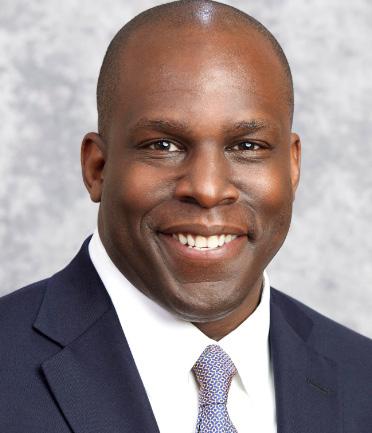
AformerArcadia resident who made regular appearances as a financial analyst on CNBC was charged Wednesday with lying to investors about the health of his finance firm and failing to disclose massive losses incurred through risky investments following the onset of the COVID-19 pandemic.
James Arthur McDonald Jr., 50, who is believed to be in hiding, was charged with a single count of securities fraud, according to the U.S. Attorney's Office.
McDonald was the CEO of Los Angeles-based Hercules Investments and Redondo Beach-based Index Strategy Advisors Inc., pros
ecutors said.
According to the U.S. Attorney's Office, McDon ald's Hercules clients lost between $30 million and $40 million as a result of his failed "short" investment predicting that the stock market would suffer a major collapse following the onset of the pandemic and the turmoil of the 2020 presi dential election.
Unable to collect client fees due to the steep losses, McDonald began solicit ing more investments in early 2021, but he alleg edly misrepresented how the money would be spent and failed to disclose the massive losses incurred by Hercules due to his failed
"short" position the previous year.
According to prosecu tors, McDonald obtained a $675,000 investment from a victim group in March 2021, but he allegedly misspent those funds, including spending $174,000 at a Porsche dealership, sending $109,000 to the landlord of the home he was renting in Arcadia and spending $6,800 on a menswear website.
Prosecutors also contend he falsely claimed to clients that his Index Strategy Advisors company was a registered investment adviser, which it had not been since 2019. He also allegedly sent clients of that company bogus account
statements. Prosecutors said one of those clients invested $351,000 with the firm, but when the investor tried to access the money to purchase a home, the person learned the money had been lost.
McDonald was subpoe naed to testify before the U.S. Securities and Exchange Commission in November 2021, but he failed to appear. Prosecutors said he discon nected his phone lines and terminated his email accounts, and allegedly told one person that he planned to "vanish."
The securities fraud count carries a possible sentence of up to 20 years in federal prison.
City of Pasadena’s free fall ArtNight returning on Oct. 14
 By Staff
The City of Pasadena’s highly anticipated ArtNight is returning on Friday, Oct. 14 from 6 to 10 p.m., at Pasadena’s most prominent arts and cultural institutions.
Over 20 venues will showcase diverse works of art, theatre, music and dance by the best the city’s creative community has to offer. Enjoy hands-on, interactive activities for all ages and interests — all for free.
Visit City Hall, located on 100 N. Garfield Ave., to enjoy live music and create a festive pumpkin succu lent planter. Additional ArtNight offerings include The Pennington Dance Group at A Room to Create; improv lessons at Pasadena Playhouse taught by Impro Theatre artists — no acting or improv experience needed; self-guided tours of The Gamble House; a preview of “Chilling Classic Tales!,” a live radio-style performance by Parson’s Nose Theatre; readings by award-winning authors and family-friendly literary games at Red Hen Press;
and an exploration of Jackie Robinson’s legacy and impact on African American culture in Pasadena through histori
cal images and artifacts at Jackie Robinson Commu nity Center.
Visit www.artnightpas adena.org for additional
details and the complete list of art and cultural offerings during ArtNight.
There are a multitude of participating arts and
cultural institutions, including Alkebu-Lan Cultural Center, Armory Center for the Arts, Boston Court Pasadena, Lineage
Performing Arts Center, Parson’s Nose Theater, Pasadena Conservatory of Music, Pasadena Museum of History, Pasadena Playhouse, Remainders Creative Reuse, USC Pacific Asia Museum and more.
Free shuttle service will be available throughout the evening, with stops at each venue. Food trucks will be on-site at City Hall, Alke bu-Lan Cultural Center and Pasadena Museum of History offering food items and beverages for purchase.
Be sure to post photos and videos of your experi ence on social media using the hashtag #ArtNight Pasadena and tagging the City of Pasadena (@ PasadenaGov on Twitter and @CityofPasadena on Instagram and Facebook).
ArtNight is produced by the Cultural Affairs Division of the Pasadena Planning & Community Development Department, in collaboration with participating arts and cultural institutions. For accessibility information and assistance, call (626) 744-7062.
James Arthur McDonald Jr. | Photo courtesy of @HerculesInvests/Twitter
| Photo courtesy of City of Pasadena
SEPTEMBER 29-OCTOBER 05, 2022 15BeaconMediaNews.com NEWS
NEW FILING.
The following person(s) is (are) doing business as PRETTY COOL STUFF , 715 S Walker Ave #4, San Pedro, CA 90731. This business is conducted by a limited liability company (llc).
Registrant commenced to transact business under the fictitious busi ness name or names listed herein on September 2022. Signed: Pretty Cool Stuff LLC (CA-202252418202), 715 S Walker Ave #4, San Pedro, CA 90731; Megan Cereceres, Member. The statement was filed with the County Clerk of Los Angeles on September 26, 2022. NOTICE: This fictitious business name statement expires five years from the date it was filed in the office of the County Clerk. A new fictitious business name state ment must be filed prior to that date. The filing of this statement does not of itself authorize the use in this state of a fictitious business name in violation of the rights of another under federal, state or common law (See Section 14400 et seq., Business and Professional Code).
Pub. Monrovia Weekly 09/29/2022, 10/06/2022, 10/13/2022, 10/20/2022
FICTITIOUS BUSINESS NAME STATEMENT FILE NO. 2022209106
NEW FILING.
The following person(s) is (are) do ing business as EN VIVO PRODUC TIONS, 549 E Penn St, Pasadena, CA 91104. This business is conducted by a individual. Registrant has not yet begun to transact business un der the fictitious business name or names listed herein. Signed: RENE MONTELONGO, 549 E Penn St, Pasa dena, CA 91104 (Owner). The state ment was filed with the County Clerk of Los Angeles on September 23, 2022. NOTICE: This fictitious busi ness name statement expires five years from the date it was filed in the office of the County Clerk. A new fictitious business name statement must be filed prior to that date. The filing of this statement does not of itself authorize the use in this state of a fictitious business name in vio lation of the rights of another under federal, state or common law (See Section 14400 et seq., Business and Professional Code).
Pub. Monrovia Weekly 09/29/2022, 10/06/2022, 10/13/2022, 10/20/2022
FICTITIOUS BUSINESS NAME STATEMENT FILE NO. 2022210578
NEW FILING.
The following person(s) is (are) doing business as SAMMY’S DES SERTS, 6423 Crafton Ave, Bell, CA 90201. This business is conducted by a individual. Registrant has not yet begun to transact business un der the fictitious business name or names listed herein. Signed: Juana Ramirez, 6423 Crafton Ave, Bell, CA 90201 (Owner). The statement was filed with the County Clerk of Los Angeles on September 26, 2022. NO TICE: This fictitious business name statement expires five years from the date it was filed in the office of the County Clerk. A new fictitious busi ness name statement must be filed prior to that date. The filing of this statement does not of itself autho rize the use in this state of a ficti tious business name in violation of the rights of another under federal, state or common law (See Section 14400 et seq., Business and Profes sional Code).
Pub. Monrovia Weekly 09/29/2022, 10/06/2022, 10/13/2022, 10/20/2022
FICTITIOUS BUSINESS NAME
STATEMENT FILE NO. 2022210597
NEW FILING.
The following person(s) is (are) do ing business as LUSHQN PRESSS DESIGNZ, 3205 Stelle Ave., West Covina, CA 91792. This business is conducted by a individual. Regis trant commenced to transact busi ness under the fictitious business name or names listed herein on September 2022. Signed: Yvette Cor dova, 3205 Stelle Ave., West Covina, CA 91792 (Owner). The statement was filed with the County Clerk of Los Angeles on September 26, 2022.
NOTICE: This fictitious business name statement expires five years from the date it was filed in the office of the County Clerk. A new fictitious business name statement must be filed prior to that date. The filing of this statement does not of itself au thorize the use in this state of a ficti tious business name in violation of the rights of another under federal, state or common law (See Section 14400 et seq., Business and Profes sional Code). Pub. Monrovia Weekly 09/29/2022, 10/06/2022, 10/13/2022, 10/20/2022
FICTITIOUS BUSINESS NAME
STATEMENT FILE NO. 2022202606
NEW FILING.
The following person(s) is (are) do ing business as (1). THEACTORMBA (2). ACTORMBA (3). THEACTORM BA.COM (4). ACTORMBA.COM , 11684 VENTURA BLVD #757, Studio City, CA 91604. This business is con ducted by a individual. Registrant commenced to transact business under the fictitious business name or names listed herein on September 2022. Signed: Kevin E West, 11684 VENTURA BLVD #757, Studio City, CA 91604 (Owner). The statement was filed with the County Clerk of Los Angeles on September 15, 2022.
NOTICE: This fictitious business name statement expires five years from the date it was filed in the office of the County Clerk. A new fictitious business name statement must be filed prior to that date. The filing of this statement does not of itself au thorize the use in this state of a ficti tious business name in violation of the rights of another under federal, state or common law (See Section 14400 et seq., Business and Profes sional Code).
Pub. Monrovia Weekly 09/29/2022, 10/06/2022, 10/13/2022, 10/20/2022
FICTITIOUS BUSINESS NAME STATEMENT FILE NO. 202210535
NEW FILING.
The following person(s) is (are) do ing business as MM CONSULTING, 1119 Huntington Dr., Apt. 8, South Pasadena, CA 91030. This business is conducted by a individual. Regis trant has not yet begun to transact business under the fictitious busi ness name or names listed herein.
Signed: Maxim Mironenko, 1119 Huntington Dr Apt. 8, South Pasade na, CA 91030 (Owner). The statement was filed with the County Clerk of Los Angeles on September 26, 2022.
NOTICE: This fictitious business name statement expires five years from the date it was filed in the office of the County Clerk. A new fictitious business name statement must be filed prior to that date. The filing of this statement does not of itself au thorize the use in this state of a ficti tious business name in violation of the rights of another under federal, state or common law (See Section 14400 et seq., Business and Profes sional Code).
Pub. Monrovia Weekly 09/29/2022, 10/06/2022, 10/13/2022, 10/20/2022
FICTITIOUS BUSINESS NAME STATEMENT FILE NO. 2022209748
NEW FILING.
The following person(s) is (are) do ing business as (1). MINUTEMAN PRESS (2). MINUTEMAN PRESS OF NORTHRIDGE , 19705 Nordhoff St FLOOR 1, Northridge, CA 91324. This business is conducted by a individual. Registrant commenced to transact business under the ficti tious business name or names listed herein on September 2022. Signed: Waleed Baluch, 6544 Wilbur Ave 203, Reseda, CA 91335 (Owner). The statement was filed with the County Clerk of Los Angeles on September 23, 2022. NOTICE: This fictitious business name statement expires five years from the date it was filed in the office of the County Clerk. A new fictitious business name state ment must be filed prior to that date. The filing of this statement does not of itself authorize the use in this state of a fictitious business name in violation of the rights of another under federal, state or common law (See Section 14400 et seq., Business and Professional Code).
Pub. Monrovia Weekly 09/29/2022, 10/06/2022, 10/13/2022, 10/20/2022
FICTITIOUS BUSINESS NAME STATEMENT FILE NO. 2022200972
NEW FILING.
The following person(s) is (are) do ing business as COFFEE CAT COOK IE CO., 25826 El Gato Pl, Valencia, CA 91355. This business is conduct ed by a individual. Registrant has not yet begun to transact business under the fictitious business name or names listed herein. Signed: Vic toria Leigh Howard, 25826 El Gato Pl, Valencia, CA 91355 (Owner). The statement was filed with the County Clerk of Los Angeles on September 13, 2022. NOTICE: This fictitious business name statement expires five years from the date it was filed in the office of the County Clerk. A new fictitious business name state ment must be filed prior to that date. The filing of this statement does not of itself authorize the use in this state of a fictitious business name in violation of the rights of another under federal, state or common law (See Section 14400 et seq., Business and Professional Code).
Pub. Monrovia Weekly 09/29/2022, 10/06/2022, 10/13/2022, 10/20/2022
FICTITIOUS BUSINESS NAME STATEMENT FILE NO. 2022209940
NEW FILING.
The following person(s) is (are) do ing business as GLENDALE VAS CULAR, 1030 South Glendale Ave Suite 402, Glendale, CA 91205. This business is conducted by a corpo ration. Registrant has not yet be gun to transact business under the fictitious business name or names listed herein. Signed: Edward Samo urjian Medical Corporation, Inc. (CA5172492), 1030 South Glendale Ave Suite 402, Glendale, CA 91205; Ed ward Samourjian, Corporation. The statement was filed with the County Clerk of Los Angeles on September 26, 2022.
NOTICE: This fictitious business name statement expires five years from the date it was filed in the office of the County Clerk. A new fictitious business name state ment must be filed prior to that date. The filing of this statement does not of itself authorize the use in this state of a fictitious business name in violation of the rights of another under federal, state or common law (See Section 14400 et seq., Business and Professional Code).
LEGALS
Pub. Monrovia Weekly 09/29/2022, 10/06/2022, 10/13/2022, 10/20/2022
FICTITIOUS BUSINESS NAME STATEMENT FILE NO. 2022207570 NEW FILING.
The following person(s) is (are) do ing business as MCCO MANAGE MENT, 310 N Indian Hill Blvd #100, Claremont, CA 91711. This business is conducted by a individual. Regis trant commenced to transact busi ness under the fictitious business name or names listed herein on Sep tember 2022. Signed: David Covarru bias, 1947 Frostburg Cir, Claremont, CA 91711 (Owner). The statement was filed with the County Clerk of Los Angeles on September 21, 2022.
NOTICE: This fictitious business name statement expires five years from the date it was filed in the office of the County Clerk. A new fictitious business name statement must be filed prior to that date. The filing of this statement does not of itself au thorize the use in this state of a ficti tious business name in violation of the rights of another under federal, state or common law (See Section 14400 et seq., Business and Profes sional Code).
Pub. Monrovia Weekly 09/29/2022, 10/06/2022, 10/13/2022, 10/20/2022
FICTITIOUS BUSINESS NAME STATEMENT FILE NO. 20222095888 NEW FILING. The following person(s) is (are) do ing business as (1). CHARCONELEC (2). CHARLES CONTRERAS ELEC TRICAL SERVICES , 13327 Garvey Ave., Baldwin Park, CA 91706. This business is conducted by a indi vidual. Registrant commenced to transact business under the ficti tious business name or names listed herein on September 2022. Signed: Charles Contreras, 13327 Garvey Ave., BALDWIN PARK, CA 91706 (Owner). The statement was filed with the County Clerk of Los Ange les on September 23, 2022. NOTICE: This fictitious business name state ment expires five years from the date it was filed in the office of the County Clerk. A new fictitious busi ness name statement must be filed prior to that date. The filing of this statement does not of itself autho rize the use in this state of a ficti tious business name in violation of the rights of another under federal, state or common law (See Section 14400 et seq., Business and Profes sional Code).
Pub. Monrovia Weekly 09/29/2022, 10/06/2022, 10/13/2022, 10/20/2022
FICTITIOUS BUSINESS NAME STATEMENT FILE NO. 2022209115 NEW FILING.
The following person(s) is (are) do ing business as ASIG WORLDWIDE, 500 W Colorado St. Unit C #102, Glendale, CA 91204. This business is conducted by a individual. Regis trant has not yet begun to transact business under the fictitious busi ness name or names listed herein.
Signed: Christopher Ramirez, 500 W Colorado St. Unit C #102, Glendale, CA 91204 (Owner). The statement was filed with the County Clerk of Los Angeles on September 23, 2022.
NOTICE: This fictitious business name statement expires five years from the date it was filed in the office of the County Clerk. A new fictitious business name statement must be filed prior to that date. The filing of this statement does not of itself au thorize the use in this state of a ficti tious business name in violation of the rights of another under federal, state or common law (See Section 14400 et seq., Business and Profes sional Code).
Pub. Monrovia Weekly 09/29/2022, 10/06/2022, 10/13/2022, 10/20/2022
FICTITIOUS BUSINESS NAME STATEMENT FILE NO. 2022207445 NEW FILING.
The following person(s) is (are) do ing business as (1). ARCHER WATCH STRAPS (2). DOWNHOLME , 4640 Admiralty Way, Suite 500, Marina Del Rey, CA 90292. This business is con ducted by a limited liability company (llc). Registrant has not yet begun to transact business under the ficti tious business name or names listed herein. Signed: Helfen Company LLC (CA-201401110232), 3435 Ocean Park Blvd. #107-283, Santa Monica, CA 90405; Joshua Silfen, President. The statement was filed with the County Clerk of Los Angeles on September 21, 2022. NOTICE: This fictitious business name statement expires five years from the date it was filed in the office of the County Clerk. A new fictitious business name state ment must be filed prior to that date. The filing of this statement does not of itself authorize the use in this state of a fictitious business name in violation of the rights of another under federal, state or common law (See Section 14400 et seq., Business and Professional Code). Pub. Monrovia Weekly 09/29/2022, 10/06/2022, 10/13/2022, 10/20/2022
FICTITIOUS BUSINESS NAME STATEMENT FILE NO. 2022201841
FIRST FILING.
The following person(s) is (are) do ing business as A.I.R., 1127 Wilshire Blvd., Suite 300, Los Angeles, CA 90017-3904. This business is con ducted by a corporation. Registrant
commenced to transact business under the fictitious business name or names listed herein on April 2007. Signed: American Institute of Research, Inc. (CA-C2979087), 1127 Wilshire Blvd., Suite 300, Los An geles, CA 90017-3904; Tarek Ahmed Lofty Desouky, CEO. The statement was filed with the County Clerk of Los Angeles on September 14, 2022.
NOTICE: This fictitious business name statement expires five years from the date it was filed in the office of the County Clerk. A new fictitious business name statement must be filed prior to that date. The filing of this statement does not of itself au thorize the use in this state of a ficti tious business name in violation of the rights of another under federal, state or common law (See Section 14400 et seq., Business and Profes sional Code).
Pub. Monrovia Weekly 09/29/2022, 10/06/2022, 10/13/2022, 10/20/2022
FICTITIOUS BUSINESS NAME STATEMENT FILE NO. 2022201756 FIRST FILING.
The following person(s) is (are) doing business as INTEGRATED BUILDING & DESIGN, 482 W San Ysidro Blvd. #5022, San Diego, CA 92173. This business is conducted by a individual. Registrant has not yet begun to transact business un der the fictitious business name or names listed herein. Signed: Michael Lannen, 482 W San Ysidro #5022, San Diego, CA 92173 (Owner). The statement was filed with the County Clerk of Los Angeles on September 14, 2022. NOTICE: This fictitious business name statement expires five years from the date it was filed in the office of the County Clerk. A new fictitious business name state ment must be filed prior to that date. The filing of this statement does not of itself authorize the use in this state of a fictitious business name in violation of the rights of another under federal, state or common law (See Section 14400 et seq., Business and Professional Code).
Pub. Monrovia Weekly 09/29/2022, 10/06/2022, 10/13/2022, 10/20/2022
FICTITIOUS BUSINESS NAME STATEMENT FILE NO. 2022207914 NEW FILING.
The following person(s) is (are) do ing business as (1). FUNCTION OF LOVE (2). ASYMPTOTE PRODUC TIONS , 10586 W Pico Blvd #115, Los Angeles, CA 90064. This business is conducted by a corporation. Regis trant has not yet begun to transact business under the fictitious busi ness name or names listed herein.
Signed: Churchwood Corporation (CA-5195209), 10586 W Pico Blvd #115, Los Angeles, CA 90064; Aricca Vitanza, President. The statement was filed with the County Clerk of Los Angeles on September 22, 2022.
NOTICE: This fictitious business name statement expires five years from the date it was filed in the office of the County Clerk. A new fictitious business name statement must be filed prior to that date. The filing of this statement does not of itself au thorize the use in this state of a ficti tious business name in violation of the rights of another under federal, state or common law (See Section 14400 et seq., Business and Profes sional Code).
Pub. Monrovia Weekly 09/29/2022, 10/06/2022, 10/13/2022, 10/20/2022
FICTITIOUS BUSINESS NAME STATEMENT FILE NO. 2022207884 NEW FILING. The following person(s) is (are) do ing business as GOLDEN CLICK, 45 Hunter Point Road, Pomona, CA 91766. This business is conducted by a individual. Registrant commenced to transact business under the ficti tious business name or names listed herein on September 2022.
Signed: YAN DING, 45 Hunter Point Road, Pomona, CA 91766 (Owner). The statement was filed with the County Clerk of Los Angeles on September 22, 2022. NOTICE: This fictitious business name statement expires five years from the date it was filed in the office of the County Clerk. A new fictitious business name state ment must be filed prior to that date. The filing of this statement does not of itself authorize the use in this state of a fictitious business name in violation of the rights of another under federal, state or common law (See Section 14400 et seq., Business and Professional Code).
Pub. Monrovia Weekly 09/29/2022, 10/06/2022, 10/13/2022, 10/20/2022
FICTITIOUS BUSINESS NAME STATEMENT FILE NO. 2022207408 NEW FILING. The following person(s) is (are) do ing business as SUNNY KI HOUSE CLEANING, 73 Deer Creek Rd, Po mona, CA 91766. This business is conducted by a individual. Regis trant commenced to transact busi ness under the fictitious business name or names listed herein on September 2022. Signed: Sandra m Giron Andrade, 73 Deer Creek Rd, Pomona, CA 91766 (Owner). The statement was filed with the County Clerk of Los Angeles on September 21, 2022.
NOTICE: This fictitious business name statement expires five years from the date it was filed in the office of the County Clerk. A
new fictitious business name state ment must be filed prior to that date. The filing of this statement does not of itself authorize the use in this state of a fictitious business name in violation of the rights of another under federal, state or com mon law (See Section 14400 et seq., Business and Professional Code).
Pub. Monrovia Weekly 09/29/2022, 10/06/2022, 10/13/2022, 10/20/2022
FICTITIOUS BUSINESS NAME STATEMENT FILE NO. 2022201166
NEW FILING. The following person(s) is (are) do ing business as (1). DRYCLEAN EXPRESS CLEANERS (2). DRY CLEANERS EXPRESS (3). DRY CLEANERSEXPRESS.COM , 7822 Norwalk Blvd, Whittier, CA 90606. This business is conducted by a in dividual. Registrant has not yet be gun to transact business under the fictitious business name or names listed herein. Signed: Ramon Garcia Lara, 7822 Norwalk Blvd, Whittier, CA 90606 (Owner). The statement was filed with the County Clerk of Los Angeles on September 13, 2022.
NOTICE: This fictitious business name statement expires five years from the date it was filed in the office of the County Clerk. A new fictitious business name statement must be filed prior to that date. The filing of this statement does not of itself au thorize the use in this state of a ficti tious business name in violation of the rights of another under federal, state or common law (See Section 14400 et seq., Business and Profes sional Code).
Pub. Monrovia Weekly 09/29/2022, 10/06/2022, 10/13/2022, 10/20/2022
FICTITIOUS BUSINESS NAME STATEMENT FILE NO. 2022208332
NEW FILING. The following person(s) is (are) do ing business as C & C CLEAN CO., 9812 Rufus Ave, Whittier, CA 90605. This business is conducted by a in dividual. Registrant commenced to transact business under the ficti tious business name or names listed herein on September 2022. Signed: Itzel Sanchez, 9812 Rufus Ave, Whit tier, CA 90605 (Owner). The state ment was filed with the County Clerk of Los Angeles on September 22, 2022. NOTICE: This fictitious busi ness name statement expires five years from the date it was filed in the office of the County Clerk. A new fictitious business name statement must be filed prior to that date. The filing of this statement does not of itself authorize the use in this state of a fictitious business name in vio lation of the rights of another under federal, state or common law (See Section 14400 et seq., Business and Professional Code).
Pub. Monrovia Weekly 09/29/2022, 10/06/2022, 10/13/2022, 10/20/2022
FICTITIOUS BUSINESS NAME STATEMENT FILE NO. 2022198015 NEW FILING. The following person(s) is (are) do ing business as THE PACK OWL COLLECTIBLES, 2254 Gardi St, Bradbury, CA 91008. This business is conducted by a general partner ship. Registrant has not yet begun to transact business under the ficti tious business name or names listed herein. Signed: (1). Anthony Jesse Saldivar, 2254 Gardi St, Bradbury, CA 91008 (2). Dineen Tamayo, 2254 Gardi St, BRADBURY, CA 91008 (General Partner). The statement was filed with the County Clerk of Los Angeles on September 7, 2022.
NOTICE: This fictitious business name statement expires five years from the date it was filed in the office of the County Clerk. A new fictitious business name statement must be filed prior to that date. The filing of this statement does not of itself au thorize the use in this state of a ficti tious business name in violation of the rights of another under federal, state or common law (See Section 14400 et seq., Business and Profes sional Code).
Pub. Monrovia Weekly 09/29/2022, 10/06/2022, 10/13/2022, 10/20/2022
FICTITIOUS BUSINESS NAME STATEMENT FILE NO. 2022201873 FIRST FILING. The following person(s) is (are) do ing business as BLISSFUL BEAUTY CANDLE CO, 7101 Farralone Ave unit 140, Canoga Park, CA 91303. This business is conducted by a in dividual. Registrant has not yet be gun to transact business under the fictitious business name or names listed herein. Signed: Ashley Dultz, 7101 Farralone Ave unit 140, Ca noga Park, CA 91303 (Owner). The statement was filed with the County Clerk of Los Angeles on September 14, 2022.
NOTICE: This fictitious business name statement expires five years from the date it was filed in the office of the County Clerk. A new fictitious business name state ment must be filed prior to that date. The filing of this statement does not of itself authorize the use in this state of a fictitious business name in violation of the rights of another under federal, state or com mon law (See Section 14400 et seq., Business and Professional Code).
Pub. Monrovia Weekly 09/29/2022, 10/06/2022, 10/13/2022, 10/20/2022
File your D.B.A. Online
16 SEPTEMBER 29-OCTOBER 05, 2022 BeaconMediaNews.com
www.filedba.com
Starting a new business? Go to filedba.com
Glendale City Notices
NOTICE OF PLANNING HEARING OFFICER PUBLIC HEARING VARIANCE CASE NO. PVAR 2205681
LOCATION: 3636 GLENWOOD AVENUE
APPLICANT: Ned Kalantar
ZONE: R1 (Low Density Residential) Zone, Floor Area Ratio District II
LEGAL DESCRIPTION/APN: Lot 6, Tract No. 11306 / APN: 5617-002-013
PROJECT DESCRIPTION
The applicant is requesting to construct a 795 square-foot addition to an existing one-story, 1,483 square-foot single-family house built in 1938 without providing the required two-car garage. There is an existing covered and enclosed (substandard) one-car, 237 square-foot attached garage on the property which will remain located on a 10,875 SF lot in the R1-II (Low Density Residential, Floor Area Ratio District II) zone.
CODE REQUIRES
(1) A two-car, covered and enclosed parking garage with interior dimensions of 20 ft. (wide) by 20 ft. (length/depth) is required in conjunction with additional floor area to an existing single-family dwelling (G.M.C. 30.32.180 Chart I).
APPLICANT’S PROPOSAL
(1) To construct a 795 square-foot floor area addition to an existing one-story, 1,483 square-foot single-family house without providing the required two-car (20 ft. (wide) by 20 ft. (length/depth) interior dimensions parking garage.
ENVIRONMENTAL DETERMINATION: The project is exempt from environmental review as a Class 1 “Existing Facility” pursuant to Section 15301 of the State CEQA Guidelines because the proposed addition to the existing house will not result in an increase of more than 10,000 square feet and the project is in an area where all public services and facilities are available and is not located in an environmentally sensitive area.
HEARING INFORMATION:
The Planning Hearing Officer will conduct a public hearing regarding the above project at 613 E. Broadway, 2nd floor (Council Chambers), Glendale, CA 91206, on OCTOBER 12, 2022, AT 9:30 AM or as soon thereafter as possible. The purpose of the hearing is to hear comments from the public with respect to zoning concerns. The hearing will be held in ac cordance with Glendale Municipal Code, Title 30, Chapter 30.36.
The meeting can be viewed on Charter Cable Channel 6 or streamed online at: https://www.glendaleca.gov/government/departments/management-services/gtv6/livevideo-stream. For public comments and questions during the meeting call 818-937-8100. City staff will be submitting these questions and comments in real time to the appropriate person during the Planning Hearing Officer Hearing. You may also testify in person at the hearing if you wish to do so.
If the final decision is challenged in court, testimony may be limited to issues raised before or at the public hearing.
The staff report and case materials will be available a week before the hearing date at www. glendaleca.gov/agendas.
QUESTIONS OR COMMENTS: If you desire more information on the proposal, please contact the case planner Milca Toledo in the Planning Division at (818) 548-2140 or (818) 937- 8181 (email: mitoledo@glendaleca.gov).
Any person having an interest in the subject project may participate in the hearing, by phone as outlined above, and may be heard in support of his/her opinion. Any person protesting may file a duly signed and acknowledged written protest with the Director of Community Development not later than the hour set for public hearing before the Hearing Officer. “Ac knowledged” shall mean a declaration of property ownership (or occupant if not owner) under penalty of perjury. If you challenge the decision of this project in court, you may be limited to raising only those issues you or someone else raised at the public hearing described in this notice, or in written correspondence delivered to the City of Glendale, at or prior to the public hearing. In compliance with the Americans with Disabilities Act (ADA) of 1990, please notify the Community Development Department at least 48 hours (or two business days) for requests regarding sign language translation and Braille transcription services.
When a final decision is rendered, a decision letter will be posted online at www.glendaleca. gov/planning/decisions. An appeal may be filed within 15 days of the final decision date appearing on the decision letter. Appeal forms are available at https://www.glendaleca.gov/ home/showdocument?id=11926
Publish September 29, 2022
INDEPENDENT
Pasadena City Notices
NOTICE INVITING BIDS
FURNISH LABOR AND MATERIALS FOR DC POWER BATTERY REPLACEMENT
Delivery Instructions
Bids will be received electronically through Planet Bids (www.plan etbids.com). A bid received after the time set for the bid opening shall not be considered. Bidders are required to submit (upload) all items listed in the BIDDER’S CHECKLIST including acknowledge ment of all addendums. Bids will be received prior to 5:00 pm Mon day, October 31, 2022 , and will be opened online at that time.
Copies of the Specifications may be obtained by mail or in person from the Purchasing Division, 100 N. Garfield Ave., Room S-348, Pasadena, CA 91109, Telephone No. (626) 744-6755.
Refer to the Specifications for complete details and bidding require ments. The Specification and this Notice shall be considered a part of any contract made pursuant thereunder.
Mandatory Pre-bid Conference
A mandatory pre-bid conference will be held at which time each bid der will have the opportunity to clarify and ask questions regarding the Specifications. The pre-bid conference will be held at 10:00 am Wednesday, October 5, 2022 in the El Mirador Peak - 2000 Glen Oaks, Pasadena CA.
LEGALS
NOTICE REQUIREMENTS
No contractor or subcontractor may be listed on a bid proposal for a public works project unless registered with the Department of Indus trial Relations pursuant to Labor Code section 1725.5 [with limited exceptions from this requirement for bid purposes only under Labor Code section 1771.1(a)].
Required Licenses
Bidders must possess and provide the following licenses or certifica tions to be deemed qualified to perform the work specified:
C-10 Electrical License
Performance Bonds, and Labor & Materials Bonds
Performance Bonds Required: No Bond Required
Labor & Materials Bonds Required: No Bond Required
Release Date: Release Dated: Thursday, September 29, 2022
MIGUEL MÁRQUEZ City Manager
Publish September 29, 2022 PASADENA PRESS
NOTICE INVITING BIDS
FOR OFFICE SUPPLIES
Delivery Instructions
Bids will be received electronically through Planet Bids (www.planet bids.com). A bid received after the time set for the bid opening shall not be considered. Bidders are required to submit (upload) all items listed in the BIDDER’S CHECKLIST including acknowledgement of all addendums. Bids will be received prior to 2:00 pm Thursday, Oc tober 13, 2022, and will be opened online at that time. The bids shall be clearly titled:
OFFICE SUPPLIES
Copies of the Specifications may be obtained by mail or in person from the Purchasing Division, 100 N. Garfield Ave., Room S-349, Pasadena, CA 91109, Telephone No. (626) 744-6755.
Refer to the Specifications for complete details and bidding require ments. The Specification and this Notice shall be considered a part of any contract made pursuant thereunder.
Bid Conference
A NON mandatory pre-bid conference will be held at which time each bidder will have the opportunity to clarify and ask questions regarding the Specifications. The pre-bid conference will be held at Tuesday, Oct. 11, 2022 from 1-2 p.m. The conference will take place virtually via Microsoft Teams
https://teams.microsoft.com/l/meetup-join/19%3ameeting_MjUzYjQ wMzYtZmI1Yi00MDRmLWExMjgtOGVjNTYzYWIzZDVl%40thread. v2/0?context=%7b%22Tid%22%3a%2282d9fc00-2c66-4402-a28fc6bcdc32e491%22%2c%22Oid%22%3a%221ed82a06-dfe6-419daba0-656ceafee4a6%22%7d
Release Date
Release Dated: Thursday, September 29, 2022
MIGUEL MÁRQUEZ City Manager
PASADENA PRESS
1.1.1 NOTICE INVITING BIDS
FOR TRAFFIC SIGNAL CABINET PURCHASE
DEPARTMENT: Public Works Department
Delivery Instructions
Bids will be received electronically through Planet Bids (www.planet bids.com). A bid received after the time set for the bid opening shall not be considered. Bidders are required to submit (upload) all items listed in the BIDDER’S CHECKLIST including acknowledgement of all addendums. Bids will be received prior to 2:00 pm Thursday, Oc tober 20, 2022, and will be opened online at that time. The bids shall be clearly titled:
TRAFFIC SIGNAL CABINET PURCHASE
Copies of the Specifications may be obtained by mail or in person from the Purchasing Division, 100 N. Garfield Ave., Room S-349, Pasadena, CA 91109, Telephone No. (626) 744-6755.
Refer to the Specifications for complete details and bidding require ments. The Specification and this Notice shall be considered a part of any contract made pursuant thereunder.
Bid Conference
The City does not plan to hold a pre-bid conference. Instead, the City will accept written questions via email.
Release Date
Release Dated: Thursday, September 29, 2022
MIGUEL MÁRQUEZ City Manager
PASADENA PRESS
Probate Notices
NOTICE OF PETITION TO ADMINISTER ESTATE OF GEORGINA ALDAMA aka GEORGINA ALDAMA MUNOZ
Case No. PRRI2201731
To all heirs, beneficiaries, cred-itors, contingent creditors, and persons who may otherwise be interested in the will or estate, or both, of GEORGINA ALDAMA aka GEORGINA ALDAMA MUNOZ
A PETITION FOR PROBATE has been filed by Giovanni Aldama Abril in the Superior Court of Califor nia, County of RIVERSIDE.
THE PETITION FOR PRO BATE requests that Giovanni Al dama Abril be appointed as personal repre-sentative to administer the estate of the decedent.
THE PETITION requests authority to administer the estate under the Independent Administration of Estates Act. (This authority will allow the personal representative to take many actions without obtaining court approval. Before taking certain very important actions, however, the per sonal representative will be required to give notice to interested persons unless they have waived notice or consented to the proposed action.) The independent administra-tion authority will be granted unless an interested person files an objec-tion to the petition and shows good cause why the court should not grant the authority.
A HEARING on the petition will be held on Oct. 26, 2022 at 8:30 AM in Dept. No. 11 located at 4050 Main St., Riverside, CA 92501.
IF YOU OBJECT to the granting of the petition, you should appear at the hearing and state your objec tions or file written objections with the court before the hearing. Your ap-pearance may be in person or by your attorney.
IF YOU ARE A CREDITOR or a contingent creditor of the dece dent, you must file your claim with the court and mail a copy to the personal representative appointed by the court within the later of either (1) four months from the date of first issu-ance of letters to a general personal representative, as defined in section 58(b) of the California Pro bate Code, or (2) 60 days from the date of mailing or personal delivery to you of a notice under section 9052 of the California Probate Code.
Other California statutes and legal authority may affect your rights as a creditor. You may want to con sult with an attorney knowl-edgeable in California law.
YOU MAY EXAMINE the file kept by the court. If you are a person interested in the estate, you may file with the court a Request for Special Notice (form DE-154) of the filing of an inventory and appraisal of estate assets or of any petition or account as provided in Probate Code section 1250. A Request for Special Notice form is available from the court clerk.
Attorney for petitioner:
PAUL HORN ESQ SBN 243227
PAUL HORN LAW GROUP PC 11404 SOUTH STREET CERRITOS CA 90703 CN990331 ALDAMA Sep 22,26,29, 2022
CORONA NEWS PRESS
NOTICE OF PETITION TO ADMINISTER ESTATE OF SAMUEL SUN KEE KIM aka SUN KEE KIM Case No. 22STPB09093
To all heirs, beneficiaries, cred-itors, contingent creditors, and persons who may otherwise be inter
ested in the will or estate, or both, of SAMUEL SUN KEE KIM aka SUN KEE KIM
A PETITION FOR PROBATE has been filed by Sarah Wonok Kim aka Sarah W Kim in the Superior Court of California, County of LOS ANGELES.
THE PETITION FOR PRO BATE requests that Sarah Wonok Kim aka Sarah W Kim be appointed as per-sonal representative to ad minister the estate of the decedent.
THE PETITION requests the decedent’s will and codicils, if any, be admitted to probate. The will and any codicils are available for exami nation in the file kept by the court.
THE PETITION requests authority to administer the estate under the Independent Administration of Estates Act. (This authority will allow the personal representative to take many actions without obtaining court approval. Before taking certain very important actions, however, the per sonal representative will be required to give notice to interested persons unless they have waived notice or consented to the proposed action.)
The independent administra-tion authority will be granted unless an interested person files an objec-tion to the petition and shows good cause why the court should not grant the authority.
A HEARING on the petition will be held on Oct. 18, 2022 at 8:30 AM in Dept. No. 11 located at 111 N. Hill St., Los Angeles, CA 90012.
IF YOU OBJECT to the granting of the petition, you should appear at the hearing and state your objec tions or file written objections with the court before the hearing. Your ap-pearance may be in person or by your attorney.
IF YOU ARE A CREDITOR or a contingent creditor of the dece dent, you must file your claim with the court and mail a copy to the personal representative appointed by the court within the later of either (1) four months from the date of first issu-ance of letters to a general personal representative, as defined in section 58(b) of the California Pro bate Code, or (2) 60 days from the date of mailing or personal delivery to you of a notice under section 9052 of the California Probate Code.
Other California statutes and legal authority may affect your rights as a creditor. You may want to con sult with an attorney knowl-edgeable in California law.
YOU MAY EXAMINE the file kept by the court. If you are a person interested in the estate, you may file with the court a Request for Special Notice (form DE-154) of the filing of an inventory and appraisal of estate assets or of any petition or account as provided in Probate Code section 1250. A Request for Special Notice form is available from the court clerk.
Attorney for petitioner:
JUSTIN M GORDON ESQ SBN 287328 GORDONLAW APC 12100 WILSHIRE BLVD STE 800 LOS ANGELES CA 90025 CN990580 KIM Sep 22,26,29, 2022
MONTEREY PARK PRESS
NOTICE OF PETITION TO ADMINISTER ESTATE OF LAURA CHAO
Case No. 22STPB09094
To all heirs, beneficiaries, cred-itors, contingent creditors, and persons who may otherwise be inter ested in the will or estate, or both, of LAURA CHAO
A PETITION FOR PROBATE has been filed by Melody Liao in the Superior Court of California, County of LOS ANGELES.
THE PETITION FOR PRO
Dr. S. Abajian, The City Clerk of the City of Glendale
SEPTEMBER 29-OCTOBER 05, 2022 17BeaconMediaNews.com
GLENDALE
BATE requests that Melody Liao be ap-pointed as personal representa tive to administer the estate of the dece-dent.
THE PETITION requests authority to administer the estate under the Independent Administration of Estates Act. (This authority will allow the personal representative to take many actions without obtaining court approval. Before taking certain very important actions, however, the per sonal representative will be required to give notice to interested persons unless they have waived notice or consented to the proposed action.) The independent administra-tion authority will be granted unless an interested person files an objec-tion to the petition and shows good cause why the court should not grant the authority.
A HEARING on the petition will be held on Oct. 27, 2022 at 8:30 AM in Dept. No. 79 located at 111 N. Hill St., Los Angeles, CA 90012.
IF YOU OBJECT to the granting of the petition, you should appear at the hearing and state your objec tions or file written objections with the court before the hearing. Your ap-pearance may be in person or by your attorney.
IF YOU ARE A CREDITOR or a contingent creditor of the dece dent, you must file your claim with the court and mail a copy to the personal representative appointed by the court within the later of either (1) four months from the date of first issu-ance of letters to a general personal representative, as defined in section 58(b) of the California Pro bate Code, or (2) 60 days from the date of mailing or personal delivery to you of a notice under section 9052 of the California Probate Code.
Other California statutes and legal authority may affect your rights as a creditor. You may want to con sult with an attorney knowl-edgeable in California law.
YOU MAY EXAMINE the file kept by the court. If you are a person interested in the estate, you may file with the court a Request for Special Notice (form DE-154) of the filing of an inventory and appraisal of estate assets or of any petition or account as provided in Probate Code section 1250. A Request for Special Notice form is available from the court clerk.
Attorney for petitioner:
CATHERINE KEN ESQ SBN 186470
LAW OFFICES OF CATHERINE KEN APC 805 W DUARTE RD STE 104 ARCADIA CA 91007 CN990594 CHAO Sep 22,26,29, 2022
WEST COVINA PRESS
NOTICE OF PETITION TO ADMINISTER ESTATE OF: STEVEN HOWARD ALEXANDER
CASE NO. 22STPB08968
To all heirs, beneficiaries, creditors, contingent creditors, and persons who may otherwise be interested in the WILL or estate, or both of STEVEN HOWARD ALEXANDER.
A PETITION FOR PROBATE has been filed by CORI ANN SCHNIEBER in the Superior Court of California, County of LOS AN GELES.
THE PETITION FOR PROBATE re quests that CORI ANN SCHNIEBER be appointed as personal represen tative to administer the estate of the decedent.
THE PETITION requests the dece dent’s WILL and codicils, if any, be admitted to probate. The WILL and any codicils are available for exami nation in the file kept by the court.
THE PETITION requests authority to administer the estate under the Independent Administration of Es tates Act. (This authority will allow the personal representative to take many actions without obtaining court approval. Before taking certain very important actions, however, the per sonal representative will be required to give notice to interested persons unless they have waived notice or consented to the proposed action.)
The independent administration authority will be granted unless an interested person files an objection to the petition and shows good cause why the court should not grant the authority.
A HEARING on the petition will be held in this court as follows: 10/17/22 at 8:30AM in Dept. 9 located at 111 N. HILL ST., LOS ANGELES, CA 90012
IF YOU OBJECT to the granting of the petition, you should appear at the
hearing and state your objections or file written objections with the court before the hearing. Your appearance may be in person or by your attorney.
IF YOU ARE A CREDITOR or a contingent creditor of the decedent, you must file your claim with the court and mail a copy to the personal representative appointed by the court within the later of either (1) four months from the date of first issu ance of letters to a general personal representative, as defined in section 58(b) of the California Probate Code, or (2) 60 days from the date of mail ing or personal delivery to you of a notice under section 9052 of the California Probate Code.
Other California statutes and legal authority may affect your rights as a creditor. You may want to consult with an attorney knowledgeable in California law.
YOU MAY EXAMINE the file kept by the court. If you are a person interested in the estate, you may file with the court a Request for Special Notice (form DE-154) of the filing of an inventory and appraisal of estate assets or of any petition or account as provided in Probate Code section 1250. A Request for Special Notice form is available from the court clerk.
Attorney for Petitioner
SARAH TALEI, ESQ. - SBN 246465, OLDMAN COOLEY SAL LUS BIRNBERG COLEMAN & GOLD, L.L.P. 16133 VENTURA BLVD PENT HOUSE ENCINO CA 91436 9/22, 9/26, 9/29/22 CNS-3625908# BURBANK INDEPENDENT
NOTICE OF PETITION TO ADMINISTER ESTATE OF: DOREEN ELLEN MORIN STOLPE AKA DOREEN E. MORIN STOLPE
CASE NO. PROSB2201271
To all heirs, beneficiaries, creditors, contingent creditors, and persons who may otherwise be interested in the WILL or estate, or both of DOREEN ELLEN MORIN STOLPE AKA DOREEN E. MORIN STOLPE.
A PETITION FOR PROBATE has been filed by JOHN C. STOLPE in the Superior Court of California, County of SAN BERNARDINO.
THE PETITION FOR PROBATE requests that JOHN C. STOLPE be appointed as personal representa tive to administer the estate of the decedent.
THE PETITION requests the dece dent’s WILL and codicils, if any, be admitted to probate. The WILL and any codicils are available for exami nation in the file kept by the court.
THE PETITION requests authority to administer the estate under the Independent Administration of Es tates Act. (This authority will allow the personal representative to take many actions without obtaining court approval. Before taking certain very important actions, however, the per sonal representative will be required to give notice to interested persons unless they have waived notice or consented to the proposed action.)
The independent administration authority will be granted unless an interested person files an objection to the petition and shows good cause why the court should not grant the authority.
A HEARING on the petition will be held in this court as follows: 10/18/22 at 9:00AM in Dept. S35 located at 247 W. 3RD STREET, SAN BER NARDINO, CA 92415
IF YOU OBJECT to the granting of the petition, you should appear at the hearing and state your objections or file written objections with the court before the hearing. Your appearance may be in person or by your attorney.
IF YOU ARE A CREDITOR or a contingent creditor of the decedent, you must file your claim with the court and mail a copy to the personal representative appointed by the court within the later of either (1) four months from the date of first issu ance of letters to a general personal representative, as defined in section 58(b) of the California Probate Code, or (2) 60 days from the date of mail ing or personal delivery to you of a notice under section 9052 of the California Probate Code.
Other California statutes and legal authority may affect your rights as a creditor. You may want to consult with an attorney knowledgeable in California law.
YOU MAY EXAMINE the file kept by the court. If you are a person interested in the estate, you may file with the court a Request for Special Notice (form DE-154) of the filing of an inventory and appraisal of estate
LEGALS
assets or of any petition or account as provided in Probate Code section 1250. A Request for Special Notice form is available from the court clerk.
Attorney for Petitioner THOMAS V. PRATT - SBN 094720, LAW OFFICE OF THOMAS V. PRATT 8560 VINEYARD AVE., STE 108 RANCHO CUCAMONGA CA 91730 9/22, 9/26, 9/29/22 CNS-3626407# ONTARIO NEWS PRESS
NOTICE OF PETITION TO ADMINISTER ESTATE OF: LOIS LAVERNE PRESTON CASE NO. 22STPB09205
To all heirs, beneficiaries, creditors, contingent creditors, and persons who may otherwise be interested in the WILL or estate, or both of LOIS LAVERNE PRESTON.
A PETITION FOR PROBATE has been filed by JAMES TODD FRA SER in the Superior Court of Cali fornia, County of LOS ANGELES.
THE PETITION FOR PROBATE re quests that JAMES TODD FRASER be appointed as personal represen tative to administer the estate of the decedent.
THE PETITION requests the dece dent’s WILL and codicils, if any, be admitted to probate. The WILL and any codicils are available for exami nation in the file kept by the court.
THE PETITION requests authority to administer the estate under the Independent Administration of Es tates Act. (This authority will allow the personal representative to take many actions without obtaining court approval. Before taking certain very important actions, however, the per sonal representative will be required to give notice to interested persons unless they have waived notice or consented to the proposed action.)
The independent administration authority will be granted unless an interested person files an objection to the petition and shows good cause why the court should not grant the authority.
A HEARING on the petition will be held in this court as follows: 10/20/22 at 8:30AM in Dept. 29 located at 111 N. HILL ST., LOS ANGELES, CA 90012
IF YOU OBJECT to the granting of the petition, you should appear at the hearing and state your objections or file written objections with the court before the hearing. Your appearance may be in person or by your attorney.
IF YOU ARE A CREDITOR or a contingent creditor of the decedent, you must file your claim with the court and mail a copy to the personal representative appointed by the court within the later of either (1) four months from the date of first issu ance of letters to a general personal representative, as defined in section 58(b) of the California Probate Code, or (2) 60 days from the date of mail ing or personal delivery to you of a notice under section 9052 of the California Probate Code.
Other California statutes and legal authority may affect your rights as a creditor. You may want to consult with an attorney knowledgeable in California law.
YOU MAY EXAMINE the file kept by the court. If you are a person interested in the estate, you may file with the court a Request for Special Notice (form DE-154) of the filing of an inventory and appraisal of estate assets or of any petition or account as provided in Probate Code section 1250. A Request for Special Notice form is available from the court clerk.
Attorney for Petitioner ROMBOUD S. RAHMANIAN - SBN 264707, LAW OFFICE OF ROMY S. RAHMANIAN, A PROFESSION AL LAW CORP. 33 E. HUNTINGTON DR. ARCADIA CA 91006 9/22, 9/26, 9/29/22
CNS-3626658#
GLENDALE INDEPENDENT
NOTICE OF PETITION TO ADMINISTER ESTATE OF: BLAIN F. ANDERSON CASE NO. 22STPB09193 To all heirs, beneficiaries, creditors, contingent creditors, and persons who may otherwise be interested in the WILL or estate, or both of BLAIN F. ANDERSON.
A PETITION FOR PROBATE has been filed by SCOTT H. ANDERSON in the Superior Court of California, County of LOS ANGELES.
THE PETITION FOR PROBATE re quests that SCOTT H. ANDERSON be appointed as personal represen tative to administer the estate of the
decedent.
THE PETITION requests authority to administer the estate under the Independent Administration of Es tates Act. (This authority will allow the personal representative to take many actions without obtaining court approval. Before taking certain very important actions, however, the per sonal representative will be required to give notice to interested persons unless they have waived notice or consented to the proposed action.)
The independent administration authority will be granted unless an interested person files an objection to the petition and shows good cause why the court should not grant the authority.
A HEARING on the petition will be held in this court as follows: 10/21/22 at 8:30AM in Dept. 4 located at 111 N. HILL ST., LOS ANGELES, CA 90012
IF YOU OBJECT to the granting of the petition, you should appear at the hearing and state your objections or file written objections with the court before the hearing. Your appearance may be in person or by your attorney.
IF YOU ARE A CREDITOR or a contingent creditor of the decedent, you must file your claim with the court and mail a copy to the personal representative appointed by the court within the later of either (1) four months from the date of first issu ance of letters to a general personal representative, as defined in section 58(b) of the California Probate Code, or (2) 60 days from the date of mail ing or personal delivery to you of a notice under section 9052 of the California Probate Code.
Other California statutes and legal authority may affect your rights as a creditor. You may want to consult with an attorney knowledgeable in California law.
YOU MAY EXAMINE the file kept by the court. If you are a person interested in the estate, you may file with the court a Request for Special Notice (form DE-154) of the filing of an inventory and appraisal of estate assets or of any petition or account as provided in Probate Code section 1250. A Request for Special Notice form is available from the court clerk.
Attorney for Petitioner
ADAM D. BECKER - SBN 240723, CALLISTER, BROBERG & BECK ER, A LAW CORPORATION 700 N BRAND BLVD., #560 GLENDALE CA 91203 9/22, 9/26, 9/29/22 CNS-3626689#
PASADENA PRESS
NOTICE OF PETITION TO ADMINISTER ESTATE OF:
GERALD E. BEHUNIN AKA JACK ELLSWORTH JONES CASE NO. 22STPB09276
To all heirs, beneficiaries, creditors, contingent creditors, and persons who may otherwise be interested in the WILL or estate, or both of GERALD E. BEHUNIN AKA JACK ELLSWORTH JONES.
A PETITION FOR PROBATE has been filed by MARY A. ROWIN in the Superior Court of California, County of LOS ANGELES.
THE PETITION FOR PROBATE requests that MARY A. ROWIN be appointed as personal representa tive to administer the estate of the decedent.
THE PETITION requests the dece dent’s WILL and codicils, if any, be admitted to probate. The WILL and any codicils are available for exami nation in the file kept by the court.
THE PETITION requests authority to administer the estate under the Independent Administration of Es tates Act. (This authority will allow the personal representative to take many actions without obtaining court approval. Before taking certain very important actions, however, the per sonal representative will be required to give notice to interested persons unless they have waived notice or consented to the proposed action.)
The independent administration authority will be granted unless an interested person files an objection to the petition and shows good cause why the court should not grant the authority.
A HEARING on the petition will be held in this court as follows: 11/18/22 at 8:30AM in Dept. 29 located at 111 N. HILL ST., LOS ANGELES, CA 90012
IF YOU OBJECT to the granting of the petition, you should appear at the hearing and state your objections or file written objections with the court before the hearing. Your appearance may be in person or by your attorney.
IF YOU ARE A CREDITOR or a contingent creditor of the decedent,
you must file your claim with the court and mail a copy to the personal representative appointed by the court within the later of either (1) four months from the date of first issu ance of letters to a general personal representative, as defined in section 58(b) of the California Probate Code, or (2) 60 days from the date of mail ing or personal delivery to you of a notice under section 9052 of the California Probate Code.
Other California statutes and legal authority may affect your rights as a creditor. You may want to consult with an attorney knowledgeable in California law.
YOU MAY EXAMINE the file kept by the court. If you are a person interested in the estate, you may file with the court a Request for Special Notice (form DE-154) of the filing of an inventory and appraisal of estate assets or of any petition or account as provided in Probate Code section 1250. A Request for Special Notice form is available from the court clerk.
Attorney for Petitioner
KEVIN CHIU - SBN 249479, HART, MIERAS AND MORRIS, INC 255 E. SANTA CLARA STREET, #300 ARCADIA CA 91006 9/22, 9/26, 9/29/22 CNS-3627315# PASADENA PRESS
NOTICE OF PETITION TO ADMINISTER ESTATE OF JASON CHONG CHUNG CASE NO. BP141454
To all heirs, beneficiaries, creditors, contingent creditors, and persons who may otherwise be interested in the will or estate, or both, of: Jason Chong Chung
A PETITION FOR PROBATE has been filed by Roger C. Hsu in the Superior Court of California, County of Los Angeles.
THE PETITION FOR PROBATE re quests that The Los Angeles County Public Administrator be appointed as personal representative to adminis ter the estate of the decedent.
THE PETITION requests authority to administer the estate under the In dependent Administration of Estates Act with full authority . (This authority will allow the personal representative to take many actions without obtain ing court approval. Before taking cer tain very important actions, however, the personal representative will be required to give notice to interested persons unless they have waived notice or consented to the proposed action.) The independent administra tion authority will be granted unless an interested person files an objec tion to the petition and shows good cause why the court should not grant the authority.
A HEARING on the petition will be held on 10/17/2022 at 8:30 A.M. in Dept. 11 located at 111 N. HILL ST. LOS ANGELES CA 90012 STANLEY MOSK COURTHOUSE.
IF YOU OBJECT to the granting of the petition, you should appear at the hearing and state your objections or file written objections with the court before the hearing. Your appearance may be in person or by your attorney.
IF YOU ARE A CREDITOR or a contingent creditor of the decedent, you must file your claim with the court and mail a copy to the personal representative appointed by the court within the later of either (1) four months from the date of first issu ance of letters to a general personal representative, as defined in section 58(b) of the California Probate Code, or (2) 60 days from the date of mail ing or personal delivery to you of a notice under section 9052 of the California Probate Code.
Other California statutes and legal authority may affect your rights as a creditor. You may want to consult with an attorney knowledgeable in California law.
YOU MAY EXAMINE the file kept by the court. If you are a person interested in the estate, you may file with the court a Request for Special Notice (DE-154) of the filing of an inventory and appraisal of estate assets or of any petition or account as provided in Probate Code section 1250. A Request for Special Notice form is available from the court clerk.
Attorney for Petitioner: Charles R. Sutton SBN182160
LAW OFFICES OF ROGER C. HSU
175 S. Lake Ave., Ste. 210 Pasadena, CA 91101
Telephone: (626) 792-7936 9/22, 9/26, 9/29/22 CNS-3627339#
PASADENA PRESS
NOTICE OF PETITION TO ADMINISTER ESTATE OF MARIA DEL SOCORRO VAN LEHN aka MARIA DEL SOCORRO-MIELE
Case No. PRRI2201704
To all heirs, beneficiaries, cred-itors, contingent creditors, and persons who may otherwise be inter ested in the will or estate, or both, of MARIA DEL SOCORRO VAN LEHN aka MARIA DEL SOCORRO-MIELE
A PETITION FOR PROBATE has been filed by Elizabeth Salomon in the Superior Court of California, County of RIVERSIDE.
THE PETITION FOR PRO BATE requests that Elizabeth Sa lomon be appointed as personal representative to administer the estate of the decedent.
THE PETITION requests authority to administer the estate under the Independent Administration of Estates Act. (This authority will allow the personal representative to take many actions without obtaining court approval. Before taking certain very important actions, however, the per sonal representative will be required to give notice to interested persons unless they have waived notice or consented to the proposed action.)
The independent administra-tion authority will be granted unless an interested person files an objec-tion to the petition and shows good cause why the court should not grant the authority.
A HEARING on the petition will be held on Oct. 21, 2022 at 8:30 AM in Dept. No. 8 located at 4050 Main St., Riverside, CA 92501.
IF YOU OBJECT to the granting of the petition, you should appear at the hearing and state your objec tions or file written objections with the court before the hearing. Your ap-pearance may be in person or by your attorney.
IF YOU ARE A CREDITOR or a contingent creditor of the dece dent, you must file your claim with the court and mail a copy to the personal representative appointed by the court within the later of either (1) four months from the date of first issu-ance of letters to a general personal representative, as defined in section 58(b) of the California Pro bate Code, or (2) 60 days from the date of mailing or personal delivery to you of a notice under section 9052 of the California Probate Code.
Other California statutes and legal authority may affect your rights as a creditor. You may want to con sult with an attorney knowl-edgeable in California law.
YOU MAY EXAMINE the file kept by the court. If you are a person interested in the estate, you may file with the court a Request for Special Notice (form DE-154) of the filing of an inventory and appraisal of estate assets or of any petition or account as provided in Probate Code section 1250. A Request for Special Notice form is available from the court clerk.
Attorney for petitioner:
AISHA M JOHNSON ESQ SBN 207500
LAW OFFICES OF AISHA M JOHNSON 21250 HAWTHORNE BLVD STE 500 TORRANCE CA 90503 CN990334 VAN LEHN Sep 26,29, Oct 3, 2022
CORONA NEWS PRESS
NOTICE OF PETITION TO ADMINISTER ESTATE OF CHZHUNSIN SYA aka ZHONGXIN XIA Case No. 21STPB00577
To all heirs, beneficiaries, cred-itors, contingent creditors, and persons who may otherwise be inter ested in the will or estate, or both, of CHZHUNSIN SYA aka ZHONGXIN XIA
A PETITION FOR PROBATE has been filed by Joel M. Simon, Guardian At Litem in the Superior Court of California, County of LOS ANGELES.
THE PETITION FOR PRO BATE requests that Jackson Chen, Esq. be appointed as personal rep resentative to administer the estate of the decedent.
THE PETITION requests authority to administer the estate under the Independent Administration of Estates Act. (This authority will allow the personal representative to take many actions without obtaining court approval. Before taking certain very important actions, however, the per sonal representative will be required to give notice to interested persons unless they have waived notice or consented to the proposed action.)
18 SEPTEMBER 29-OCTOBER 05, 2022 BeaconMediaNews.com
The independent administration authority will be granted unless an interested person files an objec-tion to the petition and shows good cause why the court should not grant the authority.
A HEARING on the petition will be held on Dec. 12, 2022 at 9:30 AM in Dept. No. 44 located at 111 N. Hill St., Los Angeles, CA 90012.
IF YOU OBJECT to the granting of the petition, you should appear at the hearing and state your objec tions or file written objections with the court before the hearing. Your ap-pearance may be in person or by your attorney.
IF YOU ARE A CREDITOR or a contingent creditor of the dece dent, you must file your claim with the court and mail a copy to the personal representative appointed by the court within the later of either (1) four months from the date of first issu-ance of letters to a general personal representative, as defined in section 58(b) of the California Pro bate Code, or (2) 60 days from the date of mailing or personal delivery to you of a notice under section 9052 of the California Probate Code.
Other California statutes and legal authority may affect your rights as a creditor. You may want to con sult with an attorney knowl-edgeable in California law.
YOU MAY EXAMINE the file kept by the court. If you are a person interested in the estate, you may file with the court a Request for Special Notice (form DE-154) of the filing of an inventory and appraisal of estate assets or of any petition or account as provided in Probate Code section 1250. A Request for Special Notice form is available from the court clerk.
Attorney for petitioner:
JOEL M SIMON ESQ SBN 82846 ALPERSTEIN SIMON FARKAS GILLIN AND SCOTT LLP 15760 VENTURA BLVD STE 1520 ENCINO CA 91436 CN990630 SYA Sep 26,29, Oct 3, 2022
WEST COVINA PRESS
NOTICE OF PETITION TO ADMINISTER ESTATE OF:
PATRICIA ANN ROEDIG CASE NO. 22STPB09207
To all heirs, beneficiaries, creditors, contingent creditors, and persons who may otherwise be interested in the WILL or estate, or both of PATRICIA ANN ROEDIG.
A PETITION FOR PROBATE has been filed by ROSE ROEDIG HAD ER AND MARGARET LOUISE ROEDIG in the Superior Court of California, County of LOS ANGE LES.
THE PETITION FOR PROBATE re quests that ROSE ROEDIG HADER AND MARGARET LOUISE ROEDIG be appointed as personal represen tative to administer the estate of the decedent.
THE PETITION requests authority to administer the estate under the Independent Administration of Es tates Act. (This authority will allow the personal representative to take many actions without obtaining court approval. Before taking certain very important actions, however, the per sonal representative will be required to give notice to interested persons unless they have waived notice or consented to the proposed action.)
The independent administration authority will be granted unless an interested person files an objection to the petition and shows good cause why the court should not grant the authority.
A HEARING on the petition will be held in this court as follows: 10/21/22 at 8:30AM in Dept. 2D located at 111 N. HILL ST., LOS ANGELES, CA 90012
IF YOU OBJECT to the granting of the petition, you should appear at the hearing and state your objections or file written objections with the court before the hearing. Your appearance may be in person or by your attorney.
IF YOU ARE A CREDITOR or a contingent creditor of the decedent, you must file your claim with the court and mail a copy to the personal representative appointed by the court within the later of either (1) four months from the date of first issu ance of letters to a general personal representative, as defined in section 58(b) of the California Probate Code, or (2) 60 days from the date of mail ing or personal delivery to you of a notice under section 9052 of the California Probate Code.
Other California statutes and legal authority may affect your rights as a creditor. You may want to consult
with an attorney knowledgeable in California law.
YOU MAY EXAMINE the file kept by the court. If you are a person interested in the estate, you may file with the court a Request for Special Notice (form DE-154) of the filing of an inventory and appraisal of estate assets or of any petition or account as provided in Probate Code section 1250. A Request for Special Notice form is available from the court clerk.
Attorney for Petitioner
CALVIN BRYNE - SBN 322272, LAW OFFICES OF KIRK MCIN TOSH
129 W. WILSON ST., SUITE 105 COSTA MESA CA 92627 BSC 222291 9/26, 9/29, 10/3/22 CNS-3628349# BURBANK INDEPENDENT
NOTICE OF PETITION TO ADMINISTER ESTATE OF: PATRICIA ANN WELCH CASE NO. 18STPB10412 To all heirs, beneficiaries, creditors, contingent creditors, and persons who may otherwise be interested in the WILL or estate, or both of PATRICIA ANN WELCH.
A PETITION FOR PROBATE has been filed by 8/16/22 (REINSTATE MENT OF PETITION FOR PRO BATE FILED ON 1/13/21) in the Superior Court of California, County of LOS ANGELES.
THE PETITION FOR PROBATE requests that JEANNE DONOHOE be appointed as personal represen tative to administer the estate of the decedent.
THE PETITION requests the dece dent’s WILL and codicils, if any, be admitted to probate. The WILL and any codicils are available for exami nation in the file kept by the court.
THE PETITION requests authority to administer the estate under the Independent Administration of Es tates Act. (This authority will allow the personal representative to take many actions without obtaining court approval. Before taking certain very important actions, however, the per sonal representative will be required to give notice to interested persons unless they have waived notice or consented to the proposed action.)
The independent administration authority will be granted unless an interested person files an objection to the petition and shows good cause why the court should not grant the authority.
A HEARING on the petition will be held in this court as follows:
10/13/2022 at 9:30AM in Dept. 11 located at 111 N. HILL ST., LOS ANGELES, CA 90012
IF YOU OBJECT to the granting of the petition, you should appear at the hearing and state your objections or file written objections with the court before the hearing. Your appearance may be in person or by your attorney.
IF YOU ARE A CREDITOR or a contingent creditor of the decedent, you must file your claim with the court and mail a copy to the personal representative appointed by the court within the later of either (1) four months from the date of first issu ance of letters to a general personal representative, as defined in section 58(b) of the California Probate Code, or (2) 60 days from the date of mail ing or personal delivery to you of a notice under section 9052 of the California Probate Code.
Other California statutes and legal authority may affect your rights as a creditor. You may want to consult with an attorney knowledgeable in California law.
YOU MAY EXAMINE the file kept by the court. If you are a person interested in the estate, you may file with the court a Request for Special Notice (form DE-154) of the filing of an inventory and appraisal of estate assets or of any petition or account as provided in Probate Code section 1250. A Request for Special Notice form is available from the court clerk.
Attorney for Petitioner
F. EDIE MERMELSTEIN - SBN 248941, FEM LAW GROUP 18811 HUNTINGTON STREET, SUITE 240 HUNTINGTON BEACH CA 92648 9/26, 9/29, 10/3/22 CNS-3628437#
BELMONT BEACON
NOTICE OF PETITION TO ADMINISTER ESTATE OF:
DAVID UITZ JR.
CASE NO. PROSB2201295
To all heirs, beneficiaries, creditors, contingent creditors, and persons who may otherwise be interested in
LEGALS
the WILL or estate, or both of DAVID UITZ JR.
A PETITION FOR PROBATE has been filed by MARIA UITZ in the Superior Court of California, County of SAN BERNARDINO.
THE PETITION FOR PROBATE requests that MARIA UITZ be ap pointed as personal representative to administer the estate of the decedent.
THE PETITION requests authority to administer the estate under the Independent Administration of Es tates Act. (This authority will allow the personal representative to take many actions without obtaining court approval. Before taking certain very important actions, however, the per sonal representative will be required to give notice to interested persons unless they have waived notice or consented to the proposed action.)
The independent administration authority will be granted unless an interested person files an objection to the petition and shows good cause why the court should not grant the authority.
A HEARING on the petition will be held in this court as follows: 10/19/22 at 9:00AM in Dept. S36 located at 247 W. THIRD STREET, SAN BER NARDINO, CA 92415
IF YOU OBJECT to the granting of the petition, you should appear at the hearing and state your objections or file written objections with the court before the hearing. Your appearance may be in person or by your attorney.
IF YOU ARE A CREDITOR or a contingent creditor of the decedent, you must file your claim with the court and mail a copy to the personal representative appointed by the court within the later of either (1) four months from the date of first issu ance of letters to a general personal representative, as defined in section 58(b) of the California Probate Code, or (2) 60 days from the date of mail ing or personal delivery to you of a notice under section 9052 of the California Probate Code.
Other California statutes and legal authority may affect your rights as a creditor. You may want to consult with an attorney knowledgeable in California law.
YOU MAY EXAMINE the file kept by the court. If you are a person interested in the estate, you may file with the court a Request for Special Notice (form DE-154) of the filing of an inventory and appraisal of estate assets or of any petition or account as provided in Probate Code section 1250. A Request for Special Notice form is available from the court clerk.
Attorney for Petitioner SOPHIA R. PRESTON - SBN 321601; TAYLOR PRESTON - SBN 325472, MAYA MALESZEWSKISBN 344533, PRESTON LAW GROUP, P.C. 4740 GREEN RIVER RD., SUITE 205 CORONA CA 92878 BSC 222299 9/29, 10/3, 10/6/22 CNS-3629055# ONTARIO NEWS PRESS
NOTICE OF PETITION TO ADMINISTER ESTATE OF: LEPOSAVA LEA MILIC CASE NO. 22STPB09350
To all heirs, beneficiaries, creditors, contingent creditors, and persons who may otherwise be interested in the WILL or estate, or both of LEPOSAVA LEA MILIC.
A PETITION FOR PROBATE has been filed by DJORDJE ROSIC in the Superior Court of California, County of LOS ANGELES.
THE PETITION FOR PROBATE requests that DJORDJE ROSIC be appointed as personal representa tive to administer the estate of the decedent.
THE PETITION requests author ity to administer the estate under the Independent Administration of Estates Act with limited authority. (This authority will allow the personal representative to take many actions without obtaining court approval.
Before taking certain very important actions, however, the personal rep resentative will be required to give notice to interested persons unless they have waived notice or con sented to the proposed action.) The independent administration authority will be granted unless an interested person files an objection to the peti tion and shows good cause why the court should not grant the authority.
A HEARING on the petition will be held in this court as follows: 10/25/22 at 8:30AM in Dept. 11 located at 111 N. HILL ST., LOS ANGELES, CA 90012
IF YOU OBJECT to the granting of the petition, you should appear at the
hearing and state your objections or file written objections with the court before the hearing. Your appearance may be in person or by your attorney.
IF YOU ARE A CREDITOR or a contingent creditor of the decedent, you must file your claim with the court and mail a copy to the personal representative appointed by the court within the later of either (1) four months from the date of first issu ance of letters to a general personal representative, as defined in section 58(b) of the California Probate Code, or (2) 60 days from the date of mail ing or personal delivery to you of a notice under section 9052 of the California Probate Code.
Other California statutes and legal authority may affect your rights as a creditor. You may want to consult with an attorney knowledgeable in California law.
YOU MAY EXAMINE the file kept by the court. If you are a person interested in the estate, you may file with the court a Request for Special Notice (form DE-154) of the filing of an inventory and appraisal of estate assets or of any petition or account as provided in Probate Code section 1250. A Request for Special Notice form is available from the court clerk.
Attorney for Petitioner
TAB ARTIS - SBN 250889, THE ARTIS LAW FIRM, APLC 450 N. BRAND BLVD., STE. 600 GLENDALE CA 91203-2349 9/29, 10/3, 10/6/22 CNS-3629211#
GLENDALE INDEPENDENT
NOTICE OF PETITION TO ADMINISTER ESTATE OF:
PAUL DAVID CONTRERAS
CASE NO. 22STPB09142
To all heirs, beneficiaries, creditors, contingent creditors, and persons who may otherwise be interested in the WILL or estate, or both of PAUL DAVID CONTRERAS.
A PETITION FOR PROBATE has been filed by ALICE CONTRERAS in the Superior Court of California, County of LOS ANGELES.
THE PETITION FOR PROBATE requests that ALICE CONTRERAS be appointed as personal represen tative to administer the estate of the decedent.
THE PETITION requests authority to administer the estate under the Independent Administration of Es tates Act. (This authority will allow the personal representative to take many actions without obtaining court approval. Before taking certain very important actions, however, the per sonal representative will be required to give notice to interested persons unless they have waived notice or consented to the proposed action.)
The independent administration authority will be granted unless an interested person files an objection to the petition and shows good cause why the court should not grant the authority.
A HEARING on the petition will be held in this court as follows: 10/28/22 at 8:30AM in Dept. 44 located at 111 N. HILL ST., LOS ANGELES, CA 90012
IF YOU OBJECT to the granting of the petition, you should appear at the hearing and state your objections or file written objections with the court before the hearing. Your appearance may be in person or by your attorney.
IF YOU ARE A CREDITOR or a contingent creditor of the decedent, you must file your claim with the court and mail a copy to the personal representative appointed by the court within the later of either (1) four months from the date of first issu ance of letters to a general personal representative, as defined in section 58(b) of the California Probate Code, or (2) 60 days from the date of mail ing or personal delivery to you of a notice under section 9052 of the California Probate Code.
Other California statutes and legal authority may affect your rights as a creditor. You may want to consult with an attorney knowledgeable in California law.
YOU MAY EXAMINE the file kept by the court. If you are a person interested in the estate, you may file with the court a Request for Special Notice (form DE-154) of the filing of an inventory and appraisal of estate assets or of any petition or account as provided in Probate Code section 1250. A Request for Special Notice form is available from the court clerk.
In Pro Per Petitioner
ALICE CONTRERAS
708 N. EL MOLINO AVENUE PASADENA CA 91104 9/29, 10/3, 10/6/22 CNS-3629274# PASADENA PRESS
NOTICE OF PETITION TO ADMINISTER ESTATE OF ERIC MONTE STAMM
Case No. PRRI2201807
To all heirs, beneficiaries, creditors, contingent creditors, and persons who may otherwise be interested in the will or estate, or both, of ERIC MONTE STAMM
A PETITION FOR PROBATE has been filed by Susie Magged in the Superior Court of California, County of RIVERSIDE.
THE PETITION FOR PROBATE requests that Susie Magged be appointed as personal representa tive to administer the estate of the decedent.
THE PETITION requests authority to administer the estate under the Independent Administration of Es tates Act. (This authority will allow the personal representative to take many actions without obtaining court approval. Before taking certain very important actions, however, the per sonal representative will be required to give notice to interested persons unless they have waived notice or consented to the proposed action.)
The independent administration authority will be granted unless an interested person files an objection to the petition and shows good cause why the court should not grant the authority.
A HEARING on the petition will be held on October 28, 2022 at 8:30 AM in Dept. 8. located at 4050 Main Street, Riverside, Ca 92501.
IF YOU OBJECT to the granting of the petition, you should appear at the hearing and state your objec tions or file written objections with the court before the hearing. Your appearance may be in person or by your attorney.
IF YOU ARE A CREDITOR or a contingent creditor of the decedent, you must file your claim with the court and mail a copy to the personal representative appointed by the court within the later of either (1) four months from the date of first issu ance of letters to a general personal representative, as defined in section 58(b) of the California Probate Code, or (2) 60 days from the date of mail ing or personal delivery to you of a notice under section 9052 of the California Probate Code.
Other California statutes and legal authority may affect your rights as a creditor. You may want to consult with an attorney knowledgeable in California law.
YOU MAY EXAMINE the file kept by the court. If you are a person interested in the estate, you may file with the court a Request for Special Notice (form DE-154) of the filing of an inventory and appraisal of estate assets or of any petition or account as provided in Probate Code section 1250. A Request for Special Notice form is available from the court clerk.
Attorney for petitioner: HEIDI RICHERT CLERC SBN 264643 73200 EL PASEO SUITE 1B PALM DESERT, CA 92260 (760) 340-0034
Publish September 26, 29, Octo ber 3, 2022
CORONA NEWS PRESS
Public Notices
Order To Show Cause For Change of Name Case No. 30-2022-01278400 To All
Interested Persons: Michael Corey Stewart filed a petition with this court for a decree changing names as follows: PRESENT NAME Michael Corey Stewart PROPOSED NAME Cory Olog Root. The Court Orders that all persons interested in this matter shall appear before this court at the hearing indicated below to show cause, if any, why the petition for change of name should not be granted. Any person objecting to the name changes described above must file a written objection that includes the reasons for the objection at least two court days before the matter is scheduled to be heard and must appear at the hearing to show cause why the petition should not be granted. If no writ ten objection is timely filed, the court may grant the petition without a hearing.
Notice Of Hearing Date: 11/15/2022 Time: 8:30am Dept. D100. REMOTE HEARING The address of the court is Central Justice Center 700 Civic Center Drive West Santa Ana, CA 92701. A copy of this Order to Show Cause shall be published at least once each week for four successive weeks prior to the date set for hearing on the petition in the following newspaper of general circulation, printed in this county: Anaheim Press Date: September 2, 2022 Walter P. Schwarm Judge of the Superior Court Pub Dates: September 8, 15, 22, 29, 2022 ANAHEIM PRESS
CASE NUMBER: (Numero del Caso): CIV SB 2207664
SUMMONS (CITACION JUDICIAL)
NOTICE TO DEFENDANT: (AVISO
AL DEMANDADO): Lozano-Ortega & As sociates, LLC, a California limited liability company; San Antonio Water Company, a California corporation; N.W. Stowell; A.M. Chaffey; Ontario Land and Improvement Company; California Land Improvement Company, a corporation; Ontario Domestic Water Company, a corporation; Any and All Persons Unknown Having or Claiming to Have Any Title or Interest in or to the Property Sought to be Condemned Herein; and DOES 1 Through 100, Inclusive
The property interest the SBCTA seeks to condemn herein consists of a temporary construction easement, with a term of twenty-four months, over portions of the real property located at the Northeast corner of E. Holt Boulevard and Campus Avenue in the City of Ontario, and further identified as portions of San Bernardino County Tax Assessor’s Parcel Number 1048-512-28.
Plaintiff’s Title Thereto. YOU ARE BEING SUED BY PLAINTIFF: (LO ESTA DE-MANDANDO EL DEMANDANTE): San Bernardino County Transportation Authority
NOTICE! You have been sued. The court may decide against you without your being heard unless you respond within 30 days. Read the information below. You have 30 CALENDAR DAYS after this summons and legal papers are served on you to file a written response at this court and have a copy served on the plaintiff. A letter or phone call will not protect you. Your written response must be in proper legal form if you want the court to hear your case. There may be a court form that you can use for your response. You can find these court forms and more information at the California Courts Online Self-Help Center (www. courtinfo.ca.gov/selfhelp), your county law library, or the courthouse nearest you. If you cannot pay the filing fee, ask the court clerk for a fee waiver form. If you do not file your response on time, you may lose the case by default, and your wages, money, and property may be taken without further warning from the court.
There are other legal requirements. You may want to call an attorney right away. If you do not know an attorney, you may want to call an attorney referral service. If you cannot afford an attorney, you may be eligible for free legal services from a nonprofit legal services program. You can locate these nonprofit groups at the California Legal Services Web site (www. lawhelpcalifornia.org), the California Courts Online Self-Help Center (www.courtinfo. ca.gov/selfhelp), or by contacting your local court or county bar association.
NOTE: The court has a statutory lien for waived fees and costs on any settlement or arbitration award of $10,000 or more in a civil case. The court’s lien must be paid before the court will dismiss the case.
¡AVISO! Lo han demandado. Si no responde dentro de 30 días, la corte puede decidir en su contra sin escuchar su versión. Lea la información a continuación. Tiene 30 DÍAS
DE CALENDARIO después de que le entreguen esta citación y papeles legales para presentar una respuesta por escrito en esta corte y hacer que se entregue una copia al demandante. Una carta o una llamada telefónica no lo protegen. Su respuesta por escrito tiene que estar en formato legal correcto si desea que procesen su caso en la corte. Es posible que haya un formulario que usted pueda usar para su respuesta. Puede encontrar estos formularios de la corte y más información en el Centro de Ayuda de las Cortes de California (www. sucorte.ca.gov), en la biblioteca de leyes de su condado o en la corte que le quede más cerca. Si no puede pagar la cuota de presentación, pida al secretario de la corte que le dé un formulario de exención de pago de cuotas. Si no presenta su respuesta a tiempo, puede perder el caso por incumplimiento y la corte le podrá quitar su sueldo, dinero y bienes sin más advertencia. Hay otros requisitos legales. Es recomendable que llame a un abogado inmediata mente. Si no conoce a un abogado, puede llamar a un servicio de remisión a abogados. Si no puede pagar a un abogado, es posible que cumpla con los requisitos para obtener servicios legales gratuitos de un programa de servicios legales sin fines de lucro. Puede encontrar estos grupos sin fines de lucro en el sitio web de California Legal Services, (www.lawhelpcalifornia.org), en el Centro de Ayuda de las Cortes de California, (www.sucorte.ca.gov) o poniéndose en contacto con la corte o el colegio de abogados locales. AVISO: Por ley, la corte tiene derecho a reclamar las cuotas y los costos exentos por imponer un gravamen sobre cualquier recuperación de $10,000 ó más de valor recibida mediante un acuerdo o una concesión de arbitraje en un caso de derecho civil. Tiene que pagar el gravamen de la corte antes de que la corte pueda desechar el caso.
The name and address of the court is: (El nombre y direccion de la corte es):
Superior Court of California, County of San Bernardino, 247 West Third Street, San Bernardino, Ca 92415-0210
The name, address and telephone number of plaintiff’s attorney, or plaintiff without an attorney is: (El nombre, la direccion y el numero de telefono del abogado del demandante, o del demandante que no tiene abogado, es): Richards, Watson & Gershon – Regina N. Danner (137210), Michael F. Yoshiba (177301), Samantha Marconi (333282), 350 S. Grand Avenue, 37th Floor., Los Angeles, Ca 90071-3101
Date: (Fecha) May 2, 2022
Melissa Perez, Clerk (Secretario)
By Melissa Perez, Deputy (Adjunto) You are served Publish September 8, 15, 22, 29, 2022
BERNARDINO PRESS
CASE NUMBER: (Numero del Caso): CIV SB 2202730
SUMMONS (CITACION JUDICIAL)
NOTICE TO DEFENDANT: (AVISO AL DEMANDADO): Pirseh, LLC, a California limited liability company; Perseh, Inc., a
SEPTEMBER 29-OCTOBER 05, 2022 19BeaconMediaNews.com
SAN
LEGALS
violation of the rights of another under federal, state, or com mon law (see Section 14411 Et Seq., business and professions code). I hereby certify that this copy is a correct copy of the original statement on file in my office.
Peter Aldana, County, Clerk File# 202211601 Pub. 09/15/2022, 09/22/2022, 09/29/2022, 10/06/2022
Riverside Independent
The following person(s) is (are) doing business as ONPOINT LENDING SERVICES 32683 Georgine Ct Temecula, CA 92592
Riverside County
LOAN LAWA, 32683 Georgine Ct, Temecula, CA 92592
Riverside County
This business is conducted by: a individual. Registrant com menced to transact business under the fictitious business name or names listed herein on September 16, 2017. I declare that all the information in this statement is true and correct. (A registrant who declares as true any material matter pursuant to Section 17913 of the Business and Professions Code, that the registrant knows to be false, is guilty of a misdemeanor punish able by a fine not to exceed one thousands dollars ($1000).)
s. LOAN LAWA
Statement filed with the County of Riverside on September 16, 2022 NOTICE: In accordance with subdivision (a) of section 17920, a fictitious name statement generally expires at the end of the five years from the date on which it was filed in the office of the county clerk, except, as provided in subdivision (b) of section 17920, where it expires 40 days after any changes in the facts set forth in the statement pursuant to section 17913 other than a change in the residence address of a registered owner. A new Fictitious Business Name Statement must be filed before the expiration. The filing of this statement does not of itself authorize the use this state of a fictitious business name in violation of the rights of another under federal, state, or com mon law (see Section 14411 Et Seq., business and professions code). I hereby certify that this copy is a correct copy of the
original statement on file in my office.
Peter Aldana, County, Clerk File# 202212021 Pub. 09/22/2022, 09/29/2022, 10/06/2022, 10/13/2022
Riverside Independent
FICTITIOUS BUSINESS NAME STATEMENT
File No. FBN20220008659
The following persons are do ing business as: BREEZE OF VANITY, 3061 CEDAR ST, San Bernardino, CA 92404. Kristina Fonseca, 3061 CEDAR ST, San Bernardino, CA 92404. County of Principal Place of Business: San Bernardino This business is conducted by: a individual. Registrant has not yet begun to transact business under the fictitious business name or names listed herein. By signing below, I declare that I have read and understand the reverse side of this form and that all information in this statement is true and correct. A registrant who declares as true any material matter pursuant to Section 17913 of the Business and Professions Code that the registrant knows to be false is guilty of a misdemeanor punish able by a fine not to exceed one thousand dollars ($1,000). I am also aware that all information on this statement becomes Pub lic Record upon filing pursuant to the California Public Records Act (Government Code Sec tions 6250- 6277). /s/ Kristina Fonseca. This statement was filed with the County Clerk of San Bernardino on September 16, 2022 Notice- In accordance with subdivision (a) of Section 17920. A Fictitious Name State ment generally expires at the end of five years from the date on which it was filed in the of fice of the County Clerk, except, as provided in subdivision (b) of Section 17920, where it expires 40 days after any change in the facts set forth in the statement pursuant to Section 17913 other than a change in the residence address of a registered owner.
A new Fictitious Business Name Statement must be filed before the expiration. The filing of this statement does not of itself authorize the use in this state of a fictitious business name in violation of the rights of another under federal, state, or com mon law (see Section 14411 et
seq., Business and Professions Code) File#: FBN20220008659 Pub: 09/29/2022, 10/06/2022, 10/13/2022, 10/20/2022 San Bernardino Press
FICTITIOUS BUSINESS NAME STATEMENT File No. 20220008915
The following persons are do ing business as: Miura Media, 11352 White Cloud Dr, Ran cho Cucamonga, CA 91701. Jeanette Galvan-Miura, 11352 White Cloud Dr, Rancho Cu camonga, CA 91701. County of Principal Place of Business: San Bernardino This business is conducted by: a individual. Registrant commenced to trans act business under the fictitious business name or names listed herein on September 26, 2022. By signing below, I declare that I have read and understand the reverse side of this form and that all information in this statement is true and correct. A registrant who declares as true any material matter pursuant to Section 17913 of the Business and Professions Code that the registrant knows to be false is guilty of a misdemeanor punish able by a fine not to exceed one thousand dollars ($1,000). I am also aware that all information on this statement becomes Pub lic Record upon filing pursuant to the California Public Records Act (Government Code Sec tions 6250- 6277). /s/ Jeanette Galvan-Miura. This statement was filed with the County Clerk of San Bernardino on September 27, 2022 Notice- In accordance with subdivision (a) of Section 17920. A Fictitious Name State ment generally expires at the end of five years from the date on which it was filed in the of fice of the County Clerk, except, as provided in subdivision (b) of Section 17920, where it expires 40 days after any change in the facts set forth in the statement pursuant to Section 17913 other than a change in the residence address of a registered owner. A new Fictitious Business Name Statement must be filed before the expiration. The filing of this statement does not of itself authorize the use in this state of a fictitious business name in violation of the rights of another under federal, state, or common law (see Section 14411 et seq., Business and Profes sions Code) File#: 20220008915 Pub: 09/29/2022, 10/06/2022,
The following person(s) is (are) doing business as RRD Property Management LLC 1526 Tonia Ct Riverside, CA 92506
Mailing Address, 1526 Tonia Ct, Riverside, CA 02506.
Riverside County Repair Restore Depot LLC (CA), 1526 Tonia Ct, Riverside, CA 92506
Riverside County
This business is conducted by: a limited liability company (llc). Registrant commenced to transact business under the fic titious business name or names listed herein on August 1, 2022.
I declare that all the information in this statement is true and cor rect. (A registrant who declares as true any material matter pursuant to Section 17913 of the Business and Professions Code, that the registrant knows to be false, is guilty of a misde meanor punishable by a fine not to exceed one thousands dollars ($1000).)
s. Vladimir Paniouchkine, Presi dent
Statement filed with the County of Riverside on September 21, 2022
NOTICE: In accordance with subdivision (a) of section 17920, a fictitious name statement generally expires at the end of the five years from the date on which it was filed in the office of the county clerk, except, as provided in subdivision (b) of section 17920, where it expires 40 days after any changes in the facts set forth in the statement pursuant to section 17913 other than a change in the residence address of a registered owner.
A new Fictitious Business Name Statement must be filed before the expiration. The filing of this statement does not of itself authorize the use this state of a fictitious business name in violation of the rights of another under federal, state, or com mon law (see Section 14411 Et Seq., business and professions code). I hereby certify that this copy is a correct copy of the original statement on file in my office.
Peter Aldana, County, Clerk File# R-202212243 Pub. 09/29/2022, 10/06/2022, 10/13/2022, 10/20/2022
Riverside Independent
FICTITIOUS BUSINESS NAME STATEMENT
File No. FBN20220008776
The following persons are do ing business as: John Elway’s Crown Toyota, 1611 Spring Gate Ln #371507, Las Vegas, NV 89134. Mailing Address, Po Box 371507, Las Vegas, NV 89137. Swickard Crown, LLC (NV), 1611 Spring Gate Ln #371507, Las Ve gas, NV 89137; Jeff K. Swickard, CFO. County of Principal Place of Business: San Bernardino
This business is conducted by: a limited liability company (llc). Registrant commenced to transact business under the fic titious business name or names listed herein on June 27, 2022.
By signing below, I declare that I have read and understand the reverse side of this form and that all information in this statement is true and correct. A registrant who declares as true any material matter pursuant to Section 17913 of the Business and Professions Code that the registrant knows to be false is guilty of a misdemeanor punish able by a fine not to exceed one thousand dollars ($1,000). I am also aware that all information on this statement becomes Pub lic Record upon filing pursuant to the California Public Records Act (Government Code Sections 6250- 6277). /s/ Jeff K. Swick ard, CFO. This statement was filed with the County Clerk of San Bernardino on September 22, 2022 Notice- In accordance with subdivision (a) of Section 17920. A Fictitious Name State ment generally expires at the end of five years from the date on which it was filed in the of fice of the County Clerk, except, as provided in subdivision (b) of Section 17920, where it expires 40 days after any change in the facts set forth in the statement pursuant to Section 17913 other than a change in the residence address of a registered owner.
A new Fictitious Business Name Statement must be filed before the expiration. The filing of this statement does not of itself authorize the use in this state of a fictitious business name in violation of the rights of another under federal, state, or com mon law (see Section 14411 et seq., Business and Professions Code) File#: FBN20220008776 Pub: 09/29/2022, 10/06/2022, 10/13/2022, 10/20/2022
San Bernardino Press
FICTITIOUS BUSINESS NAME STATEMENT File No. 20220008822
The following persons are doing business as: ENRIQUEZ SER VICES, LLC., 610 E FRANCIS ST UNIT 180, ONTARIO, CA 91761. ENRIQUEZ SERVICES, LLC (CA), 610 E FRANCIS ST UNIT, 180, CA 91761; DANIA ENRIQUEZ, MAN AGER. County of Principal Place of Business: San Bernardino This business is conducted by: a limited liability company (llc). Registrant commenced to trans act business under the fictitious business name or names listed herein on September 5, 2022. By signing below, I declare that I have read and understand the reverse side of this form and that all information in this statement is true and correct. A registrant who declares as true any material matter pursuant to Section 17913 of the Business and Professions Code that the registrant knows to be false is guilty of a misdemeanor pun ishable by a fine not to exceed one thousand dollars ($1,000). I am also aware that all informa tion on this statement becomes Public Record upon filing pur suant to the California Pub lic Records Act (Government Code Sections 6250- 6277). /s/ DANIA ENRIQUEZ, MANAGER. This statement was filed with the County Clerk of San Ber nardino on September 23, 2022
Notice- In accordance with sub division (a) of Section 17920.
A Fictitious Name Statement generally expires at the end of five years from the date on which it was filed in the office of the County Clerk, except, as provided in subdivision (b) of Section 17920, where it expires 40 days after any change in the facts set forth in the statement pursuant to Section 17913 other than a change in the residence address of a registered owner.
A new Fictitious Business Name Statement must be filed before the expiration. The filing of this statement does not of itself authorize the use in this state of a fictitious business name in violation of the rights of another under federal, state, or common law (see Section 14411 et seq., Business and Profes sions Code) File#: 20220008822 Pub: 09/29/2022, 10/06/2022, 10/13/2022, 10/20/2022
San Bernardino Press
10/13/2022, 10/20/2022
San Bernardino Press
SEPTEMBER 29-OCTOBER 05, 2022 27BeaconMediaNews.com
Starting a New Business? Start it off RIGHT and file your D.B.A. Online www.filedba.com






28 SEPTEMBER 29-OCTOBER 05, 2022 BeaconMediaNews.com