Caltech launches prototype to harvest solar power in space
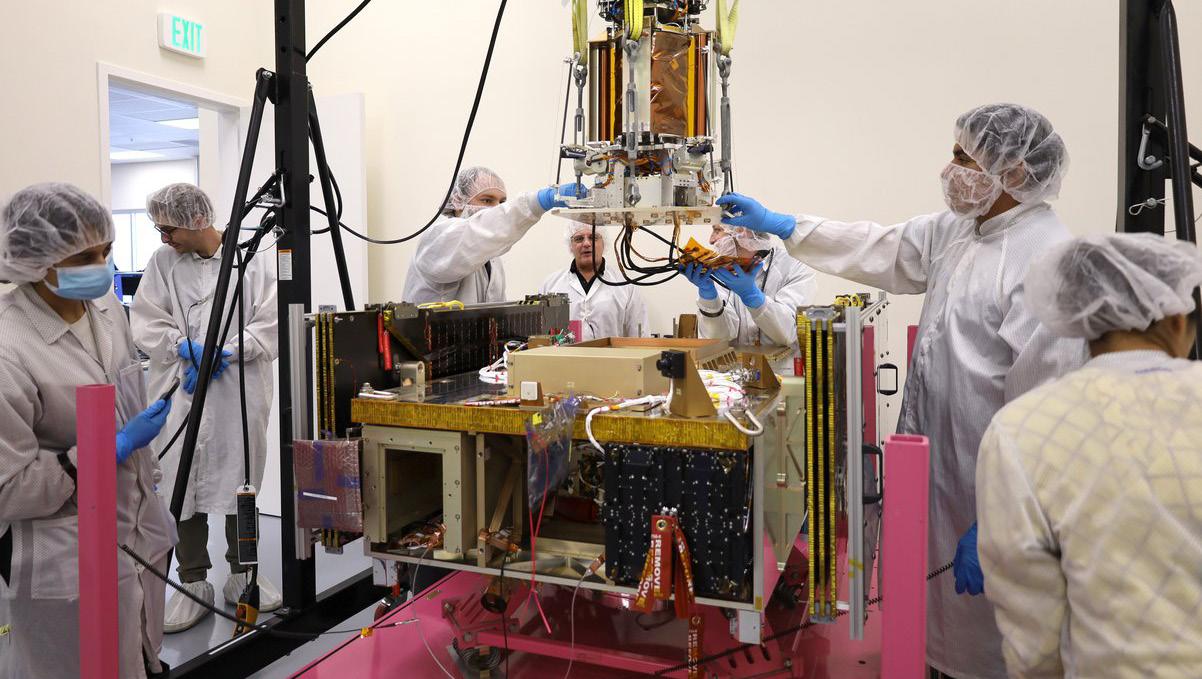
Caltech scientists in Pasadena celebrated Tuesday the launch of a Space Solar Power Demonstrator prototype into orbit as part of an ambitious effort to harvest solar power in space and beam that energy back to Earth.
The prototype was launched on a SpaceX rocket from Cape Canaveral Tuesday morning. The launch marked a major milestone in Caltech's Space Solar Power Project,
which aims to deploy a constellation of spacecraft that collect sunlight, transform it into electricity, then transmit it over long distances wherever it is needed -including to places that have no access to reliable power.
When fully realized, the project could make what was once considered science fiction a reality, researchers said.
"Space solar power provides a way to tap into the
practically unlimited supply of solar energy in outer space, where the energy is constantly available without being subjected to the cycles of day and night, seasons and cloud cover," according to Caltech.
Caltech's Space Solar Power Project got its start after philanthropist Donald Bren, chairman of Irvine Company and a lifetime member of the Caltech Board of Trustees, learned about the potential for space-based
solar energy manufacturing in an article in Popular Science magazine. In 2013 Bren and his wife Brigitte, a Caltech trustee, agreed to donate funds set to eventually exceed $100 million for the project through the Donald Bren Foundation.

"For many years, I've dreamed about how spacebased solar power could solve some of humanity's most urgent challenges," Bren said. "I'm thrilled to be supporting
Caltech's brilliant scientists as they race to make that dream a reality."

Following Tuesday's launch, the Caltech team on Earth plans to start running experiments within a few weeks, with testing and data collection expected to continue for several months.
"No matter what happens, this prototype is a major step forward," said SSPP Co-Director Ali Hajimiri, who is also Caltech's Bren professor of
electrical engineering and medical engineering. "It works here on Earth, and has passed the rigorous steps required of anything launched into space. There are still many risks, but having gone through the whole process has taught us valuable lessons. We believe the space experiments will provide us with plenty of additional useful information that will guide the project as we continue to move forward."
Local. Relevant. Trusted.
VOL.
7,
NO.
102 Thursday, January 05 -January 11, 2023
Pg 8
Big plays lead to Penn State's 35-21 Rose Bowl win over Utah
Pg 3
Monterey Park COVID: Free at-home tests, vax clinic in January
By City News Service
Engineers carefully lower the DOLCE portion of the Space Solar Power Demonstrator onto the Vigoride spacecraft built by Momentus. | Photo courtesy of Caltech/Space Solar Power Project
VISIT CORONANEWSPRESS.COM
Angeles, State of California.
The Temple City Tribune has been adjudicated as a newspaper of general circulation in court case number GS 012440 City of Temple City, County of Los Angeles, State of California.
The El Monte Examiner has been adjudicated as a newspaper of general circulation in court case number KS 015872 City of El Monte, County of Los Angeles, State of California.
The Azusa Beacon has been adjudicated as a newspaper of general circulation in court case number KS 015970 City of Azusa, County of Los Angeles, State of California.

The San Gabriel Sun has been adjudicated as a newspaper of general circulation in court case number GS 013808 City of San Gabriel, County of Los Angeles, State of California.
The Duarte Dispatch has been adjudicated as a newspaper of general circulation in court case number GS 013893 City of Duarte, County of Los Angeles, State of California.
The Rosemead Reader has been adjudicated as a newspaper of general circulation in court case number GS 048894 City of Rosemead, County of Los Angeles, State of California.
The Alhambra Press has been adjudicated as a newspaper of general circulation in court case number ES016581 City of Alhambra, County of Los Angeles, State of California.

The Baldwin Park Press has been adjudicated as a newspaper of general circulation in court case number KS017174 City of Baldwin Park, County of Los Angeles, State of California.
The Burbank Independent has been adjudicated as a newspaper of general circulation in court case number ES016728 City of Burbank, County of Los Angeles, State of California.
The Glendale Independent has been adjudicated as a newspaper of general circulation in court case number ES016579 City of Glendale, County of Los Angeles, State of California.
The Monterey Park Press has been adjudicated as a newspaper of general circulation in court case number ES016580 City of Monterey Park, County of Los Angeles, State of California.
The West Covina Press has been adjudicated as a newspaper of general circulation in court case number KS017304 City of West Covina, County of Los Angeles, State of California.


The San Bernardino Press has been adjudicated as a newspaper of general circulation in court case number CIVDS 1506881 City of San Bernardino, County of San Bernardino, State of California.
The Riverside Independent has been adjudicated as a newspaper of general circulation in court case number RIC1505351 City of Riverside, County of Riverside, State of California.
The Pasadena Press has been adjudicated as a newspaper of general circulation in court case number ES018815 City of Pasadena, County of Los Angeles, State of California.


The Belmont Beacon has been adjudicated as a newspaper of general circulation in court case number NSO30275 City of Long Beach, County of Los Angeles, State of California.


The Anaheim Press has been adjudicated as a newspaper of general circulation in court case number 30-2017-00942735-CU-PT-CJC City of Anaheim, County of Orange, State of California.
The
CALENDAR
The
Jan. 6
Dia De Los Reyes (Three Kings Day)
Olvera Street | 845 N. Alameda St., Los Angeles, CA 90012 | Jan. 6 | olveraevents.com
Olvera Street celebrates the Epiphany with a procession led by Ballet Coco followed by the handing out of Rosca de Reyes (traditional sweet bread), champurrado and prizes. Though the tradition has Christian and Catholic roots, everyone is invited to partake.
Jan. 7
The Yoga Expo Conference Los Angeles
Pasadena Convention Center | 300 E. Green St., Pasadena, CA 91101 | Jan. 7 | theyogaexpo.co/losangeles
Whether you’ve made a resolution to exercise or be more mindful this year, yoga can help. The Yoga Expo will feature live classes all day, lectures, panels, free gifts, live music, organic foods, and will cover topics such as breathwork, meditation, chakras, and business.
Jan. 8
‘From

Bach To Bartok’
Sierra Madre Playhouse | 320 S. Mission Drive, San Gabriel, CA 91776 | Jan. 8 | missionplayhouse.org

The Olympia Philharmonic Society presents the Olympia Youth Orchestra in this free community concert featuring works from Bach, Bartok, Dohnanyi, Mendelssohn, Mozart and Vivaldi. ASTA-LA string competition grand prize winner, violinist Ethan Yang, will be among the talented young musicians.
Jan. 9
The Funny Or Die Lab
Dynasty Typewriter at The Hayworth | 2511 Wilshire Blvd., Los Angeles, CA 90057 | Jan. 9 | eventbrite.com
During this variety show, up-and-coming comedic talent will test new material and come up with new ideas. If you can’t make it in person, there is a livestream option.
Jan. 11
Wise Children’s ‘Wuthering Heights’
Wallis Annenberg Center for the Performing Arts | 9390 N. Santa Monica Blvd, Beverly Hills, CA 90210 | Jan. 11-22 | thewallis.org
Based on Emily Brontë’s novel, this adaptation from Emma Rice is shot through with music, dance, passion, hope and revenge.

2 JANUARY 05-JANUARY 11, 2023 BeaconMediaNews.com Alhambra PRESS Baldwin Park INDEPENDENT INDEPENDENT San Bernardino Press Belmont Beacon City Temple Tribune GabrielSan Sun A zusa B eacon Rosemead Reader Beacon Media, Inc. Publication D uarte ispatch News . . . 1, 3, 8, 9, 12, 13 Calendar . . . 2 Regional . . . 4 Blotters . . . 5 Classifieds . . . 6 Opinion . . . 7, 13 TABLE OF CONTENTS Publisher Von Raees COO Andrea Tange Vice President Sam Kubert Editorial Jordan Green Fabiola Diaz Joe Taglieri Designer/ Production Renia Barouni Weekly Contributors May S. Ruiz Sales Fred Bankston José Luis Correa Legal Advertising Annette Reyes Crystal Cortez Marketing Jamaire Revis Accounting Vera Shamon All Inquiries info@beaconmedianews.com info@hlrmedia.com BEACON MEDIA ADDRESS: 125 E. Chestnut Ave. Monrovia, CA 91016 Phone: (626) 301-1010 www.beaconmedianews.com HLR MEDIA ADDRESS: 820 S. Myrtle Ave. Monrovia, CA 91016 Phone: (626) 301-1010 www.HLRmedia.com PRESS RELEASE SUBMISSIONS editor@beaconmedianews.com editor@hlrmedia.com Submissions Policy Beacon Media, Inc. and HLR Media, LLC All contents herein are copyrighted and may not be reproduced in any manner, either in whole or in part, without the express written consent of the publisher. The Views and opinions expressed in this paper are not necessarily that of the management and staff at Beacon Media, Inc. or HLR Media, LLC. The Arcadia Weekly has been adjudicated as a newspaper of general circulation in court case number GS 004333 for the City of Arcadia, County of Los Angeles, State of California. The Monrovia Weekly has been adjudicated as a newspaper of General Circulation in Court Case GS 004759 City of Monrovia, County of Los
Ontario News Press has been adjudicated as a newspaper of general circulation in court case number CIVDS 1506881 City of Ontario, County of San Bernardino, State of California.
Corona News Press has been adjudicated as a newspaper of general circulation in court case number RIC1723524 City of Corona, County of Riverside, State of California.
(Left to right) Liam Tamne as Healthcliffe, Leah Brotherhead as Catherine and Jordan Laviniere as the Leader of the Yorkshire Moors in Wise Children’s "Wuthering Heights." | Photo by Muriel Steinke, courtesy of Berkeley Repertory Theatre
Former San Gabriel Police Chief Gene Harris takes the helm as Pasadena PD’s chief
By Staff
On Jan. 3, Police Chief Gene Harris transitioned from the San Gabriel Police Department to become the new police chief for the city of Pasadena.
During his six-year tenure Harris led with a focus on policies that engaged the community and promoted team-oriented techniques. The SGPD developed close relationships with community organizations including the Lions Club, San Gabriel Kiwanis Club, La Casa de San Gabriel and the Asian Youth Center, according to a city of San Gabriel statement.
“I’m honored to have served the San Gabriel community and interacted with so many wonderful people here,” Harris said in a statement. “It has been a great experience in the City of San Gabriel, and it has helped me further develop my skills and understanding in my quest to become an exemplary public servant.”
To encourage leadership development within the department, Harris connected the SGPD with training at the national level aimed at enhancing its knowledge of law enforcement practices and leadership skills. Officers attended programs at agencies that included the FBI National Academy, West Point Leadership Program and POST Command College.
Harris, who was president
of the Los Angeles County Police Chiefs’ Association and a member of the California Police Chiefs Association, also created the SGPD’s Community Engagement Bureau “to better engage with the community, provide mental health evaluation and serve as a resource at San Gabriel schools,” officials reported.
“Chief Harris is an important part of the San Gabriel city leadership team. I’m grateful for his work fostering next-generation leaders and developing SGPD into a community-focused police department,” San Gabriel City Manager Mark Lazzaretto said in a statement. “We will miss his infectious laugh, positive attitude and excellent leadership. We wish him the best of luck for his next adventure.”
Harris has nearly 30 years of law enforcement experience, according to the city of Pasadena’s announcement. A former Marine, Harris started in law enforcement as a Los Angeles County sheriff’s deputy, then served for 23 years in the Monterey Park Police Department where he attained the rank of captain. In 2016 he became San Gabriel’s police chief.

Along with bachelor’s and master’s degrees in business administration from the University of Phoenix and a master’s degree in law enforcement and public safety leadership from the Univer-
sity of San Diego, Harris is a graduate of the West Point Leadership Program, POST Command College and the FBI National Academy, according to Pasadena’s announcement.
Harris has also served on numerous professional organizations and authored a book, “The Zero Stress Zone, a Layman’s Guide to Stress Management.”
“Chief Harris is a wellknown leader in law enforcement. His interpersonal and communication skills and his proven approach to proactive and community policing will bring about the effective implementation of ever-evolving best practices to keep our community safe,” Pasadena City Manager Miguel Márquez said in a statement. “I am confident he will lead our peace officers with distinction and will become an invaluable member of the greater Pasadena community.”
In a statement Harris said he is “honored to be entrusted with this amazing opportunity and … humbled by the responsibility to our residents, visitors, and the men and women of our department. Together, we will continue to enhance the culture of proactive community policing and exceptional service to our stakeholders.”
As San Gabriel officials search for a new police chief, SGPD Capt. Riki Nakamura will serve as interim chief.
Monterey Park COVID: Free athome tests, vax clinic in January
By Staff
The city of Monterey Park is offering free at-home COVID-19 tests to all residents who want them, and a free vaccination clinic is scheduled for Jan. 12 in Barnes Park, the city announced earlier this month.
COVID-19 positivity rates and hospitalizations are increasing in Los Angeles County coinciding with the holiday season. In addition to strongly recommending indoor mask-wearing, Department of Public Health officials recommend COVID testing before attending social gatherings -- especially if a get-together includes people at increased risk such as the elderly or people with preexisting medical conditions.
Monterey Park, which has a population of about 60,000, has had a total of 16,804 COVID cases and 263
virus-related deaths since the pandemic began, according to LA County data.
Free coronavirus test kits, which the Chinatown Service Center donated, are available at Monterey Park Bruggemeyer Library and the Langley Senior Center. There is a limit of two boxes per person.

On Jan. 12, the Monterey Park Fire Department and Chinatown Service Center will provide a free vaccination clinic from 10:00 a.m. to noon in Barnes Park on the grassy area east of the tennis courts between City Hall and the gymnasium. The clinic will provide Pfizer and Moderna booster vaccines in addition to flu shots. Appointments are not required, and everyone age 6 months or older is eligible as long as six months have passed since receiving a second dose of the Pfizer or
Moderna COVID vaccine. The county health department runs a drive-up-only testing site in Monterey Park at East Los Angeles College, 1301 Avenida Cesar Chavez. No appointment is necessary, and information is available at covid19.lacounty.gov/testing.
Langley Senior Center is located at 400 West Emerson Ave. The center is open Monday-Friday, 8:00 a.m. to 5:00 p.m., and Saturday, 8:00 a.m. to noon.
Bruggemeyer Library is at 318 South Ramona Ave. The library's hours of operation are Tuesday, Thursday and Saturday, 10:00 a.m. to 5:00 p.m., and Wednesday and Friday, 1 p.m. to 5 p.m. Starting Jan. 3, the library will be open Tuesday and Wednesday, noon to 8 p.m., and Thursday, Friday and Saturday, 10 a.m. to 6 p.m.
JANUARY 05-JANUARY 11, 2023 3 BeaconMediaNews.com NEWS
Police Chief Gene Harris. | Photo courtesy of the city of San Gabriel
A COVID at-home test. | Photo courtesy of Jernej Furman/Flickr (CC-BY-2.0)
Los Angeles
Arcadia
Santa Anita cancels New Year's Day races due to rain, races resumed Monday
The first post of the canceled races for Santa Anita took place at noon with 10 races happening throughout the duration of Monday. Due to the cancellation, track officials reiterated that all tickets sold for Sunday would be fully refunded automatically with no further action required by purchasers. Santa Anita's director of racing, Chris Merz, announced that 1.5 inches of rain fell on the main track, which was sealed at the conclusion of Saturday's ninerace card. Sunday's feature, the Grade III, $200,000 Santa Ynez for 2-year-old fillies, was consequently rescheduled for Jan. 8. Four of Sunday's overnight races that were canceled — races 3, 5, 6 and 8 — will be brought back as "extras" for Friday's card.
Pasadena
Donate Life America takes home top float honors in Rose Parade
Donate Life America, a nonprofit organization devoted to increasing the number of donated organs, eyes and tissue available to help sustain and heal lives, took top honors in the 134th Tournament of Roses Parade, winning the
2023 Sweepstakes Trophy for its entry "Lifting Each Other Up!" The float features 40,000 flowers atop an Asian street dragon adorned with memorial floral portraits honoring the organization's donors. Eighteen organ, eye and tissue recipients are seated at various points on the float along with eight living donors supporting the dragon with bamboo poles.
Glendale
Glendale fire captain settles suit alleging demotion tied to chief's alleged order
A Glendale Fire Department captain has settled his lawsuit against the city, in which he alleged he was demoted and suffered other retaliation when he objected to the chief's alleged order to use state-funded fire engines intended for fighting brush fires to handle routine calls. The accord was revealed in a minute order prepared Friday by a clerk for Los Angeles Superior Court Judge Malcolm Mackey, who presided over the case. No terms were revealed. In his whistleblower suit filed in August 2020, Murphy said he joined the GFD in October 1997 as a firefighter and worked his way up to captain in 2013. In March 2019, he was promoted to battalion chief on a one-year probationary term in anticipation of being appointed permanently to the position, according to his court papers.
REGIONALS
Long Beach
Driver leaves scene of fatal crash, calls police to report incident
A motorist who fatally struck a man in Long Beach later contacted police to report the incident and cooperate with the investigation, authorities said Monday. Officers dispatched at 11:10 p.m. Sunday to the area of Harbor Scenic Drive and Ocean Boulevard located the victim in the roadway, appearing to have been struck by a vehicle. He was pronounced dead at the scene, the Long Beach Police Department reported. "While officers were conducting their investigation, the driver of the vehicle that struck the pedestrian contacted police," LBPD officials said.
Orange County
Orange County
Man arrested after alleged stabbing spree in Orange County
A 43-year-old man was arrested on suspicion of attempted murder and assault with a deadly weapon for allegedly attacking three men during unprovoked confrontations Tuesday in Irvine, authorities said. Officers were dispatched at about 12:25 p.m. to a possible stabbing call at The Heritage Plaza shopping center near Culver Drive and Walnut Avenue, the Irvine Police Department reported. During the first confrontation, Ricardo De La Riva allegedly threatened the victim and lunged at him with a knife, causing a minor cut. Police said he then confronted a second man and made threats, but
no injuries were reported. He allegedly then ran to a nearby neighborhood and confronted a third victim.
Anaheim
Disney announces half marathon series in Anaheim and Orlando
For the first time in seven years, Disneyland will offer a half marathon at the Anaheim theme park next year, officials announced Tuesday. The Disneyland Half Marathon Weekend will return to Disneyland in January 2024. It is the first such race at the theme park since 2017. Registration begins mid-February for the Jan. 11-14, 2024, "runDisney Race." The event will feature 5K and 10K races. The company will also offer races at Disney World in Orlando, Florida, in November of this year and January, February and April of next year.
Riverside Riverside County
Probationer accused of fatally shooting man in Riverside County arraigned
A probationer accused of gunning down a man during a confrontation on a San Jacinto street pleaded not guilty Tuesday to murder and other offenses. Diego Ernesto Brane, 24, of San Jacinto was arrested in November for the 2019 slaying of Christopher Gutierrez, also of San Jacinto. Along with the murder count, Brane is charged with sentenceenhancing gun and great bodily injury allegations. He was arraigned before Riverside County Superior Court Judge Sean Crandell, who scheduled
a felony settlement conference for Feb. 23 at the Riverside Hall of Justice.

Riverside
Authorities ID Riverside motorcyclist killed in crash with railroad crossing gate
Authorities Tuesday identified a young man who was killed when his motorcycle crashed into a railroad crossing gate in South Los Angeles. The crash occurred about 12:40 a.m. Monday near East Imperial Highway and San Pedro Street, according to he Los Angeles Police Department.
Isaac Ambriz. 18, of Riverside, died at the scene, the Los Angeles County coroner's office reported. According to authorities, Ambriz was westbound on Imperial Highway when his motorcycle crashed into a railroad crossing gate. His passenger, a woman about 19 years old, was taken to a hospital with critical injuries.
Corona
Fire in Corona house displaces 5 residents
Five residents were displaced Monday morning when flames engulfed the roof of their two-story home in the unincorporated El Cerrito area near Corona. The fire was reported at 12:41 a.m. in the 7100 block of Calico Circle, according to the Riverside County Fire Department. The roof was fully involved in flames that extended into the attic and living space when firefighters arrived, officials said. At 1:27 a.m. officials reported the American Red Cross was requested to help arrange housing for four adults and one child displaced by the fire. No injuries were reported.
San Bernardino
San Bernardino County Inland Valley Development Agency hosts meeting about new airport
plan
On Thursday, Jan. 12 from 6 to 8 pm, the Inland Valley Development Agency will host a community meeting (open house format) at the Sterling Natural Resource Center, located at 25318 5th Street in Highland, for residents to learn about the Airport Gateway Specific Plan. The Airport
Gateway Specific Plan (AGSP) is designed to guide the long-range development of a 678-acre area of land located immediately north of the San Bernardino International Airport. Meeting attendees will have an opportunity to learn about the proposal, speak with project team members, and provide comments on the Draft Program Environmental Impact Report (Draft PEIR), which the Inland Valley Development Agency (IVDA) is serving as the lead agency to comply with the California Environmental Quality Act (CEQA).
San Bernardino
No tickets sold with all 6 SuperLotto Plus numbers, but one found with 5 in San Bernardino County
There were no tickets sold with all six numbers in Saturday evening's SuperLotto Plus drawing and the estimated jackpot for Wednesday's drawing will grow to $21 million. Three tickets each with five numbers, but missing the Mega number, were sold at a liquor store in Inglewood, a convenience store in San Bernardino and a drug store in Chula Vista, and are each worth $13,615 the California Lottery announced. The numbers drawn Saturday night were 6, 9, 20, 22, 42 and the Mega number was 3. The jackpot was $20 million.
Ontario police officers have arrested Philbert Hernandez, a 72-year-old man, in connection with numerous child molestations spanning several decades. On May 23, 2022, the police investigated Hernandez as the named suspect in several child molestation cases that occurred at multiple residences in Ontario. This initial investigation led to the identification of additional victims and incidents. At the time of the assaults, Hernandez was a photographer for numerous firms across Southern California that were contracted by schools. Detectives obtained a felony arrest warrant for Hernandez and he was arrested on Dec. 27, 2022 on child sexual abuse charges.
4 JANUARY 05-JANUARY 11, 2023 BeaconMediaNews.com
Ontario
Ontario police arrest man suspected of several child molestations over decades
V.I.P. TRUST DEED COMPANY OVER 40 YEARS OF FAST FUNDING Principal (818) 248-0000 Broker WWW.VIPLOAN.COM *Sufficient equity required - no consumer loans Real Estate License #01041073 Private Party loans generally have higher interest rates, points & fees than conventional discount loans WE BUY TRUST DEEDS We Purchase and Loan on Partial Interests* CA Department of Real Estate, NMLS #339217
Monrovia
December 22
At 12:05 a.m., officers responded to the 300 block of North Encinitas regarding a traffic collision. Officers arrived and saw a vehicle had crashed into two parked vehicles. The driver displayed symptoms of being under the influence of alcohol, and the front passenger of the vehicle had facial and head injuries. A DUI investigation revealed the driver was under the influence. The driver was arrested and transported to the MPD jail to be held for a sobering period.
At 1:52 a.m., a caller reported three male subjects fighting outside a business in the 100 block of East Olive. Prior to officers arriving, the subjects stopped fighting and went back inside. Officers located a victim that had an injury to his lip. MFD responded and treated him for injuries. This investigation is continuing.
At 2:58 a.m., officers responded to the 1500 block of South Myrtle regarding a female acting strange. After speaking with the subject, it was determined she was unable to care for herself. She was transported to a hospital for a mental evaluation.
At 2:51 p.m., a loss prevention officer from a store in the 700 block of East Huntington called to report they had two female subjects shoplifting. He said the suspects had concealed approximately $250 worth of merchandise before exiting the store. Both suspects were detained until officers arrived. Both suspects were arrested and taken into custody.
At 3:41 p.m., while investigating a shoplifting in the 700 block of East Huntington officers made contact with two occupants of a vehicle they believed was involved in the crime. A computer check revealed the driver had a warrant for his arrest. Further investigation revealed the passenger was in possession of a controlled substance. The driver was arrested per the authority of the warrant and taken into custody. The passenger was arrested, cited and released at the scene.
a suspicious vehicle in a parking lot in the 700 block of West Huntington. He stopped to investigate and saw the vehicle was occupied by a male adult. As he spoke to the subject he saw drug paraphernalia in plain sight. He asked the subject to exit the vehicle and then saw a handgun laying on the seat. The subject was detained and additional drugs and a large amount of money were located. The subject also had a warrant for a prior weapons offense. The subject was arrested and taken into custody.
At 9:07 a.m., a caller in the 100 block of North Mountain reported that a resident was physical with a staff member. The officer determined the resident was a danger to others and he was placed on a mental evaluation hold. He was transported to a local hospital.
At 11:25 a.m., a property manager from the 1000 block of Royal Oaks called and reported a tenant was unresponsive in his apartment bathroom. Officers and Paramedics arrived and provided medical treatment. The individual was pronounced deceased by Paramedics. No signs of foul play.
At 3:24 p.m., an employee from a business in the 600 block of West Huntington called to report that a shoplifting had just occurred. Officers responded and located the subject. The subject ran and an officer gave chase. A short foot pursuit ensued and the subject was detained. The subject was arrested and taken into custody.
At 7:06 p.m., a resident in the 600 block of East Olive called to report her ex-boyfriend was inside her residence creating a disturbance. Officers arrived and the resident asked for the ex-boyfriend to leave the property. The ex-boyfriend refused to leave the location. He was arrested and taken into custody.
December 24
BLOTTERS
December 25
At 8:43 a.m., a bus driver in the area of Fifth and Huntington reported that a male subject was trying to get on the bus and was causing a disturbance. Officers arrived and the subject was trying to get into vehicles that were passing by. He was detained and determined to be a danger to himself or others. He was taken to a hospital for a mental evaluation.
December 26
At 7:11 a.m., a victim in the 1400 block of South Shamrock reported his catalytic converter was stolen. This investigation is continuing.
At 11:22 a.m., officers were driving in the area of Myrtle and Chestnut and when they noticed a male urinating in public. They stopped and spoke to the subject, who was intoxicated. He was arrested and taken into custody.
At 1:27 p.m., an employee from a business in the 400 block of West Huntington called stating a female subject was attempting to pay with fraudulent currency. When she was confronted about the bills, she ran off. Officers arrived but were unable to locate her. This investigation is continuing.
At 5:38 p.m., an employee from the 100 block of West Duarte called to report a male subject inside the location arguing. Officers arrived and contacted the subject. It was soon determined he was intoxicated and couldn't care for himself. He was arrested and transported to the MPD jail to be held for a sobering period.
At 10:52 p.m., a passerby called to report a brush fire near Huntington & the 210 Freeway on-ramp. Officers arrived and CHP assisted with shutting down the offramp. No structures were damaged and the cause of the fire is unknown.
male in the front passenger seat was the registered owner of the vehicle, but she was also intoxicated. After a DUI investigation, the driver was arrested and transported to the MPD jail to be held for a sobering period.
At 8:27 a.m., the caller reported he located a bag of narcotics in a parking lot in the 200 block of West Maple. This investigation is continuing.
At 11:43 a.m., a representative from a medical facility called to request a welfare check on her client at 100 West Cherry. Officers arrived and after speaking with the subject, determined he was a danger to himself. He was taken to a mental hospital.
At 12:42 p.m., officers were dispatched to the area of Shamrock and Huntington regarding a vehicle versus a motorcycle. When the officers arrived, they saw the motorcycle and the rider on the ground. It was discovered the motorcycle was in a solo accident. He had a complaint of pain and was transported to the hospital for further treatment.
At 7:54 p.m., a caller reported that a subject had stolen multiple handbags from a store in the 700 block of East Huntington. Officers arrived and located the subject. He was identified as the theft suspect and the stolen property was recovered. The suspect was arrested, cited and released at the scene.
Arcadia December 25
At 6:07 p.m., an officer responded to the 1900 block of Alta Oaks Drive regarding a burglary alarm activation. An investigation revealed unknown suspect(s) smashed a rear sliding door and ransacked the home. The loss is unknown as of the date of this report.
At 11:54 p.m., an officer responded to the intersection of Huntington Drive and First Avenue regarding a subject digging through trash, an Arcadia Municipal Violation. Upon contacting the subject and conducting a records check, the officer discovered the 36-yearold male transient from South El Monte had two outstanding misdemeanor warrants. He was arrested and transported to the Arcadia City Jail for booking.
December 26
At 7:39 a.m., an officer responded to the 900 block of Huntington Drive regarding a battery investigation. An investigation revealed a physical altercation occurred between an adult son and his mother resulting in the son punching and kicking his mother. The 19-year-old male from Arcadia was gone by the time the officer had arrived. The mother did not require medical treatment.
At 3:07 p.m., an officer responded to the 700 block of Arcadia Avenue in regard to a theft report. Sometime during the previous night, someone stole the victim’s catalytic converter from his Toyota Prius. The investigation is pending a review of nearby surveillance footage.
At 6:22 p.m., an officer responded to Macy’s, located at 400 S. Baldwin Ave., regarding a theft report. Loss prevention witnessed and confronted the suspects as they stole nearly $800.00 worth of merchandise. The 46-year-old male from Glendale and 39-year-old female from Glendale was arrested and cited in the field.
December 27
to a vandalism report. The officer determined the suspect parked in a private parking lot and when a security gate prohibited her from leaving, she and a second suspect forcefully opened the gate, leaving the gate damaged and in need of repair. The suspects are described as an Asian female, approximately 5 feet, 3 inches, with a thin build, black hair, and a White male between the ages of 45 and 50 years old with a heavy build.
At 6:54 p.m., an officer responded to The Shops at Santa Anita, located at 400 S. Baldwin Ave., regarding a stolen vehicle report. The victim discovered her Porsche 911 had been stolen from the Nordstrom parking lot sometime earlier in the day.
December 28
At 9:21 p.m., an officer responded to Albertsons, located at 298 E. Live Oak Ave., regarding a commercial burglary investigation. Surveillance footage and the store manager witnessed a team of three suspects working in concert to steal approximately $1000 worth of non-prescription medications. The suspects are described as one Black female in her 20s, and two Black males in their early 20s. They fled in a Honda Civic.
December 29
At 2:33 a.m., an officer saw
At 6:19 p.m., a reporting party called advising his delivery van had just been stolen from the 300 block of Genoa. The van was entered into the stolen vehicle system as the delivery company was able to access the van's GPS. The van was located and in El Monte. This investigation is continuing.
December 27
At 12:31 a.m., officers conducted a traffic stop on a vehicle in the area of Live Oak and Lynd for a traffic violation. The driver had a suspended license for a DUI and displayed symptoms of being under the influence of alcohol. The fe-
At 6:51 p.m., an officer responded to CVS Pharmacy, located at 1401 S. Baldwin Ave., regarding a shoplifting incident. The officer determined the suspect, a 33-year-old male transient from Temple City, stole approximately $60 worth of wine, chocolate, and a blanket. He was located nearby and was arrested. He was then transported to the Arcadia City Jail for booking.
At 7:48 a.m., an officer responded to 1306 South Fourth Avenue regarding a theft from vehicle report. Surveillance footage captured three thieves stealing the victim’s catalytic converter from her Toyota Prius and fleeing. The suspects committed the crime around 3:30 a.m. and were all males in dark clothing. Similar incidents occurred in the 200 block of Laurel Avenue and the 200 block of Bonita Street. It is unknown if the thefts were committed by the same suspects.
At 12:47 p.m., an officer responded to the 100 block of East Live Oak Avenue in regard
At 2:39 p.m., an officer responded to the Arcadia Police Department lobby regarding an attempted robbery report. The victim stated she was walking to her car when she was approached by the suspect who demanded her bag. A second suspect also threatened the victim. Thankfully, additional family members walked by and the suspects fled. The suspect is described as a 16-year-old Hispanic male, approximately 5 feet, 6 inches tall.
At 6:56 p.m., an officer responded to The Derby, located at 233 E. Huntington Dr., regarding a stolen vehicle investigation. An investigation revealed someone stole the victim’s jacket while she was inside the restaurant, and then used her car keys to steal her car. The suspect(s) then used the victim’s credit cards to complete fraudulent transactions. The suspect is described as a Hispanic male between the ages of 35 and 45 years old.
JANUARY 05-JANUARY 11, 2023 5 BeaconMediaNews.com
December 23
ANNOUNCEMENTS
NEW AUTHORS WANTED!
Page Publishing will help you self-publish your own book.

FREE author submission kit!

Limited offer! Why wait? Call now: 1-855-667-0380 (CalSCAN)
Become a Published Author. We want to Read Your Book!
Dorrance Publishing-Trusted by Authors Since 1920. Book manuscript submissions currently being reviewed. Comprehensive Services: Consultation, Production, Promotion and Distribution. Call for Your Free Author`s Guide 1-877-5389554 or visit http://dorranceinfo.com/Cali (Cal-SCAN)
Prepare for power outages today with a GENERAC home standby generator. $0 Money Down + Low Monthly Payment Options. Request a FREE Quote -Call now before the next power outage: 1-844439-5645 (SCAN)
Eliminate gutter cleaning forever! LeafFilter, the most advanced debris-blocking gutter protection. Schedule a FREE LeafFilter estimate today. 15% off Entire Purchase. 10% Senior & Military Discounts. Call 1-855-424-7581 (Cal-SCAN)
AUTOS WANTED
DONATE YOUR CAR TO KIDS
Fast Free Pickup – Running or Not - 24 Hour Response - Maximum Tax Donation – Help Find Missing Kids! Call 1-888-4911453. (Cal-SCAN)
DONATE YOUR CAR OR TRUCK TO HERITAGE FOR THE BLIND. Free 3 Day Vacation, Tax Deductible, Free Towing, All Paperwork Taken Care Of. CALL 1-844-491-2884 (Cal-SCAN)
CABLE/SATELLITE TV
Get DIRECTV for $64.99/mo for 12 months with CHOICE Package. Save an additional $120 over 1st year. First 3
CLASSIFIEDS

months of HBO Max, Cinemax, Showtime, Starz and Epix included! Directv is #1 in Customer Satisfaction (JD Power & Assoc.) Some restrictions apply. Call 1-888-641-5762 (Cal-SCAN)


FINANCIAL SERVICES
Over $10K in Debt? Be debt free in 24 to 48 months. No upfront fees to enroll. A+ BBB rated. Call National Debt Relief 1-888-2314274. (Cal-SCAN)

INSURANCE
SAVE BIG on HOME INSURANCE! Compare 20 A-rated insurances companies. Get a quote within minutes. Average savings of $444/year! Call 1-844-4109609! (M-F 8am-8pm Central) (Cal-SCAN)

INTERNET
FREE high speed internet for those that qualify. Government program for recipients
of select programs incl. Medicaid, SNAP, Housing Assistance, WIC, Veterans Pension, Survivor Benefits, Lifeline, Tribal. 15 GB internet service. Bonus offer: Android tablet FREE with one-time $20 copay. Free shipping & handling. Call Maxsip Telecom today! 1-855-480-0769 (Cal-SCAN)
MISCELLANEOUS
Switch and save up to $250/ year on your talk, text and data. No contract and no hidden fees. Unlimited talk and text with flexible data plans. Premium nationwide coverage. 100% U.S. based customer service. Limited time offer get $50 off on any new account. Use code GIFT50. For more information, call 1-844908-0605 (SCAN)
The difference in winning and losing market share is how businesses use their advertising dollars. CNPA’s Advertising Services’ power to
connect to nearly 13 million of the state’s readers who are an engaged audience, makes our services an indispensable marketing solution. For more info call Cecelia @ (916) 2886011 or cecelia@cnpa.com
DID YOU KNOW Newspaper-generated content is so valuable it’s taken and repeated, condensed, broadcast, tweeted, discussed, posted, copied, edited, and emailed countless times throughout the day by others? Discover the Power of Newspaper Advertising. For a free brochure call 916-288-6011 or email cecelia@cnpa.com (Cal-SCAN)
REAL ESTATE LOANS
RETIRED COUPLE $$$$ for business purpose Real Estate loans. Credit unimportant. V.I.P. Trust Deed Company www.viploan.com Call 1-818248-0000. Broker-principal DRE 01041073. No consumer loans. (Cal-SCAN)
NO DOC 2nd Mortgage or HELOC. Loans from $30,000 to $2M. No Tax Returns and No W2s. Good for SFRs, 1-4 units. Contact (310) 737-8420. NMLS#469849 DRE#01105429 (Cal-SCAN)

SCHOOLS/TRAINING
COMPUTER & IT TRAINING PROGRAM! Train ONLINE to get the skills to become a Computer & Help Desk Professional now! Grants and Scholarships available for certain programs for qualified applicants. Call CTI for details! 1-877-806-0935 (M-F 8am-6pm ET). Computer with internet is required. (Cal-SCAN)
WANTED TO BUY
TOP CA$H PAID FOR OLD GUITARS! 1920-1980 Gibson, Martin, Fender, Gretsch, Epiphone, Guild, Mosrite, Rickenbacker, Prairie State, D’Angelico, Stromberg. And Gibson Mandolins / Banjos. 1-844-910-1960. (Cal-SCAN)
6 JANUARY 05-JANUARY 11, 2023 BeaconMediaNews.com
SUE COOK REALTOR® 626 253 1323 suecookrealtor@gmail com Real Estate Cooked to Perfection! CalRE #02015404 PAID ADVERTISEMENT 5 Reasons To Work With Me To Sell Your House This Year: 1. I’m An Expert On Local Market Trends – I have the latest information on trends in your market so I can help you make educated and confident decisions. 2. I Know How To Set the Right Price for Your House – As a Certified Pricing Specialist I help you determine the best price designed to sell your home quickly and for the highest amount possible. 3. I Know How to Maximize Your Pool of Buyers – I will create a comprehensive marketing program to ensure your home is seen by the right buyers. 4. I Will Walk You Through The Fine Print – I know exactly what the fine print means and I will help you work through it efficiently. 5. I Am A Skilled Negotiator – I will use my extensive experience to negotiate the best deal possible for you. If you’re planning to sell your house this year, let’s connect. Call or email me Today for a Free Market Analysis of your home. Complete up to the minute Coverage every day
Career corner: Prepare for your 2023 job search
By Angela COPELAND angela@copelandcoaching.com
It's a new year, and a new opportunity to find the career that is meant for you. January is the perfect time to begin to set new goals, and look toward the future. So, what can you expect from 2023?
First and foremost, hiring is still happening. As seen on TV, there have been a number of layoffs in recent months. But, keep in mind that there are specific industries that are experiencing layoffs and only a small portion of employees are impacted. These layoffs do not mean that the entire job market is down. The United States unemployment rate in November was 3.7 percent. This shows that overall, the market is still strong.
A big focus of 2023 will be the diverse work options available. With the pandemic, many companies went fully remote. As time has gone by, some companies are asking employees to come back to the office full time. Other companies
have created hybrid models that allow employees to come to the office a few days each week, and to work from home the remaining days. Employees will begin to seek out opportunities that align to their lifestyles. It is interesting to note that there are fewer work from home jobs being posted, and they are receiving a high volume of applicants. If you're a hiring manager, you may want to keep this in mind.
Lifestyle will also continue to be a large focus in 2023. In the past two years, employees have prioritized health and quality of life more. There will continue to be an emphasis on work life balance. Employers will continue to test out new benefits, such as mental health days.

Wages will continue to rise during 2023. However, do not expect to see the large jumps we saw in the previous few years. If you are looking for a new job, do your research. Sites such as Glass-
door and LinkedIn will help you to understand what the current pay rate is for your role in your industry.
When you are job searching in 2023, consider the industry that you are looking in. There are some sectors, such as financial services, travel, and government contracting that are seeing growth this year. There are other sectors such as tech that are less stable.
No matter what sort of job you're pursuing, the time to get started is now. Do not sit and wait for a job to find you. Make your job search a
priority. And, if you haven't looked for a job in a few years, brace yourself. Things have changed. The online application process is a long one. It can be discouraging at times. You will apply to many jobs that you won't hear back from at all. Know that this is normal now. It's not you, and don't let anyone tell you otherwise. Hang in there. Keep moving forward, and you'll find something in the New Year before you know it.
Angela Copeland, a leadership and career expert, can be reached at www.angelacopeland.com.

Monrovia Old Town report: Gift of gab
By Shawn Spencer shawn@girlfridaysolutions.net

It means to have the ability to speak with eloquence and fluency; a talent that is not as common these days. Gifting and gabbing, on the other hand, seems to be very prevalent, especially during the holiday season of giving.
We have all seen the pictures on Facebook and Instagram: Christmas trees with what looks like hundreds of presents spilling out from beneath its branches with no regard for the people that might not have the money to buy one or two gifts. Therein lies the conundrum. Should one be shamed just because they have the ability to provide as many gifts as they want for their family and friends? Or is there a responsibility for kindness and modesty?
I’m not sure what the answer is. I have always instructed my children not to brag to their classmates about gifts they receive because not all children have the same circumstances. I do, however, love the look of a beautiful Christmas tree that has beautifully wrapped color-coordinated presents piled beneath it. I guess I’m starting to think it’s just plain tacky to share the images. Pictures in your photo albums are quite different than things you choose to share on social media.
What about businesses? When a business owner does a good deed like donating goods or money and then posts about the deed. Are you more likely to be offended or to become a customer or client? The good deed is still beneficial to those who receive it, but is the intention behind the gift pure? In the Seven Spiritual Laws of Success, Deepak Chopra explains that the more you give, the more you will receive because you keep the abundance of the universe circulating in your life. If through the act of giving, you feel you have lost something, then the gift is not truly given and will not cause increase. If you give grudgingly, there is no energy behind that giving. It is the intention behind your giving and receiving that is the most important thing.
When my youngest was 10 years old, I had an early morning meeting and we couldn’t go to the first mass on Ash Wednesday. My daughter was so upset because she said she liked going to school with her ashes because she got a lot of compliments. My son, who was 17 at the time, did a darn good job of quoting Matthew when he told her that she isn’t supposed to blow a trumpet when she gives alms, like a hypocrite. She should always give alms in secret because God can see and that’s all that is important, aside from doing something good. It was a proud mommy moment, for sure. He might have been the only one of my four kids that actually paid attention at church.
Whenever you are able, do good for those who need help. I suppose if someone is bragging about the good they do, it doesn’t negate the deed. Perhaps it just changes the circulation of the path of abundance for the giver. “Modesty is a virtue” used to be a religious term because if you are not calling attention upon yourself, you are glorifying God. However, it has also been said that modesty is a “will-power” virtue and likens it to courage, self-control, and patience. These virtues help one to overcome inclinations that are contrary to virtue and so serve to help one overcome moral obstacles.
I don’t have the answer. Just thoughts and yours are welcome on this. I know that people doing good things for others is always good. I also know it is a huge pet peeve of mine when people do these things and then photograph and post it. The deed goes from selfless to selfish, in my humble and not so important, opinion. What do you think? Email me at shawn@girlfridaysolution.net.
JANUARY 05-JANUARY 11, 2023 7 BeaconMediaNews.com
OPINION
Photo by Magnet.me on Unsplash
Big plays lead to Penn State's 35-21 Rose Bowl win over Utah
By Steven Herbert, City News Service
Freshman Nicholas
Singleton ran 87 yards for the tie-breaking touchdown in the third quarter and Sean Clifford threw the longest touchdown pass in Rose Bowl history in the fourth quarter to give Penn State a 35-21 victory over Utah Monday in the 109th edition of college football’s oldest bowl game.
Clifford, a sixth-year senior, was selected as the Offensive Player of the Game, completing 16 of 21 passes for 279 yards and two touchdowns.
Nittany Lions safety Ji’Ayir Brown was selected as the Defensive Player of the Game for making a game-highequaling eight tackles, including 1 1/2 quarterback sacks, and a third-quarter interception.
The Penn State defense made five of its six sacks in the second half, including four of backup quarterback Bryson Barnes, who replaced injured starter Cameron Rising midway through the third quarter.
“In the second half we had to take a look at ourselves,” Brown said. “A lot of emotions happened in this game when guys start to get out of their way of the scheme.
“Second half we went in the locker room and everybody got their jitters out and we just played together, trusted each other a little more and we was able to execute more on more
plays.”
Rising was injured when he was tackled on a 9-yard run.
Rising suffered a leg injury coach Kyle Whittingham said “doesn’t look good.”
“We’ll wait for confirmation from the medical people at a later date, either tonight or tomorrow,” Whittingham said. “Looks like it could be something that takes a while to recover from.”
This is the second consecutive year Rising has been injured in the Rose Bowl. The graduate of Newbury Park High School in Ventura County missed nearly the final 10 minutes of the Jan. 1, 2022, game when he was sacked and his helmet hit the ground hard as he fell. He stayed down for a few minutes while receiving attention from trainers and eventually walked off the field and to the medical tent under his own power.
Clifford’s 88-yard touchdown pass to KeAndre Lambert-Smith 11 seconds into the fourth quarter broke the record of 76 yards set by Michigan’s Rick Leach to Curt Stephenson in 1978.
“It was up for debate whether we wanted to take a shot,” Clifford said. “It was third down and 4 and I’d been seeing the same look all game so I was definitely a proponent for taking that shot and I knew KeAndre wanted it too.”
Lambert-Smith out-ran the defense to catch Clifford’s
pass just past the 50-yard line and sprinted into the end zone.
Freshman Kaytron Allen ran 1 yard for the final touchdown for the 11-2 Nittany Lions with 10 minutes, 36 seconds remaining.
The loss was then 10-4 Utes’ second in the Rose Bowl in two appearances over two seasons. Utah lost to Ohio State, 48-45, on New Year’s Day, 2022, in their Rose Bowl debut, unable to hold a 35-21 halftime lead, with C.J. Stroud throwing three of his six touchdown passes in the second half and Noah Ruggles kicking the tie-breaking 19-yard field goal with nine seconds left.
Utah was scoreless on its first five drives Monday without Rising before Barnes threw a 5-yard touchdown pass to Jaylen Dixon with 25 seconds to play.
Penn State outgained the Utes, 448 yards to 391, but trailed 23-14 in first downs and 35:13-24:47 in time of possession.
Rising completed eight of 21 passes for 95 yards and one touchdown with one interception. Barnes completed 10 of 19 passes for 112 yards and one touchdown with one interception.
“When you look at us and our issues in this game, didn’t throw the ball efficiently enough, not nearly as efficiently as we’ve been throwing it all season long,” Whitting-
ham said.
Utah was scoreless on its first five drives Monday without Rising before Barnes threw a 5-yard touchdown pass to Jaylen Dixon with 25 seconds to play.
Penn State outgained the Utes, 448 yards to 391, but trailed 23-14 in first downs and 35:13-24:47 in time of possession.
Rising completed eight of 21 passes for 95 yards and one touchdown with one interception. Barnes completed 10 of 19 passes for 112 yards and one touchdown with one interception.
“When you look at us and our issues in this game, didn’t throw the ball efficiently enough, not nearly as efficiently as we’ve been throwing it all season long,” Whittingham said.
The victory was the Nittany Lions’ second in their five Rose Bowl appearances and first in two under James Franklin. Franklin was Penn State’s coach in its most recent Rose Bowl appearance before Monday, a 52-49 loss to USC on Jan. 2, 2017.
The Nittany Lions opened the scoring with seven seconds left in the first quarter on Singleton’s 5-yard run culminating a 13-play, 82-yard drive that began when Kalen King intercepted a pass by Rising at Penn State’s 18-yard line.
Singleton ran for a gamehigh 120 yards and two touchdowns in seven carries.
The next three drives also resulted in touchdowns.
Utah drove 75 yards on 13 plays, with Rising throwing a 1-yard pass to tight end Thomas Yassmin for the score. Yassmin began his football career as a freshman in 2018 after playing rugby at The Scots College, a primary and secondary boys’ school in New South Wales, Australia.
The Nittany Lions responded with a six-play, 70-yard drive with Clifford throwing a 10-yard touchdown pass to Mitchell Tinsley with 4:47 left in the first half.
The Utes again tied the score on redshirt freshman Ja’Quinden Jackson’s 19-yard touchdown run 2:38 before halftime.
The temperature was 54 degrees at kickoff, the coldest since 1960 and fifth coldest all-time. The skies were overcast, the first time a Rose Bowl opening kickoff occurred without sunshine since 2017.
Utah earned its second consecutive Rose Bowl berth with a 47-24 victory over USC in the Pac-12 Football Championship Game Dec. 2.
Penn State received its berth after Michigan and Ohio State both finished in the top four in the final College Football Playoff rankings, putting both in the playoff. Penn State was the only other Big Ten team in the College Football Playoff rankings.
Because New Year’s Day fell on a Sunday, the game was played one day later than usual because of the Tournament of Roses Association’s “Never on Sunday” rule. This was the 15th time the Rose Bowl was played on Jan. 2 and the first since 2017.
This was likely be the last time the Rose Bowl is guaranteed its traditional Big Ten-Pac-12 matchup. The next game will be a College Football Playoff semifinal. Beginning with the 2024 season, the Rose Bowl will be a playoff quarterfinal in the years it is not a playoff semifinal in the expanded 12-team playoff. Each of the New Year’s six bowl games will continue to be playoff semifinals once every three years.
The Rose Bowl annually matched teams from what are now the Big Ten and Pac-12 from Jan. 1, 1947, through Jan. 1, 2001. The Rose Bowl served as the Bowl Championship Series national championship game on Jan. 3, 2002, the first of five nontraditional matchups through 2011, including the Jan. 4, 2006, BCS national championship game.
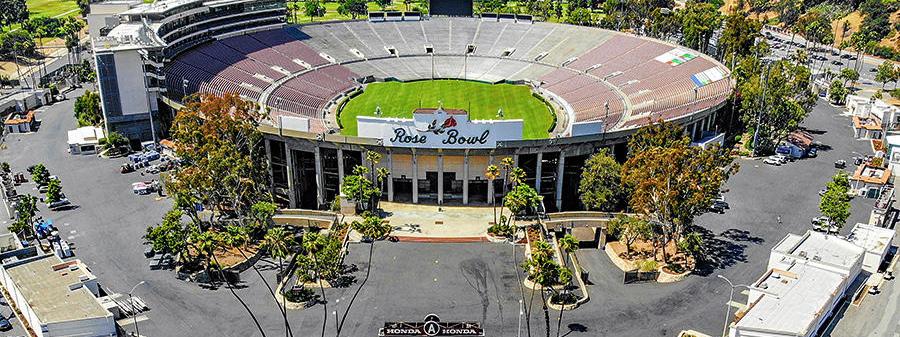
The Rose Bowl has annually matched Big Ten and Pac-12 teams since 2012, except in 2018 and 2021 when the game served as a College Football Playoff semifinal.
The Nittany Lions’ victory narrowed the Pac-12’s lead over the Big Ten to 39-33.
8 JANUARY 05-JANUARY 11, 2023 BeaconMediaNews.com NEWS
The Rose Bowl in Pasadena. | Photo courtesy of Ted Eytan/Wikimedia Commons (CC BY-SA 2.0)
ACedars-Sinai health care patient is suing the health system and hospital for allegedly sharing private patient information with such platforms as Meta and Google without his permission via the Cedars-Sinai website.
The plaintiff was identified only as John Doe in the proposed Los Angeles Superior Court class-action lawsuit, the allegations of which include invasion of privacy, breach of contract, negligence and violations of the state’s Confidentiality of Medical Information Act and Unfair Competition Law.
The suit filed Friday seeks unspecified compensatory and punitive damages as well as an injunction against such sharing of information with third parties without the patient’s permission.
A Cedars-Sinai representative said Tuesday the hospital and health care service do not comment on pending litigation.
According to the suit, the information at issue is gathered on the Cedars-Sinai
By City News Service
website on which patients are encouraged to research their medical symptoms and health issues, identify doctors who can treat their specific conditions, set medical appointments and make other choices related to their personal health care.
“When doing this, patients convey highly private information, including medical information, through the website,” the suit states.
Doe and other patients believed Cedars-Sinai would keep their information private, but the defendants instead took the opposite course by sharing the patients’ personal information with such platforms as Meta, Google, Microsoft Bing and other marketing and social media outlets, the suit alleges.
The information was relayed to the third parties by use of a tracking code embedded in the CedarsSinai website for the sole purpose of sharing such information with marketing entities, the suit states.
“This code served as real time wiretaps on patients’ communications,” the suit states. “Cedars-Sinai’s goal in installing the tracking code was not to provide any benefit to its patients, but only to itself.”
By installing the tracking code, Cedars-Sinai enabled the marketing entities to use patients’ private information to target them with advertising by additional unrelated businesses, the suit states. As an example, according to the suit, if a patient made an appointment with a doctor for treatment of cancer, the tracking code Cedars-Sinai put on its website conveyed that information to Meta, which in turn allowed Meta to include that patient in marketing target groups that it offered to its other advertising clients who wanted to market to cancer patients.
“Cedars-Sinai facilitated this communication without authorization … because it did not give … any hint that the transmission was happening,” the suit states.
Consumer groups: Recalled airbags pose greater threat in 2023
 By Suzanne Potter, Producer, for Public News Service
It's a brand-new year, and consumer auto safety groups are hoping to avoid further deaths from faulty Takata air bags by raising awareness about the ongoing recall.
More than 41 million vehicles from 34 brands, and from model years 2000 to 2018, are affected.
Michael Brooks, executive director of the Center for Auto Safety, warned the ammonium nitrate which causes the air bags to inflate has become unstable and can explode, with even a small fender bender.
"When there's an air bag trigger, that means that you're just going to have an uncontrolled explosion that, instead of pushing the gas into the air bag, simply destroys the entire housing of the air bag and shrapnel out towards the driver or the passenger, and causes injuries or death," Brooks explained.
Thirty-four deaths have been recorded worldwide so far since the recall started in 2018, with 25 in the U.S. including five of them in 2022 alone.
Fiat Chrysler issued a "stop drive" warning for 276,000 vehicles in November for model years 2005 to 2010 Dodge Magnums, Chargers and Challengers, as well as model years 2005 to 2010 Chrysler 300s. At least two of the deaths this year involved 2010 Dodge Chargers.
Brooks called the vehicles "ticking time bombs" which get more dangerous as time goes on, and he wants states to require owners to get the defect fixed.
"Maybe states need to step in and refuse registration to vehicles that haven't had the
recall repair performed yet, effectively forcing consumers to save their own lives," Brooks suggested.
The repairs are free, and some manufacturers are even offering $100 gift cards to entice people to bring in their vehicles. People can check to see if their vehicle is on the recall list on the website
SafeAirBags.com.
References: Consumer alert Nat'l Highway Traffic Safety Administration 12/19/2022
Repair information Nat'l Highway Traffic Safety Administration 2023
MADIA tech report: Local startup tech company helps record family stories
By Brenda J. Trainor
Many families just enjoyed holiday traditions at gatherings that may have been skipped during the pandemic, and there were likely many family jokes, memories, and stories shared across the generations. At its next meeting, MADIA Tech Launch wants to introduce you to Eric Simons, CEO of Novella, a technology company that helps to record these important family stories.
Simons’ company offers a way to stimulate family conversations and document the legacy of family members. A local startup, the first product from Novella (meetNovella. com) is an app that generates open-ended questions, and facilitates recording the answer. The company believes every family member should have the opportunity to share their life lessons, values, and experiences with each other and future generations.
On Wednesday, Jan. 11, 2023, the MADIA Tech Launch dinner meeting will offer Simons’ presentation: “Starting a Tech Company that You’re Passionate About.” Networking begins at 6:30 p.m. at the offices of Tanner Research, 1851 Huntington Drive in Duarte. Dinner is provided by Little Green Forks. Deadline for tickets is noon on Jan. 10 at a cost of $16.60 through Eventbrite (bit.ly/3GxeiUq), or $20 at the door. A Zoom option is also available with advance registration at no cost. The formal presentation begins at 7 p.m., with continuing networking afterwards at Cabrera’s Mexican Cuisine.
MADIA Tech Launch (www.MADIAtech.org) is a nonprofit organization that supports the entrepreneurial technology community here in the heart of the San Gabriel Valley.
JANUARY 05-JANUARY 11, 2023 9 BeaconMediaNews.com NEWS
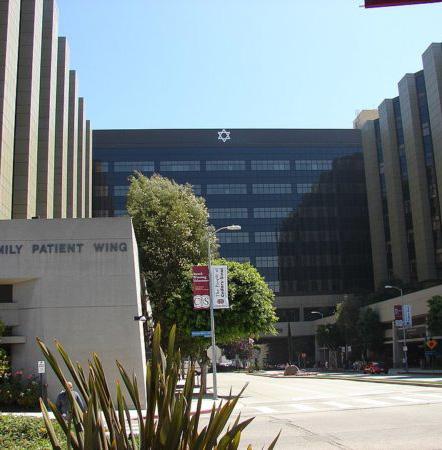
View of the north and south towers of the Cedars-Sinai Medical Center. | Photo by Jorobeq/Wikimedia Commons (CC BY 2.5)
Airbag in a steering wheel. | Photo by Nebular Group on Unsplash
Cedars-Sinai sued for allegedly sharing private patient info online
LEGALS
Starting a new business? Go to filedba.com
Arcadia City Notices
CITY OF ARCADIA NOTICE OF INVITING
PROPOSALS
MEDICAL DIRECTOR FOR THE ARCADIA FIRE DEPARTMENT
NOTICE IS HEREBY GIVEN that the City of Arcadia is requesting Request for Proposals (RFP) for a full-time Medical Director for the Arcadia Fire Department. The Medical Director will provide advice and coordinate the medical aspects of field care, provide oversight of all medications utilized by EMTs and paramedics including controlled medications, and oversee the provider’s quality improvement process, as defined by the Los Angeles County EMS Agency.
Proposal documents can be obtained from the Arcadia Fire Department Station 105 Headquarters Station or by downloading them via the City of Arcadia website, www.ArcadiaCA.gov under “Bid and RFP Notices.”
Firms mailing or shipping their proposals must allow sufficient delivery time to ensure timely receipt of their proposals by the specified time. Postmarks and submissions by fax or other electronic media will not be accepted under any circumstances.
Proposals are due no later than 2:00 p.m. PST on Friday, January 20, 2023. Please submit three (3) copies of the proposal to:
Arcadia Fire Department Station 105 Headquarters
ATTN: Richard Oishi, Battalion Chief 710 South Santa Anita Avenue Arcadia, CA 91006
Direct all comments and/or questions to Chief Oishi no later than Thursday, January 19, 2023 @ 4:00 p.m. PST via email at roishi@ ArcadiaCA.gov or by phone at (626) (626) 574-5116.
Proposals received after the deadline will not be accepted.
The City of Arcadia reserves the right to reject any or all proposals, to waive any informality or irregularity in any proposal received, and to be the sole judge of the merits of the respective proposal received.
/s/ Rachelle Arellano Deputy City Clerk
Dated: January 3, 2023 Publish: January 5 and 9, 2023 ARCADIA WEEKLY
Monrovia City Notices
NOTICE OF PUBLIC HEARING MONROVIA CITY COUNCIL 415 SOUTH IVY AVENUE MONROVIA, CA 91016
RESOLUTION NO. 2023-01
Notice is hereby given that a public hearing will be held by the City Council of the City of Monrovia at 7:30 p.m. or as soon thereafter as possible on Tuesday, January 17, 2023, in the City Council Chambers, 415 South Ivy Avenue, Monrovia, California to consider Resolution No. 2023-01 to increase the City’s Traffic Impact Fee from $2,153 to $2,353 per net new afternoon peak hour trip generated by each project.
The Monrovia City Council adopted Ordinance No. 2019-05 and Resolution No. 2019-43 to implement the City’s Traffic Impact Fee which was imposed to generate funds to construct improvements to mitigate the anticipated traffic impacts associated with growth that will be caused by new development. The Traffic Impact Fee (TIF) Study for the City of Monrovia (April 2019) was adopted to assess the potential impacts of new development, determine appropriate capital projects to mitigate the impacts, estimate the costs to construct the improvements and calculate a methodology for the assessment.
An increase to the City’s Traffic Impact Fee based on the provisions of Ordinance 2019-05, based on the California Construction Cost Index (CCCI) is proposed and will be considered by the Monrovia City Council. For the calendar year 2022, the CCCI increased 9.3%. The City Council will consider an increase in the Traffic Impact Fee for new development projects in the impact areas from $2,153 to $2,353 per net new afternoon peak hour trip. All documents have been prepared in accordance with the Mitigation Fee Act (Government Code Section 66000 et seq.)
The City Council will review the Traffic Impact Fee Annual Report for Fiscal Year 2022. The report was released for public review on December 7, 2022, and is available at www.cityofmonrovia.org and in the Office of the City Clerk in Monrovia City Hall.
Pursuant to the California Environmental Quality Act (CEQA), and the City’s local CEQA Guidelines, City staff has determined that there is no possible significant effect directly related to the adoption of Resolution No. 2023-01, therefore no further action is required under CEQA. Additionally, the project is statutorily exempt under CEQA Guidelines Section 15273 as a means to establish charges by the City for the purpose of financing necessary capital projects.
Pursuant to Government Code Section 65009(b), if this matter is subsequently challenged in court, the challenge may be limited to only those issues raised at the public hearing described in this notice or in written correspondence delivered to the City of Monrovia at, or prior to, the public hearing.
The Staff Report pertaining to this item will be available a minimum of 72 hours prior to the public hearing at Monrovia City Hall, 415 South Ivy Avenue, Monrovia, California as well as on the City’s website www.cityofmonrovia.org
If you need additional information on this matter or have questions, please contact the Planning Division at (626) 932-5538 or e-mail at planning@ci.monrovia.ca.us.
Este aviso es para informarle sobre una junta pública acerca del decreto indicado más arriba. Si necesita información adicional en español, favor de ponerse en contacto del Departamento de Planificación al número (626) 932-5538.
Craig Jimenez, AICP Director of Community Development
PUBLISH ON JANUARY 5, 2023 & JANUARY 12, 2023 MONROVIA WEEKLY
Rosemead City Notices
THE PETITION requests the decedent's WILL and codicils, if any, be admitted to probate. The WILL and any codicils are available for examination in the file kept by the court.
THE PETITION requests authority to administer the estate under the Independent Administration of Estates Act. (This authority will allow the personal representative to take many actions without obtaining court approval. Before taking certain very important actions, however, the personal representative will be required to give notice to interested persons unless they have waived notice or consented to the proposed action.)
The independent administration authority will be granted unless an interested person files an objection to the petition and shows good cause why the court should not grant the authority.
A HEARING on the petition will be held in this court as follows: 01/31/23 at 8:30AM in Dept. 44 located at 111 N. HILL ST., LOS ANGELES, CA 90012
IF YOU OBJECT to the granting of the petition, you should appear at the hearing and state your objections or file written objections with the court before the hearing. Your appearance may be in person or by your attorney.
IF YOU ARE A CREDITOR or a contingent creditor of the decedent, you must file your claim with the court and mail a copy to the personal representative appointed by the court within the later of either (1) four months from the date of first issuance of letters to a general personal representative, as defined in section 58(b) of the California Probate Code, or (2) 60 days from the date of mailing or personal delivery to you of a notice under section 9052 of the California Probate Code.
Other California statutes and legal authority may affect your rights as a creditor. You may want to consult with an attorney knowledgeable in California law.
months from the date of first issuance of letters to a general personal representative, as defined in section 58(b) of the California Probate Code, or (2) 60 days from the date of mailing or personal delivery to you of a notice under section 9052 of the California Probate Code.
Other California statutes and legal authority may affect your rights as a creditor. You may want to consult with an attorney knowledgeable in California law.
YOU MAY EXAMINE the file kept by the court. If you are a person interested in the estate, you may file with the court a Request for Special Notice (form DE-154) of the filing of an inventory and appraisal of estate assets or of any petition or account as provided in Probate Code section 1250. A Request for Special Notice form is available from the court clerk.
Attorney for petitioner: STEPHEN P. JANIS SBN 237375 BANKS, GARCIA & JANIS 10788 CIVIC CENTER DRIVE RANCHO CUCAMONGA, CA 91730 (909) 980 – 0677 January 2, 5, 9, 2023
ROSEMEAD READER
NOTICE OF PETITION TO ADMINISTER ESTATE OF EUFEMIA ELIZABETH MOLINA
Case No. 22STPB12675
To all heirs, beneficiaries, cred-itors, contingent creditors, and persons who may otherwise be interested in the will or estate, or both, of EUFEMIA ELIZABETH MOLINA
A PETITION FOR PROBATE has been filed by Samuel A. Thomas in the Superior Court of California, County of LOS ANGELES.
NOTICE IS HEREBY GIVEN that the Director of Community Development will conduct a public hearing on Tuesday, January 17, 2023, at 10:00 a.m., at Rosemead City Hall, located at 8838 East Valley Boulevard, Rosemead, CA 91770.
CASE NO.: ADMINISTRATIVE USE PERMIT 22-11 – Dani Mayer on behalf of California Fish Grill has submitted an Administrative Use Permit application to operate a 2,811 square foot bona fide public eating establishment with a new On-Sale Beer and Wine (Type 41) ABC license located at 3620 Rosemead Boulevard (APN: 8594023-047) in the Medium Commercial with a Design Overlay (C-3/DO) zone. Per Rosemead Municipal Code Section 17.30.040(E)(1) (b), the approval of an Administrative Use Permit is required for sitdown restaurants with 1,000 square feet of floor area or larger that sells beer/wine for on-site consumption.
ENVIRONMENTAL DETERMINATION: Section 15301 of the California Environmental Quality Act (CEQA) guidelines exempts projects consisting of the operation, repair, maintenance, permitting, leasing, licensing, or minor alteration of existing public or private structures, facilities, mechanical equipment, or topographical features, involving negligible or no expansion of existing or former use. Accordingly, Administrative Use Permit 22-11 is classified as a Class 1 Categorical Exemption, pursuant to Section 15301 of the California Environmental Quality Act guidelines. Written comments should be received before January 17, 2023. Comments should be sent to: 8838 E. Valley Boulevard, Rosemead, CA 91770, Attention: Annie Lao, Associate Planner.
Pursuant to Government Code Section 65009 (b), if this matter is subsequently challenged in court, the challenge may be limited to only those issues raised at the public hearing described in this notice or in written correspondence delivered to the City of Rosemead at, or prior to, the public hearing.
For further details on this proposal, please contact Annie Lao, Associate Planner at (626) 569-2144 or alao@cityofrosemead.org. Any person interested in the above proceedings may appear at the time and place indicated above to testify in support of, or in opposition to, the item(s) indicated in this notice.
Notice and Publication Date: January 5, 2023 ROSEMEAD READER
Probate Notices
NOTICE OF PETITION TO ADMINISTER ESTATE OF:
ELIAS RODRIGUEZ
CASE NO. 22STPB12724
the WILL or estate, or both of ELIAS RODRIGUEZ.
A PETITION FOR PROBATE has been filed by HANNAH NOFZIGER in the Superior Court of California, County of LOS ANGELES.
THE PETITION FOR PROBATE requests that HANNAH NOFZIGER be appointed as personal representative to administer the estate of the decedent.
YOU MAY EXAMINE the file kept by the court. If you are a person interested in the estate, you may file with the court a Request for Special Notice (form DE-154) of the filing of an inventory and appraisal of estate assets or of any petition or account as provided in Probate Code section 1250. A Request for Special Notice form is available from the court clerk.
Attorney for Petitioner RONALD G. DOWDY, ESQ. SBN 298243
NEED LAW 121 F STREET, SUITE 3 NEEDLES CA 92363 12/29/22, 1/2, 1/5/23 CNS-3656417#
EL MONTE EXAMINER
NOTICE OF PETITION TO ADMINISTER ESTATE OF BEATRICE COVARRUBIAS
Case No. 22STPB09734
To all heirs, beneficiaries, creditors, contingent creditors, and persons who may otherwise be interested in the will or estate, or both, of BEATRICE COVARRUBIAS
A PETITION FOR PROBATE has been filed by Linda Covarrubias in the Superior Court of California, County of LOS ANGELES.
THE PETITION FOR PROBATE requests that Linda Covarrubias be appointed as personal representative to administer the estate of the decedent.
THE PETITION requests authority to administer the estate under the Independent Administration of Estates Act. (This authority will allow the personal representative to take many actions without obtaining court approval. Before taking certain very important actions, however, the personal representative will be required to give notice to interested persons unless they have waived notice or consented to the proposed action.)
The independent administration authority will be granted unless an interested person files an objection to the petition and shows good cause why the court should not grant the authority.
A HEARING on the petition will be held on January 17, 2023 at 8:30 AM in Dept. 9. located at 111 N. Hill St., Los Angeles, CA 90012.
IF YOU OBJECT to the granting of the petition, you should appear at the hearing and state your objections or file written objections with the court before the hearing. Your appearance may be in person or by your attorney.
IF YOU ARE A CREDITOR or a contingent creditor of the decedent, you must file your claim with the court and mail a copy to the personal representative appointed by the court within the later of either (1) four
THE PETITION FOR PROBATE requests that Samuel A. Thomas be appointed as personal representative to administer the estate of the decedent.
THE PETITION requests the decedent's will and codicils, if any, be admitted to probate. The will and any codicils are available for examination in the file kept by the court.
THE PETITION requests authority to administer the estate under the Independent Administration of Estates Act. (This authority will allow the personal representative to take many actions without obtaining court approval. Before taking certain very important actions, however, the personal representative will be required to give notice to interested persons unless they have waived notice or consented to the proposed action.) The independent administra-tion authority will be granted unless an interested person files an objec-tion to the petition and shows good cause why the court should not grant the authority.
A HEARING on the petition will be held on January 31, 2023 at 8:30 AM in Dept. No. 11 located at 111 N. Hill St., Los Angeles, CA 90012.
IF YOU OBJECT to the granting of the petition, you should appear at the hearing and state your objections or file written objections with the court before the hearing. Your ap-pearance may be in person or by your attorney.
IF YOU ARE A CREDITOR or a contingent creditor of the decedent, you must file your claim with the court and mail a copy to the personal representative appointed by the court within the later of either (1) four months from the date of first issuance of letters to a general personal representative, as defined in section 58(b) of the California Probate Code, or (2) 60 days from the date of mailing or personal delivery to you of a notice under section 9052 of the California Probate Code.
Other California statutes and legal authority may affect your rights as a creditor. You may want to consult with an attorney knowl-edgeable in California law.
YOU MAY EXAMINE the file kept by the court. If you are a person interested in the estate, you may file with the court a Request for Special Notice (form DE-154) of the filing of an inventory and appraisal of estate assets or of any petition or account as provided in Probate Code section 1250. A Request for Special Notice form is available from the court clerk.
Attorney for petitioner:
YEVGENY L BELOUS ESQ SBN 266626
RODNUNSKY & ASSOCIATES 5959 TOPANGA CANYON BLVD STE 220 WOODLAND HILS CA 91367 CN992868 MOLINA Jan 2,5,9, 2023
10 JANUARY 05-JANUARY 11, 2023 BeaconMediaNews.com
To all heirs, beneficiaries, creditors, contingent creditors, and persons who may otherwise be interested in
NOTICE OF PUBLIC HEARING BEFORE THE DIRECTOR OF COMMUNITY DEVELOPMENT OF THE CITY OF ROSEMEAD ON JANUARY 17, 2023
WEEKLY
MONROVIA
Inflation is significantly stressing 75% of Americans – here's how they're making ends meet
By Lauren Liebhaber, Stacker
Inflation is significantly stressing 75% of Americans—here's how they're making ends meet
If you drive a car, buy groceries, eat out at restaurants, or have spent money on pretty much anything in the United States in the last 12 months, you've likely felt the impact of this period of record-high inflation.
Inflation hit its highest point in 40 years in June 2022, with prices for all consumer goods rising 9.1% over 12 months, according to the Bureau of Labor Statistics. And while the October data shows that inflation is slowing down—consumer goods are now 7.7% higher year-over-year—it's still significantly higher than the Federal Reserve's desired 2% average.
For some, inflation may feel like a pinch—an involuntary eyebrow raise at check-out, a reason to budget more carefully. But for roughly 3 in 5 Americans already living paycheckto-paycheck, already being supported by federal assis-
tance programs, already depleting their savings if they have it, or maxing out credit cards to get by, the increasing prices can feel like a chokehold.
Grocery prices alone were more than 12% higher year-over-year in October. Paying just under $3 for a dozen eggs or $1 per pound more for chicken may seem nominal, but these increases add up quickly, forcing many people to make do with less.
Foothold Technology analyzed data from the Census Bureau's latest Household Pulse Survey, released Nov. 29, to determine how Americans are making ends meet during this period of high inflation. The survey asked respondents to rate their level of stress ("Very stressful," "Moderately stressful," "A little stressful," or "Not at all stressful") caused by the increase in prices over the last two months. In this analysis, if respondents reported "Very stressful" or "Moderately stressful," they were considered stressed by
inflation.
Previous Household Pulse Survey data suggests that specific population segments are feeling this stress more acutely than others. Young adults aged 18-39, who were already struggling to hit financial benchmarks like student debt pay-off and homeownership, are more concerned than older generations about inflation. Cisgender females are more stressed about inflation than their cisgender male counterparts, and people who identify as Hispanic or Latino are more stressed out about inflation than those who identify as Asian, Black, or white.
The following list illustrates how Americans are getting by—such as borrowing from friends, utilizing their SNAP benefits, tapping savings, or utilizing credit cards and loans—and the stress levels of those relying on those methods.
SNAP benefits
-An estimated 7% of Americans are using SNAP for basic food spending
-Of this group, 91%
are "moderately" or "very stressed" by increased prices
The Supplemental Nutrition Assistance Program, which serves more than 41 million Americans, is a federal program that provides low- or no-income households with a monthly grocery stipend. Program participants receive Electronic Balance Transfer cards, similar to debit cards, which they can use at participating retailers.
As the name suggests, this benefit intends to boost shoppers' purchasing capacity to afford nutritious program-approved foods like fruits, vegetables, and proteins, rather than covering grocery expenses entirely. For eligible people, the monthly stipends depend on household size, income, and assets and are adjusted annually for inflation. In response to recordhigh hikes in food prices over the last year, SNAP benefits were raised, and eligibility was expanded on Oct. 1, 2022.
Normal household income
-An estimated 65% of Americans are using normal household income for basic spending
-Of this group, an estimated 72% are "moderately stressed" or "very stressed" by increased prices
So far, most Americans have stayed financially afloat simply by using their regular household income without needing to access federal assistance programs or going into debt. But this doesn't mean people are thriving.
A September survey by LendingClub found 45% of people earning $100,000 a year or more report living paycheck to paycheck as inflation negates wage growth, up from 38% a year ago. Similarly, around 62% of survey respondents earning $50,000-$100,000 per year reported living paycheck-to-paycheck—up from 57% last year.

Credit cards and loans
-An estimated 32% of Americans are using credit cards and loans for basic spending
-Of this group, 86% are "moderately" or "very

stressed" by increased prices
For Americans relying on credit to make ends meet, record-high interest rates compound the complexity of their financial woes. Bankrate data showed the average credit card interest rate to be 19.04% as of Nov. 9, 2022—the highest rate since 1991.
The Federal Reserve plans to continue raising interest rates to control inflation. Many Americans paid down their credit card debt during the pandemic by using stimulus payments and spending less. But inflation appears to be reversing this progress. According to the Federal Reserve Bank of New York, credit card balances saw their largest yearly percentage increase in over 20 years in quarter one of 2022. Additionally, credit limits saw their most significant increase in a decade, indicating that utilization frequency is up.
Saving accounts
-An estimated 28% of
12 JANUARY 05-JANUARY 11, 2023 BeaconMediaNews.com NEWS
See Inflation Page 13
Increasing Bill Payments - Flat Style Illustration by BoykoPictures
Inflation
Americans are tapping their savings for basic spending
-Of this group, 87% are "moderately" or "very stressed" by increased prices
While many Americans were able to grow their savings during the pandemic in the absence of travel and leisure activities and regular daily expenditures, that growth is idling and, for some, reversing. People are saving less and dipping into their existing savings more, particularly over the last several months, according to the Ipsos-Forbes Advisor U.S. Consumer Confidence Tracker.
The median savings for people under 35, excluding retirement savings, is $3,240; for those 55-64, it is $6,400. But most Americans have savings lower than this, and many have none at all. A Bankrate survey conducted in January 2022 found that 56% of Americans could not cover a $1,000 surprise expense using their savings.
Unemployment checks -0.9% are using unemployment insurance benefits for basic spending
-Of this group, 89% are "moderately" or "very stressed" by increased prices
There are just over 6 million unemployed Americans, but only some receive unemployment benefits. Applying for unemployment can be challenging and time-consuming, and only some are eligible. As a result, many people never take the time to apply.

Unemployment benefits temporarily replace a fraction of lost wages. Most workers are capped at 26 weeks. Some states like Iowa and Arkansas stop payouts after 16 weeks.
Deferred and forgiven payments
-An estimated 3% of Americans are using money from deferred or forgiven payments for basic spending
-Of this group, 87%
are "moderately" or "very stressed" by increased prices
The pause on student loan payments during the COVID-19 pandemic provided needed relief to many people. But those payments are expected to resume in January. Some Americans eligible for President Joe Biden's student loan forgiveness plan are beginning to receive refund checks for payments made during the pandemic forbearance period.
However, experts recommend people hold off on spending that money because of the legal challenges the plan is facing. If Biden's plan is ultimately shot down in court, the outstanding debt, including refunded payments, must be repaid.
Meal cards
-An estimated 4% of Americans are using school meal debit/EBT cards for basic food spending
-Of this group, 90% are "moderately" or "very stressed" by increased prices
For families who rely on schools to provide lunch and sometimes breakfast for their children, pandemic school closures meant a potential gap in important daily nutrition. Pandemic Electronic Balance Transfer cards provided families with supplemental funds to purchase food for children who were eligible for and would have received free or reduced-price meals under the National School Lunch Act if schools were open.
While P-EBT benefits were meant to be a temporary stopgap, they have been expanded to assist families even with school back in session. For example, if students miss school due to COVID-19, their P-EBT cards will be loaded with an amount based on the number of days they missed to account for the meals they also missed.
Borrowing from friends or family
-An estimated 1% of Americans are borrowing from friends or family for
basic spending
-Of this group, 93.88% are "moderately" or "very stressed" by increased prices
Informal borrowing is up dramatically from one year ago, particularly among Black and Hispanic populations. Generationally, millennials are the most likely to seek financial assistance from family and friends.
To avoid the awkwardness of borrowing from loved ones, some people have turned to predatory payday loans—which can come with interest rates over 500%—as a quick way to make ends meet. Experts urge people to resist the temptation of a temporary solution as it is only likely to bury one deeper in debt.
WIC benefits
-An estimated 2% of Americans are using WIC for basic food spending

-Of this group, 89% are "moderately" or "very stressed" by increased prices
Like SNAP, WIC provides nutritional assistance to low- or no-income families. The Special Supplemental Nutrition Program for Women, Infants, and Children provides food packages for low-income pregnant and postpartum women, infants, and children under the age of 5 who are at risk of nutritional deficiencies, as determined by a professional assessment. These are the stages of child development and parental health where data says good nutrition is vital.
Participants receive personalized groceries based on their specific health needs delivered to their door or a voucher to purchase food themselves. The Department of Agriculture estimates over 6 million people participated in the WIC program in 2021, including more than 40% of all infants in the U.S.

This story originally appeared on Foothold Technology and was produced and distributed in partnership with Stacker Studio.
In my opinion, the ten most hate-filled words in the gospels are in Matthew 27:25: “Let his blood be on us and on our children.”
For more than two millennia, those words of violence became the formula for the implacable Christian hatred of Jews, which culminated in the murder of six million of them during the Holo -
caust.
Contrary to the terrifying message in Matthew 27;25, this is what Jesus said in John 10:17-18: “The reason my father loves me is that I lay down my life… No one takes it from me, but I lay it down on my own.”
And in John 4:22, Jesus says, “Salvation comes from the Jews.” Imagine! If Christians had listened to their Savior instead of emulating the mob, no Jews would have ever tasted the poison of Christian hatred.
If I had a wish that could come true, it’d be that all Christian priests and ministers ascend to their pulpits and read two biblical passages (John 10:17-18 and John 4:22) to their congregations, until they prevail over Matthew 27:25.
Let’s pause to reflect: Wouldn’t we all be closer to peace on Earth if Christians had never branded the children of Abraham as “Christ killers?”
David Quintero Monrovia
JANUARY 05-JANUARY 11, 2023 13 BeaconMediaNews.com NEWS |
OPINION
Continued From Page 12
Re: “Jews need others to stand with us to confront antisemitism” (Dec.
22 issue)
Send your letters to editorial@beaconmedianews.com - Please be brief.
Photo by Suzy Hazelwood Pexels
Monterey Park City Notices
CITY OF MONTEREY PARK
320 West Newmark Avenue
Monterey Park, CA 91754
Take Notice that the City of Monterey Park is holding funds as set forth below. If funds are not claimed by February 20, 2023, these funds will become the property of the City of Monterey Park in accordance with Government Code § 50052.
1.Summary
LEGALS
Pasadena City Notices
CITY OF PASADENA REQUEST FOR PROPOSAL
posal. Any additional fees outside the scope of the agreement must be approved in writing before commencing services for said fees. Vendor’s RFP response must be inclusive of all costs and expenses associated with travel, lodging, and any other incidental costs. The City will not separately reimburse costs not included in the proposal.
6.Deadline for RFP Questions
The deadline to submit questions related to this RFP is Thursday, January 26, 2023, prior to 2:00 pm.
Questions regarding this Request for Proposals should be submitted directly through the City’s eProcurement Portal Q&A function. Do not contact any City employee or official regarding this RFP.
Funds may be released to the depositor, their heir, beneficiary, or duly appointed representative provided a claim form is completed with the necessary information. The required information is as follows:
CITY OF MONTEREY PARK 320 West Newmark Avenue Monterey Park, CA 91754
The concept of installing a barrier enhancement system on the Colorado Street Bridge has been explored at various intervals over the last several decades. On April 23, 2018, the City Council unanimously approved the suicide prevention measures recommended by the Colorado Street Bridge Task Force to deter suicide attempts on the Colorado Street Bridge and directed staff to develop concepts and design a permanent vertical barrier system. A copy of the City Council minutes and recommendations by the Task Force can be viewed at the web address below:
Any questions submitted after the date and time specified will not be considered.
• Name, address, telephone number and social security number (or FEIN).
Take Notice that the City of Monterey Park is holding funds as set forth below.Iffunds are not claimed by February 20, 2023, these funds will become theproperty of the City of Monterey Park in accordance with Government Code § 50052.
• Amount of claim.
Funds may be released tothe depositor, their heir, beneficiary, or duly appointed representativeprovided a claim form is completed with thenecessary information. The required information is as follows:
• Proof of identity, such as a copy of driver’s license, social security card or birth certificate.
• Grounds on which claim is founded.
• Name, address,telephonenumber and social security number (or FEIN).
• Amount of claim.
http://ww2.cityofpasadena.net/councilagendas/2018%20Agendas/ Apr_23_18/agenda.asp
Additional information regarding community meetings, presentations, and previously presented design options can be viewed at the web link below:
Vendor Registration Instructions & Customer Service information: Click here to register onto the City’s eProcurement Portal hosted by OpenGov.
If you are already registered and need help logging in or retrieving your user information simply click on the blue chat bubble on the lower right hand corner of your screen or contact OpenGov at procurement-support@opengov.com for help at any time.
• Proof of identity, suchas a copy of driver’s license, social security card or birth certificate.
• Grounds on which claim is founded.
The Unclaimed Money Claim Form is available at the City of Monterey Park Finance Department located at 320 West Newmark Avenue, on the 1st floor.
The Unclaimed Money Claim Form is available at the City of Monterey Park Finance Department located at320 WestNewmark Avenue,on the 1st floor.
https://ww5.cityofpasadena.net/public-works/engineering-and-construction/construction/colorado-street-bridge/
7.Pre-Proposal Meeting
Funds on deposit for over three (3) years are:
CHECK RECIPIENT CHECK DATE AMOUNT
317540 GAMETIME
Funds on deposit for over three (3) years are: Page 1 of 3
1/17/2018 315.09
317702 CHINESE ARTS AND CULTURE ASSOCIAT 2/7/2018 300.00
317737 GIRL SCOUTS OF GRATER LOS ANGELES 2/7/2018 300.00
317874 VICTOR TUAN CHIU 2/7/2018 219.92
318025 TIGERS YOUTH ORGANIZATION 2/21/2018 300.00
318477 TERANCE CHEN 4/4/2018 58.77
318730 XIAOLIAN GUO 4/12/2018 53.00
318794 ADVENTIST HEALTH 5/2/2018 118.20
319185 Q Q BAKERY 5/16/2018 78.00
As such, the City is seeking a consultant who will further develop various preliminary concepts for a responsibly-designed permanent barrier system.
2.Funding Source
This procurement is funded by U.S. Department of the Treasury. Vendors must submit all required document with their proposal.
3.Electronic Submission and Delivery Instructions
See the “Timeline” in the Introduction section (#Introduction). If there is a Mandatory pre-proposal meeting, bidders/proposers are required to attend at the time, date, and location included in the Timeline. If there is a Non-Mandatory pre-proposal meeting, bidders/proposers are not required to attend.
Each bidder/proposer will have the opportunity to clarify and ask questions regarding the Specifications. The Pre-Proposal Meeting will be held at the time, date, and location in the Timeline of this solicitation.
MIGUEL MÁRQUEZ
City Manager
Publish January 5, 2023 PASADENA PRESS
CHECK RECIPIENT CHECK DATE AMOUNT
319602 BRIAN ANDRUS 6/20/2018 36.00
319689 RIO HONDO COMMUNITY COLLEGE 6/20/2018 18.40
319717 WEST WHITTIER PAINT CO. 6/20/2018 53.00
320039 COTIVITY 6/30/2018 257.00
320040 COTIVITY 6/30/2018 257.00
320041 COTIVITY 6/30/2018 257.00
320042 COTIVITY 6/30/2018 257.00
320227 AERUS ELECTROLUX 6/30/2018 385.81
320705 ELEAZAR FUENTES 9/5/2018 300.00
320957 INFINITY GUARD SERVICES 9/19/2018 41.50
320973 MARK KEPPEL H.S. ALLIANCE 9/19/2018 200.00
321049 AMERICAN PUBLIC WORKS ASS'N 10/3/2018 399.00
321186 EVERARDO ROMO 10/3/2018 18.00
322008 STEPHANIE FUENTES 12/19/2018 300.00
322150 BRIAN ANDRUS 1/2/2019 18.00
322151 BRIAN ANDRUS 1/2/2019 18.00
322279 THOMAS WOO 1/2/2019 35.34 322283 GEORGE ZAMUDIO 1/2/2019 18.00
322722 MICHAEL SUAN 2/20/2019 48.48
322731 VENICE ROOM INC 2/20/2019 245.51
322904 JENNY TOLENTINO 3/6/2019 100.00 CHECK RECIPIENT CHECK DATE AMOUNT
322954 TONY URICH 2/28/2019 18.00
K MORINISHI
125.00
POULTRY, INC. 4/11/2019 32.00
319237 YINTANG RESTAURANT 5/16/2018 198.00 Page 2
Parties interested in responding are required to submit proposals electronically through the City of Pasadena’s eProcurement Portal no later than 2:00 pm on Thursday, February 2, 2023. Please upload sufficiently early electronically through the city’s eProcurement Portal before the time and day listed in the Notice Inviting Proposals. Proposals must be received in the system prior to the deadline.
The entire proposal must be formatted on standard-size 8½”x11” pages; 12 point font only. The “Technical Proposal,” “Additional Data,” and “Statement of Qualifications” can be no more than 50 grand total pages.
The Price Proposal must include all costs associated with the Technical Proposal as described in the Price Proposal instructions in the “#Proposer’s Submittals/Checklist.”
The Technical Proposal should disclose your technical approach in as much detail as possible, including, but not limited to, the requirements of the technical proposal instructions. Along with all required forms and submittals (See #Attachments, and #Proposer’s Submittals/Checklist. No Pricing shall be included in this part.
Proposals received after the Proposal Deadline may not be accepted by the City.
4.Separation of Technical, and Price Proposals
The proposal must be prepared in two parts: a “Technical Proposal” and a “Price Proposal.” Each of the parts shall be separate and complete in itself so evaluation of one may be accomplished separate from the evaluation of the other.
1.The Price Proposal must include all costs associated with the Technical Proposal as described in the Price Proposal instructions in the “#Proposer’s Submittals/Checklist.”
2.The Technical Proposal should disclose your technical approach in as much detail as possible, including, but not limited to, the requirements of the technical proposal instructions. Along with all required forms and submittals (See #Attachments, and #Proposer’s Submittals/Checklist. No Pricing shall be included in this part.
5.PRICE PROPOSAL: PRICE Proposal Submittal
Parties interested in responding are required to submit their Price Proposal separate from their Technical proposal through the City’s eProcurement Portal as a “Cost File.”
The pricing must include the total price proposed to accomplish all the performance and deliverables requested in this RFP, and offered by your firm. Each Proposer must submit a Price Proposal containing all costs associated with the technical proposal. The Price Proposal shall describe both the total and the detailed price for which the consultant will commit to complete the total scope of work and end products. The price proposal detail shall describe costs for each professional’s time, for the completion of each proposed task, and for all materials and supplies.
The fee information is relevant to a determination of whether the fee is fair and reasonable in light of the services to be provided. Price shall include the proposed costs and, if necessary, the approximate number of hours to provide the services as described in your pro-
Probate Notices
NOTICE OF PETITION TO ADMINISTER ESTATE
OF: GORDON CARLTON DUVALL AKA GORDON C. DUVALL CASE NO. 22STPB12640
To all heirs, beneficiaries, creditors, contingent creditors, and persons who may otherwise be interested in the WILL or estate, or both of GORDON CARLTON DUVALL AKA GORDON C. DUVALL.
A PETITION FOR PROBATE has been filed by RANDY DUVALL in the Superior Court of California, County of LOS ANGELES.
THE PETITION FOR PROBATE requests that RANDY DUVALL be appointed as personal representative to administer the estate of the decedent.
THE PETITION requests the decedent’s WILL and codicils, if any, be admitted to probate. The WILL and any codicils are available for examination in the file kept by the court.
THE PETITION requests authority to administer the estate under the Independent Administration of Estates Act with limited authority. (This authority will allow the personal representative to take many actions without obtaining court approval. Before taking certain very important actions, however, the personal representative will be required to give notice to interested persons unless they have waived notice or consented to the proposed action.) The independent administration authority will be granted unless an interested person files an objection to the petition and shows good cause why the court should not grant the authority.
A HEARING on the petition will be held in this court as follows: 01/27/23 at 8:30AM in Dept. 29 located at 111 N. HILL ST., LOS ANGELES, CA 90012
IF YOU OBJECT to the granting of the petition, you should appear at the hearing and state your objections or file written objections with the court before the hearing. Your appearance may be in person or by your attorney.
IF YOU ARE A CREDITOR or a contingent creditor of the decedent, you must file your claim with the court and mail a copy to the personal representative appointed by the court within the later of either (1) four months from the date of first issuance of letters to a general personal representative, as defined in section 58(b) of the California Probate Code, or (2) 60 days from the date of mailing or personal delivery to you of
a notice under section 9052 of the California Probate Code. Other California statutes and legal authority may affect your rights as a creditor. You may want to consult with an attorney knowledgeable in California law.
YOU MAY EXAMINE the file kept by the court. If you are a person interested in the estate, you may file with the court a Request for Special Notice (form DE-154) of the filing of an inventory and appraisal of estate assets or of any petition or account as provided in Probate Code section 1250. A Request for Special Notice form is available from the court clerk.
Attorney for Petitioner
LISA WEINMANN - SBN 320109, PROBATE CALIFORNIA 17765 CALLE GRANADA MORGAN HILL CA 95037 12/29/22, 1/2, 1/5/23 CNS-3654883#
WEST COVINA PRESS
NOTICE OF PETITION TO ADMINISTER ESTATE OF:
EDWARD BERTIG CASE NO. 22STPB06001
To all heirs, beneficiaries, creditors, contingent creditors, and persons who may otherwise be interested in the WILL or estate, or both of EDWARD BERTIG.
A PETITION FOR PROBATE has been filed by STEVEN BURNS in the Superior Court of California, County of LOS ANGELES.
THE PETITION FOR PROBATE requests that STEVEN BURNS be appointed as personal representative to administer the estate of the decedent.
THE PETITION requests authority to administer the estate under the Independent Administration of Estates Act. (This authority will allow the personal representative to take many actions without obtaining court approval. Before taking certain very important actions, however, the personal representative will be required to give notice to interested persons unless they have waived notice or consented to the proposed action.)
The independent administration authority will be granted unless an interested person files an objection to the petition and shows good cause why the court should not grant the authority.
A HEARING on the petition will be held in this court as follows: 02/03/23 at 8:30AM in Dept. 79 located at 111 N. HILL ST., LOS ANGELES, CA 90012
IF YOU OBJECT to the granting of the petition, you should appear at the
18 JANUARY 05-JANUARY 11, 2023 BeaconMediaNews.com
of 3
Publish January 5, 2023 MONTEREY PARK PRESS
323398 CAROLYN
4/17/2019
323476 ABC
323644 UNITED STATES/MEXICO SISTER 5/1/2019 77.50 324019 ALEXANDER LOPEZ 06/05/2019 191.76 324047 ALLEN OWENS 06/05/2019 95.88 324369 KARL WONG 06/30/2019 308.04 324453 GOOD BROTHERS GARDEN LLC 06/30/2019 239.23 324485 MPMMX LLC 06/30/2019 239.24 324636 M & M REALTY PARTNERS 06/30/2019 212.78 325122 MARY ATHONOS 09/18/2019 25.00 325316 LA KAM KWONG CHURCH 10/02/2019 200.00 325492 FEDEX OFFICE PRINTS & SHIP SERVICES 10/16/2019 81.29 326154 STATE OF CALIFORNIA DEPARTMENT OF 11/27/2019 22.00 326476 MONTEREY PARK CHORUS INC 12/26/2019 300.00 326234 HANG LOOSE, INC 12/18/2019 377.72
hearing and state your objections or file written objections with the court before the hearing. Your appearance may be in person or by your attorney.
IF YOU ARE A CREDITOR or a contingent creditor of the decedent, you must file your claim with the court and mail a copy to the personal representative appointed by the court within the later of either (1) four months from the date of first issuance of letters to a general personal representative, as defined in section 58(b) of the California Probate Code, or (2) 60 days from the date of mailing or personal delivery to you of a notice under section 9052 of the California Probate Code.
Other California statutes and legal authority may affect your rights as a creditor. You may want to consult with an attorney knowledgeable in California law.
YOU MAY EXAMINE the file kept by the court. If you are a person interested in the estate, you may file with the court a Request for Special Notice (form DE-154) of the filing of an inventory and appraisal of estate assets or of any petition or account as provided in Probate Code section 1250. A Request for Special Notice form is available from the court clerk.
Attorney for Petitioner
ABBAS K. GOKAL, ESQ. - SBN 264653, NICHOLAS D. PORRAZZO - SBN 309235, GOKAL LAW GROUP, INC. 505 TECHNOLOGY DR., STE. 150 IRVINE CA 92618 BSC 222698 12/29/22, 1/2, 1/5/23 CNS-3655256# PASADENA PRESS
NOTICE OF PETITION TO ADMINISTER
ESTATE OF: ANDREW JAMES MOR CASE NO. 30-2022-01297823-PR-LACJC
To all heirs, beneficiaries, creditors, contingent creditors, and persons who may otherwise be interested in the WILL or estate, or both of ANDREW JAMES MOR.
A PETITION FOR PROBATE has been filed by WILLIAM JAMES MOR in the Superior Court of California, County of ORANGE.
THE PETITION FOR PROBATE requests that WILLIAM JAMES MOR be appointed as personal representative to administer the estate of the decedent.
THE PETITION requests authority to administer the estate under the Independent Administration of Estates Act. (This authority will allow the personal representative to take many actions without obtaining court approval. Before taking certain very important actions, however, the personal representative will be required to give notice to interested persons unless they have waived notice or consented to the proposed action.) The independent administration authority will be granted unless an interested person files an objection to the petition and shows good cause why the court should not grant the authority.
A HEARING on the petition will be held in this court as follows: 02/09/23 at 1:30PM in Dept. C08 located at 700 CIVIC CENTER DRIVE WEST, SANTA ANA, CA 92701
NOTICE IN PROBATE CASES
The court is providing the convenience to appear for hearing by video using the court’s designated video platform. This is a no cost service to the public. Go to the Court’s website at The Superior Court of California - County of Orange (occourts.org) to appear remotely for Probate hearings and for remote hearing instructions. If you have difficulty connecting or are unable to connect to your remote hearing, call 657-622-8278 for assistance. If you prefer to appear in-person, you can appear in the department on the day/time set for your hearing.
IF YOU OBJECT to the granting of the petition, you should appear at the hearing and state your objections or file written objections with the court before the hearing. Your appearance may be in person or by your attorney.
IF YOU ARE A CREDITOR or a contingent creditor of the decedent, you must file your claim with the court and mail a copy to the personal representative appointed by the court within the later of either (1) four months from the date of first issuance of letters to a general personal representative, as defined in section 58(b) of the California Probate Code, or (2) 60 days from the date of mailing or personal delivery to you of a notice under section 9052 of the California Probate Code.
Other California statutes and legal authority may affect your rights as a creditor. You may want to consult with an attorney knowledgeable in California law.
YOU MAY EXAMINE the file kept by the court. If you are a person interested in the estate, you may file with the court a Request for Special Notice (form DE-154) of the filing of an inventory and appraisal of estate assets or of any petition or account as provided in Probate Code section 1250. A Request for Special Notice form is available from the court clerk.
Attorney for Petitioner LISA L. CHAN - SBN 260492 19925 STEVENS CREEK BLVD., STE. 100 CUPERTINO CA 95014 12/29/22, 1/2, 1/5/23
CNS-3655551# ANAHEIM PRESS
NOTICE OF PETITION TO ADMINISTER ESTATE OF APOLINAR CABALLERO aka APOLINAR CABALLERO GARCIA
Case No. 22STPB12133
To all heirs, beneficiaries, cred-itors, contingent creditors, and persons who may otherwise be interested in the will or estate, or both, of APOLINAR CABALLERO aka APOLINAR CABALLERO GARCIA
A PETITION FOR PROBATE has been filed by Maria De Jesus Ca-ballero in the Superior Court of California, County of LOS ANGELES.
THE PETITION FOR PROBATE requests that Maria De Jesus Ca-ballero be appointed as personal representative to administer the estate of the decedent.
THE PETITION requests authority to administer the estate under the Independent Administration of Estates Act. (This authority will allow the personal representative to take many actions without obtaining court approval. Before taking certain very important actions, however, the personal representative will be required to give notice to interested persons unless they have waived notice or consented to the proposed action.) The independent administra-tion authority will be granted unless an interested person files an objec-tion to the petition and shows good cause why the court should not grant the authority.
A HEARING on the petition will be held on January 19, 2023 at 8:30 AM in Dept. No. 44 located at 111 N. Hill St., Los Angeles, CA 90012.
IF YOU OBJECT to the granting of the petition, you should appear at the hearing and state your objections or file written objections with the court before the hearing. Your ap-pearance may be in person or by your attorney.
IF YOU ARE A CREDITOR or a contingent creditor of the decedent, you must file your claim with the court and mail a copy to the personal representative appointed by the court within the later of either (1)four months from the date of first issu-ance of letters to a general personal representative, as defined in section 58(b) of the California Probate Code, or (2) 60 days from the date of mailing or personal delivery to you of a notice under section 9052 of the California Probate Code.
Other California statutes and legal authority may affect your rights as a creditor. You may want to consult with an attorney knowl-edgeable in California law.
YOU MAY EXAMINE the file kept by the court. If you are a person interested in the estate, you may file with the court a Request for Special Notice (form DE-154) of the filing of an inventory and appraisal of estate assets or of any petition or account as provided in Probate Code section 1250. A Request for Special Notice form is available from the court clerk.
Attorney for petitioner:
PAUL HORN ESQ SBN 243227
PAUL HORN LAW GROUP PC 11404 SOUTH STREET CERRITOS CA 90703 CN992858 CABALLERO Dec 29, 2022, Jan 2,5, 2023
BALDWIN PARK PRESS
LEGALS
A PETITION FOR PROBATE has been filed by GRETCHEN BERG in the Superior Court of California, County of LOS ANGELES.
THE PETITION FOR PROBATE requests that GRETCHEN BERG be appointed as personal representative to administer the estate of the decedent.
THE PETITION requests the decedent’s WILL and codicils, if any, be admitted to probate. The WILL and any codicils are available for examination in the file kept by the court.
THE PETITION requests authority to administer the estate under the Independent Administration of Estates Act. (This authority will allow the personal representative to take many actions without obtaining court approval. Before taking certain very important actions, however, the personal representative will be required to give notice to interested persons unless they have waived notice or consented to the proposed action.)
The independent administration authority will be granted unless an interested person files an objection to the petition and shows good cause why the court should not grant the authority.
A HEARING on the petition will be held in this court as follows: 02/10/23 at 8:30AM in Dept. 67 located at 111 N. HILL ST., LOS ANGELES, CA 90012
IF YOU OBJECT to the granting of the petition, you should appear at the hearing and state your objections or file written objections with the court before the hearing. Your appearance may be in person or by your attorney.
IF YOU ARE A CREDITOR or a contingent creditor of the decedent, you must file your claim with the court and mail a copy to the personal representative appointed by the court within the later of either (1) four months from the date of first issuance of letters to a general personal representative, as defined in section 58(b) of the California Probate Code, or (2) 60 days from the date of mailing or personal delivery to you of a notice under section 9052 of the California Probate Code.
Other California statutes and legal authority may affect your rights as a creditor. You may want to consult with an attorney knowledgeable in California law.
YOU MAY EXAMINE the file kept by the court. If you are a person interested in the estate, you may file with the court a Request for Special Notice (form DE-154) of the filing of an inventory and appraisal of estate assets or of any petition or account as provided in Probate Code section 1250. A Request for Special Notice form is available from the court clerk.
Attorney for Petitioner
KEVIN CHIU - SBN 249479, HART, MIERAS & MORRIS, INC 255 E SANTA CLARA ST., #300 ARCADIA CA 91006 12/29/22, 1/2, 1/5/23
CNS-3655983#
GLENDALE INDEPENDENT
NOTICE
hearing and state your objections or file written objections with the court before the hearing. Your appearance may be in person or by your attorney.
IF YOU ARE A CREDITOR or a contingent creditor of the decedent, you must file your claim with the court and mail a copy to the personal representative appointed by the court within the later of either (1) four months from the date of first issuance of letters to a general personal representative, as defined in section 58(b) of the California Probate Code, or (2) 60 days from the date of mailing or personal delivery to you of a notice under section 9052 of the California Probate Code.
Other California statutes and legal authority may affect your rights as a creditor. You may want to consult with an attorney knowledgeable in California law.
YOU MAY EXAMINE the file kept by the court. If you are a person interested in the estate, you may file with the court a Request for Special Notice (form DE-154) of the filing of an inventory and appraisal of estate assets or of any petition or account as provided in Probate Code section 1250. A Request for Special Notice form is available from the court clerk.
Attorney for Petitioner LEMUEL B. MAKUPSON - SBN 207383
THE LAW OFFICE OF LEMUEL B. MAKUPSON, APC 680 E. ALOSTA AVENUE, SUITE 106 AZUSA CA 91702 12/29/22, 1/2, 1/5/23 CNS-3656404# PASADENA PRESS
Attorney for petitioner: KIERRE COGHILL, ESQ CSBN 310878
DAVID J. GREINER LAW CORP, A.P.C 17330 BEAR VALLEY RD STE 102
VICTORVILLE, CA 92395 (760_ 316-4341
JANUARY 5, 9, 12, 2023
CORONA NEWS PRESS
NOTICE OF PETITION TO ADMINISTER
ESTATE OF MARY LOUISE WRIGHT aka MARY L. WRIGHT Case No. 22STPB12713
To all heirs, beneficiaries, cred-itors, contingent creditors, and persons who may otherwise be interested in the will or estate, or both, of MARY LOUISE WRIGHT aka MARY L. WRIGHT
A PETITION FOR PROBATE has been filed by Helena Burt-DuPar in the Superior Court of California, County of LOS ANGELES.
THE PETITION FOR PROBATE requests that Helena BurtDuPar be appointed as personal representative to administer the estate of the decedent.
THE PETITION requests authority to administer the estate under the Independent Administration of Estates Act. (This authority will allow the personal representative to take many actions without obtaining court approval. Before taking certain very important actions, however, the personal representative will be required to give notice to interested persons unless they have waived notice or consented to the proposed action.)
the Independent Administration of Estates Act. (This authority will allow the personal representative to take many actions without obtaining court approval. Before taking certain very important actions, however, the personal representative will be required to give notice to interested persons unless they have waived notice or consented to the proposed action.) The independent administra-tion authority will be granted unless an interested person files an objec-tion to the petition and shows good cause why the court should not grant the authority.
A HEARING on the petition will be held on January 27, 2023 at 8:30 AM in Dept. No. 4 located at 111 N. Hill St., Los Angeles, CA 90012.
IF YOU OBJECT to the granting of the petition, you should appear at the hearing and state your objections or file written objections with the court before the hearing. Your ap-pearance may be in person or by your attorney.
IF YOU ARE A CREDITOR or a contingent creditor of the decedent, you must file your claim with the court and mail a copy to the personal representative appointed by the court within the later of either (1)four months from the date of first issu-ance of letters to a general personal representative, as defined in section 58(b) of the California Probate Code, or (2) 60 days from the date of mailing or personal delivery to you of a notice under section 9052 of the California Probate Code.
Other California statutes and legal authority may affect your rights as a creditor. You may want to consult with an attorney knowl-edgeable in California law.
OF
FIRST
AMENDED PETITION TO ADMINISTER ESTATE OF: ANNE CAIGER
CASE NO. 22STPB11593
To all heirs, beneficiaries, creditors, contingent creditors, and persons who may otherwise be interested in the WILL or estate, or both of ANNE CAIGER.
A FIRST AMENDED PETITION FOR PROBATE has been filed by ALMA D.MORA-AVILA in the Superior Court of California, County of LOS ANGELES.
THE FIRST AMENDED PETITION FOR PROBATE requests that ALMA D.MORA-AVILA be appointed as personal representative to administer the estate of the decedent.
NOTICE
OF
PETITION
TO ADMINISTER ESTATE OF JEFFREY HALE CONN, JR Case No. PRRI2202532
To all heirs, beneficiaries, creditors, contingent creditors, and persons who may otherwise be interested in the will or estate, or both, of JEFFREY HALE CONN, JR A PETITION FOR PROBATE has been filed by Jeffrey Conn, III in the Superior Court of California, County of RIVERSIDE.
THE PETITION FOR PROBATE requests that Jeffrey Conn, III be appointed as personal representative to administer the estate of the decedent.
THE PETITION requests the decedent’s will and codicils, if any, be admitted to probate. The will and any codicils are available for examination in the file kept by the court.
THE PETITION requests authority to administer the estate under the Independent Administration of Estates Act. (This authority will allow the personal representative to take many actions without obtaining court approval. Before taking certain very important actions, however, the personal representative will be required to give notice to interested persons unless they have waived notice or consented to the proposed action.)
The independent administration authority will be granted unless an interested person files an objection to the petition and shows good cause why the court should not grant the authority.
A HEARING on the petition will be held on February 27, 2023 at 8:30 AM in Dept. 8. located at 4050 Main Street, Riverside, Ca 92501.
IF YOU OBJECT to the granting of the petition, you should appear at the hearing and state your objections or file written objections with the court before the hearing. Your appearance may be in person or by your attorney.
The independent administra-tion authority will be granted unless an interested person files an objec-tion to the petition and shows good cause why the court should not grant the authority.
A HEARING on the petition will be held on January 31, 2023 at 8:30 AM in Dept. No. 11 located at 111 N. Hill St., Los Angeles, CA 90012.
IF YOU OBJECT to the granting of the petition, you should appear at the hearing and state your objections or file written objections with the court before the hearing. Your ap-pearance may be in person or by your attorney.
IF YOU ARE A CREDITOR or a contingent creditor of the decedent, you must file your claim with the court and mail a copy to the personal representative appointed by the court within the later of either (1)four months from the date of first issu-ance of letters to a general personal representative, as defined in section 58(b) of the California Probate Code, or (2) 60 days from the date of mailing or personal delivery to you of a notice under section 9052 of the California Probate Code.
Other California statutes and legal authority may affect your rights as a creditor. You may want to consult with an attorney knowl-edgeable in California law.
YOU MAY EXAMINE the file kept by the court. If you are a person interested in the estate, you may file with the court a Request for Special Notice (form DE-154) of the filing of an inventory and appraisal of estate assets or of any petition or account as provided in Probate Code section 1250. A Request for Special Notice form is available from the court clerk.
Attorney for petitioner:
OMAR GASTELUM ESQ SBN 219787
YOU MAY EXAMINE the file kept by the court. If you are a person interested in the estate, you may file with the court a Request for Special Notice (form DE-154) of the filing of an inventory and appraisal of estate assets or of any petition or account as provided in Probate Code section 1250. A Request for Special Notice form is available from the court clerk.
Attorney for petitioner:
JAMES L LEESTMA ESQ SBN 207311 LAW OFFICE OF JAMES LAMBERT LEESTMA 7301 TOPANGA CYN BL STE 202 CANOGA PARK CA 91303 CN992880 SHEMESH Jan 5,9,12, 2023
BURBANK INDEPENDENT
NOTICE OF PETITION TO ADMINISTER ESTATE OF TIMOTHY McGINLEY Case No. 22STPB12108
To all heirs, beneficiaries, cred-itors, contingent creditors, and persons who may otherwise be interested in the will or estate, or both, of TIMOTHY McGINLEY
A PETITION FOR PROBATE has been filed by William P. McGinley in the Superior Court of California, County of LOS ANGELES.
THE PETITION FOR PROBATE requests that William P. McGinley be appointed as personal representative to administer the estate of the decedent.
LAW OFFICE OF OMAR GASTELUM & ASSOCIATES APLC 13215 PENN ST STE 100 WHITTIER CA 90602 CN992875 WRIGHT Jan 2,5,9, 2023 WEST COVINA PRESS
NOTICE OF PETITION TO ADMINISTER
ESTATE OF:
PATRICIA ANN FARLESS
CASE NO. 22STPB12761
To all heirs, beneficiaries, creditors, contingent creditors, and persons who may otherwise be interested in the WILL or estate, or both of PATRICIA ANN FARLESS.
THE FIRST AMENDED PETITION requests authority to administer the estate under the Independent Administration of Estates Act. (This authority will allow the personal representative to take many actions without obtaining court approval. Before taking certain very important actions, however, the personal representative will be required to give notice to interested persons unless they have waived notice or consented to the proposed action.) The independent administration authority will be granted unless an interested person files an objection to the petition and shows good cause why the court should not grant the authority.
A HEARING on the petition will be held in this court as follows: 01/31/23 at 8:30AM in Dept. 11 located at 111 N. HILL ST., LOS ANGELES, CA 90012
IF YOU OBJECT to the granting of the petition, you should appear at the
IF YOU ARE A CREDITOR or a contingent creditor of the decedent, you must file your claim with the court and mail a copy to the personal representative appointed by the court within the later of either (1) four months from the date of first issuance of letters to a general personal representative, as defined in section 58(b) of the California Probate Code, or (2) 60 days from the date of mailing or personal delivery to you of a notice under section 9052 of the California Probate Code.
Other California statutes and legal authority may affect your rights as a creditor. You may want to consult with an attorney knowledgeable in California law.
YOU MAY EXAMINE the file kept by the court. If you are a person interested in the estate, you may file with the court a Request for Special Notice (form DE-154) of the filing of an inventory and appraisal of estate assets or of any petition or account as provided in Probate Code section 1250. A Request for Special Notice form is available from the court clerk.
NOTICE OF PETITION TO ADMINISTER
ESTATE OF YOSEPH SHEMESH, ET AL.
Case No. 22STPB12717
To all heirs, beneficiaries, cred-itors, contingent creditors, and persons who may otherwise be interested in the will or estate, or both, of YOSEPH SHEMESH, ET AL.
A PETITION FOR PROBATE has been filed by Ofri Shemesh in the Superior Court of California, County of LOS ANGELES.
THE PETITION FOR PROBATE requests that Ofri Shemesh be appointed as personal representative to administer the estate of the decedent.
THE PETITION requests authority to administer the estate under
THE PETITION requests authority to administer the estate under the Independent Administration of Estates Act. (This authority will allow the personal representative to take many actions without obtaining court approval. Before taking certain very important actions, however, the personal representative will be required to give notice to interested persons unless they have waived notice or consented to the proposed action.) The independent administra-tion authority will be granted unless an interested person files an objec-tion to the petition and shows good cause why the court should not grant the authority.
A HEARING on the petition will be held on January 26, 2023 at 8:30 AM in Dept. No. 5 located at 111 N. Hill St., Los Angeles, CA 90012.
IF YOU OBJECT to the granting of the petition, you should appear at the hearing and state your objections or file written objections with the court before the hearing. Your ap-pearance may be in person or by your attorney.
IF YOU ARE A CREDITOR or a contingent creditor of the decedent, you must file your claim with the court and mail a copy to the personal representative appointed by the court within the later of either (1)four months from the date of first issu-ance of letters to a general personal representative, as defined in section 58(b) of the California Probate Code, or (2) 60 days from the
JANUARY 05-JANUARY 11, 2023 19 BeaconMediaNews.com
LEGALS
date of mailing or personal delivery to you of a notice under section 9052 of the California Probate Code.
Other California statutes and legal authority may affect your rights as a creditor. You may want to consult with an attorney knowl-edgeable in California law
YOU MAY EXAMINE the file kept by the court. If you are a person interested in the estate, you may file with the court a Request for Special Notice (form DE-154) of the filing of an inventory and appraisal of estate assets or of any petition or account as provided in Probate Code section 1250. A Request for Special Notice form is available from the court clerk.
Attorney for petitioner:
JEFFREY A FIELD ESQ SBN 245237 FIELD LAW PC 3923 FOOTHILL BLVD STE B LA CRESCENTA CA 91214 CN992884 MCGINLEY Jan 2,5,9, 2023
BURBANK INDEPENDENT
NOTICE OF PETITION TO ADMINISTER ESTATE OF WILLIAM WILEY MARTIN
aka WILLIAM W. MARTIN Case No. 22STPB12531
To all heirs, beneficiaries, cred-itors, contingent creditors, and persons who may otherwise be interested in the will or estate, or both, of WILLIAM WILEY MARTIN aka WILLIAM W. MARTIN
A PETITION FOR PROBATE has been filed by James A. Bogner in the Superior Court of California, County of LOS ANGELES.
THE PETITION FOR PROBATE requests that James A. Bogner be appointed as personal representative to administer the estate of the decedent.
THE PETITION requests the decedent’s will and codicils, if any, be admitted to probate. The will and any codicils are available for examination in the file kept by the court.
THE PETITION requests authority to administer the estate under the Independent Administration of Estates Act. (This authority will allow the personal representative to take many actions without obtaining court approval. Before taking certain very important actions, however, the personal representative will be required to give notice to interested persons unless they have waived notice or consented to the proposed action.)
The independent administra-tion authority will be granted unless an interested person files an objec-tion to the petition and shows good cause why the court should not grant the authority.
A HEARING on the petition will be held on January 23, 2023 at 8:30 AM in Dept. No. 4 located at 111 N. Hill St., Los Angeles, CA 90012.
IF YOU OBJECT to the granting of the petition, you should appear at the hearing and state your objections or file written objections with the court before the hearing. Your ap-pearance may be in person or by your attorney.
IF YOU ARE A CREDITOR or a contingent creditor of the decedent, you must file your claim with the court and mail a copy to the personal representative appointed by the court within the later of either (1)four months from the date of first issu-ance of letters to a general personal representative, as defined in section 58(b) of the California Probate Code, or (2) 60 days from the date of mailing or personal delivery to you of a notice under section 9052 of the California Probate Code.
Other California statutes and legal authority may affect your rights as a creditor. You may want to consult with an attorney knowl-edgeable in California law.
YOU MAY EXAMINE the file kept by the court. If you are a person interested in the estate, you may file with the court a Request for Special Notice (form DE-154) of the filing of an inventory and appraisal of estate assets or of any petition or account as provided in Probate Code section 1250. A Request for Special Notice form is available from the court clerk.
Attorney for petitioner: MICHAEL N BALIKIAN ESQ SBN 109247
MICHAEL N BALIKIAN A PROFESSIONAL LAW CORPORATION 21550 OXNARD ST STE 900 WOODLAND HILLS CA 91367 CN992890 MARTIN Jan 2,5,9, 2023
GLENDALE INDEPENDENT
NOTICE OF PETITION TO ADMINISTER ESTATE OF: STEVEN LEWIS WALLIS CASE NO. PRRI2202064
To all heirs, beneficiaries, creditors, contingent creditors, and persons who may otherwise be interested in the WILL or estate, or both of STEVEN LEWIS WALLIS.
A PETITION FOR PROBATE has been filed by VICKI GENE WALLIS in the Superior Court of California, County of RIVERSIDE.
THE PETITION FOR PROBATE requests that VICKI GENE WALLIS be appointed as personal representative to administer the estate of the decedent.
THE PETITION requests authority to administer the estate under the Independent Administration of Estates Act. (This authority will allow the personal representative to take many actions without obtaining court approval. Before taking certain very important actions, however, the personal representative will be required to give notice to interested persons unless they have waived notice or consented to the proposed action.) The independent administration authority will be granted unless an interested person files an objection to the petition and shows good cause why the court should not grant the authority.
A HEARING on the petition will be held in this court as follows: 02/14/23 at 8:30AM in Dept. 11 located at 4050 MAIN STREET, RIVERSIDE, CA 92501
IF YOU OBJECT to the granting of the petition, you should appear at the hearing and state your objections or file written objections with the court before the hearing. Your appearance may be in person or by your attorney.
IF YOU ARE A CREDITOR or a contingent creditor of the decedent, you must file your claim with the court and mail a copy to the personal representative appointed by the court within the later of either (1) four months from the date of first issuance of letters to a general personal representative, as defined in section 58(b) of the California Probate Code, or (2) 60 days from the date of mailing or personal delivery to you of a notice under section 9052 of the California Probate Code.
Other California statutes and legal authority may affect your rights as a creditor. You may want to consult with an attorney knowledgeable in California law.
YOU MAY EXAMINE the file kept by the court. If you are a person interested in the estate, you may file with the court a Request for Special Notice (form DE-154) of the filing of an inventory and appraisal of estate assets or of any petition or account as provided in Probate Code section 1250. A Request for Special Notice form is available from the court clerk.
Attorney for Petitioner LOREN J. CASTRO, ESQ. - SBN 168623
CASTRO LAW
A PROFESSIONAL CORPORATION 377 E. CHAPMAN AVENUE, SUITE 220 PLACENTIA CA 92870 BSC 222711 1/5, 1/9, 1/12/23 CNS-3656683#
CORONA NEWS PRESS
NOTICE OF PETITION TO ADMINISTER ESTATE OF ROBERT M. MOSQUEDA
Case No. PRRI2202421
To all heirs, beneficiaries, creditors, contingent creditors, and persons who may otherwise be interested in the will or estate, or both, of ROBERT M. MOSQUEDA
A PETITION FOR PROBATE has been filed by Thomas Mosqueda in the Superior Court of California, County of RIVERSIDE.
THE PETITION FOR PROBATE requests that Thomas Mosqueda be appointed as personal representative to administer the estate of the decedent.
THE PETITION requests authority to administer the estate under the Independent Administration of Estates Act. (This authority will allow the personal representative to take many actions without obtaining court approval. Before taking certain very important actions, however, the personal representative will be required to give notice to interested persons unless they have waived notice or consented to the proposed action.)
The independent administration authority will be granted unless an interested person files an objection to the petition and shows good cause why the court should not grant the
authority.
A HEARING on the petition will be held on February 10, 2023 at 8:30 AM in Dept. 11. located at 4050 Main Street, Riverside, Ca 92501.
IF YOU OBJECT to the granting of the petition, you should appear at the hearing and state your objections or file written objections with the court before the hearing. Your appearance may be in person or by your attorney.
IF YOU ARE A CREDITOR or a contingent creditor of the decedent, you must file your claim with the court and mail a copy to the personal representative appointed by the court within the later of either (1) four months from the date of first issuance of letters to a general personal representative, as defined in section 58(b) of the California Probate Code, or (2) 60 days from the date of mailing or personal delivery to you of a notice under section 9052 of the California Probate Code.
Other California statutes and legal authority may affect your rights as a creditor. You may want to consult with an attorney knowledgeable in California law.
YOU MAY EXAMINE the file kept by the court. If you are a person interested in the estate, you may file with the court a Request for Special Notice (form DE-154) of the filing of an inventory and appraisal of estate assets or of any petition or account as provided in Probate Code section 1250. A Request for Special Notice form is available from the court clerk.
Attorney for petitioner: MERIDITH J. MITCHELLWEILER SBN 321884
MITCHELLWEILER LAW CORPORATION 980 MONTECITO DRIVE SUITE 101 CORONA, CA 92879 (951)549 – 7924
JANUARY 5, 9, 12, 2023
CORONA NEWS PRESS
Public Notices
ORDER TO SHOW CAUSE FOR CHANGE OF NAME PETITION OF Journard Dennis Collins Jr FOR CHANGE OF NAME CASE NUMBER: 22CHCP00393 Superior Court of California, County of Los Angeles 9425 PENFIELD Ave, Chatworth Ca 91311, North Valley Judicial District TO ALL INTERESTED PERSONS: 1. Petitioner Journard Dennis Collins Jr filed a petition with this court for a decree changing names as follows: Present name a. OF Journard Dennis Collins Jr to Proposed name Journard Blackshaw 2. THE COURT ORDERS that all persons interested in this matter shall appear before this court at the hearing indicated below to show cause, if any, why the petition for change of name should not be granted. Any person objecting to the name changes described above must file a written objection that includes the reason for the objection at least two court days before the matter is scheduled to be heard and must appear at the hearing to show cause why the petition should not be granted. If no written objection is timely filed, the court may grant the petition without a hearing NOTICE OF HEARING a. Date: 01/17/2023 Time: 8:30AM Dept: F49. The address of the court is same as noted above. 3. a. A copy of this Order to Show Cause shall be published at least once each week for four successive weeks prior to the day set for hearing on the petition in the following newspaper of general circulation, printed in this county: Burbank Independent DATED: November 15, 2022 David B. Gelfound JUDGE OF THE SUPERIOR COURT Pub. December 15, 22, 29,2022, January 5, 2023 Burbank Independent
ORDER TO SHOW CAUSE FOR
CHANGE OF NAME PETITION OF Taylor DeAna Duncan FOR CHANGE OF NAME CASE NUMBER: 22CHCP00394 Superior Court of California, County of Los Angeles 9425 Penfield ave, Chatsworth Ca 91311 North valley Judicial District TO ALL INTERESTED PERSONS: 1. Petitioner Taylor DeAna Duncan filed a petition with this court for a decree changing names as follows: Present name a.OF Taylor DeAna Duncan to Proposed name Taylor Blackshaw 2. THE COURT ORDERS that all persons interested in this matter shall appear before this court at the hearing indicated below to show cause, if any, why the petition for change of name should not be granted. Any person objecting to the name changes described above must file a written objection that includes the reason for the objection at least two court days before the matter is scheduled to be heard and must appear at the hearing to show cause why the petition should not be granted. If no written objection is timely filed, the court may grant the petition without a hearing NOTICE OF HEARING a. Date: 01/17/2023 Time: 8:30AM Dept: F51. Room: The address of the court is same as noted above. 3. a. A copy of this Order to Show Cause shall be published at least once each week for four successive weeks prior to the day set for hearing on the petition in the following newspaper of general circulation, printed in this county: Burbank Independent DATED: November 15, 2022 David B Gelfound JUDGE OF THE SUPERIOR COURT Pub. December 15, 22, 29, 2022 , January 5, 2023 Burbank Independent
OF NAME PETITION OF George AllenVallejo FOR CHANGE OF NAME CASE NUMBER: 22PSCP00588 Superior Court of California, County of Los Angeles 400 Civic Center Plaza, Pomona, Ca 91766, East District TO ALL INTERESTED PERSONS: 1. Petitioner George Allen-Vallejo filed a petition with this court for a decree changing names as follows: Present name a.OF George Allen-Vallejo to Proposed name Jorge Allen Jorgensen Vallejo 2. THE COURT ORDERS that all persons interested in this matter shall appear before this court at the hearing indicated below to show cause, if any, why the petition for change of name should not be granted. Any person objecting to the name changes described above must file a written objection that includes the reason for the objection at least two court days before the matter is scheduled to be heard and must appear at the hearing to show cause why the petition should not be granted. If no written objection is timely filed, the court may grant the petition without a hearing NOTICE OF HEARING a. Date: 02/02/2023 Time: 8:30AM Dept: R. Room: 6th Floor The address of the court is same as noted above. 3. a. A copy of this Order to Show Cause shall be published at least once each week for four successive weeks prior to the day set for hearing on the petition in the following newspaper of general circulation, printed in this county West Covina Press DATED: December 8, 2022 Thomas C. Falls JUDGE OF THE SUPERIOR COURT Pub. December 15, 22, 29, 2022, January 5, 2023 WEST COVINA PRESS
ORDER TO SHOW CAUSE FOR CHANGE
OF NAME PETITION OF Miyuki Uramoto FOR CHANGE OF NAME CASE NUMBER: 22VECP00673 Superior Court of California, County of Los Angeles 6230 Sylmar Ave, Van Nuys, Ca 91401, Northwest District TO ALL INTERESTED PERSONS: 1. Petitioner Miyuki Uramoto filed a petition with this court for a decree changing names as follows: Present name a. OF Miyuki Uramoto to Proposed name Miyuki Uramoto Maxfield 2. THE COURT ORDERS that all persons interested in this matter shall appear before this court at the hearing indicated below to show cause, if any, why the petition for change of name should not be granted. Any person objecting to the name changes described above must file a written objection that includes the reason for the objection at least two court days before the matter is scheduled to be heard and must appear at the hearing to show cause why the petition should not be granted. If no written objection is timely filed, the court may grant the petition without a hearing NOTICE OF HEARING a. Date: 02/03/2023 Time: 8:30AM Dept: W. Room: 610 The address of the court is same as noted above. 3. a. A copy of this Order to Show Cause shall be published at least once each week for four successive weeks prior to the day set for hearing on the petition in the following newspaper of general circulation, printed in this county: Burbank Independent DATED: December 14, 2022 Virginia Keeny JUDGE OF THE SUPERIOR COURT Pub. December 22, 29, 2022, January 5, 12, 2023 BURBANK INDEPENDENT
ORDER TO SHOW CAUSE FOR CHANGE OF NAME PETITION OF Maria Alejandra Bautista Perez FOR CHANGE OF NAME CASE NUMBER: 22PSCP00561 Superior Court of California, County of Los Angeles 400 Civic center Plaza, Pomona, Ca 91766, East District TO ALL INTERESTED PERSONS: 1. Petitioner Maria Alejandra Bautista Perez filed a petition with this court for a decree changing names as follows: Present name a. OF Maria Alejandra Bautista Perez to Proposed name Maria Alejandra Foldenauer 2. THE COURT ORDERS that all persons interested in this matter shall appear before this court at the hearing indicated below to show cause, if any, why the petition for change of name should not be granted. Any person objecting to the name changes described above must file a written objection that includes the reason for the objection at least two court days before the matter is scheduled to be heard and must appear at the hearing to show cause why the petition should not be granted. If no written objection is timely filed, the court may grant the petition without a hearing NOTICE OF HEARING a. Date: 02/09/2023 Time: 8:30AM Dept: L. The address of the court is same as noted above. 3. a. A copy of this Order to Show Cause shall be published at least once each week for four successive weeks prior to the day set for hearing on the petition in the following newspaper of general circulation, printed in this county: West Covina Press DATED: December 1, 2022 Peter A. Hernandez JUDGE OF THE SUPERIOR COURT Pub. December 22, 29, 2022, January 5, 12, 2023 WEST COVINA PRESS
ORDER TO SHOW CAUSE FOR CHANGE OF NAME PETITION OF Rouben Vertanan FOR CHANGE OF NAME CASE NUMBER: 22BBCP00446 Superior Court of California, County of Los Angeles 300 East Olive Avenue, Burbank, Ca 91502, North Central District TO ALL INTERESTED PERSONS: 1. Petitioner Rouben Vertanan filed a petition with this court for a decree changing names as follows: Present name a. OF Rouben Vertanan to Proposed name Rouben Vartanian 2. THE COURT ORDERS that all persons interested in this matter shall appear before this court at the hearing indicated below to show cause, if any, why the petition for change of name should not be granted. Any person objecting to the name changes described above must file a written objection that includes the reason for the objection at least two court days before the matter is scheduled to be heard and must appear at the hearing to show cause why the petition should not be granted. If no written objection is timely filed, the court may grant the petition without a hearing NOTICE OF HEARING a. Date: 02/17/2023 Time: 8:30AM Dept: B. The address of the court
is same as noted above. 3. a. A copy of this Order to Show Cause shall be published at least once each week for four successive weeks prior to the day set for hearing on the petition in the following newspaper of general circulation, printed in this county: Burbank Independent DATED: December 19, 2022 Robin Miller Sloan JUDGE OF THE SUPERIOR COURT Pub. December 22, 29, 2022, January 5, 12, 2023 BURBANK INDEPENDENT
ORDER TO SHOW CAUSE FOR CHANGE OF NAME PETITION OF Julian Spencer Markwick FOR CHANGE OF NAME CASE NUMBER: 22AHCP00512 Superior Court of California, County of Los Angeles 300 E. Walnut Street, Pasadena, Ca 91101, East District TO ALL INTERESTED PERSONS: 1.Petitioner Julian Spencer Markwick filed a petition with this court for a decree changing names as follows: Present name a. OF Julian Spencer Markwick to Proposed name Julian Singelakis 2. THE COURT ORDERS that all persons interested in this matter shall appear before this court at the hearing indicated below to show cause, if any, why the petition for change of name should not be granted. Any person objecting to the name changes described above must file a written objection that includes the reason for the objection at least two court days before the matter is scheduled to be heard and must appear at the hearing to show cause why the petition should not be granted. If no written objection is timely filed, the court may grant the petition without a hearing NOTICE OF HEARING a. Date: 03/06/2023 Time: 8:30AM Dept: P. The address of the court is same as noted above. 3. a. A copy of this Order to Show Cause shall be published at least once each week for four successive weeks prior to the day set for hearing on the petition in the following newspaper of general circulation, printed in this county: Pasadena Press DATED: December 19, 2022 Robin Miller Sloan JUDGE OF THE SUPERIOR COURT Pub. December 22, 29, 2022, January 5, 12, 2023 PASADENA PRESS
NOTICE OF DISPOSAL OF ABANDONED PERSONAL PROPERTY
Notice is hereby given that pursuant to Section 1988 of the “Civil Code”, State of California, Section 2328 of the California Commercial Code, Section 535 of the California Penal Code, the undersigned will dispose of all contents on the 12th day of January, 2023 after 6pm. Located at Raymond Avenue Self Storage, 421 So Raymond Avenue, in the City of Pasadena, County of Los Angeles, State of California. The abandoned goods, personal property, and household goods in the units described below:
Unit 242 Fontello Allen Unit 222, 229 Marcela Astudillo Unit 399 Rafael Chavarrieta Unit 352 Ronald Moon
Disposal is subject to prior cancellations in the event of settlement between Landlord and obligated party. Dated this 29th of December, 2022 Raymond Avenue Self Storage.
Published 12/29/2022 & January 5, 2023 in the PASADENA PRESS
NOTICE OF PUBLIC LIEN SALE BUSINESS & PROFESSIONS CODE
ET SEQ.
21700
Notice is hereby given by the undersigned that a Public Lien Sale of the following described personal property will be held at the hour of 9:00 AM, on the 19th day of January 2023. The auction will be held online on www.StorageTreasures.com. This property is stored by A Storage Place-Riverside, located at 3399 Central Avenue, Riverside, California 92506.
Name: Unit #:Description of Goods: Michael J. Gaines; A23, Household Items: Michael G. Fields; A92, Household: David Guzman; A102, House, General items: Leon Lemelle; A2146, Light General Items: Catherine Beckman; A243, Household: Trekuan Robinson; A3713, General Items: Keshia N. Mealy; B2, Household: Michael S.Schlenker; D31, Household: Rosie Rosaura Espinoza; F1, Household: Michael S. Schlenker; G17, Household:
THIS NOTICE IS GIVEN IN ACCORDANCE WITH PROVISIONS OF SECTION 21700 CT SEQ. OF THE BUSINESS & PROFESSIONS CODE OF THE STATE OF CALIFORNIA.
Auctioneer’s name: Storage Treasures Phone: 480-397-6503
DATED12-27-2022 BY David Acker PRINTED David Acker
BUSINESS & PROFESSIONS CODE 21700 ET. SEQ (PARTIAL REPRINT) YAN ADVERTISEMENT OF SALE SHALL BE PUBLISHED ONCE A WEEK FOR TWO WEEKS CONSECUTIVELY IN A NEWSPAPER OF GENERAL CIRCULATION PUBLISHED IN THE JUDICIAL DISTRICT WHERE THE SALE IS TO BE HELD. THE ADVERTISEMENT SHALL INCLUDE A GENERAL DESCRIPTION OF THE GOODS, THE NAME OF THE PERSON ON WHO’S ACCOUNT THEY ARE BEING SOLD, THE SPACE NUMBER OF THE OCCUPANT, AND THE NAME OF THE LOCATION OF THE STORAGE FACILITY.
Auction to be held on January 19, 2023 at 9:00 AM.
Publish on January 5, 2023 and January 12, 2023 in the RIVERSIDE INDEPENDENT
Notice is given that pursuant to sections 21700-21713 of the Business and Professions Code, Section 2328 of the Commercial Code, Section 535 of the Penal Code, that Dieterle Family Trust - E Street Self Storage at 1723 S. E Street, San Bernardino, CA 92408 will sell by competitive bidding, on or after January 25, 2023 at 9:00am, property belonging to those listed below. Auction will be held at the above address. Property toa be sold as follows: household goods, furniture, personal items, clothing, electronics, tools, auto parts, and miscellaneous unknown boxes belonging to the following: Carlos, Eduardo Hernandez, Cindy Garcia, Jacqueline Burnett, Jenica L. Bryant, Wilma Goodreau, Elizabeth Nathan, Siva Tassone, Patricia Molina, Michael J. Barajas, Wendi “Suzanne” Morales, Mario R. Goodreau, Laverne Garcia, Breeanna Montanez, Jazmine D. Riggins, Naomi Chizmas, Barbara
Publish January 5, 2023 & January 12, 2023 in The San Bernardino Press
NOTICE OF LIEN SALE
Notice is given that pursuant to sections 21700-21713 of the Business and Professions Code, Section 2328 of the Commercial Code, Section 535 of the Penal Code, that Service Avenue Self Storage, LP, at 901 W.Service Ave., West Covina, Ca. 91790 will sell by competitive bidding, on or after January 24, 2023 at 11:00am, property belonging to those listed below. Auction is to be held at the above address. Property to be sold as follows: Household, office & business goods, furniture, appliances, personal items, clothing, electronics, tools, duffle bags/suit cases, electronics, sporting and exercise equipment, miscellaneous boxes, containers & bags with unknown contents belonging to the following:
Hernandez, Jimmy Alfarouh, Bassam
LEYDEN, TREAVOR D. Herrera, David Mijares, Richard Santa Cruz, Kristy Ramirez, Ruben Cresswell, Lori Lange, Stephen RIVAS SANTIAGO, MARCO A. Rodriguez, Esteban Brown, Angela Calidonio, Jairo
MARQUEZ, BRIAN G. Dworin, Jaime Bonilla, Oscar Mulhern, Phoebe Bekele, Almaz Villalvazo, Lorraine Herrera, Beatrice Lange, Chris Hopper, Erin M. Martinez, Claudia GONZALEZ, REYNALDO Hong, Judy Bailey, Wesley G. Badilla, William Aceveda, Danna
Published on January 5, 2023 & January 12, 2023 in the West Covina Press
NOTICE OF LIEN SALE
Notice is given that pursuant to sections 21700-21713 of the Business and Professions Code, Section 2328 of the Commercial Code, Section 535 of the Penal Code, that Riverside Self Service Storage, LP at 7200 Indiana Ave., Riverside, CA 92504 will sell by competitive bidding, on or after January 25, 2023 at 12:30pm, property belonging to those listed below. Auction will be held at the above address. Property to be sold as follows: household goods, furniture, personal items, clothing, electronics, tools, auto parts, and miscellaneous unknown boxes belonging to the following:
CHUNG, JEFFERY
Taylor, Lorne Maas, Jasmine Rodriguez, Charlotte
ANDRADE, JENNIFER MANGINI, TINA
CARPENTER, JACK C. HERNANDEZ, MILAGRO
Jones, Jonathan CASTANEDA, APRIL
Hernandez, Jayson
Grant, Dejonna Alvarez, Kathy DILLON, HORACIO
Aguilar, Amber Meekins, Steffanie N BLAKE, JONATHAN
VILLANUEVA, ALBERTO REESE, KIM
BENNER, LEANN
Battle, Sam
MALDONADO, ARLENE PEAKE, GEORGETTE
Jaya, Okky ficrada
HARDIE, YVETTE
Su, Georgia
Galindo, Richard ANDERSTROM, RHONDA
Published January 5, 2023 & January 12, 2023 in the RIVERSIDE INDEPENDENT
NOTICE OF LIEN SALE
Notice is given that pursuant to sections 21700-21713 of the Business and Professions Code, Section 2328 of the Commercial Code, Section 535 of the Penal Code, that Riverside Mini Storage, Inc. at 7044 Arlington Ave., Riverside, CA 92503 will sell
20 JANUARY 05-JANUARY 11, 2023 BeaconMediaNews.com
ORDER TO SHOW CAUSE FOR CHANGE
NOTICE OF LIEN SALE



24 JANUARY 05-JANUARY 11, 2023 BeaconMediaNews.com
