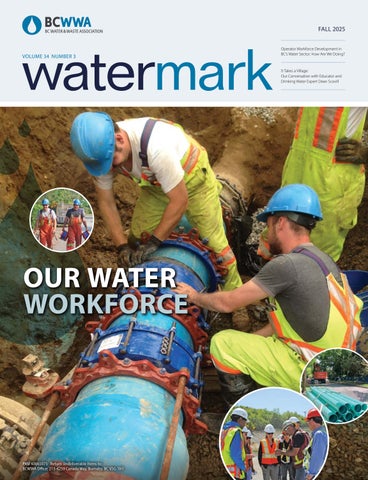
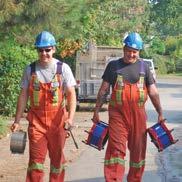
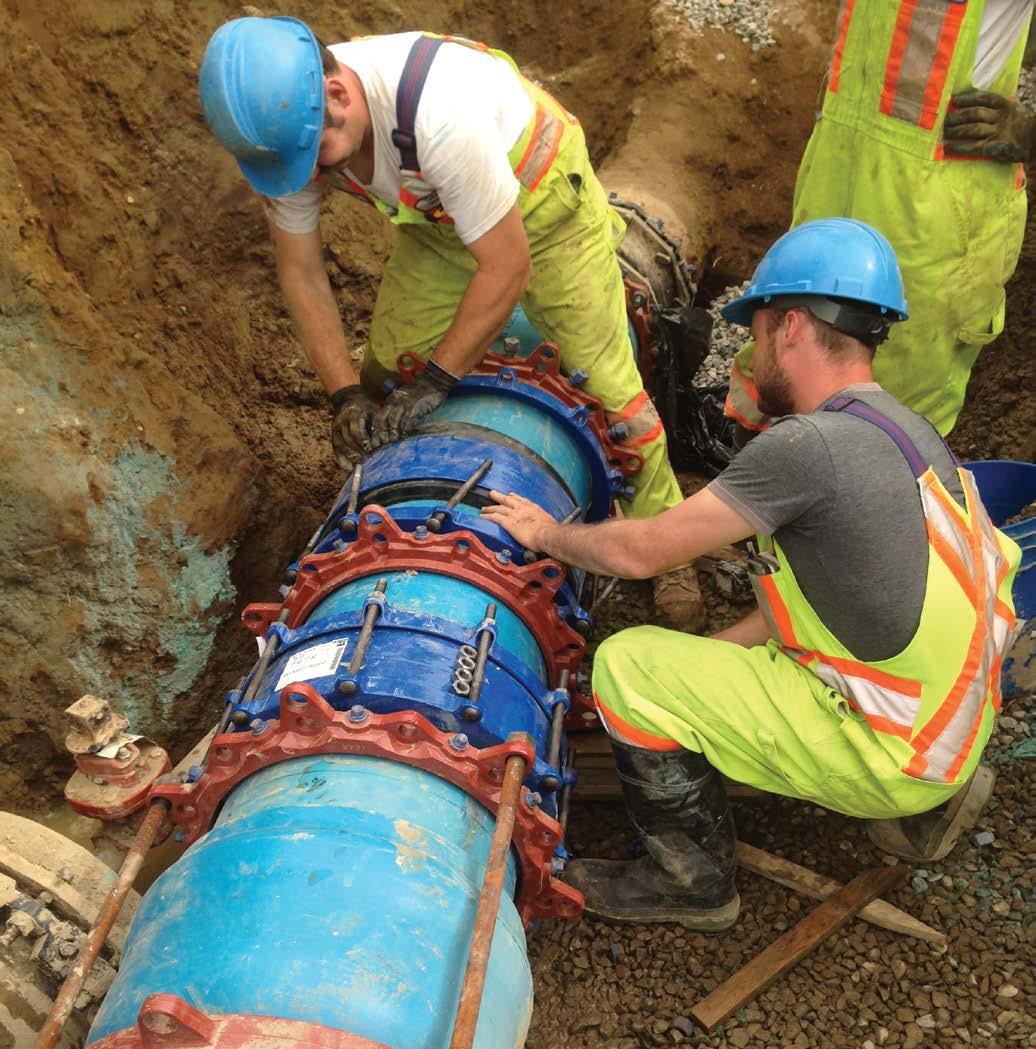
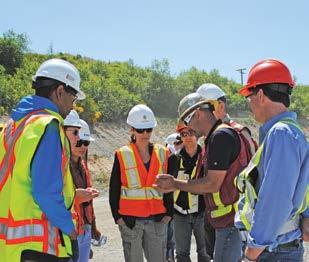
OUR WATER WORKFORCE
Associated
Engineering Announces the Following Promotions and Appointments
Associated Engineering is pleased to announce the following new roles and appointments.
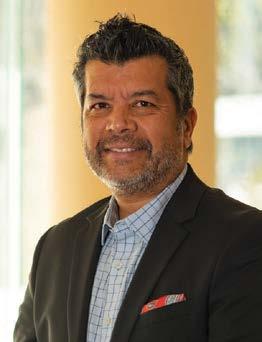
Elia Edwards, M.A.Sc., P.Eng. Vice President, Integrated Water
Solutions
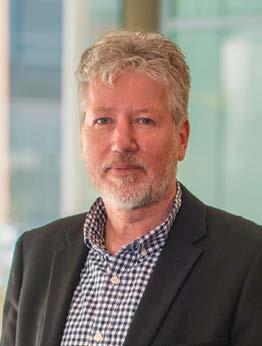
John van der Eerden, M.Eng., P.Eng.
Vice President, Water Resources
Elia Edwards has been appointed as Vice President, Integrated Water Solutions. He will provide insight and guidance in developing solutions for our full range of water planning and implementation projects. Elia has over 25 years of experience specializing in water treatment and distribution.
Edith Asselin has been appointed to the new position of Vice President, Service Delivery. Edith will focus on practices, processes, and skills development related to strategy, strategic planning, and project management. She will continue to provide project management and advisory services for our clients.
John van der Eerden has been elected as President of the Canadian Water Resources Association . John has been active in Water Resources Engineering for 37 years, with a background spanning hydrology, watershed management, urban drainage, stormwater management, flood control, dyking and drainage, and river engineering.
Corinna Hoodicoff takes on the position of General Manager of Associated Environmental Consultants Ltd. As a terrestrial and landscape ecologist, Corinna has provided advisory services in forest and grassland ecosystems and wildlife and their habitats. Clients know Corinna for her thoughtful and strategic project delivery approach based on sound risk management.
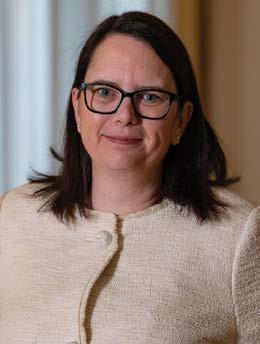
Edith Asselin, M.Eng., P.Eng., PMP, LEED AP Vice President, Service Delivery
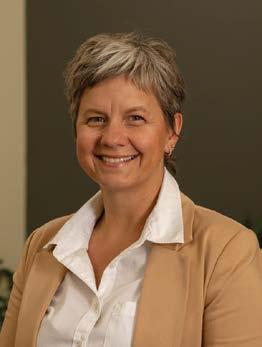
Corinna Hoodicoff, M.Sc., R.P.Bio.
General Manager, Associated Environmental Consultants
Associated Engineering is a proudly Canadian, employee-owned company. We are passionate about building vibrant, healthy, and resilient communities that support economic growth. That is why sustainability is part of every project we undertake, and how we operate our business. Together, we are shaping a better future.

Trenchless Specialists
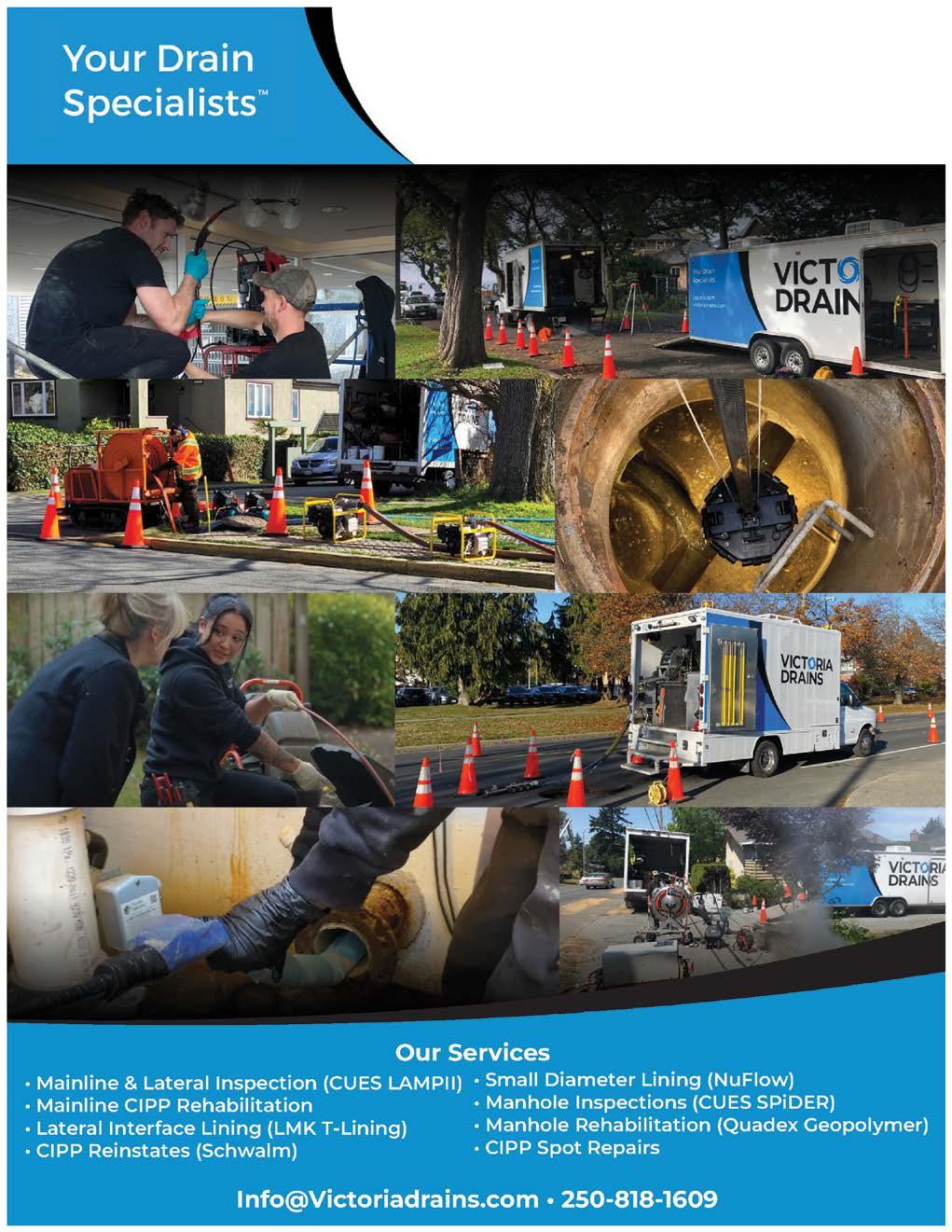
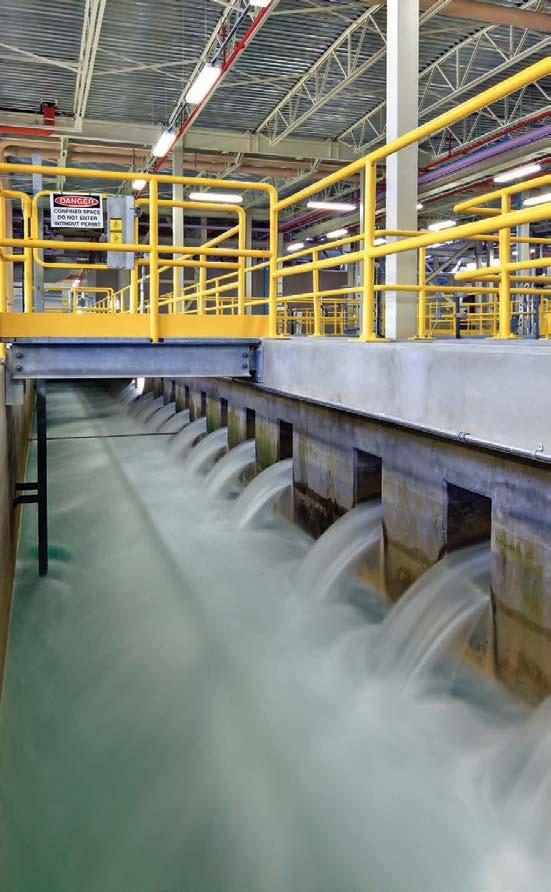
LEADERS IN WATER AND WASTEWATER INFRASTRUCTURE
Partnering with communities, consultants, and clients to deliver water and wastewater solutions that work—together.
Experience in all delivery models with a collaborative approach and solution provider mindset. water and wastewater
470+ projects 39 years $5B+ construction value


Sarah Pratt
of Communication, Outreach and Engagement
Watermark inquiries should be sent to: spratt@bcwwa.org
Articles do not necessarily reflect the opinions of the BCWWA.
BCWWA Office
215-4259 Canada Way Burnaby, BC V5G 1H1
Phone: 604-433-4389
Toll free: 1-877-433-4389
Email: contact@bcwwa.org
Website: www.bcwwa.org
Publication Mails Agreement #40065075 Return Undeliverable Items to:
BCWWA
215-4259 Canada Way Burnaby, BC V5G 1H1
Publisher: Craig Kelman & Associates
Managing Editor: Julia Waterer julia@kelman.ca
Marketing Manager: Chad Morrison - chad@kelman.ca
Advertising Coordinator: Sabrina Simmonds
Layout and Design: Kiersten Drysdale
3rd Floor - 2020 Portage Ave, Winnipeg, MB R3J 0K4
Phone: (866) 985-9780 Fax: (866) 985-9799
Email: info@kelman.ca Website: www.kelman.ca
©2025 Craig Kelman & Associates. All rights reserved. The contents of this publication may not be reproduced by any means, in whole or in part, without the prior written consent of the publisher.
PMC-STS, INC.
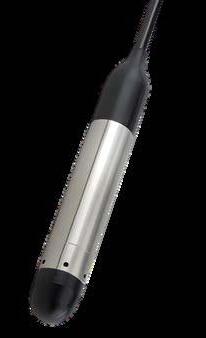
VL4000 SERIES
Ranges: 10" WC to 300 PSI
Accuracy: ±0.1 or ±0.25%
3/4" diameter welded titanium
Output: 4-20mA, 2-wire
Polyurethane molded or FEP Cable; FMC Intrinsically Safe
PMC-STS, INC.
MTM3213 SERIES
Ranges: 0-15 PSI to 0-500 PSI
Accuracy: ±0.1 FS
Titanium construction with 5-year corrosion warranty
Output: mV or 4-20mA VDC
Fully isolated sensing element; submersible with 0.39" diameter

PMC-STS, INC.
VL2000 SERIES
Ranges: 0-10" WC to 0-150 PSI
Accuracy: ±0.1 or ±0.25% FS
Titanium construction with 5-year corrosion warranty
Output: 4-20mA, 2-wire
Polyurethane molded or FEP Cable; FMC Intrinsically Safe

PMC-STS, INC.
VL5005 SERIES
Ranges: 20“WC to 1000 PSI FS, in PSI, PA, inches H20, bar
Accuracy: ±0.1 FS
0.94" Diameter w/ housing material: 316L Stainless Steel or Titanium
Dual Output: 4-20mA
Temperature Range: 25°F to 175°F

PRESERVING KNOWLEDGE; INSPIRING THE FUTURE
THE SUSTAINABILITY OF THE UTILITY SECTOR HINGES ON OUR ABILITY TO HONOUR THE CONTRIBUTIONS OF THE PAST WHILE PREPARING FOR THE DEMANDS OF THE FUTURE.
For utilities to thrive tomorrow, we must invest in people today –by preserving the wisdom of those who came before, empowering those who serve now and inspiring those who will lead next.

exacerbated by hiring practices that often don’t allow for positions to overlap. Internally, fostering a culture of continuous learning and collaboration ensures that professional development is proactive, inclusive and future-focused.
Ultimately, the sustainability of the utility sector hinges on our ability to honour the contributions of the past while preparing for the demands of the future. This includes recognizing the value of retiring personnel, facilitating intentional knowledge transfer and cultivating a sense of purpose among incoming professionals.
Practical measures can ease this transition. Employers should ensure an overlap between outgoing and incoming staff to allow sufficient time for mentorship and knowledge exchange. In the City of Burnaby, for example, recently retired employees are occasionally rehired as auxiliary staff to provide historical context and operational guidance. Additionally, tools such as video recordings and voice memos can be employed to document troubleshooting processes and decision-making rationale – preserving expertise for future generations.




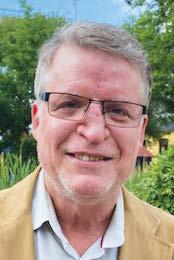
LEE COONFER
INVESTING IN OUR FUTURE WATER WORKFORCE
When I joined the BCWWA two and a half years ago, I was immediately drawn to two things: the calibre of subject-matter experts involved with the Association, and BCWWA’s impressive track record in delivering highquality education initiatives and networking BCWWA is the place to be for education, cross connection control (CCC) and water sector engagement – full stop.
Historically, BCWWA’s fundamental strategic priorities have aimed to develop a strong education program, create valuable opportunities for member engagement and administer the CCC certification program. And again, the BCWWA does this well. Yet, year after year, our members have been telling us that their number one concern is the future of the sector’s workforce. The question still stands –what is being done to promote the water sector and recruit future members of the workforce?
This question has been circulating in BCWWA’s orbit for years, and it was posed to me by the executive search team during my interview process. Even though this responsibility was not part of BCWWA’s strategic mandate, it was clearly a priority for its membership.
So, what do we do about it?
The answer is not immediately clear – not to me, and not to my Board. But what is clear to me is the need to continue what BCWWA does best: educate and engage. It’s a no-brainer.
In the absence of an obvious answer, our
To ensure that our water sector professionals in BC and the Yukon are current on best practices and up to date on the latest regulatory standards and expectations.
To promote a culture dedicated to continuous improvement by facilitating the exchange of ideas, showcasing innovative products and services offered by suppliers
To provide learning opportunities through BCWWA conference programs, webinars and
WE’RE CONNECTING WITH THE NEXT GENERATION THROUGH INITIATIVES SUCH AS THE STUDENT DESIGN COMPETITION, OUTREACH TO ENGINEERING SCHOOLS, ENHANCING CONFERENCE PROGRAMS, INCLUDING THE OPERATOR CHALLENGE, WHICH SHOWCASES THE SKILLS AND IMPACT OF FRONTLINE WATER PROFESSIONALS.
As we face uncertainty and continue to question the future of the water sector’s workforce, I can assure you, that your industry colleagues and my Board are working on it. We have actively been addressing this issue since last year’s organizational restructuring to better support BCWWA’s programs and services, incorporating advocacy and engagement as part of our strategic priorities.
The former outlines how we can continue to support the current workforce, while the latter will inform how the BCWWA can use its voice to draw awareness to the workforce challenge and inspire a collective approach to promote the water sector as an attractive and fulfilling employment opportunity.
In the meantime, BCWWA is taking action. We’re connecting with the next generation through initiatives such as the Student Design Competition, outreach to engineering schools, enhancing conference programs, including the Operator Challenge, which showcases the skills and impact of frontline water professionals. We also answer the call when school districts put on job fairs and career information sessions.
Perhaps a new role for BCWWA is to use its voice as an advocate for the water sector. In talking with our new Communications Coordinator, Justin MacDonald, about the role BCWWA can be playing in this space, he suggested that BCWWA should employ the
AIDA proposition. As I stared at him blankly, he explained that it was an acronym: ‘Awareness, Interest, Desire and Action.’ BCWWA ought to follow this blueprint to meet the awareness and recruitment challenge. For me, this exchange reinforced the need to identify and attract bright young people to the sector.

Reliably Operate:
-Quarter-turn valves
-Multi-turn valves
-Dampers
-Open/close applications
-Modulating applications

All while offering integral motor controls and compatible interfaces for a variety of plant control systems built for the Canadian Market (CSA Compliant).


Over time, untreated MIC can erode the structure, the budget, and the public’s trust. Bio-San C500 resists the cycle of corrosion and repair, extending the service life of critical wastewater infrastructure.
•Antimicrobial Protection: Actively prevents microbial-induced corrosion (MIC) at the source.
• Permanent Waterproofing: Protects concrete under extreme hydrostatic pressure.
•9x Less Corrosion: Third-party tested for performance in aggressive sewer conditions.
• Self-Healing Action: Seals hairline cracks when re-exposed to water—automatically.
•Visual Detection System (VDS): Confirms presence in hardened concrete for quality assurance.
• Time-Saving Application: Easily added at the batching stage

BCWWA NEWS

HEALTH CANADA PUBLISHES FINAL DOCUMENT ON DRINKING WATER GUIDELINES: OPERATIONAL PARAMETERS
The guideline technical document for Canadian Drinking Water Quality: Operational Parameters has been finalized and published. This document consolidates and updates all relevant information for the following seven parameters: Calcium, Magnesium, Hardness, Chloride, Sulphate, Total Dissolved Solids (TDS) and Hydrogen Sulphide. These parameters occur naturally and are found in most Canadian waters, with the highest prevalence in groundwater aquifers. The document introduces key changes and provides refinements and clarifications to better support water system operators and regulators across Canada. These guidelines now include a section comparing Canadian standards with those of other countries and has a stronger emphasis on taste, odour and appearance to ensure water is not only safe but also palatable.
WELCOME NEW BCWWA TEAM MEMBERS
The BCWWA would like to warmly welcome three new staff members who recently joined our organization.
Justin MacDonald is a full-time communication coordinator supporting our communications team. He is a recent graduate with a bachelor’s degree in professional communication from Royal Roads University (Class of 2024), based in Victoria, BC. Justin brings over five years of experience in the resource sector, having worked with more than 100 professionals across forestry, mining and environmental non-profit organizations in both Canada and the United States. He is passionate about crafting clear, impactful messaging that connects people and supports informed public engagement. Justin is dedicated to delivering high-quality communication that resonates with people and simplifies complex ideas into clear messages. He has a great smile too.

Nadim Khan
Nadim is excited to join the BCWWA team as program support coordinator. He brings experience supporting programs and projects across non-profit and business settings and has a passion for building strong connections with people. Outside of work, he can be found snowboarding in the winter, playing soccer, or diving into personal data projects just for fun. Nadim is looking forward to meeting members of the BCWWA community and being part of the great work happening in the water sector.

COLLABORATION ACROSS BORDERS
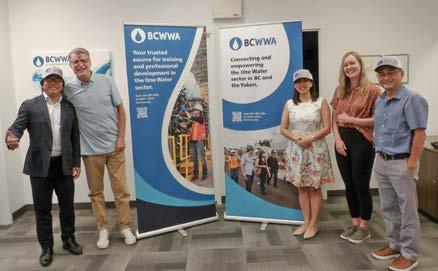
In August 2025, the BCWWA team met with the Vietnamese Canadian Business Association to chat about industry knowledge-sharing and collaboration opportunities as a Vietnam contingent of water and wastewater professionals and leaders plan to visit BC to learn about our water management infrastructure and practices.
We look forward to continuing the conversation on how both our countries can learn from each other regarding sustainable and efficient water systems.








BCWWA EVENTS CALENDAR

Please note that this calendar is for informational purposes only and may be subject to change. Please contact the event host directly for further information.
2025 DATES
September 27 – October 1, 2025 WEFTEC 2025 Chicago, IL
October 6–7, 2025
October 7–9, 2025
PWABC & BCMSA (JAC) Joint Conference Whistler, BC
AWWA WaterSmart Innovations Reno, NV

Getting More Out of Every Drop
Stantec’s water treatment expertise is reflected in our project design and delivery where treatment efficiency, life-cycle costs, operability, and process integration are key to the success of our projects.
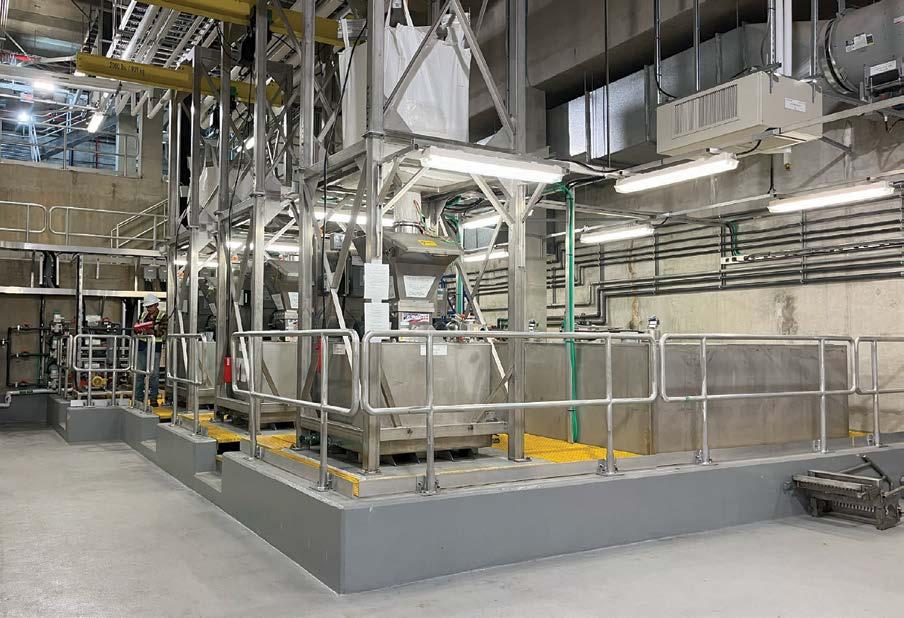
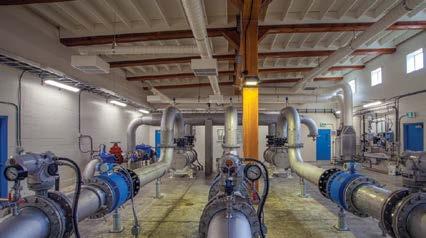
Seymour Capilano Filtration Plant Dry Polymer Upgrades Project, Metro Vancouver. North Vancouver, BC
THE WATERLINE
The latest water industry news, brought to you by the BCWWA
PEMBERTON, SLRD SECURE FUNDING FOR UNIVERSAL WATER METERING PILOT PROJECT

The province has awarded $5.1 million to the Village of Pemberton (VOP) and Squamish-Lillooet Regional District (SLRD) to support to installation of water meters with the goal of tracking and reducing water consumption. The province announced a $50 million Water Meter Pilot Project on May 6. The investment will cover the installation of 15,000 new automated water meters in 19 small, rural and First Nations communities across the province. The funds will cover 100 per cent of eligible project costs – including the meters’ purchase and installation, cellular infrastructure and software and data collection and communication.
This initiative aims to help small communities and local water suppliers manage water use, mitigate the impacts of drought, detect leaks by noting abnormal water usage and ensure that customers are only paying for what they use.
Source: Penticton Herald, Luke Faulks, May 28, 2025
WATER MAPPING HELPS RURAL BC COMMUNITIES PREPARE FOR WILDFIRE RESPONSE
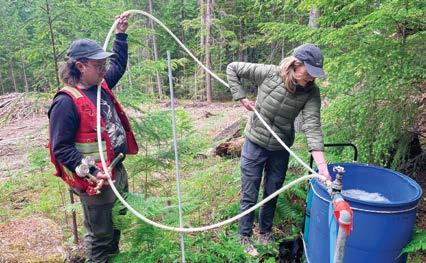
As wildfire seasons grow longer and more destructive, rural communities in British Columbia are turning to a proactive, made-in-BC solution: mapping water sources in advance of fire emergencies. Led by Living Lakes Canada, a water science and stewardship non-profit, this initiative is helping communities across the Columbia Basin strengthen their emergency readiness by identifying and documenting critical water sources before
wildfires strike. The project is deeply rooted in community collaboration. Residents are invited to share their knowledge of creeks, standpipes, hydrants, access routes and other important features on both public and private lands (with landowner consent). This on-the-ground information, often missing from existing emergency response systems, is combined with scientific water data to create detailed, interactive maps.
Source: Water Canada, July 7, 2025. Image credit: LLC Photo
WSP PARTNERS WITH AUSTRIAN FIRM FOR ELECTRODES THAT DESTROY PFAS THROUGH ELECTRO-OXIDATION

WSP is touting the development of its electro-oxidation wastewater treatment system, known as PFASER, for rapid, on-site elimination of per- and polyfluoroalkyl substances (PFAS) along with other persistent water contaminants. The electro-oxidation system uses patented longlasting boron-doped diamond electrodes to break down pollutants at the molecular level without the need to manage concentrated liquid reject or sludge. The electrodes – engineered for chemical stability, physical durability, treatment efficiency, and minimal maintenance – come through a partnership with pro aqua Diamantelektroden Produktion GmbH in Austria.
Source: Environmental Science & Engineering, July 16, 2025



Industry-leading PEX pipe designed for long-term reliability in potable water applications. Flexible, corrosion-resistant polyethylene pipe ideal for quick installations and lasting performance.

Made to copper tube size (CTS) dimensions.
From Reflection to Action: How to Make Meaningful Steps Toward Reconciliation

As BCWWA’s Reconciliation Committee prepares to mark National Day of Truth and Reconciliation on September 30, 2025, it’s essential to reflect on meaningful actions and recommendations that honour Indigenous communities and promote genuine reconciliation. The following suggestions aim to foster respectful partnerships, acknowledge Indigenous rights and integrate Indigenous knowledge into water management practices.
1. Elevate Indigenous Voices and Leadership
First and foremost, the Committee recommends actively amplifying Indigenous voices in water governance. This involves inviting Indigenous leaders and elders to participate in water planning, decision-making and educational events. Creating platforms where Indigenous communities can share their traditional ecological and spiritual knowledge is vital. Respectful engagement extends beyond consultation; it requires authentic partnership and shared leadership roles.
2. Incorporate Indigenous Knowledge Systems
Second, integrating Indigenous knowledge into water management strategies is crucial. The Committee suggests developing formal frameworks that recognize and utilize traditional insights and historical knowledge insights alongside scientific data. This integration can lead to innovative solutions for water conservation, quality and watershed health, benefiting all communities. It also demonstrates respect for Indigenous stewardship and cultural heritage.
3. Promote Education and Awareness
Third, the Committee recommends organizing educational initiatives leading up to and on September 30. These programs should highlight Indigenous histories, contributions and current challenges related to water rights and access. Awareness campaigns can foster empathy, dispel misconceptions and build stronger community bonds. Partnering with Indigenous organizations ensures authenticity and depth in these educational efforts.
4. Foster Collaborative Projects and Initiatives
Fourth, fostering collaborative projects that benefit both Indigenous and non-Indigenous communities is essential. These may include joint watershed management programs, conservation initiatives or
infrastructure projects that respect Indigenous territories and rights. Such collaborations demonstrate commitment to reconciliation through tangible, mutually beneficial outcomes.
5. Advocate for Policy Reforms and Land Acknowledgements
Fifth, the Committee emphasizes advocating for policy reforms that recognize Indigenous sovereignty and land rights. Additionally, promoting meaningful land acknowledgements during events, meetings and public forums affirms respect and acknowledgment of traditional territories. These acts serve as symbolic gestures that reinforce a commitment to reconciliation.
6. Commit to Ongoing Engagement and Relationship Building
Finally, reconciliation is an ongoing process. The committee recommends establishing long-term commitments to relationship building beyond September 30. Regular dialogues, joint trainings and community visits strengthen trust and understanding, laying the groundwork for sustainable partnerships.
In Summary
As September 30 approaches, the BCWWA Reconciliation Committee urges all members and stakeholders to undertake these recommendations with sincerity and respect. Recognizing Indigenous rights, knowledge, and leadership not only enriches water stewardship but also advances the path toward reconciliation. By embracing these actions, we honour Indigenous communities and work together toward a more inclusive, sustainable future for water management in British Columbia and the Yukon.
If you’re ready to make a difference and support reconciliation in action, we’d love to hear from you. Contact Angelene Fellows at afellows@bcwwa.org to share your expression of interest, please include a summary of why you would like to take part in this community.

Operator Workforce Development in BC’s Water Sector: How Are We Doing?
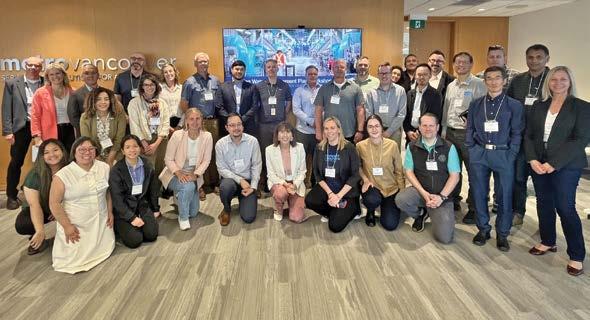
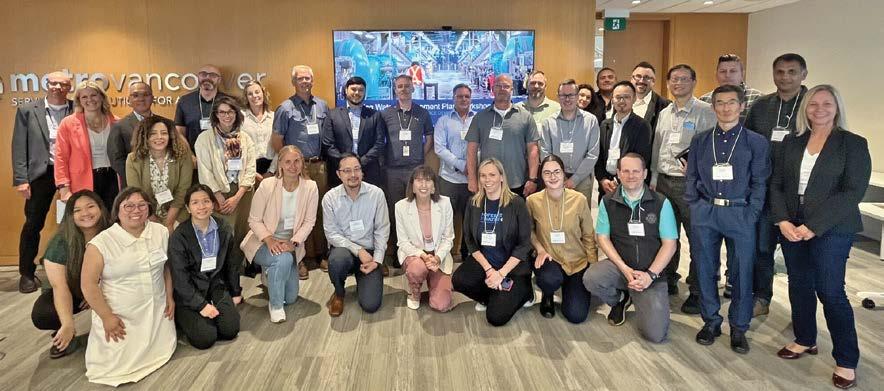
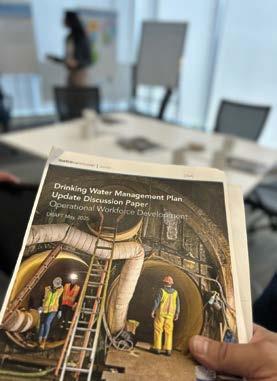
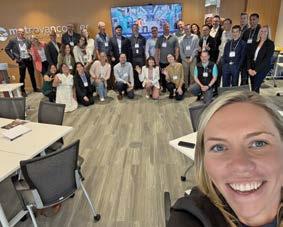
In early June of 2025, Metro Vancouver, the regional district that supports the 21 municipalities of Greater Vancouver, invited stakeholders to a workshop at their head office to share input on its updated Drinking Water Management Plan (DWMP).
Stakeholders include regional utility managers, water sector training providers like the British Columbia Institute of Technology (BCIT), school board representatives and professional associations and certifiers, like the BC Water & Waste Association (BCWWA) and Environmental Operators Certification Program (EOCP). The meeting was an opportunity for stakeholders to meet with Metro Vancouver staff to provide feedback on one of the plan’s priority areas of operational workforce development.
Metro Vancouver is currently in the process of updating its Drinking Water Management Plan to establish the strategic direction of the region’s drinking water over the next 10 years. Since its last update in 2011, the region has proactively worked to address critical factors involved in ensuring reliable water supply,
such as population growth, seismic events and climate change.
According to Metro Vancouver’s Public Engagement Summary Report, Greater Vancouver’s thirst for water is only set to increase, as by 2040, approximately four million residents will soon rely on the drinking water utility for their drinking water needs. But delivering high-quality drinking water to a population is no easy feat. Not to mention considerations to climate change, water supply conservation and quality, natural disaster risks and aging infrastructure. But there is a vital component to the equation: the people behind the water. The water operators and staff who work every day to provide safe and clean drinking water for us all. Following Metro Vancouver’s workshop, we here at the BCWWA want to continue the conversation on how to attract and support a skilled water workforce to address operator shortages and ensure retention, and where professional associations and certifiers, like the BCWWA and EOCP, can help fill in the gaps.
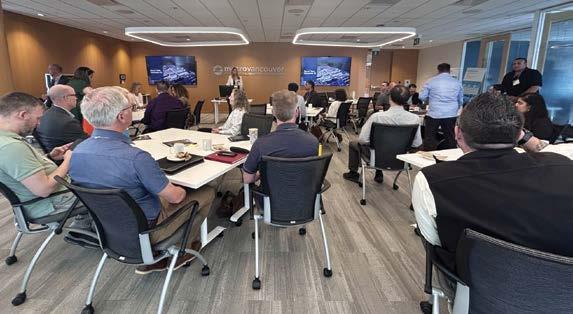
Watermark spoke with two BCWWA Board members, Jim Yargeau and Darcy Dion, who attended the Metro Vancouver workshop in June. The workshop was also attended by BCWWA Small Water Systems Community Network Coordinator Claire Ross to contribute a small water systems operator perspective.


For Jim, an account manager at Spartan Controls with over 20 years of experience in the water industry, the decision to jump into a watercentric career was easy. Upon graduating high school with a keen interest in working with technology in a hands-on capacity soon led to an education in mechanical engineering from BCIT and a full-fledged technical career with a specialized focus on water and wastewater.
And so, the conversation on how to recruit and retain operators can at times feel disconnected from the experiences of those currently in the industry. “It was surprising that in my 20 years as a supplier to hear that there are ongoing issues with recruiting operators as it is not often talked about in my day-to-day interactions,” says Jim. “But I got a sense from around the table that day that there was an immediate need to bring more operators into the work force and a clear desire to provide more educational opportunities for operators.”
According to the results of Metro Vancouver’s public engagement survey on the updated Drinking Water Management Plan, 60% of respondents agreed that developing and attracting a skilled workforce to manage drinking water is very important. Simply put, municipalities and utilities need the right people with the right training for the job. But building a workforce that can service all needs of water management is complex and perhaps starts from the beginning.

SPREADING AWARENESS
The subject of operator workforce development is not unique to a large metropolitan area like Greater Vancouver, nor is it a new priority. Over the past ten years, Canadian municipalities and governments alike have sought ways to address and mitigate these workforce concerns.
In 2015, the BCWWA, in partnership with EOCP and provincial and federal governments, released a BC-specific water and wastewater sector workforce profile. The report highlighted that impending retirement-related vacancies of senior management positions and associated knowledge loss over the next ten years would be a key factor in labour supply shortages.
One of the largest challenges is attracting youth to this career path. For many who consider learning a trade when thinking of life outside of high school, a career in the water and wastewater field may not be what comes to mind immediately. For Jim and Darcy, this was a critical takeaway from the workshop.
“I think people have three or four trades in mind, like electrical, plumbing or carpentry,” says Jim. “But there is so much more when it comes to this industry, and you don’t always automatically think of the many interesting careers involved in delivering water to a community or removing wastewater.”
From Darcy’s perspective, the idea of a career as a water operator should start in elementary school and, at the very least, in middle school or high school when students are still exploring potential career paths. “I think more outreach in schools, speaking on the profession, the environment and how water gets in our tap
every day is a solution to the problem,” says Darcy, “I believe the BCWWA and EOCP could collaborate with the province and the Yukon on a wider scale and work with municipalities in Greater Vancouver to provide resources and programming.”
RETAINING TALENT
The Metro Vancouver stakeholder workshop was also an opportunity to dig deeper into the challenges that come not only with recruiting new water operators but with retaining existing ones. From the experiences of the Board members who attended the workshop, there has been much discussion lately on how best to support operator training and wages and ensure that all areas of the industry are supported.
Despite a growing interest in trades across school systems, fulfilling the demands of the niche areas of the water sector, particularly water distribution, remains a challenge. “From what I hear from a few different folks,” notes Jim, “is that the problem is not hiring for water treatment plants but for other areas of the sector, such as water distribution and working in the construction side of water delivery – they need a lot more people to fill these roles.”
Another factor at the forefront when it comes to operator retention is the cost of living. For many operators who move to large urban areas to complete their education and training, the cost of living can make the difference between staying in the city or moving out to a smaller community where the cost of living is not as high. Encouraging utilities and municipalities to
invest in operator training and a living wage is a start. Still, there are also emerging discussions on how to retain local talent best, especially those who want to work for their home communities.
“One of the challenges I keep hearing from people who work in the Greater Vancouver region and Sea to Sky Corridor is the realization of the high cost of living,” says Jim. “You might be from Kamloops or another smaller city in BC where the cost of living is lower and then you come down to Vancouver or a surrounding City and quickly realize that the cost of living is much higher. This is where it gets harder to attract and retain talent. Whereas if you can establish locally based education focused on the water sector,
then maybe someone who is from Burnaby or another large suburb and has already laid down roots and built their community is more likely interested in sticking around.”
MOVING FORWARD WITH PURPOSE
The BCWWA is grateful to Metro Vancouver for allowing us to have a seat at the table when it comes to discussions around operator recruitment and the future of this critical workforce. As a professional association that represents over 4,500 water professionals,
supporting operators and water professionals in the longevity of their careers is what we do.
Moreso, our 2025-2027 Strategic Plan identifies education as a key priority as we continue to develop education and training solutions for the water sector. This includes offering a variety of operator training options led by industry experts, from online-based courses to custom and special request courses, that can be accessed across BC and the Yukon. We also work to support young professionals to provide skill-building and networking
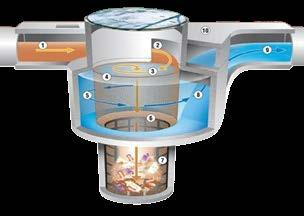
The Salsnes filter can enhance your treatment capacity with smallest footprint

opportunities, such as the Operator Challenge competition at our Annual Conference, Young Professionals Summit Award to attend AWWA and WEF networking events and a young professionals’ committee and group.
Coming off this workshop, it was heartening to be among other stakeholders who share this same passion and outlook for the sector. What stood out the most is the realization of how many stakeholders and supporters are part of these efforts to ensure a vibrant future for the water sector workforce.
This includes a partnership between the BCWWA and EOCP, who both serve as training providers for the province. BCWWA provides training courses to operators and certifies cross connection control backflow assembly testers, while EOCP provides operator certification.
“There is some good synergy there,” says Jim.
“These two organizations have a history of coordination to ensure operators are supported and knowledge gaps in the workforce are filled. Perhaps a unified front in the province is what is needed for this type of initiative.”
Metro Vancouver continues to engage the public and develop the plan’s goals, strategies and actions for the updated Drinking Water Management Plan into late 2025. The completion of the update is expected in 2026.
For now, the BCWWA looks forward to continuing this conversation with our stakeholders and developing our program to meet the needs of a changing workforce. At the end of our conversation with Jim, we remarked that the dialogue for building a robust water workforce is unlikely to lapse anytime soon. “Yes, exactly,” says Jim. “It is going to be ever-changing and evolving.”
REFERENCES:
Metro Vancouver. (2025). Drinking Water Management Plan Update. Phase 1: Public Engagement Summary Report.
BC Water & Waste Association and Environmental Operators Certification Program. (2015). BC Water & Wastewater Sector Workforce Profile.

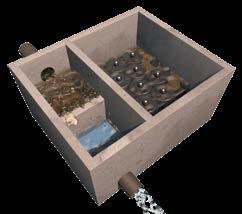
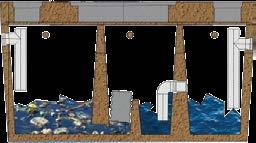
Stormwater Treatment

Filter
The first stormwater filter technology in Canada to achieve ISO 14034 Environmental Technology Verification.
• Small footprint & fewer cartridges
• Low driving head (457 mm or less)

• High treatment flow (5 l/s per Hi-Flo cartridge)
• Qualifies for LEED credits
• Rinseable & reusable cartridges

• ISO verified performance

















Langley Concrete Group | www.langleyconcretegroup.com
Langley (604) 533-1656
Chilliwack (800) 667-9600
Lombard (250) 478-9581
® www.imbriumsystems.com ISO 14034 Verified
Manhole
Catch Basin or Vaults
It Takes a Village: Our Conversation with Educator and Drinking
Water Expert Dean Scovill

The future of British Columbia’s water workforce is on the mind of Dean Scovill – and he’s not alone. Municipalities, utilities and the broader water industry are increasingly focused on workforce development as they prepare for rising demand in water services. This demand is compounded by the challenges of climate change, water scarcity and aging infrastructure. Adding to the pressure are growing gaps in recruitment and organizational knowledge. As many senior water and wastewater professionals approach retirement, training and continued professional development becomes critical. So, how can the sector prepare for this transition?
Just like our water systems, we decided to start at the source. What insights can we gain from those working directly in the sector and support operator training? How can recent graduates and new sector professionals equip themselves for a successful career in water operations? And what role do training institutions and sector partners play in addressing these challenges and supporting professionals throughout their careers?
To explore these questions, Watermark sat down with Dean Scovill, a BCWWA Education instructor and drinking water expert with over 35 years of experience in water operations and health protection. In our candid conversation, Dean shared his perspective on the skills needed to enter the industry, the importance of comprehensive training and mentorship opportunities and the deeply rewarding nature of safeguarding public drinking water.
WM: Tell us about your background and career in water?
I am an educator with the BCWWA on a part-time basis, and I have been instructing for many years. I am a former engineering project coordinator with the City of Surrey, and prior to that, I was a drinking water officer with Fraser Health. Going back further over the span of my 35-year career, I was an environmental health officer for Health Canada. I was responsible for all federal water and wastewater facilities in northern BC, including First Nation bands, airports and the Department of National Defence.
WM: What sparked your interest in focusing on water and public health?
My education started right here in Burnaby at the British Columbia Institute of Technology (BCIT) in Environmental Health, where my focus was on air quality and human health impacts. I wasn’t at the time focused on water, but it was part of my training, as well as wastewater and a host of other disciplines. It wasn’t until I entered the industry in northern BC that I started to see issues with water quality and the challenges communities have with faulty equipment and lack of operator training. Usually, it was community staff volunteering to take care of these systems, and while they were passionate about what they were doing, they needed guidance. There was no formal training at that time, so I began instructing those who were working with water systems.

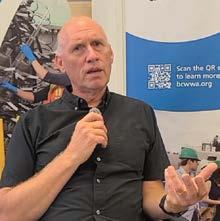
WM: What was it like to work in these different types of roles and how did it inform your perspective as an educator? It was during my time as an environmental health officer when I thought, “This is definitely an area I need to focus on” because water is a big portfolio that impacts whole communities.
When I then moved back to the Lower Mainland, where I am originally from, I worked as a drinking water officer for Fraser Health. I was responsible for inspecting five large municipal water systems and 76 small water systems. I inspected all areas of the system to ensure compliance with the Drinking Water Protection Act. One of those systems was the City of Surrey, and an opportunity arose in 2013 to work for that municipality. I became knowledgeable about water operations from the civil engineering side, not just from the perspective of a regulator.
WM: From your perspective, what does it mean to be a water operator? What are the foundational and transferrable skills needed? How can you break into the industry?
If I had known about working in water before I went to BCIT, I would have gone into this area first because I ended up gravitating toward it later in my career. I didn’t know anything about this industry when I was in high school and I certainly didn’t know about public works in the way that I do now. I would encourage organizations, such as BCWWA,

to approach schools for career days or perhaps municipalities, which are always looking for future employees, to initiate opportunities for those who want to get into this field of work.
But it’s not for everyone, it’s outdoors and it’s hard work. You have to be skilled with tools, understand safety protocols and be prepared for any weather. There are great days and there are challenging days but the people I work with just really enjoy it.
It’s more than just a career and paycheque. It’s about a responsibility to a large community. I remember a new hire at the City who was a Red Seal plumber. He had previously worked in the private sector on single property complaints. I asked him about the difference between working in the private sector and now working in the public sector for the city. For him, it meant not just working with one client at a home or business, but now he is responsible for all the citizens of the municipality. What operators do is essential and a big responsibility.
For anyone starting out, I always encourage people with an interest in water to start as a labourer or other entry position. Even if it is a temporary position for three months, at least you are gaining experience. You get to know the team, the policies, the safety protocol and the inner workings of the organization. If they have an opening for a full-time position, then you have now gained experience and knowledge from the inside, so you might have a better opportunity to obtain that job.
WM: What is the first thing new sector professionals should know about the industry? What are some ways new professionals can become familiar with the regulatory environment and interconnecting jurisdictions?
That’s a good question because many people enter this profession from different backgrounds. They work in construction, plumbing, mainlining, etc. They have strong technical abilities working with tools, water hydraulics, fitting and valves and they like
working with their hands and being outdoors. However, they don’t necessarily understand the regulatory side and why we do the things we do, why certain guidelines and regulations need to be met and how to maintain the integrity of a water system.
And regulations are not just for field staff. Regulations are for everyone, from operational managers to city staff and elected officials, as these are the people who are mandated to ensure the maintenance, longevity and integrity of these systems, despite funding constraints.

It could be helpful to collaborate with other municipalities to determine what resources and equipment are the most effective, which ones have the best value, are the easiest to repair or are sourced in Canada. I think collaboration is the best way to make decisions and create best practices.

This is where training, like BCWWA’s ‘New Sector Professionals’ course, is a great opportunity to get the full background on why we do what we do and how it relates to operator certification. Operator
certification has only been in effect since 2003. Before then, operators were trained in the field. In the past 20 years, I think certification has made a significant difference in standardizing this work.
WM: How can senior operators and professionals be mentors in this field?
I’ve worked with a lot of people who are great supervisors. You can ask them a question, and they are glad to share their knowledge and guide you through the steps. This applies to new staff or even older staff who are unfamiliar with a certain procedure. I think senior operators have a pivotal role in helping grow junior staff within an organization.
Outside of the organization, I see mentorship being more of a challenge because operators have limited time. It would be so beneficial to develop opportunities where operators can connect through the sharing of information, resources or equipment through province-wide networking events, such as BCWWA’s Annual Conference & Trade Show.
This is where it is important for senior leadership to build bridges with neighbouring municipalities to share resources and industry knowledge. Budgets are only getting tighter and perhaps there can be a cost realized in buying in bulk with cost-sharing among communities. For instance, water metering is becoming more commonplace. When I worked for the City of Surrey, we had some good products and some challenging products. It could be helpful to collaborate with other municipalities to determine what resources and equipment are the most effective, which ones have the best value, are the easiest to repair or are sourced in Canada. I think collaboration is the best way to make decisions and create best practices.
WM: Finally, for some fun, can you tell us something quirky about the water sector or the people you work with that brings you joy? Yes, I have a few! But I have to say, the water operators I work with are a lot of fun and are great to be around. It’s a unique culture. When they are on the work site, they are serious and focused. But when away from the site, they like to let off a little steam and joke around.
Once, I wanted to have a little fun with them because they like to joke around. I hid some electronic crickets throughout the office. You couldn’t see them, but every five minutes or so the crickets would chirp. And so, they would say, “Did you hear that?” and I’d say, “Hear what? I don’t hear anything.” I enjoyed working with people who didn’t take themselves too seriously and could still get the job done.
Want to hear more from our conversation with Dean? Check out BCWWA’s Instagram page (@bcwwa_org) for clips from our interview!




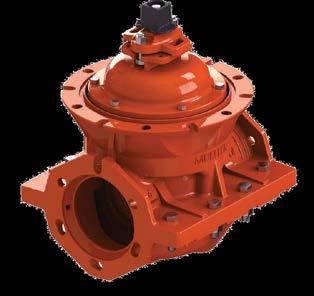
Mueller Water Products, Inc. is a leading manufacturer and marketer of products and services used in the transmission, distribution and measurement of water. Since 1857, Mueller has been helping municipalities increase operational efficiencies, improve customer service and prioritize capital spending demonstrating why Mueller Water Products is Where Intelligence Meets Infrastructure®.
For more information, contact: Jordan Webb | jwebb@muellerwp.com | 204-797-8428 Infrastructure Territory Manager

BCWWA STUDENT DESIGN COMPETITION
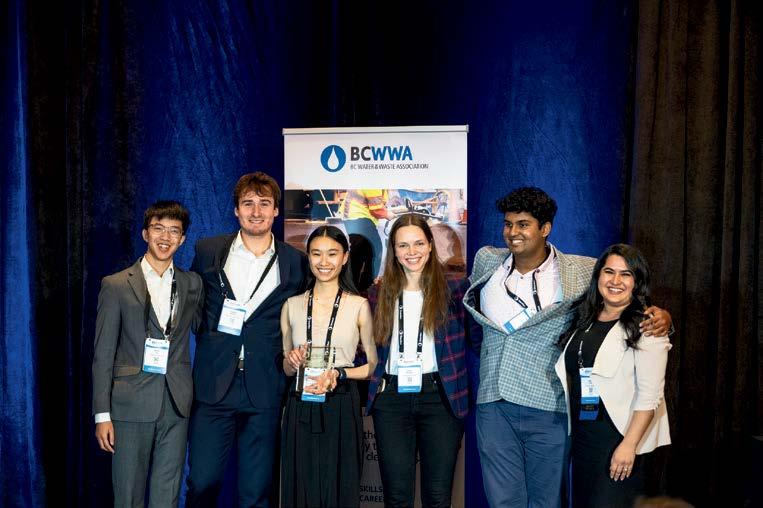
Since 2013, the BC Water & Waste Association (BCWWA) has hosted an annual design competition for postsecondary students in British Columbia. This is an opportunity for students to immerse themselves in a “real-world” design experience and learn more about careers in water and wastewater engineering and sciences.
Teams of students prepare and present a conceptual design that addresses the problem statement presented by a municipality in BC. The winning team is awarded at BCWWA’s Annual Conference & Trade Show and goes on to compete internationally at the Water Environment Federation’s Technical Exhibition and Conference (WEFTEC).
WHY PARTICIPATE?
Enhance your design, presentation and communication skills. Expand your water and wastewater sector knowledge and approach real-world challenges. Receive a complimentary one-year BCWWA student membership. An opportunity to compete locally and internationally.
ELIGIBILITY
All team members must be:
A registered student at a post-secondary institution in British Columbia.
A senior student (3rd, 4th level or graduate) in an environmental, civil, chemical engineering or related field.
To learn more about the 2026 competition, visit: www.bcwwa.org/site/awards/competition/sdc/overview
Have questions?
Contact Katie Patrao at kpatrao@bcwwa.org
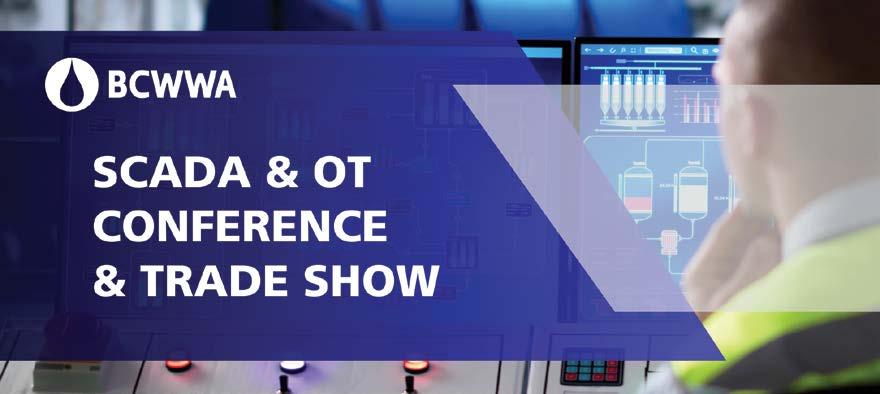
SC ADA SYSTEMS, OPERATIONAL TECHNOLOGY & YOU!
BCWWA’s SCADA & OT Conference & Trade Show is back! From November 18–19, 2025, in New Westminster, this two-day conference brings together professionals and experts to explore innovations, challenges, and best practices in operational technology and automation systems within the water sector. The conference features a full education program, networking opportunities, activities and an industry trade show.
REGISTRATION
Early bird pricing starts on September 9, 2025. Register early to save on regular rate pricing! BCWWA members can access discounted member registration rates. Regular registration begins on October 7, 2025.
EDUCATION PROGRAM
The BCWWA and SCADA & OT Committee are pleased to bring an incredible slate of speakers and presentations to this year’s conference. The Education Program is now available to view on our website at bcwwascadaconference.org
Operators and other industry professionals who need education credits can collect Continuing Education Units (CEUs) during the conference by attending eligible education sessions. We anticipate that a maximum of 1.2 CEUs will be available for attending both days of the in-person conference.
TRADE SHOW
To supplement the program, we have organized a one-day trade show on November 18 as part of the two-day conference. This is a unique opportunity to meet and connect with industry contacts and companies working in the SCADA and OT space. A list of exhibiting companies is available on our website.
ACCOMMODATIONS
OUR 2025 KEYNOTE SPEAKER
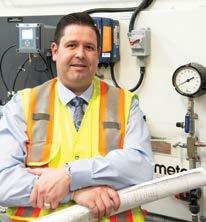
This year, we are pleased to welcome Graham Nasby to speak at this year’s conference! Graham Nasby, P.Eng., is the senior manager of Operational Technology & Network Security Architecture at CN Rail and co-chair of the ISA112 SCADA System Standards Committee (volunteer).
Graham is an industry-recognized leader in the SCADA, OT and industrial automation sectors for his efforts in cybersecurity best practices, standards development, alarm management and operational efficiency. Through his work with the ISA, CSA, ANSI and IEC, Graham has co-authored international standards on SCADA systems, systems design, cybersecurity, industrial automation, alarm management and HMI systems.
Staying in town for the conference? Our conference hotel is the Inn at Quay, a riverfront hotel with spectacular views and steps from our conference venue. Rates start at $169.00 + tax per night. Please identify yourself as a participant of the 2025 BCWWA SCADA & OT Conference when booking. Reservations must be received by 4:00 pm on October 18, 2025.
We hope to see you at this year’s conference! To view the schedule of events, registration dates, booking links and trade show information, visit bcwwascadaconference.org.
The BC Water & Waste Association (BCWWA) SCADA & OT Conference & Trade Show is a two-day conference inviting water professionals who operate and work with SCADA and control systems to convene on the foundations, applications and transformations of this sector. The conference features education sessions, activities, networking opportunities and an industry trade show.
The SCADA & OT Committee is actively preparing for the upcoming SCADA & OT Conference & Trade Show this fall. This event will bring together professionals and experts to explore innovations, challenges, and best practices in operational technology and automation systems within the water sector.

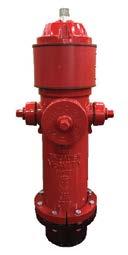
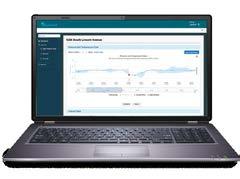
Improve system performance with iHydrant®! Our advanced platform collects real-time data for better comprehension and decision-making. Take preventive action with 24/7 pressure and temperature monitoring. Get iHydrant® now!
Visit clowcanada.com to learn how iHydrant Technology is changing the way utilities look at water.
all of your Water and








Register to get access to 5,000+ exclusive perks!
If you are a current BCWWA member, you are eligible for Perkopolis!
BC Water & Waste Association (BCWWA) has partnered with Perkopolis so that you can save more on everything from clothes and groceries to events and travel. This perks program is available to all current BCWWA members, so start enjoying member-only offers on your favourite brands today! bcwwa.org/site/membership/join/perkopolis 1. Go to perkpolis.com to register your account.
Enter your personal email address. 3. Look for an email from Perkopolis Customer Service with a link to complete your registration. Your “Member ID Code” is BCWWA+ your member ID # e.g., BCWWA12345
TED MOLYNEUX CWWA Director
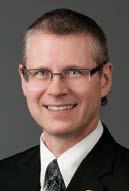
Well, it was an interesting experience for me writing this Watermark message for two reasons. One, while digging to find Canadian Water and Wastewater Association (CWWA) activities related to this issue’s theme, I came across a document I didn’t know existed, or more likely, forgot existed. Second, it is my first intentional foray into using AI for help writing a message. I’d tried unsuccessfully before, but this time accidentally got my question right, and was impressed with the results. Apparently, advising your audience on using AI depends on whether you are a subject matter expert and have verified the content accuracy. If so, then it would be like saying I used Word to write this piece. I’m not the expert, and am new to using AI, so I thought I’d better admit this in case one of you smart readers caught something that was incorrect. Updates on committee work and tariffs will wait for the next issue.
The CWWA has identified workforce development as a critical priority for ensuring the long term sustainability of Canada’s municipal water sector. With a significant proportion of utility managers and technical staff approaching retirement, and with evolving technological and regulatory demands, the association has implemented targeted initiatives to help utilities recruit, train, and retain skilled professionals.
Central to these efforts is the Workforce Development Guidance Document, created by CWWA’s Utility Leadership Committee. This resource provides utility managers with a structured approach to workforce planning, including:
• Assessment Tools: Checklists to evaluate current staffing capacity and identify gaps.
• Succession Planning Strategies: Frameworks for knowledge transfer and leadership continuity.
• Recruitment and Retention Practices: Recommendations for attracting younger workers, integrating new technologies, and fostering equity, diversity, and inclusion (EDI).
• Case Studies: Examples of successful workforce initiatives from Canadian utilities.
NEW TECHNOLOGY, NEW WORKFORCE

Just so you know that not all of this was AI generated, I found it very interesting that the document drew on national surveys of utility leaders and workforce studies by organizations, such as the Environmental Operators Certification Program (EOCP) and the BCWWA, which confirmed the urgency of planned leadership transitions. I was very aware of the BCWWA efforts over the years and was happy to see it used here.
CWWA integrates workforce development themes into its events and technical committee work. Activities include:
• Workshops and Webinars: Covering topics from asset management to emerging contaminants, designed to build both technical and leadership skills.
• Conference Programming: The National Water & Wastewater Conference features dedicated sessions on utility management, human resources, and leadership development.
• Committee Engagement: Technical committees act as peer learning networks, enabling mentorship and collaborative problem solving.
The association advocates for federal and provincial programs that support operator
training, apprenticeships and continuing education. It also promotes water sector careers to students, job seekers, and under represented groups, highlighting the stability, innovation, and community impact of these roles. CWWA emphasizes the importance of inclusive hiring and workplace practices. Its guidance outlines strategies for engaging Indigenous communities, women and newcomers to Canada in water sector careers, recognizing that diversity strengthens innovation and problem solving.
Through its guidance resources, training opportunities, advocacy and EDI focus, CWWA is equipping Canada’s water sector with the human capital needed to meet current and future challenges. These initiatives ensure that utilities can maintain safe, reliable water and wastewater services while adapting to technological, environmental and demographic change.
One last reminder to attend the National Water & Wastewater Conference in Victoria, November 2–5. Besides the AI sessions, Robert Haller is planning the funniest networking event of the year!

MIKE GOSSELIN WEF Delegate
TURNING THE TAP ON WORKFORCE DEVELOPMENT
Workforce development is essential to every facet of the water industry, ensuring that there is a sufficient pool of qualified professionals to operate and maintain wastewater infrastructure both now and in the future. The wastewater sector faces several challenges, including an aging workforce, rapid technological advancements and the ongoing need to attract and retain skilled personnel. Effective strategies and appropriate budgetary allocations are necessary to support recruitment, training and retention initiatives.
Working as the Water Environment Federation (WEF) delegate has provided me the opportunity to work closely with others in the industry and allowed some insight into where others think we are and potential opportunities for growth and change. Additionally, BCWWA, EOCP and CWWA have all published reports or documents relating to workforce development; these can easily be found via a web search or navigating directly to the group’s website and are well worth the time to take a read.
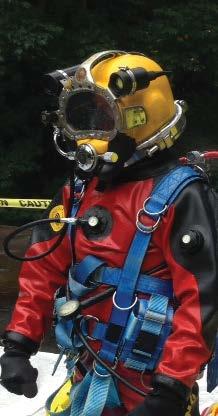
RECRUITMENT AND RETENTION ARE ONGOING ISSUES FOR MANY UTILITIES. IT IS IMPORTANT TO CREATE STRATEGIES TO ATTRACT NEW OPERATORS AND RETAIN EXISTING, EXPERIENCED STAFF.
Workforce trends continue to affect many organizations, with an aging workforce driving significant changes. Some utilities have adapted by hiring replacements 12–24 months before retirements, rather than after or closer to staff retirement, reducing the loss of knowledge and ensuring smoother transitions, even if some gap remains. Mentorship programs are also gaining momentum within the industry; this mentorship is going beyond the typical day-to-day training provided to operators by having seasoned staff spend more one-on-one time with new or junior staff to help them advance their skill sets.
Rapid technological advances are widening the skills gap, impacting workforce knowledge and training. Operators will need to increase their knowledge levels with advanced data analysis, automation and digital systems. BC operators are required to obtain continuing education credits every two-year cycle; this continuing education can take the form of both what is considered ‘core’ and ‘related’ education. The training mentioned above may be considered either ‘core’ or ‘related,’ depending on its directly applicable content, but either way, it would count toward the total continuing education operators are required to maintain. This flexibility in being able to gain both ‘core’ and ‘related’ continuing education opens many doors and offers various options for staff to fulfill requirements. These various options are providing utilities with many opportunities to support operator education and work within tight training budgets.
Recruitment and retention are ongoing issues for many utilities. It is important to create
strategies to attract new operators and retain existing, experienced staff. Career development opportunities and competitive compensation packages are significant factors in both recruitment and retention, though these can increase demands on training and salary budgets. These changes will need to be made for utilities to remain functional by being able to attract well-versed staff, which will aid the utility in avoiding potential damage to public health and the environment.
As the BC WEF representative, my work with WEF is now includes being part of a diverse and active workgroup that is developing a tool kit and video component for water stories. This toolkit is being designed to provide a utility with potential ideas and successes that others have had and used to further develop or engage their workforce. This toolkit and video series will not provide all of your answers, but may spark an innovative idea or provide part of a solution needed. Please check out the Water Environment Federation website and search for communities that you can engage and become a member to aid you with your needs.
The changes described have already occurred and are relevant for utilities. Collaboration between organizations, as well as among utilities and operations staff, may assist in identifying and implementing solutions. The BCWWA as a local advocate for our industry may be well placed to support, it worth noting again that many of us are all in the same situation and working together may help provide solutions for us all.

DEIRDRE MORAN
AWWA Director
It’s no secret that there are concerns around workforce development in the water sector, a quick Google search will reveal results from across the industry on this topic. And it isn’t an issue that we haven’t seen coming either. The question is: collectively, what is being done, and are we doing enough?
Water professionals have built careers around planning for resource and infrastructure resilience, but one of the greatest challenges the industry is now facing isn’t about water, it’s about people. Between a wave of retiring water sector professionals, that has been approaching for over a decade, and a rapidly changing technology landscape, industry stakeholders are working together to strengthen recruitment and fill gaps.
AWWA releases an annual State of the Water Industry Report which provides insights into the challenges and priorities facing the water sector based on input from thousands of water professionals. Workforce issues have ranked on this list for at least a decade, and since 2018 they’ve consistently been in the top 10. The latest 2025 report can be found at www.awwa. org/state-of-the-water-industry
This report highlights the importance of building a sustainable and diverse water community and is upfront about the impact of an aging workforce, recruitment and retention difficulties, and the need for better compensation and training. As technology advances, and cybersecurity emerges as a rising concern, we also need an increasingly techsavvy workforce. This is a highlighted concern in AWWA’s Water 2050 vision, particularly for the sustainability & resilience strategic priority.
In response to these challenges, AWWA has a resources page dedicated to workforce strategies (www.awwa.org/resource/workforce) where you can find links to several initiatives that support workforce development, such as:
• The Transformative Water Leadership Academy: a collaborative program between WaterNow Alliance and AWWA that prepares and enables the next generation of water utility leaders.
A RISING TIDE LIFTS ALL BOATS
• Work for Water: developed by AWWA and the Water Environment Federation (WEF), this site www.workforwater.org provides information on what a career in the water sector could look like, as well as centralizes job search and development resources.
• Women in Water and DEIB in the Water Community: offers resources to support and promote diversity, equity, inclusion and belonging in the water sector.
One of the most effective ways to share ideas, challenges and solutions across the sector on topics like workforce development is by attending industry conferences. AWWA has the following events coming up this fall:
• WaterSmart Innovations Conference, October 7–9 in Reno, NV
• Water Quality Technology Conference, November 9 –13 in Tacoma, WA
• North American Water Loss Conference, December 2–4 in Louisville, KY
• Partnership for Safe Water Summit, December 2–4 in Louisville, KY
It’s also never too early to get ACE26 on your calendar! The 2026 Annual Conference will be held in Washington, DC and the theme of Water Heroes aligns perfectly with this issue’s focus. The water sector workforce is a group of heroes dedicated to protecting water – the world’s most vital resource, and we are even better together. Will you join us?
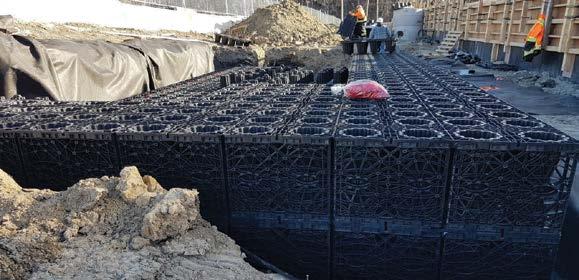
■ Inspect and maintain
■ CL-625 load capacity
■ Outstanding strength & structural stability
■ Design life of 50-60 years
■ Easy and fast installation
www.ACOStormBrixx.ca
(877) 226-4255 • info@acocan.ca
Stormwater detention



BETTER TRAINED BETTER RE ARED
BCWWA Education is your trusted source for training and skills building in BC and the Yukon. View a wide selection of training options, get access to expert instructors and start earning continuing education units (CEUs) toward certification.
Purchase a BCWWA membership ($129/year) for a $140 discount on ALL courses and other select products!
FALL 2025 SEMESTER
Instructor-led classes in a virtual classroom format.
Sept. 24, 2025 - Dam Inspection & Maintenance
Sept. 25, 2025 - Dam Safety Management
Oct. 2, 2025 - Process Control and SCADA Fundamentals
Oct. 6, 2025 - Distribution System Breaks and Repairs
Oct. 7, 2025 - Operational Best Practices in Water Distribution Systems
Oct. 8, 2025 - Leak Detection
Oct. 9, 2025 - Unidirectional Flushing
Oct. 10, 2025 - Municipal Plan Reading
Oct. 14-15, 2025 - Watermain Disinfection for the Field Operator
Oct. 16, 2025 - Calculations for Water and Wastewater Operators
Oct. 17, 2025 - Pumps and Pumping Hydraulics
Oct. 20-24, 2025 - Project Management Skills
Oct. 27-31, 2025 - Water Treatment 3-4
Nov. 3-7, 2025 - Communication and Financial Skills
Nov. 12, 2025 - Water Rights Basics for Licensed Groundwater Users in BC
Nov. 13, 2025 - Managing Infiltration and Inflow in Wastewater Collection Systems
Nov. 14, 2025 - Wastewater Collection System Odor and Corrosion Control
Nov. 17, 2025 - New Sector Professionals
Nov. 18, 2025 - Reservoir Maintenance and Cleaning
Nov. 19, 2025 - Preventing Waterborne Illnesses
Nov. 20, 2025 - Lift Stations Operation and Maintenance
Nov. 24-28, 2025 - Wastewater Treatment 2
Dec. 1, 2025 - Ultraviolet Disinfection
Dec. 2-3, 2025 - Introduction to Supervisory and Leadership Skills
Dec. 4-5, 2025 - Water Quality and Sampling for Water and Wastewater Systems
ONLINE COURSESINSTRUCTOR-SUPPORTED
Self-paced with instructor assistance available for any help you require.
Courses run from Oct. 6 - Dec. 31, 2025
Water Treatment 1
Water Distribution 1
Water Distribution 2
Wastewater Collection 1
Wastewater Collection 2
Wastewater Treatment 1
Small Water Systems
Small Wastewater Systems
ONLINE COURSESCONTINUOUS ENROLLMENT
Self-paced elective courses worth 1.2 CEUs.
Hypochlorination
Chlorine Handling Refresher
BCWWA EDUCATION COURSE CALENDAR
SELF-PACED CONTINUOUS ENROLLMENT COURSES
You can enroll at any time. Once enrolled you will have three months to finish the course.
INSTRUCTOR LED VIRTUAL CLASSROOM COURSES
These courses will be delivered by an instructor and will run for the same lengths and times that the ‘regular’ in-class course would have.
Please contact the EOCP directly for operator certification exam information.

CROSS CONNECTION CONTROL EXAM SCHEDULE
Schedule subject to change. Please visit the BCWWA CCC Exam Calendar at www.bcwwa.org/site/ccc/certification/calendar for more information and updates.
CERTIFICATION EXAM
September 26, 2025
September 27, 2025
September 29, 2025
October 3, 2025
October 24, 2025
October 24, 2025
October 24, 2025
October 25, 2025
October 28, 2025
October 29, 2025
November 7, 2025
November 22, 2025
November 28, 2025
November 28, 2025
RECERTIFICATION EXAM
September 27, 2025
September 29, 2025
October 4, 2025
October 25, 2025
November 7, 2025
November 15, 2025
November 20, 2025
Camosun College
Kwantlen Polytechnic University (KPU)
Okanagan College
Camosun College
Pacific Vocational College (PVC)
Yukon University
Thompson Rivers University
Kwantlen Polytechnic University (KPU)
BCIT
BCIT
MTS Maintenance Tracking Systems Inc
Camosun College
Okanagan College
Camosun College
Kwantlen Polytechnic University (KPU)
Okanagan College
Camosun College
Local 324
Kwantlen Polytechnic University (KPU)
BCIT
Camosun College
BCIT
Victoria
Surrey
Kelowna
Victoria
Burnaby
Whitehorse
Kamloops
Surrey
Burnaby
Burnaby
Vernon
Victoria
Kelowna
Victoria
Surrey
Kelowna
Victoria
Surrey
Burnaby
Victoria
Victoria


Like water itself, innovation flows through every challenge and shapes new possibilities. For over 90 years, Carollo has pioneered breakthroughs in water technology – from resilient infrastructure protecting growing communities to groundbreaking solutions safeguarding public health and ecosystems. At Carollo, innovation isn’t just about what’s new – it’s about what’s necessary. Every advancement, every improvement, and every solution flows from a single purpose: shaping a future where water enriches every community it touches.
Advertiser Product & Service Centre

Watermark is made possible by the companies below who convey their important messages on our pages. We thank them for their support of BCWWA and its publication and encourage you to contact them when making your purchasing decisions. To make it easier to contact these companies, we have included the page number of their advertisement, their phone number, and, where applicable, their website.

























•
•
•
•
•



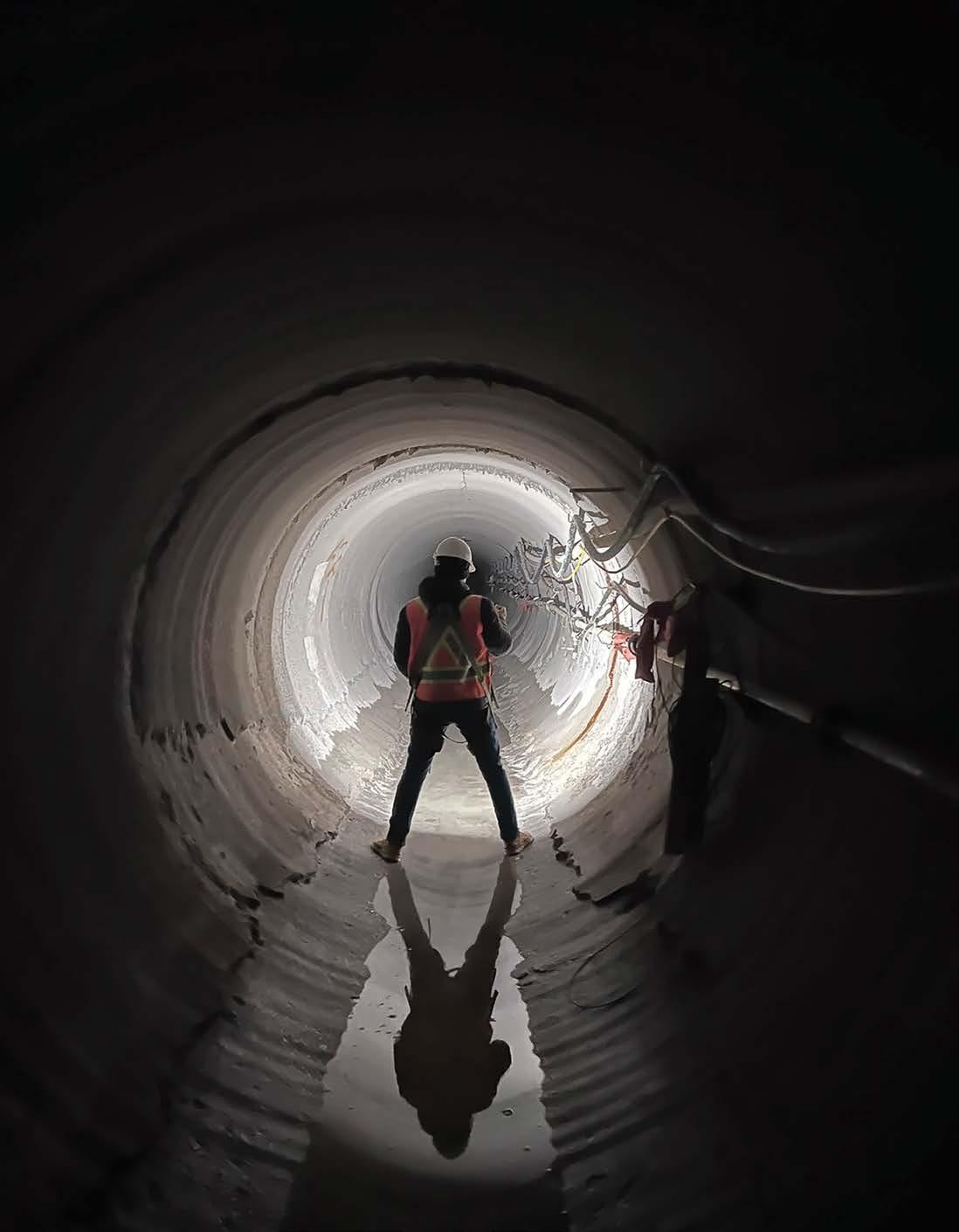
Water Mains & Pipelines
Sewer Mains & Pipelines
Concrete Structures
Sewer Inspection & Documentation
Vault & Manhole Rehabilitation