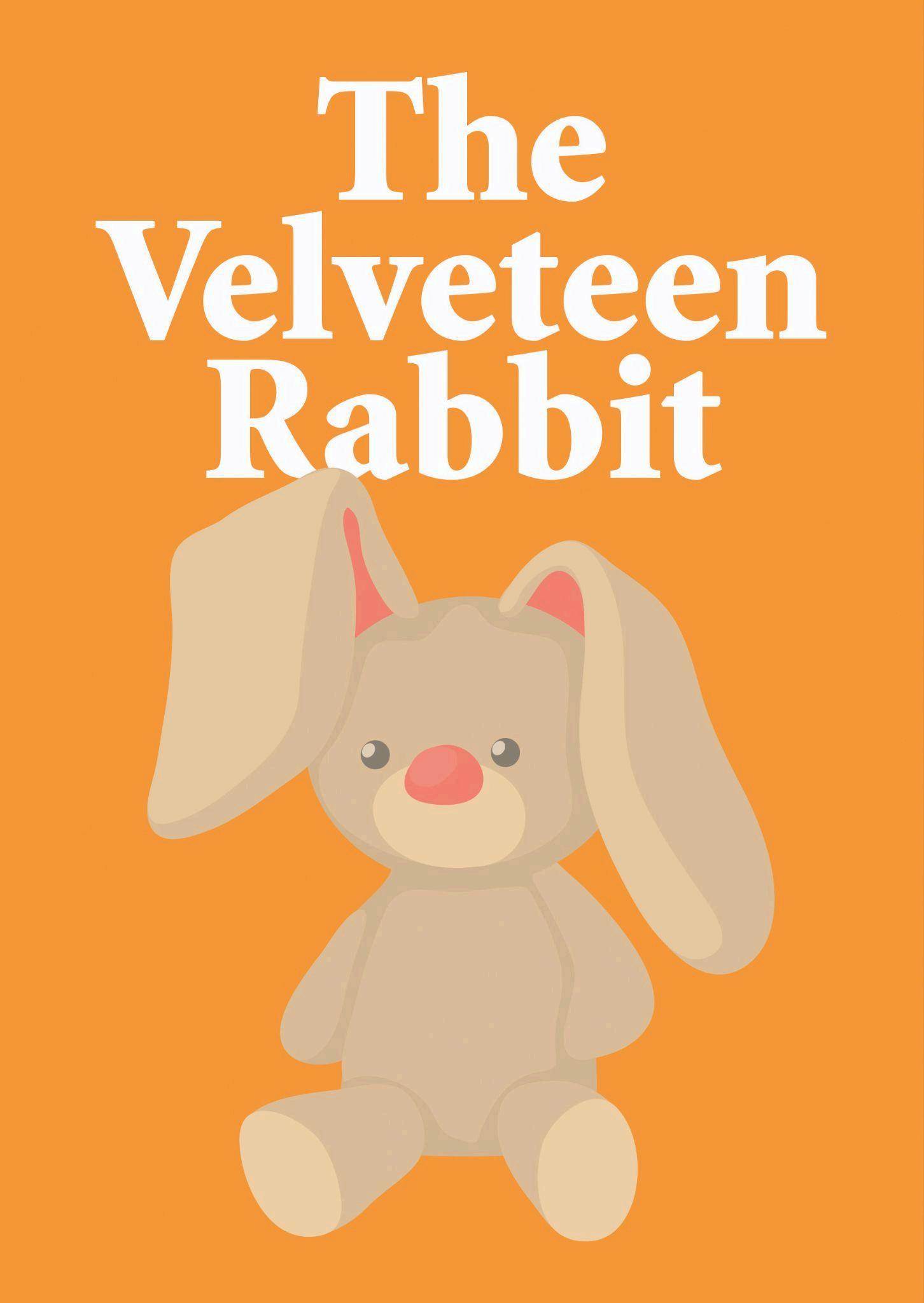
CHARLESTON STAGE Education Guide
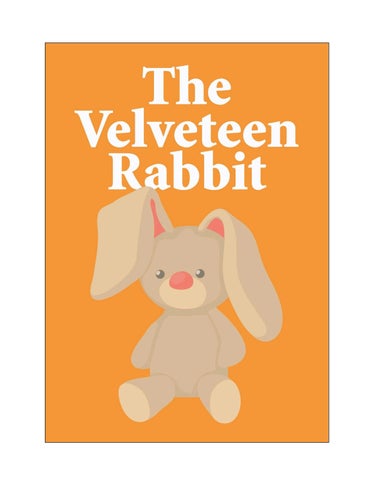
CHARLESTON STAGE Education Guide
Adapted by Kevin Del Aguila
Based on the book by Margery Williams
Originally produced by TheatreWorksUSA
This guide is designed for PreK-3 educators (with extensions for grades 4-5) preparing to bring students to a Charleston Stage performance of The Velveteen Rabbit Inside, you will find a synopsis, content notes, classroom-ready pre-show and post-show activities, alignment to South Carolina College- and Career-Ready Standards, and information about the arts-integrated workshops Charleston Stage offers as a companion to the production
Most activities can be completed in 15-30 minutes and can be adapted for any PreK-5 classroom. Pages 5-6 list the SC standards each activity supports.
On Christmas morning, a small Boy opens a stocking and discovers a brand-new velveteen rabbit. The Rabbit is soft and beautiful, but he doesn't yet know who he is or what he is for. Tucked away in the nursery, he meets the wise old Skin Horse, who tells him a great secret: a toy can become Real not by being well-made or expensive, but by being loved for a very, very long time. As the seasons pass, the Boy and the Rabbit become inseparable. The Rabbit grows shabbier, his velveteen wears thin, and he discovers what the Skin Horse meant. Then the Boy falls ill, and everything changes. In a story about love, growing up, and the magic of imagination, the Rabbit learns that becoming Real is the bravest and most beautiful thing a toy can do.
Kevin Del Aguila's stage adaptation of The Velveteen Rabbit was originally produced by TheatreWorksUSA, premiering Off-Broadway at the DR2 Theatre in November 2012 Del Aguila both wrote and directed the original production The adaptation uses a small ensemble cast (typically three actors) who together play the Boy, the Rabbit, the Skin Horse, and every other toy in the nursery The script is brisk, warm, and theatrical, with imaginative storytelling techniques that invite young audiences to use their own imaginations to fill in the magic
Grades PreK-3 (with appeal through grade 5) Runtime: approximately 60 minutes, no intermission The play is performed with a small professional cast playing multiple roles, with direct moments of audience engagement
The Velveteen Rabbit is a gentle, beloved story designed for young audiences. The content notes below help teachers prepare students who may be especially sensitive.
• Childhood illness: The Boy contracts scarlet fever and is sick in bed He recovers, but his illness drives a sad sequence of events (Note: many young children today are unfamiliar with scarlet fever; teachers may wish to briefly explain it as 'a sickness children used to get a hundred years ago.')
• Separation & loss: Because of the illness, the Boy's nursery toys, including the beloved Rabbit, are ordered to be burned as a precaution. The Rabbit is taken away from the Boy and sits alone in a sack in the garden. This is the play's most emotionally tender moment.
• Tears (happy and sad): The Rabbit cries a real tear, which leads to the play's magical, joyful resolution. The ending is hopeful, the Rabbit becomes Real, but younger children may need a quiet moment to process before discussion.
• Gentle peril: Nothing scary, no violence. The 'danger' is emotional rather than physical.
This production does not use:
• Fog, haze, or smoke effects
• Strobe or rapid-flashing lighting
• Pyrotechnics, flame, or gunshots
• Loud or startling sound cues
Lighting and sound are designed for young audiences, with warm, storybook-style staging.
The Velveteen Rabbit invites students into a rich range of conversations: Social-Emotional Learning
• Love and attachment. What makes us love someone or something? What does love feel like, and how does it change us?
• Identity. The Rabbit wonders what makes him 'Real.' How do we know who we are? What makes us who we are?
• Change & growing up. The Rabbit gets shabbier as the Boy grows older. What changes as we grow? What stays the same?
• Letting go. How do we say goodbye to things and people we love? How do we keep loving them even when they are not with us?
• Empathy. How does an inanimate object a toy have feelings? What does that ask us to imagine?
ELA & Literacy
• Character development. How does the Rabbit change from beginning to end? What does he learn?
• Theme. What is the central message of the story? Can you say it in your own words?
• Figurative language. What does it mean to be 'Real'? The Skin Horse uses figurative language to explain something that cannot be measured.
• Story sequence. Beginning, middle, end Christmas, the long love story, the illness, the transformation.
Theatre & Arts Integration
• Imagination on stage. A small cast plays many characters and creates a whole nursery world. How does theatre ask us to imagine?
• Object as character. How does an actor become a toy? How do we believe that a stuffed rabbit can think, feel, and dream?
• Ensemble storytelling. How does a three-person cast create a whole world together?
The activities and discussions in this guide align with the following South Carolina College- and Career-Ready Standards. Standards codes follow the current SC CCR ELA Standards and the 2026 SC CCR Visual and Performing Arts Proficiency Standards. Teachers are encouraged to adapt to their specific grade-level indicators.
ELA.PreK-3.RL PreK-3
ELA.K-3.RL K-3
ELA.K-3.RL K-3
ELA.K-3.W K-3
ELA.K-3.SL K-3
ELA.K-3.SL K-3
Reading Literature: Read closely and analyze literary texts to determine meaning, including identifying characters, settings, key events, and central messages or themes
Describe characters in a story (e g , the Rabbit, the Skin Horse, the Boy) and explain how their actions contribute to the sequence of events.
Identify the main message or moral of a story and explain how it is conveyed through key details in the text
Writing: Write narratives in which students recount a sequence of events, include details, and provide a sense of closure
Speaking & Listening: Participate in collaborative conversations with diverse partners about K-3 topics and texts, following agreed-upon rules for discussions.
Describe people, places, things, and events with relevant details, expressing ideas and feelings clearly
Code Grade
ELA.4-5.RL 4-5
ELA.4-5.RL 4-5
T.CR
T P
T.R
T.CN
PreK-5
Determine a theme of a story, drama, or poem from details in the text; summarize the text
Describe how a narrator's or speaker's point of view influences how events are described.
Creating: Generate, develop, and refine artistic work through structured imagination, character study, and ensemble building.
PreK-5 Performing: Use voice, body, and imagination to portray characters including non-human characters and tell stories collaboratively
PreK-5 Responding: Perceive and analyze artistic work; evaluate live theatre using developmentally appropriate criteria (character, design, story, emotional effect).
PreK-5 Connecting: Relate theatre work to personal experience, other arts disciplines, and other content areas (ELA, SEL)
SC SEL
SC SEL
Self-awareness: Identify and name a wide range of emotions; recognize one's feelings in response to a story
Social awareness: Show understanding and empathy for others, including imagined characters; recognize the perspectives of others
SC SEL PreK-5 Relationship skills: Establish and maintain positive relationships through care, attention, and listening.
SC SEL PreK-5 Responsible decision-making: Make caring choices about one's possessions, friendships, and community.
These activities prepare students for the live theatre experience and for the themes of The Velveteen Rabbit.
Read Margery Williams' The Velveteen Rabbit aloud to your class. Show the original illustrations. Pause as you read to ask: What does the Skin Horse mean by 'Real'? Have you ever loved a toy this much?
ELA K-3 RL • Read alouds, shared reading
Invite each student to bring (or draw a picture of) a favorite stuffed animal or toy from home In a sharing circle, each student introduces their toy by name Where did it come from? How long have you had it? What makes it special? This activity primes students for the emotional heart of the play
ELA.K-3.SL • SEL: appreciation
Brainstorm together: What are the rules for being a good audience? Have students suggest rules (quiet voices when actors speak, eyes on the stage, laugh when something is funny, listen carefully). Write them on chart paper. Have students sign the charter. Bring it back out the morning of the show.
ELA K-3 SL • T R • Classroom community
Before reading the Skin Horse's speech, ask students: What does 'real' mean? Collect their ideas on the board Then read the speech (or paraphrase it for the youngest students) Discuss: Does the Skin Horse's idea of Real match what we wrote? How is it different?
ELA.K-3.RL • ELA.K-3.SL • Vocabulary, theme
Activity
Lead a short physical exercise. 'Stand up. You are a fresh, brand-new toy. How do you stand? Now you have been loved for a year. How are you a little softer? Now you have been loved for ten years. How do you move? Now surprise! a child has come to play with you. How do you come alive?' Discuss what changed in each freeze.
T P • T CR • Physical storytelling
Activity
Read or summarize the first half of the story (Christmas, the nursery, the Skin Horse, the Boy's love for the Rabbit) Stop Ask students to write or draw what they think will happen next Save predictions and revisit them after the show
ELA.K-3.RL • ELA.K-3.W • Prediction & inference
These activities help students reflect, synthesize, and extend the experience back into the classroom
Sit in a circle Use a 'talking object' (a small stuffed animal works perfectly) Each student holds the object and names one feeling they had during the play Big feelings are welcome, happy, sad, surprised, worried, hopeful Validate every answer
ELA.K-3.SL • SC SEL • Emotional vocabulary
Give each student a sheet of paper folded in three. Have them draw three moments from the play: the beginning, a middle moment that mattered to them, and the very end. Younger students can use crayons; older students can label their drawings with one sentence each.
ELA K-3 RL • ELA K-3 W • Sequencing
Have each student write a letter (or dictate one, for emergent writers) to the Velveteen Rabbit The letter should answer one of these prompts: What do you want him to know? What do you wish he knew when he was scared in the garden? What does YOU think makes a toy Real?
ELA.K-3.W • SEL: empathy
Reread the Skin Horse's speech about becoming Real. Discuss: 'Generally, by the time you are Real, most of your hair has been loved off, and your eyes drop out, and you get loose in the joints and very shabby. But these things don't matter at all, because once you are Real, you can't be ugly, except to people who don't understand.' What does this mean? What people in your life might agree with the Skin Horse?
ELA 4-5 RL • ELA K-3 SL • Figurative language
Discuss with students: how many actors did you count in the play? How many characters did you see? How did the actors become the Rabbit, the Skin Horse, the Boy, and everything else? Have students try it themselves: in groups of three, take a short scene (the moment the Boy receives the Rabbit, the night the Boy is sick, the very end) and stage it together, switching roles.
T.P • T.CR • Ensemble storytelling
Have students invent a story about a different toy or object that wants to become Real. What is it? Who loves it? What does becoming Real look like for THAT object, a tricycle, a teddy bear, a soccer ball, a library book? Older students write a one-page story; younger students dictate or draw a four-panel comic
ELA.K-3.W • T.CR • Narrative writing
Set up a 'Toy Hospital' corner in the classroom Invite students to bring in well-loved toys that have torn ears, missing buttons, or loose seams With help from family volunteers, gently repair the toys As you mend, talk about what each toy has lived through (Connects the theme of love and care to a concrete, hands-on community act )
SC SEL • Service learning • T.CN
To deepen the experience of The Velveteen Rabbit, Charleston Stage offers a suite of in-classroom arts-integrated workshops led by trained teaching artists. Workshops can be booked individually or as a series. All workshops are designed to align with SC College- and Career-Ready Standards in ELA, Theatre, and Social-Emotional Learning, and can be customized to the grade level, curricular focus, and time available at your school.
Workshops are typically delivered on-site at your school in your classroom or media center A teaching artist arrives with all materials and leads students through hands-on theatre-based learning To inquire, contact the Charleston Stage Education Department


Margery Williams Bianco was a British-American author of children's books Born in London in 1881, she moved between England and the United States throughout her life The Velveteen Rabbit, or How Toys Become Real was published in 1922 and quickly became one of the most beloved children's books of the 20th century Williams went on to write more than two dozen children's books and won a Newbery Honor in 1937 for Winterbound The Velveteen Rabbit has never been out of print in over a hundred years and has been translated into dozens of languages.
Kevin Del Aguila is an American playwright, lyricist, and actor whose career spans Broadway, Off-Broadway, and theatre for young audiences. He won the 2023 Tony Award for Best Featured Actor in a Musical for his performance in Some Like It Hot. As a writer, he has authored or adapted many TYA musicals and plays for TheatreWorksUSA, including Click Clack Moo: Cows That Type, Dog Man: The Musical, Charlotte's Web, Houdini, and his adaptation of The Velveteen Rabbit. The Velveteen Rabbit was originally produced by TheatreWorksUSA, premiering Off-Broadway at the DR2 Theatre on November 16, 2012, with Del Aguila both writing and directing the original production.
TheatreWorksUSA is one of the largest professional theatres for young audiences in the United States. Founded in 1961, it has produced more than 140 plays and musicals, reaching an estimated 100 million young people. Many of the TYA titles produced regionally across the country, including this adaptation of The Velveteen Rabbit, originated as TheatreWorksUSA commissions or productions before entering licensing
Thank you for bringing your students to Charleston Stage. The Velveteen Rabbit is one of the most quietly powerful stories ever written for children. It asks young audiences gently, beautifully to think about love, change, and the things that matter most. We hope your students leave the theatre thinking about a toy they have loved, a person who has loved them, and the everyday magic of becoming Real.