

How to Use This Guide
CHARLESTON
STAGE Education Guide
STAGE Education Guide
A Play by Jeffrey Hatcher
Based on the Books by Harry Allard, illustrated by James Marshall
This guide is designed for K-5 educators preparing to bring students to a Charleston Stage performance of Miss Nelson Is Missing! Inside, you will find a synopsis, content notes, classroom-ready pre-show and post-show activities, alignment to South Carolina College- and Career-Ready Standards, and information about the arts-integrated workshops Charleston Stage offers as a companion to the production
Most activities can be completed in 15-30 minutes and can be adapted for any K-5 classroom. Pages 5-6 list the SC standards each activity supports.
The kids in Room 207 are the worst-behaved students in the entire school. They throw spitballs, refuse to sit still, ignore their reading, and torment their gentle teacher, Miss Nelson. Miss Nelson is just too nice to stop them, until one morning when Miss Nelson does not show up for school. In her place stands the meanest, ugliest, most terrifying substitute teacher in the world: Miss Viola Swamp. Viola Swamp piles on homework, snaps her ruler, and brooks no nonsense. With the Big Test fast approaching and Miss Nelson nowhere to be found, the students of Room 207 hire a private detective and set out on a mystery: where is their beloved teacher, and how can they get her back? Along the way, they learn what it really means to appreciate the people who care for them
Grades K-5 Runtime: approximately 60 minutes, no intermission The play is performed with a small professional cast playing multiple roles Jeffrey Hatcher's adaptation is a play (not a musical), with a brisk, comic pace and frequent direct-address moments where Room 207 students speak straight to the audience
Miss Nelson Is Missing! is a gentle, age-appropriate comedy designed for young audiences The content notes below are intended to help teachers prepare students who may be especially sensitive
• Mild peril: Miss Viola Swamp is intentionally scary, a witch-like substitute with a loud voice, sharp ruler, and exaggerated villain energy. She is presented humorously and is never actually harmful to students.
• Loud sound cues: a few moments use sudden, loud sound effects (Viola Swamp's entrance, the doorbell, the school bell)
• Mild classroom conflict: students argue, complain, and behave badly Teachers may wish to discuss appropriate classroom behavior before and after the show
• Mystery suspense: the play is structured as a comic mystery Some students may need reassurance that the disappearance is solvable and the ending is happy
This production does not use:
• Fog, haze, or smoke effects
• Strobe or rapid-flashing lighting
• Pyrotechnics, flame, or gunshots
Lighting and sound are designed for young audiences, with bright cartoon-style staging.
Miss Nelson Is Missing! offers entry points into a wide range of K-5 curricular conversations: Social-Emotional Learning
• Appreciation. How do we show the people who care for us that we value them? Why is it hard to notice them until they are gone?
• Respect. What does it mean to treat a teacher (or anyone) with respect? What does respect look like in our classroom?
• Responsibility. The students in Room 207 are responsible for losing Miss Nelson How do we take responsibility when our actions affect other people?
• Community. A classroom is a community What makes a community strong? What makes it fall apart?
ELA & Literacy
• Character analysis. Compare and contrast Miss Nelson and Miss Viola Swamp How are they similar? How are they different?
• Plot structure. Beginning–middle–end Sequencing the events of the mystery
• Theme. What lesson does this story teach? Can you say it in one sentence?
• Prediction & inference. Students can spot clues that the audience sees but the Room 207 children don't
Theatre & Arts Integration
• Character voice & physicality. How does an actor become two completely different characters?
• Ensemble. How does a small cast play a whole classroom of children?
• Mystery as storytelling form. What makes a mystery story work?
The activities and discussions in this guide align with the following South Carolina College- and Career-Ready Standards Standards codes follow the 2024 SC CCR ELA Standards and the 2026 SC CCR Visual and Performing Arts Proficiency Standards Teachers are encouraged to adapt to their specific grade-level indicators.
ELA.K-3.RL K-3
ELA.K-3.RL K-3
ELA.K-3.RL K-3
ELA.K-3.W K-3
ELA.K-3.SL K-3
ELA.K-3.SL K-3
ELA K-3 SL K-3
Reading Literature: Read closely and analyze literary texts to determine meaning, including identifying characters, settings, key events, and central messages or themes
Compare and contrast the adventures and experiences of characters in familiar stories (Miss Nelson vs Miss Viola Swamp)
Identify the main message or moral of a story and explain how it is conveyed through key details in the text
Writing: Write narratives in which students recount a sequence of events, include details, and provide a sense of closure.
Speaking & Listening: Participate in collaborative conversations with diverse partners about K-3 topics and texts, following agreed-upon rules for discussions
Describe people, places, things, and events with relevant details, expressing ideas and feelings clearly.
Ask and answer questions about key details in a text or information presented orally.
Code
Grade
ELA.4-5.RL 4-5
ELA.4-5.RL 4-5
T.CR K-5
T.P K-5
T.R K-5
T.CN K-5
Determine a theme of a story, drama, or poem from details in the text; summarize the text
Compare and contrast two or more characters, settings, or events in a story or drama, drawing on specific details in the text
Creating: Generate, develop, and refine artistic work through structured improvisation, character study, and ensemble building
Performing: Use voice, body, and imagination to portray characters and tell stories collaboratively
Responding: Perceive and analyze artistic work; evaluate live theatre using developmentally appropriate criteria (character choices, design, story).
Connecting: Relate theatre work to personal experience, other arts disciplines, and other content areas (ELA, SEL, social studies).
SC SEL K-5
SC SEL K-5
SC SEL K-5
SC SEL K-5
Self-awareness and self-management: Identify and manage one's emotions and behaviors and demonstrate honesty, integrity, and ethical decision-making
Social awareness: Show understanding and empathy for others; appreciate the contributions of others
Relationship skills: Establish and maintain positive relationships; communicate clearly and listen actively; cooperate.
Responsible decision-making: Make caring choices about personal behavior based on consideration of consequences.
These activities prepare students for the live theatre experience and the themes of Miss Nelson Is Missing!
If possible, read Miss Nelson Is Missing! by Harry Allard, illustrated by James Marshall, aloud to your class. (Companion books: Miss Nelson Is Back and Miss Nelson Has a Field Day.) Discuss the illustrations and how the students of Room 207 are drawn before and after Viola Swamp arrives.
ELA.K-3.RL • Read alouds, shared reading
Brainstorm together: What are the rules for being a good audience? Have students suggest rules (Quiet voices! Eyes on the stage! Laugh out loud when something is funny! Hands to ourselves!) Write them on chart paper Have students sign the charter Bring it back out the morning of the show
ELA.K-3.SL • T.R • Classroom community
Read just the first few pages of Miss Nelson Is Missing! (up to the moment she disappears). Have students write or draw their best prediction: Where do they think Miss Nelson went, and why? Save predictions and revisit them after the show.
ELA K-3 RL • ELA K-3 W • Prediction & inference
Make two character webs on the board: one for Miss Nelson and one for Miss Viola Swamp Have students brainstorm adjectives, voice descriptions, costumes, and behaviors for each After the show, revisit the webs and add details from the production
ELA.K-3.RL • T.R • Character analysis
Give each student a small "detective notebook." Ask them to bring it to the theatre (or to draw a picture afterwards) of three clues they noticed during the performance that suggest where Miss Nelson really is. This builds anticipation and active viewing.
ELA K-3 RL • T R • Inference & evidence
Students will see professional actors using their voices to play different characters Try a quick voice exercise: have students say the sentence 'I'd like you to take your seats, please' three different ways first as Miss Nelson (kind, soft, sweet), then as Miss Viola Swamp (scary, sharp, mean), then as themselves Discuss: how does an actor change just by using their voice differently?
T.P • T.CR • Voice and characterization
These activities help students reflect, synthesize, and extend the experience back into the classroom.
Sit in a circle Use a 'talking object' (a wooden spoon, a stuffed animal, anything) Each student holds the object and answers one question; the rest listen. Sample prompts: What was your favorite moment? Which character did you like best, and why? When did you laugh? When did you feel surprised?
ELA.K-3.SL • T.R • Active listening
Draw a Venn diagram on the board with Miss Nelson on one side and Miss Viola Swamp on the other. As a class, fill it in What do they share? What is different? End with the big question: How can we tell when the same person is playing both?
ELA.K-3.RL • ELA.4-5.RL • Compare & contrast
Have each student write a letter or draw a picture for Miss Nelson welcoming her back to Room 207. The letter should include: one thing they appreciate about her, one promise about how they will behave going forward, and one question they would like to ask. Mail them (figuratively) to her bulletin board.
ELA K-3 W • SEL: appreciation, responsibility
Brainstorm: if you were a student in Room 207, what three rules would you have written to keep your class running smoothly so Miss Nelson never wanted to leave? Write them on a class poster (Then ask: are any of those rules ones we should have in OUR room?)
ELA.K-3.SL • SEL • Classroom community
Have students write or tell a short story called 'Miss Viola Swamp Is Missing!' What would happen if Viola Swamp disappeared and someone gentle and silly took her place? What would the students do?
ELA K-3 W • T CR • Narrative writing
Divide students into groups of 4-5 Assign each group one moment from the play (the spitball scene, Viola Swamp's entrance, the detective scene, the homecoming) Have them create a frozen 'tableau' picture of that moment using only their bodies Other groups guess which scene each tableau represents
T.CR • T.P • Ensemble & storytelling
Connect the theme of appreciation to real life. Each student writes a short thank-you note to a person at school who helps them a teacher, librarian, custodian, lunch staff, bus driver, or coach. Deliver them in person.
ELA K-3 W • SEL: appreciation, gratitude
To deepen the experience of Miss Nelson Is Missing!, Charleston Stage offers a suite of in-classroom arts-integrated workshops led by trained teaching artists Workshops can be booked individually or as a series All workshops are designed to align with SC College- and Career-Ready Standards in ELA, Theatre, and Social-Emotional Learning, and can be customized to the grade level, curricular focus, and time available at your school
Workshops are typically delivered on-site at your school in your classroom or media center. A teaching artist arrives with all materials and leads students through hands-on theatre-based learning. To inquire, contact the Charleston Stage Education Department, CWascom@charlestonstage.com
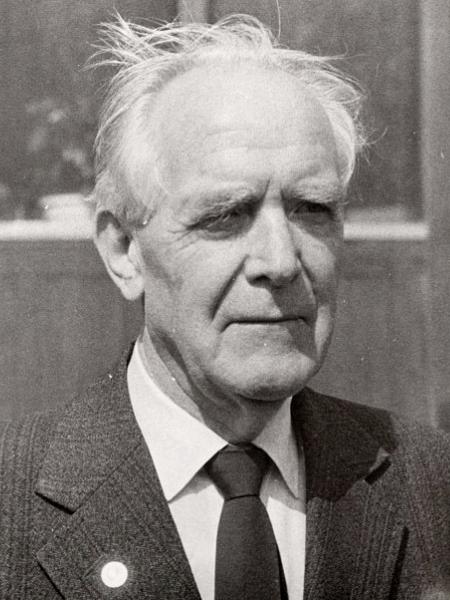
Harry Allard was an American writer best known for his Miss Nelson series and the Stupids picture books, both illustrated by his frequent collaborator James Marshall. Allard taught French at Salem State College in Massachusetts for many years before turning to children's literature. Miss Nelson Is Missing!, first published in 1977, remains one of the most beloved picture books in American elementary classrooms nearly fifty years later.
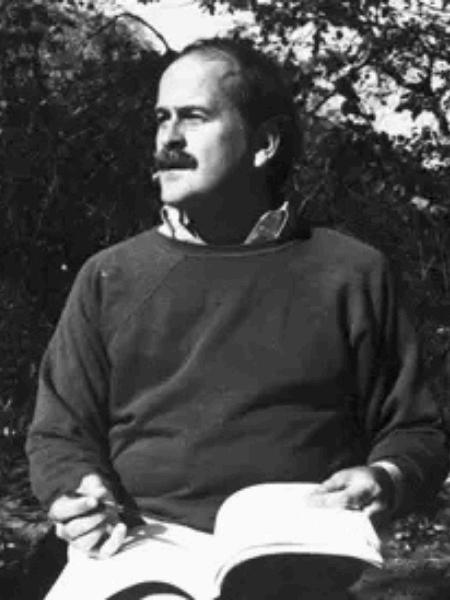
James Marshall was an American children's book illustrator and author He created the George and Martha series of hippopotamus best friends, illustrated the Miss Nelson books, and won numerous honors including a Caldecott Honor (1989, for Goldilocks and the Three Bears). He was posthumously awarded the Laura Ingalls Wilder Medal in 2007 for his lasting contribution to children's literature.

Jeffrey Hatcher is an American playwright and screenwriter whose work has been produced on Broadway, Off-Broadway, in regional theatres across the country, and in the West End. His plays include Three Viewings, Compleat Female Stage Beauty (which he adapted into the film Stage Beauty), Murderers, Mrs. Mannerly, Holmes and Watson, and Korczak's Children. His screen work includes Stage Beauty, Casanova, The Duchess, and Mr. Holmes. He has long been associated with the Children's Theatre Company of Minneapolis, where his stage adaptation of Miss Nelson Is Missing! premiered on January 7, 1997. The play is licensed by Playscripts (Concord Theatricals) and has been produced by hundreds of TYA companies across the country.
Hatcher's adaptation is faithful to the spirit of Allard and Marshall's books while expanding the story into a full one-act stage comedy Hatcher gives the Room 207 students fuller individual personalities, builds out the detective subplot, and adds direct-address audience moments that turn the play into a kind of communal mystery for young viewers.
Thank you for bringing your students to Charleston Stage The morning of a field trip to live theatre is often a child's first introduction to professional performance, and we don't take that lightly We hope your students leave humming, talking, asking questions, and (gently!) imitating Miss Viola Swamp in the lunch line.