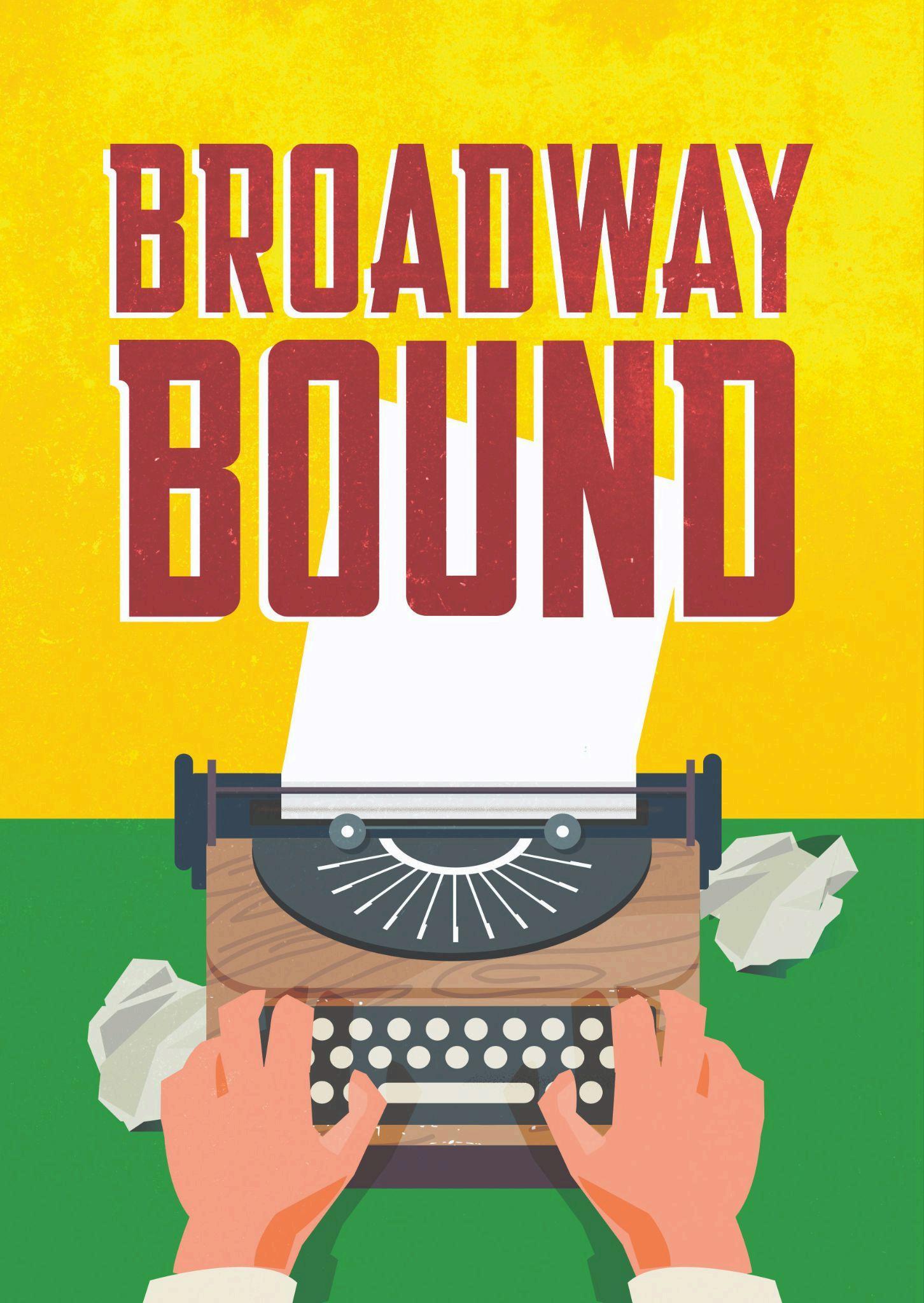

Welcome to Brighton Beach
CHARLESTON STAGE Content Guide
CHARLESTON STAGE Content Guide
Thank you for joining us at Charleston Stage for Broadway Bound! This guide is designed for parents, caregivers, and educators preparing audiences for the performance. Inside, you'll find content advisories, information about playwright Neil Simon, the show's history, fun facts to share before curtain, and at-home activities to extend the experience after the show
Broadway Bound is the final chapter of Neil Simon's beloved 'Eugene Trilogy,' a semi-autobiographical look at the playwright's own life. It is a comedy and a family drama at once, warm, funny, and unflinchingly honest about love, ambition, and the moments when home stops feeling like home. It is best suited to teens and adults.
Broadway Bound is a character-driven play with no large-scale theatrical effects. The advisories below focus on language, themes, and period-appropriate stage business that parents and educators may want to know about in advance.
This production does not use any of the following:
• Fog, haze, or smoke machines
• Strobe or rapid-flashing lighting effects
• Pyrotechnics or flame effects
• Gunshot effects or loud bangs
• Flying or aerial work
Stage lighting is naturalistic and the soundscape consists of period radio broadcasts, doorbells, and acoustic underscoring The story unfolds in a single 1949 Brooklyn home
Several characters smoke cigarettes onstage, true to the play's 1949 setting Any onstage smoking uses non-tobacco herbal cigarettes that produce minimal smoke Patrons with respiratory sensitivities or strong reactions to the smell of any smoke may wish to be aware
The central dramatic engine of Broadway Bound is the collapse of Jack and Kate's 33-year marriage:
• Jack has been having a long-term affair with another woman.
• Kate slowly comes to terms with what is happening and what she will do next.
• There are tense, emotional scenes between Jack and Kate, including a wrenching late-night confrontation.
• Eugene and Stanley wrestle with their own feelings of anger and grief about their father.
The affair is discussed but not depicted. There is no nudity, no sexual content, and no physical violence.
Broadway Bound contains language typical of a 1949 working-class Brooklyn household, including:
• Mild profanity used by the brothers and their father ('damn,' 'hell,' 'son of a bitch,' 'crap,' a few stronger words used sparingly)
• Comic religious exclamations ('Jesus,' 'God,' 'My God')
• Yiddish words and phrases throughout (gornisht, meshuggah, schmuck, etc )
• A few period-specific slurs and stereotypes that the play presents critically, particularly through the grandfather's commentary
• Grandpa Ben is a devout socialist who emigrated from Russia and frequently lectures about Stalin, Trotsky, capitalism, and the labor movement.
• Kate's estranged sister Blanche married a wealthy Republican, and the political and class tensions between Ben and Blanche fuel several scenes.
• Brief references to World War II and the Holocaust ('the camps') in the context of family history. Treated with gravity, not in graphic detail.
• Discussions of antisemitism in mid-century America.
• Kate's long monologue about dancing with George Raft at the Primrose Ballroom is tender and bittersweet, one of the most celebrated moments in American theatre
• Stanley and Eugene's argument in Act Two becomes heated, with raised voices
• The final scene, in which Eugene says goodbye to the empty house, is quietly devastating. There is no onstage violence and no physical aggression, but the emotional truth of the play can land hard. Tissues recommended.
The play runs approximately 2 hours and 20 minutes, including one 15-minute intermission. Restrooms are in the lobby. House staff can help families re-enter at appropriate moments.
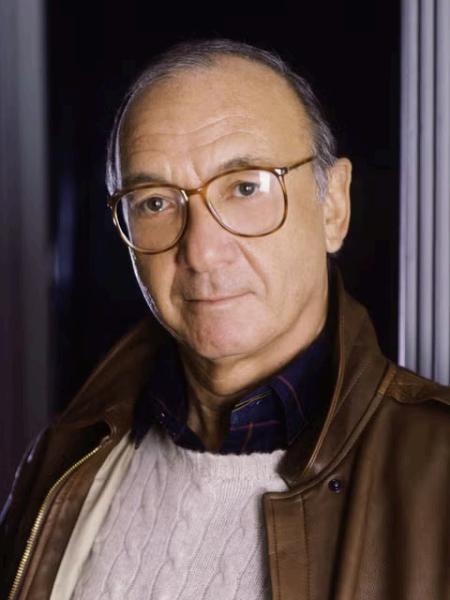
Marvin Neil Simon was born July 4, 1927, in the Bronx, New York, the son of Jewish immigrants from Eastern Europe. He grew up during the Great Depression in a household marked by his parents' difficult marriage material he would draw on for the rest of his career. After serving in the Army Air Forces Reserve and attending NYU, he and his older brother Danny began writing comedy for radio and television, including The Phil Silvers Show and Sid Caesar's Your Show of Shows.
Simon's first Broadway hit, Come Blow Your Horn, opened in 1961 He went on to write more than thirty Broadway plays, more than any other American playwright His works include Barefoot in the Park, The Odd Couple, Plaza Suite, The Sunshine Boys, Lost in Yonkers (Pulitzer Prize for Drama, 1991), and the screenplays for The Goodbye Girl and The Out-of-Towners. Over his career he received four Tony Awards, the Mark Twain Prize for American Humor, and the Kennedy Center Honors. The Neil Simon Theatre on Broadway was renamed for him in 1983.
Broadway Bound is the third play in Simon's most autobiographical project—a trilogy following the fictional Eugene Morris Jerome from adolescence into young adulthood:
• Brighton Beach Memoirs (1983) 15-year-old Eugene navigates puberty and his crowded Depression-era home in Brooklyn
• Biloxi Blues (1985) Eugene is drafted into Army basic training in Mississippi at the end of WWII Won the Tony Award for Best Play
• Broadway Bound (1986) Eugene and his brother Stanley try to break into television comedy writing as their parents' marriage falls apart
Each play stands alone, but together they trace Simon's own journey from Brooklyn kid to working comedy writer
The play is set in the very era when Neil Simon and his brother Danny actually began writing comedy professionally. Television was a brand-new medium, and a generation of Jewish-American comedy writers from Brooklyn Simon, Mel Brooks, Larry Gelbart, Woody Allen, and others, was about to reshape American humor.
Broadway Bound opens at the Broadhurst Theatre on December 4, 1986, directed by Gene Saks and starring Linda Lavin as Kate, Jonathan Silverman as Eugene, Jason Alexander as Stanley, Philip Sterling as Jack, and John Randolph as Grandpa Ben. The production runs 756 performances.
The play receives four Tony Award nominations, including Best Play. Linda Lavin wins Best Actress in a Play, and John Randolph wins Best Featured Actor in a Play.
Broadway Bound is adapted for television, starring Anne Bancroft as Kate, Hume Cronyn as Grandpa Ben, and Jonathan Silverman reprising his stage role as Eugene
Broadway Bound is widely regarded as the most personal and most emotionally mature of Simon's plays. It is produced in regional, university, and community theatres across the country. Charleston Stage is honored to share it with the Lowcountry.
• Neil Simon is the most-produced American playwright of all time. At one point in 1967, he had four shows running simultaneously on Broadway.
• 'Eugene' is Simon's middle name (his real first name was Marvin).
• Simon's older brother Danny, who inspired the character of Stanley, was Neil's first writing partner, and the brother who taught him to write comedy.
• The radio sketch the brothers write in Act Two parodies their own family. Their father recognizing himself in the broadcast is drawn from a real incident in the Simon household.
• Linda Lavin (TV's 'Alice') won her only Tony Award for playing Kate.
• Jason Alexander played Stanley on Broadway before becoming famous as George Costanza on Seinfeld.
• Kate's 'dancing with George Raft' monologue is frequently used as an audition piece and is taught in acting programs across the country.
• Neil Simon won the Pulitzer Prize for Drama in 1991 for Lost in Yonkers, another autobiographical play set in 1940s Brooklyn.
• The Brighton Beach neighborhood in the play really exists, on the southern tip of Brooklyn, between Coney Island and Manhattan Beach. In the 1940s it was a predominantly Jewish working-class community
• Simon and his brother Danny got their professional start writing for the camp 'Tamiment' staff revues in the Poconos, the same setting that gave us the show-within-the-show comedic radio sketches in Broadway Bound
• In 1983, Broadway renamed the Alvin Theatre the 'Neil Simon Theatre' in his honor, an unusual tribute for a living playwright.
• Neil Simon wrote into his late 70s. His final play, Rose's Dilemma, premiered in 2003.
Bring 1949 Brighton Beach home with you. Here are activities for families, students, and classrooms before or after the performance.
• Family Snapshot Write a one-page scene set at your own dinner table. Don't add any plot just listen for how your family really talks. What do you notice?
• Comedy Writing 101 Eugene and Stanley write a 6-minute sketch for radio. Pick two characters in your house and write a 1-minute comedic exchange. Read it aloud.
• Decade Detective Research what an average American household looked like in 1949: groceries, prices, music, news, jobs. What would have surprised your great-grandparents about life today?
• Radio Theatre Listen to a 1940s radio episode (Jack Benny, Fibber McGee and Molly, Your Hit Parade). Notice how comedy worked when audiences could only hear, not see.
• Read the Trilogy Read Brighton Beach Memoirs and Biloxi Blues to see Eugene's full journey. Which version of him do you most identify with?
• Memoir Page Write one page about a turning point in your own family's history a move, a loss, an arrival, a goodbye Stick to what you remember and what you saw
• Two Generations Interview a grandparent or older relative about what their parents argued about, hoped for, and worried about Compare it to what your parents (or you) argue about today
• Watch the Source Stream the 1992 television film of Broadway Bound How does Neil Simon's writing translate from stage to screen? What is lost and what is gained?
• The Comedy of Conflict Pick one tense moment in the play Why is it funny and sad at the same time? What is Simon doing with rhythm and language to hold both feelings at once?
• Why do you think Eugene narrates the play directly to the audience? How would the experience be different without those moments?
• Kate's monologue about dancing with George Raft sits in the middle of a long, painful night Why does Neil Simon give her this memory at this moment?
• Grandpa Ben refuses to live with his daughter Blanche because of her wealth Is he principled, stubborn, or both? What do his choices cost him?
• Stanley and Eugene have different dreams about what 'making it' looks like Whose ambition do you understand more?
• The play ends with Eugene alone in an empty house What is he saying goodbye to, and what is he saying hello to?
• Where in your own life have you used humor to talk about something hard?
Broadway Bound is a love letter, a confession, and a comedy Neil Simon once said he wrote it because he wanted to tell the truth about his family while there was still time We're grateful that you've chosen to share his story with us, and we hope it leaves you talking, laughing, and maybe calling someone you love on the way home.
For accessibility accommodations, or additional educator resources, please contact the Charleston Stage Education Department.