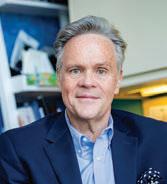
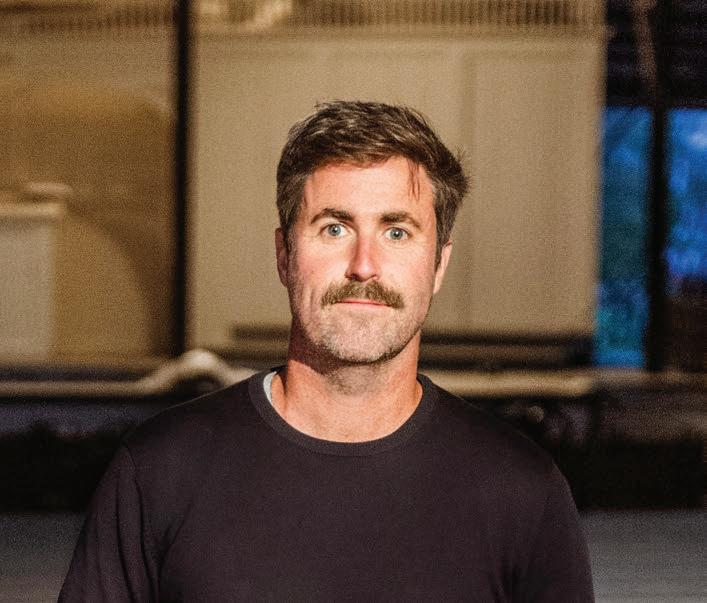
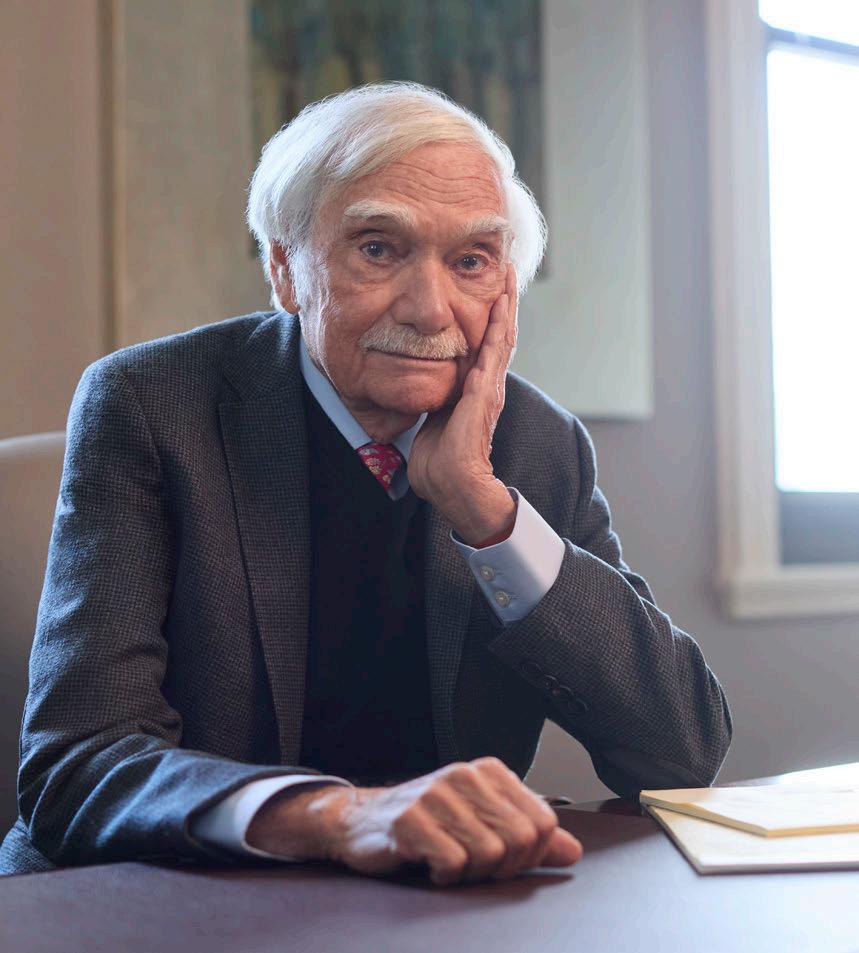
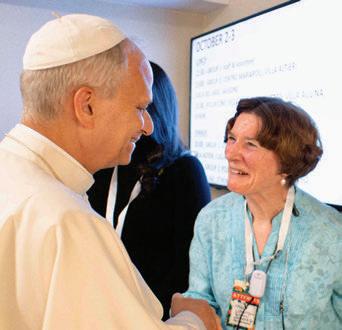
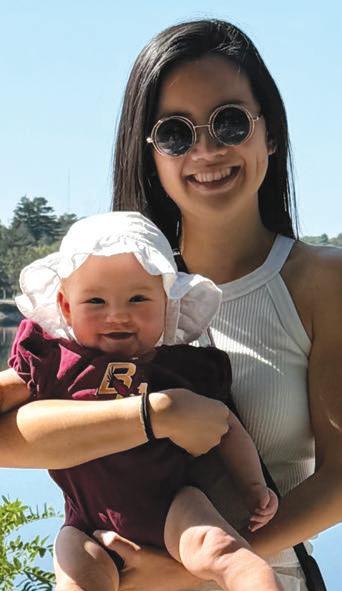
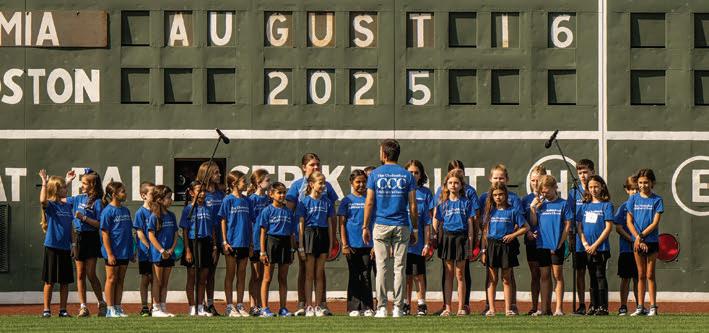
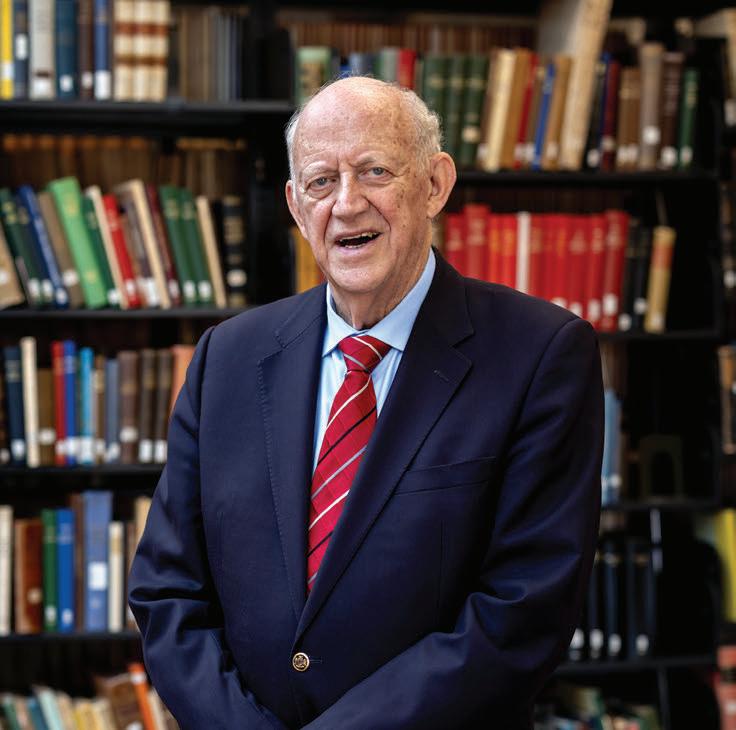
Paul Reynolds ’82 wrote a new children’s book with the late Pope Francis.
Hollywood on the Heights
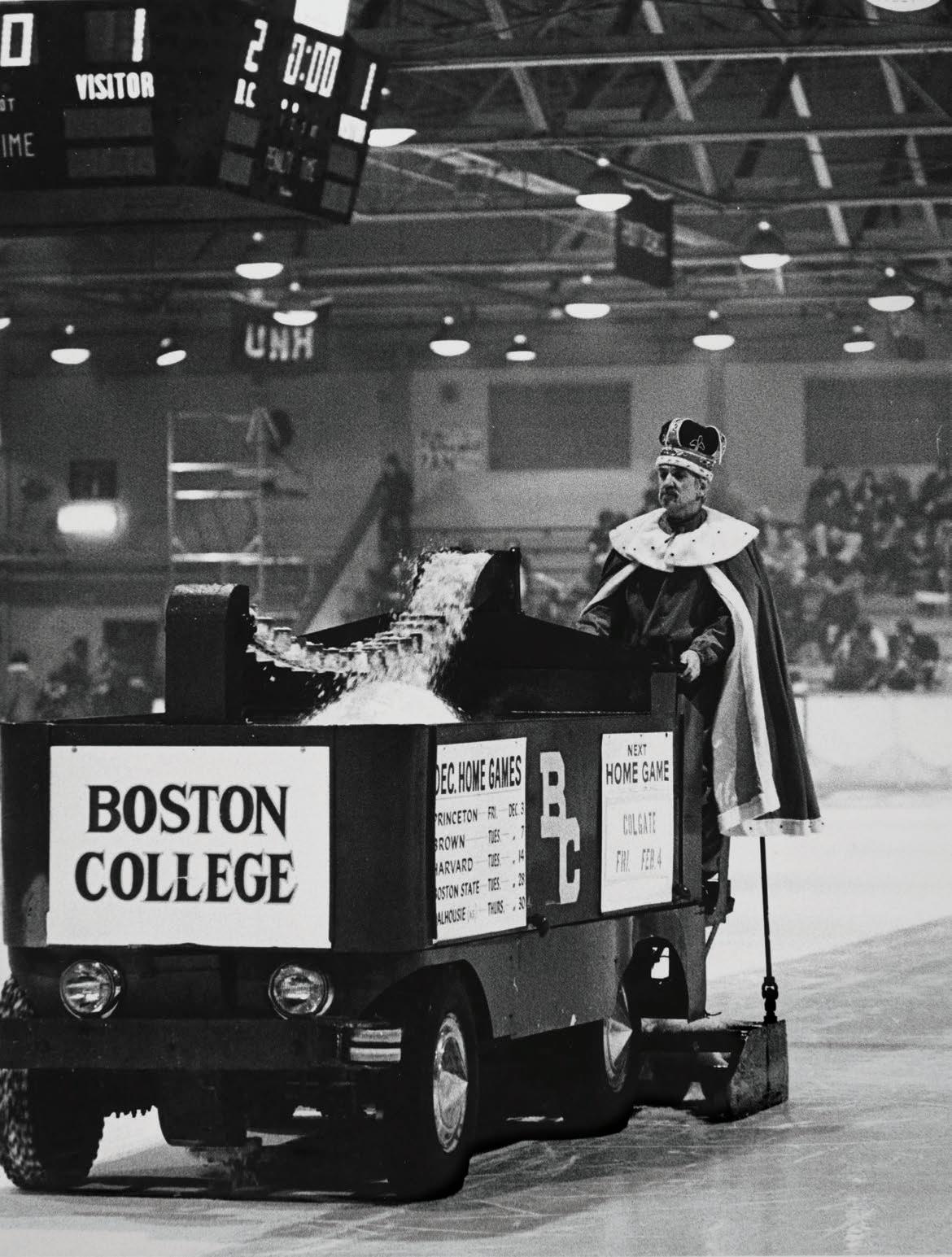
That time in 1946 when James Cagney shot a spy thriller at BC.
Talking to the Deadbots
Artificial intelligence is allowing people to “speak” with deceased loved ones.
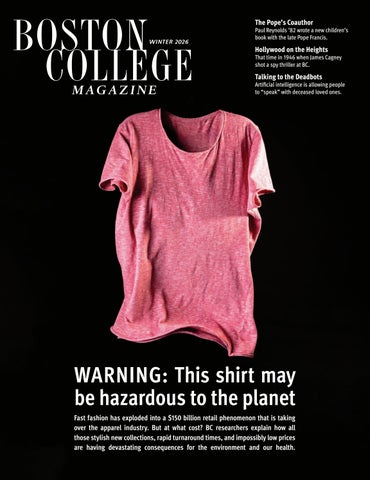
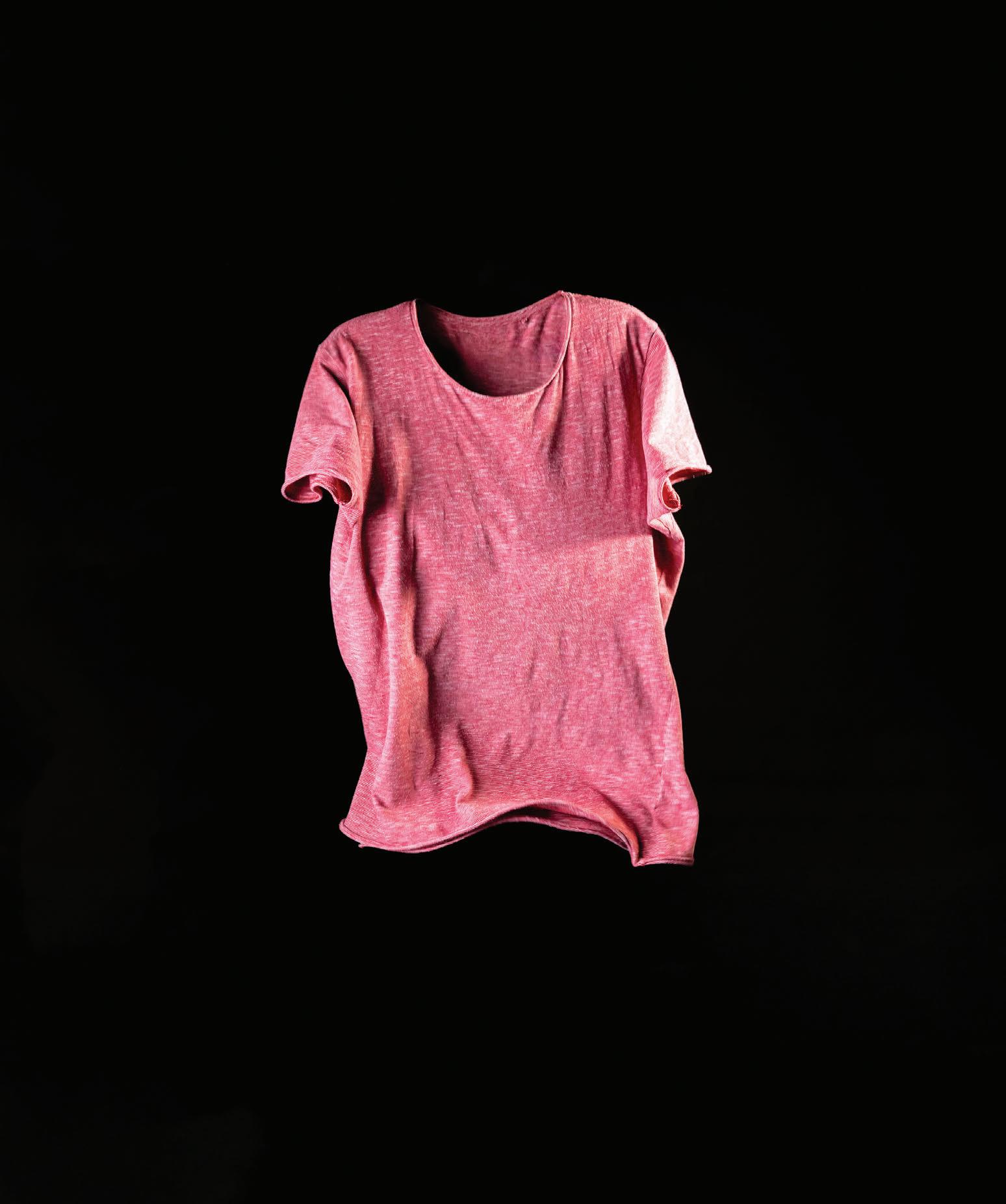
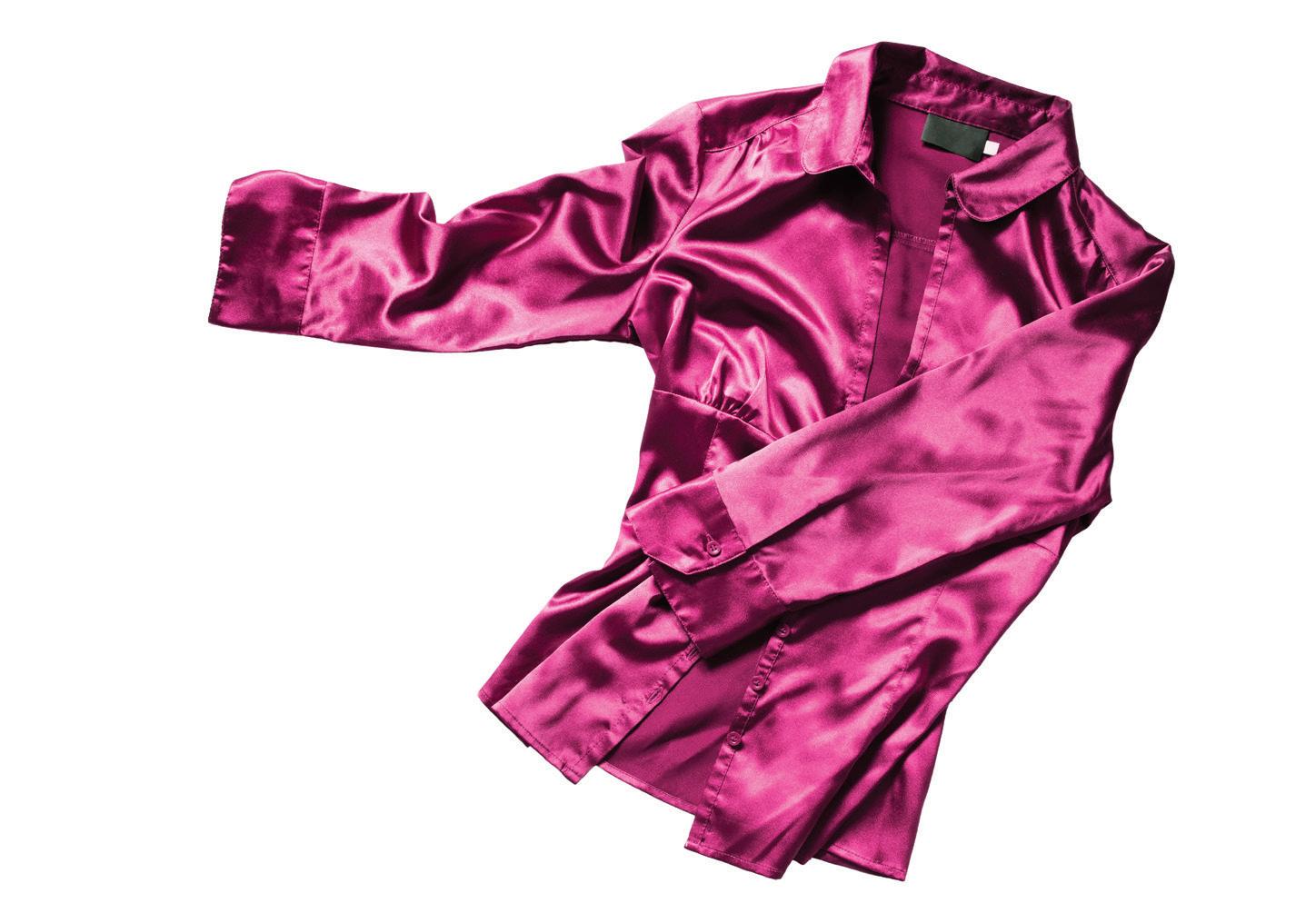
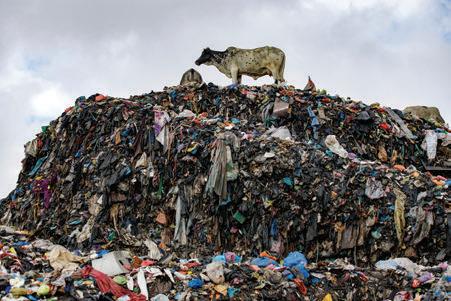
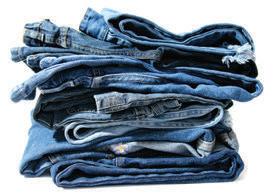
WARNING: This shirt may be hazardous to the planet
Fast fashion has exploded into a $150 billion retail phenomenon that is taking over the apparel industry. But at what cost? BC researchers explain how all those stylish new collections, rapid turnaround times, and impossibly low prices are having devastating consequences for the environment and our health.
20
Why the Humanities Are More Valuable Than Ever
In a new book, BC professor Carlo Rotella takes readers inside the classroom to show how timeless skills— including problem-solving, critical thinking, and strong communication—pay off for students in the end.
26 Welcome to the Age of Fast Fashion
How incredibly cheap clothing at the tap of a screen came to dominate the apparel industry…and leave behind a trail of harm for the planet.
By Elizabeth Clemente
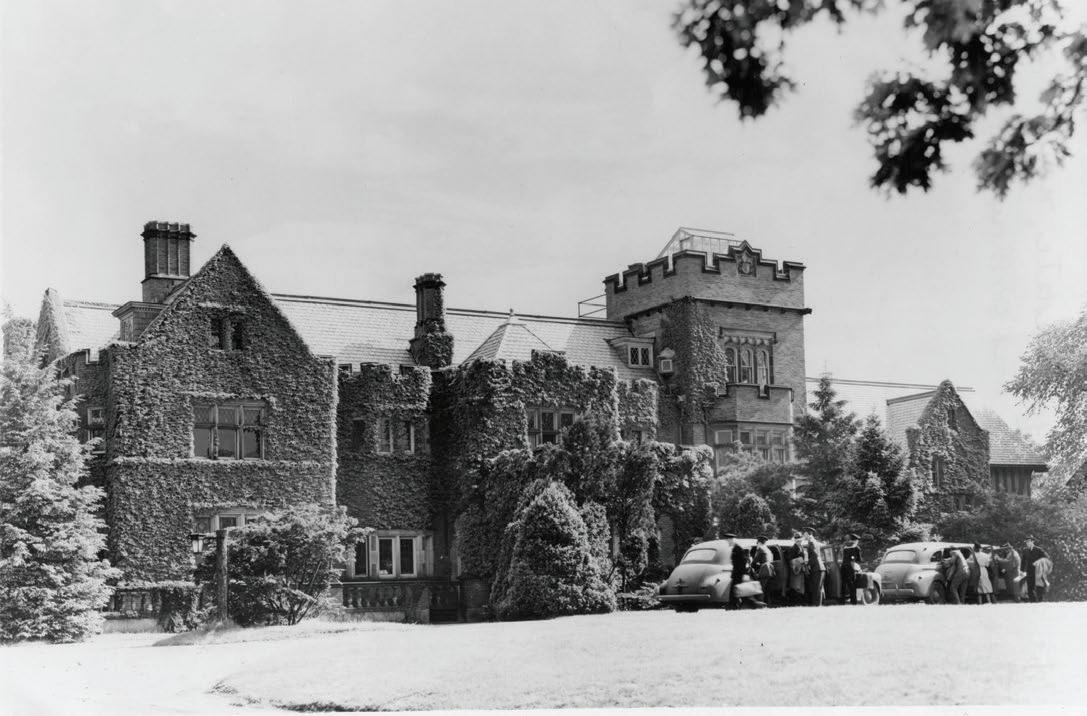
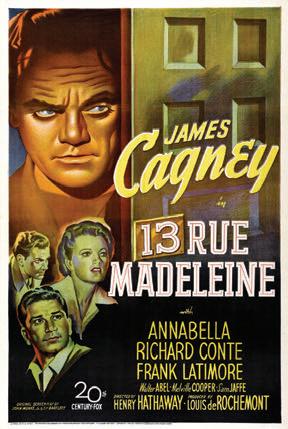
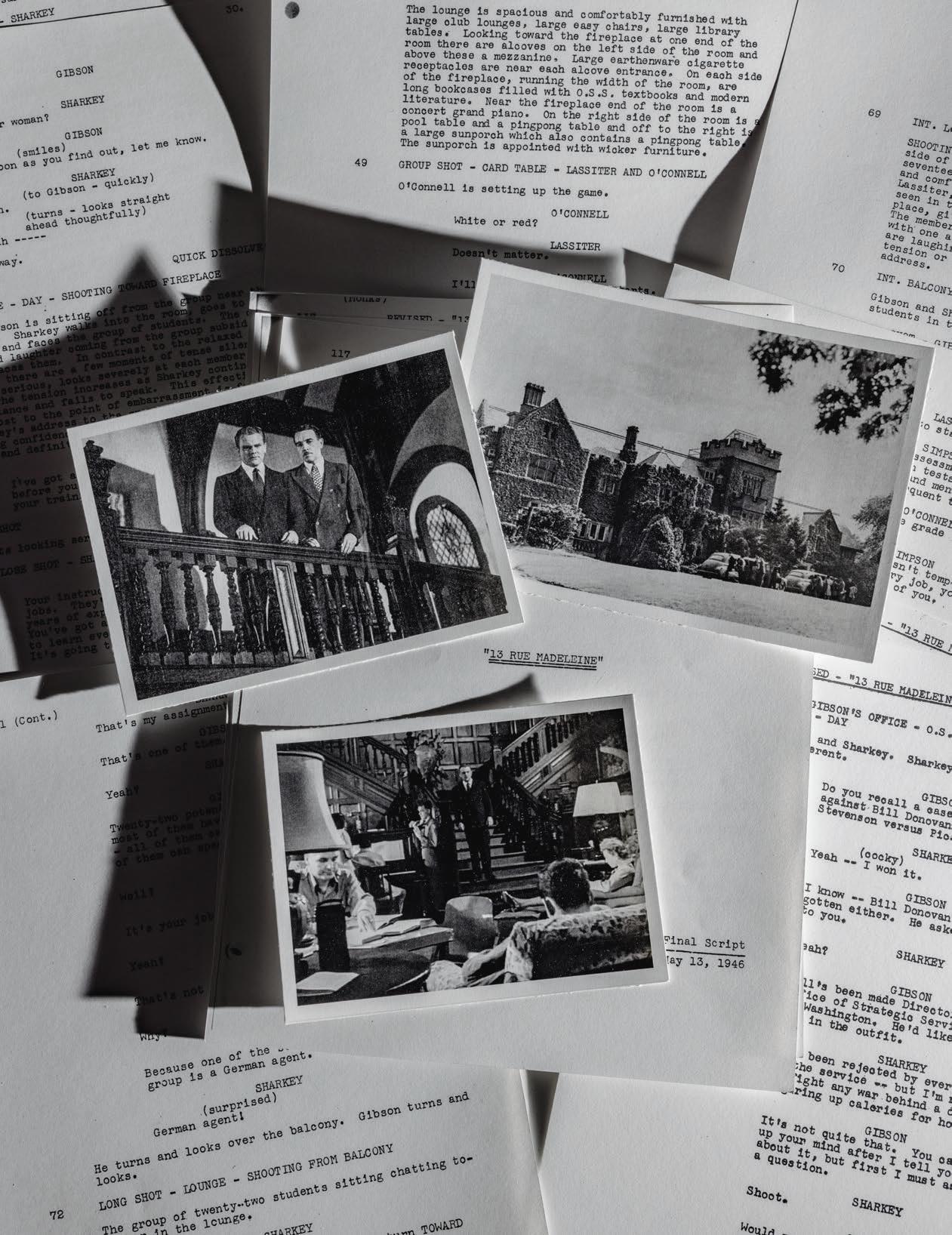
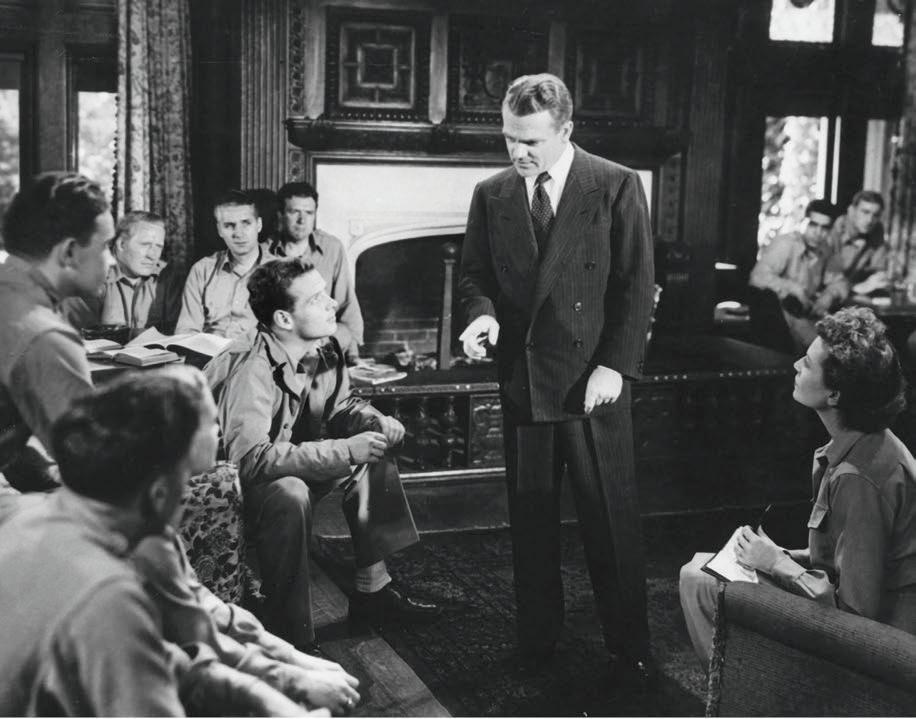
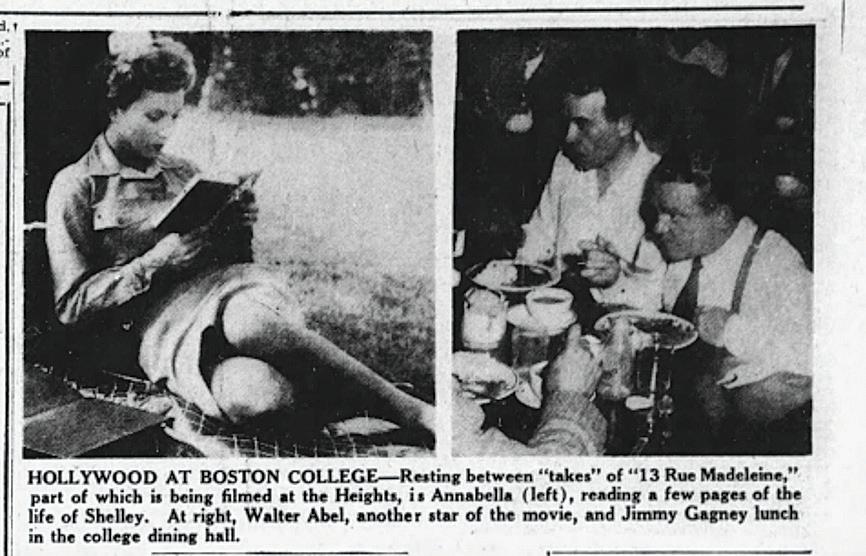
When Hollywood Came to The Heights
In the summer of 1946, a cast of movie stars headlined by James Cagney traveled to Boston College to begin shooting the spy thriller 13 Rue Madeleine Here’s the forgotten story of how the project landed at BC…and how O’Connell House became the star of the show.
By John Michalczyk
38
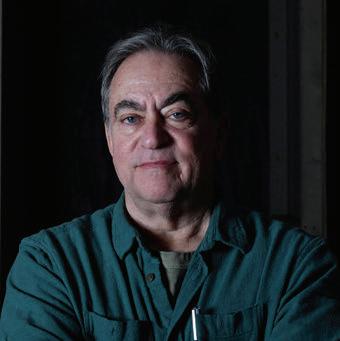
We Wrote a Book with Pope Francis
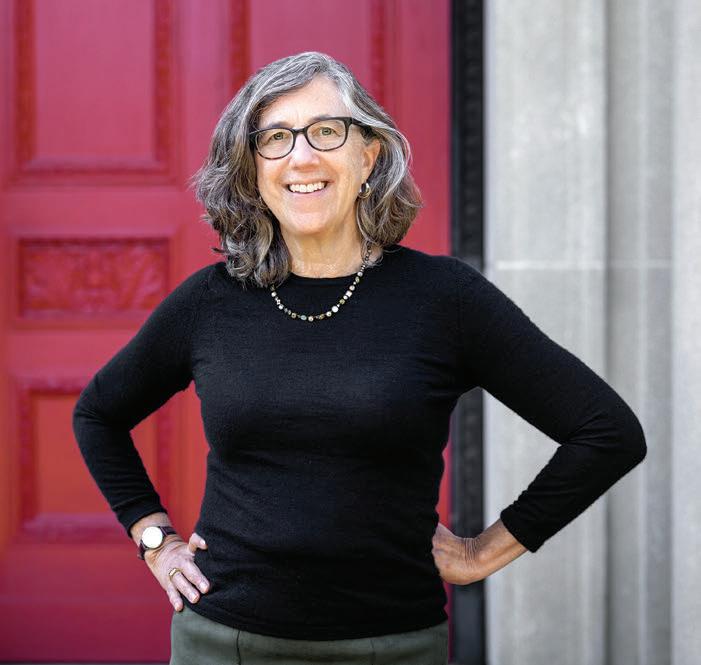
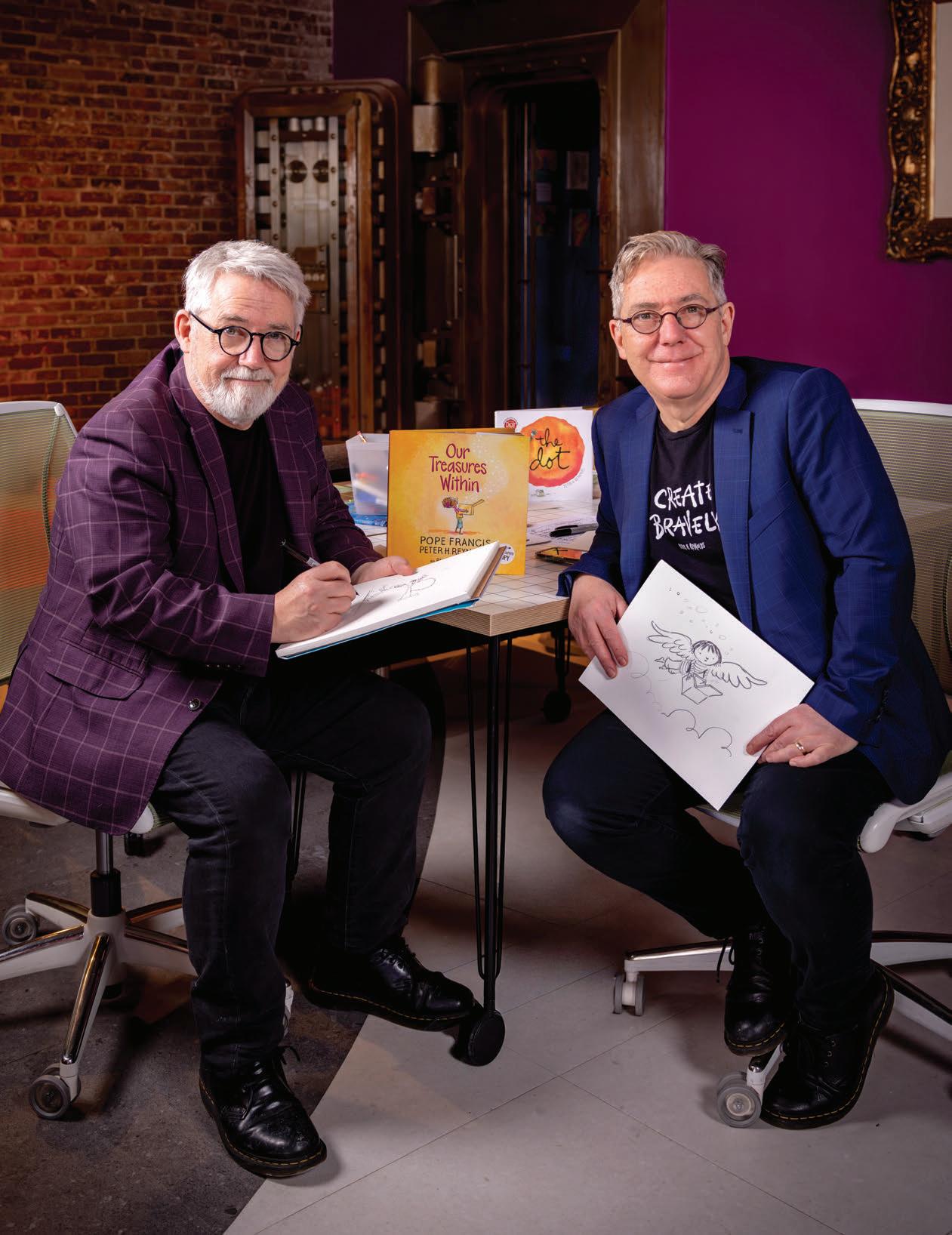
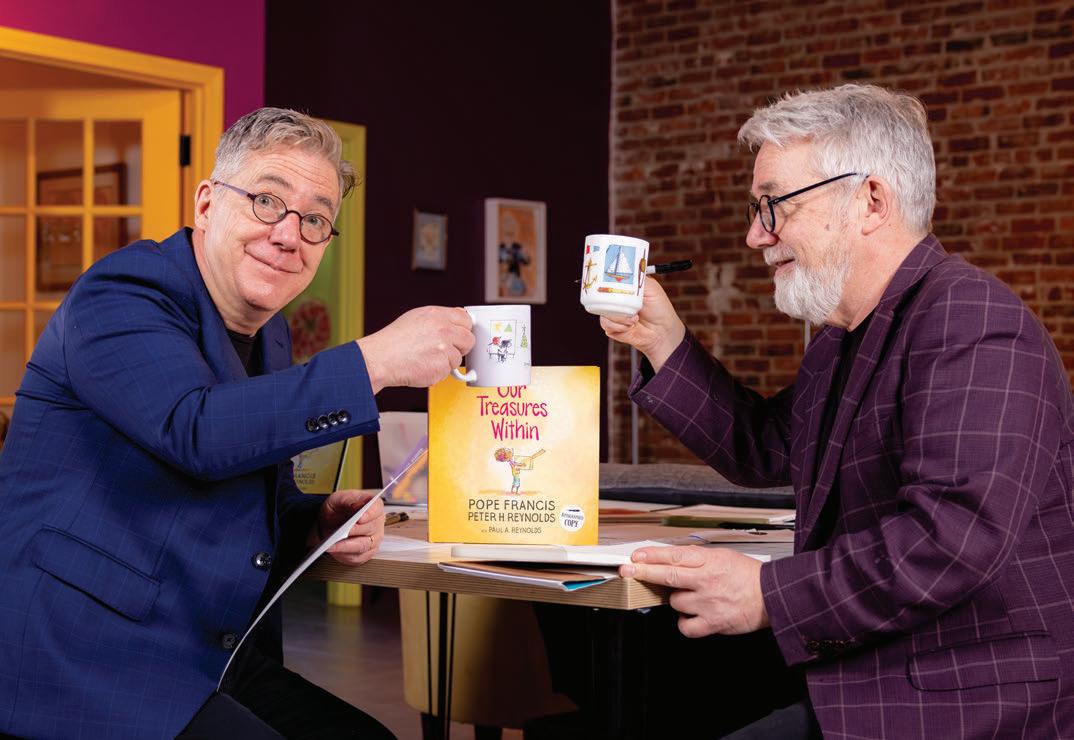
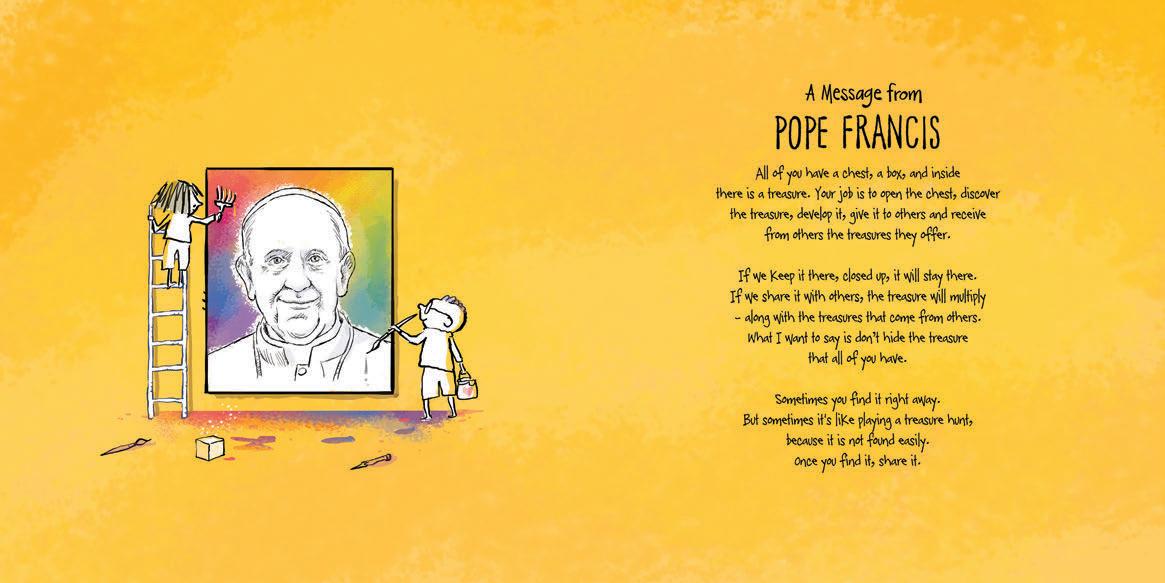
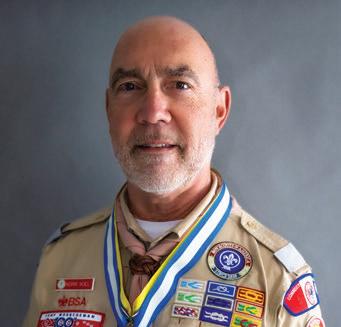
Paul A. Reynolds ’82 and his twin brother, the acclaimed illustrator Peter H. Reynolds, have just released a new children’s book cowritten with the late Pope Francis. By John Wolfson
Photographs by Caitlin Cunningham
cover photo: iStock photo: John J. Burns Library, Boston College (O’Connell House)
Meet Cindi Bigelow ’82, president and CEO of America’s biggest tea company.
8 Back to Campus
A new program allows seasoned professionals to spend a year learning, growing, and reflecting at Boston College.
9 Four Things Smart People
Don’t Know about America’s Tax Code (and How It’s Driving Inequality)
BC Law professor Ray Madoff on how the ultrarich are gaming the system—and what should be done about it.
10 A League of Her Own
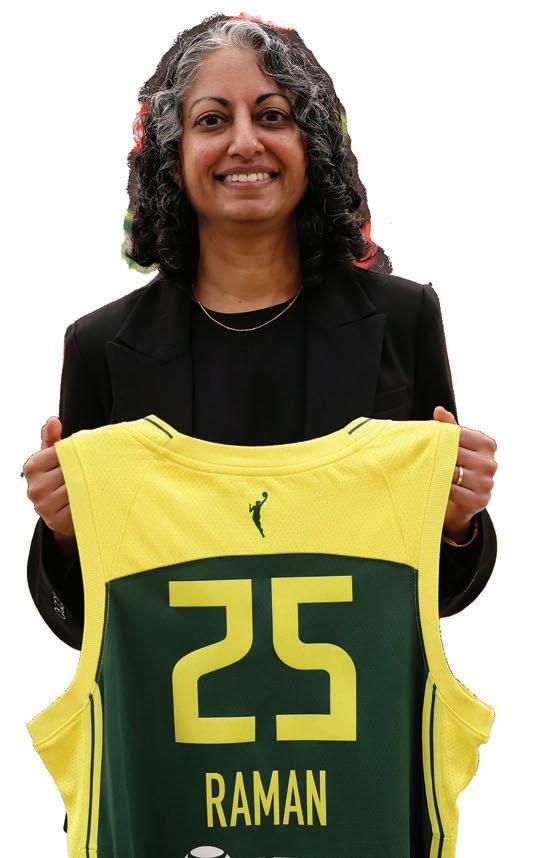
Sonia Raman JD’01 left a promising legal career behind and became the WNBA’s first Indian American head coach.
What statistical analysis reveals about our favorite songs (and us).
12 Keeping Journalism, and Journalists, Alive
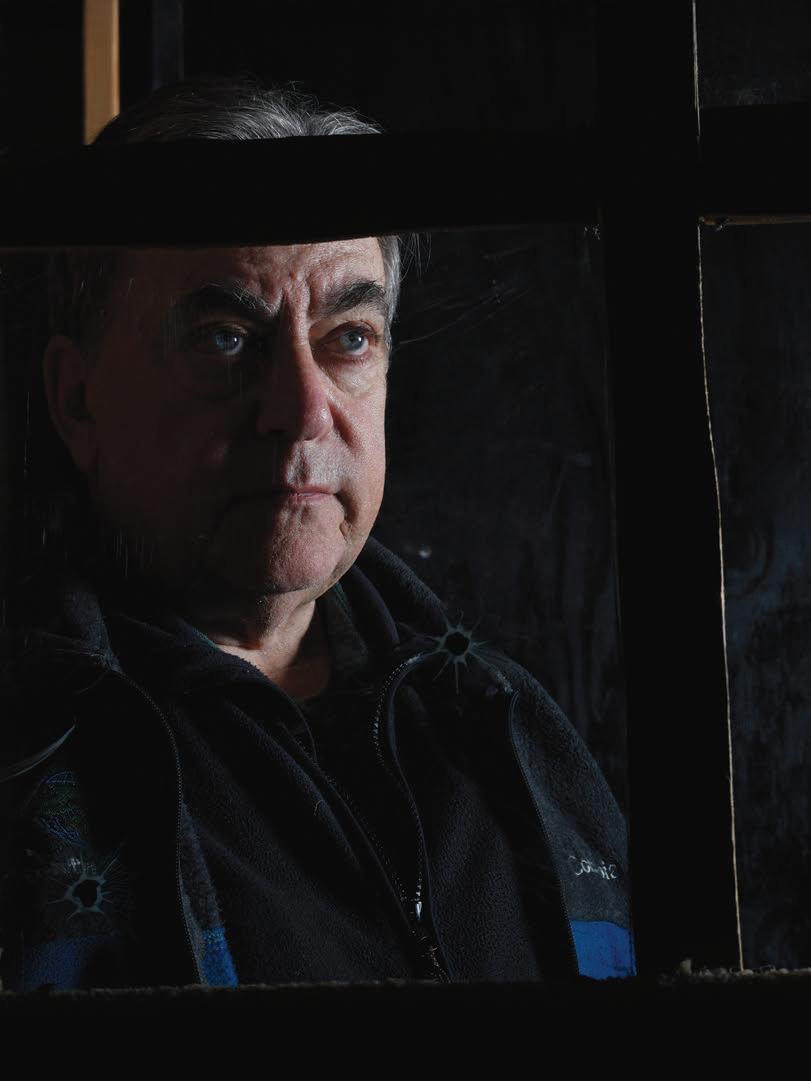
The investigative journalist Frank Smyth ’82 was held captive while reporting during the aftermath of the Gulf War. Today, when he’s not opening eyes with his exposés, he’s teaching others the skills to survive while working in some of the world’s most dangerous places.
12 Why Everything in the World Comes Down to CO2
Science writer Peter Brannen ’06 chronicles carbon dioxide as the fragile key to all life.
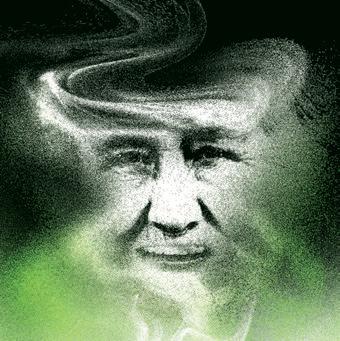
16 The Strange New World of Chatting with the Dead “Deadbots” promise to comfort those in mourning by using AI to replicate loved ones who’ve passed away. But what do they tell us about the nature of life, death, and the digital in-between.
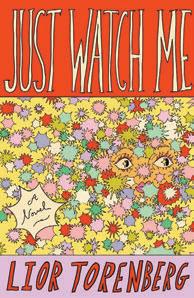
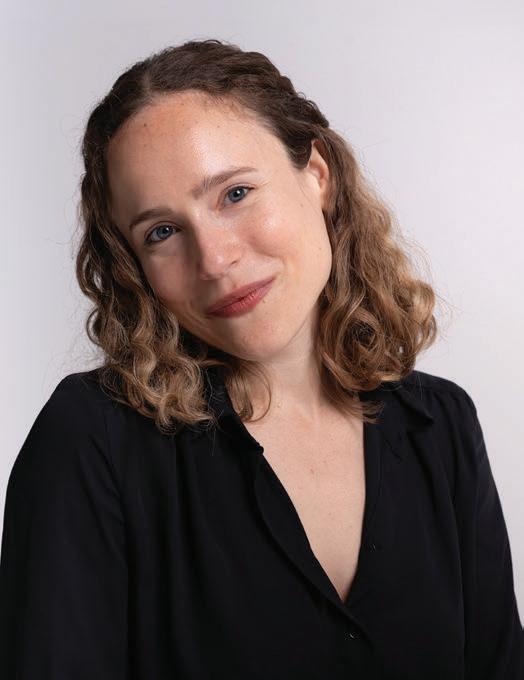
16 Just Watch Me
In her debut novel, Lior Torenberg ’18 finds dark comedy in the obsessive oversharing of life online.
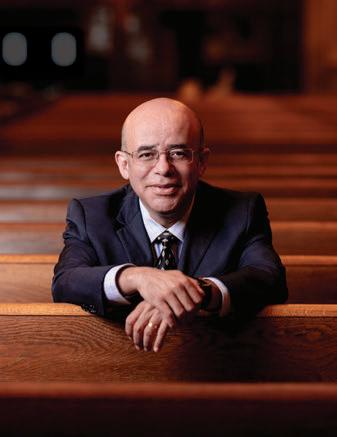
The Church and Latinos
Our Fall 2025 cover story, an interview with influential BC theologian Hosffman Ospino, explored how Latinos, who now account for nearly half of US Catholics, are transforming the church.
It was a privilege to have learned from Dr. Ospino within the Urban Catholic Teacher Corps. A true advocate for Catholic education for Latin families, who, although populous in the church, often do not receive the benefits of participating in and attending Catholic schools.
Andre Wangard, MEd ’24 Fort Lauderdale, Florida
It is really frustrating to read your article on “The Church and Latinos” because by “Latinos” you mean the people that should be called Iberoamericans. No doubt the ethnic composition of the Church matters, but to speak about “the racial and ethnic composition of the Church…” brings up the idea that there are human races…fundamentally, the idea of race is political and with no biological basis. Beyond [that], Hosffman Ospino fails to consider the barriers that Iberoamericans who are members of the Church encounter here in the United States. For example, in many small towns west and northwest of San Antonio, there are two Catholic churches, one for those that belong to the non-Hispanic White race and one for “the Mexicans.” Sure, Iberoamericans, the “Latinos” of the article, will influence and perhaps transform the American Catholic Church, but it will be because of the mass effect of their sheer num-
bers, not because they are led by an enlightened and truly Christian leadership.
Miguel Bedolla, MD, PhD, MPH
San Antonio, Texas
Behold the Eagle’s Challenge Burger
Our most recent issue highlighted a famous eating challenge at Eagle’s Deli, a student-favorite restaurant near campus.
I am not an alum, but my spouse is. It’s a joke around our house that I read each issue of BC Magazine much more thoroughly than he does; I’m usually impressed with the wellwritten articles on a wide range of topics… so it’s hard to describe how repellent I found the article in the recent issue highlighting the Eagle’s Challenge Burger. Today in the United States, food insecurity is an inescapable problem…and yet the magazine promotes this stunt to see if one person can eat a “beefy tower” of twelve patties and more in an hour. If this BC tradition must continue, at the very least the $100 [prize] should be donated to a local food bank or to buy hot meals for a local shelter.
Hillory Oakes
Lewiston, Maine
Books
The Books section in our Fall 2025 issue included fiction and nonfiction selections about women charting their own paths.
Thank you so much for introducing two wonderful books in your review section. My daughter (a former high school soccer player) and I closely follow all the women’s soccer games with great enjoyment and will savor Girls with Goals. We have also both read all of Dorothy Sayers’s Lord Peter Wimsey books at least twice, and can’t wait to get started on The Queens of Crime [by Heather Terrell ’90] featuring Sayers, Agatha Christie, and other female mystery writers. Well done, authors!
Margie Mullen Collins ’75
Titusville, Florida
Figure of Speech
A Fall 2025 story explored the work of speech pathologist John Costello ’83, an international leader in the field of augmentative communication.
I loved this article about AI-assisted voice cloning for ALS patients. It’s so special to read about another SLP and BC graduate! I have not met many. Thank you for sharing!
Clare Short ’10
Atlanta, Georgia
Change Agent
In our Summer 2025 issue, we profiled Shelley Stewart III ’06, one of the top executives at McKinsey & Company, the largest of the “Big Three” management consulting firms.
Hell yeah. I used to play a lot of pickup basketball with Shelley at BC. Good man. Keep crushing it, my man.
Anthony Gutierrez ’06
New York City, New York
Boston College Magazine welcomes letters from readers.
Letters may be edited for length and clarity. Please include your full name and address.
EMAIL: bcm@bc.edu
MAIL: BCM, 140 Commonwealth Ave. Chestnut Hill, MA 02467
Connect with @BostonCollege
The Church and Latinos
The influential BC theologian Hosffman Ospino on how Latinos, who now account for nearly half of US Catholics, are transforming the Church.
photos: Caitlin Cunningham (Ospino and Costello); McKinsey & Company (Shelley)
Back in the Day
Here’s a selection of photos from readers who responded to our call to share images from their time at BC. Submit your own by sending an email to bcm@bc.edu.
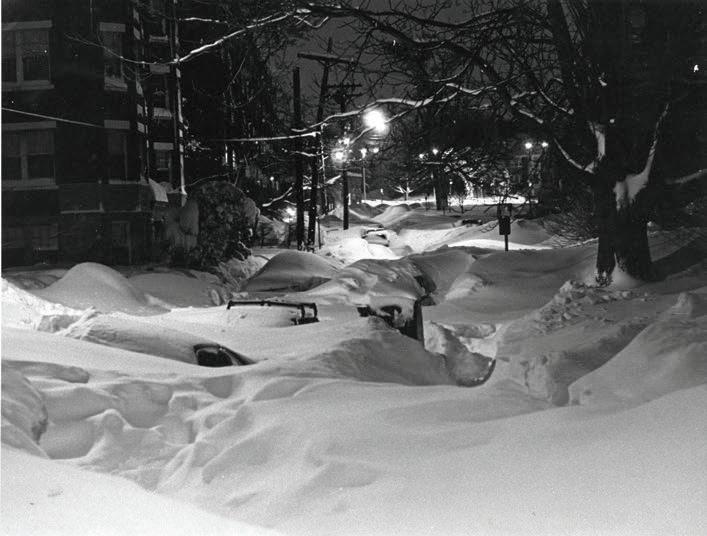
White Out —Chris Lauber ’81 unearthed this photo of South Street in Brighton, taken during the infamous “blizzard of ’78” that dumped more than twenty-seven inches of snow on Boston in less than thirty-two hours.
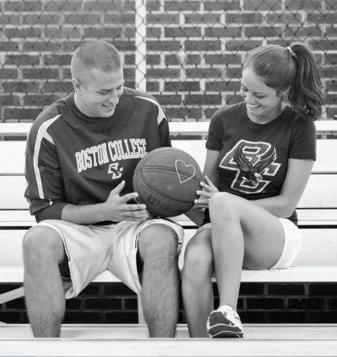
Courting Love —Mark Dunn ’86 shared this photo of his daughter Kaitlin (Dunn) Lang ’08 and her husband Brendan Lang ’08 in their BC gear as students. The couple met and fell in love playing basketball on campus and were married in 2012.
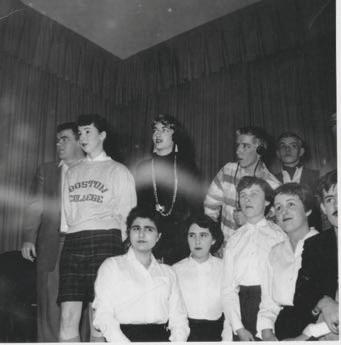
A Winning Act —Eleanor (Downey) Lonske ’60, pictured back row center, sent us this photo of her playing the role of Antigone Pureheart, a femme fatale, in a School of Education skit competition at BC in 1957. Her team of freshmen won.
EDITOR
John Wolfson
Keith Ake
Scott Kearnan
STAFF WRITER
Elizabeth Clemente
DIRECTOR OF PHOTOGRAPHY
Caitlin Cunningham
SENIOR PHOTOGRAPHER
Matt Healey
Please send address changes to:
Development Information Services
Cadigan Alumni Center
140 Commonwealth Ave.
Chestnut Hill, MA 02467 (617) 552-3440, Fax: (617) 552-0077 bc.edu/address
Please send editorial correspondence to: Boston College Magazine
140 Commonwealth Ave. Chestnut Hill, MA 02467 (617) 552-3350 bcm@bc.edu
Boston College Magazine is published three times a year by Boston College, with editorial offices at the Office of University Communications.
ISSN 0885–2049
Standard postage paid at Boston, MA, and additional mailing offices.
Postmaster: Send address corrections to: Boston College Magazine
Development Information Services
Cadigan Alumni Center
140 Commonwealth Ave. Chestnut Hill, MA 02467
Please direct Class Notes queries to: Class Notes editor
Cadigan Alumni Center
140 Commonwealth Ave. Chestnut Hill, MA 02467 email: classnotes@bc.edu phone: (617) 552-4700
photos: Courtesy of Chris Lauber, Eleanor (Downey) Lonske, and Mark Dunn
Linden Lane
Tea Master
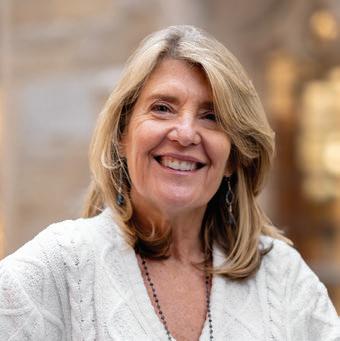
Meet Cindi Bigelow ’82, president and CEO of America’s biggest tea company.
BY SCOTT KEARNAN
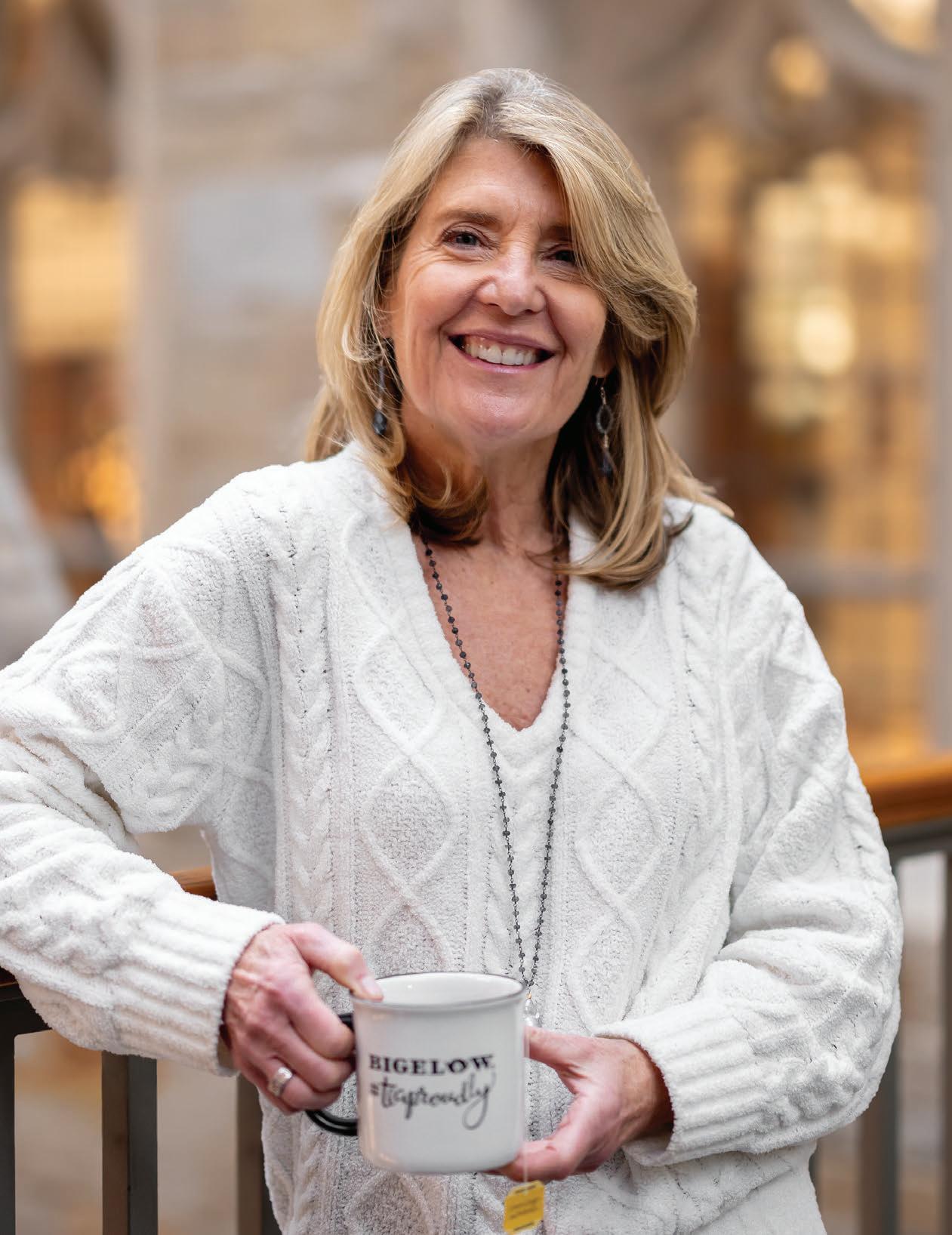
On a chilly day last December, Cindi Bigelow ’82 was delivering a guest lecture in Fulton Hall to a collection of BC marketing students. For two decades, Bigelow has been CEO of America’s biggest tea company, Bigelow Tea. Since taking over the company her grandmother founded in 1945, she has presided over impressive growth. Today, the company is responsible for one out of every four boxes of tea sold in America, and each year, 2.3 billion Bigelow tea bags are steeped worldwide.
Looking out at the class, Bigelow passed out some sample tea bags, then opened a pouch of tea herself. She inhaled and then described the aroma of the fragrant leaves. “She’s comforting,” she told the students, speaking of the tea the way a captain describes a ship.
It was in classrooms very much like the one she was speaking in that Cindi Bigelow began her path to the helm of a multimilliondollar business. After graduating from BC in 1982 with a degree in marketing, she began her career working in sales for the liquor company Seagram. “I was a twenty-one-yearold blonde in pigtails in a man’s world,” she recalled. “I’d walk into restaurants and liquor stores to make a sale, and they wouldn’t even look at me. It was a good experience, though. It made me think, This is the way the world works. How do I work around it?”
That kind of tenacity apparently ran in the family. Bigelow’s grandmother, Ruth Campbell Bigelow, was an interior designer who lost everything during the Great Depression, Bigelow said, then remade herself in her forties as an entrepreneur, launching Bigelow Tea with her husband, David E. Bigelow, out of a Manhattan brownstone. It was a very rare accomplishment for a woman in that era, her granddaughter reminded the class at BC. “It’s a history I’m really proud of.”
Bigelow knew by the time she was in high school that she wanted to work for the family business eventually. But it wasn’t until after earning her MBA from the Kellogg School of Management at Northwestern University that she started at Bigelow Tea, in 1986, taking a job as a cost accountant.
Through the years, she was promoted to roles such as purchasing manager and director of manufacturing. “I was the troubleshooter,” Bigelow said. “Every two to three years, I’d move to wherever there was a problem.” Seeing the company from many angles prepared her to succeed her father, David Campbell Bigelow, as CEO in 2005. Since then, Cindi Bigelow has worked to strike a balance between pushing the company forward and staying true to what has made it successful through the decades.
Looking out at the BC class, Bigelow stressed her commitment to maintaining the same standards of quality that customers have come to expect since Constant Comment, the very first Bigelow Tea offering, was handcrafted in the kitchen of
recently cut the company’s operating profit margin in half.
As committed as she is to the tried and true, however, Bigelow said she also prioritizes developing new ideas. She has expanded the company’s product line, which now includes 250 different teas, to reflect customers’ evolving tastes as well as current beverage and wellness industry trends. Besides classics like Earl Grey, the company now offers teas that incorporate ingredients such as probiotics, L-theanine, and plantbased adaptogens, all of which are said to promote health and wellness. “If you’re not innovating,” Bigelow told the students, “you’re done.”
Today, the company is responsible for
one out of every four boxes of tea sold in America, and each year, 2.3 billion Bigelow tea bags are steeped worldwide.
her grandmother’s brownstone. Once the students had finished smelling the spicy orange aroma of the Constant Comment tea bags she’d sent around, Bigelow passed out tea bags from her competitors. She instructed the students to sniff at these samples. “Do you smell that?” she asked. “It smells like nothing.” And that, she explained, is why she refuses to switch to cheaper, substandard materials even though new tariffs—particularly the 50 percent tariff on the imported aluminum Bigelow Tea uses as pouch lining to lock in flavor—have
Striking that balance of constancy and evolution has kept Bigelow Tea a market leader in an industry that is exploding. Americans are drinking more tea than ever, led by millennials, who represent more than 60 percent of tea drinkers. In 2022 the United States reportedly imported more than $508 million worth of tea, which is grown overwhelmingly overseas, nearly four times the total from thirty years earlier.
Today, Bigelow Tea employs around 450 people between its Connecticut headquarters and distribution center, production facilities in Idaho and Kentucky, and America’s only large-scale tea farm in South Carolina. Bigelow said she believes in corporate responsibility. Since becoming CEO, for instance, she has launched an annual road race that’s raised about $3 million for Connecticut charities, started a “Tea for the Troops” donation program, and worked to align company practices with standards for positive social impact. Bigelow Tea, for example, is now 100 percent Green-e Certified for its environmental practices, which include using only renewable energy and keeping 95 percent of its waste out of landfills.
With her talk nearing its conclusion, Bigelow fielded a few questions from the audience. “What’s your favorite thing about running a family business?” one student asked. “That I can run a business and be a good person,” Bigelow responded. “I’m feisty. No one can tell me to not do the right thing.” n
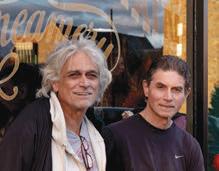
Saying Goodbye to a Legendary Ice Cream Shop
I broke the news to my sister, Tara, in a text message: White Mountain Creamery was closing in one week. The beloved BC campus-side ice cream parlor, which had provided countless students with scoops and part-time paychecks since 1983, would no longer serve chocolate, black raspberry, or maple walnut–flavored memories like the ones Tara and I had made together since my childhood. Back then my sister, BC class of 1990, hosted me for a couple of overnights on campus that would end with a sweet stop at White Mountain. It was my first glimpse of student life at the university where I, too, would eventually graduate (I’m class of 2004).
My sister’s text response was swift. “No!” she immediately replied. So along with my brother-in-law John, we decided to give the place a proper sendoff by meeting up for one last scoop. When we arrived, though, we found a locked door and a paper sign explaining that the shop had run out of ice cream two days earlier than anticipated. “The outpouring of love and emotion was overwhelming. I never expected it,” George Coufos, who owned White Mountain with his brother, Peter, told me later. Once word spread of the shop’s imminent fate, he explained, lines formed down the sidewalk, quickly depleting the supply.
Retiring from running such a cherished establishment is bittersweet, said Coufos, whose family bought the business in 1993 and has now sold it to the regional ice cream chain New City Microcreamery, which opened in December. “It’s a metaphor,” he said. “They’re starting a new tradition.” Scott Kearnan
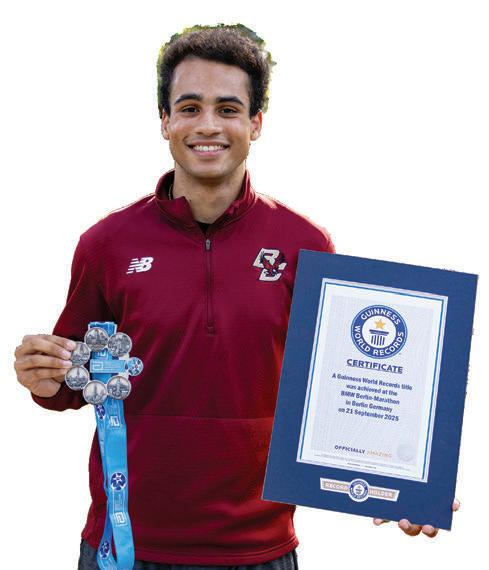
BC Student Breaks World Record in Running
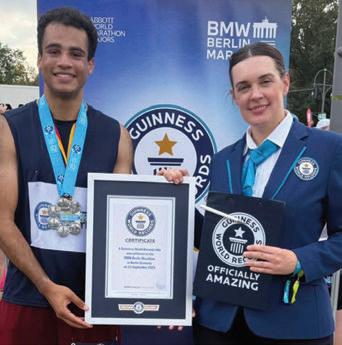
Last fall, after completing the Berlin Marathon at age twenty, BC political science major James Redding ’27 became a Guinness World Record holder as the youngest male athlete to finish all six races that are collectively known as the World Marathon Majors. Redding’s journey of many miles began dur ing high school, when the Brookline native would jog with his mother around the Chestnut Hill Reservoir. After running the Boston Marathon in 2024, Redding made quick
work of the other five majors— Chicago, New York City, Tokyo, London, and finally Berlin—in under two years. Redding, who intends to run the Sydney Marathon, which last year became the seventh major, said training for races is a great way to train
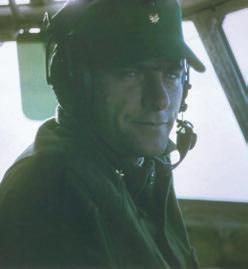
In Memoriam: Joe Dobbratz ’51
Marine Corps Col. Joseph R. Dobbratz, a decorated naval aviator and combat veteran, passed away in December at age ninety-eight. In 2021, I chronicled Dobbratz’s remarkable feats of aviation while flying in some of the most dangerous conditions in the world to supply academics conducting government research during the early 1960s in Antarctica. Impressed with Dobbratz’s extraordinary courage and skill, the researchers named a glacier in his honor. Despite his many aviation and military accomplishments, Dobbratz remained self-deprecating and humble. He never stopped calling me a couple of times a year just to say hello and to see if he could get me to laugh. He usually succeeded. John Wolfson
CAMPUS NEWS
Professor of Chemistry Dunwei Wang has been named interim Seidner Family Executive Director of the Schiller Institute for Integrated Science and Society. Wang brings to the position decades of experience as an educator and researcher and holds the Margaret A. and Thomas A. Vanderslice Chair in Chemistry. His appointment follows the decision of Laura J. Steinberg, the Schiller Institute’s inaugural director, to step down to return to research and teaching.
The Boston College Prison Education Program has been expanded to serve a Massachusetts women’s prison. The pilot expansion program allows women incarcerated at MCI-Framingham to take classes taught by BC professors. Since its launch in 2019, BC’s Prison Education Program has enrolled more than 100 students at the men’s prison MCI-Shirley.
The National Science Foundation has awarded two BC physicists a $1 million research grant. Assistant Professor of Physics Qiong Ma and Associate Professor of Physics Fazel Tafti will use the NSF funding to study a new class of high-efficiency quantum materials for use in electronics. Ma also received one of five 2025 grant awards from the Moore Inventor Fellows Program, recognizing groundbreaking scientist-inventors.
Lynch School of Education and Human Development Assistant Professor Ido Davidesco will lead a three-year project to investigate how AI can be used as a creative learning and computational thinking tool in high school classrooms. He will work with colleagues from three other universities and institutions on the initiative, which is funded by a $1.5 million grant from the National Science Foundation.
BC’s Clough School of Theology and Ministry is one of seven inaugural members of the new Collaborative Theology Initiative, a partnership among Jesuit theology centers around the world. Through cooperative projects, including international symposia, these institutions will work to develop and strengthen theological education to prepare students to respond to contemporary global challenges.
photo: Caitlin Cunningham
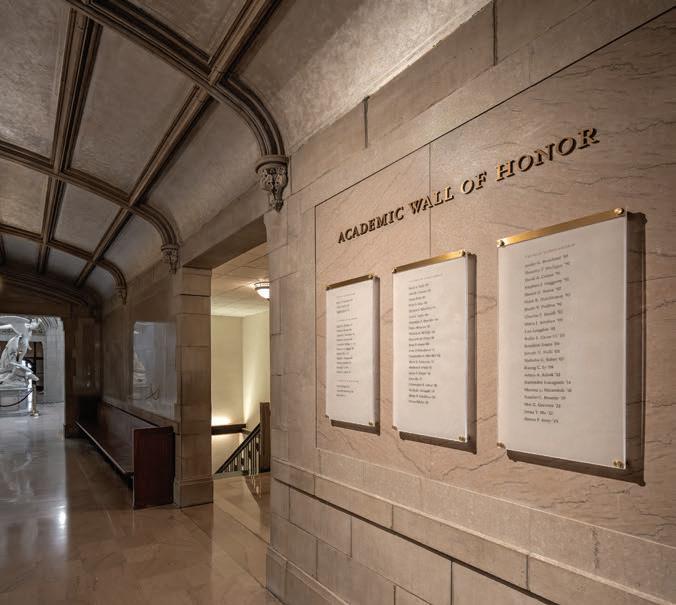
BC Recognizes Outstanding Student Achievement with an Academic Wall of Honor
Boston College has unveiled a new Academic Wall of Honor to commemorate the fiftynine Eagles who have so far earned Rhodes, Marshall, Churchill, Goldwater, and Truman scholarships—the most prestigious academic honors in the world—during their undergraduate years. The installation, located on the first floor of Gasson Hall near the Gasson Rotunda, includes each recipient’s name and graduation year and will be updated annually to recognize future award winners.
BC Associate Vice President of University Communications Jack Dunn created the project as a tribute to some of the greatest minds that have passed through the University. “These individuals represent Boston College at its best,” Dunn said. “Having had the pleasure of interviewing many of them during the past twenty-five years, I have always been impressed by their talent, leadership, and commitment to excellence. They deserve to be recognized and celebrated as examples for our current students to emulate.” Dunn additionally conceived of the Finnegan Award Wall of Honor. Also located outside the Gasson Rotunda, it lists the names of the recipients of the University’s highest student honor, which is presented each year at Commencement.
The scholarships recognized on the Academic Wall of Honor are incredibly competitive. For instance, Rhodes Scholarships, among the oldest graduate scholarships in the world, are awarded each year to only thirty-two American students, providing them with two or more fully funded years at the University of Oxford. Meanwhile, only eighteen American students annually receive Churchill Scholarships, which provide a year of graduate study at the University of Cambridge. “Boston College’s faculty is proud of our many graduates who have earned these prestigious awards,” Provost and Dean of Faculties David Quigley said, “and the Academic Wall of Honor will be a powerful reminder of their legacy.” S.K.
Back to Campus
A new program allows seasoned professionals to spend a year learning, growing, and reflecting at Boston College.
BY ALIX HACKETT
Midway through 2024, Bill Reynolds got an email no one wants to receive. The telecommunications company where he’d worked as a network architect for the past decade was laying off ten thousand workers, and the following year it would lay off ten thousand more, Reynolds included. He wasn’t ready to retire just yet, but as he pondered his next move, he felt pigeonholed by his resume, which listed thirty-five years of experience in an industry that no longer excited him. “For the previous few years I’d been drawn to reading all about climate, sustainability, and alternative energy,” he recalled recently. “I wanted to do something that felt more purposeful to me, but I was stuck on how to pivot.”
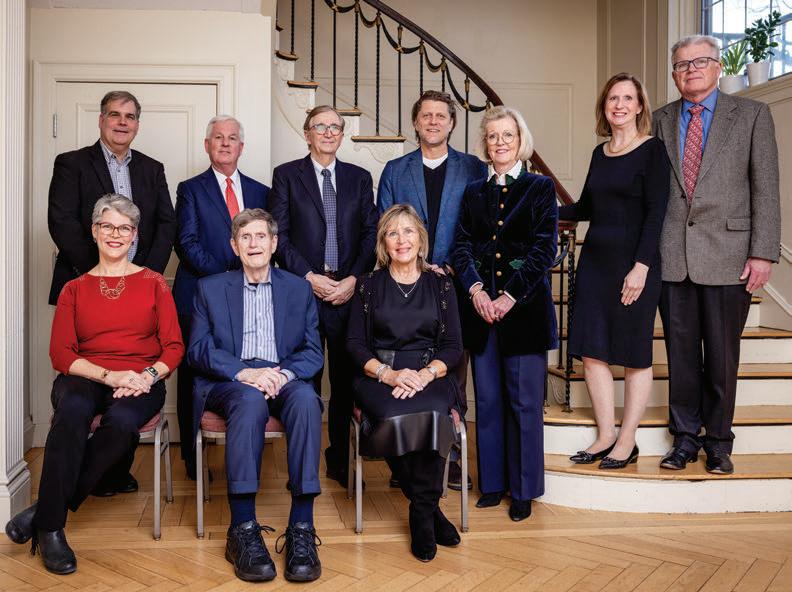
Last year, Reynolds became one of the first people to enroll in Boston College Companions, a yearlong on-campus program that combines academic study with formative experiences and opportunities for reflection. Participants, referred to as fellows, audit courses of their choosing from across the University’s nine colleges, form lasting bonds during twiceweekly in-person group seminars, and chart their path forward through conversations with advisors. They have opportunities for spiritual direction as well, including a pilgrimage through Spain and Italy inspired by the life of Jesuit founder St. Ignatius of Loyola, and a five-day silent retreat. “Companions is about ongoing lifelong formation, intel-
from intellectual curiosity, was a desire to find purpose in their next chapter of life, said Law School Professor Emeritus Frank Herrmann, SJ, the program’s faculty advisor. “Purpose is really the key to the whole program,” he said. “We’re providing space for fellows to reflect on their lives in order to clarify what they feel drawn to in the future.”
Fellows were free to enroll in whatever courses interested them. Deb McCarter, who recently retired from teaching after a lengthy nursing career, took graduate-level theology courses through the Clough School of Theology and Ministry, in addition to studying creative nonfiction writing. “I’ve always been interested in theology, so it felt like a tremendous gift to just throw myself into it,” she said. “The classes I’ve taken have really opened my mind and helped me go in new directions with new disciplines.”
lectually but also morally, spiritually, and personally,” said Robert L. and Judith T. Winston Provost and Dean of Faculties David Quigley, who helped develop the program in partnership with Jack Butler, SJ, and University Mission and Ministry.
The inaugural cohort of Companions was an eclectic group of those in their fifties, sixties, and seventies who hailed from eight states, with backgrounds in professions ranging from corporate law to pastoral care. About half are alumni of Boston College. Some, like Reynolds, enrolled in the program to prepare for a new vocation. Others wanted to use their retirement to explore personal interests or make a greater impact. What united them, aside
For his part, Reynolds said, he enjoyed learning alongside the younger generation in undergraduate courses in alternative energy, entrepreneurial leadership, and US climate policy. “I was curious how they would react to my presence, but they were so welcoming,” he said. “I felt like just another member of the class.” In his spare time, Reynolds attended events all over campus, from lectures and poetry readings to student-led prayer sessions, yoga classes, and musical performances. He even picked up de-escalation techniques at a peacemaking seminar. “I treated Companions like an educational sabbatical,” he said. “It was a chance to retrain myself for a new job, but also unplug from the rest of the world and do some self-exploration.” Reynolds is currently searching for a role in the energy sector where he can combine his technology and leadership skills. “I was reminded this year that my greatest joy is when I’m setting up the environment for a team to thrive.” n
photos: Caitlin Cunningham
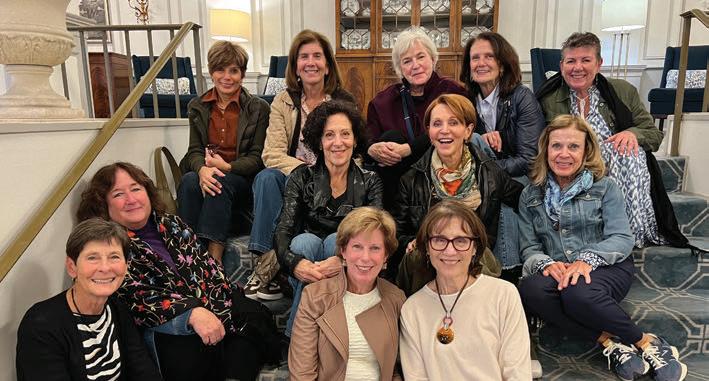
Members of the inaugural BC Companions cohort, photographed in December at a ceremony to mark the conclusion of the yearlong program.
Four Things Smart People Don’t Know about America’s Tax Code (and How It’s Driving Inequality)
BC Law professor Ray Madoff on how the ultrarich are gaming the system— and what should be done about it.
BY MICHAEL BLANDING
“Nothing is certain except death and taxes,” Benjamin Franklin said. For the very wealthy, however, taxes are less certain than ever. In a new book, The Second Estate: How the Tax Code Made an American Aristocracy, Boston College Law Professor Ray Madoff compares modernday America to prerevolutionary France, arguing that the most wealthy among us enjoy all the privileges of society, while avoiding the obligation to fund it. In the case of the US, that’s thanks to the tax code, more than six thousand pages of regulations detailing how and when citizens are required to pay the government. For most working people, the code is hopelessly opaque—which according to Madoff is why the independently wealthy, aided by lobbyists and politicians, have been able to game the system in their favor. In her book, Madoff demystifies the tax code to show how that’s happened. Here are four of her biggest takeaways.
1. It’s Salaried Workers, and Not the Independently Wealthy, Who Foot Most of the Bill in America
Most Americans work for their income. “And when they are compensated for their work, they pay the heaviest taxes in our system,” Madoff said. That’s because they pay income taxes as well as what are known as payroll taxes—such as Social Security and Medicare—with each paycheck. Madoff writes in The Second Estate that in 2024, income and payroll taxes together accounted for 84 percent of all revenue collected by the federal government. Employers pay addi-
tional payroll taxes for their employees, but many economists believe that even that cost is actually borne indirectly by employees, who might otherwise be paid a higher salary.
2. Independently Wealthy People Avoid Taxes by Avoiding Taxable Income
The richest Americans largely avoid paying taxes, Madoff said, because they get most of their income from investments and inheritance, rather than salaries that are subject to an income tax. Not only are investments such as stocks taxed at a lower rate, but they are only taxed at all when they are
sold. For that reason, wealthy people simply avoid selling them, Madoff said. Instead, she explained, “They use their stock as collateral and borrow against it at low interest rates— then pass the stock along to the next generation.” Moreover, investments aren’t taxed when they are passed to family members, which means they can change hands untaxed in perpetuity.
3. The Estate Tax Is Effectively Dead
The estate tax, which is a tax on wealth that is paid upon a person’s death, was introduced shortly after the income tax in 1916. The tax, which has been as high as 77 percent, was broadly accepted by the public for many decades, but according to Madoff, a highly effective campaign funded by some of the richest Americans targeted the estate tax in the early 1990s, referring to it as a “death tax” and claiming that it punished people for achieving success in life. Since then, Madoff said, Congress has not closed any of the loopholes devised by creative estate planners, who help their clients avoid the estate tax by making the value of estates appear to shrink on paper. As a result, the tax is effectively nonexistent today—generating less than 0.05 percent of federal revenues.
4.
Philanthropy Is a Rich Person’s Game, and the Public Often Loses
Even when the extremely wealthy find themselves in the position where they would otherwise owe taxes, they can easily offset them by deducting charitable donations. “The wealthy are able to deduct an unlimited number of donations to eliminate any capital gains or estate taxes they have to pay,” Madoff said. Conversely, “90 percent of Americans don’t get any benefit from their charitable giving because they don’t itemize their deductions.” The reason for this is that most working Americans can’t afford to donate amounts large enough to exceed the standard deduction. Adding to the problem, Madoff said, is that the rest of us are getting fewer and fewer benefits from the tax-advantaged donations of the superrich. The wealthy have been increasingly giving through intermediaries called Donor Advised Funds (DAFs), which don’t have any obligation to actually pass the money on to charity. This allows the rich to structure their donations in a way that maximizes deductions, and the financial institutions holding the DAFs to accumulate more assets, all while limiting the actual good the donated money accomplishes. n
A League of Her Own
Sonia Raman JD’01 left a promising legal career behind and became the WNBA’s first Indian American head coach.
BY ELIZABETH CLEMENTE
One of the greatest assets for a basketball coach is flex ibility: knowing how to veer from the original game plan, devise a new strategy, and win. And if anyone in the sport has mastered the art of the pivot, it’s Sonia Raman, the new head coach of the Seattle Storm. After all, many years before she made history in October by becoming the first person of Indian descent to be named a WNBA head coach, Raman was on a very different career path.
A former high school basketball player, Raman majored in international relations as an undergrad at Tufts University, where she was a walk-on on the women’s basketball team. Sidelined by an injury during her junior year, she became interested in coaching. Raman used her time off the court to review videos of opposing teams, take notes on their gameplay, and share them with her teammates. After graduating in 1996, she stayed on for a time as an assistant coach.
Raman eventually enrolled at BC Law, where she enjoyed playing basketball at the Quonset Hut on Newton Campus every Friday with classmates and her favorite constitutional law professor, Kent Greenfield, she told Boston College Law School Magazine After graduating in 2001 she pursued a career in corporate law, working for the US Department of Labor’s Benefit Security Administration and later in the risk and compliance division at Fidelity Investments. Even as her legal
career took off, Raman never lost her passion for basketball. She worked for six years as a part-time assistant coach at Wellesley College, and eventually realized that coaching was her true passion.
Raman stepped away from law and secured her first head coaching job with the MIT Engineers in 2008. It turned out that some of the analytical skills she’d developed during her BC Law days were applicable to her methodical coaching style. Plus, she told CNBC, “I was impacting people’s lives in a way that was much more fulfilling to me than anything I had done before.” In all, Raman spent twelve seasons at MIT, leaving in 2020 as the winningest coach in program history. From there, she spent four years with the NBA’s Memphis Grizzlies, becoming the first Indian American woman to hold an assistant coaching position in the league, before transitioning to the WNBA in 2025 and spending one season as assistant coach of the New York Liberty.
Ahead of her first season as head coach of the Seattle Storm, Raman told The New York Times that she enjoys being able to show the next generation what’s possible.
“It’s a privilege. I do take it as a tremendous responsibility, being the first,” she said. “You never want to be the last.” n
Emmet Sheehan ’21 Helps LA Dodgers Win the World Series
Pitcher Emmet Sheehan became the first Eagle to win an MLB championship when the Los Angeles Dodgers defeated the Toronto Blue Jays last fall in seven games. Sheehan pitched for BC from 2019 to 2021, when he was selected by the Dodgers in the MLB draft. Called up to the majors in 2023, he tossed six no-hit innings in his debut start. Sheehan threw out of the bullpen during the World Series, appearing in three games and allowing three runs across four innings. Shortstop Lennie Merullo is believed to be the only other Eagle to have played in a World Series game, appearing in three games, with two at bats, for the Chicago Cubs in 1945. —John Wolfson
photos: Steph Chambers (Raman); Jae C. Hong/AP (Sheehan)
Musical Numbers
What statistical analysis reveals about our favorite songs (and us).
BY SCOTT KEARNAN
Shortly after graduating from BC with degrees in economics and mathematics, Chris Dalla Riva ’17 gave himself a massive homework assignment: to listen to every number-one song in the history of the Billboard Hot 100 chart, the music industry’s main weekly tracker of pop hits. Why?
“I was just looking to engage the musical side of my brain,” said Dalla Riva, a guitarist and songwriter who had his own radio show on WZBC. Dalla Riva created a spreadsheet of metrics and characteristics associated with each tune—from song length to beats per minute to lyrical themes—and started looking for patterns.
Eight years and 1,100 songs later, Dalla Riva has shared his findings in a new book, Uncharted Territory: What Numbers Tell Us about the Biggest Hit Songs and Ourselves He surveys every chart-topper from 1958’s “Poor Little Fool” by Ricky Nelson to 2025’s “Die with a Smile” by Lady Gaga and Bruno Mars, offering musical and cultural insights buttressed by statistics. Among other things, he details the preponderance of big hits about death during the Eisenhower era (e.g. “Teen Angel” by Mark Dinning), the explo -
sion of explicit lyrics starting in the 1990s (2Pac’s “How Do U Want It” was the first number-one song to use the f-word), and, more recently, songs that spawned “viral” dances (like Drake’s “Toosie Slide” in 2020). Along the way, Dalla Riva tries to explain these trends by pointing to evolutions in society and technology, including the radical changes in how music is produced, consumed, and sold.
This result is a chronicle of music as well as American culture. “Music is representative of larger trends in society,” said Dalla Riva, who works as a data analyst for the music streaming service Audiomack. “Even when they seem like silly little pop songs.”
11
The average number of letters in a hit song title in 2018. In 1970 it was 20. Titles now must fit on mobile screens.
84
The percentage of number-one songs using profanities in 2003, a record. In 1971 it was 5 percent.
87
The number of days it took for Adele’s “Hello” to reach a billion YouTube views, an industry record.
Meet Shan on the Street
How one simple question made this alum a social media star.
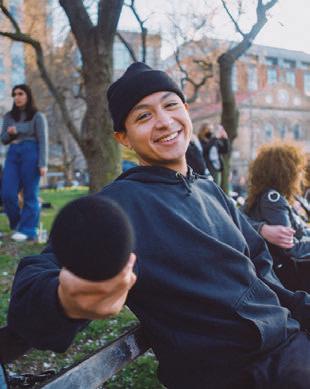
For $100, could you name three randomly selected tunes by your favorite music artist? That’s the challenge that Shan Rizwan ’21 has spent the last five years springing on passersby on New York City streets, and it’s paid off for him as well as his surprised on-camera interviewees. Rizwan’s videos, posted on YouTube, TikTok, and Instagram under the handle @shanonthestreet, have garnered him more than three million followers and huge opportunities, such as attending the 2025 Academy Awards and the 2024 Paris Olympics as a social media content creator. “This is my childhood dream,” said Rizwan, who grew up in New Jersey. He started by sharing video diaries about his college experiences at BC, where he majored in economics and minored in marketing. By graduation he had enough YouTube subscribers to pursue content creation full-time. Rizwan pivoted to his now-signature man-on-the-streetstyle format in part to build his social confidence, he said. He recently made another pivot: a burgeoning singer, he released his own first song and music video, “Waiting.” “Musicians also have to be creators now,” he said. “My content will probably look different, but I don’t plan on stopping.”
—Elizabeth Clemente
Uncharted author Chris Dalla Riva also writes and performs his own music.
Keeping Journalism, and Journalists, Alive
The investigative journalist Frank Smyth ’82 was held captive while reporting during the aftermath of the Gulf War. Today, when he’s not opening eyes with his exposés, he’s teaching others the skills to survive while working in some of the world’s most dangerous places.
BY SCOTT KEARNAN
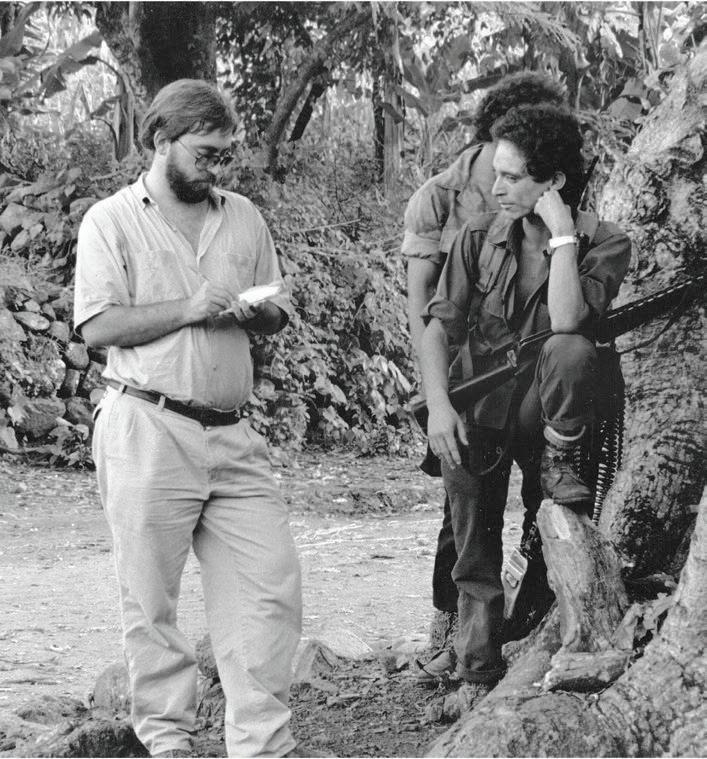
It was a clear and starlit night in March of 1991 in the hillsides of northern Iraq, and the American journalist Frank Smyth ’82 and a colleague were crouched in a ditch, hiding from Iraqi Army tanks and machine guns. Smyth was one of a number of journalists who’d been embedded with Kurdish rebels to report on the uprisings against then–Iraqi President Saddam Hussein in the wake of the Gulf War. Most of the journalists had recently returned home, but Smyth, a freelancer who was covering the conflict for outlets such as CBS News and The Village Voice, had remained, along with the photojournalists Gad Gross and Alain Buu.
Eventually, Smyth and Buu became separated from Gross and the group’s guide, Bakhtiar Abdel-al-Rahman, and found themselves frozen in silence in the dirt trench amid a volley of rockets and bullets from encroaching Iraqi forces. They had been there since midafternoon, bracing themselves to be shot on sight. While tanks rumbled and army boots squelched in the mud overhead, Smyth and Buu remained hidden for eighteen hours.
Soon after sunrise, they heard screaming and gunshots from a small cinderblock house nearby. They realized that Gross and Abdelal-Rahman had been killed. Buu believed that he and Smyth had also been spotted, so they emerged from the trench with their hands up to surrender, shouting, “Sahafi!” the Arabic word for journalist.
Smyth and Buu were held in a prison cell for more than two weeks and repeatedly interrogated as suspected spies. All around them, they saw and heard the torture of Iraqis who had been rounded up for sedition. Smyth paced his cell, wondering if it would be his turn soon. “I thought to myself, ‘You’ve interviewed torture victims. Do you think you’re immune?’” he recalled.
Symth said he and Buu were ultimately released from prison at the order
of Saddam Hussein. “He wanted to show the Americans that he could be trusted in negotiating,” Smyth said. “He was brutal, but rational.” Thirty-five years later, Smyth turned emotional while reflecting on the ordeal. “It was terrifying,” he said. “It left scars and trauma. I feel very grateful that we made it.”
Today, Smyth’s reporting on geopolitical conflicts, organized crime, international human rights abuses, American gun violence, and other contentious issues continues to put him at odds with the powerful. Over the course of his career, in addition to covering cartels, genocides, and political extremists for publications like The New York Times, The Washington Post, and The Christian Science Monitor, he’s led investigative projects for outfits such as Human Rights Watch and Amnesty International, with which he reported on the role France played in arming brutal regimes in Rwanda and how US military assistance fostered violent paramilitary units in Colombia. He’s made a career of sticking his neck out to tell truths, and along the way he’s met other reporters and activists who wound up paying the ultimate price for trying to do the same.
The riskiness of his work, and the gratitude he feels for getting through it all alive, motivated him to embark on a second career. Smyth is also CEO of GJS, formerly known as Global Journalist Security, a firm he founded in 2011 to train journalists in how to survive in dangerous environments. As many as three thousand people have participated in GJS trainings, which use actors and props to replicate emergency scenarios they might actually encounter in the field.
The trainings, held in GJS’s headquarters outside of Washington, DC, or on-location with clients around the world, prepare participants to deal with everything from
violent mob scenes and kidnappings to hostage-takings and threats of sexual assault. In addition to journalists, GJS now also works with NGOs, humanitarian groups, governmental agencies (but only if they meet his firm’s standards for transparency and commitment to press freedom), and other “human rights defenders.”
Smyth said a sense of social justice has always been what fuels his work—though
he puts it more bluntly. “I hate bullies,” he said. “I hate liars, and I hate liars who are bullies. My attitude is, I’m going to go after them.” Smyth said he was raised in a New Jersey suburb by right-wing populist parents who wanted their son to get a degree in business. But Smyth, who loved to read and to write his own stories, veered in another direction once he arrived at Boston College. He majored in English, sought out “every
left-wing professor I could find,” he said, and was drawn to sociology courses that turned him on to critiques of capitalism and support for human rights causes. These were the early days of the Salvadoran Civil War, and Smyth was particularly incensed by headlines about the 1980 rape and murder of US Catholic missionaries by members of the National Guard of El Salvador. “That radicalized me,” Smyth said. “I couldn’t
“
I hate bullies. I hate liars, and I hate liars who are bullies. My attitude is, I’m going to go after them.”
believe we were giving military aid to these murderous bastards.”
El Salvador would turn out to be where Smyth broke his first major story. He traveled there in 1986 to study the country’s labor movement on a grant he obtained through graduate school at the John Hopkins University School of Advanced International Studies, where he earned his master’s degree in Latin American studies and international economics. While in El Salvador, Smyth obtained classified US State Department cables revealing that the Reagan administration, which staunchly supported El Salvador President José Napoleón Duarte, was trying to “divide and destroy” El Salvador’s opposition labor movement, Smyth wrote in The Nation magazine. He spent the next several years in El Salvador, reporting on abuses by guerillas and government officials alike. The Village Voice published a story by Smyth that implicated the country’s then–army chief in the 1989 massacre of six Jesuits, their housekeeper, and her daughter. The Jesuits had been advocates of a peace deal to end the civil war. In 1990, he coauthored a report for an NGO called the Washington Office on Latin America that advocated for reducing the US military aid to El Salvador by 50 percent as a tactical path toward peace. Congress did exactly that about six months later, “and that began the process to end the war,” Smyth said. That report remains his greatest source of professional pride. “A lot of forces were involved, but what we wrote accelerated the peace process,” he said. “It was the most important thing I’ve ever done, to make that happen.”
It’s that ability of journalists to incite meaningful change that explains why the bullies and liars of the world want to shut them up, Smyth said. In fact, more journalists were killed in 2024 (continued on the next page)
than in any other year in at least the last three decades. To help protect them, his firm GJS offers security courses, led by instructors including paramedics and Green Berets, that teach skills for surviving everything from a grenade blast to a captivity scenario. “Risk is personal,” he tells his clients. “Think it through. Then make sure you own it.”
Nowadays, GJS also runs active shooter awareness trainings for media organizations and corporations who fear their employees could be targets in the culture wars.
Looking to the future, Smyth sees a world of growing threats to Western journalists, both abroad and at home. When he started out, he said, identifying yourself as an American reporter offered a measure of protection in a foreign place, even those where local journalists had long been killed with impunity. “Now, I don’t think anyone would come out with credentials in plain view,” he said. “It’s way more dangerous.” For one thing, he said, there used to be an
assumption internationally that the US would step in to apply diplomatic pressure or impose political consequences if a country mistreated journalists. “When I was overseas, I always had that in the back of my head,” Smyth said. But he no longer takes US intervention for granted given the Trump administration’s hostile public statements about journalists and activists. “I think we’re in trouble,” Smyth said, “and I think it’s going to get worse.”
What hasn’t changed over the years, Smyth said, is how important it is to society that there are journalists who are willing to do their job despite the risks. “There was a period when I thought I’d be an academic. Academics define things,” he said. “But then I realized that I didn’t want to define things. I wanted to figure out what was going on, and clear up disinformation and the obfuscation of who’s behind what. You can’t analyze what’s going on if you don’t know what’s going on.” n
More to Explore from BC Magazine
Our web and social channels are full of extras you don’t want to miss.
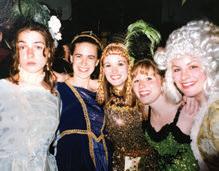
SHARE—Julie (Tucker) Rollauer ’97 sent us this photo of her and some fellow costumed Eagles having fun at the Middlemarch Ball at O’Connell House in 1997. Share your favorite snapshots from your own BC days by tagging us on Instagram (@bostoncollegemagazine) or Facebook (BostonCollegeMagazine), or by sending them to Boston College Magazine Email: bcm@bc.edu.
WATCH—Didn’t get a chance to grab one last White Mountain Creamery cone before the beloved ice cream shop closed in November? Visit BC Magazine on Instagram to see our video tribute to the shop and follow us for more fun content Instagram: @bostoncollegemagazine.
LISTEN—Hear Tom Marchitelli ’04, who designs custom fashion for more than five hundred professional athletes, describe what it was like to see NFL star Joe Burrow wearing one of his suits on TV. “My son was jumping up and down in the living room,” Marchitelli said in a Boston College Magazine Podcast conversation. Podcast: bcm.buzzsprout.com.
photos: Thomas Long (Smyth); Courtesy of Julie Rollauer (Middlemarch); Caitlin Cunningham (White Mountain Creamery); Ariana Cho (Marchitelli)
Frank Smyth interviewing rebel combatants in northern El Salvador in 1990.
Why Everything in the World Comes Down to CO2
Science writer Peter Brannen ’06 chronicles carbon dioxide as the fragile key to all life.
BY SCOTT KEARNAN
As far as award-winning science journalist Peter Brannen is concerned, every aspect of life on Earth ultimately hinges on the fate of a single molecule: carbon dioxide. It’s a hugely consequential premise that Brannen unpacks in his new book, The Story of CO2 Is the Story of Everything: How Carbon Dioxide Made Our World. “I wanted to give readers context about something that is fundamental to how our planet operates,” Brannen said. Brannen recognized that his readers would likely be familiar with the essential role that a suitable level of atmospheric carbon dioxide plays in sustaining all animal life on the globe. The gas, of course, absorbs planetary heat and reradiates some of it back to the Earth’s surface. Too little CO2 would cause an ice age, while too much would overheat us. But Brannen wanted to tell a much fuller story of how CO2 originates, and how it affects the existence of every organism as it cycles through Earth’s atmosphere, oceans, and crust. “Everything about planet Earth is basically mediated through CO2 somehow,” he said.
Rather than approach The Story of CO2 as climate activism, Brannen essentially authored a four-billion-year-long biography of a single vital gas based on a decade’s worth of comprehensive research, inter-
views, and field work with geoscientists. “The science speaks for itself,” said Brannen. “I viewed my job as being an alien observer of Earth, describing what’s happening in a mechanistic way.”
Brannen became fascinated with the critical functions of carbon dioxide while writing his 2017 book The Ends of the World, about the five major mass extinction events in Earth’s history, the last of which took place about sixty-six million years ago. He said the delicate natural balance of CO2 in the atmosphere has become disrupted at an exponentially rapid pace by the human consumption of fossil fuels, which release carbon dioxide when burned to produce energy. “In a matter of two centuries, we’ve ignited a planetary battery all at once,” he said. “It’s an unprecedented chemistry experiment.”
Brannen majored in English before going on to write about geology, climate, and ocean science for publications like The Atlantic and The New York Times. He credits BC’s formative education for inspiring him to explore humankind’s role in the universe, one that humbles him with its awesomely intricate design. “This planet is miraculous,” he said. “The overriding feeling I took away from this book was profound gratitude for being alive at all.” n
WHAT WE’RE LISTENING TO:
Climate Reveal
How might climate change be affecting your health? What can each of us do in daily life to really make a difference for the environment? What can history teach us about our environmental future? Climate Reveal, the new podcast hosted by BC Political Science Professor David Deese and Chris Citorik, assistant director of BC’s creative communication laboratory, tackles complex questions like these. Deese, who has spent his career studying the politics of energy and climate, said he created the podcast to offer listeners an accessible education about a complicated topic. Climate Reveal launched last October and is funded by BC’s Schiller Institute for Integrated Science and Society. In each weekly episode, Deese and Citorik moderate a climate-related conversation between a BC expert and a special guest. In one episode, for instance, BC Associate Professor Cyril Opeil, a Jesuit priest and physicist specializing in thermoelectrics, talked with Sergey Paltsev, deputy director of the MIT Center for Sustainability Science and Strategy, about how to meet the world’s massive energy demands. Climate Reveal will release its second season of episodes this winter, featuring even more experts from BC and elsewhere. “The people and resources we’re going to be tapping into from the Boston area are just incredible,” Deese said, “not just from the universities, but the whole research community.” Elizabeth Clemente
photo: Ray Ewing (Brannen)
The Strange New World of Chatting with the Dead
“Deadbots” promise to comfort those in mourning by using AI to replicate loved ones who’ve passed away. But what do they tell us about the nature of life, death, and the digital in-between?
BY SCOTT KEARNAN
Can humankind survive immortality?
That’s the grave and paradoxical question I asked myself last fall. I was walking out of a screening of the Oscar-nominated film Frankenstein, the latest of many adaptations of Mary Shelley’s 1818 novel, which is often credited as the first literary work of science fiction. Shelley, who wrote her novel while grieving the deaths of her infant child and half sister, authored a cautionary tale about using techno-wizardry to bring the dead back to life. Her protagonist, the hubristic scientist Victor Frankenstein, intends to perform a miracle and instead creates a monster.
While watching the science-fiction movie, I found myself thinking of several articles I’d recently read in publications such as The New
York Times, Nature, and Financial Times about a very real new phenomenon that involves resurrecting the dead in digital form. There are, I’d learned, a growing number of online services that allow people to create an artificial intelligence–generated avatar of a late loved one that they can continue to talk to and interact with. For instance, the mobile app 2wai bills itself as “the world’s first social app for AI avatars of real humans.” The company recently released a commercial in which a pregnant woman shows off her baby bump to an AI version of her dead mother. “Put your hand on your tummy and hum to him,” the computerized clone gently advises the daughter in the ad. “You used to love that.” Later, after the daughter has given birth,
she cries a single tear while her “mother,” appearing on her smartphone, tells the infant a bedtime story.
These computerized incarnations are variably referred to in the press as “deadbots,” “griefbots,” and “digital immortals,” and they’re a big part of what’s known as the digital legacy industry. According to some market research, that industry is expected to quadruple to $80 billion over the next ten years. Already, though, any person at home can conjure a deadbot version of a loved one. To create the facsimiles, users simply provide the AI service with artifacts of a deceased person—such as voice recordings or videos—in order to generate a digital twin that acts and sounds like them. These deadbots
are then available to provide communication and comfort to the bereaved on demand. (It’s also possible to commission your own deadbot before you die.)
So what does the growing popularity of deadbots reveal about the nature of grief and what it means to be human? To find out, I decided to talk to some experts from Boston College who could shine some light on things.
First stop: the Stokes Hall office of Dr. Andrea Vicini, SJ, chair of the BC Theology Department, which recently announced a new interdisciplinary minor—Theology, Science, and Technology—to help students think critically about the virtues, moral limitations, and humanistic dimensions of different scientific and technological advances.
Vicini, the Michael P. Walsh Professor of Bioethics and Professor Ordinarius, told me he worried that deadbots generally debase what it means to be human. “What does it say about the way we think about ourselves?” he asked. “Are we simply a series of ones and zeroes? Are we really of such little value?” Most people are creating deadbots of loved ones to try to ease the grief of losing them. But Vicini said that grief, while certainly very painful, is also beautiful and important—something to endure, not avoid. He said that grief reminds people of the great depth of love of which humans are capable, and is critical to cultivating empathy with others. “When we grieve we are vulnerable, and in that vulnerability we find moments of connection with one another that otherwise don’t happen often,” Vicini said. “That makes life rich. But this artificial intelligence proposes that we avoid that and replace it with something less authentic.”
Using AI in this way could actually prolong grief, according to BC Psychology Professor Elizabeth Kensinger, an expert on the neuroscience of memory. Talking to the deadbot version of a loved one might provide someone in mourning with “momentary relief,” Kensinger said, but it could ultimately impede their ability to adapt to reality. “Grief is your brain getting a prediction error: this person is supposed to be there, but they’re not,” she said. “It’s a learning process. With a deadbot, the brain is no longer getting that.”
Kensinger said that interactions with deadbots might also have the effect of warping the very memories of a loved one that the user wants to cherish. As Kensinger explained it, our brains are constantly updating memories with new information, and most of the time that’s useful. It’s how we’re
able to recognize an old friend with a new hairstyle, for instance. In the case of chatting with a deadbot, though, it’s a digital mimic of a loved one, and not the actual person, that will provide the brain with new information to layer on to old memories. The brain, Kensinger said, “is not going to be able to help itself” from conflating the two sources. “It’s similar enough that there will be a bleeding effect,” she said. “You’re kind of overwriting your actual memories of the person.”
What’s more, these new, deadbotgenerated “memories” of a loved one may not actually be all that representative of the person. Why not? According to Associate Professor of Computer Science Sergio Alvarez, these kinds of AI bots fall into a category referred to as “generative pre-trained models.” In order to engage in human-like conversation, Alvarez explained, these models are typically pre-trained on “a mass of generic information about people, and about the world.” That gives the bot some back-
“
We know that people are having almost intimate relationships with bots,” Kane said. “What happens when the bot is mom telling you what to do?”
ground on how to converse like an average person might. When an individual generates a deadbot, they upload effects from the deceased in order to provide the AI model with details that are unique to that person. But in order to hold infinite conversations about anything and everything, the deadbot will most likely also draw from the first pool of generic information in order to teach itself how to respond.
In other words, everything a deadbot says is likely stitched together using scraps of material about the individual, but also about the broader population. Alvarez likened the deadbot’s output to a sophisticated roll of the dice. “In the context of grief, I worry about the intrinsic randomness of this process,”
said Alvarez, who is overseeing BC’s newly announced doctoral program in computer science, in which scholars will grapple with the technical and ethical challenges posed by AI. “You run the risk of the deadbot generating something the actual person may never have said, or something that sounds generic—neutral-sounding, like a person on the news. If that was my loved one, I would find that a little bit disturbing.”
Under the right circumstances, however, deadbots can be an effective instrument for managing grief, said Kelly Kane, a visiting lecturer in the psychology department. “I’m in favor of the concept, as long as there’s transparency and everybody understands what’s happening: that this is a computer program making educated guesses,” Kane said. She suggested that deadbots could be a tool for getting through grief if used judiciously and with support from a professional therapist or a grief group. Those outside human perspectives could be essential to preventing someone in mourning from developing an unhealthy relationship with a deadbot, from becoming too attached or taking bad advice. “We know that people are having almost intimate relationships with bots,” Kane said. “What happens when the bot is mom telling you what to do?”
That might be a scarier thought than anything in Frankenstein. “I wonder about people’s ability today to understand the boundaries between realities,” said William Griffith, associate professor of the practice in the computer science department. Consider, he said, recent headlines about young people ending their lives after bots either encouraged them to do so or failed to intervene. Griffith, a clinical psychologist who holds a doctorate in philosophy, sees digital immortality as just another way that human beings try to quell their anxieties about the reality of physical death. At the end of the day, though, “death is something we can’t control,” he said. “Grief makes you more conscious of the beauty of the moment. I’m reminded of a poet who said that the secret to life is to love what is mortal with all your heart—and when it’s time to let it go, let it go.”
I suspect that Mary Shelley would have shared that sentiment. After all, she didn’t choose to write Frankenstein as a hopeful tale about living forever with the help of science. In trying to cheat death, her monster’s creator makes something even more dreadful: a soulless imitation of life. I wonder, who wants their legacy to be remembered like that? n
Just Watch Me
In her debut novel, Lior Torenberg ’18 finds dark comedy in the obsessive oversharing of life online.
BY SCOTT KEARNAN
As a general rule, Lior Torenberg ’18 doesn’t spend a ton of time on social media. But during the isolating days of the pandemic in 2021, Torenberg recalled, she found herself logging on more often. That’s when she became curious about social media platforms such as Twitch, where users stream live videos of themselves doing mundane activities—from cooking lunch to folding laundry to playing video games—for an audience of anyone with an Internet connection and the interest to watch. Millions of people either create or tune in to these live streams, and Torenberg found herself fascinated by the phenomenon of ordinary people absorbed by the minutiae of a day in the life of a stranger. She wondered what motivated them to watch for hours on end. “It struck me as very lonely,” Torenberg said, “but also full of potential. Was it a form of connection? What was each side getting out of it?”
Those questions about the culture of live streaming inspired Torenberg’s debut novel, Just Watch Me, a tragicomic look at life in the era of the so-called attention economy. The book’s protagonist is Dell Danvers, a chaotic twentysomething New Yorker who can’t keep a job, is behind on rent, and has a sister, Daisy, who is in a coma and on life support. The hospital is just about ready to pull the plug, so Dell launches a 24-7 live stream about her own day-to-day existence to raise donations for private care to save Daisy’s life. The live stream takes off. Dell accumulates staggering numbers of viewers and monetary tips by accepting entertaining dares, such as challenges to eat progressively
spicier chili peppers. As the week goes on, she is encouraged to perform increasingly dangerous stunts, and an anonymous online troll threatens to expose a secret from her past.
On one hand, Just Watch Me drips with dark humor. “It’s a book I wrote to make myself laugh during a heavy time,” Torenberg said. On the other, Torenberg also wanted to raise serious questions about the content people create and consume online nowadays, including about the performative nature of some live streaming and the ethics of commodifying personal tragedy for clicks and dollars. Just Watch Me is written from the point of view of Dell, a narrator who is exploitative to the point of being “unapologetically awful,” Torenberg said. “She’s live streaming every aspect of her life so that she doesn’t have to be alone with her thoughts for one second. I don’t like her very much as a person. I don’t think we’d be friends.”
And yet, Torenberg added, unlikable characters are often among the most compelling. She said she has always been drawn to the literary archetypes of dubious grifters (The Talented Mr. Ripley, for one) and strong
yet self-destructive women (she’s a fan of All Fours by Miranda July, about an artist’s midlife crisis). In Just Watch Me, Dell’s acid personality is perversely amusing and a huge part of what appeals to the viewers of her live stream. “She’s loud, opinionated, brash—and charismatic,” Torenberg said. She hopes the novel might lead readers to reflect on the kind of behavior they encourage online, where rage-baiting and risky antics are what seem to drive engagement in the digital marketplace today. “There is no decision that Dell makes in a vacuum,” Torenberg said. “She’s in a system that encourages her to do more and more extreme things and rewards her for it constantly.”
For her part, Torenberg is trying to get more comfortable with finally building her own online presence to promote her work as a first-time novelist. “My friend is a social media
guru, and he kindly bullied me into doing a social media campaign,” said Torenberg. Her current book tour will bring her back to Boston College, where she majored in applied psychology and human development, with minors in both English and management and leadership. Torenberg works full-time in the tech industry, and unlike her creation Dell, self-promotion doesn’t come naturally to her. “Social media is something you can’t learn in private. You have to learn it in public,” Torenberg said. “There’s a fear of embarrassment.”
Dell has no such fear in Just Watch Me as her viewers coax out and reward even her most negative, shameless instincts. “Dell’s viewers are egging her on at every turn,” Torenberg said. “I wanted to explore the feeling of being implicated in and responsible for the content we consume and encourage.” n
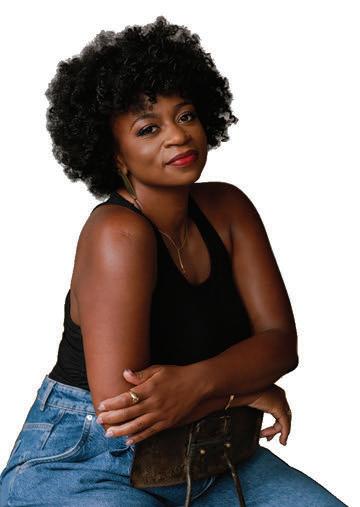
Jodi-Ann Burey ’08 calls out empty efforts to build a better workplace.
Many companies claim to celebrate diversity and difference in the workplace, but according to the author and professional speaker Jodi-Ann Burey, they too often fall short of living up to those ideals. Burey has experienced this issue firsthand. In 2018, after doctors removed a cancerous tumor from her spinal cord, Burey became disabled overnight. When she returned to work, she was lauded with platitudes about her strength, yet she found that she had to repeatedly disclose her condition and request accommodations—none of which ultimately made her workplace more accessible. In her new book, Authentic: The Myth of Bringing Your Full Self to Work, Burey critiques employers for paying lip service to inclusion while failing to meaningfully address institutional barriers such as ableism, racism, and sexism that she says hinder wellness, opportunity, and advancement.
In Authentic, Burey makes her case using interviews with Black, LGBTQ, and other historically marginalized professionals, and with deeply researched data, including about the impact of workplace racism on physical health. She argues that when employers offer workers only shallow encouragements to “come as you are,” they impose emotional labor by requiring employees to educate their colleagues about themselves and their experiences.
“I want people to free themselves from the burden that their own personal selfexpression is supposed to transform the culture of work,” Burey said.
Workplaces ought to focus less on “silly” surface-level markers of so-called authenticity, such as how Black women style their hair, she said, and more on making tangible improvements in labor practices.
“Whatever my hair looks like does not change the fact that I’m not being paid properly,” Burey said, “or that I don’t get the recognition that I need.” E.C.
BRIEFLY
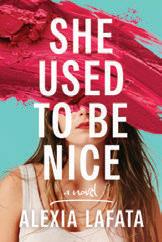
She Used to Be Nice
by Alexia LaFata ’15
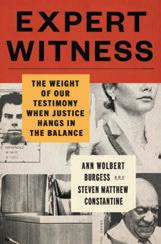
Expert Witness: The Weight of Our Testimony When Justice Hangs in the Balance
by Ann Wolbert Burgess and Steven Matthew Constantine
In her latest memoir, Burgess, a Connell School of Nursing professor and acclaimed forensic nurse and criminal profiler, details her experiences during fifty-plus years of appearing as an expert courtroom witness. She and Constantine, associate director of marketing and communications at the Connell School, bring readers into her riveting testimonies during such high-profile cases as the murder trial of the Menendez brothers and the sexual assault trial of Bill Cosby.
An unflinching look at the long-term trauma of sexual assault, LaFata’s debut novel follows Avery, a young woman who is raped in college and struggles to cope for years afterward. Just as she is beginning to chart a path forward, Avery learns her rapist will be the best man in her close friend’s wedding. As maid of honor, she will need to confront the past once and for all.
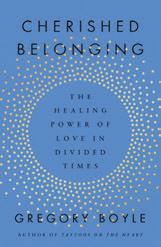
Cherished Belonging: The Healing Power of Love in Divided Times
by Gregory Boyle, SJ, CSTM’84
Boyle, a Jesuit priest who founded the largest gang intervention program in the world, shares what working on the streets of Los Angeles taught him about the power of radical compassion. Through inspirational stories, and by drawing on foundational Christian principles such as peacefulness, his latest book frames kindness as a revolutionary act that can build bridges and foster community in our polarized world.
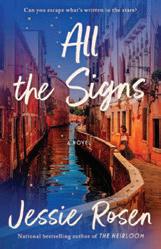
All the Signs by Jessie Rosen ’05
When a bleak horoscope triggers an existential crisis for Leah, the protagonist of Rosen’s sophomore novel, she decides to prove that astrology is bunk by traveling the world to meet her many different Star Twins, people born under the same map of stars. As she globetrots from Venice to Istanbul, she discovers that the people who can best help her understand herself are actually back at home.
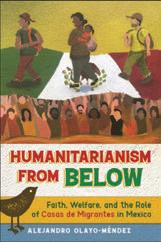
Humanitarianism from Below: Faith, Welfare, and the Role of Casas de Migrantes in Mexico
by BC Assistant Professor Alejandro Olayo-Méndez, SJ Olayo-Méndez highlights the decades-long work of more than 150 grassroots shelters, many operated by local Catholic parishes, to provide vital services like food, childcare, and legal assistance to migrants at the US-Mexico border. He argues that these resources will remain indispensable as long as poverty and violence compel migrants to flee home in the first place. —Elizabeth Clemente
Why the Humanities Are More Valuable Than
Ever
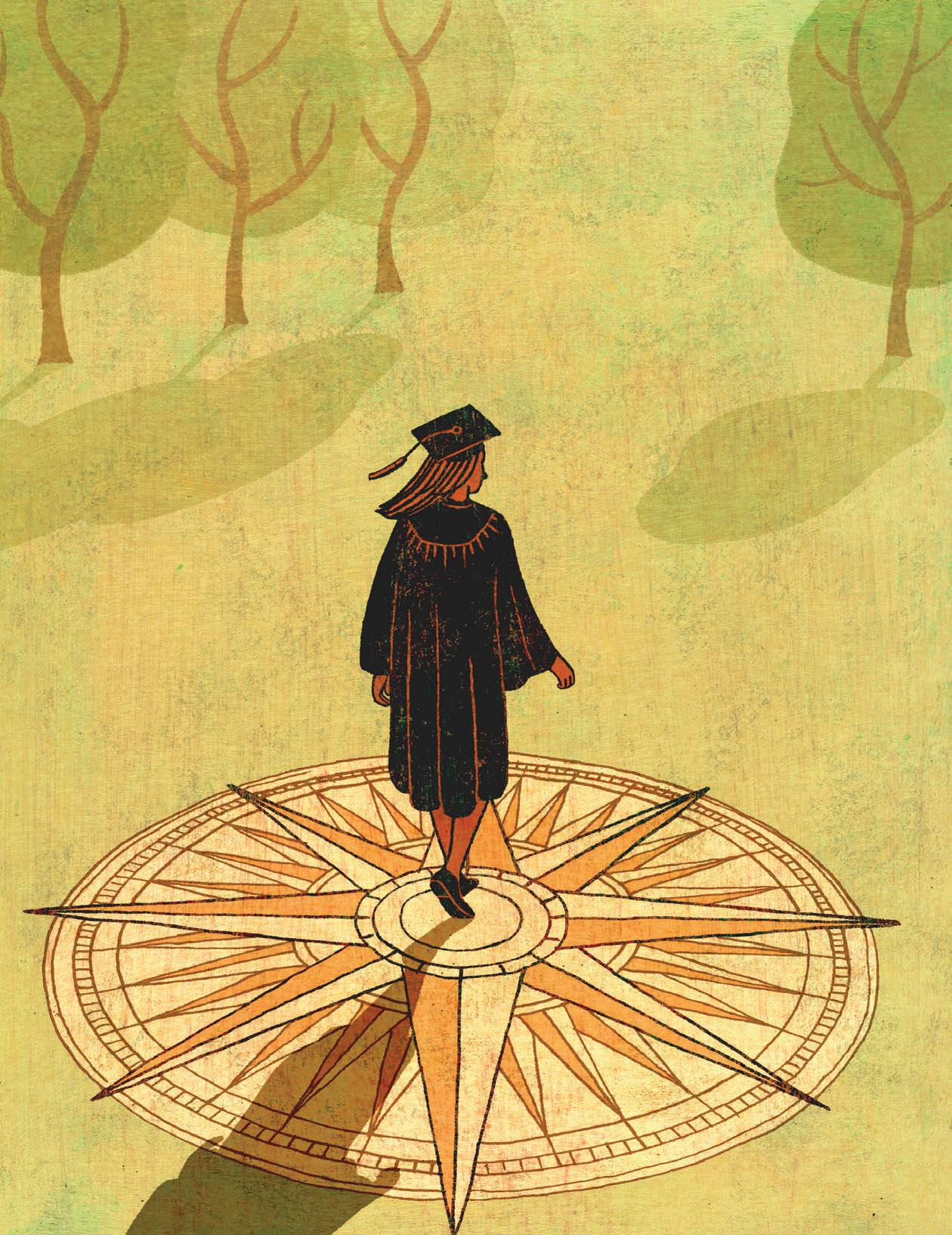
In a new book, BC professor Carlo Rotella takes readers inside the classroom to show how timeless skills—including problem-solving, critical thinking, and strong communication—pay off for students in the end.
ACOLLEGE EDUCATION TODAY requires a greater investment of time, money, and hard work than ever. It makes sense, then, that students and parents generally want to choose an academic path that will yield a strong return in the form of a successful career. For years, enrollment in humanities majors has been declining at universities, as students flock to STEM and business majors that they believe will best prepare them for the high-paying jobs of tomorrow. So is there still value in a humanities degree?
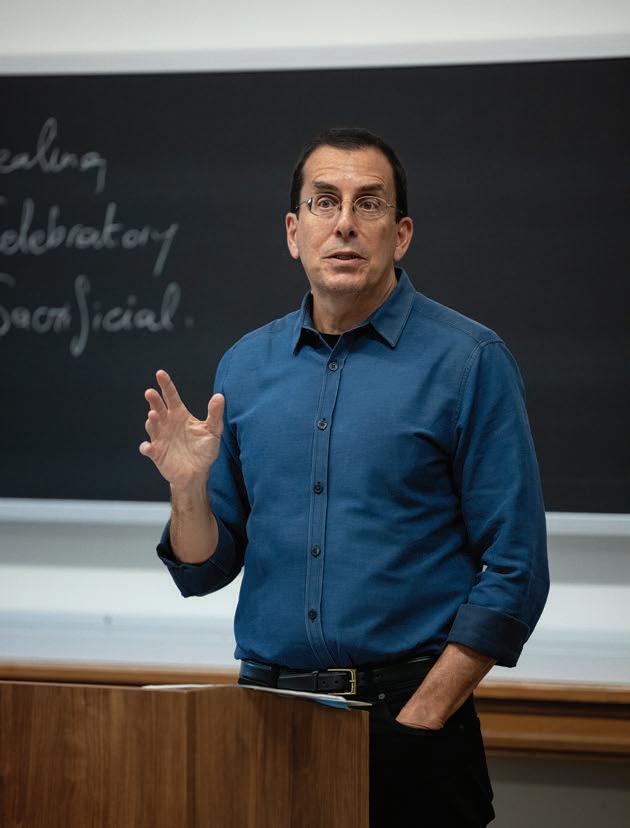
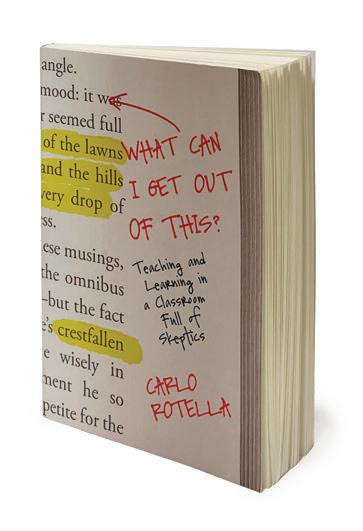
Absolutely, argues Carlo Rotella, a writer and Boston College professor of American studies, English, and journalism. In his new book, What Can I Get Out of This? Teaching and Learning in a Classroom Full of Skeptics, Rotella chronicles a semester-long experience with thirty-three students in Lit Core, BC’s required freshman literature course. The students start the course unsure what studying fiction has to do with finding success in the real world. As the spring semester rolls on, though, they are transformed by working through challenging stories together. What Can I Get Out of This? explores how analyzing literature serves a larger purpose of developing the adaptable “soft skills”— like analytical reasoning, creative problem-solving, and teamwork—that research shows are most highly prized by employers across varied industries. In fact, Rotella writes, over a lifetime, English majors tend to earn as much as those who major in STEM courses, business, and other fields.
In the excerpts that follow, Rotella brings readers into the classroom to show how humanities educators help students build the core competencies that will serve them in life and work. —Scott Kearnan
FOR ALL THE HEATEDNESS of the national conversation about higher education these days, there’s relatively little substantive public discussion about what actually happens in college classrooms: what lessons we learn, how we learn them, how they sink in or don’t, how we process what happens in school and go about connecting it to our thinking and feeling lives beyond school. That’s what matters most about the classroom, and I wanted to convey not only my experience of it but also the experiences of others in the room. So—starting about eighteen months after the semester ended, which was for most of these students the fall of their junior year—I interviewed almost all of the students who took the required freshman literature course known at BC as Lit Core with me in the spring semester of 2020, and I’m drawing on those interviews when I tell you what they thought and said. (I have changed the students’ names, one of the choices I explain in the afterword.) My decision to organize the syllabus around the literary theme of the misfit colored students’ reflections on the semester. They had a lot to say about fitting in and standing out, getting with the program and making their own way through the world of ideas and the world at large. Giving them—and myself—a chance to reflect on that eventful spring of 2020 was the best way I could think of to try to understand what happened when we converged on Stokes South 209 for half a semester to engage with literature, then dispersed in a wild scramble to our various homes and other pandemic redoubts, then reconvened on Zoom for the rest of the semester, then went off on our separate trajectories. Because so much of the debate about the purpose and value of college, the humanities, and the study of literature is uninterested in teaching and learning or abstract to the point of uselessness, I thought it might be useful to tell you what some actual humans at college actually did with literature.
The closing of campuses and the move to Zoom forced us all to think in particular about the value and meaning of what happens in the classroom, which gave this book a strong bias in that direction. I realize, of course, that writing, which mostly happens outside the classroom, is one of the core competencies that a college education should develop. Writing is the work that means the most to me (even more than teaching). I teach writing in all my courses; I also teach nonfiction writing courses that tend to attract students who want to write for a living, and I certainly believe that teaching writing is one of the essential functions of English departments, but that’s a subject for another book.
So is the rise of AI. As a writing tool, in its current form it’s a high-end autocomplete function, a laborsaving device. But the labor of thinking—reading is thinking, writing is thinking, and what we do in class is think together about how to extract meaning from
something we’ve all read—is the point of an English course. Outsourcing any of that work to a bot is like joining the track team and doing your laps on an electric scooter: yes, you go around the track, but you don’t get faster or stronger. Still, I recognize that people will find new ways to use AI as a writing and study tool as it continues to develop and that it will affect what teachers and students do in at least some ways—which include encouraging teachers to put less weight on papers and more on what happens in class. Looking back, the semester chronicled in this book was one of the last before ChatGPT and such came along to make academic life even more complicated than it already was. That development may be a worthy subject in its own right, but it’s one for another day. And, like Zoom, AI is another supposedly game-changing emergent technology that has the ironic effect of helping us see what’s unique and irreplaceable about face-to-face discussion in the classroom.
At least in courses built around discussion, what happens in the classroom is increasingly the one aca-
photo: Caitlin Cunningham
demic feature of college above all others that students and their families are paying for—that is, they’re paying for the admissions process that produced the other students in the room, the hiring and promotion process that produced the teacher, and the possibilities for substantive exchange within that community. What happens in the classroom feels, on the one hand, timelessly special and separate from everything else in life and, on the other hand, deeply connected to everything else in life. In Stokes South 209—and then, much less effectively, on Zoom—we were engaged in figuring out how meaning flows through texts, lives, the world. That’s part of the essential business of being human that we all do at all times and in all kinds of places, not just in a college classroom.
radio or TV news: silence in a classroom is not dead air, and it shouldn’t automatically unnerve you. I appreciate a nice stretch of cogitative classroom silence, and I think there should be at least one of them in a good class discussion. People don’t all operate at the same speed, and the typical class discussion tends to over-favor those who think fast and can articulate those thoughts right away. Many people, including some of those with the most insight to offer, need a little more time to cook and digest a thought.
[Note from Rotella: For a class to cohere and function as a community, everyone in the room has to acknowledge and act on a responsibility to the group and, in return, feel entitled to make a claim on the group’s responsibility to its individual members. In other words, we have to become citizens with a shared sense of purpose. Especially in early class meetings, setting up pathways to citizenship in our community of inquiry is an important part of a teacher’s job.]
THE CRUCIAL WORK of establishing habits, expectations, and a sense of community at the beginning of the semester deserves plenty of attention and shouldn’t be rushed. Among other things, it’s worth devoting some effort to building community because everyone does better work in a classroom where participating in class discussion no longer feels like public speaking and becomes more like having a purposeful conversation with colleagues you know and trust.
It was essential that I make clear that I was going to wait for answers after asking a question. Better a few early awkward silences at the outset than fifteen weeks with a class full of people who don’t believe I’ll wait as long as necessary for an answer. At this point in my classroom career as teacher and student, I’ve built up stamina to the point that I could go at least a minute or two, smiling faintly while looking around and waiting them out, and most people can’t stand to go anywhere near that long. It’s useful to remember that a discussion of literature is not talk
Mainly, I needed to establish from the beginning, by asking genuine questions and visibly expecting responses to them and not supplying those answers myself, that the students would do the work of the class. I would be coming less than halfway to them, and they would have to come more than halfway to meet me at the place where learning happens. They needed to see and accept that I would be framing the problems and they would be doing the problems (and, in time, also helping to frame them), that there were many possibilities for finding and making meaning in any work we read, that class discussion was not just a game of hide-and-seek that would be more efficiently played if I simply came out and told them the answer. By taking seriously the different observations and ideas that came up in response to the problems I laid out for us, I could establish that there wasn’t an answer, that there were just stronger and weaker arguments for a near-infinite number of interpretations.
In these first few classes, I was also setting tone, mood, and other intangible but essential conditions for learning—a strategy that often entails trying to convey two opposite messages at the same time. For instance, You’re all doing your best to earn good grades as individuals, and you’re each responsible for your own effort and accomplishments, but we’re also a community of inquiry, which means we also have responsibilities to each other. I had reinforced the individualistic part of this message on the first day when we went over the syllabus—the papers, the final exam, grading—but it didn’t need much reinforcement. College students already think of themselves as highly motivated lone operators who are out to maximize return on investment. But I had to build up the face-to-face, flesh-andblood community-of-inquiry part, working against the grain of our tendency these days to consent to everyone getting sorted into the magnificent isolation of a highly curated, individualized electronic niche. That’s a principal reason why I try to create a warm and encour-
“
Class discussion tends to over-favor those who think fast and can articulate those thoughts right away. Many people, including some of those with the most insight to offer, need a little more time to cook and digest a thought.”
aging tone in the classroom, why I make a visible point of learning and using names, and why it’s worth insisting that students use each other’s names when referring to what others say—not “what she said,” but “what Jenny said.” It’s also why I make a show of melding individual contributions into a greater whole. Reduced to a kind of Mad Lib, the template for that melding might look like this: if we take what [name 1] says about [form] and what [name 2] says about [form] and try to put them together with what [name 3] and [name 4] say about [theme], then we arrive at [interpretive conclusion], which leads to [new question]. I’m trying to make clear to students that there’s a larger conversation going on that they can get in on, to their own benefit as well as the greater good. They can use class discussions to workshop ideas, practice moves, test out and refine their chops—all of which will help them do what they need to do on papers and the final. And students are modeling that same process for each other, as well as giving each other lots of ideas about how to interpret each text. I can put analytical tools in our shared kit, but other students do the greater part of demonstrating what can be done with them.
Another contradiction: Any honest attempt to engage the texts in ways that might lead to finding meaning in them is welcome, even if you’re fumbling around in the dark, but there are a lot of us in the room and talking just to hear yourself talk isn’t okay. Sometimes this means encouraging a student who’s reluctant to say what’s on her mind to go ahead and spit it out. Say she despises a particular character. That’s an analytically inert response on the face of it, but is there something about the way the character is presented, the way he fits into the character system, the words used to describe him, and other moves made by the text that produced that response in her? I’m willing to dwell on it a bit and let her try to work it out—
and to encourage us all to try to help work it out—if it looks like there’s something for us in there, some insight into how the text functions as a machine for producing readers’ responses. She’s modeling something very useful for the group if she can find the analytical payload in her own visceral reaction: from I just hate that guy to The narrator uses words that evoke disease, waste products, and reptiles to shape a reader’s response to this character. Sometimes, though, I have to gently redirect or even shut down a conversational thread that’s not getting anywhere. We’ll try to do something with the fact that you hate this character, or that this scene reminds you of a Shakespeare play you read in high school, but at a certain point, we can’t wait around forever for these feelings to turn into something useful, and we’ll move on. We also don’t want to wait around for very long at all if all you’re doing is trying to sound brilliant or well-read. That’s a judgment call I have to make, but in making that call I’m also modeling another lesson for everyone: we’re willing to be patient in locating the analytical purpose in what’s being said and building it into our conversation about this text and into our developing repertoire of interpretive moves; but, like a wilderness rescue team with multiple lost parties to save, if we can’t find that purpose after a reasonable amount of searching, we will cut our losses and search elsewhere.
That brings me to perhaps the broadest, most allencompassing contradictory condition I was tacitly establishing at the beginning of the semester: We’re going to step back from the rush-rush-rush and click-clickclick of everyday life to take our time in exploring these endlessly deep and beautiful works of art with a care you’ll probably never lavish on literature again in your life, but we have a job to do and limited time in which to do it, every second of which is costing you (or someone) a lot of money and also carries significant opportunity costs for all of us If you have visited Rome or Disney World or whatever place counts for you as a glorious destination, you will recognize this conundrum: we’re finally here, and we’re going to do everything we can to take all possible pleasure in being in this special place, but we’re constantly aware that we made sacrifices to be here and have to go home soon.
I wanted them to appreciate that what we did in this class was actually much like what we do in other phases in life. Talking about form and meaning in Stuart Dybek’s short story “The Palatski Man” is not that different from talking with friends or family about form and meaning in a beguiling song or a disturbing movie or a relative’s eccentric behavior or the State of the Union address. But I also wanted them to recognize that what happened in Stokes 209 South for seventyfive minutes on Tuesdays and Thursdays was special and pursued at great cost of money and time and other resources, so we should feel an obligation to proceed with purpose and get somewhere. n
Welcome to the Age of Fast Fashion
How incredibly cheap clothing at the tap of a screen came to dominate the apparel industry…and leave behind a trail of harm for the planet.
BY ELIZABETH CLEMENTE
FAST FASHION IS OVERHAULING EVERYTHING about the way many of us shop for clothes: how much we pay, how often we buy, how long we keep a garment. Design trends at the most popular apparel sites are now measured not in seasons but in days. The market-leading retailer Shein has been known to release thousands of new styles each day at an average sale price of around $11 per garment. But fast fashion isn’t just about producing inexpensive clothes that mimic high-end designs. It’s about generating demand for them via social media algorithms and influencers, fueling what’s now a $160 billion industry…which is projected to grow at an annual rate of around 11 percent. Americans now buy at least 60 percent more clothing than they did in 2000. So what’s wrong with great deals on stylish clothes? Many shoppers don’t realize that fast fashion leaves behind a trail of harm for the environment, the people who make the garments, and possibly those wearing them, too.
According to the UN, the fashion industry is responsible for up to 8 percent of the world’s carbon emissions and a fifth of its water pollution. That’s largely because the fabrics of choice in fast fashion are plastic-based synthetics like polyester that are generated from fossil fuels. When clothing from these materials is thrown away—a fast-fashion garment today is worn an average of just seven times, according to McKinsey & Company— much of it winds up as trash in poor countries. There, it leaches chemicals and takes decades before finally breaking down into microplastics that can wind up in the air, water, and soil. In short, our disposable attitude toward fashion has created a textile waste crisis and contributed to exploitative conditions for garment workers, said Julia DeVoy, associate dean of undergraduate students and programs at the Boston College Lynch School of Education and Human Development. “It’s much worse than people know,” said DeVoy, who’s been studying fast fashion for more than a decade. “I keep wondering, when are people going to take this seriously?” In the pages ahead, we talk to a number of BC experts about our addiction to fast fashion and what it means for the earth.
The Global Reach (and Consequences) of Fast Fashion
Here’s a look at the life cycle of all that inexpensive clothing we buy these days, and how it affects everything from the people who make it to the environment.
4 How It’s Shipped
Transporting clothing from where it’s made to where it’s bought (Australia, the US, and the UK are the world’s leading consumers of fast fashion) accounts for nearly a quarter of the fast-fashion industry’s carbon emissions. In total, the fashion industry emits 1.2 billion tons of fossil fuel emissions annually and, according to the UN, accounts for up to 8 percent of the world’s carbon footprint.
3 How It’s Packaged
Hundreds of billions of plastic bags are used each year to ship clothing. According to Plastics for Change, more than 70 percent of the bags end up in landfills, where they take centuries to degrade into harmful microplastics, if they degrade at all, according to the Center for Biological Diversity.
2 How It’s Made
According to the UN, the fashion industry is responsible for 20 percent of global clean water pollution. “In textile dyeing and finishing, sometimes they use toxic dyes and metals and chemicals like lead,” said BC’s Edson Severnini. For example, a 2024 article in The Guardian reported that toxic wastewater is often dumped directly into freshwater sources in Bangladesh, the world’s second-largest exporter of apparel. Water samples taken near that country’s textile factories showed dangerous levels of chemicals that increase the likelihood of dying from cardiovascular disease.
1 Where It’s Made
“A lot of fast fashion is manufactured in the Global South, in environments where women and children are exploited,” said BC’s Julia DeVoy. “There’s no OSHA, no health and safety, no health insurance.”
Percentage of garment workers who can’t afford to:
Water containing dye flows from textile factories into Bangladesh’s Buriganga River.
5 How It Affects Us
Roughly 70 percent of all clothing materials today are made of plastic-based synthetic fibers, according to the Changing Markets Foundation. “You wouldn’t eat plastic,” BC’s DeVoy said, “but we’re wearing it on our skin, and that’s a health issue.” A DePaul University study found last year that baby clothes purchased from some fastfashion retailers contained harmful chemicals. A UK study, meanwhile, offered evidence that dangerous chemicals in clothing made from synthetic fibers may be able to leach into the wearer’s skin.
8 Where a Lot of It Winds Up
6 How It Affects the Environment
Washing fast-fashion clothing, which is often made from plasticbased fibers like polyester, can release lots of microplastics into local water sources. In fact, the International Union for Conservation of Nature has found that fast fashion is responsible for 35 percent of the microplastics found in the ocean, which get ingested by fish. “When we eat those fish, all those chemicals that are in the plastic leach out and get into our blood,” said BC’s Phil Landrigan.
7 How It’s Disposed Of
The US generates more than 34 billion pounds of textile waste annually, a nearly tenfold increase since the 1960s, BC’s DeVoy said, and an average of 85 to 90 pounds per American each year. Of America’s textile waste, 15 percent is technically recycled, but up to half of that 15 percent is simply shipped back to the Global South, where it was manufactured to begin with, and where much of it gets thrown away.
Some of the used clothing that’s sent back to the Global South is resold, but in countries like Ghana, up to 40 percent of it is simply thrown in giant open-air dumps. “The stuff gets worn a few times here,” BC’s Landrigan said, “gets thrown away, and mostly ends up on a beach in Ghana or Croatia or South Vietnam, where it breaks down into microplastics and then pollutes the environment.”
Textile waste piles up at a dumpsite in Ghana’s capital city of Accra.
The Rise of Fast Fashion
Thanks to inexpensive prices, stylish designs, and rapid turnaround times, fast fashion has taken over the apparel industry.
FAST FASHION ISN’T EXACTLY A NEW CONCEPT. The New York Times used the term as early as 1989 to refer to the Spanish retailer Zara, which had pioneered a model of getting trendy designs from concept to market in just two weeks. That helped Zara become the multibilliondollar company it is today, and it transformed the fashion industry. Everyone likes stylish clothes at low prices—in 2024, the BBC reported that the average price of an item from market leader Shein was about $11—but fast fashion’s domination of the broader fashion industry is about much more than that, according to Min Zhao, an associate professor at BC’s Carroll School of Management. Zhao, who covers fast fashion in her courses on consumer behavior, said social media has played a critical role in the rise of fast fashion because of a psychological concept known as the exposure effect. People who are shown specific items repeatedly grow to like them more, she explained. “In the old days, it took longer for people to see and adopt trends,” Zhao said. “Now, if I see three friends posting about buying a certain outfit, I think the whole world is wearing that, and I can’t fall behind.” Because people have a wider audience for their outfits now, Zhao explained, social media leads us to buy more clothing. In fact, social media sites are no longer places to merely post photos of yourself wearing your latest outfit—they’re now places where you can actually buy your next outfit. TikTok Shop, for instance, allows users to purchase all kinds of items, from clothes to electronics, directly in the TikTok app, and its users are buying more fast fashion than the average shopper. A 2024 report from Earnest Analytics showed that for people who use TikTok Shop, 11 percent of their total spending on clothes goes to fast fashion, compared with 7 percent for people who don’t shop on the app.
“ Fast-fashion companies use algorithms to target consumers by making ads that are highly personalized to them. Therefore, consumers love everything they see that’s advertised on social media.”
Min Zhao Associate Professor of Marketing
SOURCE: UniformMarket
Amount of textile waste produced globally each
MILLION TONS
SOURCE: UN Environment Programme
Troubled Waters
How fast fashion became one of the world’s leading sources of water pollution.
THOUGH IT MAY NOT SEEM OBVIOUS, fast fashion is a major polluter of Earth’s clean water. The dyes used to color textiles are the world’s second-largest source of water pollution, according to the UN, and overall, the fashion industry is responsible for about 20 percent of global clean water pollution. An estimated 90 percent of clothing is dyed synthetically. “Synthetic dye is where we have problems,” BC Assistant Professor of Engineering Ali Salifu said. “That’s where you end up having a lot of heavy chemicals like mercury, cadmium, and lead.” Of the dyes used in textiles, 60 to 80 percent are what are known as azo dyes, which studies have shown can be carcinogenic. In Bangladesh, the second-largest producer of garments internationally, half of textile dyeing sites do not have effluent treatment plants, meaning toxic dye runoff flows directly into rivers, according to a 2020 paper published in the International Research Journal of Advanced Engineering and Science. “That can lead to chemicals leaching into water bodies,” Salifu said, “which can affect aquatic life or people downstream who rely on that water for agriculture or washing things, or who may consume it without fully filtering it.” But it’s not just the manufacture of fast fashion that causes water pollution. Washing clothes made of synthetic fabric can release millions of tiny plastic microfibers, according to a Rutgers University researcher. Those materials can be ingested by fish, and then by humans who eat the fish. “It’s especially concerning when a pregnant woman eats the fish because the chemicals get into her bloodstream and then they cross right over into the baby,” said Phil Landrigan, director of BC’s Program for Global Public Health and the Common Good.
Amount of dye-containing wastewater generated each year by the textile industry
70 BILLION TONS
SOURCE: The University of Bath
Amount of water used each year to dye fabric
1.3 TRILLION GALLONS
SOURCE: World Resources Institute
Amount of water required to make a single cotton shirt
“ When contaminated water flows downstream, it has public health implications. Chemical poison can cause organ problems, miscarriages, and other problems.”
Ali Salifu Assistant Professor of Engineering
713 GALLONS
The amount a person drinks in 2.5 years
Amount of microplastic fibers released into the water supply each year from washing clothes
500 THOUSAND TONS
SOURCE: Earth.org
SOURCE: World Resources Institute
Amount of water required to produce one ton of textile fabric UP TO
200 TONS
SOURCE: Handbook of Textile Effluent Remediation
It’s a Synthetic Material World
The large majority of the fibers used in fast fashion are created not from natural sources but from plastic.
WHAT MATERIALS DO YOU THINK your favorite clothes are made of? Wool, perhaps? Cotton? Cashmere? Well, you might be surprised to learn that most clothes today are actually made from plastic. According to the Changing Markets Foundation, approximately 70 percent of textiles are made from synthetic materials like polyester, nylon, and spandex, all of which are created using plastics derived from fossil fuels. And fast-fashion retailers use the most synthetic fabrics of all, the foundation concluded in 2024. So what’s the problem with synthetic fibers? They may be cheap, but they pose a variety of hazards to both the environment and the people who wear them. “Fast fashion depends on energy-intensive processes,” said Edson Severnini, an associate professor in BC’s economics department. “Many of these manufacturers are still using coal, for example, which contributes a lot to CO2 emissions.” The harm from fast fashion may not be limited to the environment, either. Chemicals in the clothes have been shown to be potentially dangerous to people wearing them. In 2023, for instance, researchers at the UK’s University of Birmingham found evidence that potentially dangerous chemical additives in clothing may leach into human sweat and be absorbed into the body through the skin. In 2024, meanwhile, the French newspaper Le Monde reported that officials in South Korea identified sandals from Temu that contained lead at eleven times the legal limit. And when clothing containing lead is thrown into landfills, Severnini said, the dangerous chemical can enter the environment and pose serious health risks. “Once you have incorporated the air, water, or soil pollution into the body, it affects the neurological system, the immunological system, and it could lead to death.” Here’s a look at the problems caused by synthetic fibers used in fast fashion.
Approximate percentage of sources for polyester, the most widely used synthetic fabric
Producing fast-fashion jeans emits 11 times the Co2 of traditional jeans
SOURCE: The Textile
“ A cataclysmic level of plastic is involved in fast fashion. Textiles— that’s cotton, right? No, it isn’t. It’s plastic.”
Julia DeVoy Associate Dean of Undergraduate Students and Programs at the Lynch School of Education and Human Development
used by the fashion industry in 2024
SOURCE: The Textile Exchange
SOURCE: Science of the Total Environment
Exchange
photos: iStock (hanging clothes); Courtesy of Julia DeVoy;
Fixing Fast Fashion
Here’s how we can make better apparel decisions, and the industry can clean up its act.
SO, WHAT CAN BE DONE to address the problems associated with fast fashion? Experts believe that solutions must be rooted in policy, research, and consumer education. In one closely watched development, the European Union adopted rules last year requiring corporations (including fast-fashion companies) to pay for the collection, sorting, and recycling of textiles they introduce to market. Meanwhile, California has implemented a similar law that will go into effect this year, and New York is considering two bills of its own. Of course, consumers must also do their part to curb the environmental harms of fast fashion. Advocates promote the so-called “5 Rs” of fashion: reduce, rewear, recycle, repair, and resell. These steps can take many forms, but one of the most popular is thrifting, or the buying and selling of used clothes, which extends the lifecycle of existing garments while avoiding the environmental harms of producing new apparel. Even as fast fashion booms, thrifting is on the rise, with sales of secondhand clothing projected to grow at three times the rate of revenue from new apparel, according to a report by The Business of Fashion and McKinsey. “We’ve moved from an era when you thrifted in secret and hoped no one noticed to an era where your secondhand find is a badge of honor,” said James Reinhart ’01, whose thrift store ThredUp has grown into one of the world’s most popular websites to buy and sell used clothing. Another popular option is upcycling, which refers to repurposing old clothing—everything from turning a pair of jeans into shorts to sewing a men’s dress shirt into a fitted blouse. In 2017, Julia DeVoy, associate dean at BC’s Lynch School, and Dielle Lundberg ’16 founded Make Fashion Clean, a nonprofit that partners with a Ghana-based foundation to upcycle textile waste into new creations sold online. “There’s so many different ways students and researchers can get involved in this and create a better tomorrow,” DeVoy said.
What Can You Do?
“
“Some companies in the fashion industry are adopting some sustainable practices. That’s coming from pressure from consumers concerned about fashion’s environmental impact.”
Edson Severnini Associate Professor of Economics
Here are a few simple ways to purchase less fast fashion, and to mitigate the harm when you do buy:
Buy from retailers prioritizing sustainable practices
Apparel brands like Patagonia, Honest Basics, Reformation, and Yes Friends have been recognized for their sustainable practices. The watchdog organization Good On You maintains a list of environment- and worker-friendly retailers that can be searched by the kinds of garments you’re looking to buy: goodonyou.eco.
Choose regular shipping
Expedited shipping for product deliveries can increase carbon emissions by 10 to 12 percent, according to a researcher at MIT.
Buy fewer synthetic fabrics
“Consumers can vote with their credit card and buy natural fibers like cotton,” said Phil Landrigan, director of BC’s Program for Global Public Health and the Common Good. “The stuff lasts longer anyway.” It’s also better for the environment.
Remove your credit card from shopping sites
“It’s easy to buy online because your card is stored there. You just click,” said Min Zhao, associate professor in the Carroll School of Management. “If you have to enter your card number, that’s a hassle, and you might decide not to buy.”
Get informed
A good place to start is DeVoy’s annual LEAPS conference, which includes expert presentations on the textile waste problem. You can stream presentations at you-tube.com /@AftermathLearningLab.
Hollywood Height s WHEN CAME TO T H E Hollywood Height s WHEN CAME TO T H E Hollywood Height s WHEN CAME TO T H E
In the summer of 1946, a cast of movie stars headlined by James Cagney traveled to Boston College to begin shooting the spy thriller 13 Rue Madeleine. Here’s the forgotten story of how the project landed at BC…and how O’Connell House became the star of the show.
By John Michalczyk
NNot long after the end of World War II, a veteran of the US Army Air Corps named Sy Bartlett came up with an idea for a movie, a spy thriller that would be set during the war. Bartlett and a screenwriter named John Monks Jr., who’d served in the Marines, worked together to write a script for what would eventually become 13 Rue Madeleine, a 1946 espionage film starring James Cagney that involves the Allies’ plans prior to the D-Day landing on June 6, 1944.
When it came time to shoot the movie, the producers wished to make the film as authentic as possible, which is how O’Connell House on Boston College’s upper campus came to feature prominently in several of the early scenes. The mansion, it turned out, was a perfect stand-in for the training area of the 077, the movie’s fictional American spy agency that was modeled on the real-life Office of Strategic Services, or OSS, which was the precursor to the CIA.
The story of how O’Connell House came to be featured in 13 Rue Madeleine, and how it would transform campus for those few weeks of shooting in the summer of 1946, has until now been largely lost to time.
Hollywood star
James Cagney, playing spymaster Bob Sharkey, addresses prospective agents in the espionage thriller 13 Rue Madeleine. The scene was just one of many from the film that were shot during the summer of 1946 in BC’s O’Connell House.
OOn June 9, 1946, The Boston Globe ran an article with the headline “Sick Priest Arranged Filming of New Cagney Movie at B.C.” The news story documented the many ways in which John Louis Bonn, SJ, a Boston College instructor for nearly two decades, had been instrumental in bringing the Twentieth Century–Fox production to campus.
The path that led to O’Connell House’s starring role in the movie began when scouts for the film studio traveled to the East Coast in search of filming locations that would appear authentically European. The crew scoured Washington, DC, and the National Archives, and then searched Boston, particularly the Chestnut Hill area, home to several British-style mansions that could function as realistic settings for the 077’s headquarters. (The location scouts also spent time in the old section of Quebec City, which would eventually stand in for the film’s later scenes set in Le Havre, France.)
The movie’s director, Henry Hathaway, and Twentieth Century–Fox eventually settled on O’Connell House for the 077 training scenes. The site was perfect to double as an English mansion where the film’s prospective spies could gather. The mansion, designed for the Storey family by the Boston firm Chapman & Frazer and built in 1895, was patterned on the Tudor
Gwydir Castle (a fortified mansion done as a luxurious palace) in Conwy Valley, Wales. Through the years, O’Connell House experienced a curious evolution, passing from the Storey family to its next owners, the Louis K. Liggett family of drugstore fame, who then went on to sell it to the BC alumnus Cardinal William O’Connell, who donated it to the college in 1941, just five years prior to the production of 13 Rue Madeleine At the time of the filming, O’Connell House was serving as the School of Business Administration, with classrooms and its own cafeteria.
With the moviemakers having decided on O’Connell House, the next step was to work with BC to secure permission to film in the building. Less is known about that process than you might expect, but the approval of then–BC President William L. Keleher, SJ, would have certainly been required. And since the closest thing at BC back then to film was theater, it makes sense that Fr. Keleher would have leaned on the expertise of Fr. Bonn, who, according to the 1946 account in the Globe, served as the liaison between Boston College and Twentieth Century–Fox. This would be ideal for Fr. Bonn, for whom the Boston College Bonn Studio Theater is named. As a teacher of drama, English as well as the classics, he saw the on-site production as an ideal way to
John Louis Bonn, SJ, for whom BC’s Bonn
expose the students to the glamour of a Hollywood production. Bonn was also quite familiar with the military. He had been a chaplain in the Navy in World War II, so a spy film would certainly interest him. Adding to the allure, he believed that the filming would be perfect for theater students in the Dramatics Society. That same year, the students had performed Euripides’s oldest surviving play, Alcestis, and one of Shakespeare’s most popular works, Othello. These plays fit perfectly with Fr. Bonn’s regular teaching curriculum in the classics and English literature. Now, the film production held the potential to allow Boston College drama students to meet screen and stage actors.
For all his contributions in finalizing BC as a prominent setting in the film, Fr. Bonn, unfortunately, was unable to witness much of the work on campus. He fell ill and was taken to Carney Hospital, and it was only near the end of filming that he was able to leave the infirmary.
Quebec City for the remainder of the production. There, staying primarily at the spacious and historic Château Frontenac, they filmed in Old Quebec and Îled'Orléans. The idea was to replicate the French port city of Le Havre, with Quebec’s buildings and general milieu recalling the France of 1944.
WWhen 13 Rue Madeleine was released in 1947, the Boston College community delighted in seeing O’Connell House featured prominently in many of the movie’s early scenes. In one, Cagney, playing the spymaster Robert Emmett “Bob” Sharkey, descends O’Connell House’s central staircase to address 077 agents-in-training and introduce them to a mission that involves clandestine work in Nazi-occupied Europe. In another scene, Cagney stands on an O’Connell House balcony as he learns that there is a double agent in his spy team.
IIn the summer of 1946, the area around O’Connell House was closed off for filming 13 Rue Madeleine Yet students would at times crash the gates to view famous actors and possibly obtain their autographs. In between takes, the actors socialized with the extras on the expansive lawn and grounds, playing baseball and chatting about their careers on stage or in film.
The French actress Annabella, who used just the single name, could be photographed relaxing in the summer sun or rereading letters from her husband, the famous actor Tyrone Power, or the life of Shelley. James Cagney, in tie and suspenders, dined at the cafeteria. (Cagney, as it happened, was no stranger to New England. He kept a summer home on Martha’s Vineyard, where he tended to his “gentleman’s farm” and sailed on his ketch, the Mary Ann.)
By mid-July, shooting at O’Connell House wrapped and the cast and crew of sixty people moved on to
Although the filming at O’Connell House occupied only the earlier sequences of the film, it was a genuine coup for Fr. Bonn to bring the production to BC. The guest book at the Burns Library for June 1946 serves as a fine tribute to his efforts in the filming of the movie.
The film today can be viewed in its entirety on YouTube, and alumni and students will certainly recognize the O’Connell House external and internal settings. The movie, in the end, is a bit of fun. The World War II spy thriller may not be Casablanca, but it’s a fine piece of entertainment that, through the lens of fiction, manages to offer insight into the CIA’s predecessor agency. n
John Michalczyk is a longtime Boston College professor who teaches in the art, art history, and film department. He wishes to acknowledge the contributions of the Burns Library Archives staff, Shelley Barber and Andrew Isidoro, Nina Bogdanovsky, Connor Adams, and Bobby Clark.
above left:
A 1946 Boston Globe item captures the stars of the film between takes.
above right:
Studio Theater is named, was instrumental in bringing the production to campus.
We Wrote a Book with Pope Francis
Paul A. Reynolds ’82 and his twin brother, the acclaimed illustrator Peter H. Reynolds, have just released a new children’s book cowritten with the late Pope Francis.
by john wolfson
photographs by caitlin cunningham
IN 2017, A MOST UNLIKELY BOOK went climbing up the lists of top sellers. Dear Pope Francis:
The Pope Answers Letters from Children Around the World was precisely what its title promised, a children’s book in which the late Pope Francis responded to correspondence submitted by students attending Jesuit schools. The Pope answered letters from young people about everything from the nature of faith and mercy to why parents argue so much. The book, hailed by critics for Francis’s sensitive and respectful approach to communicating with children, wound up a New York Times bestseller, and was said to have been a fun and rewarding experience for the Pope.
Given that success, it was understandable that there would be interest in a follow-up project. But this time, Loyola Press, the nonprofit Jesuit publishing company behind Dear Pope Francis, wanted to try something new. In 2022, Loyola and the team at the Vatican began discussing ideas for a more traditional children’s book, one with a story and illustrations that could speak to kids in a different way. Loyola Press President and Publisher Joellyn Cicciarelli told the Vatican that she knew exactly the people to talk with.
“Then Joellyn called us up,” recalled Paul A. Reynolds ’82, a Boston College adjunct professor who runs a successful media production company and is also the author of a number of children’s books. “She basically said, ‘How would you like to do a children’s book with the Pope?’”
“So,” said Reynolds’s twin brother Peter H. Reynolds, the renowned illustrator of a large number of beloved children’s books, “it took us about three nanoseconds to say, ‘Yes, absolutely!’”
The twin brothers Paul A. Reynolds and Peter H. Reynolds toasting the publication of their new children’s book with the late Pope Francis.
IN JANUARY, Loyola published Our Treasures
Within, by Pope Francis and the Reynolds brothers. Released less than a year after Francis’s passing, the book is a poignant tribute to the joy he found in helping children live and grow in the world.
Like Dear Pope Francis, the new book was inspired by the Pope’s communications with young people. The central themes of Our Treasures Within grew out of a 2015 online gathering in which Francis talked with kids from around the globe. God has given each of us treasures, he told the children—things like kindness, creativity, and love—and our job is to share those treasures with the world. The book develops that idea over forty vividly illustrated pages, and it includes a message from the Pope. “What I want to say,” he writes, “is don’t hide the treasure that all of you have.”
Cicciarelli’s confidence that the Reynolds brothers were right for the book grew out of working with their media production company, FableVision, on a few projects through the years. The company works with organizations such as PBS Kids, Smithsonian, and the Library of Congress to produce books, games, videos, apps, and other multimedia tools that are typically focused on developing creativity and learning in
young people. In one project for Loyola, for example, they developed the interactive game Wanderlight: A Pilgrim’s Adventure to teach Catholic formation in an engaging way.
Adding to the appeal, no doubt, was that Peter H. Reynolds has illustrated more than eighty books that collectively have sold tens of millions of copies and been published in more than twenty languages. Among his legendary works are the Judy Moody series, its spinoff Stink series, and The Dot, which Peter wrote and illustrated, and which has inspired a popular international day of creativity. Peter and Paul were raised Catholic, and they each credit Jesuit mentorship for contributing to their success, so they were eager to work on a book with the Vatican. But there was one potential problem. Peter was contractually obligated to release books exclusively with his publisher, Scholastic.
Could an exception be made? Peter called his editor at Scholastic to find out. He explained that he had a chance to work on a book with a very special collaborator.
“Can I ask who it is?” she inquired.
“It’s Pope Francis,” he replied.
“Peter, my heart just skipped a beat. You have to do this. This is a singular moment.”
PAGES FROM OUR TREASURES WITHIN
PETER Creating a portrait of Pope Francis was a genuine challenge. I had to convey the warmth in his eyes and smile. His eyes would light up with a sparkle that made people feel seen and welcomed. And having children painting the portrait helped convey his connection with the young people he loved so much. PAUL We feel a special connection to Pope Francis because our father, Keith, was also born in Argentina, in a large Catholic family, and led an immigrant journey that took him far from his homeland.
IN DECEMBER, a few weeks before Our Treasures
Within was released, I met with the Reynolds brothers at The Blue Bunny, the bookstore they run in Dedham, Massachusetts. The shop is owned by Peter, but as with just about everything else with them, it can be difficult to keep track of where one brother ends and the other begins. Paul and Peter are cofounders of FableVision, book collaborators, sounding boards for their various other creative projects, and, as identical twins, spitting images of each other.
When I arrived, Paul gave me a tour of the store, which was bustling with Christmas shoppers. “So this is the wall of Peter Reynolds,” he said with a laugh, waving his hand to indicate a section of shelves filled with popular books that his brother has worked on. “There are a few with my name on them as well,” he said with self-deprecating warmth. He showed me the Sydney & Simon series of three books that he wrote and Peter illustrated. “It’s a series about twin mice who love problems, because they get to use their art and creativity to solve them,” he said. His favorite book in the series, he said, is Sydney & Simon Go Green!, in which the mice siblings help a sea turtle that’s become sick after eating plastic in the ocean. “It underscores our particular focus on what creativity is there for,” he
explained. “We want people to cultivate creativity to some positive and purposeful end. We hope that each book has a little nugget of wisdom that words and pictures can help people connect to.”
At the rear of the store, Peter was sitting at a small table across from a café counter where baristas were preparing coffees. Peter can often be found at the table, signing copies of his books for sale in the store and chatting with fans who travel to The Blue Bunny to meet him. As Paul and I approached, Peter was talking to a young boy named Leo and his mother who had come to the store to say hello to him. Leo handed him a book. Peter signed the book and then handed the boy his pen. “You can write your name here, too,” he said.
“Write ‘Leo.’”
“Is somebody named Leo?” Paul asked, leaning in.
“This is Leo,” Peter responded.
“Oh my goodness, Leo, it’s so good to meet you. My name is Paul.”
“His dad’s name is also Paul,” Peter said.
“Is that right? Wow. We are cosmically connected.”
“This book is a gift from us and Leo’s mother,” Peter said, turning his attention back to the boy. “You can write your name there or wherever you want on the page.”
Paul and Peter are two of their parents’ five children. When the twins were three, the family moved from Toronto to Massachusetts, where the brothers grew up in the town of Chelmsford. In 1978, they each enrolled at Fitchburg State College (today University). The following year, Paul transferred to Boston College at the urging of John Bonowitz, SJ, a Jesuit that the boys had known and remained close with since he was a counselor at a summer camp they attended as children. Paul studied communications at BC, graduating in 1982, while Peter, who also studied communications, graduated from Fitchburg State in 1983.
For the next decade and a half, they worked at different organizations with similar missions. Paul was a partner at Cosmic Blender, a company that used media, storytelling, and technology to support corporate clients, while Peter, working at Tom Snyder Productions, helped to provide many of the same services to support teachers and schools. Each week, they would meet for lunch at the Taco Bell in the Watertown Mall—”which we could afford,” Paul said. “We could afford a bean
burrito.” Finally, they decided to work together, and FableVision was founded in 1996.
“Having a twin, it’s like pistons,” Peter said. “If one goes up, one goes down—there’s the cheering each other on, the encouraging each other—”
“I love that word ‘encourage,’” Paul said, jumping in to complete his brother’s thought. “It’s from the French word for heart, coeur, and it’s like to put heart in you. It’s like, I’m going to put courage in you when you think you can’t do it. And I think we have that.”
WITH SCHOLASTIC SIGNING off on
Peter’s involvement in the new Pope Francis book, the Reynolds brothers began to workshop concepts in 2022. The Vatican sent along a few ideas for something based upon the stories that Francis often told children. It was a promising start, but how best to turn it into a book?
“We always say that a project will work if we can find the story,” Paul said, “if we can find a way in that
PAGES FROM OUR TREASURES WITHIN
PAUL The book explores the range of gifts we are given. Some are unique: the gift of a singing voice, or a writing ability, or the talent for creating art. But some are common to all of us—namely, the gifts of kindness and of love. We are called to use them to bring more light to the world. PETER I love the little girl holding her gift box up to the reader as the question is posed, “And what do we do with our gifts?” When I’ve read the story to them, even very young children will call out in response, “We give them! We share them!”
PAGES FROM OUR TREASURES WITHIN
PETER In this expansive, multicolored skyscape of possibilities, these children are being elevated to a higher plane of existence by their treasures within. Eyes closed, they seem to be on a blissful journey to set the world aflame with their gifts of love, compassion, beauty, courage, and service to others. PAUL The words beckon the reader to discern their own gifts, talents, and strengths, with the gentle invitation to share them in a meaningful way. The challenged world we live in is waiting for that generosity of spirit, and for us to use our creative potential to bring more light into the world.
feels authentic. So Peter and I were going back and forth and doing our musings about ideas together.” The project was moving at the leisurely pace that creativity can sometimes demand, but suddenly took on a new urgency when Pope Francis was hospitalized for thirtyeight days beginning in February 2025. Though Francis was eventually released from the hospital and able to resume many of his duties, there were concerns for his long-term health.
“It was a difficult time, and we realized that we’d better hurry if we were going to be able to complete this project with him,” Peter recalled. At that point, the brothers turned their attention to the Pope’s 2015 online gathering with children. What if the treasures he described back then were stored in gift boxes? The characters in the book would share their treasures with the world, as Francis had advocated, by opening their gift boxes. “I did some illustrations, some quick little thumbnails,” Peter said. “I showed Paul, and he’s like, ‘Oh yeah, that’s it.’”
The brothers sent an overview of the story idea and some illustration comps to the Vatican. They soon heard back that the Pope had approved the concept. They were at work on the book when Francis passed
away in April 2025, about a month after his release from the hospital. That left them mourning the passing of a man they greatly admired. They also wondered whether the book they were creating with him would still be published. Before long, though, the Vatican decided that the project, with its celebration of the Pope’s message to children, should move forward. Suddenly, the pace became furious. Publication was set for the following January, which meant the brothers had about two months to pull everything together on their end of the project. “It was fast. It was so fast,” Peter said. “And that’s one of the reasons why I feel like this was a meant-to-be project, because it flowed out of us so fast. Sometimes, you can spend years on a book project. This flowed out.”
Our Treasures Within is off to a fine start, Paul told me, reaching number forty-nine in Amazon’s “children’s values” category. Loyola Press has a small marketing budget, he pointed out, “so word of mouth has been, and will be, key to keep pushing it up the list. Getting to work on this project is just shy of a miracle,” he continued. “Peter and I are very proud to say that we were a part of this. For us, it does feel like this is part of our calling. We’re doing the Lord’s work. This is the ministry.” n
Paying It Forward with a Charitable Gift Annuity
Lew Rosenberg, Esq., JD’63, built a remarkable 60-plus-year career that placed him in courtrooms and boardrooms with some of the nation’s most influential legal and political figures. Grateful for the education that shaped his path, he now gives back with a planned gift to ensure that future students can have similar access.
Lew’s generosity provides a steady income stream to a loved one and gives him a tax break. He is also now part of the Boston College Shaw Society. Join your fellow alumni in making a difference—visit bc.edu/joinshaw or contact the Office of Gift Planning at 877-304-SHAW or giftplanning@bc.edu.
“This
charitable gift annuity is earmarked for students who might not otherwise be able to afford a BC Law education. That’s the kernel of my generosity. I don’t want buildings or furniture named after me. I just want the young people who lack the opportunity otherwise to have the chance to attend a distinguished law school.”
—Lew Rosenberg, Esq., JD’63,
New York, N.Y.
Alumni Class Notes
STAY CONNECTED
Submit your news and updates for inclusion in Class Notes at bc.edu/classnotes
Follow us on social media at bc.edu/socialmedia
View upcoming chapter, class, and affinity group events at bc.edu/alumni
To get the latest info on programming and to stay in touch with your BC family, update your profile in our alumni directory at bc.edu/update
Some alumni notes have been edited for length and clarity. The statements shared by alumni in class notes are their own. They are not endorsed by, and should not be ascribed to, Boston College or University Advancement. To view the full notes, visit bc.edu/bcmnotes or scan this code
1948
Kathleen McMorrow ’91 writes that her father, Timothy C. Buckley ’48, MBA’62 , died on September 1, just 23 days shy of his 100th birthday. He was a proud Double Eagle, and he was very active with his class, serving as class secretary for many years.
1950
Anna Kopfler ’24 shares that her grandfather, Paul Curley Fay, passed away on Saturday, September 27, at the age of 100. Her parents, Amy Fay ’89, MEd’90, and Michael Kopfler ’89, and two of her sisters, Caroline Kopfler ’19 and Haley Kopfler ’21, all attended Boston College. The long Fay/ Kopfler legacy at BC all began with Paul. Class correspondent: G. Warren Lewis // gwlewis4@gmail.com
1953
Art Delaney, a former BC Band member, is still cheering for the Eagles 72 years later! He was accompanied at the UConn game by his son William ’81, JD’84, and his daughter Kathy ’83, MEd’84, PhD’92 // Paul Francis Lockary died on June 29. While at Boston College, Paul played varsity baseball and pitched for the Eagles at the 1953 College World Series in Omaha, Nebraska.
1954
Ed Silva is 92 and in good health. He is very thankful for his days at BC. He still follows all BC sports, but wishes the football team were more competitive. He gives his regards to all his 1954 classmates.
1957
Paul McNulty and John Harrington ’57, MBA’66, H’10, shared the joy of a great-grandson, with Leo arriving into their family last summer. As brandnew great-grandfathers, Paul and John welcomed Leo into the great Class of 1957. Paul passed in the early fall to join his wife, Pat. // Dr. Vincent J. Gallucci ’57, MEd’59, died on June 16 at Maine Medical Center in Biddeford, Maine, surrounded by loved ones. Vincent was born in Methuen, Massachusetts, on November 25, 1934. He received a bachelor’s degree and master’s degree in education from BC. He later received his doctorate at Columbia University. Vincent was predeceased by his wife, Mary Quinn, of Lowell, Massachusetts, in 2004. He is survived by his two daughters, Laura Knight and Paula Gallucci, and
grandchildren Bryan, Serenity, and Roland.
NC 1958
Reunion, May 29–31, 2026
Patty Schorr wishes all her classmates well and encourages them to contribute to the class notes. Patty’s news from the Princeton Windrows retirement center can be highlighted by three B’s: bocce ball, bridge, and baptism. She plays bocce ball and bridge regularly, but the baptism of her great-grandchild, Anthony David, was a highlight. Also exciting, in support of her husband, Dave, was the attendance of 25 family members at the Army/Navy game. She offers love and prayers to all her classmates. Class correspondent: Patty Schorr // dschorr57@verizon.net
NC 1959
Reunion, May 29–31, 2026
Jane Steinthal is happy to report that she has two great-grandsons. She recently visited with classmates Meg Ackerman, Sue Carrington, and Sheilah Malafronte All is good.
1960
Jim Reilly is happy to report his granddaughter, Madison Whitman Reilly, MA’25, proudly received her master’s degree from the Lynch School of Education and Human Development in May. Maddie is the daughter of Jim’s son, John H. Reilly ’90, and the granddaughter of the late David Whitman. Maddie represents the fifth generation of the Reilly family to graduate from Boston College. Go BC! // Leo Shea, M.M., ’60,
COURTESY OF ART DELANEY ’53
COURTESY OF GEORGE LITMAN ’60
H’17, published his memoir, I Took the Path Less Traveled By and That Has Made All the Difference, through Amazon. Within, he shares his stories from China, Venezuela, and Jamaica, and his time as vicar general of Maryknoll Fathers and Brothers. // George Litman had the honor of visiting Boston College and attending the first football game of the 2025 season. Arranged by his children and Charlie Simmons ’81, he visited the Boston College Band, of which he was a member during his entire four years at Boston College. He had the opportunity to speak with the band and tell them about his career as a cardiologist. It was a wonderful visit with these young and hardworking band members. He had a great time!
NC 1960
Reunion, May 29–31, 2026
Berenice Hackett Davis returned to Florida and is busy preparing tags for the Christmas giving tree with her parish group. Her son is a Boston College graduate and her granddaughter is a first-year student at BC. // Pat McCarthy Dorsey attended her grandson’s wedding in New York. His father is a Class of 1985 BC graduate. Pat had lunch with Mary Ann Keyes NC’62 before their granddaughters’ soccer game. Class correspondent: Pat Winkler Browne // enworb1@verizon.net
1961
65th Reunion, May 29–31, 2026
Henry Quinlan accepted a request to join the MIT AgeLab 85+ Lifestyle Leaders Panel. The group is exploring issues of longevity for seniors. In August, he created the Golden Years Video Library: goldenyearslibrary.com. // Brigadier General Tom Jones (retired) has been inducted into the US Army Military Police Corps Regimental Honors Program as a distinguished member of the corps (DMOC). Tom spent 32 years on active duty following his commissioning in 1961 from the BC ROTC program. // John McCormack shares that his wife, Anne, passed away in 2022. He is learning how God grows us in ways beyond imagining during times of sorrow. He is thankful for: 60 years married to Anne; six children and families, all within 10 miles; 18 grandchildren and five great-
grandchildren; his healthy aging; and ongoing opportunities to serve God. He is also thankful for St. Ignatius and his company of men and women who continue to teach him through Ignatian apps and retreats, and in so many other ways. “Thank you, Boston College!” he writes. // Mary Louise Braney passed away on August 24. She earned a bachelor of science in nursing and was a proud graduate of Boston College.
1962
Joe McKenney ’83, George Fischer ’83, and 1981–1982 Newton Campus and Upper Campus resident assistants put together a celebration in June at the McMullen Museum to honor Robert F. Capalbo ’62, MA’74, PhD’90, on the occasion of his 85th birthday. Bob is a true man for and with others, and he is committed to Boston College and forming thousands of young leaders. // Mary Lou and Dick Dewar still live in Aiken, South Carolina. They now have two great-granddaughters in Charlotte, North Carolina, with a great-grandson on the way in Verona, Wisconsin. They will celebrate their 62nd anniversary in April. // Helen M. Steele attended a funeral Mass for her husband, Duncan Sheldon, on December 6 at St. Ignatius Church in Chestnut Hill. She was very surprised to learn that one of the funeral ministers with whom she was speaking was Eileen Corazzini Faggiano, a School of Education classmate. // Eileen Corazzini Faggiano received the Cheverus Award at the Cathedral of the Holy Cross on November 23, 2025. The Most
Reverend Richard G. Henning, Archbishop of Boston, presented the Cheverus Award to 102 men and women throughout the Archdiocese “for dedication and service given in the name of the Lord.” Class correspondent: Eileen Corazzini Faggiano // efaggiano5@gmail.com
1963
Fran “Francie” Lamey Ludwig is a “rewired” science teacher and leader of the Boston Catholic Climate Movement. She received the Lexington Minuteman Cane for civic achievement and the Isaac Hecker Award for Social Justice from the Paulist Center. Fran was recently selected to meet Pope Leo XIV at the Raising Hope for Climate Justice Conference in Rome. Her grandchildren—and all children, human and non-human—motivate her to protect our common home. To learn more, contact BostonCatholicClimate@ gmail.com. Class correspondent: Ed Rae // raebehan@verizon.net
NC 1963
Reunion, May 29–31, 2026
In 2026, Canada’s oldest independent literary press, Goose Lane Editions, will publish Two Days in Mayaro, Pamela Mordecai’s second collection of short stories and third book of fiction. In addition to collaborating on numerous textbooks about the Caribbean and writing a reference work, Culture and Customs of Jamaica, with her late husband, Martin, Pamela has published nine collections of poetry and five children’s books.
Class correspondent: Colette McCarty // colette.mccarty@gmail.com
1964
Len Conway ’64, JD’67, moved from Marblehead, Massachusetts, to Highlands Ranch, Colorado, with his two collie dogs to be near his son, Michael, and daughter-in-law, Tricia, and he loves his new home and the beautiful countryside. // Dan Tannacito has turned his attention to depicting the life of a fourteen-year-old American teenager visiting China in 1982 with her father. She travels to many classical and natural places, hiking, rafting, and cycling, and tasting great regional Chinese food everywhere she goes.This novel is Dan’s second. His other work can be found at
COURTESY OF FRAN LAMEY LUDWIG ’63
booksbydantannacito.com. // Bob Fuicelli is celebrating 40 years in Denver. He has two sons, who are lawyers; a daughter, who is a nurse; and a flock of nine grandkids. Two of the grandsons are hockey players and high school students in Canada, and they have already checked out BC facilities for possible future Eagle status. They are already boning up on the mysteries of epistemology to avoid granddad’s fate. // Jim Cahill recently passed away. He and Judy Nolan NC’64 were married shortly after graduation. Jim was a born leader, serving as a captain in a Marine Corps Recon Company in Vietnam early in the war. He loved his family, his country, and most importantly, his God, and he will be greatly missed by his family and many friends.
1965
The Renaissance Papacy, 1400–1600, edited by Nelson H. Minnich ’65, MA’69, was published earlier this year by Brill. Nelson is currently on a sabbatical from the Catholic University of America to work on a new book. // Kathleen Larkin ’77 shared that her brother, George Larkin, of Point Pleasant, New Jersey, passed away on August 5 after a long illness. He will be greatly missed by his family and wife, Joy Jones. A celebration of his life was held in September in Red Bank. Class correspondent: Patricia Harte // patriciaharte@me.com
1968
Paul Schmid ’68, MBA’82, was not able to attend the Veterans events this year because he was in Branson, Missouri, where the documentary Scramble the Seawolves was shown at an IMAX theater. The producers and the film’s narrator, Mike Rowe, invited him because he is in the documentary. Paul was introduced to the veterans in attendance and recognized for his service in Vietnam in 1970 with the Navy Squadron HAL-3, the most decorated navy squadron in history. Class correspondent: Judith Day // jnjday@aol.com
NC 1968
Reunion, May 29–31, 2026 Jeanne Daley died peacefully on November 21. An art major in college, Jeanne was a longtime New York City resident, where she worked in advertising,
as a paralegal, and lastly as a real estate broker. Beset with medical issues, Jeanne recently relocated to Heritage Village in Southbury, Connecticut. Her 103-yearold mother was by her side when Jeanne passed away. May Jeanne rest in peace. Class correspondent: Jane Sullivan Burke // janeburke17@gmail.com
1969
Lucien “Lou” A. Morin II shared that his father, Lucien A. Morin, a WWII veteran, the first Monroe County, New York, executive, and a coauthor of the City of Rochester’s Morin-Ryan Act, passed away at age 104 on September 5. Lou’s darling wife, Teresa, also unexpectedly passed away on December 9, days short of their 52nd wedding anniversary. He misses her terribly. Class correspondent: Jim Littleton // jim.littleton@gmail.com
Graduate
Programs1969
Jack Biuso, MA’69, who was born on Abraham Lincoln’s birthday, passed away on Independence Day, 2025. His daughter, Alison Biuso, writes that he was a loving husband, father, grandfather, friend, community member, and human being. He saved a life with CPR. He was a proud Vietnam veteran and history buff. He was awesome. He is deeply missed and his family and community are heartsick.
1970
Lou Milkowski is serving his second year on the Beverly Hills planning
COURTESY OF PAUL SCHMID ’68, MBA‘82
COURTESY OF PATRICIA MCGRATH ’70
COURTESY OF LOU MILKOWSKI ’70
commission. He was promoted to vice chair last July by the mayor and city council. This July, he will be promoted to chair of this most important commission by the newest mayor and city council. // Robert Carberry and his wife, Nancy Chippendale, traveled to Europe, where they watched the 2025 World Tap Dance Championships in Prague, Czech Republic, and the 2025 World Jazz Dance Championships in DePanne, Belgium. The USA Dance Team won the championship in Prague. // Patricia McGrath is actively involved in the real estate of Key West, Florida, where she lives in the winter months. In summer, she returns to her seasonal home in Hull, Massachusetts, where you will find her and her American Eskimo dog basking on Nantasket Beach! Her granddaughter, Bridget Silverman ’28, follows the Boston College family tradition alongside “Gram” (Pat) and “Mom” (Jennifer McGrath Silverman ’96). Pat’s grandson, Cooper Silverman, is a freshman at the University of Vermont. Pat travels extensively to many exciting places! Class correspondent: Dennis “Razz” Berry // dennisj.berry@gmail.com
NC 1970
Reunion, May 29–31, 2026
Patti Keefe writes that the Newton College 55th Reunion class party brought her together with Rita Doherty, Rita Houlihan, Cricket Genco, Kathy Sheehan, Nancy Kriz, Meryl Baxter, Nancie Chamberlain, Jane Bieber, Kate McGillicuddy, Carol Muratore, Lynne McCarthy, Katchy Clarke-Pearson, Kate Logar, Ginny Crowley, Liz Burke, Harriet Mullaney, Kathy Mosesian,
Anne McDermott, Andrea Johnson, Liz Gibbons, Barbara Harkins, Laurel Laliberte, and Gina Mullen. They are remembering with gratitude the great teachers and awesome classmates of Newton days.
1971
55th Reunion, May 29–31, 2026
Beau Hanford, Al Innes, and Craig Zicari shared an afternoon in Rochester, New York, in late August with a round of golf. They were high school classmates and BC roommates. Scores were not a priority. // Tom W. Burke, in Matthews, North Carolina, has donated 240 pints (30 gallons) of blood to the Red Cross. He likely will “retire” from donating, but time will tell. // John Markuns has been elected to the National Academy of Arbitrators, a not-for-profit honorary and professional organization in the US and Canada. He is a retired US administrative law judge, and he has been a public and private sector arbitrator since 2010. He served as the Washington, DC, general counsel for the National Association of Government Employees/International Brotherhood of Police Officers and as a labor advisor and administrative judge for the US Merit Systems Protection Board’s general counsel’s office. He has over 49 years of labor/employment law experience. Class correspondent: Jim Macho // jmacho@mac.com
NC 1971
Reunion, May 29–31, 2026
Georgina “Gigi” Pardo and her husband, Ed Cutie, have been busy traveling in retirement. This year they visited South Africa and Namibia in February and Croatia and Turkey in September. Class correspondent: Melissa Robbins // melissarobbins49@gmail.com
1972
In the small-world category, Alan Kreczko met fellow classmate Joe Catania on a fishing trip in Montana. Al was fishing with fellow classmate Bill Ingellis. It was great to walk down BC memory lane, although Alan and Bill did not know Joe while at BC. // Joe McCarthy ’72, MA’74, continues to serve humbly on the board of the Fr. McKenna Center at Gonzaga College High School in Washington,
DC, which provides services, meals, and shelter for homeless men and groceries for the increasing number of DC families with food insecurity. Students from Gonzaga and elsewhere help serve the center’s guests in the Jesuit tradition of people for others. Learn more at FatherMcKennaCenter.org. // C. Michael Cornely writes that he just celebrated his 48th wedding anniversary with wife Helen, a 1976 graduate of the University of Pennsylvania. They are still living in Palm City, Florida. Michael is semiretired and working from home as a family practice attorney. He is traveling a lot, playing golf, cooking, and gardening. He has six grandkids and a dog named Charlie. He wishes peace, health, and happiness to all. Class correspondent: Larry Edgar // ledgar72@gmail.com
NC 1972
Reunion, May 29–31, 2026
After retiring, Norma Tanguay Frye became a volunteer at Open Table’s food pantry and delivery organization in Maynard, Massachusetts. She assisted Open Table in several capacities. For five years, Norma was the chair of its annual fundraising gala. Recently, she completed a second three-year term on its board. As a witness to the alarming rise of food insecurity, Norma urges all to commit to volunteering and supporting similar organizations at the local, regional, and national levels. // What a difference a year makes. Last October, Laurie Loughlin was in agony from an encounter with unmarked speed cushions. In October, she went on a cruise down the Danube through Eastern Europe, visiting five countries: Hungary, Croatia, Serbia, Bulgaria, and Romania. They all had very difficult histories for many centuries but are finding their way now. In Croatia and Bulgaria, Laurie was invited into peoples’ homes and learned their stories. // As she celebrates 50 years of teaching The Vance Stance, Vance Bonner fondly remembers her religious and lay teachers and classmates at Stone Ridge School of the Sacred Heart in Bethesda, Maryland, and at Newton College of the Sacred Heart. Summer 2025 was her last time teaching at the Frederick Community College in Frederick, Maryland. The good news is that Vance plans to offer her classmates a free workshop on how to
COURTESY OF BEAU HANFORD ’71
correct posture and flexibility in Maryland next summer. If you are interested, please contact Vance. // After five years in Frederick, Maryland, to be near East Coast family and friends, Mary Coan and Greg Paulsen enjoy the autumn of their lives. Elizabeth, her husband, and two sons are nearby; Luke’s family is in Chapel Hill, North Carolina; and Hana lives in Asheville. Mary and Greg love attending all their grandchildren’s sporting events. For her 75th birthday, they all gathered at Smith Mountain Lake, Virginia, for hiking and fishing in the Appalachians. Her Zoom calls with classmates continue. //
In October, Nancy Brouillard McKenzie NC’72, MEd’75, and Joe joined their church choir for a tour of selected sites in Poland and the Czech Republic. They visited beautiful cathedrals and castles, several marketplaces, the European Solidarity Centre in Gdansk, Poland, and several other sites. During the visit to the Auschwitz-Birkenau concentration camps, Nancy noted that the group reacted with sorrow and grief to the atrocities committed there.
Class correspondent: Nancy Brouillard McKenzie // mckenzie20817@comcast.net
1973
Joseph Santaloci is alive and well in Charlotte, North Carolina! // Awilda and Jim Duffy spent 17 days touring South Africa, Botswana, and Zimbabwe. They visited two game parks and saw thousands of animals. They visited Cape Town and rode up to Table Mountain, saw where Nelson Mandela was imprisoned, and spent a windy afternoon at the Cape of Good Hope. Victoria Falls in Zimbabwe was an awesome sight. Baboons roamed the streets near Cape Town and there were baboon rangers who chased them away with air guns.
Class correspondent: Patricia DiPillo // perseus813@aol.com
NC 1973
Reunion, May 29–31, 2026
Catherine Beyer Hurst ’66 reports that her sister Margaret “Peggy” Beyer died on July 9 after a brave four-year battle with pancreatic cancer.
Class correspondents: Kathy Morris // kathymorris513@gmail.com, Mary Vilord // mimivi@optonline.net
1974
E. Paul Colella retired from Xavier University in Cincinnati, having been a professor in the philosophy department for 43 years. He and wife, Christine, celebrated their 50th wedding anniversary this past summer. // “Celebrate the Class of ’74 turning 74!” Paul Battaglia and Linda Chatalian are spearheading “class connection” projects with the Alumni Association staff. They would like your help with some potential projects: 1) Compile Reunion memories (from the 5th to 50th); send us your pictures! 2) Attend classes and other events where the Class of 1974 can gather together. Paul and Linda would like to hear your input. Please contact them at bcclass74connects@gmail.com. // Retired TV news anchor Bob Grip and his wife, Diane (MAT, Seton Hall Seminary), shot and produced a documentary on the 100th anniversary of the Byzantine Ruthenian Catholic Church in America. They were both raised as Byzantine Catholics and were commissioned to produce the program by Metropolitan Archbishop William Skurla. Treasury of Blessings aired worldwide on EWTN and is now available on YouTube. // Congratulations to John Nucci, who retired after a 50-plus-year career of service in public office and academia. John served multiple terms as Boston city councilor and was president of the Boston School Committee and clerk magistrate of Suffolk County Superior Court. He was an adjunct professor at Suffolk University prior to becoming senior vice president for external affairs, where he led efforts to effect Suffolk’s campus expansion over the last 20 years. He and Peggy have three sons and four grandchildren. Class correspondents: Jane Crimlisk // crimliskp@gmail.com, Patricia McNabb Evans // patricia.mcnabb.evans@gmail.com
Graduate Programs1974
Congratulations to our classmate Beverly Hector-Smith, MS’74, who was recognized in June by the National Association of Nurse Practitioners in Women’s Health as “a visionary leader and dedicated advocate who broke racial and professional barriers.” Beverly was the
first African American member of NPWH, and her journey has inspired many others in her field.
NC 1974
Reunion, May 29–31, 2026
Barbara White Hughes lived in Southern California for 40 years, raising her daughter and son while working in banking, corporate lending, and venture capital before shifting to commercial and residential real estate. Barbara and her baseball-oriented family travel the country visiting ballparks and historic sites. Barbara, after becoming a newlywed, moved to Florida with her husband in 2021, living closer to three of her five grandchildren. // After graduation, Kathy Tracy moved to Australia to teach kindergarten, traveling throughout Australia and New Zealand. While living in Seattle for 23 years, Kathy taught grades K through nine, obtained her master’s in curriculum and educational administration, and became an avid practitioner of Buddhism. She returned to Connecticut in 2000, and became a principal in her Connecticut hometown until retiring to her beach house, enjoying the beach, painting, and traveling, especially to Japan. // After law school, Pat Tobin Adelman clerked in St. Louis, then moved to Chicago with her husband in 1979. During her years in corporate and private practice, Pat and her husband welcomed their three children. Tragically, Pat’s oldest daughter, Bess, was killed in 2020. Bess’s wife and her young sons live nearby, so Pat’s days are now filled with all things grandchildren. // Mary Gail passed away on November 24, 2024. She was looking forward to spending her 50th Reunion with her close friends from Newton but was taken ill at that time. She remained feisty and funny throughout her difficulties. Class correspondent: Beth Doktor Nolan // menolan510@yahoo.com
1975
Ellen Gunning ’75, MEd’91, along with her fellow 1975 Band members, were well represented at the 50th Reunion: In attendance were Mary Rose Noonan Delaney, Br. Paul Hannon, Tricia Nolan Hoover, Mary P. McCue Kilcullen, Dave Larsson, Bonnie Leber, Jane Martin,
1977
In late October, Karen Agresti; Mary Cullum Obermayer; Rita D’Agostino Petrossian; Kathleen Devlin ’77, MEd’82; Linda Dowling Almeida ’77, MA’79; Beth Furman; Katy Harrison Ostroff ’77, MSW’83; Gina Lambert; Joan Lanigan Strauss; Loretta Leoni Summers; Lynne McGillicuddy Douglas; and Barbara Schell Rowan had a fabulous reunion in Charleston, South Carolina. Just two of the original “Rat Pack” members, Maureen Hogan Vaughan and Debbie Keyes, could not attend. We cherish our wonderful friendship that began in the halls of CLX. Class correspondent: Nick Kydes // nicholaskydes@yahoo.com
1978
Patrick Scannell, Doreen Flynn Trahon, and Nancy Pierni Casey. Cheerleaders Jan Racicot ’75, MBA’79, and Joe Renton also joined them. // Tom Cannon’s youngest son, First Lieutenant Robert Cannon, is deployed with the US Marine Corps. // Shawn Sheehy threw a BC vs. California tailgate on September 27 at his house, near BC Law in Newton. The following Eagles came: Paul Conroy; Daniel P. O’Brien ’76; Mary Conway; Joseph Bremer ’77; Gerard Mahoney ’78; Bob Sewall ’77 and his brother Bill Sewall (a University of New Hampshire graduate); Gregory M. Sullivan; James Repetti, MBA’80, JD’80; Caroline Sheehy ’23 and Seamus Sheehy (a 2025 UMass Amherst graduate); John Spang ’76; and attorney Paul Hogan ’77 Class correspondent: Hellas M. Assad // hellasdamas@hotmail.com
NC 1975
Reunion, May 29–31, 2026
Rosemary Kane Carlough was sorry to miss the 50th Reunion, but was glad to be able to go online to see all the fun photos, the recap of “de la’s” talk, and the Reunion Mass from the weekend. She and her husband were busy moving into a condo from their family home in Pleasantville, New York, this fall. // During Reunion, Karen Foley Freeman and other Newton alumnae had the chance to talk with Rita L. Houlihan NC’70 about her advocacy work centered on Mary Magdalene within the Catholic
Church. She is deeply committed to restoring the historical memory of early Christian women leaders, with a special emphasis on Mary Magdalene. Class correspondent: Karen Foley Freeman // karenfoleyfreeman@gmail.com
1976
50th Reunion, May 29–31, 2026
Michael Brosnan writes that his fourth book of poetry will be coming out in April 2026—just in time for the Class of 1976 50th Reunion! He is looking forward to seeing everyone next May. // After retiring from the dean’s office at Stanford University, Andy Hernandez began a new career as a part-time librarian for libraries in Palo Alto and Portola Valley, California. Also, his daughter is currently a sophomore at BC, in the Class of 2028. Class correspondent: Ginny Greeley Champagne // vchampagne76@gmail.com
Graduate Programs1976
Coral Grout, MEd’76, is honored to announce that she was elected in Tampa, Florida, at the national convention, to serve the American Legion Auxiliary as the 2025–2026 national vice president. More than 540,000 members belong to the auxiliary, across 52 departments and internationally. For more than 100 years, the auxiliary’s mission has been to serve veterans, the enlisted, their families, and their communities.
Norm Noel received the National Outstanding Eagle Scout Association Award from the Connecticut Rivers Council. Norm has been a member of Scouting America since September 1964. He earned the Eagle Scout award as a youth and as an adult he received the Scoutmaster’s Key, the Scoutmaster’s Award of Merit, the District Award of Merit, the Silver Beaver, the Saint George award, the Commissioner Key, and the Commissioner Award of Excellence in Unit Service. He is currently a district commissioner. // Modmates Maureen Glavin Grygiel, Joan Van Herwarde Smith, and Jennifer Smith Whitney are pushing 70 and still climbing mountains. “Keep going for the summits, girls!” // Michael Norton’s first book, The S@#t I’ve Heard at Yoga (What I Learned in
COURTESY OF KATY HARRISON OSTROFF ’77, MSW’83
COURTESY OF NORM NOEL ’78
Downward Dog), was published in January 2026 by Permuted Press. The book is being sold as comic essays with serious intentions: anecdotal memoir, cultural commentary, and a little bit of DIY therapy. It’s available for preorder on Amazon, Barnes & Noble, and Bookshop.org. Congrats, Michael! // Sharon Brady MacDonald ’78, MEd’82, has published a children’s book with her husband, Bruce. Oreo Saves the Day is a story about their family cat. Sharon is enjoying retirement on Cape Cod after 38 years as an educator and administrator. Bruce has also published his first mystery novel, Where the Money Is. // Glenn Kaplinsky shares that he and his wife recently celebrated their 40th wedding anniversary. She was the first person Glenn met at Seton Hall Law School orientation. Their son was married in July. Glenn really misses Boston and has been living in Livingston, New Jersey, since he got married.
Class correspondent: Julie Butler // julesbutler33@gmail.com
1979
Bill Sota recently returned to campus to witness his older daughter guest lecture at a Carroll School class. Not only was he impressed by his daughter, Mr. Sota also thought highly of the students. “They were very engaged and asked really good questions,” he reflected. While on campus, Mr. Sota revisited his favorite study spot, Bapst Library. “It was as gorgeous as I remembered,” he says. Class correspondent: Peter J. Bagley // peter@peterbagley.com
1980
Susan and Rich Rapp are thrilled to be grandparents once again. Baby Esme was born on October 8 to their son, Richard ’11, and daughter-in-law, Jeneczka. Their grandson, Oliver (21 months), born to their daughter, Jacquelyn ’09, MBA’17, and son-in-law, Michael, enjoyed his second Halloween as Cookie Monster. Class correspondent: Michele NadeemBaker // michele.nadeem@gmail.com
1981
45th Reunion, May 29–31, 2026 Plymouth County District Attorney Timothy J. Cruz was sworn in as president of the National District Attorney’s
Association (NDAA) for 2025 in July. The NDAA is the oldest and largest national organization representing state and local prosecutors in the country, with over 6,000 members representing over two-thirds of local prosecutors’ offices. DA Cruz is honored to serve as NDAA president and will bring his decades of experience in Massachusetts’ legal system to the national stage. // Buddy Murray recently hosted seven of his fellow 1981 Eagle classmates at his camp on Springy Pond in Maine for a few days of reminiscing and reconnecting. The attendees (six of seven of whom are now retirees) included Mark Liska, John Hibbard, Bob Nolan, Charlie Sullivan, Neil Dineen, and John Capasso. Decades of separation melted away with the help of great storytelling, fine food and beverages, some boating and hiking, and a beautiful setting. All involved are looking forward to reconnecting again soon. // Diana Carney ’81, JD’85, and Michael Caty recently celebrated their 40th wedding anniversary with their children and grandchildren. Diana was recently featured on The Kelly Clarkson Show to highlight the accomplishments of the nonprofit she cofounded, Traveling Toys, Inc. It has been an exciting year, as her USTA 65 and over tennis team recently won the New England championship and will be playing in the nationals in Arizona in February 2026. // Maryann Zschau recently directed a production of the musical Sunday in the Park with George in Massachusetts, featuring Brian McCann ’84. Maryann and Brian first worked together at Boston College with the BC Dramatics Society’s
premiere production of Camelot in 1981, which was the celebrated opening of the new theater building on Lower Campus that later became the Robsham Theater Arts Center. Class correspondent: Alison Mitchell McKee // amckee81@aol.com
1982
Grace Cotter Regan ’82, MA’08, received the prestigious Pinnacle Award for Arts and Education from the Women’s Leadership Network of the Greater Boston Chamber of Commerce. Grace is a mission-driven leader dedicated to advancing Jesuit, Catholic education. Since 2017, she has served as the first female president of Boston College High School, a Jesuit, Catholic institution for boys in grades 7–12. // Linda Ekizian is enjoying life in Rockville and Cumberland, Maryland, and Rehoboth Beach, Delaware. Some of her favorite people are BC classmates. // Kathleen Delaney O’Brien writes that it has been an amazing year for her, as she has been one of the inaugural fellows for leadership and service in the Boston College Companions program. She has been on campus taking courses, doing all of the homework, and most importantly, connecting with students in her classes. The chance to have a year back on campus has been such a special gift. If you are looking for ways to engage, reflect, learn, and thrive, she highly recommends this special opportunity to return to campus. // Ken Kavanagh writes that eight members of the Class of 1982 journeyed back to the Heights from near and afar to spend the BC vs. Notre Dame football weekend together and celebrate becoming of age to be eligible for Medicare. In attendance were Steve Coy (New Jersey), Bob Doherty (Michigan), Keenan Hagenburg (North Carolina), Ken Kavanagh (Florida), Mark Milano (Connecticut), Bob Mitchell (New Jersey), John Olerio (Rhode Island), and Kevin Shannon (Missouri). They also met up with fellow classmate Bruce Chipkin (New York). Class Correspondent: Mary O’Brien // maryobrien14@comcast.net
Graduate Programs1982
Paul Morrissey, O.S.A., DMin’82, has published a memoir, Why I Remain a Gay
COURTESY OF GRACE COTTER REGAN ’82, MA’08
Catholic: A Spiritual-Sexual Journey (Paulist Press). It is recommended for anyone who has drifted away from the Catholic Church for various reasons, including their family members. In addition, Fr. Paul was awarded the St. Augustine Medal at the June 2025 commencement of Monsignor Bonner & Archbishop Prendergast Catholic High School in Drexel Hill, Pennsylvania. // Martin Edward Moran, MEd’82, who lives in Southborough, Massachusetts, with his wife, Liz, retired from the educational world in August 2024, after a 49-year career. He worked at the Dover-Sherborn School District and at three Catholic schools: Our Lady’s Academy, in Waltham; St. Paul School, in Wellesley; and St. Bernadette School, in Northborough.
1983
John Lakin is still a partner at Lakin & Lakin, P.C., which has offices in Burlington, Massachusetts, and Fort Lauderdale, Florida. John’s twin brother, Kenneth Lakin, resides in Lexington. John and his wife enjoy residing in Laguna Woods, California, near Laguna Beach. // For the past 42 years, Joe Grauso, Joe Guinta, Steve Kfoury, John Donoghue, Gino Zaccardelli, Robert Rigoglioso, Jim Urbano, and Tom Sheridan have gotten together to celebrate their own Class of 1983 BC reunion to catch up and reminisce. Also included in the group are Steve Kalebic ’82 and Eric Kfoury ’85. This year’s venue was Delray Beach, Florida. Class correspondents: Cynthia J. Bocko // cindybocko@hotmail.com, Marianne Lescher // malescher@aol.com
1984
Lila McCain is happily retired from her career in global human resources and has moved from Massachusetts to Maine. She enjoys sailing with her husband, Peter, and exploring her new state. Class correspondent: Carol A. McConnell // bc1984notes@optimum.net
1985
Maria Leonard Olsen presented her second TEDx talk, “What to Consider Before and After You Take a DNA Test,” at TEDx Warrenton. Her first TEDx talk was “Turning Life’s Challenges into a Force for Good.” Maria is an attorney, author, public speaker, and podcaster in Washington, DC. Her award-winning podcast, Becoming Your Best Version, highlights voices of inspiring women. Learn more at MariaLeonardOlsen.com. // Rick Fitzpatrick is an international educator who has lived in Africa (Mozambique, Sierra Leone, Liberia, Guinea, Egypt, Tanzania, and Namibia) for 25 years. He is currently located in Windhoek, Namibia, where he teaches global politics at Windhoek International School. He lives with his wife, Mary, and their sons, Gabriel (13) and Dominic (18). An avid cyclist, Rick will compete on a four-man team in the 400+ km Desert Dash. // J.J. Sullivan III proudly announces that his daughter, Megan E. Sullivan, MSW’25, graduated from the Boston College School of Social Work last May. // In a contest, Debra Caplan was named one of five “Dew
Gooders” by Honey Dew Donuts and awarded $2,500 for the charity Keep Framingham Beautiful. Her BC friend Ben “Chip” Montenegro nominated Debra because of her dedication and passion to reduce litter and trash. Debra is very dedicated to this organization, which has grown to over 1,800 members. Her actions, talent, and enthusiasm are truly making a difference in Framingham, Massachusetts. Debra devotes up to 20 hours each week performing volunteer work. Class correspondent: Barbara Wilson // bww415@gmail.com
1987
Dr. Maureen Glennon Phipps, professor emerita of obstetrics and gynecology at the Warren Alpert Medical School of Brown University and former CEO of the American College of Obstetricians and Gynecologists, was elected to the National Academy of Medicine, considered among the highest recognitions in the field. Maureen receives this recognition with humility and gratitude, grounded in the values of service, reflection, and relational leadership shaped during her time at Boston College. // The following 1987 Eagles held a milestone birthday celebration in the Poconos: Tom Concannon; William Schierl; Brian Beaudette; Jim McEleney; Paul Januszewski; Paul Quinn; Tricia Lamb ’87, MA’13; Karen Maskara-Granatino; Kathy Ryan; Kathy Burns Marshall; Sherrie Stuckey Welsh; Suzanne Majewski Lynch; Bethany Kessler Wells ’87, MEd’90; Carolyn Grieco Carlin; Liz Kinville Waterhouse; Kate Gerstle
COURTESY OF STEVE KFOURY ’83
COURTESY OF FR. PAUL MORRISSEY, O.S.A, DMIN’82
Ferguson; Ken Marshall; Chris Harding; Gemma Ward Martin; Sue Roche McGinty; and Marianne Fitzpatrick, suriving spouse of Thomas Fitzpatrick (rest in peace). // Wendy Pennington Marquard is living in Florida with her husband, Hector. She is the owner of Wendy’s Clutter Coaches, a professional organizing corporation started in 2013. She is also a certified grief coach and author. Wendy is enjoying life with her four children and eight grandchildren. // Anthony Benedetti, chief counsel of the Committee for Public Counsel Services (CPCS), the Massachusetts state public defender agency, was recently inducted into Massachusetts Lawyers Weekly’s hall of fame in recognition of his distinguished career in public defense and commitment to advancing access to justice. He was also elected to serve as the 2025–2026 president of the National Association for Public Defense (NAPD). // Tony DiNota: At a tailgate during the BC vs. Notre Dame game, classmates and friends of JR Beretta, who passed away in 2019, honored his memory by raising $55,000 for the JR Beretta Scholarship. With their generosity and that of the Boston College community, the fund has grown to nearly $500,000 since its 2022 inception. It provides annual scholarships to deserving BC students, ensuring JR’s spirit and values continue to inspire future generations. Give at bc.edu/give and input “JR Beretta Scholarship.” // After graduation, John Sherlock returned to Philadelphia and helped lead its alumni chapter for over 20 years. John purchased Assisted Living Locators after 25 years working in health care. He assists families, at no cost, with connecting seniors to the right communities in and around Chester County, Pennsylvania. He has colleagues throughout the US who can assist anyone. Contact John if you know someone who might benefit from this service: chestercounty.assistedlivinglocators.com, 484873-8735.
Graduate Programs1987
Bob Goodman, MBA’87, retired after 40 years of high-tech software and telecom sales. In 2023, he moved from Bedford, Massachusetts, to spend his retirement in Charleston, South Carolina, with his
beautiful and amazing wife, Susan. He’s loving it!
Graduate Programs1988
Gloria Monaghan, MA’88, recently published her seventh book of poetry, The Diary of Saint Marion (Lily Poetry Review). The book was blurbed by legendary poet Fanny Howe, who sadly passed away last July. // Leslie Jean Loomis, PhD’88, beloved mother, sister, and friend, passed away in Cambridge on July 3, 2025, at the age of 71, after a long and difficult illness. Leslie received a doctorate in counseling psychology from BC. She spent much of her professional career as a school psychologist in the Cambridge Public
School system and as a psychotherapist and consultant in private practice in Arlington, Massachusetts. Her obituary can be found at the JS Waterman Boston website.
1989
Tim McNerney had his third article published in The Journal of Applied Burglary. This one is titled “Top Ten Places Marks Hide Their House Keys.” The subtitle is, “Hint: It’s not always under the mat.” // Joe DeMarco was recently named partner at Scarinci Hollenbeck, LLC, joining the firm’s real estate practice. With more than 30 years of experience in land use, redevelopment, and municipal law, Joe also serves as Somerset County counsel in New Jersey and holds multiple municipal leadership roles. He now advises both public entities and private developers on complex redevelopment projects. // Jim Byron writes that Xgenex has opened its multimillion-dollar operations center in Lutz, Florida, to continue its expanding work in preventing foodborne illness, hospitalizations, and death by working with food producers and inventing amazing new technology. Xgenex will be recognized in Spring 2026 as one of the “top 50 high-growth companies in Florida to watch.” // Joe Popolo shares that President Trump has appointed him, and the US Senate has confirmed him, as 73rd United States ambassador to the Kingdom of the Netherlands. // Gloria Jolley is the executive director of the greater Los Angeles region for Read to a Child, a national literacy and mentoring nonprofit that fosters a love of reading, improves literacy skills, and supports socioemotional well-being in K–4 students from under-resourced communities. Learn more at readtoachild.org.
PMC 1989
Shaun Harrigan Pomposello, Tracy Chapin Maher, and Lori Mann
Brightman met at the family home of Eleanor Phelps in Steamboat Springs, Colorado. It was a beautiful October weekend. They are hoping to have their next get-together in 2026 in Charlotte, North Carolina. They hope other classmates will attend.
COURTESY OF LORI MANN BRIGHTMAN PMC’89
COURTESY OF GLORIA MONAGHAN, MA’88
1990
Tom Roach celebrated the wedding of his daughter, Caroline, to Nicholas Jones in their hometown of Wake Forest, North Carolina. Tom relocated to the Raleigh area in 2006 with Fidelity Investments and has been calling it home ever since. Fellow 1990 classmates in attendance were Beth and Mike Conway; Rachel and John Anastasio; Michelle and Andy Sriubas; Katie and Craig O’Donnell ’90, JD’93; and Caroline and Kevin Li. A great time was had by all! // Mark A. Komanecky retired in July 2024 after a successful 34-year sales career at Procter & Gamble. He and his family live in Cincinnati, home of P&G. Upon retirement, Mark and three friends set off on the Camino de Santiago pilgrimage, walking from France through Santiago de Compostela to the coast in Finestra, Spain. Upon returning, he joined the board of The Angelico Project, a Catholic arts organization, and now leads sales for SPRINTS, a Cincinnati-based running accessories startup. // Jenny Riddle Harrington writes that she and Marie Thomas Morse ’91 traveled to China this past summer to visit her daughter, Alexandra. They visited Beijing, where they climbed the Great Wall; Xian, where they toured the Terracotta Army; and Shanghai. “It was great spending so much time together with a fellow Eagle!” she says. // John N. Cannavo, Esq., has been elected the 158th president of the Plymouth County Bar Association, one of the oldest bar associations in the United States.
Class correspondent: Missy Campbell Reid // MissyCReid1@comcast.net
1991
35th Reunion, May 29–31, 2026 In the Fall 2025 class notes, Elisabeth “Beth”CroninMurphy was mistakenly listed as a 1991 graduate of Pine Manor College. Beth is a 1991 graduate of the Boston College School of Education. We regret the error.
Graduate Programs1991
Richard Murphy, MEd’91, worked at St. Pius X Catholic High School for 34 years, and during that time, completed his
studies at BC. His degree was associated with the late Sr. Clare Fitzgerald and the Catholic School Leadership program. Richard was selected for two major awards of significance at St. Pius X: the Giuseppe Sarto award for service and leadership in 2021, and induction into the school’s athletic hall of fame, as a coach, in 2025.
1992
Class of 1992 residents of Mod 10 A and B continued a long-running end-ofsummer tradition of reuniting at Mark Desmond’s Long Beach Island, New Jersey, home. This year’s attendees included Jason George, Stuart Knott, David Maher, Chris Wagner, and Mike Xifaras. Blessed by great weather, they enjoyed sharing laughs and stories old and new on the beach and over dinners and drinks. They are looking forward to next year! // Megan Driscoll Kirkpatrick, her husband, James Kirkpatrick, and her sister, Erin (her brother, James, was studying abroad and couldn’t attend), were thrilled to celebrate the graduation of her daughter, Anna Kirkpatrick ’24, from BC, continuing a family tradition. Anna’s great-grandfather Daniel J. Driscoll ’32 was also an Eagle. Anna graduated with a bachelor of science in neuroscience and is working in cancer research at Mass General Hospital. // Geoff Chan attended the first BC fencing alumni reunion event with his 11-yearold son. At the open practice, Geoff got to relive BC fencing and practiced with the current team and fellow alumni! Reuniting with fellow BC fencing founding team members Lori Desroches and Tom Henault, as well as Coach Syd Fadner, who taught many generations of BC fencers, was the highlight of the weekend! He offers thanks to Thomas Lee ’01 and fellow fencing alumni for organizing the event! // Lisbeth Pifko Burns and friends from the Classes of 1990 and 1992 met up for a BC football game this fall. Attendees included Mark Keating ’90; Karrin and Andy Plotner; Marilyn McFeely ’92, MEd’93, and Drew Going; Sarah Keating; and Ginger Boettcher ’92 and Steve Soukup ’90. Class correspondent: Katie Boulos-Gildea // kbgildea@yahoo.com
1994
This past year, Lisa Re Redding traveled to Tokyo, London, and Berlin to cheer on her older son, James Redding ’27, as he completed the Tokyo, London, and Berlin Marathons. Upon completion of the Berlin Marathon on September 21, James set a world record by becoming the youngest male athlete to complete the six Abbott World Marathon Majors (having completed Boston, Chicago, and New York in 2024). Guinness World Records was at the finish to certify James’s accomplishment. // Art Swift is now an adjunct professor at Georgetown University, teaching communications and marketing. His classes include Public Speaking for Professionals and Communicating for Business Leadership. This university teaching is in addition to his ongoing work as a senior adjunct professor at American University and as chief communications officer for Mayor Muriel Bowser in the District of Columbia. // Dan Brown; Paul Colone; Dan Hayes; Joe Healey; Ernie Palazzolo; Jimmy Suppelsa; Christian Teja; and Chris Wise ’94, MBA’06, traveled to Ireland in September to play some legendary golf courses in the latest edition of the Mod 5A & 5B (and Friends) Golf Challenge. Many great memories of BC were shared, and some fantastic golf was played, highlighted by Dan Hayes shooting an even par 37 on the back nine at Waterville Golf Links and Joe Healey’s eagle on the fourth hole at Ballybunion Golf Club. Class correspondent: Nancy E. Drane // nancydrane@aol.com
COURTESY OF LISA RE REDDING ’94
1996
30th Reunion, May 29–31, 2026 David McGrath writes to share a couple of updates with fellow Eagles about his adventures across Ireland. First, he recently published his book 500,000 Steps Across Ireland, about his walk in 2023. This summer, he walked from Shannon to Derry in Northern Ireland, and a story about it was recently published on the Westborough, Massachusetts, Patch // Elizabeth O’Neil Best, Jim O’Neil ’63, and Catherine Best ’28 recently spent an afternoon at the Heights. // Vince Ponzo recently published a children’s book titled Say Hi To AI! The book is a fun, educational way to introduce children to one of the most important technologies of our time. Through stories, examples, and analogies, children will learn what AI is and is not, where they can find it, how it is created and who creates it, AI terminology, and safe, wise, and responsible AI usage. Support a BC alum and check out the book on Amazon! // Polly Lagana became the executive director of Volunteer New York!, a 75-year-old nonprofit organization that provides a wide range of volunteer opportunities to individuals and organizations, with the goal of strengthening communities. // Michael Varoudakis is currently the branch manager of the Navy Federal Credit Union, located on the Island of Crete in Greece. Michael’s branch is the proud winner of the Department of the Navy’s Distinguished Credit Union of the Year Award for its outstanding service to the
sailors of NSA Souda Bay and support of the US Naval fleet throughout the Mediterranean. // Scott Cornick passed away on July 19. Scott was a captain of the men’s swimming and diving team in 1995–1996 and a four-year letter winner. He lived in Manhattan.
1997
Molly Helmick Polansky wishes a happy 50th birthday to the Class of 1997! Jen Healy Collins; Maggie Sullivan Collins; Kira Panish Furtado ’97, MSW’01; Molly Helmick Polansky; Stephanie Coyle Provost ’97, MS’05; and Kerry Fahey Spinney celebrated together on the Cape and they extend best wishes to all BC grads as we embark on a new decade! // Christine Hansen Armstrong, Robyn Winters Blatchley, Jessica Donsky Devine, and Linda Song Wendel recently reunited for a long weekend just outside Chicago. The former roommates gathered to celebrate milestone birthdays, and over great food and even better conversation, they laughed about the good old days in Rubenstein D21, swapped stories about their kids (some now in college themselves), and reminded themselves why they became such good friends in the first place! // Brendan Flynn, a former senior art director at Hill Holliday in Boston, left advertising to teach design, and later developed statewide curriculum with the Massachusetts Department of Elementary and Secondary Education. Recently, he launched BF Watercolors. His expressive watercolor paintings of New England’s coastal landscapes have been featured in galleries across Newport, Rhode Island (including at The Brenton Hotel, Spring Bull Gallery, CUSP Gallery, and the Newport Art Museum), and beyond. Brendan shares his work and process with a growing audience at @bf_watercolors and bfwatercolors.com. Class correspondent: Margo Gillespie // margogillespie@gmail.com
1998
Michelle DiBenedetto has expanded her boutique travel company, Majella Tours of Italy, to offer curated small-group tours to Puglia, the Italian Riviera, and the Dolomites, in addition to her flagship trips to the undiscovered region of Abruzzo. Michelle specializes in experience-based,
food-and-wine-focused trips, with a particular emphasis on women’s travel. A former corporate attorney, Michelle also owns a cooking school in Port Washington, New York. Her website is majellatours.com. // Chris Duncan has joined renowned international law firm Squire Patton Boggs as lead tariff counsel. // Brian Soucek’s first book, The Opinionated University: Academic Freedom, Diversity, and the Myth of Neutrality in American Higher Education, was published in January by the University of Chicago Press. Brian is now the Martin Luther King Jr. Professor of Law at UC Davis, and he lives with Matt Lane in San Francisco. Class correspondent: Mistie P. Lucht // hohudson@yahoo.com
Graduate Programs1998
Juv Marchisio, MBA’98, had a blast catching up with former classmate Tom Strachan ’92, MBA’98, during Family Weekend, while also celebrating their children as two new members of the Class of 2029.
COURTESY OF MOLLY HELMICK POLANSKY ’97
COURTESY OF MICHELLE DIBENEDETTO ’98
Patrice Pennucci ’09 to Thomas Statuto, 6/14/2025
Vaishnavi Arshanapally ’10 to Joseph Caleb McCall, 11/17/2024 // Eagles in attendance: Catherine Castillo ’10, Frank Forde ’10, Jeni Yamamoto ’10, Meghan Michael ’10, Elizabeth Flood Jansen ’10, Greg Stupore ’10, Alexander Terry ’10, Felicia Breen ’10, Danny Ward ’10, and Brian Vaughan ’10
Kate Niemer ’10 to Kevin Bozymski, 8/16/2025 // Ten Eagles in attendance
Caroline Cannon ’10 to Seth Waugh, 9/13/2025 // Eagles in attendance: Courtney Dwyer ’10, Anna Vitale ’10, Kimmy Foskett ’10, Mel Lauer ’10, Kelly Lyons ’10, Lauren Esposito ’10, Elizabeth Herzberg Morris ’10, Stephanie Greco ’10, Michael Fabbri ’08, and Brandon Barford ’04
Brendan Ahmad ’10 to Jake Pinsof, 4/19/2025 // Eagles in attendance: Michael Tuntevski ’10, Dr. Megan Martin Bisanzo ’10, Nicole Padilla Saveanu ’10, and Alex Pizzi Zizza ’10, MBA’18
Madeline Vellturo to Will Lacy ’10, 10/18/2025 // Eagles in attendance: Katherine Williamson ’10 and Dorian Campbell ’10, Daniel Thornbury ’10, Emily Igo Steven ’10, Molly Martins ’10, Andrew Keener ’10, Jenna Kazarian ’10, Conor Schlick ’10, Sean Silbert ’10, David Keefe ’13, and Bridget Germain Klish ’11
Lilette Mocio to Harvey Simmons ’11, 5/31/2025 // Eagles in attendance: Lelesse Mocio ’17, Mike Burke ’11, Grace Zuncic ’05, Carolynn ’13 and Alex Scull ’11, Dr. Bryan Kasperowski ’98, Arup Das ’11, John Zeiss ’11, Justin Robinson ’11, Sean McKeon ’11, and Lou Cascetti ’11
Diana Chaves to Jason Robinson ’12, 3/8/2025 // Eagles in attendance: William Bricker ’12, Michael Littera ’12, Andrew Bushnell ’12, Laura Holdway Montgomery ’12, Albert Vontz ’12, Daniel Johnson ’12, Samuel Betar ’12, Collin Currao ’12, John Van Son ’12, and Andreas Wilder ’12
Megan Pierce ’13 to Casey Ruel ’13, 6/14/2025
Kelsey Cook to Steven Nicholas ’13, 9/6/2025 // Many Eagles in attendance
A.J. Hernandez ’15 to John Cerrotti, 10/10/2025 // Eagles in attendance: Varsha ’16 and Matthew Walsh ’16; Kyle Humphrey ’13; Courtney Dwyer ’10; William Vareika ’74; Sabrina Flood-Wylie ’15; James Fox ’15; Kristina ’15 and Daniel Lococo ’15, MS’19; Hope Vareika ’15, MEd’21; Briana Tully ’15; Maggie Dowd ’15, MEd’16, and Sahil Narkhede ’15; Terry Gelsi ’15; and Michelle Vu ’16
Valerie Liang ’15 to Kevin Fritz ’16, 9/20/2025 // Many Eagles in attendance, including Javon Gates ’16 (officiant)
Rachael O’Keefe ’16 to Edward Twohig ’17, 9/13/2025 // Multiple generations of Eagles in attendance
Victoria DiMillo ’17, MS’21, to Ryan White ’17, 9/20/2025 // Many Eagles in attendance, including John DiMillo ’88
Justine Sheehan ’18, JD’21, to Kevin Connor ’17, 8/16/2025 // Many Eagles in attendance, including Gregory Kalscheur, S.J., MDiv’01 (officiant)
Marie Peduto ’18 to Matthew Nolan ’18, 8/9/2025 // 32 Eagles in attendance, including Don MacMillan, S.J., ’66, MDiv’72 (officiant)
Lauren Kaufman ’18 to Reilly Knutson ’18, 9/20/2025 // 47 Eagles in attendance, including Katherine Krabek ’18; Stephanie Iglesias Cirillo ’18; Alaina Jennings ’18; Jennifer Sullivan ’18, MEd’19; Andrea Ocasio ’18; Colin Knutson ’23; Lawson Kelly ’18; LJ Maloney ’18; Martin Barylak ’18; Tyler Mabry ’18; and Thomas DiBella ’18
Julia Goldberg to TJ Hartnett ’18, 7/19/2025 // Eagles from the Classes of 2015, 2018, and 2019 in attendance
Elizabeth D’Altrui ’19 to Michael Strabone ’19, 6/14/2025 // Many Eagles in attendance
Alli Rubin, MBA’19, JD’19, to Adam Kleinfeld ’15, MBA’19, JD’19, 8/16/2025 // Several Eagles in attendance
Emma Price ’19 to Jake Jordon ’19, 8/16/2025 // Many Eagles in attendance
Shaye Ellard ’19 to Tim Hilbrunner ’19, 6/29/2025 // Eagles in attendance: Alyssa Ellard Ashton ’14; Owen Grover ’12, MA’14; Elizabeth Wiecek L’Heureux ’19; Madeline Davidshofer ’19; Samantha Breen Collins ’15, MEd’22; Grace McNamara ’19; Max Threlkeld ’20; and Renee Hilbrunner, MEd’14 (officiant)
Jenny Huang ’20 to Ryan Hamilton, 6/6/2025
Adelena Nini ’21, MA’22, to Tanner Loper ’23, 7/5/2025 // Several Eagles in attendance, including Maureen and Jeremy Wilkins, PhD’04
COURTESY OF VAISHNAVI ARSHANAPALLY ’10
COURTESY OF JASON ROBINSON ’12
COURTESY OF MARIE PEDUTO ’18
COURTESY OF EMMA PRICE ’19
COURTESY OF KATE NIEMER ’10
COURTESY OF HARVEY SIMMONS ’11
COURTESY OF RACHAEL O’KEEFE ’16
COURTESY OF SHAYE ELLARD ’19
COURTESY OF TJ HARTNETT ’18
COURTESY OF JENNY HUANG ’20
COURTESY OF JUSTINE SHEEHAN ’18, JD’21; DRESS BY FIRAS YOUSIF, MBA’03
COURTESY OF VALERIE LIANG ’15
COURTESY OF ADELENA NINI ’21, MA’22
COURTESY OF MICHAEL STRABONE ’19
COURTESY OF LAUREN KAUFMAN ’18
COURTESY OF WILL LACY ’10
COURTESY OF VICTORIA DIMILLO ’17, MS’21
COURTESY OF A.J. HERNANDEZ ’15
1999
Megan Burns was recently nominated by the San Francisco Trial Lawyers Association for the prestigious Trial Lawyer of the Year Award for the trial of Jimenez vs. New Haven Unified School District. Class correspondent: Matt Colleran // colleran.matt@gmail.com
2000
Kelleigh Charlotte Domaingue Gleason, founding partner at Gleason Legal, PLLC, in New Hampshire, was the 2025 recipient of the Distinguished Pro Bono Service Award, and was named as a 2025 Super Lawyer for family law in New Hampshire. She was also recently elected as the executive director of the Daniel Webster Batchelder Inn of Court and as a board member for 603 Legal, New Hampshire’s pro bono legal aid organization. // Paul Cornoni was named the 2025 Pro Bono Attorney of the Year by the District of Columbia Bar Association. He is a partner at Regan Zambri Long and an adjunct professor of trial advocacy at the George Washington University Law School. // Chris Keswani recently joined the Boston College Northern California Chapter as the South Bay lead, focusing on organizing and leading local events. He would love to hear from any Eagles in the Bay Area and especially folks in the South Bay who are interested in connecting with fellow BC alumni. He can be reached at chriskeswani2@gmail.com. // Dr. Mark Ritchie, DMSc, PA-C, EM-CAQ, completed his doctor of medical science
degree from the University of Lynchburg in September 2023, concentrating in emergency medicine. In January 2023, he published a manuscript through the Lynchburg Journal of Medical Sciences titled “Aortic Aneurysm and Dissection Risk Associated with Fluoroquinolone Use.” // Dan Adams, a shareholder at the law firm Polsinelli PC, was promoted to head of sports and entertainment and will lead the firm’s nationwide practice group. Class correspondent: Kate Pescatore // katepescatore@hotmail.com
Graduate Programs 2000
Dr. Lisa Fiore, PhD’00, is an editor for the International Journal of Disney Studies, a scholarly journal that examines the impact of one of the world’s most influential cultural institutions through an interdisciplinary lens. The journal, published by Intellect, is swiftly gaining global authorship and readership, complementing many academic journals that maintain a discipline-specific focus.
// In May, Laura M. Leming, F.M.I., PhD’00, retired from the University of Dayton department of sociology, anthropology, and social work as professor emerita. She also has taken up leadership of the US Marianist Sisters and has part-time ministry at the North American Center for Marianist Studies in Dayton, Ohio. // Mike Byrnes, MBA’00, launched BusinessBests.com to help professionals increase their success.
2001
25th Reunion, May 29–31, 2026 Ryan Travia ’01, MEd’03, and his colleague, Dr. Thad Mantaro (a graduate of Dallas College), have coedited and coauthored a new book, Well-Being Leadership in Higher Education: A Guide for Successful Well-Being Programs, published by NASPA. Ryan also coauthored a book chapter with two Babson faculty members entitled “From School to Work: Emotional Well-Being and Emerging Adults.” It is embedded within Professor Emily Rosado-Solomon’s new book, Mental Health Challenges and Word: Advanced Topics and Future Research Directions. Ryan also contributed to Professor David Anderson’s new book, The Intentional Life: Crafting Your Legacy, One Day at a Time, which blends positive psychology with testimonials of optimism, values, self-care, relationships, community, nature, and service, and is an inspirational resource for young people. // Community Legal Services (CLS) is pleased to announce that CEO Jeff Harvey, Esq., was named to the 2025 Florida Trend Legal Elite Notable Managing Partners list, which recognizes Florida’s top managing partners and legal leaders who guide their firms strategically while making a positive impact on both the legal profession and their communities. He has led key pro bono successes and initiatives to support veterans while also serving actively in the Florida Army National Guard. // Joseph “Joe” Spataro has joined Shumaker as a partner in the litigation and disputes service line, bolstering the firm’s white collar defense and investigations capabilities. A board-certified specialist in criminal trial law, Joe most recently served as associate deputy attorney general for criminal justice programs and chief of cyber fraud enforcement with the Florida Attorney General’s Office. // Mary Corbelli ’01, MA’02, earned her doctorate in education from Vanderbilt University in 2024 and values her foundation at the Lynch School. She founded Lotus Education Partners, an educational consulting company that provides holistic academic support, focusing on resilience and executive functioning. Mary teaches at The Spence School in New York City, and is the parent communications and content director at Uluru, an executive functioning platform. // Alison
COURTESY OF JOE SPATARO ’01
COURTESY OF MARC RITCHIE ’00
MacDonald ’01, MEd’04, was appointed vice president of educational strategy at Boston College High School. As part of her role, she is working on strengthening the partnership between BC High and BC, including establishing the first dual enrollment program between the Woods College and BC High. Class correspondent: Sandi Kanne // bcbubbly@hotmail.com
2002
Kevin Walsh passed away on October 19. “Kev was, quite simply, the very best,” writes Kevin Burke ’02, MA’06 Class correspondent: Suzanne Harte // suzanneharte@yahoo.com
PMC 2002
Melissa Hoyt is among 14 women selected to be part of the first USA women’s national blind cricket team. She and her teammates traveled to India to play in the World Cup in November. She is part of a history-making team and event, as it is the first World Cup for blind women in the sport!
2003
Jennifer Wadenius Gilman was elected Ward 3 councilwoman of Westfield, New Jersey, on November 4. She was sworn in to her four-year term in early January. The BC motto “men and women for others” has guided her pursuit of elected office and she is honored to represent her constituents on the dais. // Claire Simonetti Ostrander ’03, MA’05, EdD’24, received a doctorate in executive higher education leadership from Boston College. Claire has worked in student affairs at BC for eight years, currently serving as the special assistant for strategic initiatives to the vice president of student affairs. She also supports Messina College as an instructor for their internship seminar. // Alicia LaPolla proudly returned to Boston College as the associate dean of Messina College in 2023. Messina College opened its doors in 2024 as the ninth school of Boston College. Serving first-generation college students with high financial need, Messina is BC’s first two-year school and is located on the Brookline campus. // Mary Lou Bozza is in her fifth year as director of the Center for Ministry and Service at Regis College, alongside Dan Leahy ’82, MEd’90, and
Graduate Programs 2003
Ravi Ramnarain, MS’03, CPA, and his wife, Devyn Ramnarain, recently celebrated their eight-year wedding anniversary. The Naples, Florida-based couple also recently celebrated their flagship CPA firm, Ravi Ramnarain, CPA, LLC, being accepted as a Public Company Accounting Oversight Board (PCAOB)listed entity; this allows the firm to handle the External Audits of Securities and Exchange Commission-listed/publiclytraded companies in the US.
Graduate Programs 2004
she was excited to return to the Heights this year to teach a course in the theology department. She lives in Brighton with her husband, Gary, and their two children, Luke (5) and Mei-Mei (3). // After witnessing long food pantry lines during the 2020 pandemic, Lindsay Manolakos decided to build a tiny food pantry and install it outside her home in Brooklyn, with the motto, “Give what you can. Take what you need,” so people could anonymously support their neighbors who may be struggling with food insecurity. Requests came in to build five more, and then 25 more. Her Tiny Purple Pantries are sprinkled across Brooklyn, Queens, Manhattan, and now in and around Trenton, New Jersey, after she moved out of New York. // Miguel Martinez has been appointed deputy director of quality for the Colorado Department of Public Health. Since graduating from BC, he has made his home in Littleton, where he lives with his family. // Sarah Khan, a travel journalist and contributing editor at Condé Nast Traveler, had two babies in the fall: first was the birth of her son, Zarar, with proud daddy Sameer Shamsi, in September. Then in November she flew to Dubai to celebrate the launch of her first book, Mystic Mist: The Rituals of HuqqA, which traces the history of the hookah waterpipe around the world, from luxury publisher Assouline. Another article by Sarah, “How Boston’s Revolutionary Spirit Is Writing Its Next Chapter,” was published in Condé Nast Traveler in August. Class correspondent: Claudia Pouravelis // claudiapouravelis@gmail.com
The next novel of Michael O’Donnell, JD’04, will be released in April 2026 by Blackstone Publishing. Concert Black tells the story of a biographer who seeks to write the life of the eminent conductor of the Chicago Symphony Orchestra. He tries to stop her to preserve a decades-old secret. O’Donnell’s previous novel, Above the Fire, was a #1 Amazon bestseller about a father and his young son who survived a winter of isolation in the mountains.
2005
The law firm of Abraham, Watkins, Nichols, Agosto, Aziz & Stogner is proud to announce that Ben Bireley has joined the firm as of counsel, bringing over 15 years of valuable personal injury and commercial litigation experience. His current legal practice at the firm focuses on a wide range of personal injury matters, including wrongful death, catastrophic injury, plant explosions, workplace injuries, product liability, and truck accidents. // In July, Sara Mehltretter earned promotion to professor of rhetoric at Wabash College. She also is serving as a faculty fellow on the Scaling Discourse in Higher Education project with Campus Compact. // Charles “CJ” Gangi was invested as a Knight of Magistral Grace in the Order of Malta at Saint Patrick’s Cathedral, with Cardinal Timothy Dolan presiding. Founded 900 years ago in the Kingdom of Jerusalem, the Order of Malta is a lay religious order devoted to serving the poor and the sick. Present with CJ were his wife, JoAnn; their children, Joseph and Elizabeth;
COURTESY OF SARA MEHLTRETTER ’05
his parents; his siblings Paul ’10 and Tara, MBA’23; cousins; his friend Justin Barrasso, and his sponsor, Steve Caron, MBA’86 Class correspondents: Justin Barrasso // jbarrasso@gmail.com, Joe Bowden // joe.bowden@gmail.com
Graduate Programs 2005
Dan Roderick, MS’05, was recently named the assistant vice president of facilities management and planning at Wellesley College.
Graduate Programs 2006
Angela Franks, PhD’06, has a new book out, Body and Identity: A History of the Empty Self, with the University of Notre Dame Press. It just won a 2025 Expanded Reason research award, an initiative of the Francisco de Vitoria University, supported by the Vatican Foundation Joseph Ratzinger-Benedict XVI. She had been teaching theology at St. John’s Seminary in Boston, but she moved in August to the
Save the date for your 2026 BC Reunion!
Registration opens in the spring. To ensure you’re receiving all Reunion communications— including email—update your contact information.
Don’t miss out!
bc.edu/reunion
May 29–31
1961 (65th)
1966 (60th)
1971 (55th)
1976 (50th)
1981 (45th)
1986 (40th)
1991 (35th)
1996 (30th)
2001 (25th)
2006 (20th)
2011 (15th)
2016 (10th)
2021 (5th)
COURTESY OF ANGELA FRANKS, PHD’06
School of Theology and Religious Studies at the Catholic University of America.
2007
Lloyd Liu; Alexander Wilson; Lou Manzo ’06, MA’07; Brendan Downes; Alexander Neckles; Peter Boogaard; Andrew Clement; Patrick Downes ’05; and Gregory Schrank held their
annual Creekside Cup in Ireland in May. The tournament remained competitive until the last course in Doolin. Former champion Lloyd Liu was unable to hold on in a final duel with Andrew Clement, who won his first-ever title. // Rita Calvo recently completed a successful round of seed funding for Perch, a crypto-driven business networking app intended solely for high-net-worth individuals in the fintech, banking, and commercial fishing sectors. The app will be an invite-only, fully integrated, 24-7 base for deep-dive social and investment opportunities. Rita has previous experience in this area, having worked on the launch of PROVENonces, an AI-based PR app for British social media influencers. // Andrew Galdes was elected as a partner at Latham & Watkins LLP in Washington, DC. A member of the white collar defense and investigations practice and litigation and trial department, Andrew advises clients on compliance and enforcement issues involving US economic and trade sanctions and export control laws and regulations. Class correspondent: Lauren Bagnel // lauren.faherty@gmail.com
Lisa Kahle ’02 and Jessica Kahlman, Ayrabella “Belle,” 1/30/2025; Matilda “Tillie” Jane, 4/16/2025
Sarah Khan ’03 and Sameer Shamsi, Zarar, 9/10/2025
Heather ’09 and Dominic Kim ’08, Roman, 8/12/2025
Kerrie Pieloch ’11 and Sal Cipriano ’10, MA’11, Eva Rose, 2/5/2025
Jeneczka and Richard Rapp ’11, Esme, 10/8/2025
Qianhui “Maple” Xu, MBA’14, and Chris Wang, Annie, 5/5/2025
Kathy ’15, JD’18, and Nate Terry, Madeline “Maddie,” 8/4/2025
Nancy Au ’15 and Benjamin Dalton ’15, Isla, 3/24/2025
Kalie ’19 and Justin Schnebelen ’21, Louis “Louie” Raymond, 7/11/2025
Julie, MEd’19, and Devin Howe, Ruby Lynn, 8/26/2025
COURTESY OF NANCY AU ’15
COURTESY OF KERRIE PIELOCH ’11
COURTESY OF LISA KAHLE ’02
COURTESY OF JULIE HOWE, MED’19
COURTESY OF KATHY TERRY ’15, JD’18
COURTESY OF KALIE SCHNEBELEN ’19
COURTESY OF QIANHUI XU, MBA’14
Graduate Programs 2007
On March 17, Jim Foley, MBA’07, was named the president of the Charitable Irish Society, the oldest Irish American organization in the Americas. The motto of the Charitable Irish is “With Good Will Doing Service,” and it is focusing on providing assistance to immigrants. The Charitable Irish had its annual Silver Key reception on October 29 at the UMass Club in Boston, where it honored Archbishop Richard Henning.
2008
Courtney Hanna Renkes has joined the board of directors of Discovery Museum in Acton, Massachusetts. Discovery Museum is a hands-on museum for families that blends science, nature, and play. // Hairat Babalola began her career in sports as a student recruiting assistant in the Boston College football office. That early experience sparked a passion that has led to a successful career across the NBA, WNBA, NFL, and MLS. She has held roles with the Miami Dolphins and the Washington Commanders, and she now serves as the senior director of business operations and strategy at D.C. United. In her current role, Hairat leads strategic initiatives, cross-functional operations, and organizational planning. // Dominic Kim celebrated his 13th year in the United States Air Force with a promotion to lieutenant colonel. He was also recognized with the Air Force Medical Service Field Grade Physician of the Year Award in 2025. He is currently serving as an active duty emergency medicine physician and medical director in Maryland. Furthermore, he and his wife, Heather ’09, recently welcomed their third child, Roman Kim, on August 12, 2025. Roman joins ecstatic big sisters Logan (6) and Casey (3)! Class correspondent: Maura Tierney Murphy // mauraktierney@gmail.com
2009
Last year, Michael McCarthy was accepted into a selective direct commission officer program with the US Navy. A commissioning ceremony was held aboard the USS Constitution. Michael is now serving as an officer in
the Navy Reserves. Class correspondent: Timothy Bates // tbates86@gmail.com
Graduate Programs 2009
David Kirchblum, JD’09, co-chair of Cozen O’Connor’s commercial finance practice, has been named a distinguished adviser in debt financing in Financier Worldwide’s 2025 Power Players report—one of only 10 honored. David advises a wide range of clients on complex corporate finance and other significant transactions. His practice spans acquisition-driven, leveraged, asset-based, and structured financings involving a broad array of asset classes and industries. // David Murphy, JD’09, was appointed superintendent of Cambridge Public Schools after having served as interim
superintendent since July 2024. He was previously the district’s chief operating officer, and prior to that he was deputy superintendent/chief of staff for Boston Public Schools and chair of the Attleboro School Committee. He has also worked as outside counsel to school districts in Massachusetts and practiced at Nixon Peabody LLP. // Rev. Sandra Dorsainvil, MA’09, is working on a short-term contract with The Ministers Council of American Baptist Churches, USA, as a wellness coach partner for the grantfunded Sabbath-Minded seekers project. Wellness coach partners are paired with local pastors as they define their sabbath goals and intentions. Rev. Dorsainvil continues to serve clergy and clergy’s spouses seeking leadership coaching services through her private coaching practice at connect-sd.com.
2010
This past summer, Emily Alexanderson was named the chief operating officer of Guidelight, a leading provider of evidence-based mental healthcare. Alexanderson brings extensive experience scaling high-growth organizations and leading transformative operational strategies across sectors. Prior to joining Guidelight, Alexanderson served as chief operating officer at Groups Recover Together, a national leader in substance use disorder. She is passionate about access to care for all walks of life. // Sal Cipriano ’10, MA’11, published his first book, The Universities of Scotland, Ireland,
COURTESY OF SAL CIPRIANO ’10, MA’11
COURTESY OF BRIAN DOXTADER, JD’10
and New England during the British Civil Wars: Contested Seminaries, in December 2024.
Graduate Programs 2010
Brian Doxtader, JD’10, was sworn in as associate justice of the district court by Governor Healey of Massachusetts. Brian was nominated in late May and confirmed in July as the youngest sitting associate justice of the district court. The District Court Department hears a wide range of criminal, civil, housing, juvenile, mental health, and other types of cases. Brian also completed the Chicago Marathon; his team raised awareness and $148,000 for Huntington’s Disease. Class correspondents: John Clifford // clifford.jr@gmail.com, Kathryn Phillips // Katyelphillips@gmail.com
2011
15th Reunion, May 29–31, 2026 Katie and Steve Frainey and Dr. Allison Weiffenbach ’12 are proud to share that Brendan Frainey completed his pediatric urology fellowship on July 31 at the Monroe Carell Jr. Children’s Hospital at Vanderbilt, and he is now an attending in pediatric urology at the hospital. Brendan is the son of Katie and Steve and the husband of Allison. // Jack Neary had his first child in June. To put his English degree to good use, he’s documenting the fatherhood journey and connecting with other dads at his new publication Dad Mag on Substack. // Erika Page was elevated to partner at the national law firm Fox Rothschild, LLP. Erika is part of the firm’s nationally recognized labor and employment practice, and she is barred in Pennsylvania, New Jersey, and Massachusetts.
Graduate Programs 2012
Ryan Vale McGonigle, MED’12, a graduate of the Donovan Urban Teaching Scholars Program, recently joined the leadership fundraising team of Keys for Kids, the charitable initiative of Ben Folds, a multi-platinum, GRAMMY and Emmy award–nominated singer-songwriter and New York Times bestselling author. Keys for Kids brings music education
to less resourced communities across North Carolina. She also recently became chair of Legacy of Excellence Foundation’s special events committee, after completing a book drive that raised nearly 700 books for a local school library in Kigali, Rwanda. LEF, founded by Dr. Chukwuma Ekwelum, MEd’12, provides critical youth development programming as a Christian NGO celebrating African heritage, equity, community, and excellence. // Margo Talbot Morin, MEd’12, has been selected as a member of the inaugural cohort of PROCLAIM, a groundbreaking two-year formation program designed to equip lay women as ministers of the Word. Margo is among a select group of women chosen to participate in this trailblazing program. PROCLAIM addresses a critical need in the Church by providing formation specifically designed for lay Catholic women eager to develop in the craft of preaching and breaking open the Word. // Dan Finucane, S.J., MTS’12, graduated in May from the Jesuit School of Theology at Santa Clara University with a licentiate of sacred theology. Recently, on October 18, he was ordained to the diaconate, in anticipation of ordination to the priesthood in June 2026.
Graduate Programs 2013
Bryant Rodemich, MA’13, writes, “After receiving my MA in philosophy at Boston
College, [I went on to] Villanova for my PhD. Due to our nation’s disregard for wisdom, I am unemployed, homeless, and drowning in student loan debt. All of… this has killed my faith, but I encourage educators and students to still believe in thinking. Caritas.” // Katy Phillips, MS’10, PhD’13, was selected for the 2025 American Psychiatric Nurses Association Award for Excellence in Research & Scholarship.
Graduate
Programs 2014
Cristina Costa, MSW’14, LICSW, was appointed director of the Rhode Island College Counseling Center in April. In addition to this leadership role, she was elected president of the National Association of Social Workers Rhode Island Chapter, where she has served as a board member at large for the past two years.
2015
Christine Degenaars published her debut poetry collection, Thin Glass (Fernwood Press), a lyric portrait of contemporary New York that examines how ordinary moments reveal the fragility and resilience of the self.
Class correspondent:Victoria Mariconti // victoria.mariconti@gmail.com
Graduate Programs 2015
Patrick R. Manning, PhD’15, has written Be Still and Know: Contemplative Practices for Christian Schools and Educators, which was published in October with Eerdmans Publishing. In the book, Manning invites Christian educators to experience how the wisdom and practices of the Christian contemplative tradition can enhance teaching and learning, support mental health and spiritual growth, and nurture community.
2016
10th Reunion, May 29–31, 2026
John Ahn writes that it’s been years since his last update, but he’s happy to say he’s been enjoying his time in Los Angeles with Alex Cory and Sean Gleason in their acting careers. It’s been tough the past couple years, but John is pleased to say
COURTESY OF PATRICK R. MANNING , PHD’15
they’ve been able to stay afloat in the industry and are looking forward to what’s next!
Graduate Programs 2016
In December, Fr. Robert Miller, MTS’16, was awarded a licentiate in Canon law by the Catholic University of America upon successful completion of the program.
Graduate Programs 2017
Zeba Race McGibbon, MEd’17, has taught kindergarten through third grade for 12 years in Massachusetts. She is the author of the Caring Critters children’s book series, including Felipe the Feeling Frog and Trixie the Thoughtful Turtle, which teach social-emotional skills through heartwarming stories. Zeba also hosts the Kindergarten Cafe podcast, where she enjoys supporting kindergarten teachers around the world in rediscovering the “kindergarten magic” through practical tips and strategies.
2018
Justine Sheehan ’18, JD’21, shares that Firas Yousif, MBA’03, designed her wedding dress. “Firas loves designing for Boston College brides,” she says. See page 56 for more information on the wedding and page 58 for a photo of the dress.
2019
Dan Wu and Alex Kwon completed nine years of living together since 2016. However, the streak will end this winter. Nevertheless, their Walsh eight-man continues to meet up monthly in New York City.
Graduate Programs 2020
Oscar Zepeda Jr., MS’20, was selected as an ALX100 Class of 2025 honoree by We Are ALX. The ALX100 recognizes Latino leaders across Massachusetts.
2021
5th Reunion, May 29–31, 2026 Helen Fagan writes, “Namaste! After many enlightening years of education in the spirit, and long, long nights rehearsing Sanskrit and karmic ohms, I’m excited to announce that I’ve found Nirvana in my level-four yogi ascension. I’d like to thank all of my fellow Eagles for their whispering strength, the sun whom I salute, and of course the dharma for its never-ending gifts. Go Eagles!”
Graduate Programs 2021
Natalie Bendheim, MSW’21, started a new position as a licensed independent clinical social worker at Root & Rise Perinatal Health, the state’s first independent, private insurance–accepting, perinatal-specific mental health outpatient program. Natalie provides
individual and group therapy at this new program, where moms can also receive medication management and, most importantly, bring their babies with them to treatment.
2022
Scott Frank graduated with a PhD in neuroscience from the University of Miami Miller School of Medicine, where he conducted research on spinal cord injury and neuropathic pain. // Marshall, Gerstein & Borun LLP, Chicago’s largest intellectual property boutique, is pleased to announce the addition of Alexa Spitz ’22, JD’25, as an associate in its trademarks practice. Alexa was previously a summer associate at Marshall Gerstein. // It’s been a busy year for Ben Yoch. He was hired by the Minnesota Twins as a business executive, joined two leadership boards (BestPrep and ACES), was selected to the legislative committee for the National Alliance on Mental Illness, and helped raise thousands of dollars for the Animal Humane Society and the Dragon Divas cancer support group. He also donated blood frequently, but that’s not very impressive since it just involves laying there and being stabbed!
2023
Brendan Fox, a second-year medical student at the University at Buffalo Jacobs School of Medicine and Biomedical Sciences, was recognized in October as Innovator of the Year for his work developing a large language model–based referral service for vulnerable patient
COURTESY OF ZEBA RACE MCGIBBON, MED’17
COURTESY OF ALEXA SPITZ ’22, JD’25
COURTESY OF BRENDAN FOX ’23
populations. The award was presented at the 2025 DNV Healthcare Symposium, a national-international conference hosted by Det Norske Veritas. Fox credited Boston College for shaping his values as a “man for others.”
Graduate Programs 2023
In addition to teaching elementary school music, Christopher B. McGillicuddy, MEd’23, founded the Chelmsford Children’s Chorus (CCC) in 2024, a
nonprofit uniting young singers from the Merrimack Valley. Notable performances by the CCC include those at UMass Lowell, Fenway Park, and TD Garden. The CCC promotes inclusion and equity through its mission to inspire confidence, artistry, and community in every child. Christopher studied educational leadership and policy at the Lynch School.
2024
This year, Adele Blanton founded a magazine with a friend, called Waiting... They highlight artists living in New York
Class Notes // Fond Farewells
1940s
Molly Foster PMC’42
Tim Buckley ’48 MBA’62
Ernest Romano ’48
William Tobin ’49 MS’51
1950s
Francis Carroll ’50
Paul Fay ’50
Cornelius Lyons ’50
Kenneth Ahearn ’51
Kathleen Clinton NC’51
Murray Drobnis ’51
Dick Bangs ’52
Joe Chisholm ’52
Bob Doherty ’52
Edward Gaudette ’52 MA’53
Charles Pinette ’52
Marie Barbano Tassinari MEd’52
Joseph Zdanovich ’52
Pasquale Cacace ’53
Virginia O’Brien Cahill ’54
Augustus Calkins ’54
Leo Fitzgerald ’54
Newman Flanagan ’54
Jim O’Halloran ’54
Ernest Roberts JD’54
Fay Magan Schrank MEd’54
Ann Snyder MSW’54
James Todd ’54
Lou Totino ’54 MBA’65
Dick Dunleavy ’55
Ernest Farley ’55
Bernadine Malinoski ’55
Richard McSorley ’55
Belle Perrone ’55
William Aylward ’56
John Boyle ’56
Al Carignan ’56
City who work in the food and beverage industry to supplement themselves while they chase their creative dreams. They have launched three editions thus far. You can learn more about the magazine at at waitingmag.com and @waitingmag on Instagram.
William Devine ’56
Linda Devlin PMC ’56
Jim DiGeronimon ’56
James Glynn ’56
Anne Gallo Holmstedt ’56
Paul O’Brien ’56
Tom Sheehan ’56
Robert Barbarisi ’57 CAES’91
Joe Burke ’57
Paul Donohue ’57 MBA’64
Marty Dunn ’57
Clare O’Neill Faherty ’57
Donald Kenney ’57
Paul McNulty ’57
Bernard O’Brien ’57
Paul O’Leary ’57
Louis Sasso ’57
Jim Stapleton JD’57
Owen Walsh ’57
Joseph Buckley ’58
Patricia Dwyer Connolly ’58
Rosemary Shea Driscoll ’58
Patricia Fallon MEd’58 CAES’63 MTS ’86
Seth Gifford JD’58
Helen Tilley Hanss MS’58
John Kelly ’58
Dick O’Brien ’58 MSW’60
Mary Williams Schiavoni MEd’58
Emile Thibault ’58
Wallis Annenberg PMC’59
Ronald Arcieri ’59 MSW’61
Gerald Ball ’59
Paul Bongiorno ’59
James Brady ’59
Carolyn Whittaker Carey ’59
Raymond Chase ’59
Edward Fitzgibbon ’59
Wilma Fallon Lane ’59
Bea Rae Love ’59
COURTESY OF ADELE BLANTON ’24
COURTESY OF CHRISTOPHER B. MCGILLICUDDY, MED’23
Class Notes // Fond Farewells
Joseph Lucas ’59
Terry MacDonald ’59
Jack McCormack ’59
John McMurrer ’59
Robert Morton ’59
Madeline Plansky ’59
Nancy Begley Porter ’59
Andris Priede ’59
Philip Puccia ’59
Gerald Reilly ’59 MEd’60
Kenneth Samu ’59
Mary McDougall Seidl ’59
Bonnie Stoloski NC’59
Charles Volpone ’59
1960s
Molly Campbell ’60
William Carney ’60
Michael Celata ’60
Edward Colomey ’60
Patty Cox PMC ’60
Penelope Davis PMC’60
Patricia Barker Giannella ’60
Mary Hardigan ’60
Al Hyland ’60
Bud Horrigan Kowalski NC’60
Joseph Lian JD’60
Robert Marot MSW’60
Norton O’Brien ’60
John Olszewski ’60
Stanford Pelosi ’60
Sarah Ruppel NC’60
Margaret Ebner Savage ’60
Janet Slamin MEd’60
Robert Smith ’60
Philip Suarez ’60
Barbara Von Schilcher PMC’60
Pauline Barkalow ’61
Tony Bertolino ’61
Mig Boyle NC’61
Mary Braney ’61
Gerald Corcoran ’61
Angelo Fisichella ’61
Maureen O’Brien Flaherty ’61 MA’66
Richard Gill ’61
Timothy Guiney ’61
Sally Kemp PMC ’61
Jack O’Neill ’61 MBA’70
Bruce Balter JD’62
Jack Boyle ’62
Nancy Mahoney Callanan MSW’62
Greg Doucette ’62
Jon Doukas ’62
Mary Flaherty ’62
Thomas Hanlon ’62
Jack Heffernan ’62
Richard Laramee ’62
John McInnis MBA’62
Francis McNamara ’62
Grail O’Connor ’62
Sheila O’Callahan O’Marah NC’62
Brigid Bannan Ortiz ’62
Vicki Quan PMC’62
Jane Sheehan ’62
Anna Mae Becker ’63
Jim Benson ’63
Francis Blessington ’63
Gail Oliver Corrigan MSW’63
Cornelius Delaney MA’63
Frances Driscoll MEd’63
Marie Duggan ’63
Paul Guerard MSW’63
John Lennon ’63
William Maher ’63
Maureen O’Meara Manion
MA’63
Jack Marshall ’63
Michael O’Sullivan ’63
George Roberge ’63
William Roberts STL’63
Marizita Seher NC’63
Richard Tobin ’63
Peter Brent ’64
James Cahill ’64
Mary Drayne NC’64
James Dunphy MA’64
James Gaul ’64
Elynor Harrington ’64
Thomas McCarthy ’64 MEd’68
Kevin Meehan ’64
Walt Rossiter ’64
Patricia McCarthy Shearer ’64
Patricia Bikai NC’65
Judith Prince Britt ’65
Catherine Cody MSW’65
Gail Kennedy Collins ’65
Ken Dalton ’65
Charles Dietz ’65
Kenneth Greenberg MBA’65
John Julian ’65
John Lemery JD’65
Mary Leno MSW’65
Thomas McNamara ’65
Tom Sevigny ’65
Ronald Tocci ’65
Fredric Voto ’65 MBA’72
Carol Maloney Dickison MA’66
Sally Emery ’66
John Finn JD’66
Lawrence Magdalenski ’66
Lawrence Marzetti ’66
Ed McElaney ’66
Jane Loughlin Powhida ’66
Paul Barnes ’67
Mary Barry MA’67
Dick Cleary MBA’67
John Frohn ’67
William Lawler MA’67
Eleanor Toohey Letterie ’67
William McHale ’67
Patricia O’Brien ’67 MS’85
John Planchak MEd’67
John Rowe ’67
Lorraine Thibeault ’67
Sandra Waller MEd’67
John Buckley ’68
James Callahan ’68
Charles Chase JD’68
Jeanne Daley ’68
Robert Desaulniers ’68
Carol King Gately MEd’68
Elizabeth Johnston Healey MA’68
Greg McLaughlin ’68
James Reilly ’68
Judith Sandler MEd’68
Mark Schwartz ’68
Suzanne Leckey White NC’68
John Biuso MA’69
John Clarke ’69 MA’71
Joe Cunningham ’69
John Doherty ’69
Mary Trombi Gaffney ’69
Mary De Porres Grise NC’69
Allen Hale JD’69
Edward Izzo ’69
Dick Lampert MSW’69
John Lynch ’69
Donald Mordavsky ’69
Mary Murphy ’69 MS’71
Vincent Profy ’69
Paul Reardon ’69
John Ritchie MEd’69
William Stefancik MA’69
Paul Sullivan JD’69
Daniel Wholley ’69
1970s
John Barry MEd’70
Bruce Kelley ’70
Elizabeth Shanahan Kelly ’70
Arthur Lawrence ’70
James Logar ’70
Patricia Marvin ’70
Marie Hassett Mellin MA’70
Marsha Planting PMC’70
Susan Gussenhoven Shea PhD’70
Eugene Westhoff MA’70
John Donnelly ’71
Kate Foley NC’71
Robert Gracia MEd’71 PhD’82
Matthew Joyce MEd’71
Richard Klayman MA’71
Linda Dankese Molloy ’71
Kevin Murphy ’71 MBA’78
John O’Donnell ’71
Thomas Zarr JD’71
John Boiardi MBA’72
Edward Deschuytner PhD’72
Victor Dyer ’72
Jennifer Chenard Fontaine MEd’72
Marybeth McGovern Kucy ’72
Robert Lepri JD’72
Elizabeth Maher McCusker ’72
Carol Moses ’72
Eleanor Murray MA’72
Raymond Veary JD’72
Patricia Brown MA’73
Bob Farrington ’73 JD’76
Gerald Fournier ’73
Armand Hyatt ’73
John Joyce ’73
Leo Lauretano ’73
Michael Monahan ’73
Gerald Murphy MS’73
John O’Sullivan ’73
Elaine Burns PMC’70 NC’74
Helen Corrigan ’74
Janet Douglass MS’74
Dick Fitzgerald ’74 JD’77
Michael Fusco MA’74
Linda Henderson Grasso MA’74
Charlotte Hoefer THM’74
John McGrath MA’74
John McNulty ’74
Carl Overton ’74
Floyd Armstrong ’75
Claudia Burns NC’75
Jeanne Driscoll MS’75
William Garrity ’75
Sandra Goldstein MEd’75
Jill Kaner PMC’75
Laraine Sasso Milazzo ’75
Maureen Murray-Adamson ’75
Theresa Spuler MEd’75
Michael Berey JD’76
Deb Brownli PMC’76
Rob Hajer MSW’76
Stephen Humphrey ’76
Edward Loughran ’76
Robert McIlhargie MEd’76 PhD’80
Carole McGee Merrifield ’76 MS’78
Frederick Schrull MEd’76
Anthony Diorio ’77
Elizabeth Fahey JD’77
Alice Kirkman JD’77
Paul Mellett ’77
Robert Scara ’77
Gerard Kinahan ’78
Eileen Maher ’78 MA’82
Theresa Egan Mara ’78
Richard Morrison MEd’78
Donald Novak PhD’78
Lisa Pieloch ’78
Rich Scudellari ’78 JD’82
Janet Lennon Shea MA’78
James Slusser MS’78
Barry Ward JD’78
Susanne Chenot CAES’79
Edward Galvin CAES’79
Nancy Humes ’79
Eileen Reich ’79
Santo Riccitelli PhD’79
1980s
Stephen Gilmette ’80
Paul Gladis Hladysz ’80
Maureen Byrne Kobayashi MBA’80
Deborah Lane-Lesbirel ’80
Gina Pacitti MEd’80
Kip Sullivan ’80
Marie Sullivan MS’80
Stephen Corbett ’81
Ellen Steingold MSW’81
Mary Breault ’82 MSW’87
Marguerite Burns ’82
John Dzialo ’82
Francis Lahey ’82
Christine Agel ’83
Kathleen Gray ’83
Karen Gregory MS’83
Mary Meany ’83
John Mullin ’83
Kenneth Williams PhD’83
Paul Andrews ’84
Dawn Austin Ansty JD’84
Elise Carpenter ’84
Leslie Harris JD’84
Mary Clarke Kelleher JD’84
Arthur Rooney ’84
Arthur Siasios ’84
Jerry Sullivan ’84
Ann Koehne Barres ’85
Nina Huber JD’85
Juliana Long MSW’85
Tony O’Reilly HON’85
Sean Cavanagh ’86
Kathy Igoe Crowley ’86
Joan Dacey ’86
Richard Dussault PhD’86
Martin Munroe MA’86
John Sullivan ’86
Joan Erbin Sullivan ’86 MBA’91
Thomas Casey ’87
Jo Lane MSW’87
Guillermo Serritiello ’87
Kerry Fitzpatrick ’88
Alicia Coleman JD’89
Patricia Geran JD’89
Colleen O’Connor ’89
James Tamagini JD’89
Patricia Woodley ’89 MSW’90
1990s
Jean Graham ’90
Valerie Gramolini MSW’90
Kathleen Muller MA’90 MS’94
Patricia Walton ’90
Owen Conway PhD’91
Anthony Jannotta ’92
Barbara Radtke PhD’92
Deborah Voorhis Coughlin JD’93
Bruce Dawson MBA’93
Jen Fullerton ’93
Erin Gadhavi ’93
Linda Glennon ’93 MS’00
Dan Kerr ’93 MS’95
Erin Harmon Marshall ’93
Setti Warren ’93
Michael Killion ’94
David Duffy ’95
Scott Cornick ’96
Mary Ghantous ’96
John Kelley JD’96
Peter Baker ’98 MA’07
Lisa Hagermoser ’99
2000s
Theresa Kachmar ’01
Kevin Walsh ’02
Mark Foley ’03
Clare Walsh MA’03
Jerome Pyzowski ’05
Brian Giglio MBA’06
Keith Griswold MS’06
COMMUNITY DEATHS
2010s
Lauren Coughlin MSW’11
Adam Garcia ’11 JD’14
Stephen Coon ’13
Jeffrey Zanghi ’13
Kevin Cannon ’14
Joseph H. Chen, of Needham, MA, on June 24, 2025. He was Professor, Physics Department from 1958 to 1997.
Stephanie Ewing, of Stoughton, MA, on October 19, 2025. She was Medical Administrator, Health Center from 2022 to 2025.
Carol Hurd Green, of Cambridge, MA, on October 23, 2025. She was Adjunct Associate Professor and Associate Dean, Morrissey College of Arts and Sciences from 1981 to 2007.
Theresa Kachmar, of Hingham, MA, on October 1, 2025. She was Assistant Director, Academic Services, Law School from 2016 to 2025 and Records Specialist from 1998 to 2015.
Dr. John J. “Jack” Neuhauser, of Guilford, VT, on September 30, 2025. He served as Academic Vice President and Dean of Faculties as well as Dean, Carroll School of Management, and Professor from 1969 to 2007.
Bernard O’Brien, of Cohasset, MA, on August 19, 2025. He was Associate Professor, Lynch School of Education and Human Development and Former Chair, Graduate Program in Counseling Pscychology from 1967 to 2006.
Robert O’Neill, of Gilbert, AZ, on August 11, 2025. He was the John J. Burns Librarian from 1987 to 2013.
William Torbert, of Boston, MA, on October 21, 2025. He was Professor and Graduate Dean, Carroll School of Management from 1978 to 2008.
The “Fond Farewells” section is compiled from national obituary listings as well as from notifications submitted by friends and family of alumni. It consists of names of those whose deaths have been reported to us since the previous issue of Boston College Magazine. Please send information on deceased alumni to Advancement Information Systems, Cadigan Alumni Center, 140 Commonwealth Avenue, Chestnut Hill, MA 02467 or to infoserv@bc.edu.
Where No Eagles Have Soared Before
For the first time, a Boston College campaign has reached the $2 billion mark—with no signs of slowing down.
With apologies to actual rocket scientists for a clumsy analogy, launching Soaring Higher: the Campaign for Boston College in the fall of 2023 was like sending a spaceship into orbit.
A fter poring over every detail and making calculations—right down to the weather on the night of the opening ceremonies on Bapst Lawn—the campaign took off at full thrust, gaining altitude at a blistering pace. Remarkably, just over two years into its public phase, Soaring Higher has eclipsed the $2 billion mark.
Getting off the ground may be the hardest part of a launch, and there is still a long way to go before this mission is complete. But even astronauts orbiting Earth stop to admire the beauty of their surroundings every now and again.
Soar ing Higher’s success is the result of contributions from countless BC community members:
○ Dedicated volunteers have waved the BC flag in their local communities.
○ Generous benefactors have made gi fts of a lifetime.
○ Alumni, parents, and friends have shown their appreciation through their philanthropic support.
○ And Eagles all over have cheered for BC teams, attended events, followed along on social media, and engaged with the University in so many more ways.
T he impact of this collective support is felt at the Heights and beyond, and its byproduct is momentum that will carry Soaring Higher hurtling toward its $3 billion goal in the years to come.
T hank you to all the Eagles who help BC soar.
Undergraduate alumni donors
48,000+
10,900+ are first-time donors to
About 2,500 unique campaign event registrants, including 1,500+ alumni from class years spanning from 1960 to 2025
26
74,000+
19,000+
WHAT I’VE LEARNED
Thomas H. Groome
An influential thinker and author of more than two hundred essays, articles, and books on religious instruction, Professor of Theology and Religious Education Thomas H. Groome is retiring after fifty years at Boston College. Groome, director of BC’s PhD in Theology and Education program, earned his reputation on his own terms: A laicized Catholic priest, he is critical of the requirement of clerical celibacy, favors the ordination of women, and advocates for LGBTQ inclusion in church life. We asked him what he’s learned in his life and career.
You can choose your path at any age. I grew up in a village in Ireland. I was nine when I walked into the kitchen and said, “Mom, I think I’ll become a priest.” She was taken aback. But I was the youngest of ten kids and had an older brother, Bernard, I greatly admired. He was a priest and my role model. I wanted to be like him.
You can choose a new path at any age, too. I was in the priesthood for almost twenty years when I met a wonderful woman. This happened just before I left for an Ignatian retreat of intense spiritual exercise. It was a discernment process that asked, “Are you doing what you want and should be doing with your life?” My director, George, kept asking me this, and I’d say, “I’m great! I love
Scott Kearnan
being a priest.” But about midway through the retreat, I said, “George, you know what? I’ve been lying to myself and to you.” I didn’t want to live a celibate life. I resigned priesthood, was married in a Catholic church, and the rest is history. Resigning was a huge struggle for me, because I loved what priests do. But in many ways, I went on doing what priests do.
To love is divine. I think God’s favorite way of reaching out to us is through other people, people who love across the spectrum: the loving commitment of spouses to each other, the love of a child for parents, and so on. We’re invited to respond to God’s love, and that response is through the ordinary and the everyday. It’s not rarefied. It’s not magical.
It’s rather pedestrian. To me, the best possible way to live life is with a commitment to a God who is love, and who is in love with you. I say to my students, the alternative is so bankrupt, so minimal. It’s a great blessing to have faith of that kind and try to live it, because without that, life becomes absurd.
How you teach matters as much as what you teach. When I started to put together a pedagogy, a way of teaching, the influence of Paulo Freire was very heavy on it. Freire wanted to craft a pedagogy that would raise people’s critical consciousness, especially around issues of justice. I began to think about how to bring that kind of pedagogy into religious education. You start by talking to people about their life and interests. Jesus did this all the time. When he said that the reign of God is like women making bread, I bet he was talking to women making bread.
Free will is a cornerstone of religious education. People are entitled to their own discernment and should listen to their own hearts. Rather than simply mouthing what they’re supposed to say, they’ve got to genuinely speak their own words. There are a number of examples from the Gospels where disciples rejected what Jesus was saying, and Jesus accepted their position. Respecting that choice is, I think, the best way to be faithful to the Gospel.
There are some things you can never understand. I’ll never understand human suffering. I’ve had some in my own life. I just found out that I have prostate cancer. I’ve gone through, hopefully, a very effective program of radiation. But when something like that happens, you stand back and say, “Why?” You can’t say it’s the will of God. God’s as disappointed and disgusted with this cancer as I am. But why didn’t God step in? I’ll never be able to reconcile this tender, loving, merciful God with the reality of human suffering and injustice.
Faith goes hand in hand with justice. The Christian faith, if it has any connection or grounding whatsoever in Jesus of Nazareth, has to be committed to compassion, to justice, to mercy. It’s what he preached throughout his whole life. He was constantly feeding hungry people and welcoming all. Everybody was included. Sinners. Prostitutes. Tax collectors. Jesus crafted this centrality of compassion and care for the downtrodden, the excluded, the marginalized. That’s the central theme of the Gospel, and there’s no way around that, although we’ve forgotten it and taught otherwise and done otherwise. n
photos: Caitlin Cunningham (Groome); Dan Natchek (Ricci)
Icon of the Ice
A very regal Fred Ricci, the former vaudeville trumpet player who carried his sense of showmanship onto the ice for several years in the 1970s, drives a Zamboni during a 1972 BC game against St. Louis. (BC won 5–3.) Ricci delighted Eagles hockey fans by driving in a variety of colorful costumes. It all started when the tuxedo and top hat he wore on opening night one season were such a hit with the crowd that he wound up dressing as everything from a lion to Santa Claus. Elizabeth Clemente