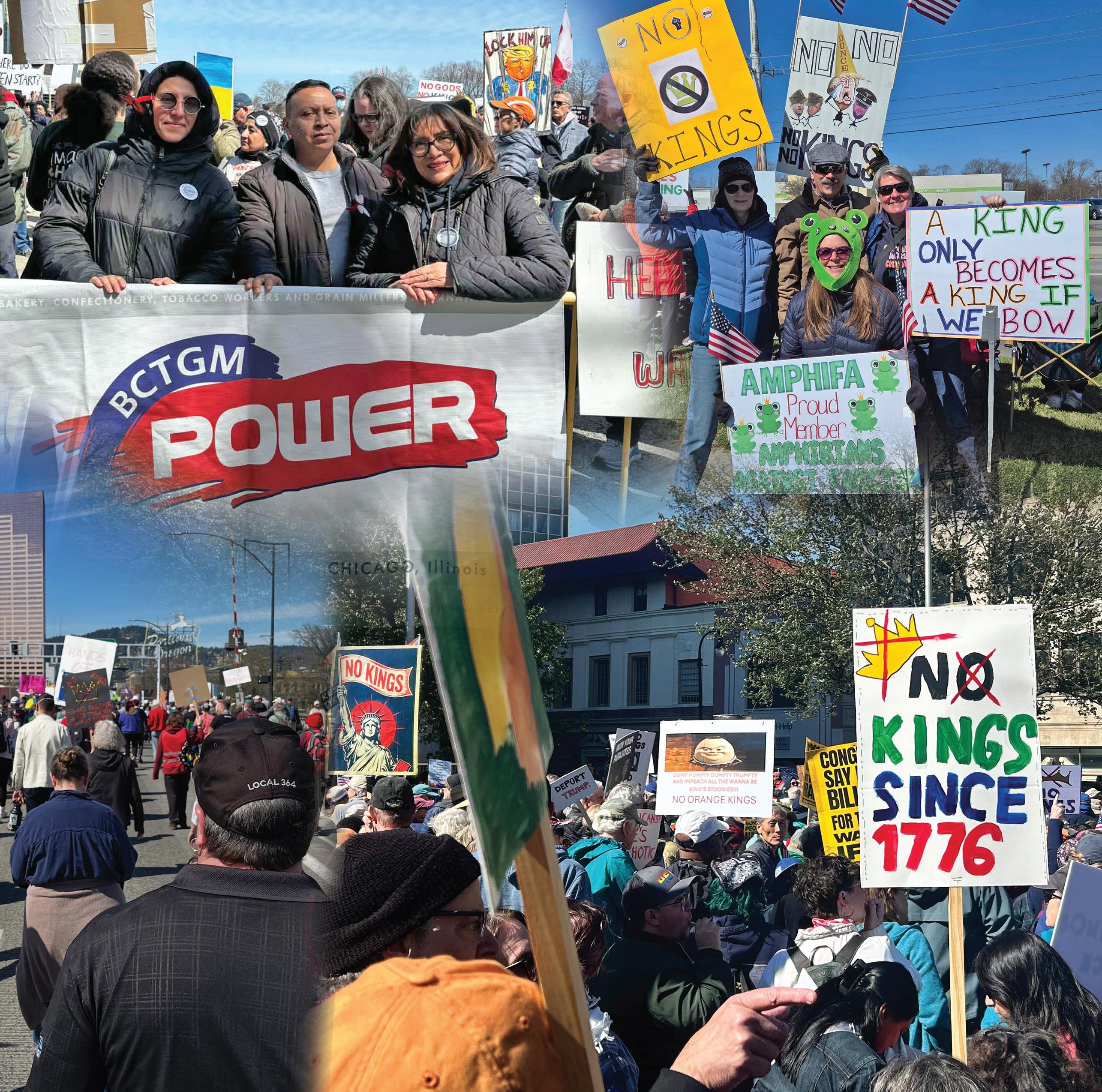

Chicago, Ill.
Portland, Ore.
Toledo, Ohio
Durham, N.C.
Chicago, Ill.
Portland, Ore.
As we celebrate the founding of this great Union 140 years ago, we not only focus on the successes of those that came before us, but also how those victories were achieved.
On page 10, we reflect on the accomplishments the labor movement was able to achieve during President Franklin Delano Roosevelt’s New Deal era.
FDR, under pressure from a growing labor movement and furious working families in the midst of the Great Depression, passed the most meaningful and far-reaching reforms ever put forward by a sitting president, including:
Social Safety Net: The establishment of pensions for the elderly (Social Security), unemployment insurance and aid for people with disabilities and dependent children.
Labor Law: The National Labor Relations Act (Wagner Act) guaranteed workers the right to form unions and bargain collectively.
Wall Street Reform: The Federal Deposit Insurance Corporation (FDIC) guaranteed bank deposits, while the Glass-Steagall Act separated commercial and investment banking to reduce risky speculation.
Infrastructure Investment: Programs like the Tennessee Valley Authority (TVA) brought electricity, flood control and economic development to poor rural areas especially in the South.
What influenced this president to pass progressive policies that Americans still rely on 80 years later? In large part, it was the collective voice of working people, and their unions, that could not be drowned out.
Today’s labor movement needs to unite around a similar vision. It is not enough to just protect the gains that were made almost a hundred years ago. It’s time to build upon those gains.
While much of the world has national/universal healthcare including our members in Canada workers in the U.S. continue to be plagued by rising healthcare costs and inadequate coverage. This has been made worse by Republican efforts to defund the
most successful parts of the Affordable Care Act.
We also need to fight for expanded labor law protections, paid maternity leave and paid sick leave. These are common-sense policies that working families in France, Canada, Sweden and most other countries have already fought for and now enjoy. Why should U.S. workers be left behind?
U.S. workers should be put to work building roads, rail and smart energy projects for future generations.
Lastly, U.S. workers deserve a seat at the table to help develop these policies. We’ve done this before. In 1933, in an effort to satisfy the growing labor movement, Franklin Roosevelt chose Frances Perkins as his Secretary of Labor. She had spent her career fighting for labor and health and safety rights in New York City. As Labor Secretary, she worked side by side with the labor movement to craft the majority of Roosevelt’s progressive agenda.
I am confident we can do this again, but it will require a mobilized and driven labor movement. The BCTGM will help lead the effort to push this working families agenda.
—Anthony Shelton, BCTGM International President
Anthony Shelton , Editor
Michelle Ellis, Assistant Editor
BCTGM General Executive Board
Sylvain Gagné • Roger Miller • Zachary Townsend
BCTGM General Executive Board Members Wally Borgan • Pierre Luc Doucet Aaron Graves • Paul LaBuda • Earl Lublow
BCTGM
(ISSN
Canadian Region
International Vice President Ron Peircey has retired, effective May 4.
Piercey has been a member of the BCTGM for more than 55 years, beginning his career at Benson and Hedges Tobacco Co. in 1970. He served as a Shop Steward for BCTGM Local 325T (Mississauga, Ontario) until 1978, when he was elected President of the Local. In 1983, he moved to Local 264 (Toronto) and became the Principal Officer.
Piercey was elected to serve as the Canadian Region Vice President in 2013, and was re-elected by delegates at the 2014, 2018 and 2022 BCTGM Constitutional Conventions. He has served on the BCTGM General Executive Board since 2006.
retirement with his lovely wife Millie and their family.”
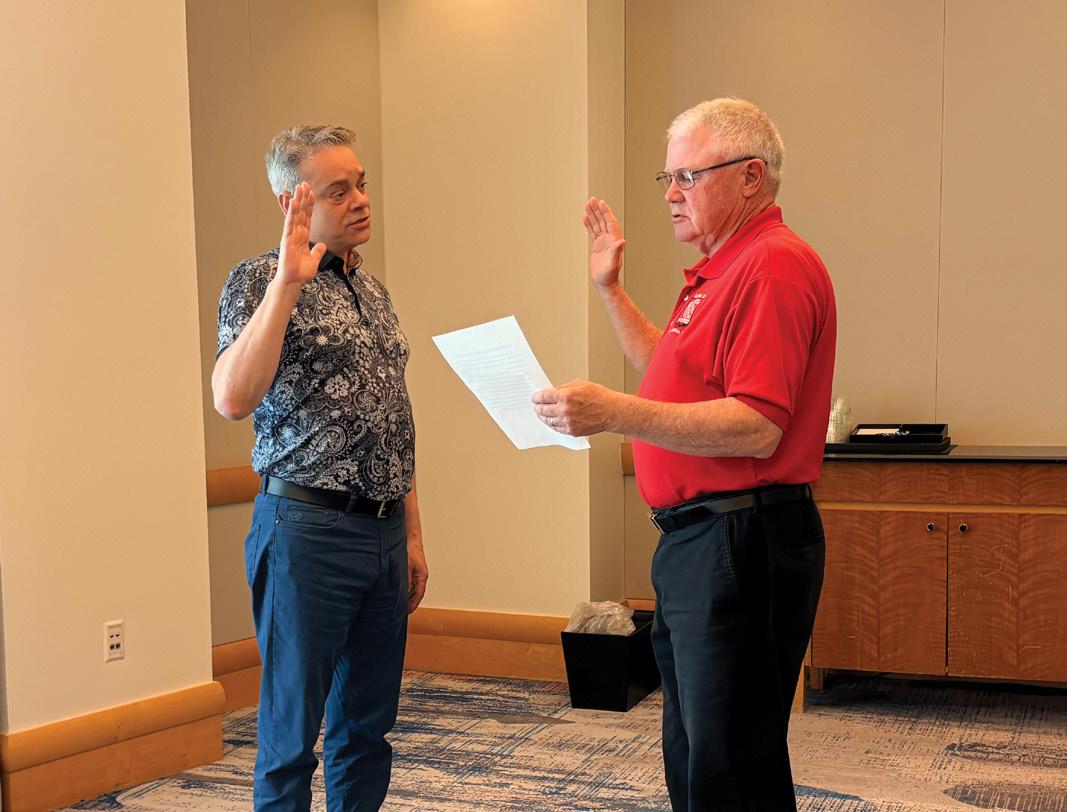
Canadian Region International Representative Sylvain Gagné was sworn in to fill the position of Canadian Region Vice President at the 122nd Session of the General Executive Board in April.
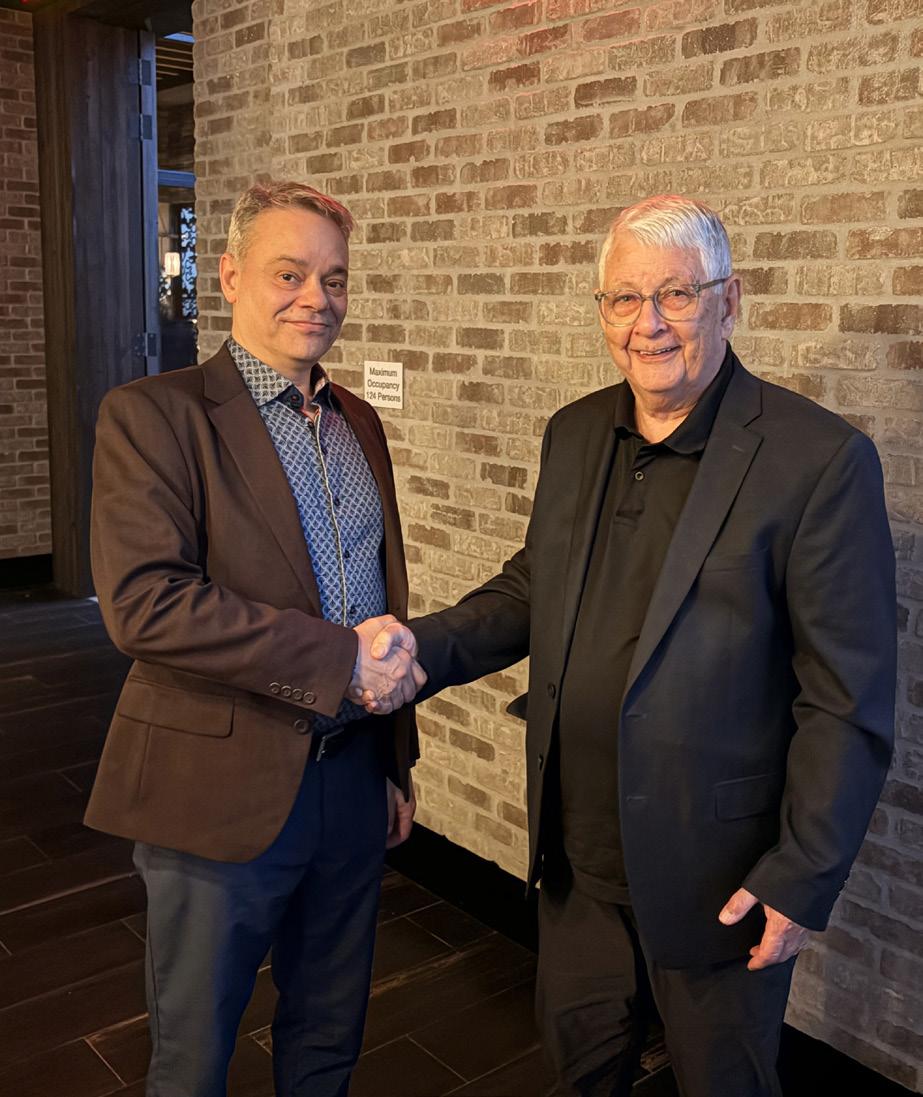
Gagné was appointed to serve as a Canadian Region International Representative by President Frank Hurt in 2007, and has served in that position for 19 years. Gagné became a member of BCTGM Local 227 (St. Leonard, Quebec) in January 1992 while working for Borden Foods Corporation in Quebec. He was elected President of Local 227 two years later in June of 1994. He was subsequently re-elected six consecutive times before coming on the International Staff in 2007.
“Ron has served this Union with passion and integrity” says International President Anthony Shelton. “This International wishes him a long and healthy
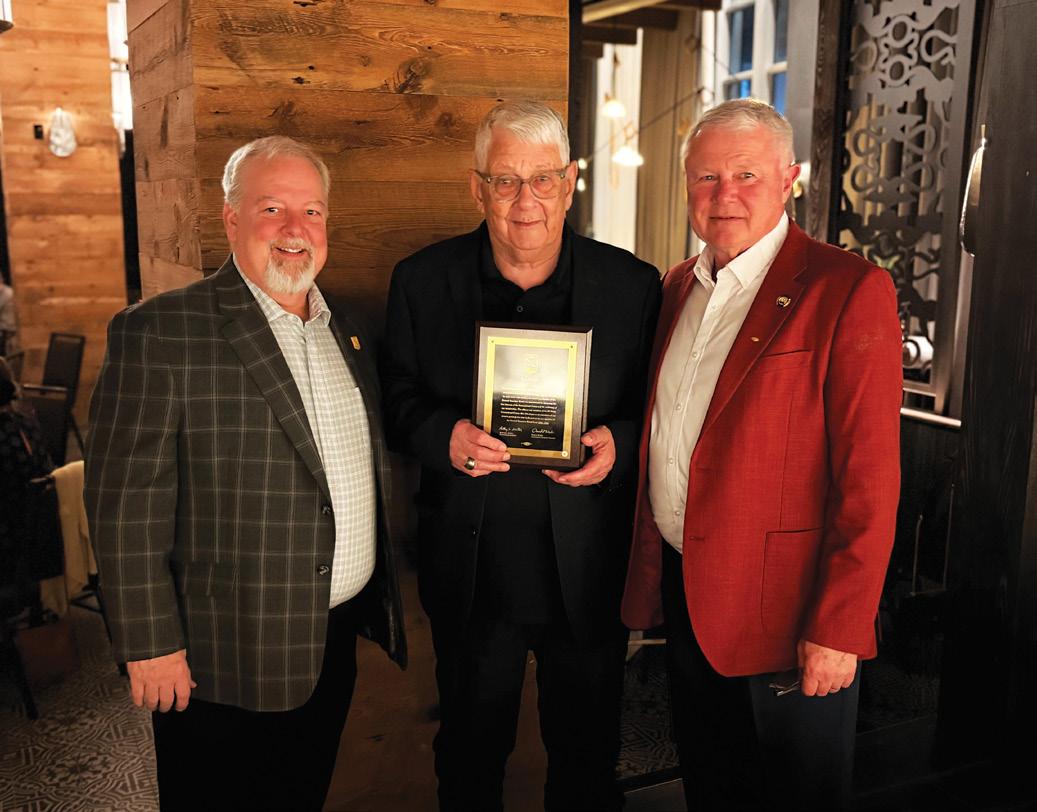
“Sylvain has been a steady and hardworking asset in the field, always there for the members and efficient in every assignment from this International Union,” Shelton says. “I have full confidence in his ability to lead our local unions in the Canadian Region well into the future.”
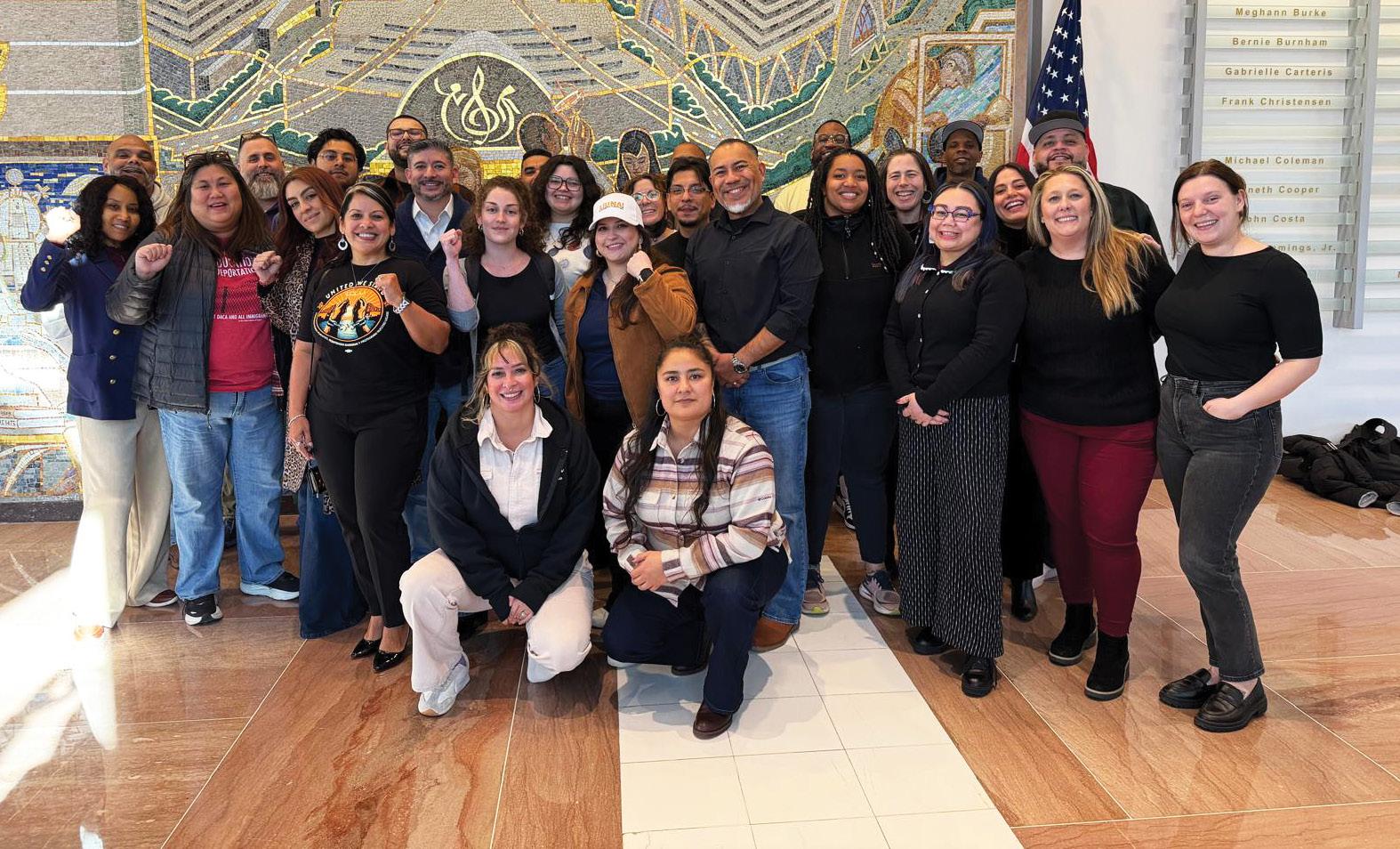
Nominated by the International Union, BCTGM Local 83 (Santa Fe Springs, Calif.) Financial Secretary Cindy Marquez is serving a oneyear Labor and Immigration Policy fellowship with the AFL-CIO.
The program, currently in its first year, is designed to strengthen Labor’s frontline for pro-worker immigration policy advocacy.
“As an advocate for immigration rights, workers rights and equality on the job, it is an honor to be among the first class of fellows in this program,” Marquez says,
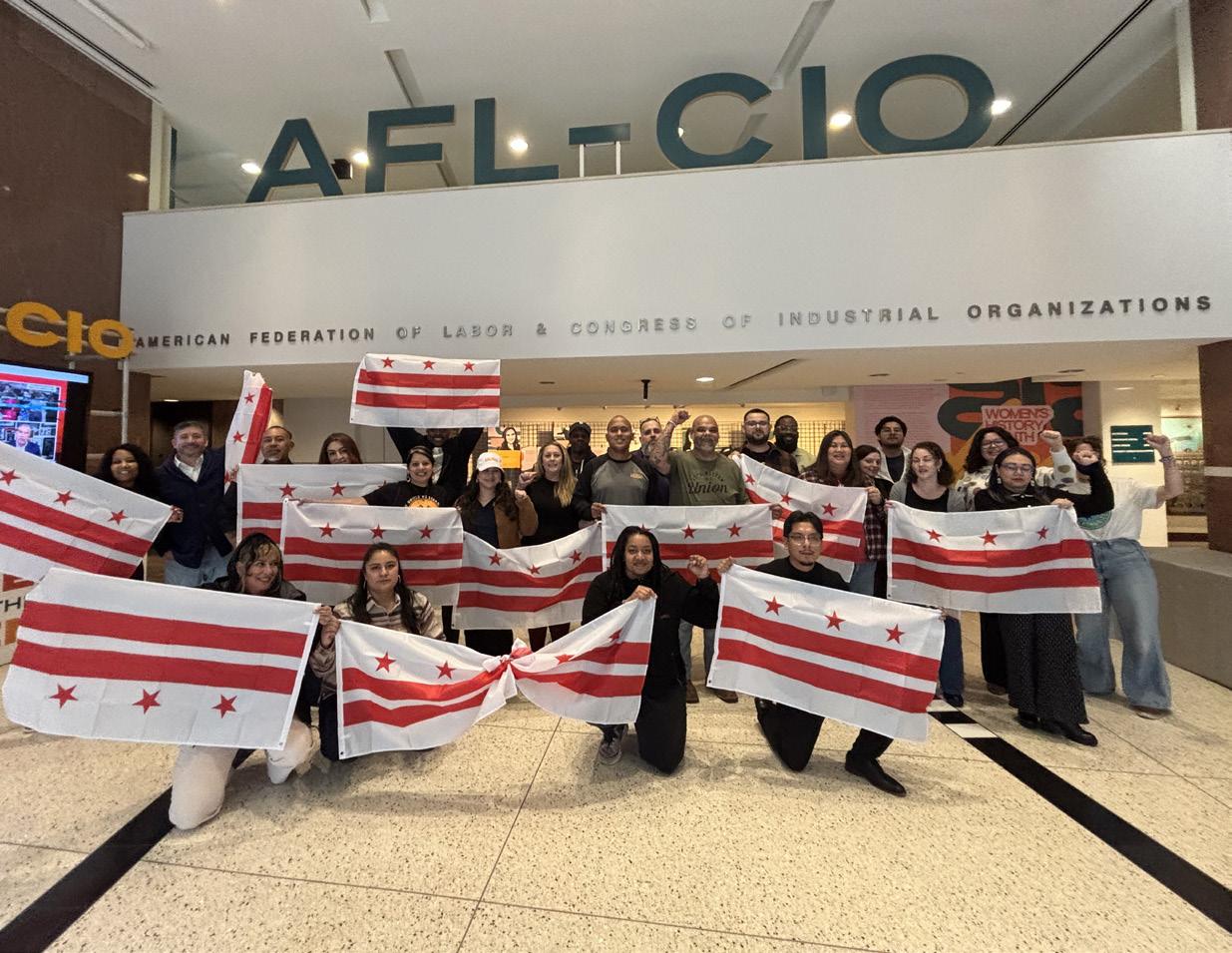
reflecting on the work they have been doing.
That work includes weekly virtual meetings to share stories of Immigration and Customs Enforcement (ICE) activity in their hometowns, brainstorming and sharing ideas for legislation that protects immigrant workers, strengthening contract language around immigrant workers on the job and more.
“I think the trainings are making the biggest impact,” Marquez says of the meet-ups they have coordinated. “We have a group text where we can identify an opportunity to hold a training for area union members,” she says. “A fellow will put out a request and whoever can come will show up and teach the workers about their rights, the proper way to assert them and so on.”
Marquez says she is fortunate to not have any members of Local 83 affected thus far, but that she’s learning from others what to do if/ when the time comes. “This group is a safe place for us to share what is happening and help each other be stronger and more educated advocates,” she says.
“It is amazing what they’ve organized in such a short period of time to help us stand up for our members,” Marquez says of the AFLCIO, praising its response effort to the Trump Administration’s unprecedented and aggressive immigration policies. “I hate seeing our members targeted and fearful on the job, but I’m confident in my ability to assist and educate them with the tools we’ve built up in this program.”
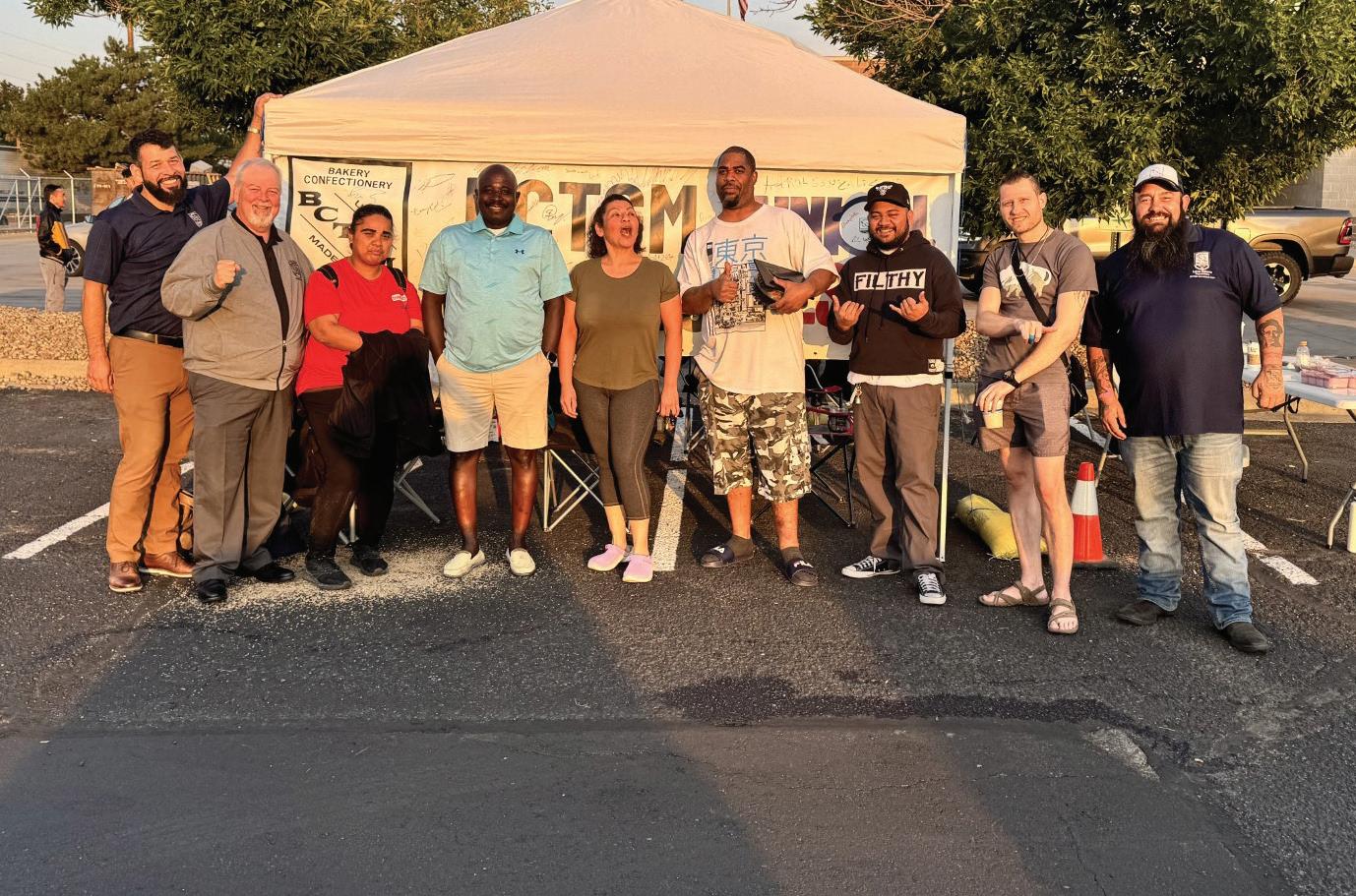
Six months after voting to join the BCTGM, 150 workers at Bimbo QSR in Denver, Colo. have ratified a first contract with BCTGM Local 26 (Denver, Colo.).
“First contracts take time because you want to make sure you’re improving on what the workers already had,” reports BCTGM International Secretary-Treasurer/Organizing Director David Woods. “We want to gather as much information as we can about their existing benefits and make sure the outcome is going to justify the union dues.”
The Negotiating Committee consisted of BCTGM Western Region Vice President Shad Clark, Local 26 President Clifton Horton and Local 26 Financial Secretary/Business Agent Drew Buchholz, with assistance from Woods when necessary.
The committee also called on the input of six workers inside the plant, representing different languages, shift times and departments. “Those six workers ensured we didn’t overlook anything in terms of representing everyone fairly,” Woods says.
Horton pointed back to the three different languages spoken in the plant as a unique challenge to developing contract language that promotes meaningful equality.
“Favoritism was one of the bigger issues,” he said. “The company agreed that job bids will be given in order of seniority rather than favoritism going forward, and we established a grievance procedure in order to fairly resolve problems among the workers.”
In addition to those terms, the committee negotiated health insurance that cut the cost for employees in half, and maintained the paid time off (PTO) and sick benefits workers were happy with prior to voting for the Union.
“It’s a good first contract,” reflects Vice President Clark. “There is a lot here for the workers to build on as they get used to their union and learn how it works.”
The Bimbo QSR facility was unionized by BCTGM Local 26 on August 29, 2025, when over 80% of the workers voted in favor of BCTGM representation. Their multi-pronged campaign included neutrality discussions with company executives, and assistance from Spanish and Darispeaking BCTGM organizers to help educate the significant numbers of Latino and Afghan workers in the unit.
Bimbo Bakeries purchased the Denver facility in 2023, which was formerly named Mile Hi Bakery, and incorporated it into its QSR division. Workers in the plant bake buns and other bread products for use at quick service restaurants like Wendy’s, Burger King and McDonald’s.
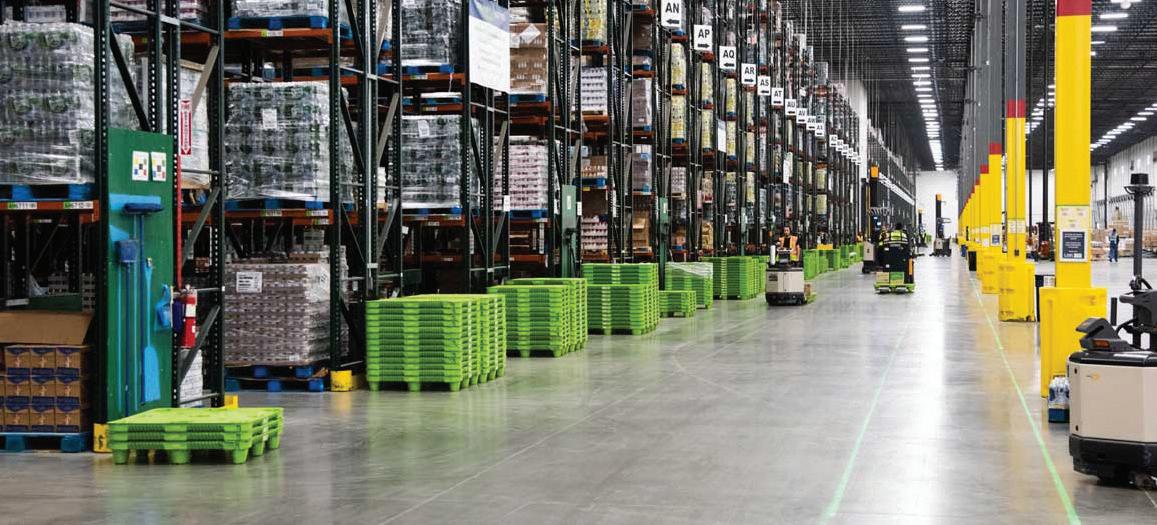
BCTGM Local 1 (Chicago, Ill.) has won union recognition at a rapidly expanding UNFI warehouse in the company’s natural, organic, specialty and fresh foods division in Joliet, Ill.
“I contacted the company on a tip, given we already represent UNFI employees in other locations in the midwest,” says BCTGM Midwest Region Vice President Jason Davis. “They had been getting this facility ready for expansion with the help of temporary workers, and allowed BCTGM International Staff and Local 1 organizers to speak to their first permanent workers at an orientation this past March.”
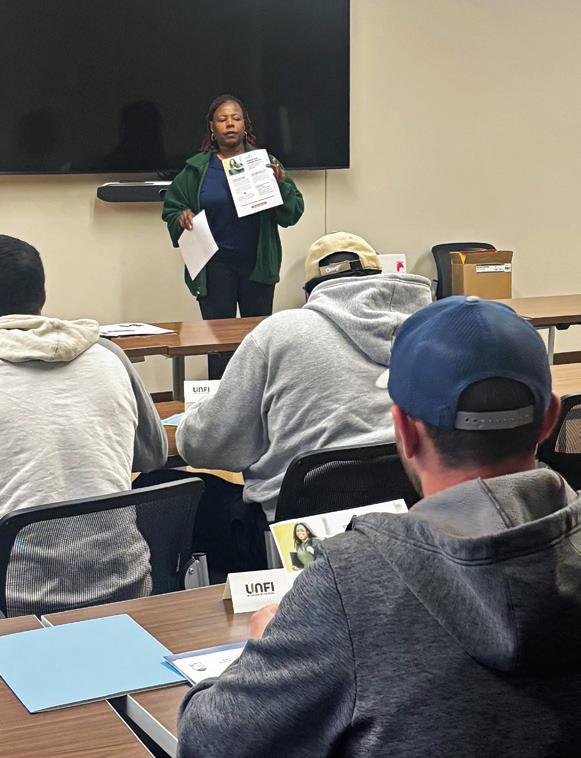
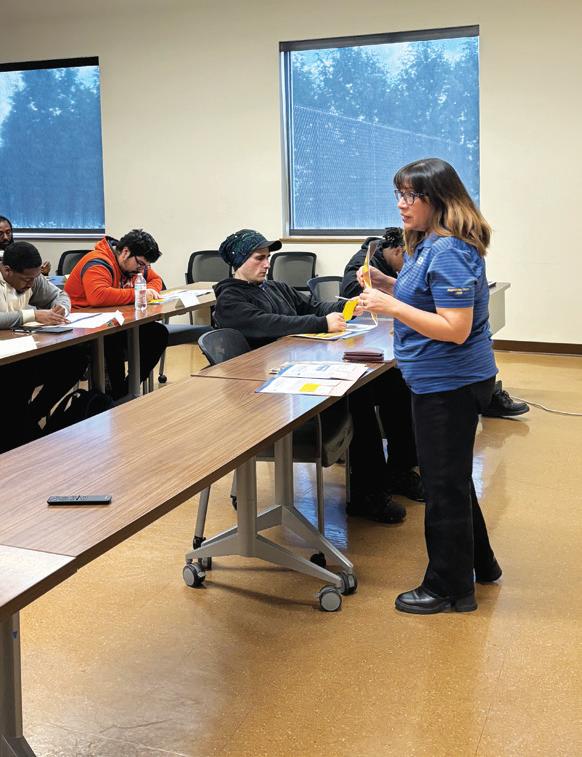
BCTGM International Representative Veronica Hopkins, Local 1 Recording Secretary/ Business Agent Rochelle Ross and Local 1 Business Agent/Organizer Ray McNeil met with 15 workers at that first orientation, and got eight union cards signed. Davis signed up two more at a subsequent site visit, and the company agreed to voluntarily recognize the Union with 10 of the first 18 employees’ signatures.
Since then, the operation has quickly grown to 100 employees, with expectations to reach 400 this year. “Veronica and Rochelle have continued to do orientations and sign new employees into the Union as they come through the door,” Davis says. “This move by UNFI is creating a lot of jobs around Joliet and it’s been a remarkable opportunity to grow our membership in the midwest.”
According to Hopkins, the orientations have
been rigorous but rewarding. “We have been going there every week on Monday and Wednesdays,” she says. “We basically hand out folders with all the new member materials – What Your Local Union Does for You handouts, our business cards, a welcome letter from President Shelton—things like that.”
The main objective is to establish a relationship with the workers and get their dues check-off cards signed, according to Hopkins. “It’s a lot of work but we are excited to welcome these new members into Local 1,” she says.
In reflecting on the initiative and professionalism of BCTGM staff and organizers in the Midwest, International President Anthony Shelton said:
“I commend this group for thinking outside the box and committing to the process of growing with UNFI as it expands into the organic and specialty foods market. Not only does it benefit our Union, it gives more workers in their region the opportunity to experience a good union contract and a voice at work.”
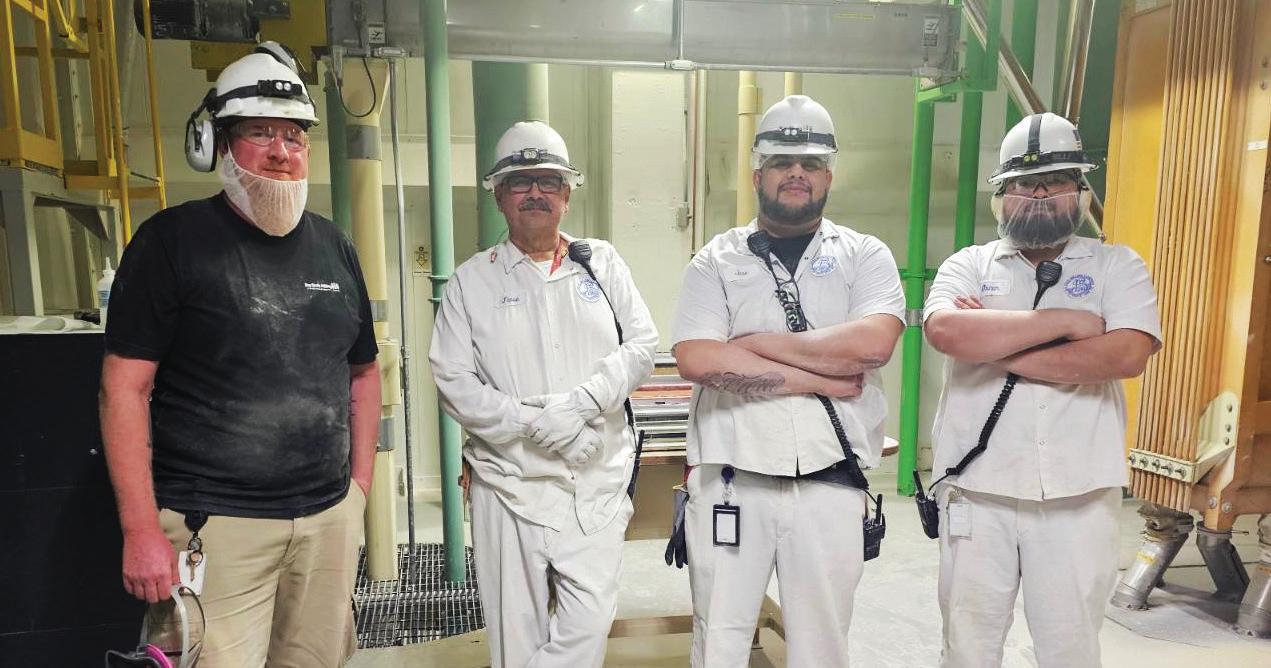
In the Fall of 2024, ten workers in the only remaining non-union department at Bay State Milling in Tolleson, Ariz.—the milling department—voted to join BCTGM Local 232 (Phoenix).
“Local 232 had already represented the packing, loading, warehouse, maintenance and sanitation workers in this plant,” explained Western Region International Representative Andrew Gutierrez at the time. “We had heard from the group in the milling department through the online bctgm.org organizing form before, but it never panned out.”
Workers in that department began asking more questions when Gutierrez was on site servicing the other members that year, and that’s when he started quietly handing his card out to them. They voted YES to joining the union that September.
“Getting a first contract proved to be much more challenging than the election,” Gutierrez says. “Bay State Milling was dead set on bargaining a separate contract, rather than simply adding the group in the existing one like the members wanted.”
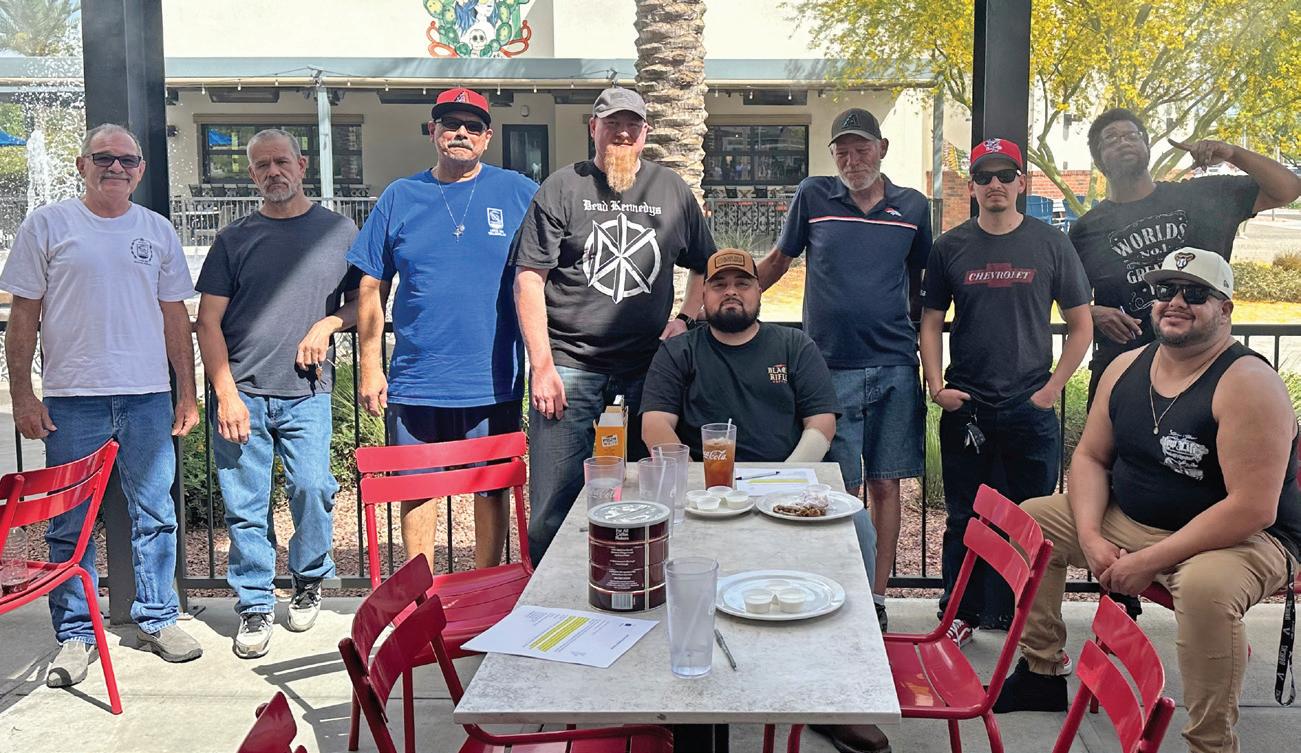
After over a year at the table, Gutierrez began feeling like the company might successfully break the workers’ trust and support for the Union before the contract deadline. “At that point, Western Region Vice President Shad Clark came in to assist with negotiations,” he says. “That is what finally helped push it over the finish line.”
On March 22, 2026, 18 months after voting to join Local 232, the milling department workers finally reached an agreement with Bay State and ratified their first BCTGM contract.
Among their wins were:
During negotiations, company supervisors would often make retaliatory and even illegal comments to the members. According to Gutierrez, they seemed to want to punish the group for wanting to join the union. “They intentionally drew this process out as long as they could, even going as far as engaging in regressive bargaining, which resulted in Local 232 filing Unfair Labor Practice charges with the NLRB,” he says.
• bridging a huge pay gap;
• seniority enforcement language;
• grievance procedures; and
• moving off the company’s health insurance and onto the union’s Oregon Bakers’ Trust, saving them hundreds of dollars per month.
“It was an emotional day for them—and me,” Gutierrez says. “They’ve been through a lot on this job, including pretty serious injuries and wage discrimination, and some of them have dedicated the bulk of their working lives to this company.”
Like so many BCTGM members who have fought to secure union contracts, the unit knew these were good jobs—they merely wanted a voice in shaping them into great ones. “This group is Union to its core, it’s truly inspiring what they’ve gone through to secure this contract,” Gutierrez boasts.
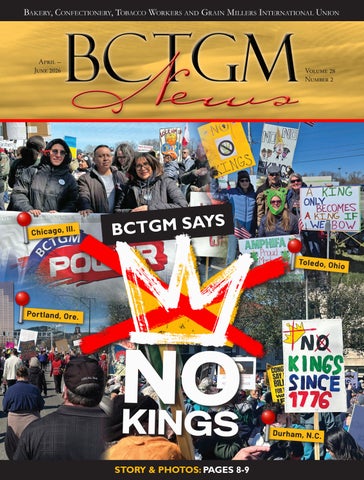
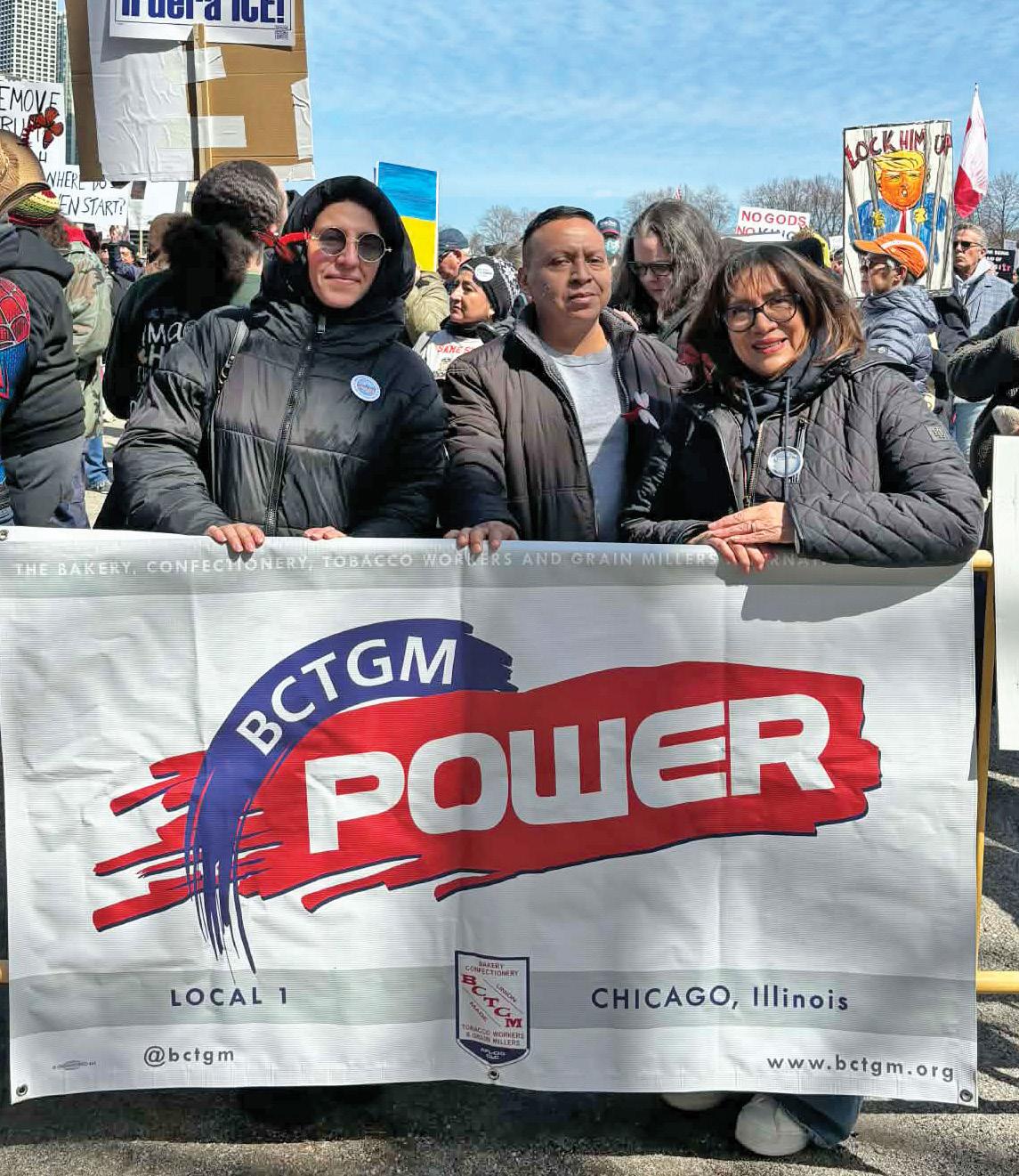
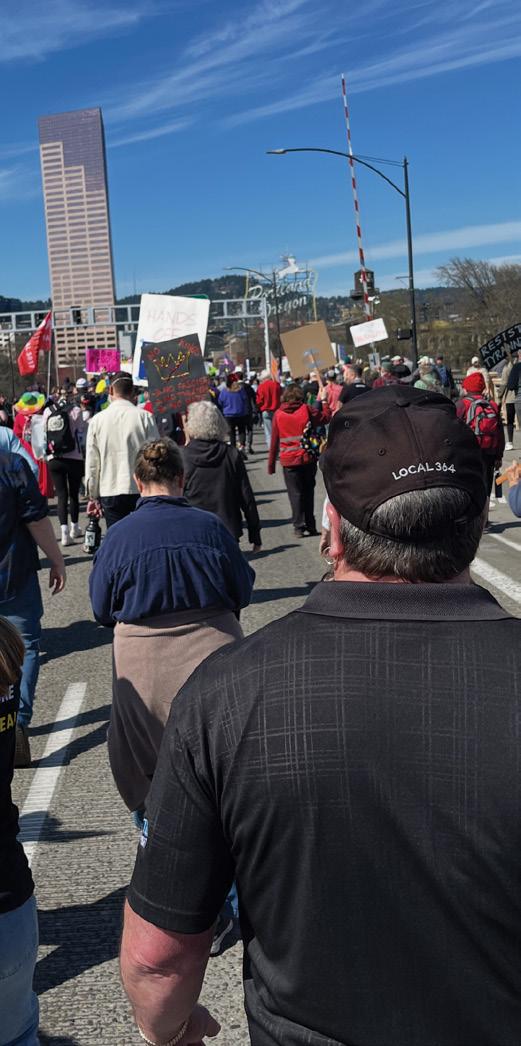
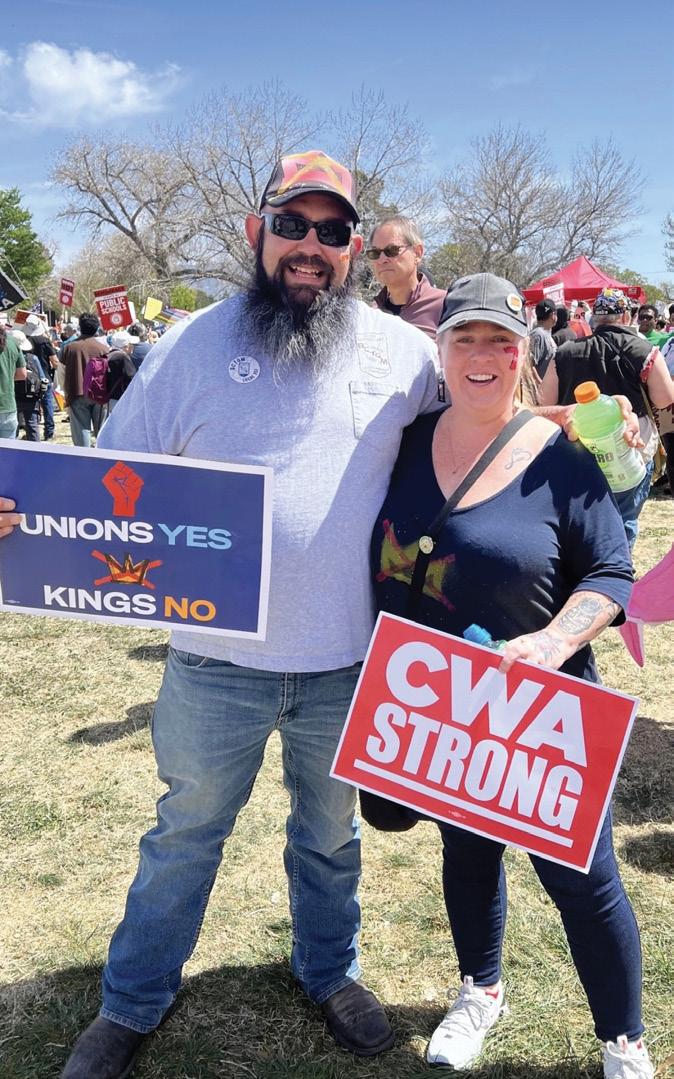
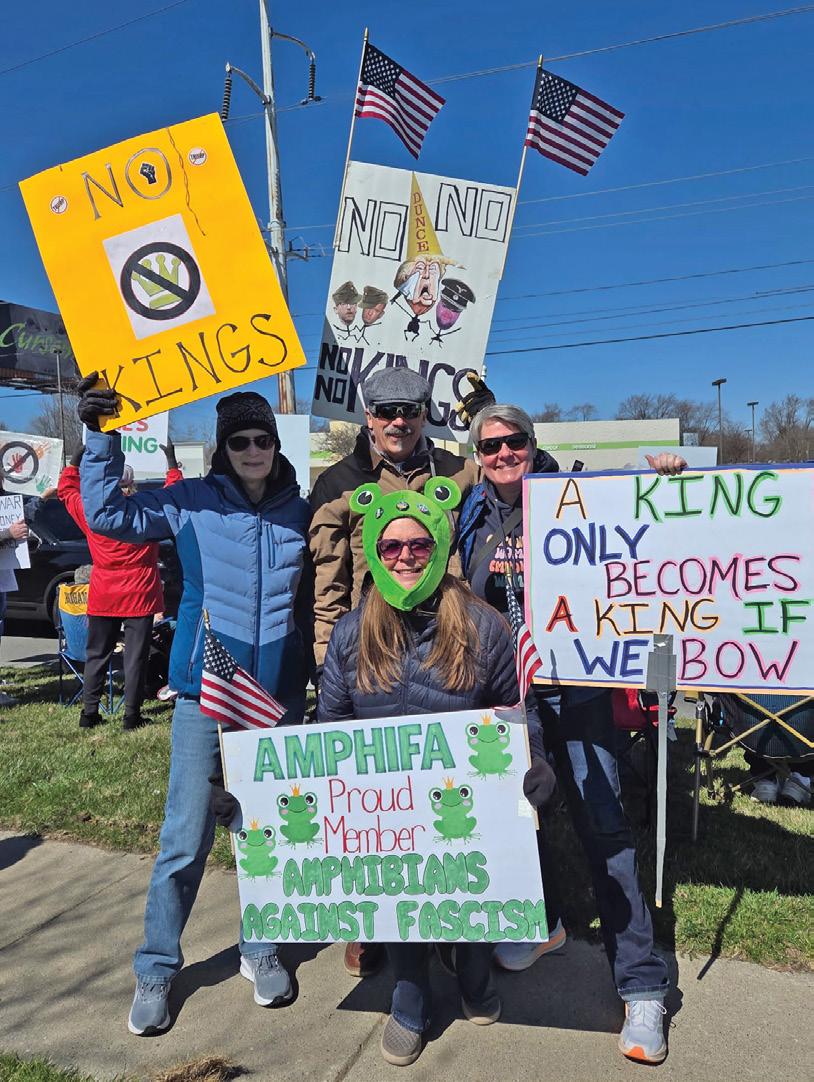
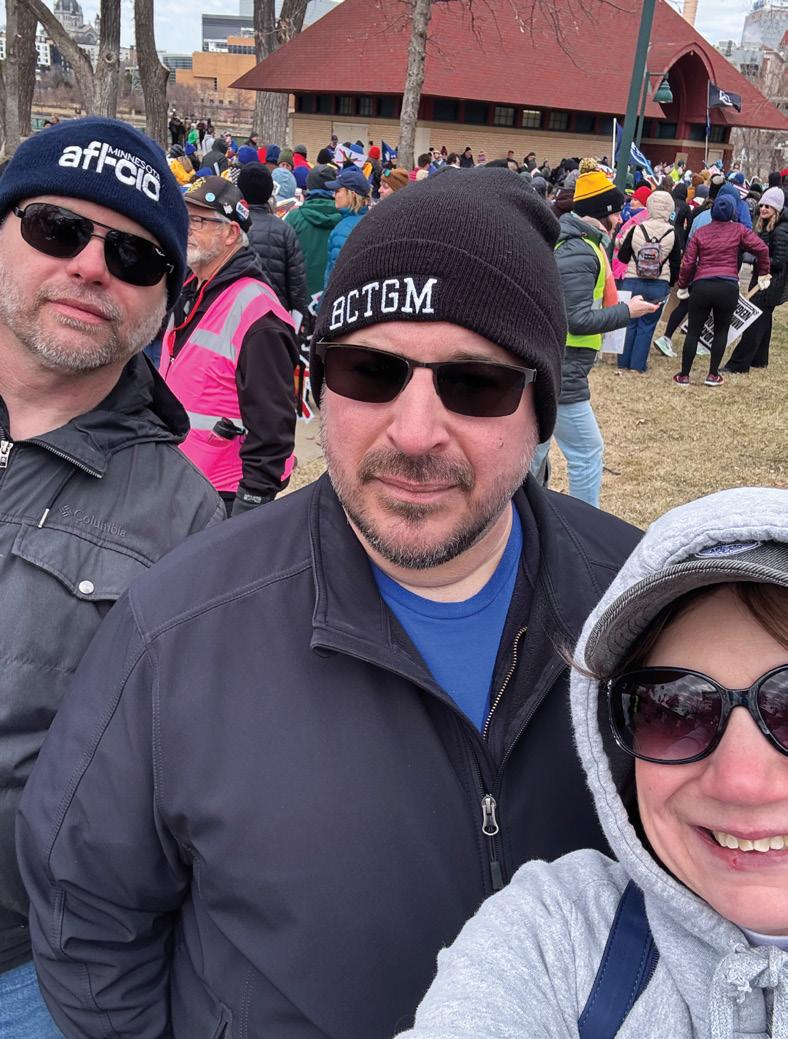
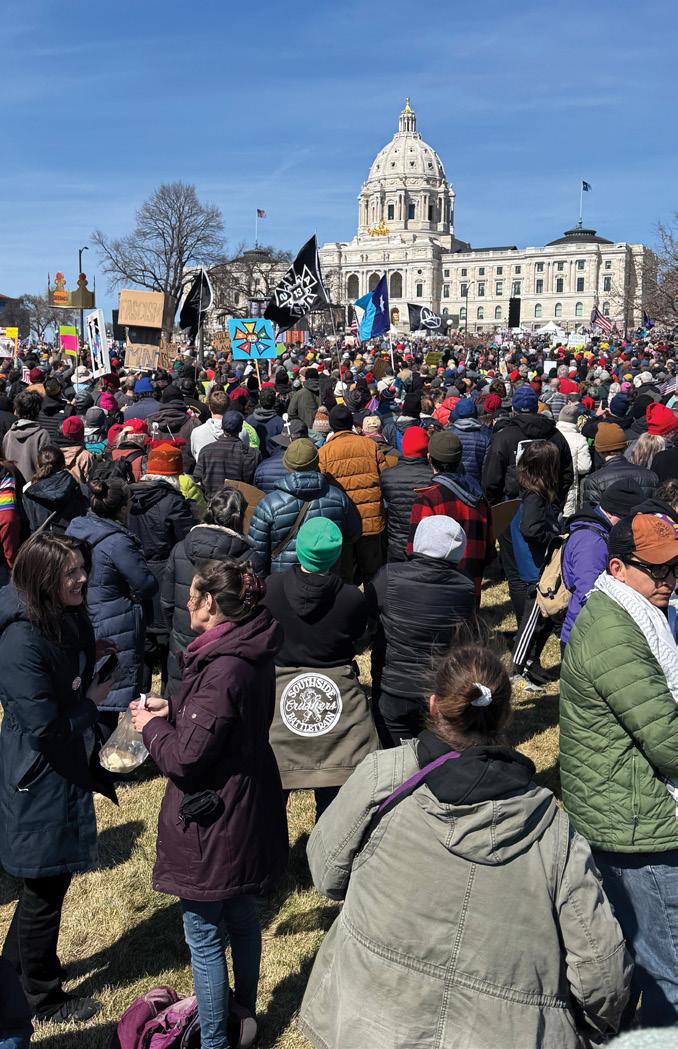
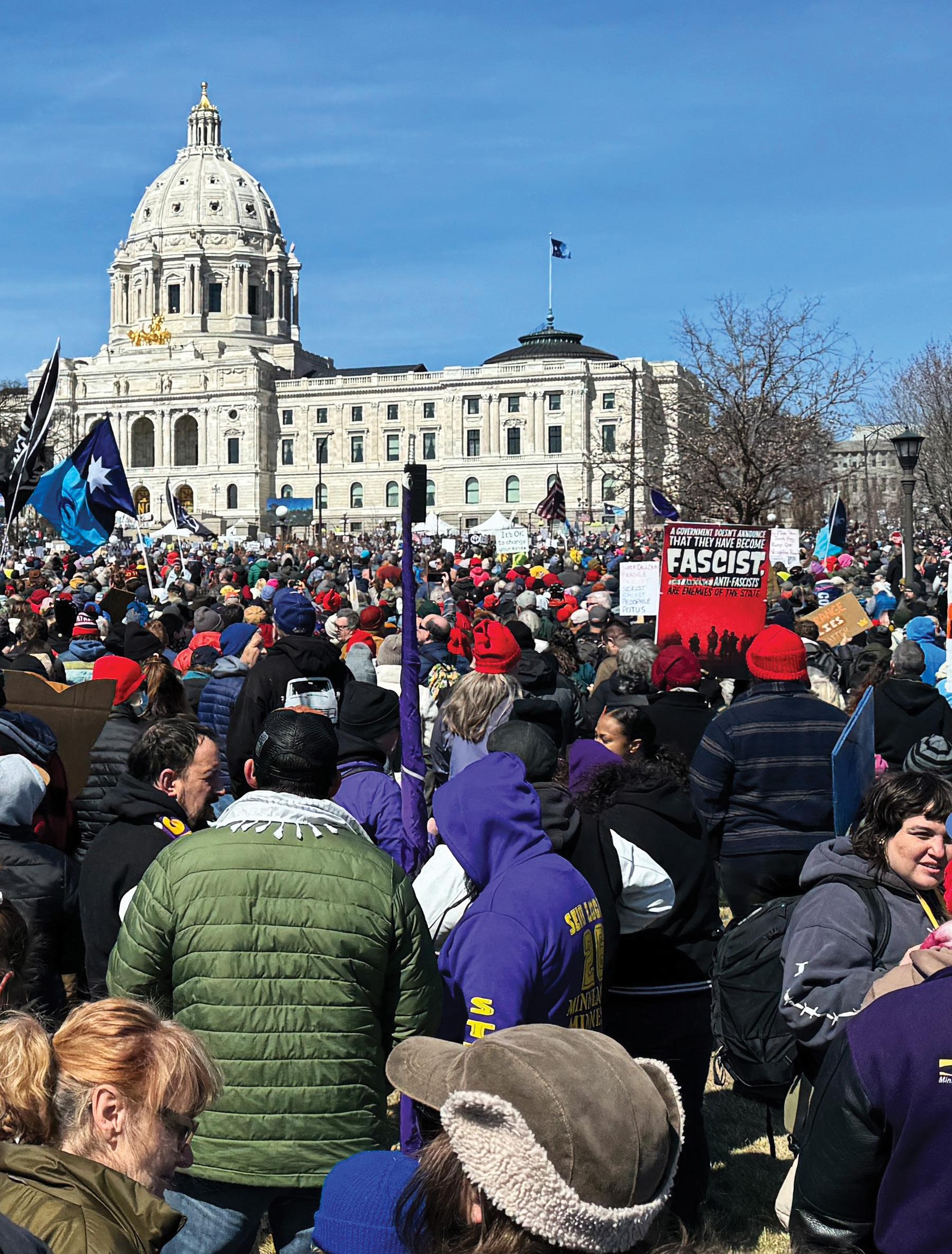
On March 28, the BCTGM was among tens of thousands of union members participating in NO KINGS rallies across the United States.
“No Kings is about standing up to the guy in the White House,” said AFL-CIO President Liz Shuler, who attended the event in Minnesota with labor leaders and thousands of union members. “But No Kings also means tearing down an economy by and for the billionaires—and instead, building it for working people,” she continued.
“More money in our pockets—because no one in the richest country on Earth should struggle to get by.”
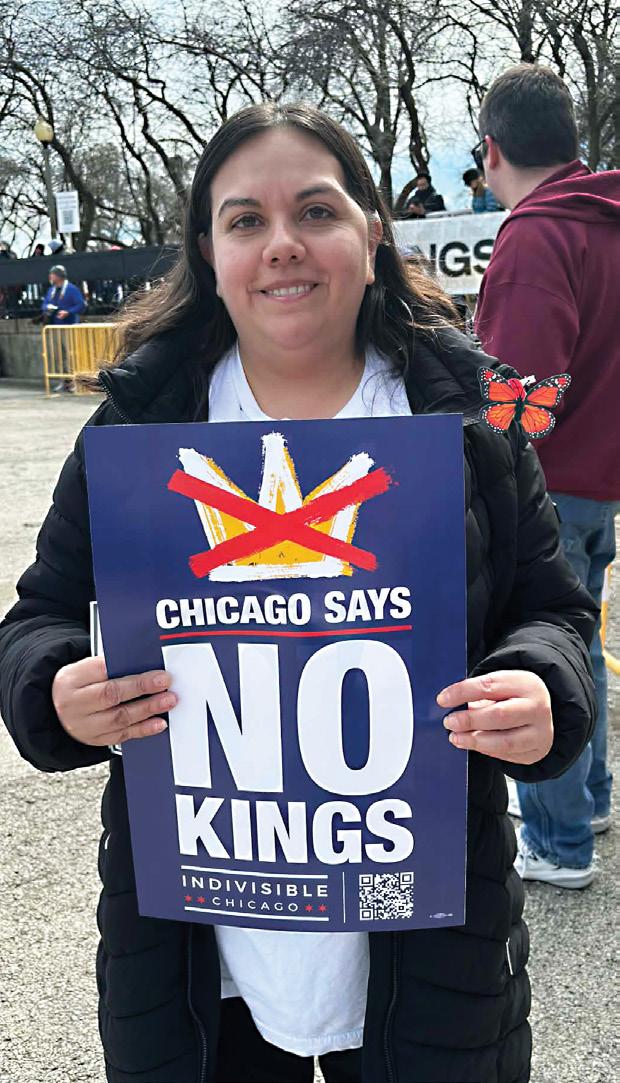
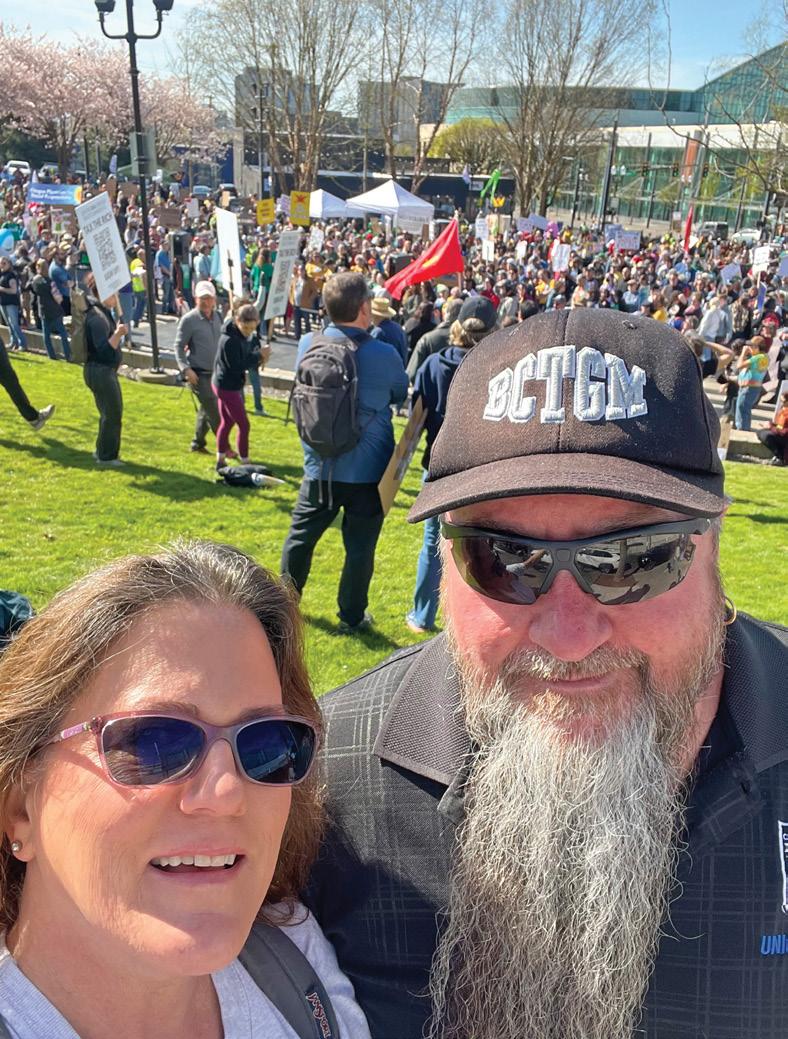
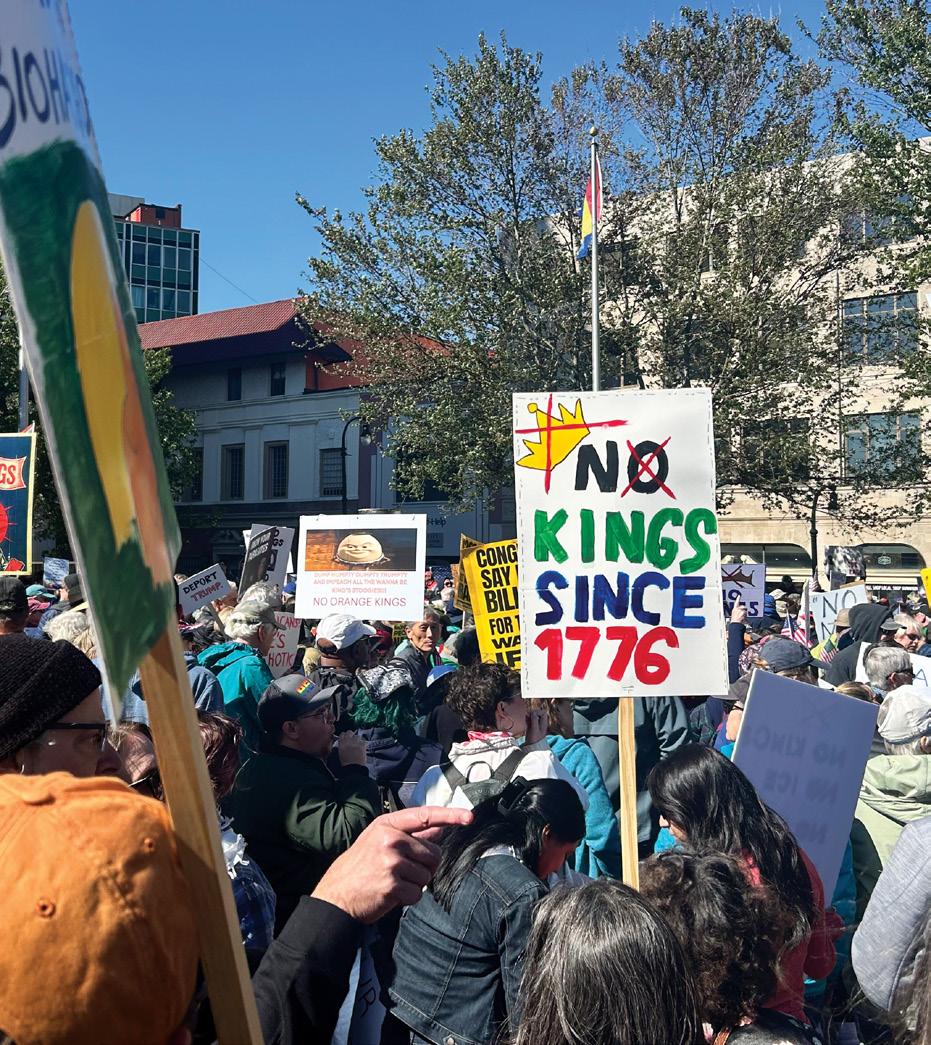
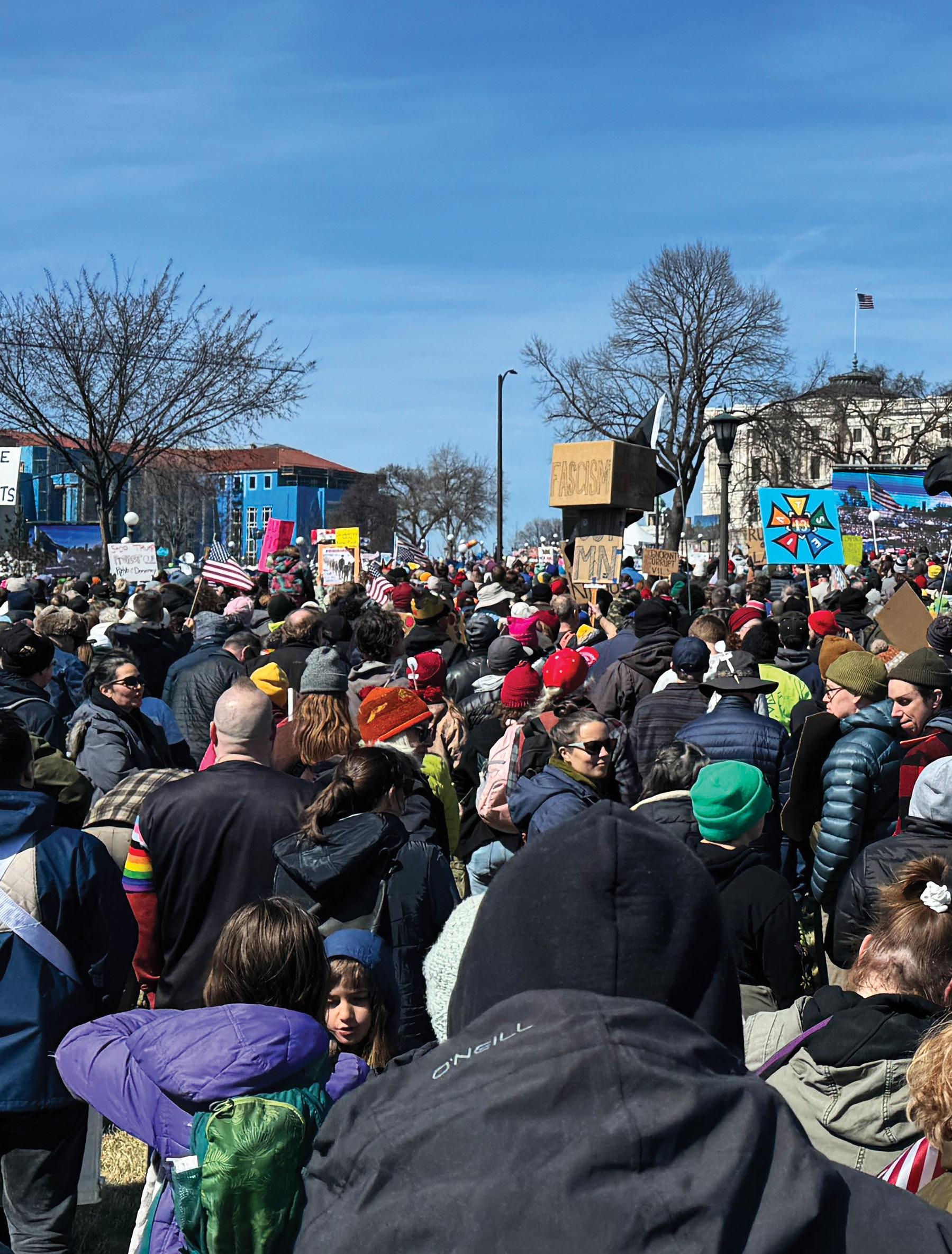
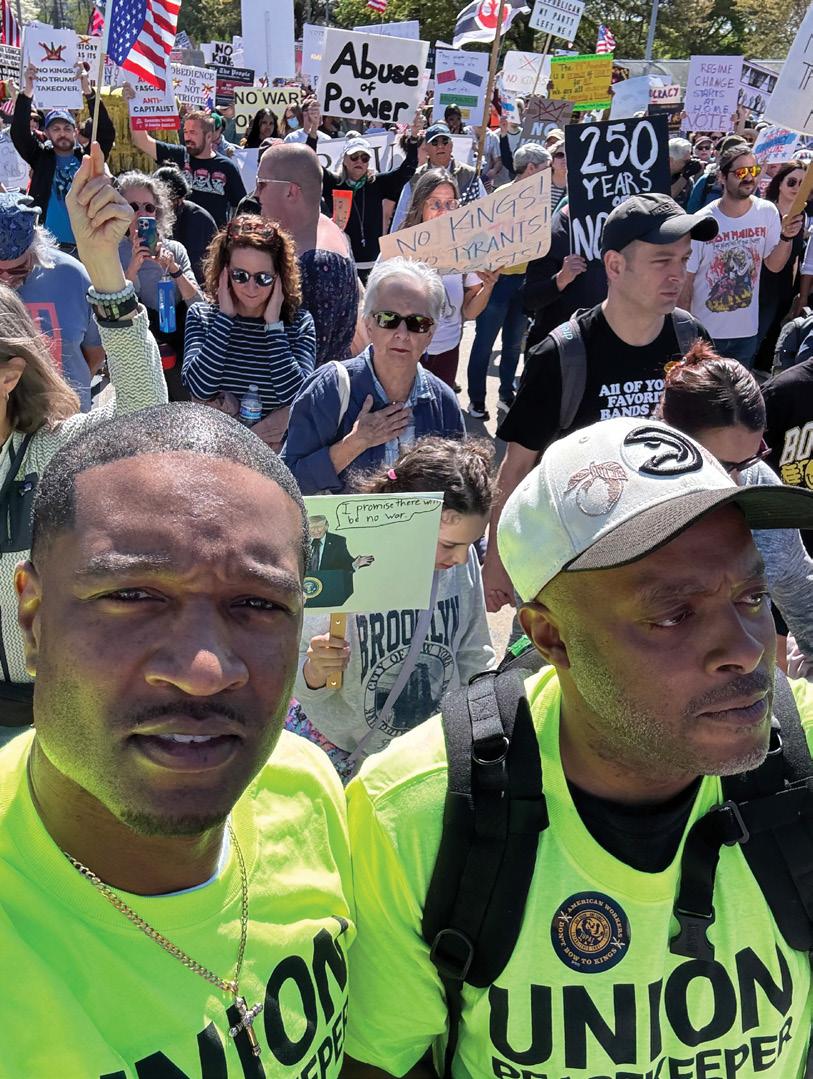

The BCTGM International received photos and stories from members participating in every U.S. region of the Union. “This administration has violated workers rights with such speed and disregard that it’s tempting to think our fight
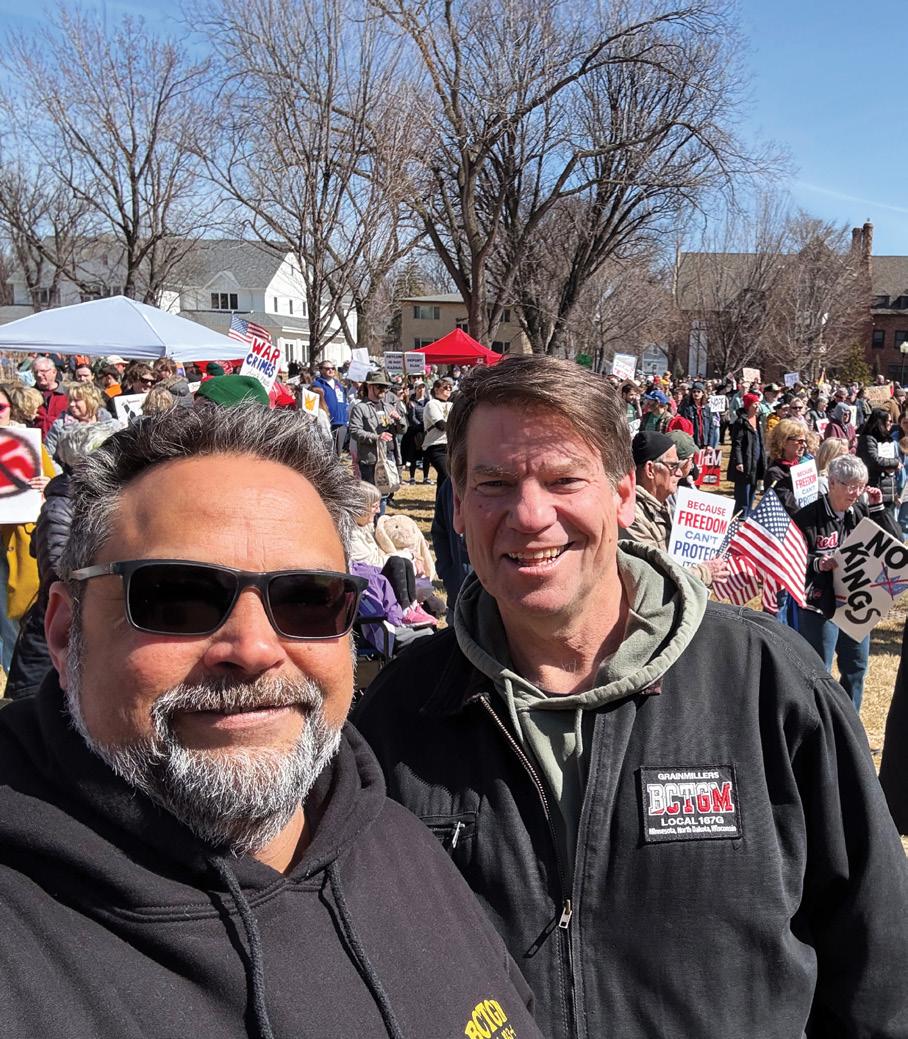
impact of holding the line in solidarity,” he asserted.
On the importance of attending events like this, Shelton added, “It is vital to get out there and see that you’re not alone—the workers will prevail.”
Pictured on these pages are BCTGM staff and Union members participating in NO KINGS events from Portland, Ore. to Durham, N.C. and several cities in between.
The 2026 Convention year marks the 140-year founding anniversary of the BCTGM.
On these pages, we look back on the major milestones and setbacks in U.S. labor law as we think about how to chart the future this coming July.
The United States was in the throes of the Great Depression when President Franklin D. Roosevelt was elected in 1932, on the promise of a “New Deal for the American people.”
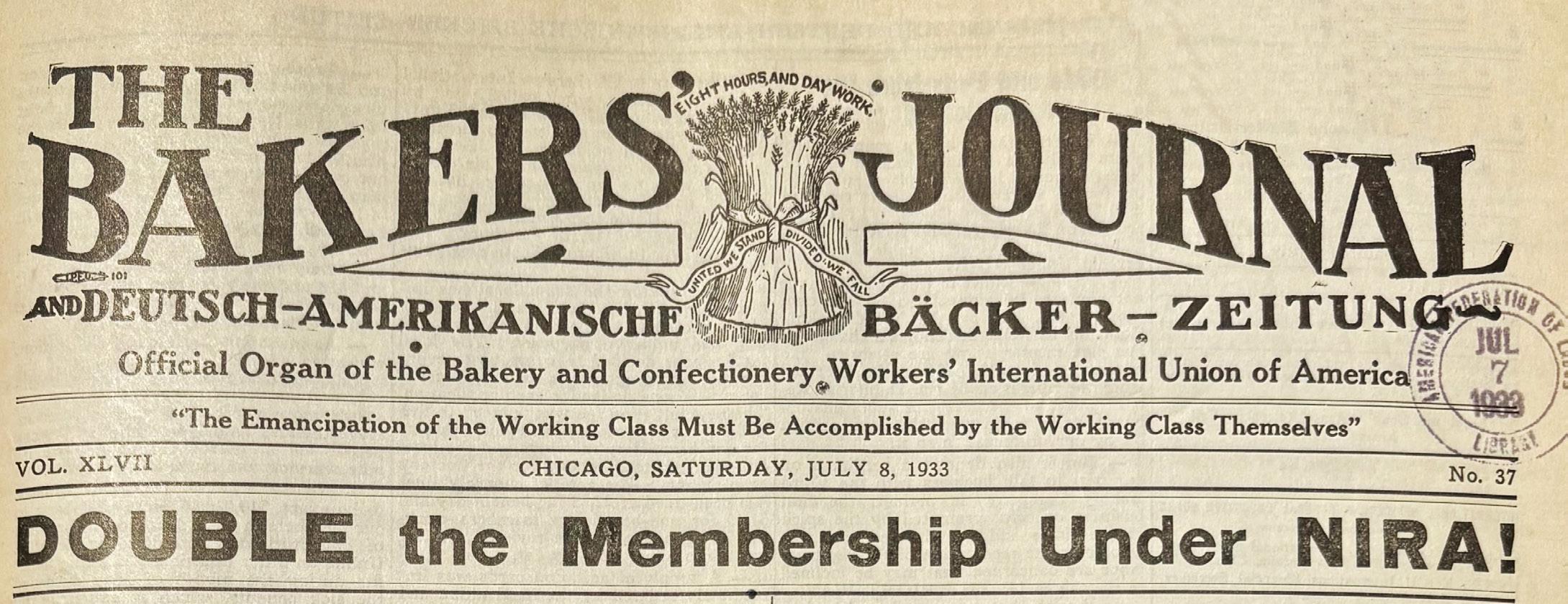
The first and most ambitious law to pass under the New Deal was the National Industrial Recovery Act (NIRA). As part of the Act, the B&C would cancel its 1933 convention and set up a Washington bureau to participate in Roosevelt’s hearings to write codes of fair competition in its industries.
While the Union’s leaders would be frustrated by several of the outcomes around hours and wages, it saw the key opportunity of the NIRA was its guarantee of workers’ right to organize, bargain collectively and choose representatives without employer interference. The top headline in the July 8, 1933 issue of The Bakers’ Journal urged, “DOUBLE the Membership under NIRA!” The paper issued an urgent call to organizing to Bakery and Confectionery Union workers everywhere.
In the tobacco industry, there had been a rumor circulating that the ‘Big Four’ tobacco manufacturers had entered into an agreement never to sign a contract with any union again. In the late 1920’s, the Tobacco Workers International Union (TWIU) conducted an organizing campaign at
R.J. Reynolds in Winston-Salem, N.C., only to be met by a “firing spree” of hundreds of suspected union activists.
When the NIRA declared such anti-union activity illegal, the Union’s then-president E. Lewis Evans announced, “Now that UNCLE SAM has put a quiet on the thwarting business, we are going to get all the members while the getting is good!”
Both unions would increase their rolls by tens of thousands as a result of the NIRA.
The NIRA was struck down by the Supreme Court in 1935, after millions of workers had organized into unions on the promise of collective bargaining rights. The Court determined it had given too much power to the president, and misinterpreted the U.S. Constitution’s Commerce Clause.
In response, Senator Robert F. Wagner (D-NY) introduced cleaned-up legislation that would become the National Labor Relations Act of 1935 (also referred to as the Wagner Act).
The Wagner Act became the foundation of U.S. labor law. It established the National Labor Relations Board (NLRB), which is still in place today, to run union representation elections, investigate unfair labor practices and enforce collective bargaining rights.
The New Deal also created necessary momentum for the American Federation of Grain Millers (AFGM) to materialize in 1937.
Taft-Hartley Act, 1947
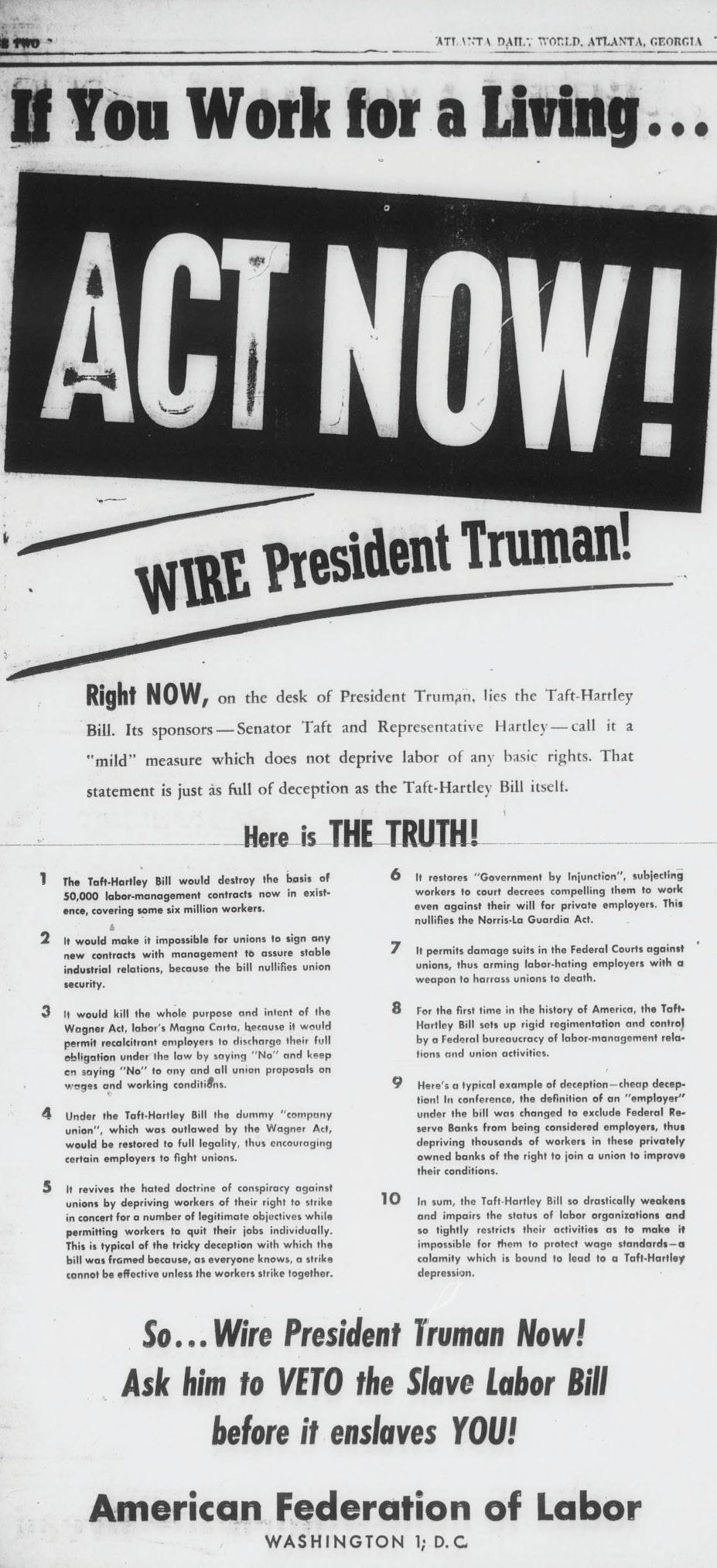
In the spring of 1947, the American Federation of Labor (AFL) ran a national ad campaign opposing the Taft-Hartley Bill.
After World War II ended in 1945, the U.S. economy shifted from wartime production to peacetime consumption and workers wanted wage increases to keep up with inflation. This period saw some of the largest labor strikes in U.S. history.
In response, Senator Robert Taft (R-OH) and Rep. Fred Hartley, Jr. (R-NJ) introduced the Bill in both chambers of Congress, framed as a “mild” measure to promote economic stability.
The AFL’s campaign, seen left, was launched to set the record straight and mobilize workers to urge President Harry S. Truman to veto the bill.
Despite the full court press—and Truman’s veto—Taft-Hartley passed with two-thirds vote in both the House and Senate that June.
Just as the AFL warned, it shifted the balance of power back towards employers and the federal government by allowing states to pass so-called “right-to-work” laws, opening the door to unionbusting campaigns and restricting strike and boycott activity. The law helped set in motion a gradual erosion of the middle class, a shift still felt by workers and union organizers today.
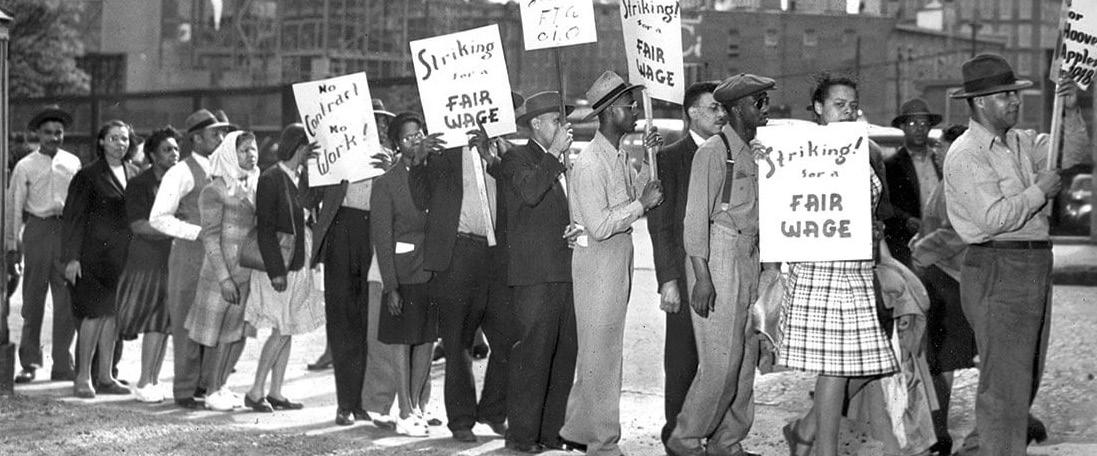
Tobacco workers at R.J. Reynolds in Winston-Salem, N.C. went on strike in 1947. At the time, they were members of the Food, Tobacco, Agricultural and Allied Workers Union (FTO). TaftHartley provisions required national union leaders to sign affidavits that they were not members or in any way affiliated with the Communist Party in order to have access to the procedures of the NLRB. Complications around their refusal to do so led the workers to finally join the TWIU in 1949, after a long organizing effort stemming from the 1920’s.

When Ronald Reagan took office in January 1981, many unions were already skeptical of his administration’s economic agenda.
The AFL-CIO warned that Reagan’s policies— such as budget cuts to social programs, deregulation efforts in vulnerable industries, a broader shift toward free-market economic policies and reduced labor protections—would increase inequality and weaken the bargaining power of workers. By mid-1981, Labor was already organizing opposition campaigns and protests.
Ironically, the Professional Air Traffic Controllers Association (PATCO) had endorsed Reagan in the 1980 election. The Controllers had been frustrated over working conditions under President Jimmy Carter and were promised by candidate Reagan to address them.
Instead, his administration rejected their demands in his first year and 13,000 air traffic controllers went on strike on August 3, 1981.
The 1947 Taft-Hartley Act had made it illegal for federal employees to go on strike, but the Controllers thought they had a sympathizer in President Reagan—a former union leader himself out of the International Alliance of Theatrical
Stage Employees (IATSE). They believed he would eventually negotiate under pressure.
Reagan instead gave them 48 hours to return to work, warning they would be terminated and banned from public service if they refused.
About 11,000 air traffic controllers were fired in the wake of this action.
The outcome of the PATCO strike, facilitated by the Taft-Hartley Act, would become one of the most consequential labor events of the late 20th century.
“Just prior to that strike, the BCTGM had negotiated the highest wage increase we’d ever gotten, in a pattern agreement that covered the entire east coast,” retired BCTGM International President Frank Hurt recalls. “The following year, we entered negotiations with that same company in Kansas City and the climate had changed dramatically.”
Hurt says emboldened private sector companies started organizing themselves nationally, and the firm they had just bargained with a year prior showed up with proposals to lower wages it had already negotiated and ratified with the BCTGM. “After the PATCO Strike, negotiations were very, very tough and have never been the same,” Hurt states.
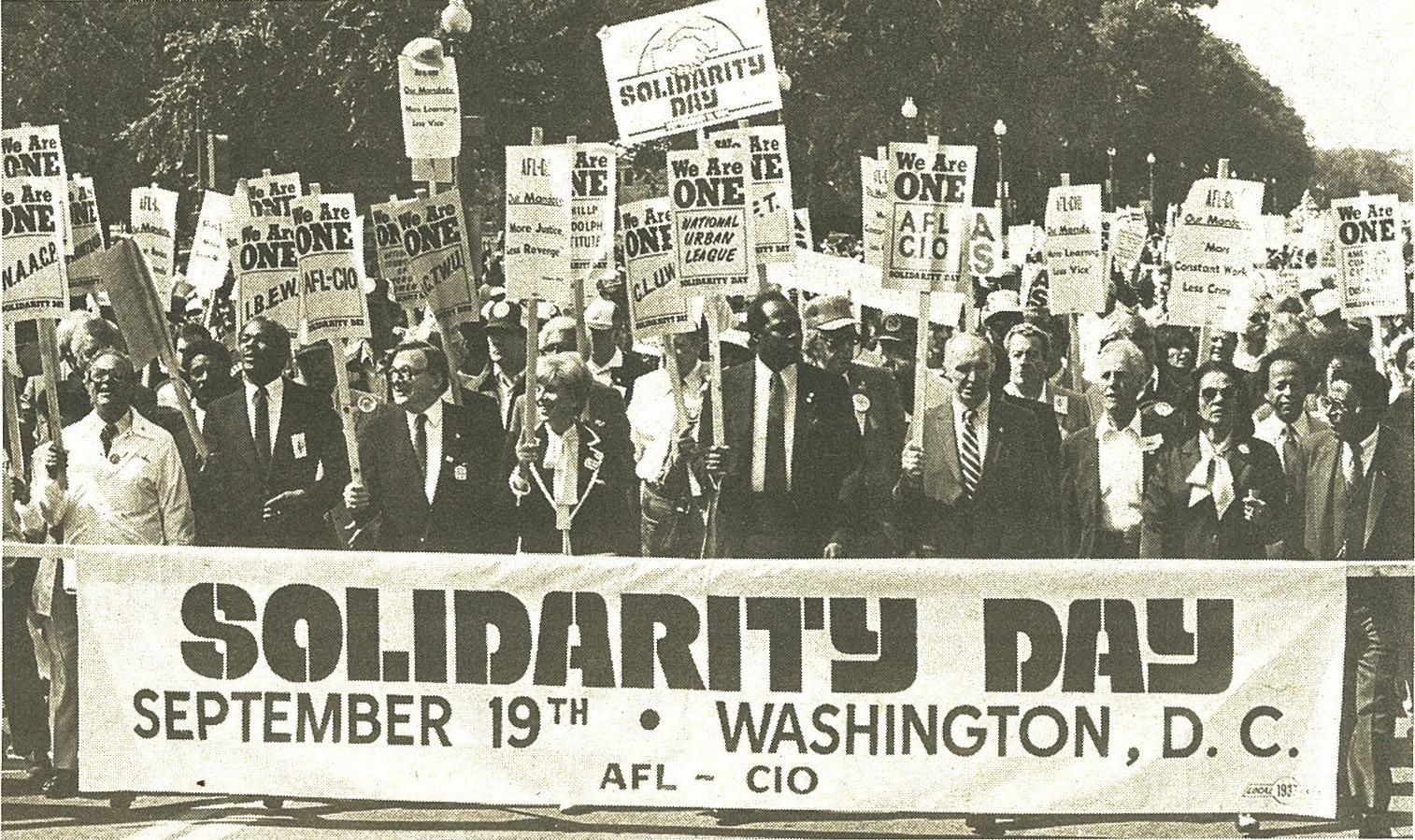
Solidarity Day 1981 was a massive labor demonstration that brought 400,000 activists to Washington, D.C. following the PATCO Strike. While the Strike was the catalyst, the protest brought attention to a broader set of concerns that threatened working people in the early 1980s, including:
• The attack on collective bargaining rights
• Budget cuts to social programs
• Deregulation and job loss in key industries
• Rising unemployment and recession
• Tax policy and economic inequality
• Civil rights and worker protection
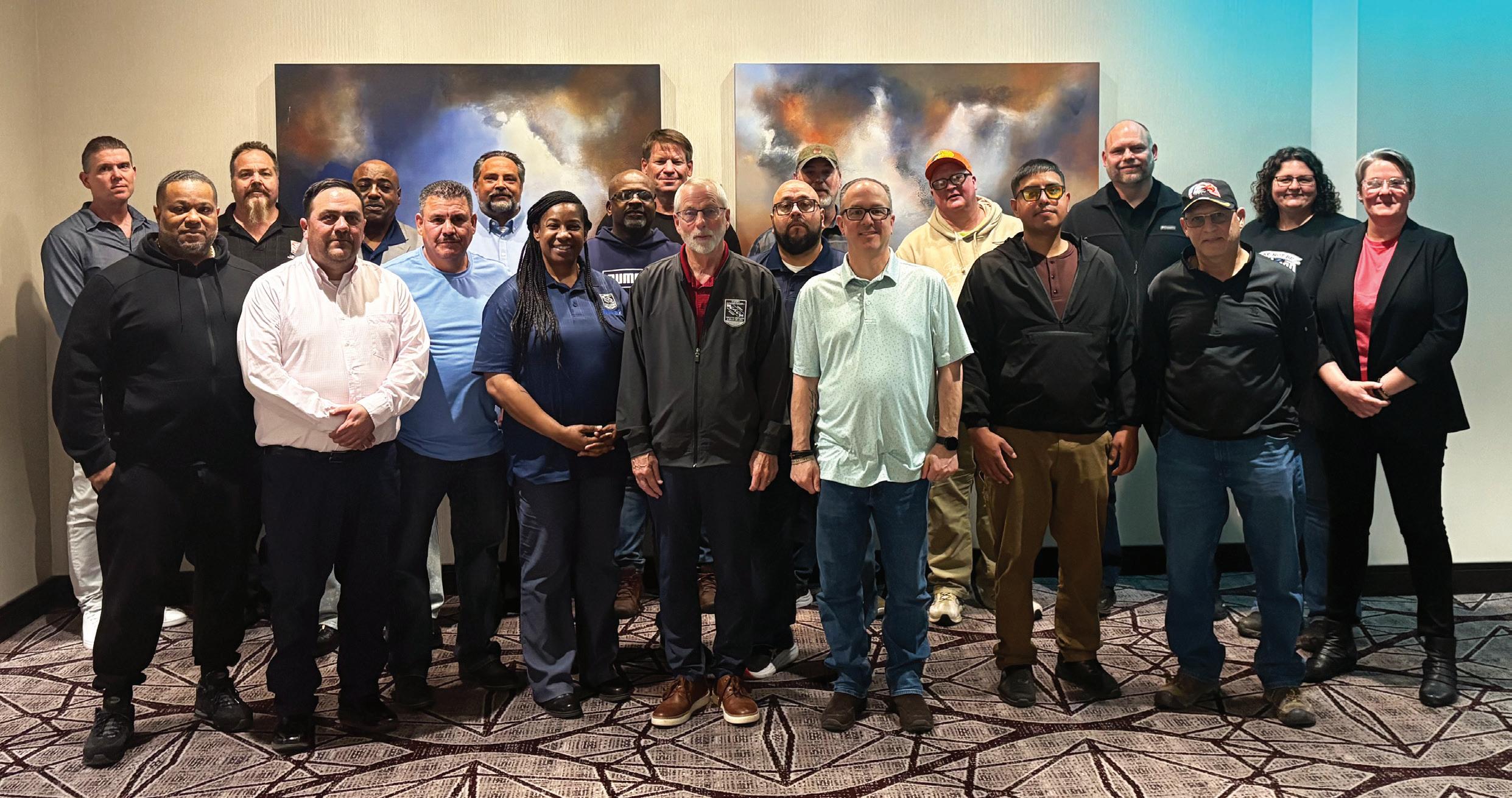
The voting delegation consisted of members and leaders from Locals 1 (Chicago, Ill.), 22 (Minneapolis, Minn.), 167G (Grand Forks, N.D.), 37 (Los Angeles, Calif.), 36G (Buffalo, N.Y.), 218 (Kansas City, Mo.) and 109G (Great Falls, Mont.).
The BCTGM General Mills Bargaining Conference agreed on a new four-year master agreement that covers over 1,000 members at General Mills. The new agreement expires on May 11, 2030.
Negotiations were held during a week-long bargaining session in Minneapolis, Minn. in early May.
The BCTGM negotiating committee—led by International Vice Presidents Roger Miller (East-Central Region) and Jason Davis (Midwest Region)—included International Representatives Lisa Gregory and Veronica Hopkins, along with Local 1 (Chicago, Ill.) President Donald Woods, Local 1 Member Rodney Johnson, Local 37 (Los Angeles, Calif.) Vice President Oscar Manzanero, Local 36G (Buffalo, N.Y.)
Business Agent Scott Baer, Local 36G Vice President Jay Hays, Local 218 (Kansas City, Mo.)
Financial Secretary/Business Manager Chantel Mendenhall and Local 109G (Great Falls, Mont.) President Chad Schend.
According to BCTGM International President Anthony Shelton, the new contract is a win-win for both sides. “The bargaining committee had certain priorities that our members wanted them to fight for,” he said. Those priorities included pension increases, maintaining affordable health insurance and paid time off. “The committee was able to
achieve these things,” Shelton continued. “For the company, they get labor peace for four years with a dedicated and hard-working workforce.”
Wages will be negotiated separately, at the local union level.
The General Mills Master Agreement covers workers in the following locations:
• Buffalo Cereal and Buffalo Flour (Local 36G);
• a flour mill in Kansas City, MO (Local 218);
• a flour mill in Great Falls, MT (Local 109G);
• a mill in Avon, Iowa (Local 1); and
• a flour mill in Vernon, CA. (Local 37).
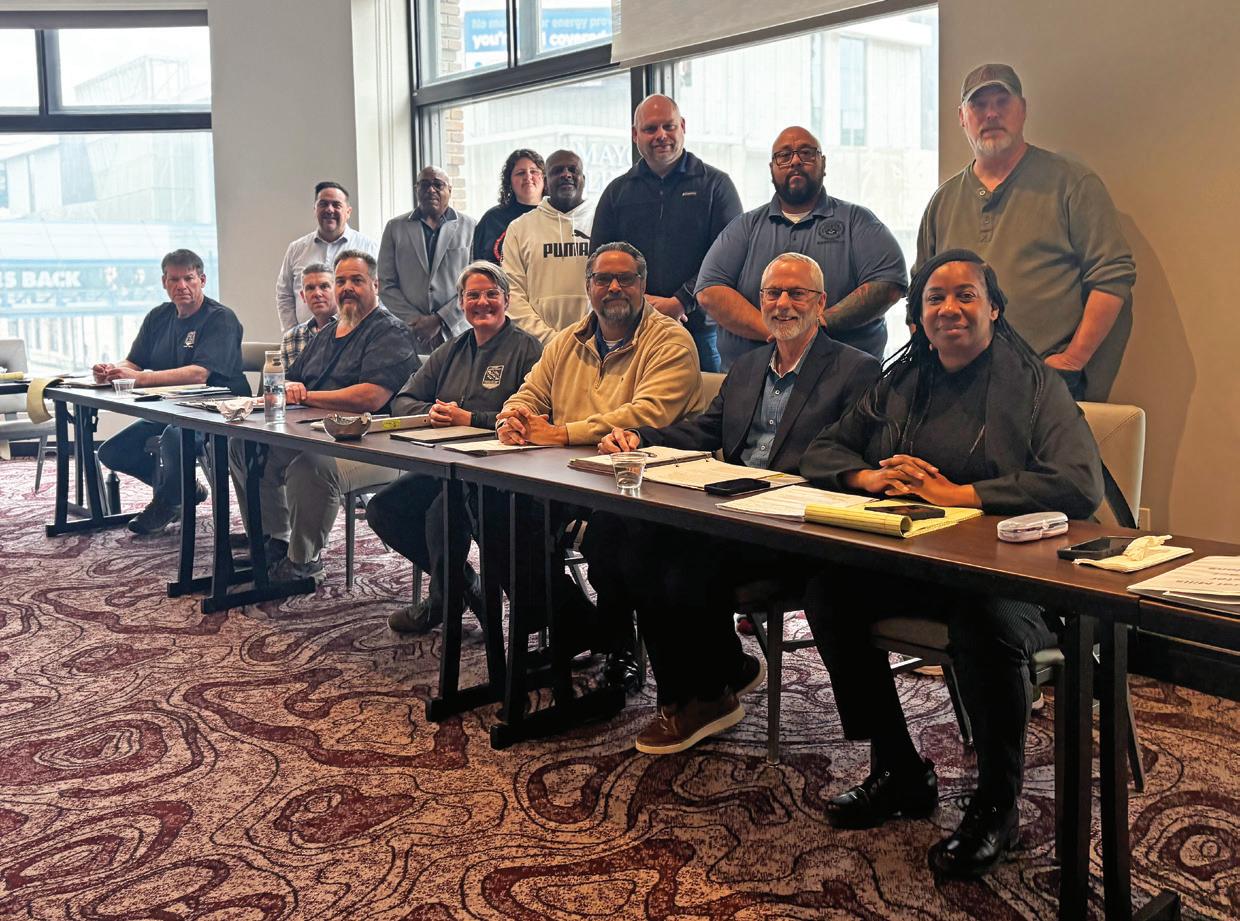
General Mills Master Bargaining Committee:
Top row: Int’l Rep. Shane Sweeney, L. 1 Pres. Don Woods, L. 218 Fin. Secy/Bus. Mgr. Chantel Mendenhall, L. 1 Member Rodney Johnson, L. 22 Pres. Wally Borgan, L. 37 Vice Pres. Oscar Manzanero and L. 109G Pres. Chad Schend
Bottom row: L. 167G Pres. John Riskey, L. 36G Pres. Jay Hayes, L. 36G Bus. Agt. Scott Baer, Int’l Rep. Lisa Gregory, Midwest Region Vice Pres. Jason Davis, East-Central Region Vice Pres. Roger Miller and Int’l Rep. Veronica Hopkins
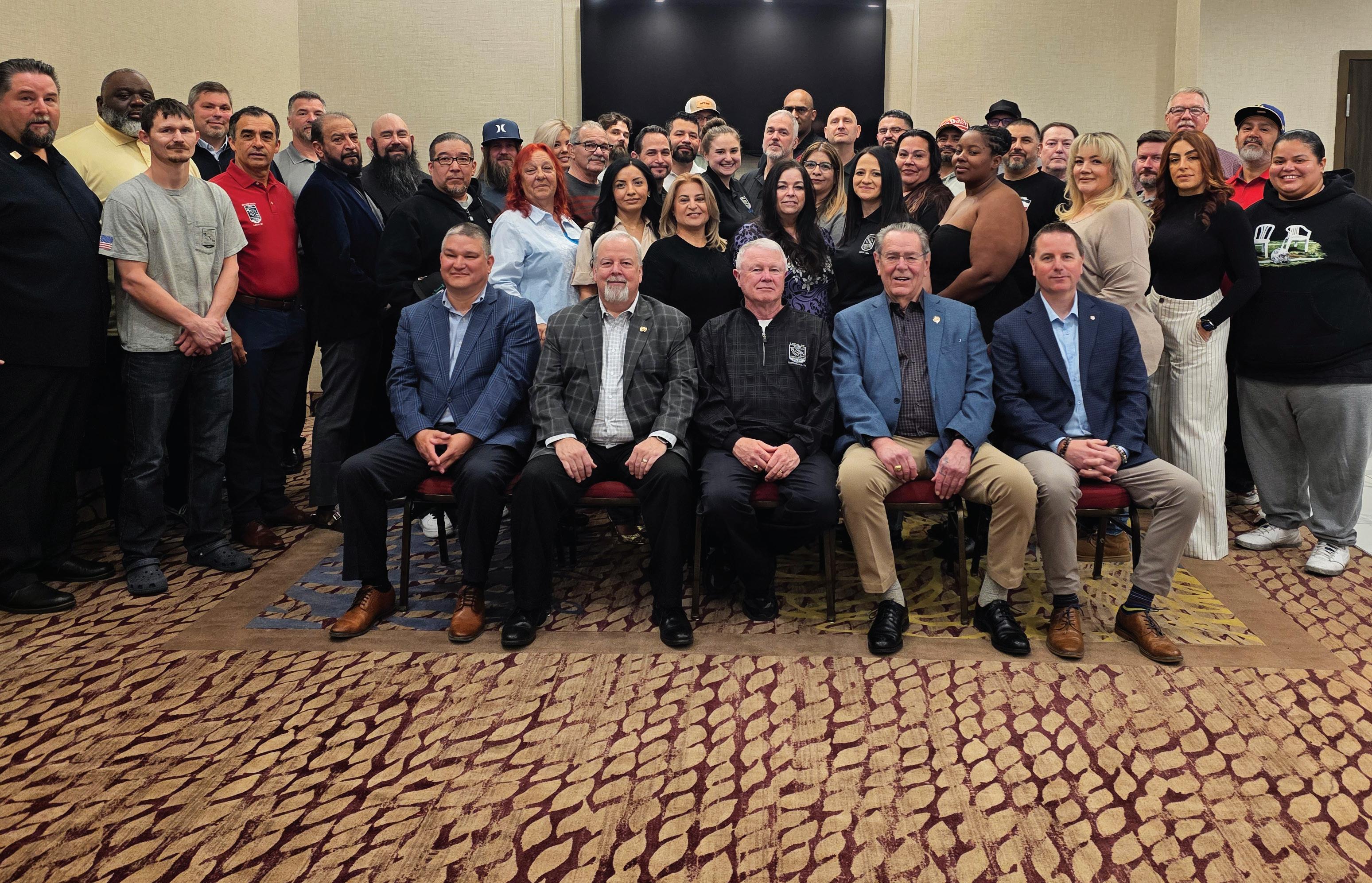
The annual BCTGM Western Conference was held in Reno, Nev. in mid-April.
Local unions from Arizona, California, Washington, Oregon, Idaho, Colorado, New Mexico and Utah attended the conference, which was presided over by Local 31 Financial Secretary/Western Conference President Doyle Townson.
Speeches by International President Anthony Shelton and Secretary-Treasurer/Organizing Director
David Woods were focused on servicing, organizing, International Union activities and political action. Also addressing the delegates were Executive Assistant to the President Matthew Clark, Western Region Vice President Shad Clark and International Representatives Karrie Setters, Alejandro Ahumada and Andrew Gutierrez.
Each local union gave reports on organizing, collective bargaining and legislative activities.
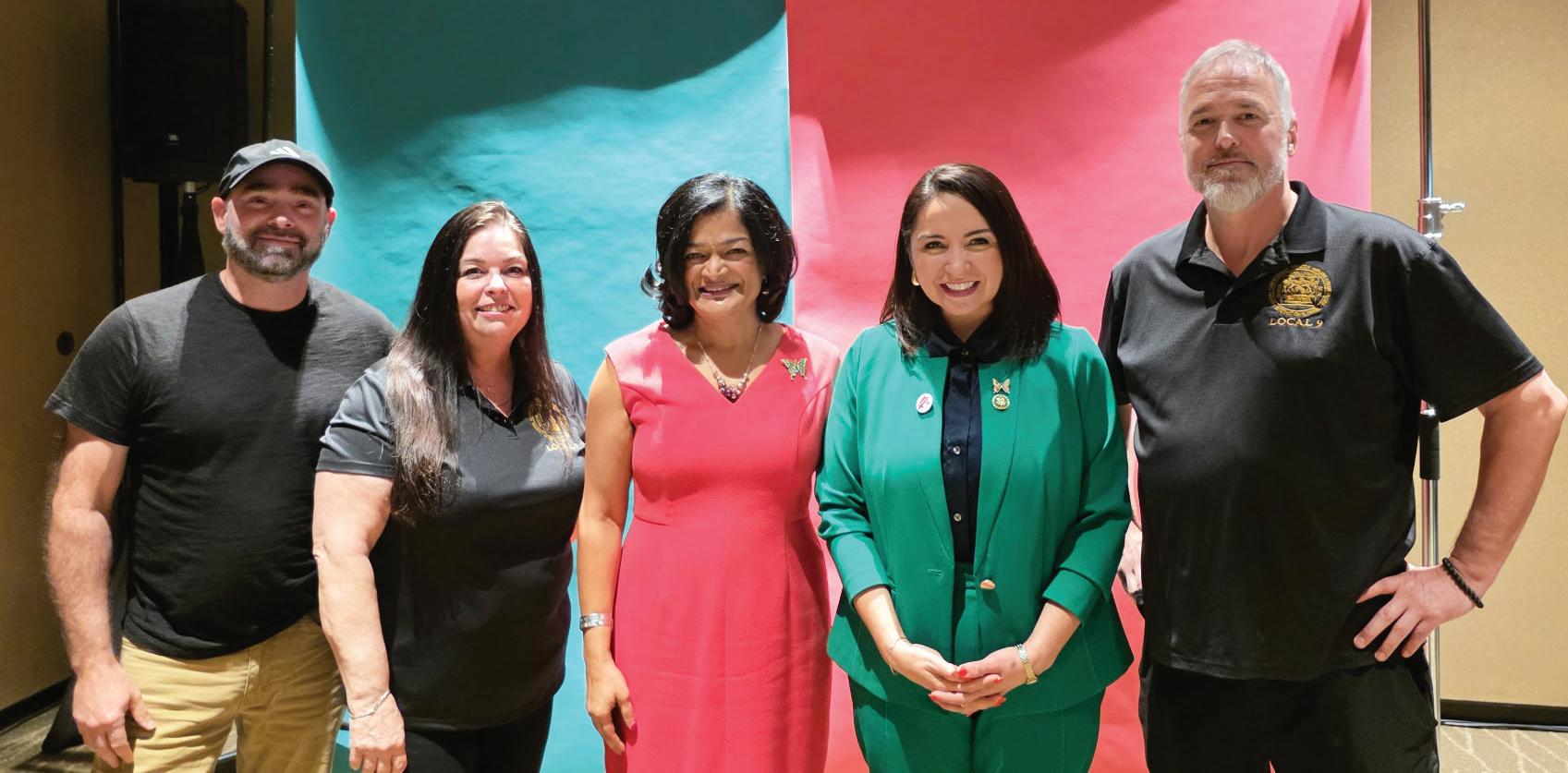
Members of BCTGM Local 9 (Seattle, Wash.) recently attended a fundraiser for U.S. Rep. Pramila Jayapal, D-Wash.
“It was an honor to talk with the Congresswoman,” reflects Local 9 Financial Secretary/Treasurer Cheryl Stone. “She works hard and has a lot of great ideas for her next term in Congress.”
Jayapal has stood with workers in Congress in the following ways:
SUPPORTED the Protect America’s Workforce Act, which restored the collective bargaining rights of over a million federal union workers;
OPPOSED the SAVE Act, which would create burdensome barriers to voting rights; and
OPPOSED the Big Beautiful Bill, which enacted devatating cuts to Medicaid, SNAP and other programs working people rely on while giving tax cuts to the rich.
A contribution was made from BCTGM-PAC to Jayapal’s 2026 re-election campaign as part of this event. “We are proud to stand with Rep. Jayapal in the midterms,” Stone asserted.

Your next family adventure just got a whole lot cheaper. Union members get huge discounts off admission tickets to the most exciting water and theme parks in the world, plus save on tourist attractions and tours!