I am a fourth-year Interior Architecture student interested in how design can support communities and shape everyday experience. I approach architecture through conceptual narratives that bring story, identity, and human connection into space. My work explores how architecture can respond to emotional, cultural, and environmental contexts while creating spaces that feel meaningful to the people who use them.
My design process is grounded in listening to community, climate, and place, as I develop ideas through 3D modeling, drawing, and graphic exploration that connect conceptual thinking with technical resolution. Raised in Houston’s Acres Homes, community has strongly influenced how I interpret architecture, not only as a physical intervention but as a way to reflect care, memory, and collective life.
With interests in art, fashion, and graphic design, I explore architecture as something closely tied to the human body and lived experience. I aim to create work that is thoughtful, sustainable, and attentive to its context, using design as a way to tell stories, support communities, and contribute to how people experience space together.
SPRING 2023
FALL 2022 SUMMER 2025
01 RUINS FOR THE FUTURE
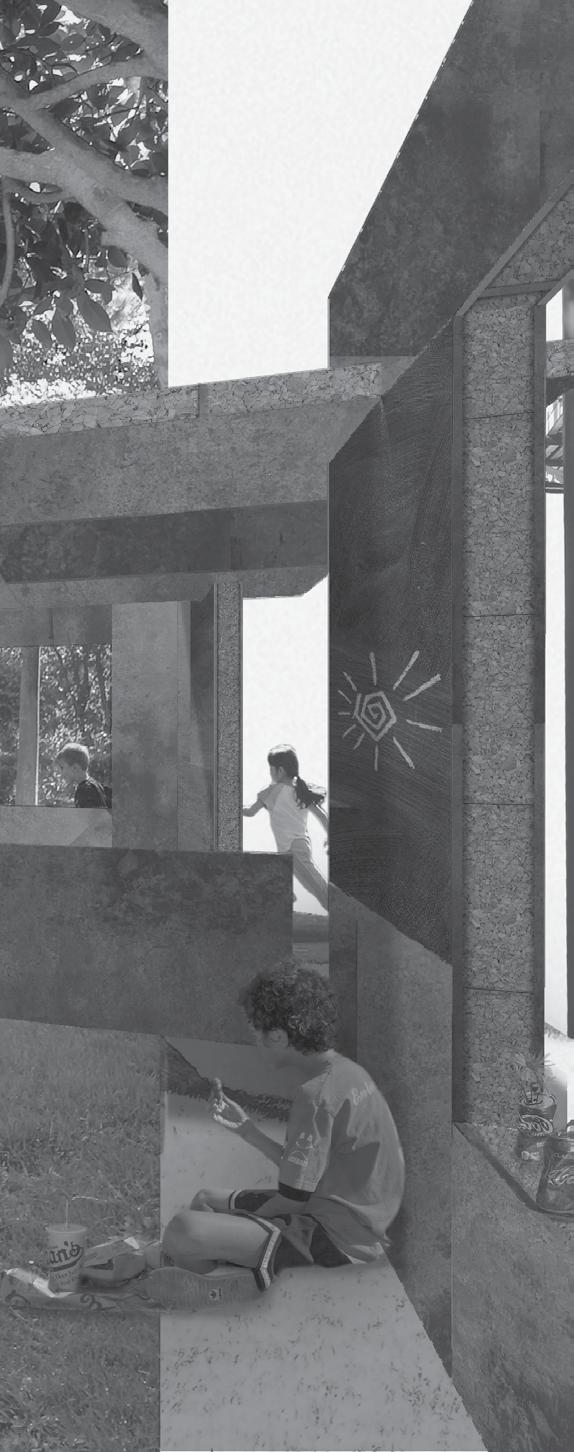
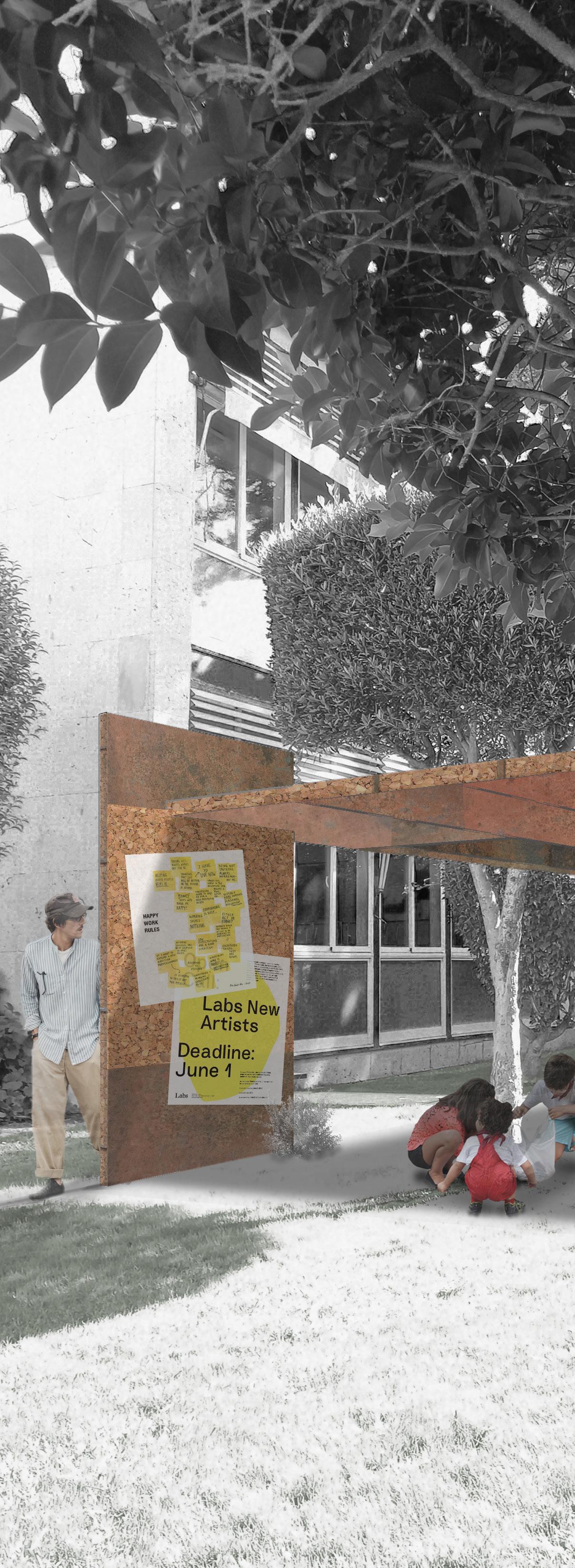
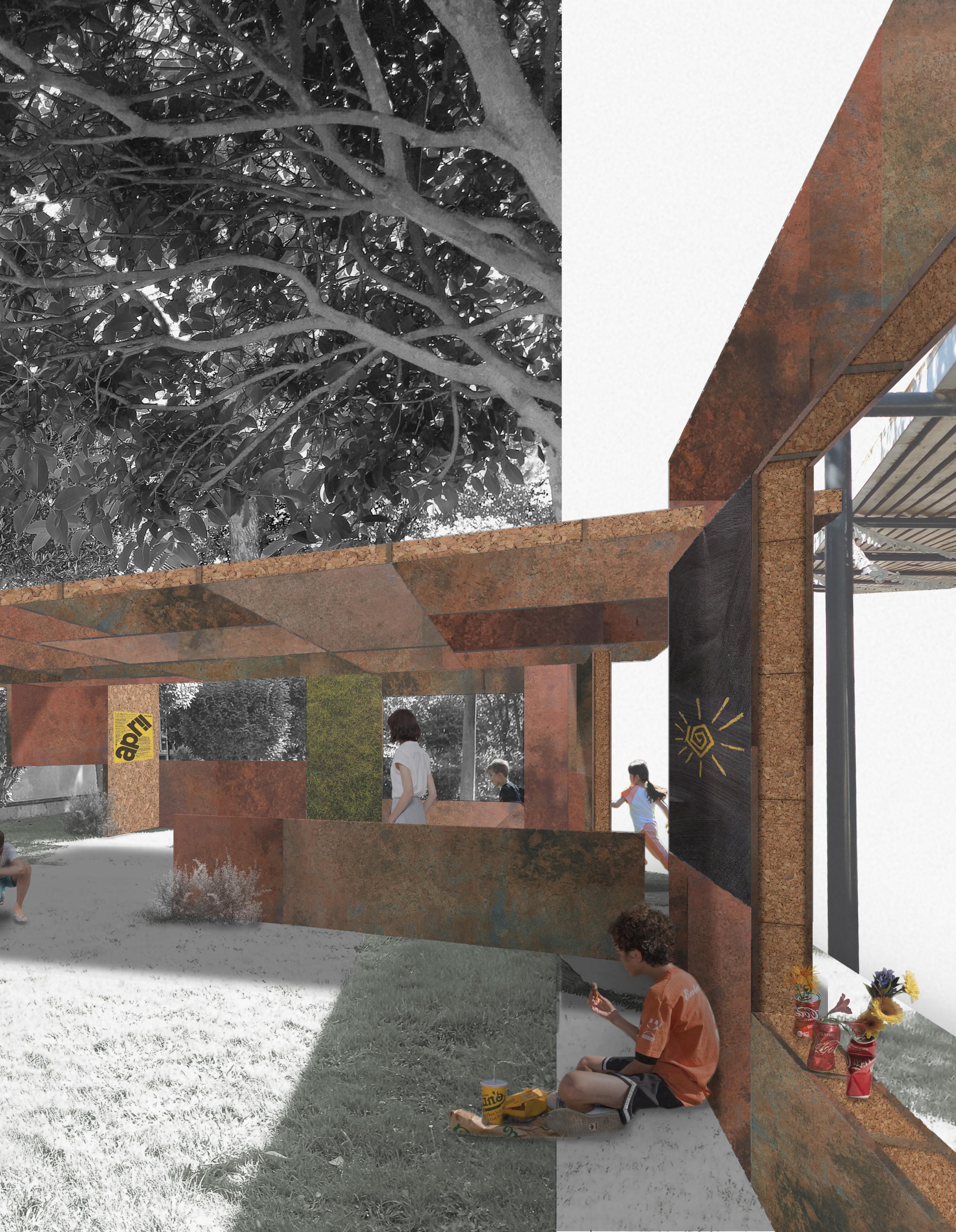
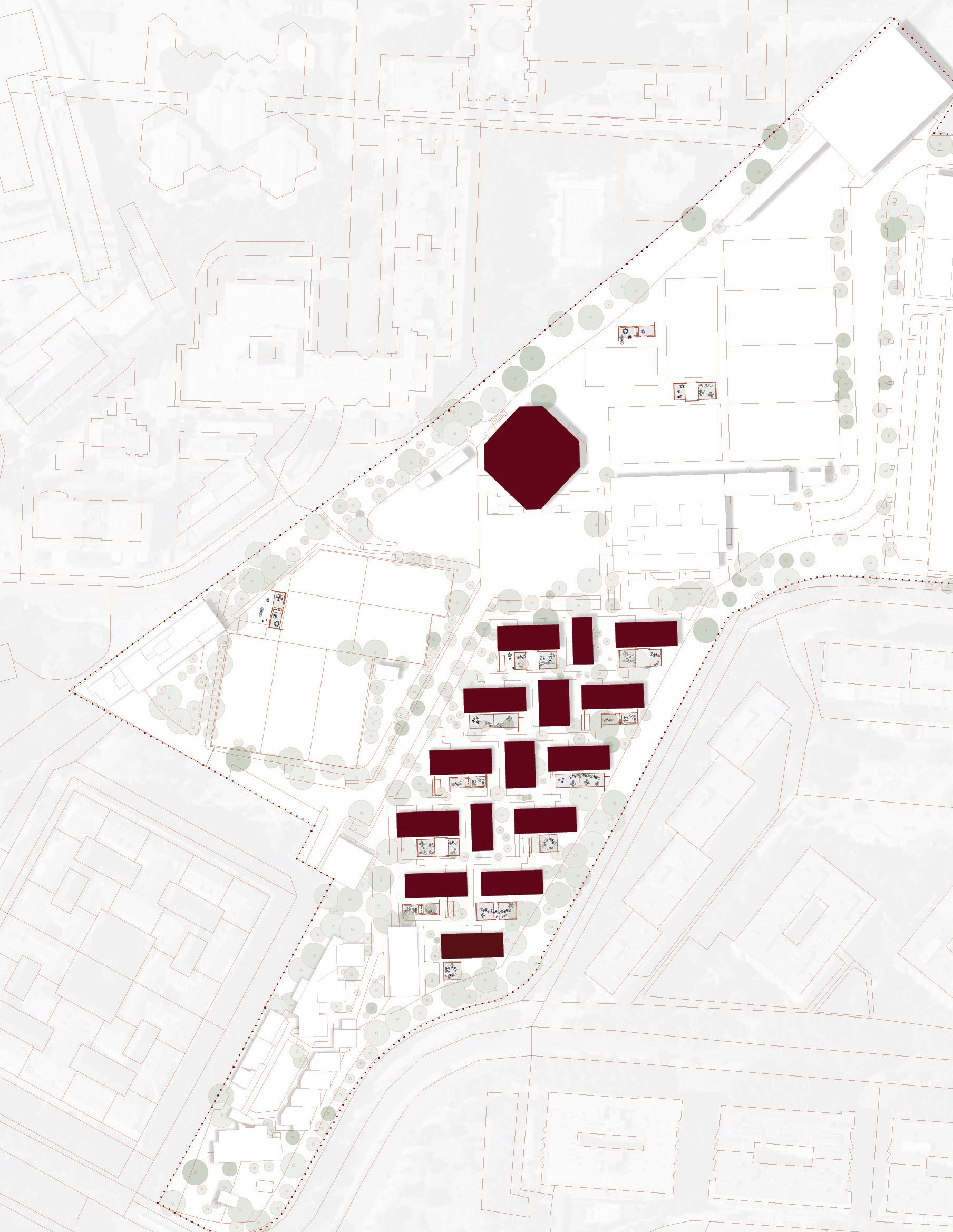
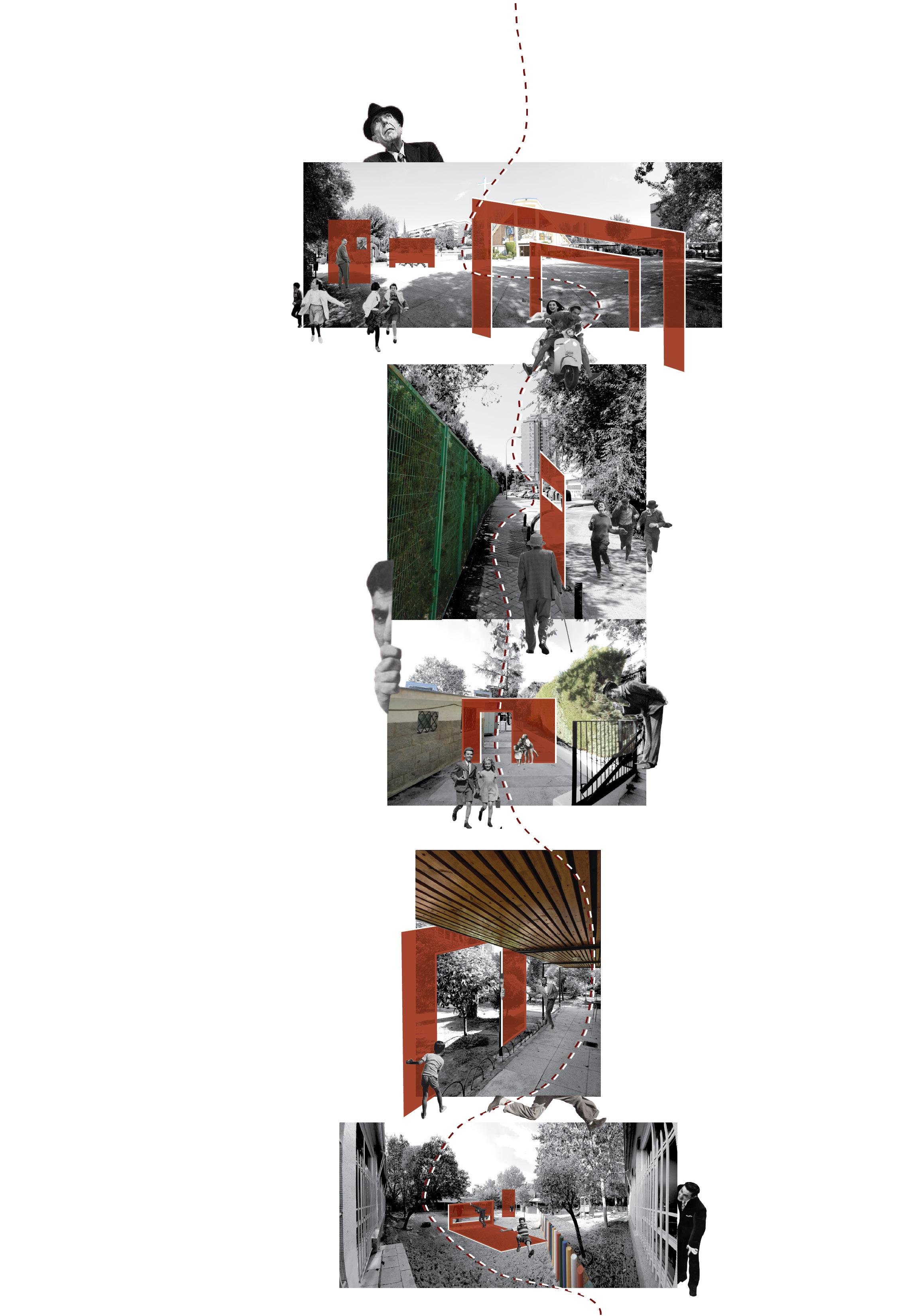
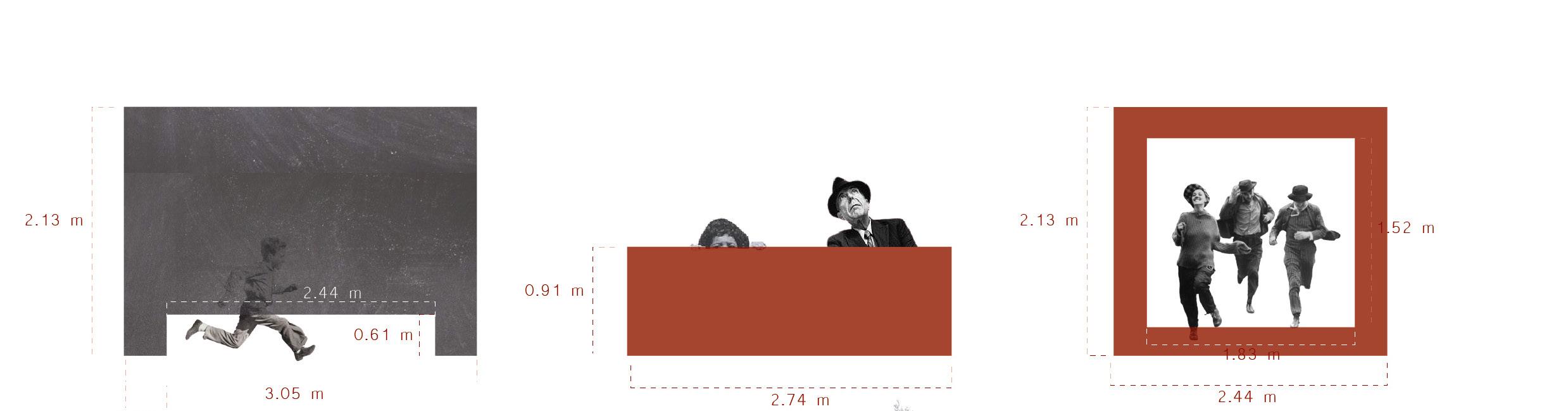
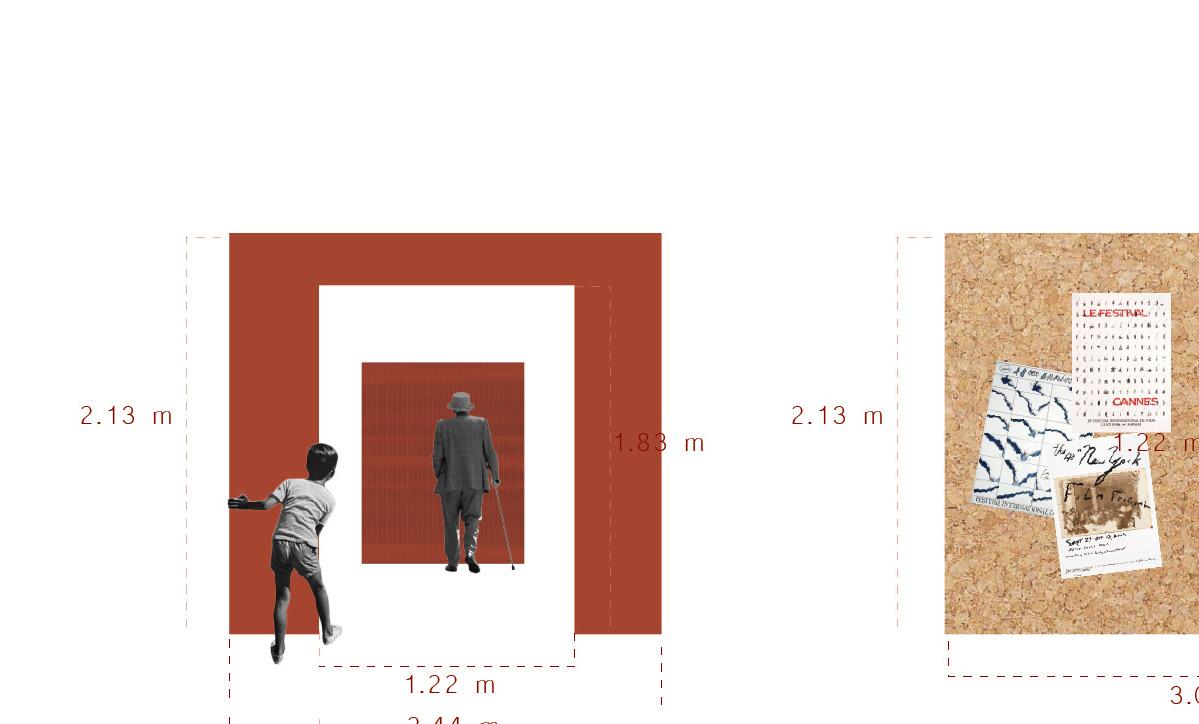
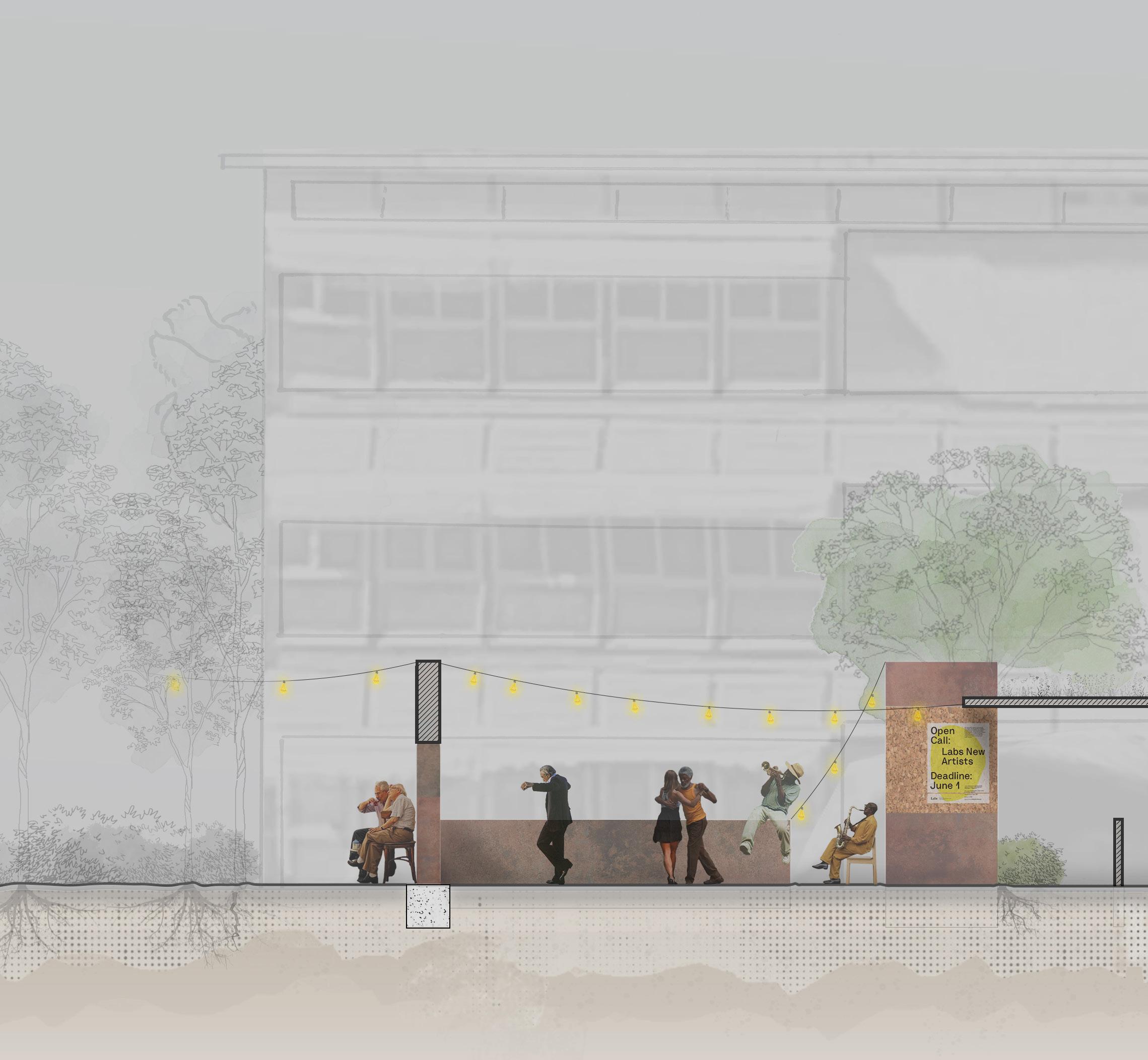
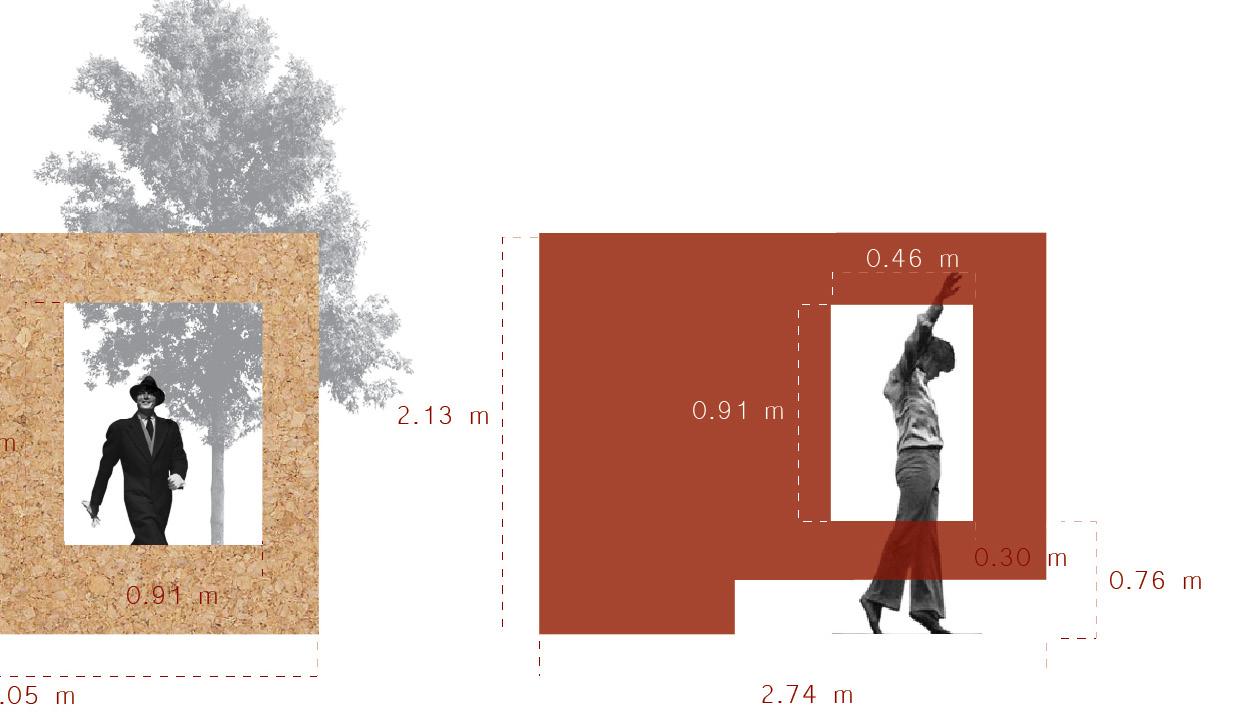
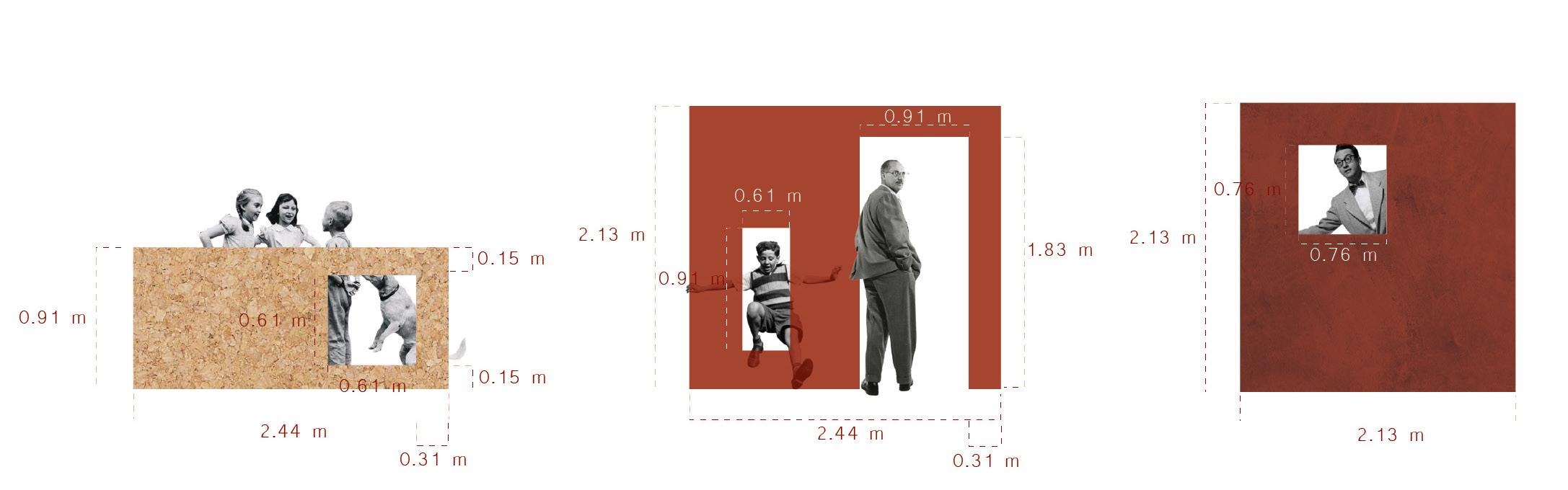
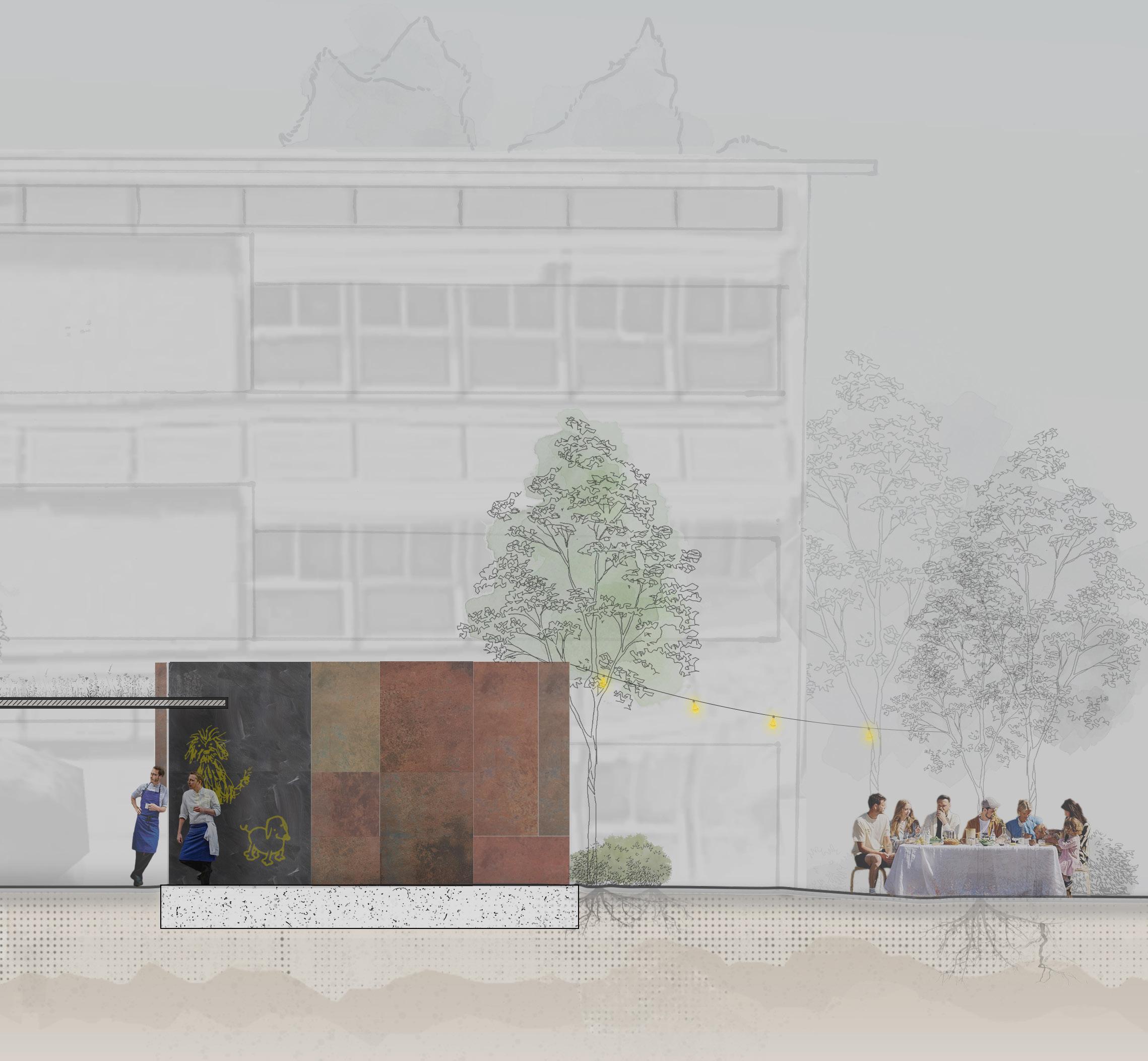
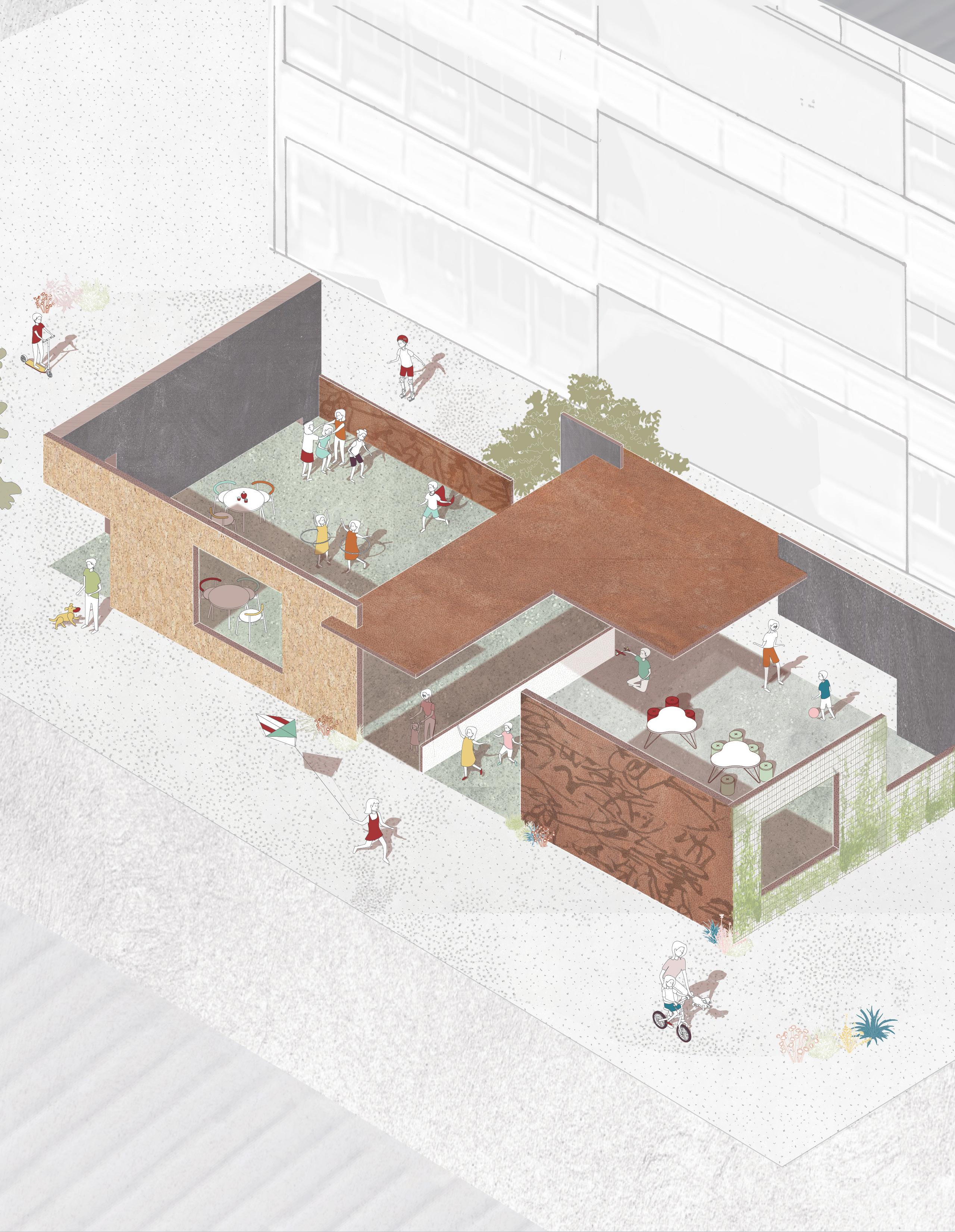
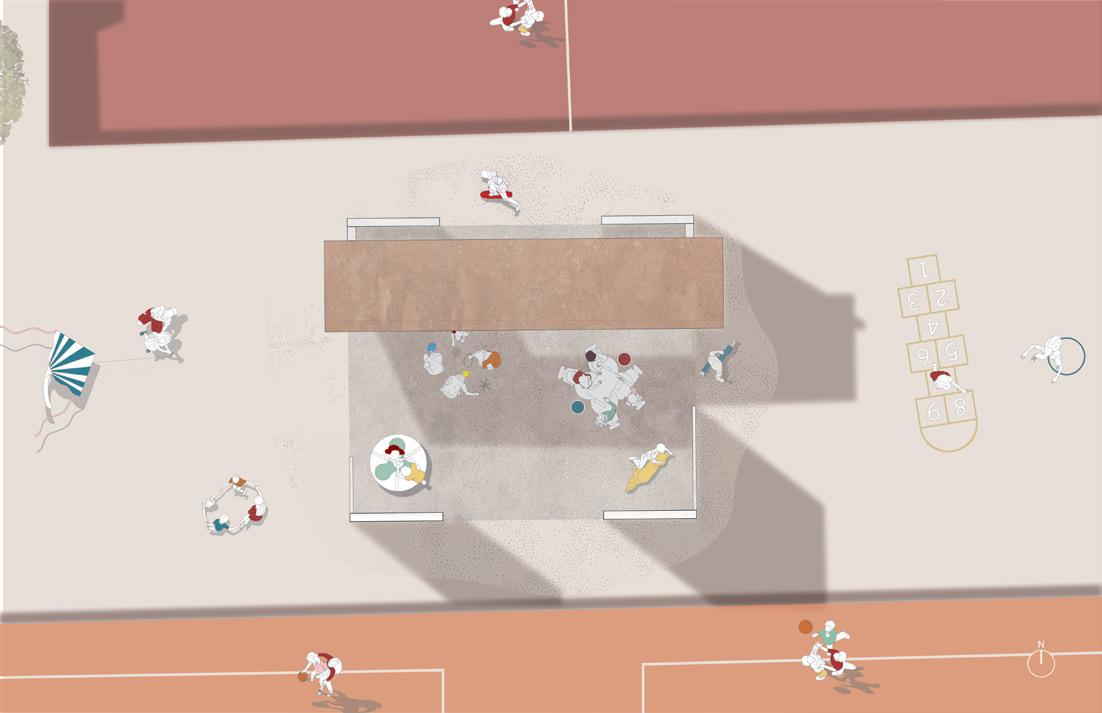
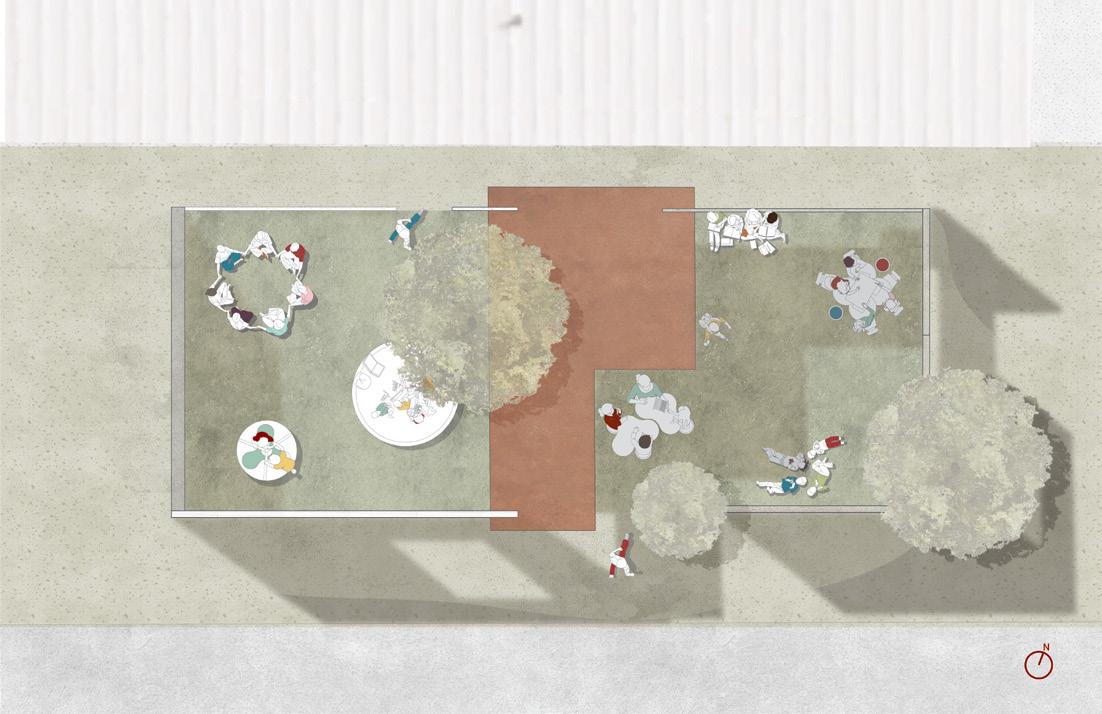
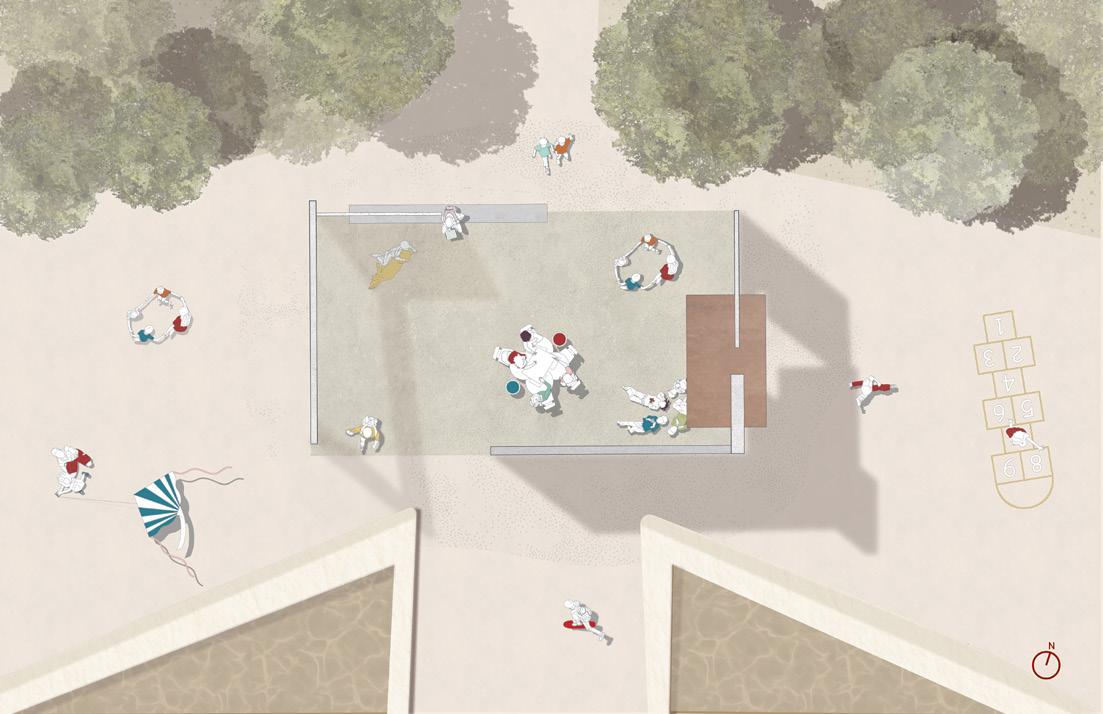
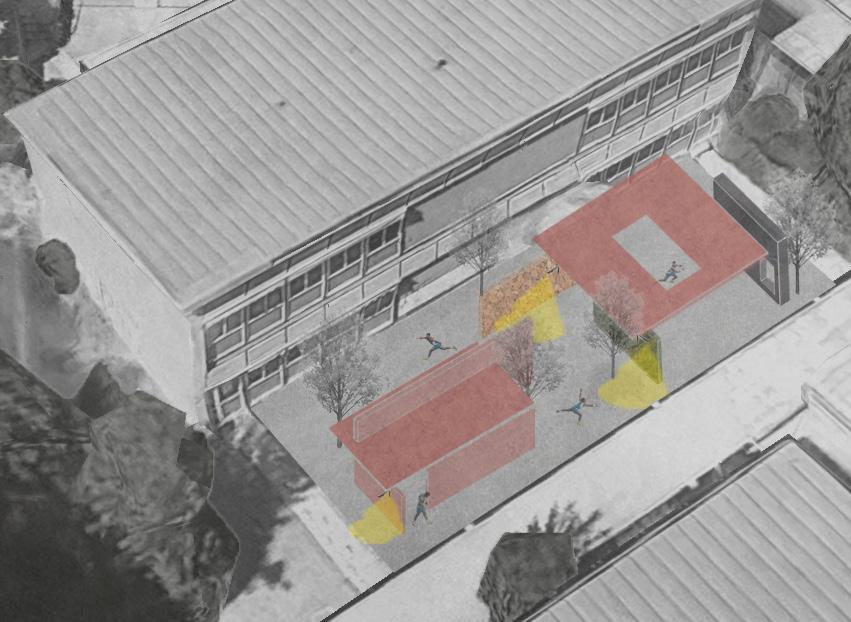
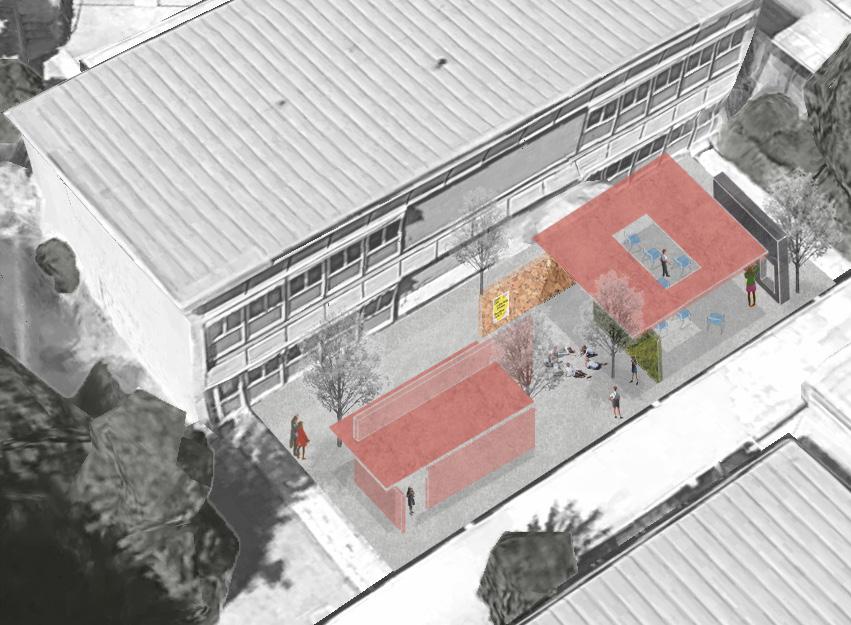
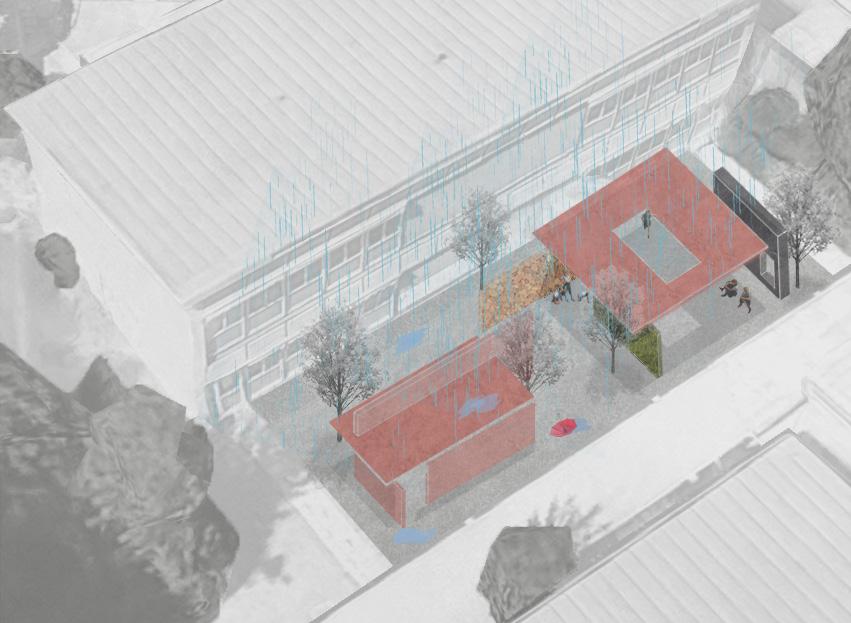
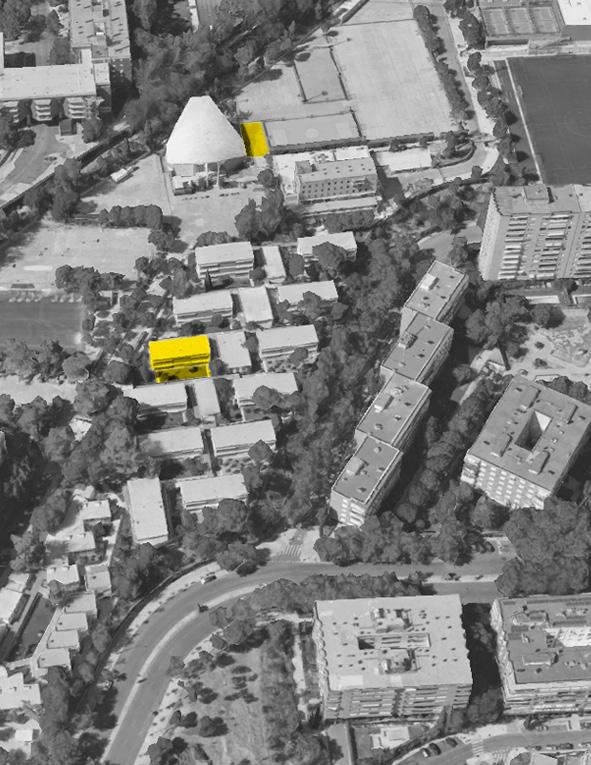
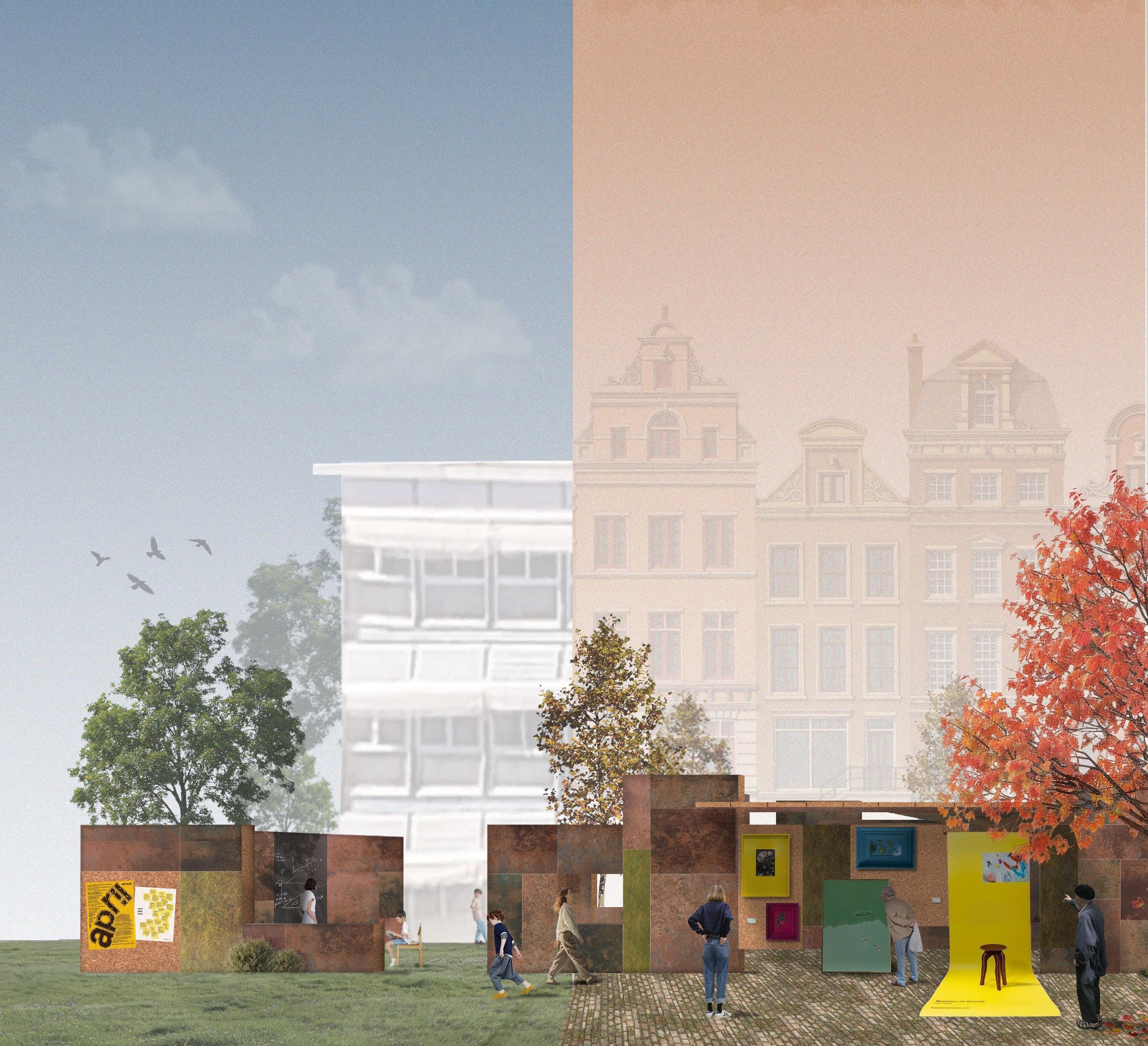
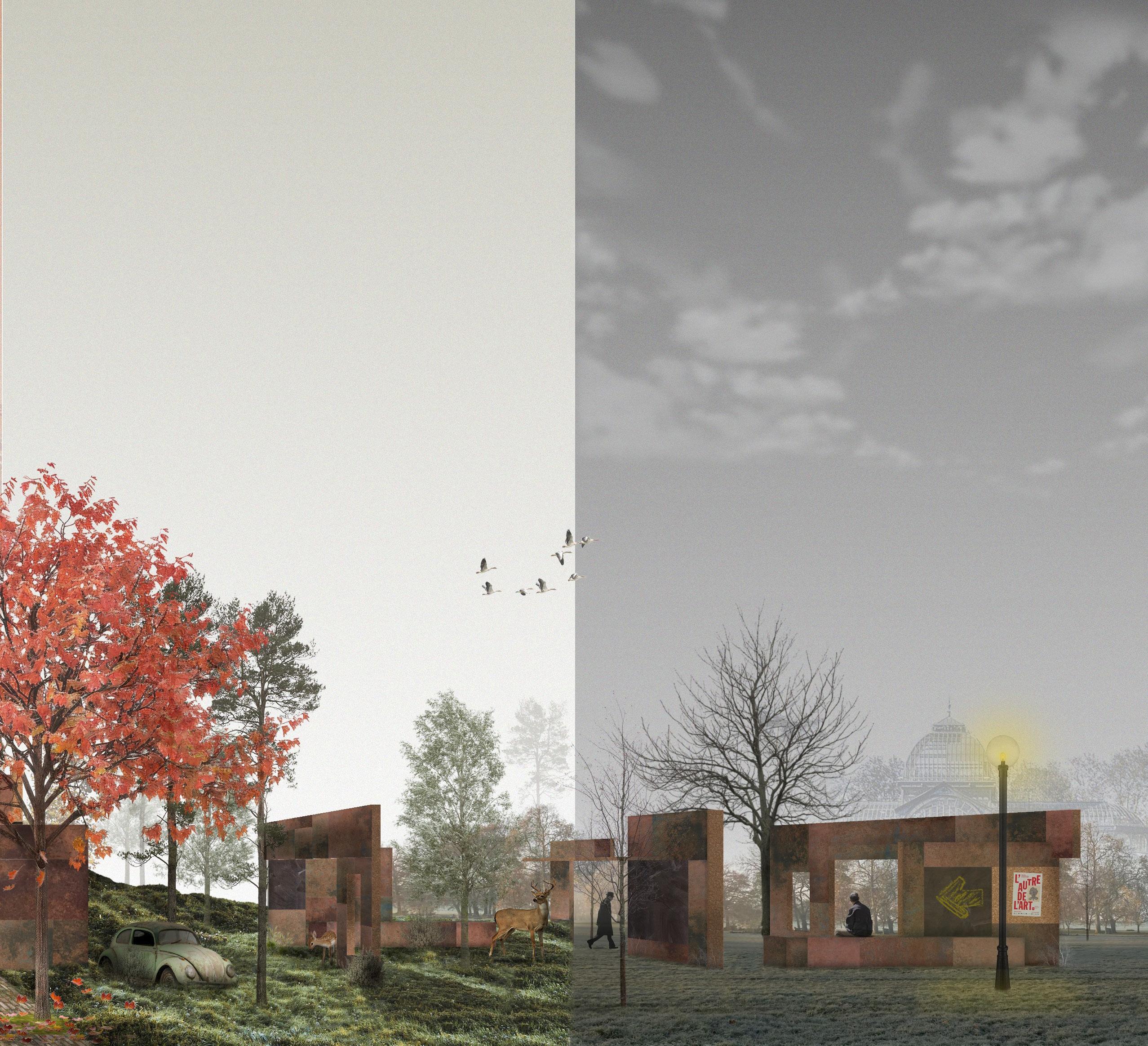
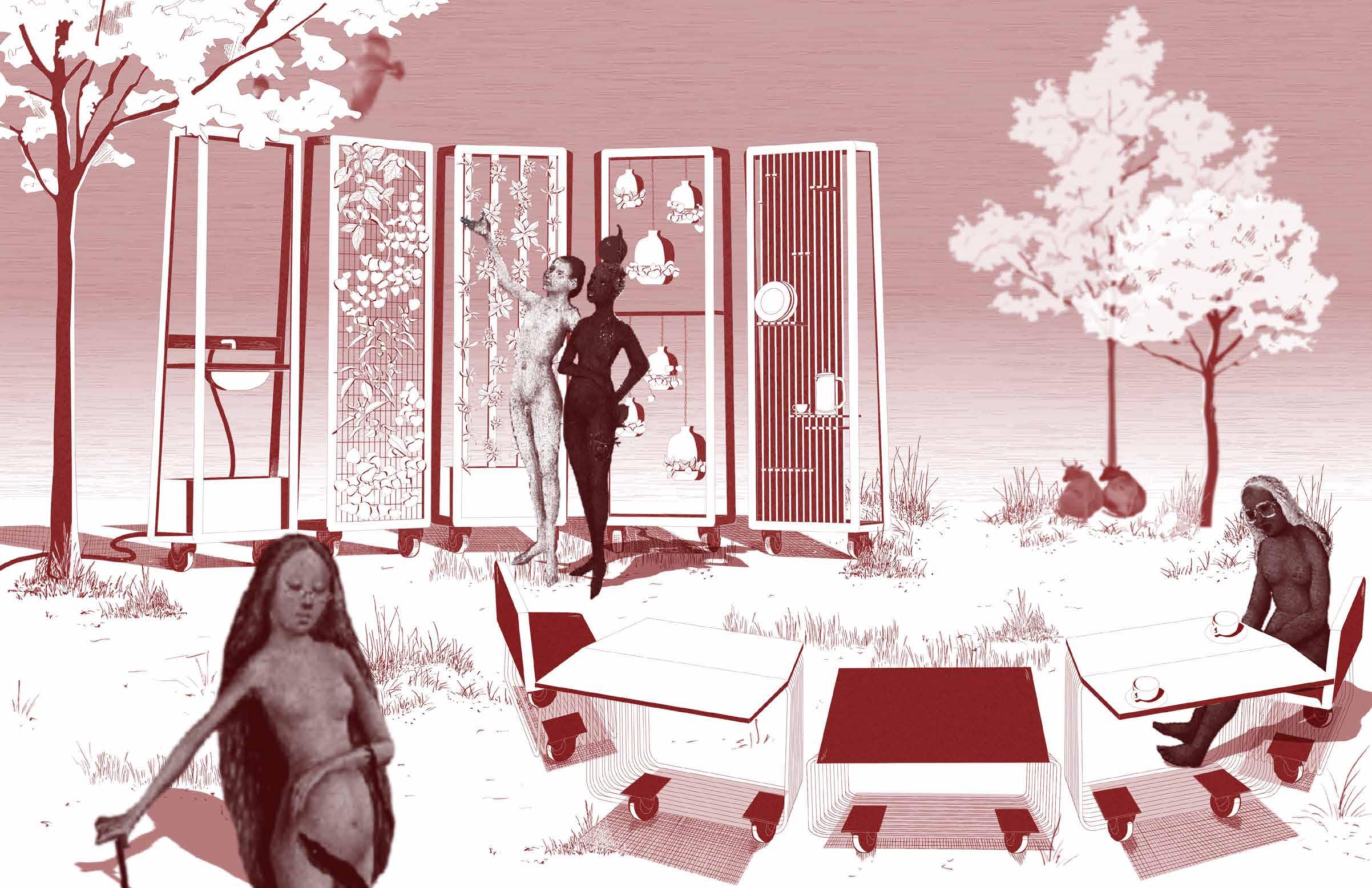
Located in El Retiro Park in Madrid, this project proposes a temporary expansion of Colegio Santa María del Pilar through lightweight, modular structures that extend learning into the outdoors. A series of panel-based interventions create flexible “implied rooms” that frame views, support interaction, and invite nature, play, and care into everyday education.
Through material exploration and a catalog of human-scaled elements, the panels evolved into habitable walls that define thresholds, provide shade, and support varied programs. Influenced by Luis Barragán’s use of monolithic planes and controlled apertures, the project reimagines Madrid as a dispersed, open-air classroom where learning unfolds across the city and its public spaces.
LOCATION: MADRID, SPAIN
PARTNER: JESUS AGUIRRE
FALL 2025
02 open HOUse
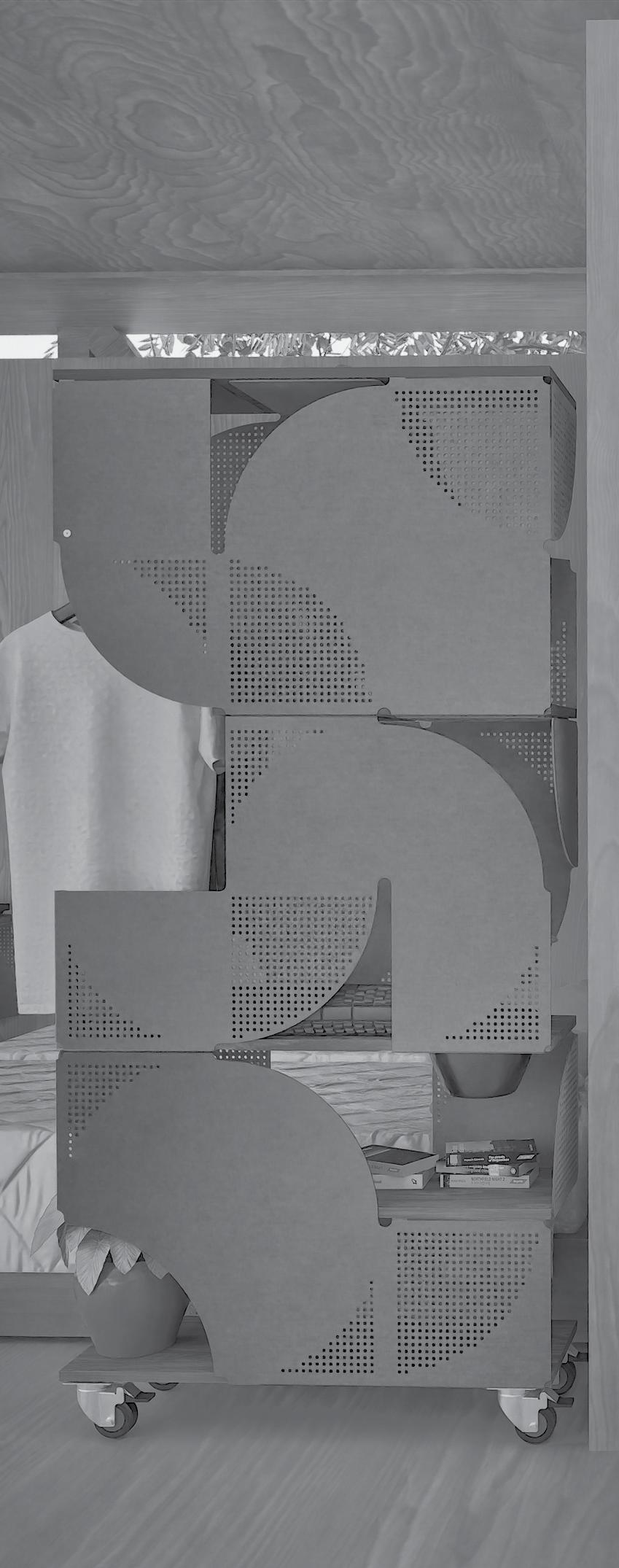
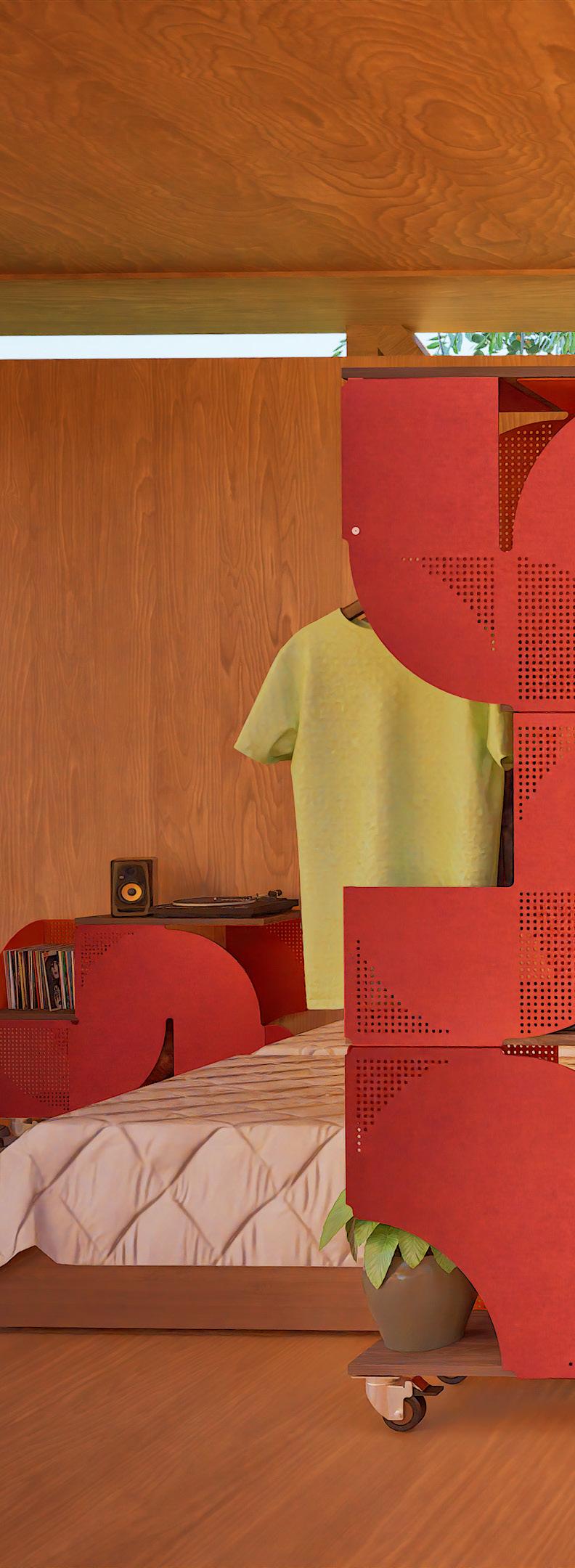
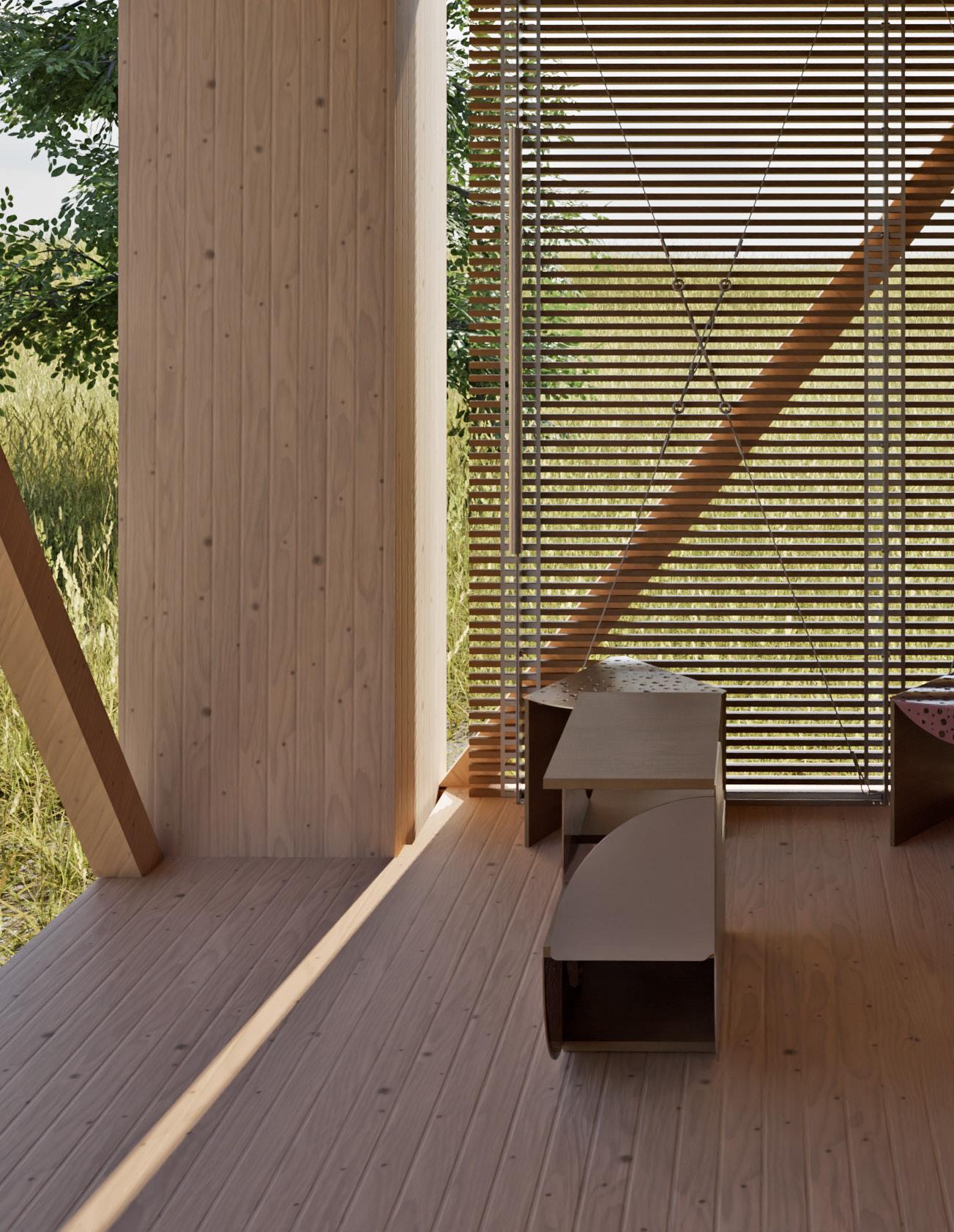
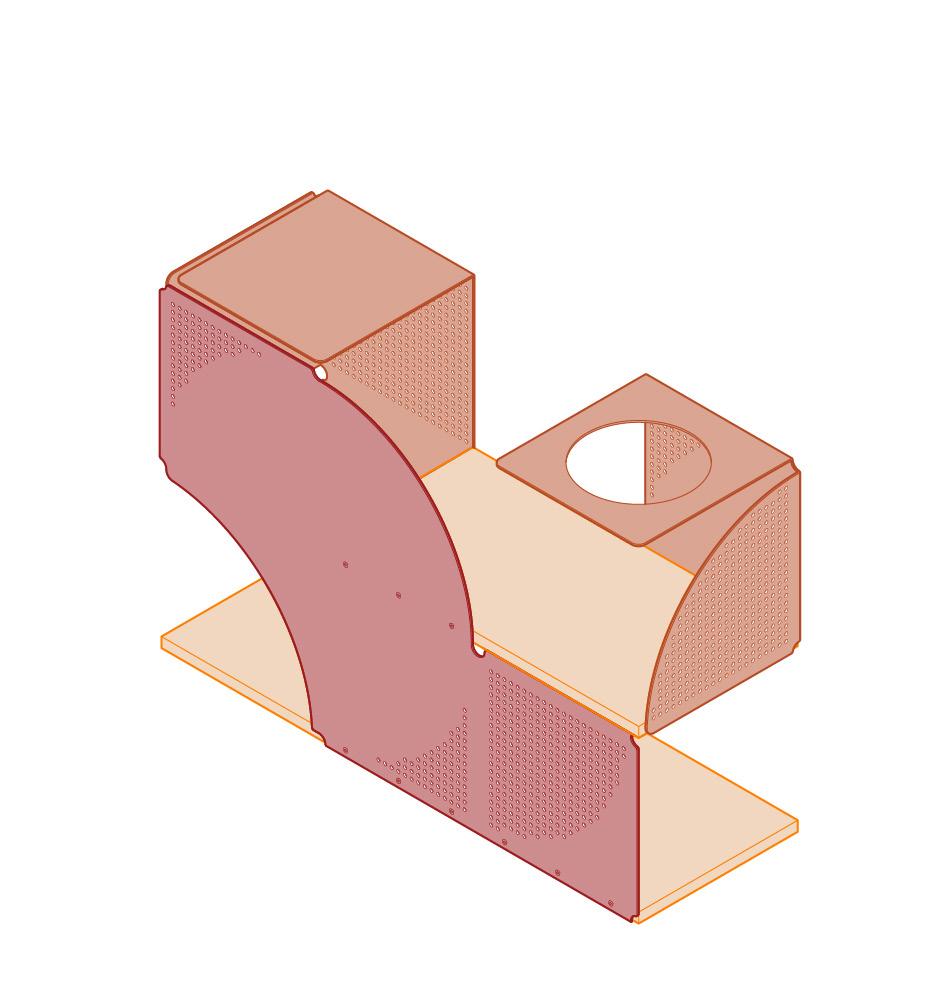
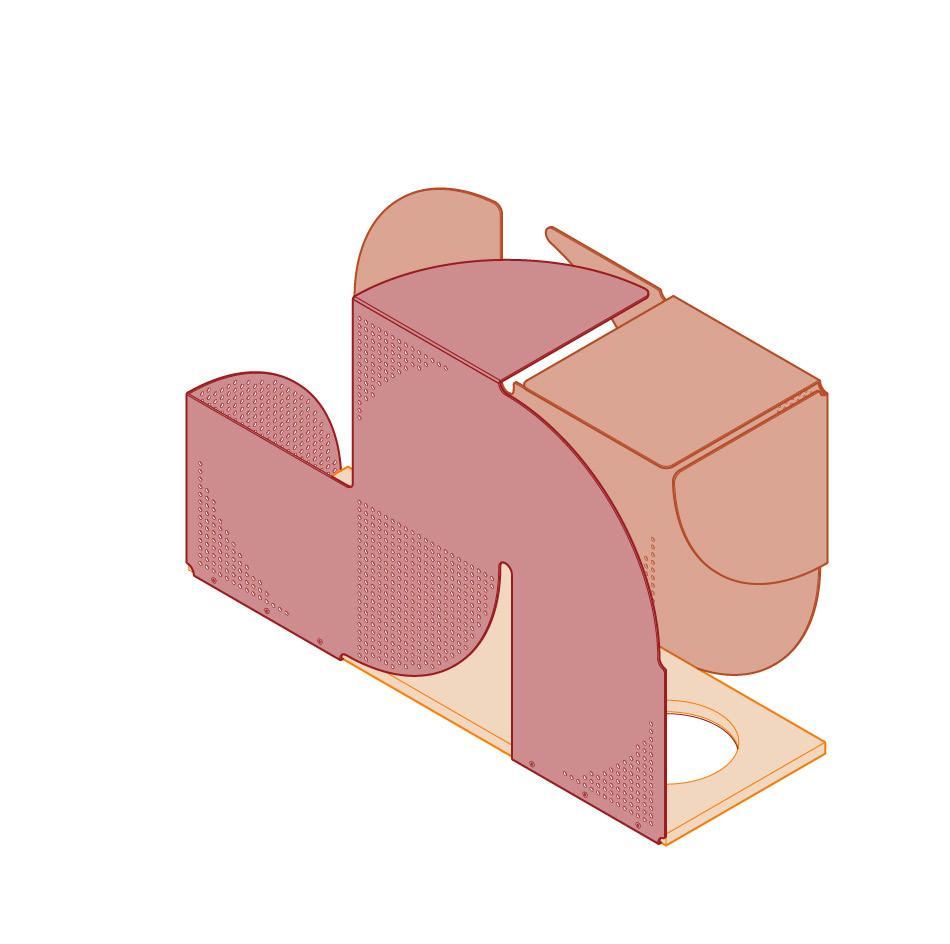
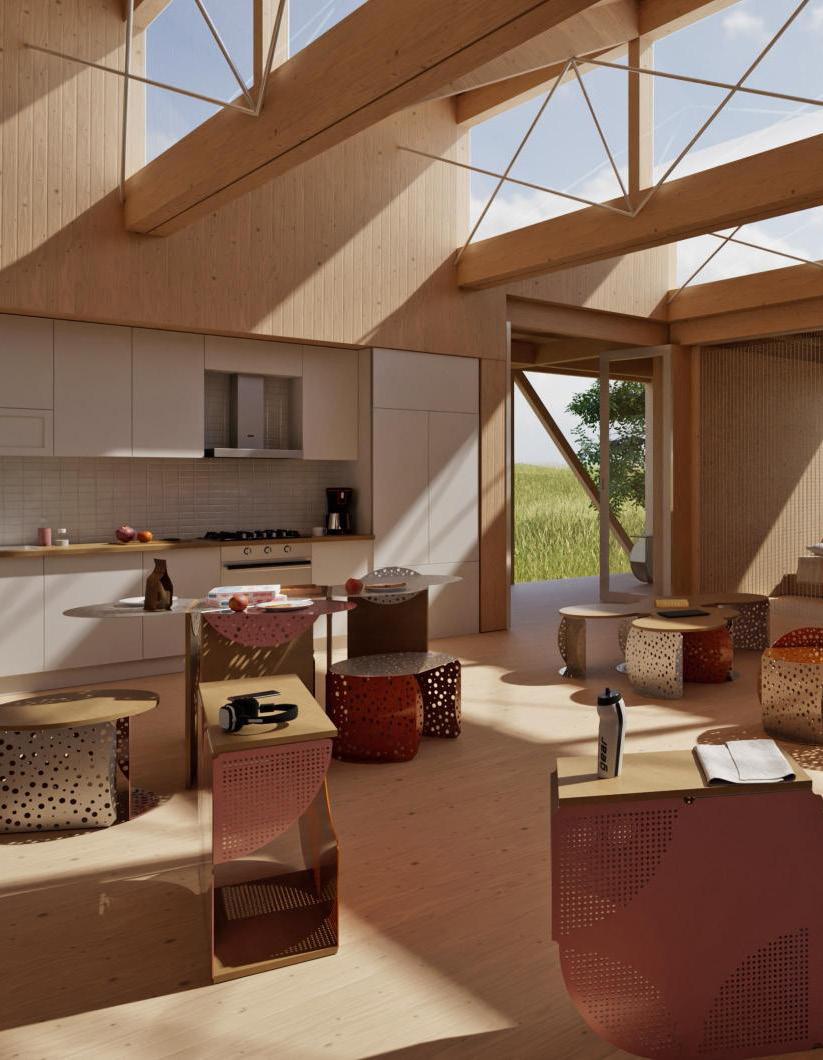
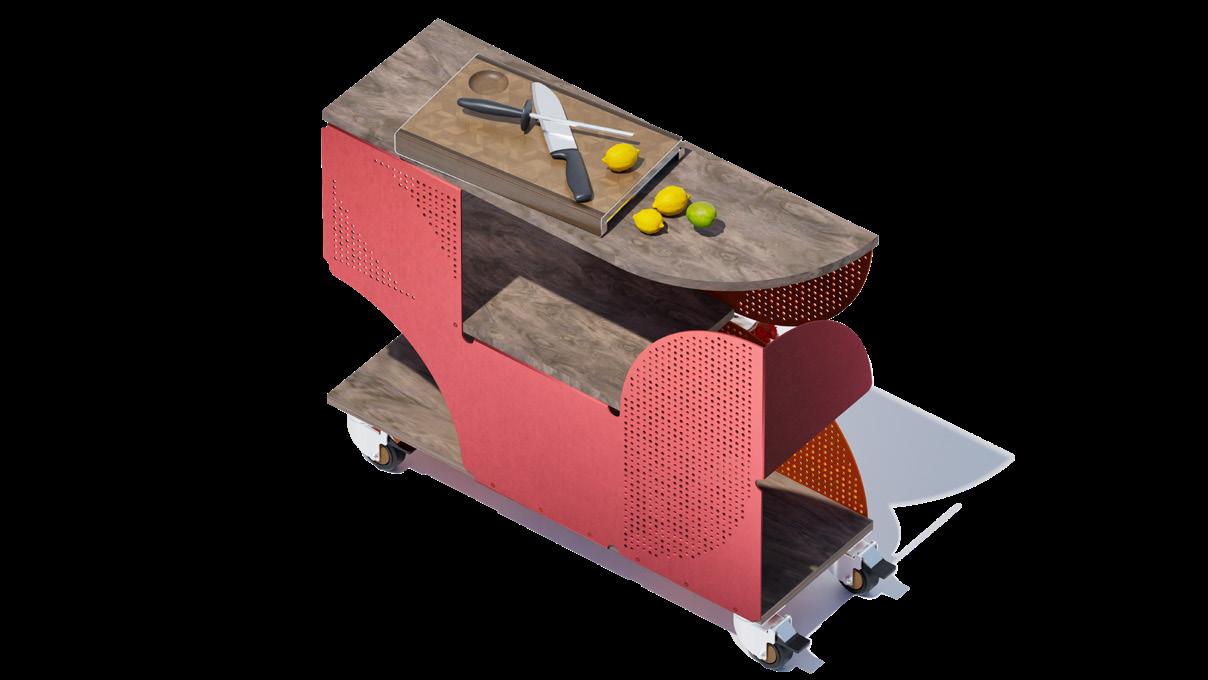
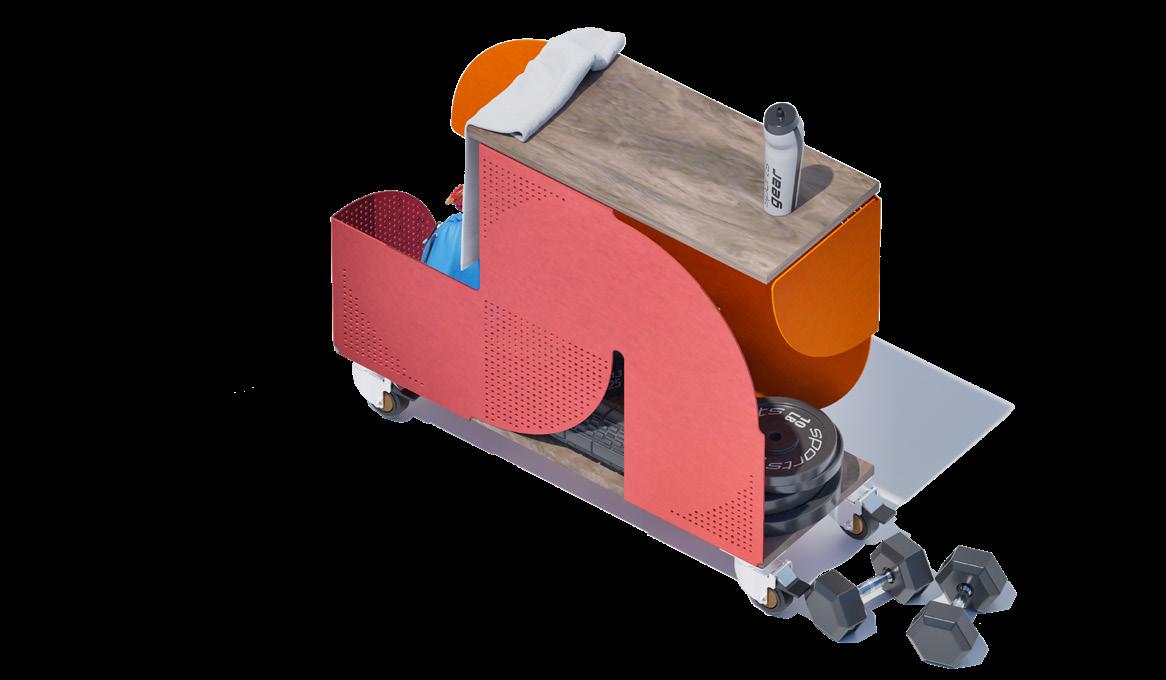
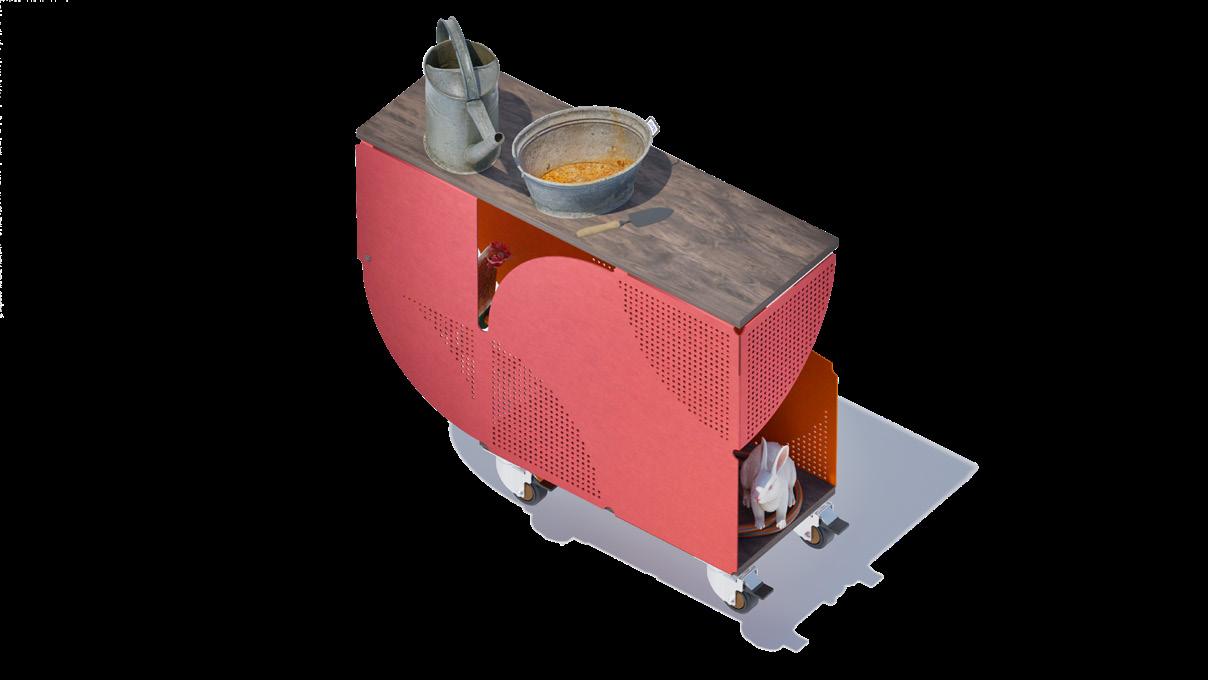
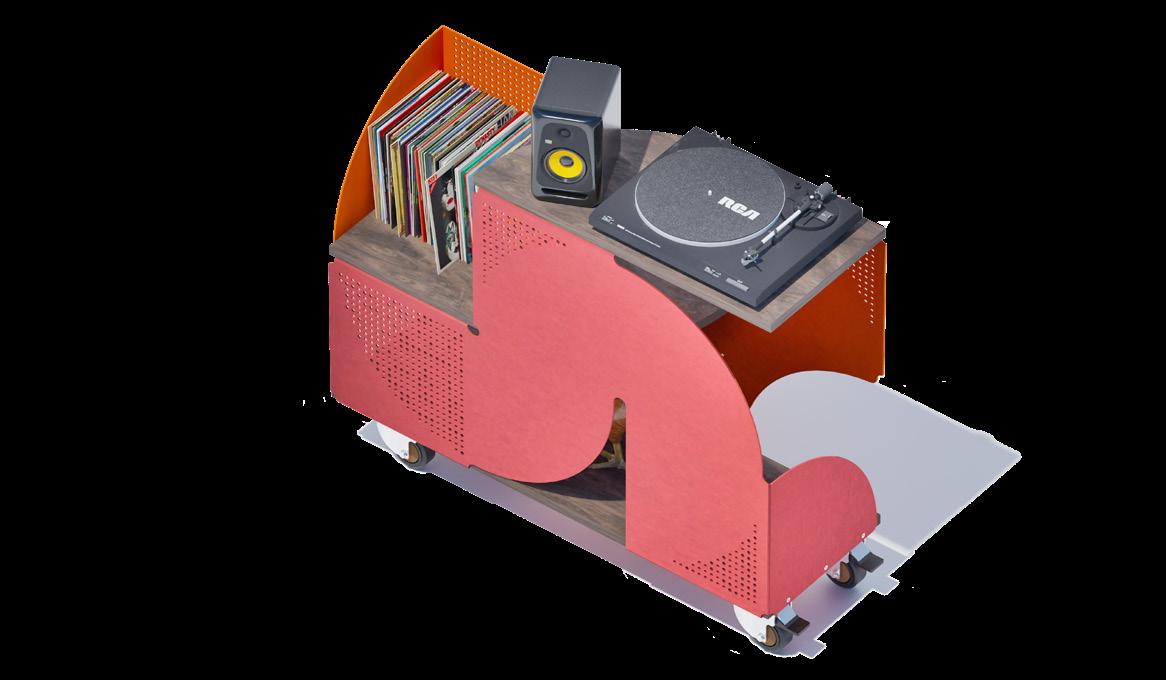
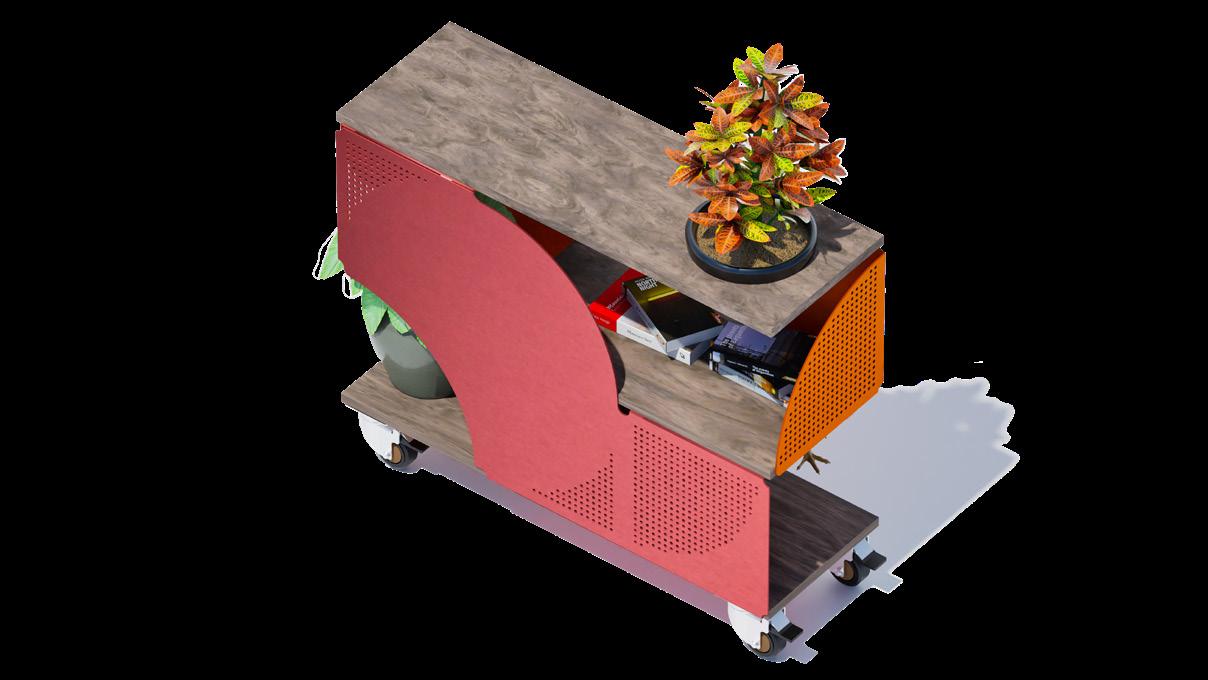
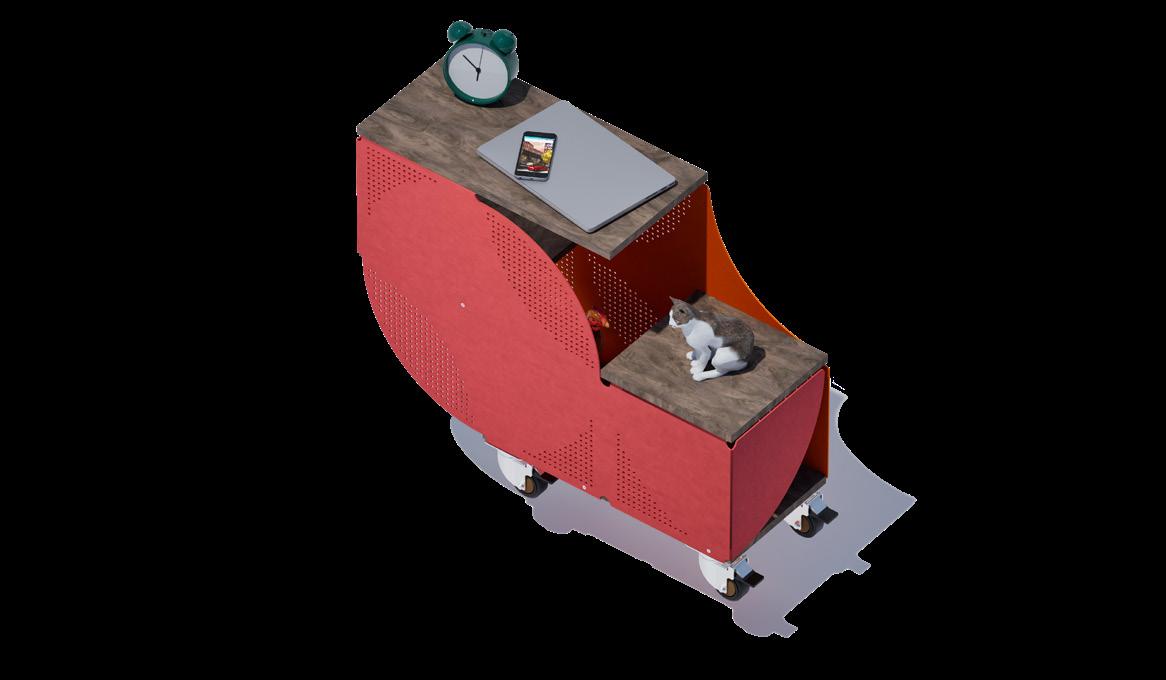
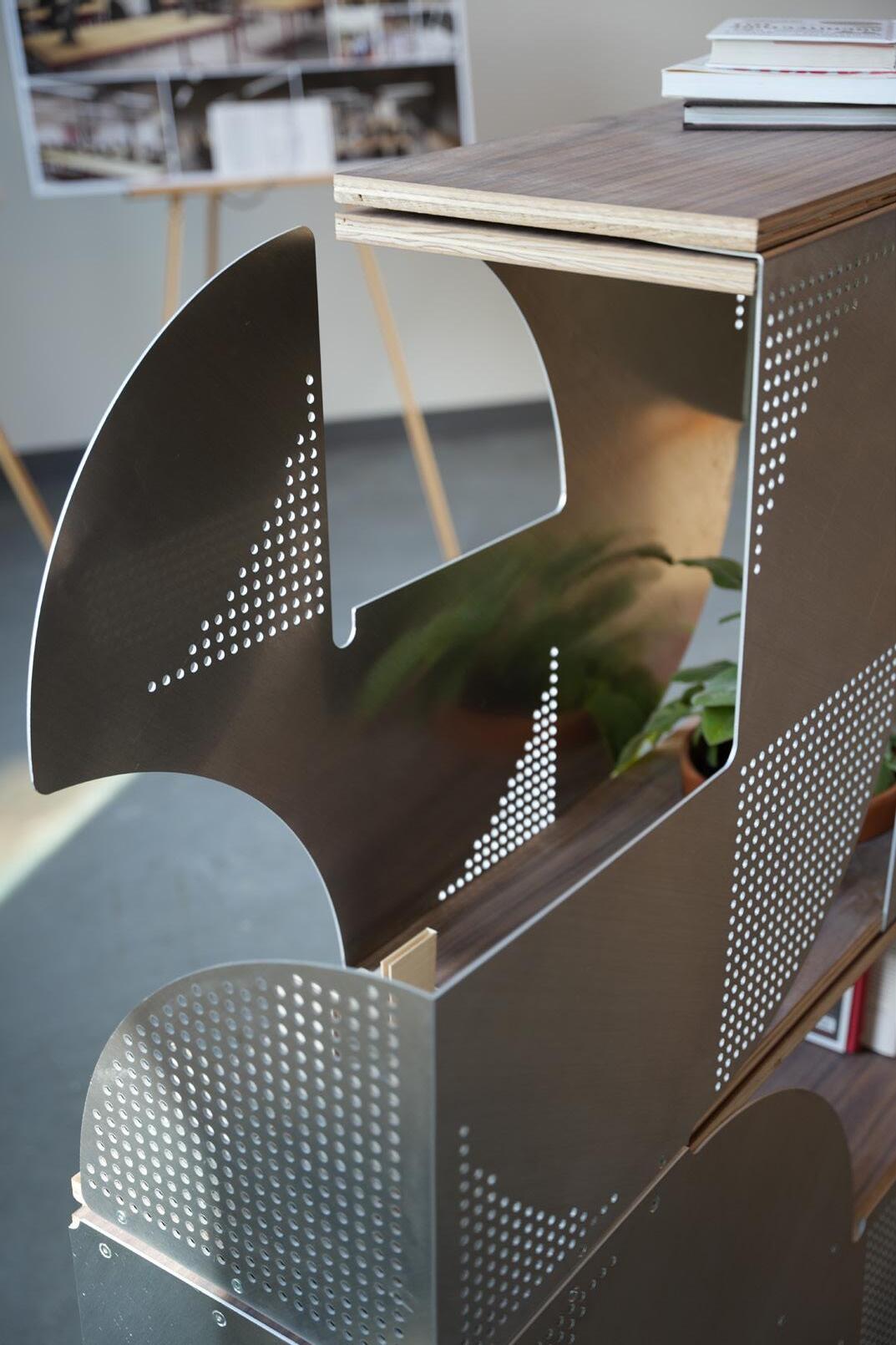
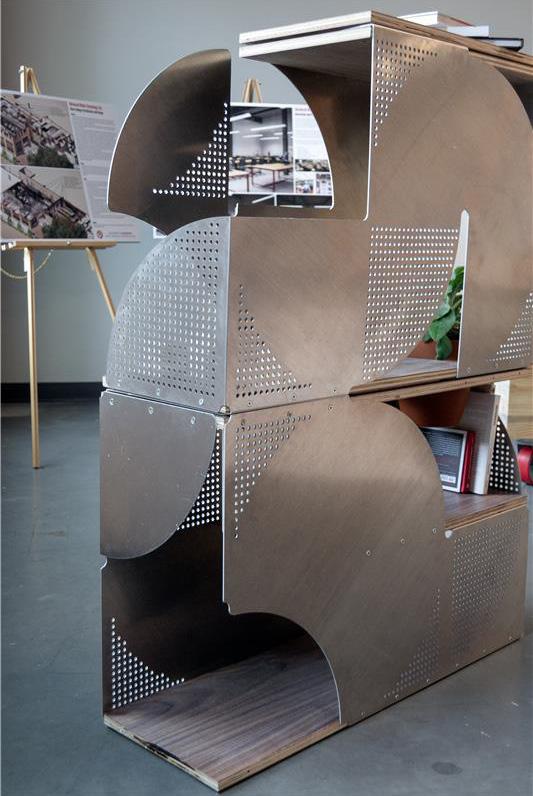
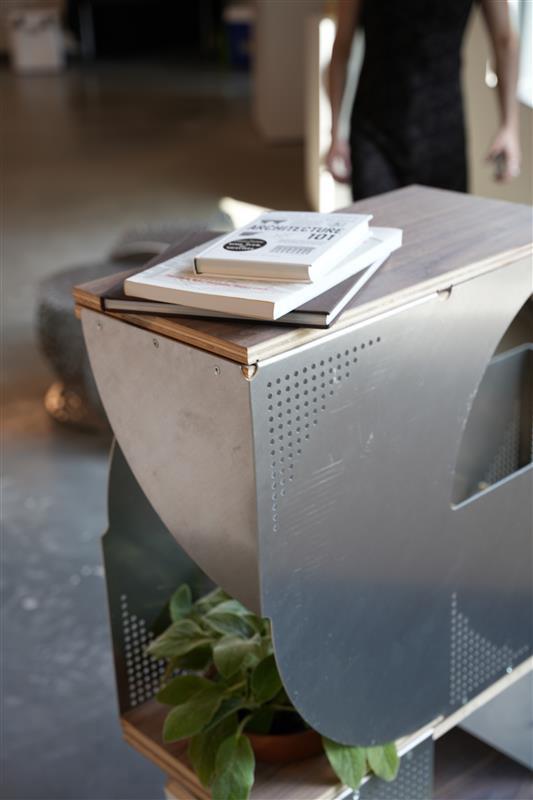
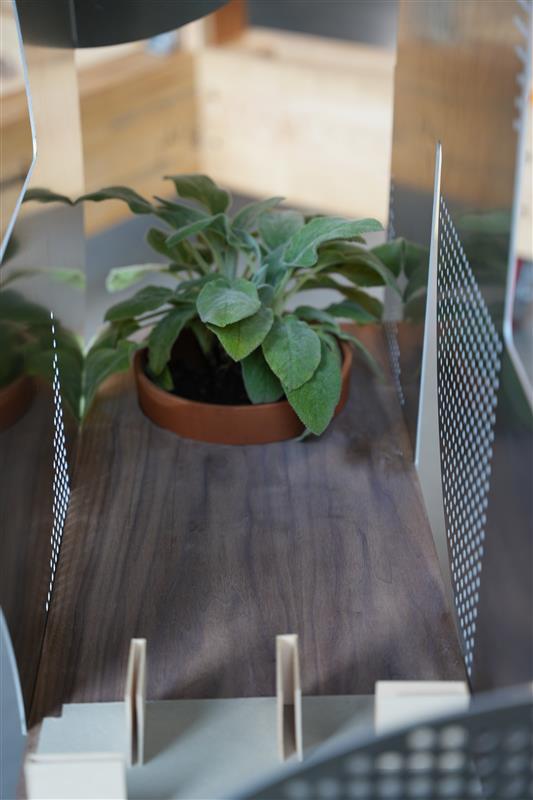
Cut & Fold is one of four subprojects within OpenHOUse: A Thermodynamic Living System, exploring storage as an adaptable system shaped by lifestyle and use. Developed through a rule-based grid, the project introduces a family of eight interchangeable, stackable modules that move beyond conventional furniture to support flexible spatial organization and multiple configurations.
The project included collaboration with a manufacturer, resulting in detailed architectural and fabrication drawings as well as the assembly of the furniture prototype, bridging conceptual design with production and material realization.
LOCATION: HOUSTON, TEXAS
PARTNER: LARGE TEAM
SPRING 2025
2025 HOUSTON DESIGN AWARDS: ON THE BOARDS WINNER, 2025 FORT WORTH MERIT WINNER
03 GARDEN OF EDEN
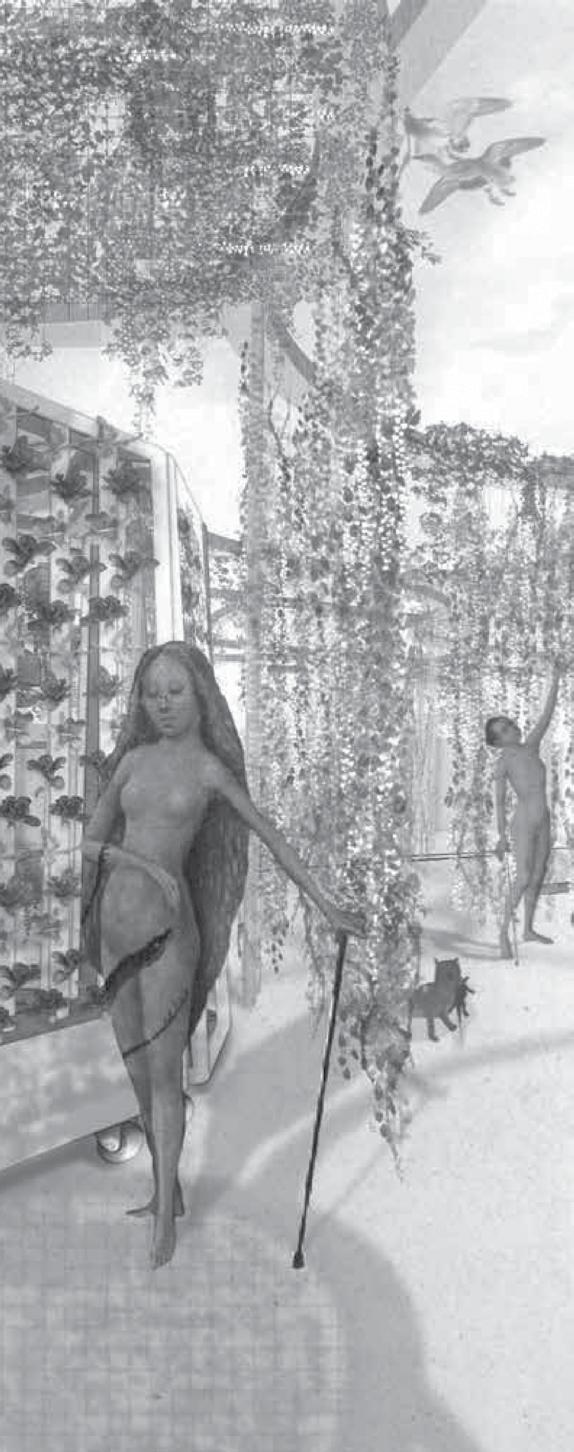
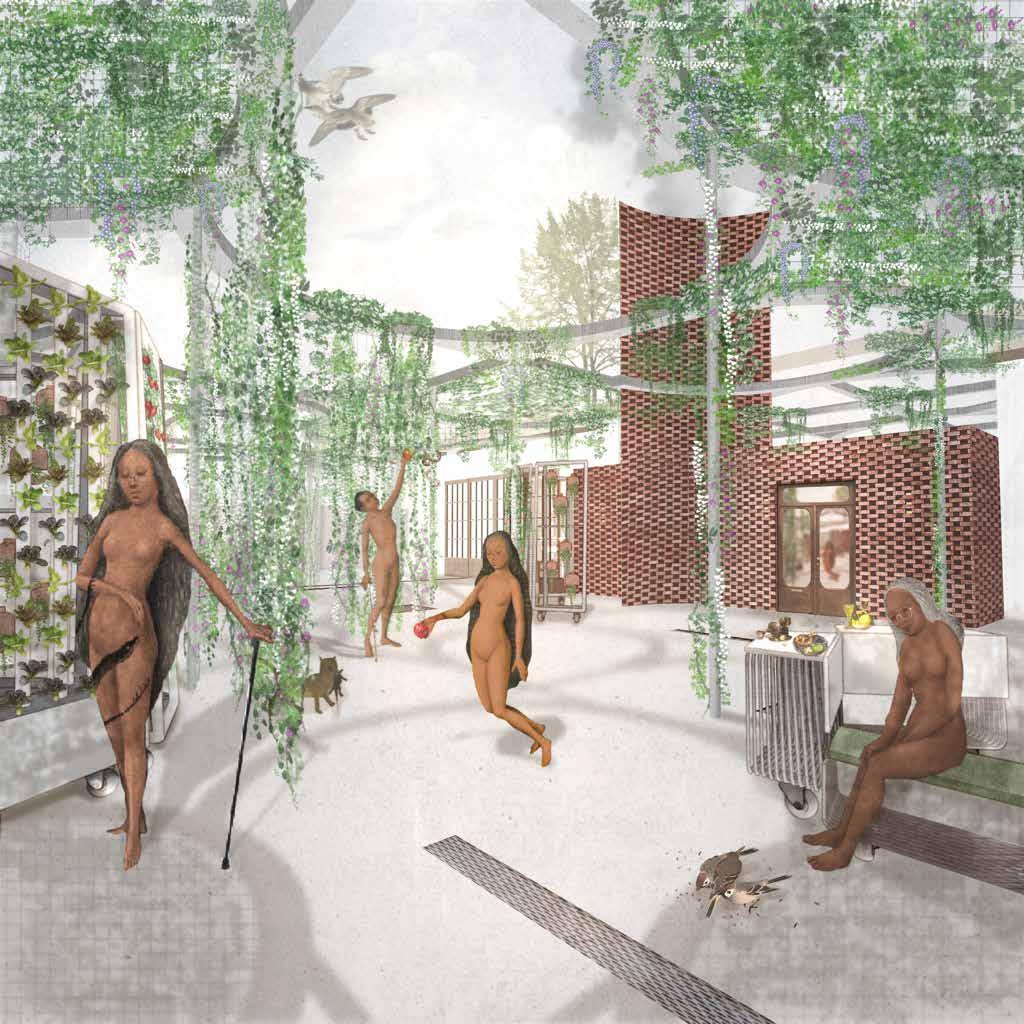
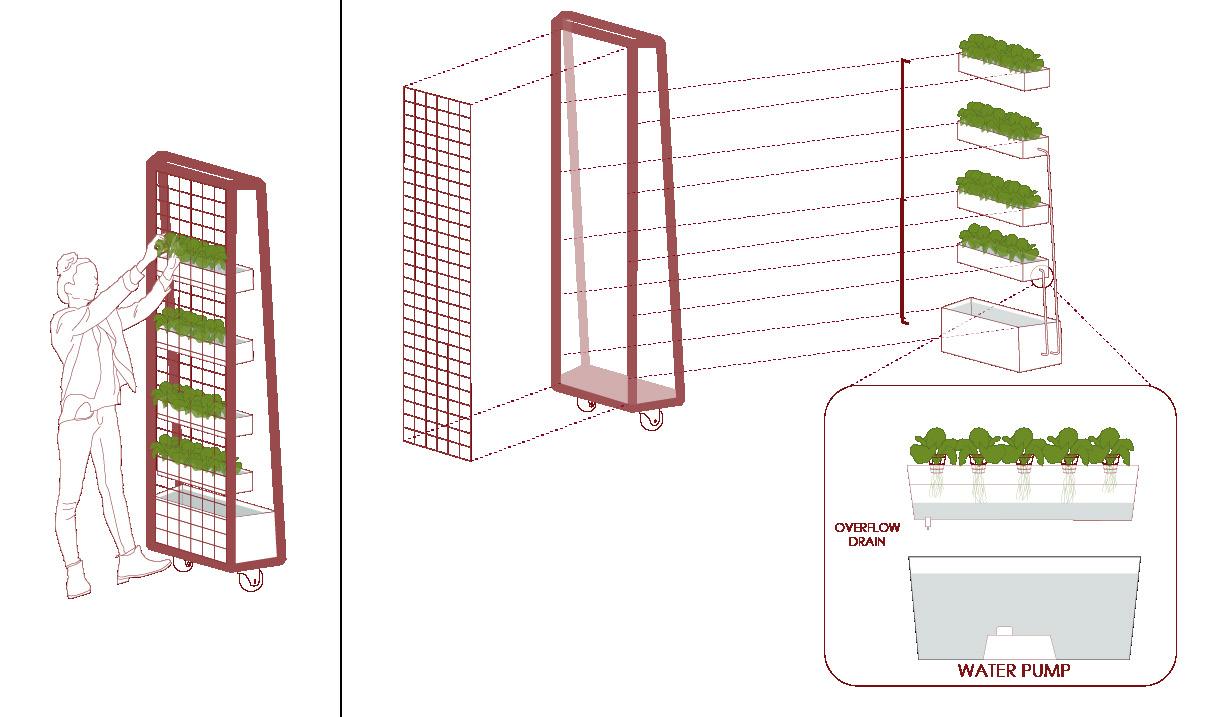
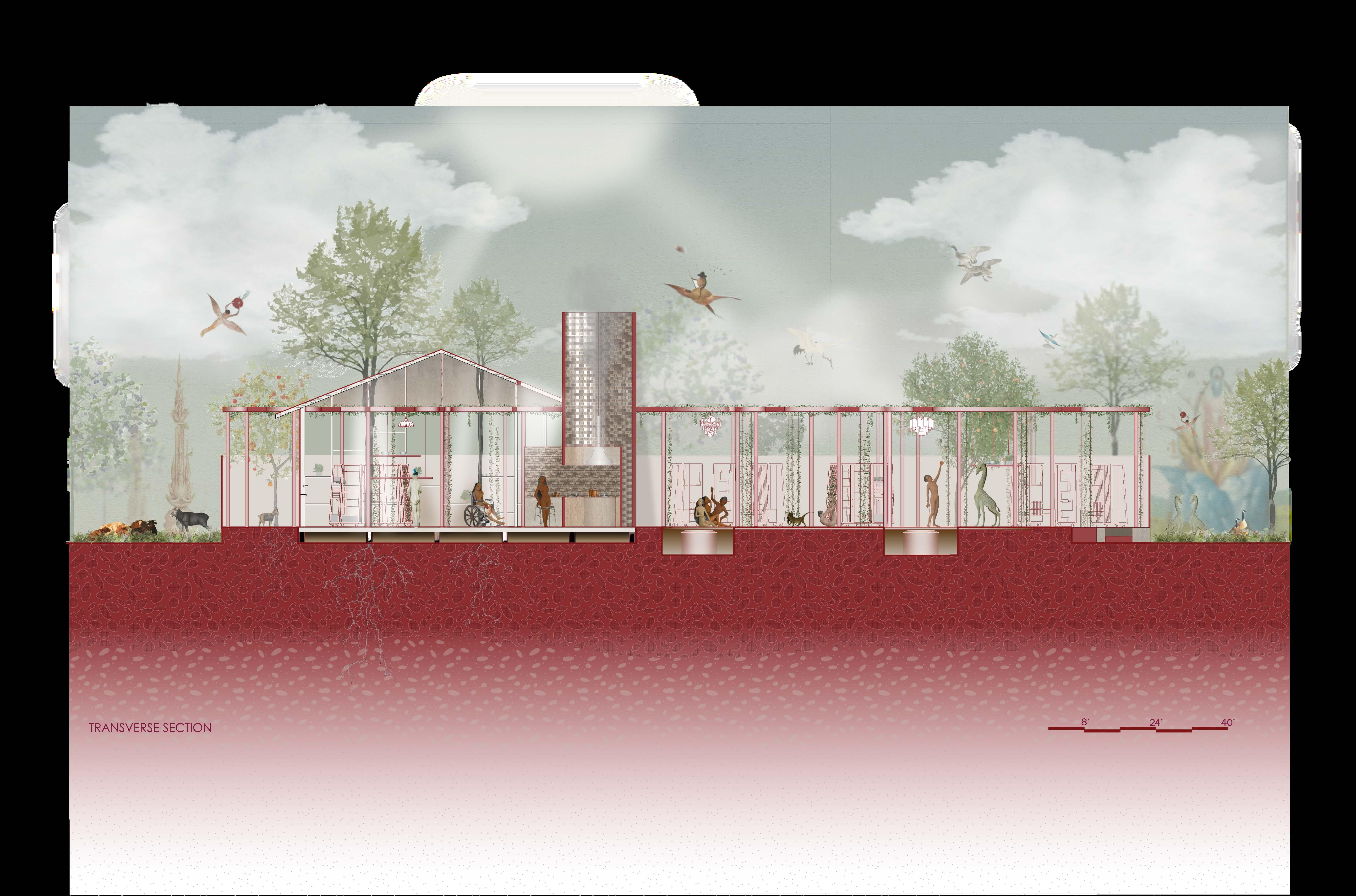
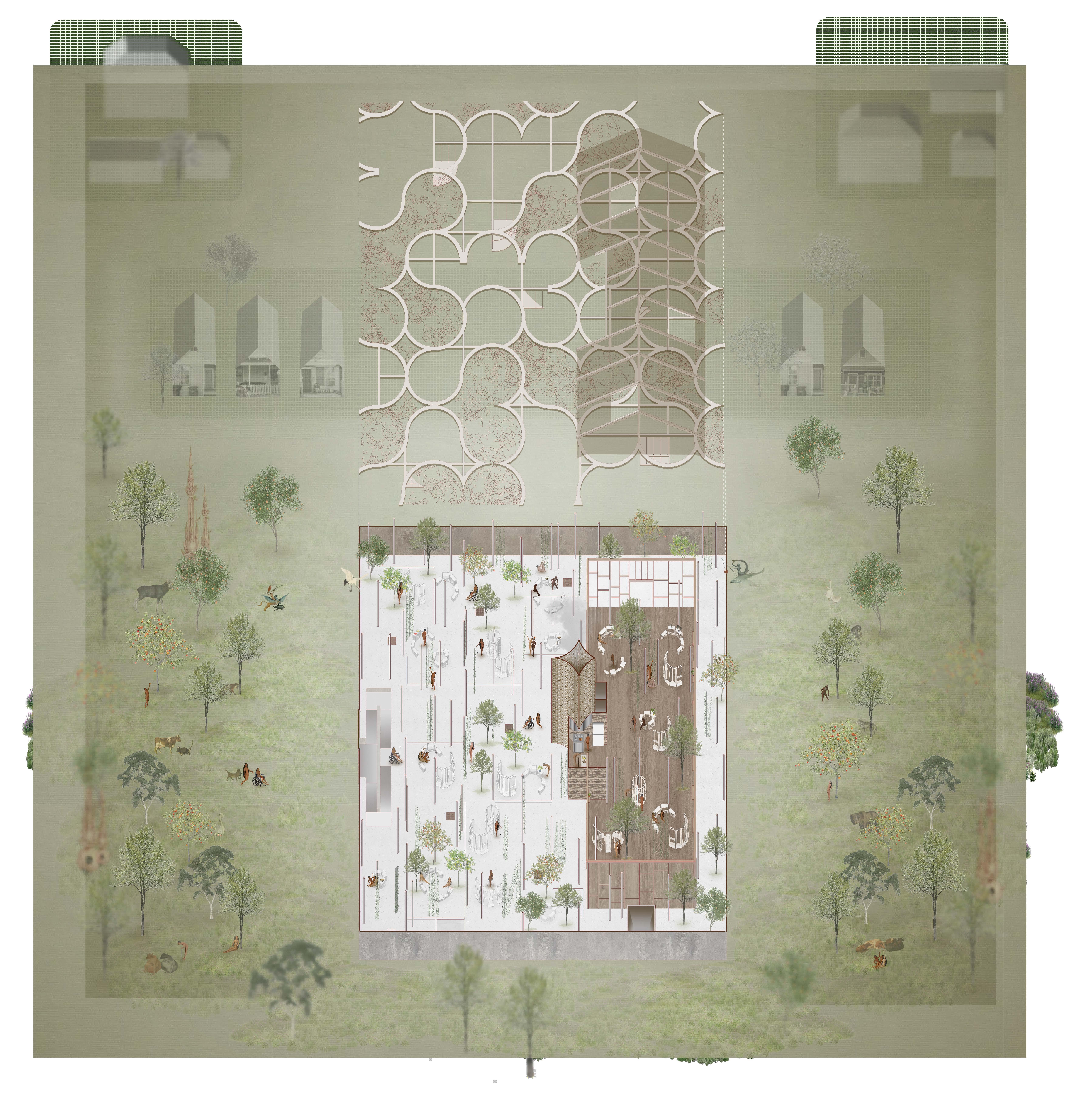
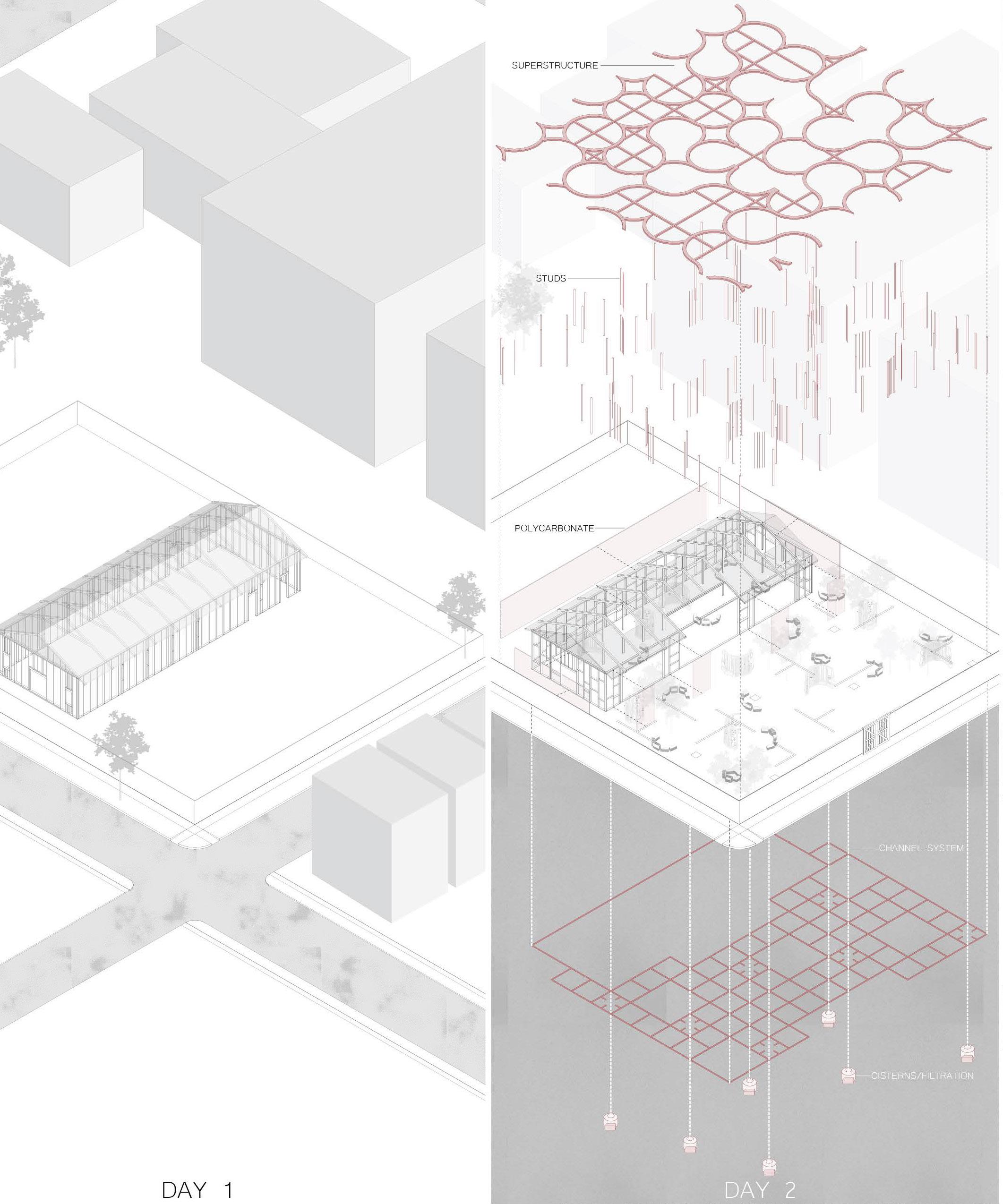
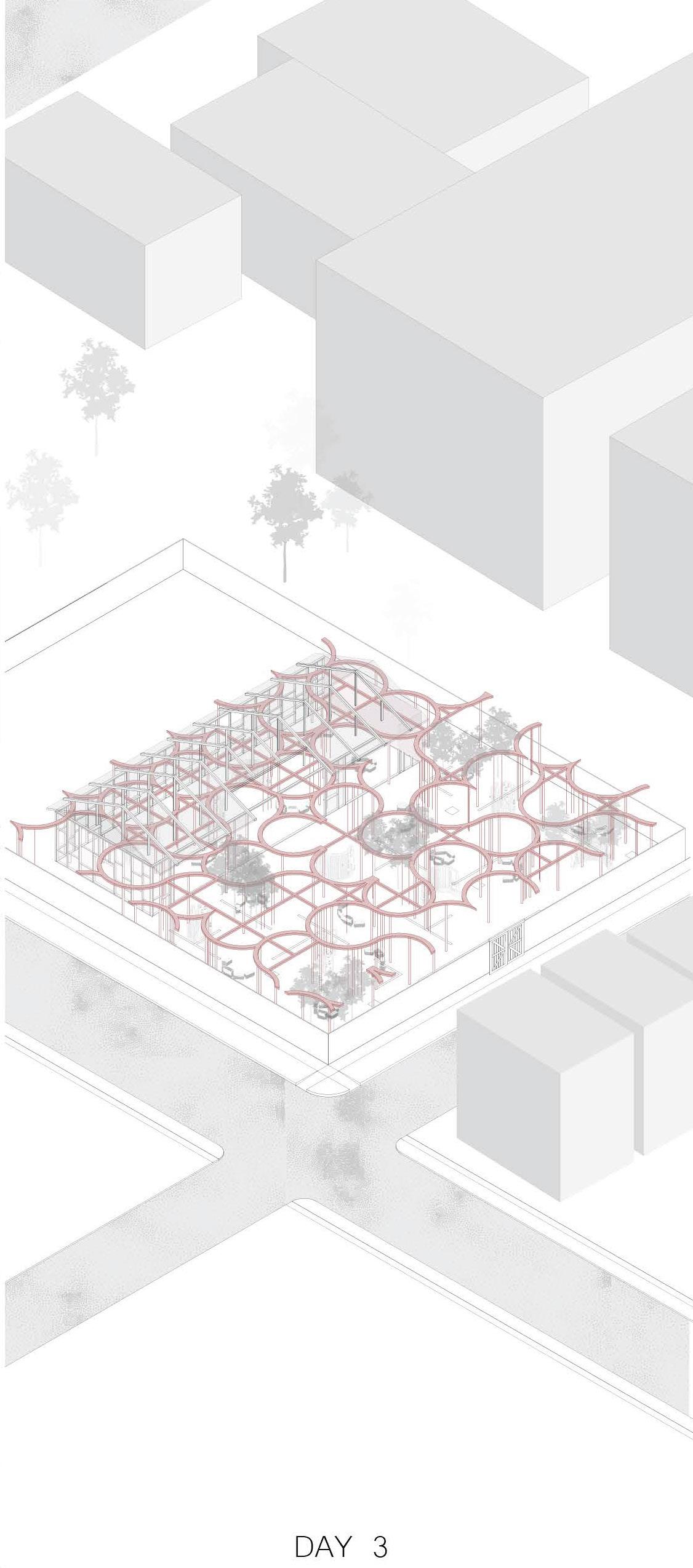
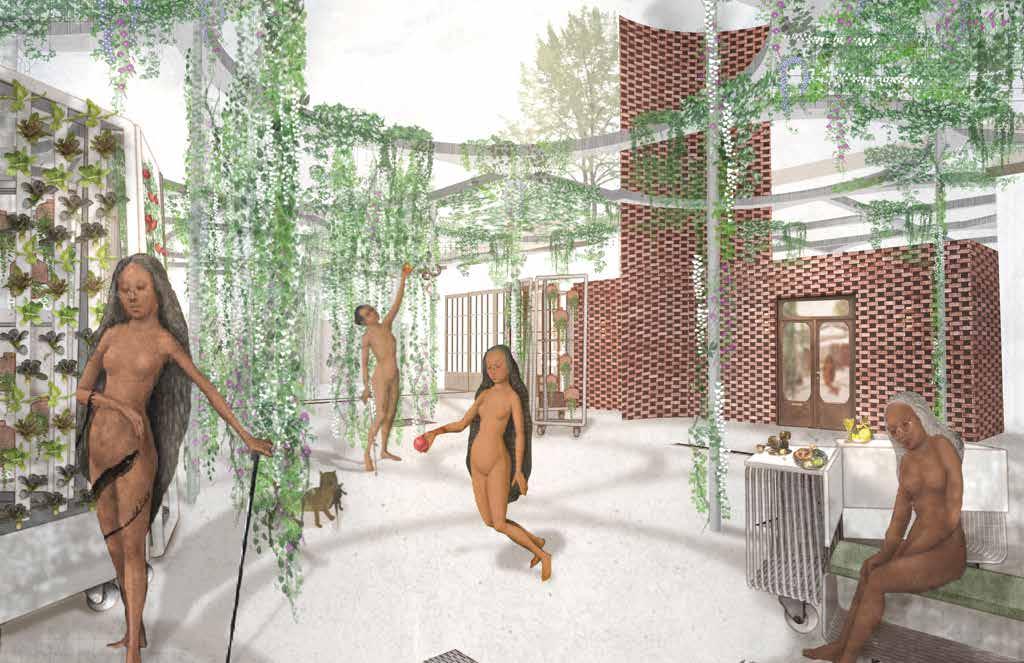
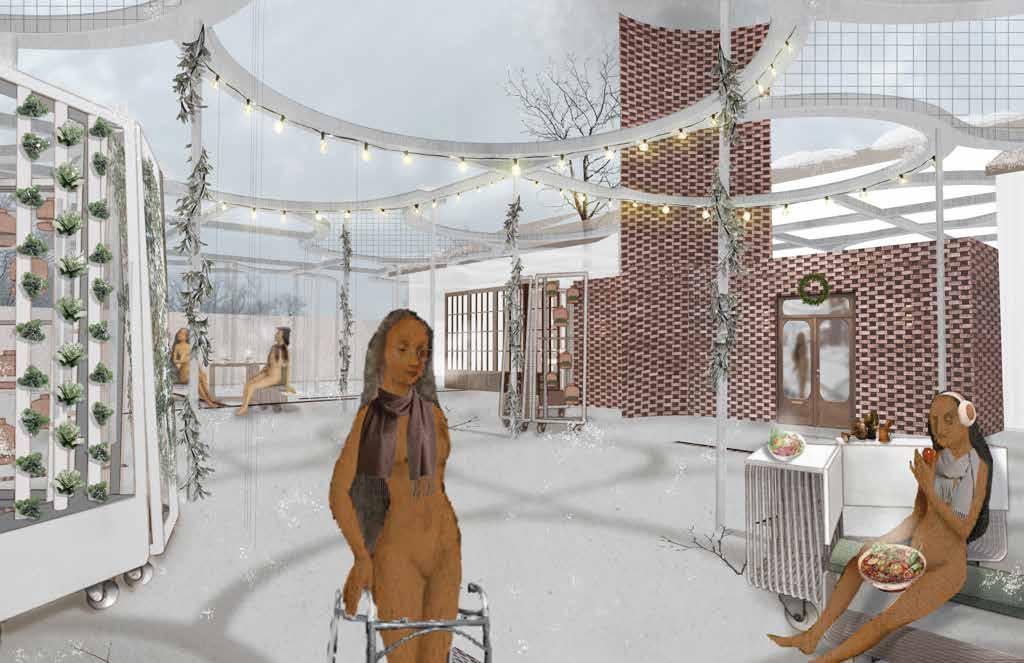
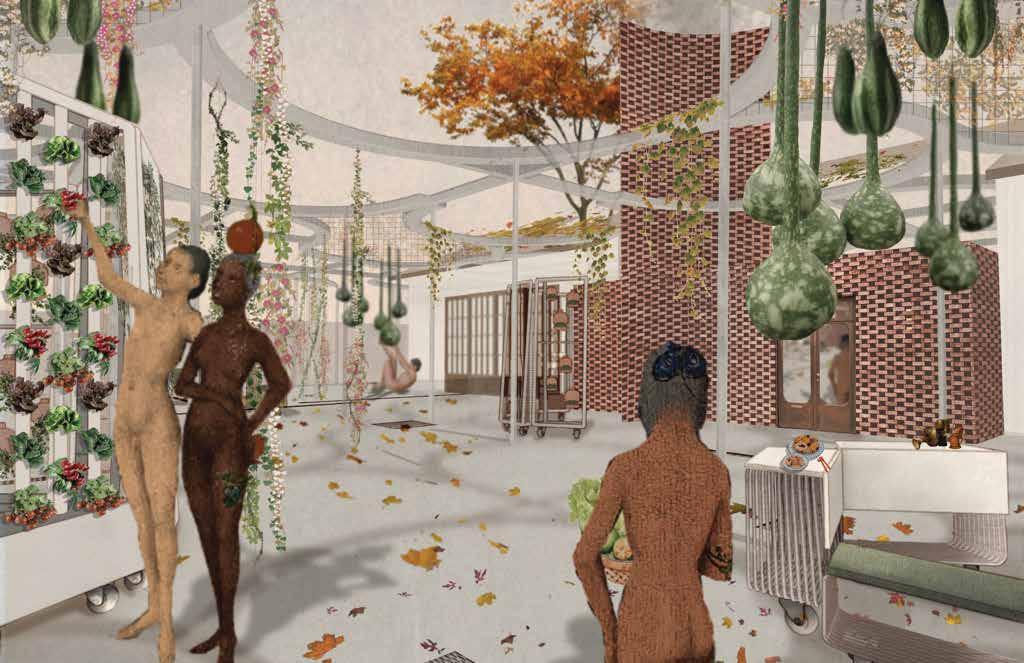
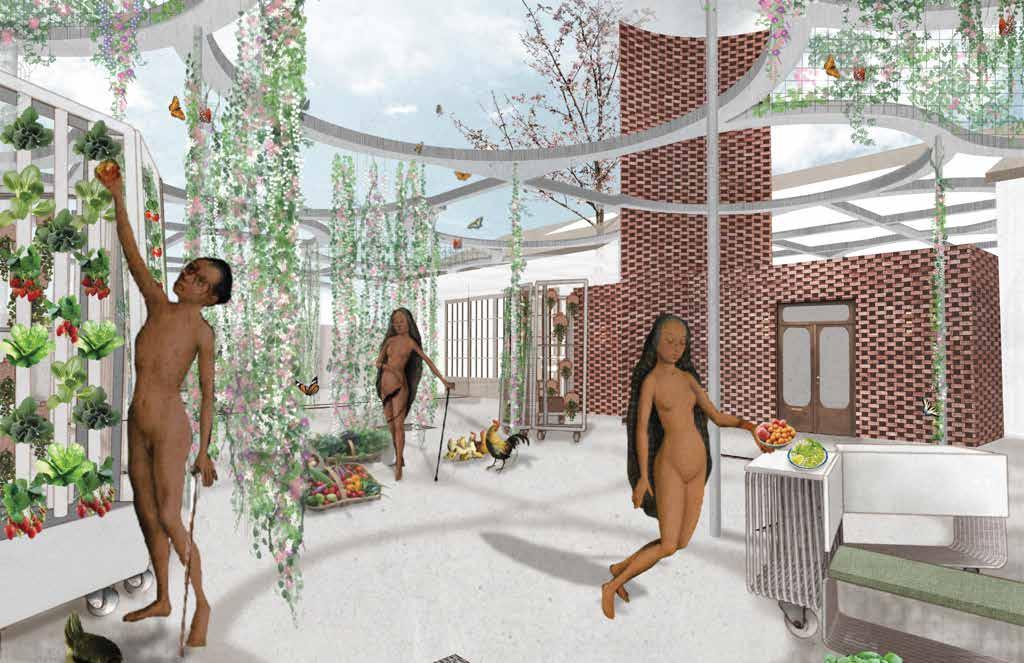
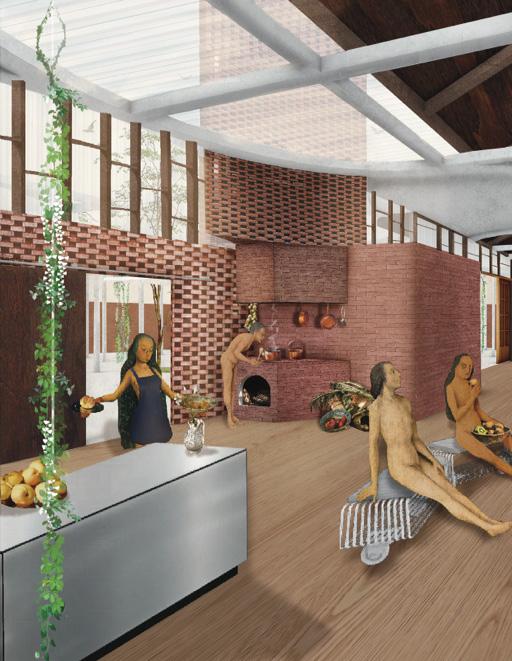
Located in Houston’s Third Ward, a neighborhood with deep cultural and historical significance within the African-American community, this adaptive reuse project transforms an abandoned church into an off-grid restaurant and hydroponic urban farm. The proposal directly addresses food insecurity while creating a therapeutic environment that supports local seniors, particularly individuals in the early stages of dementia, by fostering dignity, connection, and purpose through care-based service.
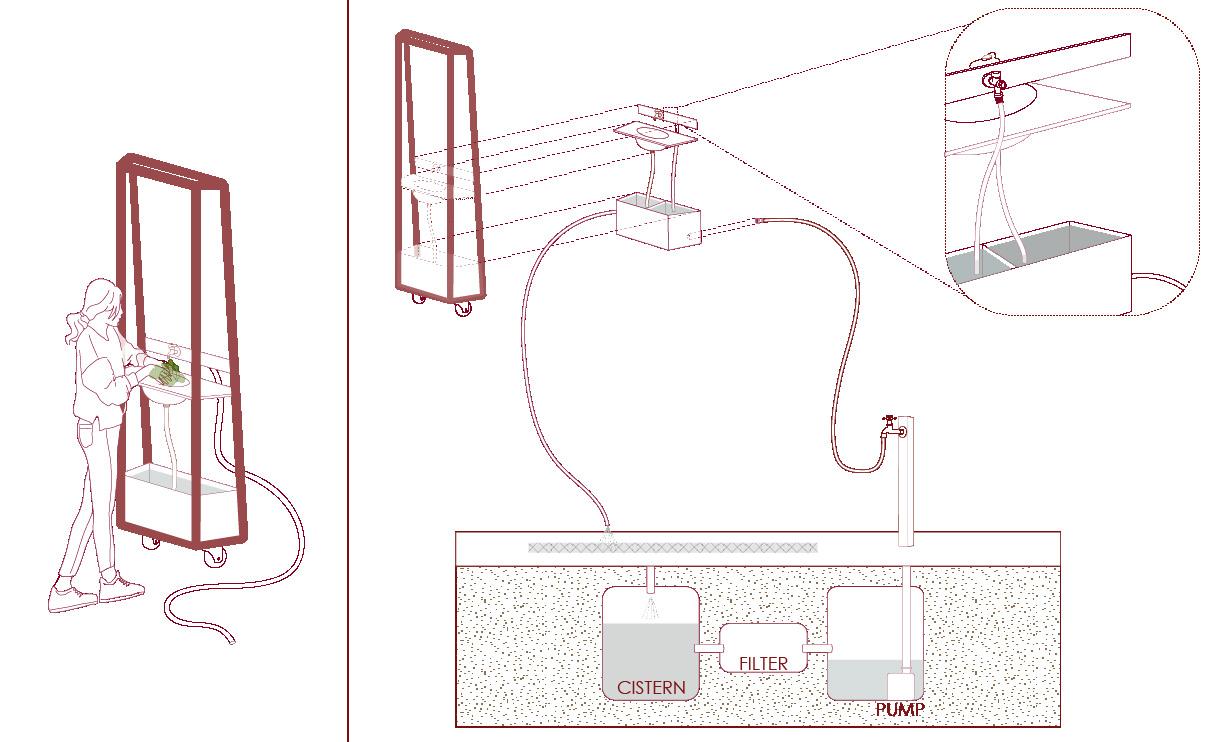
Powered by solar energy and rainwater harvesting, the project grows fresh produce on site using hydroponic systems, reducing environmental impact while improving access to nutritious food. Food waste is composted within the former outdoor baptismal to enrich surrounding green spaces, establishing a closed-loop ecological system. By linking food production, health, and community care, the project reimagines the church as a regenerative infrastructure that advances food justice, collective memory, and neighborhood resilience.
LOCATION: HOUSTON THIRD WARD
PARTNER: RICHELE REFUERZO
FALL 2024
HYDROPONIC SYSTEM
CROP CLEANING STATION
04 HABITAB LE FURNITU RE
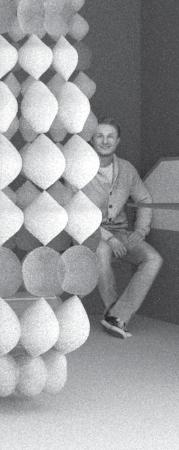
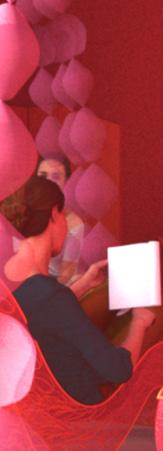
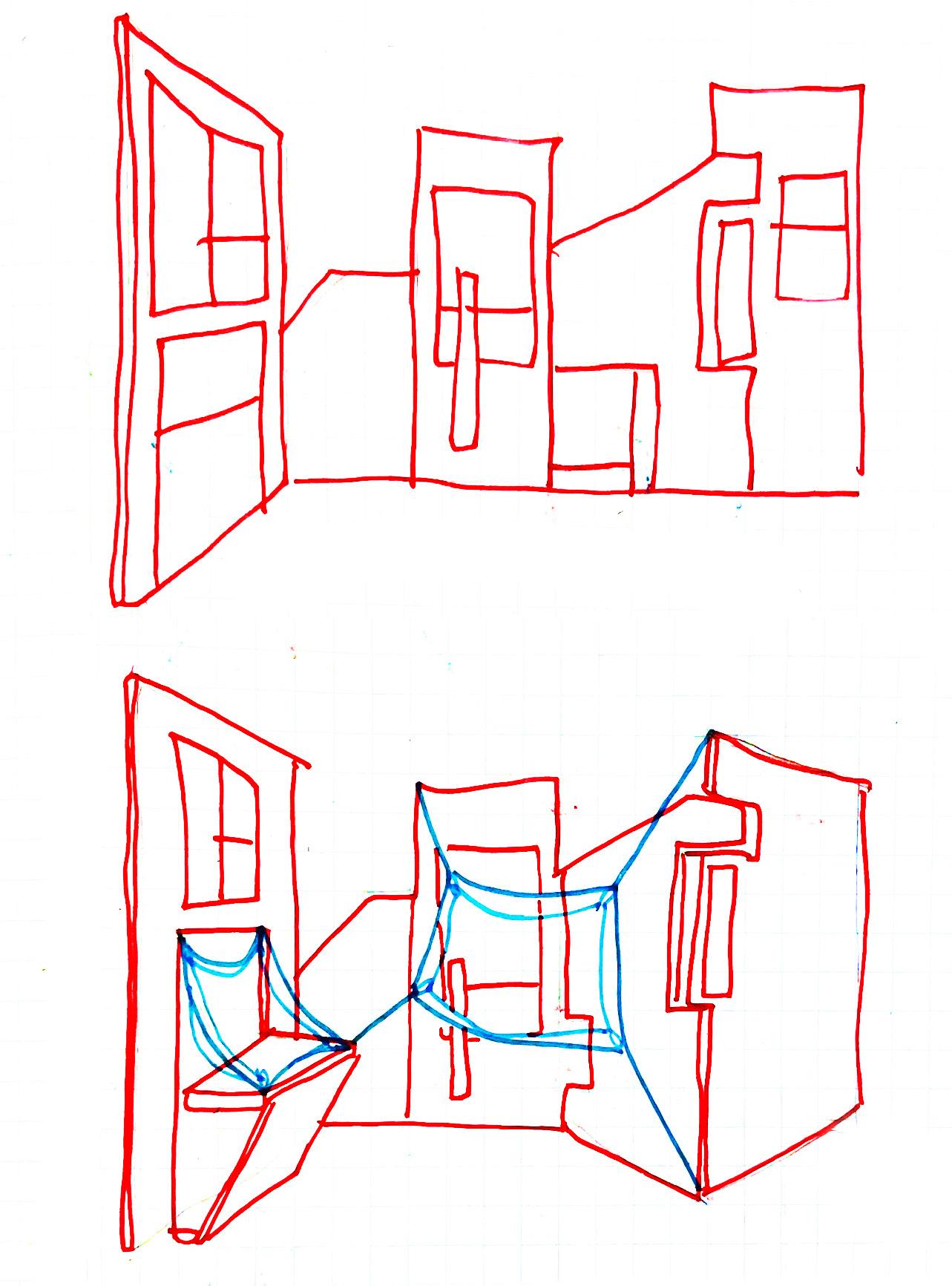
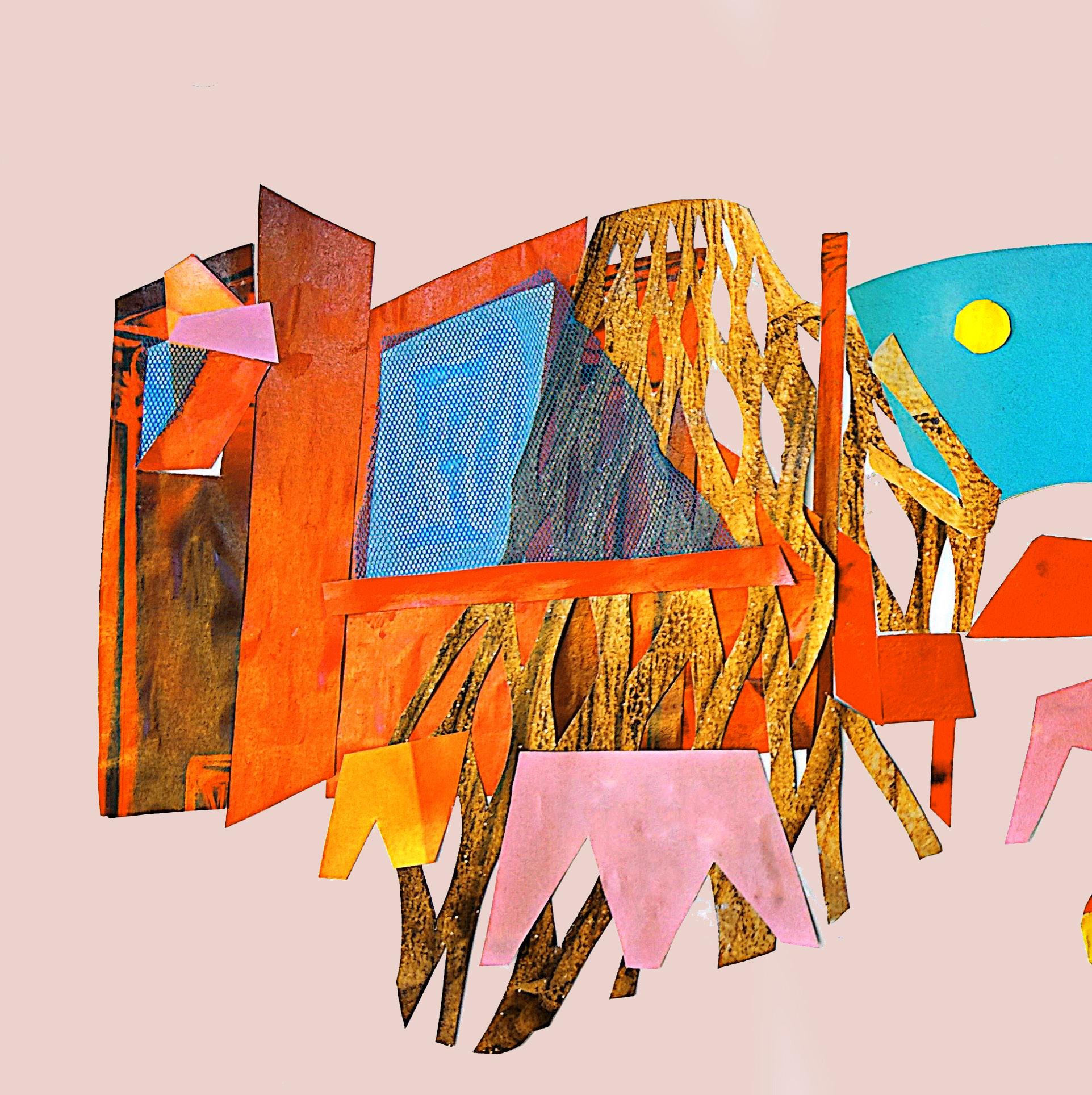
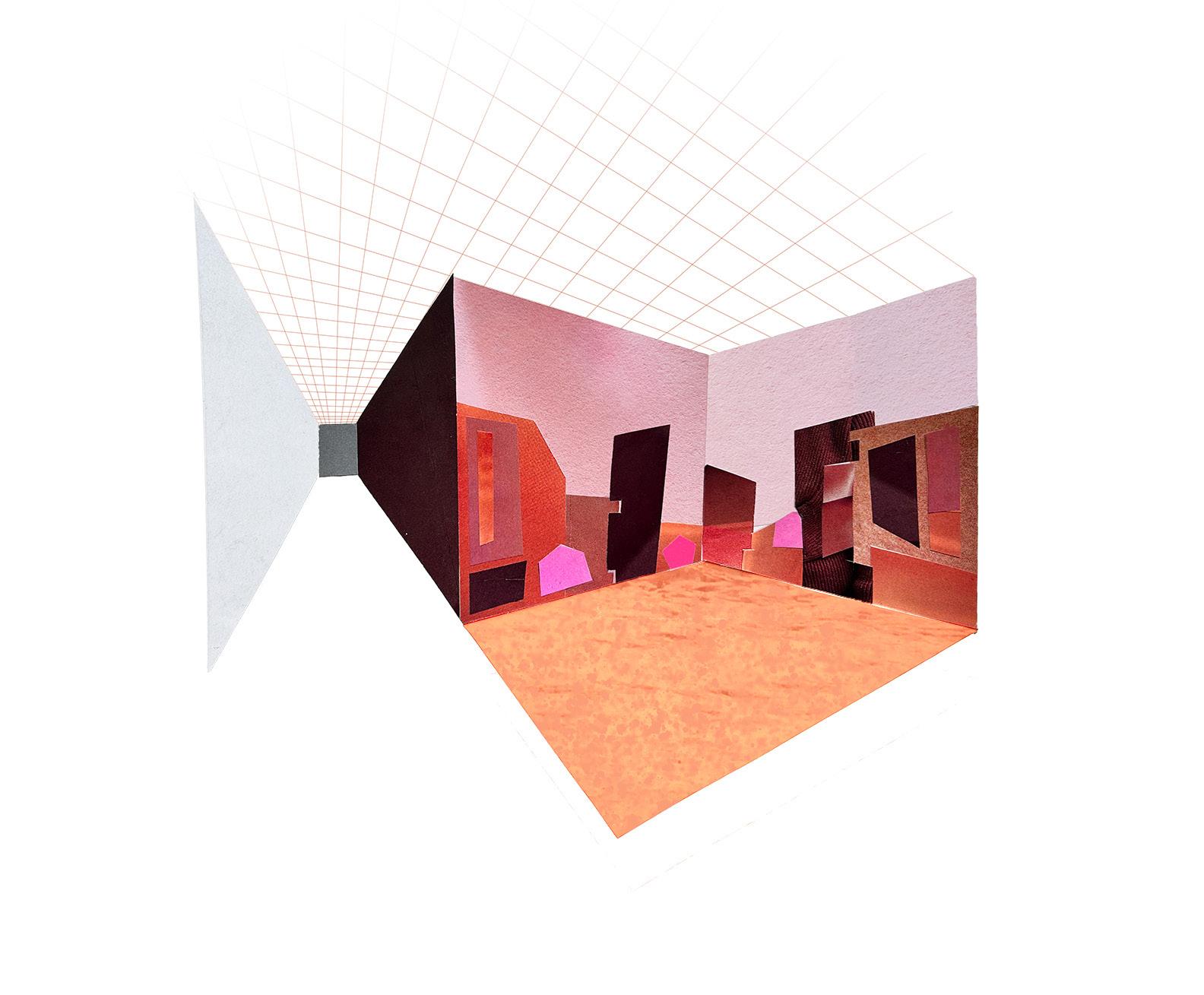
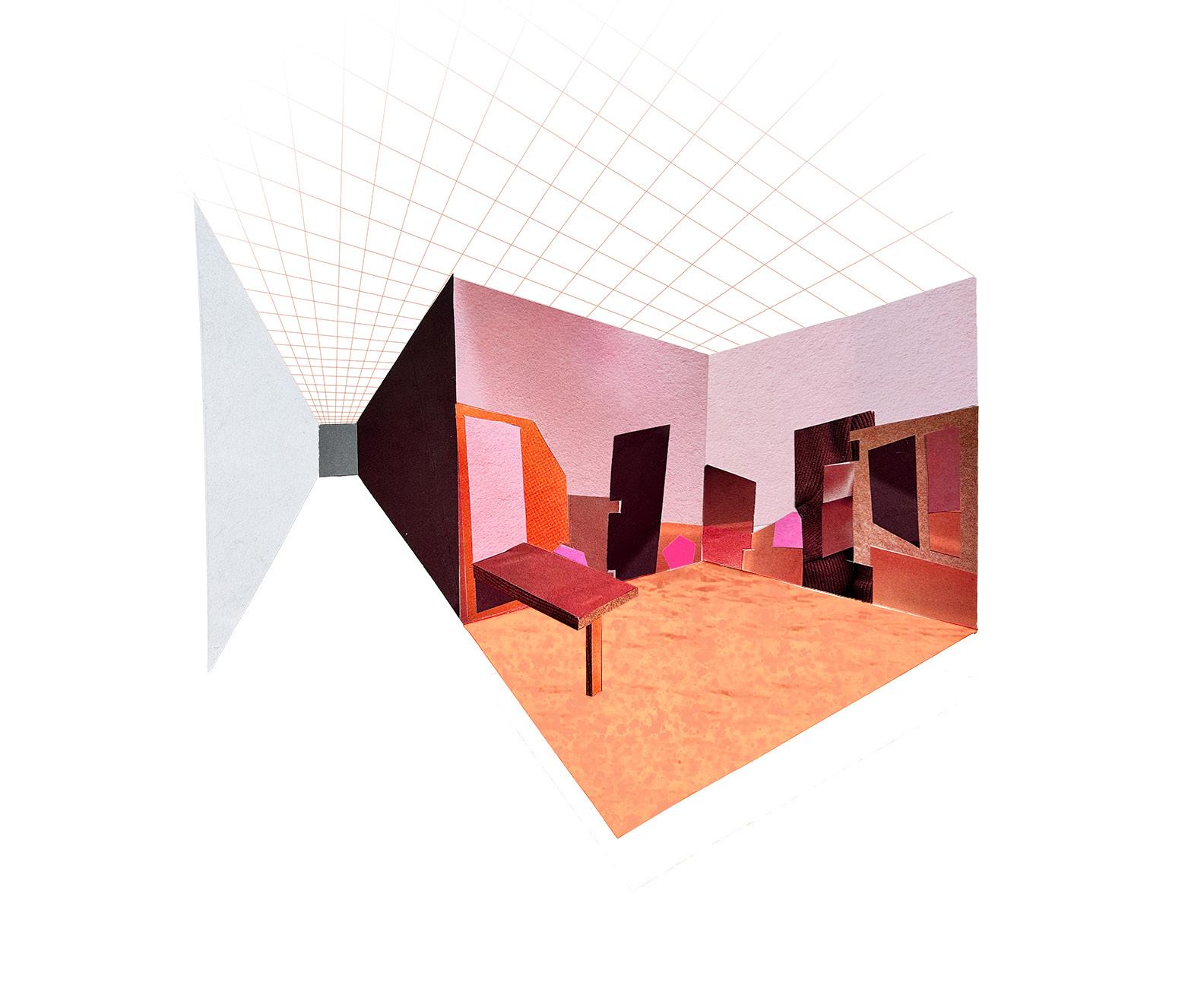
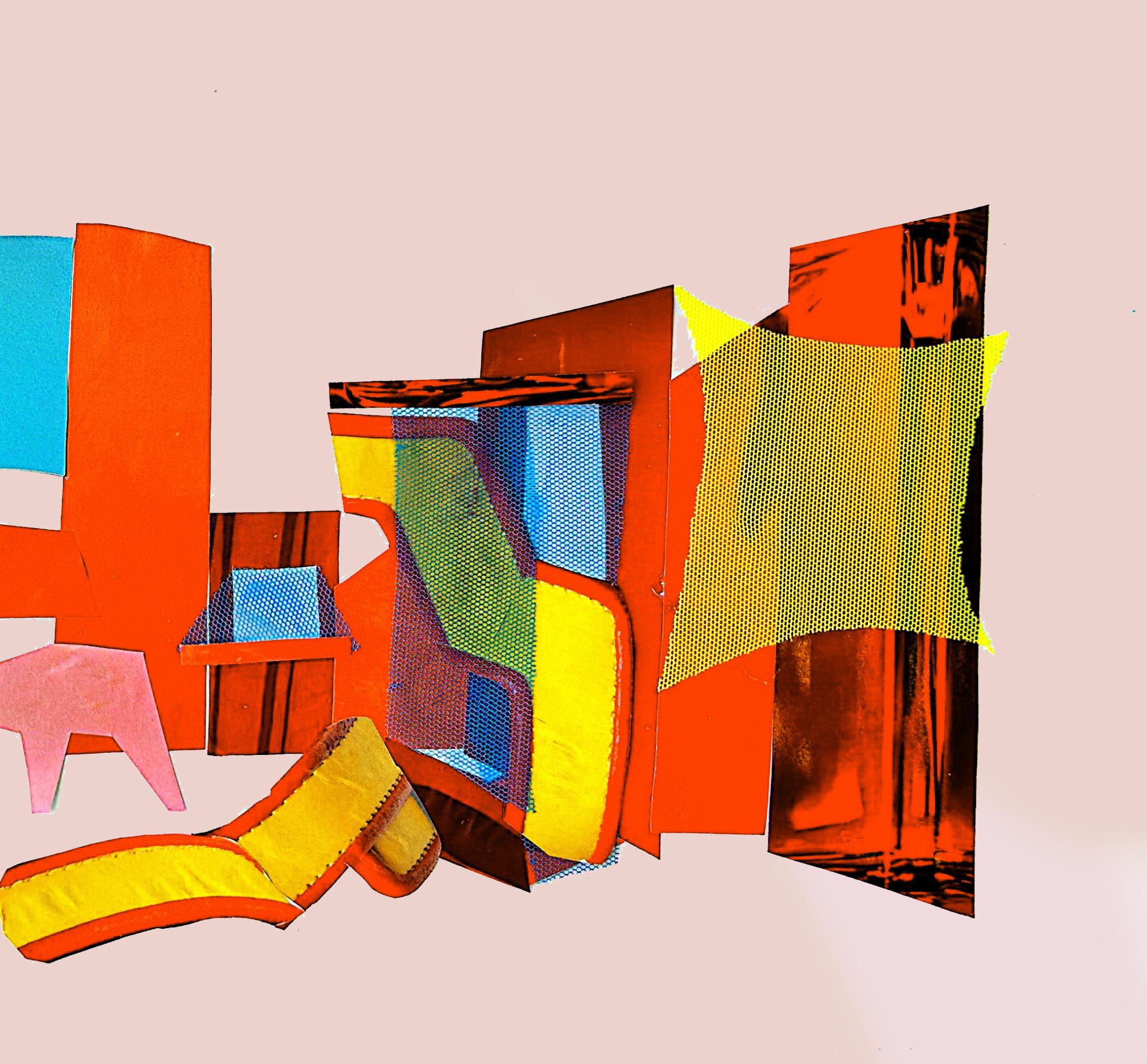
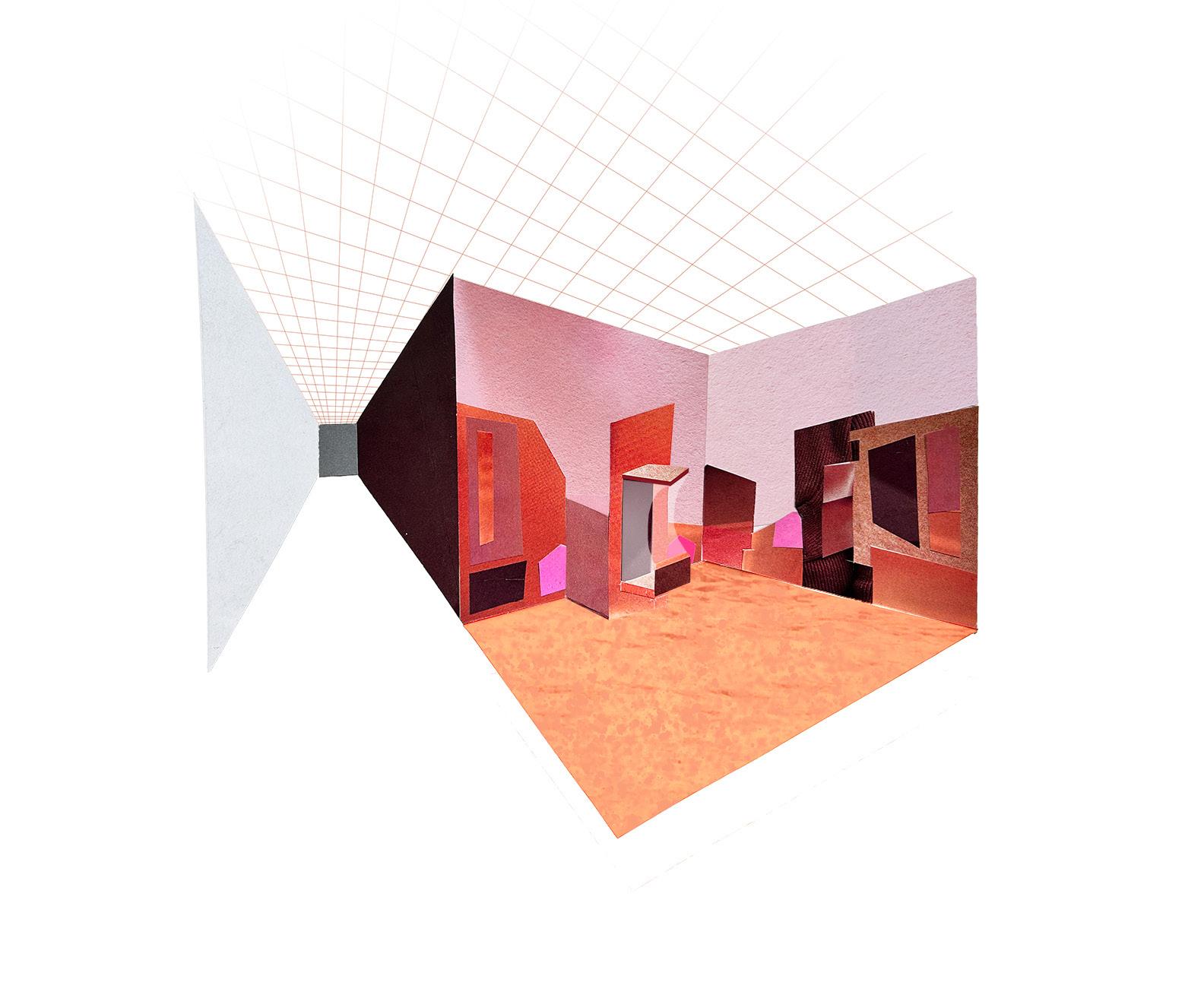
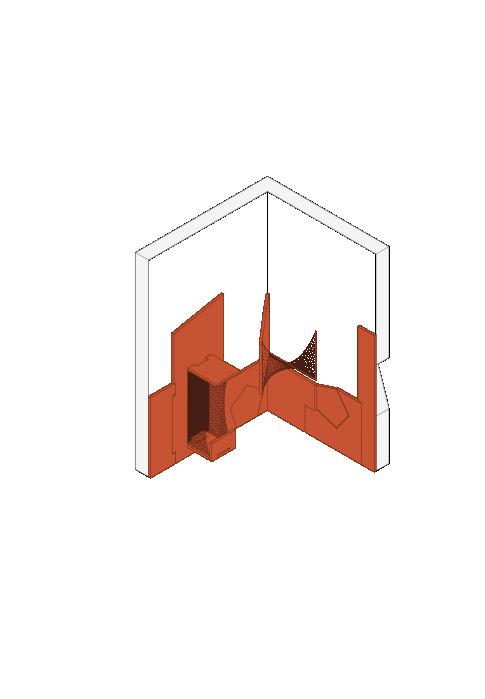
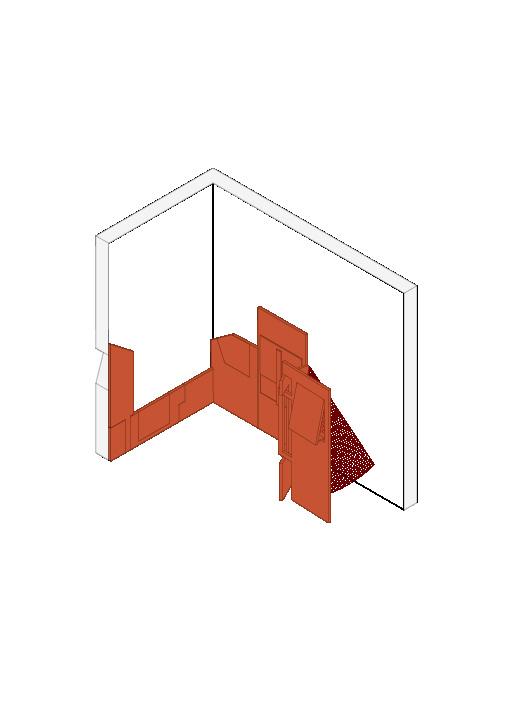
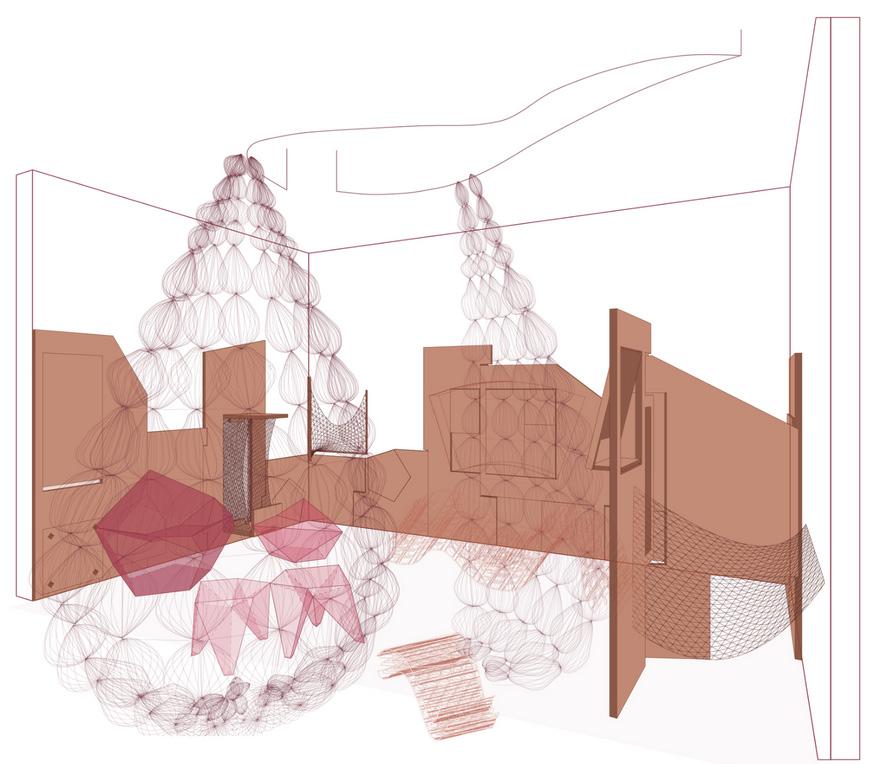
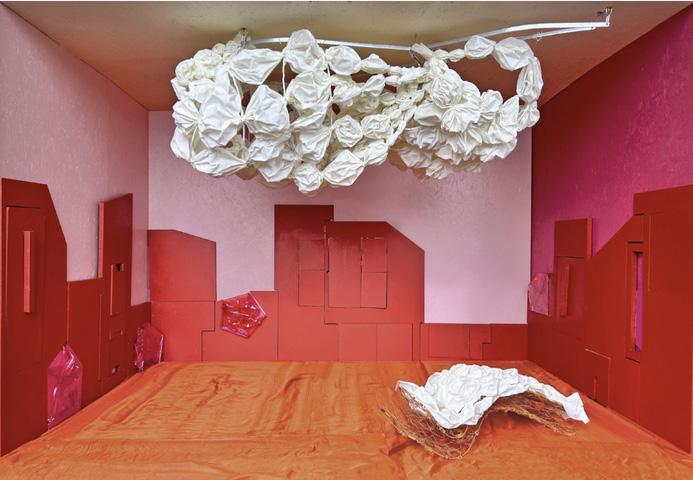
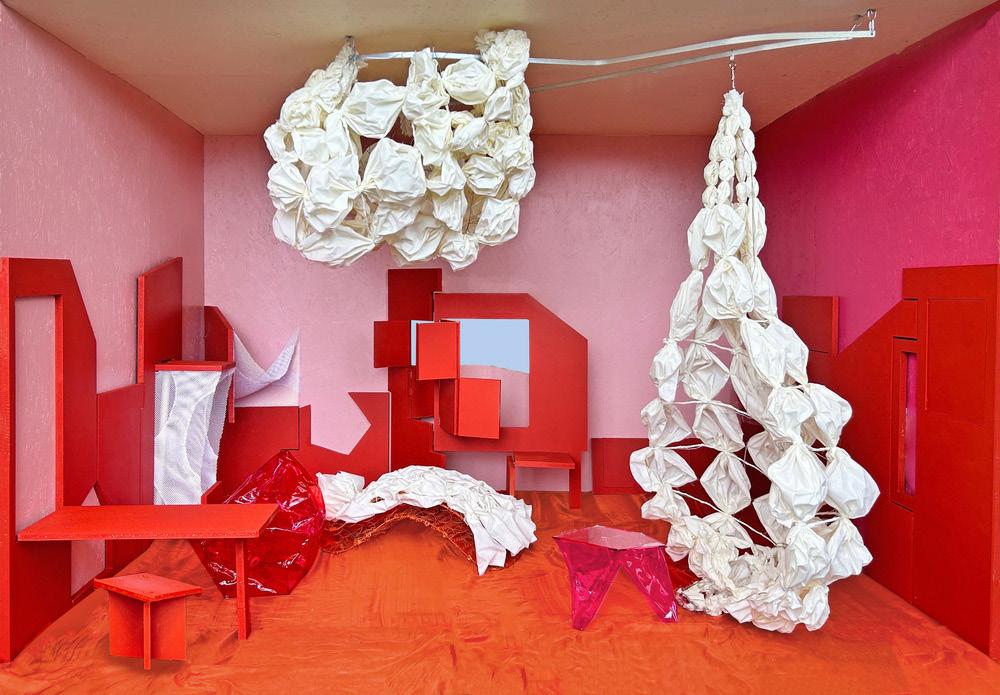
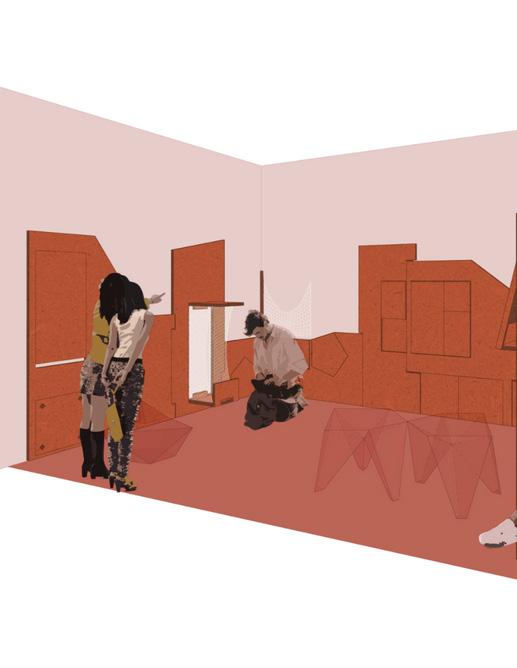
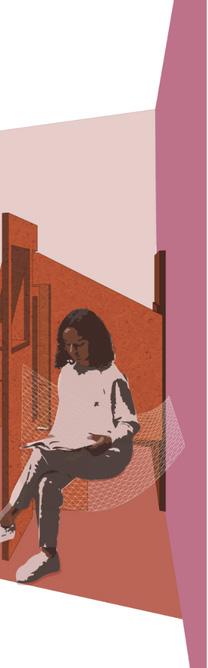
As one of five projects within Habitable Furniture, this proposal investigates how flexible fabrics and webbing systems can support human rest, storage, and interaction. By using tensile and layered materials to create multifunctional elements, the design introduces moments that challenge the idea of static space and instead encourage movement, play, and everyday use. PUBLISHED WORK HABITABLE FURNITURE STUDIO
Located on the second floor of the College of Architecture and Design, this site sits between studio spaces and faculty offices yet has historically been underutilized due to its lack of comfort and visual engagement. Guided by the semester’s focus on joy, ergonomics, and transformability, the studio explored how adaptable furniture systems could reshape this overlooked area into a space for studying, leisure, and informal gathering.
LOCATION: HOUSTON, TEXAS
PARTNERS: PAUL CHAVARRIA, WHITNEY LAU
SPRING 2023
CONCEPT SKETCHES
CONCEPTUAL COLLAGE
ISOMETRIC SECTIONAL VIEW
05 PULSE
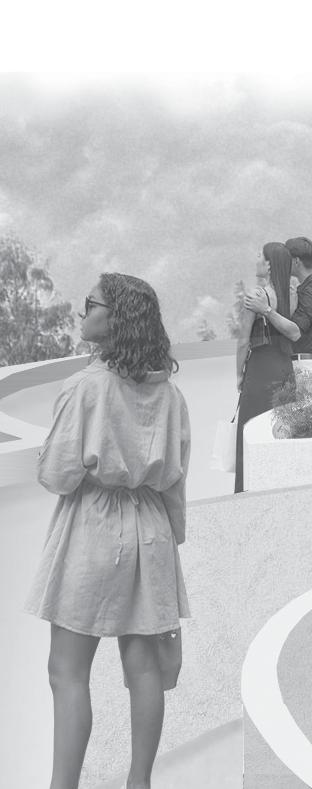
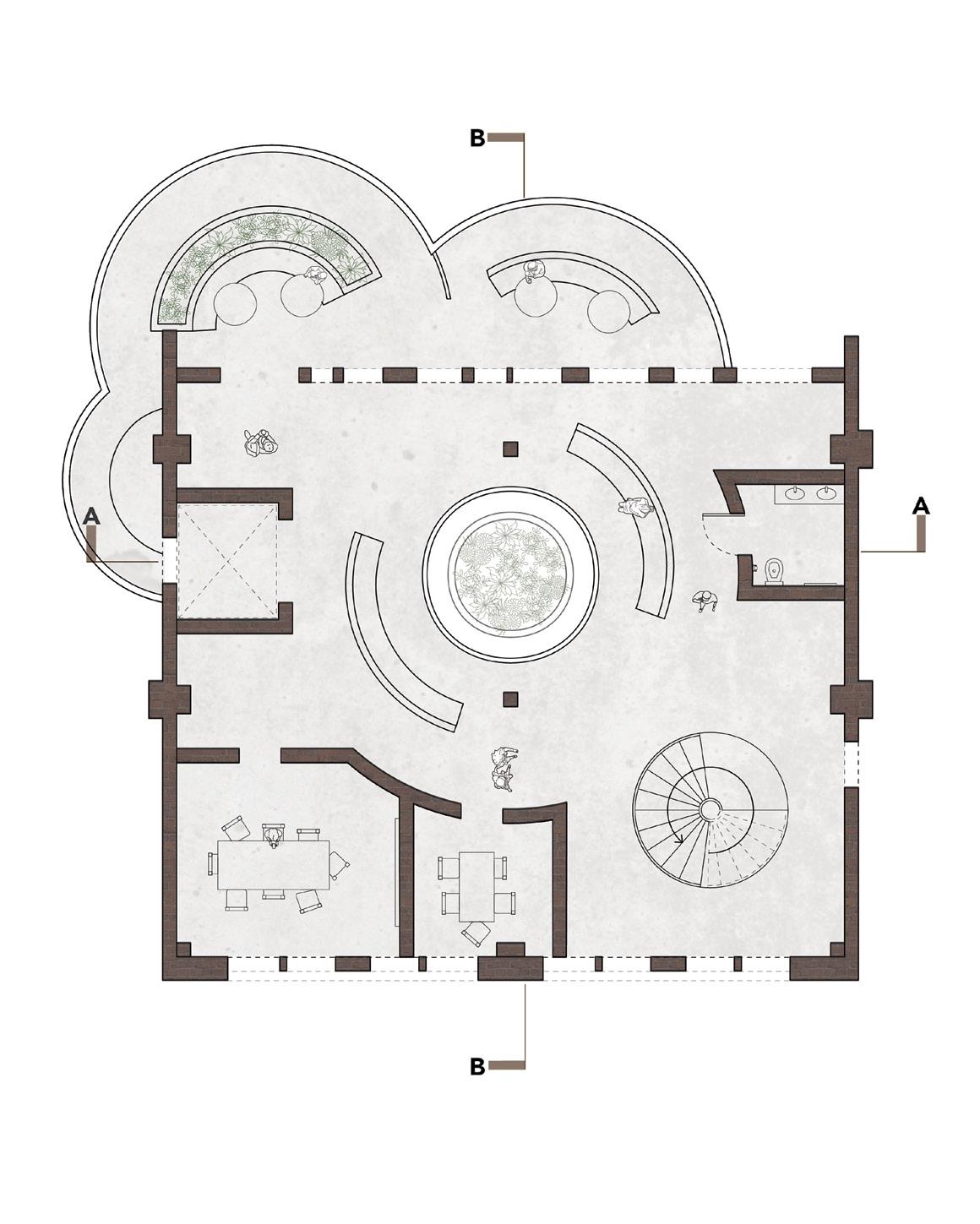
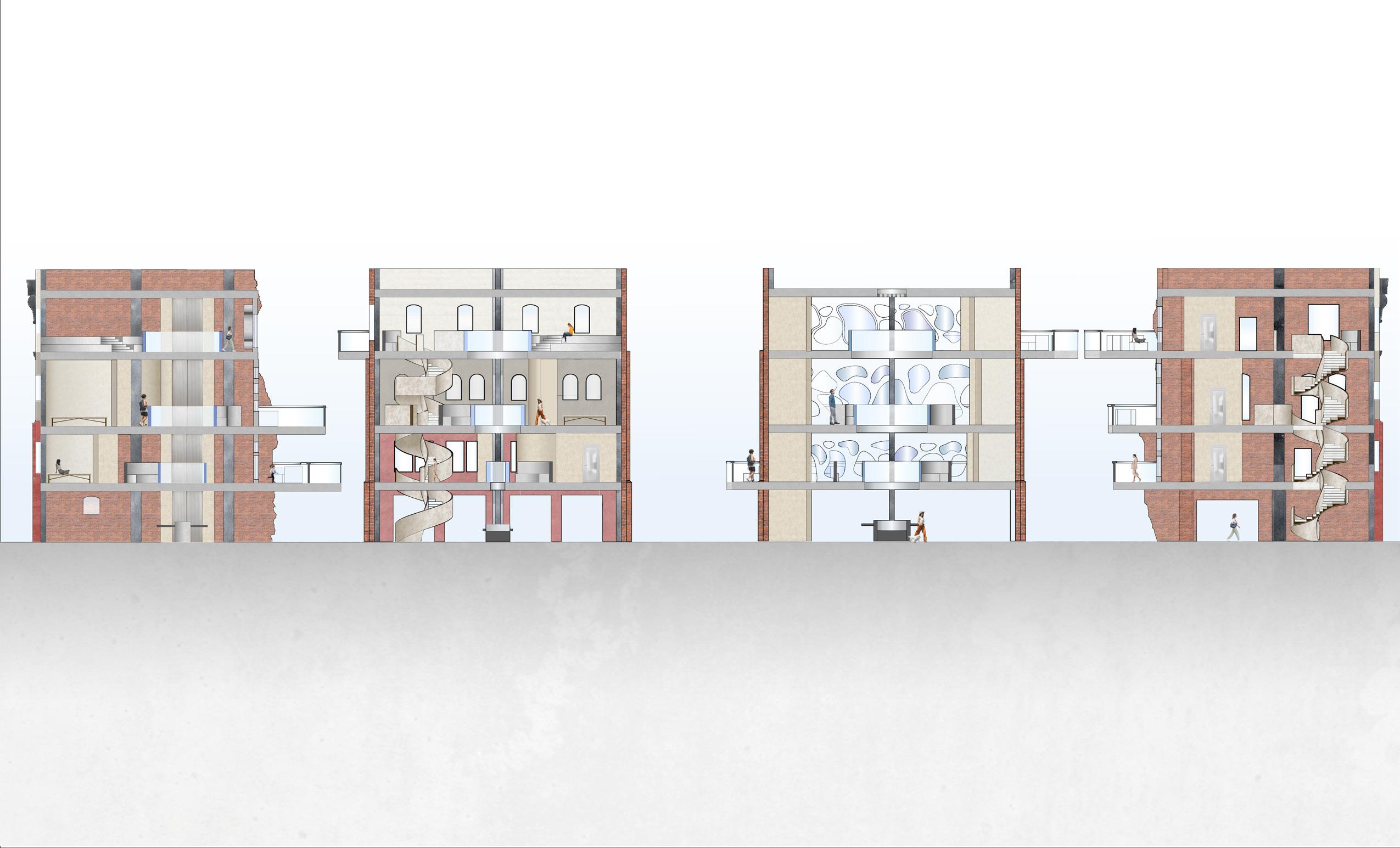
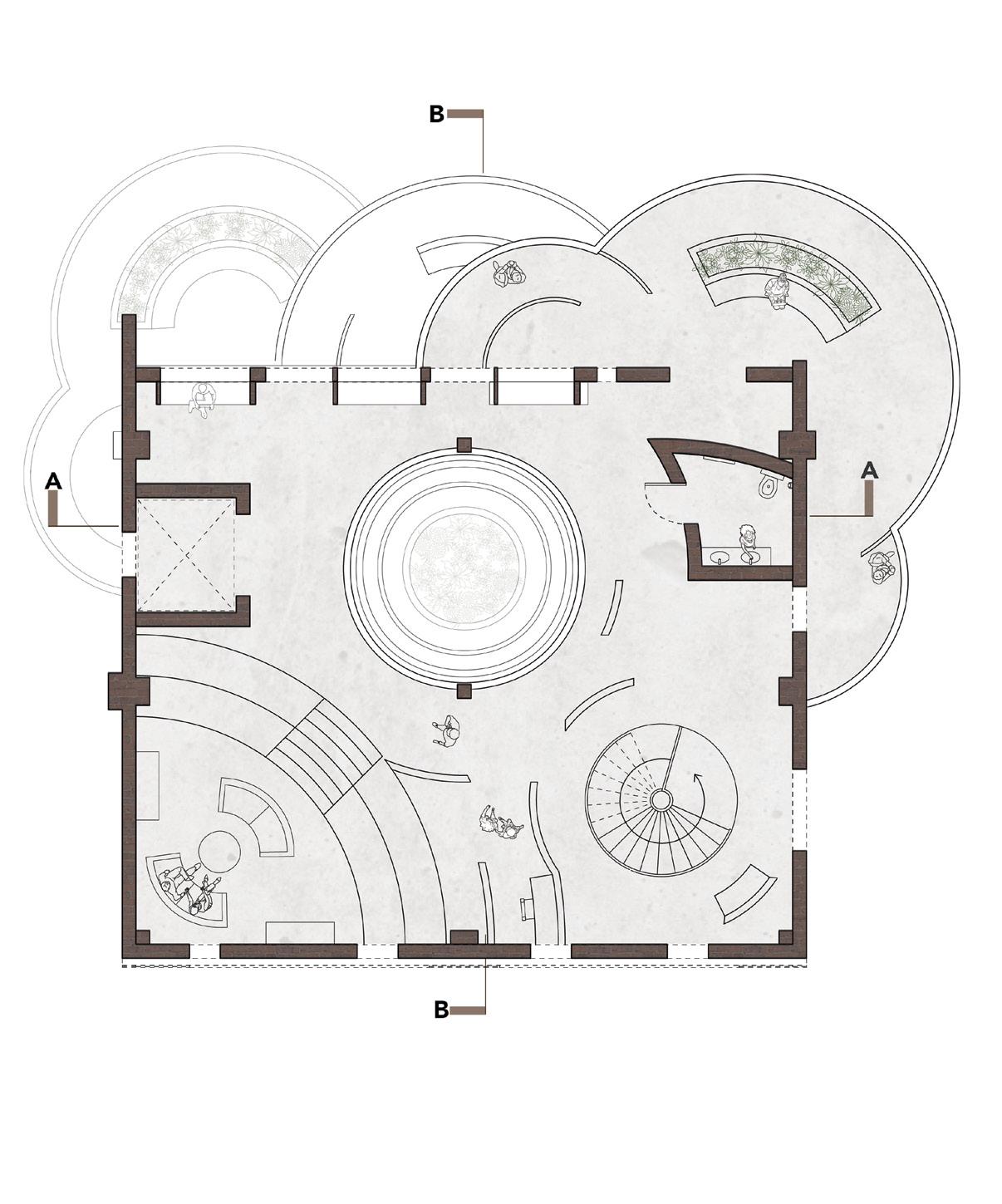
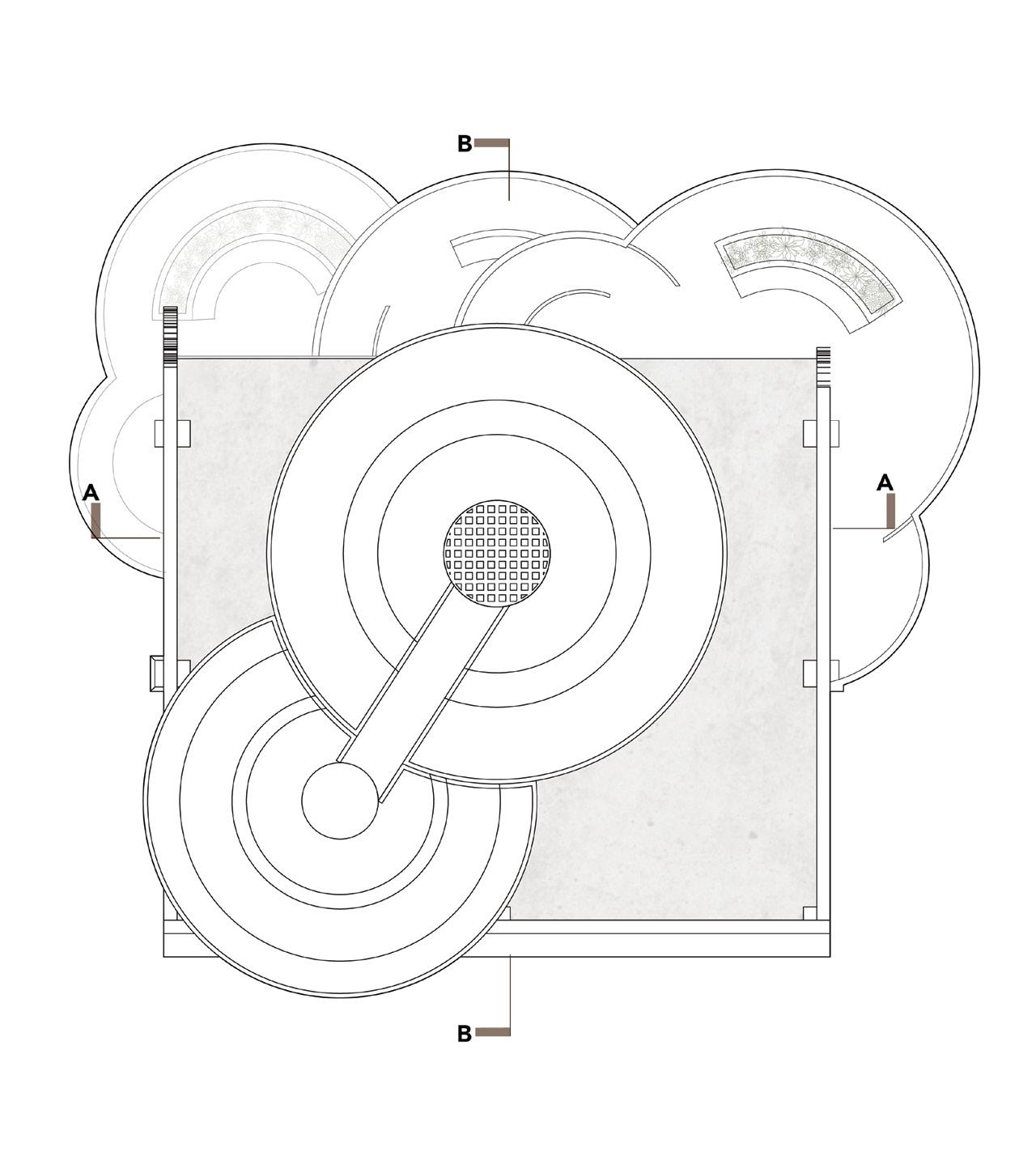
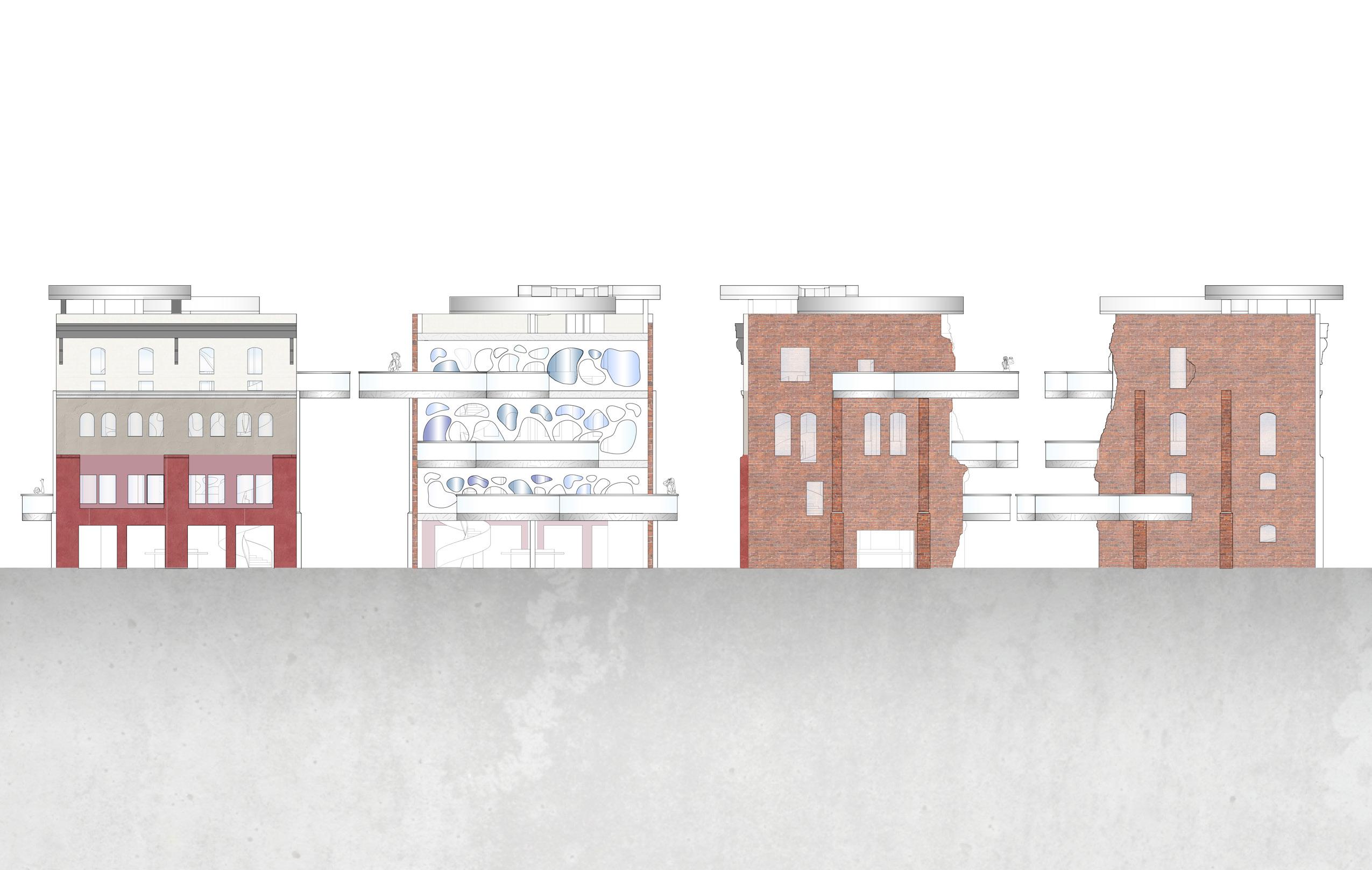
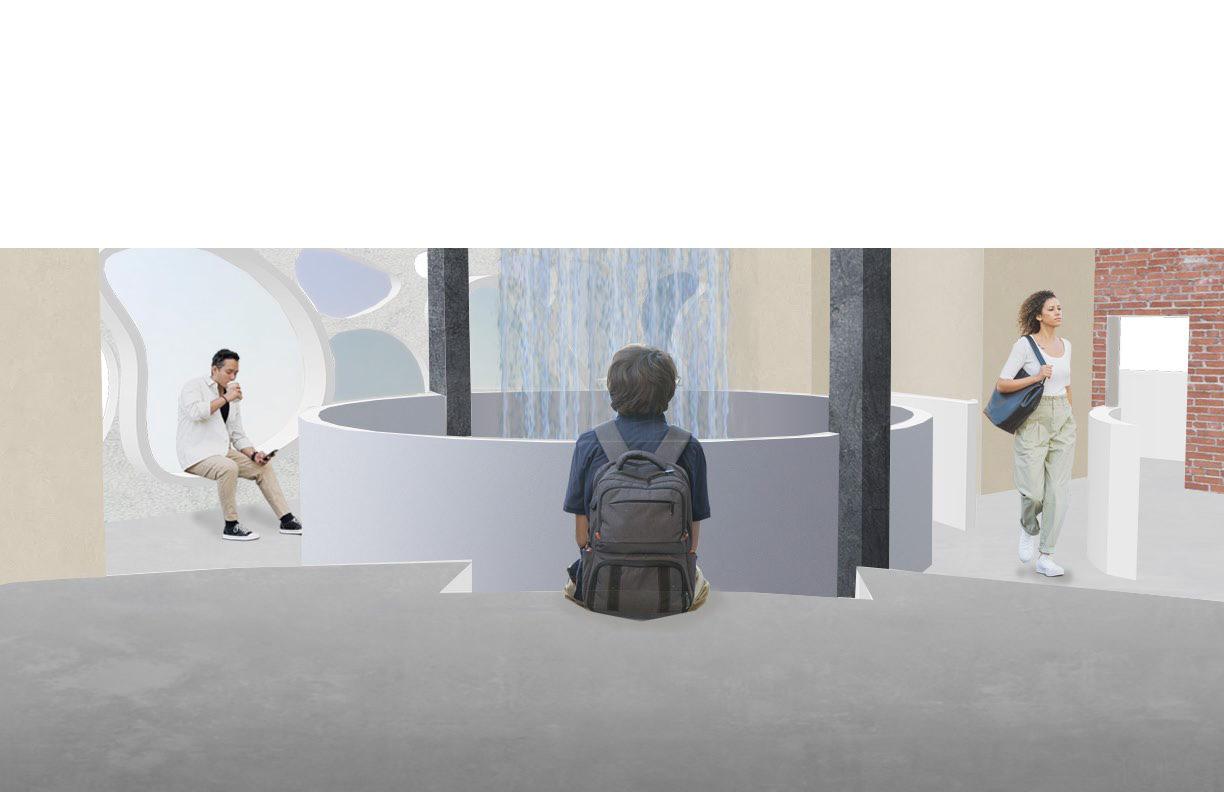
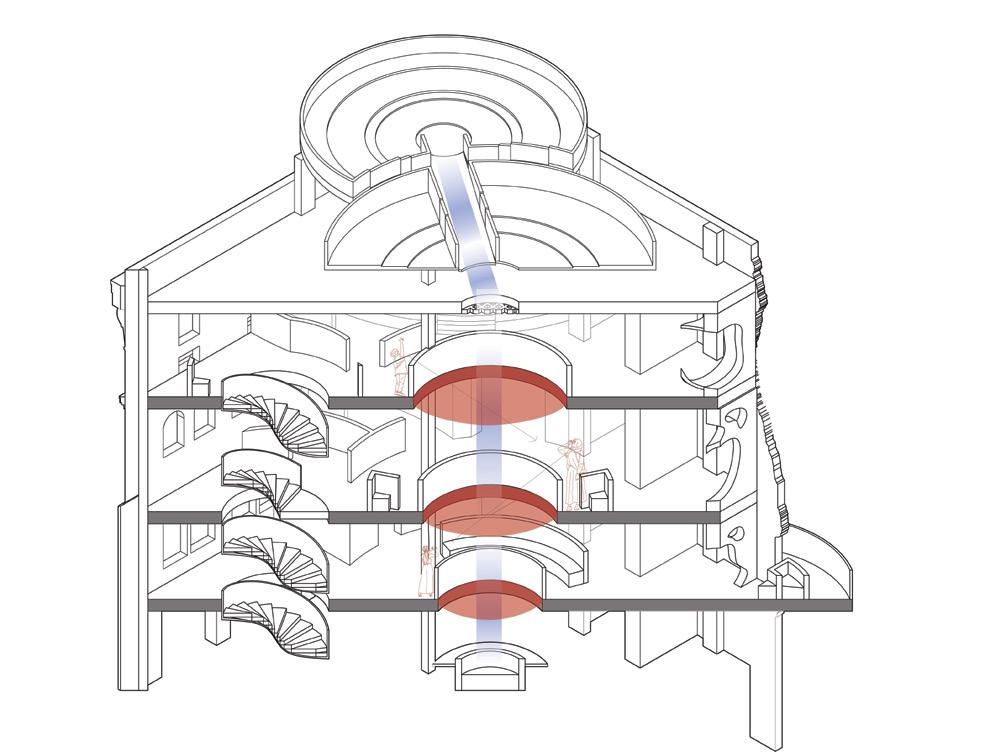
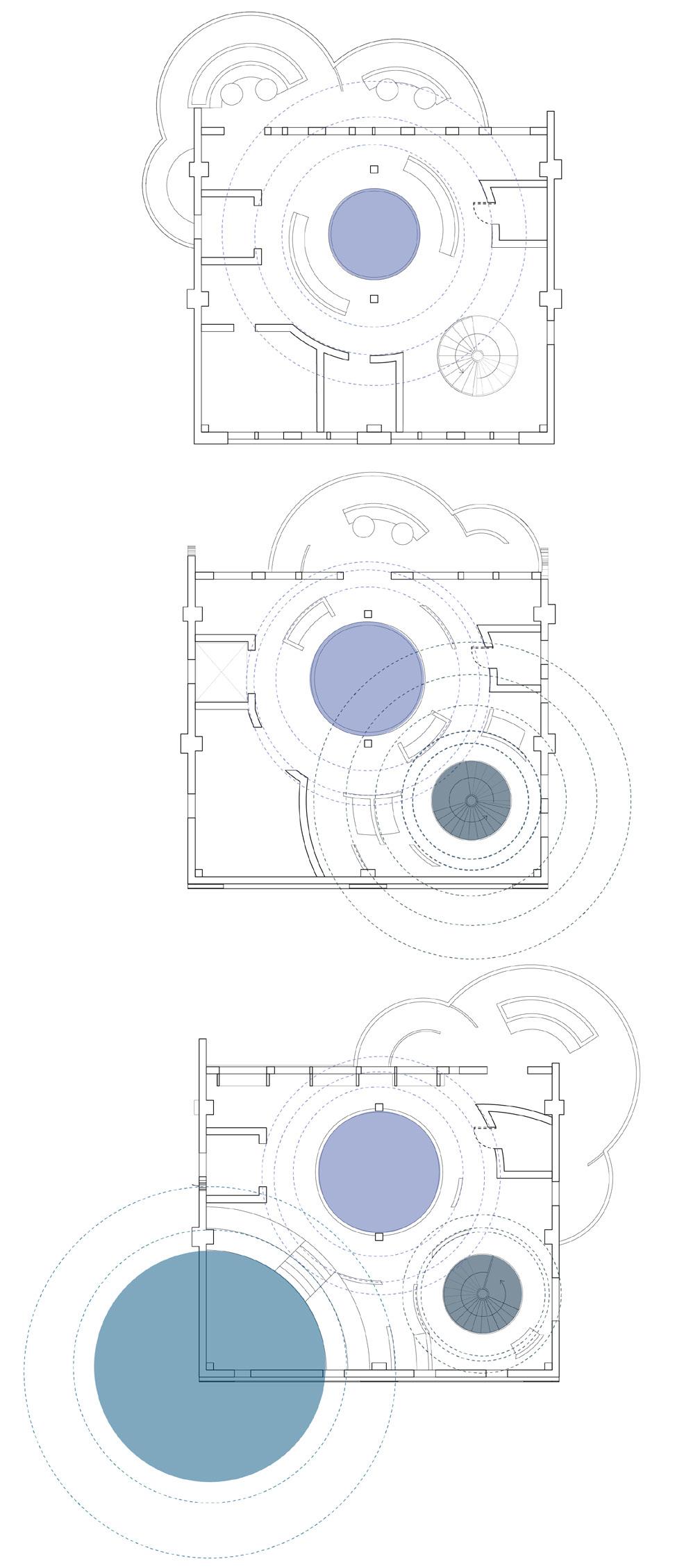
Located on Milam Street in downtown Houston, Pulse is an adaptive reuse project that transforms an aban doned building into a water filtration leisure center. The proposal collects greywater and filters it back into the community, positioning the building as both infrastructure and social space. Inspired by the move ment of water ripples, the floor plans and circulation follow rhythmic patterns that guide visitors through moments of learning, gathering, and rest.
A roof-based water collection system supports on-site filtration while balconies frame views of the neighboring park and cityscape, reinforcing the project’s connection to its urban context. By pairing education with every day leisure, from meeting friends to enjoying a coffee, Pulse invites visitors to engage with the water cycle firsthand, presenting architecture as an active participant in environmental care and community well-being
LOCATION: DOWNTOWN HOUSTON
FALL 2022
THIRD FLOOR PLAN ROOF FLOOR PLAN
WATER COLLECTION DIAGRAM
06 OTHER WORKS
HONORABLE MENTION IN THE 2025 Architect’s Newspaper BEST OF DESIGN AWARDS
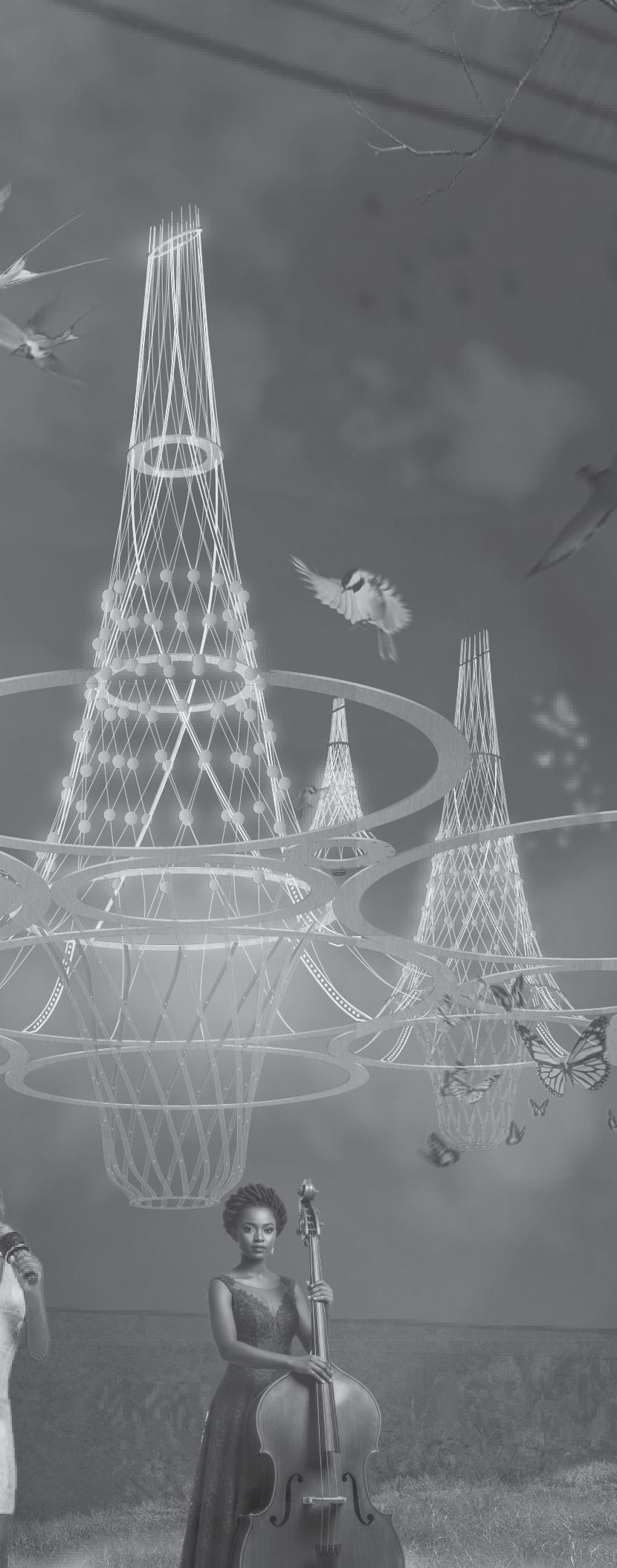
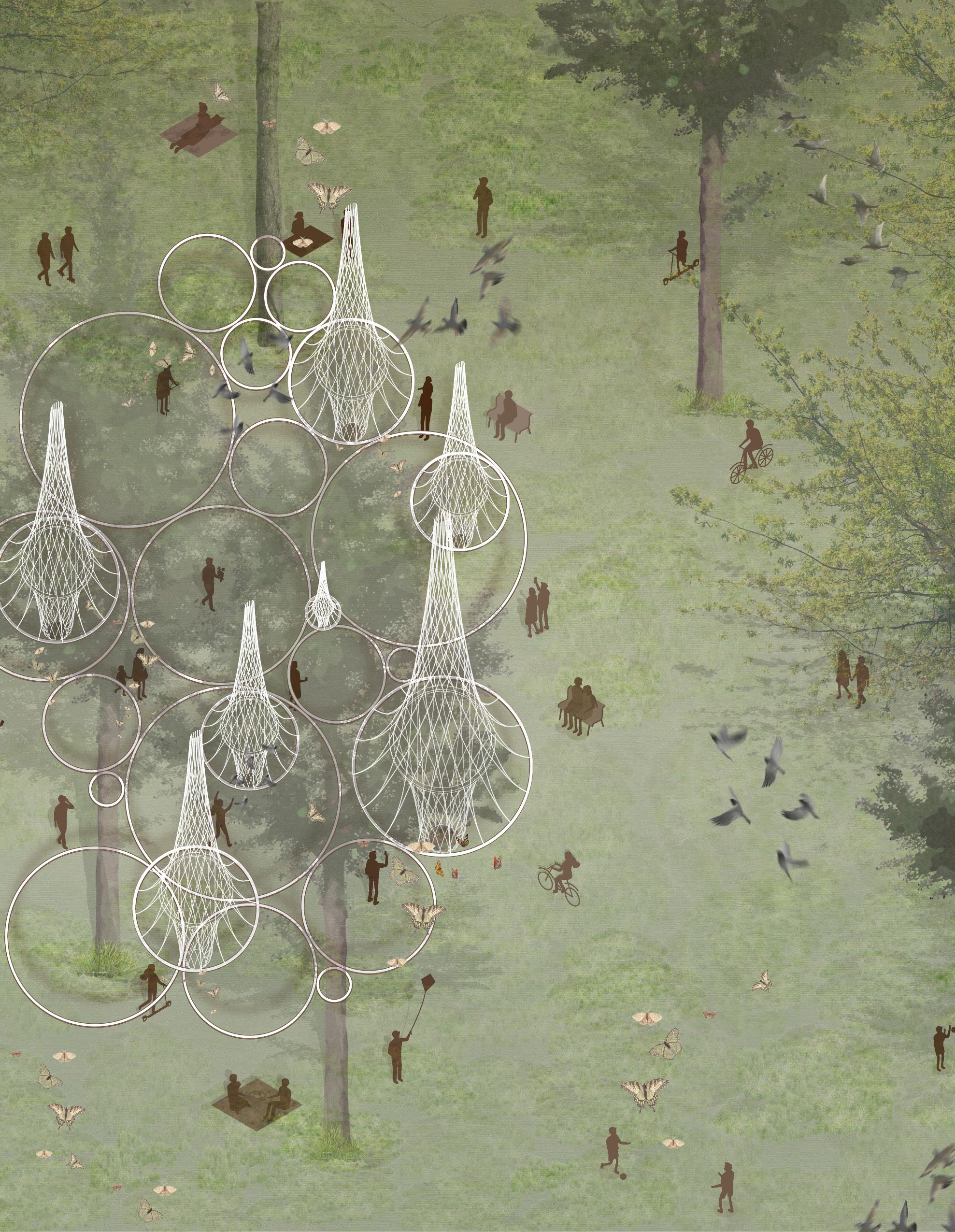
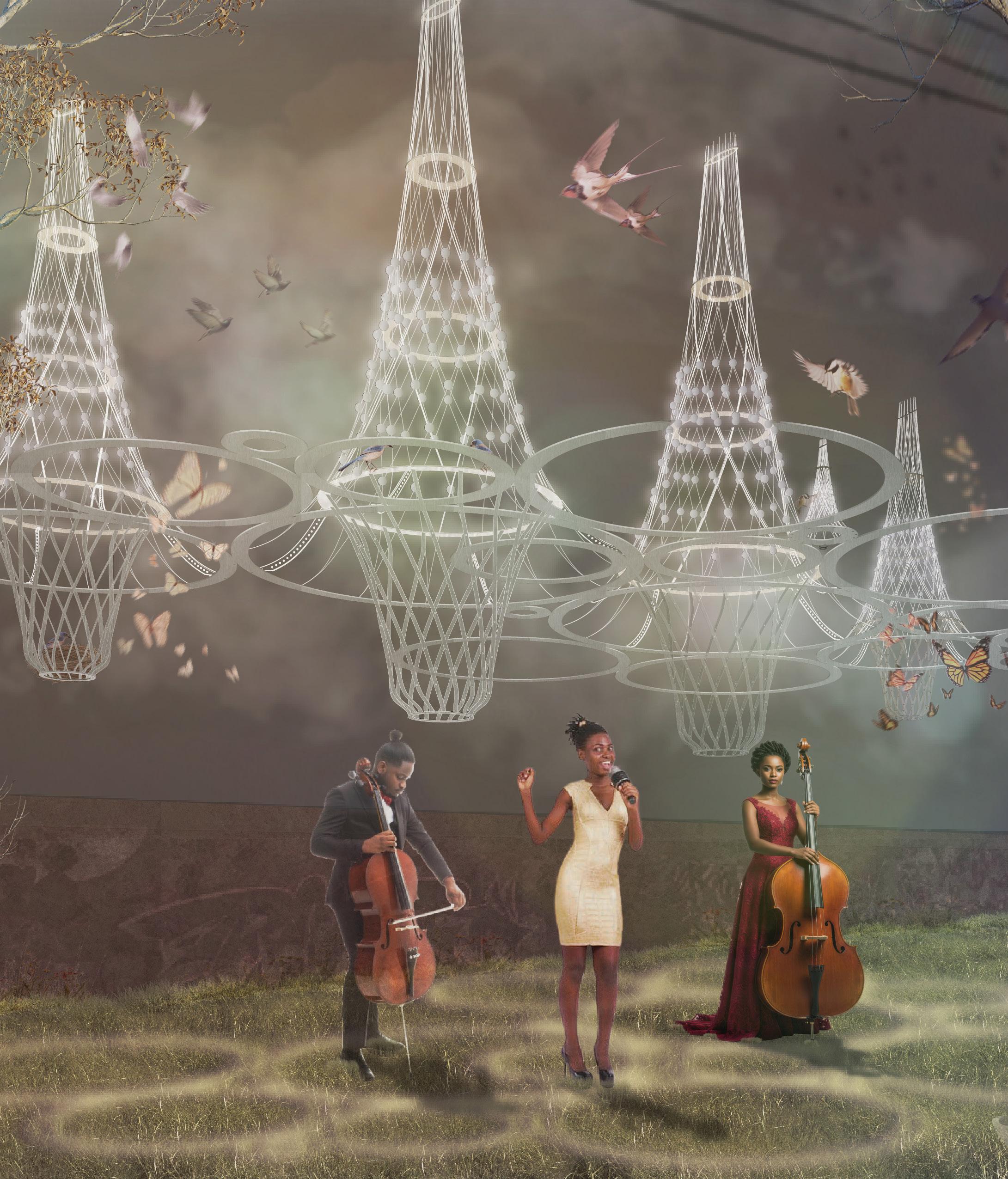
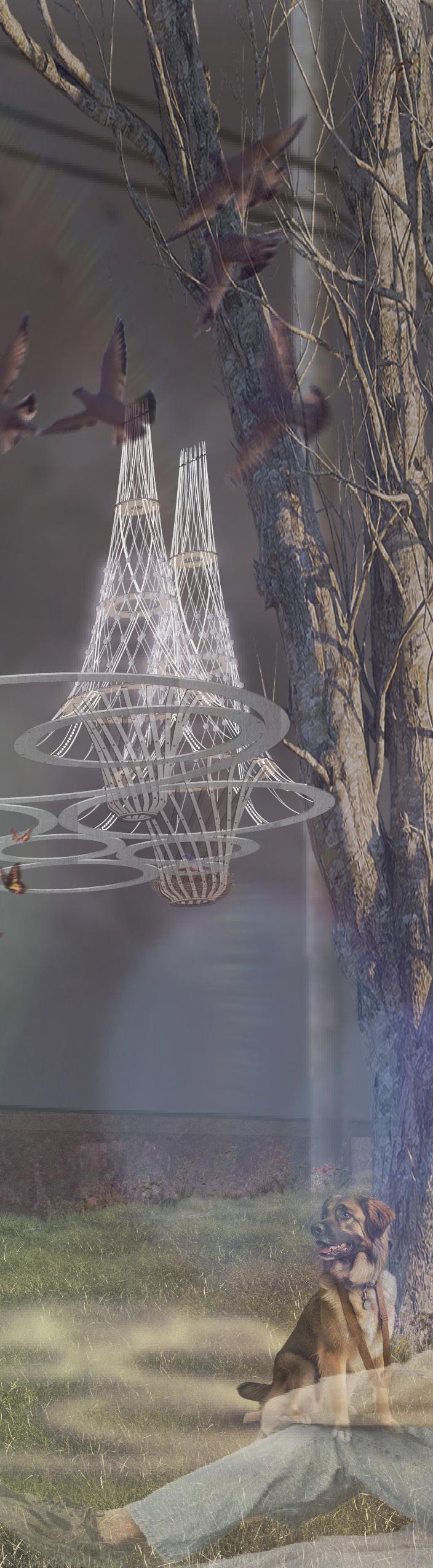
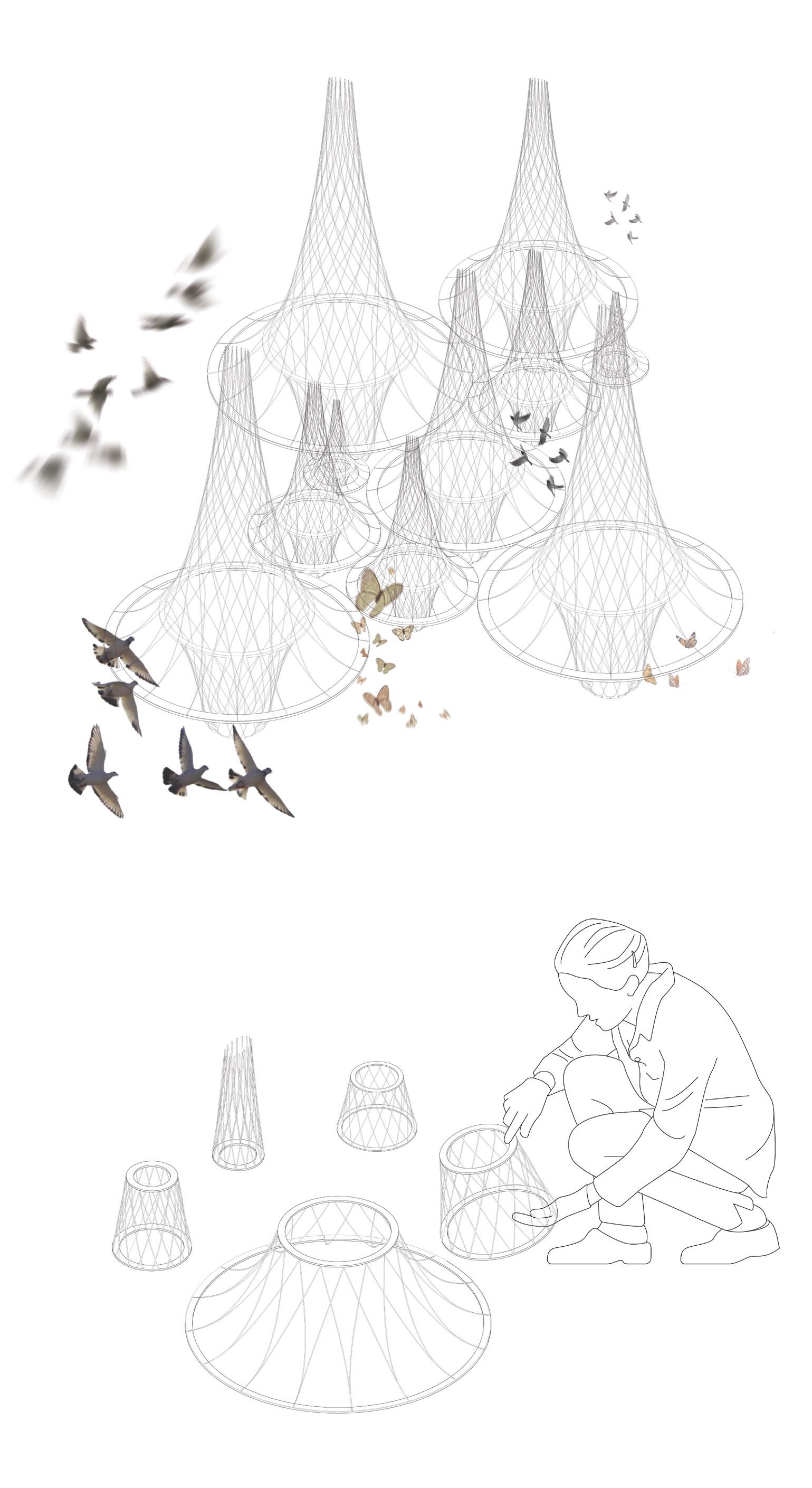
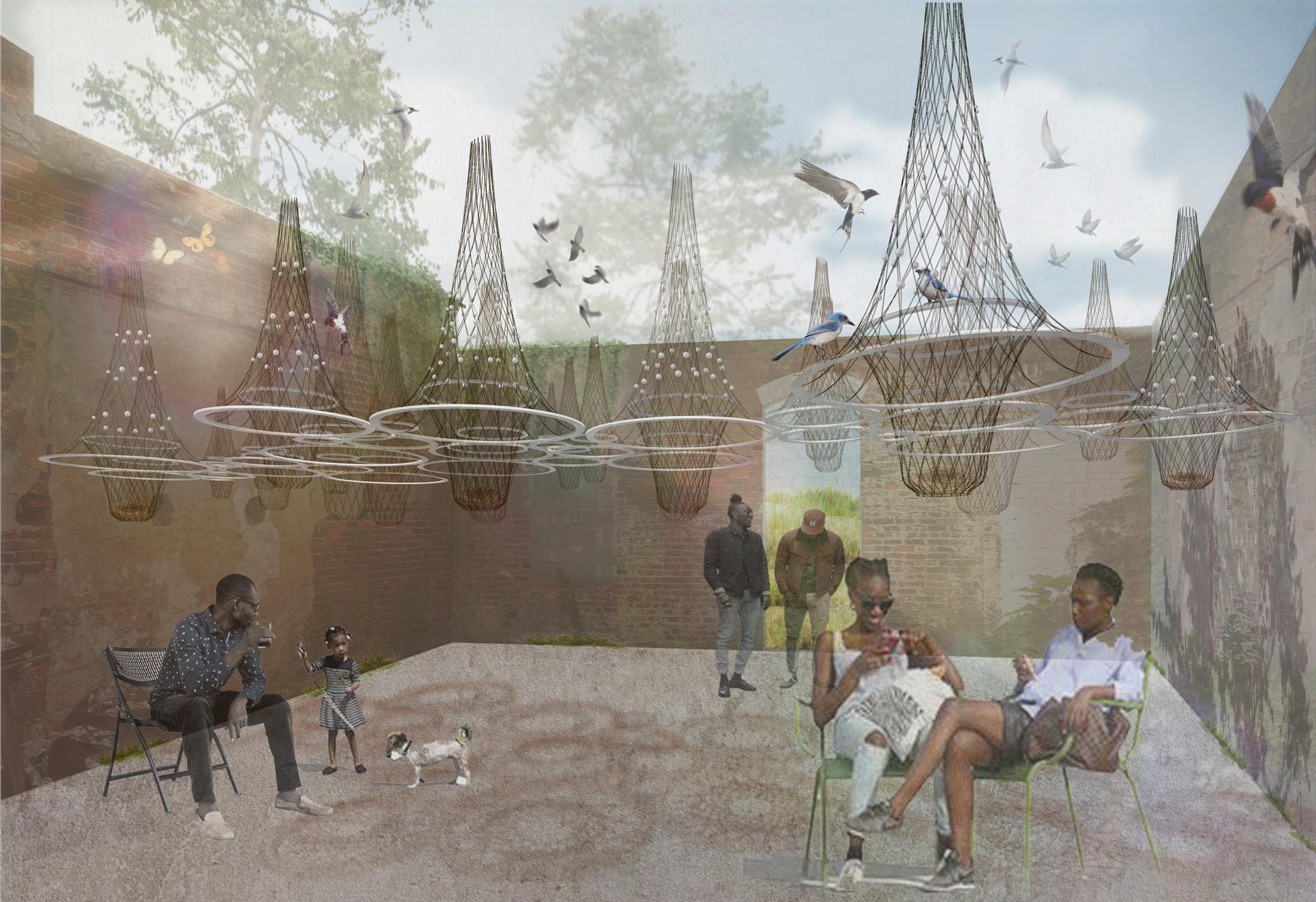
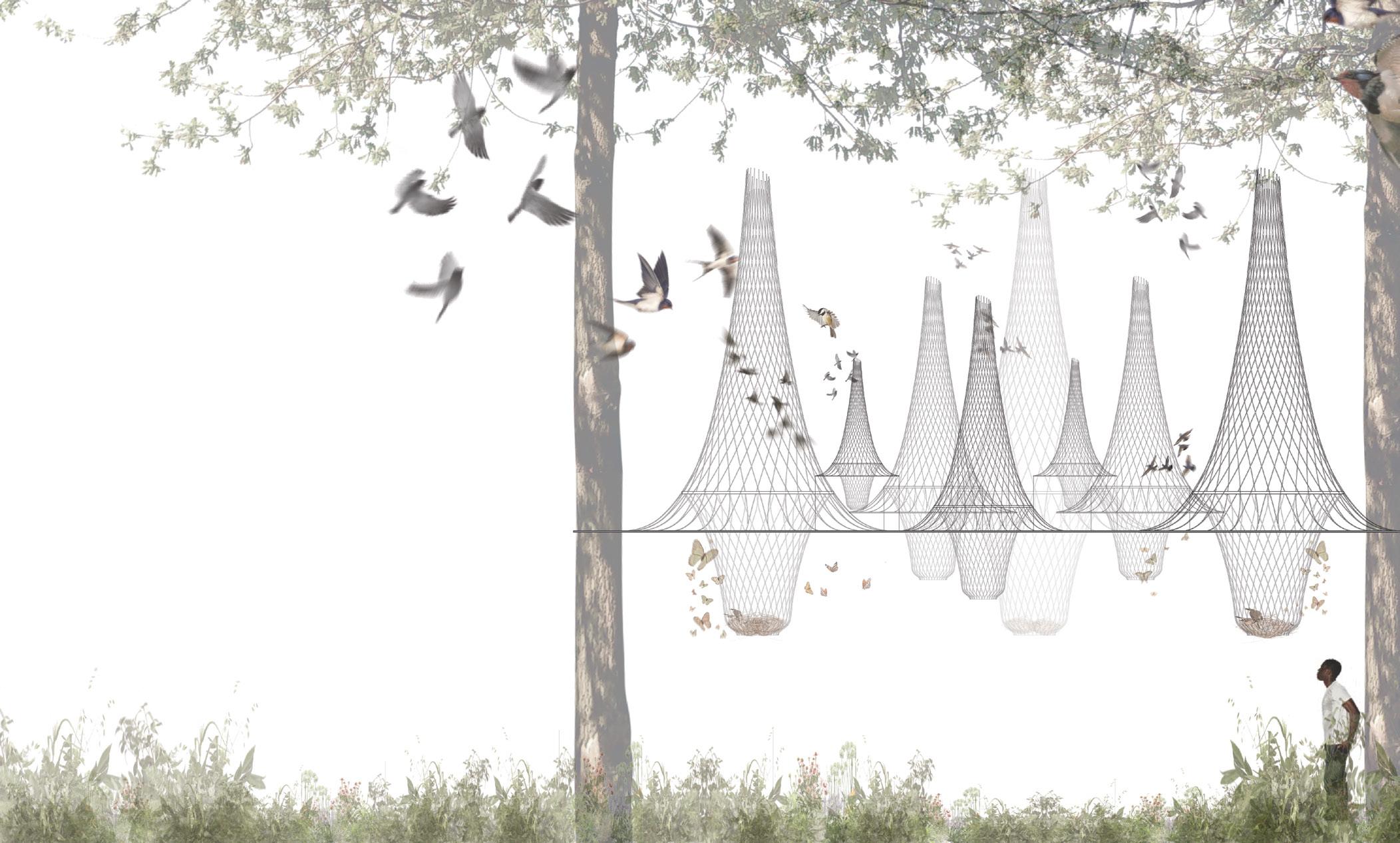
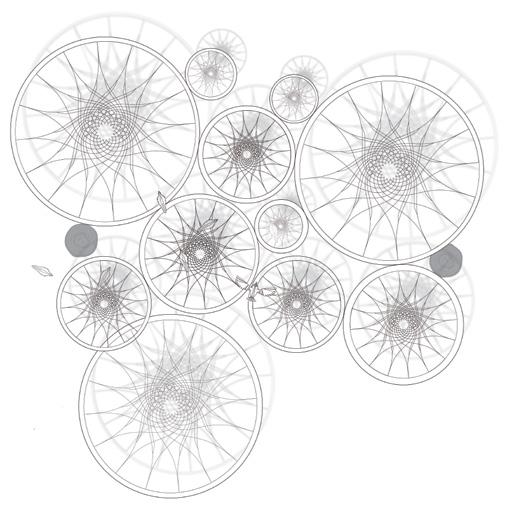
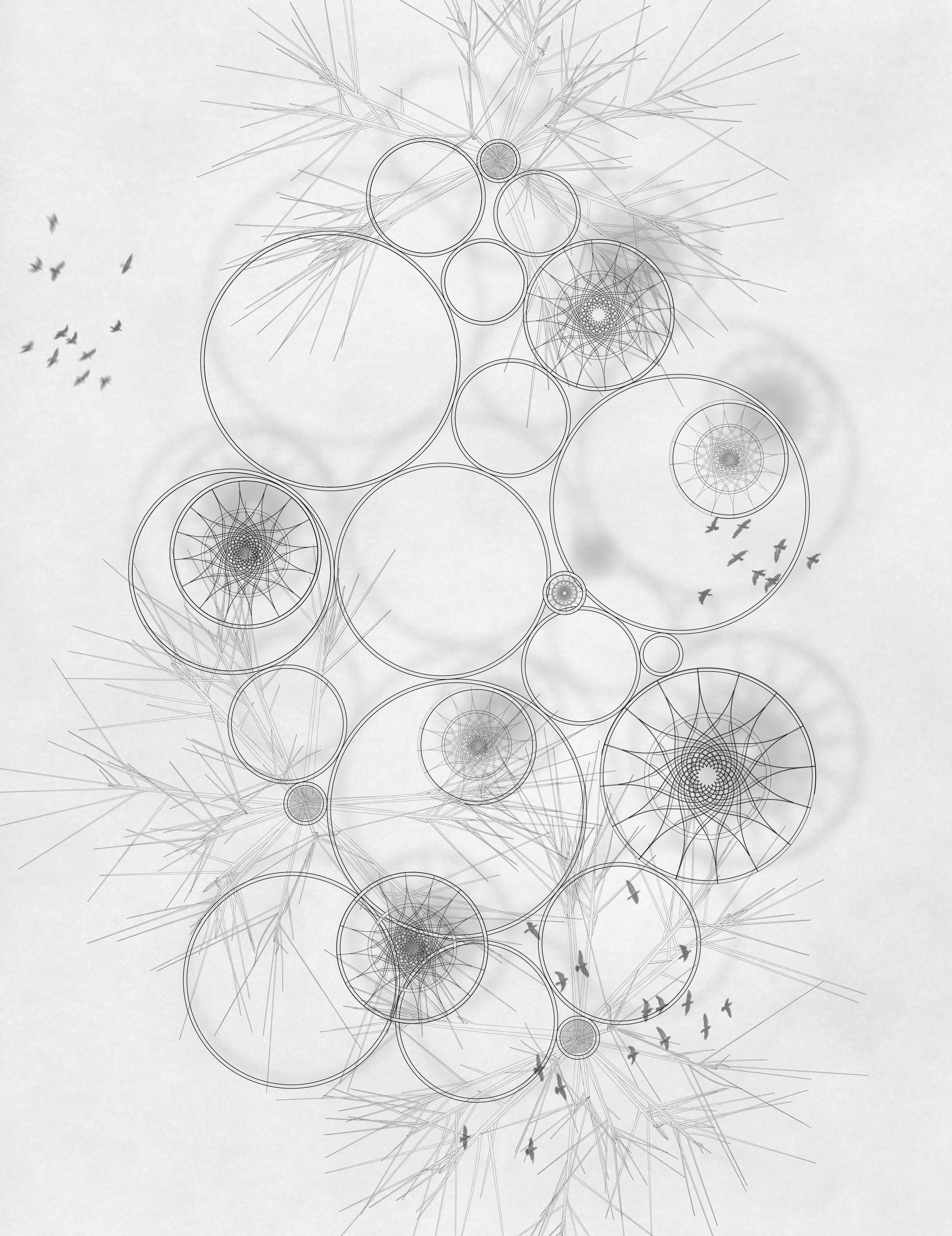
As a Research Assistant, I supported the development of Entangled Growth, a research project exploring ecological interdependence as a generative framework for architecture. Drawing from themes of weaving, braiding, and knotting, the work investigates how layered spatial systems can reveal networks of care, resilience, and collective growth. I produced architectural drawings and visual diagrams that translated these conceptual ideas into spatial relationships, material assemblies, and installation strategies.
Through representational studies, my contributions helped communicate how the project’s entangled forms, inspired by roots, hair textures, and vegetal systems, operate within cycles of memory, adaptive reuse, and regeneration. This experience strengthened my ability to bridge research-driven narratives with technical representation while working within a collaborative, exploratory design process.