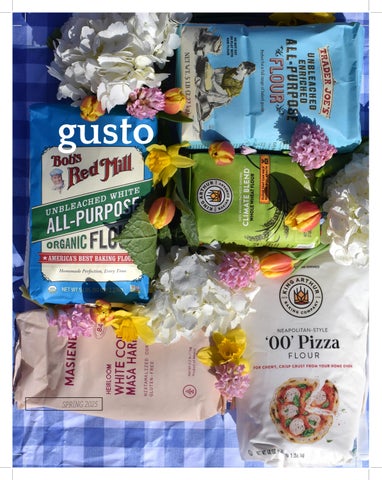
gusto
SPRING 2025
SPRING 2025
As a kid, fowers were one of my favorite things. I would beg my dad to take me along on his many trips to Lowe’s or Home Depot so I could pick out the bulbs, bushes, and annuals I wanted planted in our yard. My favorite fower has always been tulips, but sadly, in our town, the deer were relentless and always ate them before I could even set eyes on their beautiful petals. My dad’s favorite fowers were lilies, and every year we would go on adventures to scavenge for wild ones in the woods, then transplant them into our yard. Tese were the most exhilarating missions—I would be the lookout spy while my dad dug up the bright orange spotted fowers. On weekends, afer soccer, lacrosse, and hockey games, my family would come together and work in our yard until dark. When my dad was a child, my Grandpa Ed coined the term “fghting darkness” to motivate him to get everything done before it was too late. Today, we all carry on this Kufner family tradition.
While these last four years at Boston College I haven’t had my own yard to work in, the grounds crew on campus does quite an extraordinary job. Every year, almost overnight, the fowers in front of Gasson or in the classic BC outline change from maroon and gold pansies, to mums, to tulips, each representing the seasons of the year.
Te most magical moment on campus is the day the tulips pop—when their petals are perfectly fanned out, all slightly tilted to the sun, and arranged in a precise geometric formation. Te changing of the fowers on campus has been something I’ve looked forward to every year as an undergraduate at BC. Now, like the fowers, it is time for my life to change. Flowers can represent an end, but also a new beginning as I look ahead to post-grad life. Te beautiful thing about fowers is that they have the ability to return each year—just like I will always be an Eagle and come home to the Heights.
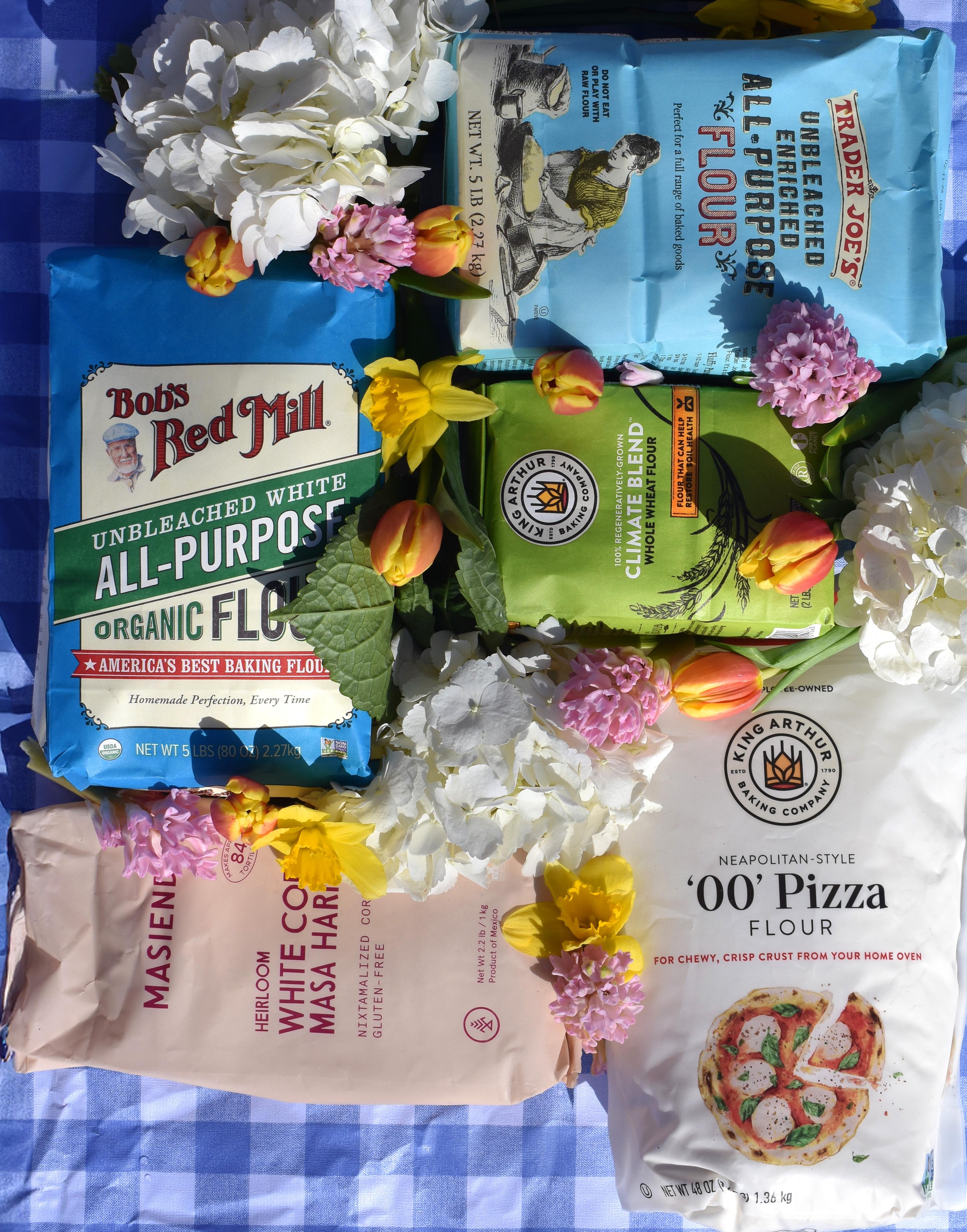
Tis edition of Gusto combines the beautiful fowers around us with the various four we use in our cooking. Homophones that mean vastly diferent things but ofen come together so naturally. Te beauty of a freshly picked bouquet on a table with newly baked bread. Flour & Flower is a combination of joy and goodness in this world. It is about using fowers in food, experimenting with four for the perfect taste, and exploring bakeries throughout Boston. As my fnal edition, this is the culmination of the budding passion I had for Gusto my freshman year—a passion that has now fourished into a full fower, open to the sun and possibilities, yet still rooted in the memories of the past and reaching toward the future.

Keep on Cooking, Margaret Kufner
Spring 2025 ISSUE 13
EDITOR-IN-CHIEF
MANAGING EDITOR
CREATIVE MANAGER
MEDIA AND MARKETING MANAGERS
FEATURES AND ESSAYS TEAM
MUCHO GUSTO TEAM
CREATIVE TEAM
COPY TEAM
MEDIA AND MARKETING TEAM
Margaret Kufner
Sydney Luciano
Madeline McCormick
Adeline Kim, Katie Ballard
Katie Mangraviti, Hannah Phillips
Keira Tu, Sydney Baratta
Alyssa Turay, Kate Johnston, Katie Ballard, Colleen Fogarty
Katie Holmes
Julia Colone, Ruby Levine
Keira Tu
Margaret Kufner and Sydney Luciano
By Ruby Levine
By Alyssa Turay
By Katie Ballard
By Katie Mangraviti
By Julia Colone
By Sydney Baratta
By Adeline Kim
By Hannah Phillips
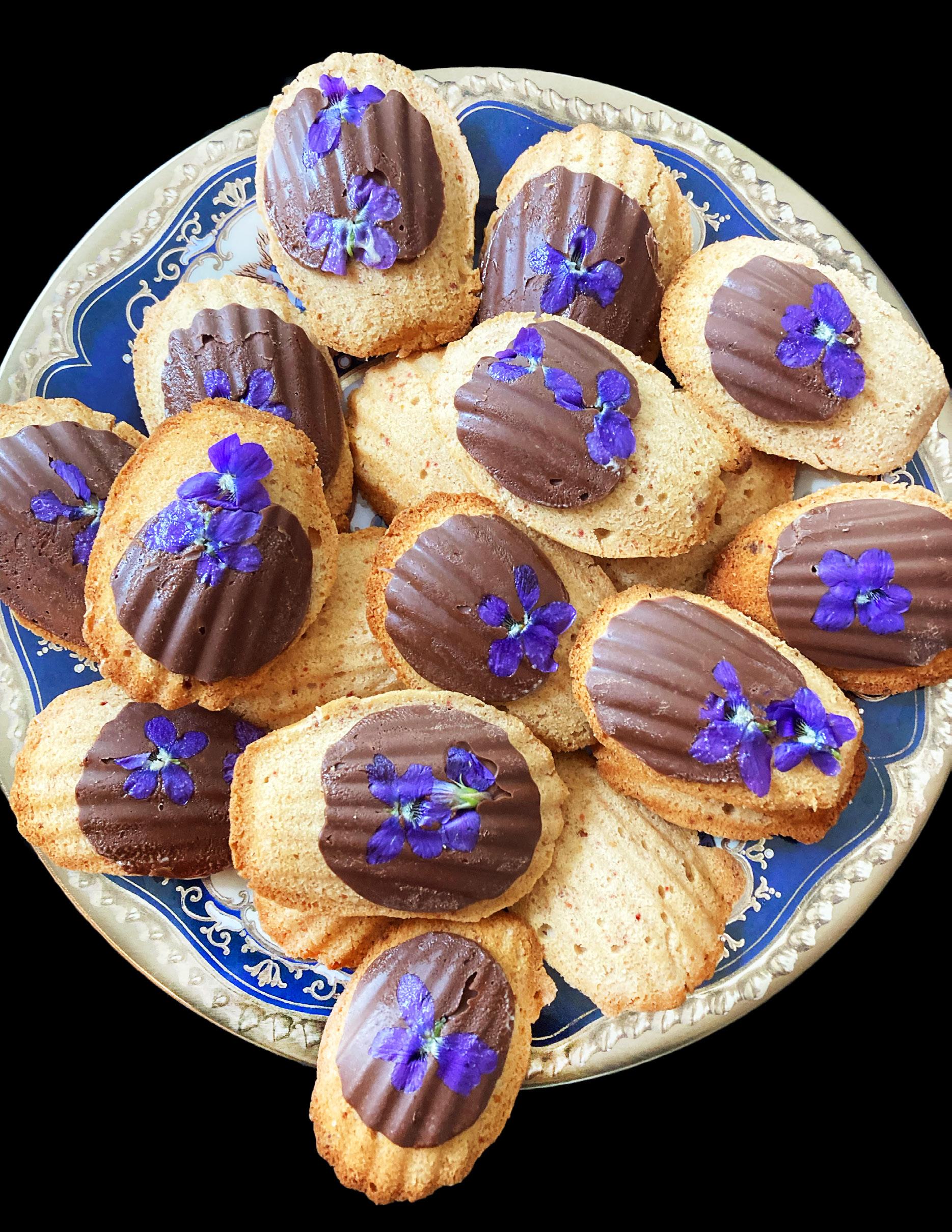
I can’t recall exactly when it began, but I have had a deep interest and passion for incorporating fowers into food that has spanned about a decade. My earliest memories of my interest are at Kew Gardens in London when I encountered a cookbook in the gif shop titled “Cooking with Flowers” which was written by Miche Bacher. She founded Mali B Sweets in Greenport, New York, a bakery that was known for its unique use of herbs and fowers in their treats. Te book went through the diferent ways to incorporate fowers into food, particularly sweets. She detailed the usage of peonies, lavender, borage, roses, daylilies, dandelions, and more to make edible treats. Te book opened up a whole new world of baking and cooking for me that was appealing both aesthetically and conceptually. A way of cooking and baking that would bypass a trip to the grocery store for a trip to the garden. As I became more comfortable, I began to venture from the book more and experiment with my own recipes and favor pairings. Over the years of learning how to incorporate edible fowers into my food, I have had many successes and disappointments; here is my rose bud thorn for those experiences of learning how to work edible fowers into food.
Te frst thing I ever remember making with fowers came from my cookbook. It was a recipe for dandelion mufns that I made for Mother’s Day which quickly became a staple. Tank goodness it was a rose and not a thorn. Had it not been a success, I’m not sure if I would have continued to kindle my passion for edible fowers. I remember walking through the neighborhood on a warm May morning collecting dandelions from neighbors’ yards in a large Ziploc, then washing them and removing their petals before mixing them into the batter. Disclaimer: please exercise caution in picking dandelions and other fowers that may be potentially sprayed with pesticides or other potentially harmful lawn treatments.
Te process of plucking something seen as undesirable from my yard and turning it into a delicious baked good got me hooked on this concept. As I mixed the petals into the batter, watching it swallow these tiny yellow petals, it felt a bit wrong. I felt like I was defying the rules of nature by adding it to my food…but upon the frst bite my doubts were quelled. Te mufns were delicious, like Spring in baked form, however the fower favor was hardly detectable. Dandelions lack strong favor but are well complemented, as suggested in this mufn recipe, by honey, dried apricots, and almonds. For those looking to incorporate fowers into their food subtly, dandelions might be a good starter fower for you.
A little later on, I remember discovering nasturtiums. Tey sharply contrasted the more delicate dandelions with a distinct peppery favor that really shone through in dishes. I grew a small patch of nasturtiums from seed on the side of my house that my brother and I would pick of and eat.
Tey come in vibrant fery colors: reds, oranges, and yellows and their leaves have a nice peppery kick as well, comparable to less bitter arugula. Nasturtiums work amazingly in savory dishes, which sets them apart from most edible fowers. Tey make a nice addition to a crisp lemony salad as well as whipped into cream cheese for a bit of spice. Tey also serve as a beautiful garnish for soups, charcuterie boards, or whatever else strikes your fancy.
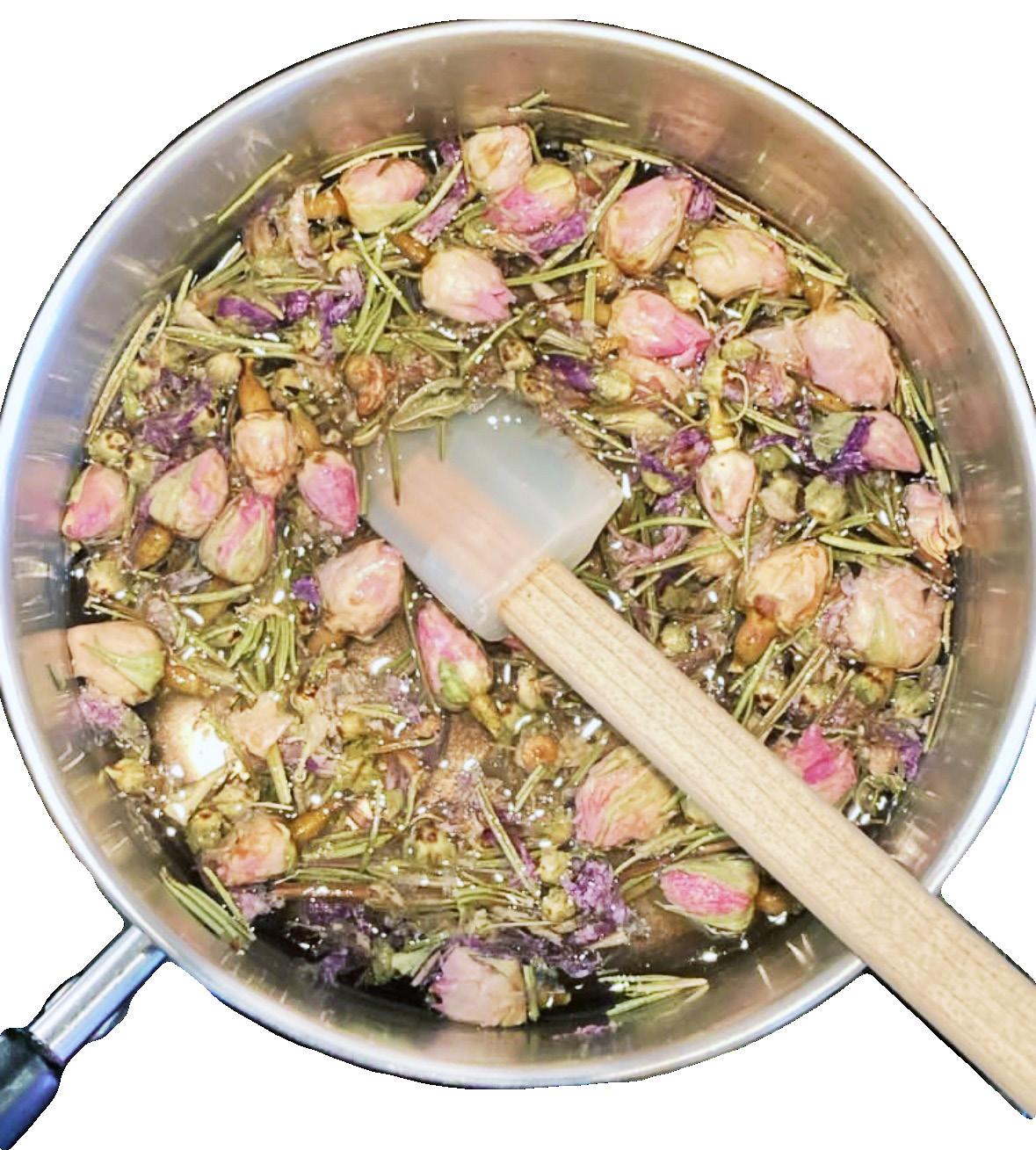
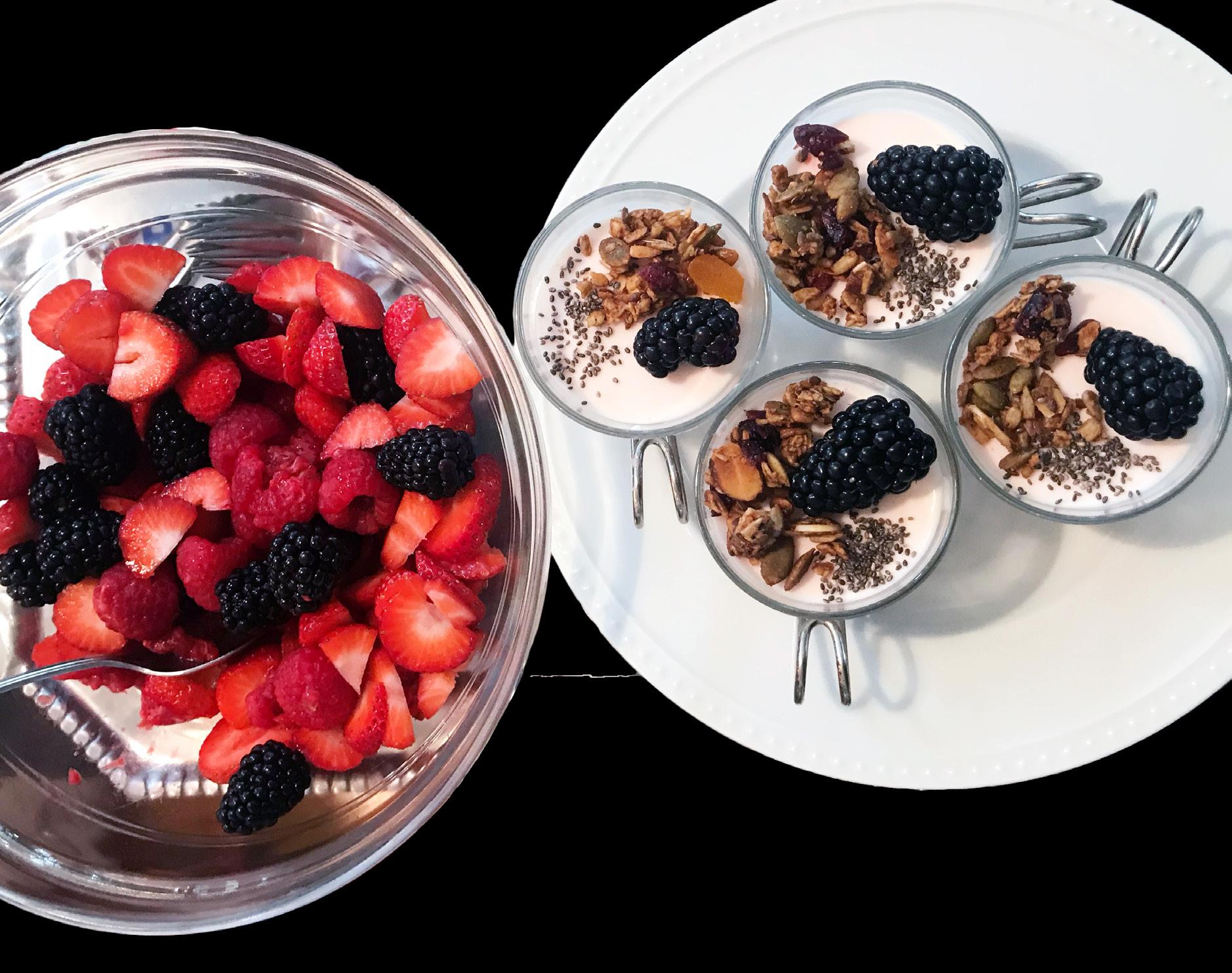
deeper roots of the practice with rose and orange blossom favored products. I am a big fan of rose jam. It pairs nicely with sof cheeses or in lattes and matchas. I’ve used fresh rose petals in cream cheese similar to the addition of nasturtium fowers although in the sweet category. Roses are always my go to edible fower for a nice addition of favor, texture, and of course decoration as a bright pop of pink on cakes. My sweet Nainai caught wind of my love for fowers and once shipped me dried rose buds and butterfy fowers. While both make delicious teas when steeped in hot water, I have also loved using them to make foral syrups for drinks. When rosemary and the dried rose buds are combined, the resulting favor is complex and delicious. For cofee lovers, the marriage of the foral rose and earthy rosemary favors makes a delicious pairing with espresso.
Many cultures have ties to edible fowers, and another great example is the use of hibiscus fowers in Mexican cuisine. Many Mexican restaurants have a big drink cooler of dark pink-purple agua de jamaica or simply “jamaica”, a drink made from sweetened iced hibiscus fower tea. It has great acidity and favor that makes for a refreshing beverage to complement warm and spicy Mexican favors. In my opinion, hibiscus and nasturtiums are the best fowers for favor: unique, diferent, and favorful. Hibiscus adds complex favor to the dish in addition to its aesthetic element. In Mexican/Hispanic grocery stores you can ofen buy a bag of dried hibiscus fowers for jamaica if you want to recreate the drink at home. Tere is similar savory usage of fowers in Mexican cuisine using for de calabaza or squash blossom. Tey are ofen used in two types of dishes, the frst being stufed squash blossoms which are commonly flled with cheese and lightly battered, and the second being inside quesadillas opposed to a form of protein. Tey are simple but delicious, containing only cheese and squash blossoms. I had these at a quesadilla stand in Coyoacan Market in Mexico City. Te squash blossoms don’t have a strong favor but impart a fresh texture and subtle squash taste in complement to the hearty corn tortilla and decadent melted cheese.
So there’s the rosy picture of my experiences with edible fowers. Now, here are some of the “thorns” if you will.
Not every fower tastes good. In my opinion, not even all the ones promoted by my edible fower bible were worth incorporating into food. At frst I was lost in the excitement of the fact that you can eat all of these common fowers. But, once that novelty wore o realized that some fowers simply should not be eaten, should be reserved solely for decoration or have been picked at the wrong time. Flowers, much like fruit, have a window of deliciousness. lesson I learned through elder trip and we pulled of at a scenic spot where there were elder I was so excited. I had never had these delicacies before, with the exception of an elderfower syrup purchased from IKEA. wild elderfowers, a totally new and exciting thing. A into our hotel at nearly midnight, I quickly started a kettle of tea, determined to try this elderf as the water boiled, then again as I poured the tea over the colored elderfower. Once it had taken on a slight color, I was ready to sample. It had been just about all I thought about that day, carefully placing it between my brother and I on the middle seat throughout the drive. I took a sip and it was bad. Immediately pungent and unpleasant. It didn’t warrant more than a second sip of confrmation for me to decide to pour my labor of love down the sink along with my dreams of a deliciously foral wild elder
Upon further research, I learned that if not harvested within the proper window, or afer a lot of rain, elderfowers take on an unpleasant smell and taste, and while they are still technically edible, are not worth foraging for.
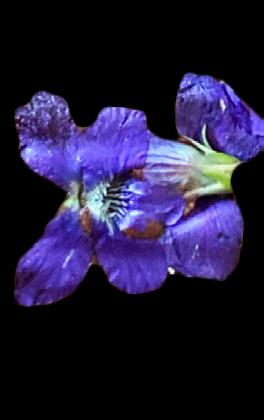
My other thorn is also related to a foraging mishap, although I’m afraid this one is a little bit more of a personal error. I was in elementary school and as an open ended history project, I decided that I was going to make violet pudding for my class. We were learning about Medieval history and I had somehow related that unit to violet pudding in a pitch to my teacher (I was clearly obsessed). While my brother played a soccer game, I wandered the felds with a gallon Ziploc bag picking violets for my pudding.


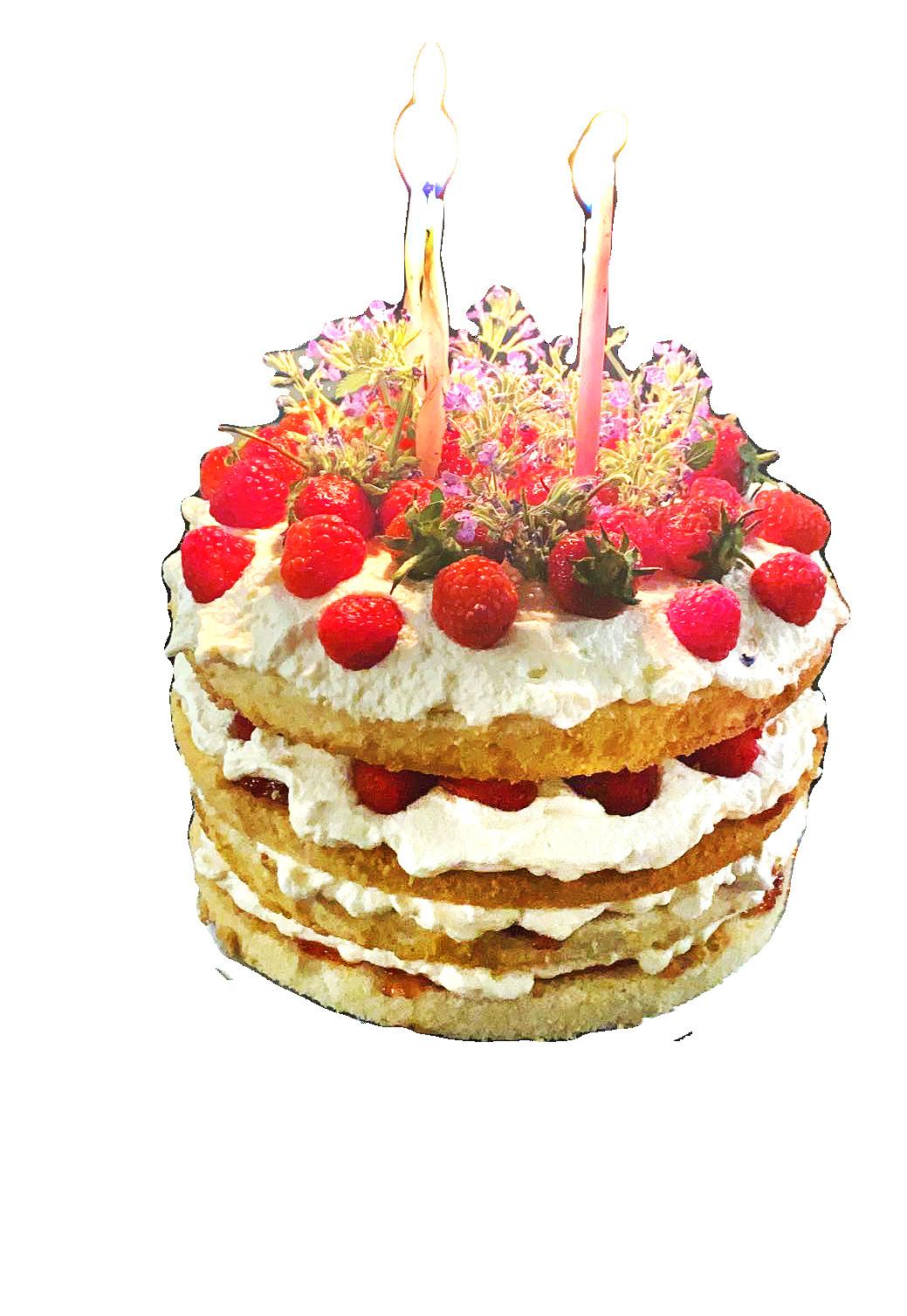




Tey were abundant at this particular feld, however I had to collect a whole 6 cups of violets for my pudding. A time had passed, I began to lazily pick the violets by open handfuls. Suddenly, my progress was a lot quicker. problem was that the violet fowers were about the height of grass and I could see some touches of green as I looked in my bag. But it was fne, I told myself. I would pick it out later. Except, washing the petals at home was a nightmarish process. Nothing became clean in the process as the fowers all stuck together making it impossible to remove the grass that had made its way into my violet collection. Some grass pieces were picked out, but it became evident that they were not coming out. I decided at this moment that it was fne, there wasn’t that much grass in there. Te bag was mostly purple anyways. I had to do this project and this was the supply I had.
So I made my lovely violet pudding, and as I gave

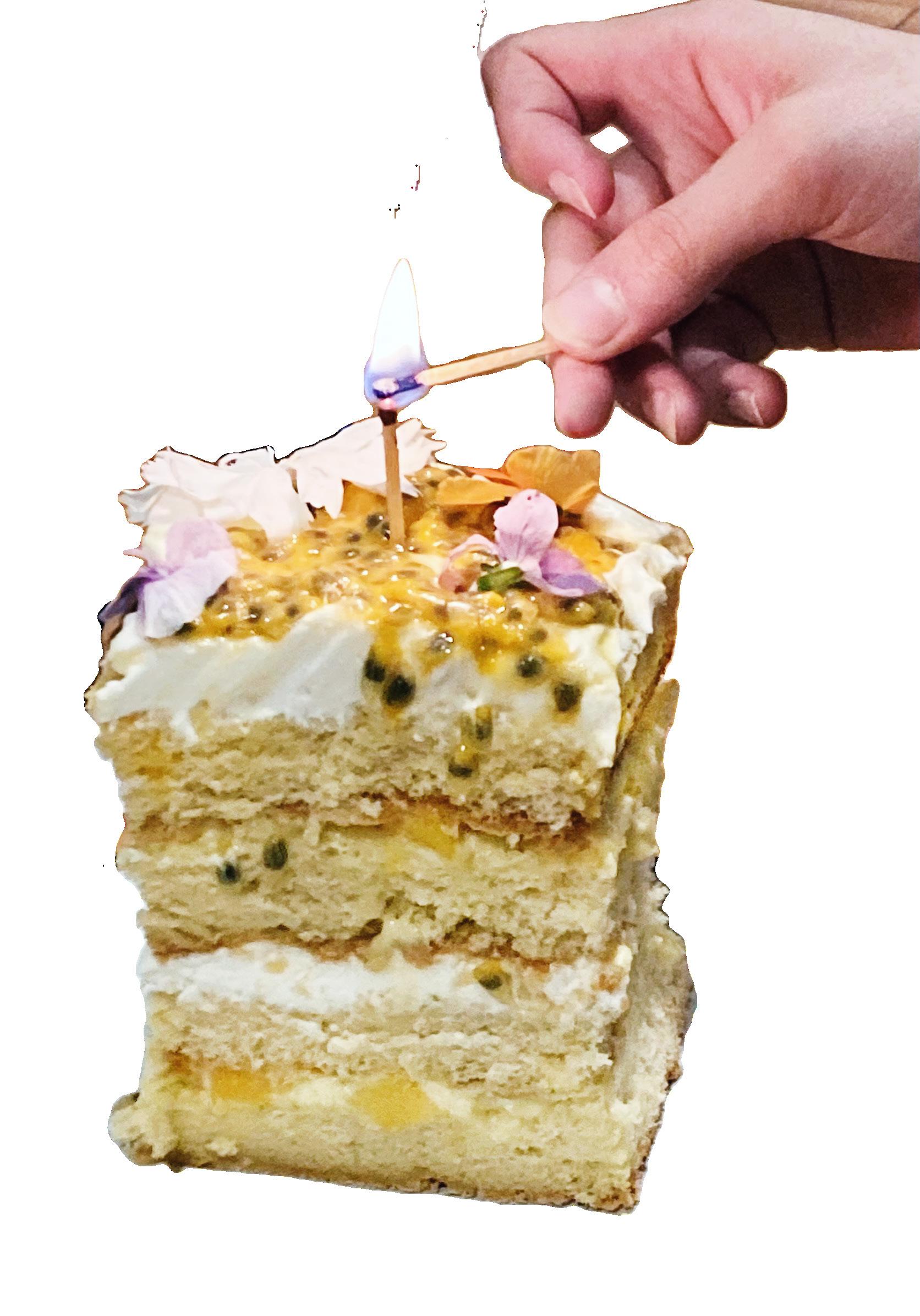
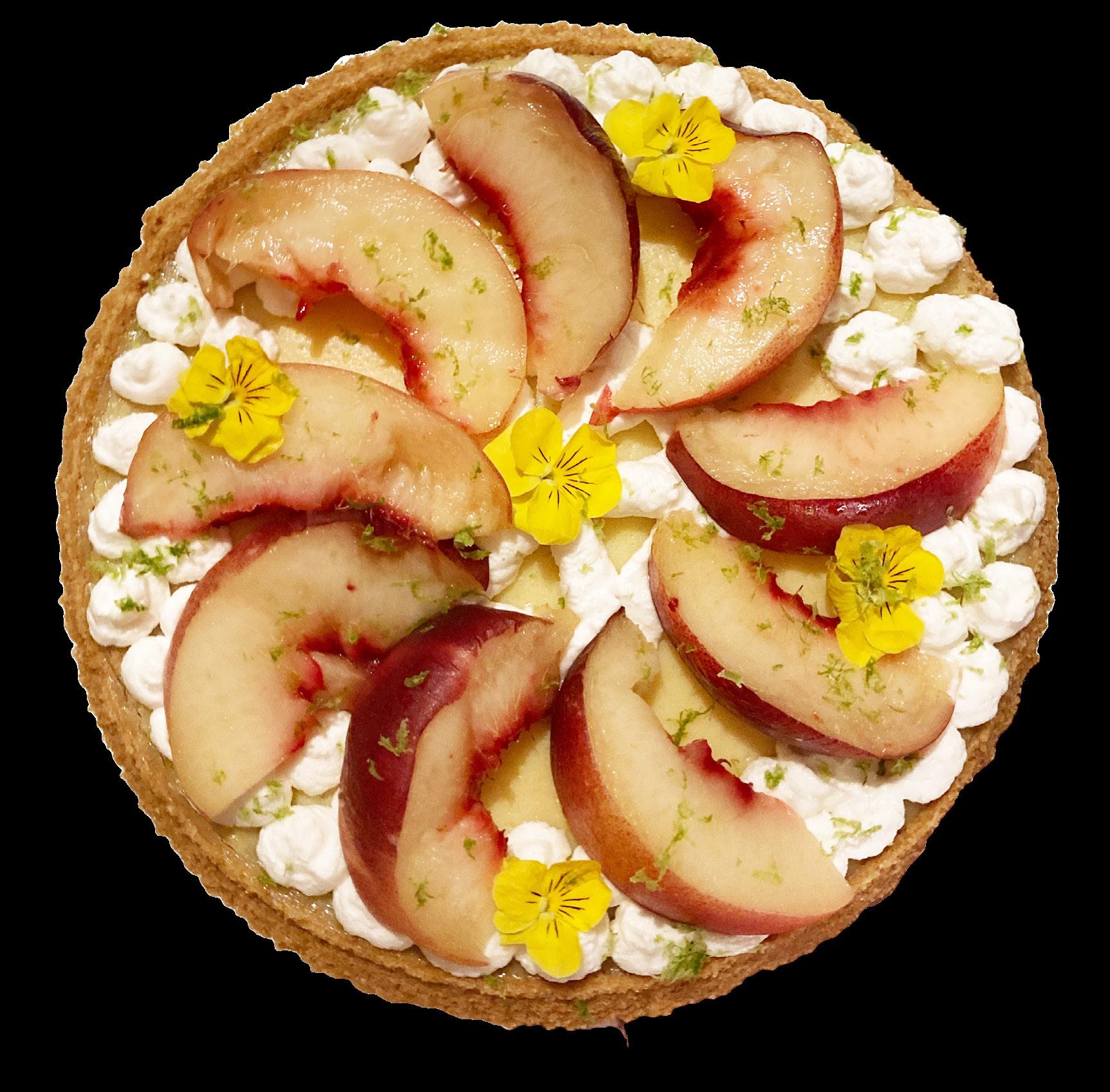
still love to incorporate fowers whenever possible, especially when they can be sourced from a garden. I also have many fowers I would love to work more with. At the top of my list is sakura or cherry blossoms. Tey contain toxic compounds, but they can be treated by curing in salt then vinegar pickling. Tese fowers are not only beautiful, but are also described to have a delicate foral favor with slight saltiness from the pickling process as well as hints of cherry. Tis favor is defnitely growing in popularity with sakura matcha, candy, ice cream, and tea all over social media. You can purchase the fowers of of Amazon making it easy to use a simple syrup as a starting point by simply boiling the petals in water with sugar. I would love to make a matcha cake with sakura frosting because the earthy favors present in matcha pair well with foral favors, as I talked about earlier with the pairing of rose and rosemary. I think sakura mochi would also be a super fun project as well. Working with edible fowers is an ongoing process and I always love learning more and tweaking recipes. I am always trying to move away from using fowers just to say I used them without the fowers really shining through in my food. I think that’s the biggest criticism I have heard from people about the use of edible fowers, the issue that nobody can actually pick up that favor right of the bat (I’m looking at you Starbucks lavender matcha) but the idea draws them to it every time. However, when fowers are included with intention, they can really be the cherry on top, bringing unique favors with a pop of color for a fresh take on food.
Words by: Margaret Kufner and Sydney Luciano
Pictures by: Colleen Fogarty
Many people consider Boston the running capital of the world. Te routes are endless, the Charles River is a pristine, perfect spot, and who could forget about the notorious Heartbreak Hill and the Boston Marathon fnish line? Our love for running is just as deep as our passion for food—so why not combine the two?
Running is a source of joy for both of us, a way to explore this endlessly historic city, and an escape from the stress of homework, exams, and the BC bubble. Although running is ofen seen as an individual, self-focused activity, it’s honestly best done with someone else. As members of the Boston College Club Running Team, we’ve learned how important it is to work together to get through grueling workouts and tough races—and how amazing it is to share the challenges and triumphs of a sport built on grit.
Currently, we’re both training for diferent marathons just two days apart. Margaret has a bib for Boston, and Sydney will be running in picturesque Newport. Running 26.2 miles is no easy task. It’s daunting, full of challenges, and takes dedication, resilience, and a whole lot of confdence to get through. But with friends by your side during training, it becomes so much easier. Finding fun ways to incorporate other passions—like food—into running makes it all the more enjoyable (and delicious).
Following an early wake-up on a brisk Saturday morning, we met by the corner of St. Ignatius Church, prepared for a long training run flled with lots of treats. We had two goals: run 17 miles and visit every single Flour Bakery in Boston.
Over the years, Flour has become a Boston staple, with nine locations popping up across the city. Te original opened in the South End in 2000. Award-winning pastry chef Joanne Chang started the bakery in hopes of making the world a sweeter place—and our run defnitely became sweeter because of it.
Starting at Boston College, we headed down the pristine Charles River into Cambridge for our frst stop. Afer our longest continuous stretch, we neared the fve-mile mark and the frst location. Reaching the frst pit stop flled us with excitement—it felt like our journey was truly beginning. We stopped and smelled the gooey sticky buns, but knew this was just the beginning.
Te next stops felt like they were just around the corner—there were two more Flour locations in Cambridge alone. Te second one was more modern, but featured the classic Flour logo. Slick outlines of cracked eggs surrounded the all-glass exterior. We peeked in at the monstrous pastry case, waiting just a couple more miles before indulging in a much-deserved treat.
As we ran farther into Cambridge to the third location, there was no doubt we had arrived. Te front wall was covered in massive 10-foot windows, with the Flour name printed across them and an egg for the “o.” Inside, we found our favorite decoration: a sign that read “eggcellent things await” paired with the cutest whisk and egg decal. It turned out to be true—this was the beginning of what would become our favorite run together.


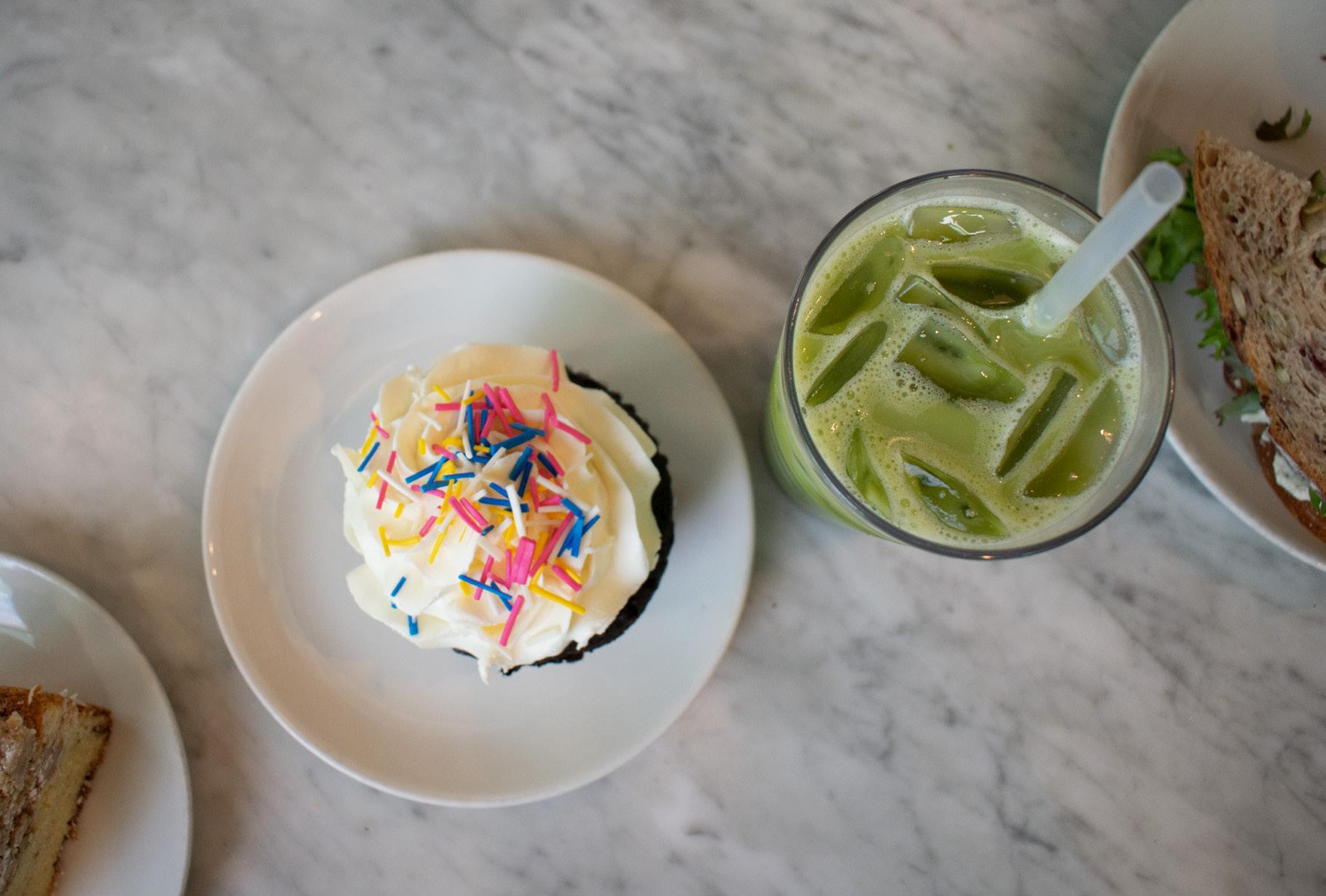
From there, we headed toward the West End behind Beacon Hill to a Flour location familiar to Margaret. As a clinical researcher at Mass General Hospital, she ofen stops by this Flour for a pick-me-up treat afer the long T ride from BC. Her go-to is a hot vanilla latte with either the North Country Applewood-smoked bacon sandwich—complete with perfectly poached eggs, a sun-dried tomato crème, and fufy yet crisp focaccia—or a decadent layered croissant that melts in your mouth with every bite. While we would have loved the sandwich, the croissant was the perfect snack and fuel for the remaining nine miles.
We then ran through the older part of downtown Boston, carefully placing our feet on the Freedom Trail’s cobblestones and admiring historic sights like the Granary Burying Ground, Old State House, and eventually, the site of the Boston Tea Party. At this point, the reality of a long run really set in. We were over 10 miles in, yet still had so far to go—it made us question everything. But we stayed dedicated, excited to visit the fnal three Flour locations and complete our remaining seven miles.
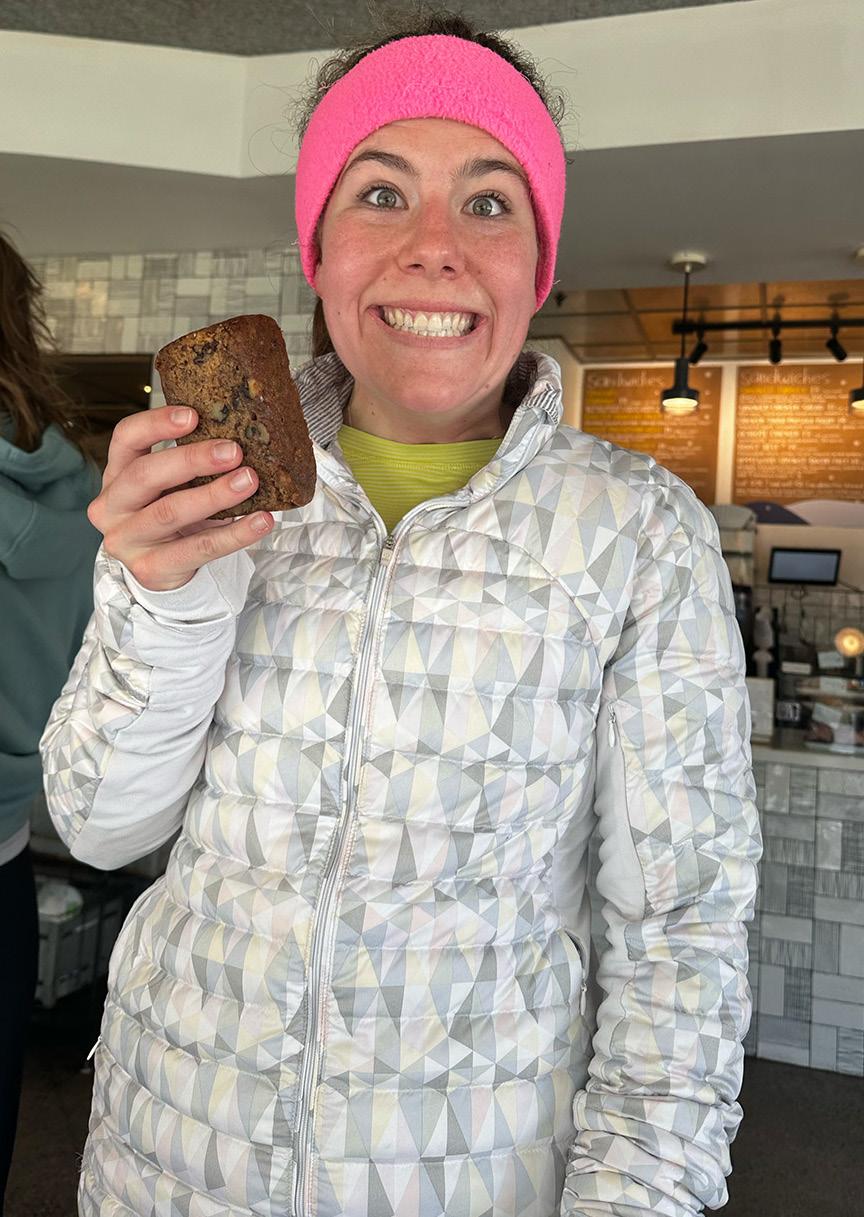
Te next Flour was in a part of the Seaport we had never explored—an industrial park full of ofces and workspaces. Tis was obvious, as that Flour location is only open Monday through Friday. Water would’ve been nice at this point, but we pushed on toward the fnal stop, 14 miles into our run. We were smiling ear to ear and eager to try another scrumptious treat before fnishing the last three miles. We refueled with what we both agreed was the best banana bread we’ve ever had: a thick, moist slice baked to perfection, with crisp and aromatic walnuts adding wonderful complexity. Afer a few bites and some refreshing water, we hit the road again—fueled and satisfed with our journey so far.
Tough the last two miles were defnitely a struggle—our legs sore and tired—we were so grateful to have completed the journey together. Te cold wind of the coast and the brisk winter chill weren’t enough to bring our joy down. Each Flour location was unique in design and atmosphere. Our favorite was defnitely the third stop, with the giant egg “o” decal. Some bakeries were cozy, like the last one with large chairs and dim lighting; others were more business-like, with sleek glass walls and counter stools. Sitting down and devouring treats was tempting at every stop, so we both hope to return— on fresher legs. Who knows? Maybe afer our marathons, we’ll reward ourselves with another Flour adventure.
Flour Bakery is compelling not only because of its incredible products but also because of the story behind them.
Joanne Chang is an inspiration—especially for college students. She graduated from Harvard with a degree in Applied Mathematics and Economics but ultimately lef her career path to follow her dreams and become a chef. With hard work and determination, she and her husband were able to open all nine Flour bakeries—a story of success, passion, and grit.
Just as running has taught us perseverance and dedication, Chang’s story is a powerful reminder to follow your passions. Tough we aren’t going to be professional athletes, we both see running in our futures. It’s so important to fnd what you love and create space for it in your life. We’re at diferent points—Margaret fnishing her fnal semester at BC, and Sydney wrapping up her second year—but this experience has given us lessons we’ll carry with us forever.
Like running and baking, life has its ups and downs. But doing what you love can make the hard parts more manageable—and even enjoyable. Flour is a place to start that joy—with a running partner and some fun goals in mind.
Written by: Ruby Levine
Pictures by: Ruby Levine & Kate Johnston
Farm-to-table gardening is more than just a method of growing food, it is a way of life that fosters connection, creativity, and a great appreciation for fresh ingredients. For me, it has always been deeply personal, rooted in the time I have spent gardening with my dad. From an early age, I learned about gardening and caring for plants, watching them grow, and appreciating the patience and efort that goes into producing food from the soil. Our backyard garden has become a space where my dad experiments with diferent vegetables and edible fowers, bringing vibrant colors and favors to our plates.
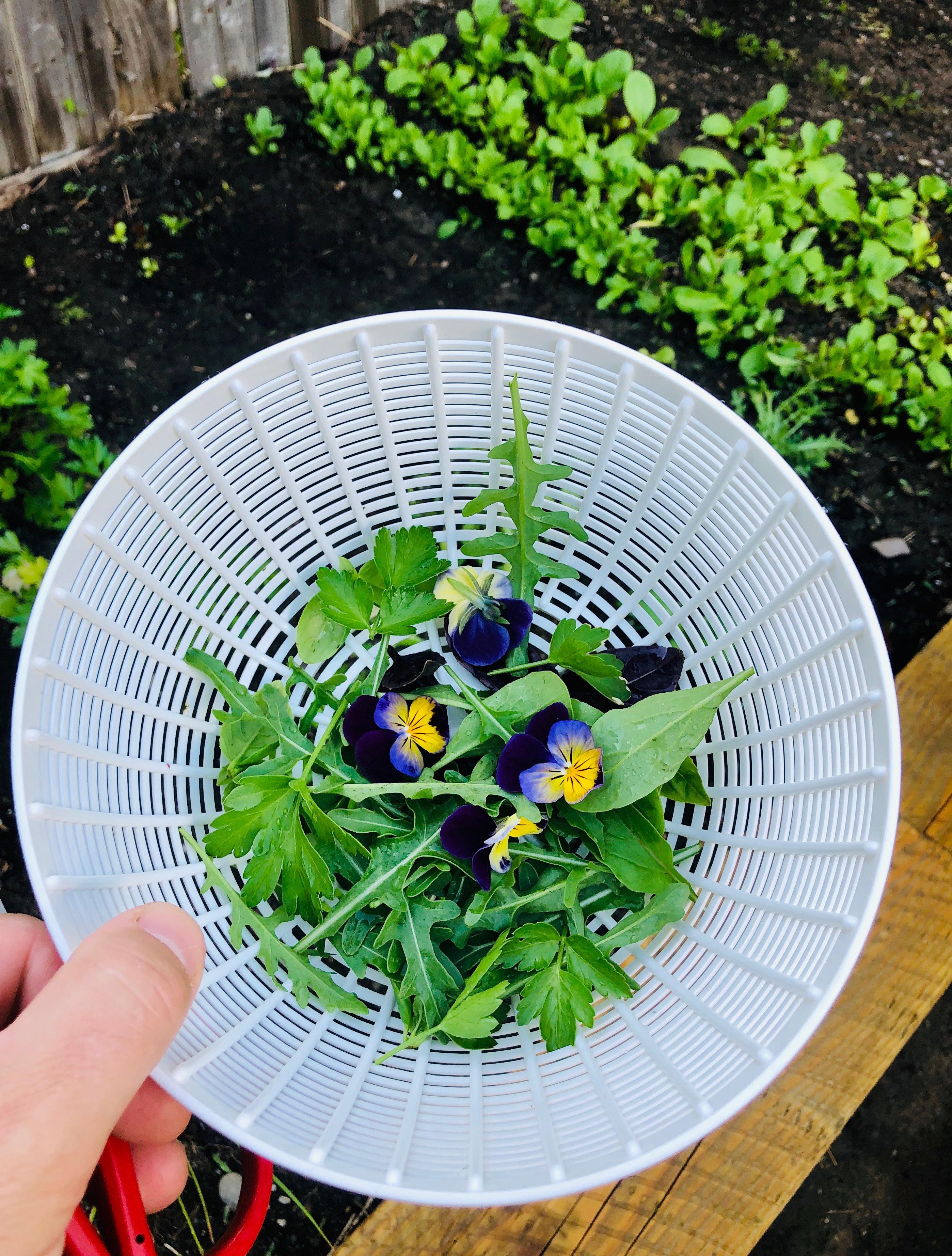
One of the most exciting aspects of our garden is the variety of edible fowers we grow. Nasturtiums, with their bright orange and red petals, add a peppery bite to salads and seafood dishes. Borage fowers, delicate and star-shaped, bring a refreshing, cucumber-like taste to summer meals. Tese fowers not only enhance the visual appeal of our dishes but also remind me of the time and care we put into growing them. A favorite memory of mine is picking fowers from the garden with my dad. Te experience of selecting the perfect ones, carefully plucking them, and imagining how they will complement our meals has always felt like a creative process. It is rewarding to see how the ingredients we grew together can be transformed into something delicious.
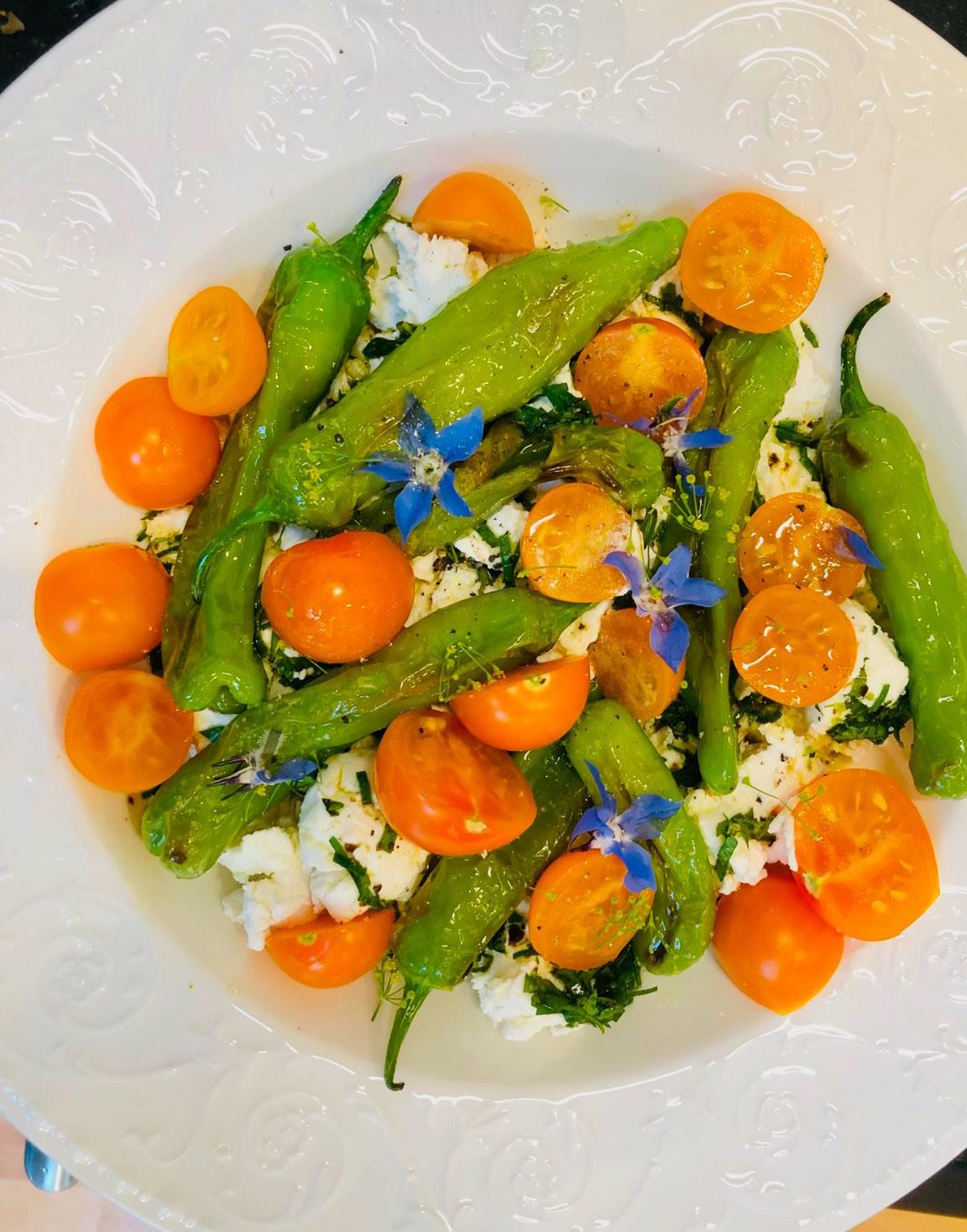
One of our most beautiful dishes made was a simple yet favorful plate made with sungold tomatoes, shishito peppers, and Borage fowers. Te Sungold tomatoes, bursting with sweetness, paired perfectly with the mild heat of the shishito peppers, while the Borage fowers added a crisp, cooling note. Seeing the bright orange and yellow hues of the tomatoes alongside the deep green peppers and the sof blue of the Borage fowers reminded me of why we love growing our own food—it is as much about the beauty as it is about the taste. Another unforgettable meal featured fsh that my dad caught down the street from our house, served with Sungold tomatoes and Nasturtiums from our garden. Te combination of freshly caught fsh with the homegrown favors of our garden made the meal feel especially meaningful. Te Nasturtiums, both spicy and slightly sweet, balanced the taste of the fsh and added a touch of pepper to the dish.


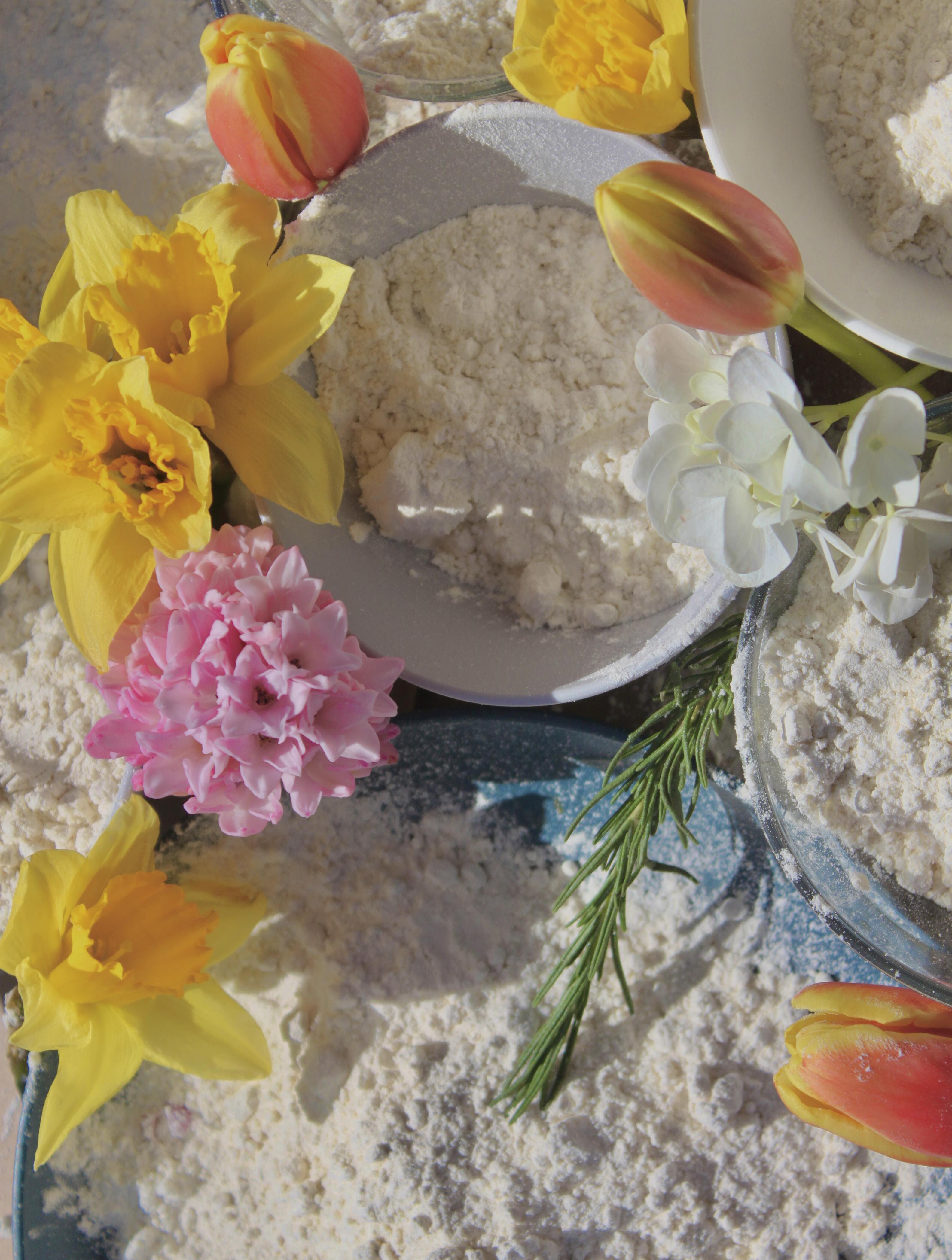

I have always believed that the most magical part of baking is the way it brings people together. Ever since I was a little girl, standing on my tiptoes to reach the mixing bowl, I found solace in the rhythm of whisking batter and the intoxicating scent of cookies wafing through the kitchen. My love for baking wasn’t just about the sweets themselves; it was about the joy, the tradition, the connection. My cookie recipe was generations of love mixed in with four, sugar, and eggs.
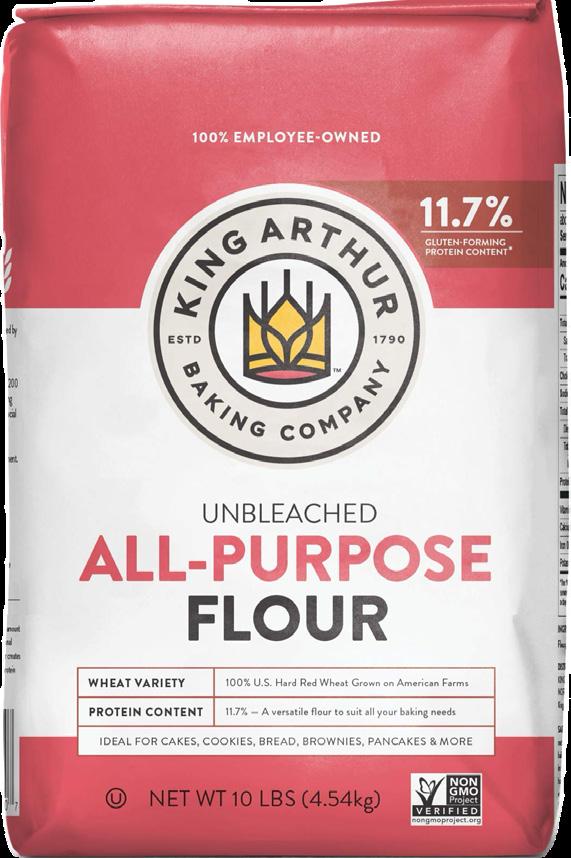
I spent years perfecting my recipe, testing diferent ratios of brown sugar to white sugar, swapping butter for shortening, chilling the dough overnight, essentially experimenting with every little trick I could fnd. One thing never changed: my cookies were made with good old-fashioned all-purpose four. It gave them structure, chewiness, and a golden-brown crispness at the edges.
Ten, everything changed.
I had been dealing with persistent illnesses for months. At frst, I thought it was just stress or an occasional sensitivity to certain foods, but as time passed, my symptoms became impossible to ignore. Te fatigue and the discomfort escalated until I fnally saw a doctor. Afer a series of tests, I got my answer: a gluten allergy.
Te diagnosis hit me like a ton of bricks. Gluten? Te backbone of my baking? Te foundation of my beloved cookies? I couldn’t believe it. At frst, I mourned the loss of my old life and my old ingredients. It felt like I was losing a part of my identity. Afer some time, I decided to take on the challenge head-on. If I couldn’t have gluten, I would learn how to bake without it.


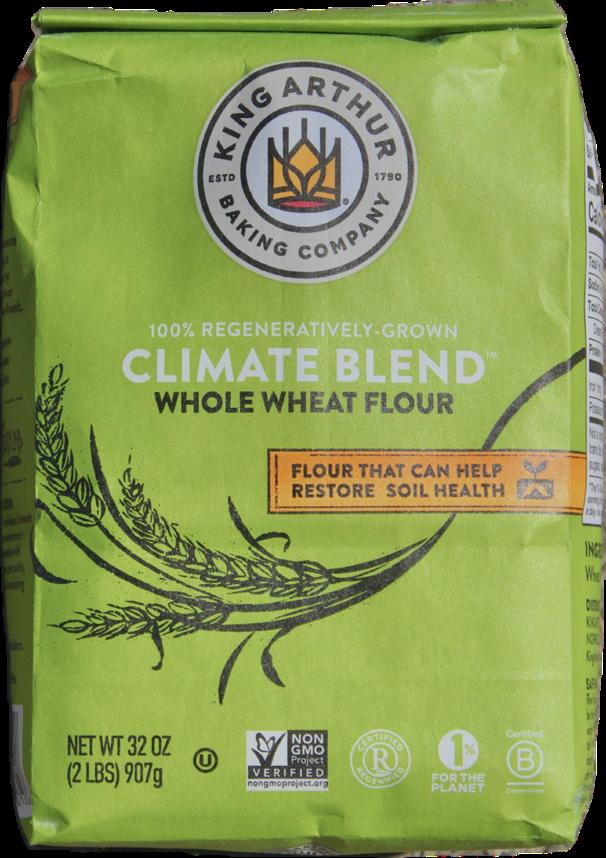
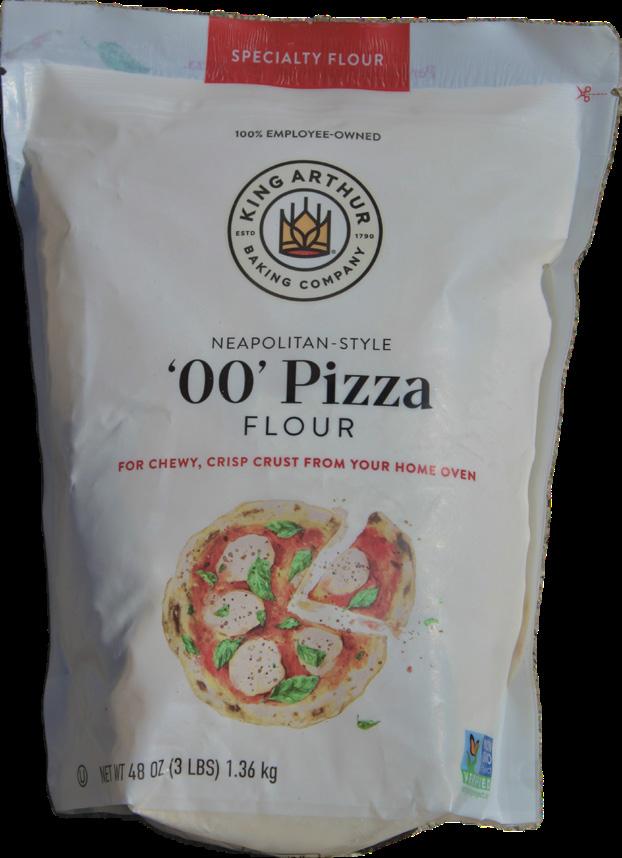
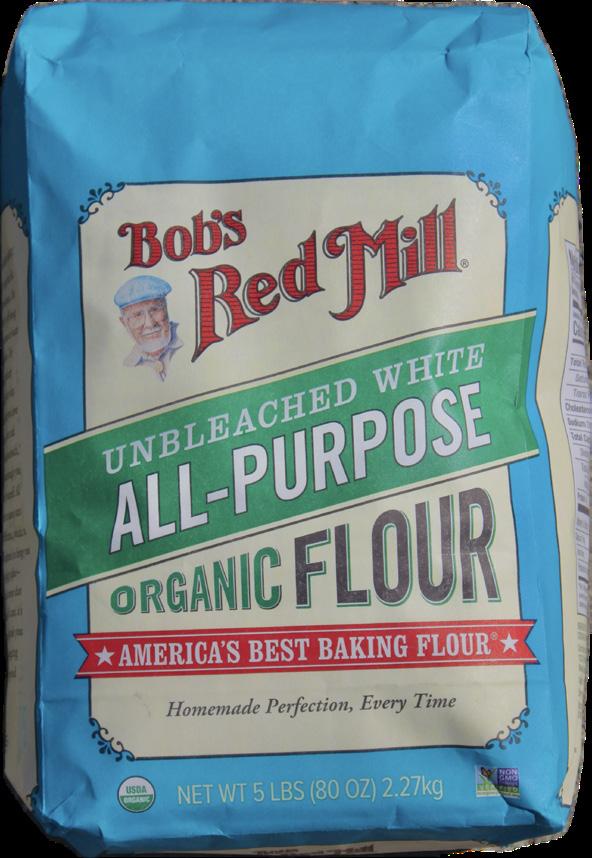
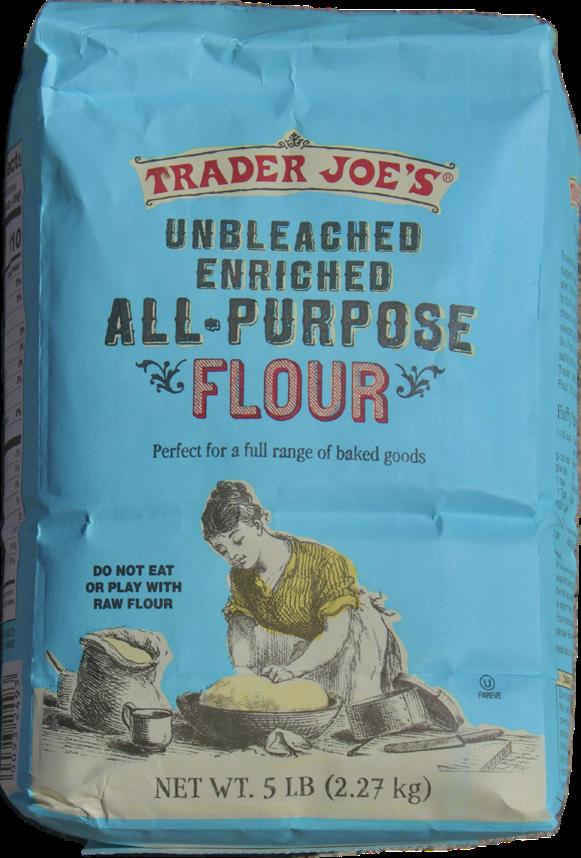
My frst attempt at gluten-free cookies was a disaster. I had assumed I could simply swap my all-purpose four for a one-to-one gluten-free blend and call it a day. However the cookies spread too much, or not enough. Tey were either too dry or too dense, missing the delicate chew I had worked so hard to achieve over the years. I needed to understand the chemistry of four in a way I never had before.
So, I dove deep into research.
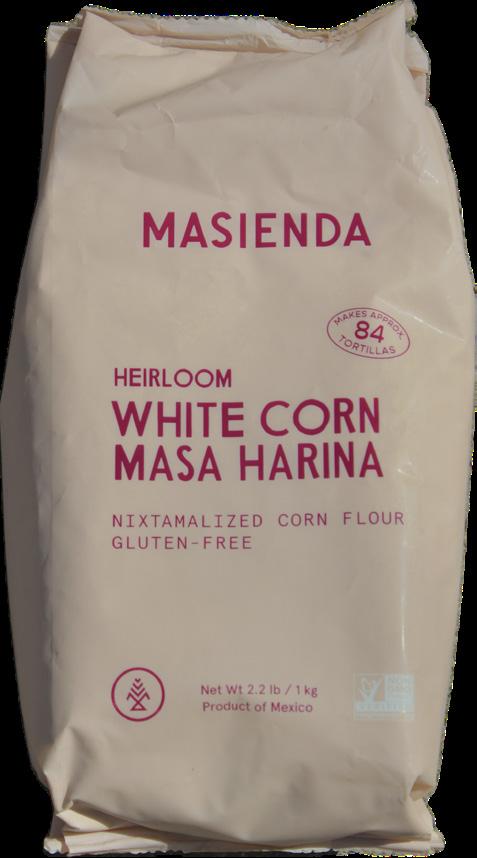
I learned that wheat four isn’t just an ingredient, it’s a complex network of proteins and starches that create structure and elasticity. Without gluten, there was nothing to hold my cookies together in quite the same way. I experimented with diferent blends, trying rice four, almond four, oat four, tapioca starch, and even sorghum. Each one had its own personality, its own quirks. Some made my cookies sandy and crumbly, others turned them into fat pancakes.
Almond four intrigued me. It gave my cookies a rich, nutty favor and a tender crumb, but it lacked the structure I needed. Adding tapioca starch helped a little, but the cookies still weren’t right. Ten, I tried a combination of oat four and brown rice four. Te oat four brought a subtle chewiness, while the brown rice four added enough body to prevent the cookies from falling apart.
Something was still missing.
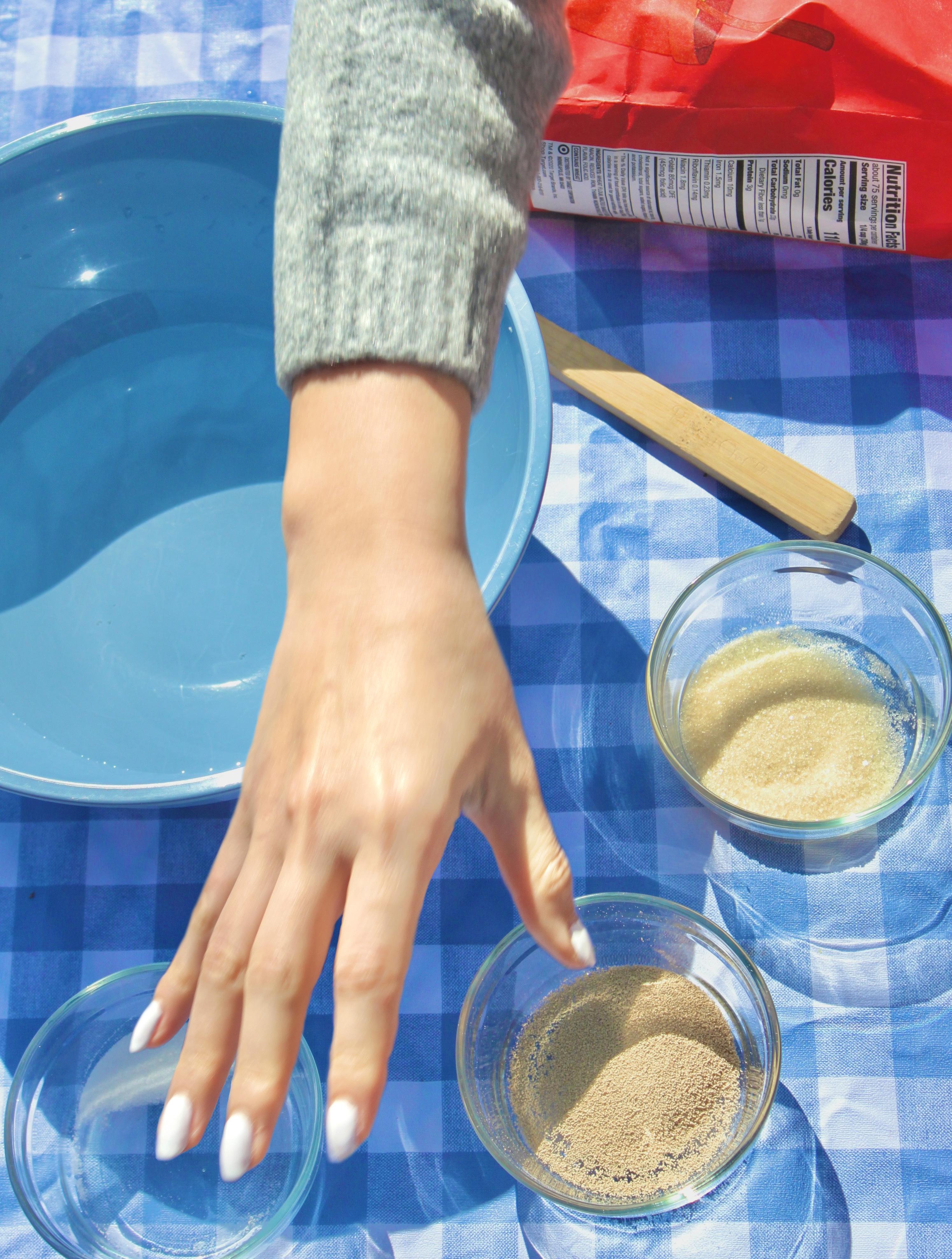
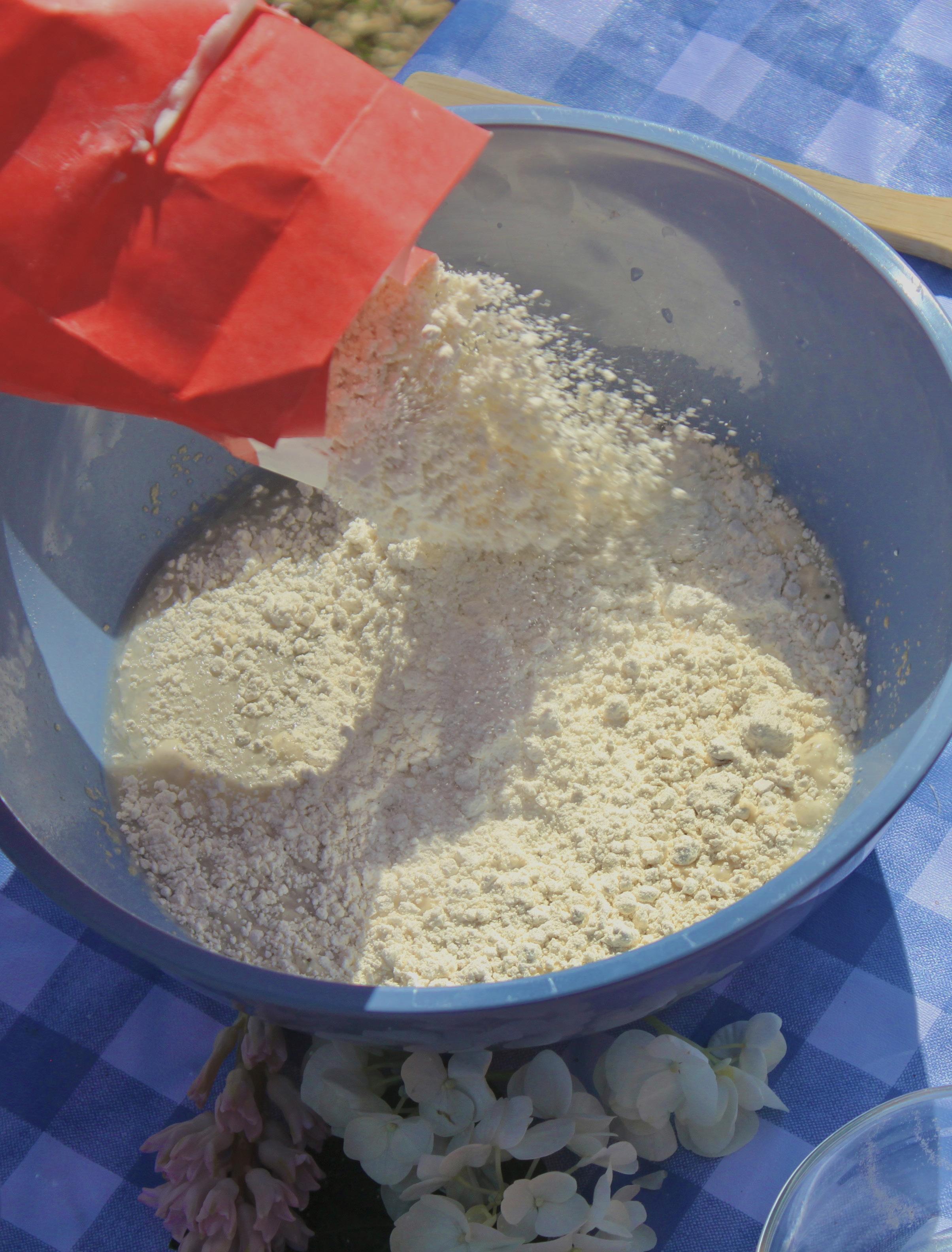
I realized that gluten-free fours absorb moisture diferently, meaning I had to adjust my liquid ingredients. Adding an extra egg yolk brought richness and cohesion, while a bit of xanthan gum mimicked the elasticity of gluten. And the chilling time? Even more crucial than before.
Batch afer batch, I tweaked and tested, until one day, I took a bite and knew I had done it. Te cookie was everything I had been searching for. Slightly crisp at the edges, perfectly chewy in the center, and packed with the familiar warmth of brown sugar and vanilla. It wasn’t just a good gluten-free cookie. It was a good cookie, period.
Te frst time I shared my new cookies with my family, I watched their faces carefully, waiting for the verdict. My dad, the most brutally honest food critic in the house, took a bite, chewed thoughtfully, and said, “I wouldn’t even know these were gluten-free if you hadn’t told me.” Tat was the moment I knew I had reclaimed my place in the kitchen. My baking hadn’t been taken from me, it had simply evolved, and in the process, I had learned something invaluable: sometimes, the things we think defne us are more fexible than we believe.
Now, when I bake my famous cookies, I do so with a deeper understanding of what goes into each ingredient. I appreciate the science behind the sweetness, the way a small adjustment can make all the diference. When I share them with others—whether they need to eat gluten-free or not—I know I’m not just giving them a cookie. I’m sharing a story, a journey, a reminder that change isn’t always the end of something. Sometimes, it’s just the beginning of something new.
Words and graphics by: Katie Ballard
When we think of fruit, we ofen think of bright, ripe, ready-to-eat snacks. However, before we can enjoy our perfectly ripe fruit, it has to grow. In this process, many fruits start as a fower, then grow to become the fruit we know them as. Learn more popular fruits and the fowers that they start as below.

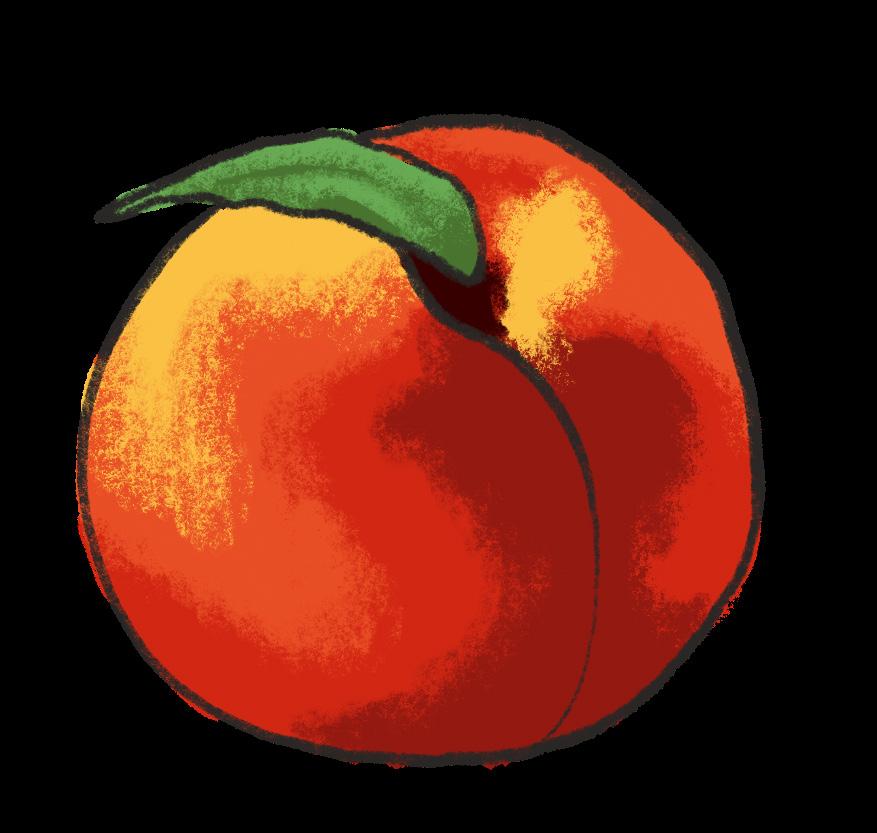
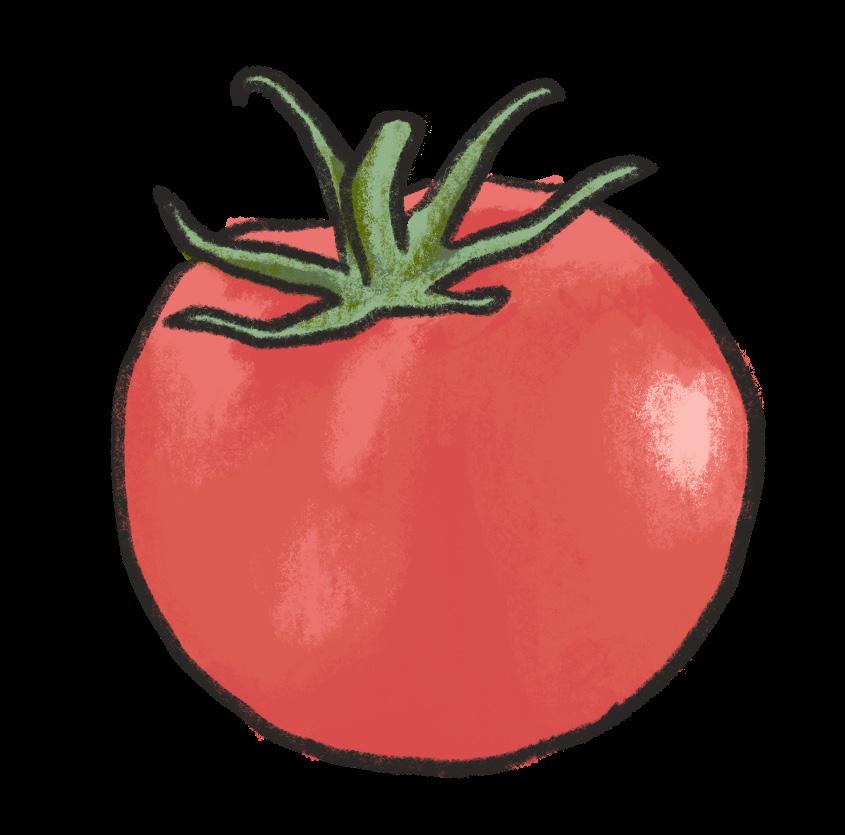


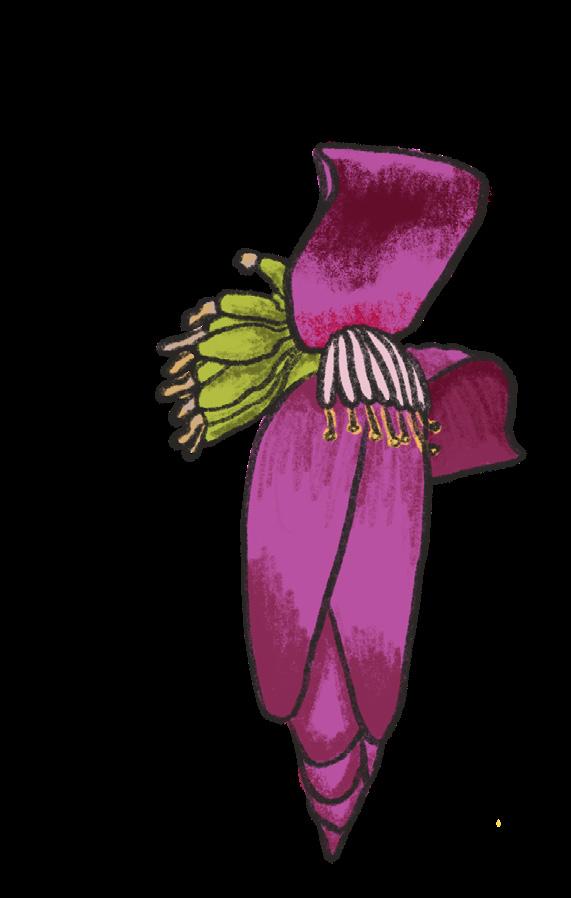

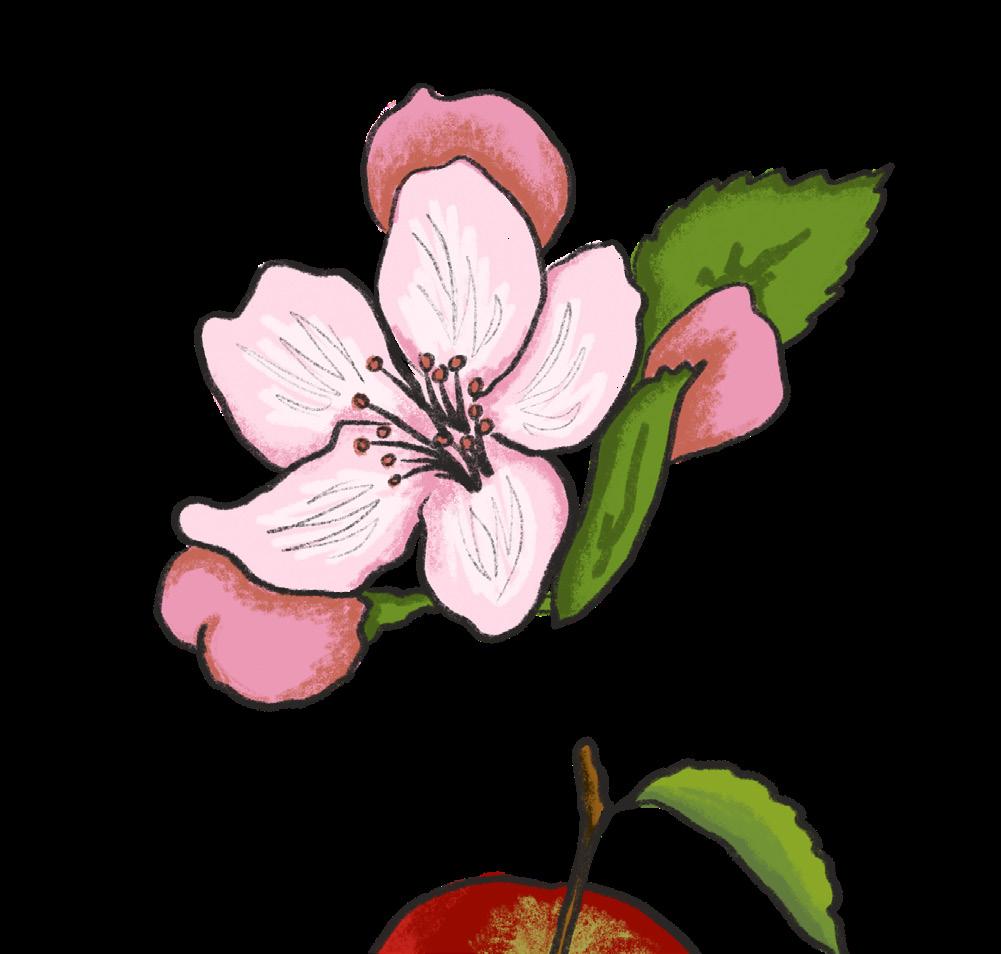



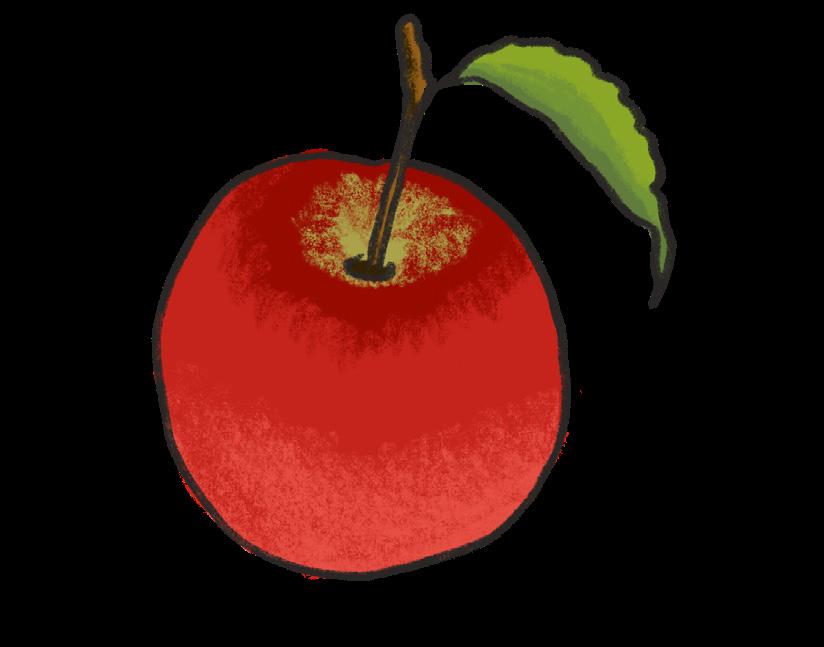
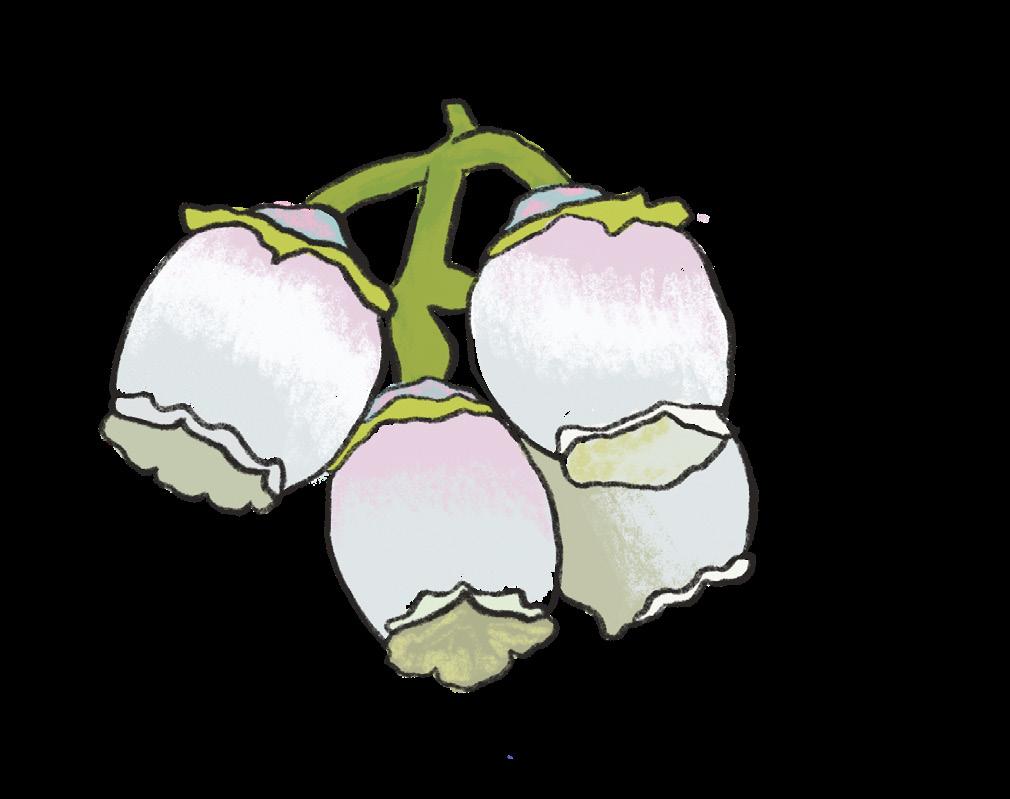

Words by: Katie Mangraviti
Pictures by: Katie Mangraviti & Colleen Fogarty
Graphics by: Katie Ballard
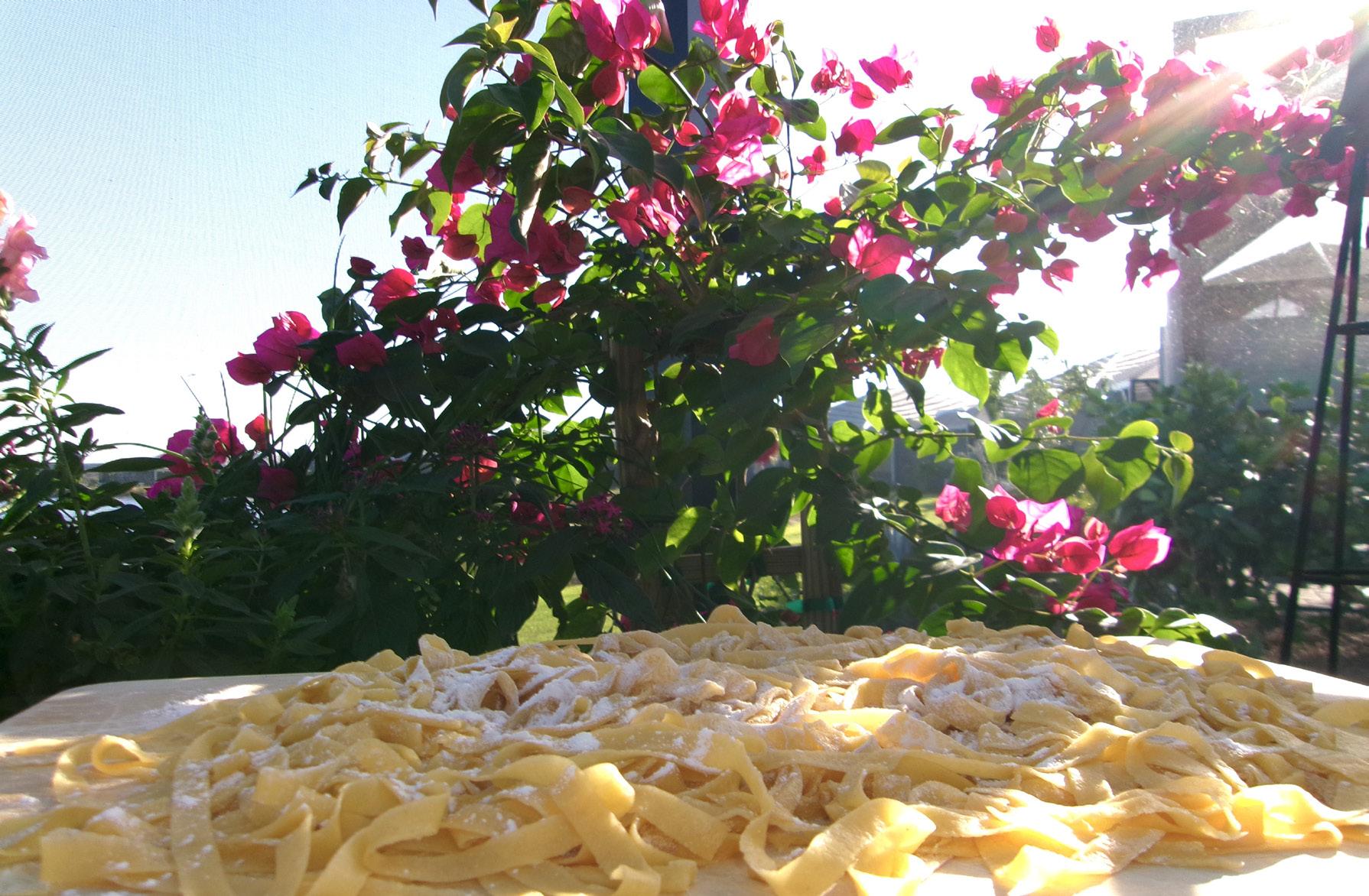
Growing up in an Italian-American household, I’ve spent countless dinners eating the staples: seafood, risotto, arancini, and of course, pizza and pasta. When I started learning how to cook and bake in middle school, I knew I wanted to learn how to make the foods that I loved the most. For me, learning how to make bread dough was at the top of my list. I watched countless YouTube videos where I learned about yeast and how it requires “activation” (which honestly still confuses me to this day) and how to best knead dough. Trough my many trials in learning how to perfect dough for both pizza and pasta, there has been one common denominator between my most successful batches: the use of double zero four.
Double zero four is a sof, super fne four from Italy that is essential to making authentic Italian

dough. What sets double zero four apart from its alternatives is that it is milled at the at the fnest grade to achieve a baby powder-like texture. Tere are diferent versions of double zero four based on the gluten content. In stores, there are specifc variations of double zero four that are meant for pizza and others meant for pasta. Te main diference between the variations is their gluten content; double zero four that is best suited for pasta has a lower gluten content than the one purposed for pizza. Overall, both variations of double zero are distinct from the standard all-purpose four due to their lower protein content (“What Is Double Zero Flour for Bread, Pizza, Pasta?”). Tough double zero four is a relatively obscure four, you should be able to fnd it at most large-scale grocery stores near you and shouldn’t have to go to an Italian market to obtain it.

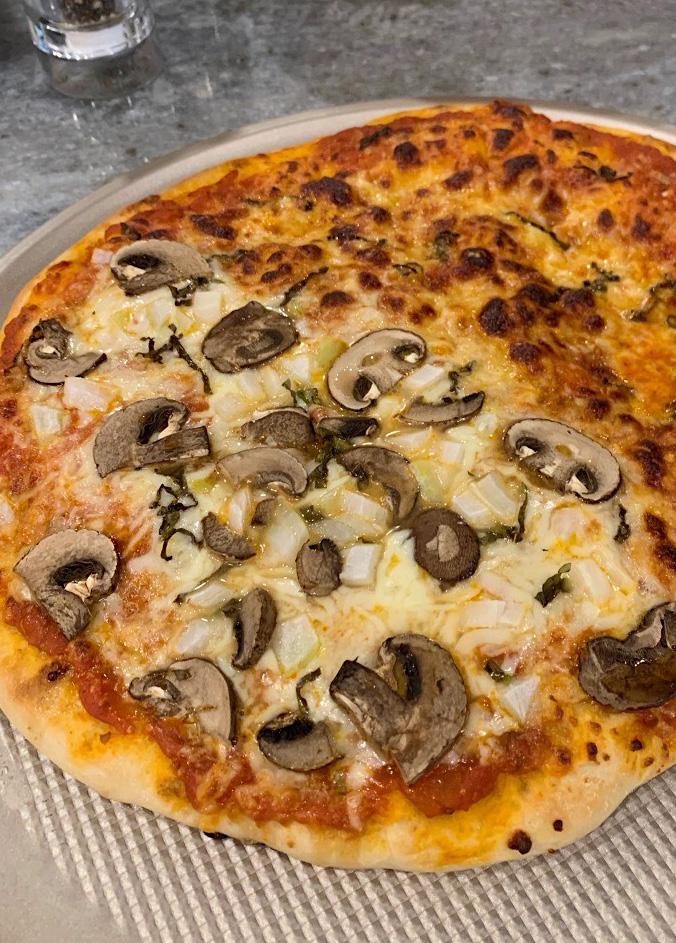
When making pasta, I’ve found that a combination of double zero four and semolina makes the most silky and delicate noodles. Te double zero four gives the pasta a smooth texture, while the semolina provides the dough with a high gluten content and thus a stronger structure. Tis combination yields pasta with a perfect consistency to soak up the sauce that it’s in and an optimal level of chewiness. Pizza made with double zero four is much less likely to tear because the four is so fne; this makes double zero four perfect for achieving a thin crust. A thin crust is my personal preference though, admittedly, I’ve struggled to achieve the thinness I desire!
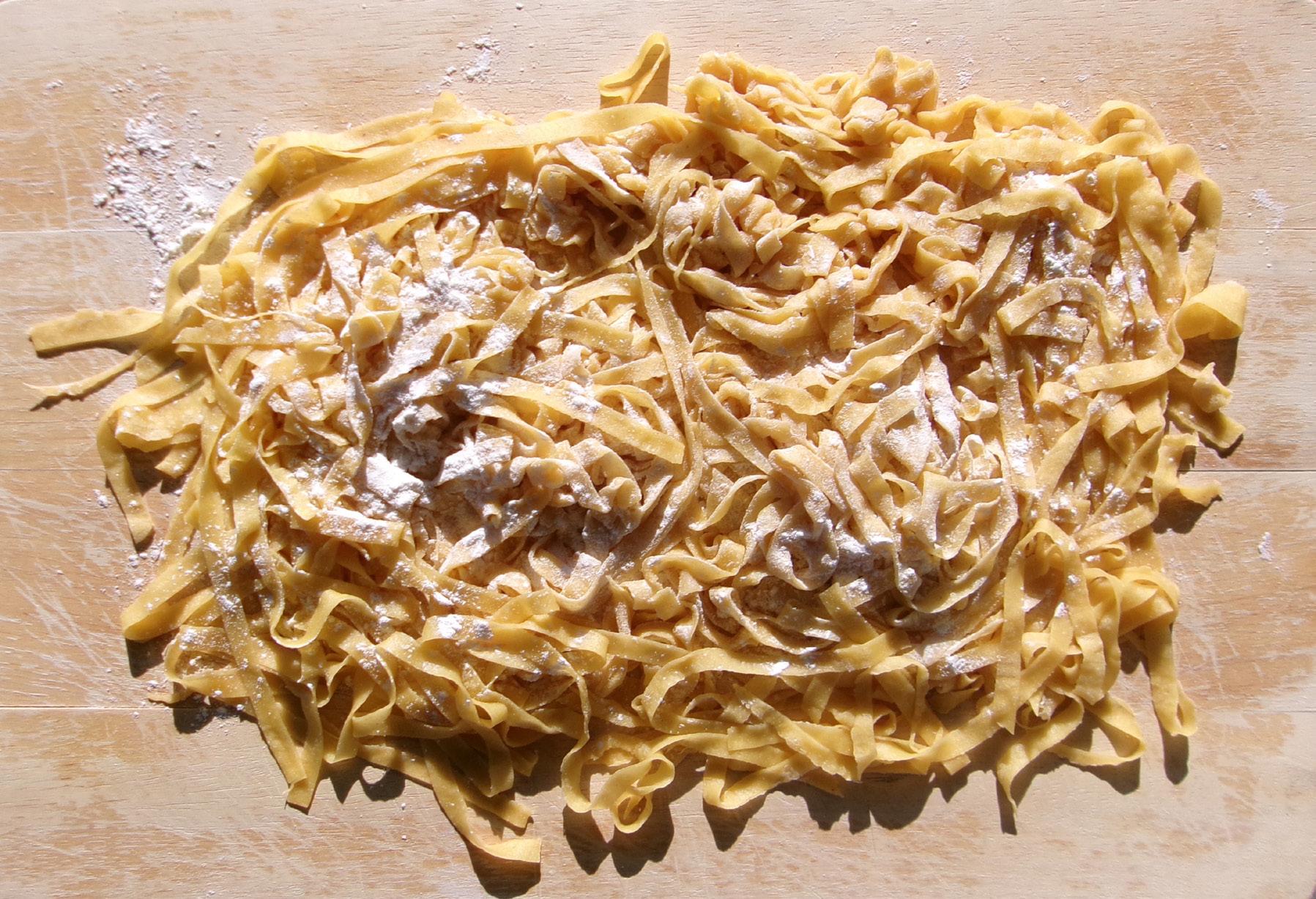
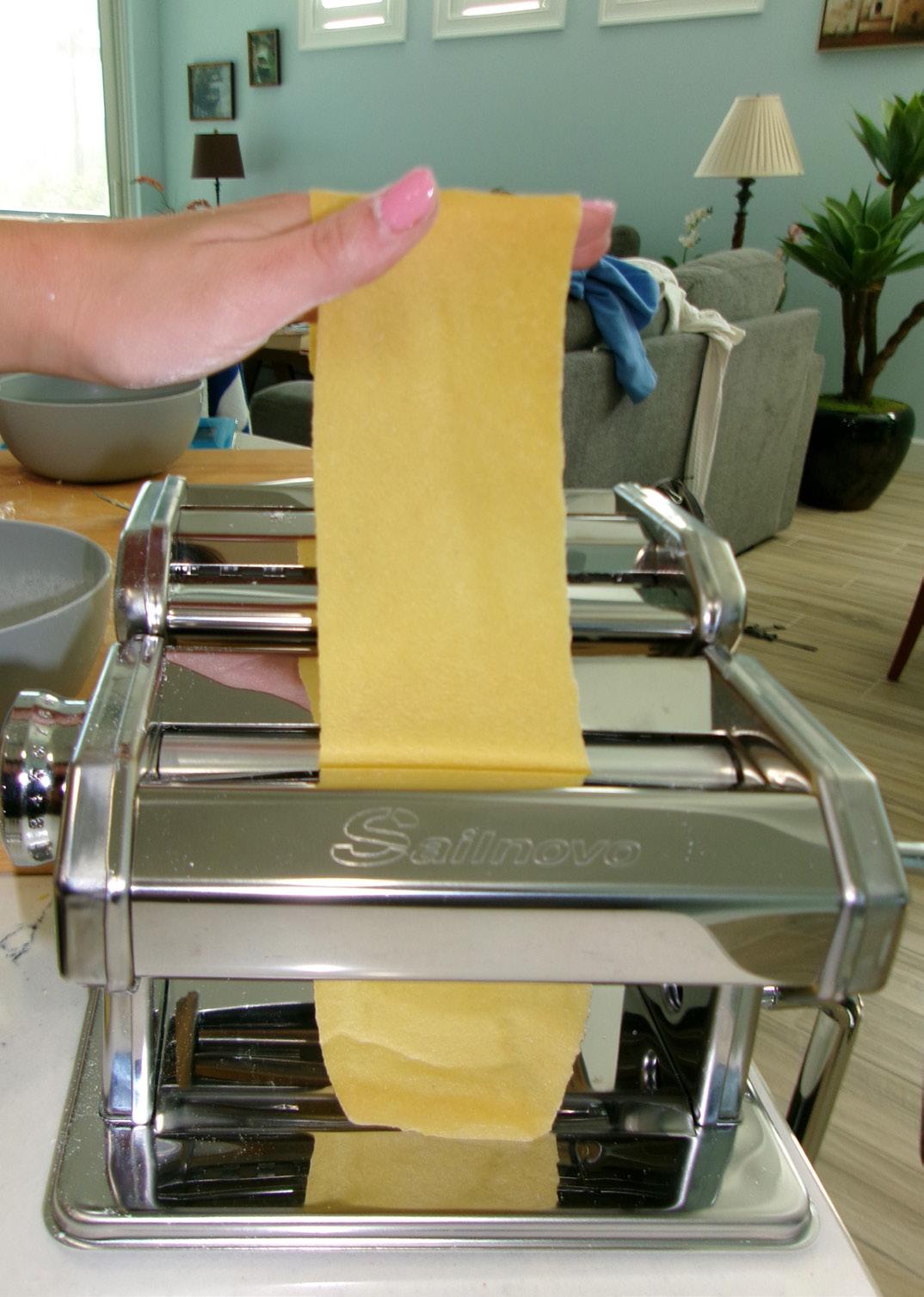
Some of my best memories from cooking have involved covering my clothes and (unfortunately for my parents) my kitchen with lots of four. When I frst learned how to make pizza back in middle school, I felt so accomplished because my dad, who, for context, is one of the pickiest eaters to ever sit at a dining room table, kept on asking me to make it again and again. I was thrilled to make the dough with my special double zero pizza four, let it rise by the freplace until it was bursting out of our pink bowl, and create pizzas that everyone would enjoy. As I’ve gotten older and become more of a pasta snob, I have embraced making pasta more instead of resorting to the boxed version. Whenever my mom wants to make bolognese or shrimp scampi, I’m quick to ofer up my pasta-making services because it is so satisfying to me. I love putting my energy into rolling the fnest and smoothest sheets of pasta and hand-cutting linguine or even pinching my own bow ties. Over the summer, my mom and I tried our hand at making a scamorza and zucchini ravioli that my mom tried in Venice and craved since. Our end-of-summer project was to bring this ravioli that she had back to life. I loved being able to work on a sentimental hands-on project together.

One thing I love about Italian cuisine is how much love and hard work goes into every meal. Struggling to roll out the perfect circle of thin pizza dough or to feed and crank pasta dough through our pasta maker on my own, is one way that I show my love and care to my friends and family. Whenever you have the time, I think that it is always worth it to dust your hands with four, work with some dough to make something from scratch using high-quality, authentic ingredients. It is true that there is nothing more painful than rolling out and shaping the perfect circle of pizza dough just for it to thin out and break, but the challenge is all part of the fun. One of my claims to fame is never having used the dough hook attachment on my stand mixer because one of the most satisfying and exciting parts of cooking for me is getting to wrestle with the dough. Practice makes perfect, and I feel confdent that with each circle of pizza and sheet of pasta I make, I get better at honing my craf. I know that double zero four will remain a staple in my family’s kitchen as I continue to explore all that I can do with it while cooking for those that I love the most.

Words by: Julia Colone
Pictures by: Madeline McCormick & Julia Colone
odil and Hyacinth-perfumed air wafs through my window. It’s the beginning of June and the morning of my graduation garden party. In just a few hours, I would transform my backyard from a makeshif dog park to an enchanted Narnia landscape. I envisioned a long table with Baby’s Breath practically bursting from the crevices of the wood planks, and Wisteria tickling the top of your head as you strolled through the
My mom’s voice shakes me from my mental vision board: “Julia! Get ready and come help down here!” We only have a little bit of time until the start of the celebration to complete the yard’s makeover. My peers and I are celebrating the end of an era. I feel a wave of nostalgia for the frst time as I slip on a pink and orange dress with subtle Daisy outlines. I wander downstairs, experiencing an unfamiliar wash of joyful reminiscing and anxiety for the future. With college looming on the horizon, I would be leaving my friends, family, and any sense of normalcy behind.
I enter the kitchen where the counter is engulfed by what seems like thousands of bouquets. Pink Dahlias cascade between portions of greenery. Taller stems of Lavender jet out of the bouquets. Floral tablecloths line the table outside underneath candles and tiered trays with almond croissants and rhubarb cofee cake. My vision is becoming a reality, however I still can’t shake a lingering uneasy feeling. Te grief that comes with graduation is taking over my mind; my vision board is crumbling under the weight of the memories that I’m struggling to hold close. My graduation garden party has a larger twinge of melancholy than I had imagined it would.

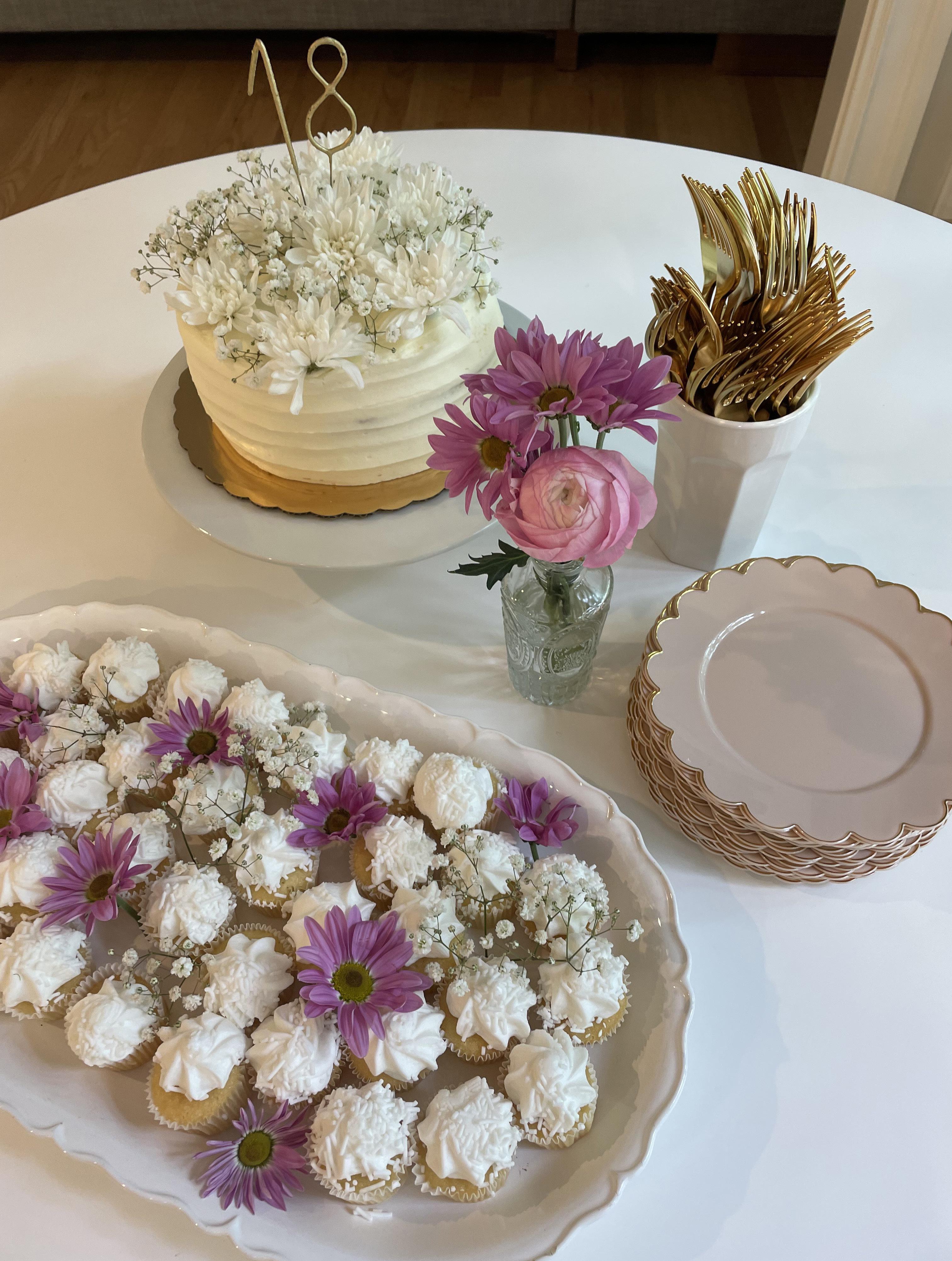
Quickly people flled my yard, trading stories about the past four years. I can feel my cheeks going rosy as Poppies from laughing. Finally, it’s time for cake. I ran inside to see it in its frosted, layered glory. A faint aroma hinted to me that lemon and poppy seeds hid behind the frosting’s front. Peering out the window at the diligently-decorated fower arrangements, inspiration strikes! I ask if we have any remaining purple or white Baby’s Breath. My mom brought over small scraps that made the perfect cake topper to complete my garden party and my high school experience.
As I look around with the aromatic cake in my hand, my internal tension starts to ease. What started as a simple theme developed into something much more. Just like the fowers around me, I too am blooming into the next stage of life.
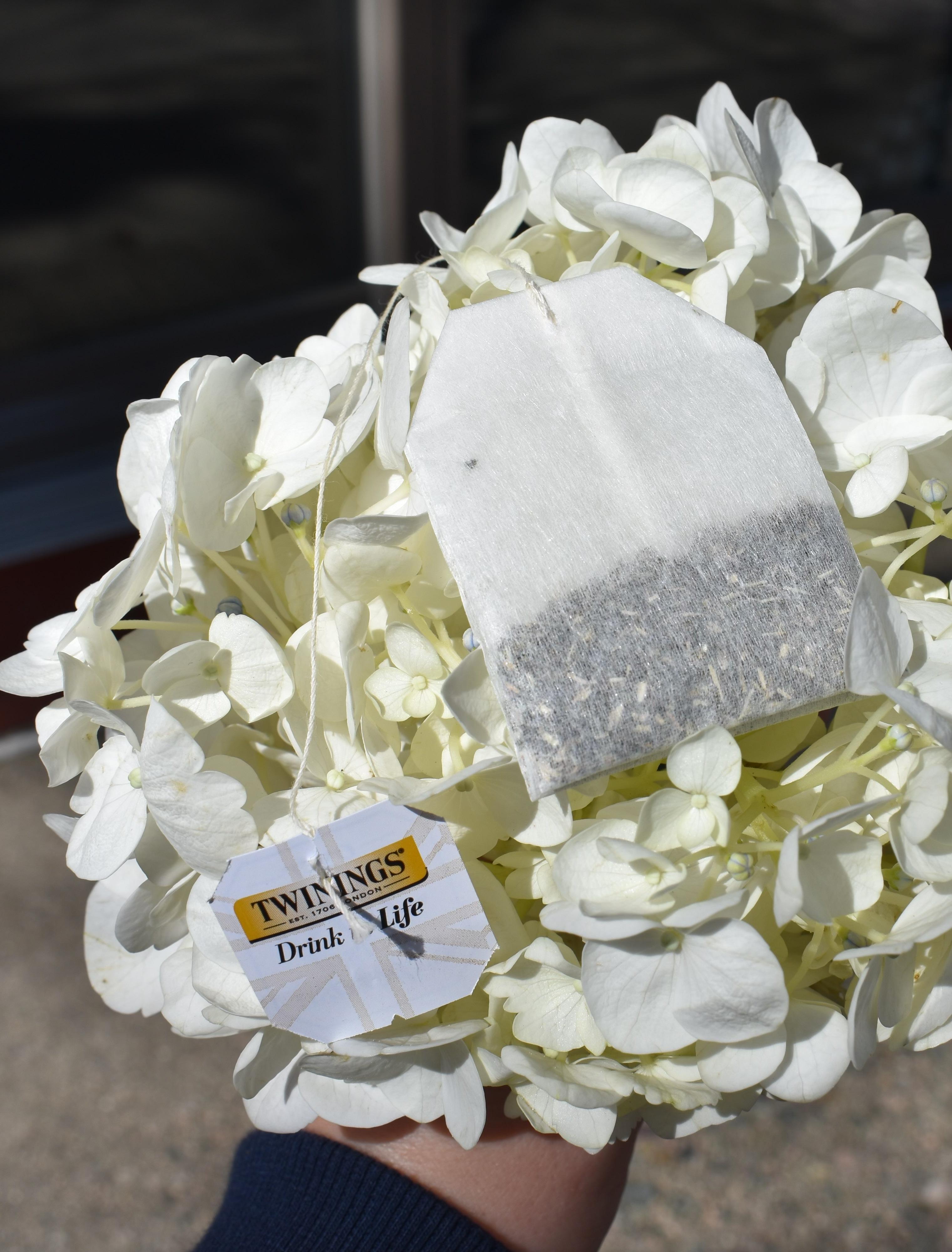
Tea is the perfect accompaniment on a cold winter day if you’re looking for a warm mug to squeeze. Tea is the ideal beverage to refresh your palette in the peak summer heat. Tea can be sweet, fruity, spiced, calming, citrusy, foral or a complex combination. Spring demands that we discuss the bouquet of favors that can be found in the foral category of teas. A beginner’s guide to drinking tea would not be a ftting title because no single article can capture all of its potential. Focusing on the colorful category, and my favorite, of forals, allows me to build the best picture of how you should decide your next brew! Flowers afer all must be the prettiest thing you’ll ever drink.
I used to think tea was restricted to treatment for sore throats and the common cold, but that was before I realized it could be as versatile as cofee. Me and my roommates took it upon ourselves to become self-proclaimed tea afcionados over the past year. We went through dozens of favors in iced and hot form, so I can confdently proclaim I am the girl for this job. We learned how to make a great cup of tea while getting to sip, gossip, and bond with each other. We got to be the old ladies we all wish we could be at our own Sunday tea parties. It became a routine, a moment of peace amidst the chaos of college life, and let me tell you, it made every study session or lazy afernoon feel a little bit more special. What started as a fun experiment turned into a ritual, and now, I can’t imagine a day without it. Troughout our tea journey, we learned the art of appreciating diferent tea leaves and fowers. Some teas are invigorating, while others are comforting, perfectly paired with cozy blankets and long conversations. Floral teas, in particular, stand out for their bright and fragrant qualities, each one ofering its own unique twist on the traditional tea experience. Whether you’re sipping on jasmine to unwind, hibiscus to cool of, or chamomile to relax before bed, there’s a foral tea for every mood. Tey have the power to match whatever vibe you’re in.
What made me fall in love with foral teas is the range of favors. Te sof, almost sweet scent of rose tea can turn any evening into something a little more romantic, while the citrusy punch of orange blossom tea is a burst of sunshine on a dreary afernoon. Ten there’s jasmine, with its delicate, elegant aroma that pairs perfectly with any quiet moment. I never realized how tea could be tied to a mood until I started experimenting. Now, instead of just reaching for any tea, I reach for one that fts exactly what I need—a little pick-meup, a calming moment, or just a burst of something fruity and fresh. Floral teas also make you feel like you’re treating yourself to something luxurious, even if it’s just a regular Tuesday. Tey’re the kind of drinks that make you stop for a second and appreciate the beauty of the moment. Te colors, the fragrances, the taste—it all comes together to create a ritual that makes you feel like you’re doing something special for yourself. Who wouldn’t want a little self-care in a cup?
If you're looking for a tea that feels like a hug in a mug, jasmine is your go-to. Its sweet, foral fragrance is totally
calming and just the thing when you need to relax. It’s like a mini meditation session in tea form. Plus, it’s packed with antioxidants from the green tea base, so you can feel good about sipping it anytime. For a refreshing iced version, brew some jasmine green tea, let it cool, and then pour it over ice. Toss in a few fresh mint leaves and a slice of lemon, and you've got the perfect drink to sip on a sunny afernoon. Te mint adds an extra kick, making it feel extra refreshing! However if you’re more in the mood for something cozy, just brew it hot and enjoy its delicate foral notes. No stress, just pure relaxation.
Rose tea is the ultimate comfort drink. It’s got that sweet, foral vibe that makes you feel like you’re in a lush garden, and it's perfect for those days when you need a little emotional pick-me-up. Rose is known for helping to calm your mind and digestive system, so it’s like a natural chill pill. One of my favorite ways to enjoy rose tea is by mixing it with some warm, spicy chai—think cinnamon, ginger, and cardamom. It’s a chai latte with a sweeter, more delicate twist. If you’re feeling fancy, a splash of vanilla and a little milk (or your favorite milk alternative) can make it a cozy treat that you can sip on all day.
Orange blossom tea is liquid sunshine. It has this beautiful citrusy fragrance that’s so uplifing. It’s perfect when you need to recharge, or if you’re just in the mood for something light and refreshing. It’s also amazing for relaxing and promoting a good night’s sleep. For a fun twist, try making it iced with a little fresh ginger. Te ginger adds a zesty kick to the sweet orange blossom, making it an energizing combo that’s perfect for a summer cool down. If you’re looking to warm up instead, try adding honey and lemon. Hot or cold, it’s a beautiful and refreshing drink.
Hibiscus tea is not only gorgeous with its deep ruby color, but it also packs a favor punch. It’s super tangy and refreshing, and it’s loaded with antioxidants—great for boosting your immune system and keeping your heart healthy. It’s a burst of energy and perfect for when you need to feel refreshed. If you’re craving something ice-cold and tart, steep hibiscus tea in boiling water, let it cool, and then serve it over ice with a squeeze of lime. Want a fzzy twist? Top it with some sparkling water for a bubbly fnish. Hibiscus is perfect for hot days or whenever you need something bold and favorful.
- 2 cups of boiling water
- 2 teaspoons of loose-leaf black tea or - 2 black tea bags
- 1 tablespoon dried orange blossom petals (or 1 orange blossom tea bag)
- 1 small piece of fresh ginger (about 1-inch, thinly sliced)
- 1-2 tablespoons honey or agave syrup (optional)
- Ice cubes
- Orange slices(for garnish)

- 2 cups of boiling water
- 2 teaspoons of dried hibiscus fowers (or 2 hibiscus tea bags)
- 1 tablespoon agave syrup (or honey)
- 1/2 lime (juice)
- Sparkling water
- Ice cubes
- Lime wedges(for garnish
- 2 cups of boiling water
- 2 teaspoons of loose-leaf jasmine green tea or 2 jasmine green tea bags
- 1 handful fresh mint leaves
- 1-2 teaspoons honey or agave syrup (optional)
- Ice cubes
- Lemon slices(for garnish)

- 1 cup of water
- 1 chamomile tea bag
- 1/2 teaspoon dried lavender buds (or 1/2 lavender tea bag)
- 1 cup of milk (or dairy-free milk)
- 1 tablespoon honey (or sweetener of choice)
- 1 cup of milk (or any dairy-free milk like almond, oat, or coconut)
- 1 cup of water
- 1 tablespoon rose petals (or 1 rose tea bag)
- 1 black tea bag (such as Assam or Darjeeling)
- 1/2 teaspoon ground cinnamon
- 1/4 teaspoon ground ginger
- 1/4 teaspoon ground cardamom
- 1 teaspoon vanilla extract
- 1 tablespoon honey or sweetner of choice
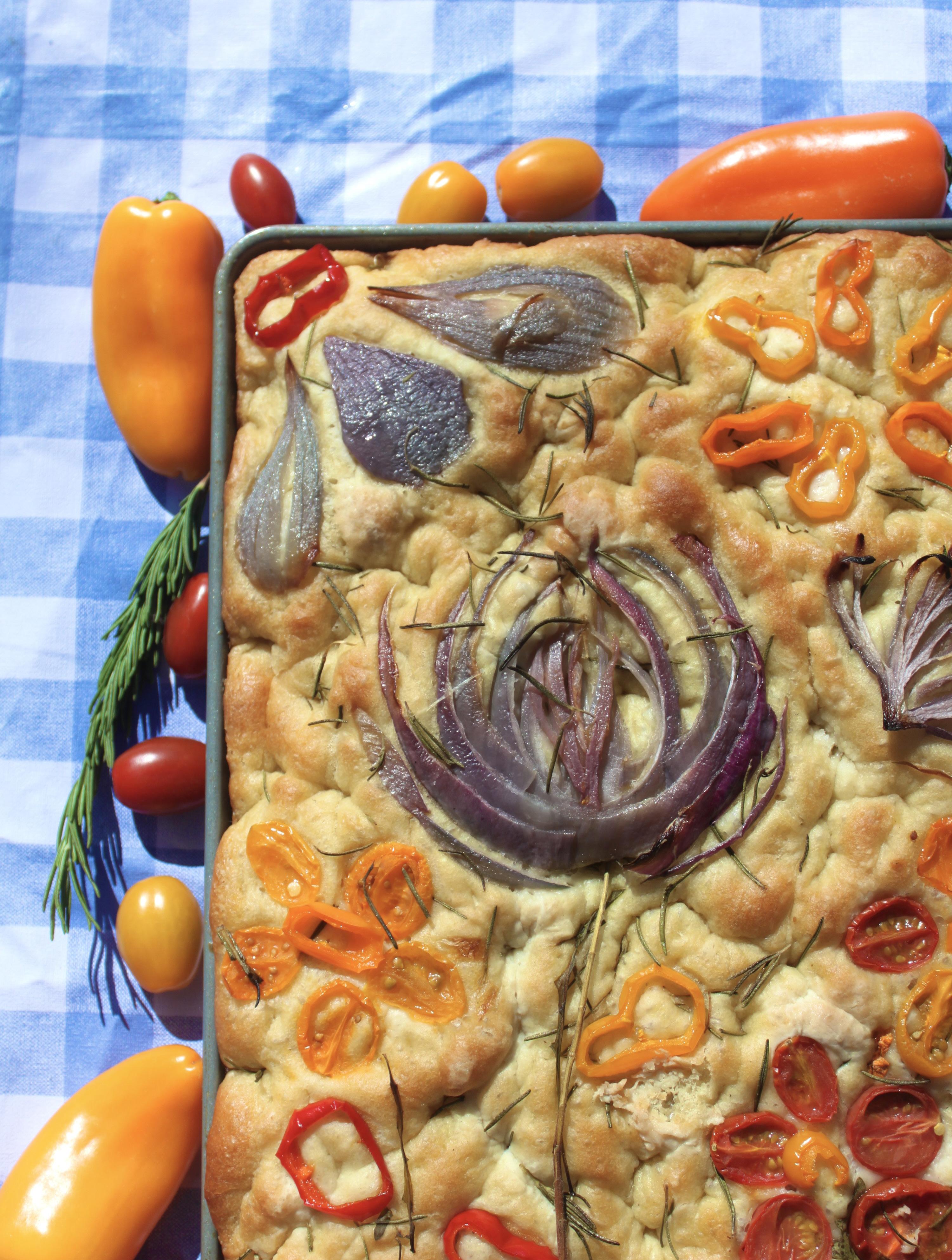
Tere’s a word in Korean called son mat that describes the taste of something that was made by hand. Tough I wasn’t much of a cook before COVID, I became infatuated with the world of “from scratch”, or foods made with pure ingredients. I wanted to achieve the son mat in some way, which eventually led me to the world of baking. I, like many others plagued by the boredom of lockdown, cycled through a plethora of random hobbies that I never would have considered before. Motivated by achieving this hand-made taste, baking became one of my more regular activities that stuck with me even afer lockdown.
In order to create something with this very specifc hand-made taste, I baked all kinds of breads, cupcakes, cookies, cinnamon rolls, and danishes almost every other night. Between the hours of 6:00 pm and 8:00 pm, I would take over my kitchen space, flling the house with the smell of yeast, covering the foor in gritty sugar, and dusting four all over the kitchen counter. Tough my family is particularly fond of sweet treats, my most requested and replicated dish I produced during this time was inexplicably my homemade focaccia.
With the exception of the widely controversial and tricky sourdough, bread is one of the easiest, yet most rewarding, baked goods I’ve made. At its most basic form, it is simply a combination of four, yeast, water, and salt. Tough focaccia requires a few additional ingredients, the process is just as simple, yielding a much more impressive bread. Even with some of my frst failed attempts at baking the perfect loaf, my family would ofen still comment on how nice the house would smell, or even how good it felt to have anything homemade. Bread had always been a staple in our household, but it had become even more of a joy to have the freedom to have it made anytime completely from scratch.
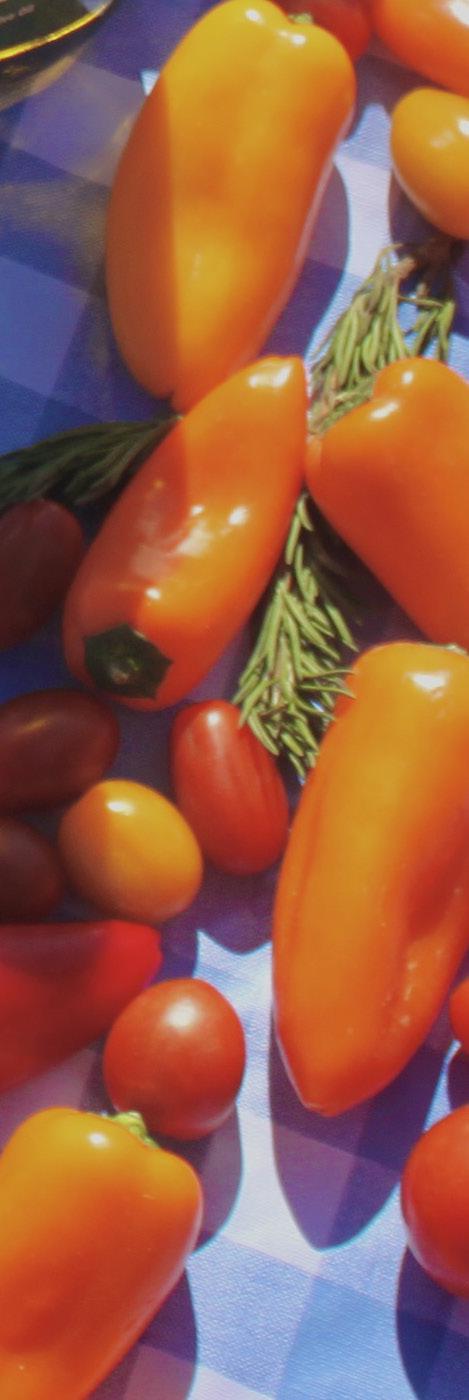
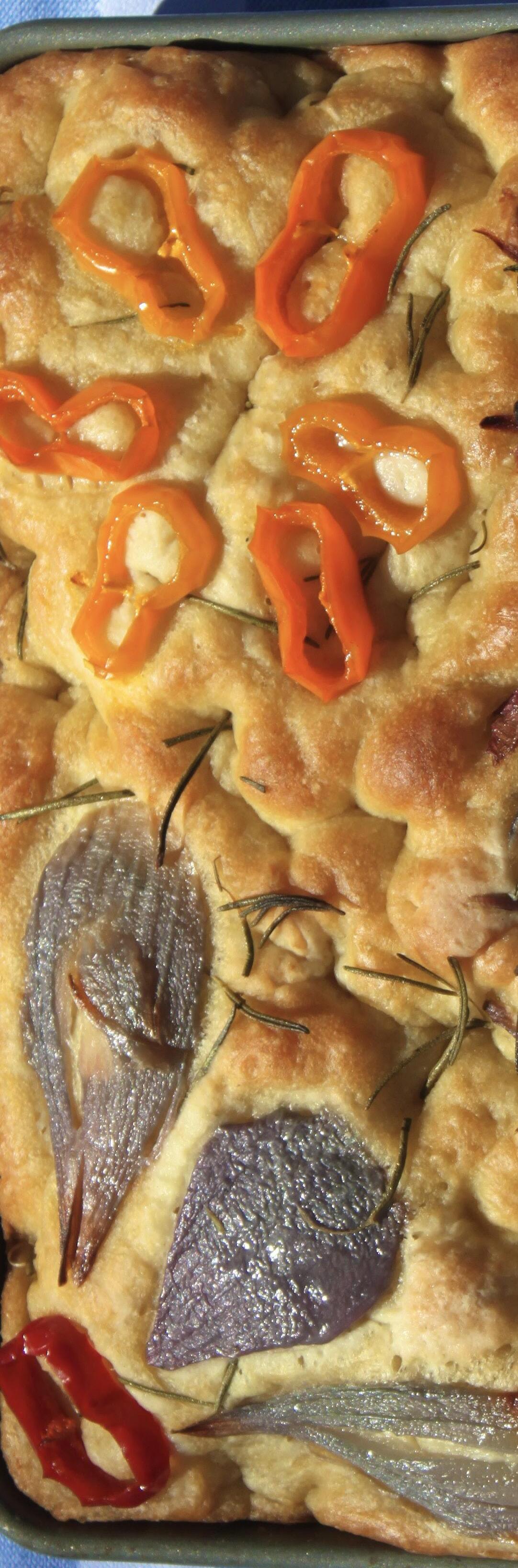
Sharing a warm loaf of bread together during this tumultuous and isolating time was a great bonding experience for my family. Afer being forced into close proximity for several months, baking became a creative outlet for me, a space where I could obsess over perfection, and feel control over every step. My siblings and I would take turns trying to outdo each other as we tried to make the perfect loaf. While my sister had the upper hand on patience and technique, I brought creativity by forming vegetables and herbs into unique designs on my loaves. One of my favorite designs included sliced cherry tomatoes as fower petals, thyme as stems, and thinly sliced red onion as leaves. Tough it was competitive in nature, the act of baking and the togetherness in eating slowly began to repair any kind of hostility that had built up in my household due to the forced quarantine.
What I’ve realized through my baking journey is that son mat isn’t just simply the taste of the dish- instead, it’s an overarching feeling of love when consuming. Te food only tastes as good as the efort put into it, which is why my family enjoyed even the fat, defated versions of my focaccia before I got the technique down perfectly.
Flour, as the building block of all baked goods made from scratch, is an ingredient that embodies this transformative period of time for me. Bread can curb hunger, but can also deeply nourish the soul of those who make it. I’ve found a newfound appreciation for food made from scratch now, and I hope to continue sharing this love and appreciation with others, one loaf at a time.
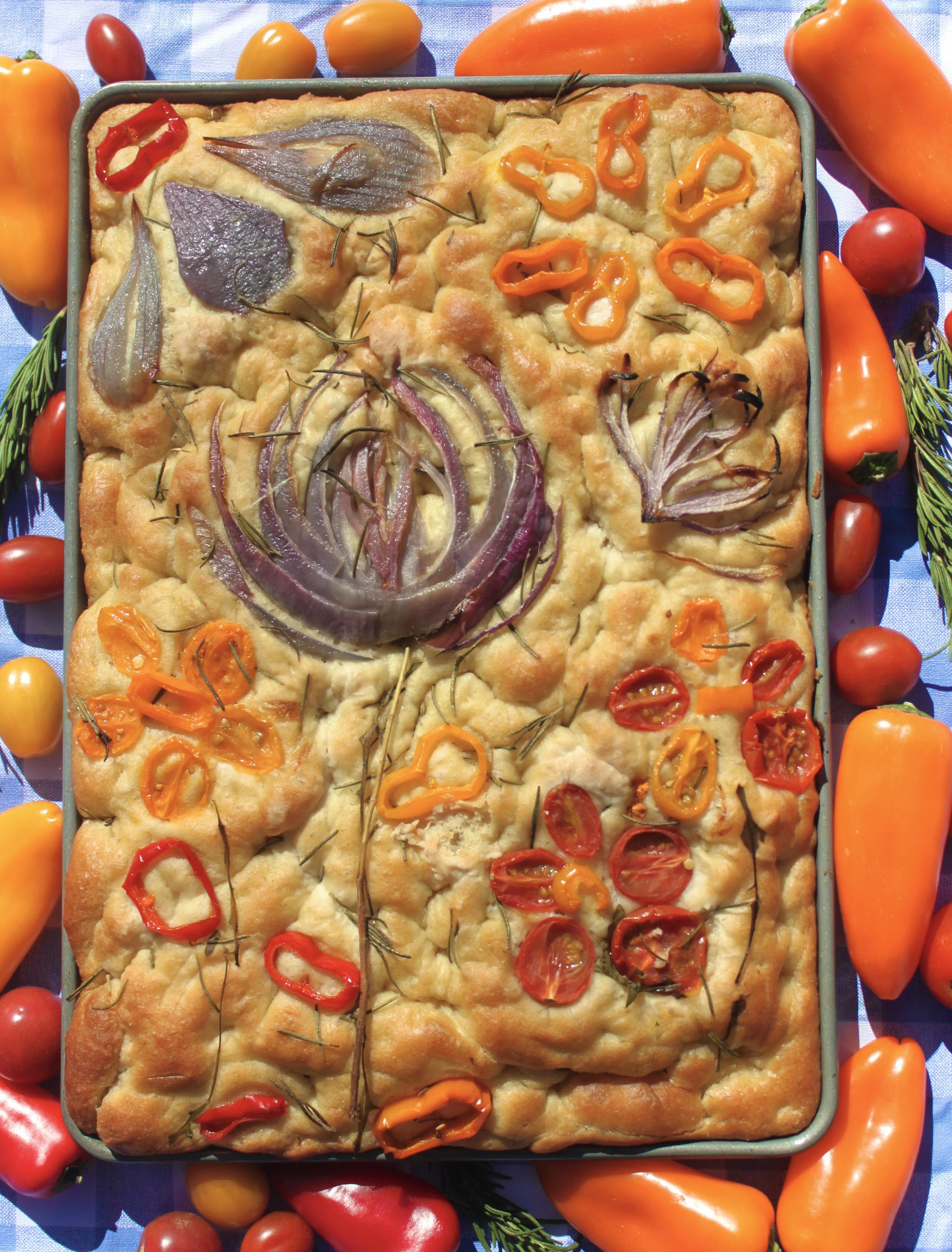
INGREDIENTS:
Bread:
2 teaspoons of sugar
1¾ cups of lukewarm water
2 ¼ teaspoons (1 packet) of active dry yeast
2 teaspoons of salt
6 tablespoons of extra virgin olive oil
4 cups of all purpose four
Optional toppings:
Flakey sea salt
Sliced tomatoes
Rosemary Red onion
Bell peppers
Parmesan
DIRECTIONS:
1. Combine the sugar and water in a large mixing bowl, and stir until dissolved.
2. Bloom the yeast by sprinkling it over the surface of the water. Let it stand for 5 minutes, or until the yeast is bubbling and a foam coats the surface of the water.
3. Add salt and oil, and pour in four gradually while mixing with a spatula (alternatively, you may use a stand mixer with a dough hook attachment).
4. Once combined, the texture of the dough should be sticky, but not wet. Adjust the texture accordingly with extra water, or four.
5. Drizzle a thin layer of olive oil on the surface of the dough in order to prevent dryness. Cover the bowl in either a damp cloth or saran wrap, ensuring an airtight lid on the bowl.
6. Let the dough rise in a warm spot for 2-3 hours, or when doubled in size.
7. With oiled hands, dimple the dough, defate and release it from the sides of the bowl. Move the dough from the bowl to an oiled, large, shallow, rectangular pan.
8. Spread the dough on the pan with the fngertips, indenting the surface with deep dimples. Let it rise to room temperature for 30 more minutes.
9. Prepare desired toppings. Get creative with the visual using bright colors and beautiful shapes with the vegetables and herbs!
10. Preheat the oven to 425°F and bake for 20-30 minutes, or until the surface is golden brown.
11. Cool, slice into squares and enjoy!
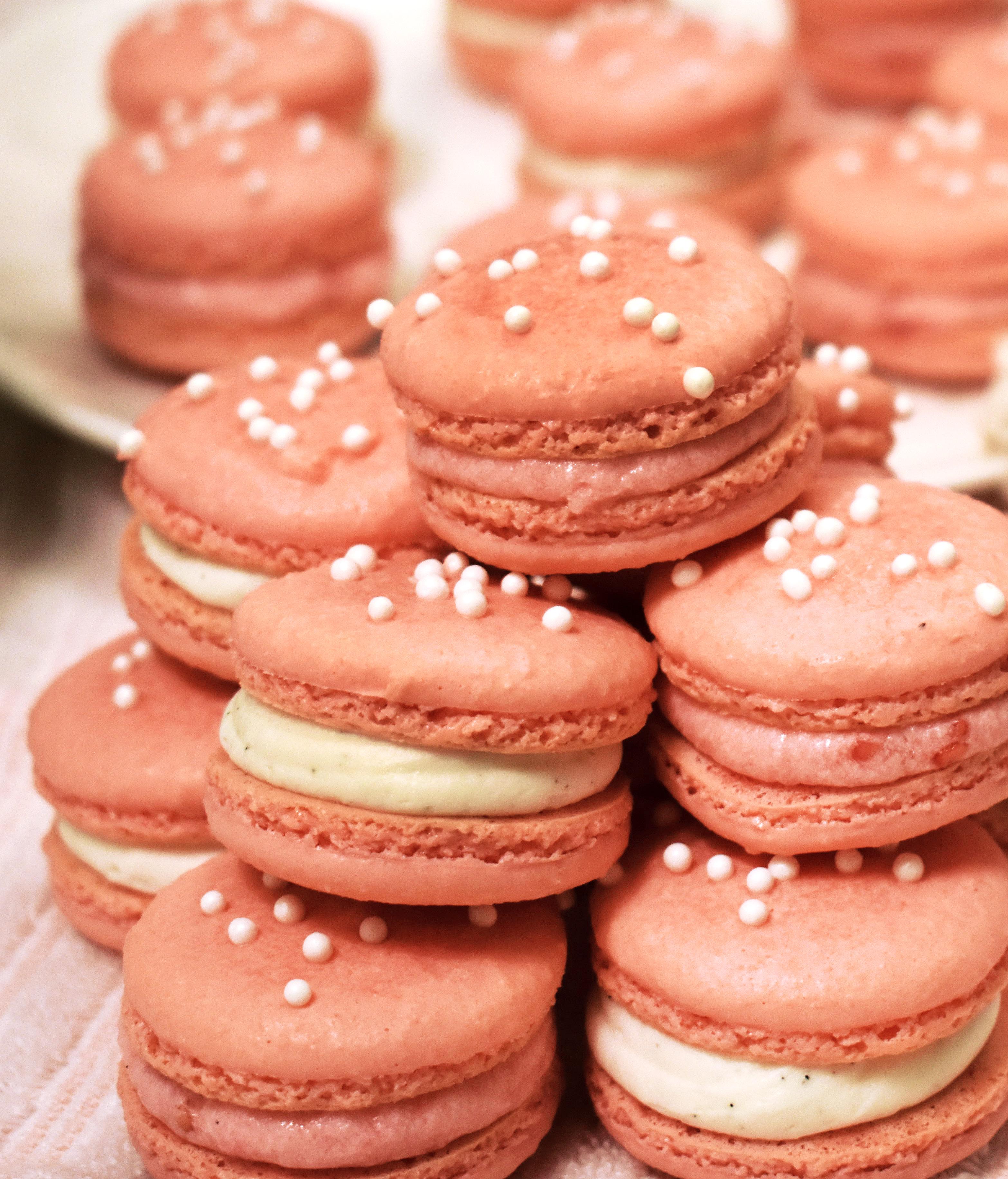
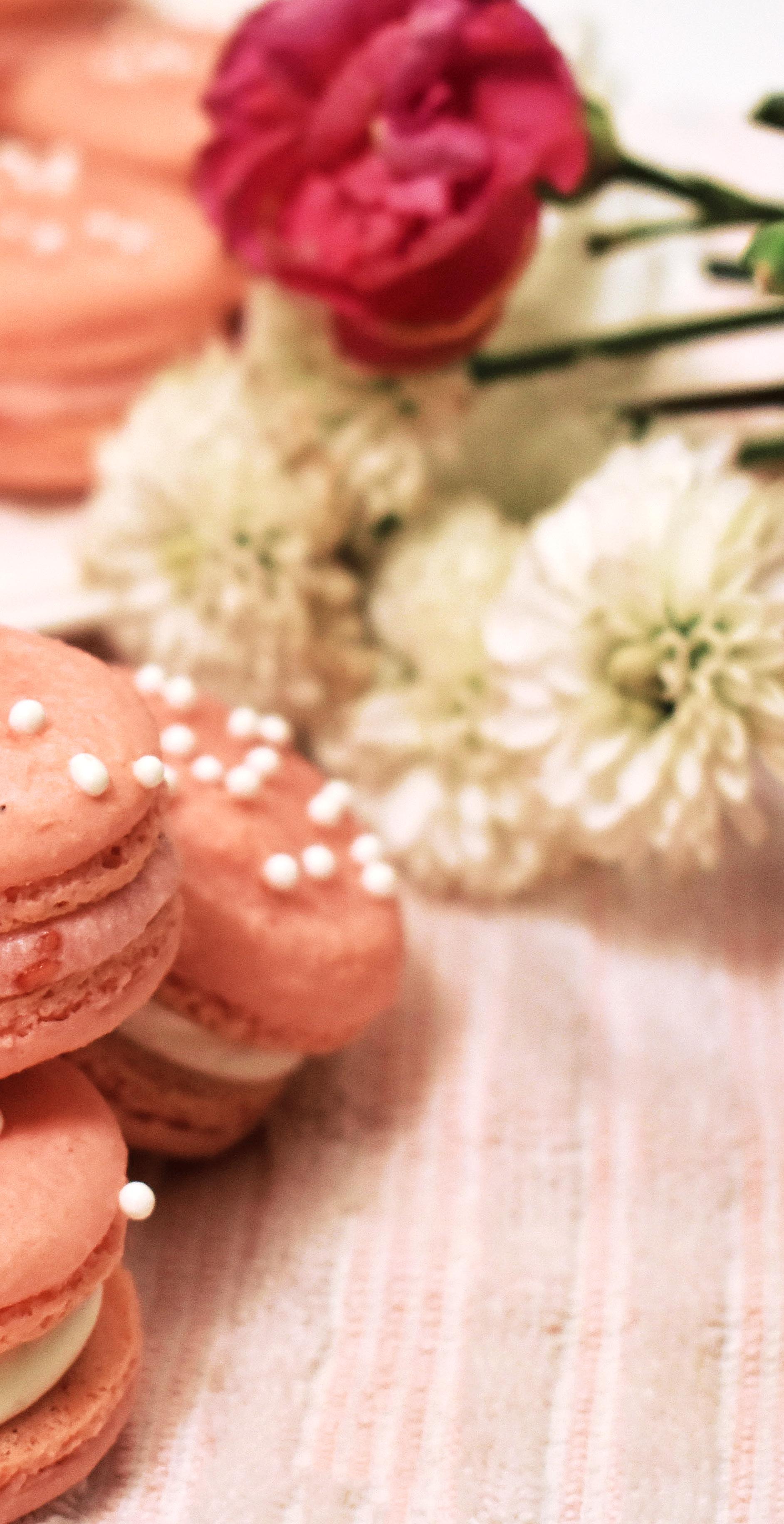
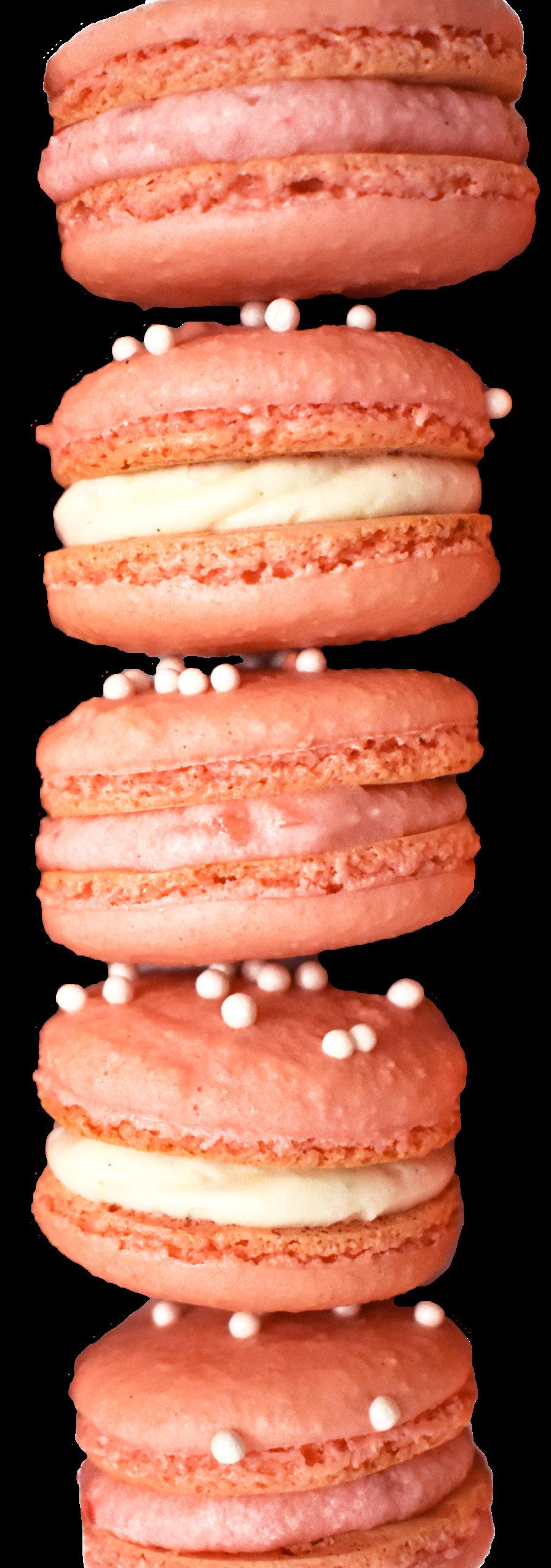
Regarded as one of the most difcult French confections, French macarons are just as fnicky as they sound. Tough it was over ten years ago, I can easily recall the frst time I attempted to bake them (spoiler: they did not turn out well). I had just fnished watching the fnale of the Great British Bake Show and was inspired to attempt to make these delicate cookies. Seeing how it was the evening and no stores were open, I had to get creative. I scoured through the pantry and made my own almond four by picking almonds out of a bag of trail mix and grinding them up. At the time, almond four wasn’t a staple in my house. No wonder the macarons turned out wrong! In short, it took me a long time to get comfortable with making macarons and an even longer time to master them.
Traditionally, almond four is used in macarons because of its superfne texture, balanced fat content, and lack of gluten, which gives the macarons their iconic crisp shells and chewy interiors. My hypothesis was that substituting almond four with diferent fours would alter three variables: the macarons’ texture, structure, and favor. To test this hypothesis, I prepared four batches of macarons, each with a diferent four. Te control batch used almond four, the standard for classic macarons. Te second batch incorporated coconut four, a high-fber, absorbent alternative. Te third batch featured hazelnut four, another nut-based four with a higher fat composition. Te fnal batch was made with oat four, a gluten-free four alternative with a diferent starch content. To ensure consistency, all variables besides the type of four remained unchanged. Te recipe ratios were identical across all batches, using the same weight of four, sugar, and egg whites. Te mixing technique followed the same tedious process, while baking time and temperature were constant across the board. To ensure a “skin” had formed on the batter, the resting time before baking was set at one hour across all batches of cookies.
Words and Pictures by: Hannah Phillips
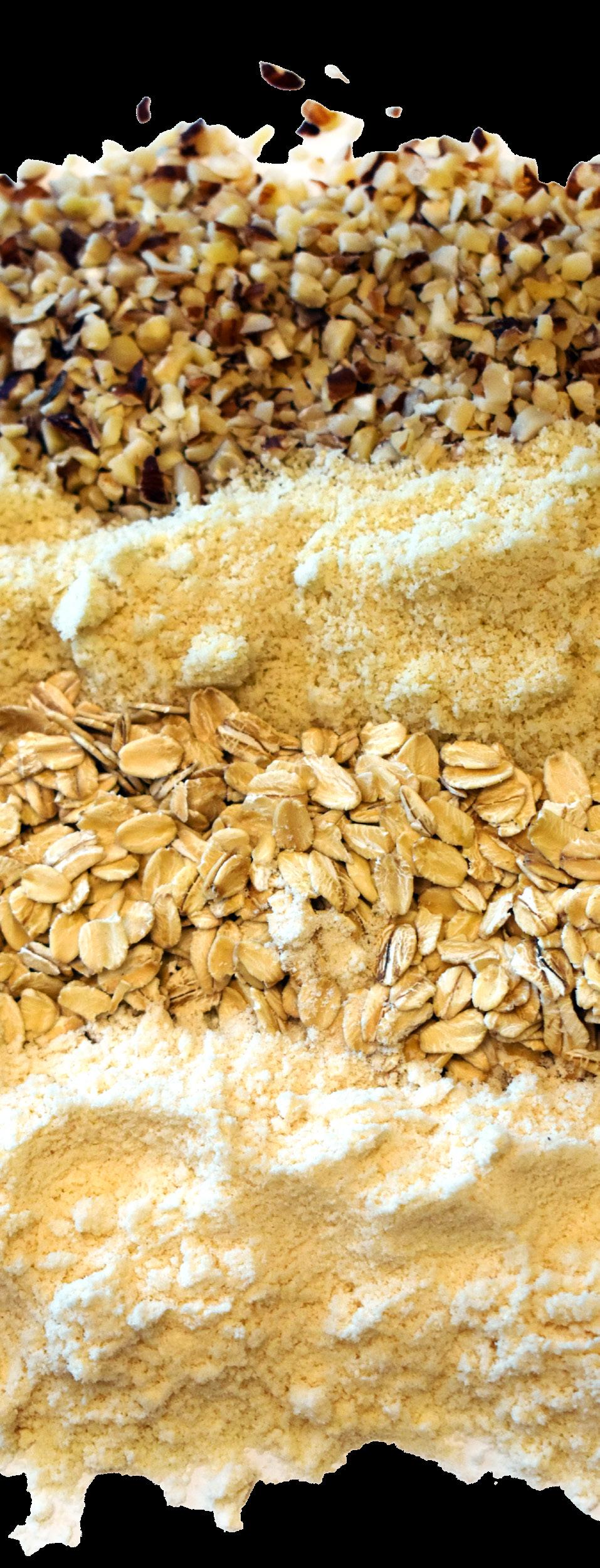
As expected, the control batch (made with almond four) produced picture-perfect macarons with a crisp smooth shell and a chewy interior. Because the batter was the perfect lava-like consistency, it allowed the macarons to spread and develop their signature “feet.”
Te coconut four absorbed a lot more moisture, resulting in a thick cookie dough like consistency, making it hard to pipe into circles. As a result, the macarons were tacky and didn’t form a hard shell. Coconut four has a high fber content which could explain why the cookies were sticky and dense. Te taste of the fnished cookie was coconutty and sweet,but very far of from a macaron. Maybe it’s best if coconut is just used in macaroons.
Te hazelnut four was the most similar to almond four, but it produced slightly rougher shells. Hazelnuts have a higher oil content than almonds, which explains why the batter was thinner, most likely causing a less uniform rise. However, the rich nutty favor provided a promising variation, especially when paired with chocolate. astly, the oat four batch spread more during baking,resulting in fatter macarons with minimal feet.
Oat four has a high starch content, which contributed to the cookies’ slightly chewy texture, but because of its lower protein and fat content, it made the fnal cookies weaker in structure. Te favor was slightly sweet and hearty, almost like an oatmeal cream pie, which worked well with certain fllings but was noticeably diferent from the rest of the nut four based batches. I found that almond four remains the best and most consistent option, but with a few twists and tweaks, hazelnut four seems to be the only other four that can be successfully incorporated with slight adjustments to my basic french macaron recipe.
Afer all this experimenting, I was again reminded of my childhood experiences with french macarons — the messy kitchens, the failed batches, and the joy and satisfaction of fnally getting the recipe right. Even though my frst macarons were a complete disaster, they sparked my constant curiosity about the science of baking. Whether you stick to tradition or test new variations, the key to successful macarons lies in their precision and playfulness. So if you’ve ever been intimidated by these tiny cookies, now is the time to rise up of your feet and get experimenting!
Ingredients:
150g almond four (or 110g almond four and 40g hazelnut four)
150g powdered sugar
100g superfne sugar
110g egg whites (room temperature, around 3-4 eggs)
1/4 tsp cream of tartar
Gel food coloring (optional)
Filling of your choice (buttercream, ganache, jam, etc.)
1. Prepare the Dry Ingredients:
In a food processor, pulse together the almond four and powdered sugar until fnely combined. Transfer to a medium-sized bowl and sif the mixture twice to remove any clumps.
2. Make the Meringue:
In a clean, dry, and chilled mixing bowl, beat the roomtemperature egg whites with an electric mixer on medium speed until foamy (about 30 seconds). Add the cream of tartar and continue beating on medium speed for another 30 seconds (It’s okay if the cream of tartar isn’t fully dissolved). With the mixer on medium-high speed, gradually add the superfne sugar one tablespoon at a time, waiting about 30 seconds between each addition.(Optional: Add gel food coloring afer all sugar has been incorporated.) Continue beating until stif, glossy peaks form.
3. Fold the Dry Ingredients into the Meringue (Macaronage): Add the sifed almond four mixture to the meringue.Using a spatula, fold gently in sweeping motions—scraping down the sides and bottom of the bowl, cutting through the center, and turning the bowl as you go. Continue folding until the batter fows smoothly and falls from the spatula in a continuous ribbon. You should be able to make a fgure-8 with the batter, and it should hold its shape for a few seconds before sinking back.
4. Pipe the Macarons: Transfer the batter into a large pastry bag ftted with a wide round tip. (Tip: Place a small piece of tape over the tip to prevent batter from spilling out before piping). Pipe batter onto parchment-lined baking sheets, holding the bag straight up and down. Pipe 1 ½” circles, then release pressure with a slight “C” motion to avoid peaks. Leave space between each macaron. Tap the baking sheet frmly 5-6 times on the counter to release air bubbles. Let the macarons sit at room temperature for 1 hour, or until a dry “skin” forms on the surface.
5. Bake the Macarons: Bake the macarons for 10 minutes at 315°F , rotating the baking sheet halfway through for even baking.
6. Cool & Fill: Allow the macaron shells to cool completely before carefully removing them from the parchment paper. Fill with your favorite buttercream or ganache.

Website: bcgusto.com
Email: bcgustomag@gmail.com