SPRING 2024


Dear readers,
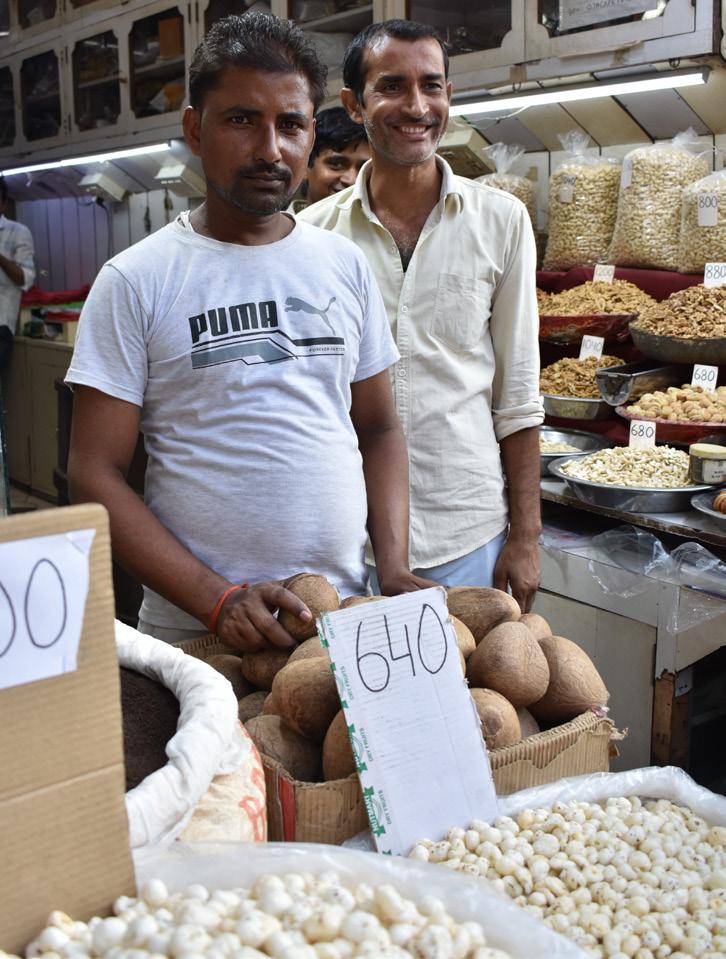
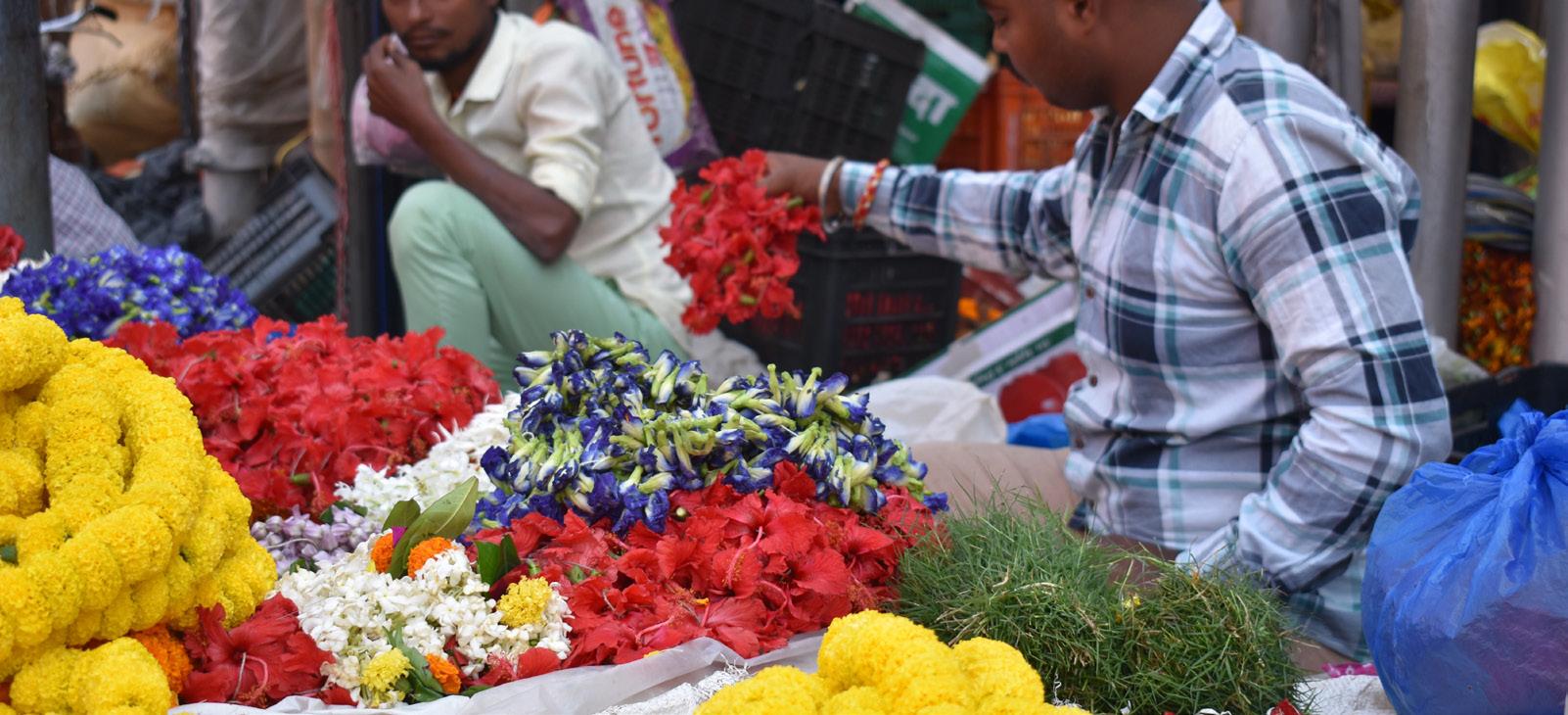
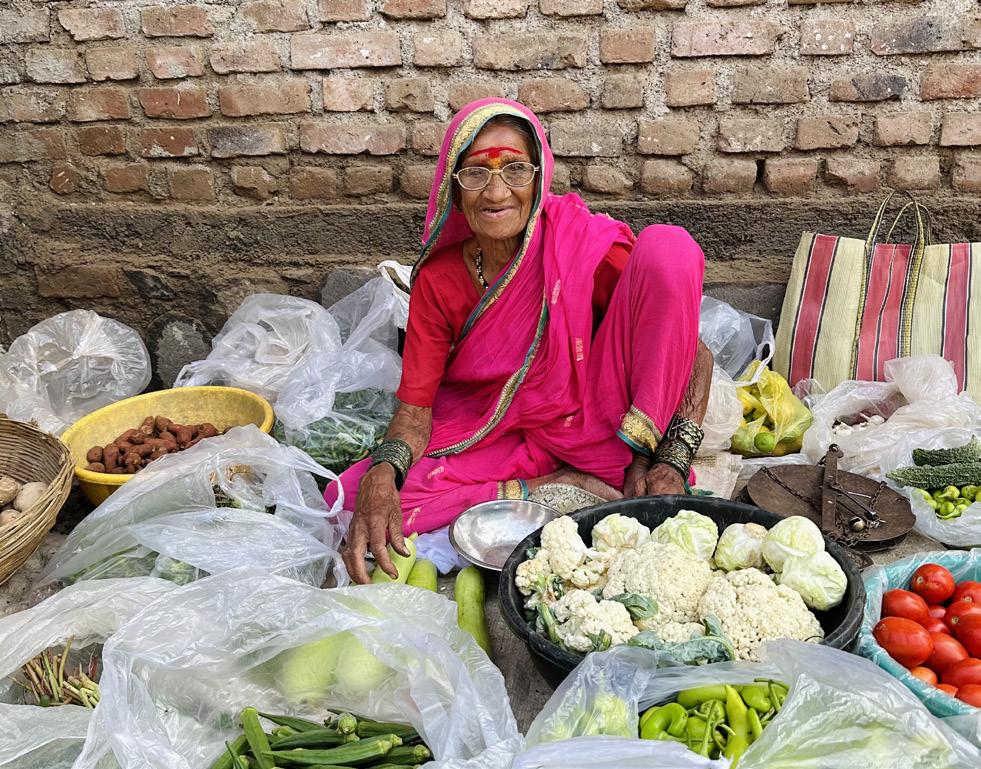
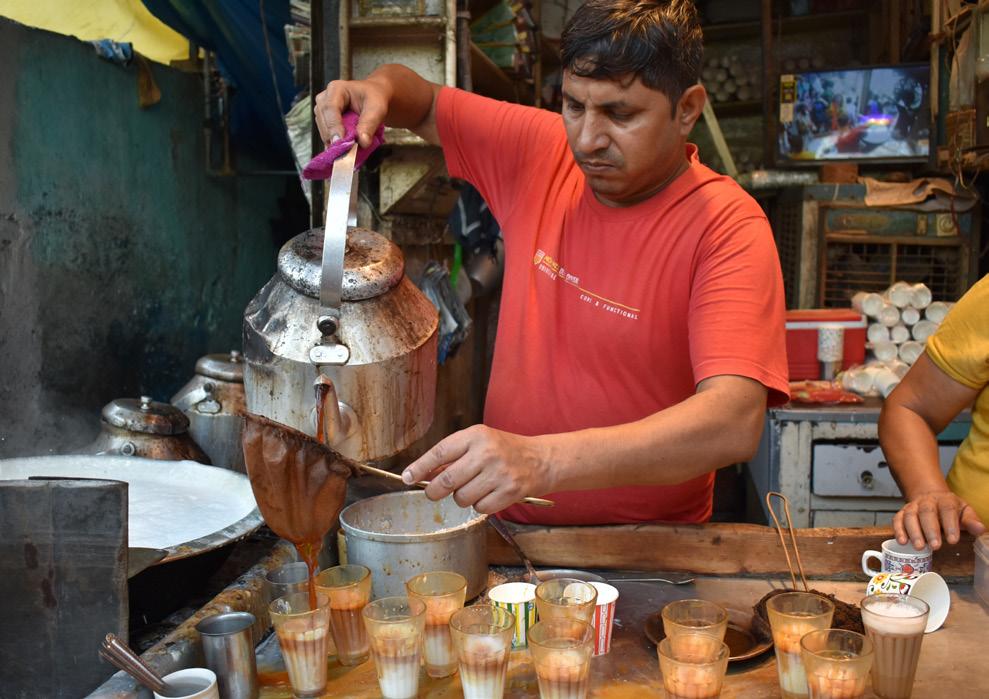
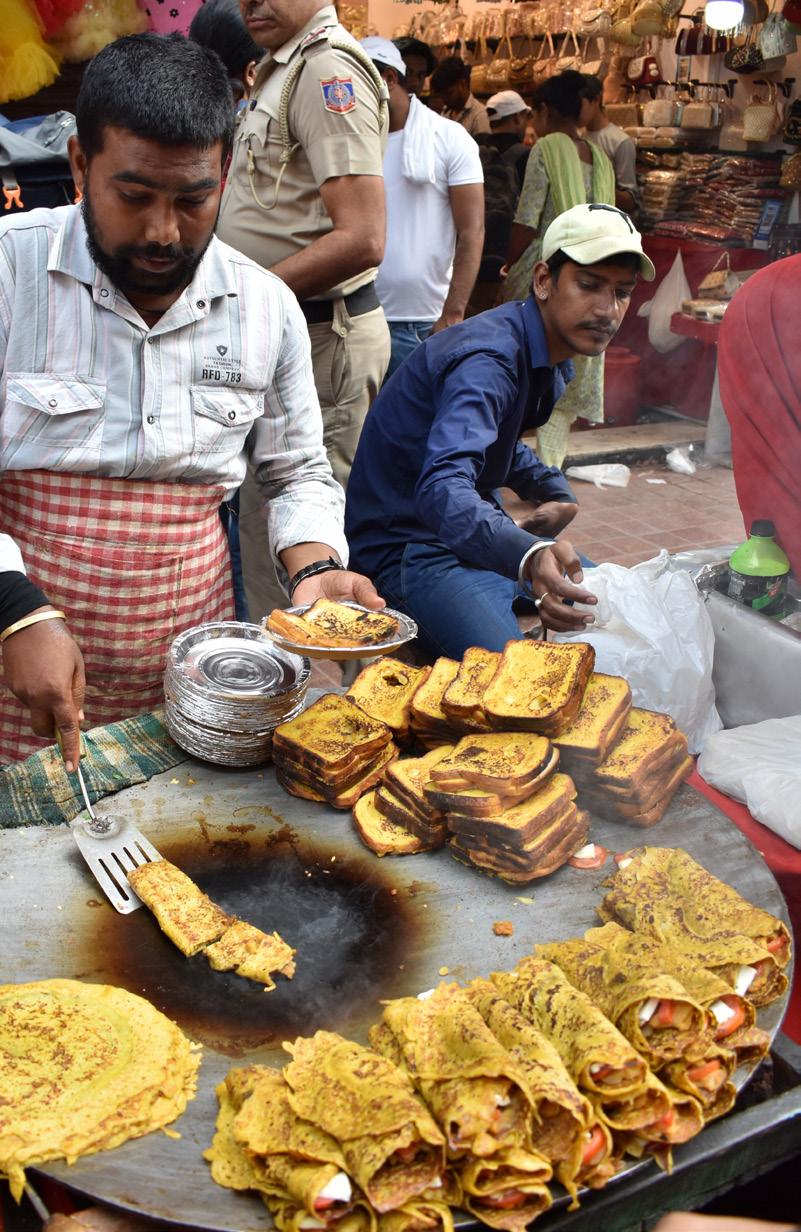
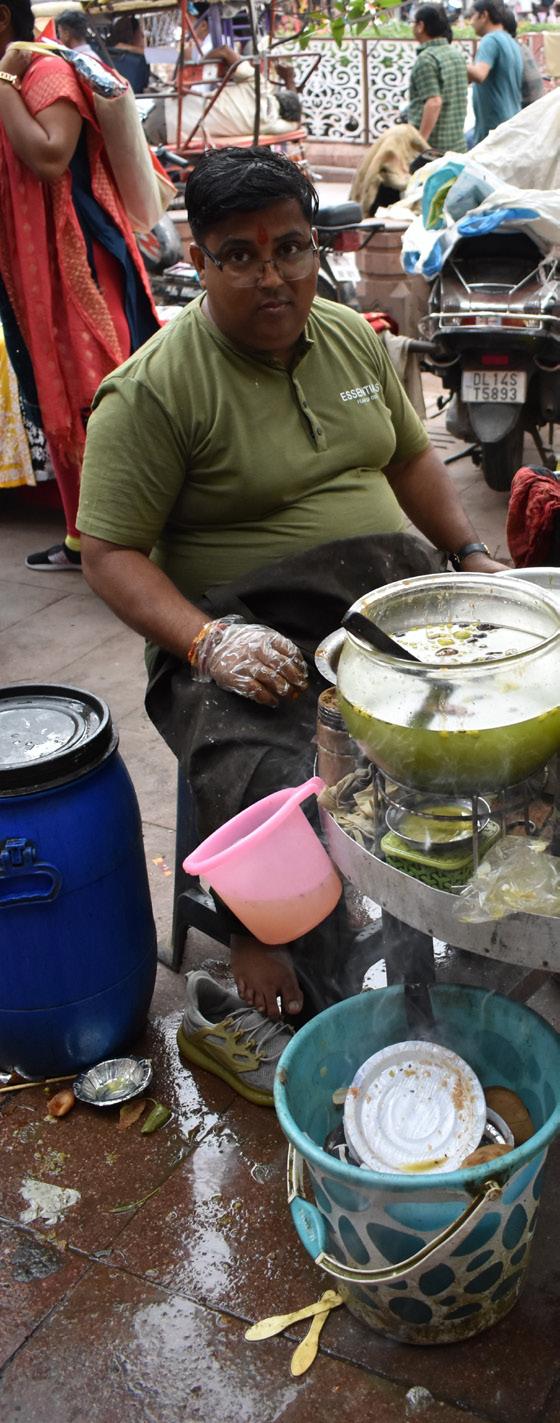
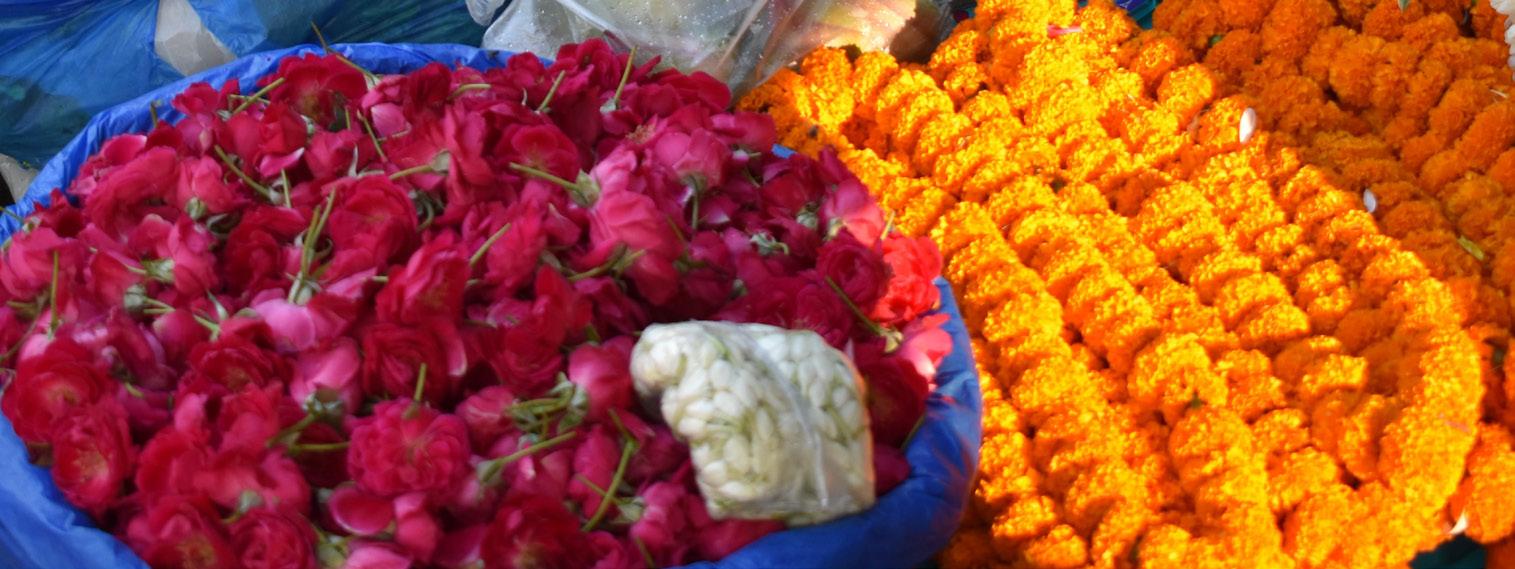
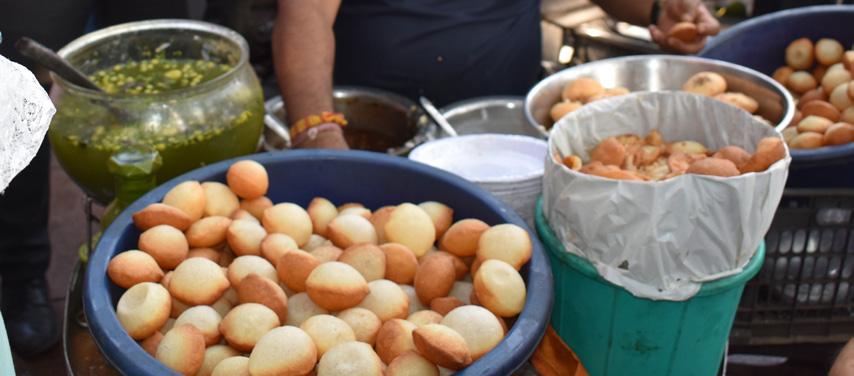
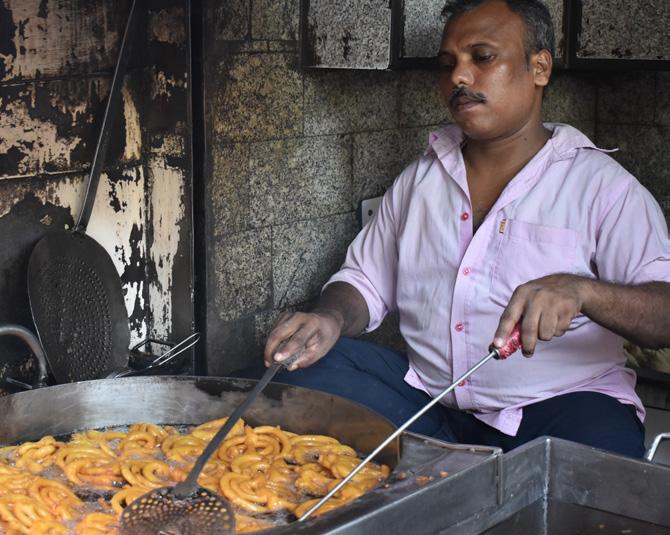
Sitting on a rickshaw slowly making my way through the streets of Delhi, India, I couldn’t help but feel overwhelmed. Around me were bustling alleys flled with merchants selling traditional vibrant Indian garments, cows roaming the streets as if they owned them, and men crouched around small open fames preparing fresh chai. My eyes darted from one person to the next, constantly enthralled, wondering what that person on the other side of the street was frying in blistering oil, flling with opaque stufng, and dipping in lime green water. Just as quickly as I noticed the frst man, suddenly I was captivated by a young woman rolling, dabbing, and patting dough into a perfect circle before gracefully tossing it onto a century-old curved, hollow pan. Te streets of India take your mind and eyes on an unexpected adventure, just like every bite of food I devoured during the season of my life abroad.
Every Indian kitchen I entered had a Masala Dabba, a large metal platter with small containers nestled together and flled to the brim with distinct aromatic spices. Tere were no labels, just mounds of freshly ground turmeric, whole green cardamom, and of course, fery Kashmiri chili. I fell in love with India, but most notably I fell in love with spice. Te raw favor of a day-old green chili, the punch when eating crispy garlic paneer, and the wave of distinct smells that ignite your nostrils when walking through the market. Te options are endless, as each spice has its unique purpose and favor within a dish. As I watched people cooking on the streets, they diligently seasoned their food, combined textures, temperatures, and tastes, and most importantly, added that extra level of spice. In this season of my life, I learned what spice harmonization and layering of favor truly mean.
In this hot and spicy issue of Gusto, we challenge readers to go through the seasons of their lives and the spices, sauces, and herbs that went along with them. To open one’s mind to the history of spice and one’s stomach to new recipes full of favor. To see how the four seasons impact our palates, moods, and plates. Welcome to the season(ings) of Gusto.
Keep on cooking, Margaret Kufner

The Perfect Cake for a (Cancelled)
Spring Tea Party
by Julia SantosYou Are What You Eat by
Maddie SimsFarm Share by
Sydney LucianoFrom Lockdown to Flavortown by
Maggie BeckAn Ode to Old Bay
by Carrie FinnThe Seasonings of My Life by
Keira TuSeason of the Sticks by
Audrey MorkenThanksgiving: Study Abroad Edition by
Daniel BaymillerComplements of the Red House Country Inn
by Hannah PhillipsA Lytle Roast
by Bunny LytleSprinkle in Spirit
by Margaret KuffnerSPRING 2024 ISSUE 11
EDITOR-IN-CHIEF
OVERSEEING EDITOR
MANAGING EDITOR
FEATURES EDITOR
ESSAYS EDITOR
MUCHO GUSTO EDITORS
HEAD CODY EDITOR
CREATIVE MANAGER
MEDIA AND MARKETING MANAGERS
CONTRIBUTING WRITERS
Margaret Kufner
Sophie Borrmann
Julia Santos
Maddie Sims
Astrid Langoe
Isabela Gonzalez Zapata and Julia Schultze
Audrey Morken
Madeline King
Katie Ballard and Adeline Kim
Regina Herrero Ampudia, Julia Santos, Maddie Sims, Sydney Luciano, Maggie Beck, Carrie Finn, Keira Tu, Audrey Morken, Daniel Baymiller, Sophie
Borrmann, Adeline Kim, Hannah Phillips, Bunny Lytle, and Margaret Kufner
CONTRIBUTING CREATIVE
Emily Ahern, Katie Ballard, Sophie
Borrmann, Madeline McCormick, and Hannah Phillips
MEDIA AND MARKETING TEAM
COPY EDITORS
MEMBERS AT LARGE
Emily Ahern, Julia Colone, Josie Crockett, and Ruby Levine
Kelley Knox, Olivia Lim, Audrey Morken, and Caitlin Murphy
Ana Calvillo, Joshua King, Elliot Kuo, Manny Louime, and Jane Paulson
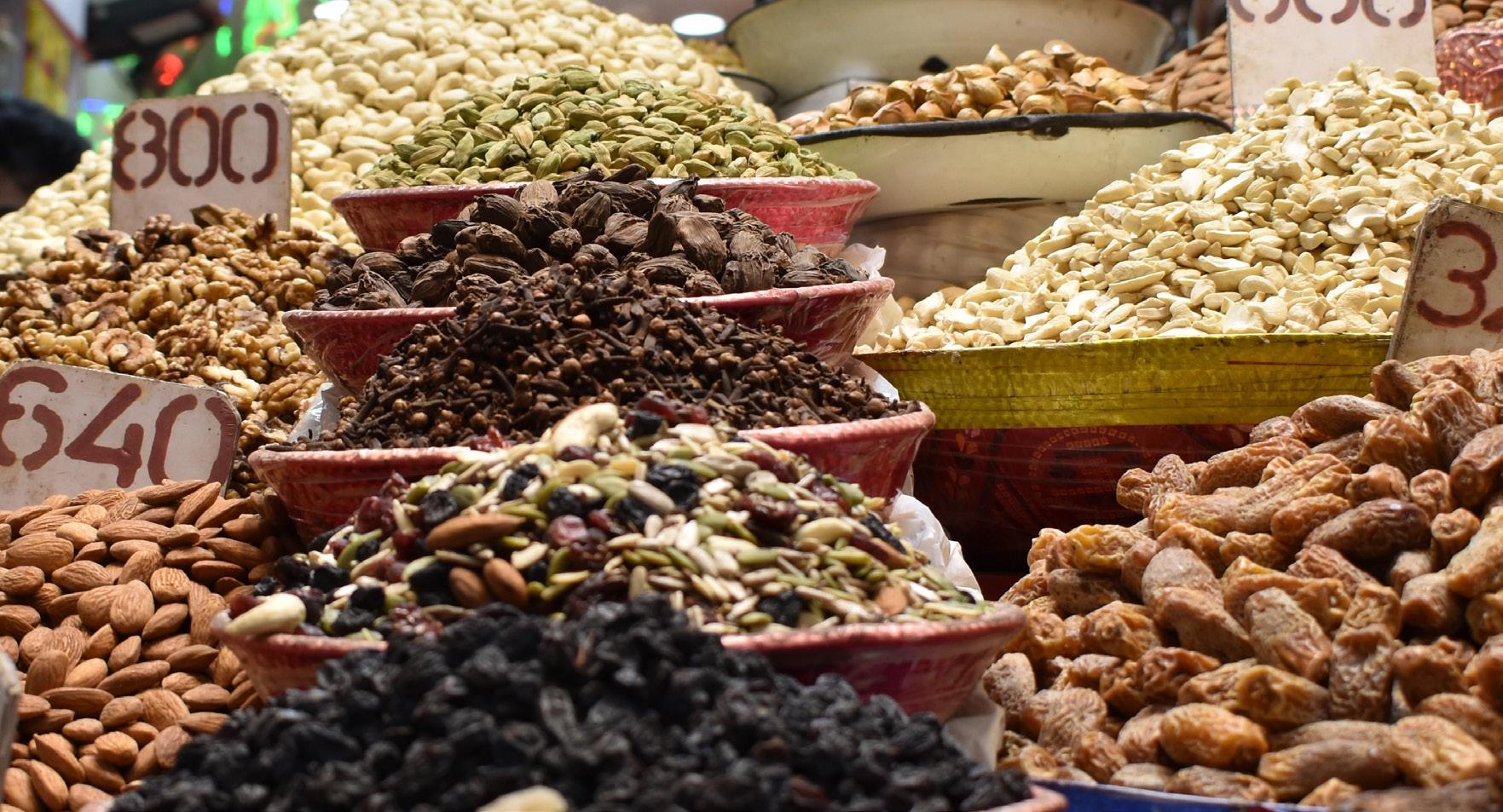
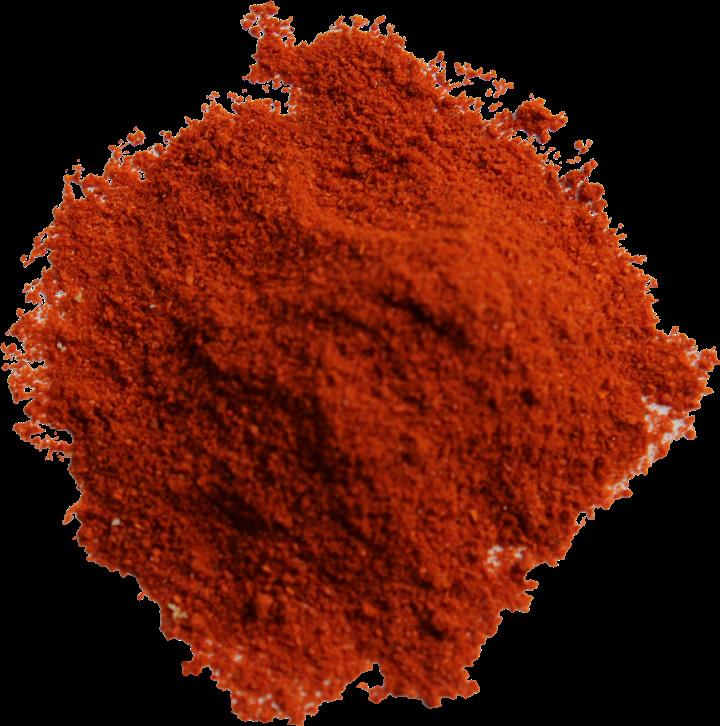
Spice usage in global gastronomy may seem arbitrary and irrational, ofen attributed to factors like local availability, palate preferences, and cultural infuences. Tis does not deviate from our current characterization of world cuisines. For instance, Indian cuisine is renowned for its aromatic profle, achieved through spices like turmeric, cumin, and coriander. Middle Eastern dishes are ofen characterized as fragrant due to the inclusion of spices like Za’atar and safron. Mexican cuisine is synonymous with bold spices and chilies, imparting its signature heat. Meanwhile, Scandinavian gastronomy is ofen perceived as relatively bland because of the favor profle of spices like dill. While it might seem coincidental that certain spices became staples of specifc cuisines, traditional economic theory suggests a rational motivation underlying this phenomenon. Driven by a desire to preserve life, various cultures have selectively incorporated spices into their culinary traditions, ofering cultural explanations that, though seemingly irrational, are inherently intentional.
Te notion that spice utilization might refect deliberate, evolutionarily-motivated behaviors is supported by analysis of other customary cooking practices like the nixtamalization of corn. Humans in general require nicotinic acid or its precursor, tryptophan, in their diet. A defciency of such components can cause a disease called pellagra, characterized by dermatitis, mental disturbance, and even death. Ancient indigenous communities in the Americas relied on a diet high of corn. However, given corn’s high cellulose and insoluble fber content, the human digestive system struggles to access and absorb its nutrients efectively. To remedy this, ancient Central American farmers
devised nixtamalization, a process involving the addition of wood ash to the “masa” produced by mixing dried corn with water. Tis method detoxifed maize kernels, released niacin from its natural form, improved protein quality, balanced amino acids, and increased calcium content by up to 400%.1 Unbeknownst to indigenous communities, this routine practice held life-saving implications through its chemical reactions. Te cultural values that led to this practice were not learned by the British settlers that frst arrived in the United States. Lacking the knowledge of local tribes’ customs and techniques, they remained unaware of nixtamalization, inadvertently triggering a pellagra epidemic.
Tis example demonstrates that beneath what may seem like happenstance or simply favor enhancement might have some other underlying motivations at work.
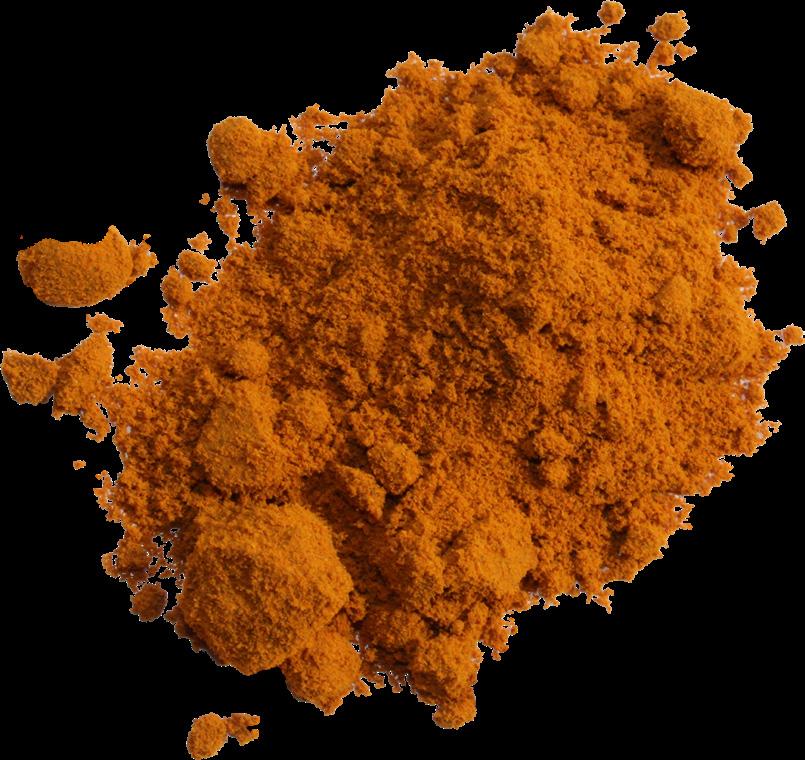
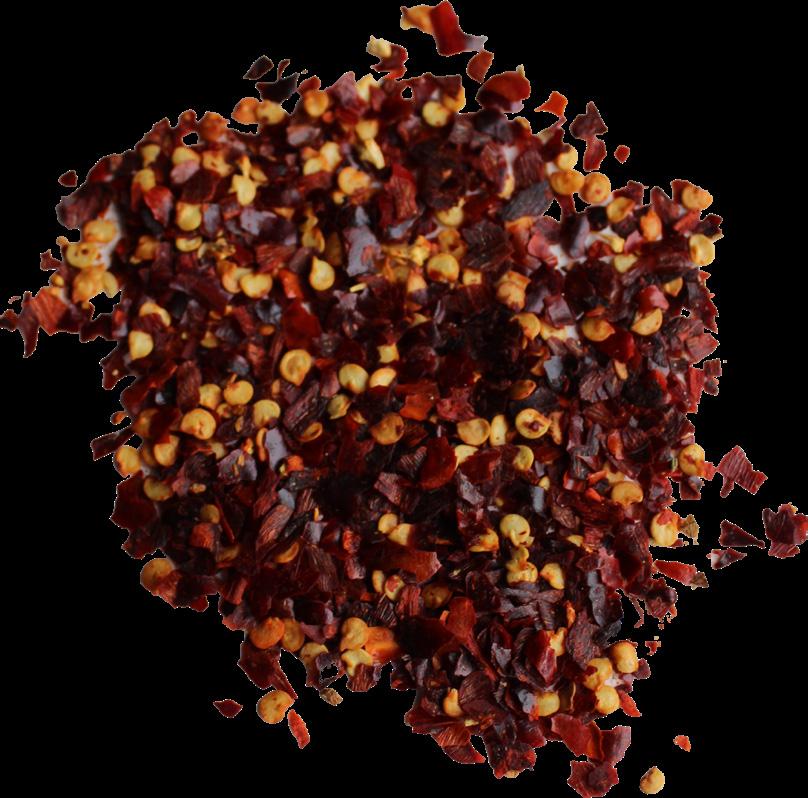
According to Merriam Webster, “spice” is defned as “any of various aromatic vegetable products (such as pepper or nutmeg) used to season or favor foods.” Certainly, spices originate from a diverse array of plant products including woody shrubs, vines, trees, and aromatic lichens, as well as their roots, fowers, seeds, and fruits. Every spice possesses its own distinctive aroma and favor that stem from compounds called phytochemicals. Tese phytochemicals are also called “secondary compounds” because they are secondary to the plant’s fundamental metabolism, developed within plants as a defense mechanism against herbivorous insects, vertebrates, fungi, pathogens, and parasites.2 It is just the specifc protective role that these spices have on plants that extends to humans when they add them to their diets.
Te protective properties exhibited by phytochemicals in plants can also extend to shielding humans against biotic adversaries such as bacteria and fungi. According to the World Health Organization (WHO), foodborne bacteria like Clostridium, Escherichia, Listeria, Salmonella, Shigella, and Vibrio pose signifcant health risks globally.3 Researchers Paul W. Sherman and Jennifer Billing looked at more than 93 cookbooks for several traditional cuisines around the world and categorized the types of spices. Among the 30 spices identifed, test results revealed that when concentrated to a certain level, they could either kill or inhibit at least 25% of the bacterial species they were tested against, with 15 of these spices capable of inhibiting at least 75% of bacterial species.4 Notably, garlic, onion, allspice, and oregano emerged as the most potent spices, displaying inhibitory or bactericidal efects against every bacterium tested.
If spices prevent bacteria from growing at rapid rates, it follows that spice usage would be most prevalent in hot climates. Tropical and hot climates are characterized by higher temperatures and abundant moisture, which create ideal conditions for microbial proliferation. Tis poses a challenge for food preservation since rapid spoilage of unrefrigerated foods can become a concern. Sherman & Billing utilized the average annual temperature of each country they studied as a proxy for meat spoilage rates. Assuming that the traditional meat-based recipes used in the study developed before refrigerator use, a correlation between warmer climates and heightened spice usage was anticipated. Te fndings supported this hypothesis, revealing a positive relationship between a country’s average temperature and the proportion of recipes incorporating spices. Moreover, as the average temperature increased, so too did the variety of spices needed in the recipes. Tis is shown when comparing Indian and Norwegian traditional cuisines. With a mean annual temperature of 26.9ºC, Indian cuisine was shown to include 25 diferent spices and presented an average of 9.5 spices per recipe. In contrast, Norwegian cuisine, with an average temperature of 2.8ºC, included only 10 diferent spices and called for an average of 1.6 spices per recipe.
Te correlation between temperature and spice usage extends to the specifc types of spices used in various climates. As average temperature increased, so did the frequency of use of chilis, garlic, onion, anise, cinnamon, coriander, cumin, ginger, lemongrass, and turmeric. Tese spices are highly inhibitory, with at least 75% inhibition on bacterial growth, which were also found to be statistically signifcant. Additionally, while a negative relationship was observed for certain other spices, such as dill and parsley, their signifcance was minimal, as neither possesses potent antimicrobial properties.5
Te relationship between human culinary practices and the utilization of spices to season foods refects the fascinating interplay of cultural traditions, environmental factors, and biological incentives that shape our societies and cuisines. From the protective properties of phytochemicals that enhance favor as well as easing preservation and protecting our bodies, the understanding of the proximate and ultimate explanations demonstrates the complexities of gastronomy. As we savor the favors of global cuisines, it is important to appreciate the rich tapestry of incentives and motivations that have shaped our culinary heritage, reminding us of the beauty of cooking.
 Words by Julia Santos
by Katie Ballard and Sophie Borrmann
Words by Julia Santos
by Katie Ballard and Sophie Borrmann
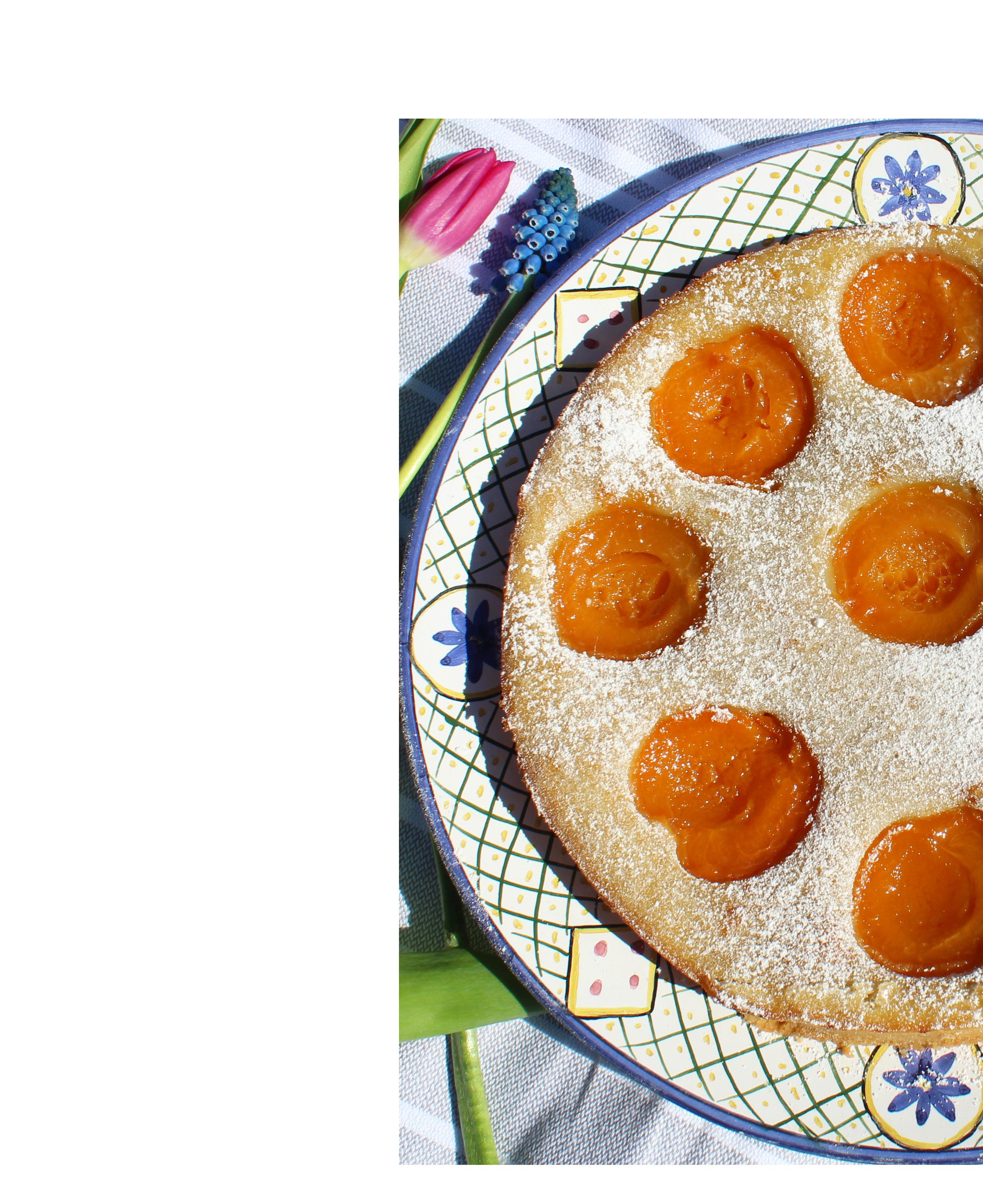
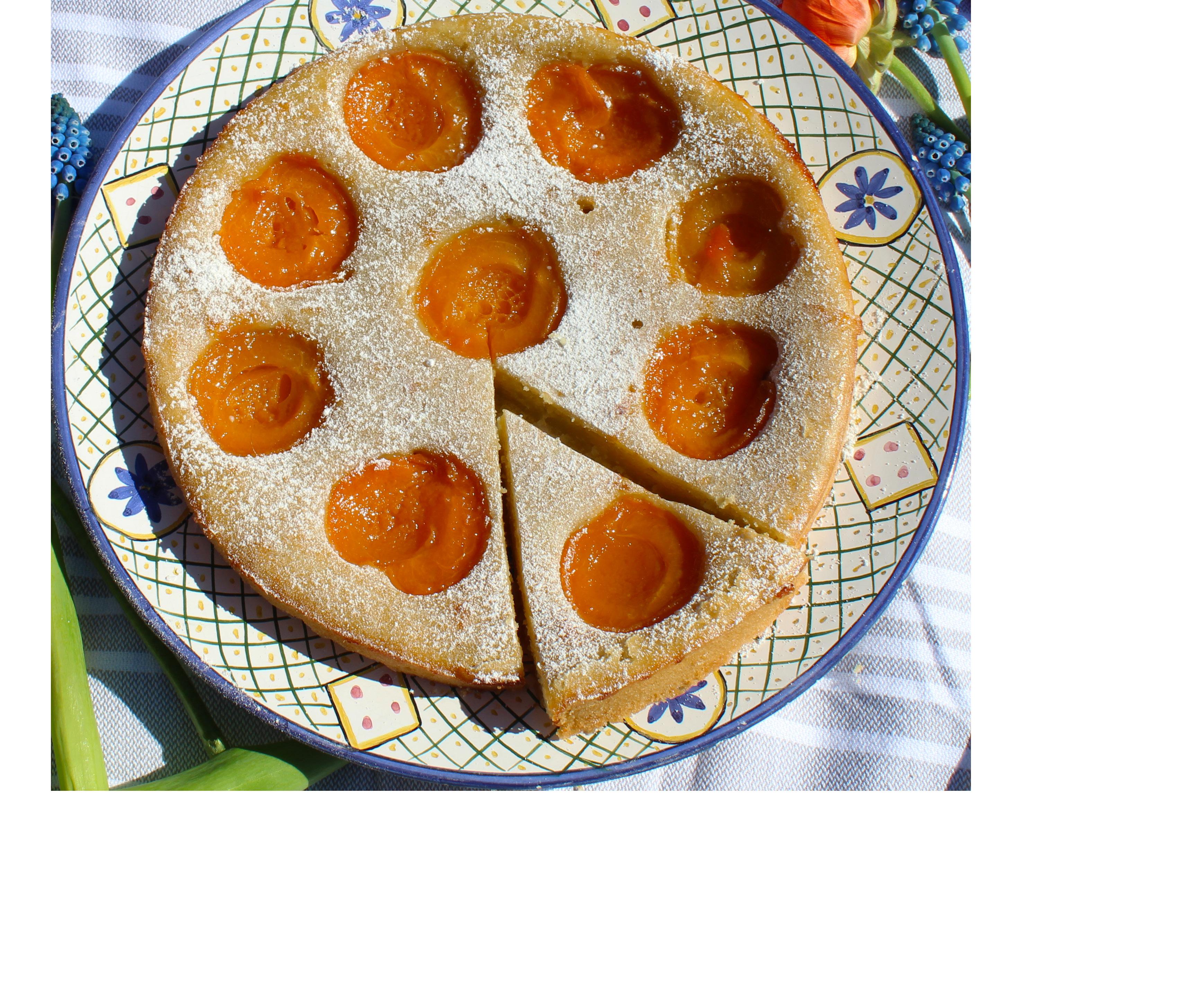
prepared from much larger ingredients. Pretty plates, silverware, and tea cups had been arranged at each place setting. Fresh fruit had been washed and carefully cut into bite-sized pieces, joining colorful jams and spreads on the checkered tablecloth. Tea, arguably the most important element, had been prepped with ample honey, lemon, and mint. My contribution was a fresh, golden apricot almond cake, ready to be sliced into picturesque pieces and placed on to delicate plates. My friends and I had organized a Pinterest-worthy tea party, with an a sophistication ahead of us. We were ready to feast like British royalty, eat posh delicacies, and take aesthetic photos. e only thing holding us back was a cold, unwelcome
the weather was not cooperating. Outside, the temperature had dropped and snow had begun to fall. I consider myself a spring enthusiast, so I can’t stand the lingering snow that likes to make an appearance in the early spring weeks. As I begin preparing for the best season, at least in my opinion, and all of the sun and blooming
and spring is always one that I rush. A February have run their course, I have little tolerance for Punxsutawney Phil signals an early spring.
lled with warmth and sunshine, which I classify as the best moments at Boston College. Everyone will lay out on the quad or play spikeball to enjoy the weather, and it seems like it is the winter hibernation for the spoils of spring. However, Boston’s temperamental weather loves to play tricks on the fans of spring, myself included. Following a glimpse of spring, the next day can be gloomy and cold. Such wintery days can be so disappointing and make spring feel further
Tis is the exact problem that my friends and I faced with our spring tea party. Perhaps we were a bit optimistic to plan it in March, but there had been a few warm days that pointed er all of the preparations and anticipation though, we woke up to furries of snow. As the morning passed, the snow started to with the difcult decision that schools, businesses, and ofces face during this awkward period between winter and spring—should we deem the roads unsafe and cancel the tea party? Maybe we were wimps about driving in the snow, but, as residents of the D.C. suburbs, we were not really equipped with the skills to drive in the snow. And the location of our tea party, my friend Adri’s house, was at the bottom of a hilly neighborhood that was rarely frequented by snow plows. We came to the unfortunate decision that we should cancel the tea party and try to celebrate spring together at another
op though.
I was still able to enjoy the apricot almond cake with my family, eating it from the comfort of our home as we watched the snow fall outside. It was as if we were living in two seasons at once. Looking out my window felt like looking through a snow globe. As quiet, oated through the sky, I dished out a cake that encapsulates
Tis
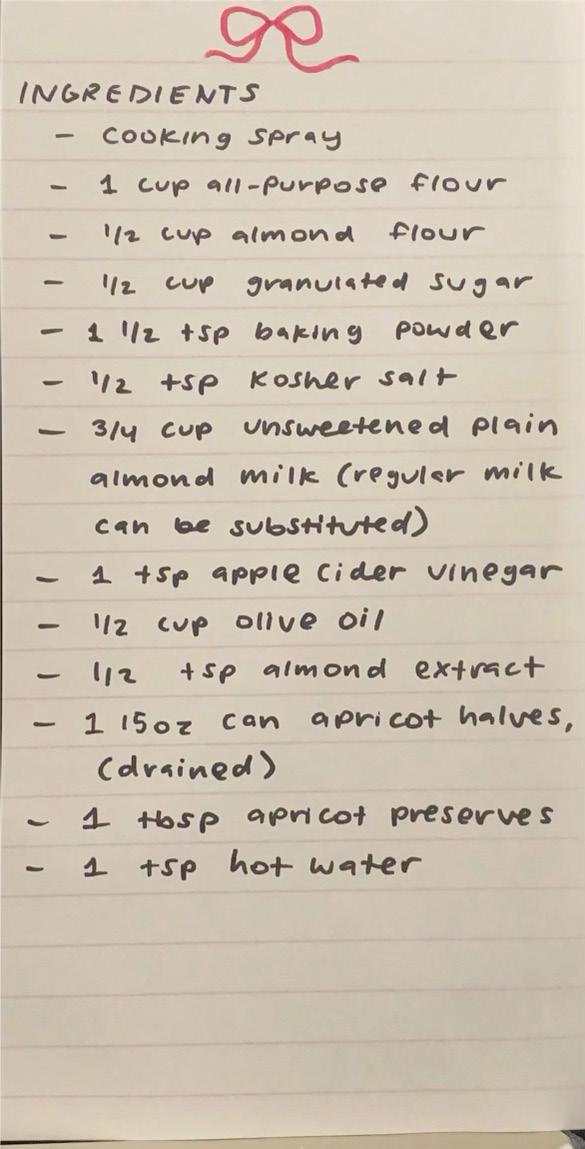
cake really is the perfect recipe to brighten any spring (or snowy) day. It is so simple and ort for an elegant avored with apricot, almond, and olive oil. It is ideal for any spring occasion, such as a brunch, picnic, or in my case, a canceled tea party. is recipe uses canned apricots, so it can be made during any season, although it is the quintessential spring cake. During the last few minutes of baking, this cake is brushed with avor and make it truly shine in the




“I
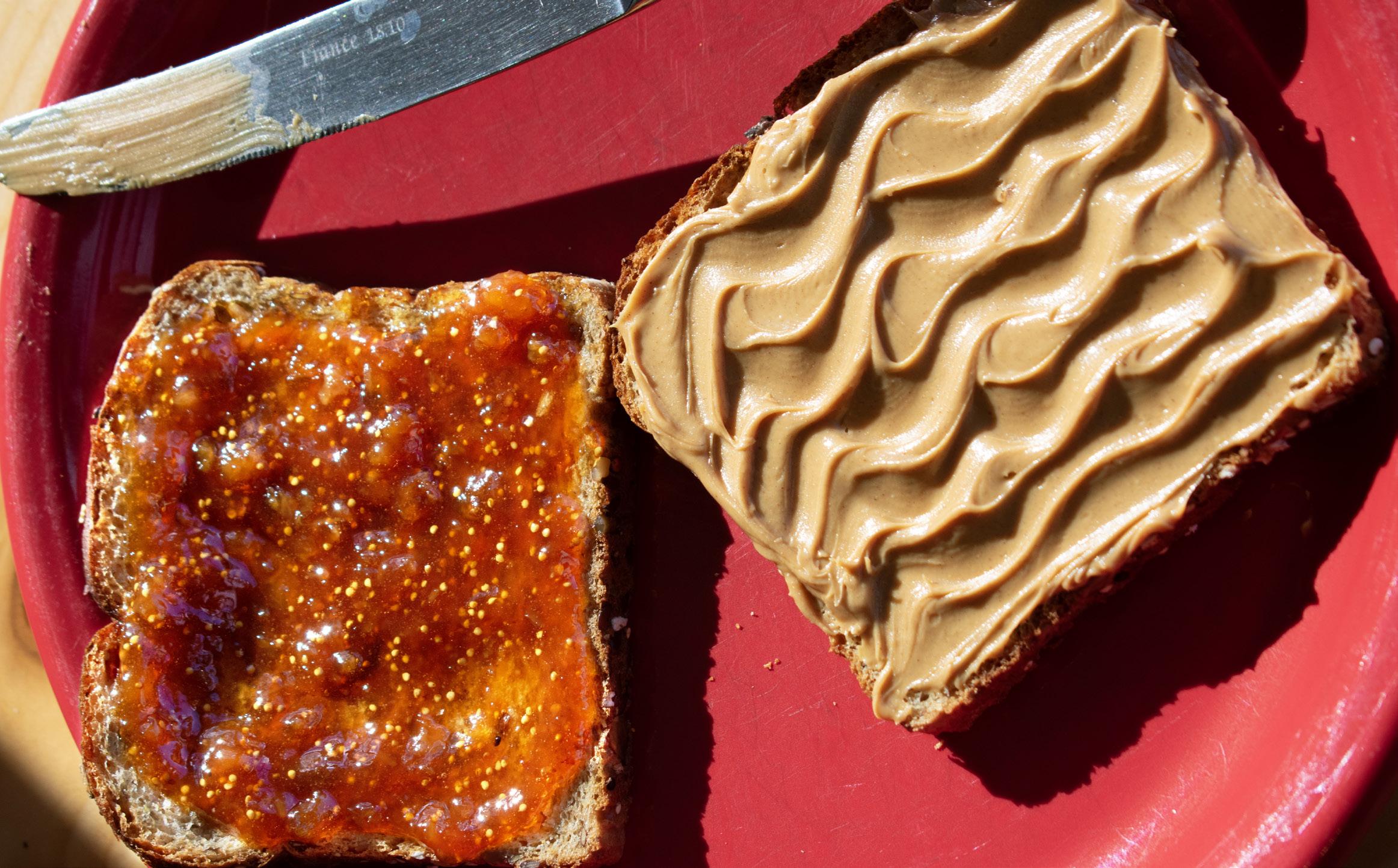
think she may go to college eating only peanut butter and jellies.”
Growing up, this is the catch phrase my dad would jokingly say to those around us when my mom would reach into her purse and pull out a plastic bag flled with a PB&J to hand to me at restaurants, social events, or family gatherings.
It’s true. As a child, a PB&J was one of the only things I would eat. I was a picky eater, a passionate PB&J enthusiast, and extremely particular about how they were made. My mom and dad each had their own individual methodologies when it came to crafing the perfect sandwich.
My father opted for more peanut butter and more jelly, smothering both sides of the bread with heaping portions so that when the sandwich was shut and cut (diagonally, of course), the contents were gushing out all sides.
My mother took a more conservative approach with the contents, but let her creativity shine using cookie cutters to cut my sandwich into various shapes depending on the day (but she always lef me the crust to eat).
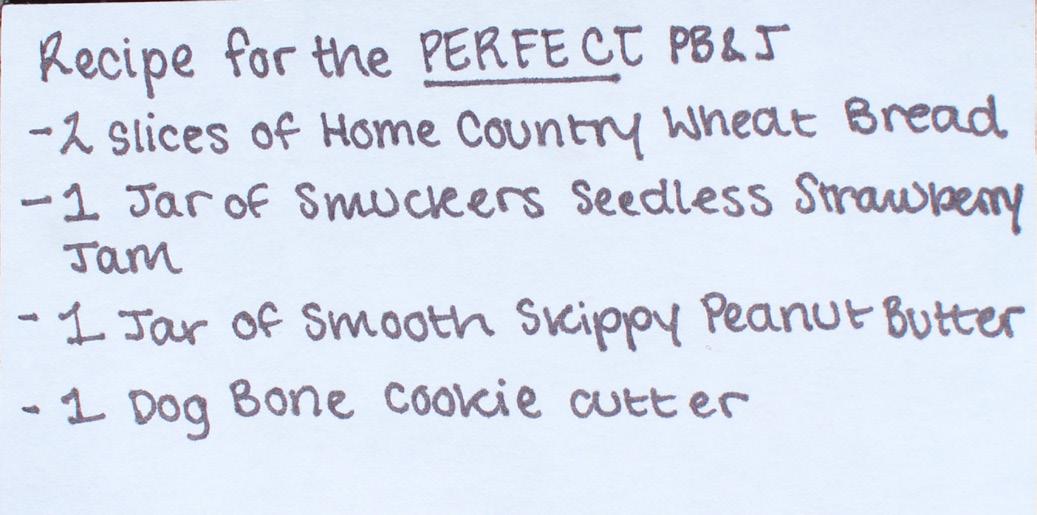
When I think of peanut butter and jelly, I think of the summers I spent as a child running around in the humid air of the south. I think about the way the warmth would wrap me up like the beach towels I’d sit on as I let the salt water kiss my feet and bite into the food that brought me the most comfort. Much to my parents’ chagrin, I think I would’ve been completely content eating those sandwiches for my entire life.
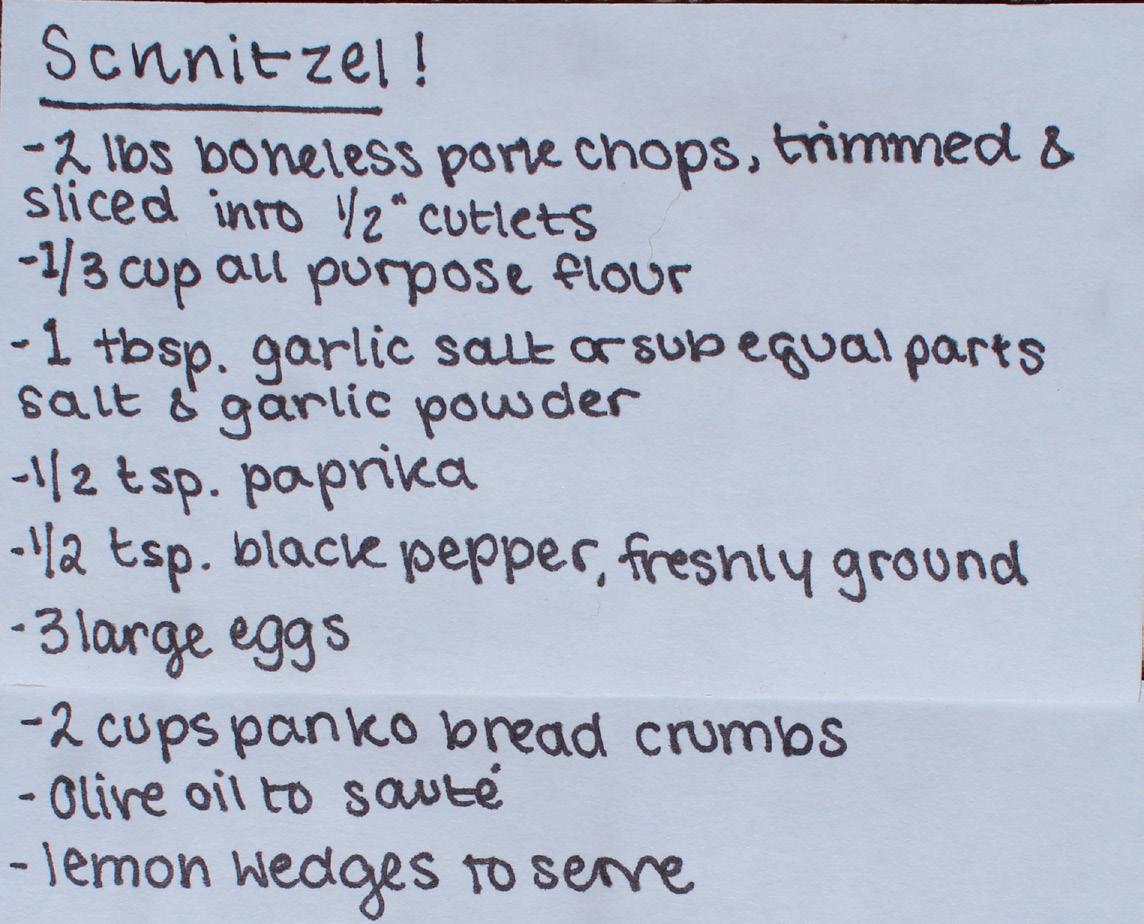
In middle school, my culinary horizons broadened with a move across the Atlantic to Germany. I lef behind the days of just PB&Js and started eating things like Kartofelpufer, Sauerbraten, Maultaschen, and my personal favorite, Schnitzel with cheese on top.
I spent my autumns riding horses at a German barn, where my father would wait for me upstairs, having a Helles at the bar they had upstairs to amuse the parents while lessons were running. I’d come out of the stables, sweaty and smelling like horses and hay, and we’d drive to our favorite German restaurant Der Rote Hahn. Tere, we would feast on house salads with thin sliced cucumbers soaked in vinaigrette and schnitzel with cheese melted on top, his with tomato slices and mine without. I’d sip on Spezi, a combination of orange soda and cola, and I’d dip my fries into ketchup, sweeter than the American kind. I still think about the crisp breeze that would hit us as we lef the restaurant and drove back home with full stomachs and hearts, and how that salad is impossible to recreate stateside.


I returned stateside for high school, thrust into the fast-paced environment that is Washington D.C. I lef behind my newfound taste for German cuisine and learned how to eat in the Mid-Atlantic. My friends and I would drive late at night to District staples like Ben’s Chili Bowl or Rita’s for italian ice and gelatis. I worked at a crab shack where I would sling Maryland blue crab, developing an afnity for Old Bay seasoning and working for my meals with mallets and crackers.
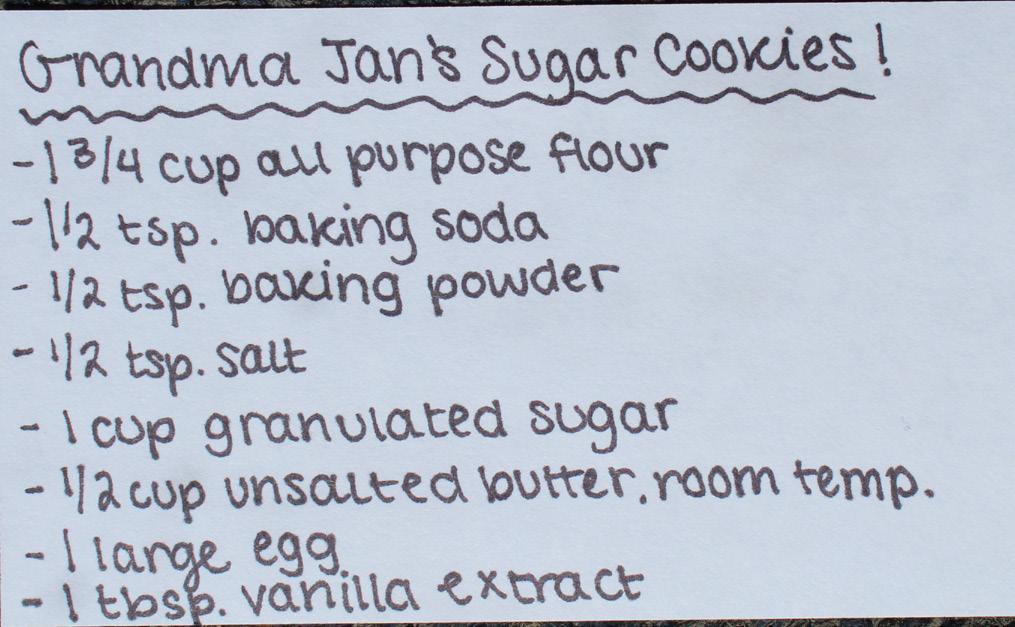
While my taste was rapidly developing, some staples never changed. Every winter, my family and I would gather in the kitchen to make my grandma’s Christmas sugar cookies. We’d turn on the carols, and roll out the dough my dad had made the day before, and fll our tiny kitchen with Michael Bublé and the smell of sugar.
We’d hand them out to our neighbors, flling Christmas baggies with cookies to leave on doorsteps for the season. Cut-out stars, ornaments, snowfakes, and holly leaves would be distributed, while we made sure to keep an abundant stash for ourselves. My dad always fnished the dough by cutting out a massive cookie in the shape of an “M”. I look forward to that cookie every winter.

In college, I learned how to cook for myself. I spent many a disastrous night in my shared kitchen, fring questions at my much more skilled roommates like, “What can I replace vegetable oil with?” or “Can you come look at this and tell me if you think it’s cooked?” But soon I got the hang of it, and I learned there is just as much joy in making food than there is in simply eating it.
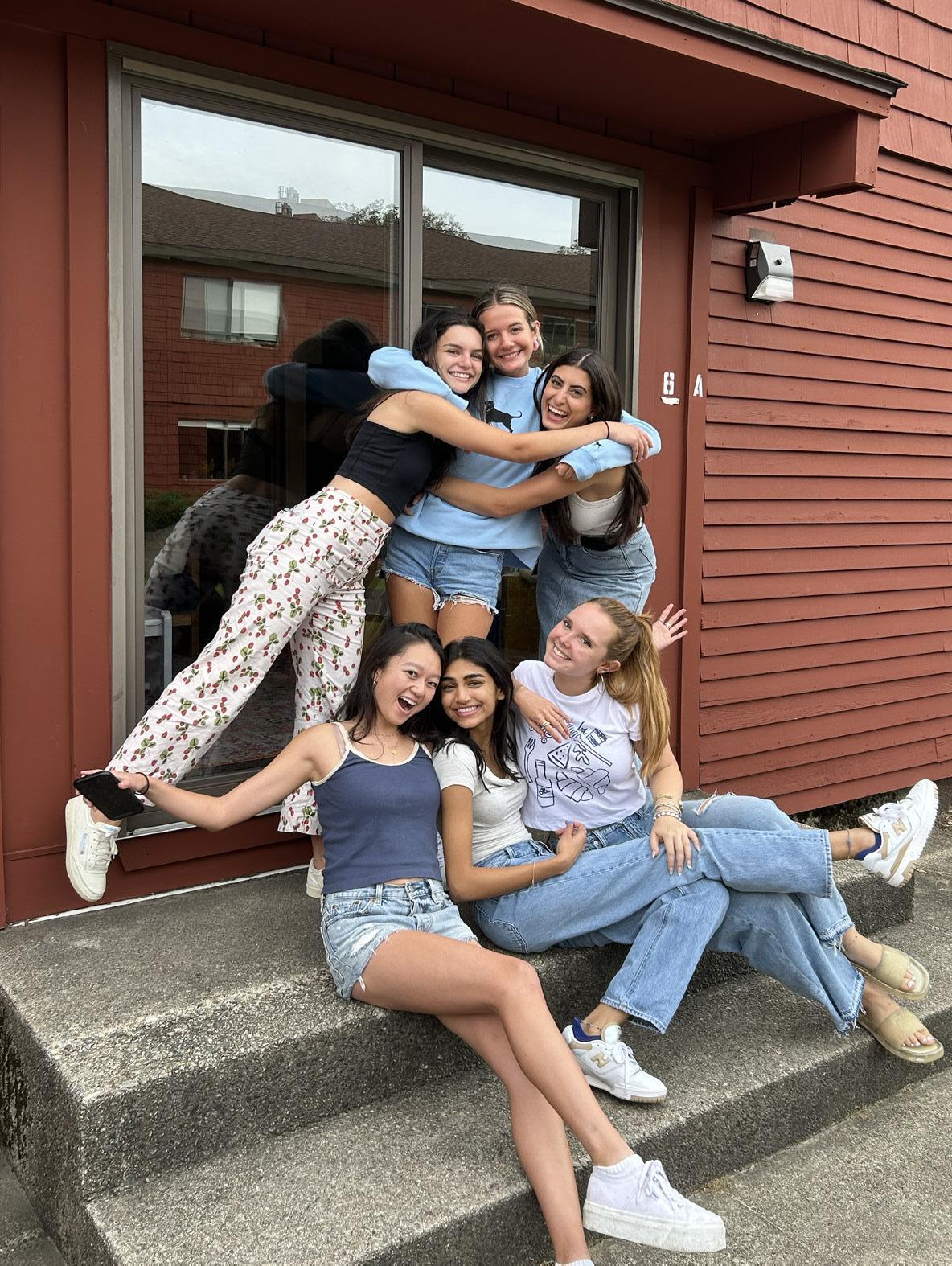
My favorite memories with my college friends are those that revolve around a dinner table. I’ve made cowboy caviar for birthdays and Super Bowl parties, we have helped ourselves to the Greek chicken and cucumber salad made by one of our friends afer a game day, and for Friendsgiving, we hosted a potluck that rivaled any Tanksgiving feast produced by one of my family members.
Tis spring, as graduation approaches, I know that I will cherish every roommate trek to the Korean restaurant we like in Coolidge Corner and every morning we spend making breakfast burritos and strawberry smoothies. It’s these memories I hold close to my heart as the fowers start to bloom again and my next chapter, both in food and in life, creeps a little closer by the day.
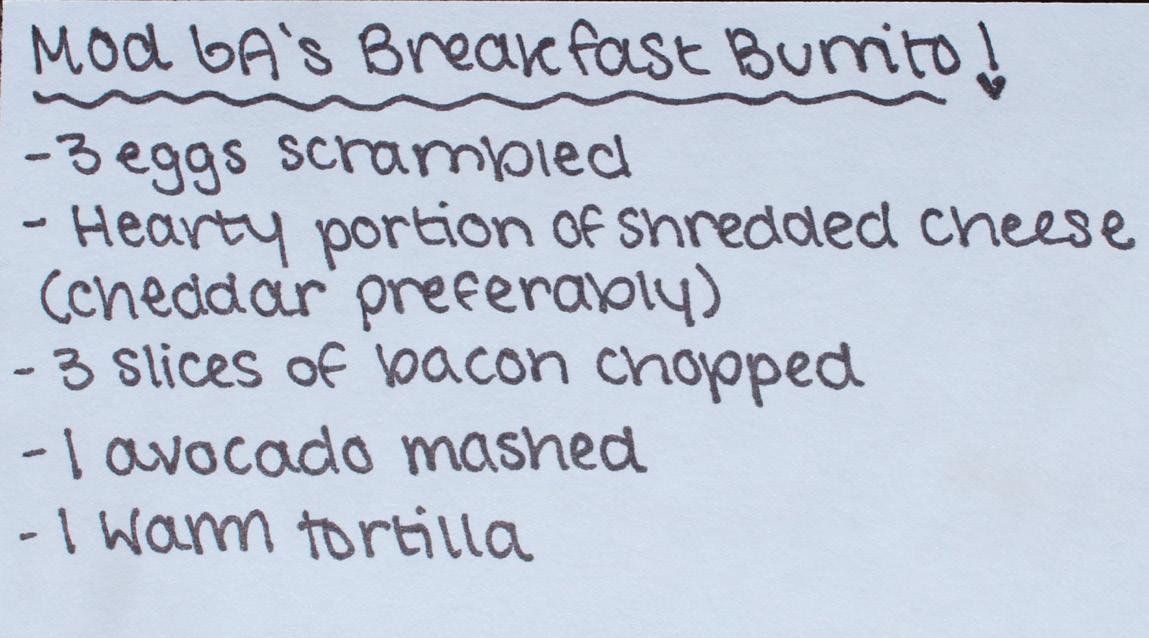
We are what we eat. I am a product of every season and food phase of my life. I am the diagonally cut PB&J on a summer’s day as much as I am the German glüwein warming my body on a fall evening. Tese seasons, these palate changes, these character developments, they matter. Tey tell us a story about ourselves far richer than any other measure could. I have grown and I have changed, I have tried new things and I have revisited old ones. As I go into the adult world, I’m excited to see where this next season takes me, what foods will bring me comfort in my new era, and what foods will remain along for the ride.
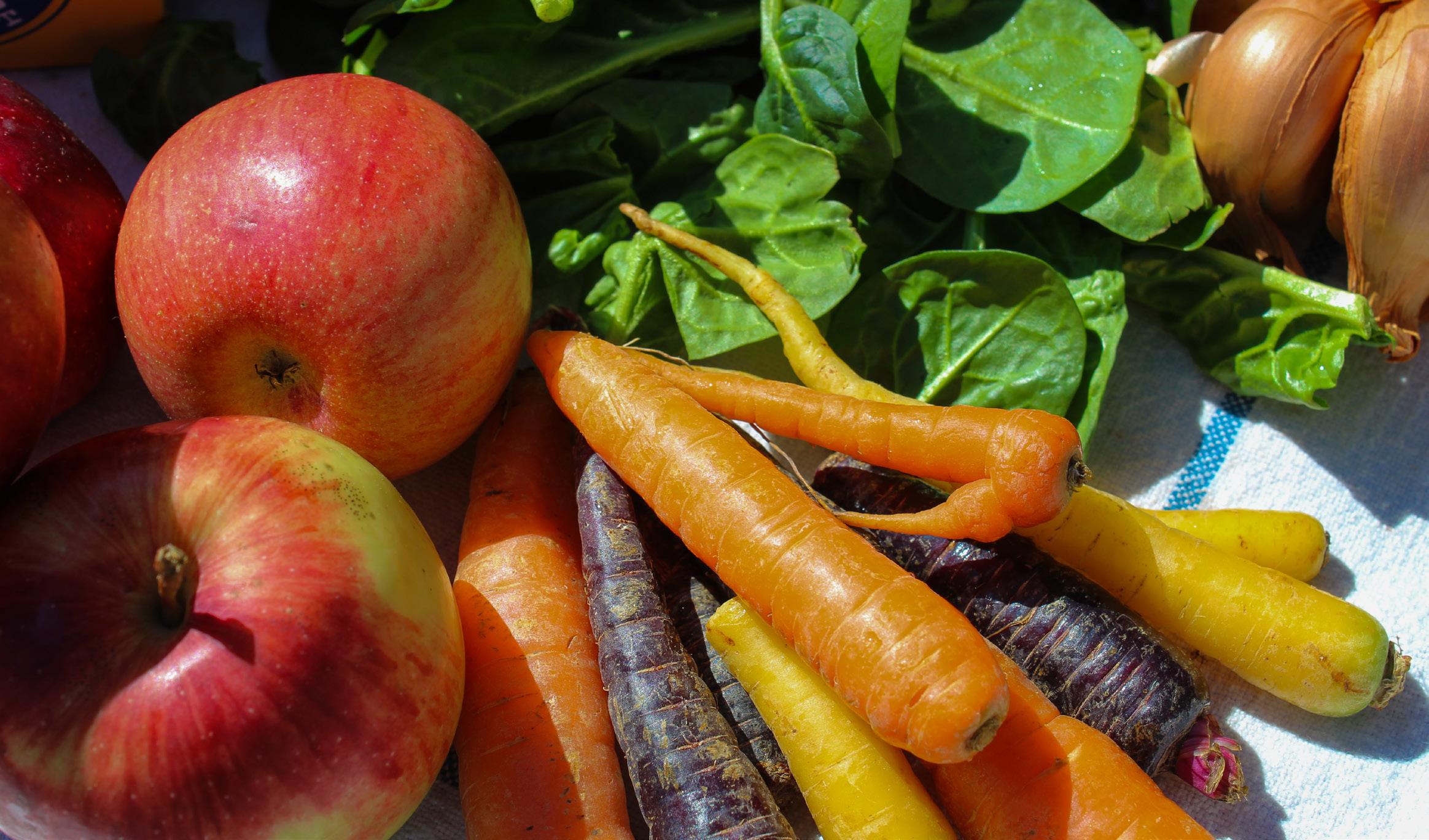
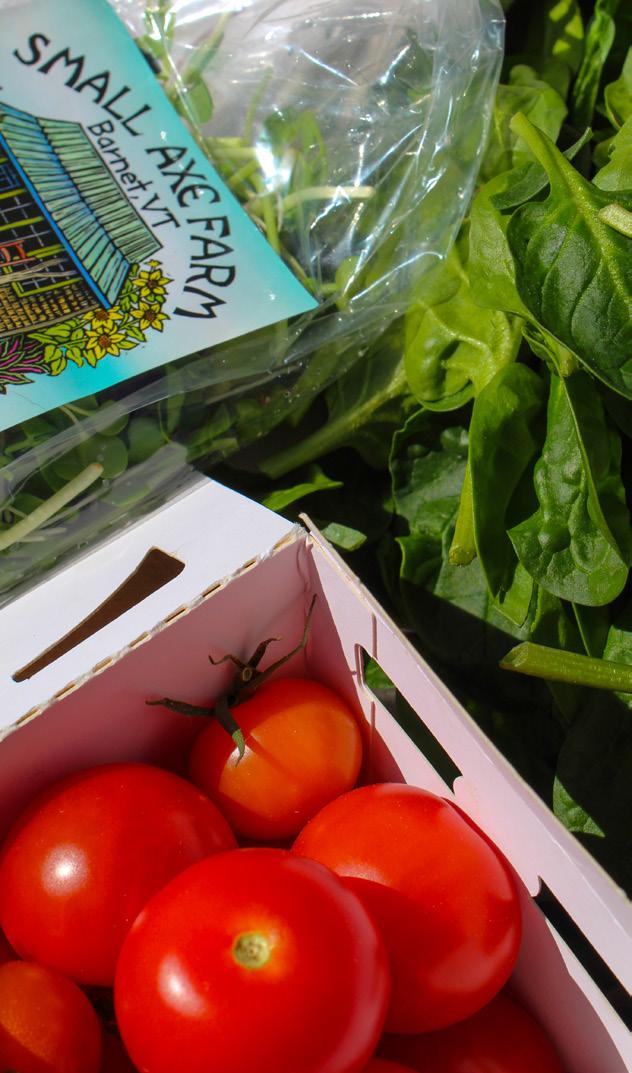
I have lived in Easton, Pennsylvania my entire life. Easton is towards the Eastern edge of Pennsylvania, a short drive of about 15 minutes from New Jersey. It is far from the main cities of Pennsylvania, Philadelphia and Harrisburg, and is a very small city itself due to its population. However, much of Easton is suburban other than its downtown area. Everywhere I drive I can see cornfelds and farms that shape the communities in my town. My family became Community Supported Agriculture (CSA) members about twelve years ago and have never looked back.
My mother got interested in becoming a CSA member through reading about what a CSA is and how it supports local farmers. Trough further research, she was able to fnd that a nearby farm was ofering this opportunity to all community members in my area. She immediately signed my family up for a share and was excited to support local farmers as well as receive local produce. As members, people buy shares of farmers’ crops before the growing season. Ten, throughout the season, the shareholders are able to beneft from what the farmers grow and receive produce weekly.
Purchasing farm shares benefts farmers greatly. It allows farmers to get business and receive money before the growing season begins. By receiving profts, the farmers are able to get help when they most need it in order to buy equipment and seeds they need to get through their upcoming season. Te farmers are able to have committed consumers they can trust and rely on. Along with this proft, farmers are still able to hold stands at farmers’ markets and sell additional produce they can aford to grow through shareholders’ purchases.
Participating in a CSA is also extremely benefcial for the community members who purchase farm shares. By getting local produce from a farm you trust and commit yourself to, you know where your vegetables are coming from. Produce in grocery stores can come from anywhere. By knowing your farm and farmers, you know exactly where your vegetables are coming from and the environment they are in. For instance, the farm in which we support is completely organic. Te farmers do not use pesticides or fertilizers that could potentially harm the produce, the consumers, and the environment. While being an organic farm, the animals also then feed on purely organic crops. Tis allows my family to eat organic grass-fed meats when we purchase them from the farm.
Our farmshare begins the week afer Mothers’ Day and usually ends about two weeks before Halloween. It lasts 20 weeks and our produce pick-up is every Wednesday during the season. We purchase a half-share of the vegetables every season, which costs about $400. By purchasing a half-share we get a smaller amount of produce than a whole share. My family does this because we have our own gardens at home. A whole share would be too much for my family to consume, ultimately allowing for perfectly good produce to go to waste. Whole shares are also available and cost $750, and are also picked up once a week.
Opening the week’s bag is always a surprise because each week is diferent and each bag is flled with a
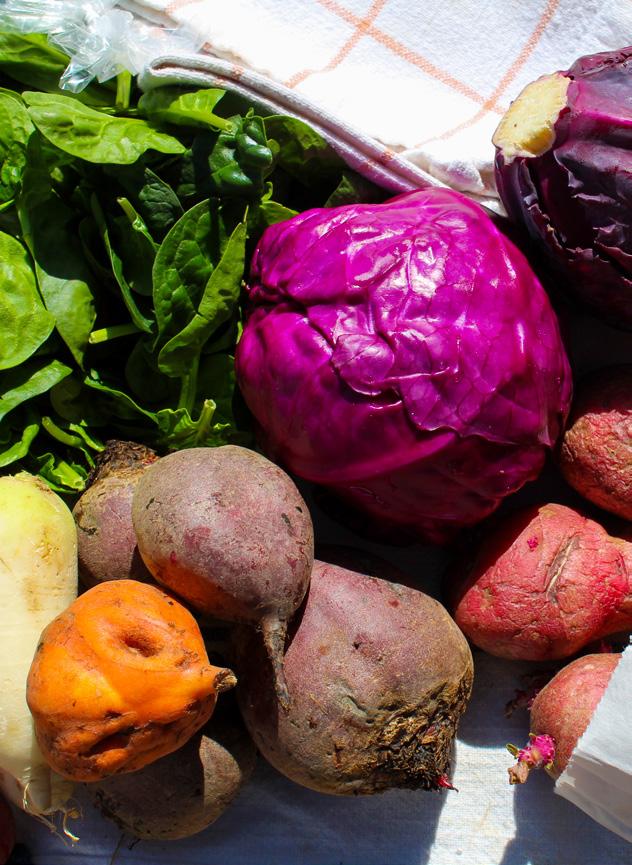
Words by Sydney Lucianodiverse variety of produce. Although some CSAs send out emails or information on what to expect from the harvest, ours does not. During the beginning of the season, my family receives a lot of spinach, lettuce, and onions. Towards the end of June and through September we receive broccoli, tomatoes, and caulifower. Tese vegetables tend to take a longer time to grow, hence the reason we receive them towards the middle and end of the growing season. Troughout the entire season the farmshare includes eggplant, squash, cucumbers, green and red peppers, green and yellow beans, corn, rhubarb, beets, and zucchini.
Te type of vegetables included in the farmshare depends on the temperature of weather throughout the season. Some seasons sufer from lack of rain, which causes the amount of produce grown to be less than other successful seasons. Tis is why Community Sponsored Agriculture is so important, because it helps farmers get through tough seasons. Trough the CSA, money is already committed to the farmers, even if they do not have a great amount of produce to sell outside of the farmshare. Tis helps them survive and be able to prepare for a future season. With this being said, it is incredibly important to have an open mind and understanding of the conditions the farmers must work through. Some weeks or seasons will contain less produce than others.
Within the last few years, my family has additionally participated in the meat share ofered by our local farm. For a half share of meat, it costs about $400 every six months. A whole share is about $750 every six months. We get about 10 pounds of meat every month through the half share of meat. Tese are all cuts of beef which include ground beef, sirloins, T-bones, flets, London broils, brisket, chuck roasts, and rump roasts.
Participating in a local farm share has given my family a great opportunity to experiment with new ingredients that we might not have necessarily bought from the grocery store. I can remember the frst time my family received rhubarb and we had no idea what to do with it. My mother decided to try a strawberry and rhubarb crisp, and it was absolutely delicious. Topped with vanilla ice cream, it was the perfect dessert on a hot summer day. My mother has created some spectacular dishes with the produce and meats we have received throughout our years of purchasing farm shares.
Pasta dishes are a staple of my household, though cooking a big pot of Italian sauce all day long in a hot kitchen is not always a comfortable experience. So, my mother has experimented with many pasta dishes, including using zucchini noodles rather than traditional pasta noodles. My recipe here is a perfect summer meal that highlights the meat and vegetables we get from the farm while also creating a good all-around dish. Feel free to substitute any meats you think would pair well, or exchange zucchini for squash. Tis recipe, like the farm share, is very fexible and gives people an ability to be open-minded and explore new foods and ideas!
3-4 cloves garlic, fnely chopped
2 teaspoons lemon zest
2 tablespoons lemon juice
3-4 tablespoons extra virgin olive oil
2-3 medium-size zucchini, sliced and quartered 1 pound spaghetti (or pasta of choice)
Heat water, seasoned with salt, in a large sauce pan to cook pasta. Cook pasta according to package directions. Reserve 1 cup of pasta water before draining pasta. In a large saute pan, heat 3 to 4 tablespoons of olive oil and fnely-chopped garlic over medium/low heat for about 4 minutes. Add zucchini and stir. Cook until desired tenderness. Save 1/2 of pasta water and drain the rest. Afer pasta is drained, return to the large saucepan. Stir in zucchini and garlic. Add 1/2 of pasta water, lemon zest and lemon juice. Mix all ingredients and serve.
London Broil Marinade
London Broil Marinade
2-3 garlic cloves, minced 2 tablespoons canola oil
1/2 cup soy sauce
1/2 cup Worcestershire sauce
1 London broil (any size)
Mix all the marinade ingredients together. Place London Broil in a sealable bag. Pour marinade in bag and seal. Refrigerate for at least 1 hour; up to 12 hours. Grill or broil steak to desired temperature. Let rest for 5 minutes and slice.




As a current senior in college, the coronavirus pandemic has impacted many aspects of my life. While it is easy to think of the negative ways, the pandemic brought some positives into my life. Like many others, the endless hours spent in my house encouraged me to learn new skills. Naturally, I decided to expand my knowledge of cooking because I was starting a new journey of independence when I went to college in the fall of 2020. Although I had prior experience cooking meals, the pandemic gave me time to further research ways to season and favor my cooking. Luckily, my dad had his own COVID-passion project in the works that would perfectly complement my new venture: building an herb garden.
My dad’s motivation for building an herb garden was two-fold. First, he wanted to have a way to occupy his time during lockdown. Growing up, my grandfather had a vegetable garden in the back of his beach house. A vegetable garden was “too big of a project” for the lockdown, so my dad happily accepted the challenge of creating a smallscale garden in our backyard. Second, he felt that the prices of herbs were always “too expensive” and resulted in too much product and excess waste. Te garden was a more sustainable alternative that would provide us with a neverending supply of herbs.

Our frst month of the herb garden was a learning curve that involved a lot of patience. With all the time spent on this project came innovations. For example, we would sometimes forget to water herbs as frequently as we should, so my dad worked to construct a self-irrigation system. However, some challenges were not as easily fxable. We had a lot of trouble controlling the growth of the herbs. Some herbs, like cilantro, grew large amounts in a small amount of time while oregano would grow at a much slower rate. Despite these issues, the results were completely worth it. I still remember the frst caprese we made our homegrown basil; we had just bought fresh Jersey tomatoes for our “beginning of summer” feast. Te early May weather meant that the nights were fnally getting warmer and we could eat our dinner



outside on the deck. Our big side dish for the night was a fresh caprese complete with juicy tomatoes, creamy burrata cheese, tangy balsamic, and topped with fresh, homegrown, sweet basil. All together, these components created a perfect bite. I was shocked by how the basil was the fnal piece that made the caprese a mouth-watering dish. From that moment forward, I learned that a few herbs go a long way in completing the favors of a dish, and they are a key seasoning that we tend to overlook.
Now, as a senior with my own kitchen, I try to use herbs as much as I can because it adds a sense of freshness to my dishes. In recent months, I have grown particularly fond of dill, which I like to use when I make pickles or cook a Mediterranean-inspired dish. Without an herb garden at my fngertips, a cost-efective alternative is using dried herbs, which do not have as much favor, but still provide an extra layer of seasoning that elevates the dish. Not only do they pair well with food, but they are delicious with drinks as well! Personally, I love nothing more than a mojito made with fresh mint in the summer or my family’s specialty “Christmas Cosmopolitan” which we make with rosemary around the holidays.
Looking back, our small, self-watering herb garden was the perfect way to connect with nature and start cooking during the pandemic. In a time of disconnect, it brought my family together to learn something new. Even to this day, our family group chat receives updates from my dad on the progress of our herb garden; I always know summer is around the corner when I get the frst picture of the planted seeds in the garden.


 Words by Maggie Beck
Graphics
by Katie Ballard
January
Feburary
*Delicate onion

*Pairs well with eggs, potatoes, salads, sauces vinaigrettes
April

March
*Bright, lemony, grassy favor
*Pairs well with chicken, fsh, and works well in vinaigrettes
*Earthy favor
*Pairs well with meat, tomato-based sauces,
May
*Strong peppery

*Pairs well with lamb, fsh, salad, and best used in mojitos!
*Tangy f
*Pairs well with Mediterranean cooking, also great to use when pickling


with tomato, chicken, vinaigrettes
July August
*Distinctive, fresh taste
*Pairs well with any form of Mexican dishes (unless you have the gene that makes it taste like soap - like me)


*Mildly spicy, anise
September
*Clean, peppery, slightly avor
*Pairs well with mushrooms, potatoes, chicken7
*Pairs well with lots of savory dishes - a universal herb!
October
*Strong minimally
*Pairs well with heavy dishes such as pork, chicken, stufng8
November
December
*Minty, slight lemon avor

*Whole springs pair best with soups and stews; dried leaves can be paired with any savory dish
*Strong, piney

*Pairs well with chicken, beans, breads, onions, mushrooms9
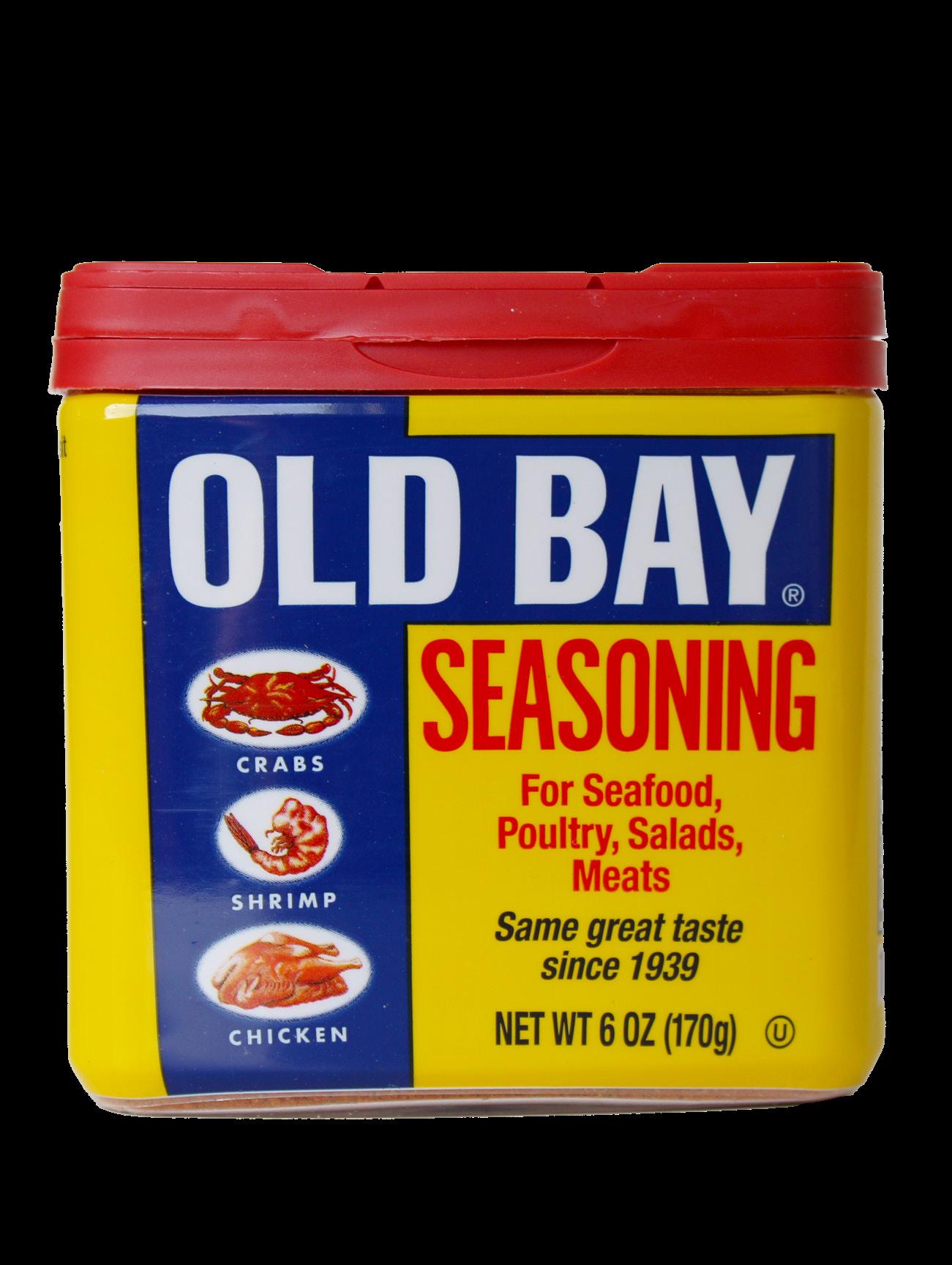
A long day at the beach. Cedar shingles lining the outside of the Cape Cod style rental house. An outdoor shower taken while blasting country music. It is the perfect East Coast summer day. My dad is outside grilling burgers while my mom is inside preparing a summery salad loaded with veggies. Te best part of it all isn’t the weather, or the food. It is the people. A perfect East Coast summer is surrounded by my family and the neighbors that are essentially family. Te food, the atmosphere, the aesthetic —these are all just part of what makes it so perfect.
Another crucial ingredient to the East Coast summer is a seasoning. I am from Washington, D.C., and while I am defnitely not from Maryland, their seasoning made its way across the mid-atlantic area to D.C. Over the course of my last 18 summers, I have spent many summer nights at various family friends’ lake houses or restaurants that line the Potomac River consuming crab, potatoes, or really any other type of food covered in Old Bay seasoning. It is a classic in the mid-atlantic region, but especially in Maryland. In Maryland, Old Bay fnds its way onto every food.
Old Bay seasoning is a blend of 18 spices, including celery salt, paprika, and many others. First invented in Maryland in 1939 by a German immigrant and spice merchant, it quickly took over the state. Gustav Brunn, the inventor, wanted to create a spice blend for crab boils to satisfy a niche among Baltimore seafood lovers. Eighty four years later, it can be found at a crab boil on the Eastern Shore enjoying a meal covered in Old Bay seasoning. Brunn named the company afer the Baltimore Steam Packet Company, nicknamed the Old Bay, which was a steamship line that sailed between Baltimore and Norfolk. In 1990, McCormick, one of the nation’s largest spice manufacturers bought the branch and have sold it according to the original recipe since.10
A fresh garden salad, trays of crab cakes, corn, potatoes, and crabs covered in Old Bay. What could be better on a July night than that? It took a brief hour-long drive for my friends and I to reach our friends’ bay house on the Eastern Shore. Afer a long day of swimming and boating, we sat down for a large, messy meal of crabs and conversation. Te crabs sat apart from the table in their own glorious bucket while they continued to soak in the Old Bay. Tey almost looked rusty from far away, but no one will get tetanus from eating this, simply a happy belly and messy hands.
To me, one of the joys of the crab is the work one must put in for the meat. Hammering away at the claws, tearing of the shell, and taking apart the sea creature for that tiny piece of delicate meat. Te work is hard, but the end result defnitely justifes the means. Much of the crab is not edible. Weird, yellow junk sits inside the crab. In order to enjoy the crab, free of the yellow stuf, you have to put in a lot of efort and be patient as you wait for the crab to cook. But, everything about the crab and the atmosphere that surrounds a crab bake makes it the perfect summer meal and activity.
Apart from its best co-pilot, crab, Old Bay goes well with a number of other foods. Most notably, at least in my family, is chicken wings. If we go out to eat, chances are we are getting wings as an appetizer. Several years ago we tried a tradition in Maryland: Old Bay wings with blue cheese dressing. Tis combination quickly became my brother’s favorite, and he rushed to recreate it in our own kitchen. Following the discovery of Old Bay chicken wings, my family quickly began using it as our primary method to season chicken.
Old Bay is defnitely not best suited for chicken. Old Bay pairs best with food that comes straight from the ocean. But that has not limited lovers of the seasoning or Maryland residents. We commonly use it to season potatoes, and practically any restaurant you visit in Maryland will have Old Bay fries instead of regular fries. Te addition of Old Bay makes it just as salty, but with a perfectly spicy bite that isn’t too much for people like me who can’t handle any spice. Shrimp covered in Old Bay and melted butter is another fan favorite. Te butter and clumps of Old Bay make your hands deliciously dirty and make the meal so much more fun.
In Maryland, Old Bay seasoning is a way of life. Not only do they cover every seafood possible with it, but I have seen it so frequently it is as if residents carry it in their pockets just in case their food needs some added spice. I don’t know if that last part is true, but it might as well be. Driving through Baltimore, Maryland means seeing at least fve billboards just for Old Bay seasoning. Not only is it on regular things like crabs and potatoes, but Marylanders have found ways to put it on popcorn, pizza, goldfsh, and even in vodka. At the University of Maryland, freshmen get a welcome box that includes the seasoning.
As much as I love the seasoning, I could never comprehend Maryland’s obsession with it. Sometimes I don’t need to have Old Bay on what I’m eating. In fact, I think not having it all the time makes it all the better when I do have it. All this to say, there is nothing better than a hot summer day, a wooden hammer in my hand, and a bowl of freshly cooked crabs waiting for me to hammer them open and enjoy.
Tere’s something so beautiful about the East Coast summer. Long fowy dresses covering up my inevitable sunburn. Surf and turf and summery salads waiting for me at home afer a long beach day. To me, the East Coast summer is defned by the people and the favors. Whether it is an Old Bay covered crab or a grilled hot dog, there is something so special about the foods consumed from Memorial Day to Labor Day each year. Old Bay is one of the defning favors of summer.
Seasoning adds complexity. Recently, there was some online criticism of the way that Americans season food by merely adding salt. Don’t get me wrong, I love salt. I think it has an amazing ability to transform food. One of my all-time favorite snacks is fresh bread with butter and faky salt. However, I would have to agree with online critics that when it comes to seasoning dishes, salt is almost never enough. You don’t get complexity from salt alone. In my opinion, excellent seasoning should always transform a dish entirely. If you are indiferent to the addition of a seasoning to its complementary dish then it is not an excellent seasoning. Tere are three seasonings that come to mind for me as my “holy trinity.” Tey are staples that reveal the inner workings of food in my life not only as examples of family traditions but also of the ways that I have grown as a lover of good food. Tese are the combination of soy sauce, rice vinegar, and sesame oil, Tony Chachere’s Original Creole Seasoning, and Tajín.
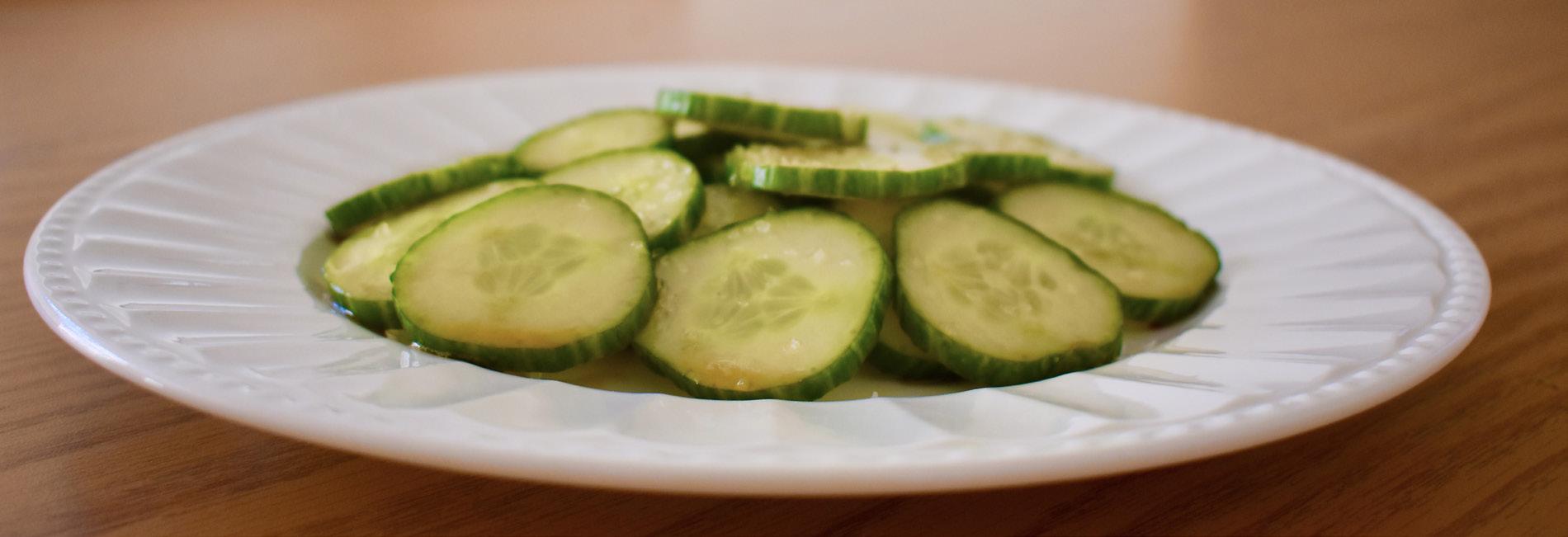
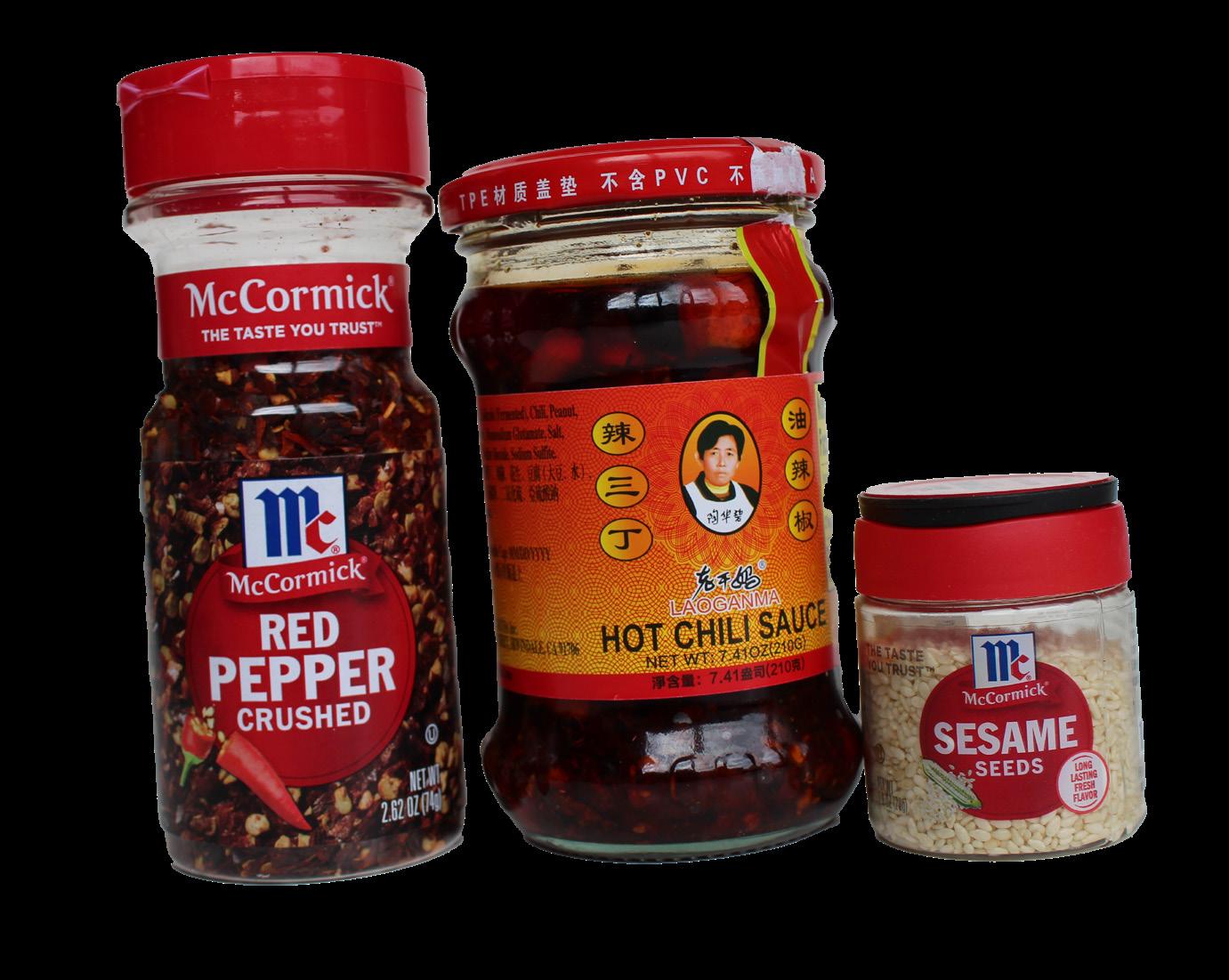
Te lunch my mom packed for me as a kid was formulaic. It consisted of a lefover main dish, vegetables, and fruit. When we had plain rice or cucumbers for lunch, my brother and I doused them in our favorite seasoning of three classic Chinese sauces: equal parts soy sauce and rice vinegar, and a drizzle of sesame oil. It is an addictive combination that hits all the right notes. Te perfection of this seasoning actually has a foundation in food science. At one point during the pandemic, my family, running out of things to watch on Netfix, turned to this series called “Salt, Fat, Acid, Heat.” Te purpose of the series was to show that some of the most amazing favor combinations included these four elements. When applying this structure of elements to dishes that I loved, I found that many contained the frst three. Te combination of the three essential Chinese seasonings my brother and I loved was no exception: the soy sauce is the salt, sesame oil the fat, and rice vinegar is the acid. Chinese cooking ofen follows this formula if not with all four elements than the frst three. While the spicy element is lacking in my brother and I’s simplifed version, a more traditional smashed cucumber salad or paihuanggua (a more delicious, time-intensive version of our cucumbers) will also ofen contain garlic and chili oil for a touch of heat.
 Words by Keira Tu
Photos by Madeline King
Words by Keira Tu
Photos by Madeline King
Te other side of my family has also contributed a seasoning to my life, despite my perception growing up that my mom’s side of the family was “cultureless.” Growing up biracial, it sometimes felt like the two sides of my family needed to have opposite identities. My white family, having given up their culture to assimilate, lacked culture and tradition while the opposite was true for my Chinese family who had only recently immigrated and clung on tightly to their cultural traditions. However, while my family did not maintain the cultural traditions of their European ancestors, they did retain the cultural imprint of the areas in which they lived in America. When my mom’s family moved from the American North (Michigan) to the American South (Louisiana), they embraced Louisiana cooking in a way that continues to be celebrated by mom and her two brothers.
Te food of Louisiana, while including many Southern staples like sweet tea, stands out amongst its neighboring states because of the inclusion of Creole and Cajun food.
Te Cajuns were originally French-Acadian immigrants who settled in the Louisiana area.11 Te term Creole refers to the people who settled in Louisiana that deviated from the “standard” of English-speaking Protestant Americans.
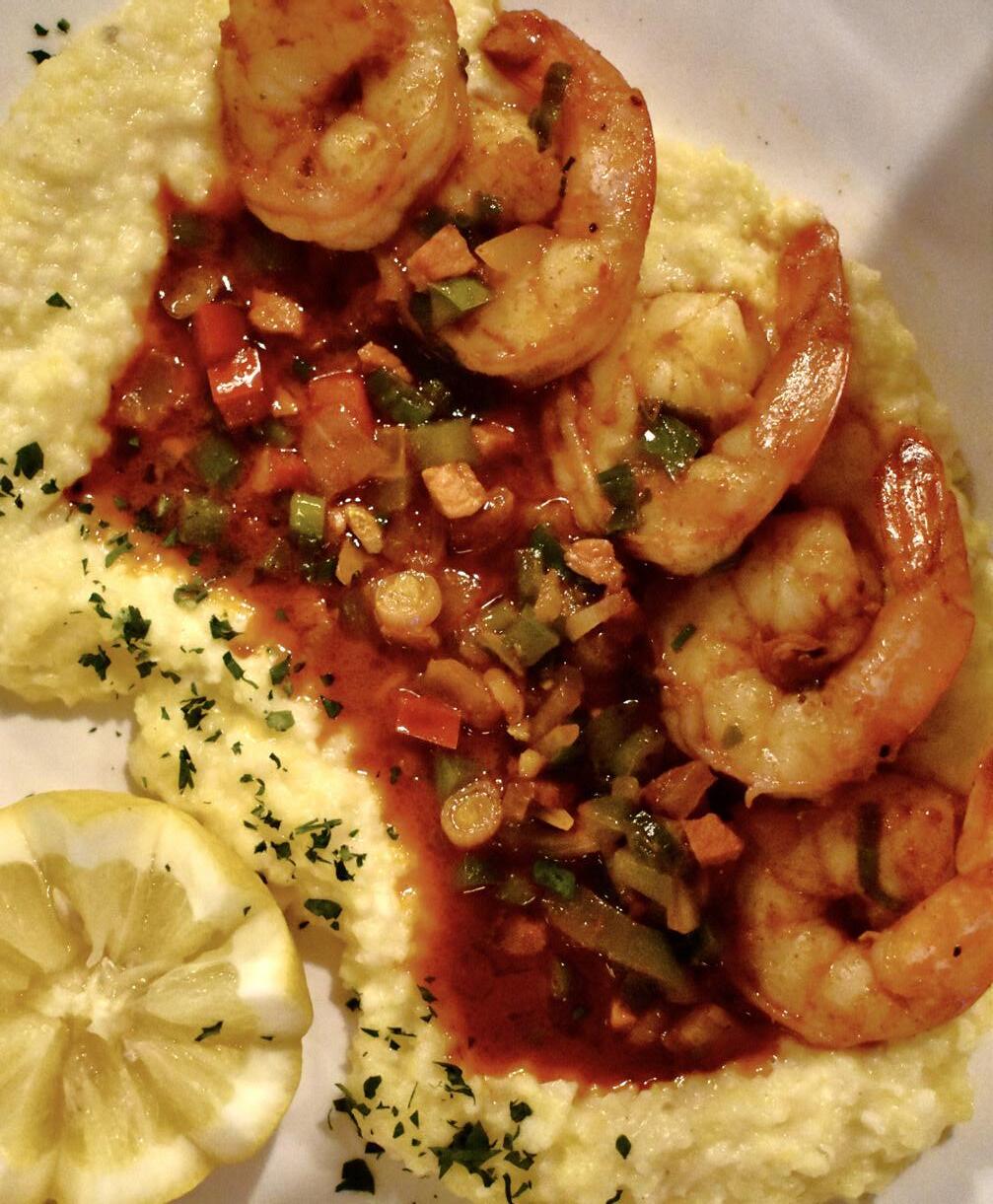
Te roots of Creole culture lie in Western Europe, Western Africa, as well as indigenous America.12 Te food that arose from the Creole and Cajun culture was infuenced by the variety of immigrant food cultures from both groups, with an emphasis on seafood due to its availability in the local bayous and nearby Gulf of Mexico. Classic Louisiana dishes include shrimp creole, jambalaya and gumbo, three dishes my mom made us growing up for Sunday night or holiday dinners. Shrimp creole is a tomatoey roux-based stew with rice, sauteed onion, celery and peppers (the Cajun
Holy Trinity), and shrimp. Roux is a mixture of four and butter cooked at a low temperature to varying shades of brown (depending on the person) and is a staple of Cajun cooking. Jambalaya is a rice dish similar to paella containing the Cajun Holy Trinity and ofen Andouille sausage and/ or shrimp. Gumbo is a tomato based soup that is ofen made with a similar assortment of vegetables and proteins. Every time we sat down at the table to enjoy any of these Louisianan dishes, someone in the family would quickly run to the pantry to grab Tony Chachere’s to season our food. A dash of Tony Chachere’s seasoning adds a touch of salt, heat and favor to any dish. Te actual ingredients are: salt, red and black pepper, chili powder, and garlic powder which explains the primary contributions of salt and spice by this seasoning.13 Tis combination adds warmth and favoring without being overpowering. I associate Tony Chachere’s seasoning somewhat ironically with the two opposite seasons: winter and summer. On chilly Christmas Eves my mom regularly made her shrimp creole with a dash of Tony Chachere’s that warmed us from the inside out. However, I also associate it with warm August evenings where the warming efect is still felt. It’s that sweet spot of spiciness that above 70 degrees in the summer will make you sweat just a little bit. To this day, my mom’s side of the family still celebrates their time living in Louisiana every summer with a shrimp boil. Shrimp, potatoes, corn, andouille sausage, garlic cloves, and green beans are boiled in a large pot with a Cajun “boil-in-bag” seasoning then dumped out onto a big table to be enjoyed. Tony Chachere’s can always be found on the table next to butter, cocktail sauce, and mustard. Te food I look forward most to each shrimp boil is Tony Chachere’s corn on the cob. Te corn is buttered and coated in a thin layer of Tony Chachere’s so that each bite contains
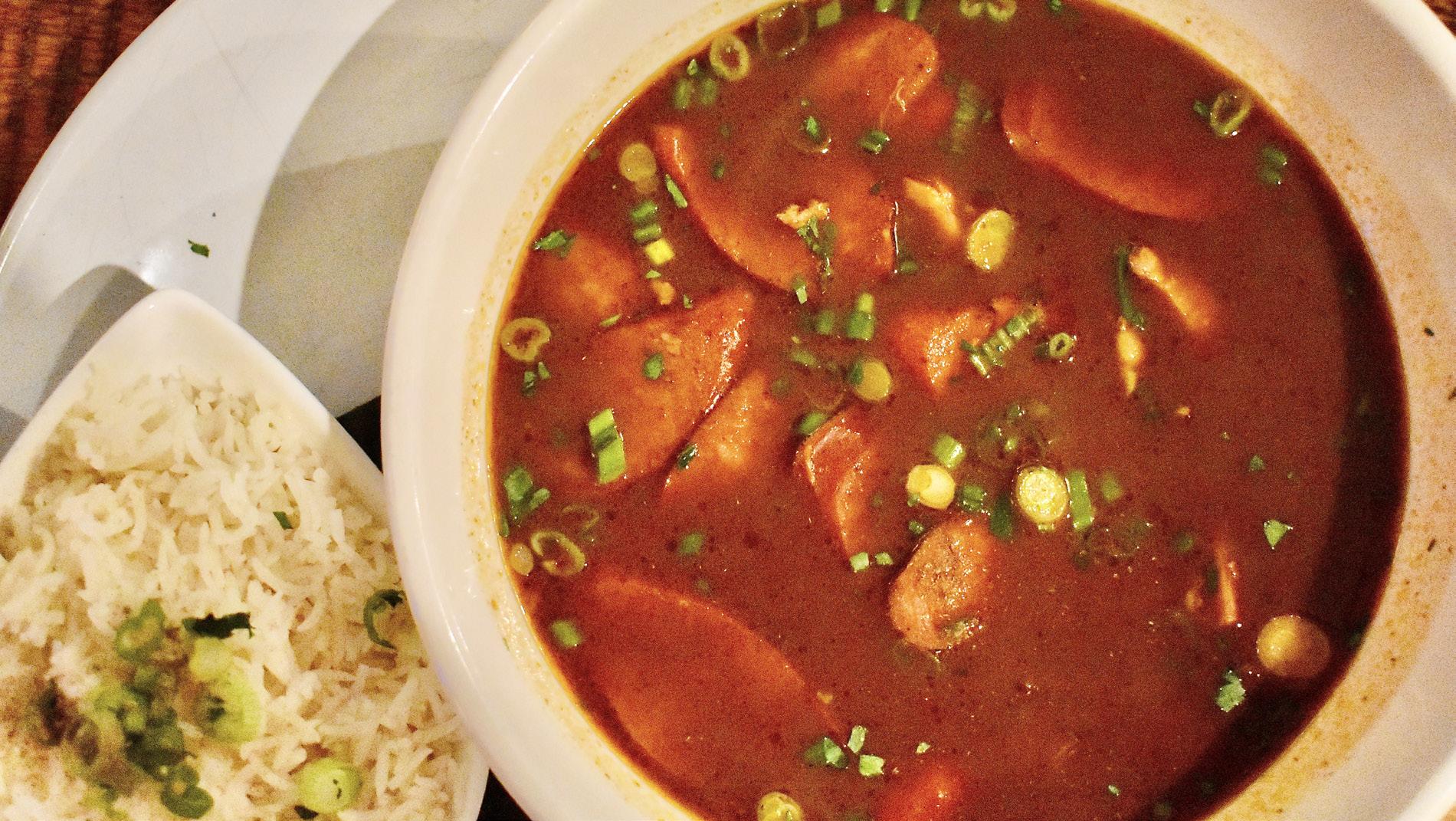
the perfect mix of spicy, salty, garlicky warm butter. Te seasoning leaves your lips warm and tingly without being numbingly spicy.
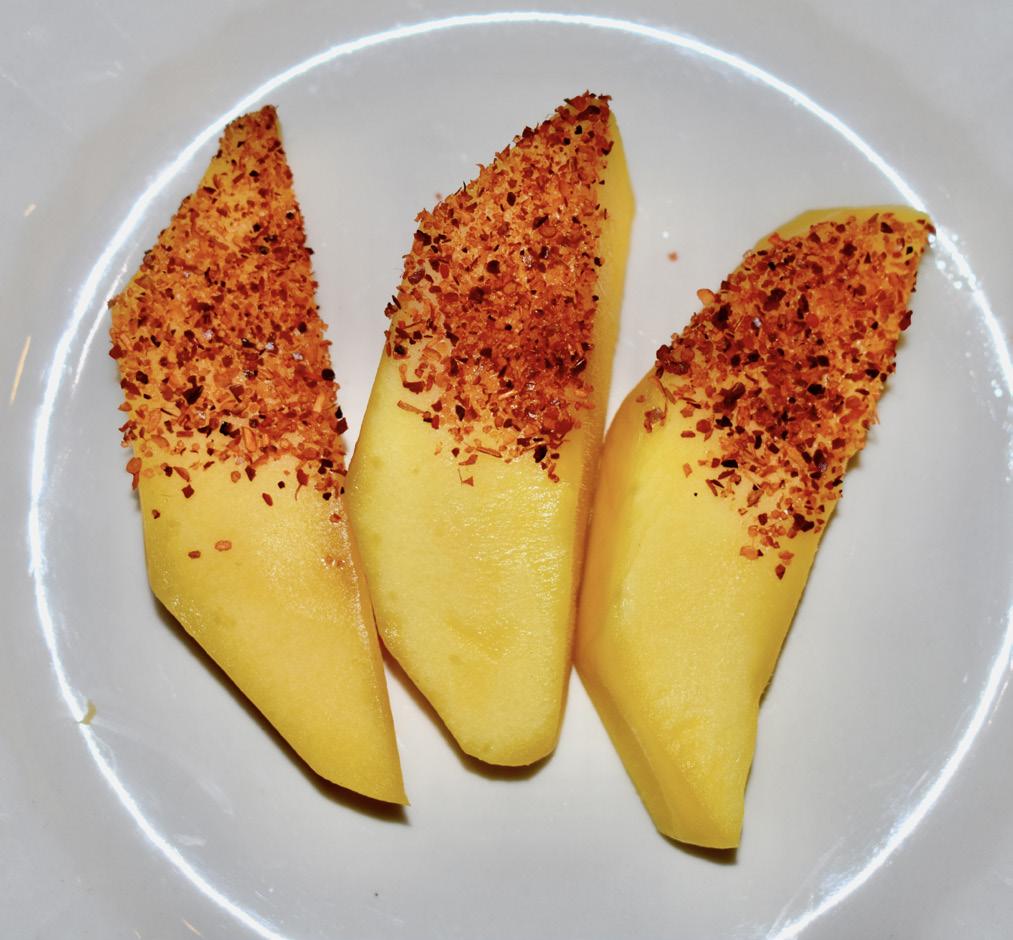
Te last seasoning of my life difers from the frst two in that it is not a part of my cultural heritage. It has served a diferent purpose in my life than the frst two. Tajin, I think, demonstrates how my food preferences have adapted and evolved over time. Tajin is a Mexican seasoning that adds salt, acidity, and a hint of spice to a dish. I think that people ofen fnd it difcult to change their perception of what is sweet or savory afer having grown up with it prepared a certain way. Most obvious for me is my perception of beans as solely a savory food. I do not, despite my best eforts, enjoy red bean paste, a staple favoring in Chinese desserts because of my conceptions of what is sweet versus savory. However, I have eaten and appreciated favor pairings that challenge the lines of the food world more and more. Tajin does a great job of toeing the line between savory and sweet without being a neutral seasoning. It has helped me expand my food palette to understand that the favors within each food don’t necessarily ft into one category. Traditionally, it is used like a favored salt that adds brightness to everything it touches. I’ve seen it used in pozole and on fajitas and tacos to mimic the efect of a squeezed lime without the hassle. It can also be added to sweet things, like the rim of a margarita or on top of pineapple, watermelon, or mango. In these cases, it truly transforms these fruits into something else entirely. Te acidity and salt allow the fruit to take on a new life. In sweet and savory foods, Tajin contributes something diferent to the favor profle but this complexity is always complementary, enhancing the favors rather than distracting from them.
Refecting on what these seasonings have meant to me, I see just how much seasonings are just an example of food as a love language, preserving and carrying on the heritage of my own and other cultures in small ways. Seasonings also have a unique power to transform your perception of favors. Food, like everything else, is full of cultural biases and preconceived notions, but our preconceptions about food can also be changed through persistent exposure that challenges your cultural biases around food. Te beauty of seasoning is the ease with which we can experiment with diferent favors. Adding complexity through seasoning may not always lead to some new revelation about food, but it can push the boundaries that we arbitrarily create around food and favor and allow us to develop new appreciation for the foods we love.


My friends and I have been going through a phase recently of asking each other hypothetical questions when there’s a pause in conversation. Tese have ranged from “what crime would you commit if there were no consequences?” (trespassing), to “what fctional character embodies you?” (Monica from Friends), to “what sense would you give up if you had to?” (scent, regrettably). Of all these clearly very thought-provoking questions, one very simple one has stuck with me most: “what’s your favorite month?” My answer, without hesitation, has always been October.
October: the month of my birthday, of Halloween, and of pumpkin spice. I’ve felt very lucky to grow up in New England, where we have superior autumns. Fall is the start of a new school year, it’s the crunch of crisp orange leaves, the smell of nutmeg and allspice, a warm fannel on a brisk Sunday afernoon. It’s Trader Joe’s pumpkin bread, watching football with my dad, new notebooks, and Noah Kahan. It’s long weekends and golden sunsets, sweater weather and apple picking, and ironically, Nutcracker rehearsals starting in September. At Boston College, it’s tailgates and study dates, spiked apple cider and cable-knit sweaters.
When I pause to think about it more, I love fall because it’s the sign of a new school year. I absolutely love school—I love new classes, new professors, and above all, learning about new topics. While college may not have been the cliché “best four years” of my life, I know my mind has been expanded so much and I’ve had the privilege of attending a prestigious institution with deeply knowledgeable and passionate professors as my mentors. Now cue my panic: this fall, I won’t be starting a new school year.
Tus the basis of my most recent existential crisis. I’ve spent nearly every autumn of my life in Massachusetts, where a new school year begins but my traditions remain the same. I have new classes, but I can count on pumpkin donuts from Dunkin’ and afernoons watching the Patriots suck. It’s just the right amount of newness, enough to be stimulating and challenging but never enough to make me uncomfortable.



 Words by Audrey Morken
Graphics by Sophie Borrmann
Words by Audrey Morken
Graphics by Sophie Borrmann





But of course, this year it all changes. As I come up with new life plans every week, I truly have no idea where I’ll be this fall. I could be in London, in Madrid, in Costa Rica (I truly wish I could tell you… it’s not stressing me out at all). Regardless, coming back from studying abroad in Dublin last spring I knew one thing: I wanted to move to a new country afer graduation. As graduation now inches closer every day, that knowledge guides me through my career search. At the same time, it also means that if I know one thing, it’s that I won’t be in Massachusetts for my favorite season.
Naturally, the more I think about this, the more upsetting it becomes. I won’t be on the couch with my dad watching the Patriots lose, I won’t be getting cider donuts at my family’s favorite apple orchard, I won’t be ordering a chai latte from Tatte. Worst of all, I won’t be starting a new school year. What, then, will be my new beginning?
Spring semester of senior year has forced me to realize that I can no longer measure my life in school years and new textbooks. I’m being shoved out of the eagle’s nest kicking and screaming with, as of right now, nowhere to land next. As easy as it is to be cynical towards BC’s culture and everything that comes with it, it’s just as easy to drink the maroon-and-gold KoolAid without even realizing it. I’ve met some of my best friends here, taken some of the most mind-opening classes, shared some incredible meals, and made some beautiful memories, all while growing into myself and becoming more confdent in who I am.
As corny as it sounds, college isn’t forever. Coming out on the other side, I now understand why the BC dads come back on Alumni Weekend and try to relive their college days. But as much as I’d love to live in an eternal autumn in Bapst Hall with my pumpkin spice latte, I know that this fall I’ll have to create a new school year, only without the classes and professors. Just because I’ll be moving out, however, it doesn’t mean I have to move on. Gusto has shown me the importance of sharing a meal with strangers and with friends, of cooking as a way of storytelling, of pancakes as a love language. Tese are lessons I’ll take with me into this fall, where I can cultivate new friendships over a cup of cofee and explore a new city through its bakeries. Tere is value in reminiscing on the past, but there is just as much value in the unknown and in change. I can still hold Massachusetts in my heart, whenever I sprinkle cinnamon and cloves on my hot chocolate, listen to Lizzy McAlpine, or wear my favorite sweater. Tus, as the next stick season comes around, I am hopeful it will be the best one yet.

For food lovers, Tanksgiving is the best holiday. It’s a time when friends, families, and even foes come together and break bread. It’s one of, if not the only days of the year when it’s acceptable to put as much food on your plate as you want—and to come back once, twice, or even three times more.
Tanksgiving leaves you feeling stufed. It should leave you feeling stufed. Turkey, stufng, gravy, deviled eggs, mac and cheese, mashed potatoes, pumpkin pie, pumpkin bread. It really doesn’t get much better than this.
Te food and the people make the day special, but the timing of Tanksgiving is arguably just as integral to the spirit of the holiday. Tanksgiving comes at the tail end of fall, right before the Christmas festivities begin.
If you’re in college, the timing of this holiday is especially important. It’s usually the frst time you’re
back home since your departure for school in mid-August. It’s the frst time in a while that you get to sleep in your own bed, see your friends from high school, and indulge in home cooked meals instead of dry, bland dining hall food.
Tanksgiving functions as a much-needed “breather,” but it’s also an apology. It’s like nature, or God, or whatever force’s way of apologizing in advance: “Sorry for the dreadful and depressing weather in coming months”— here’s a holiday!
A lot more can be said about this day. Te ambiance, the smells, the energy, and the football are things you never forget.
But as it turns out, it takes not having these things to really understand what you’re missing.
Last Tanksgiving, I was in Amsterdam. I was near the end of my semester abroad and I had a long weekend to travel. Late in the day, I was on the receiving end of texts and videos from my mom as she documented our normal Tanksgiving Day activities. My FOMO at this point was manageable. I was having fun. I was in a foreign country exploring, trying new things, and walking around. And while I wasn’t attending our family’s Tanksgiving, I was doing something seemingly just as pleasurable: having an adventure.
But a gust of wind picked up. Moments later, it started to rain. And now, it was very dark and gray.
I was by myself looking for dinner. I wasn’t looking for something fancy, but I felt that a cool meal— something I wouldn’t normally eat—while in the middle of my adventures in Amsterdam would more than compensate for the Tanksgiving festivities I was missing out on.
I was by Centraal Station in Northern Amsterdam (Yes, it’s actually Centraal Station) when I found a place that caught my eye: A Turkish fast-food chain at the front of the station. I scanned the menu and when I saw Halloumi, I was sold. I was excited about what I was about to eat, even if it was just a sandwich in a subway station.
Tat’s until I bit into the sandwich. Within the frst bite or two, my face was red. I was disappointed. I felt like I was robbed of something. Te whole experience of eating by a dirty window on a rainy day with a bland sandwich in my hand made me feel gross.
Afer a couple of bites, I threw my sandwich out and took a step outside. I remember standing on the edge of the riverbank—the rain wetting my hair and the wind trying to push me in— looking out at the water. While I was getting drenched in the rain—which was a choice at this point—I called one of my friends who was having a blast in Barcelona to complain.

Tat’s how it goes. You’ll have periods of frustration where you question why you even decided to go abroad in the frst place. But the highs of your semester abroad and the experiences you live through are worth it. And the most exciting stuf—traveling to diferent countries, making new friends from all corners of the world, and being spontaneous through it all—is unlike anything you’ll experience at home, or anything you’ll experience ever for that matter.
But that doesn’t mean there are things you don’t miss. And some of these things are more visible and apparent. You leave behind your friends and your family. Tat’s obvious. And you let go of some of your normal, everyday routines. You have to rewire yourself, a bit. Learning a new language can be hard and adjusting to a local culture is bound to cause at least some culture shock.
One of the things you’ll probably miss is Tanksgiving. Sometimes, you’re able to recreate it by gathering your American friends and throwing a “study abroad Tanksgiving dinner.” Or maybe, you bring your non-American friends and introduce them to the holiday by attempting to recreate dishes or create your own dishes altogether. Tat happens too. Or perhaps, you do something like me—fnd a place in the middle of the subway station to make up for Tanksgiving.
Whatever it is, you won’t be able to recreate Tanksgiving, at least not entirely. Because it’s not just the warmth of the people you’re with or the food you make, it’s the timing and the rhythm.
Tanksgiving is on the last Tursday of November every year. It usually happens at the same place with the same people. It coincides with the weather changes. It lays perpendicular to the diferent aromas and energies: pumpkin spice lattes at Starbucks, seasonal candles, sweaters, football.
I could go on. But I think everyone who studies abroad, or at least every American who studies abroad, can relate to what I’m saying on some level. Maybe you miss the football or maybe it’s your family that you miss the most. Or perhaps, it’s even the food—especially if you like food. But no matter what

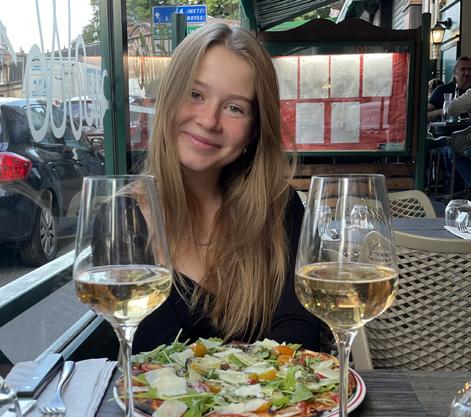


My semester abroad in college was during the spring, so my Tanksgiving abroad memory is from much earlier in my life. When I was nine, my family and I moved to Germany for six months. My dad, a German native, moved to America to marry my mom 30 years ago and has been a part of my mom’s Tanksgiving traditions since then. For example, every other year, my mom’s paternal family gathers at a manor in Akron, Ohio called the O’Neil House to celebrate Tanksgiving. As Tanksgiving is not celebrated in Germany, it was never an issue of whose family we would spend Tanksgiving with. However, since the time we lived in Germany coincided with Tanksgiving, and my mom, my brother, and I were all feeling a little homesick. We hadn’t seen the family we grew up around and always spent Tanksgiving with in months, and while we loved Germany and our family there, it was a hard holiday to miss, as it was our frst away from home.
Germany is a place where I have always felt at home, especially at my dad’s best friend’s house. Tis might seem odd, that the place I felt most at home was not the house of our immediate family, but these friends are like family to me and mine. Te story of the German Tanksgiving just emphasizes that. Mariana, the wife of my dad’s best friend and one of the strongest and most badass women I know, could tell that my mom especially was feeling homesick as Tanksgiving approached. My brother and I were in school, preoccupied with making new friends, my dad was back in his homeland, and my mom, while keeping busy and enjoying our friends and family, probably felt a little less at home than the rest of us.
So Mariana committed to making us a full Tanksgiving. Tis was quite a task. We quickly discovered it is not easy to get American Tanksgiving staples in Germany as one may think. For example, pumpkin purée in a can does not really exist there. Tis, however, did not deter Mariana. She simply made her own purée by buying a whole pumpkin and, well, puréeing it because she is a no-bullshit type of person and never understood why canned pumpkin purée would exist anyway.
Even though I was nine, this memory of German Tanksgiving remains with me because what could have been a disappointing Tursday, when we called family and friends in America and lamented about all we were missing, turned out to be one of my favorite Tanksgivings, though I am not sure we even had it on a Tursday. Mariana’s commitment to making something so out of the ordinary and honestly inconvenient was a testament to how much she loved and cared for us. Her actions embodied the essence of Tanksgiving. Te feast, the star of which was a bacon-wrapped turkey because she insisted that roasting a turkey without bacon would be bland and boring (and let’s be honest, was she wrong?), brought us together and made me thankful to be in Germany with these people. I also learned that Tanksgiving is more about who we spend it with than where we spend it or what we eat.
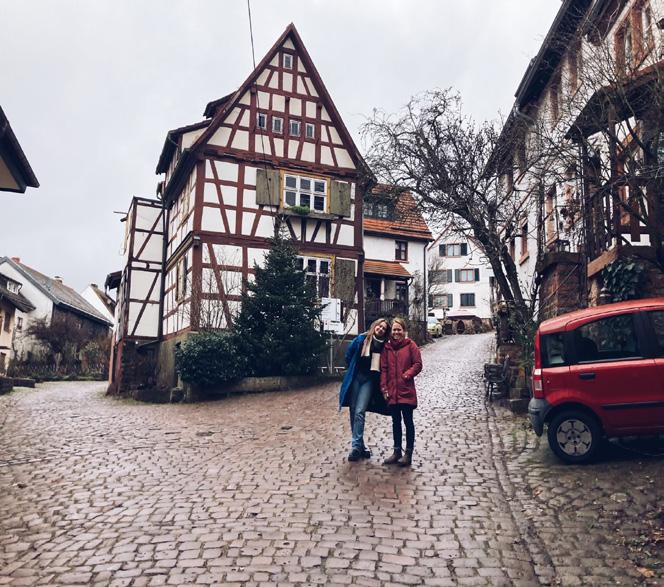

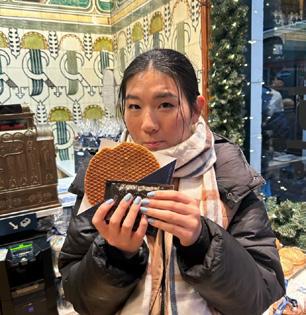
Tough I spent my fall semester abroad in Parma, Italy, I spent almost every weekend in a diferent European country and Tanksgiving break was no exception. I scrolled through the list of Google fights (sorted cheapest to most expensive, of course) and began planning a trip to see a friend studying abroad in Dublin.
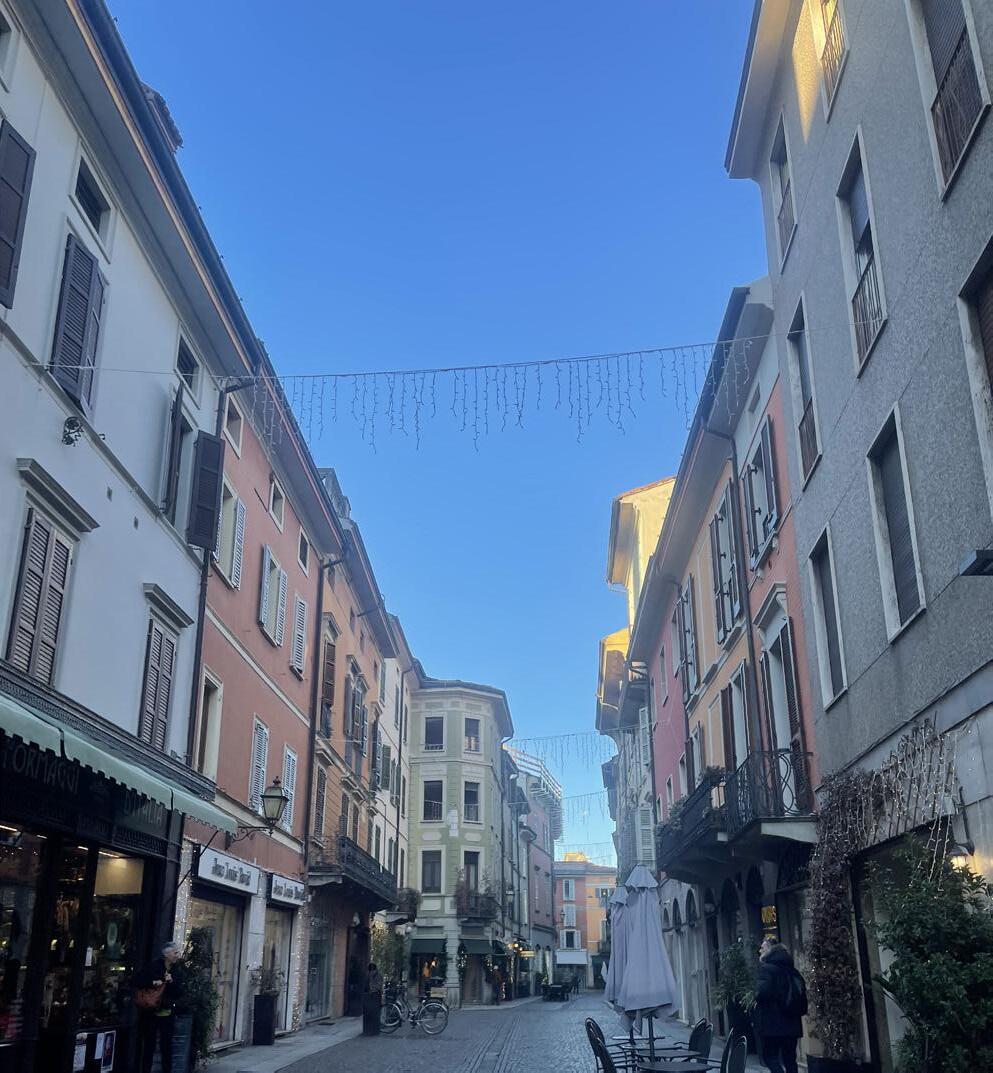
I was incredibly excited to arrive in Ireland and made sure to make the most of my time. My frst night, I went out to a charming Christmas bar with my friend and his university cohorts. Te 5 of us nestled into a cozy booth, admiring the hundreds of ornaments and string lights that hung from the ceiling. As we chatted, joked, and sipped our ciders, I instantly felt at home with these people. By the end of the night, they had invited me to a Friendsgiving hosted by a few American international students and their Irish classmates.
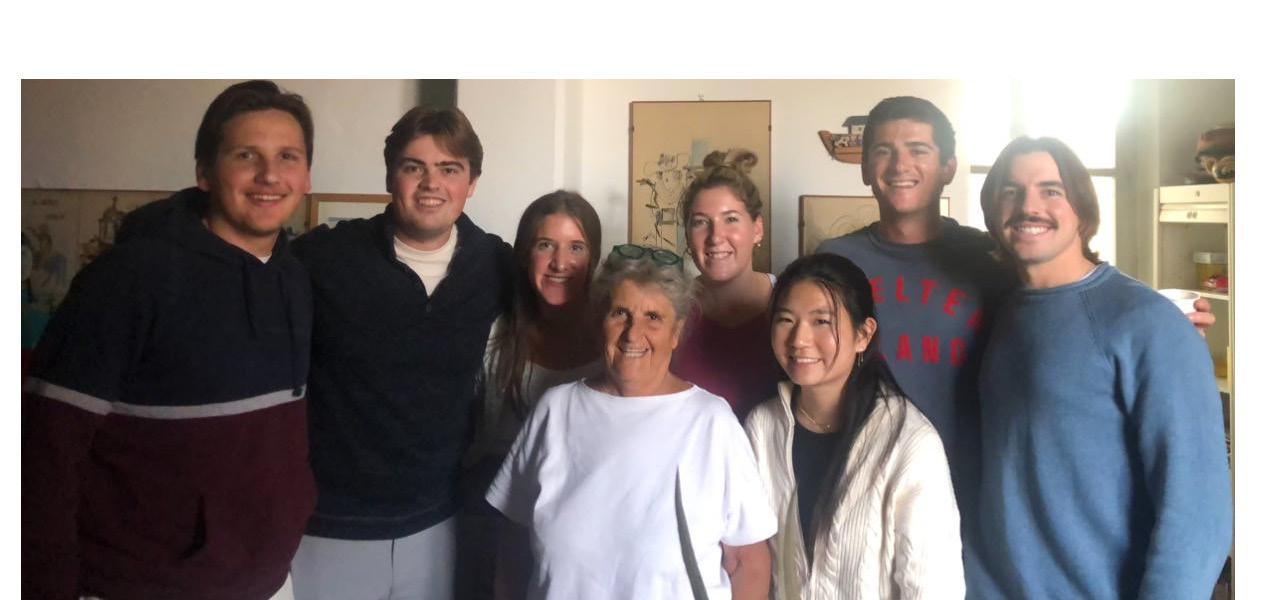
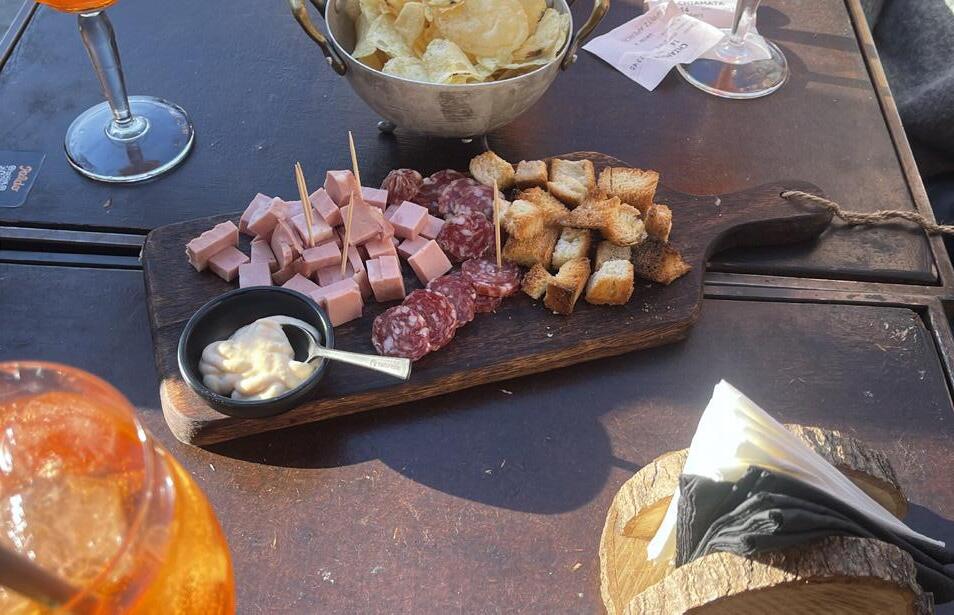
My Tanksgiving day started of perfectly with a beautiful hike and picnic of BLT sandwiches, which we all devoured at the viewpoint. Later that night, we practically skipped to the host’s home, a gorgeous condo situated on the outskirts of Dublin, and were immediately greeted by some of the friendliest students I’ve ever met, and the delicious aroma of turkey, cranberry sauce and mashed potatoes. Te house flled pretty quickly and by the time the bufet was spread, there must’ve been at least 20 hungry college students happily catching up in the living room.
At around 9 pm, the atmosphere drastically shifed from cheerful to extremely tense. A quick scroll on Twitter would explain the situation. Tat night, one of the largest Dublin riots in modern history occurred, setting the heart of the city afame within hours of the start of our celebration. With guests frantically calling their loved ones in the city, debating if they should run back to be with them, and news spreading about the increasingly violent nature of the protests, everyone ultimately found themselves helplessly trapped in the safe house.
In the midst of all of the chaos, we had all forgotten to fll our plates. Te hosts were eventually able to convince the guests to start their dinner, though it seemed like no one really had an appetite anymore. I sat observing as people scattered around the frst foor, almost everyone attempting to help by either comforting, ofering a couch to sleep on, or simply relaying messages from the news. Each student was holding up the next in a way that created an even deeper sense of community than I had experienced the night before. Te warmth in our hearts hadn’t dimmed from the tragedy, but simply taken the form of moral support.
My Friendsgiving abroad is now my most memorable Tanksgiving experience and I’ll never forget the camaraderie forged from the depths of that dark time. I’ve learned that the best part of Tanksgiving is being with people that you care about, whether that be with family, or friends. Tere isn’t a correct way to celebrate the holiday because ultimately, it’s about feeling gratitude for the place where you are and the people that you’re with. Tough food might bring us together, love and support will make our connections unbreakable.
If you’re anything like my best friend, fall isn’t just a season, it’s a sensation. It’s about wrapping yourself in cozy sweaters, lighting scented candles that fll the air with warmth, and indulging in the timeless tradition of binging Gilmore Girls. Te journey of Lorelai and Sookie embodies the essence of friendship, love, and the courage to pursue their dreams, symbolized by taking the risk to open their own inn.
While I appreciate these rituals, my upbringing held a diferent tradition that was closer to my heart. As soon as the leaves started to turn shades of crisp crimson, it was time to whip out the cans of pumpkin purée, the cinnamon, and that cherished, weathered index card with my Aunt Sandy’s pumpkin bread recipe, written in her iconic cursive. But this wasn’t just a recipe; it was a portal to a tale of triumph, hospitality, heartache, and a touch of sweetness and spice.
My Great-Aunt Sandra (Sandy) Schmanke and her best friend, Joan Martin, were my family’s version of Lorelai and Sookie. In 1981, yearning for change and tired of the urban hustle and bustle of New York City, these then 42-year-old women sought adventure and tranquility near the Finger Lakes, in upstate New York. Tey embarked on a bold journey and transformed a rustic red house without running water or electricity into a home. Two years later, their dream of opening a bed and breakfast was jeopardized by government plans to sell their cherished land. Instead of surrendering, Sandy and Joan rallied. Tey formed a grassroots movement, gathering their community, petitioning, and even testifying before Congress. Teir relentless eforts led to the establishment of the Finger Lakes National Forest (although Joan always thought it should have been named “Sandy and Joan National Forest”), preserving their slice of heaven for generations to come.
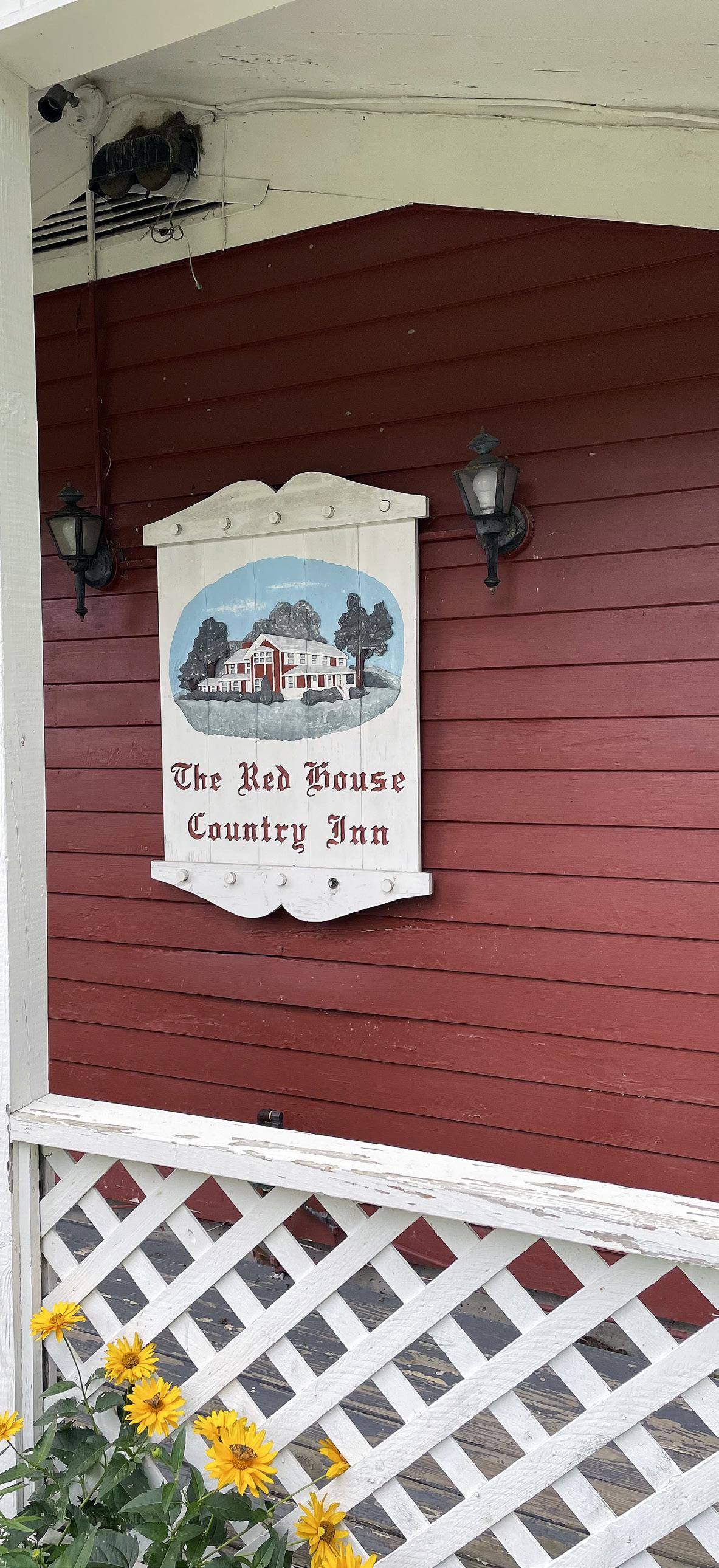
Sandy and Joan were anything but ordinary; they were pioneers and community leaders. Teir bravery, in a time where women-owned businesses were few and far between, ignited a trend, inspiring scores of bed and breakfasts across upstate New York. Tey were involved with women’s independence groups, their local church, and fostered many local farming communities by connecting previously-independent farmers together in and around Hector, New York. One summer, Sandy baked and sold 800 grape pies in one month, and donated all the funds to help restore their community church.
Joan, the “handyman,” was the backbone of their enterprise. From farm chores to fnancial management, she kept the wheels turning, all with a quiet strength and a love for nature’s simplicity. She had a passion for animals, which meant that the inn became home to countless chickens, dogs, goats, and horses, just to name a few.
Sandy, the vivacious hostess with a fare for entertainment and passion for food and family, brought the inn to life.
She had an infectious energy and laugh that drew people to her like bees to honey. She was the queen of the kitchen and always pulled out all the stops with her elaborate “country breakfasts”, consisting of multiple homemade courses for each and every guest. Aunt Sandy’s boundless hospitality made every guest feel like family. From elaborate sweet treats and cozy fres, to the whimsical tales she told, she wove magic into every moment.
My mother grew up going to the Red House Country Inn to visit my Aunt Sandy every summer of her childhood. My mother’s fondest memories are of Sandy’s truck trips to local farms. Sandy would take my mother and her sister to the neighboring farms who grew seasonal cherries, blueberries, and strawberries.Tey picked fruit for hours, flling extra cartons for baking, and made sure to test the product as they picked, always leaving with full bellies and stained fngers. Sandy’s love for food and family was palpable, her kitchen a stage for joy and connection.
 Aunt Sandy

Tough the Red House Country Inn closed its doors afer 22 years, the ladies enjoyed retirement to the fullest until Sandy’s passing in 2006 and Joan’s in 2023. Although I don’t remember meeting Aunt Sandy, I grew up hearing the holiday tales of the thousands of customers, friends, and family that she infuenced and impacted through her work at the Inn. Her passion for food and community lives on in my family’s kitchen, shaping my mother’s culinary career and our shared traditions.
For us, fall isn’t just a season; it’s a tapestry of memories woven with love, laughter, and the aroma of Aunt Sandy’s pumpkin bread. Her story reminds us that life, like any recipe, requires a delicate balance of sweetness and spice. May we always sprinkle generously, embracing each moment with passion, kindness, and the courage to follow our dreams.

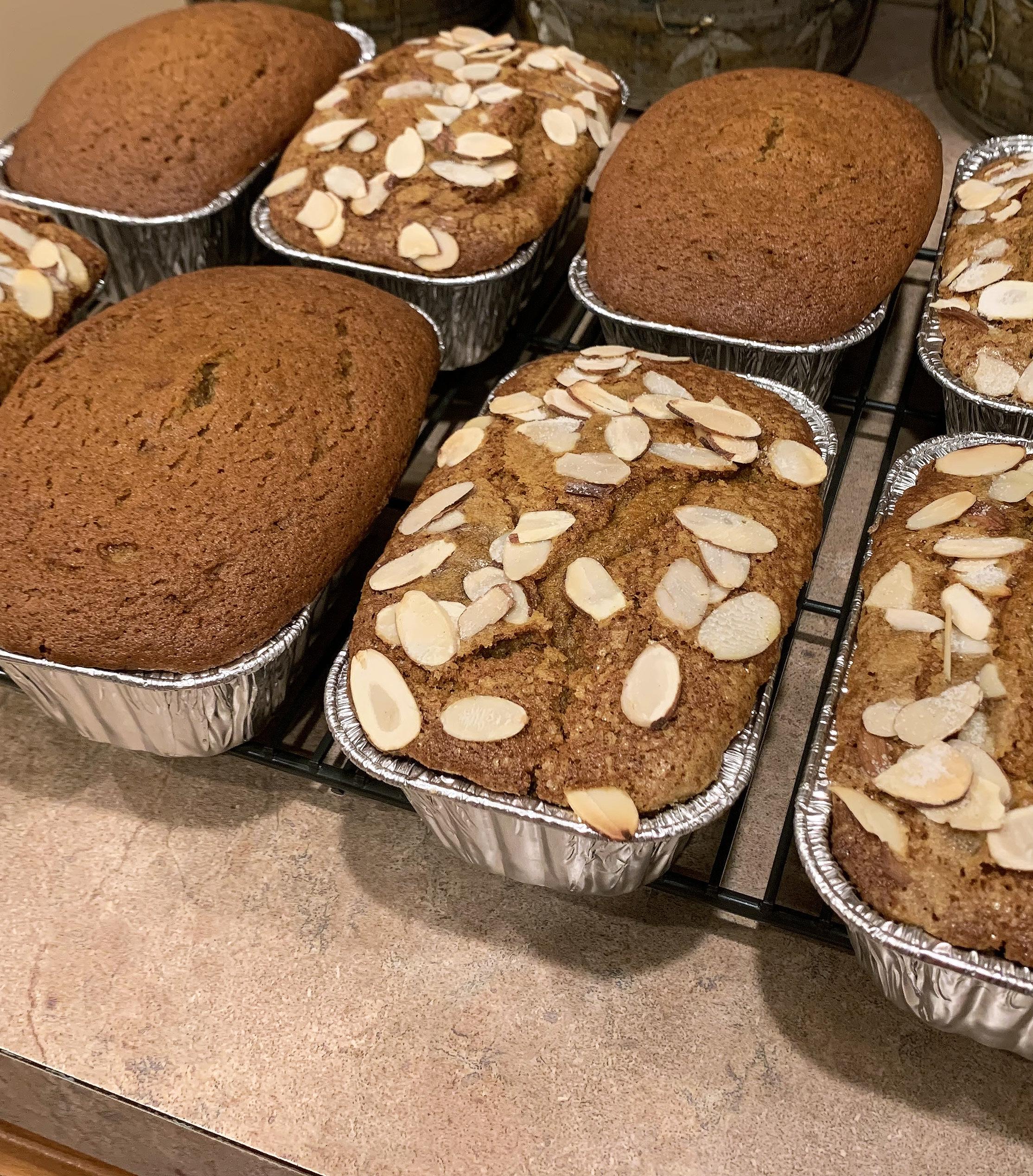
Ingredients
3 ½ cups all-purpose four
2 teaspoons baking soda
1 teaspoon baking powder
1½ teaspoons ground cinnamon
1 teaspoon ground nutmeg
1 teaspoons ground allspice
1 teaspoon ground cloves
1½ teaspoons salt
3 cups granulated sugar
4 large eggs
1 cup vegetable oil
15-ounce can 100% Pure Pumpkin
2/3 cup water

Instructions
Preheat the oven to 350°F. Sif together four, baking soda, baking powder, cinnamon, nutmeg, allspice, cloves, and salt in a bowl. Set aside.
In a separate bowl, beat the sugar and eggs together. Add vegetable oil and pumpkin, and mix well. Add dry ingredients and mix until well combined. Add the water, and mix slowly or it will splash.
Pour into two greased 9½ x 5¼-inch loaf pans. Bake for 50-60 minutes, or until a toothpick inserted into the center comes out clean. Let bread cool completely and then slice.
then slice.
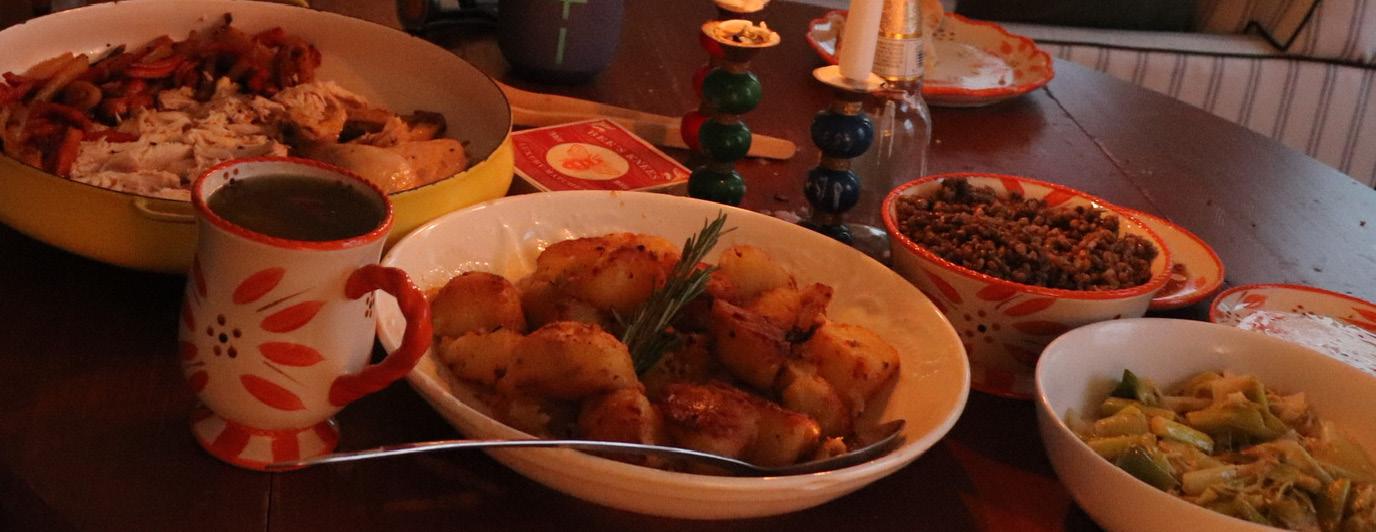
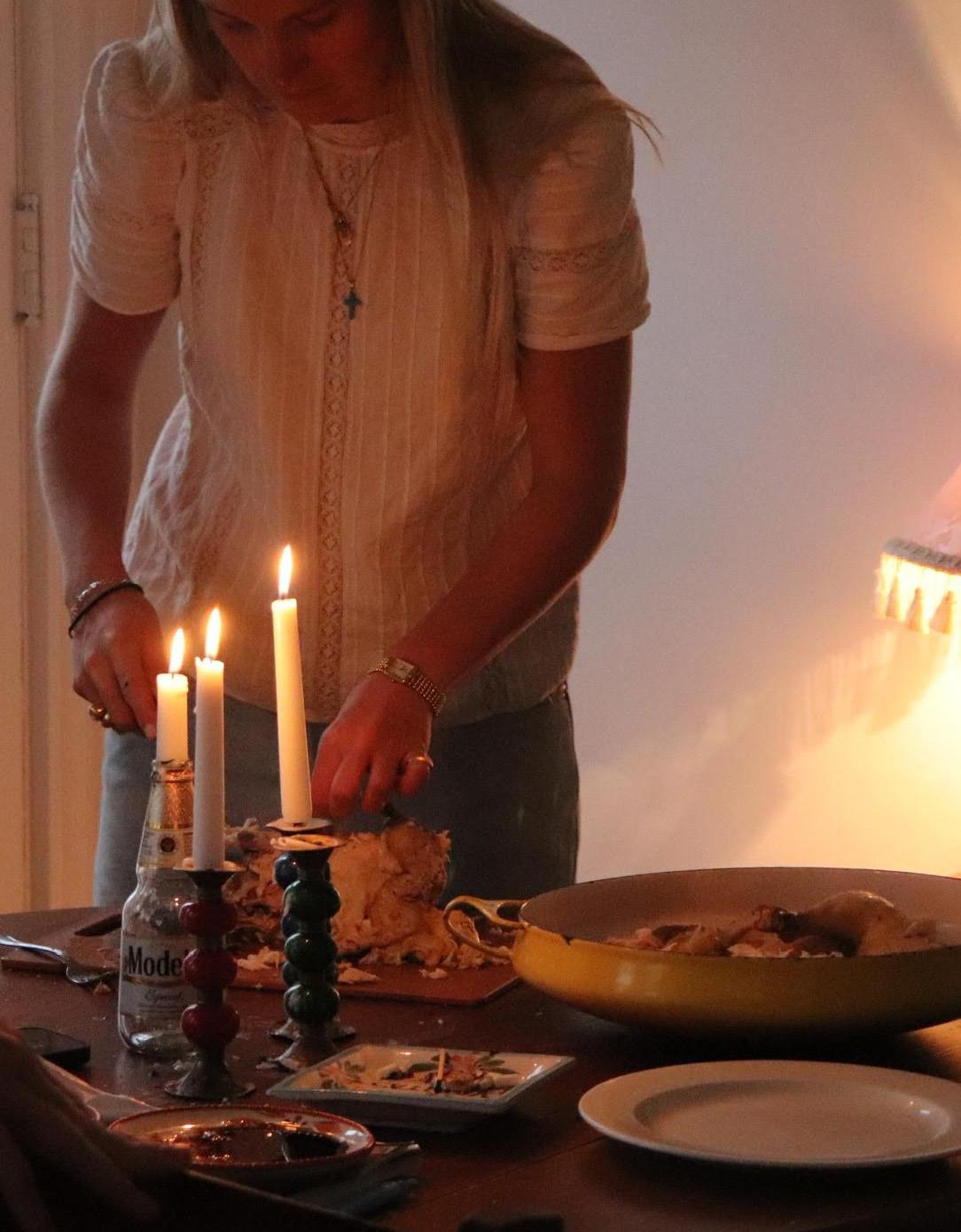
Te Sunday roast reigns supreme as the most beloved meal among Brits. Tis weekend ritual serves the nationwide purpose of bringing people together and creating a sense of tradition and comfort. When asked what I miss most about living in the UK, I fnd myself craving a Sunday roast. What’s so exceptional about this dish, a non-Brit may ask? To any American, I’d simply reply, “imagine Tanksgiving, but once a week.”
It’s important to outline from early on in this article that the one thing I will not tolerate is the slandering of British cuisine. While you can freely comment on our miserable weather or share your opinions on Meghan and Harry, it’s important that your mindset toward our food remains unbiased until you indulge in the height of British cuisine: a Sunday roast.
Growing up, I cannot remember a weekend when we didn’t cook a roast. Sunday mornings used to start with a trip to the local farmer’s market with my mum and whoever else had an appetite for the bacon roll she’d coax us there with. My obsession with food possibly originates from the hours I’ve spent in that parking lot in West London on a Sunday speaking to the potato man from Essex and taste testing fresh apple juice—how idyllic, I know.
In an attempt to cook what was seasonal, a roast in the Lytle household varied weekly and dependent on our guests. For example, at Easter or in the spring we typically have lamb, but in winter it’s chicken or beef. You may be thinking that the Sunday roast is exclusive to carnivores, but I can assure you that this tradition has overcome the rise of herbivores, notably because the trimmings are the best part.
A typical roast and its accompanying dishes comprise slabs of roast meat, potatoes, vegetables, and gravy. Tere are, of course, variations to every roast which are highly dependent on the meat you’re serving. For example, a yorkshire pudding accompanies beef—I’m on a mission to normalize it with all roasts—while crackling and apple sauce should always be served with pork; the list goes on.
What I have always cherished most about a Sunday roast is the fact that this tradition brings people together. Whether it is just the fve members of my family, or a group of twelve girls following an afernoon of intramural sport at uni, there is something I have always loved about the ritual of cooking and eating a Sunday roast with others. Don’t get me wrong, it’s technical, and my god is it easy to screw up, but like any meal that takes two hours slaving over the hob, it’s ofen extremely worth it.
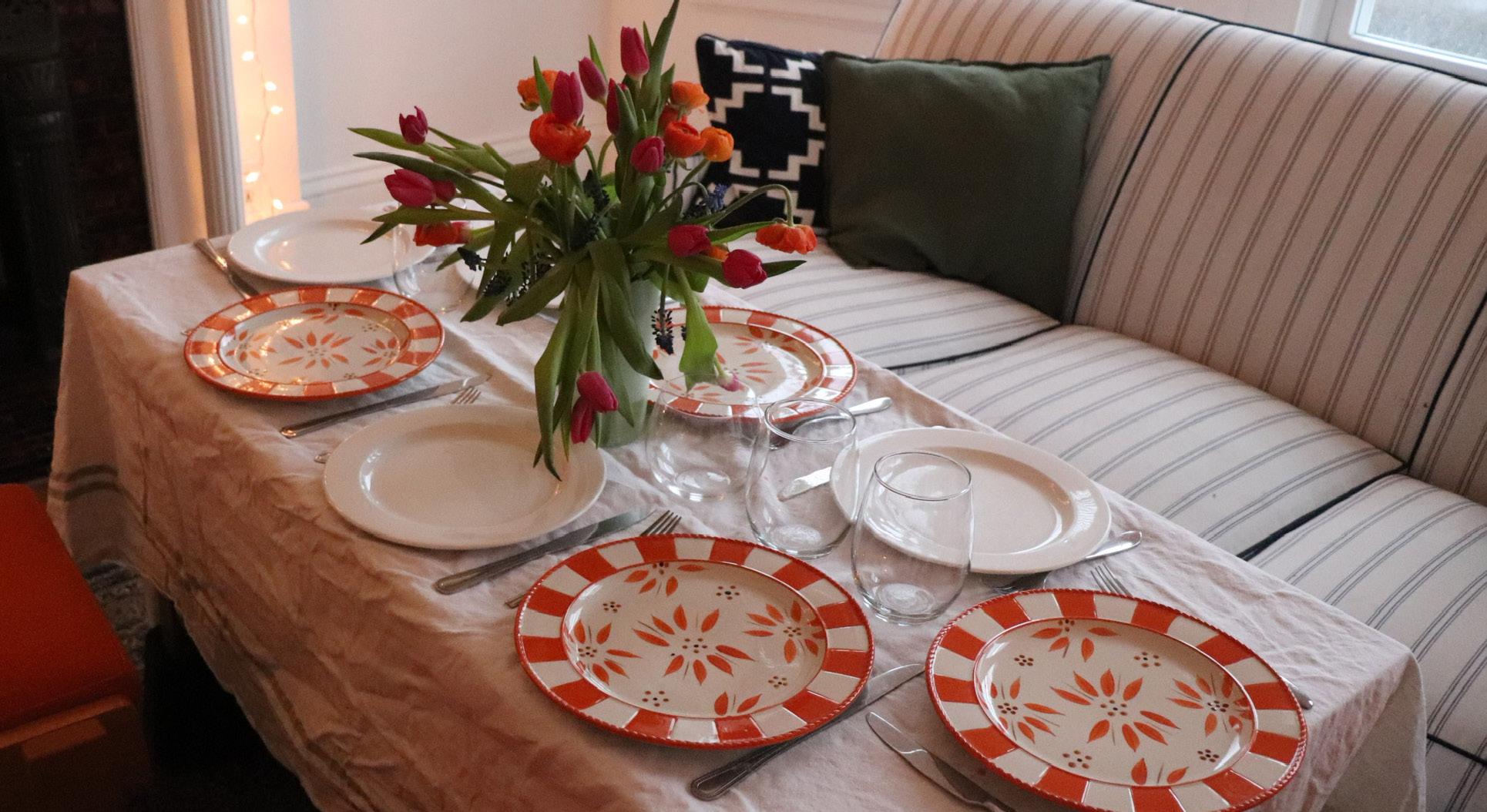
I’m the frst to admit that time management isn’t my strongest quality, but when it comes to cooking a roast, there are no prisoners, and the creative fair I ofen pride myself for goes out of the window. A roast is by no means a “let’s try and use up all of the food in the fridge dish.” Unfortunately it involves planning, but if I haven’t persuaded you yet, it’s entirely worth it.
I’ve included three recipes (serving 4-6 people) that are the basic pillars for the famed Sunday roast. I hope that you can fnd some use of this article, and if you ever make it to the UK, take yourself to a pub on a Sunday and indulge in the Brits’ beloved Sunday tradition.
Tis is probably the easiest meat dish to cook and one that I have relied on at uni because I fnd there is so much to do with its lefovers, such as make a stock, pie, curry, and more.
Ingredients
1 whole chicken (3 to 4 pounds)
1 lemon
Olive oil
Sea salt fakes, black pepper, and herbs such as rosemary to season (optional)
Instructions
Preheat the oven to 350°F.
Rest the chicken breast-side up in a roasting tray, drizzle the olive oil over the skin, and squeeze over the lemon juice. Stuf the lemon halves inside the bird along with the rosemary or other herbs of choice. Season the skin generously with sea salt and black pepper.
Roast in the oven for approximately 1 hr 30 min, ensuring the skin is golden and crisp. To check that the bird is cooked, run a knife through the thickest part. If the juice runs clear, remove it from the oven. Cover the chicken in tinfoil and allow it to rest for 15 minutes.
Pour some of the juices on top of the chicken before carving, and save the rest of the gravy.
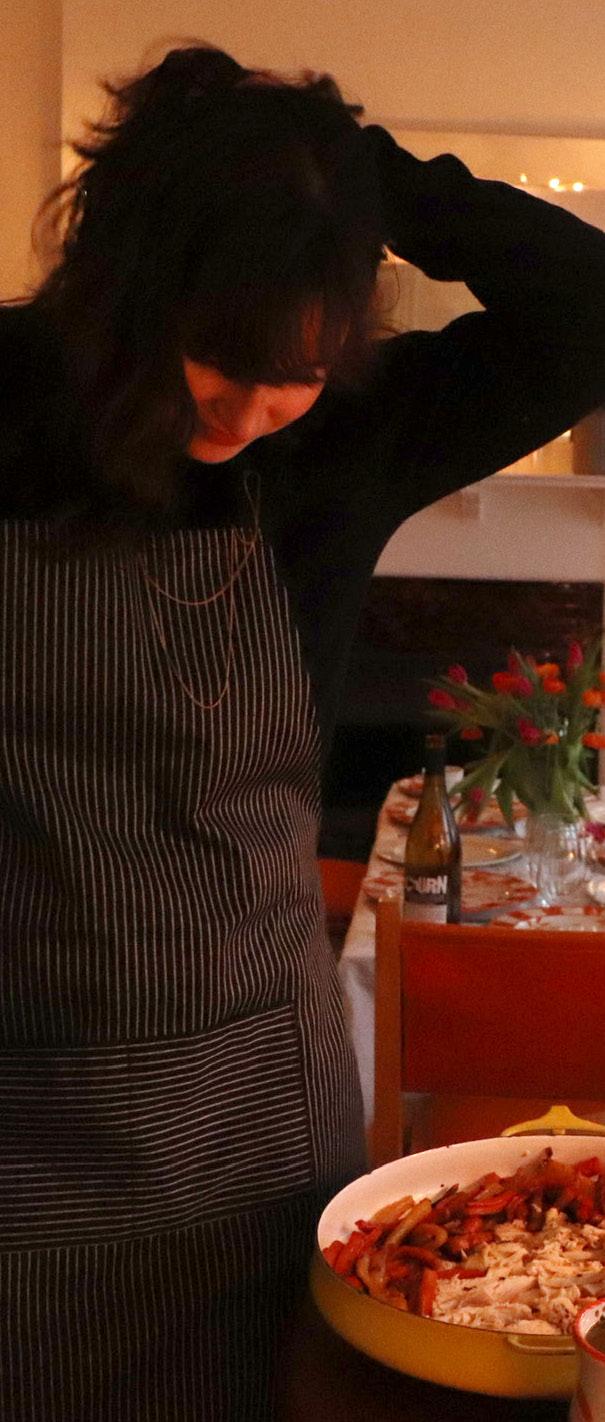
Arguably the best roast potatoes are crisp and heavily salted, but this recipe is for the easiest roast potatoes, still utterly delicious, but much simpler than the process of fufng and adding four and goose fat. I’d recommend that once you’ve begun to master a roast’s timings.
Ingredients
4 pounds Maris piper potatoes (or others that are recommended for roasting)
Olive oil
Sea salt fakes, black pepper, and herbs such as rosemary to season (optional)
Instructions
Preheat the oven to 350°F.
Ingredients
1.3 pounds carrots
1.5 tablespoons of honey
3 tablespoons of butter
2/3 cups water
Instructions
Preheat the oven to 350°F.
Peel and chop the carrots into batons and add to a roasting tray. Cover the batons in honey, butter, and 2/3 cups of water.
Season well with sea salt and black pepper.
Allow the carrots to roast for 1 hr 15 min, or until tender.





Christmas. Te most magical time of the year flled with lights, love, presents, and centuryold traditions. Te glowing freplace crackling and popping. A freshly cut tree adorned with glistening rainbow lights and ornaments collected from adventures far and wide. A hallmark Christmas movie sofly playing a classic romance tale and the magical smell of freshly-made cookies melting throughout the house. Christmas cookies have never just been to leave out for Santa but are what Christmas means to me.
Months before December 25th, I diligently plan which cookies will make that year’s cut. Te Kufner family has deep opinions on which treats must stay year to year and of course, I always aim to please the crowd. Gooey butter cookies for my mom, Grandma Peggy’s chocolate snowballs for my dad, hand-twisted almond candy canes for Kalle, and carefully layered Italian rainbow cookies for John. Despite the 8-10 classics that resurface every year, my favorite cookie is always the experiment I try, the inaugural Christmas cookie of the year. I pull inspiration from family recipes, Pinterest, and my favorite bakeries to develop my new cookie, ensuring that it ushers in unique favors, textures, and looks to my established roster. Tis recipe is my 2019 edition; a culmination of my desire for chocolate favor in a chewy gooey cookie format, an element of crunch, and a design echoing the spirit of Christmas.
Some cookies stay for all the Christmas seasons, others one or two, but without a doubt, the Kufner family’s stomachs are flled with sugary, buttery delight every year.



Ingredients
1 cup butter, sofened
3/4 cup brown sugar
1/2 cup sugar
2 eggs
1 1/2 teaspoons vanilla extract
1 1/2 cups four
3/4 cup cocoa powder
1 teaspoon baking soda
1/2 teaspoon salt
8 ounces white chocolate, melted
Christmas sprinkles
Instructions
Set oven to 350º Fahrenheit.

In a mixer ftted with the paddle attachment, cream the butter and sugar on high until light and fufy, approximately 3-5 minutes.
In a separate bowl sif together the four, cocoa powder, baking soda, and salt.
Add the eggs to the butter mixture one at a time, ensuring to scrape down the sides afer each addition. Mix in the vanilla extract.
Slowly add the dry ingredients to the wet ingredients. Ensure only to mix the dough until just combined.
Roll the dough into tablespoon-sized balls and bake for 5-6 minutes.
Once the cookies have cooled, dip half into the melted white chocolate and then top with sprinkles.

1. Sullivan, Joan. (2024). “Nixtamalization: How Ancient Americans Bio-Engineered Corn.” Te Collector. https:// thecollector.com/nixtamalization-ancient-americans-corn/
2. Sherman, P. W., & Billing, J. (1999). Darwinian Gastronomy: Why We Use Spices: Spices taste good because they are good for us. BioScience, 49(6), 453–463. http://www.jstor.org/stable/10.1525/bisi.1999.49.6.453
3. World Health Organization. (2022). Food Safety. World Health Organization. https://www.who.int/news-room/ fact-sheets/detail/food-safety
4. Sherman, P. W., & Billing, J. (1999). Darwinian Gastronomy: Why We Use Spices: Spices taste good because they are good for us. BioScience, 49(6), 453–463. http://www.jstor.org/stable/10.1525/bisi.1999.49.6.453
5. Sherman, P. W., & Billing, J. (1999). Darwinian Gastronomy: Why We Use Spices: Spices taste good because they are good for us. BioScience, 49(6), 453–463. http://www.jstor.org/stable/10.1525/bisi.1999.49.6.453
6. Jabbour, Niki. (n.d.) “Herbs to Grow in Winter.” Savvy Gardening. https://savvygardening.com/herbs-to-grow-inwinter/
7. Weiss, Jacqueline. (2024) “8 Spring Herbs You Should Be Cooking With.” Taste of Home. https://www.tasteofome. com/collection/spring-herbs/
8. Bonnie Plants. (n.d.). Herbs in Fall: Yes, Some Love Cool Weather. https://bonnieplants.com/blogs/garden-fundamentals/herbs-in-fall-yes-some-love-cool-weather
9. Canola Eat Well. (n.d.). Herb Flavor Chart. https://canolaeatwell.com/herb-favour-chart/
10. Mills, Kylee. (2023). Why Is Everyone So Obsessed With Old Bay? Spoon University. https://spoonuniversity.com/ lifestyle/the-history-of-old-bay-seasoning
11. Crazy Alan’s Swamp Shack. (n.d.). Cajun Cuisine: A Brief History. https://crazyalanswampshack.com/blog/cajun-cuisine-a-brief-history/
12. Laura Plantation. (n.d.). What is Creole? https://www.lauraplantation.com/creole-history/what-is-creole
13. H-E-B. (n.d.). Tony Chachere’s Original Creole Seasoning. https://www.heb.com/product-detail/tony-chachere-s-original-creole-seasoning/172479