Just a short mile walk from campus, Cityside is a quintessential Boston College student destination. Its bites and brews will excite your taste buds, !lling you to the brim with either the famous big chicken little sandwich, perfectly cut sweet potato fries, or of course their smoldering hot loaded nachos. For me, what makes Cityside so special is not the bar food or convenience – it is the memories I hold within its four walls.
As a wide-eyed, nervous freshman, I met my roommate at the ground-level four-person table adjacent to the hostess stand. Mia and my friendship began over a delicious Cityside quesadilla as we anxiously discussed our hopes and dreams for our upcoming four years. Cityside is where I gather with my friend group to play trivia on Wednesday nights, testing out how much our college degree is really teaching us. We take a break from studying in the library, enjoy one another’s company, and jokingly argue about how much we trust each other’s answers. At the mahogany square bar, lined with open taps !lled with crisp Boston beers, countless friends order their !rst legal drinks as the clock strikes midnight on their 21st birthday. In the upstairs enclave, I sit for hours recounting stories on a nerve-wracking !rst date. e fried pickles remind me of celebrating life accomplishments like my friend Meghan’s successful UGBC presidential run.Every table, story, dish, and drink hold unique memories that !ll me to the brim with gratitude.
Four Years later, Cityside is where I am content, live in the moment, and take everything in during my senior year. It is more than just a bar, a restaurant, a BC favorite; Cityside is where I have made some of my best college memories.
is issue of Gusto invites readers to think about what !lls them up and which foods stu them to the brim. Additionally, the reader might think about which foods are !lled with meaning, memories, and stories. Worldwide, almost every culture has its own version of a stu ed food ranging anywhere from dumplings to empanadas. is cross section of cultures and passion shows the true joy and history that many foods hold.
I invite you to open your stomachs, minds, and memories to be stu ed with this edition of Gusto.
Keep on cooking, Margaret Ku ner
Letter From the Editor
gusto team
FALL 2024 ISSUE 10
EDITOR-IN-CHIEF
MANAGING EDITOR
MUCHO GUSTO EDITOR
CREATIVE MANAGER
MEDIA AND MARKETING MANAGERS
FEATURES AND ESSAYS TEAM
MUCHO GUSTO TEAM
CREATIVE TEAM
Margaret Kufner
Sydney Luciano
Isabela González
Madeline King
Adeline Kim, Katie Ballard
Ian McIssac, Katie Mangraviti, Keira Tu, Sydney Luciano
Keira Tu, Sydney Baratta
Alyssa Turay, Ana Calvillo, Emily
Ahren, Joshua King, Kate Johnston, Katie Ballard, Madeline McCormick
COPY TEAM
MEDIA AND MARKETING TEAM
Emily Perpetua, Emma Curran, Kelley Knox
Julia Colone, Ruby Levine
Ian McIssac
Ruby Levine By Emma Curran, Emily Perpetua & Katie Ballard By Sydney Luciano By Sydney Baratta By Alyssa Turay
By Sydney Luciano & Margaret Kufner By Adeline Kim By Julia Colone
By Madeline McCormick
History of Stu ed Foods: How Did ey Spread?
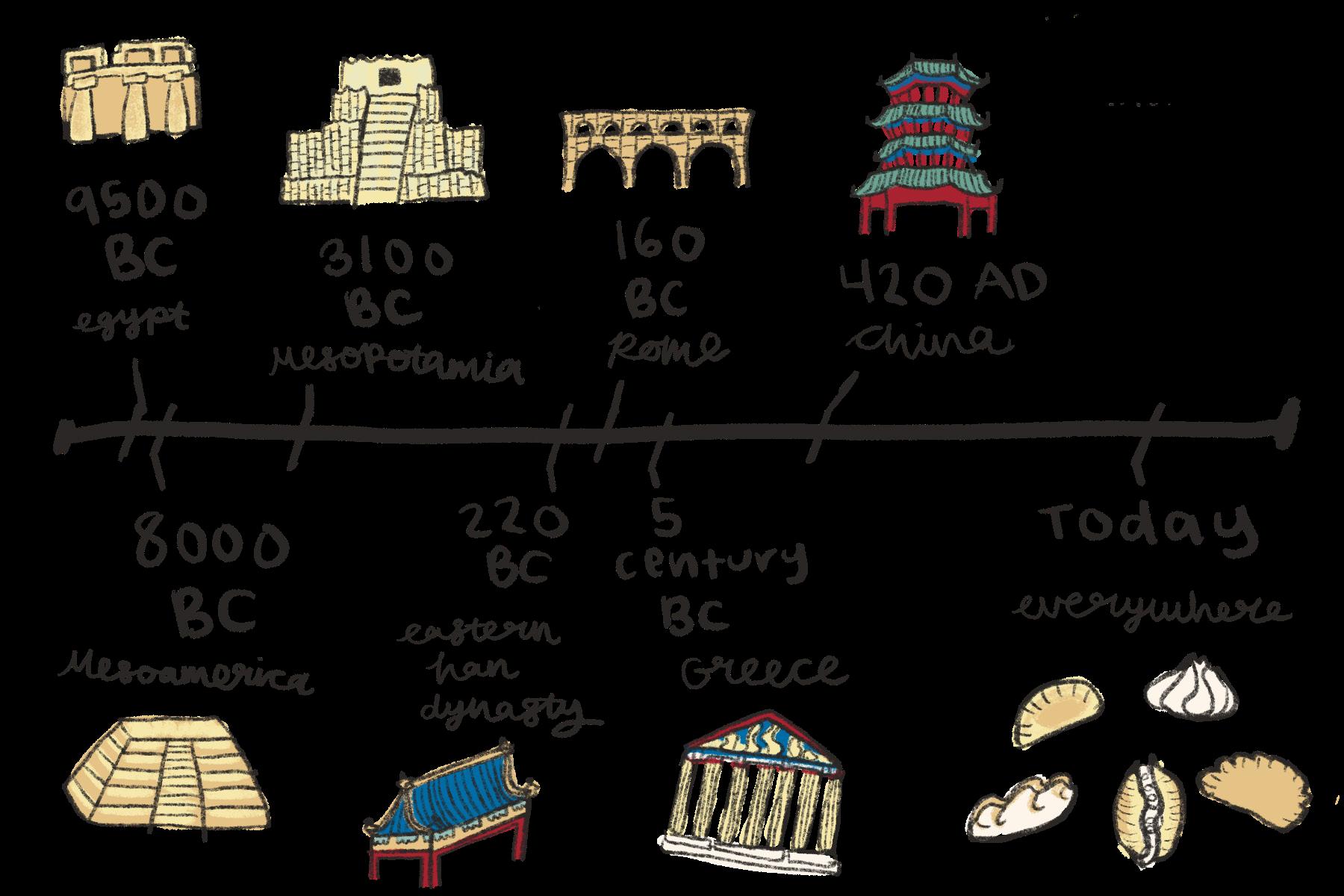
How has cultural di usion led these stu ed foods to alter yet also stay consistent throughout hundreds if not thousands of years? We’ll follow a chronological order as we analyze stu ed foods around the world and look at their original form as well as their current form. While we won’t get to every single stu ed food in history, as there are over one thousand di erent kinds, we’ll go over the major ones.
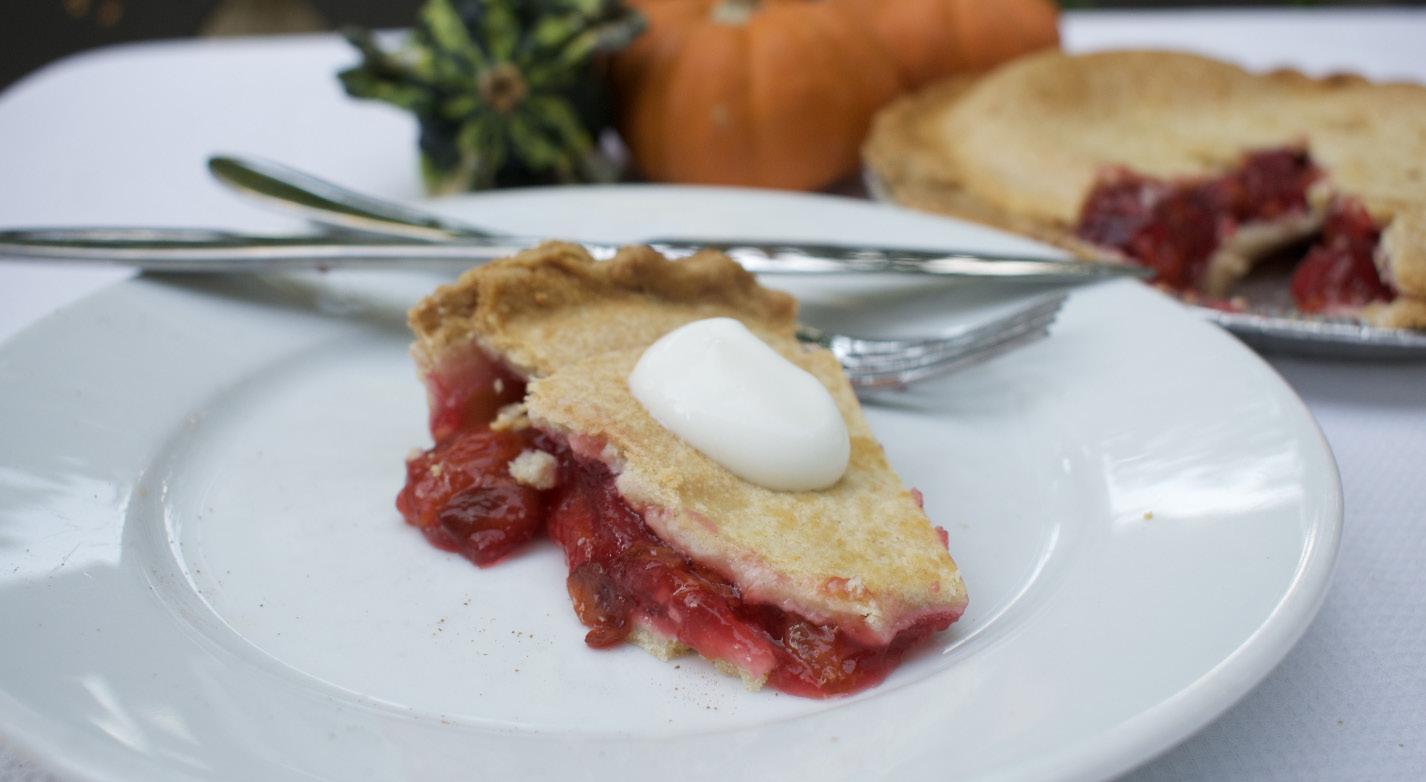
I’m going to start at an unassuming place: pies. Contrary to popular belief, pies were !rst invented in Egypt in 9500 BC. ese types of pies used oats, wheat, rye, as well as barley. ey were traditionally !lled with sweet avorings like honey and served foremost as a method to encase food rather than making a dish on its own. e Egyptians went on to make other types of pies, too. On a tablet carved prior to 2000 BC a recipe was found for a chicken pie that’s regarded as the earliest recipe for a meat pie. ese types of pies o%en resembled a French Galette and they were !lled with nuts, fruit, and honey once again. However, the Egyptian pies were o%entime eaten by sailors to provide hearty nourishment before and a%er their long voyages.
Next, we turn to the ancient Greeks. ey took inspiration from the Egyptians and invented a pie around the !%h century BC that incorporated a pastry rather than a mix of barley and wheat. ey used a combination of our, water, and fat to make the !rst crust in recorded history. ese were less bready and looked like the pies we have today. e Greeks ate it at any time of the day. For breakfast, crusts would o%entime be made out of wine instead of water. Pies !lled with honey as well as cheese and garlic were eaten.
e ancient Romans were the ones to really perfect the pie around 160 BC. ey were the !rst to create a pie with a top and bottom crust which contained the avor of the meat and allowed the juices to stay in. ese types of pies weren’t actually meant to be eaten, however. Instead, they were used as a way to preserve the meat that was inside. It wasn’t until the pies traveled outside of the Roman empire that people began to eat them.
Similar to how the Latin language spread across the European continent, so did pies. Since a pie is so versatile, various European cultures – those of Spain, France, and Greece – could put whatever they desired on the inside. is could include savory items such as meat, vegetables, and cheese, or sweet items like fruits, and caramelized nuts. Pies today in the Americas are synonymous with a sweet treat in the summer or at anksgiving. In Europe and the UK especially, pies are known for being a dinner item usually !lled with meat, potatoes, and other vegetables.
We’ll turn to tamales next, a stu ed food that was !rst invented as early as 8000 BC. ese banana-leaf wrapped dishes with a starchy dough (made from maize) are originally from Mesoamerica, more speci!cally, Guatemala and Mexico. e Olmecs, Mayans, and Aztecs all ate tamales as they were easily transportable. ey !t perfectly with the warrior and hunter lifestyles, similar to how Egyptian explorers used pies.
e Mayans are the earliest known culture to have made tamales. Tamales were o%en !lled with ingredients like beans, squash, and meats such as turkey, frog, !sh, or insects. For religious festivals and important ceremonies, tamales were sometimes o ered to gods as part of rituals. Aztecs also used tamales for ceremonies. Aztec tamales could be !lled with ingredients ranging from chili peppers and tomatoes to meats like rabbit and venison, depending on what was available. While the basic structure of tamales has remained the same over thousands of years, the outer casing has changed; some use corn husks or avocado leaves depending on what’s available.
As European conquest began in Mesoamerica in the 16th century with the Spanish, new ingredients were introduced in tamales. Pork, lard, and beef were added, and today, pretty much any !lling you can think of can be put in a tamale. Tamales have largely stayed within Latin America throughout the thousands of years, but there are hundreds of di erent variations depending on the Latin culture.
Sausage is another dish which has an outer casing that can be !lled with whatever the heart desires. Likely invented in 3100 BC in Mesopotamia, these types of sausages were used as a method of preserving meat by mixing ground meat with spices, salt, and then encasing it in animal intestines. is allowed people to store and consume meat for longer periods, especially a%er slaughtering animals. It’s not clear how the art of sausage-making spread, however. It’s thought that sausage was invented multiple times in various parts of the world. In 800 BC, Homer describes an early sausage barbecue in “ e Odyssey.” It’s not clear how the recipe of sausages transferred cultures, but it’s possible that Homer either had heard about the Mesopotamian sausage or Greeks had invented their own. In the year 228, a Roman cookbook documents that pork sausages with pine nuts were a favorite during the ancient festival of Lupercalia. e Romans most likely adopted the recipe for sausages from the Greeks.
However, the story changes when we move to China. In the year 420, the Northern and Southern Dynasties period contains records of the lap cheong goat and lamb sausage recipe. Lap cheong was traditionally made in the wintertime, particularly around the Lunar New Year, as part of celebratory meals. Because sausages could be stored for long periods, they were ideal for ensuring that families had protein-rich food during the leaner months, namely winter since less food was available. Unlike Mesopotamian culture, these sausages were meant to be eaten.
Today, sausages are enjoyed all over the world, but still have large cultural importance mainly in Europe. Italy has salami, and many other sausages with herb and basil combinations. Germany has frankfurters, Mexico and Spain have chorizo, and ailand even has Sai Ua – ground pork with a red curry paste and herb seasoning.
Last, we’ll talk about arguably the most famous stu ed food on the planet – dumplings. ere are hundreds of di erent types of dumplings and they can be found in di erent variations pretty much all over the planet. Dumplings were the most recent invention out of all the stu ed foods reviewed, being !rst made in the Eastern Han Dynasty in 220 BC. Most believe that Zhang Zhongjing was the
inventor. In the cold winter, to help people warm up, Zhongjing took mutton, herbs, and chilis and wrapped them in dough, then steamed them to bind everything together and keep them warm. ese steaming, pillow-like treats helped people overcome the cold weather, while the herbs that Zhongjing put inside worked to improve blood circulation and prevent frostbite. Recipes for dumplings appear in later years in ancient Roman texts, with the very !rst dumpling recipe itself found in Apicius, a Roman cookbook. e recipe most likely was obtained through trade routes with the East. When dumplings arrived in Europe, various cultures made di erent types of dumplings with all kinds of di erent !llings. ere’s ravioli and gnocchi in Italy which were made in the 14th century. In Germany, dumplings called knödel became a common food by the medieval period. en, in Poland, dumplings such as pierogi in Poland, vareniki in Ukraine, and pelmeni in Russia became central to the regional cuisines. ese dumplings were typically stu ed
Words by Ian McIssac
Graphics by Katie Ballard
with ingredients like potatoes, cheese, mushrooms, or minced meat, then boiled or fried.
Outside of Europe, Manti, a type of stu ed dumpling, is believed to have originated with the nomadic Turks in Central Asia. ese small dough parcels !lled with lamb or beef were steamed or boiled and o%en served with yogurt. One popular type of Indian dumpling is modak, which is a sweet dumpling !lled with jaggery and coconut, traditionally o ered to the Hindu god Ganesha during festivals. Samosas are also a popular dish that’s usually !lled with vegetables or meat.
All in all, stu ed foods have revolutionized our global cuisine for over 10,000 years. Starting with the unassuming pie, then moving onto tamales, sausages, and !nally dumplings, we’re able to see the impact these foods have had on various cultures and how they have spread across the world.
Photos by Kate Johnston
Stufed Quahogs and Family Time
Words and Photos by Ruby Levine
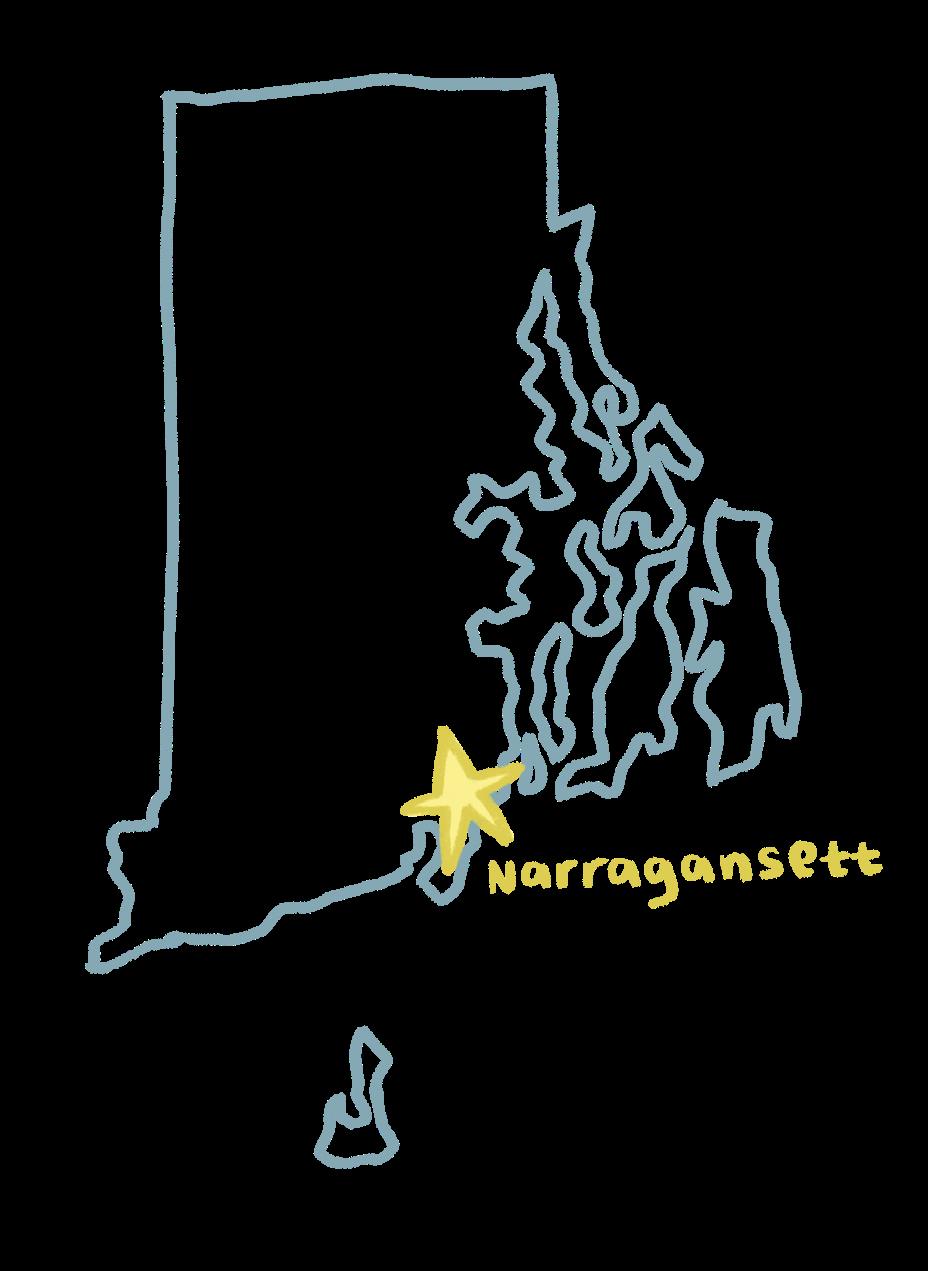
Every summer, towards the end of August, my family goes on a cherished road trip to Narragansett, Rhode Island. With all 12 of us—my family of four, my six cousins, and my grandparents—we’ve gathered in the same house for the past 22 years. is trip marks the bittersweet end of summer, just before everyone heads back to school, and it is !lled with beloved traditions. Among our favorite activities are beach games, leisurely walks along the shore, trips to Brickley’s Ice Cream for scoops of creamy delight, and, of course, our annual feast of stu ed quahogs. e process of preparing these delicacies is more than just a cooking venture; it’s a family ritual that draws us together.
At the beginning of the week, we head to the ocean to collect quahogs which are large clams. With buckets in hand, we wade through the water, hunting for them. ere’s a thrill in the search, and it o%en turns into a competition to see who can !nd the most. As we collect 15-20 quahogs, our excitement builds; we can already taste the savory dish we’ll create together. Once we return to the house, the real fun begins. e quahogs are washed, and are carefully diced. is is where the magic happens as we combine them with a medley of ingredients: spicy chorizo, crisp green peppers, garlic, ciabatta bread, lemon, rich butter, paprika, and a splash of Cholula hot sauce. e mix of textures and avors promises something truly special, and we !ll the clam shells with our mixture. A%er everything is prepared, we pop the stu ed quahogs into the oven. e aroma !lls the kitchen and once the quahogs are golden brown and bubbling, we gather around the table, eager to dig in. Topped with a squeeze of lemon and a dash of Cholula hot sauce, each bite is a delightful explosion of avor—a combination of ocean freshness and rich spices. ese “stu&es,” as my grandfather calls them, are more than just food; they are a symbol of our togetherness, a delicious reminder of the time we spend as a family.
But the traditions don’t end with the meal. A%er we feast, the empty shells are repurposed into sandcastles on the beach. In these moments, I’m reminded that the essence of being “stu ed” isn’t just about the food; it’s about the love, laughter, and connections we share. As we leave Narragansett each year, we carry with us not only the taste of those delicious stu ed quahogs but also a treasure of memories that will last a lifetime.
What Fills Our Fridge
Words by: Katie Ballard, Emma Curran, & Emily Perpetua
Graphics by: Katie Ballard
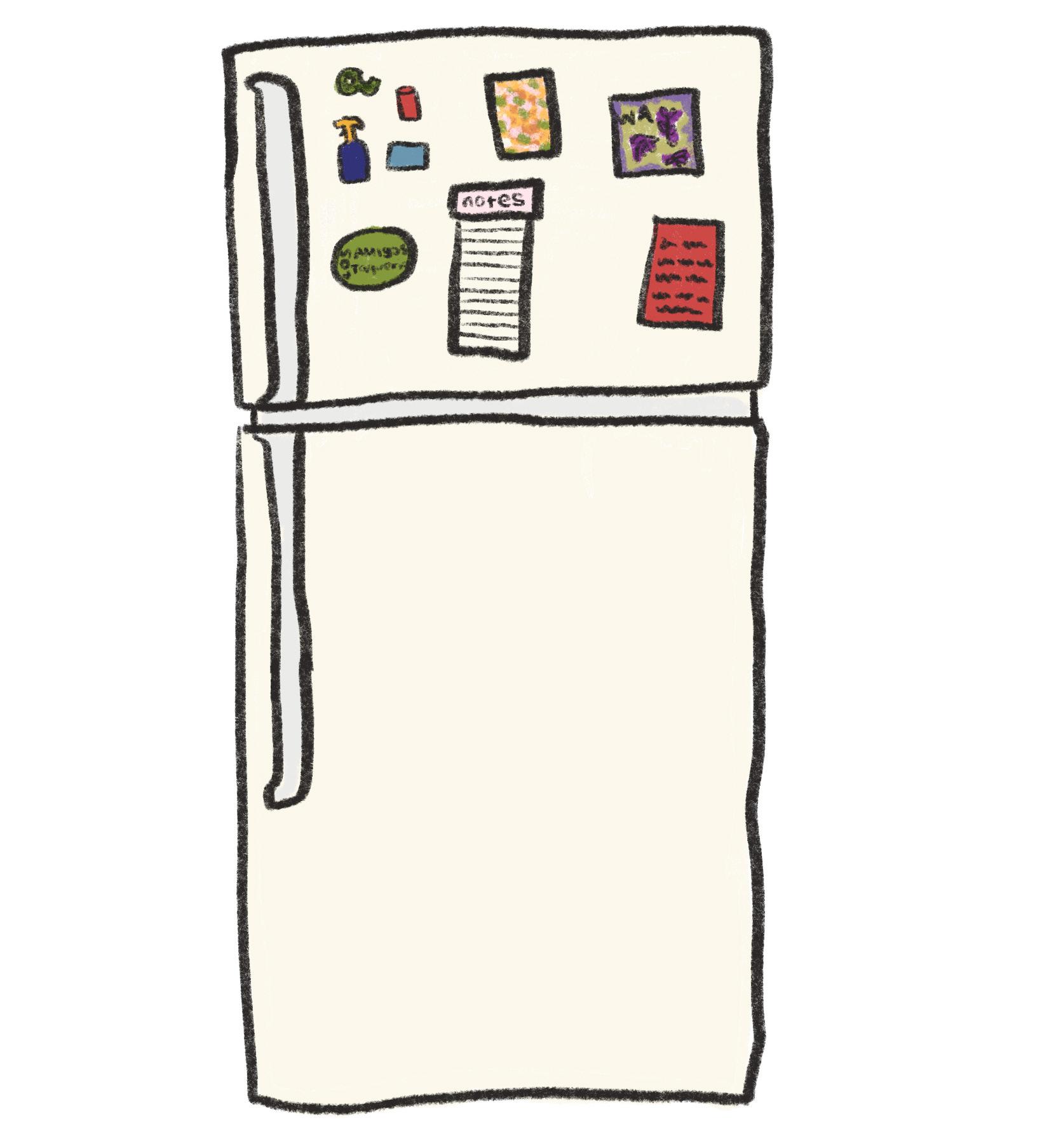
Sharing a small refrigerator with six people can be a challenge. With only two shelves and two drawers, our fridge is stu ed to the brim a%er each grocery trip. Our individual items piece together to maximize the fridge space in a perfect Tetris-like puzzle. Although we may be lacking in space, the items that do make it into our fridge are uniquely important to each of us. All six of us take di erent classes, take part in di erent clubs and activities, grew up in di erent states, and overall !ll our sixth of the shared fridge in completely di erent ways. Now let’s hear from the !rst of three roommates and learn about what makes her fridge contributions special.
My name is Katie and my section of the fridge is the bottom le% corner. To be frank, I am a horrible cook, an extremely picky eater, and I have very little free time. If I had the time I would love to test out new recipes, expand my palate, and become a better cook. e reality is my clubs, job, and classes make it very di&cult to have the time to do so.
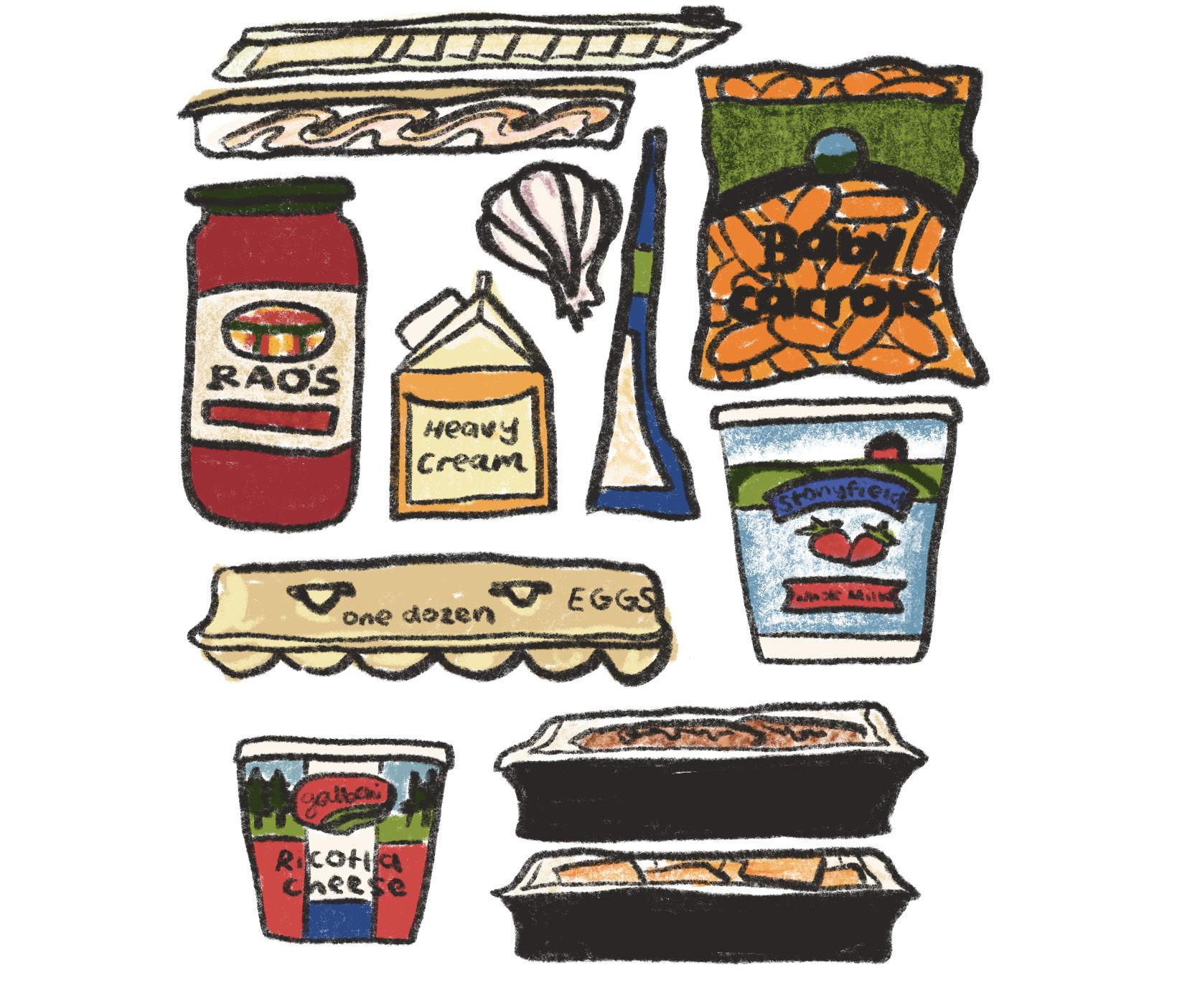
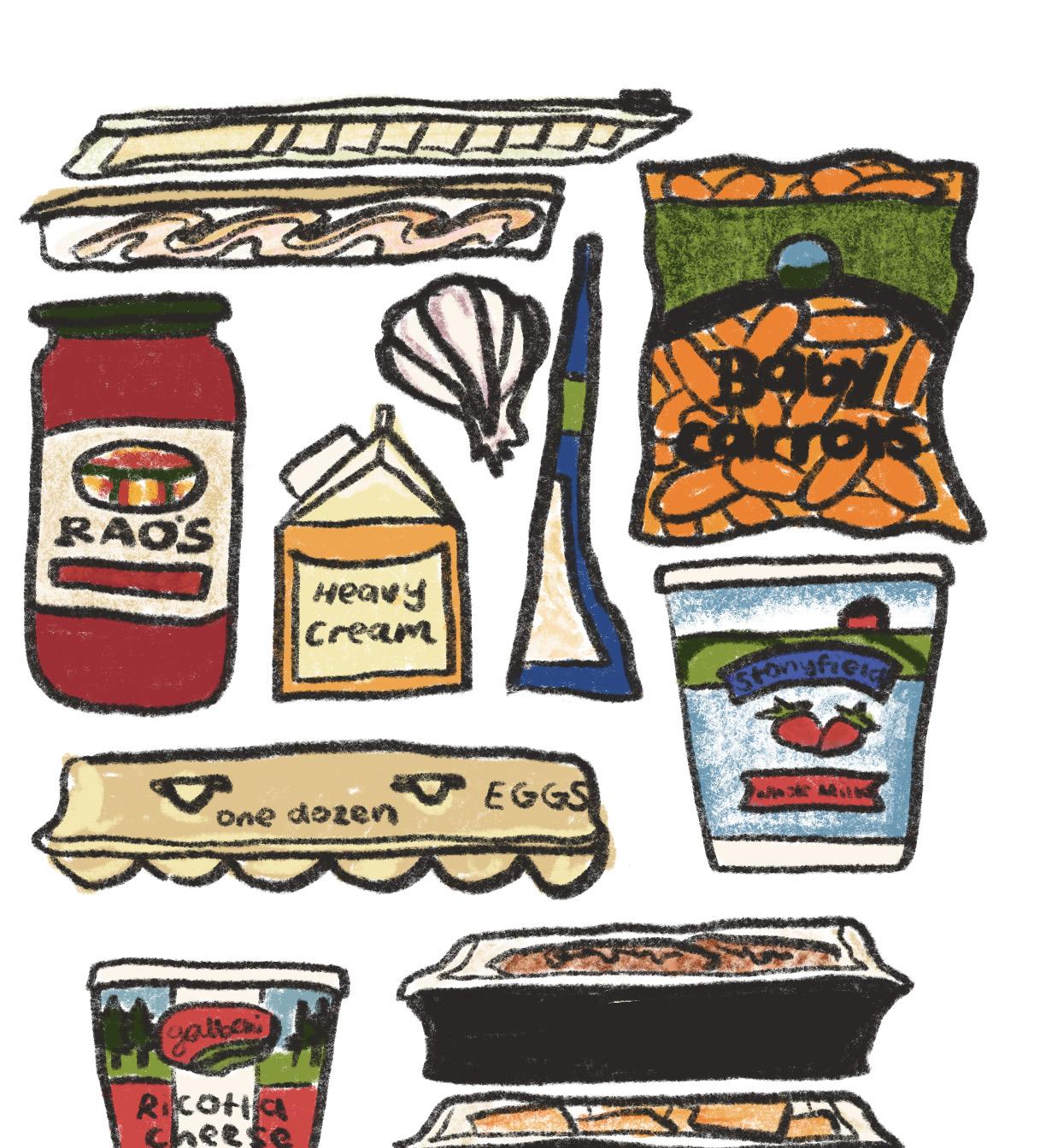
It is for all of these reasons that my contribution to the shared fridge looks as follows. e staple item my weekly fridge restock is not complete without is a package of honey roasted sliced deli turkey. Perfect for an on-the-go lunch, no cooking required, and I still get some good protein– A win is a win. Next, you will !nd a Tupperware of homemade breaded chicken breasts. Now, I know I said I can’t cook, and I still stand by that statement, however, there is one thing I do know how to make and that is a nice Panko-breaded, pan-fried, chicken breast. I can make a large batch on a Sunday night and this can save me loads of time
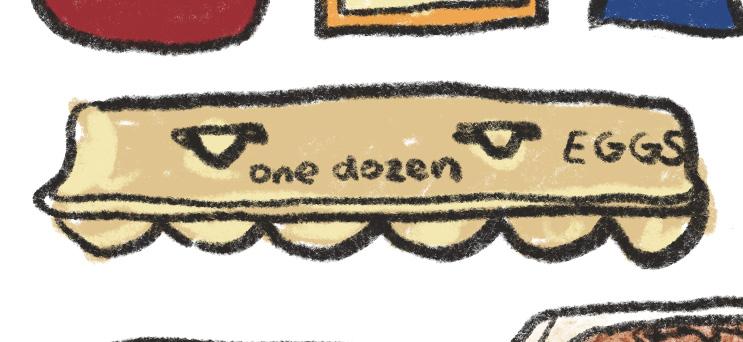
throughout the week by simply popping one into the air-fryer and eating it with rice, in a sandwich, or with some pasta. at brings me to my next item, a package of ready-to-boil tortellini. Six minutes in some boiling water and dinner is served. My tortellini is, of course, not complete without a jar of Rao’s marinara sauce, a carton of heavy cream, some garlic cloves, a small tub of ricotta cheese, and a bag of shredded parmesan. e !nal miscellaneous items that complete my section of the fridge include a tub of strawberry yogurt, a bag of baby carrots, a shared carton of eggs, sliced american cheese, and some cut up cantaloupe.
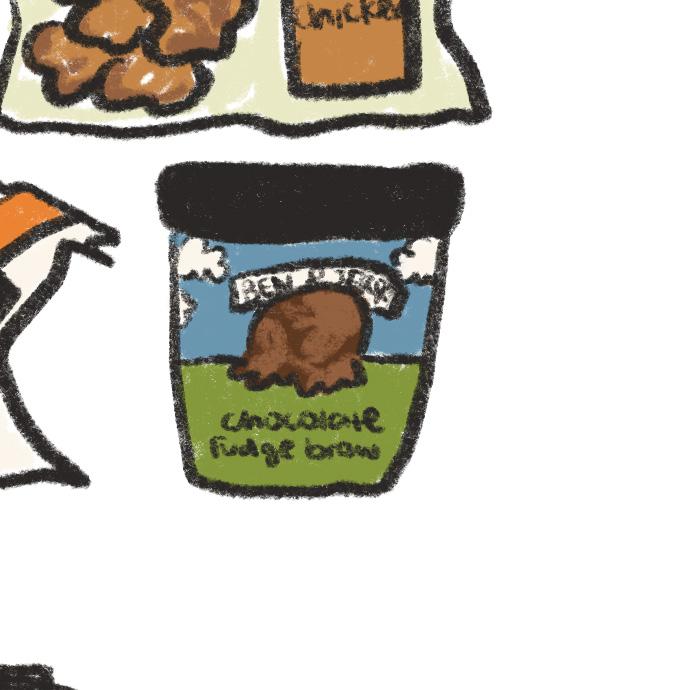
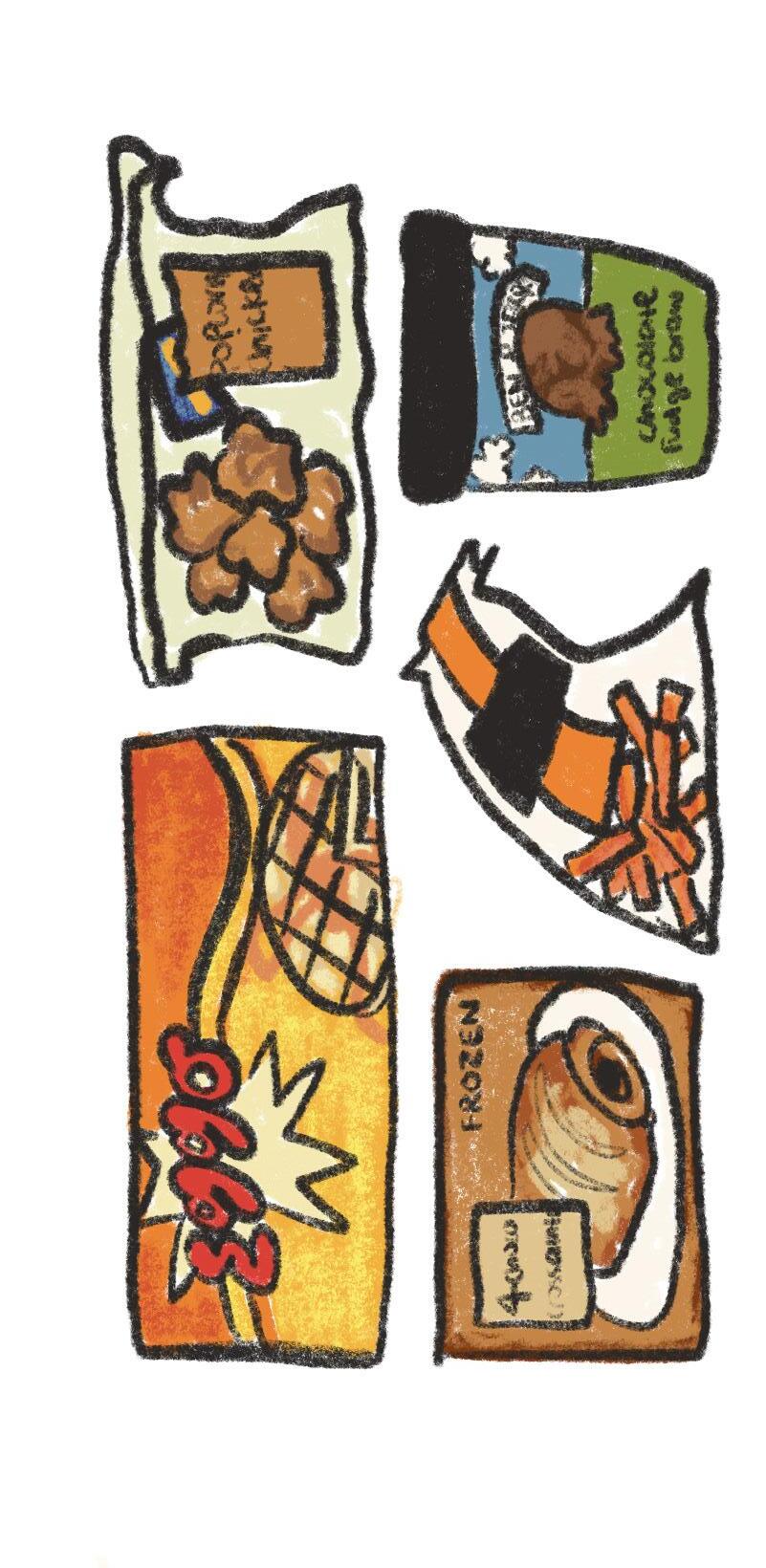
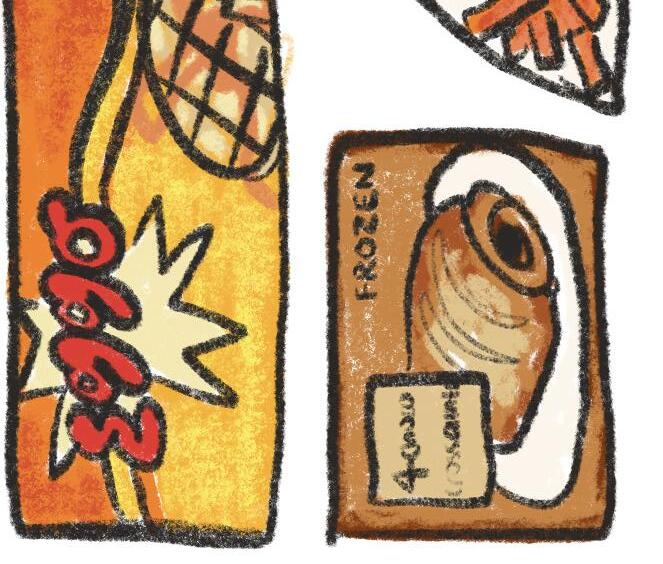
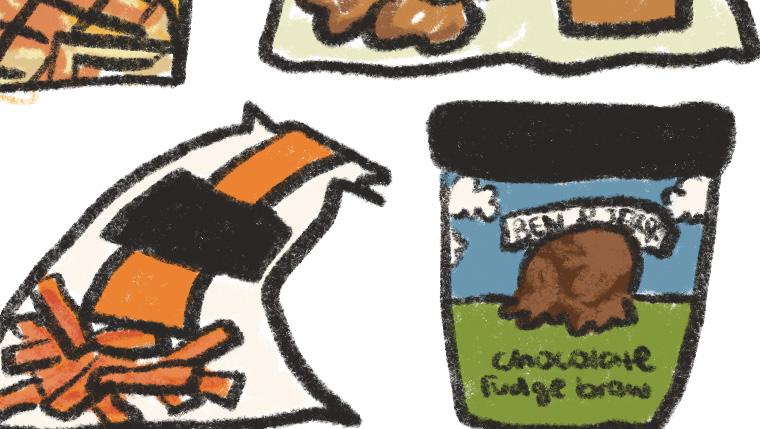
Bonus: my freezer staples include a bag of popcorn chicken, frozen sweet potato fries, eggo wa es, Trader Joe’s chocolate croissants, and a pint of Ben and Jerry’s Chocolate Fudge Brownie ice cream. All of these items emphasize that I am a busy person with a picky palate who loves comforting foods that can be whipped up in under thirty minutes. ey highlight what makes me a unique roommate in and out of the fridge.
I’m Emma and my section of the fridge is the right side of the middle shelf. My section is !lled exclusively with items from Trader Joe’s. I started grocery shopping at Trader Joe’s this semester because it is only a !ve minute walk from where I work. I was delighted to !nd that their prices are very reasonable and their array of products are unique. My section is !lled with my newly dubbed Trader Joe’s favorites that I have continued to rebuy and new items that I stumble upon each week.
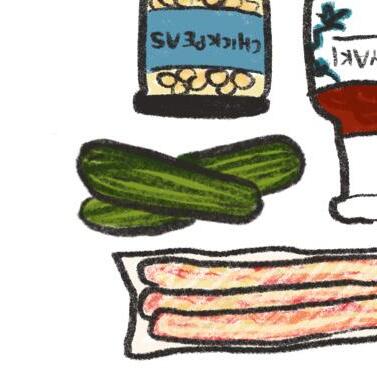
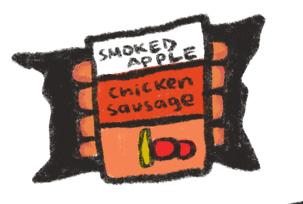
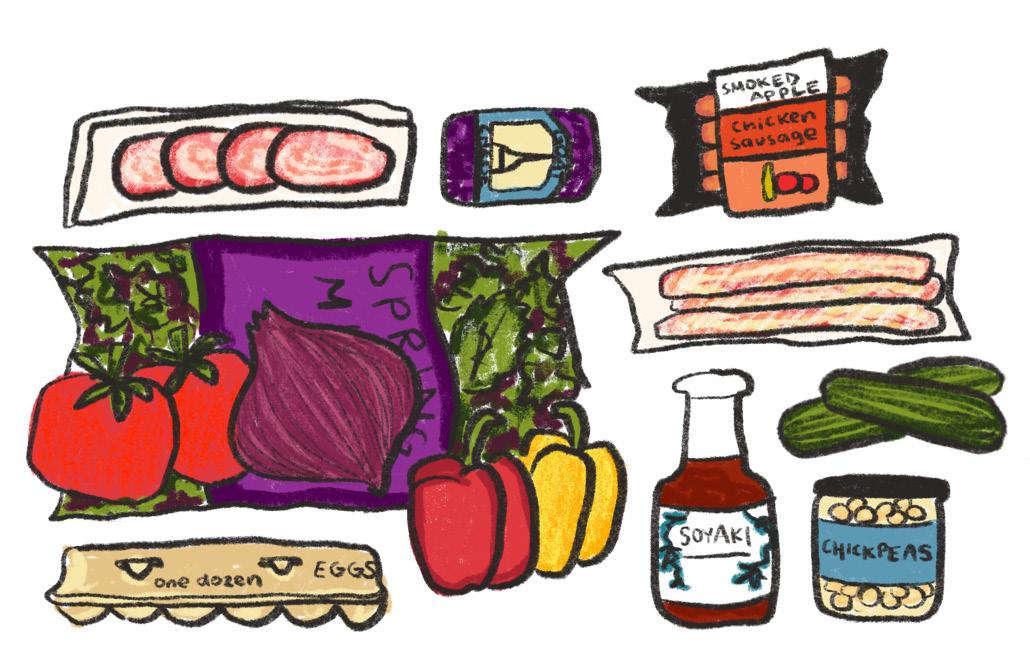
First up in my section is my favorite form of protein from Trader Joe’s: the sweet apple and smoked apple chicken sausages. For a quick and easy dinner, I cut one or two of the sausages into smaller pieces, fry them in a pan with a bit of olive oil, and serve them with some form of vegetable and rice or potatoes. I tend to mess up the serving size for rice and potatoes, so my section usually has some le%overs in a Tupperware container. Next up in my section are vegetables. When I have the time, I like to chop up some bell peppers, onions, tomatoes, and cucumbers to have throughout the week. If they’re chopped, they’ll be in a Tupperware container, but if not then they’re just loose in my section. ese are good sides with the chicken sausage, but also as toppings for salads which I like to make for lunch. Next to my vegetables are a bag of spring mix, chickpeas, and
prosciutto– the rest of the ingredients for my salad that I dress with olive oil and balsamic vinaigrette. ose are all items that I am consistently rebuying and eating. e rest of the items in my section are things I stumbled upon while wandering through the aisles of Trader Joe’s and thought looked good. ese vary from week to week, but right now I have Soyaki sauce– described on the bottle as “a unique teriyaki sauce”-- , blueberry vanilla goat cheese, and bacon. e sauce is great as a marinade for vegetables or to drizzle over rice. e goat cheese is one of my favorites, a perfect combination of sweet and savory that goes great on top of crackers. And !nally, I bought some bacon this week to !nish a carton of eggs that I had bought to make banana bread.
As I become more familiar with Trader Joe’s, I hope to !nd some more favorites and am excited to try their ever-changing, seasonal products. Right now, they have a variety of fall-themed items. My fall favorite is the apple cider donuts, but I can’t wait to see what the newest item in my section will be.
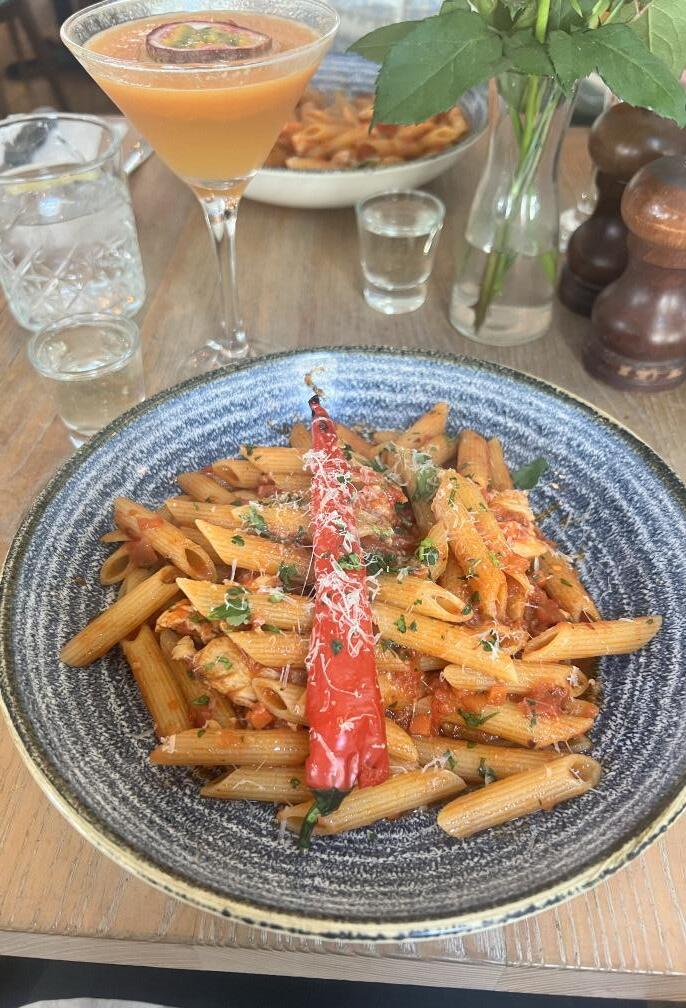
Hi, I’m Emily, and I share the top shelf of the fridge with my direct roommate Nadia. Nadia and I typically do our Trader Joe’s run on Friday a%ernoon, a%er we’ve both !nished our last class of the week. Unfortunately, this means we’re both hungry when we go grocery shopping. My mom always taught me to never grocery shop on an empty stomach, and now I know why. As you can see, we’re a bit overzealous about just how much we can shove onto the top shelf when Friday rolls around. During the week, we’re both sharing TikTok’s of the latest trending dish and yapping about what recipes we’ll whip up over the weekend. Take these two elements combined and by Friday night, our shelf is stu ed to the brim, with cartons of heavy cream and hummus shoved above my newest jar of pickles, which always resides in the back of the fridge - I learned the hard way to never put glass jars on the front edge. I’m, quite honestly, a terrible chef. My direct roommate, on the other hand, can make some of the best meals I’ve ever had. One of our staple weekend meals is Vodka Pasta, a classic Nadia-recipe. We could eat this rich, creamy, and oh-so-delicious pasta every day and never get tired of it. is week we chose rigatoni as our noodle of choice, and the le%overs will sit in the front corner of our shared shelf until they’re eaten up - usually only takes a day or two until we’ve devoured every last bit.
Nine times out of ten, you’ll also !nd two baby pink boxes stacked neatly in our fridge. Every Sunday night we excitedly check the latest Crumbl menu and deliberate over which cookies we’ll choose this week. As any Crumbl-fanatic knows, these cookies are humongous and can be eaten over the span of the week, although, usually ours only survive two or three days until they’re nothing more than crumbs. is week, we enjoyed the Brownie Sundae and Pumpkin Cake Cookie - two 10/10’s. A staple on our shelf is our breakfast foods. I love fruit in the morning, but as all broke college students know well, fruit is incredibly expensive, even at our beloved Trader Joe’s. To get around this, I typically buy a big cantaloupe or watermelon and eat it up over the week mixed into some vanilla yogurt. I’ve also been loving breakfast-for-lunch lately, as evidenced by the copious amount of eggs on our shelf. I usually mix some cottage cheese and sliced cherry tomatoes into my eggs and eat those alongside some avocado toast for an a%ernoon pick-me up.
Our freezer is just as jam-packed as our fridge, if not more so. Lately, my roomies and I have been sampling di erent types of ice cream. In our freezer, you’ll !nd various avors of Ben & Jerry’s, Halo Top, Gelato, and Yogurt Bars not so neatly stacked next to each other. We’re always on the lookout for new avors, so every time we head to Trader Joe’s or the grocery store, we end up adding something fun to our ever-growing freezer collection. Needless to say, !tting the rest of our frozen meals in there is a weekly Tetris game we’ve become pros at playing!
Taco Bout’ Being Stuffed
Words by Sydney Luciano
Photos by Emily Ahern
Graphics by Katie Ballard
e mandated quarantine during the COVID-19 pandemic in 2020 forced everyone to be stu ed inside of their homes. Lives were changed and ordinary schedules were completely destroyed. I remember wondering when I would be able to leave the vicinity of my home. As the days dragged on, I felt increasingly su ocated inside the walls of my home. I began to spend all of my time in my room, isolated and alone. However, the wonderful smells dri%ing up from the kitchen to my room always brought me downstairs, curious as to what delicious meal my mom was preparing.
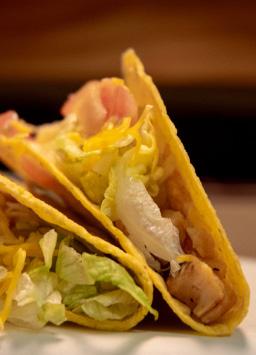
roughout the quarantine, my family and I were stu ed with negative emotions of sadness, loneliness, and longing for what used to be our everyday routines. We felt an overwhelming urge to replace these painful feelings with ones that would add joy to our lives. One way we combatted these negative emotions was by implementing Taco Tuesdays. Every week, without fail, we would focus our Tuesday dinner on a new style of taco. We would decide together to ensure everyone was satis!ed with the upcoming week’s choice. It became something that we could look forward to other than the fact that they were completely !lled with tasty ingredients.
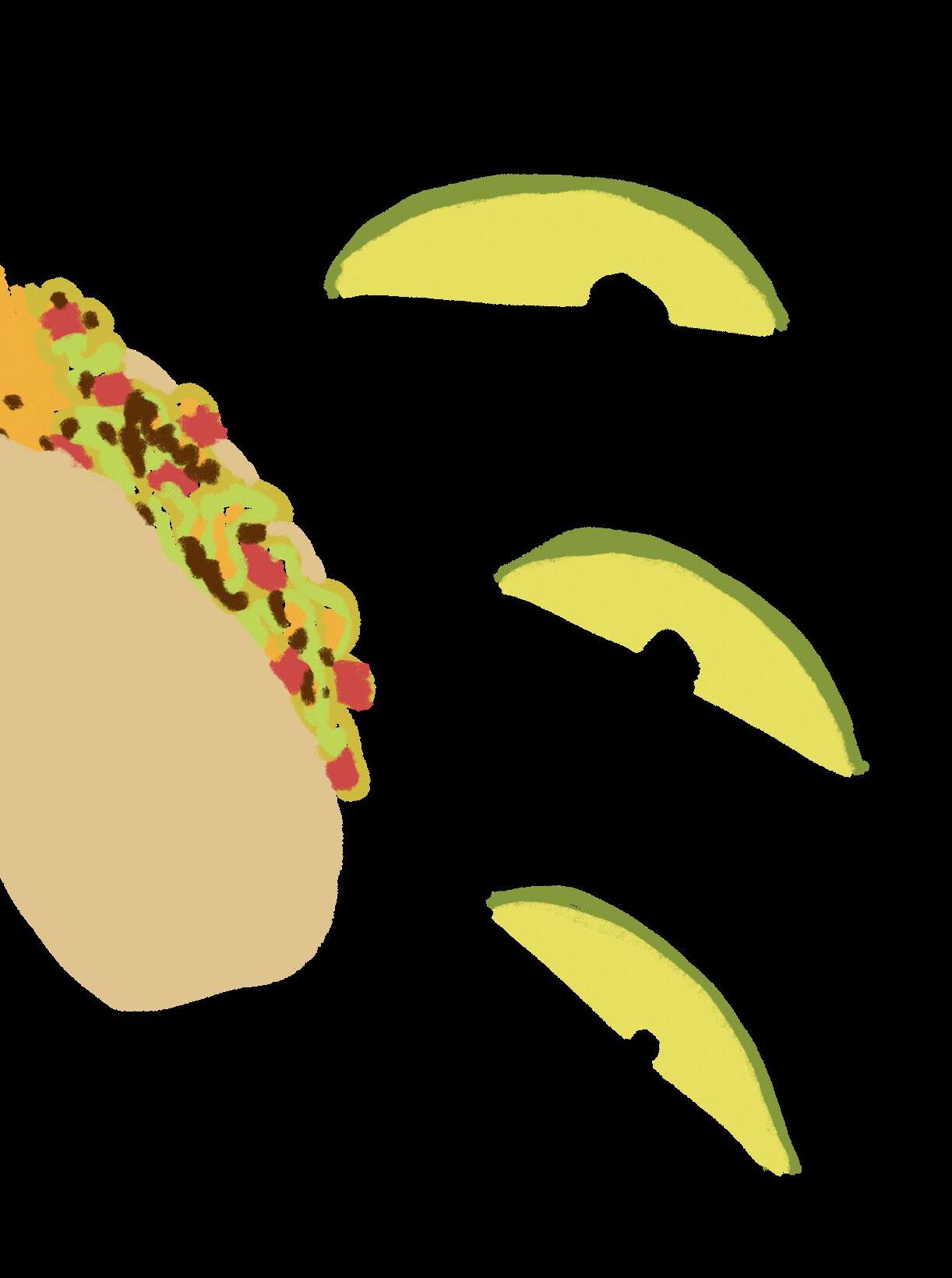
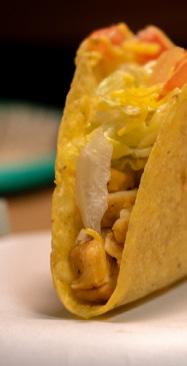
Looking back on these Taco Tuesdays, I can remember our table completely covered with ingredients, vibrant colors everywhere I looked. We always had sour cream, salsa, guacamole, lettuce, cheese, some sort o meat, jalepeños (only my mom can tolerate them), shells, chips, and other veggies depending on the week. I always wondered how we would be able to !t our plates and drinks each time, but somehow we always seemed to make it work. I admired the lively colors which !lled me with excitement,making me count the seconds until I assembled my meal. ere is nothing quite like an over owing taco shell or burrito. e layers of deliciousness oozing out of every crevice, pooling on your plate, waiting to be picked up by a chip are inevitable. Tacos seem so basic, but can be an incredibly versatile food with the di erent ingredients incorporated. My family’s plates always looked exceptionally di erent other than the fact that they were completely !lled with tasty ingredients.
ese Tuesdays !lled me with an overwhelming sense of excitement and gratitude. It was such an amazing feeling each week to look forward to this meal with my family. I was !lled to the brim with gratefulness for the time with my family as well as having access to these resources in a di&cult time. It was easy to get lost in my loneliness and miss out on the positivity surrounding me. However, these dinners and this time spent with my family allowed me to be !lled with positive emotions, making my negative emotions subside. Eating tacos or similar meals today still stu s me with happiness and gratitude, reminding me of the lovely memories I formed through those foods with my family.
Bringing Service to the Table: An Interview with a Student Volunteer at a Women’s Day Shelter in Boston
Words and Photos by Sydney Barratta
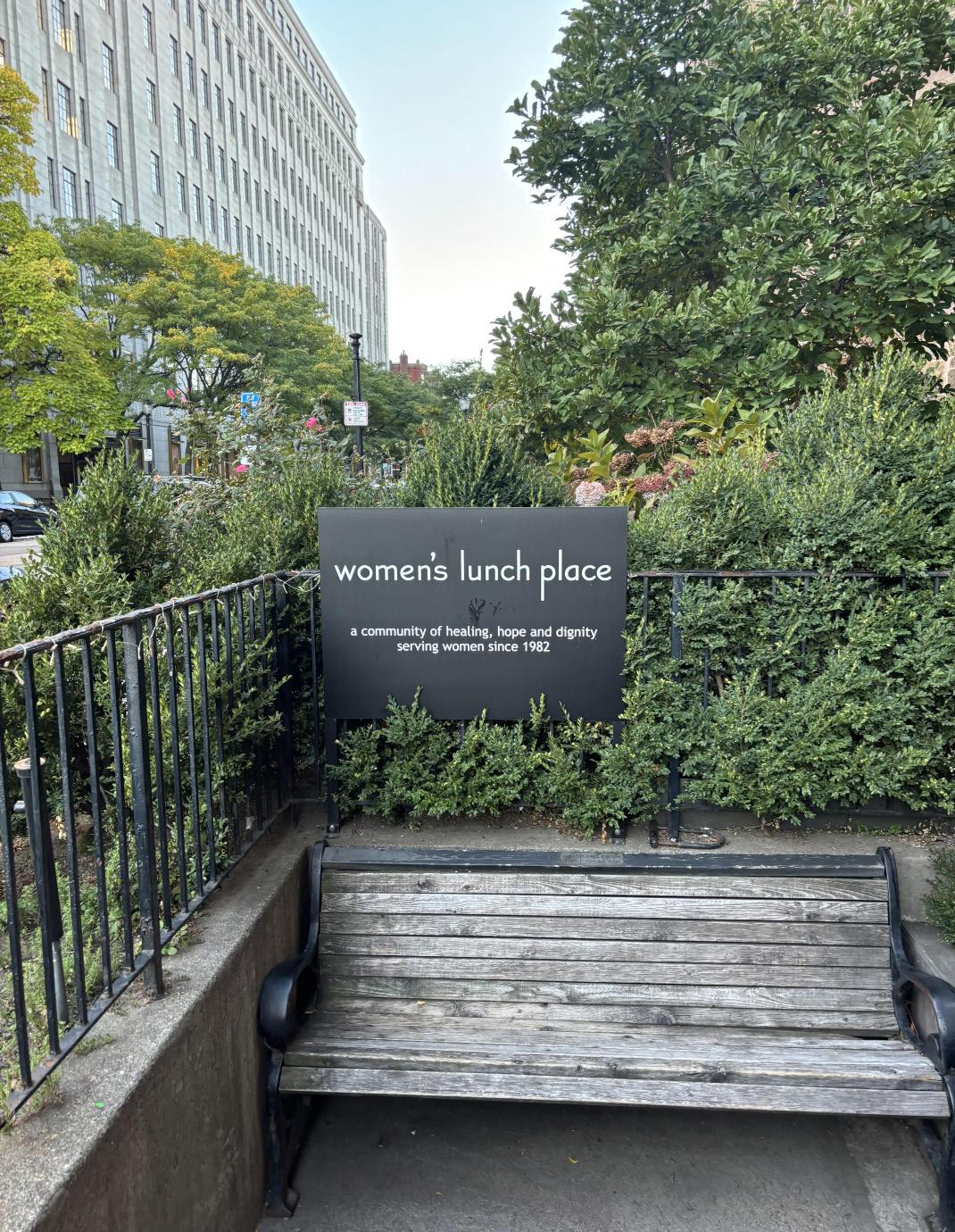
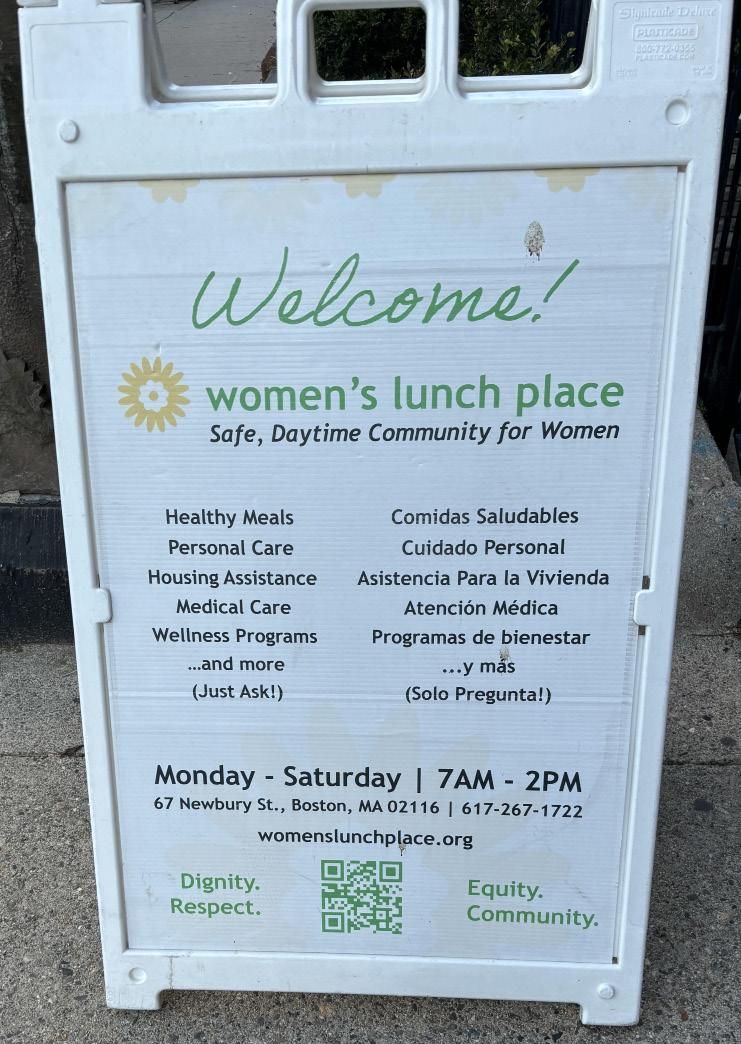
e impact of a meal goes far beyond one’s stomach. Being !lled with laughter, gratitude, and delicious memories are the lasting e ects of every bite we take. Meals transform ordinary moments into extraordinary experiences, fostering joy and connection among those who share them. Service embodies many parallel satisfactions, and plays a critical role in our education of the whole person here at Boston College (BC). e PULSE program aims to educate students by placing them in direct contact with marginalized communities and social work programs through service opportunities. rough these interactions, participants cultivate a well-rounded understanding of social justice, allowing them to bridge academic knowledge with real-world relationships. PULSE encourages students to engage thoughtfully with the issues facing the communities they serve, fostering empathy and insight. I sat down with Callie Walsh, a dedicated PULSE student volunteer at the Women’s Lunch Place (WLP) in downtown Boston, to highlight food’s role in nourishing the mind, body, and soul when accompanied by service.
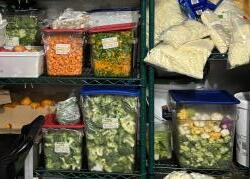
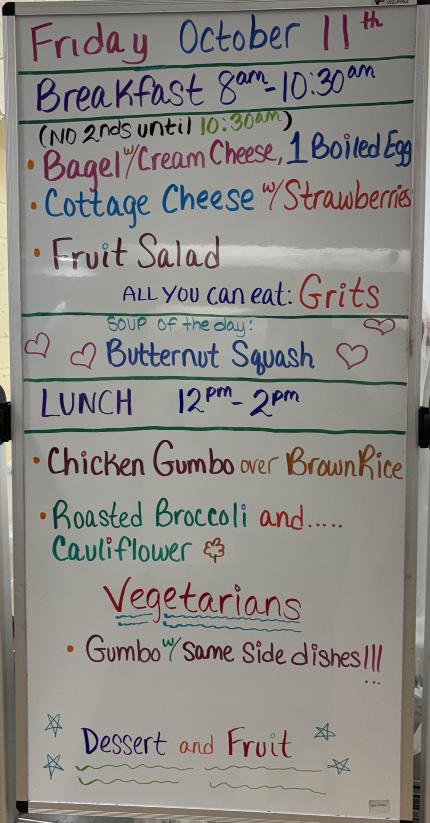
Callie’s experience at the WLP involves a diverse range of tasks, all of which contribute to the holistic mission of the organization. By implementing self-care initiatives, the women-only shelter highlights programs to support not only the physical health of patrons but also their mental well-being. Part of their consciousness for mental health is rooted in their food program which acknowledges the wide array of needs and wants from their patrons. Each day presents varying tasks for Callie, from chopping fresh vegetables to packing togo meals, washing dishes, and serving food on the line. Callie appreciates the uidity of her responsibilities, which allows her to engage with every aspect of meal preparation and service. She has come to understand that each task is not merely about !lling plates but about nurturing the whole person. e WLP’s commitment to serving not just food, but also dignity and respect, resonates deeply with her. By witnessing how carefully cra%ed meals can impact the well being of patrons, Callie recognizes that food serves as a bridge between sustenance and emotional care. is realization has shi%ed her perspective on the role of food in building relationships and fostering community; it is not just about nutrition but also about creating an environment where patrons feel valued and cared for.
Callie emphasized how her perspectives on food have shi%ed since becoming involved at the WLP. She explained to me her realization that food is a nuanced part of how we live our lives not just a surface-level investment in health. e ability for WLP patrons to have a diverse array of unique food choices was something Callie had not previously considered a meaningful part of caring for the whole person. Additionally, Callie noted the nutrition-focused and healthy meal initiatives put forth by the WLP fostered environments where open dialogue about food choices became accessible and welcomed.
Providing opportunities to cultivate personalized meals as a necessary part of living is unique to the WLP’s holistic care approach. Not only is providing food and shelter an im portant part of what WLP provides but their ability to develop sustainable eating hab its through the community more deeply recti!es systemic challenges the unhoused popu lations face in Boston. Callie witnessed !rsthand how the WLP’s integration of food into their program facilitated meaningful relationships across and within the sta and patrons.
When I asked Callie to recall a meaningful interaction during her time with the WLP she immediately thought of Jacky. Callie emphasized her initial di&culties in ap proaching patrons but once she had begun to notice Jacky regularly she took the leap to start a conversation. at leap was all that it took as the two built a good rapport from there on, discussing a diverse array of topics from phi losophy to what they were serving for breakfast that day. Jacky expressed her history of interest in philosophy and the two bonded over Callie’s newly realized commitment to the topic through her major and participation in the PULE program. Callie outlined how making personable connec tions with patrons like Jacky began to break down the social divide she had previously struggled with openly discussing.
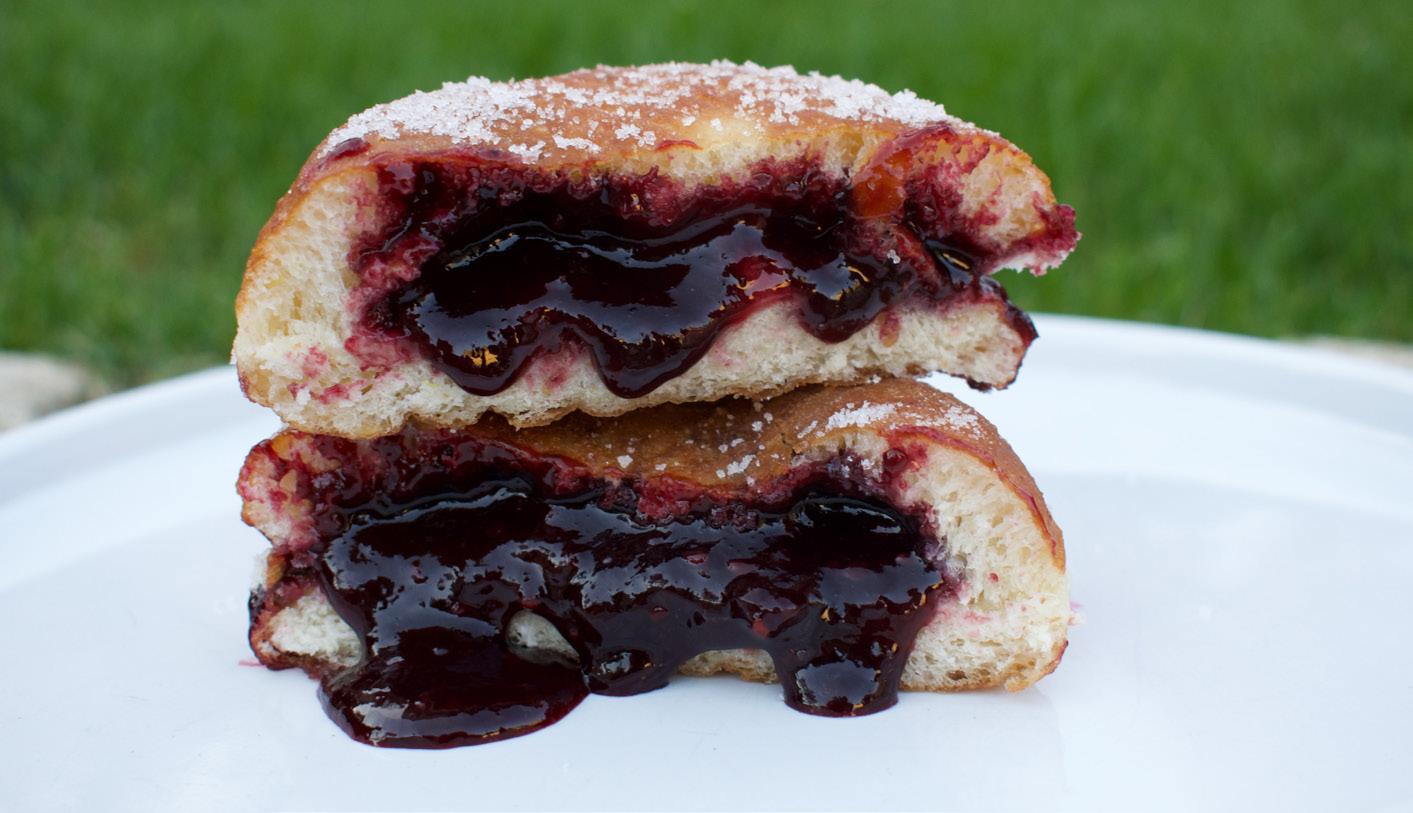
Additionally, Callie’s consideration for the conversations formed over meals at the WLP followed her outside of her service. While discussing Jacky’s story she highlighted another, Ken, who is an unhoused individual that she encountered every week on her way to the WLP. She awarded the WLP by giving her the skills and opportunities to participate in dialogue with people in our community she previously thought she had little in common with. Callie observed Ken just outside of the Government Center T stop regularly. He is a middle-aged veteran who struggles with being unhoused. Although they may not have been able to draw connections between Plato, as she did with Jacky, they did bond over a common indulgence of nothing more than a morning donut. Callie now makes the trip to the WLP with her a.m. treat and then some to give to Ken whenever he greets her o of the T. e shared morality of a chocolate frosted with sprinkles is all it took to build a meaningful interaction and a little common ground.
Callie’s journey with the Women’s Lunch Place (WLP)
o ers a powerful testament to the profound impact that meals can have on both individuals and communities. Her experience serves as a reminder that food is not merely sustenance; it is a vital connector that fosters dignity, compassion, and emotional well-being among those who share it. rough her varied tasks—from chopping fresh vegetables to serving meals and engaging in meaningful conversations—Callie has come to appreciate the multifaceted role that food plays in our lives. Each meal prepared and served at the WLP is an opportunity to nourish not just the body, but also the spirit, helping to create an environment where patrons feel valued and respected. e holistic approach of the WLP emphasizes understanding and addressing the diverse needs of its patrons, showcasing how food can bridge social divides and foster meaningful relationships. Callie has witnessed !rsthand how the integration of nutritious and thoughtfully prepared meals can transform the dining experience into one of shared humanity. By participating in this mission, she has learned that food is an essential vehicle for connection, capable of transcending barriers of class and circumstance.
Her interactions with individuals like Jacky and Ken highlight the transformative power of simple acts of kindness. What began as a tentative approach to engaging with patrons blossomed into rich conversations about philosophy, personal stories, and shared experiences. ese exchanges illustrate how food can serve as a catalyst for deeper understanding. e connections she has forged remind us that, o%en, it is the smallest gestures—a shared meal, a conversation about a favorite dish, or even a morning donut—that can create lasting bonds and foster a sense of community.
FOOD FILLED WITH MEMORIES
Words and photos by Alyssa Turay
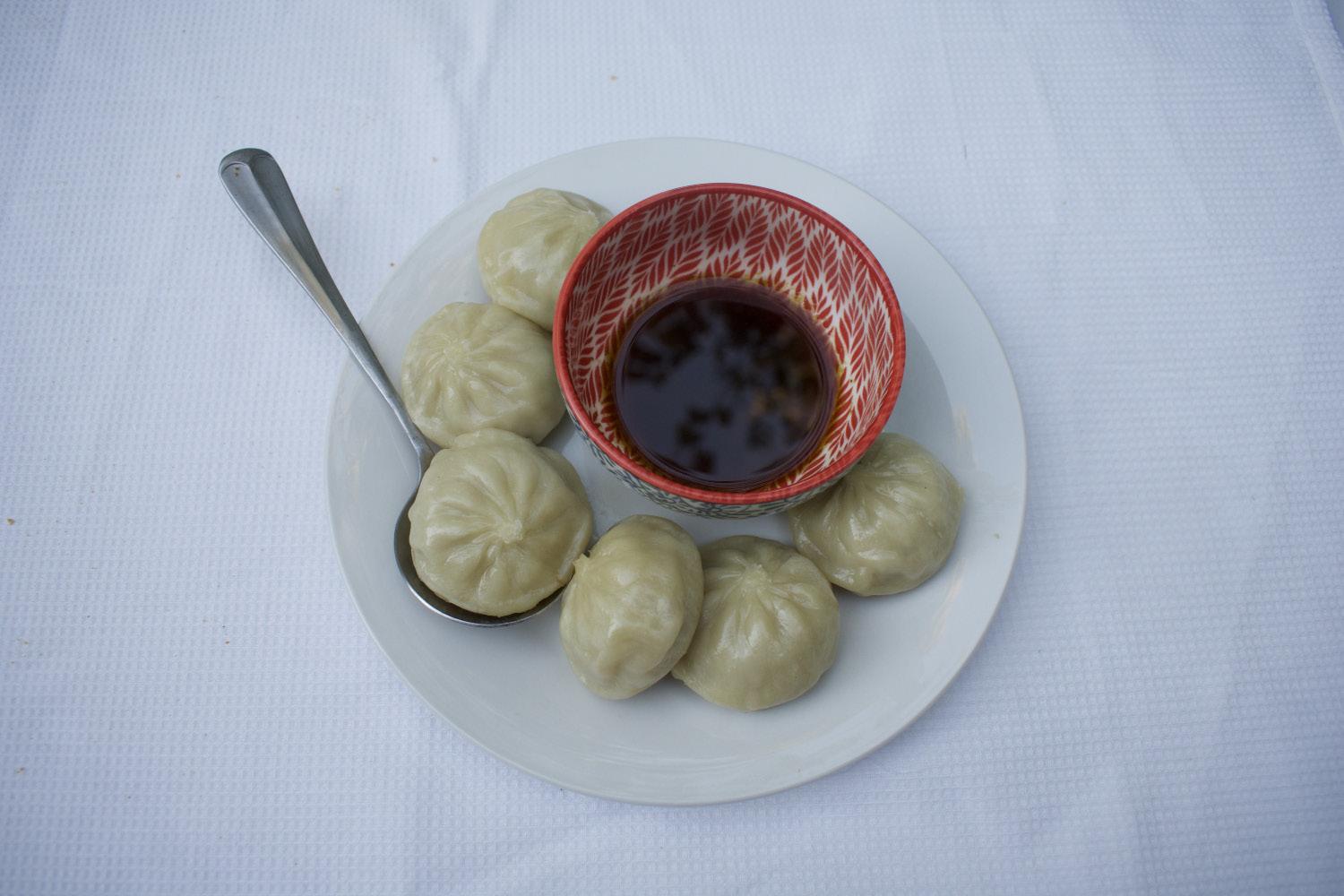
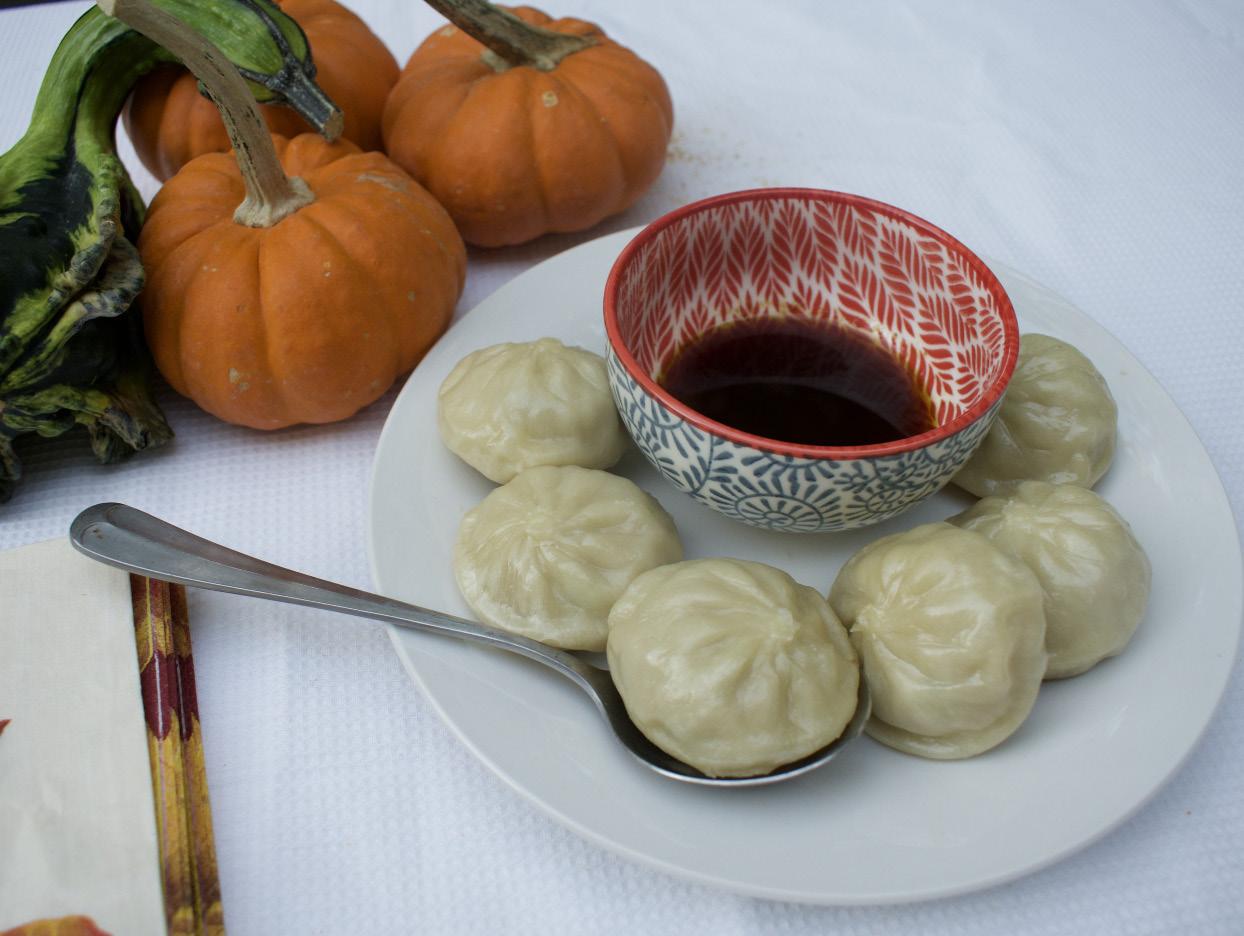
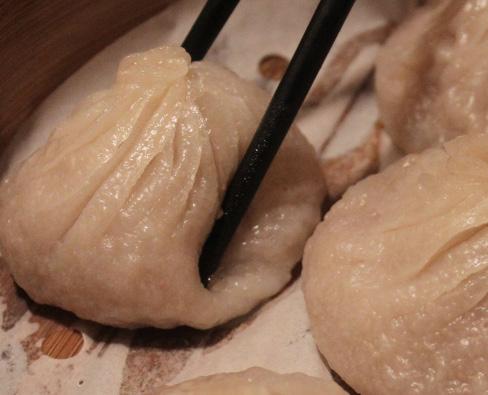
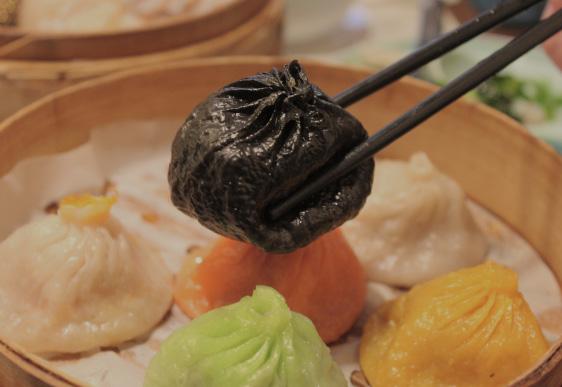
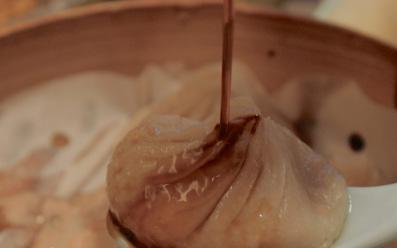
Growing up my family would o%en tell stories about each dish on the table. But of all the dishes we shared, none had the depth of memory and taste as the humble soup dumpling, or xiao long bao, that originated from my family’s hometown in Taiwan. It was the !rst recipe I ever learned to make, and every time I wrap the thin dough around the savory !lling, it’s like I’m wrapping up pieces of my family’s history, our memories, and the essence of what it means to be connected through food.
My grandparents came from a small town in the Taiwanese countryside, surrounded by rolling hills and the ever-present hum of life. It was a place where food wasn’t just something you consumed; it was part of who you were. People lived close to the land, and you could !nd bustling morning markets !lled with the freshest vegetables, meats, and herbs. But the real magic was in the hands of the people, in the way they transformed simple ingredients into comforting dishes that felt like love on a plate.
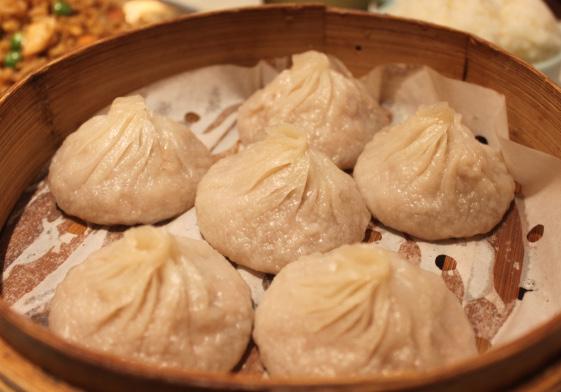
e soup dumpling was one such dish—a deli cate little pouch !lled with minced pork, aromat ic ginger, and an explosion of hot, savory broth that would spill out the moment you took a bite. My grandmother used to make them for special occasions, like birthdays, Lunar New Year, and sometimes just because the air smelled crisp and the family could use a little joy. e recipe has been passed down through generations, each one adding their own touch to the dumplings, creating an ever-changing tradition.
My !rst memory of soup dumplings is from when I was about !ve years old. I remember standing on my tip toes to peer over the kitchen counter, watching my grandmother work her magic. She was swi% and graceful, her !ngers ying across the dough, pleating it into perfect little folds. I would try to copy her movements, struggling to make those little pleats without tearing the dough. My dumplings were always lopsided and chubby compared to her delicate, uniform creations, but my grandmother would smile and tell me that a dumpling’s beauty was in its taste, not its appearance.
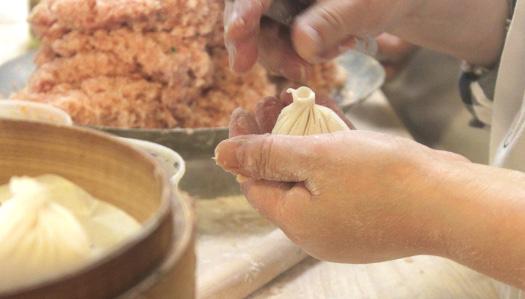
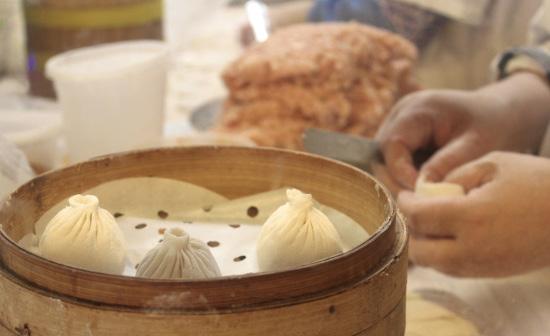
It took me years to learn how to make them just right, but with every attempt, I felt closer to my roots. e process of making soup dumplings is laborious and intricate—every step needs careful attention. You start by preparing the !lling. A mix of ground pork seasoned with ginger, soy sauce, and a splash of rice wine. en comes the secret: a gelatinized broth that melts to form the signature “soup” inside the dumpling. is broth, made from hours of simmering pork bones and chicken, is then cooled, chopped into cubes, and mixed with the meat !lling. As a kid, I used to sneak little cubes of that jiggly broth, delighting in its savory avor that hinted at the rich dumplings to come.
e next step is the dough—a so%, stretchy mixture that you roll into small circles, just thick enough to hold the !lling but thin enough to become translucent a%er steaming. I remember the tactile joy of rolling out those little circles, feeling the dough stretch and spring back under my hands, knowing that soon they would be transformed into tiny, avor-!lled packages. When all the components are ready, the real magic begins: assembling the dumplings. is is where my grandmother’s skill shone the brightest. She would take a bit of !lling, place it in the center of the dough, and expertly fold the edges into neat pleats that sealed everything in. She’d let me try it too, but my !ngers would fumble, struggling to make the pleats look as delicate as hers. She would always say that every dumpling has a personality, and that it was the care and love put into making it that really mattered. ose words have stuck with me throughout my life—not just when I make dumplings, but in everything I do.
When the dumplings were !nally ready, they would go into a bamboo steamer and emerge a few minutes later as little parcels of joy, the steam curling up in wisps as the aroma !lled the kitchen. e !rst bite was always the most exciting part. You had to be careful—if you bit too quickly, the scalding broth would burst out, burning your tongue. But if you held it just right, carefully nibbling a small hole to let the steam escape before slurping the broth and savoring the !lling, it was perfect. e warm broth would !ll your mouth, rich and savory, followed by the tender meat and the chewy dough. Every bite was a combination of textures and avors, a perfect harmony that felt like home.
Making soup dumplings is still one of the most meditative and ful!lling activities I know. Even a%er moving away from Taiwan, wherever I go, this recipe has stayed with me. It’s the !rst thing I turn to when I miss home, when I want to celebrate a small victory, or when I just need to feel connected to something bigger than myself. Each dumpling carries a story—the story of my grandparents, of my childhood, of every mo ment I’ve spent folding those little pouches of joy. It reminds me of how food can be so much more than just nourishment; it’s a way to preserve memories, to connect with those you love, and to honor the places and people who came before you.
Now, when I teach someone else to make soup dumplings—friends, family, or even strangers curious about the process—I pass on those same stories and traditions. It’s my way of keeping the past alive and sharing the love that comes with every carefully pleated dumpling. And in each new set of hands that learns the recipe, the tradition continues, !lled with the warmth of home, the love of family, and the memories that make every bite a journey back to where it all began.
- 284 grams (2 cups) “00” our or all-purpose our - 170 grams (3/4 cups) hot water
- A pinch of salt
Equipment:
- Steamer basket
1. Prepare the Soup Gelatin: Dissolve gelatin powder in chicken broth in a small pot. Add ginger, green onion, and soy sauce, and heat over medium. Once it starts to boil, reduce to a simmer, cooking for 15 minutes until it reduces to about 3/4 cup. Strain the solids, pour the liquid into a shallow dish, and refrigerate for 2 hours until set.
2. Make the Filling: Mix all the !lling ingredients in a bowl. Finely chop half of the gelatin and combine it with the !lling. Refrigerate the mix until ready to use.
3. Prepare the Dough: Combine hot water, our, and salt in a bowl, mixing until a dough forms. Knead for about 12 min utes until smooth. Cover and let it rest for 45 minutes.
4. Form the Dumplings: Divide the dough into two parts. Roll one portion into a foot-long rope, cut into small, even pieces (about 14-16 grams each), and roll each into a ball. Flatten each ball into a disk using your hand, then roll out to about 3 1/2 inches wide, making the edges thinner than the center. Once you have !nished, do the same thing with the second portion of the dough.
5. Fill and Fold: Spoon about 1/2 ounce of !lling onto each dough circle. Pleat the edges of the dough together at the top, creating folds as you rotate the dumpling, aiming for 18 folds if possible. Twist to close.
6. Steam the Dumplings: Arrange dumplings on a parchment-lined steamer basket, ensuring space between them. Steam over boiling water for 10-12 minutes, until the dumplings are tender and the gelatin has melted into soup.
7. Serve: Mix black vinegar with soy sauce (3:1 ratio) over julienned ginger. Poke a hole in the dumpling to release the soup, dip it in the sauce, and enjoy.
Tip: If you don’t have a meat grinder, freeze pork pieces and use a food processor to grind them, but avoid over-mixing.
UNION SQUARE DONUTS
GUSTOS BEST OF BOSTON WORTH THE DOUGH! TASTE AND LOOKS
Review by Gusto Journal Members
Photos by Madeline King
MOD DINNER
Words by Adeline Kim
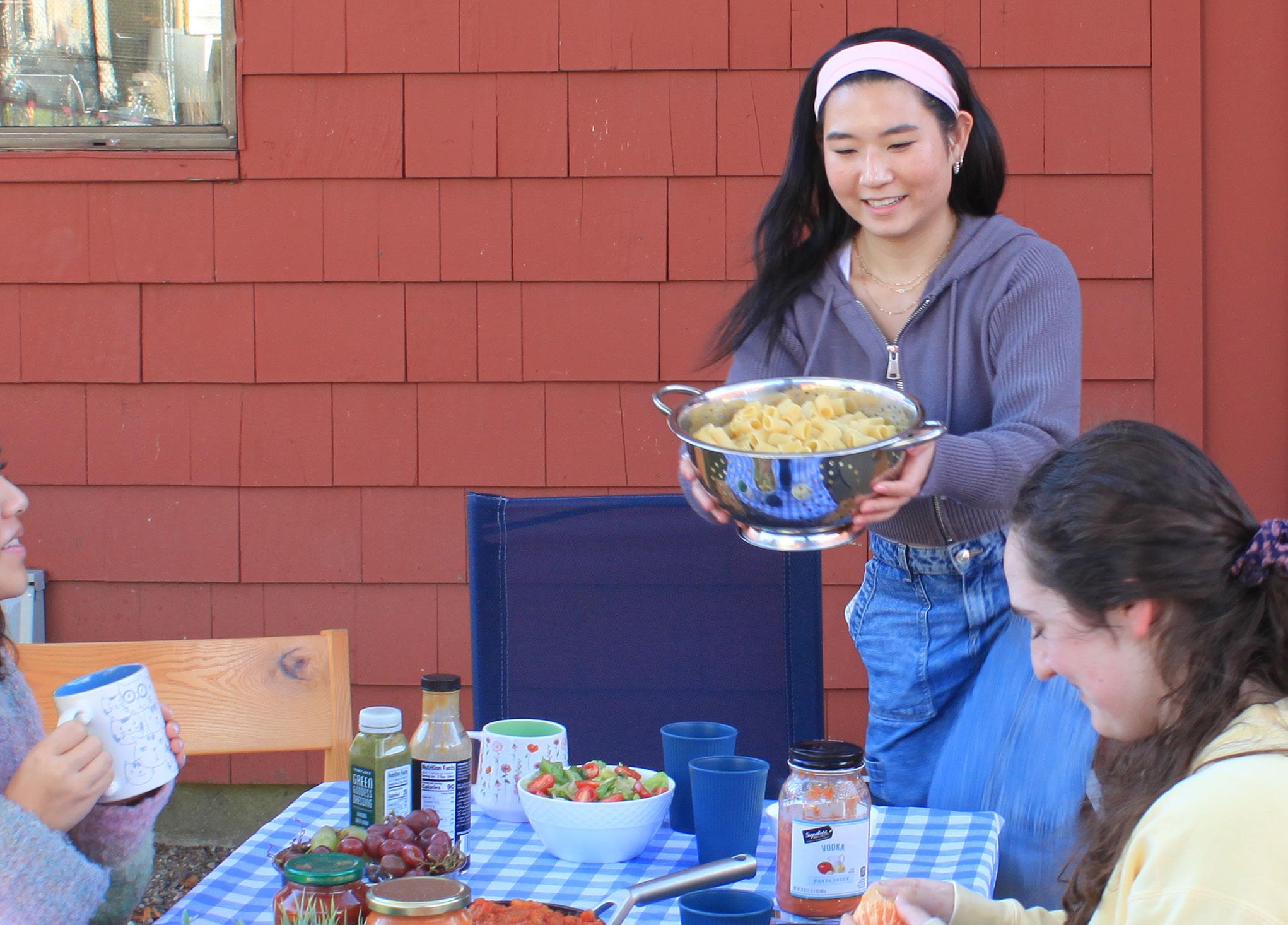
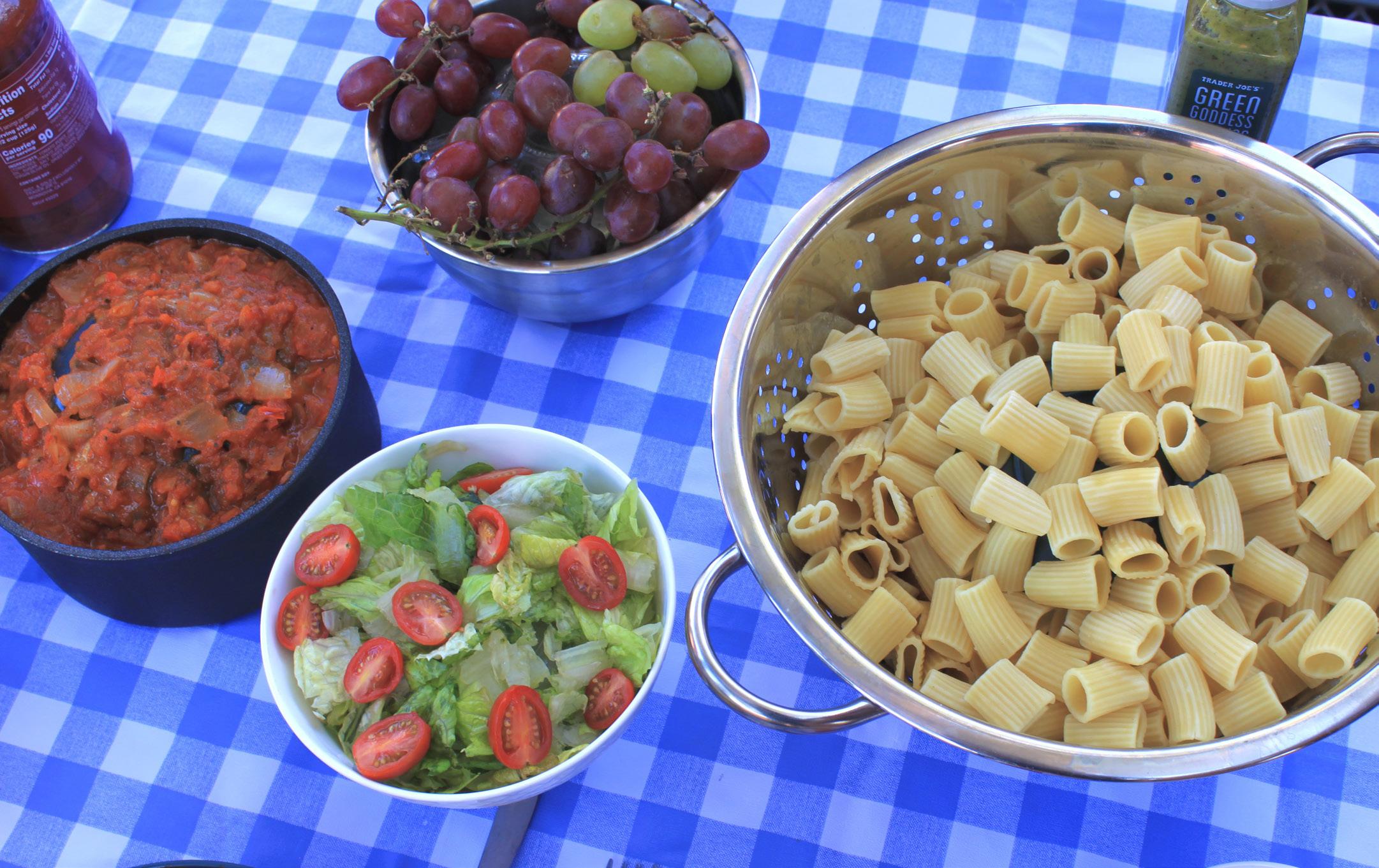
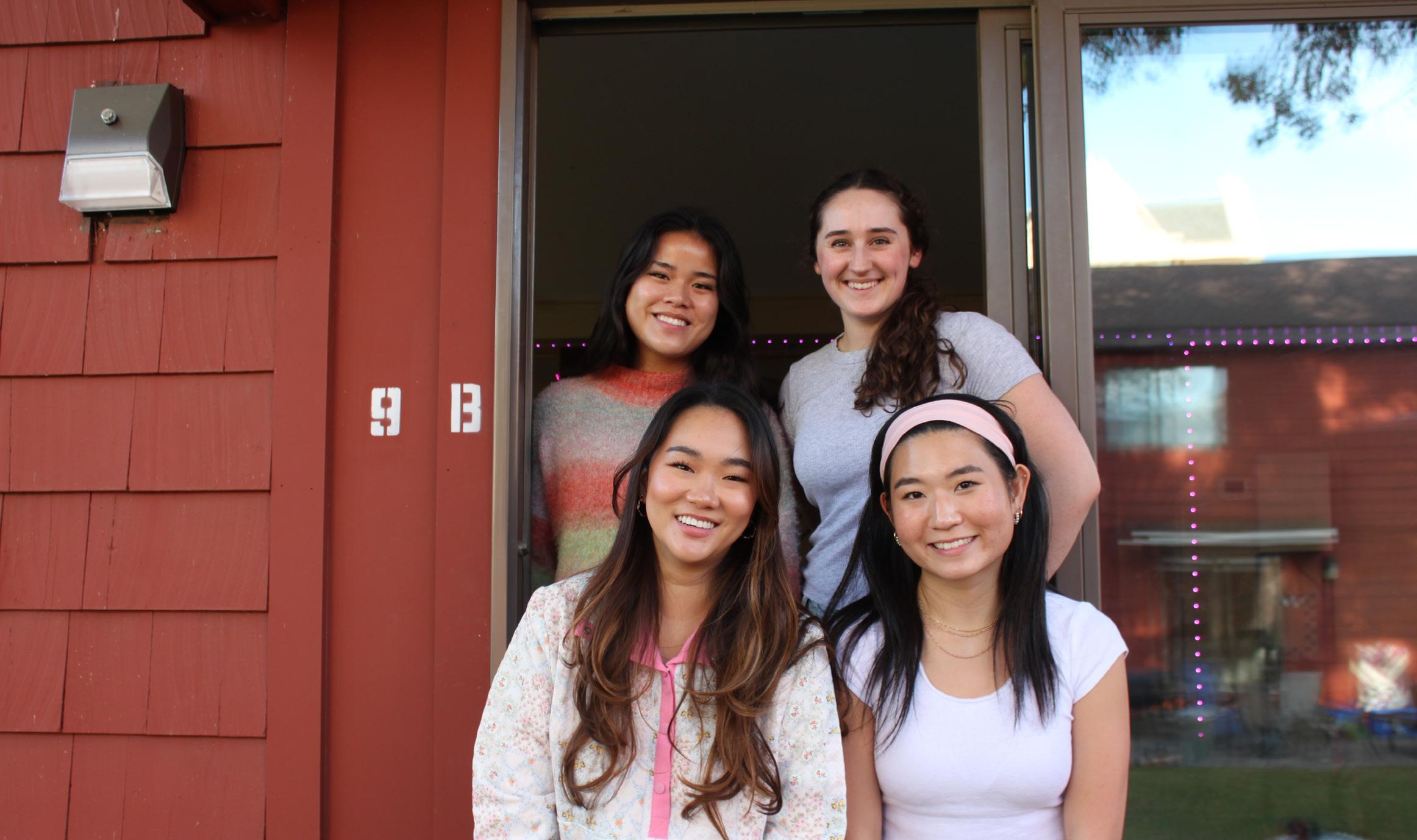
When my roommates and I !rst set out to !ll housing applications, we were all in agreement that a Mod would be our number one choice. A%er years of bad housing luck, I personally felt like karma was just saving me for that glorious senior year Mod. And I was right. Moving in was a surreal experience. Like most other students, we had spent our years walking past the iconic red houses, smelling the charcoal grills and watching enviously as seniors swung leisurely in their hammocks. But in many ways, the most intriguing (though underrated) aspect of the Mods were the personal picnic tables. is complimentary seating area encouraged outside eating and conversation, creating a second space on the property that each house had complete ownership of. ough we may share a lawn and a grill with other Mods, the table would act as an extension of our home and be entirely our own. With such an incredible space to our disposal, my !ve roommates and I set out to make the most of our great housing luck: a big welcome dinner. We wanted to invite all of our close friends and adjoining friends to be present to celebrate the start of our last year. We decided on a potluck-style dinner, requesting that everyone bring a small entree or treat on the Canva-designed invitations. As hosts, my roommates and I set out to create the largest, Strega Nona-sized batch of pasta that any of us have ever attempted. en we made another. en a bubbling vat of basil.
Photos by Alyssa Turay
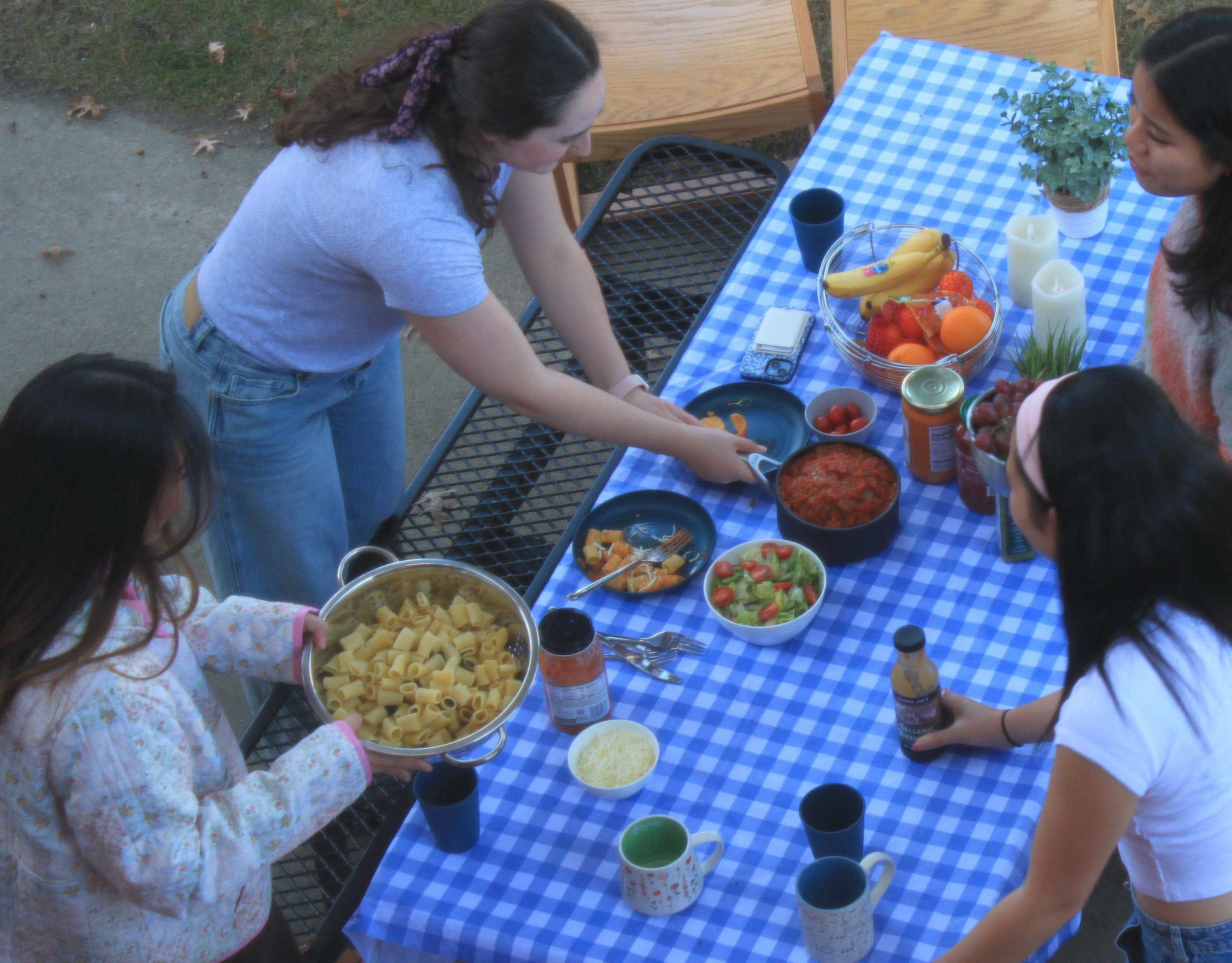
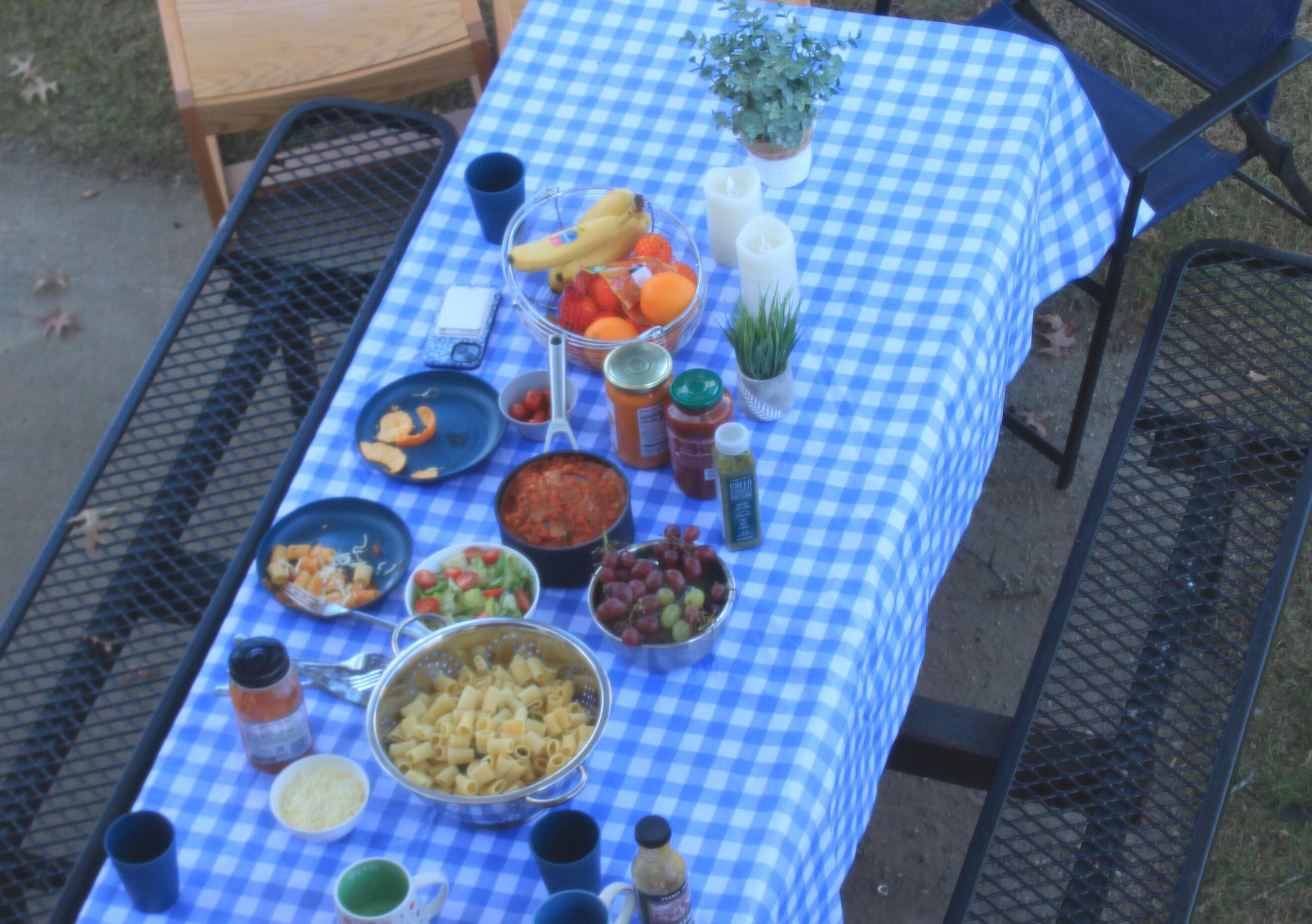
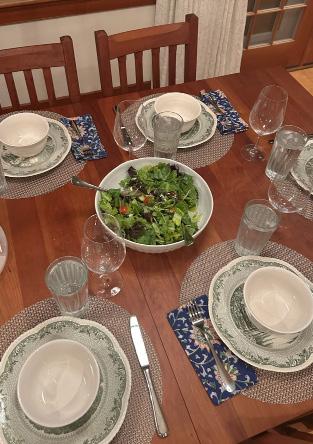
at night we set the table with a blue checkered tablecloth, decorated with a few fake candles and a pot of owers. en we sat outside to soak in the last moments before chaos ensued. With a speaker faintly playing a mix of 2000’s pop hits, we reminisced on our years at BC. e air was warm and still and the rhythmic thud of tennis balls being hit just outside our house was almost medicinal. It was still early in the semester and the stresses of homework and exams felt like a far and distant concern. One of my roommates would occasionally say something that would elicit laughs, padding our wistful conversation with a more lighthearted banter. en someone else would point out the presence of a bunny family passing through, or our favorite squirrel (who we lovingly nicknamed “Bradley”) climbing a nearby oak tree. We all agreed that this moment was truly worth every year of tumultuous housing cycles.
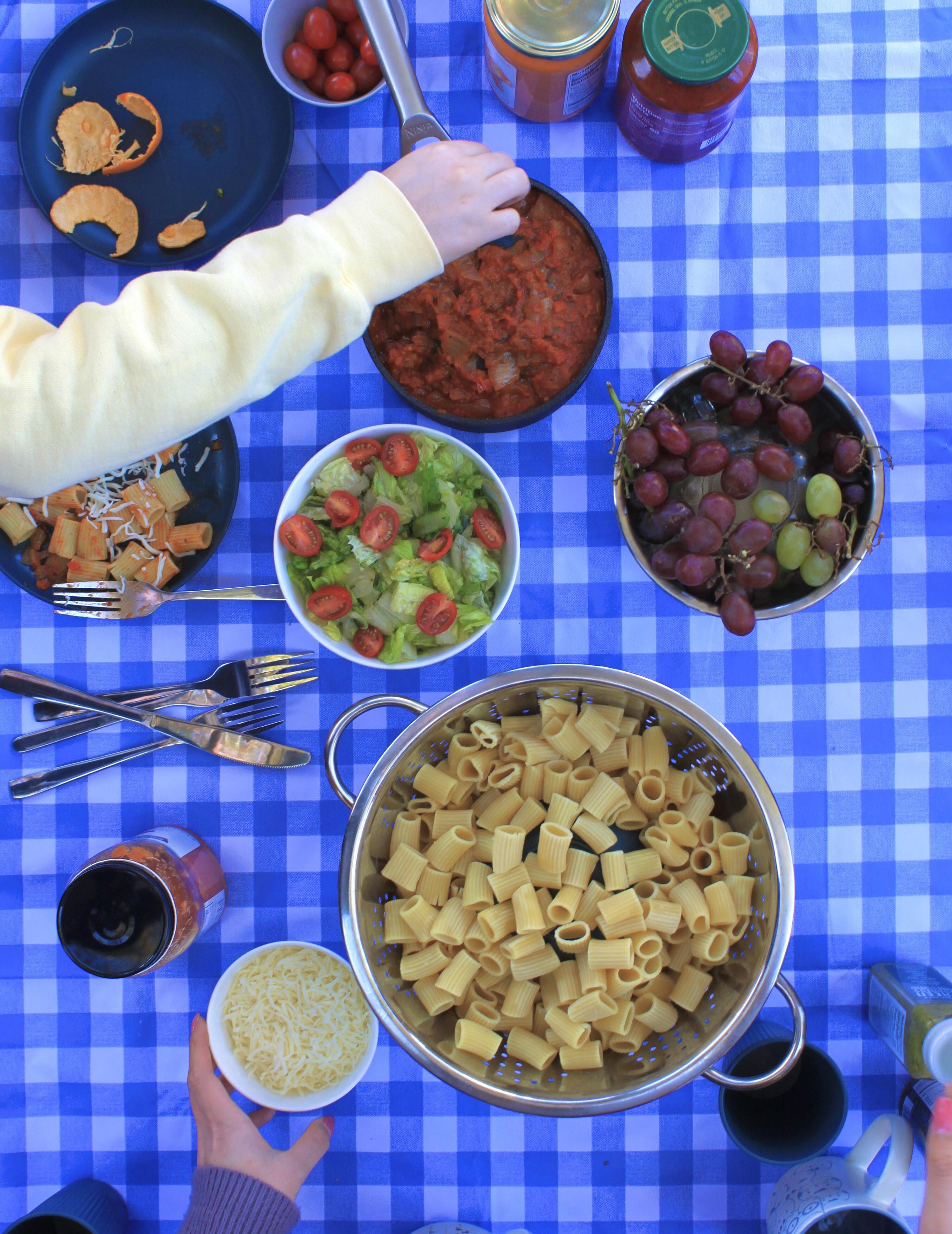
Guests quickly began to arrive. First, friends from freshman year. en sophomore year. en from junior year. ese people were the accumulation of our time in college, each bringing a piece of shared history and countless memories that have shaped our journey. Our picnic table that felt so big and spacious with just the six of us, gradually started to feel cozier as we found ourselves having to bring out additional chairs to !t all of our guests. Various pasta sauces, pizza, cake, salads and desserts !lled the table as we passed around utensils and plates. Conversations naturally diverged as everyone caught up with one another, sharing stories that happened during years abroad, summer internships, or back home. I had a healthy heaping of rigatoni pasta with vodka sauce that my roommate from sophomore year had brought, topped o with an even healthier heaping of grated parmesan, courtesy of a friend I met through a club. As the night grew old, the warmth of our gathering seemed to glow brighter than the porchlight itself and despite everyone’s stomachs being full, we moved onto dessert in the spirit of keeping the evening alive.
My roommate lit up our grill and the wonderful smell of !re !lled our space, lingering on everyone’s hair, clothes, and skin. It had cooled down slightly and the warmth of the grill provided a comforting glow. Our friends began to disperse to their own dorms shortly a%er. My roommates and I were the last to head inside, as we relished the last moments of our most perfect night before packing up the speaker, charcoal, and tablecloth and bringing them inside to save for our next dinner event. Our Mod smelled of charcoal embers and smoke for the rest of the night.
roughout my time with Gusto, I’ve realized that satisfying physical hunger is never quite enough. Dinners should be both joyfully shared and deliciously savored. Filling the table with not only good food, but people you enjoy and have shared your life with is the perfect recipe for a truly perfect meal. Our time at the Mods may be limited, but the bonds we strengthen over these suppers will last a lifetime. I hope that a%er every meal, we can all !nd ourselves not only full with food, but also brimming with warm and fuzzy feelings, leaving us nourished in every sense of the word.
Italian Citizenship
Words by Julia Colone
Photos by Kate Johnston and Madeline King
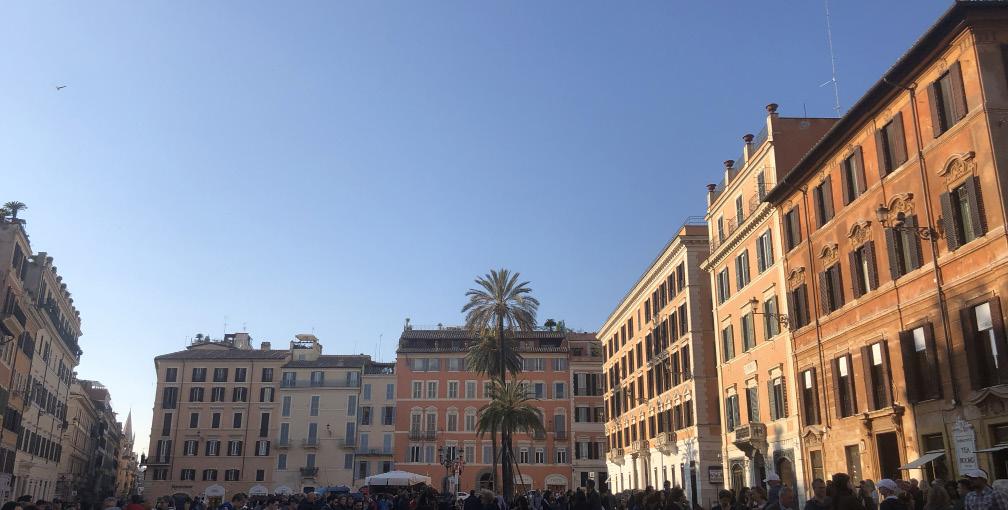
e smell of wimpily-stu ed egg and cheese breakfast calzones in the air wakes me from a light airplane slumber. e lights of the plane illuminate red, white, and green to signal our descent into Rome. Disregarding the seatbelt sign, I watch my grandpa appear at the end of our row with a giddy smile. “Are you excited to see my father’s hometown?” he asks my brother and me, our hesitance a product of fatigue and an overpowering desire to disembark rather than the apprehension I’m sure he senses. A%er clearing customs, two hours piled into the rear of a distinctly Italian subcompact was all that separated us from Roccavivi (a town occupied by no less than 800 Colones and some chickens). It looks just like the pictures hanging in my grandparents’ home that always seemed so foreign to me - physically and sentimentally. As we weave through the tiny streets, cobblestones turn into dirt and the watchful eyes of elderly Italians follow the car closely. “Benvenuti a Roccavivi,” relatives only known to me from Facebook photos say, embracing my brother and me as if we had known them forever. e smell of tomato sauce heavily seasoned with garlic and onions hit me as I walked through the door. “Mangia! Mangia!” they say pointing to the cornucopia of food already set on the table. at was the only Italian word I understood: “Eat!” ere were arancini - rice balls stu ed with
and prosperity in America. e cost for my immigrating relatives was a decades-long hiatus before any were able to return to their mother country and reunite with long lost family, an ordeal and sacri!ce entirely foreign to my twenty-!rst century, technology-de!ned, American experience. As I shoveled ricotta-!lled cannoli hand over !st, I remember experiencing a distinct sense of fullness, as stu ed with new knowledge of my cultural heritage through !rsthand experience as my stomach. For the !rst time, I felt endeared to an aspect of my identity I had always recognized, yet struggled to personalize.
A few months ago, I began the journey of obtaining Italian citizenship. e detailed, strenuous process includes !nding old documents like birth and marriage certi!cates, some of which are stored in small nooks in cottages in Roccavivi. I have gotten to work closely with my Italian family members to compile these documents, even translating some. at said, as I’ve seen in every Italian kitchen that I’ve ever stepped into, hard work is worth it to connect with those you love, and as no one knows better than an Italian cook, it de!nitely doesn’t hurt if you’re stu ed.
mozzarella cheese and coated in breadcrumbs. e mozzarella found every breadcrumb crack to ooze out of, and I could not help but indulge. Amalia looked at me pleased. Although our communication was spotty, she welcomed me the best way she knew how: her recipes. Our apprehension gave way to curiosity and openness, I immediately felt as if I had been ceremoniously welcomed into this foreign community.
More Roccavivi residents (who I can safely presume are Colones) waltz through the front door with woven baskets full of fresh produce and poultry, stu ed shells, ravioli, and beef and mushroom calzones, and the house began to !ll with a cacophony of chatter and clinking plates and cutlery. Unabashed Italians unafraid to point and stare squeeze us into a table o in the corner, trading stories of relatives who braved the trip across the seas in search of opportunity
A Gluten-Less Dinner Party
Words and Photos by Madeline McCormick
Hosting a dinner party is a delightful way to bring friends together. It o ers a way for friends to catch up on each other’s lives while enjoying a delicious meal. Growing up, I cherished dinners with my friends, whether it was at their home or mine. ese meals were more than just food; they were about sharing stories and laughing over the meal. e experience of bonding over a shared meal created lasting memories, and the simple act of eating brought everyone closer together. However, this all changed the summer going into my senior year of high school when I was diagnosed with celiac disease.
For those with celiac disease, !nding joy in food can become a signi!cant challenge due to the need to navigate dietary restrictions. A%er my diagnosis, my anxiety regarding food skyrocketed. I was suddenly afraid to eat at restaurants or other people’s houses because I didn’t know how my food would be prepared. e lack of knowledge others had about celiac disease was a huge concern for me; I feared accidental cross-contamination. e joy I once found around the table with my friends was replaced by a sense of caution and unease.
Over time, I began to rediscover my love of cooking by experimenting with new recipes and ingredients that were naturally gluten-free. Cooking became a creative outlet and allowed me to !nd my love for food again. Preparing meals for myself and others brought and still brings me immense happiness. It’s a way for me to express my creativity and care, by transforming ingredients into something meaningful that everyone can enjoy. I love the process of selecting fresh ingredients and !nding the perfect balance of avors. Cooking allows me to slow down, be present, and de-stress. My sister o%en makes fun of me for getting overly excited when I eat something that tastes really good. is is because there was a time when I didn’t think that anything I ate could be delicious because of the lack of gluten. However, that is not the case.
As I began to rediscover the joy of cooking and embrace gluten-free meals, the idea of hosting a dinner party with some of my favorite recipes started to form. I wanted to create an evening that felt safe for me and one that my friends would enjoy. It would be a meal !lled with laughter, love, and amazing avors. e menu is as follows.
Graphis by Katie Ballard
Menu
Appetizer
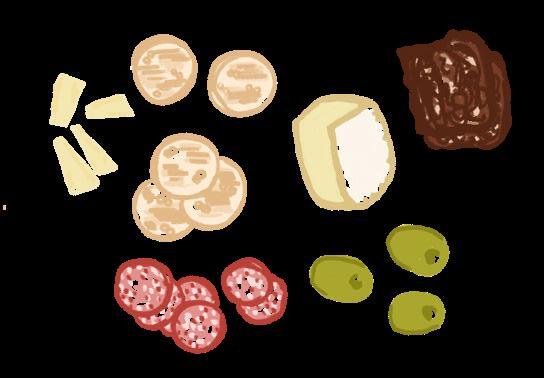
Bountiful Cheese and Charcuterie Board
Main Course
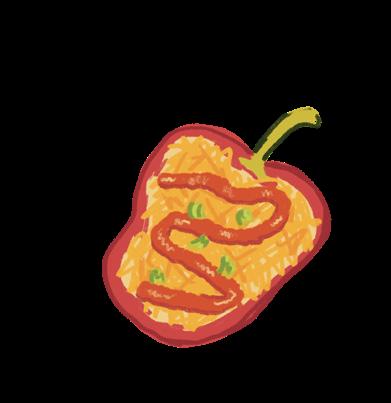
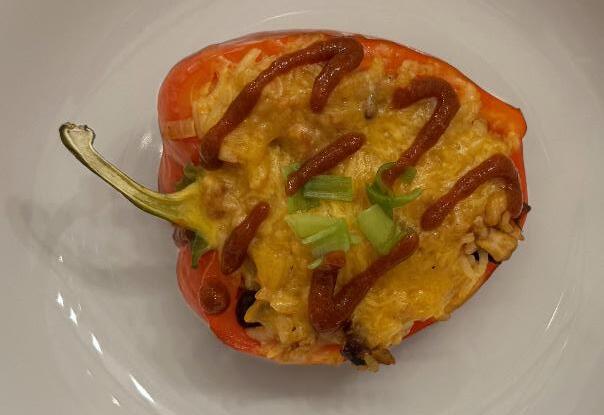
Turkey Stu ed Bell Peppers
Dessert
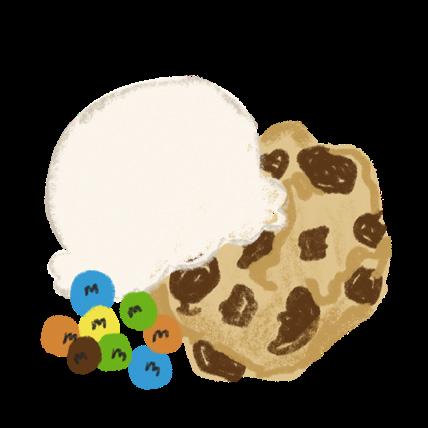
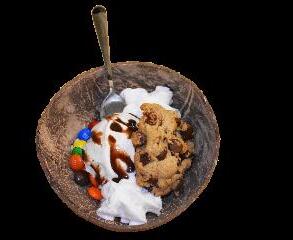
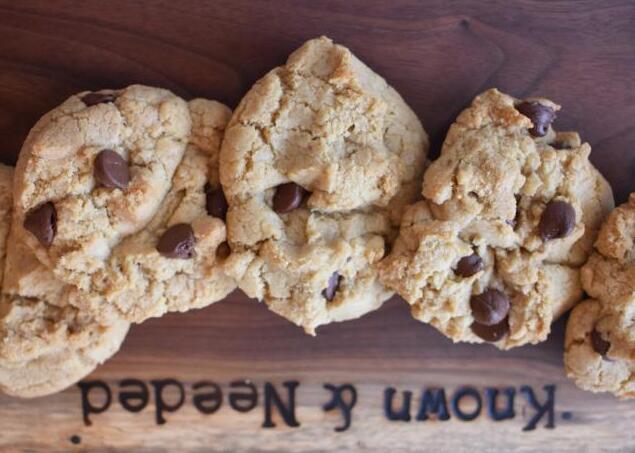
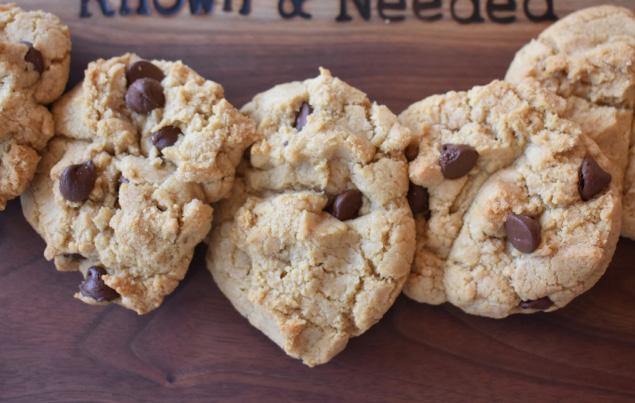
Loaded Sundae Bar ~ Featuring Homemade Chocolate Chip Cookies
Turkey Stufed Bell Peppers
Ingredients
For the !lling:
• 1/2 lb 99% lean ground turkey
• 3/4 cups canned black beans, rinsed and drained
• 3/4 cups frozen corn
• 1 hot pickled serrano pepper, chopped (or jalepeño) more to taste
• 1 large diced tomato
• 1 cloves garlic, minced
• 3 tbsp chopped onion
• 2 tbsp chopped cilantro, plus more for garnish
• 1 tsp cumin
• kosher salt to taste
For the peppers:
• 3 red bell peppers, cut in half lengthwise
• 1/3 cup reduced sodium, fat free chicken broth
• 9 tbsp shredded reduced-fat Sargento Monterey Jack cheese
• 1 tbsp chopped scallions, for garnish
Instructions
1. In a large skillet brown the turkey and season with salt.
2. When the turkey is browned, add onion, garlic, black beans, cilantro, serrano pepper, diced tomatoes, and cumin. Mix well and simmer on low, covered for 5 minutes.
3. Remove the lid, add corn, and simmer for an additional 5 minutes or until all the liquid is reduced.
4. Preheat oven to 350°.
5. Cut peppers in half lengthwise, removing seeds and stem.
6. Place peppers, cut side up in an oven-proof dish. Fill each pepper with 1/2 cup turkey mixture. Pour about 1/3 cup water or chicken broth on the bottom of the dish.
7. Cover tightly with foil. Bake for 45-50 minutes, or until the peppers become so%.
8. Remove foil, top each with 1 1/2 tbsp of cheese, and bake uncovered for an additional 5 minutes.
9. Top with scallions and serve with reduced-fat sour cream if desired (optional).
Why I love it:
Stufed peppers have always been one of my comfort foods, and this version is both healthy and packed with favor. Growing up, my mom would make this recipe from SkinnyTaste, and every time I smell them cooking, it takes me right back to those cozy family dinners. Figuring out it was naturally gluten-free was a happy surprise. It felt like a little win when I realized I could still enjoy it after my diagnosis without needing to make any changes.
1. Choose a large wooden board or serving platter as your base.
2. Have small bowls ready for spreads, dips, and marinated items.
3. Gather utensils like cheese knives and small spoons
4. Place small bowls on the board for the jam and olives.
5. Add and arrange the cheeses next.
6. Fold larger slices (prosciutto, salami) into loose rolls or rosettes and place them around the cheeses.
7. Fill in spaces with grapes.
8. Place gluten-free crackers near the cheeses.
9. Enjoy!
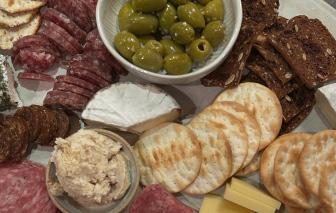
Bountiful Cheeseboard
Why I love it:
is charcuterie board is a reminder that hosting can be both simple and elegant. I love how easy it is to customize, ensuring that all the ingredients are safe for me and my guests. Plus, it brings everyone together as we eat, talk, and laugh around the table. It’s an appetizer that not only looks beautiful but tastes amazing.
Ingredients:
Loaded Sundae Bar
• Ice Cream: vanilla, chocolate, or your favorite avor
• Chocolate Sauce
• Caramel Sauce
• Whipped Cream
• Sprinkles
• M & M’s
• Maraschino cherries
• Crushed Gluten Free Oreos
• Gluten-Free Brown Butter Chocolate Chip Cookies (recipe below)
• Mini marshmallows
• Gummy bears
• Fresh fruit: sliced strawberries, blueberries, or raspberries
Instructions
1. Set up an area with a few tubs of di erent ice cream avors.
2. Provide an ice cream scooper for each avor.
3. Place toppings in separate bowls or jars with small serving spoons.
4. Warm hot fudge and caramel sauces, keeping them in small bowls or jars with spoons for drizzling.
5. Put warm chocolate chip cookies on a plate.
6. Set up bowls and spoons for guests to use.
Ingredients
• 168 grams unsalted butter
• 300 grams 1:1 gluten-free our blend
• 1 teaspoon baking powder
• ( teaspoon baking soda
• ( teaspoon salt
• 220 grams brown sugar
• 75 grams granulated sugar
• 1 large egg
• 2 large egg yolks
• 2 teaspoons vanilla
• 1( cups chocolate chips or chunks
• ) cup chopped walnuts or pecans (optional)
• ( teaspoon aky sea salt (optional)
Instructions
1. Melt the butter in a small saucepan over medium-low heat. Cook for about 10 minutes, stirring occasionally, until butter starts to foam and turn brown. Immediately pour into the bowl of your stand mixer, and set aside to cool for 10 minutes.
2. Combine the our, baking powder, baking soda, and salt, and set aside.
3. In the bowl of a stand mixer with the paddle attachment, add the brown sugar and granulated sugar. With the mixer on medium-high speed, slowly add the browned butter and mix for about three minutes, until well combined.
4. Add the egg, egg yolks, and vanilla; beat on medium speed until well combined.
5. With the mixer running on low speed, gradually add the our mixture, beating just until combined, about a minute. Fold in the chocolate (and nuts if using).
6. Roll a scant ¼-cup of the dough into a ball. Hold the dough ball with the !ngertips of both hands and pull it into two equal halves. Rotate the halves 90 degrees and, with jagged surfaces facing up, join the halves together at their base, again forming a single ball, being careful not to smooth the dough’s uneven surface.
7. Refrigerate the dough for at least an hour. It’s even better if you can wait longer or overnight.
8. Adjust the oven racks to the upper- and lower-middle positions, and preheat the oven to 325 degrees. Line two baking sheets with parchment paper.
9. Place the formed dough balls on the prepared baking sheets, jagged surface up, spacing them 2( inches apart. Sprinkle with aky sea salt, if desired.
10. Bake for about 15-18 minutes, until the cookies are light golden brown, and the edges start to set, but the centers are still a bit so% and pu y. Rotate the baking sheets halfway through the baking time. Cool the cookies on the baking sheets. Once cool, store in an airtight container at room temperature for up to four days.
Why I love it:
ere is a type of nostalgia surrounding sundae bars for me. It reminds me of elementary school ice cream socials, and I love how everyone can get creative and customize their dessert. e inclusion of the warm chocolate chip cookies brings my sundae to the next level. It took me a while to ! nd a really good gluten-free chocolate chip cookie recipe, and this one by ChefAlina is truly amazing. e sea salt on top goes perfectly with the sweetness of the chocolate, creating an irresistible sweet-salty combination. e texture is just right and the gooey chocolate chips make it hard to resist going back for seconds!
ese three recipes bring me a sense of ful ! llment, not just because they are gluten-free, but because they are genuinely delicious. I love seeing everyone dig in and enjoy the food. A %er the meal, I feel comfortably stu ed, which is a feeling I once feared I’d lost with my diagnosis. I am happy to know that my guests will leave with full stomachs, and that makes the preparation for this dinner party worth it.