Galvin Wins BC Service Award
BY ROSANNE PELLEGRINI STAFF WRITER
Mary “Maggie” Galvin—a self-described “behind-the-scenes person”—found herself in the spotlight recently, when she was honored with the 2023 Boston College Community Service Award for her commitment to improve the lives of children, teens, and adults in the City of Boston.
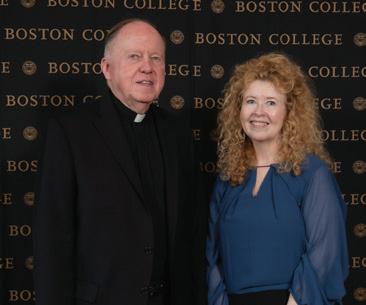
Organized by the Office of Governmental and Community Affairs, the award highlights the outstanding contributions of a BC employee whose actions exemplify the Jesuit spirit of service to others. Galvin, assistant director of advancement talent in University Advancement, was lauded for
51 New Faculty Ready to Start BC Careers
BY SEAN SMITH CHRONICLE EDITOR
Boston College will welcome 51 new faculty members for the 2023-2024 academic year, including a Nobel laureate, a new director of the African and African Diaspora Studies (AADS) program, and four additional faculty in the two-year-old Engineering Department.
The 51 tenured or tenure-track faculty and full-time professors of the practice will be joined by an additional nine lateral hires—previously visiting faculty members who are now professors of the practice. Also coming to campus for the next academic year are 22 new, visiting full-time faculty members who are on limited-term contracts.
While smaller than last year’s record 62, this year’s cohort of new full-time, non-visiting faculty represents another significant milestone, according to University administrators: 33 of the 51 are women, the highest such percentage (65) of new hires in BC history. More than a quarter of the new full-time, non-visiting faculty members—27 percent—are AHANA, they noted.
But straightforward statistical analysis only goes so far in evaluating the annual faculty hiring process, so vital to making major institutional goals for teaching and academics a day-to-day reality in BC classrooms. The number of hires in a given year can be affected by internal considerations—how many faculty are needed for a particular
Continued on page 4
University Reacts to Court’s Ruling
BY SEAN SMITH CHRONICLE EDITOR
Boston College administrators, faculty, and students offered strong reactions to the June 29 United States Supreme Court ruling that struck down affirmative action, ending the long-established precedent of colleges and universities using race as a factor in their admissions decisions.
Chief Justice John Roberts Jr. issued the decision for the majority, which included Justices Clarence Thomas, Samuel A. Alito Jr., Neil M. Gorsuch, Brett M. Kavanaugh and Amy Coney Barrett. “The student must be treated based on his or her experiences as an individual—not on the basis of race,” Roberts wrote. “Many universities have for too long done just the opposite. And in doing so, they have concluded, wrongly, that the touchstone of an individual’s identity is not challenges bested, skills built, or lessons learned but the color of their skin. Our constitutional history does not tolerate that choice.”
University President William P. Leahy, S.J., issued a statement calling the Court’s ruling a frustrating departure from a decades-long judicial precedent. “Consideration of race in admissions decisions has enabled higher education institutions like Boston College to identify, enroll, and graduate talented students from diverse
racial groups.
“Boston College has greatly benefited from a student body of varied backgrounds, which has enriched intellectual discourse and social life on our campus,” Fr. Leahy said in his statement. This fall’s incoming first-year class is BC’s most accomplished and racially diverse ever, with a record 39 percent of students identifying as AHANA and 11 percent who are first-generation college students.
According to the statement, “The University intends to remain faithful to its Jesuit, Catholic intellectual and religious heritage by enrolling talented, diverse students from across the United States and the world within the new parameters set by the Court.”
BC will accomplish this, “by building on its strong relationships with schools and community-based organizations and through its membership in QuestBridge, a national nonprofit program that helps outstanding high-need students earn scholarships to attend top colleges and universities.”
As a need-blind institution, BC also will maintain its commitment to underresourced students by allocating millions of dollars to need-based undergraduate financial aid—including an expenditure of more than $166 million in 2023-2024— and through its academic support pro-
grams offered through BC’s Pine Manor Institute for Student Success. Next year, the University will open Messina College, a two-year residential program “that will provide a pathway to higher education and increased opportunities for approximately 100 students each year.”
The post-affirmative action landscape “will pose significant challenges in student recruitment and enrollment for all colleges and universities,” the statement concluded, “but while the law has changed, the values and goals of Boston College have not. The University remains com-

Continued on page 6
3 Busy Summer Facilities personnel tackling 72 campus projects.
5 Next Generation C21 provides update on Student Voices Project.
8 A Good Run BC, the starting line for the Greater Boston Track Club, was the setting for its 50th anniversary bash.
PUBLISHED BY THE BOSTON COLLEGE OFFICE OF UNIVERSITY COMMUNICATIONS SUMMER 2023 EDITION
Maggie Galvin with University President William P. Leahy, S.J.
photo by lee pellegrini
INSIDE
End of affirmative action seen as ‘challenge’ to fostering diversity in higher education
Continued on page 3
Tall Order
Facilities workers repaired Fulton Hall windows recently—one of more than 70 campus projects underway this summer. See page 3.
photo by lee pellegrini
Around Campus
PMI Academy Honored for Outstanding Support of First-Gen Students
The Pine Manor Institute for Student Success at Boston College (PMI), which this summer will welcome a second cohort of local students to its Academy program, has been recognized with the Janus Award from Codman Academy Charter Public School in Dorchester, Mass. The award annually recognizes a new program that has shown outstanding support of first-generation students and Codman applicants.
The Janus Award “recognizes that Codman’s ambitious mission is not one that can be accomplished alone,” said Codman Academy Dean of College and Career Advising Daniel Hoffman in presenting the award at the school’s graduation ceremony in June. In particular, he lauded the PMI Academy—designed for students in grades eight to 12, including first-generation students—as a free-of-cost enrichment program that provides year-round academic support from Boston College Success Coaches.
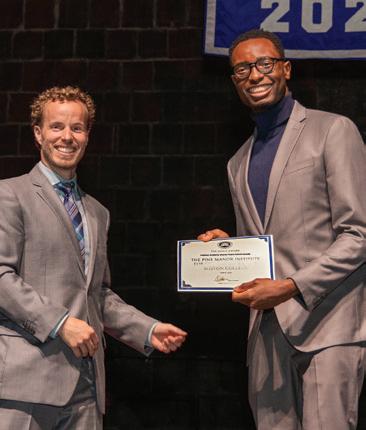
The award is named in honor of former Codman Academy Dean of Alumni Niki Janus, who, Hoffman said, “ushered countless alumni through the many obstacles of college life.”
“This thoughtful recognition of the Pine Manor Institute for Student Success at Boston College celebrates our continued partnership with Codman Academy and is
an affirmation of The Academy’s achievements in its first year,” said Joy Moore, vice president and executive director of PMI.
“We are delighted to welcome Codman students—and all our Academy students— back to BC’s campus this summer.”
Brian Nwafor, assistant director of The Academy, and Mercy Lara-Bautista, associ-
ate director of admissions, accepted the award on behalf of PMI.
A two-part experience, The Academy includes a residential Summer Enrichment Program for Greater Boston-area middle and high school students from partner schools, including Codman Academy. The one- to six-week program begins in the summer after seventh grade and continues through high school; the second component provides academic-year tutoring and mentoring as students work with BC Success Coaches who help them navigate their school years and support them in reaching their goals.
The initiative is one of four components of PMI, which are aimed at enhancing educational opportunities for first-gen and other students. Six Codman Academy students are among 103 Academy participants—including 57 eighth graders and 46 ninth graders—who will reside on campus in Williams Hall from July 31 through August 5 and August 12, respectively by grade.
The program combines academic preparation in language arts and STEM fields with enrichment experiences, overnight adventures at a natural or historic New England site, field trips, and volunteer experiences. Students learn the keys to success in high school—including public
speaking, self-discipline, SAT and ACT test preparation, and time management, with each year of The Academy exploring different core values to help students develop their gifts and talents. For courage, tenacity, and confidence, eighth-grade students practice public speaking and study skills to prepare for the challenges of high school. The values of identity, harmony, and companionship are the focus for ninth-grade participants, who will take an overnight trip to the Blue Hills Reservation, in Milton, Mass., where they will encounter challenges—through activities and minicourses—to help them build a stronger sense of self and their capabilities.
As a community, the students will share what they are learning in electives focused on culinary arts, music, chemistry, and other topics. The Academy builds on the Boston College and Pine Manor College legacies of providing academic support and personal attention to first-generation students and others. PMI will continue to provide Academy graduates with coaching and mentoring for up to two years.
Learn more about The Academy at the Pine Manor Institute for Student Success website, bc.edu/content/bc-web/sites/pinemanor-institute.
—Rosanne Pellegrini
Braman Is the Choice for This Year’s Phi Beta Kappa Teaching Award
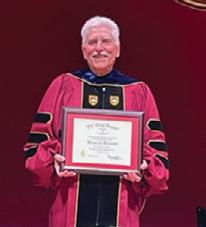
Brian Braman (in photo), a professor of the practice in the Philosophy Department who directed the University’s Perspectives program for 21 years, is this year’s recipient of the Phi Beta Kappa Teaching Award, presented by Boston College students in the prestigious honors society.
Each year, Phi Beta Kappa students submit nominations for outstanding teachers who have positively influenced their experiences at BC, either inside or outside the classroom. Faculty are selected for the award based on the cumulative nominations from students over multiple years.
Braman, whose areas of interest are the intersection of philosophy and art, and the work of Bernard Lonergan, S.J., has taught in the Perspectives program since 1996 and served as its director from 1998 to 2019. One of BC’s signature programs, Perspectives is an interdisciplinary course of study
ASSOCIATE VICE PRESIDENT FOR UNIVERSITY COMMUNICATIONS
Jack Dunn
SENIOR DIRECTOR FOR UNIVERSITY COMMUNICATIONS
Patricia Delaney
EDITOR
Sean Smith
that integrates the humanities and natural sciences by bringing students into conversation with the ancient, modern, and contemporary thinkers who have shaped Western intellectual and spiritual thought. Inspired by the Jesuit tradition of providing a humanist context for professional and scientific education, Perspectives courses seek to educate the whole person, and to help students develop skills in critical thinking and practical living.
Despite its rigorousness, Perspectives has been whole-heartedly embraced by the hundreds of first-year students who take Perspectives on Western Culture each year and often cite it as their favorite class at BC. Students can take courses in the Perspectives program throughout their four years at BC and pursue a Perspectives concentration or major.
Braman developed the Perspectives Living and Learning Community on Newton
CONTRIBUTING STAFF
Phil Gloudemans
Ed Hayward
Rosanne Pellegrini
Kathleen Sullivan
PHOTOGRAPHERS
Caitlin Cunningham
Lee Pellegrini
Campus, which sought to bridge the gap between what the students learn in the classroom and how they live their lives outside of the classroom. Its goal, said Braman, was to increase the possibility of real friendships, friendships organized around questions about “the one thing needful” for a truly meaningful life.
“To say I am humbled by this award is an understatement,” said Braman. “This award was made possible because of the students who blessed my classroom with their intelligence, honesty, and desire to learn. My job was made easier because the students made it easier.”
Said one student nominator: “Brian Braman is not only a fantastic professor with immense knowledge of philosophy in all its iterations, but his care for his students is immeasurable. He is brilliant, irreverent, and challenges his students to work hard and become the best versions of themselves.”
Beyond challenging students on an in-
www.bc.edu/bcnews chronicle@bc.edu
tellectual level, Braman was praised for his mentorship and his devotion to students.
“Rarely has there been a professor who cares so deeply for his students,” a nominator contributed. “This is even true of students who are now seniors whom he hasn’t seen since their freshman year. He is the kind of man who would take a phone call at 10 p.m. because he knew you wouldn’t be calling if it weren’t important. He truly embodies the excellence expected of PBK, and I can think of no one more deserving of this award.”
Said another PBK student of Braman: “He works not only on improving our academics, but in helping us think about bigger questions and being the best people we can be.”
Braman has been previously recognized for his commitment to BC students, earning a Boston College Excellence in Teaching Award (1993-1994) and the 2005 Mary Kaye Waldron Award.
 —Kathleen Sullivan
Summer 2023
Boston College Chronicle (USPS 009491), the internal newspaper for faculty and staff, is published biweekly from September to May by Boston College, with editorial offices at the Office of University Communications, 3 Lake Street, Brighton, MA 02135 (617)552-3350. Distributed free to faculty and staff offices and other locations on campus. Periodicals postage paid at Boston, MA and additional mailing offices.
send address changes to The Boston College Chronicle, Office of University Communications, 3 Lake Street, Brighton, MA 02135. A flipbook edition of Chronicle is available via e-mail. Send requests to chronicle@bc.edu.
The
POSTMASTER:
Chronicle
Brian U. Nwafor (at right), assistant director of The Academy at the Pine Manor Institute for Student Success, accepts the Janus Award from Daniel Hoffman, dean of college and career advising at Codman Academy.
2 Chronicle
Project(s) Management
BY PHIL GLOUDEMANS STAFF WRITER
A total of 72 renovation, repair, and renewal projects on Boston College’s four campuses are underway this summer, according to Facilities Management, with most expected to be completed by October.


Facilities undertakes 72 renovation, repair, and renewal projects across the University's four campuses this summer categories, characterized the Boston College campus as “gorgeous,” while Best College Reviews ranked BC as one of the nation’s 60 most beautiful campuses, describing it as “a special place of learning,” and its buildings as “majestic.”
Among the capital improvements— which involve 15 different project managers—four major categories were identified, starting with respective academic upgrades at Gasson and Higgins Halls on the Chestnut Hill Campus and Stuart Hall on the Newton Campus.
Gasson will undergo ceiling replacements in five classrooms and two stairwells, as well as replacements of lighting, audio-visual, and fire alarm/protection equipment. Additionally, the stairs in the west portico will be repaired or replaced.
The 150-seat Higgins Hall auditorium will undergo a major face lift, including replacement of the fixed seating and flooring; restoration of the walls and ceiling; installation of acoustic wall panels; upgraded teaching walls that feature trays, interactive whiteboards, and storage space; new lighting
and audio-visual integration; and improved seating for persons with disabilities.
Five projects are underway at Stuart Hall, a BC Law academic and administrative facility, including the renewal of seven classrooms/seminar rooms on the fourth floor, upgrades to the dean’s office, and electrical modernizations.

At the new Hoag Basketball Pavilion, the future practice home for BC’s men’s and women’s basketball programs on the northwest side of Conte Forum, work is in progress on women’s and men’s basketball locker rooms, a nutrition center, strength and conditioning facilities, and a sports medicine space. Named for University Trustee Michaela “Mikey” Hoag ’86 and her husband Jay, who donated $15 million—one of the largest gifts in the history of Boston College Athletics—the 35,700-square-foot building is expected to be completed by summer’s end.
In preparation for the opening of Brookline-based Messina College—the former Pine Manor College, acquired by BC in 2020—a major renovation of Ashby Hall is underway to provide new classrooms, learning commons, a new kitchen/service coun-
ter, a chapel, and offices for student services. Beginning in the 2024–2025 academic year, the college—part of the University’s $100 million Pine Manor Institute for Student Success initiative to enhance educational opportunity for under-resourced, firstgeneration students—will annually offer 200 students an associate’s degree program with the goal of preparing them to enroll in a bachelor’s degree program or begin their careers. As BC undergraduates, Messina College students will have full access to the University’s facilities and programs.
On the upper Chestnut Hill Campus, a refresh of the Fenwick and Fitzpatrick residence halls has begun, while on the Lower Campus the renovation of 24 units, kitchens, and restrooms at Gabelli Hall has been initiated.
The 385-employee Facilities Management unit maintains a portfolio of nearly 200 buildings, more than eight million square feet of space, and cumulatively, more than 400 acres on BC’s Chestnut Hill, Brighton, Newton, and Brookline campuses, which are universally praised by national publications. The Princeton Review, which ranks American universities in multiple
Galvin Is 2023 Community Service Award Winner
Continued from page 1
her compassion, leadership, and years of dedicated service at a recognition dinner on May 31.
Galvin was nominated by Jill Caseria, a communications and marketing senior writer in University Advancement, who commended her colleague’s efforts on behalf of the Department of Children and Families’ Wonderfund, an organization that supports children who are victims of abuse and neglect.
“Maggie truly embodies the BC motto of being a woman in service to others,” said Office of Governmental and Community Affairs Vice President Thomas Keady, in remarks prior to presenting the award.
Galvin began her 34-year career at Boston College in the Theology Department and joined University Advancement in 2003, where she has been honored with the “Caught You Being Excellent” award given to employees who go above and beyond in
their job duties.
Called “Santa’s #1 local helper” by Caseria, Galvin annually rallies her coworkers to contribute to a holiday collection of toys and clothing to benefit children and teens in need—offering to wrap the contributed gifts herself—and has a following of more than 180 generous friends and colleagues involved in the initiative. She is a force behind Boston College’s annual Christmas Raffle Baskets, which provide families, teens, and hundreds of young children in the state foster care system with both toys and basic necessities. And she has continued the Christmas collection established by the late Paula Forget of BC Facilities Services, coordinating with local organizations to provide for children who otherwise would not receive a gift during the holidays.
“She has a wonderfully big heart and puts in hours and hours of work on this— ‘just because,’” according to Caseria. “Mag-
gie truly embodies Jesuit values by giving and doing for the less fortunate without ever expecting anything in return.”
“When I started at Boston College back in 1989, Paula Forget would send out an appeal as the holidays approached, for people to take the name of a child under social services care and fulfill their Christmas wish list,” Galvin said. “I looked forward to this every year and many years later, when an opportunity came up for me to take on a representative role, I was thrilled. I am only a facilitator; it is the generosity and kindness of my amazing colleagues in University Advancement and other parts of campus that make this program possible. I cannot do it without them and I cannot thank them enough!”
Galvin also credited her partners in an annual Winter Clothing Drive and the Christmas Raffle Baskets: Marsia Hill Kreaime and Jane McGuire, respectively, of
Student Services. “I want to acknowledge and thank them as well for the incredible and meaningful work they each do and for allowing me to have a part in it.”
At the recognition event, Keady shared words of praise from some of Galvin’s colleagues and friends:
“I wish there were more people in the world like Maggie.”
“Everyone that knows Maggie trusts her explicitly, her work ethic, her historical knowledge of BC, her sensibility, her Irish wit and sarcasm and her empathy toward others.”
“Maggie’s innate kindness, her consideration for others, and her good humor make it a joy and privilege to know her.”
“Boston College offers so many opportunities to be of service to others,” Galvin said. “I would encourage people to take part because you get back so much more than you give.”
Summer 2023
Work continued recently on the Hoag Basketball Pavilion on Lower Campus (far left) and the Higgins Hall auditorium.
photos by lee pellegrini
3 Chronicle
Installing a desk in Ashby Hall on Pine Manor Campus.
New Documentary “Gaining Ground” Features Law’s Mitchell
BY PHIL GLOUDEMANS STAFF WRITER
“Gaining Ground: The Fight for Black Land,” a new documentary film featuring Boston College Law School Professor Thomas W. Mitchell, privately debuted at the Oprah Winfrey Theater at the Smithsonian National Museum of African American History and Culture in Washington, D.C., on June 12.
BC Law Dean Odette Lienau and Mitchell were among the attendees.
Written, directed, and co-produced by Eternal Polk, a two-time Emmy-nominated director, writer, and segment producer, the 90-minute documentary film—executive produced by Al Roker Entertainment—explores the legacy of Black farming in America, land use and loss, challenges and solutions to so-called heir’s property, and how landowners are reclaiming their agricultural rights and creating paths to generational wealth.
According to attendees, the audience erupted with applause when the film revealed that more than 20 states have enacted into law a model statute, principally drafted by Mitchell, that helps Black farmers and landowners, and other disadvantaged property owners, to maintain their property.
“Gaining Ground” has already won two prestigious awards: Best Documentary at the recent Filmteenth International Film Festival in Bethesda, Md., and the Jury Prize for Feature Documentary at Essence Film
Festival in New Orleans.
Mitchell, director of the recently launched Initiative on Land, Housing, and Property Rights at BC Law, served as a member of the Land Loss and Reparations Project that published a 2022 report conservatively estimating a $326-billion damage appraisal of the loss of Black-owned farmland between 1920-1997. He also coordinated a highly successful two-day conference co-hosted by BC Law and Harvard University titled “Land Loss, Reparations, and Housing Policy” in March.
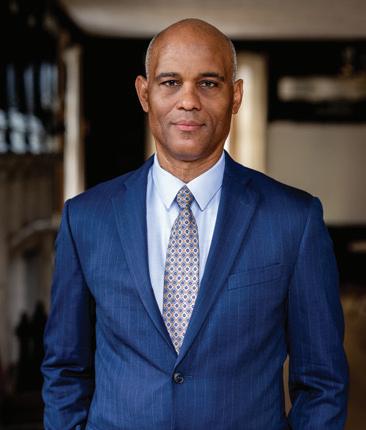
“Post-slavery, Black Americans owned at least 16 million acres of farmland, but today, approximately just four million acres is owned by African Americans,” said Mitchell, the Robert F. Drinan, S.J. Endowed Chair at BC Law and a 2020 MacArthur fellow. “Various tactics were employed to seize Black-owned land, ranging from violence and eminent domain to government discrimination. However, it’s a little-known property rule—the partition law governing many disputes involving heir’s property— which has had a devastating impact on Black land ownership.”
Heir’s property consists of land that’s usually passed from one generation to the next without a will, estate plan, or some other legal document proving ownership, he explained. Beyond the inability to build on or develop the land, landowners must obtain the approval of all relatives before selling, mortgaging, using, or managing it in some substantial way. They’re also prevented from
loan access, disaster relief, access to property rehabilitation, repair loans and grants, and other benefits at the federal, state, and local level. Furthermore, developers can seize the land through court-ordered sales.
“Black land loss has had devastating multigenerational impacts across the country, and this extraordinary documentary sheds light on how seemingly technical legal matters can have reverberating consequences,” said Lienau, the Marianne D. Short, Esq., Dean. “I was deeply moved when
watching the stories of family land shared in ‘Gaining Ground,’ and I am so proud of Professor Mitchell’s essential scholarship and advocacy in the area. It offers a sober reminder of the ways that law can oppress and subvert opportunity and community—but also can be used to redress those wrongs in some way—and BC Law is deeply committed to supporting this important work.”
The film, which will be publicly shown at numerous film festivals throughout the summer and fall—including earlier this summer at the American Black Film Festival in Miami Beach and the Essence Film Festival in New Orleans—is underwritten by Deere & Company.
Mitchell also appears in the CBS Reports documentary titled “40 Acres and a Mule,” released on June 22 and available for viewing at cbsnews.com/land. The film’s title symbolizes the broken promise that Reconstruction policies would offer economic justice for African Americans.
Near the end of the Civil War, the Union ordered that land along the Southeast coast be allocated to newly freed slaves, with each family to receive not more than 40 acres of tillable ground; some families also received former Army mules, hence the phrase “40 acres and a mule.” But after President Lincoln’s assassination, his successor Andrew Johnson reversed the order, returning the land to its former Confederate owners and leaving many African Americans with few options but to become sharecroppers, often working for former slaveholders.
University Preparing to Welcome New Faculty
Continued from page 1
discipline or field—as well as short- or longterm trends impacting higher education that may be beyond BC’s control.
Taking all that into account, said Vice Provost for Faculties Billy Soo, the litmus test for prospective faculty members is at once straightforward and multifaceted.
“Does this person truly understand BC and our mission?” he explained. “Do they appreciate what a Jesuit, Catholic university is all about, and the expectations that come with being a professor here? That BC emphasizes an undergraduate education that involves not only intellectual development, but also personal and spiritual formation?
“Not all faculty searches are successful. We may lose out to another institution for any number of reasons, including geographical location, or the time-frame for a candidate’s availability just doesn’t work. But we’re not going to force ourselves to hire someone just for the sake of filling the position if none of the candidates fit the profile of what we look for in a faculty member.”
Among the new faculty is Nobel Prizewinning economist Paul Romer, the Seidner University Professor at the Carroll School of Management, who joins the school’s highly touted Finance Department and will launch the new Center for the Economics of Ideas.
Professor of History Lorelle Semley, whose teaching and research in African history spans a multiplicity of disciplines, source materials, and political and social
subject matter—her current project examines the evolution of Black citizenship in the former French colonial empire—will become the new director of BC’s African and African Diaspora Studies program.
As the first majors in the University’s Human-Centered Engineering program move toward the latter stage of their undergraduate years, a newly arrived quartet of accomplished faculty will enable the department to offer upper-level courses: Assistant Professors Emma Brace and Catherine Hoar, Associate Professor of the Practice Amin Mohebbi, and Assistant Professor of the Practice Kristen Conroy.
These and other new faculty appointments are the end result of many hours of work involving senior administrators and current faculty. In early spring, academic deans assess their respective school’s teaching needs—based on such factors as faculty retirements or departures and growth of specific majors—and share these with the Office of the Provost, which takes a holistic view using metrics like student credit hours to help determine how many new faculty a school can recruit.
Search committees are formed with current faculty members—who sometimes serve on more than one, depending on their respective department’s openings—to identify and interview three finalists for each position. Soo noted that the school’s dean takes part in the interview process as
well, as does the provost if the candidate is a tenured faculty member.
“It’s a reflection of how seriously BC takes its mission when you have senior academic administrators as well as faculty involved in the search for new faculty,” said Soo. “As a university, we make a great effort to ensure that our academic goals and strategies are widely understood throughout each school, department, and program. This knowledge is critical for a search committee member in determining whether a faculty candidate is a good fit for BC.”
Soo emphasized that context is a must in scrutinizing numbers of new faculty hires, at BC and elsewhere. A department or program that is undertaking a new direction or starting a major initiative may carry out multiple or “cluster” hires for an academic year, then have considerably fewer openings the next two or three years. The relative lack of AHANA or women faculty in a particular field on a national level can affect how many candidates are available for a position.
“This year’s successful recruitment season was the result of ongoing collaboration among faculty search committees across the University working to advance key departmental and school priorities,” said Provost and Dean of Faculties David Quigley. “I look forward to welcoming our newest colleagues to campus later this summer.”
New faculty members will receive their formal introduction to BC at an all-day event on August 17, which will begin with greetings from University President William P. Leahy, S.J., Haub Vice President for University Mission and Ministry John Butler, S.J., and Quigley. Presentations on the University Mission and Ministry division’s work and on Title IX and student health and wellness will round out the morning session. The afternoon will include an introduction to University Libraries, a student panel, a session on teaching and research grants, and a talk on the Schiller Institute for Integrated Science and Society by Laura Steinberg, the Seidner Executive Director of the institute. A reception with deans and department chairs will close out the day.
Soo said the University has put an increasingly greater emphasis on faculty orientation, reflecting contemporary higher education practices but also its own institutional aims.
“We’ve found the panel with current undergraduates to be especially popular, because it’s a chance to hear what specific ways a faculty member can help students, inside and outside of the classroom. The message we send to new faculty is, ‘We want you to succeed, not just because we’ve invested a lot in you, but because we feel you have much to offer our students as well as your colleagues.’”
Summer 2023
Drinan Endowed Chair Thomas Mitchell has done extensive research on the lasting economic and social impact of land loss on Black Americans.
photo by caitlin cunningham
4 Chronicle
C21 Report Shows “Hope and Opportunity” for Church
BY KATHLEEN SULLIVAN STAFF WRITER
A new report, the product of a multiyear project undertaken by the Church in the 21st Century Center at Boston College, summarizes what more than 4,000 young people in American Catholic high schools and colleges think about their faith and the Catholic Church—findings that, in some cases, run contrary to popular narratives about this younger generation of Catholics, according to the project leaders.
Launched in 2019 as a way to “take the pulse” of young people’s faith, the Student Voices Project (SVP) reveals that there is hope and opportunity to be found in Catholic high schools and colleges, said C21 Director Karen Kiefer, who led the project along with Dennis Wieboldt III ’22, M.A. ’23, a member of the C21 advisory committee.
Before the SVP data came in, Kiefer said she expected students to say, “I’m a good person. I volunteer at a homeless shelter or am part of a social justice organization. I don’t need to go to Mass. I don’t need the sacraments.”
However, the findings point to a more nuanced understanding of young people’s openness to the Catholic faith and curiosity about God working in their lives, according to Kiefer and Wieboldt.
“These students are saying, ‘I want to be part of something bigger than me. But I need help to figure out how to do that, and I want to do that with friends and other like-minded people. I want the Church to welcome me, see me, and hear me,’” added
Kiefer.
Among the key findings of the Student Voices Project:
In terms of faith formation, Catholic high schools and colleges are the new parish for young Catholics.
“Catholic schools present important opportunities for students to have conversations about faith that they are not having elsewhere,” said Wieboldt. “Catholic schools uniquely equip students to understand how God is working in their lives and bring conversations about faith to a wider audience.”
As an example, Wieboldt said that while young people are less likely to attend Sunday Mass with their families, they sustain their faith by going to Mass with their classmates during the week.
Grant Enables Roche Center’s School Board Training Program
BY PHIL GLOUDEMANS STAFF WRITER
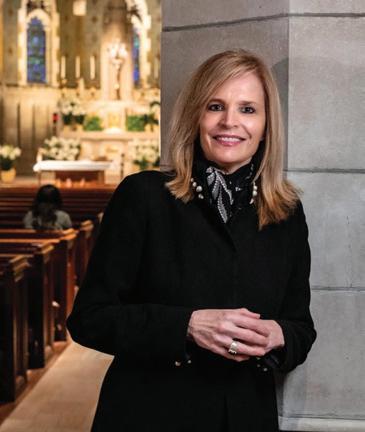
The Healey Education Foundation (HEF) has awarded a $2.5 million grant to the Roche Center for Catholic Education at Boston College, along with the learning tools, resources, and expertise, to establish a pre-K-12 Catholic school board training program.
The Roche Center will utilize the grant funds for training initiatives to develop school leaders’ executive management skills and to expand the capacity of Catholic school board members, thereby advancing the foundation’s mission to “Build a Better Board Every Day: For the Future of Catholic Schools.”
According to the HEF, the center’s program will offer direct, one-on-one board coaching and peer mentoring to interested dioceses and leaders. It will also employ a new online learning system to jumpstart the training of Catholic school board members, providing access to both self-paced coursework and real-time conversations with today’s most successful working boards. These boards are mission-driven, data-informed, and equipped to take charge of their schools’ futures.
“Effective governance leads to stronger, sustainable Catholic schools,” said Roche Center Executive Director Melodie Wyttenbach. “Given the depth of work our Roche Center team has done to strengthen leaders, this generous gift from the Healey Education Foundation expands our ability to further advance our shared vision of transforming Catholic schools. With great enthusiasm, we will be able to continue making a difference on the ground rapidly, in keeping with the Healey tradition of ‘walking with’ those addressing the challenges facing our Catholic schools at the local level.”
“Any Catholic diocese or school in the country that is ready to launch a best-inclass board or strengthen its current board can now look to the online executive leadership training program at the Roche Center for Catholic Education,” said HEF President Christine L. Healey. “The Roche Center is dedicated to developing leaders of the future and equipping them for excellence. This aligns perfectly with the foundation’s mission of expanding that leadership to the lay community that serves Catholic schools as board members.”
In addition to providing funding for the executive leadership and board training implemented by the Roche Center, the
Kiefer indicated that this finding presents an important takeaway for the Catholic Church in the United States. “There’s a lot of talk about the revitalization of parish life. The SVP showed us that there are ways for Catholic high schools and universities to partner with parishes and share resources and programs. This can help bring young people into the life of the parish and in that way revitalize local faith communities.”
Students are curious about seeing their faith come alive in the classroom through the Catholic intellectual tradition.
“Intellectual engagement with faith, both at the college and high school levels, helps students develop a deeper understanding of their faith,” said Wieboldt. According to the data, high school students wanted their religion classes to engage with topics typically considered contradictory to religious beliefs, such as science, suggesting that dialogue between seemingly opposed disciplines can help students grow in faith.
“This finding offers an exciting invitation for Catholic schools,” said Wieboldt, who added that BC’s Complex Problems and Enduring Questions core courses “model how to facilitate interdisciplinary engagement with faith in the classroom, so there is a real opportunity for high schools and universities to partner and continue to build out their programming.”
At the college level, according to the SVP, engagement with theology in the first year, especially through BC’s Perspectives and PULSE programs, changes the way that students think about the rest of their college years. “Something touches students in a way that opens them up to wanting more
and digging deeper,” said Kiefer, adding that these positive experiences can lead students to become theology or philosophy majors or minors.
Sacraments matter to young people, especially confession.
After looking at the SVP results, Kiefer said she felt strongly that Catholic high schools should offer confession every week.
“The weight of students’ worlds is so heavy. They carry around shame, regret, and unworthiness. The sacrament of Reconciliation is a chance to talk that out and then feel a sacramental grace of forgiveness,” said Kiefer, a longtime religious education instructor and author of the children’s book Drawing God
Wieboldt added that sacramentality— whether connected to Confirmation, first Communion, or otherwise—was often cited by students as their best experiences with the Church. “Something about the mystery of the sacraments attracted young people’s attention.”
“We are a sacramental Church,” said Kiefer. “These students are finding God in the importance of faith in the sacraments.”
The survey data is analyzed by C21 Center staff and each partner school is issued a report on their student body with recommendations for new programming.
“I believe the Student Voices Project is one of the greatest gifts that the C21 Center can give to Church because it shows, in a beautiful way, the hope and opportunity that exists to engage young people for the future of our Church,” said Kiefer.
Read the full article at bit.ly/SVP-report-2023
HEF, school leaders and board members will be better positioned to affirm and advance the Catholic school’s mission; deliver on its unique value proposition; ensure financial sustainability, sound business practices, transparency, and accountability; broaden the school’s base of support through development and increased engagement; and drive toward strategic and succession planning.
foundation will provide all of the developed tools and resources needed for board training. Future programs will be based on the HEF’s vision for school board guidance.
The two organizations have developed a transition plan to enable the transfer of the knowledge assets for a full buildout of the online learning system, and an extensive resource library for schools and boards. This includes the foundation-supported hiring of two full-time Roche Center staff members to implement the program, working directly with school leaders, board members, and diocesan superintendents. The Roche Center plans to launch a pilot for an initial cohort of Catholic school and board leaders this fall.
Through this program, according to the
The Healeys established the foundation in 2004 to bring sound business principles to the challenges of revitalizing Catholic schools. Since then, the foundation’s boardbuilding process has grown at more than 200 schools and 10 dioceses across the United States. The Healey team helped launch 112 boards, conducted 135 market assessments, and established 114 school advancement offices.
“I am so grateful for our team, our school alumni colleagues, and our philanthropic partners who have shared this beautiful journey as we’ve together helped realize my dad’s vision,” said Healey of her late father, Robert T. Healey Sr. “Of course, he loved Catholic schools. He also advocated for both urgency and legacy in this work and talked often about building structures if you want anything to last. Our collaboration with Boston College is just that—an essential framework to continuously evolve board building into the future, beyond our lifetimes.”
Summer 2023
Melodie Wyttenbach
photo by caitlin cunningham
C21 Director Karen Kiefer photo by gary wayne gilbert
5 Chronicle
BC Community Voices Concern Over Court Decision
Continued from page 1
mitted to the transformative power of education and to enrolling a student body that reflects American society, in accordance with the law.”
Boston College Law Professor and Dean’s Distinguished Scholar Kent Greenfield, a long-time Supreme Court analyst and expert, criticized the Court’s ruling. “The Court doesn’t seem to understand higher education. It is not just about a simplistic notion of merit, based on scores and grades. Places like Boston College aspire to educate the whole person, and we craft our student community in a way that embodies our commitments to a holistic education, in service of others. The Court’s ruling imposes its simplistic
tion for diversity was evident throughout the University, he added, including among undergraduates.
“I’m confident that our review of applications has been rigorous and holistic. That said, we’ll need to be vigilant as we move forward to ensure that our process is compliant with this ruling,” Mahoney said.
Dean of Undergraduate Admission and Financial Aid Grant Gosselin said the Court’s decision is likely to have a negative impact on the efforts of the nation’s elite universities to enroll representative populations of students.
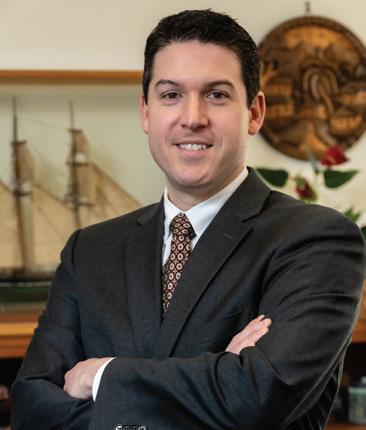
“In recent decades, each of the states that have banned the consideration of race in college admission has seen measurable declines in the enrollment of students from underrepresented backgrounds,” he said. “The nation’s leading private universities are now likely to face these same challenges.
“We are proud of the strides we have made in increasing the enrollment of underrepresented students at Boston College. We will continue to work within the law while remaining steadfast in our commitment to enroll students from a wide range of backgrounds and talents. We will leverage the strong connections we have developed with high schools, community-based organizations, and nonprofit partnerships to ensure that students throughout the country and around the world view Boston College as a welcoming and inclusive community.”
Study of Testing, Evaluation, and Educational Policy. “On a broader level, the decision will exacerbate political divisions, but perhaps in non-traditional ways.”
Professor of History Martin Summers, director of the African and African Diaspora Studies program, said it is “reasonable to assume” that future undergraduate classes are likely to be less racially diverse at predominantly white institutions across the U.S.
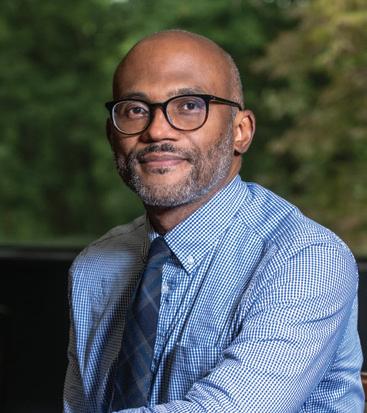
nificant setback in the ongoing pursuit of equality and the dismantling of systemic barriers.”
As one of the first in his neighborhood to attend an elite national university like BC, Nellums-Goosby said he deeply appreciates and values the opportunities he has received in the era of affirmative action.
“When I return home, inspiring and encouraging young people to aim high, apply to prestigious universities, and pursue opportunities becomes a priority,” he said. “Policies like affirmative action play a crucial role in turning these dreams into reality. While an ideal world might render such policies unnecessary, the historical context mandates the need to address existing disparities and level the playing field.”
The impact of affirmative action goes well beyond higher education, noted Roshanie Alfred ’26, pointing out that companies and organizations depend on top universities to recruit a well-rounded set of candidates.
version of meritocracy onto hundreds of schools like Boston College that are committed to a more holistic view of students and education.”
For mission-driven schools like BC, said Greenfield, “a diverse student body is essential. Diversity of all kinds—racial, sexual, socio-economic, ideological—is important in constructing a student community that reflects the school’s commitments to social justice and searching for truth. The Court’s ruling will make it much more difficult for us to achieve the kind of diversity we aspire to have here on campus.
“Diversity makes us better. It makes the classroom experience better. It makes the community stronger. The Court’s ruling harms us as a community, and our teaching and learning will suffer.”
Former Vice Provost for Enrollment Management John L. Mahoney, who recently retired after four decades as a key architect for BC’s undergraduate admission and enrollment, said he was “saddened” by the Court’s decision, recalling the “commitment to the value of diversity” he witnessed among his colleagues when he joined the Office of Undergraduate Admission in 1984, but the apprecia-
Boisi Professor of Education and Public Policy Henry Braun predicted the decision is likely to have an adverse effect on BC’s continued efforts to enroll a more diverse student body.
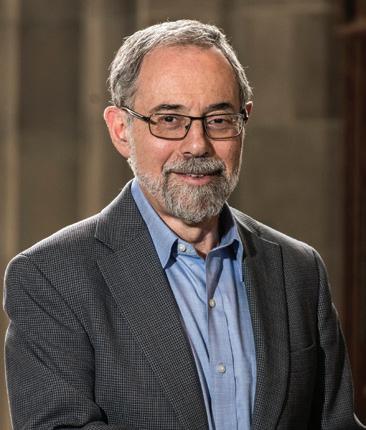
“But one approach is to be more explicit about what types of diversity are most aligned with BC’s mission, and then devise recruitment and retention strategies that best address those goals,” added Braun, director of the Center for the
“I find it interesting that the same people who are advocating for making higher education institutions more diverse in terms of political viewpoints have no problem with making the student bodies at those universities less diverse in terms of race, socio-economic background, life experiences, and so forth,” he said. “As our student body becomes more racially and socio-economically homogenous, I think ultimately our campus culture will become impoverished.”
BC undergraduates expressed concern over the end of affirmative action, especially in the domain of higher education.
“Affirmative action has allowed admissions officers to look into your story as a whole person,” said Osasenaga Owens ’24, former president of the BC African Students Organization. While academic merit is an important factor in college admissions, he said, it is vital to consider how standardized tests have historically “not been gauged” toward people of color.
“We must have the grace to understand that a person is more than the test score they earned on a particular Saturday,” said Owens, a Randolph, Mass., native, who majors in accounting for finance and consulting and minors in philosophy.
“Race has to play into difficult conversations like this one, because the racial opportunity and wealth gap has been part of this country’s story from its founding.”
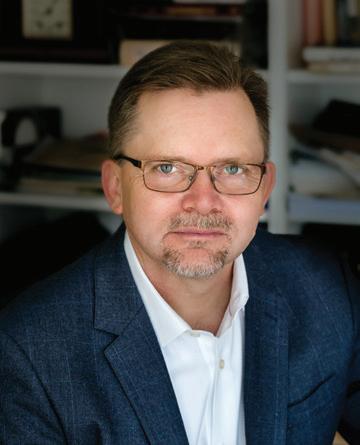
Jarvis Nellums-Goosby ’24, a political science major from Houston, called the elimination of affirmative action “a sig-
“Students are the next generation and will pave the path into the future,” said Alfred, a Bronx, N.Y., native majoring in finance and philosophy. “If we aren’t being thoughtful about the admissions process, we’ll lose the diversity of ideas that make technological and social advancements possible. Universities and organizations can’t limit themselves to one segment of society, or there will be no breakthroughs.”
Summer 2023
Martin Summers: It’s “reasonable to assume” that future undergraduate classes are likely to be less racially diverse at predominantly white institutions across the U.S.
Kent Greenfield:“The Court’s ruling will make it much more difficult for us to achieve the kind of diversity we aspire to have here on campus.”
Henry Braun: “On a broader level, the decision will exacerbate political divisions, but perhaps in non-traditional ways.”
Grant Gosselin: “We will continue to work within the law while remaining steadfast in our commitment to enroll students from a wide range of backgrounds and talents.”
“Race has to play into difficult conversations like this one, because the racial opportunity and wealth gap has been part of this country’s story from its founding.”
—Osasenaga Owens ’24
6 Chronicle
photos of gosselin braun and summers by lee pellegrini
BC Trio Earn Fellowships to Support Study Abroad
BY SEAN SMITH CHRONICLE EDITOR
Boston College undergraduates Isaiah Brown ’24 and Hunter Linton ’25 and 2023 graduate Agustin Tornabene are spending part of the summer broadening their international perspectives through prestigious fellowships from the United States Department of State.
Brown, a political science major with a concentration in international politics who is minoring in Russian, is participating in the Charles B. Rangel International Affairs Summer Enrichment Program, which aims to provide college undergraduates with a deeper appreciation of current issues and trends in international affairs, a greater understanding of career opportunities in international affairs, and the enhanced knowledge and skills to pursue such careers.
Along with his fellow 2023 Rangel Scholars, Brown is living at Howard University, attending classes and participating in a variety of programs with foreign affairs professionals at Howard and at diverse locations around Washington, D.C. For Brown, it’s an opportunity to add to his
and other countries. CLS scholars gain language and cultural skills that enable them to contribute to U.S. economic competitiveness and national security.
A member of the Gabelli Presidential Scholars Program majoring in economics and Hispanic Studies with a minor in accounting for finance and consulting, Linton received a CLS to study Portuguese in Brazil. Last summer, he was awarded a BC Advanced Study Grant Fellowship enabling him to travel to Buenos Aires, where he conducted research on the impact of chronic inflation on Argentinians living below the poverty line. Prior to entering BC, he pursued an independent inclusivity project, “Spanish, Small Business, and Our Community,” that sought to raise the visibility of the Hispanic population in his hometown of Westminster, Md., while simultaneously increasing the customer base for local businesses.
Tornabene, who earned a bachelor’s degree as a dual major in Islamic Civilization and Societies and International Studies, will study Arabic with his CLS. He was an ROTC cadet and a John Marshall Fellow while at BC and wrote his senior thesis on Islamic law. As a student at Woodberry
“Through their remarkable linguistic aptitude in languages that are critical to U.S. security, Isaiah, Hunter, and Agustin have earned welldeserved recognition with these prestigious fellowships and have set themselves on a path towards future success in diplomatic service and cultural exchange.”
—Kathleen Bailey
Marsha Maurer, former senior vice president of patient care services and chief nursing officer at Beth Israel Deaconess Medical Center (BIDMC), is this year’s recipient of the Dean Rita P. Kelleher Award, presented annually by the Boston College Connell School of Nursing to a graduate who embodies the BC nurse.
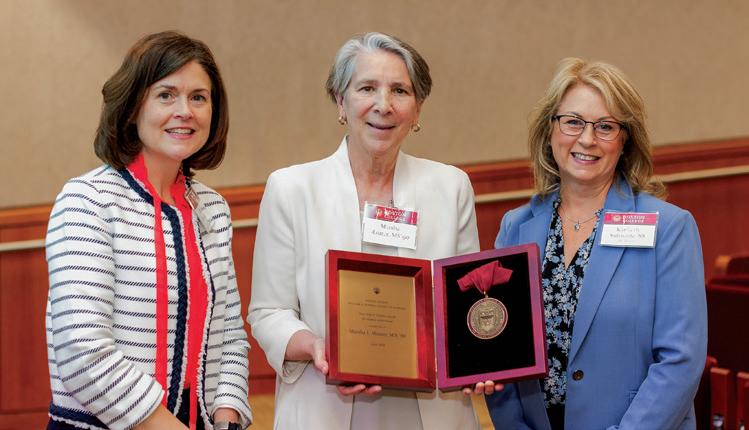
Named after the school’s first faculty member and former dean, the Kelleher Award recognizes a Connell School graduate who is an accomplished nurse leader, an ethically aware scientist, and an inquisitive clinician. Maurer earned a master’s degree from CSON in 1990. Connell School Dean Katherine Gregory presented Maurer with the Kelleher Award at a campus event held during Reunion Weekend earlier this
Jobs
notable international experiences: Following his freshman year, he earned a Critical Language Scholarship (CLS) to study Russian language and culture; as a junior, he spent a semester in the Republic of Kazakhstan at Al-Farabi Kazakh National University, where he learned Russian and Kazakh language and studied Kazakh culture and Central Asian politics. He has received an Omar Aggad Fellowship from BC to return to Kazakhstan this summer to do field research for his senior thesis and is applying for a Fulbright research grant in Central Asia.
Brown hopes to work abroad after graduation, particularly in a capacity that will allow him to utilize his Russian language experience. He is also interested in governmental and private-sector diplomacy, and finds great value in building relationships with others from different countries, backgrounds, and cultures.
Linton and Tornabene were awarded Critical Language Scholarships, a State Department program that seeks to broaden the base of Americans studying and mastering critical languages and building relationships between the people of the U.S.
Forest School, Tornabene served as secretary general for its Model United Nations. He plans to commission into the U.S. Army and serve on active duty.
“Through their remarkable linguistic aptitude in languages that are critical to U.S. security, Isaiah, Hunter, and Agustin have earned well-deserved recognition with these prestigious fellowships and have set themselves on a path towards future success in diplomatic service and cultural exchange,” said Gabelli Presidential Scholars Program Director Kathleen Bailey, a professor of the practice in the Political Science Department.
Bailey noted that both Brown and Linton have been mentored by U.S. Deputy Assistant Secretary for Trade Policy and Negotiations Tony Fernandes, a 1986 BC alumnus.
“We are so fortunate to have alumni like Tony Fernandes to mentor students in the field of diplomacy and foreign policy. He has generously lent his expertise and support to equip BC students with the skills and opportunities they need for continued excellence in their future careers.”
The following are among the recent positions posted by the Department of Human Resources. For more information on employment opportunities at Boston College, see www.bc.edu/jobs or scan the QR code at right.

Assistant Equipment Manager
Assistant/Associate Director, Leadership
Giving
Fiscal & Operations Specialist
Information Security Analyst
Patrol Officer
Manager, Nursing Administration
Administrative Assistant, University Advancement
Senior Learning Experience Designer
Dining Services Assistant Manager
Content Development Specialist
Campus Minister
Assistant Director, Athletics Annual Giving
Research Assistant
Senior Laboratory Technician, Chemistry
Dance Team Instructor, BC Bands
Assistant Director, Graduate Career Services
Custodial Supervisor
summer.
Maurer began her nursing career at what was then called the Beth Israel Hospital, caring for patients with HIV and addiction at the height of the AIDS epidemic in the 1980s. She later worked for Cambridge Health Alliance, serving as a nurse manager and then a senior director. For the last 15 years, she was the chief nursing officer at BIDMC, where she led nurses through such events as the Boston Marathon bombings and COVID.
She has been committed to helping marginalized groups, whether they be patients seeking care and compassion or people underrepresented in the nursing workforce seeking access into the health care profession.
Technical Support Specialist, O’Neill Library
Assistant Buyer, Auxiliary Services
Life Skills Coordinator
Public Safety Dispatcher
Senior Applications Architect/Engineer
Software Release Analyst
Student Affairs Administrator
Access Services Assistant
Procurement and Vendor Specialist
Alumni Relations Assistant
Network Engineer
Post-doctoral Research Fellow (multiple positions)
Summer 2023
Kelleher Award winner Marsha Maurer, flanked by Connell School of Nursing Dean Katherine Gregory (left) and CSON graduate Kim Sulmonte, vice president of organizational planning at Beth Israel Deaconess Medical Center. photo by julie lippert
7 Chronicle
Going the Distance
Founded at Boston College, the Greater Boston Track Club—with an impressive legacy of accomplished runners—recently marked 50 years
BY PHIL GLOUDEMANS STAFF WRITER
The Greater Boston Track Club (GBTC), launched 50 years ago at Boston College, and whose luminaries include four-time Boston Marathon winner Bill Rodgers M.A. ’75, celebrated its golden anniversary earlier this summer with a walk—not a run—around the Chestnut Hill Reservoir, followed by a reception at Conte Forum.
More than 100 current and former members gathered along with families and friends on June 13 to commemorate the illustrious club’s August 1973 launch, fueled then by former BC Assistant Athletic Director and cross country and head track coach Jack McDonald ’73.

The GBTC’s resume of achievement is lengthy: The club has won more than 70 New England club track titles, more than a dozen Eastern club regional titles and second-place finishes, more than a dozen USA Track & Field club national championships and runners-up, and produced numerous individual Olympians, national champions, and record holders. Four GBTC runners finished in the top 10 of the 1979 Boston Marathon alone. Many of those in the initial crop of GBTC runners later became coaches at the high school, college, track club, and Olympic levels, achieving considerable success.
All that lay ahead 50 summers ago, when McDonald—a four-minute miler and New England champion during his racing days—convened a small group of dedicated, post-collegiate Boston-area runners and track coaches in a locker room at BC’s
Among other achievements, the GBTC has won more than 70 New England club track titles and produced numerous individual Olympians, national champions, and record holders. Four GBTC runners finished in the top 10 of the 1979 Boston Marathon alone.
Roberts Center (the predecessor to Conte Forum) to form what many runners and racing aficionados considered the nation’s best distance running club.
Also on hand that day was Donald Ricciato ’71, M.A. ’73, Ph.D. ’00, who would become the organization’s first secretary. Recently, Ricciato—a member of the relay team that still holds the GBTC’s record for the fastest distance medley—explained the significance of the club’s founding.
“In the days before the running boom— which most pundits pinpoint as pre1970—running was exclusively collegiate competition,” said Ricciato, former director of the Boston College Campus School and
now a Lynch School of Education and Human Development part-time faculty member. “The best runners’ college eligibility would expire, and even a top-tier racing career lasted, at most, through the initial, post-graduate Olympic cycle, when employment and family responsibilities inevitably took precedence.
“Very few athletes had an opportunity to capitalize on their peak athletic performance years in their late 20s and into their early 30s, and there was no system or organization in place in Boston for a post-collegiate runner to find coaching, training support, and comradeship. It was into this gap that the GBTC was born.”
In addition to Ricciato, McDonald—who retired in 2017 after 40 of intercollegiate athletic coaching and administration—recruited accomplished runners such as Rodgers, Charlie Diehl ’75, Dave Elliott M.B.A. ’74, and Dick Mahoney ’72, P ’03,’14, and track official Christopher Lane III ’65, M.Ed. ’68.
The GBTC quickly made its presence felt. Rodgers finished third at the 1975 IAAF World Cross-Country Championships and shortly thereafter won the 1975 Boston Marathon in what was then the American record time of 2:09:55. In 1979, Rodgers set a course record of 2:09:27 for his third Boston Marathon victory, but it was the top 10 finishes of his GBTC teammates Mahoney, Bob Hodge, and Randy Thomas that sealed the club’s reputation as an elite runners’ organization.
Underscoring the club’s preeminence as a producer of world-class runners, Alberto Salazar, wearing the GBTC’s white and red singlet, won the 1982 Boston Marathon, captured the New York City Marathon three times, and set the 1982 American record for the 5,000 and 10,000 meters.
Bill Squires, who was the GBTC’s founding coach, reflected on the club’s success in his foreword to Paul Clerici’s book The History of the Greater Boston Track Club: “As the ‘stable of horses’ grew in the late 1970s, every athlete…went above and beyond his expectations. This was achieved because each runner believed he could make it to the next level, and thus constantly achieved personal records.”
The club’s success slowed in the mid1980s, primarily due to the emergence and appeal of running shoe company-sponsored teams, such as Nike and New Balance, that recruited runners nationally and internationally, and paid runners significantly more than local clubs. But the GBTC had established itself as one of the greatest amateur running clubs in the United States and many of its members went on to create their own individual legacies.
As coach of women’s track and field and cross country at BC, Thomas produced 54 All Americans and guided the Eagles to 17 appearances at the NCAA Women’s CrossCountry championship, finishing fourth in 2000. The U.S. Track and Field Coaches Association honored Thomas as the National Women’s Cross-Country Coach of the Year in 2001; he was also named the NCAA Northeast Regional Cross-Country Coach of the Year four times. Thomas retired in 2022 after 35 seasons at the Heights.
Lane coached for 25 years at BC,
The Greater Boston Track Club’s recent 50th-anniversary celebration included the “Squires Walk,” named for GBTC founding coach Bill Squires, around the Chestnut Hill Reservoir.

Brandeis, and MIT and has logged more than 50 years as a track and field official and event manager at the local, regional, national, and international levels. He also has served as president of the Massachusetts Track and Field Officials Association and was inducted into the Massachusetts State Track Coaches Association Hall of Fame in 2011.
Today, the GBTC continues to be a leader in the region’s post-collegiate running tradition, competing at the national, regional, and local levels in cross country, track and field, and trail running under the guidance of highly experienced coaches, and through the same, friendly, competitive, team-oriented environment that spurred its exponential growth.
“The Greater Boston Track Club’s 50th anniversary event was a wonderful opportunity to recognize the organization’s founding and its initial members from the 1970s, along with its current members who ensure that it endures,” said McDonald, a 1982 inductee into the BC Hall of Fame.
Summer 2023
Former GBTC member and Boston College alumnus Donald Ricciato, left, and an attendee shared laughs and memories at the celebration, held in Conte Forum.
photos by caroline alden
8 Chronicle
