Page 3
Fulbright winners
Page 7 PULSE
BC Law’s Ring, Woods College’s Tomic earn coveted awards Page 10 Urban

Page 3
Fulbright winners
BC Law’s Ring, Woods College’s Tomic earn coveted awards Page 10 Urban
Archbishop
BY SEAN SMITH CHRONICLE EDITOR
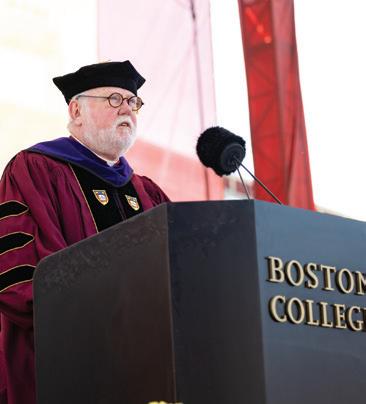
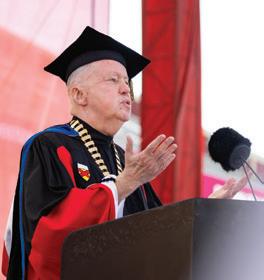
As the United States prepares to mark a significant historical milestone, the need for people devoted to service has never been greater—especially in one profession that might seem a dubious choice, Archbishop Paul Richard Gallagher told the Boston College Class of 2026 at the University’s 150th Commencement Exercises Monday in Alumni Stadium.
“If you really want to help, if you want to aid others, if you want to serve,” said the archbishop, the Holy See’s Secretary for Relations with States and International Organizations, “consider going into politics.”
His position as the Vatican’s foreign secretary often entails meeting politicians, Archbishop Gallagher explained, and while
Public servants don’t always have the best reputation, he acknowledged—and in some cases it’s well deserved—“but the work they do is essential, and often comes at personal cost, for themselves and even their families. It is not easy to be a politician today almost anywhere. The challenges they have to face are enormous and the decisions that they must make are far from easy or simple.
“I have no doubt that as you look around the world today, there are things you would like to change, things that inspire you to act,” said the archbishop, adding his hope that the upcoming 250th anniversary of the Declaration of Independence “will inspire more young people to consider the call to aid society through this work. You will not have an easy task, but you will certainly have my admiration, as indeed you have it in graduating today.”
an entrepreneur and a member of the BC Alumni Association; Joyce M. and William S. Cummings, co-founders of one of New England’s largest philanthropic foundations; Sister Jeanette Gaudet, M.F.I.C.,who has served for more than six decades with the Missionary Franciscan Sisters of the Immaculate Conception; and Mathias Kiwanuka ’05, a former standout Boston College and NFL football player who now works on health issues and economic opportunities in his ancestral home of Uganda. [See the honorary degree citations on page 4]
he doesn’t always agree with them, “I am consistently impressed by the sacrifice and commitment to the service of others that I see in them.”
In addition to Archbishop Gallagher, who was awarded an honorary Doctor of Laws degree, the University presented honorary degrees to Glori Alvarez ’88, P’16,
Also at the ceremony, Ryan Milligan received the 2026 Edward H. Finnegan, S.J., Award [see page 5] as the graduating senior who best exemplifies the University’s motto, “Ever to Excel,” while Clough School of Theology and Ministry Professor Thomas Groome was presented with the Saint Robert Bellarmine, S.J., Award in recognition of his distinguished career and significant role in advancing the
Continued on page 6
BY SEAN SMITH CHRONICLE EDITOR
Joan (not her real name) is a single mother whose pre-teen son Bob suffers from a serious chronic disease that often keeps him bed-ridden and unable to pursue activities like attending school or socializing with friends. She has to frequently change her work schedule so she can stay with Bob, or have a friend, neighbor, or family member do so while she is at her job.
It’s a very stressful situation, one which she says is simply untenable, and difficult for others to understand—including some in the medical profession.
But Joan now has an opportunity to share her first-hand perspective in a setting that could lead to meaningful changes for
her and individuals and families dealing with similar challenges: She is a member of the Lived Experience Action Panel (LEAP), part of a major National Institutes of Health-funded initiative directed by Boston College School of Social Work faculty member Karen Bullock.
The NIH awarded a $64 million grant to establish the Advancing the Science of Palliative Care Research across the Lifespan (ASCENT) consortium, for which Bullock, the Louise McMahon Ahearn Endowed Professor at BCSSW, will serve as a co-investigator. ASCENT provides resources, expertise, and coordination among institutions to advance innovative, highquality research for those living with serious illness and those who care for them.
Bullock’s specific task is to oversee LEAP, which is part of the Research and
Community Engagement Core, one of seven sub-sections (cores) in ASCENT. Among other undertakings, LEAP will compile and disseminate resources on health disparities and community-engaged research, and train and mentor palliative care scientists in these areas. The panel includes both seriously ill persons and caregivers, who provide a vital perspective in the nationwide struggle to improve the quality of and access to palliative care.
“There is a great need to train the next generation of researchers in hospice and palliative care, so as to help recruit and prepare a workforce that will be able to provide that care,” said Bullock, a member of the BC Global Public Health and the Common Good program faculty.
As LEAP’s director, Bullock has person-
Continued on page 8
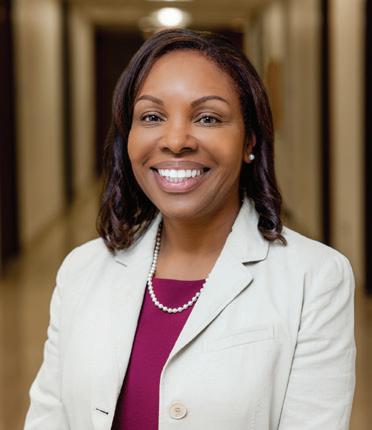
Tracy Regan, a professor of the practice in economics with an expertise in industrial organizations and health and labor economics, is the winner of the 2026 Boston College Phi Beta Kappa Teaching Award.
Each year, BC students in the prestigious honor society submit nominations for outstanding teachers who have positively influenced their experiences at BC, inside or outside the classroom. Faculty are selected for the award based on the cumulative nominations from students over multiple years.
Regan, who holds a master’s degree and a doctorate in economics from the University of Arizona, is a member of Phi Beta Kappa herself, and her career at BC— which began in 2013—has been impactful for students and inspiring for her faculty colleagues.
“Professor Regan is everything that makes Boston College so special,” said Ryan Milligan ’26, who worked with Regan on the Provost Advisory Council and took her Principles of Economics course. “Not only can she make a class lecture of 300 students feel like a small seminar, but she also shows genuine care and interest in
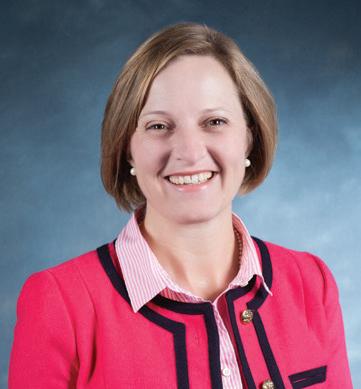
one-on-one conversations. She has a bubbly, infectious personality that makes everyone she encounters feel welcome.”
Regan is also the faculty liaison to BC’s Living and Learning Communities, a signature residential life program that offers meaningful experiences designed around the theme of community. Her faculty peers describe her as a highly sought-after mentor who engages intentionally in conversations with her students and understands them in a unique way.
“Tracy is an amazing advisor and mentor
to so many students,” said Paul Cichello, a professor of the practice in economics who, when he served as director of undergraduate studies, found that Regan was in great demand for her advising. “I think Tracy was bordering on 50 official advisees. Everyone was convinced she was the only one who could advise them. I am always astounded by how she remembers everything that is going on in her students’ and advisees’ lives. Been on vacation? She’ll know it and will ask how it was before she dives into the morass of a theoretical economics model.”
Regan also is adept at building a solid structure for her students, he added, one that encourages deeper exploration of economic principles that go beyond grades and course objectives, and into the complicated realities of the world.
Her students agree.
Heading into graduation, Barry Spoto ’26 reflected on the valuable lessons he took from Regan’s classes—lessons that went far deeper than core economic principles, he said.
“After taking Health Economics, I not only developed theoretical knowledge about her area of expertise, but I also gained immense practical advice that I will carry with me throughout my life,” he said. “She connected economic principles with deeply human issues surrounding health care by
exposing us to both historical and personal accounts. All of us in the class had to discuss and work together to not only contextualize our learning but also discuss how to create meaningful solutions.”
Principles of Economics, which fulfills one of the two social science core requirements, is known for its rigorous exploration of domestic and international economic systems. But many of Regan’s students found that her style of teaching invites curiosity without fear.
“Professor Regan speaks passionately about the subjects she teaches and fuels this eagerness to learn in her students,” said Isabella Eagan ’26. “She welcomes questions and encourages students to listen for the sake of understanding instead of for the grade, and creates an environment that fosters curiosity, allowing students to explore their own interests within the context of the class. Thank you to Professor Regan for creating such a welcoming atmosphere for me during my first semester of first year.”
“Being recognized by students in this way means everything to me,” said Regan. “The students are why I get to do my job and why I love it. The undergraduates are central to BC’s mission of cura personalis; it is a privilege and honor to be able to teach them, and to get to know them.”
—Audrey Loyack
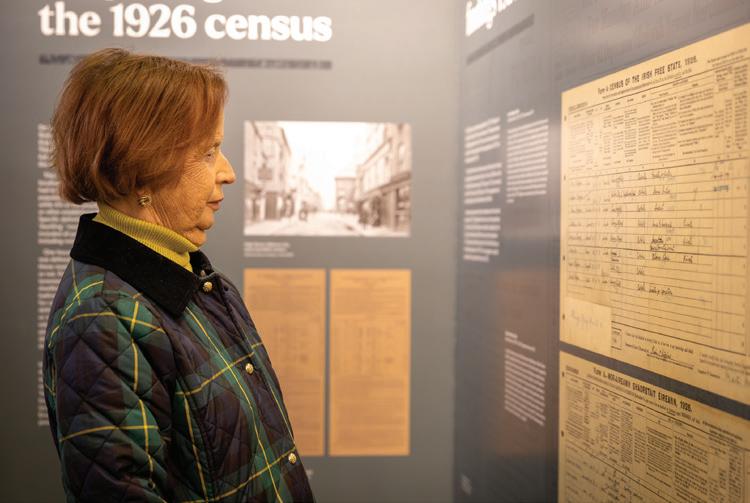
The Burns Library is currently hosting a landmark exhibition, “The Story of Us,” charting the recently released 1926 Census of Ireland records—the first conducted after Ireland became a free state.
“The Story of Us,” which opened May 13 and runs until September 9, offers “a rare and vivid insight into the lives, homes, and communities that shaped a nation in transition,” according to exhibition organizers. Boston is among the first locations outside Ireland to explore these newly accessible records, “bringing to life a pivotal moment in Irish history through personal stories and archival detail.”
Browsing contemporary documents and images, audio-visual displays, and the census returns themselves—comprising over 700,000 individual household returns— exhibition visitors can get an insight into what life was like in the newly independent Ireland of 1926: in towns, cities, the countryside and the islands, from urban tenements to the mansions of the aristocracy. Visitors can glimpse stories of work and daily life, language and culture, sport and
ASSOCIATE VICE PRESIDENT FOR UNIVERSITY COMMUNICATIONS
Jack Dunn
SENIOR DIRECTOR FOR UNIVERSITY COMMUNICATIONS
Patricia Delaney
EDITOR
Sean Smith
entertainment, religion, gender, and the social realities of the new Ireland. A companion book, The Story of Us: Independent Ireland and the 1926 Census, is available in the Boston College Bookstore or via the Irish Academic Press website [www. irishacademicpress.ie].
The official launch of the 1926 Census earlier this year on the Irish National Archives’ website [www.nationalarchives. ie] generated interest well beyond Ireland: More than one million users from the United States visited the site in its first week alone.
“It is an exciting privilege for Boston College to be selected as the U.S. site for the 1926 Irish Census exhibition,” said Associate University Librarian for Scholarly Resources and Burns Librarian Christian Dupont. “I hope that it not only promotes further awareness of the immense value of the Census online resource, but also the vast array of books and archives that we hold locally in Burns Library pertaining to Irish history and society.”
—University Communications
CONTRIBUTING STAFF
Phil Gloudemans
Ed Hayward
Audrey Loyack
Rosanne Pellegrini
Kathleen Sullivan
PHOTOGRAPHERS
Caitlin Cunningham
Matthew Healey
The Boston College Chronicle (USPS 009491), the internal newspaper for faculty and staff, is published biweekly from September to May by Boston College, with editorial offices at the Office of University Communications, 3 Lake Street, Brighton, MA 02135 (617)552-3350.
Distributed free to faculty and staff offices and other locations on campus.
Periodicals postage paid at Boston, MA and additional mailing offices.
POSTMASTER: send address changes to The Boston College Chronicle, Office of University Communications, 3 Lake Street, Brighton, MA 02135.
A flipbook edition of Chronicle is available via e-mail.
Send requests to chronicle@bc.edu.
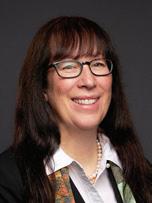
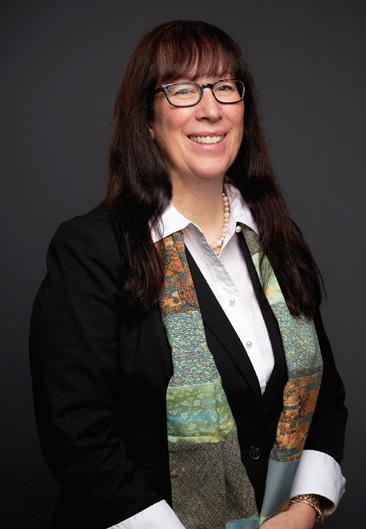
Diane Ring, the Marianne D. Short and Ray Skowyra Professor at Boston College Law School, has received a prestigious Fulbright Scholar Award from the Fulbright Program to conduct research at Vienna University of Economics and Business (WU) during the 2026-2027 academic year.
“I am thrilled to have this opportunity to participate in the full range of research, teaching, and related academic projects at the WU,” Ring said. “The WU Global Tax Policy Center is a vibrant think tank that works year-round to bring tax policy makers, administrators, researchers, and practitioners together for ongoing discussions and debates with the goal of furthering tax policy design. The center’s focus on ensuring that these conversations engage with all countries, including developed and developing economies, supports the specific research that I aim to undertake during my Fulbright time at WU.”
Ring has participated in various WU conferences and events in the past, including at a major international tax conference in 2023 and a two-day conference focused on tax policy in Africa. Her Fulbright research project, “Transparency and Disclosure in Global Tax Reform Developments,” will examine the impact of contemporary international tax transparency and disclosure practices on four dominant developments in international tax, including the new tax role sought by the United Nations, the uncertain future of the OECD/BEPS (Organisation for Economic Co-operative Development/Base Erosion and Profit Shifting) 2.0 Agreement, the increased attention to developing countries, and the impact of technology on all parties. Investigation of the dynamic between transparency/disclosure practices and these new tax developments will be critical in anticipating likely challenges, she said, offering a realistic picture of reform, and identifying paths forward in the quest to improve global tax policy.
Ring will engage with actors across multiple sectors—business, OECD, lower-income states, NGOs, civil society, researchers—to build a nuanced picture of tax transparency and disclosure in practice.
“This is a wonderful and incredibly well-deserved honor for one of our most respected and cherished colleagues,” said Odette Lienau, the Marianne D. Short, Esq., BC Law Dean. “Professor Ring is among the world’s most preeminent tax experts, and I am pleased that the Fulbright Program is allowing her this opportunity to expand upon her significant scholarship, and to engage with other global leaders in the field.”
Ring, who served as BC Law associate dean of faculty from 2018-2021 and as
BY PATRICIA DELANEY SENIOR DIRECTOR FOR UNIVERSITY COMMUNICATIONS
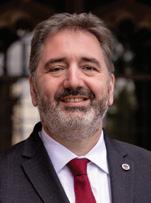
Aleksandar (Sasha) Tomic, associate dean for strategy, innovation, and technology at the Woods College of Advancing Studies, has been named to the prestigious Fulbright Specialist Program, a United States Department of State initiative that connects American scholars with international institutions to share expertise and advance collaborative research.
Tomic will travel to Montenegro in June to begin a five-week project at the Faculty of Economics at the University of Montenegro, the oldest institution of higher education in the Balkan country, where he will help the school to strengthen its academic standards in line with U.S.-style excellence in business education.
interim dean from 2021-2023, researches and writes primarily in the field of international taxation, corporate taxation, and ethical issues in tax practice.
Her work addresses issues including information exchange, tax leaks, corruption and taxation, international tax relations, sharing economy and human equity transactions, and ethics in international tax. She has co-authored three case books in taxation and one on ethical problems in federal tax practice. Ring was a consultant for the United Nations’ 2014 project on tax base protection for developing countries, and the UN’s 2013 project on treaty administration for developing countries. She served as chair for the Tax Section Committee of Teaching Taxation of the American Bar Association.
The Fulbright Program, the United States government’s flagship international academic exchange initiative, advances knowledge and innovation, fosters solutions to complex global challenges, and promotes peaceful relations between the United States and other nations. Fulbright Scholars are a distinguished network of alumni who have served as heads of state, judges, ambassadors, cabinet ministers, CEOs, and university presidents, as well as leading journalists, artists, scientists, and teachers. Fulbright alumni have earned 63 Nobel Prizes, 98 Pulitzer Prizes, 83 MacArthur Fellowships, among many other honors. Since its inception in 1946, nearly 450,000 individuals have participated in the program, contributing to its legacy of excellence and impact.
—Boston College Law School
The Fulbright Specialist award recognizes individuals for their professional achievement, demonstrated leadership in a field, and potential to foster long-term cooperation between institutions in the U.S. and abroad.
“It is a great honor to be named a Fulbright Specialist,” said Tomic, who directs the Woods College master’s degree programs in applied economics and applied analytics, and holds courtesy appointments as professor of the practice in both the Morrissey College of Arts and Sciences and Carroll School of Management.
“Being able to contribute back to my country of origin and build further bridges between it and the United States and Boston College is especially meaningful for me, and I am very grateful for the support that I have received. I look at this grant as another steppingstone to a deeper, more fruitful collaboration between our institutions, and also between our two countries.”
“There are few people I’ve met in life that can compare to Sasha Tomic’s energy, ingenuity, vision, and care,” said Woods College Dean David Goodman. “All that he does bends the realities around him and simply creates a better world. We are delighted by this Fulbright appointment and know it will yield meaningful effects for all involved.”
As Fulbright Specialist, Tomic will collaborate with University of Montenegro’s Faculty of Economics leadership and designated working groups to provide guidance on strengthening academic governance structures and committee processes, support the development of a structured learning framework, advise on curriculum mapping and program alignment, share practical approaches to faculty engagement and institutional planning, provide recommendations regarding quality standards in online and blended learning, and advise on innovative teaching approaches that
prepare students for contemporary business environments.
He also will deliver a public lecture and organize a student discussion on the development of business and economics education in the United States, highlighting in particular how American business schools have increasingly integrated applied learning, collaboration with industry, and teaching methods that place less emphasis on purely theoretical instruction and greater focus on problem-solving, case-based learning, and experiential education.
Tomic’s work as Fulbright Specialist will build upon his involvement in an active exchange partnership between the University of Montenegro and Boston College that has been flourishing for several years, beginning in 2024 with a 10-day visit to BC hosted by the Woods College for a delegation of 13 early-career teaching associates. Tomic, who organized the visit’s schedule of events, said it was an opportunity for young colleagues from Montenegro to experience Boston College’s approach to teaching and student engagement.
Several additional visits followed, Tomic said, including by senior representatives from the Montenegrin university and by executives in a professional education program developed and delivered in partnership with the Faculty of Economics.
“I am especially excited about having my Fulbright project in Montenegro at the Faculty of Economics, which has been our steadfast partner over the last three years,” he said.
Established in 2001, the Fulbright Specialist Program is part of the larger Fulbright Program, which is the flagship international academic exchange program sponsored by the U.S. government.
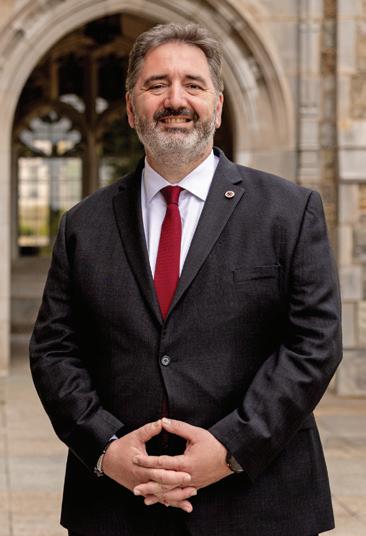
As the Vatican’s Secretary for Relations with States, Archbishop Paul Richard Gallagher assists the Holy See on foreign affairs, responding to a range of international issues, including humanitarian crises, immigration, and armed conflict. A native of Liverpool, he prepared for his role at the Pontifical Ecclesiastical Academy in Rome, the training ground for Vatican diplomats, from which he graduated with a doctorate in canon law in 1984. His first postings in diplomatic service took him to Tanzania, Uruguay, and the Philippines, before being appointed apostolic nuncio to Burundi, Guatemala, and Australia. Twelve years ago, Pope Francis appointed him as the first native English speaker to hold the position. Since then, he has worked to advance discourse, reconciliation, and peace, as well as the values and interests of the Catholic Church, in countries around the world and in assemblies ranging from the United Nations to the Council of Europe in Strasbourg. In recognition of his contributions to international diplomacy and interfaith dialogue, last October he was appointed a Knight Commander of the Most Distinguished Order of St. Michael and St. George by King Charles III. For his dedicated service to the Church and international community as both priest and papal diplomat, Boston College awards Archbishop Paul Richard Gallagher the degree of Doctor of Laws, honoris causa
A respected entrepreneur, civic leader, and Boston College alumna, Gloria “Glori” E. Alvarez Sweeting has used her gifts to build community and lasting connections from the Caribbean to Chestnut Hill. The president of Logotique, a marketing and advertising firm she founded in Guaynabo, Puerto Rico, she is also an active board member at several nonprofits that provide vital assistance to those at risk. At Boston College, where she earned a degree in communication in 1988, she is recognized for her efforts to launch and then lead the BC Alumni Association Chapter of Puerto Rico. She has served on the Alumni Association Board of Directors since 2018, most recently as vice president, and has been a devoted advocate for the Council for Women of Boston College. Her daughter Sarah followed in her footsteps to the Heights, where she proudly cheered her mother on at Mile 21 of the Boston Marathon in 2016. For her pas-
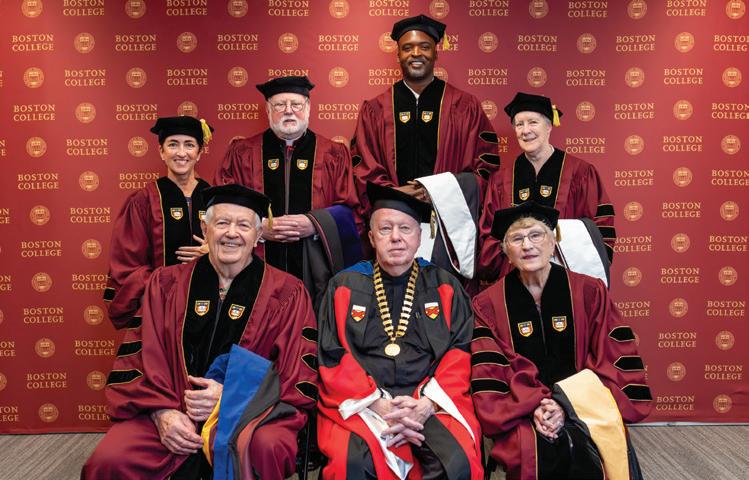
sion in building bridges and unwavering commitment to her alma mater, Boston College proudly awards Gloria E. Alvarez Sweeting the degree of Doctor of Social Science, honoris causa.
As a Missionary Franciscan Sister of the Immaculate Conception, Sister Jeanette Judith Gaudet, M.F.I.C., has devoted more than six decades to service of the Catholic Church and wider society. Her vocational call came after witnessing the joy of the Franciscan Sisters while she was a student at Saint Clare High School in the Roslindale section of Boston. After entering religious life in 1960, she eventually served as a teacher and administrator in Massachusetts and Georgia, before working in the areas of formation, retreats, and parish ministry. Desiring to proclaim the Gospel in a missionary setting, especially among the poor and marginalized, she served in Papua New Guinea for eight years. She also served on her congregation’s interna-
tional leadership council in Rome for 17 years, including a term as the general superior for five years, and later became provincial leader in the United States. Her dedication, commitment, and energy have enabled generations of students to receive an education marked by faith and academic excellence, including locally at Mount Alvernia High School and Academy. In recognition of her lifelong commitment to the Church and her leadership within the Missionary Franciscan Sisters, Boston College bestows on Sister Jeanette Judith Gaudet, M.F.I.C., the degree of Doctor of Humane Letters, honoris causa.
Joyce M. and William S. Cummings have set high standards of excellence in business, philanthropy, and community engagement throughout their lives. While operating Cummings Properties, one of the region’s most successful commercial real estate firms, they established the Cummings Foundation in 1986. It has since awarded more than $600
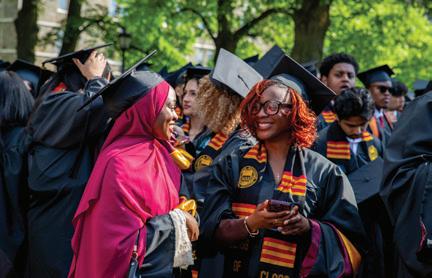

This year’s Commencement included the first cohort of students at Messina College.

million to Greater Boston organizations focused on education, the environment, health care, and human services. The Foundation has partnered with higher education institutions to support schools and initiatives in veterinary medicine, architecture, nursing, education, and global health, while its $30 Million Grant Program annually assists a wide array of local nonprofit organizations. In Rwanda, the Foundation collaborates with Partners In Health and other organizations to aid in the country’s post-genocide recovery. Locally, their New Horizons facilities house more than 500 senior residents in two not-for-profit independent and assisted-living communities. In recognition of their transformative philanthropy in support of education, health, and community outreach, Boston College awards Joyce M. Cummings the degree of Doctor of Social Science, honoris causa, and William S. Cummings the degree of Doctor of Business Administration, honoris causa.
As a businessman, passionate advocate for his ancestral home of Uganda, and former professional football player, Mathias Kagimu Kiwanuka has dedicated his life to making a difference. The grandson of Uganda’s first prime minister Benedicto Kiwanuka, who lost his life upholding the law in the face of tyranny, he has followed his grandfather’s legacy as a board member of The Water Trust, a nonprofit that empowers rural Ugandan communities to access clean, sustainable water, and Smile Train, which instructs Ugandan physicians on cleft palate care in local communities. He is also assisting Uganda to become the sixth African nation to join the NFL Africa Program, designed to build a pipeline of promising young athletes to the league. Most recently, he has chosen to use his entrepreneurial skills to promote mental health projects and advance economic development both in Uganda and throughout the continent. While at Boston College, the psychology major earned Big East Defensive Player of the Year and first-team All-American honors before graduating in 2005 and winning two Super Bowls in nine seasons with the New York Giants. For his commitment to improving the lives of people in need, Boston College proudly awards Mathias Kagimu Kiwanuka the degree of Doctor of Humane Letters, honoris causa.
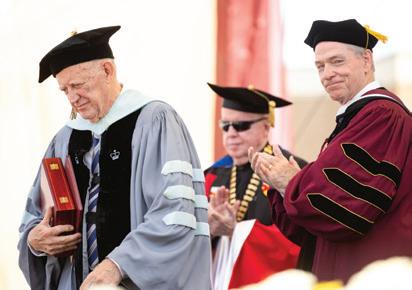
Retiring Clough School of Theology and Ministry Professor Thomas Groome received the Bellarmine Award in recognition of his distinguished career and significant role in advancing the University’s mission.
BY PHIL GLOUDEMANS STAFF WRITER
Characterized by instructors and advisors as a scholar who demonstrated a rare combination of intellectual rigor, servant leadership, and moral purpose, Ryan Milligan is the recipient of the 2026 Edward H. Finnegan, S.J., Award as the graduating senior who best exemplifies Boston College’s motto, “Ever to Excel.”
The Morrissey College of Arts and Sciences grad was presented with the honor by University President William P. Leahy, S.J., at Monday’s Commencement Exercises.
“I know the caliber of students that Boston College produces, and being among the finalists for this award alone was an honor,” said Milligan, interviewed last week. “Each individual is incredibly accomplished and deserving in their own right, so it was deeply humbling to be selected as the winner.”
A political science major with minors in general business, and Religion and Public Life, Milligan earned a cumulative 3.95 GPA and ranked in the top 4.2 percent of his class. Selected as a member of the Political Science Honors Program, he was inducted into Alpha Sigma Nu, the Jesuit honor society.
As a fellow in the Clough Center for the Study of Constitutional Development and the John Marshall Project, Milligan engaged deeply with the intellectual foundations of democracy, grappling with complex texts and contributing thoughtfully to discussions on democratic resilience and statesmanship, and contributed to the Clough Center’s journal focusing on democratic resilience, noted Morrissey College Associate Dean Thomas Mogan.
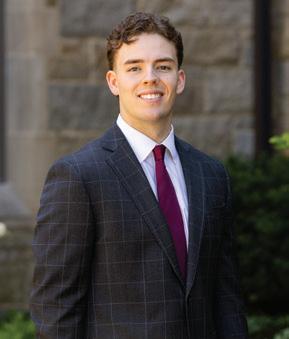
Charles “Charlie” Coughlin
Carroll School of Management
Major: Management, concentrations in Finance and Entrepreneurship
Dean’s List First Honors, Alpha Sigma Nu, Beta Gamma Sigma; Shea Center for Entrepreneurship: Start@Shea executive board; led the Accelerate@Shea program; Portico teaching assistant; president, club soccer; volunteer, St. Columbkille School Emerging Leader Program; ran 130th Boston Marathon to raise money for the Boston Public Library.
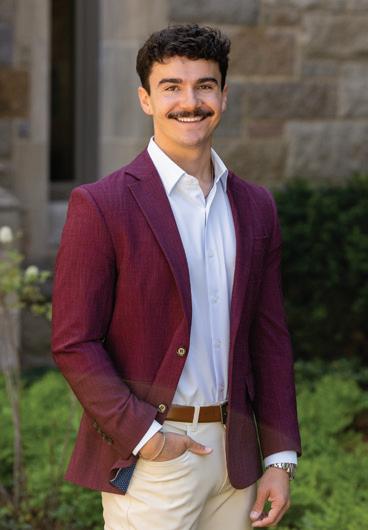
imprisoned individuals.
“During his sophomore year, he took that awareness to Jewish Vocational Services, where he worked with formerly jailed individuals, and those with substance disorders, to aid them in career development,” she said. “When he sees a problem, he doesn’t just lament it; he acts on it.”
Ironically, when he arrived at BC as a freshman, Milligan’s original plan was to “step back” from extracurricular activities after extensive involvement in high school.
“Once I got here, I found myself compelled to dig in,” he said. “Those commitments became my community, and I made my best friends at BC by involving myself in them.”
As a resident assistant, Milligan fostered inclusive environments where students feel supported and valued, skillfully navigating conflicts and promoting belonging, according to Mogan.
He referenced both Wells and Fr. Massa as mentors, along with Vice Provost for Undergraduate Academic Affairs Akua Sarr; Carroll School of Management Professor of the Practice Thomas Wesner; Assistant Professor of Political Science Hannes Kerber; Theology Professor Fr. James Weiss; and Thomas P. O’Neill Jr. Professor of American Politics R. Shep Melnick.
“I’m sure I’m missing some [mentors] because there are too many to count,” he said. “One of the greatest blessings during my time here has been to find mentors who genuinely take an interest in the students they work with. They believed in me even when I was unsure of myself. They held a mirror up and helped me see myself more wholly and clearly. They cared.”
“His academic work has not been about merely mastering material, but also about applying knowledge in service of the common good,” he said.
According to Mark Massa, S.J., outgoing director of the Boisi Center for Religion and American Public Life, Milligan’s devotion to service and social justice is equally profound.
“Ryan is an extraordinarily dedicated and talented student who manifests the best characteristics of Jesuit education: a serious student who is deeply committed to community service,” said Fr. Massa, who served as one of his nominators.
Celeste Wells, a professor of the practice in communication, noted that in her course on incarceration, Milligan was moved by the challenges facing previously
“His leadership extended into student governance, where he was elected twice as a senator, served as committee chair for the Academic Affairs Committee and later as chief of staff in the Undergraduate Government of Boston College. In this capacity, he oversaw a substantial budget and worked collaboratively with over 100 students, demonstrating organizational excellence and a commitment to responsible stewardship.”
Milligan also represented the views of BC students to the highest levels of University leadership. Selected as the sole student representative on the Provost Advisory Council, he provided thoughtful insight into academic policy and institutional priorities. Additionally, he articulated the value of a BC education to donors at several events in support of the Soaring Higher campaign, representing the student body with clarity and conviction.
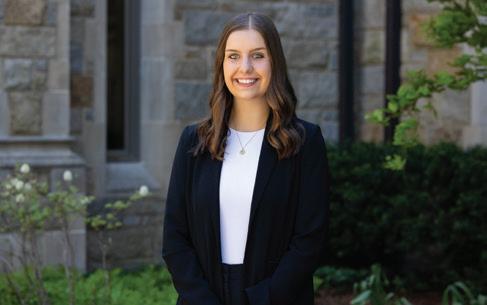
Emily J. Wollan
Lynch School of Education and Human Development
Majors: Secondary Education, English Minors: Theology; Teaching English Language Learners
Alpha Sigma Nu; Liturgy Arts Group Jojo David Spirit of the Community Award; president, Liturgy Arts Group; retreat leader for Kairos, Ignite, and 48Hours programs; Arrupe International Encounters Program (El Salvador); orientation coordinator, Office of First Year Experience; full-time student teacher at Boston College High School; mentor and small group leader, Institute for Advanced Jesuit Studies: Ever to Excel; Lynch School teaching assistant for Experience, Reflection and Action; volunteer, Catholic Charities, Boston.
Milligan noted that Senior Advisor to the President and University Presidentelect John T. “Jack” Butler, S.J., often says students “come through BC’s door and walk out ours.”
“After my four years at BC, I have witnessed the profound intentionality that goes into actualizing that aspiration,” said Milligan, who will attend George Washington University Law School this fall. “It’s the professors and staff who are in love with their work, the dining workers who remember your name, the friends that push you to achieve highly and celebrate with you when you do, the opportunities to be formed in community with peers of similar interests, the facilities workers who keep the Heights pristine, and more. I am proud to be a part of a community that is so thoroughly dedicated and selfless.”
“Ryan is a scholar, a leader, and a servant whose impact will endure far beyond his time at Boston College,” said Mogan. “In every aspect of his college experience, he has exemplified the motto of ‘Ever to Excel.’”
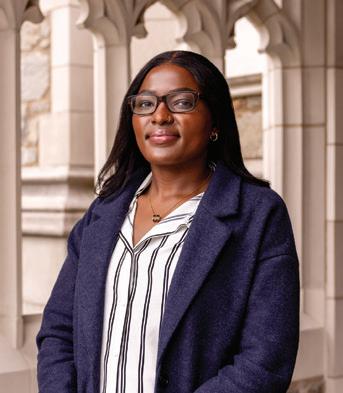
Mary Kwamboka Nyangenya Connell School of Nursing
Major: Nursing Chemistry tutor for first-year students; pathophysiology tutor for sophomores; Admission Office, military and veterans’ mentor; veteran women and nursing liaison, Alumni Office; leader for the sophomore formation retreat.
University’s mission [see bit.ly/BC-ThomasGroome-retirement].
The Class of 2026 also included the first cohort of graduates from Messina College, BC’s two-year associate’s degree program.
This year marked the final Commencement for University President William P. Leahy, S.J., who will step down this summer; Senior Advisor to the President and University President-elect John T. Butler, S.J., gave the invocation at the event.
In his greeting Monday, Fr. Leahy offered his traditional acknowledgement for the graduates and their accomplishments— which have benefited the University community and helped BC “live out its mission, heritage, and culture as a Jesuit, Catholic university”—as well as the parents, spouses, family, and friends who provided them with support and encouragement. He also recognized the contributions of BC faculty and staff, as well as alumni, friends, and benefactors to the achievements of the Class of 2026.
A world struggling to overcome hunger, war, poverty, and illiteracy “desperately needs people of talent, moral and ethical values, generosity of heart, and willingness to invest themselves in working for the greater good and helping society be more just and welcoming to all,” said Fr. Leahy.

ton College Class of 2026 commit to being beacons of hope and agents of reconciliation, and that they approach their futures as a vocation or calling, not solely as a career.”
erything else flows from there.”
learn how to live in society and the more deeply we learn that lesson, the stronger our societies become.”
Consult is not only about seeking knowledge and insight, but at its best, “the openness to hear the truth, he said. “To consult others, and to listen to them, is an essential part of education, and I would argue, of human life.”
Aid—the act of students helping one another—is no less critical to the college experience, Archbishop Gallagher continued, but is vulnerable in a market economy “that thrives on metrics of success and thus inculcates competitiveness.” This mindset creates a zero-sum game “where winning means everyone else has to lose,” given situations such as “a difficult jobs market in a certain sector, limited places on a specific course, one scholarship with a thousand applicants.
“We encourage those graduating today to continue drawing from the ideas, perspectives, and ethical norms rooted in Jesuit, Catholic beliefs and values,” he said. “In particular, we urge that members of the Bos-
Archbishop Gallagher’s remarks included observations about America at 250, a country founded not simply on the principle of independence but “in a clear moral, even theological claim about the dignity of the human person as a creation of God. That claim, that conviction, which is profoundly Christian, remains foundational and is something of which we must never lose sight. It means that human dignity is not granted or ceded, be it by the state, or government, or even popular consensus, but rather arises from truths about the human person that precede all those things. Before anything else, this nation is built on the firm base of God-given human dignity, ev-
He also offered musings about the nature, purpose, and challenges of higher education, drawing on theological, philosophical, and literary references such as St. John Henry Newman, Lord Byron, Aristotle, St. Augustine, and Jean-Paul Sartre. He focused particularly on the writings of Newman about the idea of a university as a place where students and teachers gather, “‘not for the sake of the teachers, but for the sake of the students...They learn to respect, to consult, to aid each other.’” Those three verbs, said Archbishop Gallagher, are the keystone of a college education.
Respect must be given to others, even if we do not agree with them, he explained, pointing to the “all are created equal” phrase in the Declaration of Independence. “To learn to respect others is, in some ways, to
BY ALIX HACKETT SPECIAL TO THE CHRONICLE
In the fall of his junior year, Daniel Schorr ’26 was hanging out with friends when his roommate inadvertently uncovered a family secret. He’d typed Schorr’s last name into the University Directory and up popped a picture of Daniel from freshman year, with longer hair and a skinnier frame, followed by a listing for his mother, Mary, a director in BC’s Information Technology Department. And then…
“Suddenly my roommate says, ‘Hey, Dan, your dad’s a student in the Lynch School?’” Schorr recalled, laughing. “I was stunned. I just said, ‘What are you talking about?’”
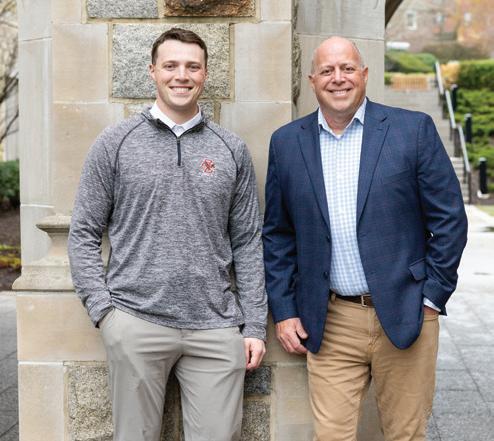
Five minutes later, over the phone, James Schorr ’92, a career marketing analyst, came clean. He was, in fact, a student in the new Master in Data Science program, offered by the Lynch School of Education and Human Development, and he’d kept his return to the classroom “on the down-low” in case it turned out to be too much to juggle alongside his full-time job. Now, thanks to some harmless Internet sleuthing, the secret was out.
“I was going to tell them shortly,” the elder Schorr explained. “It was kind of on my mind but then they figured it out.”
Two years later, the story still gives James and Daniel a good laugh. On Monday, both Schorrs graduated from Boston College, contributing two more BC diplomas to the family’s growing collection (Mary is also a member of the Class of 1992, and Schorr’s grandmother graduated from Newton College of the Sacred Heart, which merged with Boston College in 1974). James attended Daniel’s Commencement ceremony, skipping his own, but they had plans for “celebrating together,” he said.
Thirty-plus years ago, James studied economics at BC as an undergraduate. This time around, he was looking for a program that would help him keep pace in the rapidly changing field of data science. At Epsilon, the marketing, technology, data, and professional services company where he’s worked for 20 years, James has watched his employees begin utilizing innovations like machine learning to analyze consumer, behavioral, and transactional data.
“I wanted to stay on top of and learn about all these evolving technologies, just selfishly, to help me in my current role,” he said. “Being more fluent helps me lead team members who are using these tools day-to-day and helps me be more of a player-coach-manager.”
James was attracted to the Lynch
“These are realities that are faced by people every day. In that context, helping others can almost seem like an act of self-sabotage. And yet to aid, to help others, needs to be at the core, not only of university life, but also of civil society,” he said.
Graduating from a prestigious institution and preparing to enter the next phase of life should be an occasion to reflect on such acts of kindness, said the archbishop. “Each of you knows in your heart who you should be grateful to today, perhaps they are here with you. As you go forward in your lives, both personal and professional, your ability to aid, to help, to assist, will grow. I urge you all to take that seriously.”
Following the main Commencement event, the 4,493 members of the Class of 2026 received their undergraduate and graduate degrees at separate ceremonies held around campus. Continued from page 1
School’s Data Science program in particular because of its emphasis on the ethical handling of data, a critical consideration when running sensitive information through systems powered by artificial intelligence.
“That’s an actual, differentiating characteristic of the BC program: making sure you’re using these tools in a way that’s for the greater good and doing no harm,” he said.
The Data Science program is offered part-time and fully online, which meant James could continue to work while earning his degree. It also meant his presence at BC didn’t impact Daniel, who majored in history and minored in general busi-
ness while also participating in the United States Army ROTC program. Still, the pair was able to joke about their shared student status during football tailgates and Daniel’s occasional visits home.
“I never thought I’d be doing homework with my dad,” joked Daniel, who plans to commission as an officer in the U.S. Army Signal Corps, working on radio communication and information technology systems. “Growing up, he’d be the one helping me but now it’s like we’ve both been going through the grind together. I’m really happy for him.”
Alix Hackett is a senior digital content writer in the Office of University Communications
BY ALIX HACKETT SPECIAL TO THE CHRONICLE
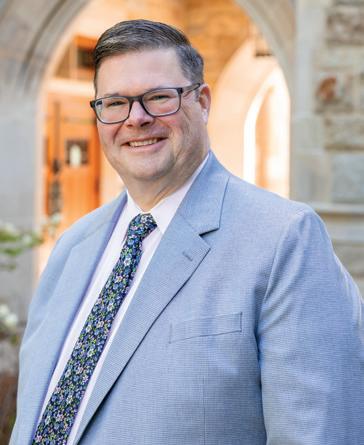
Associate Professor of the Practice in Theology Joshua Snyder has been named the new Cooney Family Director of the PULSE Program for Service Learning at Boston College, beginning in June. Snyder succeeds longtime director Meghan Sweeney, a professor of the practice in the Theology Department, who is stepping down after stewarding the program for the past 12 years.
“The PULSE Program truly embodies the Jesuit mission of forming students to become people for and with others, and I couldn’t be more excited to contribute to its legacy,” said Snyder. “I’m looking forward to building on the foundations set by the previous directors, and figuring out what the next 50 years will look like.”
Snyder has taught in the Theology Department since 2018, and is also the director of the Faith, Peace, and Justice minor. For the past six years, he’s taught Person and Social Responsibility, the PULSE Program’s yearlong core course that combines classroom learning with community service at one of more than 75 nonprofit partners in the Boston area. Every week, students spend 12 hours in direct contact with marginalized populations or social change organizations, while also reading and discussing classic and contemporary works of philosophy and theology.
“PULSE is a key formative learning ex-
perience,” said Snyder. “It brings together self-reflection, academic discussion, and direct service in a unique way that no other program does.”
More than 20,000 Boston College undergraduates have participated in PULSE since its founding in 1970 by BC students and alumni, contributing more than four million hours of service at storied organizations like the Pine Street Inn and Women’s Lunch Place. In 2015, PULSE increased its annual enrollment capacity to 416 students and introduced new electives on topics like mass incarceration and immigration, taught
BY ELLEN SEAWARD SPECIAL TO THE CHRONICLE
A new interdisciplinary minor launching this fall will equip Boston College undergraduates to pursue meaningful careers at the intersection of real estate, housing, transportation, education, climate, and economic mobility.
The 18-credit minor in real estate will be open to students in all BC undergraduate schools. The minor will provide foundational knowledge, interdisciplinary skills, and practical experience for students to be catalysts for change in a field where business and societal needs are closely intertwined.
The University’s real estate offerings have been made possible through efforts from the Joseph E. Corcoran Center for Real Estate and Urban Action and the Business Law and Society Department within the Carroll School of Management, according to Ethan Sullivan, Carroll School associate dean and Business Law and Society chair. He described the new minor as the natural next step.
“Student demand is exceptionally high,” said Sullivan. “The minor will prepare students to engage with the real estate industry from multiple angles, including development, planning, finance, law, public policy and related fields.”
The minor is built around five areas of deep learning, beginning with a foundation in real estate principles and market funda-
by Theology and Philosophy faculty. More recently, it expanded to serve students at Messina College, Boston College’s two-year residential program.
The program has also encountered challenges, most notably during the COVID-19 pandemic in 2020, when in-person service halted abruptly, forcing administrators into uncharted territory. Sweeney recalled emergency meetings held over Zoom designing virtual service opportunities with longstanding partners as well as new ones like the Cotting School in Lexington and the award-winning journalism project, Missing Them, in New York City.
“It was extremely challenging for many reasons,” Sweeney said, “but I’m proud we stayed. We heard from many of our community partners that when other service learning or volunteer programs bailed from their agencies because of COVID, PULSE didn’t. We created ways to make it work.”
Over the past several years, Sweeney has
worked to expand PULSE’s reach by engaging first-year and transfer students as well as the Messina College community. Snyder plans to build upon those efforts moving forward, potentially reaching students in the Woods College of Advancing Studies as well.
More than half a century old, PULSE remains more relevant than ever, he said, offering students a valuable framework for understanding and combating social injustice.
“In 1970 you had all sorts of divisiveness within society and a group of Boston College students decided to double down on theology and philosophy and service,” said Snyder. “That should give strength to our current students, who are thinking about this current moment, what’s happening in the world, and wondering how they can continue to be agents of change.”
Alix Hackett is a senior digital content writer in the Office of University Communications
BY PHIL GLOUDEMANS STAFF WRITER
The Connell School of Nursing has been awarded a two-year, $310,000 grant from the Commonwealth Fund to conduct a cost analysis of start-up and perinatal care delivery costs for community-based birthing centers, which are outside of traditional health care institutions.
mentals, and culminating with a capstone experience involving real-world partners. With courses drawn from across the University—including disciplines ranging from sociology and environmental studies to history and architecture—students will also learn about technical and market depth; urban planning, sustainability, and climate; and housing history and equity.
Corcoran Center Executive Director Neil McCullagh anticipates interest from students who are curious about real estate, urban environments, community dynamics, and how the built environment impacts people’s lives.
“Real estate is where many of the complex issues that BC students care about manifest in tangible ways: climate resilience, housing affordability, neighborhood displacement, racial equity, and access to quality schools. Students are attracted to working on how the built environment impacts peoples’ lives,” said McCullagh.
“BC students are drawn to this field because of the inherent tension within it: Real estate is a business that responds to market forces but also serves as a public good tied closely to community well-being. This tension is where ethical leadership is cultivated.”
For more information about the Real Estate minor, contact Ethan Sullivan at ethan. sullivan@bc.edu
Ellen Seaward is a senior digital content writer in the Office of University Communications
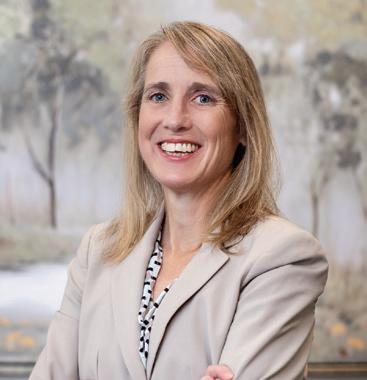
Launching on June 15, the project, led by Associate Dean for Research and Integrated Science Diana M. Bowser, aims to support maternal health by identifying sustainable financing approaches and innovative investments to support birthing care outside the hospital as one means to address the nation’s maternal health crisis.
Birthing centers are usually free-standing, home-like health care facilities specializing in low-risk, natural childbirth using a midwifery-led, wellness-based model.
The United States has the highest maternal mortality rate among high-income nations, with nearly 19 deaths per 100,000 live births in 2023, according to the American Journal of Managed Care. Over 80 percent of these deaths are preventable, reports the journal, driven by inequities, lack of access to care, and cardiovascular conditions. Black women are disproportionately affected, with mortality rates over three times higher than white women.
“The U.S. health care system is not structured to support midwifery-led birth centers which often struggle financially since current reimbursement mechanisms often fail to cover all of the services provided,” said Bowser. “These centers provide high-touch, low-tech services that are culturally responsive and patient centered but which face internal and external cost and financing barriers that negatively impact their ability to deliver care. This research aims to better understand those factors so
equity and maternal health care access can expand.”
The project staff includes Connell School faculty Associate Professor of the Practice Katharine Hutchinson, program director of Midwifery and Women’s Health; Associate Professor of the Practice Thamarah Crevecoeur; Senior Research Associate Priya Agarwal-Harding; and Research Associate Brielle Ruscitti. Additionally, Julie Mottl-Santiago, a certified nurse-midwife and an assistant professor at the Boston University School of Medicine, will serve on the team.
Once completed, the target audience for the research results will be delivery system leaders, funders and investors, and state and federal policy makers, according to Bowser.
The New York City-based Commonwealth Fund promotes high-performing, equitable health care systems that achieve better access, improved quality, and greater efficiency, particularly for society’s most vulnerable, including people of color, low incomes, and those who are uninsured.
BY PHIL GLOUDEMANS STAFF WRITER
A cross-sectional study of more than 76 million American children by researchers, including a Boston College faculty member, found approximately 15 percent—or over 11 million—of the children had a family member who was criminally charged within the past five years, resulting in potentially harmful disruptions to families that threaten the young people’s well-being.
The 24-state study, recently published in JAMA Network Open, was conducted by Lynch School of Education and Human Development Professor Rebekah Levine Coley and Naoka Carey, acting assistant professor of lawyering at New York University Law School.
According to their research, lower-level contact with the criminal justice system, such as arrests or charges, are associated with stigma, mental health struggles, and employment and educational disruptions, all of which can also alter the economic and emotional welfare of the children who reside with the individuals. Families may also lose access to housing or public benefits, placing a direct strain on children.
The investigation, which examined data between 2000 and 2021, identified dramatic increases in family members’ criminal legal contacts (CLC)—including arrests, charges, convictions, felony convictions, and incarcerations—over this time frame. While 6.6 percent of children experienced a family member being criminally charged in 2000-2001, this figure tripled to 19.6 percent of children in 2018-2019, with parents of young children experiencing a substantial portion of the interaction with the criminal justice system. These increases in criminal justice contacts occurred despite dramatic decreases in crime during the same time.
Coley and Carey noted that nearly 40 percent of American children have had
Continued from page 1
ally recruited the panelists to share their experiences and offer suggestions for improving care.
“I met with every person via Zoom to get LEAP up and running,” she said. “We wanted to be sure we had a diversity of voices and experiences for the panel, so our panelists—who represent different regions of the country—include parents who are caring for young children or teenagers; older people caring for a spouse, partner, or family member; young adults coping with serious illnesses—almost every possible scenario. I listened to their stories and asked about their needs, and I talked with them about the opportunity LEAP represents for making their lives better.”
LEAP will have an especially critical role in the consortium, she pointed out, in that its proceedings and findings will be shared across the other six ASCENT cores. The consortium includes principal investigators
the director of the Center for Child and Family Policy. “Our results suggest that high and increasing rates of prevalence may pose a serious public health threat to child well-being and have profound implications for child and adolescent welfare and the professionals who work with them.”
“Reducing the pervasiveness of CLCs for children, families, and communities requires reducing the footprint of the criminal justice system itself through targeted policies and systematic transformation,” said Carey. “Ideally, these findings will
help policymakers better direct resources to schools, community groups, and health practices to support affected children and families, while underscoring that increasing the reach of criminal systems can directly undermine children’s well-being.”
The research was funded by the National Science Foundation/Criminal Justice Administrative Records System, and dissertation grants from the Russell Sage Foundation and the Lynch School of Education and Human Development.
photo by lee pellegrini
family members who were criminally charged at some point during their childhood, with nearly one in 10 experiencing a caregiver’s incarceration.
Prior research theorized that a family’s contact with the criminal justice system— particularly parental incarceration—is a critical social determinate of offspring health, including adverse birth outcomes, behavioral concerns, unmet health care needs, increased depression and anxiety, and chromosome degradation.
“Parental incarceration has been singularly associated with reductions in children’s educational attainment, social networks, and engagement in prosocial activities,” said Coley, the Florencia and Marc Gabelli Family Faculty Fellow and
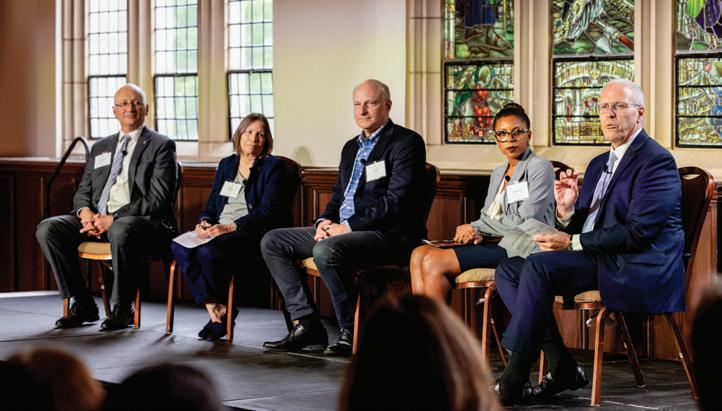
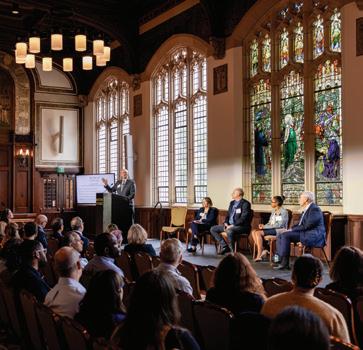
Information Technology Services hosted the second BC Talks AI conference on May 13, an all-day event designed to promote and encourage understanding of AI’s role and to embrace its power and potential on campus. The conference included a panel discussion with (top, L-R) Human Resources Senior Associate Director Stéfane Cahill Farella; Rattigan Professor of English Mary Crane, director of the Institute for the Liberal Arts; Carroll School of Management Professor Sam Ransbotham, Mastrocola Dean's Faculty Fellow; Vice President for Student Affairs Shawna Cooper Whitehead; and Vice President for Human Resources David Trainor.
from schools of medicine at Columbia, New York, and Duke universities, the University of Pennsylvania, Mt. Sinai Hospital, and the Children’s Hospital of Philadelphia, as well as 40 key personnel from more than 20 institutions, representing the interdisciplinary approach that is integral to palliative care.
These scientists will develop a national scientific infrastructure and community to advance palliative care research; create new research knowledge and research methodologies; foster career development and impact of the palliative care workforce; and disseminate palliative care research findings and facilitate their implementation.
Bullock—the 2024 Richard Payne Outstanding Achievement in Diversity, Equity, and Inclusion Award winner selected by the American Academy of Hospice and Palliative Medicine—has expertise in health disparities, health equity, serious illness care, aging and
gerontology, hospice, palliative, and endof-life care decision making. These proficiencies ably complement her social work background, which is valuable in of itself in addressing issues related to palliative care.
“As social workers, we are out in the community and so we understand advocacy and the ways to provide it,” she explained.
“You have to understand the delicacy in engaging people on sensitive matters and use your skills and expertise to get an effective understanding of their situation—and what needs to be done to resolve it.”
Serving on LEAP is a major commitment for the panelists, who must attend meetings via Zoom over a two-year period, noted Bullock. She also has had to provide them with a crash course in how scientific meetings are conducted, and various facets of the scientific method like abstracts and scientific reviews.
LEAP’s membership also includes what
is called a Learned Experience Action Panel, consisting of hospice and palliative care administrators and staff, she said. Their insights, while not exactly like that of the Lived Experience members, are valuable nonetheless.
“It’s empowering for those who are Lived Experience to be grouped with those who are Learned Experience, and vice versa. People who work in palliative care settings certainly are aware of the needs and challenges that patients and their families cope with, but don’t know what it’s like for someone to face these on a day-in, day-out basis. At the same time, patients and families can get a sense of how these professionals see the situation. Serving on the panel together creates the potential for some very beneficial cross-pollination.”
For more about the ASCENT Consortium, see ascentpalliativecare.org
BY ELLEN SEAWARD SPECIAL TO THE CHRONICLE
Boston College students continue to enjoy success in pursuing prestigious study-abroad opportunities, as evidenced by the University’s performance in two United States Department of State programs.
According to a State Department report issued this spring, Boston College is among the top 25 institutions producing Gilman Scholars across the program’s 25-year history. The Gilman Program provides merit-based scholarships to outstanding undergraduate students with high financial need to intern or study abroad. In the past 25 years, more than 160 BC students have been awarded the competitive scholarship, including 10 students who received Gilman awards for the 2026-2027 academic year. This places BC among the top 20 Gilman producers in the medium-sized institution category nationally, alongside the University of Notre Dame, Northwestern University, and Georgetown University.
This year’s recipients include Eleni Apazidou ’28 (Australia), Mohamed Dirar ’27 and Isalia Minnalez ’28 (United Kingdom), ReSean Dupree ’28 (Portugal), Amy Gorreja ’28 (Spain), Jayline MeridaJaimes ’28 and Marissa VanOrmer ’28 (Japan), Kayla Ramos ’28 (Ecuador), and Dominique Williams ’28 (Singapore).
For over 20 years, the Gilman Scholarship has empowered BC students who are traditionally underrepresented in study
BY ROSANNE PELLEGRINI STAFF WRITER
Boston College art historian Oliver Wunsch is a recipient of prestigious awards from the American Society for EighteenthCentury Studies (ASECS) and the Harvard University Hutchins Center for African & African American Research in recognition of excellence in 18th-century scholarship.
An associate professor in the Art, Art History, and Film Department, Wunsch received the ASECS James Clifford Prize for research on aesthetic engagement with Blackness for his article, “The Aesthetic Redemption of the Black Body in EighteenthCentury France,” which was published in the journal Art History in February 2025.
The ASECS citation said Wunsch “adeptly demonstrates ‘how the differing goals of artists and philosophers yielded divergent forms of engagement with Blackness,’” arguing that “the aesthetic aims of painters, focused on producing ‘visual pleasure,’ introduce a disjuncture between a social discourse that would at times
abroad, according to Office of Global Education Associate Director of Program Development and Communications Christina Hatzipetros. “It’s wonderful that BC students feel supported in overcoming perceived barriers to adding a global experience as part of their BC undergraduate experience.”
In addition, the State Department selected Luke Lu ’27, Connor O’Brien ’28, and Caroline Serenyi ’28 for Critical Language Scholarships, which support the equivalent of one year of language study in eight weeks during the summer, through fully funded instruction and activities that reinforce language learning and intercultural competence. Lucas Kucera ’28, Maia Choe ’28, and graduate student Jess Navarette were named as CLS alternates.
More than 4,500 American undergraduate and graduate students applied for the 2026 Critical Language Scholarships. With an acceptance rate of seven percent this year, the CLS represents one of the most selective and distinguished language programs in the nation, supporting the intensive study of languages deemed critical to the United States’ national security and economic prosperity.
Since the founding of the program in 2006, nearly 40 undergraduate and graduate BC students of different academic backgrounds have won Critical Language Scholarships, said Hatzipetros, who recently served as a national panelist with CLS.
“I could not be prouder of the three finalists, as well as our alternates. This is a
marginalize or demean Black subjects and the formal qualities involved in capturing Blackness,” a phenomenon Wunsch calls “the ‘aesthetic redemption’ of the Black body.”
ASECS called Wunsch’s article “valuable (essential?) reading for anyone interested in visual art, aesthetic theory, natural philosophy, historiography, and exhibition curation.”
great achievement for Boston College students,” she said.
The CLS recipients will spend the summer overseas in structured cultural enrichment experiences mastering one of nine critical languages: Arabic, Chinese, Hindi, Japanese, Korean, Persian, Portuguese, Russian, or Swahili.
“I love the process of learning languages and can’t wait to be in a linguistically immersive environment,” said Lu, an International Studies and linguistics major who will study Russian at the American University of Central Asia in Kyrgyzstan. “I want to not only greatly improve my Russian abilities but also to meet new people and explore a culture that I know very little about.”
O’Brien, who spent nine months in Kyrgyzstan through the State Department’s NSLI-Y Program during a pre-BC gap year, will return to Central Asia to study Persian in Tajikistan. Having followed a period of border skirmishes between Kyrgyzstan and Tajikistan in 2022, O’Brien felt he was missing the Tajik perspective on the conflict and was drawn to study Persian because of the Persian roots and history of Tajikistan.
“I’m looking forward to developing a richer understanding of Tajik culture and
Established in 1969, ASECS is the foremost learned society in the United States for the study of all aspects of the “long 18th century”—defined as the period roughly between 1688 and 1815—and bestows awards, grants, prizes, and fellowships to support scholars at every career stage.
“The Clifford Prize is especially heartening because it recognizes work that generates interest among scholars across disciplines, which is one of my big aspirations as a writer,” Wunsch said. “I’ve long relied on the ASECS to connect with scholars outside of art history, so it’s gratifying to see my work validated by the organization.”
For work on his second book, which has grown out of the prize-winning article, Wunsch also was awarded a 2026-2027 academic year fellowship from the Hutchins Center. With the working title Aesthetic Redemption: Art, Race, and Secular Salvation in Eighteenth-Century France, the book examines how Enlightenment aesthetics redefined theological concepts of grace and redemption through depictions of Black subjects.
history, especially through living with a host family and having a local language partner,” said O’Brien, an International Studies and economics major with a Russian minor.
A linguistics and Islamic Civilization and Societies major, Serenyi will study Arabic in Morocco. Envisioning a career in diplomacy or peacebuilding, she is interested in Arabic because of its global relevance in politics, religion, and the arts.
“Learning Arabic will help me to meet people on their own terms and within their own culture. As a linguistics major, I’m also fascinated by the structure of the language and how people use it in different social contexts.”
With more than 190 robust studyabroad programs to choose from, Boston College students have the preparation and dedicated campus resources to succeed in competing for the national award, according to Hatzipetros.
“BC students are able to clearly articulate how their international experience will directly impact their future career and academic goals; they are reflecting on the benefits of the BC abroad experience and setting goals for themselves that clearly demonstrate that education abroad is a high-impact practice at Boston College.”
“The book originates in a paradox: 18thcentury French critics frequently admired depictions of Black subjects in art while disparaging Black people in life,” he said. “This contradiction, I argue, stems from art’s increasing incorporation of a secular rhetoric of redemption, which defined art through its power to ameliorate allegedly deficient subjects.”
Hutchins fellows present their work in a weekly colloquia series chaired by center Director Henry Louis Gates, Jr., receive office space, support from a research assistant, and have access to the Du Bois Institute research resources. Established in 1975 as the W.E.B. Du Bois Institute for Afro-American Research, the center annually appoints scholars who conduct individual research in fields related to African and African American Studies.
“The Hutchins Center fellowship means a lot to me, not just because of the dedicated time that it will provide for working on the book, but also because of the intellectual community and tradition of scholarship that it cultivates,” Wunsch said. “Because the Hutchins Center houses the Image of the Black in Western Art archive and library, it has been a particularly important meeting place for scholars researching the visual representation of Black subjects. I can’t think of a better setting in which to write the book.”
Wunsch, whose research and teaching focus on European and American art in the 18th and 19th centuries, directs undergraduate studies in art history in the Art, Art History, and Film Department. He has a background as a painter and printmaker, and much of his research deals with the history of artistic techniques.
BY ELLEN SEAWARD SPECIAL TO THE CHRONICLE
When St. Joseph’s Shelter in Hyannis, Mass., needed to relocate to a new space to better serve the unhoused community on Cape Cod, six students in Boston College’s Urban Action Lab used theological doctrine and a Massachusetts state law to push the process forward.
Since 2016, Catholic Charities of the Diocese of Fall River has operated the emergency overnight shelter, which has been owned by the nonprofit Housing Assistance Corporation (HAC) since 1984 and is a vital resource in Cape Cod’s housing crisis. As the crisis has intensified, HAC and the Diocese of Fall River identified the need for a larger and more accessible facility for a growing and aging unhoused population. Another property in Hyannis, also owned by HAC, offered an ideal site for the shelter to move to, but the relocation faced local resistance.
That’s where the Urban Action Lab came in.
Offered through the Corcoran Center for Real Estate and Urban Action—housed in the Carroll School of Management—the Urban Action Lab is a course based in experiential learning where students partner with local governments and organizations to take on real challenges in Massachusetts communities, according to Neil McCullagh, the center’s executive director. McCullagh selected the St. Joseph’s relocation for the spring 2025 Urban Action Lab after connecting with HAC’s chief legal officer Rob Brennan ’93, J.D. ’96.
McCullagh and Brennan believed that because St. Joseph’s is operated by Catholic Charities and represents the lived expression of Catholic doctrine through organized ministry to the unhoused, the relocation should be possible through the Dover Amendment, a Massachusetts law exempting religious and educational uses of land from certain zoning regulations.
Urban Action Lab students dove in, creating a comprehensive stakeholder engagement strategy and an argument in favor of the shelter’s relocation rooted in Catholic teachings that maintain providing shelter is a moral obligation. Their nearly 70-page report gave HAC and Catholic Charities a strong legal and strategic foundation to advocate for the relocation, said Brennan.
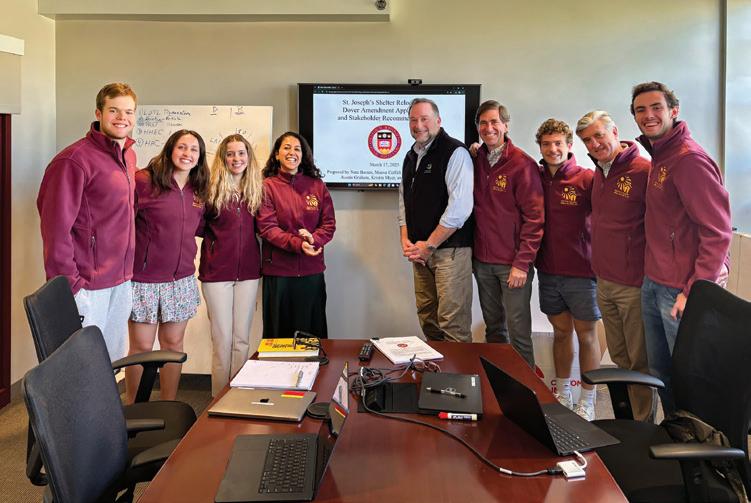
and their classmates visited St. Joseph’s. Toland found it a revelation: “Seeing the shelter and meeting the people who ran it was one of my favorite parts. They go out and walk the walk and help people every day. That makes everything more real.”
In April, the Barnstable Building Commissioner affirmed that the shelter benefits from the protections of the Dover Amendment. The support from the Urban Action Lab students was a significant factor in the positive outcome, according to Susan Mazzarella, CEO of Catholic Charities, Archdiocese of Fall River.
“The relocation represents a visible effort in serving the unhoused with safety and effectiveness and shows that the call to serve and advocate is alive and robust in the college generation. The new shelter location offers an environment where basic needs are met, and where dignity and worth are tangible.”
justice is alive in these students, and at such a high level. The way they approached this work was so impressive.”
The students’ efforts were more than an academic exercise, said McCullagh, who added that the group gelled as a team to contribute meaningfully to a legal and community struggle on behalf of some of the most vulnerable people on Cape Cod.
“Watching their work become part of an active legal record is a reminder of why experiential learning matters and how powerfully Boston College’s Jesuit mission resonates with students when it’s made tangible.”
“Watching their work become part of an active legal record is a reminder of why experiential learning matters and how powerfully Boston College’s Jesuit mission resonates with students when it’s made tangible.”
—Neil McCullagh
Maeve Coffelt ’28, one of the students in the lab, said she appreciated knowing that her work was making a difference. Originally drawn to the lab because of her interest in affordable housing and community development, Coffelt assessed community concerns and developed communication recommendations for HAC and Catholic Charities to build trust and support. One way in which she gathered insight was by immersing herself in Cape Cod Facebook groups.
basic needs are so important.”
Luke Toland ’27, another participant, remembers hearing about a Cape-area nursing home that shut down because its employees couldn’t afford to live in the area. He said the relocation project helped him understand the reality and nuances of building affordable housing.
“It’s easy to learn about affordable housing in a classroom,” said Toland. “I used to think it was simple: build more. Working with HAC and Catholic Charities showed me the red tape that gets in the way.”
As part of the project, Toland, Coffelt,
Andrés Castro Samayoa, an associate professor in the Lynch School of Education and Human Development, has been named co-editor of Educational Researcher, which serves the 25,000-member American Educational Research Association (AERA). Educational Researcher features scholarly articles of general significance to faculty, researchers, graduate students, and professionals working in education, and that emanate from a wide range of areas of education research and related disciplines.
The relocation efforts for St. Joseph’s are ongoing: An appeal was recently filed to the Barnstable Zoning Board. But Brennan says that the work the Urban Action Lab did will continue to shape legal proceedings going forward.
“The students’ work was central to the building commissioner’s affirmative Dover Amendment finding. We will further amplify the case so well made in the Urban Action Lab’s report—that sheltering the homeless is a corporal work of mercy rooted in the Gospel of Matthew and a fundamental precept of the Catholic faith.”
For more about the Urban Action Lab, go to bit.ly/Boston-College-Urban-Action-Lab
Ellen Seaward is a senior digital content writer in the Office of University Communications
Brennan, who collaborated with the students to help them understand the Dover Amendment, described their work as among the best he’s seen.
“As a former Eagle who spent 11 years of my life [he also attended Boston College High School] immersed in Jesuit education, it was moving to me to see that social
“I tried to identify patterns within posts and then organized community comments into a web. I’d say, ‘Okay, here’s a long post. But sifting through it, what’s the actual concern?’ It was great practice for taking in a large amount of information and identifying what’s useful, and for challenging my mindset by listening to both sides of an argument.
“I learned how housing is tied to human dignity. I enjoyed the nature of the work in this project, but it also introduced me to why housing, medical services, and
Castro Samayoa, a member of Educational Leadership and Higher Education Department who also serves as the Lynch School’s doctoral program director in higher education, will share the editing duties from 2027-2029 with Marybeth Gasman, the Samuel DeWitt Proctor Endowed Chair in Education, and the associate dean for research in the Graduate School of Education at Rutgers University. The two were appointed by AERA President Jerome E. Morris after an extensive search led by the AERA Journal Publications Committee, which makes editorial recommendations to the president. AERA is the largest national interdisciplin-
ary research association devoted to the scientific study of education and learning.
Seung Hee Jeon, an associate professor of the practice and the Korean coordinator in the Eastern, Slavic, and German Studies Department, recently received a Presidential Commendation from the Republic of Korea in recognition of her contributions to fostering public understanding and support for peace and peaceful unification on the Korean peninsula.
The citation by Republic of Korea President Lee Jae Myung recognized Jeon’s significant efforts to “advance dialogue, education, and community engagement related to peacebuilding and shared prosperity on the Korean peninsula.” She was presented with the honor by the Consul General of the Republic of Korea in Boston on March 7.
Jeon has published articles on trauma, memories, and truth in war, as well as on strategies to achieve peace in and around Korea. Her translations include Conscience in Action: The Autobiography of Kim Dae-jung, the authoritative biography of the late South Korean president and 2000 Nobel Peace Prize winner.
BY PHIL GLOUDEMANS STAFF WRITER
A new book aimed at improving K-12 school education by David M. Corvi, a leadership coach at Boston College’s Lynch Leadership Academy (LLA), advocates strengthening the everyday experience of every learner—instead of employing interventions or isolated strategies—through a reimagined instructional framework for adult learning and instructional leadership.
Fix Your Tier 1 Instruction: Applying the Science of Good Instruction to the Art of School Leadership provides a pioneering, field-tested structure for school leaders to design professional development training, lead classroom observations, coach educators, and build a culture of collective efficacy aimed at improving Tier 1 instruction, the core curriculum provided to all students in a general education classroom.
“When Tier 1 instruction is strong, consistent, and inclusive, everything else in a school improves,” said Corvi, who has over two decades of experience across urban public schools, charter networks, and nonprofit educational organizations. “When it’s weak or inconsistent, no amount of intervention, programming or initiative can compensate for what students did not receive in the classroom. Improvement starts with the adults in the building.”
The book, founded on the principle that leadership is teaching, maps a researchbased Tier 1 instructional framework to the structure and delivery of professional learning, emphasizing clarity of learning objectives, engagement strategies, educational delivery, practice opportunities, checks for understanding, and targeted feedback—all transferable from student to adult learning.
According to Corvi, Fix Your Tier 1 Instruction is written for principals, assistant principals, superintendents, instructional coaches, and any organizational leader at public, charter, independent, or parochial schools committed to building a culture where learning is the work, not a slogan.
“The same principles that define great
David Corvi
classroom instruction—including clarity of purpose, active engagement, targeted feedback, differentiated support, and assessing for success—apply directly to how leaders develop the adults in their schools,” said Corvi, a former elementary school principal in Camden, NJ, and a Teach for America alumnus who joined the LLA in 2020. “The result is a coherent, actionable framework that connects what happens in the classroom to what happens for teacher development.”
Throughout the book, Corvi provides reflection prompts, case studies, checklists, self-assessments, and other tools that can be employed immediately.
“You will be able help all of your teachers grow,” he said, “and their students will grow as a result.”
Founded in 2010, the LLA is a collaborative, cross-sector community of school and district leaders who work to transform educational experiences of students in Massachusetts and Northeast Ohio. Its mission is to develop a powerful and sustainable network of highly effective leaders at schools, within systems, and in communities, who will disrupt inequity and dramatically increase the opportunities and outcomes for all students. A partnership with the Carroll School of Management meshes the necessary learning school principals need to do to become skilled instructional leaders and executive managers.
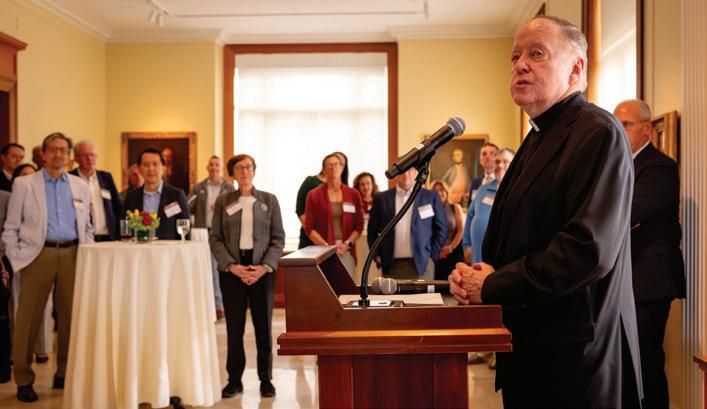
Boston College faculty members provided commentary on a number of topics involving Pope Leo XIV: Libby Millennium Professor of Theology and Law Cathleen Kaveny offered reflections in America magazine on Leo’s vision for his papacy, as well as his task to continue to embed the teachings of the Second Vatican Council in the institutions of the Church; Vice Provost and Canisius Professor of Theology James Keenan, S.J., and Prof. Thomas Groome (CSTM) discussed the pope’s comments about the Iran war with GBH News; Prof. David Hopkins (Political Science) spoke with Newsweek on Americans’ views of the rift between Leo and President Trump.
The Times of London reported on a study, co-authored by Prof. James Mahalik (LSOEHD) and doctoral candidate Michael Harris, of 59 countries that found national happiness decreases where men feel pressure to “prove” their manhood.
Part-time faculty member Brian Bethune (Economics) offered comments to USA Today and Marketplace on the effect of inflation and the Iran war on wages and the job market.
When it comes to Boston neighborhoods—like “Back Bay” or “the Back Bay”—using the definite article is far from definitive, noted a Boston Globe story, which included linguistic insights from
The following are among the recent positions posted by the Department of Human Resources. For more information on employment opportunities at Boston College, see www.bc.edu/jobs or scan the QR code at right.
Leadership Effectiveness Director
Instruction and Research Services Librarian
Digital Content Development Specialist
Development Assistant, Corporate & Foundation Relations
Student & Academic Services Assistant
Graduate Programs Assistant
Administrative Assistant, Business Analytics
Research Project Manager, School of Social Work
Assistant Director, Student Leadership Programs
Administrative Assistant, Center for Corporate Citizenship
Facilities Supervisor
Service Center Representative
Director, Professional Development & Continuing Education, School of Social Work
Teacher Assistant
Prof. Margaret Thomas (Eastern, Slavic, and German Studies).
Center for Retirement Research Senior Adviser Alicia Munnell was quoted by The New York Times regarding a proposal that would allow Americans to put 401(k) savings into riskier alternative investments, and by USA Today about average retirement ages.
Clough School of Theology and Ministry alumnus Brian Strassburger, S.J., interviewed Joseph Chair in Theology Kristin Heyer for The Jesuit Border Podcast about the current campaign of mass deportation in light of a Christian ethic.
Alternative investments could appear on some 401(k) menus in the year ahead, reported The New York Times, which included remarks by Carney Distinguished Scholar Prof. Renée M. Jones (Law).
Prof. John Baldovin, S.J. (CSTM), discussed the liturgical practices of Good Friday services for Catholics in an interview with the Associated Press.
Irish Institute Director Mary C. Murphy and Dorchester Reporter Managing Editor Bill Forry ’95 joined WBUR’s “Morning Edition” to reflect on the past and future of Irish American political identity in Boston.

Research Assistant, Psychology and Neuroscience
Executive Director for Auxiliary Services
Dishwasher
Administrative Assistant to the Dean, Messina College
Digital Initiatives and Scholarly Communication, BC Law
Assistant/Associate Director, Schools & Programs
Gift Processing Specialist
Credit and Collections Specialist
Executive Director of Corporate & Foundation Relations
Waitstaff
Mark Brodin
Professor and Michael and Helen Lee Distinguished Scholar
Years at BC: 43
A former associate dean for academic affairs at BC Law, Brodin has published extensively in the fields of civil and criminal procedure, evidence, litigation, and employment discrimination.
His Howard Law
Journal article, “The Murder of Black Males in a World of NonAccountability:
The Surreal Trial of George Zimmerman for the Killing of Trayvon Martin” and his 10-year retrospective on the case, published by the Marquette University Law Review, are frequently cited for revealing the persistence of racism and racial profiling, and for motivating efforts to review “stand your ground” laws. Brodin’s biography of iconic Massachusetts criminal defense and civil liberties lawyer William P. Homans Jr., was characterized as “a masterpiece of legal biography.”
of 1,500 registrants each year. He also was instrumental in the success of BC’s annual Relay for Life fundraising event for the American Cancer Society.
“I initially came to BC as a campus minister and spent eight years working with wonderful colleagues and students on projects including retreats, liturgies, pastoral accompaniment, social justice initiatives, and service projects. Then I was invited to direct the newly created Volunteer & Service Learning Center, through an endowed position named in honor of Welles Crowther, who had lost his life while saving others on 9/11. Imagine the privilege it has been to be aligned in any way with Welles, and to come to know, love, and work with the Crowther family over several years.
“We have built a robust center that promotes experiences that engage students in relationships and realities that challenge them to consider how their faith informs, and how their life and vocation can contribute to a more just world. A key highlight has been the creation of BC Bigs, a partnership with Big Brothers Big Sisters that has matched nearly 4,000 students as mentors to boys and girls in Boston since 2010.
University President William P. Leahy, S.J., will host the annual Recognition Reception and Dinner for retiring employees on June 10, which also will include presentation of the annual Boston College Community Service Award.
“I have had a wonderful and productive 43 years at BC Law. Both the University and the Law School have experienced dramatic growth in programs and opportunities for scholars like me to develop and thrive. I could not have asked for more support in my teaching and publishing than what I’ve had over the years—from deans, the staff, colleagues, and students. It has allowed me to produce over 30 law journal articles, four books, and numerous shorter pieces, and to conduct media appearances.
“In terms of demographics, today’s BC is not the BC I joined four decades ago; we have become a far more pluralistic community, representative of our nation and the wider world. And we are all better for it.”
—Phil Gloudemans
Daniel Ponsetto
Welles Remy Crowther Director of the Volunteer & Service Learning Center
Years at BC: 30
“I am deeply grateful for the experiences and relationships that have been so formative for me. I never imagined landing here at BC, and I consider it one of my life’s beautiful blessings to have had the chance to minister and work in such a wonderful community.”
—Sean Smith
Benjamin Braude
Associate Professor of History Years at BC: 48 years
Those administrators, faculty, and staff who retired during the 2025-2026 academic year include: Derrick Anacleto, Anthony Anderson, Shelley Beth Barber, Bartolomeu Barros, Jean Bartunek, R.S.C.J., Marilyn Bibeau, Stephen Bold, Sebastian Bonaiuto, Stewart Bond, Michael Bourque, Benjamin Braude, Mark Brodin, Maureen Burke, Theresa Burke, Diane Butera, Peter Clote, Stephanie Coleman, Susan Coleman, Carol Craig, Christopher Curry, Stephen Dalton, Robert D’Amelio, Maria DaRosa, Joao DeAndrade, Marc Debacz, Clinton Durant, John Ebel, Paul Emery, Suzanne Ennis, Henry Fandel, Isabel Faria, Anibal Figueiredo, Jospeh Figueiredo, Judith Gordon, Michael Graf, Samuel Graves, Edmund Greene, Thomas Groome, Joseph Harrington, Sharlene Hesse-Biber, Andrew Hession-Kunz, Richard Hoy, Joseph Herlihy, Mark Judd, Alan Kafka, Jacqueline Kalonji, Jeffrey Kohl, and Howard Lau. Also, Dale Mahoney, Laura Mahoney, Gil Manzon, C. Christopher Maxwell, Marlon Mazier, Paul McGowan, Michael McGrath, Jane McGuire, Carolyn McLaughlin, John Michalczyk, Steen Munger, Kenneth Noel, Sara Nunziata, Adrienne Nussbaum, Thomas Oakes, Sandra Pedraza, Pheme Perkins, Frances
Piscatelli, Elizabeth Quinn, Armando Rivas, Madelyn Rivera Bellino, Susan Roberts, Toni Ross, Ruthanne Ryan, Tracy Ryan, Kwasi Sarkodie-Mensah, Margaret Schatkin, Ana Segura, Deborah Shaw, Craig Silverio, Howard Straubing, Charles Sullivan, Elizabeth Sweeney, Francesca Visconti, Laura White, Lopamudra Williams, Roderick Williams, Donald Woodring, and Sheri Young.
On April 29, Boston College recognized employees who completed 25 years of service during 2025-2026 [see photo on page 11]: Kristen Allen, Sergio Alvarez, Anna Bartolini, Sarah Beckjord, Jeremiah Brault, Ann Burgess, Diane Butera, Rita Carlo, Christopher Carpenter, Sadie Centola, Wei Chen, Paul Christensen, M. Elizabeth Cinquino, John Connelly, Alfred Dionne, Daniel Donnellan, Thomas Epstein, Susan Farrell, Frank Garcia, Cheryl Hanley, Robert Howe, Marjorie Howes, Seth Jacobs, Maryellen Jordan, and Zigrida Kruckovs. Also, Terence Leahy, Stephanie Leone, Ada Li, Belle Liang, Joseph Liu, Elder Lopes, Paula Mathieu, Brian McLoughlin, Kenneth Metz, Donna Modica, Catherine Mooney, Daniel Moriarty, Kevin Ohi, Ramiro Oliva, Colleen Olphert, Brian Pinarreta, Christine Pise, Maureen Preskenis, Donald Reed, Betina Rodriguez, Margaret Ryan, Juliet Schor, Franziska Seraphim, Renee Simmons, Philip Strahan, Matthew Thompson, Sharyl Thompson, Sharon Wagner, and Leonid Zyuzin. —University Communications
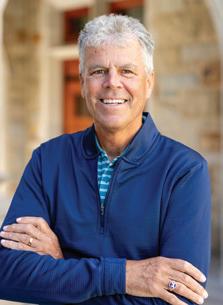
In 2003, eight years after arriving at Boston College, Ponsetto became inaugural director of the VSLC, which assists Boston College students, staff, and faculty seeking opportunities to serve on campus, in the Greater Boston area, or abroad. Among other accomplishments,
Ponsetto created the BC BIGS program, through which students serve as mentors to Boston-area youths, and helped launch the Welles Remy Crowther Red Bandana 5K, a signature campus event that draws upwards
Braude has taught courses on the Middle East and on European-Middle Eastern relations, which have been cross-listed in the departments of Theology, Fine Arts, and Romance Languages. His research and publications have focused on religious, racial, and ethnic identities in Jewish, Christian, and Muslim culture. He laid the foundation for Arabic instruction and the major in Islamic Civilization and Societies as principal investigator and as co-director of United States Department of Education Undergraduate International Studies and Foreign Language awards to strengthen Middle Eastern and Islamic Studies at BC. He was book review editor for Modern Arab, Turkish, and Ottoman History and Political Science; Middle East Studies Association Bulletin; on the advisory board of Ecclesiastica Ottomanica, Isis Press, Istanbul; and on the board of editors of Levantine Review.
“What’s changed about BC is its dramatic physical expansion and national presence. But what’s stayed the same is that the University has maintained its commitment to humanities as a core of the undergraduate program.”
—Rosanne Pellegrini
Sharlene Janice Hesse-Biber Professor of Sociology
Years at BC: 50
Co-founder and director (1989-1992; 20062023) of the Women’s and Gender Studies Program (formerly Women’s Studies Program), Hesse-Biber has been internationally recognized for her research on women’s health and body image, women and work, feminist sociology, mixed methods inquiry, and hereditary breast cancer. She conducted research studies on disordered eating and eating disorders among college students and wrote the award-winning book The Cult of Thinness. Her study of the issues of women and work led to her co-authored books Women at Work and Working Women in America: Split Dreams
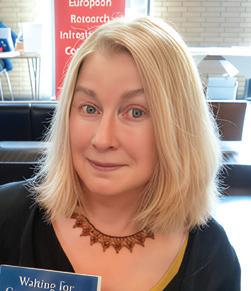
Hesse-Biber, who lost her younger sister to breast cancer, has conducted extensive research and published articles on the lived experiences of women and men predisposed to various cancers. Founder and longtime director of the National Association of Women in Catholic Higher Education, she created a database and a support network for female administrators
and faculty members and hosted 12 biennial conferences.
“The biggest change I’ve observed at Boston College was the profound shift in gender demographics on campus. When I arrived in 1975, I found a predominantly male campus. Today, women comprise 53 percent of BC undergraduates. The College of Arts and Sciences enrolled its first coed class in 1970, consisting of 247 women. In 1974, BC purchased Newton College of the Sacred Heart. Many of the Newton College women told me they felt ‘herded’ into what they saw as a male-dominated environment, leaving them little time or space to adjust to their new campus. It was a chilly climate for women, and they felt excluded, undervalued, and invisible, often reluctant to speak up in class.
“One thing that has remained the same during my time at BC is its Jesuit mission of cura personalis or care for the whole person. What also remains is the call for ‘men and women for others’ through service and social justice. My journey at BC has focused on promoting social justice, as reflected in my scholarly work and the organizational structures I co-created and built to address a range of social justice issues. A focal point of my mission is to make things better. I feel privileged to be here, to live the life I’m living, and to be able to do what I love to do.”
—Kathleen Sullivan