A Positive Progress Report
Organizers upbeat on recently launched AMDG program
BY KATHLEEN SULLIVAN STAFF WRITER
Some 300 young people from across the country are participating in the first year of a pilot program run by Boston College that seeks to promote the renewal and expansion of Catholic faith practices for participants by means of a yearlong immersion in faith exploration and service through Jesuit spirituality.
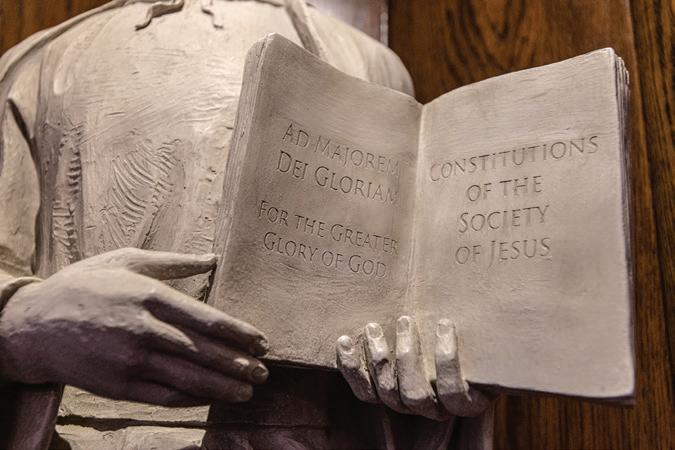
The program, AMDG (short for Ad Majorem Dei Gloriam, the Latin version of the Jesuits’ motto “For the Greater Glory of God”), is being operated under the aegis
3 Expert Witness
New book shows another aspect of Ann Burgess’ groundbreaking work.
6 Q&A: Iran
BC’s Mohammad Ali Kadivar analyzes the unrest in the Islamic Republic.
8 “Collaborating in Conflict”
Upcoming McMullen exhibition reveals rich legacy of Yeats family.
of BC’s Institute for Advanced Jesuit Studies and supported through a $10 million grant from Lilly Endowment Inc. through its National Youth and Young Adult Initiative on Faith and Service.
The participants come from Boston College and 24 other Jesuit institutions— high schools, colleges/universities, and parishes—across 18 states.
“Though each participant has a different background and experience, what ties them together is an openness to Catholic belief and practice,” said AMDG Program Director William Healy.
According to organizers, AMDG is about providing both breadth and depth of experience. “There’s so much beauty in Catholic faith practices,” said Healy. “We’re trying to give everyone an encounter with the rich varieties of ways to engage in the faith: liturgical, sacramental, prayer, pilgrimage, communal, contemplative, and service based. For those participants who may already engage in many of these practices, we want to offer a way and a space to go deeper in their belief, practice, and understanding of what it means to be a person of generosity and service in the world.”
AMDG participants began their year on campus last July where they took part
Wang Chosen As Interim Head of Schiller Institute
BY ED HAYWARD STAFF WRITER
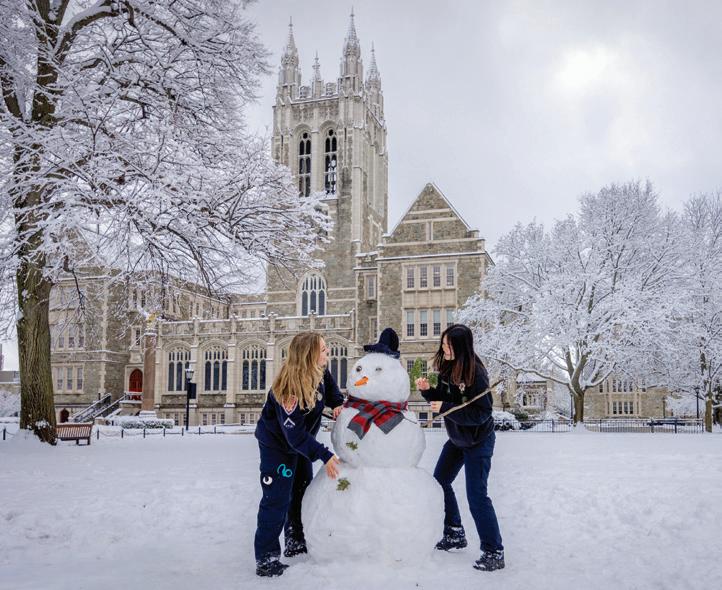
Professor of Chemistry Dunwei Wang, whose research has focused on creating sustainable platforms for energy conversion and resource use, has been named the interim Seidner Family Executive Director of the Schiller Institute for Integrated Science and Society, Boston College announced last week.
Wang, who holds the Margaret A. and Thomas A. Vanderslice Chair, brings to the position more than 20 years of experience as an educator and researcher in the field of materials science and energy research.
“Professor Wang’s two-decade career as a Boston College faculty member has been distinguished by cutting-edge research, engaging teaching, and thoughtful mentorship to undergraduate and graduate students,” said David Quigley, the Robert L. and Judith T. Winston Provost and Dean of Faculties. “His service as Chemistry Department chair over the past six years was characterized by visionary leadership and a collaborative spirit, which led him to be an important part of the Schiller Institute community since its launch.”
Wang’s appointment follows inaugural
Schiller Institute Director Laura J. Steinberg’s decision to step down from the post she held for six years and return to research and teaching when she returns from a sabbatical at the end of this year.
Wang, who joined the BC faculty in 2007, said he is excited to help guide the Schiller Institute through the next phase of its growth as a hub of innovative research,
Leaving ‘a Lasting Legacy’
Feb. 7 concert at Jordan Hall will be a grand finale for BC Bands’ longtime leader Sebastian Bonaiuto
BY SEAN SMITH CHRONICLE EDITOR
When you’re a college band director like Sebastian Bonaiuto, your job entails major tasks such as running rehearsals, selecting and arranging pieces of music for performances, and putting together a concert schedule.
Then there are the little things, like onthe-spot instrument repair.
As Bonaiuto walked through the Boston College Bands facility in Conte Forum one recent afternoon, he was hailed by a student requesting his help: A small part in the valve assembly of her mellophone (the marching band version of a French horn) was coming loose and needed refastening. She handed Bonaiuto a small hammer, which he used to very gently tap down the part in question.
Problem solved, at least for now.
“If that part loosens too much, it allows dust and moisture to collect inside, which is not good for the valve,” he explained.
“But you have to be careful how you tighten it. That’s why the hammer I use has a head made of rawhide instead of metal, because there’s less chance of causing a dent or other damage.
“Of course, it doesn’t always work,” he added with a smile. “But this time it did, anyway.”
For 36 years, Bonaiuto—whose current title is ensemble director—has managed details large and small in running a comprehensive bands program for BC undergraduate and graduate students (BC faculty and staff take part, too, depending on the specific ensemble). Accomplished and novice musicians alike participate in
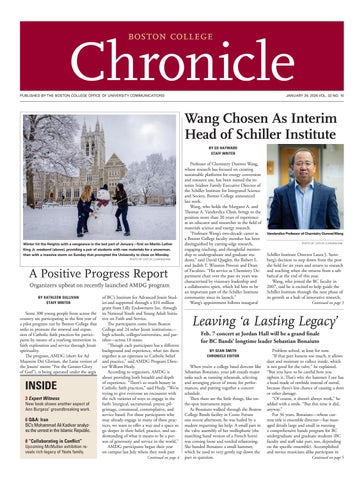
Winter hit the Heights with a vengeance in the last part of January—first on Martin Luther King Jr. weekend (above), providing a pair of students with raw materials for a snowman, then with a massive storm on Sunday that prompted the University to close on Monday.
photo by caitlin cunningham
Vanderslice Professor of Chemistry Dunwei Wang
photo by caitlin cunningham
Around Campus
BC Talks AI Event Invites Proposals
Over the past year, Boston College’s Informational Technology Services (ITS), in collaboration with various University partners, has launched a generative artificial intelligence (AI) site [bc.edu/genai], extended training and tools to the BC community for exploring AI through the lens of Jesuit education, and is gearing up to host the second BC Talks AI conference on May 13.
With the theme
“Innovate with Integrity,” BC Talks AI is an all-day event designed for faculty and staff to promote and encourage understanding of AI’s role and to embrace its power and potential on campus. Continuing the theme of expanding AI education, this year’s conference will focus on key topics such as teaching, learning, student formation, research, and operational efficiency.
tools and skills for administrative efficiency and productivity; generative AI in research methodologies; ethical and societal implications of AI; and integrating AI into student formation and career readiness.
“Last year’s conference was very successful in bringing people together: faculty, researchers, students, and staff, all sharing experiences and learning from one another in the responsible exploration of AI on campus,” said Associate Vice President of ITS Systems & Services
BC Scenes Science x AI x Engineering
Proposals for BC Talks AI, which are due by February 2, can be submitted via the conference website, bc.edu/content/ bc-web/sites/generative-ai/events; decisions will be announced on February 23. According to the guidelines set by BC’s Campus AI Steering Committee, proposals should align with one or more of the conference’s strategic themes, which include: AI engagement and community building; AI in pedagogy and curriculum design; AI
Scott Cann. “This technology changes rapidly, and we hope this year’s conference will continue to foster that deliberate inquiry across disciplines. It is critical that we work together to understand how AI can advance the University’s mission and I am very grateful that our efforts have been an ongoing collaboration with many areas such as the Office of the Provost and Dean of Faculties, Libraries, ITS, Center for Digital Innovation in Learning, and the Center for Teaching Excellence.”
For questions about the conference, email generativeai@bc.edu. Additional details, including the agenda and registration for the conference, will be sent in an email to members of the BC community in March.
—Audrey Loyack
TOTAL COMPENSATION STATEMENT
In mid-February, full-time employees of Boston College will receive the Total Compensation Statement: a personalized document that details the total compensation, salary plus benefits, they receive from the University. The Total Compensation Statement, which represents information from calendar year 2025, will be mailed to employees’ home addresses.
The annual statement lists an employee’s base salary plus health and wellness benefits, retirement plans, and tuition remission. The non-salary section will be detailed further to show an employee’s contribution and BC’s contribution. Also included are descriptions of all the benefits the University offers, from life insurance and disability coverage to group auto and home insurance and adoption assistance.
(Note: New employees who started on or after July 2, 2025 should not expect a statement this year.)
ASSOCIATE VICE PRESIDENT FOR UNIVERSITY COMMUNICATIONS
Jack Dunn
SENIOR DIRECTOR FOR UNIVERSITY COMMUNICATIONS
Patricia Delaney
EDITOR
Sean Smith
CONTRIBUTING STAFF
Phil Gloudemans
Ed Hayward
Audrey Loyack
Rosanne Pellegrini
Kathleen Sullivan
PHOTOGRAPHERS
Caitlin Cunningham Matt Healey

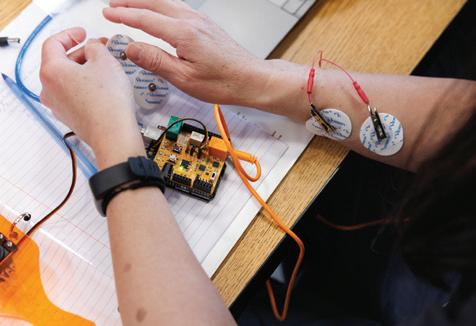
Yihao Sheng (above left) and Aiping Dong participated in the session “Controlling a Bionic Arm with Your Muscle Activity” as part of the 2026 Science x AI x Engineering Workshop held on campus January 19. The event was organized by the Lynch School of Education and Human Development’s Lab-to-Classroom group, which encourages collaborations between educators and researchers.
Black History Month at the Heights
Boston College will celebrate Black History Month in February with several events that are open to the University community. The formal opening reception for Black History Month will take place on February 3 in the Heights Room of Corcoran Commons at 5:30 p.m. Another highlight is the annual Martin Luther King Jr. Scholarship Banquet, February 23 at 4 p.m. in the Murray Function Room.
Other events include:
•“Cultural Trivia (BHM Edition),” February 5, 6:30 p.m., Ashby 113
•“History of Black Lives at BC,” February 16, 10 a.m.-5 p.m., Gasson 100
•“Dialogues on Race,” February 19, 5-6:30 p.m., location TBA
•Film: “A Raisin in the Sun,” February 24, 7 p.m., Messina West 6 Commons
For more Black History Month events at BC, see bc.edu/bhm
—University Communications
The Boston College Chronicle (USPS 009491), the internal newspaper for faculty and staff, is published biweekly from September to May by Boston College, with editorial offices at the Office of University Communications, 3 Lake Street, Brighton, MA 02135 (617)552-3350.
Distributed free to faculty and staff offices and other locations on campus.
Periodicals postage paid at Boston, MA and additional mailing offices.
POSTMASTER: send address changes to The Boston College Chronicle, Office of University Communications, 3 Lake Street, Brighton, MA 02135.
A flipbook edition of Chronicle is available via e-mail.
Send requests to chronicle@bc.edu.
PHOTOS BY
MATT HEALEY
New Book Offers Another Side to Ann Burgess’ Story
BY KATHLEEN SULLIVAN STAFF WRITER
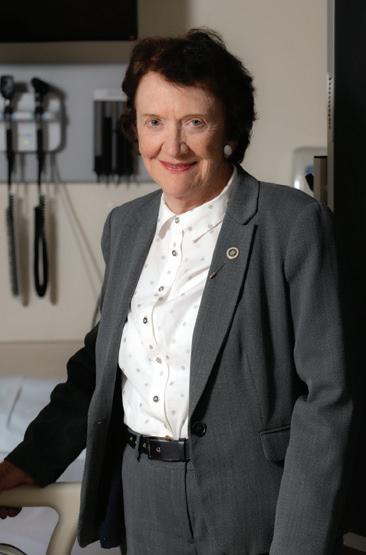
The story of Connell School of Nursing Professor Ann Burgess, a psychiatric nurse who teamed with FBI agents to develop profiles of serial killers, has garnered headlines thanks to a book she co-wrote and a television adaptation that followed. But while the book A Killer By Design and the Hulu docuseries “Mastermind” detailed her groundbreaking role in helping law enforcement capture notorious killers, Burgess’ co-author Steven Constantine felt there was another side of her career that was equally compelling and worth sharing.
“There’s so many different parts to Dr. Burgess’ story,” said Constantine, associate director of marketing and communications at the Connell School. “In writing the first book, I assumed her story was just about the FBI work on serial killers. I didn’t realize the proceeding piece of it, which was her work with rape victims and how that had informed the serial killer work. And then another piece of the story was her expert witness and trial work, which brought her work with the FBI into a more public forum.”
Expert Witness: The Weight of Our Testimony When Justice Hangs in the Balance, co-authored by Burgess and Constantine, details how Burgess’ knowledge of forensics, victimology, and trauma—she and her colleague Lynda Lytle Holstrom coined the term “rape trauma syndrome” in the 1970s—have made her a sought-after expert in headline-grabbing cases from Erik Menendez to Bill Cosby to Larry Nassar. In those cases, and others not covered by the media, Burgess has provided testimony in court or psychiatric assessments that have played critical roles in shaping trials.
According to the authors, whether it is on behalf of the prosecution or the defense, Burgess’ quest is always for the truth. “I’m not a victim’s advocate,” explained Burgess in a recent interview. “I’m an advocate for science, nursing science.”
In the 1990s, Burgess was part of the defense team for Erik Menendez, who, along with his brother Lyle, was accused of the brutal slaying of his mother and father. After interviewing Erik in jail and reviewing the case material, Burgess was convinced that the Menendez brothers were victims of trauma and violence from their parents. While not an excuse, the defense felt it was a mitigating factor. Burgess was tasked with explaining the impact of trauma to the jury through her testimony.
Trauma, she writes, “can manifest in ways that are emotional, physical, behavioral, cognitive—or even a mix of all four. I’d seen the full spectrum of trauma responses, which is how I was able to recognize it in Erik and Lyle in the first place.
“I wasn’t trying to justify Lyle or Erik’s actions or portray them as sympathetic figures,” she continues. “I was simply trying to show that the boys’ actions, as illogical as they might seem to an outsider, made sense from a neurobiological perspective.”
That trial resulted in a hung jury, with the outcome falling along gender lines. Women believed the Menendez brothers, while the men did not, according to Expert Witness. At the retrial, the judge significantly limited the amount of testimony allowed regarding past abuse. Burgess did not testify. The brothers were convicted of first-degree murder and, though resentenced in 2025, are still imprisoned.
Testifying in courtroom is daunting work, according to Burgess. “I put on my bulletproof vest. The one thing you don’t
want to do in the courtroom is show any emotion, especially anger, because juries don’t like that. You have to detach yourself, which is what nurses do. As nurses, we must separate our personal feelings from whatever we’re doing within a patient situation. So I think that helped prepare me.”
The cross-examination is the most challenging part because the opposing side is trying to discredit you, said Burgess. “I still get ‘Well, you’re not a psychiatrist, you’re not a psychologist, you’re just a nurse.’”
“Dr. Burgess saw this book as an opportunity to dispel these stereotypes and tropes that are so deeply in the culture,” said Constantine.
Burgess says it is essential to approach
each case with an open mind. This tactic served her well in the 2006 case of the Duke University lacrosse team members accused of raping a local woman. The media, with the assistance of a district attorney seeking reelection, had already found the men guilty as charged. After a thorough review of the case, Burgess was preparing to testify for the defense. She believed the accusations of sexual assault were false and was not surprised when the case fell apart and there was no trial. (The woman confirmed in a 2024 interview that she had fabricated the accusations.)
Burgess conducted a mental health examination of Andrea Constand, a woman who said comedian and television star Bill Cosby had sexually assaulted her in 2004. Burgess issued a psychiatric evaluation of Constand in preparation for a 2017 criminal trial against Cosby.
In her assessment, Burgess wrote that Constand had been sexually assaulted by Cosby and suffered from chronic posttraumatic stress disorder.
The odds are against victims of sexual assault, according to Expert Witness: only eight percent of cases reported to police result in the perpetrator going to jail.
After the first trial ended in a mistrial, Cosby was found guilty on three felony counts in the retrial.
“Her case had galvanized and inspired a nation, proving that a victim could demand accountability despite even the greatest asymmetry of power,” write the authors.
Burgess hopes the book encourages others to step up into the role of expert witness—a vital one in the criminal justice system because, as the authors write, “someone’s entire life might hinge on whether [an expert witness] can explain something well enough for a jury to truly understand.”
TIMSS Releases Results of Longitudinal Math/Science Study
BY PHIL GLOUDEMANS STAFF WRITER
The first-ever student-level, longitudinal extension of the Trends in International Mathematics and Science Study (TIMSS)— administered through a Boston College center—offers promising results: All nine participating national education systems showed growth in those fundamental subjects between 2023 and 2024.
Although growth rates across education systems varied, the study, “TIMSS 2023 Longitudinal,” confirmed that all countrywide institutions demonstrated measurable gains in student learning over a single school year.
While previous TIMSS investigations broadly identified where students as a whole stand in the learning process, this research directly tracked students’ development and examined how they learn.
“This isn’t just a snapshot; it’s a movie of student progress,” said Matthias von Davier, executive director of the TIMSS & PIRLS (Progress in International Reading Literacy Study) International Study Center in the Lynch School of Education and Human
Development. “We see that all systems produce growth, but the pace varies. More importantly, we can now identify the specific supports—from a resource-rich home to a safe and supportive school—that help students thrive.”
The report is available at https:// timss2023.org/longitudinal.
TIMSS and PIRLS, two of the flagship surveys funded by the Amsterdam-based International Association for the Evaluation of Educational Achievement (IEA), have been conducted by the International Study Center in more than 60 countries since the TIMSS 1995 cycle.
In 2024, participating national education systems re-administered the TIMSS 2023 mathematics and science assessment to the same sample of students evaluated the prior academic year; nine education systems participated in grades 4 and 5, and three of these also participated in grades 8 and 9. By administering the TIMSS 2023 mathematics and science assessment to the identical students, the study provided unprecedented insights into learning gains and the factors associated with academic growth.
The more gradual gains in grades 8 and 9 are evident when compared to the more substantial progress made between grades 4 and 5 observed among systems that showed the most growth in the lower grades. This pattern aligns with the understanding that cognitive development progresses more gradually during adolescence than in earlier childhood. While most students showed substantial achievement gains, some experienced more modest or even very little change.
The varied growth trajectories of students, and the variation in learning gains between education systems, highlights the importance of examining contextual factors that are related to rate of growth, according to the researchers. Participants in the TIMSS 2023 Longitudinal also re-administered context questionnaires to students, parents, principals, and teachers, allowing for exploration of these influences.
Stanton E. F. Wortham, the Charles F. Donovan Dean of the Lynch School, said, “Our colleagues’ work represents the most comprehensive data and the most rigorous analysis available anywhere, giving us insight into crucial trends in education around the world.”
Among the noteworthy associations with achievement and gains in learning:
•In most of the nine participating education systems, students in grades 4 and 5 with more educational resources at home showed greater growth in mathematics.
•Students who demonstrated higher growth in achievement across one school year also tended to report a higher sense of well-being than their peers who showed less growth.
•Across all education systems and grade levels, students who reported frequent bullying showed less growth and lower average scores in mathematics and science.
•Across all nine education systems, the percentage of students reporting very positive attitudes toward each subject dropped between grade 4 and grade 5. While no reason is given for this shift, it highlights an important trend and calls for further investigation of how students express their engagement with these subjects and how it evolves over time.
The TIMSS Longitudinal International Database will be released by the center on February 12.
To read the full version of this story, go to https://bit.ly/Chronicle-TIMSS-2023-Longitudinal
Ann Burgess
photo by lee pellegrini
Promising Start for Faith Exploration and Service Program
Continued from page 1
in “Ever to Excel,” a weeklong transformative program for youth and young adults seeking meaning and help discerning their place in the world. Built on the foundation of the Spiritual Exercises of St. Ignatius of Loyola, “Ever to Excel” features activities, group discussions, and keynote speakers to help guide the participants in deepening their faith, discovering their gifts, and gaining valuable tools for personal discernment.
The AMDG cohorts range in ages from 16 to 28. “In terms of programming, what works for a 16-year-old boy is quite different from what works for a 27-year-old adult woman in the workforce,” said Healy. “But we are enjoying the age difference because the cohorts are learning from one another. Some of the adult parish participants reported being energized and inspired by the passion of the younger participants. And of course, the older participants have a great deal of life experience and wisdom to share with our high school participants. So, while the generational difference can be difficult, it’s also been really rewarding.”
During the academic year, the participants are back at their home institutions where they take part in various faith formation activities and community service. Each of the 25 cohorts is led by an ambassador from their home site.
adults in the AMDG program have permitted me to think creatively and outside the box with some of the best and brightest in the Jesuit school network and beyond,” added Betz.
His cohort’s community service project is with an afterschool program for elementary and middle school children. They help the younger students with homework and participate in activities such as sports and cooking. The cohort members also are reading The Call to Discernment in Troubled Times: New Perspectives on the Transforma-
Fairfield Prep and accompanied the group on their retreat in Louisiana.
For most of the retreat, participants were asked to remain silent and technology was off limits. Martins called the experience powerful and life changing.
“The retreat helped me see parts of my spiritual life that I had never noticed before,” Martins recalled. “It also pushed me to ask deeper questions about my relationship with God, the way I live my life, and how those two things connect.”
Martins described a moment from the
tive Wisdom of St. Ignatius of Loyola by Dean Brackley, S.J., in preparation for their retreat.
The faith formation piece of AMDG consists of biweekly meetings that can include reflections on service experiences, Eucharistic adoration, reciting the rosary, or discussions about faith and spirituality.
“While AMDG is a new program, it’s based on practices, ideas, and beliefs that are hundreds and thousands of years old,” said Healy.
Throughout the program, the vast resources of the IAJS and BC’s Church in the 21st Century Center are available for the ambassadors to use with their cohort. By the end of the program, each cohort also will have participated in a four-day retreat at one of the Jesuit retreat houses in Grand Coutu, La., Oshkosh, Wisc., or Dallas.
“I am so pleased with the beginnings of this important program,” said Haub Vice President for Mission and Ministry Casey C. Beaumier, S.J. “Jesuit spirituality has been so helpful to so many people for so many years. AMDG demonstrates Boston College’s commitment to the future by promoting the gifts of this spirituality for future generations.”
The cohort from St. Ignatius High School in Cleveland is led by ambassador Joe Betz, a Boston College alumnus who serves as the school’s theology department chair. He credits the flexibility inherent in AMDG’s platform as a major benefit because it allows him the freedom to create, recruit, organize, structure, and adapt programming to fit the needs of his community.
“The formation through classes, guest speakers, and collaboration with other
Betz says his students have told him that taking part in AMDG has deepened their faith, personal relationship with God, and commitment to service.
As part of AMDG, ambassadors have the opportunity to participate in a 15-credit academic program that will deepen their understanding of the spirituality, history, and leadership methods associated with the Society of Jesus and its apostolates. Those completing the program will earn a Certificate in Jesuit Studies from the IAJS.
In addition to the ambassadors, key figures in the AMDG program are the beadles, 25 Boston College undergraduate student leaders who each are matched with a cohort.
“The beadles are companions on this yearlong journey,” said AMDG Program Assistant Director Evan Mansour. “They have been wonderful leaders.”
“They participate with their cohort in Ever to Excel, play a leadership role in the retreat, and serve as role models by demonstrating what it means to be fully engaged in their faith and in this year of discovery,” added Healy.
Lynch School of Education and Human Development sophomore Steve Martins serves as a beadle for the cohort from Fairfield College Preparatory School, an allmale high school. “I knew that becoming a beadle would not only help strengthen my own spiritual life, but also the spiritual lives of the young men I would be responsible for.”
The cohort from Fairfield Prep volunteers weekly at Blessed Sacrament Parish’s food pantry, which serves more than 500 families. Martins has visited his cohort at
“AMDG provides unique spaces to remove yourself from real life for a little bit, which is so refreshing amidst the busyness of life,” she said. “Ever to Excel, the retreat, and the service projects are all chances to have an extensive, dedicated amount of time to reflect on and grow in our individual faith and spirituality.”
She added that members of her cohort have said the AMDG program has had them step out of their comfort zone, but that it has led to spiritual growth.
Though a recent creation, AMDG is “based on practices, ideas, and beliefs that are hundreds and thousands of years old” says Program Director William Healy.
retreat that captured the AMDG experience, which occurred upon reflecting on the passage from Exodus about Moses and the burning bush. “What stood out to me most was how that encounter happened. Moses was simply going about his day, as we often do, but when he noticed something unusual about the bush, he stopped. He took the time to pay attention and understand what was happening, and that is how he encountered God.
“The AMDG program gives young people, from beadles to participants, the opportunity to do the same in their own lives,” he continued. “It invites us to pause in our busy routines, step back from distractions, and reflect on where God is present.”
Julia Kobayashi ’27, a Global Public Health and the Common Good major who serves as a beadle for a cohort of young adults from St. Thomas More parish in St. Paul, Minn., echoed Martins’ assessment.
The capstone to the AMDG program will be pilgrimages along the Camino Ignaciano in Spain that take place in May and June, during which the participants follow the footsteps taken in 1522 by St. Ignatius. A Jesuit will serve as a companion for each of the pilgrimages. He will celebrate Mass daily and provide spiritual and historical context throughout the journey. Beadles, including Martins and Kobayashi, plan to accompany their cohorts on the pilgrimage.
While the ambassadors and beadles are a part of AMDG to support the formation and growth of the participants, AMDG is a year of discovery, formation, and leadership development for them as well, according to AMDG organizers.
“They are not merely chaperones or facilitators,” said Healy. “They are meant to benefit from the beauty of this tradition and this experience so that they too can continue their formation, growth, and development and to carry that with them into the rest of their life. What AMDG is doing through this program, among other things, is developing the next generation of leaders in our Jesuit high schools, colleges, universities, and parishes.”
Healy and Mansour expressed gratitude to Fr. Beaumier; Mission and Ministry Associate Vice President Matt Schweitzer; Ever to Excel leaders Dan Balk and Elizabeth Campell; partners at the C21 Center; and the entire IAJS team for their collaboration and support in this inaugural year of AMDG.
“We’re incredibly grateful to the partner parishes, universities, high schools, and their leadership, and each site’s program ambassador for their partnership and for their collaboration,” they added.
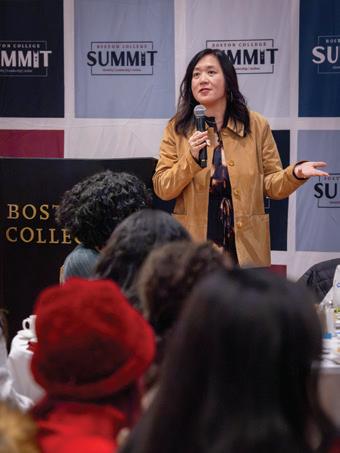
Lynch Professor of Education and Human Development Belle Liang was among the speakers at the January 14 Boston College Summit. The annual conference hosts discussions on issues and topics—especially in the areas of leadership, gender, race, and transition to adulthood—that foster greater self-awareness and a stronger community of belonging, while serving as a launching pad for future action.
photo by caitlin cunningham
photo by lee pellegrini
Bonaiuto Preparing for One Last Fanfare with BC Bands
Continued from page 1
wind, jazz, and chamber ensembles, as well as bands for athletic or social events. Bonaiuto also conducts the University Wind Ensemble and the award-winning popular jazz group BC bOp! and formerly served as director of the Screaming Eagles Marching Band, which performed in the 1995 Macy’s Thanksgiving Day Parade and has appeared in nationally televised football games.
Now, as he prepares to put down his baton (literal and metaphorical) at the end of the academic year, Bonaiuto is readying for one very special evening.
On February 7, the University Wind Ensemble will join with the University Chorale and Boston College Symphony Orchestra for “A New American Day,” a concert in New England Conservatory’s Jordan Hall celebrating the 250th anniversary of the signing of the United States’ Declaration of Independence. The event, which is free for students, features works by Kevin Day—who will be in residency at BC that week—and other contemporary American composers, and will end with Bonaiuto conducting the combined ensemble in a performance of an excerpt from Day’s “American Pastorale.”
Winston Provost and Dean of Faculties David Quigley will serve as emcee for the concert, sponsored by the Morrissey College of Arts and Sciences Dean’s Office, Institute for the Liberal Arts, the Music Department, Robsham Theater Arts Center, and the BC Arts Council.
“This is such a great honor,” said Bonaiuto. “Having conducted performances at Carnegie Hall and Symphony Hall, Jordan Hall makes it the ‘grand trifecta.’ Every time I’m in those venues, I imagine the music the walls have heard and the artists who have graced so many with their gifts. I am thrilled at the opportunity to join with my Boston College friends and colleagues for what will be a memorable evening.”
Those friends and colleagues are full
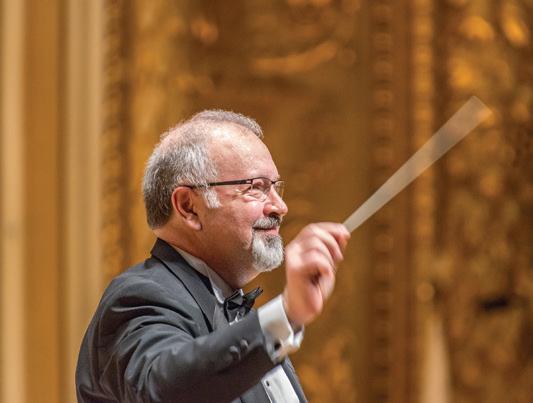
of praise for his work as a director and conductor, and teacher and mentor, for thousands of BC students over more than three decades.
“Few, if any, educators at Boston College have had a more profoundly positive effect on their students than Seb Bonaiuto,” said Marching Band Director David Healey, who met Bonaiuto when the future bands program leader was in BC’s M.B.A. program and working informally with BC Bands prior to being hired as director in 1989; the pair created BC bOp! before Healey graduated in 1990. “Seb’s thoughtful and deliberate mentorship has provided essential opportunities for growth and learning through music, and he has inspired and enabled his students to lead lives of meaning and purpose well beyond their years at BC. He has left a lasting legacy and will be deeply missed.”
A New Britain, Conn., native, Bonaiuto began playing trumpet as a fourth grader, and for a while assumed that everyone else in his school band shared his level of interest in and love for music. It gradually dawned on him that wasn’t the case, but he also realized music could, and should, be a cornerstone of his life: “Playing music was
“Seb is an educator who sticks with you,” says a colleague of Sebastian Bonaiuto, who is retiring after directing the Boston College Bands program for 36 years.
a real place of comfort. When I practiced in ensembles, I felt, ‘This is exactly where I should be, what I should be doing.’” He went on to earn a bachelor’s degree in music from Boston University and pursued graduate studies in music theory at New England Conservatory.
That revelation has informed Bonaiuto’s career as a music educator, which began in Westwood (Mass.) Public Schools and resumed at BC after a five-year stint as a computer programmer. The most vital part of his job has been to divine each student’s route on their respective musical journeys.
“Maybe this person has been playing music at a high level since first grade, while the person next to them began much later on, with slower but steady progress,” said Bonaiuto. “You must understand, and appreciate, where both are and what they can do. The great joy for me has been seeing the growth in all my students and in their love of music, and how their individual talents and abilities blend.
“When you’re a teacher, you find that your students teach you more than you teach them. For that, I’m very grateful.”
Bonaiuto said a vibrant bands program dovetails squarely with students’ experience
at BC, especially in the context of its Jesuit, Catholic formational mission.
“BC is focused on growing the whole person, intellectually, spiritually, and otherwise. We’re not out to create professional musicians; it’s not just about showing up and playing your instrument. We make a big deal about accountability, responsibility, and service. We build community and we serve each other as friends, collaborators, and colleagues.”
At the same time, he adds, the BC Bands program serves the wider University community.
“The aesthetic character of BC is woven through the arts and their capacity not just to entertain but enrich. When we perform on campus, there are likely people in the audience who are unfamiliar with the music we’re presenting. But they may know some of our band members as friends, acquaintances, or roommates, and to see their peers creating these sounds makes an impact: ‘I didn’t know I liked classical music!’ That’s what you do in college.”
“Seb is an educator who sticks with you,” said BC Arts Council Program Administrator Kara Robbins ’04, former assistant director of bands. “Being a successful musician requires heart, grit, flexibility, listening, and dedication. These qualities guide Seb’s work and are imbued as life lessons in each rehearsal. Working together, I saw different versions of the same ensembles as Seb guided transformations based on student feedback. Once empowered, students took more ownership over their ensembles, flourishing individually and as a group because of it.”
Students also have been the recipient of Bonaiuto’s pre-performance benediction, added Robbins: “My wish for you is that you play with joy, give voice to your hearts and nourishment to your souls.”
For ticket information and other details about the February 7 “A New American Day” concert, see bit.ly/New-American-Day-concert
Chemistry’s Wang Is Schiller Institute Interim Director
Continued from page 1
collaboration, and service to the common good.
“I’m honored by Provost Quigley’s trust and thankful for the leadership Laura Steinberg has provided in shaping the Institute’s first chapter,” Wang said. “I look forward to engaging the community across campus as we build partnerships, support bold ideas, and advance Boston College’s mission through nationally and internationally impactful work.”
Wang has published 183 peer-reviewed journal articles, now cited more than 26,000 times. His research has secured eight patents, and he has been honored with a National Science Foundation CAREER Award, a Sloan Research Fellowship, and a Japan Society for the Promotion of Science Fellowship.
Wang brings “a powerful vision and a collaborative spirit” to his role as interim director, says Vice Provost Tom Chiles.
its first Core Faculty: Institute Professor Jier Huang (with a joint appointment to Chemistry), Institute Professor of Climate Science and Society Yi Ming (Earth and Environmental Sciences), Institute Professor Edson Severnini (Economics), and Institute Professor of Global Sustainability Hanqin Tian (EE&S).
In its academic role, the institute helped launch the Global Public Health and the Common Good minor in 2019, followed by a Global Public Health major in partnership with the Connell School of Nursing in 2022. The institute is also home to the Center for Earth System Science and Global Sustainability, directed by Tian.
areas, and bringing the Institute’s founding vision to life,” said Quigley. “The institute is well launched, and [DeLuca Professor and Vice Provost for Research and Academic Planning] Tom Chiles and I look forward to working with Professor Wang to begin to chart the Institute’s further development.”
Wang will be tasked with undertaking a strategic planning process this year to examine the need for new education and training programs in the areas of undergraduate and graduate education, as well as programs to support post-doctoral researchers, Chiles said.
teaching and mentoring Boston College students uniquely qualify him to lead the Schiller Institute at this time,” Chiles said. “Dunwei brings a powerful vision and a collaborative spirit to this role, and he will help to continue positioning the institute to make a significant impact on a global stage.”
Under Steinberg, the institute hired
“Laura Steinberg and her team ably guided the Schiller Institute through its first six years, cultivating a culture of collaboration, hiring expert faculty in critical
Chiles said the institute will significantly expand its research footprint, continue to cultivate interdisciplinary research, deepen community and industry partnerships, and foster an environment where bold ideas flourish and translate into real-world solutions for a better future.
“Professor Wang’s exceptional leadership in the Chemistry Department, in energy research, and his proven track record in
The Schiller Institute for Integrated Science and Society [bc.edu/schiller] is the centerpiece of a 150,000 square-foot science facility that opened in early 2022. Named in honor of BC Trustee Associate Phil Schiller ’82 and his wife Kim GassettSchiller through their multi-year lead gift, the institute addresses critical issues in the areas of energy, health, and the environment.
The Seidner executive directorship was made possible through a gift from BC Trustee Marc Seidner ’88, chief investment officer for non-traditional strategies, and a managing director of Pacific Investment Management Company (PIMCO), and his family.
photo by gary wayne gilbert
Q&A Behind the Unrest in Iran
Since late December, demonstrations have erupted throughout the Islamic Republic of Iran, motivated in part by socioeconomic demands, the collapse of the rial currency, and the economy’s struggles resulting from international sanctions over its nuclear program. Iranians have publicly demonstrated repeatedly in the past to protest their authoritarian government, but the current dissent appears to be the most widespread ever among the nation’s 90 million people.
As in previous crackdowns, security forces have responded with riot police, tear gas, and live ammunition. Hundreds, if not thousands, of protesters have been killed, and those arrested have been threatened with death. Meanwhile, demonstrators’ demands shifted from economic relief to increasingly explicit calls for the overthrow of Iran’s theocratic regime, led by 86-year-old Ayatollah Ali Khamenei. Although some observers initially speculated that the Islamic Republic might be approaching a tipping point, the state’s response has underscored its continued capacity and willingness to repress dissent. Regional and world leaders are now grappling not only with the trajectory of unrest, but the broader consequences of sustained instability in Iran, which could reshape regional geopolitics and global energy markets.
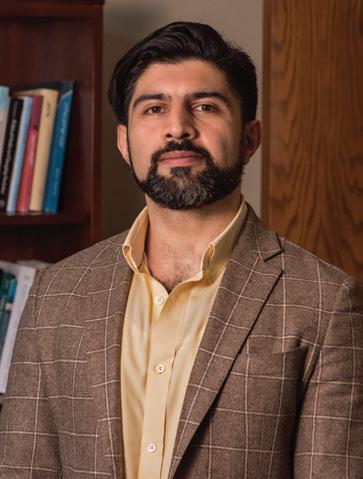
Chronicle spoke with Associate Professor of Sociology and International Studies Mohammad Ali Kadivar, whose research emanates from his experience as a participant-observer of the pro-democracy movement in Iran.
Iran pundits immediately asserted that the protests are primarily driven by economic deprivation. Are there other factors that have contributed to and fueled the ongoing demonstrations?
Yes, the immediate trigger for the recent protests was the sharp devaluation of Iran’s currency, which occurred in the context of years of high inflation, driven by a combination of crippling United States sanctions on
Iran’s economy and increasing mismanagement and corruption within the Islamic Republic.
However, economic hardship alone does not typically produce calls for regime change. The deeper cause here is political blockage: growing repression, authoritarianism, and the absence of meaningful channels for political participation. Many Iranians now link economic hardship directly to political decisions—especially foreign policy—over which ordinary citizens have almost no influence.
With the electorate effectively powerless to shape those policies, economic grievances increasingly escalate into political demands directed at the regime itself.
Were the protests organized by a single group?
No. Similar to previous waves of antiregime protests in Iran, these demonstrations were largely leaderless and lacked formal organizational structures. The initial protests and strikes began in Tehran’s Grand Bazaar, likely organized through merchant networks. But they quickly spread to other cities and social groups. The diversity of slogans and demands clearly indicates that protesters hold different visions for Iran’s future.
Four Faculty Included in Public Influence Rankings
Four Boston College faculty members were rated among the top 200 American education professors in the 2026 “Edu-Scholar Public Influence Rankings” by American Enterprise Institute Director of Education Policy Studies and Education Week blogger Frederick M. Hess.
The BC representatives included three from the Lynch School of Education and Human Development: Professor Emeritus Andy Hargreaves was ranked number 25, the highest among the BC contingent and among Jesuit colleges and universities; Professor Shaun Dougherty, department chair of the Measurement, Evaluation, Statistics, and Assessment department (137); and John E. Cawthorne Millennium Professor Stella Flores (188).
Associate Professor of Political Science Michael Hartney, who has a particular focus on education policy, was ranked 194.
BC and Georgetown—which had two faculty in the Hess rankings—were the only Jesuit colleges or universities with professors cited.
This annual tabulation spotlights the top 200 education scholars in American universities. Using eight metrics, Hess calculated how much these academics contributed to public discussions of education, both inside and outside the institution.
—University Communications
Political sociologists call this a “negative coalition,” i.e., unity around what people reject—in this case, the Islamic Republic— with disagreement over what comes next. Opposition to the regime was clear, but competing visions of the post–Islamic Republic order remain contested both among protesters and within Iranian political society.
This dynamic is not unique to Iran. It has been a common feature of urban revolutionary uprisings over the past several decades, including in Ukraine, Egypt, and Tunisia.
Initially, the Iranian government’s response was restrained, but recently the death toll from the crackdown has climbed sharply. Does the U.S. hold the key to ending the regime’s repression?
U.S. policy does affect the context in which repression unfolds in Iran, but not in the straightforward way this question suggests. First and foremost, the Iranian government bears primary responsibility for the mass killing of protesters. The scale of state violence has been unprecedented, and there is no excuse for it.
At the same time, it is difficult to credibly pressure other governments to curb repression when it’s also expanding at home. When the U.S. normalizes coercive practices domestically—especially toward immigrants and political dissent—it undermines its moral authority and weakens the international human rights framework it claims to defend.
Over the past several years, U.S. foreign policy has also weakened rule-based international frameworks by disregarding international institutions and legal processes, including the United Nations system, human rights bodies, and international courts. When international norms and enforcement mechanisms are undermined by powerful states, it becomes far harder to hold governments like Iran accountable for mass violence.
In addition, years of economic, political, and military pressure, combined with recent U.S. and Israeli military actions and threats, have raised the stakes for Iranian authorities.
Statements by U.S. and Israeli officials suggesting foreign involvement in the protests have also provided the regime with a conve-
nient justification for intensified repression. The most constructive role the U.S. can play is not military intervention. History—from Iraq and Afghanistan to Libya and Syria—shows that military action tends to escalate violence, destabilize societies, and undermine prospects for democratic outcomes. Instead, the U.S. can help by consistently upholding international law, strengthening multilateral institutions, and supporting independent human rights monitoring and accountability mechanisms.
Is a return to monarchy in Iran nostalgia, or a realistic possibility?
Chants in support of monarchy have been heard during this protest wave, but they do not represent the views of all protesters. Monarchist appeal has grown for several reasons, which I analyze in more detail on my Substack, Popular Politics, Unbound [alikadivar.substack.com/]. At the same time, significant segments of Iranian political society firmly oppose replacing the Islamic Republic with another form of authoritarian rule.
What has changed is that monarchism has become a more prominent and organized current within the opposition than in previous protest cycles. That said, a return to monarchy remains far from inevitable.
As in many countries facing revolutionary upheaval, a crucial mechanism shaping Iran’s future trajectory is the position of the security apparatus. Throughout its life, the Islamic Republic has maintained both the will and capacity to repress protests, including through lethal force. Any plausible future scenario has to be analyzed with that reality in mind.
Given this, several outcomes currently appear more likely than a straightforward transition: continuation of a weakened but increasingly violent Islamic Republic, marked by recurring cycles of anti-regime protest; limited internal reconfigurations designed to ensure regime survival; or in the most destabilizing scenario, external military intervention—whose regional precedents suggest consequences that would be catastrophic rather than democratic.
—Phil Gloudemans
Mohammad Ali Kadivar
photo by peter julian
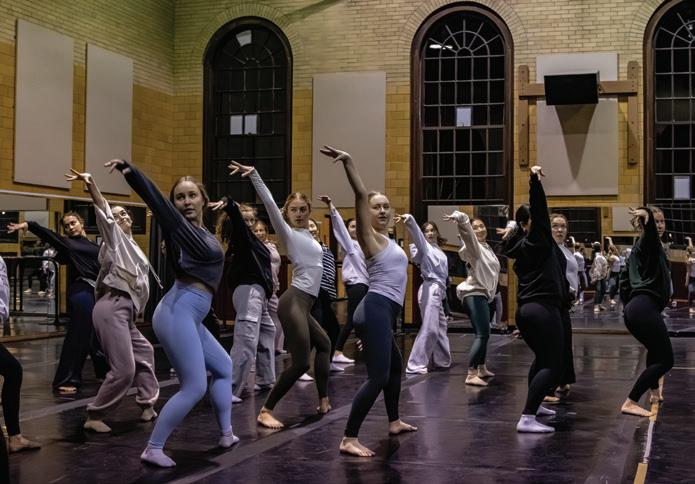
Boston College student dance ensembles held open workshops in the Brighton Campus Dance Studio as part of the University’s “Week of Dance” earlier this month.
Snapshot And They Danced
PHOTO BY AMANDA SIMPSON ’28
Curtain Going Up on Robsham Spring Season
BY ROSANNE PELLEGRINI STAFF WRITER
A whimsical play blending storytelling with indie-folk music, puppetry, and inventive stagecraft leads the Boston College Theatre Department/Robsham Theater Arts Center spring semester productions.
“The Old Man and the Old Moon”— directed by Acting Theatre Department Chairperson and Professor of the Practice Luke Jorgensen—will be presented in the Bonn Studio Theatre February 12-15. The play tells the story of an old man who abandons his duty of filling the moon daily with liquid light to go search for his wife, who has left home after hearing a mysterious melody and pursuing her desire for excitement.
“This new musical is an epic tale of an old man who overcomes his fears to search for his missing wife,” according to Jorgensen. “It is an adventure through wars, storms, shipwrecks, and disasters. In the end it is his biggest fear of all—change— that must be faced. It is romantic, dreamy, adventurous, and uses live music, shadow puppetry, and exciting physical storytelling. It has been delightfully complicated to put together.”
The play features book, music, and lyrics by the New York City-based PigPen Theatre Company, which is known for its unique theatrical style.
Under the direction of senior Ava Maloco, “Eurydice,” playwright Sarah Ruhl’s reimagining of the classic myth of Orpheus through the eyes of its heroine, will be staged in the Bonn Studio from March 1922. Dying too young on her wedding day, Eurydice must journey to the underworld, where she reunites with her father and struggles to remember her lost love.
With contemporary characters, ingenious plot twists, and beautiful visual effects, the play—known for its poetic,
dreamlike quality, quirky characters, and exploration of such themes as memory, language, love, and loss—is a fresh look at a timeless love story.
A main stage production of the awardwinning “Legally Blonde: The Musical,” will run April 23-26. Based on the popular movie, the musical follows the transformation of sorority sister Elle Woods as she tackles stereotypes and scandal in pursuit of her dreams, featuring music and lyrics by Laurence O’Keefe and Nell Benjamin, and book by Heather Hach.
The production will be directed and choreographed by 2025-2026 Monan Professor in Theatre Arts Pascale Florestal, a Boston-based director, educator, dramaturg, writer, and collaborator who has worked at theaters around the city and across area educational institutions. She serves as the associate artistic director of The Front Porch Arts Collective, where she recently won an Elliot Norton Award for Outstanding Musical for its production of “Next to Normal” with Central Square Theater.
In “Legally Blonde,” Woods’ life is turned upside down when her boyfriend dumps her to attend Harvard Law School. After she charms her way into Harvard to attempt to win him back, she embarks on a journey of self-discovery. In this fun, high-energy musical—full of singing, dancing, and new friendships—Woods realizes her potential and sets out to prove herself to the world.
Jorgensen calls it “The ultimate feelgood rom-com. Elle Woods transforms herself from ‘it girl’ to ‘legal ace.’ Lots of fantastic singing and dancing in this crowd favorite, which will feature a special, soldout closed performance for local students.”
For more on the productions, including performance times and ticket prices or other information, go to bc.edu/theatre. For tickets, see bc.edu/ tickets or call ext. 2-4002.
BC in the Media
Morrissey College of Arts and Sciences
Senior Associate Dean Brian Gareau discussed “the liberal arts advantage” as it reflects the needs of employers across industries in a Q&A with WalletHub.
Woods College of Advancing Studies Associate Dean Aleksandar Tomic, director of graduate programs in applied economics and analytics, provided comments to Inc. on the impact of minimum wage increases; to Fortune regarding American oil companies and Venezuelan oil; and to CFO Dive on inflation and interest rates.
Prof. Ray Madoff (Law) discussed her recent book The Second Estate: How the Tax Code Made an American Aristocracy in a Q&A with The Conversation and an interview with National Public Radio affiliate KALW.
President Trump has suggested that credit card interest rates should be capped at 10 percent. Prof. Robert Murphy (Economics) talked about the proposal’s feasibility and potential consequences in an interview with Boston 25 News.
Boston College School of Social Work Salem Professor Theresa Betancourt, whose book Shadows into Light focuses on former child soldiers, spoke with the BBC on the lasting impact of trauma experienced by children living in conflict zones.
Jobs
The following are among the recent positions posted by the Department of Human Resources. For more information on employment opportunities at Boston College, see www.bc.edu/jobs or scan the QR code at right.
Research Systems Administrator
Applications Developer Cashier/Line
Medical Informatics Administrator (Senior) Assistant Director/Assistant Director/Specialist, Financial Compliance & Audit
Laboratory Safety Specialist
Assistant/Associate Director, Athletics
Leadership Giving Patrol Officer
Associate Director, Practicum Programs and Internships
Production Manager (Chef de Cuisine)
Head Librarian, Clough School of Theology and Ministry Library
Associate Vice President, Schools, Units, and Organizational Giving
Supervisor, Arena, Certified Ice Technician
Laundry Supervisor
Part-time faculty member Brian Bethune (Economics) wrote an op-ed for Dow Jones MarketWatch on the outlook for lower interest rates in the coming year, and spoke with Marketplace and CNN. com about the latest jobs report.
Assoc. Prof. Peter Krause (Political Science) was interviewed by National Public Radio about what the Trump Administration’s move on Venezuela means for international relations.
Some companies are giving workers back more time as artificial intelligence takes over more tasks. Prof. Juliet Schor (Sociology) offered comments on this trend to The Washington Post.
Center for Retirement Research Associate Director Anqi Chen was among the experts invited by The New York Times to discuss the statistics shaping retirement in 2026.
Clough Millennium Professor of History Emeritus James O’Toole discussed his book For I Have Sinned: The Rise and Fall of Catholic Confession in America in a Q&A with National Catholic Reporter.
A study of inflection points in communitylevel homeless rates was cited by The New York Times, with comments by its coauthor, Assoc. Prof. Thomas Byrne (BCSSW).

Managing Editor, Periodicals
Associate Director, Career Advising & Programming
Admissions Assistant, School of Social Work
Associate Director, Academic Services
Assistant Director, Business Services
Assistant Program Director, So I Send You Program
Teacher Assistant
Program Director, TWIN-CS
Bartender
Postdoctoral Research Fellow, Lynch School of Education and Human Development
Postdoctoral Research Fellow, Center for Social Innovation
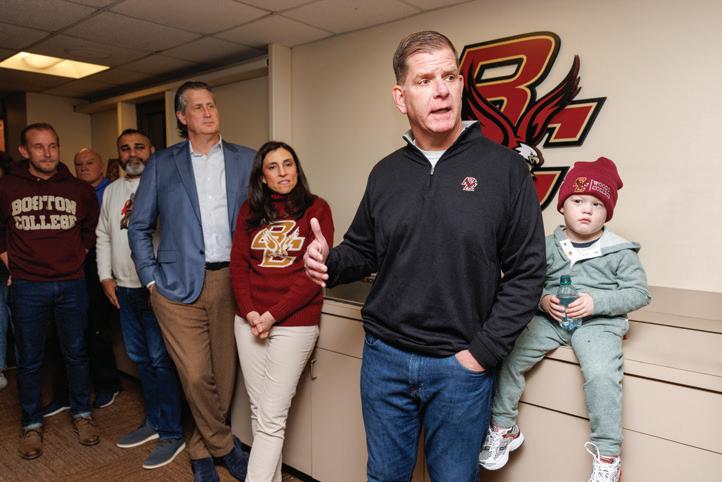
Woods College of Advancing Studies Dean David Goodman hosted a pre-game reception in Conte Forum’s Presidential Suite prior to the recent BC-Providence men’s hockey game. Guests included former Boston Mayor Marty Walsh, above, 2010 Woods alumnus and current executive director of the National Hockey League Players’ Association.
photo by matt healey
BC Arts
One Family, Many Legacies
An upcoming exhibition at the McMullen Museum showcases the Yeats family’s multiple contributions to Irish culture
BY ROSANNE PELLEGRINI STAFF WRITER
An upcoming exclusive exhibition at the McMullen Museum of Art examines the extraordinary impact that three generations of the talented Yeats family had on cultural life and the public arts in 20th-century Ireland, during a period of conflict crucial to Irish history and independence.
Organized by the McMullen in collaboration with the University’s John J. Burns Library, “Collaborating in Conflict: The Yeats Family and the Public Arts,” will be on display from February 1 through May 31. The exhibition is co-curated by Professor of English and Irish Studies Marjorie Howes, Burns Librarian and Associate University Librarian for Scholarly Resources Christian Dupont, and McMullen Assistant Director Diana Larsen. “Collaborating in Conflict” constitutes the most expansive exploration of the Yeats family’s contributions to the public arts to date, organizers note, and many objects are publicly displayed for the first time, others for the first time outside of Ireland.
BC community members were sent an email invitation from the McMullen, with RSVP information, to attend a virtual lecture presented by the exhibition co-curators on February 1 from noon to 1 p.m.
“The McMullen Museum, in partnership with the Burns Library, is honored to present the most comprehensive exhibition ever devoted to the Yeats family and their
far-reaching influence on Irish cultural life during the transformative decades surrounding independence,” said Inaugural Robert L. and Judith T. Winston Director of the McMullen Museum Nancy Netzer, a professor of art history at Boston College.

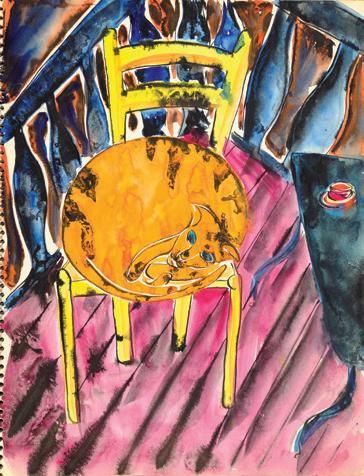
“Collaborating in Conflict” features some 200 works, including important holdings from the McMullen Museum and Burns Library, with significant loans from premier Irish, Northern Irish, and American collections—both public and private, and some anonymous lenders. Among them are paintings, drawings, prints, embroideries, books, and letters by patriarch and acclaimed artist John Butler Yeats and his children: poet William, one of the foremost figures of 20th-century literature; Lily, an embroiderer associated with the Celtic Revival; educator and publisher Elizabeth; artist Jack; and William’s daughter, Anne, a painter and theater designer.
“We extend our deepest gratitude to our lenders and the distinguished scholars in both the United States and Ireland whose generosity and insight have made this groundbreaking exhibition and its accompanying publication possible,” Netzer added.
The accomplished Yeats family members highlight examples of individual artistry and demonstrate how their artistic expression was varied and deeply collaborative. In illustrated poetry, set designs, embroideries for home and liturgical use, printed broadsides, paintings, sketchbooks, and other media, the siblings drew upon each other’s acumen. Their endeavors were often fraught with conflict, resulting in creative tensions and financial hardships.
“The exhibition explores the artistic achievements of three generations of a talented, complicated family who believed that the arts are equipment for living, that they matter in the everyday lives of individuals and in the public sphere,” said Howes. “I see this project as especially meaningful for our contemporary moment, in which educators, artists, and researchers are working to imagine and reimagine vital futures for the arts and the humanities.”
The exhibition opens by exploring portraiture of Yeats family members and representations of places of importance to them, and moves on to objects illustrating
the family’s engagement with youth as a site of education, entertainment, and memory. Other sections reveal how the family members created objects that transformed private spaces through imaginative innovation and material practices, and shaped public life through theater, publishing and printing, and visual representations of a distinctive Irish identity as the nation established itself post-independence.
“The curatorial team endeavored to provide a meaningful context for Boston College’s holdings of Yeats material by engaging with several Irish national institutions housing collections of works by all of the family members,” said Larsen. “The experience of selecting objects in Ireland was greatly enhanced by the enthusiasm of our potential lenders. They showed us hospitality by giving us access to their rich collections for consideration as loans, and generosity with their time and care to facilitate our requests.”
Dublin, the O’Brien Collection (Chicago), and the Collection of Carolyn A. and Peter S. Lynch.
In 2021, Peter Lynch—vice-chairman of Fidelity Management and Research Company, a 1965 BC alumnus and trustee associate—gifted 27 paintings and three drawings from his and his late wife Carolyn’s private art collection to the McMullen Museum, the majority dating from the mid-19th to the mid-20th century. Three paintings by Jack B. Yeats in the collection will be on display, along with nine works by Jack and John Yeats also on loan from the private Lynch Collection.
Other lenders are the National Museums Northern Ireland; University of Galway; St. Mary’s Pro-Cathedral (Dublin); St. Brendan’s Cathedral, Clonfert Diocesan Museum (Loughrea, Ireland).
“The inspiration for this exhibition sprang from acquisitions by Boston College and other institutions in recent years from sales and donations by Yeats family descendants, which brought many previously inaccessible sources into the public arena,” said Dupont. “Burns Library has focused on acquiring materials that document the lives and creative output of women associated with Cuala Industries, the Arts and Crafts cooperative society founded by Elizabeth and Lily Yeats in 1908.”

Among the objects presented, in different media and time frames, is the inclusion of “a wide variety of embroideries by Lily Yeats heretofore not exhibited,” she added. “We were also able to secure the participation of several generous American collectors which have also greatly enriched the exhibition.”
Recent gifts to Boston College anchor and served as inspiration for the exhibition: Jack B. Yeats paintings and Lily Yeats Stations of the Cross embroideries received by the McMullen, and additional acquisitions of Yeats family materials by the Burns Library. These are complemented by loans from the Model, home of the Niland Collection (Sligo, Ireland), the National Gallery of Ireland, the Library of Trinity College
The exhibition is accompanied by an extensive, fully illustrated catalogue edited by Howes, with 15 essays contributed by an interdisciplinary team of scholars offering new insights into historical contexts and interpretive frameworks for studying the Yeats family. In conjunction with the exhibition, Howes has organized an academic symposium, sponsored by the Irish Studies program, at the museum on February 20–21, with lectures by experts in Ireland’s visual arts, theater and performance, textiles and embroidery, printing and publishing, and social and cultural history.
The exhibition is underwritten by Boston College with major support from the Patrons of the McMullen Museum, the John C. Donohue Estate, Robert ’63 and Ann Marie Reardon P’91, and the Anna Frances Vegkeley Ryan Estate in memory of John Anthony Ryan Jr. ’50. Additional support has been provided by William J. Lundregan III, Esq., ’62, J.D.’67, P’93, ’96, and Elaine Stein-Cummins in memory of Daniel Cummins ’58.
See the museum website [bc.edu/mcmullen] for more information, including on the symposium and on in-person and virtual public programming accompanying this exhibition.
“The Lake at Coole” (1899), William Butler Yeats
“Untitled (Cat on a Chair),” Anne Yeats
“Portrait of William Butler Yeats, Poet” (1900) John Butler Yeats