




EDITOR-IN-CHIEF
Keith Loria
billiardskeith@gmail.com
CONTRIBUTING WRITERS
Charles S. Donnavan
Jamie Lynch
Anthony Stoeckert
Steve Mathias steve@bca-pool.com (303) 243-5070 x124
ART DIRECTOR
Julie Snee
julie.snee@gmail.com
CHAIR
Wes Bond, Koda Sports
VICE CHAIR
Bill Dunne, Championship, LLC.
SECRETARY
Ed Liddawi, Sandcastle Billiards
TREASURER
Colby Olhausen, Olhausen Billiard Mfg.
BOARD MEMBERS
Josh Gibson, Boynton Billiards
Jonathan Hartin, Valley Billiards
Michael Helbig, Legacy Billiards
Kevin Henderson, Prestige Billiards
Ivan Lee, Iwan Simonis
At the Board level, we have always talked about growth, opportunity and the future of the sport. Every so often, a moment comes along when you can genuinely feel the trajectory of something beginning to change. I believe we are experiencing one of those moments right now.
Earlier this spring at the BCA Expo, the Billiard Congress of America launched USA Cue Sports, a new player federation for the United States and North America. As the pool room operator representative to the Board, this initiative is especially meaningful to me because it reflects something I have advocated for since day one: investing in players is investing in the future of the entire industry.
Having spent years in both pool rooms and business, I’ve always believed our sport performs best when the trade side and the sport side work together. When players have meaningful opportunities, the entire ecosystem benefits. Pool rooms see more participation, retailers and manufacturers see greater engagement, and the game itself becomes more visible and aspirational.
Over the last several years, we have begun to see encouraging momentum across the industry. Manufacturers and retailers returning together at our new spring BCA Expo was an important signal that confidence and collaboration are growing again. Globally, there is renewed energy in cue sports, and USA Cue Sports continues that momentum by creating something our athletes have needed for a very long time: a clear and structured pathway.
This year’s USA National Pool Championships features 18 divisions where American players can compete for officially recognized national titles. The event includes 12 junior divisions, men’s and women’s 9-Ball and 10-Ball championships, and wheelchair divisions that continue expanding opportunities for all Americans. Champions and runners-up in the professional divisions will receive allocations to their respective world championships, including travel and entry fees, with several junior divisions offering the same opportunity.
What excites me most is that this is only the beginning. Regional events and state championships are already on the horizon, helping create a system that is transparent, accessible and designed to foster the next generation of great American champions.
I truly believe the Billiard Congress of America and USA Cue Sports are laying the foundation for a stronger, more unified future – one that will elevate not only our athletes, but the entire cue sports industry for years to come.

The Billiard Congress of America’s Board of Directors brings together a diverse collection of industry veterans, retailers, manufacturers and advocates who share a common goal: ensuring a strong future for the industry.

Wes Bond brings both business leadership and product innovation experience to the BCA Board as its new chairman. Before co-founding KODA Sports in 2020, Bond spent roughly 20 years as vice president of sales for Cue & Case Sales, Inc., where he helped oversee significant growth and long-term oper-
By Keith Loria
ations within one of the industry’s major distribution companies.
After Cue & Case Sales was sold in 2014, Bond remained with the company under the Escalade Sports umbrella for several years before eventually stepping away from the business. However, during the COVID era, an opportunity to re-enter the industry led to the creation of KODA Sports, which has since expanded its presence through products including the Bull Carbon line.
Bond notes his motivation for serving on the BCA Board comes from wanting to actively help improve the industry rather than simply criticize it from the outside.
“When I wasn’t on the board, it didn’t make a lot of sense to complain about things if you can’t do something to fix it,” Bond says. “So I kind of put up or shut up by getting on the board trying to make decisions I think would help our sport grow.”
One of Bond’s primary goals is strengthening the BCA Expo and supporting the trade side of the industry. He believes the show remains critically important for retailers, distributors and manufactur-
ers, but said there is room for continued growth and improvement.
“I don’t want to see the BCA trade show go away,” Bond says. “I feel like there’s this perception that it’s dwindling. It’s getting smaller. I would like to see the show grow domestically through domestic partners, distributors and manufacturers.”
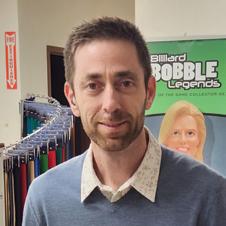
BILL DUNNE Vice Chairman
For Bill Dunne, billiards has been a lifelong passion. He still remembers learning the game as a child, pushing a milk crate around a bumper pool table so he

could reach the rails. That early fascination with cue sports eventually led him into the industry professionally and later into leadership within the BCA.
Dunne eventually opened a pool hall with friends before joining Championship, where he has spent decades helping grow the company and the sport itself. Throughout those years, he regularly attended BCA trade shows and membership meetings, gaining a deeper appreciation for the association’s role within the industry.
“Initially with that background, the love for pool and billiards, and attending the trade shows every year since I’ve been with Championship, I’ve attended the general membership meetings,” Dunne says. “I’ve always had an interest in what’s happening in billiards, what the trade is doing for billiards.”
Now serving as BCA vice chairman, Dunne notes he felt it was the right time to step into a more active leadership role after watching several mentors and former colleagues serve on the board over the years.
“I’ve seen it over the years, and I just feel like it’s my turn to be up,” he says.
One of Dunne’s top priorities is junior development, which he sees as critical to the long-term health of the sport.
“I think that’s growing with involvement, as well as supporting the play side,” he says. “We enjoy helping the juniors, they are our future customers.”
Dunne believes expanding youth tournaments, league systems and after-school programs can help introduce more young student athletes to the sport while strengthening the industry overall.

Josh Gibson has grown alongside Boynton Billiards, helping guide the longtime South Florida company through major retail and technological changes within the industry.
“About five years ago, I moved into a full-time roll to remodel and run the Fort Lauderdale location,” Gibson says. “About three years ago I transitioned to the main store and current position of vice president of operations.”
Today, Boynton Billiards operates two locations and continues expanding both its retail and online presence.
As a BCA board member, Gibson is especially passionate about junior player development, something that became deeply personal through his son’s success.
“My youngest son came through the junior program and was signed as a junior pro for Predator at 16,” he says. “These players are the future of our sport and I want to see every single one of them succeed.”
Gibson adds the support his family received from others in the billiards community inspired him to help the next generation of players.
“When my son was competing, he had so many people there to support him and I feel honored to pay it forward for the next generation,” he says.
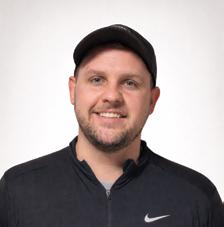
Valley Billiards’ owner Jonathan Hartin’s journey into the industry was shaped by family history and resilience. His grandfather started the family business after working as a table installer and later manufacturing traditional T-rail pool tables. But after a devastating fire during Hurricane Sandy destroyed the business, Hartin found himself rebuilding the company from scratch.
“I took over and rebuilt it little by little,” he says.
Hartin began small, operating out of a storage unit while purchasing used tables through Craigslist and Facebook Marketplace before eventually expanding into a warehouse and then reopening a retail storefront. Today, the business sells and repairs tables while continuing to grow its presence in the marketplace.
His experience as an independent retailer played a major role in his decision to join the BCA board.

“I figured I could give a good voice for smaller companies like myself,” Hartin says. “I’m friends with a bunch of other businesses across the country that are solo one-store locations, mom-andpop shops, and wanted to see if I could provide a voice for them.”
One of Hartin’s main priorities is improving communication among businesses throughout the industry. He believes the BCA can serve as a stronger platform for retailers to exchange information and ideas that benefits everyone.
“It would be excellent if we could use the BCA as an avenue for that,” he says. “Just any ebbs and flows of the business that we could pass along to each other and help each other out and just grow the business all together.”
Hartin is also focused on growing participation among younger players and believes the continued expansion of league play and youth programs is encouraging.
“I love what they’re doing with the USA Cue Sports and making that bigger and bigger,” he says. “Bringing in the youth is huge for sure.”

IVAN LEE Director
Few people in the billiards industry possess the institutional knowledge and historical perspective of Ivan Lee. With nearly four decades in cue
sports manufacturing, distribution and product development, Lee has become one of the most recognizable voices in the industry.
Lee entered the industry in 1987 after responding to a job posting for cue maker Ray Schuler, where his background in lathe work led to a career in cue manufacturing and billiards supplies. Over the years, he worked with several companies before eventually joining Simonis North America in 2004 and later becoming president and CEO.
He has also spent many years serving on the BCA board, including multiple terms as chairman. He notes that preserving the organization’s stability and integrity has long been one of his primary goals.
“One of the things that I bring to the board is institutional memory,” Lee says. “Maintaining the integrity of the organization was always something that was a chief priority of mine, and it remains that way.”
Having witnessed financial challenges and major industry changes over the years, Lee believes the BCA must continue adapting while maintaining its role as the sport’s governing body in the United States.
“We’ve got to figure out how to keep the show together and keep the revenue flowing for the BCA,” he says.
Lee also believes the industry sometimes struggles to think creatively enough about innovation and consumer engagement. He pointed to opportunities involving technology integration, product design and creating more interactive experiences around billiards.
“Nobody’s going to put down their digital devices,” Lee says. “So figuring out a way to engage them with their digital devices is probably better.”
Colby Olhausen, Treasurer Colby Olhausen of Olhausen Billiards brings both legacy and long-term industry perspective to the BCA Board. Serving as treasurer, Olhausen continues to play an important role in helping guide the financial stability and long-term planning of the BCA. His experience within a multigenerational family business gives him unique insight into both manufacturing and retail trends, as well as the evolving needs of dealers and consumers.
Ed Liddawi, Secretary Ed Liddawi has built a strong reputation throughout the billiards industry through his leadership at Sandcastle Billiards, one of the country’s best-known pool rooms and entertainment venues. His involvement with tournaments, events and room operations gives him firsthand knowledge of the challenges and opportunities facing today’s billiards businesses.
Kevin Henderson, Director Kevin Henderson has established himself as a dedicated industry professional through his work with Prestige Billiards, where he has focused on customer service, retail growth and helping introduce new players to cue sports. His continued involvement with the BCA reflects his commitment to supporting the long-term success of the billiards industry.
Michael Helbig, Director Michael Helbig has become a respected voice within the billiards industry through his leadership at Legacy Billiards. Helbig continues bringing valuable insight into retail trends, product development and the importance of maintaining strong relationships throughout the billiards community.
Talon pool cues are built for players who want performance, customization, and great value in one complete package. Featuring 12.75mm hard rock Canadian maple shafts, Talon cues deliver a solid, responsive hit with excellent control and consistency at the table. The slightly smaller shaft diameter offers added comfort and versatility, making these cues a great choice for both developing players and seasoned league competitors.
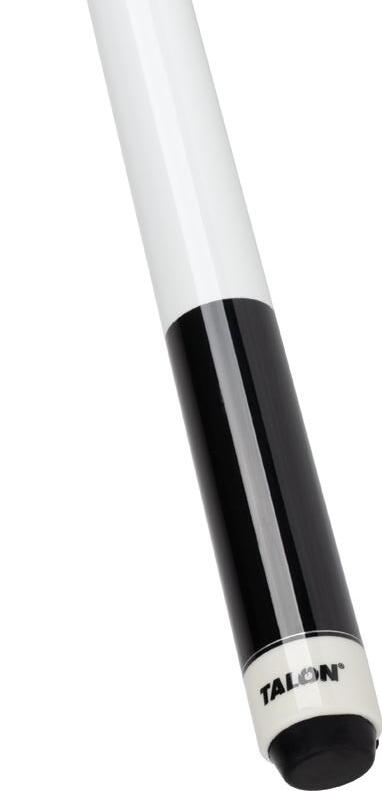
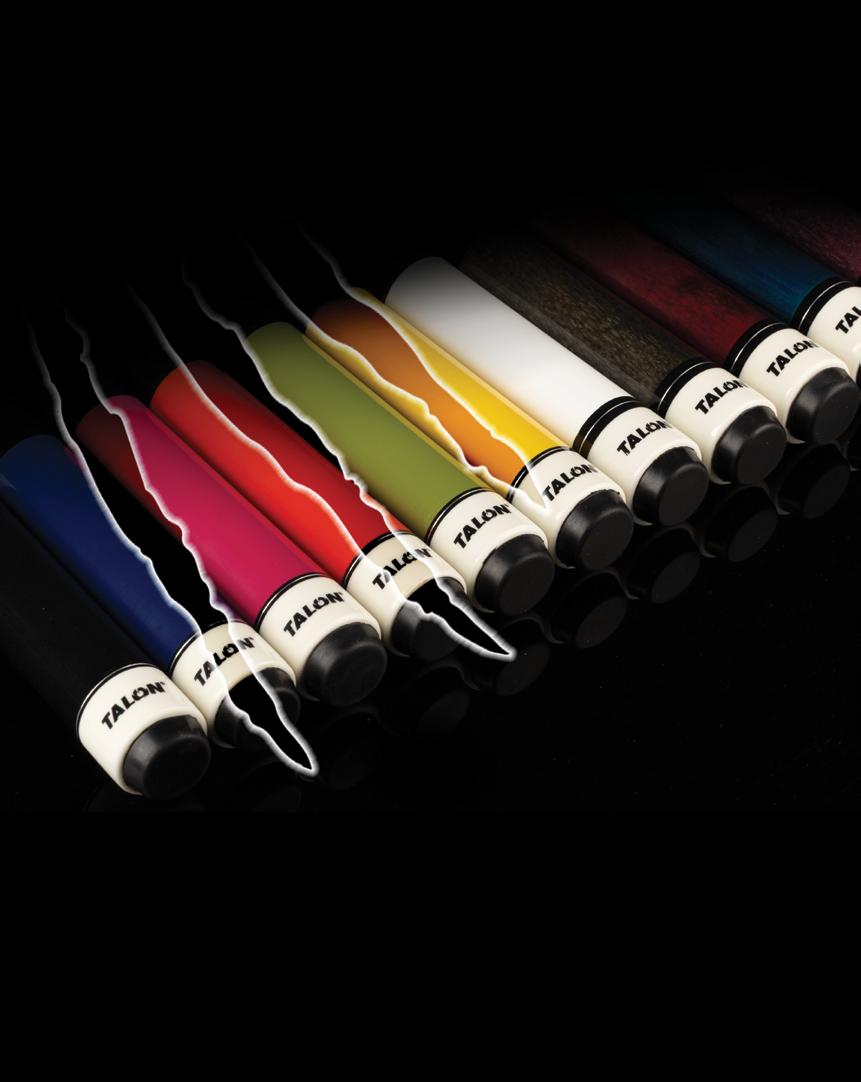
Talon cues are available in both stained and painted designs, giving players a wide range of styles to match their personal look—from classic finishes to bold, modern graphics. Adjustable weights allow each cue to be tailored to fit your stroke and playing preferences. With quality materials, customizable feel, and eye-catching designs, Talon cues offer serious performance without the premium price tag.
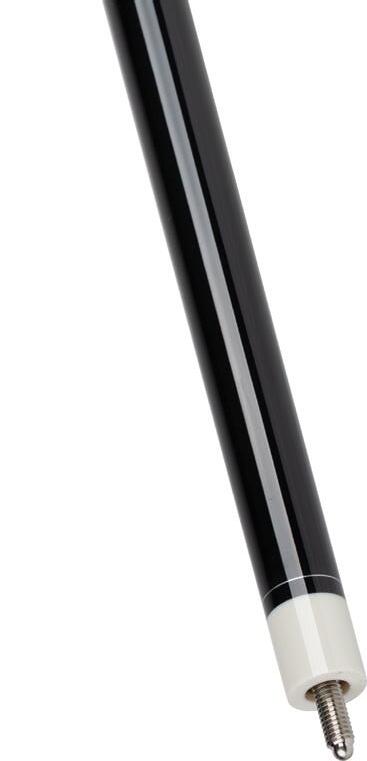
•12.75mm hard rock Canadian Maple Shaft
•Pro Taper
•Weight adjustable, 18-21oz.
• 1” White Fiber Ferrule
• Piloted 5/16 x 18
By BCA Insider Staff
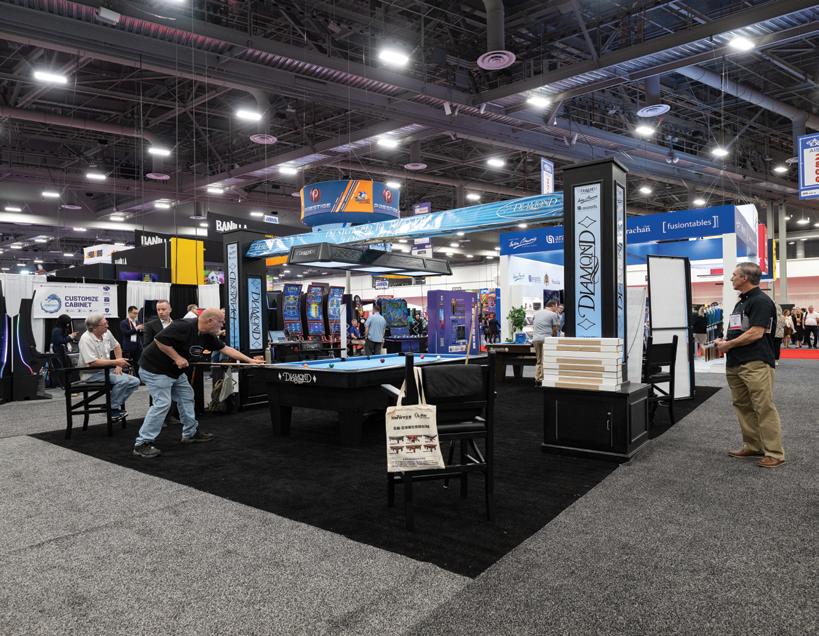
With more than 900 attendees, 67 exhibitors and 14 first-time exhibitors, the 2026 BCA Expo once again served as a central meeting point for the billiard and game room industry.
“What makes the BCA Expo valuable is the ability to have real conversations with people you don’t get to see often enough –customers, partners and even peers across the industry,” says Shane Tyree, CEO of the BCA. “That face-to-face time is still critical. At the same time, I think there’s an opportunity to grow the show by bringing in more active retailers and buyers, because that’s what ultimately drives business for exhibitors. If the show can keep building on the networking while strengthening that attendance mix, it becomes even more impactful for everyone involved.”
When it was all over, many exhibitors cited meaningful customer engagement, improved educational programming and valuable networking opportunities as key strengths to this year’s show.
However, post-show survey responses also reveal a clear message from the floor: to maximize its impact moving forward, the event must attract more retailers, refine logistics and continue evolving its structure.
For many exhibitors, the Expo’s core strength remains its ability to bring people together in person.
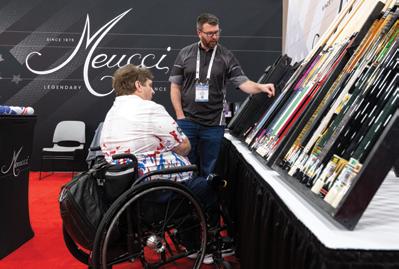
“Meeting with new and existing customers at the show is the primary benefit for attending,” says Seth Randall of Meucci Cues.
That sentiment was echoed by Nick Anger of Viking Cue, who pointed to time spent with customers as the most valuable aspect of the week.
“We took a different approach to our booth this year, with a much more focused display/product line which worked very well for us,” he says. “This made for better engagement from those that stopped by our booth and better focus.”
Even in an increasingly digital business environment, exhibitors made it clear that in-person engagement remains critical to maintaining and growing industry relationships.
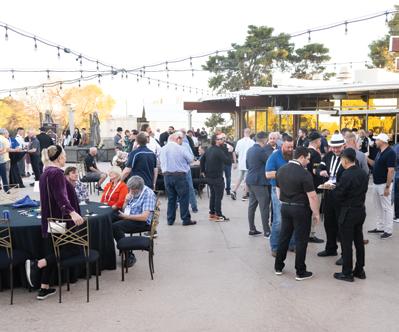
Networking extended beyond the show floor, with the return of a more robust social schedule receiving strong feedback.
“The social event was the highlight,” says Jacklyn Ady of Brunswick Billiards Group.
Skip Nemecek of Tweeten Fibre Company adds that with a good flow of traffic, a nice hall and good services, nothing needed to be changed.
“The show continues to be the best version it can be,” he says. “The BCA Social is amazing and has become an excellent event and this year’s was the best yet.”
Still, some exhibitors suggested ways to improve execution.
“Waiters walking around with drinks earlier,” says Kent Smedley of Royal Billiard and Recreation.
Others pointed to attendance challenges.
“Many didn’t come,” says cue maker Dave Whitsell, suggesting that adjustments could help drive participation.
“The activities at the party should be more directed,” notes Michel Lemyre of Canada Billiard & Bowling, indicating that more structured engagement could enhance the experience.
The return of educational seminars was widely seen as a step in the right direction among attendees and exhibitors.
“The seminars being back was good,” says Carley Leon of Leon’s Billiards & More.
Peter Edmondson of Shot Darts, was glad to see specific content that resonated with his audience.
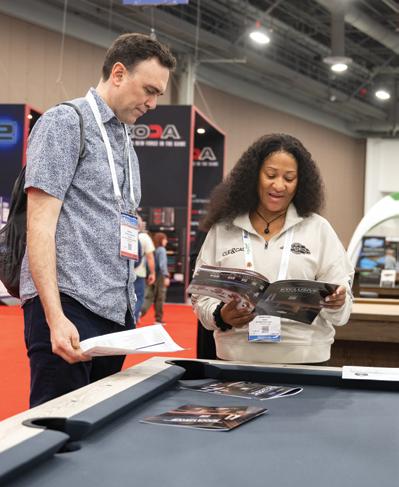
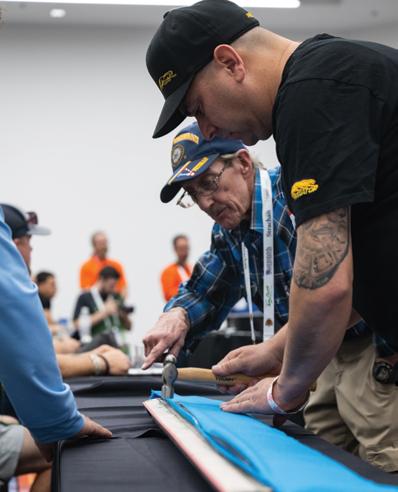
“The darts seminar was a positive,” he says.
Overall, feedback suggested that the sessions met or exceeded expectations, including a glowing endorsement from attendee Gordon Groff who is excited to come back for 2027.
Exhibitors offered mixed feedback on the event’s physical setup and operations but for the most part, everyone was happy with the event.
“The new hall was good,” says Michael Small, pointing to improvements in the layout from past years.
However, logistical challenges were also noted.
“There was some confusion when meeting rooms changed,” says Sarah Hoffman of Brunswick Billiards.
Operating hours were another concern.
“The 10 a.m. start is not good,” says Shane Bouchard of Billiards Plus, noting that “many dealers from Central time zones are affected.”
These operational issues, while not universal, highlight opportunities to improve the overall exhibitor experience.
If there was one theme repeated consistently across responses, it was the need for stronger retailer participation.
“I wish we could get more retailers to attend,” says Deryck Gildon of Fort Worth Billiards.
That sentiment was echoed widely throughout the survey.
“Entice the retailers to attend,” says Anger, reinforcing the importance of attracting buyers.
For exhibitors, retailer presence is directly tied to return on investment. Without a strong base of decision-makers, opportunities for immediate sales and new business development are limited.
“How do you drive attendance?” asked Randall, acknowledging the challenge while emphasizing its importance.
Cost considerations also surfaced as a concern among exhibitors.
“Lower costs to attend the show may help,” says Smedley, pointing to booth pricing and participation expenses.
Others suggested structural changes to improve efficiency.
“Maybe do it in one hotel to make it easy for everyone,” says Dave Whitsell of Recollection Cues, advocating for a more centralized format.
Despite the challenges, most exhibitors indicated a strong likelihood of returning.
Taken together, exhibitor feedback paints a clear picture of an event that continues to deliver value – while also facing opportunities for growth.
It seems as if the Expo is well-positioned to strengthen its role as a must-attend event for the industry in 2027 and beyond.



8-BALL, 9-BALL, 10-BALL AND 14.1 Boys U17, U19, and Girls U19 medalists in 9-Ball and 10-Ball qualify for the 2026 World Junior Championships in San Antonio proudly presents the 39th Annual 2026 Junior National Pool Championships July 6-11, Dubuque, IA
Registration Now Open at BilliardEducation.org
Thank you to our sponsors:





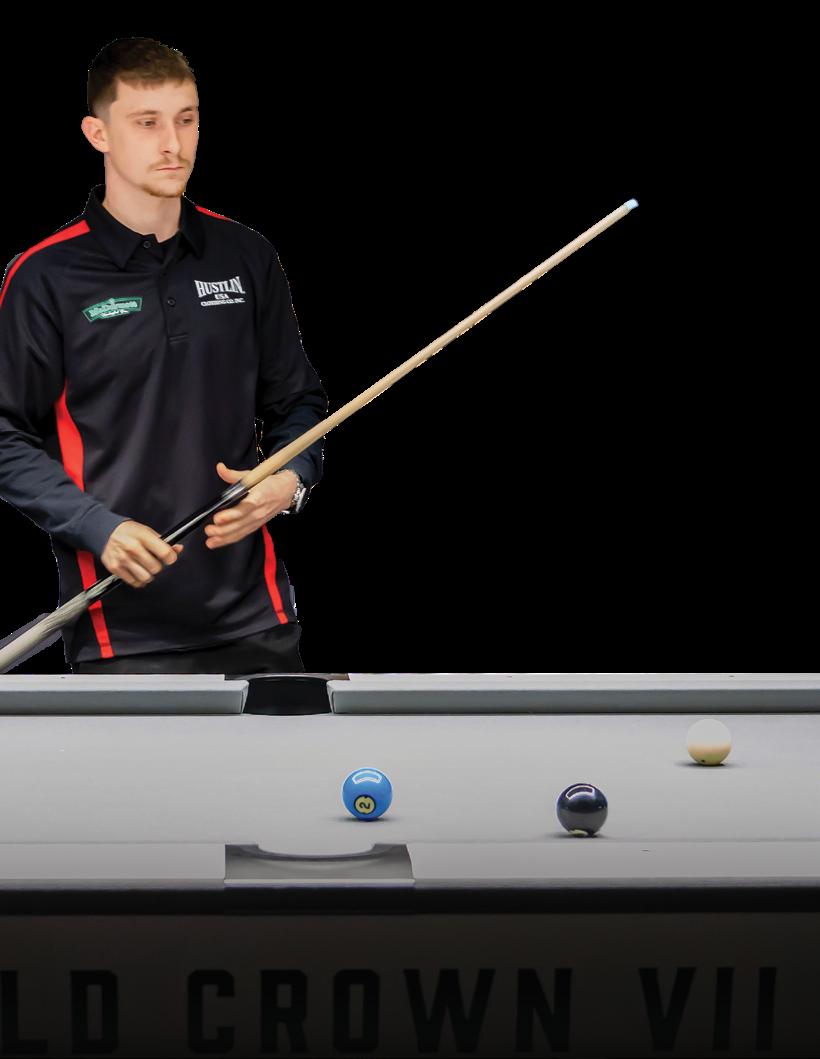

For most of his life, pool wasn’t just a hobby for Ricky Evans; it was the environment he grew up in.
His introduction to the game came through his father, Bud, who owned and operated multiple billiards businesses over the years. The one that mattered most in Evans’ development was ABC Billiards, a room that evolved from a retail space into a full-fledged pool hall.
“It originally was kind of just like a retail place and then he changed it to where the main focus was a pool hall,” Evans says.
That setting meant constant exposure to the sport. Evans and his brothers (Nick and Mikey) were always around tables, always playing, always competing. It also meant expectations came early.
“I don’t want to say I was forced, but it almost felt in a way that I had a lot of pressure to not only play a lot, but continue to do well,” Evans says.
His father was proud of his sons’ abilities and wasn’t shy about sharing that with others. That pride translated into a kind of external pressure – one that followed Evans into tournaments and everyday matches alike.
“There were times where it was tough.You feel a little bit too much pressure,” he says.
But instead of pushing him away from the sport, it helped define his relationship with it. Over time, Evans developed his own connection to the game, one that wasn’t dependent on outside expectations.
“I’ve developed my own love for the game to keep going regardless of any other opinion,” he says.
Evans’ early years in competitive pool were marked by quick success. By 13, he had already won major junior events, including a title at the Super Billiards Expo and a BEF Junior National Championship in his division. Those wins established him as one of the top young players in the country, but they also gave him access to something bigger than domestic competition.
For junior players, national success is often just the first step. The real prize is the chance to represent the United States internationally.
“The main prestige is that you’re fighting for an opportunity to represent your country,” Evans says.
That opportunity came when Evans traveled to Shanghai to compete in the World Junior Championships. At just 13, he was placed in the under-18 division – an added challenge that only heightened the experience.
“It was a really, really eye-opening opportunity,” he says.
He responded with a fifth-place finish, a result that showcased both his talent and his ability to compete against older, more experienced players. But the bigger takeaway wasn’t the finish, it was the realization of how deep the global talent pool ran.
“When you get to the world stage, it really, really means something,” Evans says.
That moment marked a turning point. Evans wasn’t just competing to win events anymore, he was measuring himself against the best players in the world.
One of the most notable accomplishments of Evans’ career so far is his victory at the Kansas City Open. On paper, it stands as a significant achievement, but Evans doesn’t view it as a defining moment.
“Honestly, it is a pretty big accomplishment, but for me, it was pretty routine,” he says.
That perspective reflects a quiet confidence in his abilities. Evans doesn’t see himself as someone who occasionally breaks through, he sees himself as someone capable of winning whenever he performs to his standard.
At that event, several factors worked in his favor, most notably his break. While many players experimented with different techniques, Evans relied on a powerful, straightforward approach.
“I was just smashing them, getting at least two or so balls to drop every break,” he says.
His comfort on less-than-perfect equipment also played a role. Having grown up playing on worn tables with inconsistent conditions, Evans found an edge on the outer tables, where conditions weren’t as pristine as those on the featured TV table.
“I think I just really had the advantage of being used to kind of crappier equipment,” Evans says.
Still, even with a title to his name, Evans is clear about what matters most to him. His roots are in rotation games played on full-sized tables, and that’s where he wants to make his mark.
“I would like to win a big major on a nine-foot, something that is my true passion,” he says.
If there’s one area Evans emphasizes more than any other, it’s the mental side of the game.
“I believe that that’s probably 90 percent of the game,” he says.
At the highest levels, nearly every player has the ability to run racks when everything is working. The difference comes when things aren’t perfect, when players have to rely on their “B game.”
“It’s whenever you’re not perfect, how good you are, how close that is to your actual A game,” Evans says.
That mindset has been shaped by years of competition and reinforced by lessons from his father, who emphasized discipline, respect and composure over technical instruction.
“He taught us to conduct yourself properly whenever things aren’t going your way and to always be respectful,” Evans says.
Sometimes, the advice was simpler, and more direct.
“Whenever you’re down on a shot, just don’t miss,” Evans says, recalling one of his father’s most memorable lines.
While it may sound overly simplistic, Evans understands the deeper meaning. Confidence and commitment are often the difference between making and missing a critical shot.
In terms of his own development, Evans isn’t trying to completely rebuild his game. Instead, he focuses on refining what’s already there – correcting clear flaws while preserving the elements that define his style.
“There’s things that are characteristic to your game and you need to leave it alone,” he says. “If your equipment is all perfect, you might play great. But if there’s something off, it could affect your feel so much.”
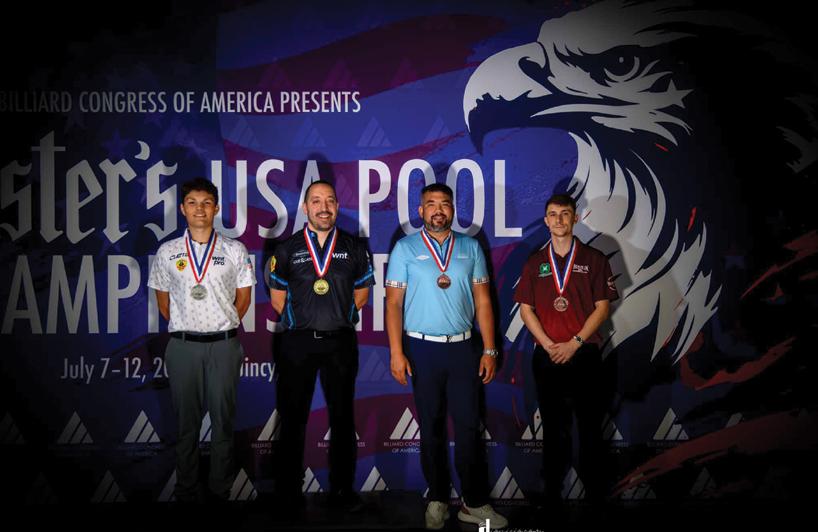

At 25, Evans is at a pivotal point in his career.
Unlike many top players who compete full-time, he currently balances a full-time job with his tournament schedule, a reality that limits his opportunities compared to players traveling the circuit week after week.
“I work 40 hours a week and that’s really tough compared to these guys that are on a plane going to a new tournament every week,” he says.
His primary goal is to change that and to create enough opportunity and support to make pool his full-time focus.
“I’m trying to create as much opportunity to be able to compete as much as I can,” he says.
Part of that effort involves building relationships with sponsors and expanding his presence on social media. While he admits he hasn’t always embraced that side of the game, he now sees it as essential.
“It’s to provide value so I can get more funding to go compete,” Evans says.
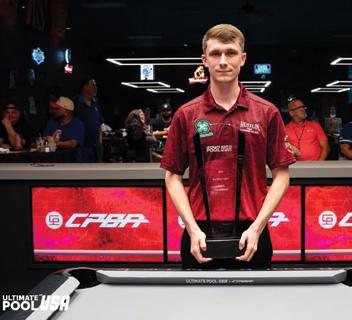
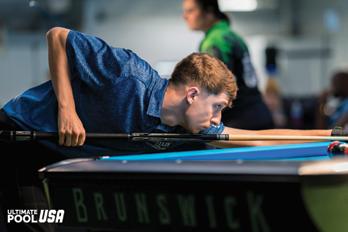
He currently works with sponsors including McDermott Cues, Hustlin USA Clothing, and Brunswick Billiards. But beyond sponsorships, Evans is focused on maximizing every opportunity he gets to compete.
Even with fewer appearances than top professionals, he believes his results show what he’s capable of.
“You can never count me out,” he says.
Looking ahead, his goals are ambitious but clearly defined. He wants to win major titles – particularly in rotation formats – and ultimately reach the highest level in the sport.
“The ultimate goal is to just be the number one pool player,” Evans says.
It’s a bold statement, but one grounded in years of experience, steady growth and a belief in his own ability.
For Evans, the journey began in a Missouri pool hall filled with pressure and expectation. Now, it’s about turning that foundation into something greater, building a career, creating opportunity and proving that he belongs among the best in the world.


An area that billiard retailers have been evaluating more than ever this past year is whether to invest in advertising on Meta Platforms (most commonly Facebook and Instagram), and the choice isn’t easy. After all, it’s a layered question that depends on business fundamentals, execution and expectations.
That nuance is something Theron Tingstad, CEO of Arbor Growth and a former
By Charles S. Donnavan
Google senior leader, emphasizes from the start. As someone who works closely with retail and ecommerce brands on performance marketing, Tingstad notes Meta should be viewed as an amplifier, not a fix.
“Meta is a multiplier on an alreadyworking business,” Tingstad says. “If your store converts walk-ins well, Meta amplifies that. If your fundamen-
tals are broken, Meta exposes the problem, just faster and more expensively than any other channel.”
That perspective reframes the entire conversation. For billiard retailers, many of whom sell high-ticket items like tables and installation packages, paid social media isn’t just about visibility. It’s about whether the business is structured to convert that visibility into profit.
Unlike impulse-driven retail categories, billiards is rooted in considered purchases. That changes everything about how ads should be approached.
Mauricio Acuna, co-founder of Impacto and an expert in translating digital attention into physical retail sales, notes traditional ecommerce thinking often leads retailers astray.
“You cannot expect a prospect to click an ad and immediately purchase a massive, expensive piece of furniture,” Acuna says. “The buying cycle for a billiard table is deeply considered.”
Instead of pushing for immediate conversions, Acuna recommends shifting strategy toward lead nurturing where you guide potential buyers through a journey that may include research, inspiration and in-person interaction.
That sentiment is echoed by Jarrod White, owner of J. Oliver Advertising, who frames Meta’s role differently depending on the product category.
“For high-ticket pool tables, Meta is most reliably profitable as a lead plus nurture plus assisted conversion channel,” he says.
In other words, retailers expecting instant ROI from a single click are likely setting themselves up for disappointment. Those who align their strategy with the longer buying cycle, however, are far more likely to see meaningful returns.
If there’s one consistent takeaway across experts, it’s that success on Meta platforms depends far more on strategy than budget.
Cynthia Krantz, founder of Mezzo Creative, works with brands to build performance-driven campaigns and sees a common pattern among niche retailers.
“Meta platforms are effective when you have a precise target and the creative is tailored to that specific audience,” Krantz says. “In niche markets, inefficiency usually comes from casting too wide a net or using generic product-focused ads.”
For billiard retailers, that often means abandoning the instinct to simply promote products and instead focusing on audience intent and messaging.
Michael Salvaggio, CEO of SEO Brand, with more than two decades of growth marketing experience, notes the problem is often a mismatch between targeting and the actual buyer.
“Billiard buyers are not impulse purchasers,” Salvaggio says. “You’re selling high-ticket items to a niche hobbyist market, so your targeting has to reflect that.”
That targeting should prioritize interest-based audiences, such as billiard enthusiasts, home bar designers or renovation-minded homeowners rather than broad demographic segments.
In a category like billiards, what you show is just as important as who you target. For that reason, Krantz stresses that retailers who focus solely on product images are missing a major opportunity.
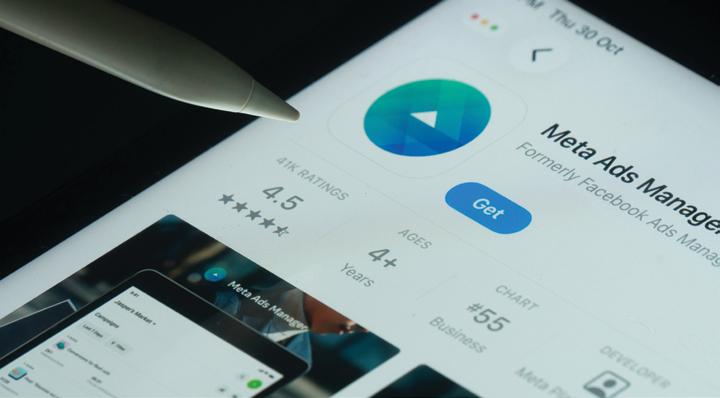
“Billiards isn’t just a product; it is an experience tied to social settings, skill and environment,” she says.
Instead, the most effective creative leans into lifestyle, showing real people playing, highlighting well-designed game rooms and capturing the craftsmanship of tables and cues in action.
Acuna notes that ads should help customers envision the product in their own space.
“Your creative must help the buyer imagine the table in their own home,” he says. “You are selling the complete family game room experience, not just wood and felt.”
Video content, in particular, consistently outperforms static images, according to Salvaggio, who points to product demos and before-and-after transformations as especially effective.
Even the structure of creative investment matters. Vladyslav Marchenko, CEO and founder of Shopify Playbook, says retailers should rethink how they allocate their creative budgets.
“Seventy percent should go to user-generated-style content, real customers, real use,” Marchenko says. “Most retailers do the opposite and rely on polished product shots, which underperform.”
One of the advantages billiard retailers have is that their audience is relatively easy to identify. The challenge is not finding potential buyers, but reaching them efficiently.
Tingstad warns retailers should resist the urge to over-narrow their targeting.
“Your job isn’t to find the specific fish,” he says. “It’s to give Meta’s algorithm a reasonable pond to fish in.”
That balance, between precision and scale, is critical. Too broad, and budgets get wasted. Too narrow, and campaigns fail to gather enough data to optimize.
Marchenko suggests one of the most effective tactics is building lookalike audiences based on high-value customers rather than all buyers.
“Most retailers upload all customers, but that includes low-value purchases,” he says. “Segmenting high-AOV customers can drive significantly better returns.”
For retailers with limited budgets, Krantz notes the importance of focusing on people who have already interacted with the brand.
“Retargeting is key,” she says. “Smaller budgets perform better when they’re focused rather than spread too thin.”
One of the biggest pitfalls in Meta advertising is misunderstanding performance metrics.
Retailers often rely heavily on platform-reported return on ad spend (ROAS), but experts warn that those numbers can be misleading.
your dealer at olhausenbilliards.com/dealers
“Meta takes credit for a lot of sales you’d have gotten anyway,” Tingstad says.
He recommends evaluating incrementality, whether ads are actually generating new business through methods like geo holdout testing or temporarily pausing campaigns to observe changes in total revenue.
This distinction is critical because many retailers unknowingly pay for sales that would have occurred organically.
Tingstad estimates that overlap can account for 20 to 40 percent of attributed revenue, meaning reported ROAS should often be discounted when making decisions.
For niche retail categories like billiards, Marchenko says a realistic profitable ROAS falls between 3.5x and 5x, with break-even typically around 2.5x to 3x.
Krantz, meanwhile, encourages retailers to think beyond immediate sales when evaluating success.
“Engagement quality, video views, time on site and return visitor rates are all strong indicators of future conversions,” she says.
Even the best strategy will fail without proper technical execution.
Tingstad outlines several non-negotiables, including implementing conversion tracking tools like the Conversions API, passing accurate purchase values and simplifying campaign structures to allow algorithms to optimize effectively.
Salvaggio notes that many retailers simply aren’t tracking performance correctly.
“If you can’t tie ad spend back to actual sales, you’re flying blind,” he says.
Beyond setup, timing and consistency also play a major role. Krantz notes Meta is a “slow burn,” requiring sustained effort and optimization.
“It’s a long-game approach if you want to see true sustainable performance,” she says.
That long-term mindset extends to budgeting as well. Marchenko points out that billiard retail is seasonal, with stronger demand in Q4 and early Q1.
“Pausing ads in slower months and reinvesting during peak periods often yields better overall returns than constant spend,” he says.
While Meta platforms can be powerful, most experts agree they work best as part of a broader marketing ecosystem.
White outlines a “high-confidence growth stack” for billiard retailers that combines Meta for discovery and retargeting with search-based channels to capture intent.
“Google Search and Shopping capture explicit demand, while Meta builds it,” White says. “This layered approach ensures retailers are not relying on a single channel to drive results – especially important in a category with long purchase cycles and high price points.”
Email and SMS marketing, along with strong in-store sales processes, round out the equation by helping convert leads generated through digital campaigns.
So, are Facebook and Instagram ads worth it for billiard retailers?
The consensus among experts is a clear “yes,” but only under the right conditions.
Retailers who treat Meta as a quick sales channel, rely on generic creative or ignore tracking and attribution are likely to see disappointing results.
Those who approach it strategically, aligning campaigns with the customer journey, investing in strong creative, targeting high-intent audiences and measuring true incremental impact, can turn Meta into a consistent and scalable revenue driver.
“A motivated retailer with the right setup and a few strong creative variations can run profitable Meta ads,” Tingstad says. “The ones who struggle are skipping fundamentals in favor of tactics that don’t compound.”

This July, some of the nation’s top pool players, instructors and junior athletes will gather in Dubuque, Iowa, for one of the most comprehensive weeks on the American cue sports calendar.
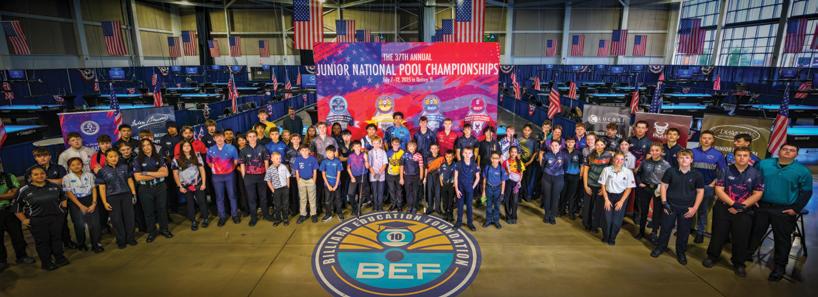
The event, running July 5-12 at the Grand River Center, the USA National Pool Championships will once again be conducted alongside the 39th Annual BEF Junior National Championships and the 3rd Annual International Summit for Instructors, creating a unique convergence of elite competition, youth development and professional education.
Organized under the umbrella of USA Cue Sports and the Billiard Congress of America, the event has quickly become one of the premier showcases for the sport in the United States.
This year’s schedule includes men’s and women’s 9-ball and 10-ball divisions, wheelchair 8-ball and 10-ball competition, and junior divisions for U17
By Charles S. Donnavan
boys and U19 boys and girls. The adult divisions will feature 64-player fields, while wheelchair divisions will host 32 players each.
The event will use a double-elimination format that transitions to single elimination in the final 16 players, all played under World-Standardized Rules.
For many competitors, however, the stakes extend well beyond national titles.
Champions and silver medalists in the men’s and women’s divisions will earn the opportunity to represent the United States at the WPA World Championships. Junior medalists will receive invitations to compete at the World Junior Championships later this year in San Antonio.
That international pathway has become one of the defining elements of the BEF Junior Nationals, according to Myrriah Pierson, BEF event coordinator.
“The BEF offers junior athletes an opportunity to compete against the best athletes in the country to win a national championship title in four different disciplines,” Pierson says. “BEF Junior Nationals is also the gateway to competing in Junior World Championships later this year.”
The experience of advancing to world competition can have a lasting impact on young players, both personally and competitively.
“All of the players I spoke with had the same response,” Pierson says. “Winning a national title then going on to compete against the top junior athletes in the world instilled each with a sense of accomplishment, boosted their confidence in their game play, and it taught them perseverance.”
For instance, she pointed to junior player Eddie Vonderau as one example.
“Participating at the World Junior Championships is a great opportunity for me to represent my country on the global stage,” Vonderau says. “The World Junior Championships gives me the chance to test myself against the best junior players in the world. Playing in a world championship is something that can’t be replicated.”
The continued growth of junior participation has been one of the more encouraging trends in cue sports over the last decade.
Pierson believes expanded opportunities and improved access to instruction have helped fuel that momentum.
“I would say that there are more opportunities for juniors to compete in recent years,” she says. “Most of the big tours in pool have a junior division. The training of junior players has become more accessible and convenient with online and in-person instruction options as well.”
She also credits greater parental involvement and changing perceptions of pool rooms for helping bring more young players into organized competition.
“I truly believe that parental involvement and understanding of the pool room environment, the fact that most rooms are junior friendly, has made a huge impact on the participation of juniors in pool,” Pierson says.
Education and instruction will also take center stage during the week through the International Summit for Instructors, an event designed to support coaches, teachers and industry professionals looking to grow the game.
Hosted by the Professional Billiard Instructors Association, the summit combines classroom sessions, instructional workshops and networking opportunities focused on teaching methods, player development and coaching standards.
The summit has become an increasingly important component of the overall weeklong gathering because of its emphasis on long-term player development.

Programs such as the BEF’s Break and Run initiative and instruction from PBIA-certified instructors are helping introduce new players to the sport while also improving skill development for those pursuing competitive careers.
“With the opportunity to participate in instruction on how to play the game through different programs like the Break and Run program, or individualized instruction with a PBIA instructor, juniors are able to step up with confidence and compete,” Pierson says.
In addition to championship opportunities, the BEF also awards educational scholarships to junior competitors, reinforcing the organization’s commitment to both athletics and academics.
That broader focus on development – from grassroots instruction to elite international competition – is what makes the combined event unique within American cue sports.
Players can compete for national championships, instructors can sharpen their teaching methods, and junior athletes can take critical steps toward international careers, all within the same venue and during the same week.
For organizers, the goal is not only to crown champions, but also to strengthen the future of the sport at every level.

The return of the Innovative Products Contest at this year’s BCA Expo signaled more than just a celebration of standout gear – it marked a renewed focus on the ideas, engineering and craftsmanship shaping the future of the billiards and game room industry.
Revived for 2026, the contest drew strong participation from across the sector, highlighting products that blend performance, practicality and design in new ways.
From advanced cue construction to multifunctional furniture, modernized game tables and cutting-edge dartboard technology, this year’s winners underscore a clear theme: innovation is no longer confined to performance alone. Instead, it is increasingly about delivering value, versatility and aesthetic appeal to a broader audience of players and consumers.
“Innovation is what drives this industry forward and this contest highlights the companies that are pushing boundaries and redefining what’s possible,” says Shane Tyree, CEO of the Billiard Congress of America.
With attendees themselves determining the winners through onsite voting, the results reflect what resonated most strongly with both professionals and enthusiasts. Across four categories –
By Keith Loria
Innovative Cue, Innovative Accessory, Innovative Game Table and Overall Most Innovative Product – the honorees each tell a story about where the industry is headed.
Taking top honors in the Innovative Cue category, the Little Monster Cyber Energy Cue represents a thoughtful reimagining of what a cue can be. Designed by founder Xinyu Shen, the product merges break and jump functionality into a single, three-piece carbon fiber cue – an approach driven by both practicality and player demand.
“We found that the front-end structure and striking characteristics of break cues and jump cues are inherently very similar,” Shen says. “That observation became the core inspiration for the design.”
Rather than forcing players to carry multiple cues or invest in separate equipment, the Cyber Energy Cue integrates both functions seamlessly. The result is a more efficient, cost-effective solution that appeals to a wide range of players, from casual enthusiasts to more serious competitors.
The three-piece construction also addresses another common pain point: portability. By making the cue easier to transport and store without sacrificing performance, the design aligns with how today’s players engage with the game – often across multiple locations and environments.
Performance, however, remains central. The cue features an elastic carbon fiber shaft designed to optimize power transfer while maintaining stability.
“The shaft offers strong toughness and balanced flex and rebound, allowing power to transfer more smoothly through the cue,” Shen says. “This results in a solid, stable stroke without unwanted vibration.”
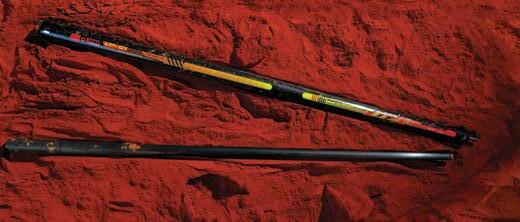
Complementing the shaft is a high-density Bakelite tip engineered for both power and control. Capable of withstanding the force of break shots while still enabling precision during jump shots, the tip reflects the dual-purpose philosophy behind the entire design.
Importantly, Shen emphasizes that accessibility was a key priority throughout development. “We focused on the key needs of everyday players,” she says. “This approach allows the cue to deliver reliable performance while remaining affordable for a wide range of players.”
Feedback at the BCA Expo reinforced the product’s appeal. Players noted the cue’s natural feel – comparable to traditional wooden cues – along with its versatility and value. Looking ahead, Shen says the company plans to expand the product line and continue refining materials and construction to further enhance performance and durability.
In the Innovative Accessory category, Brunswick Billiards earned recognition for its Arena Furniture Mirror Wall Cue Rack, a product that reflects a growing demand for accessories that are as durable as they are visually appealing.
Designed specifically for high-traffic commercial environments, the rack combines a mirrored surface, integrated drink holders, chalk storage and a robust construction intended to withstand heavy use. According to Nick Baron, president of Brunswick Billiards Group, the impetus behind the design was clear.
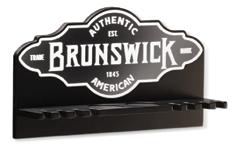
“The biggest influence was creating really durable and stout furniture to withstand the impact of usage in pool rooms,” Baron says. “Our existing lineup just was not suitable for commercial use.”
That focus on durability did not come at the expense of aesthetics. Instead, Brunswick sought to blend traditional design elements with subtle innovations.
“We always like to tie in vintage or time-tested designs with small innovations like the drink holders on the cue holder,” Baron says.
The result is a product that feels both familiar and modern – an approach that resonates with customers seeking cohesive, design-forward environments. Baron notes that while individual features such as drink holders and chalk storage add convenience, it is the overall build quality and styling that generate the most feedback.
“Overall, we get the most comments on the weight and build of the furniture and the styling,” he says.
More broadly, the product reflects a shift within the industry toward mul-
tifunctional pieces that bridge the gap between utility and design.
“It is a shift to combining practical and aesthetic into functional and durable pieces,” Baron says.
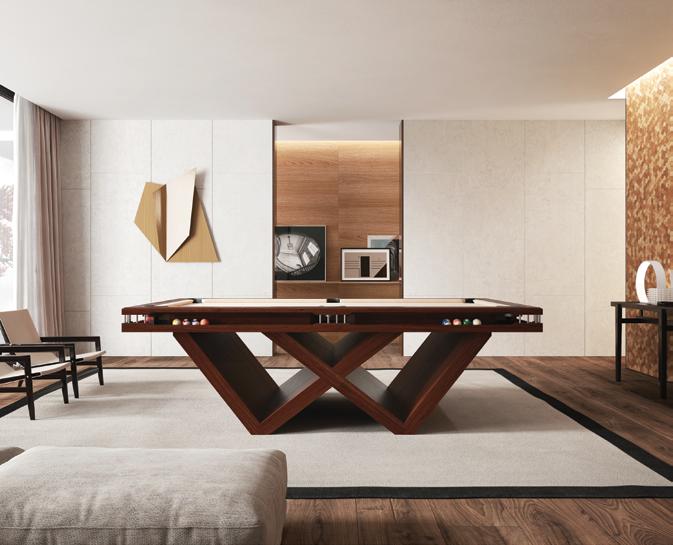
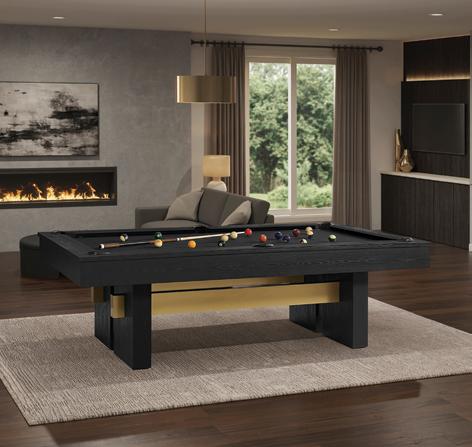
The Innovative Game Table award went to Imperial, a division of H. Betti Industries, for The Nova Pool Table, a product that exemplifies how traditional equipment can be reimagined for contemporary living spaces.
For Maggie Cleary, strategic account manager at Imperial, the vision behind Nova was rooted in challenging longheld perceptions.
“We wanted to create something that felt more like a piece of modern furniture – clean, architectural and intentional – while still honoring the integrity of the game,” she says.
That vision is evident in both the table’s design and construction. Featuring sol-
id wood rails, tournament-grade slate and a minimalist aesthetic, Nova is engineered to deliver professional-level performance while blending seamlessly into modern interiors.
“Sustainability was an important layer in that process,” Cleary says, noting the use of FSC-certified wood and efficient construction methods aimed at reducing waste.
Despite its contemporary look, Nova does not compromise on gameplay.
“The solid wood rails provide the structural integrity needed to support consistent play over time,” Cleary says. “The tournament-grade slate ensures a perfectly level, stable playing surface, which is essential for accuracy and consistency.”
This balance between form and function is increasingly important as consumer expectations shift. Cleary points to a growing demand for game tables that complement broader design trends within the home.
“We’re seeing a clear shift toward more elevated, multifunctional living spaces,” she says. “Game tables are expected to complement the overall design of the home.”
Nova was designed with that trend in mind, positioned not just as a recreational item but as a statement piece. The goal, Cleary says, was to create a product that customers would be proud to showcase. Achieving that balance required a disciplined approach.
“Performance is non-negotiable,” she says. “Once that’s established, we layer in design in a way that enhances, rather than interferes with, the function.”
For Imperial, the recognition carries both professional and personal significance. As a fourth-generation member of the family business, Cleary sees the award as validation of the company’s direction.
“It validates the direction we’ve been moving in – pushing design forward
while maintaining the craftsmanship and quality we’re known for,” she says.
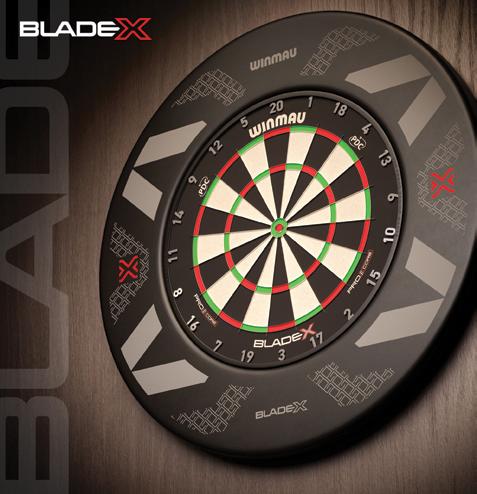
Earning the Overall Most Innovative Product award, the Winmau Blade X dartboard represents a major step forward in dartboard technology, combining advanced materials and engineering to enhance durability and gameplay.
According to Harry Bluck, commercial manager for Nodor International, the parent company of Winmau, the Blade X is not simply a replacement for previous models but a new benchmark within the company’s lineup.
“It has been developed as the most advanced dartboard in the world and is now the official dartboard of the PDC,” Bluck says.
Central to the product’s performance is its Triple Core technology, which incorporates multiple layers designed to optimize both durability and dart retention. The front layer allows for clean penetration with minimal surface damage, while a denser middle layer grips dart points more effectively, reducing bounce-outs.
“At the core, a high-density hardwood backboard adds structural integrity, preventing material breakdown over time,” Bluck says.
The extended sisal bed further enhances performance by reducing stress on the board and extending its lifespan –an important consideration for both casual players and professionals.
While the Blade X introduces significant advancements, Bluck emphasizes the importance of incremental innovation in maintaining leadership within the category.
“It’s the consistent evolution of materials, construction and performance that
ensures we continue to meet the expectations of players at every level,” he says.
The response at the BCA Expo was overwhelmingly positive, with players highlighting improved scoring potential and greater consistency. From a commercial standpoint, features such as a five-year warranty and enhanced durability also make the product attractive to retailers.
“We’re incredibly proud to see the Blade X recognized,” Bluck says. “This reflects our focus on meaningful innovation designed to improve board longevity and enhance scoring potential.”
Taken together, this year’s winners illustrate how innovation in the billiard and game room industry is expanding
beyond traditional boundaries. While performance remains essential, there is a growing emphasis on versatility, accessibility, design and sustainability.
The Little Monster Cyber Energy Cue addresses practical needs through multifunctionality and affordability. Brunswick’s Arena Furniture line redefines accessories as both durable and design-forward. Imperial’s Nova Pool Table bridges the gap between recreation and interior design. And Winmau’s Blade X pushes the limits of material science and engineering in darts.
Each product reflects a different facet of innovation, yet all share a common goal: enhancing the player experience while adapting to changing market expectations.
The strong participation and enthusiasm surrounding the contest’s return suggest that this focus will only contin-
ue to grow. By giving attendees a direct voice in recognizing standout products, the BCA has created a platform that not only celebrates innovation but also helps shape its direction.
As the industry looks ahead, the lessons from this year’s winners are clear. Innovation is no longer just about doing things better – it is about doing them smarter, more efficiently and in ways that resonate with a broader audience.
Whether through improved performance, thoughtful design or greater accessibility, the next generation of products is redefining what players and consumers can expect. And if this year’s contest is any indication, the future of the industry will be driven by those willing to challenge conventions and embrace new possibilities.

By Anthony Stoeckert
Kevin O’Brien was assembling a brandnew pool table he had purchased when he decided there had to be a better way.
O’Brien has been playing pool since he was 5 years old, when his father built a wooden stool for him that allowed him to reach the table and his mother started giving him lessons. Growing up on Long Island, he was a Tri-State champion and a top amateur player. His love for the game never faded, and a few years ago, he was excited to purchase that table. But assembling it was, to put it mildly, frustrating.
“I’ve put together about 20 pool tables,” O’Brien says. “I’m not a pool table mechanic, but I’m not ignorant. So I bought this pool table, a good brand, and it was solid oak. I assembled it with my buddy Tony O, who puts tables together – he also repairs cues and is very knowledgeable. This table was such a nightmare that it took us two days to assemble it.”
O’Brien and Tony O had the base perfectly level, only to have the legs kick out when they positioned the slate.
“The bolts were stripping out because we needed longer ones,” O’Brien says. “We fussed for about four or five hours and said, ‘That’s it, we’re done. Tomorrow is another day.’”
No matter what they did, they couldn’t finish the job. They got longer bolts and went back to work. They finally managed to complete the assembly, but O’Brien still describes the experience as a nightmare.
Then came inspiration.
“A lightbulb flashed over my head, and I said, ‘There has to be a better way,’” O’Brien says. “To make a perfectly flat surface in three pieces, where each slate is cupped and you have to wedge so many different points – it’s ridicu-
lous. It’s the Stone Age – literally. I’m going nuts thinking there has to be a better way.”
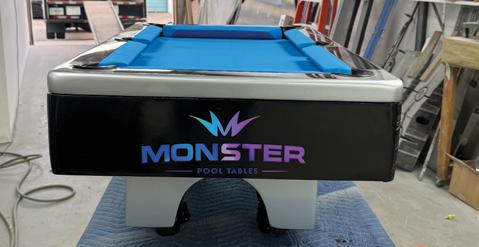
O’Brien is confident that his Monster Pool Tables are the better way. According to the company’s website, his table is the most “technologically advanced pool table on the market.”
There’s an old expression that if you build a better mousetrap, the world will beat a path to your door. O’Brien believes he has done just that, though it required significant work, innovation, and persistence.
With an established career in auto body repair, O’Brien emphasizes that his background is not in engineering. Still, he describes himself as handy and able to “fix pretty much anything.” In his
view, the key to building a quality, professional-grade pool table that is easy to assemble was reducing the weight of the playing surface. That meant finding an alternative to slate.
“The playing surface doesn’t have to weigh 400, 500, or 600 pounds,” O’Brien says. “The table is going to weigh 1,000 pounds, but the playing surface doesn’t have to weigh that much.”
He spent a year and a half on research and development, testing a range of prototypes through extensive trial and error. One material brought the playing surface down to 270 pounds, and he built a prototype that he asked professional players to test. They liked the surface, but O’Brien still felt it was too heavy.
“After hundreds and hundreds of hours, I figured out I was going to go with carbon fiber,” he says. “But if I made a one-inch carbon fiber synthetic slate, it would cost $10,000 for the piece – just for the synthetic slate.”
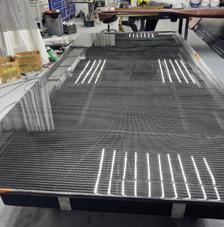
He realized a full inch of carbon fiber wasn’t necessary, but the material still needed to resist warping. He used a proprietary aerospace material as a base, added an aluminum extrusion frame underneath, and layered 12K carbon fiber on top.
“It didn’t twist – it just worked out great,” O’Brien says.
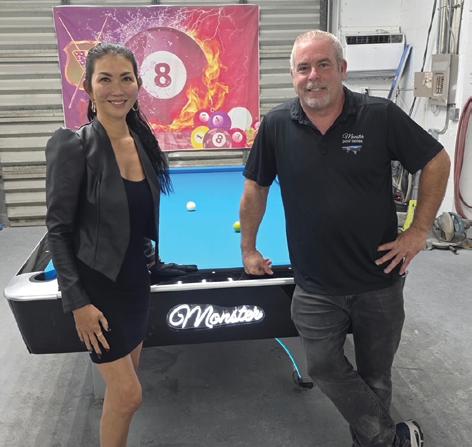
O’Brien asked Tony Robles, a personal friend, to try the carbon fiber-topped table, and Robles was impressed. Earl Strickland soon became the first professional to sign on, followed by Jeanette Lee. The Monster Pool Tables website now showcases two limited-edition models: the Earl “The Pearl” Strickland commemorative signed table and the Jeanette Lee “Black Widow.”
“Jeanette Lee says it’s the best table money can buy, and she stakes her reputation on it,” O’Brien says.
Originally, O’Brien planned to manufacture carbon fiber surfaces for other table makers. But the aluminum frame increased the table’s height compared to traditional models, affecting overall design. That led him to build complete tables himself, sourcing bases from China and modifying the playing surface, cloth, and rubber to meet his standards.
One area where he refused to compromise was assembly time. O’Brien insisted the table had to be assembled in five minutes. During phone conversations with his brother Michael, a nuclear engineer in the Navy, he developed a prototype that took 20 minutes. Michael pointed out that reducing assembly time from three to four hours to 20 minutes was already a major breakthrough.
“You’re killing it,” Michael said.
“FOR 400 YEARS, TABLES USED SLATE. WHAT’S UNIQUE ABOUT MY TABLE, ASIDE FROM THE FIVE-MINUTE ASSEMBLY, IS THE CARBON FIBER.”
“I said, ‘Mike, it’s going to be five minutes,’” O’Brien recalls. “He’s like, ‘Kevin, you’re crazy. It doesn’t have to be five minutes. You can do it in 15 or 20 minutes – calm down with this five-minute thing.’”
“I said, ‘No. It’s going to be assembled in five minutes. Period. The end.’ And with the help of my good friend Frank, we made a video where we assembled it in five minutes.”
When O’Brien told Strickland his goal, the veteran player was skeptical.
“Yeah, sure,” Strickland replied.
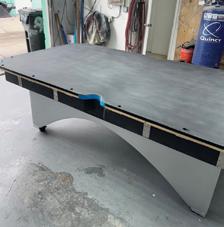
O’Brien noted that the carbon fiber and aerospace base weighed about 120 pounds. With the aluminum base and rails attached, the total came to roughly 220 pounds.
“If the whole playing surface is already covered with cloth, the rails are squared, bolted, and torqued on top, and you
lift it as one piece at 220 pounds,” he says, “two people can lift it and click it into place with 12 stainless steel plates around the perimeter. It locks right in.”
The result, he says, is a table that can be assembled in five minutes.
A lighter table simplifies assembly, but it also created a challenge. A table weighing only 300 to 500 pounds could shift under the weight of players leaning on it, making it unsuitable for professional play. To solve this, O’Brien incorporated cement trays into cubby holes within the frame beneath the playing surface.
“I can make it any weight I want,” he says. “As long as it’s 1,000 pounds, you’re good.”
The key insight, he says, is that the slate itself doesn’t need to be heavy – only the finished table does.
“What you need is a perfectly flat playing surface that’s strong enough not to dimple,” O’Brien says. “It can’t crack, warp, cup, or bend. Slate cups and warps, and people don’t realize that.”
“I literally changed the game. For 400 years, tables used slate. What’s unique about my table, aside from the five-minute assembly, is the carbon fiber.”
He adds that carbon fiber is stronger than slate and even steel, while slate has been the industry standard for centuries.
“So my motto is, ‘Isn’t it time to get out of the Stone Age and buy a Monster Pool Table?’”
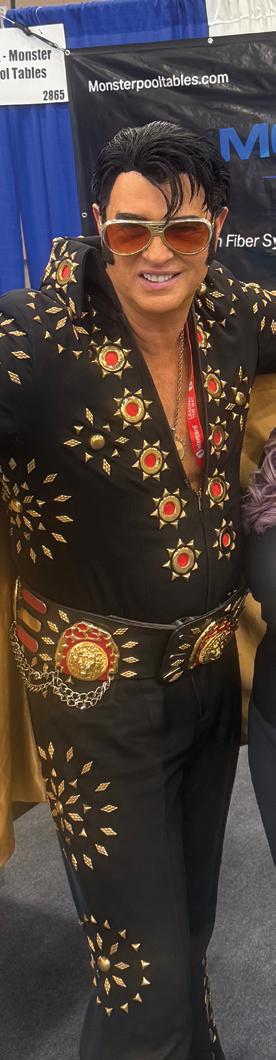
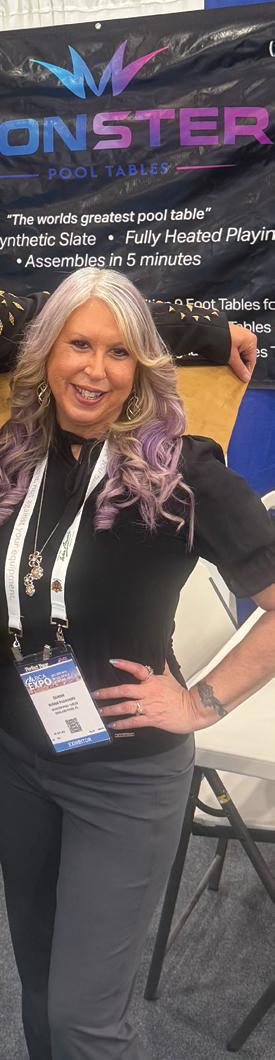
O’Brien believes his company has created something unique: a professional-grade table that top players endorse and that can be assembled quickly and easily. In March, he showcased Monster Pool Tables at the BCA Expo, where the product drew significant attention. One industry professional told him he had discovered the “holy grail” of pool table design.
“And I’m like, ‘It’s not just that assembly takes five minutes; it’s that anyone can do it,’” O’Brien says. “You don’t have to be a pool table mechanic. All the hard work is already done.”
Customers don’t necessarily have to assemble the table themselves, however. Delivery crews can handle setup when needed.
“The owner doesn’t have to set it up –we can do it,” O’Brien says. “But if I sell seven-footers on Amazon, customers can set it up themselves and follow the instructional video.”
Questions have come up along the way. At the Expo, one attendee asked whether the surface had been tested in extreme heat, such as inside a shipping container at 160 degrees for six months.
“I said, ‘No, I left that up to Lamborghini and Ferrari,’” O’Brien says. “If it’s good enough for those cars in Dubai and the desert, where it’s 140 degrees, it’s good enough for my table. People don’t realize how strong carbon fiber is.”
Another feature he ultimately embraced was heating. Strickland encouraged him to make the tables heated from the start, but O’Brien was skeptical. He changed his mind after players like Strickland, Dennis Hatch, Robles, and Lee told him that at tournaments, tables under hot lights tend to play better and more consistently across all conditions.
O’Brien is deeply committed to his vision and believes his tables deliver consistency and durability, with every detail “engineered for performance,” as his website states.
“I’ve worked on 20 or 25 pool tables –I’ve never seen one without cracked or chipped slate,” he says. “You can fix them, but they all have flaws. Mine are perfect – no chips – and extremely hard. I think they’ll last longer.”
O’Brien and his wife, Donna, have invested significant time and effort into developing the product and acknowledge there is still work ahead. But the idea driving it remains simple.
“It blows my mind that people haven’t looked at better materials,” O’Brien says. “What do you need for a pool table? It has to be strong, and if you want easy assembly, it has to be light. So it needs to be both strong and light – carbon fiber. Welcome to the future of pool.”
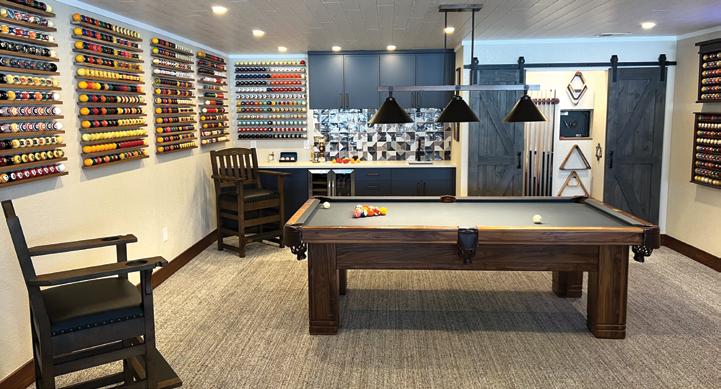
By Jamie Lynch
Brent Friesth has never played pool competitively. He never took lessons, nor participated in league play. For him, his love of billiards extends far beyond pocketing a shot.
Growing up, Friesth had a pool table in his basement and used billiards as a way to bond with his father. But there was something about the game that drew him in even further –pool balls.
He bought his first table in the 1990s and instantly knew he wanted the best pool balls on the market to complement the new installation.
“I got a set of Brunswick Centennials, and I thought they were super cool,” he says. “Then over a few years, I bought a set of Denver Broncos balls, I bought a set of poker balls. So I had a few sets.”
And while Friesth didn’t know it yet, his hobby would quickly turn into a collection, and in turn, the Billiard Ball Museum was born.
Friesth really dove into his collecting journey after former Billiard Congress of America CEO and mutual friend Rob Johnson arrived home from a the BCA Expo in Las Vegas with a set of balls for Friesth’s friend. Jealous of his buddy’s new acquisition, Friesth was determined to find a matching set for himself and quickly hopped online to browse the internet.
“When I got online, I thought, ‘there’s all sorts of cool stuff on here.’ So I kept poking around, and when I would Google about any particular set, I was getting redirected to the AZBilliards website,” he says. “It was the same guys I kept getting redirected to, the same small pool collection group.”
Friesth wasted no time reaching out, a decision that would ultimately lead to the birth of new friendships and a business partnership.
Rupert Ashford and Kerry Roth were the two individuals Friesth connected with in pursuit of a set of Aramith balls. Ashford hails from the United Kingdom, and Roth lives in Fort Worth, Texas. While the three have yet to meet in person, they frequently exchange information and buy and sell sets from one another. Unlike Friesth, both Ashford and Roth played billiards competitively.
Ashford had the idea to start the Billiard Ball Museum. It exists currently as a website only and serves as a way for collectors, just like the founders, to connect with one another and purchase hand-curated sets designed by the three gentlemen.
“The intent is to recreate something that’s been made in the past that people can’t find, they can’t afford, or that’s not made available because it’s so rare,” Friesth says.
The process of putting together a set takes a team effort. In order to deliver a premier product to collectors, the trio must work together to brainstorm concepts and translate the ideas into quality designs.
“[Ashford] is kind of the artsy guy behind the whole thing,” Friesth says. “He will design pool balls, the ones that we’ve created ourselves, and he’s the one that created the relationship with the manufacturer. And then somehow I ended up being the warehouse manager.”
The first limited edition set produced by the museum in 2023 was a poker set, with the 16 balls containing letters corresponding to Ace, Jack, Queen, and King, as opposed to the traditional numbers. As is typical for the museum, it produced 30 sets available for purchase, and they quickly sold out.
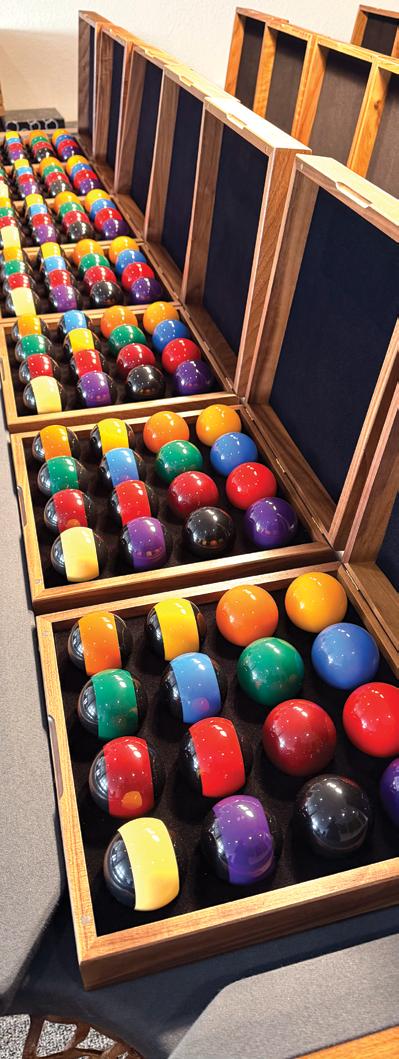
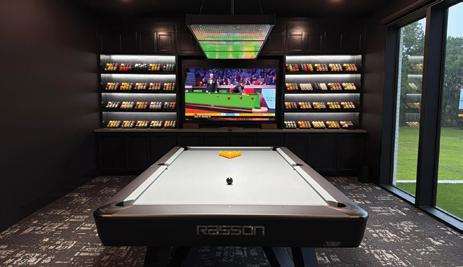
The next collections were a series of Romanique sets, which featured Roman numerals on the balls. These were difficult items for collectors to get their hands on 70 years earlier, so the museum aimed to remake them for people to enjoy in the present day.
The third set is based on an Aramith set composed of stripes and solids, without numbers, a rare configuration that’s nearly impossible to snag anywhere else. The museum’s upcoming set will include hexagon-shaped balls rather than circles and will be made of clay.
“We’re not trying to copy, but we’re trying to pay homage to these older sets that people can’t get,” Friesth says.
While the target audience includes both players and collectors, the balls sold by the museum are designed for use. For people who prefer to use their collectible sets as a decorative piece, the museum sends the balls out in a handmade walnut box designed by a woodworker local to Friesth’s home in Colorado.
In addition to the box, each set comes with an 8-by-8 card that features photos of the collection, a brief historical synopsis, and a certificate of authenticity courtesy of the museum.
While some sets sell for hundreds of dollars, the goal of the museum is not to make a profit. Friesth, Ashford, and Roth simply started the website for the love of the collecting process.
“I think we could sell them for more, but that’s not our intention,” Friesth says. “We’re just trying to make it affordable for these other collectors and just have some fun.”
Friesth owns Bolder Insurance, so while the museum has his heart, most of his working time is devoted to his agency. However, the hunt to add rare and desirable pieces to his collection is never far from his mind.
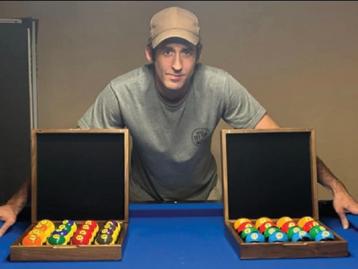
One of Friesth’s most memorable acquisitions came after he spontaneously ventured back to his home state of Minnesota to get his hands on a $20,000 set of rare ivory pool balls from the 1800s. The billiards world has long since moved on from using elephant tusks to make pool balls, but the ones that remain from hundreds of years ago are a collector’s dream.
He also recalls a moment when he was presented with the opportunity to obtain a Romanique I set on eBay, the rarest iteration of the Romanique style. Friesth, knowing well the value of the balls, took a $1,000 risk, buying the collection without researching it.
“They were legit,” he says. “They were in incredible condition for their age.”
Friesth later reached out to the seller to discover that he bought the set at Goodwill for just two dollars. Despite the steep purchase price, Friesth acknowledges that even the $1,000 he spent was significantly less than the balls’ true value.
As for the future of the museum, the trio hopes to one day build a physical location to showcase their collection. For now, ironing out the online sector remains a goal and priority.
“I think [Roth and Ashford] would like to get an online museum that’s well-organized and has every set that would have a description, a history, and photos,” Friesth says.
Aside from pool balls, Friesth has never collected much of anything. But since the museum’s founding in 2018, he has truly ignited a passion that will last a lifetime. Forging new friendships and building a community has been the most rewarding part of the whole experience, and he hopes to one day meet Roth and Ashford in person.
“It’s really like the thrill of the chase,” he says.

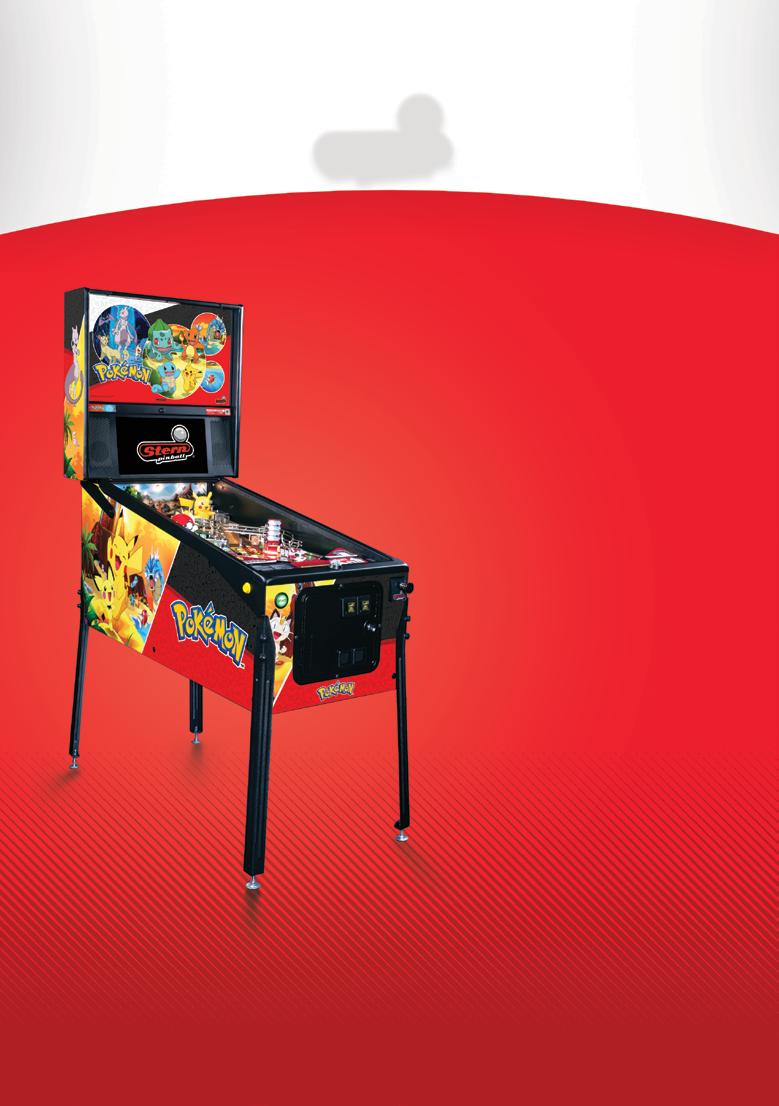
“It’s the game... operators needed!” - 904 Pinball “Highest earning pinball I’ve operated in 25 years!” - CastleCade
By Anthony Stoeckert
What makes someone want to become a pool instructor? Obviously, a love of the game and a passion for sharing knowledge of pool with others are essential. But it’s more than that. Instructors want their students to succeed and enjoy the game as much as they do. When a student succeeds, the instructor succeeds as well. Imagine the satisfaction that comes with helping someone become better at pool and sharing lessons that are never forgotten.
BCA Insider wanted to gain insight into what inspires some of our best instructors, beginning with the stories of two renowned teachers of the game – PBIA Master Instructors Anthony Beeler and Samm Diep-Vidal.
Two things have been part of Anthony Beeler’s life from the very beginning – pool and education.
Beeler started playing pool as a kid growing up in Kentucky. One memory that stands out is the year his father asked what he wanted for Christmas –a four-wheeler or a pool table. He chose the pool table.
“I grew up playing in country stores where you’d see everyone from farmers to road players to high-level competitors, and there was no hiding from the truth,” Beeler says. “If you couldn’t play, you lost.”
Beeler went on to achieve plenty of success. He has won 300 tournaments and six regional titles and was a member of the 2013 BCAPL National 9-Ball Championship team. He also has six top-25 national finishes and once went hill-hill with Shane Van Boening at the Derby City Classic.
Then there’s the education side of his life. Both of his parents were teachers, and he has worked in K-12 education for 27 years.
“I spent nine years as a kindergarten teacher and currently serve as Director of Pupil Personnel for Lincoln County Schools in Stanford, Kentucky,” he says. “Teaching has always been part of who I am.”
It was only natural for Beeler to combine his two passions and become an instructor. Today, he offers in-person and online instruction through Beeler’s Virtual Billiard Academy, which he founded in 2011.
“That’s nearly a decade before the rest of the industry followed,” he says. “That’s why I’m often referred to as the ‘Father of Online Pool Instruction.’”
Beeler’s resume as an instructor is remarkable. He has taught more than 31,000 students in over 100 countries. He’s the only American PBIA Master Instructor to hold an established Fargo Rating over 700.
“That’s significant because it means I don’t just teach the game – I understand it,” he says.
“I’ve been a McDermott Cues ambassador for 14 years and am also sponsored by Diamond Billiard Products,” Beeler says. “I’ve trained and mentored three Jerry Briesath’s Instructor of the Year winners, which speaks directly to my impact on the next generation of instructors.”
As an instructor, Beeler works with players of all levels –from complete beginners to professionals.
“I’ve worked with juniors, league players, advanced amateurs, and pros – men and women of all ages,” he says. “Over the years, I’ve trained 28 APA Regional Champions and six BCAPL National Champions. My students include the winner of the Memphis Open, the ninth-ranked woman in the world, a two-time junior national champion, and the Ultimate Pool USA Arizona Shootout winner. Players like Nick Varner and other top professionals have purchased my books and referred students to me, which is one of the highest compliments an instructor can earn.”
For Beeler, communication is vital, and he applies the skills he developed as a kindergarten teacher to his pool instruction.
“You must take complex ideas and make them simple, repeatable, and measurable,” he says. “Patience and adaptability are essential, but without a structured system, none of it works. Teaching isn’t about knowing the game – it’s about delivering
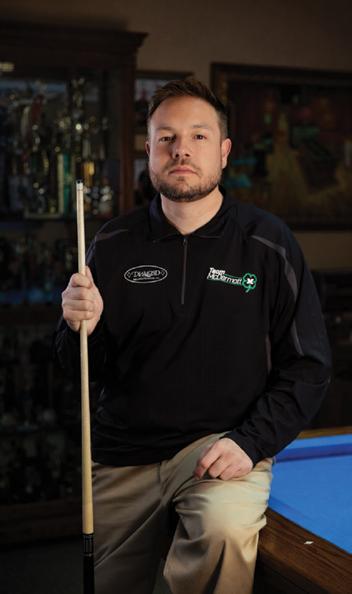
it in a way that produces consistent results. Great instructors don’t just explain; they create change.”
When working with a new student, he begins with fundamentals, including alignment, stroke, and consistency.
“Without those, nothing else matters,” Beeler says. “Improvement doesn’t come from guessing – it comes from understanding. Once you understand what you’re doing and why, the game becomes predictable. And when the game becomes predictable, your skill level increases significantly.”
While most instructors are strong players, Beeler emphasizes that skill alone isn’t enough.
“Being a strong player gives you credibility, but it doesn’t make you an effective instructor,” he says. “Develop com-
munication skills, break concepts into manageable parts, and build a structured system that produces results. Get certified – you’ll learn a lot working with other instructors. Most importantly, focus on impact.Your job isn’t to impress people; it’s to make them better.”
Beeler takes pride in his students’ success, including Sam Henderson, who has won two BEF junior national titles and the Ultimate Pool USA Arizona Shootout. One of his favorite memories involves a woman who improved from an APA 5 to a 7 in about three months.
“She was frustrated because she now had to compete against higher-level players for a trip to Las Vegas,” he says. “She came back for more lessons, and a couple of months later, I found a package in my mailbox. It was a trophy engraved with ‘GOAT,’ featuring a cue ball with my picture and a note explaining she had won the tournament.
“Moments like that never get old. They reinforce something I’ve proven repeatedly – when instruction is structured correctly, it can completely transform a player’s game and unlock potential they didn’t even know they had.”
Teaching never gets old for Beeler because of his passion for the game and for helping players improve.
“Pool is one of the most precise and mentally demanding games in the world,” he says. “There’s always another level. What drives me is transformation. When a player goes from guessing to understanding or from inconsistent to confident, that moment is powerful.”
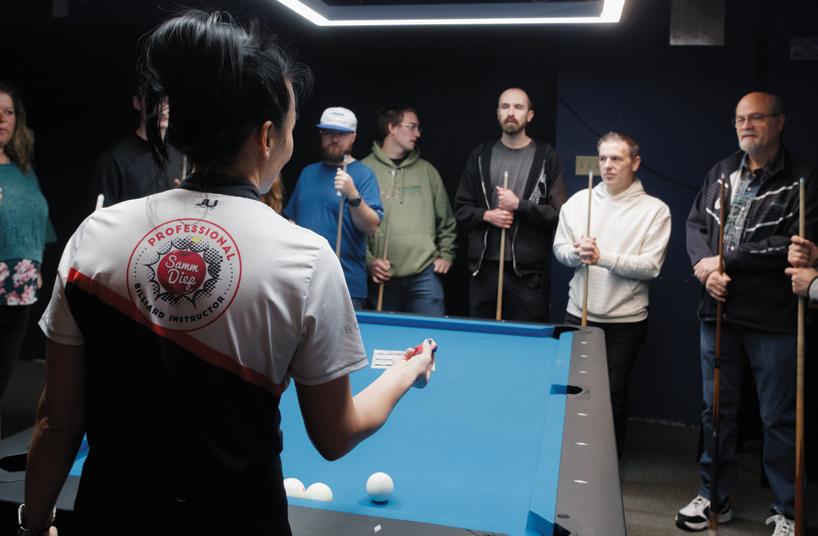
Samm Diep-Vidal was recently in Tampa, where she certified a couple of instructors, during which the three of them taught a total of 24 students during two back-to-back courses.
“I remembered everyone’s names within the first five minutes, it’s a little game I like to challenge myself with,” DiepVidal says. “After the course, the instructors were so impressed. One of them asked, ‘How did you remember everyone’s names?’ and I just said, ‘I paid attention.’”
Paying attention is an important part of Diep-Vidal’s success as a player and as an instructor. When asked what are the keys to being a good instructor, she lists knowledge, being a good listener and flexibility.
“And understanding that there’s no one-size-fits-all approach to anything in pool,” Diep-Vidal says. “Giving honest, direct
feedback, even when it’s hard to hear. And above all, genuinely caring about your students’ success.”
Diep-Vidal is a four-time ACS national champion, a U.S. Juniors National Team coach and the 2024 PBIA Jerry Briesath Instructor of the Year.
She started playing pool as a teenager. Also a musician, DiepVidal played violin in orchestra, and on occasion, she and some of the older kids would sneak out of rehearsals and play at a local all-ages pool hall.
“That’s where I got my very first taste of the game,” she says. “It wasn’t until years later, in my mid-20s, when I was working for an insurance company and my position was eliminated, that I decided to give the pool thing a real shot. I must have spent 60 to 80 hours a week on the table, shooting the exact same shot over and over again, and 18 months later I won my first national title.”
That was also when she started teaching beginners.
“It was a natural transition,” Diep-Vidal says. “I’d been teaching violin lessons for ten years and genuinely enjoyed sharing knowledge. Still being a student myself made it easy for me to understand what beginners were feeling and I’d teach from that place.”
Diep-Vidal’s pool education began at Randy Goettlicher’s Cue Tech Pool School in Dallas, Texas in 2003. At the time, her goal was not to become an instructor, but to learn the proper mechanics of the game. Later she worked with instructors and top players, such as Tom Ross and Bob Keller.
“All while I was competing at a high level,” she says. “As I learned and improved, I documented my journey and found myself drawn to the challenge of teaching the same concepts in new ways to different types of learners.”
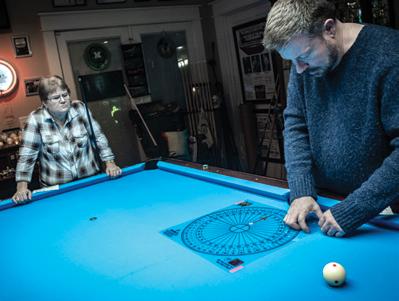
Most of Diep-Vidal’s students these days are retired and semi-retired pros, along with league players who are looking to take the next step.
“They typically come for one- or two-day intensives,” she says. “I also really enjoy working with young players. I love being a mom, and those skills have helped me in so many ways when it comes to keeping kids engaged and excited about pool. I also absolutely adore my regular group of seniors at the Denver rec center.”
Diep-Vidal describes herself as a natural problem solver and says pool provides a way for her to channel that while also allowing her to explore her creative side.
“These days, it’s more therapeutic for me than competitive,” she says. “It’s a chance to be with myself and focus on something that doesn’t care who I am or how my day is going. It’s just me and the table. Pool is brutally honest, but genuinely satisfying. The best shot can make your day, and the worst shot just makes you want to try again.
“There are few things more rewarding as a coach than spending hours working on the same shot with a student, and then seeing it come up in a match. When they pull it off and subtly glance over at you in the audience with that tiny look of recognition, that moment is everything.”
She suggests that anyone who is interested in becoming an instructor begin by earning certification.
“Getting certified not only gives you credibility, but it also gives you the skills to teach and communicate more effectively,” Diep-Vidal says.
She also recommends learning from as many instructors and top players as possible.
“I encourage all my students to do this, especially if they’re thinking about teaching,” she says. “I’ve learned so much from my students, just by paying attention.”
For Diep-Vidal, the real joy in teaching comes from the success of her students, including a young woman who won gold at the World Junior Championships
“Knowing how hard she worked all year and how badly she wanted it,” she says, “that was truly a pinnacle moment in my coaching career.”
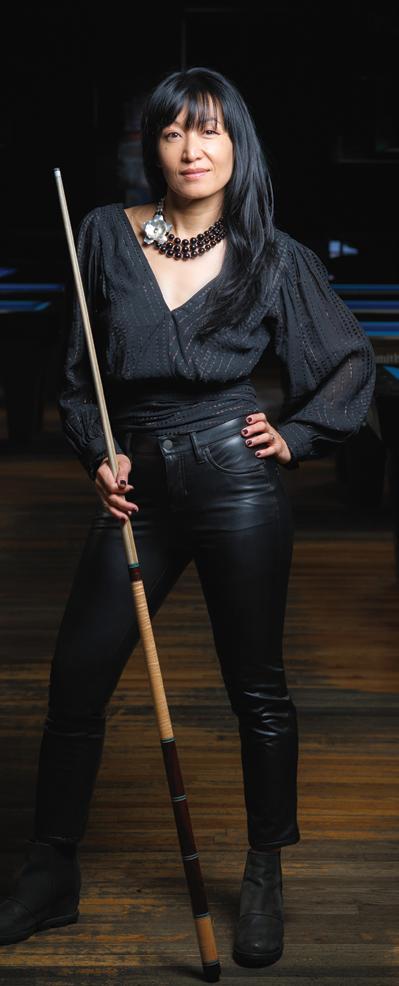
By BCA Staff
Billiards continues to demonstrate its staying power as a reliable and steadily growing category, offering encouraging signs for retailers and industry stakeholders alike.
According to the 2026 Manufacturers’ Sales by Category Report from the Sports & Fitness Industry Association (SFIA), billiard equipment generated an estimated $190.8 million in wholesale sales in 2025. That marks a 1.2% increase over 2024 and a solid 20.1% gain compared to 2020 levels.
While the year-over-year growth may appear modest, the longer-term trend underscores the category’s strength. Billiards has quietly built on gains made during the pandemic, when consumers invested more in home-based recreation, and has managed to hold onto much of that momentum in the years since. Rather than experiencing sharp
peaks and declines, the segment has delivered consistent, incremental growth.
This type of performance is particularly meaningful in today’s sporting goods landscape, where many categories are driven by trends that can fluctuate quickly. Billiards, by contrast, continues to benefit from a loyal and diverse customer base that spans home users, recreational players and dedicated enthusiasts.
The SFIA data also shows that billiards is outperforming some other traditional recreation categories. For example, bowling saw just 0.8% growth from 2024 to 2025 and only a 1.7% increase since 2020, highlighting billiards’ stronger long-term trajectory among legacy segments.
For retailers, this steady growth reinforces the category’s value as a de-
pendable part of the business. Demand remains supported by ongoing interest in home entertainment, as well as the social nature of cue sports, which continue to appeal to a wide range of consumers.
Additionally, billiards’ stability can help balance out more volatile categories, providing a consistent revenue stream even as other segments rise and fall with changing trends. That reliability is especially important as retailers navigate shifting consumer behaviors and broader economic pressures.
As the industry continues to evolve, billiards stands out not for rapid spikes, but for its ability to grow sustainably over time. For those in the business, that kind of consistency is not just reassuring – it’s a strong foundation to build on.
The FABRIC OF THE GAME
BY HAINSWORTH
The Fabric of the Game, Reimagined.
A bold new take on our traditional Match cloth, Match Teal is crafted to the same trusted standards you expect from Hainsworth Cue Sports Fabrics.
Delivering outstanding speed and precise cue ball control, Match Teal is designed for professional and experienced players ready to showcase their skill in style.
REQUEST A SAMPLE TODAY hainsworthcuesports.co.uk andylaycock@awhainsworth.co.uk

The 2026 season of the Dynamic Billard Best of the East series got off to a thrilling start in Oradea, Romania, where Poland’s Jeremi Nowak captured the biggest title of his young career in dramatic fashion. Competing against a deep international field, Nowak emerged victorious after an emotional weekend filled with close matches, standout performances and growing excitement around the long-running East European billiards series.
Hosted at the Black&White and Shot Arcade clubs, the tournament attracted 107 players from seven countries –Romania, Poland, Slovakia, the Czech Republic, Moldova, Hungary and France – making it one of the strongest opening events in recent series history. Players battled through an exhausting format that featured 168 matches and more than 1,250 racks played during the group stage alone.
Romanian players made up the largest portion of the field, but Poland’s contingent of 27 competitors proved especially strong throughout the event. By the time the tournament reached the final four, Poland had already secured three of the four podium spots.
The knockout rounds featured several highly anticipated Poland-versus-Romania clashes that energized both the local crowd and viewers watching the live stream on TVsports.pl. Nowak advanced through the quarterfinals with a victory over Romanian favorite Alex -
andru Pitea, while fellow Polish players Sambor Stachowiak and Mariusz Skoneczny also advanced deep into the bracket.
In the semifinals, Romania’s Cristian Surdea defeated Skoneczny 7-3, while Nowak edged Stachowiak 7-5 to set up a tense championship showdown between the tournament’s two dominant nations. The final lived up to expectations, with neither player able to pull away. Ultimately, Nowak claimed the title in a hill-hill 7-6 thriller.
The victory earned Nowak $1,300 and a professional Cuetec cue, though the new champion admitted afterward that the moment was so overwhelming he
actually forgot to collect his prize money before leaving the venue.
“I took this competition very seriously,” Nowak says. “Although I’m still in shock, I know I worked hard for this result. It’s the result of training and my collaboration with a sports psychologist.”
Organized in 1998 by the East European Billiard Council and MAK Marketing, the Best of the East series continues to expand its international reach and audience. Following the successful Romanian opener, the 2026 tour will continue with upcoming stops in Slovakia, Poland and Georgia.