



Aymium, Weyerhaeuser Partner for Biocarbon Buildout Page 10










Emissions Control: Compliance Without Compromise Page 16
Pellets' Potential to Power Data Centers Page 26









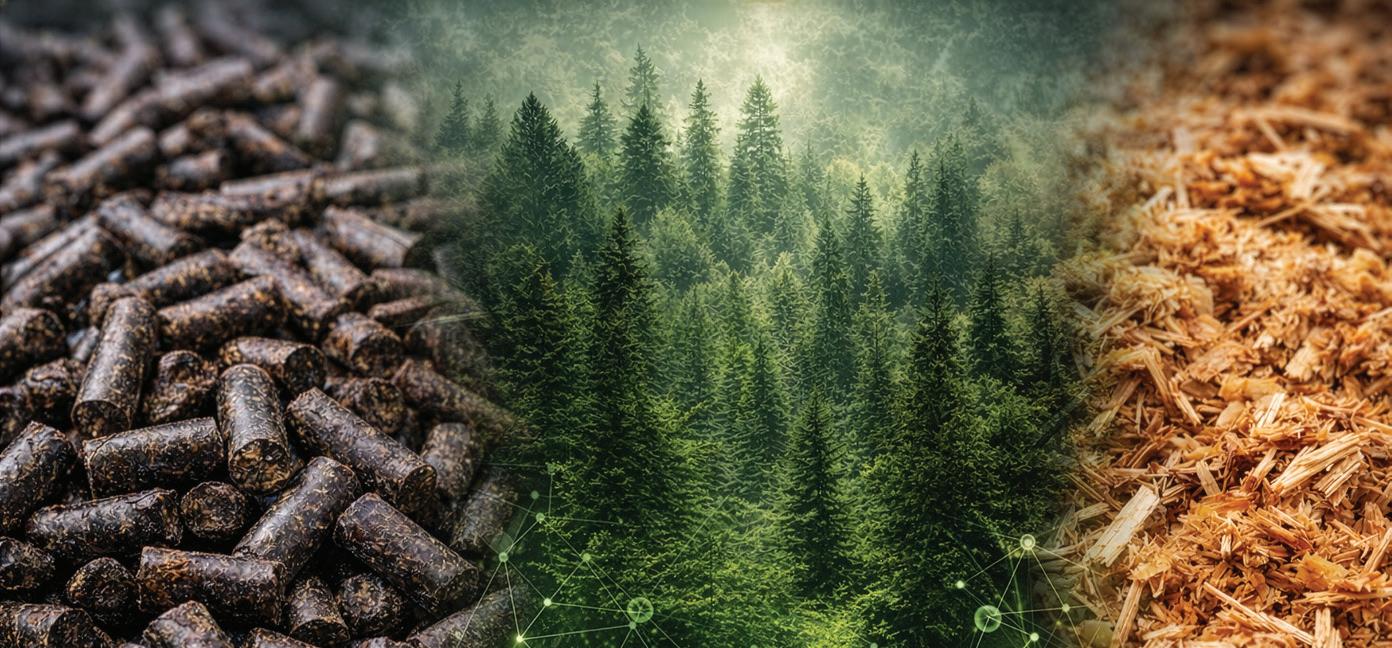
Biocarbon is emerging as a scalable new demand driver, linking industrial decarbonization with long-term fiber utilization—and Aymium is leading the way.
By Keith Loria
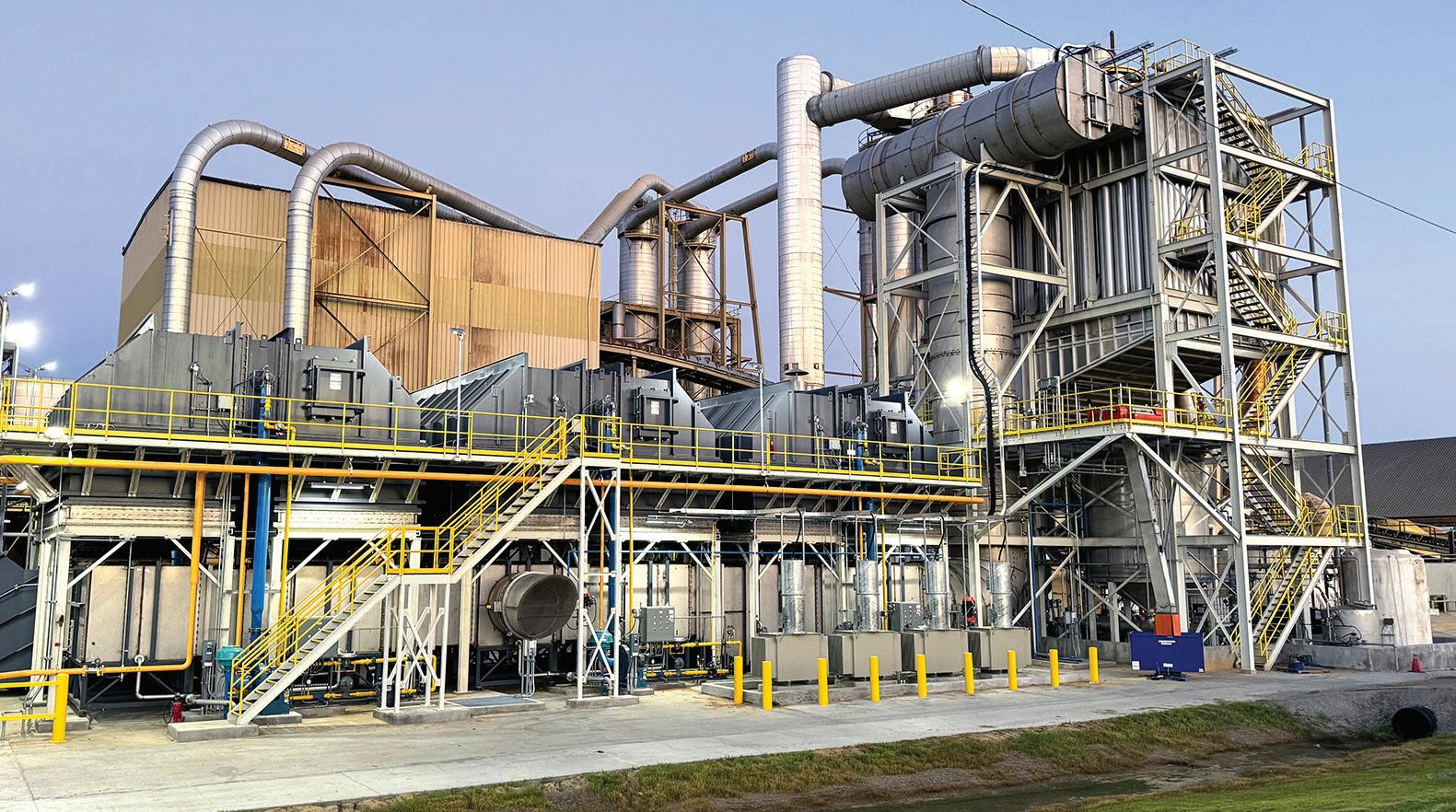
As tightening emissions standards converge with the industry’s expansion into advanced pellets and unconventional feedstocks, emissions control is becoming increasingly complex and operationally critical.
By Anna Simet
24 TRANSPORT Advancing Biomass Logistics Through Railcar Innovation
Filling the gap between trucking and barge, rail provides a flexible option for shipping that is more fuel efficient than trucking and less constrained than barge.
By Brian Smalley
Biomass as a Baseload Power Source for AI Data Centers
Baseload power demand is rapidly growing along with the buildout of AI data centers, and wood pellets are dually suited to help meet needs and reach aggressive carbon reduction targets.
By William Strauss

Anna Simet DIRECTOR OF CONTENT & SENIOR EDITOR asimet@bbiinternational.com
Pellet production is a business in which small deviations matter. Not just in the business sense, but also in the operational sense. Margins on moisture, uptime, emissions performance, etc., can determine whether a plant runs smoothly or spends its time troubleshooting, running below design throughput or edging close to permit limits.
That’s why this issue puts a spotlight on emissions control design and operation, with drying at the heart of the discussion. As pellet producers expand capacity, diversify feedstocks and explore advanced products like black pellets, emissions control isn’t something that’s added on at the end of a project. It is a core system that must be sized correctly, integrated thoughtfully and maintained consistently—and choosing the right partner in this is critical. In “Emissions Control at Modern Pellet Plants” on page 16, NESTEC’s Jaymie Deemer walks through where the real pressure points tend to show up—especially around the dryer island. He also gets into a challenge many operators know well: making facility-wide inventories and limits pencil out, particularly for synthetic minor sources, where balancing VOC, CO, HAP and particulate across multiple emission points can become a constant battle for precision. And with tighter particulate targets on the horizon, as mentioned by Deemer, the industry may be increasingly engaging companies like NESTEC to get the job done.
At the same time, this issue also reflects how pellet-adjacent markets are expanding. Our page-10 feature, “Building Biocarbon, Broadening Fiber Markets,” explores how Aymium and its partners— which include Weyerhaeuser, one of the world’s largest private timberland owners—are helping lead the shift toward renewable biocarbon as a new outlet for residual fiber, a development that matters in a wood products landscape shaped by depressed lumber markets and ongoing volatility. New demand drivers that reward low-value fiber utilization can change how producers think about long-term fiber strategy, and at the same time, how fiber generators evaluate and market their residual streams.
Logistics, of course, remain the connective tissue in all of this. Biomass only remains competitive if it can be moved reliably and economically, and rail continues to be one of the industry’s most important tools for bridging distance between feedstock baskets, production sites, ports and end users—especially as lifecycle carbon accounting pushes transportation decisions closer to the center of project planning. Read our page-25 contribution, “Advancing Biomass Logistics Through Rail Innovation,” by Brian Smalley of National Steel Car N.A., to learn about the innovations they’ve been focused on. In addition, if you're in attendance, sure to check out Smalley’s presentation at the upcoming International Biomass Conference & Expo in Nashville, March 31-April 2.
Finally, our news and contributed content reflect a sector that continues to intersect with bigger conversations—from even more biocarbon project development to evolving global pellet trade flows.
Across all of it, the message is consistent: the pellet industry’s next chapter won’t be defined by one technology or market. It will be defined by innovation and execution—on design, on operations and on the systems and personnel that keep plants running day after day. And of course, by the expanding role wood pellets are taking in getting us further down the decarbonization road and away from fossil fuels.
DIRECTOR OF CONTENT & SENIOR EDITOR
Anna Simet | asimet@bbiinternational.com
SENIOR NEWS EDITOR
Erin Krueger | ekrueger@bbiinternational.com
ASSOCIATE EDITOR
Katie Schroeder | katie.schroeder@bbiinternational.com
MAP DATA & CONTENT COORDINATOR
Chloe Piekkola | chloe.piekkola@bbiinternational.com
VICE PRESIDENT, PRODUCTION & DESIGN
Jaci Satterlund | jsatterlund@bbiinternational.com
SENIOR GRAPHIC DESIGNER
Raquel Boushee | rboushee@bbiinternational.com
CEO
& SALES
Joe Bryan | jbryan@bbiinternational.com
PRESIDENT
Tom Bryan | tbryan@bbiinternational.com
CHIEF OPERATING OFFICER
John Nelson | jnelson@bbiinternational.com
SENIOR ACCOUNT MANAGER
Chip Shereck | cshereck@bbiinternational.com
SENIOR ACCOUNT MANAGER
Bob Brown | bbrown@bbiinternational.com
SENIOR MARKETING & ADVERTISING MANAGER
Marla DeFoe | mdefoe@bbiinternational.com
CUSTOMER SERVICE COORDINATOR
Brandon McGarry | brandon.mcgarry@bbiinternational.com
Gaylord Opryland Resort & Convention Center | Nashville, TN
Now in its 19th year, the International Biomass Conference & Expo is expected to bring together more than 900 attendees, 160 exhibitors and 65 speakers from more than 25 countries. It is the largest gathering of biomass professionals and academics in the world. The conference provides relevant content and unparalleled networking opportunities in a dynamic business-to-business environment. In addition to abundant networking opportunities, the largest biomass conference in the world—powered by Biomass Magazine—is renowned for its oustanding programming and maintains a strong focus on commercial-scale biomass production, new technology, and near-term research and development. Join us at the International Biomass Conference & Expo as we enter this new and exciting era in biomass energy. (866) 746-8385 | www.biomassconference.com
2026 International Fuel Ethanol Workshop & Expo
JUNE 2-4, 2026
America's Center | St. Louis, MO
Now in its 42nd year, the FEW provides the ethanol industry with cutting-edge content and unparalleled networking opportunities in a dynamic business-tobusiness environment. As the largest, longest running ethanol conference in the world, the FEW is renowned for its superb programming—powered by Ethanol Producer Magazine —that maintains a strong focus on commercial-scale ethanol production, new technology, and near-term research and development. The event draws more than 2,300 people from over 31 countries and from nearly every ethanol plant in the United States and Canada (866) 746-8385 | www.fuelethanolworkshop.com
America's Center | St. Louis, MO
The Sustainable Fuels Summit: SAF, Renewable Diesel, and Biodiesel is a premier forum designed for producers of biodiesel, renewable diesel, and sustainable aviation fuel (SAF) to learn about cutting-edge process technologies, innovative techniques, and equipment to optimize existing production. Attendees will discover efficiencies that save money while increasing throughput and fuel quality. This world-class event features premium content from technology providers, equipment vendors, consultants, engineers, and producers to advance discussions and foster an environment of collaboration and networking. Through engaging presentations, fruitful discussions, and compelling exhibitions, the summit aims to push the biomass-based diesel sector beyond its current limitations.

(866) 746-8385 | www.sustainablefuelssummit.com

BY GORDON MURRAY
Across British Columbia, mills representing every level of the forest sector, including sawmills, pulp mills and now a pellet plant, are closing or curtailing at an alarming pace. They serve different markets but are part of an integrated system. While global markets and tariffs certainly shape the broader economic landscape, the real driver of today’s challenges is the lack of accessible fiber that every part of the sector depends on.
Fiber supply has fallen more than 40% since 2018, leaving B.C. operating at roughly 60% of the sustainable harvest level set by the province’s independent chief forester. This is the deepest sustained underharvest in B.C.’s modern history, and further declines in 2025 only point to a worsening situation. In a sector that’s so interconnected, the effects cascade quickly. What happens to primary manufacturers trickles through the whole supply chain: contractors, sawmills, pulp mills, value-added producers, mass timber facilities and pellet plants. As these pressures build, rural communities face fewer jobs and weaker local economies, with reduced tax revenues putting added strain on the services that British Columbians rely on.
B.C. pellet producers rely entirely on residuals such as sawdust, shavings, treetops, branches, low-quality logs and, increasingly, fire- or pest-damaged wood that cannot be used elsewhere. By using this material, the pellet sector helps maximize the value of every tree harvested, turning what would otherwise be waste into a renewable biofuel that generates significant export revenue. But when upstream mills shut down, those residuals disappear from the system and pellet producers are left without the material they need to operate.
That is why innovation in fiber recovery is so important. Partnerships involving industry, communities and
groups such as the Forest Enhancement Society of B.C. are helping bring fire-damaged wood back into productive use. These efforts support wildfire recovery, reduce future fire risk and create new economic activity in rural areas. They show what is possible when we work together, but they cannot fully offset the broader decline in accessible primary fiber.
This matters not only for operations here at home, but for the markets that count on B.C. products. As the province looks to diversify its forest product exports, stable production is essential; diversification cannot succeed without reliable supply. In Japan, for example, B.C. pellets are incorporated into long-term climate and energy plans, where consistent supply is critical. That confidence has been built over many years, but it is not guaranteed if instability continues.
A constructive path forward requires immediate, collaborative action to stabilize fiber flow. Alongside sector calls to reduce permit development timelines and address the uncertainty created by overlapping regulatory changes, there is also an opportunity to strengthen mechanisms that support the salvage and recovery of fire- and pestdamaged wood. Taken together, these steps can help create the stability the sector needs. If industry, government and First Nations act together now, B.C. can protect its communities, strengthen its markets and maintain its leadership in sustainable forest products.
Author: Gordon Murray Executive Director Wood Pellet Association of Canada www.pellet.org
CHAR Tech Secures $10M for Espanola Biocarbon Project
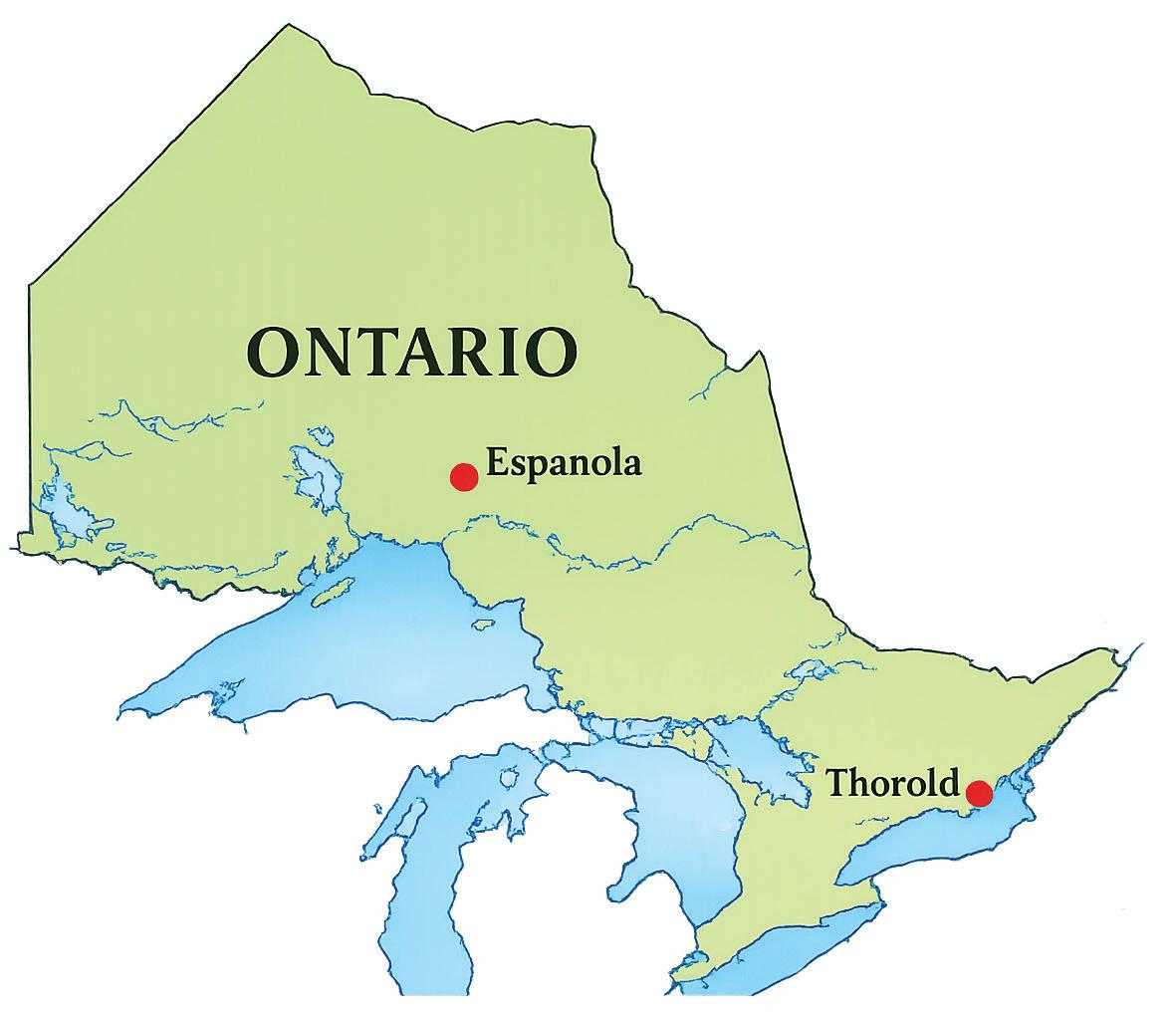
CHAR Technologies Ltd. announced in mid-January that engineering and design work is advancing on its proposed biocarbon production facility in Espanola, Ontario, in partnership with BMI Group, which has committed $10 million to the project.
Using CHAR Tech’s high-temperature pyrolysis technology, the proposed plant would convert locally sourced wood waste and forestry residuals into biocarbon and synthetic gas that could be used on-site or upgraded to renewable natural gas in a later phase. It would be located at Bioveld North, the former pulp and paper mill site recently acquired by BMI. The project is expected to produce up to 50,000 metric tons of biocarbon per year—about five times the capacity of the company’s Thorold Renewable Energy Facility. Final scope and capital allocation will be determined upon completion of the engineering study.
A study, expected to conclude in the first quarter of 2026, will confirm feedstock supply and assess integration with existing site infrastructure, including utilities and biomass handling systems.
Company officials said the location’s biomass resources and industrial infrastructure support larger-scale deployment and reflect a broader strategy of pairing existing industrial assets with clean technology platforms.
The U.K. remains the world’s largest importer of wood pellets, with 2025 imports estimated at 9.6 million metric tons, up 3% from 2024, according to a report from USDA’s Foreign Agricultural Service. Most imports are sourced from the U.S.
Wood pellets are used primarily for large-scale power generation, with the industrial biomass sector accounting for more than 93% of U.K. pellet consumption in 2024 and about 7% of total U.K. energy production.
Total pellet consumption is estimated at 9.98 million metric tons in 2025, up from 9.84 million metric tons in 2024 and 6.59 million metric tons in 2023. Domestic production supplies only a small share of demand.
The U.S. was the top supplier in 2024 at 6.9 million metric tons, followed by Latvia at 900,000 metric tons. Canada has typically been one of the larger suppliers of wood pellets to the U.K., but its exports to the country are expected to decline due to sustainability concerns and a shift toward the Japanese market
PowerWood Canada Corp. has acquired 175 acres from Mackenzie County in northern Alberta for 1.1 million Canadian dollars and plans to construct a 3.5-kilometer rail spur to support transportation of advanced black pellets.
The site, located in the Mackenzie Highway Industrial Area near High Level, will include approximately 3,500 meters (11,400 feet) of track connected to the county’s main freight rail system. The spur will support loading operations, locomotive servicing and open-top unit trains of approximately 100 60-foot railcars.
According to project plans, the rail spur will connect to Canadian National Railway Co.’s Hay River Line between Hay River, Northwest Territories, and Roma Junction, Alberta.
PowerWood finalized the land purchase in late December 2025. The company plans to begin construction of its Peace River plant east of La Crete in late spring 2026. A second facility, referred to as the Hay Meadow plant, is scheduled for construction south of High Level in 2027.
Vietnam remained South Korea’s largest wood pellet supplier in 2025, accounting for 37% of imports at 1.44 million tons, down 31% year over year, according to a report from Lesprom. Indonesia increased shipments 76% to 900,000 tons, raising its share to 23%, while Russia shipped 640,000 tons, up 8%, for a 16% share.
Canada supplied 460,000 tons, up 32%, for a 12% share. Malaysia supplied 240,000 tons, down 10%, accounting for 6% of imports. Thailand shipped 120,000 tons, down 12%, and the United States shipped 50,000 tons, down 30%, the report said.
South Korea’s import volumes have increased over the past decade, rising from 122,000 tons in 2012 to 3.91 million tons in 2025. Imports peaked at just over 4 million tons in 2024, according to Lesprom

The BC Forest Safety Council board of directors announced the appointment of Cherie Whelan as its new CEO, effective April 1. Whelan brings extensive experience and leadership to the role. She served as CEO of the Newfoundland & Labrador Construction Safety Association for two years and previously held the position of director, SAFE Companies (2016–22) at BCFSC. Whelan is widely recognized as a health and safety champion and is highly regarded for her deep knowledge of industry challenges. She aligns with BCFSC’s commitment to eliminating fatalities and serious injuries in both harvesting and manufacturing.
Cherie will succeed Rob Moonen, who announced his retirement in October 2025.
Latvia’s Consumer Rights Protection Centre has restricted access to the website siabrocenipelet.com after determining that it engaged in misleading and unfair commercial practices that pose a significant risk to consumers.
The website advertises the sale of pellets, briquettes and firewood. According to the CRPC, the site provides false information about the seller, uses the name and contact details of a Latvian company without permission and conceals the identity of the actual party selling the goods.
After submitting an inquiry through the website’s contact form, the CRPC said it received a sales offer from an individual registered in Austria, despite no such seller being identified on the site. The Latvian company SIA “Broteni Pellets,” whose name and details were used on the website, informed authorities that it is not affiliated with the site and has previously had its company data used for fraudulent purposes.
The CRPC warned that consumers may mistakenly believe they are purchasing goods from a legitimate Latvian company, when in fact payments could be directed to an unknown or difficult-to-identify party. Authorities said there is a high risk that goods will not be delivered and that funds paid may not be recoverable.
Rep. Rick W. Allen, R-Ga., recently introduced H.R. 7195, the Timber Harvesters, Haulers, and Landowners Market Disruptions Relief Act. This legislation establishes a targeted federal assistance program within the USDA administered through the Farm Service Agency, to provide temporary financial relief to eligible forest product harvesting and hauling businesses impacted by significant market disruptions.
Upon introducing the bill, Allen issued the following statement: "Many of Georgia's rural communities are dependent on timber production and forest management for their economic wellbeing. Unfortunately, our timber harvesting and hauling businesses are facing significant turmoil due to recent mill closures, natural disasters, trade barriers and declines in stumpage and delivered timber prices. My legislation—the Timber Harvesters, Haulers, and Landowners Market Disruptions Relief Act—seeks to provide landowners a lifeline during times of market uncertainty, restore our resilient forestry industry, and strengthen rural America. I am proud to lead this bill and will work diligently to bring it up for a House vote.”
The proposed bill would allow a governor or the chief of the U.S. Forest Service to petition USDA to declare a forest products market disruption, triggering a defined application and review process. Through the Farm Service Agency, USDA would provide payments to eligible logging and hauling businesses and qualifying landowners, including an initial payment of up to $20,000, additional support tied to revenue losses, and potential annual assistance for up to five years if conditions do not improve. Funds would be limited to operational expenses or investments in new markets, with payments prorated if necessary. The bill sets eligibility thresholds, establishes an appeals process and penalties for fraud, requires annual reporting to Congress and would be funded using antidumping and countervailing duties on Canadian softwood lumber imports rather than new spending.
As timber markets navigate volatility, biocarbon is emerging as a scalable new demand driver—linking industrial decarbonization with long-term fiber utilization—and Aymium is leading the way.
BY KEITH LORIA
For more than a decade, Aymium has been quietly doing what many advanced pellet technology companies never manage: operating at scale.
Long before torrefaction, black pellets or biocarbon became a headline-grabbing decarbonization solution, the Minnesotabased company was producing renewable metallurgical carbon from its northern Michigan facility. In fact, Aymium notes that it has supplied customers globally from that plant since 2012, establishing one of the earliest commercial footprints in the modern biocarbon space.
Aymium CEO James Mennell has stated that the mission of the company is to accelerate the transition away from fos-

sil fuels and reduce environmental impacts. That mission has translated into a deliberate growth strategy built around commercial production, industrial partnerships and drop-in compatibility with heavy manufacturing processes.
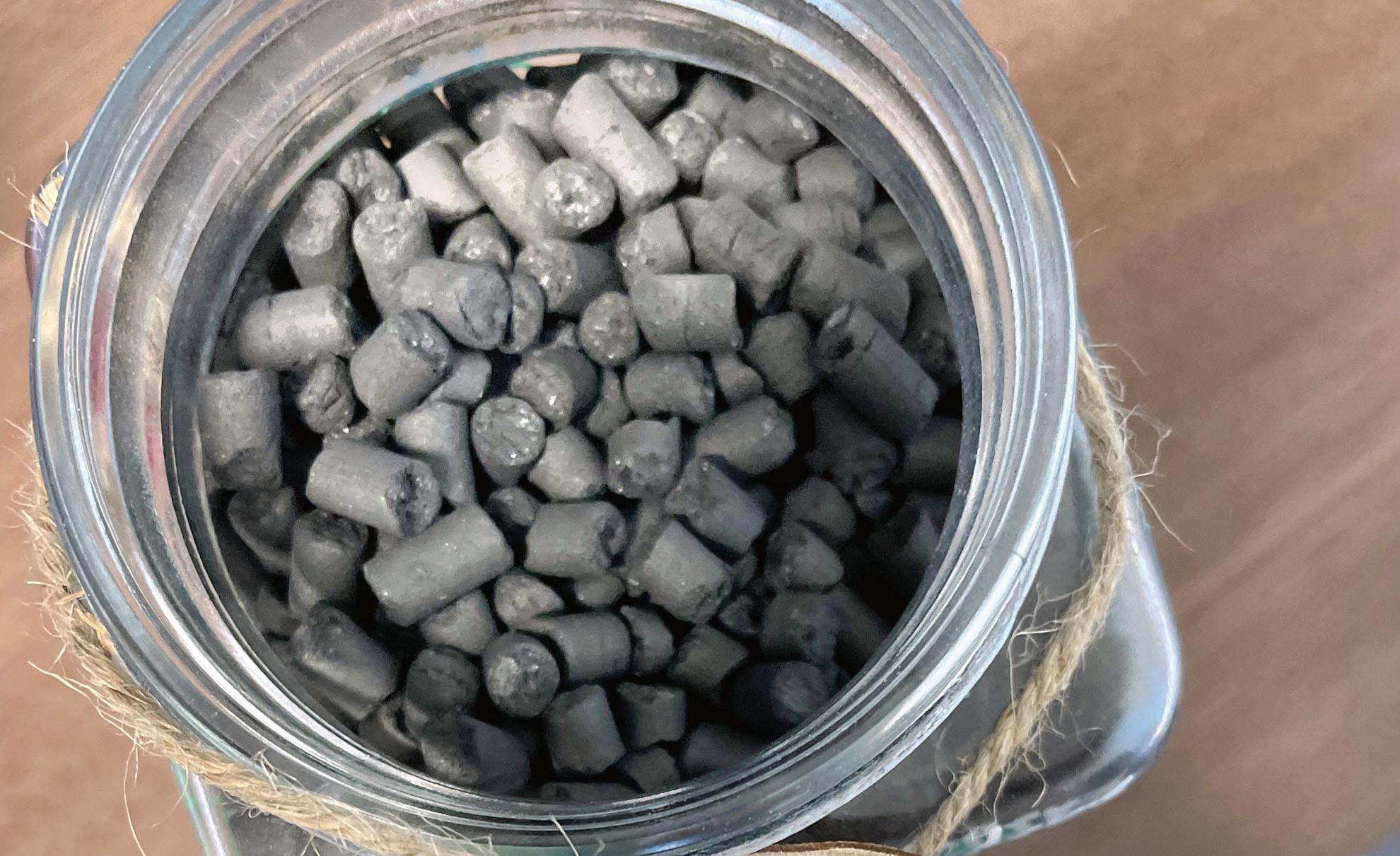
Now, with its newest agreement alongside Weyerhaeuser, Aymium is moving into what may be its most consequential phase yet—scaling biocarbon production with integrated access to one of North America’s largest timberland portfolios. The partnership between Aymium and Weyerhaeuser comes at a pivotal time for the wood products sector, creating a new, higher-value outlet for residual fiber and underutilized material in a market that has been pressured by soft lumber demand, housing volatility
and mill curtailments—while helping stabilize forest-based supply chains through diversified revenue streams.
Aymium’s value proposition to steel and aluminum producers has remained consistent: its biocarbon can replace fossil coal and coke without requiring expensive operational changes.
That compatibility is central to scaling. Steel and aluminum producers operate in capital-intensive environments where equipment changes can trigger multimillion-dollar modifications and regulatory reviews. A fuel that can be substituted without those hurdles dramatically lowers
adoption barriers. In announcing its partnership with Weyerhaeuser, Aymium noted the ability of its products to do just that, a claim that has already been tested by major industrial players.
In 2022, Steel Dynamics formed SDI Biocarbon Solutions with Aymium after successfully trialing the company’s product. Steel Dynamics estimated that the initial facility will reduce Scope 1 steelmaking greenhouse gas emissions intensity between 20% and 25%. The facility was completed in early 2025, with its first product shipments and ramp-up toward continuous operation occurring in the fall.
In June 2024, Aymium announced that it closed $210 million in financing to construct its biocarbon production
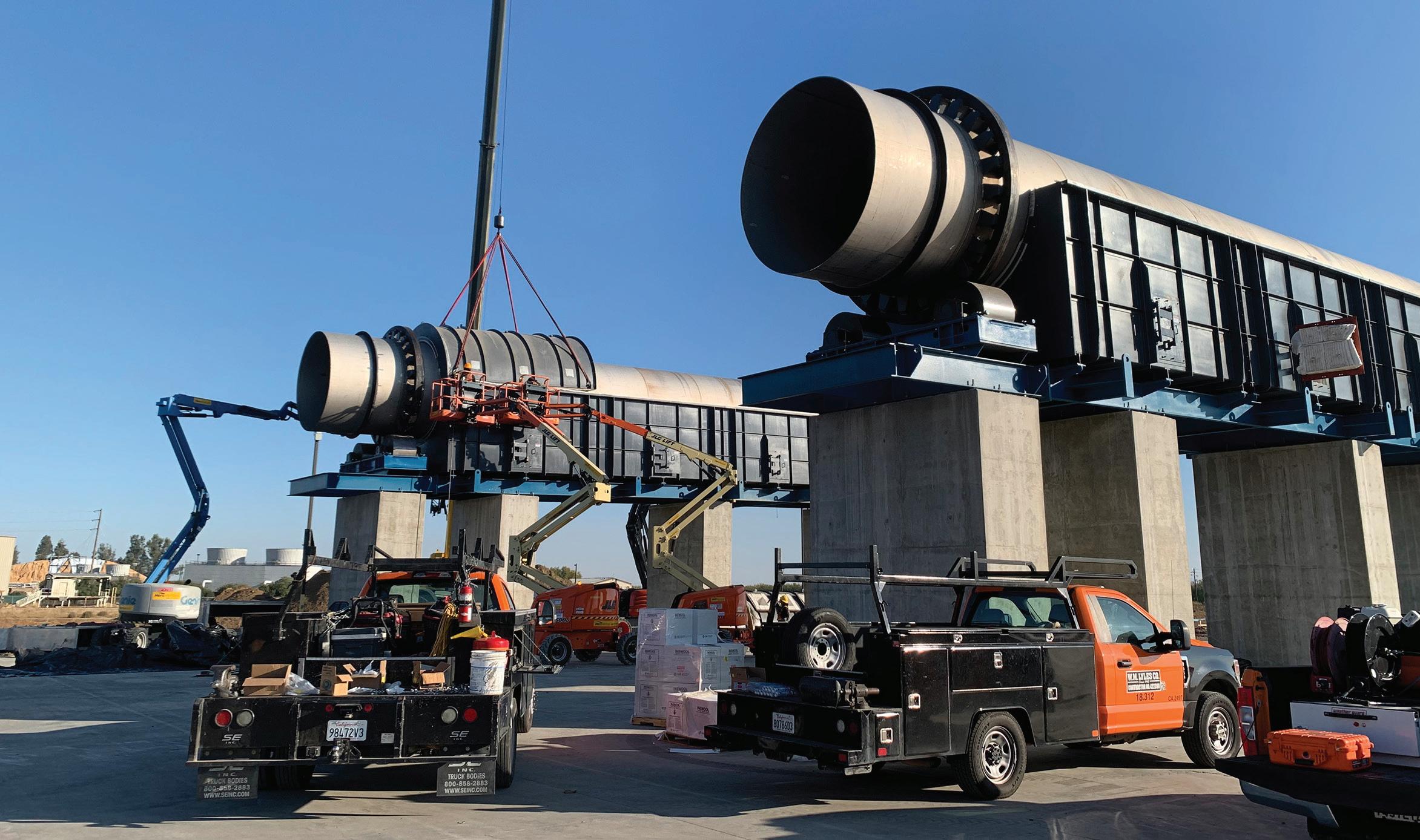
ity in Williams, California. The project is designed to support large-scale, continuous use of advanced biocarbon as a coal replacement fuel in power generation. The financing package includes senior debt in the form of green bonds provided jointly by ECP ForeStar and Copenhagen Infrastructure Partners through its Green Credit Fund. Subordinated debt is being provided by Japan Green Investment Corp. for Carbon Neutrality and Aymium. Equity investors include Hokuriku Electric Power Company, Nippon Steel Trading and Aymium.
The project, formerly referred to in local filings as California Renewable Carbon LLC, involves repurposing an existing industrial site in Colusa County into a renewable biocarbon production facility. According to county permit documents, the facility will use sustainably sourced biomass—primarily orchard rotations and agricultural trimmings—to produce biocarbon through a noncombustion thermal conversion pro-
cess. The system converts biomass into a high-carbon solid product while generating renewable biogas to fuel process energy requirements.
The plant is designed to produce up to 250,000 gross tons of renewable biocarbon annually. In addition to biocarbon production, the facility will generate renewable electricity. Gross power generation is projected at up to 17 MW, with approximately 10 MW of net electricity exported to Pacific Gas & Electric.
Contractor W. M. Lyles Co. reported in 2025 that the Williams production facility reached full construction completion. Commissioning and operational timelines have not been publicly detailed, but with construction completed, the Williams project represents one of the largest commercial-scale biocarbon facilities in the United States
Aymium’s partnership reach is extending beyond U.S. borders. In 2022, the com-
pany began collaborating with Rio Tinto to develop and trial a renewable biocarbon product as a replacement for anthracite in Rio Tinto’s ilmenite smelting operations at its Sorel-Tracy, Quebec, metallurgical complex.Rio Tinto reported successful trial results and made a follow-on equity investment in Aymium. In July 2024, the companies formalized the relationship by announcing a joint venture, Évolys Québec Inc., to manufacture renewable metallurgical biocarbon from biomass residues at a planned facility in Thurso, Quebec, on the site of a former pulp and paper mill. The project is intended to produce locally sourced biocarbon for use in Rio Tinto’s Canadian operations, advancing decarbonization of its smelting processes, though detailed production capacity and start-up timelines have not yet been publicly disclosed.
Aymium’s partnership patterns reveal a scaling strategy rooted in validation and



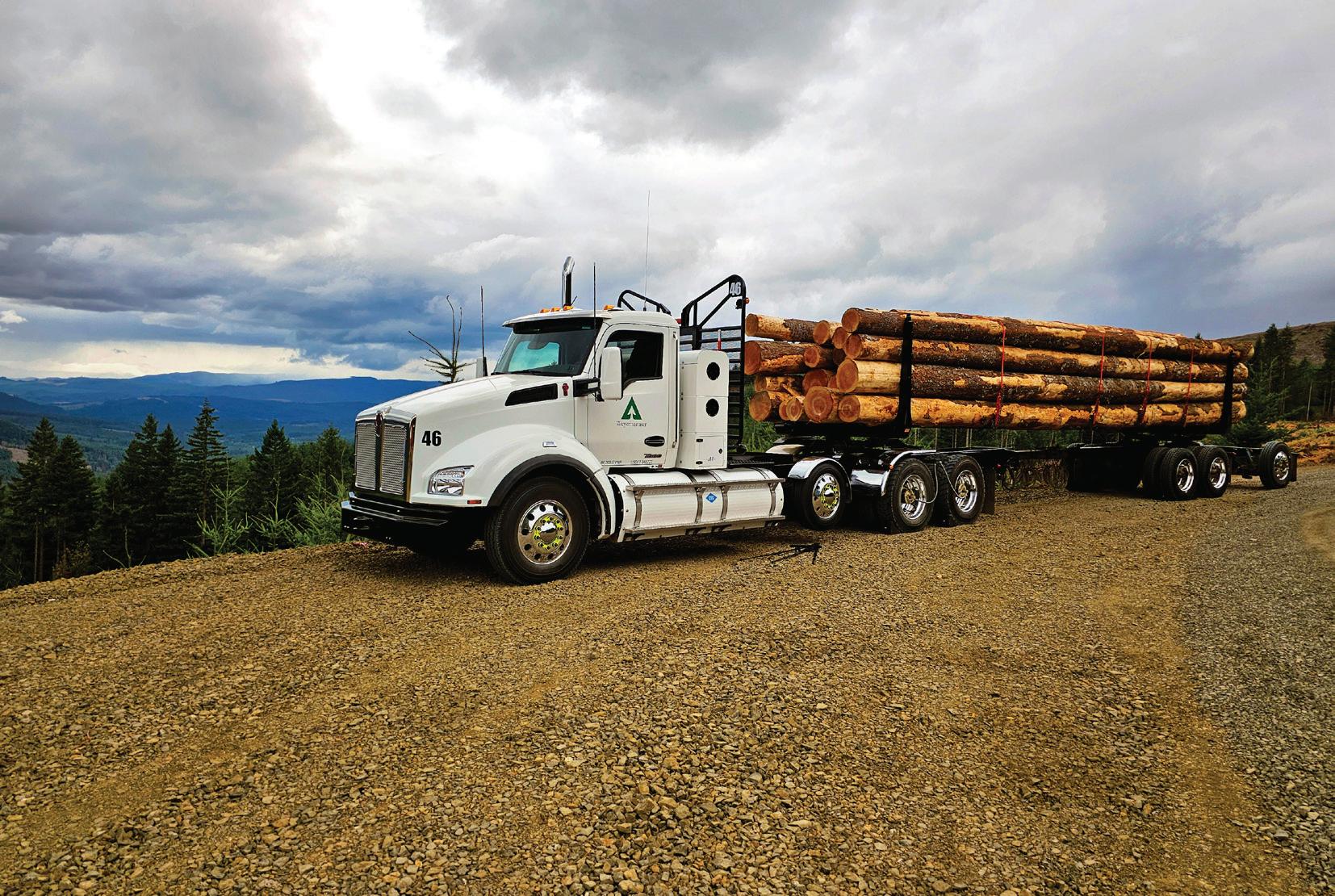
Weyerhaeuser’s role in the biocarbon market isn’t it’s only foray into decarbonization.
announced its first fleet of renewable
started
replication, especially with its northern Michigan facility that has been operating since 2012, providing more than a decade of commercial production history. That longevity signals more than capacity; it reflects years of operational refinement in feedstock handling, thermochemical performance and product consistency.
From that base, Aymium expanded through joint ventures with industrial end users. For instance, in Mississippi, SDI Biocarbon Solutions embedded Aymium’s technology directly within a major steel producer’s supply chain. The structure did more than secure an offtake agreement; it aligned production capacity with guaranteed demand.
The Rio Tinto partnership demonstrated cross-industry validation. Biocarbon was not limited to steelmaking as it could also integrate into aluminum production pathways.




Now, with TerraForge Biocarbon Solutions alongside Weyerhaeuser, Aymium is extending that model, integrating fiber supply itself.
The sequencing is deliberate: Aymium first established a long-running commercial operating base, then validated product performance with major steel customers, expanded into aluminum with another global industrial partner and ultimately secured large-scale fiber integration with a leading timberland owner. This demonstrated that scaling thermochemical technology depends not just on reactor design, but on reliable feedstock, industrial validation and capital-backed replication, all of which the company has addressed systematically.
The newest chapter in Aymium’s growth story centers on TerraForge Biocarbon Solutions, the joint venture announced in December 2025 with Weyerhaeuser.
industries. Fragmented ownership structures, transportation costs and fiber price
expertise with Aymium’s innovative technology and experience,” said Devin Stock-




been navigating prolonged volatility. Lumber markets remain cyclical. Pulp and paper capacity has contracted in several regions, reducing outlets for smaller-diameter trees and mill residuals.
Biocarbon is therefore important, as it introduces a fundamentally different demand driver. “This is a new exciting growth area for the company,” said Paul Hossain, Weyerhaeuser’s senior vice president and chief development officer. “It’s transformational.”
Hossain outlined the scale of the initial TerraForge facility during the investor meeting. “The first plant is designed to produce 100,000 tons of biocarbon,” he said. “That will consume approximately half a million tons of our fiber and our residuals.”
But the ambition extends well beyond one site. “We’ve entered into an agreement with Aymium to scale up to 10 different sites, consuming up to 7 million tons of fiber to hit that 1.5 million tons of production,” Hossain said. “That’s the equivalent of five or six new pulp mills.”
In regions where pulp mill closures have tightened wood baskets, replacing that magnitude of fiber demand could reshape local markets. “For us, it is a fundamentally new market for our fiber,” Hossain said. “The net coal market alone is 1.2 billion
tons a year. Now, if we were to replace 1% of that with biocarbon, that would require 60 million tons of fiber annually.”
Even incremental substitution into metallurgical coal markets would generate significant new demand for forestry resources.
Weyerhaeuser expects the first TerraForge facility, located adjacent to its lumber mill in McComb, Mississippi, to come online in late 2027. “When the McComb facility comes online, it’s going to generate new demand for fiber in the region while creating more great jobs in the community,” Stockfish said. “It’s a model we look forward to replicating across our footprint.”
The replication model is central. TerraForge is positioned not as a pilot but as a platform. “It drives incremental EBITDA, it unlocks new demand and it amplifies the value of our integrated ownership,” Hossain said.
For Aymium, the partnership provides predictable fiber supply and a pathway to scale production across multiple regions. For Weyerhaeuser, it diversifies revenue beyond cyclical housing markets while leveraging assets it already controls: timberlands, mills and supply chains. Taken together, the
partnership underscores how the biocarbon conversation has shifted. It is no longer confined to pilot reactors and demonstration grants. It now includes billion-ton coal markets, steel producers, aluminum smelters and timberland portfolios measured in millions of acres.
Aymium’s decade-long operating history, combined with joint ventures across multiple industrial sectors and now upstream fiber integration, positions it differently from many clean-tech entrants, reflecting a scaling strategy that has been sequential and industrially anchored. It establishes an operating base first, securing industrial validation next, expanding across sectors thereafter, and integrating fully into the supply chain.
For a forest products industry searching for durable new outlets, and for metals producers under mounting decarbonization pressure, that convergence may prove significant. As Hossain put it: “It’s transformational.”



BY ANNA SIMET
As the wood pellet industry faces tightening emissions standards and expands to include advanced pellets and unconventional feedstocks like bagasse, emissions control is becoming more nuanced and more operationally critical. Facilities must balance performance, compliance and reliability while managing complex air streams, and engaging the right emissions control engineering firm is critical to enabling producers to accomplish all of the above.
Jaymie Deemer, president of NESTEC, says the industry’s challenge isn’t just adding controls, but ensuring systems are sized, operated and maintained in a way that keeps plants comfortably within permit limits and away from the edge of compliance, while supporting reliability and uptime.
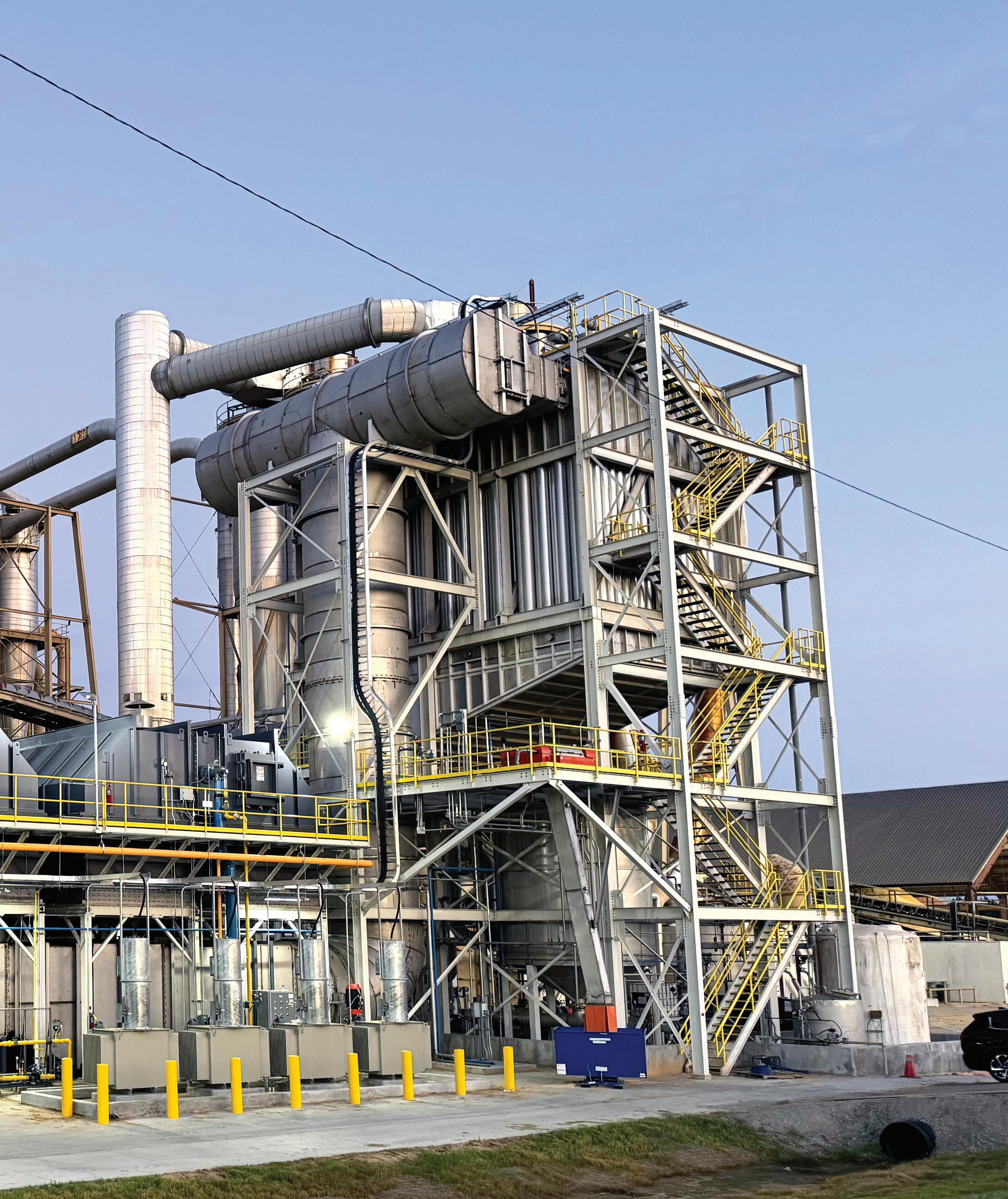
Founded in 2005, NESTEC has a breadth of experience supporting both conventional wood pellet and black pellet production, as well as bioenergy and biofuel facilities and other industries. The company designs and services systems such as wet electrostatic precipitators (wet ESPs), regenerative thermal oxidizers (RTOs) and catalytic oxidizers to control particulate matter (PM), volatile organic compounds (VOCs), carbon monoxide (CO) and hazardous air pollutants (HAPs) generated during drying and thermal processing. In addition to equipment design and supply, NESTEC provides troubleshooting, on-site support, technical support and upgrades to help facilities achieve and maintain compliance and system performance. For example, the company was engaged by wood pellet producer Georgia Biomass to reduce VOCs and HAPs to meet EPA Title V permit limits while optimizing operational efficiency, and NESTEC was able to successfully resolve the facility’s compliance issues.
The company’s ongoing work reflects the differing emissions profiles and operating conditions associated with traditional white pellet production and the reduced-oxygen, higher-temperature processes used to
produce black pellets. According to Deemer, emissions control is no longer simply a permitting requirement—it is a core operational system that affects uptime, safety and longterm plant performance.
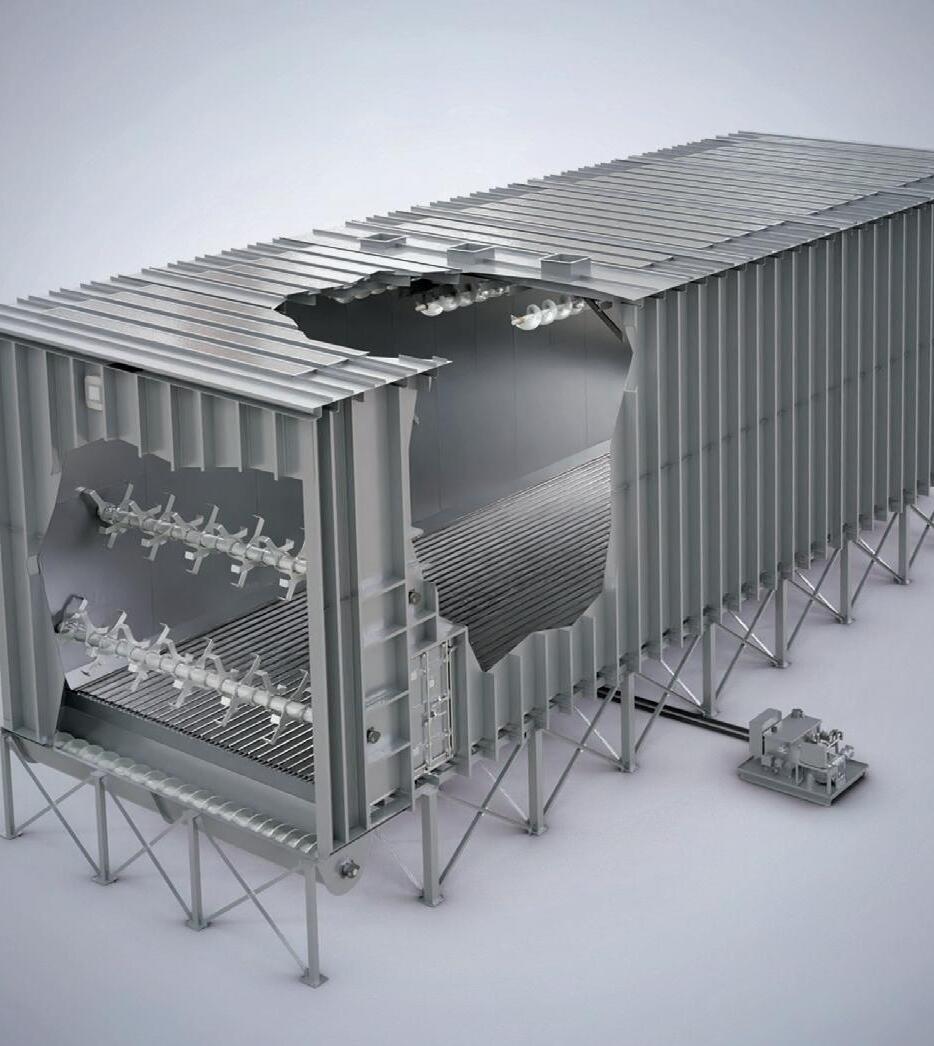
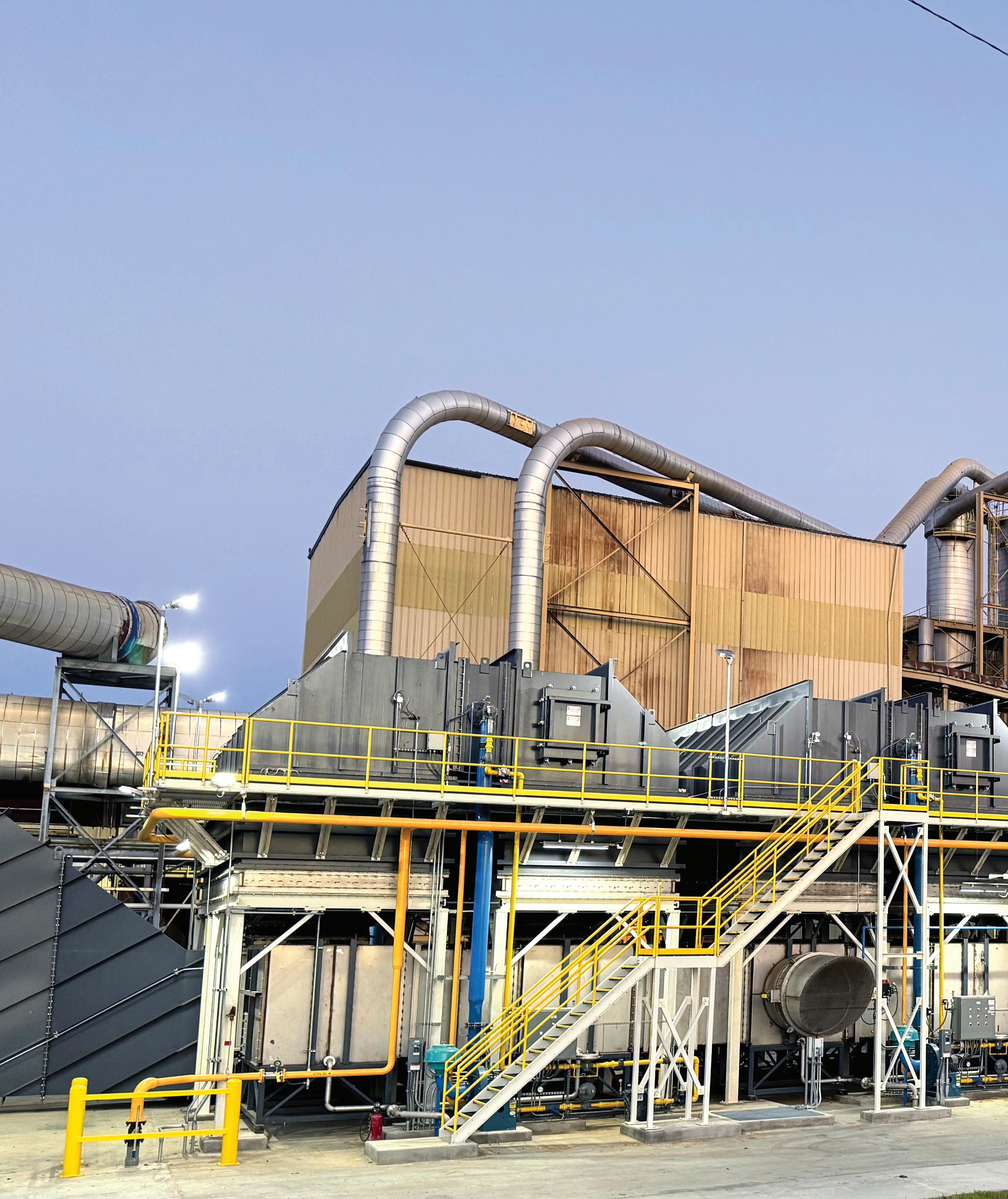
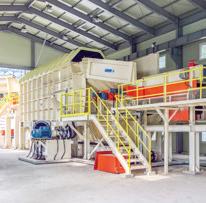
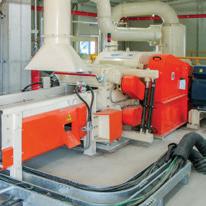
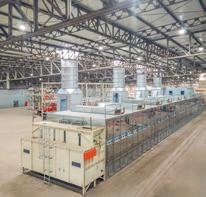
In most pellet facilities, the greatest emissions control focus centers on the dryer island—the main generator of PM and organic emissions. “The wood dryer island has the most emission control equipment, comprised of a wet ESP to control PM and a thermal oxidizer to control VOCs, CO and HAPs,” Deemer explains. “The wet ESP also protects the downstream RTO from plugging and reduces visible emissions.”
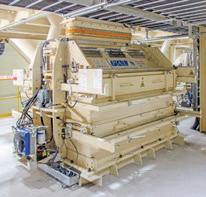
Other process points require attention as well, particularly post-drying operations. “The dry hammermill and pellet cooler emissions typically have a wet scrubber or baghouse PM control device, followed by an RCO or RTO for VOC and organic HAPs control,” he says.
When pellet facilities run into compliance headaches, it’s not always because any single piece of equipment is failing. Deemer says the bigger hurdle is often reconciling emissions across the entire site, especially for facilities permitted as synthetic minor sources. “The biggest challenge is typically making the emission inventory line up for the entire site,” he says. “Most pellet mills are permitted as a synthetic minor source (SMS), which has facility wide limits on VOC, CO, HAPs, PM, NOx, etc.”
For larger mills operating under SMS limits rather than than a Title V major source, the balancing act can tighten quickly. “If the pellet facility is large and permitted as an SMS and not a Title V major source, then it can be challenging to make all of the various plant emission sources balance out with achievable concentrations for each of the pollutants,” Deemer says.
Some of the industry’s most common problems emerge during startup or production ramp-up, when plants discover that actual operating conditions don’t match the original basis of design. “There have been issues in the industry over the years with heat
energy and dryer systems requiring a higher exhaust volume to the emission control system than the original design conditions,” Deemer says.
He lists several drivers: “This can be caused by an inefficient dryer design, dryer furnish moisture content, moisture content of the upstream fuel at the furnace, dryer recycle rates, and even operations pushing the system harder than design, for additional production.”
When that happens, even well-selected technologies can struggle if they’re too small for the job. “These issues can create issues with the downstream emission control equipment being undersized, including the RTO exhaust fan horsepower,” he says.
Deemer adds that performance can also hinge on human factors—e.g., training and experience. “Other challenges are related to new operators learning the emission control technologies and the ongoing maintenance requirements to achieve high performance.”
High-performing systems share a few consistent traits, according to Deemer. These include: “High equipment uptime and limited maintenance requirements, comfortably achieving the removal and destruction efficiencies of the various pollutants, and efficient electrical power, natural gas and chemical consumption,” he says.
He also points back to the wet ESP’s role upstream of oxidizers. “With the dryer system, the wet ESP plays an important role in protecting the downstream RTO from plugging and alkaline attack of the ceramic heat recovery media,” Deemer says.
And while wet ESPs are a well-known technology, performance still hinges on details that can be underestimated. “The power input to the electrostatic fields, especially the voltage, is paramount for wet ESP performance,” he says.
Deemer emphasizes that there are specific design considerations that can help maintain emissions performance in the longterm, such as designing with adequate safety factors and avoiding undersized equipment.
“Specifying the correct gas volume should include a safety factor of at least 10 percent,” he says. He also recommends targeting upstream particulate control in a way that protects the oxidizer over the long haul.

Jaymie Deemer President, NESTEC
“Include a PM control device emission target that ensures reliable operation of the downstream oxidizer and long ceramic heat recovery media life,” Deemer says.
He points to airflow as a critical parameter that should remain stable through the entire maintenance cycle. That means including an additional safety factor/test block on the oxidizer exhaust fan to maintain exhaust volumes throughout the entire maintenance cycle, he says.
‘If the pellet facility is large and permitted as an SMS and not a Title V major source, then it can be challenging to make all of the various plant emission sources balance out with achievable concentrations for each of the pollutants.’
In operation, he cautions against expecting the oxidizer to do jobs it wasn’t meant to do. “It is important to avoid treating the oxidizer as a PM control device,” he says. ‘Proper upstream PM control allows it to achieve better VOC, organic HAPs and CO destruction efficiency, while ensuring better uptime and longer ceramic heat recovery media life,” he says.
When emissions control systems struggle, the root cause is often buildup that re-




stricts flow and reduces control efficiency. “The most common cause of downtime related to the emission control systems are deposition and plugging that can reduce exhaust volumes and lead to higher PM, VOC and CO emissions,” Deemer says.
He describes how deposition undermines wet ESP performance: “Deposition in the wet ESP collection tubes causes a reduction in power input, that allows more PM to escape to the downstream RTO,” he says.
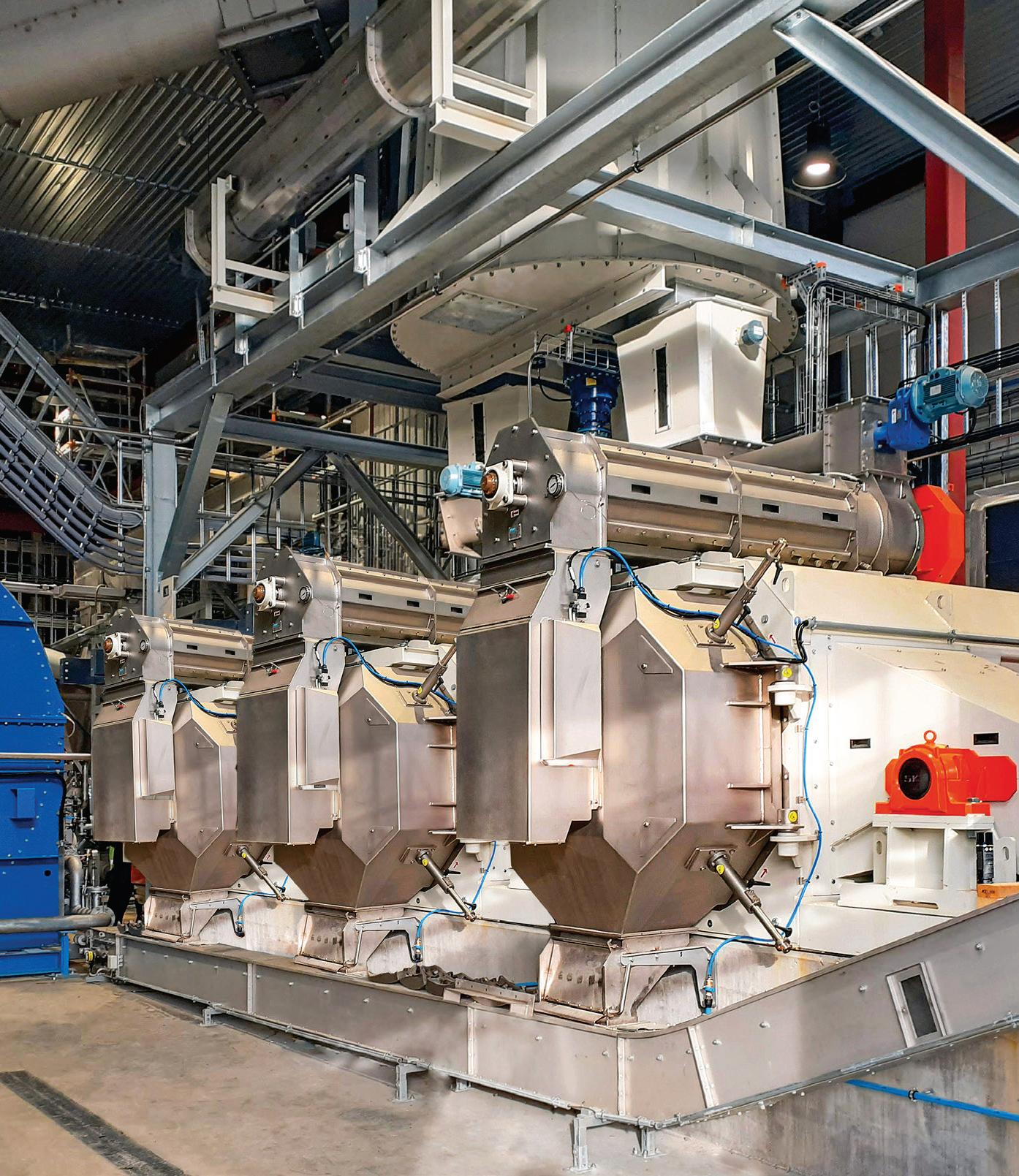
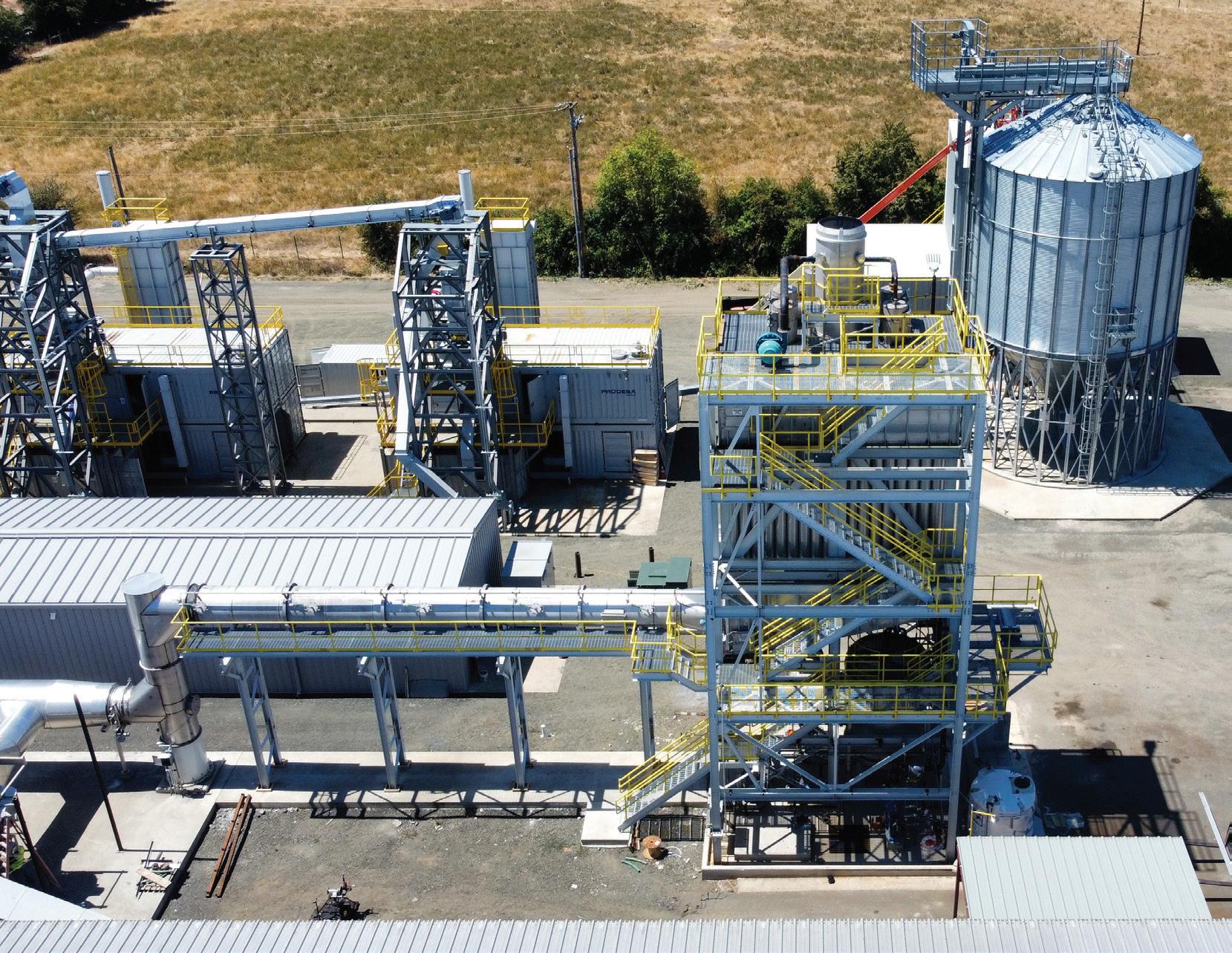
And in oxidizers, buildup can snowball into both performance and durability issues. “Buildup in the RTO heat recovery ceramic media increases pressure drop, increases CO emissions and allows alkaline particles to attack the upper layers of the RTO heat recovery ceramic media,” Deemer says.
From Deemer’s perspective, regulators increasingly want plants to have some leeway and not to operate at or near maximum allowable levels. “The regulators focus on having tolerance or room in the air permit, avoiding being on the razors edge of compliance,” he says. “They care about the dispersion modeling, stack height and fenceline concentrations of the various pollutants,” he says.
And day-to-day, regulators want proof of control performance between stack tests. “They also care about the reporting of the performance indicators such as temperatures in the RTO or RCO, voltages in the wet ESP, water flow in the scrubber, etc.”

Deemer says one of the best ways to avoid new facility startup delays is to align permitted limits with what control technologies can reliably achieve in practice. “It is highly recommended to work with an OEM to ensure the permitted emissions are achievable,” he says. “There are limitations with testing at very low concentrations and sometimes additional features or considerations are necessary to ensure the system will achieve compliance.”
Odor and visible emissions can become an issue of contention for pellet plants, particularly those near communities. Deemer says the standard emissions control toolbox is generally effective at addressing both issues. “The typical emission control devices such as wet ESPs, RTO and RCO systems do a great job of controlling the visible emissions and odor,” he says—and it’s pretty straightforward. “Reduction of PM and destruction of VOCs eliminates odor and visible emissions,” he says, adding that “baghouses, wet scrubbers, wet ESPs, RTOs and RCOs are the most common control devices.”
While wood pellet plants already manage challenging air streams, black pellet production introduces additional layers of complexity. “Black pellet production involves different drying conditions with reduced oxygen and additional processing steps versus conventional pellets,” Deemer explains. Those differences can translate into different exhaust characteristics, different deposition behavior and, ultimately, different requirements for downstream emissions control systems.
Deemer notes that a bagasse pellet plant often looks different from an air emissions perspective than a wood-based facility. “The emissions from a bagasse pellet process have significantly less VOCs and condensable particulate matter,” he says. However, he cautions that bagasse brings its own wear-related challenges. “The particulate matter emissions contain more silica than wood based pellets, which is more abrasive on rotating equipment.”
For newer pellet and biomass projects, Deemer’s advice starts with early engagement. “Involve the emission control OEMs to understand what performance is attainable with each technology,” he says. From there, he encourages teams to scrutinize assumptions. “Understand what design safety factors are being used, ensure it is adequate and that it covers all scenarios, such as seasonal operation challenges.”
He suggests projects look closely at design features that influence maintenance and flexibility. “Ask about optional features that can reduce maintenance, conserve energy and provide operational flexibility,” he says.
When comparing technologies, Deemer says details matter, including “materials of construction, insulation systems, heat recovery media composition, wet ESP collection tube geometry implications, wet ESP cleaning systems, details on the wet ESP quenching and recycle water system.”
As for regulatory changes on the ho-
rizon, Deemer expects emissions targets to tighten over the next several years, particularly for particulate control. “The emission targets for the various sources will be reduced,” he says. “The change to the U.S. EPA PM 2.5 regulations will necessitate higher PM removal.”
He also anticipates more stringent monitoring and reporting to demonstrate compliance between stack testing intervals, and a broader push for reliability: “Plants will push for higher uptime and reliability with the emission control equipment,” he says.
In parallel, Deemer says safety features will draw more focus. He expects “stronger focus on equipment features that limit fire and explosion risks, such as ducting systems to the emission control equipment that are continuously cleaned with automated features.”
Finally, Deemer believes service support will become a more central part of the emissions control landscape. “We anticipate more reliance on service-oriented OEMs to assist mills with the inspections and troubleshooting of their systems,” he says.
NESTEC, he notes, launched a service program to meet that demand. “NESTEC launched a program called ServiceTrack in 2025 to provide remote monitoring, key performance indicator dashboards, inspection services and emergency troubleshooting,” Deemer says. “This program allows customers access to our expertise, while improving planning and equipment operation. This type of service will become more commonplace.”
Author: Anna
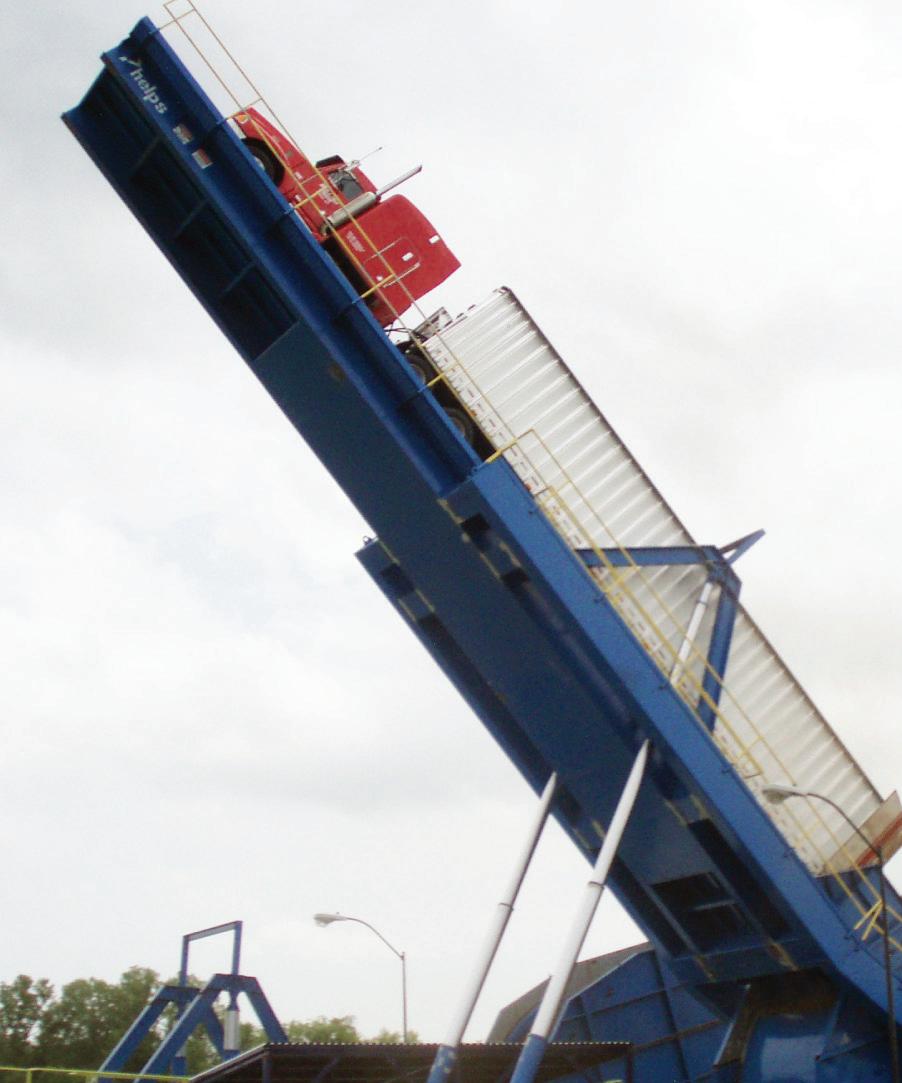


• Hydraulic Truck Dumpers custom engineered for each application
• Live Bottom Hoppers including Backrakes for handling stringy bark
• Telescopic Cylinders specifically designed for use on a truck dumper













BY BRIAN SMALLEY
The Romans’ ability to control vast stretches of territory across Europe, the Middle East and North Africa was made possible by sophisticated road networks. The Silk Road, connecting China to the West more than 2,000 years ago, is responsible for many foundational elements underpinning modern society. In addition to economic growth, the Silk Road also facilitated the cultural exchange of ideas between Asia and the West, where shared knowledge and technology contributed to significant growth in many societies. Granted, rail transportation in North America may not be as impactful as the Silk Road
or the Roman road network was, but it still holds a great significance to North America. It was crucial in how the United States, Canada and Mexico developed, and endures as a vital piece of our transportation infrastructure. Without the ability to move various products safely and reliably from manufacturing origin to consumption destination, our society would be unable to function as it does today.
While renewable energy continues to grow in adoption and technologies, the significant challenge of logistics remains. Since the beginning of civilization, the ability (or inability) to control
supply lines has dictated the success of many, if not most, endeavors. With feedstocks typically sourced far from power generation facilities, the supply chain is a crucial element to the success of many renewable energy platforms.
In North America, rail accounts for roughly 40% of the total freight moved, with approximately 50% consisting of bulk commodities such as biomass. Filling the gap between trucking and barge, rail provides a flexible option for shipping that is more fuel efficient than trucking and less constrained than barge. While seen as advantageous for long-haul moves, rail also makes sense in areas with very dense road traffic, such as ports or large urban areas.
‘In North America, rail accounts for roughly 40% of the total freight moved, with approximately 50% consisting of bulk commodities such as biomass.’
ble railcars, allowing for one to two tons of additional carrying capacity.
In the push for continuous improvement and advancements, NSC’s Q4 Suspension System holds more than 50 U.S. and Canadian patents. In addition to lowered maintenance costs, greater stability and better protection for cargo through improved ride quality, the Q4 Suspension provides fuel savings in support of reducing carbon emissions. NSC is committed to quality and the creation of value for our customers. NSC is ISO 9001:2015 certified, with a team of quality assurance professionals working to ensure requirements and customer needs are consistently met.
Globally, renewable energy use and technologies continue to grow, with more than 90% of renewable heat coming from biomass. The U.S. rail network helps to enable production, distribution and export of biomass products. Compared with trucking, rail offers superior fuel efficiency, higher payload capacity, and lower emissions per ton-mile. This is increasingly important, as more attention is directed toward the carbon performance of the full renewable fuels supply chain.
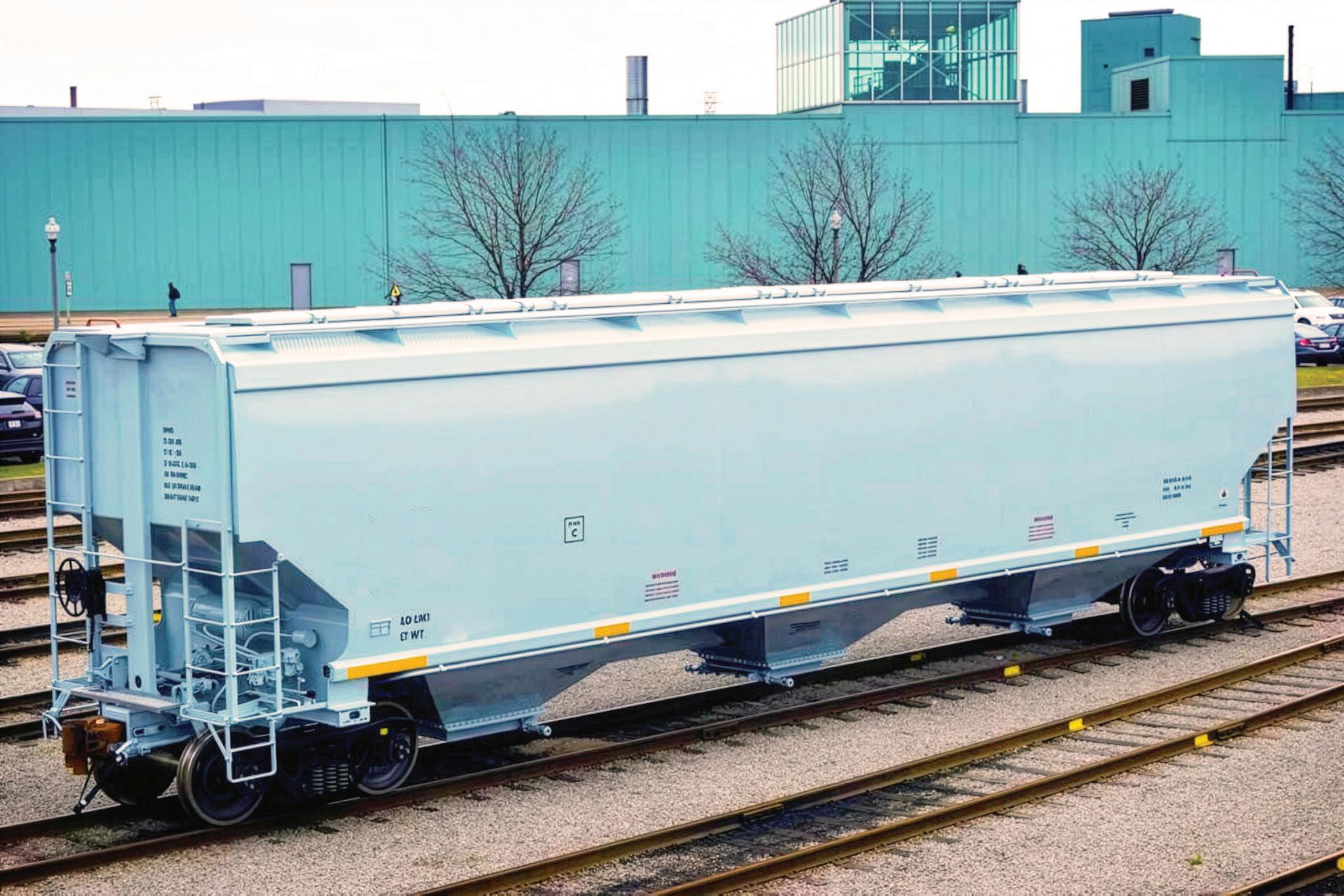
Pelletized biomass products in the U.S. most commonly move in covered hopper railcars, due to the need to protect the pellets from moisture. While the covered hopper railcar itself is well established in rail transportation, National Steel Car continues to lead in design innovation. Our unique covered hopper railcars and new suspension system are examples of NSC’s dedication to advancements in engineering and manufacturing.
NSC Innovation and Commitment to Quality: NSC’s car design and engineering focuses on innovation and equips railcars with patented features and proven technologies to improve performance for specific markets and commodities. For the biomass pellet market, NSC’s 5808-cubic-foot covered hopper railcar maximizes carrying capacity by achievement of a lighter weight railcar. It is 2,000 to 4,000 pounds lighter than compara-
Interest rates, tariff discussions and unrest have contributed to continued uncertainty for many markets and companies, which has reduced demand in the railcar manufacturing industry. The long-term outlook for manufacturers is more positive, as many fleets are aging past usability. The covered hopper railcar, which represents approximately 35% of the North American railcar fleet, is expected to see manufacturing increases over the next couple of years. The average age of this fleet is 20 years, with a relatively low number of these railcars in storage.
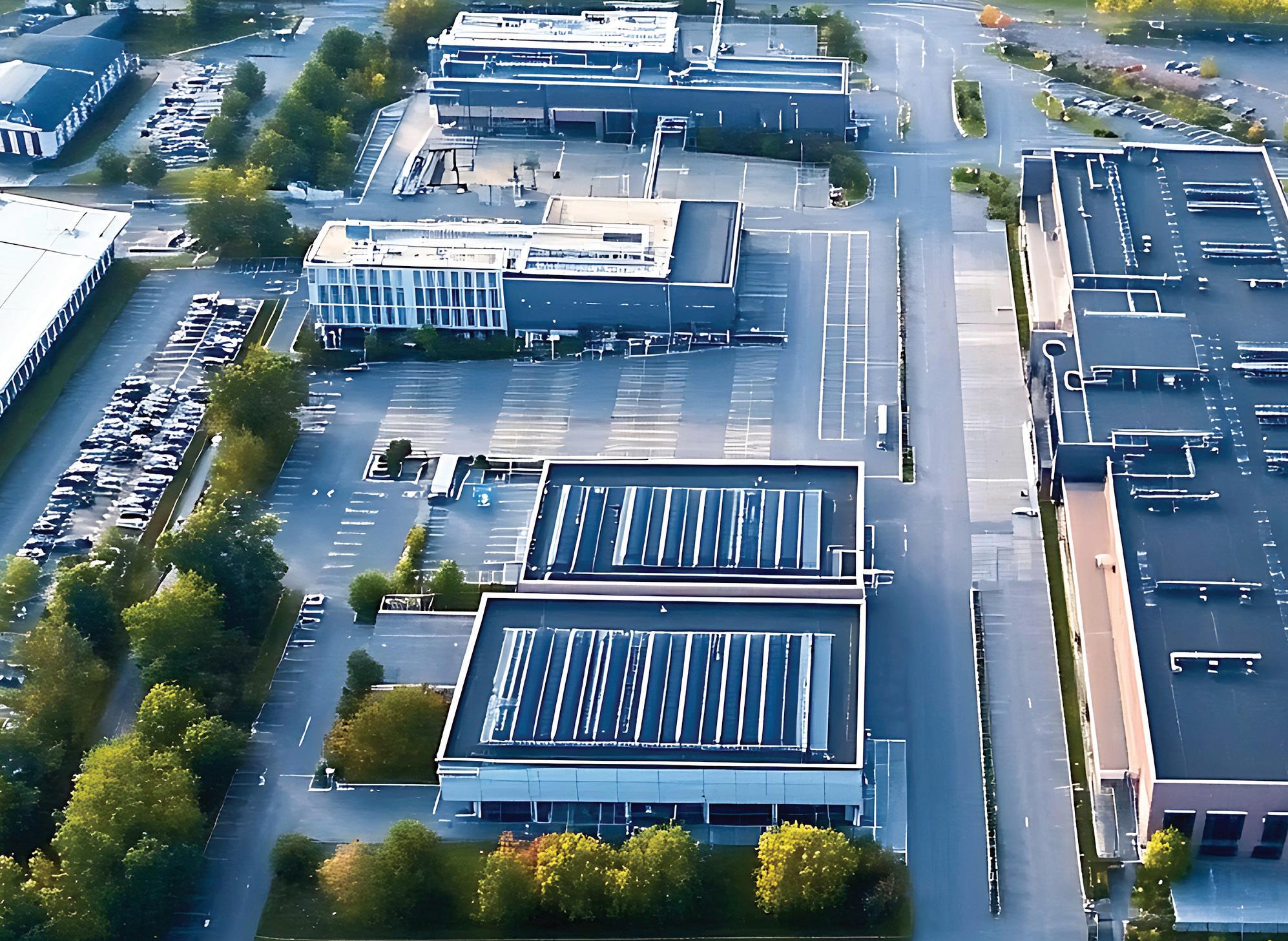
National Steel Car was founded in 1912 and located in Hamilton, Ontario. We have been engineering and manufacturing quality railcars for more than 100 years. The plant is North America’s largest single-site railcar manufacturing facility, featuring five production lines, three finishing lines, and an annual capacity of 16,000 cars. With focus on excellence and quality, the team at National Steel Car is ready to support the transportation needs of the biomass industry now and into the future.
Author: Brian Smalley Executive Vice President Marketing & Sales
BY WILLIAM STRAUSS
The United States needs to significantly increase generation capacity, and it must happen quickly. This challenge is amplified by the aging fleets of baseload power plants. Hundreds of old, coal-fired generating units representing over 110 gigawatts (GW) of capacity are scheduled to retire—most of them between now and 2030. Their retirements will bring a wel-
come improvement to the CO2 emissions per gigawatt-hour (GWh) of electricity produced in the U.S. But the loss of capacity is a significant problem.
Even if there are no retirements in the aging nuclear or hydro generation fleets, a gap of nearly 300 GW of needed capacity exists between today’s output and expected demand 10 years from now. And
adding to the challenges ahead, a large portion of the new demand will be from massive data and artificial intelligence (AI) centers. They need a lot of power, and they need it all the time.
Traditionally, the electric grid has been composed of a foundation of baseload
power stations that provide steady power day and night, and peaking or grid-balancing power stations that provide power as needed to match demand variations above the baseload. The rapidly growing demand from hyperscale AI centers is for baseload power. Furthermore, many prefer power from noncarbon-emitting sources such as wind and solar generation.
The solution for turning the variability and intermittency of wind- and solar-generated power into a predictable, controllable and constant supply is energy storage. Today, and likely for a few decades at least, there are insufficient technological energy storage solutions that can provide the terawatt-hours of power sufficient to consistently supply the massive demands of AI data centers.
Natural gas can and will play a role; however, it is a depleting fossil fuel that emits geologically stored carbon as CO2 when burned. It is not a sustainable solution for the medium to long run from both economic and ecological perspectives. For corporations that have pledged to be carbon neutral in the future, adding natural gas-generated power is counter to their mission and message.
There is a sustainable, noncarbonemitting energy storage solution that can play an important role in the transition from now to a decarbonized future. And the solution can be implemented now with almost no lead time. The solution leverages nature’s natural solar energy storage and packages it into wood pellet fuel that can easily replace coal in already operating, utility-scale generating units.
Each year, about 5.7 septillion joules of solar energy irradiate Earth’s surface. Plants and photosynthetic organisms utilize that energy to convert large amounts of CO2 into glucose. The chemistry of plant growth transforms the glucose into other carbon-based molecules such as hemicellulose, cellulose, lignin and other plant matter. Every year, solar energy and photosynthesis convert billions of metric tons of CO2 and water into plant matter and oxygen.
A portion of that plant matter is trees. While some forests should not be used to supply the forest products industry, many millions of hectares of forests are managed and cultivated to continuously produce logs for lumber, wood chips for pulp and paper, packaging, tissue and engineered wood products used in construction and furniture.
On average, a managed forest will contain about 350-400 metric tons per hectare at maturity and will have grown at
an annual average rate of about 12 metric tons. The average energy content per metric ton of wood is about 8.65 gigajoules (GJ). Therefore, the world’s forests store about 415 billion GJ, or 115 million GWh per year. Total solar and wind generation in 2025 was about 7.7 million GWh. That is, Earth’s forests captured about 15 times more energy in 2025 than was produced by wind and solar generation in 2025.
the World’s Largest Energy Storage System for
Not all of the 4 billion hectares (9.8 billion acres) of global forested land is used to produce the primary feedstocks for the forest products industries. It is important to distinguish between the activities of managed forest harvests and deforestation. Areas within a managed forest that temporarily have no trees after a harvest or a forest fire are still considered forest. A new crop of trees will grow back, and in 10 to 70 years, they will again be harvested. Deforestation is the permanent clearing of forests to make way for new nonforest land use such as commercial development or agriculture.
It would not be possible or ecologically responsible to consider all forests as sources of stored solar energy. But portions can be responsibly used to produce coal-replacement solid fuel (in the form of wood pellets) that can be used for power generation. As long as annual removals do not exceed annual growth within the managed forest (the basic necessary condition for this entire strategy to make sense), the atmosphere does not see net positive new CO2 from combustion. Adding carbon capture and permanent storage, the power station produces carbon-negative electricity.
The wood pellet manufacturing sector uses the byproducts of lumber production and the parts of the harvested trees
SOURCE: FUTUREMETRICS
that are not suitable for making lumber or other higher-value products.
The use of coal-replacement fuel produced from upgraded woody biomass garners a lot of misguided criticism around the idea that forests are being destroyed in the process of producing the fuel. Those same critics do not fret about how lumber or cabinets or cardboard boxes or toilet paper is produced. They all come from the same source, which is forests that are continuously renewing so that the mills that depend on them have a nondepleting supply of raw materials every day.
Sustainably managed forests not only continuously renew the supply of materials to make lumber and other products; they also continuously capture and store solar energy. A portion of that renewing captured energy can be used to replace a nonrenewable and depleting resource— coal—for power generation.
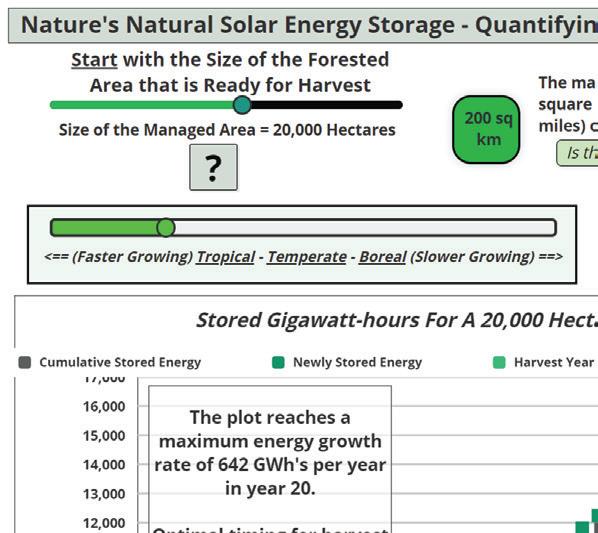
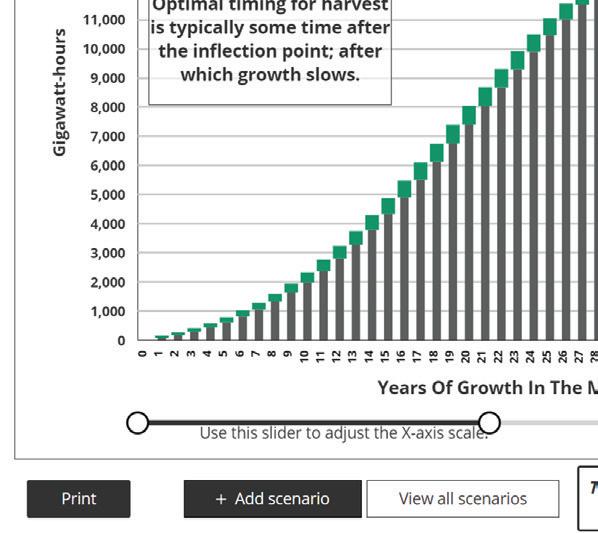
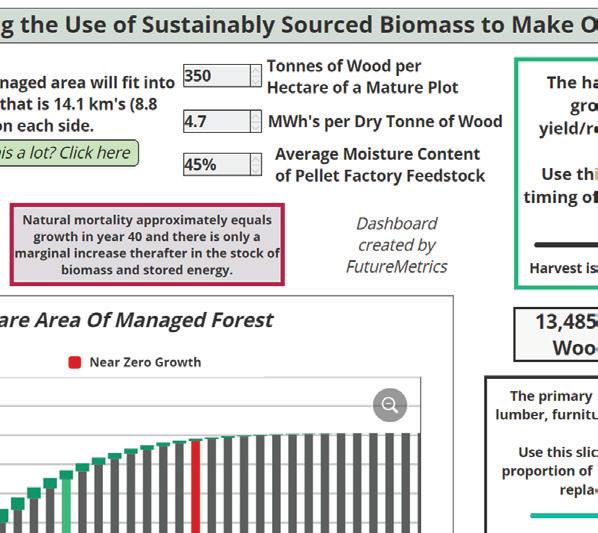
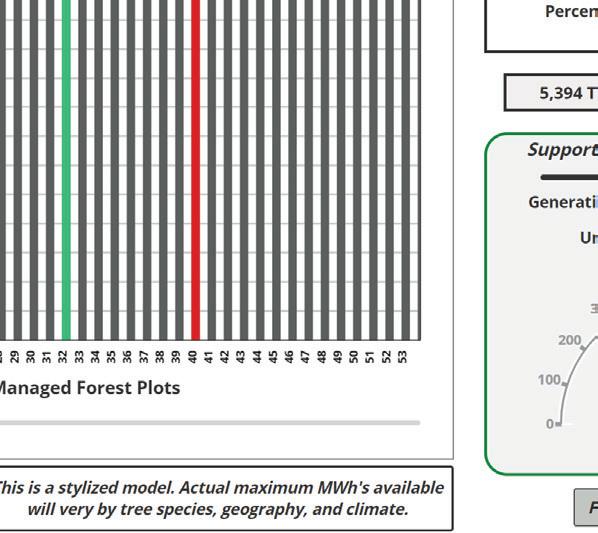
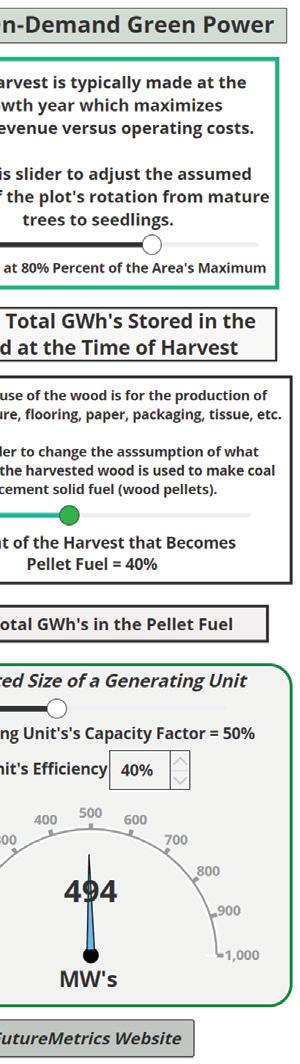
Looking at a FutureMetrics dashboard (available at futuremetrics.com) can quantify this opportunity. The dashboard tells

‘The wood pellet manufacturing sector uses the byproducts of lumber production and the parts of the harvested trees that are not suitable for making lumber or other highervalue products.’
- William Strauss, President, FutureMetrics Inc.
the story of an area of forest that is managed to produce the wood needed by mills that convert it into lumber, paper, cardboard, tissue, flooring, etc. The scraps or leftovers that have no higher-value use find their way to a pellet factory. Based on the default dashboard assumptions, a 20,000-hectare area of a managed forest will produce enough leftovers that contain enough gigawatt-hours of solar energy to support a 500-megawatt generating unit.
Assuming it takes 32 years to grow a tree for harvest (the dashboard user can change that assumption), the total area needed to supply the sawmills, pulp mills and pellet mills drawing on the managed forest landscape is 6,400 square kilometers. That is about 6.7% of all the managed forest in Georgia. There is plenty of room in the state of Georgia for multiples of this strategy. There is also plenty of room across the entire forest products industry to make this strategy a significant contributor to green power generation needs going forward.
Conclusion:
AI Hyperscalers Take Notice
There are limits to the application of this coal-replacement strategy. Solar energy captured by forests that is available for sustainable power generation is limited to the size and growth rates of the managed forest resource. Respecting the growthremoval ratio boundaries and nurturing the resource are essential. But within those constraints, there are significant opportunities. By expanding our perspective of energy storage to include the biomass that is produced every day by solar energy powering the chemistry of plant life, we can expand our perspective on baseload power generation. Baseload electricity generated in existing coal-fueled power stations that are modified to replace coal with pellet fuel should be a part of the solution.

Author: William Strauss President, FutureMetrics Inc. www.futuremetrics.com William.strauss@futuremetrics.com


Book Your Ad Limited Ad Spots
Ad Deadline: Oct. 21, 2026
Mailed with the 2027 Issue 1 of Pellet Mill Magazine
All Biomass Magazine subscribers
All Pellet Mill Magazine subscribers
Pellet mill owners, operators & management
All major related conferences
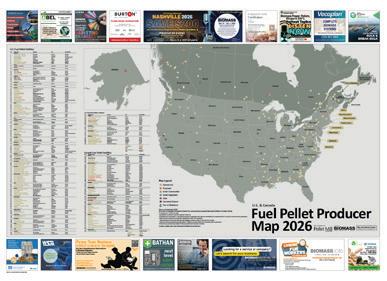
Fuel Pellet Plant Map
Purchase a Spot on the U.S. & Canada Fuel Pellet Plant Map
Receive 12 Months FREE Online Advertising!
Advertise now on Pellet Mill Magazine’s U.S. & Canada Fuel Pellet Plant Map. It is the easiest and most cost-effective way to get your name, product and/or service in front of Pellet Producers, as well as other industry professionals for 12 months at a time
Need more info on advertising opportunities? service@bbiinternational.com - 866-746-8385 - BiomassMagazine.com
Change Service Requested

BCI equipment is built to last, one piece at a time, by a team that still believes quality matters.
From custom design, to fabrication, to service & support...
BCI is Elevating Conveying Standards
• Chain Conveyors
• Bucket Elevators
• Parts & Accessories for all makes/models of conveying equipment
Over 200 Years of Combined Experience. Made in the USA.