Customer Service Coordinator Brandon McGarry brandon.mcgarry@bbiinternational.com
EDITORIAL BOARD
Ringneck Energy Aaron Riedell Commonwealth Agri-Energy Mick Henderson Western Plains Energy Derek Peine Front Range Energy Dan Sanders Jr.
Advertiser Index
Upcoming Events
2027 International Biomass Conference & Expo March 2-4, 2027
Cobb Convention Center | Atlanta, Georgia (866) 746-8385 | www.BiomassConference.com
Now in its 20th year, the International Biomass Conference & Expo is expected to bring together more than 1000 attendees, 180 exhibitors and 100 speakers from more than 25 countries. It is the largest gathering of biomass professionals and academics in the world. The conference provides relevant content and unparalleled networking opportunities in a dynamic businessto-business environment. In addition to abundant networking opportunities, the largest biomass conference in the world is renowned for its outstanding programming—powered by Biomass Magazine–that maintains a strong focus on commercial-scale biomass production, new technology, and near-term research and development. Join us at the International Biomass Conference & Expo as we enter this new and exciting era in biomass energy.
2027 International Fuel Ethanol Workshop & Expo June 14-16, 2027
CHI Health Center | Omaha, Nebraska (866) 746-8385 | www.FuelEthanolWorkshop.com
Now in its 43rd year, the FEW provides the ethanol industry with cutting-edge content and unparalleled networking opportunities in a dynamic business-to-business environment. As the largest, longest running ethanol conference in the world, the FEW is renowned for its superb programming—powered by Ethanol Producer Magazine —that maintains a strong focus on commercialscale ethanol production, new technology, and near-term research and development. The event draws more than 2,500 people from over 31 countries and from nearly every ethanol plant in the United States and Canada.
2027 Sustainable Fuels Summit: SAF, Renewable Diesel and Biodiesel
Presented by Biodiesel Magazine and SAF Magazine June 14-16,
2027
CHI Health Center | Omaha, Nebraska (866) 746-8385 | www.SustainableFuelsSummit.com
Customer Service Please call 1-866-746-8385 or email service@bbiinternational.com. Subscriptions Subscriptions to Ethanol Producer Magazine are free of charge with the exception of a shipping and handling fee mailed outside the United States. To subscribe, visit www.EthanolProducer.com/Subscribe, send an email to subscriptions@bbiinternational.com or call 866-746-8385. Back Issues, Reprints and Permissions Select back issues are available for $3.95 each, plus shipping. Article reprints are also available for a fee. For more information, contact us at 866-746-8385 or service@bbiinternational.com.
Advertising Ethanol Producer Magazine provides a specific topic delivered to a highly targeted audience. We are committed to editorial excellence and high-quality print production. To find out more about Ethanol Producer Magazine advertising opportunities, please contact us at 866-746-8385 or service@bbiinternational.com. Letters to the Editor We welcome letters to the editor. Send to: Ethanol Producer Magazine Letters to the Editor, 308 2nd Ave. N., Suite 304, Grand Forks, ND, 58203, or editor@bbiinternational.com. Please include contact information. Letters may be edited for clarity or space.
Please recycle this magazine and remove inserts or samples before recycling
The Sustainable Fuels Summit: SAF, Renewable Diesel, and Biodiesel is a premier forum designed for producers of biodiesel, renewable diesel, and sustainable aviation fuel (SAF) to learn about cutting-edge process technologies, innovative techniques, and equipment to optimize existing production. Attendees will discover efficiencies that save money while increasing throughput and fuel quality. This world-class event features premium content from technology providers, equipment vendors, consultants, engineers, and producers to advance discussions and foster an environment of collaboration and networking. Through engaging presentations, fruitful discussions, and compelling exhibitions, the summit aims to push the biomass-based diesel sector beyond its current limitations.
In This Issue
Partners and Policy
Most ethanol plants are investing in upgrades to decarbonize, increase yield, diversify, or increase efficiency. Our industry is enjoying a phase of robust improvement.
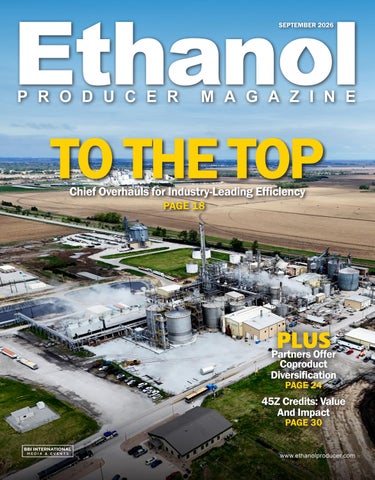
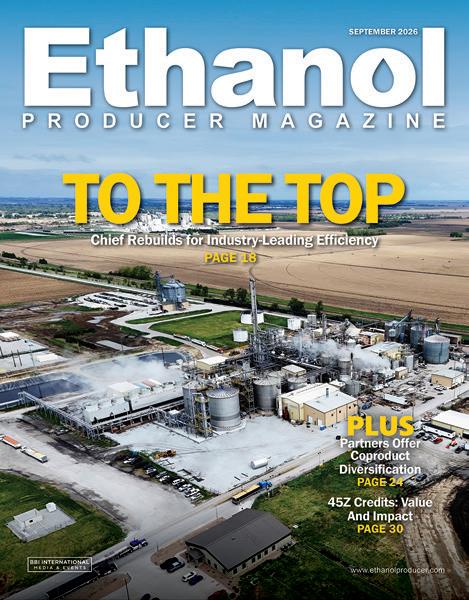
But few stories capture our attention like the nearly full renovation of the 42-year-old Chief Ethanol plant in Hastings, Nebraska. It’s the oldest dry-mill ethanol plant in the state and one of the longest-running in the country. No surprise, then, that the plant was showing its wear and sat among the lowest performers in efficiency industry-wide. But not for long. With a sweeping series of upgrades to nearly all areas except fermentation, Chief Ethanol aims to be among the top 10 most efficient ethanol plants in the country, with per-gallon steam usage reduced by one-third. In a great quote, General Manager Wayne Garrett says the significant savings says two things: “It says how efficient we’re going to be and it also says how efficient we weren’t.”
What we love about this story, though, isn’t just around operations and efficiency. Chief Ethanol could have closed its doors instead of investing large sums of money into upgrading. But it didn’t. The plant is too important to the community and its parent company, Chief Industries, to shut down. Chief Ethanol could also have chosen a few off-the-shelf technologies to help it run more efficiently. But it didn’t. It enlisted the help of two vendors in the ethanol space—Whitefox and Fluid Quip Technologies—to tailor a DD&E process that integrates the two companies’ respective cutting-edge technologies. FQT also is serving as the EPC partner for a portion of the entire plant upgrade.
For all these reasons and more, we are excited to tell you the story of a reinvented Chief Ethanol Hastings, starting on page 18.
Next, we explore another novel partnership, this time between Lallemand Biofuels & Distilled Spirits and global chemical producer Braskem. The two have teamed up to offer a bio-acetone production technology to the ethanol industry, diversifying coproducts and offering a guaranteed offtake partner—Braskem. The details start on page 24.
Last, we delve into policy, looking at the impact of the 45Z Clean Fuel Production Credit’s maximum value for SAF decreasing from $1.75 to $1. The credit is still bringing in millions for ethanol producers that can qualify, but losing the premium has dampened planned development activities in the alcohol-to-jet space. Find out more on page 30.
All in all, we suppose our coverage in this September issue of Ethanol Producer Magazine can be tied together with a simple phrase: Partners and Policy.
Please enjoy.
-The Editors
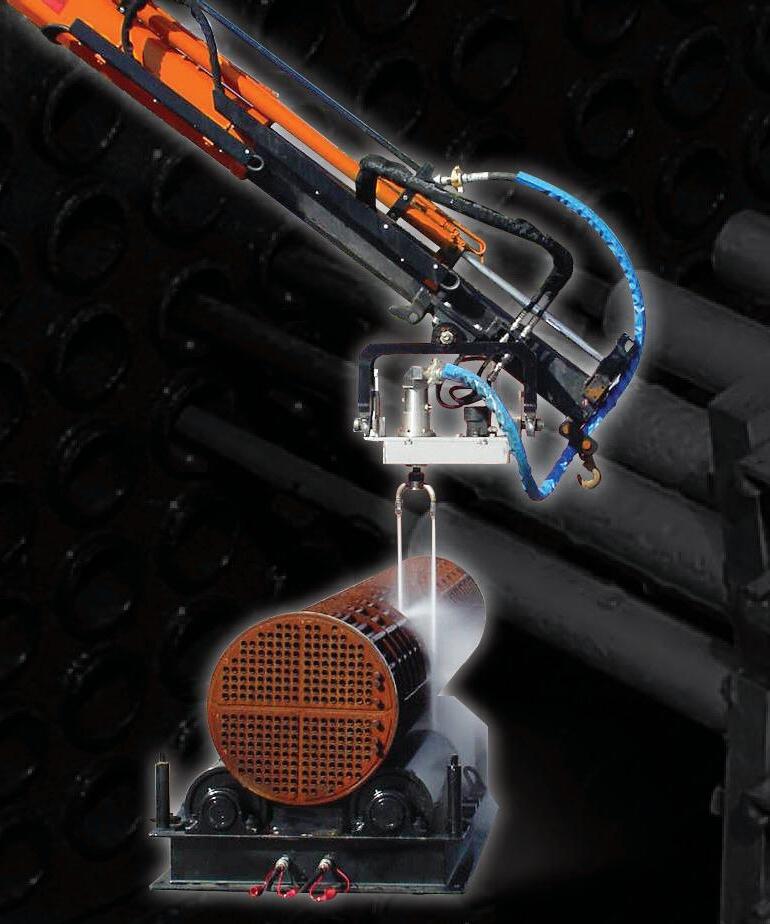
Automate Your Tube Cleaning
with NLB’s high-pressure water jetting systems.
Automated and semi-automated tube lancers and shellside cleaners clean tubes faster, safer, and more consistently than manual methods
Climate-controlled operator station removes operator from blast zone
Portable and easy to set up
Clean up to 5 tube ID’s at once
Protect your team and improve e ciency—contact NLB today!
Emily Skor CEO of Growth Energy
Tax Guidance Key to Innovation on the Farm, U.S. Energy Security
American farmers are leading the charge to adopt regenerative practices and improve soil health. With the right policy changes, farmers can leverage those investments to capture a premium on their grain and tap into rapidly expanding markets for clean fuels around the world. That’s where the 45Z clean fuel production credit comes into play.
Created by Congress in 2022 and extended under President Trump’s One Big Beautiful Bill Act (OBBBA) in 2025, 45Z incentivizes ethanol producers to invest in the efficiency of their operations and adopt emissions-reducing technologies. The amount of the incentive is determined by how big an impact each of these technologies has on reducing carbon intensity. That’s why it’s so important to have clear guidance from federal regulators describing all the practices that are eligible and how each will be measured.
The most recent change on this front came from the U.S. Department of Agriculture, which finalized its calculations for different fuels, feedstocks and farming practices in June. This was the first time that federal regulations formally recognized farm practices as having a specific emissions-reducing impact and environmental benefits. It might seem small, but this simple change sets the stage for future regulatory actions that can create even more value for farmers who invest in their operations.
The USDA milestone was also accompanied by an important Executive Order from President Trump designed to speed innovation. According to the order, “it is the policy of the United States to promote continued advances in precision agriculture technologies; significantly increase Federal investment in regenerative agriculture practices, research and education; and spur private-sector innovation in farm modernization by reducing red tape and strengthening public-private partnerships.”
Taken together, the White House and USDA actions marked a major step toward ensuring farmers are recognized—and rewarded—for their innovation and regenerative farm practices. Now the Departments of Energy and Treasury just need to connect the dots. Done right, a well-implemented 45Z credit will unleash lower-cost fuels, rebuild farm income, and open long-term market opportunities for American manufacturing.
In fact, Growth Energy estimates that 45Z could generate $13.4 billion in household income and provide farmers with a 10% premium price on low-carbon corn used at an ethanol plant.
In today’s marketplace, those revenues are more important than ever. As the Farm Bureau recently noted, the U.S. farm economy has experienced a major downturn over the last three years. High input costs and low commodity prices are putting intense pressure on U.S. farm revenues. A pro-growth tax code can help to reverse the decline, protect family farms and expand opportunities for investment and growth across rural America.
It will also put more American-made fuel into the marketplace, which means lower energy costs. With global oil shipments under renewed threat from Iran, fuel market volatility remains one of the single biggest threats to the nation’s economy and consumers. It trickles down into every facet of modern life, from a trip to the grocery store to online shopping and delivery fees.
The U.S. is by far the world’s largest biofuel producer and exporter. And with all the right pieces in place from USDA, DOE and Treasury, regenerative agriculture can fully unlock a new wave of U.S. biofuel production to deliver greater energy security and a more resilient economy.
Driving Performance
Your biorefinery never stands still. Neither does our science. At LBDS, we deliver the innovation, expertise and technical support needed to increase ethanol yields, enhance profitability and lower your carbon footprint—driving performance across every stage of production.
Kent Past-President and Board Director
Trade Numbers are Clear. Policy Should be Too.
Integrated markets don’t choose between trade and investment. They depend on both.
Numbers have a way of making things hard to ignore. In October 2025, the month after Canada announced it would strengthen the Clean Fuel Regulations (CFR) to make the policy more competitive, better aligned with North American markets and durable enough to attract investment, U.S. ethanol shipments to Canada reached 90.7 million gallons. An all-time record. Up 38% from September. Canadian blenders didn’t flinch at the signal that their own biofuels policy would change. They bought more American ethanol than in any month on record.
Canada is now the largest export market for U.S. ethanol, accounting for 36% of all U.S. exports in 2025. American shipments north reached a record 792 million gallons, 13% higher than 2024 and up 135% over the past five years. Since last year’s CFR announcement, more than 647 million gallons of U.S. ethanol have crossed the border. In just nine months, imports had already reached 93% of the entire previous year’s volume.
This isn’t new market behaviour. For more than two decades, America’s expanding ethanol industry has helped countries achieve higher blending targets than domestic production alone could support. Canada is no exception. As year-round E15 blending ramps up, Canadian blenders are leaning harder on American supply while investment in new Canadian ethanol production remains stalled. And this should be top of mind for ethanol producers and policymakers on both sides of the border.
Integrated markets don’t choose between trade and investment. They depend on both. Canada’s proposed CFR amendments, specifically a credit multiplier for Canadian ethanol, would help close the policy gap created by the U.S. 45Z production tax credit. After all, Canadian ethanol producers don’t have an equivalent production credit. This isn’t about moving away from an integrated North American market. It’s about ensuring Canadian producers can compete within it. A properly designed CFR is a durable CFR, one that gives Canadian producers the same long-term investment certainty U.S. producers already have.
This matters as much politically as it does economically. Unlike the United States, where ethanol support crosses party lines, Canadian biofuels policy is missing that political consensus. In the last election, the Conservative opposition branded the CFR a “second carbon tax,” with no distinction made for biofuels. Recent federal policy decisions have also prioritized other areas. The $370 million production incentive tied to the CFR review is earmarked for renewable diesel and biodiesel only, and Ottawa’s biggest recent CFR commitment went to carbon capture, not ethanol. A CFR that grows trade, but delivers nothing domestically for ethanol, the fuel carrying its compliance load, is one election away from potentially being scrapped. And that’s a bigger risk to an integrated ethanol market than any credit multiplier will ever be.
A CFR credit multiplier for Canadian ethanol doesn’t shrink the overall market. It helps build Canadian ethanol production while growing the pie both countries are selling into, just as Canadian demand has expanded that pie every year for the past five years. Almost a year after the September announcement, it’s time for the regulatory consultations to stop. Now, industry on both sides of the border should be making the same argument: policy alignment grows the market, while unaddressed imbalance puts both sides at risk.
Durable policy isn’t about resisting change. It’s about harnessing it. Ethanol policy can prove that two countries can grow the same market at the same time. America’s producers have already shown they’ll meet the demand. Ottawa’s current job is to ensure that growing demand builds Canadian production alongside American exports.
Andrea
Renewable Industries Canada
BUSINESS BRIEFS
PEOPLE, PARTNERSHIPS & PROJECTS
Aemetis Sells $18 Million of Section 45Z CFP Tax Credits
Aemetis Inc. has announced that its ethanol and renewable natural gas subsidiaries have received funds from the sales of $18 million of Section 45Z Clean Fuel Production Credits.
The sales include a $6 million tax credit generated by 2025 ethanol production and $12 million in tax credits generated by year-to-date 2026 ethanol and renewable natural gas (RNG) production. The 2026 tax credits represent approximately $0.33 per ethanol gallon and $15.20 per MMBtu of RNG. Net cash pro-
Greenfield Global Expands High-Purity Alcohol Supply Network through Agreement with Show Me Ethanol
Greenfield Global, North America’s leading producer and supplier of high-purity alcohol, has announced an exclusive long-term agreement with Show Me Ethanol, a Missouri-based high-purity alcohol (HPA) producer. The agreement provides Greenfield with access to U.S.-produced USP, FCC and ACS high-purity alcohol. This agreement expands the industry’s most extensive HPA supply network and gives U.S. customers the supply they need to grow with faster delivery times and greater protection against disruption.
USGBC Congratulates Vietnam on E10 Implementation
In June, Vietnam completed a rollout of its E10 fuel blending policy, meaning all grades of gasoline sold in the country will now contain ethanol. The transition is a landmark achievement that reflects years of dedicated policy development, interagency coordination and steadfast commitment to the country’s energy, environmental and agricultural objectives.
“The U.S. Grains & BioProducts Council has been truly honored to support the Ministry of Industry and Trade and Vietnam’s fuel industry throughout this policy journey,” said Caleb Wurth, US-
ceeds from the transactions were approximately $14.5 million after transaction costs.
“These 45Z tax credit sales, our second and third transactions in the past six months, illustrate the value of Section 45Z Clean Fuel Production Credits as a recurring contribution to cash flow for Aemetis operations,” said Eric McAfee, chairman and CEO of Aemetis.
Customers that depend on HPA for pharmaceutical, food and beverage, personal care or industrial applications now have access to U.S.-produced supply from Greenfield Global, insulated from crossborder trade volatility. Moreover, Show Me Ethanol’s Missouri facility significantly shortens delivery distances for customers across the Midwest, Southwest and West Coast. Combined with improved rail and tank truck logistics, this translates to faster delivery and greater sourcing flexibility for customers in these regions.
GBC regional director for Southeast Asia and Oceania.
The mandate positions Vietnam as one of the most progressive fuel ethanol markets in Asia, reducing vehicular emissions and improving urban air quality in Vietnam’s rapidly growing cities, contributing meaningfully to the country’s climate commitments and public health goals.
The policy also supports the development of Vietnam’s emerging domestic biofuel industry, creating economic opportunities across the agricultural and industrial sectors.
EPURE: E20 Ethanol Blends are Needed to Enable EU Transport Decarbonization
EPURE is among the signatories of an open letter calling on the European Commission to revise the Fuel Quality Directive to increase the current ethanol volume cap from 10% to 20% and raise the oxygen mass limit from 3.7% to 8.0%. The letter, signed by a range of sectors including biofuels, agriculture, automotive industry and fuel suppliers, follows a suggestion from European Commission President Ursula von der Leyen that higher biofuel
blends can play an important role in decarbonizing the existing vehicle fleet.
The letter highlights the potential of E20 to further increase the use of renewable fuels in both new and existing gas and gas/ electric hybrid light-duty vehicles, with minimum recommendations on the changes required to the FQD to achieve this objective.
ASTM and CSA Group to Develop Biomass Supply Chain Risk Standard
ASTM and CSA Group have signed an agreement to develop a joint standard on evaluating biomass supply chain risk.
The collaboration builds on CSA Group’s existing CSA W209 standard, published as a National Standard of Canada, and aims to expand its use and impact. The new joint standard will increase the reliability of bio-project risk assessment by meeting the need for a standardized and recognized protocol for identifying and evaluating biomass supply chain risks across North America and internationally.
The development of the joint standard is the first part of a twophase process to help drive capital into bio-economy plant construction more quickly and cost-efficiently. The second phase will involve using the new standard, and complementary technical specifications, to develop a biomass risk rating framework. This tool will further support independent third-party assessments of feedstock risk for bio-project supply chains helping project developers, investors and manufacturers make more informed siting and investment decisions.
DOE to Offer $58 Million to Support Chemical Production from Alternative and Waste Feedstocks
The U.S. Department of Energy’s Alternative Fuels and Feedstocks Office has announced its intent to open a $58 million funding opportunity to support the production of chemicals from alternative and waste feedstocks.
According to details released by the AFFO, chemicals of interest for the funding opportunity include foundational molecules that can be further transformed into high-value end products, chemical compounds or derivatives generated either from these foundational
molecules or directly from alternative feedstocks through process intensification, as well as final end products.
The funding opportunity aims to support work involving chemicals that offer advantages in terms of performance or cost, or that offer benefits to America’s foreign trade or national security. The proposed chemicals can be either conventional or bio-advantaged chemicals, according to AFFO.
The Future Belongs to Flexible Plants
By Fluid Quip Technologies
For most of the ethanol industry’s history, success came down to a relatively straightforward equation: produce ethanol efficiently, control costs and compete as a low-cost producer.
But producers are being asked a different set of questions today. What has changed is what the ethanol molecule can be transformed into once it leaves the plant.
For decades, ethanol producers largely competed for access to a single destination: transportation fuel. E15 continues to create demand growth at home. However, today’s landscape looks dramatically different. Products such as sustainable aviation fuel (SAF) is creating an entirely new pathway for low-carbon ethanol. Marine transportation is beginning to evaluate ethanol as part of its decarbonization strategy. Low-carbon fuel programs and carbon-intensity-based incentives are creating additional opportunities that simply did not exist when many ethanol plants were originally designed.
The opportunity is no longer simply producing just fuel ethanol.
The opportunity is producing ethanol at the right carbon intensity with the operational flexibility to reach whichever market delivers the greatest value.
That creates a new challenge for producers.
Many of today's ethanol facilities were built nearly 20 years ago. The plants did exactly what they were designed to do. Now producers are evaluating whether to replace in kind, upgrade existing systems or invest in technologies that position the facility for future growth.
The questions facing boards and management teams are becoming less about capacity and more about flexibility.
Can your plant lower carbon intensity when premium markets require it?
Can your plant integrate new technologies without disrupting existing operations?
Can your facility adapt to emerging opportunities while continuing to operate as an efficient fuel ethanol producer?
Those questions are driving capital investment conversations across the industry.
The opportunities are larger than ever, but they also require a different way of thinking about the plant.
Historically, expansion often meant adding capacity.
Today, expansion means creating flexibility.
“The industry’s next wave of growth won't be defined solely by how many gallons a plant can produce,” says Neal Jakel, president of Fluid Quip Technologies (FQT). “Expansion used to mean more gallons. Today, expansion means more opportunities.”
A gallon of ethanol destined for a premium low-carbon market may carry a different value proposition than a gallon sold into a traditional market. Carbon intensity is becoming a business conversation, not just an engineering metric.
As a result, plant leaders are being asked to evaluate a much broader set of variables. What is the facility’s carbon intensity profile? What op-
portunities exist within the surrounding market? Does it make sense to pursue carbon reduction projects? Which investments create value today while also preparing the plant for tomorrow?
These are no longer theoretical questions. They are boardroom discussions happening across the ethanol industry.
At Fluid Quip Technologies (FQT), we are working with many producers across the country that take a more strategic view of plant development. Instead of focusing solely on the next project, many are evaluating what their facilities need to look like five, 10 and even 20 years from now. Every plant has a unique starting point. Some have access to carbon sequestration opportunities. Others are positioned near transportation hubs or emerging fuel markets. Some prioritize operational efficiency while others focus on carbon intensity reduction.
There is no universal blueprint. However, diversification is the key.
Success comes from understanding where a plant sits today and developing a practical roadmap toward future opportunities.
That roadmap may include Low Energy Distillation (LED™), process integration, carbon reduction initiatives or broader operational improvements. More importantly, it helps producers adapt as new opportunities emerge.
"Future-proofing isn’t about chasing the next trend," Jakel says. “It’s about building a plant flexible enough to succeed no matter where the market goes.”
At FQT, that process starts with people. In our experience developing, patenting and implementing diversification technologies, we’ve learned that flexibility is not created by a single piece of equipment. Engineering depth remains the foundation of every project, helping producers evaluate opportunities, manage complexity and make investments that position a facility for the future.
“Our engineers love solving tough problems, but what makes FQT different is the team behind them,” Jakel says. “From process engineering and CAD design to project management and construction, all under one roof, we bring together people who understand how an ethanol plant operates as a complete system. Not only in the now, but what the future could hold and that’s where sustainable solutions come from.”
Markets will continue to change. New opportunities will emerge.
The plants that succeed over the next decade won’t necessarily be the ones producing the most gallons. They’ll be the ones built to follow where the market goes next.
The next decade of ethanol margins are engineered today. The smartest capital in the industry right now is going into intelligent lowCI expansions. Designed to lock in your plant’s demand for years to come.
Incentives are stacked, the time to invest is now.
Aggressive Efficiency, By Design
Midwest Custom Engineering's redesigned hammer mill delivers sharper throughput and smarter energy use, setting a new benchmark for ethanol producers.
By Katie Schroeder
Midwest Custom Engineering, Inc. has reengineered the Bliss hammer mill relied on by ethanol producers nationwide. Widely regarded as the most significant advancement in two decades, it delivers up to 20% higher throughput, says Jason Shipley, president of MCE.
“We’re able to get up to 20% more capacity with the same horsepower, so from an OpEx standpoint, our hammer mills basically pay for themselves. How could you afford to buy any other mill when the competition starts using ours?” Shipley says.
The redesign centers on a more aggressive, compact grinding chamber and expanded usable screen area to drive greater throughput. By tightening tolerances, MCE increased screen area even as overall dimensions shrank, while the compact chamber reduces binding caused by fats released during milling. Together, these refinements produce tighter particle
distribution and less size variation, optimizing energy use and overall efficiency.
Custom-engineered designs help producers meet the exacting specifications of their unique processes; no one’s process or product is identical. MCE’s capabilities extend well beyond hammer mills to custom-built coolers, conveyors, dust and air filtration systems, and other process components.
Whether producers want to upgrade an existing hammer mill or replace it entirely, MCE’s experts are ready to deliver. “When it comes to hammer mills, we have some of the most experienced personnel in the world,
including Jason Bliss, third generation of the founder of Bliss Industries,” he adds. Its deep bench stands ready to tackle whatever challenge a producer brings, and Shipley hires only the best, ensuring every team member is an “A player.”
Grounded in continuous improvement, MCE engineers custom solutions tailored to each producer’s needs. Its commitment to customer-centered service holds firm, even when that means recommending a competitor’s equipment.
“We’re never going to just tell the ethanol producer, ‘You should buy this’ because that is what we make. We actually listen to our customers and help them make the best choice, even if it is our competitor’s product. My philosophy is you’ll remember that when it counts, long after the sale.”
Jason Shipley President, Midwest Custom Engineering
COMMITMENT, COLLABORATION, COMMUNITY
Chief Ethanol is partially greenfielding its decades-old Hastings plant, surpassing industry technology norms, uniting vendors and prioritizing legacy.
By Lisa Gibson
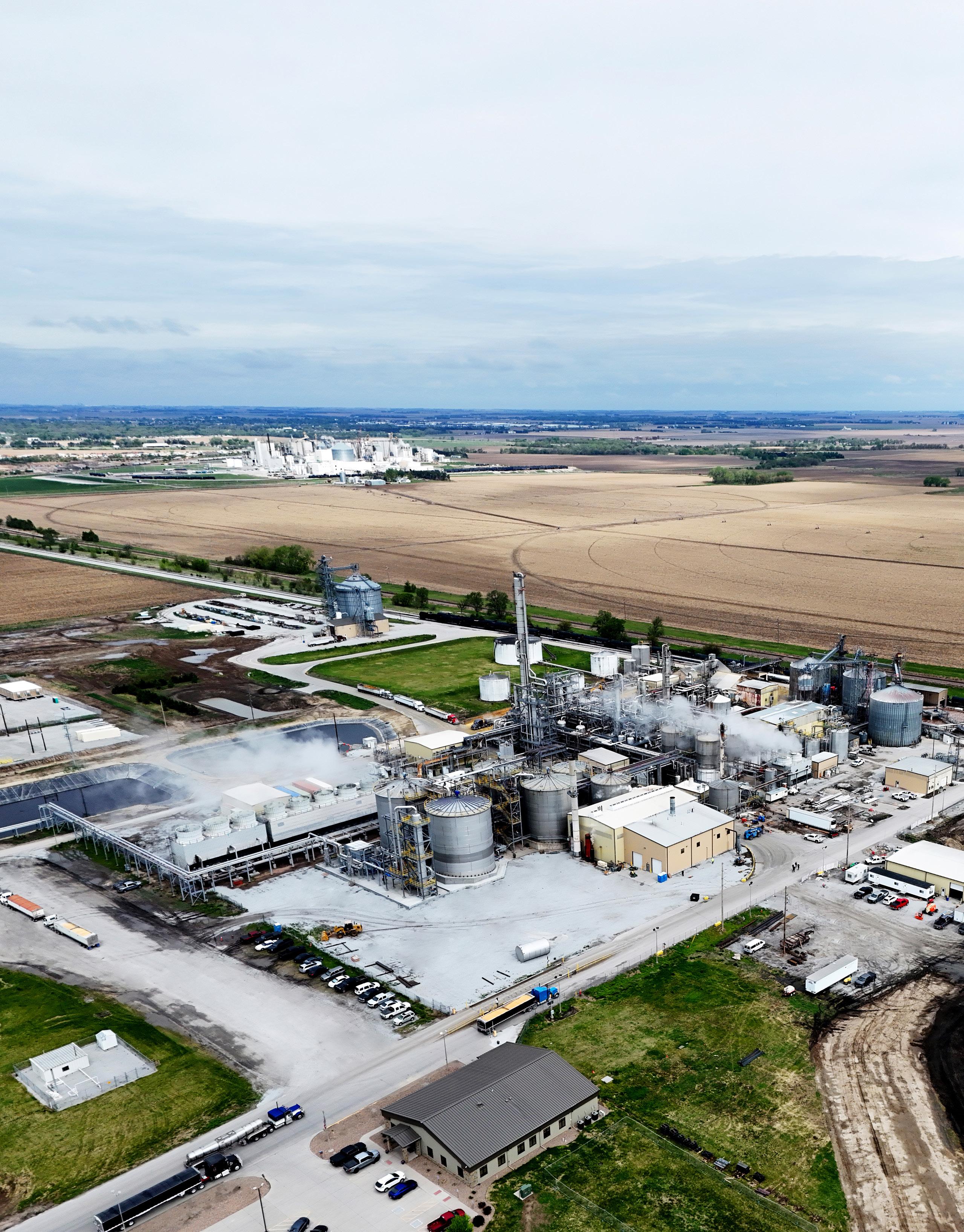
At 42 years old, Chief Ethanol in Hastings, Nebraska, is the oldest dry-mill ethanol plant in the state and one of the longest-running plants in the entire U.S.
With that kind of longevity, the facility has started to show its wear, relegating it to the bottom 10% in the industry in regard to efficiency, says Wayne Garrett, general manager of Chief Ethanol. Garrett joined the team four years ago, a fresh pair of eyes from outside the ethanol industry, and immediately set to work evaluating areas for improvement.
“Our first step was to see how good we could run it,” he says. “We made a difference, but it was incremental. It wasn’t significant. And we are so disadvantaged from an efficiency standpoint. We realized we had taken this facility as far as it would go. It was obvious that status quo was not the best choice.”
What followed that initial evaluation is a story of operational resurrection, community loyalty, technological foresight and unlikely teamwork. A shiny, brand new Chief Ethanol Hastings is on track to be completed and operational in late 2027, bumped from 75 MMgy to 100 MMgy.
The Project and Partners
Chief Ethanol’s complete overhaul is end-to-end, leaving only fermentation untouched, Garrett says. The full rebuild is crucial, he adds, as the antiquated plant put Chief at a disadvantage in the industry.
The energy savings with the new plant will be significant—steam usage will be less than one-third of current usage on a per-gallon basis.
“That says two things,” Garrett says. “It says how efficient we’re going to be, and it also says how efficient we weren’t.”
“As a result of that history and age, it became apparent that the
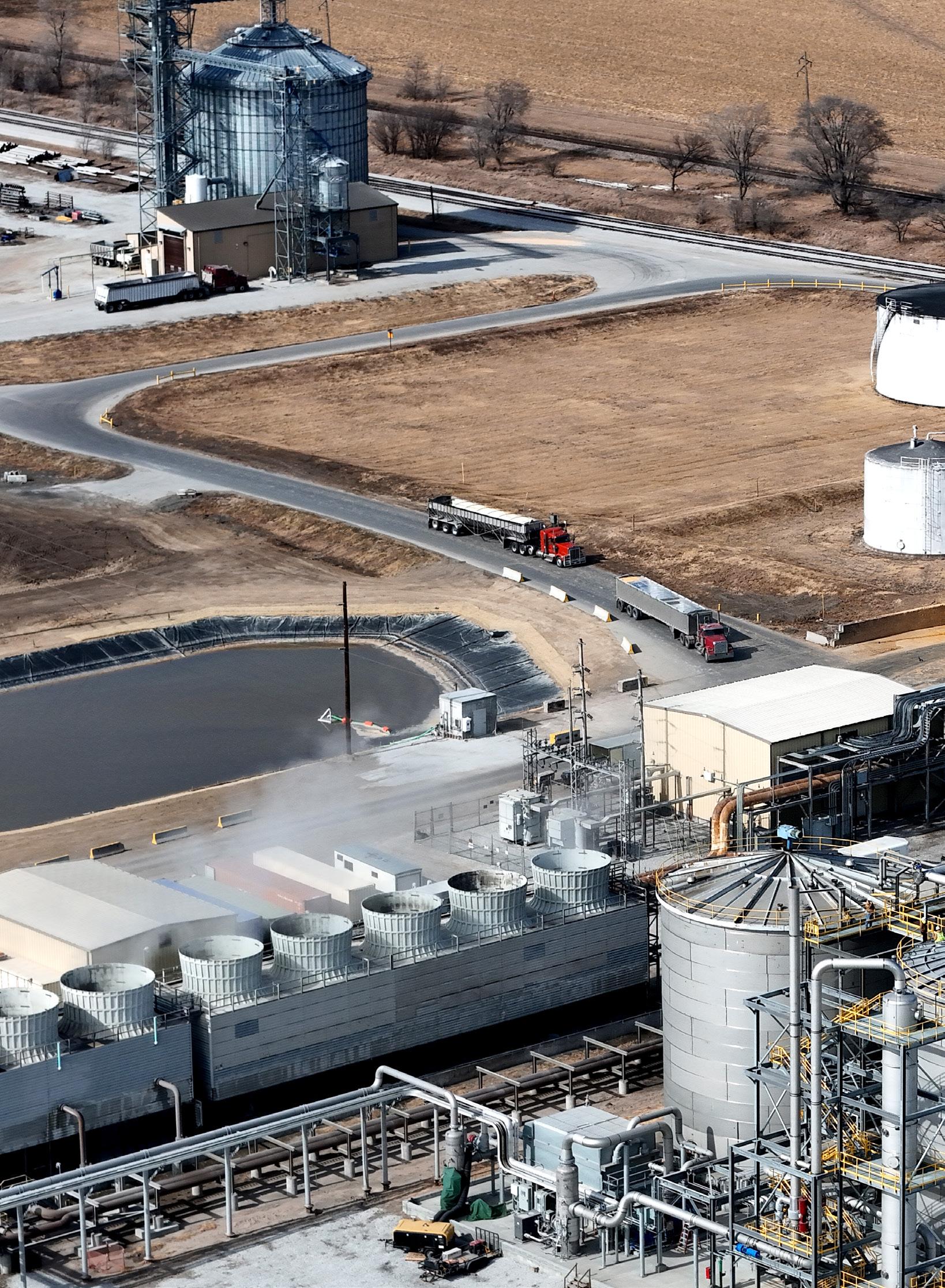
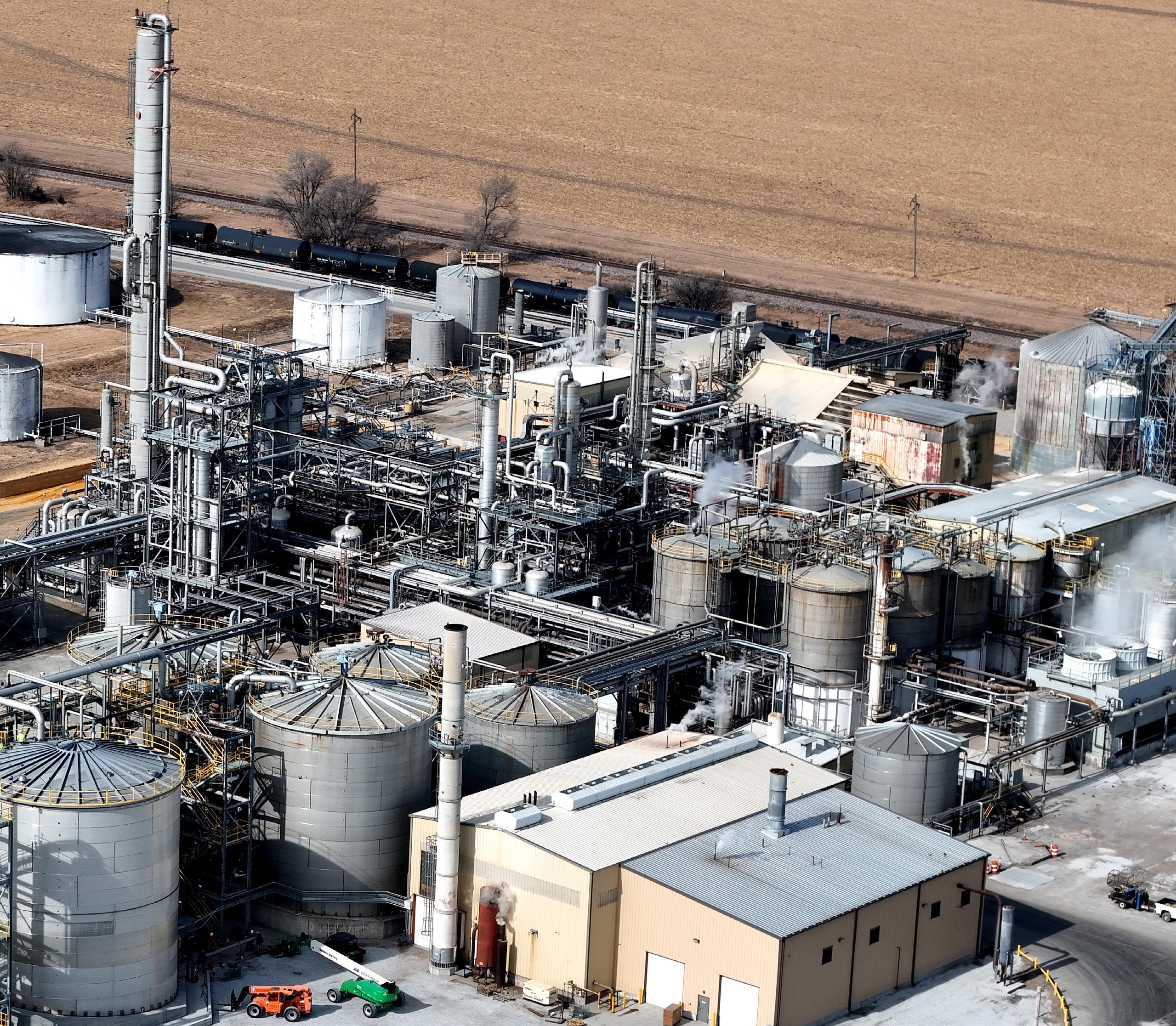
TOP TO BOTTOM: Chief Ethanol in Hastings, Nebraska, is undergoing a full transformation to nearly all areas of the 42-year-old plant. The project brings together best-in-class technologies to put Chief among the most efficient producers in the U.S.
PHOTO: CHIEF INDUSTRIES
time had come to modernize the facility and take it from being the longest-running to one of the most efficient facilities, not just in Nebraska, but within the country,” says DJ Eihusen, president and CEO of Chief Industries. “At Chief, we aspire to be leaders in all the industries that we serve, and this investment validates that commitment.” Chief has not publicly shared the cost of the project.
The efficiency issue stemmed partly, Garrett says, from the fact that the plant had ramped up incrementally from 10 MMgy when it was built in 1985 to 75 MMgy, through multiple additions. “The need early was production, not efficiency,” he says. “The need today is efficient gallons.”
Chief Ethanol also had not made some of the upgrades that swept the ethanol industry in the past few decades. “One of the advantages of missing certain steps as far as industry upgrades, is we get to leapfrog some of those and shoot past those capital investments we never
made,” Garrett says. “Then, we can really brownfield, greenfield this thing pretty well, in terms of how we approach it.”
Specifically, distillation, dehydration and evaporation will be all new in the revamped facility. For dehydration, Garrett chose the Whitefox ICE XL dehydration system for its efficiency and innovation.
Whitefox ICE XL uses membranes for dehydration in lieu of molecular sieves, reducing costs, energy, water and carbon. This new system is much more flexible and strategic with process flows, which allows the optimization of the DD&E design, resulting in significantly lower steam usage. ICE is installed in various capacities across about 8% of the ethanol industry.
“What [provided motivation] and helped them make the decision was the chance to leapfrog from close to the bottom in terms of efficiency to become best in class,” says Gillian Harrison, CEO of Whitefox.
Project Profile
Fluid Quip Technologies, Chief Ethanol’s lead engineering, procurement and construction (EPC) partner for the process area from post-fermentation through ethanol storage and loadout, will integrate Whitefox ICE XL membrane technology into its proprietary Low Energy Distillation platform. Rather than simply combining two independent technologies, FQT engineered a fully integrated distillation, dehydration and energyrecovery solution specifically optimized for Chief’s facility.
“Our engineers love white pieces of paper, fresh perspectives in design—they love to figure out how we solve these tactical problems,” says Neal Jakel, president of FQT. “So we sat down and figured it out. Whitefox has their unique areas of the dehydration system and we are able to take that piece and integrate it into our full distillation design, while providing for the anomalies that will inevitably come up when you bring differing technologies together. We came up with a top-of-its-class design that is going to be a showcase for a lot of other plants in the future in terms of what you can do with technology today.”
Garrett first met the FQT team during
the 2023 International Fuel Ethanol Workshop & Expo, where the company introduced its LED platform and discussed FQT’s fullservice EPC capabilities. Those conversations continued as Chief evaluated multiple technology options to meet its long-term operating objectives.
Then, at the following year’s National Ethanol Conference, Garrett says Harrison snagged him at the bottom of an escalator to talk through Whitefox’s membrane technology.
Garrett had challenging questions, he says, and Harrison rose to the challenge. “Gillian had answers, and they weren’t just answers, they were good answers. Those answers made sense to me. They were solid answers.”
Garrett’s team ran some models on the LED and ICE XL collaboration and got some “really good numbers,” he says. “It was quite shocking, actually.”
Finally, at the 2025 FEW, the three teams convened to address the project and the potential to collaborate in a way unique to the ethanol industry. “All along, we felt like they both brought something to the table,” Garrett says. “So we got everyone on the same page.”
Having selected the two different technologies, Garrett challenged the companies to work together. “To Gillian and Neal’s credit, they and their teams have worked through this remarkably well—very little friction. What convinced me was the genuineness of their intent to work together.”
“Wayne felt confidence in the systems and felt Whitefox was not just selling and moving on,” Harrison says. “We will invest with his team to make sure it is a successful project, which gave Wayne confidence in this being the right team.”
Jakel reiterates this commitment from FQT’s perspective, emphasizing the company is focused on providing best-in-class engineering and technology solutions, backed up with meaningful process guarantees.
Garrett confirms. “We all want a good project. It matters to them just as much as it matters to us, and that gave me that last little piece we needed.”
Certainly, such a close partnership between engineering and technology providers comes with risks, Harrison says. “Neal and I talk about how it’s important that we give leadership and direction to our teams and make sure they talk openly, including agreements around IP and how we treat that.
“There’s only one client and that’s Chief.”
“Give FQT a challenge and we will solve the problem,” Jakel says. “We will find the most economical, best design to do that. When you start integrating all the steps together, it has to work, and the process engineering is the first critical step in any new technology. We know the process— and more importantly, the ripple effect of integration within the plant.
“We are bringing together different players, different technologies, and solving for a whole new set of rules going forward.”
It’s time to start thinking outside the box with ethanol plant upgrades, Harrison says, as the industry has exhausted the “low-hanging fruit.” It’s time to bring technologies together.
“We are very excited to be part of a project that is about legacy and vision, and to be helping a company like this deliver that vision; and we appreciate the fact that they encouraged us to be more open-minded in how we work with other technology providers,” Harrison says. “And that placed even more emphasis on the importance of collaboration.”
In addition to the plant’s complete rebuild, Chief Ethanol Hastings is well-positioned to join the Trailblazer Pipeline for a negative carbon score. Even with project start-up more than a year out, Garrett says interest in
Fluid Quip Mechanical (FQM) delivers full mechanical support for ethanol plants, from field service to preventative maintenance planning.
99% uptime from our reliability team’s operations managers. 24/7 service from Fluid Quip–trained technicians and skilled tradespeople. Always ready to keep you online
Midwest-based warehouse stocked with OEM parts and next-day delivery*. When downtime occurs, we respond quickly
*In most cases
Your partner in plant uptime.
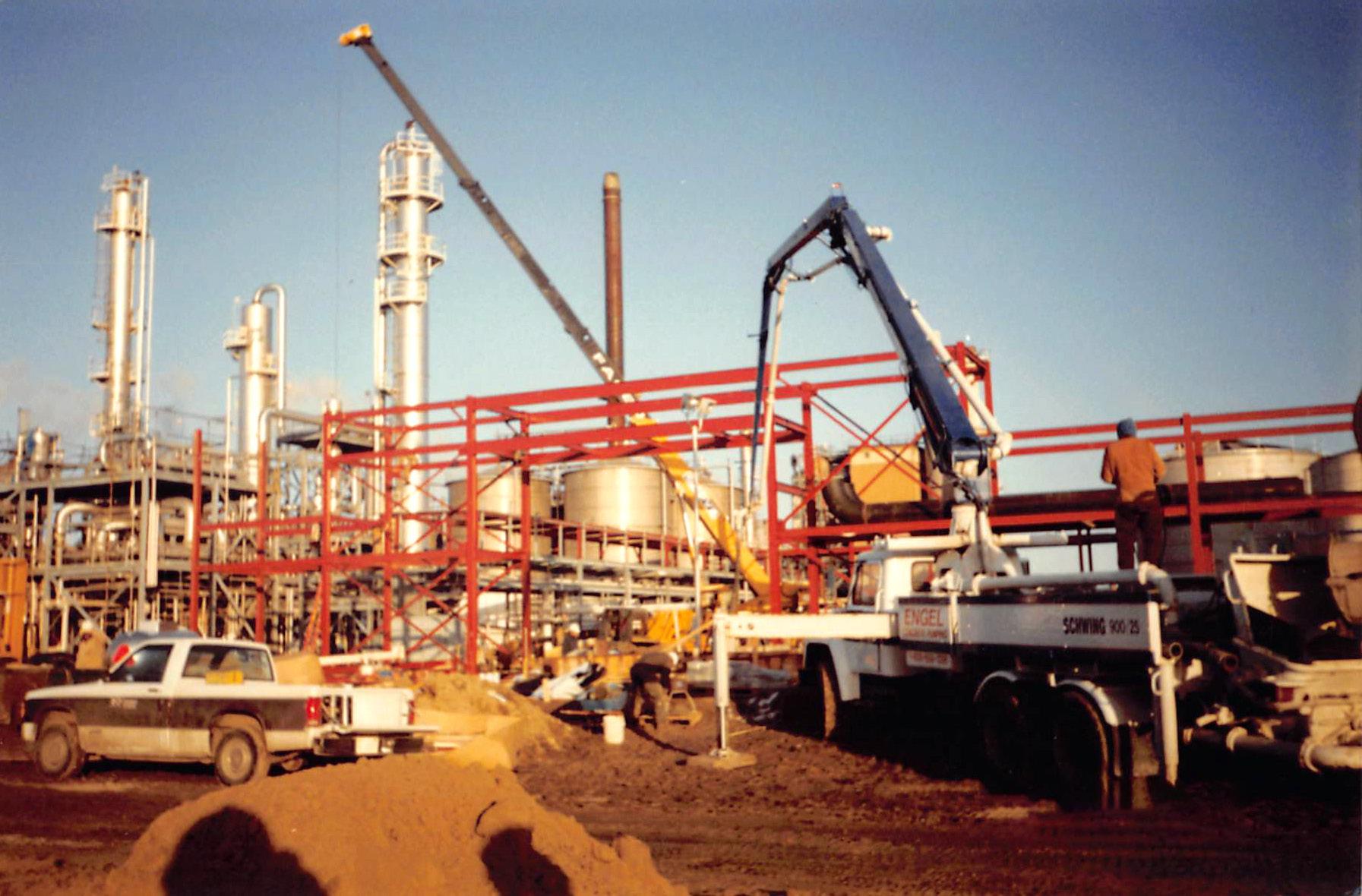
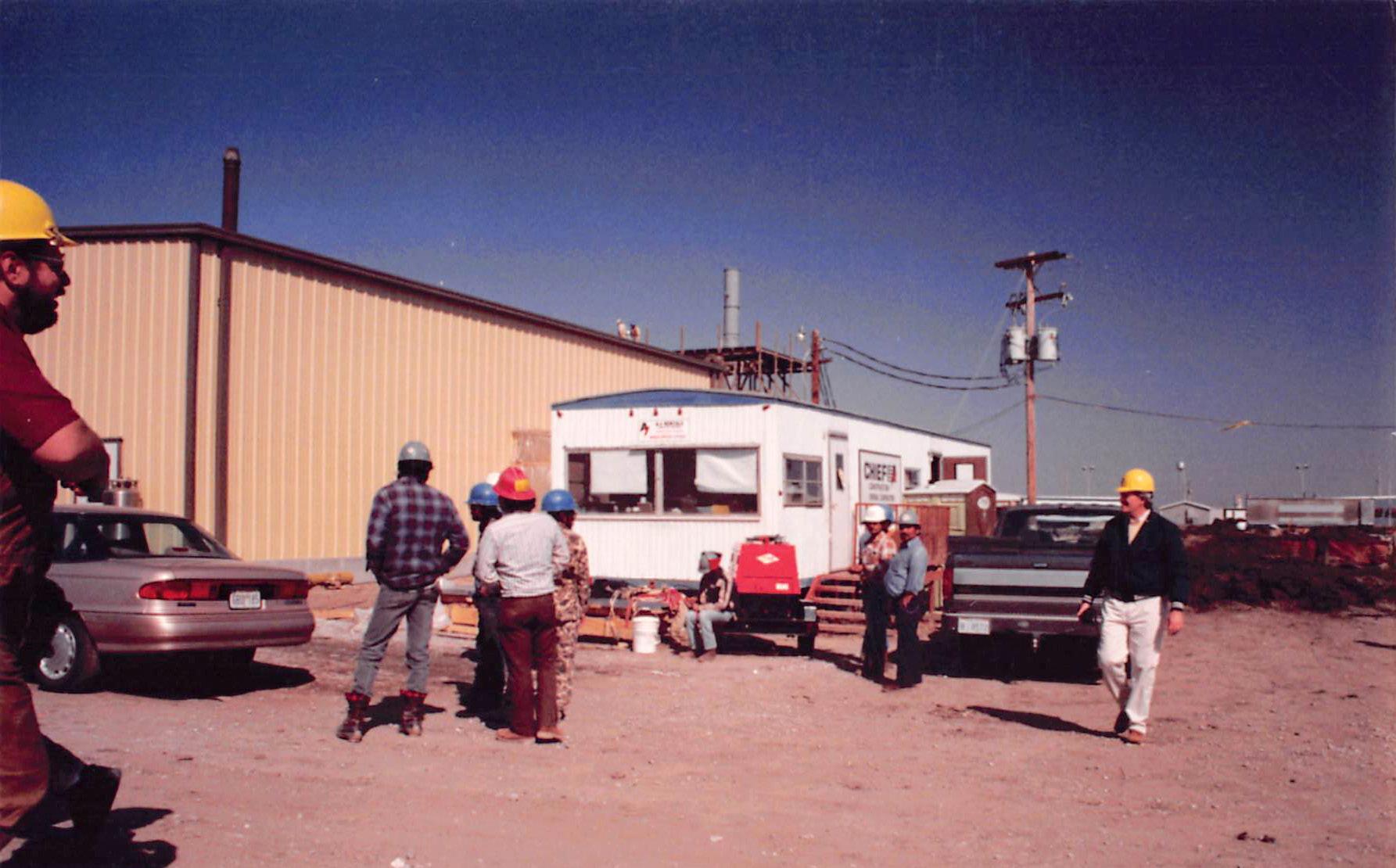
THROWBACK: The Chief Ethanol team gathers near the company trailer in 1992.
PHOTO: CHIEF INDUSTRIES
the [plant’s forthcoming low-CI] ethanol is high. “The part I’m most surprised with is interest already—more than casual interest—in these types of gallons internationally. It was not something I was counting on or expecting when there’s a lot of room to travel from A to B. But the interest in it has caught me off guard.”
A Story of Community
“Hastings needs an ethanol plant. It’s had one for a long time.” Garrett states matter-offactly, emphasizing the corn base and feed yards, and adding ethanol to what he calls “The Golden Triangle.
“Those three things just work exceptionally well in our part of the world.”
Given the age of the plant and low efficiency, Chief Industries could just as easily have shut it down. In fact, most businesses would, says Jeff Scharping, commercial director for Whitefox.
But the community of Hastings has enjoyed the benefits of the ethanol plant for decades, purchased by Chief in 1990 when ethanol was still a risk.
MEMBRANE MODEL: Whitefox ICE XL is installed at Western Plains Energy in Oakley, Kansas. At Chief Ethanol in Hastings, the membrane technology will be integrated into Fluid Quip Technologies’ Low Energy Distillation platform.
PHOTO: WHITEFOX
“Chief has had a long and valuable history in the community of Hastings which goes back to my grandfather Virgil Eihusen (Chief founder), having been born in Hastings, Nebraska, and raised in the Glenvil and Hastings area,” DJ Eihusen says. “Currently, we have three of our Chief Brands with facilities or offices located in Hastings which include, Chief Ethanol, Chief Construction, Chief Buildings, and some of our corporate personnel. Our belief in this community has never wavered and this modernization project doubles down on that conviction.”
Scharping says, “It’s going from a plant so outdated it should have been shut down to a world-leading ethanol plant. Everything as an industry we aspire to, they’re building it. That dedication is why we’re in this industry.”
Garrett says DJ Eihusen is uniquely gifted in his vision and approach to things and never considered shuttering the plant. “He sees and has seen all along that we are going to be in ethanol. So, it was more figuring out the solu-
tion than it was making that decision. It was his commitment to see beyond what was there and that’s his approach and he’s steadfast.”
Eihusen emphasizes the strong role ethanol has played in Chief Industries’ success, explaining that the company has diversified for the ability to lean on each of its brands depending on the current economy. “That philosophy (business model) has served us well and was a contributing factor in our decision to move forward with this most important project.
“Our roots are in agriculture, so we realize the impact that ethanol has for the amazing producers of this country,” he adds. “This investment is one of the biggest ways we can support that group and to help ensure their success, which in turn impacts ours, for years to come.”
The mood at Chief Ethanol Hastings is one of excitement and pride, Garrett says. The teams are excited and encouraged to see such an investment taking place in their facility.
“You start and end with people,” he says. “There have been a lot of people who have put in a lot of effort, a lot of blood, sweat and tears to get us where we are.”
The overhaul goes beyond operations and into all areas of the ethanol plant, Garrett says. “We are looking at everything—we are turning over every rock and looking at ways to be better everywhere.
“To be part of this with them is exceptionally rewarding to me,” Garrett adds. “I am just the fortunate person to sit in the chair I sit in. I get to see all these things happening from left to right.
“It’s like a front-row seat to 10 fantastic movies. It’s just fun to watch.”
Author: Lisa Gibson writer@bbiinternational.com
BIOREFINERY EVOLUTION
Bio-acetone coproduction alongside ethanol stands out as a new opportunity for product diversification.
By Katie Schroeder
NEW OPPORTUNITY: Lallemand Biofuels & Distilled Spirits has partnered with Braskem to diversify the ethanol coproduct portfolio.
PHOTO: BRASKEM
A partnership brokered by innovation is introducing a new coproduct to the U.S. ethanol industry—bio-acetone. Braskem, an industrial biopolymer producer, and Lallemand Biofuels & Distilled Spirits, a yeast and enzyme developer, collaborated to develop the technology and yeast required to integrate bio-acetone with ethanol production. After five years of development, Braskem’s process design, coupled with innovative new yeast from LBDS, is able to produce acetone during fermentation.
“We are now able to give a producer everything they have been getting in the past by way of yield, DDGs, and corn oil along with a biochemical, that being acetone,” says Craig Ammann, vice president of business development with LBDS. “It’s truly a green biochemical, because we’re producing this new coproduct from corn.”
Renewable Opportunity
As a major chemical provider for North and South America, Braskem recognized an opportunity in the ethanol industry to provide a renewable acetone option for end users.
With a history in green chemical supply, Braskem pursued bio-acetone because of its myriad applications across a variety of industries, as well as customer interest in a renewable product. “It’s a really significant reduction of the carbon footprint of [conventional] acetone,” says Cirilo Vieira, renewable business director at Braskem. “This is the main value proposition; and because it isn’t made from petroleum— from oil sources—it doesn’t have any trace of benzene and phenol, which are components that are in regular acetone. This is an important aspect for the customer.”
Braskem and LBDS are targeting the U.S. ethanol industry first for an obvious reason: it’s a target market of 190 facilities producing over 17 billion gallons of biofuel annually. Also, many U.S. producers already have the documentation needed for any
traceability required for tax credit markets or low-carbon fuel standard markets.
As the offtaker in the partnership, Braskem will market the bio-acetone globally, which will require many of the same certificates and product histories that U.S. ethanol producers already generate. Vieira says the verifications required for RFS compliance, exports, state low-carbon fuel markets and 45Z tax credit participation meet or surpass most of the international documentation needs of bio-acetone.
Acetone has myriad applications in products such as cosmetics, paints and coatings, polycarbonate production and more. As a commodity with broad market reach, acetone’s pricing and demand are dictated on a global scale, offering ethanol producers a stable tangential market that is insulated from volatility in the transportation biofuel sector.
The renewability of the resulting product will be evident on the molecular level, explains Vieira. Testing the acetone would
show an abundance of C-14 carbon, the mark of a genuine biobased product. “This is truly a biobased solution, not certificate only,” he says.
The acetone market does not have any regulatory restrictions. Unlike entering a new renewable fuels market under a lowcarbon fuels standard, producers will not deal with a complex regulatory framework. The U.S. EPA also does not regulate acetone as a volatile organic compound, simplifying production startup since no additional environmental or safety precautions are needed. Acetone handling requirements are similar to that of ethanol, governed by flammable liquid regulations.
New Product, New Partners
The exact amount of acetone that can be produced at an ethanol facility will vary, according to LBDS and Braskem. Factors that can impact bio-acetone yield are similar to those impacting ethanol yield: the region’s
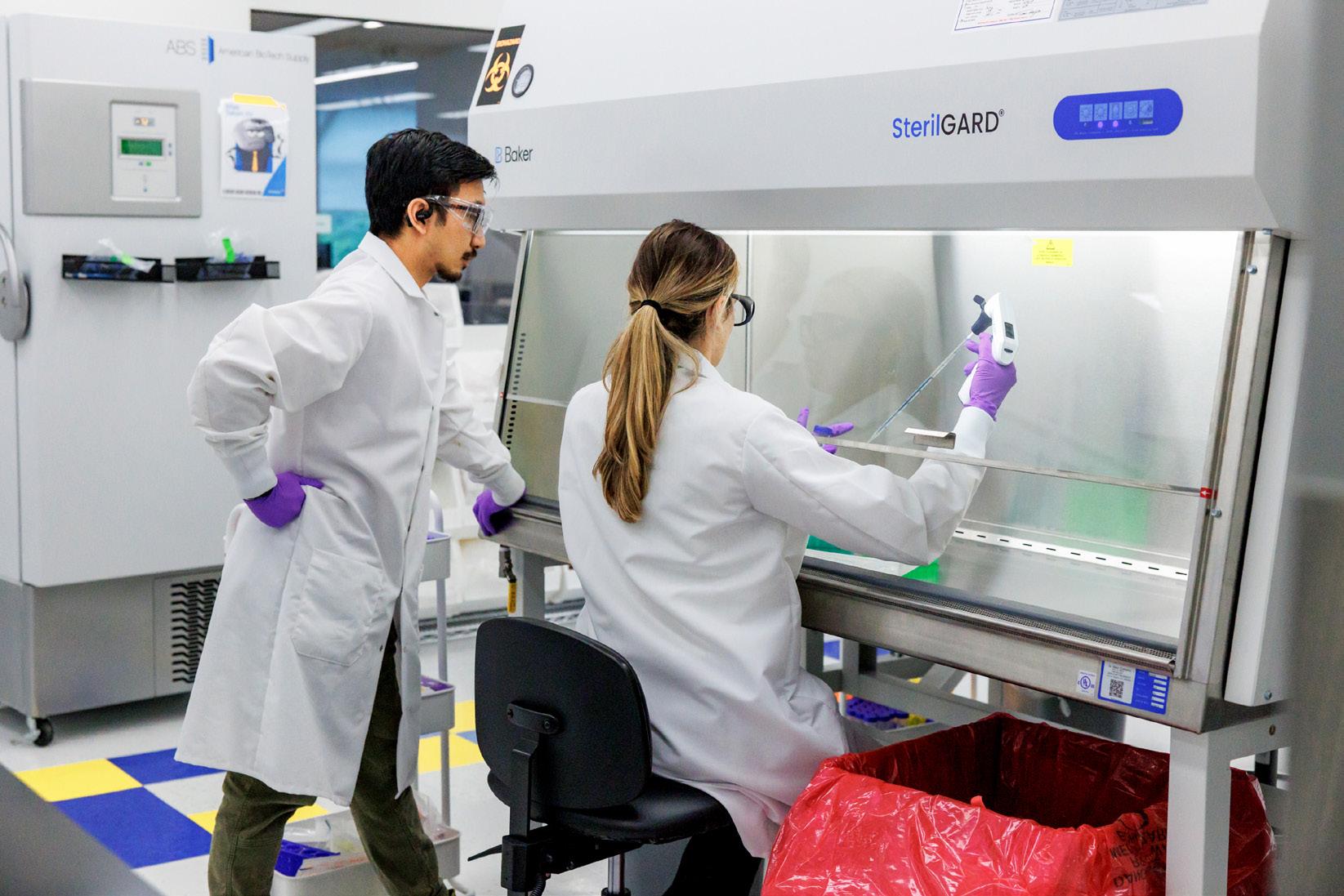
MARKET MOVERS: Braskem is focused on bringing renewable alternatives to the polyolefins market. Pictured are researchers at Braskem’s Renewable Innovation Center in Lexington, Massachusetts.
PHOTO: BRASKEM
corn makeup, water quality, etc. LBDS can predict this number more accurately for specific plants by running test fermentations on mash samples.
Together, Braskem’s separation technology and LBDS’ yeast may displace up to 10% of a facility’s ethanol yield, though production of ethanol and other coproducts will continue as normal. The acetone produced will not be equivalent to the ethanol volume removed, Ammann explains. However, acetone’s premium market price—typically standing between $0.80 to $1.50 per gallon higher than ethanol over the past 15-plus years—could account for the difference. However, Braskem and LBDS declined to share the price range Braskem would pay ethanol producers for their acetone through offtake agreements.
Ultimately, each plant’s financial posture and strategic mandate to diversify
would determine its potential readiness for bio-acetone technology. Existing factors like production volume, yield, operational efficiency and water quality might factor in, but the decision would likely come down to project finance options and perceived ROI, Ammann explains. “There will be some sites where we run the numbers and the return on investment is longer,” he says. “And that can be dependent on a number of things—size of the refinery, its ability to produce the product at a volume that’s going to give them a return on investment in a shorter period of time.”
With Braskem handling the challenge of marketing the bio-acetone, ethanol plants would be freed up to focus on production rather than searching for buyers. As Ammann explains, the marketing process would be completely handled for producers with Braskem taking the product. Although
the bio-acetone market in North America is small, Braskem is confident that the renewable, low-carbon product will make it an appealing option for end users down the road.
Process Development
From the start, bringing a bio-acetone platform to the ethanol industry has been about harmonizing the core competencies of LBDS and Braskem, explains Ammann. “It was a natural marriage of our R&D efforts with their commercial contacts and relationships, that we were able to not only bring the product to the ethanol producer, but also have an offtake program developed for the producer as well,” he says.
The new yeast with the capability to produce the acetone was developed by LBDS’ R&D arm, Mascoma. Leveraging over 20 years of biotechnology expertise accumulated by the creators of the ethanol
industry’s first biotech yeast—which came to market in 2012—Mascoma’s research and innovation took five years to reach completion.
“This is a lot of time and effort in the lab, working the genetic engineering, a lot of trial and error making changes to an organism,” Ammann says. “It’s a constant balance that the scientists have to be cognizant of when engineering these advancements, engineering an organism to do something different can take away from other engineering that’s already been done, so it’s not easy. This is genetic engineering at its finest. I commend Mascoma for their continued push to bring new innovation and added value to the industry.”
Working together, the two companies shared lab-scale and development trials to ensure the yeast and separation technology worked as intended. Braskem constructed a small-scale demonstration facility, which it
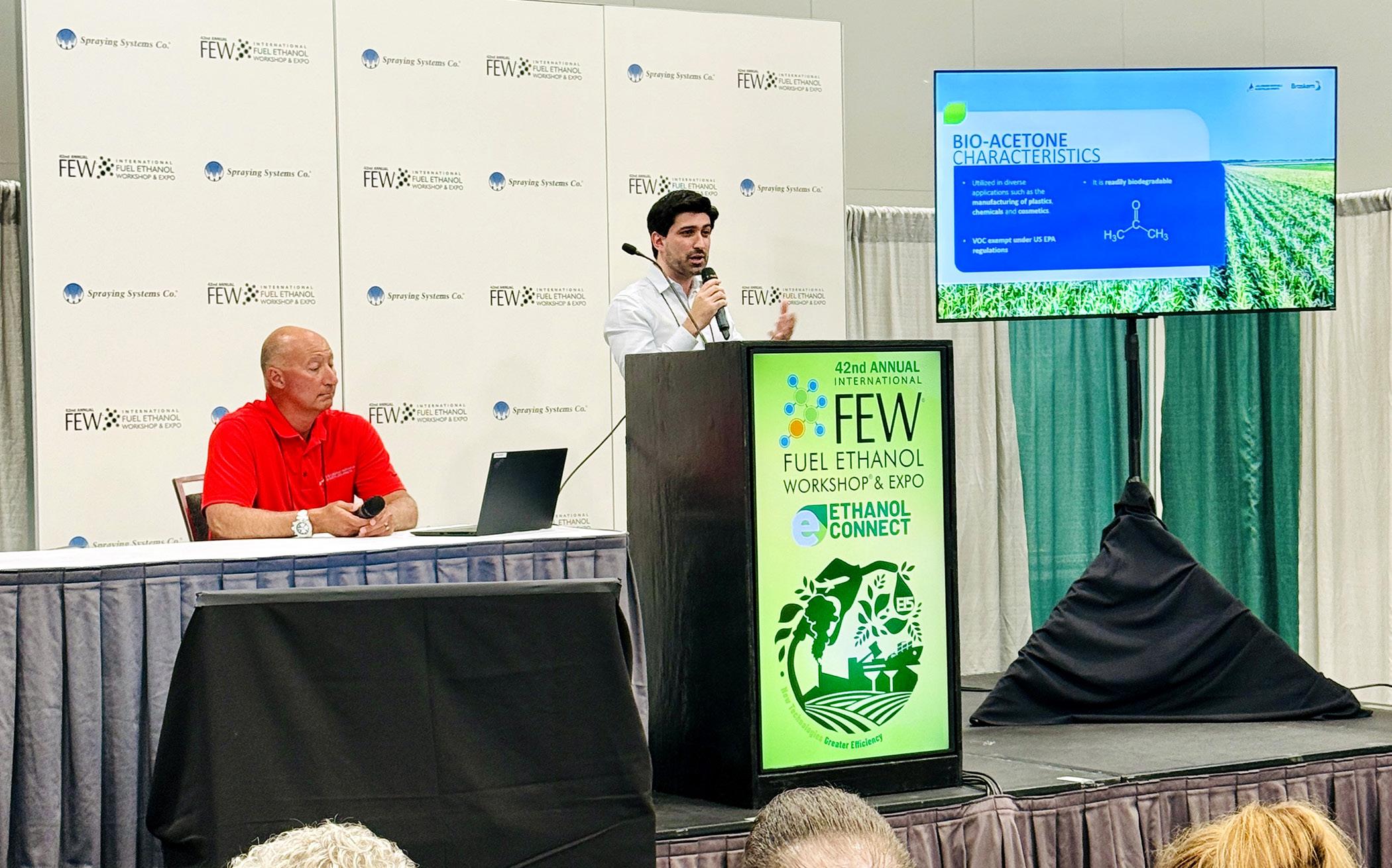
PRODUCT PARTNERS: Craig Ammann (left), vice president of business development with LBDS, and Cirilo Vieira, renewable business director at Braskem, discussed their new partnership on the Innovation Stage at the 2026 International Fuel Ethanol Workshop & Expo in June in St. Louis.
PHOTO: LBDS
operated from 2023 to 2025 to ensure that the ethanol and acetone produced met the required specifications.
With a goal of adding value while keeping whole stillage, DDGs and DCO unchanged, Braskem worked with both the National Corn-to-Ethanol Research Center and the University of Minnesota. “We produced gallons of beer, samples of the product, samples of ethanol and samples of the whole stillage to really make sure the DDGs and all the solids remain the same,” Vieira says. “So, we have all of that in place.”
Demonstration wrapped up in 2025, and LBDS and Braskem are now ready to move on to the next step—commercial installation.
Installation and Implementation
A bolt-on technology, Braskem’s system will not impede existing production equipment. Vieira and Ammann aim to reuse existing assets whenever possible when installing the technology. Braskem’s separation technology ensures the acetone meets all required quality specifications, so producers will not need to make additional changes to the production process.
“The refinery continues running its fermentations as it does today, and with the additional equipment in place, acetone is pulled off of the system, purified, and sent to a holding tank for offtake in either a rail car or a truck, just like ethanol is today,” Ammann says, adding that CAPEX can be reduced for producers of high-purity ethanol or grain neutral spirits.
Ammann estimates installation at most facilities will take anywhere from 12 to 18 months, depending on how many existing assets can be reused.
In light of higher revenue from 45Z production tax credits, Ammann says now is a good time for producers to invest in new technologies and add a consistent revenue stream, stabilizing income flow even
as commodity markets fluctuate, he adds. The ethanol industry has seen its share of good and bad times, and the addition of another revenue stream could help sustain ethanol producers through any future economic downturns.
“It’s all about having more levers to pull for the ethanol producer so they can
stay profitable, especially in downtimes when ethanol and corn oil markets are depressed,” Ammann says.
Revolu onizing yeast fermenta on in the ethanol industry
INTRODUCING STINGERTM GEL SAFE + EFFECTIVE BACTERIA CONTRO L
Environmentally friendly chlorine dioxide technology propelling ethanol produc on towards unmatched efficiency.
With a vision of bacteria control challenges gone for good, S ngerTM Gel offers a proven, safer, highly effec ve, and an bio c-free solu on to control bacteria in yeast fermenta on while addressing the issues of current chlorine dioxide products. That means safe, stable, and high-performing ethanol produc on.
• Gel is easy to spot if leaked or spilled
• Very long drying me, minimizing cleanup and safety concerns
• Superior performance over an bio cs
• Faster fermenta on rate (counts, budding, viability)
• Lower CI Score
SAF: SPOTLIGHT ON 45Z
A reduction in the 45Z tax credit from $1.75 to $1 per gallon risks stalled development in SAF, despite financial benefits for ethanol producers.
By Luke Geiver
The 45Z Clean Fuel Production Tax Credit has been a major positive to many long-established producers of low-carbon transportation fuels. But for companies targeting SAF production through alcohol-to-jet (ATJ) pathways, the recent decrease in value puts SAF producers at a competitive disadvantage.
The One Big Beautiful Bill Act passed in July 2025 dropped the maximum 45Z dollar amount from the once-promised $1.75 per gallon to just $1.
Minus the full incentive, SAF sells for roughly the same price as conventional jet fuel. Meanwhile, corn ethanol producers able to qualify and capture the 45Z credit have received significant financial uplift.
Despite wide support across the greater biofuels, bioenergy and agriculture sectors, the true impact and desired maximum credit value of 45Z remains uncertain.
Economic Breakdown
There is no question that ethanol producers able to satisfy the requirements of the 45Z tax credit are benefiting financially. In late 2025, Gevo Inc. reported the sale of its 2025 45Z credits to Stifel Financial Corp. and Capital Community Bank at roughly $30 million. For 2025, Gevo earned roughly $52 million in 45Z credits.
During its first-quarter financial update call with investors in 2026, Green Plains Inc. revised its 2026 EBIDTA guidance from $200 million to $225 million as a result of 45Z credits. In total, the company estimated its carbon strategy would contribute up to $165 million of that annual value. For 2025, Green Plains’ 45Z credit estimate was roughly $188 million.
GEVO’S EXAMPLE: Gevo Inc. is one of the first ethanol producers to sell 45Z Clean Fuel Production Tax Credits generated from corn ethanol production. Pictured here is Gevo’s ethanol plant in North Dakota.
PHOTO: GEVO INC.
Alto Ingredients told investors in April that it had benefited from 45Z credits, and it would continue to work to maximize their volume.
In its first-quarter earnings, The Andersons reported $26 million worth of 45Z credits. The company says it might qualify for more credits following rule changes that took place this year.
ADM’s President and CEO Juan Luciano said in May that ADM will generate roughly $150 million from 45Z credits for 2026.
For the first three months of fiscal year 2026, Rex American Resources Inc. reported $7.5 million worth of 45Z tax credits.
Eric Fisher, senior vice president of product supply, trading and wholesale for Valero, said during the company’s first-quarter call that the ethanol segment had earned 10 cents per gallon in 45Z credits for all of its 10 ethanol plants. Once the final 45Z guidance is published by the USDA and U.S. Department of the Treasury (still not published at press time), Valero would earn up to 20 cents per gallon.
And Highwater Ethanol out of Minnesota reported in June that it had sold roughly $14 million worth of 2025 45Z credits to an undisclosed bank out of North Dakota. Through the sale, the buyer earned the right of first refusal through the end of 2027 on the purchase of up to $14 million in additional 45Z credits.
SAF producer Gevo Inc. has supported work by the USDA and the U.S. Department of Energy to clarify the framework of the 45Z credit creation process, but has not pushed for the top-end value to return to $1.75 per gallon. LanzaJet, which brought the country’s first SAF plant online in 2025, has also remained quiet on the credit’s max value. The company’s major announcements have been related to non-U.S. SAF plant developments in the U.K., Colombia, and other countries including Uzbekistan.
As Jacqui Fatka, lead economist for farm supply and biofuels at CoBank’s Knowledge Exchange research division, said in late 2025 in an analysis piece on the 45Z, “ethanol refineries will benefit most
from the extension of the tax credit, and SAF will continue to struggle to takeoff.”
Lingqi Lou, a consulting manager for CERA Consulting’s North American Agribusiness, has been following agricultural supply chains, biofuels, carbon emissions and decarbonizing practices for the past eight years. Lou says corn ethanol producers still need to fight for that extra 75 cents, despite the clear boon 45Z has already been to qualifying producers not targeting ATJ.
Her analysis points more to concerns of the future than to current conditions.
According to Lou, ethanol capacity is at historical highs and improved ethanol export prospects have prompted production expansions. But by 2040, fuel economy improvements and increased EV adoption will trigger a decrease in ethanol demand, especially if the standard blend remains at E10, Lou predicts.
“Ethanol facilities that are operating today will have to find new markets for ethanol, by reallocating production capacity for either marine biofuel, SAF feedstock or further development of export markets if the market for E15 does not materialize as a standard,” she says. “If no new market channels develop by 2040, then there is a risk that the ethanol industry will have excess production capacity relative to the forecasted domestic demand for U.S. corn ethanol.”
Corn-based ATJ could be a major market for current ethanol producers, but only if the market is built out. At $1 per gallon, the 45Z incentive is not high enough to support the needed growth in the SAF or ATJ markets of the U.S., Lou explains.
“SAF is still a developing sector and, in general, has higher costs of production than its fossil fuel counterparts and comparatively higher costs than its more mature counterparts for on-road biofuels like ethanol and biodiesel,” she says.
Lou’s analysis shows that the sum of the 45Z credit at $1.75 per gallon—along
SOURCE: CERA CONSULTING
with the D4 renewable identification number (RIN)—can close the gap on production costs and allow more SAF producers to bring their product to market.
“Not every SAF producer is able to produce ATJ even with a rounded estimate of $3.25 per gallon stack of incentives to the supply chain in 2025 dollars, but those economics are easier to work with than a lower credit ceiling of $1-per-gallon 45Z,” she adds.
Overall, Lou says corn-based ATJ is potentially double conventional jet fuel’s wholesale price under normal conditions.
“Any production costs not covered by incentives is passed on to the biofuel purchaser, and most buyers will look at a SAF wholesale price that is 75 cents to $1 higher than Jet A fuel with some hesitancy,” she says.
Because sustainable jet fuel is not currently an obligated fuel in the U.S. at the federal or state level, Lou says, the consumption of SAF of any kind will only be voluntary and therefore often based on price. At $1.75 per gallon, the incentive stack for SAF producers is more feasible
and makes them competitive regardless of mandated use policy.
Industry Responses
In 2026, advocacy efforts aimed at altering 45Z have varied across organizations, geographies and specific industry focus.
The SAF Coalition, a nonprofit organization of 50 airlines, low-carbon fuel companies, manufacturers, technology developers and airports, has been vocal in its support of raising the maximum credit value back to at least $1.75 per gallon.
Ethanol production groups like the Renewable Fuels Association and Growth Energy, however, have focused more on the architecture of the existing credit awarding system and less on the top-end monetary value. Both groups have also been vocal about the 45ZCF-GREET model and sustainable agriculture practices in calculating CI of 45Z-qualifying biofuels.
The 45ZCF-GREET model was released by the U.S. Department of Energy in June.
Ronald Seeber, president and CEO of Renew Kansas Biofuels Association, has
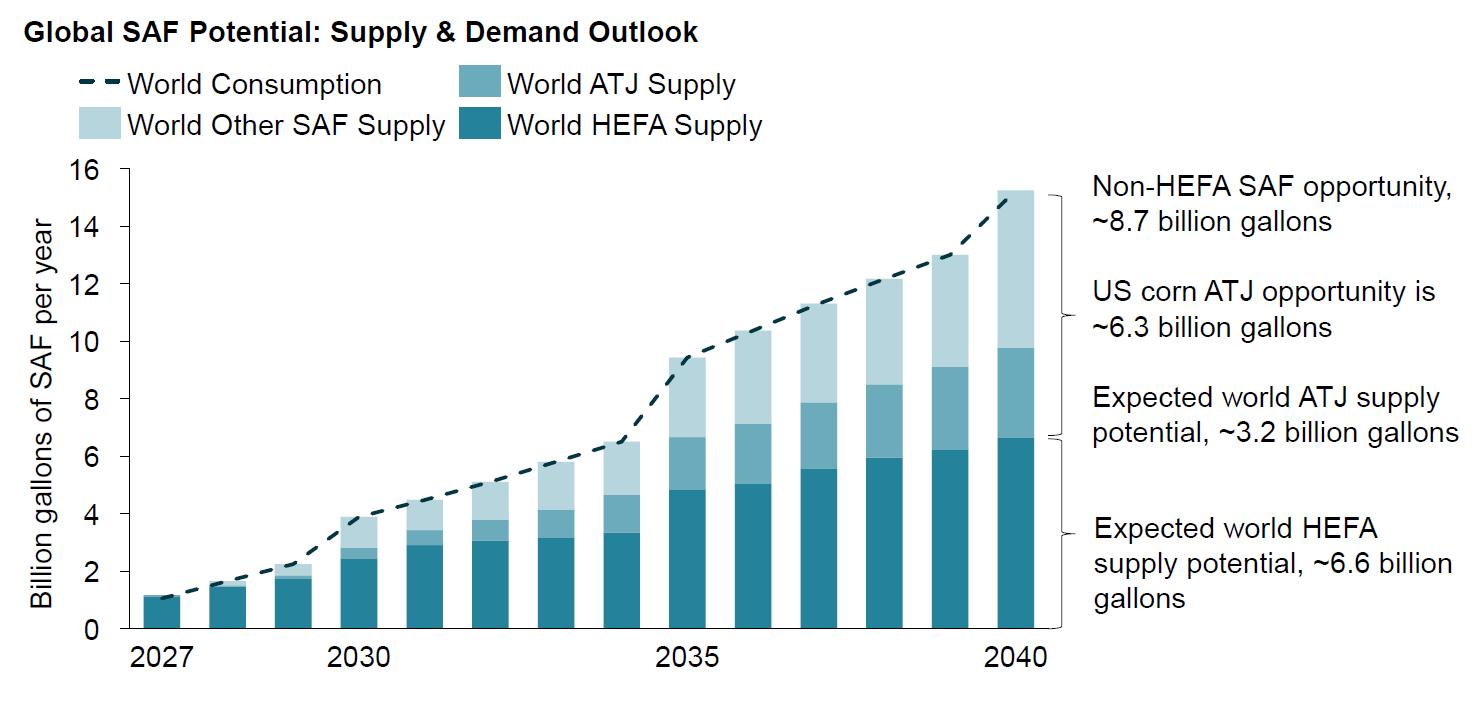
SUPPLY AND DEMAND: Global SAF demand is dependent on price and SAF incentives, according to CERA Consulting, with pathway selection based on price and decarbonization characteristics.
been a voice for reinstating the $1.75 maximum credit value. “Obviously, the $1.75 tax credit would be preferable,” he says. “The removal of the 75 cents premium for aviation fuel reduces the financial incentive for producers to prioritize SAF over traditional renewable diesel, which risks slowing SAF adoption and impacting overall investment in the sector.”
Seeber says 45Z is vital to Kansas because it not only rewards the production of low-carbon transportation fuels, but also creates robust new markets for Kansasgrown crops and livestock byproducts.
“Kansas is not only a top state with regard to agriculture production, but it is also considered the aviation capital of the world,” Seeber says. The state is in a unique position to become a national leader in the production of low-carbon fuels for onroad, marine and SAF, he adds.
The SAF Act
Seeber and the SAF Coalition strongly support new legislation to bring back the $1.75 max for 45Z credits—S.3759 and H.R.6518, both known as the Securing America’s Fuels (SAF) Act.
The SAF Act would increase the current maximum credit value to $1.75 per gallon and extend 45Z through 2033. The bipartisan SAF Act has been endorsed by multiple industry and ag groups, including the National Corn Growers Association, Airlines for America, Kansas Farm Bureau, Global Business Travel Association, Nebraska Soybean Association, Nebraska Farm Bureau, Advanced Biofuels Association, Darling Ingredients, Louisiana Farm Bureau, Twelve, Kansas Soybean Association, Greater New Orleans Inc., Kansas Corn, the SAF Coalition and Renew Kansas.
Senator Jerry Moran, R-KS, sponsored the Senate version of the SAF Act and told Ethanol Producer Magazine about his work.
Moran says the bill has gained strong support from organizations across the state because of the opportunities it creates for Kansas ag and aviation. Several senators cosponsored the bill when it was introduced in February 2026: Amy Klobuchar, D-MN, Joni Ernst, R-IA, and Catherine Cortez Masto, D-NV.
As of press time, the Senate legislation had been referred to the Senate Finance Committee. Legislation in the House was also still in review.
“I am continuing to work with my colleagues in both the Senate and the House, where Reps. Tracey Mann and Sharice Davids have introduced companion legislation.” Mann and Davids also represent Kansas.
Moran says tax provisions are complex and need broad support to advance, “which requires working closely with members of the Senate Finance Committee and the House Ways and Means Committee to make certain this legislation is included in a future tax package.
“As a relatively new biofuel, SAF is more costly to produce, and my bill would raise the maximum credit under 45Z to make certain SAF is not at a competitive disadvantage to other biofuels production and extend the credit to provide greater certainty to the industry,” Moran says. “These policies help strengthen American aviation, support rural communities and expand new markets for producers.”
Author: Luke Geiver writer@bbiinternational.com
Diagnosing, Assessing and Overcoming Bottlenecks in Beer Columns and Rectifiers
Hands-on diagnosis of distillation yields helpful results.
By Roy Viteri and Luana Pacheco Elias
Distillation is the heart of every fuel ethanol facility. The performance of the beer column and rectifier largely determines ethanol recovery, energy consumption, production capacity and overall plant profitability. As ethanol plants push beyond their original design capacities, these columns frequently become bottlenecks that limit throughput and operating efficiency.
Unfortunately, many revamp projects begin with inaccurate assessments of the problem, resulting in costly modifications that fail to address the true limitations within the distillation system. In today’s industry, the distillation system is often evaluated by downloading months of distributed control system (DCS) data and attempting to diagnose operating problems from historical trends.
While DCS information is valuable for understanding long-term operating behavior, it should never be the primary basis for evaluating the hydraulic or mass transfer performance of a distillation column. My experience with troubleshooting and revamping crude and vacuum distillation units (CDU and VDU) throughout the refining industry has shown that successful projects begin with understanding what is actually occurring inside the towers, not what the instrumentation suggests is occurring. Refineries routinely operate their CDU continuously for five to six years between planned major shutdowns, making accurate diagnosis essential before investing massive amounts of capital in equipment modifications and additional assets. The same disciplined troubleshooting and expansion philosophy should be applied to fuel ethanol facilities.
The most effective assessment begins with collecting field operating data, obtaining representative process samples, and developing rigorous mass and energy balances that establish the true operating condition of each tower.
Why DCS Data Alone Can Be Misleading
Many of the measurements available in the DCS were never intended to diagnose internal column hydraulics. Pressure transmitters may be out of calibration, temperature elements may have drifted over time, and flowmeters may be inaccurate at current operating ranges.
Even when all instrumentation is functioning properly, DCS data cannot reveal what is occurring internally on trays or within packed sections. It cannot identify excessive froth heights, liquid backup in down-
comers, fouling on active tray panels, jet flooding, entrainment or poor liquid distribution. As a result, engineers frequently develop process improvement recommendations based on symptoms rather than identifying the root cause of the operating limitation.
This often leads to unnecessary equipment replacements, oversized and/or wasteful capital investments, project scope growth, and disappointing post-startup performance.
Establishing the True Operating Condition
A successful distillation assessment begins with a structured field performance test run. During the test run, operating conditions are intentionally stabilized while field pressure and temperature measurements and representative process samples are collected.
Laboratory analysis of these samples provides the actual ethanol concentrations, water content, and solids/impurity concentrations throughout the process. These analyses establish the true separation efficiency of each column, quantify ethanol losses, and determine how effectively the existing trays and packings are being utilized.
At the same time, comprehensive field measurements should be collected throughout the distillation system, including differential pressures across towers, heat exchanger temperatures, control valve data and pump operating conditions.
The objective is to establish the actual operating condition of the equipment rather than assuming the DCS values accurately represent the process.
Developing Accurate Material and Energy Balances
Once laboratory analyses and field measurements have been collected, rigorous material and energy balances can be developed for the entire distillation system.
These balances allow engineers to determine distillation column internal vapor and liquid traffic, heat exchanger performance, separation efficiencies and energy distribution throughout the process.
Only after these balances close within acceptable accuracy should hydraulic evaluations begin. Without accurate balances, it becomes difficult to determine whether the production limitation is caused by in-
CONTRIBUTION: The claims and statements made in this article belong exclusively to the author(s) and do not necessarily reflect the views of Ethanol Producer Magazine or its advertisers. All questions pertaining to this article should be directed to the author(s).
adequate separation, insufficient energy input, hydraulic restrictions or poor operating practices.
Beer Columns: Primarily a Liquid Handling Limitation
The beer column typically operates under elevated liquid loading due to high water content in the beer feed. In addition to ethanol and water, beer feed contains solids, dissolved organics, proteins, fibers and other fermentation byproducts that influence tray hydraulics.
Consequently, beer columns are generally limited by their liquid handling capacity. Common hydraulic limitations include poor feed inlet distribution, solids accumulation, high weir loading, downcomer backup, excessive froth heights and restricted tray open area.
As production rates increase, liquid backup within the downcomers increases. Once the trays become hydraulically overloaded, efficiency rapidly deteriorates.
Typical operating symptoms include:
• Increasing pressure drop
• Higher ethanol losses in whole stillage
• Carryover into downstream equipment
• Unstable operation
Simply increasing steam rates rarely solves these problems and often makes the hydraulic limitations worse. However, increasing tray passes (e.g., going from 1-pass to 2-pass) often provides the additional liquid handling capacity needed for a beer column to operate properly.
Rectifiers: Primarily a Vapor-Handling Limitation
While beer columns are usually limited by liquid hydraulics, rectifiers are generally constrained by vapor-handling capacity.
The rectifier processes significantly lower liquid flow rates than the beer column, but much higher volumetric vapor traffic. As production increases, vapor velocities continue to rise until the trays and packing approach their flooding limits.
Typical rectifier limitations include jet flooding in trays, excessive pressure drop, insufficient vapor disengagement area, poor vapor distribution, inadequate reflux distribution and packed bed flooding.
Once flooding begins, tray efficiencies decrease rapidly, causing reductions in ethanol purity, increased pressure drop, unstable operation and declining production capacity.
Because vapor traffic controls rectifier capacity, simply adding additional theoretical stages rarely increases throughput unless the underlying hydraulic limitation has first been addressed.
Identifying the True Bottleneck
One of the most important outcomes of a comprehensive assessment is identifying whether the operating limitation is primarily hydraulic, mass transfer, energy-related or operational.
Each limitation requires a different solution. For example, excessive pressure drop may indicate tray flooding, inadequate tray open area or excessive liquid backup. Without understanding the internal operat-
ing condition, replacing trays with higher-efficiency designs may produce little or no improvement.
Likewise, low ethanol proof does not necessarily indicate insufficient theoretical stages. It may instead result from entrainment, poor reflux control, flooding or inadequate energy distribution. Accurate diagnosis eliminates guesswork and focuses effort where it will produce measurable improvements.
Developing Effective Revamp Solutions
Once the actual operating limitations have been identified, targeted improvements can be developed with confidence.
Potential revamp opportunities include:
• Increasing tray open area to reduce pressure drop
• Installing high-capacity tray designs
• Increasing tray spacing where practical
• Modifying downcomer geometry
• Improving beer feed distribution systems
• Improving reflux liquid distributors in packed sections
• Installing carryover separation devices in the rectifier bottom
• Adding theoretical stages where separation efficiency is limiting Every modification should be supported by field data, laboratory analyses and hydraulic calculations developed during the assessment. This minimizes project risk while maximizing return on capital investment.
Every distillation system tells a story, but that story cannot be fully understood from DCS trends alone. The most successful revamp projects begin by establishing the true operating condition of the equipment through disciplined field testing, representative product sampling, and rigorous mass and energy balance calculations.
Only after accurately characterizing the performance of the beer column and rectifier should hydraulic evaluations and revamp recommendations be developed. This systematic, data-driven approach identifies whether the true bottleneck is hydraulic, mass transfer, energyrelated or operational, allowing for implementation of solutions that directly address the underlying limitations rather than simply treating the symptoms.
Fuel ethanol producers can adopt the same disciplined methodology drawn from the troubleshooting and best design practices used in the refining industry. By relying on field observations, validated operating data and sound engineering fundamentals, plants can improve ethanol recovery, avoid unnecessary capital expenditures, reduce project risk, improve energy efficiency and unlock additional production capacity within their existing assets with confidence.
Authors: Roy Viteri Owner, NexGen Process Solutions, LLC (832) 646-9018 roy.viteri@nexgenprocess.com www.nexgenprocess.com
Luana Pacheco Elias Chemical Engineer, NexGen Process Solutions, LLC (716) 398-0812 luana.pacheco@nexgenprocess.com
Many More to Go. Mo
What star ted as a single pr oduc t and a belief in sust ainable biof uels has gr own in to some thing we’r e in cr edibly pr oud of — a port folio of solu t ions, a team of expert s and part nerships with pr oducer s across the globe. And the best is still ahead.