


![]()


This February is an insanely busy one, and dare I say, a relatively peculiar one too! We’ve got Valentines Day around the corner, a day or occasion that we have mixed feelings about here at bazaar. We’re no longer big fans of manufactured western holidays, especially when you look at what is happening all around us in the region, but we still appreciate the value of celebrating our loved ones, every chance we get. And then we have Ramadan, also literally around the corner, which we’re definitely not ready for, followed by National Day and Liberation Day!
February is definitely going to be a blast, and we have an issue to match the energy. At the heart of this issue are stories rooted in memory, culture, and identity. We sit down with Rawah Badrawi and Suzanne Zeidy, whose book Egypt: Recipes and Stories from an Ancient Land explores food as heritage, storytelling, and lived experience. Through shared tables, regional journeys, and personal histories, they remind us that food is never just about recipes, but about belonging, movement, and the way culture is passed down through generations.
With Ramadan approaching faster than we would like to admit, we also turn to the rituals of preparation that quietly shape the month before it begins. From refreshing living spaces and reorganizing kitchens to setting tables for long Iftar evenings, getting ready for Ramadan is about creating homes that feel warm, calm, and welcoming. We explore thoughtful ways to prepare with IKEA, whose everyday solutions help make hosting easier, spaces more functional, and togetherness more natural, reminding us that the true beauty of the month lives in small details and shared moments.
As the holy month draws closer, we then look to the places where Ramadan is experienced and shared. At Four Seasons Hotel Kuwait at Burj Alshaya, the Jawaher Tent returns as a luminous, desert-inspired space designed for generous gatherings, refined banquets, and moments of connection throughout the month. At Jumeirah Messilah Beach, Ramadan comes to life at Messilah Majlis, an elegant garden tent where Arabian hospitality, live music, and a warm, welcoming atmosphere define both Iftar and Ghabga. At Waldorf Astoria Kuwait, the season is marked by the Kubbar Tent, an open-air setting inspired by Kuwait’s natural landscape, offering evenings shaped by reflection, balance, and understated elegance.
February in Kuwait is also about movement, momentum, and celebration. As the country comes alive for National and Liberation Days and the festive atmosphere of Hala February fills the city, we capture that energy through the arrival of the Porsche Cayenne. More than a vehicle, it reflects confidence, performance, and refined power, a fitting symbol for a month defined by pride, progress, and forward motion.
Happy celebrating, happy fasting, and happy reading!
Ahmed El-Adly

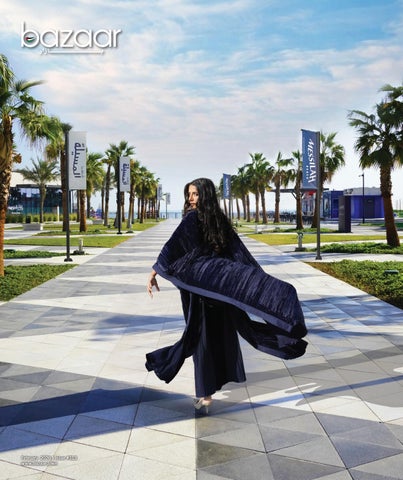
About the Cover: This month’s cover was shot by bazaar Studios at the newly opened Messilah Beach, the setting feels both nostalgic and forward-looking. With the sea as our backdrop and the shoreline reimagined as a year-round lifestyle destination, the cover reflects openness, movement, and community. Messilah Beach represents a new chapter for Kuwait’s coastline, making it the perfect setting to capture the spirit of February and the energy of what lies ahead.
Boss
Ahmed El-Adly
Editor
Alia Al Duaij
Operations Manager
Ihab Youssef
Content Manager
Yasmine El Charif
Design
Shadi Mofeed
Staff Writer/Online Media
Yasmin Gamal
Israa Odeh
Hanan Othman
Sarah Sharif
Communications
Hala Y. Sharara
Syndicates & Sources
Fast Company
LA Times
MCT International
Newsweek
Printing MIDADPACK


16
20
Food has always been more than nourishment. In this intimate conversation, Rawah Badrawi and Suzanne Zeidy trace memory, migration, and identity through kitchens across Egypt, revealing how recipes carry stories, landscapes, and generations, and why the truest expression of a culture is often found around a shared table.
Once woven into childhood memories, Messilah Beach returns with a new rhythm. Reimagined as a year-round destination, it brings leisure, culture, and community back to the shoreline, inviting Kuwait to rediscover the sea as part of everyday life.
34
Confidence does not need to shout. Set against the energy of Hala February, this feature looks at how the Porsche Cayenne blends performance, craftsmanship, and everyday versatility, capturing a sense of refined power that feels perfectly in step with the moment.
46
A championship settled under desert skies, a season defined by precision, and a legacy built on endurance. This story follows Toyota GAZOO Racing’s historic rally victory and explores how motorsport moments at the extreme continue to influence innovation far beyond the finish line.
56
As the holy month approaches, preparation becomes a quiet ritual of care. This feature explores how thoughtful design and practical IKEA solutions help Kuwaiti homes slow down, host with ease, and create spaces that feel warm, welcoming, and ready for the long, meaningful evenings ahead.
68
Rooted in heritage and shaped by discipline, Maya Waked’s music lives between past and present. In this reflective profile, the singer and lyricist shares how memory, diaspora, and constant practice continue to shape an artistic voice that honors tradition while speaking clearly to today.
78
CARE +
Healthcare does not have to feel complicated. We look at how Care+ is changing everyday access to medical services in Kuwait by removing waiting, paperwork, and uncertainty, offering families a simpler, more transparent way to feel supported when it matters most.
80
In a month shaped by love, family, and national pride, this feature explores how thoughtfully chosen technology can support connection at home, turning everyday moments into shared experiences that last well beyond the season.


This Ramadan, embrace the timeless elegance of Messilah Majlis, where every moment is steeped in the warmth of togetherness. Relish a distinguished Iftar and Ghabga within a serene garden setting, crafting enduring memories with those who matter most.
jumeirah.com
#1
What: @zainaalkulaib
Info: A self-taught artist
Editor’s Note: We love finding beautiful art on the gram


#3
What: @raghadalkan3an
Info: Moms and children’s clothing store
Editor’s Note: We can’t wait for darra3a season #2
What: @earthstudio.kw
Info: Pottery studio
Editor’s Note: Everyone needs to own at least one mug that they made themselves

What: @shop.onna
Info: Online concept store
Editor’s Note: Your home mubkhar should be as pretty as the scent coming out of it

#5
What: @lookspop.kw
Info: High-end Press on nails
Editor’s Note: Instant manis


SCAN TO DISCOVER MORE
By bazaar staff
Rawah Alfalah Badrawi earliest memories are anchored around a table. Growing up in Kuwait City, meals were never rushed or incidental. They were moments of reverence, shaped by geography, migration, and ritual. Weekend lunches were cooked slowly over an open fire at the family’s beach cabin, where her father transformed simple ingredients into something sacred. Kuwait’s position between Iran and Iraq infused the family table with Persian saffron and rosewater alongside Iraqi grilled fish and kubbah, while stories of pearl divers returning with spices from Mumbai and Hyderabad added yet another layer. Food, for Badrawi, became an early lesson in history, movement, and cultural exchange. That understanding deepened years later when she moved to Cairo and encountered Egyptian cuisine as a living mosaic, shaped by thousands of years of civilisation, conquest, and exchange.
For Suzanne Zeidy, food was also a bridge between worlds. Raised in Cairo by an Egyptian father and an American mother, the kitchen became the place where identity was negotiated and memory preserved. Her father cooked entirely from instinct, guided by taste and recollection rather than recipes or measurements. Her mother, shaped by the hospitality of the American South, taught her the value of precision, structure, and the quiet satisfaction of a well-written recipe. Between intuition and discipline, Zeidy developed a lifelong passion for food and hospitality, and a fascination with how recipes travel through generations. That path eventually led her into Cairo’s restaurant world, where she founded La Bodega, Cilantro, and Cairo Kitchen, before documenting everyday Egyptian food culture in her first book.
Long before they imagined writing a book together, Badrawi and Zeidy became neighbours near the Abu Sir pyramids. They raised their families side by side, shared meals, and built a friendship rooted in conversation, curiosity, and food. Egypt: Recipes and Stories from an Ancient Land grew organically from that shared life. Rather than setting out to write a traditional cookbook, they wanted to tell a broader story. “To understand food fully, you have to place it in the context of people and place,” they explain. “That is where its real meaning comes from.”
Egypt is often reduced to a handful of iconic dishes, but Badrawi and Zeidy were determined to move beyond that narrow framing. “You cannot reduce a country’s culinary identity to one plate,” they say. Egyptian food reflects geography as much as history. The Nile that runs through the country, the Mediterranean in the north, the deserts flanking the river, the Red Sea coast, and the southern border with Sudan all shape how Egyptians cook and eat. Too often, the story stops at Cairo. For this book, they divided the country by landscape and sought out representative towns and communities in each region.


Their journey took them on long drives across Egypt, into homes and kitchens rarely documented. From the Amazighs of Siwa to the Nubians of Aswan, foodways became as important as the recipes themselves. In Aswan, Nubian and Sudanese influences intertwine through spice, bread, and cooking methods. In Siwa, Libyan and Saharan traditions appear in couscous and tagines. Along the Mediterranean coast, particularly in Alexandria and Marsa Matruh, European influences merge seamlessly with local ingredients. Food, they discovered, tells stories of overlap and migration long before borders existed.
Among all the places they visited, Siwa left a lasting impression. Isolated for centuries, the oasis developed its own language, customs, and culinary traditions. Siwan food is deeply connected to the land, shaped by dates, olives, and salt harvested from nearby lakes. “Food there is an expression of identity,” they explain. “It has been preserved through generations with very little outside influence.” Experiencing that level of continuity gave them a new appreciation for how geography and isolation can shape cuisine in profoundly local ways.
The authors were equally intentional about who they learned from. Rather than gathering recipes from professional chefs, they cooked alongside

home cooks. Many of the dishes they documented had never been written down before, passed instead from mother to daughter, neighbour to neighbour, through memory and instinct. “Most Egyptian home cooks do not measure,” they say. “They cook with nafas, intuition and feeling.” Translating that sensory knowledge into accessible recipes required patience and presence. Each dish came with a story, a memory, and a piece of someone’s life. Ancient cooking methods and ingredients also played a central role in shaping the book. Some recipes, such as aish shamsi or sun bread, have changed very little over thousands of years. Others evolved into techniques that later spread across the world. The authors point to foie gras as an example, tracing its origins to ancient Egyptian observations of migrating birds. In the book, they honour that history through a modern chicken liver pate paired with fig conserve, echoing the ancient connection rather than replicating it.
Not every tradition could be translated for the modern home cook. Feseekh, the fermented grey mullet eaten during Sham El Nessim, is deeply symbolic but risky to prepare incorrectly. Rather than including a recipe, Badrawi and Zeidy chose to explore its cultural significance. “This book is not an encyclopedia,” they explain. “It is a carefully curated journey.”

That sense of curation is especially clear in the Heirloom Cairo section, which celebrates the capital’s mixed heritage through family recipes tied to migration and memory. One of the most personal stories comes from a Circassian chicken dish, Sharkaseya, shared by a Cairene family of Turkish ancestry. The recipe arrived in Egypt via the Ottoman court and took pride of place in certain homes. “What mattered were the small details,” they recall. “Not just how the dish was cooked, but how it was presented and why.”
Cultural exchange appears everywhere on the Egyptian table. In Port Said, Levantine trade routes introduced nuts into local dishes. In Alexandria, Greek cuisine shaped fish stews, bakes, and desserts. In the south, Nubian and Sudanese traditions influence bread-based meals and hearty stews. Even okra transforms across regions, appearing fresh in herb sauces, dried and powdered into weika, or slow-cooked in clay pots. The ingredient remains the same, but the expression is entirely local.
Photography and illustration play a vital role in bringing these stories to life. Photographer Jonathan Gregson captures dishes as they would appear on location, surrounded by natural light, textiles, and everyday serving ware. Illustrations act as atmospheric chapter openers, adding symbolism and romance that words alone cannot convey.
If a reader were to cook only three recipes to understand Egypt, the authors suggest starting with weika and fitti bread from the Nubian south, prawn m’bakbaka from Marsa Matruh, and Alexandrian macarona bechamel. Together, they reveal how food travels, adapts, and absorbs layers of influence.
Ultimately, Egypt: Recipes and Stories from an Ancient Land aims to change how Egyptian cuisine is viewed globally. “Egypt has long been overshadowed by its monuments,” they say. “People often say Egypt is not known for its food, but that overlooks one of the world’s oldest and most continuous culinary traditions.” The country’s finest food, they argue, has always lived in homes rather than restaurants.
After years on the road, what remains most vivid is the generosity they encountered everywhere. Families opened their doors, shared their tables, and offered stories with warmth and pride. “We were humbled at every turn,” they say. That generosity, they believe, is the true essence of Egyptian food. Not just what is cooked, but how it is shared, and the connection that forms when people sit down to eat together.
EGYPT: Recipes & Stories from an Ancient Land’ is available for pre-order on Amazon, Waterstones, Barnes & Noble. Follow Rawah and Suzanne on Instagram: @rawahbadrawi and @suzannezeidy.


By bazaar Staff
We all have them: photos of ourselves at the beach full of grinning children covered in sand and parents carrying floaters, umbrellas, and a giant icebox. And if you grew up in Kuwait, your copies will have featured Messilah Beach, an iconic destination which marked the lives of people in Kuwait. A place where memories of family gatherings, barbeques with friends and quiet walks were so happy and bright . For generations, Kuwait’s coastline has been woven into everyday life. It is where families gather on quiet afternoons, where children first learn to swim, and where the rhythm of the sea offers a gentle escape from the city. That emotional connection has never faded. Today, it is simply being reimagined.

Messilah Beach is Kuwait’s newest and most ambitious seaside destination, created not just as a beachfront, but as a living, evolving space for leisure, entertainment, and connection. Open all year round, it represents a new chapter in how Kuwait experiences its shoreline.
Spanning more than 70,000 square meters and stretching across a 250-meter sandy beachfront, Messilah Beach brings together everything a modern destination should offer.

Leisure, dining, entertainment, wellness, and open-air relaxation exist side by side in a setting designed to feel effortless, welcoming, and accessible to everyone.
This transformation is the result of a public private partnership between the Touristic Enterprises Company and United Projects for Aviation Services Company. TEC developed the project as part of its mission to strengthen Kuwait’s tourism and leisure sector, while
UPAC manages and operates the destination under a long-term contract covering leasing, facilities management, programming, and daily operations. Behind the scenes, this partnership ensures that Messilah Beach is not only beautiful, but professionally run, sustainable, and ready to grow with the community.
A beach that never goes out of season Messilah Beach was never meant to be

a summer-only destination. From the very beginning, it was designed to stay alive throughout the year. Landscaped gardens, indoor and outdoor entertainment zones, and flexible dining areas allow the space to shift naturally with the seasons.
Visitors move easily between the beach, pools, restaurants, and activity zones. One moment might be a quiet walk along the shore, the next a lively afternoon with family, followed by an evening meal by the sea. The experience changes, but the setting always feels familiar.
The facilities reflect this thoughtful planning. Four swimming pools serve different age groups and activities. Families and children can explore a variety of indoor and outdoor entertainment zones, along with dedicated sports courts


designed for all ages. Garden spaces invite visitors to slow down, while practical touches like prayer rooms, first aid services, and 350 shaded parking spaces make every visit comfortable.
It is this balance between excitement and ease that makes Messilah Beach feel less like a project and more like a place people naturally want to return to.
celebration that set the tone
When Messilah Beach officially opened on October 30, 2025, the shoreline came alive. Live music filled the air, performances unfolded on stage, and families explored the destination together. Children ran between games and activities, while adults discovered dining concepts and entertainment spaces for the first time.
Cultural elements reminded visitors of Kuwait’s long relationship with the sea, grounding the celebration in tradition even as the destination looked firmly toward the future. As the sun set, the energy along the beach made one thing clear. Messilah Beach was not just opening its doors. It was welcoming the community back to the shore in a new way.
The opening was lively, warm, and inclusive, a reflection of exactly what the destination stands for.
Villa Shams: privacy, elegance, and evolution
One of Messilah Beach’s most meaningful milestones came earlier with the launch of Villa Shams on July 10, 2025. As Kuwait’s first womenonly beach club, it offered something completely
[Continued...]

new. A private, refined seaside space created exclusively for women, blending comfort, luxury, and freedom within a secure environment.
Villa Shams quickly became a symbol of thoughtful innovation. It showed how leisure spaces can respect cultural values while still offering modern, empowering experiences. As time passed, Villa Shams evolved into a beachside cafe and an intimate venue for concerts and special events, while keeping its distinctive atmosphere. This evolution captures the spirit of Messilah Beach itself. The destination does not stay still. It adapts, refreshes, and grows, always listening to how people want to use the space.

A destination built around taste and togetherness Food is one of the strongest ways people connect with a place, and Messilah Beach understands that deeply. Its dining scene is intentionally diverse, welcoming both familiar favorites and new discoveries.
Currently Frost Gelato, Oliver, 1%, Good Stuff and Trolley are open, in addition to a few pop up booths for various F&Bs. Other restaurants and cafes opening soon will be: Chocomelt, Zooba, Joe and The Juice, Pret A Manger, Ananas and Mr. Holmes. Whether visitors are stopping for a quick coffee, sharing desserts with family, or enjoying a relaxed meal by the sea, the experience always feels personal.
Entertainment continues the story
Trampo at the Beach offers a sea-themed indoor soft play and sandpit area for young children, creating a safe and joyful space regardless of the weather. Fun Quest adds adventure through interactive outdoor games and the SkyTrail, where more than five adventure challenges invite children and adults alike to move, laugh, and explore together. With more concepts on the way, Messilah Beach continues to grow as a place where no two visits feel exactly the same.
The strength behind the experience
Behind the scenes, UPAC’s role brings stability


and credibility to the destination. Its experience in managing large-scale projects, including Kuwait International Airport Terminal 1 and Abu Dhabi’s Reem Mall, is reflected in the smooth operations and professional standards at Messilah Beach.
This philosophy guides Messilah Beach. The focus is not only on buildings and facilities, but on how people feel when they are there.
Community Haven
Messilah Beach arrives at a moment when Kuwait is placing new importance on quality of life, tourism, and shared spaces. It supports local


and international businesses, encourages familyfriendly activities, and offers a setting where people of all ages can feel comfortable.
It respects the natural beauty of the coastline while enhancing it with thoughtful design and programming. That ethos is creating opportunities for relaxation, movement, culture, and connection, all within one destination.
Most importantly, Messilah Beach reminds people that the shoreline is not only a place to pass through, but a place to belong.
Whether it is a quiet morning swim, a playful afternoon with children, or a long evening by the sea, Messilah Beach invites everyone to
rediscover Kuwait’s coastline in a way that feels warm, modern, and deeply human.
Messilah Beach is not just where the sea meets the land. It is where Kuwait meets itself, every day of the year.
For more information on upcoming activities and experiences and to book tickets, visit messilahbeach.com, and follow @messilahbeach on instagram, Facebook, and TikTok. for the latest events and updates.
By bazaar staff
Hosting has quietly become one of the most stressful social roles. Somewhere between curated tablescapes and perfectly timed menus, the simple act of inviting people over has turned into a performance. But good hosting was never meant to exhaust the host. At its best, it creates ease, not pressure, and connection, not comparison.
The truth is that most guests are not remembering the exact menu or the symmetry of the table. They remember how they felt in the space. As Maya Angelou famously said, “People will never forget how you made them feel.” That insight applies as much to hosting as it does to life.
USED
Modern hosting carries invisible expectations. Social media has collapsed the line between private gatherings and public presentation, and many hosts feel compelled to deliver an “occasion” rather than an evening. Add busy schedules, work fatigue, and family responsibilities, and hosting can feel like another job instead of a joy. Burnout often comes from trying to control every variable. When the focus shifts from welcoming people to managing outcomes, tension follows. Food must be perfect. The house must be spotless. Timing must be precise. The problem is not hosting itself, but the pressure layered on top of it.
At its core, hosting is about stewardship, not spectacle. A good host sets the tone, then lets the evening unfold. This means redefining success. A successful gathering is one where conversation flows, people feel comfortable, and no one feels rushed or judged, including the host. One of the most effective mindset shifts is deciding in advance what matters and what does not. Warm food matters. Clean bathrooms matter. Emotional presence matters. Perfect plating, matching glassware, and elaborate menus often do not.
Low-effort hosting is not careless hosting. It is intentional simplicity. Cooking one main dish well is more generous than offering five things done halfway. A table set with care but without excess feels welcoming rather than formal. Repetition is not laziness; it is consistency. Many seasoned hosts quietly rely on a small rotation of “always works” menus. This reduces decision fatigue and allows confidence to replace stress. Familiarity frees attention, making room for conversation instead of constant checking and adjusting.

One of the most overlooked hosting tools is a clear time frame. Open-ended invitations can feel generous, but they often leave hosts depleted. Setting a natural beginning and end, even if it is loosely framed, creates structure without rigidity. An afternoon coffee, an early dinner, or a weekday gathering with a clear finish respects both host and guests. People arrive more present when they know the rhythm of the event, and hosts can relax knowing the evening has a shape.
Food should support the gathering, not dominate it. Dishes that can be prepared in advance, served at room temperature, or finished quickly allow the host to stay engaged rather than stuck in the kitchen. Shared platters encourage ease and remove the pressure of perfect portions. Importantly, guests do not need variety to feel cared for. They need enough, and they need it served with calm. A simple meal offered with confidence feels abundant.
Perfectionism is the fastest path to hosting fatigue. Homes are lived in. Conversations are imperfect. Moments spill and overlap. That messiness is part of what makes gatherings human.
When the host allows small imperfections, everyone else follows.
The most memorable hosts are not the most elaborate ones. They are the ones who listen, who notice when someone needs another drink, who create space for different personalities to coexist comfortably. Presence is the most valuable offering a host can give.
This is where hosting becomes less about skill and more about attention. When the host is grounded, the room settles. When the host is anxious, the room tightens. Energy travels quickly.
Hosting does not need to be frequent to be meaningful. A few well-paced gatherings a year can nourish relationships more than constant overextension. Choosing when and how to host is an act of self-respect, not withdrawal. At its heart, hosting is an invitation, not a performance. When done with intention and ease, it becomes a shared experience rather than a solo effort. And when the host feels cared for, the gathering almost always takes care of itself.

By bazaar Staff

At Jumeirah Messilah Beach, Valentine’s Day is not confined to a single evening. It unfolds as a carefully choreographed story of romance, where elegance, intimacy, and thoughtful experiences come together to create moments that linger long after the day has passed. From private beachfront dinners to indulgent self-care rituals and serene sunrise reflections, every detail is designed to honour love in its most beautiful form.


A Valentine’s stay at Jumeirah Messilah Beach begins with a promise: to transform time together into treasured memory. The Valentine’s Day staycation experience is shaped around comfort, privacy, and subtle luxury, creating a setting where couples can truly disconnect from the world and reconnect with each other.
Mornings begin with a delectable in-room breakfast, served in the privacy of the suite, allowing couples to savour every moment without interruption. The room itself is transformed into a romantic sanctuary, adorned with elegant touches that set a gentle, intimate ambience.
A specially decorated cake adds a sweet note to the celebration, while late check-out until early evening allows guests to linger longer in the cocoon of romance. It is a stay designed not for rushing, but for savouring every shared glance, laugh, and quiet conversation.
For those who value privacy and presence, Talise’s Private Spa Suites offer a secluded sanctuary where Valentine’s Day is expressed through self-care and shared stillness. Designed for couples seeking a deeply immersive escape, the Romance Reimagined Ritual unfolds as a carefully timed journey that allows the body and mind to unwind in harmony.
The experience opens with the Rose Petal Foot Bath, a soothing introduction where warm water, rose petals, and essential oils gently prepare the senses. This calming ritual sets a tranquil tone, encouraging guests to slow down and settle into the moment.
From here, couples move into the Private Jacuzzi Session within their spa suite. Surrounded by candlelight, soft music, and delicately diffused aromatherapy oils, this phase invites deep relaxation and quiet connection.
The journey continues with the Couples’ Massage, a full-body treatment tailored to each guest’s needs. Couples may choose between Swedish, deep tissue, or aromatherapy techniques, allowing the experience to feel both personal and restorative.
The ritual concludes with Private Suite Relaxation, where couples unwind together in a luxurious private setting. Ambient lighting, calming soundscapes, and plush seating create a cocoon of tranquillity, extending the sense of intimacy and ease.
With a total duration of 2.5 hours, the Romance Reimagined Ritual at Talise is designed as an unhurried Valentine’s escape, where wellbeing, refinement, and togetherness are given the time they deserve.
Dining for Two: Romance on Every Table
Valentine’s dining at Jumeirah Messilah Beach is an invitation to celebrate love through flavour, atmosphere, and thoughtful presentation.
At Pepper, Valentine’s Day is marked by an indulgent six-course dining experience centred on fine cuts of meat, flame-grilled to perfection. Taking place on 14 February from 16:00 to 23:00, the evening begins with a glass of non-alcoholic champagne on arrival, followed by soft drinks, water, and a selection of tea and coffee throughout the meal. The ambience is warm, elegant, and quietly celebratory. For couples wishing to elevate the occasion further, cakes and floral arrangements can be added upon request at an additional cost.
Olio sets the stage for Italian romance on 13 and 14 February, from 18:00 to 23:30, combining Venetian hospitality with panoramic views of the Arabian Gulf. Couples are treated to a four-course menu showcasing the passion and artistry of Italian cuisine, complemented by a glass of non-alcoholic champagne upon arrival, soft drinks, water, and a selection of tea and coffee.


Live entertainment enhances the atmosphere, creating an evening that feels both intimate and vibrant. Cakes and rose arrangements are available as optional additions, allowing guests to personalise their celebration.
For those seeking the most exclusive expression of romance, the Private Beachfront Cabanas offer a secluded dining experience by the sea on 14 February, from 19:00 to 23:30. Couples are welcomed into a beautifully styled private setting featuring a six-course menu, a heart-shaped cake, and a bottle of non-alcoholic champagne. The experience is further enriched with live entertainment, a floral bouquet, a personalised embroidered red pillow, and a special card placed at the table, transforming dinner into a deeply personal celebration.
At the Lobby Lounge, romance unfolds throughout Valentine’s Week from 9 to 14 February, between 14:00 and 19:00, with a specially crafted Valentine’s Afternoon Tea. Guests can enjoy a refined selection of sweet and savoury treats paired with exquisite teas, all served in an ambience designed for cozy conversation and gentle indulgence. A special Valentine’s cake selection is also available for those wishing to add a sweet takeaway element to their experience.
By the shoreline, Sea Breeze Beach Club invites couples to embrace a relaxed yet intimate Valentine’s Kashta experience on 13 and 14 February, from 18:00 to 22:30. Set against the natural beauty of Jumeirah’s shores, the evening blends carefully prepared flavours with live entertainment, sea air, and a laid-back coastal atmosphere. Additional celebratory touches can be arranged upon request, allowing couples to tailor the evening to their preferences.
Meanwhile, Garden Cafe hosts a Valentine’s Day dinner buffet on 14 February, from 19:00 to 23:30, bringing together a generous selection of international and Middle Eastern dishes. Guests are welcomed with a glass of non-alcoholic champagne on arrival and can enjoy soft drinks, water, and a selection of tea and coffee throughout the evening. Live DJ entertainment adds energy and warmth to the setting. Cakes and floral additions may be arranged at an additional cost, offering couples the option to personalise their celebration.
Beyond rooms, dining, and spa rituals, Jumeirah Messilah Beach believes that love lives in the details. The dedicated team is committed to personalising every Valentine’s celebration, from bespoke flower arrangements to customised gifts.
Strolls through lush gardens and along pristine beaches offer opportunities for deeper connections and quiet laughter, while sunsets paint the horizon in soft shades of rose and gold.
Along the private stretch of Jumeirah Messilah Beach, the jetty bridge stands as a slender line between sky and sea. At sunrise, pale gold light glides across the water as the horizon blushes into soft apricot. By sunset, the sky melts into lavender and rose, while the tide whispers gently against the wooden pilings. It is here that time seems to pause, offering couples a moment of pure, shared stillness.
At Jumeirah Messilah Beach, Valentine’s Day is not defined by a single gesture. It is defined by atmosphere, intention, and care. It is in the softness of candlelight, the quiet of shared mornings, the calm of spa rituals, and the beauty of sunsets.
Ready to celebrate your love or want to learn more, visit Jumeirah. com/Kuwait or call 22269600.


By bazaar Staff
Ramadan arrives with a different tempo. Days feel quieter, nights more expansive, and everyday habits subtly change. While the month is rooted in faith, its deeper invitation is universal: to slow down, reflect, and realign. Beyond fasting, Ramadan offers a rare opportunity to reset on a spiritual, mental, and physical level, one that does not require intensity or perfection, only awareness.
In a world built on constant consumption and stimulation, Ramadan introduces absence. Fewer meals, fewer distractions, fewer automatic habits. That absence is not emptiness. It is space. And space is where insight, calm, and clarity often begin.
Spiritual wellbeing: reconnecting with intention Spirituality during Ramadan does not need to be framed as obligation. At its most accessible, it is about intention. The simple act of choosing to pause, to be more aware of one’s actions, words, and thoughts, becomes a form of spiritual practice.
Fasting, when viewed through this lens, is less about restriction and more about presence. Hunger becomes a reminder to slow down. Thirst becomes a cue to check in. The body signals, and instead of reacting immediately, we observe. This quiet awareness is at the heart of spiritual growth.
Many people find that Ramadan naturally encourages reflection. Without constant eating, scrolling, or socializing, attention turns inward. Questions surface gently. What matters right now? What feels misaligned? What needs care rather than control?
Spiritual wellbeing during this month can be supported through simple rituals. Quiet moments before breaking the fast. Gratitude at the end of the day. Reading something meaningful, not necessarily religious, but reflective. These small anchors help the day feel intentional rather than reactive.
Importantly, spirituality in Ramadan is personal. There is no single way to experience it. Comparison erodes the benefit. The most meaningful practices are often quiet and private, shaped by individual needs rather than external expectations.

The mental effects of Ramadan are often subtle but profound. Reduced stimulation creates room for thought. When the usual rhythms of eating and snacking disappear, so does a layer of distraction. What remains is the mind, more audible than usual.
At first, this can feel uncomfortable. Thoughts may race. Emotions may surface. This is not a failure of focus. It is part of the process. Ramadan creates conditions where unresolved feelings and patterns can finally be noticed.
Mental wellbeing during this time improves when curiosity replaces judgment. Observing energy fluctuations, mood shifts, and emotional triggers without self-criticism builds emotional intelligence. Instead of asking, “Why am I feeling this way?” the gentler question becomes, “What is this trying to tell me?”
Journaling can be especially grounding during Ramadan. A few lines at night help externalize thought and track internal changes. Over time, patterns emerge. Awareness grows. Mental clarity is less about answers and more about understanding.
This is also a month to soften expectations. Productivity often changes during fasting. Concentration may dip in the afternoon. Rather than resisting this, adjusting schedules and honoring natural rhythms supports mental balance. Rest is not a failure. It is part of the reset.
Fasting places the body in a different state, one that requires attentiveness rather than discipline. Physical wellbeing during Ramadan is about nourishment, hydration, and gentle movement, not pushing limits.
The pre-dawn meal is an act of preparation. Choosing foods that digest slowly and hydrate the body helps maintain energy and emotional stability throughout the day. Skipping it often leads to exhaustion and irritability, which undermines the broader benefits of the fast.
Breaking the fast is equally important. Approaching iftar slowly allows the body to adjust. Traditional practices of starting with dates and water make physiological sense, offering quick energy without overwhelming digestion. Eating mindfully, rather than reflexively, supports both physical comfort and awareness.
Hydration deserves ongoing attention. Spreading water intake between evening and early morning helps prevent fatigue and headaches. Herbal teas, soups, and water-rich foods contribute gently, without strain.
Movement during Ramadan should feel supportive. Light walks, stretching, or slow strength work after iftar maintain circulation and grounding. The goal is not intensity, but continuity. Movement becomes a way to stay connected to the body rather than control it.

during Ramadan, with later nights and earlier mornings. Prioritizing rest through short naps or earlier bedtimes when possible protects mood, immunity, and mental clarity. Fatigue affects everything. Caring for sleep is caring for the whole system.
Emotional and social balance: connection with intention
Ramadan is often socially rich. Shared meals, family gatherings, and community moments create connection. At the same time, fasting heightens sensitivity. Energy for socializing may be limited.
Choosing connection intentionally matters. Smaller gatherings can feel more nourishing than constant commitments. Quiet conversations may feel more meaningful than busy schedules. Quality outweighs quantity.
Generosity during Ramadan is often discussed materially, but emotional generosity is just as powerful. Patience, listening, kindness, and presence all count. These forms of giving require awareness, not resources.
This is also a month to practice boundaries with compassion. Saying no when needed
The true value of Ramadan often becomes clear near its end. Many people notice subtle shifts: calmer mornings, more intentional eating, less compulsive distraction. The goal is not to preserve every habit perfectly, but to notice what feels supportive.
Spiritual clarity, mental awareness, and physical balance do not belong to one month alone. Ramadan simply creates conditions where these states are easier to access. The invitation is to carry fragments of that awareness forward. Ramadan, at its most expansive, is not about doing more. It is about doing with intention. When the noise quiets, alignment becomes possible. In that space, many discover that wellbeing is not something to chase, but something that emerges when we finally slow down enough to listen.


Book now: 2200 6000
The Porsche Cayenne arrives as a celebration of performance, luxury, and Kuwaiti spirit
By bazaar Staff
In Kuwait, ambition is part of the landscape. It is reflected in the skyline, felt in the rhythm of daily life, and celebrated during moments of national pride. As the country comes alive for National and Liberation Days and the festive atmosphere of Hala February fills the air, there is one vehicle that mirrors this spirit of progress and refinement with effortless confidence: the Porsche Cayenne.

More than an SUV, the Cayenne is an attitude. It is a bold expression of power, design, and individuality, created for those who expect more from every drive. This season, Porsche Centre Kuwait, Behbehani Motors Company, invites drivers to experience a vehicle that balances precision engineering with emotion, and performance with everyday versatility.
From the moment it comes into view, the Porsche Cayenne commands attention. Its sculpted body, athletic stance, and unmistakable Porsche DNA speak a language of motion even at a standstill. Every line is intentional, every curve engineered for both beauty and performance.
Once behind the wheel, that visual promise is fulfilled. The Cayenne delivers a driving experience that feels intuitive and confident, responding seamlessly to the driver’s touch. Whether navigating Kuwait’s dynamic city streets or stretching out on open highways, the Cayenne transforms every journey into something personal and exhilarating.
At the heart of the Cayenne is a powerful 3.0L V6 engine that blends strength with precision. With 260 kW or 353 PS of power, 500 Nm of torque, and a 0 to 100 km/h acceleration time of just 6.0 seconds, the Cayenne delivers performance that feels controlled rather than aggressive.
A top speed of 248 km/h is not simply about numbers. It is about balance, mastery, and confidence on the road. This is performance designed to be enjoyed daily, not reserved for rare moments. The Cayenne proves that driving pleasure does not have to come at the expense of comfort or control.
Inside, the Cayenne reveals a different kind of power. One rooted in craftsmanship, intelligence, and thoughtful design. Luxury here is not ornamental. It is functional, immersive, and designed to adapt to the driver.
Premium materials, refined finishes, and advanced digital displays come together to create a cockpit that feels both sophisticated and intuitive. Cutting-edge technology blends seamlessly with Porsche’s commitment to driver-focused design, ensuring that every control feels natural and every feature enhances the journey.
The Cayenne is engineered to move with your lifestyle. It is powerful enough to satisfy performance enthusiasts, spacious enough for families, polished enough for business leaders, and versatile enough for everyday life. Few vehicles manage to balance so many roles with such ease.


Porsche for a New Generation
In a market where expectations are rising and tastes are evolving, the Porsche Cayenne has emerged as the SUV of choice for a new generation of drivers in Kuwait. These are individuals who refuse to choose between sportiness and practicality, between emotion and responsibility.
For them, a car is more than transportation. It is an extension of identity. The Cayenne offers more presence, more emotion, and more Porsche in every detail. It is a vehicle designed for those who want their drive to reflect who they are and where they are going.
As Kuwait celebrates its history, unity, and future during Hala February, Porsche Centre Kuwait marks the occasion with exclusive National Days offers on selected Cayenne models. These limited-time opportunities are designed to make owning a Porsche more accessible, more rewarding, and more memorable.
Customers can choose between two compelling offers on selected stock vehicles. A comprehensive four-year warranty paired with a four-year service package, or a 0 percent profit option on Cayenne models. Each offer reflects Porsche’s commitment to delivering value alongside performance.
The Porsche Cayenne is not meant to be admired from a distance. It is meant to be experienced on the road. This Hala February, drivers are invited to visit Porsche Centre Kuwait in Shuwaikh to explore the latest Cayenne models, learn more about the exclusive offers, and book a personalized test drive.
Because some cars are simply driven. Others are felt.
Porsche Cayenne. Drive the celebration.
To schedule a test drive, contact Porsche Centre Kuwait at 1870 870. For more information on the everything Porsche related, visit Porsche Centre Kuwait in Shuwaikh or follow Porsche Centre Kuwait @porschecentrekuwait on Instagram.


by
By bazaar staff
Ask almost anyone over 35 and you will hear the same refrain: time feels like it is speeding up. Weeks blur. Months disappear. Years pass in what feels like a blink. This is not just nostalgia or imagination. Psychologists have long studied this phenomenon, and while clocks do not move faster, our experience of time undeniably changes with age.
One of the earliest explanations comes from psychologist William James, who wrote in The Principles of Psychology, “With the years, the days, weeks, and months seem to speed by with a dreadful rapidity.” His observation, made in the late nineteenth century, remains strikingly relevant. Modern research continues to explore why our internal sense of time shifts as we grow older.
One reason lies in novelty. When we are young, life is filled with firsts. First schools, first friendships, first jobs, first heartbreaks. The brain pays close attention to new experiences because they require learning. These moments are richly encoded in memory, which makes them feel longer in retrospect. A single summer in childhood can feel endless because it is packed with unfamiliar experiences.
As we age, life becomes more routine. Days follow familiar patterns. Commutes repeat. Meals rotate. While routine has many benefits, it also means fewer moments stand out in memory. Psychologists suggest that time feels faster not while we are living it, but when we look back. Fewer distinct memories make periods feel shorter in hindsight.
Another explanation is proportional. Each year represents a smaller fraction of our total lived experience. For a five-year-old, one year is twenty percent of their life. For a fifty-year-old, it is only two percent. This mathematical reality subtly alters perception. As the brain compares new time to accumulated memory, each year feels less substantial than the last.
Attention also plays a role. Children are often fully absorbed in the present. Adults, by contrast, divide attention across responsibilities, worries, and future planning. When attention is fragmented, experiences are processed more shallowly. This results in fewer detailed memories, which again compresses time in retrospect.
Neuroscience adds another layer. Some researchers suggest that dopamine, a neurotransmitter involved in novelty and reward, may influence time perception. New experiences stimulate dopamine release, which can make time feel fuller. With age and routine, dopamine spikes may become less frequent, subtly altering how time is registered.
Importantly, this does not mean time must always feel fast. Studies in psychology consistently show that experiences which demand presence

slow our perception of time. Travel, learning a new skill, meaningful conversations, and deep focus all create richer memory traces. These moments stretch time subjectively, even in adulthood.
This explains why certain periods in adult life feel slower than others. A year filled with change, challenge, or emotional intensity often feels longer in retrospect than a year spent on autopilot. Time perception is not tied to age alone. It is tied to engagement.
There is also an emotional component. Stress can accelerate time perception, making days feel rushed and weeks evaporate. Conversely, moments of calm and absorption tend to slow time. This is why people often report that time feels slower on vacation or during creative flow, even if the days are objectively the same length.
Culturally, the idea that time speeds up with age has become a shared narrative. While this can be validating, it can also become self-reinforcing. When we expect time to slip away, we may pay less attention to how we inhabit it. Awareness, in this
sense, becomes a tool for reclaiming time.
Psychologists often emphasize the importance of “time richness,” a term used to describe how full and meaningful time feels, rather than how much of it there is. Time richness increases when experiences are varied, emotionally engaging, and aligned with personal values.
The solution is not to chase constant novelty or fill every moment. It is to introduce intentional variation. Changing routines slightly. Learning something unfamiliar. Being fully present for ordinary moments. These choices expand memory and slow the subjective passage of time.
Time may feel faster as we age, but it is not entirely out of our control. While we cannot add hours to the day, we can deepen how those hours are lived. And often, that depth is what makes time feel like it is stretching again, rather than slipping through our fingers.


By bazaar staff

The opulent Jawaher tent welcomes you to a Ramadan experience like no other
Hundreds of twinkling chandeliers. The rich scents and flavours of Iftar and Ghabga banquets. Melodic live music. Beautiful plush furnishings. This Ramadan, Four Seasons Hotel Kuwait at Burj Alshaya promises a feast for all the senses in its newly updated Jawaher Tent. Inspired by a Moroccan oasis, the tent blends warm desert hues and contemporary elegance to create a magical setting for up to 600 guests during the season of reflection, connection and generosity.
Togetherness is at the heart of the hotel’s family-friendly offerings, including a daily Kids Club with enhanced weekend program, and fun Gergean celebrations. An exclusive spa offer invites deep relaxation, while a flexible 24-hour stay package is inclusive of Iftar in the Jawaher Tent. In the spirit of Ramadan’s warm hospitality, the offerings culminate on the 21st floor with a joyful Eid brunch.
Ahmed Bakar, the new Director of Food & Beverage at Four Seasons Hotel Kuwait, is excited to share his vision for the most important month in the hotel’s calendar. “This is my first Ramadan in Kuwait, and it already feels incredibly special,” he says. “We’ve designed our dining experiences to be welcoming and heartfelt, so families and friends can embrace the holy month’s spirit of reflection while enjoying beautifully prepared food together.”
Step into opulence: the Jawaher Tent
At the heart of the hotel’s Jawaher Tent is an entertainment stage hosting mesmerising nightly performances by oud and organ musicians. Located in Al Bidaa Ballroom on the first floor, the tent includes ten private and intimate VIP areas for families and groups including low-level majlisstyle seating.

Refined Iftar and Ghabga banqueting
Specially crafted banqueting menus rotate weekly and highlight a vast array of regional and international flavours: mezze and salads; sushi, Ouzi, and pasta; live tandoori stations, and premium date and cheese selections. A lavish dessert room takes guests on a decadent journey through traditional treats from Turkish delights, kunafa and Arabic sweets to ice cream, fresh fruits and a chocolate fountain.
Lï Beirut, the hotel’s Lebanese restaurant, presents a thoughtfully crafted Iftar buffet and à la carte Ghabga plus seasonal Ramadan menus. With indoor and outdoor terrace seating, it also features a refined Arabic coffee service and daily live music from 9:00 pm to 12:00 am.
The Four Seasons Ramadan cake
Adding a sweetly symbolic touch to the celebrations, Executive Pastry Chef Ahmed Said Abdelrahman Mohamed has designed a signature Ramadan cake. Inspired by the quiet nights of the holy month, it layers ripe dates, golden honey, roasted pistachios, and silky white chocolate, complete with delicate Arabic-inspired decorations. Guests can enjoy the same signature cake across all Four Seasons hotels celebrating the holy month in a meaningful gesture of unity and connection.


Reconnect with your body, mind and soul
Connection across generations
Marking a cherished, centuries-old Gulf Ramadan tradition, the hotel’s Gergean celebrations bring families together after Iftar and prayers to share themed activities and connection. Taking place on the 13th, 14th and 15th day of Ramadan, the festivities include a sweet gift for the children.
Special spa and room offers
Serene moments come courtesy of a Ramadan spa offer, with guests who book a 60-minute massage at KD 65 receiving an extra 30 minutes complimentary. Flexible 24-hour stays in any room or suite category from KWD 127+ include a delicious dawn Iftar meal in the Jawaher Tent (only available for bookings made through the hotel).
An opulent Eid Al Fitr brunch:
Closing out the month’s meaningful festivities, guests can celebrate Eid Al Fitr at Sky 21 with a 360-degree buffet brunch experience, featuring live stations, indoor and outdoor seating, and panoramic city views. Children aged between six and 11 years receive a 50% discount.
“Ramadan is one of our favourite times of year to welcome people together at Four Seasons Kuwait,” says General Manager Martin Kipping. “This year we’ve turned the Jawaher Tent into a luminous sanctuary complete with 300 chandeliers: a beautiful place to slow down, connect, and share special moments with family and friends throughout the holy month.”


Executive Chef Thierry Papillier adds, “Our menus are all about generosity and variety, bringing together comforting Ramadan favourites and global flavours, and celebrating the joy of coming together around the table. We look forward to welcoming all. ”
The Jawaher Tent experience runs daily throughout Ramadan with reservations recommended. For more information, visit FourSeasons.com/Kuwait or email reservations@fourseasons.com or call 22006065.


By bazaar staff
Talking to yourself is often treated as a habit to hide. Whispered reminders, internal pep talks, silent rehearsals of conversations. These moments are dismissed as quirks or signs of distraction. In reality, self-talk is a normal and psychologically useful behavior. Far from being a flaw, it is one of the ways humans regulate thought, emotion, and action.
Psychologist Lev Vygotsky, a foundational figure in developmental psychology, argued that self-talk begins as social speech. Children speak out loud to guide their actions before gradually internalizing that voice as thought. What starts as external guidance becomes internal instruction. In this view, self-talk is not random noise. It is learned cognitive scaffolding.
As adults, we continue to use this inner dialogue, often without noticing. We narrate tasks, anticipate outcomes, evaluate decisions, and soothe ourselves through language. This internal conversation helps organize experience. It keeps attention on track and emotion within tolerable limits.
Research in cognitive psychology shows that self-talk improves performance, especially during complex or stressful tasks. Athletes, for example, are often trained to use instructional self-talk to maintain focus and motivation. Studies published in Psychological Science have found that directing oneself using language can improve self-control and task persistence. The words matter because they shape attention.
There are different types of self-talk. Instructional self-talk focuses on what to do next. Motivational self-talk provides encouragement. Reflective self-talk processes emotion and meaning. Each serves a different function. Problems arise not from self-talk itself, but from its tone and content.
Negative self-talk has received significant attention, and for good reason. Harsh internal language can reinforce anxiety and undermine confidence. However, the solution is not silence. It is adjustment. Psychologists emphasize reframing rather than elimination. Changing “I always mess this up” to “This is difficult, but I can take it step by step” alters emotional response without denying reality.
Interestingly, studies suggest that speaking to oneself in the third person can be particularly effective. Research from the University of Michigan has shown that using one’s name or “you” rather than “I” creates psychological distance, reducing emotional reactivity. This technique, sometimes called distanced self-talk, helps people regulate stress more effectively.
Self-talk also supports memory and planning. Repeating information internally strengthens recall. Mentally rehearsing steps prepares the brain for action. This is why people often talk themselves

through unfamiliar tasks. The language organizes sequence and reduces cognitive load.
Culturally, self-talk is often stigmatized because it is visible. Speaking aloud violates unspoken norms about mental privacy. Yet internal selftalk is constant for most people. The difference is volume, not function. Silence does not equal absence of dialogue.
Self-talk plays a role in emotional resilience as well. During moments of fear or uncertainty, reassuring language can calm the nervous system. Phrases learned from caregivers often resurface unconsciously. In this way, self-talk carries echoes of early support. Over time, people learn to become their own source of guidance.
Technology has changed how self-talk manifests. Notes apps, voice memos, and reminders externalize inner dialogue. Writing lists, recording thoughts, or setting alerts are modern extensions of self-guidance. The medium changes, but the function remains.
Importantly, self-talk is not about self-
absorption. It is about orientation. It helps people navigate tasks, emotions, and decisions. Without it, thought would be less structured and behavior more reactive.
There is a difference between rumination and self-talk. Rumination loops without resolution. Productive self-talk moves toward clarity or action. Awareness helps distinguish between the two. When self-talk becomes circular, it may be time to redirect it gently.
In a culture that values outward productivity, inner dialogue is easy to overlook. Yet much of what allows people to function smoothly happens internally, through quiet conversation with the self. Talking to yourself does not mean something is wrong. It means you are guiding, organizing, and supporting your own mind. When used with intention and compassion, self-talk becomes one of the most practical tools we have for navigating daily life.
▪ Clinically validated for trusted accuracy.
▪ Built-in memory recalls your last measurement.
▪ Universal cuff fits upper arms measuring 8.6’’-16.5’’.


By bazaar Staff
In the sweeping deserts and rugged mountains of Jeddah, motorsport history was written once more. At the inaugural Rally Saudi Arabia, Toyota GAZOO Racing World Rally Team delivered a season finale worthy of legend, as Sebastien Ogier and co-driver Vincent Landais guided their No. 17 Toyota GR YARIS Rally1 to a decisive third-place finish in a final time of 3 hours, 22 minutes, and 20.6 seconds. The result was more than a podium. It was a record-equalling ninth FIA World Rally Championship title for Ogier, and a firstever co-drivers’ crown for Landais.
In the sweeping deserts and rugged mountains of Jeddah, motorsport history was written once more. At the inaugural Rally Saudi Arabia, Toyota GAZOO Racing World Rally Team delivered a season finale worthy of legend, as Sebastien Ogier and co-driver Vincent Landais guided their No. 17 Toyota GR YARIS Rally1 to a decisive thirdplace finish in a final time of 3 hours, 22 minutes, and 20.6 seconds. The result was more than a podium. It was a record-equalling ninth FIA World Rally Championship title for Ogier, and a first-ever co-drivers’ crown for Landais.
Behind the wheel of car number 17, the duo demonstrated why experience still reigns supreme in world rallying.
A championship decided by precision Rally Saudi Arabia proved to be one of the most demanding events of the season. Drivers faced a relentless mix of loose desert sand, jagged rocky stages, and soaring temperatures that tested both human endurance and mechanical resilience. One misjudged line could cost minutes, or end a rally altogether.
Ogier and Landais approached the challenge with trademark discipline. Their Toyota GR YARIS Rally1 remained composed across the punishing terrain, allowing the crew to focus on intelligent pace rather than unnecessary risk. While rivals struggled with punctures, overheating, and navigation errors, the No. 17 car stayed
consistently competitive across every stage. By the time they reached the final loop, the strategy had paid off. Crossing the line in third place overall, Ogier and Landais secured the championship points they needed, sealing a season that delivered six victories and ten podium finishes from just eleven starts.
A title that echoes through history
Ogier’s ninth world title now places him alongside the sport’s all-time greats, equaling the longstanding championship record. For Landais, the achievement carried an added layer of emotion, as the Saudi Arabia result confirmed his first co-drivers’ world championship.
Their third-place finish in Jeddah may appear modest on paper, but in the context of a championship battle, it was the perfect result. It reflected maturity, restraint, and complete trust between driver and co-driver.
The victory also extended Toyota GAZOO Racing’s remarkable dominance. This season marked the sixth time in seven years that a TGR crew has claimed the drivers’ championship, and the fourth time in five years that Toyota has swept all three WRC titles. The manufacturers’ crown had already been secured earlier in the season at the Central European Rally, completing another triple triumph for the team.
In total, Toyota has now achieved ten drivers’ world titles with its cars, a statistic that reflects decades of engineering evolution and competitive ambition.
Leadership from the top Akio Toyoda, Chairman of Toyota GAZOO Racing World Rally Team, summed up the moment with heartfelt pride.
“Wow. He is surely strong. When I watch Seb, that is the thought that comes to mind. Congratulations on the ninth championship, and congratulations to Vincent on his first title as well. Juha, Jari-Matti, and everyone in the team, thank you for the hard work this season and for bringing the manufacturers’ championship. I hope everybody takes a good rest for a while. Merry Christmas.”
His words captured not only celebration, but gratitude for a team effort that extended from the service park to the toughest desert stages.
From racetracks to real roads
Toyota’s motorsport journey has always been about more than trophies. Over the years, the brand has competed across Formula One, the World Endurance Championship, and the Nurburgring 24 Hours. In 2015, these efforts were unified under Toyota GAZOO Racing, bringing every motorsport program under one philosophy.
That philosophy is simple yet powerful: the roads build the people, and the people build the cars.
Every extreme condition faced in rallying feeds directly into Toyota’s production vehicles. Suspension durability, engine efficiency, hybrid performance, and safety systems are all refined under pressure before finding their way into everyday cars. Through TGR, Toyota aims to create vehicles that are not only faster or stronger, but more engaging, more reliable, and more rewarding to drive.
Rally Saudi Arabia could not have offered a more symbolic setting for this championship conclusion. The landscape reflected both beauty and brutality, mirroring the demands of a sport that rewards only those who balance courage with control.


Ogier and Landais, in their No. 17 Toyota GR YARIS Rally1, crossed the Jeddah finish line knowing that third place was enough. Their final time of 3:22:20.6 officially confirmed the championship, closing the season with quiet confidence rather than dramatic excess.
As the dust settles in Jeddah, Toyota GAZOO Racing now turns its attention toward the future, carrying the confidence of a team that knows how to win, adapt, and evolve. For Ogier, the ninth title may be a record, but it is also a reminder that greatness is built on consistency, humility, and
relentless pursuit of improvement.
For Toyota, it is another chapter in a story that continues to inspire drivers, engineers, and fans across the world.
And for rallying itself, Rally Saudi Arabia has announced its arrival on the global stage with authority, delivering a debut event that crowned champions, tested limits, and reminded everyone why the sport remains one of the purest expressions of human and machine in motion.
For more information visit toyota.com.kw or follow @toyotakw on Instagram.
By bazaar Staff
This spring H&M HOME unveils a new home décor and design collection that captures the spirit of togetherness, everyday rituals, and timeless beauty. Inspired by life on the Riviera in the 60s and 70s, the collection infuses soft, sunny colors, warm neutrals, and tactile materials into the heart of the home — making every room feel like a fresh start.
Where tradition meets modern design
Blending traditional aesthetics with a fresh, contemporary edge, the new pieces embody both emotional value and everyday functionality. It’s a collection designed not just to be seen, but to be lived in — pieces that distill functionality into form, or simply sculptural beauty. Whether prepping food with friends in the kitchen, relaxing with a book in the living room, or winding down in a sunlit bath, the collection brings elevated design into every moment of daily life.
Design that fits right in
The design-driven collection feels right at home in spaces that have grown with generations. Crafted for longevity, these contemporary yet timeless pieces are destined to remain part of the household as it continues to evolve. Highlighted in a natural, lived-in way, the collection celebrates soft surfaces, warm pinks, light neutrals, and a modern interpretation of mid-century style with a subtle 70s twist.
Key Elements:
Textiles & bath: Fluffy terry towels, cotton and linen fabrics, soft florals, stripes, and a bath décor line with luxurious finishes.
Dining & kitchen: Lacquered details, glossy ceramics, colored glassware, conversational graphics and tactile materials such as wood, marble and stainless steel — decorative objects to bring depth and design to the new season interiors. A range of varied accessories will be available, perfect for preparing and sharing delicious meals.
Atmosphere: Spring scents, Mediterranean-inspired details, and styling that celebrates natural light — because this season is all about the daylight.
A collection made for sharing
This is H&M HOME Spring 2026 collection — where old meets new, where beauty meets function, and where design brings us together. Whether it’s hosting a Mediterranean-inspired dinner, enjoying the soft morning light in the living room, or gathering around food with friends and family, this collection is about making every task or ritual more joyful.
This spring, we invite you to slow down, soak up the light, and celebrate what matters most: Comfort, connection, and the enduring charm of a home that welcomes generations.
The collection will be launched on 22nd of January in selected stores with prices starting from KWD 2.5.


5-in-1 Dry , Curl, Smooth, Volumise and achieve unlimited salon styles with less damage
Experience the ultimate versatility with the most innovation styling tool yet.


Where culinary artistry, romance, wellness, and tradition unfold at Waldorf Astoria Kuwait
By bazaar Staff
February arrives not simply as a month, but as a mood. A pause between seasons, a time to reflect, celebrate, and indulge with intention. At Waldorf Astoria Kuwait, February is transformed into a curated journey of elevated experiences, each one designed to inspire connection, awaken the senses, and honor the beauty of thoughtful living.

From immersive culinary encounters that invite creativity and craftsmanship, to romantic celebrations shaped by atmosphere and detail, from the serene rhythm of Ramadan evenings beneath the stars to a radiant spa ritual infused with 24K gold, every offering reflects the hotel’s unwavering dedication to timeless hospitality. This is luxury expressed not through excess, but through care, artistry, and meaning.
At the heart of Waldorf Astoria Kuwait’s culinary philosophy is a belief that food is both an art and a shared language. This February, guests are invited to step beyond the dining room and into the creative core of the kitchen through a series of premium, interactive cooking classes designed to inspire curiosity and confidence.
Open to both in-house guests and external visitors, these intimate sessions offer a rare opportunity to learn directly from the hotel’s expert
chefs in a refined, welcoming environment. Each experience balances professional technique with hands-on exploration, allowing participants to engage deeply with ingredients, methods, and stories behind the dishes.
Held every Saturday through February 14, 2026, and renewed after Eid, the 90-minute experience begins with a 30-minute theoretical introduction. Guests are guided through the fundamentals of flavor pairing, preparation techniques, and presentation, gaining insight into the chef’s approach before moving into the practical portion of the class. The following 60 minutes invite participants to cook alongside the chef, transforming knowledge into experience.
The four-course program unfolds as a carefully choreographed culinary journey, one that moves effortlessly between cultures, techniques, and flavors. Guests begin with the art of beginner sushi, discovering the balance, precision, and restraint that define Japanese cuisine. The experience then transitions to the comforting elegance of handmade pasta, where simple ingredients are elevated through
technique into something deeply satisfying and timeless.
From there, the journey turns toward modern Arabic tapas, offering contemporary interpretations of regional flavors that honor tradition while embracing innovation. Each dish invites a new perspective on familiar tastes, blending heritage with creativity. The experience concludes with a tiramisu dessert atelier, where the classic Italian dessert becomes a study in texture, balance, and indulgence, leaving a lingering sense of accomplishment and delight.
Every detail has been thoughtfully considered. Guests are provided with a chef hat, gloves, and apron to ensure comfort and ease, while the small class size of three to six participants preserves a personal and immersive atmosphere. For those seeking a more exclusive experience, private sessions are available for up to two guests.
35 KWD per adult | 12 KWD per child | Advanced payment required
Reservations: +965 2477 4414

A CELEBRATION OF ROMANCE: VALENTINE’S AFTERNOON TEA BRUNCH & LOVE REFLECTIONS DINNER
Valentine’s Day at Waldorf Astoria Kuwait is envisioned as a refined celebration of connection, where romance is expressed through atmosphere, flavor, and thoughtful detail rather than grand gestures alone.
Valentine’s Afternoon Tea Brunch – February 14, 2026 | 5 PM – 11 PM
Couples are invited to linger over an elegant Valentine’s Afternoon Tea Brunch, where a curated selection of savory bites and exquisite sweet creations is served alongside premium tea blends and signature coffees. The experience is elevated by live performances from a pianist and violinist,

whose soft melodies create an ambiance that feels both intimate and timeless.
Designed for unhurried conversation and shared moments, the setting encourages couples to disconnect from the outside world and focus on what truly matters.
26 KWD | Sharing for two Reservations: +965 2477 4414
Love Reflections – Poolside Romantic Dinner at OXIO
As evening descends, OXIO Poolside Restaurant transforms into a luminous retreat, where candlelight dances across water and the night unfolds with quiet elegance. Love Reflections is a thoughtfully curated Valentine’s dinner experience
that blends romance, artistry, and atmosphere.
Couples are treated to a buffet, complemented by live music and an artistically designed romantic setup. Seating options allow guests to shape the evening to their desired level of intimacy, from stylish lounge areas to secluded private cabanas. Whether seated by the pool or within the privacy of a cabana, every element is designed to ensure an evening that feels personal, effortless, and unforgettable.
Lounge area: 50 KWD per person
Pool area: 80 KWD per person
Small cabana: 300 KWD for 2 persons | +80 KWD per additional guest
Large cabana: 450 KWD for 4 persons | +80 KWD per additional guest
As February gives way to the spiritual rhythm of Ramadan, Waldorf Astoria Kuwait introduces the Kubbar Tent, an open-air sanctuary inspired by the natural serenity of Kuwait’s beloved Kubbar Island.
The space is defined by understated elegance and cultural warmth. Natural textures, soft lighting, and thoughtful detailing create an atmosphere that encourages reflection and connection. Aligned with the hotel’s Green Ramadan initiative, the experience emphasizes mindful dining, sustainability, and wellbeing.
Guests are invited to enjoy a carefully curated selection of Middle Eastern and international dishes, prepared with intention and respect for both tradition and balance. Evenings unfold from sundown until after midnight, allowing families and friends to gather at their own pace.
Welcoming up to 330 guests, the Kubbar Tent is ideal for family gatherings and larger celebrations. Children under six dine with compliments, while children aged six to twelve enjoy half-price offerings. Beneath the open sky, Ramadan evenings here become moments of shared meaning and quiet joy.
This year the Kubbar tent is being sponsored by Infiniti and Ali Bin Ali.
Iftar: 29 KWD per person
Ghabga: 27 KWD per person
Shisha: 10 KWD or 13 KWD
Inclusive Ghabga with shisha: 33 KWD per person
AMRA HAMMAM RITUAL
Relax and repose with a sumptuous 24K Gold Hammam journey. Uncover the hydrating and toning powers of 24K Gold to transport you on a journey of decadence. This AMRA Hammam includes 24K Gold body soap, Steam, Gold Rejuvenating body polish, Gold Rejuvenating Rasool body mask followed by 60 minutes bespoke massage by AMRA.
115 KWD
Valid throughout February and Ramadan period
At Waldorf Astoria Kuwait, February is transformed into a season of intention and beauty. Each experience is thoughtfully curated to invite guests into moments that linger, whether through flavor, connection, reflection, or renewal. It is a celebration of living well, where luxury is defined by meaning, memory, and the quiet art of doing things exquisitely well.
For more information about reservations and more at the Waldorf Astoria Kuwait, please call +965 24774414, email restaurantreservations. kuwait@waldorfastoria.com, or visit kuwait.waldorfastoria.com. Follow the hotel @WaldorfAstoriaKuwait on Instagram for the latest updates.


By bazaar staff
Willpower has long been treated as the hero of self-improvement. If a habit fails to stick, the assumption is often that effort was lacking. But psychology and behavioral science suggest a more practical and forgiving truth: lasting habits are shaped far more by environment than by motivation.
Author James Clear captures this shift clearly in Atomic Habits: “You do not rise to the level of your goals. You fall to the level of your systems.” The quote reframes habit change from a question of discipline to one of design. Instead of asking why you cannot stay consistent, the better question becomes what in your surroundings is making consistency difficult.
Research in behavioral psychology shows that humans are highly context-driven. Much of daily behavior is automatic, triggered by cues rather than conscious choice. The brain favors efficiency. When energy is low or attention is stretched, it defaults to familiar patterns. This is why habits tend to collapse at the end of the day, when decision fatigue sets in and self-control is depleted.
Relying on willpower assumes we can override these systems indefinitely. In reality, habits that depend on constant restraint rarely survive stress. Habits supported by environment, however, continue quietly in the background.
Changing a habit without willpower starts by adjusting friction. Reduce friction for behaviors you want and increase friction for those you do not. A book placed on a table is more likely to be read than one hidden on a shelf. Water within arm’s reach is more likely to be consumed than water stored elsewhere. These small changes work because they remove the need for repeated decisions.
Behavioral scientist B.J. Fogg, founder of Stanford’s Behavior Design Lab, emphasizes ease as a key factor in behavior change. His research shows that behavior happens when motivation, ability, and a prompt converge. When ability is high and the action is easy, motivation becomes far less important. Making a habit tiny increases the likelihood that it will happen at all.
This is why small habits outperform ambitious ones. A five-minute walk is easier to repeat than a full workout. Writing one sentence is easier than committing to a full page. Once a habit exists, it can grow. But without ease, it rarely starts.
Identity also plays a role. Habits stick more easily when they align with how we see ourselves. Instead of focusing on outcomes, focusing on identity shifts behavior naturally. Someone who sees themselves as “a person who moves daily” will make different choices than someone relying on discipline alone. Identity-based habits feel expressive rather than forced.

Cues matter more than intentions. Many habits are tied to existing routines, which is why habit stacking works. Attaching a new behavior to an established one reduces mental effort. Stretching after brushing teeth or journaling after morning coffee uses momentum that already exists.
Failure, in this framework, is not a moral issue. It is information. When a habit does not stick, it usually means the system needs adjusting. The cue was unclear, the habit too large, or the environment unsupportive. Viewing setbacks as feedback keeps people engaged rather than discouraged.
Modern life complicates habit change by flooding attention with competing prompts. Phones, notifications, and constant stimulation pull behavior in multiple directions. Designing your environment,
whether by silencing notifications or creating physical cues, becomes an act of self-respect rather than avoidance.
Habit change without willpower invites compassion. It removes judgment from behavior and replaces it with curiosity. Instead of blaming yourself, you examine the system. And systems can be redesigned.
The most sustainable habits are often unremarkable. They do not rely on bursts of motivation or dramatic effort. They exist quietly, supported by environment and routine. In the end, changing a habit is less about becoming stronger and more about becoming intentional. When your surroundings work with you, willpower becomes optional.


By bazaar Staff
Ramadan is not just a typical month, it is a feeling that quietly arrives, filling our homes and living in the scent of spices drifting from kitchens in the afternoon, in the soft glow of lanterns after Maghrib, and in the gentle rhythm of family life slowing down to make space for togetherness. As it approaches, we begin to prepare our homes.
Living spaces are refreshed for guests. Kitchens are reorganized for long cooking days. Dining tables are cleared and made ready for Iftar gatherings and Ghabgas that stretch late into the night. Preparation is not about luxury. It is about hospitality, comfort, and care and IKEA is naturally part of our Ramadan story in Kuwait by offering smart, beautiful solutions that make preparation easier, calmer, and more meaningful.
We know that with every Zwara, our kitchens will see the most action during Ramadan. The atmosphere is charged with love, and the holy month energy of pots simmering, trays cooling, and ingredients waiting for their turn. From soups and sambosas to dates, Jareesh, juices, and desserts, every surface quickly fills to the brim. This is why IKEA understands that the key is not about gaining more counter space in your kitchen, it’s rather about using it better.
Just imagine the perfect kitchen where the UPPDATERA box helps organize ingredients, baking tools, and small accessories so that nothing is lost in the rush. Above the counters, the KUNGSFORS suspension rail with shelf and wall grid turns unused wall space into practical storage, keeping essentials within reach while freeing the workspace. Inside drawers, the UPPDATERA bamboo utensil tray keeps tools neatly arranged near the hob, saving precious
time when several dishes are cooking at once. For pantry storage, transparency is everything, separating the chaos of swapping your cinnamon for cumin for dessert! The KORALLVIPPA dry food jars and CITRONHAJ spice jars make it easy to see what is available and what needs restocking before the next supermarket visit, offering calm and ease for those charged cooking days. Every kitchen needs an extra helper, and the RÅSKOG trolley becomes a trusted companion. It holds bulky ingredients, supports preparation, and later rolls directly to the dining table for serving.
Our Ramadan tables in Kuwait are all about abundance and sharing. Drinks, soups, salads, mains, and desserts all deserve their place in the dining space, and while your mom has nailed the art of dressing her Ramadan table down to perfection, the challenging task of fitting everything is solved by creative planning. Enter
the BESTÅ buffet cabinet, a solution that keeps everything close while allowing the dining table to remain open and welcoming. Glassware, juices, serving dishes, and trays stay organized and ready. You no longer have to choose between Laban, Vimto or Qamar el Din, as everyone’s favorite drinks can happily be displayed alongside additional servings of kibbeh and sambosa, because we know those fly off the dining table within minutes after Iftar.
The dining space is Ramadan-ready when the table is set with spectacular serveware, this is why we love seeing the STOCKHOLM 2025 brass-color bowl and dish on our tables, catching the light beautifully. Behind the table, the BLODFLÄDER picture with its oak-effect frame adds calm and balance, connecting dining and living spaces visually and emotionally. Adding the final, and perhaps most important touch to Iftar and Suhour to complete the mood is the ENRUM tealight lantern, creating an atmosphere
that feels peaceful and intimate. Placed on the STOCKHOLM 2025 wooden tray, layered with other lanterns or decorative elements, it becomes a quiet focal point that reflects the spirit of the month.
While our living spaces in Kuwait serve as a setting for hospitable gathering, the daily Ramadan ritual gives the space an entirely elevated feel. We welcome relatives, near and far, friends, neighbors and even unexpected visitors, and a refresh can add a touch of warmth to your hosting experience.
The STOCKHOLM 2025 3-seat sofa offers timeless comfort, while the JÄTTEBO modular sofa with chaise longue allows families to adapt seating for large gatherings. Both combine durability and elegance, perfect for homes with children, guests, and long evenings. Soft cushions, cozy throws, and warm lighting turn the space into a place where conversations linger and laughter flows.
Beside the sofa, the TORSJÖ side table adds a refined touch with its gold effect and glass surface. It holds tea cups, lanterns, or small decorative pieces, proving that charm lives in the details. Because in Kuwaiti homes, you will always be truly welcome.
Ramadan has its own atmosphere, one that cannot be created with lighting alone or fabric alone, but through a thoughtful harmony of textures, colors, and warmth. While every IKEA collection offers pieces that work beautifully during the holy month, the GOKVÄLLÅ collection collection was created with Ramadan in mind.
Glowing lanterns soften the evenings. Brass serve ware reflects candlelight and conversation. Ornamented textiles add depth to sofas and chairs, while generous cushions invite guests to stay longer, talk more, and feel at home. Each piece brings quiet elegance without excess, allowing the spirit of the month to remain at the center.
From Iftar tables to late Ghabga gatherings, GOKVÄLLÅ collection supports moments that matter. It does not overpower the space. It completes it. It allows homes to feel festive yet calm, refined yet deeply welcoming.


Even in the most organized Kuwaiti homes, Ramadan preparation can feel overwhelming. You may know how you want your home to feel, but not how to make it happen.
The IKEA Interior Design Service is there to help. Whether you want to redesign a space, refresh a room, this service supports you step by step. There is even a styling-only service for those who want to bring Ramadan vibes into their home without changing the layout.
This is also the perfect time to remember that Ramadan is about generosity, not pressure, and this is why the flexible financing options from IKEA allow you to prepare your home now and pay later with peace of mind.
Ramadan lives in small details. In an organized kitchen. In a glowing lantern. In a welcoming sofa. In a table ready for everyone. With IKEA, preparation becomes simpler. And when preparation is simple, the heart has more space for what truly matter: a better life that is well lived.

Visit IKEA The Avenues, IKEA The Warehouse (Sabahiya), IKEA 360, IKEA Assima, IKEA Khiran, online at www.ikea.com.kw or on the IKEA app for iOS and Android. For more information, call 184 0408 or follow @IKEAKuwait on Instagram.


By bazaar staff
Boredom is usually treated as a problem to solve. We fill it instantly with screens, sound, or tasks. A moment of waiting becomes a chance to scroll. Silence is replaced by stimulation. Yet psychology suggests that boredom is not an enemy of productivity or wellbeing. In the right amounts, it is a necessary condition for mental health.
Philosopher Bertrand Russell argued this long before smartphones existed. In The Conquest of Happiness, he wrote that “a certain amount of boredom is essential to a happy life.” His point was not to romanticize dullness, but to recognize that constant stimulation exhausts the mind. Without pauses, attention frays and meaning thins.
Modern neuroscience supports this idea. When external stimulation drops, the brain shifts into a different mode of operation. The default mode network becomes active, the same system associated with reflection, memory integration, and imagination. This network helps the brain process experience rather than react to it. Boredom creates the conditions for this shift.
Research has shown that moderate boredom can support creativity. Studies published in journals such as Academy of Management Discoveries found that participants who performed boring tasks afterward generated more creative ideas. The explanation is simple. When the mind is understimulated, it looks inward. It begins to wander, connect ideas, and explore possibilities.
Boredom also supports emotional regulation. When stimulation is constant, emotions are constantly interrupted. There is little space to feel them fully or make sense of them. Moments of boredom allow feelings to surface and settle. This can be uncomfortable, which is precisely why boredom is often avoided. But discomfort is not harm. It is information.
Children experience boredom naturally, and research in developmental psychology suggests it plays a role in building independence and imagination. When external entertainment is removed, children invent games, stories, and structures of their own. As adults, we often eliminate boredom entirely, outsourcing stimulation rather than generating it internally.
The issue is not boredom itself, but our response to it. When boredom is immediately medicated with distraction, its benefits disappear. The brain never reaches the reflective state boredom can create. Instead, attention becomes fragmented, jumping from one stimulus to the next without rest.
Constant stimulation also alters how we perceive time. Days packed with content often blur together. In contrast, periods of low stimulation tend to feel longer in retrospect because the brain has more space to encode memory. Boredom, paradoxically, can make life feel fuller rather than emptier.
There is also a physical dimension. Continuous

stimulation keeps the nervous system in a mild state of alert. Over time, this contributes to fatigue and irritability. Boredom allows the nervous system to downshift. Heart rate slows. Breathing deepens. The body recalibrates.
Importantly, boredom is not the same as depression or apathy. It is a temporary state of under-stimulation, not a loss of interest in life. When boredom is chronic and accompanied by low mood, it may signal a deeper issue. But ordinary boredom, brief and occasional, is healthy.
Modern life leaves little room for it. Phones ensure that no gap goes unfilled. Waiting rooms, commutes, even short pauses are occupied. This constant input trains the brain to expect stimulation at all times, making boredom feel intolerable rather than neutral.
Reintroducing boredom does not require dramatic changes. Sitting without reaching for a device. Walking without headphones. Allowing a task to be repetitive. These small moments create
mental breathing room. At first, boredom may feel restless. With time, it often becomes calming. Many people report that their best ideas arrive during moments of apparent idleness. In the shower. While staring out of a window. During a slow walk. These are not accidents. They are the result of a mind given space to roam.
Boredom also teaches patience. It builds tolerance for stillness and uncertainty. In a culture optimized for speed and output, this tolerance is increasingly rare and increasingly valuable.
The goal is not to seek boredom for its own sake, but to stop erasing it entirely. Boredom is not wasted time. It is unstructured time, and unstructured time is where insight often begins.
Allowing boredom back into daily life is a quiet act of balance. It restores attention, deepens creativity, and reminds us that not every moment needs to be filled to be meaningful.

This �a�adan� nourish the hands that serve you with love


By bazaar Staff
Ramadan at Jumeirah Messilah Beach is not simply a seasonal offering, as it is a carefully curated journey into the heart of Arabian hospitality, where tradition, refinement, and genuine warmth come together in settings designed for both intimate reflection and joyful gathering. From starlit garden tent to seaside terrace and grand ballroom, every venue tells a story of generosity, grace, and timeless cultural beauty reflected in the most wonderful time of the year—The Holy Month of Ramadan.


At the centre of this experience is Messilah Majlis, an enchanting tented garden venue that captures the spirit of Ramadan with effortless elegance. Nestled within lush greenery and serene waterways, the setting invites guests to step away from the rush of the day and into a world shaped by calm, beauty, and thoughtful detail.
As the sun sets, soft breezes move through the garden and lantern light begins to glow across the tented space. The atmosphere feels both festive and peaceful, blending outdoor charm with the refined comfort that defines Jumeirah Hospitality. It is a setting that feels made for lingering conversations, shared prayers, and meaningful moments.
Messilah Majlis serves Iftar daily from sunset until 20:00, followed by the daily Ghabga from 21:00 until 01:00, allowing guests to enjoy the evening at an unhurried pace. The dining experience is designed as a celebration of the season, offering a rich selection of flavours and textures that honour both tradition and contemporary taste.
Guests can explore lavish cold and hot buffet stations, live cooking counters presenting traditional favourites, and a beautifully curated range of Ramadan beverages. Desserts and sweets provide a final indulgent note, while the traditional display

of dates stands as a graceful reminder of authentic Arabian hospitality.
Every element, from the entrance décor to the table details, reflects a balance between sophistication and warmth. Nothing feels excessive, yet everything feels considered, creating an
environment that is both luxurious and deeply welcoming. Year after year, Jumeirah Messilah Beach wows guests with its bespoke celebration of Ramadan, creating meaningful moments and instantly transforming the Iftar experience into a festive celebration of tradition.
Evenings at Messilah Majlis are further elevated by live Arabic music during Ghabga, adding cultural richness without overpowering the tranquil ambience. Mid-Ramadan, a special Gergea’n celebration during Iftar brings an extra layer of joy and tradition for the hotel’s littlest guests, creating a festive moment that families look forward to each year.
With space for up to 420 guests, Messilah Majlis offers both indoor and semi-outdoor seating, making it ideal for gatherings of all sizes. Special arrangements are available for group bookings, ensuring that families and friends, can all share in the experience.
Beyond its garden sanctuary, Jumeirah Messilah Beach extends its Ramadan spirit into refined corporate settings, where professional gatherings are shaped by cultural authenticity and heartfelt service. Each corporate Iftar and Ghabga experience is curated to reflect the values of generosity, respect, and connection that define the Holy month.
From open seaside spaces to grand indoor venues, the resort offers environments where business conversations unfold naturally within a setting of elegance and calm.
Seaside Iftar and Ghabga in an Atmosphere of Calm Mint Cafe presents a serene, open-air option for corporate groups of up to 250 guests. Set beside tranquil pools and overlooking the beach, the venue is transformed during Ramadan with traditional décor, lantern lighting, and subtle Arabian details that create a sense of harmony and togetherness.
Lavish Iftar and Ghabga buffets blend regional flavours with international favourites, offering a dining experience that feels generous yet balanced. The sound of the sea and the gentle rhythm of the surroundings set the tone for relaxed conversations and shared reflection. Live music during the evening Ghabga adds a graceful cultural layer, enhancing the evening while preserving the reverent spirit of Ramadan.
For larger gatherings, the Badriah Ballroom offers a majestic indoor setting where tradition meets contemporary refinement. Designed for corporate occasions that include more than 250 guests, the ballroom features soft elegant Ramadan décor, a dedicated entrance, and private parking for seamless arrival.


The spacious layout allows for beautifully presented buffet arrangements and smooth guest flow, supported by Jumeirah’s signature attention to detail. During Ghabga, live entertainment brings subtle energy to the evening, creating a perfect balance between celebration and sophistication.
Across every venue, one theme remains constant: the belief that Ramadan is about connection. Whether guests are gathering with family, friends, or colleagues, Jumeirah Messilah Beach creates spaces where stories are shared, traditions are honoured, and memories are gently formed. With its tented gardens, seaside cafe, and elegant ballrooms, the Jumeirah Messilah Beach offers more than just dining experiences, it offers moments of pause, reflection, and togetherness, wrapped in the timeless warmth of Arabian hospitality during the most cherished time of the year.
To discover more or to book your unforgettable Ramadan experience, visit Jumeirah.com/Kuwait or call 22269666.


The Twelve South Valet Wireless Charging Tray is a premium leather catchall that blends home organization with Qi2 wireless charging up to 15 W for compatible phones and accessories. It features hidden cable management, a weighted base, an extra USB-C port for second-device power, and a refined design that complements nightstands or desks.

This automatic massage roller uses AI-driven technology to deliver hands-free deep-tissue recovery and myofascial release across the body with adjustable speeds, gesture control, and interchangeable massage covers. Portable and ergonomic, it relieves soreness, loosens tight muscles, and boosts mobility after workouts or long days, making professional-style recovery easy at home.

The Gyroor Rideable Luggage Suitcase is a fun 2-in-1 travel piece that doubles as a ride-on suitcase and rolling luggage for kids. It features adjustable speeds, glowing wheels, a spacious storage compartment, and a durable ABS build. It keeps children entertained while easing travel for caregivers.

A compact e-ink mobile device designed for distraction-free use, featuring a paper-like 4.3″ screen that’s easy on the eyes, long battery life, and essential tools like calls, texts, maps, and reading modes. It prioritises privacy with offline modes, minimal apps, and a clean, focused interface for mindful communication.

These advanced at-home test sticks let you measure four key reproductive hormones—from follicle-stimulating and luteinizing hormones to estrogen and progesterone metabolites—in a single urine sample. They deliver fast, lab-style results and, when paired with an analyzer and app, help you understand cycle phases, ovulation timing, and overall hormonal balance with clinicallevel detail.

A versatile wet/dry floor cleaner that washes, vacuums, and dries in one pass, this cordless machine tackles hard floors and low-pile carpets with powerful suction and smart water-use sensors. Easy to fold and store, it leaves floors spotless and dries quickly, making everyday cleaning faster and more efficient.


Enjoy the most delicious Iftar and Ghabga meals with our special offers throughout the holy month.

SCAN HERE to explore our exclusive Ramadan offers

By bazaar Staff
When Lebanese singer, lyricist, and performer Maya introduces herself, she does so with quiet intention. “I usually introduce myself by stating my full name and offering a handshake,” she says. “I describe myself as a singer, a performer, and a writer, specifically a lyricist.” It is a simple introduction, but one that often leads to something deeper. “When people ask me when I started my career, I naturally begin sharing stories,” she adds. “My journey with music has been shaped by meaningful encounters and opportunities that led me to who I am today.”
When Lebanese singer, lyricist, and performer Maya introduces herself, she does so with quiet intention. “I usually introduce myself by stating my full name and offering a handshake,” she says. “I describe myself as a singer, a performer, and a writer, specifically a lyricist.” It is a simple introduction, but one that often leads to something deeper. “When people ask me when I started my career, I naturally begin sharing stories,” she adds. “My journey with
music has been shaped by meaningful encounters and opportunities that led me to who I am today.”
Those stories are deeply tied to place, movement, and memory. While Maya spent years performing as a backing vocalist and as part of bands, it was her time in Canada that marked a defining shift. Working as a radio host and producer, she unexpectedly found herself drawn back to Lebanese music. “I found my way back to Lebanese
music during my time in Canada,” she explains. “I felt drawn to revisit its classics, and soon after, to create my own songs.”
What began as nostalgia soon evolved into purpose. “It started as a longing to sing my memories to an Arab diaspora separated from home,” she says. Through music, she found a way to reconnect with shared emotions, translating distance into something intimate and familiar.

Her first true solo concert took place in 2012 in Montreal, a moment she remembers vividly. “I remember I was very confident,” she recalls, “but when I looked back at it a few days later, I realized that I still needed to work on a lot of aspects.”
Rather than discouraging her, that realization became a turning point. “Since then, I have trained my voice and built my musical identity,” she says.
Today, stepping onstage feels entirely different. “When I perform now, I feel I am connecting with the audience at all levels,” Maya explains. The performance is no longer just about sound, but about exchange, presence, and emotional honesty.
Maya is also known for challenging the common expectation placed on Arab musicians to choose between sounding traditional or contemporary. For her, the divide is artificial.
“My deep belief is that we are the result of our musical heritage,” she says, “and that honoring it is essential to keeping it alive.” At the same time, she insists on originality. “It is important to

create original work that speaks to the present.”
Reinterpreting classic songs plays a key role in that balance. “Reinterpreting classics allows me to carry their emotional weight into a new context,” she explains. “It helps audiences reconnect with their own memories and feelings while discovering something fresh at the same time.”
When it comes to finding an authentic artistic voice, Maya believes the process goes far beyond natural talent. “Finding a real artistic voice is a continuous journey that evolves with time,” she says. “Having a beautiful voice or the ability to sing is not enough on its own.” What truly matters, she believes, is listening. “Listening to the world around us and to our inner voice, and drawing from lived experience, is what shapes what we want to express and how we express it.”
Her advice to aspiring artists is grounded and direct. “Train, train, train,” she says firmly. “Let discipline be your motto.” At the same time, she encourages openness and experimentation. “Listen to the icons you look up to, try new things,
and never stop exploring. Growth comes from curiosity as much as commitment.”
Looking ahead, Maya hopes to bring her music to Kuwait. “I would truly love to perform in Kuwait,” she says. “I have always admired how refined and culturally engaged Kuwaiti audiences are, and I feel there is a genuine appreciation there for music with depth and emotion.” While plans are still in motion, her intention is clear. “I am actively following opportunities to make this happen, and I would be very happy to connect with audiences in Kuwait in the near future.”
For Maya, music remains a living bridge between memory and modernity. Rooted in heritage, shaped by discipline, and guided by lived experience, her voice continues to evolve, carrying the past forward while speaking firmly to the present.
Follow Maya’s musical journey on Instagram @wakedmaya.


Movens is the ultimate private travel wallet. It organizes flights, tickets, and files securely on your device, completely offline and accountfree. Even better, every PDF ticket and booking confirmation is instantly accessible via the Dynamic Island, eliminating the need to dig through emails at the gate.

Indy is a free, AI-powered ADHD support app designed for how ADHD brains actually work. Informed by behavioral science and insights from 80,000+ coaching sessions, Indy uses adaptive systems and structured prompts to help you stay connected to what matters through futuremapping, daily scaffolding, and guided reflection.


A fun Tinder style productivity app to take you on a trip down memory lane and rediscover the best ideas you’ve ever written.


Chessmaster AI is more than just a chess gameit’s your personal chess academy in your pocket. Designed for players of all skill levels, our app combines competitive gameplay with intelligent coaching to help you master the game of kings.

We all know what we should do. We just don’t do it. Mom Clock is a strict reminder and app blocker for people who keep negotiating with themselves.

Free online repair guides and tear-downs of consumer electronics, alongside sales of repair parts and tools. The company aims to reduce electronic waste by offering repair information and parts.


By bazaar Staff
Set along the coastline of Mahboula, Ocean View Kuwait offers a hospitality experience shaped by light, space, and a strong connection to the sea. Located in one of Kuwait’s evolving waterfront districts, the four-star hotel enjoys a position that feels removed from the city’s rush while remaining easily accessible for residents and visitors alike.
From the moment guests arrive, the presence of the Arabian Gulf defines the experience. Expansive glass facades and sea-facing rooms allow natural light to flow through the hotel throughout the day, while uninterrupted views create a sense of openness that extends beyond the interiors. The design language is contemporary and restrained, favoring clean lines, soft tones, and a calm aesthetic that feels welcoming rather than formal.
Ocean View Kuwait caters to a diverse range of guests, from business travelers and couples to families seeking comfort without compromise. Accommodation options include twin rooms, deluxe rooms, junior suites, and king suites, many of which feature direct sea views. Rooms are generously sized and equipped with modern essentials such as high-speed internet, central air conditioning, flat-screen televisions, and minibars, ensuring a stay that supports both productivity and rest.
The hotel is notably family-friendly. With several adjoining room options available, families can stay close while still enjoying privacy and comfort. This thoughtful setup makes Ocean View Kuwait particularly appealing for parents traveling with children and for extended family visits where shared proximity matters. Combined with attentive service and easy access to dining and leisure facilities, the hotel offers a setting where families can settle in with ease.
Beyond accommodation, Ocean View Kuwait functions as a well-rounded lifestyle destination. Guests can enjoy daily dining options, cafes suited to casual meetings or quiet breaks, wellness facilities, and rooftop leisure spaces that elevate the stay. Whether visiting Mahboula for work, a short escape, or a longer stay, the hotel offers a balance of convenience and calm that feels intentional.
Ballrooms Designed for Life’s Biggest Moments
Ocean View Kuwait has also established itself as a destination for weddings, conferences, and special events, anchored by its three distinctive ballrooms: Waad, Crystal, and Jewels. Each ballroom offers a different scale and atmosphere, allowing the hotel to host a wide range of gatherings with confidence and flexibility.


The ballrooms vary in size and layout, enabling Ocean View Kuwait to accommodate events ranging from 50 to 400 guests. From intimate family celebrations and engagement parties to large wedding receptions and corporate conferences, the spaces are designed to adapt seamlessly to the needs of each occasion.
What sets Ocean View Kuwait apart is its full-service approach to event hosting. The hotel offers comprehensive packages that cover every stage of the event, from planning and coordination to catering and execution. A dedicated events team works closely with clients to ensure each detail is managed professionally, allowing hosts to focus on the experience rather than logistics.
Competitive pricing makes these offerings accessible, while attractive extras add meaningful value. Wedding packages may include benefits such as a bridal suite and access to the hotel’s spa, creating a more relaxed and seamless experience around the celebration. These thoughtful inclusions reflect an understanding that events extend beyond the main occasion, encompassing preparation, comfort, and recovery.
With its adaptable venues, coastal setting in Mahboula, and experienced service teams, Ocean View Kuwait’s ballrooms have become trusted spaces for some of life’s most important moments.
During the holy month of Ramadan, Ocean View Kuwait takes on a distinctive seasonal atmosphere with the introduction of its dedicated Ramadan tent. Designed to reflect the spirit of the month, the tent blends traditional Ramadan elements with the hotel’s contemporary style, creating a setting that feels warm, welcoming, and full of character.


The Ramadan tent will host a range of gatherings throughout the month, including corporate iftars, private family iftars, and evening ghabqas. Corporate bookings are available and handled with the same professionalism as largescale events, while private iftars and ghabqas can be arranged for those seeking a more exclusive experience.
With carefully curated menus, attentive service, and an ambience rich in Ramadan vibes, Ocean View Kuwait offers a space where connection and reflection take center stage. Whether gathering with colleagues, hosting clients, or sharing the evening with family and friends, the experience is designed to feel seamless and meaningful.
During Ramadan, Ocean View Kuwait becomes more than a hotel or event venue. It becomes a place in Mahboula where tradition, hospitality, and community come together by the sea, creating moments that linger well beyond the month itself.
You can learn more by following @oceanviewkwt and @oceanviewballroom.kw on Instagram.


By Matt Dinniman, Science Fiction/Fantasy

In this imaginative novel, gamers from Earth inadvertently target a distant planet for annihilation, triggering an epic clash between human players and alien defenders. One unlikely hero must navigate both real and virtual battlefields to save an entire world from impossible odds in this fast-paced, genre-blending adventure.
By Michael Pollan, Nonfiction/Science

Pulled from the frontiers of neuroscience, philosophy, and contemplative practice, this sweeping exploration of consciousness traces how subjective experience emerges and evolves. Pollan guides readers through the terrain of the mind, deepening understanding of why awareness matters and how it shapes our sense of self and reality.
By Patmeena Sabit, Fiction

Set against the backdrop of a once-thriving immigrant family in Fairfax County, this poignant narrative unravels the Sharaf family’s carefully curated life after tragedy strikes. Told through multiple perspectives, it challenges assumptions about identity, success, and belonging, revealing the complex truths beneath a seemingly perfect life.
By Robert McCloskey, Children’s Fiction

By Heather Fawcett, Cozy Fantasy

In 1920s Montréal, a devoted cat rescue owner teams up with a grumpy magician to save her shelter from closure. With whimsical magic, charming characters, and plenty of feline antics, this heartfelt tale blends romance and enchantment while celebrating community, resilience, and second chances both big and small.
A timeless picture book classic about a family of mallard ducks navigating city life and parental devotion. As Mr. and Mrs. Mallard lead their ducklings through urban challenges to a safe new home, young readers learn valuable lessons about perseverance, care, and the bonds that hold families together.
Source:
By Oliver James, Memoir/Nonfiction

In this inspiring memoir, Oliver James shares his extraordinary journey from functional illiteracy to becoming a reader and BookTok sensation, documenting how he taught himself to read well into adulthood and set a personal challenge to read 100 books in a year. With honesty and heart, he explores how community, resilience, and the power of stories reshaped his life and sense of possibility.


The no-wait, no-paperwork model that is changing how families
manage medical costs
By bazaar Staff
Anyone who has ever tried to use medical insurance knows the feeling.
The phone calls. The approvals. The waiting periods. The fine print that only becomes clear when you actually need care. In Kuwait, where private healthcare costs can add up quickly and access to government hospitals is limited to citizens and residents, navigating medical coverage can feel less like protection and more like a test of patience. Care+ was created to solve a very specific version of this problem by offering something simpler, faster, and more flexible for real life.
We spoke to Satish Sharma, Managing Director of Insure & Secure, the company behind Care+ to learn more about the exciting new product. Rather than positioning itself as another insurance plan, Care+ introduces a hybrid model that focuses on immediate usability. At its core, Care+ combines two elements. The first is worldwide personal accident insurance, providing accidental death coverage of KD 2,750 per covered member. The second is instant healthcare discounts of up to 20 percent across a broad network of private healthcare providers in Kuwait, including hospitals, medical centers, dental clinics, laboratories, physiotherapy centers, optical shops, and pharmacies. Together, these features create a single package designed to reduce both financial risk and everyday medical expenses


without the complexity usually associated with insurance.
The appeal of Care+ lies in what it does not require. There are no medical underwriting conditions, no waiting periods, and no claims or reimbursement cycles for healthcare expenses. Members simply present their Care card at participating providers and receive the discount immediately, at the point of payment. This direct model removes uncertainty and paperwork from the process, making healthcare access more predictable and far less stressful, especially during urgent or unexpected situations.
Care+ is intentionally broad in who it serves. It is available to individuals and families regardless of age, nationality, or residency status. For families who already have medical insurance but face coverage limits or exclusions, Care+ acts as a practical supplement. For those who do not have insurance at all, including elderly individuals or people who do not meet eligibility criteria for traditional plans, it offers a way to manage medical costs without navigating restrictive policies. It is also designed with visitors in mind. Short term visitors to Kuwait often find themselves in a difficult position, unable to access government hospitals and facing high private healthcare fees. Care+ allows them immediate access to discounted care during their stay, providing peace of mind without requiring residency or long-term commitments.
One of the most important distinctions Care+ makes is clarity about what it is and what it is not. Care+ is not a medical insurance plan and is not positioned as a replacement for comprehensive health insurance. The personal accident component is limited to accidental death coverage only, a structure shaped in part by local regulatory requirements. In the event of a covered member’s death, the beneficiary can initiate a claim by submitting the required inheritance documentation, which is reviewed and verified by Boubyan Takaful, the provider responsible for the personal accident coverage. This clear scope avoids confusion and sets realistic expectations from the outset.
On the healthcare side, the value comes from access. Care+ partners are selected and managed by GlobeMed Kuwait, a regional healthcare services organization with extensive experience in building and maintaining medical networks. GlobeMed ensures that participating providers meet defined quality and service standards, giving members confidence in where they receive care. Discounts must be used directly at the facility and cannot be claimed retroactively, a system that reinforces the product’s focus on immediacy and transparency.
Affordability is another key part of the Care+ proposition. With pricing starting from KD 22.500 per year, the product is designed to be accessible to families rather than positioned as a premium offering. Multiple family members can be added under a single package, with each person receiving their own Care card. This structure allows households to manage healthcare costs collectively while still giving individuals independent access to benefits.
What Care+ ultimately reflects is a shift in how healthcare support can be delivered in Kuwait. Instead of asking users to adapt to insurance systems, it adapts to how people actually seek care. Routine doctor visits, lab tests, dental appointments, and pharmacy purchases are where costs accumulate, not just during major medical events. By offering consistent, upfront savings on these everyday needs, Care+ helps families plan and budget more effectively.
Early feedback from members has focused on convenience and perceived value. Users cite the ease of purchasing the package, the breadth of the healthcare network, and the immediate savings as key benefits. The added reassurance of worldwide personal accident coverage, while limited in scope, provides an extra layer of security that many families appreciate.
Looking ahead, the Care+ team sees potential for expansion beyond Kuwait. One future vision includes extending the discount model across borders, allowing members to access benefits in multiple countries, particularly within the GCC or between countries with strong travel and family ties. Such an expansion would build on the same principle that defines Care+ today: healthcare support should be practical, transparent, and designed around how people actually live.
In a market where medical insurance can often feel overwhelming, Care+ offers a quieter alternative. Not by replacing insurance, but by removing friction from the moments when care is needed most.

Satish
In a market where medical insurance can often feel overwhelming, Care by Zain Insure offers a quieter alternative. Not by replacing insurance, but by removing friction from the moments when care is needed most.
By bazaar Staff
February is always a special month; that reminds us of all the relationships we hold dear. This year we’ll also be witnessing the beginning of Ramadan and National and Liberation Days in February, making it even more special. It will be a month shaped by connection, moments spent with loved ones, time shared at home, and occasions that bring people together. It’s a season that encourages more thoughtful choices, especially when it comes to gifting. Today, meaningful gifts are less about excess and more about purpose, items that enhance everyday life and create shared experiences.


Give your loved one the gift of time
The best gift you can give your partner is one that saves time, since it is the only true unrenewable resource available to us as humans. Whether it’s a hair styler that can get their hair looking stunning for a date in under 30 minutes or a massage gun that can speed up their post-gym recovery time, what you’re really buying is more time together.

Meals cooked with love, not time
As Ramadan approaches, homes become the center of togetherness. Long evenings, family gatherings, and moments of reflection all happen around shared spaces. Technology supports these moments, making daily routines smoother, entertainment more engaging, and time at home more comfortable, allowing families to focus on what truly matters. An Insta-Pot can make Iftar prepping so much easier, just fill it, set it and forget it! The effort and time saved can be enjoyed with family.

connecting easier
Electronics have naturally become part of how we connect. From immersive home entertainment that turns quiet evenings into shared moments to personal devices that keep us close throughout the day, technology plays a key role in modern living. A well-chosen device is no longer just a product; it’s an experience that continues long after it’s given. We’re not just talking about making phone or video calls, you can also go on a joint fitness journey together by using your Apple Watches or Fitbits to stay on track of fitness goals.

love of country
The month also carries a strong sense of national pride. During National and Liberation Day, celebrations often take place at home through gatherings, shared meals, and moments enjoyed together. Whether it’s enjoying content, music, or capturing memories, technology enhances these shared experiences in subtle but meaningful ways. Don’t wait until your guests arrive, set up the smart TV and have the games lined up on your game console for some quality time, excitement, memories, and bonds that last forever.
At Xcite, electronics are curated with real life in mind — selected to support connection, comfort, and enjoyment across different moments. Because when technology fits naturally into how we live, it becomes part of the memory, not just the moment
Stay updated on the latest events, monthly promotions and offers by subscribing to the monthly newsletter on xcite.com, follow Xcite’s social media channels on Instagram, Twitter, TikTok and Snapchat, @xcitealghanimor Facebook at XcitebyAlghanim and win prizes with contests, or visit the online store at www.xcite.com.

Genre: Drama
Cast: Jessie Buckley, Paul Mescal
Synopsis: In this historical drama, William Shakespeare and his wife Agnes cope with the devastating loss of their 11-year-old son Hamnet, exploring grief, love, and legacy as Shakespeare’s family life inspires his timeless masterpiece.

Genre: Political Thriller
Cast: Paul Dano, Jude Law, Alicia Vikander
Synopsis: Set against the collapse of the Soviet Union and rise of modern Russia, a brilliant artistturned-spin doctor navigates the corridors of power behind a rising KGB agent, blurring truth and manipulation in a tale of political intrigue and influence.

Genre: Horror
Cast: Johnny Sequoyah, Jessica Alexander, Troy Kotsur
Synopsis: A tropical vacation goes terrifyingly wrong when a family’s pet chimpanzee, previously trained by their late mother, becomes violently unpredictable after a rabid bite, forcing friends and loved ones into a desperate fight for survival.

Genre: Thriller
Cast: Jude Law, Alicia Vikander, Paul Dano
Synopsis: On a remote coastal island, a reclusive man rescues a young girl from a deadly storm, but their struggle for safety draws them into greater peril as isolation and danger close in.

Genre: Action, Thriller
Cast: Tyrese Gibson, Harvey Keitel, Mena Suvari
Synopsis: After his brother’s reckless actions anger a crime syndicate, a former Marine must use his tactical training to protect his family and survive a deadly showdown with a powerful criminal underworld.

Genre: Adventure, Survival
Cast: Dylan O’Brien, Rachel McAdams
Synopsis: Two colleagues stranded after a plane crash must overcome their past grievances and work together to survive the harsh challenges of a deserted island, turning survival into a battle of wills and resilience.


(Jan 20 – Feb 18)
February puts you back in future-thinking mode, but now with sharper focus. One idea stands out above the rest. Commit to it. Support comes when you allow others into your process instead of carrying everything alone. Trust that shared vision does not dilute your originality.
PISCES (Feb 19 – Mar 20)
Your sensitivity is heightened, but so is your intuition. February asks you to protect your energy while trusting your inner voice. Creativity thrives when you give yourself quiet space to feel before you act. Gentle routines will help keep you emotionally steady.
ARIES (Mar 21 – Apr 19)
Momentum returns, but this time with intention. You’re learning that not every battle needs speed. February rewards patience, strategy, and choosing quality over urgency. Your confidence grows when you move with purpose, not pressure.
TAURUS (Apr 20 – May 20)
Stability feels comforting, but growth whispers softly. A small shift in routine or mindset opens a new door. Financial and emotional choices made now bring long-term reassurance. Trust yourself to recognize what truly supports you.
GEMINI (May 21 – Jun 20)
Your mind is buzzing, but clarity comes when you simplify. February encourages honest conversations and cleaner boundaries. One message or meeting could change your direction more than you expect. Listen carefully before responding.
CANCER (Jun 21 – Jul 22)
Home, heart, and healing take priority. You are learning to choose yourself without guilt. February supports emotional closure and a gentle beginning in one important area of your life. Peace becomes your quiet victory.
LEO (Jul 23 – Aug 22)
Confidence grows quietly this month. You’re no longer proving — you’re choosing. A creative or professional opportunity reminds you of your value when you step forward without hesitation. Let yourself enjoy the recognition.
(Aug 23 – Sep 22)
You’re organizing more than just your surroundings. February helps you reorder priorities and release what no longer fits. Trust that clarity will follow your courage to let go. Simplicity becomes your strength.
LIBRA (Sep 23 – Oct 22)
Balance returns when you stop trying to please everyone. February favors honest self-expression and gentle boundaries. Relationships improve when you honor your own voice. Peace feels more natural than compromise.
SCORPIO (Oct 23 – Nov 21)
Your insight is sharp, and your instincts are louder than usual. February invites you to act on what you already know. A decision made now reshapes the months ahead. Trust the power of your timing.
SAGITTARIUS (Nov 22 – Dec 21)
Restlessness turns into direction. February offers motivation, but only if you focus it. One brave step toward a long-held goal brings renewed excitement. Follow what feels meaningful, not just thrilling.
(Dec 22 – Jan 19)
You’re learning that strength also lives in flexibility. February supports smarter planning, softer control, and deeper trust. By month’s end, something begins to feel firmly back on track. Progress feels steady and earned.


