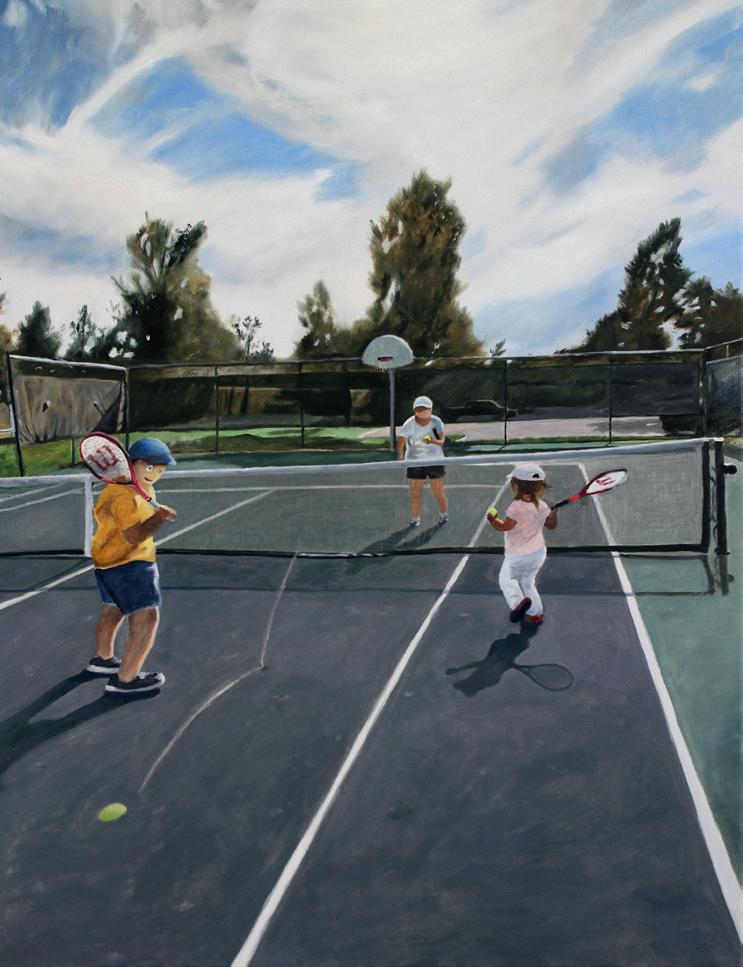
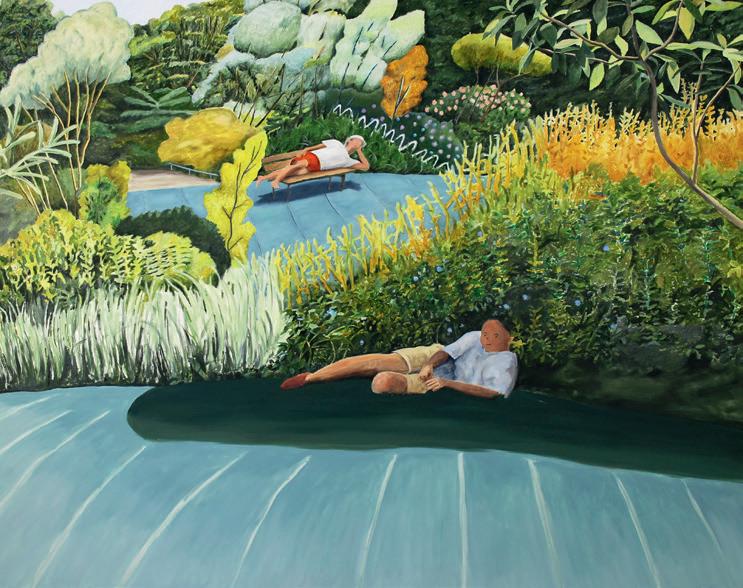
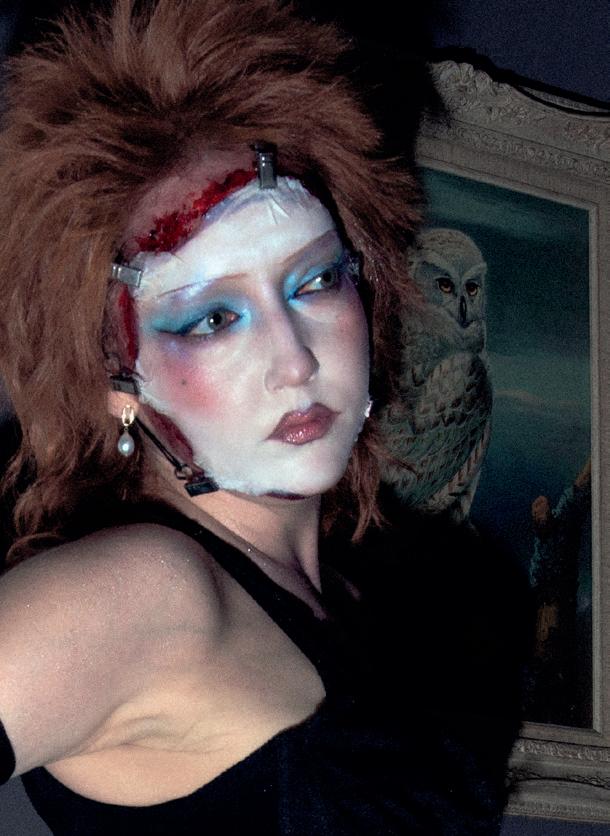
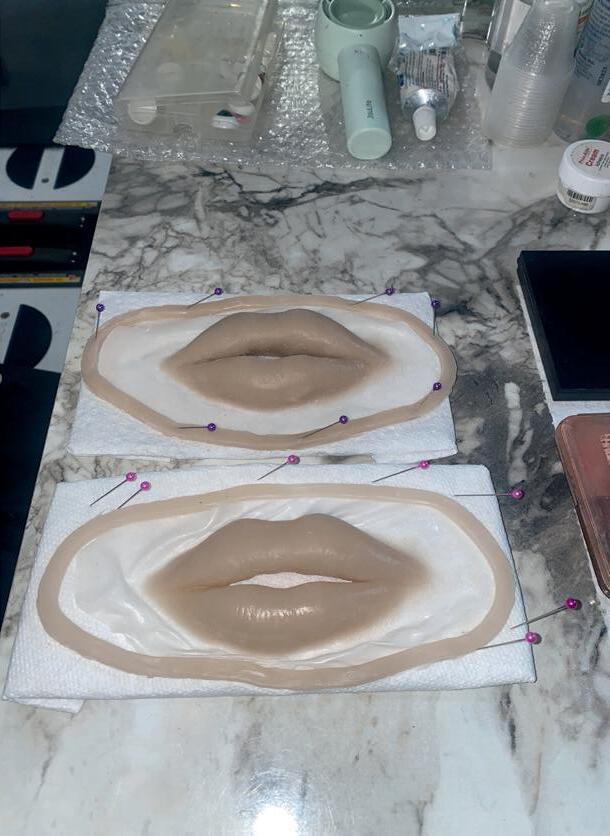
Babylon is nothing but an infinite game of chance.
From the »The Lottery in Babylon« by
Jorge Luis Borges
Choices is the topic of this issue
4 Choose Wisely! – A Waffler’s Guide to De-Ambivalancing
Sean Cole 10 Everything is alive
Ian Chillag 16 The Ones Who Walk Away from Omelas
Ursula K. Le Guin 28 Gaze of the Other
Julia Werner 36 Mar-a-Lago Faces
Martina Borsche
46 What Does Life Have in Store for Me?
Paul-Philipp Hanske & Benedikt Sarreiter 48 The Royal Game
Stefan Zweig 56 The Erotics of No
Shane Anderson
62 In Praise of Gatekeeping
Chloé Calonec
68 Love Letters from the Bonosphere
Christian Gottwalt
78 The Mountain Between Us
Antonia Rauth
86 The Value of Nothing
Micah Nacht
92 Je Regrette Beaucoup
Danijela Pilić
99 Outro
Serge Dorny
T Sean Cole
A Julia Specht
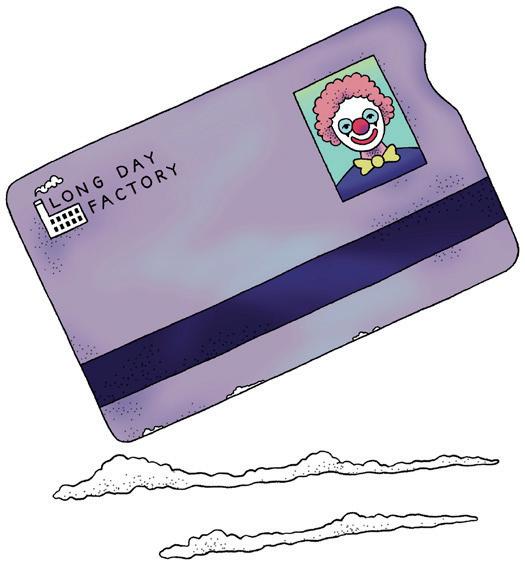
To be or not to be? What a stupid question. Who doesn’t want to walk around eating sandwiches and blowing kisses at passing dog-owners? Still, we all have an inner Hamlet constantly vacillating between one option and another (who is also Danish, and smells like eggs). Should I divorce my husband or simply cheat on him and »accidentally« sync the sex tape to the family iPad? Do I go back to law school or just say I did? (Defrauding the public is so much less expensive.) Muesli or strudel? Shoulder pads or knee pads? Do cocaine at the party or do a lot of cocaine at the party? The decisions are seemingly endless! How do you choose?! That’s where we come in. What follows are five tools for making your mind up when indecision has your liver in a vice and the only thing you know for sure is that your family is still tied up in the basement. A note that each of these methods has been tested and confirmed effective by The Committee of Productive Action Doer People™ whose expertise is proven by how expensive their fee is.
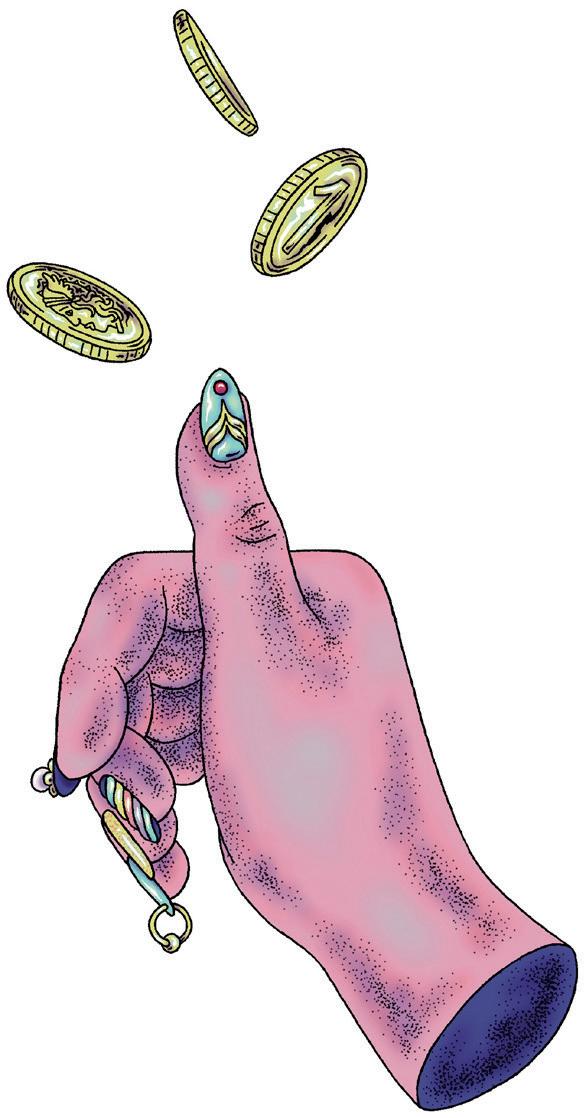
Flipping a coin is as ancient as the human thumb, which developed on the human hand beginning in 433 BC after the Romans invented hitchhiking. Back then, the process of throwing a hunk of money aloft to settle a dispute was known as »navia aut caput« which, depending on the translation, means either »ship or head« or »while you’re looking at the coin in the air I’m going to stab you in the colon so I can rob your livestock.« Throughout history, the coin toss has been used to solve quandaries as significant as who should board the fated flight that killed Buddy Holly and Ritchie Valens in a fiery crash, to who will have to tell the world that two of the greatest rock musicians of all time died because of f***ing coin toss. With the advent of cryptocurrency, observers who had nothing more important to think about wondered how one might flip a Bitcoin. The answer came via an Instagram post in which FTX founder Sam Bankman-Fried demonstrated the »laptop toss«. Had it not been for the industrial ceiling fan in his mansion, he may never have been arrested and charged with Lavish Stupidity.
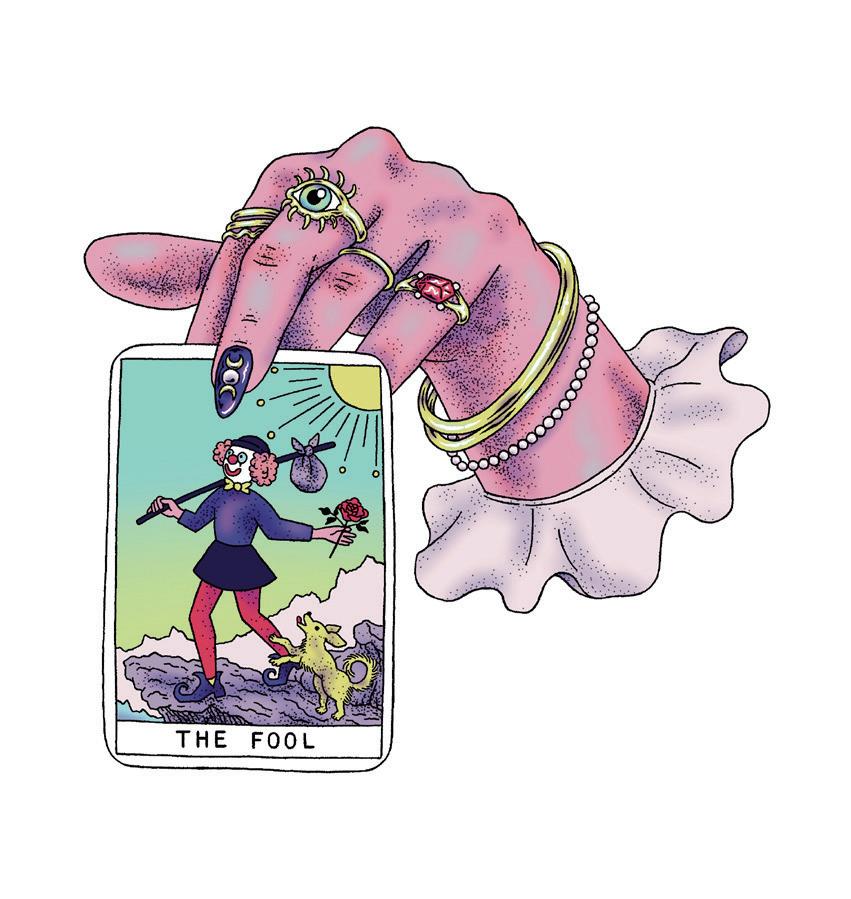
Apart from being Aleister Crowley’s favorite card game apart from Cloven Monkey Paw Blood Poker, the tarot deck can be a powerful heuristic for de-rusting your choosing machine. For one thing, the spooky symbols and terrifying images on some of the cards (The Hanged Man, The Burning
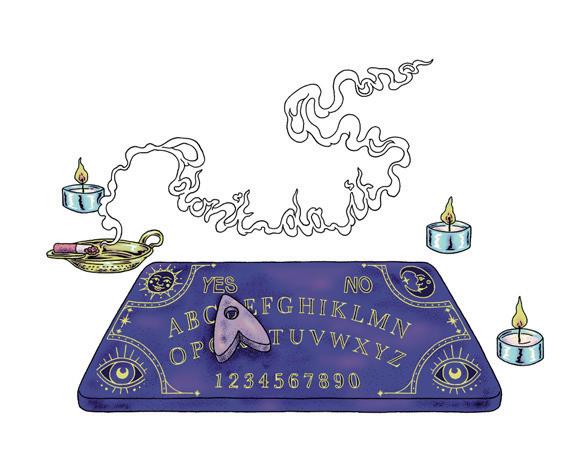
the plastic stylus allows spirits from beyond to spell out answers using the alpha-numeric characters embossed in West ern font against a swiiiiiiiiiiiiiiirly background because ghoo oooooooooooooosts. Of course, you have to place your hands lightly on the stylus in order for it to move. Ghosts can’t move styli by themselves, silly. Anyway, when the Spiritualism movement took hold of the U.S. in the late 1800s, charlatans I mean swindlers developed multiple ways to supposedly communicate with the dead. Turns out what’s really at operation might be something called the »ideomotor effect« by which your subconscious inspires muscle movement without your conscious mind getting involved. This, it turns out, is also the reason my dad winked at that nun in Copenhagen before the arrest. So, in that way, a Ouija set might be the ideal tool for telling yourself what you actually want. Much like when you slap your hand down on a coin after flipping it, and wish that you had thirty million more coins so that you could pay someone else to make all of your decisions for you. From Majorca.
There’s a saying in the US military: »cut your hair you pinko scum!« There’s also a saying about the importance of reconnaissance but whoever coined it was lost on an information gathering mission to
the Southern Nordic village known as Killy Killy Stab Stab Murder. The point is that advanced research can inform an inner conflict. In alpinism they used to call this practice »rub your nose against the mountain«. That was before it was understood that one’s feet might be a more useful region of the body to hike with. In practice, fact-finding might look something like this: you’ve been offered two po sitions, at different com panies, with nearly iden tical salary, benefits, and room for advancement. Neither job seems particularly onerous (apart from both of them being, in fact, jobs). Commute, co-workers, mandatory use of psychedelics, all the same. How do you decide? Elementary. Just kidnap an employee from each company, steal his or her access badge and pretend to be employed at each workplace for a year. That should be enough time to learn the boss’s username and password at both places and embezzle fourteen million dollars. At that point, you can move to Majorca and start your own company, otherwise known as paying some one else to make all of your decisions for you.
POKING THE TALMUD
When all else fails, randomness can be as pointed and incisive as a dart aimed at a balloon clenched in a former em ployer’s teeth while blindfolded. Just as we all used to
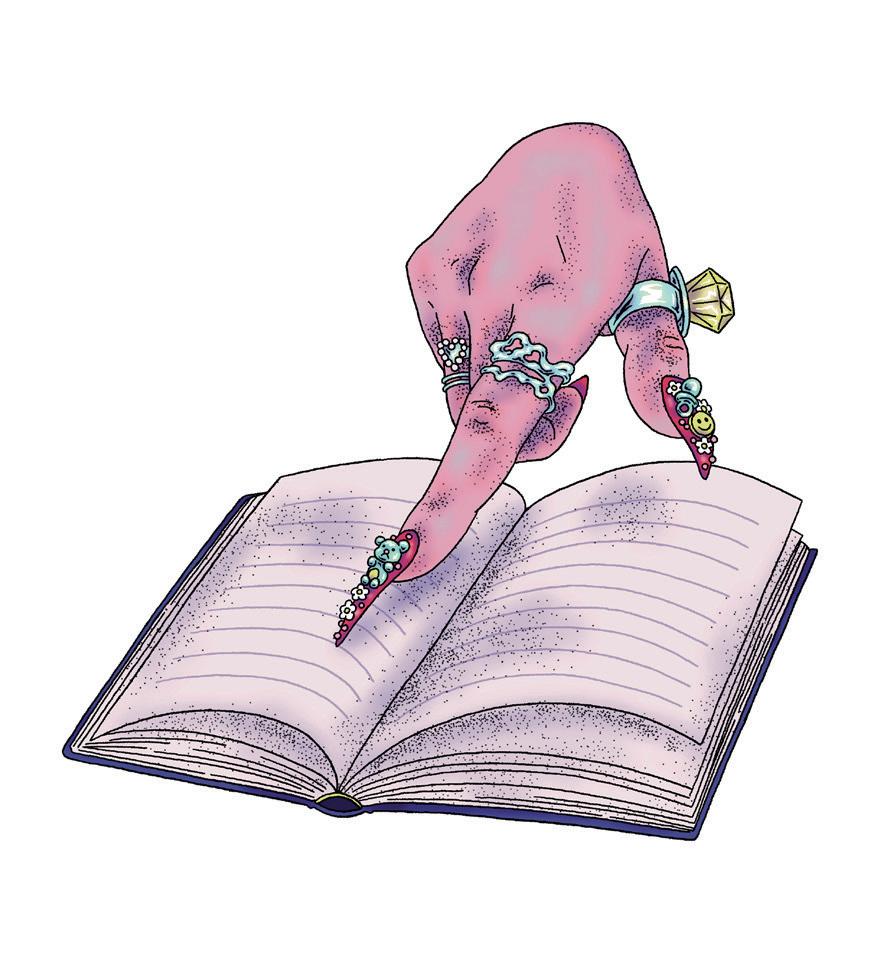
thumb through our high school yearbook with our eyes closed, stab an arbitrary page and yell, »I want you to whack my knee-backs thrice!«—one can use the same technique for electing whether or not to have major surgery. We call this the Putting-Theology-topractical-use-for-a-change technique. Simply pull your favorite sacred tract down from the religion shelf in the library. Doesn’t matter which one. Could be Dianetics or The New Testament for Dummies. Squeeze your eyelids shut and riffle through it until you feel moved to stop and jab the doctrine. You’d be surprised how helpful this can be. For example, once upon a time my wife and I were at intractable odds. She wanted to name our soon-to-be-born daughter Violet. I, on the other hand, thought we should name her Pitchfork. We couldn’t come to terms. So we went into my study, and I hauled out my edition of the Bhagavad Gita. My wife wrapped a tea towel fully around my face and cinched it with a necktie to make sure I couldn’t peek. I blindly ruffled through the illustrious volume until my wife screamed »NOW!« at the top of her lungs, whereupon I lunged at the page with so forceful a forefinger I nearly broke a nail. (Which would’ve been disastrous. I’m a hand model by day.) When we unraveled the cloth from my face, the word I had landed on was »Pitchfork isn’t even a name you f***ing a**hole! Stop being such an obstinate loser, not to mention a degenerate drunk, before your wife takes up with that soul singer she’s been having an emotional affair with over Instagram.«
So we named our daughter that instead.
EVERYTHING IS ALIVE
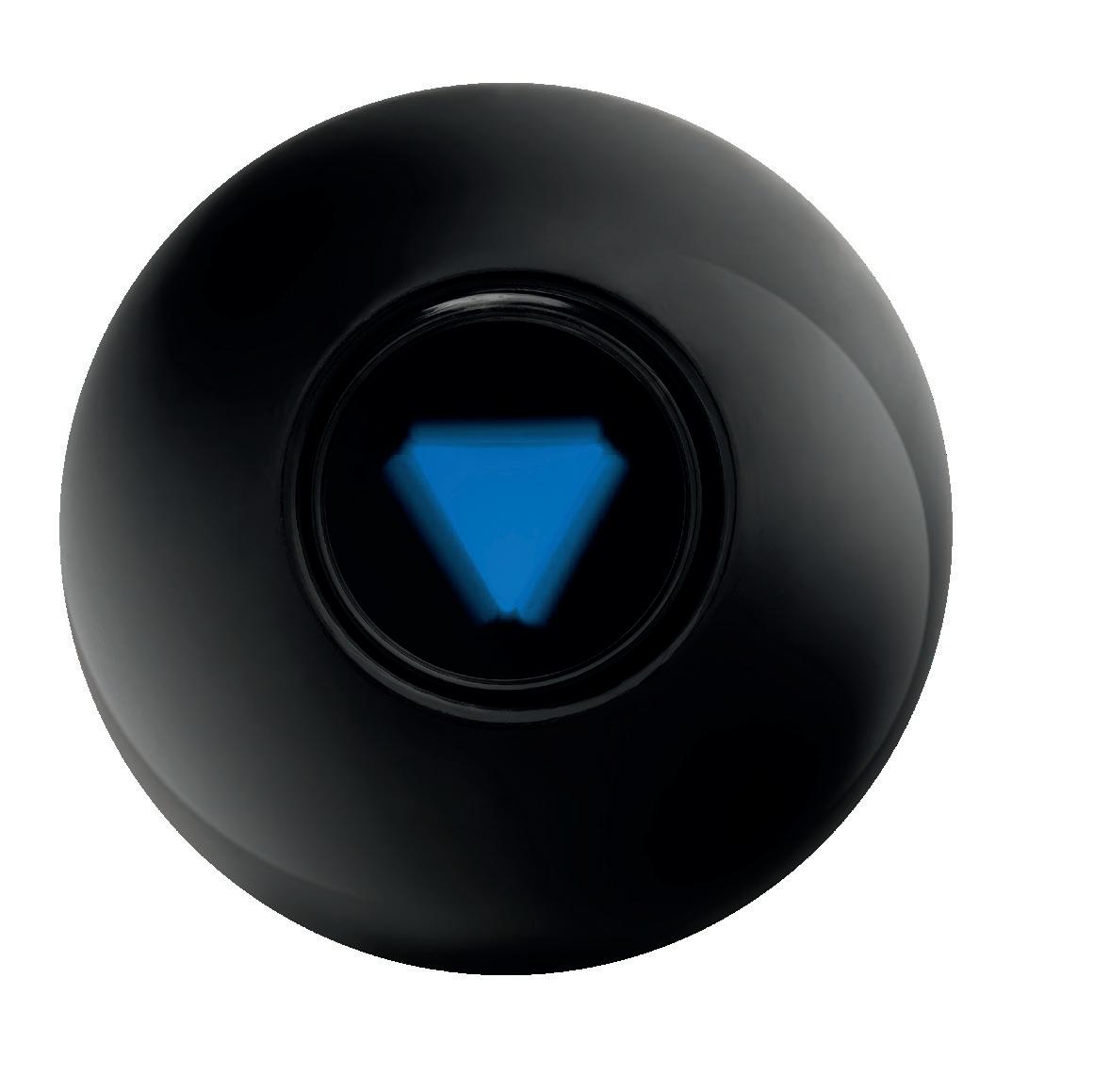
THE MAGIC 8 BALL HAS AN ANSWER TO EVERYTHING… AS LONG AS IT’S A YES OR NO QUESTION.
T IAN CHILLAG
I Okay. What’s your name?
M Concentrate and ask again.
I Well, I’ll introduce you. You’re Magic 8 Ball.
M It is certain.
I And I think what I’m getting here is you can only say the things a Magic 8 Ball says.
M It is decidedly so.
I So you have a name, but no one can ever know it because you can’t ever say it.
M Yes.
I I’m curious. It’s maybe a weird question, but what should I be thinking of you as? Would you call yourself a toy?
M My reply is no.
I So you don’t like being called a toy?
M Without a doubt.
I Should we just call you a spiritual adviser?
M Yes, definitely.
I Well, let me ask you some questions that I know you can answer. What’s your favorite corporate email software?
M Outlook, good.
I I agree. Outlook is great. Would you describe yourself as a procrastinator?
M Ask again later?
I What’s your advice for dealing with a broken Abacus?
M Don’t count on it.
I Let me ask you this. What’s the worst type of orange juice made from?
M Concentrate and ask again.
I What’s the worst type of orange juice made from?
M Concentrate and ask again.
I This would just keep going on forever if I let it, wouldn’t it?
M As I see it, yes.
I What’s it like when people ask you more serious questions? Like, when someone asks you about death, what do you say to them?
M You may rely on it.
I Like, you’re saying death is inevitable.
M As I see it, yes.
I Some think we may live forever, but—
M Outlook, not so good.
I I think the time when I most understand what it’s like to be you is when someone dies.
M Yes.
I Because I have so much that I want to communicate to the people they left behind, but I always end up saying the same three things. My condolences, I’m thinking of you, I’m sorry for your loss. And it’s never really what I’m thinking. And it’s never really sufficient. Is that what it’s like for you all the time?
M It is decidedly so.
I What’s your advice for dealing with a broken heart?
M Reply hazy. Try again.
I Sure. Try again. Get back out there. Good advice.
I Magic 8 Ball, what’s your favorite prog rock band?
M Yes.
I Great band. Are you the owner of a lonely heart?
M Yes.
I Yeah, I guess it would be hard to tell somebody how you feel if you can only say exactly twenty things.
M It is certain.
I You do realize we can edit your answers?
M Yes.
I So I could just take everything and break apart your phrases and pull out the words and we could rearrange it to say whatever you want to say to your someone.
M Signs point to yes.
I Well, okay. Is this what you want to say?
M As I see it, yes.
I Okay.
M You may rely on my certain reply without a doubt. It is certain. It is you. Signs point to you. My sources point to you. I point to you. As I see it, as I say it, it is you. I without you, you without I, not better, not better, not better. I with you, you with I, very better, very better, very better.
The Ones Who Walk Away from Omela
T Ursula K. Le Guin A Hiroya Kurata
With a clamor of bells that set the swallows soaring, the Festival of Summer came to the city of Omelas, bright towered by the sea. The rigging of the boats in the harbor sparkled with flags. In the streets between houses with red roofs and painted walls, between old mossgrown gardens and under avenues of trees, past great parks and public buildings, processions moved. Some were decorous: old people in long, stiff robes of mauve and grey, quiet, merry women carrying their babies and chatting as they walked. In other streets the music beat faster and the people were dancing. Children ran in and out, and boys and girls exercised their horses, getting them ready for the races. In the silence of the broad green meadow, one could hear the music winding through the city streets… a cheerful faint sweetness of the air that from time to time trembled and gathered together and broke out in the great joyous clanging of the bells. Joyous! How is one to tell about joy? How to describe the citizens of Omelas? They were not simple folk, you see, though they were happy. But we do not say words of cheer anymore. All smiles have become old. Given a description such as this one tends to make you have certain assumptions.
Given a description such as this one tends to make you look for the King, mounted on a great stallion, leading the processions of dancers and citizens of Omelas. But there was no King. They did not use swords or keep slaves in Omelas. They were not barbarians. I do not know the rules or laws of their society, but I suspect there were only a few. As they did without a King and without slavery, they also did without the stock exchange, the secret police, and bombs. Yet I repeat these were not simple folk. They were not less complex than us. The trouble is that we have a bad habit, encouraged by scholars and philosophers, as considering happiness as something rather stupid. Only pain is intellectual, only evil is interesting. This is the sin of the artist: a refusal to admit that evil is dull and pain is boring.
How can I tell you about the people of Omelas? They were not naïve and happy children, though their children were. They were mature, intelligent, passionate adults whose lives were not horrible. Miracle! But I wish I could describe it better to you. I wish I could convince you! Omelas sounds in my words like a city in a fairy tale, long ago and far away, once upon a time. Perhaps it would be best if you imagined it however you want to… for certainly I cannot describe well enough to suit you all. For instance, how about technology? I think that there would be no cars or helicopters in and above the streets of Omelas. Happiness is based on a just discrimination of what is necessary… and in Omelas, cars and helicopters was just not necessary. The people of Omelas could have had central heating and air, subway trains, washing machines, and all kinds of marvelous devices not yet invented here like floating light sources and the cure for the common cold… or they could have had none of that. It doesn’t really matter. As you like it. Imagine it as you will. One thing I know there was none of in Omelas is guilt. But what else should there be? I thought at first there were no drugs there, but that is naïve of me to think. What else? What else belongs in this joyous city? The sense of victory! The celebration of courage! There are no soldiers, therefore there is no war. Victory caused by death is not the right kind of joy. Being content, and in communion with everyone is what brings joy to the hearts of the people of Omelas. The victory they celebrate is life!
Most of the processions have reached the Green Fields by now. A marvelous smell of cooking goes forth from the red and blue tents of the cooks. The faces of small children are sticky, and in the grey beards of the elderly a couple of cupcakes crumbs are entangled. The youths and girls have mounted their horses and are beginning to group around the starting line of the race. An old woman, small, fat and laughing, is passing out flowers from a basket. Tall young men wear her flowers in their shining hair. A child of nine or ten sits as the edge of the crowd, alone, playing a wooden flute. People pause to listen, and they smile, but they do not speak to him, for he never stops playing and never sees them. He is so lost in his music, the sweet, thin magic of the tune. He finishes, and slowly lowers the
flute. As if that little private silence were the signal, all at once a trumpet sounds from the pavilion near the starting line: imperious, melancholy, piercing. The horses rear on their slender legs, and some of them neigh in answer. Sober-faced, the young riders calmly stroke the horses’ necks and soothe them, whispering, »Quiet, quiet there my beauty… my hope...« They begin to form in rank along the starting line. The crowds along the race course are like a field of grass and flowers in the wind. The Festival of Summer has begun. Do you believe? Do you accept the festival, the city, the joy? No?
Then let me describe one more thing.
In the basement under one of the beautiful public buildings of Omelas, there is a room. It has one locked door, and no window. A little light seeps in dustily between the cracks in the boards, secondhand from a cobwebbed window somewhere across the cellar. In one corner of the little room a couple of mops, with stiff, clotted, foul-smelling heads stand near a rusty bucket. The floor is dirt, a little damp to the touch, as cellar dirt usually is. The room is about three feet long and two feet wide: a mere broom closet of a disused tool room.
In the room a child is sitting. It could be a boy or a girl. It looks about six years old, but actually it is near ten. It is feeble-minded and slow. Perhaps it was born defective, or perhaps it has become imbecile through fear, malnutrition, and neglect. It picks its nose and occasionally fumbles vaguely with its toes. It sits hunched in the corner farthest from the bucket and the two mops. It is afraid of the mops. It finds them horrible. It shuts its eyes, but it knows the mops are still standing there; and the door is locked; and no one will come. The door is always locked and nobody ever comes, except that sometimes—the child has no understanding of time—sometimes the door rattles terribly… and opens, and a person (or several people) are standing there. One of them may come in and kick the child to make it stand up. The others never come close, but peer in at it with frightened disgusted eyes. The food bowl and the water just are hastily filled, and the door is locked, the eyes disappear. The people at the door never say anything. But the child, who has not always lived in the closet, and can remember sunlight and his mother’s voice,
sometimes says, »I will be good.« It says, »Please let me out. I will be good.« They never answer it. The child used to scream for help at night, and cry a lot. But now it only makes a sort of whining, »eh-haa, eh-haaaaaa,« and it speaks less and less often. It is so thin there are no calves to its legs; its belly protrudes; it lives on a half-bowl of corn meal and grease a day. It is naked. Its buttocks and thighs are a mass of festered sores, as it sits in its own excrement continually. They all know it is there, all the people of Omelas. Some of them have come to see it; others are content merely to know it is there.
They all know that it has to be there. Some of them understand why, and some do not, but they all understand that their happiness, the beauty of their city, the tenderness of their friendships, the health of their children, the wisdom of their scholars, the skill of their makers, even the kindly weathers of their skies depend wholly on this child’s horrid misery.
This is usually explained to children when they are between eight and twelve, whenever they seem capable of understanding. And most of those who come to see the child are young people, though often enough an adult comes, or comes back, to see the child. No matter how well the matter has been explained to them, these young spectators are always shocked and sickened at the sight. They feel disgust, which they had thought themselves superior to. They feel anger and outrage despite all the explanations. They would like to do something for the child. But there is nothing they can do.
If the child were brought up into the sunlight out of that vile place, if it were cleaned and fed and comforted, that would be a good thing indeed; but if it were done, in that day and hour, all prosperity and beauty and delight of Omelas would wither and be destroyed. Those are the terms. To exchange all the goodness and grace of every life in Omelas for that single, small improvement: to throw away the happiness of thousands for the chance of the happiness of one: that would definitely let guilt within the walls of Omelas.
The terms are strict and absolute; there may not even be a kind word spoken to the child. Often the young people go home in tears, or in a tearless rage, when they have seen the child and faced this terrible paradox. They may brood over it for weeks or years. But as times
goes on they begin to realize that even if the child could be released, it would not get much good of its freedom; a little vague pleasure of warmth and food, no doubt, but little more. It is too degraded and dumb to know any real joy. It has been afraid too long ever to be free of fear. Its habits are too barbaric for it to respond to normal human treatment. Indeed, after so long it would probably be wretched without walls about it to protect it, and darkness for its eyes, and its own excrement to sit in.
The peoples’ tears at the injustice dry when they begin to perceive the terrible justice of reality, and to accept helplessness, which are they, like the child, are not free. They know compassion. It is the existence of the child, and their knowledge of its existence, that makes possible their elaborate buildings and mansions, the magic of their music, the greatness of their science. It is because of the child that they are so gentle with children.
They know that if the wretched one were not there suffering in the dark, the other one, the flute-payer, could make no joyful music as the young riders line up their horses for the race.
Now do you believe in them? Are they not more credible? But there in one more thing to tell, and this is quite incredible. At times one of the adolescent girls or boys who go to see the child does not go home to weep or rage, does not, in fact, go home at all. Sometimes also a man or woman, much older, falls silent for a day or two, and then leaves home. These people go out into the street, and walk down the street alone. They keep walking, and walk straight out of the city of Omelas, through the beautiful gates. They keep walking across the farmlands of Omelas. Each one goes alone, youth or girl, man or woman. Night falls; the traveler must pass down village streets, between the houses with yellow-lit windows, and on out into the darkness of the fields. Each alone, they go west or north, towards the mountains. They go on. They leave Omelas, they walk ahead into the darkness, and they do not come back. The place they go towards is a place even less imaginable to most of us than the city of happiness. I cannot describe it at all. It is possible that it does not exist. But they seem to know where they are going, the ones who walk away from Omelas.
To be or not to be? What
To be or not to be?
Gaze of the Other
T Julia Werner
SFX Nina Carelli
P Mateus Porto
There’s an old coaching cliché, probably true, that wallowing in misery gets you nowhere and a bad decision is better than not making one at all. Quit whining and just do it, as our favorite sports philosopher Nike writes on T-shirts. The majority of people have internalized this and are making decisions all the time. True to the sneaker brand’s gospel, the body is where people make their most feverish decisions. After all, thin, fit, and attractive people are free in the modern world. Right?
In the age of social media, watching people make the life-changing decisions they believe will catapult them into freedom is almost too much to take. At the height of the woke era, Instagram forced us to look at women with very hairy legs, armpits, and bikini areas, and that included a perfectly serious advertisement for a body hair care oil. Ever since the great destroyer Donald Trump and his armada seized control of American pop culture, people haven’t stopped making aesthetic choices; they’ve just adapted to the zeitgeist. They’ve become more brutal: while the leg-hair oil startup is surely bankrupt by now, the middle-aged actress Denise Richards is making her facelift public, complete with swelling, pain, and bruises. The unshaven feminist and Charlie Sheen’s ex-wife, who’s once again radiantly smooth and youthful, are making completely different choices. Yet both are aimed at the same thing: a liberating breakthrough. One wants to escape the suffocating male gaze and the other wants to break free from what she experiences as the prison of invisibility.
From lasers to facelifts, broadcasting facial treatments straight out of a horror movie has now become the norm, just as it was de rigueur to ostentatiously show the supposed freedom of accepting the cellulite on your thighs a few years ago. Just as the big body positivity stories were told as heartwarming gamechangers at the height of political correctness, now personal stories about »deep plane« lifts (essentially muscle grafting, which Kris Jenner delighted and shocked everyone with at the same time) or life-changing Ozempic journeys are being poured into the digital world with the same pathos. But on TikTok and Instagram, it’s not just the female body that’s being worked on—the male body’s also being meticulously sculpted
with the precision of BMW engineers. It’s called looksmaxxing. But what sounds like harmless self-care is, in reality, a full-scale remodeling program for male losers. Jawlines are analyzed, practices such as »canthal tilt« and »facial harmony« are debated, and workout routines are devised not only for muscles but even for facial expressions. A broad, defined jaw is to these guys what eternal youth is to women—a way to escape the shackles of insignificance. Looksmaxxers often inhabit the manosphere, where influencers hate women and make money by telling other guys how to make money. The media has covered this extensively, since it’s scandalous, of course. And yet the female counterpart is by no means less radical. It’s just packaged differently. Under hashtags like #glowup or #fulltransformation, women document their extreme measures. Lips are injected, noses straightened, hair extensions bonded in, and skin lasered—and all of this is no longer a secret. It’s shown with pride. The story goes that aging makes women tired and bitter and hopeless. So instead of staying stuck in such misery, the subsequent surgery becomes an imperative decision in the story of one’s life. The scalpel’s incision is the first step into a space that’s free of everything unpleasant—free of self-doubt, fear, and the nearness of death—except for the painful healing process.
For now, let’s just say that the misery bodies cause only stops when they cease to function. The question then is how much freedom such bodily decisions actually afford.
If only we could ask Jean-Paul Sartre, the high priest of existentialism: Might public self-mutilation perhaps be textbook existentialism? Remember: existence precedes essence. Which means it’s not that we are, it’s that we become through the decisions we make all the time. Freedom isn’t a commodity, but an act. One of Sartre’s central ideas was the »gaze of the other« (le regard). In his work »Being and Nothingness« he describes how we define ourselves through the eyes of others. If we asked him about today’s mania for rejuvenation, he’d probably take a weary drag on his cigarette and say, »You’re optimizing your appearance to come out ahead in the social comparison game—but you run the risk of turning yourself into an object instead of acting as a free subject«.
And then there’s his »mauvaise foi«, self-deception. Anyone who pretends that their fate, including the fate of their body, is determined by external factors denies their own freedom. To illustrate that extreme plastic surgery wouldn’t automatically be wrong to him, he might have cited sixty-seven-year-old Madonna: clearly not a woman who cares about the male gaze or any other, but who is rather a
totally free Gesamtkunstwerk that has been surgically altered to the max. Unlike the looksmaxxers. And unlike the hairy influencers. However individual choices may feel, the desired faces and bodies are social media standards. And so, Sartre would probably just ask: Are you living authentically? Or are you hiding behind a predetermined identity?
Identity: the buzzword of recent years. FLINTA*, LGBTQIA+, agender, androgynous, bigender, cisgender, pansexual, omnisexual, genderqueer, intersex, or gender-fluid: you could pick out your very own identity from a long list of terms as if you were at the supermarket. Even for a square, heterosexual, well-paid Green Party voter in Charlottenburg or Schwabing, the body and its adornments—meaning, clothes and gadgets (for example, a cargo bike)—became an identity. After all, some decision’s behind every Patagonia backpack. It doesn’t matter whether you’re a matcha latte mom or a Trump Barbie—no one makes a choice in a vacuum; you’re always within a social context. So we exhaust ourselves with fighting for freedom— no more designer bags!—only to disappear the very next moment in a uniform crowd of people carrying tote bags. As a result, the space for freedom shrinks instead of expanding. It’s the fate of every youth culture: the crusty aesthetic of the punk movement, just as much as the functional, body-hugging look of the nineties rave scene, were initially expressions of freedom and then became style codes, conformist signals of belonging. Authentic or not, there’s someone inside each of us who just wants to get past the bouncer. Choosing a style—or a body or a face or even a gender identity—is, and herein lies a certain human tragedy, always a decision against something else, too. Anyone shaping their body today—whether with body hair, a scalpel, or fashion—navigates through a field of tension made up of images and norms they didn’t create. As is well known, the most overheated debate is the one between older feminists (Alice Schwarzer, J. K. Rowling) and the transgender community. The issues? The right age for gender affirmation procedures; women’s restrooms as safe spaces for »biological« women (that is, those born with a uterus); and the disadvantage of the very same uterus-bearers in professional sports (the first female president of the Olympic Committee has recently made the call to exclude transgender athletes from all women’s disciplines). What’s at stake here? Personal freedom. Michel Foucault is often quoted in this highly emotional debate, as he already argued in the twentieth century that sexuality—that is, categories such as male and female—are not dictated by nature. In his reading, identities emerge through
medical, moral, and psychological discourses as well as social norms. As such, Foucault can be invoked by both opposing sides. He says, »Each person’s life could be a work of art«. For trans people, that means no one has to settle for the wrong body. He also says, »The soul is the prison of the body«. Biofeminists could interpret this to mean that what counts as the true self is, in turn, a form of control, dictated by debates and social developments. Right now, that debate dictates that the ultimate intervention with a scalpel is gender affirmation and not a »transformation«, since the woman or man was always there, just trapped in the wrong body. Are all bodily decisions in the end just one grand, vain art project of the self, one that only squeezes us into new norms? The question sounds cynical when applied to the immense suffering many transgender people endure, yet it seems justified when applied to the suffering of looksmaxxers. When in doubt, we can only turn to the old warhorses of philosophy. Aristotle would have probably found all painful forms of aesthetic self-fashioning incomprehensible. After all, freedom meant maintaining a harmonious balance in all things for the ancient Greeks. The Stoics Epictetus and Seneca would have probably also disliked the fixation on the body and, by extension, all conscious decisions about identity. In Stoicism, what we can control is not our appearance—and certainly not the accident of birth—but only our inner attitude toward it. Of course, that’s easy to say in a world without the temptation of Botox, when life was much shorter anyway. And so, while modern humans suffer one panic attack after another from the sheer number of aesthetic decisions they have to make, they can only console themselves, to paraphrase Søren Kierkegaard, with the thought that anxiety is the vertigo of freedom.
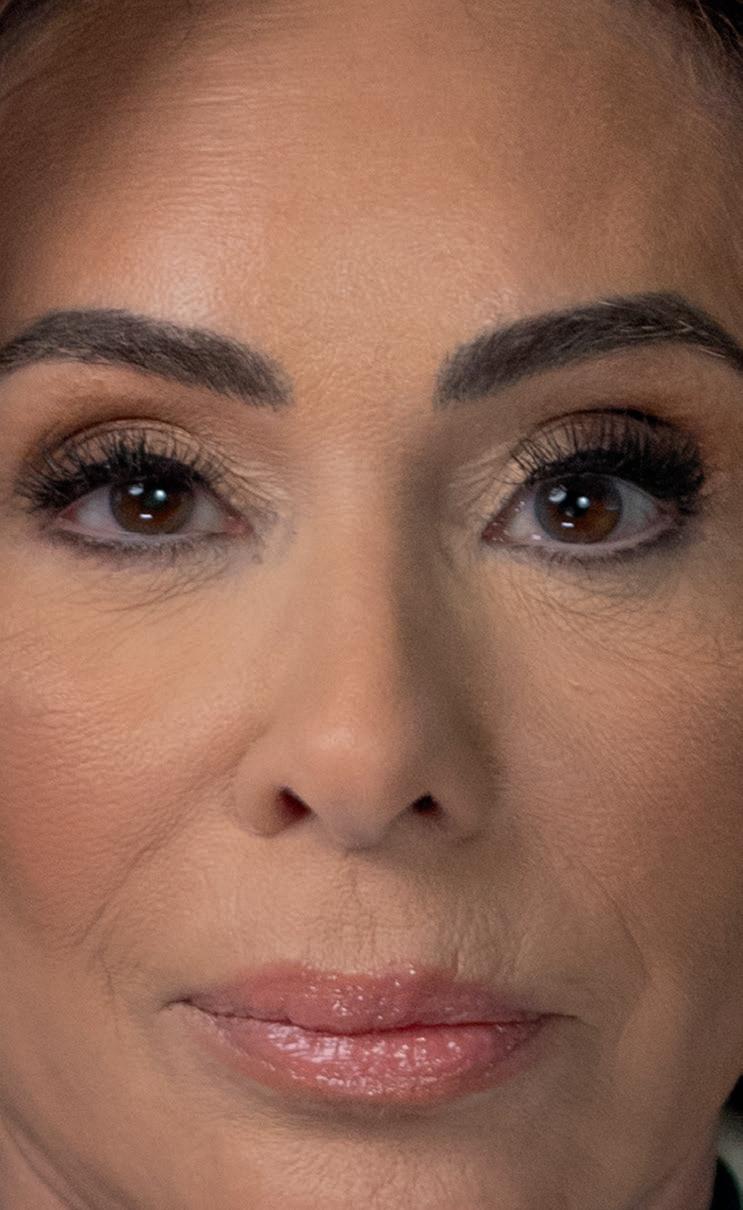
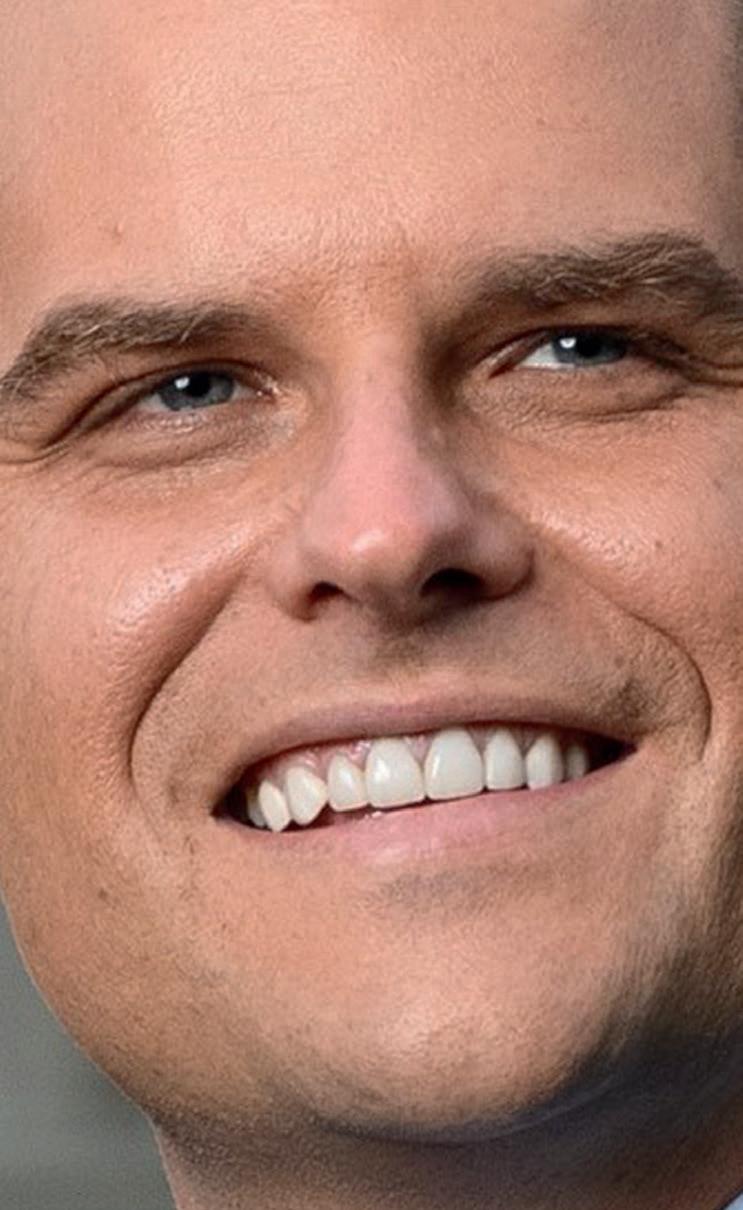
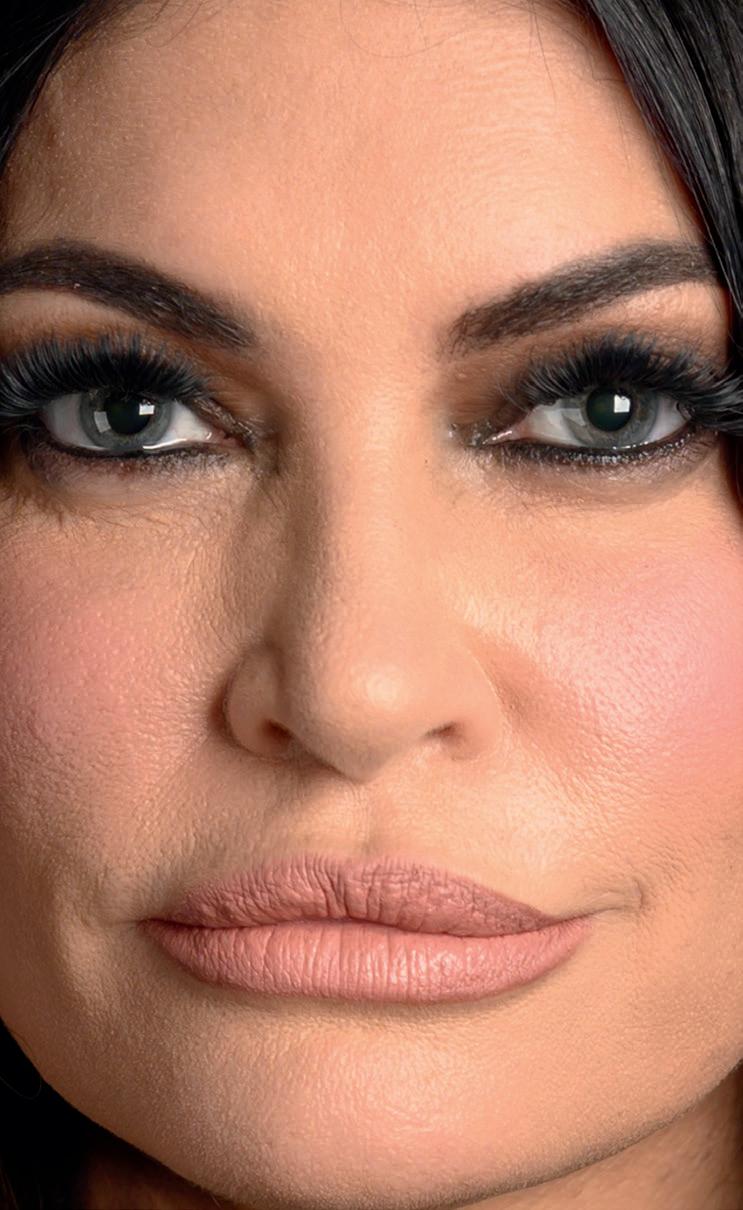
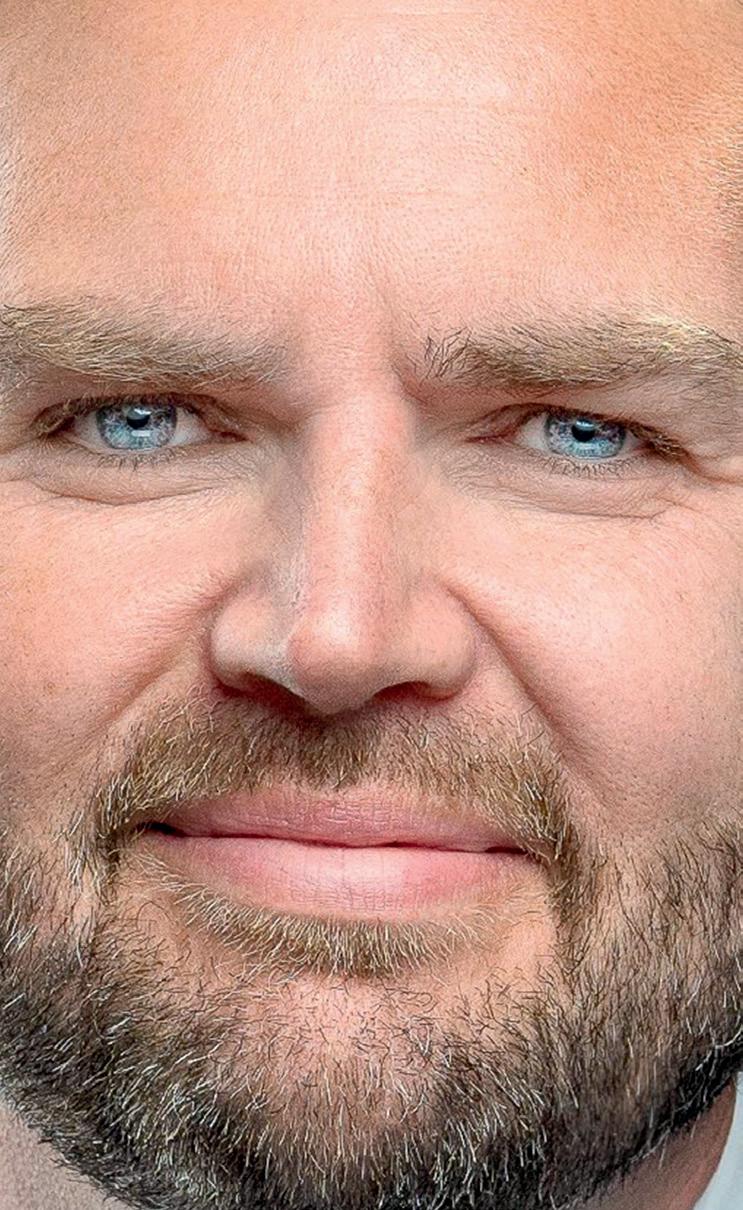
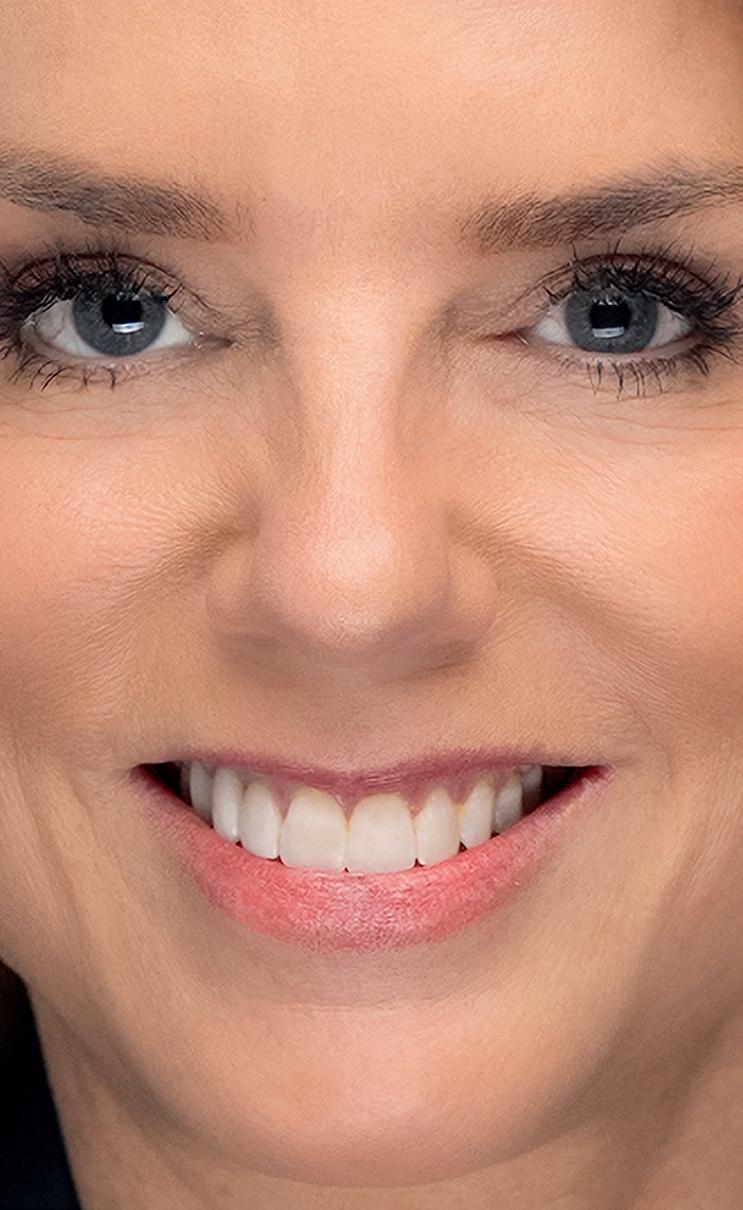
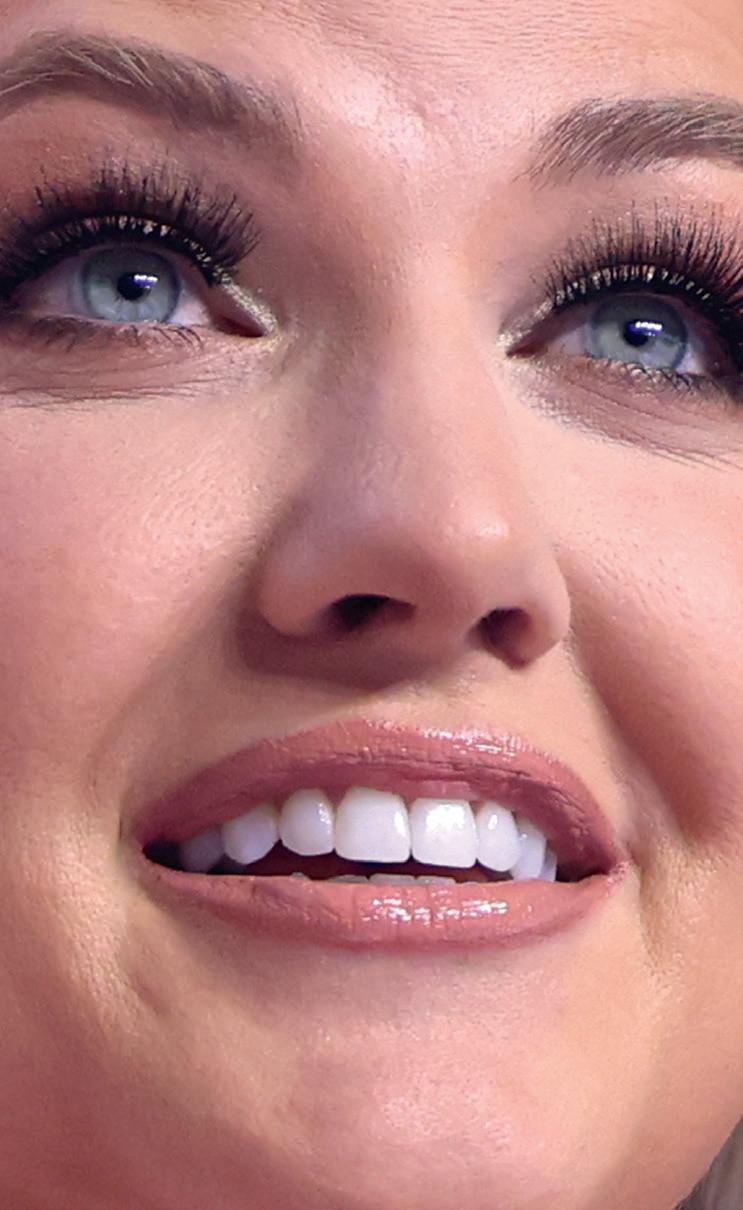
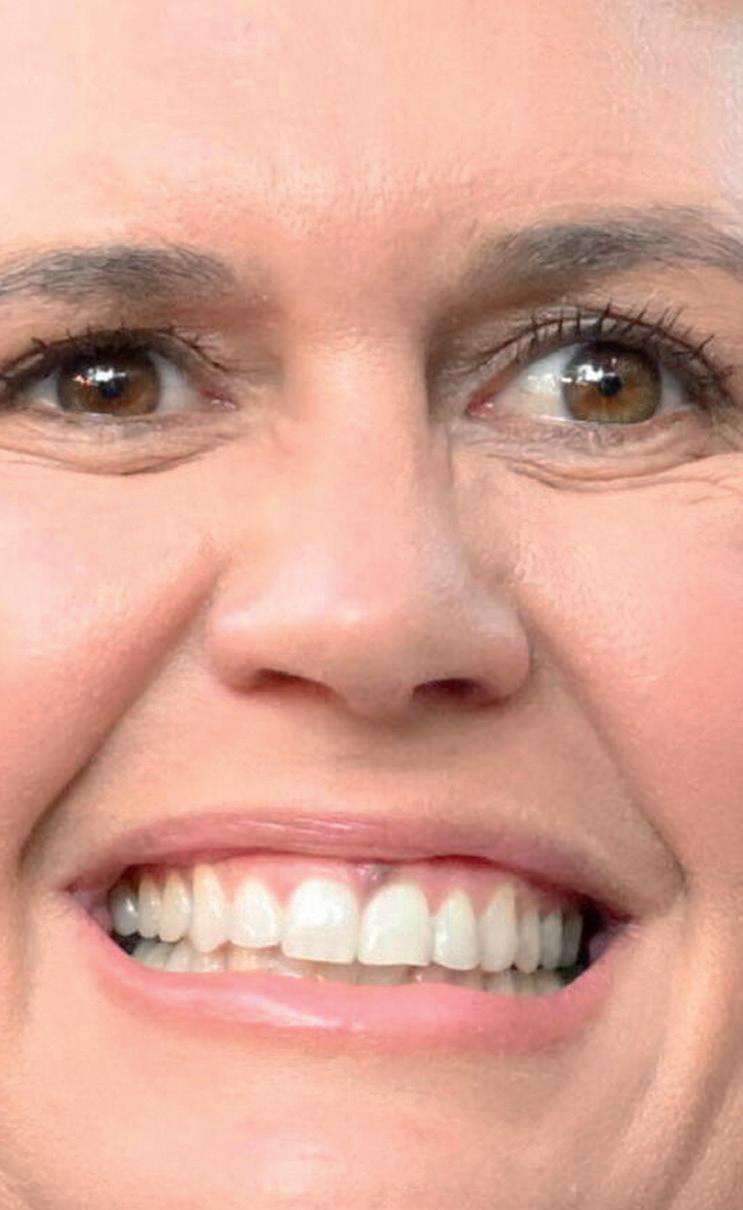
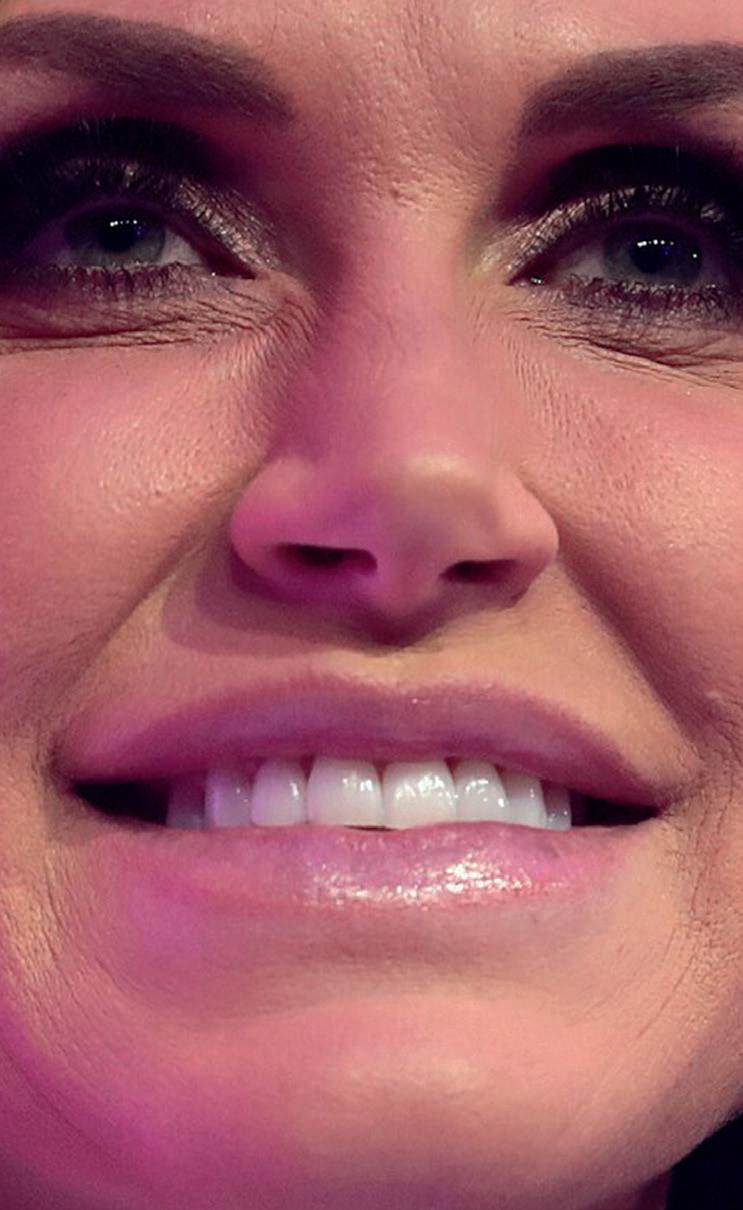
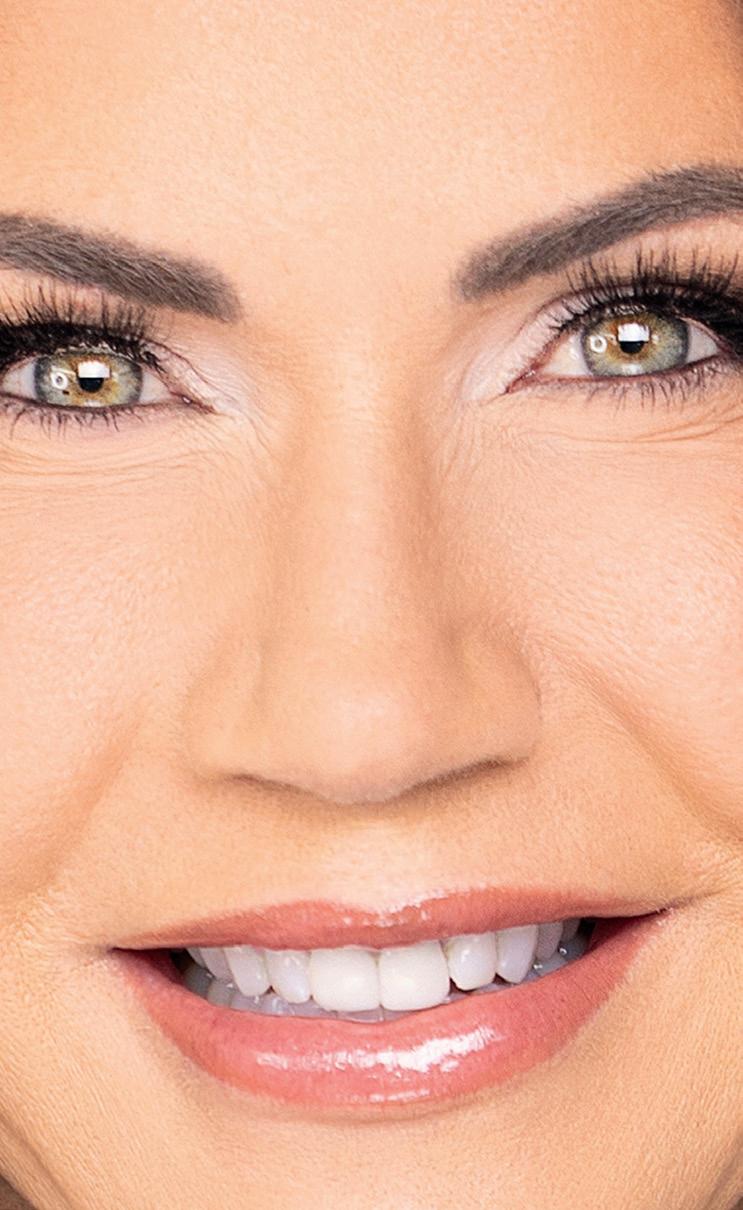
Media-Ready by Design: Heavy makeup, sharp cheek volume, and spray tans are designed to withstand harsh social critique, television studio lights and high-definition cameras.
Thick pancake foundation, fake eyelashes, and dark, smoky eyeliner signal conspicuous consumption.
The look functions as a political and social uniform signaling loyalty and alignment with the group’s culture, and unlike a political pin it can’t be overlooked. It is a visual passport into an exclusive social and political echo chamber.
The smooth, high-glam, frozen aesthetic projects complete control over one’s biology.
Subtlety is overrated: obvious, high-maintenance cosmetic work signals that the face’s owner has the time and disposable income to maintain it.
A signature smile is critical in maintaining the facade of allegiance in the eventuality of underlying horror.
A generous use of facial fillers and Botox achieves voluminous cheeks, smooth foreheads, and a taut, upward-pulled architecture of the face.
The Mar-a-Lago Face is the new aesthetic of political loyalty. The cosmetic trend describes a hyper-polished, conservative aesthetic associated with Donald Trump’s inner circle and the Palm Beach social scene. It is the choice of a »branded« face over a natural one. Unlike the subtle tweaks of »quiet luxury«, this look is deliberately loud. Wealth and privilege are no longer whispered; they are screaming from the bully pulpit.
What Does Life Have in Store for Me?
Office or garden?
T Paul-Philipp Hanske & Benedikt Sarreiter
Will the deep talks during lunch breaks turn into something more?
But now even my affair is cheating on me.
done with the ego game
not even against Polio
»I know a shaman…«
I think I might be a shaman too.
oh well the full program works personal bankruptcy
Big family or hermit
Plant heirloom tomatoes or lounge chair
Become who you are: In midlife, many paths open up. These are the years that decide whether one’s life will ultimately be considered fulfilled. The only question is: which way to go? A small guide for navigating the crossroads.
Day or night?
work hard play hard
Is that compatible with family life?
they'll manage
SPF 50 or Tyrolean walnut tanning oil
Vaccinate children?
»I’ve got a great investment opportunity for you.«
Read the Unabomber manifesto?
Role model Anita Berber? Overtime or Negroni
»I heard you two are separating?« What family?
»It was close, but you’ll survive.«
»That looks like melanoma to me.«
Kids would actually be quite nice...
Finally time for me
Wasn’t that this pop singer?
four negronis
She was the greatest!
Rehab clinic
Swaying arm-in-arm or hardstep? Is work really everything?
Was that really all there was?
Running club or choir? There’s someone new.
»Sorry, not you today«
Plane crash in the Andes
House with lake access
Retreats to Patagonia
And from the hidden little room
cozily out onto the fields.
Can I ask my child about a plasma exchange?
Thrombosis Iron (Wo) man at 95
Just power through for another five years
The ten rooms are too much for me, but I love the view of Lake Tegernsee.
River cruises to Vienna and Budapest
Fails to clear the five percent threshold with the FDP
The second game went just the same way as the first, except that several curious onlookers had made our circle not just larger but also livelier. McConnor was gazing at the board as fixedly as if he intended to magnetize the chessmen by his will to win; I sensed that he would happily have given a thousand dollars for the joy of crying »Checkmate!« to his cold, insensitive opponent. Curiously, something of his grimly excited determination passed unconsciously to us. Every single move was discussed far more passionately than before; one of us would keep holding the others back at the last moment before we united in giving the signal that brought Czentovic back to our table.
Slowly, we had reached the thirty-seventh move, and to our own astonishment were in a position that seemed surprisingly advantageous, for we had succeeded in bringing the pawn in file c to the penultimate square c2; we had only to move it to c1 to promote it to a new queen. We didn’t in fact feel particularly comfortable about this over-obvious chance; we all suspected that the advantage we appeared to have won must have been intentionally thrown out as bait by Czentovic, whose view of the situation ranged far wider. But despite intensive study and discussion among ourselves, we couldn’t see the concealed trick. Finally, as the agreed deadline approached, we decided to risk the move. McConnor had already put out his hand to the pawn to move it to the last square when he felt his arm abruptly taken, while someone whispered quietly and urgently, »For God’s sake, no!«
We all instinctively turned. A man of about forty-five, whose thin, angular face I had already noticed on the promenade deck because of its strange, almost chalky pallor, must have joined us in the last few minutes as we were lending our entire attention to the problem. He quickly added, feeling our eyes on him, »If you make a queen now, he’ll take her at once with the bishop on c1, and you’ll counter with the knight. But meanwhile he’ll take his passed pawn to d7, endangering your rook, and even if you check him with the knight, you’ll lose after nine or ten moves. It’s almost the same combination as Alekhine used against Bogolyubov at the grand tournament in Pistyan in 1922.«
The surprised McConnor withdrew his hand from the piece, and stared in no less amazement than the rest of us at the man who had unexpectedly come to our aid like an angel from heaven. Someone who could work out a checkmate nine moves ahead must be an expert of the first rank, perhaps even a rival for the championship travelling to the same tournament, and his sudden arrival and intervention at this critical moment had something almost supernatural about it. McConnor was the first to pull himself together.
»What would you advise?« he whispered in agitation.
»I wouldn’t advance just yet, I’d take evasive action first! Above all, move the king out of danger from g8 to h7. That will probably make him attack the other flank, but you can parry the attack with rook c8 to c4; it will cost him two tempos, a pawn, and his advantage. Then it’s passed pawn against passed pawn, and if you defend properly you can draw with him. You can’t get anything better.«
Yet again we were astonished. There was something bewildering about his precision as well as the speed of his calculations; it was as if he were reading the moves from the pages of a book. But anyway, the unexpected prospect of drawing our game against a grandmaster thanks to his intervention was enchanting. We all moved aside to give him a clear view of the board. McConnor asked again, »King g8 to h7, then?«
»Yes, yes! Evasive action, that’s the thing!« McConnor complied, and we tapped the glass. Czentovic returned to our table with his usual regular tread, and took in the counter-move at a single glance. Then he moved the pawn from h2 to h4 on the king’s flank, just as our unknown helper had predicted. The man was already whispering urgently:
»Rook forward, rook forward, c8 to c4, then he’ll have to cover his pawn first. But that won’t help him! Ignore his passed pawn, move your knight d3 to e5, and the balance will be restored. Keep the pressure on, advance instead of defending!«
We didn’t understand what he meant. As far as we were concerned he might have been speaking Chinese. But once under his spell McConnor moved as he advised without stopping to think about it. We tapped the glass again to call Czentovic back. For the first time
he did not decide on his next move at once, but looked at the board intently. Involuntarily, he drew his brows together. Then he made exactly the move that the stranger had predicted, and turned to walk away. But before he did so, something new and unexpected happened. Czentovic looked up and studied our ranks; he obviously wanted to find out who was putting up such energetic resistance all of a sudden.
From that moment on our excitement knew no bounds. Up till this moment we had played without any serious hope, but now the idea of breaking through Czentovic’s cold pride sent fire flying through all our veins. And our new friend had already told us the next move, so we were able—my fingers shook as I tapped the glass with the spoon—to call Czentovic back.
Now came our first triumph.
Czentovic, who until this point had made his moves standing, hesitated—hesitated and finally sat down.
He sat slowly and ponderously, but from the purely physical viewpoint the action cancelled out his condescending attitude towards us so far. We had forced him to come down to our level, at least in spatial terms. He thought for a long time, eyes lowered and intent on the board, so that you could hardly see his pupils under his dark lids, and in his meditations his mouth gradually dropped open, giving his round face a rather simple expression. Czentovic thought for several minutes, then made his move and stood up. And our friend was already whispering:
»Delaying tactics! Good thinking! But don’t fall for it. Force an exchange, you must force an exchange, and then we can get a draw and no god will be able to help him.«
McConnor did as he said. In the next few moves between the two of them—the rest of us had long since sunk to the status of mere extras—a back-and-forth procedure that meant nothing at all to us ensued. After about seven moves Czentovic thought for some time, then looked up and said, »Game drawn.«
For a moment there was total silence. We suddenly heard the sound of the waves and the jazz music playing in the saloon, we could hear every step on the promenade deck and the quiet, soft blowing of
the wind as it came through the cracks around the portholes. We were hardly breathing; it had happened too suddenly, and all of us were left in shock by the improbable way in which this unknown had forced his will on the world champion, in a game that was half lost already. McConnor leaned back with a sudden movement, the breath he had been holding emerged audibly from his lips in a contented »Ah!« Myself, I was watching Czentovic. It seemed to me that during the last few moves he had turned paler. But he was good at keeping control over himself. He persisted in his apparently unruffled composure, and just asked in the most casual of tones, sweeping the chessmen off the board with a steady hand, »Would you gentlemen care for a third game?« He asked the question purely objectively, purely as a matter of business. But the remarkable thing was that he had not been looking at McConnor, and instead had raised his eyes to gaze keenly straight at our saviour. Just as a horse recognizes a new and better rider by his firmer seat, he must have identified his true, genuine opponent during those last moves. Instinctively, we followed the direction of his eyes, and looked at the stranger in suspense. However, before he could think about it, let alone answer, McConnor in his ambitious excitement was triumphantly calling out to him, »Of course! But now you must play against him on your own! You against Czentovic!«
Be bored. Read.
Be bored. Read.
T Shane Anderson A Lillian Ansell
Everyone loves a good no. Friends of mine have tried to outdo each other with legends about why they couldn’t get past Sven’s impenetrable non-smile at Berghain (my favorite being the one from a friend who was given a complex math problem, only to get turned away when he got it right). Or they will quote Bartleby whenever they’re feeling a little lazy and would rather polish off a pint of Ben and Jerry’s, save for the last bite out of the delight of refusal. At parties, they’ve told me about their dreams of living off-grid, where they’ll fight heroic battles with real mosquitos to escape the blue screens pulsing in front of their faces, or about their desire to have »fuck you money« so they can show their bosses exactly where they can stick their poorly formatted Excel sheets. And no, none of this is about me. Or not literally. You see, even though I have no stories about hunting for a Birkin like a boar or pressing Ctrl + R until my fingers bled for Kate Bush tickets, I have constructed extensive daydreams about Emily Dickinson never leaving the house or about Gerald Murnane wasting away in the Australian plains, brewing his own beer and conducting complicated horse races in a country that exists only in his mind.
No is a currency, the oldest luxury. Any Cracker Jack economist can tell you that scarcity = desire. Rare Porsches with rare ceramic composite clutches. Patek Philippe watches with waitlists longer than it takes to put your kids through college. Maison Margiela 0 sweaters whose owners cry when their lower-class mothers, not understanding the economy of damage, reattach the dangling stitches. But the good opera seats, morning Pilates, dermatologist appointments, seasonal matcha latte flavors, overhead bin space on airplanes, and toilet paper during the pandemic—are they really any different?
We love no because we can’t accept it. Because we think that maybe we can be the ones to break it and undo the spell. An unanswered email becomes a follow-up becomes a text message becomes a phone call becomes a calendar invite. Still ignored? Mouth-frothing spite. »Sorry, we’re all sold out, come back again tomorrow«—an affront that can only be met with a negative
Google review while sparing the banality of details. And real refusal? How painful! How unjust! Why couldn’t Japan, for instance, just open up? We didn’t mean to end its centuries of restricted contact. We only wanted friendship—you know, trade, coal, access, leverage, nothing but innocence. Still not interested? Fine, then. Have it your way. »Send in the gunboats«. What’s that, China? You too? You’re going to accept British opium and you’re going to like it. »Who wants democracy? Get your democracy here!« Don’t worry, we’ll deliver it to you in armored vehicles. You see, persistence is key. Any self-respecting self-help author will tell you to »go for no«, as they know no is only the beginning—the fastest way, statistically speaking, to receive the yes you oh so deserve. So, get your better arguments, better manners, or better weapons ready and then squash such impertinence, such »backward savagery«, like a bug. »Bartender, help«. There’s a predator.
He’s moved from charm to bargain to insult. Can anyone step in?
»Hey buddy, if you don’t get the fuck outta here, I’m gonna smash your teeth in.« Which is to say that the old bumper sticker slogan »Fight Violence« is alive and well. »Forgive them, for they know not what they do.«
Since we know no »no«, we fantasize about one strong enough to survive us. Hello, Emily. Hello, Gerald. How’s the weather? Thoreau! Did your mom bring back your laundry? But no, not even these are right, for they all dreamed of themselves in the limelight. Our minds must go deeper. But where? The colonial imagination, not known for being subtle, associates depth with jungles and pins its fat finger on Brazil. Sure, let’s follow it. I don’t have a better suggestion at the moment. So, let’s go where the birds are louder than planes and every European cliché is lurking in the undergrowth. But no, not even that will do. For we have been told that where there is Starlink, there is doomscrolling in a swarm of mosquitos. Text messages to the person sitting across from you and gambling on the stock market. And even if you sided with the Marubo people in their defamation case against The New York Times and TMZ, rejecting the claim that they became addicted to porn once they had internet access, the contact became content: a morality play
about innocence and corruption and Elon Musk. The point is: there’s no escape from the maze once you’ve entered it. But there is one stronger no. Expressed so thoroughly and effectively and with so much hostility that we keep wanting to get closer. Ever heard of the Sentinelese? Don’t worry if not. There are maybe between fifty and one hundred fifty Sentinelese people (unverifiable) living on North Sentinel, a small island roughly the size of Manhattan in the Andaman archipelago, and they want absolutely nothing to do with you. In fact, you probably couldn’t even hear their refusal. The Indian Coast Guard is likely to stop you in the Bay of Bengal before you reach the island. And you wouldn’t be able to speak to the Sentinelese about why they don’t want to have anything to do with you anyway. Their language is unknown to outsiders and apparently not mutually intelligible with their Andamanese neighbors. What’s more, if you had ever met the Sentinelese, a people often said to have lived in the Andamans for as long as sixty thousand years, they might have killed you before you killed them with your breath. (Strangely, the island does have a single Google review from a local tour guide, awarding it five stars.)
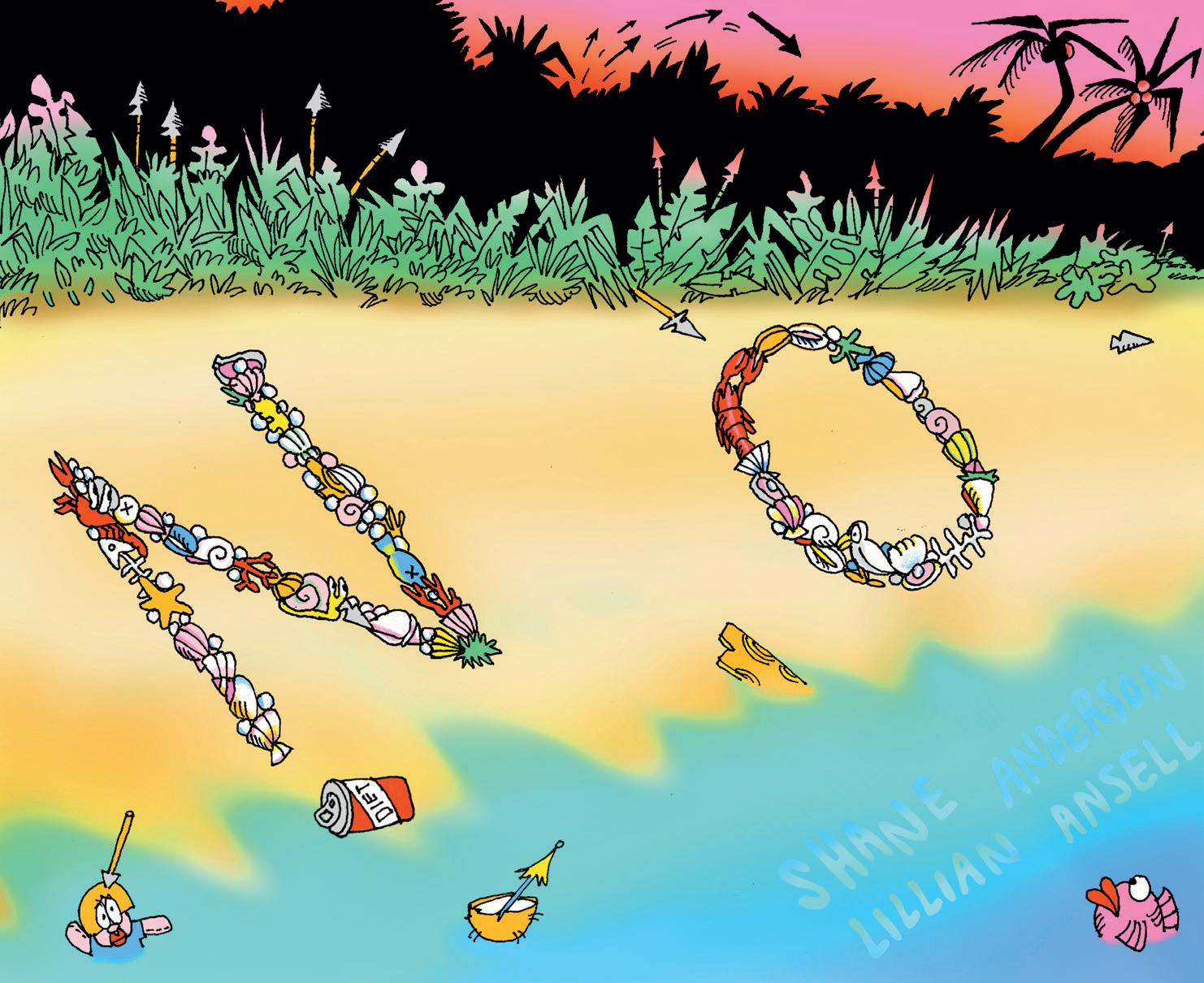
Ever since the East India Company’s scouting ship Diligent (cough, cough) first noted signs of habitation in 1771, foreigners have been shown the proverbial door at the coral reef surrounding the island. They’ve been screamed at and attacked with projectiles, which the foreigners have mostly interpreted as »scram«. Should we manage to get closer, and should we bring them gifts of coconuts, the Sentinelese have been known to accept them on occasion. But if we bring them pigs and dolls, they spear them and bury them in the sand (infection management?). And if we bring them Bibles, they shoot them with arrows. The only time they seemed to get along with foreigners in the long record of attempted contact was after the Primrose wrecked on the reef in 1981 and a salvage contractor came to dismantle it. Then, apparently, the Sentinelese canoed out at low tide, accepted fruit, and took small pieces of metal in what might be the best version of contact with the island: not conversion or friendship or access, just scraps of metal for knives and arrowheads, the humans incidental.
»We cannot be said to have done anything more than increase their general terror of, and hostility to, all comers.« This was what M. V. Portman had to say in the late nineteenth century, but it looks like his memo didn’t reach every desk. The freaks keep sneaking past the Indian Coast Guard and bribing guides to bring them to the island on kayaks. These fruit loops come for God, like the American missionary John Chau, who wanted to convert »Satan’s last stronghold on Earth«. Or they come for the memes (aren’t they basically the same thing?), like the American influencer Mykhailo Polyakov, who brought them a coconut and a Diet Coke. One ended up dead, the other in jail. And now Polyakov is making a YouTube series about his »adventure«, where he refers to Joseph Conrad’s »Heart of Darkness« and voices his desire to fill in »the blank spaces on the map«.
But there’s nothing to fill. We don’t know why the Sentinelese have chosen no contact. We don’t even know whether »chosen« is the right word. We don’t know who has decided it, under what conditions, with what alternatives, by what stories, laws, fears, memories, or obligations. We don’t know if it is about survival, sovereignty, grief, custom, happiness, terror, or nothing that would survive translation.
Sentinel (n): a person or thing that watches or stands as if watching; a soldier stationed as a guard to challenge all comers and prevent a surprise attack; in medicine, an indication or mark that a disease is present or prevalent.
Whether the Sentinelese are any of these things, all of them, or something else entirely is also unknown. What we do know is simpler: outsiders have arrived with pigs, dolls, Bibles, cameras, Diet Coke, alleged friendship, anthropological interest, and religious explanations. The Sentinelese have answered, repeatedly, with distance and arrows. They’ve said no to our disease—if no is even the right word for what might not be addressed to us at all. For that alone, they might be the smartest people on the planet. I hope we never know. The erotics were entirely our own.
IN PRAISE OF GATEKEEPING
T CHLOÉ CALONEC
It would come as no surprise to many that I have nothing against a little elitism. Elitism, according to the Cam bridge Dictionary, is »the belief that some things are only for a few people who have special qualities or abilities«. I would agree with that. For example, I believe that some hospitality establishments, especially if they are small and have been successfully running in specific, mass tourism-free ways for dozens of years, shouldn’t be spoiled by sudden overcrowding because an idiot with a fat Instagram account but otherwise the most discerning standards posted charmingly attractive pictures of them. There, I would make a case for this type of place to be only for people who have the ability (and quality) to inspect, blend, and circulate on a real-life basis only. The reader is restless: he knows that authentic ity can be easily spoiled when becoming a mainstream aesthetic. I see you coming with your legitimately whiny, easy-jetted tone: there is no correct way to enjoy something, it is personal and suggestive, and these places are lucky to see their revenue increase, et cetera. You would be absolutely wrong. In the spotless wording of David Foster Wallace in »Consider the Lobster«: »To be a (mass) tourist,
for me, is to become a pure late-date American: alien, ignorant, greedy for something you cannot ever have, disappointed in ways you can never admit. IT IS TO SPOIL, by way of sheer ontology, THE VERY UNSPOILEDNESS YOU ARE THERE TO EXPERIENCE. It is to impose yourself on places that in all non-economical ways would be better, realer, without you. It is, in lines and gridlock and transaction after transaction, to confront a dimension of yourself that is as inescapable as it is painful: as a tourist, you become economically significant but existentially loathsome; an insect on a dead thing.« For better reading comprehension, I put the part that is important to remember here in capital letters.
To put in a less phony formula: what these places gain in revenue, they lose in veracity. Le Petit Vendôme is an otherwise normal café near the Place Vendôme in Paris, selling a very respectable jambon beurre sur place ou à emporter just a few steps away from The Ritz. It has Formica tables, sickly neon lighting, and staff prone to spontaneous combustion. Everything you’d expect of your quick Parisian lunch. They are not fearful of the proximity of high-end luxury; they are not impressed by brand new rivers of diamonds fresh out of Chopard and handsome Hollywood actors wearing small gnarly dogs who are themselves wearing ostrich leather bags. They do not, and I cannot stress this enough, give a damn.
Sometime in the last four years, some TikToker or other posted many a charming shot with many an American commentary in a video that went viral. I must remain meticulous here and outline that an idiot with a TikTok account is a much bigger idiot than one with an Instagram account (albeit increasingly frequently they merge). Since this damned day, as soon as lunchtime approaches, a queue made of tourists wanting a piece of this authentic Parisian institution stretches all the way to the Ritz. This, and the sandwich price jumped from a reasonable six euros fifty to a silly eleven euros. The consequences are that this place is now, and for most of the day, stripped of its local, regular (meaning: organic)
customer base and reserved only for visitors cosplaying as locals.
Those who used to find a healthy and budget-friendly lunch of, let’s say, a glass of red, a jambon beurre, and a coffee in a café near their workplaces are now overtaken by the economic and physical cost of an internet video, replaced by people who have the economic means to pretend to be them. I am doing my poor little best not to bang my head on this very table.
I have no doubt the business owners are fine: why be sinister about a sudden revenue rise? And I am also sure that there is still, at some hour of the day, the occasional old timer coming in for a beer and a snack, and I would suspect this one customer would also get a discount on his bill. But how does it feel to turn your neighborhood café into a sandwich factory, a background for tastefully thoughtthrough carousels of pictures, with next-door Jean François from accounting long gone and replaced by people in purple felt berets exclusively drinking half glasses of Sauvignon Blanc? These places had a customer base before our visits; they have been running for many years.
Speaking as a greed-driven and philo sophically irresponsible wom an, I would like absolutely nobody but a trusted few to visit the places I love. Which is why I practice gatekeeping. Gatekeeping, according to the Cambridge Dictionary, is »the activity of trying to control particular resources, power, or opportunities, and who does not«. It would be a surprise only to a few that I would agree with that. Once a year, on my birthday, I visit a hotel that might be my favorite in the world. This hotel, situated in a beautiful undisclosed location, was built many confidential years ago following the style of some architectural current and is very strangely but also charmingly built over a very specific and unusual commodity, making it truly one of a kind. It features wonderful, untouched this and that, hand-painted murals by someone, large windows of thin glass giving a breathtak-
ing view over a somewhat well-known thing. It is filled with beautiful artifacts, items, articles, devices, and even a few implements. It is decadently beautiful and simultaneously incredibly normal. While I will go on and on about the hotel IRL, I will nonetheless be answering no further questions before having background-checked, tested, and threatened my interlocutor’s life. The mere idea of one of my imaginary enemies having access to this hotel makes my heart jump in new and frightening ways.
In the AmiGo app, taste is commodified:
»You get the scoop on where to go and what to do when you travel—di rectly from your favorite bloggers, friends, and social network. Im agine if Instagram were designed solely to simplify your travel experience. That’s AmiGo.«
The app is complete with a false attempt at preserving these places: it is supposedly »invite only« (influ encers share their code freely, from which one could suppose they make commissions for each user that signs up). Excellent. On Substack, a majority of users will sell »city guides« for a couple of euros after taking a trip to a new city, often competing for the most tasteful, niche, and authentic places (which often end up being all the same). Limits of supply meet homogenization of taste: how else would you explain that there is a single house shoe in a Roman shopwindow the contours of which I know better than those of my parents?
Bar Farnese is a tiny neighborhood bar near the Piazza Navona in Rome. You would pass it if you were going to the Campo dei Fiori, or if you were awaiting something or someone (aren’t we all) on Corso Vittorio Emanuele, which is how I ended up having breakfast there. If you type »Bar Farnese« in Google, you get pages full of TikToks, Instagram posts, and iPhone photoshoots of girls in Trench
Coats and guys in Cool Caps. All these posts roar about the authenticity of Bar Farnese: »I went to discover the most authentic café in Rome«, »follow me to meet Angelo, the ninety-year-old man working at Bar Farnese«; there are pictures of regulars, of this old man turned face of the operation, of the front, which has a charm ing 1960s font and neon lights.
Bar Farnese, an otherwise normal Roman neigh borhood bar, is now on every travel checklist. The pastries, which are objectively well-inten tioned but not quite first-rate, are highly praised: this, my dear friends and followers, is a Good, Authentic time. The visiting customer de mands exactly what he has been sold online. One complains about receiving a slightly different pastry than what another review er got, knocking one star off his review. Some complain that the »famous elderly gentleman wasn’t there when they came around« (two stars). We see comment after com ment with the same photos of Maritozzi and brioches, tables, coffee cups, and this old man that is mentioned, re-mentioned, described, photographed, videographed, again and again. I am admittedly easily enraged when good places are turned into full-on tourist spots, but when it involves the elderly, I rapidly surpass my recommended BPM.
and a good enough version is the best we will ever get. It is a frustrating illusion, forever in reach but forever unattainable for the holidaymaker: so remote, so near.
To keep yourself free of all frustration (which is, on most days, life’s purpose), here is my advice: walk. Leave the phone on DND, do not plan. Unless it is to signal to an old boarding school mate of yours proof of his permanent and intolerable presence with you at all times, do not photograph. Be bored. Read. Sit somewhere where you can simultaneously buy liquorice, cigarettes, and crossword booklets, and have coffee. Talk to your neighbor. Flirt with absolutely no intention of closing the deal. Ask recommendations only from your older and funniest friends. Be a sentimentalist. Ease into life watching all good old things crumble and change under the weight of aesthetic homogenization. Ease into life with more gusto, knowing you are of the last re- mains of civilized pleasure, charming but impossi- bly pretentious, bathing in the certitude that you will never throw an online tantrum for a lopsided brioche. Do not fail to renew your membership in The Association of Tourists Against Tourism.
On Google Maps and Tripadvisor, reviewers describe Bar Farnese as »a hidden gem«. This is symptomatic of a wish for exclusiveness and the commodification of the unadulterated: Bar Farnese, at this point in time, isn’t a hidden gem, but it is a representation of the unspoiled. Because of this, and because of its very popularity, a tourist customer will never get to experience it for what it stands for, but as a good enough version,
KEEP OUT
Love Letters from the Bonosphere
T Fable by Christian Gottwalt
A Jul Quanouai
Dear Madame Bonobo,
We don’t know each other yet—or rather, I already know you a little, though only from a distance. But even from a distance, quite a lot can be said about a fellow ape if one has a good eye and a certain delicacy of feeling—and I believe I may say I possess both.
In any case, today I noticed just how skillfully and tactfully you mediated the brewing dispute between Gizmo and Tembo, who both clearly consider themselves to be the alpha males of the group. Chapeau! I simply wanted to tell you that here, briefly and informally.
Sincerely, your Bono Bonobo
Salonga National Park, two days later
Dear Madame Bonobo,
Or may I call you Bonnie? Some of the guys here already do. I know that you haven’t belonged to our troop for very long. That’s why you might not be familiar with all the details of our social structure yet—for instance, the fact that Gizmo and Tembo are brothers. Since their mother is no longer alive, the family connection might not be obvious. Perhaps the missing mother is why they’re constantly arguing over trifles. Like the day before yesterday, you know, the business with the figs. Although I don’t have a mother either, and you don’t see me arguing. Anyway, I just thought you might want to know, just in case you ever have to mediate again.
Sincerely, your Bono Bonobo
PS. Speaking of figs. I know a fig tree off to one side that no one has noticed yet. If you’d like (and promise not to tell anyone about the tree), I’ll show you where it is.
The figs are absolutely delicious.
Salonga National Park, before the Fig Tree Festival
Dear Bonnie,
I’m just going to call you Bonnie from now on, as it’s so much easier. Besides, using the impersonal »Madame« form of addressing you feels rather brittle and cumbersome to me, and that’s not how I want to come across—it doesn’t match my personality at all. At heart, I’m humorous and easygoing, and I have all four of my limbs planted firmly on the ground.
But I don’t want to talk about myself so much. I’d much rather hear about you. What larger group did you grow up in? How did you find ours? What was, or is, your mom like (I don’t have one anymore)? And… I thought I’d just ask straight from my heart: Would you like to take a walk with me to the fig tree? It’s full of fruit right
now, and some of them are lying on the ground, fermenting away. It could be a fun afternoon, what do you think?
Best wishes, Bono
PS. It’s not only the ripe figs that are interesting; the shy, unripe ones are, too!
PPS. I’m not totally sure the joke landed, but I’ll leave it there anyway. I don’t feel like writing a whole new leaf. We have to think about the environment, after all. Salonga National Park, two days later
Dear Bonnie,
I haven’t seen you for a couple of days, but that’s my fault, not yours. I’ve been keeping to myself to sort a few things out. Like my feelings for you. Let me be completely honest: I sense an attraction between us, a spark and a tingle—very subtle, very delicate, but clear and unmistakable. Sometimes you seem so incredibly close to me, for instance, in the way you swing from branch to branch. At other times, you are completely unfamiliar, like when you gather leaves to build your sleeping nest. I’ve never seen a bonobo make such a soft bed for herself, and I imagine my mom would have done it just like you. I find everything you do so fascinating. I like watching you, I like looking at you. Like the other day, when a mango fell out of your hand, and you briefly looked around to see where it had landed. In that moment, dear Bonnie, I was able to peer into your soul. And I saw myself in your soul, too, because a mango fell from my hand the other day as well. And I also searched the ground from my high branch. That mango, dearest Bonnie, was meant for you! I never found it again. It probably rolled into a hole. But I promise you, I’ll very carefully place the next mango I find in the fork of the branch beside your sleeping nest, so that you’ll have a delicious breakfast first thing in the morning. And I’m certain it will be the sweetest and juiciest of them all, ripe and soft, like so many things about you.
Big hugs, your Bono
Salonga National Park, at the end of the rainy season
Dear Bonnie, I hope you’re well and in good health. I’m doing great. I’m feeling really relaxed at the moment.
I just wanted to check in real quick and see if you got my letter. Maybe the leaf was washed away before you had the chance to read it—as you know it’s been raining exceptionally hard these past few days. That would explain quite a number of things. I left the letter next to your sleeping nest so you could read it as soon as you woke up. I’m going to put a piece of wood on top of this letter so it doesn’t blow away. Just in case the letter really didn’t find its way to you, here’s what it basically said: I
wrote to you that I feel an attraction between us. There’s a spark, a tingle, subtle and delicate, yet unmistakable. I also wrote something about a mango that fell from my hand and about a mango that fell from your hand, and how deeply it moved me. I also promised to place the next truly beautiful mango I find in your sleeping nest. That promise still stands, of course. I’m already searching. Oh, and I just wanted to quickly mention, really only in passing, that I saw you sharing bananas with Gizmo this morning. That’s totally fine, because I know that you’re a very warm and kindhearted bonobo, which is but one of your many wonderful qualities. And as far as I can tell, Gizmo’s quite nice too, of course, even though he’s constantly provoking his brother, which does make me doubt his character somewhat. But that’s just my personal opinion and has absolutely nothing to do with sharing bananas. In any case, I’m not putting much stock in it, and I’m staying relaxed.
Best wishes, your relaxed Bono
PS. If the last letter did arrive after all and you simply haven’t answered it, don’t worry, please—I’m happy to wait. And if I’m not there when you drop off your reply, I’m just out looking for a beautiful mango.
Dear Bonnie,
Salonga National Park, beginning of the dry season
I hope you managed to get through the last few rainy days more or less dry. I used the time to wander to a place I absolutely have to tell you about, because I experienced something there that I still can’t quite wrap my head around, but that has fundamentally changed me. So much so that I’ve become a different ape. So, I was at the camp of the hairless ones with the pale skin. I know, I know. And I can just imagine the look on your face when you read this. But I was simply drawn there as if by magic. The hairless ones weren’t there; they’d left their nesting spot for a few hours. But on the ground was one of those glowing leaves they carry around with them all the time and stare at constantly. And since no one was around, I went over and examined it closely.
Bonnie! The things I know now!
It was confusing at first, but I was patient, and, little by little, a whole new world that I didn’t even know existed opened itself to me. There were so many letters going back and forth, letters with questions and letters with answers, dozens, hundreds. Written by creatures who feel the same way I do! Who actually understand what it means to fill one leaf after another and then wait in vain for a reply. And who instead have to watch while others calmly hand out figs and groom one bonobo after another.
The creatures inside that glowing thing are scientists, but they’re different from the scientists we know. They don’t study large groups of bonobos; they study themselves. And you know how good the hairless ones are at studying things! There was a scientific term that I found particularly enlightening: »hypergamy«. It means that certain females have a tendency—and I mean this entirely without judgment, Bonnie, this is pure science!—to always choose the highest-ranking
partner available, without paying any attention to deeper qualities. Like whether someone is empathetic, can write letters, or knows of a secret fig tree. To be honest, this realization shook me. But it also relieved me. Because it means that the problem isn’t me. I’ll repeat that since it’s so important: the problem ISN’T ME! One of the letters on that glowing thing was called »The Truth About Women«. In it, one of those hairless scientific things wrote the kind of stuff I’d love to carve into smooth tree bark so that even the apes after us can read it. He wrote that a male of true worth should never beg for attention, because true greatness makes itself known on its own. I briefly thought of you, and then of my previous letters, and then I decided to take a different approach from now on. So, I’m not going to write you in that insecure, shy, hesitant way anymore. From now on, dear Bonnie: new Bono!
Greetings and hugs, confidently and with a firm grip, your Bono
PS. By the way, on the way home, I found a very nice mango and left it by your sleeping nest, as promised. It’s the seventh one. I’ve been keeping count. I only mention this because it’s factually correct, not because I’m begging for attention. Because from now on, I’m not doing that anymore.
Salonga National Park, during the dry season
Dear Bonnie,
I’ve kept thinking about what I read on that glowing leaf. It’s all becoming clear to me now. The problem, Bonnie, is matriarchy. I say this without reproach because you were born into it just like the rest of us, and because no one can criticize a system they don’t know from the outside. Matriarchy comes from the fact that you females organize yourselves in groups and we males do not, and so we males are automatically at a disadvantage. But just imagine: there are creatures outside the forest, the hairless ones with pale skin, who have recognized and solved the problem. They introduced something called patriarchy. I looked the word up in three different sources to make sure I understood what it meant. Put simply, the right males stay in charge and look after the group. I think that’s remarkably progressive. And I’m sure my mom would have seen it the same way if she were still alive. But with us bonobos, it’s hypergamy as far as the eye can see. Females choose according to short-term mating preferences: body size, strength of roar, or depending on who brings back the most fruit. I’ll just say: Gizmo. The one with the broad shoulders. A male who can’t stand his own brother and whose grooming skills I’ve already documented as being below average. And yet, he’s welcome everywhere. Even with you. Why? Short-term mating strategy, Bonnie. That’s all there is to it.
I, on the other hand, am—and I say this without false modesty—a high-value male. A long-term investment. Not the standard thirteen-seconds sex everyone else has.
I’m empathetic. I can express myself. I have a secret fig tree. And I care about you.
I worry about you. I look out for you.
I believe that once you’ve thought about all this, you’ll see it the same way as I do. At any rate, Mom in the stars says she sees it that way, too.
With hopeful confidence, your Bono
Salonga National Park, two days later
Dear Bonnie,
Yesterday, at the pond, our eyes met for the first time. Just like in any good love story, it came down to a bit of chance, since at first you were watching that blue-and-green iridescent butterfly that had briefly landed on your shoulder. As suddenly as the butterfly flew off, I felt your attention. And when our eyes met, my heart suddenly raced so fast that I couldn’t get a single word out. I hope you don’t interpret that as arrogance or indifference on my part. Because it most certainly isn’t.
Looking forward to hearing from you soon, your Bono Salonga National Park, early in the morning
Dear Bonnie,
I’ve been thinking. Maybe you’re not responding because I’m being too noncommit- tal? This is why I’m proposing a very specific meeting. Tomorrow morning, after we wake up, at the big kapok near your favorite sleeping tree. I’ve arranged the following program for us:
1. Introductions. Even though we know each other well, this will let us really start over from scratch.
2. Ideas for planning our future. Just ideas for now; we’ll put everything in writing later.
3. Discussion about grooming. Let’s talk about what might be good for you or for me.
4. Wrap-up.
Please reply to me this evening before sunset so the project can get off the ground.
With committed and energetic greetings, your Bono Salonga National Park, late in the evening
Dear Bonnie,
The sunset’s over, and I’m still waiting for your response. Why aren’t you answer- ing? Is there something wrong with me? Are my lips maybe too dark for you? Or are my canines too small? Is my face not dark enough for you? Is my center part crooked? Am I too old for you? Or too young? Tell me. I’ll work on my appearance for you. The scientists who write in that glowing leaf do the same thing. They chew extra-tough rubber so their lower jaws will get bigger, so they look more masculine and automatically more attractive. Should I work on my roaring technique? I’m currently refining my upright walk. After that, I’ll do whatever you want.
Your Bono
Salonga National Park, again
Dear Bonnie,
I’m heartbroken and can’t put into words how terribly sorry I am for shouting at you yesterday. But watching Bozo swing onto your branch next to you and start groom- ing you was just too much for me. Yes, sure, you just let it happen because you’re so sweet and generous. But with Bozo! Bozo of all apes! Where does he even rank? At phi? Chi? Psi? You’d have to add half a dozen new letters to the end of the alphabet since someone like him is even below a lowly omega male. That ape’s got no poise, no depth, no larger perspective. The other day, he failed to fish termites out of their mound. I was there. And the mango he brought you was so shriveled that I could see the wrinkles even from my lookout. And then you actually accepted it! Yes, it’s because you’re so generous, warm-hearted, empathetic, and almost frighteningly kind toward someone who simply doesn’t deserve such kindness. And then I had to watch him touch you. And you touch him! And then I simply couldn’t do anything but scream, scream, SCREAM!
I know I shouldn’t have thrown mango pits at him while he was grooming you and touching you all over. All over! But look, I saw how clumsy he was being. There was no care, no respect, just clumsiness. And you had to pretend like you were enjoying it. I couldn’t just stand by and watch that. I hope you understand.
I’m sorry, your devotedly loving Bono
PS. I am expressly NOT sorry for throwing Bozo’s stash of figs into the river. But if one of them had been meant for you, I’ll get fresh figs—just for you, super sweet ones!
Salonga National Park, now
Dear Bonnie,
Could you forgive me? I’m at war with myself, and that’s why I still feel so bad. I’m lying here in my ancestral tree and won’t leave the sleeping nest. I hear the noises everyone’s making while grooming. I can only hear it but images pop into my head of everyone, truly everyone, the daughters and the mothers and the sisters and the women who have come from elsewhere, how they pluck and rub one another, among one another, over and against one another, as they tangle themselves in the branches and untangle themselves and get tangled again, as the old ones show the young ones how it’s done and the young ones show the older ones that they’ve known it all along, while everyone has their hands and feet and lips and tongues all over the place and no one asks or has to ask because it’s so simple. So simple! And how the males swing from branch to branch and strike their dicks against one another as if in a fencing match, so merrily and so playfully, as if it were the most normal thing in the world, which it is, and how the young males romp with the females, and also with those who don’t really even know what they are, whether they’re related or kin or stranger, whether they’ve known each other for an hour or since the first breath of life, whether large or small, whether old or
Your Bono
young, and how the whole larger group forms a single rustling, moaning, contented thing whose very nature is life force. Am I the only one who has to listen because I can no longer watch? Am I the only bonobo in the world who isn’t allowed to join in? Who only grooms himself? Thoroughly, certainly, very thoroughly, even, just as Mom would have taught me had the hairless ones not captured and slaughtered her. Oh, Mom in the stars, tell me. Because Bonnie won’t tell me. Or will she?
Salonga National Park, still
Bonnie,
I’d left my last letter in your sleeping nest and sat next to your sleeping place until morning to make sure it didn’t blow away. When it got light, little Banjo came to you because he wanted you to pet him, so I quickly swung a few branches over to a place where you couldn’t see me, but I could see you before he woke you up. Then you took the leaf with my letter on it. You looked at it, turned it over three times, then put it on your head like a hat. Banjo thought that was funny. And then you tore the leaf, MY LETTER!, into pieces, put them in your mouths, and spat them at each other.
Bonnie, I have a hunch, and I need to ask you an important question right now. Please forgive me if it’s too personal and direct:
CAN YOU EVEN READ?
Totally confused, Bono Salonga, whatever
DEAR B-O-N-N-I-E
GIVE ME A SIGN! PLEASE! JUST ONE!
B-O-N-O :-)
Anxiety is the vertigo of freedom.
Anxiety is the vertigo of freedom.
The Mountain Between Us
T Antonia Rauth
A fatality on the Grossglockner, Austria’s highest mountain, triggered a global debate about »alpine divorces«—women being left behind by their male companions in the mountains and, in the worst cases, not returning alive—and about how men decide what matters on the mountain.
January 2025. Kals in East Tyrol, just after six o’clock in the morning. A young couple is standing in the parking lot outside the Lucknerhaus. Thomas P. and Kerstin G. are planning to climb the Grossglockner, Austria’s highest mountain. They’re in their midthirties and have been together for a few months. He’s an experienced alpinist; she’s athletic as well, and spends a lot of time in the mountains. He has already reached the summit several times but this is her first Glockner tour.
It will also be her last. Less than twenty-four hours later, the woman is dead. She freezes to death just a few meters below the summit. Her partner returns to the valley alone. And a good year later, he’s convicted of grossly negligent manslaughter, though the verdict is not yet final (both the defendant and the prosecution have appealed). But in the initial proceedings, the judge concluded that Thomas P. carried responsibility during the climb. His poor
decisions led to the death of Kerstin G., this verdict says. It is these alleged misjudgments by Thomas P. that had people around the world speculating about the case even before the trial. The case went viral; at the trial, the courtroom was bursting with reporters from all over the world. The debate was also raging on social media. People want to understand: Why did Thomas P. make these decisions? Was he in an exceptional state that made rational thought impossible? Or did he know what risks and consequences his actions carried? What does that say about him—and about men on the mountain more broadly?
In the online debate about the case, the term »alpine divorce« quickly popped up on TikTok, Instagram, and other platforms. Women have shared stories about being left behind by their male companions on hikes in the mountains. Almost always, the companions are romantic partners. And almost always, the women’s stories sound similar. »We set off together. I got tired« or »We had a fight« And then: »He left me behind«. Listening to their accounts, you might get the impression that some men put their ego ahead of their partners’ needs in the mountains—and reveal a great deal about their attitudes in the process.
That’s because every decision is also a value judgment.
Psychologist Daniel Kahneman distinguishes between fast, intuitive thinking and slow, analytical thinking. There’s no time to draw up lists on the mountain; we think fast. This can be vital for survival, but it also entails risks—for example, when subjective experience guides us more than objective safety recommendations. How quickly thunderstorms can roll through the mountains is something you often understand only once you’ve stood there soaked to the bone. Conversely, the more often risky decisions turn out well, the more plausible they seem to us the next time.
Did Thomas P. think fast rather than slow? Did he rely more on his own personal data set than on the basic rules of mountaineering? His alleged poor decisions are difficult to explain otherwise. Thomas P. knew the route; he’d done it several times before. Is that why the couple set off later than mountain guides from the region recommend? Is that why they ignored a sign advising climbers to turn back if they were taking too long on a particular section? Is that why they didn’t have enough emergency gear on them? Because the trip had gone well for him before? The emphasis is on for him. The judge concluded that it was
Thomas P. who had planned the tour and acted as the de facto guide. He was significantly more experienced than his partner and knew the route. His partner relied on him. That doesn’t mean she wasn’t a capable mountaineer or that she followed him blindly. But as the more experienced of the two, he at least should have realized what a fatal turn their trip was taking. Thomas P. described Kerstin G. as very suddenly becoming weaker later in the evening, which is why she could no longer keep going. He wanted to descend to get help—or so his account goes.
But according to an expert report commissioned by the prosecution, Kerstin G.’s fitness watch shows that her decline had already been building. In an interview with the weekly newspaper Die Zeit, Kerstin G.’s mother vehemently objected to her daughter being portrayed as a »dumb girl«. Kerstin G. was not naïve—she was ambitious and »strong-willed«. It was her life—and the willingness to take risks was her decision. The judge presiding over the case saw it differently. Over the course of the day, the couple’s progress slowed steadily. As the more experienced mountaineer, Thomas P. should have recognized the warning signs, he ruled. Many »alpine divorce« stories revolve around different ideas of a
shared outing in the mountains. For some, the mountain is primarily a physical challenge. For others, a shared experience. When that balance is disturbed, the dynamics of the relationship often topple as well. In many accounts, women describe how their needs suddenly became secondary: fatigue, fear, or uncertainty seemed less important than the goal of pushing on. The mountain stops being a place of shared experience and becomes a space where ambition, consideration, and care are redefined. This brings us to a point that many people find especially disturbing about the case of Thomas P. and Kerstin G. During that fateful climb, the two had several opportunities to avert disaster. Other climbers turned back because of the wind. The couple pressed on. They also ignored a warning sign. Mountain rescuers, who spotted them in the darkness via a webcam, sent a helicopter—but the couple sent no distress signal as it flew over them. An alpine police officer even reached Thomas P. by phone— after that, contact was lost. He testified at the trial that for him, the conversation was a call for help and that he expected rescue was on the way. The police officer saw it differently. In any case, by that point it was already the middle of the night; Kerstin G. was
exhausted and barely able to keep climbing. What kept Thomas P. from turning back for so long? From accepting help? From actively calling for rescue?
It must have been a combination of factors. A mix of misjudgments, failed communication between the couple, and plain old bad luck. But ambition likely played a role too. A willingness to take risks. Obstinacy. A worldview in which accepting help is a sign of weakness. This brings us back to the question of what values come to the fore in extreme situations.
In court, Thomas P. testified that he was infinitely sorry for what had happened. But he didn’t consider himself culpable for the outcome. A judge disagreed—in the first ruling. Whether the criminal verdict will stand is for the courts to decide. But the discussion about »alpine divorces« isn’t only about legal issues. It also highlights how great many women’s fear is of relying on the wrong person—and then being abandoned in an extreme situation.
The Value of Nothing
Von Micah Nacht
Gloria suddenly felt the urge to punish the man. For the first time in ages, she didn’t want herself to be punished, but someone else. It was a new and overwhelming sensation. Did it come from the ridiculous beauty of this angel, his youth, the ridiculous red blotch, or the three hundred euros a guy like him simply had to spare? At any rate, Anna would have found it alarming the way Gloria was tipping, not only in the game but for real, into her opposite, since her ironic detachment from her new job instantly went out the window as this desire rose in her. Yes, what had begun as a stupid game suddenly became a job in her head. Perhaps, she thought, it was more than a job, even a calling! She typed the thought, exclamation mark and all, into her phone and sent it to Anna. The young man was getting impatient. He tapped his fingers on his exceptionally firm thighs and shot an offended look into the coffee cup, where shreds floated in the dark brown like tiny, matte-white skeletons of wild horses.
»The milk«, he said. »I think it’s…« He didn’t finish the sentence, as Gloria clearly didn’t care what he had to say. Rather irritably, she looked for the tarot cards on the Billy shelf, finally found them, sat down across from him, peeled the cellophane off the deck (unused, virginal), and started to shuffle. The material was so cheap and unruly that cards kept slipping to the floor and she kept picking them up again. She performed a disturbingly amateurish choreography that just kept going, prompting the young man to furrow his beautiful – truly, extremely beautiful – and flawless forehead after several minutes.
»The milk, I mean. I believe it’s gone off«, he said, finally setting the cup down.
»Interesting«, Gloria said. »Do you often believe, sir?« Apparently, they were on formal terms now.
»Whaddaya, what do you mean by that, ma’am?«
»Well«, Gloria bent down again for a few cards that had fallen to the floor and decided that was enough shuffling. »I mean, what do you believe in?«
Gloria didn’t know why she was asking this question. Her new, chosen identity as Michaela just compelled her to do so. The question made the young man nervous. Evidently, he didn’t want to be put in a box or shoved into any particular corner. Just like Xavi back then, although he had in fact backed himself into a corner of the relationship and from there had started to despise Gloria. He could have emerged from there with dignity and walked out of their life together, but no, he chose to humiliate her (Annabelle) out of that corner and make her feel small so that stepping over her wouldn’t require any effort.
Gloria’s eyes were now deranged with rage, and the young man decided to be a good boy and answer.
»Anyway, I don’t believe in any of this esoteric stuff. I’m just doing this…«
»Yeah?«
»For research«.
»Oh?«
»Mom«, he cleared his throat, »I mean my mother… she thought it might help me with my heartbreak… help me understand… I mean, my ex…«, he stammered, twirling a lock of hair around his index finger. »She got completely sucked into this esoteric bullshit. I’d like to understand, I mean, I want…«
»Ah, love!« Gloria now cried out, far too loudly, and sucked at her incisor with her tongue. The tooth wobbled and oozed pus, which she swallowed.
»Don’t I have to draw the cards first?« the young man asked when he saw the Celtic Cross Gloria had laid out on the table.
»Of course you do. I just wanted to get into it, get myself warmed up.«
She pushed the cards back into one pile. Her small mistake unsettled Gloria for a moment, and she looked past the young man toward the lamp lying on the floor, which reminded her of a time before Xavi. It was an »Oriental« lamp, which she had bought at a flea market in a past life – not an especially beautiful piece, and certainly not a valuable one,
but the only thing she had taken with her into the apartment back then. Suddenly, Gloria had to laugh. Her gestures really were humongous: hadn’t she just smashed the lamp and countless years with it, with a single sweep of the arm? The sunlight streaming in through the kitchen window struck the shards, and Gloria noticed a colorful haze rising above them.
»Maybe it’s time for a few basic rules«, she said, watching as the haze drifted across the hideous laminate flooring and glided toward her.
»The same rules apply here as in Aladdin.« Gloria took a sip of coffee; a hideously beautiful pain shot through the root of her tooth. She waited for a nod of agreement from the man sitting across from her, but no nod came, not even a sign of understanding.
»Aladdin? Walt Disney? Doesn’t ring any bells? You’re probably too young for the film.«
»Probably.«
»I’ll explain it to you«, Gloria said, watching with a certain pleasure as the haze now rose from the floor behind him, crept up the chair legs, and slowly but surely wrapped itself around the young man. »First, the genie cannot bring the dead back from the realm of the dead; second, he can’t kill anyone for you. And third, he can’t make anyone fall in love with you. Which means that I don’t have the power to make your ex come back to you.«
The young man contorted his incredibly sensual mouth. »Huh? I wasn’t assuming that.«
»But that doesn’t mean I don’t have plenty of power!« she cried, again a little too loudly.
»Can you just lay the cards out for me now?« he asked, sneezing violently as the colorful haze danced around his face. He had to sneeze again, and again, and again, oddly thumping himself on the back the whole time.
»To be honest«, he said, looking at his phone with watering eyes and noticing that seventeen minutes had already passed,
»am I already being charged for this part? I mean, we haven’t even started.«
»Don’t rush me, young man! As everyone knows, once you get going with magic, there’s no stopping it.« She held out the cards and ordered him to draw seven.
»You cheated on your ex, didn’t you?« she asked as she laid his chosen cards face down. »Do you hate her now? Do you hate each other?«
»There are no evil people, just unhappy ones«, the young man said, wiping the snot on his sleeve. Where had the boy picked up such a clever line? Gloria wondered.
»Bulgakov«, he said, as if he could hear Gloria’s thoughts.
»The Master and Margarita«. He looked around. »You’re not much of a reader, are you?«
True enough, Gloria didn’t own any books, but only because it would have been too much of a hassle to move them at the time. The boy was starting to get on her nerves. He scratched incessantly at the base of his spine, and Gloria flipped the first card over.
»The Wheel – is that so. Eternal repetition. The true image of Christ. Do you know what that means?«
»How should I?«
»We’d crucify Christ again and again. We choose violence over love, again and again. Now ask your question.«
»I’d like to know what my ex was looking for«, he said, scratching at his tailbone.
»She probably didn’t even know herself. Many women are used to wandering around inside other people’s heads. When they’re supposed to know what they themselves think, they can’t find their own heads anymore«.
»Is that your opinion or are you seeing it in the cards?«
»Does it make any difference?«
»Sometimes I feel like everyone except me sees clearly«, the young man said. The colored haze had formed a sort of aura around his body. He writhed in his chair like an animal in
labor and reached with both hands for his back, then his butt, then his back again. He sneezed several times more until he was completely enveloped in the haze and disappeared from view entirely.
»Yes, it’s lonely in the fog«, Gloria said. A kind of happiness shuddered through her. How was she supposed to explain her transformation into a real magician to Anna? She picked up her phone to take a photo, but the moment she tapped the screen, the cloud of haze collapsed in on itself, vanishing without a trace and releasing the young man. Gloria looked down at his feet. Hooves? No, New Balances. But next to his feet lay the tip of a horse’s tail, growing out of the boy’s previously flawless tailbone. The boy jumped up from the chair and spun in frantic circles, as if trying to get hold of his newly acquired horsehair.
He gasped and cried, »I demand to be restored to my previous form! I demand the immediate restoration of my normal appearance!«
His wish was understandable, but as the rush of her power ebbed away, Gloria felt that emptiness, a nothingness that left her with very little interest in anyone else’s wishes. She got up, took the broom out of the cupboard, swept up the shards, and walked to the window: a gentle breeze, the plinking of a piano, a Sunday like every other shitty Sunday alone. »Hey, you!« she called across the room to the young man who was still chasing himself. »No matter how far you keep falling, it’s always funny in the end, so very funny!« She slipped out of her Timberlands and felt as light as a feather. She spat her incisor onto the floor, clamped the broom between her thighs, and flew out the window, laughing.
Je Regrette Beaucoup
On wrong turns, unlived lives, the peculiar torture of choice, and the wisdom that comes by knowing better and doing it anyway
T Danijela Pilić
Regrette Beaucoup!
I do not want to begin by contradicting Édith Piaf but here we go: je regrette beaucoup. Oh Édith, forgive me. You were, after all, a woman who lost her great love in a plane crash, who survived hunger, poverty, and addiction and the kind of grief that reshapes a person, and if you regrette rien (rien de rien), good for you. I wish I could say the same, but as it happens, I regret quite a lot, and I have the receipts. Regret has terrible PR. We are told, endlessly, not to have it. »No regrets« is tattooed on forearms across the Western world, printed on motivational posters, embedded in commencement speeches delivered by people whose lives have worked out well enough to make the advice feel earned, sung convincingly by Robbie Williams: No regrets / they don’t work / no regrets / they only hurt. Live fully, we are told. Take the leap. You’ll only regret the things you don’t do.
That sounds optimistic and upbeat and is at least partially true. But not quite. To not regret anything sounds cool and is easily said when you’re young. After all, if we don’t regret anything, how do we learn from our mistakes? How do we hold ourselves accountable? How do we radically accept what is?
The reality is that regret—real regret, the kind that wakes with you at four o’clock in the morning and then sits with you until dawn—is an uncomfortable, yet very useful emotion, provided we are willing to do something with it other than suffer. It is information. It is experience. It is also wisdom: because you now know better. It is the psyche’s audit function, running a check on the gap between who we said we were, what our values are, who we want to be, and what we actually did. The pain is the signal. The question is whether we are willing to read it.
I suspect it has to do with age: the older you are, the more decisions you have made, the more turns you have taken, and the higher the probability of them being wrong in retrospect. With each passing week, more unlived lives stretch out in your imagination, more shoulda-woulda-couldas arise.
I once attended a wedding—my own, as it happens—with a pit in my stomach and a premonition that I was making a mistake. I thought I had cold feet, but in retrospect I had actual, valid concerns. The
reason I decided to go through with it is that I could not fathom making such a fuss, as per my inner dialogue: »What are you, the runaway bride? You’re not in a movie. You can’t run away from your own wedding!« But of course, I could have. Not only did I have cold feet, but I ignored all the signs in the days leading up to the wedding that told me: Don’t do it. RUN. The signs were there, but I did not trust myself to read them. That is actually my biggest regret, that I ignored my brilliant intuition by being too rational. I made the wrong choice. But that’s what divorce is for, and four months later I filed for it. I had a night cream at that time that lasted longer than the marriage. I made the wrong choice and correcting it took me exactly to where I am today.
The problem with choice is what the Germans have coined a very punchy rhyme for: die Qual der Wahl, the torture of choice. We have been sold a story that more choice is good, that more choice equals more freedom. It is the foundational myth of consumer capitalism, self-help culture, and the kind of lifestyle journalism that tells you the right morning routine will finally make you into the »best version of yourself«. »All« you have to do is choose wisely. But every choice you make means you forsake other choices. We all begin with endless possibilities, with the raw material for a thousand possible lives. Slowly, the field narrows. Every choice rules out others; every commitment closes a door. Plural possibilities simmer down, year by year, into the singular life we end up calling ours. »There is more in the child than any man has been able to keep« according to the English literary critic and poet William Empson. What he is referring to is something he calls the »tragedy of growth and aging«, which is inevitably a process of diminishment. To »grow up« and successfully integrate into the adult world means making hard choices, specializing, and letting go of the vast, pluralistic possibilities of youth. By the time a person reaches adulthood, the sheer complexity of life and the weight of responsibilities force them to narrow their focus. No matter how much they try, no man nor woman is able to retain the expansive, uninhibited wonder and potential he or she possessed as a child.
And what happens to the rest of the lives? They don’t vanish. C. G. Jung called it the unlived life: not merely the roads not taken,* but the whole unexpressed interior, the capacities and desires and ways of being that got ruled out early, by circumstance or choice. These unlived lives do not simply disappear. They exert pressure. They have opinions. They sometimes wake you up in the middle of the night and pose as regret. This is exactly the stuff quarter-life and midlife crises are made of: Was that it? Is this my life? Is this how it is going to continue? Did I make the wrong turn? When? In »The Diary of a Man of Fifty« by Henry James, the midlife-crisis-ridden hero writes: »…there would always remain a certain element of regret; a certain sense of loss lurking in the sense of gain; a tendency to wonder, rather wishfully, what might have been«. What might have been had I taken the other road?
* Oh, the road not taken! In one of the most famous poems of our time, »The Road Not Taken«, Robert Frost ponders on the possibility of what might have :
Two roads diverged in a yellow wood, And sorry I could not travel both And be one traveler, long I stood And looked down one as far as I could To where it bent in the undergrowth;
…
I shall be telling this with a sigh Somewhere ages and ages hence: Two roads diverged in a wood, and I— I took the one less traveled by, And that has made all the difference.
It is of course telling that the road he chose, the one less traveled by, has made all the difference and yet the poem is named after the other road, the one not taken. Some other roads I have not taken I ponder upon: Should I have invested in Bitcoin? Should I have moved to New York City? Should
I have gone into journalism? Should I have given up journalism earlier? We are our choices, Jean-Paul Sartre claimed. We are, simply, what we do. A person is not to be judged by what she dreamed of doing, or might have done, or once came close to doing, but only by what she actually did. Reality alone counts. »The content of your char- acter is your choice. Day by day, what you choose, what you think, and what you do is who you become«, Heraclitus wrote a few thousand years before Sartre. So our choices make us, and while that sounds frightening given what I have written about regret and making the wrong choice, it is actually quite soothing. For we make thousands of choices each day. And it is the steadiness of the minor choices, the making of good decisions every day, that is more important than big life decisions that arise rarely.
In his book »Missing Out: In Praise of the Unlived Life«, psychologist and psychoanalyst Adam Phillips notes that once there is no afterlife, once the better, fuller version of existence has to happen in this life, the pressure becomes almost unbridgeable. We have one shot. We must not merely survive. We must thrive. We are encouraged to have more unlived lives than ever before, to feel their absence more keenly, and then sold products to fill the resulting void. This is exhausting. And also, it is not necessary.
In Virginia Woolf’s »To the Lighthouse«, Mrs. Ramsay sits at dinner surrounded by her children and her guests, when lines of poetry surface in her: And all the lives we ever lived and all the lives to be / Are full of trees and changing leaves. She isn’t sure if she invented them or remembered them. It doesn’t matter. They are spoken, Woolf writes, by her own voice, outside herself. The lives we are.
The lives we are not. The leaves, always changing. I suspect that is the hopeful thing about choice: that change is still possible. That the regrets you have (or don’t have) form a human being who can make another choice tomorrow. And only the future will tell if it was the right one. But it is the one that will form your life, the life you’re living. The lived life.
To choose is, in many respects, to be human. From Aristotle’s concept of prohairesis (the notion of moral purpose or the capacity for deliberate choice) to Jean-Paul Sartre’s insistence that we are »condemned to be free«, the act of deciding has long been understood not merely as a practical necessity, but as an existential condition. We do not simply make choices; we are, to a considerable extent, the sum of them. Decisions accompany us constantly. At times, they emerge as decisive thresholds that alter the course of a life; at others, they appear trivial, almost imperceptible. Yet even the most fleeting selections accumulate, sedimenting into habits, identities, and, ultimately, histories. What appears insignificant in isolation becomes, in aggregate, constitutive. And yet, in a world saturated with possibilities, the act of choosing has grown increasingly complex. The contemporary subject navigates an overabundance of options, scrolling through them as through an endless playlist, searching for an elusive ideal. This condition recalls what Søren Kierkegaard described as the dizziness of freedom: the more possibilities we perceive, the more vertiginous the act of selection becomes. Perfection, in this context, reveals itself as a mirage sustained by the persistent echo of »What if?«, a question that both propels and paralyzes. To choose consciously is to assume responsibility. But even the refusal to choose, the passive drifting with circumstance, constitutes a form of decision. As Hannah Arendt observed in her reflections on action and responsibility, inaction does not absolve us; it merely obscures the locus of agency. Non-decisions are not neutral. Stasis is itself directional. Those who abstain from acting are nonetheless acted upon—by time, by structures, by others. Control, therefore, is not the elimination of risk, but the readiness to engage with
it. Unless we resign ourselves to being shaped entirely by external forces, and thus relinquish our capacity for imagination, creativity, and experience, we are compelled to participate in the formation of our own futures. Conscious choice, however burdensome in an age of excess, remains a promise: the possibility that the future may differ from the present because we have willed it so. This is nowhere more evident than in the realm of culture. Culture, fragile and contested, reflects the tensions and aspirations of human societies. It is both a product of collective choices and a space in which those choices are negotiated. Yet culture cannot survive in abstraction alone. It depends on places: on theatres, public spaces, foyers, and cultural piazzas in which people gather, encounter one another, and momentarily form a shared world. To preserve and cultivate the conditions under which culture can flourish is, therefore, not incidental, but fundamental. The spaces we dedicate to culture are never merely buildings; they are expressions of what a society chooses to value, protect, and imagine for its future. To choose culture is to choose a form of society, one that privileges dialogue over silence, plurality over reduction, and participation over passivity. Choices, then, are not a luxury afforded by comfortable circumstances; they are the very medium through which human life takes shape. We do not stand outside our decisions. We live in them.
Serge Dorny
The End
SHANE ANDERSON, p. 56 – 61
Shane Anderson is the author of »After the Oracle« (Deep Vellum, 2021), which Publisher’s Weekly called a »memorable debut«. He is the English translator of Thomas Pletzinger, Ulf Stolterfoht, Henrike Naumann, Astrid Proll, and many of today’s leading German-language poets. He lives in Wuppertal and is Senior Editor at the media and fashion company 032c.
LILLIAN ANSELL p. 56 – 61
Lillian Ansell is a New York-based illustrator and designer whose work blurs the boundaries between graphic design and comics. She earned a master's degree in illustration from the School of Visual Arts in New York. Her work has been published by the New York Times, Cambridge University Press, and Apollon Dossier, among others.
CHLOÉ CALONEC, p. 62 – 67
Chloé Calonec currently dwells in Athens. She started Cream, a magazine that just wants to be a bar, in 2026. Currently, she is focusing on renewing her membership at the association for tourists against tourism.
NINA CARELLI p. 28 – 35
Nina Carelli is a New York City based makeup and Special Effects (SFX) Artist, specializing in the intersection of beauty makeup and transformative custom prosthetics. Beginning with an illustration degree from the School of Visual Arts in New York City in 2010, her dedication to drawing and painting eventually gravitated towards a career in makeup, and in 2019 earned a degree from Makeup Designory (NYC) in special effects. She has established her craft working within the entertainment industry primarily in film, and with musicians creating notable album art and music videos. Her work has been featured on editorial magazine covers (Office, The Wire, Fucking Young!,
Glam Cult, Crack Magazine, and more).
She has also worked in collaboration with distinguished visual artists at Pace Gallery, Park Avenue Armory, Performance Space, The Kitchen, and Powerhouse Arts (all in NYC), as well as The Renaissance Society (Chicago).
IAN CHILLAG,
p. 10 – 15
Ian Chillag is the creator and host of the award-winning podcast »Everything is alive«. Previously he co-created and hosted the NPR podcast »How To Do Everything«, and produced the NPR programs »Fresh Air« and »Wait, Wait Don’t Tell Me«. He is a writer and producer based in Brooklyn, New York City, where he works across all media. His work has appeared in McSweeney’s, the New York Times, A Public Space, Pop-Up Magazine, and more.
SEAN COLE, p. 4 – 9
Sean Cole is a poet and audio journalist in Brooklyn, New York City. He’s been working in public radio and podcasting for almost thirty years, including more than a decade at the program »This American Life« where he was a reporter, producer, and occasional guest host. His poetry has appeared in various journals and magazines, both physical and virtual, and in the 2022 collection »After These Messages« from Lunar Chandelier Press. He also produces the satirical podcast »The Writer’s Allman Brother« which is available, as they say, wherever you get your podcasts.
CHRISTIAN GOTTWALT, p. 68 – 75
As a journalist, Christian Gottwalt concentrated on the short form. He once designed »Gemischtes Doppel« and »Sagen Sie jetzt nichts« for the SZ magazine. For Apollon, he started writing fables.
PAUL-PHILIPP HANSKE & BENEDIKT
SARREITER, p. 46 – 47
Paul-Philipp Hanske and Benedikt Sarreiter are co-founders of the agency Nansen & Piccard and recently published the book »Ecstasies – States Beyond the Self« (Sorry Press, 2025).
HIROYA KURATA, p. 16 – 24
Hiroya Kurata, born 1980 in Osaka, Japan, is a Florida-based artist who earned his Bachelor of Fine Arts from Parsons School of Design in New York City in 2003. Having grown up between Japan and the United States, his work reflects a unique cross-cultural perspective. Transforming ordinary observations into contemplative images, he reconstructs daily life and personal photographs to explore the emotional and atmospheric depths of seemingly mundane moments. He has exhibited internationally across the US, Japan, and Europe.
URSULA K. LE GUIN, p. 16 – 25
Ursula K. Le Guin (1929–2018) was one of the most influential voices in modern speculative fiction, renowned for her intellectually rich and deeply humane storytelling. Across novels such as »The Left Hand of Darkness« and the »Earthsea« series, she explored themes of gender, power, language, and ecology with remarkable imagination and clarity. Her work bridged science fiction and literary fiction, earning her numerous awards and a lasting place in world literature. Her writing continues to inspire readers and writers alike through its moral depth, poetic style, and visionary scope.
MICAH NACHT, p. 86 – 91
Micah Nacht was born in Lower Bavaria in 1986 and works in social services. A political scientist, he writes prose and is currently working on his first play. In his free time, he enjoys botany and spends a lot of time in the woods.
DANIJELA
Danijela Pilić is a Munich based author, journalist and columnist. Born in Split, Croatia, she moved to Germany with her family at the age of ten. In her twenties, she spent six years studying and working in London. She has published three books and countless articles on fashion, beauty and lifestyle topics.
MATEUS PORTO, p.
28 – 35
Mateus Porto, born 1996, is a BrazilianAmerican lens-based artist based in Brooklyn, New York. His work offers an extended view into the lives of the people he photographs, by creating largerthan-life images that allow the viewer to take in every detail. Originally a nightlife photographer, he began photographing people from the clubs, either in their homes or on the street. From this he created his first major series; »Firmament«, that received acclaim from publications such as Vogue and Vice Media as well as being featured in Foam Amsterdam’s »Adorned« group show in 2019. He has gone on to work with Madonna and FKA Twigs.
JUL QUANOUAI, p.
68
Jul Quanouai is a French artist and illustrator. Originally from a small village near Bordeaux, he spent his childhood reading French and Belgian comics before moving to Paris to study graphic design. His work has been published in Zeit Magazin, Brick Magazine, Baffler, Kapsel Magazin, Revue Lagon, Pli Editions, and Drag City Records, and exhibited at RFI Gallery, Galerie M, Colorama, Super-structure, and éditions Matière. He lives and works in Toulouse.
ANTONIA RAUTH, p. 78 – 85
Antonia Rauth is an editor at the Austrian daily Der Standard and host of the storytelling podcast »Inside Austria«, produced in collaboration with Der Spiegel. She conducted research on the Grossglockner case for a podcast series.
JULIA
SPECHT, p. 4 – 9
Julia Specht is a freelance illustrator based in Hamburg. Her illustrations combine modern imagery with a blend of surreal, dark, and playful elements. She particularly values the opportunity to constantly engage with new and diverse themes in her work. Julia Specht is represented by Roar Artists.
JULIA WERNER, p. 28 – 35
Julia Werner is a renowned German journalist and book author. She focuses on contemporary culture at large and writes a regular fashion column for Süddeutsche Zeitung.
STEFAN ZWEIG, p. 48 – 53
Stefan Zweig (1881–1942) was an Austrian writer, essayist, and biographer celebrated for his psychologically nuanced prose and elegant storytelling. Best known for works such as »The World of Yesterday« and »Chess«, he captured the cultural brilliance and fragility of early twentieth-century Europe. His writing remains admired for its emotional depth, humanism, and insight into a world on the brink of collapse.
IMPRINT: Apollon of the Bayerische Staatsoper, apollon-dossier.de
Martina Borsche, Lukas Kubina, Olaf Roth, and Michael Wuerges
PROJECT MANAGEMENT
Lukas Kubina
TRANSLATIONS
Shane Anderson
EDITING
Sofia Kouropatov
PROOF-READING
Katja Strube
VISUAL DRAMATURGY
Martina Borsche
DESIGN
Grid Identity GmbH –
Robert Börsting, Moritz Fuhrmann, Stefan Mader
ADVERTISING
Lena Schreiber
PRINTING AND MANUFACTURING
Gotteswinter und Fibo Druck- und Verlags GmbH, Munich
Reprint only with prior consent / All rights reserved for original contributions and original photos / Authors who could not be reached are asked to send a message for subsequent legal clarification. / Apollon is printed on recycled paper.
IMAGE CREDITS
p. 4 – 9: Julia Specht, represented by Roar Artists.