



by John Ferrannini
Agay Black San Francisco firefighter and city officials have agreed to settle his lawsuits that alleged he had been discriminated against on account of his race and sexual orientation.
Keith Baraka is set to receive $160,000 as part of the agreement dismissing his two employment disputes he had filed against the city.
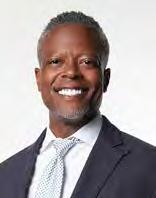
Baraka was the first openly gay firefighter at Station 6, which is located at 135 Sanchez Street in the Duboce Triangle neighborhood, according to a copy of the 2021 complaint he filed in San Francisco Superior Court. The Bay Area Reporter had been provided it when he first filed suit.
Baraka filed his second suit June 13, 2024, though the B.A.R. was unable to locate it via the court’s online case portal. The San Francisco Board of Supervisors voted 11-0 on first reading September 9 to approve an ordinance authorizing the settlement of Baraka’s two suits against the City and County of San Francisco. Because it is an ordinance, the supervisors must vote a final time at their September 16 meeting.
Alex Barrett-Shorter, deputy press secretary for City Attorney David Chiu, stated to the B.A.R. on September 9, “We believe the proposed settlement is an appropriate resolution given the inherent costs of continued litigation.”
Baraka didn’t return a request for comment for this report. His attorney on the matter was civil rights lawyer Angela Alioto, the former mayoral candidate and a past president of the Board of Supervisors.
“My only comment on the Baraka case would be that Keith stood up for his rights and that isn’t easy,” Alioto stated to the B.A.R. August 29. “And I applaud him for doing that, because they fought him hard. I also think it’s further discrimination for being a Black gay man by not paying him for six months [after the settlement was initially agreed to]. Six months never happens. So as I wrote the other day on a Facebook posting, I believe that not paying plaintiffs that have settled and they don’t pay them for months and months is further racism by the city and county.
“It is allegedly so liberal,” Alioto said of SF. Alioto had written on Facebook August 20, “Suing the city is the most frustrating experience (I guess this is their point) because when the client wins a verdict or settles, the client does not get paid for literally five to eight months. They use excuses like, it has to go before the Board of Supervisors again or it has been sent to the Government Audit and Oversight Committee or to some other committee, and then it has to go back to the Board of Supervisors and then from the Board of Supervisors, it has to go to the mayor’s office and then from the mayor’s office, it has to go to the [Controller]... And then it takes the [Controller] ten days to sign the check.”
Alioto stated that she thinks civil rights complaints should be sent to the board for approval as soon as possible.
“What would it take for the City Attorney’s office to give these civil rights race cases immediately to the Board of Supervisors instead of waiting weeks and months, which, again, in my opinion, is racist,” she stated. “As the former president of the Board of Supervisors, I cannot tell you how heartbreaking it is to me to explain to clients who’ve been through hell, that they have to wait months, to receive what is justly theirs.”

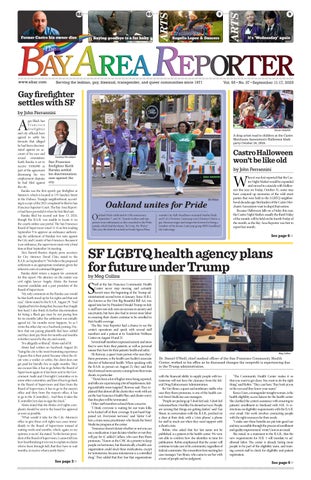
Oakland Pride celebrated its 15th anniversary September 7, and AC Transit workers and supporters were enthusiastic as they marched in the Pride parade, which had the theme “In Unity, We Thrive.” This year, the festival was held in Frank Ogawa Plaza

by John Ferrannini
When it was first reported that the Castro Night Market would be expanded and moved to coincide with Halloween this year on Friday, October 31, some may have conjured up memories of the wild street parties that were held in the LGBTQ neighborhood decades ago. But leaders of the Castro Merchants Association want to dispel that notion. Because Halloween falls on a Friday this year, the Castro Night Market, usually the third Friday of the month, will be held on the fourth Friday of the month, as the Bay Area Reporter was first to report last month.
See page 6 >>
by Meg Collins
Staff at the San Francisco Community Health Center never stop moving, and certainly haven’t since the beginning of the Trump administration’s second term in January. Since H.R.1, also known as the One Big Beautiful Bill Act, was signed into law by President Donald Trump on July 4, staff have not only seen an increase in anxiety and uncertainty, but have also had to invest more labor in ensuring their clients continue to be enrolled in their health coverage.
The Bay Area Reporter had a chance to see the center’s operations and speak with several staff members and a patient at its Tenderloin Wellness Center on August 19 and 21.
Several staff members expressed anxiety and stress they’ve seen from their patients, as well as personal unease they have for their patients’ health and safety.
Eli Benway, a queer trans person who uses they/ them pronouns, is the health care facility’s associate director of behavioral health. When speaking with the B.A.R. in person on August 21, they said that they’d noticed more anxiety coming from their trans clients, in particular.
“There’s been a lot of higher stress being reported, and folks are experiencing a lot of hopelessness, feeling justifiably more targeted,” Benway said. They explained that almost all the clients they work with are on the San Francisco Health Plan, and clients worry that this plan will be terminated.
Other staff members echoed those concerns.
“I think everyone is waiting for our trans folks to be kicked off of their coverage. It just hasn’t happened yet. Everyone’s nervous,” said Taylor Cuffaro, a trans nurse practitioner who heads the Street Medicine program at the center.
“Insurance doesn’t dictate whether or not you can use a medication; it just dictates whether or not they will pay for it,” added Cuffaro, who uses they/them pronouns. “I know at the CHC it’s a priority to keep people on hormones, but theoretically, a health care organization could stock these medications, except for testosterone, because testosterone is a controlled drug.” They added that they fear that organizations

with the financial ability to supply people with testosterone will not have the clearance from the federal Drug Enforcement Administration.
Ro Van Sloun, a queer and nonbinary staffer who uses they/them pronouns, is one of the health center’s Street Medicine case managers.
“People are picking up ‘I don’t feel safe. I don’t feel welcomed here. I feel like I’m denied services.’ People are sensing that things are getting darker,” said Van Sloun, in conversation with the B.A.R., perched on a chair at their desk, with a “crisis phone,” a phone for staff to reach out when they need support with a client’s crisis.
Robin, who asked that her last name not be published, is a patient at the health center. We were not able to confirm how she identifies in time for publication. Robin emphasized that the center will continue to take care of its community, regardless of federal constraints. She remembers first meeting her case manager, Van Sloun, who came to see her with a team of people and no judgment.
“The Community Health Center makes it so that you want to get clean. You want to do the right thing,” said Robin. “They care here. They look at you in the eyes and they know your name.”
Rence Uson, a transgender straight woman, is the health eligibility access liaison for the health center. She clarified the center’s assistance with ensuring its patients’ enrollment in Medicaid with H.R. 1’s restrictions on eligibility requirements with the B.A.R. over email. Her work involves connecting people with the right resources for their needs.
“I make sure these benefits are put into good use and stay accessible through the process of enrollment and quality improvement,” wrote Uson in an email. She noted, in a statement to the B.A.R., that the new requirements for H.R. 1 will translate to additional labor. The center is already hiring more people to be part of the eligibility team, and training current staff to check for eligibility and patient registration.
See page 6 >>
by Cynthia Laird
Friends and former colleagues are planning a celebration of life for gay former Castro business owner Petyr Kane later this month. Mr. Kane died July 15 in a senior living residence in Woodland Hills, California. He was 68.
The San Francisco Board of Supervisors recognized Mr. Kane with an In Memoriam at its September 9 meeting, according to gay board President Rafael Mandelman, who represents the Castro.
In a prepared obituary, Mr. Kane’s friends noted that he had lived for decades with Type 1 diabetes and HIV. “Through it all, he maintained a positive attitude and always saw the glass half full, something to smile about or a song to sing along to, with Alexa always playing ‘Petyr’s tunes,’” the obituary stated, referring to the Amazon virtual assistant.
Mr. Kane was well known in San Francisco’s LGBTQ neighborhood from the late 1980s to 2019, when he owned two successful clothing stores, Citizen and BODY. Both were frequented by visitors and locals alike, said his former partner and good friend, Jeffrey Leider.
“They were iconic destination stores,” Leider said in a phone interview. “He had a lot of repeat customers, and it’s where you would get the latest fashion trends.”
Leider added that BODY, first opened in 1991 at 4071 18th Street and later relocated to 450 Castro Street in 2003, sold tickets to the gay circuit parties by Gus Presents and other events back in the day. People could also buy an outfit at the same time, friends recalled.
As the obituary noted, Mr. Kane had an excellent eye for fashion. After graduating from San Francisco State University in 1979, Mr. Kane remained in the city and began his career in retail. He started working at the Gap, then moved on to Sharper Image. He eventually landed a job at New York Man in the Castro, where he became good friends with the manager, Bob Farina. He also got to know the owner, who was based in New York, where the original store was located in Chelsea. This was when Mr. Kane started to learn more about the
inner workings of running a small retail business, the obituary noted.
In May 1989, Mr. Kane opened Citizen, his first store, which was located at 536 Castro Street. The obituary stated that he and Farina started a side business and began sourcing fabric and having shirts and T-shirts made in San Francisco to sell in the store. Two years later, Mr. Kane opened BODY. In 2011, he moved Citizen to a better location at 489 Castro Street, and across the street from BODY.
Mr. Kane hired his longtime manager and assistant buyer, Isaiah Carter, in 2002. “They made an excellent team,” the obituary stated. “People loved the storefront windows, and Petyr won an award from the British fashion designer Ben Sherman for best window display in 2005,” the obituary stated. “He flew to London to see the show and was always admired by all his vendors for the popularity of his stores.”
Carter, a gay man, fondly recalled Mr. Kane. He served as general manager of both stores and was the main manager at BODY for 17 years. He met Mr. Kane in the early 1990s when he worked at Rolo and Mr. Kane was at the original Citizen store nearby.
“I started as an employee, then Jess left and I became the manager,” Carter said in a phone interview, referring to Jess Cuevas. “Shortly after that, I became the buyer.” (Cuevas did not respond to an email seeking comment.)
Carter recalled how he and Mr. Kane attended trade shows together in order to select the right merchandise for the stores for the upcoming season. Citi-
zen was more middle to high-end, with brands such as Hugo Boss and Diesel, he said, while BODY was what he described as “fitness fashion casual,” and carried Hurley, among other brands, and sneakers.
“He was a great guy and taught me a lot,” said Carter, who continues to work in retail at Bulo Shoes in Hayes Valley.
“Petyr will be missed,” Carter said. “He had a great sense of humor.”
Mr. Kane was also involved in the Castro Merchants Association, including serving on the board. Terry Asten Bennett, a straight ally and former association president, recalled Mr. Kane’s contributions.
“I remember Petyr as an active merchant in our community,” Asten Bennett, co-owner of Cliff’s Variety, wrote to the B.A.R. in a Facebook message. “Petyr and his staff helped look out for the entire community, making sure shoplifters knew there would be no funny business in the Castro. If he kicked you out of his store, you wouldn’t be shop(lift)ing anywhere else.
“I am heartbroken to hear of Petyr’s passing, he was a sparkle of joy!” she added.
Mr. Kane also supported the Castro Community Benefit District. Andrea Aiello, a lesbian who is executive director, praised Mr. Kane.
“I was so sorry to learn of Petyr’s passing,” Aiello wrote in an email. “Petyr was a brilliant business owner and retailer. He grew his shop BODY to be a true destination. People came from all over to shop at BODY.”
Aiello stated that Citizen was also “a beautiful store.”
“He cared deeply about the Castro and was proud to contribute to its vibrancy, and that he did. Petyr was also a strong supporter of the Castro Community Benefit District, always willing to collaborate on CBD projects from the Castro ambassadors to hanging flower baskets; he was there with ideas, funding, and support,” she added.
Aiello said that she missed Mr. Kane when he moved to Southern California in early 2020.
“Petyr was also a very sweet and caring man,” she stated. “Though I know it was best for him to leave S.F., I was sorry to see him go. I have missed him over the years.”
Early life
Mr. Kane was born on May 25, 1957 in London. He immigrated to the U.S. on the SS France with his parents in May 1971, the obituary stated. They eventually made their way to the West Coast and settled in Southern California. Mr. Kane’s brother, Andy, joined them in 1978 after he finished university, according to the obituary. Mr. Kane attended Agoura High School and graduated in 1975.
It was that summer that he started working at Swensen’s Ice Cream shop and met his longtime dear friend, Jackie Perkins. They went to Pierce College in Woodland Hills and continued working at Swensen’s. Perkins was a dancer on “American Bandstand” and invited Mr. Kane to come with her one time, the obituary noted. They became dance partners and began an enduring friendship of 50 years. Mr. Kane transferred to SF State in 1977. Perkins could not be reached for comment.
Nico Petry-Mitchel, a straight ally, was a good friend of Mr. Kane’s and considered himself his “adopted son.”
“I called Petyr my godfather, as he was the most present father figure in my life, as I grew up with two moms,” PetryMitchel wrote in an email.
“Petyr was my Gemini twin,” PetryMitchel stated, adding the two shared a birthday. “We spent most birthdays together: from a hot air balloon to trampoline parks to my 15th birthday where girls were invited for the first time (very scandalous), my friends and I always felt safe and well-loved in his presence.
“He, despite the sometimes hot and cold demeanor, had a kind heart and never hesitated to give,” Petry-Mitchel added. “He always rewarded hard work, loyalty, and honesty whether it was his friends, family, employees, or business partners.”
Changing market
As the retail market began to shift
due to online shopping and a changing demographic in the Castro, Mr. Kane decided to close Citizen in 2016 and consolidate into one store at BODY, according to the obituary. In December 2019, he ultimately made the decision to close BODY due to San Francisco’s mandatory seismic retrofit building ordinance and his declining health, the obituary stated. (The store’s large sign had remained on the facade until earlier this year when another longtime retailer of the neighborhood, Does Your Mother Know, relocated into the storefront.) He then moved to Southern California to be closer to his family, Leider said. Mr. Kane loved life and lived it to the fullest, the obituary noted. He enjoyed traveling and was fortunate to have visited many countries, often combining business and pleasure. His love for the theater also had him traveling often to New York and occasionally London to see the latest shows. He loved movies and had a vast knowledge of the Oscars and incredible memory of past winners, the obituary stated. He also loved music and had an extensive collection of vinyl and CDs of all his favorite artists. He was often able to identify a title and artist within the first few beats of a song.
“He was very outgoing, gregarious, and friendly,” Leider recalled. “He was generous – almost to a fault. He loved people and he loved his customers.”
Mr. Kane is preceded in death by his father, Gerry; his niece, Katie; and many friends lost in the 1980s and 1990s to AIDS.
In addition to Leider, Petry-Mitchel, and his brother and his wife, Sarah, Mr. Kane is survived by his mother, Valerie; nephews Brad and Nick; Petry-Mitchel’s mother, Theresa Petry; and countless other friends and loved ones.
A celebration of Mr. Kane’s life will be held Saturday, September 20, from 2 to 5:30 p.m. at the Cafe, 2369 Market Street. In lieu of flowers, please consider a donation in Mr. Kane’s memory to the San Francisco AIDS Foundation, Project Open Hand, or your favorite local AIDS nonprofit. t
by Cynthia Laird
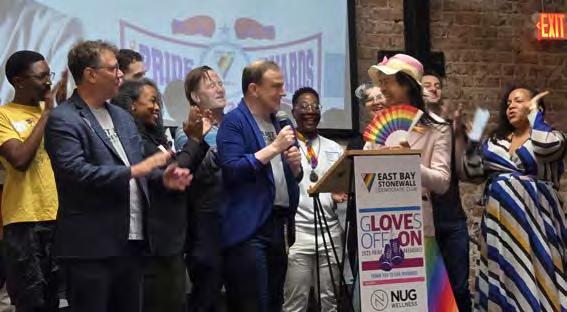
The gloves came off at the East Bay Stonewall Democratic Club’s annual Pride breakfast Sunday, with elected officials and awardees calling for LGBTQ people and allies to take up the fight against President Donald Trump and his administration.
In a surprise, Alfred Twu, a member of the club’s board, was recognized with the inaugural Board Member of the Year Award. The theme of the breakfast was “Gloves Off, Gloves On.”
Freshman Congressmember Lateefah Simon (D-Oakland), told the audience gathered at Fluid510, “Every day I go into that dome … and the people in power want to erase us.”
The longtime ally to the LGBTQ community added, “As a cis straight woman, I’m deeply committed to this community. There’s no culture war that we won’t win.”
She urged elected officials in the room to “lay it all on the line.” People should be fed instead of billions of dollars spent on weapons, she said. Elders

should be able to live in dignity.
“Lay it all on the line,” she continued. “There’s no two sides when we’re talking about children [and] peace.”
One elected official who did lay it on the line was Fremont school board Vice President Dianne Jones, who received the club’s Ally Award. Elected in 2022,
Jones told the audience that all three of her children are members of the LGBTQ community. She has fought for the Fremont Unified School District to adopt curriculum that aligns with
Obituaries >> Joseph Besecker
October 2, 1941 – September 2, 2025

Joseph (Joe) Besecker, a longtime Castro resident and celebrated playwright, died peacefully after a long illness at Coming Home Hospice in San Francisco. He was 83.
Joe was born in Stroudsburg, PA, and lived in NYC before settling in San Francisco. Joe was predeceased
state laws such as the Fair, Accurate, Inclusive, and Respectful (FAIR) Act that was signed by former governor Jerry Brown and took effect in 2012.
“It took Fremont Unified 10 years to adopt curriculum,” Jones said.
She bemoaned policies that allow parents to opt their children out of LGBTQ-related programs.
“Now, parents can opt out of reading stories,” she said.
Jones encouraged interested people to run for school board seats in their communities. “We need people out and recruiting candidates to run for these seats,” she said.
Oakland Mayor Barbara Lee and freshman lesbian District 2 City Councilmember Charlene Wang welcomed attendees.
“We’ve got to beat back what’s going on in D.C.,” Lee said. “We’re going to make sure our communities stick together – immigrant, LGBTQ, the unsheltered. We’ve got to circle the wagons.”
by his partner of 42 years, Bill Stanton (2015) and brother Robert (2022). He is survived by his sister Patricia, brother-in-law, nephews, dear friends, and his beloved cat, Maggie. Joe wrote 25 plays, with productions in New York, Los Angeles, San Francisco, and Edinburgh, Scotland. “Tennessee in the Summer,” inspired by Tennessee Williams and directed by Barbara Bain, ran nine months in Los Angeles and earned two Ovation Award nominations. “Bee-eye,” based on Edward Albee, received three Bay Area Critics Circle Award nomina-
Last month, Trump said that Oakland could be one of the cities he dispatches federal National Guard troops to because of its crime rate. He mentioned Oakland after he announced the National Guard would be deployed to Washington, D.C.
In an August 11 statement, Lee said the president’s characterization of Oakland is “wrong.”
“We’re making real progress on public safety in Oakland, and while we acknowledge we have more work to do, we are doing this work each and every day,” she stated at the time.
However, crime remains a top priority. Just last weekend, two people were killed and others were injured in separate shootings.
In spite of that, Richard Fuentes, a gay man who is co-owner of Fluid510, said the Pride weekend was a busy one at his nightclub.
See page 7 >>
tions and a Drama-Logue Award. Other plays included “Mary in the Hydrangea Bush,” “The Way Light Strikes Filled Mason Jars” (Best of the Fringe, San Francisco 2002; Edinburgh 2007), “Crime and Variations,” “Paper Dolls,” and “Visiting Bertha.” He once reflected on his vision, “The real drama was the inner unconscious drama of the artist’s psyche ... about the need to forgive other people, and especially about the need for self-forgiveness.”
Donations may be made to your favorite LGBTQ+ or animal rescue nonprofit.
by Matthew S. Bajko
For more than 15 years Enzo, a Chihuahua Miniature Pinscher mix breed rescue, was a near constant companion for my husband and myself. He traveled the country with us and became the unofficial “newshound” of the Bay Area Reporter due to his weekly Tuesday morning visits to the newsroom.
Dealing with various health issues the last several years, Enzo began to slow down and show signs of his elderly age for a canine, having turned at least 16 this past February. His eating habits changed in the spring, when we learned he was in the advanced stages of kidney disease.
In a way, we lucked out with having prior notice that our time with Enzo was coming to an end. It allowed my husband and I to prepare for the eventual day when we would need to say a last goodbye to our beloved pup and discuss how we wanted those final moments of his life to transpire.
We knew we didn’t want it to be at the offices of his veterinarian, as caring and loving the staff had been to Enzo over the years of his being their patient. Should he not go quietly in his sleep then we hoped to allow him to die at home and decided on the determinants to lead us to call on the services of a pet death doula.
That time came last month when Enzo refused to eat any foods. Thus,

<< Gay firefighter
From page 1
Instances of discrimination
Baraka sought relief under the California Fair Employment and Housing Act. According to the civil complaint,
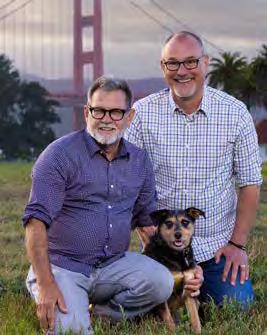
we scheduled a home visit for the afternoon of August 27 with Ken Gorczyca DVM, a companion animal end-of-life doula with the in-home pet euthanasia service A Gentle Rest
Gorczyca talked us through the process and asked us myriad questions about Enzo and the times we shared with him. Once we said one last goodbye, Gorczyca wrapped Enzo under a blanket in a basket and invited my husband to walk him out to his car, where he had set up his trunk with a circle of flowers and flameless candles.
“I look at wrapping them in a blanket and putting them in a basket like shrouding them,” explained Gorczyca, who described the service he provides as “not a funeral. It is a sacred goodbye.”
Gorczyca, a gay man who helped found Pets Are Wonderful Support, or PAWS, at the start of the AIDS epidemic to help pet owners living with HIV or dying from AIDS care for their animals, turned to veterinary palliative care more than four years ago. He received a companion animal end-of-life doula professional certificate from the University of Vermont and reached out to his friend Ari E. Rozycki, DVM, who had launched A Gentle Rest, to go work for him at the practice.
“This is my calling,” said Gorczyca, 68, an Army brat born in Philadelphia who lived all over growing up, eventually settling in Salinas, California. “For me, personally, I don’t know these people but I get to be invited into their homes during a very emotional moment. I am able to offer them myself and allow them to go through this transition.”
He had graduated from UC Davis with a B.S. in atmospheric science in 1979 and a doctor of veterinary medicine degree in 1983, coming out of the closet the next year. Early in his career, Gorczyca worked for several veterinary clinics in San Francisco while volunteering with PAWS as its education director.
“At the time, physicians were telling their patients with AIDS that they should give up their pets because of a fear of illness. We didn’t know what was causing AIDS at the time, and a lot of the illnesses people with AIDS got were also in pets,” recalled Gorczyca, who disagreed with such advice. “As a vet, I knew
being at a station so near the Castro neighborhood did not provide a safe haven from discrimination.
“During his time at Station 6, Mr. Baraka not only witnessed maltreatment of the neighborhood residents because of their sexual orientation and gender identity by his fellow firefight-
the power of the human and pet bond. I remember thinking I don’t want to tear them apart from their pets when they are dying.”
Having lost more than 300 friends and associates who died of AIDS, Gorczyca served as an end-of-life doula for many.
“I didn’t realize a human illness would so affect my career, but it became obvious that would become my career,” he recalled.
Himself a long-term HIV survivor, Gorczyca was forced into an early retirement in 1991 when his own health faltered. Eventually, with the advent of drugs that turned HIV into a manageable disease, Gorczyca was able to return to his profession. Time he had spent in the desert environment of Southern California to think about his next career pursuit led him to focus on end-of-life work with pets and their owners.
“It is a deep-rooted thing for me to do this work,” said Gorczyca, who now teaches at the Vermont certificate program and lectures about pet euthanasia.
The vet doula field is fairly new, though Gorczyca noted decades ago most pets died at home. It mirrors the growing desire of peo- ple wanting to die at home and not at the hospital, he said.
“Animals are teaching us the privilege to die at home with our family,” said Gorczyca.
As with end-of-life care for humans, euthanasia can be a difficult topic for pet owners to discuss let alone experience. Gorczyca tries to bring solace amid the grief for his clients and will meet them inside their homes, backyards or even the beach or a park that was a special place in the life of their pet.
and conduct a brief ceremony once the pet has passed involving sandalwood and the ringing of chimes. Using the answers to the questions he asks at the start of his visit, Gorczyca will create a poem and song unique to the pet that he sends to the owners shortly after he has left.

“I have been to many events where the people will have 10 people there who all loved this animal and want to be there to release their spirit. It allows for a lot of flexibility,” said Gorczyca, noting other pets can also be present for the service. “The way I look at it, I bring in ceremony and ritual. I think that is really important.”
He will read a poem about letting go
ers – he was also a target of similar harassment himself,” the complaint stated.
“Mr. Baraka was consistently harassed based on his race and sexual orientation. His locker was broken into; his name was erased from the assignment board; when he entered the room, all non-Black personnel would leave. This
“These heart songs are what I call them. Every animal, every relationship has a song, and you can help acknowledge that,” he said. The roughly 60-minute service costs roughly $1,100 depending on the urn chosen if an owner wants their pet’s cremated remains to be returned to them. If not, they can have their pet’s ashes scattered at sea. On their behalf, a donation is made to a local nonprofit that cares for pets such as PAWS.
A homeowner in Guerneville for 41 years, Gorczyca splits his time between the LGBTQ resort town in the North Bay and his home in San Francisco with his husband, Lorenz Obwegeser, and Kira, their 5-year-old Rat Terrier Whippet mix breed. Earlier this year, he launched his own in-home pet euthanasia service called A Beloved Farewell focused on Sonoma County since Rozycki’s practice doesn’t cover that part of the Bay Area.
“I get to meet amazing, amazing ani-
went on for many years. This treatment occurred within the ranks of his peers and was further sanctioned by his supervisors.”
After Baraka complained, he himself was disciplined, the complaint alleges.
Alioto told the B.A.R. in 2021 that, “They laughed at him; demoted him.”
mals on their death bed and the humans that loved them. There is nothing more I could ask for at work, I find it really fulfilling,” said Gorczyca.
An artistic coming out
A painter since childhood, Gorczyca in his adult years has gravitated toward a plein air style and focuses on natural landscapes and animal portraiture. In addition to taking commissions to paint people’s pets, Gorczyca usually travels to Death Valley twice a year to focus on his artwork, often joining in a desert fast or other program offered by the School of Lost Borders.
“I love the desert and love the open vistas,” said Gorczyca, who leaves his cellphone behind and just brings his paints and communes with nature, “allowing my art to happen.”
He is currently working on his first public art installation at senior dog rescue Muttville’s new facility at 750 Florida Street in San Francisco. He is painting a series of nine dogs in the nonprofit’s education room.
And he is taking part in his first SF Open Studios this year, opening up his home art studio in Corona Heights the first weekend of the event on September 20 and 21. See his listing at for location details.
He will have canvas prints for sale priced at $325, while his original works cost $900 to $1,500.
“I just am coming out of the closet as an artist,” quipped Gorczyca, who had his first solo art show three years ago at the National History Institute in Prescott, Arizona.
To request a vet doula via A Gentle Rest, visit its website at https://www. agentlerest.com/
For those in Sonoma County who want to engage Gorczyca’s services, visit his A Beloved Farewell at https://www. abelovedfarewell.com/. Information about Gorczyca’s artworks and pet portraits can be found at www.kengorczyca.com t
Full disclosure: Matthew S. Bajko and his husband received no special treatment in the services for their dog.
The complaint stated that Baraka was subjected to slurs at work.
“Baraka was called names such as ‘faggot’ and ‘sissy’ – derogatory terms used against those who are gay or perceived as gay,” the complaint stated. “Baraka was called ‘Sambo,’ a racial epithet.
See page 6 >>


Volume 55, Number 37
September 11-17, 2025 www.ebar.com
PUBLISHER
Michael M. Yamashita
Thomas E. Horn, Publisher Emeritus (2013)
Publisher (2003 – 2013)
Bob Ross, Founder (1971 – 2003)
NEWS EDITOR
Cynthia Laird
ARTS & NIGHTLIFE EDITOR
Jim Provenzano
ASSISTANT EDITORS
Matthew S. Bajko • John Ferrannini
CONTRIBUTING WRITERS
Christopher J. Beale • Robert Brokl
Brian Bromberger • Philip Campbell
Heather Cassell • Eliot Faine
Michael Flanagan • Jim Gladstone
Liz Highleyman • Brandon Judell • Lisa Keen
Philip Mayard • Laura Moreno
David-Elijah Nahmod • Mark William Norby
JL Odom • Paul Parish • Tim Pfaff
Jim Piechota • Adam Sandel
Jason Serinus • Gregg Shapiro
Gwendolyn Smith • Charlie Wagner
Ed Walsh • Cornelius Washington • Sura Wood
ART DIRECTION
Max Leger
PRODUCTION/DESIGN
Ernesto Sopprani
PHOTOGRAPHERS
Jane Philomen Cleland
Rick Gerharter • Gooch
Jose A. Guzman-Colon • Rudy K. Lawidjaja
Georg Lester • Rich Stadtmiller
Christopher Robledo • Fred Rowe
Shot in the City • Steven Underhill • Bill Wilson
ILLUSTRATORS & CARTOONISTS
Christine Smith
VICE PRESIDENT OF ADVERTISING
Scott Wazlowski – 415.829.8937
NATIONAL ADVERTISING REPRESENTATIVE
Rivendell Media – 212.242.6863
LEGAL COUNSEL
Paul H. Melbostad, Esq.


Bay area reporter
44 Gough Street, Suite 302 San Francisco, CA 94103
415.861.5019 • www.ebar.com
A division of BAR Media, Inc. © 2025
President: Michael M. Yamashita
Director: Scott Wazlowski
News Editor • news@ebar.com
Arts Editor • arts@ebar.com
Out & About listings • jim@ebar.com
Advertising • scott@ebar.com
Letters • letters@ebar.com
Published weekly. Bay Area Reporter reserves the right to edit or reject any advertisement which the publisher believes is in poor taste or which advertises illegal items which might result in legal action against Bay Area Reporter. Ads will not be rejected solely on the basis of politics, philosophy, religion, race, age, or sexual orientation.
Advertising rates available upon request.
Our list of subscribers and advertisers is confidential and is not sold. The sexual orientation of advertisers, photographers, and writers published herein is neither inferred nor implied. We are not responsible for unsolicited manuscripts or artwork.
U.S. Health and Human Services Secretary Robert F. Kennedy Jr. has created chaos at the nation’s leading health agencies. He has fired thousands of federal workers, changed the classification of COVID vaccines, and undertaken dubious research into the cause of autism, all while remaining a staunch vaccine skeptic. Beyond all of that, he has created disorder at the Centers for Disease Control and Prevention, firing the new director, Dr. Susan Monarez, just a month after she was confirmed by the U.S. Senate. That led to several other high-ranking CDC officials to resign, including Dr. Demetre Daskalakis. The CDC, once known as the country’s premiere public health agency, is quickly becoming a shell of its former self.
Kennedy in June removed all 17 members of the CDC’s Advisory Committee on Immunization Practices. Earlier this month, Politico reported that Kennedy announced he’s considering appointing seven new members, many of whom share his skepticism on vaccines.
This sends a dangerous signal to the general public, who are now being conditioned to believe that vaccines are bad, no matter how successful they have been. The highly contagious measles, for instance, was eliminated in 2000. This year, it’s made a comeback, with 1,281 cases reported as of July, according to Johns Hopkins Bloomberg School of Public Health.
But with the CDC’s dismantling comes new opportunities. California Governor Gavin Newsom announced last week that the Golden State, Oregon, Washington, and Hawaii have joined together to form the West Coast Health Alliance. The goal, according to a news release from Newsom’s office, will be to provide unified recommendations on immunizations to residents based on science, not politics.

tions,” the release stated. “This will allow residents to receive consistent, science-based recommendations they can rely on – regardless of shifting federal actions.”

The alliance will help safeguard scientific expertise by ensuring that public health policies in the four states are informed by trusted scientists, clinicians, and other public health leaders, according to Newsom’s office. “Through this partnership, the four states will start coordinating health guidelines by aligning immunization recommendations informed by respected national medical organiza-
This is especially needed now that school has started and with last week’s development that Dr. Joseph Ladapo, Florida’s surgeon general, ended school vaccine requirements in the Sunshine State. Even President Donald Trump expressed some reservations about that, though he has not similarly raised concerns about Kennedy’s actions at HHS. Regardless, it’s clear that public health is just not a priority for the Trump administration. And we will all pay the price for that, either through resurgence of diseases such as measles, drastically reduced funding for HIV/AIDS and many other diseases, and just a general disdain for public health employees that MAGA has been amplifying through social media and in conservative outlets. There was a time when the public actually listened to public health officials; not anymore.
That can change, however, a few states at a time.
And it can start with this new West Coast Health Alliance that the four Democratic governors have formed. In addition to Newsom, there’s lesbian Tina Kotek of Oregon, Bob Ferguson of Washington, and Dr. Josh Green of Hawaii. Green, who was an emergency room physician before being
elected governor in 2022, noted in the release that Hawaii had one of the highest vaccination rates for COVID, with 90% of residents getting at least one shot, as of 2023.
The multi-state alliance should be expanded beyond vaccine guidelines. The states should hire some of these former CDC staffers and get to work on expanding access to HIV prevention efforts, like PrEP; fulfill HIV/AIDS services; and expand on the groundbreaking research that’s already being done at public and private universities in the states, sharing the data. The alliance could also collect sexual orientation and gender identity, or SOGI, data, which California is already doing in a limited capacity.
In short, the four states could embrace a miniCDC, with a robust online presence that includes statistics and health outcomes for all kinds of conditions, incorporating information from each state’s public health department. With mpox seeing a slight uptick in California, now is the time for the states to join in encouraging vaccinations for this virus. While at the CDC, for example, Daskalakis, a gay leatherman, had received acclaim for his intimate connection to the communities he serves, as we previously reported, and that was especially the case during the initial mpox outbreak three years ago. At the time of his departure in late August, Daskalakis was the director of the CDC’s National Center for Immunization and Respiratory Diseases, and he was previously director of the Division of HIV/AIDS Prevention at the CDC’s National Center for HIV/AIDS, Viral Hepatitis, STD, and TB Prevention.
It’s clear, nine months into the second Trump administration, that neither this president nor his cabinet value federal workers. They’re all trying to out-Trump the president with their efforts to pare back agencies to the minimum. It’s the public that suffers, whether it be in the realm of public health or visiting a national park. Efforts like the West Coast Health Alliance are a positive development, but only if it actually has a presence. We encourage the states to develop messaging on social media that can inform people on the West Coast – and Hawaii – that public health actually helps people. t
by Kate Raphael, Mindy Spatt, and Carla Schick
Twenty years ago, a poster appeared on BART trains. It pictured a handsome young man cradling an automatic rifle in his lap. “Where in the Middle East Can Gay Officers Serve Their Country?” read the headline above the photo, and the answer below, on a pink background, read “Only in Israel.”
This was an early instance of “pinkwashing,” a term introduced by a Bay Area Arab artist to describe the use of Israel’s LGBTQ-friendly policies to distract from human rights abuses against Palestinians. (“Pinkwashing” was originally coined by Breast Cancer Action in response to disingenuous corporate “pink ribbon” campaigns.) With Israel’s genocide in Gaza drawing headlines and worldwide condemnation, the international queer community has become more and more united against pinkwashing, understanding that its purpose is to divide the advocates of justice.
The “Gay Soldiers” poster was one of a series distributed by BlueStar PR, an agency formed in San Francisco to “build support for Israel among its toughest critics – young liberals in North America and Europe.” This was 2006, and Israel was in the process of invading Lebanon for the third time, killing at least 1,200 Lebanese civilians and leaving close to half a million homeless. At the same time, the international LGBTQ organization InterPride was preparing for World Pride in Jerusalem, an event ironically promoted as “Love Without Borders,” in a city bisected by the Apartheid Wall, which had caused tens of thousands of Palestinians to lose access to land, family, jobs, and school.

declined to participate in World Pride.

Our group, Queers Undermining Israeli Terrorism (QUIT!), called on international queers to boycott World Pride Jerusalem, pointing out the hypocrisy of celebrating queer rights in a city where Palestinian queers could not get through checkpoints to join the march. The Palestinian lesbian group, Aswat, wrote, “As the pride parade will be a time for the gay and lesbian community in Israel to celebrate, Palestinians in Eastern occupied Jerusalem will continue to suffer under intensified checkpoints, increasing racism, house demolishing, confiscating IDs and expanding of Israeli settlements.” Dozens of international queer groups ultimately
A few years later, the Israeli government officially launched a “Brand Israel” campaign with a budget of over $3 million to change the way Israel was seen in the world. As part of this campaign, the Israeli Ministry of Tourism and Aguda, the largest Israeli LGBTQ organization, launched “TEL AVIV GAY VIBE,” an online tourism campaign to promote gay travel to Israel in Europe and the U.S. In 2010, the Israeli consul general in San Francisco and the LGBTQ Israel support group A Wider Bridge announced a monthlong festival to showcase LGBTQ art and film. What was missing from all of this was any mention of Israel’s ongoing occupation of the West Bank and Gaza, repeatedly ruled illegal under international law, and its legal discrimination against Palestinian citizens of Israel, who are mostly disqualified from owning land, excluded from many government jobs, and prevented from commemorating their history. As the Out in Israel festival was being promoted, the Israeli legislature was preparing to pass the Admissions Committee law, which allows communities to screen and reject applicants based on their “social suitability” to the “social and cultural fabric.” This law has been used solely to exclude Palestinians from Jewish-only towns.
The premise of Brand Israel’s LGBTQ focus is
that Israel is the only safe place in the Middle East for queers. Indeed, fundamentalist religious regimes in the Middle East are not friendly to queer people. But solidarity with queers in Arab countries means listening to them. Palestinian queers explicitly demand that international queers support their liberation struggle against Israeli colonialism by resisting pinkwashing. As Israel’s campaign of genocide against Palestinians in Gaza has escalated to unheard-of proportions, hundreds of queer organizations from San Francisco to Berlin to Raleigh, North Carolina have held “No Pride in Genocide” actions and demanded their Pride organizations stop partnering with companies and institutions that profit from Israeli war crimes.
In the Bay Area, thousands have joined QUIT! and Gay Shame in Queers of the Plaza demonstrations, marches, and die-ins starting from Harvey Milk Plaza, and in the Dykes for Palestine contingent in the 2025 Dyke March. In 2024, after a 17year campaign led by QUIT! and SWANABAQ (SouthWest Asian and North African Bay Area Queers), Frameline, producers of the San Francisco International LGBTQ+ Film Festival, agreed not to partner with the Israeli Consulate or its proxies until Israel ends its apartheid and occupation.
Our Bay Area queer communities have always understood that our liberation is bound up with the global struggle for social justice. The queers who came together after Stonewall to form Gay Liberation Front, Bay Area Gay Liberation, and Lesbians Against Police Violence understood queer liberation as inextricably connected to feminism, antiracism, anti-colonialism, the labor movement, the fight for accessibility, and so much more. In 1991, ACT UP and Queer Nation joined the shutdown of the San Francisco Federal Building to protest the first U.S. war against Iraq.
Palestine cannot be excluded or sectioned off from this call for all liberation. Lesbians in San Francisco held the first known event centering lesbians in Palestine in 1988, during the First Palestinian Intifada. When we say no to pinkwashing, we honor this powerful legacy of struggle. There can be no freedom for any of us without freedom and justice for all of us. Free Palestine. t
Kate Raphael, Mindy
and Carla
are all founding members of Queers Undermining Israeli Terrorism (QUIT!).
by Matthew S. Bajko
A California legislative panel focused on the needs of LGBTQ older adults is expected to draw attention on how to finance affordable homes affirming of such seniors. It comes as one such development in San Francisco awaits word on if it will be selected for a state funding program to help jumpstart its construction next year.
As the Bay Area Reporter recently reported, the Milken Institute released this year a Financial Innovations Lab market landscape report laying out five market-tested solutions for how to finance LGBTQ senior-focused housing developments. They ranged from using social bonds and impact investment funds to payfor-performance contracts and private investment incentives for such projects.
Titled “Models for Financing Affordable and LGBTQ+-Affirming Elder Housing at Scale,” the 22-page document also suggested an LGBTQ+ elder housing prize be created in order to elicit ideas that can be funded and replicated in different communities across the country. The think tank collaborated with national LGBTQ senior advocacy organization SAGE on the report, which was informed by interviews with dozens of experts from LGBTQ service providers and housing developers to government officials and academics.
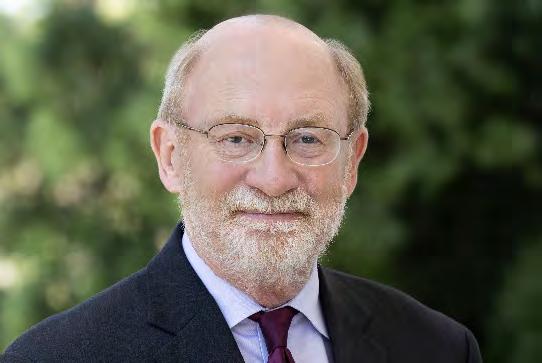
“The Milken Institute’s findings on LGBTQ+ senior housing and the persistent financing gap are not new. Marginalized communities, particularly LGBTQ+ older adults (LOA), continue to face barriers to safe, inclusive, and affordable housing,” stated gay state Senator John Laird (D-Santa Cruz), who chairs the Senate Select Committee on Older LGBTQ+ Californians.
lifespan,” noted California Department of Aging Director Susan DeMarois, who added in an emailed statement to the B.A.R. that, “CDA’s work does not extend into housing finance, but we recognize the importance of inclusive, LGBTQIA+friendly housing options for older Californians.”
DeMarois also pointed to the master plan’s third goal, which focuses on making sure seniors feel included and not isolated. That section of the plan underscores “the need for equitable access to housing and services for older adults who may face barriers or stigma,” stated DeMarois. “Ensuring inclusive housing is an important part of building an age- and disabilityfriendly California, as envisioned in the Master Plan for Aging.”

The B.A.R. had inquired with Laird’s office on if he had reviewed the report and thinks any of its recommendations are implementable in California. While his select committee has yet to schedule a specific hearing on the matter, Laird committed to highlighting the issue.
“As chair of the newly formed Select Committee on Older LGBTQ+ Californians, I intend to examine the recommendations provided so that LOA have the tools, information, and opportunities they need to expand housing options that are truly inclusive and accessible,” stated Laird, 75, the oldest member of the Legislative LGBTQ Caucus.
Of the nearly 14 million LGBTQ+ Americans, 1.1 million are 65 years of age or older, according to a 2024 Gallup survey, with that age group expected to number more than 7 million by 2030. By then, nearly 10 million Californians will be an older adult, about 25% of the state’s population, according to state officials, with it estimated that 5% of them being LGBTQ community members.
Yet there were roughly 1,500 affordable housing units affirming of LGBTQ+ older adults across 20 states as of 2023, according to the Milken report. It noted there were “37 such developments in various stages of planning or operation.”
While the governmental agency in Sacramento focused on serving the needs of all seniors in the Golden State isn’t involved with funding living units for that population, it does have oversight of California’s 10-year Master Plan for Aging. https://mpa. aging.ca.gov/ That document has “housing for all ages and stages” as its first goal to be met by 2030.
It means having “safe, affordable, and accessible housing across the
In 2024, the aging department released the results of its first-ever survey of LGBTQ seniors in California and what their top concerns were. Of the 4,037 respondents, as the B.A.R. previously reported roughly one in eight said they worried about losing their current housing.
It resulted in the survey team recommending that policy leaders and organizations ensure “that local solutions include LGBTQIA+-friendly housing options for LGBTQIA older adults.”
San Francisco LGBTQ senior services provider Openhouse and its development partner, Mercy Housing, have been trying to secure state financing to jumpstart construction on 187 units of affordable housing aimed at LGBTQ seniors in the city’s upper Market Street corridor. It has been five years since the city bought the property and then chose the two agencies to develop it.
Once Mercy constructs the new building, Openhouse will provide services to the residents, who will be chosen by a lottery open to any senior whether LGBTQ or straight. It will be a short walk away from the former college campus the agencies teamed up on turning into 119 units of below-market-rate apartments affirming of LGBTQ seniors along with offices, meeting rooms, and a community center for the nonprofit agency.
Openhouse and Mercy officials are hopeful they will secure state financing this December for the third housing structure. In the last two selection rounds for the Affordable Housing and Sustainable Communities Program overseen by the California Strategic Growth Council and the state’s Department of Housing and Community Development, Mercy’s application was rejected.
Gay outgoing Openhouse interim Executive Director Vinny Eng told the B.A.R. that affordable housing developers across California face two distinct challenges in trying to in-
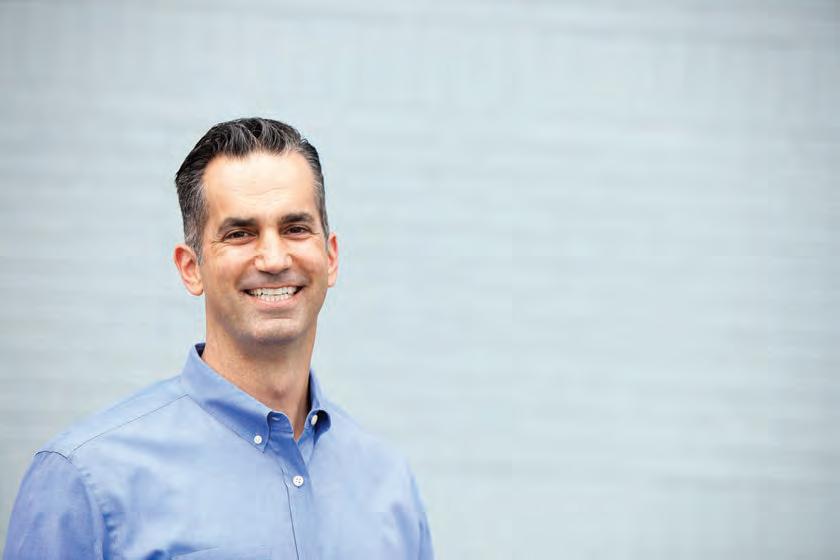
crease the number of developments built for seniors, whether they’re marketed to LGBTQ older adults or seniors in general. The first is identifying land to develop, he said, and the second is how to pay for construction of the housing to be built on it.
“They are two very different challenges, and both present great challenges for developers right now,” said Eng, who will depart sometime after Morey Riordan, a transgender and queer father of two young adults, takes over as Openhouse’s executive director September 16.
House candidate changes Prop 50 stance
As last week’s column initially reported, gay Southern California congressional candidate Curtis Morrison had been opposed to the redistricting measure voters will decide on in November. The immigration attorney had told the B.A.R. during an August 26 interview that he viewed Proposition 50 as gerrymandering, which he opposes seeing a political party use to draw districts that favor its candidates.
“It compromises democracy in a way we are not going to be able to undo,” Morrison had argued.
At the same time, he had told the B.A.R. that he had no plans to campaign against it and would be focused on why voters in the state’s 48th Congressional District should oust Congressmember Darrell Issa (R-Vista) and elect him to the San Diego area seat that would also include the LGBTQ retirement and tourist mecca of Palm Springs should Prop 50 pass.
“I am not personally sold on redistricting yet, but I am only one vote,” Morrison had noted.
Since then, even as more Democrats enter the race due to the district’s likely new boundaries, Morrison has changed his thinking on the ballot measure, saying he is “for it now.”
As he explained in a post on X, “The hypocrisy of Trump-apologist Republicans feigning moral outrage changed my mind. Also, the new CA48 is more of a hammerhead shark lego, which is cool.” t
Web Extra: For more queer political news, be sure to check http://www.ebar.com Monday mornings for Political Notes, the notebook’s online companion. This week’s column reported on bisexual San Diego City Councilmember Marti von Wilpert ditching plans to seek a state Senate seat in 2026 to instead run for Issa’s House seat.
Keep abreast of the latest LGBTQ political news by following the Political Notebook on Threads @ https://www.threads. net/@matthewbajko and on Bluesky @ https://bsky.app/profile/politicalnotes.bsky.social. Got a tip on LGBTQ politics? Call Matthew S. Bajko at (415) 829-8836 or email m.bajko@ebar. com.

and see Dignity/SF, which affirms and


Dr. Daniel O’Neill, a gay man, is the chief medical officer of San Francisco Community Health Center. He clarified while the B.A.R. visited that Federally Qualified Health Centers, which the health center is, receive many sources of funding. The San Francisco Community Health Center has a $27 million annual budget.
“If people aren’t enrolled in Medicaid, then we don’t get paid for the care. When we send off labs, they go to our laboratory, and then we get a bill from the laboratory that goes to our bottom line and our ability to keep our doors open, if people aren’t covered,” O’Neill said.
“Clinicians want to prescribe this medication and check those labs. But there’s no way to pay for it,” said O’Neill, emphasizing that the new law intends to push people off their insurance. “Providers want to deliver care to keep people healthy, right? Anyone and everyone who walks through our door. Increasingly, we are having to spend all our time managing these new constraints that are coming our way.”
While H.R. 1 presents many concerns, chief among them is the approximately $75 billion in extra funding allocated to Immigration and Customs Enforcement, while much of Medicaid is being restricted.
Health policy expert Dr. Theresa Cheng, a straight woman and ally, spoke with the B.A.R. about H.R. 1 and its impacts. Cheng is an assistant clinical professor of emergency medicine and associate co-director of social emergency medicine at UCSF, as well as an emergency medical physician at Zuckerberg San Francisco General Hospital and Trauma Center. She told the B.A.R. that H.R. 1 will have profound impacts on everyone, stripping essential resourc-
Halloween
In the past couple of years, the merchants held a daytime event on

San Francisco Community Health Center Street Medicine team members Ro Van Sloun, left, and Dennys, who did not want their last name published, walked around the Tenderloin delivering care and resources. Van Sloun is a case manager, and Dennys is a registered nurse case manager.
es from “some of the most vulnerable people of our population,” but also that the law has “profound ramifications for the entire U.S. population.” Cheng referenced the Congressional Budget Office’s estimates that the law will take health insurance away from 17 million people.
In a phone interview with the B.A.R., Cheng spoke about SFGH.
“It is our safety net hospital. All emergency departments are open 24/7 for this reason, particularly when at San Francisco General, we are there to serve low-income, vulnerable patients who have nowhere else to go,” she said. “I am just horrified to see what is coming down the pipeline, and I’m genuinely scared for my patients.”
For many health care providers, immediate concerns are the cuts to Medicaid and increased constraints on eligibility that the bill presents, particularly with
Noe Street on the Saturday before Halloween, as community leaders sought to resurrect Halloween festivities without the nighttime concerns. At the September 4 merchants
If you have HIV and HBV, we may help with a research study testing a new investigational medicine.
• Access to a new FREE investigational medication
• Compensation up to $100 per visit
• No insurance required
You may qualify if you:
• Are 18 years or older
• Have been diagnosed with HIV and hepatitis B
• Meet other health and eligibility criteria
Call us at Quest Research 415-353-0800 or visit https://www.questclinical.com to learn more without obligation.
new work requirements to qualify for Medicaid. According to an article for the Center on Budget and Policy Priorities by Elizabeth Zhang and Gideon Lukens, they wrote that effective January 1, 2027, the law will require states to deny coverage to people applying to Medicaid if they are not already working at least 80 hours per month, and will terminate Medicaid for people already enrolled if they can’t document that they meet these work requirements. This exempts caregivers of dependent children aged 13 and below, people with disabilities, people who are pregnant, and several other groups. Though according to findings of the CBPP, much of the loss from these work requirements will happen to people who should qualify but will lose access to Medicaid due to red tape.
The CBPP had previously reported that in 2018-2019, Arkansas had implemented work-reporting requirements similar to those in H.R.1 – requiring adults with low incomes to report 80 hours of work each month to keep Medicaid coverage. In the first seven months of this new requirement, 18,000 people lost coverage, with very few regaining coverage the following year.
H.R. 1 is more stringent than the Arkansas work requirements. While the Arkansas work requirements applied to adults aged 19-55, the new federal law applies to adults aged 19-64. The new law also redetermines eligibility every six months. When states can’t verify that individuals meet the work requirements or the exemption criteria, they must issue a “notice of noncompliance.” Individuals have 30 days to show compliance; the state will disenroll them from their coverage.
Diana Lieu, who did not get back to the B.A.R. on how they identify, is the communications manager of the San Francisco Community Health Center. She clarified the status of federal funds,
meeting, President Nate Bourg, a gay man, wanted to make it very clear that while there will be a night market on Halloween night in the Castro this year, “It’s not Halloween back in the Castro like 15, 20, 30 years ago.”
Halloween has had a long, tortured history in the Castro and was eventually shut down over a decade ago following violent incidents. In recent years, community leaders have attempted a Halloween comeback but at a fraction of the size and shorter duration than the original unofficial street party.
Gay Board of Supervisors President Rafael Mandelman, who represents the Castro on the board, was not at the meeting, and did not immediately return a request for comment for this report.
Bourg stressed at the meeting that, “It will be well attended whether we talk about it that much or not.”
“It’s going to be a big night for the restaurants, for the bars,” he said. “It’s going to be a lot of fun.”
Producer CG Events will have volunteers and private security to keep things safe, and will be doing an orientation with bars and restaurants in the area. The entertainment zone will be activated, allowing for purchase of alcohol for outdoor consumption from those businesses within the footprint of the street market.
telling the B.A.R. in an email that because of the center being a plaintiff in the Lambda Legal Defense and Education Fund lawsuit, https://www.ebar.com/ story/155135, the center’s federal grants are still intact. They continued that the agency has to be vigilant and advocate for all funding streams, not all from federal sources, which would be similar to any year for the nonprofit health care provider.
As the B.A.R. reported, a federal judge blocked the Trump administration from defunding the nine plaintiff nonprofits.
Lambda Legal announced in July that $6.2 million in federal funding was restored to the nonprofits.
The lawsuit, which is ongoing, challenges Trump’s Executive Order No. 14168 about gender identity that defines sex as “an individual’s immutable biological classification.” The suit also challenges Executive Orders Nos. 14151 and 14173, terminating equity-related grants and blocking the implementation of diversity, equity, inclusion, and accessibility principles in federal contractors and grantees’ work.
Pivoting to care management
As a result of this ongoing budget uncertainty, the community health center is pivoting to Enhanced Care Management, or ECM, which is a Medi-Cal managed-care benefit program under the California Advancing and Innovating Medi-Cal initiative that was launched in California on January 1, 2022. Services are provided in-person, at homes, shelters and doctors’ offices by ECM providers, such as case managers, community health workers and nurses, as well as a lead care manager who organizes aspects of care between physical, behavioral, dental, developmental, and social support.
O’Neill added, over email, that his-
also be expanded, running along 18th Street from Diamond Street to Noe Street, with Castro Street staying open to vehicles, Bourg said.
An Interdepartmental Staff Committee on Traffic and Transportation hearing to allow for the event with the expanded footprint has not yet been scheduled, according to CG Events co-founder Chris Carrington, a gay man. Known as ISCOTT, the oversight body’s next meeting is September 11, with others scheduled for September 25 and October 9, though the agendas have yet to be released.
Carrington stated entertainment is still to be announced.
“Everyone has memories of when this happened in the past,” he continued. “Most of you have been around the city. That’s not what we’re intending it to be. Lots of people, lots of conversations. … I’m not a big Halloween person but I’m excited about it.”
Halloween festivities in the Castro, which harken back to celebrations among queer people in the Tenderloin, North Beach, and Polk Gulch in the mid-20th century, became one of the premiere events of the year for the neighborhood by the 1970s, when it was known as an LGBTQ event.
torically this case management has not been reimbursed through Medicaid but has been funded by less reliable grants, many of which are now threatened or discontinued. Enhanced Care Management provides more reliable reimbursement for essential health services.
“These are all kinds of things that patients need support with,” O’Neill said, adding that they’ve had to get “very creative and reevaluate all the different roles.”
The San Francisco Health Plan is the version of Medi-Cal local to San Francisco, which is available to low-income city residents. Medi-Cal is California’s Medicaid program. The reconciliation law, or H.R.1, presents new strict work requirements for Americans to be enrolled in the plan.
Regardless of attacks at the federal level, the center remains a special place for both patients and staff. When asking Eli Benway about how it feels to do their work, which includes regularly supporting both patients and staff with loss, trauma, and mental wellness, they said it feels wonderful.
“I spend most of my time outside of work on my self-healing so that I can just hold people: imperfectly, but just the best I can,” Benway said.
Other staff, including O’Neill, expressed similar sentiments, passionately advocating for their patients’ well-being. O’Neill added that community health centers need support to do life-saving work.
“Support community health centers,” he said. “In this moment, we are literally on the front lines. Federally Qualified Health Centers have always been in the trenches.”
For more information about the San Francisco Community Health Center, visit sfcommunityhealth.org. t
street party. In 2002, four people were stabbed on Halloween night in the Castro; but the death knell for the old-time Halloween festivities was in 2006, when nine people suffered gun-related injuries in a mass shooting while a 10th victim was trampled in the melee that marred the annual street party.
A heavy police presence stopped the event from occurring again, and by 2011 stakeholders agreed that the Castro shouldn’t be the focal point of a region-wide celebration. Government policy became to direct people, as much as they’d listen, to diverse events in other neighborhoods, as well as to strictly enforce alcohol consumption and sale laws in the Castro.
San Francisco Police Department Captain Sean Perdomo, who oversees Mission Station, agreed with Bourg this year will be different from the pre-2011 event.
“I was at Halloween when it got shut down,” Perdomo said. “That was a very different event, though. If it stays in that location [on 18th Street], I think it’s going to be manageable. As a young officer, all of Market Street was taken over, everything. We were out there till 2 [a.m.]. Hoping that does not happen this year.”
The night market will be from 5 to 10 p.m. October 31. t

The market’s usual footprint will
<< Gay firefighter
From page 3
“At one point, members of Station 6 were featured in a local magazine, called 7x7. Mr. Baraka was present for the group photo and wore his helmet with the rainbow Pride sticker. It was visible in the photograph,” the complaint went on to state. “The magazine cover was framed and hung on the wall of the station house. Shortly after, Mr. Baraka observed that it was on the floor and broken. He was told by another firefighter ‘We don’t want that picture in here.’”
The complaint quoted lesbian thenfire chief Jeanine Nicholson as stating in summer 2020, “We are not doing a good

But with the large crowds descending upon the Castro – including gay bashers – it became hard for the city to ensure public safety at the
job in terms of recruiting a good amount of diverse candidates.”
The complaint stated that it is clear that Baraka was adversely affected by racism and homophobia in the department.
“[Nicholson] admitted the fact that barriers to promotion for members of the department’s diverse ranks were issues known to the management and to her when she ascended to the role of chief.
Thus, it is clear that there is rampant discrimination within the Department and those in management positions were aware of this fact,” the complaint stated.
“Mr. Baraka has been one of its victims.”
The seven causes of action were discrimination on account of sexual orientation, discrimination on account of race,
harassment, three counts of unlawful retaliation, and failure to take reasonable steps to investigate and prevent discrimination and harassment.
Baraka was the president of SF ResQ, the LGBTQ employee resource group for the fire department. He had been a recruiter for the department.
A Black transgender San Francisco Fire Department paramedic, Ronnie Jones, also represented by Alioto, settled his discrimination suit in 2023. The city settled with Jones for The B.A.R. provided extensive coverage of Assistant Chief Nicol Juratovac’s discrimination, retaliation, and harassment suit that same year. After a trial, the jury found in favor of the city. t

by David-Elijah Nahmod
From September 12-14, dancer/choreographer Rogelio Lopez will unfold a new work at Dance Mission Theater. In “Mucho Machismo y Pocos Machos,” Lopez and his dancers will tell the story of a queer Mexican folklorico dancer who falls in love with a closeted fellow dancer.
Lopez lives a life that’s immersed in dance. Born in Mexicali, Baja California Norte in Mexico, his family emigrated to Fresno when he was 13, where his father supported the family by working in the fields. He attended Roosevelt High School, and was first exposed to dance in the form of folklorico, a tradition of Mexican folk dances.
Lopez found that he had a natural propensity for the form, and, at 17, joined a local dance company called El Sol. He followed his passion to Cal State Long Beach and earned an MFA in dance, leaving folklorico behind for a time. He danced with several modern dance companies in Los Angeles and San Francisco and started teaching at the collegiate level.
Today he lives in Richmond with his husband and is a professor at St. Mary’s College, where he is also the undergraduate director of the dance program and the teacher of a folklorico class. In an interview with the Bay Area Reporter, Lopez spoke of his latest work and about his journey as a dancer.
David-Elijah Nahmod: What moves you to be a dancer choreographer?
Rogelio Lopez: Dance became a lifeline for

me, as a way to escape the circumstances of my upbringing. The dance community, specifically the modern dance world, is where I learned to embrace my queerness. Dance brings me a lot of joy, the act of giving myself a physical task for pleasure and seeking beauty. Choreography lets me express myself in community.
Please share a little bit of the history of your dance company.
After several years of making work, Rogelio Lopez and Dancers was officially formed here

by Brian Bromberger
When it premiered, the second season of the hit series “Wednesday” had much to live up to. Its first season in 2022 was Netflix’s most watched Englishlanguage show of all time, with more than 250 million views. It’s a revamping of the 1960s Gothic black comedy “Addams Family” series based on characters created by Charles Addams in the “New Yorker” magazine, and the two spinoff movies made in the 1990s.
In the original series, Wednesday was strange but good-natured. Now in “Wednesday,” she’s stoic, cold, emotionless but fiercely intelligent and defiant despite her general disdain for life. She was expelled for attempted murder by releasing live piranhas on water polo jocks bullying her brother Pugsley. She is sent to Nevermore Academy (a Goth psychedelic version of Hogwarts), which her parents attended. It’s a private school for outcasts, misfits, and monsters, seeking refuge from the world of “normies.”
Her roommate is Enid Sinclair (Emma Myers), a perennially cheerful optimist who is also a werewolf. Wednesday has inherited her mother Morticia’s psychic ability, as she attempts to solve a local murder mystery with the help of the everhandy disembodied but always expressive Thing.
The second season, after a three-year hiatus, sees Wednesday returning to a new semester at Nevermore along with her brother Pugsley (Isac Ordonez) who befriends a pet zombie Slurp. The series now has a darker, sharper edge to it, though it retains some of its off-kilter sarcasm, when in the first scene voiceover, Wednesday observes, “It’s been an eventful summer. I was
tied up in a serial killer’s basement, pursuing my favorite passions: torment and humiliation. Who said that nightmares don’t come true?”
The fun electrifying criminal Uncle Fester Addams (Fred Armisen) is a welcome return (He may be getting his own spinoff series). Oh yes, there’s a blink-and-you-miss-it cameo performance by Lady Gaga as veteran teacher Rosaline Rotwood, who gives an essential clue to Wednesday. Gaga’s bigger gift is a new song “Dead Dance” written specifically for the series.
The best episode of the season is a Goth “Freaky Friday” rip-off where because of a curse, Wednesday and Enid switch bodies, which has Ortega shocking her classmates by dancing on the campus steps to the K-pop hit, seemingly out of character.
The guest characters shine in “Wednesday.” But the real jewel is Joanna Lumley’s Grandmama, resurrecting the lurid ghastly side of her debauched diva Patsy Stone in “Absolutely Fabulous.” Give this woman a guest Emmy for comedy.
The series is first and foremost centered around Ortega, who gives an effortless macabre tour de force in a spooky charismatic role she seems born to play. You can’t keep your eyes off her. It’s made her a star, but she’s so identified with Wednesday, one wonders if it won’t limit her in future roles, which would be a shame.
Despite the myriad subplots and annoying digressions, the series’ momentum is brisk and keeps your attention. The good news is the series has been renewed for a third season, but the bad news is we might not see it till 2027.t
Read the full review on www.ebar.com.
in the Bay Area back in 2015 when I was fiscally sponsored through Shawl-Anderson Dance Center. My pre-pandemic work was rooted in postmodern contemporary dance, awash in abstraction, music and emotion. At the time, I was most interested in complicated ensemble movement.
In 2022, I started on a new artistic venture that eventually became my piece entitled “Entre Despierto Y Dormido.” This work marked my return to my roots in folklorico. Only two other dancers joined me onstage for what turned out to be a dance theater work combining both contempo-
rary dance and folklorico as well as drag, film and narrative.
It incorporated my skills in scenic, lighting and costume design as well. It was a complete departure from my previous work in that I threw all of my creative impulses and skills into the work. Luckily it was well received. The work redefined authenticity for myself, one that was boldly Mexican and queer. “Mucho Machismo y Pocos Machos” is my next venture, continuing in this vein.

‘Too Much’ revels in heart and humor
Aby Laura Moreno
romantic comedy series created by Lena Dunham and Luis Felber, “Too Much” is newly released on Netflix. The series follows a bereft New Yorker who moves to London seeking a fresh start. The story has shades of “Jane Eyre,” Charlotte Brontë’s 19thcentury novel about a young woman who overcomes hardship to find love and independence, but with contemporary sass.
For many viewers, the biggest draw is London’s stunning visuals, making the city one of the stars of the show. Jessica (Megan Stalter) arrives expecting the romanticized England of films and books, only to crash into the brick wall of reality. Her “Oh my God, I’m in hell” comment nails that grass-isgreener letdown with sharp comedic flair.
“Too Much” is also praiseworthy in that it has vague echoes of “Girls,” Dunham’s previous hit show. But unlike “Girls,” this show features a predominantly queer workplace and a rich array of LGBT characters, including trans supporting roles and a number of openly queer actors like Stalter.
Plus, Megan Stalter has been praised for infusing her character Jessica with nuance and sexual ambiguity, even though she is written as a straight Dunham-esque character. Dunham says it best: “Everything is better with queer people.”
Truly, the entire cast shines as every actor seems perfectly cast, with fun cameos from Jessica Alba and Naomi Watts adding significantly to the mix.
Megan Stalter and Will Sharpe (“The White Lotus”) spark wild chemistry on-screen as Jessica and Felix, a lower-class British drummer with a “cursed” vibe, enflame their passions. No doubt Dunham’s razor-sharp writing captures the essence of cross-cultural romance, helping Jessica muster the courage to love again, no matter how ill-advised.
The series at times veers off into “tox-com” territory, flirting with the troubling dynamics of their relationship. Felix’s personal struggles and socioeconomic background create a fraught, often toxic interplay. With unresolved issues like narcissism and emotional unavailability, Felix stands in stark contrast to Jessica’s American can-do stability, highlighting the deep divide between them.
For the most part, the series keeps up a delightful momentum. But the excellent pacing serves to make it more noticeable when the series occasionally indulges in subplots that feel diversionary, like the part about Oliver’s estranged family, especially in the middle episodes. “Too Much” is a fun watch and is literally “too much” in the British sense of the phrase, meaning truly terrific.t
Read the full review on www.ebar.com.
Lena Dunham’s “Too Much” is now streaming on Netflix. www.netflix.com/title/81671844
by David-Elijah Nahmod
Dylan O’Brien shines as twin brothers, one gay, one straight, in writer/director James Sweeney’s moving if somewhat disturbing tale of two 30ish men who meet at a bereavement support group for people who have lost a twin. They’re an unlikely pair, with Roman (O’Brien) being a nottoo-bright straight dude who’s grappling with his brother’s death. Roman’s new gay best friend Dennis (Sweeney) is also claiming to be a bereaved twin, only he’s lying. In flashback scenes the
audience sees how Dennis and Roman really came to be part of each other’s lives.
Dennis had a one-night stand with Dennis’ brother Rocky (also O’Brien) and immediately becomes obsessed with him. When Rocky doesn’t return his calls or his texts, Dennis begins stalking him. He follows Rocky and another guy down the street and calls out to him. Rocky steps off the curb to talk to Dennis and is immediately killed by a speeding car. Dennis then transfers his obsession to Roman, following him to the bereavement sup-




port group, claiming to have lost a twin himself.
The two become fast friends, going shopping and eating sandwiches together, with Dennis lying through his teeth about his late brother Dean, who never even existed. Dennis goes so far as to create photos of he and Dean “together” with his computer.
Basically a drama with a few chuckles thrown in, “Twinless,” now playing in area theaters, offers some interesting and insightful observations on the nature of loneliness. Roman is lonely for the brother he was never that close to, and Dennis is just a lonely guy.
On the surface the friendship between Roman and Dennis seems touching as these two bereaved guys reach out to each other for comfort and support. But from the beginning the audience knows that Dennis never had a twin, and this makes his actions disturbing. He attends Rocky’s funeral, disguising himself with a wig and a big, floppy hat. He follows Roman to the bereavement group and strikes up a conversation during the group’s coffee hour. It’s very unhealthy behavior, which ruins any feelings of empathy the audience might have had for Dennis.
The acting, however, is strong.
O’Brien is a revelation as the two brothers who are so unlike in temperament it’s almost hard to believe they’re being played by the same actor. Rocky is outgoing and confident while Roman is shy and reserved, though he does have a quick temper. In one scene Roman and Dennis are called “faggots” by three guys who pass them
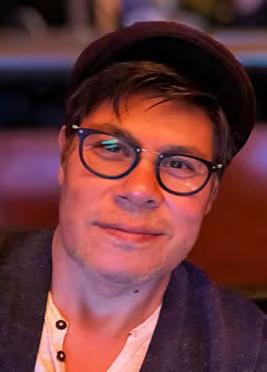

in a parking lot. Roman demands an apology and takes on all three guys, beating them singlehandedly. During this scene, Dennis has a line that’s supposed to be humorous, but isn’t.
“I’ll suck anyone’s dick if it will deescalate this,” he says. There is a third lead character in “Twinless,” Aisling Franciosi as Marcie, a coworker of Dennis’ whom he sets up on a date with Roman. This is Dennis’ downfall, as he once told Marcie that he was an only child. Spoiler alert: she questions Dennis about this when she learns about how the two of them met, and the truth comes out, as it always does. Franciosi is very good in her role, at first seeming to be a bit of an airhead, but ultimately turning out to be a smart and a strong woman.
growing up within Mexican culture, I had a lot of trauma and shame, specifically around my sexuality. This piece explores the confusing disgust and attraction to machismo or ultra-masculine identity that is celebrated and paraded in folklorico and the culture at large. It is a personal rejection of this binary within myself, all told in a fun, campy, and sincere narrative of boy meets boy.
Is it a challenge to be queer in the folklorico community?
Over the last several years I have returned to the folklorico community in a big way, both here in the States as well as in Mexico. I have attended several festivals and attended master classes, seen a ton of performances, and had conversations with creators.
Ultimately “Twinless” is a mixed bag. Both male leads come across as sympathetic characters who reach out to each other and find comfort in their burgeoning friendship. And while Roman really is a sympathetic character who will win the hearts of viewers, Dennis becomes unlikable because his behavior is so disturbing. Which raises the question: will gay men enjoy “Twinless,” a film with such an unlikable gay character? Perhaps not.t
“Twinless” is now playing at Landmark’s Opera Plaza Cinema, 601 Van Ness Ave., AMC Kabuki, 1881 Post St., and Apple Cinemas’ Van Ness, 1000 Van Ness Ave. lionsgate.com/movies/twinless
most of the power in these forms is held by mostly closeted gay men, and they continue to police and gate-keep what is viewed as correct, especially in terms of how these roles are performed. There are of course exceptions, as queerness becomes more prevalent in the culture the form shifts, but people and organizations who are trying to progress the form are having to really battle to be seen within the community.
From page 9
I attended the Guelaguetza in Oaxaca Mexico in 2023, the largest folklorico festival in the world, and it was apparently the first year the Muxes, an Oxacan native queer community of people who are third gendered, and have adopted their own folkloric traditions of community were allowed to have their own parade.t

Obviously the folklorico community is not a monolith, but there is a struggle within the form between holding on to the traditional and letting the form progress. This shows up most glaringly to me in the strict gender roles and the complete erasure of queerness in the traditional form. It is completely baffling to me that
Rogelio Lopez and Dancers in ‘Mucho Machismo y Pocos Machos,’ Sept. 12 & 13, 8pm, Sept. 14, 4pm. $33.85-$55.20. Dance Mission Theater, 3316 24th St. www.rogeliodance.com www.dancemissiontheater.org


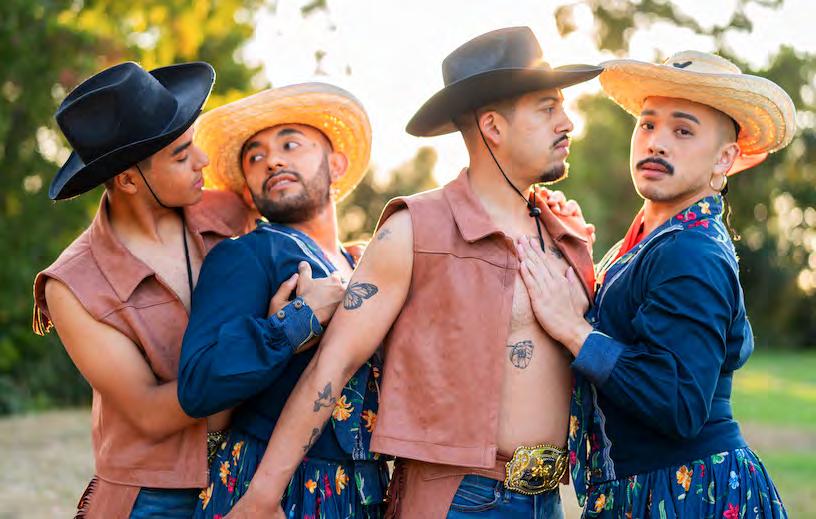
by Jim Piechota
Part 2 of our Fall books roundup series present some serious non-fiction titles on disabled rights, addiction, an uplifting food-centric anthology complete with tantalizing recipes, a special treat for Dungeons and Dragons fans, and an upcoming trans woman’s memoir that will amaze and enchant. Your quest; seek out these books, and enjoy them.


“Queers at the Table: An I llustrated Guide to Queer Food” edited by Alex D. Ketchum & Megan J. Elias
$24.95 (Arsenal Pulp)
Queer foodies will be thrilled with this new guidebook of essays, recipes, and colorful graphic artwork on the evolution of queer food and how it impacts our daily lives in the LGBTQ community. Whether discussing how food is produced and distributed, or the ways in which we cook and eat, Ketchum and Elias have curated an anthology of queer culinary culture that will delight and entice those of us who enjoy cooking, and eating!
Beginning with history, the book examines the folks who participated in the foodie movement from a queer perspective. A sizable chapter filled with tempting recipes closes every-
thing out with a smile and some food for thought. For those who enjoy cooking, this is a definite must-have. arsenalpulp.com
“Sloppy or: Doing It All Wrong” by Rax King
$18 (Vintage Books)
Rax King has been described as a gay and disabled writer riddled with anxiety and constantly attempting to rework a messy life history of addiction. She confirms these facts in an essay collection which depicts the familial cycle of disfunction (the opening chapter is titled “proud alcoholic stock”) she grew up within, and the ways and means she took to slowly crawl her way out of it.
Taking a stab at college failed miserably and instead, King decided to work as a stripper, then onto divorce from an abusive ex-husband, and finally, to a suicide attempt that surprisingly brought much-needed
clarity and self-awareness to her life. raxkingisdead.com
“Touch Me, I’m Sick” by Margeaux Feldman
$27.95 (Beacon)
It’s a sad, unspoken statement associated with those who find themselves or their loved ones engulfed in illness.
“People don’t want to be around you when you’re suffering. No one wants to be around that.”
Nonbinary author Margeaux Feldman examines this theory in a brilliant and immensely thoughtful book of essays about their own trials with illness, pain, sexual trauma, traumainduced sickness, “the trauma of being a caregiver,” and the pains of everyday existence navigating queer life. Their solution is compassionate community-centered healing, “interdependence,” and the kind of togetherness that can be a salve for any ailment.
Feldman’s six meaningful essays
stress the importance of intimate care for those we love within our own communities but also caring for strangers and not expecting anything in return.
Feldman believes this can change but we all must do our individual part and put in the work within our communities. This is a fantastic, introspective, thought-provoking collection. beacon.org
“They Came to Slay: The Queer Culture of D&D” by Thom James Carter, $14.95 (Saraband)
For queer fans of dungeons and dragons who have always wondered about the popular game’s origins, Thomas James Carter, a contributing writer for Wired magazine, explains it all in this enthusiastic gaming history book. He covers the hows and the whys on the game’s immense skyrocketing popularity, particularly for queer players in general.
The author, when he adapts the nar-
rative tone of the “Dungeon Master,” is both a hilarious and a galvanizing tactic which draws readers into his curious gameplaying procedures and queer social correlations. saraband.net/inklings
“Sorry I Keep Crying During Sex: A Memoir” by JesseJames Rose, $28 (Abrams)
In this debut stunner, trans influencer and actor Jesse James Rose presents a decade of her life brimming with pain, heartache, gender identity, and healing.
Still smarting from the fallout of her breakout with boyfriend Finnegan and the enduring trauma from a rape ordeal, she dives head-first into sexual healing with Grindr hookups, sex parties, group sex, and more, all specifically numbered and with many followed soon after by episodes of tearyeyed confessionals.
Rose splashes so much heart, yearning for connection, and emotional urgency across each page, the memoir becomes elevated to an emotional level that readers will feel right and even relate to right to very last chapter. This is a bold and brassy confessional not to be missed. abramsbooks.comt
Read the full reviews on www.ebar.com
by Gregg Shapiro
When I first stumbled across queer folksinger Willi Carlisle via his 2022 album “Peculiar, Missouri,” I was gobsmacked. Carlisle seamlessly blended his Missouri roots into music that drew on Americana and country as much as it did traditional folk, while incorporating his personal identity.
His exhilarating 2024 follow-up, “Critterland,” was as close to perfection as possible and qualifies as the singer/songwriter’s best album. Carlisle’s latest, “Winged Victory” (Signature Sounds) gets off to a rousing start with “We Have Fed You All For 1000 Years,” and includes a wonderful cover of Lavender Country’s “Cryin’ These Cocksucking Tears.”
As Carlisle wrote in the liner notes, “these songs feel poised on the edge of the apocalypse, written in a country that is falling into the sea,” and that tone is maintained on the title song, “Wildflower Growin’,” and “Work Is Work.”
Willi Carlisle performs in San Francisco on Oct. 30 at The Independent. willicarlislemusic.com
“Ratchet,” the fantastic 2015 debut album by queer singer/songwriter Shamir found a place on many end-of-the-year best-of lists. Since that time, the nonbinary artist has released six more full-length albums, including their latest “Ten” (Kill Rock Stars). Available on orange vinyl, the album is said to be their last as they explore other creative outlets.
The ten songs on “Ten” are examples of the way that Shamir has moved in different directions following the release of
“Ratchet.” While there aren’t any electronic dance beats to be found, there is still much to admire. shamir.bandcamp.com

Frankie Grande, gives his all on his debut album “Hotel Rock Bottom” (Casablanca/Republic). Available on rainbow splatter vinyl and separated into top and bottom sides (Get it?), the album is a well-timed dance party beginning with “Rhythm of Love,” an uplifting club banger. “Sex Shop” is a suggestive as its title suggests, “Boys” is a threesome anthem, musical inferno “Hotter Than Hell” somehow manages to reference Dante, “Music and The Noise” is custom-made for tea dance and, in an unexpected sobering turn, the title track addresses the issue of recovery. instagram. com/frankiejgrande



Of “Piqued” (Independent Project Records), the final solo album by the late singer/songwriter and For Against front-person Jeffrey Runnings (who died in March 2025), the artist said that “it wasn’t made for anyone, it wasn’t even intended to be put out; it’s a record for its own sake.” Nevertheless, we should be glad that this posthumous release is seeing the light of day. Runnings defined the music as “a mostly instrumental hi-fi/lo-fi baroque mashup with early 4AD,” which certainly comes through on opener “Batman Forever.” independentprojectrecords.com
“I’ve Had a Love,” the second album by gay cabaret artist Frank Dain, and his first in 24 years, is dedicated to his late husband of 33 years, Bill Sensenbrenner, whom he
lost to COVID in 2021. Such information makes this collection of familiar material a bittersweet affair. Dain, the editor of “Cabaret Scenes” magazine, is well acquainted with the genre, and
both his performance and song selection reflect that fact. Recommended tracks include “It’s A New World,” “But Beautiful,” “No One Ever Tells You,” “Sleepy Man,” and “Some Other Time.”
frankdain.comt
Read the full reviews, with music clips, on www.ebar.com.


Emergency planning begins at home, but it doesn’t stop there. It’s just as important to consider the needs of your extended family, neighbors, and anyone who may rely on you in a crisis. When creating an emergency plan, talk with your loved ones about these key steps:
BUILD A SUPPLY KIT.
Stock up on essentials like food, water, batteries, flashlights and a battery-powered radio.
PREPARE FOR POWER OUTAGES.
Make sure everyone knows how to manually open the garage door if the electricity goes out. Consider backup power options like a generator or portable chargers.
PLAN YOUR ESCAPE ROUTES.
Map out safe exits from your home and neighborhood in case you need to evacuate quickly.
To learn more ways to prepare for an emergency, visit safetyactioncenter.pge.com