TL Mardi Gras



TL Mardi Gras
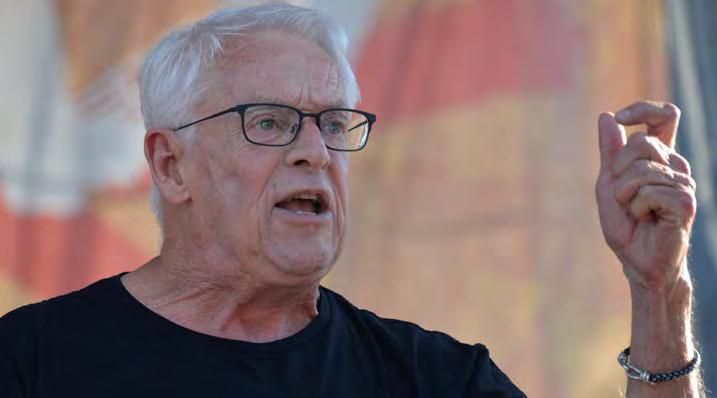
by John Ferrannini
As the Bay Area and the world remember the grim milestone of 45 years since the first reported cases of what later became known as AIDS, longtime activists are planning a seven-day campaign to call attention to cuts to health services. That includes funds for HIV/AIDS services, as well as healthcare in general.
“Seven Days in June,” from June 1-7, is the brainchild of Cleve Jones, a gay man living with HIV known for co-founding the AIDS Memorial
Quilt and the San Francisco AIDS Foundation. Jones said he was inspired to draw public attention to the defunding of health services after Elon Musk, then-senior adviser to President Donald Trump, famously wielded a chainsaw in the air on a stage as the administration abruptly slashed foreign aid – including to people’s life-saving HIV medications.
A study in The Lancet found that those cuts, and the evisceration of the United States Agency for International Development, could lead to almost 10 million global deaths by 2030.

11: Scott Wiener Statewide Offices
Kellman
Secretary of State
Cohen Treasurer
Caballero
Attorney General
Kim
SF Board of Supervisors
2: Stephen Sherrill
4: Alan Wong
SF Board of Education Phil Kim
Congress (Bay Area)
Dist. 2: Jared Huffman
Dist. 4: Mike Thompson
Dist. 8: John Garamendi
Dist. 9: Josh Harder
Dist. 10: Mark DeSaulnier
Dist. 12: Lateefah Simon
Dist. 14: Matt Ortega
Dist. 15: Kevin Mullin
Dist. 16: Sam Liccardo
Dist. 17: Ro Khanna
Dist. 18: Zoe Lofgren
California Senate
Dist. 10: David Cohen

CA Assembly
Dist.12: Eli Beckman
Dist.14: Buffy Wicks
Dist.16: Rebecca Bauer-Kahan
Dist. 17: Matt Haney
Dist. 18: Mia Bonta
Dist. 19: Catherine Stefani
Dist. 20: Liz Ortega
Dist. 21: Diane Papan
Dist. 24: Alex Lee
Dist. 25: Ash Kalra
Dist. 26: Patrick Ahrens
San Francisco Props Yes on: A No on: B, C, D
by June 2!

“Elon Musk went on TV and told the American people that compassion and empathy are weaknesses,” Jones said in a phone interview. “Imagine. Just think about that. While he took a chainsaw to all the safety net and welfare programs not only in the U.S. but globally. That we should reject compassion and empathy – this is contrary to the teaching of every faith tradition in this country.”
And that was just the tip of the iceberg – Jones also wants to call attention to the effect of Trump’s One Big Beautiful Bill Act for healthcare premiums. Officially known as HR 1, the act will also lead to reduced healthcare funds to state and local governments, including in San Francisco, which is in the process of a second round of cuts from its health department even as city leaders anticipate more reductions in the soon-to-be-announced two-year budget proposal.
“HR 1 destroyed medical care in this country, and most people don’t know it. The result is going to be catastrophic, but it’s been delayed and delayed until December and January because they didn’t want the American people to understand and feel the pain until the midterms, in a very calculated, cynical move on their part,” Jones said, referring to implementation dates for parts of the federal law. “We need to do everything we can to shine a light on the local importance of federal cuts.”
And so Jones launched Seven Days in June as a nationwide effort involving town halls, panel discussions, forums, interfaith services, and rallies. Organizations can also sign up to host a panel of the AIDS quilt in their communities.
See page 14 >>

by Lois Pearlman
It was bagpipes versus bubbles Saturday, May 23, when a small group of lay Catholic protesters faced off against a much larger contingent of counterprotesters during Storytime with the Sisters at the Guerneville Public Library. The drag nun philanthropic group Sisters of Perpetual Indulgence has been holding the event in recent years.
Seven men in business suits, red sashes across their chests, chanted Catholic prayers and blasted recorded bagpipe music, surrounded by an estimated 80 supporters of the annual pre-Pride Month event. One of the counterprotesters had brought a bubble machine that wafted soap bubbles across the proceedings.
by Matthew S. Bajko
Addressing longtime members and political leaders at the Harvey Milk LGBTQ Demo cratic Club’s golden anniversary event, Oak land Mayor Barbara Lee tasked the attendees to keep fighting, keep organizing, and to keep showing up.
“And let’s have some joy while we do that,” said Lee, despite the federal rollback of queer and trans rights being undertaken by the Trump administra tion. “We cannot allow them to divide black and brown communities from the LGBTQ-plus com munity. No way, we cannot do that.”
Lee accepted the LGBTQ political group’s Ba yard Rustin Civil Rights Award at its 50th Anni versary Gayla titled “Unstoppable.” The award is named after the late gay Black leader who was the lead organizer of the 1963 March on Washington for Jobs and Freedom.
“Wow, a brilliant organizer. He was a man who lived his truth in the day, as a gay black man, decades before, really, the world, in our own country, was really ready to accept it, you know, and to carry his name on an award for me is truly humbling,” said Lee, a Democrat who just marked her first year leading her East Bay city.
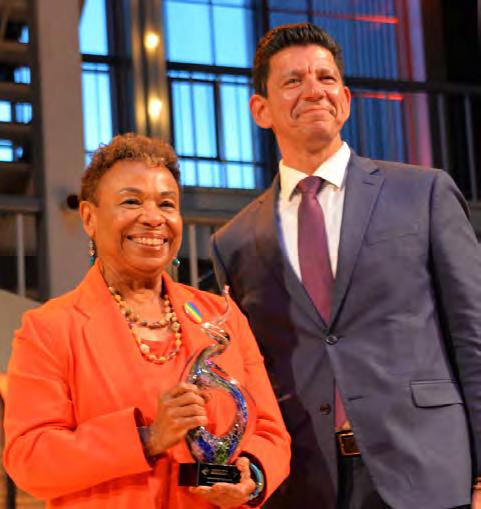
The lessons of Rustin’s life, added Lee, “is the mandate of this moment that we are in. Black, brown, immigrant, queer, trans - we rise together. Otherwise, we all fall together. And, um, we’re not gonna let that happen. We’re not going back.”
She was among the scores of longtime Milk club members and political leaders celebrating its decades of LGBTQ political activism Friday, May 22, at the San Francisco Design Center. Sue Englander, a bisexual retired college professor, has belonged to the more progressive of the city’s two main LGBTQ Democratic clubs for at least 25 years.
“I feel as though we all need to be more present, more resisting, and more radical in this really dangerous time. And I feel as though that’s one of my
roles right now, within and without the club, to keep on pushing for that level of resistance,” Englander told the Bay Area Reporter when asked to reflect on the Milk club’s milestone anniversary.
The event coincided with this year’s Harvey Milk Day observances in California. It is held each May 22 on Milk’s birthdate; the first LGBTQ person elected to public office in the Golden State would have turned 96 this year.
Tragically, the late gay San Francisco supervisor was assassinated along with then-mayor George Moscone in 1978. Afterward, the Milk club renamed itself in his honor, having started out in 1976 as the San Francisco Gay Democratic Club.
by JL Odom
Friday evenings on Castro Street often draw crowds to bars, restaurants, and the recently reopened Castro Theatre. But on Friday, May 22, people gathered for another reason: the 16th annual Harvey Milk Day observance in San Francisco’s LGBTQ Castro district.
This year’s event, held from 6 to 7 p.m., centered on transgender healthcare – a theme reflected in handmade signs, attendees’ perspectives, and speakers’ remarks.
The day of special significance in California, thanks to a state law signed in 2009, is observed each year on Milk’s May 22 birthday. Harvey Milk Day hon-
ors the late gay rights leader’s impact on LGBTQ rights and social justice movements. The nonprofit Harvey Milk Foundation, run by Milk’s gay nephew, Stuart Milk, also organizes events in conjunction with the day.
Milk, who would have turned 96 this year, was assassinated alongside thenmayor George Moscone inside San Francisco City Hall on November 27, 1978, by disgruntled ex-supervisor Dan White. A year earlier, Milk became the first openly LGBTQ person elected to public office in both San Francisco and California when he won a seat on the Board of Supervisors.
Before representing the Castro and surrounding neighborhoods, Milk
wrote the “Milk Forum” political column for the Bay Area Reporter, publishing 102 installments between October 1974 and November 1978, as previously reported by the B.A.R.
Friday’s observance featured live music from the San Francisco Pride Band, the city’s official band, and remarks from speakers including gay state Senator Scott Wiener (D-San Francisco) and Latina trans San Francisco drag laureate Per Sia. Organized by the Castro Community Benefit District, Friends of Harvey Milk Plaza, Castro LGBTQ Cultural District, and Castro Merchants Association, the event began outside Queer Arts Featured – the arts boutique, gallery, and gathering space located at 575 Castro Street, the former site of Milk’s Castro Camera shop – before a procession led by the band moved up Castro Street to Jane Warner Plaza.
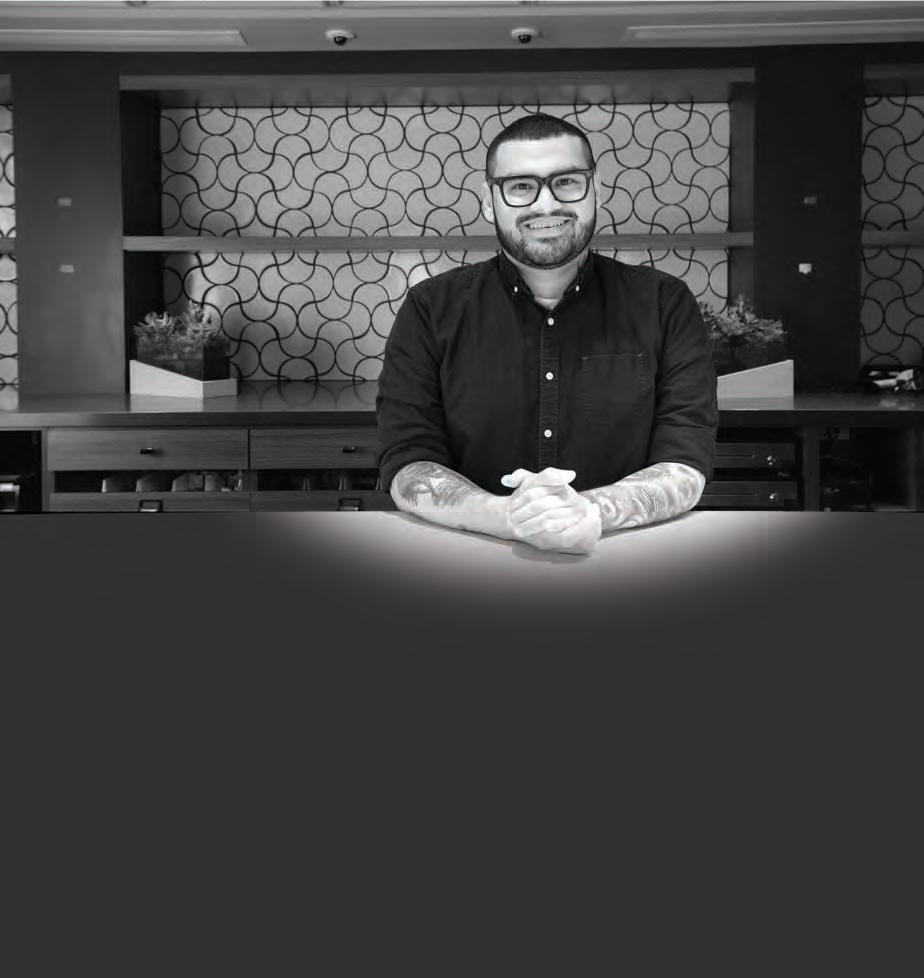
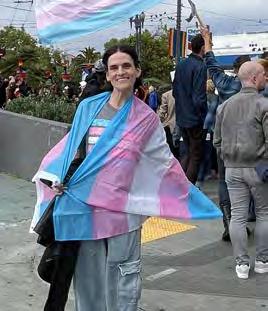
Among those attending was Bailey Wallace, who traveled from Carson City, Nevada, with their mother to celebrate her 36th birthday on May 22 – the same birthday shared by Milk. Wallace said attending the event was meaningful not only because of that connection, but because of their own aspirations to support LGBTQ individuals.
JL Odom
Bailey Wallace, visiting from Carson City, Nevada, was among those who attended the May 22 Harvey Milk Day event in the Castro.
cluding in San Francisco, where she lives.
“On a local level, they’re facing the loss of vital services and budget cuts that would really affect a lot of [them],” she said, adding, “We need to show our support and make sure that their voices don’t go unheard.”
During the event Queer Arts Featured co-founder and owner Devlin Shand and The Dragon King, a trans man and drag king, both spotlighted a sign in the crowd honoring Juniper Blessing, a 19-year-old trans student at the University of Washington who was stabbed and killed May 10, as reported by online publication Them. A man has been arrested in connection with the brutal attack.
“I want to be a social worker for queer and transgender youth, and I know Harvey was a big gay rights advocate, and so I feel like I align with basically everything that he stood for, and everything he fought for, and that’s why I’m here,” Wallace said.
Wallace, who identifies as queer and nonbinary, said they came out about a year ago with the support of two queer trans friends while preparing for a future career in social work.
“They helped me a lot with my coming out journey, and so [now] I want to help them,” they said, referring to the transgender and gender-nonconforming community, or TGNC.
Wallace, wearing a trans pride flag as a cape, said they were excited to see Wiener at the event and hoped to shake his hand. Wiener has authored several bills aimed at strengthening protections for the trans community, including an expansion of his trans refuge law focused on trans youth and their families who come to California from other states.
The event’s emphasis on transgender
healthcare came amid ongoing attacks on the rights of gender-nonconforming people in state legislatures, federal courts, and from the White House. In California, LGBTQ advocates and service providers are urging lawmakers to allocate $26 million in the 2026-27 state budget for gender-affirming care, while intersex activists are backing Assembly Bill 1876, introduced by Assemblymember Dawn Addis (D-Morro Bay), to require insurance coverage for intersex healthcare needs, as previously reported by the B.A.R. It is one of the LGBTQ-related bills that advanced out of its chamber of origin in the Legislature this spring to now be taken up by either the Assembly or Senate in the coming weeks.
“As a member of the LGBTQ community, it’s important to stand up for our most vulnerable, and right now that’s trans and gender non-conforming people,” said Alyssa Traina, the field director for gay District 8 supervisor candidate Michael Trung Nguygen, who also attended the event.
Traina, a lesbian, said TGNC individuals are facing challenges nationwide, including restrictions on healthcare access as well as barriers related to housing, employment, public accommodations, education, sports participation and legal identification documents.
Traina, 23, also pointed to concerns facing TGNC people in California, in-
Held by attendee Phyllis Brady, the sign featured an illustration of Blessing and the phrase “The Most Amazing Human Being” written in black lettering over the trans Pride colors of light blue, white, and light pink.
The Dragon King briefly addressed the crowd, referencing the toll attacks on TGNC youth are taking nationwide.
“This is an extremely dark time – I won’t sugarcoat it,” they said. “There are trans youth all across this country looking for a reason to keep going. They do not feel held, they do not feel protected, they do not feel safe.”
They added that events such as the Harvey Milk Day observance – where queer community members and allies gathered in support of trans people –carry particular significance during this moment.
Alex U. Inn, an art-tivist, co-founder of the People’s March in San Francisco and the B.A.R. readers’ poll Best Drag King winner for 2026, told the crowd they thought about “What would Harvey say?” while preparing their remarks, as well as Milk’s 1978 “Hope Speech.”
Referencing cuts to trans healthcare coverage, including gender-affirming medical care, Inn invoked one of Milk’s best-known statements, “I have always said that if a bullet should enter my brain, let that bullet destroy every closet door.”
“They are trying to rebuild those closet doors with financial and legal barriers, and we have to kick them right back down when our trans siblings are under attack,” Inn said. t
by John Ferrannini
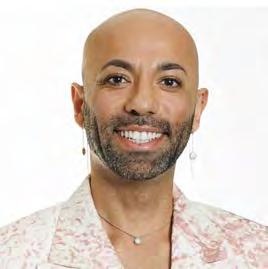
Agay San Francisco doctor who sued Waymo and Alphabet, its parent company, claiming “algorithmic discrimination” after he allegedly was flagged by an artificial intelligence program and refused service due to his Middle Eastern background, has decided to drop the suit. Dr. Nasser Mohamed stated that the company acknowledged responsibility and took steps to change its practices.
Mohamed, an internationallyrecognized LGBTQ activist born in Qatar, who owns Osra Medical in San Francisco, downloaded the autonomous car application Waymo in 2023 “but consistently received error messages preventing him from accessing the service,” according to a copy of the civil complaint he filed in San Francisco Superior Court late last year.
The reason, according to the complaint, stems from the fact that Alphabet’s AI program scans the U.S. Office of Foreign Assets Control Sanctions List to decide who not to provide access to.
Under the auspices of the U.S. Treasury Department, the list identifies individuals subject to sanctions by the U.S. government for reasons related to foreign policy and safety.
Courtney Lindberg Photography
Dr. Nasser Mohamed, who runs Osra Medical in San Francisco, has dropped his lawsuit against Waymo and its parent company.
Mohamed said Waymo did not give him the option of clarifying he was not on the sanctions list.
“Plaintiff’s name is not on the OFAC Sanctions List,” the complaint stated. “However, there are other Middle Eastern and Muslim names on the list that are similar to Plaintiff’s name. Alphabet’s AI software erroneously flagged Plaintiff’s name due to its similarity to other Middle Eastern and Muslim names on the list. Plaintiff – a user of a number of services provided by Alphabet subsidiaries like Waymo – is now internally flagged as a national security risk by Alphabet.” Alphabet also owns Google and YouTube, among other companies.
Waymo, and other autonomous ride-hailing services, have become ubiquitous in San Francisco. It had initially not taken responsibility, with a Waymo spokesperson telling the Bay Area Reporter, “Waymo does not discriminate use of our service. We are committed to providing access to all in the communities we serve. We disagree with the claims made.”
On May 18, Mohamed stated that he was dropping the lawsuit because he “successfully engaged Waymo’s team” after the suit was filed.
“We have identified the issue of my being denied access as incorrectly flagged by name on the OFAC list without further verification,” he stated via Instagram. “My inability to contest that decision and provide feedback for two years was of particular concern to me in the age of increased use of automation and AI.
“After working with Waymo’s team, a new workflow process was developed,” he added. “A new error code is now used to allow users to communicate with the company and have an audit to ensure a customer is not wrongfully excluded.” Mohamed continued he was the first user to utilize the code, and found the ban on his account had been lifted.
by Matthew S. Bajko
The San Francisco Historic Preservation Commission has lent its support to landmarking the one-time home of the late gay U.S. Ambassador James. C. Hormel. The stately Queen Anne Victorian situated across the street from Buena Vista Park was built in the late 1890s and survived the 1906 earthquake.
As part of his push to designate historic properties as city landmarks to protect them from being destroyed, gay San Francisco Supervisor Rafael Mandelman had brought forward the landmark request for the property. The Hormel mansion at 181 Buena Vista Avenue East on the corner of Duboce Avenue was the only one related to LGBTQ history among the 21 sites Mandelman is seeking to become local landmarks that the oversight body voted Wednesday to support.
The historic preservation commissioners voted 4-2 at their May 20 meeting to recommend that the Board of Supervisors landmark the sites. They also voted 6-0 in support of landmarking 880 25th Street, known as the “Latin Rock House.”
Queer District 9 Supervisor Jackie Fielder, currently on a leave of absence, sponsored the landmark request in March for the property and its “Casa Bandido” mural. The home played a significant role in the birth and evolution of the Latin rock genre in San Francisco, noted city staff.
The landmarks will now be taken up by the supervisors for approval. Should the board do so, then it will be up to Mayor Daniel Lurie to finalize the properties becoming city landmarks and added to the list of local historic sites.
As the Bay Area Reporter had noted earlier this year when Mandelman initiated the landmark request for the Hormel mansion, Hormel purchased the home in 1986 and lived there for 26
years, according to the Citywide Historic Context Statement for LGBTQ History in San Francisco.
The heir to the Hormel meatpacking fortune, Hormel became a prominent philanthropist who helped launch such LGBTQ organizations as the Human Rights Campaign and the James C. Hormel LGBTQIA Center housed at the San Francisco Public Library’s main branch.
He made international headlines in 1997 when then-President Bill Clinton nominated Hormel to be the country’s ambassador to Luxembourg, and thus, the first out LGBTQ person to serve in such a role. It sparked immediate opposition from Senate Republicans and conservative Christians, prompting Clinton to use his recess appointment powers to install Hormel into the diplomatic position in 1999.
Hormel would serve as ambassador to the small European country until 2001. He died of natural causes at the age of 88 in the summer of 2021, as the B.A.R. reported at the time.
When Hormel lived in the sixbedroom, five-bathroom mansion, it sported a pink paint job. He sold it in 2012 for $7.2 million to tech executive Robert Mee and his wife, who repainted the four-story, nearly 9,300 square foot single-family residence in a white coat.
When the couple sought city approvals to renovate the property and add a roughly 325-square foot addition in 2013, a city planning report noted it was deemed to be a historical resource eligible for inclusion on the California Register of Historic Resources partly due to Hormel’s having resided at the property and for its original owners.
“The residential dwelling was constructed in circa 1898 by George de Urioste. The family lived in 181 Buena Vista Avenue for 85 years. During this time, the family made significant contributions to local history as a pioneering San Francisco family, actively involved in local politics, business, the development
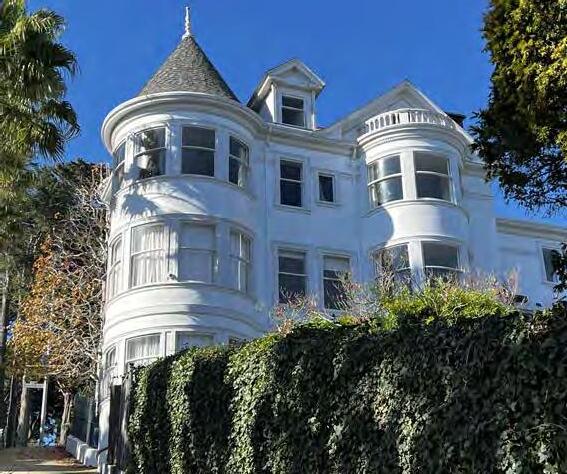
of the Park Hill Tract and philanthropic endeavors,” noted the report.
It also detailed Hormel’s achievements during his lifetime and while he owned the property.
“Hormel was an important figure in the gay rights movement in San Francisco in the late 20th century and his association with the property is exceptionally significant such that the period of significance for the property should extend to 2012, when he sold the property,” noted the report. “Both the de Urioste Family and James C. Hormel made significant contributions at the local, regional and national levels while residing at 181 Buena Vista Avenue East. As such, the subject property is eligible under Criterion 2 from the time of construction of the property in 1899 when Hormel sold the property in 2012.”
The local landmark designation provides some protection to the facade of a
property, which is to be preserved into perpetuity. It also triggers greater scrutiny by the city’s planning department and commission of any redevelopment plans for landmarked sites.
“This doesn’t provide absolute protection, it is still possible one or more of these buildings could be demolished,” Mandelman had noted. “What it does do is it allows for more levels of review before that happens.”
Nearby the Hormel property, at 737 Buena Vista Avenue West, Mandelman is also seeking local landmark status for another mansion owned by a prominent San Franciscan. The Floyd Spreckels Mansion, built in 1897 for sugar magnate Richard Spreckels, is an example of Classical Revival architecture.
Other sites
Mandelman is seeking to landmark a number of private residences. They
include the Duboce Triangle Greek Revival Home at 2173 15th Street; the Tietz-Beneke House at 657 Chenery Street; the Poole-Bell House at 192 Laidley Street; the Hinkel House at 740 Castro Street; and the John J. Clark House at 210 Douglass Street. Also on the list are the Alexander Adams Home at 1450 Masonic Avenue; the Elliott M. Wilson Home at 1335 Guerrero Street; the Charles Katz Home at 1200 Dolores Street; the Shaughnessy House at 394 Fair Oaks Street; the Guerrero Street Double Stick Eastlake House at 1415-1417 Guerrero Street; the Buena Vista Farmhouse at 11 Piedmont Street; the Henry Street Rowhouses at 191-197 Henry Street; and the Born Home at 99 Divisadero Street.
Several properties turned into private homes are on the list. They include the Phoenix Brewery Building at 552 Noe Street; Firehouse No. 44 at 3816 22nd Street; and the Second Christian Science Church at 651-655 Dolores Street now known as the Light House luxury townhome across from Mission Dolores Park.
Also on the list are religious institutions Holy Innocents Church at 455 Fair Oaks Street and Golden Gate Lutheran Church at 3689 19th Street. All won the support of a majority of the historic preservation commissioners Wednesday. Commissioners Hans Baldauf and Robert “Bob” Vergara, the panel’s lone gay member, cast the two opposing votes because they wanted to postpone until their June 3 meeting taking up the landmark request for the Power House at 1526 Masonic Avenue due to the property owner voicing opposition to the designation at the meeting. With there being several weeks for the owners to speak to Mandelman about the matter prior to the board voting on it, the other commissioners opted to include it with the 20 other properties they voted on as part of one motion.
See page 14 >>

Foundation
by John Ferrannini
ASan Francisco man accused of van-
dalizing a Pacific Heights church with homophobic and antisemitic messages was ordered to stand trial following a preliminary hearing. Meanwhile, the man, Sadat Mousa, was released from custody last week and is out on bail.
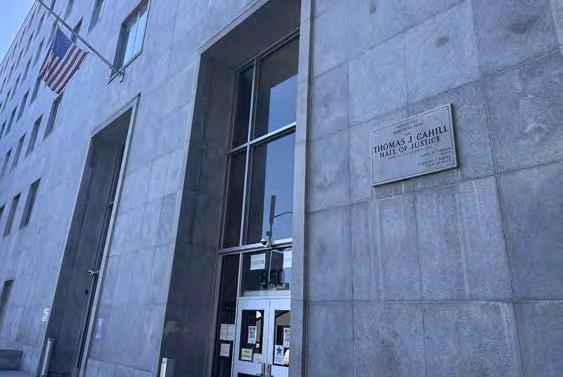
Mousa, 51, took the stand against his attorney’s advice on the second day of his preliminary hearing May 21 in Department 9 of the San Francisco Hall of Justice, with Superior Court Judge Dawn Payne presiding.
Assistant District Attorney Yuri Chornobil asked Mousa point-blank if he vandalized the San Francisco Central Seventh-day Adventist Church, at 2889 California Street, on February 28.
“Are you gay or straight?” Mousa asked Chornobil, who is gay. “You say you are gay. I cannot be judged or spoken to by a gay.”
Mousa claimed he was poisoned by the gay community when he was in prison in the early 2010s. Mousa was convicted of making a criminal threat to his brother and also on a misdemeanor charge of a harassing phone call, according to court records. Later, he sued Kamala Harris, who was San Francisco district attorney at the time, claiming “that he suffered food poisoning during custody and that jail staff put psychoactive ingredients in his food to make him appear mentally ill,” according to a 2013 opinion by federal District Court Judge Jon S. Tigar, who dismissed the suit.
When Chornobil asked the question again, Mousa said, “I consider you not here.” When Payne repeated the question, Mousa answered, “We have absolutely the right to reject your system due to the $40 trillion deficit by the Jewish bankers, and the Harvey Milk corporation, who just killed women and children in Gaza concentration camp.”
Mousa continued, “Tell me who killed Jesus Christ 2000 years ago? The
Jews blame the Roman Empire. Who are the Romans? … Is Sodom and Gomorrah Jerusalem, or San Francisco?”
Milk, who was Jewish and also the first gay elected official in California, represented the Castro and surrounding neighborhoods on the San Francisco Board of Supervisors. He was assassinated in November 1978. There is not a corporate entity named the Harvey Milk corporation, though there is a nonprofit foundation named for him.
In the Bible, Sodom and Gomorrah were two cities destroyed by God for their sins, from which the term sodomy, for homosexual sex, has its root.
According to Gaza health officials, over 70,000 people have been killed in the Gaza Strip since Israeli forces invaded in 2023 following the October 7 massacre by Hamas that killed almost 1,200 Israelis. Some international organizations, including a United Nations special committee, have characterized the Israeli response as a genocide, as have many U.S. political leaders, advocates, and others.
Speaking outside of court after the hearing’s first day, Mousa told the Bay Area Reporter that he was born in Palestine, near Jerusalem, and came to the U.S. in the 1990s. He testified the following day that in the Israeli-occupied Palestinian territories, he has lost seven friends and five cousins, including recently a 15-year-old cousin in the West Bank, where Israeli settlers have inflicted acts of violence on the Palestinian population.
He also told the B.A.R. that when he arrived in San Francisco, he saw a dog performing cunnilingus on a heterosexual woman, with a gay man present as well.
At the hearing, Payne expressed her condolences to him, but as Mousa continued not to answer the question posed by Chornobil, he stepped down from the witness stand, and the hearing continued. Chornobil asked the nonresponsive remarks be kept on the record, and Payne concurred. Mousa thanked the judge.
Released on bail
Mousa has been charged with felony vandalism with a hate crime enhancement, two felony counts of felony vandalism at a place of worship, felony placement of a swastika, and two misdemeanor counts of vandalism. As the B.A.R. previously reported, a judge ordered a psychiatric evaluation as to Mousa’s competence to stand trial.
Subsequently, psychiatrist Dr. Jeffrey L. Gould and psychologist Yan Chan, Pys.D., determined Mousa was competent.
Mousa was arrested February 28 on suspicion of vandalizing the church with homophobic and antisemitic graffiti –including pro-Hitler statements – causing an estimated $20,000 in damages.
“Hitler Hero,” one tag read. Others included, “Kill the Faggets [sic] and the Jews all over SF KFC,” “Fuck the Jews god,” and “Hamas.”
According to the DA’s office, in June 2025 he threatened to commit a mass shooting. The charging document states that Mousa announced at a convenience store that, “I am going to get an AK-47, and I am going to go to a synagogue and shoot all the Jews and then shoot all the gays in San Francisco.”
The Seventh-day Adventist denomination generally holds conservative views regarding LGBTQ issues. According to the Human Rights Campaign, a national LGBTQ rights organization, the church condemns same-sex relationships and practices. It does not ordain openly LGBTQ clergy.
Mousa’s attorney, Jennie Stepanian, argued that there is no way to know who is responsible for the graffiti, or what KFC means. Chornobil argued it may be connected with calls by anti-Israel activists to boycott corporations, such as KFC, that do business in Israel. Mousa interjected that he doesn’t believe in the State of Israel “from the river to the sea,” repeating a popular anti-Israel protest slogan.
San Francisco District Attorney Brooke Jenkins previously filed a mo-
tion to detain the defendant, saying Mousa represented a risk to the LGBTQ and Jewish communities.
While he was held initially in custody, that changed May 8, when bail was set at $25,000. In late April, the California Supreme Court had ruled in the case of In re Kowalczyk that in nonviolent cases, courts must set bail at a reasonable amount.
On May 11, Mousa was released on bail with conditions; specifically, that he be placed on pre-trial monitoring and fitted with a GPS device. At that same hearing, Mousa pleaded not guilty to all charges.
At the preliminary hearing, Payne allowed all the charges to stand – making an exception for the hate crime enhancement on the basis of sexual orientation regarding the graffiti on the church itself. While the hate crime enhancement on the basis of sexual orientation stands when it comes to graffiti on the adjacent property (including the sidewalk) of the City and County of San Francisco, Payne ruled that no evidence was included that Mousa targeted the church because of its stance on sexual orientation.
Stepanian argued that all the hate crimes charges should be tossed since not only is the church not LGBTQaffirming, but it is by its definition not a Jewish institution.
“There’s a Jewish Community Center three blocks away,” she said, referring to the Jewish Community Center of San Francisco at 3200 California Street that did not have graffiti. “Nothing on there.”
Chornobil argued that the statutory standard for a hate crime is the defendant’s perceived beliefs, not the beliefs of a reasonable person. The Seventh-day Adventist Church, unlike most Christian denominations, observes Saturday as its day of worship, and refers to it on signage with the Jewish term sabbath.











Volume 56, Number 22
Volume 56, Number XX
May 28-June 3, 2026
Month XX-XX, 2026 www.ebar.com
PUBLISHER
Michael M. Yamashita
PUBLISHER
Thomas E. Horn, Publisher Emeritus (2013)
Michael M. Yamashita
Publisher (2003 – 2013)
Thomas E. Horn, Publisher Emeritus (2013)
Publisher (2003 – 2013)
Bob Ross, Founder (1971 – 2003)
Bob Ross, Founder (1971 – 2003)
NEWS EDITOR
NEWS EDITOR
Cynthia Laird
Cynthia Laird
ARTS & NIGHTLIFE EDITOR
Jim Provenzano
ARTS & NIGHTLIFE EDITOR
Jim Provenzano
ASSISTANT EDITORS
Matthew S. Bajko • John Ferrannini
ASSISTANT EDITORS
Matthew S. Bajko • John Ferrannini
CONTRIBUTING WRITERS
CONTRIBUTING WRITERS
Kyle Amato • Race Bannon • Robert Brokl
Christopher J. Beale • Brian Bromberger
Christopher J. Beale • Robert Brokl
Philip Campbell • Myron Caringal
Brian Bromberger • Philip Campbell
Heather Cassell • Meg Collins • Chelsea Davis
Heather Cassell • Eliot Faine
Natasha Dennerstein • Eliot Faine
Michael Flanagan • Jim Gladstone
Michael Flanagan • Jim Gladstone
Liz Highleyman • Brandon Judell • Lisa Keen
Liz Highleyman • Brandon Judell
Philip Mayard • Laura Moreno
Michele Karlsberg • Lisa Keen
David-Elijah Nahmod • Mark William Norby
JL Odom • Paul Parish • Tim Pfaff
Matthew Kennedy • Philip Mayard
Jim McDermott • Laura Moreno
Jim Piechota • Adam Sandel
David-Elijah Nahmod • Mark William
Jason Serinus • Gregg Shapiro
Norby JL Odom • Tim Pfaff • Jim Piechota
Gwendolyn Smith • Charlie Wagner
Joshua Polanski • Adam Sandel
Ed Walsh • Cornelius Washington • Sura Wood
Gregg Shapiro • Gwendolyn Smith
Charlie Wagner • Ed Walsh
ART DIRECTION
Cornelius Washington • Evelyn C. White
Max Leger
PRODUCTION/DESIGN
ART DIRECTION
Max Leger
Ernesto Sopprani
PHOTOGRAPHERS
PRODUCTION/DESIGN
Jane Philomen Cleland
Ernesto Sopprani
Rick Gerharter • Gooch
PHOTOGRAPHERS
Jose A. Guzman-Colon
Jane Philomen Cleland
Rudy K. Lawidjaja • Georg Lester
Rick Gerharter • Gooch
Rich Stadtmiller • Christopher Robledo
Jose A. Guzman-Colon
Fred Rowe • Shot in the City
Rudy K. Lawidjaja • Georg Lester
Steven Underhill • Bill Wilson
Rich Stadtmiller • Christopher Robledo
ILLUSTRATORS & CARTOONISTS
Fred Rowe • Shot in the City
Christine Smith
Steven Underhill • Bill Wilson
ILLUSTRATORS & CARTOONISTS
Christine Smith
VICE PRESIDENT OF ADVERTISING
Scott Wazlowski – 415.829.8937
VICE PRESIDENT OF ADVERTISING
Scott Wazlowski – 415.829.8937
NATIONAL ADVERTISING REPRESENTATIVE
Rivendell Media – 212.242.6863
LEGAL COUNSEL
NATIONAL ADVERTISING REPRESENTATIVE
Rivendell
Paul H. Melbostad, Esq.
LEGAL COUNSEL
Paul H. Melbostad, Esq.

Bay area reporter
44 Gough Street, Suite 302 San Francisco, CA 94103
Bay area reporter
415.861.5019 • www.ebar.com
Gough
A division of BAR Media, Inc. © 2026
415.861.5019 • www.ebar.com
President: Michael M. Yamashita
Director: Scott Wazlowski
A division of BAR Media, Inc. © 2026
President: Michael M. Yamashita
News Editor • news@ebar.com
Director: Scott Wazlowski
Arts Editor • arts@ebar.com
News Editor • news@ebar.com
Out & About listings • jim@ebar.com
Arts Editor • arts@ebar.com
Advertising • scott@ebar.com
Out & About listings • jim@ebar.com
Letters • letters@ebar.com
Advertising • scott@ebar.com
Letters • letters@ebar.com
Published
Published weekly. Bay Area Reporter reserves the right to edit or reject any advertisement which the publisher believes is in poor taste or which advertises illegal items which might result in legal action against Bay Area Reporter. Ads will not be rejected solely on the basis of politics, philosophy, religion, race, age, or sexual orientation.
Advertising rates available upon request.
Our list of subscribers and advertisers is confidential and is not sold. The sexual orientation of advertisers, photographers, and writers published herein is neither inferred nor implied. We are not responsible for unsolicited manuscripts or artwork.
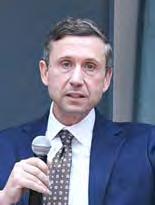
Adraft of the Democratic National Committee’s much-hyped autopsy of the 2024 presidential election was released last week after months of stonewalling. It turns out there were good reasons to avoid issuing the draft report – it’s a mess. DNC Chair Ken Martin backed himself into a corner after promising a report, only to see the Democratic Party issue the incomplete critique just months before it hopes to make significant gains in the midterm elections that could see Democrats control Congress. The 192-page draft document neither reflects the views of the DNC, per a red disclaimer atop every page, nor is it attributed to an author. The draft has been undercut by Martin and the DNC, which has annotated it to indicate analyses unsupported by data, missing sections, and statements that contradict public reporting. The DNC has not provided any of the underlying sourcing, interviews, or supporting data, according to the disclaimer. Martin had stated the report wasn’t ready for primetime, then released the draft version anyway.
tive, and felt the campaign was boxed – the ad was a video of her saying what she said, and it was framed as an attack on her economic priorities.
“If the Vice President would not change her position – and she did not – then there was nothing which would have worked as a response,” the report continued. “The pollsters generally concurred with the opinions shared by campaign leadership – given the stakes and timing, the focus needed to be on attacking Trump.”

Above all, there is the glaring omission of Israel and Gaza, the issue during the 2024 campaign that tripped up Democrats and fractured the party more than any other because too many candidates lacked the courage to acknowledge what plenty of other people had – that Israel’s bombardment of the Palestinian people constitutes genocide in Gaza. Those attacks continue, and a United Nations commission found last fall that Israel was committing genocide in the Gaza Strip.
Of interest to us was the draft document’s clumsy explanation about the anti-trans ads the Trump campaign ran repeatedly during the 2024 campaign in an effort to portray Democratic presidential nominee Kamala Harris as pro-trans, which she is, and how that was terrible for the country, which it is not. But the Harris campaign, stung by the onslaught of TV commercials saying that “Kamala is for they, them, President Trump is for you,” failed, in part, because it failed to respond.
“[T]he pollsters were involved in discussions around the Trump attack ads – in particular the attack ad focused on the Vice President’s prior statements on transgendered Americans,” the draft document stated, using an outdated term for transgender. “They all recognized the attack as very effec-
In other words, the Harris campaign decided not to respond to the ads because they thought there was no response. Of course, there were responses the Harris campaign should have used. She could have aired an ad that said the trans issue was a distraction, which it was. She could have pivoted to the economy. She should have noted that providing medically necessary care to prisoners – trans or not – is mandated by the U.S. Constitution. She could have pointed out that the prisoner medical policy was in place during Trump’s first term. (The Bureau of Prisons has now restricted its gender-affirming care policies since Trump returned to the White House, as the American Civil Liberties Union noted.)
In fact, in an interview on October 18, 2024, just weeks before the election, Harris did hit back against the Trump campaign ads – on Fox News no less. “I think [Trump] spent $20 million on those ads trying to create a sense of fear in the voters because he actually has no plan in this election that is about focusing on the needs of the American people,” Harris said at the time. “Twenty-million dollars on that ad, on an issue that, as it relates to the biggest issues that affect the American people, it’s really quite remote.”
But one interview, even on Trump-loving Fox, was no match for the millions of dollars the Trump campaign spent airing the ads in the battleground states, all of which Trump won.
For his part, Martin has acknowledged the problems with the draft report’s release in a statement. “In December, I announced we would shelve this report, and I meant what I said at the time – that I didn’t think dwelling on 2024 or looking backwards so late in the game helped us to win elections. And at the end of the day, winning elections is my job,” he stated.
“In short, I didn’t want to create a distraction,” Martin added. “Ironically, in doing so, I ended up creating an even bigger distraction. And for that, I sincerely apologize.”
Moving forward
The New York Times pointed out that the DNC typically isn’t as involved in midterm elections as presidential ones. That’s a silver lining here. Democratic candidates have won in recent special elections, did well in last year’s off-year elections, and Trump is down in the polls. People don’t like his war in Iran and the ensuing spike in gas prices. Voters still have concerns about the Epstein files, and Trump will do anything to distract from that, even starting a war. The economy is not doing well. Inflation is up, currently at 3.8%. Mortgage rates are up, hovering at around 6.70%. All of this is tied to the war in Iran.
Most recently, Democrats and some Republicans are up in arms about the anti-weaponization slush fund Trump and acting Attorney General Todd Blanche created as a result of the president’s settlement of a lawsuit against his own IRS. The nearly $1.8 billion fund could see payments made to people convicted in the January 6, 2021 insurrection. That is deplorable and reeks of self-dealing. The money is to be drawn from the Department of Justice’s Judgment Fund, but critics claim Congress, which alone holds the power of the purse, must authorize such an expenditure.
“This agreement, by contrast, says the [antiweaponization fund] corpus does not represent the value of Trump’s claims, but is based on the ‘projected valuation of future claimants’ claims,’” noted the Cato Institute, which focuses on individual liberty. “It is, in essence, the creation of a new spending program without congressional authorization. That fits the administration’s wellestablished pattern of improvising ways for Trump to bypass Congress in an ‘endless quest to secure a slush fund that he can use to personally control large sums of money.’”
As for the DNC, it should focus on raising money – it doesn’t have much on hand, apparently – and preparing for the 2028 presidential election. But if there’s a lesson to be learned from the botched draft DNC report, it’s that campaign operatives need to respond with bold messages that address the immediate concerns of voters, especially when attack ads are delivering their intended result.t
by Gwendolyn Ann Smith
Being a transgender person in 2026 means having to keep aware of the news to find out where you no longer have rights on any given day. In the United Kingdom, we just lost bathroom rights. Here, the United States House of Representatives just passed a bill, HR 2616, that would mean that this very column would not be allowed in schools anywhere in the country. Or any other writings by or about transgender people.
a United States House seat in Kentucky’s 4th District between Congressmember Thomas Massie (R) – a critic of Trump, particularly over the mishandling of the Epstein files – and his rival, Republican Ed Gallrein, who is endorsed by the 47th president of the United States.
Being a transgender person in 2026 means hearing attacks like this, claiming all of the power and resources that this “mafia” has – while we’re busy passing around the same $20 bill to each other in the hope we can stay housed.
Many of us are struggling to get gainful employment, keep a roof over our heads, and attend to the basic necessities of our lives. For many of us, too, we deal with multiple vectors of discrimination, with race and nationality being under attack alongside gender and sexuality.
While it has never stopped, we continue to be killed, and a callous world views that as a good thing.
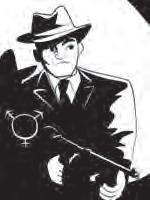
At the same time, we somehow hear about how much influence transgender people have, as if we are an all-powerful lobbying force, or a shadowy transgen der mafia holding the world hostage in the name of Trans Inc.
A lot of that sentiment is at the heart of our government deciding to label “radically pro-transgender” activists as terrorists, as the GOP redefines our very ability to be seen in public as a radical act.
It was an unseemly campaign, but nothing was uglier than an advertisement bought and paid for by the proMassie Hold the Line PAC. In it, the PAC claims that Gallrein is “bought and paid for by the LGBTQ Mafia,” including “Far Left Trans Activist Paul Singer” who is, apparently, “bringing his trans madness to Kentucky.”
I don’t think Singer – quoted in Forbes as a “selfproclaimed conservative libertarian” hedge fund manager who has a long history of GOP political activity – would much associate with any of the above words. Even though he has done some good for the LGBTQ community by supporting same-sex marriage after his own son’s wedding.

Our political power is on a very low ebb, as eight Democrats broke ranks to help pass the aforementioned HR 2616, aka the “Stopping Indoctrination and Protecting Kids Act,” a bill that wants you to believe that we are spreading the right’s latest boogeyman – “transgender ideology” – into America’s elementary schools like some crime lord.
If you listen to conservatives, we somehow hold all the cards, working in the shadows to infect all that is good and wholesome about, cough, President Donald Trump’s America.
As Exhibit A, let’s take a look at the recent race for
Now, apparently, he is an LGBTQ mafioso.
“Singer is spending millions to remove Massie,” claims the advertisement. “The gay mafia will own woke Eddie (Gallrein).” The ad continues, with images of Singer juxtaposed with images of transgender people and drag artists – and, for some curious reason, a rainbowadorned Star of David.
The ad includes an image of the Kentucky Statehouse, with a giant rainbow flag above the entrance, overlaid with the words, “Gallrein Values Are Freak Values,” while a narrator claims, “Gallrein doesn’t share our values. He is with the weirdos.”
It doesn’t matter that none of this is true. It doesn’t matter that there aren’t any billionaire donors giving cash infusions into trans rights battles. Likewise, it doesn’t matter that Massie and Singer both are conservatives. The narrative has been formed.
Gallrein, by the way, won the May 19 Republican primary, setting up his likely victory in November in the conservative district.
We’ve seen this for well over a decade now, this notion of transgender people seemingly being all-powerful, setting out on a reign of terror as we take over restrooms and steal sports trophies. Never mind that there is no truth to that – anti-trans foes know that all they need is to keep repeating it, and it would sound believable enough.
Meanwhile, you won’t find us given the time to counter any of these messages. A report from Assigned Media looked at New York Times stories recently that included trans-specific terminology, published between January and April of this year. In that time frame, they found 214 articles. Yes, that is more than one per day.
Yet, in that period, only one out of five articles actually included a transgender person’s words.
I might conclude, therefore, that perhaps the only reason transgender people seem like nebulous, freakish, dangerous criminal figures hiding in the shadows is that we are quite deliberately being kept out of the light. Our actual presence betrays the fiction being proffered in favor of a much more sympathetic reality.
A recent survey conducted by SRSS and the Human Rights Campaign Foundation showed that 41% of American adults personally know a trans person. What’s more, it showed a link between knowing transgender people and being supportive of transgender equality. The survey was of 1,032 U.S. adults.
It doesn’t take a shadow mafia to secure trans acceptance: it takes nothing more than seeing us as human beings – and the right doesn’t want that to happen. They need to paint us as a sinister cabal, because the stark reality looks far worse on them. t
Gwen Smith probably isn’t elite enough
by Matthew S. Bajko
Gay Democratic Los Angeles U.S. House candidate Todd Lombardo is feeling optimistic about his chances in next week’s primary. He is among the seven people challenging Congressmember Sydney KamlagerDove (D-Los Angeles) for her 37th House District seat.
The safe blue congressional district covers Culver City, part of Downtown Los Angeles, and several neighborhoods southeast of it. The top two finishers in the June 2 contest will move on to the November 3 ballot.
Lombardo, 52, is basing his confidence on making it to the fall race due to the fact he’s the only one of those challenging the incumbent to have raised any considerable money to date – he reported $64,599 in donations as of May 13 plus $20,100 he loaned his campaign – and has talked to thousands of voters in the district about his candidacy. He’s taken a leave of absence from leading his firm SUPR that consults with businesses on their branding and marketing to focus on mounting his first bid for elected office.
“Based on the data I have … I feel confident we have done a great job of securing that spot,” Lombardo told the Bay Area Reporter when asked about his advancing out of the June 2 primary in second place.
What drove Lombardo to enter the race, and will be his focus in the general election if he does make it, is the deep displeasure he hears from people about the Democratic Party. Lombardo said that “in a lot of ways, it feels outdated” and stuck still in the 1990s.
“When people ask me why I am running, I tell them it is because the Democrats lost everything in 2024,” said Lombardo, referring to the party’s losing the White House and inability to regain majorities in the Congress that November. “I don’t know if they understand why, or have a curiosity to look in the mirror and understand how things have changed.” (He spoke to the B.A.R. prior to the release last week of the national party’s autopsy report on the 2024 election.)
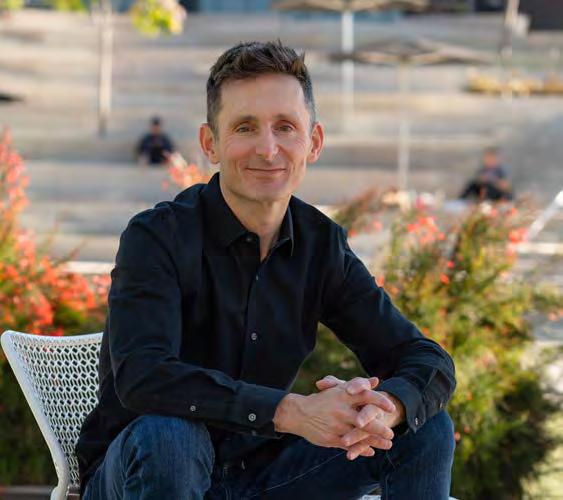
Lombardo grew up in Berkeley Heights, New Jersey, and graduated from James Madison University in Virginia in 1996 with a bachelor’s degree in business administration. In 2004, he moved to Los Angeles for work and, in the fall of 2006, was hired by Yahoo as its director of marketing. Over the next three years he often was at its Sunnyvale offices in Silicon Valley for meetings.
Other House races with LGBTQ contenders
Hi, I’m Dr. Vadim Skorupko. I’m a UOP graduate and have been practicing dentistry since 1993. Over the years, I’ve helped many people feel proud of their smiles — not just because they are a joy to look at but because they feel natural.
I focus on implant and aesthetic dentistry, blending advanced digital technology with the artistry of truly gifted ceramists. The results look completely natural — just refreshed, confident, and effortlessly striking.
Consultations are complimentary. Fees are fair and transparent. My team is gentle, soft-spoken, and genuinely kind. We do everything we can to make your visit easy, comfortable, and even fun.
If you ever have an emergency, you can reach me day or night. I come from a long line of village doctors. My great-grandfather rode a horse and buggy down dark country lanes to deliver babies by lantern light. Things are a bit different today — no horses involved — but the commitment to showing up for people remains the same. My office is right in Union Square—bright, airy, and tastefully designed, with sweeping views of San Francisco’s pyramids and towers.
If your teeth make you look like you’re itching for battle, let’s make them look like you’re hungry for love.
He then worked for several different companies before launching his own firm in October 2022. But Lombardo said he put it “on pause” when he launched his campaign last May.
A lifelong Democrat, Lombardo became more politically active in 2004 when Republicans in Congress attempted to pass a nationwide same-sex marriage ban. Four years later he was phone banking and marching against California’s Proposition 8, the voter-approved ballot measure ending marriage equality in the state until it was eventually overturned by the federal courts in 2013.
He will face an uphill climb in being able to win the House seat in the fall and expand the number of LGBTQ congressmembers from California come 2027. It is exceedingly rare for an incumbent in the Golden State to be ousted from office by someone in their own party.
While the group Courage for Democracy endorsed Lombardo, statewide LGBTQ civil rights advocacy organization Equality California is backing Kamlager-Dove’s reelection. Meanwhile, the national LGBTQ+ Victory Fund has not endorsed Lombardo’s candidacy.
Kamlager-Dove, 53, is sitting on a campaign war chest of $333,600 as of this month. She has yet to update her 2024 campaign site sydneykamlager. com for this year’s race other than to post a video of her addressing the California Democratic Party Convention in 2025.
“Where are our leaders, people ask? I’m here. You’re here. We’re here. And we are even more powerful when we are under assault,” she told the attendees.
Candidates this year need to be more than just anti-President Donald Trump, argued Lombardo. Particularly for Democrats, they need to articulate on the campaign trail a plan for how to ensure the federal government is working to meet the needs of all Americans, he told the B.A.R.
“This is the conversation I plan to have much more deeply once I get past the primary season because then it is a whole different campaign,” said Lombardo. “Maybe this is just my communications and marketing background talking, but a lane opens up not because you force it but because it exists. There is a lane open for a new generation of folks.”
“It was the first moment in my adult life where I said, ‘Oh shoot, this stuff matters. It is not a far and away thing; this stuff matters in people’s lives,’” recalled Lombardo, who is single and lives in Downtown Los Angeles.
He had another political awakening two years ago in realizing that the Democrats’ losing both the White House and Congress meant any change to the makeup of the current conservative majority on the U.S. Supreme Court wouldn’t happen “for a generation,” Lombardo said. He felt he had two options at that point.
“I could either put my head in the sand and not pay attention at all, or I could go do something about it,” said Lombardo, who went with the advice his late mother often gave him. “I could hear my mom’s voice in my head saying if you want something done right to do it yourself.”
Lombardo is now banking that his having “no career-politician baggage” will be a selling point with voters.
Polls show Americans disapprove of Congress at record low levels, with Gallup finding this month that only 12% approve of its job performance.
In his talks with voters over the past year, Lombardo said many Democrats ask him if their party “is so great,” why does it keep losing at the national level?
“It is how I personally felt and one of the reasons why I decided to run,” he said. “I think a lane opened up because of the state of our politics today. What I am trying to do is get into that lane. I see it too; I feel it too.”
To learn more about Lombardo’s candidacy, visit his campaign website at toddforcongress.us.
There are currently only two gay members among California’s congressional delegation. Both of the incumbents, Congressmembers Mark Takano (D-Riverside) and Robert Garcia (D-Long Beach), are expected to easily win reelection to their 39th and 42nd House Districts, respectively, come the fall.
Based on polling in the race to succeed retiring Congressmember Nancy Pelosi (D-San Francisco) in the state’s 11th House District, gay state Senator Scott Wiener (D-San Francisco) appears poised to capture the top spot in his primary contest to advance to the November 3 ballot. Fighting for the second spot are two progressives, District 1 Supervisor Connie Chan and former tech executive Saikat Chakrabarti, who spent less than a year on Capitol Hill working as chief of staff to Congressmember Alexandria Ocasio-Cortez (D-New York). Ocasio-Cortez has not endorsed a candidate in the race.
Also making the primary ballot was gay Castro resident Keith Freedman The local small business owner ran in the 2024 San Francisco mayoral race.
In the race to succeed retiring Congressmember Darrell Issa (R-Vista) it’s less certain if one of the out Democrats will survive next Tuesday’s primary, as some recent polls have indicated the two Republican candidates could end up moving on to the fall ballot. In that Southern California race bisexual San Diego City Councilmember Marni von Wilpert is locked in a fierce battle with Ammar Campa-Najjar, who previously lost to Issa, for one of the two spots in November.
Two gay men, entrepreneur and trained economist Brandon Riker and comic book seller Ferguson Porter are also seeking the seat, as is queer Vista City Councilmember Corinna Contreras. Issa’s 48th House District seat is among those targeted as a pickup for Democrats due to it being redrawn by last year’s Proposition 50 statewide ballot measure to include parts of San Diego County with the Palm Springs area in Riverside County.
Meanwhile, in the East Bay race for the state’s 14th House District seat, gay San Leandro City Councilmember Victor Aguilar Jr. isn’t expected to make it out of the primary. Polling has shown state Senator Aisha Wahab (D-Hayward) with the edge to succeed disgraced former congressmember Eric Swalwell over former Dublin mayor Melissa Hernandez, now president of the board that oversees regional transit agency BART, and the other Democrats seeking the safe blue seat.
EQCA endorsed Takano, Garcia, Wiener, and von Wilpert ahead of the primary. To date, the Victory Fund has endorsed Wiener and von Wilpert.
Text me directly at 917-749-3410 to ask a question or schedule a time to talk.
Dr. Vadim Skorupko, DDS, M.I.C.O.I. Smile Delight Dental Solutions 490 Post Street, Suite 1528 www.SmileDelightDental.com


by Cynthia Laird
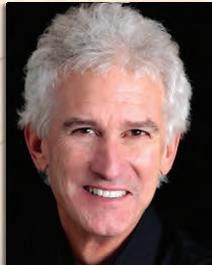
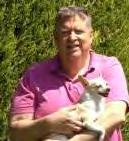
Jack Davis, a gay man who was a longtime and controversial political consultant, died May 15 in hospice at his home in San Francisco’s Mission neighborhood, media outlets reported. He was 79.
Mr. Davis, who was HIV-positive, had battled cancer for several years.
Mr. Davis arrived in San Francisco in 1972 as part of the gay migration, he told the Bay Area Reporter during a 2016 interview in which the main subject was the revelation that he donated $2,700 to then-candidate Donald Trump’s presidential campaign. The news was surprising to some, as Mr. Davis spent his career helping elect Democrats.
He said at the time that he did not like Hillary Clinton, then the Democratic presidential nominee. Trump, of course, went on to win that election.
At the time, Mr. Davis was splitting his time between San Francisco and South Wales, where he had a home.
Mr. Davis was not an establishment figure. He told the B.A.R. in a series of interviews in 2022 that he became his own person as a result of his childhood. Born May 1, 1947, he was raised above a funeral home in Pennsylvania, “certainly not my idea of fun,” he stated in a biography he wrote. He said his father’s funeral home business “scarred him.”
“There was a big room dad called the ‘chapel,’ where folding chairs were set up facing the casket and sleeper,” Mr. Davis wrote. “Another room was like an auto showroom with caskets of wood, different colors of metal and the best, a solid copper. Moving through the door there were toilets and a dimly lit bedroom called ‘the slumber room,’ where the sleeper could be seen in a traditional bedtime setting, and finally, another door leading to the embalming room – filled with machines surrounding a white metal table with a rubber headrest
and through each side that slanted down to a drain at the foot with the white porcelain bucket hanging below. Immediately, my worst fears became real. I lived in a den of horror.”
In the interviews, Mr. Davis said he didn’t understand it, but he knew it was something terrible. He said that his father was a “firm believer in corporal punishment.”
“Psychiatrists – I’ve seen more than a few,” Davis said in January 2022. There were “two ways to go – mentally impaired or develop an inner strength, become mentally tough. And I think that influenced my life and who I became.”
After college, he taught school for a while but hated it. Eventually, he arrived in San Francisco and became involved in the early gay rights movement.
“It was a time of assimilation and community building,” he stated in the 1996 interview.
He joined the Alice B. Toklas LGBTQ Democratic Club and later was a charter member of the San Francisco Gay Democratic Club (now the Harvey Milk LGBTQ Democratic Club). He was friends with Milk, the late gay San Francisco supervisor.
In 1977 he was asked to go to Dade County, Florida to help fight Anita Bryant’s anti-gay initiative.
“Jim Foster, David Scott, Randy Shilts, Lenny Matlovich, Bob Basker, and Jack Campbell, to name a few, spent months working with the local community to defeat the first vote in America to take away human rights,” Mr. Davis recalled.
They lost but ended up gaining in the long run.
“That debate forced America to face us as a people,” Mr. Davis stated in 2016.
“It changed my life, too.”
Mr. Davis said he started to see running campaigns as a cause, along with other gay consultants such as the late Dick Pabich and the late Jim Rivaldo. Electing Mike Hennessey as San Fran-
cisco sheriff was Mr. Davis’ first campaign, he said, and he built his company.
He went on to run Willie Brown’s campaigns for San Francisco mayor, and the two became longtime friends.
Mr. Davis was friends with the late longtime B.A.R. political columnist Wayne Friday, though he said he had a “love-hate” relationship with Bob Ross, the B.A.R.’s founding publisher who died in 2003.
“Wayne was a dear friend of mine,” Mr. Davis said in 2022.
While Mr. Davis said he worked on the Milk-backed 1976 campaign to establish district elections, which was successful, he turned Milk down for his 1977 supervisorial campaign, which Milk won to become the first gay person elected to public office in California. Milk and then-mayor George Moscone were assassinated in November 1978 by disgruntled ex-supervisor Dan White.
“When Harvey was killed, Dick [Pabich] called Wayne – he had a key to Harvey’s apartment – and asked Wayne to secure the place,” Mr. Davis recalled. “So Wayne goes over there, opens the door, and there’s a trick in Harvey’s bed. Wayne had to wake him up and he had to leave.” Friday, who had Parkinson’s disease,
died by suicide in October 2016. Mr. Davis said that he had been helping Friday with putting letters together under California’s right to die law and was on his way to Friday’s home that day. But it was too late.
“Wayne killed himself 20 minutes before I got there,” he said.
Wild party
Mr. Davis will be forever linked to the wild party he threw in early May 1997 for his 50th birthday in San Francisco. As Mission Local’s Joe Eskenazi detailed, partygoers “watched a woman dressed as Pocahantas carve a pentagram into a man’s back, urinate on it – and then sodomize him with a Jack Daniel’s bottle.”
Brown was there, as were numerous politicians. The party was shortly before voters would be casting ballots for measures to help the San Francisco 49ers build a new stadium. The measures passed, barely, but the 49ers ended up moving to Santa Clara years later.
Mr. Davis wound up apologizing for the party several days later. The Los Angeles Times reported that Mr. Davis offered a written apology to the team and to “all of those in attendance that night who took offense” at the X-rated performance witnessed by some 300 guests.
“There were some activities on stage that many people found shocking,” Davis said in the message, the paper reported.
Brown told the B.A.R. that Mr. Davis was one of a kind.
“He was the single best person to run campaigns that I’ve ever known,” Brown said in a brief phone interview May 21.
Thomas E. Horn, a gay man who became the B.A.R.’s publisher after Ross’ death, recalled Mr. Davis.
“Jack was a little bit crazy. I remember his infamous 50th birthday party,” Horn, who was at the birthday bash, wrote in an email. “But I liked him a lot. He was typically San Francisco.”
Horn added that he and Mr. Davis
weren’t on the same side in the 1991 mayor’s race, which Frank Jordan won.
“We were on opposite sides of a mayoral race, but we would both end up at the Rendezvous bar on Polk Street during the campaign and rehash the day’s activities,” Horn stated. “He always told me it was not too late to change. I had supported Art Agnos, and he was working for Frank Jordon. Frank won. I was certain I would not be reappointed to the War Memorial after the election, but Jack went to Frank and convinced him that I was important to my community, and the next thing I knew, Frank called me and asked me to stay on.”
Horn continues to serve on the board that oversees the War Memorial and Performing Arts Center across from City Hall.
Gay District 6 Supervisor Matt Dorsey memorialized Mr. Davis at the May 19 Board of Supervisors meeting.
“Jack was many things to many people in this city. Feared, admired, loathed, loved, sometimes all four in the same person, sometimes all four in the same week,” Dorsey said. “He arrived in San Francisco in 1972, the way many of us do, with not much money, a complicated family story, and the sense that this was one city in the world where he could become exactly who he was.
“His car was stolen his first night here, outside of the Stud on Folsom Street,” Dorsey continued. “He stayed anyway, and that perhaps tells you something. He came to the city as a gay rights activist and an idealist, and he never fully shed either of these things, even as he became something much harder to categorize – a legendary bare-knuckled political brawler.”
Dorsey added, “He was not a saint and he would have been the first to tell you that, probably with some relish. But he was ours, a genuine San Francisco original, a kind our city doesn’t seem to produce many of these days – and perhaps that’s not an entirely bad thing.” t
by JL Odom
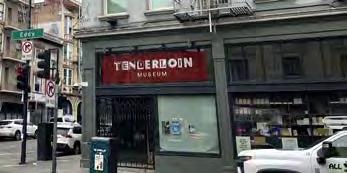
Justahead of Pride Month, San Franciscans will have a chance to celebrate queer culture, history, and resistance at the inaugural TL Mardi Gras, a collaboration between the Transgender District and the Tenderloin Museum.
The free public event, set for Friday, May 29, from 5:30 to 7:30 p.m., pairs a Mardi Gras-style street procession with the 60th anniversary this summer of the 1966 Compton’s Cafeteria riot – the Tenderloin uprising led by trans women, drag queens, and others three years before the Stonewall riots in New York City that are widely considered the birth of the modern LGBTQ rights movement. Thought to have occurred in August that year, the exact date of the riot has been lost to history.
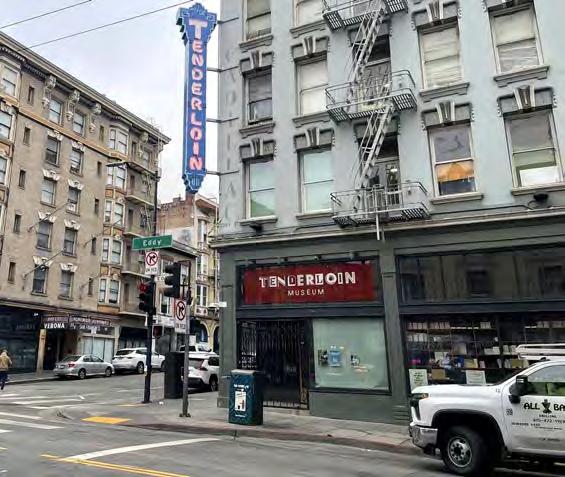
Attendees are encouraged to wear purple, gold, and green attire, along with feathers and beads, before gathering outside the Tenderloin Museum at 398 Eddy Street. The procession will travel along Eddy and Larkin streets to Myrtle Alley before participants head to 835 Larkin Street for a free performance of the “Compton’s Cafeteria Riot” play, which began an extended run in January.
“This event was born out of love for our community and our history, because the two have always been inseparable and central to our resistance,” Breonna McCree, co-executive director of the Transgender District, wrote in an email to the Bay Area Reporter. McCree, a woman of trans experience, said Mardi Gras was a natural fit for commemorating the riot.
“The Compton’s Cafeteria Riot was a marked moment for trans liberation and it deserves to be celebrated,” she
wrote. “Mardi Gras felt like the perfect connection, a tradition rooted in reclaiming the streets.”
“Trans liberation and Black liberation have always been intertwined, and Mardi Gras is itself a tradition born from Black resistance, from communities reclaiming space and joy on our own terms,” McCree continued. “The Tenderloin carries that same spirit, and these histories speak to each other.”
The immersive play, produced by the Tenderloin Museum, recreates the night patrons fought back against police at Gene Compton’s Cafeteria in 1966. During the current run, audience members are seated inside a diner setting and served breakfast as the events unfold around them.
“It feels like living history – a kind
of living memorial,” Tenderloin Museum program director Alex Spoto, 37, told the B.A.R. in a phone call. “It challenges people to think about how this history carries into the present and into the future.”
Leading the procession will be the Twilight Brass Band (https://twilightbrassband.com), a traditional New Orleans-style brass band based in San Francisco and Oakland.
Founder Harold “Homeboy” Wilson, 64, a Tremé 6th Ward native who now lives in the Tenderloin, said the event will bring New Orleans energy and celebration to the neighborhood streets.
“It’ll be very colorful and very entertaining,” he said. “We dance and we parade around; we mingle with the crowd while we play.”
Wilson moved to San Francisco in the 1980s after visiting his brother, whom he described as a drag performer and seamstress who appeared at venues including Aunt Charlie’s Lounge, an LGBTQ bar in the Tenderloin, and the Castro Theatre in San Francisco’s LGBTQ neighborhood. For Wilson, participating in the parade is also a way to honor his late sibling, whom he said was present during the Compton’s uprising.
Wilson said his brother was known under several names.
“His real name was Tyrone Turner, his stage name was Mai Tai, and his business name was Richard Williams,” Wilson said, adding he wanted to acknowledge his sibling.
“I would be remiss in my duties if I don’t celebrate what he was and who he was and the cause he fought for,” said Wilson, a straight ally.
Founded in 2017 by three Black trans people – Honey Mahogany, Janetta Johnson, and Aria Sa’id –the Transgender District spans six blocks of the southeastern Tenderloin and a corridor along Sixth Street. The district includes the former site of Gene Compton’s Cafeteria at Turk and Taylor streets. The 111 Taylor Street address is now a prison reentry facility operated by GEO Reentry Services, a subsidiary of GEO Group Inc. Members of the Compton’s x Coalition are working to reclaim the space, the exterior of which has been proposed for city landmarking status.
TL Mardi Gras closes out Empowerment Month, an annual observance started in 2024 focused on transgender visibility, advocacy, and community support. Throughout the month, the Transgender District
has partnered with organizations including the SF LGBT Community Center, Openhouse, Glide Memorial Church, and the GLBT Historical Society on programming and resources.
“Celebration is empowerment, especially right now,” McCree wrote. “Closing with a parade felt right, because joy is always part of the work.”
The Tenderloin Museum and Transgender District have collaborated previously on programs tied to Tenderloin trans history, but TL Mardi Gras marks the first official partnership connected to the “Compton’s Cafeteria Riot Play.”
“In this climate in which trans people’s very existence is under attack, it is as important as ever to highlight and elevate this history,” Spoto, a straight ally, said.
McCree said organizers hope attendees leave with a deeper understanding of the riot’s significance and the ongoing work of trans-led organizations.
“To know your history is to know yourself,” McCree wrote. “Our right to live as our full selves was hardearned.”
The inaugural iteration of what organizers anticipate becoming a biannual event is mere days away.
“It’s a beautiful thing that’s going to go down, so come on out and join us,” Wilson said.
The procession route from the Tenderloin Museum to Myrtle Alley spans about half a mile and is expected to take roughly 15 to 20 minutes at a second-line pace, or up to 30 minutes including music stops and gathering time.
To RSVP, visit https://tinyurl. com/2mn7ckvw t
by Matthew S. Bajko
At one point during his interview
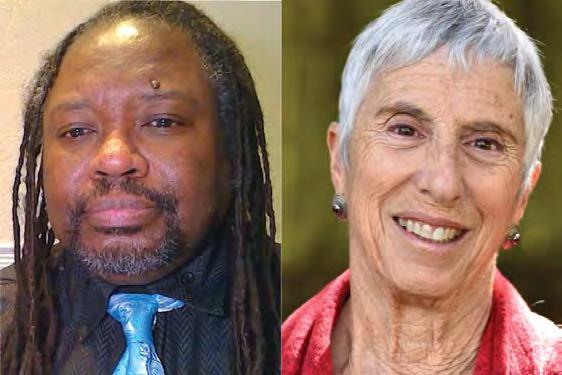
Yoseñio Lewis’s face lights up when asked about his daughter, Aurelia, whom he lost after carrying her for nearly seven months. A “touchy subject” for some people to inquire about due to his being a transgender man, the sexagenarian explains why he doesn’t shy away from talking about her even though the pregnancy occurred when he was 13 due to incest and rape.
“I want to talk about how she came to be. I want to talk about how she died. I want to talk about how she still lives in me. I want to talk about the poem that I wrote for her, which is my signature poem,” Lewis tells his interviewer.
Pam David experiences a flood of emotions in her interview, particularly when the conversation turns to her late wife, Cheryl Lazar, whom she was with for 34 years until Lazar died in 2020 just four days before her 72nd birthday.
“I tear up when I think about her because she was the love of my life and probably the most important thing that ever happened to me was meeting her. The second most important thing was losing her to cancer,” David notes to her interviewer.
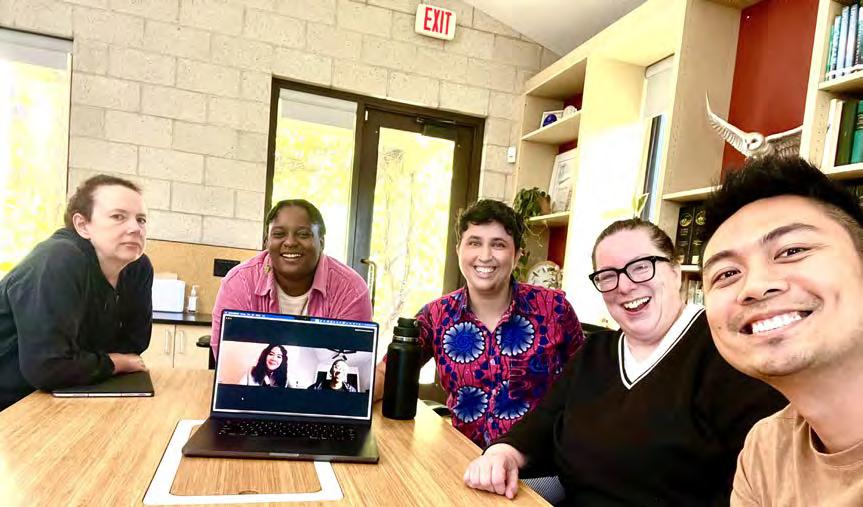
The San Francisco residents are among the hundreds of LGBTQ seniors who have sat for interviews as part of the Outwords Archive. Since 2016, the nonprofit OUTWORDS has recorded interviews with more than 400 queer and trans older adults from across the U.S. and uploaded nearly 300 of them to its website at theoutwordsarchive.org/ interviews.
“Personally, l find it so rich to sit with people who witnessed a whole spectrum of American history over the last 50 years,” said founder Mason Funk, 67, who lives in Palm Springs with his husband.
Funk, who stepped down in April as OUTWORDS’ executive director, told the Bay Area Reporter he had conducted 200 of the interviews as of this spring.
Each year 40 seniors are interviewed, and it takes anywhere from six months to a year for the interviews to be fully processed and uploaded to the website.
The nonprofit has a database of 5,000 prospective people to interview. Each summer the staff members select the roster of those to talk with over the next 12 months, making sure 60% are people of color and 50% are either trans, gender-nonconforming, or intersex.
They range from the “well known,” said Funk, “to people you would never have heard their names if we didn’t interview them.”
Before the camera is ever turned on, the person to be interviewed is asked to fill out a lengthy questionnaire. David, 73, who helped organize the 1987 March on Washington for Lesbian and Gay Rights, joked to the B.A.R. it felt like she was applying to work for the CIA.
There is also a pre-interview with each senior to map out what they want to focus on during the course of the taped conversation. The interviews run several hours and are later edited down to around two hours.
“Rarely do you get to talk about your life’s history and the arc of your life,” said David, who spent close to three hours being interviewed. “By far it was the longest time I ever talked about myself.”
Personal aspects
Often the discussion turns to very personal aspects of the interviewees’ lives. David spoke with Funk about falling in love with her wife, their building a life together, and caring for Lazar after her cancer diagnosis during the later portion of her interview.
“I love talking about her because I

love her. It wasn’t easy to talk about her,” recalled David, who for 15 years was executive director for the Walter & Elise Haas Fund, a notable philanthropic donor in the Bay Area.
Lewis, 66, spoke to a different staff member from the nonprofit in the winter of 2021 at his home in the city’s Lower Nob Hill neighborhood on the border with the historically trans Tenderloin district. A Latino of African descent, he grew up in Newport, Rhode Island, and spoke about the sexual abuse various family members subjected him to during his childhood.
At 3 years old Lewis recounted having his first experience of gender dysphoria but not coming out as trans until 30 years later when a female friend told him one day that he was. At the time, he used the term FTM for female-to-male.
He uses the name he was given at birth, Yolanda Veronica, in the interview and talks about why he still mentions her. Lewis also discusses his suicide attempt and battling his own cancer diagnosis at age 36.
“I am usually hesitant to speak about myself, yet I am also very much of the mind if I don’t open up more, if I don’t let people know I exist, then other trans men don’t get to see visualizations of themselves,” Lewis told the B.A.R. about why he agreed to participate in the archival project. “They don’t get to move away from feeling what I had most of my life, that I am the only one like this.”
son who went through that pregnancy and stillbirth. Lewis told the B.A.R. to this day, he remembers the birth as if it happened yesterday.
“I still want to acknowledge her and the experience I had. It is another reason why I won’t disavow Yolanda because she went through that. I just can’t act like it didn’t happen,” said Lewis, who also pointed out that, “I have so many memories, so many positive memories of life as Yolanda I am not going to quote unquote kill her off. That is not something I feel comfortable doing. To me, it is denying what I lived through.”
David’s edited interview now serves as a record of her and Lazar’s relationship that can be shared with friends and family. Since it was posted online, she has received “some really random, sweet notes from people,” said David, after they came across it.
Her interview took place in the fall of 2022 while David was living in Mill Valley, as she had wanted to move out of San Francisco after losing Lazar. Coming amid the COVID lockdowns, David no longer felt safe being outside of her downtown apartment at night and found herself craving to be somewhere closer to nature.
“I cried every day for close to two years,” said David.
David’s older sister had died one month after Lazar, so relocating to the North Bay also brought her closer to her niece and her two young daughters who live in San Rafael.
His life experiences have inspired his poetry and other art over the years, noted Lewis, so it wasn’t the first time he had spoken publicly about the trials and tribulations he overcame. Doing so has lessened any shame he had felt growing up and provided an avenue to address and leave behind his fears, said Lewis, who spent 11 years living in San Diego before relocating to San Francisco for work a month prior to the October 17, 1989, Loma Prieto earthquake.
“Because I am a writer, because I have composed plays and skits and then done them live in front of people, I have learned how to detach myself from those more controversial moments in my life,” he said.
He has for years also been paid to speak to medical students at Stanford about working with patients who are trans and people of color, which he continues to do part-time.
“I learned it is important to be seen and it’s important to be heard. It is very necessary for those who are much younger and have much less experience to know there is someone who they can look up to and see someone so they can say I am not the only one,” said Lewis.
His archived interview not only is a tribute to the child he lost but to the per-
“I am a surrogate grandmother,” noted David, who this year moved back to San Francisco after finding a place in Pacific Heights.
As she is “very open” about her grief, David told the B.A.R. she enjoyed talking to Funk even though their conversation had both of them, as well as the videographer, in tears. She found it to be “very cathartic in many ways” and
appreciated being able to also talk about her family and upbringing in Highland Park outside of Chicago.
“When you have a big love, which I did for 34 years, you have a big grief. I will love my wife forever and I will grieve her forever,” said David. “It doesn’t mean my grief doesn’t change over time. It changes but doesn’t go away.”
She was contacted to take part in the Outwords Archive because her friend Robert Holgate had recommended her for it. His late husband, Al Baum, had been interviewed by Funk in 2017, and at Baum’s funeral in 2021, Holgate showed excerpts of it.
David has in turn suggested people to also become part of the archive. She also has watched interviews conducted with other friends of hers as well as several people she didn’t know.
“It is wonderful to have that record of their lives. I am grateful we have Al’s interview,” she said.
New leadership arrives
On April 15, Tax Day in the U.S., Beth Shipp took over as executive director of OUTWORDS. The lesbian resident of Longmont, Colorado, outside Boulder applied for it after seeing there was a search underway to find Funk’s successor, as he had announced last year his plans to retire.
“The mission to tell stories, preserve stories, and distribute stories of our elders is incredibly important,” said Shipp. “It felt so meaningful and powerful to me in this time of our history.”
Speaking to the B.A.R. during a joint video interview a day after they had been in San Francisco, for meetings and to attend an event hosted by David, Funk said he was confident Shipp was the right person to carry on the work he had started.
“For me, it is a weird tug of war. I kind of feel like I am letting go of my baby, so to speak,” said Funk, while also knowing the “time is now to hand off the organization to new, fresh energy and a new vision.”
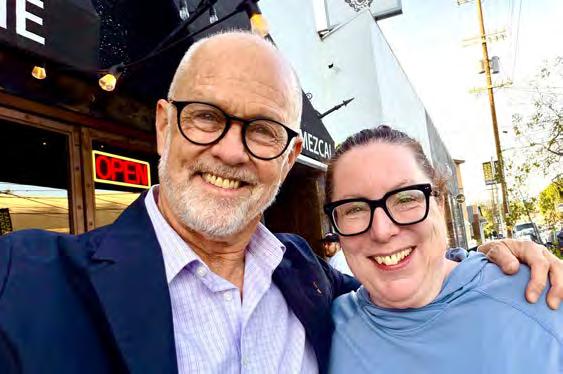


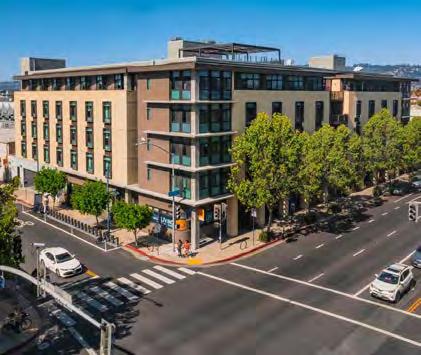

by Liz Highleyman
The San Francisco Department of Public Health has expanded its eligibility criteria for doxyPEP to prevent sexually transmitted infections, now recommending it for cisgender women as well as gay and bisexual men and transgender women, according to a recent health update.
DoxyPEP refers to taking a single dose of doxycycline (an antibiotic related to tetracycline) as post-exposure prophylaxis within 72 hours after sex. Clinical trials and real-world experience have shown that doxyPEP substantially reduces the risk of chlamydia and syphilis among gay men and trans women, though its effectiveness against gonorrhea is modest at best.
“Since SF DPH first issued doxyPEP guidance in 2022, San Francisco has seen a substantial decline in STI diagnoses,” Dr. Stephanie Cohen, director of DPH’s STI and HIV Prevention and Control Branch, told the Bay Area Reporter. “Now that recent studies have shown that doxycycline may prevent STIs in cis women, we have updated our eligibility criteria. In doing so, we aim to continue this progress and strengthen our efforts to eliminate congenital syphilis in the city.”
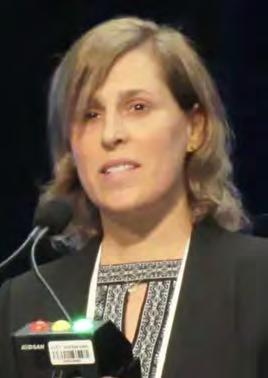
Dr. Stephanie Cohen of the San Francisco Department of Public Health noted that doxyPEP guidance has been expanded to include cisgender women.
In October 2022, San Francisco was the first city to issue guidelines on the use of doxyPEP. It was initially recommended for men who have sex with men and transgender women with a history of chlamydia, gonorrhea, or syphilis. A September 2024 update aimed to provide better visibility and specificity about prescribing doxyPEP for trans and gender-diverse people, making the
city’s guidelines broader than those issued by the federal Centers for Disease Control and Prevention.
The first large trial of doxyPEP, which enrolled more than 500 men and transgender women who have sex with men in San Francisco and Seattle, showed that it reduced the likelihood of chlamydia and syphilis by about 80% and gonorrhea by 55%. In 2024, DPH researchers reported that the early rollout of doxyPEP in San Francisco contributed to a citywide decline in STIs overall, though there was no significant change in gonorrhea.
Antibiotic resistance cited
Antibiotic resistance limits the effectiveness of doxyPEP for preventing gonorrhea, and this appears to be increasing, according to a new study.
The researchers assessed the durability of doxyPEP effectiveness against gonorrhea after its implementation in Southern California. The analysis included more than 26,500 cisgender men and trans women at Kaiser Permanente Southern California who were either living with HIV or using HIV PrEP and had at least one STI test between January 2023 and June 2025. Of those, 2,262 of them (about 9%) used doxyPEP.
Throughout the study period, doxyPEP was 67% effective against chlamydia and 61% effective against syphilis, but there was no protection against gonorrhea. The effectiveness of doxyPEP against gonorrhea declined from 42% before the statewide doxyPEP rollout to -15% in 2025, in association with a rapid increase in a bacterial mutation that confers resistance to tetracycline. Negative effectiveness means people who used doxyPEP were actually more likely to be diagnosed with gonorrhea.
DoxyPEP for cisgender women
The latest DPH report shows that citywide STI rates continue to fall, which Cohen attributes in part to the use of doxyPEP. But rectal gonorrhea among men remained stable, and syphilis among women declined only slightly from 2024 to 2025. Congenital syphilis transmitted from mother to child is rare in San Francisco but rising nationwide. Prevention is a priority because of its severe consequences, which can include miscarriage, stillbirth and infant blindness.
The effectiveness of doxyPEP for cisgender women has been less clear than it is for gay men and trans women, so they were not included in
compiled by Cynthia Laird
W ith Pride Month quickly approaching, the San Francisco Municipal Transportation Agency has announced it will have a Muni bus decked out in the colors of the Progress Pride flag. The bus will serve different routes throughout June, SFMTA spokesperson Michael Roccaforte stated in an email.
“It’ll be in service as soon as Friday (May 29) and will circulate on lines throughout the city,” he added. “To help people find it, we’ll also be launching a Funmap on sfmta.com that tracks its whereabouts as it cruises through town.”
So, people can keep their eyes open for the Muni bus wrapped with the rainbow colors, Black and Brown stripes that represent people of color, and the blue, pink, and white colors of the trans Pride
flag. With the 24-Divisidero and 33-Ashbury/18th Street Muni lines running right through the heart of the city’s LGBTQ Castro district, it’s likely they will have the Pride bus at some point.
“We’re thrilled to support Pride festivities with this new in-house design for riders across the city to celebrate with,” Roccaforte stated.
Give OUT Day returns
Give OUT Day, the national online fundraiser for hundreds of LGBTQ nonprofits, returns Thursday, June 4. Like last year, Minnesota-based GiveMN is hosting the event. The nonprofit took over Give OUT Day from San Francisco-based Horizons Foundation in 2025, as the Bay Area Reporter noted at the time.
Early fundraising for Give OUT Day starts Thursday, May 28. People can make donations throughout Pride
Month in June; the June 4 day is meant to be a catalyst and spur donations, organizers noted.
People can go to giveoutday.org to find a participating nonprofit. GiveMN collects a small online processing fee per donation, but people can opt to cover that cost when they give, thereby allowing the nonprofit to realize their full gift.
Morgan Hill Pride flag raising
The South Bay city of Morgan Hill will raise its Progress Pride flag Wednesday, June 3, at 5:30 p.m. on the lawn outside City Hall, 17575 Peak Avenue.
The event is open to the public.
SF readies for Pride weekend weddings
The San Francisco City Administrator’s office and the county clerk’s office will have wedding appointments available for Friday, June 26, in celebration
of Pride weekend. Couples from all over can sign up to exchange vows amid love, cheer, and the stunning backdrop of City Hall, an announcement from the city administrator stated.
City officials have made extra appointment slots available, due to the usually high demand. Ceremonies will be held throughout the Beaux Arts City Hall building. A wedding party includes the couple and up to six guests, the announcement noted. There will be a free photo booth. For more information about booking an appoint ment, go to https://tinyurl. com/5xvxcjvz .
initial guidelines. But emerging data indicates that this group can indeed benefit.
A study in Kenya appeared to show that doxyPEP was not very effective for young cisgender women, but further follow-up found that it did work for those who used it consistently. Other research showed that daily doxycycline pre-exposure prophylaxis, or doxyPrEP, led to a reduction in STIs among cisgender women sex workers in Japan.
Given this recent evidence, the May 5 updated DPH guidelines advise providers to offer doxyPEP using shared decision-making to cisgender women and anyone assigned female at birth who in the past year has had condomless sex and has had a bacterial STI or reported substance use, unstable housing or homelessness, sex work, intimate partner violence, incarceration or having gay or bi men as sex partners.
More broadly, the DPH recommendations encourage providers to introduce doxyPEP to everyone who may benefit. “Do not wait for patients to learn of doxyPEP elsewhere,” the guidelines state. “This approach promotes racial and gender equity in sexual health by ensuring all patients who may benefit from doxyPEP know about it.” t
orders for the 2026 version. Advance sales are available through Friday, June 5, an email announcement stated.
Over the past five years, BART has offered many variations of its beloved holiday sweaters. This year, it has stitched them all together into a “gloriously chaotic creation, allowing people to wear multiple eras of BART holiday merch at the same time,” the announcement noted.

BART offers preorders for holiday sweaters
BART’s holiday sweaters have become so popular that the Bay Area transportation agency is offering pre-
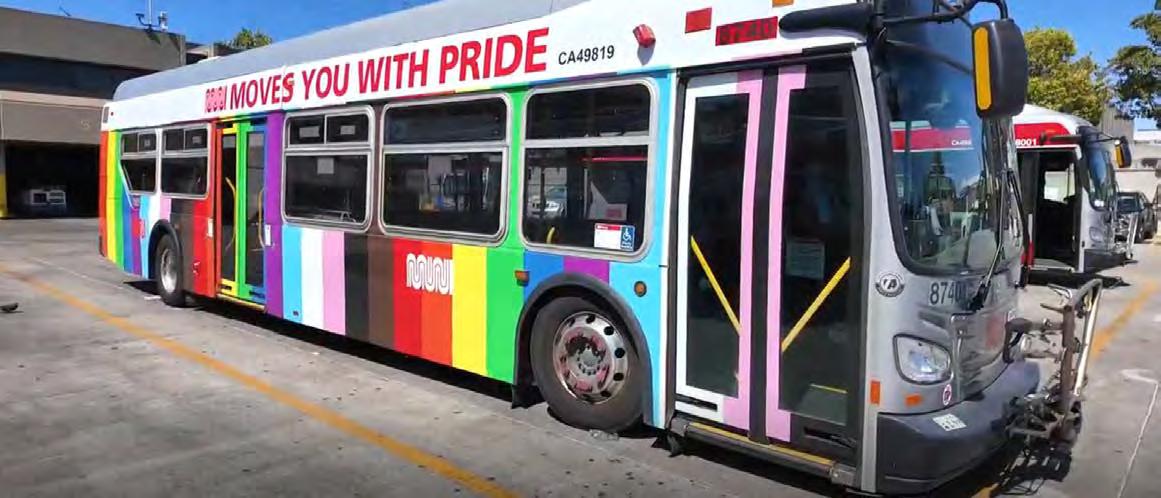
From page 10
Shipp, who formerly led LPAC that works to elect out women and nonbinary candidates to public office, has been watching interviews conducted by Funk and others, taking notes in preparation for
she said.
The nonprofit staff all work remotely, so it doesn’t have a brick-andmortar location where it can screen the interviews for the public. Each one is backed up on three different hard drives kept in different locations as a safety measure, plus the transcripts for each interview are printed out on acid-free paper and stored in a secure location.
“In the worst-case scenario, if the
video went away, we still have a written record for all the interviews we recorded,” noted Funk, who told the B.A.R. the one person he would love to interview for the archive is lesbian tennis legend Billie Jean King. “I never tried to ask her.”
One thing Shipp said she is thinking about is how to get the interviews before a live audience, whether it be as a part of a film festival, museum
exhibition, or partnering with public libraries and LGBTQ centers on screenings. She would also like to have intergenerational screenings to spark conversations among the attendees.
“We are seeing what is happening in real time in this country with threats coming from politicians, government entities both state and federal, and from school boards. People not just trying to deny our existence
Dubbed the BART Holiday Frankensweater, orders are anticipated to ship in September, giving people plenty of time to prepare for the season. Or, at checkout, people can select the option to pick up their order in person.
Last year, Railgoods sold more than 2,800 sweaters. Proceeds support BART in its mission to provide safe and reliable rail service to the region, the announcement stated.
“Riders have been asking us to bring back some of our older holiday sweater designs, and this year’s sweater does just that, making it both nostalgic for longtime fans and fresh for new customers,” stated Erica Iñiguez-Diaz, director of BART customer services.
BART was among the first transit agencies to sell holiday sweaters, and now other transit services, including San Francisco’s Muni, offer holiday and other merchandise.
BART sweaters cost $49.99 and are available in sizes XS-5XL. Sweaters run small, so BART recommends sizing up. Other holiday-themed goods include the BART light-up necklace ($9.99 presale), and BART holiday stickers ($1.99 each). Holiday discount codes at checkout are $10 off purchases of $50 or more (HOLIDAY10) and $25 off purchases of $100 or more (HOLIDAY25).
For more information, go to railgoods.com/bart/2026-holiday. t
but actually actively trying to erase it,” said Shipp. “We are going to take whatever steps necessary to make sure our archive is protected and lasts far beyond any current administration or any current threat.” Anyone interested in being interviewed or wants to nominate someone to be interviewed should send an email to info@theoutwordsarchive.org. t
How Steve Shead's journey shaped his approach to leadership, identity, and community.
When you've had to hide part of who you are, you understand what it means to really see people. “ “
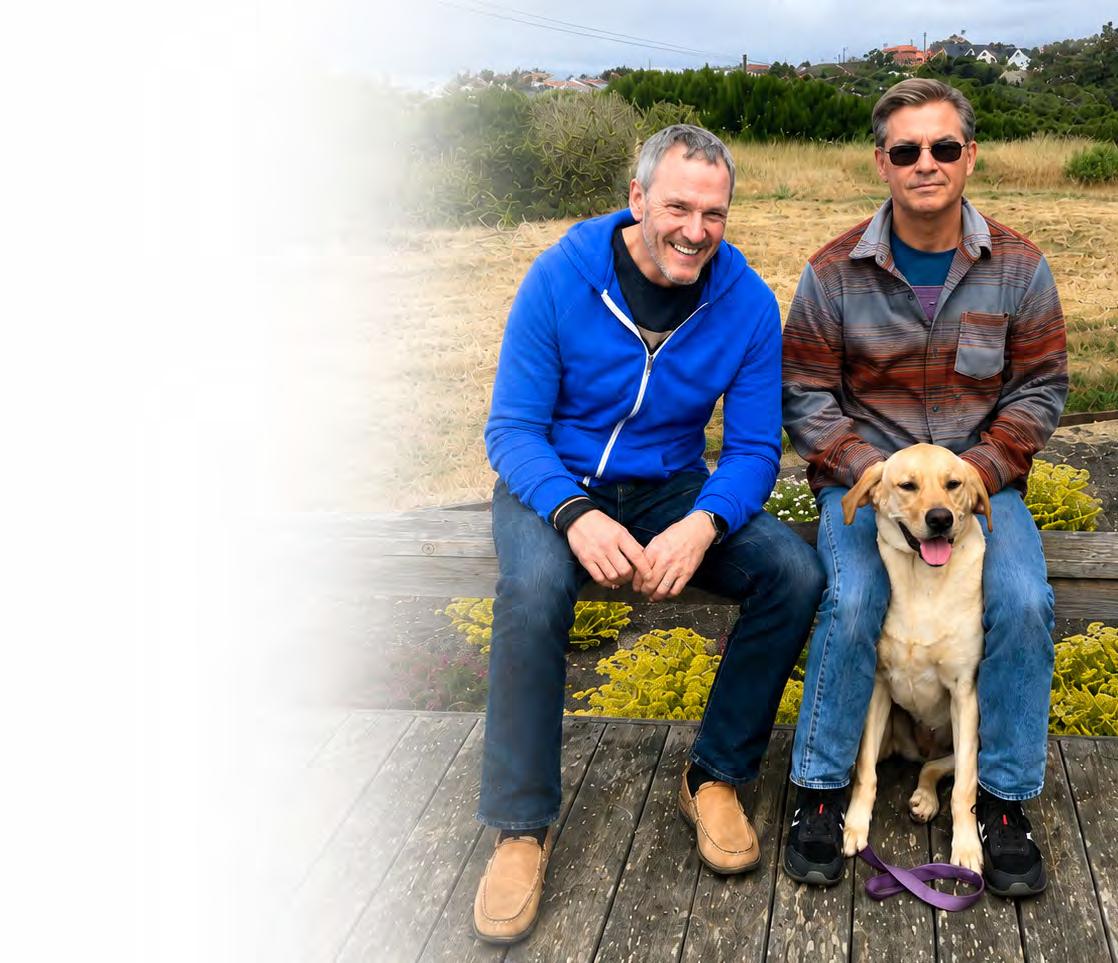
SAN FRANCISCO — Steve Shead’s path to becoming a technology leader in the Bay Area is not just a story of career reinvention, it’s one of personal truth, resilience, and the cost of living authentically.
Born and raised in the United Kingdom, Shead joined the Royal Air Force at just 16½, spending 12 years in a highly structured, disciplined environment. “It was quite the fun one,” he said. But beneath that structure, he was navigating a reality he could not openly live. “I lost my military career when they found out I was gay,” he said. Leaving the RAF at 28 marked both a professional and personal turning point. Without the rigid framework of military life, he initially struggled. “I was kind of lost for a bit because there was no discipline out here,” he recalled.
After about a year, Shead recalibrated. The lesson was simple but profound: “Self-discipline was the only thing needed. Once I figured that out, life became easier.” At the same time, he began leaning more fully into both his identity and his future.
A growing interest in technology, and a belief that the U.S. was ahead of the UK in innovation, pushed him to take a leap. Newly divorced and searching for a fresh start, he traveled to the United States. What began as a visit became permanent after Hal Computer Systems sponsored him, launching his career in corporate web services.
In the workplace, Shead quickly stood out, not just for technical skill, but for empathy and communication. He earned the nickname “tech whisperer” for his ability to translate between business leaders and IT teams.
But he also began shaping a leadership style rooted in authenticity. “When you’ve had to hide part of who you are, you understand what it means to really see people,” he said. “That changes how you lead.” That philosophy carried through his rise into executive roles, including serving as chief information officer at Solarity Credit Union. Even setbacks, like an unexpected layoff, became moments of reflection rather than retreat. “It makes you question trust,” he said. “But you learn from it.”
His career eventually brought him back to the Bay Area after time in Vancouver and Portland. Now based in San Francisco, he works at San Francisco Federal Credit Union, a fast-paced, high-expectation environment while staying grounded in his values.
“I won’t step back from being an effective leader,” he said. “That’s non-negotiable.” Today, Shead lives openly and fully as himself with his husband, Tim and their dog Marley. “There’s a difference between being in love and loving someone.” “You should see me and Tim together,” he said, smiling. “You can tell by the way we look at each other.” The two met online in 2005 and married in 2008, becoming one of the first gay couples to wed in a church ceremony, something that once would have seemed impossible during his early years.
For Shead, authenticity is not just personal. It’s central to leadership. “People get stuck behind masks; masculinity, expectations, identity,” he said. “Being real matters.” That authenticity has not come without cost. He had lost friends, family and loved ones but reflects on each with empathy. Now, he speaks with quiet certainty about where he has landed, personally and professionally.

The club represented a movement with “real soul and real heart,” gay former state legislator and supervisor Tom Ammiano told the attendees at this year’s event. “We’ve come from a very, very dark place, a place where people couldn’t be yourself, a place where they jailed us, a place where they fired us.”
He called anger a “friend” not to be abandoned but to be marshalled to make “good trouble,” said Ammiano. “I really think we have superpowers. And we gotta use it,” said Ammiano. “And one of our superpowers is our trans brothers and sisters. Oh, we are not throwing you under the bus. We are not throwing you under their bus. You are us. We are you. Fuck Trump!”
NAACP leader accepts inaugural Milk award
Receiving the inaugural Harvey Milk Give ‘Em Hope Award, the club’s first award named after Milk to be presented annually, was NAACP National Board of Directors chairman Leon Russell. In his mid-70s, Russell first joined the board of
From page 2
“This statement closes the loop on the work we have done together to remedy an issue that I want anyone
From page 4
Enos Johnson, the head deacon at the church, testified on May 20. Johnson found out about the graffiti when he arrived at 8:30 a.m. February 28, a Saturday morning, and found a police unit at the church.
Mousa interjected that February 28 was “the day Donald Trump attacked Iran,” referring to the beginning of the U.S.-Israel war with Iran that same morning.
As for the cost of repairs, “At the time, the pastor said it’d cost $20,000. … Re-
<< Hormel mansion
From page 3
Two proposed landmarks were continued until June for the oversight body to vote on. They are the Fernando Nelson Home at 701 Castro Street and the Lange House at 199 Carl Street, which came at the request of planning staff since both were recently bought by new owners who had not been apprised of the landmark proposals last fall when
The quilt is now under the stewardship of the National AIDS Memorial Grove, and panels are regularly sent to schools and other entities as a public education effort.
“Everybody said we have to observe this milestone, but it can’t just be about AIDS, because this administration is going after everyone’s health,” Jones said.
Local events
Among the events in San Francisco is a candlelight vigil Friday, June 5 – the 45th anniversary of the infamous Centers for Disease Control and Prevention’s Morbidity and Mortality Weekly Report of young, gay men in Los Angeles with Kaposi’s sarcoma – at Castro and Market streets at 7:30 p.m. That event is sponsored by the AIDS foundation, which has been an outspoken critic of cuts to local health services including those to people living with HIV.
“Join us as we recognize the leadership that San Francisco has played in building up successful models of HIV prevention and care, call to protect the legacy of these investments, honor the memory of those we have lost to HIV and AIDS, and celebrate the many longterm HIV survivors and other leaders that push our movement forward,”
the nation’s oldest civil rights organization in 1990 and was elected its chair in 2017.
“Everyone in this room has a target on their backs. Doesn’t matter where you come from. There is an administration in Washington, D.C. that wants to take away your rights, wants to pick your pocket, and wants to declare everything that you ever considered sacred to be know and void if you are not one of the one percent,” said Russell, the keynote speaker for this year’s event.
He previously served as president of the NAACP Florida State Conference of Branches for four years, having spent 15 years as its first vice president. In the 2000s, Russell served as president of the International Association of Official Human Rights Agencies.
In 2012, he retired as director of the Office of Human Rights for Pinellas County in Clearwater, Florida. Three years ago during Pride Month in June, Russell called out the anti-equality policies instituted in the Sunshine State by Republican Governor Ron DeSantis. In an opinion piece that garnered international headlines, Russell warned Black people, along with LGBTQ individuals and others, about
working on products that use automation to be aware of,” he continued.
“The humans using the product need to be able to give feedback, be heard, and have their civil rights protected.” The complaint had alleged two
pairs are still ongoing,” Johnson testified. Mousa interjected that, “It’s a scam.
$20,000 is a scam.”
On May 21, after everyone had testified, but before Payne’s ruling, Stepanian revealed she was informed by Chornobil only after the deacon had testified that Johnson was the ex-husband of Reve Bautista, an assistant district attorney, who was present in court during the testimony.
“My client has constitutional rights and the right to a fair trial and the right to be represented effectively,” Stepanian said. “That was jeopardized.”
Chornobil said that Bautista didn’t
they were first being discussed.
“If we get a reputation we are railroading things, that is going to be a problem,” said Baldauf, who like Vergara, expressed support for landmarking the properties whose owners are supportive of the designations.
Vergara had noted it “is really wonderful” to see the dozens of proposed landmarks being considered.
Due to opposition from the property owners of the Mission Dolores Academy school building at 3371 16th Street
Seven Days in June’s website states. People can RSVP online at sfaf.org/a/ candlelight-vigil.
Tyler TerMeer, Ph.D., a gay, HIVpositive man who is the foundation’s CEO, told the B.A.R., “We’re honoring all members of our community living with HIV, including long-term survivors, and remembering those we have lost to the epidemic. We are also using this opportunity to lift up our concerns related to HIV, LGBTQ+, and public health funding cuts that will affect our communities in the coming years.”
TerMeer stated the city’s vaunted record on its response to HIV/AIDS is in jeopardy.
“Over decades, San Francisco has built effective and compassionate systems of care for people living with and affected by HIV,” he stated. “Today, threats to our public health infrastructure risk disrupting that progress and undermining San Francisco’s legacy as a global leader in HIV prevention, care, and advocacy. Join us in community and in advocacy on June 5.”
Two days later, at 16th and Mission streets, there will be a rally titled “Health is Primary: Love, Health and Solidarity,” at 2 p.m. It’s being organized by drag performer and longtime community leader Juanita MORE!
“Congress has passed the largest healthcare rollback in American history,
traveling to his home state.
“Our travel advisory is an effort to put the country on notice – if you are Black, if you are a woman, if you are an immigrant, if you are part of the LGBTQ+ community – be aware that your life, your full being, is not valued by Florida’s so-called leaders,” warned Russell.
Quoting from Milk’s famous Hope Speech, Russell zeroed in on his use of not only the word hope but also the concept “us-es” and being inclusive.
“In 2026, we must embrace, understand, and expand his word more completely than ever before,” he said, emphasizing that “Black, brown, white, multiracial, multicultural, gay, straight, transgender, lesbian, queer, nonbinary, differently able, indigenous, and immigrants: we are the us-es. It is imperative that as organizations in 2026, we realize the necessity of working together in order to give all of our communities hope.”
Other honorees
The Milk club presented San Francisco-born singer Martha Wash with its Sylvester Pride in the Arts Award, who accepted via a video message. It is the first time someone who knew and
counts: violation of the state’s Unruh Civil Rights Act and an allegation of unfair business practices.
“After calling this out, improving the process with the company, and issuing this statement, I have met my
know her ex-husband – from whom she’d been separated for 15 years and with whom she claimed to have not discussed the case – was going to testify until he walked in the room. He also added the DA’s office has taken steps to ensure Bautista will be “walled off” from the case.
Payne expressed disappointment and offered to call Johnson again for another cross-examination. Stepanian asked only that the matter be entered into the record.
San Francisco Police Department Officer Griffin Lucia was the first to respond to the scene and the first to testify.
and the Noe Valley Ministry at 1021 Sanchez Street to Mandelman’s request to landmark the sites, the oversight body also voted unanimously to recommend that the landmark requests be denied if taken up by the supervisors.
Prompted by the Family Zoning Plan pushed by Lurie and adopted by the board, several supervisors have brought forward historic properties in their districts to be landmarked. Their concern is that the new rules for residential developments could lead to the loss of the
pushing the consequences until later this year,” a news release from MORE! stated. “But we refuse to wait. The time for change is now! Stand with us at 16th & Mission Street at 2 PM. Bring your signs, banners, and, most importantly, your voice. Together, let’s make an unmistakable impact!”
MORE! told the B.A.R., “When I heard about Cleve’s plan, I was really inspired by it. I love how passionate Cleve is, and I can’t say no to him when he asks me to do something. I understand what’s happening with our health and government and all the cuts so I wanted to pull together part of the community to have a rally.”
Among the speakers will be Tina Aguirre, a genderqueer Latine person who is director of the Castro LGBTQ Cultural District.
Aguirre called the B.A.R.’s attention to the local cuts, citing a statistic from the San Francisco People’s Budget Coalition that the city’s LGBTQ healthcare safety net will be cut by $3 million.
“Preserving queer and trans healthcare is vital as the federal government attempts to erase us and strip us of healthcare and support services,” Aguirre stated. “As more queer and trans people flock to San Francisco for sanctuary from homophobic and transphobic policies, these cuts represent a massive assault to our safety net. Others who are speaking at the rally with me will
performed with the gay Black artist received the honor.
Guy “The Flower Man” Clark, a gay Black man known for selling cut flowers on the street in the city’s Duboce Triangle neighborhood, accepted the Harry Britt Lifetime Achievement Award. It is named after the late gay San Francisco supervisor who was first appointed to fill the vacancy created by Milk’s death.
Noting he has been in the city selling flowers for 44 years, Clark said, “It’s the same zoo with different monkeys now. But, you know, just by the grace of God, I’m happy to be able to help the community in every way I can and could. So thank you very much for this award.”
Current Milk club Co-President Ajai Nicole Duncan, a lesbian, recalled comments Britt made two months after Milk had been killed about the continued need for a political organization that could foster a “pool” of LGBTQ political leaders in the city who could go on to win elected office.
“This club has never been about endorsements or elections. It has been about building leadership, building power and coalition building,” she said.
The Simeon White Volunteer of the
objectives, and I am dismissing the lawsuit against the company,” he concluded.
Asked by the B.A.R. if he had anything to add, Mohamed stated, “What I did is out of love. Asking for account-
He testified that a 911 caller shared photos of a man carrying out the vandalism, which were entered into evidence as the people’s first exhibit, and that he seized a spray can. Lucia said he was told that there’d been issues in the past with someone who worked at a convenience store nearby the church. When he went into the church, he located the defendant and took him in for questioning.
Year Award went to Ande Stone, who is queer and the community mobilization manager at the San Francisco AIDS Foundation. He said he was “humbled” to be among “so many giants” in the room as he accepted it.
Women’s professional basketball team the Golden State Valkyries was this year’s recipient of the Milk club’s Community Ally Award, while the California Nurses Association received its Jazzie Collins Transgender Rights & Culture Award named in honor of the late trans advocate. The San Francisco Labor Council received the Bill Kraus Leadership Award, named after a cofounder of the Milk club who tragically died at age 38 in early 1986 after contracting meningitis.
The Hank Wilson Activist Award, named in honor of another deceased gay local leader, went to the Nuevo Sol Day Labor & Domestic Worker Center. The Chinese Progressive Association was the recipient of the Eileen Hansen Social Justice Hero Award, which honors the late lesbian progressive leader who mounted unsuccessful bids for supervisor in the early 2000s. t
ability and asking for safety are acts of love and we should encourage each other to continue to speak when any of us is unseen or left out.”
Waymo didn’t return a request for comment. t
Singh said he searched Mousa’s social media accounts and found a video, entered into evidence, in which someone who appeared to be Mousa said, “You guys are going to be killed and beheaded if you find a Jew or a faggot next to your children in San Francisco.”
Mousa’s next hearing is June 4, in Department 22, at which time he will be asked to enter a plea again on the remaining charges. t
The final witness was Sergeant Ajay Singh of the San Francisco Sheriff’s Office. Singh testified he got permission from Mousa’s brother to search the house where the family lives, including Mousa’s room. He didn’t attempt to get a search warrant, but in the room found a swastika and the word “Hamas” scrawled in Arabic.
historic structures.
Already approved by the supervisors to become landmarks were a number of sites throughout Mandelman’s District 8.
Among them are six properties related to LGBTQ history, such as the initial home of LGBTQ synagogue Sha’ar Zahav at 220 Danvers Street.
Another is the one-time residence at 4200 20th Street of the late gay B.A.R. founding publisher Bob Ross, who died in 2003 at age 69. The San Francisco AIDS Foundation’s inaugural site at 514-
highlight how these cuts also impact LGBTQ+ youth, older adults, and trans people of color. I understand the need to balance the city’s budget.
“My hope is that San Francisco can step up with a budget that sustains us instead of making us more vulnerable. Join us as we unite to advocate for our health!” Aguirre added.
MORE! said it’s “pretty crazy” that it’s been 45 years since AIDS emerged in the public consciousness.
“I was living in San Francisco in 1982, when I moved from the East Bay, and we were living on Nob Hill not far from Grace Cathedral and we [MORE! and roommates] decided to move to the Castro – and that’s when it all hit,” MORE! said. “The darkness and heaviness we saw around us every day was swirling around us, and it was heavy. It was heavy and yet we were young kids who wanted to party and do what you know young people do when they’re out and we were seeing the effect of that in nightlife. So it’s been surrounding me for a long time, and these cuts are threatening to me, to the basis of our community.”
People can also RSVP to the Mission rally online at sevendaysinjune.org.
Unite Here Local No. 19 will be holding a demonstration in San Jose at 2:33 p.m. Friday, June 5, as part of the campaign.
According to the site, “The workers from the Westin and Four Points are
20 Castro Street and the building at 582 Castro Street that once housed the Castro Rock Steam Baths from 1971 until 1977 are also on the list.
It also includes the locations of pioneering but now defunct lesbian-owned businesses Maud’s bar at 929-41 Cole Street and the Full Moon Coffeehouse at 4416 18th Street. Lurie’s office told the B.A.R. last Wednesday that he had signed the six designations into law on April 30. t
currently negotiating their contract. However, the company has failed to bring the necessary money to the table to maintain the workers’ healthcare coverage, and other benefits.”
The demonstration will be at 302 South Market Street. People can also RSVP online.
There will be another labor-related demonstration in Elk Grove, near Sacramento, from 5 to 7 a.m. Thursday, June 4.
“Workers at Sky River have been fighting to form their union for almost 3 years. Among their demands are affordable family health care,” the website stated, referring to Sky River Casino in Elk Grove. People can sign up online.
Jones is pleased there has been advances in fighting HIV/AIDS, but said that very progress underscores what is still to be done.
“Forty-five years, 45 million dead –still no vaccine, still no cure,” he said. “At the precise moment the medical science brought us to the brink of a reality-based hope for zero new transmissions, on the brink of some kind of victory, we now find ourselves on the precipice of a whole new wave of HIV transmission, illness, and death. It’s a global issue with the defunding of USAID, and it’s a local issue we see with the attacks on health spending. … The virus never went away, and now I fear it’s going to come roaring back.” t

by Philip Mayard
As the warm days and foggy evenings of San Francisco summer arrive, the Bay Area’s performing arts scene bursts into motion with festivals, free outdoor performances, bold new works, and beloved cultural traditions. From waterfront concerts and community theater to world-class dance and family-friendly spectacles under the open sky, Bay Area arts organizations transform our theatres, parks, and plazas into gathering places filled with creativity and connection.
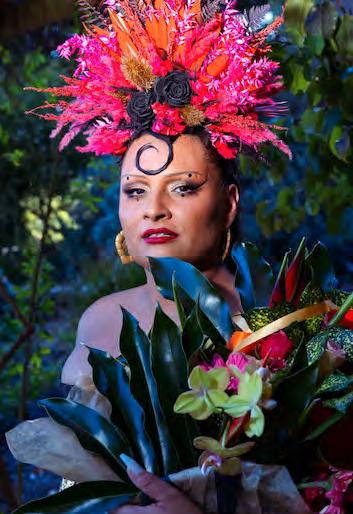
A queer guide to Bay Area music, dance, and theater
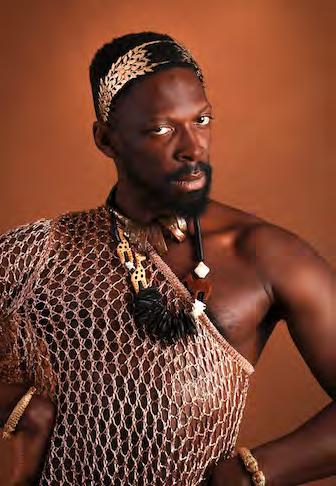
“Dracula: A Feminist Revenge Fantasy, Really” San Francisco Playhouse presents the Bay Area premiere of Kate Hamill’s imaginative new twist on Bram Stoker’s gothic classic. With a gender-bending cast, sexy supernatural villains, and Hamill’s piercing wit, this darkly comic drama skewers toxic masculinity, power dynamics, and traditional gender roles. $52-$145, now through June 27, 450 Post St. www.sfplayhouse.org
Doubt”
“The Phantom of the Opera” A revitalized new production of Andrew Lloyd Webber’s legendary musical, this “Phantom” features Maria Björnson’s original design and is based on the direction of Harold Prince, with musical staging and choreography by Gillian Lynne. Now entering its 40th year in London’s West End, “Phantom” is still one of the world’s most lavish, popular musicals. $111-332, May 28-June 21, Orpheum Theatre, 1192 Market St. www.us.atgtickets.com
“Dear San Francisco”






Circus Bella Circus Bella returns for its 19th season of free performances in Bay Area parks. “Ah Ha!” is a fast-paced, 60-minute take on the classic onering circus, featuring acrobats, aerialists, jugglers, and clowns, accompanied by live music from the Circus Bella All-Star Band. Designed for audiences of all ages, the show combines physical comedy, circus skills, and outdoor summer fun. Free, June 3–July 26, various Bay Area parks. www.circusbella.org
“Pride in Yerba Buena”








The Los Angeles Blade covers Los Angeles and California news, politics, opinion, arts and entertainment and features national and international coverage from the Blade’s award-winning reporting team. Be part of this exciting publication serving LGBT Los Angeles from the team behind the Washington Blade, the nation’s first LGBT newspaper. From the freeway to the Beltway we’ve got you covered.
by Lou Fancher
T hroughout history, victory when it comes to LGBTQ civil rights and equality is rare. Especially when it arrives in countries long considered locked into homophobic, patriarchal governance and cultural traditions dominated by machismo attitudes, longstanding evangelical opposition, and outright persecution of queer people.
As America tilts into closer alignment with the aforementioned, countries like Cuba offer a surprising counterpoint. In 2022, grassroots activists led a successful movement to secure same-sex marriage and legalize adoption for the LGBTQ community.
Kim Anno’s 90-minute documentary, “¡Quba!,” tells the story leading to the passage of the Family Code that today allows gay people to marry, provides a pathway to sexual reassignment, enables adoption for LGBTQ people, and more. The documentary screens Mays 29 as part of the 25th San Francisco Documentary Festival, June 13 at International Queer Women of Color Film Festival, and June 22 with the Berkeley Film Foundation’s series.
Anno, a Bay Area-based painter, filmmaker, and social practice artist, is the founder of Wild Projects, a 501C3 that serves as a knowledge gathering space, and an incubator for art, film, music, social practice, and performance projects. With multiple film credits to her name, Anno in an interview said “¡Quba!” is the first film she made with the intention of it becoming a documentary.
Kim Anno’s feature film, ‘¡Quba!’ at SF DocFest and Queer Women of Color film fest

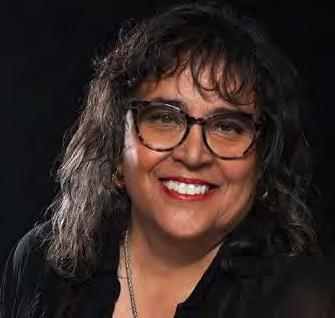

“Everything else I’ve made deals with important issues, mostly climate issues, but they’re all experimental, poetic, staged,” said Anno in an interview with the Bay Area Reporter. “This was challenging. It took me seven years. I learned in making a straight-up documentary that you have to figure out the narrative so it unfolds and people keep watching it. It’s asking them to sit down in a chair; commit over an hour to watching.”
Dynamic arc Creating a dynamic arc that reached a conclusion and wasn’t full of dry talking-heads interviews caused Anno to refine a convergence of cinematic drama, visual stimulation, and personal storytelling centered on primary “characters.” Among other voices, the film features Adela Hernández, Cuba’s first openly transgender elected official; Ramón Silverio, a fearless theater director; the eloquent activista and writer Ulises Padron Suarez; and
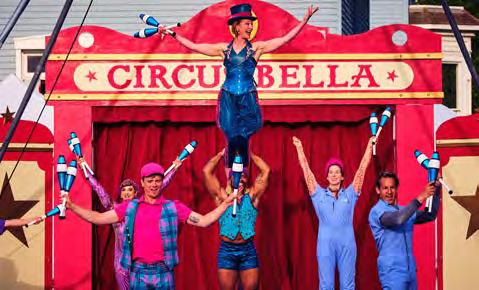
“Wreckage: A Musical Tragicomedy”
It wouldn’t be summer in the Bay Area without the shenanigans of the San Francisco Mime Troupe. Founded in 1959, the Tony Award-winning Mime Troupe is the oldest ongoing political theater company in the United States, bringing free, socially engaged, hilarious performances to parks and public spaces across the Bay Area. This year’s production, “Wreckage: A Musical Tragicomedy” asks the question, “How are we going to survive and rebuild in the rubble left from the economic, social, and psychological devastation of the idiotic kleptocrats?” Free, July 3-September 7, locations throughout the Bay Area. www.sfmt.org
“Godless”
The new cabaret show centers on the character Dion Damilola Lokinaesha Divine, a lowly nymph who dreams of becoming a god on Mount Olympus. The show stars Rotimi Agbabiaka, a veteran San Francisco theatre artist best known as Captain Hook in “Panto in the Presidio” and as a longtime cast member of “Beach Blanket Babylon.” Performances are in the Presidio’ intimate Black Box Studio. $27.50, July 9-19, 99 Moraga Ave. www.presidiotheatre.org
“Hairspray” Inspired by the John Waters cult film, the Broadway mega-hit musical “Hairspray” returns to the Bay Area.
Ana Canet and Maritza Estrada, two activistas of the Santiago-based lesbian collective, Las Isabelas.
Among those voices, Hernández’s story continues to ring in Anno’s head.
“She was in prison for four years, put there by her father,” said Anno. “She became a leader and when she starts organizing things, she stands out. She’s out there about her journey; one she’s been on for three decades. She actually forgave Castro, who apologized in 2015 as part of the state. She became a leader in government and that transformation is a huge story.”
The bishop who speaks proudly of what Anno called “his bigotry” introduced thoughts and words that initially sparked fear in her mind.
“He was so proud; saying marriage is one man, one woman, and God,” she said. “He leads those 350,000 evangelicals today, so I was afraid of him. Eventually, he was pleasant and happy to let us know what he thought.”
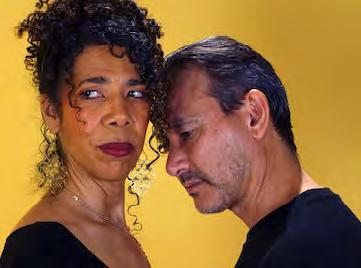
Set in 1962, “Hairspray” follows Baltimore teen Tracy Turnblad, determined to land a spot on her favorite television show. When her wish comes true, she uses her platform to shine a light on racial segregation, inspiring a movement that changes the face of broadcast TV forever. $52-$145, July 10–Sept. 12, San Francisco Playhouse, 450 Post St. www.sfplayhouse.org
“Antony and Cleopatra” San Francisco Shakespeare Festival’s 44th season of Free Shakespeare in the Park features the Bard’s drama of Roman Empire and Egypt, the conflict between duty, desire, and the impact of personal relationships on political power. The troupe travels from Cupertino’s Memorial Park to Redwood City’s Red Morton Park, then San Francisco’s McLaren and Sue Bierman Parks. Free, July 25-September 27. www.sfshakes.org
MUSIC
“Dolly: A Pride Concert” San Francisco Gay Men’s Chorus presents a tribute to the one and only Dolly Parton, who has inspired generations of misfits, dreamers, and drag queens with her iconic looks, only to be outshined by her self-depreciating humor and commitment to radical compassion. Yes, there will be a Dolly Look-Alike Contest, so start hot-gluing your rhinestones now. $31-$85, June 6, Sonoma State University Weill Hall, 1801 East Cotati Ave., Rohnert Park; June 13, Curran Theatre, 445 Geary St., San Francisco. sfgmc.org
Handel’s “Tolomeo”
Philharmonia Baroque Music Director Peter Whelan opens his first season with a semi-staged production of Handel’s opera that combines historically informed performance with theatrical elements that sharpen the drama. Stripped of power and living in exile under an assumed identity, Tolomeo must navigate betrayal and shifting loyalties as political order collapses around him; sung in Italian with English supertitles. $40-$175, July 23 at Herbst Theatre; July 24 at Berkeley First Congregational Church. www.philharmonia.org
Pride at the Freight
Berkeley’s venerable music venue celebrates women musicians from a wide array of genres. Artists include Skip the Needle, an Oakland-Based queer female quartet; Linda Tillery,
When she began the project, Anno knew gay people at one time were arrested and incarcerated for being “a danger to society.” What she didn’t know was that the prison in Santa Clara where many were imprisoned was in the same community where Silverio runs his activist theater program.
“His mission was to bring diverse sets of people to that center,” said Anno. “Diverse in age, sexual orientation, race, so that people could get to know each other and become tolerant of each other’s choices. Forty people live there; they have a gallery, theater, dance classes and parties.”
Silverio takes his programs on the road, traveling to tiny interior towns to present shows that appeal to multigenerational audiences. The impact of programs like this and the passage of the Family Code combine to present hope to the LGBTQ community and others in an otherwise bleak picture.
“When you laugh at yourself, you
whose credits include work with Santana, Boz Skaggs, Huey Lewis, and Turtle Island String Quartet; Tammy L. Hall, who has collaborated with the late Etta James, Loretta Devine, and Laurie Anderson; and many others. $39-$44, June 28, 2020 Addison Street, Berkeley. www.thefreight.org
San Francisco Symphony
Our hometown symphony offers a packed summer line-up of programming, ranging from classical standards and pop concerts to outdoor performances and its enormously popular movie series. On July 18, Tony Awardwinning performers Kelli O’Hara and Sutton Foster join the orchestra for a special performance inspired by the 1962 CBS special “Julie and Carol at Carnegie Hall.” Foster and O’Hara pay homage to LGBTQ icons Julie Andrews and Carol Burnett, performing favorites from their Tony Award-winning shows with lively banter in between. July 9 & 10, the symphony performs Leonard Bernstein’s score to the 1961 film “West Side Story” live, while the remastered film is shown in high definition with original vocals and dialogue. Steven Reineke leads the orchestra on July 24 in “James Bond Forever,” a celebration of 007 film scores. July 25 & 26, director/actor Danny DeVito joins the SF Symphony to narrate the film “Matilda,” as composer David Newman conducts his heartwarming score live-to-picture. $79-169, Davies Symphony Hall, 201 Van Ness Ave. www.sfsymphony.org-
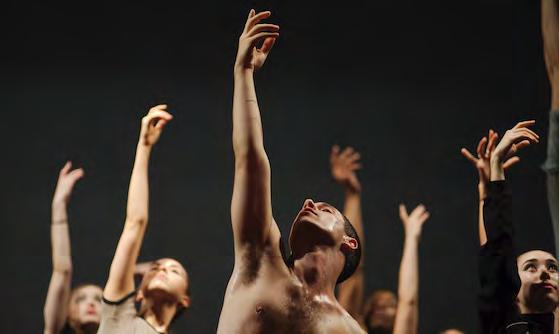
see assumptions you’ve made,” Anno said. “Art can be ironic and comic and go into cultural consciousness that teases people out of hard, black-andwhite thinking. Go into subconscious and tease people out of hard, black and white thinking. Art takes content from society and remixes it in new and fresh way. People want old things in new forms; they seek to go outside the boundaries. Art is always doing that, so art is a big tool for change.”t
The 25th San Francisco Documentary Festival presents ‘¡Quba!’ May 29, 6pm, Roxie Theater, 3117 16th St. sfdocfest2026.eventive.org qubafilm.com
The film also screens as part of the International Queer Women of Color Film Festival, June 13, 4pm at the Presidio Theatre, 99 Moraga Ave. (www.qwocmap.org), and with the Berkeley Film Foundation’s series, June 22, 6:30pm at Rialto Cinemas Elmwood, Berkeley. berkeleyfilmfoundation.org
LINES Ballet Summer Showcase
Experience the beauty and artistry of amazing young dancers from across the U.S. Alonzo King LINES Ballet’s Pre-Professional Summer Program attracts artists from across the nation and abroad, seeking to be challenged and transformed both physically and artistically. The showcase features a variety of premiere works by esteemed choreographers including former LINES company dancers and current faculty Gregory Dawson, David Harvey, Carmen Rozestraten, and Kara Wilkes. $18-$33, June 27, Cowell Theater at Fort Mason, 2 Marina Blvd. www.linesballet.org
ODC Summer Sampler
The company’s annual summer program features a world premiere by ODC Co-Artistic Director Mia J. Chong, featuring a blended cast of dancers from ODC/Dance and Eight/Moves, a contemporary dance company Chong founded in 2023. The program also includes a world premiere by returning guest choreographer Catherine Galasso, drawing from the lives and artistry of ODC’s founding women Brenda Way, Kimi Okada, and KT Nelson. Rounding out the program is Nelson’s Izzie award-nominated “Nothing’s Gonna Make Sense (Reflections on Grief).” $45, Arts Access tickets $30, July 30-August 2, ODC Theater, 3153 17th St. www.odc.dance
State of Play
Curated by ODC Creative Director Chloë L. Zimberg and Resident Curator Zaquia Mahler Salinas, this year’s State of Play festival features four evening-length works and five short-form works at various stages of development. Artists include Babatunji, Khala Brannigan, Leslie Cuyjet, Dragons Dance/Erin Yen, Laila J. Franklin, Malinda LaVelle and Emmaly Wiederholt, gizeh muñiz, Johnny Huy Nguyễn and seymour::dancecollective. $80, ODC Theater, July 30-August 2, 3153 17th St. www.odc.dancet

by Adam Sandel
Gay actor, comedian, and writer
Billy Eichner became a household name by shouting at strangers in the street on his show, “Billy on the Street,” before becoming a familiar face on TV and film, and creating and starring in the groundbreaking gay romcom “Bros.”
You may think you know Billy Eichner, but until you hear his new audio memoir, “Billy on Billy,” you don’t. It’s the story of a sweet, chubby, entertainment-obsessed kid whose parents couldn’t have been more loving and supportive of his sexuality and his theatrical antics and ambitions.
“Billy on the Street” was a character he created, then struggled to overcome.
The book tour for “Billy on Billy,” sponsored by Book Passage, will touch down at San Francisco’s Calvary Presbyterian, where he’ll be joined by San Francisco Chronicle’s Arts & Culture columnist Tony Bravo on June 3 at 7:00 p.m.
Working the street
Eichner burst onto the scene in 2011 with “Billy on the Street,” a show he created and starred in, where he walked the streets of New York City asking people to compete in pop culture trivia challenges, often haranguing them in the process. The show earned a massive fanbase, four Emmy nominations, critical acclaim, and inspired an entire online genre for countless TikTok-ers whose viral interviews now flood the internet.
His sudden fame led to roles in TV shows and films including “Parks and Recreation,” “American Horror Story,” “American Crime Story,” “Bob’s Burgers,” “Difficult People,” 2019’s live action “The Lion King,” and “Honey, Don’t!,” directed by Ethan Coen.
Eichner may be most beloved of LGBTQ+ fans as the co-writer, producer and star of the hilarious and heartfelt 2022 gay romcom “Bros,” the first major studio film where all major roles were played by openly LGBTQ actors.
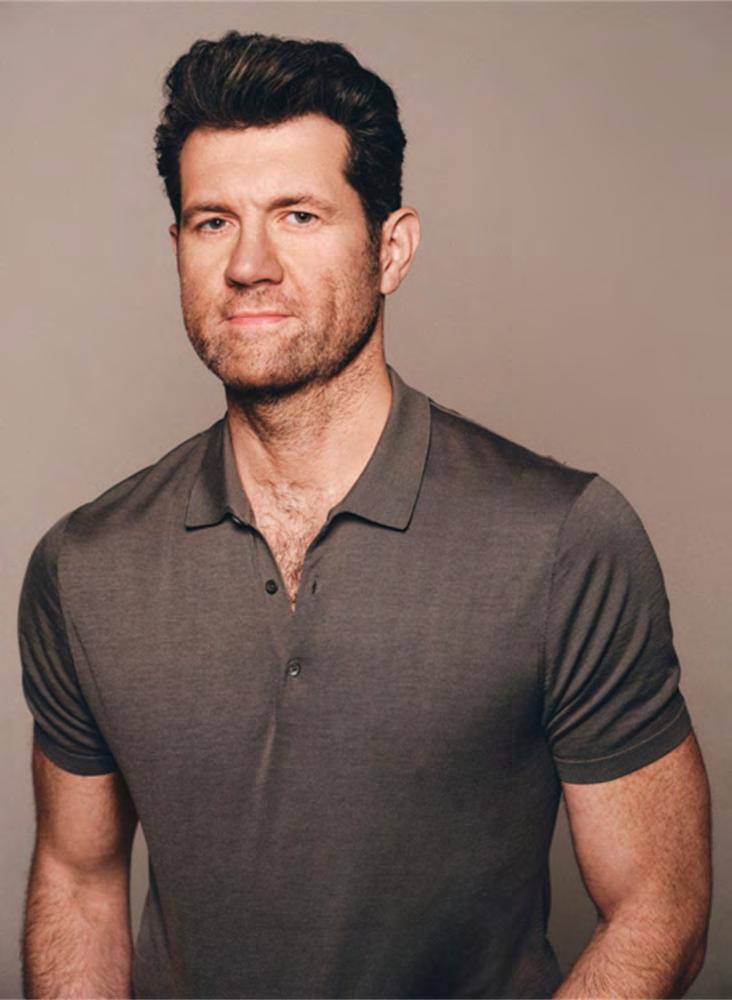
What was the most gratifying part of writing it?
So much of the book is a love letter to my parents and my childhood. The heart of the book is my origin story. I had this magical fun childhood and parents who were so supportive. They’re not around anymore. My mom died when I was 25 and my dad died in 2011, a month before we sold “Billy on the Street” as a show. But he did see the sizzle reel that we made to sell it.
playing a gay character, and they’ve struggled to be accepted as anything else. But there are exceptions. Sean Hayes has done a great job of branching out on stage after “Will & Grace,” and now Nathan Lane is doing “Death of a Salesman” on Broadway! I don’t think that out gay actors would have been allowed to do that in the past.
What future projects do you have lined up?
I have a movie coming out next year called “Judgment Day,” a very funny comedy with Will Ferrell, Zac Efron, and Regina Hall. I recently moved back to New York after a decade in L.A. and I’m focused on wanting to be on stage again. I’m actively looking to find a theatre project, and I have some screenplay projects in the works.
Have you got a dream role or project?
Not so much a dream role, but my background is in theatre. I went to acting school at Northwestern University where I was a serious theatre student, doing things like Chekhov and Shakespeare and scenes from “Angels in America.” Now I’m looking for opportunities to be the person I set out to be.
In creating his memoir, Eichner chose to bypass print for an audio experience, using his real voice and archival sketch clips to create an intimate, emotional journey for the listener. In a recent phone interview with the Bay Area Reporter, he shared his process in creating this audio memoir.
Adam Sandel: What first inspired you to write it?
Billy Eichner: Someone offered. As a writer, I have a ton of ideas, and I sometimes have a hard time choosing
one. If someone puts an idea in my head, it helps me to focus, and I need a deadline. There had been interest in me writing a book and doing a podcast. I didn’t want to do a podcast, but an audiobook is a performance of sorts, so it allowed me to use my voice.
When did you start writing it, and how long did it take? I worked on it off and on over several years. I started it in mid-2020 but I’d step away from it for long stretches of time.
You express regret that your parents never lived to see your success, but I’m convinced that they absolutely know about it. That’s very sweet. I’m still so excited to introduce people to them. They were native New Yorkers and such heartwarming, funny people. It’s rare in pop culture to hear about gay kids who were so loved and encouraged by their parents. They were middle-class people from Queens, but they went out of their way to make me know that I had a shot, while a lot of LGBT people grew up with trauma.
What’s your biggest beef about Hollywood?
I have many. I did get a ton of support for “Bros,” but the industry can be very narrow-minded. Ask any out LGBT actor who became known for
by Adam Sandel
You Can Fly,” an emotionally rich, consistently entertaining tale of coming out and coming of age in a small California town in 1988. The story follows fifteen-year-old
Clayton Wheeler, an awkward gay comic book geek, whose fantasy life of secret identities, superpowers, and alternate realities is a refuge from his real life of high school bullies and an antagonistic stepfather.
Tell me about your upcoming book event in San Francisco. I’m really excited about it. I’m happy to answer whatever questions people may have for me. I’ve never really done much performing in San Francisco, or a tour. But one of the best nights of my life was the screening of “Bros” at the Castro Theatre in San Francisco. Everyone was so loving and enthusiastic.t
Billy Eichner with Tony Bravo: ‘Billy on Billy,’ Calvary Presbyterian, 2515 Fillmore St. SF $24 (audiobook included) June 3, 7pm. www.bookpassage.com
‘Billy on Billy: An Audio Memoir’ by Billy Eichner, Macmillan Audio $26.99 read.macmillan.com instagram.com/billyeichner
Jase Peeples’ coming-of-age gay novel soars with emotion and heart



His allies are the kind-hearted Betty Hernandez, who works at the local 7-Eleven and sells him comic books, and fellow nerds Ronee, a cynical fashionista, and aspiring comic book artist Alister.
Clayton’s childhood bestie Derek Barlow, whose family moved away several years ago, returns to town, but is now a strapping football player. With deft economy, Peeples introduces all these characters and sets the story and conflict in motion in Chapter One.
A vivid time and place
One of the book’s great strengths is its vivid and detailed re-creation of coming of age in the late 1980s. We’re squarely in the world of films such as “Sixteen Candles” and “The Breakfast Club,” but without the ironic self-awareness that permeated those works.
All of Peeples’ characters are multidimensional, highly relatable human beings who struggle with the challenges that life throws at them. We consistently root for the book’s hero, and see the world through his eyes, but each character has depth, strengths, and flaws of their own.
The tentative, burgeoning, nervewracking romance between Clayton and Derek, neither of whom is able to admit his same-sex attraction, is the heart of the story, peppered with the teenage horseplay of two childhood
buddies. A game of Nintendo has never been more erotic.
As they spend more time together, the status quo of their lives begins to unravel. Clayton’s besties Ronee and Alister resent his time away from them, and his waning interest in the comic book that they’ve been creating.
Derek’s football buddies are Clayton’s biggest bullies.
The plot and the conflicts race along at the speed of the boys on their BMX bikes, and Peeples leans into both the eroticism and the emotional and physical violence that inevitably ensues.

Above all else, “Before You Can Fly” is certain to evoke strong identification within young LGBTQ+ readers, and powerful teenage memories within older readers.t
‘Before You Can Fly’ by Jase Peeples, Evernight Teen. eBook: $4.99 Paperback: $14.99 evernightteen.com jasepeeples.com
Jase Peeples’ book-signing and release party will be at The Academy SF, 2166 Market St., May 31, 1pm-2:30pm. academy-sf.com

by Jim Gladstone
David Mills has never quite fit in.
“I’m not a part of the mainstream comedy conversation,” acknowledged the gay cabaret artist, who brings his knife-sharp, bruisedark humor to Martuni’s on June 4.
“I’m not following it. I’m not chasing it. I know that my pathway has nothing to do with it,” said Mills in an interview with the Bay Area Reporter.
“I’m in a completely different lane.”
It’s a lane paved by the likes of Sandra Bernhard and Margaret Cho, whose carefully wrought, personadriven solo shows required a depth of concentration and intellectual engagement from audiences well beyond what’s demanded by the quick hit social media clips and gas-baggy podcast rambles that are the leading outlets for comedy today.
Over more than three decades, Mills has travelled from San Francisco, where he cut his teeth in the 1990s at the storied Castro performance space Josie’s Juice Joint (now Starbelly); to London, where he lived for nearly two decades; to New York, where he’s based today.
No standard stand-up
Along the way, Mills’ niche-defying performances, which flow from gimleteyed state-of-the-world observations, to piano-accompanied comic fugues, to sharply etched character monologues, have led to critical acclaim, but never a life-sustaining income.
“I’ve had many income streams; well, strands,” he noted with the world-weary lift of an eyebrow.
Substack newsletter, “Quality Time,” is an elegant writer.
In recent years, his performances have evolved to encompass more monologues spoken by characters who, while imbued with tinctures of Mills’ wry resignation, have voices that are distinctly their own.
“I usually start with a visual image,” says Mills, about crafting these passages.
One new piece has its genesis in Mills’ imagining Manhattan under attack.
“I wondered what it would be like to live in some fabulous mansion in upstate New York and stand on the balcony as fighter jets flew over. And from that visual, I imagined a character; an elderly woman looking out over this forest landscape and watching the smoke rise from the burning city.”
Mills says that, of late, he tends to write mainly female characters.
“As I get older, I feel like my emotions are more readily accessible. And I feel like women have more access to their emotions than men do. When I do write men, they’re struggling with their manhood.”
In our interview, Mills urged me to let readers know that they’ll laugh at his show.
“Please let them know that it’s funny.”
And it is. But it’s by no means a typical stand-up performance.
While Mills has never had the elusive big break that entertainers hope for, his singular talent continues to win him opportunities to bring his work to new audiences.
Mills’ set at Martuni’s, called “Swal-
Still, even while supporting himself through work as a fashion publicist, bespoke suit salesman, conference organizer, and sometime film and television actor, Mills has remained committed to the dark crystalline vision and idiosyncratic format of his solo shows.

low Your Pride,” will serve as a onenight west coast warm-up for his firstever Australian gigs later in June. He’s been booked in Adelaide, Melbourne and Sydney.
Then, in August, Mills will be performing in Provincetown for the first time in his career, headlining at the Red Room.
“The thing about Provincetown,” he noted, “is that people come from all over to check out the shows. If you have success in P-Town, it can help build an audience around the country.”
Well-crafted characters Mills, who shares keen observations on art and culture through his
“I’m always trying to put deeper and richer expression into my work,” he said. “I’m really not paying attention to what other comics are trying to do.”
Which is exactly why David Mills deserves your attention.t
David Mills’ ‘Swallow Your Pride,’ $25, June 4, 7pm, Martuni’s, 4 Valencia St. bit.ly/DavidMillsMartunis instagram.com/davidmillsdept/


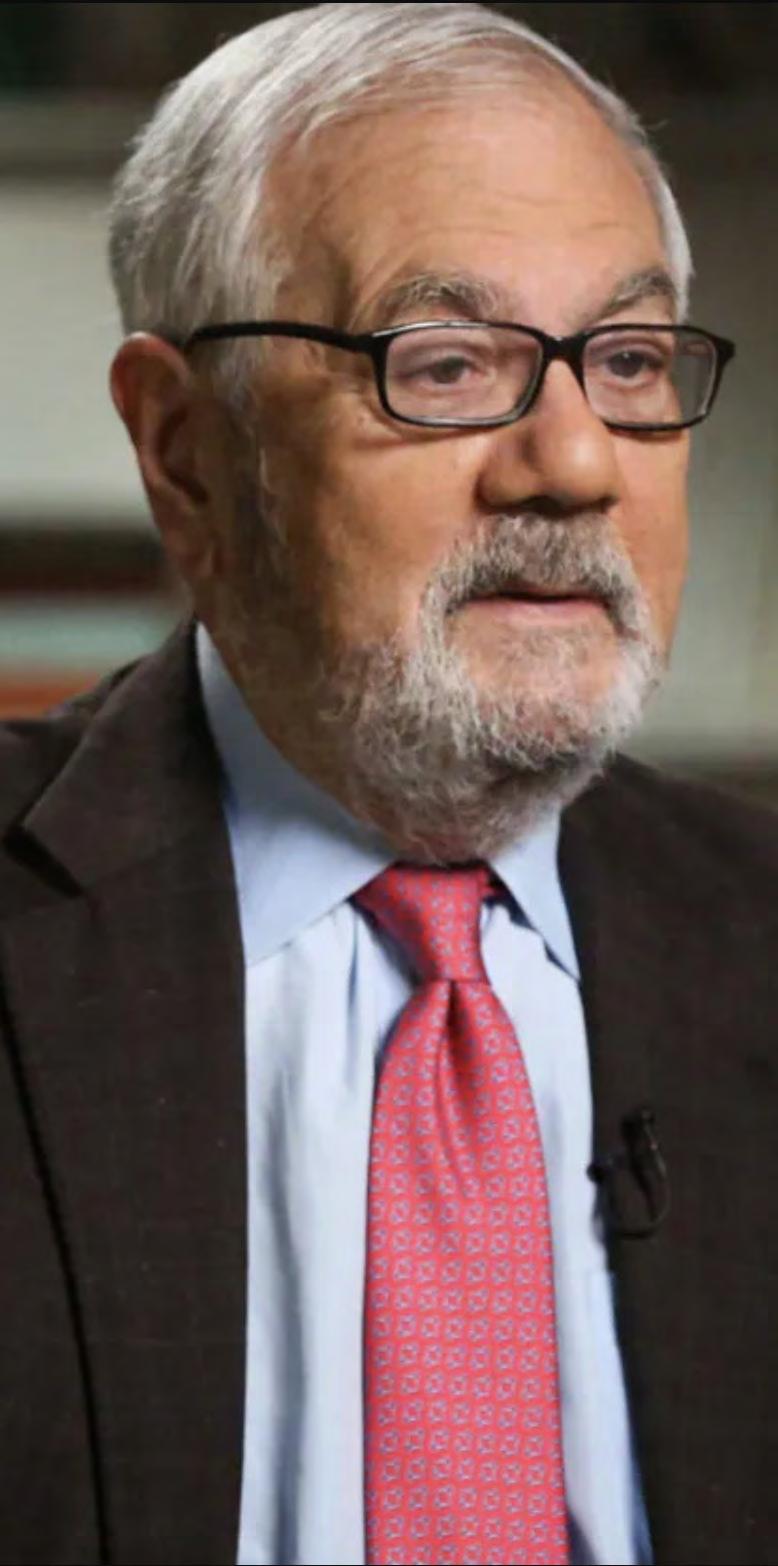
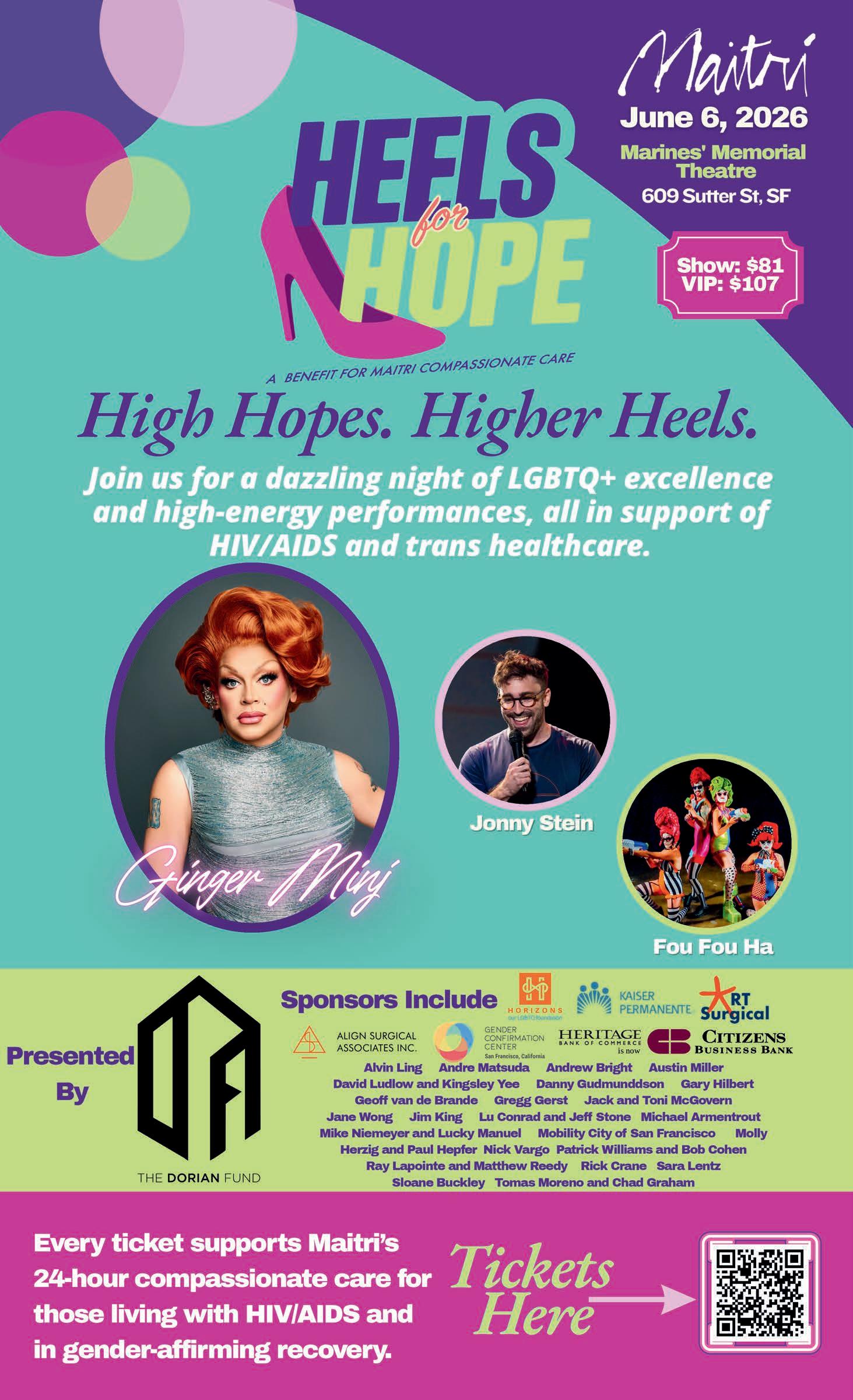
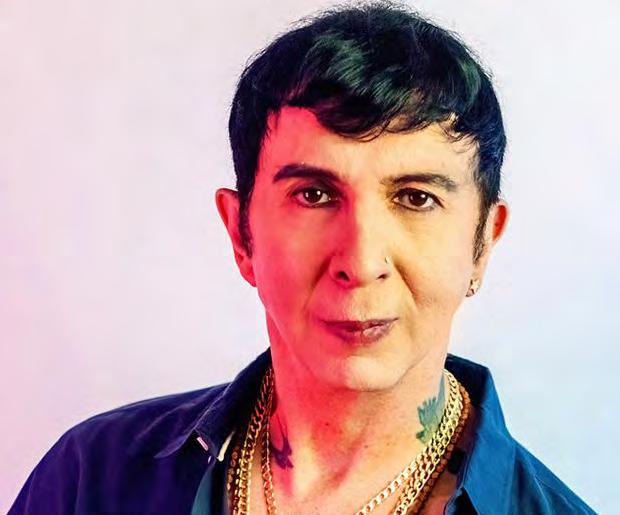

The Generations Tour has dates in 21 U.S. cities. Are these all cities in which Soft Cell has previously performed?
We’ve performed in many of the cities, but there are a few places I haven’t played with Soft Cell, such as New Orleans, Las Vegas, and Nashville, and we’re performing at some iconic venues such as Hollywood Bowl, Radio City Music Hall, and Grand Ole Opry, which will be amazing.















Are there any cities in which Soft Cell is especially excited about performing?
I’m very excited about the Hollywood Bowl in Los Angeles and performing in New Orleans because I’ve never been there, but I’m looking forward to it all.
The Generations Tour takes place during June, which is Pride month. Do you think you might have time to take part in any of
the Pride festivities taking place here in the States?
Sadly, not this time, as the schedule is so tight, but I wish everyone a happy Pride. Right now, it needs to be louder and more out there than ever.
I love the name-dropping in the new Soft Cell single, “Danceteria,” including John Sex, Ma-









































donna, Anita Sarko, and Andy Warhol, as well as Congo Bill on the fourth floor. Why was now the time to celebrate this legendary and greatly missed venue? I wanted the album to be a love letter to New York in the early ’80s, when we first visited there and recorded our first albums; a journey through a night in New York, the impressions it made on me, and how it was a dream come true for me to visit the USA as a boy from the North of England. I was drawn into the creative dance club scene, of which Danceteria was at the heart of everything we loved. We launched our first album there, and I knew many of the people who performed and worked there, many of whom are now sadly not with us. And I just loved the very word Danceteria!
To my ears, there’s a Nina Hagen tribute near the end of the song, when you sing “New York, New York.” Am I on the right track?











































I didn’t think of that at the time; I was just thinking of the Frank Sinatra and Liza Minnelli song “New York New York,” but it may have also been in my subconscious as I loved that album that Nina Hagen did.






Soft Cell songs can be heard in regular rotation on Sirius XM’s First Wave station. What does it mean to you that you are able to reach Soft Cell’s original fanbase, as well as new generations?










It’s wonderful that Soft Cell’s songs, most of which we recorded a long while ago, are still being played and part of the soundtrack to people’s lives. Younger generations are also coming to see us because maybe bands they like now were inspired by us. Streaming has opened up a wider musical world to cross generations, or we’ve been featured on soundtracks or covered by bands. “Tainted Love” is played all over the world in some place or at some time every day and just celebrated a billion streams.
Finally, I wanted to express my condolences on the passing of your Soft Cell bandmate David Ball in 2025. Is there anything you’d like the readers to know about David?







David was an original electronic music pioneer. We had great chemistry that continued over the years, heading on for 50 years since we started. I wouldn’t be where I am if it weren’t for his music, and he would be overjoyed to know it was being kept alive. He will be greatly missed, but always celebrated.t
The Human League, Soft Cell and Alison Moyet, $110-$297, June 5, 8pm at The Warfield Theatre, 982 Market St. www.softcell.co.uk www.thewarfieldtheatre.com

by Jim Piechota

Once again, we present a unique array of newly published queer books for your enjoyment. First up is a selection of fiction offerings, including novels about a gay special ops group fighting for justice, a detective sleuthing out the truth about Alice B. Toklas, two moving works of autofiction from French writer Edouard Louis, and much more.
“The Tuxedo Society” by Paul Rudnick, $28 (Atria)
Centered at the neon-pink beating heart of accomplished Broadway playwright Rudnick’s hilarious gay specialops rainbow thriller is Andrew Birnbaum, a 25-year-old struggling actor who barely makes ends meet selling scented candles in the East Village. Shaking things up is a spontaneous invitation from his friend Brock to join him at a dinner club meeting of the shadowy, mysterious Tuxedo Society.
The organization boasts a melting pot of members who do everything from selling luxury real estate, to competitive swimming, to being an OnlyFans influencer, to selling fine china, etc. Andrew is procured for his untapped acting abilities and recruited into an LGBTQ cabal of super-do-gooders whose first assignment is to protect the first lady (a thinly-veiled Michelle Obama) from an attempt on her life.
While the action certainly flies off
the page, it’s the sheer amount of laughout-loud humor and snappy dialogue which truly steals the thunder, in addition to Rudnick’s uncanny knack for descriptive splendor and a comedic, quick-witted cast of queer superheroes. www.simonandschuster.com
“Bone Horn” by Prudence Bussey-Chamberlain
$17.95 (Soft Skull)
Imagine the quandary if you were a fledgling private detective and, in the interest of needing quick cash, took a job in which you were tasked with finding proof that Alice B. Toklas, wife of modernist writer Gertrude Stein, actually possessed the forehead horn that had been rumored about for decades by artists like Picasso?
That’s the grand premise behind poet and novelist Bussey-Chamberlain’s debut, which she pulls off cleverly and with the kind of literary chops that foretells a great career ahead.
Unnamed in the book, the narrator, grieving the recent death of her partner, May, has abandoned both academia and her London home for a change of pace in the world of commissioned investigation. Being a beginner, cases are scarce until a mysterious phone call insists that Toklas’ horn is real and that the narrator be the one to provide material evidence of it and receive a lucrative fee in exchange.
The first-person narration lends the book an intimate quality, as if the read-


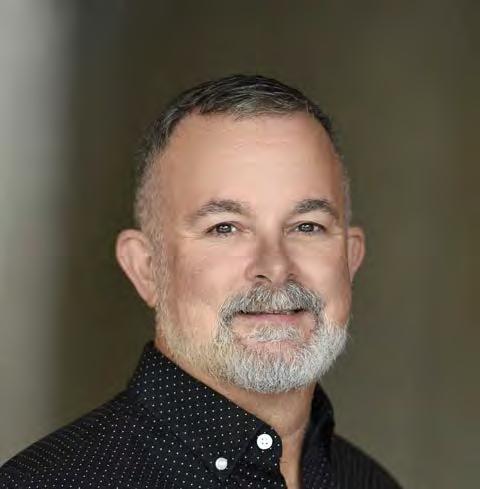


er is right next to the detective, vicariously observing her earnest research and dogged efforts to avoid catastrophe, all amidst a personality that is both amiable and charmingly addictive. This eloquently written mystery is both thoughtful and compelling, and a win for a poet seemingly at the height of her artistic powers. www.softskull.com
“We Burned So Bright” by TJ Klune, $25.99 (Tor)
When the world is about to end, where will you run to? For Don and Rodney, the retired gay couple in Klune’s latest, it’s a last-ditch, Hail Mary-pass road trip from New England to Washington. Together for four decades and counting, the couple has endured the worst of the HIV years and the enduring nonsense of inequality and homophobia, yet nothing could prepare them for the black hole that is engulfing space, planets, and everything else in its path.
Earth is on its decimating trajectory, so, naturally, the planet has plunged into chaos with fires, looting, and everything imaginable associated with an end-of-days scenario.
Don and Rodney trek west to see their son and spend the rest of their days together and as they do, they encounter an eccentric series of people and places that remind the couple that life is still worth living, even if there are just a mere few weeks left. torpublishinggroup.com
“The Fervent Whites” by De’Shawn Charles Winslow
$28 (One World/Random House)
Set in 1982 in New York’s Hudson Valley, the small predominantly Blackpopulated hamlet of Fervent hosts the shocking return to society of a married couple released from prison after serving 18 months on a murder sentence. Now that James and Ella White’s conviction has been overturned after another party admitted to the crime, the townsfolk who have been embroiled in the case naturally believe they won’t ever have to hear from them again, certainly they wouldn’t want to come back to Fervent.
But they show up on the doorstep of local divorced woman Sylvia “Syl” Upshaw and her queer best friend La-
fayette “Fate” Jolly anyway. Fate frets over this surprise development since it was his testimony that primarily sent the couple to prison initially, while Syl believes the White’s adopted Black son Morgan died because of actions she took while the couple was in prison.
At just 200 pages, the sheer amount of racial and interpersonal tension, secrets, and high drama Winslow manages to wring out of the story is simply amazing. As immersive and cinematic as any modern thriller incorporating themes of injustice and interracial communities, this novel will capture and captivate readers, not letting go until the final straw has been drawn. penguinrandomhouse.com
“Pretend You’re Dead and I Carry You” by Julian Delgado Lopera
$31.99 (Liveright/WW Norton)
In Delgado Lopera’s fiercely written Colombian coming-of-age story, young Ignacio struggles to find his own identity in the small town of Ebagui despite the rages of his harddrinking father and his longing to experience the long flowing hair of his neighbor, Lucrecia.
Lucrecia’s son Felipe satisfies Ignacio’s curiosity, budding desire, and his fascination with other boys as both secretly swim naked when the coast is clear. When he is older, Ignacio visits queer nightclubs and befriends a trans performer there named Mamadora Electrica, who takes him under her glamorous wing. As the narrative moves into the present day, Ignacio is a queer adult, formerly married to Alma Haunting and unforgettable, Delgado Lopera has created an indelible portrait of a country stunted by violence and a family passing down repression and the yearning for transformation as tradition.
In partnership with Green Apple Books and the GLBT Historical Society, Julian Delgado Lopera will be in San Francisco to read from and sign his latest novel, 7pm, June 4 at The Lab, 2948 16th St.. thelab.org wwnorton.com
“Monique Escapes/Collapse” by Edouard Louis, translated
from the French by John Lambert/Tash Aw, $25/$26(FSG)
Queer French author Edouard Louis simultaneously delivers two brilliant works of autofiction this summer; both are deserving of wide audiences and great praise. This literary trio concludes the author’s series of novellas centered around his past and his family, sexuality, and identity, as first started with 2017’s “The End of Eddy.”
Up first is a novella chronicling the desperate escape of the narrator’s mother, Monique, 55, from an abusive relationship, just one of the many violent situations she’s found herself immersed in across the years. The narrator is a writer chastised and subsequently disconnected from his family for authoring books detailing the abusive atmosphere within their own household where he grew up. Now that his mother is in dire need of rescue, she moves into his Paris apartment while he is in Greece on a writing residency. All is not forgiven, however, and the narrator shifts easily between describing the survival of his mother and her new life to reconnection efforts with his sister, who has also become estranged, and reliving (and healing from) his past abusive ordeals at the hands of a broken, emotionally fractured family. Not the most uplifting material, but in the hands of such a literary master craftsman, the story is a moving study of personal catharsis and the power required to move through and beyond the pains of the past.
Digging deeper into his family’s sordid history is the author’s second release which chronicles his unnamed brother’s somber life and eventual death. It seems cruel for the narrator to have little reaction to the news that his brother has died at age 38, but when the narrator reveals the troublesome details of his brother’s harried life, his apathy becomes clearer.
Written with great care and beauty, Louis concludes his traumatic familial saga with sadness and a sense that all has not been revealed, but there’s also clarity, light, and glimmers and shimmers of hope for the future to behold. Both are heavy reading experiences, but well worth the time and effort to invest in the intensive world of Edouard Louis. us.macmillan.comt

Jim Provenzano


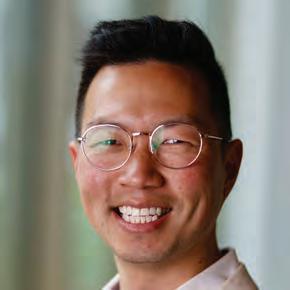
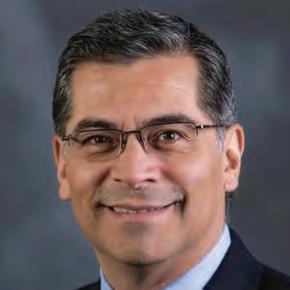
FEDERAL CANDIDATES
Scott Wiener, US Representative, D11
Kevin Mullin, US Representative, D15
STATE AND REGIONAL CANDIDATES
Xavier Becerra, Governor
Fiona Ma, Lieutenant Governor
Shirley Weber, Secretary of State
Malia Cohen, Controller
Eleni Kounalakis, Treasurer
Rob Bonta, Attorney General
No Position, Insurance Commissioner
No Endorsement, State Superintendent of Public Instruction
Sally Lieber, Board of Equalization Member, District 2
Matt Haney, State Assemblymember, District 17
Catherine Stefani, State Assemblymember, District 19
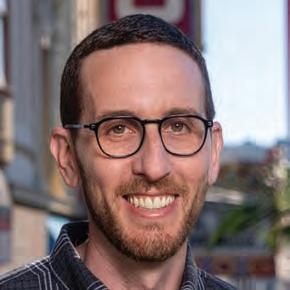
LOCAL CANDIDATES
Phil Kim, Board of Education
Stephen Sherrill, Board of Supervisors, District 2
Alan Wong, Board of Supervisors, District 4
Phoebe Maffei, Superior Court Judge, Seat 16
LOCAL BALLOT MEASURES
YES A – Earthquake Safety and Emergency Response Bond
YES B – Lifetime Term Limits for Mayor and Members of the Board of Supervisors
NO C – Decreases to Business Taxes
NO D – Increases to Business Tax Based on Comparison of Top Executive’s Pay to Employees’ Pay on or before June 2!