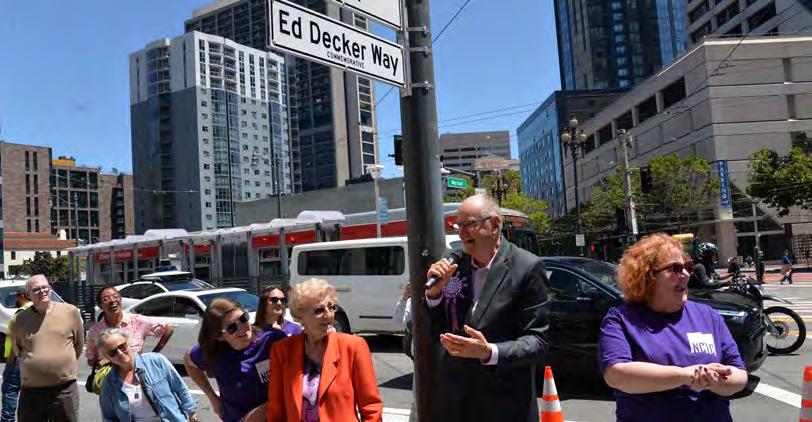
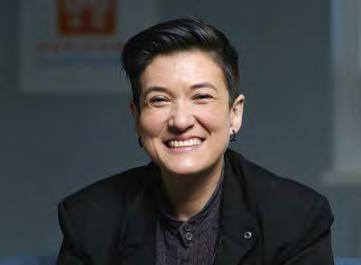
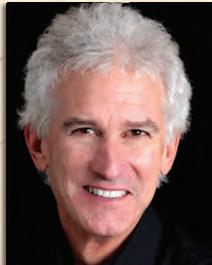
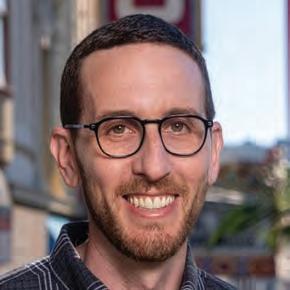
is planning on introducing legislation May 19 to make it easier for people experiencing homophobic, transphobic, or sex discrimination to move to San Francisco. Specifically, Mahmood wants to amend the city’s Fair Chance ordinance, which removed automatic barriers to employment and affordable housing for people with prior criminal records.
The proposed amendments would expand legal protections to those experiencing the criminalization of abortion, gender-affirming care, and even some drag performances in other states who relocate to San Francisco, a news release from his office noted.
“Across the country, we are watching politicians turn healthcare, identity, and self-expression into grounds for punishment. That fear follows people long after they cross state lines, into job interviews, housing applications, and everyday life,” Mahmood stated. “San Francisco should be a
See page 10 >>
3 months in, Castro businesses report bump from theater reopening
by John Ferrannini
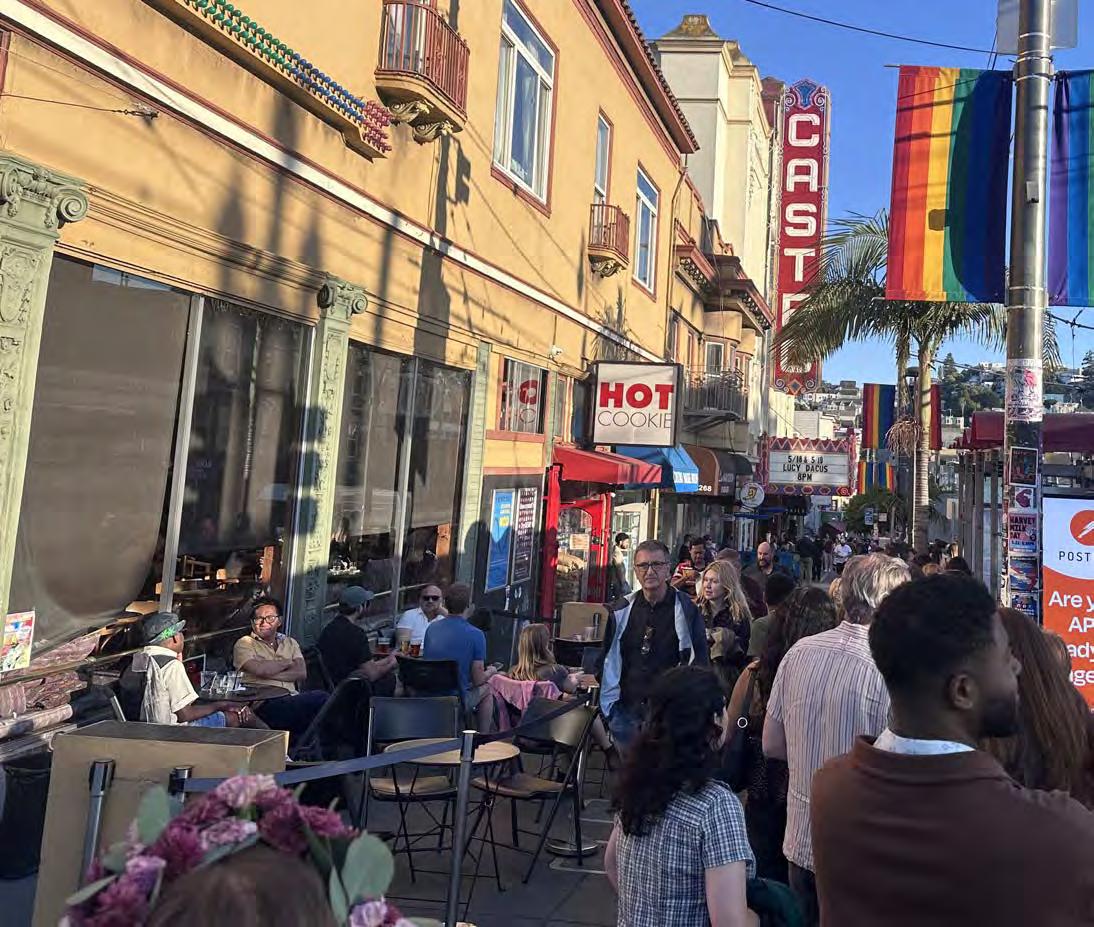
The consensus among Castroarea businesses is that the reopening of the neighborhood’s eponymous theater, which now also features live events as well as films, has been an economic plus for the neighborhood. The theater reopened in early February after a two-year, $41 million renovation.
Bill Pung, a gay man who is a coowner of Orphan Andy’s at 3991A 17th Street, has been keeping the diner open all night on Tuesdays and Wednesdays in order to accommodate the influx of customers leaving the theater around the corner from it on Castro Street. The restaurant had been wrapping up seating at 9:45 p.m. on those nights.
“There’s no particularly dark day,” Pung said in a phone interview, referring to business. Asked if he’s seeing
more receipts, he said, “Oh yes, for sure, and I’m hoping it’s been like that for the whole neighborhood. It’s better than what it had been.”
Now, Orphan Andy’s closes at 9:45 p.m. only on Sunday and Monday nights.
“Most of the events are sold out, so it brings more people to the neighborhood, and we get some of that crowd,” Pung added, referring to the theater.
Terry Asten Bennett, a straight ally and two-time past president of the Castro Merchants Association who co-owns Cliff’s Variety at 479 Castro Street, said that her sales have been down since the rise in oil prices after the beginning of the U.S.-Israel war with Iran in February. Cliff’s closes at 6:30 p.m. (6 p.m. on Sundays), which is during the theater’s peak weekday hours that are later in the evening. The store is open when the theater has weekend afternoon events.
See page 3 >>
4: Alan Wong
SF Board of Education
Congress (Bay Area)
Dist. 2: Jared Huffman
Dist. 4: Mike Thompson
Dist. 8: John Garamendi
Dist. 9: Josh Harder
Dist. 10: Mark DeSaulnier
Dist. 12: Lateefah Simon
Dist. 14: Matt Ortega
Dist. 15: Kevin Mullin
Dist. 16: Sam Liccardo
Dist. 17: Ro Khanna
Dist. 18: Zoe Lofgren
California Senate
Dist. 10: David Cohen
CA Assembly
Dist.12: Eli Beckman
Dist.14: Buffy Wicks
Dist.16: Rebecca Bauer-Kahan
Dist. 17: Matt Haney
Dist. 18: Mia Bonta
Dist. 19: Catherine Stefani
Dist. 20: Liz Ortega
Dist. 21: Diane Papan
Dist. 24: Alex Lee
Dist. 25: Ash Kalra
Dist. 26: Patrick Ahrens
San Francisco Props Yes on: A No on: B, C, D
Remember to vote by June 2! Find your
Pride House SF readies to welcome LGBTQ soccer fans
by Matthew S. Bajko
As excitement builds across the Bay Area for the FIFA World Cup 2026 matches being held locally next month, Pride House San Francisco is ready to welcome LGBTQ soccer fans and others interested in witnessing the global sports competition. It is hosting watch parties and other events at venues across the city, all of which are free to attend. This is the first time such a space for queer and trans athletes or sports aficionados will be offered in San Francisco. As the Bay Area Reporter first reported in December, LGBTQ-focused soccer club the San Francisco Spikes partnered with the global equality group All Out and the SF LGBT center to open the local Pride House.
“We are very excited about the Pride House SF activations for the World Cup this summer. We feel it will be a good balance of watch parties and celebrations,” said Pride House SF Executive Director Zac Brown, who added the organizers are pleased with being able to also put on well-being programming and to highlight different local organizations they have teamed up with for the various offerings.
Since April Pride House SF has been gathering together soccer fans and others to connect via bingo nights and yoga sessions. The next yoga offering will be held from 5:30 to 7 p.m. Friday, May 29, at the LGBT center, located at 1800 Market Street.
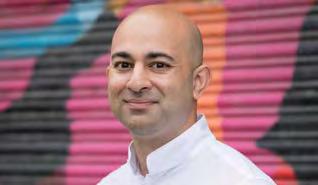
San Francisco Supervisor Bilal Mahmood
Dyke
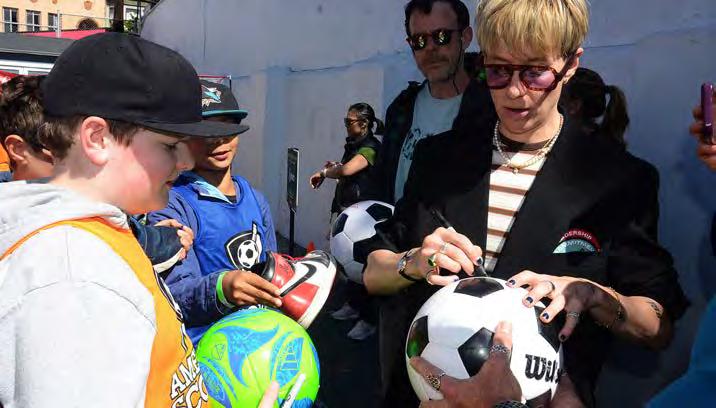
Former women’s World Cup champion Megan Rapinoe, right, signed soccer balls for kids during an appearance May 13 at the Harvey Milk Civil Rights Academy, where she helped dedicate a new pitch.
Rick Gerharter
John Ferrannini
People waited in line for a show at the Castro Theatre Monday, May 18.
DJs band together for SF Dyke March benefit << Community News
compiled by Cynthia Laird
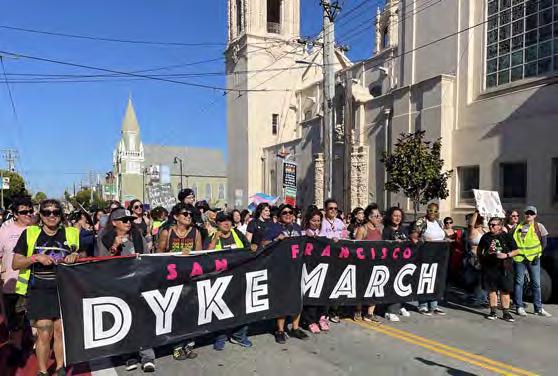
Awho’swho of DJs will band together for an evening of music at the historic White Horse Bar in Oakland to benefit the San Francisco Dyke March. The “DJs for Dyke March” fundraiser takes place Sunday, May 31, from 5 to 9 p.m. at the White Horse, known as the longest-running LGBTQ watering hole in the country, located at 6551 Telegraph Avenue.
Presented by Page Hodel, a lesbian and longtime DJ, the event will feature not only herself, but also many of her friends. Expected to take to the turntable – or laptops – will be DJs Lady Ryan, Rockaway, Black, Downtown Donna, Young Ella Baker, Rumorosa, Junkyard, and Christi James.
M Rocket, a dyke who is project director for the SF Dyke March, had previously told the Bay Area Reporter that the organization is busy raising funds for this year’s event and had updated its crowdfunding goal to $60,000 as of last month.
For the White Horse event, tickets are $20-$50, sliding scale, and can be purchased online, with a small service fee. For more information and to purchase tickets, go to https://tinyurl.com/29j2nmpp
Organizers noted that 100% of the proceeds will go to the production of the SF Dyke March, which is set for Saturday, June 27. The march will step off at 5 p.m. at 18th and Dolores streets, just outside Mission Dolores Park. Organizers had previously announced a smaller footprint ahead of the march, with a few speakers on the back of the sound truck. There are no plans for official events inside the park, Rocket had stated.
Fundraiser for Oakland councilmember
LGBTQ politicos and others will join together for a reelection fundraiser for lesbian District 2 Oakland City Councilmember Charlene Wang Thursday, May 21, the eve of Harvey Milk Day, at Fluid 510, the gay-owned LGBTQ bar at 1544 Broadway in Oakland. The fundraiser is from 6 to 7:30 p.m.
Sean Sullivan and Richard Fuentes, gay men and partners who co-own the establishment, will be joined by queer Oakland At-large Councilmember Rowena Brown, gay El Cerrito Mayor Gabriel Quinto, lesbian El Cerrito City Councilmember Carolyn Wysinger, gay former Port of Oakland director
and Oakland councilmember Danny Wan, gay former City College of San Francisco board member Alex Randolph (now an Oakland resident), and many more.
Wang won the District 2 seat in a special election in April 2025 to fill the unexpired term of former councilmember Niki Fortunato Bas, who was elected to the Alameda County Board of Supervisors. Wang is running in November for a full fouryear term. She is one of three out members of the City Council and one of the few out Asian elected leaders in the Bay Area.
Donations for the event are $99-$900 per individual. To donate, go to https:// secure.actblue.com/donate/fluid510forcharlene. To RSVP for the event, email events@charleneforoakland.com.
Fluid 510 receives CA biz award
The aforementioned Fluid 510 LGBTQ bar was selected as the California Small Business Development Center’s Small Business of the Year for Assembly District 18, gay co-owners and partners Sean Sullivan and Richard Fuentes announced. The nomination was made by Assemblymember Mia Bonta (D-Oakland) and the Oakland Chamber of Commerce, a news release stated.
Sullivan accepted the award May 13 at the awards gala in Sacramento, which celebrates small businesses that create meaningful local impact and serve as engines for economic growth and community development.
Fluid 510 was founded as more
than a nightlife concept, the release noted, and since opening in the city’s Uptown neighborhood has grown into a destination for inclusive programming, brunches, nightlife experiences, community events, and celebrations that reflect the diversity and energy of Oakland.
“Receiving this recognition is incredibly meaningful because Fluid 510 was built with a vision larger than food and hospitality,” Sullivan stated. “We wanted to create a space where people felt welcomed, celebrated, and connected.”
Since its opening in the spring of 2023, Fluid 510 has hosted the East Bay Stonewall Democratic Club’s Pride Breakfast the morning of Oakland Pride, among other events.
Bonta praised the establishment.
“Small businesses are the heartbeat of our communities, and Fluid 510 exemplifies what it means to invest in people and place,” she stated. “Sean Sullivan, Richard Fuentes, and the Fluid 510 team have created a business that not only contributes economically, but also builds community, fosters belonging, and uplifts Oakland’s unique culture.”
Correction
In the May 14 article, “Nonbinary DADT survivor Lilly Steffanides dies,” the cause of death should have been reported as Stage 4 prostate cancer. The online version has been corrected. See
2026>>
Sonoma County readies for its first-ever Dyke March
by Lois Pearlman
Petaluma resident Pam Adinoff
and Nancy Kelly, from Durham, North Carolina, have been enjoying a bicoastal relationship for the past five years. Now they are turning their well-established partnership toward organizing Sonoma County’s first-ever Dyke March and street fair, scheduled for Sunday, June 21, in Santa Rosa.
It was while watching a film several months ago, “Lesbians in Boystown,” which explored the history of dyke marches, that led the couple to decide the time was right for dyke visibility in the North Bay.
Adinoff’s reaction to the film, Kelly, 68, said, was, “Let’s do this.”
“Seeing this made me realize how important it is for lesbians, queer people, and the sapphic community to be visible,” Adinoff, 72, explained, referring to the umbrella term for women-lovingwomen that includes lesbians, bisexuals, and trans, nonbinary, and queer people.
Although this is their first project together, the women are hardly new to organizing. Kelly spent 20 years as the events planner for Duke University in North Carolina.
“I love planning events,” she said. Adinoff came to Sonoma County in 1973 to attend Sonoma State University, and helped organize the Penngrove Women’s Center and Minerva Produc-
Theater reopening
From page 1
“Sales dramatically dropped with the start of the war,” Asten Bennett stated. However, the hardware, costume, and gift store is seeing fresh faces connected to the theater’s reopening.
“There is a revived energy in the Castro,” she stated. “We are seeing new visitors that wouldn’t have other-
Lois Pearlman
tions. More recently, she was a primary mover and shaker in organizing the Sonoma County Lesbian Reunion, a mostly online group of older lesbians who came out decades ago that also holds events.
The two met at Provincetown’s Women’s Weekend in 2021, where, according to Adinoff, it was “like at first sight.”
“I laughed so much when I was around her,” Adinoff said. “She still makes me laugh.”
In the last several months they have been spending a lot of time together on the West Coast, first meeting with
wise come up to the Castro showing up for shows and exploring what we have to offer.”
Nate Bourg, a gay man who is the merchants association’s current president, co-owns The Academy, a social club and event space at 2166 Market Street, which is further afield from the theater than Cliff’s or Orphan Andy’s. As merchants’ president, he said he has seen and heard that “the impact the theater has had on sur-
groups of younger LGBTQ people to ask them what they would want in a dyke march, then gathering a 15-member planning committee, which includes many of those same young people, and now attending to the myriad details that will make the historic event take place.
What they learned from the younger queer community is that the thing that will bring them out to a Dyke March is inclusiveness. And that means everybody – “the full spectrum of LGBTQIA25+ and our allies,” as the march’s website proclaims. Most importantly, it has to be intergenerational, welcoming of young and old, and everyone in between.
Adinoff said the different nomenclature is what sometimes separates the older LGBTQ generation from the younger ones, but it shouldn’t.
“How do we create intergenerational community when nobody agrees on the words we use?” she asked. Then she answered her own question by suggesting that the Dyke March is attempting to bridge the gap by “drawing on our history to lift up other lesbians, and then counting on the younger generation to spread the word. It’s not about being perfect. It’s just about being respectful.”
And the timing for fostering this kind of cross-cultural, cross-generational solidarity is now, according to the two women, when being anything other than a cisgender heterosexual is under attack, especially from President Donald Trump
rounding businesses is real.”
“I’ve personally seen increased activity at our restaurants, and I’ve heard the same from bar and business owners,” he stated. As for The Academy per se, Bourg stated, “Our numbers are up compared to last year.”
Lookout, a bar and nightclub at 3600 16th Street, is feeling the energy, too.
“We have seen more people com-
and his administration. Executive orders signed by Trump and policies by his administration have sought to roll back rights for transgender and nonbinary Americans, immigrants, and others.
“We are not doing a parade,” Adinoff said. “We’re doing a march. It’s a little more political. It’s about visibility.”
Frances Fuchs, a longtime LGBTQ activist and one of the founding members of the Lesbian Reunion, said it was this inclusivity that makes the event “exciting” for her.
Fuchs said she agreed to work with the march committee when Adinoff presented the concept to the lesbian reunion group, because Fuchs was one of the few women who had the technical skills to create a website and graphics. And then the sense of everybody being welcome at the march made Fuchs stay.
“In particular I found it to be welcoming for me to be out as a bisexual woman, in a way that allows for that larger community,” she said. “And the timing is so important. We are facing so much backlash. Marriage equality is in the crosshairs. Trans people especially are threatened.”
She added that the committee chose June 21, a full two weeks after the Santa Rosa Pride Parade so that the Dyke March organization can participate fully in the Pride Parade, and then give the community breathing space before hitting the streets again.
ing to the Castro since the theater reopened,” gay owner Chris Hastings told the B.A.R. “There is increased energy in the neighborhood. We’re optimistic about the ripple effects this will have on the future of the Castro for businesses, residents, and visitors.”
Controversial project
The theater, at 429 Castro Street, had closed in 2024 for the restora-
In fact, the Sonoma County Pride Parade committee is one of the Dyke March’s major sponsors, along with the City of Santa Rosa events fund, Positive Images, LGBTQ-owned businesses like Brew in Santa Rosa and Out West Garage in Petaluma, as well as several individuals. Adinoff and Kelly said their budget is about $15,000.
As for the event, the march is scheduled for 11 a.m. that day. People will begin gathering at 10 a.m. in the Santa Rosa City Hall parking lot, 100 Santa Rosa Avenue, then march on the sidewalk a short two blocks to Old Courthouse Square. There they will encounter Lez-a-Palooza, a hands-on street fair that will feature LGBTQ-friendly businesses and organizations, and run until 2 p.m.
“All the booths will be interactive. We want people coming together and having fun. There will be temporary tattoos, hula hoops, face painting, and more. We don’t want people sitting around and watching entertainers,” Kelly said.
Other activities include line dancing and a Game of Throws contest, according to the website. Music will be curated by DJ Dyops.
Admission to the street fair is free; there is no cost to participate in the march. Adinoff and Kelly are expecting 500 to 700 attendees.
For more information, go to socodykemarch.org. t
tion and renovation project after the longtime owners, the Nasser family, handed management of the space over to concert promoting and artist management company Another Planet Entertainment. The company also runs the Bill Graham Civic Auditorium across from City Hall and produces the OutsideLands music festival in Golden Gate Park.
See page 4 >>
Your Ultimate Act of Resistance.
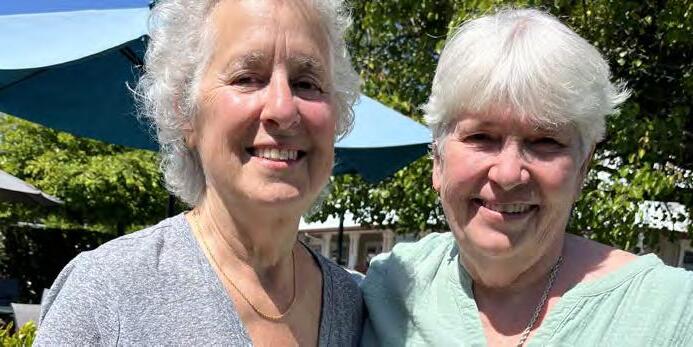
Pam Adinoff, left, and Nancy Kelly are organizing Sonoma County’s first-ever Dyke March, set for June 21.
<<
Former congressmember Barney Frank dies
by Cynthia Laird
Barney Frank, who was one of the first openly gay members of the U.S. House of Representatives and later angered the transgender community over backing a gay-only federal civil rights bill, died May 19, according to media reports. He was 86.
Mr. Frank, a Democrat from Massachusetts, had recently told Politico that he had entered hospice care at his home in Maine while being diagnosed with congestive heart failure. He moved to the Pine Tree State after leaving Congress.
In the days before his death, Mr. Frank spoke with CNN’s Jake Tapper and suggested Democrats need to rethink their approach to transgender rights.
“As we succeeded in bringing the mainstream of the left into a concern with inequality… I think they make a mistake by taking the most controversial parts of the agenda and turning them into litmus tests,” Mr. Frank said in the interview.
The comments drew a wave of criticism from community members.
Bil Browning, a gay man who writes the Tummy Ache Nation Substack, stated he wouldn’t shed a tear. “For all of his supposed political acumen, all he did was create faultlines in the community and stir up bad blood,” Browning wrote.
Browning, founder of the old Bilerico Project blog who’s now based in Mexico City, also disclosed that Mr. Frank groped him years ago at an Indiana Stonewall Democrats fundraiser back when Browning was in his 20s.
But Mr. Frank was also remembered as a pioneer. Gay state Senator Scott Wiener (D-San Francisco), who is running for Congress to succeed retiring Congressmember Nancy Pelosi (D-San Francisco), praised the late lawmaker.
“Barney Frank was a pioneer,” Wiener wrote on social media. “He blazed a trail for LGBTQ people like me to run for & win office. He came to San Francisco to campaign with me in my first Senate race in 2016. Barney understood the critical importance for our community to be in the room when decisions are made – with us, not about us. Barney was also a giant in federal housing policy. He laid groundwork on which we’ll build in Congress. Rest in power,
<< Theater reopening
From page 3
Barney. And thank you for all you did for our community.”
Mr. Frank was first elected to Congress in 1980, assuming office in January 1981, and served for 32 years. During those early years, he remained in the closet. But, as he wrote in a 2015 piece for Politico, he became increasingly frustrated and, by 1986, was ready to come out, though it didn’t happen for another year.
In a 1987 interview with the Bay Area Reporter after he came out, Mr. Frank described himself as a politician whose liberalism was tempered by pragmatism.
He was the second congressmember to publicly come out as gay, and the first to do so voluntarily. The other was his late Bay State colleague, Gerry Studds (D), who came out in 1983 during the course of a House Ethics Committee investigation related to Studds’ relationship with a House page.
Mr. Frank’s decision to come out was also born in scandal, as he wrote in a 2015 Politico article where he discussed his relationship with Steve Gobie.
“It began with pay for sex and evolved in my mind – but not his – into an ongoing nonsexual relationship,” Mr. Frank wrote. “I knew this was inappropriate, but I lacked the emotional strength to bring the relationship to an end. It was only after I left the closet that I came at least partially to my senses and broke off relations with him. He reacted angrily and eventually took the story to the Washington Times.”
Mr. Frank was reprimanded by Congress for using his congressional office to fix 33 parking tickets for Gobie and for misstatements of fact in a memorandum relating to Gobie’s criminal probation record.
Unsuccessful attempts to expel Mr. Frank were led by then-congressmember Larry Craig (R-Idaho), who, in 2007 when he was a U.S. senator, would be arrested for lewd conduct in a men’s airport restroom. Craig denied that he was gay and continued to serve until his retirement in 2009.
By 1987, Mr. Frank wrote that he was ready to come out and would give the news to the Boston Globe, his hometown paper. Lesbian journalist Kay Longcope was assigned the story, Mr. Frank wrote, but another Globe
reporter, John Robinson, whom Mr. Frank stated was a closeted gay man, actually broke the news. Media response was generally favorable.
His coming out didn’t negatively affect Mr. Frank’s political future, as he went on to be reelected to Congress 12 times, retiring in January 2013. From 2007 to 2011, he served as chair of the House Financial Services Committee during the height of the financial crisis. He is credited with being one-half of the Dodd-Frank Act, a sweeping 2010 overhaul of Wall Street oversight that put new scrutiny on U.S. banks, as Politico noted.
Mr. Frank married his husband, Jim Ready, in Boston in 2012, when samesex marriage was legal in Massachusetts.
ENDA controversy
The effort by Congress to pass what was then known as the Employment Non-Discrimination Act in 2007 ignited a firestorm in the LGBTQ community, as Mr. Frank supported a version that did not include protections for trans Americans. Instead, it provided employment non-discrimination protections for lesbian, gay, and bisexual people. The national Human Rights Campaign and Democratic congressional leaders, including then-House speaker Pelosi, supported the gay-only bill, much to the ire of trans activists and their allies.
The gay-only version of ENDA did pass the House on November 7, 2007,
after it was brought to the floor by Pelosi. Mr. Frank argued that it was the best that could be done at the time, according to an article in the Washington Blade back in 2017 marking the 10th anniversary of the vote.
Mr. Frank said the vote on ENDA was “very important” because it paved the way for legislative victories on hate crimes protections two years later, and “Don’t Ask, Don’t Tell” repeal that occurred after that, the Blade article stated.
Mara Keisling, a trans woman who in 2017 was the executive director of the National Center for Transgender Equality, told the Blade that the 2007 House vote was “one of the most important things that happened in the movement in the last 20 years.” NCTE has since merged and is part of Advocates for Trans Equality.
At a meeting with members of the trans community in San Francisco in January 2008, then-HRC president Joe Solmonese reiterated the reasons why the organization supported leaving trans people out of ENDA, but he faced blistering criticism from the community. In fact, HRC would spend years – and several leaders – trying to make amends. Some in the trans community still don’t support HRC, but current President Kelley Robinson, a queer Black woman, has worked to dispel that during her tenure. During Robinson’s speech at the 60th March on Washington in 2023, she
spotlighted the attacks on trans youth and the intersection of civil rights and LGBTQ+ rights, according to HRC’s website. Resources specifically for trans people are featured on the organization’s website.
Robinson praised Frank in a May 20 statement that didn’t mention the ENDA controversy.
“Barney Frank was nothing short of a trailblazer,” Robinson stated. “At a time when being openly gay in public service could cost you everything, he chose visibility. At a time when our community was being devastated by AIDS and too many leaders looked away, he demanded action.”
ENDA never did get a vote in the U.S. Senate and languished in the House in later years. Eventually, it was rebranded as the Equality Act, which would extend provisions of the 1964 Civil Rights Act and include sexual orientation and gender identity. Equality Act legislation has twice passed the House, in 2019 and 2021, but has not been acted upon in the U.S. Senate. It would need to be reintroduced in a Democratic-controlled House to proceed to another vote in that chamber and advance to the Senate. It would likely take a Democratic president to sign the legislation if it passes Congress.
Mr. Frank was born March 31, 1940. He graduated from Harvard College and Harvard Law School.
Politico reported that in his last days, Mr. Frank was taking on the political left. Frank told the publication that Democrats have “embraced an agenda that goes beyond what’s politically acceptable.” Mr. Frank was planning to release a book later this year. He did not mention transgender people in his published comments, or issues like trans women and girls playing on female athletic teams, which has roiled the Democratic Party in recent years, and especially since President Donald Trump returned to the White House in January 2025 and issued several executive orders stripping rights from trans Americans.
Mr. Frank said he’s “not arguing that anybody should stop his or her advocacy.”
“But it’s one thing to advocate something knowing that you’re going beyond the current viewpoints, and another to make it a litmus test,” Mr. Frank told Politico. t
The project was controversial in some segments of the community, as it involved not just repairs but remaking the interior space so that it could host concerts and other live shows as well as screen movies. Ultimately, the San Francisco Board of Supervisors rejected a plan to landmark the orchestra-level fixed seating, which allowed APE’s project to go forward and revamp that seating area to be flexible.
Most recently, APE is on track to get $5 million in grant funding from the state for its work on the historic theater.
One of those who was in favor of landmarking those orchestra seats was Stephen Torres, a gay man who served on the city’s entertainment commission and is a bartender at Twin Peaks Tavern, just up from the theater at 401 Castro Street.
Asked May 18 if he’s seeing a positive impact on business, Torres said,
“It’s not unlike a busy night before the theater closed” for the renovations.
Asked to provide an example of this, Torres added, “It can range from general lack of deference to both cultural and legal aspects. From people trying to bring in their own music to just using the place
See page 11 >>
“It’s nice to have the theater open again,” he said. However, Torres both fears it is a “one-stop shop,” which is to say that people only go to the show and then directly home, and that “there are a lot of people unfamiliar with queer culture who are coming into our bar and are not as culturally competent as I’d like them to be.”
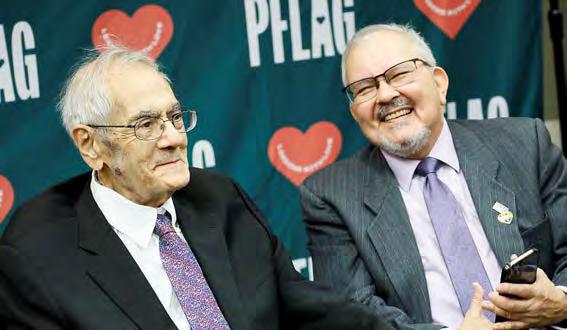
Former congressmember Barney Frank, left, was joined by his former senior legislative aide and current PFLAG staff member Diego Sanchez, at the PFLAG National Gala in Washington, D.C. November 14, 2025.
Paul Morigi/Getty Images for PFLAG
Leading Authentically
How Steve Shead's journey shaped his approach to leadership, identity, and community.
When you've had to hide part of who you are, you understand what it means to really see people. “ “
SAN FRANCISCO — Steve Shead’s path to becoming a technology leader in the Bay Area is not just a story of career reinvention, it’s one of personal truth, resilience, and the cost of living authentically.
Born and raised in the United Kingdom, Shead joined the Royal Air Force at just 16½, spending 12 years in a highly structured, disciplined environment. “It was quite the fun one,” he said. But beneath that structure, he was navigating a reality he could not openly live. “I lost my military career when they found out I was gay,” he said. Leaving the RAF at 28 marked both a professional and personal turning point. Without the rigid framework of military life, he initially struggled. “I was kind of lost for a bit because there was no discipline out here,” he recalled.
After about a year, Shead recalibrated. The lesson was simple but profound: “Self-discipline was the only thing needed. Once I figured that out, life became easier.” At the same time, he began leaning more fully into both his identity and his future.
A growing interest in technology, and a belief that the U.S. was ahead of the UK in innovation, pushed him to take a leap. Newly divorced and searching for a fresh start, he traveled to the United States. What began as a visit became permanent after Hal Computer Systems sponsored him, launching his career in corporate web services.
A LEADER WHO LEADS WITH EMPATHY
In the workplace, Shead quickly stood out, not just for technical skill, but for empathy and communication. He earned the nickname “tech whisperer” for his ability to translate between business leaders and IT teams.
But he also began shaping a leadership style rooted in authenticity. “When you’ve had to hide part of who you are, you understand what it means to really see people,” he said. “That changes how you lead.” That philosophy carried through his rise into executive roles, including serving as chief information officer at Solarity Credit Union. Even setbacks, like an unexpected layoff, became moments of reflection rather than retreat. “It makes you question trust,” he said. “But you learn from it.”
BUILT ON PURPOSE, GROUNDED IN COMMUNITY
His career eventually brought him back to the Bay Area after time in Vancouver and Portland. Now based in San Francisco, he works at San Francisco Federal Credit Union, a fast-paced, high-expectation environment while staying grounded in his values.
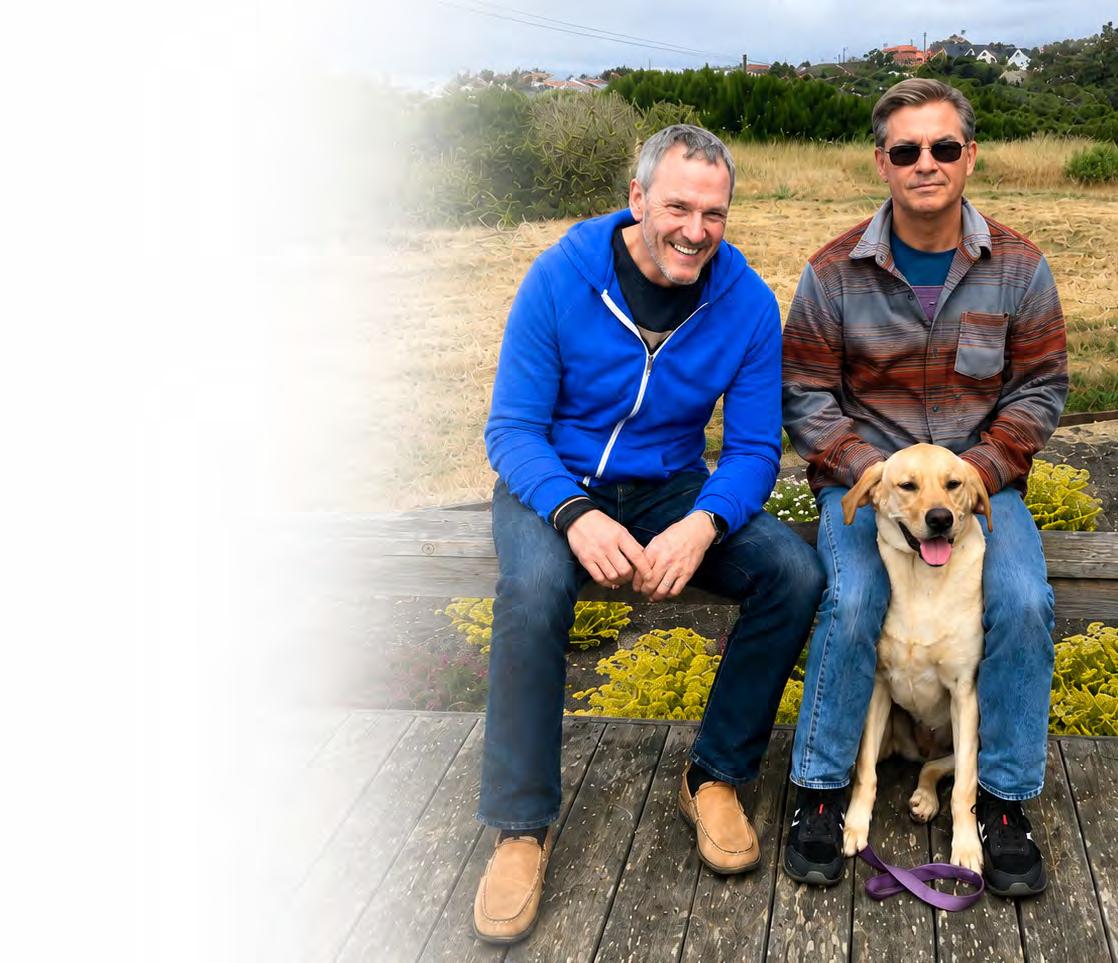
“I won’t step back from being an effective leader,” he said. “That’s non-negotiable.” Today, Shead lives openly and fully as himself with his husband, Tim and their dog Marley. “There’s a difference between being in love and loving someone.” “You should see me and Tim together,” he said, smiling. “You can tell by the way we look at each other.” The two met online in 2005 and married in 2008, becoming one of the first gay couples to wed in a church ceremony, something that once would have seemed impossible during his early years.
AUTHENTICY IS AT THE HEART OF LEADERSHIP
For Shead, authenticity is not just personal. It’s central to leadership. “People get stuck behind masks; masculinity, expectations, identity,” he said. “Being real matters.” That authenticity has not come without cost. He had lost friends, family and loved ones but reflects on each with empathy. Now, he speaks with quiet certainty about where he has landed, personally and professionally.
Volume 56, Number 21
May 21-27, 2026
Volume 56, Number XX Month XX-XX, 2026 www.ebar.com
PUBLISHER
Michael M. Yamashita
Thomas E. Horn, Publisher Emeritus (2013)
Publisher (2003 – 2013)
Bob Ross, Founder (1971 – 2003)
NEWS EDITOR
Cynthia Laird
ARTS & NIGHTLIFE EDITOR
Jim Provenzano
ASSISTANT EDITORS
Matthew S. Bajko • John Ferrannini
CONTRIBUTING WRITERS
Kyle Amato • Race Bannon • Robert Brokl
Christopher J. Beale • Robert Brokl
Brian Bromberger • Philip Campbell
Christopher J. Beale • Brian Bromberger
Heather Cassell • Eliot Faine
Philip Campbell • Myron Caringal
Michael Flanagan • Jim Gladstone
Heather Cassell • Meg Collins • Chelsea Davis
Natasha Dennerstein • Eliot Faine
Liz Highleyman • Brandon Judell • Lisa Keen
Michael Flanagan • Jim Gladstone
Philip Mayard • Laura Moreno
Liz Highleyman • Brandon Judell
David-Elijah Nahmod • Mark William Norby
JL Odom • Paul Parish • Tim Pfaff
Michele Karlsberg • Lisa Keen
Jim Piechota • Adam Sandel
Matthew Kennedy • Philip Mayard
Jim McDermott • Laura Moreno
Jason Serinus • Gregg Shapiro
David-Elijah Nahmod • Mark William
Gwendolyn Smith • Charlie Wagner
Norby JL Odom • Tim Pfaff • Jim Piechota
Ed Walsh • Cornelius Washington • Sura Wood
Joshua Polanski • Adam Sandel
Gregg Shapiro • Gwendolyn Smith
ART DIRECTION
Charlie Wagner • Ed Walsh
Cornelius Washington • Evelyn C. White
Max Leger
PRODUCTION/DESIGN
Ernesto Sopprani
ART DIRECTION
Max Leger
PHOTOGRAPHERS
Jane Philomen Cleland
PRODUCTION/DESIGN
Rick Gerharter • Gooch
Ernesto Sopprani
Jose A. Guzman-Colon
PHOTOGRAPHERS
Rudy K. Lawidjaja • Georg Lester
Jane Philomen Cleland
Rich Stadtmiller • Christopher Robledo
Rick Gerharter • Gooch
Fred Rowe • Shot in the City
Jose A. Guzman-Colon
Steven Underhill • Bill Wilson
Rudy K. Lawidjaja • Georg Lester
ILLUSTRATORS & CARTOONISTS
Rich Stadtmiller • Christopher Robledo
Christine Smith
Fred Rowe • Shot in the City
Steven Underhill • Bill Wilson
ILLUSTRATORS & CARTOONISTS
VICE PRESIDENT OF ADVERTISING
Christine Smith
Scott Wazlowski – 415.829.8937
VICE PRESIDENT OF ADVERTISING
Scott Wazlowski – 415.829.8937
NATIONAL ADVERTISING REPRESENTATIVE
Rivendell Media – 212.242.6863
LEGAL COUNSEL
Paul H. Melbostad, Esq.
NATIONAL ADVERTISING REPRESENTATIVE
Rivendell Media – 212.242.6863
LEGAL COUNSEL
Paul H. Melbostad, Esq.
Bay area reporter
Bay area reporter
44 Gough Street, Suite 302 San Francisco, CA 94103
44 Gough Street, Suite 302 San Francisco, CA 94103
Published weekly. Bay Area Reporter reserves the right to edit or reject any advertisement which the publisher believes is in poor taste or which advertises illegal items which might result in legal action against Bay Area Reporter. Ads will not be rejected solely on the basis of politics, philosophy, religion, race, age, or sexual orientation.
Published weekly. Bay Area Reporter reserves the right to edit or reject any advertisement which the publisher believes is in poor taste or which advertises illegal items which might result in legal action against Bay Area Reporter. Ads will not be rejected solely on the basis of politics, philosophy, religion, race, age, or sexual orientation.
Advertising rates available upon request.
Advertising rates available upon request.
Our list of subscribers and advertisers is confidential and is not sold. The sexual orientation of advertisers, photographers, and writers published herein is neither inferred nor implied. We are not responsible for unsolicited manuscripts or artwork.
Our list of subscribers and advertisers is confidential and is not sold. The sexual orientation of advertisers, photographers, and writers published herein is neither inferred nor implied. We are not responsible for unsolicited manuscripts or artwork.
Headline
SF ballot measure recommendations
San Francisco voters will decide on four local ballot measures in the June 2 primary election. Here are the Bay Area Reporter’s recommendations.
Bonds
Proposition A: Earthquake Safety and Emergency Response Bond. YES. This measure allows the city to borrow up to $535 million by issuing general obligation bonds. The city would spend this money on improvements and seismic upgrades to infrastructure used for emergency and recovery, according to the ballot language. Earthquake safety projects funded by the bonds could include the emergency firefighting water system, fire and police stations, the Muni bus storage and maintenance facility at Potrero Yard, and other disaster response facilities.
San Francisco Mayor Daniel Lurie, gay Board of Supervisors President Rafael Mandelman, Fire Chief Dean Crispen, and Police Commission President C. Don Clay stated in the voter handbook that Prop A is crucial, as scientists have warned of a 72% chance of a major earthquake hitting San Francisco within the next three decades. They also pointed out that the city’s aging infrastructure and limited backup water supply leave neighborhoods in danger.
San Francisco has an excellent track record on its bond issuance, and its policy is to keep the property tax rate for general obligation bonds at or below the 20052006 tax rate by issuing new bonds as older ones are retired and the tax base grows. Therefore, Controller Greg Wagner stated in a letter that he does not anticipate that the levy of the city’s general obligation bond property taxes for this measure would increase the property tax rate for city general obligation bonds above the 2006 fiscal year level. San Francisco needs to make improvements and
seismic upgrades to infrastructure used for emergencies. Vote YES on Prop A.
Charter amendment
Proposition B: Lifetime Term Limits for Mayor and Board of Supervisors. NO. This is a ridiculous ballot measure seemingly aimed at one local politician, former supervisor Aaron Peskin. Currently, a mayor or supervisor can serve two consecutive four-year terms. After leaving office for four years, they can run again. This is what Peskin did, serving from 2001-2009, and again from 2015-2025. (He was first elected to fill an unexpired term, then ran for two four-year terms.) He is the only person who has ever returned to office after serving the maximum allowed two consecutive terms in San Francisco. Apparently, there is fear among some of Peskin’s critics that he could seek office again and win. While we didn’t always agree with Peskin when he was on the board, we endorsed him over the years. He knows
how local government works, ably represented his District 3 constituents, and was a strong ally to the LGBTQ community during his tenure. He also served as board president and did a good job. It’s up to San Francisco voters to elect whom they want as their district supervisor or as mayor. If Peskin – or anyone else affected by this proposed lifetime ban – wants to seek office after sitting out four years between stints, they should be able to do so.
Lifetime bans on politicians are extremely rare, and Prop B opponents pointed out that 71% of America’s most populous cities that have term limits do not have lifetime bans. A solution in search of a problem, voters should reject Prop B. Voters have enough issues to deal with, such as affordability and public safety. Vote No on Prop B.
Ordinances
Proposition C: Decreases to Business Taxes. NO. On its surface, Prop C may seem like it would help small businesses, but don’t be fooled. It’s a change to the gross receipts tax and the top executive pay tax that would exempt most businesses with up to $7.5 million in gross receipts. But, as opponents point out, it accelerates the so-called overpaid executive tax, which compares compensation of the highest paid executive to the median San Francisco employee. Raising the tax boosts incentives to fire lower wage workers here.
Prop C is a poison pill for Proposition D (see below) in that more votes for Prop C would prevent Prop D from taking effect if both pass.
At a rally outside City Hall last week, members of the San Francisco Minority Chamber of Commerce Foundation called for a no vote on Prop C, stressing that minority chambers of commerce were not
Beckman has edge in CA Assembly race
North Bay voters have the opportunity to elect a new legislator in the 12th Assembly District. Current Assemblymember Damon Connolly (D) announced that he is seeking an open state Senate seat. Of the candidates running, two are bisexual – Eli Beckman, a Corte Madera Town Councilmember and former mayor, and Holli Thier, a former Tiburon city councilmember and mayor. (Thier is a former San Francisco resident.) Both would be good representatives for the district that includes all of Marin County and two-thirds of Sonoma County, but we give the edge to Beckman and endorse him in the race.
In his Bay Area Reporter endorsement questionnaire, Beckman made the case that his eightyear record of delivering for Corte Madera residents sets him apart. This includes turning around the town’s finances, leading Marin County’s first long-range climate adaptation plan, building housing solutions that won statewide recognition, and “governing with the kind of fiscal discipline and collaborative spirit that earns trust across differences.”
Beckman’s goals in the Assembly include focusing on LGBTQ rights. As he noted, “We are living through the worst assault on LGBTQ rights in a generation, and Sacramento needs legislators who will fight back with both urgency and strategy.” He
was referring to President Donald Trump and his administration, which are working to eliminate rights for transgender Americans. Beckman stated that he would prioritize strengthening California’s existing sanctuary protections for LGBTQ individuals – “particularly transgender youth and their families – who are fleeing hostile states, and work to close the gaps in implementation so these protections have real teeth.”
Beckman stated that he would push for expanded funding for LGBTQ-affirming housing and shelter programs, including dedicated resources
for LGBTQ seniors and homeless youth. These are pressing needs in the state, whose population is aging and where unhoused youth often have few options. Beckman, who has the endorsement of the California Legislative LGBTQ Caucus, wrote that he would work alongside his fellow out lawmakers to ensure the Medi-Cal system “fully covers genderaffirming care without bureaucratic barriers.”
Beckman is also clear that trans girls and women should be allowed to play on female sports teams. “I believe that every human being should be able to participate fully in public life – playing on sports teams, using the bathroom, anything –in the way that matches their gender identity, full stop,” he wrote. “Trans rights are human rights, and I think it’s absolutely absurd that we are even entertaining this discussion in this day and age.”
In short, Beckman would be a strong addition to the state Assembly. He’s in a crowded primary, where only the top two, regardless of party affiliation, advance to the November 3 general election. Voters in the 12th Assembly District would do well to cast their ballots for Beckman. We endorse him in this race.t
David Cohen for E. Bay Senate seat
E ast Bay voters in the 10th state Senate District will be voting for a new representative. Current state Senator Aisha Wahib (D) is not seeking reelection as she’s running for Congress. The district includes the cities of Fremont, Hayward, Sunnyvale, and parts of San Jose. In the June 2 primary, we recommend David Cohen, a Democrat who’s currently the District 4 member of the San Jose City Council.
Cohen is a straight ally who is the parent of an LGBTQ child, as he wrote in his Bay Area Reporter endorsement questionnaire.
“I understand firsthand how protections, acceptance, and representation matter. Every parent wants their child to grow up in a world where they are safe, respected, and able to be who they are.”
In the state Legislature, Cohen stated that he will focus on strengthening protections, improving healthcare access, and ensuring that California continues to be a safe place for LGBTQ people. This includes ensuring “state laws are strong enough to protect people regardless of what happens in Washington,”
a reference to the anti-LGBTQ policies of President Donald Trump and his administra -
tion, particularly those against transgender Americans.
On healthcare, Cohen stated that he would work on expanding access for LGBTQ Californians, including gender-affirming care, mental health services, and HIV prevention and treatment programs. He also believes that the state should do more for LGBTQ youth, particularly those who are homeless or in the foster care system. He noted that queer youth
are disproportionately represented among unhoused youth.
Regarding trans girls and women playing on female sports teams, Cohen stated that those who have transitioned “should be able to participate on teams that match their identities.” He also stated that he was “very disappointed” by Governor Gavin Newsom’s comments to the late conservative activist Charlie Kirk last year that trans athletes’ participation on sports teams that match their gender identity is “an issue of fairness.”
On housing in general, Cohen stated that in San Jose, he has worked with colleagues across the region, and the private sector, to increase housing supply. At the state level, he would focus on three priorities: building more housing at all income levels, investing in supportive housing and services for those experiencing homelessness, and cutting through unnecessary bureaucracy that slows projects down.
Cohen has a solid grasp of issues that will serve him well in the Legislature. We recommend him for the 10th Senate District seat. t
San Francisco Mayor Daniel Lurie spoke out against Proposition D at a May 14 rally outside City Hall.
Cynthia Laird
Assembly candidate Eli Beckman
Courtesy the candidate
State Senate candidate David Cohen Courtesy the candidate
Pursell again seeks Richmond council seat
by Matthew S. Bajko
Having fallen short four years ago, Jamin Pursell is again seeking the District 4 seat on the city council in Richmond, California. The queer and nonbinary small business owner in the East Bay city must first survive the June 2 primary.
Due to a change in how the city runs its council elections, the contests for Richmond mayor and three of its council seats will appear on next month’s ballot. Pursell is one of three candidates running in District 4, and should one of them receive more than 50% of the vote, they will be declared the winner.
If that threshold isn’t met then the top two vote-getters will advance to a runoff race on the November 3 ballot.
Councilmember Soheila Bana is seeking reelection to the seat, while Keycha Gallon, executive director of the gun violence prevention group Keys to the Future, is also in the race.
“At this point I believe I can secure a runoff. I feel very confident about that,” Pursell told the Bay Area Reporter.
Having watched Bana on the council these past four years, as Pursell attends the body’s meetings, they have been unimpressed with her tenure. It is why Pursell decided to run against the incumbent and not wait until the seat was open.
“Quite frankly, if she had done a good job, I would not be running again,” Pursell said.
Gallon made a similar point during a recent candidate forum hosted by Richmond Confidential, a hyperlocal news site maintained by the Graduate School of Journalism at UC Berkeley. Both she and Pursell criticized Bana for focusing mainly on wildfire prevention efforts during her first term and not addressing the other myriad needs of her constituents, from affordable housing to public safety and better access to medical care.
ter’s degree in science of the law from University of the Pacific’s McGeorge School of Law. “They wanted someone basically who knows how to do government to be representing them.”
Born in Alaska and raised in Los Angeles, Pursell, 41, co-owns the unisex swimwear line STRONGSUIT and has been a Richmond resident since 2010. They bought a home in the city’s May Valley neighborhood with their husband, Kelly Nabours, a programmer at Viz Media, due to transferring to Cal State East Bay, where they earned degrees in philosophy and political science in 2012.
hope voters will give a younger member of the community a chance to lead Richmond forward. “I hope people take the time to really compare us as candidates and what we have to offer. I hope they will vote for me in June and November if it comes to that.”
To learn more about Pursell’s candidacy, visit their campaign website at jamin4richmond.com.
Alice cues up early nod for McCoy
The Alice B. Toklas LGBTQ Democratic Club is cueing up an early endorsement of its gay former co-chair Gary McCoy in the fall race for the District 8 seat on the San Francisco Board of Supervisors. It will be open due to incumbent gay Supervisor Rafael Mandelman term-limited from running again.
Two other gay men are also seeking to succeed Mandelman, the current board president, come 2027. Small business owner Emanuel Manny” Yekutiel, a former member of the San Francisco Municipal Transportation Agency board, and patent attorney Michael Trung Nguyen, an elected member of the San Francisco Democratic Party’s oversight body, are vying to represent the LGBTQ Castro district and surrounding neighborhoods.
“Being the council person would mean I would have an opportunity to really dig in on some issues that have long been overlooked because they haven’t had a champion or people able to navigate the bureaucracies to accomplish what is needed to be done,” said Pursell.
“Everyone’s voice has to be heard. We have to do things and put it in place where everyone feels equitable. So, I’m here because I have been boots on the ground fighting for equity, boots on the ground doing things for our youth, putting enrichment programs in place,” said Gallon, who lost her brother to gun violence. “The City Council does not respond to emails. They do not follow through on things that they say that they’re going to follow through. I’m not a politician. I was someone in the community advocating for change, advocating for the people. No matter what you look like.”
Bana acknowledged at the forum that she had made wildfire safety and prevention her top priority, calling it her “biggest achievement” as a councilmember. She also pushed back on not being responsive to Richmond residents and said several times she will widen her focus to work on various policy arenas during a second term.
“Longest story short, I have delivered for you and I really appreciate your support and trust. I had a mandate when I went to the City Council to be your voice, to be your representative. And that’s exactly what I did. And I will be continuing the work that I started,” said Bana. “I’m deeply rooted in the community. I’m very connected to the community. I listen to the community and I deliver. That’s why you should vote for me.”
Speaking to the B.A.R. Pursell listed various things needed in the district that they would advocate for if elected to the council seat, from getting a library branch and a center for seniors to ensuring more city services are dedicated to the neighborhoods in District 4.
“I was asked by people in the community to run because they know my background in political science and that I have worked within the political system before,” said Pursell, 41, who has a mas-
A Contra Costa County fish and wildlife commissioner, Pursell has secured endorsements from the California Democratic Party and several local Democratic groups in Contra Costa County. They also have the support this year of a host of gay politicos in the Bay Area, including state Senator Scott Wiener (D-San Francisco); El Cerrito City Councilmember Gabe Quinto serving again this year as mayor; Pinole Mayor Pro Tempore Devin T. Murphy; and gay former San Francisco supervisor and BART board member Bevan Dufty. (Pursell worked on Dufty’s 2011 San Francisco mayoral bid.)
Gay Assemblymember Corey A. Jackson, Ph.D., (D-Moreno Valley) and San Francisco Office of Transgender Initiatives Director Honey Mahogany, a Black queer trans person, are also backing Pursell. So is gay District 2 Richmond City Councilmember Cesar Zepeda and District 3 Councilmember Doria Robinson
Late last year Zepeda had told the B.A.R. he did so because Pursell was the first person to ask for his endorsement. They had worked together to put on Pride events in the city.
Because no one else filed to seek his seat this year, Zepeda now has the distinction of being the first member of the City Council since Richmond moved to having district elections to run unopposed. He is assured of a second fouryear term through 2030.
“I am honored to have the trust and support of the majority of my district residents. For those that I have not yet had the opportunity to meet and chat with, I look forward to meeting with them to gain their trust and support,”
Zepeda told the B.A.R. “I will continue working hard for all our residents in the district and citywide.”
As for Pursell, if they do advance to the fall runoff, they acknowledged to the B.A.R. they will face an uphill climb if facing off against Bana.
“It is going to be difficult to secure the win in November because of incumbency,” said Pursell, adding that they
Also in the race is Darshini Patel, a bisexual and queer woman who used to work at DoorDash. She spent several weeks helping to get out the vote in New Hampshire for former vice president Kamala Harris’ 2024 presidential campaign.
McCoy has the distinction of being one of the few people who led both the Alice club and the more progressive Harvey Milk LGBTQ Democratic Club. Alice’s board voted May 18 to recommend that the political group early endorse McCoy, setting up its membership to vote May 26 on if it should.
If at least 60% of the members approve doing so, then the early endorsement for McCoy will be voted on at its June 15 meeting. At its meeting Tuesday night, the Milk club membership approved an early endorsement process for the race.
Unlike Alice’s vote for one of the candidates, the Milk club will be interviewing the different candidates who seek its support in the coming weeks and then deciding on whom to endorse. It is expected the main contenders for its backing will be McCoy and Nguyen, who had served on Milk’s board of directors alongside McCoy.
“Even when they haven’t aligned, Milk and Alice have undeniably shaped San Francisco’s LGBTQ political history for decades,” said McCoy. “It’s a huge honor to have the Alice B. Toklas LGBTQ Democratic Club’s early PAC support, and I look forward to working with both clubs to fight for San Francisco’s queer community and beyond.”
Nguyen, also known by their drag persona Juicy Lui, told the B.A.R. he “definitely” plans to seek the support of the various Democratic clubs that make endorsements in local races.
“If I am invited to participate in the process, I will try,” he said. “I am really excited for the Milk club. I have been there a few years as an executive board member, recently stepping off, and as a founding member of the AAPI Caucus, it would really mean a lot to have the Milk club’s support.”
Yekutiel referred the B.A.R. to his campaign manager, Connor Skelly, who replied, “We look forward to continuing to participate in the full endorsement process. Our understanding is that the Alice endorsement will not be decided until the June 15th vote.” t
Jamin Pursell is making their second bid for a city council seat in Richmond, California.
Courtesy the candidate
Pride events announced around Bay Area region
compiled by Cynthia Laird
LGBTQ Pride events in the Bay Area and beyond are ready to rumble. From Sonoma County to the East Bay to other locales in the region, these marches, festivals, and get-togethers will bring friends and families together in late May and during Pride Month in June.
Mill Valley
Pride Mill Valley will take place in the quaint Marin County city Saturday, June 6, from 2 to 6 p.m. at the Mill Valley Downtown Plaza, 87 Throckmorton Avenue. Presented by the city and Mill Valley Arts and Recreation, the family-friendly event kicks off Pride Month and will feature local entertainment, community engagement, local vendors, food, music, and activities designed to celebrate diversity and bring the community together, a news release stated.
“Pride Mill Valley is about creating space for visibility, joy, and belonging,” stated representatives from Mill Valley Arts and Recreation. “We are excited
to welcome residents, visitors, businesses, nonprofits, and community partners to celebrate together in the heart of downtown Mill Valley.”
Admission is free and the event is open to all ages.
On Monday, June 1, the city will host a Pride flag raising ceremony at 5 p.m. at Lytton Square in the city’s downtown area.
For more information, go to https:// tinyurl.com/3t2h5mey.
Sonoma County
Farther north, the 41st annual Sonoma County Pride takes place Saturday, June 6, in Santa Rosa. This year’s theme is “Pride & True: Advance, Advocate, Act Up,” a release noted.
The parade steps off at 11 a.m. on Fourth Street downtown. “Whether you’re marching, dancing, rolling, or cheering from the sidelines, there’s a place for everyone in this joyful and unapologetic celebration of LGBTQIA+ pride and progress,” officials stated.
Following the parade, the festival takes place from 11 a.m. to 5 p.m. in
Old Courthouse Square. In addition to food and beverages, attendees can explore a dynamic marketplace featuring everything from handmade goods and Pride apparel to art, jewelry, community resources, and more, an email stated. Connect with organizations making a difference across Sonoma County, discover local businesses supporting equality and inclusion, and celebrate the diversity that makes the community stronger together, the email noted.
Dance music icon Kristine W will headline the entertainment, according to the website.
On Friday, June 5, from 4 to 7 p.m., there will be a Transgender Rally, also at Old Courthouse Square. The special guest speaker will be Suzanne Ford, a transgender woman who’s executive director of San Francisco Pride.
On Sunday, June 7, there will be a Pride pool party at Francis Ford Coppola Winery and Vineyard, 300 Via Archimedes in Geyserville. Tickets start at $45.
A Pride flag raising ceremony will take place Monday, June 1, at 11 a.m.
at the Rosenberg Building, 306 Mendocino Avenue in Santa Rosa.
For more information, go to sonomacountypride.org.
Tiburon
The Marin County town of Tiburon gets an early start by holding a Pride Picnic Sunday, May 31, from 1 to 4 p.m. at Shoreline Park, 311 Paradise Drive. People can bring their own food or Caffe Acri will have picnic boxes available for purchase.
The gathering will feature a DJ, a vintage clothing vendor, and tarot readings.
Tiburon couple Suki and Katya Skye are organizing the picnic, according to an article in the Ark newspaper. https://www.thearknewspaper.com/ live/tiburon-residents-will-host-may31-pride-picnic-at-shoreline-park
The event is free to attend. A free after-party will be held at Cinelounge, 40 Main Street, beginning at 4:30.
Clayton
In Contra Costa County, the city of Clayton will hold its fifth annual Pride Parade and festival Sunday, May 31. The parade starts at 10 a.m. along Main Street in downtown Clayton.
This year’s theme is “Just Love, No Label,” and underscores the event’s celebration of inclusion, community, and resilience, a release stated. Former mayor CW Wolfe will reprise his role as parade emcee.
A Pride flag raising will precede the parade at 9:30 a.m.
The festivities will continue with a festival until 3:30 p.m. at The Grove Park in the downtown area. Admission is free.
KTVU-TV meteorologist Roberta Gonzales will serve as the parade grand marshal and keynote speaker, sharing remarks on the importance of acceptance and advocacy, the release noted.
Festivalgoers can peruse information tables spotlighting East Bay LGBTQ resources, local artisans, live musical performances, and food vendors. There will also be a kids’ area with games, crafts, and storytelling.
Suisun City
In the North Bay, Suisun Pride will be held Sunday, May 31, from noon to 6 p.m. at Harbor Plaza, 520 Solano Street in Suisun City. Billed as Solano County’s largest Pride event, the festival is presented by the Solano Pride Center and Suisun City.
The event includes entertainment, vendors, and will feature drag mistresses of ceremony Adrienne LaCielo and Bella Aldama, according to its website.
This is the third year for the Pride festival, which has grown in attendance. Last year saw about 6,000 people visit, the website noted.
The festival is free.
For more information, go to suisunpride.com.
El Cerrito
The Contra Costa County city of El Cerrito will hold its Pride flag raising Monday, June 1, at 4 p.m. at City Hall,
10890 San Pablo Avenue.
As the Bay Area Reporter previously noted, four of the five councilmembers are LGBTQ. That includes council veteran and current Mayor Gabriel Quinto, who was appointed to the rotating post in December; lesbian mom Rebecca Saltzman, who is mayor pro-tem; Carolyn Wysinger, a Black lesbian; and gay dad William Ktsanes. (Straight ally Lisa Motoyama rounds out the five-member council.)
This year, the city will have a community gathering and celebration at 5, following the flag raising, at Castro Park, 1420 Norvell Street.
Concord
The Rainbow Community Center will hold its annual Pride in the Plaza Saturday, June 6, from noon to 4 p.m. at Todos Santos Plaza, 2175 Willow Pass Road in Concord. This year’s theme is “Still Here. Still Queer. Still Rising.”
The afternoon will feature live entertainment, including drag artists; a DJ; community resources; food vendors; a kids’ area; free HIV and STI testing; and more.
For more information, visit the center’s Facebook page./
Pacifica
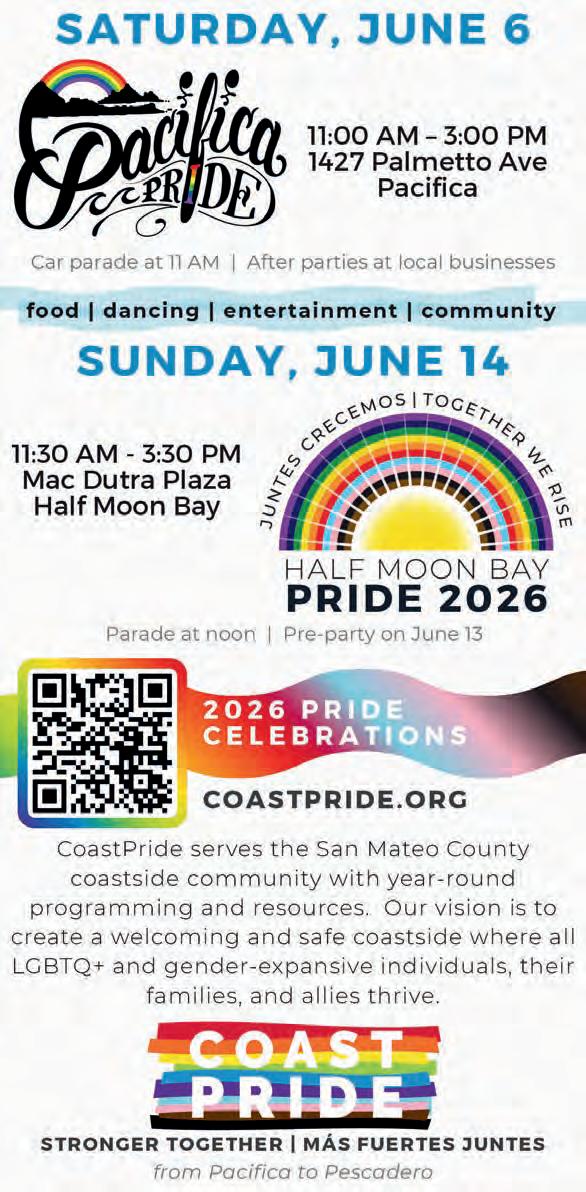
Over on the Peninsula, Coast Pride will present Pacifica Pride Saturday, June 6, from 11 a.m. to 3 p.m. at Ingrid B. Lacy Middle School, 1427 Palmetto Avenue. A parade will step off at Palmetto Avenue at 11, followed by the festival at the school shortly afterward.
The festival will feature dancing, entertainment, and food.
For more information, visit coastpride.org.
SF center block party
The San Francisco LGBT Community Center will welcome Pride Month with its third annual Building the Block: Rainbow Reunion party Saturday, June 6, from noon to 6 p.m. inside the center at 1800 Market Street, and outside behind the center on Waller Street.
An email announcement noted that the free all-ages celebration will feature drag performances, live music, local small business vendors, food trucks, free clothing closets, art exhibits, wellness classes, and more.
Jennifer Valles, a queer femme who took over as the center’s executive director in January, invited people to stop by the party, which is an official San Francisco Pride event.
“We’re thrilled to be hosting our third annual Pride kick-off celebration, Building the Block,” she stated. “The SF LGBT center is more than just a service provider – it’s a sanctuary where community can come together to find each other, find resources and build each other up while celebrating our shared history and culture. And at the core, that’s what Building the Block is all about. Celebrating our community and celebrating our joy is an act of resistance, and we invite you to join us!”
Free tickets are available at https:// tinyurl.com/yc2ejwt6.
A person performs at last year’s Pride Mill Valley event.
Courtesy City of Mill Valley
Pride in the Park
The East Bay Regional Park District will hold its fourth annual Pride in the Park Saturday, June 6, from 11 a.m. to 3 p.m. at Tilden Nature Area in Berkeley. The event is free and all are welcome, according to the park district’s website listing.
Bring a picnic and enjoy familyfriendly crafts, activities, and nature in celebration of the LGBTQIA+ community, the district noted.
For more information, go to https:// tinyurl.com/mnr3zswf.
Santa Cruz
Santa Cruz Pride will hold its 51st annual parade Sunday, June 7. This year’s theme is “Uniting with Pride.”
The parade steps off at 11 a.m. in downtown Santa Cruz along Pacific Avenue.
The festival takes place from noon to 4 p.m. in the downtown area with entertainment at the Abbott Square Stage and the Locust Street Stage.
For more information, go to santacruzpride.org.
Richmond
The 12th annual Richmond Rainbow Pride Parade and festival will be held Sunday, June 7. A walking parade will start at 11 a.m. People should meet at Nicholl Park on the Macdonald Avenue side. Participants will walk from the park to the nearby Richmond Civic Center, the website stated. This year’s theme is “Richmond UnErased.”
The festival takes place from noon to 4 p.m. at Richmond Civic Center, 2569 Nevin Avenue.
For more information, go to richmondrainbowpride.org.
San Mateo County
San Mateo County will have its Pride celebration Saturday, June 13, from 11 a.m. to 5 p.m. at San Mateo Central Park, 50 E. Fifth Avenue. This 14th annual festival is a chance to champion inclusion and wellness for the LGBTQIA+ community, a website announcement noted.
There will be live entertainment, a DJ, resource and vendor booths, food trucks, family-friendly activities, and more.
Admission is free to the sober event, the website noted.
For more information, visit smcpridecelebration.com
Half Moon Bay Coast Pride on the Peninsula also holds the Half Moon Bay Pride Parade and festival, set for Sunday, June 14, from 11:30 a.m. to 3:30 p.m. at Mac Dutra Park, 504 Main Street. There will be a parade down Main Street at noon. The festival will feature food, dancing, and entertainment.
For more information, visit coastpride.org.
Sacramento
Outside of the Bay Area, Sacramento will hold its Pride weekend in mid-June. Produced by the Sacramento LGBT Community Center, the Pride March takes place Sunday, June 14, at 11 a.m. starting at Southside Park, near Eighth and T streets. It ends near the state Capitol and the festival entrance.
The festival takes place Saturday, June 13, from 1 to 7 p.m. as well as Sunday after the parade, from noon to 5. It’s located on the Sacramento Capitol Mall (entrance at Seventh Street).
The website noted this year’s festival will feature hundreds of exhibitors and vendors from throughout the region, including community retailers, diverse food and beverage, nonprofit and public service providers, faith communities, and many more. There will be three stages featuring entertainment from the Sacramento region and the greater LGBTQ+ community.
The parade is free to watch. Early bird tickets, until May 22, for the festival are $18.81 for single day admission or $29.47 for a weekend pass. VIP packages are also available.
For more information, go to sacramentopride.org.
Filoli Pride events
Filoli, the historic house and gardens at 86 Cañada Road in Woodside, will celebrate Pride with a weekend of events.
Pride weekend will be held Saturday, June 13, from 10:30 a.m. to 2 p.m. and Sunday, June 14, from 10:30 a.m. to 1:30 p.m. There will be sound baths with the Banyan Tree Women’s Collective both days. Drag storytelling with Shug and Madd Dogg will take place at 11 a.m. and 1:30 p.m. both days, according to the website.
Food trucks will be on site Saturday. Reservations are required. The cost is free with admission to Filoli, which is $45 for adults, $43 for seniors 65 and older, and $35 for kids ages 5-17.
Members receive free admission.
For more information, go to filoli. org/pride. t
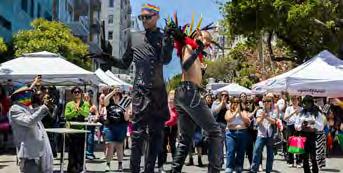
Performers took to the stage at the San Francisco LGBT Community Center’s block party.
Courtesy SF LGBT center
place where people can rebuild their lives with dignity, not continue to be punished for who they are, how they identify, or the healthcare they sought. This legislation makes clear that our city will not allow discrimination dressed up as criminal history, and that we remain committed to protecting the fundamental humanity and opportunity of every person who comes here seeking safety and freedom.”
Mahmood’s proposed amendments will ensure “that out-of-state convictions for conduct that is legal in California, such as certain types of protected healthcare and identity-based expression related to gender affirming care and reproductive healthcare, cannot be used to deny someone employment or affordable housing in San Francisco,” according to the release.
Originally authored by former supervisor Jane Kim and passed in 2014, San Francisco’s Fair Chance ordinance was designed to remove automatic barriers to employment and affordable housing for people with prior criminal records and ensure individuals could be evaluated based on their qualifications, not
The Pride House SF will have a grand opening party from 5 to 9 p.m. Thursday, June 11, at the LGBT center. It is being held in conjunction with the official start of the World Cup that day, with matches between Mexico and South Africa and Korea versus Czechia. Along with watching the games, there will be a panel discussion co-presented with Commonwealth Club World Affairs happening on-site.
The next night, Friday, June 12, there will be “The Big Gay Watch Party” for when Team USA makes its debut in the tournament against Paraguay at SoFi Stadium in Southern California. It will take place from 6 to 9:30 p.m. at Beaux, the LGBTQ bar in the Castro at 2344 Market Street.
“It will be a celebration of drag and fun and a watch party for the first USA match,” said Brown, who is queer and a goalkeeper with the Spikes.
A Family Day Watch Party will take place from noon to 3 p.m. Friday, June 19, for when Team USA plays Australia at Lumen Field in Seattle. It will be held at The Crossing at East Cut public park at 250 Main Street in San Francisco’s South of Market district.
Another gathering to watch the U.S. team play Turkey will take place from 7 to 10 p.m. Thursday, June 25, at Yerba Buena Lane, which runs between Market and Mission streets across from Yerba Buena Gardens. Pride House SF is co-hosting the San Francisco Pride Week watch party with SF Pride and the Yerba Buena Partnership.
“Come be in community and celebrate this beautiful city we are in during Pride Month,” said Brown.
While fundraising is ongoing, more than $80,000 has already been raised to
permanently excluded because of past convictions, the release noted. Mahmood’s office stated that the proposed amendments build on that legacy by updating the ordinance to address emerging forms of criminalization.
More than 28 states have passed legislation banning gender-affirming care for youth, and in 13 states, abortion is illegal. The U.S. Supreme Court overturned the national right to abortion in June 2022, leaving states to develop their own laws. (California has strengthened abortion access since that ruling.) As the Bay Area Reporter previously reported, a law signed by Florida Governor Ron DeSantis (R) in May 2023 intended to place severe limitations on drag performances in the Sunshine State can’t go into effect as it awaits a potential hearing in the Supreme Court.
Mahmood, who represents the Tenderloin, had worked with the HRC’s LGBTQI+ Advisory Committee, and Jude Diebold of the Human Rights Commission’s Civil Rights Division, in crafting the legislation.
Mawuli Tugbenyoh, a gay man who’s executive director of the San Francisco Human Rights Commission, stated, “Equal protection under the law must
be extended to everyone who calls San Francisco home. This legislation closes a critical gap by ensuring that convictions rooted in discriminatory laws cannot be used to deny people access to jobs, housing, or opportunity. I am thankful to Supervisor Mahmood, the LGBTQI+ advisory committee of the Human Rights Commission, and HRC civil rights division investigator Jude Diebold for their work to advance these critical amendments that strengthen the Fair Chance Ordinance.”
Reached for comment, Diebold, an HRC investigator and mediator, said the legislation has been years in the making.
“I first started drafting this legislation with the Civil Rights Division of the Human Rights Commission and LGBTQI+ Advisory Committee back in 2023, as we began to see a rise in attacks on the LGBTQ community and reproductive healthcare access,” Diebold stated. “Over the last few years, we have seen these attacks increase by criminalizing reproductive healthcare and gender affirming care. Unfortunately, those criminal records can have real-world consequences, as criminal background checks are common in both housing and employment applications.”
cover the costs of the Pride House SF endeavor, Brown told the B.A.R. The money has mostly come from individual donors and several family foundations, though he would not disclose which ones contributed.
“We are really happy with where we landed,” said Brown. “Over 90% of our fundraising is from family foundations and individual contributors. In these crazy times we are in, to get that much local support is really special.”
More information about all of the events Pride House SF is putting on in the coming weeks can be found at pridehouseunited2026.com/san-francisco.
Hype builds ahead of first match
Pride House facilities are planned in various cities among the trio of countries hosting this year’s World Cup. Games will be played in Mexico and Canada in addition to the U.S.
With the Bay Area one of the regions playing host for the games, officials have been helping to build up hype for the soccer tournament ahead of its start.
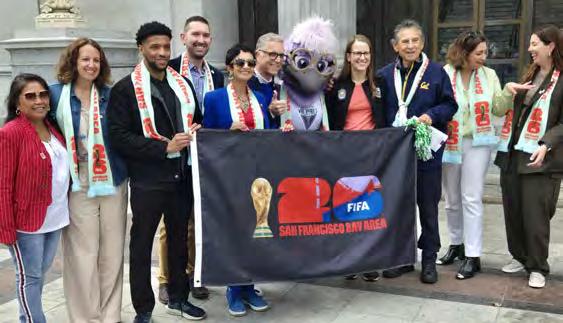
Leaders in Santa Clara last week raised the FIFA World Cup flag at City Hall, as six games are scheduled to be played there at Levi’s Stadium.
Oakland officials also raised the flag for the Fédération Internationale de Football Association, soccer’s global governing body, last Tuesday at City Hall. The Oakland Roots soccer team will be providing their training facility in Alameda for the Australian National Team, nicknamed the Socceroos, during the World Cup.
Lindsay Barenz, president of the Oakland Roots and Soul (the women’s team) said that the organization worked hard to qualify their practice facility for Team Australia to use it.
Queer Oakland City Councilmember Janani Ramachandran, who led the news conference, said that the city has a lot to gain from being associated with the World Cup.
“It’s an incredible, special opportunity for Oakland and the region,” she said, pointing to the city’s many dining options for visitors.
Jess Smith, president of the Golden
Honey Mahogany, a Black queer trans person who is the head of the Office of Transgender Initiatives, said it’s all about making sure the repressive conditions from which people are fleeing don’t follow them to the city, which is a beacon of hope for so many queer people the world over.
“As more and more trans people move to San Francisco seeking refuge and opportunity, these amendments to the Fair Chance ordinance ensure that the discrimination they faced back home doesn’t follow them here,” Mahogany stated. “I’m grateful to Supervisor Mahmood for recognizing the need to take action during this incredibly difficult time for trans people and their families, the broader LGBTQI+ community, and women.”
Breonna McCree, a woman of trans experience who is co-executive director of the Transgender District, applauded Mahmood and other officials in developing the amendments.
“San Francisco has long been a place people come to seeking safety, dignity, and the freedom to live authentically. Expanding protections through the Fair Chance ordinance sends a clear message that our city will continue to stand with transgender and nonbinary individuals, women, and LGBTQ communities fac-
State Valkyries WNBA team, was also on hand, joined by mascot Violet. Smith is a member of the Bay Area Host Committee for the World Cup.
“Oakland and the Bay Area are ready,” she said, adding that there’s an estimated economic impact of $1.4 billion to the region during the tournament.
In San Francisco, lesbian Olympic gold medalist and retired pro soccer player Megan Rapinoe was on hand last Wednesday to cut the ribbon on a newly refurbished soccer pitch at Harvey Milk Civil Rights Academy. The public TK-5 school in the heart of the Castro is named after the late gay supervisor who represented the LGBTQ neighborhood at City Hall in 1978 before he was assassinated along with then-mayor George Moscone.
A member of the U.S. teams that won the FIFA Women’s World Cup in 2015 and 2019, Rapinoe told the B.A.R. she has been able to partake of Pride House offerings at the Olympics she competed in. Being able to “commune with other gay athletes is always really special,” noted Rapinoe, who so far has tickets for one of the U.S. men’s games being played in Seattle at this year’s World Cup.
The native of Redding, California, told the B.A.R. she has seen her sport become more welcoming since she began playing. She added she would welcome the Pride House SF organizers reaching out about ways she could participate during this year’s World Cup.
“LGBTQ fans and gay fans are always in sports and everywhere, so trying to exclude us doesn’t really work,” said Rapinoe. “I think people can always do more to make things more inclusive and, you know, whether that’s with their partners or the places they have in the World Cup, but certainly for us to have a space that feels safe and comfortable and a place where we can just enjoy sports for what it is – I think is amazing.”
The new soccer amenity at the Milk
ing criminalization and discrimination across the country,” McCree stated. The proposed updates would expand protected categories of criminal history to prohibit employers and affordable housing providers from considering convictions related to reproductive healthcare, including abortion, miscarriage and stillbirth; gender-affirming care; and drag and gender expression in public performance.
It would also ensure that certain conduct related to reproductive healthcare, gender-affirming care, and drag performance that is legal in California cannot be used against applicants in employment or housing decisions; clarify timelines and due process protections for applicants responding to background check findings, ensuring fair reconsideration; strengthen enforcement mechanisms, including clearer penalties for violations and higher financial remedies paid to impacted individuals; and consolidate enforcement authority under the Human Rights Commission, according to the release.
Due to the 30-day rule on proposed ordinances, the measure is expected to be first heard at a board committee in June. t
civil rights academy is part of a multicity California investment made by Airbnb ahead of the World Cup. Principal Mark Sanchez, a gay man who took over the leadership position last summer, credited the soccer tournament with speeding up the installation of the pitch, as he told the B.A.R. it initially was to debut at the school next year.
A “huge soccer fan” himself, Sanchez, a former San Francisco school board member, recalled 12 years ago being in Argentina and watching World Cup games when Brazil was the host country. While the Argentinian team lost in the final match to Germany, Sanchez said watching the various games with his friends cemented his becoming “a real messy fan.” While he was unaware about there being a Pride House SF during this year’s tournament, Sanchez said it speaks to how far LGBTQ representation has come in professional sports.
“We just lost Jason Collins a couple days ago, right? And he was the first openly queer player of any of the four major sports in the United States. So he’s kind of, he’s opened the door, but very few have followed, right? So, having a Pride House makes sense. It shows how inclusive the World Cup can be,” said Sanchez, referring to the gay basketball player who died May 12 at the age of 47 after battling Stage 4 glioblastoma, an aggressive form of brain cancer.
Brown told the B.A.R. the Pride House SF organizers are now focused on spreading the word about the various events they have planned throughout the course of the World Cup. He stressed even non-soccer fans should come check out the offerings and enjoy being among like-minded participants.
“We are always stronger in community. You will have a lot of fun with Pride House SF, so come join us and take part,” said Brown. t
Animal welfare groups join for pet adoptions
Editorial From page 6
part of the discussions to place Prop C on the ballot. (Its chief proponent is the San Francisco Chamber of Commerce.)
Opponents also pointed out that San Francisco’s economic recovery after the COVID pandemic is in process, just starting to get on the right track. Now is not the time to change the city’s tax structure, which could create uncertainty, and may unintentionally strain already chal-
According to a news release, this third annual event aims to clear 5,000 adoptions across the Golden State for the first time.
The release noted that participating animal shelters in the state will offer fee-
The California Animal Welfare Association, the San Francisco Society for the Prevention of Cruelty to Animals, and the American Society for the Prevention of Cruelty to Animals have announced the return of California Adopt-a-Pet Day Saturday, June 6.
lenged businesses. Vote NO on Prop C.
Proposition D: Increases to Business Tax Based on Comparison of Top Executive’s Pay to Employees’ Pay. NO. Like the abovementioned Prop C, Prop D would adversely affect San Francisco’s post-COVID economic recovery. It increases taxes on large employers by 800%, which could bring in $300 million in revenue to the city’s general fund. But Mayor Daniel Lurie has staked his political capital on oppos-
waived adoptions, with the ASPCA providing grants to underwrite fees at most of those organizations. Last year, nearly 150 shelters took part in the event.
The event comes as shelters nationwide continue to face ongoing capacity pressures from staffing shortages, limited pet-friendly housing, and a lack of affordable veterinary care. California
ing Prop D, arguing that it would drive businesses out of the city, which already has a high business tax. (And we see that already happening in the state over the so-called billionaire tax measure expected on the November 3 ballot.) Lurie also warned that Prop D would raise the cost of goods, because businesses will pass the tax increase on to consumers. This could affect grocery prices, among others, which are already high due to President Donald Trump’s war in Iran. At the recent No on C and D rally,
Adopt-a-Pet Day was designed in part as a direct response to these challenges, the release stated.
“Through this collaborative effort, nearly 5,000 animals were able to go home in a single day, with almost half of those adopters doing it for the first time,” stated Jennifer Scarlett, a veterinarian who is CEO of SFSPCA, referring to last year’s 4,979 pet adoptions. “Shelters are doing extraordinary work every single day: caring for animals, matching families, and keeping that door open for anyone ready to walk through it.”
Lurie said that neighborhoods in San Francisco are “coming back to life.”
“Our recovery is real but it is fragile,” he said. “I am deeply concerned that a massive tax increase right now is the wrong policy, at the worst possible time, that would cripple many small businesses.”
Gay District 6 Supervisor Matt Dorsey, who represents much of downtown, is also against Prop D. He noted in the voter handbook that office vacancies are still among the highest in the nation, return-to-office rates remain below 50%
For more information, and to find a participating shelter, go to caadoptapetday.org. t
of pre-pandemic levels, and nearly onequarter of San Francisco’s office space is still empty or available for lease.
Ted Egan, the city’s chief economist, issued a report May 14 that showed any employment gains in the public sector under Prop D would be wiped out by losses across the private sector that could be as high as 944 jobs in any given year over a 20-year average.
The economic costs would be too high under Prop D. Vote NO on Prop D. t
Oakland city leaders were joined by sports officials and Violet, the Golden State Valkyries mascot, at a May 12 news conference before they raised the FIFA flag at City Hall ahead of next month’s World Cup.
Cynthia Laird
by David-Elijah Nahmod
Lea DeLaria loves San Francisco. The selfdescribed “big dyke” returns to the city May 29 and 30 to perform a two-night stand at Feinstein’s at the Nikko. DeLaria has been performing for a long time. She began in 1982 at the late, lamented queer performance space The Valencia Rose, where she wowed audiences with a show called “Raging Bull.”
DeLaria has done it all. An accomplished jazz singer, she has recorded albums, performed on Broadway, and appeared in movies like “The First Wives Club.” She has also done television, where she was lauded for her portrayal of Carrie “Big Boo” Black on the acclaimed Netflix series “Orange is the New Black.” In 1993 she appeared on “The Arsenio Hall Show,” where the studio audience cheered her when she announced to the world that she was indeed a “big dyke.”
She has never been one to hold back. In a phone interview with the Bay Area Reporter, DeLaria spoke about why she loves “the fucking city.”
Ch-ch-changes
“I really love it,” she said. “As much as I know people in San Francisco who say it changes, it changes, it changes, and I love to see those changes, there are things about the city that always remain the same that make me very happy and I do them every time I go there.”
One of the things in the city that she loves is Wild Side West, the oldest continuously run dyke bar in the country, located in the Bernal Heights neighborhood. She’s also fond of El Toro Taqueria in the Mission, and goes there to eat whenever she’s in town.
“And, of course, the queer community is one
of the best queer communities on the planet,” she said. “You know what I mean? They’re out there, saying things that need to be said.”
DeLaria recalled her time living in San Francisco during the 1980s, when there was a strong sense of feminism, and when lesbians were trying not to be invisible in the larger queer community. She recalled a rift that existed between gay men and lesbians at that time.
“One of the reasons that I did start performing, and you can look back at interviews that I did with the Bay Area Reporter, where I say that one of the reasons I did start performing is that I
by Jim Gladstone
Hedwig Robinson, née Hansel Schmidt, had their biological business cut short, but there’s been no shortage of “Hedwig and the Angry Inch” on Bay Area stages in recent years.
Between its celebration of gritty genderqueerness, its glorious punk-pop score by Stephen Trask (Think Green Day meets Bowie), and a cast of two, plus band, which makes for an eco-
nomical musical, it’s no surprise that the show is frequently produced here.
The latest iteration, now at New Conservatory Theatre Center and extended through June 14, is a double-barreled take, featuring two distinctly different actors, Trixxie Carr and Samuel Del Rosario, alternating in the roles of Hedwig and their browbeaten husband, Yitzhak, from performance to performance.
Lea DeLaria
wanted to get dykes and fags in a room together enjoying something and feeling some camaraderie,” she said. “I was trying to bring the community together. And then of course, a couple of years into that, is when AIDS exploded in our community. My friends were dying at an alarming rate; everyone’s friends were dying at an alarming rate. What really brought the community together, and I’m gonna say what it is, is that dykes took to the streets and helped gay men. I’ve always said that dykes taught gay men how to get really fucking angry, and gay men taught dykes to get over it once in a while and laugh.”
DeLaria noted that she always gets a strong reaction to her comedy.
“Inside this big bull dyke body beats the heart of a vicious queen,” she said.
It was her appearance on Arsenio Hall’s show in 1993 that really put DeLaria’s name on the map. Between her stand-up and the couch, she said the words dyke, fag or queer 47 times, according to The Advocate. The audience loved it, and Hall had her back three more times. She went
by Jim Provenzano
s the fifth and final season of the superhero dark satire series “The Boys” reaches its ending, fans are wondering if anyone will manage to kill Homelander. Amid the flying fight scenes, exploding heads and splattered intestines, one of the characters who devoted herself to Homelander has had her own harrowing journey as well. Actress Valorie Curry, who plays Firecracker,
While her character’s superpower remains limited to igniting sparks, Firecracker’s true power is that of a propaganda-spewing spokesperson on a talk show serving the corrupt Vought Industries media empire. It’s no small irony that an out lesbian actress is playing the role of a bigoted homophobe rightwing mouthpiece. In an interview with
Bull in the hall
The ‘big dyke’ returns to Feinstein’s at the Nikko with music and comedy
picture
Trixxie Carr and Samuel Del Rosario (background) in ‘Hedwig and the Angry Inch’
Lois Tema
Valorie Curry as Firecracker in ‘The Boys’
‘Becoming a Man’
by Lou Fancher
It would be reductive, if not insulting, to say memoirist P. Carl’s play, “Becoming a Man,” is merely one trans man’s story. Following its world premiere at American Repertory Theater (A.R.T.) at Harvard University in 2024, the book-turned-theater production makes its West Coast premiere May 28 at Z Space in San Francisco’s Mission District.
Z Space Executive Director Shafer Mazow, in a press release announcing the play’s pending arrival, wrote that Carl’s story of becoming a man, after living for 50 years as a girl, then as a queer woman, is “much more than a trans narrative.” Rather than presenting a simplistic explanation of gender or a story attempting to colonize all trans lives into singular ownership, the work illuminates the full spectrum of courage, joy, suffering, actual and existential heartbreak, understanding, and forgiveness required of trans people and anyone trying to lead a most authentic life.
The play in San Francisco features Petey Gibson as Carl, joined by cast members Laura Domingo, Eric Esquivel-Gutierrez, Erin Gould, Shoana T. Hunt, Casimir Kotarski, and JoAnne Winter. Directed by Lyam B. Gabel, performances continue through June 14.
Entry points
In addition to his award-winning memoir, Carl has written numerous essays, written and directed plays and television, and founded the online journal, HowlRound, in 2011. As a social activist and educator, his presentations and public speaking engagements address white masculinity in America.
More broadly, the story of his marriage to Lynette D’Amico dissolving, reconciling the abuse and transphobia he endured from his own family, and his decades-long battle to live fully–not according to biology but by becoming a man– represent a kind of massive, on-all-fronts breakup. Which means entry points are nearly unlimited. After reaching the teen years or young adulthood, very few people of any race, ethnicity, and, trans, cisgender, or gender-free have never received or delivered an “I think it’s over.”
In an interview with the Bay Area Reporter, Carl said more about the storytelling risk required of theater for the industry to be healthy.
“The only way I’ve ever known for people to be moved are stories,” he
said. “They see their humanity, another person’s humanity, and that their humanities are not so far apart. My play is a trans play now. It did incredibly well at American Repertory Theater. No one has touched it since. What you mostly see now is capitulation. We will have no politics; we will be neutral. If theaters and higher education institutions are not willing to stand up for what’s right, they have no courage. It is not healthy.”
Activist self
Carl’s relationship to the play has evolved and the lessons learned continue to bloom in his consciousness.
“It’s funny, I’m not a person who thinks, ‘Oh gosh, my work is so important it has to be seen. It’s gonna change the world.’ I wasn’t expecting its success at ART. This time, I feel much more invested in the importance of story; not because there’s one story, but because hardly anyone’s doing shows about trans people. We have to feel connection again.”
Carl plans to be In San Francisco for the entire six weeks of rehearsals and first runs. Normally reticent (he calls himself “not super-social”), he is determined to “pull on my activist self” to interact with people in the Bay
Area. Part of the motivation comes from trans students he teaches who find him and express the urgency of their lives.
“It’s heartbreaking for me, so it’s now life or death for me,” said Carl. “The goal in 2026 is to erase trans people, not just deny them their rights. I thought the stakes were high in 2024, just to move the needle forward, and now, we’re disappearing. Trans people’s economic and family relationships tend to be precarious. The cruelty factor really gets to me.”
Most formidably, power and cruelty have joined forces.
“That’s not always been the case, Carl said. “There have been people –Joe Biden is not a cruel person– who have had power who do not use cruelty as your tool. Watching the whole Republican Party say if it gets us money, we’ll say whatever we have to say, that’s not been the case for such a large swath of this country’s population.”
Visceral energy
Turning his attention to the play, Carl address the three-dimensionality and visceral energy of live theater and how it has amplified his memoir’s dramatic nuance and possibilities.
“The great thing about telling stories in theater is there are a lot of trans people telling the story,” Carl said. “The nuance, input, and generosity of people feeling under siege that comes from so many collaborators enters people’s bodies more viscerally than laying on the couch and reading the memoir. Being willing to do it in community is risk and vulnerability.”
Act II of “Becoming a Man” is actually a 20-minute public conversation held with the audience. “At Act II at ART, 500 people would see the show and over 300 would stay. They were vulnerable with each other and left as a community,” he said.
Counter to what might be expected, there has never been a comment during Act II causing Carl to question the work or the complicated, open-ended story it tells.
“It’s hard for anyone to say something more critical than my own mind,” said Carl. “The thing that happened, I expected. There are so few trans stories out there, so I expected some outrage about how this is not how trans people are. That did not happen. Sometimes men saw mascu-
<< Lea DeLaria
From page 13
on to appear on such shows as “Conan O’Brien,” “The Today Show,” “The View” and “Good Morning America,” among others. On all of them she referred to herself as a “big dyke.”
And while Ellen DeGeneres often gets credit for being the first out lesbian on television, it was actually DeLaria who beat Ellen to the punch
by four years.
“It takes all of us doing what we do to effect change,” DeLaria said. “Ellen effects change in the gentle Ellen way that she does it, with certain people listening to her, and she is helping to change their hearts and minds. I do it my way, which is way crazier and edgier, and I reach people that Ellen could never reach, just as she reaches people that I could never reach. And together, to quote ‘Wicked,’ we’re ‘unlimited.’’
Singing in her reign
DeLaria has been a jazz singer since childhood, when she sang with her dad at nightclubs in St. Louis. As a comic, she gears her stand-up toward a song, then sings the song to give the audience a rest. She has never changed that formula. She’s happy to be returning to Feinstein’s, which she considers one of the great music venues.
“If I do a show people are expecting comedy from me,” DeLaria said. “At
linity different, a trans women had different family connections.
“I feel the team of collaborators pushed me in the writing. It had like 50 drafts from that period. They said, ‘You’re not hearing this because you’re so involved in it.’ It was a weird generosity from the audience. I kept waiting to crumble. People would not always fawn over it, but I’ve always stood by the fact that I’m a totally imperfect being. I wanted to create a play not about trans perfection, but just a human story. I transitioned at 50, so I’m not a young person still figuring it out. I had to hold onto own story and people accepted it.”
Deeper connection
The learning process has branched beyond his experience writing the memoir. In the book, Carl tells the story of the impact his transition had on his wife.
“As I watched it performed, you know, even in writing I could never latch onto why Lynette was so resistant,” said Carl. “I couldn’t feel it. Seeing it, I finally understood what my choice had done to her and her sense of self. Lynette came to the first preview and we found each other and just wept in each other’s arms. It connected us in a deeper way than ever before.” Carl’s story becomes universal when viewed as an exploration of how life does not follow a planned or expected narrative. Most lives take devastating turns, include joy and humor, involve randomness and luck, and are subject to the social, cultural, and political winds that blow according to time and location.
Feinstein’s, I’ll be a little more musicoriented, which is great with me. But of course I’m always funny.”
Over the years DeLaria has recorded a number of jazz albums.
“So what I’m doing is the best of all the records that I have,” she said. “It’s going to be a compilation of everything. You’re going to be hearing great pieces from each of my albums. Some of it’s gonna be Broadway, but even when I do the Broadway stuff that I do, it’s reinvented with jazz. And like I said, when I talk between songs, it’s going to be funny. I’m trying to be careful, it’s a music venue and I know they want music there, and I’m happy to give them music. My stand-up show, we’ll bring that up some other time. But even my stand-up shows have a shit-ton of music in them. But I can’t talk without being funny. It’s impossible for me.”
DeLaria also mentioned a show that she does in New York the second Sunday of each month called “Stonewallin’ With Lea Delaria” at the legendary Stonewall Inn.
“If you want to see comedy from me, you’ll see it there,” she said. “That is just loose and funny and there are tons of guests. Every month I do a different theme. And every month I do a different show based on that theme. I write
“I never thought of my play as a trans play,” Carl said. “It has one big thread but are many. It’s that connection when we find each other. The generosity of spirit in the play allows people more to feel more sensitive in how they judge people and their identities.”
By putting his story through different filters, Carl has come to believe people fundamentally do not change. When he was young, he claims to have “delusional thoughts” that people who have been together a long time find making connection and change to adjust to each other’s preferences easier. Instead, he has come to realize long relationships require consistent, hard work; much like writing, or living as a trans person in America in 2026.t
P. Carl’s ‘Becoming a Man,’ $35$75, May 28–June 14, Z Space, 450 Florida St. zspace.org pcarl.com
the show myself and I grab all my friends who are funny, and they will come and join me. You never quite know who’s gonna be there.”
One theme she recently did was a bachelor party. DeLaria got married this past November and the Sunday before the wedding she threw herself a big party as part of the Stonewall show.
“And since it was a bachelor party there was a best man speech, and Jesse Tyler Ferguson was the best man at my wedding because he and I have been best friends ever since we did ‘On the Town’ together (on Broadway),” DeLaria said. “Jesse couldn’t come to the show because he was in L.A., so he made a video of his best man speech, and it was fucking hilarious!”
DeLaria said that she has a message for people who aren’t planning to come to her Feinstein’s show.
“Fuck you, asshole, I’m a fucking icon,” she said. “What do I have to do to get you to come to my fucking show? What more can I do? Can I suck your dick?”
Said as only DeLaria could.t
Lea DeLaria in Concert, $49-$83, May 29 & 30, 8pm, Feinstein’s at the Nikko, 222 Mason St. feinsteinssf.com instagram.com/realleadelaria
Left: Lea DeLaria (right) at one of her recent Stonewall Inn shows Right: A late 1980s flyer for one of Lea DeLaria’s earliest shows in San Francisco
JK Clarke
Playwright P. Carl Asia Kepka
Petey Gibson in ‘Becoming a Man’ Nile Scott Studios and Maggie Hal
‘Pictures from Home’
by Jim Gladstone
Marin-based photographer and professor Larry Sultan wants to uncover the meaning of life by chronicling the quotidian affairs of his septuagenarian parents in their Southern California ranch house.
His father, Irv, wants to recover a sense of meaning in his own life, having felt adrift since retiring (or being fired) from his work as a sales director for Schick razors. His mother, Jean, just wants “a couple nice pictures for the fridge.”
In Sharr White’s “Pictures of Home,” now at Marin Theatre in a superb production directed by Jonathan Moscone, the mundane and the metaphysical tangle and tug at each other with humor, insight, and mystery.
What at first feels like a sit-com –wayward son as nosy neighbor–becomes a more serious vehicle for soul-searching. “Pictures from Home,” with characters based on real people, resists sentimental answers to its existential questions.
By the end of two gripping intermission-less hours, White has killed off all three of his play’s characters, leaving behind only the real-life Larry Sultan’s photographs (collected in the art book that lends this show its name) for audience members to continue contemplating, interpreting, and, perhaps, projecting themselves upon.
You’ll never look at family photos or home movies the same way.
Backward glances
From its very concept –a play based on a book of photography, to its fourth-wall-defying structure–the characters speak directly to the audience as well as each other, arguing their cases on the meaning and value of both Sultan’s work and
the lives it portrays; “Pictures from Home” is a heady provocation.
Every authentic vintage Sultan family film clip and snapshot that’s displayed on the screen looms above designer Kate Noll’s beautifully detailed mid-century domestic set, expanded from a one-dimensional artifact into a millefeuille of interpreted layers.
In an old image of himself wearing a suit and tie, Irv (Victor Talmadge) sees the picture of male success in 1970s corporate America. Larry (Dan Cantor, in a problematically distracting hairpiece) sees his bully of a father anxiously performing an unearned sense of accomplishment and self-worthiness.
“My image of success didn’t buy you everything you had,” retorts Irv, landing a “Touché” that shifts audience perspectives on the primacy of Larry’s points of view for the remainder of the play.
Jean (Susan Koozin), whose colorsaturated Dutchess of Athleisure outfits are the epitome of costume designer Meg Neville’s terrific work here, sees the men’s unending debate over these issues as erasing her own role in the family’s history.
In the trio’s discussion of a candid portrait taken by her son as part of his biographical art project, she’s explained as fearful pioneer, a woman both exhilarated and culturally guilty when she becomes the family breadwinner, a high-performing real estate agent, while Irv molders in a retiree’s gulf of golf and gardening).
Koozin and Talmadge deliver smart, salty performances that belie any notion that folks in their seventies are pitiable or powerless (particularly in the eyes of their own adult child).
Though it’s been altered by time and changing circumstances, Jean and Victor have an undeniably per-
sistent romantic and sexual connection that provides “Pictures of Home” with one of its few certainties.
Much to reflect on
While the chiaroscuro of Sultan family dynamics, dramatically shifting from laughter to backbiting, to affection, to regret, is vividly captured here, the play doesn’t have the same depth when it comes to issues of art making.
Strangely, the selection of photographs presented and discussed on stage includes plenty of family shoebox candids in addition to a number of Sultan’s posed portraits and inten-
tionally documentary images.
Meanings are teased out of them all with equal emphasis; there’s no discussion of the modes’ relative reliability, expressiveness, or representativeness. White falls similarly short in probing Sultan’s artistic process and impetus.
Along with Jean and Irv, audience members will wish to better understand why the photographer is so willing to leave his own pregnant wife and child to spend time snapping and kvetching with his parents weekend after weekend. The explanation given by Larry the character is glib. It may also be exactly the explanation real-
life Larry would have given.
One wishes that White was more willing to speculate, to lean further away from the ambiguities of Sultan’s self-accounting and share a point-ofview of his own.
Still, Sultan and White have both left us with mysteries that are endlessly resonant. “Pictures from Home” invites examination of the families that live in our minds and the stories we tell about them.t
‘Pictures from Home,’ through May 31. $70-$80. Marin Theatre, 397 Miller Ave., Mill Valley. www.marintheatre.org
Learning how to effectively reach the most engaged citizens in San Francisco is easy.
Make one call.
Susan Koozin, Victor Talmadge and Daniel Cantor in Marin Theatre’s ‘Pictures from Home’ David Allen
& Discussions
‘Doubt’
by Tim Pfaff
San Francisco’s Opera Parallèle is mounting a new production of “Doubt,” by composer Douglas Cuomo and librettist John Patrick Shanley, on whose original play the new opera was drawn, directed by Brian Staufenbiel.
The film “Doubt,” which Shanley directed and for which he wrote the screenplay, became the basis for an earlier operatic treatment of the story.
Opera Parallèle has now revised it into yet a new version, with an abridgement of the previous opera libretto by Kevin Newbury.
Nicole Paiement, founder and director of the company and conductor of this new “Doubt,” took time during a rehearsal break to speak with the Bay Area Reporter about the new venture, which will be performed May 29-31 at the Presidio Theater.
Further ‘Doubt’s
“The theme of this opera addresses how, when we feel certain about something, it closes the door on a conversation,” Paiement says. “But opera is a live thing, and our company keeps
that door open.”
The previous operatic treatment of the story, staged by Minnesota Opera in 2013, was based on the film, glowering Meryl Streep and all. But all the versions of “Doubt” before this new one had –of necessity, Paiement observed–elements of what could be called entertainment: the church congregation, the boys’ choir, the nuns’ nervous dinner, and the boys at play outside.
“They were about incident, and we wanted to focus on the theme of doubt.
Opera Parallèle likes to bring that more intimate kind of experience into the room. So we completely rewrote the opera to remove the aspects that don’t really focus on the main theme. In effect, if you are certain about something, the conversation is over.”
With the prospect of a new, more intimate way to tell the story, Kevin Newbury abridged the libretto, reducing the cast of characters to four singers. Sixteen scenes were reduced to ten. Things were re-organized to follow the play, rather than the film. Some of the first opera’s music was retained, but much of it, composed by Douglas Cuomo, is different, Paiement said.
An examination of uncertainty
“The atmosphere of the film and opera came from the 1960s, with Vatican II and all the other changes and the unrest they brought,” said Paiement. What it is not about, she said by way of clarification, is the issue of the clerical abuses of the young, particularly the altar boys.
As in the movie and play, it isn’t proved that Father Flynn has sexually abused Donald Miller, the altar boy, despite the mother superior’s obsession about the possibility. No one is sure that the alleged –or imagined–abuse is certain.
“We just rehearsed the scene with Mrs. Miller, the boy’s mother, where you can feel her pain,” said Paiement. “You feel her love of that boy in a deep way. We find out from her that the boy has tendencies to like men. That’s why his father beat him. The boy has a different nature, and Mrs. Miller reveals a lot of information. The priest is giving her son the love and attention he has needed.
“But the boy is not in the opera, so we don’t know what’s real. All we know is this battle between the priest and the mother superior. It’s about a man and a woman who is angry about things in her own past, perhaps the loss of her husband in war.
“She has a big chip on her shoulder, so she’s going after that priest no matter what. But in the end, we don’t know who, if anyone, is guilty. The opera leaves us doubting. What the opera is not about is the sexual abuse of the young by priests.
“At the very end of the play, the last spoken words are ‘I have doubt.’ That’s why we went back to the play rather than the film. There’s more action in the film, but when you base an opera on a play rather than a movie, there is more room for the music to tell the story.”
The sounds of unknowing
“The orchestra is a character in this opera, part of the emotion,” Paiement continued. “For example, the viola represents the anger of Sister Aloysius. When we first see her, there’s a viola solo that is really angular. You can tell the pain and anger she has, because the orchestra has told us that from the beginning.
“After Father Flynn has finished his first sermon, it’s the orchestra that sings the ‘Aaaa-men,’ not the congregation or the choir. There’s some jazz in the music, some dance rhythms, to show the twistedness of the characters.”
The vocal music, she said, “goes from the lyrical to the very dramatic, following the emotions of the characters. Sister Aloysius is a dramatic soprano, and her music has a huge range. The other two women are mezzos. With the exception of Matthew Worth as Father Flynn, it’s a new cast.
“In the world right now, if we have certainties about the way things are run, we lose the conversation,” Paie-
ment said. “Here, what is more powerful is the focus on doubt. The imagined sexual abuse is a conduit to the larger theme. In the scene of Father Flynn and Sister James meeting in the garden, they talk about love; not the love of a particular person but love as a means of contact. It’s a very beautiful scene.”
The staging of a new version of a play, an opera, and a well-known film comes with its own uncertainties. But with Opera Parallèle, and Paiement’s words, “Let’s re-enter the present and encourage conversation.”t
‘Doubt,’ $66-$115.50, May 29-31, Presidio Theatre, 99 Moraga Ave. www.operaparallele.org
by
Rhoslyn Jones and Matthew Worth in ‘Doubt’
Better Rugged Photography
Left: Conductor Nicole Paiement Middle: Playwright John Patrick Shanley Right: Composer Douglas Cuomo
Cory Weaver
Mario Elías’s ‘Beloved Disciples’
by Laura Moreno
Mario Elías’s debut novel “Beloved Disciples” is about a surreal journey of memory and healing from lost love. Elías uses a rhythmic, almost hypnotic prose style that is perfect for its genre of magical realism meets psychological/grief fiction.
This is a tale of transformative love between two very different young men who are still at the start of their lives.
Polar opposites in many ways, the men meet at the only gay club in their Caribbean town on the coast, the air thick with stifling humidity. To their surprise, a devotion they both knew would last ignites that first night as Simón falls in love, and so does Albi.
Although the pair had never met, they had seen each other in church because Albi was an altar boy. And they had always looked at each other with great interest. A gardener for a local rectory, Albi wants to become a priest.
From the opening page, author Mario Elías demonstrates a willingness to try to understand the depths of his own feelings, and impart his insights.
The novel has an interesting narrative structure in that it goes back and forth in memory to authentically
show the main character’s actual process of experiencing and eventually overcoming grief.
Interestingly, the author punctuates his writing with the word “blink” to indicate that he is entering a reverie of the past in his mind’s eye. Through this innovative literary device, Simón relives his romance with his late partner through sensory snapshots. In essence, then, the novel becomes an excavation of a love story that assists in his healing.
The title is taken from the Gospel of John and underscores that religion is an integral part of the story. The youngest disciple John was called the beloved disciple. John is the one who could be mistaken for a maiden, seated to Jesus’ immediate right side in the painting of the Last Supper.
Visual literature
Author Elías, a photographer and print-maker, is of Cuban and Syrian descent. His visual work has appeared in Vogue and Dazed. He is known for “Queering the Male Gaze,” a collection of essays and self-portraiture that reimagines classical art through a queer lens. He founded the philanthropic KindaSuper Project to assist immigrant families and wildfire survivors.
As a visual artist, Mario Elías’ writing is reminiscent of the writing of Ocean Vuong. Both authors have a cinematic eye for detail and use powerful imagery, both elevate queer romance to the sacred, both approach prose like poetry, and both authors know that survival for queer men often relies on found family.
Rich imagery is meaningfully interlaced throughout the book, from tactile description of Albi’s hands, rough from gardening, to the way sunlight beam through the stained-glass at the
Polished production values
Before parsing differences between these two variations, let’s note this production’s many praiseworthy consistent elements. First and foremost is the four-piece on-stage “Angry Inch” band, expertly led by music director Jake Gale on keyboards.
Gale, frequently seen in principal acting roles (“Once” at Berkeley Playhouse; “Cruel Intentions” and “Kinky Boots” at Ray of Light), is visibly engaged with his vocal and instrumental collaborators throughout the show, using head and hands to shape their attack.
Guitarist Diogo Zavadzki, drummer Bea “Libby” Cuffie, and bassist Stephen Bollinger (three bass players will rotate through the duration of the production), and Gale ace the crunch and snarl of the score with what feels like freewheeling aggression but is impeccably timed to align with Carr and Del Rosario’s singing.
Not a syllable of Trask’s nuanced lyrics gets stepped on or lost to amplification, a frequent problem in productions of this show, which try to walk a line between rock club and musical theater, with varying degrees of success.
Sound engineer Brittany Cobb shares responsibility for this version’s impressive aural finesse, which led to lyrics being so crisp and clear that some audience members could be spotted mouthing along to every word.
Opening and closing film clips by projection designer Stephen Hitchcock effectively grounds the show in San Francisco, as do a few choice quips about NCTC and the Eastereggy repurposing of a set-piece from the company’s once regularly-revived production of “Avenue Q” (A few fleeting moments may go over the heads of non-habitual NCTC-goers, but regulars should feel flattered by the dramaturgical perks).
Matt Owens’ set design has some nifty surprises in store. Chris Steele’s costumes feel like sex and violence in wearable form, and, with director Chris Morrell, Dave Haaz-Baroque has developed a simple-but-elegant passage of shadow puppetry that nods to an animation sequence in the show’s film version.
Wig designers Laundra Time and Wigs by Tips face the gauntlet of a show whose celebrated songs include “Wig in a Box” and soar beyond Hedwig’s requisite lung-like dual tufts with a second hirsute monument that calls to mind a helium-pumped hybrid of Tina Turner and Dolly Parton.
nist’s estranged conservative mother who now reappears with her own agenda. The cast of characters represent the many different responses of the community to queer love, from acceptance to outright rejection to quiet understanding.
As the story reaches its climax, Elias’ prose becomes beautifully lyrical as he blends the sound of the ocean into the cadence of his words. Like the realization that the bare trees are now thick with leaves and spring has arrived, Simón realizes he has made peace with all that has happened. While a measure of grief remains, he has made it to the other side of the dark night and is ready to embark on his new life.
funeral, seeming to strive to offer a ray of hope to the bereaved. Every carefully selected detail, no matter how minute, adds to the story.
At 320 pages, “Beloved Disciples” is not a light read. When Simón is drowning in his grief, he relies on those around him to help. The supporting characters include Tía Cachita, the memorable matriarch of a fractured family, and Lenita, Simón’s best friend. The two women offer the novel’s few moments of comic relief.
Hovering over them is the protago-
“Beloved Disciples” is a powerful testament to the eternal nature of love.t
Mario Elias will read, sign books, and discuss his writing in conversation with KM Soehnlein Tuesday, May 26, 7pm at Fabulosa Books, 489 Castro St. fabulosabooks.com
‘Beloved Disciples’ by Mario Elías, Amble Press/Bywater Books, $21.95 bywaterbooks.com instagram.com/kindasupermario
Gender loving care
None of this first-rate stagecraft would amount to much without genuinely mesmerizing Hedwigs up front. Carr and Del Rosario both deliver.
Carr’s take on the traumatized survivor of Communist Germany and genital mutilation has an earthy, seenit-all, blues-inflected swagger. She’s a wisecracker, but oh-so-tired, with a dollop of Janis Joplin and a dash of Ruth Brown in her Hedwig vocals.
When performing as Yitzhak, complete with dusky five o’clock shadow, Carr convincingly boils under Hedwig’s thumb, occasionally upstaging and un-
dermining her with an emotional cocktail of venom and condescension.
Del Rosario’s turn as Yitzhak is the least successful of the duo’s four performances. His lithe, natural sexiness which makes sense when he plays Hedwig doesn’t get sufficiently tamped down in his Yitzhak, who writhes, poses and pulls like one of the Sprockets guys from Pleistocene-era SNL. Only in this version’s emotionally rich finale, when Carr transfers the signature Hedwig headwear to Yitzhak, does Del Rosario click fully into this character, his eyes filling with grateful tears as Yitzhak re-assumes the mantle of his long-denied drag divadom.
It’s a whole different story when Del Rosario plays Hedwig. His muscled limbs and chest serve as a constant reminder of the character’s cis-male origins; both to the audience and, no doubt, to Hedwig herself.
Even while making light of life’s indignities by putting on a bitchy camp facade, there’s always a wounded young Hansel at the heart of this Hedwig.
When Del Rosario’s Hedwig removes his wig and offers it to Carr’s Yitzhak, we again see his eyes well up. And we see another character realign with their innermost essence. He falls to his knees, bares his impressive pecs, and sings to the heavens, seizing “a slip of a girly boy”’s right to joyful life.t ‘Hedwig and the Angry Inch,’ through June 7. $33.50-$72.50. New Conservatory
Theatre Center, 25 Van Ness Ave. www.nctcsf.org
<< Hedwig From page 13
Author Mario Elías
Trixxie Carr and Samuel Del Rosario in ‘Hedwig and the Angry Inch’
Rachel Z Photography
Samuel Del Rosario in ‘Hedwig and the Angry Inch’
Lois Tema
GOING OUT
the Bay Area Reporter, Curry discussed her participation in the series. Despite the title, many of the characters are very strong-willed women, whether good or evil.
“To me it’s about the women,” said Curry. “I was drawn into the show because of Starlight’s (Erin Moriarty) storyline in particular because of the way that it dramatized the events of #MeToo, and the complexity of that characterization, the empathy that the voice of the show, the visual storytelling, with her and with the women. I thought was just so important. And they’re amazing. Where would the boys be without Kimiko (Karen Fukuhara)? Oh my God. They would’ve been dead four seasons ago. And they’re all just such incredible women. I’m so lucky to have gotten to work with all of them and I really hope those are friendships that I’ll get to carry on in life.”
Curry’s character in season four showed her true conviction to Homelander (Antony Starr) by offering her chemically-enhanced breast-feeding capabilities to his fetishistic cravings. All this while professing Christian values.
“She is strong in her convictions,” Curry said of Firecracker. “What I appreciate is that the women don’t always have to be the voice of reason. I find that really tedious, when the one woman in the room has to be the voice of reason telling the guys, ‘No, you can’t do that. That’s crazy.’ And then they do it and then she’s wrong and it’s just like, ugh, such a trope.
“Or having to be the moral compass. They’re not. They’re so complex. I mean, Maeve (Dominique McElligott) is coming to mind immediately; such an incredibly complex character. That’s what the show does in general, with this dismantling of good versus evil, how incredibly gray the morality is for everyone. The boys are not impervious in that way. And the women are written with every bit as much, if not more, complexity than a lot of the men.”
Back story
Born and raised in Orange County, Curry, 40, has a BFA in Theater from Cal Fullerton, where she performed in dramas and musicals. Numerous roles in television and film followed, including “Veronica Mars” and a main cast role as Dot Everest in the rebooted 2016 superhero comedy “The Tick.”
She also enjoys a devoted fandom in the gaming community as Kara in “Detroit: Becoming Human,” and in a reprised role as Firecracker in “Call of Duty: Modern Warfare III.”
In 2016, Curry married Sam Underwood, her costar in the TV series “The Following.” They were divorced in 2023. In 2019, Curry came out as pansexual on Instagram, stating, “I’ve posted a lot in the last year without saying anything directly, so here goes: I’m a queer woman. For a long time, I identified as bisexual, but now that I have the language and the understanding, pansexual feels more authentic… “I hope this world can change, because I know from experience that people can change. We are who we are, but we do not have to be what we have learned.”
Curry shares a home in New York with her partner. At the mention the ironic casting of an out lesbian as a rightwing racist homophobe, Curry clarified.
“I don’t think it was deliberate casting,” said Curry. “I don’t think [show runner] Eric Kripke knew that. But I
love it, because, as I’ve said before, with a character that is representing forces in power that are marginalizing and committing violence on marginalized groups, it should be people from those groups that get to take shots at them, that get to portray that, that get to lampoon them and satirize them.
“I feel excited about being the person to get to do that. It’s also been a real trip for me, because I’ve never played a woman who is so hypersexualized and self-objectified and is sort of embodying this incredibly patriarchal vision of the standard of female, I don’t know, beauty. And that was weird. It was a bit of a clown mask that I got to wear for a long time, but it became uncomfortable in more ways than just the physical.”
Beyond genre
Having done a more lighthearted genre of superhero comedy, Curry compared being in “The Tick” to “The Boys.”
“I kind of keep finding myself in sort of genre world,” she said. “It’s interesting to be on another show, specifically another Amazon superhero show that is… I don’t want to say it’s dismantling, but commenting on the genre as well. In ‘The Tick,’ we were doing it in this incredibly loving, wholesome, beautiful way. It’s like love and friendship is the answer. With ‘The Boys,’ blood and guts is the answer, but that’s one of the best parts. Also, I have to say, I
love that in this I got the opportunity to do some comedic work. I think Eric Kripke’s the first person who really let me be funny. That was really exciting.”
But there is also dark drama in the series, like her revelatory Season 5 moment with Homelander.
“It’s the turning point for Firecracker for her whole arc this season, said Curry, “because that’s when she realizes that not only is he violent, narcissistic, dangerous and all these things that she did not believe he was when she came here, but he is batshit crazy. She has now gotten in so deep and is so sort of connected to and dependent upon somebody who is just wildly unhinged, what the fuck is she going to do? That is just utter panic.”
Without revealing spoilers, Curry did mention that she completed filming in Toronto a year ago, a long time to keep a story secret.
Asked if she anticipates doing more Science Fiction or action-themed
work, Curry said, “I love doing action. I love the stunt work. The stunt team on ‘The Boys’ is unbelievable. They’re Emmy award-winning for a very good reason, and I’m such a fan girl with them. When I was on ‘The Tick,’ I got to do martial arts training. I was trained in Krav Maga for the second season and I fell in love with it. So anytime I get the opportunity to do any fighting myself, it’s the best I would love to do more of that. But my dream for the next thing is a period piece. I want to get in a corset, go full Jane Austin.”
Off-camera
After working on-set, Curry said, “It’s always a relief at the end of the day to get de- Firecrackered, as I say. It takes about 45 minutes. It’s a long time to get into Firecracker, like hair and makeup and the suit. It’s architectural.”
Curry has attended some fan conventions with other cast members and shared her experiences, particularly with LGBTQ fans, and those who perhaps still can’t differentiate between the actor and the character.
“I’ve definitely had people sort of sidle up to the table and be like, ‘So you’re not like ...’ I say, ‘No, no, no.’ My favorite thing is the queer fans that come. It makes me emotional. I’ve gotten to sign Pride flags and take pictures of people. I don’t think I would’ve ever imagined that it would mean anything to somebody else to have that kind of representation. Maybe it’s particularly in this genre, but it makes me emotional. I love it. That’s everything to me. They’re always young, and it’s just the absolute best. It’s the best part of my job.”t