
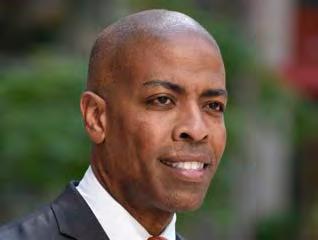
Gay DPA head faces lawsuit
by John Ferrannini



by John Ferrannini
by Matthew S. Bajko
From allowing survivors of conversion therapy to sue practitioners to improving suicide prevention services for youth struggling with their sexuality, this year’s LGBTQ bills package in Sacramento is again skewing toward addressing the needs of queer and transgender young people. The legislation is among the nearly two dozen bills being heard in 2026 that deal with the concerns of LGBTQ Californians.
HIV prevention will receive renewed attention in the coming months from state legislators, as gay Senator John Laird (D-Santa Cruz) is carrying a bill to ensure insurance companies aren’t putting up roadblocks for people who want an injectable form of the HIV preventative medication known as PrEP. (See story, page 2.) It is one of several LGBTQ health bills moving forward this year.
Employment time off policies for LGBTQ families will also be given another look via Senate Bill 1149 authored by Senator María Elena Durazo (D-Los Angeles). It would allow workers to take bereavement leave for chosen and extended family members, similar to previous legislation Durazo saw become law that extended paid family leave provisions to workers in need of caring for chosen or extended family members, not merely their immediate family.
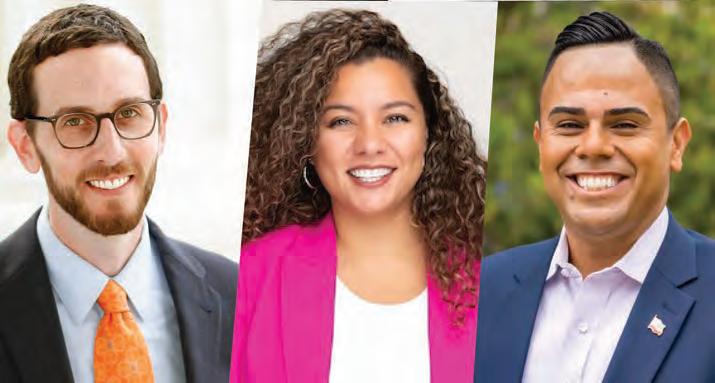



And transgender veterans being forced out of the military under an executive order issued by President Donald Trump last year would have access to supportive services offered by the state should Assembly Bill 1775 by gay Assemblymember Chris Ward (D-San Diego) become law. It would make sure such service members







by John Ferrannini
Gay U.S. House candidate and state Senator Scott Wiener (D-San Francisco) has lived in the Castro for almost 30 years, and represented the neighborhood on the San Francisco Board of Supervisors for almost six years. Last weekend, his main opponents in the congressional race came to his home turf to make their pitches to LGBTQ voters.
The two major candidates running against Wiener to succeed Congressmember Nancy Pelosi (D-San Francisco) are straight allies District 1 Supervisor Connie Chan, who represents the Richmond district on the board, and Saikat Chakrabarti, a wealthy tech investor who formerly was chief of staff to Congressmember Alexandria Ocasio-Cortez (D-New York).
Chan went on a merchant walk through the Castro Saturday, March 21, and Chakrabarti hosted a town hall with about six dozen guests at the Eureka Valley Recreation Center, Sunday, March 22.
It was Chan’s second merchant walk in the LGBTQ neighborhood, she told the B.A.R. in a phone interview.
Asked why LGBTQ and Castro-area voters who may be more familiar with Wiener – especially considering his work in the state Legislature on LGBTQ

discharged under the policy would still qualify for housing assistance and professional licensing support afforded to them by the state, as well as be able to utilize discharge upgrade services as they transition back to civilian life.


The Los Angeles Blade covers Los Angeles and California news, politics, opinion, arts and entertainment and features national and international coverage from the Blade’s award-winning reporting team. Be part of this exciting publication serving LGBT Los Angeles from the team behind the Washington Blade, the nation’s first LGBT newspaper. From the freeway to the Beltway we’ve got you covered.
issues – should consider them, Chan and Chakrabarti had contrasting answers.
“They clearly have a relationship,” Chan said of her opponent and voters in the neighborhood, “but I think we also have done a lot of work.
Along with local support from the Harvey Milk club and the AAPI [Asian American Pacific Islander] queer community, … I started out as budget committee chair with supervisor, now
board President Rafael Mandelman as my vice chair. We did a lot of work to focus on supporting the LGBTQ community on housing subsidies for transgender people, arts and culture, cultural districts, and especially some of the really crucial funding for health care, particularly HIV/AIDS, both housing and treatment.”
See page 4 >>

by Matthew S. Bajko
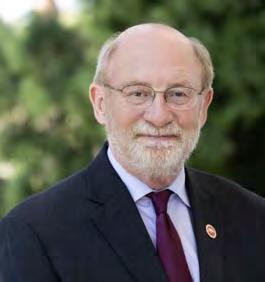
Abill being carried this year by gay state Senator John Laird (D-Santa Cruz) aims to fix hiccups with insurance policies covering the cost of an injectable form of the HIV prevention medication PrEP. AIDS advocates have been pushing legislators in Sacramento to tackle the issue since the preventative medical intervention is seen as assisting efforts to end the transmission of HIV in California.
Because the injectable form of PrEP is long acting, it only needs to be administered every few months compared to the pill form of the medication that needs to be taken daily. As such, it is seen as a good option for those people who are HIV-negative and may find it difficult to adhere to a daily dosage schedule.
At issue, however, is that some health plans restrict injectable PrEP coverage to their medical benefit for policyholders, which causes problems for nonprofit service providers that provide it via their own pharmacies in recouping their costs for doing so. They must purchase expensive specialty medications upfront, navigate complex billing procedures, and wait for reimbursement,
Laird’s office noted in announcing his sponsoring Senate Bill 1023.
Dr. Hyman Scott, a gay man who has been the medical director for the San Francisco AIDS Foundation since 2020, serves as the prescriber of record for all of the nonprofit’s clients who are on PrEP. He told the Bay Area Reporter the reimbursement issues with the injectable form of the medication are “a huge problem” for his nonprofit and result in “a lot of challenges” for the staff at its nurse-led sexual health clinic Magnet housed in the AIDS Foundation’s Strut facility in the city’s Castro LGBTQ neighborhood.
For one thing, if a person’s health insurance only covers PrEP via their medical benefits and not as part of their outpatient prescription drug benefits, then Magnet is unable to offer it to the individual. Another issue that crops up, said Hyman, is certain insurance policies won’t allow the clinic to order injectable PrEP, receive it, or administer it to the individual because it is considered a medical benefit and not a pharmacy benefit that would allow for them to be prescribed it via Magnet.
“We want people to be able to take the PrEP they want that works for them,” Hyman said during a phone interview to discuss the matter.
Another thing clinic staff experience due to the insurance issues with injectable PrEP is that its health navigation team members may spend upward of two weeks getting authorization to prescribe injectable PrEP to a person, whereas it takes just days to do so with the pill form.
“So we don’t want someone to have a potential exposure and acquire HIV while we are sitting on the phone on hold trying to get people access to their medication,” said Hyman, who also is the clinical research medical director at Bridge HIV at the city’s public
health department. He added, “it is a huge bottleneck, I would say, in getting people access.”
Laird’s legislation aims to address the issue by requiring health plans that already cover injectable PrEP to also reimburse it through their outpatient prescription drug benefit. Doing so will allow the medication to be filled through a pharmacy while the clinical administration is billed separately, reducing upfront costs and inventory risks for providers, noted Laird’s office.
“Senate Bill 1023 will help more people access these lifesaving medications by removing administrative and financial barriers that make it difficult for community clinics to offer them. Expanding access to PrEP is essential to protecting public health and ensuring that everyone can benefit from advances in HIV prevention,” noted Laird, who in 1985 co-founded the Santa Cruz AIDS Project during the height of the AIDS epidemic when there were no effective treatments to prevent gay men and others from dying after contracting HIV.
Due to the financial and administrative burdens smaller community clinics and HIV prevention providers have faced in providing injectable
PrEP, they have been trying to fix the issues legislatively for some time. Gay Assemblymember Mark González (DLos Angeles) had carried a bill last year that tried to do so.
Yet Governor Gavin Newsom vetoed it when it landed on his desk. In doing so, he had raised concerns about the bill’s impacts on affordability should it become law due to provisions in the federal Affordable Care Act.
“By exceeding the cost-sharing provisions under the ACA, this bill would result in increased costs to health plans, which would then be passed on to consumers,” wrote Newsom in his veto message. “At a time when individuals are facing double-digit rate increases in their health care premiums across the nation, the state must weigh the potential benefits of all new mandates against the comprehensive costs to the entire care delivery system.”
Laird’s bill attempts to respond to the concerns Newsom had voiced. For example, SB 1023 would not require health plans that do not currently cover PrEP to add new coverage.
González has signed on to it as a cosponsor.
compiled by Cynthia Laird
Two upcoming events will celebrate the lives of late gay pioneers and partners Harry Hay and John Burnside. The two men co-founded the countercultural Radical Faeries group, while Hay earlier had co-founded the Mattachine Society, the first successful gay rights organizations in the U.S.
“We Two Boys Together Clinging: Remembering Harry Hay and John Burnside, Queer Movement Pioneers” will include a film screening and memorial and inurnment of Burnside and Hay’s commingled ashes.
The screening of “Hope Along the Wind: The Life of Harry Hay” will take place Monday, April 6, at 6 p.m. at the Little Roxie Theater, 3117 16th Street in San Francisco. The award-winning 2001 documentary chronicles the life of Hay from childhood, through his involvement with the Communist Party, the founding of the Mattachine Society in 1950, and on to he and Burnside becoming loving companions and starting the Radical Faeries.
The film’s director, Erin Slade, will be in conversation following the film.
On Tuesday, April 7, interested members of the public are invited to a memorial at the San Francisco Columbarium, 1 Loraine Court. Doors open at 11 a.m. for the ceremony at 11:30.
“On the 114th anniversary of Harry’s birth, we will hold a remembrance circle followed by the placement of Harry and John’s ashes, in an urn designed and made by award-winning gay potter and writer Robert Gluck, into a niche of the fabulous SF Columbarium,” stated Joey Cain, a queer man and longtime friend of the two.
Hay and Burnside spent their later years in San Francisco, with friends, including Cain, assisting them. Hay, a former San Francisco Pride Parade community grand marshal, died October 4, 2002 at the age of 90. Burnside died September 14, 2008 at the age of 91.
Tickets for the film screening are $11.62 and available at https://tinyurl. com/2z4z34hd
SF health center to honor Mahogany
The San Francisco Community Health Center will honor Honey Mahogany, director of the San Francisco

Office of Transgender Initiatives, at its Show of Hope gala Saturday, April 4, at the Hyatt Regency San Francisco, 5 Embarcadero Center.
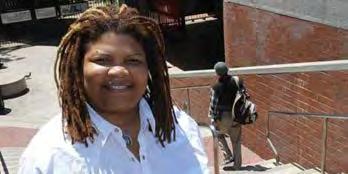
Mahogany, a Black trans person, will receive the Community Trailblazer Award. She has led the transgender initiatives office since being appointed by former mayor London Breed in 2024. The office is now part of the San Francisco Human Rights Commission. Earlier this year, some community members expressed concern that the office has been weakened by budget cuts, as the Bay Area Reporter noted at the time.
Mahogany’s advocacy has shaped the future of transgender leadership in the city, the health center stated in an email announcement. “Honey helped establish the Transgender District in the Tenderloin, the world’s first legally recognized transgender cultural district,” the agency stated.
“Her leadership reflects the same commitment to dignity and community empowerment that guides the work of the San Francisco Community Health Center,” the email added.
Mahogany did not return a request for comment.
The agency offers trans programming at its Transgender Wellness Center in the Tenderloin.
In addition to Mahogany, the health center will honor Reggie Aqui with its Show of Hope Diva Award. Aqui, a gay man, is an award-winning journalist and the former morning anchor at ABC7-TV.
The health center is one of the plaintiffs in a federal lawsuit against President Donald Trump and his administration. San Francisco AIDS Foundation v. Trump. The lawsuit was filed last year against the president’s executive orders targeting diversity, equity, and inclusion policies; equity-related grants; and gender identity. A hearing had been scheduled for February 10 at the federal appellate court in San Francisco but was continued until the U.S. Supreme Court


tainment by the Boy Band Project at 8:30. Tickets are $350 per person. For tickets and more information, go to sfcommunityhealth.org.
Tenderloin street fair
San Francisco’s Tenderloin community will come together to celebrate Eid al-Fitr, the Islamic holiday marking the end of Ramadan, with a vibrant familyfriendly street party Saturday, March 28, from 11 a.m. to 4 p.m. on Golden Gate Avenue between Jones and Larkin streets. The event is free and open to the public.
Ramadan is the sacred month of fasting, reflection, and community for Muslims around the world. Eid formally took place March 19-20.
The event is co-sponsored by the Tenderloin Com munity Benefit District, independent record label EMPIRE, and District 5 Supervisor Bilal Mahmood, a straight ally and the first Muslim American elected to the city’s Board of Supervisors.
“With the Eid Street Fair, we are continuing our work to bring investment, activation, and joy to the Tenderloin neighborhood,” Mahmood stated. “It’s powerful to see the Tenderloin serve as a hub for the broader Muslim community in the Bay Area, and with the Eid Street Fair, we are continuing to reshape our neighborhood as a space that can be safe and supportive of our families and children to live and thrive here.”

“The Tenderloin has always been a reflection of San Francisco’s resilience and diversity, so it’s only right to celebrate Eid here with the community,” stated Ghazi Shami, CEO and founder of EMPIRE.
Last year’s inaugural Eid Street Fair brought thousands out into the streets, and this year’s festivities are set to once again transform Golden Gate Avenue into a free, all-ages festival featuring live music, a neighborhood bazaar, delicious food, and activities for kids and families, a news release stated.
The celebration comes as momentum grows at the state level to formally establish Eid as a state holiday, with growing recognition for the importance of uplifting its cultural significance, the release noted. Assemblymember Matt Haney (D-San Francisco) authored Assembly Bill 2017 this year to formally recognize Eid al-Fitr and Eid alAdha as state-recognized holidays in California. Several other organizations are co-sponsoring the event, including the Civic Joy Fun, St. Anthony’s Foundation, Chinatown Community Development Center, TL Muslim Youth, and others, according to the release.
The street bazaar will feature popup food stalls and retail vendors from neighborhood-based businesses, many representing the diverse backgrounds of the Tenderloin’s Muslim and Southwest Asia and North Africa communities, the release stated.
A kids’ zone will feature a bounce house, climbing wall, pony rides, arts and crafts, and interactive programming. t

by John Ferrannini
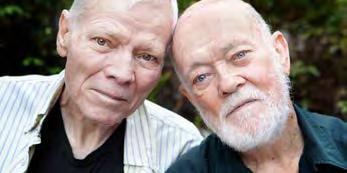
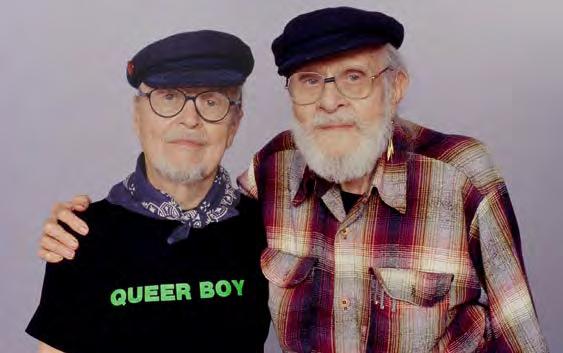
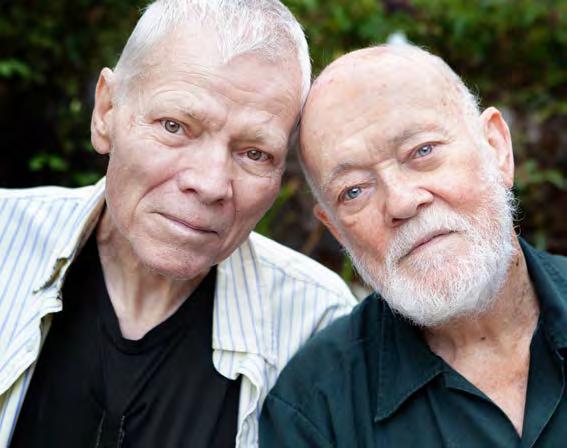
When Edward Mycue and Richard Steger met 55 years ago at an old Italian restaurant in San Francisco’s North Beach neighborhood, they didn’t realize they’d be starting not just a romantic relationship, but would become an artistic duo as well. Mycue writes poetry, while Steger is a painter.
Mycue, 89, is originally from Niagara Falls, New York.
“I’ve always been writing poetry, but in those days, you wouldn’t say you were a poet,” he told the Bay Area Reporter during a recent interview at the couple’s Richmond neighborhood residence. “They’d figure you were a sissy, a fag, or a communist.”
Steger, 82, and originally from Sonoma County, has been an artist as long as he can remember.
They met May 31, 1971, at the nowshuttered Old Spaghetti Factory between Varennes Alley and Grant Street. At the time, Mycue was working as a rod puppeteer in an opera by Lou Harrison, “Young Caesar,” which Mycue described as being “about Julius Caesar’s youth as a gay man.”
Steger was with a high school friend at the restaurant, he said, when Mycue struck up a conversation.
“He talked too much,” Steger quipped. “But that’s a smart tactic – if you clam up, you don’t get anything.”
During that first interaction, the men recalled, Steger’s friend was lighting a match and the box of wooden matches caught on fire. While it was quickly extinguished, a spark had been struck between Mycue and Steger.
“Then we went to the bus and I said ‘goodbye,’” Mycue recalled. Their first date was the very next day.
“Richard and I met the next day, a Monday, at the downtown public library,” he stated.
The Harvey Milk LGBTQ Democratic Club, which sole-endorsed Chan, didn’t return a request for comment. Mandelman, a gay man, has endorsed Wiener, who has also been endorsed by the Alice B. Toklas LGBTQ Democratic Club. (The Bay Area Reporter will be on the campaign trail with Wiener next month, at a fundraising event.)
Chan mentioned how the city budget was able to backfill cuts in HIV/AIDS services on the federal level, and set aside $400 million in reserve partly in case of “additional federal cuts under [President Donald] Trump.”
Steger had moved to San Francisco from the North Bay to go to the nowdefunct art institute.
“Sonoma State College was open, but they had no arts college … so I had to come down here,” Steger said, adding he lived at the intersection of Bush Street and Van Ness Avenue.
Mycue moved by way of Boston and Texas, having been a Lowell fellow at the Boston University Graduate School of Public Relations and Communications and an intern at WGBH-TV, where he helped produce a broadcast featuring then-Massachusetts U.S. senator John F. Kennedy (D).
“I’d switch the cameras,” Mycue said, recalling there were only two cameras used.
He added that his uncle, a Jesuit Roman Catholic priest, introduced him to the idea of service abroad, and that he almost went to Iran. However, Mycue went into the Peace Corps – established
Chakrabarti, who has not held elected office, announced his bid before Pelosi revealed she would be retiring from the House at the end of this term. He said, “I do appreciate the work Scott’s done on the LGBTQ issues, especially at the local level, but Congress is really different.”
“There’s a big difference between myself and the two of them,” he added, referring to Chan and Wiener. “I’m the one saying that I want to go there and actually challenge Democratic Party leadership and create a new vision for this party that is grounded in inclusivity of all our communities.”
Chakrabarti referenced a 2019 hearing in which his former boss, OcasioCortez, grilled Gilead Sciences CEO

many gay men of their ages did, and both said their families were supportive of them and had suspected their sexual orientation. They both told their families after they became a couple.
For their day jobs, Steger worked as an X-ray technician at the French hospital, now the Kaiser Permanente French campus, for several decades, and Mycue worked a number of jobs including at the bookstore of Grace Cathedral. Mycue was also an editor at Norton Coker Press, a now-defunct small press based in San Francisco, and worked at Stacey’s Bookstore, also now-defunct, at 581 Market Street.
Hiram Larew, a longtime friend and a gay man, now lives in Maryland.
Kim Winthrop Hoffman, a straight ally, used to attend Mycue’s poetry group in San Francisco.
“I have known them both for some time,” Winthrop Hoffman stated. “I met Ed at Stacey’s Bookstore where we both worked and where I marveled at his ability to spin words into poetry. Through Ed, I met Richard.”
Winthrop Hoffman stated the pair were a “power couple: two excellent artists bonded through love of each other and through their art.
by President Kennedy – instead. He ended up teaching in the African country of Ghana. Mycue came to San Francisco because relatives lived here, and his first apartment was at Haight Street and Masonic Avenue.
After they started dating, Mycue and Steger moved in together near City Hall, on Fulton Street.
“We remember the night that [then-Mayor George] Moscone was killed, along with [then-Su pervisor] Harvey Milk, of course,” Mycue said. Asked about past activ ism, Mycue said, “We were involved in a lot of good deeds and activities. … We’d always be out in the streets doing things.”
As for their families, Mycue and Steger didn’t report getting the rejection
Daniel O’Day about the high price of HIV prevention drug Truvada, before it went generic. “The CEOs of companies like Gilead pay tons of money to our Congress members to keep these monopolies alive,” Chakrabarti said. “Because AOC was in there, as an unbought member of Congress, she was willing to hold his feet to the fire.”
Chakrabarti criticized Wiener for taking money from corporate donors. (For example, Gilead disclosures show the company donated to Wiener’s past campaigns for state Senate. Public records don’t show any Gilead donations to Wiener’s current campaign, however.)
“So I think if we actually want to make progress on these issues at a national federal level, we need a representative who’s not gonna be owing a lot of favors to corporate donors,” he said.
According to a San Francisco Examiner report on donations made to the campaigns in 2025, Wiener raised $2.78 million; Chakrabarti raised $1.77 million, of which $1.47 million was from his personal fortune; and Chan had raised $174,000.
Chakrabarti used the town hall to announce he is opening a Castro neighborhood office for his campaign. It will be the campaign’s second office, and opens this week at 582 Castro Street where real estate company Engel & Völkers had an office.
Reached for comment to respond to this report, Wiener spokesperson Joe Arellano stated Wiener’s LGBTQ advocacy comes from the fact that, “It’s his life and his community.”
“For decades – starting many years before he ever ran for office – Senator Wiener has delivered for the LGBTQ community in San Francisco and across the country: fighting for people living with HIV, playing a key role building San Francisco’s LGBTQ Community Center, expanding access to PrEP with first in the nation laws, protecting LGBTQ seniors in nursing homes, defending trans kids from MAGA attacks, and delivering massive budget resources for
“I’ve always loved Dick’s chuckle,” he stated in an email to the B.A.R. “I met both Eddie [Mycue] and Dick [Steger] through a mutual friend – about 25 years ago. And, although I live in Maryland and they’ve been nestled in San Francisco, we’ve maintained an ongoing connection over the years. Ed has been a poetry guide; my first collection came out in 1999 from the City of Baltimore, and Ed helped me get it ‘registered’ using his Norton Coker Press wand. Since then, he’s been a champion and North Star. Always encouraging, and always generous with his time and help.” (The book being registered meant it was assigned an ISBN number.)
The couple worked on a number of books of poetry and chapbooks (small books up to 40 pages often used for poetry and tracts) together over the years, the first of which was “Damage Within the Community,” published by Panjandrum Press in 1973. The most recent was, “I Am a Fact Not a Fiction,” a 2024 Peace Corps Writers’ Poetry Award Winner.
our community from both the state and city budgets,” he stated.
Arellano was critical of Chakrabarti’s record on queer issues.
“Saikat Chakrabarti, by contrast, never lifted a finger for LGBTQ people before deciding to parachute into San Francisco to buy a seat in Congress,” he stated. “The only time Saikat sets foot near the Castro is when he’s filming his commercials, producing campaign photo ops, or talking to reporters for news articles like this one.”
Chan tours the Castro
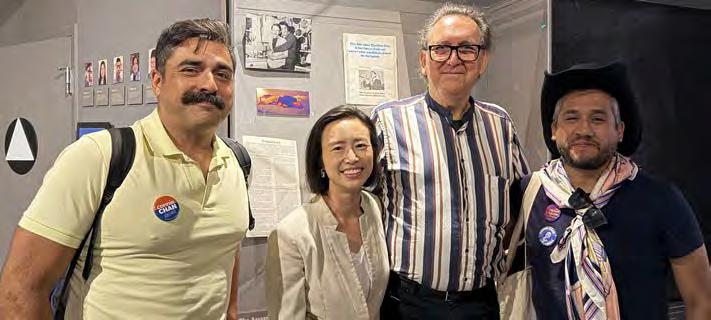
On her merchant walk, Chan stopped at the GLBT Historical Society Museum, hair salon Spunk, and Cliff’s Variety. Cliff’s Variety proprietor Terry Asten Bennett, a straight ally, stated she wasn’t on site March 21, but had “spoken to her [Chan] previously when she came around.”
“I thought she had some interesting ideas, not sure there is a real plan for how to accomplish them,” she stated, referring to universal health care. “She was attentive and listened.”
Asked if she has a preference in the race, Asten Bennett, a two-time past president of the Castro Merchants Association, stated, “I think Scott is a prolific legislator and has a lot more experience getting things done. The short time I spoke with Connie Chan, I liked her as a person and I liked what she had to say, but I’m not sure she has enough legislative experience to make things happen.”
Referring to Chakrabarti she stated, “I haven’t met the third candidate at all.”
“I don’t know anything about him except that he is running and he is rich,” Asten Bennett stated. She has not formally endorsed any particular candidate and now lives outside of San Francisco.
Kiki Lopez, also known as Mx. Kiki Krunch, a trans woman who is QTAPI Coalition interim chair and a drag performer, rode in Chan’s car in the Lunar New Year parade earlier this month.
“I support Connie Chan because, as an immigrant woman, she advocates for the working class,” Krunch stated. “She
“Richard is the painter,” Winthrop Hoffman continued. “I have always enjoyed seeing his work. He has a beautiful way of combining color with imagery in such a way this work seems to invite you into the painting itself. This idea of sharing is a theme they both have; perhaps it stems from their relationship. Ed’s poetry possesses a unique quality, that of an original voice echoing past and future simultaneously, perhaps like Orpheus after his journey to hell and back. Ed and Richard … I am not sure who is the quiet one, but they are in fact, each other’s muse.”
Asked what advice they’d have for younger couples, Steger said, “We didn’t pay attention to anything but our lives.” These days, the couple are looking to sell some of Steger’s artwork. People interested can email Mycue at mycueed1937@yahoo.com.
They also spend time hanging out at nonprofit Openhouse, which provides supportive services and programming for LGBTQ+ seniors at its Bob Ross LGBT Center at 65 Laguna and the Openhouse Community Center at 75 Laguna. Steger attends watercolor painting classes while Mycue relaxes, socializes, and chats up other LGBTQ seniors.
The two were first wed in the 2004 winter of love by Latina lesbian then-city treasurer Susan Leal. They were married again after same-sex marriage was formally legalized. t
has been a committed ally to the queer, transgender and BIPOC communities.” Chan, a naturalized American, was born in British Hong Kong, and came to San Francisco by way of Taiwan when she was 13.
Jonathan Moscone, a gay man who is president of the Duboce Triangle Neighborhood Association, but was speaking in his personal capacity as a resident, is supporting Chan. He’s the son of the late former mayor George Moscone, who was assassinated along with gay supervisor Harvey Milk in San Francisco City Hall in 1978.
“What I respect most about Connie is her ability to listen,” Moscone stated.
“To me that is the basis of great leadership,” Moscone added. “I believe she would be an excellent successor to Nancy Pelosi in that she will represent all San Franciscans, not just special interests. She understands that this is a city made up of diverse neighborhoods. And she cares about all of them. She represents the best of progressivism, which my father pioneered, because she knows how to get things done in a way that considers everybody’s needs, not just those of the rich and powerful.”
Stephen Torres, a queer man who is a bartender at Twin Peaks Tavern and is program manager of the Castro LGBTQ Cultural District, joined Chan on the walk. He said over the phone that he is a supporter because he feels Chan best represents the city’s values and represents marginalized groups.
“So many of us speak to how much women of color should be leading our government, and we have this opportunity,” Torres said. “We have a woman of color, who grew up in San Francisco, who is very much a part of this community, doesn’t have this access to money like the senator [Wiener] does, is not a millionaire like Chakrabarti, and she’s also representative of our very important and vibrant Chinese community. These are the things that resonate with me.”





Volume 56, Number 13
March 26-April 1, 2026 www.ebar.com
Volume 56, Number XX Month XX-XX, 2026 www.ebar.com
PUBLISHER
PUBLISHER
Michael M. Yamashita
Michael M. Yamashita
Thomas E. Horn, Publisher Emeritus (2013)
Thomas E. Horn, Publisher Emeritus (2013)
Publisher (2003 – 2013)
Publisher (2003 – 2013)
Bob Ross, Founder (1971 – 2003)
Bob Ross, Founder (1971 – 2003)
NEWS EDITOR
NEWS EDITOR
Cynthia Laird
Cynthia Laird
ARTS & NIGHTLIFE EDITOR
ARTS & NIGHTLIFE EDITOR
Jim Provenzano
Jim Provenzano
ASSISTANT EDITORS
ASSISTANT EDITORS
Matthew S. Bajko • John Ferrannini
Matthew S. Bajko • John Ferrannini
CONTRIBUTING WRITERS
CONTRIBUTING WRITERS
Kyle Amato • Race Bannon • Robert Brokl
Christopher J. Beale • Robert Brokl
Christopher J. Beale • Brian Bromberger
Brian Bromberger • Philip Campbell
Philip Campbell • Myron Caringal
Heather Cassell • Eliot Faine
Heather Cassell • Meg Collins • Chelsea Davis
Michael Flanagan • Jim Gladstone
Natasha Dennerstein • Eliot Faine
Liz Highleyman • Brandon Judell • Lisa Keen
Michael Flanagan • Jim Gladstone
Philip Mayard • Laura Moreno
Liz Highleyman • Brandon Judell
David-Elijah Nahmod • Mark William Norby
Michele Karlsberg • Lisa Keen
JL Odom • Paul Parish • Tim Pfaff
Matthew Kennedy • Philip Mayard
Jim Piechota • Adam Sandel
Jim McDermott • Laura Moreno
Jason Serinus • Gregg Shapiro
David-Elijah Nahmod • Mark William
Gwendolyn Smith • Charlie Wagner
Norby JL Odom • Tim Pfaff • Jim Piechota
Ed Walsh • Cornelius Washington • Sura Wood
Joshua Polanski • Adam Sandel
Gregg Shapiro • Gwendolyn Smith
Charlie Wagner • Ed Walsh
ART DIRECTION
Cornelius Washington • Evelyn C. White
Max Leger
PRODUCTION/DESIGN
ART DIRECTION
Ernesto Sopprani
Max Leger
PHOTOGRAPHERS
PRODUCTION/DESIGN
Jane Philomen Cleland
Ernesto Sopprani
Rick Gerharter • Gooch
Jose A. Guzman-Colon
PHOTOGRAPHERS
Rudy K. Lawidjaja • Georg Lester
Jane Philomen Cleland
Rich Stadtmiller • Christopher Robledo
Rick Gerharter • Gooch
Fred Rowe • Shot in the City
Jose A. Guzman-Colon
Steven Underhill • Bill Wilson
Rudy K. Lawidjaja • Georg Lester
Rich Stadtmiller • Christopher Robledo
ILLUSTRATORS & CARTOONISTS
Fred Rowe • Shot in the City
Christine Smith
Steven Underhill • Bill Wilson
ILLUSTRATORS & CARTOONISTS
Christine Smith
VICE PRESIDENT OF ADVERTISING
Scott Wazlowski – 415.829.8937
VICE PRESIDENT OF ADVERTISING
Scott Wazlowski – 415.829.8937
NATIONAL ADVERTISING REPRESENTATIVE
Rivendell Media – 212.242.6863
LEGAL COUNSEL
NATIONAL ADVERTISING REPRESENTATIVE
Paul H. Melbostad, Esq.
Rivendell Media – 212.242.6863
LEGAL COUNSEL


Bay area reporter
44 Gough Street, Suite 302 San Francisco, CA 94103
415.861.5019 • www.ebar.com
Paul H. Melbostad, Esq. Bay
A division of BAR Media, Inc. © 2026
President: Michael M. Yamashita
Director: Scott Wazlowski
News Editor • news@ebar.com
Arts Editor • arts@ebar.com
Michael M. Yamashita Director: Scott Wazlowski
Out & About listings • jim@ebar.com
Advertising • scott@ebar.com
Letters • letters@ebar.com
Published weekly. Bay Area Reporter reserves the right to edit or reject any advertisement which the publisher believes is in poor taste or which advertises illegal items which might result in legal action against Bay Area Reporter. Ads will not be rejected solely on the basis of politics, philosophy, religion, race, age, or sexual orientation.
Advertising rates available upon request. Our list of subscribers and advertisers is confidential and is not sold. The sexual orientation of advertisers, photographers, and writers published herein is neither inferred nor implied. We are not responsible for unsolicited manuscripts or artwork.
The San Francisco Board of Supervisors received
the final report from the Commission Streamlining Task Force recently and held a hearing March 17. No action was taken, and gay board President Rafael Mandelman said that it was unlikely the supervisors would adopt all of the task force’s recommendations, which include reorganizing many of the advisory bodies and moving some out of the city charter and to the administrative code.
Following hours of public comment, during which no one spoke in favor of the task force’s recommendations, Mandelman reiterated his stance.
“I don’t think we’re going to touch many of the live wires folks have expressed the greatest concern about,” he said.
We agree with that.
It’s worth noting that we did not support 2024’s Proposition E, which was passed by voters and set up this streamlining task force. A competing ballot measure that year, Prop D, would have drastically reduced the number of advisory panels without any task force. We didn’t support that either.
But now that the task force has completed its work, the supervisors need to make decisions. According to the report, some changes can be enacted by ordinance unless vetoed by a two-thirds board majority within 90 days. Others require a charter amendment, which the board could place on the November 3 ballot.
The task force’s report stated that San Francisco has 152 boards and commissions, with 115 of them being active. The rest exist in law but may not have met in years, the report noted. Some active bodies have outlived their useful purpose or perform duplicative work. San Francisco’s charter establishes 42 bodies. These require voter approval to amend. The report stated that most of the other panels are established across 10 different sections of the municipal code and may be amended by the Board of Supervisors.
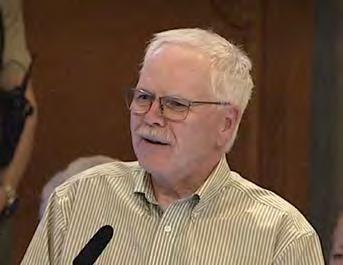
boils down to power and trust. If a commission has power and trust, it wants less authority in the charter and more in the administrative code. If a body has no power and trust issues, he said, it would want to remain in the charter. “These are the two sides of one coin we were dealing with the whole time,” he told the supervisors. As an example, he pointed out the airport commission has two paragraphs in the charter, while the San Francisco Municipal Transportation Agency has 14 pages. The airport commission is recommended to remain in the charter. The SFMTA’s citizens advisory council is recommended to be moved to the administrative code.

Women and the Human Rights Commission, are recommended to be changed in this way and have elicited strong pushback from the public. Both should be kept in the city charter. These bodies, as well as others in the charter, have specific responsibilities, such as hiring and firing department heads, approving budgets, and setting policy that likely would be diluted if they move to the administrative code. There were also changes proposed for the Police Commission, mostly, it seems, to align it with the Fire Commission. While Ed Harrington, a gay man who chaired the task force and is the city’s longtime former controller, said he voted against the recommendation, he told gay District 6 Supervisor Matt Dorsey that the status quo does not seem to be working, particularly regarding discipline matters and that perhaps instead of a police commissioner conducting evidentiary hearings, an administrative law judge could do that. In most city departments, Harrington said, the department heads have a role in discipline, except the police and fire departments. He hoped that the police chief, police union, and the police commission would look at the roles each play.
There’s another thing going on here, too, the issue of checks and balances on the mayor. Some commissions - ethics, civil service, and elections, for example - are set up that way, Harrington said. But not all of the commissions are. The real checks and balances, he said, are the Board of Supervisors, controller, city attorney, and city administrator. Most commissions have members appointed by the mayor and/or Board of Supervisors, he explained, and the board can veto a mayoral appointee.
“We did not believe that every other commission was set up to automatically say no to the mayor. But when all is said and done, you should offer advice to the mayor because he or she expects that from you,” said Harrington of commissioners. “But at the end of the day the mayor should win that argument if there’s an argument of what should happen.”
The Board of Supervisors should move cautiously on streamlining boards and commissions. And if there’s an issue about checks and balances on the mayor, perhaps in the charter reform effort that’s underway, the board should look at having more supervisorial appointees on some of these commissions.
Most of the criticism from the public stems from the task force’s recommendations to move some charter-established commissions to the administrative code. Two, the Commission on the Status of
District 10 Supervisor Shamann Walton thanked the task force for its work, but was extremely critical of its lack of diversity. “In 2026, we have to do better in San Francisco,” he said at the meeting.
Harrington said that one of the main issues
In the near-term, however, a good first step would be for supervisors to place a charter amendment on the November ballot that would go after the low-hanging fruit identified by the streamlining task force (i.e., commissions that no longer serve their purpose or those that are inactive). It’s important that San Francisco retain the commissions that are effective or legally required. t
by Cleve Jones
Ican’t vote in the election to determine Nancy Pelosi’s successor in Congress.
Like so many other San Francisco renters, I was priced out of my home in the Castro. I live in Guerneville now. That’s one of the reasons I’m passionate about Supervisor Connie Chan’s candidacy for the seat. I have no doubt that of the three major candidates, she will be the most committed to defend tenants and fight for seniors, disabled people and other low-income households.
Some have suggested that my decision not to back the gay candidate in this race means that I no longer believe that representation matters. Nothing could be further from the truth. Representation matters.
In 1976, Art Agnos and Harvey Milk faced off in the Democratic Primary for San Francisco’s 16th Assembly District.
Agnos moved to San Francisco in 1966. Milk and his partner Scott Smith arrived in 1972 – the same year I hitchhiked up from Phoenix. Agnos was hired by Assemblymember Leo McCarthy, who became speaker of the Assembly in 1974.
Milk opened a camera store on Castro Street and was part of the neighborhood’s transformation from a working-class neighborhood populated by descendants of Irish, Italian and Scandinavian immigrants and Mexican American families, to one of the world’s most famous LGBT neighborhoods.
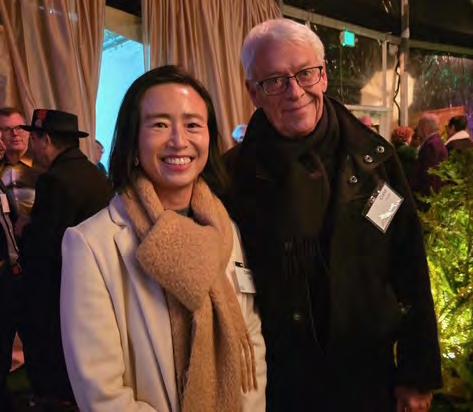
Congressional candidate and District 1 Supervisor Connie Chan, left, attended the 2025 Light in the Grove benefit at the National AIDS Memorial Grove.

There was little difference between the two candidates on the major issues of the day. Both were liberal Democrats. Both descended from immigrants. Both sought support from labor unions, environmentalists, tenant advocates and LGBTQ people. Whoever won the primary was certain to be elected in November. But Agnos was heterosexual, and Milk was an out and proud gay man. Barely a half-dozen gay, lesbian, or bisexual elected officials had ever won office in the entire country, with none elected in California. The notion of electing a transgender person was inconceivable.
I chose to support Milk because I understood that representation matters.
Agnos won that election, championed LGBTQ rights, and eventually became mayor of San Francisco. Milk won a seat on the Board of Supervisors in 1977, was murdered along with then-mayor George Moscone less than a year later, and became
a legendary figure known throughout the world. In 1987, Congressmember Sala Burton died. Harry Britt, a gay man appointed by thenmayor Dianne Feinstein to serve the remainder of Milk’s term and then won reelection, announced his candidacy. Only two openly gay men had ever been elected to Congress. Pelosi also ran. Both were liberal Democrats. I chose to support Britt because I knew that representation matters. Britt lost the congressional race but won reelection to the Board of Supervisors four times and was elected board president in 1989. Pelosi became the first woman Speaker of the House, and a determined and effective advocate for LGBTQ rights as well as a powerful leader in the fight against HIV/AIDS.
Now it is 2026. Pelosi is retiring. Three possible successors have emerged: gay state Senator Scott Wiener (D-San Francisco), tech millionaire Saikat Chakrabarti, and Chan. All three are in general agreement on the urgent issues that face the nation. Gay, lesbian, bisexual, and transgender candidates for political office have won across the country for decades. We serve as mayors, city councilors, governors, judges, state legislators and members of the House and U.S. Senate. According to the LGBTQ+ Victory Institute’s 2025 Report, the number of LGBTQ elected officials has increased by almost 200% since 2017. Milk would be proud.
For 15 months, President Donald Trump and the MAGA faction have waged a campaign of slander,
terror, and brutality against immigrants, people of color, and especially immigrant women and women of color. Most San Franciscans are horrified by the images we have seen of gun-wielding, masked Immigration and Customs Enforcement thugs and the violence they unleash against immigrants, including elders, women, and children. We read with anguish the accounts of gay Venezuelan immigrant Andry Hernández Romero, abducted and transported to the notorious CECOT terror prison in El Salvador, and grieve the murders of Renée Good and Alex Pretti in Minneapolis.
The Trump/MAGA attacks on women aren’t just in the streets. Women, and especially women of color and immigrant women, have been systematically removed by the administration at every level of government and the military.
For the first time in recent history, no women hold active-duty four-star general or admiral positions in the U.S. military, and the President makes no effort to conceal his contempt for women journalists, heads of state and legislators.
Chan was born in British Hong Kong in 1978; the year Milk and Moscone were murdered.
She moved to Taiwan with her family when she was 5 years old, then immigrated to San Francisco when she was 13 and lived in Chinatown. She went to high school at Galileo and graduated from UC Davis. She has been elected to the Board of Supervisors twice, her partner Ed is a member of the San Francisco Fire Department, and they are raising a young son. She will fight for affordable housing and resist efforts to demolish people’s homes to replace them with market-rate units because our existing housing is our most affordable housing. She will work to preserve the most important parts of San Francisco’s iconic history and culture, and lead efforts to protect our coastal zone and defend against privatization of public access.
Representation matters. It mattered 50 years ago, and it matters now.
San Francisco voters should send Chan to Congress. She’s smart and effective and kind. Yes, she also is a woman of color and an immigrant. She’s a true San Franciscan. I’m proud to support her for Congress. I hope you will too. t
Cleve Jones, a gay man, is an author, longtime human rights advocate, co-founder of the AIDS Memorial Quilt and senior adviser to UNITE HERE International Union.
by Matthew S. Bajko
In the East Bay city of San Leandro, James Aguilar is set to become the second gay man to serve on its governing body. The District 2 councilmember-designate is to be sworn into office at the City Council’s April 6 meeting.
Aguilar, 26, emerged Monday night as the preferred candidate out of the seven under consideration to fill the vacancy created when Bryan Azevedo resigned last month after pleading guilty to wire fraud and lying to the FBI as part of its wide-ranging corruption probe of elected officials across Alameda County. Azevedo had obtained favorable treatment and city contracts for a housing company whose executive used a business association controlled by their family to pay for Azevedo to visit Vietnam in the summer of 2023.
Until last August, Aguilar had served on the San Leandro Unified School District Board of Education Trustees. He resigned after being hired as San Lorenzo High School’s new activities director and a leadership teacher at the school.
Now settled into his new jobs, Aguilar told the B.A.R. in a phone interview Tuesday that he felt up to the task of taking on the duties of a city councilmember. He ultimately secured the four votes needed from the current councilmembers af ter they had whittled down their options to four of the applicants from whom to choose to seat.
“I think it is a really exciting moment for San Leandro,” said Aguilar. “We have such a beautiful opportunity to do something really cool with our team. I really think we can work together to address some of the dynamics and issues, and start to repair, I think, what I see as a broken relationship between the council and residents.”
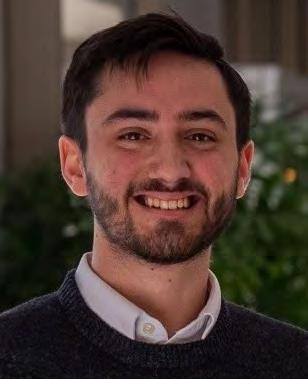
City Council.
Walton, who represents District 1, and District 4 City Councilmember Fred Simon. When the final motion was made to seat Aguilar, it received a unanimous vote with Mayor Juan González III and District 5 City Councilmember Xouhoa Bowen joining their colleagues in supporting it.
The mayor had asked Aguilar if he wanted to be immediately sworn in or wait until he could invite friends and family to see him take his oath of office. Aguilar opted for the latter.
He will be the third LGBTQ community leader to serve on the council, as bisexual former District 1 councilmember Celina Reynes won election in 2022. But she resigned a year into her term at the end of 2023.
lar, adding that the needs of long-time residents also should be taken into consideration. “Of course I am here to serve everyone. But I think our youth are an untapped resource. The younger people of San Leandro are a way for us to address the issues of our future.”
He agreed with Boldt that his most immediate concern as a new council member will be balancing the city’s budget. How to do so “is not going to be an easy conversation,” warned Aguilar.
“It is going to be hard. But I think some of the solutions to that we need to talk about are ideas for revenue generation. That is a huge part of this whole deal,” he said. “Yes, we unfortunately have to cut from places in our city. At the same time, we need to simultaneously have a conversation on how to set the budget up for the near future and all the way out to 2030 to keep us solvent and to keep us stable.”
Coincidentally, Aguilar had been appointed in 2018 at the age of 18 to the school board since no one else had filed to seek the seat that November. He again was the only person to file in 2022 so was automatically given another four-year term that was to run through the end of this year.

His being a voice for queer and trans residents of the city, especially younger people, “is a big thing,” Aguilar told the B.A.R.
He will serve alongside gay District 3 City Councilmember Victor Aguilar Jr., the first gay man elected to serve on the body. The councilmember was among the quartet who ended up voting to seat Aguilar as the new council person at the end of the special nearly four and half hour meeting Monday night. (The two are not related.)
“James is a consensus builder. He works with everyone we all advocate for, especially families and children,” noted Aguilar Jr., who is running on the June 2 primary ballot for an open state Senate seat.
District 6 City Councilmember Dylan Boldt also praised Aguilar’s credentials and how he presented himself during the March 23 meeting. He particularly was impressed with his answers on how to deal with the city’s $11.6 million budget deficit it is facing.
“James, you hit it with the budget,” said Boldt. “Right now, it is the toughest thing we have to deal with.”
Joining Boldt and Aguilar, Jr. in selecting Aguilar for the appointment were Vice Mayor Sbeydeh Viveros-
PrEP From page 2
“Thank you to Senator Laird for continuing this fight and pushing forward a bill that ensures we do not return to the horror our community faced during the height of the HIV epidemic. Together, we can unite and end the epidemic,” he stated.
The AIDS foundation is among the outside groups co-sponsoring Laird’s bill. One of the issues from Newsom vetoing last year’s bill is that some people who want to take injectable PrEP are struggling to
With personal conflicts among the current council – Aguilar, Jr. and Simon were formally admonished earlier this month following an investigation that accused them of gender bias in their interactions with Bowen – Aguilar said he sees his role as being a bridge builder among his soon-to-be council colleagues.
“Yes, the council is divided. I think anyone who is watching San Leandro politics would be naïve to think we don’t have a dynamic issue,” he acknowledged. “I felt like I could be someone who comes in as a consensus builder and potentially someone who can bridge relationships on the council so we can be better.”
He noted he had experienced similar situations while working in the nonprofit sector and during his time on the school board.
“It is nothing new to me,” he said.
As for the city, it needs to engage more with its younger residents, he contended, whether it be youth growing up there or younger families raising their children in San Leandro.
“I feel the direction the city is headed in is stagnation if we continue to think of our planning in the present sense. I think we need to incorporate into the process younger residents and younger families who are going to be here for a long time,” said Agui-
find a provider that can prescribe it to them, noted Jonathan Frochtzwajg, a gay man who is SFAF’s director for health justice policy.
“That is especially true for people who rely on safety net clinics, because if insurance companies continue to only cover PrEP under their medical benefit and not the pharmacy benefit, a lot of providers, particularly providers at those safety net clinics, are not going to be able to make it work to offer injectables,”
Frochtzwajg told the B.A.R. during a phone interview. In addition to the AIDS founda-
“I did what I wanted to do,” he said of his time on the elected education body. “I felt I had put what I could into the school board and I was ready to leave. It would have been a disservice to sit there and be a seat warmer.”
Aguilar, who in 2021 fell short when he ran in a special election for an open Assembly seat, told the B.A.R. he will seek a full four-year term on his City Council seat this November. Serving out the remainder of Azevedo’s term through December isn’t enough time for what he wants to achieve, he said.
“It is too short a window to, one, really learn and soak into the role,” he said. “I want to do more and I don’t think serving all the way up to December is enough. I want to have more time.”
Whether he will be contested for it remains to be seen; the filing deadline for candidates to enter the race is in early August.
“I have three words: we will see,” he replied when asked if he expected to be opposed for the seat. t
Web Extra: For more queer political news, be sure to check http:// www.ebar.com Monday mornings for Political Notes, the notebook’s online companion. This week’s column reported on LGBTQ leaders across California calling for removing the late labor leader César Chávez’s name from civic sites and streets following the revelations that he raped young girls and women. Keep abreast of the latest LGBTQ political news by following the Political Notebook on Threads @ https://www.threads.net/@matthewbajko and on Bluesky @ https://bsky. app/profile/politicalnotes.bsky. social.
Got a tip on LGBTQ politics? Call Matthew S. Bajko at (415) 8298836 or email m.bajko@ebar.com.
tion being a co-sponsor of SB 1023, so are APLA Health, the Los Angeles LGBT Center, and statewide LGBTQ advocacy organization Equality California. Gay Insurance Commissioner Ricardo Lara is also backing the legislation.
“No one should face administrative hurdles when seeking preventive care,” noted Lara. “By ensuring coverage under the outpatient prescription drug benefit, we are expanding access, strengthening consumer protections, and advancing health equity for communities disproportionately impacted by HIV.”t





by Cynthia Laird
Andrea Shorter, a Black lesbian and longtime San Francisco political operative and activist in the LGBTQ community, has died. Her brother, Lawrence Shorter, posted an announcement to Facebook Sunday, March 22, but did not give the date of Ms. Shorter’s death. She was 60.
“It is with deep sadness that we share the passing of our beloved daughter, sister, auntie, partner, and friend, Andrea Shorter,” Lawrence Shorter wrote on Facebook. “She passed peacefully earlier this week, and we are still processing this profound loss. Andrea’s impact on her community and all who knew her was deep and lasting. We will be sharing details soon for a memorial to honor her life and the work she cared so deeply about.
“At this time, we ask for grace and privacy for our family and close friends as we begin to navigate this loss. Thank you for your love, support, and understanding,” Lawrence Shorter’s post concluded.
He did not respond to a message seeking comment.
Ms. Shorter was long involved in San Francisco politics. She was a former trustee on the City College of San Francisco board. She also served on the San Francisco Commission on the Status of Women for many years, including as its president.
Since 2011, Ms. Shorter was the CEO of Atlas Leadership Strategies, which does political leadership coaching, according to her Facebook page.
Friends mourned Ms. Shorter’s passing.
Alex Randolph, a Black gay man and former City College trustee, remembered his good friend and mentor.
“A trailblazer on the SF City College of San Francisco Board of Trustees and various city commissions,” Randolph wrote on Facebook. “We served on the Alice B. Toklas LGBTQ Democratic Club Board together and co-founded the Bayard

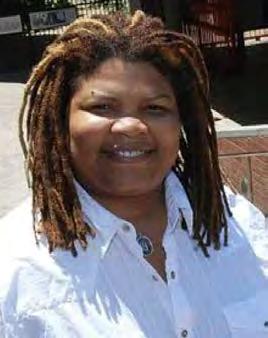
Rustin Coalition – BRC LGBTQ – many years ago. That I will miss her, is a true understatement. My deepest condolences to her family and friends.”
Rebecca Prozan, a lesbian and longtime friend, wrote that she was “incredibly sad” to hear the news.
“For me, I will miss her counsel, our dinner parties and celebrations, and thinking through solving the world’s problems,” Prozan wrote. “Rest in power my friend.”
SF Pride Parade honor
Ms. Shorter was a community grand marshal of the San Francisco Pride Parade in 2009. In an interview with the Bay Area Reporter ahead of the parade, Ms. Shorter talked about the importance of faith in the LGBTQ community. California voters had passed Proposition 8, the state’s samesex marriage ban, the year before, and LGBTQ residents and organizations were struggling with the new reality imposed on the Golden State. (Prop 8 would eventually be overturned, following a federal trial in California in 2010; the U.S. Supreme Court upheld that decision in 2013.)
At the time, Ms. Shorter had taken the job of coalition coordinator for Equality California, the statewide LGBTQ rights organization. EQCA had been a main opponent of Prop 8, but had been criticized for not doing more outreach with people of color and faith communities during the 2008 campaign.
“We need to give a voice that challenges the notion that LGBT people are not people of faith. That’s one thing the right likes to do in subtle and not too subtle ways – you’re either LGBT or a God-fearing Christian. We need to start obliterating that idea,” Ms. Shorter told the B.A.R. in that 2009 interview. “Not so much to shout down the other side, but in our own community, feel more affirmed.”
Geoff Kors, a gay man who was executive director of EQCA at the time, said the news of her death weighed heavily on him.
“Andrea was a courageous activist, bold leader, and wonderful friend,” Kors wrote in an email. “She never hesitated to do what was right and lend her immense talents. Her legacy lives on in me and all who knew or benefitted from her work or friendship.”
Ms. Shorter said that she came out around the AIDS activism of ACT UP in the 1980s. She attended Whittier College in Southern California – she grew up in Riverside County, part of the Inland Empire that voted for Prop 8 – and she and a couple of friends started the first LGBTQ organization at the school.
“I recently went back to Whittier to deliver a presentation and talk about the aftermath of Prop 8, but in the context of the life and legacy of Bayard Rustin,” she said in 2009, adding that Rustin was a Quaker and Whittier got its start as a Quaker institution (it separated from the Quaker Church in the 1930s, according to the college’s website).
Rustin was a gay Black man who was part of the Reverend Dr. Martin Luther King Jr.’s inner circle during the civil rights movement. He was posthu-
mously pardoned by Governor Gavin Newsom in 2020. Rustin’s 1953 arrest in Pasadena, California on vagrancy charges led to jail time and inclusion on the sex offender registry.
Ms. Shorter said that her extended family came from a fundamentalist background. “I’m having those conversations, too,” she noted in the 2009 interview.
But Ms. Shorter said that she fortunately “never felt unloved by my family.”
“It was very important for me to live my life authentically and openly,” Ms. Shorter said of her decision to come out. “To speak up, not only in the fight against HIV/AIDS, but the reality that the rainbow of diversity be made more visible.”
Ms. Shorter’s political life was not without controversy. In 2022, as the B.A.R. reported, she withdrew her name from consideration for reappointment to the city’s juvenile probation commission. A Board of Supervisors committee had forwarded her name on to the full board without a recommendation, and Ms. Shorter did not appear to have the votes necessary for the reappointment.
Then-mayor London Breed had reappointed Ms. Shorter.
“Family matters have developed, limiting my capacity to serve at this time,” Ms. Shorter wrote at the time. “As such, I have elected to withdraw from the present nomination for reappointment for a full term on the Juvenile Probation Commission.”
Some supervisors were concerned about Ms. Shorter’s job on the campaign to oust then-district attorney Chesa Boudin.
At the rules committee meeting, then-supervisor Aaron Peskin said that he believed Ms. Shorter’s role serving on a commission that interacts with law enforcement and her job on the campaign to recall Boudin presented what he called “an inherent operative conflict.”
Ms. Shorter, who spoke at the vir-
tual committee meeting, disagreed, and said her role as a commissioner doesn’t provide any conflict. She acknowledged that she was working on the campaign to recall the DA. (Boudin was recalled by voters in June 2022.)
A longtime former member of the city’s Commission on the Status of Women, Ms. Shorter was involved in the drive to oust then-sheriff Ross Mirkarimi, a former progressive supervisor, following his being charged of abusing his wife in December 2011. He pleaded guilty to a misdemeanor charge of false imprisonment, followed by then-mayor Ed Lee suspending him from his elected position.
The bisexual woman Lee appointed to succeed Mirkarimi after he stepped down from his District 5 seat on the board, supervisor Christina Olague, subsequently voted to reinstate Mirkarimi as sheriff. But her decision partly led to her being ousted from office in November 2012, with Ms. Shorter among her more vocal critics.
In 2013, Ms. Shorter had run afoul of disclosure rules when the state’s Fair Political Practices Commission fined her $800 for failing to disclose her income during a four-year period while serving on the city’s women’s commission. As SF Weekly noted at the time, Peskin had filed the complaint against Ms. Shorter with the statewide watchdog group. In spite of the bumps along the road, Ms. Shorter was a popular leader in the LGBTQ community. The outpouring on social media included tributes from many people with whom she worked over the years.
“Andrea was a bridge builder in every sense,” friend Lawrence Shine wrote. “She understood that real progress happens when people come together across differences, with respect, purpose, and care for one another. She carried both strength and grace, and she believed deeply in the power of community to move history forward.” t
by Cynthia Laird
Luis Sarmiento, a gay man and the longtime owner of Renegades, an LGBTQ bar in San Jose, died March 4, according to friends and social media posts.
No information on the cause of Mr. Sarmiento’s death was available, and staff at the bar have not returned requests for comment. Mr. Sarmiento’s age was not available.
Mr. Sarmiento was known for creating safe spaces for the queer and kink communities, friends wrote on Instagram.
The bar, located at 510 W. Taylor Street, remains temporarily closed, according to its website and Facebook page.
Raymond Mueller, a gay man and former South Bay resident, told the Bay Area Reporter that Mr. Sarmiento was long involved in Silicon Valley Pride, formerly known as San Jose Pride.
“Luis provided the pride banner used in that first Pride parade,” Mueller said in a phone interview. That initial parade took place in 1991.
Mueller said that Mr. Sarmiento was a bartender at Renegades in 2004, then purchased the bar a year or two later.
“He was involved in South Bay leather organizations and taught a class on kink,” said Mueller, who now lives in Palm Springs.
Mueller said that Mr. Sarmiento created a welcoming environment at Renegades, including drag shows and other events.
One of those drag performers was WooWoo Monroe. Both Monroe and Mr. Sarmiento were involved with the old Imperial Royal Lion Monarchy, an LGBTQ charitable organization that was formed in the 1970s and was part of the Imperial Court System.


Caywood is represented by The Jhaveri-Weeks Firm, P.C. Asked for an interview, attorney William C. Jhaveri-Weeks stated, “My client and I have made a determination that we are not going to speak about the case with the press at this time. My only comment at this time is that Ms. Caywood was a devoted, longstanding public servant who cares deeply about the city and about doing things the right way, and we look forward to vigorously pursuing this case and holding the city accountable for the harm done to her and her career.”
The complaint goes on to state that Caywood was fired after remarks at a meeting “in which DPA employees were encouraged to speak candidly without fear of reprisal.” It was at that time “she voiced the concern that the DPA executive director had laid off line-level career public servants to hire his friends
“California has a responsibility to step in when the federal government turns its back on people who served honorably,” stated Ward. “These service members are being forced out of service not because of misconduct or performance, but because of who they are.”
Under SB 934 authored by gay Senator Scott Wiener (D-San Francisco), people who were subjected to the debunked practice of conversion therapy in which they try to change their sexual orientation or gender identity would have more time to bring a civil suit against the practitioner. It comes amid expectations that the conservative-packed U.S. Supreme Court will strike down state bans on the disputed practice being used with minors.
“Make no mistake: conversion therapy is psychological torture, and California will always stand strong with LGBTQ youth to protect them from the extremist movement to harm them,” stated Wiener. “With conversion therapy bans facing legal threats from right-wing extremists and a hostile Supreme Court, we must create new strategies to protect LGBTQ youth.”
In 2012, California was the first state to ban the use of conversion therapy with minors for the purpose of changing their sexual orientation. Two dozen states have since followed, though those bans are likely to be overturned when the justices this spring issue their ruling in Chiles v. Salazar.
No matter what the court decides, Wiener’s bill would clarify that plaintiffs could cite scientific principles and consensus around proper medical care to demonstrate conversion therapy’s harm in bringing forward a malpractice claim. It would also extend the deadline for doing so, with someone under 18 years old at the time of being subjected to the therapy allowed to file a claim before age 40. For people older than 18 when they underwent conversion therapy, they’d be able to file a claim within 10 years of their last session. A person would also be able to bring a claim within five years of their discovering an injury or illness due to the efforts to change their being LGBTQ.
“Survivors struggle with deep scars from this treatment for years and years, and they deserve the right to justice for what has been done to them. SB 934 gives them the right to hold charlatans accountable for this debunked torture,” stated Wiener.
With the Trump administration last year ending the specialized services LGBTQ youth could access when calling the federal suicide prevention hotline 988, gay Assemblymember Mark González (D-Los Angeles) has authored AB 1540 to
into vacant positions, despite the mayor’s instruction to eliminate vacant positions before laying off employees.”
Bombshell claims
The complaint contains a number of bombshell claims. One is that Henderson “did not follow typical workplace professional norms.”
“Within the first few days of Ms. Caywood’s employment, he jokingly gifted hemorrhoid medication to a receptionist during an office holiday party,” the complaint states. “In 2019, he discussed with Ms. Caywood a ‘sex party’ his ex-partner had participated in, showing her a photograph of a dildo. In 2023, he presided over an in-office drag queen strip-show, to which the staff and interns were encouraged to bring $1 bills. In other words, he made it clear to his staff that he would practice and tolerate unprofessional conduct that ignored norms for avoiding a hostile work environment on the basis of protected categories.”
restore the dedicated counselors under California’s 988 hotline. Known as the “Press 3” option, it was used by 73,000 California callers between July 2024 and last June before it was deactivated.
“I am not waiting for this federal administration to realize what they’ve done,” stated González. “Lives are on the line right now, and every day we wait, more LGBTQ+ youth are pushed into crisis. If we stand by, thousands could be lost to suicide.”
Should AB 2003 by Assemblymember Marc Berman (D-Menlo Park) become law, then an online suicide prevention training program would be permanently provided to K-12 students, teachers, administrators, and parents. Berman had secured funding in the 2018 state budget for such a training offered to middle and high school students and staff from June 2020 to December 2024.
“Too many communities across California have been devastated by youth suicides, including my hometown of Palo Alto. We must do everything we possibly can to prevent these tragedies,” stated Berman.
Under AB 1967 authored by gay Assemblymember Rick Chavez Zbur (D–Hollywood), county social workers would need to immediately review petitions filed by LGBTQ or straight youth seeking to enter the state’s foster care system due to being abused or neglected at home and determine whether to open a juvenile dependency case within 21 days. It also would ensure young adults ages 18 to 21 are not blocked from extended foster care when they are no longer receiving support and are at risk of homelessness.
“Young people who reach out for help are often doing so at a moment of crisis,” stated Zbur. “This bill ensures that youth in foster care – who are disproportionately LGBTQ+, Black, and Native American – receive timely support and crucial interventions required to care for youth and keep them safe.”
SB 1328 introduced by lesbian Senator Sabrina Cervantes would require California’s colleges and universities to designate a confidential employee at satellite campuses, branch campuses, and outreach centers to support the needs of LGBTQ+ students, faculty, and staff. It follows on a bill passed in 2024 that required such a person on the main campuses of higher education institutions.
After it stalled last year, gay Assemblymember José Luis Solache Jr. (D-Lynwood) has revived his AB 908, dubbed the LGBTQ+ Inclusion and Fair Treatment in Schools (LIFT) Act. It would require that the state’s Department of Education monitor compliance among school districts with a state law that requires they adopt instructional ma-
Another instance of unprofessional conduct alleged by the suit is that Henderson reassigned Caywood because SFPD was frustrated with her insistence the department follow implementing U.S. Department of Justice recommendations in a timely fashion.
The suit contains three causes of action, the first being whistleblower retaliation. The complaint alleges Caywood reported racist text messages from her supervisor, Diana Rosenstein, who is a white woman. According to the complaint, Rosenstein referred to a Black judge as an “Uncle Tom” after he disagreed with DPA’s charge in a police misconduct case against an SFPD officer. (The suit did not specify what the officer is accused of.)
Rosenstein, who now works at the Oakland City Attorney’s office, didn’t return a request for comment.
The suit also states that Caywood reported Henderson for alleged unlawful appropriation of funds intended for San Francisco’s weekly
terials inclusive of LGBTQ history.
“This measure aims to address the disproportionate challenges our LGBTQ+ students face and safeguard supportive, inclusive environments in our schools,” noted Solache.
Elected school board members and other public officeholders across California would need to complete at least one hour of anti-hate speech training and education within six months of taking office and subsequently every four years thereafter under AB 1578 authored by gay Assemblymember Corey A. Jackson, Ph.D., (D-Moreno Valley). The requirement would begin on January 1, 2028, if his bill becomes law.
“Our communities continue to face rising hate and hostility, and the language used by public officials can have real-world consequences,” stated Jackson. “According to the California Commission on the State of Hate, there is direct correlation between harmful rhetoric and increases in hate crimes. AB 1578 will require elected officials across California to receive training on hate speech and its impacts, ensuring we understand the power of our words and the responsibility that comes with public leadership.”
Intersex youth and adults would be provided protection under AB 1876 authored by Assemblymember Dawn Addis (D-Morro Bay). It would clarify that intersex traits, as well as gender identity and other characteristics, are included under state law prohibiting sex discrimination by health plans and insurers.
As advocacy group interACT noted in a letter supporting the bill, it would “protect coverage for genderaffirming care and other care that may be considered not to align with the sex category recorded by the patient’s insurance (like cervical cancer screenings for someone assigned male at birth) – a frequent reason that intersex patients experience denials of coverage.”
Other health bills introduced
SB 114 from gay Senator Christopher Cabaldon (D-Yolo) would strengthen privacy protections for sexual orientation, gender identity, and intersex data by limiting when state agencies can share the SOGI information. It would ensure the LGBTQ data cannot be disclosed outside of California state government, except under limited circumstances.
“Federal agencies, including but not limited to ICE, are demanding information from states like ours so that they can target, deport, kidnap, and otherwise assault Americans of all types, immigrants and LGBTQ Americans including transgender Americans especially,” noted Cabaldon, referring to Immigration and Customs Enforcement. “That is why
vicious and dangerous dog hearings. The second cause of action is for violation of the California Fair Employment and Housing Act. The act prohibits firing people who oppose practices forbidden elsewhere in the act. According to the suit, Caywood “opposed numerous practices forbidden under FEHA.”
“She complained to Mr. Hendeson that Ms. Rosenstein was targeting and discriminating against Black and Latino employees,” the complaint states. “She [Caywood] filed a formal complaint that [Rosenstein] was sending racist text messages in a work meeting in which Ms. Rosenstein was insulting another participant in a hearing using racially offensive terms. She complained that she was being harassed and discriminated against because of her disability. She filed an EEOC [Equal Employment Opportunity Commission] complaint about race- and disability-based negative treatment.”
Finally, the complaint’s third cause of action is discrimination
I am introducing Senate Bill 1114 which will protect that data that is so critical to serving Californians, protect it from being used by the federal government to target us. Privacy is fundamental to dignity, safety, and equality, and SB 1114 helps ensure those protections remain strong for LGBTQ+ communities.”
Zbur’s AB 1930 aims to strengthen state privacy protections for confidential medical information. It comes amid politically motivated investigations being initiated by Republican officials in other states who are targeting providers of abortion and gender-affirming care in California and other states.
It would require business entities in California to notify the California attorney general before responding to a subpoena or inquiry regarding health care they provide that is legally protected in the Golden State. The attorney general would also be allowed to intervene in any civil action brought by a state business entity that faces a legal inquiry or summons related to the care they provide.
“AB 1930 protects transgender patients and patients who receive reproductive health care services and their health care providers,” stated Zbur.
Correlated to such legal prosecutions initiated by other state officials, AB 2164 authored by Assemblymember Rebecca Bauer-Kahan (DOrinda) would prohibit California’s governor from recognizing a request for extradition of a person related to their providing a legally protected health care activity in the Golden State such as gender-affirming care except under certain circumstances.
Lesbian state Senator Caroline Menjivar (D-San Fernando Valley) with her AB 2551 seeks to have health care service plans conduct annual surveys of their enrollees that track expenditures paid out-ofpocket by enrollees for out-of-network behavioral health care services and in-network behavioral health care services. The surveys would need to ask SOGI questions and be in place by October 1, 2027, if her bill becomes law.
Bills address safety matters
Nonprofits that host community events such as Pride celebrations and other LGBTQ community gatherings would be allowed to seek funding upward of $500,000 for security measures via a state grant program under AB 1836 co-authored by Ward and Assemblymember Jesse Gabriel (D-Encino). The state’s Nonprofit Security Grant Program currently covers nonprofit facilities but not off-site events put on by such entities.
Bisexual Assemblymember Sade Elhawary (D-South Los Angeles) aims to require judges of criminal proceedings when determining the admissibility of evidence at trial “to
on account of Caywood’s disability, specifically, post-traumatic stress disorder.
“Ms. Caywood suffered an adverse employment action when Defendant terminated her,” the complaint states. “Defendant’s termination was motivated by Ms. Caywood’s disability. Among other things, defendant’s managers reacted negatively to Ms. Caywood taking disability leave and treated her in a demeaning way concerning her disability, as set forth above.”
In conclusion, Caywood is asking for “compensatory damages, including but not limited to lost back pay, benefits, future lost earnings / front pay, and emotional distress damages,” the complaint concludes.
The B.A.R. reported two weeks ago that Henderson and DPA are now involved in investigating a reported mass strip-search of incarcerated women that occurred last May 22 at San Francisco County Jail No. 2. t
consider that undue prejudice includes, among other things, the possibility that the trier of fact will rely on gender-based stereotypes related to sexuality, parenting, gender expression, romantic relationships, appearance, or assumptions about a person’s emotional or intuitive nature.” It requires a two-thirds vote to be passed out of the Legislature due to the California Constitution’s Right to Truth-in-Evidence provision.
“Too often, our communities have faced bias in courtrooms where arguments focus on how someone dresses, who they love, or how they express themselves rather than the facts of the case,” noted Elhawary. “AB 2014 ensures judges take a closer look before allowing these kinds of assertions into the court so that bias does not influence the outcome of a trial. Our courts should focus on the facts and evidence of what actually happened, not on assumptions about someone’s identity.”
Bisexual Senator Sasha Renée Pérez (D-Pasadena) introduced SB 957 to require online dating apps with users who live in California have safety policies in place to protect them on or before January 1, 2028. They would also need to submit annual reports thereafter to the state attorney general about their safety policies.
“Online dating is firmly established as a popular way for people to meet, but the safety standards behind these platforms have clearly not kept pace,” stated Pérez. “Californians deserve transparency, accountability, and basic protections when they use apps or websites that facilitate intimate, personal interactions. This legislation would ensure companies take responsibility for user safety instead of leaving people to fend for themselves.”
And AB 2119 by Jackson aims to address gender bias in sexual assault and domestic violence investigations. It specifies that “every victim of sexual assault or domestic violence has the right to a fair, unbiased, and complete investigation by law enforcement and the collection of all relevant evidence by law enforcement regardless of the victim’s gender, gender identity or expression, sexual orientation, age, race or ethnicity, disability, immigration status, or relationship to the alleged perpetrator.”
Under the bill, victims of such crimes would be able to request a reinvestigation of their reported incident by the district attorney if they are unhappy with how a law enforcement agency handled the matter. The bill would create a civil cause of action if a law enforcement agency violated these rights and would make that cause of action retroactive to investigations made before January 1, 2027. t

by Brian Bromberger
You hear her first name and audiences recognize her immediately: global icon, punchline, addict, daughter of two Hollywood legends: entertainer Judy Garland and bisexual director Vincente Minnelli, energetic singer/dance/actress, marriage to gay men, famous lovers, jokes about her hair and her looks, embodiment of countless drag impersonators, career peaks and lows including EGOT winner, the whole razzle dazzle. Liza Minnelli reveals her truth in a funny, enthralling celebrity memoir, “Kids, Wait till You Hear This!”
Although she’s been working on this autobiography informally for fifteen years, principally by talking with her BFF, singer/pianist Michael Feinstein on confidential recordings, she wanted to set the record straight on so many controversies that have plagued her dramatic life. She was determined to “tell her own story and write her own ending, because nobody else can.” Its publication coincided with her 80th birthday on March 12.
The memoir often reads like a friendly, chatty conversation you might have with a close intimate. Though it’s also true the book is haunted by a shadow, the ghost of Liza’s mother Judy Garland. She continually claims how much she loved her mother, yet it becomes apparent she
rip-roaring, harrowing, tell-all memoir

was a monster manipulator and emotionally abusive. Liza became a “nurse, doctor, pharmacologist, and psychiatrist rolled into one.” “Just as the MGM studio system robbed Mama of her childhood, she robbed me of mine.”
Show biz life
Liza wanted to be a singer/dancer early on. When Judy realized she had talent, she did encourage her, by inviting her to sing on her TV variety show and onstage at concerts. But then saw her as competition and resented when she did well. “Get off my fucking stage,” Liza once

by Gregg Shapiro
Out English singer/songwriter Calum Scott first grabbed our attention almost 10 years ago with his striking cover of Robyn’s dance hit, “Dancing on My Own.” Scott’s transformation of the song, from club classic to arresting ballad, was astonishing. The nuanced rendition gave listeners a new way to listen to the song while also introducing us to a talented artist.
Scott, who is coming to the U.S. for a multicity tour in support of his latest album “Avenoir” (Capitol), works similar magic with the Whitney Houston standard, “I Wanna Dance With Somebody (Who Loves Me).” In Scott’s reading, the song becomes one of emotional longing, in which the performer is likely to bring his fans to tears. Calum Scott performs in San Francisco at The Masonic on March 28.
Gregg Shapiro: Calum, I first interviewed you in 2018 at the time of the domestic release of your debut album “Only Human.”
When you reflect on that time, is there something that stands out about your experience?
Calum Scott: My debut album (was) something I had absolutely no foresight that I would ever be able to do. Growing up, music was a hobby, music was something I enjoyed. It was a pastime. It was never something that I took too seriously.
I remember when I appeared on “Britain’s Got Talent” and then subsequently had released my version of “Dancing on My Own,” it just went crazy. All the labels wanted to speak to me. I signed to Capitol Records and then it was like, “Right! I’m writing an album! How the frick do I do that? Where do I even begin?” Writing was such a new thing for me.
I was placed in the wonderful hands of Fraser T. Smith, who’s worked with Adele, Ellie Goulding, Stormzy, and other amazing artists. He held my hand through that whole process. Putting the
overheard her mother after wild applause at the London Palladium.
By age 16 she left high school, declared her independence, and escaped to New York to become a Broadway star. The Judy section encompassing her complicated childhood (“I was the original nepo baby”), while harrowing, is the highlight of her memoir.
She enjoyed several breaks, winning a Tony Award for best actress in the 1965 Kander and Ebb musical, “Flora the Red Menace.” She scored a triumph in her second film as Pookie in “The Sterile Cuckoo,” earning her first Academy Award
album together, even though it was something new, something I could have never dreamed of doing, and that was both terrifying and exciting; I think to be standing, with that album in my hands, felt monumental to me.
Did you ever hear from Robyn about your cover version of her song, “Dancing on My Own?”
Obviously, when it first happened, that was the only person I was seeking approval from. It was not my song, and it had opened so many doors for. I was like, “I need to know what this lady thinks of this cover!” She might hate it, but I never knew. We reached out a couple of times.
Then we just sort of happened to bump into each other in London at a radio station here. I was like, “Oh, shit, Robyn!” My radio girl was like, “I used to look after Robyn, let me introduce you.”
She introduced us, and I was just in shock. I said, “I’m just so grateful to you, and what you’ve done, and everything you do for the community, and what you’ve done for me.” She was like, “You know what? I love the song. I love your version of it. You’ve opened me up to a whole new fan-base and the song’s had a new journey. I can’t thank you enough.”
I was just holding it together, and then as soon as I got into the lift and the doors closed, I started crying. It meant a lot to me to have Robyn’s approval. I’d never want anybody to think that I was taking the song and making it mine. I was simply trying to reimagine her beautiful work.
On your new album, you give the dance track “I Wanna Dance With Somebody (Who Loves Me),” a tune made famous by Whitney Houston, a similar ballad treatment.
It feels like I have got some sort of a curse, Gregg, where I take an upbeat pop song and make it depressing as hell [laughs].
I’m a massive fan of Whitney Houston. My mom played Whitney Houston all the time when I was growing up. “I Wanna Dance With Somebody” was played around the house a lot. When I was singing “Dancing on My Own” when I was touring in 2024, it seemed the most appropriate time to do a bit of a mashup from “Dancing on
nomination as Best Actress.
She then landed the role of a lifetime as Sally Bowles, the bisexual American 19-year-old singer in “Cabaret,” having auditioned unsuccessfully for the stage musical. Bob Fosse molded her talents into the film character, winning an Oscar as Best Actress. He then starred her in a landmark concert, “Liza With a ‘Z,’” a live Broadway performance filmed for television, for the first time. It was a huge success, one of her career apexes, and won her an Emmy.
My Own” into “I Wanna Dance With Somebody.”
The songs are pretty much the blueprint of each other; unrequited love, looking to find your soulmate. I was like, “I’m going to throw this in (the set) and the crowd went crazy for it.” Both Robin and Whitney – two absolute powerhouses, two incredible women.
We sent it to the Houston family, and everybody loved it. It became an official duet, and it still blows my mind. It blows my mind that I get to sing with this absolute icon. I think the biggest thing for me was putting that song out; it was the fanbase that I was so wary of. It was the reason why I didn’t put it out. It was a passion project. The fact that they asked if I wanted to do an official duet was something that I would never have been able to dream about doing. I thought, I’ve been given this wonderful opportunity, but the song belongs to Whitney’s fans. I wanted to make sure that I did it justice.
Now, you are embarking on a multi-city tour of the States beginning in late March and continuing through early May. What are you looking forward to most about those concerts?
For me, America has always been one of my favorite places to tour. It’s so vast! It still blows my mind that you can be on a tour bus driving overnight and you’re still in the same state. There’s so much variety in America, which I love. Each state is different to the next. The common theme is the people.
There’s some craziness going on in the world right now and, for me, my shows feel like 90 minutes of complete security where people come to feel seen and heard and valued. We have this section of my show called The Crying Corner and, let me tell you, there’s not a dry eye in the house. I make it my sole mission to get people in their feels.t
Read the full interview, with music clips, on www.ebar.com.

by Gregg Shapiro
Few actors are as versatile as Gina Gershon. From her early role alongside Tom Cruise for her first onscreen love scene in “Cocktail,” to being directed by Robert Altman in “The Player,” to back-to-back performances in queer favorites “Showgirls” and “Bound” and on to 21st-century standouts “Prey For Rock n Roll” and “Killer Joe,” Gershon has established herself as a go-to actor.
She has also added writer to her resume with a few books, including her latest, the collection of true stories, “Alpha Pussy: How I Survived the Valley and Learned to Love My Boobs” (Akashic Books, 2026). Gina generously made time for an interview in advance of her book tour.
On April 2, Gershon will be the guest of Peaches Christ at a sold-out screening of “Showgirls,” with drag entertainment, at the Castro Theatre. April 3, she will be at the Sydney Goldstein Theater as part of the City Arts and Lectures series. Details below.
Gregg Shapiro: Some years passed between the publication of your first memoir, “In Search of Cleo,” and its follow-up, “Alpha Pussy.” Why was now the time to put out “Alpha Pussy”?
I started writing this during COVID. My book agent kept saying, “You’re sitting on a crazy book with ‘Showgirls.’ Why don’t you just start sending me stories? You’re stuck inside anyway. I’m bored! Send me stories!”
I started writing these stories because I have a lot of those. Then he said, “Great! I’m going out with this. This could be a big advance. This is gonna be huge.”
Then I thought, “I don’t want to write this book. This is not who I am. It doesn’t feel right to me.” And yet, it was interesting starting a process of just

writing stories down that I thought people would enjoy. Like the Prince story. Even as an exercise, how do I make this into a four-page story, like an essay, like little short stories?
As I started to remember certain stories, I thought, “I’ve got to write it down before I forget the story.” Then, through a series of maybe self-examination and maybe therapy, and then, also, my mom wasn’t doing well, the Valley stories started just percolating. Old memories started showing up. Once I started examining those, I thought, “Whoa, that’s kind of gnarly.”
It’s almost like my unconscious brought it up. Once the alpha pussy story came, because I had that as a real story – I used to say, “I’m just gonna alpha pussy the situation,” and people always thought it was a funny term. This is what it means! That’s what this book is. It gave me a theme to hang the stories on.
“Alpha Pussy” reads like a memoir crossed with a cautionary tale for actors. Does that sound like an accurate description to you?
I think it’s a slight memoir because they’re all true stories. Cautionary tale? I don’t know if it’s just for actors. I think it’s just for anyone creative who wants to have some sort of autonomy or have sovereignty and be free to do what it is they want to do.
You have so many people saying,
“No, you should do this. You should do that.” If it’s not what you want to do, maybe they are cautionary tales. These are just my stories. If people get something out of it like that, great! But everyone has different reasons for doing everything. What is my journey may not be appropriate for someone else’s journey. They might be like, “Oh, you’re an idiot! You should have done that movie with Prince. You should have stayed on that TV show.” Maybe they’re right. Maybe that was a mistake. But it’s what I did for whatever reason.
You laid the groundwork for a queer following with “Showgirls,” and then cemented it with “Bound,” which you followed up by playing Sally Bowles in “Cabaret” on Broadway. What does your LGBTQ fanbase mean to you?
I have to say, I’m really happy. Some people get the EGOT: the Emmy, the Grammy, the Oscar, the Tony. I just finally finished my LGBTQ. I made my first trans movie. I’ve got the T! I had the L and all the other initials. It

Wild life
Liza’s romantic relationships were intense, erratic, and soap-operatic.
Her first husband, entertainer Peter Allen, was gay when Liza caught him in bed with another man. They stay married for 8 years, though she had a passionate affair with her mentor/musician Charles Aznavour.
Husband number two was Jack Haley Jr., the son of the actor who played the Tin Man in “The Wizard of Oz.” During the marriage, she had an affair with both director Martin Scorsese while they made the period musical “New York, New York” (neither a box office or a critical success) and the dancer Mikhail Baryshnikov.
She later had affairs with stage actor Ben Vereen and with her gay friend/ collaborator Michael Feinstein. She married sculptor Mark Gero in 1979 and divorced him in 1992 after suffering two miscarriages. She then made the biggest mistake of her life and married producer David Gest, long rumored to be gay in tabloid headlines. Liza asserted he was a con man, only interested in stealing her money and controlling her entire life, making her feel like a prisoner. “He wore more makeup –including mascara– than I did.” It degenerated into mutual physical abuse.
Overdose & recovery
It must be remarked that her tumultuous romantic life occurred while she was addicted to drugs and alcohol. She began to pop Valiums after her mother’s death in 1969. “I marveled at how quickly it took the edge off. Where had it been all my life?” as well as drinking booze.
She spent decades in and out of rehab centers, most famously the Betty

Ford Clinic in 1984, but lied to the public about being sober when she wasn’t. Her worst moment came in October 2003 when she passed out drunk on a Manhattan sidewalk. “And the most horrific thing is that hundreds of people rushing down Lexington Avenue stepped over or around my body. What must they have thought?” Finally, 11 years ago she sobered up. “It’s the greatest personal victory of my life.”
She was a stalwart member of the gay disco club Studio 54 along with her close friend Halston who designed all her clothes. She admitted it was a wild party. “I rediscovered what it was like to be a kid. To have fun!” It was also a creative mix of artists, designers, musicians, and actors, “that was incredibly alive.”
Her greatest success was as a global concert performer, with her 21-night run at Carnegie Hall the longest in its history. At age 60, she introduced herself to a much younger generation with her role as the scatterbrain Lucille Two on the TV series, “Arrested Development.”
Like her mother she’s been a lifelong staunch supporter of LGBTQ rights, even receiving a lifetime award from GLAAD.
The memoir is chockful of colorful anecdotes and lots of gossip. She doesn’t indulge in self-pity and takes responsibility for her crazy behavior through the years. Her brutal candor and vulnerability is commendable. While she didn’t waste her talent, she could have been a greater star after the 1970s, had her life not continually been derailed for decades by drink and drugs, which in some ways makes this a sad story.
Still, the book is a humorous, entertaining page-turner, with charm and vitality, almost as addictive as Liza herself, who, unlike her mother, is a survivor. “There’s always a light somewhere to help you escape the darkness. There’s always a rainbow—if you know where to look for it.”
At age 80, Liza knows who she is and where to find that rainbow. “It’s been a lifetime of high notes and low notes, baby. It’s been a life very well lived. I have no regrets. None.”t
‘Kids, Wait Till You Hear This!,’ by Liza Minnelli, as told to Michael Feinstein. Grand Central Publishing, $36. hachettebookgroup.com
Liza Minnelli appears at the Sydney Goldstein Theater, 275 Hayes St., Thursday, April 9, 7:30pm, as part of City Arts & Lectures, in conversation with Michael Feinstein. $64–$84 (includes a copy of the book). www.cityarts.net
hasn’t come out yet, but I think it’s pretty cute.
It means a lot to me, actually. They’re incredible fans. They’re really appreciative of “Bound.” I feel very happy that a lot of women have come up to me and said, “You helped me come out as a lesbian.” It certainly wasn’t my intention going in, but it seemed to have affected their lives in a really positive way. That, of course, makes me feel good.t
Read the full interview on www.ebar.com.
Peaches Christ hosts a sold-out screening of “Showgirls” with Gina Gershon and drag entertainment, April 2, 7:30pm at the Castro Theatre, 429 Castro St. www.thecastro.com
Gershon will speak at the Sydney Goldstein Theater as part of the City Arts and Lectures series, April 3, 7:30pm, $49, 275 Hayes St. cityarts.net akashicbooks.com instagram.com/ginagershon





by David-Elijah Nahmod
Now available on the gay streaming service Dekkoo, “Danny Will Die Alone,” a popular web series, returns for its third and final season.
Once again, the series is written by, directed and starring Jack Tracy, a gay man of a certain age who knows a thing or two about the gay dating scene. For its third season, “Danny” tells hilarious stories of what it means to be a middle-aged gay man thrust back into the gay dating pool.
As season three begins, Danny is breaking up with his boyfriend, so off he goes into the wild blue yonder hoping to find the next Mr. Right. He tries dating apps, polyamory, speed-dating and sex parties. Throughout his adventures, Danny breaks the fourth wall and talks to the audience about what he wants and what he’s feeling. These sidebars are among the show’s most likable

moments, as they appear to be Tracy, and not Danny, pouring his heart out.
The series is consistently hilarious.
The speed-dating sequence is especially funny and will make gay viewers who have tried this phenomenon laugh out
by Jim Provenzano
It’s more money for more movies, as Frameline, the media nonprofit that hosts the annual San Francisco International LGBTQ+ Film Festival, announced the recipients of its annual Frameline Completion Fund grants. The fund annually provides grants to emerging and established filmmakers, supplying much-needed financial support to artists who are struggling to secure funding in the homestretch of finishing films that center LGBTQ people and their communities.
Established in 1991, the Frameline Completion Fund has supported more than 200 films with over $700,000 in grants.
The 2026 recipients include “Adam’s Apple” by Amy Jenkins, which will have
loud. Poor Danny, who just wants to meet someone nice, finds himself paired up with a series of weirdos and losers.
“I want to twist your nipples around,” one of his speed dates says to a repulsed Danny.
Completion Fund grants aid six films
its World Premiere at SXSW. An intimate, collaborative documentary told through the dual perspectives of Adam, a transgender teen, and his mother, visual artist Amy Jenkins, it offers an authentic and tender counterpoint to the hostility facing trans youth today.
“Barbara Forever” by Brydie O’Connor, a documentary about the late lesbian filmmaker Barbara Hammer, premiered at Sundance and won the Teddy Award for documentary at Berlin Film Festival. The cultural impact of Hammer’s work reveals an ingenious lifelong artistic effort to create and record lesbian histories, personal and societal.
“But Still, We Move” by Theo Angel, focuses on disability visibility, and the story of Tendai. When their housemate moves out, they find themselves
facing access challenges alone for the first time.
“Hunky Jesus” by Jennifer M. Kroot documents the hilarious annual contest held (most often) in Dolores Park and hosted by the Sisters of Perpetual Indulgence.
“Jaripeo” by Efraín Mojica and Rebecca Zweig premiered at the Sundance film festival. A journey to Michoacán’s hypermasculine rodeos descends into the subconscious of memory, queer desire, and longing, leading to a reckoning with the wounds and beauty of a home left behind.
“Lady Champagne,” D’Arcy Drollinger’s campy sequel to the indie hit drag parody “Shit & Champagne,” will have its world premiere at the British Film Institute’s Flare festival.
This year’s jurors included filmmaker Elena Oxman, whose debut feature, “Outerlands,” screened at Frameline49; Randy Myers, an award-winning freelance writer and member of the San Francisco Film Critics Circle; and filmmaker LaTajh Weaver, whose acclaimed short, “Budget Paradise,” received a 2025 Frameline Completion Fund Grant and screened at Frameline49.
“Frameline exists because queer artists have always had to build their own infrastructure,” said Allegra Madsen,
Web series reveals the funny
During an awkward moment at the speed-dating gathering, Danny runs into someone he dated, someone he walked out on in the middle of the date. It’s both a cringe-inducing and humorous moment because it rings so true.
Meanwhile, one of Danny’s exes is having his own crazy experiences in the gay dating world. As the series cuts back and forth between the two of them, they each talk about how much they hate the other. Until they meet again at an orgy, where they trade insults.
“Will you keep it down,” a couple having sex tells them. “You’re spoiling the mood.”
Besides being hilariously insightful, “Danny Will Die Alone” is shamelessly raunchy, and this adds to the sheer joy of watching it. Couples drop their clothes at the drop of a hat as they hook up with each other, giving the show a delightfully erotic edge.

Anything goes in Danny’s world–one episode is called “Bottoming for Tops.”
The six-episode season is beautifully shot, making New York City, where it is set, seem like the gay wonderland that it is. Tracy has done a marvelous job of developing the characters of Danny and all his potential paramours. Even the minor characters are fully developed, which gives the storylines an added dimension.
“Danny Will Die Alone” was initially created as a series of webisodes on Tracy’s Only Fans page. It has morphed into something much more. It’s really a shame that Tracy has chosen to end it with season three. Danny is such a rich character and I’m sure there’s more story to tell.t
“Danny Will Die Alone” is now streaming on Dekkoo. www.dekkoo.com instagram.com/jacktracyofficial


Frameline’s Executive Director. “As federal funding continues to disappear from arts organizations across the country, we’re proud to be one of the institutions still standing, with fifty years of proof that we know how to endure, and a clear commitment to the LGBTQ+ storytellers who will define the next fifty. That’s exactly why our Completion Fund grantees matter so much right now: Investing in these artists isn’t just meaningful — it’s how we build toward that future. Reaching our 50th festival while also doing this work feels urgent and necessary.”
Since 1977, Frameline’s mission has been to change the world through the power of queer cinema. Frameline’s integrated programs connect filmmakers and audiences in San Francisco and around the globe. Critical funding and artist support for emerging LGBTQ+ filmmakers is also part of its mission. In addition to the annual local film festival held in June, Frameline reaches hundreds of thousands of viewers, with a collection of over 300 films distributed worldwide.t
www.frameline.org
by Jim Gladstone
Comedian Jenny Zigrino is a history
buff. She’s worked as a period-costumed tour guide in Boston, attended war reenactments, and created and starred in a Comedy Central web series called “Badass Bitches of History.”



On April 1, Zigrino will be disguised as a long overlooked gay man, Baron Friedrich Wilhelm Von Steuben, when she appears at the SF Eagle, playing the lead role in the debut public reading of her historical (and hopefully hysterical, but not in the sexist way) play, “The Drillmaster.”
The show, which Zigrino describes as “about 70% fact-based,” co-stars and was co-written with San Francisco comedian Caleb Zeringue, who also co-wrote last year’s sold-out local sensation “Luigi! The Musical.”
“The show has plenty of campy gay humor,” said Zigrino in a recent interview with the Bay Area Reporter. “But it’s also about being of value and service without medals and external validation. Everybody has worth.”
Zeringue hopes that, as the show grows and reaches wider audiences over time, it has a positive impact on the perception of queer people’s roles in American history:
“My dad is very homophobic,” said Zeringue, who served in the U.S. Air
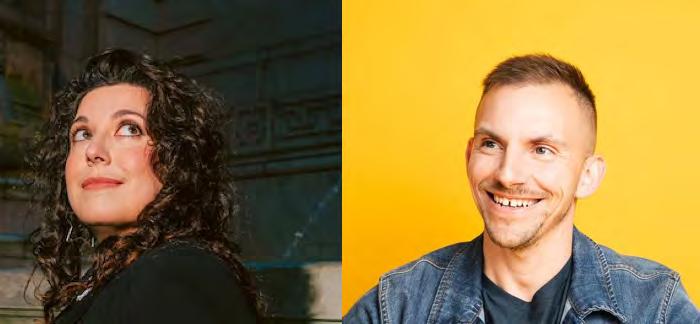
Force R.O.T.C. and considered a career in Navy nursing. “He knew nothing about Von Steuben when Jenny and I read the play to him recently, and he was like, ‘Wow, this story is really interesting even though the guy’s like ultra gay.”
While “Drillmaster” is not a musical and promiscuously goosed for laughs, Zeringue says the show leans more toward “Hamilton” than another theatrical kissing cousin, “Oh Mary!,” in terms of adherence to historical facts.
It would lean even closer had Lin Manuel-Miranda incorporated some of the fascinating tidbits that Zigrino landed upon while researching “Drillmaster.”
“You should see the correspondence between Hamilton and Washington’s
aide-de-camp John Lawrence. It pretty much confirms that they were lovers. Hamilton wrote that Lawrence would be a fool to believe that he’d love him any less once he was married. The letters are wild. Hamilton’s like, ‘If you were in town, I wish you’d have sex with me and my wife on our wedding night.”t
Read the full article and our weekly Going Out event listings, on www.ebar.com.
‘The Drillmaster’ staged reading, April 1, 7pm. Free, with guest list sign-up. SF Eagle, 398 12th St.

by Gregg Shapiro

Stuck inside during the great bomb cyclone of 2026? Watched “Heated Rivalry” more times than you’d care to admit? Looking for some literary distractions? Here are some suggestions.
“She Is Here” (PM Press) by lesbian writer Nicola Griffith is a variety pack in a slim volume, part of the Outspoken Authors series. Beginning with “A Writer’s Manifesto,” Griffith incorporates five essays, four short stories, and four poems, into this collection.
The “Wife” essay is a dissection of the word, while two of the essays take the form of letters. She rages against branding, takes offense at the misuse of LGBTQ, and offers a cautionary tale to authors of first books. In her “lesbian anthropology” short story “Cold Wind,” this reader could feel the Puget Sound chill even in South Florida. www.pmpress.org
You know how some novels read exactly like memoirs? Even with the author covering their bases with a disclaimer declaring it a work of fiction before you’ve turned the first page. Such is the case with “Coconut Grove Chronicles” (Know-Not Florida Press) by gay writer Matthew Bamberg
‘A
Like narrator Marvin, Bamberg spent his formative years in Miami’s Coconut Grove enclave at a time when the area was in the midst of the tremendous social and cultural changes that occurred in the 1960s and 1970s. Incorporating humor and historical perspective, Bamberg invites readers into his personal time machine. www.matthewbamberg.com
Originally published in 1982 by the now-defunct lesbian publishing house Persephone Press, “Zami: A New Spelling of My Name” by groundbreaking Black, lesbian, feminist, activist, and poet Audre Lorde has been reissued in a stunning 2026 hardcover edition by Penguin Vitae.
Including a new foreword by Evie Shockley and a new afterword by Melinda Goodman, the book, described as a “genre-fluid memoir,” came out when Lorde was 48, 10 years before her passing. Through her distinctive gift with language, Lorde does an exceptional job of not only capturing the essence of the times in which she lived, but also, and without hesitation, confidently represents her life (check out the “How I Became a Poet” section in the third chapter), both creative and personal. www.penguinrandomhouse.com
by Brandon Judell
Angelo Madsen’s bold new documentary, “A Body to Live In,” which will screen at SF’s Roxie Theatre on March 28, accomplishes a lot while spotlighting new uses for clothes pins, car chains, and Christmas baubles. Who needs a pine tree, it seems to argue, when you can hook dozens of festive balls directly onto your flat-mate’s flesh as he dances to “Grandma Got Run Over by a Reindeer.”
What is this often beautiful, intriguingly-edited documentary sporting a polished underground sensibility about? Madsen, who is a multidisciplinary artist and educator, said, “Yeah, sure, it’s a portrait of an artist.”
The artist is one Roland Loomis, who later took on the name Fakir Musafar, under which he is credited with being a founder of the Modern Primitive movement, a subculture that includes branding, tattooing, flesh hook suspension, penile subincision, contortion and binding. He died in Meno Park in 2018 from lung cancer, but his scarifications and corsets live on at The Bancroft Library, University of California, Berkeley.
Madsen, utilizing hundreds of hours of home videos, interviews the likes of Annie Sprinkle, clips from films such as Tod Browning’s “Freaks,” TV talk show excerpts, a deathbed chat, and Musafar’s hauntingly contemplative photographs that de-sensationalize the sensational, has created an indelible portrait of a cultural outlaw.
The film begins with the pre-teen Roland balking at his Lutheran-tinged childhood in Aberdeen, South Dakota, on a Sioux Indian reservation.
“I was tiny, effeminate, and I did not fit well in the social pattern, and I saw cruelty. I saw some of the worst

Queer poet and musician (Girls in Trouble) Alicia Jo Rabins’ memoir, “When We’re Born We Forget Everything” (Schocken) takes us on a journey from her suburban, secular Jewish home to Jerusalem. Interwoven with books of the Old Testament (Judges, Genesis, Exodus, Numbers, Proverbs, I Samuel) along with some of the significant women from the bible (Ruth, Noah’s wife Na’amah, Hannah, Judith, Queen Esther and Queen Vashti, Tamar, Potiphar’s wife), Rabins invites readers from all walks of life along on her quest for enlightenment. www.penguinrandomhouse.com
Readers of all ages can learn something by reading “From the Fields to the Fight: How Jessica Govea Thorbourne Organized for Justice” (Atheneum Books for Young Readers) by Angela Quezada Padron with illustrations by non-binary artist Sol Salinas. Telling the story of the late labor activist Thorbourne (19472005), who began picking crops in the California fields at the age of four, and follows her life from youth activism to joining the United Farm Workers as an adult, and her essential part in the California Grape Boycott, becoming “one courageous

sides of humanity,” Musafar recalled.
“Mother wanted one child to be a Lutheran minister.”
This lad had other goals, aided with a camera from his Uncle Milton and with paraphernalia from his dad’s garage. He photographed himself cinching his waist, inserted his mother’s sewing machine needles into his torso, and practiced extreme bondage. At age 14, the budding artist performed a ritual subincision on his own penis.
“I could go into my mother’s fruit cellar, lock the door, and [they thought] I was always developing film under a red light. Actually, I was in there ripping flesh,” he once recalled.
But Fakir’s goal was not to experience pain, but to reach a higher form of consciousness. That’s why he’s been called “an astronaut of inner spaces,” although that was decades later.
First came his service in the Korean War, followed by his transplanting himself to San Francisco State to ma-

woman doing her part for justice.” www.simonandschuster.com
A far more academic text than some of these other titles, “Gay Print Culture: A Transnational History of North America” (Duke University Press) by Juan Carlos Mezo González takes a close look at “the relationship between transnational

in
The book features an extensive chapter on legendary gay publisher Winston Leyland’s Gay Sunshine Press, including a photo by gay photographer David Greene. www.dukeupress.edut

jor in Technical Theater with the aid of the GI bill. There was also his life as a staid accountant and interactions with Black Leather Wings, an organization for spiritual gay leather folk affiliated with the Radical Faeries.
Eventually, Musafar identified himself as a shaman uniting the varied philosophies of Alan Watts and the spiritual teachings of India, Indonesia, and especially the sacred religious ceremony, the Sun Dance, practiced by the Lakota, which includes piercing. The Musafar’s use of the latter was declared an act of cultural appropriation by the tribe, which issued a “Declaration of War Against Exploiters of Lakota Spirituality,” asking for “plastic shamans” to be ostracized.
While Madsen has composed a sort of clear-eyed love letter to Musafar, to his compatriots, and to people who desire no societal limitations when it comes to the manipulation of their own bodies, he is realistic with his regard.
Madsen said, “So what [Musafar’s] doing is sort of like a White imagination of what these [spiritual rituals] look like, right? This becomes more interesting and more convoluted because he’s not actually doing a Sun Dance. It was an honoring practice he constantly wanted to introduce to people.”t
Read the full article on www.eebar.com.
The screening at the Roxie will include a talk with director Angelo Madsen and Musafar’s widow, BDSM-Kink Educator Cléo Dubois, moderated by Leather activist and writer Race Bannon; March 28, 6pm. 3117 16th St. Free (members)-$16.62. www.roxie.com www.abodytolivein.com