

by John Ferrannini
Gay San Francisco Board of Supervisors
President Rafael Mandelman is standing by embattled District 8 supervisorial
candidate Emanuel “Manny” Yekutiel after an allegation of sexual assault, which he denies. Mandelman, the current D8 supervisor, is termed out of office and has endorsed Yekutiel to succeed him.
The accusation that in early 2020 Brad Joseph Chapin, a city gardener and one-time political activist, was groped by Yekutiel at a party and that Yekutiel attempted to penetrate him with his finger, was first reported in the San Francisco Standard June 30, and subsequently with additional details in the San Francisco Chronicle on July 6.
The race to represent the Castro, Noe Valley, and Diamond Heights on the Board of Supervisors is one of the most high-profile in the city. Mandelman was first elected in 2018.
Mandelman told the Bay Area Reporter in a July 7 phone interview that Yekutiel still has his support.
“Yes. He’s denied this accusation,” Mandelman said. “Even if you accept Brad believes his story –and I have no reason not to – it seems it’s hard to

See page 8 >>
by Cynthia Laird
The Bay Area Reporter has received five awards from the California News Publishers Association. The entries were for 2025.
In the Community Focus category, assistant editor Matthew S. Bajko, a gay man, took first place for his coverage of the sudden




See page 3 >>








The Los Angeles Blade covers Los Angeles and California news, politics, opinion, arts and entertainment and features national and international coverage from the Blade’s award-winning reporting team. Be part of this exciting publication serving LGBT Los Angeles from the team behind the Washington Blade, the nation’s first LGBT newspaper. From the freeway to the Beltway we’ve got you covered.

by George Faville
During the recent Golden State Valkyries Pride Night in Ballhalla, as Chase Center is known by the team and its fans, lesbians appeared to be the visible majority. Their love affair with the WNBA is no secret, although the many hand-holding, gray-haired, rainbow-pinned women saturating the crowd reveal just how committed a relationship this is.
On June 26 the Valkyries held their Pride Night, complete with rainbow suited stilt walkers, House of the Kingdom! drag king performers, and a halftime show MCed by drag legend Sasha Colby. Violet, the Valkyries’ mascot, roller skated through the stadium in a rainbow skirt while matching lights flashed through the stands. During a time-out, a clip segment showed players being asked, “What does Pride mean to you?”
That night the Valkyries went on to defeat the Atlanta Dream, 78-75. Queer star forward Gabby Williams’ comment “For the gays!” after making
season ticket holder for the Valkyries, at the game on Friday. “I really feel like this is an amazing experience for any queer folks to come and check out.” It was a celebration decades in the making.
The Valkyries, although the first San Francisco WNBA expansion team, come after the Sacramento Monarchs, one of the eight original WNBA franchises that played from 1997 to 2009 in the capital city. Both are preceded by the San Jose Lasers that played in the short-lived American Basketball League (1996-1998).
The first professional women’s basketball team in the Bay Area was the San Francisco Pioneers, which formed in 1979 under the Women’s Professional Basketball League (1978-1981).
“It wouldn’t have lasted a year if the queer community hadn’t supported it,” said Lindy McKnight in a Zoom call. A 75-year-old lesbian, McKnight worked in promotions for the Pioneers during their second season. She got the job after volunteering for outreach the first year, selling tickets through Amelia’s, Maud’s, Old Wive’sbian bars, a feminist/lesbian centered bookstore, and a cafe, respectively. She -



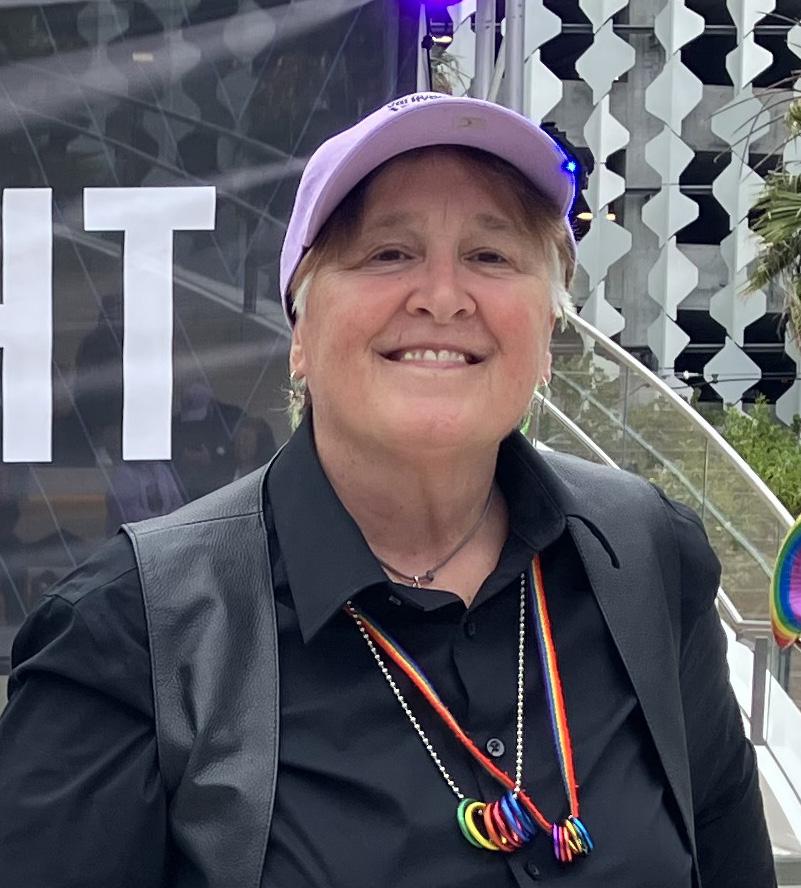
Glenne McElhinney attended the Golden State Valkyries recent Pride Night game at Chase Center.
neers’ fans were lesbians.
Games were played in the Bill Graham Civic Auditorium; the crowds were 2,000-3,000 strong.
“I remember that all of us immediately adopted the Pioneers as a social scene. Supporting women’s basketball, it was just a fun thing to do,” said Glenne McElhinney in a phone call. A lesbian historian, she was born in the Bay Area in 1956 and moved to San Francisco around 1980. “It was social and it was good basketball, so it was a
good combination for lesbians … just about every one of my friends from back in the day went.”
McElhinney attended the Valkyries Pride Night. Like many of the other early fans, has a passion for basketball starting long before the Pioneers came to the City by the Bay, having played in junior high and high school after Title IX passed in 1972. The federal civil rights law prohibits sex-based discrimination in schools or education programs that receive federal funds.
Pam Reaves, 76, is a lesbian who was a season ticket holder for the Pioneers. She said in a phone call there wasn’t a team she could play on growing up in Sioux Falls, South Dakota, but she would listen to the radio for women’s basketball being played in Iowa.
Pushback against visibility
Both remember a pushback against lesbian visibility at Pioneers games. McKnight said that the management knew about the lesbian fanbase and wanted the money they provided without promoting or showcasing their dominant presence at the games.
Mariah Burton Nelson, who is a lesbian and played for the first women’s basketball team at Stanford and was a starting member of the Pioneers, said
that the league worried about the reaction of their early sponsors. Nelson, 70, has worked as a sports writer since leaving the WPBL and now publishes the Substack Stronger Women
After her addition to the Pioneers, Nelson met the coach, Frank LaPorte, for lunch. She said that amid describing his excitement for the team, “he said, ‘but our uniforms were made by a bunch of faggots.’” Out while playing for Stanford – having dated a teammate – she was shocked. (LaPorte died in 1997.)
During the media buzz about the new team, Nelson said she butted heads with a reporter, whose name she couldn’t recall, when he asked about a boyfriend and whether the men in her life would approve of her career. Then while she was at a San Francisco Pride rally, he saw her. He went directly to LaPorte, and the next day, she was put on waivers, an effectual firing, because she was “too short.” At 6 feet 2 inches tall, she was one of the tallest on the team.
“I was in mourning, I was in shock,” Nelson said. “[My teammates] were devastated and sympathetic … the lesbians tried to dive into a closet and invented boyfriends.”
compiled by Cynthia Laird
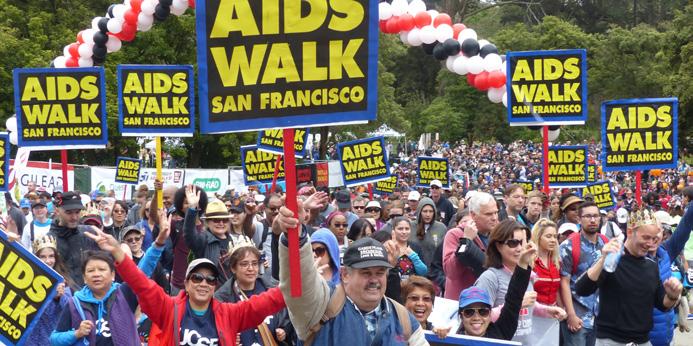
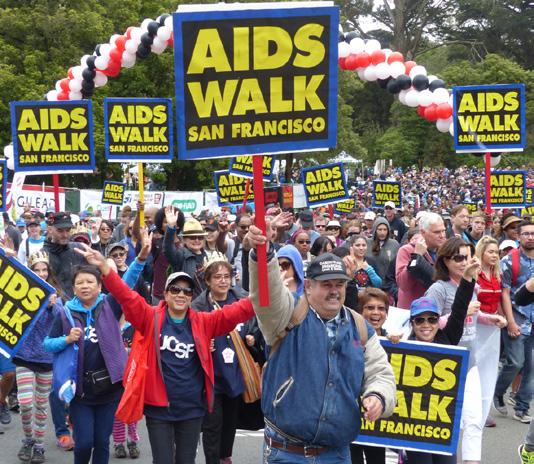
AIDS Walk San Francisco returns to Golden Gate Park Sunday, July 19, for its 40th year. Organizers noted it’s a significant milestone that honors four decades of community action in the face of HIV/AIDS.
This year marks the 45th anniversary of the first reported cases of what would become known as AIDS.
The 5K fundraising walk starts and ends in Robin Williams Meadow in Golden Gate Park. There will be a red ribbon pancake breakfast for all fundraising walkers beginning at 8 a.m. and other pre-walk festivities, featuring KGO-TV anchor Dan Ashley, a longtime supporter of the event.
The walk begins at 10:30 a.m. and takes about 90 minutes to complete.
All participants, regardless of fundraising status, are invited to join in the post-walk picnic in the meadow. It takes place from noon to 3 p.m. and will feature performances by drag queen Manila Luzon from “RuPaul’s Drag Race All Stars” and San Francisco’s own drag artist Bobby Friday.
People can register to walk on their own or as part of a team. There is also a virtual walker option. There is no cost to register and no minimum amount of money to be raised.
MCC-SF to hold drag benefit for LYRIC Metropolitan Community ChurchSan Francisco will hold its second annual drag show fundraiser for LYRIC Center for LGBTQQ+ Youth Saturday, July 11, from 5 to 7 p.m. at The Stud, 1123 Folsom Street. The show starts at 5:15.

Robert Mansfield, treasurer of the AIDS Walk San Francisco Foundation, emphasized the urgency of raising funds for local organizations.
“As we mark the 40th year of AIDS Walk San Francisco, the need for this event – and for our community – has never been greater,” Mansfield stated. “We cherish this opportunity to help local nonprofits who are relying on the unrestricted funding raised through AIDS Walk to sustain critical services at a time when many organizations are facing major funding cuts.”
Since its inception in 1987, AIDS Walk San Francisco has become the largest and most visible HIV/AIDS fundraising event in Northern California, a news release stated. It has raised more than $100 million for HIV/AIDS organizations in seven Bay Area counties, as well as inspiring thousands of Bay Area residents to walk, donate, and volunteer in the fight against HIV/AIDS.
For more information and to register, visit sf.aidswalk.net.
The benefit features an incredible roster of talent, a news release stated. Performers include drag king Alex U. Inn (also serving as emcee), Olivia Hart, Alexis Miranda, Linda Summers, and DJ Sergio Fedasz, who will keep the energy high on the decks, a news release stated.
All proceeds from the event will benefit LYRIC, which provides programs and services to LGBTQ youth.
General admission is $25, which includes entry and complimentary food. VIP admission is $40 and includes entry, food, one complimentary drink, and three raffle tickets.
For more information and to purchase tickets, visit https://tinyurl. com/2rk2rz2w.
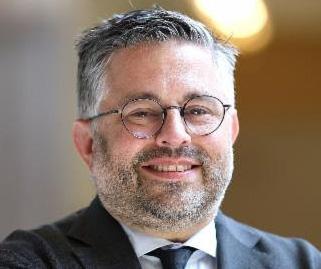
Goudeau sworn in as SF arts chief Matthew Goudeau was sworn in Tuesday, July 7, by San Francisco Mayor Daniel Lurie as the city’s inaugural executive director of Arts and Culture. The San Francisco Arts Commission a day earlier voted in closed session to appoint and name Goudeau as the body’s new department head.
In his role, Goudeau, a gay man, oversees the commission; Grants for the Arts, which was previously under the city administrator’s office; and Film SF, formerly under the Office of Economic and Workforce Development, a news release stated.
In April, Lurie announced that Goudeau would oversee the three entities under the new Arts and Culture reorganization as part of his budget proposal. Goudeau’s title relapses the former director of cultural affairs.
The appointment fills a position that was vacated on June 30 by former director of cultural affairs Ralph Remington, who retired, the release stated.
Goudeau stated that he’s looking forward to the new position. He has previously held senior roles across six San Francisco mayoral administrations, most recently as deputy chief of staff to Lurie. He also previously served as deputy chief of protocol and director of Grants for the Arts.
“I am honored by the Arts Commission’s appointment and grateful for the opportunity to serve San Francisco in this new capacity,” Goudeau stated. “Bringing together the Arts Commission, Grants for the Arts, and Film SF creates an extraordinary opportunity to strengthen the city’s creative ecosystem through a more coordinated and collaborative approach.”
Goudeau serves on the board of the Yerba Buena Partnership and is a former board member of the GLBT Historical Society.
SF anarchist bookstore turns 50
Bound Together Bookstore will mark 50 years with a panel of old and new collective members Wednesday, July 15, at 7:30 p.m. at Counterculture Museum, 1458 Haight Street in San Francisco.
The anarchist bookstore has contributed to the unique cultural and political scene of the Bay Area, a news
See page 7 >>
evaluate an episode from six years ago when one party has no recollection of it. What I heard is not enough to doubt Manny is the right choice to be District 8 supervisor.”
In a July 6 in-person interview, Chapin confirmed that he had spoken with Mandelman about his accusation before it was reported in the press. Mandelman told the same to the B.A.R., adding they did not discuss the details of the allegation and that “it was not clear what he [Chapin] was looking for.”
The alleged victim, Chapin, a 36-year-old gay man, argues, “I cannot imagine anyone who would do this and who wasn’t honest about it. … If I were to be lying about this, the amount of destruction that would cause in my life. It’s already caused a lot.”
Yekutiel has not been charged in connection with the case.
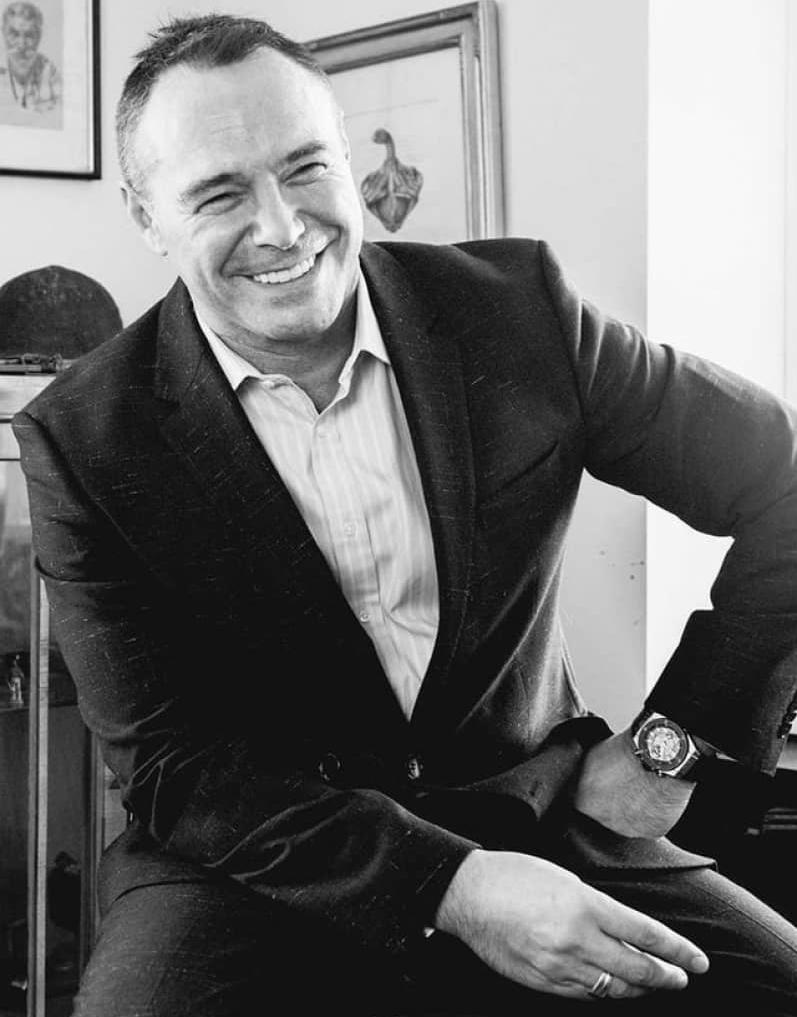
For his part, Yekutiel, also a 36-yearold gay man, denies the allegation. He stated, “There are two things I know to be true: One, whenever someone accuses someone of something like this, they deserve to be heard and taken seriously. I felt really bad that he felt this way and I would never want to cause pain or hurt to anyone. But the other thing I know to be true is that I didn’t do this to him. I have gone out, I’ve partied, and I’ve been part of the city’s queer nightlife scene, but I’ve always tried to respect people’s boundaries and treat people with respect as best I can.”
The matter has already had some repercussions for Yekutiel, who as the Standard reported lost three endorsements, including state Attorney General Rob Bonta and District 7 Supervisor Myrna Melgar, whom Chapin said was “amazing, by the way.” The Standard also reported Yekutiel had some speakers at his eponymous cafe in the Mission, which often hosts political and civic-minded events, drop out after they heard about the allegation.
San Francisco Mayor Daniel Lurie told the B.A.R. June 17, before the allegation went public, that he was not planning to endorse in the race.
During the interview with Chapin, the B.A.R. reviewed images of what Chapin said were police reports. The images of two pieces of paper included a report number on the top righthand side of the page. The headers identify them as San Francisco Police Department documents. On July 7, the B.A.R. reached out to San Francisco Police Department spokesperson Evan Sernoffsky to confirm if the police reports the paper viewed were authentic.
Sernoffsky said in a phone call that he does not have access to police reports dealing with allegations of sexual assault.
“As far as these kinds of cases go, generally we take them extremely seriously,” Sernoffsky said. “We encourage anybody who is a victim of sexual assault to report it to us, and they can be sure it will be handled extremely diligently by our special victims unit.”
Sernoffsky continued, “As far as this case goes, any case that is open and under investigation we cannot comment on.”
A case can remain open even if it’s inactive because all the leads to pursue have been exhausted.
The Chronicle reported June 6 that an investigator assigned to the case stated the matter was “in an inactive status” in an email to Chapin. The B.A.R. has not been able to independently confirm this, although Yekutiel claimed it again July 7, when asked what he meant when he earlier said the case had been “deactivated.”
KRON-TV reported it was able to confirm the police report was filed. Sernoffsky told the B.A.R., “I don’t know where KRON4 got that information.” Chapin confirmed during the B.A.R. interview that he did not add in the police report that Yekutiel attempted penetration but that he told police about it when he was asked by
an investigator. Chapin said he wasn’t aware of the different penalties for sex crimes involving penetration.
“I didn’t necessarily mention all of that in the beginning,” Chapin said. “It was just when I talked with the detective, he asked explicit questions about that. And so I answered honestly, and I didn’t know that it really mattered, because I didn’t allow him to fully penetrate me, but he [the detective] said, ‘Even if it was a little bit, it counts, basically.’”
The B.A.R. asked Chapin pointblank if he was successful in preventing penetration. Chapin responded, “Yeah. I mean, I think technically, he did partially. So this is something I had to go over with a cop, because there’s different laws about if someone does X, or Y, or Z.”
Ties to Milk club
Raising doubts for some is that Chapin, who is the only person to date who has made an allegation against Yekutiel, is a former vice president of the progressive Harvey Milk LGBTQ Democratic Club, which has endorsed its past president, Gary McCoy, in the D8 race. McCoy, a gay man, is the campaign manager of Congressmember Nancy Pelosi’s (DSan Francisco) Save Our Health Care Campaign. He formerly worked in her district office.
Yekutiel is widely considered a moderate, and did not seek the Milk club’s endorsement.
Chapin told the B.A.R. that McCoy, as well as the other two candidates in the race, Michael Trung Nguyen, a gay man, and Darshini Patel, a bi queer woman, have all spoken with him about the allegation.
“They’ve all been extremely supportive,” he said.
The three candidates all expressed that support and stated they believed Chapin in separate public statements shortly after the Standard broke the story; none called for Yekutiel to drop out.
Yekutiel told the Chronicle that he saw Chapin and McCoy together before the story broke, and said in an Instagram video that, “The police did look into this specific accusation. They investigated it and they deactivated it and decided not to pursue it further. I do think that what’s happening here is people are using this as an attempt to assassinate my character.”
Asked what leads him to that conclusion, Yekutiel said, “These allegations are nearly a decade old and they are plainly untrue. As reported in the Chronicle, the police concluded that there was nothing to them, and they didn’t refer to the DA’s office. And that’s because the allegations are untrue. I don’t think that this would be happening to me if I wasn’t running for office, and it’s unfortunate, because I do think that the people of District 8 and survivors deserve better.”
McCoy, who did not return a phone call seeking comment, stated, “What Brad has described is deeply troubling, and my thoughts are with him. I have immense respect for his bravery in coming forward.”
Nguyen stated, “Reading his account made me sick to my stomach.”
Patel stated, “We’ve built a culture – and a legal system – that still leaves survivors questioning if they’ll be believed rather than perpetrators questioning their behavior. This should be unacceptable to all of us.”
‘Not a sex party’
The B.A.R. asked Chapin and Yekutiel follow-up questions based on the earlier reporting by the Standard and the Chronicle.
Though SFist had reported – in a story based on the Standard’s initial account – that Chapin “attended what sounds like a small sex party at a Mission District apartment,” Chapin told the B.A.R. that it was neither a sex party nor an orgy. Instead, it was a Studio 54-themed party on February 21, 2020, thrown by hosts he described as mutual friends of Yekutiel and himself. Chapin showed the B.A.R. what
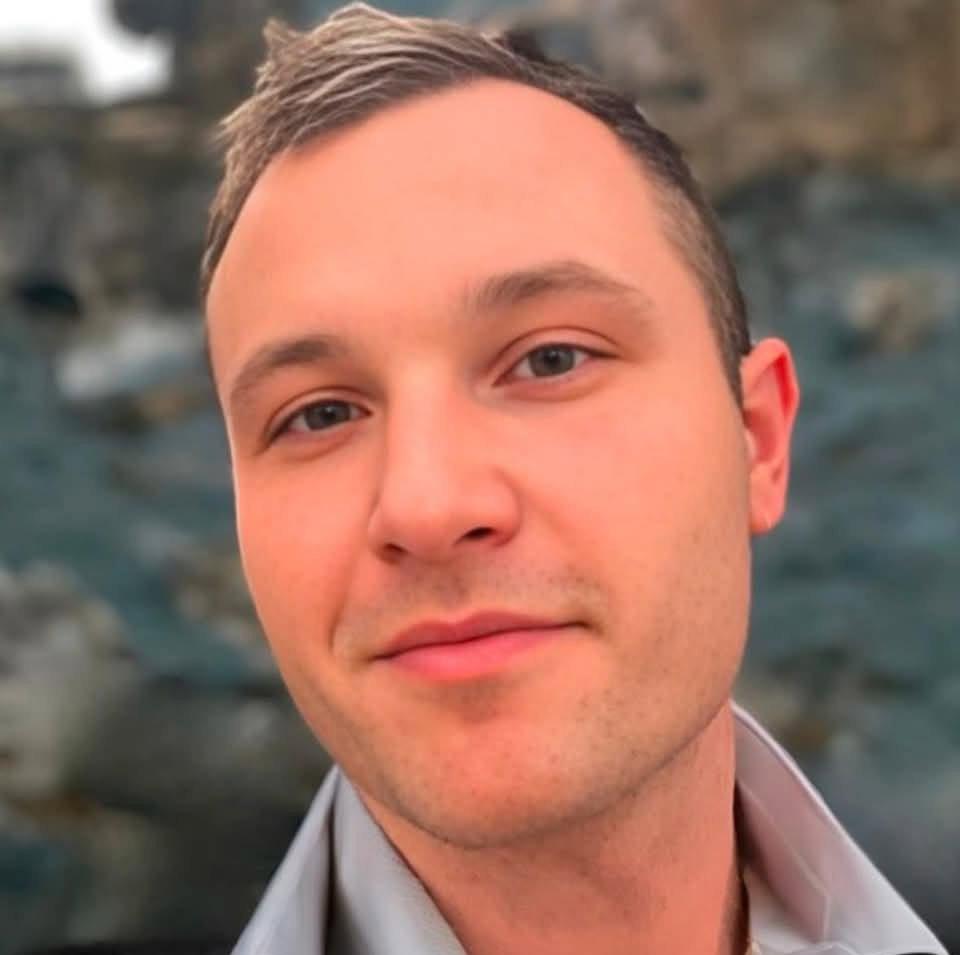
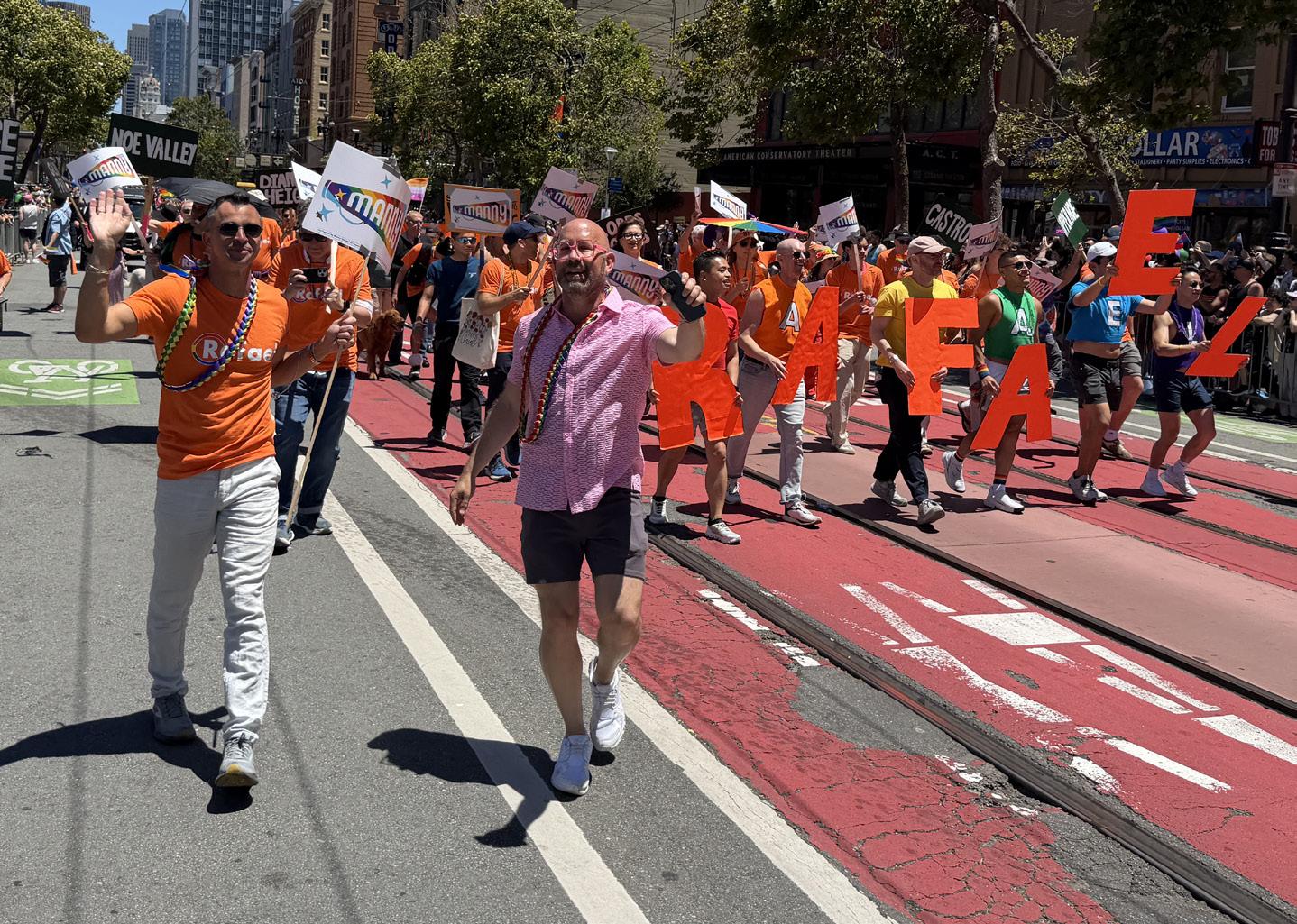
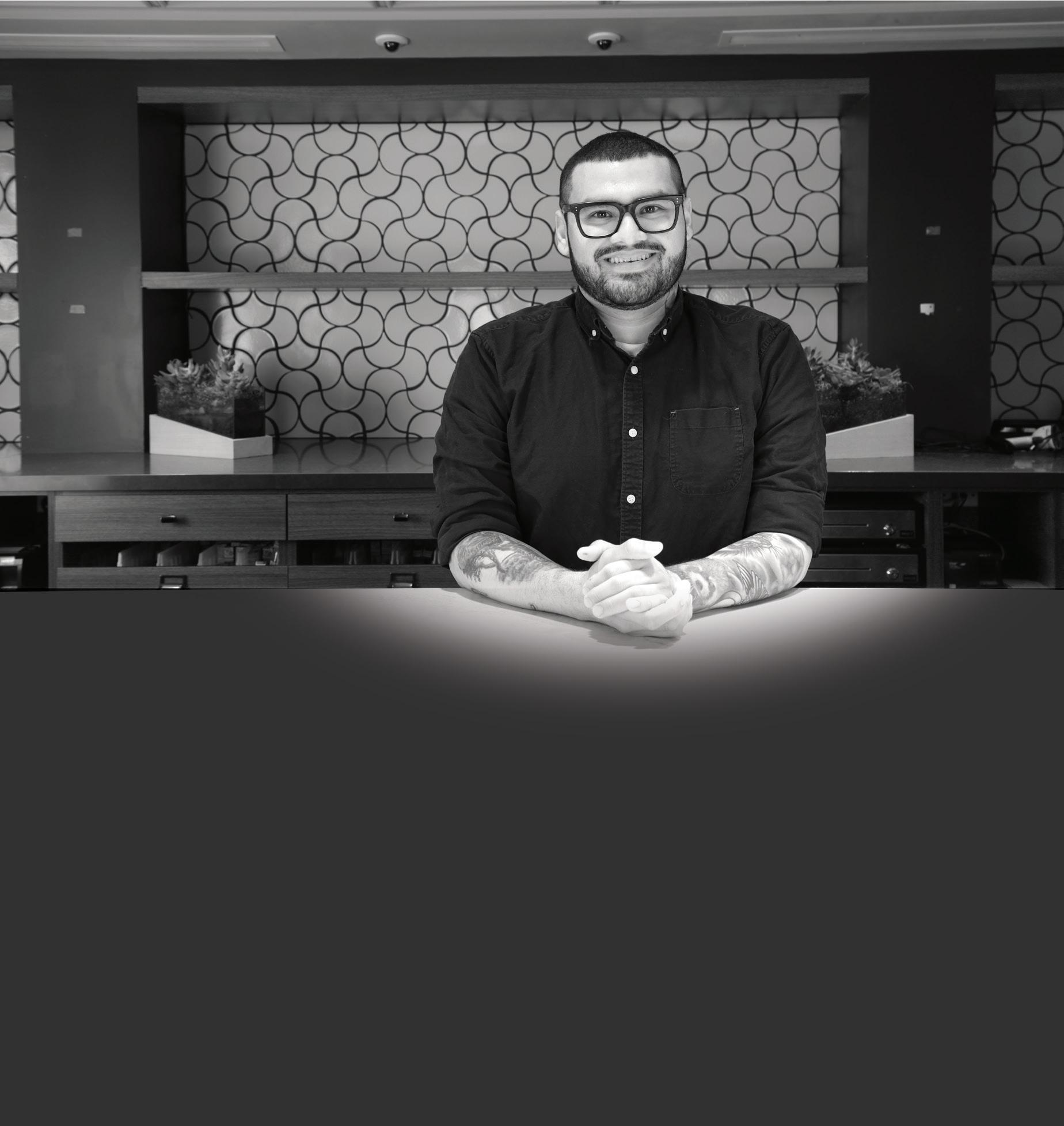
Brad Joseph Chapin has received support since coming forward with an allegation of sexual assault against District 8 supervisor candidate Emanuel “Manny” Yekutiel, which he denies.
appeared to be a contemporaneous Facebook invite discussing the Studio 54 theme.
The B.A.R. was able to identify one of the purported hosts of the party, and reached out via email July 7, but has not heard back.
“People have made a lot of stupid assumptions about it being a sex party,” Chapin said. “Absolutely not. … The vast majority was straight. … It was not an all-male party.”
Chapin added, “And even if it was, what happened was horrible and not OK,” saying that while “there are different expectations around consent, or consent might look different in ways that are totally fine, in the gay community, there’s still rules around consent, right?”
Chapin said the potential for people in the future thinking he was prudish compared with San Francisco gay male cultural norms was “a huge part of why I didn’t want to come forward.” He clarified that in his eyes, “What happened here was a complete violation of any of the most sort of liberal or open imagination of what could potentially be considered OK.”
Asked about Chapin’s reported description of Yekutiel in the Standard, wherein Yekutiel was stated to be “alone in the bedroom, wearing a beanie and sweating,” Chapin said Yekutiel was fully clothed, but “I just distinctly remember him wearing a beanie.”
Asked about the sweating, Chapin said, “The reason I said the sweating was because it was unusual,” and later that Yekutiel “looked, appeared, [and] sounded” intoxicated.
Chapin had stated before the interview that he felt other news outlets didn’t fully report what had happened. The B.A.R. asked Chapin to describe the event in further detail.
“As I approached him, as he gave me a hug and all that,” Chapin said, “he has no words the entire time. No words. It was groans.”
Then, Chapin said the man – whom he did not yet recognize as Yekutiel –grabbed his testicles and squeezed to the point of pain, while staring into his eyes.
“He’s kind of smiling, but not happy smiling,” Chapin said. “It’s like this look of he’s dominating me, and he’s satisfied about it. … I don’t know how to describe it. You know what I’m talking about? It’s like this look of I’m owning you. … I am controlling you, and I am enjoying it.”
At that point, the moment when Yekutiel allegedly tried to penetrate Chapin occurred. Chapin said both that, “I felt that to me, I was able to stop him from fully penetrating me,” and also that, “I think technically, he [Yekutiel] did partially” penetrate Chapin with his fingers.
After Chapin prevented full penetration, he claims Yekutiel “pulled up
the Standard he had utilized but from which he had not heard back.
Chapin “was telling people in relatively close circles,” he said, “but … I wasn’t keeping it a secret.”
After even more people heard following Yekutiel’s announcement of his candidacy, Chapin said he filed the report, officers showed up to investigate, and members of the press began to contact him. The B.A.R. first contacted Chapin on this matter July 6. Chapin said it was in April that he made what’s referred to as a pretext call to Yekutiel, with the police listening in, at which point Yekutiel denied being at the party. He suggested they meet in person, which, Chapin said, happened subsequently, and at that time Yekutiel said he had a recollection of being at the party but did not remember, and wouldn’t participate, in the alleged conduct.
Chapin said he was wearing a police recording device at this time.
Chapin asked the B.A.R. to remove expletives from his exact quotations, which it did.
Yekutiel claims innocence
my shirt.” Chapin said he had immediately prior to the incident gained some weight, and he attributed Yekutiel scoffing to that.
“He literally said, ‘Ew,’” Chapin said. “Right after that, or, sort of during, I don’t know, but I just remember staring into his eyes and him staring back at me. And it felt like forever. I don’t know how long it was. And that’s when I really realized, I think that’s when I realized it was him.”
At that point, according to Chapin’s account, Yekutiel let go just prior to people emerging from a bathroom adjacent to the bedroom where the incident is said to have taken place. He is not sure why people were in the bathroom, or if Yekutiel had been.
The B.A.R. independently confirmed that on the morning of February 22, 2020, Chapin sent a text message stating, “Manny just sexually assaulted me without realizing that it was me. You should’ve seen the look on his face when he realized it was me lol.” Chapin added that he was “fine.”
The Chronicle published what it stated are screenshots of Facebook direct messages from Chapin to Yekutiel from months after the incident in which Chapin called Yekutiel “cute” as well as a series of heart emojis. Both Chapin and Yekutiel avowed the existence of these messages to the B.A.R. in their respective interviews.
The B.A.R. asked Chapin why he did that, and why he added a “lol” (which typically stands for “laughing out loud”) after the initial message. He responded, “I was intentionally trying to downplay it” to avoid dealing with traumatic feelings, and that the Facebook messages were attempts to become friends with Yekutiel.
Chapin said that in that time of his life, “I was used to trying to seek the approval of people who were literally abusive to me. And I’m pretty ashamed by that, but … I don’t think that he was any exception to the rule.”
Chapin said the two had known each other before the alleged 2020 incident through participating in adjacent political circles but had a purely professional relationship in that sense.
Chapin said that he reported the incident to the police April 22. He said he had mentioned it to more people in the context of 2024 allegations of sexual assault made against Kevin Ortiz, who was co-president of the San Francisco Latinx Democratic Club. Ortiz was reinstated after an investigation. There have been other allegations of sexual misconduct against other local Democrats in recent years, including former City Hall aide Jon Jacobo and Shahid Buttar, a progressive who ran against Pelosi in 2020.
The local Democratic Party created a reporting system for sexual misconduct in the aftermath of the Ortiz and Jacobo situations, which Chapin told
The B.A.R. spoke with Yekutiel by phone on July 7. Asked if he recalled going to the party in question, Yekutiel answered, “I vaguely remember it, but it was almost seven years ago, so I can’t be totally sure. I vaguely recall being invited to it. I checked my calendar, and it wasn’t on my calendar, but, you know, I have a vague memory of going to this house party, but I can’t say for certain.”
Asked if, among the memories he does have, he recalls what kind of party it was, Yekutiel answered, “I recall it being kind of a chill, friendly gathering.” Asked if he recalls if it was a sex party, Yekutiel answered, “That’s not my memory of it, no.”
Yekutiel said he does not recall seeing Chapin at the party. Asked if he remembers if he knew who Chapin was at the time, Yekutiel answered, “Did I know who he was? I recall, you know, him being a politically active member of the community, but nothing substantive, no, I don’t think I’d ever had a conversation with him, or spoken to him.”
Asked about Chapin’s allegation Yekutiel was intoxicated, Yekutiel said, “That does not fit my recollection of the party, no. Again, these are almost a decade old, and so, but that is not my memory of this house party.”
Asked if between the night of the party and this year he had interacted with Chapin, Yekutiel brought up that after the time of the alleged incident, Chapin supported him for a seat on the San Francisco Municipal Transportation Agency Board of Directors, where he served from 2020 to 2023.
“I thought that was nice,” Yekutiel said. “And, you know, he kind of would comment on my Facebook stories from time to time, but before he reached out to me a few months ago, I had never had a sit down with him or conversation or any real, substantive interaction, just thinking, you know, seemed like a nice and supportive person.”
Yekutiel confirmed there’d been a meeting in the park with Chapin.
“You know, I own a venue in the city that’s all predicated on the idea of inperson discussions, and he [Chapin] had called me,” Yekutiel said, referring to his cafe. “It sounded like he wanted to talk about something important. And so I suggested we meet up in person just because anytime someone wants to talk to me about something important, I always want to give them time. And so I didn’t know what he wanted to talk about, so I was trying to be empathetic and respectful.”
Yekutiel said that at the park, the allegation he attempted to penetrate Chapin with his finger was not raised. He said this in reply to a question about why he’d told the Standard that Chapin’s account had changed.
“I don’t recall him [Chapin] making an accusation that I tried to finger him,” Yekutiel said, adding he is adamant that, “I do believe that survivors need to be heard, but I didn’t do what’s being described here.”t
Volume 56, Number 28
July 9-15, 2026
Volume 56, Number XX Month XX-XX, 2026 www.ebar.com
PUBLISHER
Michael M. Yamashita
Thomas E. Horn, Publisher Emeritus (2013)
Publisher (2003 – 2013)
Bob Ross, Founder (1971 – 2003)
NEWS EDITOR
Cynthia Laird
ARTS & NIGHTLIFE EDITOR
Jim Provenzano
ASSISTANT EDITORS
Matthew S. Bajko • John Ferrannini
CONTRIBUTING WRITERS
It
is unsurprising that reported hate crime events related to gender increased last year in California. Attorney General Rob Bonta recently released his annual report documenting that hate crime events involving a gender bias increased 23.8% from 84 in 2024 to 104 in 2025. Antitransgender bias events rose from 73 in 2024 to 90 in 2025, an increase of 23.3%.
Given the relentless push by President Donald Trump to erase trans lives with his executive orders and other policies, trans people in the Golden State have been impacted along with others across the country; and the consequences are now showing up as reported anti-trans hate events. And while reported hate crimes overall decreased by 4.2% last year, a good sign, it still remains the case that trans residents have ample reason to be fearful and take extra precautions when going about their lives.
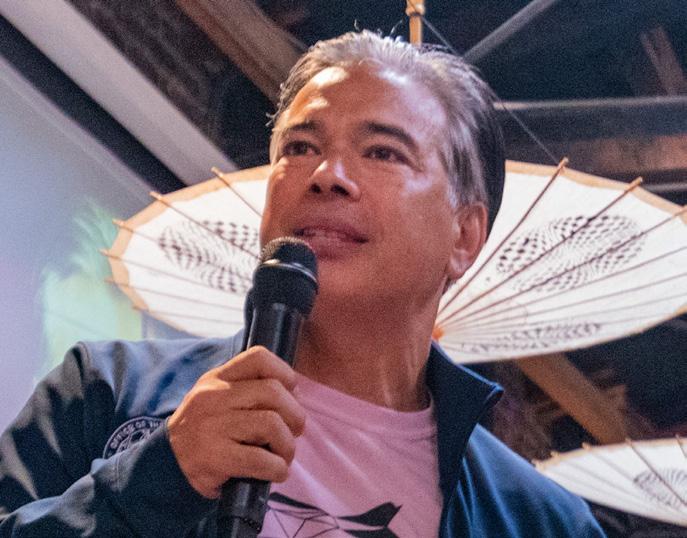
and $30 million for the Uncompensated Care Fund, which is to be used to cover gender-affirming care alongside abortion and reproductive health services.
Another item in the budget is roughly $9 million for LGBTQ community centers and other LGBTQ+ serving organizations. While we wish it was more, this is a good first step. LGBTQ centers, of which there are dozens in the state, often are the first places queer people seek out when looking for services or to find a safe space to gather. We have reported on issues facing local centers. In particular, those in San Mateo and Oakland have sustained severe funding cuts in the last year, and it’s critically important that community centers are able to remain open. We hope that the new state funds will provide some stability to centers throughout the Golden State.
Kyle Amato • Race Bannon • Robert Brokl
Christopher J. Beale • Robert Brokl
Brian Bromberger • Philip Campbell
Christopher J. Beale • Brian Bromberger
Heather Cassell • Eliot Faine
Philip Campbell • Myron Caringal
Michael Flanagan • Jim Gladstone
Meg Collins • Chelsea Davis
Natasha Dennerstein • Eliot Faine
Liz Highleyman • Brandon Judell • Lisa Keen
George Faville • Michael Flanagan
Philip Mayard • Laura Moreno
David-Elijah Nahmod • Mark William Norby
Jim Gladstone • Brian Guan • Liz Highleyman
JL Odom • Paul Parish • Tim Pfaff
Brandon Judell • Michele Karlsberg • Lisa Keen
Jim Piechota • Adam Sandel
Matthew Kennedy • Philip Mayard
Jim McDermott • Laura Moreno
Jason Serinus • Gregg Shapiro
Gwendolyn Smith • Charlie Wagner
David-Elijah Nahmod • Mark William Norby
JL Odom • Lois Pearlman • Tim Pfaff
Ed Walsh • Cornelius Washington • Sura Wood
Jim Piechota • Joshua Polanski • Adam Sandel
Gregg Shapiro • Gwendolyn Smith
ART DIRECTION
Charlie Wagner • Ed Walsh
Max Leger
Cornelius Washington • Evelyn C. White
PRODUCTION/DESIGN
Ernesto Sopprani
ART DIRECTION
Max Leger
PHOTOGRAPHERS
Jane Philomen Cleland
PRODUCTION/DESIGN
Rick Gerharter • Gooch
Ernesto Sopprani
Jose A. Guzman-Colon
PHOTOGRAPHERS
Rudy K. Lawidjaja • Georg Lester
Jane Philomen Cleland
Rich Stadtmiller • Christopher Robledo
Rick Gerharter • Gooch
Fred Rowe • Shot in the City
Jose A. Guzman-Colon
Steven Underhill • Bill Wilson
Rudy K. Lawidjaja • Georg Lester
ILLUSTRATORS & CARTOONISTS
Rich Stadtmiller • Christopher Robledo
Christine Smith
Fred Rowe • Shot in the City
Steven Underhill • Bill Wilson
ILLUSTRATORS & CARTOONISTS
Christine Smith
VICE PRESIDENT OF ADVERTISING
Scott Wazlowski – 415.829.8937
VICE PRESIDENT OF ADVERTISING
NATIONAL ADVERTISING REPRESENTATIVE
Scott Wazlowski – 415.829.8937
Rivendell Media – 212.242.6863
LEGAL COUNSEL
Paul H. Melbostad, Esq.
NATIONAL ADVERTISING REPRESENTATIVE
Rivendell Media – 212.242.6863
LEGAL COUNSEL
Paul H. Melbostad, Esq.

Bay area reporter
“On top of these individual and localized threats, President Trump has conducted a tireless and unjust campaign against the civil rights, safety, and well-being of LGBTQ+ Americans since day one of his administration,” Bonta stated in his 2026 State of Pride report, which he issued a few days before the hate crimes report. “Through March of this year, the second Trump administration took 31 executive actions targeting the LGBTQ+ community. The administration issued executive orders, guidance, letters, declarations, investigative demands for private data, and more in an effort to undermine LGBTQ+ individuals’ access to inclusive school environments and crucial medical care, as well as intimidate and interfere with institutions that support LGBTQ+ Americans by providing legally protected services like gender-affirming care.”

ing a sexual orientation bias decreased 35.2% from 455 in 2024 to 295 in 2025, according to the hate crime report. Anti-gay (male) bias events fell from 251 in 2024 to 165 in 2025, a decrease of 34.3%. Anti-LGBTQ+ bias events fell from 172 in 2024 to 111 in 2025, a decrease of 35.5%.
In addition to law enforcement agencies being more attuned to anti-LGBTQ violence, and initiating hate crime charges when appropriate, institutions like community centers and LGBTQ neighborhoods offer some protection to people. Although, we know that neither are immune from violence themselves.
Meanwhile, reported hate crime events involv-
This data show that California state officials must continue to push back against Trump’s anti-trans policies, as Bonta’s office has been doing. State lawmakers and Governor Gavin Newsom also exhibited leadership with this year’s budget. As we reported last week, there’s more than $2 billion in the approved 2026-27 state budget and associated trailer bills for LGBTQ-related programs. This includes $26 million for a Gender-Affirming Care Fund, to be used to ensure transgender, nonbinary, and gender-expansive people have access to the medically necessary care they need,
The California Legislative LGBTQ Caucus praised the inclusion of the LGBTQ-related funding in the budget.
“In a year defined by difficult fiscal choices, California once again demonstrated that our values are reflected in our budget. This spending plan protects access to health care, strengthens privacy rights, supports veterans and service members, invests in inclusive education, and ensures LGBTQ+ Californians can live with dignity, safety, and opportunity,” stated gay Assemblymember Chris Ward (D-San Diego), caucus chair. “At a time when
by Todd Lombardo
the great-grandson of immigrants and a lifelong Democrat. In 1998, I came out while living in New York’s West Village, around the corner from the Stonewall Inn. I knew about the generations that came before us and what it took to fight for what is right. Later that year, gay college student Matthew Shepard was murdered, and I realized the fight never stops. It continued against then-President George W. Bush’s Federal Marriage Amendment in 2004, and California’s Proposition 8 in 2008, a few years after I had moved to Los Angeles.
In 2024, it was difficult for me to understand how Democrats could lose the House, the Senate, and the White House against a man and party with significant weaknesses. Our core values weren’t translating to votes, and I thought the party needed a fresh perspective. After much deliberation, I decided to run for Congress in 2026 as a first-time candidate, because I understood what was wrong and had ideas to fix it.
I received thousands of votes in my primary and started hundreds of conversations with voters about change. Here’s what I learned.
Voters are angry.
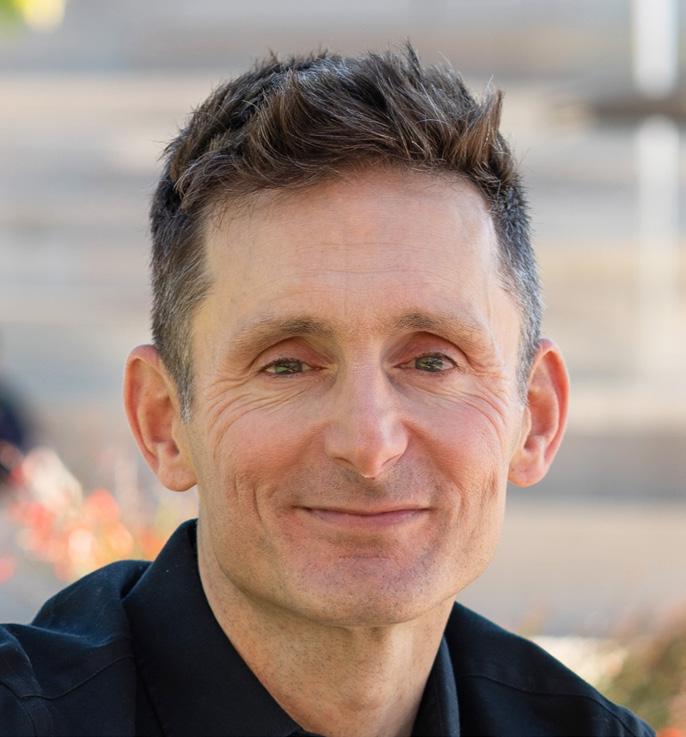
heard was, “How much money do you have in your phone?” Running for office does cost money – advertising, texting, emails, signs; the name of the game is getting the word out, especially when you are a first timer with no name ID, like me.
intent? My answer is a cautious yes. We can disagree while still having the same values, but we must act in solidarity on the side of democracy.
Voters should be the boss.
Because I was challenging an incumbent, I was told by a number of Democratic operatives that I couldn’t run, which made no sense to me. I believe that every seat belongs to the voters, not to an incumbent or anybody else. I did have one well-known politician tell me, “Make your case to the voters and may the best candidate win.” I appreciated that signal of encouragement.
I continued to run into other barriers along the way. I submitted applications for endorsements, including many claiming to support gay candidates. I never heard back, or would hear, “Gay or straight, we just endorse the incumbent,” which surprised me.
I argued that endorsements would make me more visible so voters could make better decisions, and ended up receiving a few. But no political party or organization should be in charge of picking our elected officials. Voters should.
The Democratic Party has the opportunity to inspire again – and win.
44 Gough Street, Suite 302 San Francisco, CA 94103
Bay area reporter
415.861.5019 • www.ebar.com
44 Gough Street, Suite 302 San Francisco, CA 94103
A division of BAR Media, Inc. © 2026
415.861.5019 • www.ebar.com
President: Michael M. Yamashita
Director: Scott Wazlowski
A division of BAR Media, Inc. © 2026
President: Michael M. Yamashita
News Editor • news@ebar.com
Director: Scott Wazlowski
Arts Editor • arts@ebar.com
News Editor • news@ebar.com
Out & About listings • jim@ebar.com
Arts Editor • arts@ebar.com
Advertising • scott@ebar.com
Out & About listings • jim@ebar.com
Letters • letters@ebar.com
Advertising • scott@ebar.com
Letters • letters@ebar.com
Published weekly. Bay Area Reporter reserves the right to edit or reject any advertisement which the publisher believes is in poor taste or which advertises illegal items which might result in legal action against Bay Area Reporter. Ads will not be rejected solely on the basis of politics, philosophy, religion, race, age, or sexual orientation.
Americans’ approval of Congress has fallen to 10%. The Atlantic recently published that voters are “pissed that [Democrats] lost the election in 2024 – and pissed at them for not doing a better job of standing up to the Republicans and to [President Donald] Trump.” In a recent NBC News poll, the only subjects less popular than artificial intelligence were Iran and the Democratic Party.
Voters I spoke with highlighted cost of living, homelessness, and corruption as major issues, but the underlying theme was that our government no longer works, and they were open to tearing it down. This is what Trump took advantage of in 2016 and continues to leverage to this day.

With this in mind, I learned how to fundraise. I am proud to say that 100% of my contributions were from individual voters who believed in what we were fighting for. I would prefer a world without fundraising, but I was told I should be fundraising eight hours a day. In my view, we must overturn the U.S. Supreme Court’s 2010 Citizens United decision. There is a big difference between an individual voter contributing $50 to a candidate they believe in, and Elon Musk contributing $288 million. Solve the “big money in politics” problem and we will see politicians more aligned with the needs of the voters.
In my race, I was on a mission to reimagine our democracy. This meant advancing a broad set of bold policies – fast. I was advocating for a renter’s tax deduction like homeowners get, capping credit card interest rates on groceries and gas purchases, universal $50 urgent care visits for everyone, and a lot more.
Additionally, we must prioritize outcomes over spending. I want to change our “tax and spend” reputation to “spend and achieve.” Here in Los Angeles, voters told me they had no idea why taxes keep going up but nothing gets better. We must advocate for visible results of things getting done. Finally, we must return to a culture of service: inperson town halls, walk-in office hours, answered phone calls, and email responses. Voters are the boss, and it’s time politicians start acting like it.
In political terms, this year is known as another “change” election. It’s why Republican Steve Hilton’s ads for governor state “it’s time for change.” It’s why the Democratic Socialists are a rising force: dissatisfaction with the status quo.
We need to figure out how to come together.
Published weekly. Bay Area Reporter reserves the right to edit or reject any advertisement which the publisher believes is in poor taste or which advertises illegal items which might result in legal action against Bay Area Reporter. Ads will not be rejected solely on the basis of politics, philosophy, religion, race, age, or sexual orientation.
Advertising rates available upon request.
Advertising rates available upon request.
Our list of subscribers and advertisers is confidential and is not sold. The sexual orientation of advertisers, photographers, and writers published herein is neither inferred nor implied. We are not responsible for unsolicited manuscripts or artwork.
Our list of subscribers and advertisers is confidential and is not sold. The sexual orientation of advertisers, photographers, and writers published herein is neither inferred nor implied. We are not responsible for unsolicited manuscripts or artwork.
Democrats are going to have to be more than anti-Trump, because that is not a vision for the future. But not a single voter I talked to could state what the Democratic Party stands for.
Big money has poisoned our politics.
In this year’s California primaries, federal candidates raised a total of $144 million (!). If an oil company contributes to a politician, they are doing so to influence a future legislative outcome.
Before I decided to run, I found people in politics to ask for advice. The top question I
The Democratic Party is divided. In many conversations, I encountered litmus tests that shut down conversations before they had a chance. I heard from centrists who have left the party because they have been “canceled.” I heard from the far left who protest-vote for third parties. I heard from folks who don’t bother voting anymore at all. Race, gender, age, sexuality, religion, and more: voters have many reasons why they dislike a candidate and each other.
But I welcomed all points of view, because that’s democracy.
We cannot build a winning coalition divided like this. Everybody should be welcome to the table. Can we assume many voters have positive
If Democrats take back the House this year, that will likely be due to anti-Trump sentiment. The party should not take that as a sign that all is well. 2028 is coming, and it will be up to Democrats to convince voters that they offer a compelling vision for our future.
The best antidote to authoritarianism is a modern, innovative democracy that works. In 2026 and beyond, that’s what I’ll be fighting for.t
Todd Lombardo, a gay man, is a recent LGBTQ+ candidate for Congress and writer in California with a background in communications. He is on a mission to reimagine our democracy for the future and influence positive change from the inside. He is based in Los Angeles and can be reached at todd@toddforcongress.us.
by Matthew S. Bajko
During the 2024 midterm election cycle, as of July 5 that year, the LGBTQ+ Victory Fund had endorsed more than 290 out people seeking public office. The national group works to elect LGBTQ candidates across the U.S.
This year, as of July 7, Victory Fund has endorsed 267 candidates running for election across the country. Of those, just 29 are seeking election in California.
Three of those were gay Bay Area candidates who ran unopposed in the Golden State’s June 2 primary and secured their reelection. They were Sonoma County Superintendent of Schools Aime Carter, Contra Costa County Supervisor Ken Carlson and San Jose City Councilmember Anthony Tordillos
Two were gay San Francisco candidates who won their primary races and will appear on the November 3 general election ballot. Gay Democratic state Senator Scott Wiener took first place in his race for the city’s U.S. House seat and is now running against District 1 Supervisor Connie Chan to succeed retiring Congressmember Nancy Pelosi (D-San Francisco), who is backing Chan in the race.
San Francisco School Board President Phil Kim won his race to serve out the remainder of his term he was appointed to through the end of the year. He is now seeking a full four-year term on the fall ballot to remain on the oversight body for the San Francisco Unified School District.
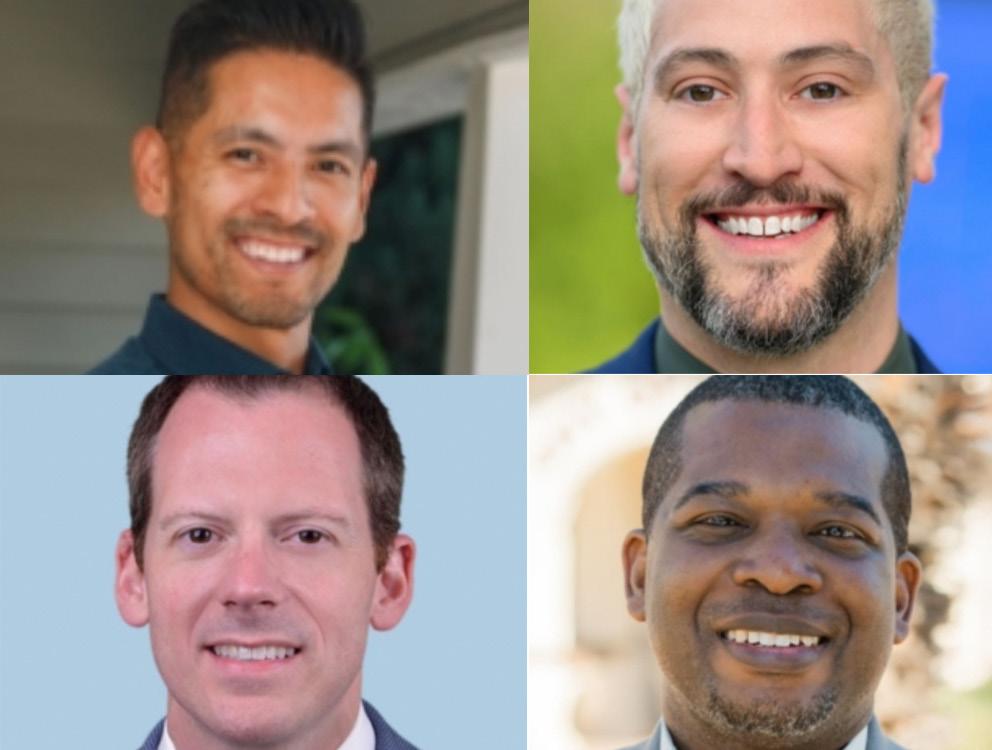
Clockwise from top left, Juan Comacho, John Erickson, Corey A. Jackson, Ph.D., and Scott Houston were endorsed by the LGBTQ+ Victory Fund ahead of the June 2 primary, though only Erickson and Jackson advanced to the November general election.
of the hate and the rhetoric that we’re seeing, we’re actually seeing more people from our community run for office, and so it’s a bandwidth issue, but it’s a good problem to have,” said Low, explaining that the Victory Fund board that makes endorsements meets monthly to vote on them. “So you’ll see a lot more coming because now we know what that trajectory looks like after many of the primary seasons have concluded.”
(R-Corona), whom she narrowly lost to in 2024 for the 58th Assembly District seat. Matthew Adams, aiming to be the first asexual to serve in Sacramento, is running against Assemblymember Heath Flora (R-Ripon) for the Assembly District 9 seat spanning several northern Central Valley counties.

The only other Bay Area candidates to receive endorsements from the Victory Fund to date are two city councilmembers in the East Bay seeking reelection to full terms on the fall ballot. Queer Oakland City Councilmember Janani Ramachandran is running for a second term having won election to her District 4 seat four years ago, while gay San Leandro City Councilmember James Aguilar is running to keep his District 2 seat having been appointed to fill a vacancy earlier this year.
Leading up to last month’s primary, the Bay Area Reporter had heard grumblings from a number of out candidates running for various seats around the Golden State about the slow pace of endorsements being made this year by the Victory Fund. Its support of candidates, particularly those running for the first-time, is coveted for bringing greater attention to their candidacies from both the media, donors, and other organizations that make political endorsements.
On election night, running into gay Victory Fund President and CEO Evan Low at Wiener’s campaign headquarters, the B.A.R. inquired about the trickle of endorsements by it this year. The former state assemblymember from the San Jose metro area acknowledged the slow pace for endorsing candidates during the first half of the year but said the organization would be rolling out more now that the primary was over.
“We have seen this cycle, in spite
Editorial From page 4
the federal government continues to roll back protections and defund lifesaving services for LGBTQ+ people, California is choosing a different path – one that invests in our communities and refuses to leave anyone behind.”
Bonta alluded to threats facing the community that are troubling.
“We know that hateful rhetoric and
Low also told the B.A.R. that the Victory Fund ahead of Pride Month had begun an “expedited endorsements” process for incumbents up for reelection this year. So far, among the 10 out members of the California Legislature up for reelection this year, only gay Assemblymember Corey A. Jackson, Ph.D., (D-Perris) has been endorsed by the Victory Fund as he runs for another two-year term representing his 60th Assembly District in Riverside County.
In the eight legislative races where out nonincumbents were running, Victory Fund endorsed in just three ahead of the primary, all of which were contests for Los Angeles County seats. Of those, only gay West Hollywood City Councilmember John Erickson advanced out of the race for the open Senate District 24 seat to vie for it come November. The other two gay candidates, Juan Camacho and Scott Houston, fell short in their respective bids for open state Senate and Assembly seats.
While the Victory Fund announced 18 new endorsements Tuesday, none were for candidates running in California. It remains to be seen if it will endorse the other three out nonincumbent candidates running for state legislative seats and whose victories would further expand the ranks of the Legislative LGBTQ Caucus that currently has 14 Democratic members.
Gay Democratic Fresno City Councilmember Annalisa Perea is seeking the open 31st Assembly District seat. Riverside City Councilmember Clarissa Cervantes (D), who is queer and bisexual, is looking to knock out conservative Assemblymember Leticia Castillo
discriminatory policies do not exist in a vacuum,” he noted in the Pride report.
“Too often, they fuel intimidation, harassment, and violence. ... Hate crimes targeting LGBTQ+ individuals continue to occur at alarming rates, particularly against transgender and gendernonconforming Californians. Behind every statistic is a person, a family, and a community impacted by fear and trauma – and every incident is a reminder that our work is far from finished.”
Both Perea and Cervantes took first place in their primary contests and are considered frontrunners in their November races. Adams, meanwhile, is an underdog in his race against the sitting GOP legislator.
Ahead of the primary the Victory Fund did endorse bisexual San Diego City Councilmember Marni von Wilpert in her race to succeed retiring Congressmember Darrell Issa (R-Vista). Her contest on the November ballot is seen as a key pickup for Democrats as they try to reclaim their majority in the U.S. House.
But it sat out another Southern California race where a gay Democrat was running and had sought its endorsement. Todd Lombardo, one of seven people who challenged Congressmember Sydney Kamlager-Dove (D-Los Angeles) for her 37th House District seat, came up short.
Lombardo declined to comment this week about not getting the Victory Fund’s support. But in a Guest Opinion piece for the B.A.R., he wrote about the difficulty he faced in receiving the backing of various organizations for his candidacy.
“I submitted applications for endorsements, including many claiming to support gay candidates. I never heard back, or would hear, ‘Gay or straight, we just endorse the incumbent,’ which surprised me,” wrote Lombardo.t
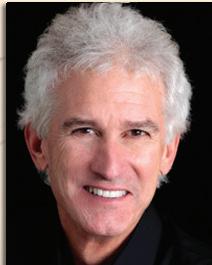


Political Notes, the notebook’s online companion, will return Monday, July 13. Keep abreast of the latest LGBTQ political news by following the Political Notebook on Threads @ https://www.threads.net/@ matthewbajko and on Bluesky @ https://bsky.app/profile/politicalnotes.bsky.social. Got a tip on LGBTQ politics? Call Matthew S. Bajko at (415) 8298836 or email m.bajko@ebar.com.
The escalation in anti-trans rhetoric and actions is linked to transphobia spewed by the right-wing. The LGBTQ community and our allies need to fight all of this disinformation by rallying against hateful legislation and other actions, including in court when necessary. And we need to work to see pro-LGBTQ candidates elected at all levels of government, especially local positions like school boards and city councils.t
DEADLINES: Friday 12 noon for space reservations Monday 12 noon for copy & images TO PLACE: Call 415 829 8937 or email us at advertising@ebar.com
*Non-display Obituaries of 200-words or less are FREE to place. Please email obituary@ebar.com for more information.

by Gwendolyn Ann Smith
Irecently watched a brilliant, fivehour documentary by Matt Baume on YouTube, detailing the fight for marriage equality from the era of King James until today. Of course, most of the focus covers parts of the battle that Baume had covered, from California’s same-sex marriage bans Proposition 22 in 2000 and Proposition 8 in 2008 to Obergefell v. Hodges, the 2015 U.S. Supreme Court case that legalized same-sex marriage.
It was a lot to go through, especially as it reminded me of all I experienced as a samesex married trans woman who also lived through these same fights. We like to forget just how messy things were, how ineffectual our organizations were, how difficult the fight was. Baume’s documentary was an excellent, albeit bitter, reminder.
the Supreme Court released its final decisions of the session. Of these were Little v. Hecox and West Virginia v. BPJ. Both were brought by student athletes fighting to play sports with classmates. It is, as you are certainly well aware, a fight that has been brewing for a number of years now.

I bring this up because the trans community is in a similar generational fight. While back then we all fought for the rights and privileges that come with a marriage, today, we fight over the same for our gender.
Right now, that fight isn’t going so well.
On the last day of June, as we all packed away our Pride flags and such,
In a split decision, the justices found that, yes, it is perfectly fine to exclude transgender students from teams that fit their gender – and by doing so ruled against transgender people being protected both by Title IX and the equal protection clause of the 14th Amendments. The court ruled unanimously that bans enacted by Idaho and West Virginia do not violate federal civil rights laws. On the question of whether the bans violate the equal protection clause, the court ruled 6-3, along ideological lines.
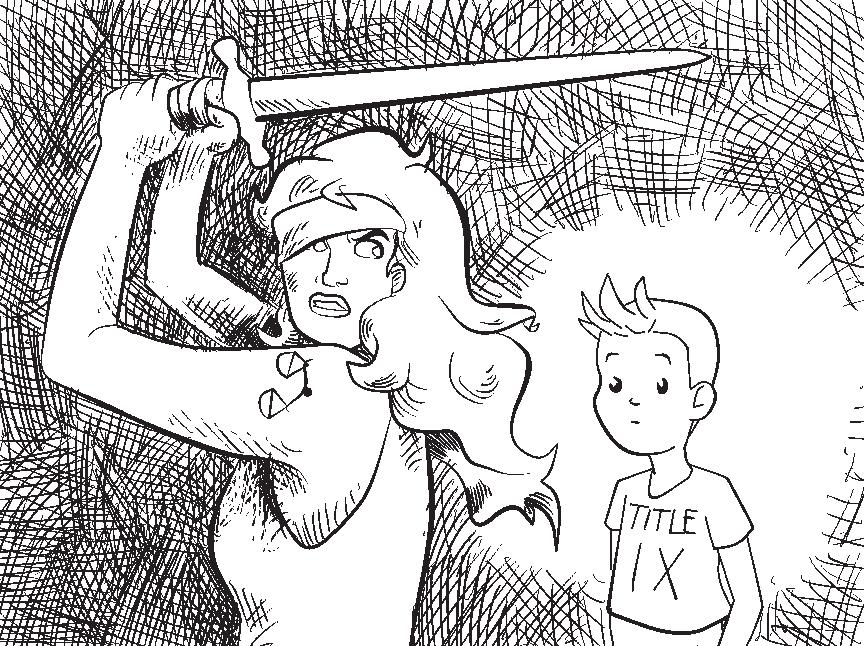
On Title IX, specifically, the justices determined that “sex” only refers to “biological sex,” a term that holds no actual weight and does not accurately reflect biology. It does not equate with “sex assigned at birth,” even though a majority of Supreme Court justices – among others – seems to believe it does.
That’s only one of the messes in this ruling, with the court also deciding that sport is somehow “distinct” from
the rest of a school, letting – for now – schools have transgender students who are recognized in their gender, but only when they are not on the playing field or such. It also doesn’t say that schools who do not discriminate against transgender students will not have to, which will surely lead to a patchwork of rules, varying from state to state, school to school. This is a confusing, muddled decision in that it’s trying to cover two cases, and is doing so quite poorly. It is not a victory for the transgender community, not by a long shot. It is also not the home run our opponents may have wanted, either.
Five years ago, this same court ruled in favor of Title VII civil rights protections for trans people in employment in Bostock v. Clayton County, but now it has ruled against the same in these. It hasn’t so much sidestepped the question as it has left a patchwork of interpretations that really doesn’t make anything better for, well, anyone.
Of course, this hasn’t stopped trans rights opponents from mobilizing, pushing now for more statewide bans on transgender people in sports. It also hasn’t stopped the Trump administration from calling it a victory.
In a White House news release sent out the same day as the decision, titled, “Supreme Court Bolsters President Trump’s Push to Eliminate Transgender Insanity,” the administration claims a “landmark victory for common sense, biological reality, and for the millions of women and girls who deserve a level playing field,” and enumerates all the steps this administration is taking to harm transgender people in this country.
I mentioned Baume’s documentary above because it reminded me of the societal and legal fights over marriage. Due to those challenges, I see a possible future unfolding for trans rights.
For example, the ruling in Baehr v. Lewin (later known as Baehr v. Miike) in 1993, which made same-sex marriage limitations in the state of Hawaii unconstitutional, led to the federal Defense of Marriage Act as well as a patchwork of states passing marriage bans over the next decades. This should start to sound familiar. (A key provision of DOMA was ruled unconstitutional by the Supreme Court in 2013’s U.S. v. Windsor decision.)
The right will continue to chip away at trans rights, reaching for as much as it can and using its very deep pockets to do so. The administration will be happy to assist as well. It’s hard to say how much the left will help, and how many of our organizations will have the will to stick their necks out. It’s highly likely that there will be more
losses, perhaps many more.
We will need people who are brave and who are bold. Who can stand in the courts – both the actual courts as well as the court of public opinion – and push back. We need to be ready for a fight. It is also likely that we will see wins in our futures, too. It won’t be easy, but like Obergefell, it can happen. I’d even go so far as to say that this is a battle we need to have. We must fight our way through, in order to claim our victory one day.
The rulings in Little v. Hecox and West Virginia v. BPJ are a beginning, not an end – and a very messy one indeed. Hope is hard, but it’s one thing we have to have. I’m glad Baume, a gay man who has written for the Bay Area Reporter and other publications, reminded me of this in his own way.t
Gwen Smith will still never forgive some marriage activists in the Prop 8 fight. She can be found at www.gwensmith.com.
Cynthia Laird
Dr.







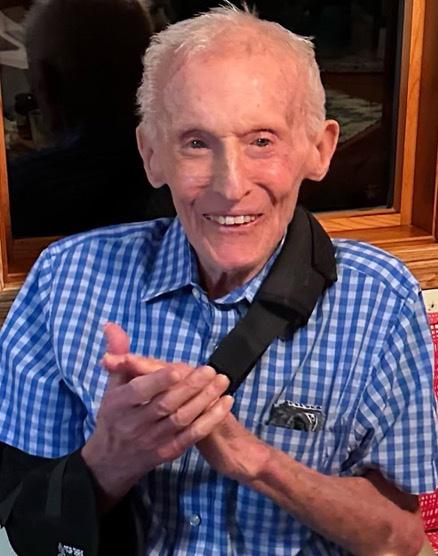
Kent Sack, a gay man who was a medical forerunner in Contra Costa County during the AIDS epidemic, died June 15. He was 91.
Dr. Sack passed away at his home in the unincorporated town of Pacheco. A cause of death was not released.
In addition to his work as an early East Bay HIV care provider, Dr. Sack was a founding member of the Rainbow Community Center in Concord. He was also a leader in Bay Area Physicians for Human Rights, an obituary stated.
Until about a year before his passing, he was still working with the Berkeley Free Clinic and a clinic in Richmond, his friend Brian James, a gay man, wrote in an email.
The Rainbow center posted a tribute on Facebook noting Dr. Sack’s contributions.
“Kent was instrumental in building Rainbow into the organization it is today,” stated the post. “As a member of our inaugural Board of Directors in 1996, he helped guide the Center through its earliest years following its transition to an independent nonprofit. His leadership helped secure Rainbow’s first permanent home in Pleasant Hill and opened the doors to a future of hope, connection, and belonging for thousands in our community.”
Jorge “JC” Chamorro Cárcamo, who identifies as pansexual and is the current executive director at the Rainbow center, told the Bay Area Reporter that Dr. Sack will be missed.
“I met him four or five years ago. He was trying to get vaccinations into Contra Costa County so that we could provide vaccinations,” Chamorro said in a phone interview, referencing the COVID pandemic and the mpox outbreak.
The mpox outbreak in 2022 primarily affected men who have sex
with men and their social networks.
Chamorro noted that Club 1220 in Walnut Creek provided a site for the first dosage of mpox vaccines, and the center was the site for the second dose. (Two doses of the Jynneos vaccine, administered 28 days apart, is the standard for mpox prevention.)
“His commitment to Rainbow was very obvious,” Chamorro said. “He cared for Contra Costa, he cared for humans, he cared for the whole community. He was very compassionate.”
Born in Hettinger, North Dakota, on January 15, 1935, and raised in Reeder, North Dakota, Dr. Sack earned degrees in pharmacy from North Dakota State University and medicine from Northwestern University, according to the obituary.
Drafted into the U.S. Navy, Dr. Sack served with the First Marine Division in Vietnam as an anesthesiologist, surgeon, and medical troubleshooter. He earned the Bronze Star and Purple Heart, according to the obituary.
Dr. Sack later chaired emergency medicine at the Naval Hospital in Philadelphia, and organized adaptive sports programs for injured service members. He completed pediatric
training at Los Angeles County USC Medical Center. He participated in the Vietnam Orphan Airlift, a humanitarian mass evacuation in 1975 that airlifted some 3,000 Vietnamese orphans out of Saigon to the U.S., and other Western countries for adoption.
After moving to the East Bay, Dr. Sack chaired pediatric services at Contra Costa Regional Medical Center. He practiced emergency medicine and ran a Pleasant Hill primary care clinic until retiring in 2004, the obituary noted.
The Rainbow center tribute noted Dr. Sack’s advocacy in the fight against HIV/AIDS.
“Throughout his career, he worked tirelessly to expand access to HIV prevention, testing, treatment, and compassionate care,” the post stated. “He believed deeply that every person deserved dignity, support, and equitable healthcare, and he dedicated countless hours to advancing public health and improving the lives of those impacted by HIV. His leadership and advocacy helped shape a stronger, more compassionate response to the epidemic in Contra Costa County and beyond.”
Dr. Sack retained his ties to the Rainbow center, stepping in as volunteer interim executive director during one of the center’s most challenging financial periods in 2005, the Facebook post stated. He helped stabilize the organization and remained an emeritus leader, mentor, advocate, and friend to the center.
Chamorro said that he last heard from Dr. Sack about a month ago, when he donated some art to benefit the Rainbow center.
“The legacy he’s left behind, it’s a great loss,” Chamorro said.
The obituary stated that memorial contributions may be made to the Rainbow Community Center at rainbowcc.org or nonprofits serving gay and/or disabled American veterans. A memorial service is being planned.t
by Matthew S. Bajko
Within a geographical outline of the United States are vignettes of alligator characters sporting dark sunglasses engaged in such activities as dining in a café, riding bicycles, driving vehicles, and visiting an art museum. The western portion of the country depicts California gay hotspots such as the Russian River and San Francisco’s Castro district in the northern section of the Golden State plus West Hollywood and Palm Springs in Southern California.
The East Coast segment of the map features destinations like Florida’s Key West and the Manhattan neighborhoods of Christopher Street and Soho. In the middle is a skinny strip labeled “The Midwest” leading into a small depiction of the Grand Canyon, the placement of which is an anatomical wink wink.
Upon closer inspection it becomes clear the nationwide image is derived from a pair of cut-off Levi’s jeans with the wearer’s buttocks visible. The right pocket has the clothier’s famous “Levi’s” tag shown, with the alligator characters frolicking in New York City’s Central Park.
A handkerchief sticking out of it is folded to resemble the Great Lakes. The left pocket shows the cartoon figures working out at a gym and showering off.
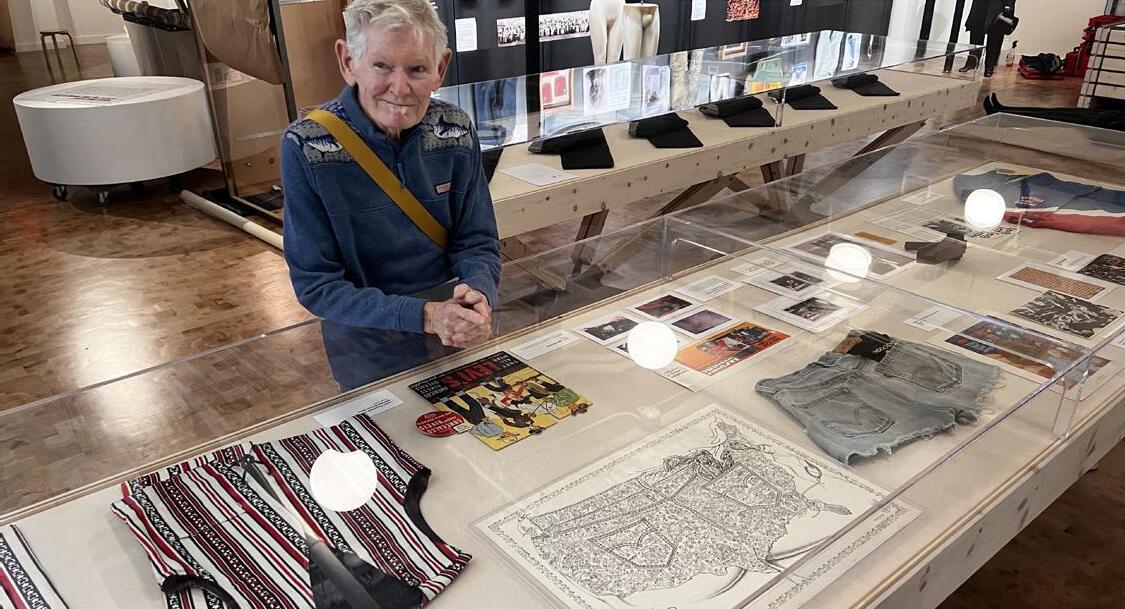
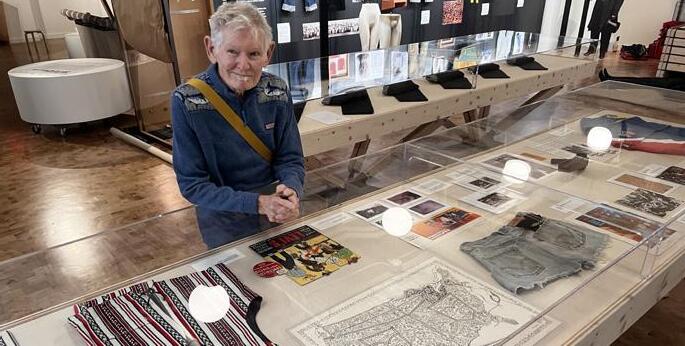
Ken Maley stands in front of the display that contains Clark Henley’s 1982 “A Butch Look at America” art poster.
lived in Los Angeles from 1979 to 1986, at which point he returned to his hometown.
The black-and-white drawing is titled “A Butch Look At America.” It was created in 1982 by the late gay artist J. Clark Henley and is also known as his “alli-GAY-tor map of America.”
According to his obituary that ran in the Bay Area Reporter, Henley died August 21, 1988, of AIDS-related causes at the age of 38. The author of “The Butch Manual” and numerous articles for LGBTQ publications, Henley grew up in San Francisco and
of the
company’s
at The Vault.
<< News Briefs
From page 2
release noted, but has always been grounded in their home neighborhood of the Haight Ashbury.
In 1996, for its 20th anniversary, Bound Together started the Bay Area Anarchist Book Fair and organized it for 17 years. Additionally, members of the collective have been involved in various direct actions over the years, including resisting and stopping Immigration and Customs Enforcement, LGBTQ freedom, antiracism, and others.
The event is open to the public.
SF day of service
San Francisco Mayor Daniel Lurie and first lady Becca Prowda invite city residents to take part in “One City Day,” a citywide day of service Saturday, July 11. A news release from
Fellow gay San Francisco resident Ken Maley, 81, had befriended Henley in the 1970s before he moved to Southern California and had asked him to create the invite for a campaign event he was hosting. Due to the popularity of Lacoste’s polo shirts with their crocodile mascots adorning the front, Maley had asked Henley to depict alligators holding little placards with political messaging on the invitations, as the event was in support of a pair of local ballot measures backed by the late San Francisco mayor George Moscone.
“And so Clark did up a really sweet, you know, invitation,” Maley told the B.A.R.
Years later Henley gave Maley a copy of his comical, gay-themed map of the USA. Because the San Francisco History Center at the city’s public library, where Maley has donated his archives, has a version of the map in its collection, several years ago Maley decided to give his copy to the Levi Strauss & Co. Archives after meeting with its director, Tracey Panek
“This was the perfect place to see that this was dropped into an environment that didn’t duplicate something, but was very specifically gay history,” explained Maley for why he felt the company’s archives should have the map.
Tribute to gay culture
The inspiration behind Henley’s American atlas “is certainly recognizable,” said Panek, the historian for the San Francisco-based company. She agreed to acquire the artwork for the archives both for its clever usage of a beloved Levi’s article of clothing and visualization of its close association with gay male culture.
“The stitching, the little Levi’s tab that has the word, and because Levi’s were such an important element of the gay community in San Francisco, so many people in the city, gay men would have worn them, it is just an important element of identity. And that’s what this one’s all about,” explained
the mayor’s office stated that sign-ups are open and include more than 150 projects and close to 100 project hosts across all 11 supervisorial districts.
“One City Day will be an opportunity for San Franciscans to come together and give back to the city we all love,” Lurie stated.
Prior to becoming mayor, Lurie, an heir to the Levi Strauss fortune, founded the nonprofit Tipping Point Community in 2005 to fight poverty in the Bay Area.
“Daniel and I have built our lives around service – it’s how we met, how we raised our kids, and how we think about what it means to be a San Franciscan,” Prowda added.
Projects will focus on neighborhood cleanups, gardening, donation packing, art and community activation, and biodiversity and environmental stewardship.
For a list of projects and to volunteer, visit https://tinyurl.com/4ku2trm7t
173 years for the new museum show.
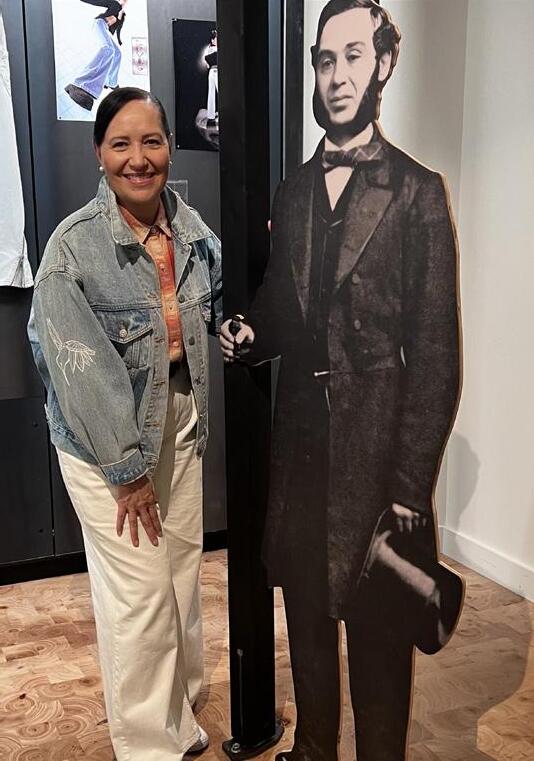
In one corner is a life-size cutout photo of founder Strauss for attendees to pose with for photos, while on display is one of the oldest known pairs of Levi’s in the world dating to the 1870s.
“They’re kept in a fireproof blue safe. They look a little different from today’s Levi’s jeans,” noted Panek.
Museum attendees will be given 3-D glasses, as there are several 3-D elements to the exhibition. Upon entering they will first encounter a Levi’s branded Jeep with seats designed to mimic its famous jeans, as the two brands unveiled their collaboration in 1978. (The vehicle no longer is operable and normally kept in a storage facility.)
Panek as she and Maley showed off the map to the B.A.R. in late June.
It is being put on public display for the first time as part of the new exhibit “An American Original: Innovation to Icon” at the company’s museum known as The Vault. It is situated in a ground-floor space at the company’s headquarters located at 1155 Battery Street just off The Embarcadero and across from San Francisco’s cruise ship terminal at Pier 27.
The show opened July 2 and is timed to the celebrations of the country’s 250th anniversary.
“Levi’s and blue jeans are the quintessential American garment, so we are celebrating that,” said Panek.
Company dates to 1853
The clothier dates its origins to 1853, when founder Levi Strauss opened a dry goods company in the city at the height of the California Gold Rush. Two decades later, Strauss and tailor Jacob Davis “combined copper rivet reinforcements with tough denim, leading to the first manufactured waist overalls in 1873,” according to the company.
Panek, a straight ally, has pulled various items out of the company’s archives to trace its history over the last
Henley’s map can be found in the second room housed in a glass vitrine with other archival items. Situated next to it is a pair of Levi’s cutoffs with a black handkerchief in the right back pocket as an example of what had inspired the artist.
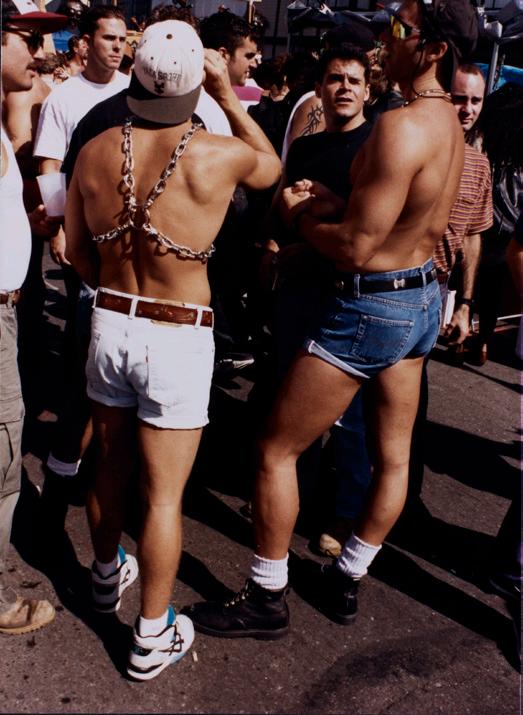
“It’s a totally gay icon in the cutoff at the cheek level, you know, and just the whole idea of capturing … it isn’t just that people, men and women, wore Levi’s, it really is an icon from that period,” said Maley, as he and Panek gave the B.A.R. a sneak peek of the new exhibition last month.
Shuttered in 2020 due to the COVID pandemic, the museum reopened in November last year with a show centered around musical icons who had worn Levi’s. It included outfits donned by the gay rock legends Freddie Mercury of Queen and Sir Elton John For the 2023 show “Queer Icons” Levi’s mounted at the Queer London Museum, Panek borrowed the pair of Levi’s 501 jeans worn by the late gay San Francisco supervisor Harvey Milk, now part of the permanent collection of the GLBT Historical Society based in the city.
There are roughly 100 objects in the new exhibit that debuted at The Vault and runs through December 2. Open only on weekdays from 10 a.m. to 4 p.m., it is free to attend.
“So it’s a chance for you to explore Levi’s history, San Francisco history, and then a lot of histories of subcultures and cultures, including the gay community here,” noted Panek.
For the first time the museum is offering docent tours of the new show. Employees throughout the company are volunteering to guide visitors through it, and each docent will tailor their presentation running from 30 minutes to an hour.
Free for museumgoers, the docent tours do require those interested to reserve a spot. Spots can be booked for certain dates and times online at https://tinyurl.com/y9yn7fyc.t
Got a tip on LGBTQ business news? Call Matthew S. Bajko at (415) 829-8836 or email m.bajko@ebar.com.
Bonta gave a preview of some of the data in his office’s State of Pride report last week, which noted that reported bias events against Californian LGBTQ+ communities, other than the trans community, largely decreased in frequency in 2025 compared to 2024.
Anti-LGBTQ+ bias events decreased by 35.5% from 172 in 2024 to 111 in 2025; anti-gay (male) bias events decreased by 34.3% from 251 in 2024 to 165 in 2025; and anti-lesbian bias events decreased from 23 in 2024 to 15 in 2025.
Reported hate crime events involving a sexual orientation bias in general decreased 35.2% from 455 in 2024 to 295 in 2025, the report stated. But antitrans bias events rose from 73 in 2024 to 90 in 2025, an increase of 23.3%.
“While hate crimes overall were down, we’ve seen increases in some hate crimes against some groups,” Bonta said at a livestreamed news conference Wednesday. “We saw increases
From page 1
cancellation last year of an LGBTQ youth mental health initiative. The award submission included the initial article “Advocates decry axing of CA LGBTQ youth mental health campaign” about the decision made by state public health officials and a follow-up story “Student sees need for CA LGBTQ youth mental health campaign” profiling a queer seventh
<< LGBTQ youth
From page 1
Sovine, who is nonbinary and pansexual, also wants to show the youth that the outdoors can be a welcoming space for them to make friends and just be themselves. For too long there has been a sense that the outdoors were domains for white, heteronormative visitors, they noted.
“I feel like the medicinal, physical, mental, emotional benefits of spending time in nature, which I think is something all people need, in particular youth, and in particular queer youth, because of our political climate and just the relentless onslaught of attacks on our rights right now,” said Sovine. “So it’s in part for the health and well-being, feeling safe outside, learning about ecology and learning about the, just the interconnected web of life that we are all a part of.”
The outings allow the youth, added Sovine, “to form community with each other, too, you know, because these are all kids who don’t know each other. They come together a couple times a month, they make friends, they hang out outside of the program, which is like one of my secret goals, and, you know, just meet other kids like them.”
In 2023, Sovine launched Outlandish! that spring and held its inaugural trip that May to the Muir Woods National Monument in Marin County. It is a program of Queer LifeSpace, the LGBTQ counseling and mental health treatment agency located in San Francisco’s Castro neighborhood. Operating on an annual budget around $10,000, Outlandish! gets some funding via grants it receives from local parks groups and foundations.
One of its earliest sponsors was the Save the Redwoods League, which covered the cost of the van transportation for its very first trip to the national park unit and last month’s outing to the state park site. Leslie Parra, the senior manager of community engagement for the conservation group, said it shares in Sovine’s mission to create strong connections between people and nature, as well as wanting to foster an inclusive environment in the outdoors.
“We are perfect partners because Outlandish! is focused on building these relationships for the youth, and so are we,” Parra, a straight ally, told the
in reported hate crimes against transgender Californians.”
Reported anti-trans bias events had risen from 65 in 2023, as the B.A.R. reported.
There were zero reported bias events against heterosexuals, down from two in 2024.
The total number of reported hate crimes decreased by 4.2%, from 2,568 in 2024 to 2,461 in 2025. However, hate crimes are still at an elevated level – an increase of 110% from 2016 numbers, according to the report.
The California Department of Justice has collected statewide data on hate crimes since 1995.
Bonta blamed President Donald Trump and his administration for the increase in animus toward transgender rights and people.
“When our president and members of his party continue to spew hateful xenophobic, transphobic rhetoric … we can’t be all too surprised to see the numbers,” Bonta said.
Indeed, reported bias events based on gender were the only category to see an increase in 2025, which were
grader who had advised on the creation of the campaign.
In the Arts and Entertainment category, arts and nightlife editor Jim Provenzano, a gay man, received second place for “Todd Haynes is ‘Far from Safe’ – innovative film director’s retrospective at Pacific Film Archive,” about the famed director’s body of work.
News editor Cynthia Laird, a lesbian, and publisher Michael Yamashita, a gay man, took second place in the
Bay Area Reporter. “We understand how important it is to feel belonging, especially in the Redwoods. It is a beautiful match.”
In addition to covering the transportation for a trip, the league will connect Sovine with park rangers at the site Outlandish! visits so the youth can get a guided tour. Shortly after Sovine had launched the program, Parra invited Sovine to be a guest on the league’s podcast “I’ll Go If You Go,” and this year had them present at its Spring Summit.
It will be hosting in September the first overnight trip offered by Outlandish! at a campground site the league operates in Sonoma County.
The partnership between the two is the league’s first one focused specifically on LGBTQ youth, Parra said. It is important to nurture in them a lifelong commitment to preserving wild lands, she noted, and, in particular, the Bay Area’s Redwood forests.
“These are the folks who are going to be looking after the land. This is their land,” said Parra. “They will be the ones taking care of it, along with others.”
Meeting new people
San Francisco high schooler Fen, 16, who asked that their last name be withheld, has participated on Outlandish! outings since last year. Nonbinary and pansexual, Fen has been on at least 10 trips the program has organized and took part in last month’s visit to Samuel P. Taylor State Park.
“It is just a wonderful group, and I get to meet new people,” Fen told the B.A.R. while the group took a break during its roughly two-mile hike.
“I’ve always loved nature. For me, it reminds me of how small we are as humans in comparison to all of this. It helps me to put things in perspective for myself, all the things going on in my life that I get anxious about.”
At the start of the hike Kourtney Boone, 30, a state park interpreter 1 stationed at Samuel P. Taylor, gave a brief introduction to the environs and its namesake. A straight ally, she also had the youth and their chaperones take in a few deep breaths before setting out for the trail through the Redwoods.
“You’re here today to experience a really amazing environment, to build a community with each other, and to
up 23.8% from 84 in 2024 to 104 last year. Sexist bias events against women rose from two to five over the same time span.
Bamby Salcedo, a trans woman who is president and CEO of the TransLatin@ Coalition, told the B.A.R. July 1 that she’s not surprised, either.
“It is no surprise to see the results in this report as it related to trans people in our state,” Salcedo said. “We have a federal government that is sending violent messages as to who we are as people. These types of messages and policies give permission to others to think that it’s OK to perpetuate violence against us. Even in our state, we need to do better to protect and serve trans people.”
Bias events based on citizenship more than doubled from 16 in 2024 to 40 in 2025.
Bias events based on race and religion fell as a whole, but Black Americans, the most targeted racial group, saw an increase in reported incidents from 494 in 2024 to 508 in 2025, which was up 2.8%.
Also up were reported bias inci-
Editorial Comment category for the editorial “SF Travel misses the boat on Rose Parade float,” about how the city’s visitors bureau omitted any LGBTQ content from its float in the Rose Parade.
The editorial noted the booster group for the city could have used the opportunity to promote “one of the best things about San Francisco – its queer community and the history we share with the city.” It called on SF Travel to do so with its float it plans to
dents involving multiple targeted groups, which increased from 59 in 2024 to 84 in 2025, or 42.4%.
Jewish Americans, the most targeted religious group, saw bias incidents drop from 310 in 2024 to 289 in 2025, a decrease of 6.8%.
Bonta framed the overall drop around a general reduction in crime not just from COVID lockdown-era highs, but from the historically low late-2010s.
“These are reductions when you compare it to the pre-pandemic baseline,” Bonta said.
In a news release, he urged vigilance.
“There is absolutely no place for hate in California. Transparent and accessible data is a critical part of understanding where we are and how we can end hate crimes in our communities,” Bonta stated. “While the overall number of reported hate crime events decreased in 2025, the data makes clear that too many Californians continue to be targeted because of who they are, where they come from, how they worship, who
enter into the 2027 Rose Parade.
In the Sports Feature category, Bajko received third place for “Soccer team collab boosts profile of artist Kapitulnik,” about a collaboration between a queer lesbian artist and the Bay FC professional women’s soccer club.
Assistant editor John Ferrannini, a gay man, also received third place in the Technology Reporting category for his article, “Queer SF content creators say Instagram applies double
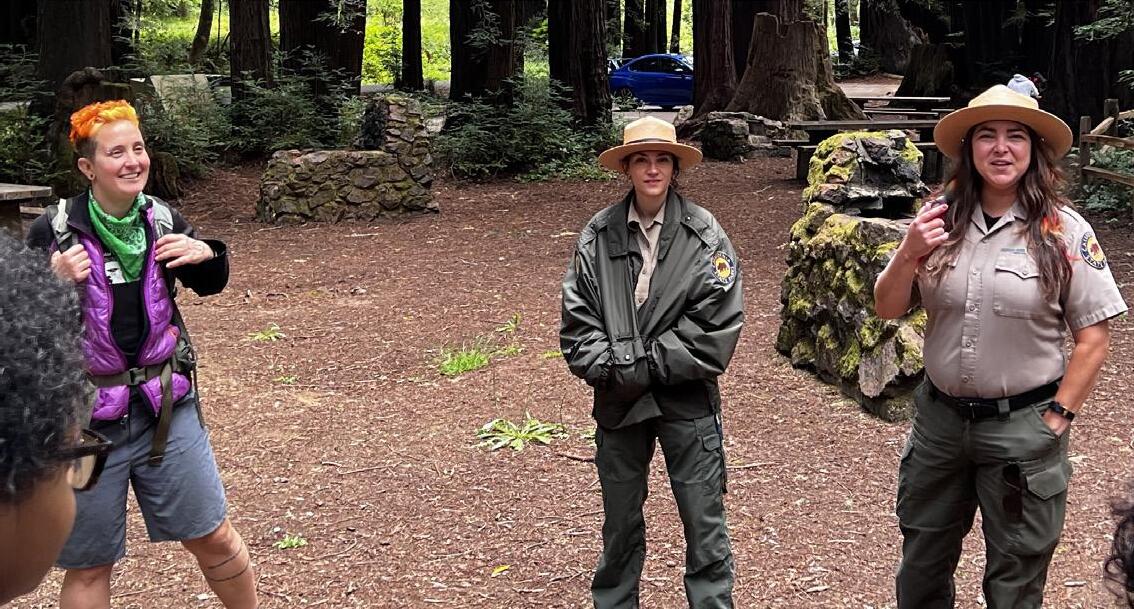
just take a break from everything,” said Boone. “So with that in mind, setting aside all of the things that we came here with, whether it be stress from the day, stress from the car ride, fear of hills, we are gonna take care of each other today, and we’re gonna have a lot of fun. OK?”
The trips Outlandish! puts on are all free for the youth participants, while Sovine volunteers their time overseeing the program. A retreat coordinator at Spirit Rock Meditation Center in Woodacre, California, Sovine is currently seeking a Ph.D. in ecology, spirituality, and religion at the California Institute of Integral Studies in San Francisco.
Having worked for Queer LifeSpace doing administrative work in 2020, and later serving on its board for a year, Sovine felt the nonprofit made sense to partner on launching an outdoor wellness program aimed at LGBTQ and questioning youth. Outlandish! is primarily for those ages 13 to 18 and open to any youth in the Bay Area.
Ryan MacCarrigan, a gay man who is the executive director of Queer LifeSpace, noted there is a wealth of research showing the benefits youth receive from being exposed to nature. He told the B.A.R. he has seen it firsthand in the Outlandish! youth participants.
“We don’t just do things for vibes, although I think there’s an argument that when you’re with these kids, and you get a sense of whether there’s a vibe or not, yeah, they’re having a great time,” said MacCarrigan. “But we know from talking to the participants as well as their parents, actually, that this is a very empowering experience for them. In some cases, we’ve heard that it’s been life changing.”
they love, or how they identify. Everyone has a part to play as we continue to fight intolerance in California, and I urge leaders up and down the state to review the data and resources available and recommit to standing united against hate. The California Department of Justice remains steadfast in our commitment to continue working with law enforcement, elected leaders, and community organizations across California to keep our communities safe.”t
The State of California offers help for victims or witnesses to a hate crime or hate incident. This resource is supported in whole or in part by funding provided by the State of California, administered by the California State Library in partnership with the California Department of Social Services and the California Commission on Asian and Pacific Islander American Affairs as part of the Stop the Hate program. To report a hate incident or hate crime and get support, go to cavshate.org.
standard for LGBTQs,” about those who said accounts were restricted or even deleted under the auspices of rules around “sexually suggestive” content.
“Congratulations to our outstanding editors,” Yamashita wrote in an email. “This recognition from fellow journalists across California is a testament to their talent, dedication, and commitment to producing thoughtful, accurate, and impactful reporting for our readers.”t
Taking part in their first trip with Outlandish! last month was San Francisco high schooler Seth, 16, who asked that their last name be withheld. Nonbinary and gay, they have been looking for more things to do with other queer youth, Seth told the B.A.R.
“I came here with almost no plan. I just came to do it,” said Seth, who ended up running into someone they hadn’t seen since middle school.
Chelal encouraged other local queer and trans youth to check out Outlandish! and sign up for one of its upcoming trips. It has a visit to Armstrong Redwoods State Natural Reserve in Guerneville planned for Saturday, July 25, with swimming in the Russian River if time allows.
Even living in the liberal Bay Area and attending supportive schools, the youth still need outlets where they can be unguarded with other young people who share similar interests and experiences, explained MacCarrigan.
“They are able to simply be themselves in a way that they can’t, even if they come from a progressive household, even if they’re at a progressive school, which, to be honest, many of them are coming from very progressive schools, but still, when you’re in this particular milieu of students and early adolescents … being around them, rubbing elbows with them, feeling seen and safe around them, it has an impact like no other,” he said.
“That impact carries forward. It pays dividends for their future. And so we really believe that.”
Becoming connected Castro Valley high schooler Morgan, 17, who asked that her last name be withheld, has been going on trips with Outlandish! for two years ever since her mom learned about the program.
Genderqueer and lesbian, she was looking for ways to become more connected to the local queer community.
“I have always liked being in nature,” she said.
The outings aren’t taxing on her, said Morgan, having been born with Postural Orthostatic Tachycardia Syndrome or POTS, a disorder of the autonomic nervous system that requires her to avoid rigorous exercise. Being outdoors near or in water relaxes her, and the sound of water calms her body.
“I really enjoy being near it, seeing it, and hearing it,” said Morgan.
“It’s a really fun time. You can make friends and experience things that you don’t usually have access to,” said Chelal.
Growing up in Milwaukee, Sovine said they wished there had been a similar program for them to take part in.
“My parents sent me to summer camp, which is where I got introduced to camping and hiking,” said Sovine, whose love for being in nature took them to Alaska, Ecuador, and New Zealand working different outdoor recreational jobs. “There was hardly any queer representation in those programs. It was very straightdominated.”
After moving to San Francisco Sovine was able to create a program to connect queer youth to the outdoors. Over the past three years they’ve served as a mentor to Outlandish! participants, writing them job references and recommendation letters for school applications.
“I watch them throughout the years, how they’re growing and becoming adults and just expanding into their awesome, authentic, badass selves that I feel lucky enough to be able to help a little bit here and there along the way. And I just adore all of them. They’re just such great kids,” said Sovine.
To learn more about Outlandish! and its upcoming trips, visit queerlifespace.org/outlandish.
Donations to the program can be made online at https://give.queerlifespace.org/give/418371#!/donation/ checkout by selecting Outlandish! under the prompt that asks “What would you like your donation to support?”t

by Adam Sandel
The North Bay’s vineyards and woods have drawn LGBTQ visitors to their summer events for a very long time. From July 17 through July 19, Sonoma’s Gay Wine Weekend will celebrate its 15th Anniversary. From July 27 through August 3, the bears will gather in Guerneville for the 30th Annual Lazy Bear celebration, which has grown from a weekend to a full week.
Gay Wine Weekend includes a VIP reception, winemaker dinners, winery tours, a Twilight Tdance, after-parties, a drag queen brunch and auction, and a pool party. Lazy Bear Week features pool parties, game nights, T-dances, campfires, movie nights, hikes, plus daily meetings for their sober guests.
Out in the vineyard
The three-day Gay Wine Weekend is the brainchild of hospitality veteran, community leader, and world-class Barbra Streisand fan Gary Saperstein. A Sonoma local for the past 24 years, the New York native worked in the restaurant business for over 30 years, before becoming the Wine Country’s gay event guru.
In a recent phone interview with the Bay Area Reporter, Saperstein shared the challenges and joys of throwing this legendary weekend.
Adam Sandel: Tell me how it all began.
Gary Saperstein: I was General Manager of “the girl & the fig” restaurant in Sonoma for a decade, and I saw an increase in LGBT tourism and movement up to Sonoma. But no one was really talking to us or marketing to us.
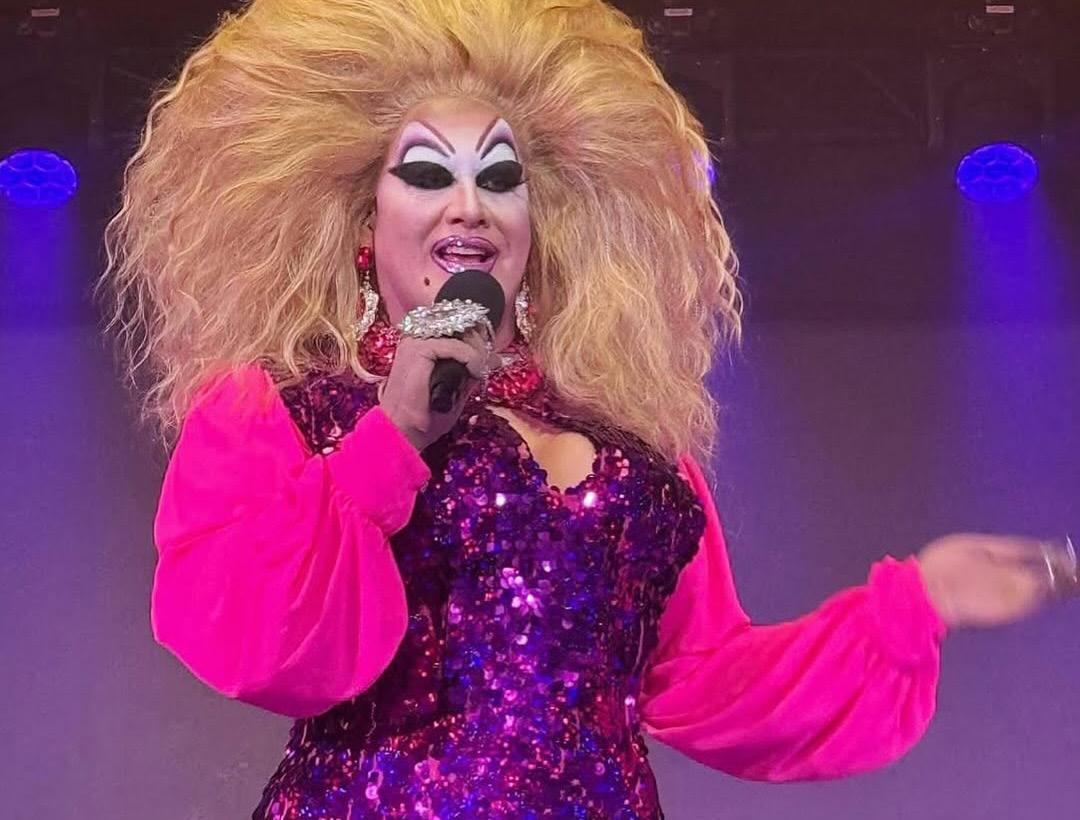



Oby Gregg Shapiro
ne of the hardest working entertainers in the drag universe, Peaches Christ (aka Joshua Grannell) shows no signs of slowing down. A San Francisco –make that global– legend whose career touches on music, filmmaking and film series-organizing, as well as performance, Peaches Christ is one of the people behind the highly anticipated various artists Punk Pride set at Mosswood Meltdown on July 19. Peaches generously made time for an interview before the festival.
Gregg Shapiro: For the select few who may be unaware, how did you come up with your stage name, Peaches Christ?
Peaches Christ/Joshua Grannell: I grew up in suburban Maryland, went to Catholic school, and was raised in the church. As a kid, I was always drawn to anything macabre, horrific, or transgressive. Elvira was a huge idol of mine, and when John Waters was shooting “Hairspray” in Baltimore, it was all over the local news.
That led me to discover Divine in “Pink Flamingos,” and not long after that I attended my first “Rocky Horror Picture Show” screening. I always say my personal holy trinity is Elvira, Divine, and Frank-N-Furter. I started doing drag in the mid ‘90s at Penn State while appearing in my senior thesis film, “Jizzmopper: A Love Story,” as “Peaches Nevada.”
I quickly realized drag could be a punk form of expression and rebellion, a way to embrace all the things I’d been shamed for and told I was go-
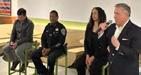




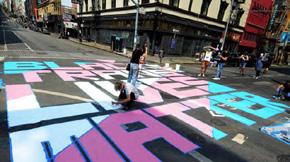
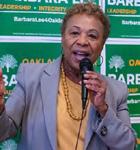
by Natasha Dennerstein
On July 11-12 and 17-19, YBCA will present the one woman show “Esto No Tiene Nombre” by acclaimed poet Denice Frohman. In this work, Frohman brings the oral histories of Latina lesbian elders to life, placing herself and the audience inside their stories, to discover her own desires around family, belonging, and the future.
The show’s title is inspired by “Esto No Tiene Nombre,” the first Latina lesbian magazine, founded in the 1990s by Colombian poet and activist tatiana de la tierra, and draws upon interviews gathered for “I See My Light Shining: Oral Histories of Our Elders.” Stories include recollections of first kisses, pre-Stonewall police raids, clandestine community gatherings, and histories erased.
Through monologue, poetry, audio interviews, and visual projections, Frohman inhabits these stories as a way to break free from what she’s been carrying, and to find her own path forward. Frohman answered a few questions about her forthcoming show at Yerba Buena.
Natash Dennerstein: Were you influenced by Anna Deavere Smith? I only ask as she is widely respected for conducting oral histories and turning them into per-
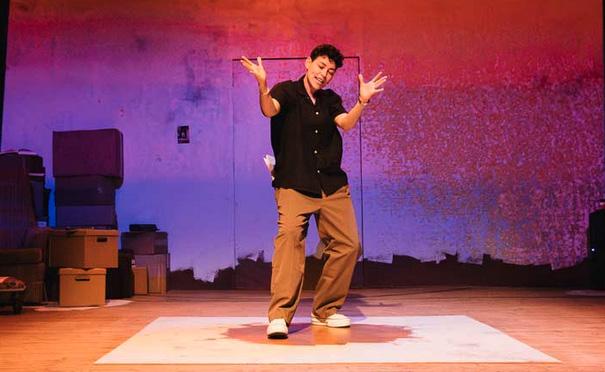
formance pieces.
Denice Frohman: Anna Deavere Smith’s work gave me a lot of creative grounding when I began working on “Esto No Tiene Nombre.” She is such a pioneer in theater, especially documentary theater, for all the reasons you shared. She’s incredible.
I’ve drawn a lot of inspiration from her work from “Notes from the Field” to “Fires in the Mirror.” What I love most about her plays is how she creates powerful, complex narrative collages using interviews as a way to speak truth to power, to uncover stories hidden or erased, or to complicate a story you think you know. There’s a reason her work feels so
alive and I think, at least for me, one of the reasons is because there’s so much poetry that lives in between the lines – what a character would say (or not say) and how that bounces off or gets picked up by the next character, but from a different angle. That was exhilarating and also familiar to me as a poet who employs tension and possibility in my work– the idea that language, whether in a poem or a play, can hold more than one thing at a time.
Do you think an art gallery is a good place to perform multimedia works about queer history? I do, as long as the LGBTQ community come along.
I’m really excited about performing my play at Yerba Buena Center for the Arts, especially because it is in conversation with the current exhibit, “Conjuring Power: Roots & Futures of Queer & Trans Movements,” co-curated by the phenomenal writer, Caro De Robertis. I think sharing multimedia work that uplifts stories about queer people of color and brings these oral histories to life offers audiences a really powerful experience. We are living at a time when we need to remember both how our communities have resisted oppression, but also how we have taken care of one another.
Are you looking forward to your discussion with Caro de Robertis following your show on July 18? Are you familiar with their award-winning work, “So Many Stars?”
I’m so excited about being in conversation with Caro De Robertis, both of our oral history collections were born out of the same project, the Elders Project, and to see how they have lived on, in new exciting artistic forms, has been amazing.
In your interviews with Latino women, did you find your subjects willing participants? Did you have to use any specific techniques to help your subject relax and be more forthcoming?
by Tim Pfaff
The song “America,” from Leonard Bernstein’s “West Side Story,” with its deep ironies and bitter comedic turns (“Everything free in America, for a small fee in America”), more than ever encapsulates the uneasiness, dismay, and even alarm that affect many Americans in this 250th-anniversary year. This particular “Summertime,” living wasn’t easy and things didn’t go as planned.
The only American composer with name recognition comparable to Bernstein and George Gershwin is Aaron Copland (1900-1990), Bernstein’s chum and fellow gay music master. Two new recordings celebrate the unapologetic American Copland while acknowledging that there just might be some trouble in River City.
Make of it what you will, the CDs are conducted by Canadian Barbara Hannigan (“An American Dream?” from Alpha Classics) and a Brit with an Italian name, Antonio Pappano (the Symphony No. 3, the London Symphony Orchestra on its house label). Together they salute both the songs and ballets for which Copland is most famous and what is too-often categorized (and dismissed) as his “serious” music. Instead, call it sincere.
People, come on, get happy
The question mark at the end of the CD title “An American Dream?” is doing a lot of work. Reflexive patriotism and any manifestation of sentimentality take a break. The opening “Porgy and Bess” arrangements by Robert Russell Bennett achieve a remote familiarity, but the most immediately
recognizable tune is “I’ve Got Plenty of Nothing,” a new American outcry. The arrangements are acidic and make a cutting point.
The album winds up with two contemporary works, Don Walker’s arrangement of Richard Rodgers’ “Carousel Waltz,” whose fun echoes of the hype of our president’s America 250 State Fair, a baffling name, if less so for stage pieces that literally fell apart and extreme heat that may have cost spectator deaths.
Not for nothing, the last piece is “At the Fair” by Bill Elliott and Hannigan herself. The three movements are entitled “Have I Stayed Too Long at the Fair?,” “An American Dream,” and “Don’t Rain on My Parade.” ’Nuff said.
One of the first things I did with every elder is speak with them on the phone. I wanted them to hear my voice, to build trust and to make them feel like they had agency throughout the process. It’s exciting, but also, I imagine, a little scary to share your life story. I wanted them to feel safe and empowered. I feel so grateful for their trust in me and the relationship that I’ve been able to build with each of these extraordinary women.
As a trans woman elder, if I interviewed folk for a trans documentary/project, I would think that they would be forthcoming, as I am one of them, and share a communal language of experience with the people I would be working with. Was that your experience in the interview process? I think it certainly helped. There was a shared sense of belonging and an understanding that I was someone who really cared about ensuring their voices were heard, honored and respected. It is also a great responsibility, and one I do not take lightly. I feel so grateful for their generosity and trust in me.t
‘Esto
at
for the Arts, $25-$35, July 11-12, 17-19, 2pm, 7pm, 701 Mission St. www.ybca.org
The archetypal composer hears America singing
The symphony has its robust passages and layered forms and occasionally even flirts with aspects of “modernism,” dissonance and the like. But its identifying color is serenity.



The beef in this sourdough sandwich is Copland’s “Dance Symphony” of 1929, composed when he was in Paris, studying –like many of his serious contemporaries– with the celebrated pedagogue Nadia Boulanger. Copland scholars say that if there weren’t a numbered Symphony No. 1, this one movement would be it.
What sets the “Dance Symphony” apart from Copland’s other works is its sinister “program.” The dance here isn’t quite the devil’s tarantella, but the story was inspired by Copland’s viewing of the film “Nosferatu,” which arrived in Paris in 1922 and Copland deemed a masterpiece.
“Dance Symphony” is a ballet about zombies in which the dead are brought back to life on stage. It’s appropriately dizzying but there also are hints of, let’s say, “Rodeo” and “Billy the Kid” to come.
Hannigan has staked out a claim as a singer who conducts rather than the reverse, but her leadership is becoming more and more incisive. The frightful magic she conjures from the Swedish Gothenburg Symphony Orchestra here is hair-raisingly good. She sings haunting new versions of “Have I Stayed Too Long at the Fair?” and a frantic “Don’t Rain on My Parade,” in which the influence of that other Barbra (Streisand) is patent.
An uncommon composer
Distinguishing Copland’s popular from his “serious” music is common, and facile. Casual concert-goers and orchestra marketers make the distinc-
tion reflexively, to no one’s disadvantage. But it takes a particular musical consciousness and savvy to pull off the concert music. The late Michael Tilson Thomas was one, and his 2020 recording of the Third Symphony with our hometown band has set the current standard.
Copland himself called his Third Symphony, composed in the wake of World War II with a premiere in 1946, “an end-of-war piece intended to reflect the euphoric spirit of the country at that time.” He also meant it as a further exploration of his more famous, 1942 “Fanfare for the Common Man,” a performance of which might have freshened the air of this year’s Fourth.
The music is small-d democratic, and the whiffs of sincere patriotism are, as Copland intended, intentional and authentic. Its unashamed jubilation is not qualified by the complex underpinnings of, notably, Charles Ives’ “Fourth of July.” If it lacks outright fireworks, it sparkles.
His name and citizenship notwithstanding, Antonio Pappano has a genius for capturing the idiom of any music he turns his attention to. He recently took the reins of the London Symphony Orchestra, which he leads here, while continuing his legendary run in the pit of the Royal Opera Covent Garden as a guest.
He has a musical versatility ideal for this symphony, and the LSO, which has proved over and over that it can play the spots off anything, snaps to attention here and shows its willingness to overlook the Revolution by adding the one-movement Sinfonia No. 5, “Visions,” by American George Walker, a lesser-known 20th-century composer who composed the politically rousing piece when he was 94.t
“An American Dream?,” Gothenburg Symphony Orchestra; Barbara Hannigan, conductor and vocals, Alpha Classics/Outhere Music outhere-music.com barbarahannigan.com
Aaron Copland, Symphony No. 3, with George Walkers’s “Visions,” the London Symphony Orchestra; Antonio Pappano, conductor, LSO Live lsolive.lso.co.uk
by David-Elijah Nahmod
On July 19 the buddy film “By Hook or By Crook” will screen at the Roxie Theater with co-star and co-director Harry Dodge and producer Steak House in attendance for a Q & A. Originally shot on a miniscule budget in 2001, the film tells the story of Shy (Silas Howard) and Valentine (Dodge), two trans masculine losers who strike up an unlikely and very deep friendship. Co-written and codirected by Howard and Dodge, the film has been remastered in 4K with funding from Frameline, Outfest, and the UCLA Film and Television Archive.
Local settings
As the short begins, Shy has been told by the bank that he has 48 hours to vacate his house in Kansas. Carrying nothing but a briefcase, he hitchhikes to San Francisco for a fresh start where he sees Valentine being beaten up by a bigot. Shy intervenes, and their friendship is born.
Neither of them has ever had much luck in life, and so they resort to petty crimes in order to make money. Billie, the woman whom Valentine lives with (Stanya Kahn, who also co-wrote the screenplay) joins them on some of these endeavors. But this is no “Bonnie and Clyde.” The film is a character study of two people who connect on a
very deep level. Throughout the film, Valentine, who was adopted, has been looking for his birth mother. Shy helps him find her. When Valentine is committed to a mental hospital, Shy goes to visit him and breaks him out.
The film was shot largely in the Mission District, and rarely has the neighborhood looked as dark and as gritty as it does here. Familiar locales such as the Hotel Royan and the now defunct lesbian dive bar The Lexington Club, where Shy picks someone’s pocket, play major roles in the story and give the film much of its atmosphere.
Though not professional actors, Howard and Dodge offer strong performances as two grifters who yearn for a better life. It’s a sad story, yet at the same time it’s uplifting. Though their relationship is platonic, Shy and Valentine love each other deeply.
Personal history
In an interview with the Bay Area Reporter, Howard and Dodge looked back upon the experience of making the film, and about the friendship between Shy and Valentine.
The two met in San Francisco during the late 1980s. They became fast friends and started a coffee house called The Bearded Lady, which quickly became a community art and performance space.
“It was the mid-’90s,” recalled Dodge. “Neither of us had ever taken
by Brian Guan
As San Francisco’s signature film exhibitions conclude their 2026 runs, a quieter LGBTQ-friendly festival prepares for the beginning of its second decade in the city. The San Francisco Frozen Film Festival will hold its twentieth festival from July 15-19, with in-person screenings at the Crossing Outdoor Cinema downtown, and an opening night party at The Lost Church.
Run as a non-profit exhibition, the event will feature an LGBTQ+ Short Film Collection, spotlighting works from independent filmmakers. The collection explores a diverse range of subjects, from gender identity to the presence of queerness in the underground industrial music scene.
It’s a commitment to LGBTQ representation that is, according to festival co-founder Gabriel Bellman, informed by the city the festival calls home.
“You can’t tell the story of San Francisco without hearing from the LGBT community,” said Bellman in a phone interview with the Bay Area Reporter.
Bellman, a USC School of Cinematic Arts graduate who moved to San Francisco to attend law school, described how the festival was inspired by a conversation between himself and his co-founder Isaac Schild.
“It was centered around, why aren’t there more film festivals in San Francisco?” he recalled. While there were “a couple great film festivals” in the city, “there weren’t nearly as many as there are now,” said Bellman.
So began the festival in 2006, which Bellman described as an attempt to “give back to the arts community and spotlight other artists.”
Hundreds screened
Since then, the festival has become a steady staple in the San Francisco film scene, with more than 800 films submitted from more than 100 countries this year. A hundred films will be screened in-person at the 2026 festival, and another 100-plus will be shown via the film’s online program.
Bellman is proud of the progress the festival has made towards its mission of supporting “independent filmmakers, youth, filmmakers of conscience,
Trans masculine film from 2001 to play the Roxie with filmmakers in attendance
a class or made any films before. Kevin Smith had just come out with ‘Clerks,’ it had slashed into the mainstream in this crazy way out of nowhere. There was something about this idea, the promise of fame and fortune, that hilariously gave us the idea. We started working on the project, and wrote a script over the course of a year.”
Their idea was to make a crime thriller, but to put two butches in.
“And the script wasn’t great,” Dodge continued. “And we wrote another script over the course of another year, and that script wasn’t great. ‘By Hook or By Crook’ was actually taking us into the third year of our efforts, and it was finally a movie that was more
and artists from underserved communities,” as per the festival’s website.
“I feel very proud of the voices that we’ve been able to lift up and amplify,” Bellman said.
The festival’s in-person LGBTQ+ Short Film Collection will screen on Thursday, July 16, featuring films by Michie Wong, Taylor Berberich, Deborah Puette, Vida Behar, Olivia Cade, and Meysam Shamsi. The movies within the collection encapsulate a variety of filmmaking interests and formal tactics.
Behar’s “Give Me the Money” uses Super 8mm film and hand animation in order to document Give Me the Money, a Seattle-based noise band
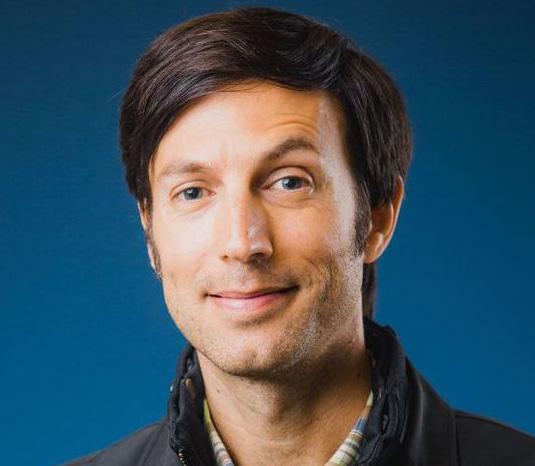

based in our friendship, or a friendship. We knew we could use the alchemy of our long-term affection and sort of leverage it to create some kind of tenderness on screen.”
Love story, sort of Howard very much sees the film as a love story.
“I think of it as a love story about a friendship,” he said. “It’s a love letter to San Francisco. We really don’t show these friendships and chosen families but it’s becoming more and more of a thing that people talk about.”
Howard added that he doesn’t think Shy and Valentine would ever become a couple.
with a trans nonbinary lead singer, and the underground music scene.
Featuring shots of pulsing crowds, close-up guitars, and animated stars collaged together, the film’s visuals are hazy and effervescent. Speaking to the B.A.R. in an interview, Behar, a genderqueer filmmaker, described the film’s documentative mode as essential.
“To document something is to declare its importance; it’s like valorizing it,” Behar said. “This is something that’s worth looking at; it’s worth other people knowing about.”
Behar then applies this philosophy towards capturing LGBTQ identity. Making documentaries about queerness is their way of “saying, this is important history,”
Imperceptions
Other films are more introspective. Wong’s “Bathroom Wars (Fear’s Judgements)” amasses photos taken by Wong of watermelons, weddings, bathroom signs, and more. In a voiceover, Wong, a lesbian, describes being mistakenly perceived as male, which impacts her experiences using the women’s restroom.
Yet while the film directly touches on its titular subject matter, Wong told the B.A.R. in an interview that the film is actually “not technically about bathrooms or labels.”
“For me, it’s something a little more nuanced than that,” Wong elaborated. “Because before labels and categories, and even before assumptions, right, there’s me as a person.” Wong described believing “all of us, in one way or another, long to be seen before we’re categorized.”
Identity is again explored in Puette’s “Such a Pretty Girl,” which depicts a
“I do think there’s a romanticness to friendship in straight male culture,” Howard said. “It’s very unacknowledged, but it’s so deep. When I transitioned and I was around straight cis men, I was like, wow, their love is deeper than any gay love I’ve ever seen.”
“There’s something about the friendships of queer people,” said Dodge. “Something about how important that is in real life and how little coverage it actually gets in queer cinema.”
Twenty-five years later, Howard said that he hopes the film will inspire people to go forward with their voices.
“And I think in this age of recycled stories, people are going to crave something original,” he said. “I hope they come to the theater and see the movie on the screen, that’s a big hope.” Added Dodge, “I think it’s really important to be with each other, to sit with each other, to watch movies together. Feel the friction, and the fire and the warmth of sociality. And I hope that from the movie people will be reminded that friendship is complicated, but ultimately worth it, and that we all need each other.”t
“By Hook or By Crook” with Harry Dodge and Steak House in attendance. $6.62-$16.62, July 19, 3:20pm, Roxie Theater, 3117 16th St. www.roxie.com www.alteredinnocence.net
mother’s first time seeing her child in a dress with her traditionally-minded father in the next room, who believes his grandchild is a boy.
In an interview with the B.A.R., Puette, a bisexual mother of a trans person, described how the film was loosely inspired by her own experience.
“My dad, who is no longer with us, was never able to wrap his head around my daughter being trans,” said
Puette. Yet for Puette, the film is not about villanization.
“What I wanted to give people a sense of is that Frank, the grandfather, is actually a good man,” Puette explained. He cares about his family, but he’s coming from an experience that has no reference for this.”
It’s an intention that reflects Bellman’s commitment to connection within the festival. “It’s kind of nice to see that humans across the world are struck with the same core issues,” he said, describing community as a key facet of the event. When asked to provide a recurring theme throughout this year’s submissions, his answer was, “a hopefulness.”t
San Francisco Frozen Film Festival, $25 festival pass, July 15-19, opening night at The Lost Church, 988 Columbus Ave. Most films at Crossing Outdoor Cinema, 250 Main St. Online viewings as well. www.frozenfilmfestival.com

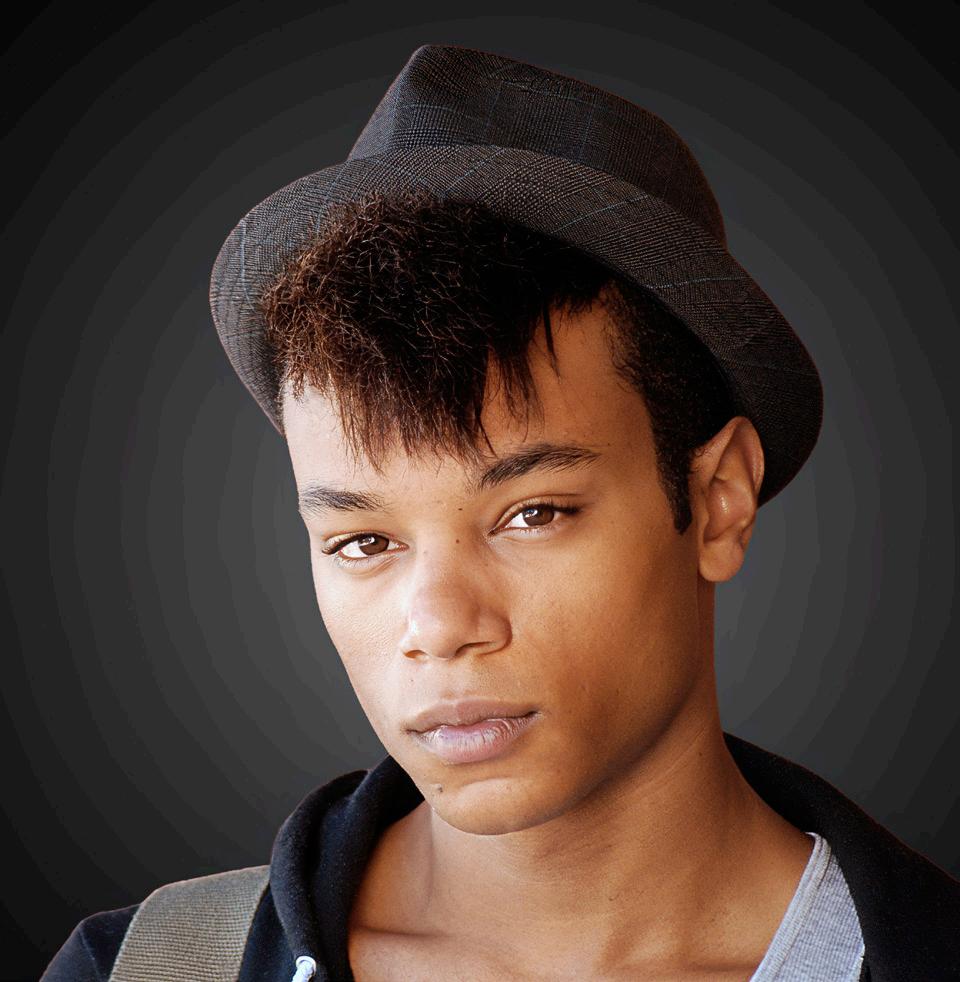



by Brian Bromberger
This year marks the 45th anniversary since the Centers for Disease Control (CDC) and Prevention published a clinical report in its June 5 “Morbidity and Mortality Weekly Report” about five young gay men in Los Angeles who had developed a rare and deadly pneumocystis pneumonia (PCP), with three of the men dead by the time it was printed.
For the next 15 years, an AIDS (later HIV after the name of the virus that caused it) diagnosis was for most people a death sentence. By 1993, HIV had become the leading cause of death for all Americans, not just gay men and intravenous drug users, aged 25 to 44, due in no small measure to federal government inaction and neglect.
It is appropriate that a new book, ‘The Fight of our Lives: AIDS in America,’ provides a comprehensive look on AIDS that worldwide caused the death of almost half a million people in the 1980s and ’90s. It’s cowritten by famed Lambda Literary Award-winning young adult novelist
David Levithan (“Two Boys Kissing Every Day,” “Boy Meets Boy”) and University of Cambridge Research Fellow, Gabriel Duckels, who specializes on the cultural politics of HIV in the U.S.
Cultural impact
The book is geared to young adult readers. However, it so expertly reconstructs the heartache and terror of those early years of the pandemic, when People With AIDS (PWAs, not victims) faced stigma, fear, and bigotry, that anyone who has come of age in this era where AIDS is treatable and wants to know the history, science, politics and cultural impact of those devastating crisis years and the grassroots activism it inspired, will find this accessible, humane book invaluable.
My friend Mark Vogler worked with Beringer, so we approached them with the idea of a T-dance. They said, “Great! What’s a T-dance?” So we went back to Gay 101 and explained it to them. We had literally one month to plan it and get the word out, but 250 people showed up.
At the T-dance in 2008, people said they wanted to come up and make a weekend of it, so in 2011, we had the first three-day Gay Wine Weekend. It included winemaker dinners and winery tours, and it gave people a chance to have a full weekend experience.
What’s been your biggest challenge over the years?
It’s always been a challenge to get sponsors and get them to realize that we’re a demographic that they should market to. In addition to wineries, we’ve had travel organizations, hotels, real estate companies, and even con-
ality, male nympho for the generous discerning, discriminating man.
Your hotel apt or mansion. Casanova (415) 818-3126.
$6000 per session. Erotic unforgettable rendezvous great conversationalist. Easy on the eyes.
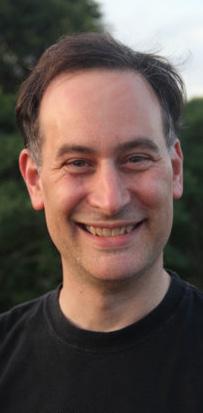
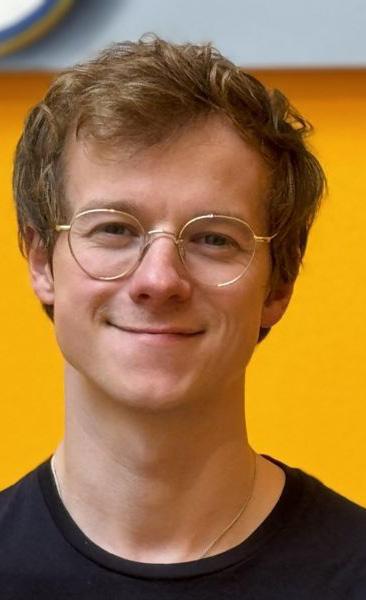
It reads like an intricate tapestry weaving strands of the greatest hits of AIDS events, a multidisciplinary hybrid approach featuring primary source interviews with firsthand accounts from those who lived through and fought the epidemic, as well as facts, figures, and basics of the disease with timelines filling in the blanks of the overall history in brief nonlinear chapters.
Reprinted works of the 1980s and ’90s include poems, narratives, essays, speeches, archival news reports, comics, zines, photographs, artwork, and personal statements on the stories of people in terms of what they experienced and how their lives were impacted by AIDS. Nor is the global nature of the pandemic ignored.
Levithan’s gay uncle Robert also provides a recurring testimony as a long-term PWA survivor. Another stroke of genius is the inclusion of an
struction companies as sponsors.
What single memory stands out from all the Gay Wine Weekends?
In 2016 we held it at Chateau St. Jean, a magnificent estate covered with strings of twinkling lights. A man came up to me and asked if I’d seen “Meet Joe Black,” the movie with Brad Pitt. He said, “I saw that movie when I was a boy and they had a mansion with all those lights. I always wanted to be there, so thank you for giving that to me.”
How has Gay Wine Weekend evolved over the years?
It’s become an iconic event, covered in travel books and articles. In 2019, I added the Drag Queen Brunch and Auction. Ruby Red Munro has been our hostess, and Michael Tate has been our auctioneer ever since. The auction benefits Face to Face, the Sonoma County HIV/AIDS network, and we’ve raised $700,000 over the years. That’s the one thing I’m most proud of.
What other events do you produce under your Out in the Vineyard banner?
In May, we had our sixth annual Pink Sonoma Rosé Wine Fest. It’s become the premier rosé winetasting event in Sonoma, with 27 wineries pouring. I founded Sonoma Valley Pride with Matthew Long in 2020, and I also partner with The Academy San Francisco for two wine events a year.
What’s new at this year’s Gay Wine Weekend?
For the first time, the Twilight Tdance will be held at the beautiful Cornerstone Sonoma venue, surrounded by lush gardens and rolling vineyards. It’s just a 40-minute drive for our Bay Area visitors.
What’s the most gratifying part of Gay Wine Weekend for you?
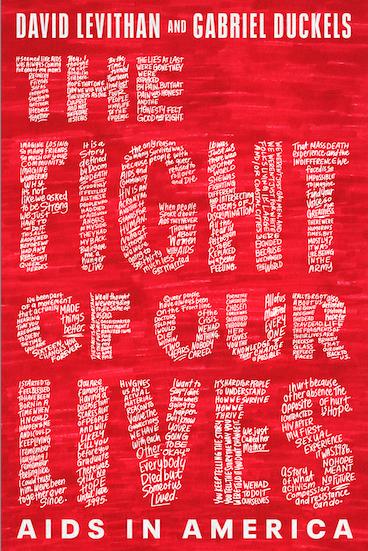
entire month of obituaries (“Deaths in the Neighborhood”) from the January 1990s Bay Area Reporter, with their photographs and memories written by loved ones (birth and chosen families). These rescued PWAs from impersonal statistics and restored their humanity through the healing power of stories and reducing the stigma surrounding the disease.
The book is superb in detailing the devastating consequences that neglect, shame, racism, homophobia, and misinformation had not only on PWAs, but how it worsened the pandemic across society, making access to healthcare and treatment (as limited as it was) far more difficult as well as contributing to inequality in care.
On the positive side, heroes were forged, as were movements fighting for justice, education, and dignity just to be treated like human beings. Unexpected compassion from volunteers
provided physical and emotional support through groups like Shanti.
Most thrillingly, we relive the birth of the AIDS Coalition To Unleash Power (ACT UP), where grief and loss gave way to desperate, angry, defiant political action, such as storming the Food and Drug Administration (FDA), die-ins, shutting down Wall Street, converting funerals into protests. ACT UP pressured the FDA into creating accelerated drug approval pathways and shamed pharmaceutical companies into expanding access to experimental drugs, a policy change that was later extended to all lifethreatening diseases.
Viral fame Famous names get their own chapters such as actor Rock Hudson, basketball star Magic Johnson, hemophiliac sufferer Ryan White, MTV’s “The Real World” cast member Pedro
It all comes down to community and connections. Every year at the Tdance, people tell me things like they just ran into a roommate from college who they haven’t talked to in years. Then there are the two women who met at the T-Dance two years ago. They’re still together.
Bears gone wild
For ten years, David Barker has been President and Executive Director of the Lazy Bear Fund, the nonprofit organization that produces Lazy Bear Week as a fundraiser for causes such as clinics, schools and food banks.
In a recent phone interview with the Bay Area Reporter, Barker shared the history of Lazy Bear, which grew from a weekend in 1996 into a full week of bear invasion in 2019.
Adam Sandel: For the uninitiated, how would you describe the
Zamora, Larry Kramer (the gay Cassandra warning of the plague ahead, his AIDS play “The Normal Heart” and cofounder of ACT UP), Dr. Anthony Fauci (the federal government’s point man on AIDS, criticized for his initial slow response to the disease, but praised in later helping PWAs gain better access to treatment), red ribbons, and The Names Quilt with its fabric squares each memorializing someone lost to AIDS.
The book also covers events from 1997 to the present: how arduous treatments have gotten simpler and more effective, making PWAs’ viral load undetectable posing no risk of passing the virus along to sexual partners.
President George W. Bush’s PEPFAR, a $15 billion initiative to fight AIDS in Africa and the Caribbean brought preventative care/education in how you can and cannot contract HIV and providing cheap life-extending drugs. In 2012, Truvada became the first PrEP (pre-exposure prophylaxis) drug to prevent AIDS.
“The Fight of Our Lives” will become an indispensable compelling, empathetic moving firsthand narrative of the historical context and humanizing experience of the disease, capturing its magnitude and intimacy, covering all the passionate cascading emotions it engendered, but especially hope, resistance, and resilience. As the authors so passionately comment, “We tell this story because it needs to be told. Remembering is one way we fight on.”t
Read the full review on www.ebar.com.
‘The Fight of our Lives: AIDS in America’ by David Levithan and Gabriel Duckels, Alfred A. Knopf, $24.99 hardback, $14.99 Kindle. www.penguinrandomhouse.com
Weekend as a fundraiser in 1996. I was a bar manager at 440 Castro in San Francisco, so I became the bar manager for Lazy Bear events for eight or so years. In 2016, they wanted to pass the fund off to a new group and they asked if I’d like to carry on the tradition. I gathered some good friends, who are much smarter than me, and asked if they’d like to help. They had no idea what they would do, but they all said yes. It’s so much work to put it all together for just a weekend, so in 2019 it became Lazy Bear Week.
What are some of your favorite events each year?
The T-dance by the river at Johnson’s Beach and the bonfire at West Sonoma Inn. There’s nothing like being outdoors at night around a fire with your friends. For safety reasons, it’s now a propane sculpture as opposed to a real bonfire.
bear community?
David Barker: We’re body-positive. The movement came about in reaction to the muscle, gym, body beautiful trend. We’re regular folks sitting around drinking beer, trying to stay healthy and feel good about ourselves. It’s a come-as-you-are community. Everyone is welcome. Younger folk, older folk, women, trans, all races are welcome. That’s part of the bear ethos.
When and how did you first come to know about Lazy Bear?
My husband and I met in grad school and we moved to San Francisco in 2001. The next year, some friends invited us up to Lazy Bear and we continued to go as guests for many years, becoming more and more friendly with people we met there.
How did it all start?
Harry Lit and Allen Eggman set up the non-profit and started Lazy Bear
I also like a lot of the silly stuff like musical bingo and glow-in-the-dark putt-putt golf at the Pee Wee Golf and Arcade.
What are some new things that you’re excited about this year?
We have a new headquarters in the former Bull Pen bar behind the Rexall drugstore. Each year we donate about $120,000, but this year we’ll be announcing some new grant initiatives that will make a big difference in people’s lives. The 30th anniversary is the pearl anniversary, so that’s the theme. Be ready to clutch your pearls.t
Read the full interviews on www.ebar.com.
Gay Wine Weekend in Sonoma Valley, $98-$1,280. July 17-19. www.outinthevineyard.com
Lazy Bear Week in Guerneville, $241.65. July 27-August 3. www.lazybearfund.org
by Charles Francis
As if the Ministry of Truth in George Orwell’s “1984” now existed, U.S. District Court Judge Cynthia Rufe ordered the government to restore a historical exhibit in Philadelphia that dared to mention slavery.
And later, in a similar government erasure attempt, there was a middle of the night removal of the Pride flag at the Stonewall National Monument in Greenwich Village that brought thousands of New Yorkers into the streets. What better time to start reading queer historical fiction. Facts can numb and fall short. Sometimes only a good historical novel can do justice to our history at this bizarre time of erasure.
This is what Olivia WolfgangSmith’s novel, “Mutual Interest” delivers: the emotional texture of queer history spanning decades in prewar New York City. It is the story of a happily twisted “throuple” consisting of two gay men, Squire and Clancey; and Vivian Lesperance, a brilliant lesbian who becomes the guys’ puppeteer; they build a business empire together.
Compelling throuple
Beginning in 1910, the story unspools before there was a lexicon of non-traditional relationships. No polyamory, no open-triads or other pan inventions. They are inventing it all with that perfect definition of love: “need in rhyme.” They call themselves a syndicate.
On one level the novel explores what made their syndicate rhyme through the 1910s, ’20s and ’30s in a city as raucous as New York. Squire, coming from New York high society, had the “know who,” but his problem is basic autism. His parents had attempted to commit him to an asylum, but he was declared not sufficiently
insane. He is hilariously weird.
Oscar, raised on a “ghost of a farm” in Ohio, escaped to Cincinnati to work for a soap making company.
Oscar provides the “know how” to create this new invention of scented soaps. But his problem is he’s a corporate nobody, living a gay double life in a somebody town.
Vivian is a masterful manipulator who can serially seduce, then drop the bohemian, arty ladies and girls. Her problem is the “how to,” how to create something, anything, that will allow her to climb the New York City ladder. Her vulnerability, the stark terror of failure and a one-way ticket home to her very creepy family in Utica.
These dynamics lock them in and propel the prewar throuple to meet their urban queer fate. Together they become wildly rich, miserably in
getting backstage access. I don’t mean to brag, but how fierce is that?
ing to hell over. I wanted to reclaim the very thing that had been used to hurt me, and that’s how Peaches Christ was born. This year marks thirty years since I first walked onto the stage at Trannyshack in San Francisco back in 1996.
Before hosting a John Watersjudged filthy drag competition at Mosswood Meltdown a few years ago, had you been a regular attendee of the festival?
Absolutely. It’s my favorite annual music festival anywhere. There’s just something uniquely magical about Mosswood and I’ve been a devoted fan for years. I’ve also been incredibly fortunate to attend as John Waters’ personal guest many times, which meant
Even before the filthy drag competition, Mosswood invited me to introduce Ronnie Spector at Brick & Mortar in San Francisco during the 2014 festival. That remains one of the greatest honors of my so-called career. We spent the entire evening backstage together and genuinely bonded. When Ronnie passed away, her family actually invited my husband and me to her memorial. That’s an incredibly meaningful memory I’ll carry with me forever, and it all happened because of Mosswood.
What does it mean to you to be among the performers of the 2026 edition of Mosswood Meltdown?
It honestly means everything. I’ve been having the best time creating these PeachOut Productions concerts with my co-creator, conductor Edwin
love and doomed on the edge of the emerging queer metropolis of the modern era.
Life strategies
The “syndicate” keeps morphing living strategies and cover stories to keep up with the times, and beyond the emerging labor unions. Vivian and Oscar marry as a cover both for their business enterprise and Oscar’s relationship with Squire. This worked until prosecutions of queers (and the businesses at which they gathered) were on the rise, and legislation lagged decreasingly far behind the evolving social concept of female inversion.
All of Vivian’s careful coverage –her public and respectable marriage; her anonymity in approaching and hosting women; her meticulous limitation of her conquests to a few
Outwater. Most people know Edwin and me for producing large-scale symphony events at places like Davies Symphony Hall in San Francisco or even the Royal Albert Hall in London.
As much as I love the grandeur of those shows, we both realized we missed the grit, grime, and glorious derangement of the raw drag performances that inspired us as Gen X kids. So, we started asking ourselves, “What if drag performers stopped lip-syncing and fronted an actual rock band?”
We partnered with Andy Meyerson of The Living Earth Show, assembled an incredible band, and created these drag-led rock concerts. Punk Pride was the very first one we ever produced, so bringing it to what feels like the most legitimate punk stage in the world is especially meaningful. Since then, we’ve explored different genres,

woman going fast enough under her own power to escape her demons?” Until the demons catch up.
Questions like this posed directly to the reader, break the “fourth wall” of the novel. Called an “authorial intrusion,” this was a common device in Victorian 19th-century novels, yet it’s odd and a little jarring to come across this device or style today.
Regarding Oscar and Vivian’s wedding, Wolfgang-Smith turns directly to the reader and asks, “Does this surprise you, given what you know of them, given what they by this point knew of each other? Consider, then, the solemn, holy, suffocating weight of institutions. Consider the confusions of youth… Tell us. Tell Vivian and Oscar!”
The effect of this archaic style is a lot of fun and powerful, but why Dear Reader? She uses this style to great effect emphasizing we are flying through a 19th-century world into another universe of accelerating change.
encounters per girl– served her well enough in daily life, among a basically stupid populace, she thought.
Vivian is a character trapped between the walls of her business life, her private sexual life and a gender role imposed upon women of her time, despite the activism of suffragists and women’s equality movements. The magnetic character of Vivian, who privately thinks such thoughts about the “stupid populace,” brings to mind Garbo or a young Glenda Jackson.
Once Vivian “had identified her quarry, all the rest was triangulation,” writes Wolfgang Smith. She gets what she wants. Through Vivian, “Mutual Interest” provides heightened insight into identity and gender, both in business and in bed, without academic-speak. The author asks, “Is there a more beautiful sight than a
“Our subject is change-–inevitable, relentless. There is nothing to do but turn the page,” WolfgangSmith looks us in the eye. So, we turn the page and cannot stop following our throuple to their surprising end. Such authorial intrusions are like an AI photo restoration app, bringing a grandparent’s wedding from a scrapbook to life. “Mutual Interest” is a cultural translation from a queer pre-war New York to our time that will grab you by the frock coat. Loosen your corset. The story of this throuple is beyond erasure because it is so much fun. t
Olivia Wolfgang-Smith’s “Mutual Interest,’ Bloomsbury Publishing, $26 hardcover, $17 paperback, $15 ebook, $13.50 audiobook bloomsbury.com wolfgangsmith.squarespace.com
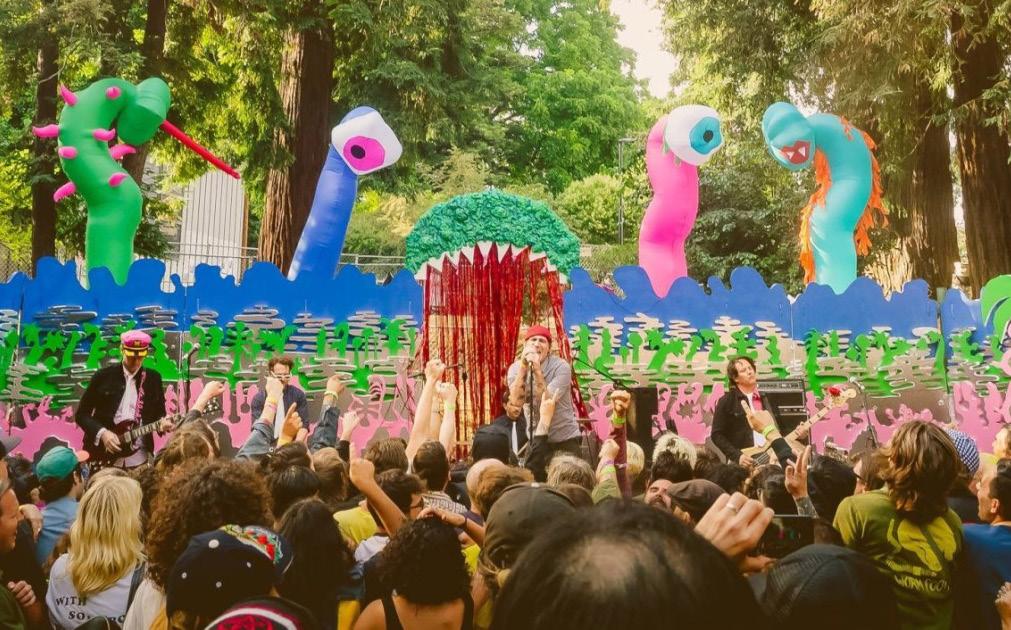
from our ’90s grunge show “Smells Like Queen Spirit” to our ’80s hair metal concert “Wig Metal,” and this fall we’ll debut our goth tribute, “Gagged by Goth.”
Are you at liberty to share some of the titles of the songs and names of the artists being celebrated in the Punk Pride set?
We’d really love for most of the set to be a surprise, but I can tell you that I’ll be opening with an iconic punk anthem that has the word “queen” in the title. Any guesses? We’re also paying tribute to queer pioneers like Dean Johnson and Tom Robinson, cel-
ebrating punk legends like The Germs and Agent Orange, and we may even sneak in a little Suicidal Tendencies. That’s about as much as I’m allowed to reveal!t
Read the full interview, with music videos, at www.ebar.com.
Mosswood Meltdown, $129-$399 (VIP tier); July 17 (pre-party with Pavement performing, 4pm) also nearby nightclub shows. July 18 & 19, 11am-10pm, 3612 Webster St., Mosswood Park, Oakland. www.mosswoodmeltdown.com